In Response To Comments by ‘Oh Mercy’
December 28, 2007
In Response To Comments By ‘Oh Mercy’
Obviously ‘Oh Mercy’ is a one off moniker for these comments. Your style reminds me of someone who made an equally violent comment some time ago. He went by the moniker ‘Winky, The Psychoanalytical Clown.’ Perhaps you’re the same.
Your comments are merely defamatory, Winky. Whatever your objection to my content may be you seem incapable of making yourself clear. You merely go into an ad hominem rant.
My sources are qite clear. I list the four Dylan biographies I am relying on at the top of the first essay. I refer to the specific biographer I am using an an authority in the text. I supply hyperlinks when quoting an online source.
I see no reason to employ academic citation style. It does not lend itself to online writing. It merely looks stupid. So, you want to check my sources they are clearly listed in text. Interpretations are of course my own.
Further I consider myself a scholar rather than a researcher. If a fact appears in four or five books I see no reason to attribute it to anyone. At that point it becomes general knowledge. If you have ‘researched’ one book each fact is unique to you so you might as well attribute it. I stopped buying current books because they are all written by researchers without backgrounds. A history of codfishing by a guy who has never been on a fishing boat and probably even never eaten a codfish carries what authority? Who would read such crap?
I supplement my study in the case of Dylan by my own experience. In one form or another I was there. I lived the folk era. I was there at the creation of rock. I bought Presley 45s new.
If you don’t think you can take me seriously then don’t. I can assure you I don’t take Greil Marcus seriously but he is amusing. Perhaps you’d like to be amused?
So, if you wish to actually comment or question something I said I’ll be happy to elucidate any point you bring up.
But as for my being insane because you disagree with me- see you in Charenton, Winky.
Exhuming Bob 2-2 Detourning The Folks
December 24, 2007
A Critique
Exhuming Bob 2-2
Detourning The Folks
Greil Marcus has written of detournment extensively especially in his Lipstick Traces. The French word means hijacking, rerouting or diversion, or in other words changing the direction of the flow or meaning. Thus one strips an object of its familiar values and replaces them with others but leaves the object intact. In a conflict of cultures the question becomes who will assign the values or meanings to objects and words.
I will use as a starting point for my purposes here H.L. Mencken of the twenties. The values into which immigrants migrated were those of the Anglo-Saxons. From the immigrant viewpoint the Anglo-Saxons detourned their languages and cultures attempting to replace them with English and Anglo-Saxon values. The inevitable result was that immigrants felt that they had been devalued and demeaned. So it is no wonder that having recovered some balance by the end of WWII they fought back by attempting to detourne Anglo-Saxon culture in their favor.
This is nowhere more apparent than between the Jews and Angl0-Saxons. No matter whether you place the conflict between the Old Dispensation or the New Dispensation the Jews always view themselves as a separate, independant and potentially dominant culture. Hence the drive is always first for autonomy and then detourning the host culture to reflect Jewish laws and customs, hopefully making Hebrew the official language. To Jews, like Greil Marcus and Bob Dylan then ‘freedom’ means the replacement of the Anglo-Saxon law and culture with Jewish law and culture with the Jews as arbiters of the fate of what become essentially subject peoples. The Jews can never be ‘free’ no matter how unrestrained they may be so long as they are subject to others legal and social systems. This is the central problem the United States and the West refuse to face. The same is true of the Semitic Moslems. It is the purpose of Moslems to detourne Western culture for a Moslem Culture. It is quite simple.
By the time H.L. Mencken was making his rise Anglo-Saxon pride was at its maximum. I haven’t been able to determine whether Mencken was Jewish but he allied himself with the Jews making common cause with them. The approach naturally was to defame Anglo-Saxonism. Mencken naturally chose the least sophisticated Anglo-Saxons to represent the whole. Thus he went to the mountain folk of Appalachia and the hill country all along the Line. He began to ridicule these people as representative of all Anglo-Saxons. I mean, he was mean; he was vicious; his Jews caused a huge fuss for much less criticism or in their terms- defamation.
Expanding the arena, using these rural folk as their model the Communists then picked up on these people with the least possibility of education as the example of Anglo-Saxonism. In 1932 and 1933 following Mencken’s example Erskine Caldwell, a Communist writer, published two mammoth best sellers, Tobacco Road and God’s Little Acre. These books were especially mean and vicious making Mencken look laudatory in comparison. Perhaps using Mencken and Caldwell as inspirations a Jewish cartoonist by the name of Al Capp created the L’il Abner comic strip in 1934. This strip also ridiculed Anglo-Saxons but in a less demeaning manner that not only didn’t offend the majority but actually pleased them. There were some few of us who saw through the sham but there was nothing obvious enough that the majority could see.
Capp would be convicted on a morals charge late in his career that effectively ended his influence. The motif was carried forward on television in the series Archie Bunker.
Now, the Anglo-Saxons used to represent the whole were the custodians of the Folk music that was so revered by the New York City Jews of the late fifties and early sixties. So you actually have Jews imitating Hillbillies.
The vilification the Mountain Folk endured actually shamed the city Anglo-Saxons causing a dichotomy in their character. They rejected the Mountain Folk as representing all Anglo-Saxons. This is made quite clear in Caldwell’s novel when his urban relative throws his rural cousins out of his house and tells them to never come back. Something like a son testifying against his father. The Liberal-Conservative split was given a difinitive form.
The Mountain Folk formed what Greil Marcus calls the Weird Old America. After the Roosevelt administration was elected and the New Deal was established as a continuation of the Wilsonian New Democracy Jews flooded back into Washington as under Wilson.
During the twenties as radio became a reality and recording technology became more widespread and available a number of Mountain Folk and/or White Trash as they were alternately known, recorded their distinctive music in their own voice. Nor was this music ill received, many of the recordings were huge sellers according to the standards of the times while some like Jimmie Rodgers and the Carter Family became very successful recording acts. Thus what was known as Hillbilly music until 1954 came into existence. For whatever reason whoever controls these things thought the term Hillbilly was insulting so the various rural flavored musics were grouped under the term, Country and Western. Hicks are hicks to me whatever you call them, Hillbilly or Country, I’ve been called worse. Having ancestors that came down from the Kentucky hills I have no objection to my Hillbilly ancestry.
The Anglo-Saxon dichotomy was such that those who were shamed by Communist efforts had an extreme aversion to Hillbilly or Country music that they considered ignorant while professing to admire the Blues simply because it was performed by Blacks even though the intellectual content was well below that of Hillbilly music.
Nevertheless the Hill Folk were the custodians of the old English folk traditions. Folk music was then separated from Hillbilly music and approved on that basis. Thus after the Roosevelt administration was installed in an effort to counter the Depression certain cultural programs were developed. One involved the attempt to preserve the quaint customs and music of the Hill Folk and the rural Blacks. These two peoples were treated as anthropological specimens on the same level as Tobriand Islanders and others.
The New Deal of the Roosevelt administration was a direct continuation of Wilsonian New Democracy. It was as though they’d never been gone. With the creation of a huge new bureaucracy Jews came flooding back into Washington as they had in the two Wilson administrations. In many if not most cases these people were the ones sent out to deal with our homegrown anthropological specimens as Superior to Inferior. Sort of a domestic Peace Corps. Yes, they did profess to revere the music of these simple folks.
So Folk Music always had an honored place in Anglo-Saxon cultivated circles perhaps spurred to some extent by the ‘field’ recordings of the New Dealers. Folk played a prominent part in popular music from the end of WWII on. Foremost practioners of the genre were the Almanac Singers and their successors The Weavers.
A key member of both groups was Pete Seeger. Pete was both Jewish and Red. This was a bad combination during the post-war anti-Communist reaction. While making hits of a number of Leadbelly songs under Seeger’s guidance The Weavers had a major success with the Jewish melody Hava Nagila. It was a catchy tune. I liked it.
Capitalizing on this success The Weaver’s under Seeger’s guidance concocted a ‘folk’ tune called Song of the Sabra celebrating Jewish ‘pioneer’ efforts in Israel. Apparently the Sabras were some kind of hobo outfit that sat around campfires and ate stew a lot. Thus the effort to detourne American Folk Music began. The Song of the Sabras was so egregiously promotive of Israeli/Jewish interests that the song caused a big reaction. If I remember correctly it was staged at least once on a TV version of the Lucky Strike Hit Parade. That’s where I got the camp fire bit as Pete roasted his weeny and sang. Whether it was an extra or supposedly in the Top Ten I can’t remember.
Somewhere about then Seeger and The Weavers were found to be subservice giving a bad name to Folk Music as long as the genre lasted in 1966 or ’67. The Weavers disappeared from the air waves. However at least one member would be instrumental in guiding the musical direction of the Kingston Trio.
Folk music continued strong between the demise of The Weavers and the emergence of the Kingston Trio both as popular music and ‘purist’ Folk. The greatest of them all was Lonnie Donegan who had a successful career in the US and a tremendous impact on the British scene from England to Australia as Skiffle Music. Josh White, Odetta, Harry Belafonte, Terry Gilkyson and the Easy Riders among others, one might add Mitch Miller, had many memorable folk tunes competing equally with Rock and Roll if not its superior. If one considers the Presley Sun recordings objectively they also can be seen as Folk or highly influenced by Folk. After all Elvis was known as the Hillbilly Cat.
The Kingston Trio with their Tom Dooley that was an actual sensation in 1958 sort of broke the taboo against Folk music although the Kingstons were plenty subversive. The great Chad Mitchell Trio emerged at this time also as an even more politically subversive group but also with a popular sound and enough bite to defuse Dylan’s claim to have introduced serious lyrics into popular music. The Chad Mitchell Trio is probably running neck and neck with the Kingstons as my favorite folk groups although Terry Gilkyson along with the Pozo-Seco Singers are right behind them. The old Seekers from Australia are hot stuff too.
So that brings us up to Grossman’s Gate of Horn in Chicago of ’58 and the founding of the Newport Folk Festival in ’59 as well as Dylan’s entry into the New York Folk Scene in ’61.
3.
After WWII the Jews had introduced the raw form of multi-culturalism designed to replace the Anglo-Saxon model of society with the Jewish. With the election of the Irish Catholic John F. Kennedy it appeared that the Anglos had been defeated.
The next phase of the Jewish program was put in place. The thing was to detourne or hijack American culture.
Detourning Folk music was part of it. The study of Dylan concentrates on the New York City East Village group that was virtually Jewish with its specific outlook. Actually the Folk scene was very diverse and different in its emphasis in each locale. Bob would focus the entire Folk movement in himself.
Boston with the Mel Lyman family and Jim Kweskin Jug Band, Geoff and Maria Muldaur was quite different from NYC. The strictly commercial LA scene with Randy Sparks’ New Christy Minstrels had its own flavor. In San Francisco Jerry Garcia, Robert Hunter and others had credentials that easily matched those of Dylan. The whole San Francisco Sound was Folk based.
The top bands like Kingston Trio, Chad Mitchell Trio and semi-pop groups like the Brothers Four and the Christy Minstrels really carried the banner for folk.
And then there was the Country or Hillbilly faction that was considerable. Great old tunes like Jimmy Brown The News Boy were Country smashes. Hank Snow recorded a passel of old Folk songs like Nobody’s Child. New murder ballads appeared for people who like that sort of thing that were fabulous like Snow’s Miller’s Cave and Lefty Frizzell’s dazzling The Long Black Veil. It would be years before it was known that Veil was newly written and not an old Hillbilly song. If you compare the Kingston’s Tom Dooley with Frizzell’s Long Black Veil you can’t tell the difference.
A word about Harry Smith’s Anthology Of American Folk Music that Greil Marcus and Bob Dylan revere so much. The collection is a very small selection of songs culled from a huge mass of material that just happened to fit Harry Smith’s personal psychosis. Anyone going over the same mass of material could select an entirely different selection of songs that reflected their own personal outlook and would be just as ‘authentic.’ I mean, I heard The Cuckoo and I Wish I Was A Mole In The Ground over the radio decades ago as a kid. I was signally unimpressed. I never called in to hear either again. So as far as being some authentic voice of America I rather think the collection reflects Jewish and Communist ideals.
What is the message exactly of ‘I wish I were a mole in the ground, I would burrow until I brought that mountain down.’
It that isn’t a call to detournement I don’t know what is. So Harry Smith is Harry Smith and welcome to him but I have my own agenda.
So Dylan left his old life behind to begin a new life in New york City but with an old agenda. His secret agenda was to detourne American culture. Of course the word ‘detourne’ was unknown in America at that time. I have to thank Greil Marcus for adding that very useful word to my vocabulary.
Bob started out detourning Woody Guthrie. Within a couple months he had hijacked Woody’s life. Clinton Heylin believes that even the Guthrie persona was second hand having been detourned from Jack Elliot who had of course detourned it from Guthrie. Boy, there was another stone bore I never could listen to, Ramblin’ Jack Elliot.
Dylan more or less confirms this in his Chronicles Vol. I. I’m copying a quote from Chronicles as noted by Jim Kunstler in his excellent review of Bob’s memoir:
http://www.kunstler.com/mags_dylan.html
Quote:
“You’re trying hard, but you’ll never turn into Woody Guthrie,’ (John) Pankake says to me as if he’s looking down from some high hill, like something has violated his instincts. It was no fun being around Pankake. He made me nervous. He breathed fire through his nose. ‘You’d better think of something else. You’re doing it for nothing. Jack Elliot’s already been where you are and gone. Ever heard of him?’ No, I ‘d never heard of Jack Elliot. When Pankake said his name it was the first time I’d heard it. ‘Never heard of him, no….’ Pankake lived in an apartment over McCosh’s bookstore, a place that specialized in eclectic, ancient texts, philosophical political pamphlets from the 1800s on up. It was a neighborhood hangout for intellectuals and Beat types, on the main floor of an old Victorian house only a few blocks away. I went there with Pankake and saw it was true, he had all the incredible records, ones you never saw and wouldn’t know where to get. For somone who didn’t sing and play it was amazing he had so many….Pankake was right. Elliot was far beyond me….I sheepishly left the apartment and went back out in the cold street, aimlessly walked around, I felt like I had nowhere to go, felt like one of the deadmen walking through the catacombs. It would be hard not to be influenced by the guy….He was overseas in Europe, anyway, in a self-imposed exile. The US hadn’t been ready for him. Good. I was hoping he’d stay gone, and I kept hunting for Guthrie songs.”
Unquote.
Of course the US hadn’t been ready for Elliot. One Guthrie was one too many. Who needed a Guthrie detourned by another Jew? Let the English have Elliot. But that didn’t stop Bob from detourning both Guthrie and Elliot when he got to the Big Apple. He followed Elliot around studying and copying his mannerisms. Elliot should have painted on his guitar the slogan: This machine kills copycats.
Well, no matter Bob learned his error when he learned another Guthrie copycat wasn’t needed in NYC but Bob had mastered a style, a persona on which he could build. That was more than he had had before.
Pete Seeger and the Jewish busybodies were busy fomenting discord in the South. Already knee deep in the Big Muddy Seeger was encourging others to write political diatribe songs. The path was clear and Bob met a girl named Suze Rotolo. Rotolo worked at CORE. She then encouraged Bob to write ‘politically relevant’ songs. Well, what are you going to do but go with the flow, swim with the current? Bob didn’t like the topical songs though. You have to give him credit for good sense there. He wrote literary style lyrics that talked around the political issues without dealing with them directly.
Now there were songs that other voices could sing.
As a lyricist Bob was not a tunesmith so he merely borrowed tunes from old ballads and other people. In other words he detourned Anglo-Saxon folk tunes grafting on Jewish sensibilities. Heylin gives a perfect example in an exchange Dylan had with Martin Carthy in England. Carthy showed him the old English ballad Greensleeves. Bob dutifully learned the song. Then he went away for a few weeks. When he came back he collared Carthy and played him Greensleeves. Here’s your Greensleeves he said. Then he played the tune set to the words of Girl From The North Country. Thus he detourned tune after tune to his own Jewish sensibilities.
Now things were heating up on the Jewish revolutionary front. The so-called Free Speech Movement was being launched at UC Berkeley.
As I mentioned Jews could never be ‘free’ so long as they were merely part of a dominant other culture. So ‘Freedom’ meant to them detourning the dominant culture so that their own law and culture was supreme. Freedom for the Jews meant slavery for everyone else. Thus we have Greil Marcus in the bleachers cheering his heart out at Free Speech rallies for ‘freedom.’ There were many of us in the bleachers much less enthusiastic. But then we weren’t Jewish and we weren’t clear as to what was going on.
Dylan as a Jew came to Berkeley to play where he was received as a hero by his fellow Jews. Both must have been aware of what they were doing. Jerry Rubin was the sparkplug whether Greil Marcus slyly disagrees with him or not.
The revolt at Berkeley soon spread to Columbia and the rest of the Ivy League and across the country where it meshed with Mao’s Cultural Revolution.
Dylan himself progressed from his political associations to Another Side of Bob Dylan in which he worked out his own personal problems in a Jewish social context in highly symbolic language. The lyrics are complex, poetical and not easily understood. the concept of ‘Freedom’ plays a prominent role.
4.
Freedom as the idea of a complete lack of constraints developed in the latter half of the twentieth century. Prior to this ‘freedom’ meant to be free so long as your own freedom didn’t conflict with the freedom of others. Latterly it has taken the meaning that others be damned so long as one can do what one wants. This entails the related notion: consequences be damned. Consequences won’t be damned so if one does the crime one must do the time. I suppose the notion is that if you can run fast enough you can avoid the consequences. I don’t know if one can but some have done a very presentable job of it. Mao was one, Dylan is another. Of course there was that one little incident at Redwing that didn’t work out too well but since then it has been fairly smooth sailing for Bob and he may leave the building without suffering too many serious consequences.
Now, in order to be free one has to dominate everyone else. If one is obligated to an other then one isn’t free according to this latter day interpretation of ‘freedom.’ In that sense in the entertainment industry Frank Sinatra was as free as anyone has ever been. The man need only place a call to anyone elses wife and she would leave her husband’s bed and run over and give Frank a blow job and there was nothing the husband could do about it. This is no joke. Sinatra could have anyone beaten up with impunity. When he was offended by President Kennedy, Kennedy was shot. There are those who maintain Frank had a hand in it. Never been proven but there are reasons to so believe. Frank Sinatra had ‘freedom’ while he escaped the most serious consquences dying in bed a very old man. Alone and despised perhaps but then one can’t escape all the consequences.
So while limiting himself to a field in which he could be successful Bob has perhaps been the most ‘free’ of the Rock ‘n Rollers. He never took on Frank however and if he had he would have discovered the limits of his ‘freedom.’ Although Albert Grossman may have limited Bob’s ‘freedom’ somewhat I find it interesting that Bob came out at least even in his brush with the current Hollywood hard-on, David Geffen.
Now, Bob wasn’t so free that he could achieve his goals without leaning on or being dependent on others. However to compensate himself he destroyed, trashed whoever and whatever he had used as stepping stones to achieve his ‘freedom.’ In the pursuit of his freedom he became a very vicious and nasty man.
There is no reason to believe that at the 1965 Newport Folk Festival he wasn’t trashing the whole Folk scene that he had used to get him to the launching pad of his Rock ‘n Roll dream.
The arguments about how or who brought Folk Rock into existence may well be interminable. The fact is that both Folk and Rock at the time were stagnant. Whether the music died in that corn field in Iowa in 1959 or not the big labels had pretty well tamed the music of the fifties. Columbia had separated Dion from the Belmonts and had him singing standards to syrupy instrumentals. Ruby Baby was his last great effort before Columbia detourned him. Safe teen acts and emasculated falsettos dominated the airwaves . By late 1963 and early 1964 the Folk ethic had worn out as Folk groups dressed in loden green pull overs and sang like the Brothers Four. Even the emasculated and detourned version of Michael Row The Boat Ashore couldn’t prop up Folk for long.
So musicians had to be searching for something different if not new. Folk Rock was as new as anything while the electric blues served as different. Thus as the middle sixties came in one had Folk Rock, the electric blues and rough sounding garage bands like the Seeds. Oh yes, that was another development temper tantrum teenagers screaming ‘I don’t want to be like anybody else.’ Not to worry.
Folk rock would have or did develop without any real help from Bob. He already had electric recordings out so that if he didn’t want to stick it in their ear he could have done an acoustic set at Newport and let his electric side take its natural course.
I’m not so sure even then that electricity was the problem. Personally I welcomed the electric Bob. I was glad to see him leave the Folk stuff behind. I was on the West Coast but I didn’t run into many or any people who were emotionally involved. Even Greil Marcus doesn’t seem to be put out by the change.
I think you had to be emotionally invested in Bob the protest singer. When that fellow in Manchester cried out Judas I would have to think that his problem wasn’t an electric guitar but the fact that Bob seemingly betrayed the political stuff he had been singing. He had pandered to the protest crowd and now he wasn’t letting them down easy. He was turning his back on them. Rathr than being the standard bearer of spokesman for the generation that he had let them believe he was he now trashed everything they believed in. They had given him his and now he didn’t need them anymore.
His whole career was based on trashing his believers. Not that I understood any of this at the time. I didn’t even know about it and if I had I wouldn’t have cared.
Positively Fourth Street was his ‘kiss my ass’ song to all those Folkies he had used and abused and now abandoned.
An interesting aside that could use closer examination was his visit to Carl Sandburg in 1964. All the biographers assume that Carl Sandburg snubbed Bob because he hadn’t heard of him. Maybe, I can’t say but it is significant that Sandburg was a folksinger himself or, at least, he sang folk songs. While Bob and Greil are enthusiastic about Harry Smith Sandburg himself had published his American Songbag in 1928 and then followed it up in 1950 with a new collection. Unless he was brain dead in ’64 there is little reason to believe he hadn’t maintained his interest in folk into the sixties and kept up with it.
After all the Christies were doing a number of songs from the 1928 Songbag so Sandburg must have experienced great satisfaction that everything he had been hoping for had come to pass. I don’t know his singing style, and he did publicly perform the songs, but I suspect it was more Christy style than the cacophony of Bob.
I don’t think it improbable that he in fact knew exactly who Bob Dylan was, had probably heard him on record and/or the radio and fully detested him, so that when he opened his door and found Bob Dylan, let us say the folk devil himself, standing there he just froze. It would be nice to know exactly what was said. I think it unlikely that he would have been familiar with Paul Clayton but as Clinton Heylin suggests if he had dropped the needle into the groove there is little doubt which record would have been played through.
If Sandburg had shown any preference for Clayton at all for any reason, manners for instance, there is little doubt that that sealed Clayton’s fate with Bob.
If It’s All Over Now Baby Blue was a put down of Clayton which seems likely then the odds are that it was resentment over something that was said or done at Sandburg’s is the reason.
That would have been added to the fact that Bob had stolen a couple tunes from Clayton that required the trashing of the man in ’64 to cover up the evidence. One can’t hold it against Bob that Clayton committed suicide, after all, we’re all big boys here, but he must certainly have contributed to a deteriorating mental state.
The trashing of Joan Baez also at this time doesn’t require further comment in this place. Suffice it to say that Bob had taken hers to keep with his and now it was her turn for the circular file. It is hard to believe Bob didn’t enjoy what he was doing amidst the flashing gongs on the road to ‘freedom.’
In ’66 Bob’s mind broke. He had what used to be called a nervous breakdown. In his terms a motorcycle accident. There was a long recovery period of several years. I certainly don’t hold the nervous breakdown against him. He was pushing too hard. Even if he had been straight he would have become distraught, but under the influence of what all his biographers agree were monumental amounts of drugs washed down with quantities of alcohol it is a wonder if not a miracle that he lasted as long as he did. Apparently he was driven to complete the sound in his head and vomit out all his rage accumulated up there in the North country before he cracked.
When he went down he went down hard but in pleasant enough circumstances.
Why he came out isn’t clear unless it was to trash his fans. It didn’t take much for me to catch on back then but then on the first hearing of Blonde on Blonde I realized he’d ridden his board all the way to shore. From there he would have to start all over again while he would never catch a wave like that again.
Bob still had a lot of past to bury though.
He achieved this in spectacular fashion in 1975 on his Rolling Thunder tour as an overseer on his very own Maggie’s Farm. The tour mayby be considered as a vision of Plantation Bob. And he was a sadistic overseer too.
As Heylin points out the shows were over four hours long while Bob may have been on stage only a few minutes to a half hour or possibly a little more. Thus his cast of characters were slaving on Maggie’s Farm while Maggie or Bob showed up from time to time to make sure his darkies were singing as they slaved. A very good joke. If you step back and look at it the gig is pretty transparent.
Now, Dylan asked people if they were for it. As the only ‘free’ man in the group Bob had no trouble in getting his victims to come on board his ship that had just come in. The performers couldn’t have been paid much if at all. The payroll and expenses of such an extravaganza couldn’t have been recouped at all. If there was any money left over it went into Bob’s pocket.
Bob reached way back in the past to bring Ramblin’ Jack Elliot aboard. Bob owed Elliot a lot so the old man had to be trashed. McGuinn was brought along because he had traded on Bob’s talent or else had done such sparkling versions of Bob’s songs that he had made Bob look bad.
Phil Ochs wasn’t allowed to come along not because Bob had pity on his fragile mental state but simply because Bob didn’t owe him anything. If he had had reason to trash Ochs you may be sure he would have.
One may guess that he was already finished with Sara, his wife, as he not only allowed her to come along to witness his degenerate behavior but actually cast her as a prositute in his movie Reynaldo and Clara. One just doesn’t allow the mother of one’s children much less a woman one respects to play a prostitute. I find it unforgiveable while Sara took him for much much more than thirty-five million if Heylin and Sounes are correct which is pretty good wages of sin.
As if that wasn’t enough Bob brought along his old inamorata Joan Baez to confront his wife, Sara. Gratuitously cruel and unnecessary so I suppose Bob was attempting to trash his entire pre-1975 past. Like a snake shedding his skin he was attempting to begin a new existence.
Here his Frankist upbringing rose up to bite him because you can’t pour out that quart and half of evil. As Bob said you can change your name but you can’t run from yourself. Bob wasn’t released and one can never be released, only the truth can set you free. You have to come to terms with yourself and acept things as they were and are. Even then your freedom is conditional; at best you are only out on parole. You can’t trash reality.
End of Exhuming Bob 2-2
Exhuming Bob 2: With One Hand Waving Free
December 19, 2007
A Critique
Exhuming Bob 2:
With One Hand Waving Free
by
R.E. Prindle
TEXTS
Scaduto, Anthony: Bob Dylan 1972
Shelton, Robert: No Direction Home 1986
Heylin, Clinton: Behind The Shades Revisited 2000
Sounes, Howard: Down The Highway 2001
Marcus, Greil: Articles and Essays.
Prindle, R.E.: Essays
Come on, give it to me,
I’ll keep it with mine.
-Bob Dylan
Time to tackle a few basic assumptions. For instance what is the conception of freedom as entertained by Bob Dylan and latterly his alter ego, Greil Marcus. Both are Jews so freedom must be examined in the context of the Jewish understanding of the term and contrasted with the Gentile understanding.
With the emergence of the supremacy of cultural differences in the United States made stark by the doctrine of Multi-culturalism such a definition seems to be demanded. Cultural expectations are quite different. What is freedom for Jews is not freedom for others. My concept of freedom differs markedly from that of Dylan, Marcus and their fellow Jews.
As is pointed out by both Sounes and Heylin Dylan’s given Jewish name is Sabbatai. That means that his father was probably of the Sabbatian-Frankist Jewish sect. This sect holds that the messiah can never come until the Jews have expelled all the evil from their souls. Therefore they should commit any and all crimes in the effort to purge their souls of evil. In other words apparently according to Frankist beliefs there is, oh, about a quart and half of evil in a Jew which once that is poured out their souls will be purged of evil.
In his 12/30/04 review in Rolling Stone of Dylan’s Chronicles Vol. I Greil Marcus quotes Dylan recollecting a saying of his father:
Quote:
“My father,” Dylan writes of Abraham Zimmerman, “wasn’t so sure the truth would set anybody free”- and those words sound down through the book.
Unquote.
Marcus goes on to say:
Quote:
This isn’t just the stiff-necked Jew turning on Jesus pronouncing that “the truth shall set you free.”
Unquote.
Thus we are led to the core of the issue. If the truth won’t set you free, what will? This seems to be an internal Jewish problem as at the time Jesus is quoted he was merely an itinerant Jewish prophet speaking solely to his fellow Jews as a Jew while demanding recognition as a prophet.
It is often forgotten that prior to Paul’s universalizing of the teaching of the Jew, Jesus of Nazareth, the Jesus cult was confined to the Jews.
The Jewish Jesus cult only became Christian after it was grafted on to the Greek Kyrios Christos cult and therefore became Christian through the association with Aryan Greek religious thinking. Christos means merely the Expected One, the same as the Jewish term Messiah and the Moslem Mahdi. Who are you going to believe, right?
So, the question is what Truth did Jesus have to offer to his fellow Jews that would set them free and free from what? This seems to have been a problem that Abraham Zimmerman was pondering. As he was most likely a Frankist the struggle would have been between expelling the quart and half of evil by committing it while rejecting ‘the truth’ as expounded by the Jewish would be prophet, Jesus of Nazareth.
The Jews reacted violently to Jesus and his message causing his death, then persecuting his following attempting genocide on them. So whatever ‘truth’ Jesus sought to impart to his fellow Jews was thoroughly rejected.
Symbolically Dylan whose personality was divided between the goiish world of Hibbing and the Jewish world of his father speaks of ‘dancing with one hand waving free.’ Which hand?
There is quite obviously a terrific conflict going on in Dylan’s mind from then to now. Not only was his father probably a Frankist but Bob was sent to a Jewish summer camp over several years. This was Camp Herzl. Theodore Herzl was the founder of the Zionism that captured the Jewish identity in the twentieth century. Bob attended those camps in the decade or so after the realization of the Nazi extermination camps. He must therefore have been indoctrinated with the paranoia of post-war Jewry. When he is described as ‘plenty Jewish’ he obviously endured heavy indoctrination with the endless showing of heaps of dead bodies being pushed around with bulldozers.
So then, ‘one hand waving free?’
As Jesus’ message to the world was that God so loved the world that he gave his only begotten son this notion was in conflict with the traditional Jewish notion that God so loved the Jews exclusively that he made them his chosen people. The plea of the Jewish prophet Jesus of Nazareth to his people may well have been to come out of the isolation of their chosenness to join the rest of humanity and become ‘free’ of a ridiculous prejudice. This the Jews refused to do choosing to eliminate the messenger instead.
Abraham Zimmerman obviously understood this but chose the Frankist approach rather than the Jesusite. As Greil Marcus so aptly noticed he seems to have been successful in passing this notion on his son. Bob himself, it seems to me, has lived his life in the most represhensible manner running roughshod over everyone, indulging his evil impulses.
A key issue that Heylin emphasizes is what happened in the summer of ’59? This was the summer of Bob’s graduation and a year before he spent the summer in Colorado. The period seems to have been one of extreme psychological turmoil as Bob’s Jewish persona took over his life.
It seems pretty obvious that Dylan committed some crime around his graduation for which he was sent to the Redwing Reformatory of Minnesota. Heylin accepts Beatty Zimmerman’s explanation that Abraham for some reason voluntarily sent Bob to a reformatory in Pennsylvania. This makes no sense to me. As we know Bob committed more than one theft in the year after he began at U. Minnesota. I think it more likely that he appropriated something of someone else in Hibbing and ‘kept it with his.’ What it could have been must have been pretty serious to send a first time offender to the reformatory for a couple months expecially at the age of 18.
It seems possible if not probable that the offence was not Bob’s first and that he had been let off with a warning on earlier offences. At any rate Bob wrote a song concerning the walls of Redwing. It would seem likely that he was familiar with them from the inside.
If so he didn’t learn his lesson as he took to theft at Minnesota. It is also interesting that he also sang ‘why am I always the thief?’ The Pankake record theft at Minnesota was a most ill-considered and egregious theft as the material ‘kept with his’ led directly to him. Bob continued his thefts in Colorado where when the police were called, according to Sounes, he went into a real panic. The panic may have been caused by the fact that if the Minnesota police history became known, as a second offender and an adult, he may have been facing a more serious sentence and that in the men’s prison rather than the boy’s reformatory. Realizing he had outworn his welcome Bob skipped back to Minnesota.
When Pankake was tracking Bob down he discovered that a lot of people were looking for Bob. Why would they be looking for him? Either he owed them money or they too were missing something that Bob was ‘keeping with his.’
Whether Dylan actually wanted to go East to meet Woody or whether the times were changing enough that it was opportune for him to skip Minneapolis requires further investigation but it is probable that it was time to move along.
His mental turmoil was such that people posted an unwanted sign upon their hearts whenever he came around. Heylin quotes Bonnie Beecher concerning an incident that would have made me want to leave the planet. Apparently in mid-day Bob got so drunk that he collapsed in the middle of a campus sidewalk soaking in his own vomit. Beecher was more than a good friend to him in helping the besotted boy to his feet. When Dylan later described his song Like A Rolling Stone as pure vomit his mental state in both instances must have been the same.
At any rate at this point Dylan took his problems to New York City where he began to live out the most improbable of fantasies although in an almost 100% Jewish milieu.
2.
Go to: Exhuming Bob 2-2 Detourning The Folks
Exhuming Bob: The Jewel In The Forehead Of The Toad
December 11, 2007
Exhuming Bob:
The Jewel In The Forehead Of The Toad
By
R.E. Prindle
I ride on a mail train; can’t buy a thrill.
-Bob Dylan
Bob Dylan. How did this guy get into my life? As someone said of Hank Williams: Bob Dylan sang my life. Up to a point. How he could know so much about me is totally unbelievable. I’m three years older than Bob which is not all that much, especially at this age. Our mental states were quite similar while we were working out our mental problems in somewhat the same way, not that Bob had ever heard of me but one of the hazards of exposing yourself on records or in print is that kindred spirits recognize each other. One of the occupational hazards, I suppose.
I’m going to use as a starting point Dylan’s record of Mixed Up Confusion. I must confess that I had never heard the song until a couple years ago. I had bought three copies of Biograph when it came out but never opened one. I bought all three copies as an investment and that turned out to be one lousy investment. So after twenty years these sealed copies weren’t listed for much more than I paid for them so I didn’t think I’d be losing much by opening one. It was then I first heard Mixed Up Confusion. Was it a revelation you ask? Hell no. It was just a noisy song. But as I was sitting watching the river flow and reading Greil Marcus’ Lipstick Traces it occurred to me that the book needed some constructive criticism so I gave it. You may have read that criticism right here on this blog. Then having the kind of mind I do I had to read the rest of Marcus so as to make knowing and intelligent comments on the guy. Marcus reopened the subject of Dylan in my mind. I dismissed the guy a few years ago, right after hearing Mixed Up Confusion. I had to start thinking about the Bob again because I couldn’t figure out exactly what I used to see in him.
Bob and I first made extra-sensory contact back in ‘64 and as you are well aware this is ‘08. A lot of water had flowed by in the river and under the bridge while I was sitting and watching it since way back when.
In the interval I had worked out my mental problems even integrating my personality according to the tenets of C.G. Jung. I’ve got the same old face, and getting older, but I’m a different guy.
Here’s the rub. I lived by Dylan for maybe five years from Blonde On Blonde until my life began running so fast I had too many other things to think about. Greil Marcus raised some irritating points about Dylan that made me regret my former adulation. Now, this created a small problem because I love my life and I have the notion that I have perfect taste and that whatever I have ever liked I must still like or I don’t really have perfect taste. You can see how Marcus put me up against the wall. Another one of those extrasensory contacts. And there was Bob getting more ambiguous by the moment as Marcus plodded on.
Damn near threw me into a panic.
So now I had to develop a new perspective for my infatuation of the toad with the jewel in his forehead. That’s how I look at Bob now. Well, you know, I’ve read most of the books on Bob, not so much reviews or interviews so that I have the means to analyze this prime influence on my young manhood.
I’m standing in my library when my hand fell on a Dylan book I bought some time ago. It occurred to me that maybe I hadn’t read this one yet. The book was the Rough Guide To Bob Dylan by Nigel Williamson. English fellow, obviously never been to America. Nigel had a pretty good handle on Bob so my mind focused on the jewel in Bob’s forehead. Mixed Up Confusion. This was where Bob was at in 1962. The rest of his career is the working out of this song. Trying to clear up the confusion. Get Straight. Walk like a man and the words of that tune..
Not enough attention has been devoted to Bob’s boyhood in Hibbing although guys like Howard Sounes in Down The Highway: The Life Of Bob Dylan have made a stab at it. Nobody has touched on the real source of Bob’s malaise though. I mean why was he living in mixed up confusion? His songs give off hints that could be investigated by someone in the right frame of mind but it’s not going to be me. I’ve got other things to think about. I’ve got my own life to live. Bob does generously provide the lyrics on his web site however for anyone interested.
Obviously the early years were not so happy as they could have been. Bob had difficulties with his mother and father; nothing too egregious but one gets the notion that perhaps Bob thought parents and child were mismatched. Should have been born to someone else. I live with that feeling too. Bob and I both knelt at the same altar praying: There must be some way out of here… But just through that door over there and when it closes behind you you can’t get back in. I didn’t design this place I just live here.
How well he got along at school isn’t absolutely clear but it seems that no one felt any compunction to take Bob at his word which should be the finger on the sign pointing: This Way.
That Bob had time on his hands is obvious by his listening habits on the radio and his reading habits. Bob took it all in as did I. Country, Rock, Swing, Folk, Easy Listening. He doesn’t seem to remember the Folk very much but he must have heard those Harry Smith songs before if he crawled all those late night country stations beaming up on a million watts or so from Del Rio, Texas. He must have got Waterloo real clear. One of the great country stations of the Midwest. I don’t know if he could get WCKY in Cincinatti O-ha-o, as the announcer always pronounced it up there in Hibbing or Wheeling West Virginia. Boy Wheeling used to play some unusual items. Came in pretty clear in Michigan where I lived. Carter’s and all that? Old hat.
So I don’t know what blew his mind so much when he got to Dinkytown down at U. Minnesota. Atmosphere I guess. The hip thing was pretty heady. Tickled my fancy.
I’m totally amazed he was blown away by Woody Guthrie. Never had much use for Guthrie myself. This machine kills fascists! Who the hell ever saw a Fascist in America? I never did and I looked. I was curious. I wanted to find one.
Read Bound For Glory too. Left me cold but then that’s a matter of taste or perhaps temperament. Anyway Bob’s got all these musical influences rolling around in his mind and he meant to do something with them. He took off hitchhiking for NYC in the middle of a Minnesota winter. God, what balls. If anything got him into the Hall of Fame that must have been it.
I’ve done it. Not Minnesota but over on the Illinois, Indiana, Michigan side. Must have been out of my mind. Well, just young and dumb, but even that’s no excuse. I bet Bob feels the same way. There I was in three feet of snow with trucks going by at fifty miles an hour. Rearranged my own personal snow bank every time it happened. But this isn’t about me, well, actually it is but only in relation to Bob.
This hitchhike through the winter wonderland must have left an indelible stamp on Bob’s mind. Did mine. Made him cold. Bitter. Put bite into some of his songs. Tears of rage. Hello New York City sayonara Chitown. Boy, there’s two places that’ll give you a vivid impression of mankind. Did me.
Bob was there at the creation of Rock and Roll and it was a life changing experience for him. Some guys like Eddie Cochran and Ricky Nelson could settle into quick and easy imitations but Bob had trouble sorting our his influences and making a sound that was his own. Landing in Greenwich Village and its vibrant Folk scene, if some of those guys can be called vibrant. I’ve got a whole collection of their records and some of ‘em are so dull they make Bobby shine.
So Bob settled in doing things like Talking New York and other folkie stuff as he put his musical roots down coming up with Hank Williams influenced Folk stuff. He was doin’ all right too but he couldn’t forget those Rock and Roll rhythms.
So just as he was drolling out Folk anthems in ‘62 he went into the studio and did this strange Rock and Roll record called Mixed Up Confusion. Tryin’ to be Elvis Presley. Sun years. Hot licks and all that jazz.
So Mixed Up Confusion is not good but it’s not bad either. All his miserable past is focused into that song and all his magnificent rise emanates from it. The song is a knot. It’s like when I first started writing. I could tell my whole life story in three Ernest Hemingway style sentences. Brief and pithy but there couldn’t possibly be that big a demand for a haiku on my life. I’d have to kind of elaborate, get loquacious, a little. That’s what Bob did after Mixed Up Confusion. He began to elaborate. Stretch it out. Separate those musical strands. Mercerize it whatever mercerize means. Seen the world somewhere. Memorized it. This might be the appropriate time to use it; might not.
2.
Now, I only heard the song in 2005 but in the way memory works I was able to shift it from here to there so that me and Bob was in two places at the same time together. You know, we went to the same school together at different times. It was a lot easier to do than explain.
Bob and I began to work out our problem in the same way, he singing, me listening. See, I told you it was easy. First though Bob had to dump those Folkies. He was made of stiff stuff though. It was a lot easier for him to do it than it would have been for me. But he was gonna climb that mountain no matter how high. When you get to the top you’ve left everyone behind anyway. I’ll say I know but that wouldn’t be 100% true. Wouldn’t be a 100% lie either though. Kinda half way between the pillar and the post. You could kinda reach out and touch each one with your hands. Have to be kind of a contortionist though. I saw a guy once who could fit himself into a shoe box, big shoes, cowboy boots, size nineteens, but I never wanted to emulate him.
So Bob had been laying this folk stuff on the people pretty thick. They believed in him. They thought he was sincere, didn’t bother to ask. But he got himself a hot electric band and showed ‘em what boogie folk was. That’s when the sh.., uh stuff, hit the fan. It was messy. Got all over everybody. But Bob was kind of a Magic Man. He survived it. Prospered. Took more balls than I got to do it though.
They booed him. Loud. Shouted things at him. Like, Judas and Traitor and Go Home. He said he didn’t believe them but that must have been sheer bravado. They had their point. Well, don’t look back as Farragut said in Mobile Bay. Full speed ahead boys. Let ‘em deal with this.
Bob knew a thing or two about himself, if you know what I mean. He was beginning to sort his Rock and Roll ideas out. Tears of Rage. All the anger and frustration of his youth was finding a vent. The mood was terrific, who in the hell cared what it meant. If you wanted your songs to sound heavy but mean something plain you could borrow the Sound of Silence from Simon and Garfunkle.
He was beginning to be able to project his vision of Rock and Roll. It would appear that he wanted to create an entirely new paradigm as he does manage to sound different but retains similarities to both Presley and Little Richard, two of his major influences. The tentative gropings of Bringing It All Back Home progressed through Highway 61 Revisited to full realization in Blonde On Blonde. Rainy Day Women is a weird and raucous vision of Rock music but in reality is neither fish nor fowl. The general reaction to Blonde On Blonde was one of puzzlement. The music of Rainy Day Women was repellent to most while the lyrics of that summer of ‘66 were impenetrable. Nobody and I mean nobody had any idea of what Sad Eyed Lady Of The Lowlands was about. Still Dylan’s vision of Rock was loose and exciting.
Bob Dylan had also reached a plateau with the release of this his major opus. He had realized or perfected the style. No farther development was possible. The rage and resentment that had fueled the music even perhaps psychotic had reached a culmination.
Thus in the summer of ‘66 Dylan had no place to go. I presume he was out of ideas hence his accident and retirement.
The summer of ‘66 was traumatic for the Dylan, myself and the country. While Bob’s new record lay on the counter waiting to be bought on July 13th Richard Speck committed a horrific crime in Chicago. He ritually murdered a passel of nursing students. At the time the memory of Kennedy’s assassination was still strong. At the time he was shot there were people who thought and said that the assassination would release an epidemic of murder. I don’t know that Speck had any relationship to Kennedy, perhaps his killing was merely a harbinger of the murderous unrest stalking the land.
I had just graduated from Cal State at Hayward that June of ’66. I was taking graduate courses at UC Berkeley. Twenty-eight years old at the time. The Dylan record had hit the stores at the end of June. Now, the record was psychologically disturbing and unsettling by itself. Records were the generation’s means of expressing itself, replacing the movies of the previous generation and books of still earlier generations, so Blonde On Blonde had earth shaking qualities not present in CD s today. Not only did Blonde On Blonde erupt in that memorable summer but Procol Harum, Cream and Canned Heat first emerged. All exhibited a new form of craziness what with Cream’s I Feel Free and Canned Heat being named after a drug substitute. The following June, The Summer Of Love would see the release of the even crazier record Sgt. Pepper’s Lonely Hearts Club Band by the Beatles.
So we were reeling from Speck’s astounding crime under the influences of the psychotic or near psychotic Blonde On Blonde when two weeks after Speck Charlie Whitman barricaded himself in his tower and opened fire on the world or at least as much of it as he could reach on the University of Texas campus. Whitman killed or wounded dozens.
At the time I was cracking my brain trying to learn a year’s worth of Latin in an intensive six week course while trying to prepare for a move to graduate school at the University of Oregon.
At the same time Bob was working out his rage and hatred in full view of the world with what were actually night thoughts I was privately doing the same under the influence of his lunacy as he exposed himself on records. I was still hurtin’ every single day searching for my own release and the way out of from where I was at. I was strange enough, hair parted in the middle getting longer by the day, to feel some affinity to Speck and Whitman as well as Dylan. Whatever I saw in Dylan I saw aspects of in Speck and Whitman. Dylan did too; at least he said so at an awards ceremony setting his audience on their ears. I know what he was talking about and everyone in that audience should have too. No man is an island, send not for whom the bell tolls, it tolls for thee.
3.
In the summer of ‘66 the so-called Free Speech Movement at Berkeley was in the mopping up stage. The new paradigm of ‘Freedom’ was in place at the home of the Golden Bears. The obscene rag The Berkeley Barb was being hawked on the street corners and wherever. The homeless and runaways were throwing down their sleeping bags in doorways creating the new street sitcom of the Brave New America.
The man who dubbed what went before as The Old Weird America had graduated from US Berkeley that very same June of ‘66. He was on his way over to San Francisco to become the reviews editor of the new journalism espoused by The Rolling Stone, the most successful of the generations publishing ventures. The San Francisco Oracle published for a year then disappeared.
I gathered my things together and headed North to the land of perpetual overcast, Oregon.
While I was familiar with Bringing It All Back Home and Highway 61 with the addition of Blonde On Blonde I began to immerse myself in the three records for about three years. I listened to a side a day every morning when I got up. I know that when Bob talks about his hour of darkness he really means his whole life. That’s what I would mean by it. That’s what I meant by it. It wasn’t a question of not dark yet it was a question of when is the sun going to shine. I was trying to stay on the sunny side of the street but I just couldn’t figure out which side was it. It was going to be dark for a while yet.
Those Dylan years were dark years for me. Probably as dark as it has ever been. Let’s hope so because I don’t want to go there again. But I suppose I have to thank Bob for steadying me through the dark period. Apart from the stray line popping up in my memory from time to time I cannot remember the lyrics of a single song or could I quote a whole verse. The titles were terrific though and I remember a lot of them. Whole novels were in those titles. Whole novels were in many of the lines. I responded to the title It Takes A Lot To Laugh, It Takes A Train To Cry. How great. I didn’t need the song that rumbled and loped in the background of the thoughts it released. The tone and mood were the perfect background to the darkness swirling in my mind. Occasionally a line that was another novel in itself would break in like ‘I ride on a mail train, baby, can’t buy a thrill.’ One more line and I would have had a trilogy. Possibly I could have named the trilogy The Weird Old Greil Marcus. I might yet.
4.
Here’s Greil Marcus forming this weird extrasensory relationship with Bobby. Marcus gets himself all wrapped up in the lyrics of Like A Rolling Stone; begins to live his life like it’s the fifth gospel right after John. I mean, Dylan’s good, but…
Dylan had an effect on a lot of people not least Greil Marcus. Marcus had seen Dylan in ‘63 in Philly and was blown away. He attended several concerts between ‘63 and ‘66 each apparently a religious epiphany. As just a spectator in the audience he could do nothing but adore his idol. Beginning with his job at Rolling Stone in ‘66 he had an entrée backstage at anyone’s concert including his idol Bob’s. Thus he could get up close and personal with his hero. Ask almost any question; form a relationship. Shape Bob’s thinking and attitude a little even in time display his SI credentials.
Apparently Marcus got as involved with Bobby’s lyrics as much as I did, heck, as much as a multitude did. Marcus has followed Bobby down seemingly owning all the records and CD s having heard all the songs at least once, as indeed has Nigel Williamson who wrote the Rough Guide. I can’t really go much further than John Wesley Harding. I gave up on Bob after that, not necessarily because his stuff wasn’t that good, but wherever he was going I wasn’t following. Our minds and problems slipped out of sync. Most likely he went his way and I went mine.
But Greil Marcus became obsessed with one Dylan song: Like A Rolling Stone. He went so far as to write a long essay on the song published as a single volume. A song has to be in your gene’s to devote that much effort to it.
From this point on I’m going to refer to Marcus as Greil for convenience and because I’m going to get more personal. I hope there are no objections.
Speaking from the ‘bully pulpit’ that Greil has created for himself he has declared Like A Rolling Stone not only the best of Bobby’s extensive canon but the greatest song of all time. As an influential critic he has got the ball rolling in the direction he wants it to go. But, there are dissenters.
Nigel Williamson, who may be considered an authority on Dylan’s entire oeuvre equal to Greil, in his Rough Guide to Dylan lists what he considers Bobby’s Top 50. He lists Like A Rolling Stone no higher than eighteen of Dylan’s best not even considering the whole song corpus of the world. Williamson’s top 18 all come from Bobby’s albums before John Wesley Harding. Further of those songs which I know well I would agree with Williamson with the exceptions of #4 Girl From The North Country, #5 Mixed Up Confusion and #8 Lonesome Death Of Hattie Carroll. I would move To Ramona closer to the top. The Flying Burrito Bros. Version of the song is as good as it gets.
The extravagance of Greil is alarming in a critic. The excess can only be explained by Greil’s relation of the song to some intense personal problem. Now, Greil has not only written several books that almost repeat the same thematic material, John Winthrop- Abraham Lincoln-Mike King Jr., but he has written numerous reviews, essays and been interviewed many times. A great many are available for downloading from the internet so that Greil’s psyche can be searched. In searching through his essays one comes to a remarkably irrelevant and revealing essay. Irrelevant because it has nothing to do with any subject anyone would go to here him lecture about.
On Oct. 13, 2006 Greil read a piece for an audience at the Richard Hugo House. In it he revealed his central childhood fixation.. Because of the death of the inseminator of his mother, a father he never knew by the name of Greil Gerstley, Greil Marcus apparently considers himself an orphan which he is in a manner of speaking in fact.
The incident that catalyzed his feeling he tells thusly:
http://www.hugohouse.org/newwork/marcus_obsessive_memories/
Quote:
It was 1955; I was 10. We had just moved into a new
house in Menlo Park, California. There was a big radio set up, and I’d play with it at night, trying to pull in the drifting signals from across the country; Chicago, Cleveland, Omaha, even New Jersey. One night a few lines came out. I don’t remember the exact words, but the gist is clear: “When American GI s left Korea, they also left behind countless fatherless babies. Once everyone talked about this. Now nobody cares.”
————————–
As I got older I realized it was an echo of something other than what the words from the radio described. I know it was an echo of an absent memory of my own father, whose name was Greil Gerstley, who was lost in a typhoon in the Pacific when his destroyer went down.
———————————
So in times of teenage unhappiness, the fantasy that I might have lived a different life, been a different person with a different name, was more a fact than a fantasy. If my father had lived, both my mother and I would have lived very different lives. But it was the kind of fact that, when you try to hold onto it, slips through your fingers like water.
Unquote.
Alright. Bobby’s song is addressed to a woman while Greil dwells on, delights in the line ‘How does it feel.’ So, what woman does Dylan’s song call to mind in Greil’s experience. I’m afraid it must be his mother. I won’t speculate on whatever lingering fears Greil may have. Suffice it to say that his mother and father in the pressures of war were a dockside romance and marriage. Virtually as the marriage was consummated Greil Gerstner was shipped to his death in a Pacific typhoon.
Greil tells us that he was born six months and a day after his father’s ship went down. Thus as his father sank into the waters of the Pacific Greil was a mass of stem cells evolving into hands, fingers, ears, eyes, nose and…a memory. It is almost eerie the way he dates his memories from this period when he was scarcely recognizable as a human being..
I suspect he considers his mother’s remarriage in 1948 some sort of betrayal of the memory of Greil Gerstner. One wonders if Greil is a Junior. One has the feeling that he was never really comfortable with his adoptive father, Mr. Marcus. I can understand this. There was no genetic affinity to the man. When my mother remarried also in 1948 when I was ten I could never consider my step-father as other than a stranger and an interloper in my mother’s bed. I was furious that he was sleeping with her when my inseminator, my own genetic material, wasn’t.
Both Greil’s reaction and my own were irrational but fully natural and understandable. It matters little that the Gerstners would have undoubtedly been divorced within two years of his father’s return while he would have ended up with a step-father anyway. He can thank his lucky stars his mother remarried as well as she did.
At least his half brother Bill is looking out for him. Thank the Lord for what few favors he bestows.
Greil’s mother is his problem and the source of his admiration for his favorite song and he has become obsessed with his dead father. Then things began to happen. Someone was doing a documentary on the death of the Hull, his father’s ship. Certain stories were told Greil in the course of the documentary that don’t make sense to my experience.
I was in the Navy on a Destroyer Escort, a hundred feet or so shorter than a Destroyer. We were sent through the heart of a typhoon also. I know what the term ‘towering seas’ means. The ship came close to dying several times but we made it through. If the ship had rolled there would have been no survivors. I can’t understand how there were any survivors of the Hull, Gerstner’s ship. In seas like that the ship is tightly sealed to prevent flooding and consequent sinking. The only exit is on the bridge to allow changes of the watch and whatever. When that sucker rolls it is a floating coffin. Nobody gets out. If you happened to be on watch on the bridge you would be thrown into frigid waters with a life expectancy of two minutes at most. To protect myself from the numbing cold I had on so many clothes that they would have saturated and pulled me down before I could come up for air the first time.
I do not understand that there could be survivors of the Hull.
Greil should check his facts more closely, the ship rolls over it doesn’t pitch over. The ship will not right itself at something like a thirty degree roll. Anything more than that and it’s Hello, Davy Jones, goodbye San Francisco.
All that baloney about breaking out of a trough is sheer nonsense. Only a fool would cut the engines. There are so many things happening with the water that survival is sheer luck. At one time the seas were flowing beneath us faster than our headway. That makes the rudders useless. If you don’t have control of the ship you’re sunk. I don’t know how we made it. I really don’t.
So Greil should research his father’s situation more fully and stop blaming everyone. It was just one of those things. Could have happened to anyone. Ask me.
At any rate Greil made the connection of those abandoned Korean children with his own and his father’s. Greil obviously believes that he is as one of those abandoned kids.
The problem then gets back to the woman of Like A Rolling Stone. Only Greil’s mom situation makes Like A Rolling Stone the greatest song ever written. He has to come to terms with his feelings about his mother. That’s all I’ll say. If he rereads Obsessive Memories closely she should be able to find his way out and maybe find another world’s greatest song.
Greil’s obsessions with Like A Rolling Stone soured Bobby beyond redemption for me. However in forcing me to reexamine my own fixation on Bob’s three greatest LP s he has compelled me to come to a truer understanding of what I found in those songs. The use I made of them.
Unfortunately as one door closes another opens. Memories come flooding back of that memorable summer of ‘66. I ride on a mail train, baby, can’t buy a thrill while it takes a lot to laugh, it takes a train to cry. Blonde On Blonde, Richard Speck, Charlie Whitman, there’s a novel or two or a trilogy in there somewhere. Can it be found before I die?
Evolution, Genes, Psychology And History
December 7, 2007
Evolution, Genes, Psychology And History
by
R. E. Prindle
I.

R.E. Prindle
When Darwin introduced the idea of Evolution into society in 1859 he presented society with its thorniest problem. Initially Evolution was considered a conflict between Science and Religion. Recently with advances in science the idea has emerged as a racial threat to non-Whites. They will be much more determined and active in the ideas rejection than the religious people. As William Saletan put it in his Slate ezine article:
(Evolution) is a threat to their whole value system. As William Jennings Bryan put it during the Scopes trial, evolution meant elevating “supposedly superior intellect”, “eliminating the weak,” “paralyzing hope of reform,” “jeopardizing the doctrine of brotherhood,” and underming “the sympathetic activities of a civilized society.”
And, it can be added, with the testing of intelligence by more or less objective means, the IQ Test, the chaff could be separated from the weak confirming just who was inferior in intelligence. No doubt, but change is change whether you choose to believe in it or not. Bryan was right on the challenges to Liberal ideology but wrong on the results. He was a little narrow in his evaluation of the Liberals and the colored peoples of the world who were not evolutionarily advanced. There were unintended consequences that Bryan didn’t comprehend.
Since Darwin and Bryan Liberals have been fighting the mounting evidence that the thrust of evolution is toward greater intelligence of the brain while the genes carrying it seem to be a monopoly of the Aryan species. The big problem for society is the inherent lack of mental capacity of the Africans. Liberals have caused untold suffering to intelligent men and women who contradicted their ideology even through current research has now confirmed that the Liberals, as usual, were wrong and their opponents right.
In November of ’07 the Liberals threw in the sponge on the African question. Scientific studies proved insurmountable to their bigotry. Liberals had to choose between becoming stultified or capitulating. They chose to capitulate but they needed a scapegoat to cover their anguish. He was found in the co-discoverer of DNA, James Watson. DNA has provided the incontrovertible evidence of the inherent differences between the various human species. He announced that there was bad news coming out of Africa and that news was that Africans were biologically afflicted with a low IQ average.
I have no proof but it seems probable that James Watson voluteered for the role of releasing the bad news. At 90 he had nothing to lose so he became the dreaded messenger to deliver the inescapable truth. They didn’t kill this messenger but he was forced to apologize for telling the truth while either being fired from a largely honorary job or resigning to humiliate himself so that the Liberals would have their sacrifice that somehow justified the abdication of their position.
Their ideology has not changed but will require a slight shift in tactics. Mr. Saletan in his essay that appeared a couple weeks after Mr. Watson’s announcement of the scientific facts gives some indication of the nature or the shift of emphasis in their tactics. No longer having the hope of ‘raising’ the Africans by education Mr. Saletan gave the direction a new thrust:
Bill Saletan
Intermarriage is closing the gap. To the extent that the difficulties (he prefers ‘human testing’ to scientific facts) are genetic the surest way to eliminate the gap is to reunite the human genome. (That’s what he said, devolution) This is already happening including in my own family. In 1970 1 percent of US marriages were between blacks and non-blacks. By 1990 it was 4.5 percent. It may the best punch line of the IQ debacle: the more genetic the racial gap is, the faster we can eliminate it.

Mr. Saletan’s solution, as spokesperson for the Liberals is to negate evolution, creating devolution, and dumb down the human race to one stultified level.
While I disparage undue reliance on IQ testing which as a human device is much less reliable than the evidence of Nature which evidence has been recognized by the unprejudiced for centuries, Mr. Saletan and others do. By their understanding of IQ scores Africans are the lowest with an average of 85. ‘Whites’ next lowest at 100, Mongolids nearly atop the heap at 106 but then Mr. Saletan does a remarkable thing, he shifts the emphasis from species to what he calls ‘races’ to an individual religious group within a broader species. He give the Jews a top score of 113, one suspects he’s Jewish, thus showing his lack of scientific acumen he mixes apples and oranges. In Israel Jews without a history with the West score lower at 85. So ‘Jews’ as a whole would average much lower. At the same time Mr. Saletan should have stuck with species and included Jews in the Semitic species which has a much lower IQ. So the apparent anomaly of the Western Jews requires explanation which I can’t go into here.
Regardless of any IQ scores it is obvious that global society has now organized around Aryan intelligence, including the Jews, and no other, so that may be another anomaly requiring explanation.
However, no matter with whom the Africans intermarry the result will be a reduction of the world’s intelligence or IQ. This isn’t really the issue. The issue is the genocide of ‘Whiteness’ as the coloreds put it or apparent superiority. The coloreds have no difficulty acknowledging that. There can be no doubt this is the intent of the intermarriage that Mr. Saletan proposes.
As you may be aware a Harvard graduate and sometime Harvard professor, Mr. Noel Ignatiev (Jewish) has called for the elimination of ‘Whites’ by ‘any means necessary.’ Recently a retired Black CNN newscaster ( I apologize for not remembering his name but I never watch CNN) announced that the half billion White men in the world had better be alert because they are a mere island in a sea of coloreds. Thus, as with Ignatiev, who by the way also has the entree of UC Berkelely and other prestigious universities, the threat is genocide of Aryan males.

Nicky Sarkozy
The women can be kept because women are, well, desirable, besides which once impregnated the child will be colored and Whiteness will automatically disappear. Regardless of the increase in interracial marriages in the US noted by Mr. Saletan it is apparently not fast enough for more racially concerned societies. The President of France, Nick Sarkozy, announced in the Spring of 2011 that he was seeking a law that compelled White women to marry Black men only. White resistance must be a stubborn barrier to the emergence of the Golden Race.
In the US, television and movies hammer away at the elimination of racial differences as perceived by what passes for the Liberal mind. Blacks are universally portrayed as geniuses while Whites are quarrelsome and dumb. White women are always attracted to benevolent Black men while being sexually promiscuous. This portrayal is called a ‘role model.’
So the shift in Liberal emphasis will merely mean the further indoctrination and conditioning of Euroamerican women to accept Black men as lovers if not husbands. Marriage isn’t necessary.
I don’t like to think it but Evolution in all probability will be negated, devolution is coming and that shortly.
Part II
Ivy League Prof. Noel Ignatiev
In opposition to the obvious states of human differentiation there are those who argue that differences don’t matter. At one and the same time they point out that Chimpanzees share 98% of human genes but fail to note the obvious and important differences between Chimps and and all human species.
Let us remember that life is a matter of chemistry, all living beings on the planet are composed from a certain group of elements, the most prominent being hydrogen and oxygen. In that sense earthworms and humans are nearly identical in chemical composition. All forms of life have DNA composed of chromosomes and genes.. So why isn’t there only one form of life? Well, genes. I haven’t checked but I’m sure that all mammals undoubtedly share 90-95% of the same genes, so the difference between an Ass and human must be negligible.
Since the decoding of the genome the emphasis has been on genes, but how genes function is not understood while the search is on for the genes that cause this and that, even for mental conditions that have no relationship to genes. On the one hand the concentration on genes overlooks the chomosome and or grouping of genes and their relationship to each other as well as the double helix whole while on the other hand the whole concept of Evolution is ignored and suppressed for social reasons. The truth would destroy the basis for societal inner wishful thinking. While the differences between the human species are controlled by the genes the genes are not static and unchangeable but are agents of evolution. The key is that the species are in the process of greater differentiation.
Evolution at this point seems to be occurring in the brain. A change toward greater intelligence.
The African’s intelligence limited by evolution is limited because as the first evolved Homo Sapiens, of which all agree, these genes were as yet unevolved while as the first Homo Sapiens the African is completely evolved in his manifestation. As the difference between the Last Hominid Predecessor and the African as first Homo Sapiens was not that large, perhaps merely a gene or two, the African must be the first step in the evolution of the genus Homo Sapiens.
The current feeling seems to be that if a certain quality is needed the human body will produce a gene for it. Thus Liberals believe that the African is Black because Blackness was needed as a protection from the tropical sun. This ignores the fact that gorillas are not only Black but have a heavy coat of hair which is even better protection from that devilish tropical sun. So the question would seem to be why the African either lost his coat of hair or failed to develop one which would have been even more advantageous than being merely black. Obviously the African would be in much better shape with a protective coat of hair. Thus Evolution instead of working to his advantage has actually worked against it.
What is more likely is that the African is Black for genetic reasons and genetic reasons alone. His color has nothing to do with the tropical sun.
In the Liberal collection of Just So stories then they say that Whites , who they believe are nothing but displaced Africans, developed a gene for Whiteness in response to Europe’s cold pale sun. This doesn’t explain why White people at the same time didn’t develop a fur coat that shed in the summer and increased for protection from the cold in winter, perhaps becoming protectively white to camouflage them in the snow. Nor do they deign to advise us how long it takes for the genes to recognize the need for Whiteness and begin adaptation.
Thus we are told that Homo Sapiens first evolved in Africa c. 150,000-200,000 years ago and that he was Black. While the other human species evolved from these first Black Homo Sapiens they give us no hint as to when this happened. With absolutely no evidence to support their thesis they hypothesize that Africans as Black people migrated from Africa c. 100,000 to 50,000 years ago. One assumes that the process of genetic adaptation proceeded at a very rapid rate unlike in the historical past being accomplished within a few thousand years or so.
The problem with Europeans changing their spots in adaptation to the weather is that Europe was buried under hundreds of feet of ice during the last Ice Age when Africans are supposed to have left Africa. Northern Europe might not have been habitable and then only the Southern parts until 30,000 years ago. So as of 30K years ago the Black African emigrants could not have begun their genetic change to White. While Neanderthal Man occupied Northern Europe at the same time we don’t have evidence as to whether they were Black or White. If they were White but an earlier Hominid then how did that happen?
Further the current occupants of Europe weren’t even in Europe until very recent historical times. The Celts who came from the steppes of Asia entered Europe c.1000 B.C. the Goths followed on their heels. The first Mongolids to enter Europe were the Huns c. 500 B.C. Thus White Europeans developed on the steppes, of Asia where the European climate couldn’t have affected their genetic makeup and yet they were White while they were living cheek by jowl with dark toned Mongolids. For some reason the Mongolids who must have been out on the steppes as long as the Whites didn’t develop a climatic White gene. Why not?
Further still, the most recent settlers of the Americas are said to be Asian immigrants. Yet according to Mr. Saletan the Asians register spectacular I.Q.s ranging over 110 while their American descendents register only 89 or so. Did the I. Q.s of the Asian immigrants sink for some weather related reason or have the East Asians artificially raised theirs by contact with a superior stock and manipulation of tests or test results? How do the Liberals intend to explain such disparities? They don’t. Obviously they just sweep them under the rug then pass laws to make questioning their conclusions illegal.
They refuse to consider the obvious explanation and that is Evolution.
Evolution occurs in small increments. As the first Homo Sapiens to evolve, the African is a rather primitive model. What is obvious is that Whites, Asians and Semites are all more highly evolved models. As late as the end of the nineteenth century Africans had progressed no further than a stone age life style. This is not their fault of course but it is nevertheless true. After having been in contact with higher civilizations for several hundred years Africa is slipping back into a stone age existence as evidenced by Zimbabwe and South Africa and any number of former colonies of Europe instead of absorbing the higher cultures.
One can’t expect more as Nature cannot evolve higher models without leaving less evolved models behind. For instance it is ridiculous to believe Gorillas have always lived in the undesirable areas in which they have been found. They must obviously have preferred the better areas but were driven into the wastes by the superior Africans. This is so obvious it isn’t even worth mentioning but one must. This is just a fact; you can live with it or grouse.
The question then is are all Homo Sapiens species at the same stage of Evolution?
It doesn’t seem possible.
First let me state that I think it probable that there are two or possibly three species of Whites in existence. The first evolved from the African settling in the Med Basis the water level then several hundred feet below its current level. When the ice age ended this civilization was flooded out of the Basin with the bulk of the population settling on the shores of the Med, most notably Crete and Lower Egypt. Their was probably diffusion throughout the rest of the world bringing advanced learning with it.
The succeeding two species are genetic improvements of the first White species. As the former migrated from Central Asia it is probable that HSIII or the second White species were forced out of the Med as HS II had undoubtely been from Africa by HSI. The origin of Neanderthals remains a mystery.
As Evolution is continuing it can only be doing so in the second White species and not there if a third White species is in existence. That means that as the African is fully evolved with no futher improvement possible so is HSII or the first White species and possibly the second or nearly so. Now the range of IQ scores in Whites ranges from say 85 to 160 or possibly beyond. The range of Africans is much lower. It is not unreasonable then to hypothesize that HSII may have a range of from 85 to 110 or so, while HSIII may range from, say, 100 to 130 and HSIV above that. In addition as the scientific mentality is nearly always White male that implies special genetic organization that may or may not be reflected in IQ. Given the enormous IQ range of Whites I think it more than probable that one is dealing with two or three species. Differences will show up in physical manifestations if you look for them and are willing to see them for what they are.
The above means that the Semites and Mongols are sterile species who have also realized their full potential. That there may be deed end Homo Sapiens species should surprise no one. After all Neanderthal man among others was an evolutionary dead end.
I put little faith in IQ test per se that are human contrivances and as such will be made to produce results that gratify human expectations but in the mass they offer a general guide.
If one looks at the result of human development at the present time all of the other species are living according to the results of White intellectual development. All societies on earth today are organized along White lines with the possible exception of the primitive African who seems to sliding back to his traditional stone age organization. This should be indicative of White intelligence.
The colored are keenly aware of this and find it acutely embarrassing hence the Get Whitey scenario announced by the Semite Noel Ignatiev of Harvard University and Barack Obama and his attorney general Eric Holder.
In conjunction with this intellectual and emotional problem a second and even more important one has evolved as was predicted by Charles Darwin and with predictable results.
Part III.
If you can accommodate your mind to the notion that Evolution has created a hierarchy of Human Species it is not necessary that you accept my understanding of the hierarchy, I’m sure you can work out your own vision.
The emergence of the scientific method in the nineteenth century resulting in a rapid unfolding of the human intellect was a test and trial for mankind as every conceived notion came under examination being radically revised or discarded. The world of religion and magic disolved before one’s eyes. That which was abstract displaced that which was concrete; the evidence of the imagination challenged the evidence of the senses. One couldn’t see atoms but they were there.
With the unfolding of intelligence investigations were carried on in areas thought impenetrable to the human mind or just taken for granted. The realm of human psychology was quickly laid bare. Perhaps one of the most significant discoveries was contained in Sigmund Freud’s The Interpretation Of Dreams. At last the dream mechanism if not perfectly explained was put on a sound path of discovery. More important than one might think.
Along with the discovery of the mind went this development of psychological and intelligence measurement. Led by Francis Galton and quickly developed by Binet and others it was possible to determine an approximation of an individual’s capacity for abstract thought. Thus humans could be classified by physical strength which could be irrefutably confirmed by observation and by abstract intelligence. The strong man who could rule by brute force now found himself displaced and diminished by wimps with more powerful brains. A true class system to which there was no appeal was thus created.
Nor, as Darwin was to show the way, was the ability for abstract thinking evenly distributed through out the human species. The ability belonged to one species only, the Aryan or White and as I have tentatively determined only a portion of that.
Science was very hard on the conceived notions of mankind. Darwin’s theories not only undermined religion which was immediately obvious but the human species of the world slowly came to realize that scientific advances condemned them to a perpetual inferiority from which again there was no appeal.
At the same time scientific advances in agriculture and medicine disturbed the balance of births and deaths that had depressed population growth so that in the nineteenth century the populations of Africa and the Orient began to explode. The Aryan or White population was 20% of the world total in the nineteenth century but has now fallen to under 10%.
Thus all the human species no longer had room to move and began to uncomfortably jostle each other. Thus five human species are fighting to occupy the same economic niche. In his Origin Of Species Darwin explained the inevitable biological consequences from which, once again, there is no appeal. If you don’t choose to accept the reality, too bad for you. I quote:
As species of the same genus have usually, though by no means invariably, some similarities in habits and constitution, and always in structure, the struggle will generally be more severe between species of the same genus, when they come into competition with each other, than between species of distinct genera. We see this in the recent extension in parts of the United States of one species of swallow having caused the decrease of another species. The recent increase of the missal-thrush in parts of Scotland has caused the decrease of the song thrush. How frequently we hear of one species of rat taking the place of another species under the most different climates! In Russia the small Asiatic cockroach has everywhere driven before it its great congenor. One species of charlock will supplant another and so in other cases. We can dimly see why the competition should be most severe between allied forms, which fill nearly the same place in the economy of nature; but probably in no one case could we precisely say why one species has been victorious over another in the battle of life.
Nature decrees that when two or more species occupy the same economic niche the most advantaged will eliminate the others. Now, Darwin did not make this rule up out of his head; he merely recognized and articulated what his study of Nature revealed. Darwin has no personal responsibility.
Nature does not make exceptions to its general rules. What is true with birds, rats and cockroaches and any other species is true of Homo Sapiens.

African Invaders On Way To Europe
One doesn’t have to seach far for examples of this. Neanderthal man is no longer with us. The Bushmen and Whites of South Africa are being systematically exterminated by various African tribes. The Caribs have been history for some time not to mention the Tasmanians who were hunted down and killed to the man. A fine example of a human species causing the decrease of another and displacing it is the European invasion of America. In that invasion a program of extermination of the native Asiatics was commenced but not completed. The remainder were collected and placed in circumscribed areas. The European species took possession of the land.
This was a natural result of the competition between species within a genus filling the same economic niche. Was it brutal? You bet it was. Was it wrong? That all depends on which side you were on as we’ll see in current exterminations which are being carried on no less brutally. When grazing land is needed for species preferred by Homo Sapiens all other ruminants, such as the buffalo, are destroyed or driven into waste spaces. These are natural consequences of population growth.
When one realizes the natural process then the understanding of current natural migrations becomes understandable but no less hazardous to one side or the other. The Asiatic migrations into the same North America in which Europeans formerly displaced Asiatics is now occurring in reverse. Asiatics from Mexico and points South and Asiatics from China and elsewhere, Viet Nam, India, the Philippines etc. are now displacing Europeans. Do they feel guilt or embarrassment? Not at all. Their invasions are totally justified in their own minds. Only Aryans feel guilty.
Southern California is now majority Mexican; the complacent Aryans, who have it in their ability to kill tens of millions of Mexicans without firing a shot, are now a minority while being ethnically cleansed. The city of San Francisco is today one third Chinese; again the Aryans are being ethnically cleansed. Within a matter of a few years the Aryans will have been displaced, ethinically cleansed, by both Chinese and Mexicans and then the conflict will change to between Mexicans and Chinese of which the winner will be the Chinese I have no doubt. Once again the Chinese are completely in the hand of the Aryans who will not utilize their means.
Unlike the Asiatics displaced by the Europeans who put up a stiff resistance the current European population is not only passive, putting up no resistance at all, but are actively encouraging the whole world to come to America and displace them. They hold the door open for the invaders, an unprecedented situation.
The same is true in the Aryan European homeland where major invasions of Semites, Africans and Asiatics are occurring with no resistance but full complicity. As unbelievable as it may seem the President of France, Nick Sarkozy, is calling for a law to compel Aryan women to mate with Africans only thus completely violating any civil rights enjoyed by the women while essentially legalizing their slavery. If this had been suggested by anyone fifty years ago they would have been declared insane, and yet….
That Darwinian principles are involved is evident from the stated intentions of Semites, Africans and Asiatics to exterminate the indigenous population of Aryans. The colored populations of the world have temporarily united to wipe what they call ‘whiteness’ from the face of the earth. The process is far along while resistance is not only feeble but non-existent; the result is virtually certain is not a virtual actuality.
Once the Euroamericans are exterminated it seems reasonably certain that the Chinese who are currently in the process of occupying Africa will exterminate the most primitive of the Homo Sapiens species. From that point on is anybody’s guess. While a few years back I would have hesitated to express such a prophecy things are now so far advanced that if you can’t see it the onus is on you.
Part IV.
If you can accept the concept of Evolution and the progression of the species as well as the inevitable conflict of the species when they come in contact we can briefly examine the nature and progress of those contacts.
It follows that as the first evolved Homo Sapiens species the African realized their full potential rather quickly entering into a relatively stable stone age life style that remained unchanged until they came into contact with Semites and Europeans.
Although Africans had contact with Europeans in the persons of Ancient Greeks and sustained contacts with the Roman Empire they seemed to have learned little from them.
The Semites with whom the Africans had sustained contact from at least 700 AD merely extracted Africans as slaves or assimilated themselves changing color while retaining Arab culture. The Semites themselves had realized their own fulfillment at least by the beginning of the nineteenth century.
The fulfilled Semitic culture is represented by the Middle East c. 1800. Whatever technological developments the Semites employed were purchased or taken from the West. As the Ugandan chief Mtese was to say, he noticed that all the goods the Arabs brought to trade were manufactured in Europe.
C. 1500 when Europe began its invasion of the world then, Africans and Semites had realized their full potential as human species as had the Mongolids of East Asia and the Indians of the subcontinent. All were stagnant societies that would have remained unchanged forever without the introduction of the European yeast.
As I stated before the main stem of active evolution progresses from Africans who may be styled H.S I (Homo Sapiens One) to the Whites who did not begin in Europe. HS II which must have evolved from HS I during the last Ice Age undoubtedly settled in the exposed Mediterranean Valley. They apparently developed the first civilization. When the ice melted and the waters rose they were flushed out of the Med Valley around its shores thus civilization as we date it began.
In so far as HS II occupied Spain , Crete, Greece and Italy these must have been the first Europeans. In all probability HS II has also realized its full potential but even so is more highly evolved than Africans. Semites and Mongolids.
Here comes the part that’s going to stick in your craw. In the steppes of Asia the second ‘European’ or Aryan people began to realize its destiny. They must have evolved from HSII and been forced out of the Med Basin migrating to Central Asia. As Aryans they then either migrated from or were driven out of Asia by the Mongolids. Over the centuries they settled in India, the Middle East and the northern latitudes of Europe. They were the last to begin to realize their potential. That potential may now be fully realized while HS IV s either have evolved in small numbers or ready to be evolved.
So, as of c. 1500 all species of Homo Sapiens seemed to be at the same level of development. It would have taken a sharp eye to notice the differences although as Tennyson was to say: Better fifty years of Europe than a cycle of Cathay.
From c. 1500 to 1900 the Europeans went through an amazing stage of development rapidly developing technology in unheard of directions while beginning scientific researches that have now decoded the genetic structure of not only the human but various other genomes.
This knowledge was gained as Europe successfully but briefly obtained hegemony of the world.
Now, I am not going to appeal to anything so questionable as I.Q. tests but the actual results of the societies and civilizations the various human species have organized.
Thus when Europeans began their invasion of the world c. 1500 all societies were more or less equally evolved, but only the Europeans had not realized the full potential of their Homo Sapiens species. While the other species remained static the Europeans rapidly surpassed them.
By 1800 Europeans were clearly superior on the basis of their accomplishments while by 1900 they had lapped the field. However in their intellectual development they became more far seeing, sensitive to the effect they were having on the other species, while having what all other species lacked as a result, a conscience.
As conquerors the Western invasion was a new departure from that of all previous conquerors. The West brought benefits to the conquered peoples rather than just subjugating and looting them.
Rather than going into Africa and stamping the Africans flat they tried to do the impossible or elevate them beyond the limits of the species. For one hundred fifty thousand years the Africans had been exterminating each other in the literal sense of the term or driving the defeated tribes onto the least desirable land where the defeated either perished or were vastly reduced in numbers thus posing no further threat.
This is what the Europeans should have done to the Africans rather than encourage them. Instead today Euroamericans are on the brink of being exterminated by the Africans in their turn. The Africans have merely returned to their ancestral stone age ways except with machine guns that since they haven’t the knowhow to manufacture are supplied by the Whites of the West for the extermination of their own people. I ask you, what does a high I.Q. mean?
One fatal mistake Euroamericans made was to share hygienic and medical advances with the other species. Thus instead of natural means such as famine and disease controlling their populations the populations of all these peoples skyrocketed.
The Chinese went from 300 million to a billion and a half, the Indians from 250 million to one billion plus while the Africans shot up from 150 million to well over a billion. During that same time Euroamericans increased only marginally dropping from a 20% share of world population to less than 10%.
When the conquered peoples taught and armed by the Europeans, instructed in modern civilization by them, began to assert themselves the Europeans retreated back into their original territories thus sealing their doom. The only Euroamerican choice once the invasion of the world had begun was conquer or die.
Having now lost the will to win which was quickly apprehended by the formerly conquered people they in their turn began to invade Europe and America where they have met no or at best, feeble resistance. Indeed Euroamericans seem to welcome and encourage their own conquest and extermination. They pass laws making it a crime for their own people to resist.
Whether this is unprecedented is difficult to say. Certainly the Sumerians allowed themselves to be infiltrated and submerged by the surrounding Semites. Possibly the Aryan Indic civilization did the same in their area. Indeed, such a lack of sustained effort may be a shortcoming of the Aryan peoples. If so they are only getting what they’ve got coming to them.
Less intellectually developed than the Indo Europeans lacking a conscience the other species have already planned and are in process of exterminating the Euroamericans. I refer you once again to the plan put into execution under the name of Noel Ignatiev.
V.
If one looks at how ancient patterns are being worked out today I hope I won’t shock by the following comments. In Africa today when Robert Mugabe was installed in Zimbabwe at the insistance of Liberal Euroamericans who forced the White government to abdicate the first thing Mugabe did as Shona tribal chief was to begin an extermination of the competing tribe of Matabele Zulu thus renewing a war begun a hundred years or more years previously. At the same time he bnegan the dispossession and driving out of Whites.
In America the Blacks seething in resentment because of slavery which was abolished a hundred fifty years ago expanded their own war on Whites as Liberals had given them the power by installing the Negro Barack Obama as President of the United States. It began as Blacks attacking lone Whites on buses and subways. Gaining courage by White inaction the Blacks escalated to raving gangs attacking Whites on the streets after dark. With still no response so-called ‘flash mobs’ are being organized to plunder and trash White shops, most notably on Chicago’s vaunted Miracle Mile. The Attorney General, the Negro Eric Holder, has openly stated that he will not prosecute ‘his people’ who he believes justified by past events. His position is backed by Negro President Obama. With the laws preventing Whites from defending themselves it is only a matter of time until Blacks become embolded to escalate into wholesale assaults with WMD.
Semites in America with Noel Ignatiev as their spokesperson openly call for the extermination of a billion Whites ‘by any means necessary.’ One might be justified in believing America was Nazi German with Jews in the role of Nazis. These are shocking happenings in both Africa and Euroamerica in what are supposed to be enlightened times. But enlightment is only shared by Euroamericans which Semitic and African activities around the world show. So in reality Europeans should have acted toward Africans in the time honored traditions of exterminating them or driving them into the deserts and waste spaces to survive or perish as they would. It would seem by Ignatiev’s actions that Hitler merely anticipated the Jewish Semites by a few years.
As in Darwinian terms when two or more species of the same genus occupying the same economic niche come into conflict one must, I repeat, must, eliminate the others. In this context Whites have willingly surrendered and are patiently waiting to be eliminated.
The Africans, Darwinian illiterates, are foolishly inviting the Chinese into the continent. The Chinese like the even more primitive Africans have no developed conscience and will have no compunction in either exterminating the Africans or driving them into wast lands just as the Africans drove Gorillas and Apes into waste spaces before them. Gnash your teeth and lament if you like but nature will out.
The Europeans missed their opportunity. They foolishly permitted, even encouraged, the colored populations of the planet to explode while at the same time limiting their own population growth. As the colored populations have spiraled out of control Euroamericans have become an ever diminishing percentage of humanity. While with decreasing numbers they have foolishly squandered their technological superiority.
In addition the colored populations are enraged by the undeniable evolutionary superiority of the Whites. Nothing hurts more than to realize one’s inherent inferiority. When the Whites retreated within the borders of their homelands the Africans, Semites and Mongolids then began the invasion of Euroamerica with the full, even openly, acknowledged intent of eliminating and replacing Whites. Following ancient tradition they will kill the men and keep the women.
Now, this invasion would have been difficult or impossible without Fifth Columns inside the two continents. The West was emasculated by the White Liberals on the hand and more improbably by a splinter group of Semites, the Jews, on the other. Historically the West must be thought of as encompassing Europe and West Asia, otherwise known as the Middle East including African Egypt and the Arabian Peninsula. At the beginning of history a conflict arose between the two species occupying the Eastern Mediterranean. The Semites on one hand and the Aryans or Europeans on the other. Over time the Moslemized Turks would appropriate Anatolia, now Turkey, while the Persian Aryans retained Persia, now Iran. Both groups have been Semitized by religion and hence stultified into ineffectiveness while subordinated to the Semites.
The nature of the conflict was explained by the Greek historian Herodotus but his explanation has never been taken seriously. His story explained the age old conflict as between ‘Asia’ and ‘Europe.’ By those terms is meant the conflict between Semites and Aryans. In the conflict the Aryans were usually the military victors. The Semite Cadmus established a foothold in Boeotia of Ancient Greece but was beaten down and driven out by the Aryans of Sparta. The Romans later eliminated the Semitic Carthaginians from the Western Med. Alexander had appeared somewhat before to crush the Semites of the East Med.
Amid these activities the Semitic Jews came into existence after their deportation to Babylon in -586 and then created a Trojan Horse to defang the militarily superior Aryans without resort to war. Paul of Tarsus used the Jewish sect of Christians to inject an enervating religious creed into the Aryans. A sort of bacillus. Unable to defeat Aryans in the field Christianity taught Aryans to turn the other cheek. The notion of the ‘brotherhood of man’ was given them. While ‘brotherhood’ has been abjured by Mongolids, Semites and Africans, Europeans were taught to place the interests of others before their own. More specifically they were taught to put the interests of the Jews as ‘little brothers’ before theirs.
Thus the Jewish Bible was made the holy book of the Aryans. At that time Northern Europe was outside the civilized pale so that Christianity took more effective hold on Romanized Europe. As the Jews express it they are the trunk of the tree to which the Aryans have grafted as a branch.
Christianity and the Bible was then injected maliciously on Northern Europeans once the Frankish king Charlemagne was converted to Catholicism. The North resent the imposition of Christianityh having since thrown off the yoke.
By the end of the French Revolution Liberalism became the dominant outlook. Thus the apparent willingness of today’s Liberals to subordinate their manhood to the colored peoples of the world probably arose from this history. As religionists the Liberals adopted the Holier Than Thou attitude characteristic of them while the Euroamericans who cast off the Biblical or Jewish yoke became second class citizens outside the pale.
In both Europe and the United States Liberals took up the cause of the colored majority functioning as a colored Fifth Column. They constantly hamstrung and sabotaged all efforts to hold the place that had been won in the world. Liberals have always been pro-African, pro-Semite and pro-Mongolid. Historically they cheer every European defeat and deplore every European victory.
Liberals have invited the colored peoples of the world and the Moslems who one and all resent their former subjugation to Europeans and consequently hate White people. Liberals have even made a gift of the West’s economies to the Chinese. There can be nothing more false than that the Chinese have the highest I.Q. in the world. Historical evidence is against any such notion. Euroamericans have simply set them up in business.
Now, as Darwin pointed out the competition between species is always the most vicious as, indeed, are civil wars. The economy we have enjoyed for the last hundred years or so has been based on abundant resources. Those resources are not unlimited but are actually exhausted. Without abundance of resources not only cannot the world economy be supported but not even one national economy such as China or the United States can be supported. The critical resources at present of course are oil and water.
As the Liberal credo has always been that no one can be prosperous if all are not prosperous they have naturally transferred the prosperity of the West to the East. There’s nothing that can be done with the Africans. Thus with oil supplies declining rapidly while oil use in the East is increasing dramatically not only will there not be enough to go around but because of the Jewish direction of North America’s foreign affairs such deep resentments have been created at all levels of the Middle East that all of those supplies will go East.
The West impoverished by the East and invaded or emasculated by immigrants however you choose from every direction will thus be eliminated from the face of the earth.
There is absolutely no informed person who cannot see this. Conservatives lament but meekly consent although some few do complain. The Liberals on the other hand applaud and forward the result because of Biblical indoctrination and conditioning of one world, people, one hell hole.
The question is then will it come to pass or is rejection possible?
VI.
No one can positively say what will happen or how soon but there are factors militating against the realization of Liberal desires. It should be clear by now that Liberals are the prime enemy. They must be disabled first. Anyone not willing to take up that fight should quietly submit and stop irritating us with complaints.
Along with tight resources the burgeoning global population now approaching seven billion is already too much for the planet to sustain. Malthusian limits have already been reached and passed. Water and oil are the keys. The level of the Great Lakes in North America are already receding steadily from over consumption. A conspiracy to bring Africa and Asia to North America is adding millions of new water consumers per year. One can drain the Great Lakes, for instance, only once. After that the well has run dry.
With another million people or so added to the Statein Georgia’s current drought that State would be dry in more ways than one. The same is true all over the world. Everyone, I repeat, everyone already knows this but they still persist in what can only be considered an insane enterprise.
Further Liberals know that it is an insane enterprise because they pass laws forbidding anyone to say it is an insane enterprise.
At any rate it is very probable that population pressures on resources will disrupt all plans in progress. When that happens the very hostile populations within regions will begin wars of extermination on each other so that the pressures on Euroamericans will be disrupted and distributed over a wide area. Blacks and Whites will not only be at war but Blacks vs. Mexicans, Mexicans vs. Chinese and all against each other. This may happen within ten years or so. It is best then to be prepared. These will be wars of extermination. Ruthless. One must be mentally prepared to kill.
In all probability regions will find it difficult to impossible to invade other regions so all the warfare will probably be intra-regional.
As the colored peoples have already gotten their Liberal handlers to pass laws forbidding Whites to combine those laws will have to be disregarded. It would be best to organize now and repeal them but that seems scarcely likely. So far Conservatives just talk.
So if Evolution is to be allowed to run its course the gene pool of HS III and possibly IV must be kept intact. A viable psychological approach must be devised and propagated. Psychological training is a first priority. That means a rejection of the Biblical ethos. The way is clear. This is no longer a nation of two approaches but a region of several potential warring populations. The first enemy is the Liberal faction. While nothing can be obtained by palavers it is still best to keep up the appearance of a dialogue but know that nothing can come of it so that military preparations continue. Organize.
The Ballad Of Bobby And Albert
November 30, 2007
by
R.E. Prindle
For some reason the notion has grown that Folk music erupted in 1958 with the Kingston Trio’s version of Tom Dooley. I don’t understand this. We sang Folk and Old Timey all the way through grade school. Grade school ended for me in 1950. Folk music was always a conscious part of my life. I grew so tired of singing Go Tell Aunt Rhody and She’ll Be Comin’ Round The Mountain that I shouted for joy upon hearing The Weaver’s sing On Top Of Old Smokey and Goodnight Irene.
That was in the days of ‘Your Hit Parade’. That show was a key program before TV wiped programmed radio off the Networks. They thought radio was dead. Didn’t think anyone would listen to music twenty-four hours a day. We not only did that but we listened to the same four songs over and over in fifteen minute segments. They called it Top Forty but I remember it more like the Top Four. When one song wore out they plugged in another one and kept going. Of course that was only temporary; things evolved fast.
Folk and Folk related music was a strong stream all through the fifties. Burl Ives was the rage for a while but you can only get so far on Jimmie Crack Corn And I Don’t Care and The Blue Tail Fly. Tennessee Ernie Ford and his Sixteen Tons was as close as you could get to Folk without actually stepping over the line. Harry Belafonte occupied the mid-fifties as a Folksinger, academic quality, with his stupid Mark Twain. In a more pop vein Mitch Miller churned out stuff like She Wore A Yellow Ribbon and The Bowery Grenadiers. I didn’t care for it at the time but his sing along stuff is pretty good.
Who can forget the greatest of them all with his fabulous hit tune The Rock Island Line in 1955. The Great

The Great Lonnie Donegan
Lonnie Donegan. The song was played once every fifteen minutes around the clock on every station for a couple of weeks. I once artfully shifted stations so that I got to hear the song seven times in a row. Lonnie Donegan could sing circles around the entire Greenwich Village crowd including any number of Dylans. He was very successful in combining a listenable approach to a trad style. All the trad stuff done trad style was OK for the enthusiasts but had no commercial potential. None of the Greenwich Village crowd had a future except Dylan. Even the best of them, Fred Neil, fell flat.
Fred Hellerman of the Weavers was musical advisor to the Kingstons who merely continued the Weavers’ tradition. The music that Bob Dylan tuned into in 1959 had been an established fact for ten years or better. His future manager Albert Grossman had established the premier folk venue, The Gate Of Horn in Chicago the year before while helping to establish the Newport Folk Festival in 1959
The trad folk types were running the Village by the time Dylan got there. Some people liked the traditional style, they usually smoked pipes. I can handle it but I don’t like those precious antiquarian stylists; I much prefer the pop styles of the Kingstons and the Chad Mitchell Trio. Did you ever listen to Terry Gilkyson and the Easy Riders? Pozo Seco Singers?
It didn’t take Dylan long to understand that the way to success was through the pop style rather than the trad. Thus Dylan as a folk act can be classed with the Kingstons, the Mitchell Trio and The New Christy Minstrels.
His muse, however, spoke with a purer voice; the muse belonged to him, he said, or at least she shacked with him for a couple years before moving on. As talented as Dylan was in those years he did not make it alone. As he said, he wanted to sing to people on his own wavelength. That was a small audience.
While he was shifting the dial to the high numbers at the right hand side of the band he passed through the broad band. In order to get to his own audience he had to appeal to a broader cross section; so he wrote stuff like Blowin’ In The Wind.
As someone who was there at the time I had to roll my eyes at the song’s obviousness while Bob’s vocals drove me up the wall. The sales figures for the first three or four albums bear me out.
So how did Bob get from there to superstar? Two words- Albert Grossman. This article might be subtitled: The Genius And The Promoter. For that brief one or two year period Bob turned out generalized songs that caught the spirit of the g-g-generation. It is questionable how far the songs would have gone had not the promotional genius of Albert Grossman seized the main chance.
Grossman would be as fascinating a study as Bobby. While Dylan has gotten all the credit his early career was in fact a fifty-fifty partnership with Albert.
Bob had no business sense, still doesn’t; nor should any artist be expected to. Everyone would have

The Manager
stolen him blind. It’s the music business. The performers about him either professed to reject financial success because they couldn’t find the handle or may have been so purist that they actually despised the money. Sorta hard to believe but that’s the way they talked.
Now, Albert not only saw the financial potential of the caterwauling Dylan but more importantly he foresaw that phonographs records would be the medium of expression for the entire generation. Records were how the generation would communicate. Rather than looking back at what the recording industry had been he looked foward to what it would be.
Noting the song writing potential of the 1962-63 Dylan he determined to make Bob the keystone of his grab for the golden ring. He succeeded in capturing Bob. He had his keystone but he lacked the supports. He’d already thought that out working at it from the time he founded the Gate of Horn. Having gotten himself a fecund folk style songwriter he now needed a sweet singing Top 40 folk style group a la the Kingston Trio. The latter was perhaps the easiest part of the equation.
Secure in his source of material Albert organized the commercial sounding folk group called Peter, Paul and Mary, three former purists who opted for the cash. Packaging a sound for his group was relatively easy. Taking the songs of his keystone he had them set to pretty three part harmonies. Presto! Albert had dumped the harsh cacophony of Dylan and the songs shone.
Parts one and two of his plan were complete. He had partnered himself with Dylan and he owned Peter, Paul and Mary. The rest fell into place. The public was entranced by the songs of Bob Dylan; now they wanted to know who the writer was. Essentially the singer-songwriter was called into existence by demand. Albert put his publicity act in motion. It is doubtful that he knew how Dylan would respond but Dylan’s mysterioso act was perfect for the times while being executed to perfection. Albert’s keystone captured the imagination of the world.
As a genius promoter Albert understood his contribution to the equation. Albert engineered Bobby’s success while with an artist’s ego Dylan totally underestimated Albert’s contribution. Nevertheless Albert Grossman wanted his fair share which he calculated as much higher than the established ten percent for perfunctuory management while probably going over the line of fair which a promoter’s ego will.
The structure of the contemporary music business was in its formative stages. Albert was a presage of the future. He formed groups with an identity in which he took only fifty percent, but the groups were his creation he was entitled to it. Later the artists would simply be put on salary. By the end of the century when the music industry had evolved, his successors concceived a group concept from start to finish providing concept and songs while merely hiring some musical working stiffs, probably not all that musical, just stiffs. The performers were interchangeable like members of a sports team. Heck they didn’t even play or sing they just danced to records. It didn’t matter whether one or more or the whole group was replaced. The performers had no talent merely acrobatic skills. Promotion had evolved since Albert.

Bob and Albert Out On Highway 61
Albert understood the artistic ego but too well. Two colossal ambitions came into collision.
One of the first things Albert did when he captured Bobby was to buy back the publishing from M. Witmark. He then set up a new publishing company, Dwarf Music, in which he gave himself a fifty percent interest. At first glance fifty percent looks like he really took advantage of Bobby.
Certainly he was underhanded. Remember, this is only the record business and Albert was relatively honest. He never explained himself to Bobby. He did go to lengths to conceal the fifty-fifty split from Dylan. Albert Grossman was after all a promoter. The record industry itself will never get high marks for probity. The equation for theft is when one group controls the money and the other group provides the product.
The question here is not whether Albert stole from Bobby in the sense of juggling the accounting, you can be sure Albert took advantage of his position, but whether he cheated Bobby by taking a fifty percent interest in Dwarf is open to qestion.
I don’t think so.
It is hard to believe that Bob Dylan would have amounted to much if Albert Grossman hadn’t been a promotional genius who recognized the potential which no one else, in fact, could see.
Of course, today, long after the fact, Dylan’s genius seems to have ensured success. At the time that genius wasn’t quite so obvious, indeed, I’m not so sure it ever existed.
I wasn’t Johnny on the Spot when it came to recognizing Dylan’s talent. I didn’t hear of him until 1964 when my brother-in-law played the first couple records for me. All I could hear was a guy thwacking away noisily on guitar punctuating his horrid screeching with cacophonous bursts on an harmonica. It might as well have been an air raid.
I was thoroughly repelled. I wouldn’t have listened to Dylan again but my brother-in-law who had a curious ability to scent out the next big thing insisted I listen to what he was saying. ‘The answer, my friend, is blowin’ in the wind.’ To be sure. Well, I’m from the midwest too. I recognized the catch phrases; Dylan uses a lot of midwest catch phrases. I still wasn’t impressed.
To me Dylan sounded illiterate. I ask you, what does ‘How many times can a man look up until he sees the sky?’ mean? What does ‘How many seas must a white duck cross before it can sleep in the sand?’ mean? Is there such a thing as a migrating white duck and do they ever sleep in the sand? Am I supposed to let my heart bleed for white ducks who can’t sleep in the sand tonight? The anwer to those questions, my friend, aren’t blowing in the wind.
The guy just said whatever came into his head. After his mind broke in 1966 and his muse left him he came up with ‘Shut the light, Shut the shade, you don’t have to be afraid.’ I mean, shade and fraid do rhyme. I had problems understanding where the talent was.
Protest singer? What’s that to me? I never did march anyway.
If you listen to the 1963 Newport Folk Festival album Dylan’s singing of Blowin’ In The Wind is sandwiched between Joan Baez and the Freedom Singers. Both back Bobby with a religious fervor the song doesn’t bear before launching into an even more religious shouting of We Shall Overcome…Someday.
Masters of War? You’ve got to be kidding? This is a really puerile song. Dylan just said what no one else wanted to put into words, although once said all those Sing Out types seemed to love it. But, does anyone really believe that wars are promoted by a bunch of professional warriors sitting in a room trying to come up with ideas? Before Bush I mean. Is that a valid explanation of how politics work? What happened to Bobby’s notions of ‘fixtures and forces.’
I really couldn’t go with stuff like this.
Impressed more by my brother-in-law’s unerring ability to spot the next big thing than Bobby I went out and bought the records but I didn’t listen to them although I was increasingly impressed by the number of cover versions that were appearing. Albert Grossman was doing that work, not Bobby.
And then Bringing It All Back Home with its vicious sounding title tuned into my wavelength down around 1600. I was one of those confused, accused, misused, abused, strung out ones and worse. I placed myself in the accused, abused and misused categories; A.J. Weberman obviously placed himself with the strung out ones and worse sorting through garbage cans. But, here we have the spectrum of Bobby’s wavelength.
It just keeps right on a hurtin’.
By the time of Highway 61 Revisited and Blonde On Blonde Bobby was like strong drink to me. I became a bobaholic as he backed deeper and deeper into the inner recesses of his mind where a different logic prevailed in an attempt to narrow his audience as much as possible. Strangely the more he found his own audience the greater his reputation grew.
Even though I became absorbed in Bob Dylan’s ‘genius’ I always remembered those lovely cover versions of his early songs. Don’t you think those Byrds’ covers are too beautiful? I asked myself would I have stuck with Bobby if it hadn’t been for those. I can’t say, but they homogenized Bobby’s quirky personality into a palatable product. When you couldn’t handle Bobby’s Mr. Tambourine Man you could switch to that of the Byrds.
Those cover versions Albert obtained are what made Bob Dylan successful.
Bob wrote them but he had nothing to do with either their placement or production. Bobby’s self appointed ‘partner’ Albert did.
First he created Peter, Paul and Mary. Grossman’s group was the key to Bob’s success. It must be credited

Albert Grossman's Group
to Grossman that he seized the moment. This was his one chance for success and he caught the Golden Ring as it came around. The rest of Grossman’s career was trying to replicate this golden moment and that he could not do although he did have a ‘critical’ success in establishing Bearsville Records. The label turned out some nice stuff including the very lovely catalog of Jesse Winchester.
However Grossman’s success was based on PP&M. Albert cleverly recognized the quasi-religious spirt of the times. While the catchword at the time was ‘God Is Dead’ Albert chose to name his group after three Christian saints. This was mildly off-putting to those of us of the time. Grossman, himself a Jew, had his private joke as these three ‘Christian’ saints were all Jews.
His group started out singing stupid quasi-religious songs like If I Had A Hammer and This Land Is Your Land. Guthrie Stuff. Grossman was actually mired in the tastes of the fifties. This material in itself was off-putting, even though popular, as being too overtly political. PP&M really caught fire when Bobby, Albert’s ace in the hole, came up with Blowin’ In The Wind. The song was still quasi-religious in tone but cleaner and more modern sounding while being, from my point of view, completely apolitical.
Jesse At The Time
After a couple successful covers by PP&M the Byrds came in with really stunning contemporary versions of Bobby’s songs. Within a year or two of that whole albums were issued trying to cash in on Bobby as a songwriter. Barry McGuire ex of the New Christy Minstrels for Chrissakes. Even that embarrassing Sinatra clone, Trini Lopez.
So Albert had turned Bobby’s catalog gold. Not a trick to be despised.
Bobby’s star rose as his reputation as a songwriter rose.

He's On His Way
Albert pushed the envelope to secure as large a portion of the revenues for himself and Bobby as he could. Columbia had conned Dylan into a disadvantageous contract so Albert forced a change. He secured twenty-five percent of the revenues from Bobby’s records for himself which was far in advance of practice. However Albert had been right. Pop album sales which had been miniscule in 1960 burgeoned into a mult-billion dollar segment by the end of the decade. Albert had positioned Bobby to benefit from this huge market.
Albert had bullied Columbia Records, Bobby’s label, into giving him producers who would make the most of his talents. His unusual terroristic tactics threw the fear of god into Columbia’s executives. If Bobby hadn’t signed a new contract, a fairly generous contract, behind Albert’s back Albert probably would have secured an even richer contract. Remember Albert had the incentive of twenty-five percent of Dylan’s record revenues.
One must accept the fact that Albert Grossman managed Bob Dylan’s career to perfection. One must accept the fact tht Dylan would have been worth much less financially, perhaps, worthless without the aid and support of Albert Grossman.
But then, Bob discovered that Albert had, and this is improtant, given himself fifty percent of Dwarf Music not only without telling Bobby but actively preventing his knowing.
Bobby saw only his own genius while ignoring Albert’s. Without thinking it out he chose to feel betrayed. Albert traded on Bobby’s trust but I do not believe Albert betrayed him. I think Albert was the best friend Bobby ever had.
I believe that Albert was entitled to fifty percent of Bobby’s earnings in perpetuity. I’d have to say that Bobby played the churl in not recognizing Albert’s contribution to his success.
Still, Bobby is the artist, Bob Dylan, while Albert is only the promoter, Albert Grossman. Which is the tail and which is the dog? Did you ever see a dog run round and round chasing its tail?
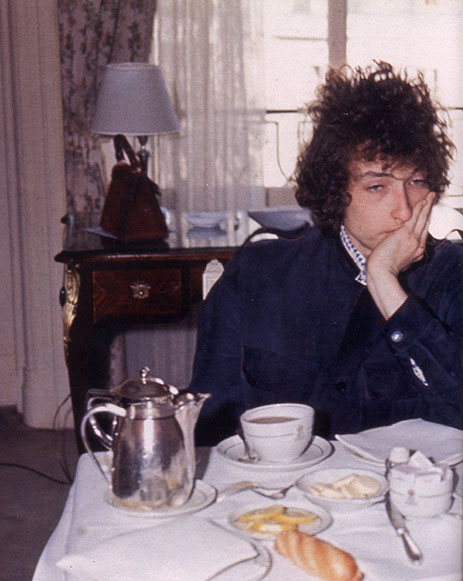
I Ate The Whole Thing
The End.
Edgar Rice Burroughs As An Outsider
November 25, 2007
Edgar Rice Burroughs As An Outsider
By
R.E. Prindle
…the great cats roamed this strange valley of the gorillas.
=Edgar Rice Burroughs
And the Great White Ape stood before the wall that surrounded London of Africa. Cats, gorillas, walls, doors, London England deep in the Heart of Darkness…he was the Lord of the Jungle, Tarzan Of The Apes.
Tarzan is alone as usual as was, one suspects, his creator Edgar Rice Burroughs. The year is 1933 both in Burroughs’ imaginary Africa and temporal Los Angeles where the writer plied his trade.
After a lifetime of trying to break into society Burroughs has Tarzan standing outside the wall of London into which he must break like a burglar or thief in the night.
Within the walls is the citadel of ERB’s desires, the great city on the hill, the castle of redemption. Now fifty-eight years old Burroughs had achieved all the material attributes of success only to have the prize dashed from his hands.
Symbolically he enters the castle of his dreams to find instead only a prison. The long climb up the stairway to heaven leads only to jail.
Nineteen thirty-three was the one hundredth anniversary of his father’s birth. The old ghoul who had imprinted him so evilly had come back from the grave to haunt him, to deny him what he had worked so hard to attain.
As in real life where MGM had stripped him of his life’s work in one deft move so now in his imagination his castle was destroyed by a raging fire storm. Symbolically he portrays his relationship with his father as an old coot who had led him around with a halter round his neck. In his great apocalyptic dream ERB reverses the roles and puts the halter about his father’s neck.
Too late ERB realized he had signed away his great creation to Metro-Goldwyn-Mayer. In a desperate attempt to reclaim him ERB formed a movie company in which for a logo he adopted the MGM symbol but replaced the roaring lion, Leo, with an image of Tarzan shouting Tar-man-gan-eeee. ERB failed to detourne the image and MGM added insult to injury by forcing ERB into exile in Hawaii. Now seventy years old our big cat was exactly where he had been in Chicago when he entered manhood- on the other side of the wall. Still outside. It wasn’t supposed to be that way as Burroughs lamented.
How did it come to pass? How could he succeed so magnificently and yet fail so egregiously? How could life treat him so bad. ERB was just born under a bad sign.
His life began propitiously. He was in effect a little prince in his family for his first seven or eight years but then things began to mysteriously unravel and the little prince became a pauper. And that was more or less how ERB explained his life to himself. The three most influential books in his life were Mark Twain’s The Prince And The Pauper, Frances Hodgson Burnett’s Little Lord Fauntleroy and Owen Wister’s The Virginian.
Burroughs apparently understood his life at least until 1930 in terms of these three books. The Prince became a Pauper then a Prince again. Little Lord Fauntleroy, a disinherited prince lived his young life as a pauper realizing his destiny as a prince at last. These two books were published in Burroughs’ childhood. One assumes he first read them as a boy.
The Virginian was published in 1902. Burroughs said that he had read all three books six or seven times by the early twenties. It is impossible to know when he read The Virginian the first time but as his life was in a turmoil during 1902-03 and ‘04 I wouldn’t think that his first reading was before ‘05 but one can’t be certain.
It would appear that ERB modeled his adult life on Lin McLean, the Virginian.
McLean was essentially a loner who went West to Wyoming much as ERB had repeatedly gone to Idaho. Wister tells the story of the famous Johnson County War through the eyes of his hero, McLean. ERB was in Idaho when the Johnson County War was in progress so Burroughs would have understood the novel with an intimacy denied the rest of us. McLean was a Tarzanic figure who wooed and won a school marm who was culturally far above him. This was perhaps not unlike ERB and Emma. Emma always referred to ERB as a lowbrow.
The most memorable episode in The Virginian is McLean’s marriage. He and his bride honeymoon in the wilds, in romantic scenery quite reminiscent of Burroughs’ dream Africa. Perhaps his taking Emma to Idaho in 1903 was an attempt to recreate this romantic honeymoon. A basis of Tarzan then can be found in Lin McLean the silent Virginian. Also ERB’s apparent vision of himself.
As Burroughs complained that ‘it wasn’t supposed to be like this’ his condition changed began to go wrong about the fifth grade. Here his father began his role as the monstrous ‘God’ of Tarzan And The Lion Man. ERB had attended Brown School up to this point. At this age his father moved him from Brown and sent the young boy to, of all places, a girl’s school. One can only imagine the young boy’s anguish at attending a girl’s school. ERB’s connections with his early schoolmates was disrupted. He had barely begun his tenure at the girl’s school when his father transferred him to a Latin school named Harvard for two and a half years. There is no indication ERB formed any abiding friendships at Harvard School.
While the kids in his neighborhood were walking to Brown everyday ERB was riding his pony alone to Harvard. Undoubtedly the students of Harvard were drawn from all over Chicago so that apart from seeing his fellows in class ERB had little else to do with them.
His father then pulled him from Harvard School sending him off to his brothers’ ranch in Idaho. At this point then he had no contact with his fellow Chicagoans while he was thrown into a delightful situation but one in which he associated with rough cowboys with little education while he attended no school himself.
Why his father was doing this is open to interpretation. Certainly he must have known what the effects would be on his son. His father’s next move was to transfer young ERB to the snobbery of the East at Phillips Academy where he essentially flunked out within a year.
One can only imagine the turmoil in the young man’s mind as he returned to a Chicago he no longer knew and more importantly where no one knew him. It doesn’t seem possible that he could have any but a few acquaintances in Chicago to whom he would still have been a near stranger. So already at sixteen young Burroughs had been placed beyond the pale of society. He was already an outsider. The most he could hope for was to be allowed to return to Brown to finish high school. There at least he had a viable connection with Emma however he would be a rough cut diamond lacking the polish and sophistication that would have appealed to Emma’s father.
Such an opportunity was not to be. At this point ERB’s father placed him in the Michigan Military Academy. ERB described the Academy as a place where parents warehoused their young juvenile delinquents. The resentment is clear in ERB’s attitude. Indeed he rebelled at this latest insult from his, by this time, inscrutable father.
The boy ran away from the MMA returning to his father’s house in Chicago. One wonders if he hopped freights to get there. One can only imagine the anguished pleading of Burroughs as he begged, perhaps on his knees, to be allowed to stay home and attend Brown. His old martinet of a father would have none of it. He packed the boy off again to the Military Academy.
Military Academy! How distasteful the very sound is. To be packed off again to a place where you knew no one and they as ERB believed, were juvenile delinquents. One can only imagine how crushed the boy’s spirit was. He became a class clown. What his fate might have been if his Commandant hadn’t been one who commanded his respect by the name of Charles King one can only guess. King who was not as well remembered by his classmates as he was by Burroughs nevertheless he bucked the boy up perhaps saving his life. At any rate Burroughs developed a dual personality as a class clown while at the same time being responsible enough to lead the football team to undreamed of heights while becoming an outstanding horseman and trick rider.
It was at the MMA that Burroughs formed the only long term friendship of which we are aware; this was a young man from Beatrice, Nebraska by the name of Herb Weston. Weston’s correspondence with Burroughs over the next forty years or so has been preserved for us by Matt Cohen in his book Brother Men.
Burroughs knew Weston only from September to May of the year before he left to join the Army. They saw each other but seldom after that apparently neither corresponding or meeting from 1896 to 1905 or so, but still the friendship flourished in later years.
In 1896 ERB joined the Army requesting the worst post they had and that was willingly given to him. So at this point ERB severed whatever and all ties that he had with anybody. He was the quintessential outsider. He was flying solo.
He apparently took a train to the end of the line wherever that may have been taking a stage coach into his post, Fort Grant, Arizona.
Whatever his fantasy of the Army was he was immediately disabused. He and four other fellows formed an informal club romantically named The Might Have Seen Better Days Club. There’s an element of self pity in the name. It deserves further comment.
The name implies a certain amount of depression. That is implied in Burroughs’ asking for the worst post in the Army. Only one fairly deeply depressed would ask for such a post. It’s the same as the fit of depression in which men used to join the French Foreign Legion.
Burroughs says he joined the Army with the intent of working his way up through the ranks to become an officer. I’m sure it didn’t take long to disabuse himself of that notion. Thus he began to petition his father to get him out of his commitment. His father had enough pull to do so.
So in 1897 he was back on the outside without a plan, presumably just as depressed. At that point in his life he was free to go anywhere, California, New York, the Bay Area, within a year the Yukon Gold Rush would be on. Heck he might even have traveled North with his future hero, Jack London. But ERB took his depression back home to Chicago.
Chicago was his home town but he knew no one there except Emma. ERB went to work for his father. Probably difficult enough but more importantly the office was located on Madison Avenue. That street was the main stem of Chicago’s huge hobo population. These were really outsiders, the men who didn’t fit in to use Robert Service’s memorable phrase.
ERB saw them everyday and must have spoken to many of them, had conversations so that he probably recognized some affinity with them. Hobos would certainly figure large in his writing from time to time.
He undoubtedly fantasized embracing the life of the road and may have on an experimental basis. He was to form a relationship with one of the foremost Hobo poets, H.H. Knibbs later in life. So the pull of the road was there.
He still had no idea what to do with his life. He had joined the Army without telling anyone including his future wife Emma Hulbert. She had sent a letter to him at Fort Grant in September of 1896. When he returned he discovered that he may have been away too long. As improbable as it may sound she was then being courted by a millionaire’s son, Frank Martin. As ERB had no real wish to be married he probably should have let Martin marry Emma.
It seems quite obvious Emma preferred the impoverished ERB to the wealth of Martin. These things obviously do happen. In the denouement thirty-five years later it would have been better for Emma if she had gone with Martin..
At this time ERB chose to return to Idaho. That didn’t work out well so he bounced back to Chicago. Now comes a very critical moment in his life. Perhaps Martin had been on the verge of success with Emma who may have been hurt and confused at the latest abandonment by the man she truly, truly loved.
When Burroughs returned heartening Emma once again Martin very obviously became exasperated at what he considered a bad penny who kept turning up at disadvantageous times.. It appears that he decided to settle ERB’s hash. Martin’s father was a railroad magnate possessing his own private rail car. Martin invited this nemesis of his to take a round trip to New York City with the return trip through Canada and Toronto.
It would appear that he set up a murder attempt to remove his rival in Toronto. On a night on the town in Toronto ERB was either lured into a fight with a couple thugs or accosted by them. The thug delivered a vicious blow to ERB’s forehead with a sap or leaded pipe that ripped his scalp open and laid ERB low.
While the injury was not obvious ERB was seriously hurt. Apparently internal bleeding formed a clot between his forebrain and skull hat had a profound effect on his personality as well as giving him excruciating headaches half the day for every day of his life at least through 1913-14.
Judging from his writing the pressure caused memory lapses during which he was unable to recall people he was familiar with. As this trait would not have been understood ERB was misinterpreted and become even more of an outsider. After his injury in Toronto ERB married Emma probably to spite Martin as he later said he regretted getting married. Nevertheless he now had a wife along with what must have seemed a very peculiar personality.
It is difficult to imagine what options ERB had open to him now that he had to abandon his rough and rowdy ways to take care of his young wife. Working for his father must have been a difficult experiences as it most often is for a son. In addition to that problem ERB came down with typhoid fever. The convalescence completely disrupted his finances. Now having excruciating headaches, a mind that just came and went and no money, no prospects, no future and little hope the man must have been plunged into the depths of despair.
Perhaps in all those Tarzan stories when Tarzan loses his memory they may reflect ERB’s actual experience at this time being periodically bereft of his memory for more or less short periods of time.
Obviously not thinking very clearly he decided to return to Idaho with his new wife and absolutely no prospects of making a living. Well, it worked for the Virginian.
Now, the Yukon Gold Rush had occurred in 1898. Out of that gold rush came a young writer by the name of Jack London. Burroughs was an inveterate reader in those days before movies, TV and radio so that his imagination was fired by London’s stories. London had also been a hobo as a boy.
On the way out to Idaho ERB had Emma riding in an open boxcar so as to comfort their dog. So in his strange way ERB was actually hoboing and doing it with his wife.
Two years later they returned once again to Chicago. Already an outsider ERB now embarked on a career that pushed him further out. Already declassed by his father’s treatment he now declassed himself further by taking an odd assortment of jobs. This period has not been inadequately covered in existing biographies. Perhaps the job that pushed him beyond the pale of social acceptability was his association with a patent medicine man by the name of Stace. Patent medicines were among the most disreputable vocations a man could have. ‘Snake oil’ pitchmen have been parodied in so many movies one has visions of their being run out of town one step ahead of the sheriff.
Burroughs association with Stace occurred just after the publication of Upton Sinclair’s The Jungle and an expose of the business by Samuel Hopkins Adams. A most unpropitious time to be in the patent medicine business. Stace was run out of business by the authorities. It was probably at this time that Burroughs picked up his experiences with grand juries and the police that he displays in The Girl From Farriss’s
Rather than dissociate himself from Stace as he should have done ERB joined with him in a successor venture named Burroughs-Stace. This could not have helped his reputation but would have implicated him as a principal in the snake oil outfit. One can only believe that it wasn’t very desirable to know Edgar Rice Burroughs.
Thus as his mind began to jell around the fiction that would make him famous his prospects were getting slim and slimmer. Perhaps he was grooming himself for the solitary profession of writer.
His experiences and reading all came together in 1911 when he wrote and sold his first effort, A Princess Of Mars. Unusually for a new writer he had more than one good story in him so that within two years he had achieved literary success being able to quit his day job to take up writing full time.
2.
By this time ERB had been outside the loop for so long, from the fifth grade on that his behavior was gauche. He didn’t know how to behave or discourse in polite society. So at this point it didn’t matter how much money he made or how famous he became he was truly a man who couldn’t fit in. Nowhere is this more obvious than in his writing.
One is astonished that between 1912 and 1918, a mere six years, Tarzan became a household word. It was that by the time the first movie was released there was virtually no one in America who hadn’t heard the name Tarzan. This is a level of success rarely attained.
And yet one is mystified as to how this came about. Certainly the penetration wasn’t achieved by a pulp magazine like All Story. The fiction magazines while popular had limited distribution. If we are to believe the sales figures Tarzan Of The Apes had substantial success but nothing like the novels of Zane Grey for instance.
His publisher, McClurg’s made no effort to capitalize on the phenomenon. Their hard cover first issue was very limited in numbers going into reprint status almost immediately. At the end of the decade ERB was reduced to urging them to print at least 40,000 copies before they turned a book over for republication. McClurg’s was loath to do so and I have seen no evidence they did. So one has the phenomenon of Tarzan being a household word with no clear evidence of how it came to be.
Today such success would make an author a celebrity yet the evidence is Burroughs was scorned in his own home town of Chicago. The city had a vibrant publishing scene in those days. There were plenty of famous authors in town with clubs and gathering places yet Burroughs apparently was welcome in none of them.
It is true that he was a pulp writer which was the lowest rung on the literary ladder. It is possibly true that he was the first truly imaginative writer in the sense of today’s sci fi, horror and fantasy genres. One may argue that Wells was first and while his stories are highly imaginative they are still extensions of reality.
Burroughs severed the connection with reality; he deals in impossibilities as if they were possible. One can’t stretch reality far enough to possibly cover Mars, Tarzan’s Africa and Pellucidar. They are clearly impossible. The Land That Time Forgot? Get out of here. So, as an originator of something new, a term I hate to use, Burroughs was a pioneer way out in front of the van. Hence he would have been incomprehensible to the average mind. In the language of the fifties he would have been a phenom. Weird, strange and that’s the way he seemed to have been treated.
In today’s terms his personality would have been vulnerable. Already an outsider the doors were politely shut in his face. Indeed, if one reads his stories they are full of closed doors that won’t open or can’t be opened. In Tarzan And The Lion Man, and this is a great scene, one of an array of doors is standing ajar while all the others are shut tight. The one open door is a trap that puts Tarzan in prison.
So we may assume that all doors were closed to him in Chicago. Whether his reputation followed him or his subject matter put people off or a combination of the two ERB was firmly kept outside. Chicago had that unwanted sign upon its heart.
There was one club that was open to Burroughs. That club was a catch all called The White Paper Club that was open to anyone who made marks on white paper. I suppose that could include anyone who intended to write that novel but had yet to put pen to paper.
Thus the man who had created a household word was forced to mingle with anyone who had soiled a piece of paper. Is it any wonder that ERB wanted to move.
Porges records ERB’s farewell dinner as though it were some sort of complimentary send off but Mr. Prindle dissents.
Among a number of unusual things ERB did that I don’t want to go into here was to circulate the story that he was going West to raise prize hogs. Now, Carl Sandburg called Chicago the Hog Butcher to the World. So one wonders what ERB was thinking. He actually did raise hogs at Tarzana but pig farming darn near broke him.
I can only guess what his fellow White Paperers thought but drawn on the menu was a picture of a pig with wings flying West. If I were ERB I might laugh with the fellows but I wouldn’t think it was a very funny joke. After all the phrase ‘when pigs have wings’ means something impossible while if I were ERB I might think that pig meant me and I might think the message was ‘good riddance and keep going.’ But, maybe I’m hypersensitive.
At any rate Burroughs went and he didn’t come back. He never seemed to miss Chicago a lot although there are many references to the city in his later work so he kept a watchful eye on the town.
So, at the age of forty-three ERB began a new life in sunny SoCal. The world had changed: without possibly understanding why there was no place in the new world for people like Edgar Rice Burroughs. Part of his problem was caused by himself. As a newcomer in town ERB took it upon himself to be morally outraged by Hollywood. Hollywood had itself outraged the morals of the nation so the town was tender and sensitive on the subject. By the time ERB published his book in 1923 Hollywood was mired in some serious scandals not least of which was the Fatty Arbuckle murder trials. ERB’s novel discussing the seedier side of Hollywood life offended some sensibilities. As a newcomer to Hollywood the novel, The Girl From Hollywood, was ill considered. While an excellent novel, in the circumstances it had been better left unwritten.
In combination with his novel the political situation of the world had changed. The World Revolution had succeeded in Russia in 1917. Everyone not in sympathy was anathema and ERB was not in sympathy. He was not loath to advertise this fact. Hence the Communists reacted: in the years 1920-24 his novels were neglected in Britain; they were under assault in Germany; his movie revenues dried up in Hollywood while one wonders if his books received the circulation their popularity demanded.
Another social issue forcing him to the outside was his response to a questionnaire forwarded to him from Chicago sent by the American Jewish Committee. The questionnaire apparently wanted to know his opinions on Jews- was he unequivocally a supporter or did he have reservations. ERB had a reservation that was reasonable but not reasonable enough for the American Jewish Committee. ERB was apparently black listed as all income from the movies ceased from 1921 to 1928. Tarzan was persona non gratis in Hollywood.
When his income dried up ERB was no longer able to support his magnificent estate of Tarzana. Thus began years of economic problems. Hollywood does not tolerate economic problems so there is no record of ERB having a social history in Tinseltown.
ERB began having problems with his publishers most likely because of his anti-Red politics. This resulted in his forming his own publishing company in 1930. So, really by 1930 ERB was virtually outside society. Like his creation Tarzan he was backing down a limb followed by a panther. Undoubtedly it was thought that he would fail as a publisher but he didn’t.
His movie fortunes had changed in 1928 when the ‘anti-Semite’ Joseph P. Kennedy, Jack Kennedy’s father, broke the black list and released a Tarzan movie.
This caused a reaction in the Jewish community that apparently sought to undermine the FBO film Tarzan And The Golden Lion that is available today and a very good silent film starring ERB’s son-in-law, James Pierce who draws a mean bow on the cover.
Two quick films were released by a Jewish film company that held the rights to two novels purchased in 1922 but never filmed. One of these is currently available Tarzan The Tiger while the other isn’t. Frank Merrill of Tarzan The Tiger isn’t a bad Tarzan either.
Apparently heads were put together for a long term solution to Burroughs. A plan was put in effect by Metro-Goldwyn-Mayer, MGM. In 1931 ERB signed a contract with them that virtually stripped him of control of his creation. Although MGM’s 1932 Tarzan Of The Apes was a hit there is good reason to believe it was a clownish attempt to finish the career of Tarzan. No one was more surprised than MGM when the movie became a box office smash. This was the first sound movie and maybe the famous Tarzan yell, that also might have been meant as a joke, put the movie over. But the career of Tarzan was effectively out of Burroughs’ hands. He fought back with a couple really good Tarzan novels. The last of that batch, Tarzan And The Lion Man, ridiculed MGM’s fabled African epic Trader Horn in revenge for MGM’s treatment of Tarzan.
That Burroughs realized he had been frozen out is evident by the scene with which I started this essay where Tarzan is standing outside the walls of London wanting in. This is some of the most masterful writing of a dream sequence imaginable. The room for interpretation is almost unlimited. For this essay I choose to see the scene as representing Burroughs/Tarzan in 1911 when he was standing out in the cold wondering how to be become a success.
Symbolically Tarzan leaps up grasping the down pointed sharpened stakes impossibly lifting himself straight up then rolling forward past the stakes. Burroughs success as a writer was about that impossible and sensational.
Once inside the symbolic London that is populated by a colony of apes who are literal descendants of Henry the Eighth and his court Tarzan skirts the partying crowd to begin a solo attempt to ‘heaven.’ So in real life as Burroughs was shunned by society Tarzan avoids it here. The apes as descendants of Henry the Eighth have been created by a renegade Englishmen known as God to the apes who created them by a process similar to DNA
God’s castle then is known as Heaven and it is that to which Tarzan ascends. As noted earlier he enters a door and is trapped in prison. There is no viable way out so that Heaven is torched going up in flames just as Burroughs career had with the loss of Tarzan. Thus everything Burroughs had worked for for twenty years went up in smoke. This is a very simple interpretation. A more complete one would take fifty or more pages.
Now in control the Judaeo-Communists set about ridding themselves of Burroughs in much the same way, perhaps, that Chicago did.
Burroughs rashly undertook to make his own Tarzan movies. He was led into this disastrous effort by Ashton Dearholt. This man was the husband of Florence Gilbert Dearholt who left Dearholt to marry Burroughs at just this time. Linking up with Dearholt was a recipe for disaster it seems to me.
Burroughs’ venture into film making was disastrous. He had antagonized the radio people so the successful and lucrative Tarzan series were off the air until after his death. His productive years as a writer were behind him so he was almost entirely dependent on MGM for his income. While MGM could have successfully made two or three Tarzan films a year profitably they chose to make a movie only every two or three years keeping Burroughs on a short financial lease.
Unable to sustain a high profile Hollywood life style ERB was forced into exile in 1940 leaving the film capitol for Hawaii.
Thus the process of placing him outside begun in the fifth grade in Chicago was completed in 1940 when he was run out of Los Angeles virtually stripped of his great creation Tarzan.
With their nemesis gone MGM tired of the game giving up the lucrative character a couple years later to Sol Lesser.
Lesser’s Tarzan movies redeemed ERB’s declining years allowing him to return to Los Angeles to quietly live out his life without worries.
I have presented here only as aspect of ERB’s life but in many ways what a life it was. One wonders if ERB was joking when he told a reporter he lived an uneventful life.
The Old Tiger capped his astonishing career in 1950 when he passed to the outside one last time. He passed through an open door that softly closed behind him allowing no return.
Edgar Rice Burroughs As An Outsider
By
R.E. Prindle
…the great cats roamed this strange valley of the gorillas.
=Edgar Rice Burroughs
And the Great White Ape stood before the wall that surrounded London of Africa. Cats, gorillas, walls, doors, London England deep in the Heart of Darkness…he was the Lord of the Jungle, Tarzan Of The Apes.
Tarzan is alone as usual as was, one suspects, his creator Edgar Rice Burroughs. The year is 1933 both in Burroughs’ imaginary Africa and temporal Los Angeles where the writer plied his trade.
After a lifetime of trying to break into society Burroughs has Tarzan standing outside the wall of London into which he must break like a burglar or thief in the night.
Within the walls is the citadel of ERB’s desires, the great city on the hill, the castle of redemption. Now fifty-eight years old Burroughs had achieved all the material attributes of success only to have the prize dashed from his hands.
Symbolically he enters the castle of his dreams to find instead only a prison. The long climb up the stairway to heaven leads only to jail.
Nineteen thirty-three was the one hundredth anniversary of his father’s birth. The old ghoul who had imprinted him so evilly had come back from the grave to haunt him, to deny him what he had worked so hard to attain.
As in real life where MGM had stripped him of his life’s work in one deft move so now in his imagination his castle was destroyed by a raging fire storm. Symbolically he portrays his relationship with his father as an old coot who had led him around with a halter round his neck. In his great apocalyptic dream ERB reverses the roles and puts the halter about his father’s neck.
Too late ERB realized he had signed away his great creation to Metro-Goldwyn-Mayer. In a desperate attempt to reclaim him ERB formed a movie company in which for a logo he adopted the MGM symbol but replaced the roaring lion, Leo, with an image of Tarzan shouting Tar-man-gan-eeee. ERB failed to detourne the image and MGM added insult to injury by forcing ERB into exile in Hawaii. Now seventy years old our big cat was exactly where he had been in Chicago when he entered manhood- on the other side of the wall. Still outside. It wasn’t supposed to be that way as Burroughs lamented.
How did it come to pass? How could he succeed so magnificently and yet fail so egregiously? How could life treat him so bad. ERB was just born under a bad sign.
His life began propitiously. He was in effect a little prince in his family for his first seven or eight years but then things began to mysteriously unravel and the little prince became a pauper. And that was more or less how ERB explained his life to himself. The three most influential books in his life were Mark Twain’s The Prince And The Pauper, Frances Hodgson Burnett’s Little Lord Fauntleroy and Owen Wister’s The Virginian.
Burroughs apparently understood his life at least until 1930 in terms of these three books. The Prince became a Pauper then a Prince again. Little Lord Fauntleroy, a disinherited prince lived his young life as a pauper realizing his destiny as a prince at last. These two books were published in Burroughs’ childhood. One assumes he first read them as a boy.
The Virginian was published in 1902. Burroughs said that he had read all three books six or seven times by the early twenties. It is impossible to know when he read The Virginian the first time but as his life was in a turmoil during 1902-03 and ‘04 I wouldn’t think that his first reading was before ‘05 but one can’t be certain.
It would appear that ERB modeled his adult life on Lin McLean, the Virginian.
McLean was essentially a loner who went West to Wyoming much as ERB had repeatedly gone to Idaho. Wister tells the story of the famous Johnson County War through the eyes of his hero, McLean. ERB was in Idaho when the Johnson County War was in progress so Burroughs would have understood the novel with an intimacy denied the rest of us. McLean was a Tarzanic figure who wooed and won a school marm who was culturally far above him. This was perhaps not unlike ERB and Emma. Emma always referred to ERB as a lowbrow.
The most memorable episode in The Virginian is McLean’s marriage. He and his bride honeymoon in the wilds, in romantic scenery quite reminiscent of Burroughs’ dream Africa. Perhaps his taking Emma to Idaho in 1903 was an attempt to recreate this romantic honeymoon. A basis of Tarzan then can be found in Lin McLean the silent Virginian. Also ERB’s apparent vision of himself.
As Burroughs complained that ‘it wasn’t supposed to be like this’ his condition changed began to go wrong about the fifth grade. Here his father began his role as the monstrous ‘God’ of Tarzan And The Lion Man. ERB had attended Brown School up to this point. At this age his father moved him from Brown and sent the young boy to, of all places, a girl’s school. One can only imagine the young boy’s anguish at attending a girl’s school. ERB’s connections with his early schoolmates was disrupted. He had barely begun his tenure at the girl’s school when his father transferred him to a Latin school named Harvard for two and a half years. There is no indication ERB formed any abiding friendships at Harvard School.
While the kids in his neighborhood were walking to Brown everyday ERB was riding his pony alone to Harvard. Undoubtedly the students of Harvard were drawn from all over Chicago so that apart from seeing his fellows in class ERB had little else to do with them.
His father then pulled him from Harvard School sending him off to his brothers’ ranch in Idaho. At this point then he had no contact with his fellow Chicagoans while he was thrown into a delightful situation but one in which he associated with rough cowboys with little education while he attended no school himself.
Why his father was doing this is open to interpretation. Certainly he must have known what the effects would be on his son. His father’s next move was to transfer young ERB to the snobbery of the East at Phillips Academy where he essentially flunked out within a year.
One can only imagine the turmoil in the young man’s mind as he returned to a Chicago he no longer knew and more importantly where no one knew him. It doesn’t seem possible that he could have any but a few acquaintances in Chicago to whom he would still have been a near stranger. So already at sixteen young Burroughs had been placed beyond the pale of society. He was already an outsider. The most he could hope for was to be allowed to return to Brown to finish high school. There at least he had a viable connection with Emma however he would be a rough cut diamond lacking the polish and sophistication that would have appealed to Emma’s father.
Such an opportunity was not to be. At this point ERB’s father placed him in the Michigan Military Academy. ERB described the Academy as a place where parents warehoused their young juvenile delinquents. The resentment is clear in ERB’s attitude. Indeed he rebelled at this latest insult from his, by this time, inscrutable father.
The boy ran away from the MMA returning to his father’s house in Chicago. One wonders if he hopped freights to get there. One can only imagine the anguished pleading of Burroughs as he begged, perhaps on his knees, to be allowed to stay home and attend Brown. His old martinet of a father would have none of it. He packed the boy off again to the Military Academy.
Military Academy! How distasteful the very sound is. To be packed off again to a place where you knew no one and they as ERB believed, were juvenile delinquents. One can only imagine how crushed the boy’s spirit was. He became a class clown. What his fate might have been if his Commandant hadn’t been one who commanded his respect by the name of Charles King one can only guess. King who was not as well remembered by his classmates as he was by Burroughs nevertheless he bucked the boy up perhaps saving his life. At any rate Burroughs developed a dual personality as a class clown while at the same time being responsible enough to lead the football team to undreamed of heights while becoming an outstanding horseman and trick rider.
It was at the MMA that Burroughs formed the only long term friendship of which we are aware; this was a young man from Beatrice, Nebraska by the name of Herb Weston. Weston’s correspondence with Burroughs over the next forty years or so has been preserved for us by Matt Cohen in his book Brother Men.
Burroughs knew Weston only from September to May of the year before he left to join the Army. They saw each other but seldom after that apparently neither corresponding or meeting from 1896 to 1905 or so, but still the friendship flourished in later years.
In 1896 ERB joined the Army requesting the worst post they had and that was willingly given to him. So at this point ERB severed whatever and all ties that he had with anybody. He was the quintessential outsider. He was flying solo.
He apparently took a train to the end of the line wherever that may have been taking a stage coach into his post, Fort Grant, Arizona.
Whatever his fantasy of the Army was he was immediately disabused. He and four other fellows formed an informal club romantically named The Might Have Seen Better Days Club. There’s an element of self pity in the name. It deserves further comment.
The name implies a certain amount of depression. That is implied in Burroughs’ asking for the worst post in the Army. Only one fairly deeply depressed would ask for such a post. It’s the same as the fit of depression in which men used to join the French Foreign Legion.
Burroughs says he joined the Army with the intent of working his way up through the ranks to become an officer. I’m sure it didn’t take long to disabuse himself of that notion. Thus he began to petition his father to get him out of his commitment. His father had enough pull to do so.
So in 1897 he was back on the outside without a plan, presumably just as depressed. At that point in his life he was free to go anywhere, California, New York, the Bay Area, within a year the Yukon Gold Rush would be on. Heck he might even have traveled North with his future hero, Jack London. But ERB took his depression back home to Chicago.
Chicago was his home town but he knew no one there except Emma. ERB went to work for his father. Probably difficult enough but more importantly the office was located on Madison Avenue. That street was the main stem of Chicago’s huge hobo population. These were really outsiders, the men who didn’t fit in to use Robert Service’s memorable phrase.
ERB saw them everyday and must have spoken to many of them, had conversations so that he probably recognized some affinity with them. Hobos would certainly figure large in his writing from time to time.
He undoubtedly fantasized embracing the life of the road and may have on an experimental basis. He was to form a relationship with one of the foremost Hobo poets, H.H. Knibbs later in life. So the pull of the road was there.
He still had no idea what to do with his life. He had joined the Army without telling anyone including his future wife Emma Hulbert. She had sent a letter to him at Fort Grant in September of 1896. When he returned he discovered that he may have been away too long. As improbable as it may sound she was then being courted by a millionaire’s son, Frank Martin. As ERB had no real wish to be married he probably should have let Martin marry Emma.
It seems quite obvious Emma preferred the impoverished ERB to the wealth of Martin. These things obviously do happen. In the denouement thirty-five years later it would have been better for Emma if she had gone with Martin..
At this time ERB chose to return to Idaho. That didn’t work out well so he bounced back to Chicago. Now comes a very critical moment in his life. Perhaps Martin had been on the verge of success with Emma who may have been hurt and confused at the latest abandonment by the man she truly, truly loved.
When Burroughs returned heartening Emma once again Martin very obviously became exasperated at what he considered a bad penny who kept turning up at disadvantageous times.. It appears that he decided to settle ERB’s hash. Martin’s father was a railroad magnate possessing his own private rail car. Martin invited this nemesis of his to take a round trip to New York City with the return trip through Canada and Toronto.
It would appear that he set up a murder attempt to remove his rival in Toronto. On a night on the town in Toronto ERB was either lured into a fight with a couple thugs or accosted by them. The thug delivered a vicious blow to ERB’s forehead with a sap or leaded pipe that ripped his scalp open and laid ERB low.
While the injury was not obvious ERB was seriously hurt. Apparently internal bleeding formed a clot between his forebrain and skull hat had a profound effect on his personality as well as giving him excruciating headaches half the day for every day of his life at least through 1913-14.
Judging from his writing the pressure caused memory lapses during which he was unable to recall people he was familiar with. As this trait would not have been understood ERB was misinterpreted and become even more of an outsider. After his injury in Toronto ERB married Emma probably to spite Martin as he later said he regretted getting married. Nevertheless he now had a wife along with what must have seemed a very peculiar personality.
It is difficult to imagine what options ERB had open to him now that he had to abandon his rough and rowdy ways to take care of his young wife. Working for his father must have been a difficult experiences as it most often is for a son. In addition to that problem ERB came down with typhoid fever. The convalescence completely disrupted his finances. Now having excruciating headaches, a mind that just came and went and no money, no prospects, no future and little hope the man must have been plunged into the depths of despair.
Perhaps in all those Tarzan stories when Tarzan loses his memory they may reflect ERB’s actual experience at this time being periodically bereft of his memory for more or less short periods of time.
Obviously not thinking very clearly he decided to return to Idaho with his new wife and absolutely no prospects of making a living. Well, it worked for the Virginian.
Now, the Yukon Gold Rush had occurred in 1898. Out of that gold rush came a young writer by the name of Jack London. Burroughs was an inveterate reader in those days before movies, TV and radio so that his imagination was fired by London’s stories. London had also been a hobo as a boy.
On the way out to Idaho ERB had Emma riding in an open boxcar so as to comfort their dog. So in his strange way ERB was actually hoboing and doing it with his wife.
Two years later they returned once again to Chicago. Already an outsider ERB now embarked on a career that pushed him further out. Already declassed by his father’s treatment he now declassed himself further by taking an odd assortment of jobs. This period has not been inadequately covered in existing biographies. Perhaps the job that pushed him beyond the pale of social acceptability was his association with a patent medicine man by the name of Stace. Patent medicines were among the most disreputable vocations a man could have. ‘Snake oil’ pitchmen have been parodied in so many movies one has visions of their being run out of town one step ahead of the sheriff.
Burroughs association with Stace occurred just after the publication of Upton Sinclair’s The Jungle and an expose of the business by Samuel Hopkins Adams. A most unpropitious time to be in the patent medicine business. Stace was run out of business by the authorities. It was probably at this time that Burroughs picked up his experiences with grand juries and the police that he displays in The Girl From Farriss’s
Rather than dissociate himself from Stace as he should have done ERB joined with him in a successor venture named Burroughs-Stace. This could not have helped his reputation but would have implicated him as a principal in the snake oil outfit. One can only believe that it wasn’t very desirable to know Edgar Rice Burroughs.
Thus as his mind began to jell around the fiction that would make him famous his prospects were getting slim and slimmer. Perhaps he was grooming himself for the solitary profession of writer.
His experiences and reading all came together in 1911 when he wrote and sold his first effort, A Princess Of Mars. Unusually for a new writer he had more than one good story in him so that within two years he had achieved literary success being able to quit his day job to take up writing full time.
2.
By this time ERB had been outside the loop for so long, from the fifth grade on that his behavior was gauche. He didn’t know how to behave or discourse in polite society. So at this point it didn’t matter how much money he made or how famous he became he was truly a man who couldn’t fit in. Nowhere is this more obvious than in his writing.
One is astonished that between 1912 and 1918, a mere six years, Tarzan became a household word. It was that by the time the first movie was released there was virtually no one in America who hadn’t heard the name Tarzan. This is a level of success rarely attained.
And yet one is mystified as to how this came about. Certainly the penetration wasn’t achieved by a pulp magazine like All Story. The fiction magazines while popular had limited distribution. If we are to believe the sales figures Tarzan Of The Apes had substantial success but nothing like the novels of Zane Grey for instance.
His publisher, McClurg’s made no effort to capitalize on the phenomenon. Their hard cover first issue was very limited in numbers going into reprint status almost immediately. At the end of the decade ERB was reduced to urging them to print at least 40,000 copies before they turned a book over for republication. McClurg’s was loath to do so and I have seen no evidence they did. So one has the phenomenon of Tarzan being a household word with no clear evidence of how it came to be.
Today such success would make an author a celebrity yet the evidence is Burroughs was scorned in his own home town of Chicago. The city had a vibrant publishing scene in those days. There were plenty of famous authors in town with clubs and gathering places yet Burroughs apparently was welcome in none of them.
It is true that he was a pulp writer which was the lowest rung on the literary ladder. It is possibly true that he was the first truly imaginative writer in the sense of today’s sci fi, horror and fantasy genres. One may argue that Wells was first and while his stories are highly imaginative they are still extensions of reality.
Burroughs severed the connection with reality; he deals in impossibilities as if they were possible. One can’t stretch reality far enough to possibly cover Mars, Tarzan’s Africa and Pellucidar. They are clearly impossible. The Land That Time Forgot? Get out of here. So, as an originator of something new, a term I hate to use, Burroughs was a pioneer way out in front of the van. Hence he would have been incomprehensible to the average mind. In the language of the fifties he would have been a phenom. Weird, strange and that’s the way he seemed to have been treated.
In today’s terms his personality would have been vulnerable. Already an outsider the doors were politely shut in his face. Indeed, if one reads his stories they are full of closed doors that won’t open or can’t be opened. In Tarzan And The Lion Man, and this is a great scene, one of an array of doors is standing ajar while all the others are shut tight. The one open door is a trap that puts Tarzan in prison.
So we may assume that all doors were closed to him in Chicago. Whether his reputation followed him or his subject matter put people off or a combination of the two ERB was firmly kept outside. Chicago had that unwanted sign upon its heart.
There was one club that was open to Burroughs. That club was a catch all called The White Paper Club that was open to anyone who made marks on white paper. I suppose that could include anyone who intended to write that novel but had yet to put pen to paper.
Thus the man who had created a household word was forced to mingle with anyone who had soiled a piece of paper. Is it any wonder that ERB wanted to move.
Porges records ERB’s farewell dinner as though it were some sort of complimentary send off but Mr. Prindle dissents.
Among a number of unusual things ERB did that I don’t want to go into here was to circulate the story that he was going West to raise prize hogs. Now, Carl Sandburg called Chicago the Hog Butcher to the World. So one wonders what ERB was thinking. He actually did raise hogs at Tarzana but pig farming darn near broke him.
I can only guess what his fellow White Paperers thought but drawn on the menu was a picture of a pig with wings flying West. If I were ERB I might laugh with the fellows but I wouldn’t think it was a very funny joke. After all the phrase ‘when pigs have wings’ means something impossible while if I were ERB I might think that pig meant me and I might think the message was ‘good riddance and keep going.’ But, maybe I’m hypersensitive.
At any rate Burroughs went and he didn’t come back. He never seemed to miss Chicago a lot although there are many references to the city in his later work so he kept a watchful eye on the town.
So, at the age of forty-three ERB began a new life in sunny SoCal. The world had changed: without possibly understanding why there was no place in the new world for people like Edgar Rice Burroughs. Part of his problem was caused by himself. As a newcomer in town ERB took it upon himself to be morally outraged by Hollywood. Hollywood had itself outraged the morals of the nation so the town was tender and sensitive on the subject. By the time ERB published his book in 1923 Hollywood was mired in some serious scandals not least of which was the Fatty Arbuckle murder trials. ERB’s novel discussing the seedier side of Hollywood life offended some sensibilities. As a newcomer to Hollywood the novel, The Girl From Hollywood, was ill considered. While an excellent novel, in the circumstances it had been better left unwritten.
In combination with his novel the political situation of the world had changed. The World Revolution had succeeded in Russia in 1917. Everyone not in sympathy was anathema and ERB was not in sympathy. He was not loath to advertise this fact. Hence the Communists reacted: in the years 1920-24 his novels were neglected in Britain; they were under assault in Germany; his movie revenues dried up in Hollywood while one wonders if his books received the circulation their popularity demanded.
Another social issue forcing him to the outside was his response to a questionnaire forwarded to him from Chicago sent by the American Jewish Committee. The questionnaire apparently wanted to know his opinions on Jews- was he unequivocally a supporter or did he have reservations. ERB had a reservation that was reasonable but not reasonable enough for the American Jewish Committee. ERB was apparently black listed as all income from the movies ceased from 1921 to 1928. Tarzan was persona non gratis in Hollywood.
When his income dried up ERB was no longer able to support his magnificent estate of Tarzana. Thus began years of economic problems. Hollywood does not tolerate economic problems so there is no record of ERB having a social history in Tinseltown.
ERB began having problems with his publishers most likely because of his anti-Red politics. This resulted in his forming his own publishing company in 1930. So, really by 1930 ERB was virtually outside society. Like his creation Tarzan he was backing down a limb followed by a panther. Undoubtedly it was thought that he would fail as a publisher but he didn’t.
His movie fortunes had changed in 1928 when the ‘anti-Semite’ Joseph P. Kennedy, Jack Kennedy’s father, broke the black list and released a Tarzan movie.
This caused a reaction in the Jewish community that apparently sought to undermine the FBO film Tarzan And The Golden Lion that is available today and a very good silent film starring ERB’s son-in-law, James Pierce who draws a mean bow on the cover.
Two quick films were released by a Jewish film company that held the rights to two novels purchased in 1922 but never filmed. One of these is currently available Tarzan The Tiger while the other isn’t. Frank Merrill of Tarzan The Tiger isn’t a bad Tarzan either.
Apparently heads were put together for a long term solution to Burroughs. A plan was put in effect by Metro-Goldwyn-Mayer, MGM. In 1931 ERB signed a contract with them that virtually stripped him of control of his creation. Although MGM’s 1932 Tarzan Of The Apes was a hit there is good reason to believe it was a clownish attempt to finish the career of Tarzan. No one was more surprised than MGM when the movie became a box office smash. This was the first sound movie and maybe the famous Tarzan yell, that also might have been meant as a joke, put the movie over. But the career of Tarzan was effectively out of Burroughs’ hands. He fought back with a couple really good Tarzan novels. The last of that batch, Tarzan And The Lion Man, ridiculed MGM’s fabled African epic Trader Horn in revenge for MGM’s treatment of Tarzan.
That Burroughs realized he had been frozen out is evident by the scene with which I started this essay where Tarzan is standing outside the walls of London wanting in. This is some of the most masterful writing of a dream sequence imaginable. The room for interpretation is almost unlimited. For this essay I choose to see the scene as representing Burroughs/Tarzan in 1911 when he was standing out in the cold wondering how to be become a success.
Symbolically Tarzan leaps up grasping the down pointed sharpened stakes impossibly lifting himself straight up then rolling forward past the stakes. Burroughs success as a writer was about that impossible and sensational.
Once inside the symbolic London that is populated by a colony of apes who are literal descendants of Henry the Eighth and his court Tarzan skirts the partying crowd to begin a solo attempt to ‘heaven.’ So in real life as Burroughs was shunned by society Tarzan avoids it here. The apes as descendants of Henry the Eighth have been created by a renegade Englishmen known as God to the apes who created them by a process similar to DNA
God’s castle then is known as Heaven and it is that to which Tarzan ascends. As noted earlier he enters a door and is trapped in prison. There is no viable way out so that Heaven is torched going up in flames just as Burroughs career had with the loss of Tarzan. Thus everything Burroughs had worked for for twenty years went up in smoke. This is a very simple interpretation. A more complete one would take fifty or more pages.
Now in control the Judaeo-Communists set about ridding themselves of Burroughs in much the same way, perhaps, that Chicago did.
Burroughs rashly undertook to make his own Tarzan movies. He was led into this disastrous effort by Ashton Dearholt. This man was the husband of Florence Gilbert Dearholt who left Dearholt to marry Burroughs at just this time. Linking up with Dearholt was a recipe for disaster it seems to me.
Burroughs’ venture into film making was disastrous. He had antagonized the radio people so the successful and lucrative Tarzan series were off the air until after his death. His productive years as a writer were behind him so he was almost entirely dependent on MGM for his income. While MGM could have successfully made two or three Tarzan films a year profitably they chose to make a movie only every two or three years keeping Burroughs on a short financial lease.
Unable to sustain a high profile Hollywood life style ERB was forced into exile in 1940 leaving the film capitol for Hawaii.
Thus the process of placing him outside begun in the fifth grade in Chicago was completed in 1940 when he was run out of Los Angeles virtually stripped of his great creation Tarzan.
With their nemesis gone MGM tired of the game giving up the lucrative character a couple years later to Sol Lesser.
Lesser’s Tarzan movies redeemed ERB’s declining years allowing him to return to Los Angeles to quietly live out his life without worries.
I have presented here only as aspect of ERB’s life but in many ways what a life it was. One wonders if ERB was joking when he told a reporter he lived an uneventful life.
The Old Tiger capped his astonishing career in 1950 when he passed to the outside one last time. He passed through an open door that softly closed behind him allowing no return.
Edgar Rice Burroughs: The Early Married Years
November 18, 2007
Edgar Rice Burroughs:
The Early Married Years
by
R.E. Prindle
First published in Burroughs Bulletin
#60 Fall 2004
Why am I stumbling down the highway
When I should be rolling ‘cross the skyway?
– Donovan
It wasn’t supposed to be like this.
-Edgar Rice Burroughs
1.
The marriage to Emma on January 31, 1900 was the definite turning point in Edgar Rice Burroughs’ life. He wasn’t ready for marriage and he didn’t want it. Up to this point his life had had no direction; it was leading nowhere, the guy was just drifting. ERB had no clear cut goals and if had had one he had no plan in place to attain it.
Beyond a vague interest in art and literature he had no career ideas. Judging from the evidence between his brief and unsatisfactory stint at the Chicago Art Institue at which he refused to subject himself to discipline and the commencement of his literary career, his mind was always tending or drifting to some such end. However at the beginning of 1900, with a new wife and the attendant responsibilites he had to find some way to end his rough and rowdy ways and succeed in business, to make his pile before he was thirty.
Striking it rich before he was thirty was important to him. That desire may have influenced him to head West in 1903 to join his brothers in their gold dredging business. Perhaps he thought he might get in on a major find. Finding a pile of gold or precious stones would be a dominating theme in his Tarzan novels. Tarzan was an extension of his primary personality facet.
But now, as his own life entered the second phase, the country was entering the second of the three distinct phases it would embrace during Burroughs’ lifetime. The first phase we have already covered in depicting Burroughs’ first twenty-five years. The transition from Davy Crockett and Daniel Boone and the Wild Frontier to modern industrial America was completed in such a bewilderingly rapid manner that one wonders that anyone kept his sanity. The world you lived in today was literally gone tomorrow.
The life of George T. Burroughs spanned this transition from conestoga wagons to the Model T. From the invention of the telegraph and Morse Code to the long distance telephone lines with a phone in the living room. From Virgin forests and unbroken sod to cutover wastelands and McCormickReapers cutting over immense fields of golden wheat.
The world of Fennimore Cooper’s Natty Bumppo in the The Prairie had disappeared almost before it was seen. there was barely time to write about it. Right behind Bumppo the skyscrapers of Chicago were thrust into the air while the conflict between the White City and the Black City erupted into industrial warfare. Out of the smoke and flames of burning railway carriages the twentieth century was born.
The streamlined Twentieth Century Limited took the place of purpose built looking locomotives. the might ten-wheel drive ushered in the new era. My god, it takes your breath away just to think about it! What had happened almost wasn’t even a beginning it was just a foretaste of things to come.
One wonders how it affected Edgar Rice Burroughs. Perhaps it was happening too fast to register on the conscious mind. I don’t know if anyone alive has ingested and digested the changes since the great convulsion of 1789. God knows I have tried and failed miserably, as this pitiful effort shows, yet I do honestly believe that I have succeeded better than a very few.
Perhaps in his way Edgar Rice Burroughs made the attempt with his Martian chronicles representing science and the future, with the Tarzan novels dealing with his contemporary life, while the Pellucidar series may possible have represented the unspoiled vistas of primordial Cooperesque America. It’s not an unattractive notion, but I don’t know how true it might be.
By 1900 America was ‘won’. Won and lost. Many plunged fearlessly into the furture while others dragged their feet trying to reclaim that which, while it could still be seen, was no longer there. The Vanished Frontier had a profound effect on American life. It spawned a whole new class of men or at least defined their manifestation. They were men and a way of life which had a profound effect on the mind of Burroughs. While he would never join them, he fantasized the life and if one looks closely wrote a great deal about them. These men were the hoboes, tramps and bums, the inveterate roamers who made Chicago the main stem of their transient empire.
In Chicago their main stem or gathering place was on Madison Avenue, the street on which the battery factory was located. Young Burroughs must have marveled at the phenomenon every spring as the hoboes cleared out of Chicago to spread over the mid-west to help in the sowing and harvesting of the great crops of grain. Every fall they poured out of the boxcars to return to winter in the Windy City.
All they needed was a stake of thirty dollars to get them through the whole winter. Thirty dollars for six months! That’s all it took in those days. When one hears ERB plead poverty when he was earning two thousand or more a year one wonders whether his claims were real or only answered a psychological need.
Nor were these mere down-and-out men as they are pictured in the imagination. As Robert Service was to picture them, these were ‘The Men Who Don’t Fit In’; men who made an ideology of their roaming which was given political form and organization beginning in the first decade of the twentieth century. As Burroughs identified with hoboes as an aspect of his Animus or personality given him by his encounter with John the Bully, I would like to take some space to describe the Hobo phenomenon.
Hoboes are perhaps the most amazing and unique of historical phenomena. They were born of the railroad and are inseparable from it. As we all know, the Golden Spike uniting the East and West coasts was driven on Promontory Point in Utah immediately after the end of the Civil War. The line was audaciously laid through unconquered Indian territory and buffalo wallows. We all remember movie scenes of Indians attacking the Iron Horse with bows and arrows and ‘hunters’ shooting buffalo from train cars dragged behind locomotives belching smoke and flames.
Before the Civil War trains were an innovation in world history arriving in America only in the mid-1830s. After the War Between The States, rail lines proliferated with amazing speed so that by the time of ERB and Emma’s wedding there were literally hundreds of thousands of miles of rail lines crisscrossing the country from North to South and East to West. Passenger trains which are not particularly well suited for hoboing formed a very small percentage of trains, while freight trains formed the bulk of the cars. Box cars were deadheaded or shuttled back and forth empty, no freight. These were the preferred hobo mode of conveyance; they were dry, out of the weather and comparatively warm and comfortable.
Like any other war, the Civil War produced a legion or two of men whose nerves had been so disorganized by the excitement of war that they found it difficult to reintegrate themselves into society. Many of them took to working on the railroads, building the lines here and there. Tansportation was provided by boxcar so, I suppose, they got used to riding in boxcars.
As the lines spread and proliferated, it became possible to just hop a train and ride. As the hobo songwriter Jimmie Rodgers put it:
When a woman gets the blues
She hangs her little head and cries;
When a woman gets the blues
She hangs her little head and cries;
When a man get the blues
He hops a train and rides.
Before the Civil War that wasn’t possible.
Thus, as time passed and the first generation of hoboes left the road, anyone who was restless, adventurous, didn’t want to work or just didn’t fit in could take to a life of roaming. The roaming life was a romantic ideal that had its charms.
Not unsurprisingly a body of literature developed espousing the ideals that motivated hoboing. These took the forms of songs and poems, all narratives are suspect, the Hobo mind falling to rhyme. Large amounts of the literature are anonymous probably growing to fruition around campfires in the hobo jungles as their gathering sites were known. Hence the line from the song ‘Wabash Cannoball’: You’re riding through the jungles on the Wabash Cannonball.
However there were also poets who composed for their audience. The Wobbly Joe Hill wrote one of the most famous songs: ‘Hallelujah, I’m A Bum.’ Perhaps the currently most famous of the Hobo poets is Woody Guthrie. His Grand Coulee Dam and Roll On Columbia are noteworthy songs for any genre. One of his songs which has become an anthem for the disaffected only makes real sense when it is placed in the context of hobo ideology. That was:
This land is your land,
This land is my land,
From California,
To the New York Island.
Guthrie means that this land is the true possession of the wandering hobo and not businessmen or straights like you and me.
For a thumbnail sketch of the Hobo of Burroughs’ time and his ideals, let’s read a song which has retained some currency down to this day. There are apparently innumerable verses and variations on verses that were concocted around the jungle fires but his is the recension printed in The Oxford Book of American Verse (Oxford University Press, 1927) It’s probably cleaned up a little for academic tastes but it still has a nice breezy quality.
The Big Rock Candy Mountain
Introduction
On a summer day in the month of May,
A burly little bum come a hikin’,
He was travelin’ down that lonesome road.
A lookin’ for his likin’.
He was headed for a land that’s far away,
Beside those crystal fountains,
I’ll see you all, this comin’ fall
In the Big Rock Candy Mountains.
1.
In the Big Rock Candy Mountains
You never change your socks,
And the little streams of alkyhol
Come a tricklin’ down the rocks.
Where the shacks all have to tip their hats,
And the railroad bulls are blind.
There’s a lake of stew, and whiskey too,
And you can paddle all around ’em
In your big canoe,
In the Big Rock Candy Mountains.
Chorus: O…the buzzin’ of the bees
In the cigarette trees,
Round the soda water fountains,
Next to the lemonade springs,
Where the wangdoodle sings
In the Big Rock Candy Mountains.
2.
In the Big Rock Candy Mountains,
There’s a land that fair and bright
Where the handouts grow on bushes,
And you sleep out every night,
Where the boxcars all are empty
And the sun shines every day,
O I’m bound to go where there ain’t no snow,
Where the rain don’t fall and the wind don’t blow,
In the Big Rock Candy Mountains.
(Chorus)
3.
In the Big Rock Candy Mountains,
The jails are made of tin,
And you can bust right out again
As soon as you get in.
The farmers trees are full of fruit,
The barns are full of hay,
I’m going to stay where you sleep all day,
Where they boiled in oil the inventory of toil,
In the Big Rock Candy Mountains. (Chorus)
Now there’s a utopia in a parallel universe worthy of the pen of H.G. Wells.
The poem does not refer to the dreams of a defeated man but rather a defiant one, one who has rejected the motivations of the ordinary man who does work for a living. This man is going to pluck the labor of other men for his own benefit- the farmers trees are full of fruit- while using another’s toil for his own benefit- the barns are full of hay. the Hobo is going to a place where they ‘boiled in oil the man who invented toil.’ The Hobo won’t work.
In another poem he says: ‘I could be a banker if I wanted to be. But the thought of an iron cage is too suggestive to me. Now, I could be a broker without the slightest excuse. But look at 1929 and tell me what’s the use.’
As can be seen, the Hobo equates himself with the executive class but to reach his true position in society he would have to apply himself or ‘toil’ against which alternative he adamantly sets his face.
He would rather lament a fate that has inexplicably denied him his birthright, his true place in society.
As another of the great hobo songwriters, Jimmie Rodgers (1897-1933) put it in his ‘Hobo’s Meditation’.
Tonight as I lay on the boxcar
Just waiting for a train to pass by,
What will become of the hobo
When their time comes to die.
Has the Master up there in heaven
Got a place we might call a home
Will we have to work for a living
Or can we continue to roam?
Will there be any freight trains in heaven
Any boxcars in which we might hide
Will there be any tough cops or brakemen
Will they tell us that we cannot ride?
Will the hobo chum with the rich man
Will he always have money to spare
Will they have respect for a hobo
In the land that is hidden up there?
The ‘land that is hidden up there’ is the same as the Big Rock Candy Mountain where the rich man will admit the hobo to equality and respect, by which the hobo means supremacy. For make no mistake, the hobo as H.H. Knibbs indicates has the true vision of life:
We are the true nobility!
Sons of rest and the outdoor air!
Knights of the tie and rail are we,
Lightly wandering everywhere.
Having no gold we have no care,
As over the crust of world we go,
Stepping in time to this ditty rare:
Take up your bundle and beat it, ‘Bo.
That’s almost a political agenda to match the ideology. Knibbs say in his ‘The Grand Old Privilege.:
Folks say we got no morals- that they all fell in the soup,
And no conscience- so the would-be goodies say.
And perhaps our good intentions did just up and flew the coop,
While we stood around and watched them fade away.
But there’s one thing that we’re loving more than money, grub or booze,
Or even the decent folks that speaks us fair,
And that’s the grand old privilege and chuck our luck and choose
Any road at any time anywhere.
Well, that’s a fine impatience with any state of affairs.
So it’s best ‘Bo, while your feet are mates;
Take a look at the whole United States.
Oh the fire and a pal and a smoke at night,
And up again in the morning bright,
With nothing but road and sky in sight!
And nothing to do but go.
I love the sound of it myself, but if you look behind the glitter of Knibbs you’ll see a man with alternatives talking. Knibbs is kind of your Fifth Avenue penthouse hobo talking. Henry Herbert Knibbs (1874-1945), who had such a profound effect on Edgar Rice Burroughs, was a year older while dying a few years earlier.
He came from a well-to-do family where he developed a feeling of romance for cowboys and bums back East, although he never really belonged to either. He may even have chosen the road for a couple years experience, for something to write about, as he intended to write being an English major in college. He certainly became prosperous enough writing for the slicks like The Saturday Evening Post, The American and even breaking into H.L. Mencken’s Smart Set, none of which his chum Edgar Rice Burroughs could ever break into.
Yes, so it’s up ‘Bo for a trip from Barstow to old Berdoo and back to LA for a hot bath and bottle of scotch. That’s my kind of life on the road.
Ta, ta, I’m getting away from myself.
Knibbs and Rodgers and Guthrie actually came after the peak of the phenomenon which was ending by 1903 when the ‘Boes and Tramps and Bums were organizing into their supreme effort to create the Big Rock Candy Mountain right here on earth; when they made their supreme attempt to snatch supremacy from those snooty executives who wouldn’t chum with them; yes, damn them, we’ll combine in the I.W.W. and then we’ll see.
For, don’t you see, the West is dead.
What path is left for you to tread
When hunger wolves are slinking near
Do you not know the West is dead?
The ‘blanket stiff’ now packs his bed
Along the trail of yesteryear
What path is left for you to tread?
Your fathers gold sunsets led
To virgin prairies wide and clear
Do you not know the West is dead?
Now dismal cities rise instead
And freedom is not there nor here
What path is left for you to tread?
Your father’s world, for which they bled,
Is fenced and settled far and near
Do you not know the West is dead?
Your fathers gained a crust of bread
Their bones bleach on the lost frontier,
What path is left for you to tread
Do you not know the West is dead?
Anon. As quoted by Ralph Chaplin (1887-1961) in his autobiography , Wobbly: The Rough And Tumble Story Of An American Radical (University of Chicago Press, 1948)
So that was the problem the bindle stiffs faced, it was work or die, no place to move on to, and which they began to attempt to resolve. Burroughs was stuck in the middle, he couldn’t become a bum which he romantically would have liked nor could he realistically aspire to a seat on the board. Nature’s gold was all taken so he could only aspire to the gold in his mind.
While he might have yearned to be the hobo Bridge of his ‘Out There Somewhere; when he married, he had to abandon that hope, although nearly twenty years later he wrote ‘Tarzan The Untamed’ which can be read as ‘Burroughs the Untamed’. He still yearned after his rough and rowdy ways.
The End.
Addendum To Springtime For Edgar Rice Burroughs
November 16, 2007
Addendum To Springtime For Edgar Rice Burroughs
An Analysis Of Chap. I, Tarzan The Untamed
By
R.E. Prindle
I hope I will be excused for submitting an analysis of only the first Chapter of Tarzan The Untamed. It seems to be very significant while justice couldn’t be done to its remarkable content within a full book review.
Tarzan The Untamed is unusual in that it took ERB a little over a year to write. A very long time for him. The book is also one of the longest Tarzan volumes.
The book was begun three months before Armistice Day on November 11, 1918. This was a tremendously busy period for Burroughs as in January of 1919 he severed his lifelong ties with Chicago forever, moving to Los Angeles. The evidence of the first chapter undoubtedly written by him in August of ‘18 is that this was an especially traumatic period of life for him.
He said he walked out on Emma several times during their marriage. The external evidence of Tarzan The Untamed, Tarzan The Terrible and Tarzan And The Golden Lion is that this period was one of them. At the very least this was a very stormy period for him in his marriage.
The Chapter in question can be divided into three episodes: The killing of Jane and Tarzans discovery of the deed, his reversion to a ‘great white ape’, and the confrontation with the panther. As David Adams has pointed out, whenever a leopard or panther is involved Burroughs is dealing with his sexual problems.
Writing in 1918-19 Burroughs antedates the story to the Fall of 1914 just after the Great War began. He seems to have been particularly aroused by the War. Much to the amazement of his publisher he wanted to become a war correspondent. He was unable to find a place. His writing during this period is replete with references to the War.
It seems possible to relate the death of Jane in the Fall of 1914 to Emma and the Mad King which was written between 9/26 and 11/2 in the Fall of 1914 when the Great War was in progress as reflected in ERB’s story. In the earlier story, ‘Barney Custer of Beatrice’, Barney had performed great services for the Princess Emma, done everything he could do to win her love and trust but she remained distant and distrustful. As the Princess Emma’s attitude refects that of Emma Burroughs this refusal to trust him must have infuriated ERB who at the time must have felt that he done everything a woman could expect of a man. He, in the character of Waldo in 1913’s Cave Girl Part I, actually tells Nadara, who had the same attitude as Princess Emma, that.
ERB’s and Emma’s relationship must have been strained over the intervening four years perhaps reaching a crisis at this time as ERB appears to have walked out at some time in this period although with the turmoil of moving and resettling it is difficult to tell when.
At any rate the brutal murder of Jane burned beyond all recognition except significantly her jewelry indicates the depth of ERB’s emotions. The jewelry may be especially significant in that ERB lamented that in his impoverished days he had to pawn Emma’s jewelry. That time or those times may have been especially bitter for him.
While it is true that he was persuaded to change the story bringing Jane back to life there seems little possibility for the reader to believe anything but that Jane was actually killed. The implication then is that Emma was dead to ERB. He had always regretted marrying Emma, or marrying at all, even going to the extent of saying that Tarzan should never have married which is to say himself. One wonders why, if he felt so strongly he didn’t seek a divorce at this time.
That is how ERB resolves that sexual problem of his wife. ERB then inserts a long paragraph explaining that now that Jane is dead Tarzan reverts to his original identity of the ‘great White ape’ or pure beast. It is explained that he never felt comfortable in his thin veneer of civilization. He assumed it merely because it pleased Jane and now that she is dead he no longer has any use for the guise. Hence as he stalks through the jungle in pursuit of the Germans he does so as a stalking beast no different than a lion or tiger. But more intelligent. He may revert to the beast but he doesn’t abandon the intellectual trappings of the veneer of civilization. Still got Daddy’s knife at his side.
Then in the last third of the chapter having resolved his heterosexual problem he turns to another serious aspect of his sexuality, that of his feeling of emasculation. That aroused homosexual feelings in him that he stoutly rejected.
ERB gave voice to this part of his psychology in Bridge And The Oskaloosa Kid, or otherwise, The Oakdale Affair of 1917, the previous year. Whether there are indications of homosexual feeling between Bridge and Billy Byrne in ‘Out There Somewhere’ is not clear to me at this time. I would have to read it again with that object in mind but they are probably there. As there are abundant indications of the sexual malaise in his subsequent writings it would seem clear that having solved one sexual problem by having others kill it he then turned to the emasculation problem that he had to deal with by himself alone, killing it.
In all other instances where the leopard or panther symbol appears women are involved except in one instance involving the male ape, Akut, in Beasts of Tarzan. There are definite homosexual overtones in that episode. As Tarzan confronts the male panther in this instance alone the beast must refer to Burroughs own sexual ambivalence. Especially as in this instance ERB combines the Panther motif with the terrific storm and extreme darkness.
The theme of storm and leopard is most dramatically portrayed in Tarzan And The Leopard Men of 1931 that opens with leopard men slashing victims, is followed by a terrific storm and succeeds to the confrontation between Old Timer/ERB and Kali Bwana/Florence.
Tarzan the Invincible of 1930 has the terrific storm as Tarzan and La come close to sexual consummation.
So, in this story almost separate from the rest of the novel, the story opens with the brutal murder of Jane followed by Tarzan’s confrontation with Sheeta in the terrific storm.
In this story we learn that Tarzan has some favorite trees. I can’t think of another instance in the oeuvre where Tarzan returns to a tree. In every other instance he merely selects a new tree for the night. In this instance having discovered the murdered Jane he goes to a tree he has often used. I don’t know what that means sexually. Perhaps if he had walked out on her before this he had some place he favored until reconciled.
Goro plays a prominent role. Unlike Greek mythology with which ERB was familiar where the moon is feminine in Burroughs mind the moon is masculine.
Thus it is night with the moon shining although a storm is building. Tarzan climbs the giant bole of the tree to find Sheeta sleeping on his mat in the crotch of the great limb. Thus the emasculation lurking in Burroughs’ subconscious haunts his nighttime bed. At this point the storm begins to break with gale force winds. Clouds obscure the moon and it gets dark, very dark, as dark, one might say as the tomb. It is a peculiarity of Burroughs’ heroes that they can see or find their way in the dark where you or I couldn’t. This is a very potent subconscious symbol. I’m not yet clear on Burroughs’ use of the symbol of darkness.
The Panther in this instance is a male as Burroughs refers to it as ‘he’. Thus in the night in his bed Tarzan comes upon a male sexual symbol. A quote:
Quote:
It was very dark now, darker even than it had ever been before, (see, we’re getting very serious) for almost the entire sky was overcast by thick black clouds.
Presently the man-beast paused, his sensitive nostrils dilating as he sniffed the air about him. Then with the swiftness and agility of a cat, he leaped far outward upon a swaying branch, sprang upward through the darkness, caught another, swung himself upon it and then to one still higher. What could so suddenly have transformed this matter-of-fact ascent (matter-of-fact ascent? What does that mean?) of the giant bole to the swift and wary action of his detour among the branches? You or I could have seen nothing- not even the little platform that an instant before had been just above him and which now was immediately below- but as he swung above it we should have heard an ominous growl; and then as the moon was momentarily uncovered , we should have seen both the platform dimly, and a dark mass that lay stretched upon it- A dark mass that presently, as our eyes became accustomed to the lesser darkness, would take the form of Sheeta, the panther.
Unquote.
As this is obviously a dream or subconscious sequence we don’t have to take into account improbabilities such as the moon breaking through the thick black clouds so conveniently.
Security for Tarzan is always being above things so that once his sensitive nostrils pick out Sheeta on his platform by a series of amazing acrobatics among the waving boughs in the rising gale Tarzan finds a secure place on a branch above the platform. He is now in a position to manage Sheeta. Tarzan always deals with Sheeta by descending upon him or leaping on his back.
In ‘Beasts’ he saves Akut by falling on Sheeta’s back as Sheeta descends from a tree on Akut. At the end of Leopard Men he does a standing leap onto Sheeta’s back. In this instance in a driving rain storm amidst lightening and thunder, on a whipping branch in a gale he does a somersault over Sheeta’s snout onto his back. These are acrobatics I would like to witness.
Now, in 1913’s Cave girl Part I Waldo killed the panther when it fell onto his upright spear. Spear equals penis as symbol. That pelt was given to Nadara after Waldo had worn it himself for some time. If the pelt is associated with both a homo and hetero sexuality homo in the sense of emasculation then there is a real sexual ambivalence indicated. In the case of Cave Girl Waldo assumed the masculinity of the Panther thus augmenting his own to its former state then having regained his masculinity he was able to invest Nadara with his love.
Jane is dead here so that it appears that Tarzan/Burroughs, still troubled by ambivalence as is also evidenced in 1917’s Bridge And The Kid where the Kid is a woman dressed as a man very ambivalently. In that story Bridge/Burroughs is very relieved to discover this boy he has fallen in love with is really a girl. Using his spear, a symbol of the penis, to goad Sheeta to an attack Tarzan retreats in gale force winds to the extremity of a large limb followed by the cat. Had the limb broken one assumes that ERB may have succumbed to his emasculation or latent homosexuality as he plunged back to earth. On earth he has to deal with realities. This is reminiscent of Heracles. Tarzan is a jungle Heracles. Having gotten Sheeta far out on the limb where his footing is insecure, it is at this point in the violence of the storm and wind that he somersaults onto Sheeta’s back.
Sheeta then loses his balance falling from the safety of the trees to earth with Tarzan on his back. Landing splay footed he is smashed to the ground by Tarzan’s weight. Unable to rise in time he is stabbed to death by Tarzan using his father’s knife.
Thus it would appear that so long as Tarzan is in the trees or his imagination he doesn’t really have to deal with earthly problems. But, once on the earth he has to deal with problems directly. As he has killed Sheeta on the earth one is to assume that he believes he has solved the problem of his sexual ambivalence. However the storm rages for a full twenty-four hours with whatever meaning that may have.
Thus in this traumatic day and night Tarzan/ERB’s heterosexual relationship is ended while we are led to believe he slays his emasculated homosexual ambivalence.
Having killed Sheeta Tarzan gathers an armful of fronds that in no way hinder his climbing the giant bole of the tree.
Quote:
Laying a few of the fronds upon the poles he lay down and covered himself against the rain with the others and despite the wailing of the wind and the crashing of thunder, immediately fell asleep.
Unquote.
Good thing the gale didn’t blow the fronds that covered him away. But this is a dream sequence, why would they?
Remember that these scenes of the killing of Jane and ERB’s dealing with his senseof emasculation are occurring in the Fall of 1914 at the time he was in fact writing the sequel to The Mad King, Barney Custer.
In that case Maenck was killing Barney’s alter ego Leopold while Emma/Emma stood round indecisively pondering whether to accept Barney/ERB in his new role as King. In other words ERB’s old loser self was dead while he was permanently assuming his new role as the successful ERB. In Untamed Jane/Emma is killed while Tarzan/ERB slays another troublesome alter ego or sexual problem.
In point of fact Emma Burroughs was quite right to insist that Jane not be killed. Had ERB let the death stand there would have been a gross inconsistency in the oeuvre as he already had Jane playing a prominent role in Jewels of Opar in 1915. Such a glaring inconsistency might have seriously compromised the on going story, actually a roman-a-fleuve, perhaps endangering its continuing success.
The Untamed in the title undoubtedly refers to ERB who is proclaiming his independence from Emma and the bonds of marriage. This theme too was explored in 1913’s Cave Girl which was concerned with the issue of marriage and free love.
Waldo in that story insisted upon waiting to consummate the love between he and Nadara until a minister was handy while she was puzzled as to why there was a need to wait when they were obviously meant for each other.
Untamed begun in Chicago would be finished in Los Angeles under very different circumstances than Burroughs’ life in the Windy City. As the story finished he would be the proud possessor of his own empire- Tarzana.
Burroughs just keeps getting more and more complex.
Pt. 4 Something Of Value I
October 30, 2007
Something Of Value I
by
R.E. Prindle
Part 4
A minor mythographer who emerged at the same time as Burroughs and his Tarzan was the famous character Dr. Fu Manchu of the Irishman Arthur H.S. Ward writing under the name of Sax Rohmer. While his subject is in disrepute at the present time, Rohmer was aware that the times were one of a world sea change. He sensed, along with a few others, now equally in disrepute, that the EuroAmerican tide had crested; its flow was now out.
Rohmer running counter to Western trends made careful ethnic identities even to the point of identifying Irish and Anglo sub-groups although some of the characteristics he attributed to them seem mistaken to my eye.
Nevertheless he sensed the world was entering a period of Mfecane, to use the African term, or a time of troubles to use the Western term.
The African Mfecane which occured among the Bantu tribes of South Africa during the first half of the nineteenth century, and recorded so ably by Burroughs’ major influence, Rider Haggard, was a time when rapdily expanding population pressed on available resources. This was the time when the Zulu chief Chaka organized the Zulu impis or military battalions so excitingly described by Haggard. They were used, in the Zulu phrase to ‘stamp the ememy flat’ which is to say, exterminate them.
Numerous Bantu tribes were either exterminated or driven out to find new lands which is to say stamp non-Zulu tribes flat or drive them off good lands into the desert. Such is the historical process which operates without respect to race. Now, historically all peoples consider themselves the true men while all others are an emasculated inferior sort. This was and is true of the Semites. We all know the legend of diabolical Jewish cleverness. As is well known the Jews consider themselves the Chosen People of not only their tribal god but they have made of their god a universal god that has been accepted by an astonishingly large number of people. The Chinese peoples, which Dr. Fu Manchu represented, consider themselves of the Celestial Empire or Middle Kingdom to which all must bend the knee. The Arab Semites pray: Praise be to Allah, Lord of Creation…Guide us in the right path, the path of those whom you have favored.
Thus both leading Semitic peoples believe they are Chosen peoples which explains that conflict. In the United States, of course, we believe we have god on our side. We are naturally right being unable to be wrong. Praise the Lord and pass the ammunition.
Strangely enough the contemporary world believes it is living outside the historical process, that evolution has ended leaving all species in stasis whereas nothing could be further from the truth. A mythographer like Sax Rohmer is in possession of the truth. This was made apparent with the success of the Bolshevik Revolution when Mfecane took definite shape.
In this long wave action by the Jewish people that began with the apostasy of Sabbatai Zevi in 1666 it seemed momentarily that the messianic years of 1913-28 would be crowned with success, that the Jews would achieve world domination by 1928. The Bolshevik Revolution created a storm of anti-Jewish reaction.
This period from the Revolution of 1917-24 when Lenin died was one of intense apprehensive literature about worldwide Jewish intentions. Not counting the new Nazi reaction in Germany there was a burst of literature criticizing the Jews. In the United States, usually so placid, a reaction was led by Henry Ford then at the crest of his reputation as an auto maker. He had his reasons.
Ford thought he was dealing with an intellectual problem. He wasn’t aware that he had involved himself in an emascualtion contest, or pissing match as they are vulgarly called. The Jews, of course, never let the problem be examined on its merits but immediately raised the spectre of anti-Semitism. Ford was accordingly branded an anti-Semite. Why he or anyone else shoud favor the manhood of Jews over his own is, or should be, open to conjecture but no one can withstand the charge of anti-Semitism and remain respectable in his community. Ford lost the fight on the grounds of anti-Semitism, not the facts, while the Jews now confess to his accusations.
Disregarding all the benefits Ford conferred on civilization, which are very, very many, his fellows deserted him and he has no reputation today.
Thus, as of 1924, it seemed to the Jews as though the millennium had come but then Lenin died. Stalin seized the reins of Soviet government while Hitler’s star was in the ascendance in Germany.
The pall of Freud’s vision of the unconscious spread over the world. All other interpretations of the unconscious had been suppressed. Men like Jean Genet were coming into their own. Then, a year before the messianic years ended when things didn’t look quite so rosy Freud wrote another book, calling this one the Future Of An Illusion. This is a difficult book to understand. To merely condemn religion in the abstract seems redundant, even puerile. Freud appears to be responding to the defeat of the Jewish revolution in the Soviet Union. This must be the illusion whose future concerns him. While Hitler had not yet crushed the Judaeo-Communist revolution in Germany matters were in hand.
Stalin was neutralizing, if not yet eliminating, the cadre that executed the Revolution. It would be another two years before Freud realized that his instructions in 1917 had been in vain. In fact his releasing of his negative vision of the subconscious was about to backfire on him in the hands of Stalin and Hitler in a spectacular way.
I think that it is also signficant that, in these later years of his life, the Castration Complex became more signficant in his thinking, almost displacing the Oedipus Complex in importance. His concentration on it has the sound of an hysterical shriek as the failure of the millennium would be a type of group castration.
For the mythographers, the Burroughs of 1911-17 had been a plateau. Burroughs had brought all the mythological strands together. Like the arrow shot in the air to land one knew not where now one knew where Burroughs’ writing had been leading. It was his turn to inseminate many minds. Those minds no longer had only books to disseminate their views but they had even more potent forms of communication. The nickelodeon of the eighteen nineties had evolved into movies shown in palaces. Looking back, the early movie theatres were a temporary but spectacular moment. In my hometown the chif theatre was appropriately called: The Temple.
The movie makers seized on the psychological projections of the mythographers which could be interpreted and manipulated quite independently of the intentions of the authors. This brought a number of projections which might have been overlooked into the forefront of world consciousness. The exploration of Bram Stoker’s Dracula began in earnest, soon bearing little relation to Stoker’s book. Another stunning projection that would have gone unnoticed except for the movies was Gaston Le Roux’s Phantom Of The Opera. While not a particularly good book, although arresting, the character was coopted by a Hollywood producer while the book was being serialized in a New York paper. Strangely, the Phantom has become a counterpart of Victor Hugo’s Jean Valjean among the Red/Liberals.
Radio had come along in 1920 to be a force from the thirties on.
Movies and radio appealed directly to the subconscious in the brain stem through the eyes and ears which are connected to the brain stem more or less bypassing the conscious mind. With the movies there is too much content to consciously assimilate while the speed with which it passes leaves no room for consideration. Books on the other hand are read into the brain stem but are immediately evaluated by the conscious mind.
At least until the emergence of video tapes beginning in the 1970s movies were an ephemeral form of entertainment. Memories of movies are extremely unreliable as the subconscious manipulates the material for its own uses. Today one can review this ephemera which had such an influence on you, understanding and correcting any misconceptions.
Even more ephemeral and now lost forever was the radio show. One that left the most indelible impression was influenced by Burrough’s work. That most mortal but penetrating pyschological projection was The Shadow.
Today he can live only in the minds of those who were there although abut 350 pulp novels were written about the Shadow of which 280 were written by one man, if you can believe it. He was Walter Gibson. One believed that the Shadow stepped through the creaking door of the Inner Sanctum.
I have never seen the pulp novels but, as Gibson was in charge of both the show and the novels, the results must be the same. The stories were unimportant, as indeed all stories are, the important thing was and is the attitude, the myth. What mythographers call the truth. Thus if you hear only the literal story you have missed the real story. All good writing is done in keys.
The shows could only have been written post-Freud as well as post-Burroughs. the images do not appeal to the conscious mind.
The Shadow had learned ‘the hypnotic power to cloud men’s minds so that they cannot see him.’ (p. 608 On The Air: The Encyclopedia Of Old Time Radio, John Dunning, Oxford 1998) This may sound like so much hocus pocus, yet if one reads Freud’s Group Psychology carefully one will see that what Freud is proposing is hypnotizing groups to achieve one’s ends unnoticed.
If you watch the movies of Hitler working up a crowd you are watching a master hypnotist at work. Perhaps he also had read Le Bon. He comes quietly to the fore after his introduction, stands quietly watching and listening, his hand drops down to manipulate some items on the table. The audience, in their thousands, sit waiting in anticipation. Hitler begins to speak, quietly, indifferently; then his pace picks up, his intensity increases, passion flows from his voice while he gestures wildly, dramatically bringing his huge audience into a trance which he is able to satisfy completely before terminating the seance in a wild orgy of screaming indignation and wildly flailing gesticulation. It may not look impressive viewing it with cool dispassion on film but he’s good, even an artist.
Watch him. You don’t even have to understand German. He was terrific.
Freud also, merely through the force of his personality and reputation was able, through his writing, to influence large numbers of influential people, through them the masses, just by telling them in abstruse terms what they wanted to hear. To wit: Let your unconscious rule, the more sex you have the better a person you will be, do not allow any fancy you may have to be repressed. It’s bad for you. The unconscious, sex and free expression of the libido are good. You like that don’t you? If you act on it you may as well consider yourself hypnotized.
The Shadow in the Freudian sense and the Burroughsian sense was a man of many identities. One becomes a personality of many facets in the unconscious, one might almost say multiple personalities. Indeed, the Shadow lived in the everyday world under a borrowed identity not even his own. “To two persons only is the Shadow’s true identity known- that of Kent Allard, internationally known aviator- and those persons are Xinca Indians, servants picked up by Allard during a stay among their tribe in Central America. A guise often used by the Shadow is that of Lamont Cranston, world renowned big game hunter and traveler, when Cranston is away on his travels. This is by leave of the real Cranston, a man of deep understanding.” (The Pulps: Fifty Years Of American Pop Culture, compiled by Tony Goodstone, Bonanza 1970, p. 228)
Cranston must indeed have been a man of deep understanding while Kent Allard was freed from responsibility for his acts. Nice situation if you can get it. Like all the psychological projections the Shadow was a man of many identities. Most of the projections were experts of disguise, being able to imitate a vast variety of human conditions perfectly from street sweeper to nuclear scientist. Real Urban Spacemen. In Burroughs’ case he created a number of alter egos including John Carter, John Clayton also known as Tarzan, Lord Passmore and other identities, David Innes and Normal Bean. Unlike Freudian/Liberals they were and are more aligned with a firm grip on morality. Jekyll to the core. As the Shadow said: Crime must go! He gave his mocking laugh and said: ‘Who knows what evil lurks in the hearts of men? The Shadow knows.’ Purge your hearts f0r there is no escaping the Shadow.
There was a lot of evil lurking in the hearts of men during the thirties. A very large part of it was centered in Germany and the Soviet union where the epic struggle between good and evil was taking shape that was to end in that catastrophic war. I know you will think that the evil was represented by Adolf Hitler and the good by Judaeo-Communism.
Hitler has been represented as the nadir of evil. He was certainly one of the bad boys of history but then his Freudian style subconscious had been released. Besides, as I have pointed out he was the antagonist and not the protagonist; in other words he could not have existed without Judaeo-Communism, possibly not without Freud: he was acting in self-defense.
Hitler was not outside history as some would have it. It is time to integrate him into the historical process so the period can be understood. The period from 1913 to 1945 was one in which the great goddess Kali danced merrily around the world while Shiva played the pipes. Death is the eternal dance of life in the deepest mythological sense. Nor do Shiva and Kali care how many or who die. Many go, many more come. Since 1913 mankind, not Hitler, but mankind has murdered its hundreds of millions but Nature has replaced the dead with billions. After the human destruction of seven decades the world population has grown to life stifling levels. If the world population is twelve billion by 2050 as has been predicted, mankind will see Kali dance more wildly than ever before while Shiva plays faster, faster and more madly still. Hitler an arch demon? What? Grow up.
From the point of view of Religious Consciousness and this holds true for Judaism, Christianity and Moslemism anything and everything that happens, is merely the will of god. God works in mysterious way his wonders to perform while his mind is beyond the ken of man. I mean…if you believe this religious stuff then you have to accept all of it or else. This is religious fact! Thus Hitler was merely peforming the will of god as he had no other choice. God had created set and setting. From the Religious point of view Hitler must therefore be blameless while god is accountable for all that transpired.
From the scientific Darwinian evolutionary point of view the great wars were inevitable. The wars were the inevitable consequence of natural selection. I know that the general consensus is that not only do we live outside the historical process but that all the evolutionary rules have been set aside in our case. To those people I say believe as you will. In point of fact the struggle for human special existence goes on today as it did in the thirties and forties. One species will triumph over the others if society as we know it is not ended by natural causes by c. 2050.
The period under consideration was a confllict between Slavs, Germans and Jews. It occurred adjacent to and was partially caused by Jewish millennial ideas. Germans and Slavs had been contending for centuries both along the Slavic German border as well as in Courland which ran around the southern and eastern Baltic and within Russian itself.
During the nineteenth century the Czars encouraged Germans to colonize the Ukraine as farmers. A large German colony was established at the mouth of the Volga River. An alien Semitic people, the Jews, resided in Germany and Russia. While the Jews claim to have been loyal German and Russian subjects this notion is nonsense which will not bear up to historical analysis. They were part of the international Jewish community residing in their respective States. Just as the Germans and Slavs wished them to accept their national identities, as Semites the Jews wished to impose their world view on them. Hence one has a classic example of Natural Selection, varieties and species in conflict. In addition Hitler and the Germans were suffering from Emasculation as a result of the Great War while in the new USSR the State was being administered by Emasculated formerly subject peoples.
While one may say this contributed to the savagery of the period from 1913 to 1945 what we have here is a classic Mfecane or Time of Troubles that is still developing. The only solution was to ‘stamp flat’ or exterminate rival combatants. This was merely a part of the historical and evolutionary process. A harsh reality but true. Kali don’t mind, Krishna plays on.
Had the Jews been powerful enough they would have stamped flat both the Germans and Russians just as they began to do with with the Crimeans and as they would do with the Palestinians if let loose today. As it was, both Hitler and Stalin set about exterminating the Semitic Jews. Stalin would have completed the job in 1954 but Kali beckoned to him first.
The Jews always preferred German culture so that in the nineteenth century when the Russians compelled them to take surnames a great many Jews resident in Russia chose German names. As Judaeo-Communists they moved back and forth between Germany and Russia creating the illusion from 1917 to 1945 of German collaboration with Russia. To have called them Jews would have opened one to the charge of anti-Semitism. Who needs that?
If the Czars had attempted to Russify the subject peoples it was as nothing compared to the effort of the USSR under Stalin. Nationality was outlawed under the Communists. Stalin made the resident Germans a special target. Unable to dent the Volga colony’s nationalism he merely exterminated them after WWII.
You could watch Kali dance and Shiva pipe.
Reverting to the Religious Consciousness what purpose of God’s will did Hitler serve? I’m sure His mind is too deep for me, but if you’re religious this point has to be considered. Well, at the time the Popular Front governments in 1936 that were all Red, Judaeo-Communism seemed on the verge of world conquest from China to the USA. Except for Germany, Italy, Spain and Japan Reds were in the ascendant. Even Germany and Italy had adopted variants of Red socialism.
While it may not appear to be so at first glance Hitler smashed the Red economy. The USSR never truly recovered from the war, limping along until its economic collapse during Reagan’s administration in the US.
The war also gave the democratic forces of the US time to organize their resistance to the Red Menace. Unfocussed and in disarray before the war the Scientific element seized control of the State Department and the armed forces so that with the death of the Popular Front president, Roosevelt, the United States actually assumed the role of Hitler and his Nazis as the bulwark against Communism forcing the Jews in the United States to reconsider their position vis-a-vis Communism. It was really at this point that many Jews became anti-Communist in the United States. Hence the Jews assumed their traditional good cop/bad cop role. The US position against Communism gave rise to Jewish charges of Fascism in their bad cop role.
If from a religious point of view everything that occurs is the will of god then god must have been a Red baiter. Today’s Reds take note.
Nevertheless as the mythographers to a man were opposed to Red totalitarianism they all came under attack from the Red/Liberal forces. Every attempt was made to abort established careers while stifling new ones.
If you remember a while back I described a scene in which Commissars were reading Tarzan to employees of the Worker’s Paradise. That fact made Edgar Rice Burroughs a marked man. A concerted effort was begun to interfere with his career. Unfortunately for the Reds this effort resulted in a dozen of the best novels of Burroughs’ career supplying him with a fresh batch of material.
At the same time publishing became more difficult for him while his editors at the pulps became hypercritical of material they had once begged for. Also at this critical time Burroughs changed secretaries. His new secretary, who became his business manager and de facto head of Edgar Rice Burroughs, Inc. was a man named Ralph Rothmund. Rothmund claimed to be Scotch although I’m sure the sept of Rothmund must have been lacking its own Tartan.
The name translates from the German to Red World. It may be coincidence or it may be a joke. Certainly when an organization is being infiltrated the most sought after post is that of secretary. All information passes through the secretary’s hands. Rasputin, for instance, not surprisingly had a Jewish secretary which led to the charges of his complicity with the Germans. You may be sure that Rasputin was not complicit while you may be equally sure that his secretary was. At least with the German Jews.
There hasn’t been much work done on Rothmund by Burroughsians nor do I have any new information to report but let us examine Rothmund’s record as secretary and business manager. What was the result of his twenty-five years of work? Was Burroughs further ahead or further behind when Rothmund went to his greater reward?
The man nearly brought the business to a halt.
He disrupted all relations with the publishers of Burroughs’ early novels, bringing the flow of royalties to a halt in 1946, they had been miniscule even laughable since 1940. Nor did he actively pursue the publication of titles owned by Edgar Rice Burroughs, Inc. The lucrative radio show was discontinued in 1936. In what some fancy as a coup Rothmund sold the movie rights to Tarzan to MGM for a flat fifty thousand a picture, no residuals. By 1940 Burroughs was so broke, or told he was by his business manager, that Rothmund advised him to leave the country for Hawaii where the great creator of Tarzan lived on the meager $250.00 a month that Rothmund allotted him. What was Rothmund’s salary at this time? How much was the corporation earning?
In addition this supposed business manager allowed Burroughs’ copyrights to lapse, never renewing them. By 1945 the most popular titles of Burroughs were available to whoever wanted to publish them. Amazingly no one did while Burroughs’ long time reprint publishers, who knew the copyrights were lapsed, Grossett and Dunlap, honored argreements they were under no obligation to do.
Burroughs’ bacon was pulled from the fire by an earlier more lucrtive movie deal he had nogotiated with a producer named Sol Lesser. When MGM tired of the Tarzan series they let Lesser assume the rights. The revenues from Lesser’s productions defeated Rothmund’s apparent purpose.
Still, after Burroughs died in 1950 Rothmund made no attempt to keep any Burroughs’ titles in print. From 1950 until 1963 at which later date publishers discovered that the copyrights had never been renewed, nothing was available but a few titles from Grossett and Dunlap.
Even then, Burroughs’ most famous book, Tarzan Of The Apes, had been out of print for twenty years or more. Some business manager.
Thus, as is probably true, as a Red infiltrator Rothmund had destroyed the career of the arch Americanist, Edgar Rice Burroughs. the greatest of the mythographers was almost silenced.
While Rothmund worked to silence the Master, the Freud/Hitler/Stalin confrontation in Europe broke out into the most destructive war the world had ever seen. Unlike the previous wars there were no rational minds seeking to ameliorate the damage. Freud had unleashed the Hyde-like destructive subconscious of the West. Hitler, who had always said if the Jews involved Europe in another disaster like the Great War, they would pay the price, meant it. He was no empty boaster. He had the will, he had the ways and means. In the coldest, most scientific way imaginable he systematically rounded the Jews up deeding them to the flames Wow! Not since the great Roman manhunt of 135. Here was new meaning to the Jewish concept of passing the enemy through the fires. Wow!
Hitler raged East and West but he raged beyond his power. As must have inevitably happened before the first shot was fired, after the initial surprise German forces were driven back on all fronts. Driven into isolation by his enemies there was no possibility for a negotiated terminus to the war. In the struggle between the revolution and counter-revolution the only end could be unconditional surrender. That sick madman in Washington, crippled in body and mind, Franklin Delano Roosevelt, working from his subconscious no less than Hitler, insanely persisted in the demand for unconditional surrender. What a different world it would have been if the West had accepted Germany’s surrender before the Russians entered Poland. Heck, Roosevelt wouldn’t have had to honor any deal he made with the Germans any more than his mentor Wilson did in the Great War. What kind of man was Roosevelt anyway?
So here we have a man emasculated by disease, a seriously emasculated man by circumstance and a politically emasculated man directing the affairs of the three most powerful States in the world. Wow!
In defeat Hitler acted in the self-destructive way of the emasculated. He knew he had to die so he wanted nothing left standing in Europe when he was gone. Stalin, Roosevelt and Churchill were nothing loath to help him.
Hitler ordered Paris wired for total destruction. The city was to be blown off the earth in the face of the advancing allies. Wow! However, with the intellectual superstructure of the City of Light destroyed it would have collapsed into the Sewers of Paris, that would have remained intact. Freud had destroyed Morality as D.H. Lawrence had feared:
Quote:
With dilated hearts we watched Freud disappearing into the cavern of darkness….He was making to the origins. We watched his ideal candle falter and go small. Then we waited as men do wait, always expecting the wonder of wonders. He came back with dreams to sell.
But sweet heaven, what merchandise!….What was there in the case?….Nothing but a huge slimy serpent of sex, and heaps of excrement, and myriad repulsive little horrors spawned between sex and excrement.
Unquote.
Wow!
Double Wow!
Yes, Freud hd destroyed the conscious mind and morality and reaped the Sewers of Paris. As the payback for the expulsion of the Jews from Spain the Jews had stultified Europe. What came out of the sewers as intellectual Paris burned?
Jean Genet!
Of course any right thinking person is appalled by the course of history from 1913 to 1945 (or from year one to the present not excluding what went before) but for every right thinking person there are at least two who aren’t. The Third Reich was a paradise for a significant minority. Jean Genet was one of those. Check out a French movie titled ‘Dr. Petiot’ if you want to see another. (The Varieties of Sexual Experience) Genet enjoyed the period. He was a man come into his own. As he has been quoted previously, he delighted in the union of the criminal mind with authority. Why wouldn’t he?
But just as the French Revolution allowed the Marquis de Sade scope for his personality, Napoleon, when he assumed the reins of government clapped de Sade into the insane asylum at Charenton. So the Post-war Fourth Republic sentenced the petty thief Jean Genet to life imprisonment.
Genet might very well have died in prison but for the fact that he, while lying in his bunk smelling his farts, composed the novel entitled: Our Lady Of The Flowers. (What scents are these?) While respectable non-Communist writers were being hounded out of literature this criminal, homosexual, severely emasculated creep found a publisher. Saint, indeed!
Not only that, he found a friend. Jean Paul Sartre had surfaced in 1936 with his novel: Nausea. From this novel he developed what was known in the post-war world as existentialism. This notion was supposedly philosophy. I have been called an existentialist by people who should know what it is but I have to say that I have never understood what Sartre means by it. I’ve even read his trilogy, Roads to Freedom. Still don’t know what he’s talking about; I deny all charges.
Nevertheless by war’s end he had a tremendous reputation within France and without. For some reason he and other literati felt that any criminal who can write a book shouldn’t be in prison, as though Genet had been sentenced for the crime of never having written a book. So they sprung Genet. He could now steal with impunity. Ain’t life just too funny for words. Sartre later wrote a book of some six hundred odd pages about this petty thief entitled: St. Genet: Thief and Martyr. The two must go together. Sort of Geminis perhaps.
Genet had Sartre’s numbers. He dedicated his autobiography, The Thief’s Journal to Sartre: a Sartre au Castor. To Sartre as Castor. If Sartre was Castor then his twin brother Genet, was Polydeukes. As we all know Castor was the mortal twin while Polydeukes was the immortal. Genet was prescient as well as mocking. Today his myth lives on while Sartre and his existentialism is all but forgotten.
The point is that Genet was instrumental in creating the cult of the homosexual. It was through him that the homosexual was allied to the post-war Red coalition. In this union of Emasculates that seized control of US culture, if not always the government, the criminal mores of the homosexual as taught by Genet formed the basis of Red morality, or immorality, as you would have it. Freud was wrong in thinking men can live without the notion of a moral code.
The great mythographers who had attempted to give mankind a positive approach to morality by a union of the conscious and subconscious minds with consciousness preeminent were driven underground as the Red/Liberals seized control of the media preventing any view but their own being expressed.
Freudian visions seem to have triumphed, still, though Edgar Rice Burroughs died in 1950 his great psychological projection Tarzan lived on. He still lives.
To recapitulate: In the course of evolution a new type of man came into being in mid-nineteenth century who required a new vision of psychology. Society, for our purposes here, was thereby split into two divisions. One of Scientific man and two factions of Religious man. One of the latter was the reaction of Christianity which refused to make any accommodation with the new reality while its fellow the Red/Liberal faction while in as violent a reaction as the Christians adopted pseudo-scientific modes while seeking to subvert the Scientific Consciousness.
On the literary level the cudgel of Science was taken up by a group of neo-mythographers who treated psychology and evolution according to the tenets of science.
The Red/Liberal faction developed a revolutionary program guided by the religious conception of science led on the literary level by Sigmund Freud.
Taking the various concepts of the unconscious developed at the end of the nineteenth and the beginning of the twentieth centuries Freud twisted them to his purposes to envision the unconscious as a bale of evil impulses; he then convinced the West to release their impulses under the rubric of liberating the unconscious. The immediate result was an orgy of hate, sadism and murder that lasted, for our purposes from 1917 until 1945 at which time the old order collapsed.
The mythographers who had been less assertive were eclipsed by the Red/Liberals who now led the post-war era. They continued their campaign to sabotage the Scientific Consciousness by instigating a subtle reign of terror from the released unconscious.
Having now completed a survey of the first hundred years centered on the concepts of psychology I will now consider the same period from the point of view of evolution as reflected in the writing of Edgar Rice Burroughs. In the final part I will entwine both the psychological and evolutionary strands in a survey of society from 1945 to the present.
I dreamed I saw Ed Burroughs
As live as live could be.
‘Ah, but Ed, you’re dead.’ Says I.
‘I never died.’ Says he.
‘I never died.’ Says he.
As he stood smiling at me he had Something Of Value in his hand which he gave to me. It was a copy of Tarzan. I became as a pillar of smoke leading the people through the desert to freedom.
End of Something of Value I
Something Of Value II follows.
 I, Dynamo