A Review: The Martian by George Du Maurier
May 5, 2009
A Review:
The Novels Of George Du Maurier
Peter Ibbetson, Trilby, The Martian
Part III
The Martian
Review by R.E. Prindle
There’s a somebody I’m longin’ to see
I hope that she turns out to be
Someone who’ll watch over me.
-Ella Fitzgerald
Contents:
Part I: Introduction
Part II: Review of Trilby
Part III: Review Of The Martian
Part IV: Review of Peter Ibbetson
If Trilby was a premontion of his death, in the Martian Du Maurier puts his intellecual affairs in order for his long journey into the night. In the novel he even advises us that he has convinced himself that there is life after death. On the completion of The Martian Du Maurier died of a heart attack. The novel appeared posthumously.
I have read that Trilby was meant as a neo-Gothic novel as the Gothic was enjoying a revival at the time. If Trilby was neo-Gothic then The Martian is associated with the Spiritualist revival of the moment. Du Maurier even does a mini dissertation on table turning and rapping, two prominent manifestations of Spiritualism.
At the same time a Martian craze was in progress. ERBzine a while back ran a list of early Martian novels so the topic was under discussion. H.G. Wells’ War Of The Worlds was published at about the same time as The Martian so Burroughs in 1911 was in the genre, possibly he had been thinking of a Martian novel for a few years. At least it was the first notion that popped into his head. With Du Maurier then we have an interplanatary spiritualistic love story for love story it is. A spectucular one.
The notion is that a female Martian was expelled from Mars coming to Earth in a meteor shower a hundred years previously. Must have landed at Wold Newton. During that time she had inhabited thousands of bodies in search of the ideal situation. She settled on Barty Josselin’s family who were especially attractive and English. She inhabited Barty from an early age. When inhabited Barty had an unerring ability to tell the North. No matter how many times he was spun around or disoriented he could always point to due North. Later in the novel we learn that because of peculiar magnetic influences stronger on Mars than on Earth Martia the Martian was oriented to the North. Thus when she was inhabiting Barty he could unerringly feel due North, if she left him for a while he lost the ability. For most of the book we have no idea how he could feel North but it is explained at last. Very clever explanation too.
Martia falls in love with Barty, planning his life for him as he is to be a great success. I’m looking for that kind of angel. But that’s in the second half of the novel while Du Maurier has to get us from here to there. In each of the novels he has long preambles covering half the book in which he carefully builds up character. Everything then falls neatly into place.
Now, as I said in the introduction, the novel is ostensibly a biography of Barty as told by his friend Robert Maurice, illustrated by the real life Du Maurier at Maruice’s request and also edited by him. This gives Du Maurier triple distance as a writer allowing him I should think to say things it might have been difficult to say otherwise. Even then the distance is frequently breached and one has the feeling that Du Maurier is actually Barty, Bob and himself. Talk about table turnings and rappings. Burroughs come close to this feel and complexity in The Eternal Lover. In that novel he also gives himself a role as well as his character Tarzan. Quite similar to the Martian.
The spate of novels Burroughs produced from 1911 to the first quarter of 1914 must all have been in his mind in embryo before he wrote A Princess Of Mars hence all his readings from childhood to early manhood are reflected. It was only when he switched from talented amateur to professional writer in mid-1914 that he had to search for his plots and stories thus taking in more current literary sources as well.
Whereas in Trilby Du Maurier concentrated on the decade from 1860 to 1870 plus a year or two in this novel he lovingly recreates his school years in Paris during the 1840s before taking Barty up through the years until his death. As a projection of himself Barty is an idealized Du Maurier who does many things Du Maurier did and didn’t.
Barty is 6’4″ and impossibly handsome and winning neither of which would describe Du Maurier. Barty has a wonderful singing voice but too thin for grand opera although he tries as did Du Maurier. Barty had the perfect voice for intimate occasions in which he was invariably successful. Du Maurier also was fond of the musical occasion and, perhaps, in this current age of electronic amplification both could have been successful recording stars a la Gordon Lightfoot or Jesse Colin Young.
Like Du Maurier Barty, while not a great artist, enjoys some success an an illustrator before becoming a wildly successful author. Mostly he knocks around from hand to mouth living off his looks and manners. Women just love him.
As with Du Maurier Barty develops a detached retina in his left eye leaving him blind in that eye. Much discussion of eyes and doctors. Always entertainingly done. Thus in search of a good doctor Barty is directed to a Dr. Hasenclever in Dusseldorf which finally congeals the story and get it moving toward its end.
Re-enter Martia, or actually enter Martia. She just shows up out of the blue. Here we get real Spiritualistic. Barty had begun to despair about his eyes. He despaired to the point of organizing his suicide which he would have done if Martia hadn’t intervened. She puts Barty to sleep. When he wakes his poison is gone, quite disappeared, and in its place a long letter from Martia explaining the situation in his own hand. Spooky what?
In the letter Martia advises him that he is not to think of suicide as she has big plans for him and he is destined to move mountains. Apparently an oculist of some note she gives him expert medical advice then directing him to Dusseldorf and Dr. Hasenclever. Being rather promiscuous in inhabiting bodies she may have passed a one nighter in Hasenclever. I’m only speculating.
It seems that all of England is having optical problems all converging on Dusseldorf and the fabled Dr. Hasenclever at one time. Thus Barty is brought together with his destined wife, Leah.
Barty and Bob Maurice were both attracted to Leah when she was fourteen. Attractive as a young girl she has developed into the premier beauty of the world. She has rejected all suitors including the narrator, Bob, who lives his life as a bachelor as a result. Leah has had her eye on Barty all along.
At this point it might be best to give Martia’s history. Du Maurier’s account is interesting so at the risk of offending I’ll give a very lengthy quotation of seven pages. As few readers of this review will read The Martian I don’t think it will hurt.
That Barty’s version of his relations with “The Martian” is absolutely sincere is impossible to doubt. He was quite unconscious of the genesis of every book he ever wrote. His first hint of every one of them was the elaborately worked out suggestion he found by his bedside in the morning- written by himself in his sleep during the preceding night, with his eyes wide open, while more often than not his wife anxiously watched him at his unconscious work, careful not to wake or disturb him in any way.
Roughly epitomized Martia’s story was this:
For an immense time she had gone through countless incarnations, from the lowest form to the highest, in the cold and dreary planet we call Mars, the outermost of the four inhabited worlds of our system, where the sun seems no bigger than an orange, and which but for its moist, thin, rich atmosphere and peculiar magnetic conditions that differ from ours, would be too cold above ground for human or animal or vegetable life. As it is, it is only inhabited now in the neighborhood of tis equator’ and even there during its long winter it is colder and more desolate than Cape Horn or Spitzbergen- except that the shallow, fresh-water sea does not freeze except for a few months at either pole.
All these incarnations were forgotten by her but the last; nothing remained of them all but a vague consciusness that they had once been, until their culmination in what would be in Mars the equivalent of a woman on our earth.
Man in Mars is, it appears, a very different being from what he is here. he is amphibious and descends from no monkey, but from a small animal that seems to be something between our seal and our sea-lion.
According to Martia, his beauty is to that of the seal as that of Theseus or Antinous to that of an orang-outang. His five senses are extraordinarily acute, even the sense of touch in his webbed fingers and toes; and in addition to these he possesses a sixth, that comes from his keen and unintermittent sense of the magnetic current, which is far stronger in Mars than on the earth, and far more complicated and more thoroughly understood.
When any object is too delicate and minute to be examined by the sense of touch and sight, the Martian shuts he eyes and puts it against the pit of his stomach, and knows all about it, even its inside.
In the absolute dark, or with his eyes shut, and when he stops his ears, he is more intensely conscious of what immediately surrounds him than at any other time, except that all colour-perception ceases; conscious not only of material objects, but of what is passing in his fellow-Martian’s mind- and this for an area of many hundreds of cubic yards.
In the course of its evolution this extraordinary faculty- which exists on earth in a rudimentary state, but only among some birds and fish and insects and in the lower forms of animal life- has developed the Martian mind in a direction very different from ours, since no inner life apart from the rest, no privacy, no concealment is possible except at a distance involving absolute isolation; not even thought is free; yet in some incomprehensible way there is, as a matter of fact, a really greater freedom of thought than is conceivable among ourselves; absolute liberty in absolute obedience to law; a paradox beyond our comprehension.
Their habits are simple as those we attribute to cave-dwellers during the prehistoric periods of the earth’s existence. But their moral sense is so far in advance of ours that we haven’t even a terminology by which to express it.
In comparison, the highest and best of us are monsters of iniquity and egoism, cruelty and corruption; and our planet is (a very heaven for warmth and brilliancy and beauty, in spite of earthquakes and cyclones and tornadoes) a very hell through the creatures that people it- a shambles, a place of torture, a grotesque and impure pandemonium.
These exemplary Martians wear no clothes but the exquisite fur with which nature has endowed them, and which constitutes a part of their immense beauty, according to Martia.
They feed exclusively on edible moss and roots and submarine seaweed, which they know how to grow and prepare and preserve. Except for heavy-winged bat-like birds, and big fish, which they have domesticated and use for their own purposes in an incredible manner (incarnating a portion of themselves and their consciousness at will in their bodies), they have cleared Mars of all useless and harmful and mutually destructive forms of animal life. A sorry fauna, the Martian- even at its best- and a flora beneath contempt, compared to ours.
They are great engineers and excavators, great irrigators, great workers in delicate metal, stone, marble, and precious gems (there is no wood to speak of), great sculptors and decorators of the beautiful caves, so fancifully and so intricately connected, in which they live, and which have taken thousands of years to design and excavate and ventilate and adorn, and which they warm and light up at will in a beautiful manner by means of the tremendous magnetic current.
This richly party-colored light is part of their mental and moral life in a way it is not in us to apprehend, and has its exact equivalent in sound- and vice versa.
They have no language of words, and do not need it, since they can only be isolated in thought from each other at a distance greater than that which any vocal sound can traverse; but their organs of voice and hearing are far more complex and perfect than ours, and their atmosphere infinitely more conductive of phonal vibrations.
It seems that everything which can be apprehended by the eye or hand is capable of absolute sonorous translation; light, colour, texture, shape in its three dimensions, weight and density. The phonal expression and comprehension of all these are acquired by the Martian baby almost as soon as it knows how to swim or dive, or move upright and erect on dry land or beneath it; and the mechanical translation of such expression, by means of wind and wire and sounding texture and curved surface of extraordinary elaboration, is the principal business of Martian life- an art by which all the combined past experience and future aspirations of the race receive the fullest utterance. Here again personal magnetism plays an enormous part.
And it is by means of this long and patiently evolved and highly trained faculty that the race is still developing towards perfection with constant strain and effort- although the planet is far advanced in its decadence, and within measurable distance of its unfitness for life of any kind.
All is so evenly and harmoniously balanced, whether above ground or beneath, that existence is full of joy in spite of the tremendous strain of life, in spite also of a dreariness of outlook on barren nature, which is not to be matched by the most inhospitable regions of the earth; and death is looked upon as the crowning joy of all, although life is prolonged by all means in their power.
For when the life of the body ceases, and the body itself is burned and its ashes scattered to the winds and waves, the infinitesimal, imponderable and indestructible something we call the soul is known to lose itself in a sunbeam and make for the sun, with all its memories about it, that it may then receive further development, fitting it for other systems altogether beyond conception; and the longer it has lived in Mars the better for its eternal life in the future.
But it often, on its journey sunwards, gets tangled in other beams, and finds its way to some intermediate planet- Mercury, Venus, or the Earth; and putting on flesh and blood and bone once more, and losing for a space all its knowledge of its own past, it has to undergo another mortal incarnation- a new personal experience, beginning with its new birth; a dream and a forgetting, till it awakens again after the pangs of dissolution, and finds itself a step further on the way to freedom.
Martia, it seems, came to our earth in a shower of shooting-stars a hundred years ago. She had not lived her full measure of years on Mars; she had elected to be suppressed, through some unfitness, physical or mental or moral, which rendered it expedient that she should become a mother of Martians, for they are very particular about that sort of thing in Mars; we shall have to be so here some day, or else we shall degenerate and become extinct; or even worse!
Many Martian souls come to our planet in this way, it seems, and hasten to incarnate themselves in as promising unborn but just begotten men and women as they find, that they may the sooner be free to hie them sunwards, with all their collected memories.
According to Martia, most of the best and finest of our race have souls that have lived forgotten lives in Mars. But Martia was in no hurry; she was full of intelligent curiosity, and for ten years she went up and down the earth, revelling in the open air, lodging herself in the brains and bodies of birds, beasts, and fishes, insects, and animals of all kinds- like a hermit crab in a shell that belongs to another- but without the slightest inconvience to the legitimate owners, who were always quite unconscious of her presence, although she made what use she could of what wits they had.
Thus she had a heavenly time on this sunlit earth of ours- now a worm, now a porpoise, now a sea-gull or a dragon-fly, now some fleet footed, keen-eyed quadruped that did not live by slaying, for she had a horror of bloodshed.
She could only go where these creatures chose to take her, since she had no power to control their actions in the slightest degree; but she saw, heard, smelled and touched and tasted with their organs of sense, and was as conscious of their animal life as they were themselves. Her description of this phase of her earthly career is full of extraordinary interest, and sometimes extremely funny- though quite unconsciously so, no doubt. For instance, she tells how happy she once was when she inhabited a small brown Pomeranian dog called “Schanpfel,” in Cologne, and belonging to a Jewish family who dealt in old clothes near the Cathedral; and how she loved and looked up to them- how she revelled in fried fish and the smell of it- and in all the stinks in every street of the famous city- all except one, that arose from Herr Johann Maria Farina’s renowned emporium in the Julichs Platz, which so offended the canine nostrils that she had to give up inhabiting that small Pomeranian dog for ever, &c.
Then she took to man, and inhabited man and woman, and especially child, in all parts of the globe for many years; and finally, for the last fifty or sixty years or so, she settled herself exclusively among the best and healthiest English she could find.
One can find many threads leading to current science fiction ideas as developed through the intervening years. Mental telepathy is a virtual human fixation. Having once given up the notion of God, man turned to the idea of visitations from outer space to replace that religious impulse. Thus Martia from Mars. There were many notions there to enter Burroughs mind and set him thinking.
Du Maurier enters a thought on Eugenics which was dear to his heart. He always has beautiful and intelligent marrying the same so that the genes (although genes were not yet known) would be transmitted to the offspring.
He also has the soul making for the sun with all its memories intact. Memories are very important to Du Maurier who records impressions of sight, sounds and smells as when Martia inhabited the little dog.
Martia wanted Barty to marry a Julia Royce who was the second most beautiful woman in the world after Leah and one of the richest but Barty defied Martia preferring his long time love Leah Gibson who had shown up in Dusselforf with her mother, friends and rest of England.
Martia leaves Barty in a huff. He and Leah return to England Martialess where he leads a determined life as an illustrator along the lines of that of Du Maurier Martia finally takes pity on him returning to be his collaborator and muse as the pair launch a spectacular literary career, I suppose not unlike that of Du Maurier. If Martia has a sister send her my way. I’m paying attention to those meteor showers now.
Martia advises him to keep his pad and pencil bedside so that when she inhabits him he will be able to write. So Barty writes two hours a night, setting up outlines and plans which he elaborates during the day. I would like such a muse to watch over me as I imagine every writer would. Barty’s books astonish the world changing the course of history. His masterwork is called Sardonyx.
Eventually Martia tires of this, wishing to be incarnated and get on with her journey from Mars to the Sun with Barty in tow.
That Du Maurier has his own death in mind and The Martian is a book about death, we have this quote:
He (Barty) has robbed Death of nearly all its terrors; even for the young it is no longer the grisly phantom it once was for ourselves, but rather of an aspect mellow and benign; for to the most skeptical he (and only he) has restored that absolute conviction of an indestructible germ of Immortality within us, born of remembrance made perfect and complete after dissolution; he alone has built the golden bridge in the middle of which science and faith can shake hands over at least one common possibilty- nay, one common certainty for those who have read him aright. (That might possibly be you and me, I think he means.)
There is no longer despair in bereavement- all bereavement is but a half parting; there is no real parting except for those who survive, and the longest earthly life is but a span. Whatever future may be, the past will be ours forever, and that means our punishment and our reward and reunion with those we loved. It is a happy phrase, that which closes the career of Sardonyx. It has become as universal as the Lord’s Prayer!
One guesses that science had destroyed any hope of immortality for the educated person. Of all human desires the hope of immortality is the strongest hence the fear of losing it is the strongest fear. Thus Barty (and Martia) came up with a scientifically tenable hope of escaping death that satisfied the religious need. It’s a pity that Du Maurier didn’t quote Barty in extenso so that we might learn what the solution was.
Having solved that problem from there we go to Martia’s announcement to Barty that she is going to be his next child. Martia is born to die an early death as she is anxious to complete the journey to the center of the sun. Given the content of Peter Ibbetson and Trilby one begins to question Du Maurier’s own sanity. These books are really convincingly written; one wonders how wobbly the guy really was. Either he was a master writer or he really half believed this stuff.
Martia writes a letter to Barty explaining her intentions to be reincarnated. This is all actually written by Barty in his own handwriting which his wife and intimates, like Bob Maurice, his biographer, know. they have doubts about Barty’s sanity but when a guy is churning out books after book changing the world for the better what is one to say?
“MY BELOVED BARTY,- The time has come at last when I must bid you farewell.
“I have outstayed my proper welcome on earth, as a disembodied conscience by just a hundred years, and my desire for reincarnatin has become an imperious passion not to be resisted.
“It is more than a desire- it is a duty as well, a duty far too long deferred.
“Barty, I am going to be your next child. I can conceive no greater earthly felicity than to be a child of yours and Leah’s. I should have been one long before, but that you and I have had so much to do together for this beautiful earth- a great debt to pay; you, for being as you are; I , for having known you.
“Barty, you have no conception what you are to me, and always have been.
“I am to you but a name, a vague idea, a mysterious inspiration; sometimes a questionable guide, I fear. You don’t even believe all I have told you about myself- you think it all a somnambulistic invention of your own; and so does your wife, and so does your friend.
“Oh that I could connect myself in your mind with the shape I wore when I was last a living thing! No shape on earth, not either yours or Leah’s or that of any child yet born to you both, is more beautiful to the eye that has learned how to see than the fashion of the lost face and body of mine.
Etc.
I don’t know what any readers I may have think of these quotes but these three novels are either the work of a genius or a nut cake. I read with one eyebrow raised in a state of astonishment. Du Maurier is daring. Perhaps it is just as well he died as he finished this, what wonders what he would come up with next.
Martia is born a girl. She is named Marty. Singularly delicate as a spindle. As a young girl Martia falls from a tree injuring her spine. The result is physical degeneration. Within a few years she is dead. As she died Barty died with her.
This poses an interesting reflection. Father and daughter are united in death then married in the after life. I suppose there is many a father and daughter so close that they would like to marry but society and time prevent such unions. Indeed, such marriages could but go sour amid the stresses of life. Nevertheless in a shocking development Barty has not only solved the problem of immoratality but marriage between daughters and fathers. Threw me for a loop when I realized what had happened.
One supposes the pair reached the sun turning into sunbeams that have lighted the Earth continuing on toward Betelguese.
The closing line is: Barty Josselin is no more.
Prophetic of George Du Maurier’s own death shortly.
Thus Du Maurier closed out a singularly influential life. It was perhaps just as well that he died when he did. He was only sixty-two but in another ten or fifteen years the world he knew, loved and reprsented would be swept away forever. He would have had no place in the new order. As with all of us the past retains a hold while the swift moving earth slips from beneath our feet.
It is amusing to think Du Maurier was reincarnated in the career of Edgar Rice Burroughs who penned his own A Princess Of Mars in 1911. One can’t say for sure that Martia and Dejah Thoris are related but I rather think that Du Maurier’s The Martian is a literary antecendent that formed part of ERB’s vision of Mars.
Like Du Maurier he was able to incorporate a multitude of literary worlds within his own.
Part II A Review: Trilby by George Du Maurier
April 29, 2009
A Review
Trilby
by
George Du Maurier

George Du Maurier
Review by R.E. Prindle
Du Maurier is interesting as a possible influence on Burroughs. Du Maurier not only borrows from authors he admires but tells the reader he’s borrowing. Burroughs borrows without creditation. The great literature of the nineteenth century was written during Du Maurier’s lifetime. Thus Alexandre Dumas’ Three Musketeers of 1845 was a new book. It was also a book that overwhelmed Du Maurier’s imagination while having a later profound effect on Burroughs. Thus Du Maurier tells the reader his plot is based on The Three Musketeers. Like Burroughs Du Maurier incorporates several sources in an obvious manner. He was apparently fascinated by Henry Murger’s Scenes De La Vie Boheme of 1851. I haven’t read the book as yet but other reviewers say the influence is there. I pick up an influence from La Dame Aux Camellias by Dumas fils also. Du Maurier refers to many poets and writers whose writing left him helpless but as I am not that well grounded in many aspects of early nineteenth century literature I can’t identify the influences myself but they are as plentiful and obvious as with Burroughs himself.
In his own life Du Maurier had aspirations to be an opera singer but lacked the powerful voice. He then aspired to be an artist but lacked that talent becoming one of the premier illustrators of the century instead. And then as he felt death approaching he turned to writing. Thus a failure as a singer, a failure as an artist but success as an illustrator he became a huge success as a novelist. The careers of his protagonists generally follow the same course.
He is also a nostalgic writer as he lovingly recreates the scenes of his youth and life. He always retained the impress of La Boheme living his life in a genteel bohemian style. I suppose today he would be like an old hippy walking around in a gray pony tail, sandals and the garb of the sixties while making a fortune as a stock broker.
Thus Trilby opens in an artist’s atelier on the Left Bank of Paris in the Latin Quarter. The Latin Quarter of his time may be compared to New York’s Greenwich Village or San Francisco’s North Beach of the fifties and sixties. Du Maurier himself lived such an existence for a couple years at the end of the eighteen fifties.
We are thus introduced to his three musketeers- Taffy, the Laird and Little Billee. They are fine comrades living the Bohemian life style much as some upper middle class hippies took to a bohemian life style with torn jeans and the pose of the impoverished in the nineteen-sixties.
The whole ensemble is gathered thogether in the atelier for the opening section. Taffy, The Laird and Billy are letting the studio. As Du Maurier says on the title page this is a love story. Trilby O’ Farrell the love interest turns up immediately. She and Billy love each other but Trilby is classed as a grisette which was apparently the equivalent of a hippy chick who was somewhat free living. Trilby declassed herself completely by posing as an artist’s model in the altogether or, in another word, nude. This was no small thing to all concerned although the bohos tended to be a little tolerant.
After Trilby arrives come Svengali and his sidekick Gecko. They are musicians. Svengali is billed as an incomparable musician which is to say performer. He was a great pianist. He taught Gecko his violinist everything he knew.
We are discussing the nineteenth century and nineteenth century views in context. The story can’t be told any other way. If the attitudes and opinions of other times and other people offend y0u be forewarned and proceed at you own risk. I will bowlderize history to suit no one’s whims. As Walter Duranty facetiously said: I write as I please. Du Maurier, the gentlest of men, nevertheless had well formed opinions. Svengali is a Jew and pretty much a stereotype of the Jew at the time. He appears to be a beteljew from the Pale actually although he is said to be German but the accent Du Maurier gives him could just as well be Yiddish as German. It is important to bear all this in mind because in the contest for the possession of Trilby between Billy and Svengali the latter is going to obtain her.
There’s an interesting contrast here the meaning of which isn’t exactly clear to me. Trilby has a beautiful foot, the kind that drives fetichists wild. After this first encounter Billy, the consummate artist, sketches the foot on the wall to perfection. All the others are amazed at the likeness. This sketch occupies as central place in the story as does Svengali’s hypnotism of Trilby. Svengali on the other hand demands that Trilby open her mouth wide so he can look in. Raises your eyebrows when you read this. Not only does Trilby have a beautiful foot but she has a cavernous mouth that made for an amazing sound chamber, the kind that comes along apparently once in ever.
The problem is that Trilby can’t put two notes together nor can she even find the note while finding the key is bothersome. Much is made of her inability to sing as she screeches ludicrously through Sweet Alice, Ben Bolt. (Ben Bolt was one of the most popular songs of the century on both sides of the Atlantic. Due to the wonders of the internet if you’ve never heard Ben Bolt you can get a good performance on the net. I’d heard of the song but never heard it until I checked it out on the net. Just amazing.)
Her rendition was a cause of great merriment. So you have the European sketching the foundation of the girl while the Jew is inspecting the intellectual possibilities. The Jew will win because he’s at the right end. As I say the mystery of these images float over my head. I’m merely making a stab at the meaning. I know there’s a contest and what it’s about but the symbolism is shaky to me.
And so the introduction ends with everyone agreeing that Svengali is a cad after he left and all three musketeers falling in love with Trilby.
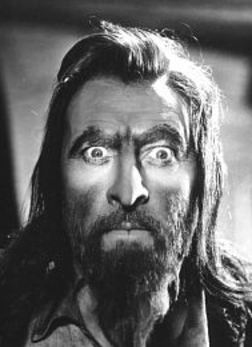
Svengali Type
There is much description of the fine times the musketeers have. One gets the impression that Du Maurier was living the life in the sixties in Paris but such was not the case. He signed on at Punch in 1860 and thus was working as an illustrtor for them from that date until his death. He seems to have been familiar with the Pre-Raphaelite painters of London of whom he speaks highly most especially of Millais. He seems to have been friends with a Fred Walker who he thought was a great artist but who seems to have been lost in the mists of time. I’d never heard of him anyway but one can find his pictures on the internet. Du Maurier loved the artist’s life.
Much of this book as well as the other is a loving recreation of the times and his memory of the times is one of wonderful things. Very refreshing against the unremitting negativity of modern literature. The book is set mainly in the sixties but the ‘horrible’ year of 1871 and the French Commune obtrudes. Du Maurier while recognizing its ugliness nevertheless passes over it quickly with a shrug and back to the good times. He introduces some additional charming characters but then come the crisis.
Billy had asked the declassed Trilby to marry him nineteen times and she had always refused because she knew she wasn’t in his class. After an amazingly wonderful Christmas feast in the atelier Billy asks again. Trilby, as she says, in a moment of weakness accepts. When the news reaches Billy’s mother, Mrs. Bagot, she scurries over to Paris from London to check Trilby out. When she learns that Trilby had posed in the altogether she persuades Trilby to give up her son.
Trilby leaves town without a goodbye. When Billy finds out he has his brain fever or a nervous breakdown that prostrates him for weeks. There was a chance he wouldn’t make it. He does but with psychological consequences. He can no longer love while he lives in a deep melancholia. There are some who know where that’s at. After he recovers he returns to England. the wonderful Bohemian rhapsody is over.
Trilby had left Paris to go to the provinces. She had a little brother who she was supporting and bringing up who she took with her and who then dies of a fever. This devastates Trilby who cuts her hair, dresses as a man and walks back to Paris. Her old haunts have disappeared in the interim so she shows up on the doorstep of Svengali who is but too happy to take her in. The hypnotized Trilby is a small part of the book. The next hundred pages or so describe Billy’s wonderful success as a painter and the loss of camaraderie as the young idealists of the Latin Quarter age and lose their affinity for each other. Charmingly told with just the right touch of heartache.
In the meantime and off stage, as it were, Svengali accompanied by Gecko keeps Trilby in a hypnotic trance as he

Henri Murger
teaches her to use her tremendous oral cavity to sing. While she has the exact equipment to be a great singer she lacks the musical sense and can’t learn it sober. Svengali instills the musical sense through hypnosis but as Gecko later explains Trilby is merely providing the instrument while Svengali is actually singing through her. For three years they labor in the salt mines, as they say, performing on street corners or wherever. Then Trilby is properly trained becoming the rage of Europe as La Svengali becoming bigger and better than such stars as Adelina Patti or Jenny Lind, two real life divas.
Thus while Billy has lost Trilby’s foot or body, Svengali has captured her soul or oral cavity. That’s about the only way I can make sense of foot and cavity.
Now, in real terms the Jews had been emancipated beginning in 1789 by the French Revolution although occuring at different localities in Europe at different times. With the emanicipation a contest began for the soil and soul of Europe. Europeans owned the soil but the Jews while originating nothing became the cultural virtuosi of Europe. Not only in the performing arts but in finance, science and as entrepreneurs. The soil temporarily remained European but the culture was becoming Judaized. It was then that Freud made his assault on European concepts of morality. So Du Maurier has portrayed the situation poetically in a magnificent manner.
Thus the Jews while offering no Beethovens, Bachs or Mozarts became virtuoso interpreters of the music as performers. As Svengali says: Piff, what is the composition compared to my ability to render it. There you have the exploiter’s motto. The Allen Kleins and Albert Grossmans of the world suck the talent, as it were, out of their performers or, boys, as they call them, as agents taking nearly everything leaving the actual talent a pittance.
Nothing changes, this is what Svengali was doing with Trilby or, in another word, Europe. He was making a fortune while Trilby in her hypnotized state was wasting away. Oh, Svengali dressed her well but for the sake of his appearance not hers. When she died, of the fortune that she had made for Svengali none was left to her. Except for presents she had received in appreaciation of her singing she had nothing. They were supposed to be man and wife but, in fact, Svengali never married her. Here I think we have the real import of the story; the competition for Europe between the Jew and the European. Having given up the soul of Europe Europeans were losing their very substanc, the soil, or Trilby’s foot.
Du Maurier is also describing the rise of the artist from a despised menial to the central position in society that they have attained today, especially movie, TV and musical stars. One only has to look at the position Bob Dylan has attained to see the result today. Here is a man with no qualities revered as if he was the savior while poised to begin a tour of stadiums at 67.50 a head that will sell out earning him a fortune within a couple months. Thus as with Svengali he has conquered the soul and wealth of virtually the world. This is truly astonishing.
So Svengali is on top of the world. Despised as a beteljew in the atelier a short five years ago he now has Trilby/Europe and the fortune that goes with her. Alas, he is sucking the life’s blood from her to do this and she is within weeks of death when the Three Musketeers hearing of La Svengali’s fame travel back to Paris to see her perform.
Of course they are so astonished at seeing someone who looks like Trilby singing that they can’t believe it is indeed her. Svengali harbors ill will toward Billy because Billy is always in her heart while her relationship with Svengali is strictly professional.
The Musketeers and the Svengalis are staying at the same hotel where Svengali meeting Billy can’t resist spitting in his face. Billy, who is actually known in the story as Little Billee is much smaller than the six foot Svengali but he nevertheless goes after him getting the worst of the fight until Taffy, a giant body builder type, shows up grabbing Svengali’s ‘huge Hebrew nose’ between his first two fingers leading him around by the nose. Oh, those unintended consequences. The humiliation is too much for Svengali, he becomes vicious toward Trilby in revenge. Readying for their London debut he bullies Trilby in front of Gecko, now his first violinist, who stabs Svengali in the neck with a small knife.
Svengali while wounded is not hurt that bad but his physicians advise him not to conduct the opening performance. This creates a problem because Svengali must make eye contact to sing through Trilby.
He takes a box directly in front of Trilby. But he spots Billy and the other two musketeers in the pit in front of him. The malice and venom he has toward Billy makes his heart fail. His face freezes into a risus sardonicus as he sits lifelessly leering at the Three Musketeers, triumphant in death. Of course Trilby can’t sing a note on her own so that ends a fine career. Now begins the denouement. While seemingly superfluous this is a very important part of the story giving it its secondary meaning.
The Musketeers take Trilby in charge. No one is aware she had been hypnotized while she has no memory of performing and little of the lost five years. The situation between she and Mrs. Bagot, Billy’s mother, are now reversed. Trilby is the great lady while Mrs. Bagot is merely a middle class hausfrau. One might say Svengali has created the real Trilby. Mrs. Bagot still hadn’t posed in the altogether however. Where was Hugh Heffner when you needed him.
On the surface it looks as though Mrs. Bagot has gotten her comeuppance but as Trilby is the creation of Svengali she would have remained the simple little grisette that Billy loved without him. She would have remained the foot without realizing the potential of her oral cavity. Nevertheless this Trilby was Trilby as she should have been.
The woman was fading fast. Svengali had drawn the vital energy from her in his exploitation of her. Mysteriously, just before she dies, a life sized portrait of Svengali is delivered. The contest between he and Billy is still in effect. Gazing in the painted eyes of the hypnotist Trilby breaks into song as a final effort in her best manner.
Billy is grasping desperately for Trilby’s love. On her death bed he leans close to hear her breath out- Svengali, Svengali, Svengali. Thus he believes she loved Svengali more than he. His brain fever is reactivated, he dies. In grand operatic style the love story ends. All because Mrs. Bagot was a snob. But, I think a correct one. Although, what the heck, Billy was just a boho painter.
As an anti-climax in a final chapter titled Twenty Year After as tribute to Dumas whose sequel to The Three Musketeers was title Twenty Years After, Taffy takes a trip to Paris where he finds Gecko playing fiddle in a music hall. He sends a note that Gecko accepts requesting a meeting at his hotel. There Gecko resolves the mystery filling Taffy in on Trilby’s missing five years. He reveals that Trilby had always loved Little Billee and never Svengali.
The reading public then and now has concentrated on the Svengali-Trilby hypnotism aspect of the novel ignoring the rest. That aspect is actually a very small part of the novel but without it I suppose the story woud have fallen flat. Even today a manager like Colonel Tom Parker is thought of as a Svengali to Elvis Presley, so the name has come into common usage for someone’s inexplicable control of someone else.
Edgar Rice Burroughs who had a fascination with hypnotism was probably charmed by that aspect of the story. In his most detailed reference to hypnotism in Thuvia, Maid Of Mars he seems most influenced by stage hypnotism in which the audience is induced to see what is not there rather than the Svengali type. Still, Thuvia-Trilby and the relationship between Jav and Thuvia and Thuvia and Tario has some resonances. I dout that ERB would have been conscious of his borrowing imagining rather that he was creating the story from whole cloth.
End of Part Two, Go to Part Three the Review of The Martian.
Part I, Prologue: A Review of Trilby, The Martian, Peter Ibbetson of George Du Maurier
April 27, 2009
A Review
The Novels Of George Du Maurier
Peter Ibbetson, Trilby, The Martian
Part I
Introduction
by
R.E. Prindle
Contents:
Part I: Introduction
Part II: Review of Trilby
Part III: Review of The Martian
Part: IV: Review of Peter Ibbetson
Occasionally a book finds it way to your hand that seems as if the author had you in mind personally when he wrote it. This one’s for you, Ron. It is as though his mind is communicating directly with yours over perhaps centuries. A couple two or three decades ago one such work that came to my hand was The Secret Memoirs Of The Duc De Roquelaure. I never would have bought it myself, never even suspected its existence, but it came in a bundle of books I bid on at auction containing another book I wanted.
I had the four volumes of the Duc’s life so I read them. The memoirs were ‘Written by himself now for the first time completely translated into English in four volumes.’ Thus in 1896-97 an intermediary on the same wave length as the Duc and myself provided the means for me to read the Duc’s mind. Believe it or not the edition was limited to 1000 copies, privately printed of which 500 were for England and 500 for America. Mine is number 424 of the English set.
There could have been few who had ever read the Duc and I may very well be the only man alive at the present to have shared the Duc’s thoughts. Truly I believed he was speaking directly to me over the 400 intervening years.
I had the same feeling when I read George Du Maurier’s three volumes published from 1891 to 1897. Curious that the Duc de Roquelaure should have been translated in 1896-97 isn’t it? Like the Duc George Du Maurier seemed to speak out to me over more than a hundred years to communicate directly with my mind.
I probably never would have sought out his books except for my Edgar Rice Burroughs studies. I wanted to check out whether there may have been a connection to Burroughs through the second of the novels- Trilby. Then browsing the store I came across a Modern Library 1929 edition of the first of Du Maurier’s efforts- Peter Ibbetson. At that point, I thought, I might as well get the third- The Martian- which I did. This time over the internet.
I have now read each title three times as is my habit if I’m going to review a book. Before moving on to the novels it might be appropriate to say a few words about Du Maurier who may be an unfamiliar name to the reader although he or she may be familiar with the name of his very famous creation, the hypnotist and musician Svengali of the Trilby novel.
Du Maurier was born in 1834 and died in 1896 so he was ideally situated to view the whole Victorian era. Indeed, in his own way he was a symbol of it. As a most famous illustrator of books and an artist satirizing the era for the humorous magazine Punch, he in many ways interpreted English society for itself for nearly fifty years.
He died of heart disease so when he turned to writing to begin what is his virtual literary epitaph in 1891 it may have been with the premonition of his imminent death. He sensed that it was time for a summing up of the life he loved so well. Heart ailments figure prominently in his work. Indeed he died of a heart attack just after finishing The Martian which began publication shortly after his death. Thus while portraying the scenes of his life in Punch and other magazines and books he summarized his life and times magnificently in his three novels.
They are magnificent works. As every man should Du Maurier loved his life and it was a life worth living. The novels are wonderful examinations of exotic altered states of consciousness. In Peter Ibbetson the protagonist is insane, committed to Colney Hatch or some such. At night in his dreams he finds a way to link his dream with the dream of a married woman on the outside. She and his dreams meld into one dream in which they live actual alternate dream lives that are as real as their daytime existences. This went on for a couple decades or more until the lady died. Very eerie.
In Trilby in a love contest between the protagonist Billy and the musician Svengali for the hand of Trilby Billy is denied his love for societal reasons while after a sequence of events Trilby falls into the clutches of Svengali who through hypnotism turns her into a Diva. After his denial Billy becomes temporarily deranged falling into a deep depression which then turns into an equally severe melancholia when he emerges from the mania. So once again we have a description of two altered states of consciousness.
In the third and last novel the protagonist is possessed by an alien intelligence named Martia from Mars. Over the last century she has inhabited thousands of people but only with the hero, Barty Josselin, has she been able to establish contact. In an absolutely astonishing twist she occupies the body of Barty’s daughter. Both Barty and the daughter die enabling Martia to unite pshysically, in the spirit world, with her love. Thus the father and daughter are united which I suppose is the dream of many a father and daughter. The effect on the reader, this one anyway, is ethereal and eerie.
Du Maurier injects real life figures into his fiction. The real personalities of the day lend credibility to the fiction. Du Maurier involves himself in the stories in ingenious ways. While one can’t definitely say that Burroughs learned to inject himself into his stories from Du Maurier yet the framing devices in which Burroughs plays himself are very reminiscent of Du Maurier.
For instance in the Martian the story is a biography of Barty Josselin told by his friend Robert Maurice who then asks George Du Maurier the famous Punch illustrator to illustrate and edit his book. So the biography is ostensibly told in the first person by the fictional Robert Maurice while it is illustrated by the real life George Du Maurier who posing as the editor is actually writing the book. Du Maurier even inserts a long letter of acceptance in which he recapitulates his memories of Barty.
When one realized this the effect is almost supernatural, especially as with a little background on Du Maurier one realizes that the histories of the protagonists are virtually fictionalized histories of Du Maurier himself.
Thus while I haven’t discovered a direct connection to Du Maurier ERB is always telling a fictionalized account of his mental states along with a virtual chronicle of his life. A few points in ERB’s The Eternal Lover bear a very close resemblance to the love themes of Du Maurier especially in Peter Ibbetson and The Martian.
The Martian itself may have been a major influence on Burroughs’ own Martian novels. When John Carter, who was always attracted to Mars,stands naked on a cliff face in Arizona with his arms outstretched toward the Warrior Planet the scene is very reminiscent of Barty Josselin leaning with out stretched arms from his window staring at Mars and imploring Martia for her assistance.
Carter is magically transported to Mars in some unexplained way that may have been no more than an altered state of consciousness much as in the same way Martia inhabited Barty’s mind and body. Once on Mars Carter finds his lady love, Dejah Thoris, in a manner reminiscent of Barty and Martia. Obviously other literary influences abound in ERB’s Martian series but at the core very probably is Du Maurier’s story of Martia and Barty. By 1911 the influence was coming from ERB’s subconscious and he may not have been aware of the resource he was drawing on.
The question is when did Burroughs read, as I believe he did, the three Du Maurier novels? As ERB’s first novel, A Princess Of Mars, had to be built on the Martian it follows that ERB read Du Maurier before 1911. Du Maurier wrote from 1891 to 1896. His novels were serialized in Harper’s Magazine in the US either before or at publication so Burroughs had the opportunity to read them in magazine format as well as the books.
Of the three novels, Trilby was an absolute smash being one of the biggest sellers of the nineteenth century. The sensational story of Trilby and Svengali that everyone concentrated on would certainly have brought Du Maurier to ERB’s attention.
At the time his own life was in turmoil. At the time Trilby was published ERB was in the process of leaving the Michigan Military Academy at which he was employed for what he thought was a career in the Army. Once at his assignment, Fort Grant in Arizona, he would likely have had the odd idle moment to either read the magazine installments or the book.
As Carter’s transfer to Mars takes place in Arizona there is an association with ERB’s army days and Du Maurier’s The Martian. Not proof positive, of course, but not impossible or improbable either. He must then have read the last volume in Idaho when he owned his stationery store there in 1898 and could obtain any book or magazine he wanted, either English or American.
So these wonderful other worldly stories of Du Maurier gestated in his mind for twelve or thirteen years before emerging from his forehead beginning in 1911.
I will now review the novels in detail. These are spectacular, wonderful stories. First the middle volume- Trilby- then the last of Du Maurier’s works- The Martian- followed by the first, Peter Ibbetson.
The review of Trilby is Part II, call that up.
A Review
Thuvia, Maid Of Mars
by
Edgar Rice Burroughs.
Part III-C

Review by R.E. Prindle
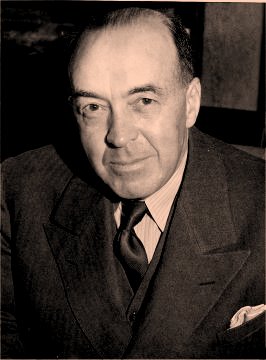
Edgar Rice Burroughs
Civilization And Its Malcontents
Let us say that for the fifty years or so before the 1920s there was a growing sense of societal malaise. This malaise was reflected most notably in the creation of Edgar Rice Burroughs’ psychological projection, Tarzan Of The Apes. One has to account for the immediate acceptation by society of such an absurdity. Tarzan, in fact, completely rejected civilization for the life of the romantic ‘unrestrained freedom’ of the jungle. The noble savage in fact.
Thus in a metaphor Burroughs reflected the malaise of his time so brilliantly that his creation was accepted as virtually a real person. Writers like Grant and Stoddard put the same theme into more scholarly terms. As noted, contrary to Richard Slotkin’s idea, Grant had little or no influence on Burroughs while the slightly later Lothrop Stoddard whose three relevant works appeared only from 1920 to 1922 could have had no influence on Burroughs’ formative years. It seems probable that Burroughs did read Stoddard and was influenced by his work but only after his ideas were fully formed. Even then The Revolt Against Civilization appeared after Burroughs had examined some of the same problems in his rejected manuscript, Under The Red Flag of 1919.
The problem of the malcontents and their war on civilization was examined by a number of writers during the twenties and thirties so why Slotkin singled out Burroughs, Grant and Stoddard isn’t as clear as it might be. Postwar German cinema was intensely concerned with the matter as why should it not? Germany was under asault by what Stoddard called the Underman. Nor need Slotkin think Stoddard was alone. I’m sure there were dozens of forgotten books prophesying the end of the world by one means or another including the Undermen of Communism.

The Underman, or the Communist, was not even a term unique to Stoddard. Gustave Le Bon, the French scholar on whose work Sigmund Freud based his study Group Psychology And The Analysis Of The Ego wrote prolifically on the psychological foundations of the Underman. Freud based his book on Le Bon’s 1895 study The Psychology Of Crowds. Unless I’m mistaken he based his 1930 study Civilization And Its Discontents on Le Bon’s 1921 book The World In Revolt: A Psychological Study Of Our Times.
On the cinematic side the problem was examined in the great silent films The Cabinet Of Dr. Caligari and Fritz Lang’s 1922 film Dr. Mabuse, The Gambler. Lang would follow that ten years later with the sound film The Testament Of Dr. Mabuse.
Even though Buroughs’ Under The Red Flag was rejected in 1919 he persisted, rewriting and extending the text into the 1926 story, The Moon Maid. This story reflects a possible reading of The Revolt Against Civilization but such a reading was much more evident in 1934’s Tarzan And The Lion Man.
The development of the problem was evident to all these writers which it seems to have escaped Slotkin who attributes the recognition of societal evolution to mere ‘racism’ in the writers. One thinks that perhaps Slotkin is too involved in his own agenda.
Rider Haggard enunciated the problem quite clearly in his 1888 novel Allan Quatermain in which Quatermain grouses about the ‘strict limits’ of civilization compared to the ‘natural’ life of the African Zulus. It might almost seem that the idea of Tarzan arose in Burroughs’ mind from that observation. In fact science was undermining all the comforting beliefs that mankind had been settled in for a hundred thousand years. During that long period characterized by the mental mode of what is called mythopoeic thinking man’s mind devoid of true knowledge projected a vision of reality that resulted in the notion of God. Thus reasoning from insufficient knowledge man’s mind came up with an erroneous result. You can’t get out of a mind what isn’t in it; all education is suggestion.
As Freud was to say, man’s settled view of reality received its three great shocks when Galileo disproved the geocentric notion of the universe, Darwin disproved the uniqueness of man’s position in the animal kingdom and he, Freud, displaced the conscious mind with his vision of the unconscious mind. Once again Le Bon was there ahead of him.
Thus as the nineteenth century opened and progressed the bases of mankind’s notions of reality were shattered leaving him emotionally and intellectually bereft of foundations of belief. Adrift without an anchor.
As if that were not bad enough the great cataclysm that ushered in the modern era, The French Revolution, was based on the the absolute notion that not only were all men created equal but remained equal in all aspects of their existence. The advance of civilization would toss this certainty into the trash can of history also.
As civilization placed greater and greater demands on the intelligence and self-discipline of men and women the incontestable gap between those less intelligent and those more intelligent became more and more obvious. Thus as the century progressed the notion of the Overman and the Underman began to become clear.
At the same time the first tentative efforts at measuring the intellectual potential of the individual began to become possible. Of course the basic inequality of men and women in its physical aspect had always been apparent. Some men were naturally stronger and better muscled than others. But, even that was changing. The science of physical culture was making it possible for the 98 lb. weakling to develop himself into a man mountain. Thus artifically developed srongmen like the Great Sandow ushered in the golden age of the strong man topped off by Charles Atlas who guaranteed he could turn you into a man mountain if you followed his program.
There was the promise that you could dethrone that bully and kick sand back in his face. On the other side Francis Galton was originating the first primitive tests to measure intelligence potential. Burroughs would have seen both proponents during his miraculous summer of 1893 at the Chicago Columbian Exposition. I mean to say that both facts entered his mind where they could be digested and emerge later. Nothing can come out of your mind that didn’t go in it.
And then after the turn of the century Binet devised he first actual IQ test. Thus, just as Sandow and Atlas could measure the size of muscles, the psychologists became able to measure the intelligence potential. Those with high IQs were set up; those with low IQs were cooked. The upshot was that all men were not created equal nor could they ever attain intellectual equality.
To a very large extent what became the Communist Party recognized the inequality while demanding equality against reason. Recognizing subconsciously, perhaps, that men could never be intellectual equals rather than try the futile task of raising the less fortunate they sought to destroy education which brings out the inequality but doesn’t create it. No matter what happens there are always going to be the more intelligent just as there will always be the physically stronger. As Le Bon points out, if you needed to hear it, nature don’t know from equality.
Thus the Communist Party devised the well sounding slogan- From each according to his ability; to each according to his need. Good plan for the needy, slavery for the able. The needy were organized beginning their struggle to achieve superiority by collective action. This was accomplished in Russia in 1917. The battle was joined.
Just as individuals are created with different capabilities so are peoples and races. Some can achieve and some can’t. Slotkin who must be a Communist thus takes offence at what he perceives to be, and is, an attitude of White Supremacy in Burroughs, Grant and Stoddard. While I am aware there are those who will disagree with White superiority it is nevertheless not an attitude but an evolutionary fact. That is the reason Communists have Darwin under attack. While Darwin doesn’t say it, it is the inevitable result of his studies. Just as it was necessary for the Undermen to destroy education in the hopes of creating intellectual equality so it became necessary to destroy White achievement of the last five hundred years. The whites must be demonized and made to feel evil and inferior morally. That is the import of Slotkin’s Gunfighter Nation.
At that level all three writers are guilty. As has been stated in Canadian courts- Truth is not a defense. So there’s nothing to discuss. Might is right and whoever has the might will prevail.
It is a fact that all three writers were anti-Communists so it may be assumed that whatever Communists believe, they didn’t. And why should they? Might may be right but it can still be nonsense. Communism is a flawed ideology based on a false premiss. It always fails wherever it is introduced. Failure is not evidence of a bad plan in Communist eyes. One just continues to shovel sand against the tide and pray. So succeed or fail they always think they can succeed by the same flawed ideology. The fault for failure lies elsewhere.
In that sense Burroughs was wasting his time assailing this religion of failure with his Under The Red Flag and its successor The Moon Maid. The only people who would applaud his effort would be we non-Communists but he could never convince anyone with Communist leanings. Of course that wasn’t well understood at the time.

If Burroughs were accused of not believing in equality that would be true. Not only are John Carter and Tarzan superior to any contemporaries on two worlds but Burroughs has a whole hierarchy of value. John Carter is the Warlord of Mars ruling from the top city of Mars, Helium. The races of Mars pretty much reflect those of Earth and their relative stations. The main exception is the ruling Red race. As Whites do and have existed on Mars in Burroughs stories while at one time being the dominant race perhaps the Red race is some sort of amalgam of the various Eropean immigrants of the United States. I believe the Green Men represent the American Indian. Both roam the great plains while being essentially savages.
Tarzan though always spoken of as being White is described as a bronze giant. Bronze is a fairly dark metal so that Tarzan and the Red men of Mars may be more or less identical in color.
Tarzan is the man-god so there are none superior or even equal to him. Below him come the English who are the cream of mankind. Perhaps slightly below the English are the French and then the rest of the Whites. Tarzan himself is psychologically an animal having been raised by the Apes. Not your ordinary gorilla or Chimp but a species intermediate between Gorilla and the Negro. Slotkin hasn’t read enough Burroughs to make an intelligent comment but the undeniable attitude of Burroughs is enough for Slotkin to condemn him as an unregenerate bigot. The reader may believe as he likes. I have stated my opinion eslewhere and that is enough. Whether any of these opinions of Burroughs influenced American soldiers at My Lai is open to question. The burden of proof is on Slotkin and he hasn’t provided it.
Along with the Undermen however, speaking through Tarzan, Burroughs is heartily discontented with civilization.
The spectacle of Chicago of the 1890s as a dirty unpleasant place haunts Burroughs. In contrast to the great White City of the Columbian Expo was what was afterwards known as the Black City of everyday Chicago. The contrast was so strong and so offensive to the Undermen that within a year of the Expo’s closing the entire White City was burned to the ground with the exception of one building. Hence perhaps the decayed crimson and gold ruins of Opar and the crimson and gold twin cities of Helium. One wonders what effect the sight of the ruin of the White City had on Burroughs when he revisited the site sometime after his miraculous summer of ’93. The mind creates nothing from nothing so there must have been models of the great cities of ERB’s imagination.
There are points at which Burroughs and Communism have quite similar views. It will be remembered that Burroughs only reluctantly married and throughout his life expressed discontent with the institution. To some extent or other ERB must have been an advocate of free love. Communists would have heartily approved of ERB’s women who went nude except for certain ‘adornments.’ Communists of course want women to be accesible to any man who wants them at any time while they have always advocated bare breasts.
In many ways when the Communists appropriated Tarzan for the MGM movies it took but slight changes to make Tarzan conform to their ideals. The MGM Tarzan and Jane were not married. While Burroughs’ Tarzan was a highly educated on-again off-again sophisticate the MGM Tarzan was a stupid illiterate oaf and one who rejected the attributes of civilization high up there in the Cloud Cuckoo Land of the Mutia Plateau.
On the essentials though Burroughs rejected the demands of the Underman as The Moon Maid clearly shows. There was very little in Stoddard’s The Revolt Against Civilization that Burroughs would have disagreed with. At the same time there was probably very little he didn’t already believe although he had never codified his information as Stoddard had. Slotkin’s contention that Burroughs was influenced by either Grant or Stoddard is surely wrong. ERB had already taken hs positions before either men had begun to write.
Each writer was, in his own way, an advocate of White Supremacy. It now become clear that White Supremacy has nothing to do with a fringe element in Liberal ideology. All Whites are White Supremacists in that ideology unless they reject ‘White skin privilege’ whatever that is. Ayers and Dorhn explain in their recent Race Course In White Supremacy. Interestingly constructed title. Nor as Slotkin would have it is the attitude based on mere racial pride and bigotry but on a solid record of achievement unattained by any other people. The quesiton is not was it right for some people to rule or be supreme because in the nature of things some people will rule and be supreme but which of the peoples are most qualified to be supreme.
All people have had equal opportunity so that one can only conclude that the race has gone to the most qualified participant. In the contest the Whites unified the other peoples against them as must inevitably be the consequence of being the top people. As they say, getting there is the easy part; staying there is the hard part.
Slotkin merely represents the envious losers, the Undermen. who clutch at any firebrand to burn the White House down. Who is most to be admired and emulated? Builders or destroyers?
Finis of Thuvia, Maid Of Mars Review
Edgar Rice Burroughs On Mars
A Review
Thuvia, Maid Of Mars
Part III-A
What We Have Here Is Change
by
R.E. Prindle
In the recent American presidential campaign in the US the winner won by promising the inevitable, Change. A very safe promise as the history of the world is one of change. Indeed, the life of the individual is one of unending change from the cradle to the grave. Change is now and forever. The question is, what response is made to the changes.
The times of Edgar Rice Burroughs were a period of the most earth shaking and rapid of all. At the same time most perilous, as the evolution of actual scientific knowledge in all fields was in its infancy and subject to misinterpretation. One might say in Burroughsian imagery that a series of doors stood before mankind, entering the right door would be more beneficial than the wrong doors.
Burroughs and others made tantative moves for the right door but others entered by the wrong door drawing most others through with them. What looked like progress turned into a regression. To shut up criticism the regressives began to demonize all those of different opinions. Burroughs was among those.
Some say he adapted poorly to the flood of change but the peole who do so are so confident in their opinions that to disagree with them is to be accused of being not only wrong but either criminal or insane. One doesn’t take their opinions too seriously as change will certainly demonstrate their opinions as ludicrous if it hasn’t already. Nevertheless as they are quite vocal in their condemnation of Edgar Rice Burroughs we have to consider the accuracy of their accusations as well as that of their own viewpoint. How well do they understand the issues?
ERB has some interesting observations on the changes occurring in the history, society and racial matters of his times as well as the concealed role of hypnotism in the transformation of that society. The basis of hypnotism is suggestion. As ERB say in Thuvia all is based on suggestion and counter-suggestion. If one conciders life and learning from that angle it presents some interesting possibilites.
What is learning? What is suggestion?
When the child is conceived he must of necessity have a mind with a blank slate. Freud, Jung and many others seem to seriously believe that newborns can inherit ancestral memories even though there is no one beyond the womb who has ever recalled any.
In fact without experience or learning that has has been introjected into the mind there is nothing for the mind to consider, hence no cogitation at all. This mind can only begin to form with the ejection from the womb. This occurs with a brain still in the process of formation. The development of the brain can only be considered completed shortly after puberty.
It seems obvious then that you can’t get out of a mind what isn’t in it. It behooves society then to begin loading the mind of a child as soon as the child is capable of handling education. The education of the mind must be built step by step to provide a firm foundation for the intellectual superstructure. Whatever is in the mind must come from or be suggested from outside the mind. There is no internal system of knowledge. Thus all knowledge is suggested to the child’s mind by his caretakers. They may be good or bad, well or ill intentioned. The brain is organized to receive suggestions or, in another word, experience. The reactive structure may already be in place dut to experiences in the womb and the actual birthing process but the actual learning process begins the moment the newborn emerges from the womb and receives a slap on the bottom to get his lungs started.
Thus the mind of the child is extremely malleable during the time until about puberty and shortly thereafter. If education is neglected during this early period and shortly thereafter it is unlikely that the adult can ever make up the lack. For instance if the basics or reading, writing and arithmetic are not loaded into the brain during this malleable period it is very rare that the skills can be acquired at a later time.
Thus, as it was always known that the child is father to the man various doctrinaire organizations such as the Jesuits believed that if they could form the education of the child or, in another word, indoctrinte him, they could shape the future in their own image. In Burroughs’ time the mechanisms of education were more fully understood. Various schemes were proposed to revise educational methods many of which were just odd or crude, but the better thought to change the direction of society toward a higher ideal.
The Communists were well are at the time that suggestion was the basis of education. Lothrop Stoddard writing in his The Revolt Against Civilization of 1922 quotes Eden and Cedar Paul from their book Proletcult of 1921:
“There is no such thing as “scientific” economics or sociology. For these reasons…there should be organized and spread abroad a new kind of education, “Proletcult.” Thus…in a fighting culture aimed at the overthrow of capitalism and at the replacement of democratic culture and bourgeois ideology by ergatocratic culture and proletarian ideology…” The authors warmly endorse the Soviet government’s prostitution of education and all other forms of intellectual activity to Communist propaganda, for we are told that the “new education” is inspired by the “new psychology”, which “provides the philosophical justification of Bolshevism and supplies a theoretical guide for our efforts in the field of proletarian culture…. Education is suggestion. The recognition that suggestion is auto suggestion, and that auto suggestion is the means whereby imagination controls the subconscious self, will enable us to make a right use of the most potent force which has become available to the members of the human herd since the invention of articulate speech.
I’m sure you can find appropriate application of the doctrine since Stoddard wrote in education, movies, TV, books and phonograph records and CDs. While I would disagree with the Pauls’ notion of suggestion and auto suggestion the Freudian influence is quite clear. This would be abetted by John Dewey’s notions on education that deemphasized the educational foundation while directing it more toward ideological considerations, or ‘relatively unstructured, free, student-directed progressive education.’
God only knows what free, progressive education is but this sort of social engineering was the wrong turn being taken in this era of rapid change.
So, loading the brain to deal with life’s exigencies is of necessity a slow process. As the brain continues to develop outside the womb there is plenty of room for malfunction. As man is incapable of creating anything original the education of the child may be compared to the loading of a computer. First the operating system. Whether consciously or unconsciously since all man knows is his own brain he has replicated it in his machine. A computer functions just like a brain, which should astound no one, as man can only devise what he already knows.
Now, human experience dates back about a hundred thousand years. I intentionally leave out the African development as it had nothing to do with the education of mankind. The African contribution is nil. Education began outside Africa. Having painfully and laboriously accumulated the huge fund of knowledge it must be entered into the brain of the new being. This sort of suggestion is called education. There’s not much room for anything called ‘free’ or ‘progressive.’ Getting it ain’t going to be free, the child has to work like a mule. This is a slow, laborious process as extensive foundations must be laid down before any superstructure can rise. Thus years are consumed just to teach the child reading, writing and arithmetic. With these three tools he can learn anything else. Inexplicably this fact seems to have been lost sight of in today’s educational theories unless of course the Pauls’ dictum is being followed.
Once the foundation has been laid, a form of suggestion and actually hypnosis, the child, now a student, must be taught how to manage and interpret what he learns at an increasingly rapid pace. Unfortunately there will be children left behind; any other expectation is fatuous, some are just brighter than others. Managing and interpreting comes from within the experience of the organism. Here’s the real problem because the same data will by analyzed differently and produce different results and opinions.
Along with learning factual matters the child must at the same time develop emotionally and psychologically. Nasty work. This is a difficult part. As the child has little ability to understand and even less ability to accurately analyze it he has to reason from faulty premisses. This ignorance of reality is what forms Freud’s notion of the unconscious or Id. Correcting this unconscious to consciousness is the conversion of Freud’s Id to Ego. A child misinterprets suggestions. Some become fixated in his un- or subconscious. The fixations are what distort consciousness from the subconscious interfering with the integration of the subconscious and the conscious. While the child is made more conscious in his ability to understand and reject harmful suggestions these fixations like post-hypnotic suggestions control his responses. The fixations must be exorcised which is the intended function of the psychoanalysis of Freud and Jung.
Once again, suggestion is everything outside your mind. Your mind cannot function without these suggestions because there will be nothing in the mind to function. Be carefull of what you put into your mind or, at least, that you do put something of value into it. Whether ERB realized this or not, his ideas of hypnosis and suggestion indicate he might have, he pursued a program of continuing education all his adult life. At the time of writing Thuvia he was working through Edward Gibbons’ Decline And Fall Of The Roman Empire, a vast minefield of amazing and truly educational suggestion.
Part B follows.
Exhuming Bob XIX: Bob And Karl
April 1, 2009
http://fakekarl.blogspot.com/2009/03/bob-dylans-6548th-dream.html
Exhuming Bob XIX: Bob And Karl
by
R.E. Prindle
A Spoof.
Hey man. Come on over here. I’ve got the Ruminatin’ Blues and I’m going to ruminate all over you. You’ll be able to take home a bucket or two. Now dig this, I’m sittin’ at my computer and up comes this site Karl Lagerfeld’s Guide To Life. It pops up on my computer. I thought it was a virus or somethin’ but it turns out to be a message to me from Bob.
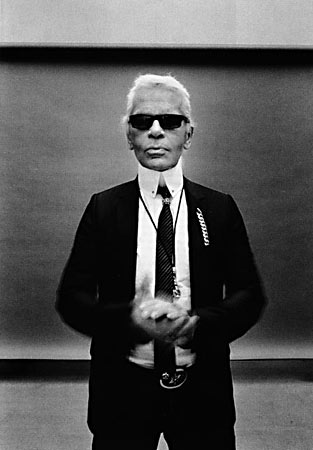
- Lagerfeld, The Guide To Life
This things turns out to be, if you can believe this, Bob Dylan’s 6548th Dream. Putting my Freudian training to immediate use I begin to study the number . Notice the 654 desecends by one unit that makes three then the last digit 4 is doubled to make an increase of four that adds up to seven. Pretty heavy huh? Next I added up 65 & 48 and the number was 113. Wow! I knew I was on to something.. Then I added up all four numbers seqentially and get this- 23. That’s right, 23! Twenty-three skiddoo. Get it? This was a personal message from Bob Dylan to me. Wow! That internet is somethin’ else, isn’t it?
I take a look at the picture of Lagerfeld showing me his ass and I can tell you I’m less then impressed. Moving down the page I notice the guy has turned around. Dig this, this can’t be a coincidence, he’s wearing the same dark glasses I do. Boy howdy, hey? And he looks like a guru from beyond the farthest star. So do I. Now I’m really getting excited. The only thing separating me from this new reality is the darn computer screen. I can’t get through it. I try but I can’t figure it out. Doesn’t matter which key or combination of keys I press.
Aw, shoot, I’m forgetting the most important part, Bob Dylan’s dream. Mr. Cool is going to relate directly to me.
The thing is written in some kind of mysterious code, some kind of hip patois, New Yorkese or whatever. Dylan has been commanded apparently by his guru Lagerfeld to commit his thoughts to this blog. Wow, I said to myself, this Lagerfeld has the force behind him. Imagine telling Bob Dylan what to do!
Now, we all know that Dylan says that what he writes has no objective meaning. He says he writes meaningless stuff that is understood differently by whoever reads it. That must be why I think his stuff is heavy, because I’m a really, really heavy guy. I don’t have the look down yet, like this Lagerfeld guru, but I ‘m working on it.
Dig this quote:
And here’s a song I wrote, uh, some time ago back when I was raking in these blondes, man. Could say I was raking in the pennies. (Pennies. Get it. Pennies are heavy. Bob was heavy.) I was doing more than raking these chicks though. If you dig.
Do I dig? I’ll say I dig. A super sleuth am I actually so I really dig, raking in the blondes has several covert meanings. Bob’s a poet, but, hey, that’s one of the things I do best, too. So Blonde on Blonde was released in ’66 so he wrote the poem that follows in ’66. Sharp deduction don’t you think? Blonde on Blonde means one blonde after another, heaps of ’em. Bob’s probably the cocksman of the century. So Bob’s got his dick out and he’s not wavin’ it to the empty air…if you dig. No sir, Bob is planking those blondes. He was actually known for his generosity with his dick. One time Liam Clancy was out touring so as a friendly gesture Bob went over and planked Liam’s wife so she she wouldn’t be so lonely. That’s the kind of guy Bob is. Yeah. Now that’s friendship, isn’t it?
Back when he was young he did more than rake blondes chicks he says. I don’t know what ‘more than rake’ means. Maybe S&M or something really exciting like that.
Further along Bob get deep into the dark meat. See what I mean about me bein’ a poet too? He wouldn’t touch anything else. Did the whole darn chorus line. Get real heavy with one of the back up singers, married her and had a little ebon baby. Nobody’s seen him though. He didn’t even grow up to be a soul singer as far as I know. Lived in Tarzana- yeah.
I’m going to tell you though I don’t think I woulda published Dream #6548. 23 skiddoo, indeed. I’d a been outta there before the door hit me on the ass. Back in those days of blondes Bob was heavy, well he was heavy in a lot of ways but he was heavy into drugs, too.
Check this quote out:
…I spotted some kids…and I walked right over to them.
=======
I said kids, “could I interest you in some visions?”
Some visions of Johanna, someone’s gonna get stoned;
They asked me if it tasted kinda like a milkshake
I said yes, and took out some pills
Then a policeman came most hurriedly
And arrested me on account of free love…
Bob And The Little Children

What is one to think? I know this Lagerfeld guru is a way out guy. I used to buy his soap and boy was it slippery. It was the slickest soap I ever used, almost couldn’t hold onto the bar and it was huge too. Lagerfeld is suspected to be completely sexually liberated too, as well as everything else. I mean, man, this guy is free, free as the breeze, free as the Fourth Of July, like, look up free in the dictionary and his picture is the definition. So, I guess that means he won’t stop at nothin’ and he’s Bob Dylan’s guru.
Don’t know what he’s tellin’ Bob but I wouldn’t even make bad jokes about corrupting innocent little kids as a candyman. Speaking of candy, here’s another quote:
“Oh” said the boy, as I gave him a lolly
And offered him a ride in my Cadillac car…
Now at this point the boy’s mother comes in,
And she’s waving and wailing at me like I done something wrong.
I don’t know who Bob’s been fraternizing with, other than Soapy Lagerfeld, and I know there is no meaning to anything Bob writes except what I think it means but then if the only meaning is what I think then that meaning must be true, Freud again, and since it means what I think it means I wouldn’t have published it lest someone think I’m serious.
Probably just some unconscious posturing but a position I wouldn’t want to assume.
Edgar Rice Burroughs On Mars
A Review
Thuvia, Maid Of Mars
Part II
by
R.E. Prindle
Apparently at this time in his life ERB’s mind was focused on hypnotism. The raison d’ etre of the novel seems to be his explanation of hypnotism and some of its effects. He certainly makes a fascinating story of the phenomenon. In fact the whole story concerns hypnotism with a few embellishments to get Carthoris and Thuvia to Lothar and once he’d exhausted the possibilities of his hypnotic theme he ended the story and even then he ends on a wild hypnotic note.
Thuvia was his fourth Mars novel and his first without John Carter. The hero is Carthoris the son of John Carter and Dejah Thoris. ERB’s father, George T. had died about a year previous to the writing. This novel was written shortly after The Lad And The Lion. As it includes a scene of psychological rebirth it may be a declaration of independence from his father, severing the relationship more denfinitely than did Lad.
On entering the land of the Lotharians Carthoris passes through a cave quite similar to the birth canal. There are Banths, Martian lions, before and one huge one behind him. Those before seem to vanish while the one large Banth remained behind him; that would be the memory of his father and the past. Carthoris placed himself in a posture of defense in the dark but the charging Banth passed to his side missing him much as a ghost from the past might do. Thus ERB seems to dispense with the Old Looney aboard ship in The Lad And The Lion who did represent ERB’s dad.
Thuvia had been kidnapped by a disappointed suitor who had her taken to Aanthor, one of the innumerable dead cities lining the shores of the vanished seas. There she was captured by the Green Men who fled through the cave to Lothar. There Carthoris and Thuvia are delivered to the scene of the action by ERB.
Carthoris then finds Thuvia in the possession of the Green Men who are waging a gigantic battle against the Phantom Bowmen of Lothar, themselves aided by large prides of both phantom and real Banths.
Piles of Green Men killed by little arrows lie about amongst legions of Bowmen who have been cut down, and still they stream through the city gates. Carthoris who has gotten to the side of Thuvia and she marvel at the carnage. They turn to watch the defeated Green Men flee. When they look back they are astonished to see that the dead Bowmen have all disappeared while the dead Green Men no longer have phantom arrows sticking in them. The pair are at a loss for an explanation. The Banths however were real and were now gorging themselves on the remains of the Greenies.
As a nice touch ERB has Thuvia essentially hypnotize the Banths. Rather than fear them as Carthoris does she merely makes a low melodic warbling sound that so charms the Banths that they come fawning before her.
This may seem improbable or even impossible and yet I have seen it done but with house cats. What can be done with one size cat I’m sure can be done with all sizes. The effect was quite astonishing with the woman I saw do it but the result was exactly as ERB describes it. Apparently he’d seen it done too. ERB thus establishes the ability of Thuvia that will be even more important soon.
Thus they gain access to the city of Lothar by passing through the Banths with safety. As a nice touch ERB gives Lothar an exotic round gate that rolls back into a slot. Perhaps he had seen a house with such a door somewhere. Once inside they meet the Lotharian Jav who begins to unfold the story while unfolding the hypnotic power of the mind.
If ERB had read H. Rider Haggard’s Cleopatra that deals quite extensively with hypnotism in a scenario somewhat similar to this one Haggard may have been another source for Thuvia. Quite possibly ERB had ingested and digested his earlier reading so that he wasn’t aware of how close he was to the originals. After all, anyone who could learn of Numa, the Roman King, from his Jr. High studies and think he had invented the name Numa for the king of beasts twenty years later, which he says is what happened, probably could think he was inventing his details himself.
Many strange phenomena appear to the pair on their way to the palace of the despot who was named Tario. They see marching files of Bowmen who appear and disappear. But the Bowmen are not real they are a projection of the mind of Tario who has hypnotized the pair into seeing what isn’t there.
While it is clear that ERB is quite familiar with Homer’s Odyssey it isn’t quite so clear what he knows of Homer’s Iliad or Greek mythology in general. One hesitates to give him too much knowledge and yet elements from the Iliad and Greek mythology seem to materialize before one’s eyes like the Phantom Bowmen of Lothar.
One can’t know whether ERB read the Iliad more than once and whether that once was in the seventh or eighth grade. How much he understood of an early reading like that would be questionable. I first read the Iliad in the seventh grade but got nothing but impressions of the action from it. The gods, goddesses and humans were very confusing. Lot of boy and girl stuff that was well beyond my experience. I have read the book seven times in various translations since. It was only in the fifth, sixth and seventh readings that I began to develop what I would consider any real understanding of Homer’s message.
One of the things I understand is that the Iliad is a story about the power of mind and its limitations. Zeus, of course had the mind of ultimate power that gave him the advantage over mortals and the other gods. Tario in Thuvia has the most powerful mind in Lothar which keeps him in authority over the few permanent emanations in Lothar. But, these are all figments of his or someone’s imagination.
It seems that long generations before the women had all died out leaving only the men who over a period of time would also have died out but they survived by being able to imagine themselves. Here we have a possible reference to Poe’s The Facts In The Case Of M. Valdemar. In that story Valdemar was a dying man who was first hypnotized and then expired. Being under hypnosis while alive he could not actually die as he was hypnotized alive. This is somewhat the condition of the Lotharians.
Taking hypnosis a step further ERB posits that there are phantom ‘realists’ who believe they can wish themselves into a permanent corporeal existence of which Jav is one. Opposed to them are the phantom ‘etherealists’ represented by Tario who believe they must remain imaginary.
Getting back to Greek mythology in which we do know that ERB was read the ‘realists’ believe that they have to eat so they conjure up ‘ephemeral fruits’ on which to gorge themselves.
Ephemeral fruits make their appearance in the myth of Typhon and Zeus. So there is a possibility that Jav and Tario is a version of that myth. Hera in her squabbles for supremacy with Zeus conjures up the monster Typhon to take on Zeus. Typhon makes mincemeat of Zeus removing his sinews and bones and placing them in a leather bag in a cave in Caria. Sad plight for the Big Fella with the all powerful mind and no sinews. Worse yet, as a god he is immortal so there he and his all powerful mind are in his sack perhaps for all eternity.
While Apollo and Hermes come to the Big Guy’s aid by putting the dry bones back together and reattaching the sinews the nymphs feed Typhon ‘ephemeral fruit’ that looks like the real thing but lacks nourishment. Thus when Zeus is reassembled and ready for action he faces an enfeebled Typhon who this time he easily defeats. Great story when you think about it. So there you have two stories reflected that ERB may or may not have read but having read them probably didn’t consciously remember them as he was writing. I can’t guarantee ERB read those stories but I can state with assurance that ERB just didn’t make this stuff up. He never does; it all has been suggested from someplace. It is not impossible that he heard similar stuff from Baum and the Theosophists in California. ERB does have a retentive memory that provides him with a lot of material.
Thuvia and its successor Martian novel- The Chessmen Of Mars- are an examination of mind and matter. The later Mastermind of Mars and the Synthetic Men Of Mars are examinations of the application of mind to matter. In the Chessmen the mind and body were separate entities. It will be remembered that the Kaldanes were also skilled hypnotists.
Here ERB is interested in a projected reality, in itself a form on insanity in an unbalanced mind. PP 66-67, Ace paperback:
Jav speaking: “(The Banths) that remained about the field were real. Those we loosed as scavengers to devour the bodies of the dead Torquasians. This thing is demanded by the realists among us. I am a realist. Tario is an etherealist.
“The etherealists maintain there is no such thing as matter- that all is mind. They say that none of us exists, except in the imagination of his fellows, other than as an intangible, invisible mentality.
“According to Tario, it is but necessary that we all unite in imagining that there are no dead Torquasians beneath our walls, and there will be none, nor any need for the fierce scavenging banths.”
‘You, then do not hold to Tario’s beliefs?” asked Carthoris.
“In part only,” replied the Lotharian. “I believe, in fact I know, that there are some truly ethereal creatures. Tario is one, I am convinced. He has no existence except in the imaginations of his people.
“Of course, it is the contention of all us realists that all etherealists are but figments of the imagination. They contend that no food is necessary nor do they eat, but anyone of the most rudimentary intelligence must realize that food is a necessity to creatures having actual existence.”
“Yes,” agreed Carthoris, “not having eaten today I can readily agree with you.”
“Ah, pardon me,” exclaimed Jav. “Pray be seated and satisfy your hunger,” and with a wave of his hand he indicated a beautifully laden table that had not been there an instant before he spoke….”It is well,” continued Jav, “that you did not fall into the hands of an etherealist, then indeed, you would have gone hungry.”
An interesting passage laden with humor and a joke or two. On the one hand this is a takeoff on Bishop Berkeley and those who believe that nothing is real but only a figment of our imaginations. They do believe that when you close your eyes the world ceases to exist. I could never follow the argument, and on the other hand the ideas can be construed as a variation on the Theosophical belief that the gods were first ethereal becoming more materialistic as existence descended to man who is most material. Thus Tario is visible air, as it were, as an ethereality while Jav is condensed into, as he believes, permanent air/matter while Carthoris and Thuria are solid matter as humans.
The food Jav produces is ephemeral food. It looks real but having no real substance has no nourishment. As he smirkingly says: It is well that you did not fall into the hands of an etherealist. Then, indeed, you would have gone hungry.” A funny joke. But Jav has hypnotized the pair into seeing the food even though Carthoris is not so hypnotized as to not realize it is not real food. He eats it anyway.
Once in this land where nothing is real but the Banths, one wonders that we don’t have a situation that was replicated later in the movie The Manchurian Candidate. In that movie the hypnotized soldiers imagine they are at a ladies social and actually see American women where Korean people are.
Perhaps Carthoris and Thuvia are standing in an empty field talking to themselves. Perhaps the Lotharians exist only in their own imaginations but have conjured Carthoris and Thuvia out of thin air. Pretty spacy stuff.
As Carthoris is hypnotized he is easily persuaded to do things he wouldn’t ordinarily do such as letting Thuvia be led away alone to Tario. He does and Thuvia meets Tario alone mystyfied that Carthoris would let her out of his sight. Seeing Thuvia the etherealist’s phantom cojones are aroused and he makes an all out assault on Thuvia. As he doesn’t exist, of course, the assault can only have force in Thuvia’s imagination. Just as those little arrows the Torquasians believed were real killed them one wonders what effect a phantom penetration would have on Thuvia. Would she have a little phantom child after a phantom pregnancy?
We’ll never know because she pulls out her thin blade stabbing Tario to his phantom heart. He falls apparently dead seemingly oozing out his lifeblood. But, as we know he is an etherealist hence only a figure of someone’s imagination we know he must be feigning death with phantom blood.
Hearing Thuvia’s screams Carthoris races to the rescue followed by Jav. Jav, who should have known better, is overjoyed confessing his desire to replace Tario. It was almost like a plan. Tario leaps up explaining he always thought Jav did and now he is going to execute him.
Here ERB evades the issue taking a cheap but effective way out. These two guys are actually magicians and should be made to match powers in efforts to do the other in. ERB isn’t up to it so he has Jav cave just awaiting his fate that he could always evade with his hypnotic powers. Now, we’ve all been advised not to trust our senses so whether any of this happened is open to question. Nevertheless a hole opens in the floor, the floor dishes so that all falls into the memory hole. The three are ostensibly history.
They are precipitated into the chamber of the Lotharian god. One might expect this god to be pure essence but instead he is pure matter. As so often is the case a Burroughsian god turns out to be a lion or the Martian Banth. Why Jav should be concerned isn’t clear as he has no real substance and can’t be eaten while with his hypnotic powers he could make the Banth believe it was a mouse.
Carthoris draws his sword but this one’s a piece of cake for Thuvia. Using her own particular hypnotic talents she charms the Banthian god and all four walk out through the Banth’s quarters as chums.
At this point Jav calls into existence old Lothar for us all to see.
Outside the gates of Lothar Jav conceives a desire for Thuvia. Using considerable hypnotic talent he persuades Carthoris that he and Thuvia are heading for the woods. Carthoris walks off alone convinced he is leading Thuvia by the hand. He is soon disillusioned. Returning he finds the realist Jav really mauled by the Banth and dying. Thuvia and the Banth have headed back to Aanthor. Carthoris has no choice but to follow.
B.
Now, what’s been going in addition to this hypnosis stuff is ERB’s ongoing attempt to reconcile his Anima and Animus. He has followed the usual Pyche and Eros storyline of Apuleius’ Golden Ass of Greek mythology. The Anima and Animus get together, circumstances separate them, then during the rest of the novel they try to get together amid difficulties, finally succeeding.
In Lad And The Lion ERB introduced the lion as his totem. Even though a male lion it is associated with his female Anima. At the risk of repeating myself, just in case anybody has been reading this stuff for the last four or five years the cause and evolution of his dilemma progress thusly:
In 1883 or 1884 ERB was terroized on a street corner by a young thug he identifies only as John. Possibly Emma was with him and kept walking abandoning him to his fate. Thus it was suggested to his subconscious that his Anima had abandoned him. John being the terrorist filled the vacancy. Thus ERB had the seemingly impossible anomaly of a male representing his female Anima.
We know this was the result because ERB writes incessantly about it. In the Outlaw of Torn the king’s fencing master, De Vac lures young Prince Norman/Burroughs outside the gate. Norman’s nurse Maud representing his Anima noticing too late rushes to the scene to be struck down dead by De Vac. Thus ERB’s Anima is murdered. How does ERB handle this? In his dream image ERB has De Vac take Norman to London where they live in the attic of a house over the Thames River. The house is a symbol for self, the attic being the mind. Water is a symbol of the female. The house extending out over the water but separated from it indicated the separation from the Anima. To compensate for the impossible situation of a male on the Anima, De Vac improbably dresses as a woman for the three years they live together in their attic. At the end of the novel Norman/Burroughs kills De Vac.
In the succeeding novel The Mucker he associates himself with the Irish thug Billy Byrne. Byrne being paired up with the socialite Barbara Harding is also an impossible match. It would seem probable that ERB’s father and John were two of the components clothing ERB’s Animus. Thus ERB has this very strong feeling about having a dual personality that he talks about constantly.
In Lad And The Lion we have the improbable situation of a powerless ship, representing the self, drifting up and down the Atlantic endlessly, manned by the deaf and dumb Old Looney, the Lad, and a Lion in a cage on deck. That the Old Looney who represents ERB’s father was deaf and dumb probably indicates he wouldn’t listen to ERB and had nothing to say that the Lad/ERB wanted to hear. So, the Lad was brutally abused the whole of his childhood. That’s how ERB saw the Bad Father. It would seem that John Carter represents the Good Father as ERB would have liked him to have been.
With De Vac and John dead the Lion begins to take his place as the male aspect of ERB’s Anima which has now been reoccupied by a female reprsentative. The male lion becomes a permanent aspect of the Anima in 1922s Tarzan And The Golden Lion as Jad-Bal-Ja. In Lad he and the Lion go ashore after the death of the Old Looney, or, in other words, his father, where the lion is loosely associated with the Arab princess Nakhla. Lad was written a short two months before Thuvia.
Now Thuvia wows Carthoris/ERB by charming the raging Banths/lions of the battlefield and the Lotharian God. Thuvia and the god become as one as she walks by his side her fingers twisted in his mane. So the traditional goddess of the male Anima is united with a male god to form ERB’s Anima. The female Anima who moved closer to reassuming her place in Lad now definitely becomes part of ERB’s psyche.
They pass through the tunnel before Carthoris. As ERB exits the tunnel he encounters his doppelganger Kar Komak. This is great stuff actually. Komak is literally a new man. He was the first successful materialization of an hypnotic imaginary man of the Lotharians. That’s likely enough, isn’t it?
He comes running through the scarlet furze, naked, to greet Carthoris. Well, picture that. Nakedness is something else appearing regularly in ERB”s works most notably in Tarzan And The City Of Gold. (See my review.)
The duo then continue on to Aanthor where as they arrive they are met by Torquasians who upset the plans of the men of Dusar who had come back to pick up Thuvia. We know that Carthoris for sure represents ERB because he takes a sword swipe to the forehead that lays him out. Thus the novel has the obligatory bash to the head recalling ERB’s adventure in Toronto.
When the sleeper wakes he finds the dead carcass of Thuvia’s lion lying half across his body. Probably his left half that derives from the ovum. Must have been uncomfortable to say the least. Thus the male half of his Anima is now dead and the female half in possession of the Dusarians. ERB gets her back and as in Psyche and Eros the Anima and Animus we may assume are permanently reunited.
Not quite but that will take us too far afield to discuss it this moment. I deal with the future development of the problem in my reviews of Out There Somewhere (The Return Of The Mucker), Bridge And The Oskaloosa Kid (The Oakdale Affair) and Marcia Of The Doorstep.
A Part 3 will follow that attempts to deal with the bigotry charges against Burroughs. If there is such a thing as guilt concerning the issue, ERB is not guilty, of course.
Thuvia, Maid Of Mars by Edgar Rice Burroughs: A Review
March 14, 2009
Edgar Rice Burroughs On Mars
A Review
Thuvia, Maid Of Mars
by
Edgar Rice Burroughs
Part I
Review by R.E. Prindle
This very interesting sdtory was written shortly after ERB returned to Chicago from his first San Diego excursion. It was placed between the Girl From Fariss’s, the last story written in San Diego and The Cave Man.
The material deals almost exclusively with suggestion and hypnosis. Although hypnosis is a recurring theme in Burroughs one is startled by his concentration on the subject and his seemingly informed ideas of it, especially the role of suggestion.
One wonders why his interest surfaced at this time and where ERB learned or developed this information. He was just back from San Diego and I’m going to suggest he picked it up from his hero, L. Frank Baum. As Baum was such a significant influence on Edgar Rice Burroughs perhaps it may be worthwhile to attempt an assessment on Baum’s role in literature and history. There can be no question but that the OZ series of Baum took a central place in the American psyche and a place in the European psyche. Baum’s books have been in demand since 1900 when he began writing them to the present. Baum put Kansas on the map. The Wizard, Dorothy and Toto are household names. Baum’s play from the Wizard was a box office success while MGM’s movie is certainly in the top ten of influential movies, perhaps even in a tie for first with Gone With The Wind. Even American Negroes made their own Black version called The Wiz. The list goes on.
I’m going to suggest that Fritz Lang, the movie Director, was highly influenced by Baum as reflected in his important film, The Testament Of Dr. Mabuse. I wouldn’t be surprised if Lang was also very familiar with Burroughs.
Baum himself was a committed Theosophist. Introduced to the religion by his mother-in-law Baum picked up his card in 1893. By 1913 when he met Burroughs he had been a practicing member for twenty years. When he left Chicago he first went to Coronado across the Bay from San Diego. Katherine Tingley had established her Theosophical organization on Point Loma near that city. Baum must have been an important member of that congregation. Perhaps he had a falling out with Tingley but he did remove himself to Hollywood in 1910. In Hollywood he undoubtedly connected with the Pasadena Theosophical Society that at present is the mother organization.
As a Theosophist Baum would have had to have been familiar with the works of Madame Helena Blavatsky. Her great works are Isis Unveiled and The Secrect Doctrine. Theosophy of course is on a par with the Semitic religions of Judaism and Christianity. While Madame B is often referred to as nonsense she is in fact very learned in the ancient religious doctrines of the human mind that went to form all Middle Eastern religious expressions. Hence while Madame B’s works are metaphysical in nature they are no less relevant to the development of the human intellect than say, St. Augustine or others of the metaphysical ilk.
Madame B had some strong opinions on hypnotism. Hypnotism had come to the fore of Euroamerican consciousness in the years preceding the French Revolution through the efforts of Dr. Franz Mesmer. Though discredited as as a charlatan he was dealing with the real thing as subsequent history shows. He originally called hypnotism Animal Magnetism. That was changed to Mesmerism and then to Hypnotism. As far as possible influences on Burroughs it will be remembered that Edgar Allan Poe wrote Mesmeric Revelation in 1844 and The Facts In The Case Of M. Valdemar in 1845. There are clear indications that ERB was familiar with the Valdemar story.
Now, the essence of hypnotism is the suggestion. Suggestion is perhaps the most important intellectual or psychological phenomenon. Suggestion isperhaps the basis of intellect, intelligence and psychology. C.G. Jung in his investigations of symbols was dealing with the nature of universal suggestion from nature. Freud early learned to separate suggestion from the hypnotic trance. Artfully used suggestion obviates the need for trancelike states. Thus people don’t understand that and how they are hypnotized by movies and TV.
The art of successful literature is merely to suggest scenes and situations and have the reader visualize them in his own mind. Once accepted the suggestion becomes part of the intellect of the reader. He may be able to reject it later but that is a separate volitional act. The great writers realize this. Freud understood perfectly, while Baum developed the art of the concrete image to a remarkable degree. His works are a series of remarkable images. If Freud had had Baum’s skill, and he wasn’t far short, he would have been even more effective than he has been.
The prescient Fritz Lang picked up on Freud, Baum and hypnotism in his remarkable Dr. Mabuse series of movies. The first story, Dr. Mabuse The Gambler of 1922, concerns a Freudlike megalomaniac named Dr. Mabuse. Freud’s activities during the Great War and after would be known to the cognoscenti. It would be foolish to think that Adolf Hitler and other Volkish leaders wouldn’t have been aware of what Freud was up to. Mabuse is into all kinds of criminal activities to undermine society and the State, as was Freud. He is also a master hypnotist as was Freud. In a scene reminiscent of the scene in Thuvia where Jav says ‘You want to see them? Then, look.’ The scene of ancient bustling Lothar then appears to Carthoris and Thuvia’s wondering hypnotized eyes. As well as mine, certainly. I had no trouble seeing what Burroughs wanted me to see. So Dr. Mabuse in his role of stage hypnotizer, the man wore many hats, makes a parade appear before the wondering eyes of his audience. It can be done. I saw a man make Diamond Head disappear before the whole world on TV. Pretty amazing.
At the end of the movie Mabuse is captured and conveniently tucked away in an insane asylum. He goes catatonic until 1930 or so when Lang made the sequel The Testament Of Dr. Mabuse. The Dr. emerging from his catatonic state makes signs that he wants pen and paper which the head of the asylum, one Dr. Baum, provides.
Mabuse then turns out page after endless page of instructions to destroy civilization not unlike what Herr Dr. Freud was doing from his study in Vienna. The writing had an hypnotic effect on Dr. Baum who executes the plans of the cell bound Dr. Mabuse.
The use of the name Baum could be a coincidence but Dr. Baum like the Wizard Of Oz is an unseen superior. He issues orders but is otherwise an unknown to those he directs. In issuing his orders we are led to believe that he sits behind a curtain unseen while giving his directions. Then, just as Dorothy did, the hero dares to pull back the curtain and he finds…a phonograph player. Unlike Dorothy who finds a tubby timid little imposter, there is no one there. Surely this is a parody of Dorothy’s famous scene which makes the name Dr. Baum less of a coincidence.
So it would seem that L. Frank Baum’s influence extended to Germany and an originator of film noir. Not so unlike as Baum’s stories are much darker than they might appear at first reading. At any rate his literary images make long remembered illusions of reality not unlike that of Dr. Baum while being of a suggestive hypnotic nature. I can still visualize Dorothy pulling the curtain back exposing the mild mannered Big Brother sixty years after. I can remember the image I formed.
So, my suggestion is that L. Frank Baum was the direct inspiration for Thuvia of Mars. As noted ERB was probably familiar with Poe’s stories of hypnotism while I am certain that he had read George Du Maurier’s Trilby concerning the hypnotist Svengali and probably also Du Maurier’s other two novels, Peter Ibbetson, and The Martian both related to unusual psychological states. Len Carter believes that ERB read William Morris who also uses some hypnotic themes in his fantasy novels. Lew Sweetser, ERB’s mentor in Idaho via Yale, might also have given him some information on hypnotism while ERB was still a boy. Plus I’m sure hypnotism was a hot topic of popular discussions.
ERB’s emphasis on suggestion as the operative means of hypnotism points to some more direct instruction. Most think that ERB first met Baum in 1916 which means the two formed a fast friendship immediately. I think it more likely that they met in 1913 renewing the acquanitance in 1916. Whether Baum had read any of Burroughs’ stories in 1913 which seems would be paying pretty close atention to literary trends in pulp magazines he may have heard of Tarzan. Probably aware of this ERB may have brought along a magazine or two to show Baum. If Baum then read the proffered stories he certainly would have seen his influence in the Mars stories if ERB didn’t actually point them out to him hoping for the Zeusian nod of approval from the master.
Probably flattered Baum would have encouraed the relationship. Assuming that to be true the two men having similar interests would certainly engage in conversations on Theosophy, hypnotism, writing techniques and whatever.
Certainly Burroughs writing style which while always colorful was a little heavy on the narrative side seems to open up to a more allusive suggestive style blossoming significantly in 1915’s Tarzan And The Jewels of Opar.
I can’t find a more immediate source for ERB’s sudden interest in hypnotism. But, on to the story.
Edgar Rice Burroughs On The Move
March 6, 2009
If Pigs Had Wings
Edgar Rice Burroughs’ Three Trips West
by
R.E. Prindle

Edgar Rice Burroughs
During the years 1911 to 1919 ERB visited Southern California three times, once in 1913, again in 1916 and his final visit in 1919 when he established himself there. The question is why, what motivation did he have for those visits.
After 1911 life began to move very fast for ERB in dizzying leaps of change while all the time his mind disgorged a lifetime’s worth of stories based on his reading and experience from 1875 to 1911.
One of the most important influences of this early period was the OZ books of L. Frank Baum. The whole Mars series of Burroughs can be seen as the transportation of OZ to Mars as filtered through Burroughs’ mind. John Carter can easily be seen as the Wizard while Dejah Thoris is perhaps Ozma rather than Dorothy.
Baum while not a native Chicagoan lived in that city at least through the nineties. In 1900 he began to turn out his OZ stories that so impressed ERB. Then he moved to San Diego, California which city he left for Hollywood in 1910. At that time Hollywood was just a town on the outskirts of LA. The movies didn’t arrive until 1914 so the films had no bearing on Baum’s choice to live there or ERB’s visit. I believe that one purpose of ERB’s visit was to present himself to Baum with his own stories as an entree. There is hard evidence that at this time ERB made a trip to LA to see Baum and I believe it certain that he did.
Now, it is debated whether Burroughs ever had any interest in Theosophy. David Adams, so far as I know was the first to suggest he did. Once again we’re on thin ice in saying that he learned something of it most likely during this visit but the ice isn’t all that thin.
Baum himself had been a card carrying Theosophist since about 1883, his mother-in-law much longer. there are those who argue that the OZ stories are virtual treatises on Theosophy. They make a good case. It follows then that Burroughs must have imbibed a good deal of Theosophical talk from Baum, including discussion on Madame Blavatsky if not beginning in 1913 then at least in 1916 when we do have a record of his visiting Baum.
In San Diego in 1913 ERB first stayed in Coronado across the Bay from San Diego. Across the narrows from North Island just above Coronado is Point Loma. The Point Loma Theosophical Society under the guidance of Katherine Tingley had a spectacular campus reminiscent of the Columbian Exposition of ’93 in miniature. Tingley built the first Greek Theater in America there. I should think it impossible that ERB and Emma didn’t visit the campus at least once. With ERB’s curiosity in religion I think it probable that he spent some time there familiarizing himself with their texts in emulation of his own hero, Baum.
Also by 1913 Max Heindel’s Rosicrucian Society had been in operation for several years in Oceanside just a skip from Point Loma. I can make no claims that ERB also took Rosicrucianism in but a man of his interests may easily have done so.
Baum was one reason for Burroughs to visit San Diego in 1913 which was also his earliest opportunity.
ERB’s mental turmoil in dealing with success was exacerbated in the first quarter of the year by the death of his father. I’m sure this event had a terrific impact on ERB. His was a difficult relationship with his father. While ERB regretted his father’s death I suspect he rejoiced in it too.
According to Herb Weston, George T., the father, humiliated his son by publicly declaring that he was worthless. Thus on the one hand ERB created an ideal father figure in John Carter, but way off on Mars. He also created an evil fatgher figure in the deaf and dumb looney who tortured the Lad of Lad And The Lion. that book was written over March and April of 1914 almost exactly a year after his father’s death.
Perhaps his father’s death caused a reaction where he had to get far away from the memory of that hateful father. After writing The Lad And The Lion on the anniversary of his father’s death, as it were, he was able to return to Chicago.
Another reason for his leaving for San Diego may have been the need to rectify and reverse the disastrous trip with Emma to Idaho in 1903. In that instance they packed their furniture and all their belongings to go West. The trip to Idaho may have been in emulation of Owen Wister’s Virginian in which the Virginian and his wife lead an idyllic existence away out there. The experiement ended in disaster a year later when after serving as a railroad dick in Salt Lake City while trying to run a boarding house the couple was forced to sell their belongings at auction although returning to Chicago first class.
The failure nearly disrupted the marriage while apparently causing ERB no end of personal grief. As he did in his stories ERB believed that by reversing the results by a subsequent action he erased the actual occurrence of the first. Thus in 1913 once again the family now of five packed all their belongings including their second hand car and traveled first class to Los Angeles as the only rail service into San Diego was from LA. It should be noted here that the IWW or Wobblies invaded San Diego in 1913 so ERB was probably present at that debacle which is worth reading about.
After some months in San Diego the couple once again sold all their belongings including the second hand car before returning to Chicago. This time ERB could return in comfort knowing that he was solvent in Chicago. On his return he bought the same car, a Hudson, that his hero Baum drove.
Still, a very strange interlude.
Once back in Chicago ERB remained there in what sounds like one the finer houses of the city for two years until 1916 when he returned a second time to San Diego.
Tremendous events occurred between his arrival back in Chicago and his second departure for San Diego. Of course, the Great War broke out shortly after his return. I don’t mean to say that the war didn’t overshadow everything else but I don’t think it over shadowed everything else in ERB’s mind.
There were at least two other events of signal importance for Burroughs not including the Jack Johnson Affair. These were busy times. The first was the creation of the Panama Canal that was completed in 1913, opened in 1914. The canal overwhelmed ERB’s mind. A few years later he and Emma would voyage through the canal, the only trip outside the US with Emma of which we have knowledge.
The second was the announcement of the construction of the Lincoln Highway from NYC to San Francisco. The highway was dedicated in 1913 but would not become a reality until long after ERB decided to make the trip in 1916.
See http://lincolnhighway.jameslin.name/history/part1.html
In 1912 there were almost no good roads to speak of in the United States. Tje relatively few miles of improved roads were around towns and cities. A road was “improved” if it was graded; one was lucky to have gravel or brick. Asphalt and concrete were yet to come. Most of the 2.5 million miles of road were just dirt, bumpy and dusty in dry weather, impassible in wet weather. Worse yet, the roads didn’t really lead anywhere. They spread out aimlessly from the center of the settlement. To get from one settlement to another, it was much easier to take the train.
http://en.wikipedia.org/wiki/lincoln_highway
According to the Association’s 1916 Official Road Guide a trip from the Atlantic to the pacific on the Lincoln Highway was “something of a sporting proposition” and might take 20 to 30 days. To make it in 30 days the motorist would need to average 18 miles an hour for 6 hours per day, and driving was only done in daylight hours. the trip was thought to cost no more than $5 a day per person, including food, gas, oil, and even “five or six meals in htoels.” Car repairs would of course, increase the costs.
Since gasoline stations were still rare in manyparts of the country, motorists were urged to top off their gasoline at every opportunity, even if they had done so recently. Motorists should wade through water before driving through to verify the depth.
So ERB;s little caravan seems to have been a wise precaution. J.C. Furnas in his book Great Times says that 60 days for the trip was a more likely figure so ERB wasn’t too out of line in what seems like an overlong journey. Furnas born in 1906 probably remembers something of the hoopla first hand. He remembers the route terminating in San Diego which was where ERB ended up at any rate.
The trip was obviously a first rate adventure for which ERB was prepared but which he didn’t care to repeat. Of course his children who were free of cares enjoyed things immensely.
An object influencing ERB’s decision to make the trip was the Panama-Pacific Exhibition in San Diego in 1916. The opening of the Panama Canal benefited California directly. The route whether from the East Coast or Europe was shortened immensely. Thus both San Francisco and San Diego had exhibitions. the one in San Francisco ended in 1915 so many of those exhibits shifted to San Diego. One can’t expect the San Diego Expo to rival that of the great Columbian Expo of 1893 but I suppose it was still something. There was one exhibit that probably had a profound effect on ERB’s future. Furnas, Great Times, p. 186:
The also highly California purpose of the whole doings was candidly to promote settlement and land sales in this relatively undeveloped corner, as the most original feature was what the advertising called “moving, throbbing, real life” demonstrations. That instead of just showing the latest farm machinery in an Agricultural Hall, here was an impressively extensive model farm with the machines actuallyout there plowing, cultivating, ditching. For the other kind of farmer, here was a model five acres to show what irrigations could do to intensive cultivation-orchards of walnuts and four different fruits with all kinds of garden truck flourishing between the rows of trees and a model farm family inhabiting a model California bungalow with such fancy modern gadgets as an automatic electric pump and a vacuum cleaner.
Sounds like it might have given ERB ideas that came to fruition three years later.
We know for sure that ERB made the trip in 1916 to Hollywood to visit L. Frank Baum. Baum called his residence Ozcot after his famous wonderland. I’m sure ERB was very impressed so that it comes as little surprise that he named the estate he bought in 1919 Tarzana.
A question I would dearly like answered is did ERB make a trip to San Francisco in either 1913 or 1916? San Francisco appears in a few novels from The Mucker to Marcia Of The Doorstep always with negative connotations. It would be nice to know what if anything happened to sour ERB on Baghdad By The Bay. It will be remembered that Billy Byrne was shanghaied from San Francisco in 1913’s The Mucker when ERB was already in California.
At any rate the family returned to Chicago to spend a year or two before they made the final move to California in 1919. In 1917 the US entered the war. ERB had earlier tried to enter the fray as a war correspondent but was refused. Now he found a place in the Illinois National Guard as a Major. He stands so proudly in his uniform, an officer finally after all those years.
The war brought out an aspect of his character that may have caused him harm hastening his departure from Chicago.
ERB was acutely aware of having a split personality or, as he put it being two different people a la Jekyll and Hyde. While one finds a reflection of a deep thinking man in his novels many of his actions reveal a very gauche side to his character. I have read very few of his public pronouncements that show him in a truly positive light.
The writing of his anti-German story The Little Door which was presented with little approval from his publishers being rejected by all. The amazingly prescient Beyond Thirty was also coldly received. Even his published writing found tough sledding from time to time. It seems that both Metcalf and Bob Davis of Munsey’s had mixed feelings about him. The manner in which Davis writes to him I find fairly insulting. Of course, as time went on publishers wanted only Tarzan stories from him accepting anything else only grudgingly or even, in two notable cases rejecting the stories outright. Nor was ERB ever accepted by the Chicago literary establishment. Chicago in the teens had a vibrant literary scene to which ERB rightfully belonged yet the only literary club he was able to join was the White Paper Club that any scribbler or wannabe could join. There was something in the character of ERB that obviouslyput people off.
Porges, in discussing ERB’s wartime activities is openly ambivalent about this. Porges describes some of his actions as ‘interperate.’ Something I wish he hadn’t done at the this period that I think was inconsiderate was, as Porges says, p. 288:
In this and other articles Ed revealed how he had been influenced by the wave of public suspicion directed at German-Americans. He admitted that his methods for selling Liberty Bonds may not have been ethical: “We went out in selected groups decked out in all the panoply of war and armed with a bunch of yellow cards each of which bore the name of some suspected German sympathizer… He endorsed this as a way to “spear a Hun right here at home.” (Italics mine)
Only suspected. That’s something I wish a hero of mine hadn’t done. while no one probably said anything to him in wartime I suspect there were repercussions after the Armistice. Many people who hadn’t before probably looked at him askance. His wartime actions were too at variance with his more thoughtful writings. Of course, so far I’m about the only critic who perceives the deep reflection in his stories. Most people then probably thought his novels were pure balderdash. Still he was a best selling author whose main creation had become a household word within six years or less and has since become one of the best known literary characters in the world.
Nevertheless not too long after the Armistice ERB upped stakes making his third and final trip West. His send off by his Chicago clubmates at the White Paper Club was less than sterling to my mind. The cover of the menu showed a pig with wings flying West.
This was ostensibly in reference to his statement that he was going West to be a hog farmer. Still the phrase ‘when pigs have wings’ is usually a negative reference. I can’t escape the notion that there was an element of ‘good riddance’ in his farewell party.
Regardless of how ambiguous his position in Chicago had been he left the Chicago phase of his career behind in January of 1919. It was a new world in the morning when he arrived in LA. But strangely it soon took a Chicago turn. Tarzana awaited him
 I, Dynamo