A Review: Martin Scorsese’s No Direction Home
September 20, 2008
Greil Marcus, Bob Dylan And Martin Scorsese
A Review of the Movie
No Direction Home by Martin Scorsese
by
R.E. Prindle
Texts:
Scorsese, Martin: No Direction Home- A Film
Marcus, Greil: http://www.powells.com/essays/marcus.html
I’m not the only one that shakes his head over the rants of Greil Marcus. The perspective he’s coming from deserves some attention. Greil Marcus in the disciple, probably the successor. of the decadent leader of the Situationist International, Guy Debord.
The SI is a crank organization. Like Hitler they place a lot of emphasis on architecture. Architecture seems to go with the totalitarian personality. Unlike Hitler whose goal was a Roman grandiosity to match his Thousand Year Reich, we can’t be sure what SI architecture would be like other than ‘human to make people happy.’ In other words Debord found fault with architecture that the majority were happy with but displeased him. He seemed to think that he could create some stunning new architecture that might please someone other than himself. We all know how hard a feat that is.
But he ranted and raved actually being influential in the moronic disturbances in France in 1968. Whatever beauty he proposed we’re still waiting to see. Greil Marcus still thinks the ability of the SI to transform God, life and beauty is within his grasp. He runs around America at the public expense trying to drum up the Revolution. Bob Dylan seems to be the centerpiece of his plans. Greil’s reaction to Martin Scorcese’s Dylan movie might then be a little more understandable.
As film biographies go, and they don’t go very well on average, I thought Scorsese’s effort made the most of not too much. After all there is really very little earth shattering in the career of Bob Dylan. Greil thinks Bob brought in something new; at best Bob just brought in something a little different no matter how startling it seemed from the perspective of the times. From the perspective of this time one wonders what the fuss was all about. Nevertheless Scorcese maintained a nice tension of interest. But not for Greil.
Martin Scorsese’s Dylan documentary- a shape-shifting assemblage of 1950s and 1960s film footage, still photos, strange music, and interviews with Dylan and compatriots conducted over the past years by Dylan’s manager, Jeff Rosen- never holds still, it allows, say, the Irish folksinger Liam Clancy, telling stories of Dylan in Greenwich Village, to contradict Dylan telling his own stories about the same thing; the film contradicts itself. There is nothing definitive here; within the film there is not a single version of a single song that runs from beginning to end.
So now we’re essentially back to Guy Debord’s SI architecture argument. Whatever has been created is no good and must be replaced by Debord’s ideas which unfortunately for us we cannot evaluate because Debord gave no examples. It doesn’t really matter, of course, because if he did their ‘definitive’ beauty and utility would not be, perhaps, so apparent to the rest of us as it was to him.
So, as Debord’s successor Marcus implies that Scorsese has made a movie as ugly as the architecture that Debord and presumably Marcus despises. The implication is the Greil would have done much better.
You can imagine Rosen driving up to Scorsese’s door with a truck and dumping thousands of pounds of books, interview tapes, film reels, loose photographs, a complete collection of Dylan albums along with a few hundred or a few thousand bootlegs, and then leaving, trusting that a fan who also knows how to make a movie to make you watch…could wave his hands and just like that a movie would emerge…
Well, why not? I’m not aware of Scorsese’s process but a very fine movie of its type does emerge. With unerring insight Scorsese seeks out key influences, the most important artists in Dylan’s life, introduces them to the viewer, very likely for the first time, and brings some coherence into the Dylan story. It’s only a movie though, no substitute for study.
I do not consider it a fault that Scorsese presents all the high points covered by the four main biographies. His purpose seems to be to cover the years from Dylan’s high school beginnings to Bob’s nervous breakdown in 1966 which he does. Although already a long film it is never boring while to cover more ground it would be necessary to condense and eliminate to add anything beyond 1966 making the film unintelligible- something like Greil’s own prose. Of course, the Situationist International that believes in magic might be able to snap its fingers and make it happen, although I think their blank screen notion might be easier to conceive than something with content. Besides I don’t believe in magic.
Greil apparently doesn’t believe in differences of opinion or else he feels that loyalty to his ideal requires everyone to ask what Bob said and confirm it. Marcusian version of freedom of speech.
As it is I thought Scorcese very skillfully selected song snippets to bring out the very best of artists like Hank Williams, John Jacob Niles, Makem and the Clancys and others. His interviews with Dave Van Ronk, Liam Clancy, John Cohen and Suze Rotolo were apt and to the point presenting each as attractively as possible.
I mean Bob left some bad vibes behind that were not accentuated, nay, even glossed over.
The key point of the movie was the actual monologue or dialogue carried on with a very careworn looking Dylan. Time has treated him fairly viciously. Bob revealed himself as much as a modest man could. There was very little braggadocio while Bob explained himself in a very natural droll manner. He was much more charming than first person reports of him would lead you to believe.
Of course, Greil is fixated on what he considers the revolutionary break with the Folk Tradition with Bob as the Promethean figure bringing electricity to ‘weird old America.’
Greil apparently believes we viewer have been hoodwinked by Scorsese of malevolent intent as a result.
So you enter the movie with your ideas suspended and your prejudices disarmed, thrown back- eager to be moved- as in moved from one place to another- as you were. You’ve been set up; you’re ready for anything. You’ll buy whatever the movie is selling.
But by the end- when the film has taken the viewer from Dylan’s childhood to those halcyon days in the spring of 1966, then cutting the story off, cold, with just a little card to indicate that the story went on, Bob Dylan continued to do various things, but it’s not the movie’s problem so good night- you don’t know how it got to “Like A Rolling Stone” starting up on stage one more time.
By this point Marcus has divorced himself from reality and vanished into the pure rhetoric of his armed prejudices. He’s no longer talking about the content of Scorsese’s movie. Greil is contrasting the movie he thinks he would have made, Debordian architecture, with the movie or architecture that actually exists. An inability to perceive reality that is quite mad in its own way.
It’s what the Jews call building a fence around Torah. A mad attempt to prevent reality from disturbing the lovely inner version of not only the way they think things could be but shoud be. Once again as with Debordian architecture or Marcus’ movie not a vision likely to be shared by many others. One’s private dreams never would be.
Greil even disagrees with Scorsese’s title in a rather vehement way:
…despite that title, “No Direction Home,” from Dylan’s greatest hit, “Like A Rolling Stone”- already used as a title for Robert Shelton’s 1986 Dylan biography- such a cliche, isolated like that, so “On The Road”, so “it’s the journey, not the destination,” so corny.
LOL. I suppose so, but it didn’t bother me nor affect my enjoyment of the movie. The running interview with Dylan unifies the movie while giving us an open window to Bob’s motivations and the working of his mind. While no song was finished Scorcese has great taste and selected the most moving passages from the songs he showed displaying the remarkable vocal talents of the singers. I was astonished at the mad approach of John Jacob Niles with its odd setting of his auditors standing over him as he sang. I melted before Tommy Makem’s rendition of the Butcher Boy. (Don’t know the real title.) while the Clancys were superb. I’d heard all these artists on record before but the recordings lost all the dynamics of the performances. Even the old Red Pete Seeger really put his song across live. The New Lost City Ramblers unfortunately were as stiff as their recordings.
By this time I suppose most people reading this have seen Scorsese’s movie but for those Dylan fans who haven’t the movie is highly recommended.
As for Greil I can only cite the words of the old Children’s game: Greil Marcus, Greil Marcus, come out, come out, from wherever you are.
Part 9 Tarzan And The Lion Man: A Review
May 24, 2008
A Review
Themes And Variations
The Tarzan Novels Of Edgar Rice Burroughs
#18 Tarzan And The Lion Man
No. 9 of 10 parts
by
R.E. Prindle
First published on the ezine, ERBzine
Conclusions And Prospectus
A careful reading of the output of the ’30s reveals a developing antagonism, war if you will, between the Communists, the Jews and ERB. The attempt to shut down non-Communist writers appears to have been extended to ERB, forcing him into self-publishing in 1930 with Tarzan The Invincible being the first title. this was followed by its sequel Tarzan Triumphant.
The two titles would seem to indicate he met that challenge successfully.
Then in a seemingly unrelated event MGM released the movie version of Trader Horn in 1931. Trader Horn seems to have led MGM to sign Burroughs on for his Tarzan character shortly after the movie’s release. MGM would then go on to film six Tarzan features over a ten or eleven year period from 1932 to 1942. All the movies were profitable yet after the release of Tarzan’s New York Adventure MGM sold a stellar property to the Sol Lesser Company even allowing Johnny Weissmuller and Sheffield to go with the sale. O’ Sullivan chose to abandon the series.
The entire MGM series used Trader Horn footage transferring it to the Tarzan series as Tarzan’s home base. Over the years they incorporated scenes relying on Tarzan And The Leopard Men and Tarzan And The Lion Man. It would appear they sudied the series closely. Compare this description of Lady Barbara Collis’s flight in Tarzan Triumphant with the scene used twice in MGM movies of the plane approaching the Escarpment. Triumphant, p. 10:
…and when there loomed suddenly close to the tip of her left wing a granite escarpment that was lost immediately above and below her in the all eveloping vapor…
There can be little doubt that the intent was to defame the character of Tarzan with the release of Tarzan, The Ape Man, first of the series. Ten years later in Tarzan’s New York Adventure he is still the ignorant lout he was as the feral boy of the first film after having been the ‘mate’ of the seemingly well bred, well read, intelligent Jane played by Maureen O’ Sullivan. After ‘finding’ a son in 1939, three years later, ‘Boy’, as he was generically named, speaks intelligently and is able to write a note telling his mother he will be gone for a day. At the same time Tarzan is still going around speaking pidgin English like ‘Tarzan kill’ or ‘Me Tarzan, you Jane.’ There’s a guy who isn’t even listening to Jane talk to him. I personally find this amazing. The question then is why didn’t MGM develop the character in a more intelligent manner.
Also, the question arises as to why the character wasn’t made a profit center for MGM as Charlie Chan was for Twentieth Century Fox. As Burroughs notes in ‘Writer’s Markets And Methods’ in 1938 in reference to the Chan movies, the public was hungry for the serialization of popular characters during the thirties. There were nearly fifty Charlie Chan films made, some years at a clip of four. The astonishingly strong and continuing appeal of Tarzan would certainly have justified the attept to produce two or more a year. Certainly an annual film. After assuming the license from MGM beginning in 1943 Lesser released a film a year in a very profitable manner. So, as he found plenty of ideas the argument that MGM exhausted the story potential of the character doesn’t hold up. Something else was going on.
That something else was the role of Burroughs as an anti-Communist and in Jewish eyes, an anti-Semite.
It is important to have an idea of the Jewish role in history as they are invariably in antagonism to the citizens of their host country. One need look no further for an explanation than the Old Testament story of Cain and Abel. The story encapsulates the Jewish attitude toward the other peoples of the world.
The story involves God or in other words, a higher authority, Abel who becomes the the higher authority’s favorite and Cain who is rejected by the higher authority. Abel presents his offering to God or the higher authority and Cain his. Abel’s offering is an exploitation of the natural increase of the flocks. In other words cattle do all the labor while Abel harvests them. Cain labors in the fields offering the produce of his labor which is rejected as unworthy.
Once the higher authority chooses the offering of Abel he makes him his favorite. Abel then lords it over Cain who quite naturally resents this. Cain then invites Abel into the field where he kills him. Eh voila! The origins of Semitism and anti-Semitism. The problem of anti-Semitism is solved.
Now, the Jews will compulsively repeat the story of Cain and Abel after the Freudian manner endlessly over the millennia as the story is encoded in their brains.
Now for the application. In 1995, BenZion Netanyahu published his mammoth volume titled, The Origins Of The Inquisition In Fifteenth Century Spain. BenZion is the father of Benyimin the former Prime Minister of Israel. Mr. Netanyahu’s large sized, eleven hundred pages, book investagates the problem in excruciating and verbose detail. Mr. Netanyahu chats on interminably in an attempt to deny the obvious. It’s as though he believes that if he talks long enough the truth will go away.
Mr. Netanyahu notes that in every instance over the last twenty-five hundred years the Jews have at first been warmly received by the host nation only to have this affection turn to such a hatred over a period of time that the Jews are either killed or thrown out. He examines the problem in fifteenth century Spain. His conclusion is that the cattle, or anti-Semites as he styles them, are at fault while his Jews are as blameless as Abel. Thus he avoids answering the question of why this is the invariable result of Jewish cohabitation in a society.
For Jewish historians there are two versions of Jewish history. One is the annals of the Jews and the other is the history of anti-Semites. This is how the Jews organize their story. Any thing critical of Judaism automatically falls into the category of the History of anti-Semitism. One of the most persistent objections to Judaism over the last twenty-five hundred years is that the Jews see the non-Jews or Cainites as cattle meant to contribute to Jewish welfare. Even though the idea is clearly contained in the story of Cain and Abel the Jews have always considered the charge what they call an anti-Semitic slur. However Mr. Netanyahu describes the system perfectly in his overlong essay. This isn’t history. This is one long whine.
Skipping a repetitious millennium or two let us skip along with Mr. Netanyahu to fifteenth century Spain.
Our author erroneously established the origins of anti-Semitism in the Hellenic and Roman periods of the Middle East. He chose to completely ignore the blueprint of Semitism and anit-Semitism as presented in the story of Cain and Abel in Genesis, the first book of the Bible. For him he has the inexplicable paradox of every people warmly receiving the Jews into their midst while after a period of time universally and brutally rejecting them. He appears to be genuinely so obtuse as to be unable to understand this.
The history of the Jews in Spain goes back at least to the Roman transportation to Spain after the destruction of Jerusalem in 70AD.
While the usual tradition of the Jewish historian, Heinrich Graetz and others, is to portray the Spain before the expulsion as an idyllic sojourn in ‘The Land Of The Three Religions,’ Mr. Netanyahu presents a picture of cultural conflict under the Visigothic kings down to the expulsion.
Of course the Moslems occupied Spain from c. 700AD until they were completely expelled in +1492. The Reconquest began almost immediately, while by c. +1100 when Mr. Netanyahu reaches the beginning of his central story was successful over most of Spain. Following the scenario of Cain and Abel the Jews were able to insinuate themselves into the role of middlemen between the kings of the various kingdoms, or higher authorities, and the indigenous Spaniards, or cattle who Mr. Netanyahu disparages as Christians as though the conflict were of a religious nature rather than a cultural one. Spain was a multi-cultural society that functioned as all multi-cultural societies must until one culture establishes itself as the Top Dog.
We have the classic situation of the Abelites farming their Cainites as a human herd of cattle. The cattle produce the wealth, the middlemen reap the harvest. Thus the kings appointed the Jews tax collectors and tax farmers.
There is no more vicious or unopular job than that of tax collector. Even today when governmental functions are institutionalized and no longer personal the resistance is still strong. The Jews had the advantage of segregating themselves as a distinct culture so that they escaped the opprobrium they would have felt if they had been native tax farmers living amongst their brethren.
In the nature of tax farming per se there is no reason to believe that the Jews were any more honest or gentle than any other tax farmers. Exploiting their human cattle as tax farmers the Jews then dug deeper by acting as loan sharks after having expropriated the wealth of the Spaniards as taxes. Interest or usury as it was called was forbidden the faithful by the Catholic Church so miraculously, almost, the loan sharks had the field to themselves, not ever a shard of competition. And they took advantage of it. So for roughly two or three hundred years the Jews exploited their human kine unmercifully. Mr. Netanyahu acknowledges this although with a different characterization.
As Abel exploited his position as favorite of God with Cain who, becoming exasperated, killed Abel so in 1391 driven past their endurance the Spanish cattle rose up, as Mr. Netanyahu puts it, to virtually exterminate the Jewish population. As exaggeration no doubt. Mr. Netanyahu virtually equates the uprising with the Stalin-Hitler period in Central and Eastern Europe.
In the interests of brevity we will now skip another four hundred years or so to the post-Revolutionary period of 1913 to the present. The story was the same in every society the Jews infiltrated; one of expulsion or slaughter during this intervening period. There is no aberration in history over the period from 1913 to 1945; it is all a continuation of the Abel and Cain story; Semitism and its inevitable reaction. Underline the word inevitable. The United States will not be immune to this reaction.
From 1300 to the French Revolution Jews had been expelled from every Western European country while being placed under civil disabilities in Central and Eastern Europe. The French Revolution reestablished opportunities for them. They quickly reestablished their role as middlemen.
By the time of the Revolution State functions had been depersonalized and institutionalized. The law of fiat by the king had been replaced by the ‘Rule of Law.’ Thus, while individual rulers who remained goyim were still important, they functioned under the higher authority of the ‘Law.’ The term Majesty indicates the concept of The Law had replaced the Royal authority.
Thus to regain their position of middlemen Jews had to subvert the Law. This has been all but completely accomplished in our own time. In the interim between 1913 and 1953, actually, the Jews fully exasperated their Central and Eastern European host States, thus during the Stalin-Hitler period from 1928 to 1953 Nazis and Communists took the psychological solution of inviting Abel out into the field and killing him. Both Stalin and Hitler began to systematically exterminate the Jews. This should surprise no one familiar with the Cain and Abel story and history.
Stalin was assassinated on the eve of the execution of the order to round up Eastern European Jews for transportation to the gulags in the far North. Not only a virtual but an actual death sentence. Thus the Jews in Europe would have been all but destroyed.
I hope this is suffiecient background for us to now return to the story of Burroughs, Tarzan, MGM and the Judaeo-Communists of Hollywood.
it is an accepted fact today that the various national CPs were all 50 to 60% Jewish. Insofar as Jewish Cultural ends coincided with Communist goals, which were not entirely synonymous, all Jews may be said to be Communist sympathizers. After the establishment of Israel in 1948 a rift occurred between the two cultural factions that resulted in a rejection of the Jews by the Communists.
We know that ERB became suspect as an anti-Semite after 1919 and I suspect a confirmed one in AJC/ADL eyes, at least by 1924’s Marcia Of The Doorstep, reinforced by Tarzan Triumphant a few years later. :Little is known of ERB’s attitude toward the Jews before 1919. He must have been aware of the Jewish presence in Chicago.
Gus Russo in his volume Supermob describes their arrival in Chicago in this manner. p. 4:
This community…was centered around the intersection of Halsted and Maxwell Streets, where the population was 90% Jewish. Over the next twenty years (after 1871) an estimated fifty-five thousand Eastern European Jewish immigrants crowded into this tiny locus. So dense had this ghetto become that one social scientist determined that if the rest of the city were similarly clotted, Chicago would boast, instead of two million residents, over thirty-two million people, half the population of the entire country.
We know that ERB was familiar with the area because Billy Byrne, the Mucker, came from the area, so ERB must have observed the Jewish community in this habitat. With further arrivals that brought the Jewish population of Chicago to 350,000 the area of Lawndale was colonized.
Hollywood in the thirties was rapidly changing. (When wasn’t Los Angeles rapidly changing?) Beginning in the thirties a remendous influx of revolutionary and conspiratorial Jews arrived from Germany, especially after 1933. At the same time the Outfit began to annex California as its own crime colony. As part of this organized crime influx came the generation of Jews from Lawndale in Chicago as the so-called financial wizards of the Chicago Outfit. Thus the whole charater of LA Burroughs knew from the teens and twenties changed much for the worse. It will be remembered that ERB was a neighbor of the Sicilian mobster Johnny Roselli in the late thirties while gangsters became prominent in his work beginning with Danny ‘Gunner’ Patrick of Tarzan Triumphant and the assassins of The Swords Of Mars.
As far as I know ERB was too discreet to discuss his opinions of Jews other than what can be gleaned fromt the novels. It does seem clear that he knows who he was dealing with.
We know he was an anti-Communist which was enough to have him shut down as an author, while it is probable that the Jews considered him an anti-Semite which is another reason for him to be brought into line. The means of doing this was to control him economically while subverting his character of Tarzan. It was a fairly easy matter to break him financially, but the strength of the appeal of Tarzan was such and the means applied so covert, that when MGM gave up after Tarzan’s New York Adventure the ape man had been too strong for them.
So, when the string of six MGM Tarzans began in 1932 the intent was to diminish Tarzan to a laughing stock, but the character was too much for them while the movies became extremely profitable. Even then the Studio abandoned the lucrative series in 1942. This is inexplicable unless something is going on behind the scenes.
For the next essay I am going to concentrate on the last of the MGM movies, Tarzan’s New York Adventure primarily because it seems to be directly related to the situation around Tarzan And The Lion Man. It is highly improbable that Lion Man was not read by those involved with this project at MGM. They must therefore have reacted to it. The novel very likely has concealed messages that escape us but which they would have picked up. The movies also have concealed messages which were directed at Burroughs. If I am right Tarzan’s New York Adventure is a lecture tha was directed at the old Lion Man, Edgar Rice Burroughs.
Go to part 10 of 10 Tarzan’s Excellent New York Adventure
Book II, Pt. 4 Something Of Value
February 13, 2008
Something Of Value
Book II
Part 4
Edgar Rice Burroughs, Evolution And Religion
by
R.E. Prindle
ERB And The World 1875-1950

Edgar Rice Burroughs
Edgar Rice Burroughs entered a world he never made on September 1, 1875. He would have some hand in editing the making of the next century or so. He seemed a less than likely candidate for such a chore. He was dealt a tough hand to play by life. It took him some thirty-five years to learn how to play his hand but once he learned there was no stopping him. He wasn’t perfect, probably had what we call an abrasive personality, and he didn’t always do the right thing but, then, who does? He worked hard and he walked his dog with an ample leash. But in this essay we’re not particularly concerned with ERB the personality but ERB the force.
ERB’s world was made for him. It was his job to navigate his way through it. I have already prepared a view of the world and its history in terms of religion and evolution extrapolated from the writing of Burroughs. It may be of use to give a bit of the local history that had such a profound effect on his development.
ERB was born in Chicago. The Chicago that he was born into was one of the seven wonders of the modern world. There had been nothing like it seen before, not New York City, not Paris, not London, not even ancient Athens or Rome. The Iron Chancellor of Germany, Bismark, lamented the fact that he would never get to see ‘that Chicago.’ It is hard to imagine the role Chicago played today. Chicago was unique, both wonderful and terrible. It may be difficult to visualize but for the Chicago of Burroughs’ youth, to the East was civilization and directly to West was Indian Territory. The Indian Fighters came direct from the battlefield to the metropolis of Chicago. I mean, Buffalo Bill had Sitting Bull as one of his performers. Blows my mind.
As if to prove its uniqueness Chicago staged the 1893 Columbian Exposition or World’s Fair, the fabled White City. The White City may be compared to OZ while workaday Chicago was known as the Black City. You gotta work at visualizing this stuff. The White City was as audacious as Chicago itself. It only took fifty years to raise this strange, bizarre and wonderful city out of the muck alongside Lake Michigan and it only took a year to build what was really a spectacular purpose built city of some magnitude. Even more mindboggling it s purpose existed for only six months then it was discarded like so much waste paper. Incendiaries burned this amazing effort to the ground the next year. Nothing was left of this prodigious effort. It is truly a crazy world.
Bill Hillman of ERBzine made a valiant effort to present the wonder of this spectacle especially as it affected the young Edgar Rice Burroughs. It was a valiant attempt and a worthy one opening my eyes to this wonder in ways they had never been opened before, however as good as Hillman’s effort was it couldn’t come close to the grandeur of the spectacle.
To have visited this incredible fair for few days, a week, or even two was to have seen nothing. Edgar Rice Burroughs, then 17, had the great good fotune to have spent the whole summer at the fair. It was the experience of his life. The world was on display. Authentic Dahomean villages with real tribesmen brought from the jungles for the purpose, authentic Irish villages- of course, there were enough authentic Irish around Chicago to staff those so they didn’t have to be brought over- Arab camps, evolution, religions of the world, scientific wonders, everything imaginable and in real authentic detail with real everything and it was cutting edge. This was not any Disneyland fake. It was like traveling around the world. A diorama of realities. It blasted through ERB’s existence like a tornado across the Kansas plains. That was how the author of the Oz series, L. Frank Baum, who was in attendance saw it. It was a regular tornado that transported him to another world- we’re not in Kansas anymore, Toto.
As Editor Hillman pointed out in his series of articles, the White City was a phenomenon of firsts. Bill didn’t get them all though. One he missed was that Frederick Jackson Turner, always be suspicious of three name writers, first presented his thesis ‘The Influence Of The Frontier In American History’ at the fair. The disappearance of the frontier was as important an event in world history as any. With the arrival of HSII and III on the Pacific shores all sub-species were in direct contact with each other around the world. The stage for ev0lutionary Armageddon was constructed.
In its own way 1893 was as important as 9/11/01. A world change began to take place. The previous four hundred years of HSII & III domination began to wane. As usual the avant guard of writers and artists had a glimmer of understanding; the rest kept walking right along as though they hadn’t passed through the glimmer into this new parallel world.
The writers perceived things differently. Among the writers were H.G. Wells, Sax Rohmer, Conan Doyle, Robert Louis Stevenson, Edgar Allan Poe and of course Edgar Rice Burroughs. As it is with artists they began writing in terms of the new reality, perhaps without being conscious that they had abandoned the old. By the mid-teens and early twenties non-fiction accounts had begun to appear. Most famous were those of Madison Grant and Lothrop Stoddard. Stoddard’s The Rising Tide Of Color pinpointed the issue but after some initial success he was denounced as a bigot and throughly discredited. It wasn’t like he didn’t know what he was talking about but his message was offensive to certain pressure groups.
In its own way so were the writings of the great mythographers. With the exception of Wells they were all political conservatives. Well’s success came as a mythographer before he declared himself a Red/Liberal in 1920. From that point, which occurred just as the Great War ended, his novels fell flat although his Outline Of History was a great success.
Every effort has been made to discredit the mythographers, but their creations have maintained a stunning popularity despite Red/Liberal efforts to destroy them. Lately the Reds have turned to detournement. In Well’s case, as a member of the prevailing orthodoxy he has, of course, been idolized and eulogized, but they can’t get anybody to buy anything but his science fiction.
Perhaps because he tackled the different themes of religion and evolution in an independent manner great effort has been made to discredit Burroughs. Frontal attacks have failed to this point although perhaps ridicule and detournement will be more effective. The Disney Corporation may be successful in trivializing the Big Bwana unless we counter with a more effective campaign.
Many thinkers were presenting scientific bases for the analysis of social and historical trends. Two of the most prescient were Darwin and Freud of whom I have gone to some effort in integrate into my analysis. These men presented scientific methods, where were real methods, objective bases not based on the inner world of wishful thinking. I can understand how Red/Liberals wish to cast their web of wishful thinking over the mind of mankind but I don’t understand the unwillingness of people to see through this fantastic projection. The reality principle has to take effect sometime.
Yet these mythographic prophets of reality have been scorned or willfully miscontrued. If one looks at Burroughs’ work carefully he is functioning as a prophet based on scientific principles that were plausible in his day. Nothing he or any of the mythographers said has been disproved by further scientific advances.
Before going into this further let us take a close look at Burroughs’ magnum opus Tarzan Of The Apes. What he had read in evolution to this time except for Darwin isn’t certain. In 1933’s Tarzan And The Lion Man he implies he has read Lamarck, Darwin, Mendel and August Weismann. Lamarck was of the eighteenth century who believed in inherited characteristics. Darwin published his Origin Of Species in 1859, Mendel wrote his genetic study in 1866 which was rejected by Darwin who eclipsed Mendel until, as the result of Weismann’s studies, he was rediscovered in 1900. Weismann wrote during the eighties and nineties advancing the theory of germ and soma cells. It is possible that Burroughs could have been familiar with all four by the time he wrote Tarzan Of The Apes. Lamarck and Darwin are readily evident. Burroughs favored the notion of Lamarckian inherited characteristics, which is justly out of favor today. Thus as an allegory of the ascent of man Tarzan relies heavily on Tarzan’s heritage to explain his sense of his separation from the apes among which he grew up as a feral child.
In Burroughs’ story Tarzan comes from the finest hereditary stock of noble Englishmen. Thus according to Burroughs he inherits a number of moral and mental faculties rather than acquiring them. There is no mistake that Burroughs considered the English to be the crown of creation. As a one year infant Tarzan’s parents die while he is adopted by Kala the ape. Burroughs’ apes are not known to any science perhaps representing the ‘missing link’ which used to be a hot topic.
The idea of an unknown species of ape falling somewhere between known apes and human beings is not as unreasonable as it may sound. It was only in 1902 that the existence of the Mountain Ape was confirmed. The Mountain Apes of the Mountains of the Moon had been rumored for some time before the first specimen was killed and the skin brought back. These are amazing anthropoids. So, within the context of the times the notion of such apes was not all that far fetched.
Many wonders were thought to be hidden in Africa. Even as late as 1920 The New York Herald ran an article seriously considering the notion that dinosaurs still existed in the Congo. While at this day we may read Burroughs with a very large grain of salt much of what he writes about was discussable as possible fact at the time.
As Burroughs’ apes are evolutionarily above the monkeys and gorillas they may be seen as the last stage of evolution before the First Born appeared. Burroughs makes a big point that Tarzan passes through the full evolutionary program on his way to realizing his noble English heritage as a fully evolved human being.
This theme is also reviewed in his The Land That Time Forgot.
One of the most difficult feats of Tarzan to accept is the manner in which he taught himself to read and write English without knowing a single phonetic value. However his ability to do so can be explained in a reasonable manner.
While reading through John Chadwick’s work The Decipherment of Linear B, Linear B is, of course, the written language of the ancient Myceneans and Minoans, which was a terrific problem until Michael Ventris succeeded in breaking the code, I came across this passage:
Cryptology has now contributed a new weapon to the sudent of unknown scripts. It is now generally known that any code can in theory be broken, provided sufficient examples of coded texts are available. The only method by which to achieve complete security is to ensure continuous change in the coding system or to make the code so complicated that the amount of material necessary to break it can never be obtained. The detailed procedures are irrelevant, but the basic principle is the analysis and indexing of coded texts, so that the underlying patterns and regularities can be discovered. If a number of instances can be collected , it may appear that a certain group of signs in the coded text has a particular function, it may, for example, serve as a conjunction. A knowledge of the circumstances in which a message was sent may lead to other identifications, and from these tenuous gains further progress becomes possible, until the meaning of most of the coded words is known. The application to unknown languages is obvious; such methods enable the decipherer to determine the meaning of sign-groups without knowing how to pronounce the signs. Indeed it is possible to imagine (my italics) a case where texts in an unknown language might be understood without finding the phonetic value of a single sign.
The task before Tarzan was formidable but he had all the time in the world without any distractions. I do not mean to say that it would be possible for a feral boy to develop this amazing intellectual ability since the feral children found are quite incapable of learning. But, in Burroughs’ mind Lamarckian notions of inherited characteristics was foremost so that he believed as did most of his contemporaries and a signficant percentage of the population today that these characteristics were operative.
As one reads one comes across some remarkable things. Having just read Alexandre Dumas’ Memoirs Of A Physician I came across a tale somewhat reminiscent of Tarzan’s story. In fact the similarities of some of the details between Dumas’ book and Burroughs’ are quite amazing although I do not suggest that Burroughs ever read this Dumas novel.
In this scene a young man named Gilbert has met the philosopher Jean Jacques Rousseau in the woods where Rousseau is collecting botanic specimens. Gilbert does not know who he is talking to.
‘You can read and write.’ (Rousseau asked.)
‘My mother had time before she died to teach me to read. My poor mother, seeing that I was not strong, always said, ‘He will never make a good workman; he must be a priest or a learned man.’ When I showed any distaste for my lessons, she would say, ‘Learn to read, gilbert, and you will not have to cut wood, drive a team, or break stones.’ So I commenced to learn but unfortunately I could scarcely read when she died.’
‘And who taught you to write?’
‘I taught myself.’
‘You taught yourself?’
‘Yes, with a stick which I pointed, and with some sand which I made fine by putting it through a sieve. For two years I wrote the letters which are used in printing, copying them from a book. I did not know that there were any others than these, and I could soon imitate them very well. But one day, about three years ago, when Mademoiselle Andree had gone to a convent, the steward handed me a letter from her for her father, and then I saw that there existed other characters. M. De Taverny having broken the seal, threw the cover away; I picked it up very carefully, and when the postman came again, I made him read me what was on it. It was, ‘To the Baron de Taverney-Maison-Rouge, at his chateau near Pierrefitte.’ Under each of these letters I put its corresponding printed letter, and found that I had nearly all the alphabet. Then I imitated the writing; and in a week had copied the address ten thousand times perhaps, and had taught myself to write.
This is surely no less fantastic than Burroughs’ story but because Dumas is considered more credible nothing that I know of has ever been said about it.
In Tarzan’s case Burroughs makes a point of saying that he had a number of children’s picture books so that he could, for instance match the printed spelling of B-O-Y with a picture of a boy. In this way also he learned that he was not a freaky hairless ape but an entirely different species. I cannot, of course, defend the plausibility of either Burroughs’ or Dumas’ story but there is a possibility.
In some ways the notion of inherited characteristics seems as though it could be true. In the course of evolution the thrust has always been towards more intelligence. A species once evolved has its range of capabilities and once those are fully developed no further advance is possible in that sub-species. It is up to the next stage of evolved sub-species or species even to advance to the limits of its capabilities and so on. Thus it was not possible for Tarzan’s fellow ape, Terkoz, under any circumstances to succeed in Tarzan’s quest. The necessary intelligence genes were missing. Even though Tarzan was raised by apes less evolved than himself he himself did have the necessary inherited genetic makeup to undertake the task with some chance of success. So, in that sense Lamarck’s inherited characteristics did apply.
It may be argued that Tarzan couldn’t have recognized the signs as language. In theory he could have. Whether in fact he would have or whether it would have taken him much longer to break the code than eight years are of course valid realistic objections. But Burroughs was writing the story so that against all objections there are methods by which it was theoretically possible for Tarzan to do so.
This is no small point for the story as the story is, as I see it, an allegory of the ascent of man toward godhood. Burroughs will repeatedly call Tarzan a jungle god.
He is introduced to the next evolutionary stage when his ape mother is killed by one of the First born. Drawn into contact with the FB Tarzan passes through this stage in evolution. I don’t think there can be any doubt that Burroughs considered the First Born an antecedent level of evoltuion to HSII and III. While some might inanely cry bigotry, mocern science, which was unavailable to Burroughs, has at least proven the plausibility of the position.
Tarzan then comes into contact with a cross section of HSIIs and IIIs. To my mind the differences are presented as innate and not a matter of environment or nurture. Just as Tarzan must realize his noble English heritage because it is his innate nature so these ruffians are ruffians because of their innate nature. Burroughs seems to be saying that you cannot make a silk purse out of a sow’s ear.
While withing a particular sub-species I am an environmentalist believing that people beocme what they are for reasons beyond their contro, the majority of mankind, at least those place in favorable circumstances, believe that they are innately better than the rest. So if Burrughs was srong on this point, as I believe he was, he was in step with the prevailing prejudice.
Thus under the tutelage of Paul D’Arnot, his French mentor, Tarzan realizes his full potential as a human being uniting the two ‘highest’ branches of what was then known as the White race. Tarzan can read and write English but not speak it while he can speak French but neither read nor write it. There’s something going in Burroughs’ mind but I haven’t decided what. But he tosses off these details in such an offhand manner that all seems so natural there is no reason to note it.
It must also be remembered that Burroughs wrote at the transition point where for the first time in US history there were more people living in cities than in the country. The new city dwellers had just reason to long for the rural ‘paradise’ they had just left. Thus Tarzan having seen all there is to see of civilization snubs his nose at it to return to his beloved jungles and its animals and primitive but honest First Born.
In a sense then the jungle and the First Born can be interpreted as the farm and the crude but honest farmer. An idealization to be sure.
As far as I can see Burroughs was the first novelist, or at least successful one, to treat of evolution by which I don’t mean to say Lost World adventures. Further he treats with it as established incontrovertible fact at a time when evolution was accpted by few while being rejected by the vast majority. And I repeat, Burroughs was learned and thoughtful about the subject. That he was also fanciful is beside the point.
At the same time Burroughs was offering some serious reflection on evolution he was also presenting some serious thinking on the evolution of religion which is certainly on a par with Freud’s Totem and Taboo.
Burroughs says and this is seemingly in his hown historical voice that the Dum Dum as practiced by the apes was the source of all social and civil rituals. As I read Tarzan Of The Apes it seems that Burroughs thinks that Dum-Dums or something just like them really took place. Of course such round or circle dances are in fact of great antiquity. Perhaps something just like a Dum Dum did perform a role in the evolution of institutions.
Following that explanation for the foundation of religious and civil institutions Burroughs goes into a very careful explanation of how Tarzan became the god, Manungo-Keewati of Chief Mbonga’s tribe. This explanation is very carefully developed. Burroughs is also very serious and I think believes he has a handle on the truth about the evolution of god.
As part one of a trilogy on religion Tarzan Of The Apes is followed by The Gods Of Mars and then the Return Of Tarzan. Gods Of Mars is a condemnation of formal religion with far reaching ramifications. In Gods Burroughs plays the role of a savior through his character, J.C.- John Carter. Carter destroys the ancient and flase religion which clearly resembles the Catholic Church, thus being the liberator of Barsoomkind.
In The Return Of Tarzan he gives a fanciful but reasonable vision of ancient sun worship which would fall somewhere between Munumgo-Keewati and the Holy Therns of Barsoom.
Thus under the guise of ‘pure’ entertainment the attentive reader can detect a serious attempt to explain evoltuion both special and religious while undermining established beliefs in the manner of a prophet. It is not necessary to accept it only recognize it.
I’m sure Burroughs in the light of all the unsetlling discoveries beleives he is a light bringer doing a service for mankind. I accept him at his own valuation.
Running through all Burroughs work is an unstated vision of psychology. One may well ask where this vision came from as Burroughs was not fortunate enough to attend Yale which is two eldest prothers did and which he keenly regretted not having done. I’m sure the man was reasonably well read in the subject while his views appear to follow rather closely those of his brothers’ partner in the Idaho ranch, Lew Sweetser.
A very fine article on Sweetser by Philip R. Burger appears in issue #19 of the Burroughs Bulletin, since republished on ERBzine. Now, Sweetser graduated from Yale in 1889 a little before Freud began his psychological publication and twenty years or more before his books were translated into English. I doubt that Sweetser ever read Freud, but I can’t say.
He was fully conversant with a concept of the unconscious and exceptionally well informed on the rule of suggestion and hypnosis. Whether over the intervening eyars from 1889 to 1920 when he took to the stage as a lecturer he read extensively or whether re reworded his ideas acquired by 1889 I can’t say. But he had a good grip on the concepts of the subconscious and suggestion including auto-suggestion.
Burroughs came into contact with him as a 16 year old when he worked on the Idaho ranch in 1891. Again in 1898-99 and once again in 1903. Burroughs own views on psychology follows those of Sweetser very closely with add ons from further study.
If not as systematic Burrughs presents a consistent approach which is as viable as Freud’s but different in the treatment of the subconscious. Both Sweetser and Burroughs always speak of the subconscious, never the unconscious, while Freud chose to believe in a metaphysical unconscious.
What I hope I have shown here is that Burroughs had a fairly mature understanding of life and society when he began to write and which he continued to develop throughout his life.
While hos own life was lived somewhat erratically his intellectual mooring was much more sound. It is the latter which is telling for us.
The importance of his intellect being developed by the time he began writing is that the period of the teens of the twentieth century is when subsequent history took shape. Just as Burroughs collected the strands of neo-mythographers to give them their new direction so the teens did also for the evolution of the species and religion in both the United States and the world.
While Burroughs and the other mythogrpahers realized very early that the tide of history had changed it was only by 1916 to 1922 that the concept found expression in an academic manner.
In 1916 Madison Grant published his The Passing Of The Great Race and in 1922 Lothrop Stoddard published his The Rising Tide Of Color Agains White World Supremacy. and here comes the division in society that can never be reconnected. Both Grant and Stoddard are quite serious historians; both are men of good will, both have been seriously defamed by others who object to the resulsts of their investigations.
These objectors seem to think that their opinion is of divine origin and that any other opinion is not only wrong but evil. They take a stand not much different fromt he Inquisition and its witch hunting which I have already discussed. Thus these people want to run dissenters to ground and if not actually kill them at least hurt them so bad or brand them as pariahs that they will shut up.
A recent example is Richard Slotkin’s Gunslinger Nation. The book is an attempt to squash writers such as Grant, Stoddard and Burroughs. The first 225 pages of his mammoth book are dedicated to demonstrating that Edgar Rice Burroughs was a vile ‘racist’ who was influenced by the even more vile ‘racists’ Madison Grant and Lothrop Stoddard.
While you can throw away the last five hundred pages of Gunslinger Nation which is inadequately researched and poorly presented, the first 225 pages are fairly interesting if skewed. A lot of good information of possible influences on Burroughs. Slotkin’s fine biographical sketch of Buffalo Bill is very informative.
Slotkin lists a number of Burroughs’ books which he has apparently didainfully skimmed but without any understanding. If he had read more carefully he ought to have realized that Burroughs’ ideas were fully developed before Grant and Stoddard were issued. While many of the ideas of the latter writers may have been complementary to Burroughs’ ideas they couldn’t have been formative.
Further with the customary tunnel vision of the Red/Liberal Slotkin ignores what was happening against which these men were reacting. Of course he and his contemporaries give this data such a skew as to lack all credibility.
Like all Liberals Slotkin believes that immigration is a prescriptive right for anyone who wants ‘to share what we’ve made here.’ While not wanting to get involved in immigration quarrels, which are fruitless, I do believe that as I have a right to say who can and cannot enter my home, any country has a aright to say who can and cannot immigrate to their country. It doesn’t matter whether there’s a good reason or not nor does it matter if rejection is based on the grossest prejudice. No one has a right to invite himself to your table. You see why there is no chance of agreement. So much for immigration.
Now in Darwinian terms the various sub-species were not only in contact with each other, they were peacefully intermingling in the West and in the West only. It is important to remember that HSII and III were about to be driven out of Africa and Asia. The invasive flow was now beginning in the opposite direction only. While the HSIIs and IIIs had been able to displace the American aborigenes without trouble this was no longer possible anywhere in the world. The tide against the HSIIs & IIIs had turned. While the IIs & IIIs would slowly be expelled from Asia and Africa, Africans and Asians while already in Europe and America would begin to increase their numbers dramatically.
Today a city of Toronto is 50% what Torontians call ‘visible minorities.’
Thus while IIs & IIIs began a retreat the other sub-species began an advance into II and III territories while becoming highly organized. The Eastern European Semites began to arrive in the United States in numbers beginning in the 1870s. Always politically aggressive, the German Semites formed the B’nai B’rith in 1843. the American Jewish Committee in 1906 and the horribly bigoted Anti-Defamation League in 1913, the year Woodrow Wilson entered the White House.
The Great War beginning in 1914 closed off European immigration to the United States but increased the internal migration of the First Born. It’s an ill wind that blows no one good. The First Born began to organize on an international basis. African, Brazilian, Caribbean and American First Born began to act as a unit. This organization was led by West Indians who emigrated to the United States to agitate. Marcus Garvey, a Jamaican, personated this most important stage of evolution which has led to the present situation. At roughly the same time, under the guidance of Semitic Jews, the NAACP- Natinal Association For The Advancement Of Colored People- was formed.
In reaction to these very aggressive developments the post-Reconstruction Ku Klux Klan was called into existence. On top of all these unpleasant developments the Bolshevik Revolution succeeded in Russia in 1917. Thus a whole new paradigm was formed within just a few years in the teens. Against this Burroughs’ mindset had been formed by the years from 1890-1910. the new developments sure appeared to him as a bad motorcycle with the devil in the seat.
The world which emerged from the Great War was much different from that which preceded it. the balance of world emigration changed, as it were, overnight. A good harbinger of things to come was The Rising Tide Of Color Against The White World Supremacy by Lothrop Stoddard. Stoddard’s title was very ill chosen although it represented the emerging reality. He might better have chosen a more neutral title such as ‘Changing Patterns in World Migration’ or some such. The book is unfairly characterized as ‘racist’ by its detractors, which it is not.
Stoddard pointed out the obvious: that from having been the dominant sub-species the tide had now turned and rather than being a dominant military presence the HSIIs and IIIs had become a minority in a world of sub-species seeking like Darwin’s ratos or cockroaches to drive the others before it. From having been invaders, Europe and America would now be invaded.
This is the way of the world: ;either you’re on the top or you’re on the bottom. A world of equality is a world away.
Stoddard was the proverbial voice calling in the wilderness. The only people taking him seriously were the peoples he was warning about. Confident in teir seeming superiority the HSIIs and IIIs went about their business as if nothing had changed.
Not exactly as if nothing had changed because the Bolsheviks continued special and religious battles. Just as Catholicism was infused with Semitic ideals, through Karl Marx, Bolshevism was a Semito-Red/Liberal religion.
Of the five sub-species by far the smallest was the Semitic branch; they were and are therefore the most threatened. In order to hope to exercise world dominion, and don’t think world dominion isn’t the question, the Judaic and Moslem religions were created. The Jews had the daring to go it alone while the Moslems sought and seek to convert the world to Moslemism within which the Semites are the preeminent holy people. A nation of priests as the Bible says.
Thus while it might be possible for the largest sub-species as represented by the Chinese to overrun the world much more effectively than the HSiis and IIIs did, it would be equally possible for the Moslems to convert the Chinese with the Semites taking a position analagous to ERB’s Holy Therns in Barsoom.
Thus while stymied for the time being in the West Moslems were increasing by leaps and bounds in the East. They may have looked stagnant from the West but they were dynamic indeed when viewed from the East.
Having been disturbed in their homeland the Chinese and Japanese Mongolids began sending colonies out wherever they could be received and by this time all space on the earth was fully occupied. This wasn’t therefore the loud noisy colonization of the HSIIs & IIIs but a more peaceful infiltration. A lot of smuggling of small groups into the United States and Canada went on, as it still does. Large colonies were sent to South America. Peru passed a Chinese Exclusion Act for much the same reason the United States did. Didn’t really have anything to do with color, it was that the countries were being taken over by foreign elements. Japan had colonies in Brazil, Colombia and other South American States.These colonies were designed to retain their ethnic origins so that they wouldn’t assimilate. I’ve met Japanese from Japan via Colombia who were smuggled across the border from Tijuana.
Thus on the world scene Darwinian clash of sub-species continued outside Asia while the Mongolids were successfully expelling the HSII and III invaders from Asian homelands. This is essentially what the much despised Lothrop Stoddard, Harvard graduate, too, was pointing out.
In the United States the immigrating sub-species had to disarm the dominant Anglo-Saxon hierarchy. As pointed out, led by the West Indian immigrant First Born that sub-species was organizing its own conquest of America and Europe. Their own population was increasing prodigiously around the world. Even in the face of tremendous immigration into the United States the percentage of First Born has never declined but has increased. Today in the fact of even greater immigration FB percentages have increased to fifteen percent vis-a-vis HS II and III.
Under the so-called Gentlemen’s Agreement between the US under TR and Japan the Japanese ‘voluntarily agreed’ to restrict the flow of immigrants. The US, a sovereign nation, accepted this ‘compromise.’ The early Japanese immigrants had been nearly one hundred percent male. These womanless men now demanded women so the other half of the invasion in the form of picture brides arrived swelling the Japanese population past double. The so-called Issei are the first generation born in America. As their parents paired up at the same time the whole next generation came of age about the time of 12/7/42. An interesting immigration fact. Thus by taking advantage of HSII and III goodwill the immigration agreement was evaded.
So the flow of populations contesting the same territories with the same Darwinian economic needs came into further conflict.
The Jewish race of the Semites had been poised to transfer their entire East European population tothe United States just as the Great War broke out. Now with the war over the Semites renewed their plans. However there had been problems with immigrants from the Central Powers including their Irish allies during the war which sent shivers down the spines of the Anglo-Saxons. TR himself voiced the fear that the United States had become merely ‘an international boarding house.’ So people do catch on after it’s too late.
After a hundred years of unrestricted immigration, a golden period worldwide actually well worth study, the opponents of immigration carried the day severely restricting immigration if not closing the door completely.
This action enraged the Judaic race of Semites who considered it their go-given right to go where they wanted when then wanted and whether a country wished to receive them or not. But there is more than way to skin a cat. The Anti-Defamation League whose ostensible purpose was to prevent defamation wherever it might occur began a defamation campaign against anyone with an independent point of view that conflicted with their own in any way.
The ADL was lined up with the Communist?Red/Liberal Coalition. The combinatin effectively split and weadened the HSIIs and IIIs putting the subspecies at war with themselves, something like Cadmus throwing a stone among the indigenous peoples setting them against each other until they killed each other off making the Semitic conquest of Boeotia easy. Divide and conquer.
Led by the ADL whith its ever potent charge of anti-Semitism the Liberal coalition opened war on any dissidents. The idea was to discredit anyone whether they were concerned or merely passive who didn’t follow their program. Prime targets were Madison Grant, Lothrop Stoddard and Edgar Rice Burroughs. ERB made himself conspicuous when in reaction to the Bolshevik revolution he sent around a draft of the Moon Maid which in the original version was apparently little more than an expose codemning the Bolsheviks.
Stoddard and Grant who were competent scholars and men of good will were nevertheless characterized as hopeless bigots and anti-Semites thereby being easily disposed of. By the end of the decade they were neutralized and by the end of the thirties disposed of. Quite naturally the Liberal coalition denied any involvement.
As the thirties dawned there were major activities affot. In Asia, Japan which deeply resented HSII & III penetration, began a campaign to drive them out. Talk about the tail wagging ghe dog, their plan was to conquer Asia from Japan to Australia in the South, and India in the East. It staggers the imagination. Yet it was no less than England had done with the same population. But, different measures for different times.
When TR said ‘Speak softly and carry a big stick’ the audacity of the Japanese plan which required a very big stick was beyond their powers of execution. Nevertheless they first invaded Manchuria and then China itself.
In Europe, in reaction to defeat and the Judeo-Communist threat the Nazis under Adolf Hitler came to power in 1933 which did not bode well for the world. In the United States also a disaster as big as Hitler and Nazis occurred when Franklin Roosevelt was elected President. That did not bode well for the United States. The world was then primed for the big explosion.
Perhaps because of the concept of Manifest Destiny under which the Red/Liberal tide was supposed to roll over the North American continent, jump the Pacific then race across China and Asia to return again to America in an unbroken wave of triumph the Red/Liberals looked upon the Chinese as a swell people who would offer no resistance to their goals, indeed, embrace and forward them. Thus in some sort of Disney fantasy China was seen as complicit in the Liberal design.
FDR was one devious son-of-a-gun. As the good guys were being attacked by the Japanese bad boys Roosevelt took it upon himself to aid the Chinese with American wherewithall. It would have been better to let the two combatants exhaust themselves and keep our ‘limitless’ resources to ourselves.
Remember that the Japanese hatred of the West was caused when the United States forced them out of their seclusion at gunpoing thereby emasculating them.
Now Roosevelt was trying to thwart their ends by disgorging America’s wealth on China. If you free your mind from false moral assumptions you wll see how stupid this was.
As an American I can do nothing but deplore Japan’s attack on Pearl Harbor but as a psychologist and analyst I can see nothing but its inevitability as the result of the US’s inconsiderate actions.
The Japanese simply had to try to put a stop to American aid to China. Whatever the proof may be that FDR knew of Pearl Harbor before hand, if he didn’t know he was provoking such an attack he was denser than any man has a right to be which I don’t think he was.
In Europe the situation was intensified when the Communists elected sympathizers to most government who then formed a Popular Front against the Axis powers of Germany, Italy and Spain. The Roosevelt administration was a Popular Front government. On the religious front it was competition between Communism and established faiths.
To all appearances the Judeo-Communists had the Axis surrounded. Even before Hitler was elected the Jews of the United States were working hard to subvert him. Assassination attempts had already taken place. When FDR was elected, as with all Popular Front governments the Jews urged the United States to take first strike action against Germany.
As part of this program in the United States the Judeo-Communists demanded an Un-American Activities Committee by which unamerican meant non-Judeo Communist. In 1938 they succeeded when the House Un-American Activities Committee was created. To their disappointment the chairmanship escaped them going to a member who corrected believed that Communists were a bigger threat than Nazis. This infuriated Roosevelt.
When was was declared in Europe the American Judeo-Communists were for intervention. They changed their tune after the German-Soviet pact then changed back again after the German invasion of the Soviet Union.
As can be plainly seen what is at stake here are sub-special interests rather than national ones. On 12/7/41 the Japanese attacked Pearl Harbor. All the sub-species were at war.
The War fatally weakened the HSIIs and IIIs much as the percipient Lothrop Stoddard had predicted. In the aftermath of the War HSIIs and IIIs were expelled from Asia. Although preifly garrisoned with American troops there was no other action taken against Japan other than that they were set on their economic feet.
In 1948 the HSIIs and IIIs were driven from India.
In 1948 the Judeo-Semites occupied Palestine.
In 1948 the Chinese Communists were clearly going to be victors in China thusputting the Chinese squarely at odds with the West.
While for a few years the United States was in the enviable position of arbitrating world affairs, it chose to favor the non HSII and III subspecies over the ‘colored’ peoples thus further weakening HSIIs and IIIs.
When Edgar Rice Burroughs died in 1950 there had been little happening in his literary and business affairs for a decade. The only thing keeping the Burroughs literary legacy alive was his continuing popularity with the masses. You and me. But they could find few editions of any of the corpus to buy.
From 1945 to 1963 there was little of his literary oeuvre that was available although demand continued strong. For some strange reason ERB, Inc. refused to issue titles. Then in 1963 publishers seized on expired copyrights and the second boom in Tarzan began. Once more his message contained something of value for his readers. Let us now begin Book III of Something Of Value which cover the period from 1945 to 9/11/01 and the closing of the old dispensation and the beginning of the new.
The Age Of Aquarius was dawning.
Pt. 4 Something Of Value I
October 30, 2007
Something Of Value I
by
R.E. Prindle
Part 4
A minor mythographer who emerged at the same time as Burroughs and his Tarzan was the famous character Dr. Fu Manchu of the Irishman Arthur H.S. Ward writing under the name of Sax Rohmer. While his subject is in disrepute at the present time, Rohmer was aware that the times were one of a world sea change. He sensed, along with a few others, now equally in disrepute, that the EuroAmerican tide had crested; its flow was now out.
Rohmer running counter to Western trends made careful ethnic identities even to the point of identifying Irish and Anglo sub-groups although some of the characteristics he attributed to them seem mistaken to my eye.
Nevertheless he sensed the world was entering a period of Mfecane, to use the African term, or a time of troubles to use the Western term.
The African Mfecane which occured among the Bantu tribes of South Africa during the first half of the nineteenth century, and recorded so ably by Burroughs’ major influence, Rider Haggard, was a time when rapdily expanding population pressed on available resources. This was the time when the Zulu chief Chaka organized the Zulu impis or military battalions so excitingly described by Haggard. They were used, in the Zulu phrase to ‘stamp the ememy flat’ which is to say, exterminate them.
Numerous Bantu tribes were either exterminated or driven out to find new lands which is to say stamp non-Zulu tribes flat or drive them off good lands into the desert. Such is the historical process which operates without respect to race. Now, historically all peoples consider themselves the true men while all others are an emasculated inferior sort. This was and is true of the Semites. We all know the legend of diabolical Jewish cleverness. As is well known the Jews consider themselves the Chosen People of not only their tribal god but they have made of their god a universal god that has been accepted by an astonishingly large number of people. The Chinese peoples, which Dr. Fu Manchu represented, consider themselves of the Celestial Empire or Middle Kingdom to which all must bend the knee. The Arab Semites pray: Praise be to Allah, Lord of Creation…Guide us in the right path, the path of those whom you have favored.
Thus both leading Semitic peoples believe they are Chosen peoples which explains that conflict. In the United States, of course, we believe we have god on our side. We are naturally right being unable to be wrong. Praise the Lord and pass the ammunition.
Strangely enough the contemporary world believes it is living outside the historical process, that evolution has ended leaving all species in stasis whereas nothing could be further from the truth. A mythographer like Sax Rohmer is in possession of the truth. This was made apparent with the success of the Bolshevik Revolution when Mfecane took definite shape.
In this long wave action by the Jewish people that began with the apostasy of Sabbatai Zevi in 1666 it seemed momentarily that the messianic years of 1913-28 would be crowned with success, that the Jews would achieve world domination by 1928. The Bolshevik Revolution created a storm of anti-Jewish reaction.
This period from the Revolution of 1917-24 when Lenin died was one of intense apprehensive literature about worldwide Jewish intentions. Not counting the new Nazi reaction in Germany there was a burst of literature criticizing the Jews. In the United States, usually so placid, a reaction was led by Henry Ford then at the crest of his reputation as an auto maker. He had his reasons.
Ford thought he was dealing with an intellectual problem. He wasn’t aware that he had involved himself in an emascualtion contest, or pissing match as they are vulgarly called. The Jews, of course, never let the problem be examined on its merits but immediately raised the spectre of anti-Semitism. Ford was accordingly branded an anti-Semite. Why he or anyone else shoud favor the manhood of Jews over his own is, or should be, open to conjecture but no one can withstand the charge of anti-Semitism and remain respectable in his community. Ford lost the fight on the grounds of anti-Semitism, not the facts, while the Jews now confess to his accusations.
Disregarding all the benefits Ford conferred on civilization, which are very, very many, his fellows deserted him and he has no reputation today.
Thus, as of 1924, it seemed to the Jews as though the millennium had come but then Lenin died. Stalin seized the reins of Soviet government while Hitler’s star was in the ascendance in Germany.
The pall of Freud’s vision of the unconscious spread over the world. All other interpretations of the unconscious had been suppressed. Men like Jean Genet were coming into their own. Then, a year before the messianic years ended when things didn’t look quite so rosy Freud wrote another book, calling this one the Future Of An Illusion. This is a difficult book to understand. To merely condemn religion in the abstract seems redundant, even puerile. Freud appears to be responding to the defeat of the Jewish revolution in the Soviet Union. This must be the illusion whose future concerns him. While Hitler had not yet crushed the Judaeo-Communist revolution in Germany matters were in hand.
Stalin was neutralizing, if not yet eliminating, the cadre that executed the Revolution. It would be another two years before Freud realized that his instructions in 1917 had been in vain. In fact his releasing of his negative vision of the subconscious was about to backfire on him in the hands of Stalin and Hitler in a spectacular way.
I think that it is also signficant that, in these later years of his life, the Castration Complex became more signficant in his thinking, almost displacing the Oedipus Complex in importance. His concentration on it has the sound of an hysterical shriek as the failure of the millennium would be a type of group castration.
For the mythographers, the Burroughs of 1911-17 had been a plateau. Burroughs had brought all the mythological strands together. Like the arrow shot in the air to land one knew not where now one knew where Burroughs’ writing had been leading. It was his turn to inseminate many minds. Those minds no longer had only books to disseminate their views but they had even more potent forms of communication. The nickelodeon of the eighteen nineties had evolved into movies shown in palaces. Looking back, the early movie theatres were a temporary but spectacular moment. In my hometown the chif theatre was appropriately called: The Temple.
The movie makers seized on the psychological projections of the mythographers which could be interpreted and manipulated quite independently of the intentions of the authors. This brought a number of projections which might have been overlooked into the forefront of world consciousness. The exploration of Bram Stoker’s Dracula began in earnest, soon bearing little relation to Stoker’s book. Another stunning projection that would have gone unnoticed except for the movies was Gaston Le Roux’s Phantom Of The Opera. While not a particularly good book, although arresting, the character was coopted by a Hollywood producer while the book was being serialized in a New York paper. Strangely, the Phantom has become a counterpart of Victor Hugo’s Jean Valjean among the Red/Liberals.
Radio had come along in 1920 to be a force from the thirties on.
Movies and radio appealed directly to the subconscious in the brain stem through the eyes and ears which are connected to the brain stem more or less bypassing the conscious mind. With the movies there is too much content to consciously assimilate while the speed with which it passes leaves no room for consideration. Books on the other hand are read into the brain stem but are immediately evaluated by the conscious mind.
At least until the emergence of video tapes beginning in the 1970s movies were an ephemeral form of entertainment. Memories of movies are extremely unreliable as the subconscious manipulates the material for its own uses. Today one can review this ephemera which had such an influence on you, understanding and correcting any misconceptions.
Even more ephemeral and now lost forever was the radio show. One that left the most indelible impression was influenced by Burrough’s work. That most mortal but penetrating pyschological projection was The Shadow.
Today he can live only in the minds of those who were there although abut 350 pulp novels were written about the Shadow of which 280 were written by one man, if you can believe it. He was Walter Gibson. One believed that the Shadow stepped through the creaking door of the Inner Sanctum.
I have never seen the pulp novels but, as Gibson was in charge of both the show and the novels, the results must be the same. The stories were unimportant, as indeed all stories are, the important thing was and is the attitude, the myth. What mythographers call the truth. Thus if you hear only the literal story you have missed the real story. All good writing is done in keys.
The shows could only have been written post-Freud as well as post-Burroughs. the images do not appeal to the conscious mind.
The Shadow had learned ‘the hypnotic power to cloud men’s minds so that they cannot see him.’ (p. 608 On The Air: The Encyclopedia Of Old Time Radio, John Dunning, Oxford 1998) This may sound like so much hocus pocus, yet if one reads Freud’s Group Psychology carefully one will see that what Freud is proposing is hypnotizing groups to achieve one’s ends unnoticed.
If you watch the movies of Hitler working up a crowd you are watching a master hypnotist at work. Perhaps he also had read Le Bon. He comes quietly to the fore after his introduction, stands quietly watching and listening, his hand drops down to manipulate some items on the table. The audience, in their thousands, sit waiting in anticipation. Hitler begins to speak, quietly, indifferently; then his pace picks up, his intensity increases, passion flows from his voice while he gestures wildly, dramatically bringing his huge audience into a trance which he is able to satisfy completely before terminating the seance in a wild orgy of screaming indignation and wildly flailing gesticulation. It may not look impressive viewing it with cool dispassion on film but he’s good, even an artist.
Watch him. You don’t even have to understand German. He was terrific.
Freud also, merely through the force of his personality and reputation was able, through his writing, to influence large numbers of influential people, through them the masses, just by telling them in abstruse terms what they wanted to hear. To wit: Let your unconscious rule, the more sex you have the better a person you will be, do not allow any fancy you may have to be repressed. It’s bad for you. The unconscious, sex and free expression of the libido are good. You like that don’t you? If you act on it you may as well consider yourself hypnotized.
The Shadow in the Freudian sense and the Burroughsian sense was a man of many identities. One becomes a personality of many facets in the unconscious, one might almost say multiple personalities. Indeed, the Shadow lived in the everyday world under a borrowed identity not even his own. “To two persons only is the Shadow’s true identity known- that of Kent Allard, internationally known aviator- and those persons are Xinca Indians, servants picked up by Allard during a stay among their tribe in Central America. A guise often used by the Shadow is that of Lamont Cranston, world renowned big game hunter and traveler, when Cranston is away on his travels. This is by leave of the real Cranston, a man of deep understanding.” (The Pulps: Fifty Years Of American Pop Culture, compiled by Tony Goodstone, Bonanza 1970, p. 228)
Cranston must indeed have been a man of deep understanding while Kent Allard was freed from responsibility for his acts. Nice situation if you can get it. Like all the psychological projections the Shadow was a man of many identities. Most of the projections were experts of disguise, being able to imitate a vast variety of human conditions perfectly from street sweeper to nuclear scientist. Real Urban Spacemen. In Burroughs’ case he created a number of alter egos including John Carter, John Clayton also known as Tarzan, Lord Passmore and other identities, David Innes and Normal Bean. Unlike Freudian/Liberals they were and are more aligned with a firm grip on morality. Jekyll to the core. As the Shadow said: Crime must go! He gave his mocking laugh and said: ‘Who knows what evil lurks in the hearts of men? The Shadow knows.’ Purge your hearts f0r there is no escaping the Shadow.
There was a lot of evil lurking in the hearts of men during the thirties. A very large part of it was centered in Germany and the Soviet union where the epic struggle between good and evil was taking shape that was to end in that catastrophic war. I know you will think that the evil was represented by Adolf Hitler and the good by Judaeo-Communism.
Hitler has been represented as the nadir of evil. He was certainly one of the bad boys of history but then his Freudian style subconscious had been released. Besides, as I have pointed out he was the antagonist and not the protagonist; in other words he could not have existed without Judaeo-Communism, possibly not without Freud: he was acting in self-defense.
Hitler was not outside history as some would have it. It is time to integrate him into the historical process so the period can be understood. The period from 1913 to 1945 was one in which the great goddess Kali danced merrily around the world while Shiva played the pipes. Death is the eternal dance of life in the deepest mythological sense. Nor do Shiva and Kali care how many or who die. Many go, many more come. Since 1913 mankind, not Hitler, but mankind has murdered its hundreds of millions but Nature has replaced the dead with billions. After the human destruction of seven decades the world population has grown to life stifling levels. If the world population is twelve billion by 2050 as has been predicted, mankind will see Kali dance more wildly than ever before while Shiva plays faster, faster and more madly still. Hitler an arch demon? What? Grow up.
From the point of view of Religious Consciousness and this holds true for Judaism, Christianity and Moslemism anything and everything that happens, is merely the will of god. God works in mysterious way his wonders to perform while his mind is beyond the ken of man. I mean…if you believe this religious stuff then you have to accept all of it or else. This is religious fact! Thus Hitler was merely peforming the will of god as he had no other choice. God had created set and setting. From the Religious point of view Hitler must therefore be blameless while god is accountable for all that transpired.
From the scientific Darwinian evolutionary point of view the great wars were inevitable. The wars were the inevitable consequence of natural selection. I know that the general consensus is that not only do we live outside the historical process but that all the evolutionary rules have been set aside in our case. To those people I say believe as you will. In point of fact the struggle for human special existence goes on today as it did in the thirties and forties. One species will triumph over the others if society as we know it is not ended by natural causes by c. 2050.
The period under consideration was a confllict between Slavs, Germans and Jews. It occurred adjacent to and was partially caused by Jewish millennial ideas. Germans and Slavs had been contending for centuries both along the Slavic German border as well as in Courland which ran around the southern and eastern Baltic and within Russian itself.
During the nineteenth century the Czars encouraged Germans to colonize the Ukraine as farmers. A large German colony was established at the mouth of the Volga River. An alien Semitic people, the Jews, resided in Germany and Russia. While the Jews claim to have been loyal German and Russian subjects this notion is nonsense which will not bear up to historical analysis. They were part of the international Jewish community residing in their respective States. Just as the Germans and Slavs wished them to accept their national identities, as Semites the Jews wished to impose their world view on them. Hence one has a classic example of Natural Selection, varieties and species in conflict. In addition Hitler and the Germans were suffering from Emasculation as a result of the Great War while in the new USSR the State was being administered by Emasculated formerly subject peoples.
While one may say this contributed to the savagery of the period from 1913 to 1945 what we have here is a classic Mfecane or Time of Troubles that is still developing. The only solution was to ‘stamp flat’ or exterminate rival combatants. This was merely a part of the historical and evolutionary process. A harsh reality but true. Kali don’t mind, Krishna plays on.
Had the Jews been powerful enough they would have stamped flat both the Germans and Russians just as they began to do with with the Crimeans and as they would do with the Palestinians if let loose today. As it was, both Hitler and Stalin set about exterminating the Semitic Jews. Stalin would have completed the job in 1954 but Kali beckoned to him first.
The Jews always preferred German culture so that in the nineteenth century when the Russians compelled them to take surnames a great many Jews resident in Russia chose German names. As Judaeo-Communists they moved back and forth between Germany and Russia creating the illusion from 1917 to 1945 of German collaboration with Russia. To have called them Jews would have opened one to the charge of anti-Semitism. Who needs that?
If the Czars had attempted to Russify the subject peoples it was as nothing compared to the effort of the USSR under Stalin. Nationality was outlawed under the Communists. Stalin made the resident Germans a special target. Unable to dent the Volga colony’s nationalism he merely exterminated them after WWII.
You could watch Kali dance and Shiva pipe.
Reverting to the Religious Consciousness what purpose of God’s will did Hitler serve? I’m sure His mind is too deep for me, but if you’re religious this point has to be considered. Well, at the time the Popular Front governments in 1936 that were all Red, Judaeo-Communism seemed on the verge of world conquest from China to the USA. Except for Germany, Italy, Spain and Japan Reds were in the ascendant. Even Germany and Italy had adopted variants of Red socialism.
While it may not appear to be so at first glance Hitler smashed the Red economy. The USSR never truly recovered from the war, limping along until its economic collapse during Reagan’s administration in the US.
The war also gave the democratic forces of the US time to organize their resistance to the Red Menace. Unfocussed and in disarray before the war the Scientific element seized control of the State Department and the armed forces so that with the death of the Popular Front president, Roosevelt, the United States actually assumed the role of Hitler and his Nazis as the bulwark against Communism forcing the Jews in the United States to reconsider their position vis-a-vis Communism. It was really at this point that many Jews became anti-Communist in the United States. Hence the Jews assumed their traditional good cop/bad cop role. The US position against Communism gave rise to Jewish charges of Fascism in their bad cop role.
If from a religious point of view everything that occurs is the will of god then god must have been a Red baiter. Today’s Reds take note.
Nevertheless as the mythographers to a man were opposed to Red totalitarianism they all came under attack from the Red/Liberal forces. Every attempt was made to abort established careers while stifling new ones.
If you remember a while back I described a scene in which Commissars were reading Tarzan to employees of the Worker’s Paradise. That fact made Edgar Rice Burroughs a marked man. A concerted effort was begun to interfere with his career. Unfortunately for the Reds this effort resulted in a dozen of the best novels of Burroughs’ career supplying him with a fresh batch of material.
At the same time publishing became more difficult for him while his editors at the pulps became hypercritical of material they had once begged for. Also at this critical time Burroughs changed secretaries. His new secretary, who became his business manager and de facto head of Edgar Rice Burroughs, Inc. was a man named Ralph Rothmund. Rothmund claimed to be Scotch although I’m sure the sept of Rothmund must have been lacking its own Tartan.
The name translates from the German to Red World. It may be coincidence or it may be a joke. Certainly when an organization is being infiltrated the most sought after post is that of secretary. All information passes through the secretary’s hands. Rasputin, for instance, not surprisingly had a Jewish secretary which led to the charges of his complicity with the Germans. You may be sure that Rasputin was not complicit while you may be equally sure that his secretary was. At least with the German Jews.
There hasn’t been much work done on Rothmund by Burroughsians nor do I have any new information to report but let us examine Rothmund’s record as secretary and business manager. What was the result of his twenty-five years of work? Was Burroughs further ahead or further behind when Rothmund went to his greater reward?
The man nearly brought the business to a halt.
He disrupted all relations with the publishers of Burroughs’ early novels, bringing the flow of royalties to a halt in 1946, they had been miniscule even laughable since 1940. Nor did he actively pursue the publication of titles owned by Edgar Rice Burroughs, Inc. The lucrative radio show was discontinued in 1936. In what some fancy as a coup Rothmund sold the movie rights to Tarzan to MGM for a flat fifty thousand a picture, no residuals. By 1940 Burroughs was so broke, or told he was by his business manager, that Rothmund advised him to leave the country for Hawaii where the great creator of Tarzan lived on the meager $250.00 a month that Rothmund allotted him. What was Rothmund’s salary at this time? How much was the corporation earning?
In addition this supposed business manager allowed Burroughs’ copyrights to lapse, never renewing them. By 1945 the most popular titles of Burroughs were available to whoever wanted to publish them. Amazingly no one did while Burroughs’ long time reprint publishers, who knew the copyrights were lapsed, Grossett and Dunlap, honored argreements they were under no obligation to do.
Burroughs’ bacon was pulled from the fire by an earlier more lucrtive movie deal he had nogotiated with a producer named Sol Lesser. When MGM tired of the Tarzan series they let Lesser assume the rights. The revenues from Lesser’s productions defeated Rothmund’s apparent purpose.
Still, after Burroughs died in 1950 Rothmund made no attempt to keep any Burroughs’ titles in print. From 1950 until 1963 at which later date publishers discovered that the copyrights had never been renewed, nothing was available but a few titles from Grossett and Dunlap.
Even then, Burroughs’ most famous book, Tarzan Of The Apes, had been out of print for twenty years or more. Some business manager.
Thus, as is probably true, as a Red infiltrator Rothmund had destroyed the career of the arch Americanist, Edgar Rice Burroughs. the greatest of the mythographers was almost silenced.
While Rothmund worked to silence the Master, the Freud/Hitler/Stalin confrontation in Europe broke out into the most destructive war the world had ever seen. Unlike the previous wars there were no rational minds seeking to ameliorate the damage. Freud had unleashed the Hyde-like destructive subconscious of the West. Hitler, who had always said if the Jews involved Europe in another disaster like the Great War, they would pay the price, meant it. He was no empty boaster. He had the will, he had the ways and means. In the coldest, most scientific way imaginable he systematically rounded the Jews up deeding them to the flames Wow! Not since the great Roman manhunt of 135. Here was new meaning to the Jewish concept of passing the enemy through the fires. Wow!
Hitler raged East and West but he raged beyond his power. As must have inevitably happened before the first shot was fired, after the initial surprise German forces were driven back on all fronts. Driven into isolation by his enemies there was no possibility for a negotiated terminus to the war. In the struggle between the revolution and counter-revolution the only end could be unconditional surrender. That sick madman in Washington, crippled in body and mind, Franklin Delano Roosevelt, working from his subconscious no less than Hitler, insanely persisted in the demand for unconditional surrender. What a different world it would have been if the West had accepted Germany’s surrender before the Russians entered Poland. Heck, Roosevelt wouldn’t have had to honor any deal he made with the Germans any more than his mentor Wilson did in the Great War. What kind of man was Roosevelt anyway?
So here we have a man emasculated by disease, a seriously emasculated man by circumstance and a politically emasculated man directing the affairs of the three most powerful States in the world. Wow!
In defeat Hitler acted in the self-destructive way of the emasculated. He knew he had to die so he wanted nothing left standing in Europe when he was gone. Stalin, Roosevelt and Churchill were nothing loath to help him.
Hitler ordered Paris wired for total destruction. The city was to be blown off the earth in the face of the advancing allies. Wow! However, with the intellectual superstructure of the City of Light destroyed it would have collapsed into the Sewers of Paris, that would have remained intact. Freud had destroyed Morality as D.H. Lawrence had feared:
Quote:
With dilated hearts we watched Freud disappearing into the cavern of darkness….He was making to the origins. We watched his ideal candle falter and go small. Then we waited as men do wait, always expecting the wonder of wonders. He came back with dreams to sell.
But sweet heaven, what merchandise!….What was there in the case?….Nothing but a huge slimy serpent of sex, and heaps of excrement, and myriad repulsive little horrors spawned between sex and excrement.
Unquote.
Wow!
Double Wow!
Yes, Freud hd destroyed the conscious mind and morality and reaped the Sewers of Paris. As the payback for the expulsion of the Jews from Spain the Jews had stultified Europe. What came out of the sewers as intellectual Paris burned?
Jean Genet!
Of course any right thinking person is appalled by the course of history from 1913 to 1945 (or from year one to the present not excluding what went before) but for every right thinking person there are at least two who aren’t. The Third Reich was a paradise for a significant minority. Jean Genet was one of those. Check out a French movie titled ‘Dr. Petiot’ if you want to see another. (The Varieties of Sexual Experience) Genet enjoyed the period. He was a man come into his own. As he has been quoted previously, he delighted in the union of the criminal mind with authority. Why wouldn’t he?
But just as the French Revolution allowed the Marquis de Sade scope for his personality, Napoleon, when he assumed the reins of government clapped de Sade into the insane asylum at Charenton. So the Post-war Fourth Republic sentenced the petty thief Jean Genet to life imprisonment.
Genet might very well have died in prison but for the fact that he, while lying in his bunk smelling his farts, composed the novel entitled: Our Lady Of The Flowers. (What scents are these?) While respectable non-Communist writers were being hounded out of literature this criminal, homosexual, severely emasculated creep found a publisher. Saint, indeed!
Not only that, he found a friend. Jean Paul Sartre had surfaced in 1936 with his novel: Nausea. From this novel he developed what was known in the post-war world as existentialism. This notion was supposedly philosophy. I have been called an existentialist by people who should know what it is but I have to say that I have never understood what Sartre means by it. I’ve even read his trilogy, Roads to Freedom. Still don’t know what he’s talking about; I deny all charges.
Nevertheless by war’s end he had a tremendous reputation within France and without. For some reason he and other literati felt that any criminal who can write a book shouldn’t be in prison, as though Genet had been sentenced for the crime of never having written a book. So they sprung Genet. He could now steal with impunity. Ain’t life just too funny for words. Sartre later wrote a book of some six hundred odd pages about this petty thief entitled: St. Genet: Thief and Martyr. The two must go together. Sort of Geminis perhaps.
Genet had Sartre’s numbers. He dedicated his autobiography, The Thief’s Journal to Sartre: a Sartre au Castor. To Sartre as Castor. If Sartre was Castor then his twin brother Genet, was Polydeukes. As we all know Castor was the mortal twin while Polydeukes was the immortal. Genet was prescient as well as mocking. Today his myth lives on while Sartre and his existentialism is all but forgotten.
The point is that Genet was instrumental in creating the cult of the homosexual. It was through him that the homosexual was allied to the post-war Red coalition. In this union of Emasculates that seized control of US culture, if not always the government, the criminal mores of the homosexual as taught by Genet formed the basis of Red morality, or immorality, as you would have it. Freud was wrong in thinking men can live without the notion of a moral code.
The great mythographers who had attempted to give mankind a positive approach to morality by a union of the conscious and subconscious minds with consciousness preeminent were driven underground as the Red/Liberals seized control of the media preventing any view but their own being expressed.
Freudian visions seem to have triumphed, still, though Edgar Rice Burroughs died in 1950 his great psychological projection Tarzan lived on. He still lives.
To recapitulate: In the course of evolution a new type of man came into being in mid-nineteenth century who required a new vision of psychology. Society, for our purposes here, was thereby split into two divisions. One of Scientific man and two factions of Religious man. One of the latter was the reaction of Christianity which refused to make any accommodation with the new reality while its fellow the Red/Liberal faction while in as violent a reaction as the Christians adopted pseudo-scientific modes while seeking to subvert the Scientific Consciousness.
On the literary level the cudgel of Science was taken up by a group of neo-mythographers who treated psychology and evolution according to the tenets of science.
The Red/Liberal faction developed a revolutionary program guided by the religious conception of science led on the literary level by Sigmund Freud.
Taking the various concepts of the unconscious developed at the end of the nineteenth and the beginning of the twentieth centuries Freud twisted them to his purposes to envision the unconscious as a bale of evil impulses; he then convinced the West to release their impulses under the rubric of liberating the unconscious. The immediate result was an orgy of hate, sadism and murder that lasted, for our purposes from 1917 until 1945 at which time the old order collapsed.
The mythographers who had been less assertive were eclipsed by the Red/Liberals who now led the post-war era. They continued their campaign to sabotage the Scientific Consciousness by instigating a subtle reign of terror from the released unconscious.
Having now completed a survey of the first hundred years centered on the concepts of psychology I will now consider the same period from the point of view of evolution as reflected in the writing of Edgar Rice Burroughs. In the final part I will entwine both the psychological and evolutionary strands in a survey of society from 1945 to the present.
I dreamed I saw Ed Burroughs
As live as live could be.
‘Ah, but Ed, you’re dead.’ Says I.
‘I never died.’ Says he.
‘I never died.’ Says he.
As he stood smiling at me he had Something Of Value in his hand which he gave to me. It was a copy of Tarzan. I became as a pillar of smoke leading the people through the desert to freedom.
End of Something of Value I
Something Of Value II follows.
Part 3 Something Of Value I
October 24, 2007
SOMETHING OF VALUE I, PART III
by
R.E. Prindle
Part 3 of Vol. I.
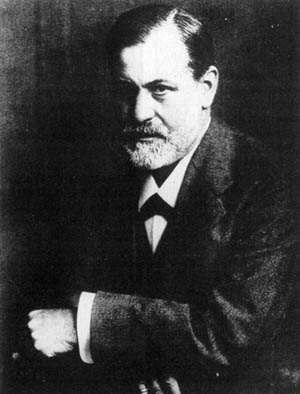
Freud was severely emasculated in both personal ego and in his group ego. He was in fact a practicing homosexual. His relationship with Fliess was homosexual in nature which Freud confessed vowing never to do it again. His group, the Jews, were and are a severely emasculated people. They have been since they walked away from Ur. But on with Freud.
Freud was fond of telling the story of his father and his hat, it seems that Mr. Freud related a story to Sigmund, or Sigismund as he was known then, (His Hebrew name significantly was Solomon) of how when he was a young man walking down the street proudly wearing his new hat, a gentile knocked the hat from his head into the gutter, snarling: ‘Go get your hat, Jew.’
When Sigmund asked breathlessly what his father did, expecting an heroic response, the old gentleman replied: ‘I stepped into the gutter and picked up my hat.’ severely disappointing the young boy.
Since Freud told and retold this story we may be forgiven for believing it had a profound effect on his young conscious and subconscious minds and possibly his ‘unconscious’ too. On the one hand he may have been so ashamed of his father’s very reasonable reaction that he shared his emasculation encapsulating it in his subconscious as a fixation. It is possible that this story either made or contributed to his homosexuality. On the other hand we know for a fact that it inflamed his group ego with an ardent desire for revenge against the gentiles.
As a result of the story he made the Carthaginian Semite, Hannibal, his alter ego. When Hannibal’s father was defeated by the Romans he had his son swear that the would never cease waging war on the Romans until he died. Obviously Freud made his vow against the Europeans although his father didn’t demand it.
It is no coincidence that both Freud and Hannibal were Semites and that the Romans and Europeans were gentiles. Nor is it a coincidence that both Hannibal and Freud were defeated after seemingly winning the war and that rather than fighting the enemy to the end both fled. Now, it therefore follows that Freud never ceased waging war against the Europeans.
You say: How? Come along. I can’t take you into the Inner Sanctum, which way you will have to find on your own, but I can show you some of the records I have been allowed to abstract from the files.
This will involve the secret history of the human race but don’t be alarmed. If you don’t want to believe it you don’t have to. It still is a rousing good story. Besides, if you should ever come around the archives you’ll find it is true.
Freud himself made an attempt to explain a little of the origins of the Jewish psyche in Inhibitions, Symptoms and Anxiety and Moses And Monotheism. The earlier millennia don’t concern us here. The Jews throughout history in their egotism have felt much put upon. This sense of grievance grew until with the expulsion from Spain after the Reconquest their sense of injustice burst into open flames. The group swore revenge on Europe. It must be remembered that at the end of the thirteenth century they were expelled from England, at the beginning of the fourteenth from France and for the duration, well, they were really welcome nowhere.
They swore to stultify Europe. Judaism is the history of messianism.
Sabbatai Zevi.
Zevi- The Last Of The Messiahs
This man was the last great messianic imposter. In 1666, the number of the beast plus a thousand, the Jews of Europe awaited the word from Sabbatai, then at the Ottoman Court to begin the slaughter. But Zevi apostatized to Moslemism instead. The uprising never came off. Hung fire. Fizzled.
Hope beats eternal. The learned Rabbis vowed never to place their hopes on a single individual again. They now concocted a plan for the group to rise as one man in rebellion. The date selected for the revolution was the period 1913-28. You want to give yourself a little leeway there. Born in 1856, in 1913 Sigmund Freud was fifty-seven years old. Although none of his biographers say much about his his Jewish background it is quite clear that he was read in Jewish lore. You may say that he wasn’t a religious Jew but he nevertheless was devoutly Jewish.
Freud quite consciously hated the gentiles for personal reasons that meshed quite well into those of his group identity.
During 1913-17 Freud’s reputation was immense both within and without the Jewish community. It was true his heir apparent, C.J. Jung had broken with him perhaps for this very reason but he and Psychoanalytic Movement had suffered no damage.
In psychoanalyis Freud had the means to instruct his group and control the gentiles. It is said that he gave up hypnotism when he turned to psychoanalysis but as a perusal of ‘Group Psychology’ will show he was preparing for a breathtaking attempt at hypnotizing the entire Western world not unlike that of Burroughs’ Lotharians against their invaders.
Freud lived in Vienna where for years, even decades before 1913, emigrating Jews had flowed through from the entry port into Austria from the East of Brody on their way to America via the North German ports. The prosperity of the whole German shipping lines was built on steerage passengers. Nor were the decisions to emigrate necessarily individual; it may have begun that way but to emigrate was soon organized and directed by the international Jewish community. Check the career of Baron Maurice Hirsch.
The Jewish establishments of both Europe and America provided funding. At about this time provisions were made to transport the entire Jewish population of the Pale, from Lithuania to Romania, to the United States Of America. At the time the international Jewish goverment led by Jacob Schiff and Louis Marshall was located in the United States, New York City. The decks were being cleared so as to remove resistance in America. So as not to call too much attention to the fact by having hordes disembark entirely in New York and Boston, for there would be resistance however feeble, the ports of New Orleans and Galveston were organized to deal with millions of immigrants.
This plan was aborted by the Great War. The Jews had already been at war with Russia, or the Czar as they personalized it, for a hundred years. The international Jewish community had engineered the Russo-Japanese war almost pulling off a revolution in its wake in 1905.
Activities were now intensified. At the time and for about the next sixty years the Jews threw a veil of obfuscation over their activities always denying involvement in Communist or Revolutionary matters. In recent years Jewish scholars, for whatever reason, have now found it expedient to admit that which they were accused of but always denied. They now admit that every national subversive Communist part was over fifty percent Jewish. Those of Russia and Germany were considerably higher. Freud had been involved in Jewish subversive organizations like the B’nai B’rith for many years. As the master psychologist, an expert in the unconscious, he prepared the Jewish mind for the great task of the millennial years in Central and Eastern Europe, which would require much bloodshed, while formulating his psychological plan of conquest not dissimilar from the military plans of his hero, Hannibal.
Freud himself was centered in Vienna. A lieutenant, Abraham, was his man in Berlin while Frerenczi was posted to Budapest in Hungary. The three crucial central European points were covered. Jung in Zurich had split off shortly before this. It is interesting that the Jewish psychoanalytic extablishment spitefully denounced him as a Nazi.
The Jewish millennial years began in 1913. The Great War began in 1914. The Bolshevik Revolution occurred in 1917. Freud’s Introductory Lectures On Psychoanalysis appeared in 1917 also, even though there must have been an extreme paper shortage; it is not a short book. Freud encoded last minute instructions to the Revolutionists in the book.
At this point in 1917 Freud released the inhibitions of millions of Mr. Hydes in Russia, Hungary and Germany. The Bolsheviks took Russia out of the war signing a seemingly humiliating peace treat at Brest-Litovsk. As Lenin said the peace treaty was meaningless because it was his intent to stab Germany in the back.
Germany had a huge Communist Party which it is now admitted was around sixty percent Jewish. Now with the United States in the war, Germany debilitated internally and crippled psychologically, thousands of Jewish revolutionaries intent on the realization of the millennium flowed back into Germany from Russia in hopes of achieving the Revolution there, giddy with the hopes of thereby annexing Central and Eastern Europe. That they didn’t was because of the efforts of the German Volkish groups such as Hitler and his Nazi Party.
The unconscious psychoses of the Jewish people who it will be remembered as a group were suffering from severe emasculation were erupting. Emasculation of the Ego is always expressed in a sexual manner frequently sadistic. Freud had been preaching the practice of unrestrained sexual activity for years. Murder is a sexual act. He was against ‘repression’ you remember.
When Russia began its program of expansion under the Romanovs it annexed an enormous number of nationalities. The Russians then tried to impose their language and manners on the conquered peoples in an attempt to form an homogeneous State. In so doing they emasculated the subject peoples. Those same subject peoples were now the masters of the Russians with permission to indulge their ‘unconscious.’
Jews, Letts, Poles and others let loose. Stalin himself was a Georgian.
Jacob Schiff- PM of the International Jewish Government at this time.
As Jean Genet correctly saw of the Nazi State, in Russia a criminal intellect was now joined to the political and legal apparatus of the State. The criminal code was changed from an objective one to a subjective one; one of vengeance. For a period of years law was suspended in Russia. Amidst the chaos International Jewish organizations including those of the United States operated openly to coordinate their hopes for the millennium.
Bela Kun- Communist Psychopath
What I’m about to say has been denied and suppressed but the example was before both Hitler and Stalin. In Hungary Freud had his man Ferenczi to coordinate the Hungarian Jews. The Jewish Bela Kun (Cohn) seized the government beginning a reign of terror against the gentiles during which thousands of non-Jews were murdered in a horrible sadistic manner commensurate with a severely emasculated Ego.
For some time the Jews had been clamoring for a State of their own. Taking advantage of the chaos in Russia the Jewish American Joint Distribution Committee under the leadership of Schiff and Marshall decided to appropriate the Crimea. Bela Kun who had escaped Hungary during the inevitable reaction, going to Moscow, was sent down to the Crimea to exterminate the population to make lebensraum for the Jews. He was in the process when Lenin died. Stalin then recalled him to Moscow where he was subsequently shot.
All these activities were obscured and suppressed. It is forbidden in American universities to study the subject to this day.
Still, Europe was so horrified that they declined to discuss it or even acknowledge it. But Hitler and Stalin remembered.
The Communists in Moscow being composed solely of emasculated peoples functioning from Freud’s vision of the unconscious like so many Hydes conducted a criminal homosexual style State that would have delighted Genet had he been there. The author the The Thief’s Journal would have gasped at the warehouses full of stolen furs, diamonds and other jewels, art objects and whatever of value that the poor emasculated wretches had stolen from their murdered victims. It was the triumph of the Common Man.
As soon as Stalin gained power he began to discredit and remove Jews from influential positions. Trotsky was sent to a malarial swamp in Siberia to die but from which he escaped to be killed by Stalin’s assasins later. As Stalin consolidated his power he acted more directly until he held the famous show trials of 1936. He then began the systematic elimination of Jews which resulted by the end of 1945 in the death of millions.
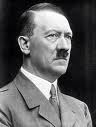
Adolf Hitler

Joseph Stalin
Thus Hitler, an emasculated man leading an emasculated people had the Judaeo-Communist example before him. As an avid anti-Communist and open anti-Semite he was virtually isolated by the world that by 1936 was under the control of Judaeo-Communists. He was the antagonist not the protagonist.
While Stalin who had religious training was clever enough to seemingly work through the system openly followed legal controlled methods although the law had been subordinated to his ends. Hitler acted as a homosexual with an ax in his hand. Stalin’s officers dispatched prisoners hidden in the depths of the Lubyanka with a bullet in the back of the head, which method, by the way, was favored by Jewish and Italian members of Organized Crdime in America of the time, while the Nazis brutally beat prisoners, finally shooting them in the back while escaping.
Stalin, Hitler, Freud, which was worse? Freud enabled, Stalin and Hitler executed. They were all the same.
In Russia during the first year or so of Lenin some Russian workers were being read to as they worked. Were they being read the works of Marx or Lenin? No. They were being read the Tarzan novels of Edgar Rice Burrougs. This infuriated the Politburo. The State was trying to impose a collectivist unconscious psychology on the Russians while Burroughs and his great psychological projection were individualist and responsible. In fact, Burroughs offered a concept of the unconscious which was directly opposed to that of Freud. One might say that Burroughs was Dr. Jekyll to Freud’s Mr. Hyde.
Burroughs himself had been severely emasculated at the age of nine. The situation seems to be this: Burroughs came from a prosperous Chicago family. His parents were very proud of their English ancestry. If you’re unwilling to understand national and racial prejudices that were very pronounced at the time then you probably won’t be able to understand. There were strong feelings between the Anglo-Saxon and Celt or English and Irish. The Anglos considered the Celts if not inferior at least eccentric. The Burroughses employed two Irish girls as servants. In all probability Young Burroughs assumed an attitude of superiority which the girls resented. They then concocted a plan to cut young Burroughs down to size.
They had a friend or relative by the name of John who was aged twelve to Burroughs’ nine. Being much larger and tougher than Burroughs he stopped the younger boy on the way to school one day where he thoroughly intimidated and terrified him. It is quite possible that Burroughs messed his pants. In any event, he suffered severe emasculation that was to haunt him all his life. He does not seem to have ever practiced homosexuality although he was haunted by a feeling of sexual ambiguity.
The incident with John the Bully not only played havoc with Burroughs personal psychlogy in the narrow sense of creating a psychosis but there was also an effect in what Freud’s erstwhile associate, C. J. Jung called the collective unconscious. The individual is limited by his very humanity to a small number of general responses.
Thus Burroughs was given a cast of mind which the Hindus denoted as Shivaistic. This is a general outlook or philosophy of life, if you wish, which one adopts unconsciously as the consequence of one’s experience. I share it although it took me nearly a lifetime to recognize and accept it.

Edgar Allan Poe- The Father Of Modern Literature
Burroughs himself was aware of the fact by at least 1931 when he wrote Tarzan And The Leopard Men. In one key or on one level the story is one of Shiva and Kali his consort. Burroughs names his heroine Kali while she is selected to be the White Goddess of the Leopard Men as part of their death cult.
As can be seen by their complete disregard for life Freud, Hitler and Stalin were also Shivaites.
Shiva and Kali are the Hindu representation of Life and Death. Shiva plays unconcernedly on the pipes while the carnage of life and death goes on around him. The song goes on. Kali, his consort, the goddess of death and regeneration dances on the bodies of the dead to Shiva’s music while wearing a necklace of skulls. Death means nothing because she as the eternal mother has the means to multiply unendingly. Do multitudes die? Why then, multitudes die. Not to worry. Life goes on.
Burroughs also developed an interest in psychology in his attempt to free his mind of the fixation given him by John the Bully. As his psychological notions were well formed by 1911 when he began to write in his attempt to expiate his guilt it follows that he acquired his knowledge during his early married years from 1900 to 1911. He married at 24. He had little opportunity to do his reading before then as the major works were only appearing in the late ’90s.
His main concern was the subconscious mind. While his evolutionary ideas are easier to trace he has left no mention of his psychological reading. It seems certain that he was familiar with FWH Myers who, as noticed, first defined the notion of the unconscious in 1886. He must have read James while Freud’s notions would have been discussed, if not yet translated; thus DH Lawrence had highly developed ideas on the Freudian unconscious in his 1911 Psychoanalysis And The Unconscious while I doubt Burroughs had read Freud in the German.
Also it seems probable that Burroughs had read Le Bon.
Burroughs’ idea of the unconscious differed greatly from Freud’s while being more soundly based in the actual functioning of the mind. While Burroughs’ hero Tarzan seems to function with an integrated personality from his creation in 1911-12 Burroughs himself came very close to integrating his own from 1913 to ’17 or may have although he always had trouble with his Animus and Anima.
Even though Freud advertised the fact that he had taken a year off (golly, a whole year) for self-analysis, whatever the results may have been he never succeeded in integrating his personality or, apparently, realized he should have. He was severely conflicted all his life. Just take a look at his photo where you can see that huge welt running from his lover right cheek across his nose into his forehead. That was caused either by excessive cocaine use or mental conflict in the brain stem, probably both.
As did all mythographers, Burroughs had read his Poe, like them he was concerned with the conscious and subconscious minds. While Stevenson’s Jekyll lost his conscious mind in his subconscious mind, Burroughs cencentrated on the concept of the beast within the man, the relationship between the conscious and the subconscious. In Chapter 3 of The Return Of Tarzan, in what appears to be a plagiarization of the murder scene of Poe’s Murders In The Rue Morgue, Burroughs has Tarzan act out the parts of both the Sailor and the Orang.
Lured up to the apartment on the pretext of helping a young woman, Tarzan is set upon by her accomplices. Discarding the trappings of his recently acquired civilization Tarzan reverts to his anthropoid education of the Jungle becoming Poe’s Orang, yet always retaining the restraints of his humanity or the Sailor.
When the police come he leaps out the window to a telephone pole which one imagines were more common in Chicago than Paris. (Burroughs had never been to Paris so he replicated the urban scene he knew.) While still in his ape guise he has the sense to look down where he sees a policeman below so he climbs up leaping to a rooftop.
Racing across the rooftops of Paris he climbs down another pole. Then in a Hyde-like transformation back to Jekyll he shakes himself from his ape self back into his human self, without the aid of drugs, enters a restaurant to clean up in the rest room then saunter jauntily down the street as though nothing had happened.
Thus the plagiarization of not only Poe but Stevenson was merely an attempt to give a better solution by using the mythological symbols.
Return was written at the end of 1912 and the beginning of 1913.
Burroughs’ own self-analysis would continue through his astonishing output of 1911-17 when he finally integrated his personality with the final volume of his Mucker Trilogy published as the Oakdale Affair but alternately titled Bridge And The Oskaloosa Kid which is the better title. At that time he had exorcised his major fixations which should have integrated his personality.
In understanding that the disintegration of the personality was caused by an affront or affronts to the Ego or Animus that resulted in the creation of fixations that festered in the subconscious that in turn manufactured affects that evidenced themselves in various physical and psychological ways he realized that the same could be exorcised returning the Ego to a whole state.
Unfortunately he strung his theory on through a couple dozen works of fiction disguised as incident. A very few would read all the novels while the only possible interpreters could be those who had read them all not only with a psychological background but an open, inquisitive mind. We’re a very small minority.
If I hadn’t been through the same process on my own I probably never would have recognized it. However as his theories were embodied in his hero Tarzan as mythology they passed into the unconscious of his readers of which, as a teenager, I was one, so shall we say, my mind was prepared.
Lipstick Traces
A Review
Greil Marcus:
A Few Back Pages
by R.E. Prindle
The Man Who Shook The World
For even if they should say something true, one who loves the Truth should not, even so, agree with them. For not all true things are the Truth nor should that truth which seems true according to human opinions be preferred to the true Truth- that according to faith.
–Clement Of Alexandria
Clement was a man defending orthodox Christianity against not only the Pagans but competing Christian sects. Here he enunciates the credo of the true believer- it is True because we believe it, any other opinion even if true, or truer, must be considered false according to the faith.
In the twentieth century the Jewish comedian Woody Allen has a scene in one of his movies where some Jewish men are discussing things at a seder. Allen has one say that he would take God over the Truth. Or, like Clement he would sacrifice reason to the Faith or, in other words, Superstition.
There we have the crux of the matter. To criticize Jews is to criticize God in the Jewish mind. The inevitable result for those who do not accept the true Truth is to be labelled as anti-Semites. Thereon hangs the whole of Jewish history, past, present and future. It is to be devoutly hoped that the following discussion will not be defamed as Semites vs. anti-Semites but approved as Reason vs. Superstition. After all in the age of Science one would hope that Superstition is a thing of the past.
The argument will center on the ideas and career of Sigmund Freud- the man who shook the world. But first the world will have to be placed in the context of competing viewpoints within a Jewish context.
For many millennia the role of Science was given a subsidiary position below that of Religion. The truths of Science were denied because they conflicted with the true Truth of Religion.
In this environment the Jews were advantageously placed to dispute with Roman Catholics. After all Catholicism used the Jewish texts as its holy scripture. Thus in debating contests with Catholicism the Jews almost always came out the victors. This gave them great pride as being superior to the Gentiles. Their very high opinion of themselves seemed justified.
Had things remained a matter of faith the Jewish opinion of themselves would probably still be unchallengeable. However Science which had been treated by the Church more roughly than the Jews refused to be suppressed. Actually a higher percentage of Scientists were persecuted to death by the Church than Jews but this fact has to my knowledge never been considered.
The rise of Science in the seventeenth and eighteenth centuries not only shook the faith of the religious to its roots but actually cast the Semitic faiths into the dust bin of history. With the rise of Science Judaism became irrelevant. It could not win any debates with Science.
In the many crises of the Jewish soul this was a very significant one. It caused the breakup of medieval Judaism. For the first time the Jews left their ghettos and attempted to enter the mainstream of European life.
The Talmud which the Jews had always considered the repository of all true wisdom and knowledge now appeared to enlightened Jews to be the collection of nonsense the goys had always claimed it was.
As the Jews, then, began to enter the mainstream of European society they did so consciously as inferiors trying to impose themselves with their old dignity on superiors. The raison d’ etre of Judaism had to be replaced or the faith would just fade away.
The Talmud was useless to them in argument; they could only embrace the alien ideology of Science and try to excel the European originators of it.
Bearing in mind their desire to avenge themselves on the Europeans by befuddling them because of their expulsion from Spain they campaigned both politically and intellectually.
The first major attempt at establishing a science was that of Karl Marx who espoused ‘scientific’ socialism which was superior to ‘utopian’ socialism. Thus a Jewish social system supposedly scientifically constructed was placed in opposition to a European social system.
In the realm of Physics Einstein managed what seemed to be a more accurate description of reality. So in politics and physics the Jews had established a seeming scientific superiority.
At the same time as Einstein Sigmund Freud coalesced a theory of psychology that was superior to the fragmented state of psychology.
All three men then tried to turn their achievements to the benefit of the Jewish culture. As much as anything this was the cause of the two European wars as Hitler so accurately recognized.
As a little aside it is interesting to note the career of Immanuel Velikovsky. Like Einstein Velikovsky was a very competent Scientist, that is to say, working within an European intellectual milieu. But whereas Einstein stopped short at attempting to prove the veracity of Genesis and Exodus Velikovsky plowed straight ahead. Using his scientific skills to attempt to validate the literal accuracy of every fable he broke on the rock of superstition. Still, he wrote some very entertaining books, somewhat along Marcusian lines.
2.
The influence of Sigmund Freud on psychology has been immense while that influence has been almost entirely of a negative character. The increase in crime can be attributed to the implementation of his theories. Certainly the self-centered attitude of the homosexuals aboard the Teufelsdreck is about to lead to crimes and thwarted crimes which can be laid to Freud’s teachings. Let us review Freud’s ideas in the light of his milieu.
3.
One of Freud’s discoveries was the neurotic need to repeat. In other words, the subject repeatedly acts out the encysted subconscious fixation in an attempt to exorcise or realize the fixation. This phenomenon applies to cultures as well as individuals as Freud taught. In cultures it is called the ‘national character.’ In other words, a people must always act out its characteristic view of reality, the true Truth of the faith vs. the actual scientific state of things.
The Jews by and large have been a Stateless people since their origins. If one takes Genesis as fact, and it is psychological fact for sure, the Jews enter history ‘On The Road’ having been expelled from Ur of the Chaldees seventy-five years after having come into existence as a people. The theme of expulsion is a repeated figure in Jewish history. They are never tolerated for long. This is a fact, a truth, but in variance with the true Truth of the faith.
If we take the Jewish historian, Josephus, at face value they were expelled from Ur because of the jealousy of the Chaldean astronomers who were angry at Abram’s superior skills. The Chaldeans were known as the foremost astronomers of the ancient world so the Jewish ego must excel them at their own game.
The Jews then went to Egypt which was the home of the greatest magicians. After having outperformed Pharaoh’s magicians at feats of magic they take to the road again, fleeing Egypt.
Thus the main tenets of the Jewish character are fixed. They see themselves as an invasive people who are naturally superior to any people whose territory they invade and then they leave. These two themes repeat and repeat.
Thus in the nineteenth century when the Jews move West out of the Pale of Settlement into Vienna the migration must be seen as an invasion of a hostile culture intent on taking over the State as in Ur or Egypt.
A historical characteristic of Jewish invasions is that they are not usually militaristic but infiltratory. Like the military invasion of Hungary by the Magyars the Jewish invasion of Vienna was no less belligerent and exhibited the same needs to impose its culture.
In the biblical account of the invasion of Palestine the Jews put entire peoples to the sword to make living space for themselves. Thus they committed genocide several times over. There is no reason to believe they wouldn’t have done the same in Vienna given time and opportunity.
The bulk of the Jewish people after 1700 had been collected in Eastern Europe in what became known as the Pale of Settlement. This was mainly in Eastern Poland and Western Russia. When Poland was partitioned between Russia, Austria and Germany in the eighteenth century Austria acquired a large Jewish population in Galicia and its other Eastern provinces.
The Western Jews had already realized that the great challenge to their sense of superiority came from Science. What is called the Emancipation of the Jews was done by the French Revolution c. 1789-93. The Emancipation allowed the Jews to begin participation in European society. The work of the Church was undone. Thus the Jewish intellect came into conflict with the European intellect. In Germany this created a reaction known as the Kulturkampf. What the Germans had done was to give their intellect a name. They opposed German Kultur to Jewish Semitism. Semitism is the Jewish name for their intellect. Hence both anti-Semitism and anti-Kulturism came into existence.
Once within the Austrian Empire the Jews began to migrate toward its capitol, Vienna.
The Austro-Hungarian Empire was already an unwieldy amalgam of disputing nationalities and races. Its German governors had their hands full. Austria was sort of an early version of the United States.
Unable to destroy the Germans by the sword the Jews made a cultural assault on the institutions of the Empire. They pitted the Jewish intellect, Semitism, against the German intellect, Kultur. Freud who fully understood the meaning of Kultur wrote a book denouncing it- Civilization And Its Discontents.
Now, Jews are not smarter than anyone else although the mythology of the West so asserts. In fact, Jews are not under the same constraints as the indigenous peoples. Thus, the Jews are always a free, if circumscribed, people. The indigenous peoples were seldom as free. Medieval Europe had been a caste society in which only certain castes had freedom of movement. The Russian Serfs were both unfree and circumscribed until 1861 when they were at least nominally freed although not allowed to freely participate in society. They and other European peasants had a role akin to the American Negro of 1900 in the South who were supposed to know their place and keep it.
Thus a university education was beyond the aspirations of the indigenous lower classes but open to Jews of any class. It doesn’t take a genius to realize that social advancement is much facilitated by a solid education. The Jews accordingly flooded European universities in greatly disproportionate numbers to the population. Any Jew could thus place himself above the majority of the indigenous population.
It was inevitable that they be disproportionately represented in law, the judiciary, medicine, education, the arts and all prestigious occupations. As Semitism was unassimilable to Kultur it was inevitable that if the invasion was not resisted that Semitism would replace Kultur. This left the Germans in a difficult situation. They must either discriminate against the invaders, kill them, or go under.
Given more freedom of movement than the indigenous population and possessing a universal language, Yiddish, the Jews could form the international business corps of any community unrestrained by the business mores of the indigenous people. They could make their own rules, upsetting established traditions and customs as in Egypt and Chaldea.
This too is an established Jewish custom. Things don’t absolutely have to be done in the manner in which they are being done. When the Jews invaded Egypt they began to slaughter the sacred animals which the Egyptians had protected for millennia. The Jews saw no reason for the custom so they rudely pushed Egyptian mores aside. This habit is repeated in every country they invade. The peoples can learn to do it the Jewish way like it or not. They feel they speak with the authority of the true Truth of God.
By 1899 they were over 10% of the population of Vienna which is where critical mass begins. Muscling into the cultural life of the city they acquired a disproportionate number of seats in the symphony orchestras. As in Chaldea and Egypt they assumed that the Semitist style of playing was superior to that of Kultur. As music in Germania occupied an analogous position to astronomy in Chaldea and magic in Egypt the Jews naturally assumed they were better musicians than the Germans although music had never played a large part in their culture before.
As the scientific demands of music are greater than ancient astronomy and magic the Jews were never able to muster a composer of the first rank although their instrumentalists dominated the stage. But then all the empresarios were Jewish so they would necessarily hear with the Jewish intellect. Even today the Jews believe that without the Semitic intellect the orchestras of Europe sound nowhere as good as before the Holocaust.
They established their own newspapers and publishing houses. They used them to defame anyone who dissented from their program.
Without physical resources they had to resort to psychological means to disarm their opponents. They had to ‘psyche’ them out. Anyone who opposed or criticized them was branded as an anti-Semite and his own people were instructed by the Jews to ostracize him. Thus German nationalists became, if not criminals, at least, pariahs in their own land. The Austrian reaction to Jewish nationalism was extremely violent giving expression to itself only after the Anschluss.
These German defense forces were active and powerful during the period from approx. 1890-1914. After 1918 resistance to the Jewish invasion crumpled everywhere. The Millennial Revolution had gone swimmingly. Jews assumed the top positions or became dominantly influential in nearly all governments including the United States. The Jewish Invasion was for all practical purposes a success.
Two men were born into this Viennese environment that would have a profound impact on world history, Sigmund Freud and Adolf Hitler.
4.
Freud’s main desire was to become a great man. This idea was planted in his intellect by his Christian nurse as a child. He succeeded in realizing this in the field of psychology. Freud was himself an immoral man nor does he advocate morality for others. He advocates an unbridled self-indulgence. Like he says: Life is short. To succeed in one’s aims it is permissable to take immoral shortcuts even to use criminal means. The Mafia believes the same thing.
As a young man he was schooled in the tradition of Anton Mesmer from whom modern psychology descends. He was heavily indebted to the teaching of the French psychologist Jean Martin Charcot as well as to the school of Nancy. His own approach was an adaptation of their methods. He at first used Mesmerism or hypnotism as did the schools of Paris and Nancy but later abandoned it in favor of a form of self-hypnotism that he called free association. Hypnotism as a result went into a period of disfavor although applications are being found for it once again.
He got his real start by insinuating himself into the good graces of Josef Breuer whose work he very nearly appropriated. Having plundered Breuer he broke off with him never speaking to him for the rest of Breuer’s life. Thus does conscience make villains of us all.
Unable to admit his indebtedness to his teachers he repudiated their influence acting as though he had evolved his theories out of whole cloth. As an aspect of his character he was unable to suffer any criticism or advancement on his own ideas by others. He eventually acrimoniously broke with any of his associates with intellegence and independence.
Freud was a Jew which is to say devoutly so. He did not consider himself Austrian or German but an ethnic Jew. He believed in the supremacy of the Jewish people.
The most revealing anecdote concerning him was that as a child he was walking with his father who told him how when a young man he was wearing a new hat when a Gentile knocked it off his head into the street.
‘What did you do?’ Freud asked breathlessly expecting the answer to be that his father knocked the Gentile down.
‘I went out into the street and picked it up.’ His father replied.
Freud then lost all respect for his father which troubled him greatly for he wrote: ‘I cannot think of any need in childhood as strong as the need for a father protector.’ His dad wasn’t it.
So Freud’s own psychic needs distorted his approach from one of science as Jung claimed to one based on his personal needs. He falsely maintained that the father figure is the most important in a man’s life. When his disciple Otto Rank had the courage to correctly insist that the mother was the most important, Freud drummed him out of the ranks.
Disappointed by his own father he took as a surrogate father figure Hamilcar Barca, the father of Hannibal. Hamilcar Barca having suffered an injury at the hands of the Romans made his son swear on his sword, which is only a substitute for the ‘thigh’ or penis, that he would avenge him on the Romans. Clearly Freud would have promised his dad to avenge him on the Europeans if he had asked. Maybe he did.
Curiously Freud doesn’t carry Hannibal’s story through to its conclusion. The Romans exterminated the Carthaginians and razed their city.
Freud’s lapses in the application of his psychology are very peculiar. Having discovered the psychological compulsion to repeat he applied it neither to an analysis of himself or of his culture and people. He might have saved the Jews much suffering if he had. In his desire to avenge his father he became a central figure in the millennial period of 1913-28 which ended in yet another attempt to exterminate the Jews.
Post exilic history for the Jews began rather favorably. They returned to Palestine just as the Middle Eastern Empires were entering a time of troubles. The succeeding Hellenistic period left them more or less independent until in 186 BC the Seleucids interfered in their internal affairs. Under the Maccabbees the Jews were able to defeat the relatively weak Seleucid Emperors who were besieged on all sides. The victory gave them a feeling in invincibility.
The feeling was shattered by the Romans.
The Jews tried again and failed in seventeenth century Europe.
Their third repeated attempt was in 1913-28 which can be extended to the present.
Freud made the incredible and mind boggling statement on the eve of the Bolshevik, or Jewish Revolution in Russia: We tell ourselves that anyone who has succeeded in educating himself to truth about himself is permanently defended against the danger of immorality even though the standard of morality may differ in some respects from that which is customary in society. He then goes on to say especially since the existing standards of morality are beneath contempt.
Thus he advocates that a private, personal, obviously self-serving morality is superior to an ideal morality that has evolved over millennia extending those millennia anterior to the Old Testament.
What could Freud, knowing the imperfect nature of man, have found so objectionable about the existing morality? I don’t experience it as he did. It can only have been that it was based on European traditions and not Freud’s Jewish heritage.
The birth of modern Judaism was caused by the rise of the European Scientific attitude. Science was the sole creation of Europeans with which the Jews had nothing to do. Prior to the Enlightenment in their argument with Roman Catholicism the Jews had not only been equals but superiors. As the creator of the corpus followed by the Church the Jews were in a better position to understand and interpret it through the repository of the Talmud.
When as a result of the Enlightenment, scientific Europeans left the puerile biblical debates behind the Jews were hopelessly medieval. The Talmud, so effective against the bible, was worthless against science. The more intelligent or, perhaps, less traditional Jews began to reorganize Judaism to meet the Scientific times. This left them second rate beneath the Europeans, a serious affront to their amour propre.
The real challenge then was to regain their superiority. This could only be done by excelling in Science as they could invent nothing superior to it. The true Truth of religion broke on the rock of reality. If they merely excelled in Science they merely excelled in an European milieu. They were clearly then no longer the Chosen People; they became lost in the ruck. Freud at one time says that he saw no reason why the ‘wisdom’ of the Talmud couldn’t be raised to a level with Science thus bringing the Jews level with the Europeans in their dreams.
Strangely he didn’t understand that the entry into full consciousness caused by the understanding of the workings of the psyche obviated all forms of consciousness that went before including the so-called wisdom of the Talmud.
So, to whom was Freud speaking about educating himself against the danger of immorality? By Freud’s own admission his fellow Jews.
Freud’s vision of psychoanalysis is personal, dealing exclusively with the subjective workings of the subject’s mind. He doesn’t even seem to grasp that the fixations are caused by external forces. He seems to think the mind functions independently of the outside world. Input does not seem important to him.
To Jung and others Man’s relationship to his world is based more on a Challenge and Response system. In other words, the intellect, which Freud denies, plays a very important part.
Freud’s own intellect cast against his ideas places them in a different light. The man was born in 1856 in a Central European Jewish milieu. It will be remembered that the Hasidic religious movement grew out of psychological trauma that occurred in 1648. Founded c. 1700 the Hasidic movement was only about a hundred fifty years old at his birth thus retaining much of its original vitality.
Also arising out of the Jewish disappointments caused by the failed Messiah, Sabbatai Zevi, in 1666 a movement was led by a follower of Zevi by the name of Jacob Frank. This movement also took shape in the first half of the eighteenth century and was still flourishing during Freud’s young manhood.
As a consequence of Zevi’s failure Frank believed that man was inherently evil thus God would never redeem him until the evil was spent. The only way to expel evil was to commit enough crimes to get it out of one’s system. Novel pyschology to say the least. Thus he taught to a large and attentive Jewish audience that one must commit evil for evil’s sake and that good will come of it. So, in a manner of speaking, one is doing good by doing evil.
Now, one can trace the spread of this idea in various forms and guises through space and time. One very interesting advocate who deserves more study is an eighteenth century English Jew by the name of Samuel Falk. Another is a twentieth century American Jew by the name of Arnold Rothstein. And of course, Marx and Freud.
Freud does not go into the external influences that formed his outlook or life or personal Weltanschauung but this emphasis on a personal morality that is superior to prevailing morality seems a sublimation of Jacob Frank and his evil for evil’s sake.
Now, to whom was Freud speaking and why? Certainly Freud considered himself a prophet of the Jewish people amidst the dawning millennium. He had an intense desire to avenge his people on the goyim. Did this Hannibal in that role have anything to do with organizing or directing the Jewish Revolution of the dawning millennium?
There is no question that his statement that anyone who has educated himself to truth about himself is permanently defended against the danger of immorality (and hence a guilty conscience) could be construed as advance absolution for any acts of the Bolsheviks that would be considered crime by ‘conventional morality.’
Freud’s statement and role resembles those a great deal of Simeon Bar Yochai, a second century rabbi of the Roman Wars. The Roman-Jewish war of 66-135 AD was perhaps the first of the Holy Wars. Its rationale and leadership was provided by the religious leaders of Judaism.
Simeon Bar Yochai was a leading architect of that war, probably its guiding light. After Bar Kochba’s defeat in 135 AD Yochai was compelled to go into hiding in a cave from which he daren’t move for many years until the Romans gave up the search. As a tribute to his influence in the war his obituary at his death said that he was the man who shook the world to its foundations.
Just before the bloodbath of 116 when the Jews rose up to slaughter hundreds of thousands of Gentiles a moral quandary arose in the Jewish community. They wondered whether it was permissable to kill ‘good’ Gentiles as well as the ‘bad.’ The rabbis without a moments hesitation replied that it was permissable to kill any and all Gentiles.
In 1666 with the expected advent of the millennium heralded by the messiah, Sabbatai Zevi, the Jews had been prepared on the strength of ‘God’s promise’ to rise up and murder Europeans much as they had done in the Roman War.
The third repeat of the Jewish Revolution of which the millennial date was 1913-28 had come to a slow boil with the Communist Manifesto of 1847.
It will be remembered that following Marx’ manifesto all the national Communist parties were over half Jewish. The non-Jew, Kropotkin, as leader of the anarchists had been discredited and the anarchists disenfranchised from the Communist Movement. The Jews than held all the leading positions.
Thus four Jews led the Bolshevik Revolution in Russia- Lenin, Kamenev, Zinoviev and Trotsky. All the abortive revolutions of Central Europe were led by Jews. They actually repeated the massacres of the Roman Wars in Russia and Hungary and were prepared to do so throughout the world as the Revolution rolled on to success.
In Russia slaughterhouses were established in which Jewish murderers ‘worked’ all day long slaughtering Gentiles until they stood ankle deep in blood and gore. Were they able to do this because Freud and made known to them truths about themselves that prevented them from committing immoral acts? Were they absolved of their crimes in advance as were the Jews of the Roman Wars? They must have been or they couldn’t have performed their ‘work.’ As it was numbers of them had nervous breakdowns as a result.
The atrocities in Hungary and the projected total annihilation in the Crimea have already been mentioned. The similarities between the Roman and European slaughters are quite pronounced in their ferocity. Of course all the details of the former had been recorded in that epistle of ‘science’, the Talmud.
Did the Jews go to Freud to justify their atrocities as they had to Simeon Bar Yochai two thousand years earlier? There is the compulsion to repeat. The Jews were very well organized before, during and after the Great War. Agents of the American Jewish Joint Distribution Committee swarmed over Central and Eastern Europe after the War in an attempt to rehabilitate their brethren first so they could assume control. The AJC and B’nai B’rith were the leading components of the ‘Joint.’ Freud had been a member of B’nai B’rith since 1895. He lectured to them in Austria on a consistent basis for years, even decades. As a psychoanalyst what was he telling them? His intellect deserves closer examination for what else can ‘anyone who has succeeded in educating himself to a few truths about himself is permanently defended against immorality’ mean except a license to kill. If a Jewish supremacy arose out of that evil wouldn’t good have come out of it in Jewish eyes? Yochai, Frank, Freud, there is a succession.
Placed in that context one must reevaluate the whole period as well as the careers of Hitler and Stalin, for as Freud wrote openly in a universal idiom his rationale can be appropriated by any individual for his personal morality.
The invasion of Vienna was preceded by and coincident with the rise of Jews in France. At the time of the Russian Revolution a document became prominent called the Protocols Of The Learned Elders Of Zion. The document outlines a method for creating discord in society so that a junta can easily assume control. It was said that this document was a Jewish blueprint for world dominion. The provenance of the Protocols has never been established for certain. The Jews say it is a ‘forgery’ while their opponents say it is authentic.
Over the years the Jews have managed to discredit the document and have its study suppressed. This is a great disservice because whoever wrote it its precepts are currently being followed by several groups. Have you ever looked at Homeland Security carefully? It behooves every person interested in current affairs to be conversant with the Protocols of Zion.
In point of fact the Protocols are of Jewish provenance.
One thing all disputants agree on is that the Protocols were based on an earlier document of Franco-Jewish provenance called in English: Dialogues Between Montesquiou And Machiavelli In Hell. The Dialogues are of Jewish provenance so whether the Protocols are or not is a moot point.
The Dialogues were attributed to a French Jew by the name of Maurice Joly but internal evidence indicates several hands including that of the ‘Gibbon’ or Jewish historians, Heinrich Graetz.
The creation of the Dialogues was coordinated by a French Jew by the name of Adolph Cremieux. Little known outside Jewish circles but extremely important to a number of situations Cremieux also deserves further study. He was a lawyer and politico deeply involved in the revolutions of 1830 and 1848. If one takes the Jewish ‘Gibbon’ Graetz at his word both revolutions were the result of Jewish machinations. On this point Graetz and Hitler are in accord.
Cremieux was responsible during the annexation of Algeria in 1830 under cover of that year’s revolution for obtaining French citizenship for the Algerian Jews. Thus with the annexation the barbarous medieval Jews of Algeria became full French citizens gaining precedence over the native Algerians in one fell swoop. Clever move for the Jews bad move for France.
As Jewish affairs were consolidating nicely in France twelve years after the 1848 revolution a Jewish central governing body called the Alliance Israelite Universelle was founded by Cremieux in 1860. The Dialogues were supposed to have appeared in 1862. The name means The International Alliance of Jewry or in a slightly different translation: The International Jewish Conspiracy. Actually the Alliance was the seat of the Jewish government until c. 1900 when the seat was transferred to the United States under the guidance of the financier, Jacob Schiff.
Thus the Protocols arose out of the Dialogues in direct succession sometime during the 1880s. It should be noted that the Dialogues was never seen in bookstores. The whole printing was confiscated by Napoleon III according to report against whom they were supposedly directed. It follows that the only people who could have known of the book and provided a copy as a model for the Protocols were its producers the Jews of France.
Nevertheless, as masters of misinformation, disinformation and misdirection the Jewish government was able to shame the liberal parties into rejecting Jewish provenance of the Protocols. The Liberals then condemned any Gentiles who persisted in saying so as anti-Semitic cranks. That is actually the nature of the ‘proof’ that the Protocols aren’t of Jewish provenance.
Jacob Schiff himself was a very effective Prime Minister. He was able to engineer the First Russian Revolution of 1903-05 by funding the Japanese war machine from America while he and European financiers prevented funding to the Russians.
Schiff was able to disrupt American and Russian diplomacy for the benefit of the Jews from 1900 to 1913 when he succeeded in persuading the US to break off diplomatic relations completely. Immediately with the Bolshevik succession he rushed huge loans of American dollars to their coffers even during the Great War to shore up the regime.
Thus absolved by Freud of guilt and supported by world resources from 1917 to 1924 it looked as though the Jews were on the eve of success in their millennial pursuit. With the possible exceptions of Mussolini and Ford it looked at though there were no fences facing.
However Hitler and Stalin sensed the danger. Hitler himself was always hostile to Freudian beliefs; it may be assumed that Hitler read at least some Freud. He was hostile to Freud for much the same reasons that Freud was hostile to Kultur. Living in the Vienna under the governance of the ‘anti-Semitic’ Mayor Lueger Hitler was self-educated. He spent years in the libraries organizing his view of the world.
In Freudian terms both he and Stalin certainly knew truths about themselves which prevented them from committing ‘immoral’ acts. Freud’s dictum could be construed as also authorizing their crimes.
Coming to maturity in the Red Terror of 1917-24 Hitler had a good understanding of the course of events in Central and Eastern Europe. It is silly to think that he acted solely from his own impulses. There was a civil war going on between Reds and Whites from 1918-33 in Germany. Judeo-Communist atrocities were daily before his eyes. As he said, he knew his head would roll in the sand if he lost. That was not mere rhetoric.
Hitler’s experience in Vienna convinced him of the nature of the war between Jews and Gentiles. The evidence is clear that the Viennese shared his views. Once given the upper hand over their invaders the Austrians were much more obdurate than the Germans. Never forget that an Austrian, Hitler, directed the fate of the German nation.
Hitler’s book burning in 1933 might be construed as nothing more than a vindictive censorship of ideas he didn’t like. But the books burned were those of Jewish writers, expecially Freud, it should probably be seen as an attempt to eject Semitism from Kultur. In other words the triumph of Kultur over Semitism. In the end the Germans chose to kill the Jews rather than discriminate against them or go under. You may be sure the Jews would have done the same.
As Stalin usurped power from the Jews in Russia a strange thing happened. Psychoanalytic methods assumed great importance. Spectacular show trials ensued.
When Freud’s disciple Otto Rank defected from the ranks of Freudian pyschoanalysts he was excommunicated. The validity of his views was not examined; even if true they were not the true Truth of the faith. Hence Rank was compelled to submit to criticism, confess his faults and beg for acceptance back into the faith.
The Show Trials of 1936 were conducted in the exact same manner except that the sinners were given the death sentence. The method surfaced again in Red China in 1966 when the Red Guards and Cultural Revolutionaries of Mao Ze Dong overturned that society. The accused were criticized in mass meetings, compelled to confess their ‘faults’ and beg to be allowed to rehabilitate themselves through hard labor.
Thus Marxist and Freudian ideas converged in an orgy of evil to destroy the oldest continuous civilization in the world.
The notion prevails in Politically Correct circles in the US today. Thus Freudianism has had a profound if unsuspected impact on the world.
Freud remained confident through 1928, began to waver in 1930 and by 1938 the horror of the impending destruction of the Jews as a repeat of the Roman War was before his eyes as fled Austria for England. In Moses and Monotheism he pitifully whines that the Jews had given up those notions of world dominion long ago. Or, in other words, I’m sorry.
Like Hannibal, his attempt to avenge his father resulted in the destruction of his people. As in the Roman War the Nazis conducted a manhunt to find every single Jew and kill him. Not only had Bar Kochba and Sabbatai Zevi failed the Jews as messiahs; so had the Revolution. The Jews failed in this third attempt to take over the world but the legacy of Sigmund Freud lives on in the ambiguous words of his corpus. His immediate political aims failed but his undermining of European society was much more successful.
Apart from his political intent Freud had uncovered a great scientific area of study.
5.
The Shirt Of Nessus
While Freud’s short term political goals ended in disaster for his people, as did those of his role model, Hannibal, Freud’s long term goal of destroying the social foundations of the Gentiles has succeeded quite well.
As an innovator Freud cannot be expected to have had a complete and final idea. Much of the information that became available after 1950 was undeveloped in Freud’s time, such as the Matriarchal and Hetairic periods, so he cannot be held accountable for not knowing them. Physiology has made tremendous strides since his day.
Freud’s errors do not so much lay in areas of knowledge but in the areas of intent or motive. He was unable to separate his own psychology of hatred from that of his scientific discipline. Hence his mistaken emphasis on the importance of the father figure and his misbegotten notions of the Oedipus Complex. Then too, he projected his hatred of the Gentiles into his views of religion and sexuality.
The only thing of value Freud had to offer, that of the formation of neuroses, has been rejected by the lay and medical communities alike.
Strangely his nonsense is revered as great revelations of truth, largely because they fit in with prevailing prejudices. In his attack on the Christian religion Freud was curiously unaware that the Scientific Consciousness displaced the anterior consciousnesses of Hetaira, Matriarchy and Patriarchy. Thus the people who were dependent on Religion as the basis of the mentality were people whose beliefs could not be dislodged. On the one hand were the various esoteric religions whose beliefs do not depend on the divinity of Jesus and the Fundamentalists whose belief is so secure that nothing can shake it. For those who need a supernatural agency in their lives New Age people using science as a tool have created alien intelligence from beyond the solar system to serve as their ‘God.’
If Freud thought dispelling Christianity as a religious belief would bring the Gentiles down he was mistaken. The ‘illusion’ had already been replaced by a ‘reality.’ The futility of trying to dispel religious beliefs should have been clear to Freud. The exposure of the illusion or, even delusion, of the compact between the Jewish people and their god had no effect on them; they continue to believe the compact exists and that Palestine was given to them by their tribal god inalienably.
The most potent dissolvent in Freud’s arsenal was his sexual theory. He was quite severely criticised for his sexual beliefs then and they should be rejected now.
Everything Freud believed on the subject was wrong. Basic to his misunderstanding was the physical structure of the human organism.
He quite correctly picked up the ovate and spermatic halves of the psyche but since he didn’t associate them with physical origins he mistakenly thought that men were part woman and vice versa. This was a critical misconception as it opened the door to much erroneous speculation on homosexuality.
There may be rare cases of sexual ambiguity caused by birth defects in the physical apparatus or defective hormonal systems but any other expression of ambiguity is a perversion that is not part of the most perfect specimens but comes about only when the ovate is fixated and spermatic repressed or, in other words when the organism is mentally disturbed. Psychological perversion has nothing to do with the physical organization.
Since Freud misunderstood the physical organism he equated sexuality not with the Power Train itself but only with sexual intercourse. Freud actually equated fucking with mental health. Because psychic discomfort is reflected in sexual urges he actually believed that the more fucking one did the better person one would be. Such nonsense has not only passed unchallenged for eighty years but is actually embraced today as the Gospel of Fuck.
Freud did not believe in the intellect or the effectiveness of intelligence. While he made the grandiose pronouncement: Where Id is, Ego shall be, he failed to explain how this would come about. For whatever reason he considered the intellect nonexistent and intelligence ineffective and unimportant. In keeping with his times he believed in the hereditary transmission of mental traits.
More importantly he invented a whole category of affects he identified as self-sufficient ‘instincts.’ Like the Unconscious instincts do not exist. There are no instincts, not a single one, all is a matter of learning and education.
Even eating is not an instinct but taught at the mother’s breast. Hunger may be a physical reality but it is not an instinct. Assuaging hunger must be learnt and that literally at the mother’s breast. The first lesson an infant is taught is when the mother inserts the nipple in his mouth. His mouth is blocked he has no choice but to resist by sucking. Imagine his surprise when the liquid emitted seems delicious and when he swallows it because he can’t spit it out the physical reaction is terrific. It feels good. Having learnt to eat he wants more. Being a quick learner, from that point on the infant will demand to be fed. But without that first infusion he would die hungry not knowing what the desire to eat meant.
Because Freud wanted to project his own psychic vision he gave instincts precedence over all other psychic functions. He professed that the individual was incapable of resisting or controlling what the Ancients characterized as the Raging Bull and what he called the Ego.
Both the Church and Esoteric religions have devised rigors to control or domesticate this Bull or Ego/instincts by using intelligence. Freud thought that to use your intelligence to control your ‘instincts’ was to incur damaging inhibitions and repressions. Hence he was opposed to European morality. Freud imagined this did irreparable damage to the psyche especially sexual inhibitions and repressions hence the Gospel of Fuck.
If fucking actually made a person better, then the logical conclusion is that libertines and homosexuals would be the best people in the world. Fucking dominates the libertine and homosexual mind. It is not unusual for them to commit thirty or forty sex acts a day for as many days as they can sustain it.
As the only thing that counts in this view of sexual activity is the climax it follows that if machines were placed in prominent places to masturbate the individual on an hourly basis or less that society would be darn near perfect. I don’t know why people are leery of buying the Brooklyn Bridge when they have bought the myth of sexual intercourse.
The fact is that libertines and homosexuals are the worst people in the world so the basis of Freud’s argument is very limp.
The West has generally embraced Freud’s misguided sexual theory. The United States is actually fucked. Freud’s sexual theory was picked up by the lame third rate novelist Henry Miller who actually formulated the Gospel of Fuck during the twenties and thirties in the Tropics of Cancer and Capricorn.
Henry Miller was gaining respectability during the fifties with psychotic fringe groups in the San Francisco Bay Area and elsewhere. By the sixties he would have a profound impact on society with the reverence given his two volumes of the Tropics.
As Freud was interpreted in the common mind repression and inhibition were the causes of psychic discomfort. The common mind had no idea how inhibitions and repressions were caused except by not being allowed to do whatever you wanted to do. Through the forties and fifties children of innumerable families were encouraged to indulge their whims and fancies regardless of who they might hurt. They were given no instruction or correction lest they become inhibited and repressed. It was thought that when they grew up they would naturally gravitate to the intelligent choice.
The so-called ‘Me’ generation of the sixties and seventies lacked proper instruction in managing their ‘instincts.’ The pervading influence of past mores prevented them from expressing themselves with true lack of ‘inhibition’ or repression. The wave of high school shootouts of the later century when the succeeding generation had moved out from the shadow of earlier mores were committed by the offspring of the ‘Me’ generation. They are the logical progression of Freudian sexual theory.
Employing metal detectors and other ‘inhibitory’ or ‘repressive’ systems will not solve the problem. Freud has to be amended.
Freud’s thesis was advanced by the Jewish monologist Lenny Bruce as well as furthered by Jewish interests in Hollywood who produced innumerable ‘action’ films in which the uninhibited and unrepressed protagonist attempts to solve his problems from the barrel of a gun rather than reason them out.
So, this brings us up to Greil Marcus and the present. Greil Marcus is himself a Jew so the question is how does Greil Marcus and his writing fit into this Jewish cultural scheme of things. On my first reading of the book I had no idea what Mr. Marcus was talking about. I had heard of the Situationist International but knew nothing about it. Reading the blurbs I was under the impression that Mr. Marcus was going to explain the SI. Not very clearly anyway. As I turned the last page I had no idea what the book was all about.
Second reading same as the first. Then I read his 2006 effort The Shape Of Things To Come. I gathered from that that Mr. Marcus considered himself in direct descent from the Old Testament Hebrew prophets and that he had conflated Israel and the United States. Armed with that understanding I had the thin edge of the wedge. I went back to a third reading of Lipstick Traces. Pay dirt! I think.
I gather from the third reading that Mr. Marcus considers himself also a direct lineal descendent of Theodore Adorno and Herbert Marcuse, in other words The Frankfurt School or alternatively The Institute For Social Research or alternatively still The New School For Social Research. Now we’re getting somewhere. In addition his intellectual romance with fellow Jew Guy Debord who was the Situationist International seemed that in much the same way Dr. Baum assumed the soul of Dr. Mabuse in Fritz Lang’s The Testament of Dr. Mabuse I gather that Mr. Marcus may feel that like some Buddhist Lama the soul of the dead Debord has passed into himself and he is the new leader of the Situationist International. So as I perceive it Mr. Marcus views himself as an ancient Hebrew prophet, a critic in the mold of the Frankfurt School and the leader of the Situationist International.
For some in depth background on the Frankfurt School the interested reader might try Kevin MacDonald’s ‘The Culture Of Critique.’
Following the above notion of who Greil Marcus might think he is and what he thinks he’s doing I will attempt an interpretation of Lipstick Traces. Mr. Marcus as the leader of the Situationist International seems to have compiled his book which is as much a stream of consciousness impressionistic novel as anything else as a number of situations.
I will deal with each situation as a separate entity which indeed a situation is. Rather than begin with the first situation which as I see it should be last I will begin with the second situation, part of Version Two- A Secret History Of A Time That Passed- Legends Of Freedom.
The theme of the book as a whole seems to be the saying of Karl Marx that Mr. Marcus refers to repeatedly:
I am nothing and I should be everything.
End of Part II.
A Mother’s Eyes
April 27, 2007
A Mother’s Eyes
by
R.E. Prindle
Part I: The Remarkable Case Of Aldous Huxley’s Eyes 30 pages
Part II: The Baby Marie: 10 pages
Part III: Cow Eyed Hera And Edgar Allan Poe: 21 pages
Part IV: The Hand That Rocks The Cradle: 9 pages
Part I
The Remarkable Case Of Aldous Huxley’s Eyes
This essay will deal with certain unconscious relationships between the Indo-European male and the Mother Archetype. This essay is retricted to the Indo-European sub-species because the author is not convinced that all Homo Sapiens sub-species are identical in intellectual makeup nor are they subjected to the same cultural influences which would produce a uniform effect across all sub-species of mankind. What Jung calls the Collective Unconscious of Man does not use the same symbolism in every period of time, every place and with all sub-species. While the Horse will be a central focus of the Indo-European after minus 2000, for instance, prior to its introduction to the Middle East the beast could not have figured in the Collective Unconscious of either the Indo-Europeans or Semitic Mesopotamians. Thus the Black, Semitic and Mongolid sub-species may be subject to the same relationship with the Mother Archetype but may express the same issue in different symbolism.
page 1.
The female of the Indo-European or other sub-species is structurally different from the male hence subject to different responses to the same issue in different symbolism. I will touch on that briefly in Part IV.
Further, one ought not to confuse the role of female with the role of mother. The female is a different person until she becomes a mother. Once a mother her response to the role will depend on female societal desires which will control her attitude to motherhood. The intelligence and intellectuality of the female person is in conflict with the Structural Psychology of the Mother. Not all females are intellectually adapted to become mothers although most do become mothers.
The topic will be approached from the point of view of Depth Psychology based more on the approach of Carl G. Jung than that of Sigmund Freud. Freud’s approach was based on the personal psychology of the upper brain while Jung approached the subject more from a Special angle hence his notion of the Collective Unconscious with a universal heritable symbolism regardless of education or sub-species.
Because he was dealing with a more homogeneous population unlike the heterogeneous population of the United States he was able to believe that all people are subjected to identical influences even though he had the obvious sub-special differences of the Jewish Semitics before him.
page 2.
There can of course be no such thing as a collective mind hence no Collective Unconscious. Neither can this Collective Unconscious be inherited. There can only be a shared sub-special understanding of phenomena. This shared understanding will express itself in certain common symbols induced by a universal field of education depending on one’s level of consciousness.
Specifically I wish to examine the relationship between the mother and the eyes of the Indo-European male as well as the mother’s identification with the Horse by the male. All three are intimately related.
The difference between Jung’s Collective Unconscious and the individual unconscious or, rather, sub-conscious, is that Jung without having actually differentiated the two was referring to Structural Psychology by his notion of the Collective Unconscious.
Before the human organism can be subject to personal psychology there must first be an organism. The construction of that organism will then determine its psychological potential.
Thus while all the higher vertebrates share the same Structural Psychology the addition of the upper brain separates man from the beasts while causing a conflict between the Structural Psychology and Personal or Intellectual Pyschology.
While a human entity appears to be an organic whole it is actually a construction of component parts. The nature of those parts determine the psychological potential of the completed construction.
page 3.
Not enough attention has been paid to how a human is constructed or the signficance of that construction. The basic organism seems to be taken for granted.
The human is a combination of two different components which are then integrated. On the one hand there is the passive ovum which is provided by the female of the species; on the other hand is the active sperm provided by the male. Passivity and activity are important and should not be passed over lightly. The ovum provides one half of the structural elements as well as all the mitochondrial DNA. These are significant facts and not merely incidental.
The ovum is always female or an X chromosome. Thus the male always has this female X chromosome component which Jung and Freud using the imperfect data of their time referred to as a man’s ‘feminine side.’ Jung called it the Anima in the male, the corresponding role in the female the Animus.
The presence of an X chromosome in the male in no way affects his sexual identity as a male. It is not a cause of homosexuality or effeminacy. Using the imperfect data of his time Jung acted on the notion that sexuality was caused by a ‘preponderance’ of male or female genes. This would of course distort his vision of sexuality creating non-existent possibilities.
An unfertilized ovum is, of course, of no value. The male provides the fertilizing element in the form of the sperm. The sperm contains the other half of the structure which when joined with the ovum completes the structure.
page 4.
The sperm can be either X or y. There must be a difference in nature between the ovate and spermatic X chromosomes. If X the completed structure is a female. But the spermatic X contributes the gene pool of the mother of the male which is part of the Anima so that the female has two female components. Without the X chromosome the male could not provide X sperm.
It must also be true that the spermatic side of the female provides a set of genes received from the father while the ovate side provides a set of genes from the mother, so that not all of the female’s ovum are the same.
In the case of either an X or y sperm the ovate or female mitochondrial DNA is always and solely the source of mitochondrial DNA in the resulting construction whether male or female. The Spermatic mitochondrial DNA is always expelled from the united ovum.
Thus the Mother Archetype establishes itself in a much more intimate connection with the male than the Father Archetype. This is a physiological fact with real consequences and not a matter for sexual pride.
When the ovate and spermatic parts combine the ovate X chromosome assumes the left side of the structure while the spermatic X or y forms the right.
Many organs which can function independently are therefore duplicated such as kidneys, lungs, gonads or ovaries. Those which can only function as a unit are formed of two separate lobes which are seamed such as the heart, liver, penis or clitoris.
Now, this may be controversial but the gonads or ovaries, the spinal cords and brain from an integrated unit like the power train of the automobile. All three are parts of consciousness.
page 5.
The ends of the spinal cords, it follows that one each must be provided by the ovum and sperm, anchored in the gonads or ovaries intertwine up the spine until they cross over at the brain stem so that the passive ovate left side of the body becomes the passive right side of the brain while the active spermatic right side of the body crosses over to become the active left side of the brain.
The two cords, spermatic and ovate anchored in the gonads or ovaries pass up the spine to emerge from the brain stem as ‘loose wires.’ To give them a name we will use Jung’s terminology but assert that male and female have both an Animus and Anima rather than as Jung has it, the male an Anima and the female an Animus.
Now, as man evolved he began with what is referred to as the serpent’s brain or the brain stem followed by mid- brain, parietal lobes, upper brain and pre-frontal lobe.
Thus structurally to the point of the brain stem all vertebrates function more or less identically. By which I mean to say that to that point the psychology of say, sub-species five of the lion is identical to man. If this isn’t true than evolution is bunk.
Of necessity the optical nerves are associated with this very primitive organ of the brain stem. This fact must have some relation to the association of the Mother with the eyes.
Such a psychological association must operate independently of personal psychology as Structural Psychology or, as Jung would have it, the Collective Unconscious.
page 6.
There are then tree levels of consciousness: the autonomic system, the brain stem and the upper brain.
In fact the as the brain stem is not intellectual as in personal psychology, it may function independently of the upper brain and require a different technique for therapy.
At any rate the symbolism Jung discusses is related to Structural Psychology and not the neuroses and psychoses of personal psychology.
When the male Indo-European experiences rejection or abandonment by the mother this rejection may be evidenced by eye problems associated with a horse symbolism.
Having laid the frame for my discussion I wish to begin with the case of Aldous Huxley, his relationship to his mother and his celebrated eye problems. Aldous Huxley is, of course, the important literary figure who wrote ‘Brave New World’, ‘Eyeless In Gaza’, ‘Point Counter Point’ and other intriguing and important novels.
All his adult life from the age of sixteen on Huxley endured terrible problems with his eyes. He was frequently able to improve his vision remarkably only to suffer setbacks. He first suffered maternal rejection when his mother opened a girl’s school relegating Huxley to an inferior status in both his and her eyes to her female students. This alone had a permanent effect on his character and his adult relationship with women. Then, when Huxley was fourteen his mother died abandoning him completely as it were.
page 7.
No matter how natural or unavoidable death may be, those affected are under no obligation to react rationally. While on a conscious or even sub-conscious level Huxley seemed to handle his mother’s death well he was devastated on the structural level. First rejected and then abandoned by his mother, Huxley, at the age of sixteen was attacked in his eyes. Actually the reaction could have been predicted although how and when would have had to await manifestation.
Huxley developed an inflammation of the cornea called Keratitis Punctata. Thus his reaction to his mother’s rejection and abandonment was of the most serious sort. In the days before modern medicine he would have successfully blinded himself in both eyes. Given the medicine of the day he might have been cured with minimal or no loss of vision. As it was he was misdiagnosed allowing the disease to take almost full course. By the time he was treated he had lost his vision in his right or ovate eye while being as good as blind in his left or spermatic eye.
The nature of Keratitis Punctata is such that it damages or scars the surface of the cornea while the internal functions of the eye remain intact. The effect of the scar tissue allowed his vision to fluctuate.
I think that if a survey were taken it would be found that the right or ovate eye is always affected the worst. This would strengthen my contention that certain eye problems are due to relationships with the mother or ovate side.
It may be argued that Keratitis Punctata is a physical problem and not subject to psycho-somatic influence. It is my contention that Huxley’s psyche in search of a satisfactory ailment subconsciously sought the affliction out.
page 8.
Over the years Huxley was able by an act of will to improve his vision dramatically but he always suffered relapses as his structural need for the infirmity overcame his conscious will. While had he been diagnosed and treated promptly he would not have lost his vision still his Structural need was such that he would have had a continuing series of eye problems over his lifetime.
Medical science poses problems to psychotic needs by being able to overcome psych-somatic reactions; the sub-conscious must search for new ways to gratify its need for affliction.
I too suffered abandonment by my mother beginning when I was five and ending when I was ten when she remarried. I was first put into two foster homes and then placed in an orphanage. The orphanage was critical. While I had very acute vision until I was forty a variety of eye problems have plagued me since.
While all the problems were quite natural therefore seeming to be of a strictly physical nature yet I had been plagued by fears of going blind since I was ten when my mother remarried. I therefore left myself open to attack in the appropriate time and place. Finally at sixty-four I had a cataract operation on my right or ovate eye followed by one on the left. I realized the psycho-somaic source of the problem while I was reading Sybille Bedford’s biography of Aldous Huxley.
page 9.
Prompted by the reading I had a dream of a horse. This is the only horse dream I can remember ever having.
The horse clearly represented my mother staring at me with large guilty eyes not unlike the description of the Greek goddess Hera who was styled ‘cow-eyed.’
Sometime in the near past, two or more years ago, I had seen a TV show about a horse trainer who I can remember only by the name of the Horse Whisperer. He had developed a new technique of gentling a horse rather than breaking it. In my dream I was using his technique to gentle a mare. She seemed to want to be affectionate to me but I kept pushing her away or she shied away in my attempt to gentle her.
By that time I had already developed my ideas of Structural Psychology. I had also integrated my personality clearing all fixations from my subconscious. As I expressed it then, all the way down to my brain stem. Now I realized I was dealing with the brain stem itself having spoken more truly than I knew.
While I had made progress in rectifying my Animus I cannot say for certain that the process was complete. In all probability I have reconciled my Anima and Animus. I have never had trouble with my Anima although my Animus was seriously blunted as a child affecting my ability to express my manhood.
However, contrary to Depth Pschology, having recognized and spoken this apparent fixation caused by my mother’s abandonment the fixation did not respond by immediately being exorcised as had my fixations of the upper brain. Thus the problem of Structural traumas obviously requires a different technique for treatment.
page 10.
The appearance of a horse figure in my dream was startling to me. I have never liked horses. All my life I have had an irrational hatred of them even to the point of verbally abusing them at sight.
Aldous Huxley, characteristically of the trauma, expressed his own reaction through horse imagery. Huxley wrote his first novel ‘Crome Yellow’ in 1921 followed by ‘Antic Hay’ in 1923 and ‘Those Barren Leaves’ in 1925. Those three novels lead up to 1928’s ‘Point Counter Point’ in which his problem with his mother finds expression in varied symbolism. In this last novel Huxley portrays himself in the character of Philip Quarles. He has a wife, Elinor, as a mother substitute and a son called signficantly, Little Phil, in other words a doppelganger.
In the novel Quarles has a limp rather than bad eyes. Huxley, through Quarles, expresses his mother’s abandonment and his attack of Kertitis Punctata this way:
Quote:
‘…Philip…was remembering that immense black horse kicking, plunging, TEETH bared and ears laid back; and how it suddenly leaped forward, dragging the carter along with it: and the rumble of the wheels; and ‘Aie!’ his own screams; and how he shrank back against the steep bank, how he tried to climb, slipped, fell; and the appalling rush and trampling of the giant; and ‘Aie, aie!’ the huge shape between him and the sun, the great hoofs and suddenly an annihilating pain.’
page 11.
Note expecially the teeth which will appear more prominently in Part III.
This very vivid picture is done so well that one might actually believe such an event really occurred. It didn’t. Here Huxley transforms his mother into a huge black horse. The steep bank I interpret as the brain stem which appeared in my own imagery as a deep dry well. There was a huge shape between Huxley/Quarles and the sun which must represent both the loss of his mother, when the sun went out of his life, and the onset of Kerititis Punctata.
In the novel Quarles had his leg crushed by the cart but in this version it is not clear where he received the injury while it was definitely caused by the huge black horse. There was only the annihilating pain. One assumes that the pain was the loss of Huxley’s mother.
Huxley gives his hurt a full scale treatment here. Quarles and his wife live in a mews in London. A mews is a converted stable. Horses had formerly been kept there. Now the ‘huge machines’ or cars of a hundred horse power or more are kept there. The arch at the end of the mews through which the horses were led stands as a constant reminder to Huxley/Quarles of his tragedy.
Not content to retell his own pain, Huxley then goes on to punish his mother in his imagination as he feels she punished him by dying. Remember a man in Huxley’s situation uses a woman as a surrogate to avenge himself on his mother who is beyond retaliation. In ‘Point Counter Point’ Quarles’ mother is still alive. It is she who has care of Little Phil when he is stricken with meningitis so the guilt remains with her.
page 13.
On the eve of the meningitis attack Elinor Quarles, Little Phil’s mother, was about to commence a dalliance with another man. Quarles’ mother’s telegram reached Elinor in time to prevent her beginning the affair. Elinor believes that Little Phil’s meningitis was caused by her intended infidelity and suffers accordingly.
Elinor’s intended infidelity corresponds with Huxley’s mother’s betrayal of her love for him by relegating him to a secondary role while she lavished attention on her girl students.
Huxley’s descriptions of Little Phil’s suffering are quite gruesome.
Quote:
‘…she found the child already awake. One eyeball was wide open and the eye, all pupil, was looking straight up at the ceiling; the other was half shut in a permanent wink that imparted to the thin and shrunken little face an expression of ghastly facetiousness.
‘He can’t open it,’ the nurse explained. ‘It’s paralyzed.”
Unquote.
Thus the crux of Point Counter Point is the punishment of Elinor Quarles qua Huxley’s mother for the crime of rejecting him in favor of her female students and later dying. Huxley quite rightly associates eye disease with his mother through his wifely surrogate and the symbol of the giant black horse with giant hooves and teeth bared rearing in the brain stem. He obviously had no clear idea of what this imagery meant to him personally. No doors of perception were opened for him there.
page 13.
While this horse imagery is clear in ‘Point Counter Point’ Bedford also quotes Huxley as noting emphatically the remarkable deeds of horses in Homer’s Iliad. I think the horse symbol is replaced in a man’s active life by his relationship with women.
I now intend to devote a few pages to the relationship of mothers and women to horses and eyes in Greek mythology leading back to the present time.
My two lines of argument will concentrate on the nature of the God of Waters, Poseidon and the relationship of that greatest of all mama’s boys, Achilles, with his mother, the sea nymph, Thetis.
I follow the Jungian concept of attempting to penetrate the symbolism by this narrative of action.
In the divine dispensation of spoils in Greek mythology the preeminent god, Zeus, was awarded the sky, Poseidon preeminence in the oceans and rivers, Hades possession of the underworld. Obviously Hades got skunked which made him a sour sort of guy.
The surface of Mother Earth was common to all three.
The significant fact here is that the three gods are male while the Earth named Ge, Gaia or Demeter was female. Thus you have three men with equal claims to the same woman, Mother Earth.
In ancient Greek sourcs as well as in Biblical story Man realized that there was a time before consciousness. Thus the story of the creation of the universe is less a story of creation than one of the crystallization of consciousness.
page 14.
In the creation myth all objective reality is confused; all is seen as one. In other words, there was only an animal consciousness. Then a divine wind blows across the plane of consciousness separating the upper and lower spheres; the conscious and subconscious. Thus the upper sphere of consciousness became heaven and was allotted to the mind of infinite power, Zeus. The subconscious was given to the Father of Waters, Poseidon while the underworld of the brain stem went to Hades. The plane of consciousness was shared by mankind and the gods. This is as it should be.
Poseidon’s dominion is the seas, oceans and rivers. The waters of oblivion are associated with the subconscious and irrational which is to say the female or matriarchal consciousness. The subconscious and irrational are therefore equated with the matriarchal order. Thus Poseidon, who must actually predate Zeus as a carryover from the Matriarchal consciousness has relations with a number of domineering women who are very hard on men.
The question of why Poseidon is also closely related to horses is very difficult to answer, especially as Poseidon was early on the scene while horses arrived later. I offer only a working hypothesis.
It has been suggested that the rollers of the sea are reminiscent of horses’ heads. It has also been suggested that rivers as they dash down mountain slopes and race to the sea are quite similar to the flight of the horse. There may be truth in both suggestions as when the horse arrived it had to be associated with some god; in association with Poseidon that may possibly explain how horses came to be associated with the Mother Archetype. Their association with the Mother can only have begun after the Indo-Europeans brought horses to the Aegean world which was after the year minus 2000.
page 15.
Of the mean flesh eating mares or mothers with whom Poseidon is associated it is only necessary to give two examples. The most important of the two by far is the Medusa and her Gorgon sisters, the other is the enchantress, Circe.
The Medusa is a very important study. She apparently dates back to an early period of the Matriarchate. While in the Patriarchic myth of Perseus and the Gorgon she is a hideous evil witch whose mere glance can turn a man to stone there is evidence to point to a time before the rise of the Patriarchate when she was a belle ideal; a tower of strength. Shields with the Medusa head continued to be used in classical times as a magical charm to repel the enemy. The snakes which form her hair were once a symbol of her authority rather than hideous emblems of hatred. She was then one of Poseidon’s wives or , more probably, he was her consort.
When the Patriarchate displaced the Matriarchate Perseus was chosen to destroy the Medusa or, in other words, the symbol of the Matriarchate. This he did by decapitation. Decapitation or the separation of the head from the body is a powerful symbol in itself which should have destroyed the Medusa’s power to lithicize men with her EYES. Even in death, which is to say after the power of the Matriarchate was broken, the mere sight of her now dead eyes continued to turn men to stone.
page 16.
The myth of Perseus is a keystone story that tells of the birth of the new order of the Patriarchate. When the old order of the Matriachate was beheaded a remarkable thing happened; two beings that correspond to the male Anima and Animus emerged from her neck or, shall we say, brain stem.
The Animus of the liberated Patriarchate was represented by the Golden Knight named Chrysaor. As the Animus he had no concrete identity. He represented the mind of infinite power and rationality possessed by Zeus and shared by men but not by women. He consequently fades from view.
The Anima that sprang from Medusa’s severed brain stem was the great winged horse or mare, Pegasus. The great mare allowed man’s imagination to soar as though godlike, above the earth’s plane that was the dominion of the Matriarchate.
Further having now passed through the dawn of consciousness as represented by the creation myth the male had now reached the level of consciousness where he could begin to attack and destroy his subconscious demons. Thus Perseus finds the maiden Andromeda chained to a rock awaiting destruction by the monster of the sea depths of the subconscious.
Soaring above the Leviathan on his Anima, Pegasus, in the conscious sphere, Perseus is able to destroy the monster of the subconscious and liberate Andromeda, or the female, from destruction by the subconscious. In his arms, under his protection Andromeda, or the female, was freed from animalism. She too was released to find her full potential under men’s guidance and protection.
page 17.
As decapitation wasn’t totally effective there was more than one way to handle the attempted suppression of the Matriarchate. It has been truly said that you can kill men but you can’t kill ideas. Perhaps because of the Iliad with its gathering of the tribes at Troy one thinks of Greek mythology as an indissoluble whole. This is not the case. There are many strands and traditions to Greek mythology.
It is highly probable that when the Greeks invaded the Peninsula that their route bypassed Athens which was shielded from above by the Boeotian Semites. Thus the Greeks were shunted West where they fell on the Pelopponesus bypassing Attica.
While the Athenians avoided military invasion they were yet unable to resist the Patriarchal tide.
The myth of Perseus and the Gorgon which belongs to the Argive or Pelopponesian cycle gives only one view of the suppression of the Matriarchate. That was how it happened West of Attica. In Athens itself the transition from the Matriarchate to the Patriarchate was more evolutionary. This would be the result of being bypassed by the Greek invasion.
Perseus on his way back to Argos from Palestine gave the Medusa’s head to Athene who then wore it as an emblem on her bosom. This would be another way of saying that Perseus influenced the Athenians to convert to Patriarchalism.
page 18.
I would suggest that, even though the Iliad lists a contingent of Athenian ships present at Troy, there were no Athenians there. As the Greek heroes for the most part are from the Pelopponese or other Greek locations and the quarrel is between them and Troy while none of the Greek heroes was Athenian. I would suggest that the Athenian contingent is an interpolation. Agamemnon and the Argives as invaders would have had no influence over non-Greek Athens such as they had over Odysseus in Ithaca.
The Athenians always claimed to be an autocthonous people, that is that they sprang from the soil or, in other words, were there before the Greek invasion. Of necessity that would mean that they were not Greek per se.
Their early heroes are half snake, half human, which I understand to mean that on the one hand as snakes emerge from the soil the Athenians were autocthonous; on the other hand that they were half Matriarchal and half Patriarchal. In other words, there was an evolutionary transition. This idea is borne out by subsequent Athenian mythology.
If this is true then it must follow that the gods of Athens had formerly been Medusa and Poseidon- the Queen and her consort.
Imagine Perseus handing the head of Medusa to Athene. Athene must have neutralized the power of Medusa because as of the handing of the head to Athene it was still capable of turning men to stone at a glance. As Athene’s emblem displayed on her breast where all men must see it, it could no longer do so.
As the Athenians told the story of the suppression of the Matriarchate, Zeus swallowed a matriarchal goddess known as Metis. This is a normal method of disposing of one’s enemies. As the Africans down to the present day say when they intend to destroy an enemy- We will eat you up.
page 19.
When you eat someone up you obtain their qualities. Metis was the goddess of Wisdom. Whether she was one of the Gorgons I don’t believe is recorded but I suspect so. Perseus and the more primitive Argives believed that destruction was simply a matter of cutting off a head, the Gordian knot approach. The Athenians thought differently.
Having eaten up the Matriarchy Zeus found that it gave him a serious case of indigestion. His eyes were bigger than his stomach. The Matriarchy would not stay suppressed.
As it was necessary that some other expedient be employed the Matriarchy was allowed to exist but only as subordinate to the Patriarchy. While not abolished, the Patriarchy attempted to reform it in an acceptable way. The attempt was made to replace the uncontrollable Matriarchal figures as represented by Ares and Aphrodite with a more rational goddess embracing both.
Thus the indigestion of Zeus gave him a headache. In other words, he had to give the problem some serious thought. He had an idea, as why wouldn’t the mind of infinite power have an idea. He transformed the old wild undisciplined Matriarchal god and goddess into the superbly rational and controlled Athene. Her idea formed in the Patriarchal brain then sprang fully formed and armed from Zeus’ forehead. Actually she didn’t spring but was chiseled out by Hermes and Hephaestus who are both gods of resource.
Thus when Perseus handed the head of Medusa to Athene he was passing the torch for the application of Patriarchy in Athens. The destruction of Poseidon’s consort in Athens left that god without a female counterpart and that’s the way he stays throughout the Patriarchate. Athene was a chaste virgin who would have nothing to do with men. As a goddess with a technological sideline she came into conflict with the Matriarchal technological god Hephaestus. He attempted to rape her or in other words reimpose an aspect of the matriarchy on her which she successfully resisted. Instead he spurted on her leg in a pre-mature ejaculation which she, as the goddess of weaving, wiped off with a piece of wool.
page 20.
Unable to seduce Athene and reestablish his supremacy in Athens on his part, Poseidon then had a contest with Athene to see who should be the tutelary deity of Athens. In other words, should Athens be Patriarchally or Matriarchally inclined. Should it be named Athens or Poseidonia?
Poseidon peformed the seemingly impossible task of making water spring from the rocky high crown of the Acropolis. Athene countered by making an olive tree grow on Rocky Top.
The Athenians opted for the olive tree but it was not a clean cut victory for the modified Patriarchy. The Athenians ever after nurtured several snakes on the Acropolis along with both the olive tree and Poseidon’s spring. Thus the Matriarchal past was not forgotten.
Further Athene retained some attributes of the Matriarchy. She was sometimes theriomorphically represented with a horse’s head while her attribute of the owl is represented in statuary and she is referred to as owl eyed, undoubtedly a reference to the wise Metis. A snake was also shown coiled on the ground in the shelter of Athene’s shield as she leaned on it.
page 21.
In point of fact all Greek heroes were symbolically horse headed by virtue of the horse hair crests on their helmets. They were always under the protection of the Mother Archetype while sharing in the qualities of her symbol the horse.
The wearing of lion and leopard skins is also an aspect of theriomorphism. Obviously one hopes to share in the prowess of the lion or leopard by wearing its skin. Thus Heracles armored himself in the skin of the Nemean Lion which, in itself, was a symbol of the Matriarchy.
I hope this exposition established the nature of the relationship between the Mother, horse, eyes and the brain stem to the Son in ancient Greek thought. These are not irrelevant details of myths but important symbols when understood in the Jungian sense. The Ancients were not just amusing themselves with strange tales. The message for the initiate is different for that of the hoi polloi.
The myth of Circe explains what happened under the Matriarchate when men allowed themselves to be dominated by their carnal desires. It is only when one controls one’s sexual needs that one escapes domination by the female to dominate the female. In that way one rises from the level of the beast to that of a man. Nor is this ‘repression’ in the Freudian sense.
Before attacking the issue of Achilles and Thetis let me point out the significance of Oedipus. Oedipus was abandoned as an infant by his mother Queen Jocasta of Thebes. On his way to Thebes as a young man he was jostled out of the road by a chariot and a team of horses. Enraged he killed the driver who he later learned was his father. By killing this man, who was king of Thebes, he made the widowed queen his wife. He then learned that she was his mother. Horrified at the thought of having married his mother he gouged his EYES out using the clasp of a woman’s dress. Thus one has son, mother’s abandonment, horses and eyes.
Achilles, on the contrary, had an excellent relationship with his mother, too good. He remained tied to her apron strings all his short life.
His mother, Thetis, is one of the more interesting mythological characters. Zeus had it mind to make Thetis his own but backed away when he learned that she would bear a son who would be greater than his father. No god would then touch her so she was married to the mortal, Peleus, to whom she bore Achilles.
Thetis and Peleus lived apart. As she was a Nereid or sea nymph, closely related to Poseidon or the subconscious, she lived at the bottom of the sea whence she always made sure that Achilles had a superior team of horses, fabulous armor and an incredible shield. Thus while Achilles was a formidable warrior his success depended as much on his doting mother as it did his own prowess.
It was fated that Achilles could have a short life if sought glory on the field of battle or a long life as sort of an effeminate mama’s boy. You see, the relationship to the mother. This was his and his mother’s dilemma in the Iliad.
To protect her boy as long as she could Thetis had him reared among the girls in the girl’s quarters in girl’s clothes. He was so good at female impersonation that when the Greeks sought him out to serve in the war it was impossible to identify this giant amongst men among the girls.
Think about this.
page 23.
Still it was reputed that he was a mighty warrior who was destined to defeat the Trojans. He should have had such a physique that he stood out head and shoulders above the girls.
When the Trojan War began his mother desperately wanted to keep him out of harm’s way among the girls. Odysseus, surnamed the Wily, smoked him out by raising an alarm. While the girls ran screaming Achilles true to his heroic nature seized his arms to meet the threat thus betraying his identity. Abandoning his transvestism Achilles is conscripted into Agamemnon’s Folly.
Quite frankly the Greeks have been coerced into a war for the sole benefit of the Brothers Atrides. What did Achilles care if Paris abducted Menelaus’ wife. She went with him willingly anyway. Menelaus behaved like a fool in leaving the guest Paris in his house with Helen while he left on a business trip. Would you do that? I wouldn’t.
Nevertheless Agamemnon was the sole representative of Zeus on Earth; he ruled by divine right. Zeus had given him the nod to assure victory. In point of fact he couldn’t lose. One wonders what would have happened if he had refused to help himself. How would Zeus have affected victory as the gods help only those who help themselves?
Homer in his brilliance depicts a very detailed picture of this society. Agamemnon is especially suited to command although he is not the greatest of the heroes nor a totally admirable man. In fact, his pettiness injures Achilles to the point where the latter must make a retort.
page 24.
Achilles’ first thought is to take arms against the slings and arrows of outrageous Agamemnon but Athene counsels him to suffer that particular sea of troubles in his mind. Achilles heeds her advice and goes into a pout befitting this greatest of mama’s boys. He self-centeredly withdraws himself and his troops from the war.
This act is very serious as he is the greatest of all Greek warriors while it is a known fact that the Greek’s can’t win without him. Now, Achilles has some serious mental problems. After his alter ego, Patroclus, is killed Achilles opines:
…O Zeus and Athena and Apollo
If only death would take every Trojan
And all the Achaeans except for us two,
So we alone might win that Sacred City…
That’s a prayer he hopes will be anwered. In his anger and spite he even wants his own side to be defeated and destroyed so long as he and his friend alone find salvation in that Sacred City. The City Of God?
After being robbed of his prize by Agamemnon he goes to the seashore to summon his mom from the deeps. Arising from the sea of the subconscious she comes to him. The result of this interview between a doting mother and a spoiled rotten son defies all concepts of morality both in Achilles’ request and his mother’s response.
page 25.
Achilles asks his mother to intervene for him with Zeus to cause the slaughter of the Greeks until they are fighting the Trojans among their ships in the camp. There is nothing that Thetis won’t do for her boy no matter how criminal. She is willing that the Greeks be destroyed if that is what her son wants. Thetis and Ma Barker would have gotten along just fine.
Not only did Zeus have a soft spot for Thetis but in a past time when the gods rebelled and had overpowered Zeus in an attempt to depose him Thetis had come to his rescue. Zeus owed her one.
Zeus and the gods are away in Ethiopia for twelve days but she promises her son to visit him him as soon as he returns. On his return she implored Zeus by grasping his knees with her left arm, Homer is explicit, thereby immobilizing him with her feminine side, with her right hand she grasps his chin arresting his attention. She implores him to smite the Greeks unto death to appease her son’s sense of affront.
Understand the enormity of Achilles’ request to his mother. She does not reprove him in the least instead she rushes off to Zeus for his complicity which Zeus in his profundity of mind grants.
Nor is this an easy thing to fit into his schedule. He has already given the nod to Agamemnon which must be fulfulled while he can refuse nothing to his Grecophile daughter Athene and also while he is being badgered by his wife Hera to favor the Greeks.
In the face of all these conflicting demands even though he has given the nod of victory to Agamemnon and once his nod has been given his decision cannot be altered he agrees to at least hurt the Greeks for the benefit of Thetis’ son with no possible reward for himself from Thetis as her sexual favors would cost him Olympus. Now you know what a mind of infinite power is capable of.
page 26.
Zeus then unleashes Hector and his Trojans until they breach the Greek walls firing a number of ships.
Still unrelenting, Achilles refuses to help but does allow his faggot, Patroclus, to don his armor frightening the Trojans into thinking Achilles has entered the fray. Patroclus exceeds his authority being killed by Hector who appropriates the splendid armor of Achilles as well as those great horses.
Now horseless, armorless, shieldless and friendless, in other words completely defenseless and emasculated, Achilles runs once again to mom. Mama is always there for her boy. Now, for those of us whose moms have not always been there for us this is a cause of deep envy and anguish. She promises to have the technological god, Hephaestus, make him a new shield and armor to be ready the NEXT DAY. Even Hephaestus is not too busy for this paragon of mothers; he sets aside all else and gets down to it. You see what a good relationship between mother and son is worth.
Aldous Huxley thought about such matters deeply. He never consciously associated his mother with his eyes although his attachment was such that he said that if you wanted to know how polite educated people of his mother’s time spoke his speech was a living example. In other words he thought that he emulated his mother down to her speech patterns. In essence he had become his mother.
page 27.
He had been unable to penetrate his ‘unconscious’ but he had studied the subject carefully. Sybille Bedford quotes his thoughts on the unconscious in which Huxley says that, obviously, Freud did not invent psychology or even the ‘unconscious.’ Huxley discusses a book by one F.W.H. Myers who laid out a theory of the unconscious in a book titled ‘Human Personality’ in 1886.
Myers dealth with the Homeric concepts of the unconscious qualities of Ate and Menos. Ate was the destructive or dark side or the unconscious while Menos was the creative or positive side.
Freud appropriated the concept of the unconscious but only the dark or destructive aspect appealed to him so he went no further than that.
Obviously Huxley realized subconsciously that with his mother’s eyes he was in a constant struggle between Ate and Menos, darkness and light.
It has always troubled me as to why Hephaestus, or Menos, was married to Aphrodite, or Ate and why the goddess of love and god of technology should live at the bottom of the sea.
If you remember Aphrodite arose from the sea as a sea foam riding on the half shell. Obviously love has all the substance of foam while seeing only one half of the truth. This is a form of Ate.
She and her husband live at the bottom of the sea because they represent Ate and Menos which reside in the subconscious.
page 28.
Aphrodite as Ate is so thoughtless and self-indulgent that she causes pain to everyone in her willfulness. Hephaestus was not too pleased to be awarded Aphrodite as his wife by the council of the gods. No sooner were the two married than, while Hephaestus was off on business, Aphrodite invited her natural complementary aspect of the subconscious Ate, Ares, to bed.
Aphrodite and Ares are the two parts of destructive Ate. When they are caught by Hephaestus in union they form the ‘beast with two backs’ or, in other words, they hatched from the same egg. As unreasoning hatred and love they are Ate in its complete form or aspect of the subconscious that Freud chose to exploit with much less subtlety.
Hephaestos is Menos, the god of invention and technology, also seems to send his good ideas up from the subconscious. Ideas just seem to occur to us. Hephaestus as Menos therefore resides at the bottom of the sea where he is in close contact with the Mother Archetype in the brain stem in union with Aphrodite and Ares as Ate.
It should be remembered that the mother of Hephaestus is Hera who give birth to him parthenogenously. Hephaestus has no connection with the Father Archetype. In fact, he was thrown out of heaven by Zeus. Thus Achilles’ mother is able to obtain from him whatever she wishes at a moment’s notice.
Being in close contact with the Father of Waters, Poseidon, Thetis is able to procure the finest horses for her boy. Achilles has a team that is the envy of both Greece and Troy. It goes without saying that he has no trouble with his eyes.
page 29.
The imagery of mother, horse and eyes has persisted in the Indo-European male down to the present. Let us give two examples here with more to follow in Parts III and IV. Bear in mind that the imagery is subconscious so that it is not necessary for an author to knowingly select his imagery.
In Rudyard Kipling’s novel ‘The Light That Failed; the hero, Dick, was an orphan who was placed in a foster home with an orphan girl, Maisie. There were very close as children, one might say that she became Dick’s mother surrogate, but they became separated going about their careers apart.
They met again as adults in London where Dick has his attachment to Maisie renewed although in an irrational manner while she only reluctantly acknowledges him ultimately rejecting his attentions at which point Dick loses his sight.
Kipling doesn’t make the connection between mother’s abandonment, Maisie’s rejection and Dick’s eyes but it must be there in his subconscious.
Dick, a war correspondent, returns to a war in the Sudan as a blind newspaper correspondent. Traveling through hostile territory, just as he reaches the safety of the British camp he is shot dead off, not a horse, but a camel.
The second example is the play and movie Equus by Peter Shaffer. I saw only the movie. The plot centers around the psycho-analysis of the male figure. The story concerns a stable boy who blinds the mares under his care by slicing their eyes. Whether based on a true analysis or not Shaffer has a very confused presentation of his ideas which he probaby does not understand.
page 30.
As the protagonist is a stable boy it follows that he was drawn subconsciously to the job to be around horses indicating a weak mother relationship. That he sought a job in a stable to be around horses is a subconscious indication of his pain. We have seen what a doting mother, Thetis did for her boy Achilles and conversely what happened to Oedipus.
The mother substitute appears in a girl who seduces him in full sight of the horses. Unable to perform sexually in full sight of the horses, or Mother Archetype, he revenges himself on his mother by blinding the horses.
It is only speculation but I infer that the stable boy had been rejected, abandoned psychologically or both by his mother causing a deep abiding anger. It is forbidden to retaliate one’s rage on the mother so he vented his anger on both a young woman and the mother symbol, the horse. He disappointed the girl while putting out the horse’s eyes.
The flesh eating mares of Greek mythology is a difficult image to understand but perhaps they represent filiophagus mothers who victimize their sons knowingly or unknowingly. The opposite of Thetis.
The subsequent relationship of the rejected or abandoned son to women is important. In the stable boy’s case he was impotent with women. Dick needed to affirm his relationship to a childhood mother surrogate to avoid the consequences of abandonment. In Huxley’s case he was very fortunate in recognizing a woman who would serve him as he felt his mother should have served him and in finding a woman who realized the exact need for unconditional love of a man in her own makeup.
page 31.
One hesitates to say that Huxley created conditions by which his wife would predecease him but she did. After a marriage of nearly forty years Huxley quickly married a self-sufficient woman while apprearing to be relieved at the loss of his mother surrogate.
I hope I have made the connection between mothers, horses and eyes clearly. As the problem is not in the upper brain but the brain stem the fixation cannot be voided by the normal means of identification and expression.
In my own case in attempting to resolve the matter I have taken the approach of trying to reconcile my mother’s actions with my feelings about it but I haven’t been too successful.
Obviously the primitive brain stem presents different obstacles than the mid-, upper and pre-frontal brain.
End of Part I. Go to Part II, The Baby Marie.
The Deconstruction Of Edgar Rice Burroughs’ America
April 14, 2007
A Review
The Lad And The Lion
by
Edgar Rice Burroughs
Edgar Rice Burroughs
Review by R.E. Prindle
30 pages,
Now were moving into the twenties. The trans-Atlantic cable was laid in 1859 so telegraphic communications have bridged the Atlantic. Wireless is becoming a reality about to create the great radio networks. Primitive commercial air routes were still a decade or so in the future while the great passenger ships could cross the Atlantic safely in a week.
The Atlantic would be flown within a few years but as of the early twenties the speed and ease of our travel had not yet commenced. Still, it was now possible to closely coordinate activities as was done by the American Communists and their handlers from the Soviet Union.
By 1923 Freudian sex notions, Marxist political fantasies and the pseudo-science of Einstein’s relativity were melded into one intellectual approach by what is known as the Frankfurt school, also known as critical theory.
[ http://.marxists.org/subject/frankfurt-school/index.htm ]
The Institut For Sozialforschung…was the creation of Felix Weil, who was able to use money from his father’s grain busines to finance the Institut. Weil was a young Marxist who had written his Phd on the practical problems of implementing socialism.
—–
Weil negotiated with the Ministry of Education [German] that the Director of the Institut would be a professor from the state system, so that the Institut would have the status of a University.
The school staffed entirely by Jews was also known as the Institute for Social Research. As you can see the sectarian nature of the school was concealed behind fine sounding screen names like Social and Research after the Freudian manner when it was a plan to implement the Jewish Revolution itself disguised as Communism.
In a system of freedom of expression and conscience the School was no problem. But the Jewish Culture at the same time that it claimed the rights and benefits of freedom of expression and conscience for itself denied them to the very creators of the concepts and this denial was made in terms of Orwellian doublespeak.
Thus the so-called ‘Critical Theory’ was used to cast a pall of disrepute over the Other or the non-Jews while sanctifying the mores of the in group. Decontruction went on in both Europe and America.
During the Nazi era the school would be relocated first to Switzerland in 1932 from which it could operate in Germany, then in 1935 the entire school was transferred to NYC. In 1941 the school was moved to Hollywood.
For decades with their control of expression it was virtually impossible to examine problems from any other point of view than the Critical Theory. I was just at Reed College. Going through the book store it was clear that the curriculum was based on the Frankfurt School and Critical Theory.
With the coming of the internet it became possible for opinions that had been savagely repressed to find expression. The current bugaboo of the Semites is a professor from Long Beach State by the name of Kevin MacDonald. He began a research into the methods by which the Jewish Culture established itself in the twentieth century as the dominant culture. That work was titled The Culture Of Critique which has since become the bible of the Right.
A full scale attempt to marginalize MacDonald is now in progress. Needless to say the attack as always is ad hominem with the attempt to defame Mr. MacDonald’s scientific researches as ‘anti-Semitic.’ Nevertheless the door is open a crack, at least temporarily.
The Jewish Culture through Freud established the concept of Multi-culturalism which states that each culture is distanct in identity with a set of objectives that it wishes to implement for itself. We didn’t need the concept of Multi-culturalism to be aware of that but there you have it.
MacDonald’s title the Culture of Critique defines the Jewish cultural technique through the ages as well as that of the Frankfurt School in the twentieth century. The Culture enters another culture immediately beginning to find fault with what up to then had been a successful effort at dealing with problems of civilization. Whatever the response and no matter how successful the Jewish Culture criticized it, tore it down and insisted that the Jewish way replace it.
All of the ancient cultures were grappling with nature through a system of polytheism. Polytheism was the forerunner of science in that it identified and separated the processes of nature attempting to understand each in isolation. As with the rise of Science in the nineteenth century there was no way for the Jewish Culture to establish supremacy. Any argument they had to offer was just another opinion.
So the Culture countered with monotheism which was supposed to be superior to polytheism in some way they couldn’t explain. They just asserted it. Once I slipped from under the conditioning of my religious upbringing that enforced monotheism without an adequate justification I came to the realization that there was nothing superior in monotheism in fact the approach negates scientific inquiry in favor of an inviolable dispensation from ‘G-d’ or, in other words, a projection of the Jewish Weltanschauung.
Having subdued polytheism with monotheism when science broke its bonds from the seventeenth to the nineteenth the Jewish Culture had to come up with an approach to contain and negate science. Hence a number of pseudo-sciences were created to confuse and obfuscate so that these scientific sounding ‘sciences’ that nevertheless served to impose Jewish Culture could be established.
Foremost among these attempts incorporating Marx, Freud and Einstein as aforementioned was the Institute for Social Research. I was aware of most of the leading figures of the school such as Wilhelm Reich, Marcuse, Adorno and Fromm from my college days but I wasn’t aware of their association in the Frankfurt School although I was aware of that name.
Following Freud’s lead, such as in Lang’s Testament Of Dr. Mabuse the members continued the attacks Freud had launched. Central to their issues was sexual theory.
In order to reconstruct society along Jewish Cultural lines they had to deconstruct the existing society. That is to say by the use of Critical Theory they had to subvert existing customs and mores. A first step was to belittle existing beliefs attempting the substitution of ‘superior’ Jewish beliefs. Thus beginning in the twenties a systematic debunking of American heroes and customs began.
The world was turned upside down. Everything that previously had been thought good was now bad which means that everything bad was good. It was all relative; nothing is good or bad but thinking makes it so. But the maxim only cut one way in the hands of critical theory. What you believed was bad; what they believed was good. No one ever thought to ask: Compared to what? And they got away with this too. Still don’t know how it worked that way but it did.
And then they went back and changed the past. A sort of inverted nostalgia. The way they wanted it to have been when managed by the other. John Dos Passos began to turn out his USA trilogy that many people think is one of the top ten books of the twentieth century. It’s flashy. Even flashier if you don’t know the historical background. The first time I read it, much younger then of course, I was bowled over. Of course my state of mind was perhaps a little more depressed than Dos Passos’ story which is pretty depressed. Second time I read it I began to waver. Seemed awfully one sided. Then I integrated my personality and like the character in Gradiva my projection began to dissolve. My windshield got clearer and I could see more clearly. The third time I read the trilogy I was repulsed by the complete and total negativity, the general nastiness of Dos Passos’ mind. Well, nothing’s good or bad but thinking makes it so. I thought the trilogy was good when I first read it, neutral the second time and terrible the last. It’s all relative, of course, but now my opinion is that the trilogy is absolutely bad and as thinking makes it so it must be bad. Fifty years later or so Greil Marcus’ reinforcing the USA tilogy came out with a book he titled Bad Old America. That could have been the title of Dos Passos’ USA trilogy. So who you going to believe novelists and memoirists who speak of the good old America or those like Dos Passos and Marcus who believed it was a bad old America. Compared to what? It’s all relative. Well nothing is good or bad but thinking makes it so so people like Dos Passos and Marcus can get behind their push carts and trundle off into oblivion.
Well, that was flip and satisfying but ignores the tragedy of the people who lived through that era yet were mystified by what they saw going on around them because they were living by rules formulated thirty or forty years in the past but which didn’t work very well anymore because another culture, actually a couple cultures were changing the game before their eyes by disregarding those very rules. There you have a multi-cultural society: if you’re not busy setting the rules you’re busy following those who are. Quite frankly any culture that doesn’t want to set the rules is a culture of saps. Unfortunately I belong to that sappy culture but I’m doing my best to set them on their feet and point them in the right direction.
It was too late for Edgar Rice Burroughs back then but he was a game old bird. This essay started in 1912 with Burroughs scribbling away at a strange story entitled Tarzan Of The Apes. Well, from a jack to a king. From a financial and emotional bankrupt Burroughs’ story of Tarzan improbably caught the imagination of not only the United States but pretty much the whole darn world.
Apart from being an amusing but fantastic story that given your frame of mind is a very difficult tale to take, one is astounded at the influence of Tarzan on the world stage. The literate were absolutely repulsed by the story and I’m not so starry eyed I can’t see why. A certain type of mind can only see the ridiculous aspect of Tarzan. I don’t have any good arguments to convince those who believe so, I see the reason for their revulsion but I don’t share it.
page 5.
My first introduction to Tarzan was of course the movies. I was entranced by Johnny Weissmuller, although watching the movies now I’m not sure why. From there I bought what was available from Grosset and Dunlap. I found the books better than the movies. There was that about Burroughs, the man himself, telling his stories of Tarzan that made the stories seem very significant so that not only me but thousands of others accept Tarzan as, what shall I say, their savior, their role model, their leader, their intellectual ideal?
Whatever it is it is the very antithesis of the Judaeo-Communist-Liberal school. Tarzan is self-sufficient; he is his own man. He is the very antithesis of the Liberal ideal which is, in the words of Vance Packard, an organization man, a member of the collective, subordinated completely to the ideology. Buzzing around in the hive.
There are many, even among his fans, who think of Burroughs as a simple minded boob who had the skill for escapist literature. I can see how they form their attitude too but, once again, I don’t share it.
I think it just as obvious that Burroughs was deeply interested in the social, psychological, political, religious and scientific concerns of his time. Wisely, he decided to employ such details in a casual way without emphasizing his opinions because to call attention to them would have been beyond the scope of entertainment. He believed the sole purpose of fiction was entertainment however he construed the word. Still the serious reflections come through to the perceptive reader. For instance the Oakdale Affair is a wonderful little study packed full of perceptive and fairly profound observations.
page 6.
Burroughs had a large public who were devoted to Tarzan. the impact of the character seems to go far beyond the book sales. Of course book sales were amplified by the movies that became the established form of fictional entertainment as Tarzan’s popularity grew from 1912 to 1920 or so. In the late teens several very popular movies of Tarzan were made.
Regardless of what the critics thought of Tarzan the Liberal/Communist faction perceived a threat to their collective mindset. The ideals Burroughs infused into Tarzan that educated his public were in opposition to the Liberal collectivity. One good Tarzan novel combined with a movie could more than offset the influence of the whole Frankfurt School plus.
Before the October Revolution there was no political opposition to Burroughs but as the war ended and the twenties began attention was directed toward Tarzan and Burroughs. It seems quite obvious that the Jews recognized the importance of the movies for influencing culture from the beginning. One may argue that they took control of the movies because it was a new industry and it was open to them. It’s a good argument but not necessarily the real one. As the technological age dawned all industries were new and open to anybody. The argument might equally apply to the auto industry in 1908 yet Jews shunned the formative years of the industry.
The newspaper and publishing industries were dominated by goys yet Jews gained access to the industries and shouldered them aside. The same may be said of department stores. Yet Jews seized on movies and as radio became a business that industry and then television. So there seems to be another reason for Jews seeking control of such culture forming areas as stage, screen, radio and publishing. One hates to state the obvious.
After the October Revolution Jews worldwide were in a position to control culture. Thus, as in the US, they could issue volume after volume debunking older cultural heroes and national customs. The Liberal/Judaeo/Communist coalition could control the images of current cultural figures like Edgar Rice Burroughs also. While Burroughs always had publishing difficulties for other reasons, after 1920 it got worse until in 1930 he was forced into self-publishing.
page 7.
It may be a coincidence that after 1922 no more Tarzan movies were made until 1928 or not. But it was about this same time that Burroughs began having troubles everywhere. His English publishers began to neglect him. His Tarzan novels which were very popular in Germany came under attack because Burroughs’ novels written during he war were considered Germanophobic. As the campaign was successful it had to be led by Communists.
And in Russia Burroughs aroused the ire of the Communist government because the proletariat preferred Tarzan novels to Communist doctrine. So, in the period 1920 to 1924 a concerted worldwide attack was carried on against this poor fantasy writer.
The Soviet government enlisted the services of a writer of great fame to denigrate Burroughs discreetly in print. That writer was no less than H.G. Wells. His opening shot across the bow was Men Like Gods which was so discreet I may be the only person who ever saw it other than Burroughs. However Men Like Gods was followed in 1928 by a work clearly referring to Burroughs entitled Mr. Blettsworthy On Rampole Island. As his point of departure Wells chose a 1914 novelette entitled The Lad And The Lion. In Blettsworthy he postulated that Burroughs was insane. That is a pretty heavy defamation of a living author if anyone read Wells’ book. Not many did. After 1920 Wells had a very limited appeal as a novelist. His attack had an influence on the publishing history of the The Lad And The Lion that will require some detailed attention.
page 8.
The original of Lad was written in February-March of 1914 immediately followed by Beasts Of Tarzan while The Girl From Farris’s begun in 1913 was finished at the same time. The three novels then were written at the height of Burroughs recovery from the despair of his earlier failure. They represent a response to his success as he tried to find a new footing.
Burroughs’ father had died on February 13th, 1913. In September, at the time of his birthday, ERB left for an extended stay in California. All three novels were written or finished in California in the final three months of the stay. That Lad and Girl were both completed in March indicates their close connection in his mind. Lad being concerned with his Animus and Girl undoubtedly with his Anima.
Wells’ analysis of Lad convinced him that Burroughs was insane as he said in his ad hominem attack in Blettsworthy. Even if Burroughs were ‘insane’ at the time he wrote Lad that would have no effect on the influence of Tarzan.
While Burroughs suffered from mental distress from the time the events of Lad took place, which I put as his entry into the Michigan Military Academy, to what I would call his emergence and recovery here in 1914, that is far from insanity and I might add no worse than the symptoms of distress Wells showed in his In The Days Of The Comet. Even Men Like Gods in 1923 is a lttle bonkers. Nevertheless his analysis of the state of mind Burroughs displays in Lad seems to me to be fairly accurate. That Burroughs passed through such a stage of suffering is normal, which Wells if he weren’t in a partisan attack would or should have recognized.
page 9.
At any rate the story Wells read has to be separated from the book edition that was rewritten and published twenty-four years later. Every other chapter has to be removed, those concerning the events in Moscow- or at least an imaginary Eastern European city.
That leaves you with the story of Michael adrift off the Atlantic coast of Africa and his subsequent landing. The manner in which the story relates to Burroughs’ life and state of mind is fairly transparent if one knows his life and psychology.
George T., Burroughs father, had transferred him from one school to another jerking him out at the critical moment. Anyone who has experienced this knows how difficult it is. It makes you a little bit buggy. The final straw came when George T. sent him away to the MMA. Burroughs tried to escape but his father sent him back. We don’t know what he said to the boy but it must have had a terrific effect on him.
It was the feeling of rejection from this inident that lay behind the story of the Lad And The Lion. The MMA completely declassed Burroughs so that he was able to fit in nowhere. He characterized this feeling as one of shipwreck. The shipwreck figures into several of his novels not least of which are Tarzan Of The Apes and Son Of Tarzan.
So, in the story of Lad. As usual Burroughs weaves in several literary influences. Underlying the story is that of Mark Twain’s Prince And The Pauper that so influenced Burroughs. In a 1923 newspaper article the writer declared that he had read Prince approximately six times. One doesn’t read such a light weight fantasy six times unless it closely relates to one’s own experience. Thus until the MMA one can conclude that Burroughs thought of himself as a little Prince. In the same article he said he also had read Little Lord Fauntleroy six times. After the MMA he lost the feeling of being a Prince and Lord to become a pauper. In Lad then, the hero (a version of himself) is a prince who after the shipwreck becomes a pauper.
page 10.
The shipwreck itself was influenced by the sinking of the Titanic in 1912. Several tales of the Titanic are retold. The young Prince Michael who because of his age was entitled to a place in a lifeboat generously and manly gives up his place to a woman.
When the great ship rolled over we are led to believe that Michael was catapulted some distance away. His guardian had thoughtfully put a life jacket on him so he doesn’t drown. But just as the shipwreck repesented the second of Burroughs’ great fixations as he is in the water a life raft descending a wave crashes down on his head ‘in a glancing blow’ knocking him unconscious causing a total loss of memory that lasts for over five years.
When he comes to an empty lifeboat is floating by him. Not recognizing it as a boat as he has total- and Burroughs means total- memory loss yet Michael reasons that it will be more comfortable than the water. Clever kid.
The shipwreck and lifeboat are prominent themes taking several different forms in Burroughs’ work. Tarzan’s parents are marooned in the opening novel of the series put ashore in a lifeboat while the ship they were sailing on was subsequently wrecked and sunk. There were several such incidents in the sequel, The Return Of Tarzan, all of them occurring within a few miles of each other and close to where Tarzan’s parents were marooned, which is to say Burroughs himself. These are one or two too many coincidences for most readers. If this were a traditional adventure series perhaps that would be true, but in the psychological sense in which Burroughs is writing there is a logical imperative controlled by Burroughs’ fixations.
Waldo Emerson Smith-Jones is a castaway in 1913’s Cave Girl while the first large scale run through of the theme is in the later novel of 1913 The Mucker. These two novels were conceived before the father, George T. died.
His death shifted Burroughs mind back a decade or two so that the shipwreck of Lad is psychologically the first in the sequence.
page 11.
Discarding Freud’s interpretation of the unconscious let us view Burroughs’ shipwreck through the version of the subconscious I have outlined which is truer than that of Freud. Now, the events of Burroughs life were filtered through his three great fixations. Certainly up to 1914 he had been unable to relax their hold at all. He was subject to terrifying nightmares because of the fixations and why not. The daily happenings thus would be constellated around these fixations and distorted to meet the experience of their horrific traumas.
Over the years as his circumstances changed even though he was apparently unable to exorcise these fixations his new circumstances were powerful enough to alter the consequences of the experiential fixations. Since he dwelt on these central symbols in which his traumas cast his dreams he uses the same situation over and over which causes some readers to accuse him of repitition. While the situations do repeat the same symbolism they do not do so in a deadening manner but are variations on the theme that evolve with Burroughs’ evolving consciousness.
Thus in Lad he is in the lifeboat alone, no Anima figure. In the Mucker all the survivors of the shipwreck end up in one boat with the Anima figure Barbara Harding. It must be true as this is dream material that the figures in the boat represent real people that were associated with Burroughs in these traumas. Later in 1924 when Burroughs has edged back to a prince from a pauper there are two lifeboats, one for the gentlefolks and one for the criminal class. Chase III, the Burroughs Animus figure was supposed to have been with the gentlefolk but in the confusion he is thrown in with the criminal class. This undoubtedly represents the MMA. Marcia, the Anima figure is also taken in that boat by mistake. Thus we have another variation on the MMA fixation.
page 12.
It must be true that these differences were reflected in Burroughs’ dreams as his fixations and his reality drew apart and conflicted. Apparently troubled all his life by this conflict Burroughs even bought a book on scientific dream interpretation in 1932.
Drifting along in his life boat, breathing being the only thing he can remember, he is spotted from a drifting derelict by its sole human inhabitant, a crazy epileptic deaf mute. Add to his infirmities the fact that Michael has no memory and one has quite a combination. The old loony draws him from the lifeboat to a four or five year life on this drifting derelict. Michael drifts thus until the old loon is killed upon which being released from his control or enchantment Michael lands on the coast of North Africa having no memory of land whatsoever.
The dream ship was adequately provided with all the necessities for this interminable drifting about as a dream ship would.
As they drift up and down the coast of Africa one is compelled to ask why. Very likely Africa had taken on a mythic quality for Burroughs from the works of Stanley, Livingstone, Du Chaillu, Buel and others. Africa was a world where the White man was supreme and unfettered much as was Tarzan. Thus the Africa of the Tarzan novels should be considered a dream or fantasy Africa that bears little resemblance to the real geographical Africa. Burroughs’ Africa was a place inhabited by lions and tigers and deer. More’s the pity for the psychological reality of the continent that his fans wouldn’t allow him to populate the place with tigers and deer. Psychologically these things were essential to the story he was telling.
As in all dreams the most improbable coincidences have to be accepted. Thus as unbelievable as it may be to a rational mind, this old epileptic deaf mute insano had a very young lion cub in a cage on deck. It is impossible for him to be there rationally but there you have it. Psychologically he belongs there. It is noteworthy that over five years the ship encountered no storms so the lion didn’t wash overboard as he must otherwise have.
page 13.
The old guy is cruel and sadistic. He beats the Lad, who no longer has any other identity which must be why he’s called the Lad, on a daily basis as well as torturing the lion. As a lion is Burroughs’ Anima figure he naturally forms a close friendship with the cub. Both Lad and cub grow huge with the result that the Lad challenges the old coot who never has a name. The old coot knocks the Lad senseless with an iron bar. That’s two blows to the head within twenty pages. Seeing his friend threatened the lion bursts from his cage grown rickety over the years despatching the coot in one chomp as he tears the old bastard’s face away. Thus Lad and Lion are delivered from the mastery or enchantment of the old crazy.
Now, who in Burroughs aching life could this old monster be? Well, his father died about a year earlier. His father did rush him from school to school finally placing him with what Burroughs considered the juvenile delinquents of MMA. Burroughs always professed the greatest love for his father, celebrated his birthday annually; yet on his dad’s hundreth anniversary he created the zany loony mad Doctor, ‘God’ who bears some similarity to this crazy old coot of Lad. I don’t think there’s any doubt that Burroughs had ambiguous feelings about George T. It is even quite probable that he didn’t recognize the crazy old coot as his father so he would suffer no guilt from ripping the old loony’s face off. Indeed, removing his face was removing his identity.
The Lad and Lion did not land immediately but continued to drift for a period of several months. From that one might reason that Burroughs and his Anima figure while released from subjugation by George T.’s death took several months to move from beneath the father’s shadow. Indeed this novel was written approximately nine months after his father’s death.
If one construes the period from 1891 the year Burroughs entered the MMA to his father’s death as symbolic of the years of drifting under the domination of the old weirdo one might interpret Burroughs situation in this way.
page 14.
His father had humiliated and shamed him so thoroughly that the boy was psychologically barred from following in his father’s footsteps as a businessman. Hence from 1891 to 1911 or 12 Burroughs drifted from job to fairly disreputable job a complete failure. Realizing he could never be a success as his father had Burroughs in desperation was forced to take another tack outside the business world. Thus he took up pen and began to write. Here he was successful. It is significant that he used materials, old letterheads and pencils, from his own failed enterprises. His father died just as Burroughs was receiving the first fruits of his new career which was probably just as well. But now he had to get away from the proximity of the man so he packed wife, kids, car and all his belongings fleeing to the West Coast. At the end of this voluntary exile and just before returning he completed The Lad And The Lion. Having made the attempt to exorcise the demon he could return to Chicago which he did.
I haven’t read the magazine version which may differ a little or quite a bit but the above story is the crux of The Lad And The Lion. The above must have been what convinced H.G. Wells that Burroughs was insane.
Dream symbolism is not however an indication of insanity but the problem of the interactions of the conscious and subconscious trying to make sense of experience it finds difficult to understand. Contrary to Freud’s belief that dreams are a product solely of the unconscious it is impossible for consciousness to abandon itself completely to the subconscious.
Burroughs relation of his dream is no more a sign of insanity than Freud’s dream of Irma’s Injection. In fact Burroughs, as one aspect of his story may very well have been dealing with his own interpretation of dreams. As this story was modified in 1938 long after psychoanalysis had entered the popular domain the story that Wells read c. 1920 may be significantly different than the altered 1938 version. Burroughs may very well have developed his psychological theories significantly since 1914. This version would also have been written after he had had time to digest the scientific dream book he bought in 1932.
page 15.
As Burroughs acquired his initial interest in psychology from Lew Sweetser in 1891 which is evidenced from his earliest works there is no reason not to believe that by 1938 he had definite ideas of dream psychology.
Wells himself was read in Freudian psychology as his analysis of Burroughs in Blettsworthy indicates. The depth of his undertanding appears to be somewhat superficial but, still, informed. His attack on Burroughs is ad hominem in the Liberal tradition. As a writer Wells should have known better than to take Lad at face value, especially as several of his own stories vary into paranoia and other mental disorders or, rather, states of mind. One might even say that the interest of the stories rise from these projected states of mind. Two of Wells finest novels reflect disordered states of mind. The magnificently portrayed paranoia of ‘When The Sleeper Wakes’ is unparalled unless it be by his own ‘In The Days Of The Comet.’ Both can compete with ‘Lad’ in terms of insanity.
Very likely ‘Blettsworthy’ was a calculated attack motivated by orders from Moscow. Those orders were probably received about 1921 when Wells visited Lenin and the Soviet Union. By this time Wells was religiously committed to the Revolution. Thus, as indicated, during this period the attack on Burroughs was commenced on the international level. His English publishers inexplicably lost interest in a key commerical product like Tarzan. The same may be said of his American publishers and movie makers. His German sales were destroyed on political charges and finally the Soviets ordered Wells to attack him personally to destroy his credibility. These actions should throw some light on Burroughs’ financial difficulties of this critical period when he lost control of the Tarzana estate.
The period from this attack to 1928 and 1930 when Burroughs elected to self-publish has not been examined from this point of view. Suffice it to say that Burroughs first self-published title, Tarzan The Invincible concerns an actual war between Tarzan and no less than the Soviet dictator, Josef Stalin. This was continued in the sequel, Tarzan Triumphant, while being continued through 1934 and the release of Tarzan And The Lion Man.
page 16.
The rewriting of The Lad And The Lion in 1938 may be taken as a heavy salvo in this war. By 1938 the history of the two Russian Revolutions, 1905 and 1917 would have been known in their broad outlines. The minor details have been guessed from the very beginning having been recently confirmed by research. So, his ‘head bloody but unbowed’ Burroughs returned to the battle.
Aware of Wells’ interpretation of the 1914 magazine version of Lad Burroughs may have altered the details to correspond with his state of mind in 1938 blending the earlier story into the later additions dealing specifically with Wells and his Soviet handlers.
By 1938 Wells had been abandoned by his Soviet mistress Moura Budberg. He had met her during his 1921 visit to Russia. She had then been assigned to him by Stalin from c. 1928 to 1935, the height of the war on Burroughs. She had abandoned him probably because his usefullness was considered minimal because of his independence and criticism of Stalin. In 1939’s Holy Terror Wells would actually call for the assassination of Stalin in much the same way he had declared Burroughs insane. The amazing thing is the casual way in which Wells advocates assassination as a political means. Wells was an outstanding Liberal who here displays the absolute bigotry of Liberalism. They denounce capital punishment unless it serves their own purposes. Once again it is impossible to be religiously devout without being a bigot. It make no difference whether it is character assassination, or individual murder, or the genocide of a billion all is justified by religious bigotry, in this case Liberalism.
Did I see eyebrows raised at the mention of genocide of a billion? Please to follow the line of argument.
page 17.
Liberalism began with the French Revolution. The Liberals began by murdering aristocrats individually or as a group, genocide. When the aristocrats resisted, revolting in La Vendee, genocidal massacres began. Barges loaded with the royalist party were towed into the middle of rivers and sunk drowning all aboard.
These proceedings were justified about seventy years later by the Liberal pundit Victor Hugo in his novel 1793. He doesn’t mention atrocities like the above but he justified the holocaust in this way:
These people stand in the way of the New Order. So long as they live they are a threat to the New Order, therefore it behooves us to kill them all to give birth to the New Utopia.
This notion has been the guiding principle of Liberals ever since. At every opportunity they massacre those standing in the way of the New Order. In the horrific aftermath of the October Revolution Jews massacred millions. Picking up the baton Stalin engineered a famine in a genocidal attempt to murder independent farmers called Kulaks. A few years later the Leftist Adolf Hitler attempted to exterminate a number of enemies of his New Order. Mao added his tens of millions. But, that’s not a billion you say? Well, that is a possible if seemingly not probable next step. It is already in the works.
I don’t know how many of you have heard of Noel Ignatiev. He is a Jewish Harvard graduate who has formed an organization called Race Traitor. In a Winter 1991 article in his magazine called RaceTraitor [ http://racetraitor.org/abolish.html ] the lead article was entitled: Abolish The White Race– By Any Means Necessary. Perhaps wisely, the article is unsigned. The article is sheer rhetoric with so many logical flaws I can’t begin to go into them here. The article intends to be divisive. The intent is to persuade as many White people as possible to renounce their ‘White Skin Privilege’, whatever that might mean. This will be a step in abolishing the White ‘race’ which Ignatiev perceives as a monolith, perhaps along the lines of his own Jewish culture. The above notion provides Ignatiev and his Culture an escape clause because, although nominally White, they, we are led to believe, have renounced their White Skin Privilege.
page 18
As a New Aboloitionist as Ignatiev refers to his organization the Jewish Culture is safely on the side of the colored ‘races’ of the world. The destruction of a billion Whites still seems improbable but Ignatiev and his fellows have already induced guilt into a very large number of Whites neutralizing them while cadres of White ‘youths’ have been enlisted in the cause. They are supposed to renounce their Whiteness by breeding with colored people thus losing Whiteness in color.
At the same time those who seem more aggressively White, refusing to be intimidated have been defamed and castigated as ‘White Supremacists’ being reviled and hated by not only the New Abolitionists and colored peoples but also by all White People who have not been so designated. So, if you allow for 10% of the Whites to be unrepentant that amounts to about 100 million people spread over hundreds of locations. As this sub group has now been demonized as sub-human while standing in the way of Ignatiev’s New Order of a world without White people it is historically perfectly permissible to kill them all.
Now, concentration camps have been set up in the US, you can find pictures of them on the internet, huge tent cities that have ostensibly been set up to house illegal immigrants. Why anyone would want to house illegal immigrants who no one is interested in arresting anyway remains a mystery. Then who are these camps on which a vast sum has already been expended for? I suggest you examine certain legislation before Congress concerning ‘Hate Laws’ and draw your own conclusions.
So, with the obstructionists of the New Order safely out of the way the next batch of the less than enthusiastic Whites can be safely dealt with by the New Abolitionists. Diminished, disarmed and defenseless it will be a small matter to finish off a mere half billion or so, if they haven’t already had the sense to blend in with the coloreds. As I have pointed out before the rule is to keep the women and kill the men so in reality it would only be necessary for a holocaust of a quarter billion. Get’s easier, doesn’t it?
page 20.
As a historical process this would complete the Semito-European war that began approximately 6000 years ago with a total victory for the Semites.
Let us go back to the mano a mano duel between Wells and Burroughs as centered around The Lad And The Lion. We still have two stories to deal with, one is the desert story when The Lad now known as Aziz is made a member of Arab society and the Moscow story. Having never read the original magazine story it still seems reasonable that Burroughs adapted the 1914 story to his 1938 needs.
When the ship was grounded a new life began for Aziz and the Lion. The change was complete. The ship drifted ashore at high tide, the tide went out so far that the ship left high and dry rolled over on its side allowing the pair to walk ashore over dry land.
This is a dream representation of Burroughs own transition from being adrift to realizing success as a writer. As the old tyrant had died just previously one may believe that the death of his father coinciding with his success released Burroughs from thrall.
The situation now is more perfect than Tarzan, indeed this story may be a bridge between the Russian Quartet and the rest of the series. It falls between Beasts Of Tarzan and Son Of Tarzan prefiguring the latter in many ways, while the lion may be considered the predecessor of the Golden Lion linking the rest of the series.
page 20.
Naked came Aziz. Not only naked but illiterate and speechless. The epileptic deaf mute was unable to teach him anything. The blow to his head from the raft had obliterated his memory that obviously included the memory of language. He has learned lion talk however, he has a pretty impressive roar. Aziz does have remarkable native intelligence however so he learns with an alacrity that is astonishing.
Actually both he and the lion have no survival skills whatever not even knowing how to hunt. Contrary to most feral children Aziz is able to evaluate a situation and come up with an appropriate solution. Thus when he and the lion fail at chasing the prey down Aziz does a quick analysis then places himself above the prey and lion driving the beasts into the jaws of the lion. Not bad for a complete novice.
In a scene reminiscent of the Percival story of King Arthur Aziz when he sees his first Arab horsemen is as entranced as Percival was when he first saw the knights. By 1914 I doubt if Burroughs had read much of the lore of King Arthur but by 1938 he may have, must have. One odd item that may be coincidence of course is that when Percival is asked his name by the knights in Chretien de Troyes’ Grail he replies that it is ‘darling boy’ which is how his mother referred to him. When Nakhla names the Lad she calls his Aziz which in Arabic means ‘beloved.’ The French officer’s daughter when she learns his name remarks that he must have been named by his mother or a sweetheart as she explains the meaning of Aziz to him. Aziz has obviously mastered French within a couple weeks having kicked off his linguistic skills with lion and Arabic.
Aziz’ romance with Nakhla had been abandoned when he was told she had married. Thus when with the French woman and a group of French soldiers they visit Nakhla’s Arab camp the young woman is devastated to see Aziz in the company of another woman, dressed as a European soldier. Burroughs likes the comedy of errors approach.
page 21
The situation changes rapidly when Aziz overhears the Captain describe himself in an uncomplimentary fashion as unfit for his daughter. Stripping down to loin cloth Aziz heads back into the desert as the wid beast he is, although by this time he knows lion, Arab and French which places him two languages ahead of most civilized people. On the way back his two lion friends pounce on him which must have hurt not a little. Kind of like being embraced by a speeding freight train.
Burroughs begins to describe Aziz as a lion man. I think this would be the first reference to a lion man in the corpus unless the reference was only included in the rewrite of ’38. Tarzan is described as a lion man while at the same time he has parallel indenties as a Monkey Man and an Elephant Man. In this case Aziz is solely a lion man. He left the ship with the male lion who has no name and acquired a female lion who was attracted by the male at about the same time Aziz became aware of Nakhla. As with De Vac of the Outlaw Of Torn the lion seems to be associated with Aziz’ Anima. With the arrival of the female the Anima shifts to the female with the male moving to the Animus while Aziz makes a ‘real life’ connection to a living female forming the appropriate quaternity.
Having left the French where he also learned that Nakhla wasn’t married he visits the Sheik’s encampment to make up. Here the Sheik is indignant at Aziz presumption called him worse names than the Captain did. Aziz is so crushed that one wonders if Burroughs himself wasn’t grossly insulted by old Mr. Hulbert, Emma’s father. While he is debating with himself Nakhla is captured by his rival Ben Saada.
At this point it would be good to have read the magazine version for comparison. As this story is running parallel with the Moscow story Burroughs may have coordinated the two, changing the orginal version considerably. If that were the case then the desert story is almost certainly influenced by E.M. Hull’s 1921 novel, The Sheik and the movie of the same year starring Rudolph Valentino.
page 22.
In any event in the denouement Burroughs does his usual action razzle dazzle but Aziz still has no memory of his origins. In a battle with the outlaws he gets clubbed with a rifle on the forehead. He is out of it for a couple days. There is concern whether he will survive. His skull is torn open the familiar way. This is the third major blow Aziz has received in this story and it’s a short one. When he comes to his head is being bathed on the lap of Nakhla and wonder of wonders his full memory has returned. He knows who he is: he is no longer a pauper but a Prince. Little Lord Fauntleroy has come into his own.
We will leave Aziz at this point and turn to the parallel story of Prince Ferdinand, Hilda de Groot and the Revolution.
Prince Ferdinand and Hilda is a retelling of George W.M. Reynold’s second series subtitled, Venetia Trelawney. Hilda is Venetia while Ferdinand represents George IV. Hilda’s brother Hans probably represents Venetia’s husband, Horace Sackville. If I am correct in supposing that Burroughs read The Mysteries Of The Court Of London c. 1898 then the memory of the story surfaces here forty years later in 1938. Not bad.
Burroughs telling of the story here may be a parody on H.G. Wells. Like George IV who had rather womanize than pay attention to affairs of State Ferdinand does also. Unlike George who maintained the throne Ferdinand is caught in the Revolution being murdered, perhaps a reference to Nicholas II.
I am sure the story is replete with references and insults I am not getting or they are tenuous enough to prevent certainty. The first revolutionary chieftain for instance is named Meyer which is not too far from Mayer perhaps referring to Louis B. Mayer of MGM.
page 23.
Burroughs is writing this in 1938 after he has been under attack for twenty years. This book is addressed to Wells who began his literary attack in 1923. There is no reason to doubt the major battles took place from 1930 to 1934. In 1931 MGM whose President was the highest paid executive in the US, Louis B. Mayer, filched control of Tarzan’s image from Burroughs. By 1934 when the second MGM Tarzan was released Burroughs was thoroughly beaten.
You know, a man has to think about things. You have to be pretty slow or psychologically sanguine to think that things just happen. As we can see from Lad Burroughs was well aware of Wells’ involvement. The studio heads did not stand in the way of the Red infiltration of Hollywood. They welcomed the Red movie makers who fled Hitler into the studio system. They had no trouble blending in the Frankfurt School when it arrived in Hollywood in 1941. If as John Howard Lawson said that the studio heads approved of every single scene and line in every single movie then while they may have rejected some overt Red inferences it may not have been because they were Red but because they believed the country wasn’t ready for them.
Even though everyone talks about the Hollywood Black List of HUAC there was always a Hollywood Black List. After the so-called post-1950 Black List most people who weren’t objected to for other reasons eventually found their way back into movie work. It didn’t take that long. This could not have been done if these ultra-authoritarian studio heads hadn’t permitted it. So while I have never heard that Louis B. Mayer was following a Red agenda yet talking movies have always had a Red tinge becoming more open as the decades wore on.
Mayer was subservient to the ‘money’ men in New York City. The actual control of the movies came from that quarter so Mayer in no way was an independent operator. One would have to examine Loew’s in New York City for Communist influence before one cleared Louis B. Mayer. I have the feeling that Burroughs may have been telling us something.
page 24.
In the intervening twenty-four years from the first version of Lad Burroughs was not idle. Even though not considered a serious writer yet he allows serious topics to creep in that indicate wide reading if not study. There were two items I found interesting. The first is a psychological reference. Even though I was laughed at for suggesting Burroughs had psychological interests consider this: Lad, p. 56:
“Meyer was too rabid and too radical,” said Carlyn. “He wanted to accomplish everything at a single stroke. I can see now that he was wrong.”
“Meyer wanted to be dictator,” said Andresy. “He was mad for power, and too anxious to obtain it quickly. That came first with Meyer, the welfare of the people second. It is strange what small, remote things may affect the destiny of a nation.”
“What do you mean?” asked Carlyn.
“Because Meyer, as a child, was suppressed and beaten by his father; because on that account, he had a feeling of inferiority, he craved autocratic power that would permit him to strike back in revenge. Meyer did not realize it himself; but when he struck at government, he was striking at his father. When he ordered the assassination of the king he was condemning his father to death in revenge for the humiliation and brutalities the father had inflicted on him. Now the king is dead and Michael and Meyer and Bulvik and hundreds of men and women who believed in Meyer; but Meyer’s father is still alive, basking in the reflected glory of his martyred son. Life is a strange thing, Carlyn. Civilization is strange and complex. The older I grow the more I realize how little any of us know what it is all about. Why do we strive? Everything we attain always turns out to be something we do not want, and then we try to change it for something else that will be equally bad. Oh well, but I suppose that we must keep on. How do you plan to kill the king?”
page 25.
Carlyn strarted, as though caught red-handed in a crime.
“God!” he exclaimed. “Don’t spring it on me like that.”
Andresy laughed. “You have nerves, don’t you?…I shall put it in an emasculated style.”
In the first place we have a full blown psychoanalysis of Meyer’s motives that demonstrates study and thought. What is of more interest to me is Carlyn’s reaction to Andresy and the latters unusual joking of let me emasculate my comment for you. That is a very unusual way of expressing the point. That would indicate to me that Burroughs has been studying and thinking about emasculation possibly from reading Freud himself or magazine articles discussing Freud’s concept of emasculation. In any event Burroughs is much deeper into psychology at this point than readers have been willing to acknowledge. As a response to Wells’ ‘Blettsworthy’ this is turning into a psychology duel to which Burroughs gives the coup de grace in the very short and pointed last chapter. That chapter would lead me to believe that Burroughs had rewritten the whole of Lad from stem to stern to deal with the Wellsian attack.
One can imagine Burroughs with Blettsworthy in one hand and the first Lad in the other musing on what course to take.
Apropos of assassination in general the story of Wesl is a general blueprint. This gets into a little speculation but in 1937 a year before book publication of Lad Burroughs lived in an apartment building also lived in by the Chicago Outfit mobster Johnny Roselli. Roselli would later figure in Burroughs’ war novel, Tarzan And The Foreign Legion as Johnny Rosetti. It would seem more than probable that Roselli would make it a point to get to know the world famous author of Tarzan. Roselli would wish to impress Burroughs with inside criminal information. From my study of Burroughs I have come to the conclusion that he borrowed a significant amount of detailing from elsewhere. I have already mentioned the Venetia Trelawney aspects of th Ferdinand/Hilda story. If one reads the Wesl story one will notice a general resemblance to Lee Harvey Oswald’s supposed assassination of John F. Kennedy. There are those who maintain the assassination was a mob hit. As the assassination fits so well with the Wesl story one is led to believe that the Outfit had a general assassination plan that Roselli related to Burroughs. I have no proof of this other than the fact that Roselli knew Burroughs and that the latter would probably have borrowed the plan rather than have invented it.
page 26.
In the story Wesl (pronounce it, Weasel) is told by the revolutionaries to enter the palace grounds at a certain hour and stand in a certain place. He is told to wear gloves and be unarmed. He is the Fall Guy.
The crime involved here is the assassination of King Otto. Carlyn enters the kings room which was just above Wesl’s post and shoots the King. Tossing the gun out the window it lands at Wesl’s feet. While Wesl dithered Carlyn using another gun, different caliber, shot at him. Wesl began to run. As he reached the gate Carlyn dropped him. Thus all the testimony of ‘eye witnesses’ and the circumstantial evidence pointed to Wesl. Case closed.
If the outfit were involved in the Kennedy Assassination, which is more than probable, then following the Roselli scenario it is more than probable that Oswald was the Fall Guy as he himself said on television. He would have realized this as he watched the action in Dealy Plaza from his prime vantage point. He immediately realized he was the expendable fall guy, threw down his rifle and raced to his apartment to get his hand gun. Officer Tibbets was on the way to assassinate him but Oswald got the drop on Tibbets first then entered a public place where the hit on him would be obvious. It therefore follows that like Wesl he had to be eliminated. It was therefore made easy for Jack Ruby to make the hit on Oswald. That Ruby was connected to the Outfit makes his ‘patriotic’ story wash ‘thin as piss on a rock’ to use President Nixon’s expression.
page 27.
While the above proves nothing about the Kennedy Assassination it should give food for thought. Johnny Roselli claimed to have risen out of the sewer to deliver the actual shot that did Kennedy in. I just love this stuff.
At any rate it is almost certain Burroughs got the assassination plan from somewhere else. If not from Roselli than from some forgotten short story or elsewhere. I’m betting on Johnny Roselli.
So, there we have the Ferdinand/Hilda story adapted from G.W.M. Reynolds and the revolutionary story from events in Russia from 1905 to 1917 and beyond. A third influence seems to be the Ruritania/Graustark stories of Burroughs first novels which would be constellated around the magazine version of Lad. The combination with later events gives a nice illusion of continuity.
The account is very generalized so that there is no obvious reason to retaliate on Burroughs. There can be no mistaking that Meyer was meant to be a Jew as Meyer is a Jewish name. That would have been daring enough for Louis B. Mayer to know who Burroughs was referring to.
The evidence is that this was Burroughs last intended shot in the war as at the very end in reference to Wells he throws in the towel. It might be well to quote the entire chapter 25 with some commentary.
Quote:
Chapter Twenty-five.
Magazines from civilization seep into many far corners of the world. One such, an illustrated weekly of international renown found its way into the douar of an Arab sheik. The son-in-law of Ali-Es-Hadji was reading therein an account of happenings in a far-off kingdom. He read of the assassination of King Ferdinand and Hilda de Groot, and he examined with interest their pictures and pictures of the palace and palace gardens. There was a full page picture of General Count Sarnya, the new Dictator. There was also a picture of an elderly, scholarly looking man, named Andresy who had been shot with many others by order of Sarnya because they had attempted to launch a counter-revolution.
One day General Count Sarnya received a cablegram. It was from from Sidi Bel Abbes. All it said was, “Congratulations! You have my sympathy.” and it was signed, “Michael.
That’s a well packed paragraph that might have been expanded to three pages or so. It weems too compact to me yet I suppose it contains all the information to make its point even if it lacks color and shading.
The opening sentence is a direct reference to E. M. Hull’s The Sheik. In that novel the heroine, Diana, is presented in nearly the exact scene. She was the captive wife of the Sheik; Michael is the husband of the Sheik’s daughter. So we have a reversal of roles. I believe Burroughs is an adept at this.
The question is to whom is the paragraph addressed. It is obviously meant to be read by someone: is it Stalin? is it Wells? or is it intended for both? You may be certain that both men read it. Let us take Wells first.
By 1938 Wells had had a definite falling out with Stalin. As I pointed out, in next year’s Holy Terror He would call for the assassination of Stalin. Wells had reason to be bitter. He was definitely in love, even dependent on the Soviet state prostitute, Moura Budberg. Stalin had sadistically let him see Budberg and Maxim Gorky together when Budberg told him she was somewhere else. Then Stalin ordered Budberg to break off with Wells. One can’t be certain but I most certainly believe Burroughs was keeping up on these details of Wells’ life which, while not perhaps common knowledge, were no secret while probably being an item of gossip among the cognoscenti.
page 29.
Now, Burroughs had recently taken a new young wife so that he was able to flaunt her to a broken hearted Wells. In Blettsworthy that hero who had been living a fantasy life along the lines of Burroughs’ stories has been under the care of a psychiatrist. When he regains his sanity he learns he hasn’t been living on Rampole Island but in his imagination in New York City. New York City?
As the Lad is an answer to Blettsworthy, consider: Michael as a child has a raft fall on his head giving him total amnesia. Unlike Blettsworthy he is actually living the fantasy at sea and in the African desert. Than, a la Tarzan, not to mention Burroughs self, he gets his forehead bashed and torn open suffering excruciating head aches, as did Burroughs in real life. Then Aziz’ collapse. When he recovers, voila! his memory is completely restored but rather than being in New York City he is still in his exotic location in the desert his head in the lap of his beauteous new wife, Nakhla. So we have a probable sneer at Wells who will read the novel.
To Stalin: As remote a possibility as it may seem there is every evidence of some kind of duel between Stalin and Burroughs. There is no other reason for him to introduce Stalin into Invincible and Triumphant by name. The alternate Russian story of Lad is a fictional account of the two Russian Revolutions. Count Sarnya is obviously meant to be Stalin. The execution of Andesy and the counter-revolutionists must refer to the show trials of 1936.
So here we definitely have a sneer at Stalin. Burroughs waves both men off as though he’s finished with them. Burroughs had had enough, he will be content to tend his own garden.
page 30.
By 1938 Burroughs had been pretty thoroughly plundered in a fight that was not of his own makiing. MGM had Tarzan, his writing career was effectively over. If the pulps were inflitrated by Reds giving him trouble the talkies had him on the ropes. When Burroughs said he no longer read fiction he was still watching many volumes of fiction on the screen. The fiction laden pulps couldn’t compete with the movies. That market if not closed was no longer lucrative. He was out of radio. The only steady income he had came from the comic strips. Within a couple years he would be run out of Hollywood.
All the bright new young writers were Communists, no one else could get their foot in the door. As one of the old dinosaurs Burroughs had pretty effectively been cut from the tree.
The America he had known in the nineteenth century was gone. The last buffalo robe had been sold in the twenties. Even the America of the first and second decades were gone. Heck, the twenties were only a fond memory. The grim Communist politics of FDR had arrived with the Dust Bowl. Hitler had flushed out all the Freudian Jewish psychoanalysts of Europe into New York and Hollywood. The Frankfurt School that had fled to Switzerland in 1932 gave up Europe in 1935 fleeing to New York City. In 1941, probably to escape any danger from a Nazi invasion of New York they fled further West to Hollywood to find Santa Barbara shelled by the Japanese in 1942.
The extermination camps of Hitler accellerated the success of the Jewish Revolution by more than somewhat. In 1946 a direct frontal attack on America began with the release of the movie, Gentlemen’s Agreement.
That tall thin guy watching The Testament Of Dr. Mabuse in 1943 and The Iceman Cometh in 1946 staged his The Death Of A Salesman in 1949. the play had a curious affect on the nation seeming to undermine its confidence although it is difficult to understand why. That is the reason Arthur Miller is lauded as a genius not from any ablility as either a thinker, or a playwright.
From then on the deconstruction of America was a piece of cake. The reconstruction along Jewish Cultural lines began in earnest in the sixties being nearly complete today except for some counte-revolutionaries in the odd nook and cranny, here and there.
 I, Dynamo