Springtime For Edgar Rice Burroughs
May 29, 2007
Springtime For Edgar Rice Burroughs, Part One
Including A Review Of
The Cave Girl
by
R.E. Prindle
Book I: The Cave Girl
1.
In 1912 Edgar Rice Burroughs was looking back on nearly forty years of humiliation and failure. As 1913 dawned, after that lifetime of suppression and depression it must have seemed as though the Millennium had arrived. Success on his own terms seemed to be within his grasp. The Gambler had finally won the gamble.
As the year turned he finished his fifth novel since he took up his pen in 1911, The Return Of Tarzan. As of the beginning of 1913 only two had been published and those only in pulp magazine form. Perhaps such publication was rewarding in the personal sense but the pulps had a very low literary reputation. Pulp writers were always second class literary citizens. Both his first publications created a sensation among the pulp readership while the second ‘Tarzan Of The Apes’ was a stunner.
His reputation was augmented when Tarzan Of The Apes began to be serially published in various newspapers. So while he had not established a reputation from the pulp publications the newspapers had spread his fame. Book publication was still a full year away.
Thus by 1913 A Princess Of Mars and Tarzan Of The Apes were before the world. Gods Of Mars would be published later in the year. His second novel, Outlaw Of Torn, had been met with outright rejection.
Based on this promising but hardly conclusive beginning, less than 2500.00 had changed hands in two years, Burroughs decided to throw over his day job to became a full time writer. As he says everyone thought he was crazy; without the benefit of foresight he most surely was. Burroughs himself even says he thought so. The Gambling Man was risking his all on a turn of the cards. His whole life he had seemed driven to take the riskiest and longest of long shots. His characters would behave in the same way. Shall we say on the positive side that it was an act of supreme confidence?
page 1.
Not only did he give up his day job but he set himself the daunting task of writing a story every two months of which he expected every one to sell. He ultimately wrote seven in 1913 of which all did sell. In this year of the most daring audacity he did earn over 10,000 dollars and that beat the cost of living and then some.
Burroughs won that bet, too.
The first book of the year, At The Earth’s Core began his Inner World series. It was also the begining of his exploration of prehistoric and evolutionary themes. The prehistoric novel was already a genre. Fictional treatments by Jack London and H.G. Wells were certainly known to him while he may have been familiar with the anthropological studies of J.G. Frazer in one form or another. Frazer made the phrase ‘the thin veneer of civilization’ a household phrase that Burroughs was so frequently to use and mock throughout his work. He may possibly have picked the phrase up through newspapers and magazines or possibly as David Adams has suggested through Jack London who used it before him and who we can be reasonably certain Burroughs read.
Frazer was at the height of his influence at this time having written three different versions of his most famous work, The Golden Bough. In 1910 he published a four volume study called Totemism and Exogamy that Sigmund Freud cribbed to write his own semi fictional work, Totem And Taboo.
Personally I would place Totem And Taboo with the prehistoric work of London, Wells and Burroughs. Read as a novel Totem And Taboo isn’t all that bad. Unfortunately Freud took himself seriously thinking he had more than he did. But as fiction Totem And Taboo is OK.
page 2.
Interestingly for Freud he formed his very speculative theories in the historical blind spot in the place between his intense Jewish Patriarchalism and the discovery of the Matriarchy that preceded Patriarchy. So his theories are somewhat skewed. Matriarchal theories were very stoutly resisted gaining any degree of acceptance only after the 1960s.
It is to Freud’s credit that he didn’t resist the concept. Even as early as Totem And Taboo he had heard of the discovery of the Matriarchy through the work of the Swiss mythologist, J.J. Bachofen, although he didn’t know how to incorporate the material. By 1938 he seemed to be conversant with Matriarchalism but still didn’t know how to fit it into his system. He was still touting the ridiculous theories of Totem And Taboo.
For some reasons I haven’t yet identified I find similarities between Freud’s and Burroughs’ writing. After all Freud did get his Nobel prize for literature not science.
Freud was in many ways a speculative and wild writer and so in fact was Burroughs. While the others wrote interesting but conventional prehistoric stories Burroughs discovered ways to link the various evolutionary stages with the present. While it is overlooked, at the time it was very innovative. The approach may have been suggested to him by his Prince and Pauper mentality in which he believed a clean break between his past and present had been made when he was sent to the Michigan Military Academy.
There is no clearer link for this possibility than the story of Tarzan. In Tarzan Of The Apes Tarzan was born a ‘Prince’ to an aristocratic British family but became a ‘Pauper’ when his parents died and he was adopted by the great she ape, Kala. Thus he was raised in a prehistoric environment before the advent of man. Tarzan then evolves into the fully human right before our eyes eventually becoming the very epitome of civilization. A thin veneer perhaps but a veneer.
So ERB devises all sorts of clever ways to somehow get his contemporary characters into prehistoric environments. In his fifth book, The Return Of Tarzan, he invents the lost land of Opar. Opar is a fossil city dating back to prehistoric Atlantis. The Oparians have never advanced beyond the culture of Atlantis and lost most of that. Behind Opar is an even earlier stage of culture called The Valley Of The Diamonds. This place is ruled by a highly developed form of gorillas.
page 3.
In Tarzan The Terrible Tarzan crosses a great swamp to arrive in prehistoric Pal-ul-Don. In the Inner World series he employs two methods of entering. In the first David Innes invents an earth borer that drills through the crust to discover a hollow core containing the Inner World. In Tarzan At The Earth’s Core Burroughs employs the notion of a North Pole entry using the dirigible O-220 to enter in that manner.
In the most wild of all the stories, The Eternal Lover, his hero Nu is gassed in what Burroughs calls the Neocene to wake up in the twentieth century. He acquires a lover with whom he successfully travels back to the Neocene. On the return journey to the present he failed to keep his grip on the strap and didn’t make it. Wonderful story concept. Certainly as fine as anything Burroughs ever did.
Then in the trilogy The Land That Time Forgot the crew of the submarine discover a submarine entrance to the lagoon of a large island that is prehistoric but covers the whole range of evolution from amoeba to full fledged humans. Quite daring actually and Burroughs is able to make these impossible stories work. If one compares The Land That Time Forgot with Freud’s Totem And Taboo I think it possible to find many similarities. Of the two Burroughs was by far the most successful writer in their time although he received no Nobel prize. Both writers have weathered the vicissitudes of fortune quite well. One hundred years from those days both men are top sellers although Burroughs has the edge.
page 4.
The novel under consideration, The Cave Girl has a terrifically interesting scenario. In this story Burroughs anticipates The Land That Time Forgot by creating a large prehistoric island off the shipping lanes that is ‘seldom visited’ although it seems that no one has trouble finding it.
In this story Burroughs reverses Tarzan Of The Apes. Instead of an infant boy being abandoned he has the infant girl, Nadara, survive her parents. Instead of a female ape rescuing Tarzan he has a cave man rescue and nurture the girl. The Cave Man retains a little leather bag containing the emblems of Nadara’s origins, while Tarzan has his father’s cabin and books.
In this instance Nadara having been left on the island, just as Jane and her party are landed on the spot of Tarzan’s father’s cabin so the civilized castaway, Waldo Emerson Smith-Jones is washed from the deck of the steamer by a big wave during a storm landing on the siland where as Tarzan watched Jane’s party arriving Nadara observes the arrival of Waldo Emerson Smith-Jones.
It isn’t stated how old she was when she and the civilized Waldo got together but I should think twenty on the analogy of Tarzan.
Burroughs’ two favored terrestrial locations for his stories are Africa and the South Seas. Both locations occupy legendary possibilities in the imagination of the West. They were thought to be locations where the White man was freed from the restraints and limitations of civilization.
page 5.
Go to Springtime For Edgar Rice Burroughs Part II
The Deconstruction Of
Edgar Rice Burroughs’
America
by
R.E. Prindle
Part V
The Byss And The Abyss
You could kiss your lips, and have all the fun
to yourself,
If you only knew the trick.
It would be perfectly easy
If they would only stay there
Until you got around to them.
Why don’t you manage it somehow?
Benjamin Paul Blood:
Quoted by William James
The Varieties Of Religious Experience
In 1914-15 the great modern Jewish cultural adventure was beginning. The culture was prepared. As they say of a good football team, it makes its own breaks. It was a matter of waiting patiently for opportunity then taking advantage of it. In 1917 the Big Break came when the German General Ludendorff transported Lenin and his cadre of Jewish Revolutionaries to the Finland Station in St. Petersburg. In October Trotsky drove the nail home. The Jews had been prepared. They had been working out the details for a couple decades or more. At least since Freud joined with his like minded fellows of B’nai B’rith in 1895.
Little details pop up in his writing. In his 1914 On the History Of The Psychoanalytic Movement he lets drop a line that the progress of the French Revolution had been charted and understood. A few years later the Jewish Revolutionaries in Petersburg would be running around with this little volume of analysis in their back pockets. Freud refers to the revolution, Thermidors, epigones and reaction. Psychologically events have to follow in a certain order. they will follow in that order so if you are aware of things to come in their proper order you will be in a position to anticpate and manipulate. What the French Revolution had to do with the history of the Psychoanalytic movement isn’t made clear.
My feeling is that the study of the French Revolution was the role of the men of B’nai B’rith to which Freud was privy. His role as a psychoanalyst would be to prepare the minds of the revolutionaries for the slaughtering to come while he probably also assisted in the damage control applications for the inevitable reaction when the Europeans had realized what the Jews had done. Remember in a multicultural environment each culture maintains its identity so that it is necessary to speak of a distinct Jewish and European cultures. The cultures will of necessity be antagonistic contrary to the ill informed Liberal projection of universal brotherhood.
Thus in 1917, four years into the Jewish Revolution the culture enjoyed a signal success in Russia; implementing the plan then became the problem. While the culture might well have expected a rapid worldwide success as all allied governments, including the US, were heavily infiltrated with fellow culturalists. However the Jews were baffled by the successes of Hitler and Stalin
While things seemed to be going according to plan in Russia the premature death of Lenin was not accounted for nor the success of Stalin. You can understand the rage of Trotsky in exile in the swamps of Asia against the triumph of what he considered the epigone, Josef Stalin. The Man of Steel was a National Socialist who aborted the international revolution pursued by Trotsky and his culture. This was no small thing for the Jewish Revolution.

Herr Doktor Professor Sigmund Freud
In the West as Freud had predicted a firestorm of protest against the Jewish culture took place. Behind the phalanx of Liberals who took their side the culture had two main lines of defense. One was simply to deny everything much as they accuse the so-called Holocaust deniers of today and the second was to denounce accusers as madmen, conspiracy theorists, cranks and anti-Semites. As they pretty effectively controlled the media, which they denied, these courses were easy for them.
As an historian this stuff is my meat. I like it. It was at that time that a little book appeared entitled The Protocols Of The Learned Elders Of Zion. This volume is the center of the firestorm. Naturally the culture denied any involvement with the book calling it a forgery by which they meant someone other than themselves had written it and palmed it off on them.
Over the next twenty years or so it was claimed that their authorship was ‘proven’ false. This is not true. The authorship is still an open question, nothing has been proven either way. As the book was reproduced by Henry Ford in his Dearborn Independent articles and we know Burroughs read the articles let us deal with that issue first.
————————————
While the Protocols are claimed to be a forgery it is also universally assented that they are pased on an 1864 predecessor by the French Jew Maurice Joly entitled Dialogues Between Machiavelli and Montesquiou in Hell. Clearly so. Both works are now readily available if you’re interested in this sort of thing.
It is claimed that Joly was a Jew while being denied, naturally, by the culture. Joly was at the least of Jewish descent, which is to say the son of Jews, while I have seen his picture and he looks Jewish to me. But perhaps he was a secular and not religious Jew whatever than distinction might mean.
It is said the Dialogues applied to Napoleon III then reigning in France but then it is said the Testament Of Dr. Mabuse parodies the Nazis. I don’t think either is true. How many times can you pull the same trick before someone, anyone catches on?
At any rate it is said that Napoleon III got wind of publication of the book that it so alarmed and inflamed him that he confiscated the entire printing at the printers. Thus the book must have been legendary and unable to influence anyone. The stories are too good to pass over thoughs which is why I like this sort of thing. This stuff would make a good movie.
Here is one version I just pulled up on the internet that I had not heard before.
http://www.jewishvirtuallibrary.org/jsource/anti-semitism/protocols.html
Quote:
Joly’s “Dialogues” while intended as a political satire, soon fell into the hands of a German anti-Semite named Herman Goedsche writing under the name of Sir John Retcliffe. Goedsche was a postal clerk and spy for the Prussian secret police. He had been forced to leave postal work due to his part in forging evidence in the prosecution against the Democratic leader Benedict Waldeck in 1849. Goedsche adapted Joly’s ‘Dialogues’ into a mythical tale of a Jewish conspiracy as part of a series of novels entitled “Biarritz” which appeared in 1868. In a chapter called “The Jewish Cemetery In Prague And The Representatives Of The Twelve Tribes Of Israel,” he spins the fantasy of a secret centennial rabbinical conference which meets at midnight and whose purpose is to review the past hundred years and to make plans for the next century.
Unquote.
To delet the paranoia I am familiar with the Goedsche story, this from Jewish sources only, but I have never heard of his using a copy of the Dialogues before. As a government spy in a government post office I fail to see why the government wouldn’t have covered for him unless something else was involved. In any event there is no shame on Goedsche involved.
He was simply doing his job for the government rather than the revolution.
My studies indicate that the chapter referred to was from a trilogy called ‘To Sedan’ that would indicat a publication date after 1871. I have read the indicated chapter which is good Gothic stuff. As a novel I see no reason to take the chaper seriously as history or based on Joly. It may have happened, it may not have but the atmospheris care terrific and it moves the story along. A nice bit of writing. the bit about the representatives of the twelve tribes I took as a literary touch but then I’m not that sensitive on the matter.
If the Jewish Virtual Library means to imply that the culture was not an organized political entity with specific political goals carried on in a conspiritorial manner than I would have to take issue with the wirter or writers. As we have Rabbi Abba Hillel Silver’s testimony that sometime after 1666 when the Sabatai Zevi messiahship failed that the, shall we call them the Elders Of Zion, met and formulated the hope of the Jewish Revolution. Virtually as Goedsche wrote the ‘elders’ of B’nai B’rith were sitting in Vienna in the company of Herr Doctor Professor Sigmund Freud planning to bring about the Revolution imminently. While I don’t accept the novelist’s meeting of the Elders in the Prague graveyard as a fact I don’t think the idea can even be called a stretcher nor because of the story should Goedsche be defamed as an anti-Semite. One would expect the culture to deny the story, naturally.
Back to the Protocols. It is not improbable that the culture disseminated the Protocols so that its proponensts could be defamed for

Maruice Joly
making a ‘forgery.’ After all mis- and disinformation is a part of the game. One should always look for it. In order to discredit the Protocols, and hence any notion of an international Jewish conspiracy, it was suddenly remembered, by whom it is never said, that the Protocols must have been based on the earlier Dialogues. A great public search was instituted throughout the great public libraries of Europe although if the edition had been confiscated and destroyed one wonders why. Aw heck, in fairness, let’s disregard logic. Needless to say the search was fruitless. No copy could be found of this legendary book, not even that used by Herman Goedsche who we all know must have had one. The suspense mounted hauntingly. Would the Dialogues ever be found? Not to worry. An emigre soldier of Wrangel’s passing through Constantinople, now Istanbul, had a copy missing cover and title page that he sold to a Jewish second hand book dealer. I mean, this is good stuff; I wish the story wasn’t already taken. This more than kind hearted book dealer paid good money for this piece of trash unable to even know what he had bought or what the book was about. Stories of really human kind hearted bood dealers like this warm the heart.
One doesn’t know in what language the book was printed, possible French, which fortunately this kind hearted Jewish second hand book dealer could read. This fellow was also an expert on The Protocols Of The Learned Elders Of Zion. What a concatenation of coincidences, hey? As he was reading along to see what he might have bought he said to himself: Wait a minute! I’ve read this before. A light went on in his head. By golly or perhaps, oy vey, he said to himself, What I’ve got here must be the long lost Dialogues Entre Machiavelle Et Monstesquiou Aux Enfers. Remember this was the first copy of this book anyone had ever seen except, possibly, Herman Goedsche. Be damned it if wasn’t. Filled with joy at his lucky buy the used book dealer turned the book over to B’nai B’rith or whoever and saved the day. It was now ‘proved’ that the Protocols were a forgery based on the Dialogues. Hey, listen, the Dialogues could have been a forgery themselves. There’s a good chance even that the Nineteenth Century is a forgery. The history of the nineteenth century is one of the more implausible stories. I’ve heard. What do you think. At any rate this beat up copy of the Dialogues disappeared never to be found again. One wonders where the copies now being published came from.
So, the damage controllers enlisting the support of their Liberal allies shouted down their accusers. For myself, the culture’s story is so fishy and contrived that I at the very least doubt the defense but I sure as heck like the story. Could Conan Doyle have done any better? Pshh…
Well, so much for the prep work. As there was no longer room in Russia for the dead Czar’s men a very large number of them fled to, where else, the United States of America. Hence all those jokes about waiters who used to be Russian dukes. Some of them were. Among the emigres was a gentleman named Boris Brasol who just happened to have a copy of the Protocols in his back pocket.
The plot thickens. Gets really good. Now, Henry Ford had been picked out as an anti-Semite back in ’14 when he ‘unilaterally’ doubled the prevailing wage. This act was considered a blow at the Revolution. No good deed shall go unpunished.
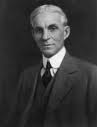
Hooray for Honkety Hank and his hootenanny automobile.
Consequently Ford was lured into the Peace Ship deal of ’16 by the Jewish Rosa Schwimmer. The folly was one from which Ford’s reputation never recovered although the idea of the Peace Ship isn’t as absurd as it sounds. As a result of the Peace Ship Ford began to have his doubts about the sincerity and motives of the culture which were certainly justified.
The doubts were sharpened into certainties by the role of Bernard Baruch and his Jews of the WIB and in the government. It wil be remembered that the Dodge Brothers lost their lives because of a confrontation with Baruch while Ford had his company’s finances attacked as a result of the confrontation in 1919-20. At that point Brasol showed up with his copy of the Protocols which he provided to Ford for the small sum of 10,000. Ford then bought the Dearborn Independent which began to publish the articles that became the four volumes of the famed International Jew.
Today these volumes are classed with the Protocols and are forbidden reading. On the Coalition Index. The Liberal Coalition has the bad habit of denying history by preventing its examination. I haven’t leafed thrugh the Dearborn Independent but there are a couple sample copies on the internet. It was a pretty decent newspaper cum magazine of the uplifting sort.
http://www.rationalrevolution.net/special/library/dearborn_independent.html
The story of Ford and the Independent articles is an interesting study made more delicious by being forbidden. One knows how much better forbidden fruit tastes, doesn’t one?
It should be remembered that the Jewish culture was especially active after the October Revolution, the fourth year of the Jewish Revolution. the fourth through eighth years are especially important. The AJC- American Jewish Committee- wished to ascertain where the centers of American resistance might be the strongest. At sometime either during or after the War the AJC drew up something called the Jewish Bill Of Rights. They sent it to prominent men and women to ascertain their stance toward the Jews. Their responses or non-responses would determine if the recipient was an ‘anti-Semite’ or not. If not, fine; if so then efforts would be made to marginalize or destroy them. Edgar Rice Burroughs was sent a copy of this Jewish Bill Of Rights. He failed the test by questioning one or more clauses while taking an independent attitude. He was thus marked down for destruction. It would be interesting to know to whom this questionnaire was sent and how they fared.

Horace And John Dodge
As I noted the Dodges were assassinated in 1920 while Ford’s business was attacked. It might also be noted that Ford was run off the road while returning home one night suffering injuries but nothing serious. His Ford pulled him out of another one.
Had the bankers succeeded in filching Ford Motor Co. it would have been quite a coup. At the time the company was valued by Ford at a billion dollars, a hundred billion in today’s dollars. In the bankers valuation the company put on the market at that time could be made to produce three to five billion dollars. As I said the Revolution was an expensive affair. If the Jewish banking houses had been able to secure Ford they could have recouped a profit of as much as four or five billion in 1920 dollars for their projects. You will be able to understant the sort of assault that was made on Ford.
The coalition, which has written all the histories, characterizes Ford’s defensive maneuvers as cranky anti-Semitism which he displayed for no other reason than that he was an insane cranky anti-Semite who attacked Jews qua Jews.
Nor were Ford’s Independent articles mere ranting without an understanding of the problem as some would have you believe. The articles were written by William Cameron Ford’s employee. Ford as usual did things in a thorough way. Almost overnight he amassed a huge library concerning Judaism. I mean, this was massive. The Jews wanted it. They asked him for it after the apology. Ford sneered. While the library is described as anti-Semitic it embraced the whole range of Jewish activities. Perhaps a unique collection
Cameron set to work master this huge mass of material. The result was the four volumes of The International Jew with several uncollected articles left over. While the volumes have been defamed as anti-Semitic balderdash they are nothing of the kind. They are well researched accurate accounts of the topics covered. The first volume dealing with the Protocols merely duplicates what already existed but the remaining three volumes recording the various roles of Jews in American are interesting studies and true, which is to say based on verifiable facts. However as we have recently learned- the truth is no defense.
When the articles began appearing they created quite furor. If you have checked the Dearborn Independent samples on the internet site you will have an idea of what the paper looked like. Just insert one of the Jewish articles and you have what the readers of the twenties saw.
Ford’s liquid wealth in today’s terms was in the tens of billions of dollars so he was well able to afford a defense. Mr. Deep Pockets. He created something called the Service Department that was a counterspy outfit not unlike that of Daddy Warbucks of Little Orphan Annie fame. It will be remembered that Little Orphan Annie made its debut at this time. Ford Employed agents who were supposed to get the lowdown on Jewish activities such as those featured in the Dr. Mabuse series. Starting from scratch the Service Department was no match for Jewish agences like the AJC, ADL or B’nai B’rith and others that had had decades if not centuries of experience in subversive activities.
One only has the Coalition accounts of these years of the Jewish Revolution so the reader has undoubtedly been conditioned to view Ford as an insane crank. To my knowledge no other accounts have appeared. How contemporaries other than the Liberal side reacted isn’t recorded at present. However Edgar Rice Burroughs tried in his modest way to assist Ford.’
Ford and Burroughs were Americans raised on the ideals of that scrap of paper, the Constitution. They therefore made the mistake of thinking that they could appeal to the reason of ideologues or bigots. You can’t. An ideologue has his projection and he knows he got it from from God. As I have pointed out before a devout member of a religion must, of necessity, be a bigot; there is no room for any opinion that contradicts dogma. So Ford and Burroughs were wasting their time.
By 1924 Burroughs must have known he was under attack both demestically and internationally by the Communists. His 1919 effort, Under The Red Flag, had signaled his antagonism to Communism just as his response to the Jewish Bill Of Rights signaled his refusal to be bulldozed from that quarter.
Using material gleaned from the Independent concerning the role of Jews in the theatrical business Burroughs wrote a book entitled, Marcia Of The Doorstep in support of Ford and gently rebuking his fellow Americans for their authoritarianism. The book didn’t see print until 1999. The novel isn’t bad. It would have sold reasonably well under the Edgar Rice Burroughs name. As has been indicated the Liberal Coalition was in control of publishing; nothing was published that didn’t pass their censorship. Burroughs novel was rejected. Now, this is interesting. Burroughs began his own imprint in 1930 eventually publishing all his titles but not, I repeat, not Marcia Of The Doorstep. One might well ask stayed his hand on that title.
At any rate, probably as punishment, there were no Tarzan movies made by Jewish controlled studios from 1922 to 1928. Ford also was having his problems. The auto industry was p;rogressing faster than he was. By 1927 the Model T was approaching obsolescence losing its sales lead to Chevrolet which it never recovered.
It became necessary to call off his war with the AJC-ADL to concentrate on saving his business. In 1927 he was forced to sign a bogus apology. It was a forgery. Ford had no hand in its writing. However he promised to abandon the battle.
With Ford’s collapse anything approaching to resistance to the Jewish Revolution in America collapsed.
While the Republican interregnum of 1920-32 slowed the Revolution down the Liberal Wilsonian Revolution was resumed in 1933 by Wilson’s disciple Franklin Delano Roosevelt. With Roosevelt the Jews returned to Washington in force. Among the first things FDR did was to recognize the Soviet Union just as Jacob Schiff had immediately reversed the Jewish policy toward Russia after the Bolshevik Revolution by granting huge loans to the still nascent and insecure Bolshevik government. This was OPM- other people’s money. The money of the citizens of the United States Of America. Thus the everyday American was forced to underwrite the Bolshevik Revolution whether he knew it or not.
 Schiff who was the Prime Minsister of the International Jewish Culture, was called down to Washington by the President of the United States to justify himself on the charges of Bolshevism. He was apparently successful as when he left the capitol of the United States to got back to the Capitol of the Jewish Revolution, NYC, it was with a face wreathed in smiles. Jacob Schiff didn’t smile often. He quickly resumed his loans to the Bolsheviks.
To return to 1919.
This part if followed by Freud which is Part VI and the Deconstruction Of Edgar Rice Burroughs’ America without a part number which is Part VII.
Thanks for your interest.
The Deconstruction of
Edgar Rice Burroughs’ America
by
R.E. Prindle
Part III
Organizing The Revolution
Deeds white and black, for minds are clean or foul.
Is the mind clean? Then earth and sky are clean.
Is the mind foul? Then earth and sky are foul.
For it is upon the mind that all depends.
Tibetan Proverb
I quote Christopher Hale, Himmler’s Crusade
Hale quotes Charles Bell, who quotes…
This essay is an investigation of cultures and cultural beliefs especially as they apply to the United States. The above Tibetan proverb as can readily be seen is pre-scientific. It takes no account of the objective world but supposes only that world is a projection of the mind good or bad as the mind is clean or foul.
It tacitly states that all religions are products of the mind or minds that conceived them. As projections they comment on the cleanness or foulness of the projectors.
As my own ideas of psychology are passes through a Freudian lens my argument is based on the scientific aspects Freud assembled while rejecting his religious projection. It should be clear to any thinking person that no religion has been transmitted to man from any god. Such a notion is inconceivable as is the very notion of God which to the Western mind means the Yahweh of the Old Testament. God therefore is the projection of the mind on nature. This concept is clearly brought out in Johann Sebastian Bach’s musical piece; Jehu, Joy Of Man’s Desiring. Man desires redemption in the form of Jesus but the divine Jesus is only a projection of Man’s desiring.
The nature of the fantasy is that God has chosen a certain people to be the bearers and disseminators of his word to all the peoples of the world. The originators of this notion were the Jews who believed and believe themselves to be the elected Ones. After the death of Jesus the English believe that the scepter of empire was passed to them while Anglians in the United States forming the Liberal religion believe the scepter has passed to them as in the adage: Westward the course of Empire.
page 1.
As the notion is based only on desire or wishful thinking its believers were doomed to be disappointed. Thus a defense mechanism must be projected on top of the projection of a chosen people. One then invents the notion of a redeemer- the Messiah, the Mahdi, the Christ. In Christan theology there can be only one Messiah, the Christ, whose mission on Earth was aborted by the crucifixion. Christians await the RETURN of the Christ in a supernatural manner.
For Jews and Moslems the messiah can be any human who so proclaims himself. David Bakan thinks that Freud was the Messiah for instance. Both religions have a surfeit of messiahs all naturally having failed to produce the desired results.
The history of the Jews since their defeat and scattering by the Romans in 70AD has been a succession of failed messiahs. Failure has not daunted this belief but the Jews have changed tactics and strategies. The last Jewish messiah to step forth and be recognized as such, unless like Bakan you include Freud, was the seventeenth century Sabbatai Zevi. (Spelled several different ways so don’t take me to task for my spelling.)
It is significant that a seventeenth century claimant was the last because the European Enlightenment blossomed at nearly the same time. The Enlightenment means Science. Science points out the absurdity of religious projections. Thus all religions have been shown to be based on false premises.
The meaning in terms of Human Consciousness was the consciousness of the mind had now evolved beyond a predecessor Religious Consciousness. Merely because a better method has been found doesn’t mean everyone will embrace it. There are many people and institutions who have a vested interest in the old way and don’t mean to give it up. Moreover they don’t mean for the advance in consciousness to exist.
For our purposes here we are discussing Christianity and Judaism: The West and Judaism. There had been many changes before in the evolution of religious beliefs, most notably the transition from Matriarchy to Patriarchy and they had all involved long and bloody wars. The transition from Religion to Science can be no different. If you haven’t noticed, the reactionary Semitic religions have instigated increasing wars and bloodshed from 1914 to the present Second Irruption From The Desert of the stultified reactionary Moslems.
Vis-a-vis the Roman Catholics and the Protestants the Jews had always been able to hold their own on a theological basis. After all, their religion is the basis of Christianity. The Jews had no chance against Science which acknowledges none of their claims.
The Jews would therefore have to devise new tactics and strategies to defend their atavistic belief system. There was no religious argument they or any other religion could devise to defeat this intelligence; their only alternative was to corrupt it and destroy it from within, thus supplanting Science in the minds of men with their stultifying religion once again. Difficult perhaps, but possible given a shameless exploitation of the good will of Euroamericans.
Now, when the failure of Sabbatai Zevi occurred and the Scientific spirit arose against which religious argument was ineffective, the wisemen of Judaism put thier heads together to devise a strategy. They decided to never again acknowledge a human messiah but to place their hopes in their whole people in the form of a revolution based on the French Revolution.
page 2.
From the French Revolution the modern form of Communism emerged. The Jacobins of Robespierre were proto-Communists. The banner was picked up by a man named Babeuf and the Communist assault on society led through the revolutions of 1830 and 1848. The French Revolution took place at the beginning of the so-called Industrial Revolution so that all the miseries inherent in the transition from one system to another were visited on ‘Labor.’ Labor was subsumed into the Communist agenda. Early socialism was divided between the Utopian Socialists and the Communists. The cleavage was permanent as Socialists and Communists despised each other’s methods.
Now, the Jews were emancipated by the generous feelings of the Revolutionaries. Up to this point the Roman Catholic Church had more or less contained Judaism. That is they isolated the Jews from the body politic much as a computer virus is isolated by a security system. A psychological allegory of this was put into a short story by Charles Beaumont in 1959. The short story was entitled, The Howling Man. In the story monks had imprisoned the Devil. A chance traveler was admitted to the monastery but advised to pay no attention to a captive man, the Devil in disguise, who howled for release. Naturally the traveler listened to the well sounding pleas of the howling man releasing him. Thus evil was set loose on the world.
This is somewhat the situation between the Church, the Revolutionaries and the Jews. Negating the efforts of the Church the released Jews began to subvert society and science. When one says Science in regard to the post-Revolution one is saying actually Science in embryo. Every science and scientific thinking were in the beginning stages of development. Early theories, absurd by today’s understanding, cannot be judged by today’s knowledge. They were the beginning steps. Like everything else Science would evolve. As it had with the Jews, the Revolution released Science from the control of the Church allowing it to develop, but positively, not negatively.
The Jews realized the threat to their religious mental projection understanding that Science was the true danger that had to be subverted. Unlike Catholicism and Protestantism which were based in Judaism and could therefore be defeated in argument there was no religious argument effective against Science. A different approach would have to be taken. That approach was to appropriate a science with mumbo jumbo then slowly eviscerate the science of its content while supposedly making it moral or in other words subservient to Jewish religious beliefs. This required both bold assertions while suppressing discussion or channeling it so that it could be controlled.
The first attempt and the most developed ‘science’ was politics. Thus Karl Marx began to appropriate the Communist Movement giving it a definite shape and direction. Seizing on the discontent of Labor Marx made that the cornerstone of ‘Scientific’ Socialism. Thus from 1789 to 1913 Communism struggled against the established order with minimal result. A mere one hundred twenty-five years after 1789 Communism established itself in Russia while being on a parity with the establishment in Western Europe.
The other Sciences progressed accordingly. Biology assumed its modern form in 1859 when Darwin published his Origin Of Species. Biology remained one science for which no Jewish claimant arose. The study of the mind or psychology was a different story. The study of psychology in a mythopoeic manner goes back as far as can be traced and further. The ancient Egyptians already had a good working model of the mind.
The scientific study, groping as it were, was undertaken by numerous people in the early nineteenth century. There was no organized theory, just investigation in numerous areas. The most noteworthy investigator for our purposes here was Jean Martin Charcot and his investigations into hysteria at the Salpetriere in Paris.
It appears that the basis of psychological malfunctioning is caused by a variety of hypnosis. That is a suggestion is made in a hypnoid state which enters the subconscious as post-hypnotic suggestion directing the individual against his conscious will, as it were.
The modern recognition of hypnosis was made by the Austrian Anton Mesmer who called it ‘animal magnetism.’ After Mesmer hypnotism was in disrepute for about fifty years although subject to serious investigation by responsible scholars.
page 3.
Charcot made hypnotism scientifically respectable again when he discovered its use in dealing with his hysterics. At the same time a man named Auguste Liebeault working with hypnotism in nearby Nancy was discovering the effect of suggestion.
In Vienna a restless Sigmund Freud was casting about for an emerging discipline to appropriate to make his mark. He had been trained as a biologist but despaired of making his name in that discipline. Under the influence of his fellow religionist, Joseph Breuer, he drifted over into psychology.
Freud was of the Jewish culture and he was militantly Jewish. He hated Europeans and the European culture. There is no question but that he intended to replace it with the Jewish culture. At what point he decided to manipulate the emerging science isn’t clear but probably by the time he began attending B’nai B’rith meetings in 1895.
Freud had a Moses Complex, not too dissimilar in effect than Christians with a Jesus complex. He undoubtedly chose psychology as a wide open field with many areas of exciting research possibilities and the opportunity to gratify his Moses Complex by leading his followers out of the psychological wilderness he found Europe to be. Thus as Moses rescued the Jews from Egypt Freud would rescue them from Europe.
Vienna as part of the polyglot Austrian Empire was the original Melting Pot from which Israel Zangwill took his idea. A relatively small German minority governed a multi-cultural empire embracing dozens of cultures and numerous religions. Thus the model for Freud’s conquest by culture was already suggested to him by the rising influence of Jewish culture within the Austrian Empire especially polyglot Vienna.
Having begun his association with Breuer and having heard of Charcot, Freud left for Paris in 1882 to visit what he derogatively would call the Great Man, himself. While Freud resented the ‘Master’ it would seem that Charcot’s influence on his own approach was seminal. There would have been no Freud without Charcot.
During this period of his life Freud was impoverished. He could only wander around Paris without the means to sample the delights of the city. This embittered him. Freud would have us believe that he became a favorite of Charcot, even petted by him. In all likelihood this is a gross exaggeration. Although Charcot may have taken some notice of him it would be characteristic of the Jewish culture to exploit any relationship out of its true proportion. In reading Freud his observations of Charcot are always made from the outside as a seeming voyeur, never as an intimate.
It is clear from the sardonic, belittling tone in which Freud always refers to Charcot that he was profoundly indebted to him. It must have been humiliating to a man with a psychotic attachment to Moses to submit to a man he considered his lesser. In dealing with hysterics Charcot brought hypnosis into respectability. Freud’s understanding of hypnosis was subtle. In Freud’s own psychoanalytic theory he abandoned hypnosis per se choosing a variant he called free association in which the patient was lulled into a hypnoid state so that a form of hypnosis remained the basis of psychoanalysis. Nor did Freud’s researches into hypnosis stop there. After the Great War hypnosis would form the basis of his ideas of Group Psychology. He developed subtler forms of hypnosis.
After returning to Vienna he once again went back to France in 1889 to visit with Liebeault and his disciple or leech, Hippolyte Bernheim. Liebeault had been working with hypnosis for some time. While Charcot failed to understand the signficance of suggestion, the key element of hypnosis, Liebeault did. His researches attracted the attention of Bernheim who like Freud was a Jew on the make. Bernheim succeeded in displacing Liebeault much in the same way as Freud would displace Charcot and his school.
While Liebeault and Bernheim apparently did not understand the relationship of suggestion to the creation of the neurosis or psychosis they had actually discovered that hysteria was caused by a form of suggestion. Ignoring the original suggestion while the patient was hypnotized they tried to use counter-suggestion to remove the affects of the original suggestion or fixation but with limited or temporary success. Since the original suggestion or fixation wasn’t obviated it shortly reestablished its primacy over the counter-suggestion.
While Freud said he rejected the clumsy ineffectiveness of the counter-suggestion he understood suggestion well enough to make it the cornerstone of his version of Group or cultural psychology.,
There is a common misconception that Freud invented psychology, that before him there was no psychology. The notion is completely untrue. Before and after Charcot psychological research was diverse and plentiful throughout Europe and America. There were many theories of the subconscious, for instance, but no one had undeertaken to systematize the various strands. Freud was able to do this while at the same time supplanting all other theories with his own. He actually succeeded in closing off investigation along other lines channeling psychology into his own somewhat flawed system.
All Freud did was to cull the best opinion and put his name on it while shouldering the originators aside as ‘anti-Semites’. For instance, another student of Charcot, Pierre Janet, working from the same teaching came to the same conclusion, namely that ‘neuroses’ are fixed in the subconscious. Whereas Freud named his version of the process ‘repression’ Janet named the result as an ‘idee fixe.’ Both terms mean approximately the same thing, although in my opinion Janet’s is more accurate. My own term is ‘an encysted fixation’. I came to my term independently, or at least I think I did, this is Freudianism you know, but the term I use means, I think, what Janet’s idee fixe means. Freud’s term ‘repression’ may describe the process but doesn’t deal with the result.
As I see it repression implies a voluntary act of will but such is not the case, repression is involuntary functioning independently of the conscious will. This is where Freud’s theory of sex goes wrong. The ‘repression’ is part of a defense mechanism. When the ego or Animus is offered an insult for which it has no defence the response is to repress the insult into an encysted fixation or idee fixe in an effort to control it. In other words, the mind tries to pretend that the insult didn’t occur. As the sexual apparatus is the physical portion of the psychic Animus the expression of the fixation will ivariably be a sexual affect although of differing manifestations from masochism to sadism. Thus the insult is converted into a suggestion of inadequacy of some form.
Thus the use of the sexual apparatus is merely an attempt to massage or exorcise the fixation. Freud actually believed that frequency of ejaculation would make a healthier person or in other words sexual intercourse would cure the ‘neurosis’ or in my and possibly Janet’s term eliminate the fixation. Clearly an impossible method.
One may compare the fixation to a virus on your computer. Once the virus is introduced it must be isolated and removed or it will control or shut down the computer. The virus may be equated with the suggestion that resulted in the fixation. One must eliminate the suggestion or fixation from mind as with the virus from your computer’s memory.
This is where the ‘talking cure’ is effective. Once the fixation is identified if the afflicted person can make the fixation conscious it will disappear or in another word be exorcised. If Freud realized this, which he ought to have, he never published his knowledge.
His use of the unconscious indicates that he at least understood the negative effects of fixations as expressed through their affects or in his terms neuroses and psychoses.
So Freud defamed Janet while organizing psychoanalysis to exclude any opinion but his own no matter how inaccurate. He organized and controlled the magazines and publishing houses, while he controlled and convened the international congresses. Following the Jewish Cultural model, no dissent was allowed, there is no freedom of expression in the Jewish Culture; if you refuse discipline you are merely excommunicated. Once expelled you are defamed and rendered inconsequential. Marginalized in today’s terms. The only analyst to survive this treatment was C.G. Jung who had an awful lot going for him. I can’t think of another dissident who has survived to the present.
page 5.
Thus having evolved an understanding of emasculation to add to the mix this was how Freud’s psychological matters stood in 1915 when his idea of psychoanalysis was essentially complete. He now applied his psychological knowledge to political matters. At this point whatever scientific basis Freud possessed was subsumed to Jewish religious requirements.
Historically the Jews have been a migratory people. When the going get tough the Jews get moving. Wherever the action is that’s where they want to be. Thus when the Promised Land of America became accessible to mass migration, that is reliable steamships had replaced unreliable sail, the People began a mass migration to America. The intent was to move the entire Eastern European population to America. The plan failed only because of the outbreak of the Great War for which signficant scholarship can show the Jewish guiding hand. So, in one way the Jews defeated their own plan.
The important thing to remember is that Jewish activities are backed by an inviolable ideology, tight orgzanization and fairly precise coordination and excecution. There is nothing haphazard in the culture’s activities. This has been true for two millennia with increasing precision. As noted when the messiahship of Sabattai Zevi failed, the plan was formed for the whole people to foment a revolution. The date of the revolution was set for 1913 to 1928. Hence if you study Jewish history you can see the preparations unfold leading to this historical knot.
Since Marx the culture had been in control of the Labor movement of the Socialists so that a significant portion of the whole population was involved not just the minority culture. The more timid or moderate such as the Wilsonites and other ‘parlor pinks’, fellow travelers and whatnot, Liberals, were distributed throughout society where they could exercise control without revealing themselves in their true guise.
While I had sifted the information out except for the dates of the messiahship of the culture all I really had to do was read one book. That book was by the Rabbi Abba Hillel Silver who plainly stated the plan and its objectives giving the years.
This revolutionary schedule could not have been unknown to Freud. Thus his schedule from 1895 on must have been coordinated with it as best he could and that best was very good indeed. By 1910 he had his theories in close to final form. From 1915 on, especially after 1917 he was no longer developing his ideas but organizing them for use by the Revolution.
For years he had been attending weekly meeting of B’nai B’rith, the international Jewish brotherhood. He lectured them on psychology on a regular basis. It would be interesting to know how the lectures differed from his published work.
Now for a moment let us consider some aspects of Freudian doctrine. Freud insisted that the was a scientist but the grounds for such a claim seem tenuous at best, rather Freud was a religionist who used what he learned for the furtherance of the Jewish Revolution. Thus his concepts of the unconscious and sex were tailored to upset the morality of European civilization. His promulgated notions were meant to confuse and obfuscate. When one combines Freud’s interpretation of the unconscious, sex and emasculation, all of which were worked out by 1915, one has in fact a potent weapon of psychological warfare. They called it brainwashing during the Korean War. Combined with conditioning and indoctrination trusting Euroamericans who did consider Freud a disinterested scientist abandoned all defenses.
The really noteworthy fact about Freud is that he offered only negative analyses but nothing positive such as how to reconcile the unconscious and conscious minds or how to understand and improve the conscious mind. Freud discussed the nature of projection and perception very little. The nature of the ‘science’ Freud professed to embrace is the negation of perception and projection without which there can be no science. At least he chose not to address consciousness in any positive manner.
page 6
He did issue the enigmatic statement that where Id was Ego shall be. He also said that the Id was a species of something around which the Ego ensheated itself. That’s a tough one. As Ego is presentative of consciousness and Id unconsciousness it sounds as though Freud was referring to the integration of the personality. He doesn’t explain how he invented or discovered the nature of the relationship of Ego and Id or give any indication of how it actually worked. He never develops the idea.
We feel that he perhaps knew more than he chose to reveal through his analysis of Wilhelm Jensen’s novelette Gradiva that he titled Delusion and Dream In Wilhelm Jensen’s Gradiva. By delusion I presume he means projection. That is what Jensen’s character is doing; he is imposing his inner projection on society which makes actions appear irreal. It is only as the story develops that the character’s projection dissolves as reality intrudes itself more and more. At the end of this short piece the character emerges into a true or truer perception of the world. He no longer casts his projection on reality.
Thus what Freud denotes delusion I would call projection. Ridding onself of a mistaken perception of reality to realize as nearly as possible the actual state of affairs is the goal of mental health.
While what Freud has to say about the unconscious is itself a religious projection it does bear some relationship to the reality. Since Freud wished to and did impose a psychological system on the science of psychology it behooved him to deal with the whole mind and not just half. The question is whether he was dishonest or incapable; I opt for dishonest and criminal.
Freud is as guilty of criminal misconduct as the Sudanese Mahdi at Omdurman who offered his followers the religious projection that the bullets of the massed British machine guns facing them would turn to water at Allah’s will. If the Mahdi had so little scientific knowledge and so much religious fervor then there was no difference between his religion and insanity. The Mahdi at least had the excuse that he was far from the centers of scientific research. Freud didn’t.
By the advent of the Russian Revolution then, through his association with B’nai B’rith Freud had prepared the Jewish cadres for some particularly dirty work.
As the Russian Revolution marked the first great success of the Jewish Revolution Freud now began to manipulate his scientific knowledge of hypnotism and psychology to confuse and obfuscate the minds of the Euroamerican cultures while keeping his culture’s mind focused on the work ahead.
Everything was in order; the tools were developed. Freud had cleverly monopolized the study of the mind if not psychology. Further study would be conducted on his terms. It was only necessary now to skillfully use the tools he developed.
End of Part III. Go to Part IV.
Part IV: A Mother’s Eyes
May 7, 2007
A Mother’s Eyes
by
R.E. Prindle
Part IV
The Hand That Rocks the Cradle
In Part I, Huxley’s Eyes, I showed the Structural Psychology of the Male. I hope I made the consequences of the X and y chromosomes clear.
In our day the drive by women is to establish the notion that the differences between the sexes are superficial or cosmetic rather than substantial and genetic. The notion began to have an effect on society in the late nineteenth century. The consequences for society have been disastrous. H.G. Wells may not have known to what he was referring in his autobiography of 1934 when he says that of the nineties: In those gentle days before the return toward primitive violence begam…
Edgar Allan Poe may be considered to be a presage of that return. The return toward primitive violence is now nearly complete. At the bottom the cause of this primitive violence which women claim to abhor is Woman’s refusal to either accept or understand her Structural Psychology. She refuses to acknowledge
page 1.
The Female role in relation to the Male in an attempt to create some fantasy in which she is actually dual sexual enjoying the best of both sexes while avoiding the worst of the Male.
Before the evolution of sexuality at some time in the past there existed a unisexual organism that contained all four chromosomes, XXXy. This notion was well understood in ancient times. Although sexual identity began long before the evolution of man the ancients understood that the first organism must have been unisexual and male in character. They didn’t know that the y chromosome was the reason but they did know that the first organism logically had to have a male identity.
Thus before either the egg or chicken there existed a unisexual organism of a male character. The y chromosome is the essence of the matter.
When sexual identity evolved, as there were three X chromosomes and only one y chromosome, of necessity one sex received two Xs and one an X and a y. The y like it or not is the critical chromosome. It is what the female lacks and misses. It is what makes the male intellectually and physically dominant.
This was recognized in Greek mythology as after the subordination of Hera to Zeus she acknowledged his physical superiority and what Homer refers to as his mind of infinite power. Hera was left with physical inferiority and a low intellectual cunning to achieve her ends.
As above, so below.
Just as the X side of the body is weaker and more passive so the Female with a double X is smaller and less assertive. This is not to say less significant or important. The species cannot exist without all four chromosomes. The y chromosome is not deteriorating and on the verge of extinction as some emasculates claim. Indeed, as the animal mother of the race Woman has a significance out of proportion to her share of the division of sexual spoils.
Because the sexual division of spoils has denied the Female the very powerful y chromosome she has a longing for it to complete herself. This was expressed in ancient times by the female adoration of the bull and then the horse. Sigmund Freud picked this up in his usual smutty sexual way by characterizing the longing as Penis Envy which while
page 2.
it gratified his vanity rather missed the point. Nevertheless he was correct. On a brainstem level the Female recognizes her incompleteness.
While the Male clothes his Anima with Female role models, the Female clothes both her X chromosomes with Female role models of two different types; a passive feminine set for the Anima and an aggressive male oriented for the Animus. The longing for the Male rests between the two.
Now, while the Female has been denied the y chromosome she has been gifted with the ability to give birth to a man child or son. Hence the ancient symbol of the Great Mother seated on the Throne beholding the Son in her lap while the Father stands ineffectually behind her gazing down. This scene is replicated in the birth of Jesus, the Savior of Man, in the manger or eating trough.
It is a shame that the present day refuses to understand the significance of the story of Christ for the psychic well being of mankind. The avant garde among us have now passed to the Scientific Consciousness and the way of the future but the main body is still mired in the Religious Consciousness.
Just as Evolution is replicated in the development of the physical organism so one must replicate the evolutionary development of consciousness in the individual. To cut out any part or parts is to do oneself irreparable damage. One should learn to separate the symbols from the scourge of human religious and political activities.
There never was a single person killed in the name of Christ, blasphemers merely used the name to cover their own vile passions. Bear in mind that neither Polarion nor myself are nominal Christians. We hold no brief for Churches. We just know where to look for the sun shining through the clouds.
While Evolution has denied the Female physical strength and aggression it has awarded her the Throne on which society rests. She has the power to make or break her men.
Several adages which are not taken as seriously as
page 3.
they should be attest to this fact. It is said that a man’s wife is his luck. Nothing could be truer. As another adage says: Behind every successful man stands a woman. Thus the character of a man’s wife will either build him up and push him forward or drag him down and push him under. It can equally be said that behind every failure stands a woman. that woman will be the man’s mother or her reflection that he married.
Women since Wells’ ‘gentle days’ fail to recognize their dual role. They tend to see themselves only in the positive light with no negatives.
So it is in the matter of her son. The true role of the Mother is as ‘cow-eyed’ Hera. Now, in the myth of Heracles and Eurystheus the ancient Greeks make this abundantly clear. The Matriarchal Heracles as consort of Hera must have represented the perfect symbiotical relationship between man and woman. The Sun blesses the Earth and the Earth bursts forth in productivity. The Patriarchate turned Hera into Heracles’ enemy. In the Patriarchal myth Hera blessed Eurystheus and cursed Heracles. Indeed when Heracles was a little, tiny baby Hera sent two snakes to kill him in the cradle. Cut ahead to to Jesus in the manger when Herod decreed the death of the firstborn. To show the power of the Patriarchy over the Matriarchy the sweet baby Heracles strangled a snake in each hand.
The power of the Matriarchy was in no way nullified. In ‘Hera and Poe’ I indicated that the longer a mother nurses a child the better his chances of success in life. Indeed, the act of early weaning may have a profound negative effect on the child with or without abandonment. The very act of weaing may be interpreted by the mind of the boy child as rejection.
So with the Mother’s blessing Hera’s favorite, Eurystheus was a weak chicken livered man who dominated both society and Heracles while Heracles the strongest and best man who ever lived was relegated to a role of dependency and the frustration of his superior abilities because of the animosity of the Mother. The most powerfull Male figure in the universe couldn’t rescue him from this ignominy.
Hera achieved this end even though she was physically weaker and intellectually inferior to her lord, Zeus, through mere cunning.
page 4.
Heracles was indentured to the weak Eurystheus for whom he was compelled to perform twelve of the most impossible labors imaginable. Each one would have been enough to baffle an ordinary man.
After completing the first labor he reported back to Eurystheus who was so terrified in Heracles’ presence that he retreated into a bronze vessel half buried in the Earth which represents the womb of the Great Mother. Thus the Mother’s influence is such as to make a despicable man rule and make an admirable man serve.
So, if it is true that behind every successful man is his mother it is also true that behind every axe murderer is his mother. It may be said that the Hand That Rocks The Cradle makes or wrecks the world. Check out the story of Ma Barker.
The last problem is the crux of the period from ‘those gentle days’ before the return of primitive violence to these latter days when primitive violence rules.
Woman complains about the claimed increasing violence of men toward women. Women’s solution is to punish men for their lack of ‘respect’ for women. Actually the increasing violence is caused by women’s lack of respect for both themselves and their sons.
If only the rules of Structural Psychology were applied women would undoubtedly be better mothers; but women have been given very active brains that function on the everyday level as well as those of men. In fact, since women are more single minded because of their child bearing faculty their brains may function better on the everyday level. However on the speculative or creative or scientific level Structural Psychology favors the Male.
Moreover her intelligence makes the Female unsatisfied with her role as perpetuator of the species. She want all that belongs to the female and because of what Freud called Penis Envy all that appertains to the Male. You begin to see what either the possession or lack of the potent y chromosome means.
page 5.
Because of both her child bearing capabilities and her inferior size in relation to the Male Woman has acquired a superior will characterized by low cunning. Unfortunately for her undisciplined intelligence and will to thwart her role as Mother of the Species she chafes at the responsibility of motherhood.
In the case of Huxley his mother willfully rejected him to start her girl’s school. In both Huxley’s and Poe’s cases the death of their mothers was unpreventable but disastrous to them and the women associated with them by the nature of things. In Ted Bundy’s case his mother willfully abandoned him giving him to his grandparents to rear. Speck’s mother denied him everything.
The result in all these cases was disastrous. Huxley sought out a woman who would allow herself to be persecuted for his mother’s sins; Poe was driven mad while it is almost certain judging from his writings that he became a killer of women; in Bundy’s case there is no doubt he avenged his mother’s abandonment of him on dozens of young women; Speck uncorked one day to slaughter a number of girls; not only girls but nurses who are known as ‘angels of mercy.’ Would Speck have murdered them if his mother hadn’t betrayed her role as an ‘angel of mercy?’ Look for the symbolism.
Women condemn these acts as representative of the Male character but they are not representative of the Male character; they are the result of unavoidable disruptions in the mother/son relationships: of Huxley and Poe and the completely avoidable disruptions in the cases of Bundy and Speck.
If Bundy’s mother had been stronger in resisting her seducer or had accepted the consequences of her weakness by keeping her son with her it is a certain fact that Ted Bundy would never have killed those girls.
The number of mutilators, stranglers and serial killers seems to increase on a daily basis. Women demand more jails and tougher punishment to stem this rising tide of brutality against women because of ‘horrid men.’
page 6.
I suggest that because of the high divorce rate, day care schools and the number of unwed mothers that the crimes against women will continue to escalate. What has been done in the past few decades cannot be undone. Domestic violence will in all probability continue to increase as sons visit their maternal resentment on their wives, daughters and other women.
Unless educated to the reason for their rage they will never know why they are reacting as they do nor will they be able to control or change their actions. Nor, are they any more responsible for their actions which arise from Structural Psychology of the brainstem than their mothers.
Whether the female of the species likes it or not the fault lies with them more than with their sons. A well nurtured son of a loving mother will seldom if ever visit violence on women.
The Hand That Rocks The Cradle can either build or wreck the world. What’s it going to be, Mom?
The end of A Mother’s Eyes.
A Mother’s Eyes
Part III
Cow Eyed Hera And Edgar Allan Poe
by
R.E. Prindle
Stories under consideration:
Metzengerstein 1832
Berenice March 1835
Morella April 1835
Ligeia 1838
Fall Of The House Of Usher 1839
William Wilson 1840
Eleonora 1842
…Men have called me mad; but the question is not yet settled, whether madness is not the loftiest intelligence- whether much that is glorious- whether all that is profound- does not spring from disease of thought- from MOODS of mind exalted at the expense of the general intellect…In their visions they obtain glimpses of eternity, and thrill…to find that they have been on the verge of the great secret.
-Eleonora 1842
page 1.
Sonnet- To My Mother
Because I feel that, in the heavens above,
The angels, whispering to one another,
Can find, among their burning terms of love,
None so devotional as that of ‘Mother’,
Therefore by that dear name I long have called you,
You who are more than mother unto me,
And fill my heart of hearts, where Death installed you,
In setting my Virginia’s spirit free.
For mother- my own mother, who died early,
Was but the mother of myself, but you
Are mother to the one I loved so dearly,
And thus are dearer than the mother I knew
By that infinity with which my wife
Was dearer to my soul than its soul-life.
-1849
page 2.
As we study Poe keep in mind Dali’s picture: The Temptation Of St. Anthony. Keep those symbols in the forefront of your mind.
Edgar Allan Poe is a classic study on the effect of abandonment by the mother on the psyche, specifically affecting the brain stem as part of Structural Psychology. Poe exhibits the classic symptoms of the eyes, the horse and the female substitute for the Mother as well as adding several other twists due to his extremely analytical mind.
As the opening quote from his story Eleonora indicates Poe understood that he was quite mad. Although he was able to describe quite clearly in symbolical language the source of his madness his intelligence was unable to sift below the psychological barriers which would have cleared his mind of his madness.
In five really remarkable stories with extreme clarity he delineates his problem. They are the first story he wrote, Metzengerstein of 1832, Berenice of March 1835, Morella of April 1835, Ligeia of 1838 and Eleonora of 1842.
The Fall Of The House Of Usher and William Wilson demonstrate his inability to deal with the problem adequately. Under stress his personality begins to disintegrate.
Poe lived a short life of forty years from 1809 to 1849. His first story, Metzengerstein, was written when he was only twenty-three. It would have been interesting if he had lived long enough to consolidate his stories into at least one full length novel, other than Arthur Gordon Pym.
His own mother died in 1811 when he was only two. Thus the connection between his and his mother’s eyes was disrupted very early. He was then adopted by a Mrs. John Allan for whom he had the greatest respect and love. Mrs. Allan died February 28, 1829 when Poe was twenty years old. The horror of the death of this second mother festered in his mind for three years until his feelings began to find expression for him in 1832 with Metzengerstein.
page 3.
The woman he refers to in his rather confused poem- Sonnet- To My Mother- was the mother of his wife Virginia, a Mrs. Clemm. This poem was written shortly before his own death two years after the death of his wife Virginia in 1847. As the poem says, Mrs. Clemm, his mother-in-law filled ‘his heart of hearts’ where Death had placed her when her daughter Virginia died.
Clearly Poe was having mother figure after mother figure taken from him by death. His response apart from his literary outpourings was to drug and drink himself to death in 1849 two years after Virginia’s demise.
The Mother Archetype is truly a very powerful figure. In giving the figure prime importance Sigmund Freud was absolutely correct. What does that Mother figure mean to a man?
In ancient Greece the Great Mother goddess was ofter referred to by Homer as ‘Cow-eyed’ Hera. This image has been difficult for subsequent generations to understand. Many current translators of the Iliad drop ‘cow eyed’ in favor of euphemisms they can understand. If we would understand Homer this is a very serious mistake. Hera as the Great Mother is associated with the cow for good reason.
Whether she was ‘cow-eyed’ before she caught Zeus philandering with Io is unclear. Caught in the act Zeus attempted evasion by turning Io into a cow. Hera retaliated by having Io tormented by a vicious gad-fly. The gad-fly drove Io in the form of a cow from Greece to India to Egypt. In Egypt Io was transformed back into human shape as the goddess Isis. Formerly the Egyptians had depicted Earth and Sky, or the sources of plenty, in the form of a woman arching over with her feet on one horizon and her fingers on the other. After Io was introduced to Egypt the image of the woman was replaced by that of the cow.
page 4.
In nearly every country Io visited the cow has been considered a sacred animal. Whether in India, Egypt or the cattle raising tribes of Africa the cow was never killed. This miraculous animal was so beneficial live that its life became sacred. The cow was not only wealth but a symbol of wealth. One imagines that the first coin might have been called the ‘cow.’
Cattle lifting or rustling has been a way of life since perhaps the time of Io if she represents when the cow was domesticated. To lift a man’s cattle was to strip him of all social significance while making the lifter significant in his place.
Thus in Greek Mythology and history men and gods are stripped of significance by the lifting of their cattle. When the god Hermes was born his first act was to lift the cattle of Apollo thus assimilating himself with that god. Apollo tracked Hermes down but was so pleased with the little trickster that they established an accord, became blood brothers so to speak. Both sides of the coin.
In the Odyssey the Cattle Of The Sun were inviolable. Odysseus incurred the wrath of the Sun when his men after having been warned not to, killed a single cow. As the Sun sees all from his heavenly abode retaliation was quick and sure. Obviously that was a reason the Sun’s cattle were inviolable.
page 5.
The story of the lifting of Geryon’s cattle by Heracles is also significant. In former times before the advent of the Patriarchy Heracles as Hera’s consort had been the Sun God. When the Patriarchy replaced the Matriarchy Hera was assigned to Zeus while Heracles was demoted to a human and made an enemy of Hera.
Now, prior to the end of the Ice Age before the Mediterranean Basin was flooded, Hera and Heracles, by whatever names they were then known, must have been the chief gods of the pre-flood peoples of the Mediterranean. Thus two cults of Heracles grew up as the Western Mediterranean became separated from the Eastern Mediterrean in the post-flood Basin. One cult in the East in Greece and the Levant and another in the West of Spain.
The two cults must have come in conflict as the Greeks colonised Sicily, Sardinia, Corsica, Marseilles and the northern Spanish Coast around Barcelona. It became necessary for the Spanish cult to be suppressed or co-opted in favor of the Greeks. Thus, in myth the Greek Heracles is sent West to lift the cattle of the Spanish Heracles or Geryon. Relieved of his cattle the Spanish Heracles became a non-entity while all the glory accrued to the Greek Heracles.
Such was the poltical and social significance of cows.
page 6.
The economic importance of cattle was equally great which, of course, led to their social importance. Cows produced offspring. Fifty percent bulls and fifty percent cows. So one’s social importance increased every Spring if you could hold onto your cattle. The bulls being superfluous in large numbers, there being no reason to waste valuable feed on them, were used as sacrifices in the ancient Mediterranean. The gods were given the bones and fat while the flesh was consumed by the human votaries of the holocaust. Thus cows, without killing them, provided an abundance of meat. They also provided milk and its various by-products including butter and cheese. The African tribes bled their cattle to acquire nourishment from the blood so it is not unlikely that the Greeks and others did the same. The Africans never did figure out butter and cheese.
The cow being female was naturally related to the Mother Archetype. Hence we have ‘cow-eyed’ Hera. The mother is to her son, like a cow to mankind, a source of superabundance or should be. She sacrifices her own happiness, or should, to supply all his needs, she feeds him from her own body. She psychologically nourishes him with the love pouring from her eyes. It seems to be a fact that the longer a son nurses from his mother the better his chances for success in life are. Sons who nurse for two years or more are assured of the best chances.
Thus to be abandoned by your mother, death being a form of abandonment, is the greatest tragedy that can befall a son.
In Poe’s case he was abandoned by his mothers, once at two and once at twenty and by his wife-mother surrogate at forty-seven. The unconscious strain was simply too much for him so he drank and drugged himself to death succeeding in 1849 at the age of forty.
Fortunately he recorded all the classic symptoms plus some in his series of magnificent short stories. They are or should be a treasure trove for the analyst.
page 7.
As noted above, when his adoptive mother died in 1829 his reaction was intense. Poe began his inquiry into his anguish in a raging examination of the effect on his Ego or Animus in Metzengerstein. The story culminates in the destruction of Metzengerstein’s house or castle by fire. Fire is a purifying agent. The house is a psychological symbol for the self just as a room in the house is a symbol for the mind. As his house was being consumed the smoke gathered above to form the shape of– a horse. Thus as with Aldous Huxley and my other examples the mother is related in the male to the horse and more especially the eyes. It is not improbable that if Hera had come into existence after the introduction of the horse into Greece that she would have been known as horse-eyed Hera. As it was Athene who may have been a Patriarchal attempt at superseding Hera was depicted on occasion theriomorphically with a horse’s head and hence horse’s eyes.
I can’t say for certain, as I am not a clinical psychologist, but I am reasonably sure this symbolism is not true for the female although the female retains a need for the masculinity expressed by the strength, force and grace of the male horse. This need was transferred from the bull. As women their symbolism is probably relative to the cow as in ‘cow-eyed’ Hera.
Indeed, many men derogatively refer to women as cows. To do so may refer to a hatred of women and mothers in these men. The significance of all this symbolism has been ignored far too long.
Poe knew he was distaught or mad. Madness may indeed be a road to intelligence or self-discovery. Duller intelligences are usually quite satisfied, seeing no reason to question or investigate. Another madman, the poet and singer Roger Miller, put it as that he had too much water for his land. In other words his intelligence was bubbling out all over the place drowning his land or stability. When land and water are in balance in Miller’s scheme one has normality. When land is more prevalent than water one has a desert and a pretty nasty fellow. According to Miller too much water made one hep while a balance of land and water made one square. His moral was that squares made the world go round.
page 8.
He was certainly correct. Stolidity leads to solidity. Society needs a solid basis to exist as a beneficial organism. The mad, bad or sad in the proper proportions either leaven society or destroy it as at present when the Bohemian and Libertine influence is so dominant. The influence of all three has to be controlled or monitored or their intrinsic evil destroys any equitable basis for society.
But to return to an analysis of Poe’s stories.
Oppressed by his psyche the dam began to burst shortly after the death of Poe’s adoptive mother. First his own mother died when he was two and then his adoptive mother when he was twenty. The effect on his psyche must have been unbearable to cause such a violent irruption as Metzengerstein when he was twenty-three.
The story of Metzengerstein centers around what appears to be a flesh eating horse. There is only a brief significant mention of the horse’s teeth as the horse pictured on a tapestry in the attic or mind turned to look at M. with a baleful eye.
The same horse is then given to him by his grooms who capture it fleeing from the burning stables of M.’s rival Berlifitzing. They claim the horse is M.’s even though it was seen coming out of the burning stables and is branded with this rival’s initials W.V.B. in a rather unusual place for a horse, the forehead. No missing that brand, sort of reminds you of a wedding ring.
page 9.
Now, the horse with eyes and teeth is part of the Structural Psychology located in the brain stem. This one represents his dead adoptive mother. Poe had become estranged from his adoptive father, John Allan after receiving marked benefits from him as a child. The cause of the disruption is attributed to drinking and gambling but the literary evidence of Metzengerstein would indicate an intense sexual rivalry.
B. is the older man as was Allan. M. had just come of age following a course of action not too different from Poe’s. The horse, representing Poe’s adoptive mother, has B.’s brand on her. Or in other words the horse represents Mrs. Allan, B.’s wife. Disregarding all the evidence to the contrary M. is given the horse as belonging to him. Seems fairly clear on the surface of it.
She is a difficult flesh eating horse of firery temperament which only M. can ride. As Mrs. Allan was no relationship to Poe there can be no question of incest so that he could ‘ride’ or have sex with Mrs. Allan without incestuous guilt. In fact M. frequently rides off on her into the forest at night. Night is the usual time for love making while the forest is a symbol for the lost soul who cannot find his way.
The tapestry on which the horse is pictured is located in a very large room at the top of M.’s castle or house. Psychologically the house represents the self. The room represents one’s mind. The tapestry functions as memory.
page 10.
Having left on a night ride of some duration into the forest, as M.’s servants are anxiously awaiting his return M.’s house or castle myteriously bursts into flame. This must represent the death of Mrs. Allan or Poe’s being caught by Mr. Allan in flagrante dilecto. The horse returns at a mad gallop out of control bearing a screaming M. to rush straight into the burning house, up the stairs to the upper chamber and one assumes onto the tapestry. Then in a supernatural manner the violence of the flames subsides while the rising smoke forms the image of– a horse.
Forgive me for saying so if you are a Poe fan but the story qua story is stupid. Only as an allegory of Poe’s relationship to the Allans does it make sense, specifically the relationship of the Mother Archetype with the Son.
Metzengerstein was merely the first bursting of the dam; the next four stories on our list named for women develop the horror of Poe’s fixation on the Mother Figure. Let me say here that I do not believe that Poe’s adoption of the name of Allan refers in any way to John Allan; it is rather in memory and tribute to Mrs. Allan. The death of Mrs. Allan seared Poe’s mind. The trauma was so intense that his mind did become rather disordered.
Those teeth, those teeth which got such a brief mention in Metzengerstein form the focal point of his next story dealing with his horrible fixation. As with Huxley those teeth could bite you.
page 11.
Berenice is the story of the teeth of the flesh eating mare. In the story, in an abortive attempt to exorcise the demon of Mrs. Allan, Poe abandons the omniscient observer of M. for the first person. Berenice and Morella are now written in the first person. They are attempts to violently dispose of the horrifying losses of his Mother Figure. Always an astute psychologist Poe now creates an image of monomania. He knows he is quite distraught, men have called mad. The mania is centered around the teeth so briefly mentioned in Metzengerstein. All Poe can think about now is those teeth.
As noted in Huxley, the Mother Figure is always exempt from retribution so that one’s obsession is transferred to another woman usually a beloved but not necessarily.
Most of the violent so-called crimes against women by men can be traced directly to the man’s relationship with his mother. In other words, crimes are not against women per se but against mother surrogates. One has to look behind the symbolic victim to the source of the discomfort. The hand that rocks the cradle is at fault.
Ted Bundy, all the various stranglers and mutilators, Richard Speck, they are all retaliating the crimes of their mothers against them on other women. Bundy is an exceptionally interesting case when viewed from this perspective. His symbolism is quite astonishing.
page 12.
Extreme violence is only an extreme response to what the perpetrator considers an extreme crime against himself. One may assume that the way a man treats his wife or lovers is a reflection on the way he interprets his mother treated him.
The drive and push since the turn of the nineteenth century for the destruction of the family by Reds, Communists and Fellow Travelers can have only the most dire consequences. One can hardly consider the Reds well intentioned in their obtuseness. One might begin by examining their relationships to their mothers. In disrupting the eye to eye relationship of the infant with his mother they are in essence condemning the world to a reign of terror, and against women, unparelleled since the beginning of time.
On the score of rejection and abandonment one can only shudder at what the results of these idiotic infant day care centers the Reds favor will be.
A woman’s preoccupation with sex condemns her offspring.
One has to assume from Poe’s writing that he found his relationship with his adoptive mother of the most troubling nature. Whether he actually had sexual relations with her or only fantasized them the result is the same.
As I say, in attempting to exorcise or control her memory he concentrated on the man eating quality of her teeth. In the story Berenice the narrator becomes quite conscious of what he is doing.
In a fugue state he attacks the living Berenice restraining her in some way while he pulls every tooth from her screaming terror stricken head and then buries her alive keeping the teeth as souvenirs. When he is discovered coated in mud after having buried her he is horrified at this evidence that proves his guilt of which he is unaware.
page 13.
This, shall we say, is psychotic behavior.
Poe may have fantasized the whole incident but one wonders if somewhere he had not actually committed such a crime burying the woman’s body where it wouldn’t be retrieved. One has visions of Ted Bundy.
Imagine if Ted Bundy had written a series of ‘imaginative’ stories centered around his murders or if Richard Speck had written a novel about the murder of those nurses. Could the descriptions of the killings have been more realistic or chilling than Berenice?
Then turning quickly from the writing of Berenice Poe promptly followed with his story of yet another woman, Morella. Probably emotionally drained from the excessive violence of Berenice Poe is more subdued in Morella as he struggles to bring his agony under control. In Morella he is attached to a woman who he does not kill by burying alive. Instead Morella sickens and dies from neglect as the first person narrator subtly spurns her. Thus if he couldn’t defang and bury his mother alive from which she would only return to haunt him perhaps he could just sort of forget her. Really?
Morella is determined that he will not rid himself of her so easily. On her deathbed she gives birth to a daughter who is in reality herself. The narrator cannot help loving and devoting himself to this child although he never gives her a name. Still, necessity compels him when she is fourteen to have her baptized. Asked for the name compulsion makes him whisper the name ‘Morella.’ The child answers, ‘I am here’ and expires. Upon taking the child to the tomb to be buried beside its mother he finds the tomb empty. He just can’t pull those teeth.
page 14.
It was some three years after Berenice and Morella in 1838 that he returns to the theme in Ligeia. Here he tries to marry once again. The dominant theme of Ligeia is her eyes. A subordinate theme is her teeth. Once again after expatiating on Ligeia’s eyes for some two or three pages Ligeia sickens and dies but she warns that she will not go quietly into the beyond but that she intends to will herself back into life. Ye gods. Poe’s mother fixation does torment him. Why don’t you read Poes’ Sonnet- To My Mother again.
The first person narrator remarries but his memories of Ligeia remain so prominent that he disgusts his new wife. She in turn sickens and dies, in fact, she is murdered by Ligeia from beyond the grave in a supernatural manner. By some process of metempsychosis Ligeia as a mature woman gains possession of the corpse. The narrator is able to recognize the revivified body as Ligeia from her eyes and teeth. Definitely brain stem stuff.
Now, up to this point Poe is dealing with this intense stress in his own persona. This is an intolerable situation that cannot go on. Thus his ego or Animus splits in two as he creates a doppelganger who can deal more directly with the problem while he watches. In other words he remains himself as the narrator while creating a Ted Bundy like double.
page 15.
In 1839 he wrote ‘The Fall Of The House Of Usher’
While being more comfortable for himself, Poe’s personality enters a critical stage. The narrator visits the doppelganger, Roderick Usher, and his sister in their castle which is quite reminiscent of the castle of Metzengerstein.
During his stay Usher’s sister sickens and is thought to be dead. She is sealed in a coffin. The narrator helps Usher carry the coffin to a cell at the bottom of the castle. At this point Poe has passed the responsibility from himself to his doppelganger a la Bundy or Speck. Unlike Berenice in which the narrator personally tore out Bernice’s teeth while burying her alive the crime is now performed, albeit unintentionally, by a split off personality. Poe in essence watches deeds performed by someone else relieving him of guilt although in this instance he participates in carrying the coffin to the cell.
Significantly the cell is directly beneath his own chamber in the castle, from which cell he hears mysterious sounds as though the sister were stirring in her coffin. The two rooms answer to the brain and brainstem so that he is still unable to escape the specter of the Mother Figure.
Eventually the sister frees herself going to the same room in which Usher and the narrator are chatting. They are naturally together as dopplegangers must be. Usher throws open the door to discover his sister covered in blood. To his and the narrator’s horror they discover that they have buried her alive. She collapses on Usher and they both fall down dead.
page 16.
There is a correspondence here with Poe’s poem The Raven in which he hears a tapping on the door. Opening the door he finds no one there. The tapping transfers to his window. When the narrator opens the window the Raven enters to sit on a bust of Athene above his chamber door. Athene in one guise is the goddess of wisdom, her bird is the owl, so the Raven, an omen of death, replaces wisdom as the symbol of Athene. When the narrator leaves through that door he passes to the Land Of No Return.
As the narrator leaves the house or Usher, once again representing himself, great rents appear in the stone walls. The house collapses just as the castle of Metzengerstein burned to the ground. Perhaps Poe thinks he has solved his problem by dissociation but he is still not dealing directly with it. By killing off his doppelganger, Usher, and his sister he still has only an ineffective solution.
However he has now moved from intense first hand suffering to a suffering once removed in the creation of a doppelganger. He may believe that in killing the doppelganger as well as the Mother Figure he has disposed of his problem but once again he is deceived.
In William Wilson that directly followed Usher in 1840 the doppelganger has truly become an alternate persona. To punish himself for his inability to resolve the Mother Figure dilemma the double goes around defeating Wilson in all his criminal schemes. In the story the narrator leads a life of crime while the doppelganger functions as his conscience.
In a rather silly ending Wilson confronts himself in a duel realizing that it is he himself who is hurting himself. Thus he kills not only his doppelganger but himself. On the streets of Baltimore.
page 17.
This theme was examined well in the movie: Who Is Harry Kellerman And Why Is He Saying Those Terrible Things About Me. Certainly Poe in his own life, this man of talent, is botching his own career. This of course begs the question would he have had the talent if he hadn’t been mad? If he had been one of Roger Miller’s squares who make the world go round no more notice would have been taken of him than any other square, whose name is Legion.
From Wilson, Poe moves to the last of his woman stories, Eleonora of 1842, only seven years from his death.
In this story his demon seems to be laid to rest as Eleonora finally gives her consent for the narrator to marry. One imagines that Poe’s union with Virginia receives the blessing of the Mother Figure. The question is why would she? What ulterior motive does Poe have? This brings us back to Poe’s Sonnet- To My Mother. Looked at closely this poem is evidence of a seriously deranged mind. This is not a poem to Poe’s mother or even Mrs. Allan.
‘My mother- my own mother’, he says, ‘who died early, was but the mother of myself; but you (Mrs. Clemm) are mother to the one I loved so dearly, and thus are dearer than the mother I knew…’ He mentions his own mother who died early while one presumes that Mrs. Allan was the mother he knew. Both previous mothers are now dismissed in favor of his mother-in-law because of what must have been a mother surrogate in his beloved Virginia.
page 18.
Now, what Virginia has in common with Morella and Ligeia is that she is sickly and dies while his beloved mother-in-law, who is more than a mother to him, whatever that might mean, is healthy and lives. Even then she is Poe’s ‘heart of hearts’ where DEATH installed her in setting Virginia’s SPIRIT free. No real murder in Poe’s mind. He rationalizes Virginia’s murder as that her soul was set free.
Can one find any similarities with Morella and Ligeia?
The appearance is that he married Virginia to obtain a mother. This may have been the only way he could assuage the pain in his brainstem caused by the loss of the mother he didn’t know and the mother he knew.
Now, Poe’s personality split back in 1839 or, at least, Usher was the first record of it. One imagines that Virginia was superfluous and possibly an impediment to enjoying his relationship with this latter day mother who Poe says is dearer than the mother he knew by that infinity with which ‘my wife was dearer to my soul than its own soul-life.’ Was his real mother his soul-life? If so that is quite some distance between the mother he knew, Mrs. Allan, Virginia, Mrs. Clemm and his own mother or soul-life. Certainly his deeply proclaimed affection for Mrs. Clemm was of very recent origin. Why this intense depth of affection so quickly? Thus when Eleonora released him to be married the conclusion is that Virginia replaced his real mother in his brainstem. She became a surrogate mother who had to die so he could resume a relationship with a true mother figure. Very possibly a sexual one or an attempted sexual one.
Once again, it is absolutely forbidden for a man to avenge himself on his mother’s person. Impossible in this case since Poe’s own mother died when he was two and the mother he knew when he was twenty. Nevertheless Hera’s great cow-eyes have seared his soul. His mother’s eyes appear again in the face of Ligeia and hence Virginia.
page 19.
A person may not be able to recall infantile impressions or memories clearly but they survive in Structural Psychology or what Jung called the ‘collective unconscious.’ As the infant mind has no way to put the experience into words or clear images the adult transforms them into metaphors which control his life but against which he has no defence as he cannot ‘remember’ in the sense of recalling them.
Poe could not punish his mother but he could select a mother surrogate and punish her while transferring his affections to the mother of she who was dearer to his soul than its own soul-life. All of Poe’s fictional heroines sickened and died except Berenice who the narrator actually mutilated and buried alive.
Poe himself had created a persona which would never murder a wife but he had also created a double who would and did inadvertantly in the character of Roderick Usher. Certainly Poe’s doppelganger was capable of doing what he could voyeuristically observe but still feel free of participation and, hence, guilt.
Which brings to mind the ‘Mystery Of Marie Roget’. Just as Ted Bundy rigidly created an amiable trustworthy everyday persona to live his life and a doppelganger who avenged himself on his mother by killing girl substitutes it is possible, I don’t say that it is so, that Poe himself killed Mary Rogers and possibly some others.
page 20.
It may have been a display of his genius in demonstrating that Mary Rogers was killed by a single person rather than a gang but on the other hand he created a doppelganger of Mary Rogers in the character of Marie Roget to demonstrate his reasoning. Perhaps he was so clever because he had actually committed the murder. It is not impossible that Poe split off a doppelganger of Mary Rogers in Marie Roget who was killed by Poe’s own doppelganger while Poe killed Mary Rogers.
That was a pretty neat trick for a deranged mind. He not only demonstrated a murder, he did it but no one caught on. Compare the idea behind the Purloined Letter.
There can be little question that Poe suffered severely in his Structural Psychology which was reflected in his personal psychology.
Here we may raise the question of what effect the balance of Menos and Ate has on a man’s actions. There must obviously be degrees of imbalance. For people like Huxley, Poe, Freud, Jung, Polarion and myself there is the creative outlet of Menos. Those like Ted Bundy and Richard Speck have insufficient Menos but are all Ate. Without a creative outlet they may be condemned to commit murders to express their anguish at their treatment by their mothers.
In Huxley’s case he was, on the Menos side, able to express himself in novels thus relieving the pressure while on the Ate side he appears to have become his mother while marrying a woman who would willingly compensate him for his mother’s neglect.
I hesitate to review my own behavior in that respect.
Poe who was much more deeply troubled seems to have had correspondingly greater gifts on the Menos side than Huxley while on the Ate side the pressure appears to have been so intense that he may have resorted to murder of unrelated women while he may surely have caused the death of Virginia by a combination of neglect on the one hand as evidenced by the examples of Morella and Ligeia or even willful poisoning as in the case of Ligeia and the narrator’s wife. The negative actions would have been caused by his doppelganger while Poe himself looked on.
page 21.
Jung and Freud, who while not abandoned by their mothers had troubled relationships with them, applied the Menos to make significant contributions to the understanding of psychology while their expression of Ate was either minor or extremely well hidden in Jung’s case and not exposed in Freud’s case.
I hope that Polarion and I are making our contribution to psychological understanding while on the Ate side we merely express indifference to externals.
All of us probably are or were introverts.
The solution of the problem is completely out of the hands of men. The solution, if there can be one, rests with The Hand That Rocks The Cradle.
End of Cow-Eyed Hera And Edgar Allan Poe. Go to Part IV, The Hand That Rocks The Cradle
Part II A Mother’s Eyes, The Baby Marie
April 30, 2007
A Mother’s Eyes
Part II
The Baby Marie.
by
Dr. Anton Polarion
Well, yes. What is this Baby Marie you ask. I’m going to tell you even though it’s a story I’m sure you won’t be able to understand. It is perhaps the most real story ever told but it’s reality will probably be too transparent for meager intellects. I almost said, like yours, but I didn’t because I want to retain your sympathy at least to the end of the story; after that you’re on your own and I don’t care.
You think that’s just a little bit too truculent do you? Well, maybe it is but I have my reasons which I am not going to divulge to people like you. Not least is the way I was treated as a child. Not only by strangers like you but by my own mother. I had enough problems with those others all my life. They gave me psychological complexes that it took me a long time to resolve. But then the unkindest cut of all was my mother.
page 1.
You say, oh pshaw, everyone has those kinds of problems. I’ll grant you that but you’ve got them in spades and haven’t resolved a single one. I’ve got a clean slate having resolved them all. Stick that in your pipe and smoke it. Well, so maybe everyone does have those sorts of problems, what’s that got to do with me? Let everyone else live their own life; I’ve got me to worry about. Besides if this generalized public you talk about is any kind of example look at the world these mutants have made. I’d laugh if I weren’t terrified.
I’ll take my own problems any day. Besides all my problems, psychological that is, have been solved since the Baby Marie came to live with me. Since then I’ve known only peace. Before the Baby Marie I only had problems with my mother’s memory and my eyes.
Yes, that old fraud Freud was right about one thing. The mother is the most important influence in a man’s life. Yes, I know, I should have said person’s but here’s a fact for you to digest, I’m a man not a woman. Let the little girls work out their own problems with their mothers. All that politically correct crap doesn’t have anything to do with my own mind so leave me alone and let me get on with my story as happened to me. I’m not going to acknowledge any more interruptions.
Speaking of fraud Freud this story doesn’t have much to do with him. All he ever did was take eggs out of other bird’s nests and sit on them himself like he was the one who laid them. If you know your sources you can write the whole substance of Depth Psychology without having to mention his name. It was all there, all the Fraud did was gather it into his own nest. He didn’t even do a good job of that. His notion of the mind is just a big joke.
page 2.
Well, no matter, you have to start somewhere and Freud did at least succeed in imprinting his ridiculous notions on the mind of more than one generation. He got the ball rolling now we have to get it moving in the right direction.
No, you’re wrong. I’m not writing this from inside an insane asylum. I’m saner than you are or ever will be or even could be. If you must know I write from the lap of comfort with a beautiful sylvan view out of my window. No Landor’s cottage but then that nineteenth century quality of perfection is lost for the next thousand years.
I’d say I’ve got a tall cool one in my hand but since the Baby Marie came to live with me I’ve had no desire to drink. In fact, if I do she’ll leave. I don’t want that.
So, my mother. She rejected and abandoned me when I was five. This is where Freud comes in. Freud didn’t understand how the mind works. More specifically he didn’t know how it was organized. Not his fault really; there wasn’t that much information available at the time. He was only a pioneer. Still, he shouldn’t have let on that he knew more than he did.
Let’s skip this nonsense. Suffice it to say that the brain is divided into right and left lobes and a conscious and subconscious mind. When the brain is presented with a Challenge which it cannot successfully handle the failure becomes a fixation in the subconscious. For every mental fixation there is a physical affect. The mind automatically converts its mental failure into a physical consequence. You see, that’s where the talking cure comes in. When you identify, recognize and express the fixation it and its’ physical affect are exorcised.
Real simple, not as easy as it looks for the central childhood fixation, but simple. The talking cure is one of those eggs Freud plucked from another’s nest; in this case his benefactor and friend, Breuer. Oh well, Breuer didn’t know what to do with it anyway. He could never have hatched that egg if he’d sat on it till he was a hundred or as old as Methuselah or possibly the hills.
Now, you see, these other people gave me a number of Challenges my mind couldn’t resolve and a whole bunch of fixations with detestable physical affects. As the affects all emanate from the mind you may include mental afflictions also.
OK. So I found my fixations and exorcised them. Straightened myself out in body and mind. Got rid of my constipation, post-nasal drip, everything. There were dozens. I felt great afterwards. But after a while you forget how great it is and concentrate on other problems. The amazing thing is after you get rid of the major ones the least significant fixations demand attention thereby assuming a significance they never had. They’re easy to understand and get rid of though. After exorcising the central childhood fixation all the other stuff is an anthill compared to the mountain of the central childhood fixation.
page 3.
So, now I think I’m home free but then I discover I’ve got another problem. My mother. But she isn’t anywhere in my conscious or sub-conscious mind. So where is she?
Aha!
I found her way down deep below both the levels of consciousness and subconsciousness. The brain stem. There’s one Freud missed. An obvious one, too. The Brainstem. The first brain in the evolutionary scheme of things. First you have the brain stem then the midbrain and finally the pre-frontal lobe evolves. So then Man can sneer as he looks down on the other vertebrates who have a lot more sense that he does.
Now all we have to do is rise to our scientific knowledge and get rid of that miserable attitude of the bible. There is no longer any reason to enshrine that immature consciousness with its primitive monotheism.
Here’s an obvious thing you probably never thought of before. Since the brain stem came first the sensory organs are associated with it. That’s right. The optic nerves are associated with the brain stem. When you get that REM, Rapid Eye Movement, when you’re dreaming? That comes from the brain stem.
What’s as old as the brain stem? Yo’ mama.
That’s right. Freud was right on that one. That’s a main reason why your mother is the most important influence in your life. Your mother’s eyes. Never thought of that one, huh? Well, plenty of song writers have. As an infant your mother’s eyes drilling into your own as you looked up from your breast feeding established that connection to the brain stem and your own eyes.
page 4.
So here’s what I found out. That connection between your mother’s eyes and your own is paramount. When your mother rejects or abandons you that connection between your mother’s eyes and your own is broken. That fires a lightening bolt right through your brain stem down below the subconscious part of the mind. At some time in your life you’re going to have trouble with your eyes.
The circumstances of the break will dictate the nature of your problem. If a scientific survey were conducted some sort of general rules could be drawn up. Heck, someone could catalog fixations and their affects. They will be the same with everyone. Nobody’s that unique. The exact form may vary but the affect will be same. We’re closer to mental health than most people think. It’s just that you people prefer to be crazy.
My mother remarried and reclaimed me when I was ten so I didn’t have any real trouble with my eyes until I was after forty. I’m younger than that now but that needs no explanation. I’ll die soon anyway.
I had to have these operations on my eyes a few years ago. I thought I would have to go blind. While I was waiting I read Sybille Bedford’s biography of Aldous Huxley. He was rejected and abandoned by his mother also, she died when he was fourteen. Then his eye problems started when he was sixteen. I realized immediately that my eye problems were connected to my mother too.
page 5.
My problem was that I knew my subconscious had been cleared out long before so that my problem with my mother couldn’t be in my subconscious.
The answer was revealed as answers of that type are, in one’s dreams.
I dreamt that I went down to the deepest spot known to man and there I knelt before a well. The well was dry; there was no water in it. It might be romantic to say I filled it with my tears but that’s not what happened. You know, science fails when you refuse to observe its tenets. That’s one of the big things wrong with world now, you want override obvious truths for emotional reasons. Think about it.
Since I had identified the ‘fixation’ and expressed it, by all the rules of Depth Psychology it should have disappeared, but it didn’t. The brain stem is different than the upper brain. Returning to the surface by the way I came I woke up.
Now I did have a dilemma. I thought I had the solution to my problem but I didn’t know how to apply it.
For a couple months I could only worry about it. Which is to say that by applying auto-suggestion I hoped to have my mind show me the answer. Naturally, it did.
The Baby Marie came to me. The Baby Marie is real but she’s just not flesh and blood. She came to me as all balms do, in dreams. I almost didn’t recognize her. It was close. I might have lost her with terrible consequences for myself.
I was at a party, in my dream, strange enough in itself as I never go to parties, wouldn’t know how to act at one; didn’t know how to act at this one. Fact is for some reason I never get invited. Who’d want to go anyway? There was much hilarity and boisterousness, two qualities I lack. I began to wonder why I went. Then a man, who while he may have been an alter ego, I still don’t know, asked me to come into the other room where they were delivering a Baby Marie for me.
I’d never heard of Baby Maries so I was really annoyed; so annoyed that I could hardly relate to the situation.
This dream is related to another dream I had once and is actually a fulfillment but why interrupt this story. If you want I can send you the other one, just ask. Well, they brought in this big barrel or keg. The barrel came apart in the middle so the upper part was slid aside. I have never seen a stranger sight. The barrel was half filled with the clearest water you ever saw. Sight for the blind you might say. I couldn’t believe my eyes. Floating, not so much in, but under the water was the head of a little infant with these large loving eyes that met mine.
I can tell you I was nonplused. ‘What’s this?’ I asked truculently enough. ‘It’s for you. We got this Baby Marie for you.’ Said my alter ego in his Hawaiian shirt. ‘It’s a Baby Marie.’
I was disgusted. The idea, putting a baby in a barrel of water and shipping it from god knows where. The poor thing would drown, should have already drowned. I almost missed my connection over past grievances and meaningless technicalities. Then I realized that if the Baby Marie was still alive she must be floating in living water. That must be why she hadn’t drowned. I knew the value of living water if I didn’t understand the importance of a Baby Marie.
page 6.
More for the sake of the living water than the Baby Marie I accepted the gift. The water and the Baby Marie were then poured into the dry well in my brain stem down below where the sea monsters go. The eyes of the Baby Marie which were so loving replaced those of my mother who had rejected me. The connection was restored.
Unable to reach the problem through conscious Depth Psychology my mind had nevertheless found a way to resolve the dilemma. Or, perhaps problems of the brain stem function independently of the methods of Depth Psychology.
That’s how the Baby Marie came to live me completely changing my life. That’s why I don’t and won’t drink alcohol again.
The details of the dream are not clear to me but perhaps this crowd of people at the party are the people who laid my central childhood fixation on me and are offering me compensation for their crime. I certainly can’t be sure.
I suppose it right to speculate some on who or what the Baby Marie might be. Since she is a construction of my own mind that may not be as hard as it may seem.
Obviously with the Baby Marie I am born again. In fact, I had been reading Jung and I was struck by his analysis of the bapismal font and the idea of the infant being born again in that holy or living water.
I had also read of a dream of Bob Hunter’s, the song writer for the Grateful Dead, you know. He had a recurrent dream that terrified him for days after. In his dream he went down to the lowest place in the world where he stood before a black muddy river. I had no trouble recognizing this river as a symbol for his relationship with his mother. I also knew that it would take more than a box of rain to unsully those waters, but if he knew how to use the box of rain it would be a good start especially if the rain was living water. You see, he had the problem and the solution in his mind all along.
page 7.
Last and perhaps most important is a song that had been playing in my memory for over fifty years. It was a song about a man trying to reach a person over the phone known only as Marie.
He knows neither her phone number nor her address. He pleads desperately with the operator to help him get in touch with his Marie. The operator cannot help him even though the man explains quite explicitly that Marie lives only half a mile from the Mississippi Bridge in Memphis, Tennessee. As it turned out Marie was merely an infant.
I had fixated on Marie, the Mississippi Bridge, the Mississippi River and Memphis, Tennessee all my life without realizing why. Why I should have done so is not clear to me. How I might have associated my unrealized problem with an inexplicable answer is a mystery of the mind, yet both problem and answer were ever present in my mind just as they were in Bob Hunter’s.
It took several decades to cross that bridge over the river but at last I have gotten in touch with my Marie.
This is a true story. You may believe it or not as you choose, but if you heed it you will find it a major contribution to the understanding of human psychology as well as your own.
That’s all I have to say. I bid you goodnight. Don’t call me, I’ll call you. Don’t wait up.
Afterword.
Dr. Polarion can be cantankerous at times. Don’t let his attitude in this relation fool you. He’s actually a nice guy, not as cranky as he allowed himself to sound. He’s a pretty deep psychologist, kind of look through and behind his narration. I mean, you know, he’s got literary ambitions. Wants to be another Freud. Get the Nobel prize for literature.
As a more gradual transition to Part III let me lead you through the art gallery of the mind to the Salvador Dali Room. Over on this wall here, look at this picture called ‘The Temptation Of Saint Anthony.’ This was done in 1946. I’m not sure of Dali’s sources. For all I know he may have been reading Poe.
Look down here in the corner at the naked Saint Anthony recoiling on the ground from the horse figure, holding out his cross to exorcise the demon. See that skull of death on the ground between his legs. Look at the rearing mare or the Mother Archetype, you can tell it’s a mare, look back between the legs, look at those horse shoes all askew on those enormous front feet. See those teeth showing between the parted lips, look on these baleful eyes. What could be more clear?
Then see, coming behind the Mare are the pack elephants of memory on their precarious spindly legs. Memory is like that but the bulk of the elephants is such that you know the memories must be important. The first bears a female figure on the pedestal. The Mother Archetype. See her holding up her breasts like some antique figure of Mother Earth promising all and delivering nothing. Give her a baby, that ‘s all she wants.
Behind her comes a symbol I can’t really understand. Perhaps a triangular cenotaph. I don’t know what Dali means.
Finally comes the elephant bearing the house or symbol of the self. Now, let us turn to Part III, ‘Cow Eyed Hera And Edgar Allan Poe.’
A Mother’s Eyes
April 27, 2007
A Mother’s Eyes
by
R.E. Prindle
Part I: The Remarkable Case Of Aldous Huxley’s Eyes 30 pages
Part II: The Baby Marie: 10 pages
Part III: Cow Eyed Hera And Edgar Allan Poe: 21 pages
Part IV: The Hand That Rocks The Cradle: 9 pages
Part I
The Remarkable Case Of Aldous Huxley’s Eyes
This essay will deal with certain unconscious relationships between the Indo-European male and the Mother Archetype. This essay is retricted to the Indo-European sub-species because the author is not convinced that all Homo Sapiens sub-species are identical in intellectual makeup nor are they subjected to the same cultural influences which would produce a uniform effect across all sub-species of mankind. What Jung calls the Collective Unconscious of Man does not use the same symbolism in every period of time, every place and with all sub-species. While the Horse will be a central focus of the Indo-European after minus 2000, for instance, prior to its introduction to the Middle East the beast could not have figured in the Collective Unconscious of either the Indo-Europeans or Semitic Mesopotamians. Thus the Black, Semitic and Mongolid sub-species may be subject to the same relationship with the Mother Archetype but may express the same issue in different symbolism.
page 1.
The female of the Indo-European or other sub-species is structurally different from the male hence subject to different responses to the same issue in different symbolism. I will touch on that briefly in Part IV.
Further, one ought not to confuse the role of female with the role of mother. The female is a different person until she becomes a mother. Once a mother her response to the role will depend on female societal desires which will control her attitude to motherhood. The intelligence and intellectuality of the female person is in conflict with the Structural Psychology of the Mother. Not all females are intellectually adapted to become mothers although most do become mothers.
The topic will be approached from the point of view of Depth Psychology based more on the approach of Carl G. Jung than that of Sigmund Freud. Freud’s approach was based on the personal psychology of the upper brain while Jung approached the subject more from a Special angle hence his notion of the Collective Unconscious with a universal heritable symbolism regardless of education or sub-species.
Because he was dealing with a more homogeneous population unlike the heterogeneous population of the United States he was able to believe that all people are subjected to identical influences even though he had the obvious sub-special differences of the Jewish Semitics before him.
page 2.
There can of course be no such thing as a collective mind hence no Collective Unconscious. Neither can this Collective Unconscious be inherited. There can only be a shared sub-special understanding of phenomena. This shared understanding will express itself in certain common symbols induced by a universal field of education depending on one’s level of consciousness.
Specifically I wish to examine the relationship between the mother and the eyes of the Indo-European male as well as the mother’s identification with the Horse by the male. All three are intimately related.
The difference between Jung’s Collective Unconscious and the individual unconscious or, rather, sub-conscious, is that Jung without having actually differentiated the two was referring to Structural Psychology by his notion of the Collective Unconscious.
Before the human organism can be subject to personal psychology there must first be an organism. The construction of that organism will then determine its psychological potential.
Thus while all the higher vertebrates share the same Structural Psychology the addition of the upper brain separates man from the beasts while causing a conflict between the Structural Psychology and Personal or Intellectual Pyschology.
While a human entity appears to be an organic whole it is actually a construction of component parts. The nature of those parts determine the psychological potential of the completed construction.
page 3.
Not enough attention has been paid to how a human is constructed or the signficance of that construction. The basic organism seems to be taken for granted.
The human is a combination of two different components which are then integrated. On the one hand there is the passive ovum which is provided by the female of the species; on the other hand is the active sperm provided by the male. Passivity and activity are important and should not be passed over lightly. The ovum provides one half of the structural elements as well as all the mitochondrial DNA. These are significant facts and not merely incidental.
The ovum is always female or an X chromosome. Thus the male always has this female X chromosome component which Jung and Freud using the imperfect data of their time referred to as a man’s ‘feminine side.’ Jung called it the Anima in the male, the corresponding role in the female the Animus.
The presence of an X chromosome in the male in no way affects his sexual identity as a male. It is not a cause of homosexuality or effeminacy. Using the imperfect data of his time Jung acted on the notion that sexuality was caused by a ‘preponderance’ of male or female genes. This would of course distort his vision of sexuality creating non-existent possibilities.
An unfertilized ovum is, of course, of no value. The male provides the fertilizing element in the form of the sperm. The sperm contains the other half of the structure which when joined with the ovum completes the structure.
page 4.
The sperm can be either X or y. There must be a difference in nature between the ovate and spermatic X chromosomes. If X the completed structure is a female. But the spermatic X contributes the gene pool of the mother of the male which is part of the Anima so that the female has two female components. Without the X chromosome the male could not provide X sperm.
It must also be true that the spermatic side of the female provides a set of genes received from the father while the ovate side provides a set of genes from the mother, so that not all of the female’s ovum are the same.
In the case of either an X or y sperm the ovate or female mitochondrial DNA is always and solely the source of mitochondrial DNA in the resulting construction whether male or female. The Spermatic mitochondrial DNA is always expelled from the united ovum.
Thus the Mother Archetype establishes itself in a much more intimate connection with the male than the Father Archetype. This is a physiological fact with real consequences and not a matter for sexual pride.
When the ovate and spermatic parts combine the ovate X chromosome assumes the left side of the structure while the spermatic X or y forms the right.
Many organs which can function independently are therefore duplicated such as kidneys, lungs, gonads or ovaries. Those which can only function as a unit are formed of two separate lobes which are seamed such as the heart, liver, penis or clitoris.
Now, this may be controversial but the gonads or ovaries, the spinal cords and brain from an integrated unit like the power train of the automobile. All three are parts of consciousness.
page 5.
The ends of the spinal cords, it follows that one each must be provided by the ovum and sperm, anchored in the gonads or ovaries intertwine up the spine until they cross over at the brain stem so that the passive ovate left side of the body becomes the passive right side of the brain while the active spermatic right side of the body crosses over to become the active left side of the brain.
The two cords, spermatic and ovate anchored in the gonads or ovaries pass up the spine to emerge from the brain stem as ‘loose wires.’ To give them a name we will use Jung’s terminology but assert that male and female have both an Animus and Anima rather than as Jung has it, the male an Anima and the female an Animus.
Now, as man evolved he began with what is referred to as the serpent’s brain or the brain stem followed by mid- brain, parietal lobes, upper brain and pre-frontal lobe.
Thus structurally to the point of the brain stem all vertebrates function more or less identically. By which I mean to say that to that point the psychology of say, sub-species five of the lion is identical to man. If this isn’t true than evolution is bunk.
Of necessity the optical nerves are associated with this very primitive organ of the brain stem. This fact must have some relation to the association of the Mother with the eyes.
Such a psychological association must operate independently of personal psychology as Structural Psychology or, as Jung would have it, the Collective Unconscious.
page 6.
There are then tree levels of consciousness: the autonomic system, the brain stem and the upper brain.
In fact the as the brain stem is not intellectual as in personal psychology, it may function independently of the upper brain and require a different technique for therapy.
At any rate the symbolism Jung discusses is related to Structural Psychology and not the neuroses and psychoses of personal psychology.
When the male Indo-European experiences rejection or abandonment by the mother this rejection may be evidenced by eye problems associated with a horse symbolism.
Having laid the frame for my discussion I wish to begin with the case of Aldous Huxley, his relationship to his mother and his celebrated eye problems. Aldous Huxley is, of course, the important literary figure who wrote ‘Brave New World’, ‘Eyeless In Gaza’, ‘Point Counter Point’ and other intriguing and important novels.
All his adult life from the age of sixteen on Huxley endured terrible problems with his eyes. He was frequently able to improve his vision remarkably only to suffer setbacks. He first suffered maternal rejection when his mother opened a girl’s school relegating Huxley to an inferior status in both his and her eyes to her female students. This alone had a permanent effect on his character and his adult relationship with women. Then, when Huxley was fourteen his mother died abandoning him completely as it were.
page 7.
No matter how natural or unavoidable death may be, those affected are under no obligation to react rationally. While on a conscious or even sub-conscious level Huxley seemed to handle his mother’s death well he was devastated on the structural level. First rejected and then abandoned by his mother, Huxley, at the age of sixteen was attacked in his eyes. Actually the reaction could have been predicted although how and when would have had to await manifestation.
Huxley developed an inflammation of the cornea called Keratitis Punctata. Thus his reaction to his mother’s rejection and abandonment was of the most serious sort. In the days before modern medicine he would have successfully blinded himself in both eyes. Given the medicine of the day he might have been cured with minimal or no loss of vision. As it was he was misdiagnosed allowing the disease to take almost full course. By the time he was treated he had lost his vision in his right or ovate eye while being as good as blind in his left or spermatic eye.
The nature of Keratitis Punctata is such that it damages or scars the surface of the cornea while the internal functions of the eye remain intact. The effect of the scar tissue allowed his vision to fluctuate.
I think that if a survey were taken it would be found that the right or ovate eye is always affected the worst. This would strengthen my contention that certain eye problems are due to relationships with the mother or ovate side.
It may be argued that Keratitis Punctata is a physical problem and not subject to psycho-somatic influence. It is my contention that Huxley’s psyche in search of a satisfactory ailment subconsciously sought the affliction out.
page 8.
Over the years Huxley was able by an act of will to improve his vision dramatically but he always suffered relapses as his structural need for the infirmity overcame his conscious will. While had he been diagnosed and treated promptly he would not have lost his vision still his Structural need was such that he would have had a continuing series of eye problems over his lifetime.
Medical science poses problems to psychotic needs by being able to overcome psych-somatic reactions; the sub-conscious must search for new ways to gratify its need for affliction.
I too suffered abandonment by my mother beginning when I was five and ending when I was ten when she remarried. I was first put into two foster homes and then placed in an orphanage. The orphanage was critical. While I had very acute vision until I was forty a variety of eye problems have plagued me since.
While all the problems were quite natural therefore seeming to be of a strictly physical nature yet I had been plagued by fears of going blind since I was ten when my mother remarried. I therefore left myself open to attack in the appropriate time and place. Finally at sixty-four I had a cataract operation on my right or ovate eye followed by one on the left. I realized the psycho-somaic source of the problem while I was reading Sybille Bedford’s biography of Aldous Huxley.
page 9.
Prompted by the reading I had a dream of a horse. This is the only horse dream I can remember ever having.
The horse clearly represented my mother staring at me with large guilty eyes not unlike the description of the Greek goddess Hera who was styled ‘cow-eyed.’
Sometime in the near past, two or more years ago, I had seen a TV show about a horse trainer who I can remember only by the name of the Horse Whisperer. He had developed a new technique of gentling a horse rather than breaking it. In my dream I was using his technique to gentle a mare. She seemed to want to be affectionate to me but I kept pushing her away or she shied away in my attempt to gentle her.
By that time I had already developed my ideas of Structural Psychology. I had also integrated my personality clearing all fixations from my subconscious. As I expressed it then, all the way down to my brain stem. Now I realized I was dealing with the brain stem itself having spoken more truly than I knew.
While I had made progress in rectifying my Animus I cannot say for certain that the process was complete. In all probability I have reconciled my Anima and Animus. I have never had trouble with my Anima although my Animus was seriously blunted as a child affecting my ability to express my manhood.
However, contrary to Depth Pschology, having recognized and spoken this apparent fixation caused by my mother’s abandonment the fixation did not respond by immediately being exorcised as had my fixations of the upper brain. Thus the problem of Structural traumas obviously requires a different technique for treatment.
page 10.
The appearance of a horse figure in my dream was startling to me. I have never liked horses. All my life I have had an irrational hatred of them even to the point of verbally abusing them at sight.
Aldous Huxley, characteristically of the trauma, expressed his own reaction through horse imagery. Huxley wrote his first novel ‘Crome Yellow’ in 1921 followed by ‘Antic Hay’ in 1923 and ‘Those Barren Leaves’ in 1925. Those three novels lead up to 1928’s ‘Point Counter Point’ in which his problem with his mother finds expression in varied symbolism. In this last novel Huxley portrays himself in the character of Philip Quarles. He has a wife, Elinor, as a mother substitute and a son called signficantly, Little Phil, in other words a doppelganger.
In the novel Quarles has a limp rather than bad eyes. Huxley, through Quarles, expresses his mother’s abandonment and his attack of Kertitis Punctata this way:
Quote:
‘…Philip…was remembering that immense black horse kicking, plunging, TEETH bared and ears laid back; and how it suddenly leaped forward, dragging the carter along with it: and the rumble of the wheels; and ‘Aie!’ his own screams; and how he shrank back against the steep bank, how he tried to climb, slipped, fell; and the appalling rush and trampling of the giant; and ‘Aie, aie!’ the huge shape between him and the sun, the great hoofs and suddenly an annihilating pain.’
page 11.
Note expecially the teeth which will appear more prominently in Part III.
This very vivid picture is done so well that one might actually believe such an event really occurred. It didn’t. Here Huxley transforms his mother into a huge black horse. The steep bank I interpret as the brain stem which appeared in my own imagery as a deep dry well. There was a huge shape between Huxley/Quarles and the sun which must represent both the loss of his mother, when the sun went out of his life, and the onset of Kerititis Punctata.
In the novel Quarles had his leg crushed by the cart but in this version it is not clear where he received the injury while it was definitely caused by the huge black horse. There was only the annihilating pain. One assumes that the pain was the loss of Huxley’s mother.
Huxley gives his hurt a full scale treatment here. Quarles and his wife live in a mews in London. A mews is a converted stable. Horses had formerly been kept there. Now the ‘huge machines’ or cars of a hundred horse power or more are kept there. The arch at the end of the mews through which the horses were led stands as a constant reminder to Huxley/Quarles of his tragedy.
Not content to retell his own pain, Huxley then goes on to punish his mother in his imagination as he feels she punished him by dying. Remember a man in Huxley’s situation uses a woman as a surrogate to avenge himself on his mother who is beyond retaliation. In ‘Point Counter Point’ Quarles’ mother is still alive. It is she who has care of Little Phil when he is stricken with meningitis so the guilt remains with her.
page 13.
On the eve of the meningitis attack Elinor Quarles, Little Phil’s mother, was about to commence a dalliance with another man. Quarles’ mother’s telegram reached Elinor in time to prevent her beginning the affair. Elinor believes that Little Phil’s meningitis was caused by her intended infidelity and suffers accordingly.
Elinor’s intended infidelity corresponds with Huxley’s mother’s betrayal of her love for him by relegating him to a secondary role while she lavished attention on her girl students.
Huxley’s descriptions of Little Phil’s suffering are quite gruesome.
Quote:
‘…she found the child already awake. One eyeball was wide open and the eye, all pupil, was looking straight up at the ceiling; the other was half shut in a permanent wink that imparted to the thin and shrunken little face an expression of ghastly facetiousness.
‘He can’t open it,’ the nurse explained. ‘It’s paralyzed.”
Unquote.
Thus the crux of Point Counter Point is the punishment of Elinor Quarles qua Huxley’s mother for the crime of rejecting him in favor of her female students and later dying. Huxley quite rightly associates eye disease with his mother through his wifely surrogate and the symbol of the giant black horse with giant hooves and teeth bared rearing in the brain stem. He obviously had no clear idea of what this imagery meant to him personally. No doors of perception were opened for him there.
page 13.
While this horse imagery is clear in ‘Point Counter Point’ Bedford also quotes Huxley as noting emphatically the remarkable deeds of horses in Homer’s Iliad. I think the horse symbol is replaced in a man’s active life by his relationship with women.
I now intend to devote a few pages to the relationship of mothers and women to horses and eyes in Greek mythology leading back to the present time.
My two lines of argument will concentrate on the nature of the God of Waters, Poseidon and the relationship of that greatest of all mama’s boys, Achilles, with his mother, the sea nymph, Thetis.
I follow the Jungian concept of attempting to penetrate the symbolism by this narrative of action.
In the divine dispensation of spoils in Greek mythology the preeminent god, Zeus, was awarded the sky, Poseidon preeminence in the oceans and rivers, Hades possession of the underworld. Obviously Hades got skunked which made him a sour sort of guy.
The surface of Mother Earth was common to all three.
The significant fact here is that the three gods are male while the Earth named Ge, Gaia or Demeter was female. Thus you have three men with equal claims to the same woman, Mother Earth.
In ancient Greek sourcs as well as in Biblical story Man realized that there was a time before consciousness. Thus the story of the creation of the universe is less a story of creation than one of the crystallization of consciousness.
page 14.
In the creation myth all objective reality is confused; all is seen as one. In other words, there was only an animal consciousness. Then a divine wind blows across the plane of consciousness separating the upper and lower spheres; the conscious and subconscious. Thus the upper sphere of consciousness became heaven and was allotted to the mind of infinite power, Zeus. The subconscious was given to the Father of Waters, Poseidon while the underworld of the brain stem went to Hades. The plane of consciousness was shared by mankind and the gods. This is as it should be.
Poseidon’s dominion is the seas, oceans and rivers. The waters of oblivion are associated with the subconscious and irrational which is to say the female or matriarchal consciousness. The subconscious and irrational are therefore equated with the matriarchal order. Thus Poseidon, who must actually predate Zeus as a carryover from the Matriarchal consciousness has relations with a number of domineering women who are very hard on men.
The question of why Poseidon is also closely related to horses is very difficult to answer, especially as Poseidon was early on the scene while horses arrived later. I offer only a working hypothesis.
It has been suggested that the rollers of the sea are reminiscent of horses’ heads. It has also been suggested that rivers as they dash down mountain slopes and race to the sea are quite similar to the flight of the horse. There may be truth in both suggestions as when the horse arrived it had to be associated with some god; in association with Poseidon that may possibly explain how horses came to be associated with the Mother Archetype. Their association with the Mother can only have begun after the Indo-Europeans brought horses to the Aegean world which was after the year minus 2000.
page 15.
Of the mean flesh eating mares or mothers with whom Poseidon is associated it is only necessary to give two examples. The most important of the two by far is the Medusa and her Gorgon sisters, the other is the enchantress, Circe.
The Medusa is a very important study. She apparently dates back to an early period of the Matriarchate. While in the Patriarchic myth of Perseus and the Gorgon she is a hideous evil witch whose mere glance can turn a man to stone there is evidence to point to a time before the rise of the Patriarchate when she was a belle ideal; a tower of strength. Shields with the Medusa head continued to be used in classical times as a magical charm to repel the enemy. The snakes which form her hair were once a symbol of her authority rather than hideous emblems of hatred. She was then one of Poseidon’s wives or , more probably, he was her consort.
When the Patriarchate displaced the Matriarchate Perseus was chosen to destroy the Medusa or, in other words, the symbol of the Matriarchate. This he did by decapitation. Decapitation or the separation of the head from the body is a powerful symbol in itself which should have destroyed the Medusa’s power to lithicize men with her EYES. Even in death, which is to say after the power of the Matriarchate was broken, the mere sight of her now dead eyes continued to turn men to stone.
page 16.
The myth of Perseus is a keystone story that tells of the birth of the new order of the Patriarchate. When the old order of the Matriachate was beheaded a remarkable thing happened; two beings that correspond to the male Anima and Animus emerged from her neck or, shall we say, brain stem.
The Animus of the liberated Patriarchate was represented by the Golden Knight named Chrysaor. As the Animus he had no concrete identity. He represented the mind of infinite power and rationality possessed by Zeus and shared by men but not by women. He consequently fades from view.
The Anima that sprang from Medusa’s severed brain stem was the great winged horse or mare, Pegasus. The great mare allowed man’s imagination to soar as though godlike, above the earth’s plane that was the dominion of the Matriarchate.
Further having now passed through the dawn of consciousness as represented by the creation myth the male had now reached the level of consciousness where he could begin to attack and destroy his subconscious demons. Thus Perseus finds the maiden Andromeda chained to a rock awaiting destruction by the monster of the sea depths of the subconscious.
Soaring above the Leviathan on his Anima, Pegasus, in the conscious sphere, Perseus is able to destroy the monster of the subconscious and liberate Andromeda, or the female, from destruction by the subconscious. In his arms, under his protection Andromeda, or the female, was freed from animalism. She too was released to find her full potential under men’s guidance and protection.
page 17.
As decapitation wasn’t totally effective there was more than one way to handle the attempted suppression of the Matriarchate. It has been truly said that you can kill men but you can’t kill ideas. Perhaps because of the Iliad with its gathering of the tribes at Troy one thinks of Greek mythology as an indissoluble whole. This is not the case. There are many strands and traditions to Greek mythology.
It is highly probable that when the Greeks invaded the Peninsula that their route bypassed Athens which was shielded from above by the Boeotian Semites. Thus the Greeks were shunted West where they fell on the Pelopponesus bypassing Attica.
While the Athenians avoided military invasion they were yet unable to resist the Patriarchal tide.
The myth of Perseus and the Gorgon which belongs to the Argive or Pelopponesian cycle gives only one view of the suppression of the Matriarchate. That was how it happened West of Attica. In Athens itself the transition from the Matriarchate to the Patriarchate was more evolutionary. This would be the result of being bypassed by the Greek invasion.
Perseus on his way back to Argos from Palestine gave the Medusa’s head to Athene who then wore it as an emblem on her bosom. This would be another way of saying that Perseus influenced the Athenians to convert to Patriarchalism.
page 18.
I would suggest that, even though the Iliad lists a contingent of Athenian ships present at Troy, there were no Athenians there. As the Greek heroes for the most part are from the Pelopponese or other Greek locations and the quarrel is between them and Troy while none of the Greek heroes was Athenian. I would suggest that the Athenian contingent is an interpolation. Agamemnon and the Argives as invaders would have had no influence over non-Greek Athens such as they had over Odysseus in Ithaca.
The Athenians always claimed to be an autocthonous people, that is that they sprang from the soil or, in other words, were there before the Greek invasion. Of necessity that would mean that they were not Greek per se.
Their early heroes are half snake, half human, which I understand to mean that on the one hand as snakes emerge from the soil the Athenians were autocthonous; on the other hand that they were half Matriarchal and half Patriarchal. In other words, there was an evolutionary transition. This idea is borne out by subsequent Athenian mythology.
If this is true then it must follow that the gods of Athens had formerly been Medusa and Poseidon- the Queen and her consort.
Imagine Perseus handing the head of Medusa to Athene. Athene must have neutralized the power of Medusa because as of the handing of the head to Athene it was still capable of turning men to stone at a glance. As Athene’s emblem displayed on her breast where all men must see it, it could no longer do so.
As the Athenians told the story of the suppression of the Matriarchate, Zeus swallowed a matriarchal goddess known as Metis. This is a normal method of disposing of one’s enemies. As the Africans down to the present day say when they intend to destroy an enemy- We will eat you up.
page 19.
When you eat someone up you obtain their qualities. Metis was the goddess of Wisdom. Whether she was one of the Gorgons I don’t believe is recorded but I suspect so. Perseus and the more primitive Argives believed that destruction was simply a matter of cutting off a head, the Gordian knot approach. The Athenians thought differently.
Having eaten up the Matriarchy Zeus found that it gave him a serious case of indigestion. His eyes were bigger than his stomach. The Matriarchy would not stay suppressed.
As it was necessary that some other expedient be employed the Matriarchy was allowed to exist but only as subordinate to the Patriarchy. While not abolished, the Patriarchy attempted to reform it in an acceptable way. The attempt was made to replace the uncontrollable Matriarchal figures as represented by Ares and Aphrodite with a more rational goddess embracing both.
Thus the indigestion of Zeus gave him a headache. In other words, he had to give the problem some serious thought. He had an idea, as why wouldn’t the mind of infinite power have an idea. He transformed the old wild undisciplined Matriarchal god and goddess into the superbly rational and controlled Athene. Her idea formed in the Patriarchal brain then sprang fully formed and armed from Zeus’ forehead. Actually she didn’t spring but was chiseled out by Hermes and Hephaestus who are both gods of resource.
Thus when Perseus handed the head of Medusa to Athene he was passing the torch for the application of Patriarchy in Athens. The destruction of Poseidon’s consort in Athens left that god without a female counterpart and that’s the way he stays throughout the Patriarchate. Athene was a chaste virgin who would have nothing to do with men. As a goddess with a technological sideline she came into conflict with the Matriarchal technological god Hephaestus. He attempted to rape her or in other words reimpose an aspect of the matriarchy on her which she successfully resisted. Instead he spurted on her leg in a pre-mature ejaculation which she, as the goddess of weaving, wiped off with a piece of wool.
page 20.
Unable to seduce Athene and reestablish his supremacy in Athens on his part, Poseidon then had a contest with Athene to see who should be the tutelary deity of Athens. In other words, should Athens be Patriarchally or Matriarchally inclined. Should it be named Athens or Poseidonia?
Poseidon peformed the seemingly impossible task of making water spring from the rocky high crown of the Acropolis. Athene countered by making an olive tree grow on Rocky Top.
The Athenians opted for the olive tree but it was not a clean cut victory for the modified Patriarchy. The Athenians ever after nurtured several snakes on the Acropolis along with both the olive tree and Poseidon’s spring. Thus the Matriarchal past was not forgotten.
Further Athene retained some attributes of the Matriarchy. She was sometimes theriomorphically represented with a horse’s head while her attribute of the owl is represented in statuary and she is referred to as owl eyed, undoubtedly a reference to the wise Metis. A snake was also shown coiled on the ground in the shelter of Athene’s shield as she leaned on it.
page 21.
In point of fact all Greek heroes were symbolically horse headed by virtue of the horse hair crests on their helmets. They were always under the protection of the Mother Archetype while sharing in the qualities of her symbol the horse.
The wearing of lion and leopard skins is also an aspect of theriomorphism. Obviously one hopes to share in the prowess of the lion or leopard by wearing its skin. Thus Heracles armored himself in the skin of the Nemean Lion which, in itself, was a symbol of the Matriarchy.
I hope this exposition established the nature of the relationship between the Mother, horse, eyes and the brain stem to the Son in ancient Greek thought. These are not irrelevant details of myths but important symbols when understood in the Jungian sense. The Ancients were not just amusing themselves with strange tales. The message for the initiate is different for that of the hoi polloi.
The myth of Circe explains what happened under the Matriarchate when men allowed themselves to be dominated by their carnal desires. It is only when one controls one’s sexual needs that one escapes domination by the female to dominate the female. In that way one rises from the level of the beast to that of a man. Nor is this ‘repression’ in the Freudian sense.
Before attacking the issue of Achilles and Thetis let me point out the significance of Oedipus. Oedipus was abandoned as an infant by his mother Queen Jocasta of Thebes. On his way to Thebes as a young man he was jostled out of the road by a chariot and a team of horses. Enraged he killed the driver who he later learned was his father. By killing this man, who was king of Thebes, he made the widowed queen his wife. He then learned that she was his mother. Horrified at the thought of having married his mother he gouged his EYES out using the clasp of a woman’s dress. Thus one has son, mother’s abandonment, horses and eyes.
Achilles, on the contrary, had an excellent relationship with his mother, too good. He remained tied to her apron strings all his short life.
His mother, Thetis, is one of the more interesting mythological characters. Zeus had it mind to make Thetis his own but backed away when he learned that she would bear a son who would be greater than his father. No god would then touch her so she was married to the mortal, Peleus, to whom she bore Achilles.
Thetis and Peleus lived apart. As she was a Nereid or sea nymph, closely related to Poseidon or the subconscious, she lived at the bottom of the sea whence she always made sure that Achilles had a superior team of horses, fabulous armor and an incredible shield. Thus while Achilles was a formidable warrior his success depended as much on his doting mother as it did his own prowess.
It was fated that Achilles could have a short life if sought glory on the field of battle or a long life as sort of an effeminate mama’s boy. You see, the relationship to the mother. This was his and his mother’s dilemma in the Iliad.
To protect her boy as long as she could Thetis had him reared among the girls in the girl’s quarters in girl’s clothes. He was so good at female impersonation that when the Greeks sought him out to serve in the war it was impossible to identify this giant amongst men among the girls.
Think about this.
page 23.
Still it was reputed that he was a mighty warrior who was destined to defeat the Trojans. He should have had such a physique that he stood out head and shoulders above the girls.
When the Trojan War began his mother desperately wanted to keep him out of harm’s way among the girls. Odysseus, surnamed the Wily, smoked him out by raising an alarm. While the girls ran screaming Achilles true to his heroic nature seized his arms to meet the threat thus betraying his identity. Abandoning his transvestism Achilles is conscripted into Agamemnon’s Folly.
Quite frankly the Greeks have been coerced into a war for the sole benefit of the Brothers Atrides. What did Achilles care if Paris abducted Menelaus’ wife. She went with him willingly anyway. Menelaus behaved like a fool in leaving the guest Paris in his house with Helen while he left on a business trip. Would you do that? I wouldn’t.
Nevertheless Agamemnon was the sole representative of Zeus on Earth; he ruled by divine right. Zeus had given him the nod to assure victory. In point of fact he couldn’t lose. One wonders what would have happened if he had refused to help himself. How would Zeus have affected victory as the gods help only those who help themselves?
Homer in his brilliance depicts a very detailed picture of this society. Agamemnon is especially suited to command although he is not the greatest of the heroes nor a totally admirable man. In fact, his pettiness injures Achilles to the point where the latter must make a retort.
page 24.
Achilles’ first thought is to take arms against the slings and arrows of outrageous Agamemnon but Athene counsels him to suffer that particular sea of troubles in his mind. Achilles heeds her advice and goes into a pout befitting this greatest of mama’s boys. He self-centeredly withdraws himself and his troops from the war.
This act is very serious as he is the greatest of all Greek warriors while it is a known fact that the Greek’s can’t win without him. Now, Achilles has some serious mental problems. After his alter ego, Patroclus, is killed Achilles opines:
…O Zeus and Athena and Apollo
If only death would take every Trojan
And all the Achaeans except for us two,
So we alone might win that Sacred City…
That’s a prayer he hopes will be anwered. In his anger and spite he even wants his own side to be defeated and destroyed so long as he and his friend alone find salvation in that Sacred City. The City Of God?
After being robbed of his prize by Agamemnon he goes to the seashore to summon his mom from the deeps. Arising from the sea of the subconscious she comes to him. The result of this interview between a doting mother and a spoiled rotten son defies all concepts of morality both in Achilles’ request and his mother’s response.
page 25.
Achilles asks his mother to intervene for him with Zeus to cause the slaughter of the Greeks until they are fighting the Trojans among their ships in the camp. There is nothing that Thetis won’t do for her boy no matter how criminal. She is willing that the Greeks be destroyed if that is what her son wants. Thetis and Ma Barker would have gotten along just fine.
Not only did Zeus have a soft spot for Thetis but in a past time when the gods rebelled and had overpowered Zeus in an attempt to depose him Thetis had come to his rescue. Zeus owed her one.
Zeus and the gods are away in Ethiopia for twelve days but she promises her son to visit him him as soon as he returns. On his return she implored Zeus by grasping his knees with her left arm, Homer is explicit, thereby immobilizing him with her feminine side, with her right hand she grasps his chin arresting his attention. She implores him to smite the Greeks unto death to appease her son’s sense of affront.
Understand the enormity of Achilles’ request to his mother. She does not reprove him in the least instead she rushes off to Zeus for his complicity which Zeus in his profundity of mind grants.
Nor is this an easy thing to fit into his schedule. He has already given the nod to Agamemnon which must be fulfulled while he can refuse nothing to his Grecophile daughter Athene and also while he is being badgered by his wife Hera to favor the Greeks.
In the face of all these conflicting demands even though he has given the nod of victory to Agamemnon and once his nod has been given his decision cannot be altered he agrees to at least hurt the Greeks for the benefit of Thetis’ son with no possible reward for himself from Thetis as her sexual favors would cost him Olympus. Now you know what a mind of infinite power is capable of.
page 26.
Zeus then unleashes Hector and his Trojans until they breach the Greek walls firing a number of ships.
Still unrelenting, Achilles refuses to help but does allow his faggot, Patroclus, to don his armor frightening the Trojans into thinking Achilles has entered the fray. Patroclus exceeds his authority being killed by Hector who appropriates the splendid armor of Achilles as well as those great horses.
Now horseless, armorless, shieldless and friendless, in other words completely defenseless and emasculated, Achilles runs once again to mom. Mama is always there for her boy. Now, for those of us whose moms have not always been there for us this is a cause of deep envy and anguish. She promises to have the technological god, Hephaestus, make him a new shield and armor to be ready the NEXT DAY. Even Hephaestus is not too busy for this paragon of mothers; he sets aside all else and gets down to it. You see what a good relationship between mother and son is worth.
Aldous Huxley thought about such matters deeply. He never consciously associated his mother with his eyes although his attachment was such that he said that if you wanted to know how polite educated people of his mother’s time spoke his speech was a living example. In other words he thought that he emulated his mother down to her speech patterns. In essence he had become his mother.
page 27.
He had been unable to penetrate his ‘unconscious’ but he had studied the subject carefully. Sybille Bedford quotes his thoughts on the unconscious in which Huxley says that, obviously, Freud did not invent psychology or even the ‘unconscious.’ Huxley discusses a book by one F.W.H. Myers who laid out a theory of the unconscious in a book titled ‘Human Personality’ in 1886.
Myers dealth with the Homeric concepts of the unconscious qualities of Ate and Menos. Ate was the destructive or dark side or the unconscious while Menos was the creative or positive side.
Freud appropriated the concept of the unconscious but only the dark or destructive aspect appealed to him so he went no further than that.
Obviously Huxley realized subconsciously that with his mother’s eyes he was in a constant struggle between Ate and Menos, darkness and light.
It has always troubled me as to why Hephaestus, or Menos, was married to Aphrodite, or Ate and why the goddess of love and god of technology should live at the bottom of the sea.
If you remember Aphrodite arose from the sea as a sea foam riding on the half shell. Obviously love has all the substance of foam while seeing only one half of the truth. This is a form of Ate.
She and her husband live at the bottom of the sea because they represent Ate and Menos which reside in the subconscious.
page 28.
Aphrodite as Ate is so thoughtless and self-indulgent that she causes pain to everyone in her willfulness. Hephaestus was not too pleased to be awarded Aphrodite as his wife by the council of the gods. No sooner were the two married than, while Hephaestus was off on business, Aphrodite invited her natural complementary aspect of the subconscious Ate, Ares, to bed.
Aphrodite and Ares are the two parts of destructive Ate. When they are caught by Hephaestus in union they form the ‘beast with two backs’ or, in other words, they hatched from the same egg. As unreasoning hatred and love they are Ate in its complete form or aspect of the subconscious that Freud chose to exploit with much less subtlety.
Hephaestos is Menos, the god of invention and technology, also seems to send his good ideas up from the subconscious. Ideas just seem to occur to us. Hephaestus as Menos therefore resides at the bottom of the sea where he is in close contact with the Mother Archetype in the brain stem in union with Aphrodite and Ares as Ate.
It should be remembered that the mother of Hephaestus is Hera who give birth to him parthenogenously. Hephaestus has no connection with the Father Archetype. In fact, he was thrown out of heaven by Zeus. Thus Achilles’ mother is able to obtain from him whatever she wishes at a moment’s notice.
Being in close contact with the Father of Waters, Poseidon, Thetis is able to procure the finest horses for her boy. Achilles has a team that is the envy of both Greece and Troy. It goes without saying that he has no trouble with his eyes.
page 29.
The imagery of mother, horse and eyes has persisted in the Indo-European male down to the present. Let us give two examples here with more to follow in Parts III and IV. Bear in mind that the imagery is subconscious so that it is not necessary for an author to knowingly select his imagery.
In Rudyard Kipling’s novel ‘The Light That Failed; the hero, Dick, was an orphan who was placed in a foster home with an orphan girl, Maisie. There were very close as children, one might say that she became Dick’s mother surrogate, but they became separated going about their careers apart.
They met again as adults in London where Dick has his attachment to Maisie renewed although in an irrational manner while she only reluctantly acknowledges him ultimately rejecting his attentions at which point Dick loses his sight.
Kipling doesn’t make the connection between mother’s abandonment, Maisie’s rejection and Dick’s eyes but it must be there in his subconscious.
Dick, a war correspondent, returns to a war in the Sudan as a blind newspaper correspondent. Traveling through hostile territory, just as he reaches the safety of the British camp he is shot dead off, not a horse, but a camel.
The second example is the play and movie Equus by Peter Shaffer. I saw only the movie. The plot centers around the psycho-analysis of the male figure. The story concerns a stable boy who blinds the mares under his care by slicing their eyes. Whether based on a true analysis or not Shaffer has a very confused presentation of his ideas which he probaby does not understand.
page 30.
As the protagonist is a stable boy it follows that he was drawn subconsciously to the job to be around horses indicating a weak mother relationship. That he sought a job in a stable to be around horses is a subconscious indication of his pain. We have seen what a doting mother, Thetis did for her boy Achilles and conversely what happened to Oedipus.
The mother substitute appears in a girl who seduces him in full sight of the horses. Unable to perform sexually in full sight of the horses, or Mother Archetype, he revenges himself on his mother by blinding the horses.
It is only speculation but I infer that the stable boy had been rejected, abandoned psychologically or both by his mother causing a deep abiding anger. It is forbidden to retaliate one’s rage on the mother so he vented his anger on both a young woman and the mother symbol, the horse. He disappointed the girl while putting out the horse’s eyes.
The flesh eating mares of Greek mythology is a difficult image to understand but perhaps they represent filiophagus mothers who victimize their sons knowingly or unknowingly. The opposite of Thetis.
The subsequent relationship of the rejected or abandoned son to women is important. In the stable boy’s case he was impotent with women. Dick needed to affirm his relationship to a childhood mother surrogate to avoid the consequences of abandonment. In Huxley’s case he was very fortunate in recognizing a woman who would serve him as he felt his mother should have served him and in finding a woman who realized the exact need for unconditional love of a man in her own makeup.
page 31.
One hesitates to say that Huxley created conditions by which his wife would predecease him but she did. After a marriage of nearly forty years Huxley quickly married a self-sufficient woman while apprearing to be relieved at the loss of his mother surrogate.
I hope I have made the connection between mothers, horses and eyes clearly. As the problem is not in the upper brain but the brain stem the fixation cannot be voided by the normal means of identification and expression.
In my own case in attempting to resolve the matter I have taken the approach of trying to reconcile my mother’s actions with my feelings about it but I haven’t been too successful.
Obviously the primitive brain stem presents different obstacles than the mid-, upper and pre-frontal brain.
End of Part I. Go to Part II, The Baby Marie.
The Deconstruction Of Edgar Rice Burroughs’ America
April 14, 2007
A Review
The Lad And The Lion
by
Edgar Rice Burroughs
Edgar Rice Burroughs
Review by R.E. Prindle
30 pages,
Now were moving into the twenties. The trans-Atlantic cable was laid in 1859 so telegraphic communications have bridged the Atlantic. Wireless is becoming a reality about to create the great radio networks. Primitive commercial air routes were still a decade or so in the future while the great passenger ships could cross the Atlantic safely in a week.
The Atlantic would be flown within a few years but as of the early twenties the speed and ease of our travel had not yet commenced. Still, it was now possible to closely coordinate activities as was done by the American Communists and their handlers from the Soviet Union.
By 1923 Freudian sex notions, Marxist political fantasies and the pseudo-science of Einstein’s relativity were melded into one intellectual approach by what is known as the Frankfurt school, also known as critical theory.
[ http://.marxists.org/subject/frankfurt-school/index.htm ]
The Institut For Sozialforschung…was the creation of Felix Weil, who was able to use money from his father’s grain busines to finance the Institut. Weil was a young Marxist who had written his Phd on the practical problems of implementing socialism.
—–
Weil negotiated with the Ministry of Education [German] that the Director of the Institut would be a professor from the state system, so that the Institut would have the status of a University.
The school staffed entirely by Jews was also known as the Institute for Social Research. As you can see the sectarian nature of the school was concealed behind fine sounding screen names like Social and Research after the Freudian manner when it was a plan to implement the Jewish Revolution itself disguised as Communism.
In a system of freedom of expression and conscience the School was no problem. But the Jewish Culture at the same time that it claimed the rights and benefits of freedom of expression and conscience for itself denied them to the very creators of the concepts and this denial was made in terms of Orwellian doublespeak.
Thus the so-called ‘Critical Theory’ was used to cast a pall of disrepute over the Other or the non-Jews while sanctifying the mores of the in group. Decontruction went on in both Europe and America.
During the Nazi era the school would be relocated first to Switzerland in 1932 from which it could operate in Germany, then in 1935 the entire school was transferred to NYC. In 1941 the school was moved to Hollywood.
For decades with their control of expression it was virtually impossible to examine problems from any other point of view than the Critical Theory. I was just at Reed College. Going through the book store it was clear that the curriculum was based on the Frankfurt School and Critical Theory.
With the coming of the internet it became possible for opinions that had been savagely repressed to find expression. The current bugaboo of the Semites is a professor from Long Beach State by the name of Kevin MacDonald. He began a research into the methods by which the Jewish Culture established itself in the twentieth century as the dominant culture. That work was titled The Culture Of Critique which has since become the bible of the Right.
A full scale attempt to marginalize MacDonald is now in progress. Needless to say the attack as always is ad hominem with the attempt to defame Mr. MacDonald’s scientific researches as ‘anti-Semitic.’ Nevertheless the door is open a crack, at least temporarily.
The Jewish Culture through Freud established the concept of Multi-culturalism which states that each culture is distanct in identity with a set of objectives that it wishes to implement for itself. We didn’t need the concept of Multi-culturalism to be aware of that but there you have it.
MacDonald’s title the Culture of Critique defines the Jewish cultural technique through the ages as well as that of the Frankfurt School in the twentieth century. The Culture enters another culture immediately beginning to find fault with what up to then had been a successful effort at dealing with problems of civilization. Whatever the response and no matter how successful the Jewish Culture criticized it, tore it down and insisted that the Jewish way replace it.
All of the ancient cultures were grappling with nature through a system of polytheism. Polytheism was the forerunner of science in that it identified and separated the processes of nature attempting to understand each in isolation. As with the rise of Science in the nineteenth century there was no way for the Jewish Culture to establish supremacy. Any argument they had to offer was just another opinion.
So the Culture countered with monotheism which was supposed to be superior to polytheism in some way they couldn’t explain. They just asserted it. Once I slipped from under the conditioning of my religious upbringing that enforced monotheism without an adequate justification I came to the realization that there was nothing superior in monotheism in fact the approach negates scientific inquiry in favor of an inviolable dispensation from ‘G-d’ or, in other words, a projection of the Jewish Weltanschauung.
Having subdued polytheism with monotheism when science broke its bonds from the seventeenth to the nineteenth the Jewish Culture had to come up with an approach to contain and negate science. Hence a number of pseudo-sciences were created to confuse and obfuscate so that these scientific sounding ‘sciences’ that nevertheless served to impose Jewish Culture could be established.
Foremost among these attempts incorporating Marx, Freud and Einstein as aforementioned was the Institute for Social Research. I was aware of most of the leading figures of the school such as Wilhelm Reich, Marcuse, Adorno and Fromm from my college days but I wasn’t aware of their association in the Frankfurt School although I was aware of that name.
Following Freud’s lead, such as in Lang’s Testament Of Dr. Mabuse the members continued the attacks Freud had launched. Central to their issues was sexual theory.
In order to reconstruct society along Jewish Cultural lines they had to deconstruct the existing society. That is to say by the use of Critical Theory they had to subvert existing customs and mores. A first step was to belittle existing beliefs attempting the substitution of ‘superior’ Jewish beliefs. Thus beginning in the twenties a systematic debunking of American heroes and customs began.
The world was turned upside down. Everything that previously had been thought good was now bad which means that everything bad was good. It was all relative; nothing is good or bad but thinking makes it so. But the maxim only cut one way in the hands of critical theory. What you believed was bad; what they believed was good. No one ever thought to ask: Compared to what? And they got away with this too. Still don’t know how it worked that way but it did.
And then they went back and changed the past. A sort of inverted nostalgia. The way they wanted it to have been when managed by the other. John Dos Passos began to turn out his USA trilogy that many people think is one of the top ten books of the twentieth century. It’s flashy. Even flashier if you don’t know the historical background. The first time I read it, much younger then of course, I was bowled over. Of course my state of mind was perhaps a little more depressed than Dos Passos’ story which is pretty depressed. Second time I read it I began to waver. Seemed awfully one sided. Then I integrated my personality and like the character in Gradiva my projection began to dissolve. My windshield got clearer and I could see more clearly. The third time I read the trilogy I was repulsed by the complete and total negativity, the general nastiness of Dos Passos’ mind. Well, nothing’s good or bad but thinking makes it so. I thought the trilogy was good when I first read it, neutral the second time and terrible the last. It’s all relative, of course, but now my opinion is that the trilogy is absolutely bad and as thinking makes it so it must be bad. Fifty years later or so Greil Marcus’ reinforcing the USA tilogy came out with a book he titled Bad Old America. That could have been the title of Dos Passos’ USA trilogy. So who you going to believe novelists and memoirists who speak of the good old America or those like Dos Passos and Marcus who believed it was a bad old America. Compared to what? It’s all relative. Well nothing is good or bad but thinking makes it so so people like Dos Passos and Marcus can get behind their push carts and trundle off into oblivion.
Well, that was flip and satisfying but ignores the tragedy of the people who lived through that era yet were mystified by what they saw going on around them because they were living by rules formulated thirty or forty years in the past but which didn’t work very well anymore because another culture, actually a couple cultures were changing the game before their eyes by disregarding those very rules. There you have a multi-cultural society: if you’re not busy setting the rules you’re busy following those who are. Quite frankly any culture that doesn’t want to set the rules is a culture of saps. Unfortunately I belong to that sappy culture but I’m doing my best to set them on their feet and point them in the right direction.
It was too late for Edgar Rice Burroughs back then but he was a game old bird. This essay started in 1912 with Burroughs scribbling away at a strange story entitled Tarzan Of The Apes. Well, from a jack to a king. From a financial and emotional bankrupt Burroughs’ story of Tarzan improbably caught the imagination of not only the United States but pretty much the whole darn world.
Apart from being an amusing but fantastic story that given your frame of mind is a very difficult tale to take, one is astounded at the influence of Tarzan on the world stage. The literate were absolutely repulsed by the story and I’m not so starry eyed I can’t see why. A certain type of mind can only see the ridiculous aspect of Tarzan. I don’t have any good arguments to convince those who believe so, I see the reason for their revulsion but I don’t share it.
page 5.
My first introduction to Tarzan was of course the movies. I was entranced by Johnny Weissmuller, although watching the movies now I’m not sure why. From there I bought what was available from Grosset and Dunlap. I found the books better than the movies. There was that about Burroughs, the man himself, telling his stories of Tarzan that made the stories seem very significant so that not only me but thousands of others accept Tarzan as, what shall I say, their savior, their role model, their leader, their intellectual ideal?
Whatever it is it is the very antithesis of the Judaeo-Communist-Liberal school. Tarzan is self-sufficient; he is his own man. He is the very antithesis of the Liberal ideal which is, in the words of Vance Packard, an organization man, a member of the collective, subordinated completely to the ideology. Buzzing around in the hive.
There are many, even among his fans, who think of Burroughs as a simple minded boob who had the skill for escapist literature. I can see how they form their attitude too but, once again, I don’t share it.
I think it just as obvious that Burroughs was deeply interested in the social, psychological, political, religious and scientific concerns of his time. Wisely, he decided to employ such details in a casual way without emphasizing his opinions because to call attention to them would have been beyond the scope of entertainment. He believed the sole purpose of fiction was entertainment however he construed the word. Still the serious reflections come through to the perceptive reader. For instance the Oakdale Affair is a wonderful little study packed full of perceptive and fairly profound observations.
page 6.
Burroughs had a large public who were devoted to Tarzan. the impact of the character seems to go far beyond the book sales. Of course book sales were amplified by the movies that became the established form of fictional entertainment as Tarzan’s popularity grew from 1912 to 1920 or so. In the late teens several very popular movies of Tarzan were made.
Regardless of what the critics thought of Tarzan the Liberal/Communist faction perceived a threat to their collective mindset. The ideals Burroughs infused into Tarzan that educated his public were in opposition to the Liberal collectivity. One good Tarzan novel combined with a movie could more than offset the influence of the whole Frankfurt School plus.
Before the October Revolution there was no political opposition to Burroughs but as the war ended and the twenties began attention was directed toward Tarzan and Burroughs. It seems quite obvious that the Jews recognized the importance of the movies for influencing culture from the beginning. One may argue that they took control of the movies because it was a new industry and it was open to them. It’s a good argument but not necessarily the real one. As the technological age dawned all industries were new and open to anybody. The argument might equally apply to the auto industry in 1908 yet Jews shunned the formative years of the industry.
The newspaper and publishing industries were dominated by goys yet Jews gained access to the industries and shouldered them aside. The same may be said of department stores. Yet Jews seized on movies and as radio became a business that industry and then television. So there seems to be another reason for Jews seeking control of such culture forming areas as stage, screen, radio and publishing. One hates to state the obvious.
After the October Revolution Jews worldwide were in a position to control culture. Thus, as in the US, they could issue volume after volume debunking older cultural heroes and national customs. The Liberal/Judaeo/Communist coalition could control the images of current cultural figures like Edgar Rice Burroughs also. While Burroughs always had publishing difficulties for other reasons, after 1920 it got worse until in 1930 he was forced into self-publishing.
page 7.
It may be a coincidence that after 1922 no more Tarzan movies were made until 1928 or not. But it was about this same time that Burroughs began having troubles everywhere. His English publishers began to neglect him. His Tarzan novels which were very popular in Germany came under attack because Burroughs’ novels written during he war were considered Germanophobic. As the campaign was successful it had to be led by Communists.
And in Russia Burroughs aroused the ire of the Communist government because the proletariat preferred Tarzan novels to Communist doctrine. So, in the period 1920 to 1924 a concerted worldwide attack was carried on against this poor fantasy writer.
The Soviet government enlisted the services of a writer of great fame to denigrate Burroughs discreetly in print. That writer was no less than H.G. Wells. His opening shot across the bow was Men Like Gods which was so discreet I may be the only person who ever saw it other than Burroughs. However Men Like Gods was followed in 1928 by a work clearly referring to Burroughs entitled Mr. Blettsworthy On Rampole Island. As his point of departure Wells chose a 1914 novelette entitled The Lad And The Lion. In Blettsworthy he postulated that Burroughs was insane. That is a pretty heavy defamation of a living author if anyone read Wells’ book. Not many did. After 1920 Wells had a very limited appeal as a novelist. His attack had an influence on the publishing history of the The Lad And The Lion that will require some detailed attention.
page 8.
The original of Lad was written in February-March of 1914 immediately followed by Beasts Of Tarzan while The Girl From Farris’s begun in 1913 was finished at the same time. The three novels then were written at the height of Burroughs recovery from the despair of his earlier failure. They represent a response to his success as he tried to find a new footing.
Burroughs’ father had died on February 13th, 1913. In September, at the time of his birthday, ERB left for an extended stay in California. All three novels were written or finished in California in the final three months of the stay. That Lad and Girl were both completed in March indicates their close connection in his mind. Lad being concerned with his Animus and Girl undoubtedly with his Anima.
Wells’ analysis of Lad convinced him that Burroughs was insane as he said in his ad hominem attack in Blettsworthy. Even if Burroughs were ‘insane’ at the time he wrote Lad that would have no effect on the influence of Tarzan.
While Burroughs suffered from mental distress from the time the events of Lad took place, which I put as his entry into the Michigan Military Academy, to what I would call his emergence and recovery here in 1914, that is far from insanity and I might add no worse than the symptoms of distress Wells showed in his In The Days Of The Comet. Even Men Like Gods in 1923 is a lttle bonkers. Nevertheless his analysis of the state of mind Burroughs displays in Lad seems to me to be fairly accurate. That Burroughs passed through such a stage of suffering is normal, which Wells if he weren’t in a partisan attack would or should have recognized.
page 9.
At any rate the story Wells read has to be separated from the book edition that was rewritten and published twenty-four years later. Every other chapter has to be removed, those concerning the events in Moscow- or at least an imaginary Eastern European city.
That leaves you with the story of Michael adrift off the Atlantic coast of Africa and his subsequent landing. The manner in which the story relates to Burroughs’ life and state of mind is fairly transparent if one knows his life and psychology.
George T., Burroughs father, had transferred him from one school to another jerking him out at the critical moment. Anyone who has experienced this knows how difficult it is. It makes you a little bit buggy. The final straw came when George T. sent him away to the MMA. Burroughs tried to escape but his father sent him back. We don’t know what he said to the boy but it must have had a terrific effect on him.
It was the feeling of rejection from this inident that lay behind the story of the Lad And The Lion. The MMA completely declassed Burroughs so that he was able to fit in nowhere. He characterized this feeling as one of shipwreck. The shipwreck figures into several of his novels not least of which are Tarzan Of The Apes and Son Of Tarzan.
So, in the story of Lad. As usual Burroughs weaves in several literary influences. Underlying the story is that of Mark Twain’s Prince And The Pauper that so influenced Burroughs. In a 1923 newspaper article the writer declared that he had read Prince approximately six times. One doesn’t read such a light weight fantasy six times unless it closely relates to one’s own experience. Thus until the MMA one can conclude that Burroughs thought of himself as a little Prince. In the same article he said he also had read Little Lord Fauntleroy six times. After the MMA he lost the feeling of being a Prince and Lord to become a pauper. In Lad then, the hero (a version of himself) is a prince who after the shipwreck becomes a pauper.
page 10.
The shipwreck itself was influenced by the sinking of the Titanic in 1912. Several tales of the Titanic are retold. The young Prince Michael who because of his age was entitled to a place in a lifeboat generously and manly gives up his place to a woman.
When the great ship rolled over we are led to believe that Michael was catapulted some distance away. His guardian had thoughtfully put a life jacket on him so he doesn’t drown. But just as the shipwreck repesented the second of Burroughs’ great fixations as he is in the water a life raft descending a wave crashes down on his head ‘in a glancing blow’ knocking him unconscious causing a total loss of memory that lasts for over five years.
When he comes to an empty lifeboat is floating by him. Not recognizing it as a boat as he has total- and Burroughs means total- memory loss yet Michael reasons that it will be more comfortable than the water. Clever kid.
The shipwreck and lifeboat are prominent themes taking several different forms in Burroughs’ work. Tarzan’s parents are marooned in the opening novel of the series put ashore in a lifeboat while the ship they were sailing on was subsequently wrecked and sunk. There were several such incidents in the sequel, The Return Of Tarzan, all of them occurring within a few miles of each other and close to where Tarzan’s parents were marooned, which is to say Burroughs himself. These are one or two too many coincidences for most readers. If this were a traditional adventure series perhaps that would be true, but in the psychological sense in which Burroughs is writing there is a logical imperative controlled by Burroughs’ fixations.
Waldo Emerson Smith-Jones is a castaway in 1913’s Cave Girl while the first large scale run through of the theme is in the later novel of 1913 The Mucker. These two novels were conceived before the father, George T. died.
His death shifted Burroughs mind back a decade or two so that the shipwreck of Lad is psychologically the first in the sequence.
page 11.
Discarding Freud’s interpretation of the unconscious let us view Burroughs’ shipwreck through the version of the subconscious I have outlined which is truer than that of Freud. Now, the events of Burroughs life were filtered through his three great fixations. Certainly up to 1914 he had been unable to relax their hold at all. He was subject to terrifying nightmares because of the fixations and why not. The daily happenings thus would be constellated around these fixations and distorted to meet the experience of their horrific traumas.
Over the years as his circumstances changed even though he was apparently unable to exorcise these fixations his new circumstances were powerful enough to alter the consequences of the experiential fixations. Since he dwelt on these central symbols in which his traumas cast his dreams he uses the same situation over and over which causes some readers to accuse him of repitition. While the situations do repeat the same symbolism they do not do so in a deadening manner but are variations on the theme that evolve with Burroughs’ evolving consciousness.
Thus in Lad he is in the lifeboat alone, no Anima figure. In the Mucker all the survivors of the shipwreck end up in one boat with the Anima figure Barbara Harding. It must be true as this is dream material that the figures in the boat represent real people that were associated with Burroughs in these traumas. Later in 1924 when Burroughs has edged back to a prince from a pauper there are two lifeboats, one for the gentlefolks and one for the criminal class. Chase III, the Burroughs Animus figure was supposed to have been with the gentlefolk but in the confusion he is thrown in with the criminal class. This undoubtedly represents the MMA. Marcia, the Anima figure is also taken in that boat by mistake. Thus we have another variation on the MMA fixation.
page 12.
It must be true that these differences were reflected in Burroughs’ dreams as his fixations and his reality drew apart and conflicted. Apparently troubled all his life by this conflict Burroughs even bought a book on scientific dream interpretation in 1932.
Drifting along in his life boat, breathing being the only thing he can remember, he is spotted from a drifting derelict by its sole human inhabitant, a crazy epileptic deaf mute. Add to his infirmities the fact that Michael has no memory and one has quite a combination. The old loony draws him from the lifeboat to a four or five year life on this drifting derelict. Michael drifts thus until the old loon is killed upon which being released from his control or enchantment Michael lands on the coast of North Africa having no memory of land whatsoever.
The dream ship was adequately provided with all the necessities for this interminable drifting about as a dream ship would.
As they drift up and down the coast of Africa one is compelled to ask why. Very likely Africa had taken on a mythic quality for Burroughs from the works of Stanley, Livingstone, Du Chaillu, Buel and others. Africa was a world where the White man was supreme and unfettered much as was Tarzan. Thus the Africa of the Tarzan novels should be considered a dream or fantasy Africa that bears little resemblance to the real geographical Africa. Burroughs’ Africa was a place inhabited by lions and tigers and deer. More’s the pity for the psychological reality of the continent that his fans wouldn’t allow him to populate the place with tigers and deer. Psychologically these things were essential to the story he was telling.
As in all dreams the most improbable coincidences have to be accepted. Thus as unbelievable as it may be to a rational mind, this old epileptic deaf mute insano had a very young lion cub in a cage on deck. It is impossible for him to be there rationally but there you have it. Psychologically he belongs there. It is noteworthy that over five years the ship encountered no storms so the lion didn’t wash overboard as he must otherwise have.
page 13.
The old guy is cruel and sadistic. He beats the Lad, who no longer has any other identity which must be why he’s called the Lad, on a daily basis as well as torturing the lion. As a lion is Burroughs’ Anima figure he naturally forms a close friendship with the cub. Both Lad and cub grow huge with the result that the Lad challenges the old coot who never has a name. The old coot knocks the Lad senseless with an iron bar. That’s two blows to the head within twenty pages. Seeing his friend threatened the lion bursts from his cage grown rickety over the years despatching the coot in one chomp as he tears the old bastard’s face away. Thus Lad and Lion are delivered from the mastery or enchantment of the old crazy.
Now, who in Burroughs aching life could this old monster be? Well, his father died about a year earlier. His father did rush him from school to school finally placing him with what Burroughs considered the juvenile delinquents of MMA. Burroughs always professed the greatest love for his father, celebrated his birthday annually; yet on his dad’s hundreth anniversary he created the zany loony mad Doctor, ‘God’ who bears some similarity to this crazy old coot of Lad. I don’t think there’s any doubt that Burroughs had ambiguous feelings about George T. It is even quite probable that he didn’t recognize the crazy old coot as his father so he would suffer no guilt from ripping the old loony’s face off. Indeed, removing his face was removing his identity.
The Lad and Lion did not land immediately but continued to drift for a period of several months. From that one might reason that Burroughs and his Anima figure while released from subjugation by George T.’s death took several months to move from beneath the father’s shadow. Indeed this novel was written approximately nine months after his father’s death.
If one construes the period from 1891 the year Burroughs entered the MMA to his father’s death as symbolic of the years of drifting under the domination of the old weirdo one might interpret Burroughs situation in this way.
page 14.
His father had humiliated and shamed him so thoroughly that the boy was psychologically barred from following in his father’s footsteps as a businessman. Hence from 1891 to 1911 or 12 Burroughs drifted from job to fairly disreputable job a complete failure. Realizing he could never be a success as his father had Burroughs in desperation was forced to take another tack outside the business world. Thus he took up pen and began to write. Here he was successful. It is significant that he used materials, old letterheads and pencils, from his own failed enterprises. His father died just as Burroughs was receiving the first fruits of his new career which was probably just as well. But now he had to get away from the proximity of the man so he packed wife, kids, car and all his belongings fleeing to the West Coast. At the end of this voluntary exile and just before returning he completed The Lad And The Lion. Having made the attempt to exorcise the demon he could return to Chicago which he did.
I haven’t read the magazine version which may differ a little or quite a bit but the above story is the crux of The Lad And The Lion. The above must have been what convinced H.G. Wells that Burroughs was insane.
Dream symbolism is not however an indication of insanity but the problem of the interactions of the conscious and subconscious trying to make sense of experience it finds difficult to understand. Contrary to Freud’s belief that dreams are a product solely of the unconscious it is impossible for consciousness to abandon itself completely to the subconscious.
Burroughs relation of his dream is no more a sign of insanity than Freud’s dream of Irma’s Injection. In fact Burroughs, as one aspect of his story may very well have been dealing with his own interpretation of dreams. As this story was modified in 1938 long after psychoanalysis had entered the popular domain the story that Wells read c. 1920 may be significantly different than the altered 1938 version. Burroughs may very well have developed his psychological theories significantly since 1914. This version would also have been written after he had had time to digest the scientific dream book he bought in 1932.
page 15.
As Burroughs acquired his initial interest in psychology from Lew Sweetser in 1891 which is evidenced from his earliest works there is no reason not to believe that by 1938 he had definite ideas of dream psychology.
Wells himself was read in Freudian psychology as his analysis of Burroughs in Blettsworthy indicates. The depth of his undertanding appears to be somewhat superficial but, still, informed. His attack on Burroughs is ad hominem in the Liberal tradition. As a writer Wells should have known better than to take Lad at face value, especially as several of his own stories vary into paranoia and other mental disorders or, rather, states of mind. One might even say that the interest of the stories rise from these projected states of mind. Two of Wells finest novels reflect disordered states of mind. The magnificently portrayed paranoia of ‘When The Sleeper Wakes’ is unparalled unless it be by his own ‘In The Days Of The Comet.’ Both can compete with ‘Lad’ in terms of insanity.
Very likely ‘Blettsworthy’ was a calculated attack motivated by orders from Moscow. Those orders were probably received about 1921 when Wells visited Lenin and the Soviet Union. By this time Wells was religiously committed to the Revolution. Thus, as indicated, during this period the attack on Burroughs was commenced on the international level. His English publishers inexplicably lost interest in a key commerical product like Tarzan. The same may be said of his American publishers and movie makers. His German sales were destroyed on political charges and finally the Soviets ordered Wells to attack him personally to destroy his credibility. These actions should throw some light on Burroughs’ financial difficulties of this critical period when he lost control of the Tarzana estate.
The period from this attack to 1928 and 1930 when Burroughs elected to self-publish has not been examined from this point of view. Suffice it to say that Burroughs first self-published title, Tarzan The Invincible concerns an actual war between Tarzan and no less than the Soviet dictator, Josef Stalin. This was continued in the sequel, Tarzan Triumphant, while being continued through 1934 and the release of Tarzan And The Lion Man.
page 16.
The rewriting of The Lad And The Lion in 1938 may be taken as a heavy salvo in this war. By 1938 the history of the two Russian Revolutions, 1905 and 1917 would have been known in their broad outlines. The minor details have been guessed from the very beginning having been recently confirmed by research. So, his ‘head bloody but unbowed’ Burroughs returned to the battle.
Aware of Wells’ interpretation of the 1914 magazine version of Lad Burroughs may have altered the details to correspond with his state of mind in 1938 blending the earlier story into the later additions dealing specifically with Wells and his Soviet handlers.
By 1938 Wells had been abandoned by his Soviet mistress Moura Budberg. He had met her during his 1921 visit to Russia. She had then been assigned to him by Stalin from c. 1928 to 1935, the height of the war on Burroughs. She had abandoned him probably because his usefullness was considered minimal because of his independence and criticism of Stalin. In 1939’s Holy Terror Wells would actually call for the assassination of Stalin in much the same way he had declared Burroughs insane. The amazing thing is the casual way in which Wells advocates assassination as a political means. Wells was an outstanding Liberal who here displays the absolute bigotry of Liberalism. They denounce capital punishment unless it serves their own purposes. Once again it is impossible to be religiously devout without being a bigot. It make no difference whether it is character assassination, or individual murder, or the genocide of a billion all is justified by religious bigotry, in this case Liberalism.
Did I see eyebrows raised at the mention of genocide of a billion? Please to follow the line of argument.
page 17.
Liberalism began with the French Revolution. The Liberals began by murdering aristocrats individually or as a group, genocide. When the aristocrats resisted, revolting in La Vendee, genocidal massacres began. Barges loaded with the royalist party were towed into the middle of rivers and sunk drowning all aboard.
These proceedings were justified about seventy years later by the Liberal pundit Victor Hugo in his novel 1793. He doesn’t mention atrocities like the above but he justified the holocaust in this way:
These people stand in the way of the New Order. So long as they live they are a threat to the New Order, therefore it behooves us to kill them all to give birth to the New Utopia.
This notion has been the guiding principle of Liberals ever since. At every opportunity they massacre those standing in the way of the New Order. In the horrific aftermath of the October Revolution Jews massacred millions. Picking up the baton Stalin engineered a famine in a genocidal attempt to murder independent farmers called Kulaks. A few years later the Leftist Adolf Hitler attempted to exterminate a number of enemies of his New Order. Mao added his tens of millions. But, that’s not a billion you say? Well, that is a possible if seemingly not probable next step. It is already in the works.
I don’t know how many of you have heard of Noel Ignatiev. He is a Jewish Harvard graduate who has formed an organization called Race Traitor. In a Winter 1991 article in his magazine called RaceTraitor [ http://racetraitor.org/abolish.html ] the lead article was entitled: Abolish The White Race– By Any Means Necessary. Perhaps wisely, the article is unsigned. The article is sheer rhetoric with so many logical flaws I can’t begin to go into them here. The article intends to be divisive. The intent is to persuade as many White people as possible to renounce their ‘White Skin Privilege’, whatever that might mean. This will be a step in abolishing the White ‘race’ which Ignatiev perceives as a monolith, perhaps along the lines of his own Jewish culture. The above notion provides Ignatiev and his Culture an escape clause because, although nominally White, they, we are led to believe, have renounced their White Skin Privilege.
page 18
As a New Aboloitionist as Ignatiev refers to his organization the Jewish Culture is safely on the side of the colored ‘races’ of the world. The destruction of a billion Whites still seems improbable but Ignatiev and his fellows have already induced guilt into a very large number of Whites neutralizing them while cadres of White ‘youths’ have been enlisted in the cause. They are supposed to renounce their Whiteness by breeding with colored people thus losing Whiteness in color.
At the same time those who seem more aggressively White, refusing to be intimidated have been defamed and castigated as ‘White Supremacists’ being reviled and hated by not only the New Abolitionists and colored peoples but also by all White People who have not been so designated. So, if you allow for 10% of the Whites to be unrepentant that amounts to about 100 million people spread over hundreds of locations. As this sub group has now been demonized as sub-human while standing in the way of Ignatiev’s New Order of a world without White people it is historically perfectly permissible to kill them all.
Now, concentration camps have been set up in the US, you can find pictures of them on the internet, huge tent cities that have ostensibly been set up to house illegal immigrants. Why anyone would want to house illegal immigrants who no one is interested in arresting anyway remains a mystery. Then who are these camps on which a vast sum has already been expended for? I suggest you examine certain legislation before Congress concerning ‘Hate Laws’ and draw your own conclusions.
So, with the obstructionists of the New Order safely out of the way the next batch of the less than enthusiastic Whites can be safely dealt with by the New Abolitionists. Diminished, disarmed and defenseless it will be a small matter to finish off a mere half billion or so, if they haven’t already had the sense to blend in with the coloreds. As I have pointed out before the rule is to keep the women and kill the men so in reality it would only be necessary for a holocaust of a quarter billion. Get’s easier, doesn’t it?
page 20.
As a historical process this would complete the Semito-European war that began approximately 6000 years ago with a total victory for the Semites.
Let us go back to the mano a mano duel between Wells and Burroughs as centered around The Lad And The Lion. We still have two stories to deal with, one is the desert story when The Lad now known as Aziz is made a member of Arab society and the Moscow story. Having never read the original magazine story it still seems reasonable that Burroughs adapted the 1914 story to his 1938 needs.
When the ship was grounded a new life began for Aziz and the Lion. The change was complete. The ship drifted ashore at high tide, the tide went out so far that the ship left high and dry rolled over on its side allowing the pair to walk ashore over dry land.
This is a dream representation of Burroughs own transition from being adrift to realizing success as a writer. As the old tyrant had died just previously one may believe that the death of his father coinciding with his success released Burroughs from thrall.
The situation now is more perfect than Tarzan, indeed this story may be a bridge between the Russian Quartet and the rest of the series. It falls between Beasts Of Tarzan and Son Of Tarzan prefiguring the latter in many ways, while the lion may be considered the predecessor of the Golden Lion linking the rest of the series.
page 20.
Naked came Aziz. Not only naked but illiterate and speechless. The epileptic deaf mute was unable to teach him anything. The blow to his head from the raft had obliterated his memory that obviously included the memory of language. He has learned lion talk however, he has a pretty impressive roar. Aziz does have remarkable native intelligence however so he learns with an alacrity that is astonishing.
Actually both he and the lion have no survival skills whatever not even knowing how to hunt. Contrary to most feral children Aziz is able to evaluate a situation and come up with an appropriate solution. Thus when he and the lion fail at chasing the prey down Aziz does a quick analysis then places himself above the prey and lion driving the beasts into the jaws of the lion. Not bad for a complete novice.
In a scene reminiscent of the Percival story of King Arthur Aziz when he sees his first Arab horsemen is as entranced as Percival was when he first saw the knights. By 1914 I doubt if Burroughs had read much of the lore of King Arthur but by 1938 he may have, must have. One odd item that may be coincidence of course is that when Percival is asked his name by the knights in Chretien de Troyes’ Grail he replies that it is ‘darling boy’ which is how his mother referred to him. When Nakhla names the Lad she calls his Aziz which in Arabic means ‘beloved.’ The French officer’s daughter when she learns his name remarks that he must have been named by his mother or a sweetheart as she explains the meaning of Aziz to him. Aziz has obviously mastered French within a couple weeks having kicked off his linguistic skills with lion and Arabic.
Aziz’ romance with Nakhla had been abandoned when he was told she had married. Thus when with the French woman and a group of French soldiers they visit Nakhla’s Arab camp the young woman is devastated to see Aziz in the company of another woman, dressed as a European soldier. Burroughs likes the comedy of errors approach.
page 21
The situation changes rapidly when Aziz overhears the Captain describe himself in an uncomplimentary fashion as unfit for his daughter. Stripping down to loin cloth Aziz heads back into the desert as the wid beast he is, although by this time he knows lion, Arab and French which places him two languages ahead of most civilized people. On the way back his two lion friends pounce on him which must have hurt not a little. Kind of like being embraced by a speeding freight train.
Burroughs begins to describe Aziz as a lion man. I think this would be the first reference to a lion man in the corpus unless the reference was only included in the rewrite of ’38. Tarzan is described as a lion man while at the same time he has parallel indenties as a Monkey Man and an Elephant Man. In this case Aziz is solely a lion man. He left the ship with the male lion who has no name and acquired a female lion who was attracted by the male at about the same time Aziz became aware of Nakhla. As with De Vac of the Outlaw Of Torn the lion seems to be associated with Aziz’ Anima. With the arrival of the female the Anima shifts to the female with the male moving to the Animus while Aziz makes a ‘real life’ connection to a living female forming the appropriate quaternity.
Having left the French where he also learned that Nakhla wasn’t married he visits the Sheik’s encampment to make up. Here the Sheik is indignant at Aziz presumption called him worse names than the Captain did. Aziz is so crushed that one wonders if Burroughs himself wasn’t grossly insulted by old Mr. Hulbert, Emma’s father. While he is debating with himself Nakhla is captured by his rival Ben Saada.
At this point it would be good to have read the magazine version for comparison. As this story is running parallel with the Moscow story Burroughs may have coordinated the two, changing the orginal version considerably. If that were the case then the desert story is almost certainly influenced by E.M. Hull’s 1921 novel, The Sheik and the movie of the same year starring Rudolph Valentino.
page 22.
In any event in the denouement Burroughs does his usual action razzle dazzle but Aziz still has no memory of his origins. In a battle with the outlaws he gets clubbed with a rifle on the forehead. He is out of it for a couple days. There is concern whether he will survive. His skull is torn open the familiar way. This is the third major blow Aziz has received in this story and it’s a short one. When he comes to his head is being bathed on the lap of Nakhla and wonder of wonders his full memory has returned. He knows who he is: he is no longer a pauper but a Prince. Little Lord Fauntleroy has come into his own.
We will leave Aziz at this point and turn to the parallel story of Prince Ferdinand, Hilda de Groot and the Revolution.
Prince Ferdinand and Hilda is a retelling of George W.M. Reynold’s second series subtitled, Venetia Trelawney. Hilda is Venetia while Ferdinand represents George IV. Hilda’s brother Hans probably represents Venetia’s husband, Horace Sackville. If I am correct in supposing that Burroughs read The Mysteries Of The Court Of London c. 1898 then the memory of the story surfaces here forty years later in 1938. Not bad.
Burroughs telling of the story here may be a parody on H.G. Wells. Like George IV who had rather womanize than pay attention to affairs of State Ferdinand does also. Unlike George who maintained the throne Ferdinand is caught in the Revolution being murdered, perhaps a reference to Nicholas II.
I am sure the story is replete with references and insults I am not getting or they are tenuous enough to prevent certainty. The first revolutionary chieftain for instance is named Meyer which is not too far from Mayer perhaps referring to Louis B. Mayer of MGM.
page 23.
Burroughs is writing this in 1938 after he has been under attack for twenty years. This book is addressed to Wells who began his literary attack in 1923. There is no reason to doubt the major battles took place from 1930 to 1934. In 1931 MGM whose President was the highest paid executive in the US, Louis B. Mayer, filched control of Tarzan’s image from Burroughs. By 1934 when the second MGM Tarzan was released Burroughs was thoroughly beaten.
You know, a man has to think about things. You have to be pretty slow or psychologically sanguine to think that things just happen. As we can see from Lad Burroughs was well aware of Wells’ involvement. The studio heads did not stand in the way of the Red infiltration of Hollywood. They welcomed the Red movie makers who fled Hitler into the studio system. They had no trouble blending in the Frankfurt School when it arrived in Hollywood in 1941. If as John Howard Lawson said that the studio heads approved of every single scene and line in every single movie then while they may have rejected some overt Red inferences it may not have been because they were Red but because they believed the country wasn’t ready for them.
Even though everyone talks about the Hollywood Black List of HUAC there was always a Hollywood Black List. After the so-called post-1950 Black List most people who weren’t objected to for other reasons eventually found their way back into movie work. It didn’t take that long. This could not have been done if these ultra-authoritarian studio heads hadn’t permitted it. So while I have never heard that Louis B. Mayer was following a Red agenda yet talking movies have always had a Red tinge becoming more open as the decades wore on.
Mayer was subservient to the ‘money’ men in New York City. The actual control of the movies came from that quarter so Mayer in no way was an independent operator. One would have to examine Loew’s in New York City for Communist influence before one cleared Louis B. Mayer. I have the feeling that Burroughs may have been telling us something.
page 24.
In the intervening twenty-four years from the first version of Lad Burroughs was not idle. Even though not considered a serious writer yet he allows serious topics to creep in that indicate wide reading if not study. There were two items I found interesting. The first is a psychological reference. Even though I was laughed at for suggesting Burroughs had psychological interests consider this: Lad, p. 56:
“Meyer was too rabid and too radical,” said Carlyn. “He wanted to accomplish everything at a single stroke. I can see now that he was wrong.”
“Meyer wanted to be dictator,” said Andresy. “He was mad for power, and too anxious to obtain it quickly. That came first with Meyer, the welfare of the people second. It is strange what small, remote things may affect the destiny of a nation.”
“What do you mean?” asked Carlyn.
“Because Meyer, as a child, was suppressed and beaten by his father; because on that account, he had a feeling of inferiority, he craved autocratic power that would permit him to strike back in revenge. Meyer did not realize it himself; but when he struck at government, he was striking at his father. When he ordered the assassination of the king he was condemning his father to death in revenge for the humiliation and brutalities the father had inflicted on him. Now the king is dead and Michael and Meyer and Bulvik and hundreds of men and women who believed in Meyer; but Meyer’s father is still alive, basking in the reflected glory of his martyred son. Life is a strange thing, Carlyn. Civilization is strange and complex. The older I grow the more I realize how little any of us know what it is all about. Why do we strive? Everything we attain always turns out to be something we do not want, and then we try to change it for something else that will be equally bad. Oh well, but I suppose that we must keep on. How do you plan to kill the king?”
page 25.
Carlyn strarted, as though caught red-handed in a crime.
“God!” he exclaimed. “Don’t spring it on me like that.”
Andresy laughed. “You have nerves, don’t you?…I shall put it in an emasculated style.”
In the first place we have a full blown psychoanalysis of Meyer’s motives that demonstrates study and thought. What is of more interest to me is Carlyn’s reaction to Andresy and the latters unusual joking of let me emasculate my comment for you. That is a very unusual way of expressing the point. That would indicate to me that Burroughs has been studying and thinking about emasculation possibly from reading Freud himself or magazine articles discussing Freud’s concept of emasculation. In any event Burroughs is much deeper into psychology at this point than readers have been willing to acknowledge. As a response to Wells’ ‘Blettsworthy’ this is turning into a psychology duel to which Burroughs gives the coup de grace in the very short and pointed last chapter. That chapter would lead me to believe that Burroughs had rewritten the whole of Lad from stem to stern to deal with the Wellsian attack.
One can imagine Burroughs with Blettsworthy in one hand and the first Lad in the other musing on what course to take.
Apropos of assassination in general the story of Wesl is a general blueprint. This gets into a little speculation but in 1937 a year before book publication of Lad Burroughs lived in an apartment building also lived in by the Chicago Outfit mobster Johnny Roselli. Roselli would later figure in Burroughs’ war novel, Tarzan And The Foreign Legion as Johnny Rosetti. It would seem more than probable that Roselli would make it a point to get to know the world famous author of Tarzan. Roselli would wish to impress Burroughs with inside criminal information. From my study of Burroughs I have come to the conclusion that he borrowed a significant amount of detailing from elsewhere. I have already mentioned the Venetia Trelawney aspects of th Ferdinand/Hilda story. If one reads the Wesl story one will notice a general resemblance to Lee Harvey Oswald’s supposed assassination of John F. Kennedy. There are those who maintain the assassination was a mob hit. As the assassination fits so well with the Wesl story one is led to believe that the Outfit had a general assassination plan that Roselli related to Burroughs. I have no proof of this other than the fact that Roselli knew Burroughs and that the latter would probably have borrowed the plan rather than have invented it.
page 26.
In the story Wesl (pronounce it, Weasel) is told by the revolutionaries to enter the palace grounds at a certain hour and stand in a certain place. He is told to wear gloves and be unarmed. He is the Fall Guy.
The crime involved here is the assassination of King Otto. Carlyn enters the kings room which was just above Wesl’s post and shoots the King. Tossing the gun out the window it lands at Wesl’s feet. While Wesl dithered Carlyn using another gun, different caliber, shot at him. Wesl began to run. As he reached the gate Carlyn dropped him. Thus all the testimony of ‘eye witnesses’ and the circumstantial evidence pointed to Wesl. Case closed.
If the outfit were involved in the Kennedy Assassination, which is more than probable, then following the Roselli scenario it is more than probable that Oswald was the Fall Guy as he himself said on television. He would have realized this as he watched the action in Dealy Plaza from his prime vantage point. He immediately realized he was the expendable fall guy, threw down his rifle and raced to his apartment to get his hand gun. Officer Tibbets was on the way to assassinate him but Oswald got the drop on Tibbets first then entered a public place where the hit on him would be obvious. It therefore follows that like Wesl he had to be eliminated. It was therefore made easy for Jack Ruby to make the hit on Oswald. That Ruby was connected to the Outfit makes his ‘patriotic’ story wash ‘thin as piss on a rock’ to use President Nixon’s expression.
page 27.
While the above proves nothing about the Kennedy Assassination it should give food for thought. Johnny Roselli claimed to have risen out of the sewer to deliver the actual shot that did Kennedy in. I just love this stuff.
At any rate it is almost certain Burroughs got the assassination plan from somewhere else. If not from Roselli than from some forgotten short story or elsewhere. I’m betting on Johnny Roselli.
So, there we have the Ferdinand/Hilda story adapted from G.W.M. Reynolds and the revolutionary story from events in Russia from 1905 to 1917 and beyond. A third influence seems to be the Ruritania/Graustark stories of Burroughs first novels which would be constellated around the magazine version of Lad. The combination with later events gives a nice illusion of continuity.
The account is very generalized so that there is no obvious reason to retaliate on Burroughs. There can be no mistaking that Meyer was meant to be a Jew as Meyer is a Jewish name. That would have been daring enough for Louis B. Mayer to know who Burroughs was referring to.
The evidence is that this was Burroughs last intended shot in the war as at the very end in reference to Wells he throws in the towel. It might be well to quote the entire chapter 25 with some commentary.
Quote:
Chapter Twenty-five.
Magazines from civilization seep into many far corners of the world. One such, an illustrated weekly of international renown found its way into the douar of an Arab sheik. The son-in-law of Ali-Es-Hadji was reading therein an account of happenings in a far-off kingdom. He read of the assassination of King Ferdinand and Hilda de Groot, and he examined with interest their pictures and pictures of the palace and palace gardens. There was a full page picture of General Count Sarnya, the new Dictator. There was also a picture of an elderly, scholarly looking man, named Andresy who had been shot with many others by order of Sarnya because they had attempted to launch a counter-revolution.
One day General Count Sarnya received a cablegram. It was from from Sidi Bel Abbes. All it said was, “Congratulations! You have my sympathy.” and it was signed, “Michael.
That’s a well packed paragraph that might have been expanded to three pages or so. It weems too compact to me yet I suppose it contains all the information to make its point even if it lacks color and shading.
The opening sentence is a direct reference to E. M. Hull’s The Sheik. In that novel the heroine, Diana, is presented in nearly the exact scene. She was the captive wife of the Sheik; Michael is the husband of the Sheik’s daughter. So we have a reversal of roles. I believe Burroughs is an adept at this.
The question is to whom is the paragraph addressed. It is obviously meant to be read by someone: is it Stalin? is it Wells? or is it intended for both? You may be certain that both men read it. Let us take Wells first.
By 1938 Wells had had a definite falling out with Stalin. As I pointed out, in next year’s Holy Terror He would call for the assassination of Stalin. Wells had reason to be bitter. He was definitely in love, even dependent on the Soviet state prostitute, Moura Budberg. Stalin had sadistically let him see Budberg and Maxim Gorky together when Budberg told him she was somewhere else. Then Stalin ordered Budberg to break off with Wells. One can’t be certain but I most certainly believe Burroughs was keeping up on these details of Wells’ life which, while not perhaps common knowledge, were no secret while probably being an item of gossip among the cognoscenti.
page 29.
Now, Burroughs had recently taken a new young wife so that he was able to flaunt her to a broken hearted Wells. In Blettsworthy that hero who had been living a fantasy life along the lines of Burroughs’ stories has been under the care of a psychiatrist. When he regains his sanity he learns he hasn’t been living on Rampole Island but in his imagination in New York City. New York City?
As the Lad is an answer to Blettsworthy, consider: Michael as a child has a raft fall on his head giving him total amnesia. Unlike Blettsworthy he is actually living the fantasy at sea and in the African desert. Than, a la Tarzan, not to mention Burroughs self, he gets his forehead bashed and torn open suffering excruciating head aches, as did Burroughs in real life. Then Aziz’ collapse. When he recovers, voila! his memory is completely restored but rather than being in New York City he is still in his exotic location in the desert his head in the lap of his beauteous new wife, Nakhla. So we have a probable sneer at Wells who will read the novel.
To Stalin: As remote a possibility as it may seem there is every evidence of some kind of duel between Stalin and Burroughs. There is no other reason for him to introduce Stalin into Invincible and Triumphant by name. The alternate Russian story of Lad is a fictional account of the two Russian Revolutions. Count Sarnya is obviously meant to be Stalin. The execution of Andesy and the counter-revolutionists must refer to the show trials of 1936.
So here we definitely have a sneer at Stalin. Burroughs waves both men off as though he’s finished with them. Burroughs had had enough, he will be content to tend his own garden.
page 30.
By 1938 Burroughs had been pretty thoroughly plundered in a fight that was not of his own makiing. MGM had Tarzan, his writing career was effectively over. If the pulps were inflitrated by Reds giving him trouble the talkies had him on the ropes. When Burroughs said he no longer read fiction he was still watching many volumes of fiction on the screen. The fiction laden pulps couldn’t compete with the movies. That market if not closed was no longer lucrative. He was out of radio. The only steady income he had came from the comic strips. Within a couple years he would be run out of Hollywood.
All the bright new young writers were Communists, no one else could get their foot in the door. As one of the old dinosaurs Burroughs had pretty effectively been cut from the tree.
The America he had known in the nineteenth century was gone. The last buffalo robe had been sold in the twenties. Even the America of the first and second decades were gone. Heck, the twenties were only a fond memory. The grim Communist politics of FDR had arrived with the Dust Bowl. Hitler had flushed out all the Freudian Jewish psychoanalysts of Europe into New York and Hollywood. The Frankfurt School that had fled to Switzerland in 1932 gave up Europe in 1935 fleeing to New York City. In 1941, probably to escape any danger from a Nazi invasion of New York they fled further West to Hollywood to find Santa Barbara shelled by the Japanese in 1942.
The extermination camps of Hitler accellerated the success of the Jewish Revolution by more than somewhat. In 1946 a direct frontal attack on America began with the release of the movie, Gentlemen’s Agreement.
That tall thin guy watching The Testament Of Dr. Mabuse in 1943 and The Iceman Cometh in 1946 staged his The Death Of A Salesman in 1949. the play had a curious affect on the nation seeming to undermine its confidence although it is difficult to understand why. That is the reason Arthur Miller is lauded as a genius not from any ablility as either a thinker, or a playwright.
From then on the deconstruction of America was a piece of cake. The reconstruction along Jewish Cultural lines began in earnest in the sixties being nearly complete today except for some counte-revolutionaries in the odd nook and cranny, here and there.
Freud
March 16, 2007
Freud And His Unconscious
Redefining A Fallible Idea
by
R.E. Prindle
Sometime after I wrote the first part of Something Of Value (see erbzine.com) I read David Bakan’s Freud And The Jewish Mystical Tradition. Bakan’s book confirmed my findings while developing Freud’s relationship to his culture’s mystical tradition based on Bakan’s understanding of the Zohar and the Jewish Kabbalah that I haven’t read or studied, nor do I intend to unless I exhaust other pursuits which doesn’t seem likely. You never know though.
However a point to consider is how Jewish is the Jewish mystical tradition, that is, what are its roots? Are they rooted in Judaism or elsewhere? Bakan seems to believe that the Jewish Kabbalah is derived entirely from Jewish sources independent of the general milieu. I don’t believe this to be true. The Jewish mystical tradition like all others is based on the very ancient Egyptian. Bakan believes that the Kabbalah arose in the first century AD. This is probably true.
The Hermetic tradition which is equivalent to a European Kabbalah took form as such in Alexandria during the Ptolemaic period when Greek and Egyptian ideas interreacted. Hermiticism evolved from much earlier doctrines centered around the Egyptian god Thoth. The Zohar and Kabbalah then is Hermetic material adapted for Jewish needs. The whole can be traced back to Alexandria.
The Zohar, or primary mystical book, which is attributed to the first and second century Rabbi, Simeon Ben Yohai, was rewritten, edited and whatever in twelfth century Spain by Moses de Leon reaching the Middle East after the expulsion of the Jews from Spain in the sixteenth century. Its influence then was transmitted to the seventeenth century messiah, Sabbatai Zevi.
According to Mr. Bakan Freud was familiar with the Zohar and Kabbalah. I couldn’t go so far as to claim so myself but Mr. Bakan can quote chapter and verse. While Freud claimed to be scientific Mr. Bakan relates almost all of Freud’s psychology to the Kabbalah showing Freud’s dependence on Sabbatianism and Frankism as I indicated in Something Of Value Part I.
page 1
Thus while seeming to be working from a scientific point of view Freud is actually blending a bit of scientific approach acquired from European sources, as there is no science in Jewish culture, with his Jewish religious material to subvert the European moral order. While Freud himself was at war with European civilization the international Jewish organizations extended his field of operations to the United States and Canada. Thus while Freud speaks specifically of Europe he can be taken to mean Euroamerica.
2.
A further background for his psychology, Freud’s central childhood fixation, appears to be the incident in which a European knocked his father’s hat into the gutter which his father meekly, or wisely, depending on your point of view, accepted without a demur. Because of this story Freud wished to avenge himself on Europeans.
Probably at this point Freud assumed the Moses complex that stayed with him to the end of his life. He, Freud, would lead his people to triumph over the Europeans as Moses had led the People out of Egypt while Pharaoh and his army were drowned in the Red Sea.
However, oddly enough, as he claimed to be wholly Jewish, Freud was conflicted in his attitude toward Europeans. As a child he had a Roman Catholic nurse who introduced him to Christianity by taking him to church. Most probably she also tried to wean him from Judaism. This experience had a great effect on young Freud. In the following anecdote, as with most fixations, he seemed to have lost the exact memory of the situation. From Bakan:
Quote:
…that my ‘primary originator’ [of neuroses] was an ugly, elderly, but clever woman who told me a great deal about God and hell, and gave me a high opinion of my own capacities.
On October 15, 1897, he quotes his mother about the old nurse who took care of him when he was very young.
“Of course,” she said “an elderly woman, very shrewd indeed. She was always taking you to church. When you came home you used to preach, and tell us about how God conducted his affairs.
Unquote.
His memory had become confused while it does not appear that he ever exorcised his fixation, for fixation this is. He apparently loved this nurse at the time rather than hated her. When she was later accused and convicted of stealing from the Freuds being dishonored and actually sent to jail, Freud was heartbroken while changing his opinion of her. But, he had had contact with Christian Europeans which left a lasting impression on him that he could not consciously recognize or acknowledge. If I am correct, this impression resurfaced when he came into contact with C.G. Jung who he adopted as a surrogate for this nurse transferring his love and hatred for her to Jung.
page 2.
Just as he loved this nurse there were apparently strong homosexual overtones in his relationship toward Jung. As Freud would have known, the compulsion toward repitition would have been a component in his relationship with Jung as with his nurse although he apparently did not recognize this. So much for his self-analysis. He found reasons to break off with Jung or drive him away while bitterly claiming to be betrayed by Jung just as his nurse had been accused and convicted of theft thus betraying the child Freud. Thus once again his contact with a Christian European was brief ending in sorrow for himself.
A third situation occurred late in life when he wrote Moses And Monotheism. Rather startlingly he claimed that Moses was not Jewish but was an ethnic Egyptian. This means Freud, who had a Mosaic fixation, split his personality between his Christian longings and his professed Jewish identity. Another result would be that monotheism was not a Jewish invention but actually a goyish invention so that all the evil arising from monotheism was not the fault of the Jews but the goys. They had no one to blame but themselves. Thus Freud’s notion of Moses may have been a sort of dream reversal of the facts.
Whatever the results of Freud’s self-analysis back before the turn of the century it is quite clear that he was unable to resolve his fixations nor, one believes, was he aware of their influence on him. He never integrated his personality remaining under the influence of his subconscious fixations. No wonder he ignored the conscious mind.
3.
Like most people Freud had to find his way from adolescence to adulthood and his true ambitions by a circuitous route.
This editor’s note to 1927’s The Future Of An Illusion says this:
Quote:
In the ‘Postscript’ which Freud added in 1935 to his Autobiographical Study he remarked that a ‘significant change’ had come about in his writings during the previous decade. “My interest,” he explained, “after making a long detour through the natural sciences, medicine, and psychotherapy, returned to the cultural problems which fascinated me long before, when I was a youth scarcely old enough for thinking.
Unquote.
page 3.
He undoubtedly refers to his experiences in church with his Christian nurse contrasted with the ‘Christian’ who knocked his father’s hat into the gutter. As Freud is very duplicitous in his use of language one should try to be very sensitive to the meanings behind the obvious meanings of his words. Thus I believe his use of the term ‘cultural problems’ can usually be understood as his inner conflict between his Christianity and Judaism.
As Bakan points out, that while Freud rejected Rabbinical religious Judaism he was deeply immersed in the Jewish mystical tradition of the Zohar and Kabbalah. Thus one can discount his claim to be an ‘atheistic’ Jew. Or atheism has a more specific meaning for him.
I would place the change of emphasis in his writing or, at least the beginning of the change, in 1915. My guess would be that Freud was unaware of the Jewish Revolution until he joined B’nai B’rith in 1895. That knowledge would have shaped the direction of his researches. Whatever science was involved would have been subordinated toward achieving the Revolution. At the same time that he was working out the nature of psychoanalysis as Bakan indicates he must also have been studying the Zohar and Kabbalah. I haven’t read or studied either so I have to rely on Bakan’s analysis of their influence. Bakan traces strong mystical influences running side by side with what passed for science in Freud’s mind. As Freud persistently says he’s going to ignore facts in favor of projections one must assume that there is more mysticism than science in Freud’s construction of psychoanalysis- as he says ‘his creation.’
Bakan points out that Freud transited from the role of physician to that of ‘healer.’ That is analogous to the hands on approach of Christian Fundamentalism. Freud then for all practical purposes abandoned medicine for healing. Then, sometime between 1913 and 1915 he abandoned psychoanalytical research for his ‘cultural’ studies. In other words, he began to apply his psychological studies to the manipulation of cultures through his developing ideas on Group Pschology.
page 4.
Just as Freud learned that there were screen memories that transformed more painful memories into something more acceptable to salve those injured feelings so Freud learned that he could develop ‘screen’ language to serve up unpalatable meanings in palatable ways. Thus what he says has a reasonable meaning to the uninitiated but has a totally different meaning to the initiated- those with the key. In many ways it is the same as a criminal argot. Those who understand the argot can discuss topics openly while only those with the key can twig it. Ya dig?
The key incident that fixed his mind on ‘cultural interests’ was his father’s story of the guy who knocked his hat into the gutter. Freud then, in attempting to disguise his hatred for ‘Christianity’, while secretly admiring it because of his nurse, and his desire to avenge his father and hence, all Jews, through his Moses fixation developed his program. Thus he acting in his own mind altruistically and need feel no guilt.
Freud was very seriously conflicted, also suffering from depression according to Bakan. Hence his purpose was to knock the whole of European Christianity into the gutter, which is to say the actual persons of Europe.
Thus the use of terms like ‘Culture’ and ‘Civilization’ should always be placed in the context of Jews and Europeans. In this manner he avoids the appearance of bigotry and hatred while sounding ‘scientific.’
Now, this obsession and extreme form of vengeance for something that, after all, didn’t happen to him nor did he witness it, might certainly be considered a neurosis, probably a psychosis and possibly a degree of insanity. In reading Bakan there is a hint that he believes Freud had a disordered mind. Indeed, Lang’s Testament Of Dr. Mabuse should be held steadily in mind when reading of Freud’s later career. Lang must have had Freud in mind when he filmed Mabuse.
page 5.
Lang,s departure from the denouement of the Cabinet Of Dr. Caligari ended on the conventional note of the victim, or whistle blower, being declared insane. Lang reversed this by making the perpetrator, Caligari/Mabuse insane as in real life with Freud. Further the disciple of Mabuse, the head of the asylum, Dr. Baum was also declared insane. Although the problem appears to be solved the threat of the conspiracy continuing from the cell now occupied by Dr. Baum looms like a spectre over the ending.
While Freud was never incarcerated as he should have been, he was imprisoned in his mind no less than Drs. Mabuse and Baum or the character in Gradiva. It is interesting that Freud had a plaster cast of the relief on which the story of Gradiva was based that he displayed prominently in his office. The story obviously had greater significance for him than his ‘objective’ analysis of the story would lead one to suspect.
Thus from 1915 to 1935 like Dr. Mabuse he sat imprisoned in his projection of reality churning out page after page, volume after volume of criminal plans for the subversion of civilization which is to say of Euroamerican civilization but not Jewish culture. He makes a definite point of that illusion of whose future he is discussing applies only to Europe and Christianity rather than religion in general which would include his own Judaism. At this point he is not aware of the burgeoning Wahabi Moslemism so that his message is that Jewish beliefs are real while Christian beliefs and Scientific reality are illusory. One has to penetrate the screen language and convert it into the proper psychological intent.
As David Bakan points out Freud lived his whole life in a sort of Jewish ghetto having very little contact with Europeans.
His choice of Jung as the potential heir to his ‘creation’ may have had as much to do with a desperate attempt to reestablish a connection similar to that of his childhood Christian nurse. Thus his overtures to Jung while under extreme stress were driven from his unconscious while he himself was unaware of his true motivations. This would have been an expression of a repetition compulsion. Thus as his nurse disappeared from his life under discreditable circumstances he replicated the situation in Jung. His attempt to convert Moses (hence himself) into an Egyptian may have been a last attempt to replicate and resolve this early contact with Christianity. His view of European civilization then was filtered wholly through a Jewish projection of possibilities. He really had no intimate knowledge of European mores.
page 6.
From 1915 on, then, his writings were obsessed with hatred for Euroamericans and a desire to wreak vengeance on them by destroying the basis of their civilization. His ideas for the subversion of European civilization were carried to America by the international B’nai B’rith organization to be adopted and employed there. In addition Revolutionary plans executed in Europe in 1917 were financed and organized by the world Jewish government in the US. While functioning according to local conditions the Revolution was conducted an an international scale. Act locally, think globally. Hence Jewish revolutionaries left the US for Russia after 1918 to aid in the consolidation going on there. This is really an incredible if repressed story in the Freudian cultural manner. Very Freudian that such phenomenal criminal activity that were best left invisible was repressed into humanity’s unconscious.
At this point I think it might be well to examine Freud’s vision of the unconscious in more detail. While there can be little doubt that there is a subconscious function to the human mind usually referred to as the unconscious after Freud that had been an accepted fact amongst scientific researchers for a hundred years. The exact nature had not been determined nor does Freud determine it. His view is merely a projection of his own conscious and subconscious needs.
In David Bakan’s view Freud had made ‘a compact with Satan.’
page 7.
Certainly not in the literal sense but in the figurative sense that Freud would do anything, abandon any moral precepts, to achieve fame. Bakan points out the superscription to Freud’s ‘Interpretation Of Dreams’ quote from Virgil: Flectere si nesqueo superos, Acheronta movebo. Translated as: If the gods above are no use to me, then I’ll move all hell. Freud further blurred the line between good and evil or amalgamated the two from the influence of Sabbatai Zevi and Jacob Frank who cast off all morality. Since Freud has been successful in altering both Euroamerican and Jewish morality toward these immoral or amoral beliefs by false ‘Satinic’ criminal doctrines it is imperative to debunk his personal projection of the subconscious.
As he ‘made a pact’ with powers below- the unconscious- against the powers above- the conscious- he invested his projection of the unconscious with the attributes of ‘Satan’ or evil. This view of the subconscious is a self-serving fiction not based on any science.
He sets up the unconscious as an autonomous entity with the main function of blighting the conscious. He give the powers of hell supremacy over the powers of heaven. This notion is mere fantasy; it cannot be. There is no possibility that the function of the subonscious doesn’t have a positive function in and of itself and in relation to the conscious. If you actually think about it for a moment you will realize this must be true; every part of the body works to the benefit of the whole; there can be no exception for the subconscious.
Now, Nature is not flawless. The order that the religious seem to find is not there. Nature functions in a much more haphazard way. It takes only one peek through the Hubble to see that.
However the relationship between the conscious and subconscious is delicate and easily disrupted especially in the early years of the organism when it has no experience with which to evaluate the events occurring to it. The Ego and Anima are not part of the subconscious and possibly not of the conscious but function through the conscious and unconscious minds.
page 8.
The conscious mind perceives phenomena and acts on them but the terrific inflow of impressions is more than it can deal with so the day’s input is received into the subconscious for further reference. Thus a major function of dreams in the sleeping state is to review and process, organize the information into a coherent whole for future reference. The subconscious then is able to compare incoming information with experience for response. When the conscious and subconscious minds are attuned, that is to say the personality is integrated, the system works properly, otherwise the response is distorted by one’s fixations. This is very easy to see in Freud.
However, especially in youth when experience is scant, the mind may be challenged with some devastating new experience for which there are no reference points. If an appropriate response is made there is no problem. If an inappropriate response is made against which future experience is in variance, the earlier resp0nse which has become fixated will over rule an attempt at an appropriate response and substitute the fixated inappropriate response. Thus the current response will constellate around these earlier fixations which gives one bizarre symbolic dreams and inappropriate responses.
The inappropriate response will usally result from an insult to the Ego or, in other words, the Sexual Identity. In turn the response to this insult will be expressed in a sexual affect.
The purpose of psychoanalysis, which is real science, although Freud didn’t see that, is to locate and exorcize them allowing the conscious and subconscious aspects of the mind to function properly as a unit. Dreams are actually important because they are an analysis of life’s experence providing responses. None of this, of course takes in intelligence, discipline and other functions of mind and character that Freud dismisses as irrelevant.
page 9.
Now, in the cultural war between Judaism and Euroamerica, or as Jews express it, Christianity, Freud infused the Jewish subconscious with a disregard for morality a la Jacob Frank in relation to Sabbatai Zevi. Any evil was excused so long as it seemed to advance the cultural war. While this infusion may not have reached down throught the ranks of Jewry- which is to say they behaved in a certain way but didn’t know why- the ideas were thoroughly planted in the minds of what Henry Ford would call the international Jew.
The cold war between Jews and Europeans became a shooting war in the wake of the Great War. Men, money and munitions flowed in a wide steady stream from the United States to Russia. Coordinators established themselves in strategic locations. If one reads restricted, censored literature the impression is made that horrible anti-Semites harassed and hated innocent unresisting Jews. Jews may have been killed but they were not innocent and unresisting. To the contrary freed from guilt, or supposedly so, by Freudian/Sabbatian/Frankist precepts, abattoirs were established throughout Russia where unsuspecting Russians were led in one door and flowed out the other in liquid form. This is not the place to dwell on gruesome details. The literature exists but the collective Jewish mind has repressed the deeds into the collective unconscious. In other words, history has been denied and censored so that the crimes can’t be known. Actually Whittaker Chambers, the Red spy, translated a number of these books concerning the Hungarian atrocities of Bela Kun and Tibor Szmuelly, but those are impossible to come by. All this slaughter was made possible and justified by the doctrines of Freud.
In relation to the 1919 atrocities of the Jews in Hungary and the response which expelled them from power it should be noted that Israeli troops were recently introduced into Hungary to reestablish the tyranny of Kun and Szmuelly. Don’t ever think the historical memories are short.
Freud sat comfortably in Vienna looking on as the carnage occurred. If, as believed, the tenor of his writing changed in 1925 that was probably due to the death of Lenin in 1924. By 1925 it was apparent that the Jewish Revolution was on shaky grounds as Stalin began his rise to power so that Freud may have renewed his cultural attack or, on the other hand, as 1928 was the terminal projected year of the Jewish Revolution Freud may have been celebrating the death of European Civilization when he published The Future Of An Illusion. By the illusion he meant European Christianity and he meant European civilization was finished. The Rome of the Popes would have fallen.
page 10.
In Illusion and Civilization And Its Discontents Freud makes us believe that the malcontents of civilization are synonymous with civilization rather than being a minority that always exists during great revolutionary changes. Freud whose Judaism was challenged by the Scientific Revolution as much as Christianity or Moslemism must have been aware of the reactionary ‘instinct’ as he himself was in reaction to both European Christianity and the Scientific Revolution.
David Bakan closes his volume with these words:
Quote:
…under the ruse of “playing the devil” (Freud) served Sabbatian interests. In this respect, however, just as Freud may be regarded as having infused Kabbalah into science, so may he be regarded as having incorporated science into Kabbalah. Sabbatian-wise, by closing the gap between Jewish culture and Western Enlightenment he acts as the Messiah nor only for Jewish culture but for Western culture as well.
Unquote.
Note that Western Enlightenment is reduced to Western culture putting it on a par with Jewish culture which is a tacit admission that there is no science in Jewish culture and none is wanted in Western culture. Language as a screen.
Bakan’s is a hefty statement. Under the guise of the Devil Freud becomes the Messiah not only for Jews but for Euroamericans. Truly in this scenario good comes from evil, assuming that the Messiah is good. In case you missed it, Freud according to Bakan was the Second Coming. Narrowing the gap between the two cultures means the imposition of Jewish culture as the Chosen or Abelite people over Western or Cainite culture. Thus the age old goal of reversing the Cain and Abel story so that Cain is obligated to give preference to Abel is accomplished.
page 11.
By infusing Kabbalah into science, science has been subjugated to the unscientific Jewish culture so that the Catholic/Jewish situation of Medieval Europe has been restored. The Enlightenment that invalidated Judaism, Christianity and Moslemism has been obliterated, hence the revival of religion happening today. Thus in Bakan’s eyes and according to Freud’s intent Judaism has deconstructed Euroamerican society so the reconstruction according to Jewish cultural mores can commence.
The result has been accomplished by the destruction of the Scientific Consciousness as there is little of science in Freud’s cultural writings. He just says what he believes and wants you to believe and asserts it as fact. As always there were some Westerners who resented the encroachment of the strict limits of science. Rider Haggard in his Allan Quatermain made that as clear as possible. The topic is the dominant theme of Edgar Rice Burroughs’ Tarzan novels. Henry Ford and his mass production methods was a symbol of that rebellion against the strict limits set by the clock. Some denounced it as Taylorism; but with each passing decade the West became more acclimated to the change as the reactionary mood became acclimated to the new reality.
Freud invents ‘instincts’ and their ‘renunciation’ to give sense to his arguments; the ‘renunciation of instincts’ almost sounds scientific but it isn’t. There are no instincts nor does Freud even attempt to demonstrate their existence. Like the rest of Freud’s psychology the notion is just something Freud made up. As always he notes only the negative societal destructive effects. He says nothing of the ‘instinct’ to be around people which would conflict with his instinct against civilization- the last is a vague enough term the way he uses it. But, as Lang points out the hypnotic spell cast by Mabuse negates criticism so that the head psychologist, the objective scientist himself, Baum, suspends critical judgment falling under the spell to the point of becoming a disciple just as Lang himself did. Indeed, as the West has. Hitler was a blessing in disguise for the Jewish Revolution. The guilt caused by Hitler completely disarmed the West allowing the Reconstruction of Western mores to proceed at a faster pace than would have been possible without Hitler. Indeed, the Nazi Era drove the entire pyschotic Jewish Revolution to the shores of the United States beginning in the early thirties. Thus the deconstruction of Edgar Rice Burroughs’ America was assured.
To return to 1919.
 I, Dynamo