The Ballad Of Bobby And Albert
November 30, 2007
by
R.E. Prindle
For some reason the notion has grown that Folk music erupted in 1958 with the Kingston Trio’s version of Tom Dooley. I don’t understand this. We sang Folk and Old Timey all the way through grade school. Grade school ended for me in 1950. Folk music was always a conscious part of my life. I grew so tired of singing Go Tell Aunt Rhody and She’ll Be Comin’ Round The Mountain that I shouted for joy upon hearing The Weaver’s sing On Top Of Old Smokey and Goodnight Irene.
That was in the days of ‘Your Hit Parade’. That show was a key program before TV wiped programmed radio off the Networks. They thought radio was dead. Didn’t think anyone would listen to music twenty-four hours a day. We not only did that but we listened to the same four songs over and over in fifteen minute segments. They called it Top Forty but I remember it more like the Top Four. When one song wore out they plugged in another one and kept going. Of course that was only temporary; things evolved fast.
Folk and Folk related music was a strong stream all through the fifties. Burl Ives was the rage for a while but you can only get so far on Jimmie Crack Corn And I Don’t Care and The Blue Tail Fly. Tennessee Ernie Ford and his Sixteen Tons was as close as you could get to Folk without actually stepping over the line. Harry Belafonte occupied the mid-fifties as a Folksinger, academic quality, with his stupid Mark Twain. In a more pop vein Mitch Miller churned out stuff like She Wore A Yellow Ribbon and The Bowery Grenadiers. I didn’t care for it at the time but his sing along stuff is pretty good.
Who can forget the greatest of them all with his fabulous hit tune The Rock Island Line in 1955. The Great

The Great Lonnie Donegan
Lonnie Donegan. The song was played once every fifteen minutes around the clock on every station for a couple of weeks. I once artfully shifted stations so that I got to hear the song seven times in a row. Lonnie Donegan could sing circles around the entire Greenwich Village crowd including any number of Dylans. He was very successful in combining a listenable approach to a trad style. All the trad stuff done trad style was OK for the enthusiasts but had no commercial potential. None of the Greenwich Village crowd had a future except Dylan. Even the best of them, Fred Neil, fell flat.
Fred Hellerman of the Weavers was musical advisor to the Kingstons who merely continued the Weavers’ tradition. The music that Bob Dylan tuned into in 1959 had been an established fact for ten years or better. His future manager Albert Grossman had established the premier folk venue, The Gate Of Horn in Chicago the year before while helping to establish the Newport Folk Festival in 1959
The trad folk types were running the Village by the time Dylan got there. Some people liked the traditional style, they usually smoked pipes. I can handle it but I don’t like those precious antiquarian stylists; I much prefer the pop styles of the Kingstons and the Chad Mitchell Trio. Did you ever listen to Terry Gilkyson and the Easy Riders? Pozo Seco Singers?
It didn’t take Dylan long to understand that the way to success was through the pop style rather than the trad. Thus Dylan as a folk act can be classed with the Kingstons, the Mitchell Trio and The New Christy Minstrels.
His muse, however, spoke with a purer voice; the muse belonged to him, he said, or at least she shacked with him for a couple years before moving on. As talented as Dylan was in those years he did not make it alone. As he said, he wanted to sing to people on his own wavelength. That was a small audience.
While he was shifting the dial to the high numbers at the right hand side of the band he passed through the broad band. In order to get to his own audience he had to appeal to a broader cross section; so he wrote stuff like Blowin’ In The Wind.
As someone who was there at the time I had to roll my eyes at the song’s obviousness while Bob’s vocals drove me up the wall. The sales figures for the first three or four albums bear me out.
So how did Bob get from there to superstar? Two words- Albert Grossman. This article might be subtitled: The Genius And The Promoter. For that brief one or two year period Bob turned out generalized songs that caught the spirit of the g-g-generation. It is questionable how far the songs would have gone had not the promotional genius of Albert Grossman seized the main chance.
Grossman would be as fascinating a study as Bobby. While Dylan has gotten all the credit his early career was in fact a fifty-fifty partnership with Albert.
Bob had no business sense, still doesn’t; nor should any artist be expected to. Everyone would have

The Manager
stolen him blind. It’s the music business. The performers about him either professed to reject financial success because they couldn’t find the handle or may have been so purist that they actually despised the money. Sorta hard to believe but that’s the way they talked.
Now, Albert not only saw the financial potential of the caterwauling Dylan but more importantly he foresaw that phonographs records would be the medium of expression for the entire generation. Records were how the generation would communicate. Rather than looking back at what the recording industry had been he looked foward to what it would be.
Noting the song writing potential of the 1962-63 Dylan he determined to make Bob the keystone of his grab for the golden ring. He succeeded in capturing Bob. He had his keystone but he lacked the supports. He’d already thought that out working at it from the time he founded the Gate of Horn. Having gotten himself a fecund folk style songwriter he now needed a sweet singing Top 40 folk style group a la the Kingston Trio. The latter was perhaps the easiest part of the equation.
Secure in his source of material Albert organized the commercial sounding folk group called Peter, Paul and Mary, three former purists who opted for the cash. Packaging a sound for his group was relatively easy. Taking the songs of his keystone he had them set to pretty three part harmonies. Presto! Albert had dumped the harsh cacophony of Dylan and the songs shone.
Parts one and two of his plan were complete. He had partnered himself with Dylan and he owned Peter, Paul and Mary. The rest fell into place. The public was entranced by the songs of Bob Dylan; now they wanted to know who the writer was. Essentially the singer-songwriter was called into existence by demand. Albert put his publicity act in motion. It is doubtful that he knew how Dylan would respond but Dylan’s mysterioso act was perfect for the times while being executed to perfection. Albert’s keystone captured the imagination of the world.
As a genius promoter Albert understood his contribution to the equation. Albert engineered Bobby’s success while with an artist’s ego Dylan totally underestimated Albert’s contribution. Nevertheless Albert Grossman wanted his fair share which he calculated as much higher than the established ten percent for perfunctuory management while probably going over the line of fair which a promoter’s ego will.
The structure of the contemporary music business was in its formative stages. Albert was a presage of the future. He formed groups with an identity in which he took only fifty percent, but the groups were his creation he was entitled to it. Later the artists would simply be put on salary. By the end of the century when the music industry had evolved, his successors concceived a group concept from start to finish providing concept and songs while merely hiring some musical working stiffs, probably not all that musical, just stiffs. The performers were interchangeable like members of a sports team. Heck they didn’t even play or sing they just danced to records. It didn’t matter whether one or more or the whole group was replaced. The performers had no talent merely acrobatic skills. Promotion had evolved since Albert.

Bob and Albert Out On Highway 61
Albert understood the artistic ego but too well. Two colossal ambitions came into collision.
One of the first things Albert did when he captured Bobby was to buy back the publishing from M. Witmark. He then set up a new publishing company, Dwarf Music, in which he gave himself a fifty percent interest. At first glance fifty percent looks like he really took advantage of Bobby.
Certainly he was underhanded. Remember, this is only the record business and Albert was relatively honest. He never explained himself to Bobby. He did go to lengths to conceal the fifty-fifty split from Dylan. Albert Grossman was after all a promoter. The record industry itself will never get high marks for probity. The equation for theft is when one group controls the money and the other group provides the product.
The question here is not whether Albert stole from Bobby in the sense of juggling the accounting, you can be sure Albert took advantage of his position, but whether he cheated Bobby by taking a fifty percent interest in Dwarf is open to qestion.
I don’t think so.
It is hard to believe that Bob Dylan would have amounted to much if Albert Grossman hadn’t been a promotional genius who recognized the potential which no one else, in fact, could see.
Of course, today, long after the fact, Dylan’s genius seems to have ensured success. At the time that genius wasn’t quite so obvious, indeed, I’m not so sure it ever existed.
I wasn’t Johnny on the Spot when it came to recognizing Dylan’s talent. I didn’t hear of him until 1964 when my brother-in-law played the first couple records for me. All I could hear was a guy thwacking away noisily on guitar punctuating his horrid screeching with cacophonous bursts on an harmonica. It might as well have been an air raid.
I was thoroughly repelled. I wouldn’t have listened to Dylan again but my brother-in-law who had a curious ability to scent out the next big thing insisted I listen to what he was saying. ‘The answer, my friend, is blowin’ in the wind.’ To be sure. Well, I’m from the midwest too. I recognized the catch phrases; Dylan uses a lot of midwest catch phrases. I still wasn’t impressed.
To me Dylan sounded illiterate. I ask you, what does ‘How many times can a man look up until he sees the sky?’ mean? What does ‘How many seas must a white duck cross before it can sleep in the sand?’ mean? Is there such a thing as a migrating white duck and do they ever sleep in the sand? Am I supposed to let my heart bleed for white ducks who can’t sleep in the sand tonight? The anwer to those questions, my friend, aren’t blowing in the wind.
The guy just said whatever came into his head. After his mind broke in 1966 and his muse left him he came up with ‘Shut the light, Shut the shade, you don’t have to be afraid.’ I mean, shade and fraid do rhyme. I had problems understanding where the talent was.
Protest singer? What’s that to me? I never did march anyway.
If you listen to the 1963 Newport Folk Festival album Dylan’s singing of Blowin’ In The Wind is sandwiched between Joan Baez and the Freedom Singers. Both back Bobby with a religious fervor the song doesn’t bear before launching into an even more religious shouting of We Shall Overcome…Someday.
Masters of War? You’ve got to be kidding? This is a really puerile song. Dylan just said what no one else wanted to put into words, although once said all those Sing Out types seemed to love it. But, does anyone really believe that wars are promoted by a bunch of professional warriors sitting in a room trying to come up with ideas? Before Bush I mean. Is that a valid explanation of how politics work? What happened to Bobby’s notions of ‘fixtures and forces.’
I really couldn’t go with stuff like this.
Impressed more by my brother-in-law’s unerring ability to spot the next big thing than Bobby I went out and bought the records but I didn’t listen to them although I was increasingly impressed by the number of cover versions that were appearing. Albert Grossman was doing that work, not Bobby.
And then Bringing It All Back Home with its vicious sounding title tuned into my wavelength down around 1600. I was one of those confused, accused, misused, abused, strung out ones and worse. I placed myself in the accused, abused and misused categories; A.J. Weberman obviously placed himself with the strung out ones and worse sorting through garbage cans. But, here we have the spectrum of Bobby’s wavelength.
It just keeps right on a hurtin’.
By the time of Highway 61 Revisited and Blonde On Blonde Bobby was like strong drink to me. I became a bobaholic as he backed deeper and deeper into the inner recesses of his mind where a different logic prevailed in an attempt to narrow his audience as much as possible. Strangely the more he found his own audience the greater his reputation grew.
Even though I became absorbed in Bob Dylan’s ‘genius’ I always remembered those lovely cover versions of his early songs. Don’t you think those Byrds’ covers are too beautiful? I asked myself would I have stuck with Bobby if it hadn’t been for those. I can’t say, but they homogenized Bobby’s quirky personality into a palatable product. When you couldn’t handle Bobby’s Mr. Tambourine Man you could switch to that of the Byrds.
Those cover versions Albert obtained are what made Bob Dylan successful.
Bob wrote them but he had nothing to do with either their placement or production. Bobby’s self appointed ‘partner’ Albert did.
First he created Peter, Paul and Mary. Grossman’s group was the key to Bob’s success. It must be credited

Albert Grossman's Group
to Grossman that he seized the moment. This was his one chance for success and he caught the Golden Ring as it came around. The rest of Grossman’s career was trying to replicate this golden moment and that he could not do although he did have a ‘critical’ success in establishing Bearsville Records. The label turned out some nice stuff including the very lovely catalog of Jesse Winchester.
However Grossman’s success was based on PP&M. Albert cleverly recognized the quasi-religious spirt of the times. While the catchword at the time was ‘God Is Dead’ Albert chose to name his group after three Christian saints. This was mildly off-putting to those of us of the time. Grossman, himself a Jew, had his private joke as these three ‘Christian’ saints were all Jews.
His group started out singing stupid quasi-religious songs like If I Had A Hammer and This Land Is Your Land. Guthrie Stuff. Grossman was actually mired in the tastes of the fifties. This material in itself was off-putting, even though popular, as being too overtly political. PP&M really caught fire when Bobby, Albert’s ace in the hole, came up with Blowin’ In The Wind. The song was still quasi-religious in tone but cleaner and more modern sounding while being, from my point of view, completely apolitical.
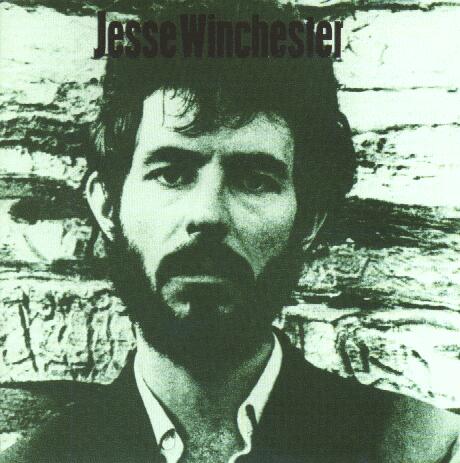
Jesse At The Time
After a couple successful covers by PP&M the Byrds came in with really stunning contemporary versions of Bobby’s songs. Within a year or two of that whole albums were issued trying to cash in on Bobby as a songwriter. Barry McGuire ex of the New Christy Minstrels for Chrissakes. Even that embarrassing Sinatra clone, Trini Lopez.
So Albert had turned Bobby’s catalog gold. Not a trick to be despised.
Bobby’s star rose as his reputation as a songwriter rose.

He's On His Way
Albert pushed the envelope to secure as large a portion of the revenues for himself and Bobby as he could. Columbia had conned Dylan into a disadvantageous contract so Albert forced a change. He secured twenty-five percent of the revenues from Bobby’s records for himself which was far in advance of practice. However Albert had been right. Pop album sales which had been miniscule in 1960 burgeoned into a mult-billion dollar segment by the end of the decade. Albert had positioned Bobby to benefit from this huge market.
Albert had bullied Columbia Records, Bobby’s label, into giving him producers who would make the most of his talents. His unusual terroristic tactics threw the fear of god into Columbia’s executives. If Bobby hadn’t signed a new contract, a fairly generous contract, behind Albert’s back Albert probably would have secured an even richer contract. Remember Albert had the incentive of twenty-five percent of Dylan’s record revenues.
One must accept the fact that Albert Grossman managed Bob Dylan’s career to perfection. One must accept the fact tht Dylan would have been worth much less financially, perhaps, worthless without the aid and support of Albert Grossman.
But then, Bob discovered that Albert had, and this is improtant, given himself fifty percent of Dwarf Music not only without telling Bobby but actively preventing his knowing.
Bobby saw only his own genius while ignoring Albert’s. Without thinking it out he chose to feel betrayed. Albert traded on Bobby’s trust but I do not believe Albert betrayed him. I think Albert was the best friend Bobby ever had.
I believe that Albert was entitled to fifty percent of Bobby’s earnings in perpetuity. I’d have to say that Bobby played the churl in not recognizing Albert’s contribution to his success.
Still, Bobby is the artist, Bob Dylan, while Albert is only the promoter, Albert Grossman. Which is the tail and which is the dog? Did you ever see a dog run round and round chasing its tail?
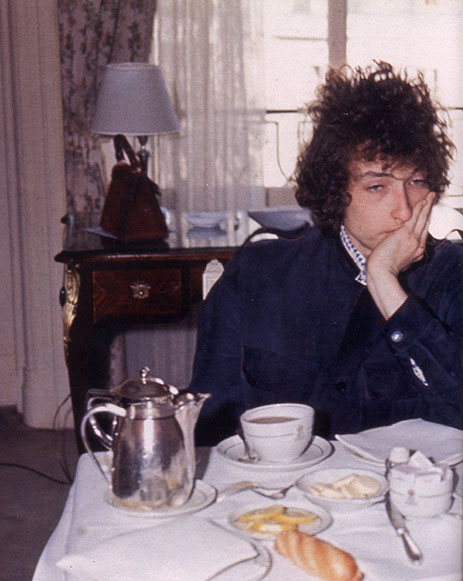
I Ate The Whole Thing
The End.
Edgar Rice Burroughs As An Outsider
November 25, 2007
Edgar Rice Burroughs As An Outsider
By
R.E. Prindle
…the great cats roamed this strange valley of the gorillas.
=Edgar Rice Burroughs
And the Great White Ape stood before the wall that surrounded London of Africa. Cats, gorillas, walls, doors, London England deep in the Heart of Darkness…he was the Lord of the Jungle, Tarzan Of The Apes.
Tarzan is alone as usual as was, one suspects, his creator Edgar Rice Burroughs. The year is 1933 both in Burroughs’ imaginary Africa and temporal Los Angeles where the writer plied his trade.
After a lifetime of trying to break into society Burroughs has Tarzan standing outside the wall of London into which he must break like a burglar or thief in the night.
Within the walls is the citadel of ERB’s desires, the great city on the hill, the castle of redemption. Now fifty-eight years old Burroughs had achieved all the material attributes of success only to have the prize dashed from his hands.
Symbolically he enters the castle of his dreams to find instead only a prison. The long climb up the stairway to heaven leads only to jail.
Nineteen thirty-three was the one hundredth anniversary of his father’s birth. The old ghoul who had imprinted him so evilly had come back from the grave to haunt him, to deny him what he had worked so hard to attain.
As in real life where MGM had stripped him of his life’s work in one deft move so now in his imagination his castle was destroyed by a raging fire storm. Symbolically he portrays his relationship with his father as an old coot who had led him around with a halter round his neck. In his great apocalyptic dream ERB reverses the roles and puts the halter about his father’s neck.
Too late ERB realized he had signed away his great creation to Metro-Goldwyn-Mayer. In a desperate attempt to reclaim him ERB formed a movie company in which for a logo he adopted the MGM symbol but replaced the roaring lion, Leo, with an image of Tarzan shouting Tar-man-gan-eeee. ERB failed to detourne the image and MGM added insult to injury by forcing ERB into exile in Hawaii. Now seventy years old our big cat was exactly where he had been in Chicago when he entered manhood- on the other side of the wall. Still outside. It wasn’t supposed to be that way as Burroughs lamented.
How did it come to pass? How could he succeed so magnificently and yet fail so egregiously? How could life treat him so bad. ERB was just born under a bad sign.
His life began propitiously. He was in effect a little prince in his family for his first seven or eight years but then things began to mysteriously unravel and the little prince became a pauper. And that was more or less how ERB explained his life to himself. The three most influential books in his life were Mark Twain’s The Prince And The Pauper, Frances Hodgson Burnett’s Little Lord Fauntleroy and Owen Wister’s The Virginian.
Burroughs apparently understood his life at least until 1930 in terms of these three books. The Prince became a Pauper then a Prince again. Little Lord Fauntleroy, a disinherited prince lived his young life as a pauper realizing his destiny as a prince at last. These two books were published in Burroughs’ childhood. One assumes he first read them as a boy.
The Virginian was published in 1902. Burroughs said that he had read all three books six or seven times by the early twenties. It is impossible to know when he read The Virginian the first time but as his life was in a turmoil during 1902-03 and ‘04 I wouldn’t think that his first reading was before ‘05 but one can’t be certain.
It would appear that ERB modeled his adult life on Lin McLean, the Virginian.
McLean was essentially a loner who went West to Wyoming much as ERB had repeatedly gone to Idaho. Wister tells the story of the famous Johnson County War through the eyes of his hero, McLean. ERB was in Idaho when the Johnson County War was in progress so Burroughs would have understood the novel with an intimacy denied the rest of us. McLean was a Tarzanic figure who wooed and won a school marm who was culturally far above him. This was perhaps not unlike ERB and Emma. Emma always referred to ERB as a lowbrow.
The most memorable episode in The Virginian is McLean’s marriage. He and his bride honeymoon in the wilds, in romantic scenery quite reminiscent of Burroughs’ dream Africa. Perhaps his taking Emma to Idaho in 1903 was an attempt to recreate this romantic honeymoon. A basis of Tarzan then can be found in Lin McLean the silent Virginian. Also ERB’s apparent vision of himself.
As Burroughs complained that ‘it wasn’t supposed to be like this’ his condition changed began to go wrong about the fifth grade. Here his father began his role as the monstrous ‘God’ of Tarzan And The Lion Man. ERB had attended Brown School up to this point. At this age his father moved him from Brown and sent the young boy to, of all places, a girl’s school. One can only imagine the young boy’s anguish at attending a girl’s school. ERB’s connections with his early schoolmates was disrupted. He had barely begun his tenure at the girl’s school when his father transferred him to a Latin school named Harvard for two and a half years. There is no indication ERB formed any abiding friendships at Harvard School.
While the kids in his neighborhood were walking to Brown everyday ERB was riding his pony alone to Harvard. Undoubtedly the students of Harvard were drawn from all over Chicago so that apart from seeing his fellows in class ERB had little else to do with them.
His father then pulled him from Harvard School sending him off to his brothers’ ranch in Idaho. At this point then he had no contact with his fellow Chicagoans while he was thrown into a delightful situation but one in which he associated with rough cowboys with little education while he attended no school himself.
Why his father was doing this is open to interpretation. Certainly he must have known what the effects would be on his son. His father’s next move was to transfer young ERB to the snobbery of the East at Phillips Academy where he essentially flunked out within a year.
One can only imagine the turmoil in the young man’s mind as he returned to a Chicago he no longer knew and more importantly where no one knew him. It doesn’t seem possible that he could have any but a few acquaintances in Chicago to whom he would still have been a near stranger. So already at sixteen young Burroughs had been placed beyond the pale of society. He was already an outsider. The most he could hope for was to be allowed to return to Brown to finish high school. There at least he had a viable connection with Emma however he would be a rough cut diamond lacking the polish and sophistication that would have appealed to Emma’s father.
Such an opportunity was not to be. At this point ERB’s father placed him in the Michigan Military Academy. ERB described the Academy as a place where parents warehoused their young juvenile delinquents. The resentment is clear in ERB’s attitude. Indeed he rebelled at this latest insult from his, by this time, inscrutable father.
The boy ran away from the MMA returning to his father’s house in Chicago. One wonders if he hopped freights to get there. One can only imagine the anguished pleading of Burroughs as he begged, perhaps on his knees, to be allowed to stay home and attend Brown. His old martinet of a father would have none of it. He packed the boy off again to the Military Academy.
Military Academy! How distasteful the very sound is. To be packed off again to a place where you knew no one and they as ERB believed, were juvenile delinquents. One can only imagine how crushed the boy’s spirit was. He became a class clown. What his fate might have been if his Commandant hadn’t been one who commanded his respect by the name of Charles King one can only guess. King who was not as well remembered by his classmates as he was by Burroughs nevertheless he bucked the boy up perhaps saving his life. At any rate Burroughs developed a dual personality as a class clown while at the same time being responsible enough to lead the football team to undreamed of heights while becoming an outstanding horseman and trick rider.
It was at the MMA that Burroughs formed the only long term friendship of which we are aware; this was a young man from Beatrice, Nebraska by the name of Herb Weston. Weston’s correspondence with Burroughs over the next forty years or so has been preserved for us by Matt Cohen in his book Brother Men.
Burroughs knew Weston only from September to May of the year before he left to join the Army. They saw each other but seldom after that apparently neither corresponding or meeting from 1896 to 1905 or so, but still the friendship flourished in later years.
In 1896 ERB joined the Army requesting the worst post they had and that was willingly given to him. So at this point ERB severed whatever and all ties that he had with anybody. He was the quintessential outsider. He was flying solo.
He apparently took a train to the end of the line wherever that may have been taking a stage coach into his post, Fort Grant, Arizona.
Whatever his fantasy of the Army was he was immediately disabused. He and four other fellows formed an informal club romantically named The Might Have Seen Better Days Club. There’s an element of self pity in the name. It deserves further comment.
The name implies a certain amount of depression. That is implied in Burroughs’ asking for the worst post in the Army. Only one fairly deeply depressed would ask for such a post. It’s the same as the fit of depression in which men used to join the French Foreign Legion.
Burroughs says he joined the Army with the intent of working his way up through the ranks to become an officer. I’m sure it didn’t take long to disabuse himself of that notion. Thus he began to petition his father to get him out of his commitment. His father had enough pull to do so.
So in 1897 he was back on the outside without a plan, presumably just as depressed. At that point in his life he was free to go anywhere, California, New York, the Bay Area, within a year the Yukon Gold Rush would be on. Heck he might even have traveled North with his future hero, Jack London. But ERB took his depression back home to Chicago.
Chicago was his home town but he knew no one there except Emma. ERB went to work for his father. Probably difficult enough but more importantly the office was located on Madison Avenue. That street was the main stem of Chicago’s huge hobo population. These were really outsiders, the men who didn’t fit in to use Robert Service’s memorable phrase.
ERB saw them everyday and must have spoken to many of them, had conversations so that he probably recognized some affinity with them. Hobos would certainly figure large in his writing from time to time.
He undoubtedly fantasized embracing the life of the road and may have on an experimental basis. He was to form a relationship with one of the foremost Hobo poets, H.H. Knibbs later in life. So the pull of the road was there.
He still had no idea what to do with his life. He had joined the Army without telling anyone including his future wife Emma Hulbert. She had sent a letter to him at Fort Grant in September of 1896. When he returned he discovered that he may have been away too long. As improbable as it may sound she was then being courted by a millionaire’s son, Frank Martin. As ERB had no real wish to be married he probably should have let Martin marry Emma.
It seems quite obvious Emma preferred the impoverished ERB to the wealth of Martin. These things obviously do happen. In the denouement thirty-five years later it would have been better for Emma if she had gone with Martin..
At this time ERB chose to return to Idaho. That didn’t work out well so he bounced back to Chicago. Now comes a very critical moment in his life. Perhaps Martin had been on the verge of success with Emma who may have been hurt and confused at the latest abandonment by the man she truly, truly loved.
When Burroughs returned heartening Emma once again Martin very obviously became exasperated at what he considered a bad penny who kept turning up at disadvantageous times.. It appears that he decided to settle ERB’s hash. Martin’s father was a railroad magnate possessing his own private rail car. Martin invited this nemesis of his to take a round trip to New York City with the return trip through Canada and Toronto.
It would appear that he set up a murder attempt to remove his rival in Toronto. On a night on the town in Toronto ERB was either lured into a fight with a couple thugs or accosted by them. The thug delivered a vicious blow to ERB’s forehead with a sap or leaded pipe that ripped his scalp open and laid ERB low.
While the injury was not obvious ERB was seriously hurt. Apparently internal bleeding formed a clot between his forebrain and skull hat had a profound effect on his personality as well as giving him excruciating headaches half the day for every day of his life at least through 1913-14.
Judging from his writing the pressure caused memory lapses during which he was unable to recall people he was familiar with. As this trait would not have been understood ERB was misinterpreted and become even more of an outsider. After his injury in Toronto ERB married Emma probably to spite Martin as he later said he regretted getting married. Nevertheless he now had a wife along with what must have seemed a very peculiar personality.
It is difficult to imagine what options ERB had open to him now that he had to abandon his rough and rowdy ways to take care of his young wife. Working for his father must have been a difficult experiences as it most often is for a son. In addition to that problem ERB came down with typhoid fever. The convalescence completely disrupted his finances. Now having excruciating headaches, a mind that just came and went and no money, no prospects, no future and little hope the man must have been plunged into the depths of despair.
Perhaps in all those Tarzan stories when Tarzan loses his memory they may reflect ERB’s actual experience at this time being periodically bereft of his memory for more or less short periods of time.
Obviously not thinking very clearly he decided to return to Idaho with his new wife and absolutely no prospects of making a living. Well, it worked for the Virginian.
Now, the Yukon Gold Rush had occurred in 1898. Out of that gold rush came a young writer by the name of Jack London. Burroughs was an inveterate reader in those days before movies, TV and radio so that his imagination was fired by London’s stories. London had also been a hobo as a boy.
On the way out to Idaho ERB had Emma riding in an open boxcar so as to comfort their dog. So in his strange way ERB was actually hoboing and doing it with his wife.
Two years later they returned once again to Chicago. Already an outsider ERB now embarked on a career that pushed him further out. Already declassed by his father’s treatment he now declassed himself further by taking an odd assortment of jobs. This period has not been inadequately covered in existing biographies. Perhaps the job that pushed him beyond the pale of social acceptability was his association with a patent medicine man by the name of Stace. Patent medicines were among the most disreputable vocations a man could have. ‘Snake oil’ pitchmen have been parodied in so many movies one has visions of their being run out of town one step ahead of the sheriff.
Burroughs association with Stace occurred just after the publication of Upton Sinclair’s The Jungle and an expose of the business by Samuel Hopkins Adams. A most unpropitious time to be in the patent medicine business. Stace was run out of business by the authorities. It was probably at this time that Burroughs picked up his experiences with grand juries and the police that he displays in The Girl From Farriss’s
Rather than dissociate himself from Stace as he should have done ERB joined with him in a successor venture named Burroughs-Stace. This could not have helped his reputation but would have implicated him as a principal in the snake oil outfit. One can only believe that it wasn’t very desirable to know Edgar Rice Burroughs.
Thus as his mind began to jell around the fiction that would make him famous his prospects were getting slim and slimmer. Perhaps he was grooming himself for the solitary profession of writer.
His experiences and reading all came together in 1911 when he wrote and sold his first effort, A Princess Of Mars. Unusually for a new writer he had more than one good story in him so that within two years he had achieved literary success being able to quit his day job to take up writing full time.
2.
By this time ERB had been outside the loop for so long, from the fifth grade on that his behavior was gauche. He didn’t know how to behave or discourse in polite society. So at this point it didn’t matter how much money he made or how famous he became he was truly a man who couldn’t fit in. Nowhere is this more obvious than in his writing.
One is astonished that between 1912 and 1918, a mere six years, Tarzan became a household word. It was that by the time the first movie was released there was virtually no one in America who hadn’t heard the name Tarzan. This is a level of success rarely attained.
And yet one is mystified as to how this came about. Certainly the penetration wasn’t achieved by a pulp magazine like All Story. The fiction magazines while popular had limited distribution. If we are to believe the sales figures Tarzan Of The Apes had substantial success but nothing like the novels of Zane Grey for instance.
His publisher, McClurg’s made no effort to capitalize on the phenomenon. Their hard cover first issue was very limited in numbers going into reprint status almost immediately. At the end of the decade ERB was reduced to urging them to print at least 40,000 copies before they turned a book over for republication. McClurg’s was loath to do so and I have seen no evidence they did. So one has the phenomenon of Tarzan being a household word with no clear evidence of how it came to be.
Today such success would make an author a celebrity yet the evidence is Burroughs was scorned in his own home town of Chicago. The city had a vibrant publishing scene in those days. There were plenty of famous authors in town with clubs and gathering places yet Burroughs apparently was welcome in none of them.
It is true that he was a pulp writer which was the lowest rung on the literary ladder. It is possibly true that he was the first truly imaginative writer in the sense of today’s sci fi, horror and fantasy genres. One may argue that Wells was first and while his stories are highly imaginative they are still extensions of reality.
Burroughs severed the connection with reality; he deals in impossibilities as if they were possible. One can’t stretch reality far enough to possibly cover Mars, Tarzan’s Africa and Pellucidar. They are clearly impossible. The Land That Time Forgot? Get out of here. So, as an originator of something new, a term I hate to use, Burroughs was a pioneer way out in front of the van. Hence he would have been incomprehensible to the average mind. In the language of the fifties he would have been a phenom. Weird, strange and that’s the way he seemed to have been treated.
In today’s terms his personality would have been vulnerable. Already an outsider the doors were politely shut in his face. Indeed, if one reads his stories they are full of closed doors that won’t open or can’t be opened. In Tarzan And The Lion Man, and this is a great scene, one of an array of doors is standing ajar while all the others are shut tight. The one open door is a trap that puts Tarzan in prison.
So we may assume that all doors were closed to him in Chicago. Whether his reputation followed him or his subject matter put people off or a combination of the two ERB was firmly kept outside. Chicago had that unwanted sign upon its heart.
There was one club that was open to Burroughs. That club was a catch all called The White Paper Club that was open to anyone who made marks on white paper. I suppose that could include anyone who intended to write that novel but had yet to put pen to paper.
Thus the man who had created a household word was forced to mingle with anyone who had soiled a piece of paper. Is it any wonder that ERB wanted to move.
Porges records ERB’s farewell dinner as though it were some sort of complimentary send off but Mr. Prindle dissents.
Among a number of unusual things ERB did that I don’t want to go into here was to circulate the story that he was going West to raise prize hogs. Now, Carl Sandburg called Chicago the Hog Butcher to the World. So one wonders what ERB was thinking. He actually did raise hogs at Tarzana but pig farming darn near broke him.
I can only guess what his fellow White Paperers thought but drawn on the menu was a picture of a pig with wings flying West. If I were ERB I might laugh with the fellows but I wouldn’t think it was a very funny joke. After all the phrase ‘when pigs have wings’ means something impossible while if I were ERB I might think that pig meant me and I might think the message was ‘good riddance and keep going.’ But, maybe I’m hypersensitive.
At any rate Burroughs went and he didn’t come back. He never seemed to miss Chicago a lot although there are many references to the city in his later work so he kept a watchful eye on the town.
So, at the age of forty-three ERB began a new life in sunny SoCal. The world had changed: without possibly understanding why there was no place in the new world for people like Edgar Rice Burroughs. Part of his problem was caused by himself. As a newcomer in town ERB took it upon himself to be morally outraged by Hollywood. Hollywood had itself outraged the morals of the nation so the town was tender and sensitive on the subject. By the time ERB published his book in 1923 Hollywood was mired in some serious scandals not least of which was the Fatty Arbuckle murder trials. ERB’s novel discussing the seedier side of Hollywood life offended some sensibilities. As a newcomer to Hollywood the novel, The Girl From Hollywood, was ill considered. While an excellent novel, in the circumstances it had been better left unwritten.
In combination with his novel the political situation of the world had changed. The World Revolution had succeeded in Russia in 1917. Everyone not in sympathy was anathema and ERB was not in sympathy. He was not loath to advertise this fact. Hence the Communists reacted: in the years 1920-24 his novels were neglected in Britain; they were under assault in Germany; his movie revenues dried up in Hollywood while one wonders if his books received the circulation their popularity demanded.
Another social issue forcing him to the outside was his response to a questionnaire forwarded to him from Chicago sent by the American Jewish Committee. The questionnaire apparently wanted to know his opinions on Jews- was he unequivocally a supporter or did he have reservations. ERB had a reservation that was reasonable but not reasonable enough for the American Jewish Committee. ERB was apparently black listed as all income from the movies ceased from 1921 to 1928. Tarzan was persona non gratis in Hollywood.
When his income dried up ERB was no longer able to support his magnificent estate of Tarzana. Thus began years of economic problems. Hollywood does not tolerate economic problems so there is no record of ERB having a social history in Tinseltown.
ERB began having problems with his publishers most likely because of his anti-Red politics. This resulted in his forming his own publishing company in 1930. So, really by 1930 ERB was virtually outside society. Like his creation Tarzan he was backing down a limb followed by a panther. Undoubtedly it was thought that he would fail as a publisher but he didn’t.
His movie fortunes had changed in 1928 when the ‘anti-Semite’ Joseph P. Kennedy, Jack Kennedy’s father, broke the black list and released a Tarzan movie.
This caused a reaction in the Jewish community that apparently sought to undermine the FBO film Tarzan And The Golden Lion that is available today and a very good silent film starring ERB’s son-in-law, James Pierce who draws a mean bow on the cover.
Two quick films were released by a Jewish film company that held the rights to two novels purchased in 1922 but never filmed. One of these is currently available Tarzan The Tiger while the other isn’t. Frank Merrill of Tarzan The Tiger isn’t a bad Tarzan either.
Apparently heads were put together for a long term solution to Burroughs. A plan was put in effect by Metro-Goldwyn-Mayer, MGM. In 1931 ERB signed a contract with them that virtually stripped him of control of his creation. Although MGM’s 1932 Tarzan Of The Apes was a hit there is good reason to believe it was a clownish attempt to finish the career of Tarzan. No one was more surprised than MGM when the movie became a box office smash. This was the first sound movie and maybe the famous Tarzan yell, that also might have been meant as a joke, put the movie over. But the career of Tarzan was effectively out of Burroughs’ hands. He fought back with a couple really good Tarzan novels. The last of that batch, Tarzan And The Lion Man, ridiculed MGM’s fabled African epic Trader Horn in revenge for MGM’s treatment of Tarzan.
That Burroughs realized he had been frozen out is evident by the scene with which I started this essay where Tarzan is standing outside the walls of London wanting in. This is some of the most masterful writing of a dream sequence imaginable. The room for interpretation is almost unlimited. For this essay I choose to see the scene as representing Burroughs/Tarzan in 1911 when he was standing out in the cold wondering how to be become a success.
Symbolically Tarzan leaps up grasping the down pointed sharpened stakes impossibly lifting himself straight up then rolling forward past the stakes. Burroughs success as a writer was about that impossible and sensational.
Once inside the symbolic London that is populated by a colony of apes who are literal descendants of Henry the Eighth and his court Tarzan skirts the partying crowd to begin a solo attempt to ‘heaven.’ So in real life as Burroughs was shunned by society Tarzan avoids it here. The apes as descendants of Henry the Eighth have been created by a renegade Englishmen known as God to the apes who created them by a process similar to DNA
God’s castle then is known as Heaven and it is that to which Tarzan ascends. As noted earlier he enters a door and is trapped in prison. There is no viable way out so that Heaven is torched going up in flames just as Burroughs career had with the loss of Tarzan. Thus everything Burroughs had worked for for twenty years went up in smoke. This is a very simple interpretation. A more complete one would take fifty or more pages.
Now in control the Judaeo-Communists set about ridding themselves of Burroughs in much the same way, perhaps, that Chicago did.
Burroughs rashly undertook to make his own Tarzan movies. He was led into this disastrous effort by Ashton Dearholt. This man was the husband of Florence Gilbert Dearholt who left Dearholt to marry Burroughs at just this time. Linking up with Dearholt was a recipe for disaster it seems to me.
Burroughs’ venture into film making was disastrous. He had antagonized the radio people so the successful and lucrative Tarzan series were off the air until after his death. His productive years as a writer were behind him so he was almost entirely dependent on MGM for his income. While MGM could have successfully made two or three Tarzan films a year profitably they chose to make a movie only every two or three years keeping Burroughs on a short financial lease.
Unable to sustain a high profile Hollywood life style ERB was forced into exile in 1940 leaving the film capitol for Hawaii.
Thus the process of placing him outside begun in the fifth grade in Chicago was completed in 1940 when he was run out of Los Angeles virtually stripped of his great creation Tarzan.
With their nemesis gone MGM tired of the game giving up the lucrative character a couple years later to Sol Lesser.
Lesser’s Tarzan movies redeemed ERB’s declining years allowing him to return to Los Angeles to quietly live out his life without worries.
I have presented here only as aspect of ERB’s life but in many ways what a life it was. One wonders if ERB was joking when he told a reporter he lived an uneventful life.
The Old Tiger capped his astonishing career in 1950 when he passed to the outside one last time. He passed through an open door that softly closed behind him allowing no return.
Edgar Rice Burroughs As An Outsider
By
R.E. Prindle
…the great cats roamed this strange valley of the gorillas.
=Edgar Rice Burroughs
And the Great White Ape stood before the wall that surrounded London of Africa. Cats, gorillas, walls, doors, London England deep in the Heart of Darkness…he was the Lord of the Jungle, Tarzan Of The Apes.
Tarzan is alone as usual as was, one suspects, his creator Edgar Rice Burroughs. The year is 1933 both in Burroughs’ imaginary Africa and temporal Los Angeles where the writer plied his trade.
After a lifetime of trying to break into society Burroughs has Tarzan standing outside the wall of London into which he must break like a burglar or thief in the night.
Within the walls is the citadel of ERB’s desires, the great city on the hill, the castle of redemption. Now fifty-eight years old Burroughs had achieved all the material attributes of success only to have the prize dashed from his hands.
Symbolically he enters the castle of his dreams to find instead only a prison. The long climb up the stairway to heaven leads only to jail.
Nineteen thirty-three was the one hundredth anniversary of his father’s birth. The old ghoul who had imprinted him so evilly had come back from the grave to haunt him, to deny him what he had worked so hard to attain.
As in real life where MGM had stripped him of his life’s work in one deft move so now in his imagination his castle was destroyed by a raging fire storm. Symbolically he portrays his relationship with his father as an old coot who had led him around with a halter round his neck. In his great apocalyptic dream ERB reverses the roles and puts the halter about his father’s neck.
Too late ERB realized he had signed away his great creation to Metro-Goldwyn-Mayer. In a desperate attempt to reclaim him ERB formed a movie company in which for a logo he adopted the MGM symbol but replaced the roaring lion, Leo, with an image of Tarzan shouting Tar-man-gan-eeee. ERB failed to detourne the image and MGM added insult to injury by forcing ERB into exile in Hawaii. Now seventy years old our big cat was exactly where he had been in Chicago when he entered manhood- on the other side of the wall. Still outside. It wasn’t supposed to be that way as Burroughs lamented.
How did it come to pass? How could he succeed so magnificently and yet fail so egregiously? How could life treat him so bad. ERB was just born under a bad sign.
His life began propitiously. He was in effect a little prince in his family for his first seven or eight years but then things began to mysteriously unravel and the little prince became a pauper. And that was more or less how ERB explained his life to himself. The three most influential books in his life were Mark Twain’s The Prince And The Pauper, Frances Hodgson Burnett’s Little Lord Fauntleroy and Owen Wister’s The Virginian.
Burroughs apparently understood his life at least until 1930 in terms of these three books. The Prince became a Pauper then a Prince again. Little Lord Fauntleroy, a disinherited prince lived his young life as a pauper realizing his destiny as a prince at last. These two books were published in Burroughs’ childhood. One assumes he first read them as a boy.
The Virginian was published in 1902. Burroughs said that he had read all three books six or seven times by the early twenties. It is impossible to know when he read The Virginian the first time but as his life was in a turmoil during 1902-03 and ‘04 I wouldn’t think that his first reading was before ‘05 but one can’t be certain.
It would appear that ERB modeled his adult life on Lin McLean, the Virginian.
McLean was essentially a loner who went West to Wyoming much as ERB had repeatedly gone to Idaho. Wister tells the story of the famous Johnson County War through the eyes of his hero, McLean. ERB was in Idaho when the Johnson County War was in progress so Burroughs would have understood the novel with an intimacy denied the rest of us. McLean was a Tarzanic figure who wooed and won a school marm who was culturally far above him. This was perhaps not unlike ERB and Emma. Emma always referred to ERB as a lowbrow.
The most memorable episode in The Virginian is McLean’s marriage. He and his bride honeymoon in the wilds, in romantic scenery quite reminiscent of Burroughs’ dream Africa. Perhaps his taking Emma to Idaho in 1903 was an attempt to recreate this romantic honeymoon. A basis of Tarzan then can be found in Lin McLean the silent Virginian. Also ERB’s apparent vision of himself.
As Burroughs complained that ‘it wasn’t supposed to be like this’ his condition changed began to go wrong about the fifth grade. Here his father began his role as the monstrous ‘God’ of Tarzan And The Lion Man. ERB had attended Brown School up to this point. At this age his father moved him from Brown and sent the young boy to, of all places, a girl’s school. One can only imagine the young boy’s anguish at attending a girl’s school. ERB’s connections with his early schoolmates was disrupted. He had barely begun his tenure at the girl’s school when his father transferred him to a Latin school named Harvard for two and a half years. There is no indication ERB formed any abiding friendships at Harvard School.
While the kids in his neighborhood were walking to Brown everyday ERB was riding his pony alone to Harvard. Undoubtedly the students of Harvard were drawn from all over Chicago so that apart from seeing his fellows in class ERB had little else to do with them.
His father then pulled him from Harvard School sending him off to his brothers’ ranch in Idaho. At this point then he had no contact with his fellow Chicagoans while he was thrown into a delightful situation but one in which he associated with rough cowboys with little education while he attended no school himself.
Why his father was doing this is open to interpretation. Certainly he must have known what the effects would be on his son. His father’s next move was to transfer young ERB to the snobbery of the East at Phillips Academy where he essentially flunked out within a year.
One can only imagine the turmoil in the young man’s mind as he returned to a Chicago he no longer knew and more importantly where no one knew him. It doesn’t seem possible that he could have any but a few acquaintances in Chicago to whom he would still have been a near stranger. So already at sixteen young Burroughs had been placed beyond the pale of society. He was already an outsider. The most he could hope for was to be allowed to return to Brown to finish high school. There at least he had a viable connection with Emma however he would be a rough cut diamond lacking the polish and sophistication that would have appealed to Emma’s father.
Such an opportunity was not to be. At this point ERB’s father placed him in the Michigan Military Academy. ERB described the Academy as a place where parents warehoused their young juvenile delinquents. The resentment is clear in ERB’s attitude. Indeed he rebelled at this latest insult from his, by this time, inscrutable father.
The boy ran away from the MMA returning to his father’s house in Chicago. One wonders if he hopped freights to get there. One can only imagine the anguished pleading of Burroughs as he begged, perhaps on his knees, to be allowed to stay home and attend Brown. His old martinet of a father would have none of it. He packed the boy off again to the Military Academy.
Military Academy! How distasteful the very sound is. To be packed off again to a place where you knew no one and they as ERB believed, were juvenile delinquents. One can only imagine how crushed the boy’s spirit was. He became a class clown. What his fate might have been if his Commandant hadn’t been one who commanded his respect by the name of Charles King one can only guess. King who was not as well remembered by his classmates as he was by Burroughs nevertheless he bucked the boy up perhaps saving his life. At any rate Burroughs developed a dual personality as a class clown while at the same time being responsible enough to lead the football team to undreamed of heights while becoming an outstanding horseman and trick rider.
It was at the MMA that Burroughs formed the only long term friendship of which we are aware; this was a young man from Beatrice, Nebraska by the name of Herb Weston. Weston’s correspondence with Burroughs over the next forty years or so has been preserved for us by Matt Cohen in his book Brother Men.
Burroughs knew Weston only from September to May of the year before he left to join the Army. They saw each other but seldom after that apparently neither corresponding or meeting from 1896 to 1905 or so, but still the friendship flourished in later years.
In 1896 ERB joined the Army requesting the worst post they had and that was willingly given to him. So at this point ERB severed whatever and all ties that he had with anybody. He was the quintessential outsider. He was flying solo.
He apparently took a train to the end of the line wherever that may have been taking a stage coach into his post, Fort Grant, Arizona.
Whatever his fantasy of the Army was he was immediately disabused. He and four other fellows formed an informal club romantically named The Might Have Seen Better Days Club. There’s an element of self pity in the name. It deserves further comment.
The name implies a certain amount of depression. That is implied in Burroughs’ asking for the worst post in the Army. Only one fairly deeply depressed would ask for such a post. It’s the same as the fit of depression in which men used to join the French Foreign Legion.
Burroughs says he joined the Army with the intent of working his way up through the ranks to become an officer. I’m sure it didn’t take long to disabuse himself of that notion. Thus he began to petition his father to get him out of his commitment. His father had enough pull to do so.
So in 1897 he was back on the outside without a plan, presumably just as depressed. At that point in his life he was free to go anywhere, California, New York, the Bay Area, within a year the Yukon Gold Rush would be on. Heck he might even have traveled North with his future hero, Jack London. But ERB took his depression back home to Chicago.
Chicago was his home town but he knew no one there except Emma. ERB went to work for his father. Probably difficult enough but more importantly the office was located on Madison Avenue. That street was the main stem of Chicago’s huge hobo population. These were really outsiders, the men who didn’t fit in to use Robert Service’s memorable phrase.
ERB saw them everyday and must have spoken to many of them, had conversations so that he probably recognized some affinity with them. Hobos would certainly figure large in his writing from time to time.
He undoubtedly fantasized embracing the life of the road and may have on an experimental basis. He was to form a relationship with one of the foremost Hobo poets, H.H. Knibbs later in life. So the pull of the road was there.
He still had no idea what to do with his life. He had joined the Army without telling anyone including his future wife Emma Hulbert. She had sent a letter to him at Fort Grant in September of 1896. When he returned he discovered that he may have been away too long. As improbable as it may sound she was then being courted by a millionaire’s son, Frank Martin. As ERB had no real wish to be married he probably should have let Martin marry Emma.
It seems quite obvious Emma preferred the impoverished ERB to the wealth of Martin. These things obviously do happen. In the denouement thirty-five years later it would have been better for Emma if she had gone with Martin..
At this time ERB chose to return to Idaho. That didn’t work out well so he bounced back to Chicago. Now comes a very critical moment in his life. Perhaps Martin had been on the verge of success with Emma who may have been hurt and confused at the latest abandonment by the man she truly, truly loved.
When Burroughs returned heartening Emma once again Martin very obviously became exasperated at what he considered a bad penny who kept turning up at disadvantageous times.. It appears that he decided to settle ERB’s hash. Martin’s father was a railroad magnate possessing his own private rail car. Martin invited this nemesis of his to take a round trip to New York City with the return trip through Canada and Toronto.
It would appear that he set up a murder attempt to remove his rival in Toronto. On a night on the town in Toronto ERB was either lured into a fight with a couple thugs or accosted by them. The thug delivered a vicious blow to ERB’s forehead with a sap or leaded pipe that ripped his scalp open and laid ERB low.
While the injury was not obvious ERB was seriously hurt. Apparently internal bleeding formed a clot between his forebrain and skull hat had a profound effect on his personality as well as giving him excruciating headaches half the day for every day of his life at least through 1913-14.
Judging from his writing the pressure caused memory lapses during which he was unable to recall people he was familiar with. As this trait would not have been understood ERB was misinterpreted and become even more of an outsider. After his injury in Toronto ERB married Emma probably to spite Martin as he later said he regretted getting married. Nevertheless he now had a wife along with what must have seemed a very peculiar personality.
It is difficult to imagine what options ERB had open to him now that he had to abandon his rough and rowdy ways to take care of his young wife. Working for his father must have been a difficult experiences as it most often is for a son. In addition to that problem ERB came down with typhoid fever. The convalescence completely disrupted his finances. Now having excruciating headaches, a mind that just came and went and no money, no prospects, no future and little hope the man must have been plunged into the depths of despair.
Perhaps in all those Tarzan stories when Tarzan loses his memory they may reflect ERB’s actual experience at this time being periodically bereft of his memory for more or less short periods of time.
Obviously not thinking very clearly he decided to return to Idaho with his new wife and absolutely no prospects of making a living. Well, it worked for the Virginian.
Now, the Yukon Gold Rush had occurred in 1898. Out of that gold rush came a young writer by the name of Jack London. Burroughs was an inveterate reader in those days before movies, TV and radio so that his imagination was fired by London’s stories. London had also been a hobo as a boy.
On the way out to Idaho ERB had Emma riding in an open boxcar so as to comfort their dog. So in his strange way ERB was actually hoboing and doing it with his wife.
Two years later they returned once again to Chicago. Already an outsider ERB now embarked on a career that pushed him further out. Already declassed by his father’s treatment he now declassed himself further by taking an odd assortment of jobs. This period has not been inadequately covered in existing biographies. Perhaps the job that pushed him beyond the pale of social acceptability was his association with a patent medicine man by the name of Stace. Patent medicines were among the most disreputable vocations a man could have. ‘Snake oil’ pitchmen have been parodied in so many movies one has visions of their being run out of town one step ahead of the sheriff.
Burroughs association with Stace occurred just after the publication of Upton Sinclair’s The Jungle and an expose of the business by Samuel Hopkins Adams. A most unpropitious time to be in the patent medicine business. Stace was run out of business by the authorities. It was probably at this time that Burroughs picked up his experiences with grand juries and the police that he displays in The Girl From Farriss’s
Rather than dissociate himself from Stace as he should have done ERB joined with him in a successor venture named Burroughs-Stace. This could not have helped his reputation but would have implicated him as a principal in the snake oil outfit. One can only believe that it wasn’t very desirable to know Edgar Rice Burroughs.
Thus as his mind began to jell around the fiction that would make him famous his prospects were getting slim and slimmer. Perhaps he was grooming himself for the solitary profession of writer.
His experiences and reading all came together in 1911 when he wrote and sold his first effort, A Princess Of Mars. Unusually for a new writer he had more than one good story in him so that within two years he had achieved literary success being able to quit his day job to take up writing full time.
2.
By this time ERB had been outside the loop for so long, from the fifth grade on that his behavior was gauche. He didn’t know how to behave or discourse in polite society. So at this point it didn’t matter how much money he made or how famous he became he was truly a man who couldn’t fit in. Nowhere is this more obvious than in his writing.
One is astonished that between 1912 and 1918, a mere six years, Tarzan became a household word. It was that by the time the first movie was released there was virtually no one in America who hadn’t heard the name Tarzan. This is a level of success rarely attained.
And yet one is mystified as to how this came about. Certainly the penetration wasn’t achieved by a pulp magazine like All Story. The fiction magazines while popular had limited distribution. If we are to believe the sales figures Tarzan Of The Apes had substantial success but nothing like the novels of Zane Grey for instance.
His publisher, McClurg’s made no effort to capitalize on the phenomenon. Their hard cover first issue was very limited in numbers going into reprint status almost immediately. At the end of the decade ERB was reduced to urging them to print at least 40,000 copies before they turned a book over for republication. McClurg’s was loath to do so and I have seen no evidence they did. So one has the phenomenon of Tarzan being a household word with no clear evidence of how it came to be.
Today such success would make an author a celebrity yet the evidence is Burroughs was scorned in his own home town of Chicago. The city had a vibrant publishing scene in those days. There were plenty of famous authors in town with clubs and gathering places yet Burroughs apparently was welcome in none of them.
It is true that he was a pulp writer which was the lowest rung on the literary ladder. It is possibly true that he was the first truly imaginative writer in the sense of today’s sci fi, horror and fantasy genres. One may argue that Wells was first and while his stories are highly imaginative they are still extensions of reality.
Burroughs severed the connection with reality; he deals in impossibilities as if they were possible. One can’t stretch reality far enough to possibly cover Mars, Tarzan’s Africa and Pellucidar. They are clearly impossible. The Land That Time Forgot? Get out of here. So, as an originator of something new, a term I hate to use, Burroughs was a pioneer way out in front of the van. Hence he would have been incomprehensible to the average mind. In the language of the fifties he would have been a phenom. Weird, strange and that’s the way he seemed to have been treated.
In today’s terms his personality would have been vulnerable. Already an outsider the doors were politely shut in his face. Indeed, if one reads his stories they are full of closed doors that won’t open or can’t be opened. In Tarzan And The Lion Man, and this is a great scene, one of an array of doors is standing ajar while all the others are shut tight. The one open door is a trap that puts Tarzan in prison.
So we may assume that all doors were closed to him in Chicago. Whether his reputation followed him or his subject matter put people off or a combination of the two ERB was firmly kept outside. Chicago had that unwanted sign upon its heart.
There was one club that was open to Burroughs. That club was a catch all called The White Paper Club that was open to anyone who made marks on white paper. I suppose that could include anyone who intended to write that novel but had yet to put pen to paper.
Thus the man who had created a household word was forced to mingle with anyone who had soiled a piece of paper. Is it any wonder that ERB wanted to move.
Porges records ERB’s farewell dinner as though it were some sort of complimentary send off but Mr. Prindle dissents.
Among a number of unusual things ERB did that I don’t want to go into here was to circulate the story that he was going West to raise prize hogs. Now, Carl Sandburg called Chicago the Hog Butcher to the World. So one wonders what ERB was thinking. He actually did raise hogs at Tarzana but pig farming darn near broke him.
I can only guess what his fellow White Paperers thought but drawn on the menu was a picture of a pig with wings flying West. If I were ERB I might laugh with the fellows but I wouldn’t think it was a very funny joke. After all the phrase ‘when pigs have wings’ means something impossible while if I were ERB I might think that pig meant me and I might think the message was ‘good riddance and keep going.’ But, maybe I’m hypersensitive.
At any rate Burroughs went and he didn’t come back. He never seemed to miss Chicago a lot although there are many references to the city in his later work so he kept a watchful eye on the town.
So, at the age of forty-three ERB began a new life in sunny SoCal. The world had changed: without possibly understanding why there was no place in the new world for people like Edgar Rice Burroughs. Part of his problem was caused by himself. As a newcomer in town ERB took it upon himself to be morally outraged by Hollywood. Hollywood had itself outraged the morals of the nation so the town was tender and sensitive on the subject. By the time ERB published his book in 1923 Hollywood was mired in some serious scandals not least of which was the Fatty Arbuckle murder trials. ERB’s novel discussing the seedier side of Hollywood life offended some sensibilities. As a newcomer to Hollywood the novel, The Girl From Hollywood, was ill considered. While an excellent novel, in the circumstances it had been better left unwritten.
In combination with his novel the political situation of the world had changed. The World Revolution had succeeded in Russia in 1917. Everyone not in sympathy was anathema and ERB was not in sympathy. He was not loath to advertise this fact. Hence the Communists reacted: in the years 1920-24 his novels were neglected in Britain; they were under assault in Germany; his movie revenues dried up in Hollywood while one wonders if his books received the circulation their popularity demanded.
Another social issue forcing him to the outside was his response to a questionnaire forwarded to him from Chicago sent by the American Jewish Committee. The questionnaire apparently wanted to know his opinions on Jews- was he unequivocally a supporter or did he have reservations. ERB had a reservation that was reasonable but not reasonable enough for the American Jewish Committee. ERB was apparently black listed as all income from the movies ceased from 1921 to 1928. Tarzan was persona non gratis in Hollywood.
When his income dried up ERB was no longer able to support his magnificent estate of Tarzana. Thus began years of economic problems. Hollywood does not tolerate economic problems so there is no record of ERB having a social history in Tinseltown.
ERB began having problems with his publishers most likely because of his anti-Red politics. This resulted in his forming his own publishing company in 1930. So, really by 1930 ERB was virtually outside society. Like his creation Tarzan he was backing down a limb followed by a panther. Undoubtedly it was thought that he would fail as a publisher but he didn’t.
His movie fortunes had changed in 1928 when the ‘anti-Semite’ Joseph P. Kennedy, Jack Kennedy’s father, broke the black list and released a Tarzan movie.
This caused a reaction in the Jewish community that apparently sought to undermine the FBO film Tarzan And The Golden Lion that is available today and a very good silent film starring ERB’s son-in-law, James Pierce who draws a mean bow on the cover.
Two quick films were released by a Jewish film company that held the rights to two novels purchased in 1922 but never filmed. One of these is currently available Tarzan The Tiger while the other isn’t. Frank Merrill of Tarzan The Tiger isn’t a bad Tarzan either.
Apparently heads were put together for a long term solution to Burroughs. A plan was put in effect by Metro-Goldwyn-Mayer, MGM. In 1931 ERB signed a contract with them that virtually stripped him of control of his creation. Although MGM’s 1932 Tarzan Of The Apes was a hit there is good reason to believe it was a clownish attempt to finish the career of Tarzan. No one was more surprised than MGM when the movie became a box office smash. This was the first sound movie and maybe the famous Tarzan yell, that also might have been meant as a joke, put the movie over. But the career of Tarzan was effectively out of Burroughs’ hands. He fought back with a couple really good Tarzan novels. The last of that batch, Tarzan And The Lion Man, ridiculed MGM’s fabled African epic Trader Horn in revenge for MGM’s treatment of Tarzan.
That Burroughs realized he had been frozen out is evident by the scene with which I started this essay where Tarzan is standing outside the walls of London wanting in. This is some of the most masterful writing of a dream sequence imaginable. The room for interpretation is almost unlimited. For this essay I choose to see the scene as representing Burroughs/Tarzan in 1911 when he was standing out in the cold wondering how to be become a success.
Symbolically Tarzan leaps up grasping the down pointed sharpened stakes impossibly lifting himself straight up then rolling forward past the stakes. Burroughs success as a writer was about that impossible and sensational.
Once inside the symbolic London that is populated by a colony of apes who are literal descendants of Henry the Eighth and his court Tarzan skirts the partying crowd to begin a solo attempt to ‘heaven.’ So in real life as Burroughs was shunned by society Tarzan avoids it here. The apes as descendants of Henry the Eighth have been created by a renegade Englishmen known as God to the apes who created them by a process similar to DNA
God’s castle then is known as Heaven and it is that to which Tarzan ascends. As noted earlier he enters a door and is trapped in prison. There is no viable way out so that Heaven is torched going up in flames just as Burroughs career had with the loss of Tarzan. Thus everything Burroughs had worked for for twenty years went up in smoke. This is a very simple interpretation. A more complete one would take fifty or more pages.
Now in control the Judaeo-Communists set about ridding themselves of Burroughs in much the same way, perhaps, that Chicago did.
Burroughs rashly undertook to make his own Tarzan movies. He was led into this disastrous effort by Ashton Dearholt. This man was the husband of Florence Gilbert Dearholt who left Dearholt to marry Burroughs at just this time. Linking up with Dearholt was a recipe for disaster it seems to me.
Burroughs’ venture into film making was disastrous. He had antagonized the radio people so the successful and lucrative Tarzan series were off the air until after his death. His productive years as a writer were behind him so he was almost entirely dependent on MGM for his income. While MGM could have successfully made two or three Tarzan films a year profitably they chose to make a movie only every two or three years keeping Burroughs on a short financial lease.
Unable to sustain a high profile Hollywood life style ERB was forced into exile in 1940 leaving the film capitol for Hawaii.
Thus the process of placing him outside begun in the fifth grade in Chicago was completed in 1940 when he was run out of Los Angeles virtually stripped of his great creation Tarzan.
With their nemesis gone MGM tired of the game giving up the lucrative character a couple years later to Sol Lesser.
Lesser’s Tarzan movies redeemed ERB’s declining years allowing him to return to Los Angeles to quietly live out his life without worries.
I have presented here only as aspect of ERB’s life but in many ways what a life it was. One wonders if ERB was joking when he told a reporter he lived an uneventful life.
The Old Tiger capped his astonishing career in 1950 when he passed to the outside one last time. He passed through an open door that softly closed behind him allowing no return.
Pt. 4 Something Of Value I
October 30, 2007
Something Of Value I
by
R.E. Prindle
Part 4
A minor mythographer who emerged at the same time as Burroughs and his Tarzan was the famous character Dr. Fu Manchu of the Irishman Arthur H.S. Ward writing under the name of Sax Rohmer. While his subject is in disrepute at the present time, Rohmer was aware that the times were one of a world sea change. He sensed, along with a few others, now equally in disrepute, that the EuroAmerican tide had crested; its flow was now out.
Rohmer running counter to Western trends made careful ethnic identities even to the point of identifying Irish and Anglo sub-groups although some of the characteristics he attributed to them seem mistaken to my eye.
Nevertheless he sensed the world was entering a period of Mfecane, to use the African term, or a time of troubles to use the Western term.
The African Mfecane which occured among the Bantu tribes of South Africa during the first half of the nineteenth century, and recorded so ably by Burroughs’ major influence, Rider Haggard, was a time when rapdily expanding population pressed on available resources. This was the time when the Zulu chief Chaka organized the Zulu impis or military battalions so excitingly described by Haggard. They were used, in the Zulu phrase to ‘stamp the ememy flat’ which is to say, exterminate them.
Numerous Bantu tribes were either exterminated or driven out to find new lands which is to say stamp non-Zulu tribes flat or drive them off good lands into the desert. Such is the historical process which operates without respect to race. Now, historically all peoples consider themselves the true men while all others are an emasculated inferior sort. This was and is true of the Semites. We all know the legend of diabolical Jewish cleverness. As is well known the Jews consider themselves the Chosen People of not only their tribal god but they have made of their god a universal god that has been accepted by an astonishingly large number of people. The Chinese peoples, which Dr. Fu Manchu represented, consider themselves of the Celestial Empire or Middle Kingdom to which all must bend the knee. The Arab Semites pray: Praise be to Allah, Lord of Creation…Guide us in the right path, the path of those whom you have favored.
Thus both leading Semitic peoples believe they are Chosen peoples which explains that conflict. In the United States, of course, we believe we have god on our side. We are naturally right being unable to be wrong. Praise the Lord and pass the ammunition.
Strangely enough the contemporary world believes it is living outside the historical process, that evolution has ended leaving all species in stasis whereas nothing could be further from the truth. A mythographer like Sax Rohmer is in possession of the truth. This was made apparent with the success of the Bolshevik Revolution when Mfecane took definite shape.
In this long wave action by the Jewish people that began with the apostasy of Sabbatai Zevi in 1666 it seemed momentarily that the messianic years of 1913-28 would be crowned with success, that the Jews would achieve world domination by 1928. The Bolshevik Revolution created a storm of anti-Jewish reaction.
This period from the Revolution of 1917-24 when Lenin died was one of intense apprehensive literature about worldwide Jewish intentions. Not counting the new Nazi reaction in Germany there was a burst of literature criticizing the Jews. In the United States, usually so placid, a reaction was led by Henry Ford then at the crest of his reputation as an auto maker. He had his reasons.
Ford thought he was dealing with an intellectual problem. He wasn’t aware that he had involved himself in an emascualtion contest, or pissing match as they are vulgarly called. The Jews, of course, never let the problem be examined on its merits but immediately raised the spectre of anti-Semitism. Ford was accordingly branded an anti-Semite. Why he or anyone else shoud favor the manhood of Jews over his own is, or should be, open to conjecture but no one can withstand the charge of anti-Semitism and remain respectable in his community. Ford lost the fight on the grounds of anti-Semitism, not the facts, while the Jews now confess to his accusations.
Disregarding all the benefits Ford conferred on civilization, which are very, very many, his fellows deserted him and he has no reputation today.
Thus, as of 1924, it seemed to the Jews as though the millennium had come but then Lenin died. Stalin seized the reins of Soviet government while Hitler’s star was in the ascendance in Germany.
The pall of Freud’s vision of the unconscious spread over the world. All other interpretations of the unconscious had been suppressed. Men like Jean Genet were coming into their own. Then, a year before the messianic years ended when things didn’t look quite so rosy Freud wrote another book, calling this one the Future Of An Illusion. This is a difficult book to understand. To merely condemn religion in the abstract seems redundant, even puerile. Freud appears to be responding to the defeat of the Jewish revolution in the Soviet Union. This must be the illusion whose future concerns him. While Hitler had not yet crushed the Judaeo-Communist revolution in Germany matters were in hand.
Stalin was neutralizing, if not yet eliminating, the cadre that executed the Revolution. It would be another two years before Freud realized that his instructions in 1917 had been in vain. In fact his releasing of his negative vision of the subconscious was about to backfire on him in the hands of Stalin and Hitler in a spectacular way.
I think that it is also signficant that, in these later years of his life, the Castration Complex became more signficant in his thinking, almost displacing the Oedipus Complex in importance. His concentration on it has the sound of an hysterical shriek as the failure of the millennium would be a type of group castration.
For the mythographers, the Burroughs of 1911-17 had been a plateau. Burroughs had brought all the mythological strands together. Like the arrow shot in the air to land one knew not where now one knew where Burroughs’ writing had been leading. It was his turn to inseminate many minds. Those minds no longer had only books to disseminate their views but they had even more potent forms of communication. The nickelodeon of the eighteen nineties had evolved into movies shown in palaces. Looking back, the early movie theatres were a temporary but spectacular moment. In my hometown the chif theatre was appropriately called: The Temple.
The movie makers seized on the psychological projections of the mythographers which could be interpreted and manipulated quite independently of the intentions of the authors. This brought a number of projections which might have been overlooked into the forefront of world consciousness. The exploration of Bram Stoker’s Dracula began in earnest, soon bearing little relation to Stoker’s book. Another stunning projection that would have gone unnoticed except for the movies was Gaston Le Roux’s Phantom Of The Opera. While not a particularly good book, although arresting, the character was coopted by a Hollywood producer while the book was being serialized in a New York paper. Strangely, the Phantom has become a counterpart of Victor Hugo’s Jean Valjean among the Red/Liberals.
Radio had come along in 1920 to be a force from the thirties on.
Movies and radio appealed directly to the subconscious in the brain stem through the eyes and ears which are connected to the brain stem more or less bypassing the conscious mind. With the movies there is too much content to consciously assimilate while the speed with which it passes leaves no room for consideration. Books on the other hand are read into the brain stem but are immediately evaluated by the conscious mind.
At least until the emergence of video tapes beginning in the 1970s movies were an ephemeral form of entertainment. Memories of movies are extremely unreliable as the subconscious manipulates the material for its own uses. Today one can review this ephemera which had such an influence on you, understanding and correcting any misconceptions.
Even more ephemeral and now lost forever was the radio show. One that left the most indelible impression was influenced by Burrough’s work. That most mortal but penetrating pyschological projection was The Shadow.
Today he can live only in the minds of those who were there although abut 350 pulp novels were written about the Shadow of which 280 were written by one man, if you can believe it. He was Walter Gibson. One believed that the Shadow stepped through the creaking door of the Inner Sanctum.
I have never seen the pulp novels but, as Gibson was in charge of both the show and the novels, the results must be the same. The stories were unimportant, as indeed all stories are, the important thing was and is the attitude, the myth. What mythographers call the truth. Thus if you hear only the literal story you have missed the real story. All good writing is done in keys.
The shows could only have been written post-Freud as well as post-Burroughs. the images do not appeal to the conscious mind.
The Shadow had learned ‘the hypnotic power to cloud men’s minds so that they cannot see him.’ (p. 608 On The Air: The Encyclopedia Of Old Time Radio, John Dunning, Oxford 1998) This may sound like so much hocus pocus, yet if one reads Freud’s Group Psychology carefully one will see that what Freud is proposing is hypnotizing groups to achieve one’s ends unnoticed.
If you watch the movies of Hitler working up a crowd you are watching a master hypnotist at work. Perhaps he also had read Le Bon. He comes quietly to the fore after his introduction, stands quietly watching and listening, his hand drops down to manipulate some items on the table. The audience, in their thousands, sit waiting in anticipation. Hitler begins to speak, quietly, indifferently; then his pace picks up, his intensity increases, passion flows from his voice while he gestures wildly, dramatically bringing his huge audience into a trance which he is able to satisfy completely before terminating the seance in a wild orgy of screaming indignation and wildly flailing gesticulation. It may not look impressive viewing it with cool dispassion on film but he’s good, even an artist.
Watch him. You don’t even have to understand German. He was terrific.
Freud also, merely through the force of his personality and reputation was able, through his writing, to influence large numbers of influential people, through them the masses, just by telling them in abstruse terms what they wanted to hear. To wit: Let your unconscious rule, the more sex you have the better a person you will be, do not allow any fancy you may have to be repressed. It’s bad for you. The unconscious, sex and free expression of the libido are good. You like that don’t you? If you act on it you may as well consider yourself hypnotized.
The Shadow in the Freudian sense and the Burroughsian sense was a man of many identities. One becomes a personality of many facets in the unconscious, one might almost say multiple personalities. Indeed, the Shadow lived in the everyday world under a borrowed identity not even his own. “To two persons only is the Shadow’s true identity known- that of Kent Allard, internationally known aviator- and those persons are Xinca Indians, servants picked up by Allard during a stay among their tribe in Central America. A guise often used by the Shadow is that of Lamont Cranston, world renowned big game hunter and traveler, when Cranston is away on his travels. This is by leave of the real Cranston, a man of deep understanding.” (The Pulps: Fifty Years Of American Pop Culture, compiled by Tony Goodstone, Bonanza 1970, p. 228)
Cranston must indeed have been a man of deep understanding while Kent Allard was freed from responsibility for his acts. Nice situation if you can get it. Like all the psychological projections the Shadow was a man of many identities. Most of the projections were experts of disguise, being able to imitate a vast variety of human conditions perfectly from street sweeper to nuclear scientist. Real Urban Spacemen. In Burroughs’ case he created a number of alter egos including John Carter, John Clayton also known as Tarzan, Lord Passmore and other identities, David Innes and Normal Bean. Unlike Freudian/Liberals they were and are more aligned with a firm grip on morality. Jekyll to the core. As the Shadow said: Crime must go! He gave his mocking laugh and said: ‘Who knows what evil lurks in the hearts of men? The Shadow knows.’ Purge your hearts f0r there is no escaping the Shadow.
There was a lot of evil lurking in the hearts of men during the thirties. A very large part of it was centered in Germany and the Soviet union where the epic struggle between good and evil was taking shape that was to end in that catastrophic war. I know you will think that the evil was represented by Adolf Hitler and the good by Judaeo-Communism.
Hitler has been represented as the nadir of evil. He was certainly one of the bad boys of history but then his Freudian style subconscious had been released. Besides, as I have pointed out he was the antagonist and not the protagonist; in other words he could not have existed without Judaeo-Communism, possibly not without Freud: he was acting in self-defense.
Hitler was not outside history as some would have it. It is time to integrate him into the historical process so the period can be understood. The period from 1913 to 1945 was one in which the great goddess Kali danced merrily around the world while Shiva played the pipes. Death is the eternal dance of life in the deepest mythological sense. Nor do Shiva and Kali care how many or who die. Many go, many more come. Since 1913 mankind, not Hitler, but mankind has murdered its hundreds of millions but Nature has replaced the dead with billions. After the human destruction of seven decades the world population has grown to life stifling levels. If the world population is twelve billion by 2050 as has been predicted, mankind will see Kali dance more wildly than ever before while Shiva plays faster, faster and more madly still. Hitler an arch demon? What? Grow up.
From the point of view of Religious Consciousness and this holds true for Judaism, Christianity and Moslemism anything and everything that happens, is merely the will of god. God works in mysterious way his wonders to perform while his mind is beyond the ken of man. I mean…if you believe this religious stuff then you have to accept all of it or else. This is religious fact! Thus Hitler was merely peforming the will of god as he had no other choice. God had created set and setting. From the Religious point of view Hitler must therefore be blameless while god is accountable for all that transpired.
From the scientific Darwinian evolutionary point of view the great wars were inevitable. The wars were the inevitable consequence of natural selection. I know that the general consensus is that not only do we live outside the historical process but that all the evolutionary rules have been set aside in our case. To those people I say believe as you will. In point of fact the struggle for human special existence goes on today as it did in the thirties and forties. One species will triumph over the others if society as we know it is not ended by natural causes by c. 2050.
The period under consideration was a confllict between Slavs, Germans and Jews. It occurred adjacent to and was partially caused by Jewish millennial ideas. Germans and Slavs had been contending for centuries both along the Slavic German border as well as in Courland which ran around the southern and eastern Baltic and within Russian itself.
During the nineteenth century the Czars encouraged Germans to colonize the Ukraine as farmers. A large German colony was established at the mouth of the Volga River. An alien Semitic people, the Jews, resided in Germany and Russia. While the Jews claim to have been loyal German and Russian subjects this notion is nonsense which will not bear up to historical analysis. They were part of the international Jewish community residing in their respective States. Just as the Germans and Slavs wished them to accept their national identities, as Semites the Jews wished to impose their world view on them. Hence one has a classic example of Natural Selection, varieties and species in conflict. In addition Hitler and the Germans were suffering from Emasculation as a result of the Great War while in the new USSR the State was being administered by Emasculated formerly subject peoples.
While one may say this contributed to the savagery of the period from 1913 to 1945 what we have here is a classic Mfecane or Time of Troubles that is still developing. The only solution was to ‘stamp flat’ or exterminate rival combatants. This was merely a part of the historical and evolutionary process. A harsh reality but true. Kali don’t mind, Krishna plays on.
Had the Jews been powerful enough they would have stamped flat both the Germans and Russians just as they began to do with with the Crimeans and as they would do with the Palestinians if let loose today. As it was, both Hitler and Stalin set about exterminating the Semitic Jews. Stalin would have completed the job in 1954 but Kali beckoned to him first.
The Jews always preferred German culture so that in the nineteenth century when the Russians compelled them to take surnames a great many Jews resident in Russia chose German names. As Judaeo-Communists they moved back and forth between Germany and Russia creating the illusion from 1917 to 1945 of German collaboration with Russia. To have called them Jews would have opened one to the charge of anti-Semitism. Who needs that?
If the Czars had attempted to Russify the subject peoples it was as nothing compared to the effort of the USSR under Stalin. Nationality was outlawed under the Communists. Stalin made the resident Germans a special target. Unable to dent the Volga colony’s nationalism he merely exterminated them after WWII.
You could watch Kali dance and Shiva pipe.
Reverting to the Religious Consciousness what purpose of God’s will did Hitler serve? I’m sure His mind is too deep for me, but if you’re religious this point has to be considered. Well, at the time the Popular Front governments in 1936 that were all Red, Judaeo-Communism seemed on the verge of world conquest from China to the USA. Except for Germany, Italy, Spain and Japan Reds were in the ascendant. Even Germany and Italy had adopted variants of Red socialism.
While it may not appear to be so at first glance Hitler smashed the Red economy. The USSR never truly recovered from the war, limping along until its economic collapse during Reagan’s administration in the US.
The war also gave the democratic forces of the US time to organize their resistance to the Red Menace. Unfocussed and in disarray before the war the Scientific element seized control of the State Department and the armed forces so that with the death of the Popular Front president, Roosevelt, the United States actually assumed the role of Hitler and his Nazis as the bulwark against Communism forcing the Jews in the United States to reconsider their position vis-a-vis Communism. It was really at this point that many Jews became anti-Communist in the United States. Hence the Jews assumed their traditional good cop/bad cop role. The US position against Communism gave rise to Jewish charges of Fascism in their bad cop role.
If from a religious point of view everything that occurs is the will of god then god must have been a Red baiter. Today’s Reds take note.
Nevertheless as the mythographers to a man were opposed to Red totalitarianism they all came under attack from the Red/Liberal forces. Every attempt was made to abort established careers while stifling new ones.
If you remember a while back I described a scene in which Commissars were reading Tarzan to employees of the Worker’s Paradise. That fact made Edgar Rice Burroughs a marked man. A concerted effort was begun to interfere with his career. Unfortunately for the Reds this effort resulted in a dozen of the best novels of Burroughs’ career supplying him with a fresh batch of material.
At the same time publishing became more difficult for him while his editors at the pulps became hypercritical of material they had once begged for. Also at this critical time Burroughs changed secretaries. His new secretary, who became his business manager and de facto head of Edgar Rice Burroughs, Inc. was a man named Ralph Rothmund. Rothmund claimed to be Scotch although I’m sure the sept of Rothmund must have been lacking its own Tartan.
The name translates from the German to Red World. It may be coincidence or it may be a joke. Certainly when an organization is being infiltrated the most sought after post is that of secretary. All information passes through the secretary’s hands. Rasputin, for instance, not surprisingly had a Jewish secretary which led to the charges of his complicity with the Germans. You may be sure that Rasputin was not complicit while you may be equally sure that his secretary was. At least with the German Jews.
There hasn’t been much work done on Rothmund by Burroughsians nor do I have any new information to report but let us examine Rothmund’s record as secretary and business manager. What was the result of his twenty-five years of work? Was Burroughs further ahead or further behind when Rothmund went to his greater reward?
The man nearly brought the business to a halt.
He disrupted all relations with the publishers of Burroughs’ early novels, bringing the flow of royalties to a halt in 1946, they had been miniscule even laughable since 1940. Nor did he actively pursue the publication of titles owned by Edgar Rice Burroughs, Inc. The lucrative radio show was discontinued in 1936. In what some fancy as a coup Rothmund sold the movie rights to Tarzan to MGM for a flat fifty thousand a picture, no residuals. By 1940 Burroughs was so broke, or told he was by his business manager, that Rothmund advised him to leave the country for Hawaii where the great creator of Tarzan lived on the meager $250.00 a month that Rothmund allotted him. What was Rothmund’s salary at this time? How much was the corporation earning?
In addition this supposed business manager allowed Burroughs’ copyrights to lapse, never renewing them. By 1945 the most popular titles of Burroughs were available to whoever wanted to publish them. Amazingly no one did while Burroughs’ long time reprint publishers, who knew the copyrights were lapsed, Grossett and Dunlap, honored argreements they were under no obligation to do.
Burroughs’ bacon was pulled from the fire by an earlier more lucrtive movie deal he had nogotiated with a producer named Sol Lesser. When MGM tired of the Tarzan series they let Lesser assume the rights. The revenues from Lesser’s productions defeated Rothmund’s apparent purpose.
Still, after Burroughs died in 1950 Rothmund made no attempt to keep any Burroughs’ titles in print. From 1950 until 1963 at which later date publishers discovered that the copyrights had never been renewed, nothing was available but a few titles from Grossett and Dunlap.
Even then, Burroughs’ most famous book, Tarzan Of The Apes, had been out of print for twenty years or more. Some business manager.
Thus, as is probably true, as a Red infiltrator Rothmund had destroyed the career of the arch Americanist, Edgar Rice Burroughs. the greatest of the mythographers was almost silenced.
While Rothmund worked to silence the Master, the Freud/Hitler/Stalin confrontation in Europe broke out into the most destructive war the world had ever seen. Unlike the previous wars there were no rational minds seeking to ameliorate the damage. Freud had unleashed the Hyde-like destructive subconscious of the West. Hitler, who had always said if the Jews involved Europe in another disaster like the Great War, they would pay the price, meant it. He was no empty boaster. He had the will, he had the ways and means. In the coldest, most scientific way imaginable he systematically rounded the Jews up deeding them to the flames Wow! Not since the great Roman manhunt of 135. Here was new meaning to the Jewish concept of passing the enemy through the fires. Wow!
Hitler raged East and West but he raged beyond his power. As must have inevitably happened before the first shot was fired, after the initial surprise German forces were driven back on all fronts. Driven into isolation by his enemies there was no possibility for a negotiated terminus to the war. In the struggle between the revolution and counter-revolution the only end could be unconditional surrender. That sick madman in Washington, crippled in body and mind, Franklin Delano Roosevelt, working from his subconscious no less than Hitler, insanely persisted in the demand for unconditional surrender. What a different world it would have been if the West had accepted Germany’s surrender before the Russians entered Poland. Heck, Roosevelt wouldn’t have had to honor any deal he made with the Germans any more than his mentor Wilson did in the Great War. What kind of man was Roosevelt anyway?
So here we have a man emasculated by disease, a seriously emasculated man by circumstance and a politically emasculated man directing the affairs of the three most powerful States in the world. Wow!
In defeat Hitler acted in the self-destructive way of the emasculated. He knew he had to die so he wanted nothing left standing in Europe when he was gone. Stalin, Roosevelt and Churchill were nothing loath to help him.
Hitler ordered Paris wired for total destruction. The city was to be blown off the earth in the face of the advancing allies. Wow! However, with the intellectual superstructure of the City of Light destroyed it would have collapsed into the Sewers of Paris, that would have remained intact. Freud had destroyed Morality as D.H. Lawrence had feared:
Quote:
With dilated hearts we watched Freud disappearing into the cavern of darkness….He was making to the origins. We watched his ideal candle falter and go small. Then we waited as men do wait, always expecting the wonder of wonders. He came back with dreams to sell.
But sweet heaven, what merchandise!….What was there in the case?….Nothing but a huge slimy serpent of sex, and heaps of excrement, and myriad repulsive little horrors spawned between sex and excrement.
Unquote.
Wow!
Double Wow!
Yes, Freud hd destroyed the conscious mind and morality and reaped the Sewers of Paris. As the payback for the expulsion of the Jews from Spain the Jews had stultified Europe. What came out of the sewers as intellectual Paris burned?
Jean Genet!
Of course any right thinking person is appalled by the course of history from 1913 to 1945 (or from year one to the present not excluding what went before) but for every right thinking person there are at least two who aren’t. The Third Reich was a paradise for a significant minority. Jean Genet was one of those. Check out a French movie titled ‘Dr. Petiot’ if you want to see another. (The Varieties of Sexual Experience) Genet enjoyed the period. He was a man come into his own. As he has been quoted previously, he delighted in the union of the criminal mind with authority. Why wouldn’t he?
But just as the French Revolution allowed the Marquis de Sade scope for his personality, Napoleon, when he assumed the reins of government clapped de Sade into the insane asylum at Charenton. So the Post-war Fourth Republic sentenced the petty thief Jean Genet to life imprisonment.
Genet might very well have died in prison but for the fact that he, while lying in his bunk smelling his farts, composed the novel entitled: Our Lady Of The Flowers. (What scents are these?) While respectable non-Communist writers were being hounded out of literature this criminal, homosexual, severely emasculated creep found a publisher. Saint, indeed!
Not only that, he found a friend. Jean Paul Sartre had surfaced in 1936 with his novel: Nausea. From this novel he developed what was known in the post-war world as existentialism. This notion was supposedly philosophy. I have been called an existentialist by people who should know what it is but I have to say that I have never understood what Sartre means by it. I’ve even read his trilogy, Roads to Freedom. Still don’t know what he’s talking about; I deny all charges.
Nevertheless by war’s end he had a tremendous reputation within France and without. For some reason he and other literati felt that any criminal who can write a book shouldn’t be in prison, as though Genet had been sentenced for the crime of never having written a book. So they sprung Genet. He could now steal with impunity. Ain’t life just too funny for words. Sartre later wrote a book of some six hundred odd pages about this petty thief entitled: St. Genet: Thief and Martyr. The two must go together. Sort of Geminis perhaps.
Genet had Sartre’s numbers. He dedicated his autobiography, The Thief’s Journal to Sartre: a Sartre au Castor. To Sartre as Castor. If Sartre was Castor then his twin brother Genet, was Polydeukes. As we all know Castor was the mortal twin while Polydeukes was the immortal. Genet was prescient as well as mocking. Today his myth lives on while Sartre and his existentialism is all but forgotten.
The point is that Genet was instrumental in creating the cult of the homosexual. It was through him that the homosexual was allied to the post-war Red coalition. In this union of Emasculates that seized control of US culture, if not always the government, the criminal mores of the homosexual as taught by Genet formed the basis of Red morality, or immorality, as you would have it. Freud was wrong in thinking men can live without the notion of a moral code.
The great mythographers who had attempted to give mankind a positive approach to morality by a union of the conscious and subconscious minds with consciousness preeminent were driven underground as the Red/Liberals seized control of the media preventing any view but their own being expressed.
Freudian visions seem to have triumphed, still, though Edgar Rice Burroughs died in 1950 his great psychological projection Tarzan lived on. He still lives.
To recapitulate: In the course of evolution a new type of man came into being in mid-nineteenth century who required a new vision of psychology. Society, for our purposes here, was thereby split into two divisions. One of Scientific man and two factions of Religious man. One of the latter was the reaction of Christianity which refused to make any accommodation with the new reality while its fellow the Red/Liberal faction while in as violent a reaction as the Christians adopted pseudo-scientific modes while seeking to subvert the Scientific Consciousness.
On the literary level the cudgel of Science was taken up by a group of neo-mythographers who treated psychology and evolution according to the tenets of science.
The Red/Liberal faction developed a revolutionary program guided by the religious conception of science led on the literary level by Sigmund Freud.
Taking the various concepts of the unconscious developed at the end of the nineteenth and the beginning of the twentieth centuries Freud twisted them to his purposes to envision the unconscious as a bale of evil impulses; he then convinced the West to release their impulses under the rubric of liberating the unconscious. The immediate result was an orgy of hate, sadism and murder that lasted, for our purposes from 1917 until 1945 at which time the old order collapsed.
The mythographers who had been less assertive were eclipsed by the Red/Liberals who now led the post-war era. They continued their campaign to sabotage the Scientific Consciousness by instigating a subtle reign of terror from the released unconscious.
Having now completed a survey of the first hundred years centered on the concepts of psychology I will now consider the same period from the point of view of evolution as reflected in the writing of Edgar Rice Burroughs. In the final part I will entwine both the psychological and evolutionary strands in a survey of society from 1945 to the present.
I dreamed I saw Ed Burroughs
As live as live could be.
‘Ah, but Ed, you’re dead.’ Says I.
‘I never died.’ Says he.
‘I never died.’ Says he.
As he stood smiling at me he had Something Of Value in his hand which he gave to me. It was a copy of Tarzan. I became as a pillar of smoke leading the people through the desert to freedom.
End of Something of Value I
Something Of Value II follows.
Part 3 Something Of Value I
October 24, 2007
SOMETHING OF VALUE I, PART III
by
R.E. Prindle
Part 3 of Vol. I.
Freud was severely emasculated in both personal ego and in his group ego. He was in fact a practicing homosexual. His relationship with Fliess was homosexual in nature which Freud confessed vowing never to do it again. His group, the Jews, were and are a severely emasculated people. They have been since they walked away from Ur. But on with Freud.
Freud was fond of telling the story of his father and his hat, it seems that Mr. Freud related a story to Sigmund, or Sigismund as he was known then, (His Hebrew name significantly was Solomon) of how when he was a young man walking down the street proudly wearing his new hat, a gentile knocked the hat from his head into the gutter, snarling: ‘Go get your hat, Jew.’
When Sigmund asked breathlessly what his father did, expecting an heroic response, the old gentleman replied: ‘I stepped into the gutter and picked up my hat.’ severely disappointing the young boy.
Since Freud told and retold this story we may be forgiven for believing it had a profound effect on his young conscious and subconscious minds and possibly his ‘unconscious’ too. On the one hand he may have been so ashamed of his father’s very reasonable reaction that he shared his emasculation encapsulating it in his subconscious as a fixation. It is possible that this story either made or contributed to his homosexuality. On the other hand we know for a fact that it inflamed his group ego with an ardent desire for revenge against the gentiles.
As a result of the story he made the Carthaginian Semite, Hannibal, his alter ego. When Hannibal’s father was defeated by the Romans he had his son swear that the would never cease waging war on the Romans until he died. Obviously Freud made his vow against the Europeans although his father didn’t demand it.
It is no coincidence that both Freud and Hannibal were Semites and that the Romans and Europeans were gentiles. Nor is it a coincidence that both Hannibal and Freud were defeated after seemingly winning the war and that rather than fighting the enemy to the end both fled. Now, it therefore follows that Freud never ceased waging war against the Europeans.
You say: How? Come along. I can’t take you into the Inner Sanctum, which way you will have to find on your own, but I can show you some of the records I have been allowed to abstract from the files.
This will involve the secret history of the human race but don’t be alarmed. If you don’t want to believe it you don’t have to. It still is a rousing good story. Besides, if you should ever come around the archives you’ll find it is true.
Freud himself made an attempt to explain a little of the origins of the Jewish psyche in Inhibitions, Symptoms and Anxiety and Moses And Monotheism. The earlier millennia don’t concern us here. The Jews throughout history in their egotism have felt much put upon. This sense of grievance grew until with the expulsion from Spain after the Reconquest their sense of injustice burst into open flames. The group swore revenge on Europe. It must be remembered that at the end of the thirteenth century they were expelled from England, at the beginning of the fourteenth from France and for the duration, well, they were really welcome nowhere.
They swore to stultify Europe. Judaism is the history of messianism.
Sabbatai Zevi.
Zevi- The Last Of The Messiahs
This man was the last great messianic imposter. In 1666, the number of the beast plus a thousand, the Jews of Europe awaited the word from Sabbatai, then at the Ottoman Court to begin the slaughter. But Zevi apostatized to Moslemism instead. The uprising never came off. Hung fire. Fizzled.
Hope beats eternal. The learned Rabbis vowed never to place their hopes on a single individual again. They now concocted a plan for the group to rise as one man in rebellion. The date selected for the revolution was the period 1913-28. You want to give yourself a little leeway there. Born in 1856, in 1913 Sigmund Freud was fifty-seven years old. Although none of his biographers say much about his his Jewish background it is quite clear that he was read in Jewish lore. You may say that he wasn’t a religious Jew but he nevertheless was devoutly Jewish.
Freud quite consciously hated the gentiles for personal reasons that meshed quite well into those of his group identity.
During 1913-17 Freud’s reputation was immense both within and without the Jewish community. It was true his heir apparent, C.J. Jung had broken with him perhaps for this very reason but he and Psychoanalytic Movement had suffered no damage.
In psychoanalyis Freud had the means to instruct his group and control the gentiles. It is said that he gave up hypnotism when he turned to psychoanalysis but as a perusal of ‘Group Psychology’ will show he was preparing for a breathtaking attempt at hypnotizing the entire Western world not unlike that of Burroughs’ Lotharians against their invaders.
Freud lived in Vienna where for years, even decades before 1913, emigrating Jews had flowed through from the entry port into Austria from the East of Brody on their way to America via the North German ports. The prosperity of the whole German shipping lines was built on steerage passengers. Nor were the decisions to emigrate necessarily individual; it may have begun that way but to emigrate was soon organized and directed by the international Jewish community. Check the career of Baron Maurice Hirsch.
The Jewish establishments of both Europe and America provided funding. At about this time provisions were made to transport the entire Jewish population of the Pale, from Lithuania to Romania, to the United States Of America. At the time the international Jewish goverment led by Jacob Schiff and Louis Marshall was located in the United States, New York City. The decks were being cleared so as to remove resistance in America. So as not to call too much attention to the fact by having hordes disembark entirely in New York and Boston, for there would be resistance however feeble, the ports of New Orleans and Galveston were organized to deal with millions of immigrants.
This plan was aborted by the Great War. The Jews had already been at war with Russia, or the Czar as they personalized it, for a hundred years. The international Jewish community had engineered the Russo-Japanese war almost pulling off a revolution in its wake in 1905.
Activities were now intensified. At the time and for about the next sixty years the Jews threw a veil of obfuscation over their activities always denying involvement in Communist or Revolutionary matters. In recent years Jewish scholars, for whatever reason, have now found it expedient to admit that which they were accused of but always denied. They now admit that every national subversive Communist part was over fifty percent Jewish. Those of Russia and Germany were considerably higher. Freud had been involved in Jewish subversive organizations like the B’nai B’rith for many years. As the master psychologist, an expert in the unconscious, he prepared the Jewish mind for the great task of the millennial years in Central and Eastern Europe, which would require much bloodshed, while formulating his psychological plan of conquest not dissimilar from the military plans of his hero, Hannibal.
Freud himself was centered in Vienna. A lieutenant, Abraham, was his man in Berlin while Frerenczi was posted to Budapest in Hungary. The three crucial central European points were covered. Jung in Zurich had split off shortly before this. It is interesting that the Jewish psychoanalytic extablishment spitefully denounced him as a Nazi.
The Jewish millennial years began in 1913. The Great War began in 1914. The Bolshevik Revolution occurred in 1917. Freud’s Introductory Lectures On Psychoanalysis appeared in 1917 also, even though there must have been an extreme paper shortage; it is not a short book. Freud encoded last minute instructions to the Revolutionists in the book.
At this point in 1917 Freud released the inhibitions of millions of Mr. Hydes in Russia, Hungary and Germany. The Bolsheviks took Russia out of the war signing a seemingly humiliating peace treat at Brest-Litovsk. As Lenin said the peace treaty was meaningless because it was his intent to stab Germany in the back.
Germany had a huge Communist Party which it is now admitted was around sixty percent Jewish. Now with the United States in the war, Germany debilitated internally and crippled psychologically, thousands of Jewish revolutionaries intent on the realization of the millennium flowed back into Germany from Russia in hopes of achieving the Revolution there, giddy with the hopes of thereby annexing Central and Eastern Europe. That they didn’t was because of the efforts of the German Volkish groups such as Hitler and his Nazi Party.
The unconscious psychoses of the Jewish people who it will be remembered as a group were suffering from severe emasculation were erupting. Emasculation of the Ego is always expressed in a sexual manner frequently sadistic. Freud had been preaching the practice of unrestrained sexual activity for years. Murder is a sexual act. He was against ‘repression’ you remember.
When Russia began its program of expansion under the Romanovs it annexed an enormous number of nationalities. The Russians then tried to impose their language and manners on the conquered peoples in an attempt to form an homogeneous State. In so doing they emasculated the subject peoples. Those same subject peoples were now the masters of the Russians with permission to indulge their ‘unconscious.’
Jews, Letts, Poles and others let loose. Stalin himself was a Georgian.
Jacob Schiff- PM of the International Jewish Government at this time.
As Jean Genet correctly saw of the Nazi State, in Russia a criminal intellect was now joined to the political and legal apparatus of the State. The criminal code was changed from an objective one to a subjective one; one of vengeance. For a period of years law was suspended in Russia. Amidst the chaos International Jewish organizations including those of the United States operated openly to coordinate their hopes for the millennium.
Bela Kun- Communist Psychopath
What I’m about to say has been denied and suppressed but the example was before both Hitler and Stalin. In Hungary Freud had his man Ferenczi to coordinate the Hungarian Jews. The Jewish Bela Kun (Cohn) seized the government beginning a reign of terror against the gentiles during which thousands of non-Jews were murdered in a horrible sadistic manner commensurate with a severely emasculated Ego.
For some time the Jews had been clamoring for a State of their own. Taking advantage of the chaos in Russia the Jewish American Joint Distribution Committee under the leadership of Schiff and Marshall decided to appropriate the Crimea. Bela Kun who had escaped Hungary during the inevitable reaction, going to Moscow, was sent down to the Crimea to exterminate the population to make lebensraum for the Jews. He was in the process when Lenin died. Stalin then recalled him to Moscow where he was subsequently shot.
All these activities were obscured and suppressed. It is forbidden in American universities to study the subject to this day.
Still, Europe was so horrified that they declined to discuss it or even acknowledge it. But Hitler and Stalin remembered.
The Communists in Moscow being composed solely of emasculated peoples functioning from Freud’s vision of the unconscious like so many Hydes conducted a criminal homosexual style State that would have delighted Genet had he been there. The author the The Thief’s Journal would have gasped at the warehouses full of stolen furs, diamonds and other jewels, art objects and whatever of value that the poor emasculated wretches had stolen from their murdered victims. It was the triumph of the Common Man.
As soon as Stalin gained power he began to discredit and remove Jews from influential positions. Trotsky was sent to a malarial swamp in Siberia to die but from which he escaped to be killed by Stalin’s assasins later. As Stalin consolidated his power he acted more directly until he held the famous show trials of 1936. He then began the systematic elimination of Jews which resulted by the end of 1945 in the death of millions.
Adolf Hitler

Joseph Stalin
Thus Hitler, an emasculated man leading an emasculated people had the Judaeo-Communist example before him. As an avid anti-Communist and open anti-Semite he was virtually isolated by the world that by 1936 was under the control of Judaeo-Communists. He was the antagonist not the protagonist.
While Stalin who had religious training was clever enough to seemingly work through the system openly followed legal controlled methods although the law had been subordinated to his ends. Hitler acted as a homosexual with an ax in his hand. Stalin’s officers dispatched prisoners hidden in the depths of the Lubyanka with a bullet in the back of the head, which method, by the way, was favored by Jewish and Italian members of Organized Crdime in America of the time, while the Nazis brutally beat prisoners, finally shooting them in the back while escaping.
Stalin, Hitler, Freud, which was worse? Freud enabled, Stalin and Hitler executed. They were all the same.
In Russia during the first year or so of Lenin some Russian workers were being read to as they worked. Were they being read the works of Marx or Lenin? No. They were being read the Tarzan novels of Edgar Rice Burrougs. This infuriated the Politburo. The State was trying to impose a collectivist unconscious psychology on the Russians while Burroughs and his great psychological projection were individualist and responsible. In fact, Burroughs offered a concept of the unconscious which was directly opposed to that of Freud. One might say that Burroughs was Dr. Jekyll to Freud’s Mr. Hyde.
Burroughs himself had been severely emasculated at the age of nine. The situation seems to be this: Burroughs came from a prosperous Chicago family. His parents were very proud of their English ancestry. If you’re unwilling to understand national and racial prejudices that were very pronounced at the time then you probably won’t be able to understand. There were strong feelings between the Anglo-Saxon and Celt or English and Irish. The Anglos considered the Celts if not inferior at least eccentric. The Burroughses employed two Irish girls as servants. In all probability Young Burroughs assumed an attitude of superiority which the girls resented. They then concocted a plan to cut young Burroughs down to size.
They had a friend or relative by the name of John who was aged twelve to Burroughs’ nine. Being much larger and tougher than Burroughs he stopped the younger boy on the way to school one day where he thoroughly intimidated and terrified him. It is quite possible that Burroughs messed his pants. In any event, he suffered severe emasculation that was to haunt him all his life. He does not seem to have ever practiced homosexuality although he was haunted by a feeling of sexual ambiguity.
The incident with John the Bully not only played havoc with Burroughs personal psychlogy in the narrow sense of creating a psychosis but there was also an effect in what Freud’s erstwhile associate, C. J. Jung called the collective unconscious. The individual is limited by his very humanity to a small number of general responses.
Thus Burroughs was given a cast of mind which the Hindus denoted as Shivaistic. This is a general outlook or philosophy of life, if you wish, which one adopts unconsciously as the consequence of one’s experience. I share it although it took me nearly a lifetime to recognize and accept it.

Edgar Allan Poe- The Father Of Modern Literature
Burroughs himself was aware of the fact by at least 1931 when he wrote Tarzan And The Leopard Men. In one key or on one level the story is one of Shiva and Kali his consort. Burroughs names his heroine Kali while she is selected to be the White Goddess of the Leopard Men as part of their death cult.
As can be seen by their complete disregard for life Freud, Hitler and Stalin were also Shivaites.
Shiva and Kali are the Hindu representation of Life and Death. Shiva plays unconcernedly on the pipes while the carnage of life and death goes on around him. The song goes on. Kali, his consort, the goddess of death and regeneration dances on the bodies of the dead to Shiva’s music while wearing a necklace of skulls. Death means nothing because she as the eternal mother has the means to multiply unendingly. Do multitudes die? Why then, multitudes die. Not to worry. Life goes on.
Burroughs also developed an interest in psychology in his attempt to free his mind of the fixation given him by John the Bully. As his psychological notions were well formed by 1911 when he began to write in his attempt to expiate his guilt it follows that he acquired his knowledge during his early married years from 1900 to 1911. He married at 24. He had little opportunity to do his reading before then as the major works were only appearing in the late ’90s.
His main concern was the subconscious mind. While his evolutionary ideas are easier to trace he has left no mention of his psychological reading. It seems certain that he was familiar with FWH Myers who, as noticed, first defined the notion of the unconscious in 1886. He must have read James while Freud’s notions would have been discussed, if not yet translated; thus DH Lawrence had highly developed ideas on the Freudian unconscious in his 1911 Psychoanalysis And The Unconscious while I doubt Burroughs had read Freud in the German.
Also it seems probable that Burroughs had read Le Bon.
Burroughs’ idea of the unconscious differed greatly from Freud’s while being more soundly based in the actual functioning of the mind. While Burroughs’ hero Tarzan seems to function with an integrated personality from his creation in 1911-12 Burroughs himself came very close to integrating his own from 1913 to ’17 or may have although he always had trouble with his Animus and Anima.
Even though Freud advertised the fact that he had taken a year off (golly, a whole year) for self-analysis, whatever the results may have been he never succeeded in integrating his personality or, apparently, realized he should have. He was severely conflicted all his life. Just take a look at his photo where you can see that huge welt running from his lover right cheek across his nose into his forehead. That was caused either by excessive cocaine use or mental conflict in the brain stem, probably both.
As did all mythographers, Burroughs had read his Poe, like them he was concerned with the conscious and subconscious minds. While Stevenson’s Jekyll lost his conscious mind in his subconscious mind, Burroughs cencentrated on the concept of the beast within the man, the relationship between the conscious and the subconscious. In Chapter 3 of The Return Of Tarzan, in what appears to be a plagiarization of the murder scene of Poe’s Murders In The Rue Morgue, Burroughs has Tarzan act out the parts of both the Sailor and the Orang.
Lured up to the apartment on the pretext of helping a young woman, Tarzan is set upon by her accomplices. Discarding the trappings of his recently acquired civilization Tarzan reverts to his anthropoid education of the Jungle becoming Poe’s Orang, yet always retaining the restraints of his humanity or the Sailor.
When the police come he leaps out the window to a telephone pole which one imagines were more common in Chicago than Paris. (Burroughs had never been to Paris so he replicated the urban scene he knew.) While still in his ape guise he has the sense to look down where he sees a policeman below so he climbs up leaping to a rooftop.
Racing across the rooftops of Paris he climbs down another pole. Then in a Hyde-like transformation back to Jekyll he shakes himself from his ape self back into his human self, without the aid of drugs, enters a restaurant to clean up in the rest room then saunter jauntily down the street as though nothing had happened.
Thus the plagiarization of not only Poe but Stevenson was merely an attempt to give a better solution by using the mythological symbols.
Return was written at the end of 1912 and the beginning of 1913.
Burroughs’ own self-analysis would continue through his astonishing output of 1911-17 when he finally integrated his personality with the final volume of his Mucker Trilogy published as the Oakdale Affair but alternately titled Bridge And The Oskaloosa Kid which is the better title. At that time he had exorcised his major fixations which should have integrated his personality.
In understanding that the disintegration of the personality was caused by an affront or affronts to the Ego or Animus that resulted in the creation of fixations that festered in the subconscious that in turn manufactured affects that evidenced themselves in various physical and psychological ways he realized that the same could be exorcised returning the Ego to a whole state.
Unfortunately he strung his theory on through a couple dozen works of fiction disguised as incident. A very few would read all the novels while the only possible interpreters could be those who had read them all not only with a psychological background but an open, inquisitive mind. We’re a very small minority.
If I hadn’t been through the same process on my own I probably never would have recognized it. However as his theories were embodied in his hero Tarzan as mythology they passed into the unconscious of his readers of which, as a teenager, I was one, so shall we say, my mind was prepared.
Lipstick Traces Pt. IX: Greil Marcus
September 11, 2007
A Review
Lipstick Traces:
Greil Marcus
Part IX
Into The Abyss
It sounded like a lot of fun wrecking the world.
It felt like freedom.
Greil Marcus: Lipstick Traces
It is probably time to look a little into Mr. Marcus’ antecedents. He was born in the summer of 1945 between VE and VJ day as he tells us. He was ten, then, in 1954-55 when Rock and Roll came into existence. He doesn’t seem to imply that he was particularly interested in records in the next decade that would have made him twenty in 1964-65. He would have been 15 to 20 from 1960-65 during which time he would have listened to the radio. He also seems to have been in Philadelphia at some time during that period when he attended a Bob Dylan concert. I haven’t read yet where he mentioned that he had a record collection during that period. He doesn’t seem to recall much from memory before 1965 with the possible exception of Bob Dylan.
One is forced to conclude then that most if not all his record lore was acquired between his twentieth and thirtieth years from 1965 to 1974-75. He began his career as a critic in 1966 when he went to work for Rolling Stone. He left that post a year later to write for Creem Magazine. His first book Mystery Train was published in 1975 so he should have acquired his lore over maybe eight years.
He should have been a sophomore in ’64 which means he should have graduated in’66 so his real record education would have been from ’66 to ’74. Not much time for someone posing as an expert in ’75.
He says he was born in San Francisco moving into Menlo Park in 1955 so that he went to Menlo Park-Atherton High. The area is one of the ritziest in the Bay Area. Atherton is top of the line for the Bay so his step-father must have been doing pretty well. In other words Mr. Marcus is a rich kid. I haven’t read exactly where he lived between 1948 when his mother remarried and 1955.
At any rate he comes from a very well to do background. After graduating from MPA he went over to Berkeley to attend UC. He was there for the whole Free Speech brouhaha. At some time after graduation from UC he returned to Berkeley to live which is his home base at the present time.
At the time he wrote Mystery Train I would question the depth and breadth of his knowledge.
He published Mystery Train at the last possible moment such a book could be published. From ’66 to ’75 those of us concerned with records were convinced that something monumental and earth shaking was happening. Wonderful theories of the music’s importance were spun of which Mystery Train is one. I think it probable that Mr. Marcus saw a string of such books rolling off his pen. A funny thing happened on the way to the forum however. Disco and Punk blew up the Rock monolith about the same year destroying the grandiose notions we were all believing in. All of a sudden as Mr. Marcus points out confidence was destroyed and survival became the issue. Mr. Marcus and his plans were thrown for a loop.
Not until 1989 did he find another tack to try to get back on track. In that year he published Lipstick Traces. Feeling that his first career had been blown out of the water by Punk he paid homage to it by concentrating on Johnny Rotten and the Sex Pistols. Broadening out some he incorporated the history of what he considered various Dada movements. His concern with Dada had found expression in Mystery Train so it was only necessary to relate Dada to Punk with which he had no trouble.
Since ’89 he has published a continuous series of books, the most recent being The Shape Of Things To Come.
2.
I hesitate to do this but I feel the reader should know something of my credentials to give some basis for judging my criticism and analysis.
I’m about seven years older than Mr. Marcus having been born in 1938. I was therefore sixteen in 1954 which is more or less the cut off date for the beginning of Rock and Roll.
I grew up in Saginaw, Michigan. We were apparently out of the mainstream of Rock development. Even though we had a fairly large Black population there was no Rhythm And Blues or Black music on the local radio. There were only traditional music shows on radio in 1954 when Top Forty was in embryo. By ’55 and ’56 we had full fledged Top 40 and what a blast it was.
With Top 40 came Black artists like Bill Doggett, Fats Domino and Little Richard but they were a Top 40 sound whether they called it Rhythm And Blues or not. One could tune into Detroit for Black records but I didn’t know anyone who did. I tuned in a couple times but Black music per se repelled me.
I was in the class of ’56. The class of ’55 knew nothing of Rock and Roll at the time and very little of Top 40 radio. I was in a distinct minority in the class of ’56 who listened to Rock at all. The class of ’57 was the first class attuned to the music.
As to first R & R records, who knows? The early and mid-fifties were a blend of musics so I heard a fair amount of Swing. Anyone who traces Rock and Roll directly to Swing is dreaming. I know Buddy Rich, Gene Krupa and the Swing drummers. None of them had the R&R feel. Swing rhythm sections were miniscule compared to Rock which to my mind is a singer, lead guitar and a two or three piece rhythm section. Very faint resemblance to Swing.
When it became financially impossible for Big Band to survive I suppose the instrumental quartet was the next logical step which led to the Big Beat. Neither Elvis nor Sun had a Big Beat. He had rhythm but no beat; he was essentially a hillbilly singer doing fast songs which is how everyone thought of him. That’s what I heard and none of the people I knew would listen to him because he was a hillbilly. As far as I’m concerned the Big Beat was developed by Lonnie Donegan and that is where the English Beat groups come from. Lonnie’s early stuff was as much Rock as anything else although he was primarily a terrific Folk and Blues singers. Unparalleled. He was as good as Elvis but somewhat more traditional sounding than Presley. Elvis could really move you.
Elvis was virtually unknown in Saginaw before Heartbreak Hotel. I missed out on the Sun records by a day. The record store had returned them the day before I got there so I have all RCAs. I never knew anyone else who had heard of Elvis between the time I bought my 45s and Heartbreak Hotel.
I never thought of Elvis as a Rock and Roller on those early records. There really was no Rock and Roll except for Bill Haley And The Comets and that stuff was really leadfooted. I didn’t really enjoy Rock Around The Clock and I never bought it. Elvis was just a hillbilly cat who could really sing a song. I knew from reading the labels that Arthur Crudup wrote That’s All Right Mama but that meant nothing to me. Who ever heard of Arthur Crudup?
I don’t understand why I don’t have Sun Presleys as I bought every Sun record as it came out. I had to have them special ordered as nobody wanted them but I was very familiar with the Sun sound. Not impossibly Sam Phillips had as much to do with Rock and Roll as anyone because all the records he produced had that forward leaning scudding way. You could have substituted Elvis for Johnny Cash on Get Rhythm and there wouldn’t have been much difference.
When Elvis left Sun his production values changed with the sound becoming flat footed and vertical rather than forward leaning. Elvis was always Elvis for me but I never had the incentive to buy his RCA produced 45s.
Some may say the music died with Buddy Holly’s plane crash but that is a gross exaggeration. Holly’s career was virtually over by February ’59. He was singing solo and fading fast. The Big Bopper was a no one who had one trash talking record while Richie Valens was as close to a zero as you can get.
Elvis was kept alive by RCA during his Army years but Little Richard was finished after Heebie Jeebies and Jerry Lee’s Rock career was stalled. High School Confidential was so-so. Jerry Lee’s marriage to his cousin may have put him in bad odor in some quarters but that was a fishing expedition to discredit him. Might have hurt his personal appearances but not his record sales, they were already down. To my mind Duane Eddy came out with Rebel Rouser on the heel of the plane crash and Rock and Roll bounced right along without missing a beat. Apparently not too many people remember the effect of Eddy and Rebel Rouser but it was the second kick in the pants after Presley. Kept us all going.
The big problem for Rock and Roll was Organized Crime. The Mafia and Chicago Outfit controlled Juke boxes. Those idiots determined that only their acts got on the Juke boxes. If you want a good representation of what the record industry was like check out the best Rock and Roll movie ever made- The Girl Can’t Help It. If you watch closely and pay attention you are being told exactly how it was.
An Outfit figure greatly resembling Al Capone, although the time period was long after Capone, controls the Juke boxes for the Outfit. That means the Juke boxes at least West of the Appalachians to the Coast. The Juke boxes in Saginaw were stocked by the Outfit that for all practical purposes controlled the town. All towns.
Girl Can’t Help It stars Jayne Mansfield and Tommy Ewell. Mansfield is the Mafia figure’s moll. He wants to make her a record star which he figures he can do because he controls the Juke boxes. All of ’em. But the Girl Can’t Sing. The producers are at their wits ends because they have to do something with her. They accidentally discover that she has this high pitched squeal. So, a la Tequila in which periodically the instrumental music stops and someone announces ‘Tequila’, at certain points in the record the music stops and Mansfield squeals. This is so captivating the record does become a hit.
Now, the movie highlights several Mafia acts like Teddy Randazzo and the Gum Drops that would never draw anyone into the theatres. Teddy didn’t even have an attractive high pitched squeal to go along with his great accordion playing. But as is usual with non-record types the belief is that if you can expose non-talent acts to enough people they will sell. So the Outfit did understand they needed some draws to get people in to expose the non-talent. Who are you going to go to? Well, Gene Vincent, Eddie Cochran, Little Richard for starters. I went because of Gene Vincent.
The movie was released in ’58 so not many of us had ever actually seen any of these guys. The Mob had their draws but they wanted to showcase the Italian acts which they did. Gene Vincent was shot through the window of a recording studio for about half of Be Bop A Lula; Eddie Cochran did his Twenty Flight Rock shot off a TV set and Little Richard was shot through a crowd in a club about fifty feet away.
As I say if you pay attention you can get a very good idea of what was going on. Mansfield and Ewell were great but they were at the terminal point of their careers.
The early sixties were pretty duddy as far as I was concerned, but that doesn’t necessarily mean I was right, so I went back to my true love, Country and Western. As I noted in Part One I was drawn back into pop by my brother-in -law. As I said I then graduated from college in ’66 going up to Oregon from the Bay Area. It was there in ’67 that I opened a record store. From ’67 to ’80 I was a decent sized player in the record business. I thought I heard everything but I am always amazed at the records for which I have no recollection even seeing.
I was there when the first Rolling Stone came out. I don’t know where the magazine sold but it wasn’t Oregon. Pretty boring actually. Got worse as time went on and then it got Political.
I quit listening to records in 1980 when I closed my record store. Punk was too ridiculous to waste your time on although I do have two or three Disco records I value. Well, Rock and Roll was great while it lasted but it really did die in ’75. Not only Punk and Disco but the untalented Epigone came along. The splitting out of Heavy Metal as a genre didn’t help either. God! I know how Marcus felt. Everything just crashed to the ground.
3.
Mr. Marcus’ themes and direction remain the same from Mystery Train to The Shape Of Things To Come. His attitudes are controlled by his dual Israeli and American passports: his Semitism and anti-Semitism. These two citizenships coincide in his psyche with his twin racial concerns. The Israeli citizenship as Semitism and his American citizenship with anti-Semitism. Naturally his Israeli Semitism takes precedence in his loyalty over his American anti-Semitism. Americans are Nazis in his mind. As with Adam in the Garden of Paradise and God, the twin concepts exist side by side in his mind with Adam representing Semitism and God anti-Semitism. Thus his Jewish/Adamic/Israeli identity represents his absolute purity in his mind while America/God represent his foul or Devil side. He and his fellow Jews think that by trashing the Garden, Europe, Palestine, America or wherever they happen to reside that their ‘purity’ will triumph and they will be as they represent themselves: a Holy People suited to govern mankind, Judge-Penitents. That is what the eighteenth century messiah, Jacob Frank, meant by saying that if the Jews commited all the evil in their minds then this ‘purity’ will shine to light the way for the peoples. You don’t have to be Freud to know it ain’t going to work. Thus Mr. Marcus’ subliminal message is all good comes from Jewish musicians and all evil from American musicians. The Jewish Bob Dylan becomes his ultimate hero taking precedence over the American anti-hero, Elvis Presley.
That’s why in Lipstick Traces he juxtaposes the anti-hero Presley and the Jewish hero Isidore Isou.
Mr. Marcus scatters several clues throughout his work to hint at what he’s attempting. He mentions John Ford’s movie The Man Who Shot Liberty Valence and one of its morals a couple times concentrating on the movie’s stated notion that once an event becomes legendary even though the received version may be untrue people prefer the myth to the fact. There may be some truth to the notion although as Mr. Marcus explores the counter notion of detournement he gives us the means to strip such an ingrained notion from the story and turn it in any direction we want. Thus in the twenties the Judaeo-Communists on the one hand debunked American heroes and myths while at the same time detourning them so that Jefferson and Lincoln become founding members of Communism as Communism in turn becomes Twentieth Century Americanism. A neat trick that didn’t quite work.
Actually the two practices denote the transition from one religion to another which also lays bare Mr. Marcus’ intent. Thus in the first few centuries of the Piscean Age the Catholic Church detourned ancient Taurian and Arien religious sites by stripping them of their pagan connotations replacing the meaning with little balloons containing Christian messages. Eventually they replaced Arien temples with Piscean churches.
Jack Finney’s 1950’s novel The Invasion Of The Body Snatchers describes the same thing in which aliens while maintaining exact replicas of the bodies they take over inform the minds with entirely different content. Finney understood detournement completely long before Guy Debord had it figured out.
That is exactly what the Jews, who are attempting to replace Christianity are doing. Mr. Marcus mentions Philip Roth’s The Plot To Destroy America approvingly. Of course Mr. Marcus and Roth are both Jewish. In Roth’s detournement of American history he portrays the Jewish rescue of the true America, which the Jews in their wisdom created, from the Weird Old Americans who are trying to twist the Promised Land into some Nazi hate filled paranoid perversion of what one is led to believe was the American paradise Jews had created.
Roth chooses to recklessly defame Charles Lindhberg, a great and true American, but that is what detournement is all about. Thus on the one hand Roth detournes ‘Weird Old American’ heroes into villains while at the same time creating the myth of the Jewish saviors a la Liberty Valence.
The Jews then become the men who shot Liberty Valence thus destroying the Weird Old America while bringing into existence this Jewish paradise we enjoy today. Shut your mouth, you anti-Semite.
Why Liberty Valence?
Well, Liberty is the opposite of collectivity or the Jewish Law. He represents the sort of ‘rugged individualism’ that threatened Jewish collectivity or subordination to the Mosaic Law. Valence means valour, courage or valiance. That is, a man who has what it takes to stand out against the crowd or Mosaic Law. I’m sure it was an unintended compliment. No one of the collectivity has what it takes to stand up against him, not even the hero of the collectivity, John Wayne.
The legend that is so hard to kill is that Jimmie Stewart shot Liberty Valance down in a fair and square man to man fight. Actually Wayne is the agent of the collectivity who bushwhacked Liberty from a dark alley, Wayne and his Negro servitor and alter ego who tossed his rifle to him.
So this is the secret message of Lipstick Traces creating a legend and detourning existing beliefs that run counter to those of the collectivity. For that reason the branch of academic history known as American Studies has been captured by Jews who stand up laughingly epatering the Americans, debunking and detourning as they go.
I see where Mr. Marcus and a yoyo by the name of Todd Gitlin are joining forces to epater the Americans together. Ought to be funny if you’ve got the right sense of humor.
4.
All the seeds of Mr. Marcus later work are apparent in his 1975 Mystery Train. One should examine Mr. Marcus construction of Train carefully.
He examines six recording stars. Two of which he calls ancestors and four ‘Inheritors.’ The six are Harmonica Frank, Robert Johnson, Dylan/The Band, Sly Stone, Randy Newman and Elvis Presley.
Out of the period of 1950-75 Mr. Marcus chooses a very personal list of bands. One would call the list debateable but there’s not much to debate. Whether they are supposed to be important or influential isn’t clear. Apart from Presley none of them were overwhelming important or influential. Pink Floyd, Grateful Dead, the Doors? No, they aren’t on board Mr. Marcus’ Mystery Train. So, what do we have?
The list is bracketed by two White performers, Harmonica Frank and Elvis Presley. Robert Johnson and Sly Stone are Black. Dylan/The Band are Jewish and Canadian while Robbie Robertson is mentioned as having a Jewish father. Thus Dylan/The Band and Randy Newman are two Jewish outfits. Two Whites, two Blacks, two Jews. Obviously we have an agenda here.
The two ancestors are questionable. I may have a vague memory of having heard the name Harmonica Frank but the man influenced absolutely no one. Technically he is no ancestor. His only connection with, say, Elvis, is that both were produced by Sam Phillips at Sun records. In that sense Harmonica Frank may be representative of what Phillips as a producer was trying to do but that represents Phillips and not Harmonica Frank.
Thus when Phillips decided to produce Presley he used the same musical tenets or ‘ear.’ Elvis was very fortunate to have Phillips to hear his talent and draw him out. Without Phillips there would never have been an Elvis Presley other than this guy driving a truck.
As far as ‘White’ ancestors go Phillips would have been more appropriate than Frank. I suppose what I am saying is that I find Mr. Marcus either too shallow or too tendentious.
Mr. Marcus doesn’t use a Jewish ancestor but as a Black ancestor he chooses Robert Johnson. As he states there were no Robert Johnson recordings available for anyone to hear before the 1960 Columbia release. Huddie ‘Leadbelly’ Ledbettor would have been a much more influential ancestor. Not only had his recordings been continuously available but his songs formed a staple for Folk artists from the post-war years on. His Good Night Irene and Midnight Special were ten times more influential than anything Robert Johnson ever wrote, a hundred times…heck, a thousand times, more. Johnson’s songs began to appear by other artists only in late sixties.
Mr. Marcus’ enthusiasm for Johnson’s lyrics is absolutely inexplicable. He quotes the following as an example of Johnson’s genius:
Me and the devil, was walking side by side
Oooo, me and the devil was walking side by side.
I’m going to beat my woman until I get satisfied.
Pretty choice stuff, huh? I’m surprised the ladies haven’t boycotted both Johnson and Mr. Marcus’ Mystery Train.
Nevertheless his choice of Johnson seems arbitrary at the best and tendentious at the worst.
I presume he chose the Band because of their association with Bob Dylan. Mr. Marcus definitely sets Dylan up as the greatest of the era replacing Presley. This is patently ridiculous.
His final paragraph detournes Elvis in favor of Dylan. Bear in mind that in 1975 Elvis still had two years to live so Mr. Marcus may be understood to be addressing Presley indirectly:
Quote:
All in all there is one remaining moment I want to see; One epiphany that would somehow bring his (Elvis’) story home. Elvis would take the stage as he always has; the roar of the audience would surround him, as it always will. After a time, he would begin a song by Bob Dylan, singing slowly. Elvis would give it everything he has. “I must have been mad,” he would cry, “I didn’t know what I had- until I threw it all away.”
And then with love in his heart, he would laugh.
Unquote.
That’s a pretty tale. As a detournement the kingof rock n’ roll passes the scepter to Dylan. While as a hypnotic suggestion to the living Elvis Mr. Marcus is attempting to bring his dream to come to pass. We’ll never know if it would have worked but it was the traditional Judaeo-Freudian method.
Thus the two sections on Harmonica Frank and Elvis are slurs on Mr. Marcus’ concept of The Weird Old America. That title of another of his books is itself a detournement of America.
For the last few years I have been wavering but after reading Mr. Marcus’ ideas on Dylan I have probably irrevocably turned against him. To write of the Band is to write of Dylan. Dylan would always have been Dylan but the Band would never have been anything without Dylan. The Band probably stands to Dylan as Presley does to Sam Phillips.
The first two Band LPs are the result of direct contact with Dylan in the sessions that resulted in the basement tapes. With the separation from Dylan the effect wore off with the Band returning to their R & R roots. At their peak they were no Doors or Led Zeppelin. Like Dylan I find them unlistenable today.
Mr. Marcus wrote a two or three hundred page essay on Dylan’s Like A Rolling Stone which he seems to consider the greatest song ever written. He perversely refuses to accept the song for what it is- a hymn to ingratitude. In the song Dylan clearly resents his dependence on Joan Baez for his early success. He, in fact, used her but now in his pride of success he spurns her from him- with his foot so to speak. A real ingrate as a matter of fact.
Mr. Marcus reproduces the lyrics in their entirety as a preface to the book. I’m not going to do the same here but Like A Rolling Stone is in a genre of Dylan songs that can be defined only as mocking or ‘hate songs.’ Along with Rolling Stone one can include Positively Fourth Street, Please, Crawl Out Your Window, Ballad Of A Thin Man, Desolation Row and any number of others. Sooner Or Later, One Of Us Must Know.
Again with Dylan the tone of his voice is more important than the words. For me I responded to the pain and anger in his voice that seemed to reflect my own experiences and which I interpreted in my own way. The same attitude would be reflected differently by the baby boomers born in the early fifties. As noted they came along at the time of Mystery Train’s writing to shatter Mr. Marcus immediate dream of a Rock And Roll Czardom.
One presumes that the song Mr. Marcus wanted Presley to sing in order to detourne himself in favor of Bob Dylan ‘with love in his heart and a laugh’ thus allowing one religious idol to replace another was ‘Like A Rolling Stone.’
Unfortunately due to Mr. Marcus’ interpretation I now see ‘Like A Rolling Stone’ as an actual hymn of hate scorning and mocking Joan Baez. Throughout Bob Dylan’s career he had the habit of purloining things of others…said the Joker to the Thief. In Minneapolis and Colorado he actually stole records from other people. His excuse was that he really needed them. In New york he lifted the arrangement of a song of Dave Von Ronk’s and recorded it without permission. He had a ‘good excuse’ for that too. He needed it.
Perhaps his greatest theft was of the career of Joan Baez. Baez out of a generous heart used her influence and reputation to gain acceptance for the caterwauling Dylan. He couldn’t admit this theft without exposing himself as an ingrate subject to the scorn of the Folk community of Greenwich Village. This may possibly be the secret meaning of Positively Fourth Street in which he seems to heap scorn on the whole Folk community.
Mr. Marcus is especially impressed with the disgustingly hateful lines:
Ain’t it hard
When you discover that
He really wasn’t
Where It’s at
After he took from you everything
He could steal?
How does it feel?
How does it feel to be on your own
No direction home
Like a complete unknown
Like a rolling stone.
Dylan has identified the person he is speaking to as ‘Miss Lowly’ who went to a fine school and here he says that he has stolen everything from her that he can steal and then he taunts her as though he had reduced her to his condition when he first arrived in New York City. ‘How does it feel to be on your own with no direction home like a complete unknown?’
Yes. It must have been terrifying for Dylan to arrive in New York City as a complete unknown with no understanding of how to get started, homeless and starving. Dylan solved his problem by scrounging lodging and his next meal. He just moved in on people, ate their food, read their books, listened to their records, picked their minds, stole from them everything he could steal and then turned his back on them. Cut them cold. Scorned them as in Positively Fourth St. Well, all right. OK. But I don’t find it as admirable as Mr. Marcus does. As I say I never really thought of Like A Rolling Stone deeply before reading Bob Dylan At The Crossroads. (Robert Johnson again. Is Mr. Marcus suggesting that Dylan sold his soul to the Devil?) but now that I have I am appalled at the coarseness of actually composing a song about your perfidy and advertising it to the world.
If Mr. Marcus had handed Presley the song saying this is going to be what you’ll sing next, Presley who had perfect musical sense would have said: ‘Not on your life, Baby Blue.’
No laugh and a shrug from the King.
After Dylan/The Band Mr. Marcus moves on to Sly Stone. Sly was not a major talent. He had a couple fair R&B songs bordering on open racism. Sinking rapidly beneath drugs Sly Stone rapidly sunk his career.
Moving next to Randy Newman I must confess that Mr. Marcus has lost me. Perhaps he is trying to help the career of a fellow Semite along. Got me. Newman’s songs were always repulsive to me and Mr. Marcus’ quotes merely make them more repellent. Gee, I wonder why Elvis never sang ‘Short People?’
And then of course we come to what Mr. Marcus intends as his piece de resistance of criticism, Elvis himself. This piece is a regular tear down job.
Mr. Marcus was a trifle too young during the late forties and first half of the fifties to understand the situation. During those years the musical culture was in the hands of Jews and Italians. New York’s Tin Pan Alley from the twenties on had controlled American popular music. The clubs in which artists performed were all mobbed up as all the artists were mobbed up will they nil they. Thus nobody got through who wasn’t thoroughly vetted.
On the fringes one had areas of Black musicians who were outside the scope of popular music hence not worried about. At the same time one had Hillbilly music that was so despised that proper Whites retched at the mere mention of it and that is no exaggeration. Concomitant with Hillbilly although culturally acceptable was Folk music. Postwar from 1946 to 1964 in my estimation Folk was the only listenable pop musical expression. Unfortunately Folk music was in the hands of the Reds making it culturally suspect.
During the twenties and thirties Tin Pan Alley songs were vital enough to satisfy the nation’s listening ear although there were those who complained about it. Whatever had worked for Tin Pan Alley between the wars the ethic had worn too thin between ’46 and ’54. The music was so godawful and stiff that few could listen to it especially the young. Into the Jewish vacuum stepped the Black and Hillbilly songwriters and performers. While Hank Williams may have slipped slightly over the line of pop his songs were welcomed with open arms by pop cover artists. At that time there was no shame in covering a song made popular by another artist, even as the original version was still moving up the charts.
A golden time was created for unvetted performers and songwriters to step into the vacuum. While Eddie Fisher, Ezio Pinza and Mario Lanza and a stable of Italian pop singers attempted to hold the Tin Pan Alley fort Black street singers were emerging as Doo Wop groups while in Memphis Sam Phillips was developing the distinctive Sun Sound of which Elvis was the cornerstone. Elvis and his songs were completely unvetted by Tin Pan Alley and the Mob. As far as I’m concerned Presley’s breakthrough was such a fortunate concatenation of circumstances as to be miraculous. There are few times when things work out so perfectly for all concerned from Sam Phillips to Elvis to Colonel Parker and RCA. While Elvis was the transcendant talent he was only a component in the Elvis Presley success story. He had the good sense to stick to singing while he had the good fortune to be associated with managers of talent, circumspection, genius and above average integrity. So rare as to be almost unbelievable.
Phillips brought the talent to the surface that anyone else would have overlooked. A shy retiring Elvis given the opportunity dug deep to release the inner singer to become a polished singer almost immediately- in fact immediately. All of his Sun singles are absolutely stunning. There was no reason not to be swept off your feet from the first note of That’s All Right Mama.
Elvis’ genius was that he handled songs in a perfect blend of hillbilly and pop. He may have used some songs written by Blacks but there was no Black singer that could possibly have made of those songs what Elvis did.
Greil Marcus, Guralnick and others seem to be of the opinion that something went wrong with Elvis. Nothing went wrong with Elvis; he had the perfect career from his first single to his death in 1977. He was unable to withstand the pressures of his unparalled success. Unable to move in public because of his fans he was virtually under house arrest. For crying out loud, the guy couldn’t even go to McDonald’s. On top of that he aroused the anger and enmity of the ‘greatest generation’, the Mob and if Mr. Marcus is any example, the Jews. I’m sure he had difficulty just staying alive.
His goal was the movies. Thus his singing style changed to fit the venue. As much as I loved the Sun Elvis there is no possible way he could have continued in the same vein and sustained popularity for twenty some odd years. The new Elvis of Heartbreak Hotel and the early RCA years lost me as a record buyer. Still, as Dr. Hook sang: Elvis, he’s a hero, he’s a superstar…. as a hero Elvis always retained my loyalty.
While the Army seemed a disaster, his tour of duty may have been fortuitous for his career. The Army allowed the excitement to abate even as anticipation increased but when he returned it was as a return with a different feel. His style once again changed from the early RCA years. Listening to those old Mario Lanza and Ezio Pinza records inspired him to sing operatic C&W. Rather startling to my ear but with sure musical sensibility it worked for Elvis.
And then his popularity was so immense that he was able to star in two to three movies a year with all of them being money makers. The songs may have been less than memorable but he had to reach a mass audience for which popular music allowed of no vocal eccentricities. His fan base was strong enough and his talent great enough to sustain his popularity through a couple dozen movies that were frequently scorned and mocked but as Mr. Marcus generously points out they offered something that set them apart.
As all things must his movie career passed its ethic and cannily realizing it Elvis moved on. Thus in 1968 he produced a special that catapulted him back to the top of the musical scene. Even Mr. Marcus was overwhelmed by the ’68 transition from movie star back to recording master.
Nor did Elvis stop there but went on to a musical triumph that dwarfed anything that had gone before it including Frank Sinatra’s whole career- that was the satellite transmission form Hawaii to the whole world, the entire planet, simultaneously. The whole world tuned in to Elvis at one time. The equivalent of several hundred Woodstocks and something that has never been equaled by any other performer or groups of performers.
So, what did go wrong? Elvis had an unimaginably perfect career. The tragedy is that the enormous pressures were too great for this amazingly centered performer. It took a lot to beat him down.
Now, Elvis had a popularity that Bob Dylan couldn’t even dream about. Dylan could sing cranky little songs of hatred and viciousness such as Like A Rolling Stone to the ‘abused, confused, misused strung out ones and worse’ but Elvis couldn’t sing such viciousness to a worldwide audience. Imagine Elvis Live from Hawaii singing to a mob of adoring women lines like this:
Aw, you’ve
Gone to the finest school alright Miss Lowly but you know you only used to get
Juiced in it.
Nobody’s ever taught you to live out on the street
And now you’re gonna
Have to get
Used to it.
You say you never
Compromise
With the mystery tramp but now you
Realize
He’s not selling any
Alibis
As you stare into the vacuum
Of his eyes
And say:
Do you want to
Make a deal?
How does it feel?
How does it feel?
To be on your own
With no direction home
A complete unknown…
Pardon me, I’m laughing so hard at the image I’m falling out of my chair. Oops, there I go.
—–
I’m back. Didn’t hurt myself.
So, anyway I consider Mr. Marcus’ whole critique so skewed as to be vitiated. It would take a whole lot of love in Elvis heart to make such a musical gaffe, blowing his career in one misguided song and then say: ‘I didn’t know what I had until I till I threw it all away.’ Sorry Greil, Bob Dylan is actually a minor talent. Let us not forget that he once opened a show for the Rolling Stones.
5.
There was a long hiatus of fourteen years between Mystery Train and the appearance of Lipstick Traces in 1989. During that period one assumes that Mr. Marcus had ‘no direction home.’ How the elements that make up Lipstick Traces formed is open to conjecture. He attributes his direction to one John Rockwell on the dedication page. His style was also apparently heavily influenced by the Firesign Theatre hence the herky jerky, jumpy non-sequitur style. The Firesign Theatre was one of the great recording acts of the late 60s and the 70s, still going too. They have continued to release CDs on into their old age, such as it is, but, as I say, I stopped listening to anything after 1980.
As the Firesign is essential to Mr. Marcus I suspect there is loads of humor in Traces that I’m not getting. Hard enough to make those difficult jumps. Juxtaposing Presley and Isou wasn’t even a jump, it was a gap.
John Rockwell was some sort of music critic at the NYT so not exactly the sort of influence one would want. As Mr. Marcus would have been already familiar with the Frankfurt School of which he is a continuator and mentions Dada in Mystery Train one imagines that critic Rockwell pushed him in the direction of the Presley lookalike Isidore Isou and incidents like the rather obscure Invasion of Notre Dame. Mr. Marcus was five at the time of the Invasion; one doubts he remembers it. Thus, perhaps Mr. Rockwell directed his eyes to the morgue of intriguing but all but forgotten news clippings with which he would have been familiar. Thus Mr. Marcus found the Lettrist/Situationist International.
The Paris disturbance following on the heels of the Free Speech brouhaha would then have given him a focal point. It appears that at some point Mr. Marcus met Debord becoming very well acquainted with the old drunk and pervert, as it were, a disciple. When Debord shot himself through the heart in 1994 as with Drs. Mabuse and Baum Debord’s soul apparently entered Mr. Marcus’ body so that he appears to have assumed leadership of the SI.
Traumatized by the Punkers who he gives credit for bringing down Rock he also became fascinated with Johnny Rotten and the Sex Pistols as well as several other Punk units. Personally I have always thought Punk was absolutely useless hence I find Mr. Marcus’ fascination with this sub-marginal trash actually objectionable. While his subjects knew that they were nothing and sought to be everything the means they chose to raise their chances of becoming something were ill advised.
However as Mr. Marcus integrates them into the Dada/Lettrist/Situationist program it may be worth considering at least Johnny Rotten and the Sex Pistols who according to Mr. Marcus are an outgrowth of the SI.
After the failure of the 1968 disturbance in Paris Debord’s SI seems to have become truly international what with Greil Marcus in the US and people like Malcom McLaren and Jamie Reid in England. God only knows how many covert cells there were and what looneys they were allied with.
McLaren and Reid were casting about for some way to epater the bourgeois when McLaren had an interview with the New York Dolls. From them he conceived the notion that no talent was needed at all to become a rock band. One only needed the ability to make noise. Fortunately for Reid and McLaren there were myriads of young losers who felt the same way. One only had to pick and choose the most likely candidates on a cosmetic basis and give their repertoire a Situationist slant. You know, create a situation.
Mr. Marcus wonders from where the musical infuences for the Punkers came. I have to say that their inspiration was largely Bob Dylan. Johnny Rotten (ne Lydon) was born in 1956 so in 1975 he was twenty years old. The Punks then would have been eighteen to twenty-five. A primary influence on them would have been Bob Dylan. Dylan’s first records give the impression of an untutored musician. The stuff was just noisy. He could neither sing nor play.
The mean streak that Mr. Marcus finds so attractive in Like A Rolling Stone runs throughout the corpus. As much as I hate to admit it that hateful mocking derisive attitude is the essence of Dylan’s style. After having Mr. Marcus point this out to me so unmistakably I’m having to rearrange my memories of Bob to change their faces and give them all brand new names. I’m having to become a revisionist of my own history.
While Dylan is a real cultural name dropper so that he gives the impression of being learned, he isn’t. Chronicles proved that. His criticisms of society are merely emotional rants rather than informed or intellectual critiques. That he could wing tripe like Masters of War past what must have been a fairly sophisticated Folk crowd is truly phenomenal. Or, maybe I was wrong about them too.
At any rate the Punkers were merely unhappy with their teenage angst. I can assure you that I and my age cohort were too. If the right social environment had been provided perhaps we would have responded in the same way.
Johnny Rotten could not have had many of the thoughts Mr. Marcus attributes to him, the kid was only nineteen, so one must believe that McLaren and Reid filled in the blanks with Situationese and Rotten rearranged the words. While McLaren and Reid may have turned a few dollars from the act it is difficult to see what else they accomplished.
Society was developing rapidly without their help. The band Devo released their significant LP Are We Not Men? A. We Are Devo that quite clearly reflected the direction in which society was headed.
The amazing thing is that Mr. Marcus can discuss these insignificant nits at such length and with such seriousness. His long discussion of Johnathon Richman’s ‘Roadrunner’ was entirely uncalled for. Neither Richman nor his song had any influence in record circles. The record wasn’t even available for sale.
As Mr. Marcus neither owns up to being in the SI or gives any idea of the direction of the SI and ‘revolutionary’ groups I find that his book while full of interesting details is pointless. I have read the thing five or six times for this review. I have given the book more thought than it deserves. If the intent is a sly joke I don’t find it very funny. If the intent is to recruit members for the SI I find nothing agreable in the organization. I remain unrecruited. As a collection of non-sequiturs I find the book actually unreadable.
If Mr. Marcus modeled himself on the Firesign Theatre his choice was admirable but his execution was execrable. As a historian I’m afraid I would have to grade him below a C. Perhaps the quality of the book is best expressed by the cover.
Why is he nothing when he should be everything?
End Of Review
Pt. V Lipstick Traces: Greil Marcus
August 21, 2007
A Review
Greil Marcus: Lipstick Traces
Part V
The Crash Of Yesterday’s Art
by R.E. Prindle
At this stage of the review it will turn into a secret history of the secret history. Since last writing I have read Mr. Marcus’ opus on Dylan’s Like A Rolling Stone, The Dustbin Of History and Mystery Train plus a few articles available on line. The qualities not as apparent from a volume or two become more apparent when enough material is read. No writer can write several hundred pages without revealing himself and his intentions.
Thus it becomes clear that Mr. Marcus was reared as both a Communist and a Jew. Of course he uses the palliative, socialist. He seems to have come from a privileged background while having received a Jewish conditioning. He was born in the summer of 1945. His father, Greil Gerstner, died during WWII so he must have been adopted by his stepfather, obtaining the name of Marcus.
As part of the Critical Theory of The Frankfurt School he has been trained to view life as one tragedy after another. Whereas in the Western tradition we are trained to see life as a series of adventures in which if we triumph, good; if not, then efforts must be taken to rectify the situation. There is no mystery in situationism; it is just the way it is. Thus the Westerner even more that the Jewish Guy Debord is trained as a situationist.
In his criticism Mr. Marcus unremittingly condemns the United States as fatally flawed and ripe for destruction. As this is his vision he is compelled to work toward its realization. This might be considered strange because when his grandparents or great-grandparents landed on these shores c. 1900 they thought they had found the Promised Land. So what happened in the years between then and now to turn the Promised Land into the shitheap Mr. Marcus sees? Nothing. The conditioned Jewish character merely asserted itself and Paradise turned into fecal matter. One might look to Freud for a solution but I think the answer can be found even earlier in that ridiculous Holy Book of the Jews that Westerners call the Bible.
Now, they are always looking for a paradisical ‘situation.’ According to their Holy Book 5700 and some odd years ago which is when they believe that the world was created they lived in the literal Paradise. All they had to do was keep their nose clean and mind their manners. So as to leave room for no mistakes their mentor God, or as Jews spell it G-d, told them all of Paradise was theirs to enjoy but they must never eat of the fruit of a forbidden tree. Pretty clear wasn’t it?
So then the Jews defied their mentor by eating the forbidden fruit. This act enraged their mentor so greatly he picked them up and bodily threw them from Paradise thus beginning a very long list of expulsions. Also their God did not fool around. He was unforgiving telling them to never come back at the same time setting up a guard who couldn’t be fooled to make sure they never did come back. Thus the first act of the conditioning of the Jewish people took place.
So, the scenario is that the Jews are welcomed, then the Jews repel mentor or hosts, the host eventually becomes sufficiently angry with the Jews to expel them from their midst. This scenario has been repeated for, by Jewish calculations, 5700+ years.
C. 1900 Mr. Marcus’ ancestors arrived in what they jubilantly described as the Promised Land, in another word, Paradise. They prospered mightily. Mr. Marcus himself is the product of that prosperity but, like the Jews in the Garden of Paradise, Mr. Marcus is busily trashing the Land of Promise. As he sees it the United States is fecal matter that has to be flushed down the toilet. Further he wants you to view the United States the way he does and trash the only home you have ever known or will ever know. Mr. Marcus is a dual citizen; when the country is trashed he and his successosrs will just move on as they have always done.
That’s the short form.
Now, Mr. Marcus and his fellow culturalists have declared war on the Aryan species as well as on the United States and, actually Europe. They will settle for nothing less, according to their spokesperson Mr. Noel Ignatiev, than the abolition or genocide of the entire species, one billion strong.
While this goal can be achieved by psychological means, indeed is well advanced, the fun comes from openly fuddling people. To do that one needs a power base. A power base was first achieved in Russia in 1917 but that one slipped through their hands.
But then this summer Sarkozy got himself elected President of France thus placing the power of that State in Jewish hands. One of the first things Sarkozy did was to begin to distribute French atomic weapons to France’s enemies. Unless the Jews and Moslems are secretly allied this act seems suicidal for the Jews. Who knows maybe it has reached that point in Jewish minds. It should be clear to all that as there is no God the story of Paradise is merely a reflection of the Jewish ego. In the search for anti-Semitism it is quite clear that it is a product of the Jewish outlook. In the conflict within the Jewish mind God became the first anti-Semite. The whole Jewish scenario develops from this inner psychological conflict.
A second thing that began happening after the Sarkozy election was that key Jews were beckoned to France for instructions in somewhat the same manner as Judaeo-Communist revolutionaries returned to Russia just after the October Revolution when as Mr. Marcus quotes Trotsky as saying, the Mensheviks were tossed into the dustbin of history.
Mr. Marcus was called to France in July of this year under the auspices of The Cartier Foundation For The Contemporary Arts [ http//www.time.com/time/printout/0,8816,1649503,00.html ]
ostensibly to give his views on Buddy Holly. Whether Mr. Marcus actually met with Jewish conspirators in private to receive instructions I can’t say but it would have to be proved to me he didn’t, especially as this ‘cultural’ forum turned into a podium for America bashing in which Mr. Marcus gleefully participated.
Speaking of Elvis Presley and Jackson Pollack the director Alain Perrin described them as “Two young people living in a society that they want to provoke to rebel against, and to mock sometimes.” I think perhaps Mr. Perrin is projecting his and France des Juifs’ opinion on Elvis, I don’t know about Pollack. I never had the notion that Presley was mocking America and I wouldn’t have liked him if he did. The early Rock n’ Rollers were not mocking anything they were just trying to break in a different musical form against great opposition and make it big. That opposition merely had to do with people who were shocked at the musical departure.
I graduated HS in ’56 and was one of a minority who accepted the music in my class. The new era began really with the class of ’57 when the form had penetrated to the youth consciousness.
The skewed Mr. Perrin goes on to say “This was the America that had liberated the world of Nazism…’ Surely Mr. Perrin meant France although in his skewed imagination it may have seemed like the world. “…but this was also a racist America, a puritan America, (no capital. It might be possible to say America was still Puritan but it was not puritan.) a hyper conservative, McCartyite America.” Well, one out of five ain’t bad especially for France as America did what the French couldn’t do themselves. I hope Mr. Perrin wasn’t offended that America wasted its own men, some of whom were my relatives, money and resources to save an ungrateful France from itself. As I understand it there was no scarcity of French collaborators in that glorious lovely Liberal Communistic ‘pure’ France of Mr. Perrin’s imagination. One would expect a Communist of Mr. Perrin’s stripe to be opposed to weird old ‘conservative’ America. But, then I’m sure he doesn’t want to talk about that in an open forum. No one expects gratitude from the French but a little realistic appraisal of the past wouldn’t hurt. Liberals are Liberals, but, geez.
Mr. Marcus slips and slides in with his two cents worth:
Quote:
In the 1950s (ten long years note) the official story was that America was back to normal (the Depression?) women were out of the factories, (happened in the forties) everything was working like clockwork, (not so, but Mr. Marcus was a nine year old and it may have seemed so) but underneath this was an entirely different story (secret history again) of confusion, conflict, desperation, (how did I survive?) desire for grandeur. Life could have been an epic story, life was dangerous ( aw, come on, Mr. Marcus, don’t put me on with all these cliches) you could step outside the role that had been preordained for you. (by whom?)
Unquote.
Now, let’s see. How many cliches are in that novelistic approach to history. Mr. Marcus says he was born in the summer of ’45. McCarthy was shot down in ’54 so Mr. Marcus would have been eight or nine. His memories of the fifties then are pretty thin so he must be reading the Time-Life Decade series for the 50s. Even then they wouldn’t have made such puerile remarks. Well, I’ve read the series and they do, so… My memory of the time was that there was no normal. The discord was right on the surface and that was no fooling around. Our town was virtually in the hands of the Chicago Outfit. Jimmy Hoffa and the Teamster bomb wielders were serious, the Korean War, the Commie Threat (that Mr. Marcus and the French refer to as ‘McCarthyite America’) produced great tensions. The Atom Bomb, my god Mr. Marcus don’t you ‘remember’ the Rosenbergs in 1953?
If you’re going to try to write history give up your sophomoric Jewish presentation. Hunker down. Get objective.
Mr. Marcus has his own secret history and mocking America is central to it.
In concentrating on the nonentities clowning it up in Zurich Mr. Marcus fails to relate Da Da to the course of the evolutionary development of Western society thus exaggerating the importance of these clowns grossly. Their effect on the development of society was minimal. The Da Da art movement did have some effect. Bear in mind that Da Da is merely a state of mind shared by a percentage of any age cadre from say 17 to 25 or so when they are struggling to find their way. Finding one’s way isn’t easy and does have its stresses. The situation of this particular group occurred as the Scientific Revolution, the real revolution, begun in 1859 with the publication of Darwin’s Origin Of Species was disrupting Western society to the maximum extent. Science challenged religious concepts including those of the Jews.
The ethos of art had run its course having achieved all that representational art could achieve. The search for novelty or an avant garde, if you will, produced Cubism, Da Da and Surrealism. Thus these clowns in Zurich who produced nothing but had a narcissitic crush on themselves were presumably able to make a noise. In reading Mr. Marcus one isn’t sure exactly what that noise was. In any event the Cabaret Voltaire changed nothing that had not already been changed or was changing.
Other than rescuing this crew from the dustbin of history and amusing us aside it is difficult to understand what significance Mr. Marcus finds in this clown act performing hackneyed stunts.
He somehow segues this act into his following act, even more insignificant than the opening act. The Crash Of Yesterday’s Art concerns the career of another complete and insane non-entity, one Isador Isou.
In order to give some significance to Isou he manages to compare him with both Elvis Presley and Tony Curtis. Not bad footwork for a fancy dancer.
As is usual with Mr. Marcus all the people he considers important are Jewish and those he denigrates are goys. Thus in the comparison between the earth shaker Presley and the non-entity Isou the latter comes out as the more signficant of the two. How Tony Curtis comes in isn’t clear unless it is his famous pompadour that is said to have influenced Presley’s hair style. At any rate the two Jews to one goi with Presley basing his hair style on one Jew while the other’s portrait often mistook him for a ‘pop star’ which it would appear raises him to a level slightly above Presley seems relevant in Mr. Marcus eyes. I don’t know, hard to dicipher.
As Mr. Marcus describes the megamaniacal Isou it would appear that he could have been at the famous dinner at the Maison de Sante described by Edgar Allan Poe in his famous The System Of Dr. Tarr And Professor Fether. In fact much of Mr. Marcus writing reminds me of nothing so much as Poe’s lady who tried to get outside her clothes rather than in them. I have great difficulty taking Mr. Marcus discussion of Isou as seriously as he seems to, although I find the story a fascinating bit of trivia.
Leaving Isou’s manias aside it seems that his contribution to the deconstruction of Western Civilization was to insist that paragraphs, sentences and words were meaningless while the only thing of importance was the bare letter itself. A building block. You see what I mean by trying to get outside one’s clothes than inside. Mr. Isou grandiloquently called his ‘organization’ The Lettrist International with he and his other member. He wished to establish the Lettrist Dictatorship.
Actually as a Jew Isou was merely following the letter mysticism of the Jewish alphabet in which not only does each letter have incredible symbolic meaning but each curve and segment of a letter is also endowed with incredible symbolism. A whole several hundred page volume could easily be written concerning the letter aleph and each additional letter thus adding up to a magnificent Harvard five foot shelf of the Jewish alphabet.
Somehow Charlie Starkweather and Caril figure in here but I’ll have to go back and study to get it which would scarcely be worth it. I’ll see if I can find the time.
Mr. Marcus also recasts a version of his musings on what appear so be his favorite song: It’s Too Soon To Know of the mid-forties. Favorite songs are often inscrutable to anyone who doesn’t ‘get it.’ I know the song and while I like it, I don’t get it like Mr. Marcus does. On the other hand I don’t expect Mr. Marcus to get a couple of secret favorites of mine, one by a singer whose name I forget, Clint something or other, although I should still have the 45. I got the disc in a close out mystery package of 10 for 99 cents. The song goes something like ‘Bertha Lou, Bertha Lou, I wanna conjugate with you.’ I like it however I have never met another person who has ever heard the song.
Another favorite of mine is by the Crows (Orioles-Crows- the bird, the bird, the bird’s the word) of Gee fame that reads something like this:
I’ve got a girl named Rosie Lee,
I wanna tell ya what she did for me.
She took me in when I had nowhere to go
And that is the reason I love her so.
—-
Face like a tadpole, shape like a bear,
But when it comes to lovin’ Rosie is there.
The lyricist is certainly no Allen Ginsberg but as you can see both these songs and Ginsberg’s Howl are concerned with a certain word begining with the letter F. And the usage is indeed international. God bless Isidore Isou and the Lettrist International.
Well, enough of this funnin’, let’s get on with the serious stuff. So Isou and his Lettrist Interntional is going to segue into Guy Debord and his Situationist International but first we have to go to church. It seems to me that I have a vague memory of Part VI so the invasion of Notre Dame must have been a true international scandal.
Part VI Follows.
Lipstick Traces: Greil Marcus
A Review
Part IV
The Art Of Yesterday’s Crash
by R.E. Prindle
As I mentioned in Part II Mr. Marcus seems to consider himself first an Old Testament prophet prophesying fire and destruction for the United States. Secondly he sees himself as a continuator of the Frankfurt School or New School Of Social Research and thirdly the spiritual successor to Guy Debord and perhaps the new leader of the Situationist International.
In the situations under consideration he turns his New School For Social Research and SI sides up.
Now as it happens that when I attended Cal State At Hayward one of the professors was a fellow named Theodore Roszak. Mr Roszak wrote a volume called The Making Of A Counter Culture while teaching at Cal State; probably something called American Studies or some such, I can’t remember, which these Frankfurters always aim for and we’ll see why.
We are now talking ’64-’65. Sixty-five is probably best known for the Black rebellion in LA’s Watts district. That kicked off the violent revolt of the Blacks which smolders on today flaring up here and there. Thus in Mr. Marcus’ The Shape Of Things To Come he prophesys blood in the streets.
It was also the beginning of the San Francisco Scene. The San Francisco Mime Troop- a Communist outfit- had been active in street theatre for some little time. Then Kesey organized the Merry Pranksters, Owsley entered the picture and the Acid Tests began. I was invited to the Acid Test but declined to go. Couldn’t see the social utility; it would have been interesting but I’m not sorry I missed it.
Roszak. So everybody assumed that this book he advertised he was writing called The Making Of A Counter Culture was about what Jack Kerouac called ‘The Rucksack Revolution.’ These were the post-British Invasion days so long hair was slowly making inroads into the East Bay. I didn’t have long hair but I had a strange long ducktail from the fifties. Cal State was on a windy plateau so everytime I went outside I looked like a hurricane walking around. This was enough for the profs and administration who were terrified that the Free Speech Movement would edge up from Berkeley to classify me as a ‘radical.’
I was sent to Roszak as he was presumably writing a book on the ‘counter culture’ which is what the hip movement was known as. I found Roszak one guilty customer. Dark mind too, repellent. He thought I was sent as a spy. That increased his guilty reaction.
When his book came out it didn’t have anything to do with a Hippie counter culture. It was all about the Frankfurt School, Marcuse et al. The book was about the Jewish Revolution. Roszak must have thought the ‘anti-Semites’ sent me. So, now I understand Mr. Marcus; use of the term ‘Secret History.’ He doesn’t just mean obscure. Roszak was part of history being made but it was unintelligible to the uninformed mind. Even though the Frankfurt School was operating openly I don’t know if anyone knew that subterranean history was being lived in the open but there it was as plain as day. Roszak was a continuator. I don’t know if Mr. Marcus knows Mr. Roszak but it wouldn’t surprise me if he did, they are both Jews etc, but as a continuator of the Frankfurt School Mr. Marcus may be described as having the baton passed to him through Mr. Roszak. Mr. Marcus is more prolific and effective while being more obscure and secretive than Mr. Roszak. The reader, even the informed reader, probably doesn’t know he is being spoon fed Semitism.
Mr. Marcus even allows himself to be called by the presumptuous title of The Holy Greil even further insulting his subordinate Euroamerican culture. I don’t mind Mr. Marcus and others insulting the half-Jewish Jesus but I do want him to keep his hands off the essence of Euroamerican Culture. I can accord Mr. Marcus neither Holiness nor any association with the Grail stories even though his style incomprehensible as it is is pretty entertaining. Must have learned that from Old Bob.
Mr. Marcus establishes himself as a continuator of the Frankfurt School and then says he is going to criticize the living crap out of everything. Well, alright, OK! I would like to point out however that criticism is not analysis. Any fool can criticize but analysis requires a little science. There’s a serious rub in Mr. Marcus’ style, not science, all, well, not all, blather.
I will give him credit for not beginning this Situation with the Armory Show. My god and Jesus H. Christ we know how that changed America but, well, as an Israeli citizen and man of the world Mr. Marcus isn’t talking about America or anything as earth shaking as the Armory show. No. He’s talking about six inconsquential nerds pulling sophomoric stunts in Zurich in 1916 while there was a war going on. All a bunch of draft dodgers too, except for the woman doing the splits with the madonna face whatever one of those is. I been looking but not finding.
These six Mr. Marcus informs us created Da Da. They gave their shenanigans a name that stuck. While Mr. Marcus seems to revere their stuff I have to confess that it doesn’t seem much different than the shenanigans of any other generation. Da Da is just a state of mind that certain people experience at a certain stage and condition of life.
If Mr. Marcus had looked around Berkeley and the Bay Area he would have seen plenty of evidence of the state of mind in the Mime Troupe, the whole San Francisco Sound was Da Da. Kesey was Da Da, and everyone was pulling the same kind of stunts with the same results. That trick with the splits and madonna face is so commonplace it doesn’t bear mentioning. A guy playing an imaginary violin? Whew! Wow, who in the world could ever have thought that one up?
The hell with this Da Da crap. Real men dying in the trenches and these guys are scraping an imaginary violin? Not too impressed, Mr. Marcus. Let’s get on to the real stuff. This gets passed over by The Holy Greil. The foundation of the Frankfurt School c. 1923. Here’s the real crux of Mr. Marcus; psychology, the culture wars between the Semitic intellect and the European intellect. A lttle clash of loyalties here in that dual citizenship Mr. Marcus holds.
While the clowns in Zurich, for that is what they were , were trying to live down their antics at the Cabaret Voltaire the real revolution was forming in Frankfurt. This the revolution of which Mr. Marcus is the continuator. This is the real substance of Mr. Marcus’ work. Nice work too, don’t get me wrong.
I’ve done some work on this subject but I’m going to refer any possible readers to this web page for a quick history of the Frankfurt School: http://no-maam.blogspot.com/2007/07/great-historical-outline-of-cultural.html The article was posted by Mr. Rob Fedders. Bear in mind this analysis represents the foundation of Mr. Marcus thought, intellect and purpose. His writing makes much more sense in this context.
Quote:
Before World War I, Marxist theory said that if Europe ever erupted in war, the working classes in every European country would rise in revolt overthrow their govenments and create a new Communist Europe, but when war broke out in the summer of 1914, that didn’t happen. Instead the workers of every European country lined up by the millions to fight their country’s enemies….After World War I ended in 1918, Marxist theorists had to ask themselves a question: What went wrong?…two leading Marxist intellectuals, Antonio Gramsci in Italy and George Lukacs in Hungary…independently came up with the same answer. They said that Western culture and the Christian religion had so blinded the working class to its true, Marxist class interests, that a Communist revolution was impossible in the West, until both could be destroyed. That objective, established as cultural Marxism’s goal right at the beginning, has never changed.
Unquote.
There’s a little secret history for you. The Frankfurt School employed the political theory of Marx, the psychological theory of Freud and the relativistic nonsense of Einstein to undermine Western culture backed up by the ever potent charge of ‘anti-Semitism.’ Their BS could easily have been resisted and rejected but for their alliance with Liberals. To merely state that a critic was anti-Semitic was enough to set the conditioned Liberals on the accused and make him or her a non-person in society. Thus without their Liberal slaves the Frankfurt School would not have been that effective. Liberals are the true enemy.
Now, skipping the interim machinations, by the time of the Free Speech Movement the Jewish Revolution had been nearly completed.
In addition to the music the introduction of hallucinigens made the capture of the whole generation child’s play.
As with the so-called Free Speech Movement the problem was not one shared by society as a whole which was functioning quite nicely, thank-you, but a cultural problem within the Semitic species. As always the inability of the Semites to compete effectively with the Indo-Europeans, or to be brief, Aryan species was the crux of the problem. The Terachites challenged the Ur of the Chaldees. In the ancient conflict between the Semites and the Aryan Sumerians the latter were centered about Ur while the Semites were centered further North. So Abram as a Semite was challenging the Aryan Sumerians who had understood and developed Astronomy. The Egyptians were an amalgam of the HSII Libyans and the Egyptians of the Upper Nile valley. In my opinion the intellectual content of Egypt was injected by the Libyan refugees from the post-ice age flooding of the Mediterranean.
The Semites then came into collision with the superior intellecual and scientific civilization of the Hellenes more especially in Greek Alexandria where Philo attempted to subvert Hellenic science in favor of ‘Talmudic’ mythology. The Romans who created the most amazing empire the Mediterranean world had ever seen once again, as it were, illuminated the inferiority of the Semitic intellect. The Jews set about to subvert and destroy the Roman Empire which, in my opinion they did both in the exhausting Roman-Jewish Wars and the succeeding Pauline Judeo-Christian subversion. Matters were then stalemated for centuries until Aryan science finally pushed through the Judeo-Christian meshes in the seventeenth and eighteenth centuries.
Once again the inferiority of the Semitic intellect was displayed. Marx, Freud and Einstein created the basic non-scientific means posing as science to subvert the Aryan scientific intellect. The groundwork laid by the big three, the epigone went to work. The nitwits of Da Da may be considered shock troops while the Frankfurt School- The Institute For Social Research- formed c. 1923 began the serious work of undermining Western Civilization. Once again, Mr. Marcus seems to consider himself first a continuator of the Frankfurt School, a reincarnation of Guy Debord and then in The Shape Of Things To Come to graduate to the role of a Hebrew prophet.
Now, in every instance in which the Jewish Semites have confronted the Aryans they have failed to excel them although taking advantage of the reluctance to face the problem directly on the part of the Aryans the Jewish Semites have been able without exception to destroy the Aryan achievement.
The Jews also insist that they are the Chosen People of mankind just as the Arabs insist that they are The Central People. Chosen, Central are the same things. We are talking a characteristic of the Semitic species. Yet evolutionarily they are constitutionally or genetically inferior to Aryans. No matter what happens they will never be able to match or sustain Aryan achievements.
What to do? I know most readers have never delved deeply into this area of study so that the reader may be astonished by what is going on and find it unbelievable. It isn’t. Realizing that they can never excel the Aryans the Jewish Semites have resolved to exterminate- that is commit genocide- on the whole species. They propose to and are fairly well advanced in their program to eliminate a species of over a billion people.
Astounding and unbelievable isn’t it. Well, while you were sleeping astounding developments were in progress. It is time for the sleeper to awake. Be patient with me and I’ll explain how it is being done and why Mr. Marcus may possibly see himself advance from Hebrew prophet to Judge-Penitent of the Aryan peoples. (See my review of Albert Camus’ The Fall here on I, Dynamo.)
The plan is available on line at a site run by a former Harvard professor, Noel Ignatiev called Race Traitor. Mr. Ignatiev believes in races even though he is a Jew and the current Jewish line is that races do not exist. The first stage of this program is part of psychological warfare based on the Freudian model.
Mr. Ignatiev as spokesman for the Jewish culture asserts that all the evil in the world proceeds from the Aryan ‘races.’ It is true that the Jews argue in other situations that ‘race’ exists only as a social construct however as ‘race’ is useful in this instance the idea is reconstituted. The approach is a key tenet of ‘critical theory’ in which the critical base point is one’s relative need at the moment.
As all evil proceeds from the Aryan ‘race’ it follows that if the Aryan race is eliminated from the face of the earth by ‘any means necessary’ that evil will disappear from the world. This notion is apparently a variation on the eighteenth century Jewish notion of Jacob Frank that Jews will only become good when they expend all the evil in their system. Apparently at that time Jews were the evil ‘race’ but at some point between then and now they have expended all the evil in their system and have become ‘good’ along with the rest of the world. All this stuff sounds good according to Jewish ‘critical theory’ but falls apart under ‘Aryan’ scientific analysis.
The problem is the obvious Aryan superior intelligence so that Mr. Ignatiev invents the concept of ‘White Skin Privilege.’ Using critical theory the only reason Aryans or Whites, to which term I will revert, have obtained the prominent position among the ‘races’ is because Aryans have White Skin. Real Tarzans if you know what I mean. Thus the superiority is based on cosmetics. Change the cosmetics and the superiority will go away. Not bad reasoning really. It therefor follows that if Whites can be persuaded to give up their ‘White Skin Privilege’ why, the Utopia will become a reality and evil will disappear from the world. I’m not making this up.
Therefore from sheer shame Whites should voluntarily abandon ‘Whiteness.’ Remember this line of reasoning comes from a Harvard graduate and a Harvard professor. I would have been laughed out of a ‘third rate’ college like Cal State for proposing such nonsense. To my knowledge neither the Jewish culture or Harvard University have ever publicly repudiated Mr. Ignatiev so one must assume he speaks with the full approval of both.
Mr. Ignatiev also calls his program the New Abolitionism calling for the abolition of the White ‘race.’
The easiest course, or least painful, for Whites to abolish themselves, actually, is to marry Black people. Any resulting offspring will be non-White so that if all Whites could be persuaded to do this ‘Whiteness’ would disappear within, well, a generation.
Realistically this isn’t going to happen although historically conquerors have killed the men and kept the women. Without White men White women will have to produce colored children. This was actually done during the Haitian revolution from France. The men were killed and the White women were told that they could live only if they served as wives to Black men. Most of them did. Thus we have the result of Haitians being the most beautiful people in the world while having constructed the most successful and glorious society not to mention culture.
Now, if you follow what’s happening in education, kindergartners are being taught to be homosexuals. Is it necessary to say that homosexuals cannot reproduce themselves? It therefor follows that if White boys are raised as homosexuals White women will have to turn to Black men while if such a program is successful White men will diminish say by a half life a generation. Thus another method to eliminate Whites. And White people are dumb enough to go for it. Can’t ask for more than that, can one?
And then for the remainder of hard cases there are always industrial means to eliminate them. Gas chambers or whatever means necessary, who cares?
So as you can see Mr. Ignatiev is not theorizing but helping to implement a program that is well advanced.
Now then, the strength of the US economy and well being of Whites as a result is a standing rebuke to the other ‘races’ of the world and a cause of the most destructive envy. We don’t want to look at Zimbabwe and South Africa do we? Naw. How’s that going to prove anything? Thus jobs were exported out of the country to everywhere. The US economy as a whole was picked up and moved to China which for all practical purposes is run with the lowest cost slave labor possible.
The unions have been broken and the well being of the working man has been destroyed by unrestricted Mexican immigration which is lower cost. Technical jobs have been given to lower cost immigrant labor via the worker visa program.
Back in the eighties the savings and Loan industry was savagely looted. One of the beneficiaries of that theft was the family of the current President of the United States. The housing debacle which will be a blow from which the US economy will not recover was engineered from the start to impending finish with the full knowledge of that President.
It only remains to gut the savings of the older generation. At the appropriate time this will be done by inflation. At that point the United States and the West will be defenseless. One can’t imagine what the Liberals have to gain from this.
So, within the matter of a few decades ‘White Skin Privilege’ will be just a memory. Of course other ‘situations’ may enter in to redirect the course of history. No one can accurately prophesy including Mr. Marcus.
Thus if Mr. Marcus lives long enough he may finish his life as a ‘Judge Penitent’ choosing who may live and who not.
I will end this Part here and meld the end of The Art Of Yesterday’s Crash with the next situation The Crash Of Yesterday’s Art.
Lipstick Traces
A Review
Greil Marcus:
A Few Back Pages
by R.E. Prindle
The Man Who Shook The World
For even if they should say something true, one who loves the Truth should not, even so, agree with them. For not all true things are the Truth nor should that truth which seems true according to human opinions be preferred to the true Truth- that according to faith.
–Clement Of Alexandria
Clement was a man defending orthodox Christianity against not only the Pagans but competing Christian sects. Here he enunciates the credo of the true believer- it is True because we believe it, any other opinion even if true, or truer, must be considered false according to the faith.
In the twentieth century the Jewish comedian Woody Allen has a scene in one of his movies where some Jewish men are discussing things at a seder. Allen has one say that he would take God over the Truth. Or, like Clement he would sacrifice reason to the Faith or, in other words, Superstition.
There we have the crux of the matter. To criticize Jews is to criticize God in the Jewish mind. The inevitable result for those who do not accept the true Truth is to be labelled as anti-Semites. Thereon hangs the whole of Jewish history, past, present and future. It is to be devoutly hoped that the following discussion will not be defamed as Semites vs. anti-Semites but approved as Reason vs. Superstition. After all in the age of Science one would hope that Superstition is a thing of the past.
The argument will center on the ideas and career of Sigmund Freud- the man who shook the world. But first the world will have to be placed in the context of competing viewpoints within a Jewish context.
For many millennia the role of Science was given a subsidiary position below that of Religion. The truths of Science were denied because they conflicted with the true Truth of Religion.
In this environment the Jews were advantageously placed to dispute with Roman Catholics. After all Catholicism used the Jewish texts as its holy scripture. Thus in debating contests with Catholicism the Jews almost always came out the victors. This gave them great pride as being superior to the Gentiles. Their very high opinion of themselves seemed justified.
Had things remained a matter of faith the Jewish opinion of themselves would probably still be unchallengeable. However Science which had been treated by the Church more roughly than the Jews refused to be suppressed. Actually a higher percentage of Scientists were persecuted to death by the Church than Jews but this fact has to my knowledge never been considered.
The rise of Science in the seventeenth and eighteenth centuries not only shook the faith of the religious to its roots but actually cast the Semitic faiths into the dust bin of history. With the rise of Science Judaism became irrelevant. It could not win any debates with Science.
In the many crises of the Jewish soul this was a very significant one. It caused the breakup of medieval Judaism. For the first time the Jews left their ghettos and attempted to enter the mainstream of European life.
The Talmud which the Jews had always considered the repository of all true wisdom and knowledge now appeared to enlightened Jews to be the collection of nonsense the goys had always claimed it was.
As the Jews, then, began to enter the mainstream of European society they did so consciously as inferiors trying to impose themselves with their old dignity on superiors. The raison d’ etre of Judaism had to be replaced or the faith would just fade away.
The Talmud was useless to them in argument; they could only embrace the alien ideology of Science and try to excel the European originators of it.
Bearing in mind their desire to avenge themselves on the Europeans by befuddling them because of their expulsion from Spain they campaigned both politically and intellectually.
The first major attempt at establishing a science was that of Karl Marx who espoused ‘scientific’ socialism which was superior to ‘utopian’ socialism. Thus a Jewish social system supposedly scientifically constructed was placed in opposition to a European social system.
In the realm of Physics Einstein managed what seemed to be a more accurate description of reality. So in politics and physics the Jews had established a seeming scientific superiority.
At the same time as Einstein Sigmund Freud coalesced a theory of psychology that was superior to the fragmented state of psychology.
All three men then tried to turn their achievements to the benefit of the Jewish culture. As much as anything this was the cause of the two European wars as Hitler so accurately recognized.
As a little aside it is interesting to note the career of Immanuel Velikovsky. Like Einstein Velikovsky was a very competent Scientist, that is to say, working within an European intellectual milieu. But whereas Einstein stopped short at attempting to prove the veracity of Genesis and Exodus Velikovsky plowed straight ahead. Using his scientific skills to attempt to validate the literal accuracy of every fable he broke on the rock of superstition. Still, he wrote some very entertaining books, somewhat along Marcusian lines.
2.
The influence of Sigmund Freud on psychology has been immense while that influence has been almost entirely of a negative character. The increase in crime can be attributed to the implementation of his theories. Certainly the self-centered attitude of the homosexuals aboard the Teufelsdreck is about to lead to crimes and thwarted crimes which can be laid to Freud’s teachings. Let us review Freud’s ideas in the light of his milieu.
3.
One of Freud’s discoveries was the neurotic need to repeat. In other words, the subject repeatedly acts out the encysted subconscious fixation in an attempt to exorcise or realize the fixation. This phenomenon applies to cultures as well as individuals as Freud taught. In cultures it is called the ‘national character.’ In other words, a people must always act out its characteristic view of reality, the true Truth of the faith vs. the actual scientific state of things.
The Jews by and large have been a Stateless people since their origins. If one takes Genesis as fact, and it is psychological fact for sure, the Jews enter history ‘On The Road’ having been expelled from Ur of the Chaldees seventy-five years after having come into existence as a people. The theme of expulsion is a repeated figure in Jewish history. They are never tolerated for long. This is a fact, a truth, but in variance with the true Truth of the faith.
If we take the Jewish historian, Josephus, at face value they were expelled from Ur because of the jealousy of the Chaldean astronomers who were angry at Abram’s superior skills. The Chaldeans were known as the foremost astronomers of the ancient world so the Jewish ego must excel them at their own game.
The Jews then went to Egypt which was the home of the greatest magicians. After having outperformed Pharaoh’s magicians at feats of magic they take to the road again, fleeing Egypt.
Thus the main tenets of the Jewish character are fixed. They see themselves as an invasive people who are naturally superior to any people whose territory they invade and then they leave. These two themes repeat and repeat.
Thus in the nineteenth century when the Jews move West out of the Pale of Settlement into Vienna the migration must be seen as an invasion of a hostile culture intent on taking over the State as in Ur or Egypt.
A historical characteristic of Jewish invasions is that they are not usually militaristic but infiltratory. Like the military invasion of Hungary by the Magyars the Jewish invasion of Vienna was no less belligerent and exhibited the same needs to impose its culture.
In the biblical account of the invasion of Palestine the Jews put entire peoples to the sword to make living space for themselves. Thus they committed genocide several times over. There is no reason to believe they wouldn’t have done the same in Vienna given time and opportunity.
The bulk of the Jewish people after 1700 had been collected in Eastern Europe in what became known as the Pale of Settlement. This was mainly in Eastern Poland and Western Russia. When Poland was partitioned between Russia, Austria and Germany in the eighteenth century Austria acquired a large Jewish population in Galicia and its other Eastern provinces.
The Western Jews had already realized that the great challenge to their sense of superiority came from Science. What is called the Emancipation of the Jews was done by the French Revolution c. 1789-93. The Emancipation allowed the Jews to begin participation in European society. The work of the Church was undone. Thus the Jewish intellect came into conflict with the European intellect. In Germany this created a reaction known as the Kulturkampf. What the Germans had done was to give their intellect a name. They opposed German Kultur to Jewish Semitism. Semitism is the Jewish name for their intellect. Hence both anti-Semitism and anti-Kulturism came into existence.
Once within the Austrian Empire the Jews began to migrate toward its capitol, Vienna.
The Austro-Hungarian Empire was already an unwieldy amalgam of disputing nationalities and races. Its German governors had their hands full. Austria was sort of an early version of the United States.
Unable to destroy the Germans by the sword the Jews made a cultural assault on the institutions of the Empire. They pitted the Jewish intellect, Semitism, against the German intellect, Kultur. Freud who fully understood the meaning of Kultur wrote a book denouncing it- Civilization And Its Discontents.
Now, Jews are not smarter than anyone else although the mythology of the West so asserts. In fact, Jews are not under the same constraints as the indigenous peoples. Thus, the Jews are always a free, if circumscribed, people. The indigenous peoples were seldom as free. Medieval Europe had been a caste society in which only certain castes had freedom of movement. The Russian Serfs were both unfree and circumscribed until 1861 when they were at least nominally freed although not allowed to freely participate in society. They and other European peasants had a role akin to the American Negro of 1900 in the South who were supposed to know their place and keep it.
Thus a university education was beyond the aspirations of the indigenous lower classes but open to Jews of any class. It doesn’t take a genius to realize that social advancement is much facilitated by a solid education. The Jews accordingly flooded European universities in greatly disproportionate numbers to the population. Any Jew could thus place himself above the majority of the indigenous population.
It was inevitable that they be disproportionately represented in law, the judiciary, medicine, education, the arts and all prestigious occupations. As Semitism was unassimilable to Kultur it was inevitable that if the invasion was not resisted that Semitism would replace Kultur. This left the Germans in a difficult situation. They must either discriminate against the invaders, kill them, or go under.
Given more freedom of movement than the indigenous population and possessing a universal language, Yiddish, the Jews could form the international business corps of any community unrestrained by the business mores of the indigenous people. They could make their own rules, upsetting established traditions and customs as in Egypt and Chaldea.
This too is an established Jewish custom. Things don’t absolutely have to be done in the manner in which they are being done. When the Jews invaded Egypt they began to slaughter the sacred animals which the Egyptians had protected for millennia. The Jews saw no reason for the custom so they rudely pushed Egyptian mores aside. This habit is repeated in every country they invade. The peoples can learn to do it the Jewish way like it or not. They feel they speak with the authority of the true Truth of God.
By 1899 they were over 10% of the population of Vienna which is where critical mass begins. Muscling into the cultural life of the city they acquired a disproportionate number of seats in the symphony orchestras. As in Chaldea and Egypt they assumed that the Semitist style of playing was superior to that of Kultur. As music in Germania occupied an analogous position to astronomy in Chaldea and magic in Egypt the Jews naturally assumed they were better musicians than the Germans although music had never played a large part in their culture before.
As the scientific demands of music are greater than ancient astronomy and magic the Jews were never able to muster a composer of the first rank although their instrumentalists dominated the stage. But then all the empresarios were Jewish so they would necessarily hear with the Jewish intellect. Even today the Jews believe that without the Semitic intellect the orchestras of Europe sound nowhere as good as before the Holocaust.
They established their own newspapers and publishing houses. They used them to defame anyone who dissented from their program.
Without physical resources they had to resort to psychological means to disarm their opponents. They had to ‘psyche’ them out. Anyone who opposed or criticized them was branded as an anti-Semite and his own people were instructed by the Jews to ostracize him. Thus German nationalists became, if not criminals, at least, pariahs in their own land. The Austrian reaction to Jewish nationalism was extremely violent giving expression to itself only after the Anschluss.
These German defense forces were active and powerful during the period from approx. 1890-1914. After 1918 resistance to the Jewish invasion crumpled everywhere. The Millennial Revolution had gone swimmingly. Jews assumed the top positions or became dominantly influential in nearly all governments including the United States. The Jewish Invasion was for all practical purposes a success.
Two men were born into this Viennese environment that would have a profound impact on world history, Sigmund Freud and Adolf Hitler.
4.
Freud’s main desire was to become a great man. This idea was planted in his intellect by his Christian nurse as a child. He succeeded in realizing this in the field of psychology. Freud was himself an immoral man nor does he advocate morality for others. He advocates an unbridled self-indulgence. Like he says: Life is short. To succeed in one’s aims it is permissable to take immoral shortcuts even to use criminal means. The Mafia believes the same thing.
As a young man he was schooled in the tradition of Anton Mesmer from whom modern psychology descends. He was heavily indebted to the teaching of the French psychologist Jean Martin Charcot as well as to the school of Nancy. His own approach was an adaptation of their methods. He at first used Mesmerism or hypnotism as did the schools of Paris and Nancy but later abandoned it in favor of a form of self-hypnotism that he called free association. Hypnotism as a result went into a period of disfavor although applications are being found for it once again.
He got his real start by insinuating himself into the good graces of Josef Breuer whose work he very nearly appropriated. Having plundered Breuer he broke off with him never speaking to him for the rest of Breuer’s life. Thus does conscience make villains of us all.
Unable to admit his indebtedness to his teachers he repudiated their influence acting as though he had evolved his theories out of whole cloth. As an aspect of his character he was unable to suffer any criticism or advancement on his own ideas by others. He eventually acrimoniously broke with any of his associates with intellegence and independence.
Freud was a Jew which is to say devoutly so. He did not consider himself Austrian or German but an ethnic Jew. He believed in the supremacy of the Jewish people.
The most revealing anecdote concerning him was that as a child he was walking with his father who told him how when a young man he was wearing a new hat when a Gentile knocked it off his head into the street.
‘What did you do?’ Freud asked breathlessly expecting the answer to be that his father knocked the Gentile down.
‘I went out into the street and picked it up.’ His father replied.
Freud then lost all respect for his father which troubled him greatly for he wrote: ‘I cannot think of any need in childhood as strong as the need for a father protector.’ His dad wasn’t it.
So Freud’s own psychic needs distorted his approach from one of science as Jung claimed to one based on his personal needs. He falsely maintained that the father figure is the most important in a man’s life. When his disciple Otto Rank had the courage to correctly insist that the mother was the most important, Freud drummed him out of the ranks.
Disappointed by his own father he took as a surrogate father figure Hamilcar Barca, the father of Hannibal. Hamilcar Barca having suffered an injury at the hands of the Romans made his son swear on his sword, which is only a substitute for the ‘thigh’ or penis, that he would avenge him on the Romans. Clearly Freud would have promised his dad to avenge him on the Europeans if he had asked. Maybe he did.
Curiously Freud doesn’t carry Hannibal’s story through to its conclusion. The Romans exterminated the Carthaginians and razed their city.
Freud’s lapses in the application of his psychology are very peculiar. Having discovered the psychological compulsion to repeat he applied it neither to an analysis of himself or of his culture and people. He might have saved the Jews much suffering if he had. In his desire to avenge his father he became a central figure in the millennial period of 1913-28 which ended in yet another attempt to exterminate the Jews.
Post exilic history for the Jews began rather favorably. They returned to Palestine just as the Middle Eastern Empires were entering a time of troubles. The succeeding Hellenistic period left them more or less independent until in 186 BC the Seleucids interfered in their internal affairs. Under the Maccabbees the Jews were able to defeat the relatively weak Seleucid Emperors who were besieged on all sides. The victory gave them a feeling in invincibility.
The feeling was shattered by the Romans.
The Jews tried again and failed in seventeenth century Europe.
Their third repeated attempt was in 1913-28 which can be extended to the present.
Freud made the incredible and mind boggling statement on the eve of the Bolshevik, or Jewish Revolution in Russia: We tell ourselves that anyone who has succeeded in educating himself to truth about himself is permanently defended against the danger of immorality even though the standard of morality may differ in some respects from that which is customary in society. He then goes on to say especially since the existing standards of morality are beneath contempt.
Thus he advocates that a private, personal, obviously self-serving morality is superior to an ideal morality that has evolved over millennia extending those millennia anterior to the Old Testament.
What could Freud, knowing the imperfect nature of man, have found so objectionable about the existing morality? I don’t experience it as he did. It can only have been that it was based on European traditions and not Freud’s Jewish heritage.
The birth of modern Judaism was caused by the rise of the European Scientific attitude. Science was the sole creation of Europeans with which the Jews had nothing to do. Prior to the Enlightenment in their argument with Roman Catholicism the Jews had not only been equals but superiors. As the creator of the corpus followed by the Church the Jews were in a better position to understand and interpret it through the repository of the Talmud.
When as a result of the Enlightenment, scientific Europeans left the puerile biblical debates behind the Jews were hopelessly medieval. The Talmud, so effective against the bible, was worthless against science. The more intelligent or, perhaps, less traditional Jews began to reorganize Judaism to meet the Scientific times. This left them second rate beneath the Europeans, a serious affront to their amour propre.
The real challenge then was to regain their superiority. This could only be done by excelling in Science as they could invent nothing superior to it. The true Truth of religion broke on the rock of reality. If they merely excelled in Science they merely excelled in an European milieu. They were clearly then no longer the Chosen People; they became lost in the ruck. Freud at one time says that he saw no reason why the ‘wisdom’ of the Talmud couldn’t be raised to a level with Science thus bringing the Jews level with the Europeans in their dreams.
Strangely he didn’t understand that the entry into full consciousness caused by the understanding of the workings of the psyche obviated all forms of consciousness that went before including the so-called wisdom of the Talmud.
So, to whom was Freud speaking about educating himself against the danger of immorality? By Freud’s own admission his fellow Jews.
Freud’s vision of psychoanalysis is personal, dealing exclusively with the subjective workings of the subject’s mind. He doesn’t even seem to grasp that the fixations are caused by external forces. He seems to think the mind functions independently of the outside world. Input does not seem important to him.
To Jung and others Man’s relationship to his world is based more on a Challenge and Response system. In other words, the intellect, which Freud denies, plays a very important part.
Freud’s own intellect cast against his ideas places them in a different light. The man was born in 1856 in a Central European Jewish milieu. It will be remembered that the Hasidic religious movement grew out of psychological trauma that occurred in 1648. Founded c. 1700 the Hasidic movement was only about a hundred fifty years old at his birth thus retaining much of its original vitality.
Also arising out of the Jewish disappointments caused by the failed Messiah, Sabbatai Zevi, in 1666 a movement was led by a follower of Zevi by the name of Jacob Frank. This movement also took shape in the first half of the eighteenth century and was still flourishing during Freud’s young manhood.
As a consequence of Zevi’s failure Frank believed that man was inherently evil thus God would never redeem him until the evil was spent. The only way to expel evil was to commit enough crimes to get it out of one’s system. Novel pyschology to say the least. Thus he taught to a large and attentive Jewish audience that one must commit evil for evil’s sake and that good will come of it. So, in a manner of speaking, one is doing good by doing evil.
Now, one can trace the spread of this idea in various forms and guises through space and time. One very interesting advocate who deserves more study is an eighteenth century English Jew by the name of Samuel Falk. Another is a twentieth century American Jew by the name of Arnold Rothstein. And of course, Marx and Freud.
Freud does not go into the external influences that formed his outlook or life or personal Weltanschauung but this emphasis on a personal morality that is superior to prevailing morality seems a sublimation of Jacob Frank and his evil for evil’s sake.
Now, to whom was Freud speaking and why? Certainly Freud considered himself a prophet of the Jewish people amidst the dawning millennium. He had an intense desire to avenge his people on the goyim. Did this Hannibal in that role have anything to do with organizing or directing the Jewish Revolution of the dawning millennium?
There is no question that his statement that anyone who has educated himself to truth about himself is permanently defended against the danger of immorality (and hence a guilty conscience) could be construed as advance absolution for any acts of the Bolsheviks that would be considered crime by ‘conventional morality.’
Freud’s statement and role resembles those a great deal of Simeon Bar Yochai, a second century rabbi of the Roman Wars. The Roman-Jewish war of 66-135 AD was perhaps the first of the Holy Wars. Its rationale and leadership was provided by the religious leaders of Judaism.
Simeon Bar Yochai was a leading architect of that war, probably its guiding light. After Bar Kochba’s defeat in 135 AD Yochai was compelled to go into hiding in a cave from which he daren’t move for many years until the Romans gave up the search. As a tribute to his influence in the war his obituary at his death said that he was the man who shook the world to its foundations.
Just before the bloodbath of 116 when the Jews rose up to slaughter hundreds of thousands of Gentiles a moral quandary arose in the Jewish community. They wondered whether it was permissable to kill ‘good’ Gentiles as well as the ‘bad.’ The rabbis without a moments hesitation replied that it was permissable to kill any and all Gentiles.
In 1666 with the expected advent of the millennium heralded by the messiah, Sabbatai Zevi, the Jews had been prepared on the strength of ‘God’s promise’ to rise up and murder Europeans much as they had done in the Roman War.
The third repeat of the Jewish Revolution of which the millennial date was 1913-28 had come to a slow boil with the Communist Manifesto of 1847.
It will be remembered that following Marx’ manifesto all the national Communist parties were over half Jewish. The non-Jew, Kropotkin, as leader of the anarchists had been discredited and the anarchists disenfranchised from the Communist Movement. The Jews than held all the leading positions.
Thus four Jews led the Bolshevik Revolution in Russia- Lenin, Kamenev, Zinoviev and Trotsky. All the abortive revolutions of Central Europe were led by Jews. They actually repeated the massacres of the Roman Wars in Russia and Hungary and were prepared to do so throughout the world as the Revolution rolled on to success.
In Russia slaughterhouses were established in which Jewish murderers ‘worked’ all day long slaughtering Gentiles until they stood ankle deep in blood and gore. Were they able to do this because Freud and made known to them truths about themselves that prevented them from committing immoral acts? Were they absolved of their crimes in advance as were the Jews of the Roman Wars? They must have been or they couldn’t have performed their ‘work.’ As it was numbers of them had nervous breakdowns as a result.
The atrocities in Hungary and the projected total annihilation in the Crimea have already been mentioned. The similarities between the Roman and European slaughters are quite pronounced in their ferocity. Of course all the details of the former had been recorded in that epistle of ‘science’, the Talmud.
Did the Jews go to Freud to justify their atrocities as they had to Simeon Bar Yochai two thousand years earlier? There is the compulsion to repeat. The Jews were very well organized before, during and after the Great War. Agents of the American Jewish Joint Distribution Committee swarmed over Central and Eastern Europe after the War in an attempt to rehabilitate their brethren first so they could assume control. The AJC and B’nai B’rith were the leading components of the ‘Joint.’ Freud had been a member of B’nai B’rith since 1895. He lectured to them in Austria on a consistent basis for years, even decades. As a psychoanalyst what was he telling them? His intellect deserves closer examination for what else can ‘anyone who has succeeded in educating himself to a few truths about himself is permanently defended against immorality’ mean except a license to kill. If a Jewish supremacy arose out of that evil wouldn’t good have come out of it in Jewish eyes? Yochai, Frank, Freud, there is a succession.
Placed in that context one must reevaluate the whole period as well as the careers of Hitler and Stalin, for as Freud wrote openly in a universal idiom his rationale can be appropriated by any individual for his personal morality.
The invasion of Vienna was preceded by and coincident with the rise of Jews in France. At the time of the Russian Revolution a document became prominent called the Protocols Of The Learned Elders Of Zion. The document outlines a method for creating discord in society so that a junta can easily assume control. It was said that this document was a Jewish blueprint for world dominion. The provenance of the Protocols has never been established for certain. The Jews say it is a ‘forgery’ while their opponents say it is authentic.
Over the years the Jews have managed to discredit the document and have its study suppressed. This is a great disservice because whoever wrote it its precepts are currently being followed by several groups. Have you ever looked at Homeland Security carefully? It behooves every person interested in current affairs to be conversant with the Protocols of Zion.
In point of fact the Protocols are of Jewish provenance.
One thing all disputants agree on is that the Protocols were based on an earlier document of Franco-Jewish provenance called in English: Dialogues Between Montesquiou And Machiavelli In Hell. The Dialogues are of Jewish provenance so whether the Protocols are or not is a moot point.
The Dialogues were attributed to a French Jew by the name of Maurice Joly but internal evidence indicates several hands including that of the ‘Gibbon’ or Jewish historians, Heinrich Graetz.
The creation of the Dialogues was coordinated by a French Jew by the name of Adolph Cremieux. Little known outside Jewish circles but extremely important to a number of situations Cremieux also deserves further study. He was a lawyer and politico deeply involved in the revolutions of 1830 and 1848. If one takes the Jewish ‘Gibbon’ Graetz at his word both revolutions were the result of Jewish machinations. On this point Graetz and Hitler are in accord.
Cremieux was responsible during the annexation of Algeria in 1830 under cover of that year’s revolution for obtaining French citizenship for the Algerian Jews. Thus with the annexation the barbarous medieval Jews of Algeria became full French citizens gaining precedence over the native Algerians in one fell swoop. Clever move for the Jews bad move for France.
As Jewish affairs were consolidating nicely in France twelve years after the 1848 revolution a Jewish central governing body called the Alliance Israelite Universelle was founded by Cremieux in 1860. The Dialogues were supposed to have appeared in 1862. The name means The International Alliance of Jewry or in a slightly different translation: The International Jewish Conspiracy. Actually the Alliance was the seat of the Jewish government until c. 1900 when the seat was transferred to the United States under the guidance of the financier, Jacob Schiff.
Thus the Protocols arose out of the Dialogues in direct succession sometime during the 1880s. It should be noted that the Dialogues was never seen in bookstores. The whole printing was confiscated by Napoleon III according to report against whom they were supposedly directed. It follows that the only people who could have known of the book and provided a copy as a model for the Protocols were its producers the Jews of France.
Nevertheless, as masters of misinformation, disinformation and misdirection the Jewish government was able to shame the liberal parties into rejecting Jewish provenance of the Protocols. The Liberals then condemned any Gentiles who persisted in saying so as anti-Semitic cranks. That is actually the nature of the ‘proof’ that the Protocols aren’t of Jewish provenance.
Jacob Schiff himself was a very effective Prime Minister. He was able to engineer the First Russian Revolution of 1903-05 by funding the Japanese war machine from America while he and European financiers prevented funding to the Russians.
Schiff was able to disrupt American and Russian diplomacy for the benefit of the Jews from 1900 to 1913 when he succeeded in persuading the US to break off diplomatic relations completely. Immediately with the Bolshevik succession he rushed huge loans of American dollars to their coffers even during the Great War to shore up the regime.
Thus absolved by Freud of guilt and supported by world resources from 1917 to 1924 it looked as though the Jews were on the eve of success in their millennial pursuit. With the possible exceptions of Mussolini and Ford it looked at though there were no fences facing.
However Hitler and Stalin sensed the danger. Hitler himself was always hostile to Freudian beliefs; it may be assumed that Hitler read at least some Freud. He was hostile to Freud for much the same reasons that Freud was hostile to Kultur. Living in the Vienna under the governance of the ‘anti-Semitic’ Mayor Lueger Hitler was self-educated. He spent years in the libraries organizing his view of the world.
In Freudian terms both he and Stalin certainly knew truths about themselves which prevented them from committing ‘immoral’ acts. Freud’s dictum could be construed as also authorizing their crimes.
Coming to maturity in the Red Terror of 1917-24 Hitler had a good understanding of the course of events in Central and Eastern Europe. It is silly to think that he acted solely from his own impulses. There was a civil war going on between Reds and Whites from 1918-33 in Germany. Judeo-Communist atrocities were daily before his eyes. As he said, he knew his head would roll in the sand if he lost. That was not mere rhetoric.
Hitler’s experience in Vienna convinced him of the nature of the war between Jews and Gentiles. The evidence is clear that the Viennese shared his views. Once given the upper hand over their invaders the Austrians were much more obdurate than the Germans. Never forget that an Austrian, Hitler, directed the fate of the German nation.
Hitler’s book burning in 1933 might be construed as nothing more than a vindictive censorship of ideas he didn’t like. But the books burned were those of Jewish writers, expecially Freud, it should probably be seen as an attempt to eject Semitism from Kultur. In other words the triumph of Kultur over Semitism. In the end the Germans chose to kill the Jews rather than discriminate against them or go under. You may be sure the Jews would have done the same.
As Stalin usurped power from the Jews in Russia a strange thing happened. Psychoanalytic methods assumed great importance. Spectacular show trials ensued.
When Freud’s disciple Otto Rank defected from the ranks of Freudian pyschoanalysts he was excommunicated. The validity of his views was not examined; even if true they were not the true Truth of the faith. Hence Rank was compelled to submit to criticism, confess his faults and beg for acceptance back into the faith.
The Show Trials of 1936 were conducted in the exact same manner except that the sinners were given the death sentence. The method surfaced again in Red China in 1966 when the Red Guards and Cultural Revolutionaries of Mao Ze Dong overturned that society. The accused were criticized in mass meetings, compelled to confess their ‘faults’ and beg to be allowed to rehabilitate themselves through hard labor.
Thus Marxist and Freudian ideas converged in an orgy of evil to destroy the oldest continuous civilization in the world.
The notion prevails in Politically Correct circles in the US today. Thus Freudianism has had a profound if unsuspected impact on the world.
Freud remained confident through 1928, began to waver in 1930 and by 1938 the horror of the impending destruction of the Jews as a repeat of the Roman War was before his eyes as fled Austria for England. In Moses and Monotheism he pitifully whines that the Jews had given up those notions of world dominion long ago. Or, in other words, I’m sorry.
Like Hannibal, his attempt to avenge his father resulted in the destruction of his people. As in the Roman War the Nazis conducted a manhunt to find every single Jew and kill him. Not only had Bar Kochba and Sabbatai Zevi failed the Jews as messiahs; so had the Revolution. The Jews failed in this third attempt to take over the world but the legacy of Sigmund Freud lives on in the ambiguous words of his corpus. His immediate political aims failed but his undermining of European society was much more successful.
Apart from his political intent Freud had uncovered a great scientific area of study.
5.
The Shirt Of Nessus
While Freud’s short term political goals ended in disaster for his people, as did those of his role model, Hannibal, Freud’s long term goal of destroying the social foundations of the Gentiles has succeeded quite well.
As an innovator Freud cannot be expected to have had a complete and final idea. Much of the information that became available after 1950 was undeveloped in Freud’s time, such as the Matriarchal and Hetairic periods, so he cannot be held accountable for not knowing them. Physiology has made tremendous strides since his day.
Freud’s errors do not so much lay in areas of knowledge but in the areas of intent or motive. He was unable to separate his own psychology of hatred from that of his scientific discipline. Hence his mistaken emphasis on the importance of the father figure and his misbegotten notions of the Oedipus Complex. Then too, he projected his hatred of the Gentiles into his views of religion and sexuality.
The only thing of value Freud had to offer, that of the formation of neuroses, has been rejected by the lay and medical communities alike.
Strangely his nonsense is revered as great revelations of truth, largely because they fit in with prevailing prejudices. In his attack on the Christian religion Freud was curiously unaware that the Scientific Consciousness displaced the anterior consciousnesses of Hetaira, Matriarchy and Patriarchy. Thus the people who were dependent on Religion as the basis of the mentality were people whose beliefs could not be dislodged. On the one hand were the various esoteric religions whose beliefs do not depend on the divinity of Jesus and the Fundamentalists whose belief is so secure that nothing can shake it. For those who need a supernatural agency in their lives New Age people using science as a tool have created alien intelligence from beyond the solar system to serve as their ‘God.’
If Freud thought dispelling Christianity as a religious belief would bring the Gentiles down he was mistaken. The ‘illusion’ had already been replaced by a ‘reality.’ The futility of trying to dispel religious beliefs should have been clear to Freud. The exposure of the illusion or, even delusion, of the compact between the Jewish people and their god had no effect on them; they continue to believe the compact exists and that Palestine was given to them by their tribal god inalienably.
The most potent dissolvent in Freud’s arsenal was his sexual theory. He was quite severely criticised for his sexual beliefs then and they should be rejected now.
Everything Freud believed on the subject was wrong. Basic to his misunderstanding was the physical structure of the human organism.
He quite correctly picked up the ovate and spermatic halves of the psyche but since he didn’t associate them with physical origins he mistakenly thought that men were part woman and vice versa. This was a critical misconception as it opened the door to much erroneous speculation on homosexuality.
There may be rare cases of sexual ambiguity caused by birth defects in the physical apparatus or defective hormonal systems but any other expression of ambiguity is a perversion that is not part of the most perfect specimens but comes about only when the ovate is fixated and spermatic repressed or, in other words when the organism is mentally disturbed. Psychological perversion has nothing to do with the physical organization.
Since Freud misunderstood the physical organism he equated sexuality not with the Power Train itself but only with sexual intercourse. Freud actually equated fucking with mental health. Because psychic discomfort is reflected in sexual urges he actually believed that the more fucking one did the better person one would be. Such nonsense has not only passed unchallenged for eighty years but is actually embraced today as the Gospel of Fuck.
Freud did not believe in the intellect or the effectiveness of intelligence. While he made the grandiose pronouncement: Where Id is, Ego shall be, he failed to explain how this would come about. For whatever reason he considered the intellect nonexistent and intelligence ineffective and unimportant. In keeping with his times he believed in the hereditary transmission of mental traits.
More importantly he invented a whole category of affects he identified as self-sufficient ‘instincts.’ Like the Unconscious instincts do not exist. There are no instincts, not a single one, all is a matter of learning and education.
Even eating is not an instinct but taught at the mother’s breast. Hunger may be a physical reality but it is not an instinct. Assuaging hunger must be learnt and that literally at the mother’s breast. The first lesson an infant is taught is when the mother inserts the nipple in his mouth. His mouth is blocked he has no choice but to resist by sucking. Imagine his surprise when the liquid emitted seems delicious and when he swallows it because he can’t spit it out the physical reaction is terrific. It feels good. Having learnt to eat he wants more. Being a quick learner, from that point on the infant will demand to be fed. But without that first infusion he would die hungry not knowing what the desire to eat meant.
Because Freud wanted to project his own psychic vision he gave instincts precedence over all other psychic functions. He professed that the individual was incapable of resisting or controlling what the Ancients characterized as the Raging Bull and what he called the Ego.
Both the Church and Esoteric religions have devised rigors to control or domesticate this Bull or Ego/instincts by using intelligence. Freud thought that to use your intelligence to control your ‘instincts’ was to incur damaging inhibitions and repressions. Hence he was opposed to European morality. Freud imagined this did irreparable damage to the psyche especially sexual inhibitions and repressions hence the Gospel of Fuck.
If fucking actually made a person better, then the logical conclusion is that libertines and homosexuals would be the best people in the world. Fucking dominates the libertine and homosexual mind. It is not unusual for them to commit thirty or forty sex acts a day for as many days as they can sustain it.
As the only thing that counts in this view of sexual activity is the climax it follows that if machines were placed in prominent places to masturbate the individual on an hourly basis or less that society would be darn near perfect. I don’t know why people are leery of buying the Brooklyn Bridge when they have bought the myth of sexual intercourse.
The fact is that libertines and homosexuals are the worst people in the world so the basis of Freud’s argument is very limp.
The West has generally embraced Freud’s misguided sexual theory. The United States is actually fucked. Freud’s sexual theory was picked up by the lame third rate novelist Henry Miller who actually formulated the Gospel of Fuck during the twenties and thirties in the Tropics of Cancer and Capricorn.
Henry Miller was gaining respectability during the fifties with psychotic fringe groups in the San Francisco Bay Area and elsewhere. By the sixties he would have a profound impact on society with the reverence given his two volumes of the Tropics.
As Freud was interpreted in the common mind repression and inhibition were the causes of psychic discomfort. The common mind had no idea how inhibitions and repressions were caused except by not being allowed to do whatever you wanted to do. Through the forties and fifties children of innumerable families were encouraged to indulge their whims and fancies regardless of who they might hurt. They were given no instruction or correction lest they become inhibited and repressed. It was thought that when they grew up they would naturally gravitate to the intelligent choice.
The so-called ‘Me’ generation of the sixties and seventies lacked proper instruction in managing their ‘instincts.’ The pervading influence of past mores prevented them from expressing themselves with true lack of ‘inhibition’ or repression. The wave of high school shootouts of the later century when the succeeding generation had moved out from the shadow of earlier mores were committed by the offspring of the ‘Me’ generation. They are the logical progression of Freudian sexual theory.
Employing metal detectors and other ‘inhibitory’ or ‘repressive’ systems will not solve the problem. Freud has to be amended.
Freud’s thesis was advanced by the Jewish monologist Lenny Bruce as well as furthered by Jewish interests in Hollywood who produced innumerable ‘action’ films in which the uninhibited and unrepressed protagonist attempts to solve his problems from the barrel of a gun rather than reason them out.
So, this brings us up to Greil Marcus and the present. Greil Marcus is himself a Jew so the question is how does Greil Marcus and his writing fit into this Jewish cultural scheme of things. On my first reading of the book I had no idea what Mr. Marcus was talking about. I had heard of the Situationist International but knew nothing about it. Reading the blurbs I was under the impression that Mr. Marcus was going to explain the SI. Not very clearly anyway. As I turned the last page I had no idea what the book was all about.
Second reading same as the first. Then I read his 2006 effort The Shape Of Things To Come. I gathered from that that Mr. Marcus considered himself in direct descent from the Old Testament Hebrew prophets and that he had conflated Israel and the United States. Armed with that understanding I had the thin edge of the wedge. I went back to a third reading of Lipstick Traces. Pay dirt! I think.
I gather from the third reading that Mr. Marcus considers himself also a direct lineal descendent of Theodore Adorno and Herbert Marcuse, in other words The Frankfurt School or alternatively The Institute For Social Research or alternatively still The New School For Social Research. Now we’re getting somewhere. In addition his intellectual romance with fellow Jew Guy Debord who was the Situationist International seemed that in much the same way Dr. Baum assumed the soul of Dr. Mabuse in Fritz Lang’s The Testament of Dr. Mabuse I gather that Mr. Marcus may feel that like some Buddhist Lama the soul of the dead Debord has passed into himself and he is the new leader of the Situationist International. So as I perceive it Mr. Marcus views himself as an ancient Hebrew prophet, a critic in the mold of the Frankfurt School and the leader of the Situationist International.
For some in depth background on the Frankfurt School the interested reader might try Kevin MacDonald’s ‘The Culture Of Critique.’
Following the above notion of who Greil Marcus might think he is and what he thinks he’s doing I will attempt an interpretation of Lipstick Traces. Mr. Marcus as the leader of the Situationist International seems to have compiled his book which is as much a stream of consciousness impressionistic novel as anything else as a number of situations.
I will deal with each situation as a separate entity which indeed a situation is. Rather than begin with the first situation which as I see it should be last I will begin with the second situation, part of Version Two- A Secret History Of A Time That Passed- Legends Of Freedom.
The theme of the book as a whole seems to be the saying of Karl Marx that Mr. Marcus refers to repeatedly:
I am nothing and I should be everything.
End of Part II.
Albert Camus: The Fall A Review
July 19, 2007
A Review Of
THE FALL
by
Albert Camus
Review by R.E. Prindle
Table of Contents.
I. Review of The Fall
II. Article and Commentary on Camus’ and Jews
III. Review Of The Outsider
IV. Comparison of The Fall and A Rebours. (Projected as of 12/27/11)
V. Comments
Albert Camus- Prototypical Hipster Pose
This novel goes to show that you can fool all the people all the time.
The cover blurb of my edition has the New York Times yodeling: ‘An irresistably brilliant examination of the modern conscience.’ which is complete and total nonsense. This isn’t even the examination of anyone’s conscience.
Camus was a French Jew from Algeria then living in France. He was not an Algerian Jew as the Jews of Algeria were made French citizens in the revolution of 1830. This distinction is important.
The Fall Camus is talking about is the post-Enlightenment destruction of the religious basis for considering the Jews as a Chosen People, or rather, The Chosen People. In Jewish mythology the world is organized God>Jews>the rest of humanity>the animal kingdom. As Camus was not unintelligent he realized that without God the Jews had no special status. HIs purpose here is to reestablish a reason for Jewish superiority over the rest of mankind. Thus he creates Jean-Baptiste Clamence as his spokesman to represent Jewry originating the role of judge-penitent for him and them.
Clamence is not an admirable person. Never was, never can be. His extreme arrogance before the Fall is characteristic of the Jewish people. The Fall was undoubtedly the extermination of Jews during WWII. While Hitler is given sole credit for the dirty work, in the Jewish mind they were rejected by the whole world. One should not underestimate the effect on the Jewish mind of the turning back of the St. Louis from Cuba. These facts were devastating.
Camus’ Clamence thus felt degraded by the Fall from confidence. He becomes libertine, criminal, degenerate, taking up his abode in the criminal quarter of Amsterdam which he seems to equate with the most criminal place in the world. He is a penitent. There in sackcloth and ashes. It is precisely because he knows extreme degradation, having once been of God’s Chosen People, that he has appointed himself a judge over all the peoples of the world.
He- the Jews- have regained their imagined position of the Chosen People through extreme debasement and degradation.
That is why they have made the Holocaust the central feature of their new identity. Their God rejected them, once again, allowing the Nazis to destroy them. Thus the Holocaust replaces God. If the Holocaust is not sacred to them and honored by the rest of the world, as their God once was, then they not only lose their place as the Chosen People but have no chance of regaining it.
That is the import of Camus’ The Fall. The book has nothing to do with an examination of the ‘modern conscience’, which is to say my conscience. I reject Camus. I reject his book. I reject his situation. He and it have nothing in common with me. His problem is not a universal problem as the NY Times states. Camus’ book is merely a tedious rendition of someone else’s angst that has nothing to do with me or mine.
End Of Review
https://idynamo.wordpress.com/2007/05/08/part-i-the-deconstruction-of-edgar-rice-burroughsamerica/
The below response to Robert Zaretsky’s article develops the argument of the origin of The Fall. http://www.tabletmag.com/arts-and-culture/books/82555/camus-the-jew/
CAMUS THE JEW
by
R.E. Prindle
Mr. Robert Zaretsky who wrote the above titled article for Tablet Ezine is indeed an example of the absurdity he deplores. He is atavism personified. How can anyone in this post-Darwinian age be so simple and naive as to be a believing Jew. The human intellect has moved well beyond such simplicity. To be a Jew, a Moslem or even Fundamentalist Christian which is to say a distaff Jew should be a logical impossibility.
One might claim to be an Israeli, claiming allegiance to Israel, without making oneself look ridiculous but to claim nationality the same as everyone else is to renounce the extraordinaryly specious claim to some sort of special superiority based on an equally specious divine preference is quite akin to insanity in this post-Darwinian scientific world. The very idea of Yeshivas and Seminaries is repellent to contemporary knowledge.
Given this willful obtuseness one is not astonished to realize that ‘Jews’ renounce all involvement as the cause of the disorder, death and destruction from 1913, when the Jewish millennium was said to begin, to the present. In the height of arrogance the ‘Jews’ ascribe any resistance to the genocidal war begun by them in 1913 as ‘anti-Semitism.’ In other words one is to accept their dominance without a struggle; to resist is considered perverse.
Thus, what makes Camus at least an honorary Jew was his deferential embracement of the Jewish cause as his own. To Bob Zaretsky the actions of God in testing the Jews by an inexplicable defeat can only be compared to the trials of Job. Having been stripped of his children and property but remaining loyal to his perverse god:
We think we know how the story of Job ends: Rewarded by God for his loyalty, Job is paid back with even more children, sheep and property. But is this the ending? A number of biblical scholars suggest the Job we hear in the final chapter, the one who accepts and resigns himself to God’s power play, is not the same Job we hear in the preceding 40 chapters. Instead, he is a throwback to an earlier story that was grafted onto the otherwise perplexing account. Instead the real Job is Camus’ Job. He is a Job who answers God’s deafening and dismal effort at self-justification with scornful silence.
Thus, Bob, and one suspects all Jews refuse to take responsibility for their actions perceiving Camus here as some sort of intermediary. Bob, has a distorted notion of the relationship between his Jews and Europeans. He says:
In republican France Jewishness was largely a private matter: it was only when Nazi Germany buried the Republic in 1940 that Jewishness became a public matter and indifference to the fate of the Jews was no longer possible- or should not have been possible.
Bob completely overlooks the Dreyfus Affair of the 1890s that underlined the basic conflict between the French and Jews. Nor did the opposition cease with the unjust reversal of Dreyfus’ conviction but simmered along through the Popular Front and Blum years until the Nazi reaction. French dissatisfaction with the Jewish situation was always prominent, especially after the Eastern Jews stampeded the border during the late thirties and early forties creating havoc and destroying the French quality of life:
Yet when the authoritarian regime of Vichy passed a salvo of anti-Semitic laws in 1940, most Frenchmen and -women did not blink. One of the few who did blink- in fact doubled over in shock and revulsion- was Camus. Working for the newspaper Paris-Soir, Camus was stunned when his Jewish colleagues were fired. In a letter to his wife Francine Faure- a native or Oran, Algeria, who was very close to the Jewish community- Camus said that he could not continue to work at the paper; any job at all in Algeria, even one on a farm, would be preferable. As for the new regime, he was merciless: “Cowardice and senility is all they have to offer. Pro-German policies, a constitution in the style of totalitarian regimes, a great fear of a revolution that will not come: all of this to truckle up to an enemy who has already pulverized us and to salvage privileges which are not threatened.”
Camus was less than prescient about the revolution and totalitarian regimes as both are succeeding now worldwide. The question is who did Camus mean was pulverized- the Jews or the French? Camus according to Bob is plainly casting his lot with the Jews although conveniently excaping to Algeria beyond the Nazi reach. This then is the background of The Fall that gives Clamence his depression. God’s trial of Job was too severe in this instance for continued belief so that rather than complain Clamence/Camus turns his back on God in a disdainful ‘silence’ while pouting and drinking his life away.
Camus is a Jew, fully so in sentiment and the Fall is in reaction to the holocaust.
End of supplement.
III.
A Review
The Outsider (L’Etranger)
by
Albert Camus
Review by R.E. Prindle
Edition: Folio Society 2011
Comes now the time to review Camus’ The Stranger, Outsider or Misfit. A commenter or two have suggested I read The Outsider and I have. The only thing I can compare it and Camus to is the Grateful Dead. It is said that the Dead are an acquired taste. Over the years I have listened to the Dead for many hours in the attempt not so much to acquire the taste as to understand it. I know that Deadheads think that Jerry Garcia, of blessed memory, was a great guitarist but I can’t penetrate his style. In fact I find the Dead so distasteful I’ve given up on them.
I put Camus in the same category as the Dead; he must be an acquired taste except for those of a similar mind. Actually, I recently read the Myth of Sisyphus on line while I read The Plague several years ago. Zero sympathy.
The Outsider strikes me as a high school novelist trying to be heavy. Camus was twenty five in 1938 when he conceived the idea of his little trilogy, that included this book. The novel must have been written in ‘40-’41 as it was published in ‘42 during the war. I suppose most of us experienced the confusion of life in much the same way at twenty-seven or twenty-eight just before the age of reason bit at thirty.
My edition contains an afterword by Camus dated 8 January 1955 in which he says:
A long time ago I summed up The Outsider in a sentence which I realize is extremely paradoxical: ‘In our society (meaning French Algeria I suppose) any man who doesn’t cry at his mother’s funeral is liable to be condemned to death.’ I simply meant that the hero of the book is condemned because he doesn’t play the game. In this sense, he is an outsider to the society in which he lives, wandering on the fringe, on the outskirts of life, solitary and sensual. And for this reason, some readers have been tempted to regard him as a reject. But to get a more accurate picture of his character, or rather one that conforms more closely to his author’s intentions, you must ask yourself in what way Meursault doesn’t play the game. The answer is simple; he refuses to lie.
Camus’ evaluation of his story only proves once again that no author truly understands what he has written. Not only that but his is such a perverse interpretation as to be incredible. Meursault neither lies or tells the truth; he is just a passive receptacle of other people’s needs. Further, the book even if considered a fantasy doesn’t make sense; it doesn’t appear to be founded on human experience.
Obviously the story does not hinge on Meursault’s refusal to lie but simply his treatment of his mother and his refusal to show emotion at her funeral. That’s it. The fact that he killed a man in self-defense which is not brought out is merely an excuse for executing him for his perceived coldness toward his mother.
I don’t know the nature of French Algerian jurisprudence of the time but I find it very difficult to believe that judges adjudicating an ostensible murder would conduct the trial on the basis of whether a man cried at his mother’s funeral or not. Who knows what his actual relationship his mother had with him and so what?
The issue is the killing. As I read the story Meursault only drew his gun when the Arab flashed his knife. The glare of the sun on the blade intensified the threat so in self defense Meursault shot him. There is absolutely no reason that Meursault couldn’t have told the judge ‘the truth’- he drew a knife on me so having a gun I shot him. Where is the refusal to lie? The mother combined with the killing doesn’t make sense; there is no connection. But, maybe that’s what existentialism means, you got me.
The center of the novel which merely demonstrates the extreme passivity of Meursault doesn’t satisfactorily explain the sudden act of volition in shooting the Arab especially as he apparently didn’t construe it as an act of self-defense.
All through the main body he lacks volition just going where the wind blew. Raymond demands that Meursault be his ‘mate’ to which he complies even though Raymond is the last guy anyone would want to know while to be the mate of someone who mercilessly beats a woman is beyond comprehension. What is going through Albert Camus’ mind?
Marie, a woman he hardly knows proposes marriage to him so Meursault assents although he tells her he doesn’t love her and she doesn’t care. For me this nonsense is merely exasperating. I had no interest in any of the characters; the sequence of events make no sense other than to demonstrate the extreme passivity and lack of volition of Meursault.
The final outburst is in contrast to his passivity:
…I looked up at the mass of signs and stars in the night sky and laid myself open for the first time to the benign indifference of the world. And finding it so much like myself, in fact so fraternal, I realized that I’d been happy, and that I was still happy. For the final consummation and for me to feel less lonely, my last wish was that there should be a crowd of spectators at my execution and that they should greet me with cries of hatred.
Why hatred? The guy just said he was happy and contented. Like I say, Camus is an acquired taste. I have no interest in him but if you do- Enjoy.
By the way, has anyone read Sartre’s trilogy, The Roads To Freedom?
The Deconstruction Of
Edgar Rice Burroughs’
America
by
R.E. Prindle
Part V
The Byss And The Abyss
You could kiss your lips, and have all the fun
to yourself,
If you only knew the trick.
It would be perfectly easy
If they would only stay there
Until you got around to them.
Why don’t you manage it somehow?
Benjamin Paul Blood:
Quoted by William James
The Varieties Of Religious Experience
In 1914-15 the great modern Jewish cultural adventure was beginning. The culture was prepared. As they say of a good football team, it makes its own breaks. It was a matter of waiting patiently for opportunity then taking advantage of it. In 1917 the Big Break came when the German General Ludendorff transported Lenin and his cadre of Jewish Revolutionaries to the Finland Station in St. Petersburg. In October Trotsky drove the nail home. The Jews had been prepared. They had been working out the details for a couple decades or more. At least since Freud joined with his like minded fellows of B’nai B’rith in 1895.
Little details pop up in his writing. In his 1914 On the History Of The Psychoanalytic Movement he lets drop a line that the progress of the French Revolution had been charted and understood. A few years later the Jewish Revolutionaries in Petersburg would be running around with this little volume of analysis in their back pockets. Freud refers to the revolution, Thermidors, epigones and reaction. Psychologically events have to follow in a certain order. they will follow in that order so if you are aware of things to come in their proper order you will be in a position to anticpate and manipulate. What the French Revolution had to do with the history of the Psychoanalytic movement isn’t made clear.
My feeling is that the study of the French Revolution was the role of the men of B’nai B’rith to which Freud was privy. His role as a psychoanalyst would be to prepare the minds of the revolutionaries for the slaughtering to come while he probably also assisted in the damage control applications for the inevitable reaction when the Europeans had realized what the Jews had done. Remember in a multicultural environment each culture maintains its identity so that it is necessary to speak of a distinct Jewish and European cultures. The cultures will of necessity be antagonistic contrary to the ill informed Liberal projection of universal brotherhood.
Thus in 1917, four years into the Jewish Revolution the culture enjoyed a signal success in Russia; implementing the plan then became the problem. While the culture might well have expected a rapid worldwide success as all allied governments, including the US, were heavily infiltrated with fellow culturalists. However the Jews were baffled by the successes of Hitler and Stalin
While things seemed to be going according to plan in Russia the premature death of Lenin was not accounted for nor the success of Stalin. You can understand the rage of Trotsky in exile in the swamps of Asia against the triumph of what he considered the epigone, Josef Stalin. The Man of Steel was a National Socialist who aborted the international revolution pursued by Trotsky and his culture. This was no small thing for the Jewish Revolution.

Herr Doktor Professor Sigmund Freud
In the West as Freud had predicted a firestorm of protest against the Jewish culture took place. Behind the phalanx of Liberals who took their side the culture had two main lines of defense. One was simply to deny everything much as they accuse the so-called Holocaust deniers of today and the second was to denounce accusers as madmen, conspiracy theorists, cranks and anti-Semites. As they pretty effectively controlled the media, which they denied, these courses were easy for them.
As an historian this stuff is my meat. I like it. It was at that time that a little book appeared entitled The Protocols Of The Learned Elders Of Zion. This volume is the center of the firestorm. Naturally the culture denied any involvement with the book calling it a forgery by which they meant someone other than themselves had written it and palmed it off on them.
Over the next twenty years or so it was claimed that their authorship was ‘proven’ false. This is not true. The authorship is still an open question, nothing has been proven either way. As the book was reproduced by Henry Ford in his Dearborn Independent articles and we know Burroughs read the articles let us deal with that issue first.
————————————
While the Protocols are claimed to be a forgery it is also universally assented that they are pased on an 1864 predecessor by the French Jew Maurice Joly entitled Dialogues Between Machiavelli and Montesquiou in Hell. Clearly so. Both works are now readily available if you’re interested in this sort of thing.
It is claimed that Joly was a Jew while being denied, naturally, by the culture. Joly was at the least of Jewish descent, which is to say the son of Jews, while I have seen his picture and he looks Jewish to me. But perhaps he was a secular and not religious Jew whatever than distinction might mean.
It is said the Dialogues applied to Napoleon III then reigning in France but then it is said the Testament Of Dr. Mabuse parodies the Nazis. I don’t think either is true. How many times can you pull the same trick before someone, anyone catches on?
At any rate it is said that Napoleon III got wind of publication of the book that it so alarmed and inflamed him that he confiscated the entire printing at the printers. Thus the book must have been legendary and unable to influence anyone. The stories are too good to pass over thoughs which is why I like this sort of thing. This stuff would make a good movie.
Here is one version I just pulled up on the internet that I had not heard before.
http://www.jewishvirtuallibrary.org/jsource/anti-semitism/protocols.html
Quote:
Joly’s “Dialogues” while intended as a political satire, soon fell into the hands of a German anti-Semite named Herman Goedsche writing under the name of Sir John Retcliffe. Goedsche was a postal clerk and spy for the Prussian secret police. He had been forced to leave postal work due to his part in forging evidence in the prosecution against the Democratic leader Benedict Waldeck in 1849. Goedsche adapted Joly’s ‘Dialogues’ into a mythical tale of a Jewish conspiracy as part of a series of novels entitled “Biarritz” which appeared in 1868. In a chapter called “The Jewish Cemetery In Prague And The Representatives Of The Twelve Tribes Of Israel,” he spins the fantasy of a secret centennial rabbinical conference which meets at midnight and whose purpose is to review the past hundred years and to make plans for the next century.
Unquote.
To delet the paranoia I am familiar with the Goedsche story, this from Jewish sources only, but I have never heard of his using a copy of the Dialogues before. As a government spy in a government post office I fail to see why the government wouldn’t have covered for him unless something else was involved. In any event there is no shame on Goedsche involved.
He was simply doing his job for the government rather than the revolution.
My studies indicate that the chapter referred to was from a trilogy called ‘To Sedan’ that would indicat a publication date after 1871. I have read the indicated chapter which is good Gothic stuff. As a novel I see no reason to take the chaper seriously as history or based on Joly. It may have happened, it may not have but the atmospheris care terrific and it moves the story along. A nice bit of writing. the bit about the representatives of the twelve tribes I took as a literary touch but then I’m not that sensitive on the matter.
If the Jewish Virtual Library means to imply that the culture was not an organized political entity with specific political goals carried on in a conspiritorial manner than I would have to take issue with the wirter or writers. As we have Rabbi Abba Hillel Silver’s testimony that sometime after 1666 when the Sabatai Zevi messiahship failed that the, shall we call them the Elders Of Zion, met and formulated the hope of the Jewish Revolution. Virtually as Goedsche wrote the ‘elders’ of B’nai B’rith were sitting in Vienna in the company of Herr Doctor Professor Sigmund Freud planning to bring about the Revolution imminently. While I don’t accept the novelist’s meeting of the Elders in the Prague graveyard as a fact I don’t think the idea can even be called a stretcher nor because of the story should Goedsche be defamed as an anti-Semite. One would expect the culture to deny the story, naturally.
Back to the Protocols. It is not improbable that the culture disseminated the Protocols so that its proponensts could be defamed for

Maruice Joly
making a ‘forgery.’ After all mis- and disinformation is a part of the game. One should always look for it. In order to discredit the Protocols, and hence any notion of an international Jewish conspiracy, it was suddenly remembered, by whom it is never said, that the Protocols must have been based on the earlier Dialogues. A great public search was instituted throughout the great public libraries of Europe although if the edition had been confiscated and destroyed one wonders why. Aw heck, in fairness, let’s disregard logic. Needless to say the search was fruitless. No copy could be found of this legendary book, not even that used by Herman Goedsche who we all know must have had one. The suspense mounted hauntingly. Would the Dialogues ever be found? Not to worry. An emigre soldier of Wrangel’s passing through Constantinople, now Istanbul, had a copy missing cover and title page that he sold to a Jewish second hand book dealer. I mean, this is good stuff; I wish the story wasn’t already taken. This more than kind hearted book dealer paid good money for this piece of trash unable to even know what he had bought or what the book was about. Stories of really human kind hearted bood dealers like this warm the heart.
One doesn’t know in what language the book was printed, possible French, which fortunately this kind hearted Jewish second hand book dealer could read. This fellow was also an expert on The Protocols Of The Learned Elders Of Zion. What a concatenation of coincidences, hey? As he was reading along to see what he might have bought he said to himself: Wait a minute! I’ve read this before. A light went on in his head. By golly or perhaps, oy vey, he said to himself, What I’ve got here must be the long lost Dialogues Entre Machiavelle Et Monstesquiou Aux Enfers. Remember this was the first copy of this book anyone had ever seen except, possibly, Herman Goedsche. Be damned it if wasn’t. Filled with joy at his lucky buy the used book dealer turned the book over to B’nai B’rith or whoever and saved the day. It was now ‘proved’ that the Protocols were a forgery based on the Dialogues. Hey, listen, the Dialogues could have been a forgery themselves. There’s a good chance even that the Nineteenth Century is a forgery. The history of the nineteenth century is one of the more implausible stories. I’ve heard. What do you think. At any rate this beat up copy of the Dialogues disappeared never to be found again. One wonders where the copies now being published came from.
So, the damage controllers enlisting the support of their Liberal allies shouted down their accusers. For myself, the culture’s story is so fishy and contrived that I at the very least doubt the defense but I sure as heck like the story. Could Conan Doyle have done any better? Pshh…
Well, so much for the prep work. As there was no longer room in Russia for the dead Czar’s men a very large number of them fled to, where else, the United States of America. Hence all those jokes about waiters who used to be Russian dukes. Some of them were. Among the emigres was a gentleman named Boris Brasol who just happened to have a copy of the Protocols in his back pocket.
The plot thickens. Gets really good. Now, Henry Ford had been picked out as an anti-Semite back in ’14 when he ‘unilaterally’ doubled the prevailing wage. This act was considered a blow at the Revolution. No good deed shall go unpunished.
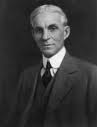
Hooray for Honkety Hank and his hootenanny automobile.
Consequently Ford was lured into the Peace Ship deal of ’16 by the Jewish Rosa Schwimmer. The folly was one from which Ford’s reputation never recovered although the idea of the Peace Ship isn’t as absurd as it sounds. As a result of the Peace Ship Ford began to have his doubts about the sincerity and motives of the culture which were certainly justified.
The doubts were sharpened into certainties by the role of Bernard Baruch and his Jews of the WIB and in the government. It wil be remembered that the Dodge Brothers lost their lives because of a confrontation with Baruch while Ford had his company’s finances attacked as a result of the confrontation in 1919-20. At that point Brasol showed up with his copy of the Protocols which he provided to Ford for the small sum of 10,000. Ford then bought the Dearborn Independent which began to publish the articles that became the four volumes of the famed International Jew.
Today these volumes are classed with the Protocols and are forbidden reading. On the Coalition Index. The Liberal Coalition has the bad habit of denying history by preventing its examination. I haven’t leafed thrugh the Dearborn Independent but there are a couple sample copies on the internet. It was a pretty decent newspaper cum magazine of the uplifting sort.
http://www.rationalrevolution.net/special/library/dearborn_independent.html
The story of Ford and the Independent articles is an interesting study made more delicious by being forbidden. One knows how much better forbidden fruit tastes, doesn’t one?
It should be remembered that the Jewish culture was especially active after the October Revolution, the fourth year of the Jewish Revolution. the fourth through eighth years are especially important. The AJC- American Jewish Committee- wished to ascertain where the centers of American resistance might be the strongest. At sometime either during or after the War the AJC drew up something called the Jewish Bill Of Rights. They sent it to prominent men and women to ascertain their stance toward the Jews. Their responses or non-responses would determine if the recipient was an ‘anti-Semite’ or not. If not, fine; if so then efforts would be made to marginalize or destroy them. Edgar Rice Burroughs was sent a copy of this Jewish Bill Of Rights. He failed the test by questioning one or more clauses while taking an independent attitude. He was thus marked down for destruction. It would be interesting to know to whom this questionnaire was sent and how they fared.

Horace And John Dodge
As I noted the Dodges were assassinated in 1920 while Ford’s business was attacked. It might also be noted that Ford was run off the road while returning home one night suffering injuries but nothing serious. His Ford pulled him out of another one.
Had the bankers succeeded in filching Ford Motor Co. it would have been quite a coup. At the time the company was valued by Ford at a billion dollars, a hundred billion in today’s dollars. In the bankers valuation the company put on the market at that time could be made to produce three to five billion dollars. As I said the Revolution was an expensive affair. If the Jewish banking houses had been able to secure Ford they could have recouped a profit of as much as four or five billion in 1920 dollars for their projects. You will be able to understant the sort of assault that was made on Ford.
The coalition, which has written all the histories, characterizes Ford’s defensive maneuvers as cranky anti-Semitism which he displayed for no other reason than that he was an insane cranky anti-Semite who attacked Jews qua Jews.
Nor were Ford’s Independent articles mere ranting without an understanding of the problem as some would have you believe. The articles were written by William Cameron Ford’s employee. Ford as usual did things in a thorough way. Almost overnight he amassed a huge library concerning Judaism. I mean, this was massive. The Jews wanted it. They asked him for it after the apology. Ford sneered. While the library is described as anti-Semitic it embraced the whole range of Jewish activities. Perhaps a unique collection
Cameron set to work master this huge mass of material. The result was the four volumes of The International Jew with several uncollected articles left over. While the volumes have been defamed as anti-Semitic balderdash they are nothing of the kind. They are well researched accurate accounts of the topics covered. The first volume dealing with the Protocols merely duplicates what already existed but the remaining three volumes recording the various roles of Jews in American are interesting studies and true, which is to say based on verifiable facts. However as we have recently learned- the truth is no defense.
When the articles began appearing they created quite furor. If you have checked the Dearborn Independent samples on the internet site you will have an idea of what the paper looked like. Just insert one of the Jewish articles and you have what the readers of the twenties saw.
Ford’s liquid wealth in today’s terms was in the tens of billions of dollars so he was well able to afford a defense. Mr. Deep Pockets. He created something called the Service Department that was a counterspy outfit not unlike that of Daddy Warbucks of Little Orphan Annie fame. It will be remembered that Little Orphan Annie made its debut at this time. Ford Employed agents who were supposed to get the lowdown on Jewish activities such as those featured in the Dr. Mabuse series. Starting from scratch the Service Department was no match for Jewish agences like the AJC, ADL or B’nai B’rith and others that had had decades if not centuries of experience in subversive activities.
One only has the Coalition accounts of these years of the Jewish Revolution so the reader has undoubtedly been conditioned to view Ford as an insane crank. To my knowledge no other accounts have appeared. How contemporaries other than the Liberal side reacted isn’t recorded at present. However Edgar Rice Burroughs tried in his modest way to assist Ford.’
Ford and Burroughs were Americans raised on the ideals of that scrap of paper, the Constitution. They therefore made the mistake of thinking that they could appeal to the reason of ideologues or bigots. You can’t. An ideologue has his projection and he knows he got it from from God. As I have pointed out before a devout member of a religion must, of necessity, be a bigot; there is no room for any opinion that contradicts dogma. So Ford and Burroughs were wasting their time.
By 1924 Burroughs must have known he was under attack both demestically and internationally by the Communists. His 1919 effort, Under The Red Flag, had signaled his antagonism to Communism just as his response to the Jewish Bill Of Rights signaled his refusal to be bulldozed from that quarter.
Using material gleaned from the Independent concerning the role of Jews in the theatrical business Burroughs wrote a book entitled, Marcia Of The Doorstep in support of Ford and gently rebuking his fellow Americans for their authoritarianism. The book didn’t see print until 1999. The novel isn’t bad. It would have sold reasonably well under the Edgar Rice Burroughs name. As has been indicated the Liberal Coalition was in control of publishing; nothing was published that didn’t pass their censorship. Burroughs novel was rejected. Now, this is interesting. Burroughs began his own imprint in 1930 eventually publishing all his titles but not, I repeat, not Marcia Of The Doorstep. One might well ask stayed his hand on that title.
At any rate, probably as punishment, there were no Tarzan movies made by Jewish controlled studios from 1922 to 1928. Ford also was having his problems. The auto industry was p;rogressing faster than he was. By 1927 the Model T was approaching obsolescence losing its sales lead to Chevrolet which it never recovered.
It became necessary to call off his war with the AJC-ADL to concentrate on saving his business. In 1927 he was forced to sign a bogus apology. It was a forgery. Ford had no hand in its writing. However he promised to abandon the battle.
With Ford’s collapse anything approaching to resistance to the Jewish Revolution in America collapsed.
While the Republican interregnum of 1920-32 slowed the Revolution down the Liberal Wilsonian Revolution was resumed in 1933 by Wilson’s disciple Franklin Delano Roosevelt. With Roosevelt the Jews returned to Washington in force. Among the first things FDR did was to recognize the Soviet Union just as Jacob Schiff had immediately reversed the Jewish policy toward Russia after the Bolshevik Revolution by granting huge loans to the still nascent and insecure Bolshevik government. This was OPM- other people’s money. The money of the citizens of the United States Of America. Thus the everyday American was forced to underwrite the Bolshevik Revolution whether he knew it or not.
 Schiff who was the Prime Minsister of the International Jewish Culture, was called down to Washington by the President of the United States to justify himself on the charges of Bolshevism. He was apparently successful as when he left the capitol of the United States to got back to the Capitol of the Jewish Revolution, NYC, it was with a face wreathed in smiles. Jacob Schiff didn’t smile often. He quickly resumed his loans to the Bolsheviks.
To return to 1919.
This part if followed by Freud which is Part VI and the Deconstruction Of Edgar Rice Burroughs’ America without a part number which is Part VII.
Thanks for your interest.
 I, Dynamo