A Review: Psychoanalyzing Captain America
August 10, 2011
A Review
Psychoanalyzing Captain America
by
R.E. Prindle
From Out Of The Depths
Must we be responsible for our own dreams?
–Sigmund Freud
In answer to the above question by Herr Doktor Professor Freud in his dream book, The Interpretation Of Dreams. published in the year 1900 Prof. Freud said that dreams were the royal road to the unconscious. He then proceeded to suppress the conscious will releasing the unconscious will to dominate the personality.
Of course in 1900 movies, TV and comic books were in the future and unforeseen by the Professor. It is through those media that the unconscious visualizes itself. The Dream is manifested, the unconscious becomes realized.
In the case of the movie, Captain America: The First Avenger, first came the dream then came the comic book, then with movie technology undreamed of in 1940 when Joe Simon and Jack Kirby conceived the character, brought to the screen today. Comic books and movies are true projections of the unconscious. As might be seen by anyone with a ticket Capt. America is less a story than a dream, a dream that Sigmund Freud defined as wish fulfillment. So, one must examine the movie as a wish from the subconscious fulfilled as a visualization on the screen. What does the dream-wish fulfill?
First off we have a powerless wimp being knocked about by the big bad bully. We have a brief anti-bully list and then move on. However in this Cain and Abel story the rolls of bully and bullied are clear. The wimp then wishes to join the army to fight Hitler and is rejected on several counts of inferiority. But, never fear, the last shall be first.
Now, in 1940 the US was not at war with anybody while the America First Committee was determined to keep the country that way. But a powerful coalition led by the Jews had determined the European conflict was a ‘just’ war while it was morally compulsory for the US to butt in somewhat like Iraq, Afghanistan, Egypt, Libya and a few other places today. Unlike Viet Nam the usual suspects who opposed that war endorse all the current wars. The voice of dissent is unheard throughout the land.
So, bearing Freud’s Interpretation Of Dreams in mind that demonstrates the connection between dreams and the unconscious, Captain America is a daydream or psychological projection of Jack Kirby’s ne Jacob Kurtzberg and Joe Simon’s of Brooklyn N.Y. The relationship of these comic book writers to Judaism is explained by Rabbi Simcha Weinstein in his book Up, Up, And Oy Vey!: How Jewish History, Culture, And Values Shaped The Comic Book Superhero. This quote explains the real life origin of Capt. America:
Growing up in poverty, Kirby (born Jacob Kurtzberg) dreamed of being an artist but was forced to drop out of Brooklyn’s Pratt Institute after only one day because of financial hardship. Instead Kirby worked on newspaper comic strips under gentile-sounding pseudonyms such as Jack Curtis, Curt Davis, and Lance Kirby until he finally settled on the name Jack Kirby.
Kirby and his partner, Joe Simon, worked at Martin Goodman’s Timely Comics, where the mostly Jewish staff openly despised Hitler. When Goodman saw the preliminary sketches for Captain America, he immediately give Kirby and Simon their own comic book. The character was an instant hit, selling almost one million copies an issue. “The U.S. hadn’t yet entered the war when Jack and I did Captain America, so maybe he was our way of lashing out against the Nazi menace. Evidently, Captain America symbolized the American people’s sentiments. When we were producing Captain America we were outselling Batman, Superman and all the others.” Simon later commented.
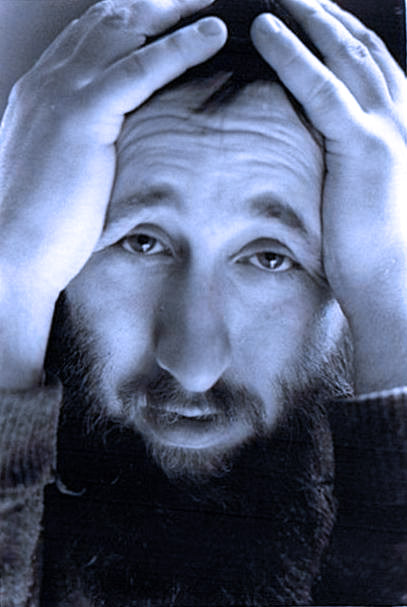
Well, not quite all the others, as Whiz Comics Captain Marvel was the best selling comic of both the war years and the later forties. Certainly my favorite.
As in the years before the War The America First Committee enjoyed overwhelming popularity amongst Americans I would question Simon’s notion that Captain America overwhelmingly represented American opinion. As there were six million Jews in the country I might suggest the response from that quarter of ‘Americans’ was more overwhelming than elsewhere. Jews might easily have accounted for sixty to eighty percent of sales.
It is also probable that no real American would ever have invented a corny jingoistic persona like Captain American. The image was certainly repulsive to me as a child. My prime comic reading years were from 1947 to 1950 and I and my entire generation rejected Captain America while embracing Captain Marvel. Even then Superman was a distant competitor to Captain Marvel which is why DC comics sued Whiz for copyright violation.
We disliked the hokey repulsive jingoism of Captain America as well as his dumb outfit and the stupid shield. (I’m speaking as a nine year old here.) Of course we knew from nothing about Judaism and almost less about any other religious sects but there was something othery about Capt. America and Superman although we embraced the equally Jewish Batman.
The origins of Captain America then emanated from the Jewish dream subconscious of Jack Kirby which was quite different from ours. He, therefor, as all writers must, made Capt. America in his real existence and from his dream fantasies. Thus, giving his creation the goy name of Steve Rogers he nevertheless gave him a Brooklyn Jewish origin. As Rabbi Weinstein also a Brooklyn Jew explains Jews had a sort of dual identity as powerless Jews posing as goys in a powerful goy world. Thus the sickly ineffective Rogers undergoes a scientific experiment that turns him essentially from a 98 lb. Jewish weakling into an all powerful goy Charles Atlas. I’m sure Kirby saw those ads while growing up.
Rogers having now been turned into a Superman had to have a name. Superman being taken Super Jew was out for obvious reasons or even Super Hebrew, there was no Israel at the time, so Kirby settled on Captain America. Rabbi Weinstein again:
Of course a more literal reading of the costume is that it is the American flag brought to life. Captain America’s star is, after all, five-pointed, not six pointed like the Star of David. The flag-as-costume notion reinforces the ideal of assimilation [Jews ‘becoming’ Americans]. By literally cloaking their character in patriotism, Kirby and Simon became true Americans.
In 1940 there was a desperate struggle going on between the Jews and America First who the Jews styled as American Fascists, i.e. actual Hitlerites. By that line of reasoning the Jews became the true Americans, creators and protector of genuine American Democracy while Anglo-Americans or Native Americans or America Firsters were out to destroy the great American Dream the Jews had discovered. This is the theme of Philip Roth’s novel The Plot Against America backdated to this period. The movie Captain America could easily be subtitled The Plot Against America Foiled.
Rabbi Weinstein once again:
Despite the patriotic appearance, Captain America’s costume also denotes deeply rooted [Jewish] tradition. Along with other Jewish-penned superheroes, Captain America was in part an allusion to the golem, the legendary creature said to have been constructed by the sixteenth century mystic Rabbi Judah Loew to defend the Jews of medieval Prague. “The golem was pretty much the precursor of the superhero in that in every society there is a need for mythological chracters, wish fulfillment. And the wish fulfillment in the Jewish case of the hero would be someone who could protect us. This kind of storytelling seems to dominate in Jewish culture,” commented Will Eisner.
According to tradition a golem is sustained by inscribing the Hebrew word emet (truth) upon its forehead. When the first letter is removed, leaving the word met (death) the golem will be destroyed. Emet is spelled with the letters aleph, rem and tav. The first letter, aleph, is also the first letter of the Hebrew alphabet, the equivalent of the letter A. Captain America wears a mask with a white A on his forehead- the very letter needed to empower the golem.

So, you and I thought the A stood for America but it is actually a symbol of Judaism. Captain America then is an unconscious dream projection of the Jewish subconscious following Freud’s thought in his Interpretation of Dreams. Now we know who and what the Captain America or The First Avenger is.
2.
Like Philip Roth’s The Plot Against America the movie is backdated to 1940 although as the US is already in the war perhaps 1942-43 although in Kirby and Simon’s dream vision they could have already employed the usurped power of America in 1940. However the movie writers, are writing today so assume different interpretations and aspects.
In point of fact Hitler no longer exists except in the Jewish mind so the relevance of the movie is hampered. Goys are not reliving the Hitler experience on a daily basis. To correct this and bring the Nazi threat forward Hitler is relegated to an inept showman while the real brain behind Nazism is the Hydra.
The Hydra in Greek mythology was a matriarchal year deity with seven heads and one neck, Six of the heads prepresented the last six months of the year while the seventh head and neck represented the recurring and indestructible year. Everytime a head was cut off it grew back as time does march on.
When the Patriarchy was displacing the Matriarchy the story changed somewhat. Hercules was sent to fight the Hydra and everytime he cut off a head three grew back. Thus the Hydra is represented in the movie as a Red Octopus with eight arms thus embracing the world. Ils sont partout. Obviously Hydra is a dream projection of anti-Semitism the arch fiend of the Jewish unconscious.
The Jewish Doctor Erskine, Reinstein in the comic, playing God botches his first attempt at creating the superman, Hydra/Cain, but finds perfection in Capt. America/Abel. Thus Cain is blighted while Abel is God’s favorite. While Captain America begins as a song and dance man belittling Hitler on stage, when the fighting starts Hitler is relegated offstage while the super-Hitler, Hydra, steps front and center.
While the Americans that Rogers as Capt. America have nothing like the incredible weapons and organization of Hydra they are nevertheless with their bare hands able to defeat him. He is however immortal like all dream fears so that as Arnold said: He’ll be back.
The action is standard comic book action fare and needs no further comment. You could have written it yourself. Pretty clicheed but if you like this stuff you’ll find it very satisfying.
However Captain America remains a Jewish hero in American drag with a purloined identity.

Cartoon Jack Kirby
A Review
Themes And Variations
The Tarzan Novels Of Edgar Rice Burroughs
#14 Tarzan The Invincible
Part VI of X
by
R.E. Prindle
Inside The Gates Of Opar

Edgar Rice Burroughs
Life is just too short for some folks,
For other folks it just drags on.
Some folks like the taste of smokey whiskey
Others think that tea’s too strong.
Me, I’m the kind of guy who likes to ride the middle
I don’t like this bouncing back and forth.
Me, I want to live with my feet in Dixie
And my head in the cool blue North.
–Jesse Winchester: Nothing But A Breeze
And now we come to the heart of Edgar Rice Burroughs. One reason he is literarily disdained is that the story is not the story. Porges, p.524:
As the story progresses the perceived theme of a worldwide conspiracy is abruptly abandoned. Burroughs in his contempt for the communists refuses to allow them to be sincere even in their Marxist goals.
This is not true. Porges has misconceived the story. To quote the sixties Jewish revolutionary Mark Rudd: The issue is not the issue. By that Rudd meant that the Jews had created a diversion to mask the true issue which was the establishment of the Jewish culture as top culture or dictator in this multi-cultural world.
Burroughs intent is exactly the same as regards Tarzan. True, Burroughs has contempt for Communism but that is merely a frame story and a side issue. The true issue is that Tarzan’s authority as guardian of Africa is being challenged on the spot. The duel is between himself and Sveri mano a mano. He discredits the collectivity through the individuals. Thus at novel’s end Tarzan sits in state as Guardian or Emperor disposing the fates, godlike, of the remaining conspiritors. Magnanimously he allow Paul Ivitch (Paulevitch) to be escorted out of Africa rather than be thrown on his own resources that would have resulted in his certain death.
The issue within the issue, as always, is Burroughs attempt to resolve his psychological difficulties. Thus one has the Colt-Drinov combination, possibly reprsenting ERB and Emma, an episode within Opar of Nao who may represent Florence releasing him from the prison of his marriage to Emma, and Colt-La, the Anima and Animus problem. Tarzan and Colt change partners so that La nurses Colt and Tarzan nurses Zora. But to that in the next section.
While one expects a pure shoot out with the Communists, Tarzan is not going to defeat them by direct action but by a terrorist campaign of which Tarzan is the jungle master.
To compound the problem Burroughs confuses realism with dreamwork. This is not a realistic novel but a dream fantasy. It was said that Burroughs wrote out his dreams which has a basis in fact. The scenarios may have originated in his sleeping dreams but then he modifies them in day dream style while consciously molding the story for political and commercial purposes. A writer does need readers.
To give a basis for comparison for the dreamwork I’m going to play Freud here and offer up a dream of my own; it is similar to Burroughs’ in many way. Since integrating my personality I don’t have wonderful dreams like this anymore. As Jung correctly surmised when one integrates the conscious and sub-conscious minds memory destroys the symbolic basis of your dreams. I can analyze the common place dreams I have now even as I dream them. Something is lost, something is gained, but it might be of lesser value. I think I like the mysterious flavor of the smokey whiskey even though the water I have to drink now is better for me.
In my dream I began on the edge of a vast desert dotted with a few oases while far off in the distance twenty years away, rather than miles, away in the the distance a great white shining mountain arose. The distances were so vast they were measured not in miles but years. Indeed, the years of my life. I had to traverse the vast desert reaches between the oases. Each oasis merely refreshed me for the next perilous journey. Having traversed the years I came to the great white shining mountain. One might compare it to the tor containing the treasure vaults of Opar out on its desert. These are symbols common to multitudes.
I then came to the white shining mountain which might compare to the city of Opar. Censorship prevented me from climbing the mountain at that time. In other words in the control of my subconscious, consciousness was denied me. I approached the mountain from the back where I noticed a trickle of water leading into and down the mountain. I tried to drink the water but as it ran through a pure salt bed it was too salty. Unlike Burroughs who was in the pits of darkness I was always bathed in a clear light which came from nowhere.
I followed the little stream down the subterranean path into the mountain. Thus I had all land and no water, a barren psychological situation. Following the cave down I came to a series of gates made entirely of steel. I hesitated to go forward but there was no going back. I was impelled into one of the gates which turned into a chute that spilled me out onto a steel floor where unseen hands seized me pushing me into a steel room as the steel door slammed shut. Like Tarzan beneath Opar I was a prisoner with no seeming way out.
As I looked around I realized that this was a laundry room. All steel, of course. While I had no food I now had sinks full of water. My situation had been reversed from all land to all water, from the pure masculine to almost pure feminine. Where before I was barren now I was spilling over with wisdom. I knew I had to get out of there reasonably soon or I would starve to death. There was impenetrable steel all around. But I had plenty of water. Too much water. Looking around I spotted ventilation ducts along the ceiling. I conceived the notion that I could drink lots of water then urinate in the ducts which would create a foul odor that would be distributed throughout the rooms above. They would search for the source of the odor thus opening the door of my prison.
The ducts were difficult to reach but I was able to urinate in them. As I expected voices came down the duct asking ‘What is that smell?’. The door to my prison opened inward so I stood to the side that opened waiting. Sure enough a couple maintenance men flung the door open bursting into the room. I slipped out the door behind them unnoticed.
I now descended still further until I came to a bank of elevators. One door was open for which I made a rush. The elevator was packed with boys I knew from high school. With doubled fists they pushed me back refusing to allow me in the elevator with them. Mocking me as the doors closed I was left alone way down there.
There was a flight of stairs but censorship prevented my using them. I waited in vain for another elevator. As with dreams I next found myself at the back of the mountain but the path into the mountain had disappeared so I now had to climb The Great White Shining Mountain.
If, like Burroughs, I were writing a story I would provide a plausible story line for my escape but I’m not. I’m merely transcribing a dream.
The reason the mountain shone was because it was covered by snow several hundreds of feet, possibly thousands, thick. As previously the water in the stream was too salty to drink now it was frozen. The sun shone brightly, not only brightly, but brilliantly, as I began my climb. I had left the subconscious for the conscious as I strove for the light. The climb was long from the back of the brain to the forebrain but not tiring. Apart from the barrenness of the snow I was enjoying myself. Would it be too offensive a pun if I said I enjoyed being high? After a long climb I came to a precipice past which I could go no further. Nor could I go back.
As I studied my position I looked down this sheer precipice to the desert thousands of feet below. There was snow all the way to the desert floor. Down there, way down there, I could see the tiny ant-like people in the barren sands doing obeisance to the moutain which they apparently treated as a god.
Looking down the sheer face of snow I could dimly perceive the outlines of a great face carved in the snow. This god, then, retained all the water behind his visage that could make the desert bloom. Just as I had used water to escape the prison of my subconscious I conceived the notion that I could release the water and make the desert bloom freeing the people from their bondage.
Now, this was hard snow. I had no trouble walking the surface without breaking through while if the snow didn’t give way as I jumped on it to destroy the snow god I would plummet several feet into the desert. Neverthless I leaped up landing on my bottom. The snow gave way as I rode the avalanche several thousand feet down the mountain side to land on the desert floor while I destroyed the god who had been impounding the water.
Many streams now flowed out from the mountain. The desert bloomed turning green and bursting with flowers. Now that we have a comparison let us examine Burroughs’ great dream of Opar.
Opar first found expression way back at the end of 1912 and the beginning of 1913. Appearing at the end of The Return Of Tarzan the story was included in Burroughs’ fourth published story and fifth written story, the Outlaw Of Torn had been written but not published yet.
As with Invincible the story of The Return was not the story. The story was what Burroughs hung the details of what appeared to be the story on. Hence Return was rejected by Metcalf Burroughs’ first editor at Munsey’s who undoubtedly couldn’t understand it. This is the novel in which Tarzan makes his first raid on the fabulous treasure vaults of Opar. Burroughs will continue his wonder stories of Opar through three more books. Each return occurs at a crucial point in his life.
That Opar is a dream location is proven by the topography of the location. It is not too dissimilar to any dream. The jungle grows right up to the base of towering mountains behind which Opar is hidden. On the other side of these it is a dry dusty desert exemplifying Burroughs’ life as the twenty year desert in my dream did mine. Entry into the valley in this story is through a narrow defile apparently several thousands of feet high above which the peaks of the surrounding mountain range tower several thousand feet more. This entry also closely resembles that of Haggard in King Solomon’s Mines. Haggard is never far from Burroughs’ mind as he writes his stuff.
Working your way down into the dreamscape is considerably more easy than climbing it. And then off in the distance rose the shining red and gold domes and turrets of Opar. A dream city if there ever was one. One is reminded of the two great literary and psychological influences on Burroughs, H. Rider Haggard and L. Frank Baum. Of Haggard’s work beyond King Solomon’s Mines I have Heart Of The World and People Of The Mist most readily called to mind. It might be appropriate to mention that Freud also read some Haggard. He specifically mentions Heart Of The World and She but I suspect he probably read others as well. Opar might be a ruined version of Baum’s Emerald City of Oz. Opar is red and gold while from a distance its ruination is not obvious. Mine was a shining white mountain. Burroughs probably tinkered with his to make a good story better.
Now, the fabled Thebes of Greek mythology had seven gates. Cities Of The Sun had up to a hundred. Opar doesn’t have any. The entrance is a narrow cleft in the wall on which on entering this narrow 20″ gap for which Tarzan had to turn his massively broad shoulders sideways and then immediatley climb a flight of ancient stairs. This appears to be a reverse birth story in which Tarzan is reentering the womb, an impossible feat, but then, Tarzan goes where even devils fear to tread. Try some of the books of the psychologist Stanislav Grof. There’s definitely a sexual image that requires a little thought to understand. Hmm. No gates but a narrow cleft too narrow for the shoulders and a flight of steps leading back into the what, womb? Whose cleft? ERB mother’s, Emma’s, possibly Florence’s by this time, or that of his Anima figure? Well, the last is waiting for him inside the domed inner chamber of this sacred city who is aptly named La, which is French for She. ‘She’ was Ayesha the heroine of Haggard’s novel She. I’m sure Burroughs is not writing consciously here.
At this point Tarzan is accompanied by fifty of his brave and faithful but superstitious Waziri. In fact, in this story as Tarzan goes through his incarnation of a Black savage he is Chief Waziri, eponymous head of the Waziri. P. 42:
As the ape man and his companions stood gazing in varying degrees of wonderment at this ancient city in the midst of savage Africa, several of them became aware of movement within the structure at which they were looking. There was nothing tangible that the eye could grasp- only an uncanny suggestion of life where it seemed that there should be no life, for living things seemed out of place in this weird, dead city of the long dead past.
Dead city of the long dead past. That’s what dreams are all about, one’s own long dead past. Thus the ridge separating the lush live jungle from this dry, dusty plain eight years wide was Burroughs own dead past. I suggest the mountain range, perhaps sixteen thousand feet high, represented ERB’s confrontation with John the Bully when he was eight or nine. On the jungle side was his early life as a Little Prince while on the dry dusty side was his blighted, blasted life after John. Opar represents his ruined mind inhabited by the suggestion of life and the Queen of his dreams the beautiful High Priestess of the Flaming God, the woman of indescribable beauty, La of Opar.
La is obviously a combination of Haggard’s She and L. Frank Baum’s Ozma Of Oz.
Tarzan is seized by the Frightful Men, bound and gagged and left lying in a courtyard at high noon. The rays of the Flaming God bear down on him. Whether this is merely part of an ancient Oparian religious rite or whether Tarzan becomes the chosen Son of theSun a god among men, isn’t clear to the reader. The Oparians have their own ideas.
Burroughs describes this rite in a really masterful way. The maddened murderous Oparian who disturbs the ceremony just before Tarzan is to be sacrificed is nicely handled. Believe me, I feel like I am there. As La looks down on Tarzan’s form on the altar she recognizes the One, the Son of the Sun, the One for which she is destined. Once again, Haggard’s She.
Freed in the melee caused by the crazed Oparian Tarzan is taken down to the Chamber of the Dead by La where she hides him. As she said nobody would look for him in the Chamber of the Dead. This Chamber answers very well to the laundry room of my dream. Tarzan/Burroughs is in a stone dungeon with walls fifteen feet thick, fourteen in Invincible, in total darkness while I was in a steel room with no exit but bright light. These locations answer to the rigid confines of one’s owned damaged psyche. There is no way out but there is, there has to be. While palpating this stony prison at the back of the cell Tarzan discerns a flow of air coming through. This scene is a replication of one in Haggard’s King Solomon’s Mines while becoming a B movie staple. The big Bwana discovers some loose stones. He is able to dislodge these creating an exit through the fifteen foot depth of stones of the fortress wall. Somehow Burroughs has worked his psyche to give himself a chance. Once beyond the foundation walls, free of the Chamber of the Dead (I once dreamed I was looking for my soul in the House of the Distraught) but act among the living, Tarzan feels his way down this long dark corridor. One can’t be certain of ERB’s age when he achieved this escape. As it takes place just before Tarzan marries Jane the time might have been 1898-99. Perhaps when he was in the stationery business in Idaho. Perhaps something he read acted as a lever. Apart from Darwin’s Origin Of Species I would venture to say he read Eugene Sue’s Mysteries Of Paris a copy of which is in his library while traces of it are here in his earliest work.
Sue’s rare mentality permeates every page of this first visit while Sue’s extraordinary consciousness is everywhere apparent throughout ERB’s entire corpus. Burroughs himself is absolutely incredible in the manner he associates with numerous other writer’s intellects, seemingly simultaneously within a given passage or even sentence. Myself, Adams, Hillman, Broadhurst, Burger and others have written extensively on these influences. Hillman even goes so far as to virtually twin Burroughs with some of his major literary influences. Burroughs does make all these writers his virtual doubles.
I have stressed Sue’s influence in several earlier essays. I can only urge you to read Sue’s Mysteries Of Paris- a big three-volume work and too short at that- which Burroughs in his own reading found a life changing experience. Possibly he did read it in 1898-99. I found it a life changing experience; I’ve never been able to free myself of its influence, while it appears that Burroughs couldn’t either. A lot of the late nineteenth century writers make reference to Eugene Sue. H.G. Wells based the beginning of an early novel on Sue. The remnant remains only as a short story.
Sue wrote from outside the bounds of sanity. Privately I consider him insane but so brilliantly rational as to transcend the very meaning of insanity. He’s a dangerous writer. His last work was confiscated by the French authorities. It undoubtedly had such a private personal sense of morality that I am sure it would have undone society much as the pornography from Hollywood has undone ours. DeSade and Restif De La Bretonne, who in some ways Sue resembles, were mere unbalanced pornographers who disturb only the disturbed. Sue’s vision of morality is coldly clear, it forms the basis of Tarzan’s but is always on the side of reason and virtue. This fact makes it no less dangerous to a weak mind or that of the obsessive-compulsive Liberal. Still, only the strong survive. I heartily recommend you take your chance.
Tarzan freed from the prison of the psyche, was he insane? was I? or were we merely trapped by a device of other’s making? I can’t say but ERB’s sanity after he escaped was conditioned by that of Eugene Sue. I, of course, rise above all influences.
Progressing down the corridor Tarzan comes to the First Censor. He finds a gap in the floor into which he might have fallen had he not been careful. He would have fallen into the unknown but he would have been alright. He would have fallen into water which in his condition would have been life-giving water rather than dangerous or perhaps he might have drowned in the waters of the subcoscious or Oblivion.
In high school I had a teacher who used to chalk a half dozen slogans on the black board, one each morning. The only one I remember is ‘when you reach the end of your rope tie a knot and hang on.’ I did this for a couple decades then one day I let go. The joke was on me. There was nowhere to fall. I was only a fraction of an inch from a solid surface. However Tarzan culdn’t have known this since he didn’t fall in, this time. He would three years later.
By chance he looked up where he saw some light entering to discover he was at the edge of a well. Yes, you see, the water of life. He dimly descried the other side fifteen feet away which was child’s play for him to leap. Thus he passed the First Censor. Mine was at the elevators which I apparently merely disregarded.
Continuing on for some time in total darkness, so far that he believes himself outside the walls of Opar he enters the treasure vaults. These vaults are filled with what appears to be forty pound barbells of solid gold. Now, this gold is old. So old that no Oparian knows that it is there nor do any old legends even mention it. This is an intriguing part. The gold was mined millennia in the past after the sinking of Atlantis. This raises the question of what did Burroughs know of Atlantis and did he believe in it? I can’t answer the sources of the former but I’m betting on Ignatius Donnelly as one of them. As to the latter I believe he did. He mentions Atlantis in Invincible with a confidence and familiarity that convinces me that over the eighteen years since Return he has read and thought enough to convince himself of the reality of the lost continent. He appears to accept a mid-Atlantic location.
The gold represents the income he’s receiving for his stories. The stories spring from his dead past. That the vaults are outside Opar indicates he freed his mind from its prison or that the money comes from outside the prison, i.e. his publishers. That the gold is Atlantean indicates that his stories are based on his own ancient experience. In other words he is mining his past already completed as ingots or accomplished facts.
What experience then catalyzed his ability to write? I believe that from 1908-10 when he read L. Frank Baum’s Ozma of Oz, Dorothy And The Wizard Of Oz and The Emerald City Of Oz he found a means to express himself. These books bypassed his last censor allowing him to write Minidoka. That book was not suitable for publication but it freed his genius so that he immediately followed it with A Princess Of Mars.
Now, outside the gates of the Emerald City/Opar in the midst of the equivalent of Baum’s Great Sandy Desert he found the handle on his own destiny.
Tarzan locates the fifty faithful but superstitious Waziri loading them up with two forty pound ingots each and points them toward the coast.
At the same time Fifty Frightful Men from Opar who are tracking him discover Jane instead. Dreamy enough for you? Given a choice between Tarzan and Jane I’d take Jane and so did the Fifty Frightful Men.
So now Jane’s on the altar under the sacrifical knife of La. Skipping the irrelevant details La discovers Jane is Tarzan’s beloved. Interesting confrontation between Tarzan/Burroughs real life woman and his Anima. La is shattered as Tarzan rejects her for Jane.
This is a key point in the oeuvre. This is what makes the novels so repulsive to the literary mind. The story is not the story; the issue is not the issue. Opar is the story within the story that will be told in four short parts over eighteen years. So we have part one here without any indication the story will be continued. A segment of the story is just plopped down into The Return Of Tarzan, sort of irrelevantly.
Weird style actually. I’m not even sure it works, but it nevertheless must be effective else why would the stuff still be in print a century on. You’re on your own, Jack, I can’t even attempt to solve that one. Not today anyway.
The next novel examining this psychological is the 5th novel of the oeuvre, Tarzan And The Jewels Of Opar of 1915.
At this point Tarzan, a profligate if there ever was one, has run through the two tons of gold the fifty faithful Waziri brought out and is broke. Two tons of gold in three years. Think about it. He needs to make another run on Opar.
The character of the series changes with Jewels Of Opar from the character of the Russian Quartet, the first four novels. They not only have an Oz influence but they become Ozlike. Burroughs apparently drew on The Beasts Of Tarzan as the foundation for what is essentially a new series.
After writing five Oz stories, in the sixth, The Emerald City Of Oz, Baum attempted to abandon the series. He closed the series off with the news that there will be no more communication from the fairy kingdom. Because Oz has been invaded three times now, what with the advent of airplanes that will be able to spot Oz from the air Ozma is making the kingdom invisible. Is it coincidence that Opar disappears from the oeuvre after the third invasion?
Baum’s Emerald City Of Oz appeared in 1910. It was the last of the stories to be datelined Coronado in his prefaces. When he was forced to begin writing Oz stories again in 1913 they were datelined Ozcot in Hollywood. In 1910 Hollywood was just a pleasant Los Angeles suburb. The movies didn’t begin to make Hollywood the center of the world porn industry until 1914.
Whether Burroughs knew that Baum left Coronado in 1911 isn’t known but I find it signficant that when he went to California in 1913 his first choice of residence was Coronado where he perhaps thought he would be close to Baum who afer all had a close connection with Chicago. Baum wasn’t in Coronado so Burroughs moved across the bay to San Diego.
The question then is: did Burroughs make a pilgrimage to Ozcot to see Baum in 1913? I have to believe he did. Tarzan was one heck of an entree such that Baum could hardly refuse to see ERB. How long or how often the men met then is conjectural but I think it was long enough for Baum to give Burroughs some tips on fantasy writing. Already an ardent admirer of the Oz books Burroughs would have had no trouble accepting advice from this master.
Thus when Burroughs returned to LA and Ozcot in 1916 it is certain that they met while they were probably already familiar with each other. In 1919, when Burroughs moved to LA permanently, Baum was on his deathbed so there was no chance to renew the acquaintance. I also believe that Baum’s Ozcot influenced Burroughs in naming his own estate Tarzana.
In any event Tarzan returns to Opar in 1915. Except for the first visit when Tarzan following the directions of the old Waziri, chief of the Waziri, visited Opar to take the gold, in the rest of the visits he is battling interlopers who wish to steal the gold from him. It might pay to look at the nature of the intrusions and the intruders.
In 1911-12 Burroughs had for the first time in his life come into more money than he could spend, only for a brief moment of course. Thus Tarzan removes the gold more on a whim not really knowing what to do with it. One might think this a strange attitude for one who had tasted the night life of Paris; but a foolish conisistency is the bugbear of small minds as one of those venerated old timers once said. I don’t wish to be thought of as small minded so we’ll let the observation pass.
By 1915 having lost his two tons of gold in some bad investments Tarzan has better learned the value of money or, at least, the absence of it. And so, perhaps, has Edgar Rice Burroughs. One can see the ghost of old George T. shaking his head muttering: ‘When will that boy ever learn?” Well, George, it would take more time than allotted to him.
After 1912 Burroughs had created something of value. That value could be stolen or at least exploited. In 1914 McClurg’s offered him a publishing contract. Nicely crafted it gve all the advantages to McClurg’s and none to Burroughs. Burroughs undoubtedly did not understand the legal implications of what he signed. I can’t explain this but McClurg’s made no effort to merchandise a sure fire hit. They didn’t even publish the full fifteen thousand copies called for in the contract. They released the book to reprint publisher A.L. Burt after p;rinting only ten thousand copies themselves. Explain it how you will but there was a guaranteed huge absolutely visible market waiting for book publication. Syndication in newspapers had guaranteed the book’s success. So why did McClurg’s willfully refuse to take advantage of such a deal?
Burroughs probably had stars in his eyes at the prospect of 10-15% royalties on hundreds of thousands if not millions of books. Instead he got comparatively nothing. The royalties from Burt were miniscule and to be shared 50/50 with McClurg’s. You can imagine Burroughs’ disappointment as a golden future became brass before his eyes.
Back to Opar. Tarzan entered the vaults before his faithful Waziri who were warriors and would act as bearers for no other man. Alone Tarzan made six trips from the vaults to the top of the tor bringing up forty-eight forty-pound ingots. That’s 320 lbs. per carry for a total of 1920 lbs or nearly a ton. According to Freud, and I believe him, all numbers are significant, although I don’t have enough information to delve completely into the meaning of these numbers. The Waziri then brought up fifty-two ingots. some two of the fifty got stuck with carrying two ingots or two went back for one more. That made slightly over a standard of 2000 lbs.
Tarzan’s forty-eight ingots are roughly half of the total that undoubtedly represents the fifty-fifty split with McClurg’s. At the time Ogden McClurg, the son of the father who built the company, Alexander McClurg, was the nominal head of the company. The firm was actually owned by the employees since about 1902, which Burroughs probably didn’t know. The man he dealt with, Joseph Bray, was probably the real head of the company. Actually Ogden was away from the company for long stretches on adventures in Central America and WWI so that he would have been unfamiliar with the day-to-day workings of the company. Burroughs, however, formed a grudge against Ogden McClurg. I suspect that the Belgian villain Albert Werper is based partly on Ogden McClurg while also being an alter ego of Burroughs. So, a story behind the story is how Ogden McClurg stole ERB’s royalties.
At the same time Tarzan spurns La for a second time so the Anima-Animus story of Tarzan, Jane and La continues. La has Tarzan within her power but in the life and death situation love triumphs over her hurt so she spares the The Big Guy. Not without consequences. The Fifty Frightful Men, or what’s left of them after the maddened Tantor tramples a few, led by Cadj, who now makes his appearance, feel betrayed repudiating La. Thus is begun the conspiracy to replace La which will be the focal point of the next two visits. You know, love or hate, I don’t know which is to be feared the most.
In the next visit in Tarzan And The Golden Lion Tarzan has gone through his second two tons of gold. That is four tons of gold in roughly ten years plus the Jewels of Opar that our spendthrift hero has managed to go through. Four tons of gold! That’s 128,000 ounces of gold. At today’s price of over a thousand dollars an ouce it works out to 128 billion dollars and change. My friends, that is prodigality. Good thing there was more where that came from, hey?
Of course a lot of the loss came from loans to the British Empire to float the Great War. But like certain other borrowings, to which Burroughs may be making an allusion, the Empire had no intention of repaying.
Once again this sort of excess had brought Tarzan to the edge of bankruptcy not unlike ERB in 1922. Just as creditors were besieging ERB for money so some private individuals led by a former employee, Flora Hawkes, attempt to extract the gold from Opar. Tarzan first fails, then recovers not only the gold but the bag of diamonds. The significance of the jewels is explained in the Tarzan and Esteban Miranda story contained in Tarzan And The Ant Men. That story is a duplicate Jewels Of Opar with different details. The history of the Jewels Of Opar also duplicates the history of Tarzan’s locket in Ant Men. If you’ve found something good don’t hesitate to use it more than once.
Fifteen years after the visit in Jewels Of Opar and eight years after the Golden Lion/Ant Men the scene returns to Opar, where once again others are to make a run on Tarzan’s private bank at Opar. Apparently Tarzan has them baffled from the start as, although they know there are treasure vaults at Opar, they have no idea where they are. It appears the Communists have read the earlier books, but not with close attention, nor did they bring their copies along with them to bone up during all those idle moments in camp. Playing cards is alright after reading, but time better spent before. You can see why these dodos failed.
Burroughs had read his Oz stories. One can’t be sure whether he ever reread the stories or whether he was working from twenty year old memories. There are similarities here with the Emerald City Of Oz of 1910. In that book Baum attempts to end the series. He says that it will be the last communication from Oz. It too involves an invasion of Oz by the Nome King and his horrid allies. In Baum’s story Ozma refused to defend her Communist State, predating Russia by seven years, but arranges it so that the invaders who are tunneling beneath the Great Sandy Desert emerge in front of the fountain of the Waters of Oblivion. The fountain has apparently been spiked with LSD as the drinkers get lost in a world of their own returning through the tunnel without a fight. Perhaps the first military use of drugs in history. An excellent fairy tale, hey?
Burroughs’ Communists make two attempts to enter Opar. Circling the city unable to find any gates to Burroughs dreamworld they do find the narrow cleft in the wall. Spooky sounds and happenings disconcert the Blacks and Arabs of this multi-cultural coalition so that any concerted action is frustrated. Although the Russians and the Mexican, Romero, enter, only Romero has the courage to penetrate beyond the courtyard. The Russians are arrant cowards who flee at the sound of the first Oparian shriek.
Returning to base camp they find that Wayne Colt, having tramped the breadth of Africa, has joined the group.
A second attempt is made. The superstitious Arabs refuse to return being also disgusted by Zveri’s lack of leadership and cowardice. Taking the six Communists and the Blacks Zveri returns to Opar for a second attempt. While absent from the base camp the coalition begins to come apart as the Arabs desert the cause, looting and burning the camp while taking the two White women with them. La has joined Zora but more on that in the next section.
The second expedition fares no better than the first for the same reasons. On this attempt both Wayne Colt and Romero enter the sanctuary where they are engaged in a serious battle with the Frightful Men. Colt is felled by a thrown bludgeon that knocks him down but doesn’t crush his skull. Romero retreats, Colt is dropped unconscious before the high priestess, now Oah and Dooth. Cadj was destroyed by Jad-Bal-Ja in Golden Lion so Dooth has taken his place.
If La is the good mother aspect of the male psyche, Oah is the bad or wicked mother. Still beautiful but not quite as much so as La.
She orders Colt taken to a dungeon to await the full moon or some other propitious moment to sacrifice him.
Oah’s plans will be foiled because among those present is a nubile young maiden named Nao who falls head over heels for Wayne at first sight. Burroughs describes Nao as having entered the first bloom of womanhood. To me that represents a fourteen-year old girl. Indeed, Nao is fresh as a flower.
One remembers Uhha who accompanied Esteban Mirands in Ant Men was specifically mentioned as being fourteen. So the ages fourteen, nineteen and twenty have special female connotations in Burroughs’ stories. As Freud rightly says people should only be held responsible for their actions and not their thoughts. Certainly there is no mention of Miranda having relations with Uhha while Nao had to be content with watching Colt disappear into the night after she released him from prison, murdering a man, be it noted, to do it. All that Priestess sacrificial training with knives comes in handy.
It will be remembered that ERB is said to have begun proposing to Emma when she was in the first bloom of womanhood at fourteen. So it is probable that the memory is associated with Uhha and Nao.
Colt as Burroughs alter ego thus allows Burroughs to visit Opar and have his fling with Nao as Colt while Tarzan has his with La. there’s a sort of joining of the two aspects of Burroughs’ Animus much as there was with Esteban Miranda and Tarzan in Golden Lion/Ant Men as well as Werper and Tarzan in Jewels Of Opar.
Tarzan himself returns to Opar before the first expedition of the Communists.
It has been eight years and four novels since Tarzan visited the fabled red and gold city of Burroughs’ dreams. Tarzan has a number of misconceptions of his relationship with the Oparians. The high priest Cadj who had become a problem in Jewels Of Opar was killed by Jad-Bal-Ja in Golden Lion. La had been replaced on her throne with the Bolgani of the Valley of Diamonds as her body guard and the Gomangani, who had no thin veneer of civilization at all, as her slaves, I guess. Tarzan then sees himself as an Oparian benefactor, not unlike the US in today’s Iraq, who will be received as a friend. Our hero shows himself a poor psychologist.
With a light springing step he turns sideways to enter the cleft, bounds up the stairs to enter the inner sanctum where the howling Frightful Men bash him over the head yet again. Tarzan could have been tagged Skull Of Steel to survive all these bashings with very heavy clubs and grazing by full metal jacket bullets. I tell you, man, I’d reather read of adventures like this than live them.
Coming to, Tarzan is surprised to find Oah as High Priestess with Dooth as her High Priest.
‘Where is La?’ Tarzan asks.
‘Dead.’ Replies Oah. ‘Throw him in the dungeon.’
Back to the pits of Opar for the Big Bwana where one imagines his sensitive nostrils will be grossly offended.
Once again Tarzan escapes his prison. Seeking a way out he is spotted by some hairy bandy-legged men. Fleeing down an endless corridor flanked by doors he chooses one and enters. Whew! What an aroma assails his sensitive nostrils. He is face to face with a half starved lion. The Big Guy hears the hairy men rushing down the corridor just as the lion springs. The door opens inward, unlike most prisons but apparently commonly in dreamscapes, so Tarzan opens it and steps behind it. As the lion springs past him he slams the door which was not too swift a move as the bar falls locking him in. He has the comfort of hearing the lion tearing up the Frightful Men but the stench of the lion’s den for once is so powerful it disguises the aroma of a White woman at the back of the cell. Surprise! La isn’t dead she’s been palling around with this lion for a while. Fortunately as in Ant Men there is a door between her inner cell and that of the lion that she can open. They built prisons differently back then.
So, the Animus and Anima are reunited but in prison once again. As in all dream sequnces there is a way out.
There’s a lot of shuffling about; this one is fairly complicated. In order to bring food to La at the back of the cell it is necessary to first feed the lion. There is a corridor across the front of the cell. a barred gate separates it from the lion’s den while La’s cell with its unlocked door is at the back. The corridor leads to a little chamber that is open from above. The lion’s food is thrown down after the gate has been lifted and closed somehow. While the lion is feeding in this corridor the attendant picks his way among the lion piles and puddles to take the food back to La. The chow must be tasteless in this overpowering stench.
Tarzan investigates then raising the gate for La when she advises him that the Oparians are coming back with the lion. This is very fast work by the Oparians so you can see the stuff is dreamwork. Tarzan raises La into the opening following her.
They follow the winding staircase until they enter a chamber that is the highest point in Opar. Thus they have ascended from the subconscious to the conscious. Here La once again confesses her love for the Beast of Beasts. The Big Guy is still not interested.
As they are plotting a way to get down from the tower they hear someone ascending a ladder. As the fellow pops his head above floor level Tarzan seizes the guy by the neck. My first reaction was to think that this was the Old Stowaway from Tarzan And The Golden Lion who would now be sixty-eight. Apparently not although Burroughs makes him sound different from one of the Frightful Men.
The old boy assures Tarzan and La that he is faithful as he as wellas most of the Oparians pine for the return of La. Plans are made for La to return to her throne. The Old Boy was a master of deceit however. Oah, Dooth and the Frightful Men who are still very angry with La and Tarzan are waiting for the pair when they enter from behind the curtain. A little Wizard of Oz touch. Humor, I think.
Tarzan might well have voiced the words of Marty Robbins in El Paso:
Many thoughts ran through my mind
As I stood there.
I had but one chance
And that was to run.
And run the Big Bwana did in a scene that was almost as comical as when he ran from the Alalus women in Tarzan And The Ant Men.
Breaking through the ring of Frightful Men Tarzan tosses the slower La over a shoulder and rapidly puts one of his clean limbs before the other. The bandy little legs of the Frightful Men are no match for the Big Bwana. Shouting epithets like: Good riddance of bad rubbish and Don’t come back again if you know what’s good for you. they snarlingly turned back to the City of Red and Gold.
Far across the dusty plain Tarzan and La climbed the ridge separating Opar from the outside world. First outside the gates of Opar in 1915s Jewels Of Opar chasing after Tarzan, once again in Tarzan And The Golden Lion to rescue Tarzan, La now makes her longest and most hazardous stay in the great wide world.
Part Seven follows.
Themes And Variations
The Tarzan Novels Of Edgar Rice Burroughs
#5 Tarzan And The Jewels Of Opar
Part V
by
R.E. Prindle
Texts:
Du Maurier, George: Peter Ibbetson
Dudgeon, Piers: Captivated: J.M. Barrie, The Du Mauriers & The Dark Side Of Neverland, 2008, Chatto And Windus
Hesse, Herman: The Bead Game
Neumann, Erich: The Origins and History Of Consciousness, 1951, Princeton/Bollingen
Vrettos, Athena: “Little Bags Of Remembrance: Du Maurier’s Peter Ibbetson And Victorian Theories Of Ancestral Memories” Erudit Magazine Fall 2009.
While it is today commonly believed that Sigmund Freud invented or discovered the Unconscious this is not true. As so happens a great cataclysm, The Great War of 1914-18, bent civilization in a different direction dissociating it from its recent past.
Studies in the earlier spirit of the unconscious continued to be carried on by C.G. Jung and his school but Freud successfully suppressed their influence until quite recently actually. Through the fifties of the last century Freud’s mistaken and harmful, one might say criminal, notion of the unconscious held the field. Thus there is quite a difference in the tone of Edgar Rice Burroughs writing before and after the 1917 Bolshevik Revolution.
There are those who argue that Burroughs was some kind of idiot savant who somehow knew how to write exciting stories. In fact he was a well and widely read man of varied interests who kept up on intellectual and scientific matters. He was what might be called an autodidact with none of the academic gloss. He was very interested in psychological matters from hypnotism to dream theory.
The scientific investigation of the unconscious may probably be dated to the appearance of Anton Mesmer and his interest in hypnotism also variously known as Mesmerism and Animal Magnetism. The full fledged investigation of the unconscious began with hypnotism. Slowly at first but by the last quarter of the nineteenth century in full flower with varied colors. Science per se was a recent development also flowering along with the discovery of the unconscious.
While Charles Darwin had brought the concept of evolution to scientific recognition in 1859 the key discipline of genetics to make sense of evolution was a missing component. It is true that Gregor Mendel discovered the concept of genetics shortly after Darwin’s Origin Of Species was issued but Mendel’s studies made no impression at the time. His theories were rediscovered in 1900 but they were probably not widely diffused until after the Great War. Burroughs knew of the earlier Lamarck, Darwin and Mendel by 1933 when he wrote Tarzan And The Lion Man. His character of ‘God’ is the result of genetic mutation.
Lacking the more complete knowledge of certain processes that we have today these late nineteenth century speculators seem ludicrous and wide of the mark but one has to remember that comprehension was transitting the religious mind of the previous centuries to a scientific one, a science that wasn’t accepted by everyone then and still isn’t today. The Society For Psychical Research sounds humorous today but without the advantage of genetics, especially DNA such speculations made more sense except to the most hard nosed scientists and skeptics. The future poet laureate John Masefield was there. Looking back from the perspective of 1947 he is quoted by Piers Dudgeon, p. 102:
Men were seeking to discover what limitations there were to personal intellect; how far it could travel from its home personal brain; how deeply it could influence other minds at a distance from it or near it; what limits, if any, there might be to an intense mental sympathy. This enquiry occupied many doctors and scientists in various ways. It stirred George Du Maurier…to speculations which deeply delighted his generation.
Whether believer or skeptic Burroughs himself must have been delighted by these speculations as they stirred his own imagination deeply until after the pall of the Revolution and Freud’s triumph.
Burroughs was subjected to dreams and nightmares all his life. Often waking from bad dreams. He said that his stories were derived from his dreams but there are many Bibliophiles who scoff at this notion. The notion of ‘directed dreaming’ has disappeared from popular consideration but then it was a serious topic. Freud’s own dream book was issued at about this time. I have already reviewed George Du Maurier’s Peter Ibbetson on my blog, I, Dynamo and on ERBzine with Du Maurier’s notions of ‘Dreaming True’. It seems highly probable that Burroughs read Ibbetson and Du Maurier’s other two novels so that from sometime in the nineties he would have been familiar with dream notions from that source.
Auto-suggestion is concerned here and just as support that Burroughs was familiar with the concept let me quote from a recent collection of ERB’s letters with Metcalf as posted on ERBzine. This letter is dated December 12, 1912.
If they liked Tarzan, they will expect to like this story and this very self-suggestion will come to add to their interest in it.
Athena Vrettos whose article is noted above provides some interesting information from Robert Louis Stevenson who developed a system of ‘directed dreaming’ i.e. auto-suggestion. We know that Burroughs was highly influenced by Stevenson’s Dr. Jekyll And Mr. Hyde while he probably read other novels of Stevenson. How could he have missed Treasure Island? Whether he read any of Stevenson’s essays is open to guess but in an 1888 essay A Chapter On Dreams Stevenson explained his method. To Quote Vrettos:
Rather than experiencing dreams at random, fragmented images and events, Stevenson claims he has learned how to shape them into coherent, interconnected narratives, “to dream in sequences and thus to lead a double life- one of the day, one of the night- one that he had every reason to believe was the true one, another that he had no means of proving false.” Stevenson describes how he gains increasing control of his dream life by focusing his memory through autosuggestion, he sets his unconscious imagination to work assisting him in his profession of writer by creating “better tales than he could fashion for himself.” Becoming an enthusiastic audience to his own “nocturnal dreams”, Stevenson describes how he subsequently develops those dreams and memories into the basis for many of his published stories, most notably his 1886 Dr. Jekyll And Mr. Hyde.
Now, directed dreaming and Dreaming True sound quite similar. One wonder if there was a connection between Stevenson and Du Maurier. It turns out that there was as well as with nearly the entire group of English investigators. Let us turn to Piers Dudgeon again, p. 102:
Shortly after they met, the novelist Walter Besant invited [Du Maurier] to join a club he was setting up, to be named ‘The Rabelais’ after the author of Gargantua and Pantagruel. Its name raised expectations of bawdiness, obscenity and reckless living, (which were not in fact delivered) as was noted at the time. Henry Ashbee, a successful city businessman with a passion for pornography, and reputed to be Robert Louis Stevenson’s model for the two sides of his creation, Dr. Jekyll And Mr. Hyde, denounced its members as ‘very slow and un-Rabelaisian’, and there is a story that Thomas Hardy, a member for a time, objected to the attendance of Henry James on account of his lack of virility.
Virility was not the issue however. The members of the Rabelais were interested in other worlds. Charles Leland was an expert on fairy lore and voodoo. Robert Louis Stevenson was the author of The Strange Case Of Dr. Jekyll And Mr. Hyde (1886) which epitomized the club’s psychological/occult speculations. Arthur Conan Doyle, who became a member of the British Society For Psychical Research, was a dedicated spiritualist from 1916. Henry James was probably more at home than Hardy, for both his private secretary Theodora Besanquet, and brother William, the philosopher, were members of the Psychical Society.
In many ways the Rabelais was a celebration that [Du Maurier’s] time had come. Parapsychological phenomena and the occult were becoming valid subjects for rigorous study. There was a strong feeling that the whole psychic scene would at any moment be authenticated by scientific explanation.
Du Maurier was obviously well informed of various psychical ideas when he wrote Ibbetson. In addition he had been practicing hypnosis since his art student days in the Paris of the late 1850s.
So this was the literary environment that Burroughs was growing up in. As Bill Hillman and myself have attempted to point out, ERB’s mental and physical horizons were considerably broadened by the Columbian Expo of 1893. Everything from the strong man, The Great Sandow, to Francis Galton’s psychological investigations were on display. The cutting edge of nineteenth century thought and technology was there for the interested. Burroughs was there for every day of the Fair. He had time to imbibe all and in detail. The Expo shaped his future life. That he was intensely interested in the intellectual and literary environment is evidenced by the fact that when he owned his stationery story in Idaho in 1898 he advertised that he could obtain any magazine or book from both England and America. You may be sure that he took full advantage of the opportunity for himself. As this stuff was all the rage there can be no chance that he wasn’t familiar with it all if he didn’t actually immerse himself in it. Remember his response to Kipling’s The White Man’s Burden was instantaneous. Thus you have this strange outpost of civilization in Pocatello, Idaho where any book or magazine could be obtained. Of course, few but Burroughs took advantage of this fabulous opportunity. It should also be noted that he sold the pulp magazines so that his interest in pulp literature went further back than 1910.
In addition ERB was enamored of the authors to the point of hero worship much as musical groups of the 1960s were idolized so he would have thirsted for any gossip he could find. It isn’t impossible that he knew of this Rabelais Club. At any rate his ties to psychology and the occult become more prominent the more one studies.
It seems to me that longing as he did to be part of this literary scene, that if one reads his output to 1920 with these influences in mind, the psychological and occult content of, say, the Mars series, becomes more obvious. He is later than these nineteenth century lights so influences not operating on them appear in his own work making it more modern.
At least through 1917 the unconscious was thought of as a source of creativity rather than the source of evil impulses. If one could access one’s unconscious incalculable treasures could be brought up. Thus gold or treasure is always depicted in Burroughs’ novels as buried. The gold represents his stories, or source of wealth, brought up form his unconscious. The main vaults at Opar are thus figured as a sort of brain rising above ground level. One scales the precipice to enter the brain cavity high up in the forehead or frontal lobe. One then removes the ‘odd shaped ingots’ to cash them in. Below the vaults are two levels leading back to Opar that apparently represent the unconscious. Oddly enough these passageways are configured along the line of Abbot’s scientific romance, Flatland.
In Tarzan And The Jewels Of Opar the gold is taken to the Estate and buried replicating the vaults. Once outside Opar and in circulation, so to speak, the ingots are accessible to anyone hence the duel of Zek and Mourak for them. The first gold we hear of in the Tarzan series is brought ashore and buried by the mutineers. This also sounds vaguely like Stevenson’s Treasure Island. The watching Tarzan then digs the gold up and reburies it elsewhere. In The Bandit Of Hell’s Bend the gold is stolen and buried beneath the floorboards of the Chicago Saloon. Thus gold in the entire corpus is always from or in a buried location. These are never natural veins of gold but the refined ingots.
Not only thought of as a source of treasure during this period the unconscious was thought to have incredible powers such as telekinesis, telepathy and telecommunication. One scoffs at these more or less supernatural powers brought down from ‘God’ and installed in the human mind. As they have been discredited scientifically Western man has discarded them.
On the other hand Western Man deludes himself into accepting the oriental Freud’s no less absurd assertion that the unconscious exists independently of the human body somewhat like the Egyptian notion of the ka and is inherently evil while controlling the conscious mind of the individual. This notion is purely a religious concept of Judaism identifying the unconscious as no less than the wrathful, destructive tribal deity of the old testament Yahweh. Further this strange Judaic concept of Freud was allowed to supersede all other visions of the unconscious while preventing further investigation until the writing of C.G. Jung were given some credence beginning in the sixties of the last century.
In point of fact there is no such unconscious. The supernatural powers given to the unconscious by both Europeans and Freud are preposterous on the face of it. For a broader survey of this subject see my Freud And His Vision Of The Unconscious on my blogsite, I, Dynamo.
This so-called unconscious is merely the result of being born with more or less a blank mind that needs to be programmed. The programming being called experience and education. The maturation and learning process are such that there is plenty of room for error. All learning is equivalent to hypnosis, the information being suggestion which is accepted and furthers the development of the individual. Learning the multiplication tables for instance is merely fixing them in your mind or, in other words, memorizing them. All learning is merely suggestion thus it is necessary that it be constructive or education and not indoctrination or conditioning although both are in effect. Inevitably some input will not be beneficial or it may be misunderstood. Thus through negative suggestion, that is bad or terrifying suggestions, fixations will result. A fixation is impressed as an obsession that controls one’s behavior against one’s conscious will, in the Freudian sense. The fixation seems to be placed deep in the mind, hence depth psychology. Thus when ERB was terrified and humiliated by John the Bully certain suggestions occurred to him about himself that became fixations or obsessions. These obsessions directed the content of his work.
To eliminate the fixations is imperative. This is what so-called depth psychology is all about. The subconscious, then, is now ‘seprarated’ from the conscious, in other words the personality or ego is disintegrated. The goal is to integrate the personality and restore control. Once, and if that is done the fixations disappear and the mind become unified, integrated or whole; the negative conception of the unconscious is gone and one is left with a functioning conscious and subconscious. The subconscious in sleep or dreams then reviews all the day’s events to inform the conscious of what it missed and organize it so that it can be acted on. No longer distorted by fixations, or obsessions, the individual can act in his own interests according to his abilities. The sense of living a dream life and a real life disappears.
That’s why experience and education are so important. What goes into the mind is all that can come out.
But, the investigation of the unconscious was blocked by Freudian theory and diverted from its true course to benefit the individual in order to benefit Freud’s special interests.
So, after the War ERB forgot or abandoned the wonderful notions of the unconscious and was forced to deal with and defend himself against Freudian concepts. The charactger of his writing begins to change in the twenties to meet the new challenges of aggressive Judaeo-Communism until by the thirties his work is entirely directed to this defense as I have shown in my reviews of his novels from 1928 to 1934.
Tarzan And The Jewels Of Opar then reflects this wonderful vision of the subconscious as portrayed by George Du Maurier and Robert Louis Stevenson
Then the grimmer reality sets in.
End Of Review.
Themes And Variations
The Tarzan Novels Of Edgar Rice Burroughs
#5 Tarzan And The Jewels Of Opar
by
R.E. Prindle

Edgar Rice Burroughs
Part IV
From Achmet Zek’s Camp To The Recovery Of The Jewels
The nature of the story changes from the departure of Werper and Jane from Achmet Zek’s camp . To that point the story had been developed in a linear fashion. From Zek’s camp on ERB either loses control of his story or changes into an aggregation of scenes between the camp and the Estate leading to the return. Perhaps there is a modification in his psychology.
The struggle for the possession of the jewels and the woman contunues unabated. As always Burroughs tries to construct a story of many surprising twists and turns. This may be an influence of the detective story, Holmes, on him. He may be trying to emulate Doyle.
The problem of who the characters represent in ERB’s life becomes more difficult to determine. Werper continues as ERB’s failed self. I think as relates to Zek and the jewels Zek represents Burroughs’ old sexual competitor, Frank Martin, while Zek, the gold and the Abyssinians represent the deal between McClurg’s and its deal in 1914-15 with A. L. Burt. Burt first had the reprint rights to Tarzan Of The Apes, published in the summer of 1914. Those rights shortly passed to Grossett and Dunlap.
In my estimation Martin never ceased interfering with Burroughs’ marriage at least from 1900 to 1919 when Burroughs fled Chicago. We know that Martin tried to murder Burroughs in 1899 and that his pal, R.S. Patchin, looked up Burroughs in LA after the divorce in 1934 and sent a mocking condolence letter in 1950 when Burroughs died and after Martin had died sometime earlier. Patchin would obviously have been directed by Martin to taunt Burroughs in ’34. It’s clear then that Martin carried a lifelong grudge against Burroughs because of Emma.
Martin is thus portrayed as being in competition with Burroughs in 1914-15 and possibly but probably to a lesser extent in LA.
Jane is shown being captured by Zek twice in the story. Thus Emma was courted or captured by Martin when Burroughs was in Arizona and Idaho. In this story Jane is captured while Tarzan is absent in Opar. The second capture or courting by Martin is diffiicult to pinpoint by the inadequate information at our disposal but following the slender lead offered by the novelist, John Dos Passos, in his novel The Big Money I would think it might be in 1908 when ERB left town for a few weeks or months probably with Dr. Stace. It was of that time that the FDA (Federal Food And Drug Administration) was after Stace for peddling his patent medicines. Burroughs was probably more deeply involved with that than is commonly thought. At any rate his being out of town would have provided an opportunity for Martin. Whether something more current was going on I don’t find improbable but I can’t say.
I would also be interested to learn whether there was any connection between McClurg’s and Martin. Martin was Irish, his father being a railroad executive which explains the private rail car at his disposal, as were, of course, the McClurgs and so was the chief executive Joe Bray. If Martin knew Bray he might have pressured Bray to reject publication of Tarzan doing a quick turnaround when interest was shown by the Cincinatti firm. Martin then might have meddled with Burroughs’ contract with McClurg’s. The contract and McClurg’s attitude is difficult to understand otherwise.
The gold is buried which Zek is supposed to have gotten through Werper, then they have a falling out and Werper is captured by Mourak and his Abyssinians. Mourak would then represent A.L. Burt and a division of the the royalties. If McClurg’s had promoted Tarzan Of The Apes, which they didn’t, Burroughs would have received 10% of 1.30 per copy. Thus at even 100,000 or 200,000 copies he would have received 13,000 or 26.000 dollars. that would have been a good downpayment on his yacht. Martin who must have thought of Burroughs as a hard core loser from his early life would have been incensed by such good fortune that might have placed Burroughs’ income well above his own.
Instead, it doesn’t appear that McClurg’s even printed the whole first edition of 15,000 copies. The book immediately went to A.L. Burt where the price of the book was reduced to 75 or 50 cents with the royalty much reduced to 4 1/2 cents divided fifty-fifty between McClurg’s and Burroughs. It’s hard to believe that ERB wasn’t robbed as he certainly thought he had been. Thus when Mourak unearths the gold he is settling for a portion of the hoard when Zek’s men show up and the battle necessary for the story begins.
In this manner the key issues of gold, jewels and woman are resolved.
So, Werper with the jewels goes in search of Jane to find that she has already fled Zek’s camp. The scenes of the story now take place between the camp, perhaps representing McClurg’s offices and the Estate, representing Burroughs.
The latter half of the book, pages 81-158 in the Ballantine paperback is very condensed in a dream like fashion. The action within the very prescribed area with a multitude of people and incidents is impossible except as a dream story. The appearance of the Belgian officer and askaris must have been photoshopped it is so impossible. In other words, then, the whole last half of the book, if not the whole book, is a dream sequence in which dream logic prevails. I will make an attempt to go into late nineteenth century dream speculation in Part V.
A key point of the story is the regaining of the memory of Tarzan. This occurs near story’s end on page 139 and following. It’s fairly elaborate. In connection with his memory return I would like to point out the manner of his killing the lion when he rescues Jane from Mourak’s boma. The roof fell on Tarzan in imitation of his braining in Toronto while now he picks up a rifle swinging on the rearing lion’s head splintering the stock along with the lion’s skull so that splinters of bone and wood penetrate the brain while the barrel is bent into a V. Rather graphic implying a need for vengeance. Not content with having the roof fall on Tarzan’s head, while trying to escape the Belgian officer an askari lays him out with a crack to the back of the head but ‘he was unhurt.’ One can understand how Raymond Chandler marveled. My head hurts from writing about it. Also Chulk has his head creased by a bullet adding another skull crusher to the story.
The description of the return of Tarzan’s reason seems to fit exactly with Burroughs’ injury. I would have to question whether Burroughs himself didn’t have periods of amnesia. P. 139:
Vaguely the memory of his apish childhood passed slowly in review- then came a strangely tangled mass of faces, figures and events that seemed to have no relation to Tarzan of the Apes, and yet which were, even in this fragmentary form, familiar.
Slowly and painfully recollection was attempting to reassert itself, the hurt brain was mending, as the course of its recent failure to function was being slowly absorbed or removed by the healing process of perfect circulation.
According to medical knowledge of his time the description seems to apply to his own injury. His own blood clot had either just dissolved or was dissolving. Then he says almost in the same manner as in The Girl From Farriss’s:
The people who now passed before his mind’s eye for the first time in weeks were familiar faces; but yet he could neither place them in niches they had once filled in his past life nor call them by name.
In this hazy condition he goes off in search of the She he can’t remember clearly. His memory fully returns as he has Werper by the throat who calls him Lord Greystoke. That and the name John Clayton bring Tarzan fully back to himself. For only a few pages at the end of the book does he have his memory fully recovered.
In order to summarize the rest I have had to outline the actions of the main characters for as with Tarzan and his memory the story is one of ‘a strangely tangled mass of faces, figures and events.’ Whether this is artistry on Burroughs’ part or a dream presentation I am unable to ascertain for certain. Let’s call it artistry.
We will begin with Werper’s activities. While Tarzan promised to retrieve La’s sacred knife Werper appears to no longer have it as it disappears from the story. When Werper escaped from Zek unable to locate Jane he heads East into British territory. He is apprehended by one of Zek’s trackers. On the way back a lion attacks the Arab unhorsing him. Werper mounts the horse riding away directly into the Abyssinian camp of Mourak. Mugambi is captured at the same time. While the troop bathes in a river Mugambi discovers the gems managing to exchange them for river pebbles. Werper tempts Mourak with the story of Tarzan’s gold. While digging the gold they are attacked by Zek and his men. Werper rides off as Mourak is getting the worst of the fight. Zek rides after him. Werper’s horse trips and is too exhausted to rise. Using a device that ERB uses in one of his western novels Werper shoots the horse of the following Zek, crouching behind his own for cover. Zek has lost the woman but now wants the jewels. Werper hasn’t the woman while unknown to himself he neither has the jewels. In exchange for his life he offers Zek the pouch of river stones believing it contained the jewels. Zek accepts. Both men are treacherous. Werper waits to shoot Zek but Zek out foxes him picking up the bag by the drawstring with his rifle barrel from the security of the brush.
Discovering the pebbles he thinks Werper has purposely deceived him stalking down the trail to finish him off. Werper is waiting and pots him with his last shell. As Zek falls the woman, Jane, appears as if by a miracle reuniting the two. Could happen I suppose but definitely in dreams.
So, what are the two men fighting over? The sex interest, as the jewels are involved. Who do Werper and Zek represent? Obviously Burroughs and Martin. The stones are false but as Werper disposes of Zek in the competition for the woman Jane appears as if by magic to run to Werper/ Burroughs with open arms.
Werper with Jane returns to Zek’s camp now under the direction of Zek’s lieutenant, Mohammed Beyd. Rigamarole, then Werper deposits Jane in a tree from whence he expects to retrieve her on the following morning. The next day she is gone.
Werper once again turns East. He is spotted riding along by Tarzan. The Big Guy falls from a tree throwing Werper to the ground demanding to know where his pretty pebbles are. It is at this point Werper recalls Tarzan to his memory by calling him Lord Greystoke. Also at the moment the Belgian officer appears from nowhere, having miraculously ascertained Werper’s whereabouts, to arrest him.
Tarzan wants Werper more than the Belgian so tucking his man under his arm he breaks through the circle of askaris. On the point of success he is brought down from behind. Another thwack on the head. Apparently in a desperate situation Tarzan hears voices from the bush. The Great Apes have their own story line but here it is necessary to introduce them as Tarzan’s saviors. The voice is from Chulk who Tarzan sends after the troop. They attack routing the Africans. In the process Chulk, who is carrying the bound Werper is shot. If you remember Chulk stole the stones from Mugambi, or maybe I haven’t mentioned that yet. Werper falls across him in such a way that his hands bound behind his back come into contact with the pouch. Werper quickly recognizes what the bag contains although he has no idea how the ape came by them.
He then advises Tarzan where he left Jane. The two set out when the furore in Mourak’s camp reaches his ears. ‘Jane might be involved.’ Says Werper. ‘She might.’ says Tarzan telling Werper to wait for him while he checks.
Werper waits not, disappearing into the jungle where his fate awaits him.
Those are the adventures of only one character in this swirling vortex of seventy some pages.
Let’s take Mugambi next as he is the key to the story of the jewels yet plays a minor role. After crawling after Jane and regaining his strength he arrives at Zek’s camp at the same time as Tarzan and Basuli but none are aware of the others. Werper and Jane have already escaped when Tarzen enters the camp to find them missing. Mugambi follows him later also finding both missing. He goes in search of Jane. He walks through the jungle ludicrously calling out ‘Lady’ after each quarter mile or so. Leathern lungs never tiring he shouts Lady into the face of Mourak and is captured. Being a regular lightfoot he escapes having lifted the jewels from Werper. Chulk then lifts them from him, Mugambi disappears until story’s end.
Let’s see: Jane next. Jane along with the jewels is the key to the story. The jewels represent the woman as man’s female treasure. Jane is the eternal woman in that sense. The various men’s attitude toward the jewels reflects their own character. Thus, Tarzan in his amnesiac simplicity wants the jewels for their intrinsic beauty. He rejected the uncut stones for the faceted ones in Opar. Even in the semi darkness of the vaults, or in other words, his ignorance, he perceived the difference.
Werper at various times thinks he can get the gold, the jewels and the woman at once. He is happy to settle for the jewels taking them to his grave. Mourak knowing nothing of the jewels is willing to settle for a few bars of gold. When he takes the woman into his possession it is for the sole purpose of a bribe to his Emperor to mitigate his overall failure. Not at all unreasonable.
Zek is too vile to consider as a human being dying in the fury of losing all. Mugambi and Basuli are happy in their devotion to the woman to whom neither jewels or gold mean anything.
Tarzan then, pure in soul and spirit wins it all, woman, jewels and gold. One is tempted to say he lived happily forever after but, alas, we know the trials ahead of him.
So Jane is carried off to Zek’s camp where all the action is centred while she is there. Both Tarzan and Mugambi show up to rescue her but she has escaped just ahead of Werper who would thus have had the woman and the jewels. Alone in the jungle she once again falls into Zek’s hands- that is to say those of Frank Martin.
Now, Tarzan, who has fallen in with a troop of apes chooses two, Taglat and Chulk, to help him rescue Jane from Zek. Chulk is loyal but Taglat is an old and devious ape, apparently bearing an old grudge against Tarzan, who intends to steal Jane for his own fell purposes much worse than death.
In Tarzan’s attempt to rescue Jane, Taglat succeeds in abducting her. He is in the process of freeing her bonds when a lion leaps on him. In the succeeding battle Jane is able to escape the lion who had just killed Taglat.
Wandering through the jungle she hears shots, the voices of men. Approaching the noise she discover Werper and Zek fighting it out. She climbs a tree behind Werper. When he shoots Zek he hears a heavenly voice from above congratulating him. Jane runs to him hands outstretched. So now Werper has the woman again while believing he can retrieve the jewels. He can’t find them because unbeknownst to him Mugambi had substituted river rocks.
Improbably, except in a dream, he returns to Zek’s camp where he has to solve the problem of Zek’s second in command, Mohammed Beyd. Werper spirits Jane out of the camp but finds her gone the next morning. She had mistaken Mourak and his Abyssinians for Werper. Mourak now in possession of the woman, no gold no jewels, thinks to redeem himself with his Emperor, Menelik II, with this gorgeous female.
During that night’s camp the boma is attacked by hordes of lions. Lions play an amazingly central role in this story. Interestingly this scene is replicated almost exactly in the later Tarzan And The City Of Gold. In Jewels Tarzan rescues a woman while in Gold Tarzan rescues a man. That story’s woman becomes his enemy.
But now Tarzan and Werper hear the tremendous battle with Tarzan entering the boma to rescue Jane. By the time of the rescue Tarzan has regained the woman and the gold but lacks the jewels.
Unless I’m mistaken we now have only Tarzan and the apes to account for.
ERB’s life was at a turning point. At this stage in his career he must have realized that he would have a good annual income for the rest of his life. If only 5000 copies of the first edition of Tarzan of the Apes sold he would have received 6,500.00 Add his magazine sales to that and other income and 1914 must have equaled his income of 1913 or exceeded it. His income probably grew until he was earning c. 100,000 per year for three years from 1919-1922. So he had every reason to believe the world was his oyster through the teens. That must have been an exhilarating feeling. A sense of realization and power must have made him glow. But the period was one of transition, a casting off of the old skin while growing into the new. Thus one sees ERB abandoning his old self -Werper- while attempting to assume the new in Tarzan. Thus in death Werper transfers the jewels, call them the Family Jewels, from himself to Tarzan.
Tarzan begins the novel as an asexual being unaware of what jewels were or their value and receives them a the end of the novel as a release from emasculation or awareness of his sexual prowess. Once again Werper fades in the novel while Tarzan unaware of who he is comes to a full realization. Presumably Burroughs thinks he is able to assume his new role as 1915 ends.
In the novel when Tarzan realizes Werper has stolen the jewels he goes off in search of this symbol of his manhood. Werper is not in Zek’s camp. On the trail Tarzan comes across the dead body of the Arab sent after Werper with he face bitten off. He assumes this is Werper but can’t find the jewels. Wandering about he discovers a troop of apes deciding to run with them for a while. Selecting Chulk and Taglat he goes back to Zek’s camp to rescue Jane. At that point Taglat makes off with Jane. Discovering Zek and Werper on the way to the Estate Tarzan becomes involved in the battle between Zek and Mourak. He sees Zek take the jewels and then throw them to the ground as worthless river rocks.
He encounters Werper in the jungle again and prompted by the man fully regains his memory only to have Werper arrested by the Belgian police officer. The battle between Mourak and the lions ensues. Tarzan goes to rescue Jane, Werper goes to his death.
The unarmed Tarzan faces a rampant lion. Picking up an abandoned rifle he brains the lion, apparently in vengeance for all the indignities and injuries ERB has suffered in life.
Leaping with Jane into a tree they begin the journey back to the Estate to begin life anew. Some time later they come across the bones of Werper to recover the jewels and make the world right.
The novel closes with Tarzan’s exclamation.
“Poor devil!”…Even in death he has made restituion- let his sins lie with his bones.”
Was Burroughs speaking of Werper as his own failed self? I believe sothe latter. Remember that a favorite novel of ERB was Dr. Jekyll and Mr. Hyde and that he believed that every man was two men or had two more or less distinct selves. Human duality is one of the most prominent themes in the corpus; thus ERB himself must have believed that he had a dual personality. Tarzan will have at least two physical doubles, one is Esteban Miranda in Golden Lion and Ant Men, and the other Stanley Obroski in Lion Man. Both were failed men as Werper is here. Both obviously represented the other or early Burroughs as Werper does here.
In killing Werper ERB hoped to eliminate the memory of his failed self as he did with Obroski in Lion Man. In other words escape his emasculation and regain his manhood.
The jumbled and incredibly hard to follow, or at least, remember, last half of the book with its improbable twists and turns in such a compressed manner gives the indication that this is a dream story. Only dream logic makes the story comprehensible if still unbelievable. The story then assumes fairy tale characteristics that don’t have to be probable to be understood as possible.
Can be genius, can be luck. I will examine Burroughs novels in relation to dreams in Part V. This part will not be as comprehensive as I would like but time grows short and it is better to make the attempt as not.
Part V follows.
A Contribution To The
Erbzine Library Project.
Edgar Rice Burroughs, Science And Spiritualism
Camille Flammarion, Scientist and Spiritualist
by
R.E. Prindle

The last story in Ray Bradbury’s Martian Chronicles is about the expulsion from Earth of the various supernatural or imaginary beings such as fairies, elves, the elementals, all those beings external to ourselves but projections of our minds on Nature, to Mars as a last resort and how they were all dieing as Mars became scientifically accessible leaving no place for them to exist.
On Earth the rejection of such supernatural beings began with the Enlightenment. When the smoke and fury of the French Revolution and the Napoleonic years settled and cleared it was a new world with a completely different understanding of the nature of the world. Science, that is, knowing, had displaced belief as a Weltanschauung.
The old does not give way so easily to the new. Even while knowing that fairies did not exist the short lived reaction of the Romantic Period with its wonderful stories and fictions followed the Napoleonic period.
Supernatural phenomena displaced from the very air we breathed reformed in the minds of Men as the ability of certain people called Mediums to communicate with spirits although the spirits were no longer called supernatural but paranormal. Thus the fairies morphed into dead ancestors, dead famous men, communicants from beyond the grave. Men and women merely combined science with fantasy. Science fiction, you see.
Spiritualism was made feasible by the rediscovery of hypnotism by Anton Mesmer in the years preceding the French Revolution. The first modern glimmerings of the sub- or unconscius began to take form. The unconscious was the arena of paranormal activity.
Hypnotism soon lost scientific credibility during the mid-century being abandoned to stage performers who then became the first real investigators of the unconscious as they practiced their art.
While the antecedents of spiritualism go back much further the pehnomena associated with it began to make their appearance in the 1840s. Because the unconscious was so little understood spiritualism was actually thought of as scientific. The investigators of the unconscious gave it incredible powers and attributes, what I would call supernatural but which became known as paranormal. Communicating with spirits, teleportation, telecommunications, all the stuff that later became the staples of science fiction.
Thus in 1882, Jean-Martin Charcot, a doctor working in the Salpetriere in Paris made hypnotism once again a legitimate academic study.
The question here is how much innovation could the nineteenth century take without losing its center or balance. Yeats’ poem The Second Coming presents the situation well. Freud, who was present at this particular creation, was to say that three discoveries shattered the confidence of Man; the first was the Galilean discovery that the Earth was not the center of the universe, the second revelation was Darwin’s announcement that Man was not unique in creation and the last was the discovery of the unconscious. Of these three the last two happened simultaneiously amidst a welter of scientific discoveries and technological applications that completely changed Man’s relationship to the world. One imagines that these were the reasons for the astonishing literary creativity as Victorians grappled to deal with these new realities. There was a sea change in literary expression.
Key to understanding these intellectual developments is the need of Man for immortality. With God in his heaven but disconnected from the world supernatural explanations were no longer plausible. The longing for immortality remained so FWH Myers a founder of the Society For Psychical Research changed the word supernatural into paranormal. As the notion of the unconscious was now wedded to science and given, in effect, supernatural powers under the guise of the paranormal it was thought, or hoped, that by tapping these supernormal powers one could make contact with the departed hence spiritism or Spiritualism.
While from our present vantage point after a hundred or more years of acclimatizing ourselves to an understanding of science, the unconscious and a rejection of the supernatural, the combination of science and spiritualism seems ridiculous. Such was not the case at the time. Serious scientists embraced the notion that spirtualism was scientific.
Now, a debate in Burroughs’ studies is whether and/or how much Burroughs was influenced by the esoteric. In my opinion and I believe that of Bibliophile David Adams, a great deal. David has done wonderful work in esbatlishing the connection between the esotericism of L. Frank Baum and his Oz series of books and Burroughs while Dale Broadhurst has added much.
Beginning in the sixties of the nineteenth century a French writer who was to have a great influence on ERB, Camille Flammarion, began writing his scientific romances and astronomy books. Not only did Flammarion form ERB’s ideas of the nature of Mars but this French writer was imbued with the notions of spiritualism that informed his science and astronomy. He and another astronomer, Percival Lowell, who is often associated with ERB, in fact, spent time with Flammarion exchanging Martian ideas. Flammarion and Lowell are associated.
So, in reading Flammarion ERB would have imbibed a good deal of spiritualistic, occult, or esoteric ideas. Flammarion actually ended his days as much more a spiritualist than astronomer. As a spiritualist he was associated with Conan Doyle.
Thus in the search for a new basis of immortality, while the notion of God became intenable, Flammarion and others began to search for immortality in outer space. There were even notions that spirits went to Mars to live after death somewhat in the manner of Bradbury’s nixies and pixies. In his book Lumen Flammarion has his hero taking up residence on the star Capella in outer space after death. Such a book as Lumen must have left Burroughs breathless with wonderment. Lumen is some pretty far out stuff in more ways than one. After a hundred fifty years of science fiction these ideas have been endlessly explored becoming trite and even old hat but at the time they were
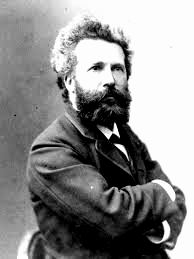
Camille Flammarion
excitingly new. Flammarion even put into Burroughs’ mind that time itself had no independent existence. Mind boggling stuff.
I believe that by now Bibliophiles have assembled a library of books that Burroughs either did read or is likely to have read before 1911 that number at least two or three hundred. Of course, without radio, TV, or movies for all of Burroughs’ childhood, youth and a major portion of his young manhood, although movies would have become a reality by the time he began writing, there was little entertainment except reading. Maybe a spot of croquet.
As far as reading goes I suspect that ERB spent a significant portion of his scantily employed late twenties and early thirties sitting in the Chicago Library sifting through the odd volume. It can’t be a coincidence that Tarzan lounged for many an hour in the Paris library before he became a secret agent and left for North Africa.
I have come across a book by the English author Charles Howard Hinton entitled Scientific Romances of which one explores the notion of a fourth dimension . Hinton is said to have been an influence on H.G. Wells’ The Time Machine. It seems certain that Burroughs read The Time Machine while he would have found many discussions of the fourth dimension as well as other scientific fantasies in the magazines and even newspapers as Hillman has so amply demonstrated on ERBzine. We also know that ERB had a subscription to Popular Mechanics while probably reading Popular Science on a regular basis. Popular Science was established in 1872.
It is clear that ERB was keenly interested in psychology and from references distributed throughout the corpus, reasonably well informed.
I wouldn’t go so far as to maintain that ERB read the French psychologist Theodore Flournoy’s From India To The Planet Mars but George T. McWhorter does list it as a volume in Vern Corriel’s library of likely books read by Burroughs. The book was published in 1899 just as Burroughs was entering his very troubled period from 1900 to 1904-05 that included his bashing in Toronto with subsequent mental problems, a bout with typhoid fever and his and Emma’s flight to Idaho and Salt Lake City. So that narrows the window down a bit.
However the book seems to describe the manner in which his mind worked so that it provides a possible or probable insight into the way his mind did work.
ERB’s writing career was born in desperation. While he may say that he considered writing unmanly it is also true that he tried to write a lighthearted account of becoming a new father a couple years before he took up his pen in seriousness. Obviously he saw writing as a way out. His life had bittely disappointed his exalted expectations hence he would have fallen into a horrible depression probably with disastrous results if the success of his stories hadn’t redeemed his opinion of himself.
Helene Smith the Medium of Fluornoy’s investigation into mediumship was in the same situation. Her future while secure enough in the material sense, as was Burroughs, fell far short of her hopes and expectations. Thus she turned to mediumship to realize herself much as Burroughs turned to literature. She enjoyed some success and notoriety attracting the attention of, among others, the psychologist Theodore Flournoy. Fournoy who enjoyed some prominence at the time, was one of those confusing spiritualism with science because of his misunderstanding of the unconscious. Thus as Miss Smith unfolded her conversations with the inhabitants of Mars it was taken with some plausibility.
If any readers I may have have also read my review of Du Maurier’s Peter Ibbetson he or she will remember that Peter and Mary were restricted in their dream activities to only what they had done, seen and remembered or learned. As I have frequently said, you can only get out of a mind what has gone into it. In this sense Miss Smith was severely handicapped by an inadequate education and limited experience. While she was reasonably creative in the construction of her three worlds- those of ancient India, Mars and the court of Marie Antoinette- she was unable to be utterly convincing. In the end her resourcefulness gave out and the scientific types drifted away. She more or less descended into a deep depression as her expectations failed. Had she been more imagination she might have turned to writing as Burroughs did.
If Burroughs did read Flournoy, of which I am not convinced, he may have noted that Miss Smith’s method was quite similar to his habit of trancelike daydreaming that fulfilled his own expectations of life in fantasy.
In Burroughs’ case he had the inestimable advantage of having stuffed his mind with a large array of imaginative literature, a fairly good amateur’s notions of science and technology, along with a very decent range of valuable experience. His younger days were actually quite exciting. He was also gifted with an amazing imagination and the ability to use it constructively.
Consider this possibility. I append a poem that he would have undoubtedly read- When You Were A Tadpole And I Was A Fish. Read this and then compare it to The Land That Time Forgot.
Evolution
by
Langdon Smith
When you were a tadpole and I was a fish
In the Paleozoic time,
And side by side on the ebbing tide
We sprawled through the ooze and slime,
Or skittered with many a caudal flip
Through the depths of the Cambrian fen,
My heart was rife with the joy of life,
For I loved you even then.
Mindless we lived and mindless we loved
And mindless at last we died;
And deep in the rift of the Caradoc drift
We slumbered side by side.
The world turned on in the lathe of time,
The hot lands heaved amain,
Til we caught our breath from the womb of death
And crept into light again.
We were Amphibians, scaled and tailed,
And drab as a dead man’s hand;
We coiled at ease ‘neath the dripping trees
Or trailed through the mud and sand.
Croaking and blind, with out three-clawed feet
Writing a language dumb,
With never a spark in the empty dark
To hint at a life to come.
Yet happy we lived and happy we loved,
And happy we died once more;
Our forms were rolled in the clinging mold
of a Neocomian shore.
The eons came and the eons fled
And the sleep that wrapped us fast
Was riven away in a newer day
And the night of death was past.
Then light and swift through the jungle trees
We swung in our airy flights,
Or breathed in the balms of the fronded palms
In the hush of the moonless nights;
And, oh! what beautiful years were there
When our hearts clung each to each;
When life was filled and our senses thrilled
In the first faint dawn of speech.
Thus life by life and love by love
We passed through the cycles strange,
And breath by breath and death by death
We followed the chain of change,
Till there came a time in the law of life
When over the nursing side
The shadows broke and the soul awoke
In a strange, dim dream of God.
I was thewed like Auroch bull
And tusked like the great cave bear;
And you, my sweet, from head to feet
Were gowned in your glorious hair,
Deep in the gloom of a fireless cave,
When the night fell o’er the plain
And the moon hung red o’er the river bed
We mumbled the bones of the slain.
I flaked a flint to a cutting edge
And shaped it with brutish craft;
I broke a shank from the woodland lank
And fitted it, head and haft;
Then I hid me close to the reedy tarn,
Where the mammoth came to drink;
Through the brawn and bone I drove the stone
And slew him upon the brink.
Loud I howled through the moonlit wastes,
Loud answered our kith and kin,
From west and east to the crimson feast
The clan came tramping in.
O’er joint and gristle and padded hoof
We fought and clawed and tore,
And cheek by jowl with many a growl
We talked the marvel o’er.
I carved that fight on a reindeer bone
With rude and hairy hand;
I pictured his fall on the cavern wall
That men might understand,
For we lived by blood and the right of might
Ere human laws were drawn,
And the age of sin did not begin
Till our brutal tush were gone.
And that was a million years ago
In a time that no man knows;
Yet here tonight in the mellow light
We sit at Delmonico’s.
Your eyes are deep as the Devon springs,
Your hair is dark as jet,
Your years are few, your life is new,
Your soul untried, and yet-
Our trail is on the Kimmeridge clay
And the scarp of the Purbeck flags;
We have left our bones in the Bagshot stones
And deep in the Coralline crags;
Our love is old, our lives are old,
And death shall come amain;
Should it come today, what man may say
We shall not live again?
God has wrought our souls from the Tremadoc beds
And furnished them wings to fly;
He sowed our spawn in the world’s dim dawn,
And I know that it shall not die,
Though cities have sprung above the graves
Where the crook-bone men make war
And the oxwain creaks o’er the buried caves
Where the mummied mammoths are.
Then as we linger at luncheon here
O’er many a dainty dish,
Let us drink anew to the time when you
Were a tadpole and I was a fish.
With something like that stuffed into his subconscious what wonders might ensue. Obviously The Land That Time Forgot and The Eternal Lover.
As Miss Smith had turned to spiritualism and mediumship, Burroughs turned his talents to writing. According to himself he used essentially mediumistic techniques in hiswriting. He said that he entered a tracelike state, what one might almost call automatic writing to compose his stories. He certainly turned out three hundred well written pages in a remarkably short time with very few delays and interruptions. He was then able to immediately begin another story. This facility lasted from 1911 to 1914 when his reservoir of stored material ws exhausted. His pace then slowed down as he had to originate stories and presumably work them out more rather than just spew them out.
Curiously like Miss Smith he created three main worlds with some deadends and solo works. Thus while Miss Smith created Indian, Martian and her ‘Royal’ identity Burroughs created an inner World, Tarzan and African world, and a Martian world.
Perhaps in both cases three worlds were necessary to give expression to the full range of their hopes and expectations. In Burroughs’ case his worlds correspond to the equivalences of the subconscious in Pellucidar, the conscious in Tarzan and Africa and shall we say, the aspirational or spiritual of Mars. In point of fact Burroughs writing style varies in each of the three worlds, just as they did in Miss Smith’s.
Having exhausted his early intellectual resources Burroughs read extensively and exhaustively to recharge his intellectual batteries. This would have been completely normal because it is quite easy to write oneself out. Indeed, he was warned about this by his editor, Metcalf. Having, as it were, gotten what was in your mind on paper what you had was used up and has to be augmented. One needs fresh experience and more knowledge. ERB was capable of achieving this from 1911 to about 1936 when his resources were essentially exhausted. Regardless of what one considers the quality of the later work it is a recap, a summation of his work rather than extension or innovatory into new territory. Once again, not at all unusual.
As a child of his times his work is a unique blend of science and spiritualism with the accent on science. One can only conjecture how he assimiliated Camille Flammarion’s own unique blend of spiritualism and science but it would seem clear that Flammarion inflamed his imagination setting him on his career as perhaps the world’s first true science-fiction writer as opposed to merely imaginative or fantasy fiction although he was no mean hand at all.
A Review: Peter Ibbetson by George Du Maurier
May 8, 2009
A Review
The Novels Of George Du Maurier
Peter Ibbetson, Trilby, The Martian
Part IV
Peter Ibbetson
Singers and Dancers and Fine Romancers
What do they know?
What do they know?
-Larry Hosford
Review by R.E. Prindle
Table of Contents
I. Introduction
II Review of Trilby
III. Review of The Martian
IV. Review of Peter Ibbetson
Peter Ibbetson is the first of the three novels of George Du Maurier. As elements of the later two novels are contained in embryo in Ibbetson it would seem that Du Maurier had the three novels at least crudely plotted while a fourth dealing with politics but never realized is hinted at. Actually Du Maurier has Ibbetson who writes this ‘autobiography’ write several world changing novels from inside the insane asylum to which he had been committed. In the Martian Barty Josselin wrote several world changing books while ‘possessed’ by an alien intelligence, in a way, not too dissimilar to the situation of Ibbetson. Du Maurier himself comes across, as I have said, as either a half demented lunatic or a stone genius.
He has Ibbetson and the heroine, The Duchess of Towers write in code while they read encrypted books. Du Maurier says that Ibbetson and hence the two following books deal with weighty subjects but in a coded manner that requires attention to understand.
On page 362 of the Modern Library edition he says:
…but more expecially in order to impress you, oh reader, with the full significance of this apocalyptic and somewhat minatory utterance (that may haunt your fever sense during your midnight hours of introspective self-communion), I have done my best, my very best to couch it in the obscurest and most unitelligible phraseology, I could invent. If I have failed to do this, if I have unintentionally made any part of my meaning clear, if I have once deviated by mistake into what might almost appear like sense, mere common-sense- it is the fault of my half French and wholly imperfect education.
So, as Bob Dylan said of the audiences of his Christian tour: Those who were meant to get it, got it, for all others the story is merely a pretty story or perhaps fairy tale. The fairy tale motif is prominent in the form of the fee Tarapatapoum and Prince Charming of the story. Mary, the Duchess of Towers is Tarapatapoum and Peter is Prince Charming. It might be appropriate here to mention that Du Maurier was highly influenced by Charles Nodier the teller of fairy tales of the Romantic period. Interestingly Nodier wrote a story called Trilby. Du Maurier borrowed the name for his novel Trilby while he took the name Little Billee from a poem by Thackeray. A little background that makes that story a little more intelligible.
Those that watch for certain phobias such as anti-Semitism and Eugenics will find this story of Du Maurier’s spolied for them as was Trilby and probably The Martian. One is forced to concede that Du Maurier deals with those problems in a coded way. Whether his meaning is derogatory or not lies with your perception of the problems not with his.
Thus on page 361 just above the previous quote Du Maurier steps from concealment to deliver a fairly open mention of Eugenics. After warning those with qualities and attributes to perpetuate those qualities by marrying wisely, i.e. eugenically, he breaks out with this:
Wherefore, also, beware and be warned in time, ye tenth transmitters of a foolish face, ye reckless begetters of diseased or puny bodies, with hearts and brains to match! Far down the corridors of time shall clubfooted retribution follow in your footsteps, and overtake you at every turn.
Here we have a premonition of Lothrop Stoddards Overman and Underman. The best multiply slowly while the worst rear large families. Why anyone would find fault with the natural inclination to marry well if one’s handsome and intelligent with a similar person is beyond me. Not only is this natural it has little to do with the Eugenics Movement. Where Eugenics falls foul, and rightly so, is in the laws passed to castrate those someone/whoever deemed unworthy to reproduce. This is where the fault of the Eugenics Movement lies. Who is worthy to pass such judgment? Certainly there are obvious cases where neutering would be appropriate and beneficial for society but in my home town, for instance, no different than yours I’m sure, the elite given the opportunity would have had people neutered out of enmity and vindictiveness. that is where the danger lies. There is nothing wrong with handsome and intelligent marrying handsome and intelligent. How may people want a stupid, ugly partner?
Du Maurier had other opinions that have proved more dangerous to society. One was his belief in the virtues of Bohemians, that is say, singers and dancers and fine romancers. On page 284 he says:
There is another society in London and elsewhere, a freemasonry of intellect and culture and hard work- la haute Ashene du talent- men and women whose names are or ought to be household words all over the world; many of them are good friends of ine, both here and abroad; and that society, which was good enough for my mother and father, is quite good enough for me.
Of course, the upper Bohemia of proven talent. But still singers and dancers and fine romancers. And what do they know? Trilby was of the upper Bohemia as was Svengali but Trilby was hypnotized and Svengali but a talented criminal. What can a painter contribute but a pretty picture, what can a singer do but sing his song, I can’t think of the dancing Isadora Duncan or the woman without breaking into laughter. And as for fine romancers, what evil hath Jack Kerouac wrought.
I passed part of my younger years in Bohemia, Beat or Hippie circles, and sincerely regret that Bohemian attitudes have been accepted as the norm for society. Bohemia is fine for Bohemians but fatal for society which requires more discipline and stability. Singers and dancers and fine romancers, wonderful people in their own way, but not builders of empires.
In that sense, the promotion of Bohemianism, Du Maurier was subversive.
But the rules of romancing are in the romance and we’re talking about Du Maurier’s romance of Peter Ibbetson.
Many of the reasons for criticizing Du Maurier are political. The man whether opposed to C0mmunist doctrine or not adimired the Bourgeois State. He admired Louis-Philippe as the Beourgeois king of France. This may sound odd as he also considered himself a Bohemian but then Bohemians are called into existence by a reaction to the Bourgeoisie. Perhaps not so odd. He was able to reconcile such contradictions. Indeed he is accused of having a split personality although I think this is false. Having grown up in both France and England he developed a dual national identity and his problem seems to be reconciling his French identity with his English identity thus his concentration on memory.
In this novel he carefully builds up a set of sacred memories of his childhood. He very carefully introduces us to the people of his childhood. Mimsy Seraskier his little childhood sweetheart. All the sights and sounds and smells. In light of the quote I used telling how he disguises his deeper meaning one has to believe that he is giving us serious theories he has worked out from science and philosophy.
Having recreated his French life for us Peter’s parents die and Ibbetson’s Uncle Ibbetson from England adopts him and takes him back to the Sceptered Isle. Thus he ceases to be the French child Pasquier and becomes the English child Peter Ibbetson. A rather clean and complete break. From this point on his childhood expectations are disappointed with the usual psychological results. He develops a depressed psychology. The cultural displacement prevents him from making friends easily or at all. His Uncle who has a difficult boorish personality is unable to relate to a sensitive boy with a Bohemian artistic temperament. Hence he constantly demeans the boy for not being like himself and has no use for him.
This is all very skillfully handled. We have intimations that bode no good for Peter. The spectre is prison. The hint of a crime enters into the story without anything actually being said. But the sense of foreboding enters Peter’s mind and hence the reader’s. This is done extremely well. It’s a shame the Communists are in control of the media so that they can successfully denigrate any work of art that contradicts or ignores their beliefs. For instance the term bourgeois itself. The word is used universally as a contemptuous epithet even though the Bourgeois State was one of the finest created. Why then contempt? Simply because the Communists must destroy or denigrate any success that they canot hope to surpass. I was raised believing that what was Bourgeois was contemptible without ever knowing what Bourgeois actually meant. It is only through Du Maurier at this late stage in life that I begin to realize what the argument really was and how I came to accept the Communist characterization. I’m ashamed of myself.
Hence all Du Maurier criticism is unjust being simply because it is the antithesis of Communist beliefs. The man as a writer is very skillful, as I have said, a genius. If I were read these novels another couple of times who knows what riches might float up from the pages.
Colonel Ibbetson apprentices Peter to an architect, a Mr Lintot, which, while not unhappy, is well below Peter’s expectations for his fairy Prince Charming self. As a lowly architect he is placed in a position of designing huts for the workers of the very wealthy. The contrast depresses him even further. He has been disappointed in love and friendship and then he is compelled by business exigencies to attend a ball given by a wealthy client. He definitely feels out of place. Psychologically incapable of mixing he stands in a corner.
At this ball the most beautiful woman he has ever seen, The Duchess of Towers, is in attendance. From across the room she seems to give him an interested glance. Peter can only hope, hopelessly. As a reader we have an intimation that something will happen but we can’t be sure how. I couldn’t see. Then he sees her in her carriage parading Rotten Row in Hyde Park. She sees him and once again it seems that she gives him a questioning look.
Then he takes a vacation in France where he encounter her again. After talking for a while he discovers that she is a grown up Mimsey Seraskier, his childhood sweetheart. Thus his French childhood and English adulthood are reunited in her. Wow! There was a surprise the reader should have seen coming. I didn’t. I had no trouble recognizing her from childhood in France but Du Maurier has handled this so skillfully that I am as surprised as was Peter. I tipped my imaginary hat to Du Maurier here.
Perhaps I entered into Du Maurier’s dream world here but now I began to have flashbacks, a notion that I had read this long ago, most likely in high school or some other phantasy existence. I can’t shake the notion but I can’t remember reading the book then at all. Don’t know where I might have come across it. Of course that doesn’t mean an awful lot. If asked if I had ever read a Charles King novel I would have said no but when George McWhorter loaned me a couple to read that he had in Louisville I realized I had read one of them before. Eighth grade. I could put a handle on that but not Peter Ibbetson. Perhaps Du Marurier has hypnotized me. Anyway certain images seem to stick in my mind from a distant past.
It was at this time that Mary, the Duchess if Towers, formerly Mimsy, enters Peter’s dream, in an actual real life way. This is all well done, Peter dreamt he was walking toward an arch when two gnomish people tried to herd him into prison. Mary appears and orders the gnomes to vanish which they do. ‘That’s how you have to handle that.’ She says. And that is very good advice for dreams that Du Maurier gives. As we’ll see Du Maurier has some pretensions to be a psychologist.
She then instructs Peter in the process of ‘dreaming true.’ In such a manner they can actually be together for real in a shared dream. Now, Trilby, while seemingly frivolous, actually displays a good knowledge of hypnotism. More than that it puts Du Maurier in the van of certain psychological knowledge. Hypnotism and psychology go together. Without an understanding of hypnotism one can’t be a good psychologist. If he wasn’t ahead of Freud at this time he was certainly even with him. Remember this is 1891 while Freud didnt’ surface until 1895 and then few would have learned of him. He wrote in German anyway.
Freud was never too developed on auto-suggestion. Emile Coue is usually attributed to be the originator of auto-suggestion yet the technique that Mary gives to Peter is the exact idea of auto-suggestion that Coue is said to have developed twenty or twenty-five years on.
Du Maurier speaks of the sub-conscious which is more correct than the unconscious. He misunderstands the nature of the subconscious giving it almost divine powers but in many ways he is ahead of the game. Now, Ibbetson was published in 1891 which means that Du Maurier was in possession of his knowledge no later than say 1889 while working on it from perhaps 1880 or so on. It will be remembered that Lou Sweetser, Edgar Rice Burroughs mentor in Idaho, was also knowledgable in psychology in 1891 but having just graduated a couple of years earlier from Yale. So Freud is very probably given too much credit for originating what was actually going around. This earlier development of which Du Maurier was part has either been suppressed in Freud’s favor or has been passed over by all psychological historians.
So, Mary gives Peter psychologically accurate information on auto-suggestion so that he can ‘dream true.’ I don’t mean to say that anyone can share another’s dreams which is just about a step too far but by auto-suggestion one can direct and control one’s dreams. Auto-suggestion goes way back anyway. The Poimandre of Hermes c. 300 AD is an actual course in auto-suggestion.
Peter is becoming more mentally disturbed now that his denied expectations have returned to haunt him in the person of Tarapatapoum/Mimsey/Mary. Once again this is masterfully done. The clouding of his mind is almost visible. Over the years he has generated a deep seated hatred for Colonel Ibbetson even though the Colonel, given his lights, has done relatively well by him. Much of Peter’s discontent is internally generated by his disappointed expectations. The Colonel has hinted that he might be Peter’s father rather than his Uncle. This completely outrages Peter’s cherished understanding of his mother and father. The Colonel according to Peter was one of those guys who claimed to have made every woman he’d ever met. One must bear in mind that Peter is telling the story while the reader is seeing him become increasingly unstable.
While Peter doesn’t admit it to himself he confronts the Colonel with the intention of murdering him. He claims self-defense but the court doesn’t believe it nor does the reader. It’s quite clear the guy was psycho but, once again, Du Maurier handles this so skillfully that one still wonders. Given the death penalty his friends and supporters, the influential Duchess of Towers, get the sentence commuted to life imprisonment.
Then begins Peter’s double life in prison that goes on for twenty years. By day a convict, at night Peter projects hemself into a luxurious dream existence with his love, Mary, the Duchess of Towers. Quite insane but he has now realized his expections if only in fantasy. Now, this novel as well as Du Maurier’s other novels is textually rich. The style is dense while as Du Maurier tells us it is written in more than one key, has encoded messages, so I’m concentrating on only the main thread here. That concerns memory.
While it is possible to subconsciously manage one’s dreams, I do it to a minor extent, of course it is impossible for two people to dream toether and share that dream. This is to venture into the supernatural. Spiritualism and Theosophy both dealing with the supernatural as does all religion including Christianity, were at their peak at this time. Du Maurier has obviously studied them. Just because one utilizes one’s knowledge in certain ways to tell a story doesn’t mean one believes what one writes. Ibbetson is written so well that the writer seems to have fused himself with the character. If I say Du Maurier believes that may not be true but as the same themes are carried through all his novels without a demurrer it seems likely.
Du Maurier seems to be pleading a certain understanding of the subconscious giving it as many or more supernatural powers as Freud himself will later. This might be the appropriate place to speculate on Du Maurier’s influence on Mark Twain. We know Twain was an influence on Burroughs so perhaps both were.
Before he died Twain wrote a book titled the Mysterious Stranger. This was twenty-five years after Peter Ibbetson. Operator 44, the Mysterious Stranger, is a time time traveler who has some sort of backstair connecting years as a sort of memory monitor. Peter and Mary over the years work out a system that allows them to travel back through times even to prehistoric times. Thus Peter is able to sketch from life stone age man hunting mastodons, or Napoleon at the Battle of Waterloo. They are present at these events but as sort of ghost presences without substance. they have no substance hence cannot affect reality.
This would be a major them in fifties science fiction in which, for instance, a time traveler steps on a grub, then comes back to his present time finding everyone talking a different language. Change one item and you change all others. Du Maurier avoids this problem that he very likely thought of in this clever way.
We can clearly see the future of twentieth century imaginiative writing taking form here. One can probably trace several twentieth century sci-fi themes back to Du Maurier.
Peter and Mary have a magic window through they can call up any scene within their memories. In their dream existence they are dependent on memory they can only re-experience, they cannot generate new experiences. The memory extends back genetically although Du Maurier speaks in terms of reincarnation. Peter hears Mary humming a tune he has never heard before. Mary explains that the tune is a family melody written by an ancestress hundreds of years before. Thus one has this genetic memory persisting through generations. This gives Du Maurier room to expatiate on the persistence of memory through past, present and future.
Du Maurier has worked out an elaborate scheme in which memory unites past, present and future, into a form of immortality. This is actually a religious concept but a very beautiful concept, very attractive in its way.
Peter and Mary had elected to stay at one age- twenty-six to twenty-eight- so for twenty years they retained their youthful form and beauty. Then one night Peter enters the mansion of his dreams through a lumber room to find the way blocked. He knows immediately that Mary has died. He then learns that in attempting to save a child from a train she was herself killed.
Peter goes into an insane rage attacking the prison guards while calling each Colonel Ibbetson. Clearly insane and that’s where the send him. The mad house. Originally he continues to rage so they put him in a straight jacket where he remains until his mind calms enough to allow him to dream. In his dream he returns to a stream in France. Here he believes he can commit suicide in his dream which should be shock enough to stop his heart in real life. Something worth thinking about. Filling his pockets with stones he means to walk in over his head. Then, just ahead he spies the back of a woman sitting on a log. Who else but Mary. She has done what has never been done before, what even Houdini hasn’t been able to do, make it to back to this side.
Now outside their mansion, they are no longer young, but show their age. This is nicely done stuff. Of course I can’t replicate the atmosphere and feel but the Du Maurier feeling is ethereal. As I say I thought he was talking to me and I entered his fantasy without reserve.
Here’s a lot of chat about the happiness on the otherside. When Peter awakes back in the asylum he is calm and sane. He convinces the doctors and is restored to full inmate rights. Once himself again he begins to write those wonderful books that right the world.
One gets the impression that Du Maurier believes he himself is writing those immortal books that will change the world. Time and fashions change. Today he is thought a semi-evil anti- Semite, right wing Bourgeois writer. I don’t know if he’s banned from college reading lists but I’m sure his works are not used in the curriculum. I think he’s probably considered oneof those Dead White Men. Thus a great writer becomes irrelevant.
It’s a pity because from Peter Ibbetson through Trilby to The Martian he has a lot to offer. The Three States of Mind he records are thrilling in themselves, as Burroughs would say, as pure entertainment while on a more thoughtful read there is plenty of nourishment. Taken to another level his psychology is very penetrating. His thought is part of the mind of the times. Rider Haggard shares some of the mystical qualities. The World’s Desire is comparable which can be complemented by his Heart Of The World. The latter may turn out to be prophetic shortly. H.G. Wells’ In The Days Of The Comet fits into this genre also. Another very good book. Of course Burroughs’ The Eternal Lover and Kipling and Haggard’s collaboration of Love Eternal. Kipling’s Finest Story In The World might also fit in as well, I’m sure there are many others of the period of which I’m not aware. I haven’t read Marie Corelli but she is often mentioned in this context. You can actually slip Conan Doyle in their also.
Well, heck, you can slip the whole Wold Newton Universe, French and Farmerian in there. While there is small chance any Wold Newton meteor had anything to do with it yet as Farmer notes at about that time a style of writing arose concerned with a certain outlook that was worked by many writers each contributing his bit while feeding off the others as time went by.
I don’t know that Du Maurier is included in the Wold Newton Universe (actually I know he isn’t) but he should be. He was as influential on the group as any other or more so. He originated many of the themes.
Was Burroughs influenced by him? I think so. There was no way ERB could have missed Trilby. No possible way. If he read Trilby and the other two only once which is probable any influence was probably subliminable. ERB was not of the opinion that a book could change the world, so he disguised his more serious thoughts just as Du Maurier did his. He liked to talk about things though.
Singers and dancers. What do they know? What do they know? In the end does it really matter what they know. Time moves on, generations change, as they change the same ideas come around expressed in a different manner. They have their day then are replaced. The footprint in the concrete does remain. Genius will out.
Part II A Review: Trilby by George Du Maurier
April 29, 2009
A Review
Trilby
by
George Du Maurier

George Du Maurier
Review by R.E. Prindle
Du Maurier is interesting as a possible influence on Burroughs. Du Maurier not only borrows from authors he admires but tells the reader he’s borrowing. Burroughs borrows without creditation. The great literature of the nineteenth century was written during Du Maurier’s lifetime. Thus Alexandre Dumas’ Three Musketeers of 1845 was a new book. It was also a book that overwhelmed Du Maurier’s imagination while having a later profound effect on Burroughs. Thus Du Maurier tells the reader his plot is based on The Three Musketeers. Like Burroughs Du Maurier incorporates several sources in an obvious manner. He was apparently fascinated by Henry Murger’s Scenes De La Vie Boheme of 1851. I haven’t read the book as yet but other reviewers say the influence is there. I pick up an influence from La Dame Aux Camellias by Dumas fils also. Du Maurier refers to many poets and writers whose writing left him helpless but as I am not that well grounded in many aspects of early nineteenth century literature I can’t identify the influences myself but they are as plentiful and obvious as with Burroughs himself.
In his own life Du Maurier had aspirations to be an opera singer but lacked the powerful voice. He then aspired to be an artist but lacked that talent becoming one of the premier illustrators of the century instead. And then as he felt death approaching he turned to writing. Thus a failure as a singer, a failure as an artist but success as an illustrator he became a huge success as a novelist. The careers of his protagonists generally follow the same course.
He is also a nostalgic writer as he lovingly recreates the scenes of his youth and life. He always retained the impress of La Boheme living his life in a genteel bohemian style. I suppose today he would be like an old hippy walking around in a gray pony tail, sandals and the garb of the sixties while making a fortune as a stock broker.
Thus Trilby opens in an artist’s atelier on the Left Bank of Paris in the Latin Quarter. The Latin Quarter of his time may be compared to New York’s Greenwich Village or San Francisco’s North Beach of the fifties and sixties. Du Maurier himself lived such an existence for a couple years at the end of the eighteen fifties.
We are thus introduced to his three musketeers- Taffy, the Laird and Little Billee. They are fine comrades living the Bohemian life style much as some upper middle class hippies took to a bohemian life style with torn jeans and the pose of the impoverished in the nineteen-sixties.
The whole ensemble is gathered thogether in the atelier for the opening section. Taffy, The Laird and Billy are letting the studio. As Du Maurier says on the title page this is a love story. Trilby O’ Farrell the love interest turns up immediately. She and Billy love each other but Trilby is classed as a grisette which was apparently the equivalent of a hippy chick who was somewhat free living. Trilby declassed herself completely by posing as an artist’s model in the altogether or, in another word, nude. This was no small thing to all concerned although the bohos tended to be a little tolerant.
After Trilby arrives come Svengali and his sidekick Gecko. They are musicians. Svengali is billed as an incomparable musician which is to say performer. He was a great pianist. He taught Gecko his violinist everything he knew.
We are discussing the nineteenth century and nineteenth century views in context. The story can’t be told any other way. If the attitudes and opinions of other times and other people offend y0u be forewarned and proceed at you own risk. I will bowlderize history to suit no one’s whims. As Walter Duranty facetiously said: I write as I please. Du Maurier, the gentlest of men, nevertheless had well formed opinions. Svengali is a Jew and pretty much a stereotype of the Jew at the time. He appears to be a beteljew from the Pale actually although he is said to be German but the accent Du Maurier gives him could just as well be Yiddish as German. It is important to bear all this in mind because in the contest for the possession of Trilby between Billy and Svengali the latter is going to obtain her.
There’s an interesting contrast here the meaning of which isn’t exactly clear to me. Trilby has a beautiful foot, the kind that drives fetichists wild. After this first encounter Billy, the consummate artist, sketches the foot on the wall to perfection. All the others are amazed at the likeness. This sketch occupies as central place in the story as does Svengali’s hypnotism of Trilby. Svengali on the other hand demands that Trilby open her mouth wide so he can look in. Raises your eyebrows when you read this. Not only does Trilby have a beautiful foot but she has a cavernous mouth that made for an amazing sound chamber, the kind that comes along apparently once in ever.
The problem is that Trilby can’t put two notes together nor can she even find the note while finding the key is bothersome. Much is made of her inability to sing as she screeches ludicrously through Sweet Alice, Ben Bolt. (Ben Bolt was one of the most popular songs of the century on both sides of the Atlantic. Due to the wonders of the internet if you’ve never heard Ben Bolt you can get a good performance on the net. I’d heard of the song but never heard it until I checked it out on the net. Just amazing.)
Her rendition was a cause of great merriment. So you have the European sketching the foundation of the girl while the Jew is inspecting the intellectual possibilities. The Jew will win because he’s at the right end. As I say the mystery of these images float over my head. I’m merely making a stab at the meaning. I know there’s a contest and what it’s about but the symbolism is shaky to me.
And so the introduction ends with everyone agreeing that Svengali is a cad after he left and all three musketeers falling in love with Trilby.
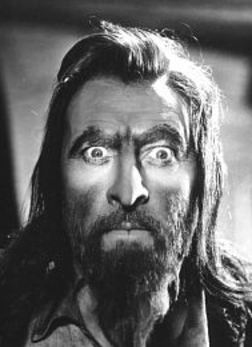
Svengali Type
There is much description of the fine times the musketeers have. One gets the impression that Du Maurier was living the life in the sixties in Paris but such was not the case. He signed on at Punch in 1860 and thus was working as an illustrtor for them from that date until his death. He seems to have been familiar with the Pre-Raphaelite painters of London of whom he speaks highly most especially of Millais. He seems to have been friends with a Fred Walker who he thought was a great artist but who seems to have been lost in the mists of time. I’d never heard of him anyway but one can find his pictures on the internet. Du Maurier loved the artist’s life.
Much of this book as well as the other is a loving recreation of the times and his memory of the times is one of wonderful things. Very refreshing against the unremitting negativity of modern literature. The book is set mainly in the sixties but the ‘horrible’ year of 1871 and the French Commune obtrudes. Du Maurier while recognizing its ugliness nevertheless passes over it quickly with a shrug and back to the good times. He introduces some additional charming characters but then come the crisis.
Billy had asked the declassed Trilby to marry him nineteen times and she had always refused because she knew she wasn’t in his class. After an amazingly wonderful Christmas feast in the atelier Billy asks again. Trilby, as she says, in a moment of weakness accepts. When the news reaches Billy’s mother, Mrs. Bagot, she scurries over to Paris from London to check Trilby out. When she learns that Trilby had posed in the altogether she persuades Trilby to give up her son.
Trilby leaves town without a goodbye. When Billy finds out he has his brain fever or a nervous breakdown that prostrates him for weeks. There was a chance he wouldn’t make it. He does but with psychological consequences. He can no longer love while he lives in a deep melancholia. There are some who know where that’s at. After he recovers he returns to England. the wonderful Bohemian rhapsody is over.
Trilby had left Paris to go to the provinces. She had a little brother who she was supporting and bringing up who she took with her and who then dies of a fever. This devastates Trilby who cuts her hair, dresses as a man and walks back to Paris. Her old haunts have disappeared in the interim so she shows up on the doorstep of Svengali who is but too happy to take her in. The hypnotized Trilby is a small part of the book. The next hundred pages or so describe Billy’s wonderful success as a painter and the loss of camaraderie as the young idealists of the Latin Quarter age and lose their affinity for each other. Charmingly told with just the right touch of heartache.
In the meantime and off stage, as it were, Svengali accompanied by Gecko keeps Trilby in a hypnotic trance as he

Henri Murger
teaches her to use her tremendous oral cavity to sing. While she has the exact equipment to be a great singer she lacks the musical sense and can’t learn it sober. Svengali instills the musical sense through hypnosis but as Gecko later explains Trilby is merely providing the instrument while Svengali is actually singing through her. For three years they labor in the salt mines, as they say, performing on street corners or wherever. Then Trilby is properly trained becoming the rage of Europe as La Svengali becoming bigger and better than such stars as Adelina Patti or Jenny Lind, two real life divas.
Thus while Billy has lost Trilby’s foot or body, Svengali has captured her soul or oral cavity. That’s about the only way I can make sense of foot and cavity.
Now, in real terms the Jews had been emancipated beginning in 1789 by the French Revolution although occuring at different localities in Europe at different times. With the emanicipation a contest began for the soil and soul of Europe. Europeans owned the soil but the Jews while originating nothing became the cultural virtuosi of Europe. Not only in the performing arts but in finance, science and as entrepreneurs. The soil temporarily remained European but the culture was becoming Judaized. It was then that Freud made his assault on European concepts of morality. So Du Maurier has portrayed the situation poetically in a magnificent manner.
Thus the Jews while offering no Beethovens, Bachs or Mozarts became virtuoso interpreters of the music as performers. As Svengali says: Piff, what is the composition compared to my ability to render it. There you have the exploiter’s motto. The Allen Kleins and Albert Grossmans of the world suck the talent, as it were, out of their performers or, boys, as they call them, as agents taking nearly everything leaving the actual talent a pittance.
Nothing changes, this is what Svengali was doing with Trilby or, in another word, Europe. He was making a fortune while Trilby in her hypnotized state was wasting away. Oh, Svengali dressed her well but for the sake of his appearance not hers. When she died, of the fortune that she had made for Svengali none was left to her. Except for presents she had received in appreaciation of her singing she had nothing. They were supposed to be man and wife but, in fact, Svengali never married her. Here I think we have the real import of the story; the competition for Europe between the Jew and the European. Having given up the soul of Europe Europeans were losing their very substanc, the soil, or Trilby’s foot.
Du Maurier is also describing the rise of the artist from a despised menial to the central position in society that they have attained today, especially movie, TV and musical stars. One only has to look at the position Bob Dylan has attained to see the result today. Here is a man with no qualities revered as if he was the savior while poised to begin a tour of stadiums at 67.50 a head that will sell out earning him a fortune within a couple months. Thus as with Svengali he has conquered the soul and wealth of virtually the world. This is truly astonishing.
So Svengali is on top of the world. Despised as a beteljew in the atelier a short five years ago he now has Trilby/Europe and the fortune that goes with her. Alas, he is sucking the life’s blood from her to do this and she is within weeks of death when the Three Musketeers hearing of La Svengali’s fame travel back to Paris to see her perform.
Of course they are so astonished at seeing someone who looks like Trilby singing that they can’t believe it is indeed her. Svengali harbors ill will toward Billy because Billy is always in her heart while her relationship with Svengali is strictly professional.
The Musketeers and the Svengalis are staying at the same hotel where Svengali meeting Billy can’t resist spitting in his face. Billy, who is actually known in the story as Little Billee is much smaller than the six foot Svengali but he nevertheless goes after him getting the worst of the fight until Taffy, a giant body builder type, shows up grabbing Svengali’s ‘huge Hebrew nose’ between his first two fingers leading him around by the nose. Oh, those unintended consequences. The humiliation is too much for Svengali, he becomes vicious toward Trilby in revenge. Readying for their London debut he bullies Trilby in front of Gecko, now his first violinist, who stabs Svengali in the neck with a small knife.
Svengali while wounded is not hurt that bad but his physicians advise him not to conduct the opening performance. This creates a problem because Svengali must make eye contact to sing through Trilby.
He takes a box directly in front of Trilby. But he spots Billy and the other two musketeers in the pit in front of him. The malice and venom he has toward Billy makes his heart fail. His face freezes into a risus sardonicus as he sits lifelessly leering at the Three Musketeers, triumphant in death. Of course Trilby can’t sing a note on her own so that ends a fine career. Now begins the denouement. While seemingly superfluous this is a very important part of the story giving it its secondary meaning.
The Musketeers take Trilby in charge. No one is aware she had been hypnotized while she has no memory of performing and little of the lost five years. The situation between she and Mrs. Bagot, Billy’s mother, are now reversed. Trilby is the great lady while Mrs. Bagot is merely a middle class hausfrau. One might say Svengali has created the real Trilby. Mrs. Bagot still hadn’t posed in the altogether however. Where was Hugh Heffner when you needed him.
On the surface it looks as though Mrs. Bagot has gotten her comeuppance but as Trilby is the creation of Svengali she would have remained the simple little grisette that Billy loved without him. She would have remained the foot without realizing the potential of her oral cavity. Nevertheless this Trilby was Trilby as she should have been.
The woman was fading fast. Svengali had drawn the vital energy from her in his exploitation of her. Mysteriously, just before she dies, a life sized portrait of Svengali is delivered. The contest between he and Billy is still in effect. Gazing in the painted eyes of the hypnotist Trilby breaks into song as a final effort in her best manner.
Billy is grasping desperately for Trilby’s love. On her death bed he leans close to hear her breath out- Svengali, Svengali, Svengali. Thus he believes she loved Svengali more than he. His brain fever is reactivated, he dies. In grand operatic style the love story ends. All because Mrs. Bagot was a snob. But, I think a correct one. Although, what the heck, Billy was just a boho painter.
As an anti-climax in a final chapter titled Twenty Year After as tribute to Dumas whose sequel to The Three Musketeers was title Twenty Years After, Taffy takes a trip to Paris where he finds Gecko playing fiddle in a music hall. He sends a note that Gecko accepts requesting a meeting at his hotel. There Gecko resolves the mystery filling Taffy in on Trilby’s missing five years. He reveals that Trilby had always loved Little Billee and never Svengali.
The reading public then and now has concentrated on the Svengali-Trilby hypnotism aspect of the novel ignoring the rest. That aspect is actually a very small part of the novel but without it I suppose the story woud have fallen flat. Even today a manager like Colonel Tom Parker is thought of as a Svengali to Elvis Presley, so the name has come into common usage for someone’s inexplicable control of someone else.
Edgar Rice Burroughs who had a fascination with hypnotism was probably charmed by that aspect of the story. In his most detailed reference to hypnotism in Thuvia, Maid Of Mars he seems most influenced by stage hypnotism in which the audience is induced to see what is not there rather than the Svengali type. Still, Thuvia-Trilby and the relationship between Jav and Thuvia and Thuvia and Tario has some resonances. I dout that ERB would have been conscious of his borrowing imagining rather that he was creating the story from whole cloth.
End of Part Two, Go to Part Three the Review of The Martian.
Part I, Prologue: A Review of Trilby, The Martian, Peter Ibbetson of George Du Maurier
April 27, 2009
A Review
The Novels Of George Du Maurier
Peter Ibbetson, Trilby, The Martian
Part I
Introduction
by
R.E. Prindle
Contents:
Part I: Introduction
Part II: Review of Trilby
Part III: Review of The Martian
Part: IV: Review of Peter Ibbetson
Occasionally a book finds it way to your hand that seems as if the author had you in mind personally when he wrote it. This one’s for you, Ron. It is as though his mind is communicating directly with yours over perhaps centuries. A couple two or three decades ago one such work that came to my hand was The Secret Memoirs Of The Duc De Roquelaure. I never would have bought it myself, never even suspected its existence, but it came in a bundle of books I bid on at auction containing another book I wanted.
I had the four volumes of the Duc’s life so I read them. The memoirs were ‘Written by himself now for the first time completely translated into English in four volumes.’ Thus in 1896-97 an intermediary on the same wave length as the Duc and myself provided the means for me to read the Duc’s mind. Believe it or not the edition was limited to 1000 copies, privately printed of which 500 were for England and 500 for America. Mine is number 424 of the English set.
There could have been few who had ever read the Duc and I may very well be the only man alive at the present to have shared the Duc’s thoughts. Truly I believed he was speaking directly to me over the 400 intervening years.
I had the same feeling when I read George Du Maurier’s three volumes published from 1891 to 1897. Curious that the Duc de Roquelaure should have been translated in 1896-97 isn’t it? Like the Duc George Du Maurier seemed to speak out to me over more than a hundred years to communicate directly with my mind.
I probably never would have sought out his books except for my Edgar Rice Burroughs studies. I wanted to check out whether there may have been a connection to Burroughs through the second of the novels- Trilby. Then browsing the store I came across a Modern Library 1929 edition of the first of Du Maurier’s efforts- Peter Ibbetson. At that point, I thought, I might as well get the third- The Martian- which I did. This time over the internet.
I have now read each title three times as is my habit if I’m going to review a book. Before moving on to the novels it might be appropriate to say a few words about Du Maurier who may be an unfamiliar name to the reader although he or she may be familiar with the name of his very famous creation, the hypnotist and musician Svengali of the Trilby novel.
Du Maurier was born in 1834 and died in 1896 so he was ideally situated to view the whole Victorian era. Indeed, in his own way he was a symbol of it. As a most famous illustrator of books and an artist satirizing the era for the humorous magazine Punch, he in many ways interpreted English society for itself for nearly fifty years.
He died of heart disease so when he turned to writing to begin what is his virtual literary epitaph in 1891 it may have been with the premonition of his imminent death. He sensed that it was time for a summing up of the life he loved so well. Heart ailments figure prominently in his work. Indeed he died of a heart attack just after finishing The Martian which began publication shortly after his death. Thus while portraying the scenes of his life in Punch and other magazines and books he summarized his life and times magnificently in his three novels.
They are magnificent works. As every man should Du Maurier loved his life and it was a life worth living. The novels are wonderful examinations of exotic altered states of consciousness. In Peter Ibbetson the protagonist is insane, committed to Colney Hatch or some such. At night in his dreams he finds a way to link his dream with the dream of a married woman on the outside. She and his dreams meld into one dream in which they live actual alternate dream lives that are as real as their daytime existences. This went on for a couple decades or more until the lady died. Very eerie.
In Trilby in a love contest between the protagonist Billy and the musician Svengali for the hand of Trilby Billy is denied his love for societal reasons while after a sequence of events Trilby falls into the clutches of Svengali who through hypnotism turns her into a Diva. After his denial Billy becomes temporarily deranged falling into a deep depression which then turns into an equally severe melancholia when he emerges from the mania. So once again we have a description of two altered states of consciousness.
In the third and last novel the protagonist is possessed by an alien intelligence named Martia from Mars. Over the last century she has inhabited thousands of people but only with the hero, Barty Josselin, has she been able to establish contact. In an absolutely astonishing twist she occupies the body of Barty’s daughter. Both Barty and the daughter die enabling Martia to unite pshysically, in the spirit world, with her love. Thus the father and daughter are united which I suppose is the dream of many a father and daughter. The effect on the reader, this one anyway, is ethereal and eerie.
Du Maurier injects real life figures into his fiction. The real personalities of the day lend credibility to the fiction. Du Maurier involves himself in the stories in ingenious ways. While one can’t definitely say that Burroughs learned to inject himself into his stories from Du Maurier yet the framing devices in which Burroughs plays himself are very reminiscent of Du Maurier.
For instance in the Martian the story is a biography of Barty Josselin told by his friend Robert Maurice who then asks George Du Maurier the famous Punch illustrator to illustrate and edit his book. So the biography is ostensibly told in the first person by the fictional Robert Maurice while it is illustrated by the real life George Du Maurier who posing as the editor is actually writing the book. Du Maurier even inserts a long letter of acceptance in which he recapitulates his memories of Barty.
When one realized this the effect is almost supernatural, especially as with a little background on Du Maurier one realizes that the histories of the protagonists are virtually fictionalized histories of Du Maurier himself.
Thus while I haven’t discovered a direct connection to Du Maurier ERB is always telling a fictionalized account of his mental states along with a virtual chronicle of his life. A few points in ERB’s The Eternal Lover bear a very close resemblance to the love themes of Du Maurier especially in Peter Ibbetson and The Martian.
The Martian itself may have been a major influence on Burroughs’ own Martian novels. When John Carter, who was always attracted to Mars,stands naked on a cliff face in Arizona with his arms outstretched toward the Warrior Planet the scene is very reminiscent of Barty Josselin leaning with out stretched arms from his window staring at Mars and imploring Martia for her assistance.
Carter is magically transported to Mars in some unexplained way that may have been no more than an altered state of consciousness much as in the same way Martia inhabited Barty’s mind and body. Once on Mars Carter finds his lady love, Dejah Thoris, in a manner reminiscent of Barty and Martia. Obviously other literary influences abound in ERB’s Martian series but at the core very probably is Du Maurier’s story of Martia and Barty. By 1911 the influence was coming from ERB’s subconscious and he may not have been aware of the resource he was drawing on.
The question is when did Burroughs read, as I believe he did, the three Du Maurier novels? As ERB’s first novel, A Princess Of Mars, had to be built on the Martian it follows that ERB read Du Maurier before 1911. Du Maurier wrote from 1891 to 1896. His novels were serialized in Harper’s Magazine in the US either before or at publication so Burroughs had the opportunity to read them in magazine format as well as the books.
Of the three novels, Trilby was an absolute smash being one of the biggest sellers of the nineteenth century. The sensational story of Trilby and Svengali that everyone concentrated on would certainly have brought Du Maurier to ERB’s attention.
At the time his own life was in turmoil. At the time Trilby was published ERB was in the process of leaving the Michigan Military Academy at which he was employed for what he thought was a career in the Army. Once at his assignment, Fort Grant in Arizona, he would likely have had the odd idle moment to either read the magazine installments or the book.
As Carter’s transfer to Mars takes place in Arizona there is an association with ERB’s army days and Du Maurier’s The Martian. Not proof positive, of course, but not impossible or improbable either. He must then have read the last volume in Idaho when he owned his stationery store there in 1898 and could obtain any book or magazine he wanted, either English or American.
So these wonderful other worldly stories of Du Maurier gestated in his mind for twelve or thirteen years before emerging from his forehead beginning in 1911.
I will now review the novels in detail. These are spectacular, wonderful stories. First the middle volume- Trilby- then the last of Du Maurier’s works- The Martian- followed by the first, Peter Ibbetson.
The review of Trilby is Part II, call that up.
Exhuming Bob XIX: Bob And Karl
April 1, 2009
http://fakekarl.blogspot.com/2009/03/bob-dylans-6548th-dream.html
Exhuming Bob XIX: Bob And Karl
by
R.E. Prindle
A Spoof.
Hey man. Come on over here. I’ve got the Ruminatin’ Blues and I’m going to ruminate all over you. You’ll be able to take home a bucket or two. Now dig this, I’m sittin’ at my computer and up comes this site Karl Lagerfeld’s Guide To Life. It pops up on my computer. I thought it was a virus or somethin’ but it turns out to be a message to me from Bob.
- Lagerfeld, The Guide To Life
This things turns out to be, if you can believe this, Bob Dylan’s 6548th Dream. Putting my Freudian training to immediate use I begin to study the number . Notice the 654 desecends by one unit that makes three then the last digit 4 is doubled to make an increase of four that adds up to seven. Pretty heavy huh? Next I added up 65 & 48 and the number was 113. Wow! I knew I was on to something.. Then I added up all four numbers seqentially and get this- 23. That’s right, 23! Twenty-three skiddoo. Get it? This was a personal message from Bob Dylan to me. Wow! That internet is somethin’ else, isn’t it?
I take a look at the picture of Lagerfeld showing me his ass and I can tell you I’m less then impressed. Moving down the page I notice the guy has turned around. Dig this, this can’t be a coincidence, he’s wearing the same dark glasses I do. Boy howdy, hey? And he looks like a guru from beyond the farthest star. So do I. Now I’m really getting excited. The only thing separating me from this new reality is the darn computer screen. I can’t get through it. I try but I can’t figure it out. Doesn’t matter which key or combination of keys I press.
Aw, shoot, I’m forgetting the most important part, Bob Dylan’s dream. Mr. Cool is going to relate directly to me.
The thing is written in some kind of mysterious code, some kind of hip patois, New Yorkese or whatever. Dylan has been commanded apparently by his guru Lagerfeld to commit his thoughts to this blog. Wow, I said to myself, this Lagerfeld has the force behind him. Imagine telling Bob Dylan what to do!
Now, we all know that Dylan says that what he writes has no objective meaning. He says he writes meaningless stuff that is understood differently by whoever reads it. That must be why I think his stuff is heavy, because I’m a really, really heavy guy. I don’t have the look down yet, like this Lagerfeld guru, but I ‘m working on it.
Dig this quote:
And here’s a song I wrote, uh, some time ago back when I was raking in these blondes, man. Could say I was raking in the pennies. (Pennies. Get it. Pennies are heavy. Bob was heavy.) I was doing more than raking these chicks though. If you dig.
Do I dig? I’ll say I dig. A super sleuth am I actually so I really dig, raking in the blondes has several covert meanings. Bob’s a poet, but, hey, that’s one of the things I do best, too. So Blonde on Blonde was released in ’66 so he wrote the poem that follows in ’66. Sharp deduction don’t you think? Blonde on Blonde means one blonde after another, heaps of ’em. Bob’s probably the cocksman of the century. So Bob’s got his dick out and he’s not wavin’ it to the empty air…if you dig. No sir, Bob is planking those blondes. He was actually known for his generosity with his dick. One time Liam Clancy was out touring so as a friendly gesture Bob went over and planked Liam’s wife so she she wouldn’t be so lonely. That’s the kind of guy Bob is. Yeah. Now that’s friendship, isn’t it?
Back when he was young he did more than rake blondes chicks he says. I don’t know what ‘more than rake’ means. Maybe S&M or something really exciting like that.
Further along Bob get deep into the dark meat. See what I mean about me bein’ a poet too? He wouldn’t touch anything else. Did the whole darn chorus line. Get real heavy with one of the back up singers, married her and had a little ebon baby. Nobody’s seen him though. He didn’t even grow up to be a soul singer as far as I know. Lived in Tarzana- yeah.
I’m going to tell you though I don’t think I woulda published Dream #6548. 23 skiddoo, indeed. I’d a been outta there before the door hit me on the ass. Back in those days of blondes Bob was heavy, well he was heavy in a lot of ways but he was heavy into drugs, too.
Check this quote out:
…I spotted some kids…and I walked right over to them.
=======
I said kids, “could I interest you in some visions?”
Some visions of Johanna, someone’s gonna get stoned;
They asked me if it tasted kinda like a milkshake
I said yes, and took out some pills
Then a policeman came most hurriedly
And arrested me on account of free love…
Bob And The Little Children

What is one to think? I know this Lagerfeld guru is a way out guy. I used to buy his soap and boy was it slippery. It was the slickest soap I ever used, almost couldn’t hold onto the bar and it was huge too. Lagerfeld is suspected to be completely sexually liberated too, as well as everything else. I mean, man, this guy is free, free as the breeze, free as the Fourth Of July, like, look up free in the dictionary and his picture is the definition. So, I guess that means he won’t stop at nothin’ and he’s Bob Dylan’s guru.
Don’t know what he’s tellin’ Bob but I wouldn’t even make bad jokes about corrupting innocent little kids as a candyman. Speaking of candy, here’s another quote:
“Oh” said the boy, as I gave him a lolly
And offered him a ride in my Cadillac car…
Now at this point the boy’s mother comes in,
And she’s waving and wailing at me like I done something wrong.
I don’t know who Bob’s been fraternizing with, other than Soapy Lagerfeld, and I know there is no meaning to anything Bob writes except what I think it means but then if the only meaning is what I think then that meaning must be true, Freud again, and since it means what I think it means I wouldn’t have published it lest someone think I’m serious.
Probably just some unconscious posturing but a position I wouldn’t want to assume.
Edgar Rice Burroughs On Mars
A Review
Thuvia, Maid Of Mars
Part II
by
R.E. Prindle
Apparently at this time in his life ERB’s mind was focused on hypnotism. The raison d’ etre of the novel seems to be his explanation of hypnotism and some of its effects. He certainly makes a fascinating story of the phenomenon. In fact the whole story concerns hypnotism with a few embellishments to get Carthoris and Thuvia to Lothar and once he’d exhausted the possibilities of his hypnotic theme he ended the story and even then he ends on a wild hypnotic note.
Thuvia was his fourth Mars novel and his first without John Carter. The hero is Carthoris the son of John Carter and Dejah Thoris. ERB’s father, George T. had died about a year previous to the writing. This novel was written shortly after The Lad And The Lion. As it includes a scene of psychological rebirth it may be a declaration of independence from his father, severing the relationship more denfinitely than did Lad.
On entering the land of the Lotharians Carthoris passes through a cave quite similar to the birth canal. There are Banths, Martian lions, before and one huge one behind him. Those before seem to vanish while the one large Banth remained behind him; that would be the memory of his father and the past. Carthoris placed himself in a posture of defense in the dark but the charging Banth passed to his side missing him much as a ghost from the past might do. Thus ERB seems to dispense with the Old Looney aboard ship in The Lad And The Lion who did represent ERB’s dad.
Thuvia had been kidnapped by a disappointed suitor who had her taken to Aanthor, one of the innumerable dead cities lining the shores of the vanished seas. There she was captured by the Green Men who fled through the cave to Lothar. There Carthoris and Thuvia are delivered to the scene of the action by ERB.
Carthoris then finds Thuvia in the possession of the Green Men who are waging a gigantic battle against the Phantom Bowmen of Lothar, themselves aided by large prides of both phantom and real Banths.
Piles of Green Men killed by little arrows lie about amongst legions of Bowmen who have been cut down, and still they stream through the city gates. Carthoris who has gotten to the side of Thuvia and she marvel at the carnage. They turn to watch the defeated Green Men flee. When they look back they are astonished to see that the dead Bowmen have all disappeared while the dead Green Men no longer have phantom arrows sticking in them. The pair are at a loss for an explanation. The Banths however were real and were now gorging themselves on the remains of the Greenies.
As a nice touch ERB has Thuvia essentially hypnotize the Banths. Rather than fear them as Carthoris does she merely makes a low melodic warbling sound that so charms the Banths that they come fawning before her.
This may seem improbable or even impossible and yet I have seen it done but with house cats. What can be done with one size cat I’m sure can be done with all sizes. The effect was quite astonishing with the woman I saw do it but the result was exactly as ERB describes it. Apparently he’d seen it done too. ERB thus establishes the ability of Thuvia that will be even more important soon.
Thus they gain access to the city of Lothar by passing through the Banths with safety. As a nice touch ERB gives Lothar an exotic round gate that rolls back into a slot. Perhaps he had seen a house with such a door somewhere. Once inside they meet the Lotharian Jav who begins to unfold the story while unfolding the hypnotic power of the mind.
If ERB had read H. Rider Haggard’s Cleopatra that deals quite extensively with hypnotism in a scenario somewhat similar to this one Haggard may have been another source for Thuvia. Quite possibly ERB had ingested and digested his earlier reading so that he wasn’t aware of how close he was to the originals. After all, anyone who could learn of Numa, the Roman King, from his Jr. High studies and think he had invented the name Numa for the king of beasts twenty years later, which he says is what happened, probably could think he was inventing his details himself.
Many strange phenomena appear to the pair on their way to the palace of the despot who was named Tario. They see marching files of Bowmen who appear and disappear. But the Bowmen are not real they are a projection of the mind of Tario who has hypnotized the pair into seeing what isn’t there.
While it is clear that ERB is quite familiar with Homer’s Odyssey it isn’t quite so clear what he knows of Homer’s Iliad or Greek mythology in general. One hesitates to give him too much knowledge and yet elements from the Iliad and Greek mythology seem to materialize before one’s eyes like the Phantom Bowmen of Lothar.
One can’t know whether ERB read the Iliad more than once and whether that once was in the seventh or eighth grade. How much he understood of an early reading like that would be questionable. I first read the Iliad in the seventh grade but got nothing but impressions of the action from it. The gods, goddesses and humans were very confusing. Lot of boy and girl stuff that was well beyond my experience. I have read the book seven times in various translations since. It was only in the fifth, sixth and seventh readings that I began to develop what I would consider any real understanding of Homer’s message.
One of the things I understand is that the Iliad is a story about the power of mind and its limitations. Zeus, of course had the mind of ultimate power that gave him the advantage over mortals and the other gods. Tario in Thuvia has the most powerful mind in Lothar which keeps him in authority over the few permanent emanations in Lothar. But, these are all figments of his or someone’s imagination.
It seems that long generations before the women had all died out leaving only the men who over a period of time would also have died out but they survived by being able to imagine themselves. Here we have a possible reference to Poe’s The Facts In The Case Of M. Valdemar. In that story Valdemar was a dying man who was first hypnotized and then expired. Being under hypnosis while alive he could not actually die as he was hypnotized alive. This is somewhat the condition of the Lotharians.
Taking hypnosis a step further ERB posits that there are phantom ‘realists’ who believe they can wish themselves into a permanent corporeal existence of which Jav is one. Opposed to them are the phantom ‘etherealists’ represented by Tario who believe they must remain imaginary.
Getting back to Greek mythology in which we do know that ERB was read the ‘realists’ believe that they have to eat so they conjure up ‘ephemeral fruits’ on which to gorge themselves.
Ephemeral fruits make their appearance in the myth of Typhon and Zeus. So there is a possibility that Jav and Tario is a version of that myth. Hera in her squabbles for supremacy with Zeus conjures up the monster Typhon to take on Zeus. Typhon makes mincemeat of Zeus removing his sinews and bones and placing them in a leather bag in a cave in Caria. Sad plight for the Big Fella with the all powerful mind and no sinews. Worse yet, as a god he is immortal so there he and his all powerful mind are in his sack perhaps for all eternity.
While Apollo and Hermes come to the Big Guy’s aid by putting the dry bones back together and reattaching the sinews the nymphs feed Typhon ‘ephemeral fruit’ that looks like the real thing but lacks nourishment. Thus when Zeus is reassembled and ready for action he faces an enfeebled Typhon who this time he easily defeats. Great story when you think about it. So there you have two stories reflected that ERB may or may not have read but having read them probably didn’t consciously remember them as he was writing. I can’t guarantee ERB read those stories but I can state with assurance that ERB just didn’t make this stuff up. He never does; it all has been suggested from someplace. It is not impossible that he heard similar stuff from Baum and the Theosophists in California. ERB does have a retentive memory that provides him with a lot of material.
Thuvia and its successor Martian novel- The Chessmen Of Mars- are an examination of mind and matter. The later Mastermind of Mars and the Synthetic Men Of Mars are examinations of the application of mind to matter. In the Chessmen the mind and body were separate entities. It will be remembered that the Kaldanes were also skilled hypnotists.
Here ERB is interested in a projected reality, in itself a form on insanity in an unbalanced mind. PP 66-67, Ace paperback:
Jav speaking: “(The Banths) that remained about the field were real. Those we loosed as scavengers to devour the bodies of the dead Torquasians. This thing is demanded by the realists among us. I am a realist. Tario is an etherealist.
“The etherealists maintain there is no such thing as matter- that all is mind. They say that none of us exists, except in the imagination of his fellows, other than as an intangible, invisible mentality.
“According to Tario, it is but necessary that we all unite in imagining that there are no dead Torquasians beneath our walls, and there will be none, nor any need for the fierce scavenging banths.”
‘You, then do not hold to Tario’s beliefs?” asked Carthoris.
“In part only,” replied the Lotharian. “I believe, in fact I know, that there are some truly ethereal creatures. Tario is one, I am convinced. He has no existence except in the imaginations of his people.
“Of course, it is the contention of all us realists that all etherealists are but figments of the imagination. They contend that no food is necessary nor do they eat, but anyone of the most rudimentary intelligence must realize that food is a necessity to creatures having actual existence.”
“Yes,” agreed Carthoris, “not having eaten today I can readily agree with you.”
“Ah, pardon me,” exclaimed Jav. “Pray be seated and satisfy your hunger,” and with a wave of his hand he indicated a beautifully laden table that had not been there an instant before he spoke….”It is well,” continued Jav, “that you did not fall into the hands of an etherealist, then indeed, you would have gone hungry.”
An interesting passage laden with humor and a joke or two. On the one hand this is a takeoff on Bishop Berkeley and those who believe that nothing is real but only a figment of our imaginations. They do believe that when you close your eyes the world ceases to exist. I could never follow the argument, and on the other hand the ideas can be construed as a variation on the Theosophical belief that the gods were first ethereal becoming more materialistic as existence descended to man who is most material. Thus Tario is visible air, as it were, as an ethereality while Jav is condensed into, as he believes, permanent air/matter while Carthoris and Thuria are solid matter as humans.
The food Jav produces is ephemeral food. It looks real but having no real substance has no nourishment. As he smirkingly says: It is well that you did not fall into the hands of an etherealist. Then, indeed, you would have gone hungry.” A funny joke. But Jav has hypnotized the pair into seeing the food even though Carthoris is not so hypnotized as to not realize it is not real food. He eats it anyway.
Once in this land where nothing is real but the Banths, one wonders that we don’t have a situation that was replicated later in the movie The Manchurian Candidate. In that movie the hypnotized soldiers imagine they are at a ladies social and actually see American women where Korean people are.
Perhaps Carthoris and Thuvia are standing in an empty field talking to themselves. Perhaps the Lotharians exist only in their own imaginations but have conjured Carthoris and Thuvia out of thin air. Pretty spacy stuff.
As Carthoris is hypnotized he is easily persuaded to do things he wouldn’t ordinarily do such as letting Thuvia be led away alone to Tario. He does and Thuvia meets Tario alone mystyfied that Carthoris would let her out of his sight. Seeing Thuvia the etherealist’s phantom cojones are aroused and he makes an all out assault on Thuvia. As he doesn’t exist, of course, the assault can only have force in Thuvia’s imagination. Just as those little arrows the Torquasians believed were real killed them one wonders what effect a phantom penetration would have on Thuvia. Would she have a little phantom child after a phantom pregnancy?
We’ll never know because she pulls out her thin blade stabbing Tario to his phantom heart. He falls apparently dead seemingly oozing out his lifeblood. But, as we know he is an etherealist hence only a figure of someone’s imagination we know he must be feigning death with phantom blood.
Hearing Thuvia’s screams Carthoris races to the rescue followed by Jav. Jav, who should have known better, is overjoyed confessing his desire to replace Tario. It was almost like a plan. Tario leaps up explaining he always thought Jav did and now he is going to execute him.
Here ERB evades the issue taking a cheap but effective way out. These two guys are actually magicians and should be made to match powers in efforts to do the other in. ERB isn’t up to it so he has Jav cave just awaiting his fate that he could always evade with his hypnotic powers. Now, we’ve all been advised not to trust our senses so whether any of this happened is open to question. Nevertheless a hole opens in the floor, the floor dishes so that all falls into the memory hole. The three are ostensibly history.
They are precipitated into the chamber of the Lotharian god. One might expect this god to be pure essence but instead he is pure matter. As so often is the case a Burroughsian god turns out to be a lion or the Martian Banth. Why Jav should be concerned isn’t clear as he has no real substance and can’t be eaten while with his hypnotic powers he could make the Banth believe it was a mouse.
Carthoris draws his sword but this one’s a piece of cake for Thuvia. Using her own particular hypnotic talents she charms the Banthian god and all four walk out through the Banth’s quarters as chums.
At this point Jav calls into existence old Lothar for us all to see.
Outside the gates of Lothar Jav conceives a desire for Thuvia. Using considerable hypnotic talent he persuades Carthoris that he and Thuvia are heading for the woods. Carthoris walks off alone convinced he is leading Thuvia by the hand. He is soon disillusioned. Returning he finds the realist Jav really mauled by the Banth and dying. Thuvia and the Banth have headed back to Aanthor. Carthoris has no choice but to follow.
B.
Now, what’s been going in addition to this hypnosis stuff is ERB’s ongoing attempt to reconcile his Anima and Animus. He has followed the usual Pyche and Eros storyline of Apuleius’ Golden Ass of Greek mythology. The Anima and Animus get together, circumstances separate them, then during the rest of the novel they try to get together amid difficulties, finally succeeding.
In Lad And The Lion ERB introduced the lion as his totem. Even though a male lion it is associated with his female Anima. At the risk of repeating myself, just in case anybody has been reading this stuff for the last four or five years the cause and evolution of his dilemma progress thusly:
In 1883 or 1884 ERB was terroized on a street corner by a young thug he identifies only as John. Possibly Emma was with him and kept walking abandoning him to his fate. Thus it was suggested to his subconscious that his Anima had abandoned him. John being the terrorist filled the vacancy. Thus ERB had the seemingly impossible anomaly of a male representing his female Anima.
We know this was the result because ERB writes incessantly about it. In the Outlaw of Torn the king’s fencing master, De Vac lures young Prince Norman/Burroughs outside the gate. Norman’s nurse Maud representing his Anima noticing too late rushes to the scene to be struck down dead by De Vac. Thus ERB’s Anima is murdered. How does ERB handle this? In his dream image ERB has De Vac take Norman to London where they live in the attic of a house over the Thames River. The house is a symbol for self, the attic being the mind. Water is a symbol of the female. The house extending out over the water but separated from it indicated the separation from the Anima. To compensate for the impossible situation of a male on the Anima, De Vac improbably dresses as a woman for the three years they live together in their attic. At the end of the novel Norman/Burroughs kills De Vac.
In the succeeding novel The Mucker he associates himself with the Irish thug Billy Byrne. Byrne being paired up with the socialite Barbara Harding is also an impossible match. It would seem probable that ERB’s father and John were two of the components clothing ERB’s Animus. Thus ERB has this very strong feeling about having a dual personality that he talks about constantly.
In Lad And The Lion we have the improbable situation of a powerless ship, representing the self, drifting up and down the Atlantic endlessly, manned by the deaf and dumb Old Looney, the Lad, and a Lion in a cage on deck. That the Old Looney who represents ERB’s father was deaf and dumb probably indicates he wouldn’t listen to ERB and had nothing to say that the Lad/ERB wanted to hear. So, the Lad was brutally abused the whole of his childhood. That’s how ERB saw the Bad Father. It would seem that John Carter represents the Good Father as ERB would have liked him to have been.
With De Vac and John dead the Lion begins to take his place as the male aspect of ERB’s Anima which has now been reoccupied by a female reprsentative. The male lion becomes a permanent aspect of the Anima in 1922s Tarzan And The Golden Lion as Jad-Bal-Ja. In Lad he and the Lion go ashore after the death of the Old Looney, or, in other words, his father, where the lion is loosely associated with the Arab princess Nakhla. Lad was written a short two months before Thuvia.
Now Thuvia wows Carthoris/ERB by charming the raging Banths/lions of the battlefield and the Lotharian God. Thuvia and the god become as one as she walks by his side her fingers twisted in his mane. So the traditional goddess of the male Anima is united with a male god to form ERB’s Anima. The female Anima who moved closer to reassuming her place in Lad now definitely becomes part of ERB’s psyche.
They pass through the tunnel before Carthoris. As ERB exits the tunnel he encounters his doppelganger Kar Komak. This is great stuff actually. Komak is literally a new man. He was the first successful materialization of an hypnotic imaginary man of the Lotharians. That’s likely enough, isn’t it?
He comes running through the scarlet furze, naked, to greet Carthoris. Well, picture that. Nakedness is something else appearing regularly in ERB”s works most notably in Tarzan And The City Of Gold. (See my review.)
The duo then continue on to Aanthor where as they arrive they are met by Torquasians who upset the plans of the men of Dusar who had come back to pick up Thuvia. We know that Carthoris for sure represents ERB because he takes a sword swipe to the forehead that lays him out. Thus the novel has the obligatory bash to the head recalling ERB’s adventure in Toronto.
When the sleeper wakes he finds the dead carcass of Thuvia’s lion lying half across his body. Probably his left half that derives from the ovum. Must have been uncomfortable to say the least. Thus the male half of his Anima is now dead and the female half in possession of the Dusarians. ERB gets her back and as in Psyche and Eros the Anima and Animus we may assume are permanently reunited.
Not quite but that will take us too far afield to discuss it this moment. I deal with the future development of the problem in my reviews of Out There Somewhere (The Return Of The Mucker), Bridge And The Oskaloosa Kid (The Oakdale Affair) and Marcia Of The Doorstep.
A Part 3 will follow that attempts to deal with the bigotry charges against Burroughs. If there is such a thing as guilt concerning the issue, ERB is not guilty, of course.
 I, Dynamo