A Review, Pt. II: One World By Wendell Willkie
June 21, 2014
A Review
Pt. II
One World by Wendell Willkie
by
R.E. Prindle

Franklin and Eleanor
The nineteenth century moved like a glacial flow until 1914 with the ice sheet hanging way over the water it broke loose crashing into the sea to reveal a new surface. The changes had been building both racial and ideological but remained unacknowledged for what they were.
On the ideological front nationalism had been under attack. Loyalty to one country began to be replaced by loyalty to an ideology transcending nationality, this was reflected in Communism and/or socialism with the Bolshevik revolution. The Soviet Union became the homeland of socialism or collectivism. Communist ideology shifted their loyalty from their own countries to the ‘socialist homeland’ of the USSR. Thus the so-called Communist national traitors after 1917 were at the same time sociaoists loyal to the socialist homeland of the USSR.
Fascism that arose in reaction to Communism too became an international ideology along with Americanism. Judaism also while being international in scope along with the other ideologies was also racial or national thus straddling all sides of the fence- no mean feat.

Wendell Willkie
Like it or not there was no isolationism nor could there have been. While Fascism and Judaism were restricted by race but still international in reach the bi-polar struggle of the next couple periods would be between Communism and Americanism.
This situation was ill understood as the twenties began. Most people had no realization that the old façade had dropped nearly clean away. As a global political ideology controlled from the USSR the Communists created the Third International to interfere with and manipulate the nations which still retained their political borders thus making the USSR a pariah State.
We thus arrive at the trickiest ideology Judaism. The Jews succeeded in making themselves the thorniest ideology of the lot while as a nation or people they functioned across all borders, ideological or geographic as a unit although they denied it then and may still do so although they have been outed to all except perhaps themselves. They appear to believe their denials are still effective.
If anyone needed to say it, the Negro WEB Dubois did say it when he said race would be the central issue of the twentieth century. He might have added- and thereafter. The battle would begin with the Negro revolt against Reconstruction Jim Crow while the race evangelist Marcus Garvey would begin the struggle for African supremacy in the world as he attempted to unite the Negroes of Africa and those scattered throughout the New World.
While not integrated into consciousness those movements did not go unnoticed. The high time of Western world dominance undoubtedly was the successful Scramble for Africa bringing that continent with two small exceptions under Western or European dominance. If one were to give the high tide a date it would have to be the fabulous Columbian Exposition of Chicago of 1893. It has been downhill from there. By that time what the historian and social critic Lothrop Stoddard called The Rising Tide Of Color Against White Supremacy became noticeable.
In addition to Stoddard’s book a 1916 study by anthropologist Madison Grant titled The Passing Of The Great Race underlined the sea change that was taking place as the West was virtually committing suicide on the battlefields of Europe. Both Stoddard and Grant would be marginalized as inconsequential racists as were writers who detected the true nature of the conflict and spoke up such as Thomas Dixon and Edgar Rice Burroughs to name only two.
At the end of the war to end wars then the stage was set for the conflict between ideologies and races that would improbably come to a head with Willkie’s One World and the United States of Franklin Delano Roosevelt.
The cessation of hostilities between the Central Powers and the Allies did not end all hostilities. The success of the Bolsheviks in Russia alarmed the US and Europe while Russian loyalists sought to recover Russia fighting the Bolsheviks in a civil war. The White forces- as opposed to the Reds- were aided and abetted by European, American and Japanese troops while British diplomatic spies in Russia sought the destruction of Lenin and the Bolshevik regime. This was much more serious than we have been led to believe. A good account of the near replacement of the Bolsheviks can be found in the British TV series available on DVD- Reilly, Ace Of Spies. A more accurate account can be found in the history, Ace Of Spies: The True Story Of Sidney Reilly by Andrew Cook. You will be amazed.
It is hardly astounding then that the Bolsheviks were fomenting worldwide revolution that included the United States through their Third International or Commintern. It is a folly to think that the revolutionary events of 1919 and 1920 in the US were not just that. At that time the American reaction was prompt and effective as Attorney General A. Mitchell Palmer put his foot down hard on the revolutionists while the finishing touches were applied by the new president Warren G. Harding in 1921. Thereafter the Communists worked underground but they never stopped working. Actually they even ran their own candidates for president through the thirties.
The backbone of the Communist Party was of course, the Jews. The majority of Party members in every country of the West was Jewish. They strenuously denied this at the time but in the last decade or so have grudgingly admitted what any interested party knew all along.
It is regrettable that we have to talk about the Jews but no period of Western history from the end of the Taurian Age when the ideology came into existence to the present can be understood without a knowledge of Jewish goals and desires. It’s just a fact that we have to deal with.
In the modern period, that is post-French Revolution the contest between the Jews and the West has been first a demand for autonomy within national States which is to say equality of the Jews separate from the host nation and secondly, having attained that, supremacy within the State. The notion is what the so-called Protocols Of The Elders Of Zion expressed but has been denied.
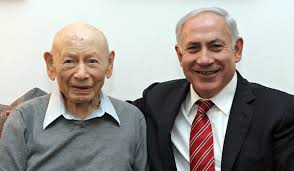
Benzion Netanyahu And Son Bibi
The Jewish method is always to destabilize the State and cause confusion in the society of the host nation. This was clearly but inadvertently expressed by Benzion Netanyahu in his ’monumental’ History Of The Jews In Spain. The superiority of the Jews is clearly expressed in his metaphor of the Jewish root stock of the olive tree onto which the branch of Christianity is grafted. Thus Judaism is the superior and senior while the West by which the Jews mean Christianity inferior and junior.
While that may accurately depict the Jewish view of the relationship between Judaism and Christianity it ignores the fact that the proto-Jewish root stock had no existence before the beginning of the Arien Age when civilization had already passed the infant stage thereby making Judaism dirivative of the mother culture. But, my intent is historic rather than polemical so suffice it to say I have accurately described the Jewish rationale.
The first wave, other than the small colonial Sephardim from Brazil, of Jews arrived as flotsam from the failed Revolution of ‘48 from Germany. This group was well established by the seventies and eighties when the Jews from the Pale, that is ‘Russian’ Jews, came in their millions until 1914. The German Jews looked down on the Eastern European Jews causing such a division that the German Jews were known as ‘Our Crowd’ in relation to them.
While the Jews claim they had little to do with the Bolshevik Revolution they were inveterate enemies of the ‘Czar’ and were responsible for the 1905 revolution and the break of diplomatic relations between the US and Russia in 1911.
http://www.jrbooksonline.com/Intl_Jew_full_version/ij38.htm
The election of Woodrow Wilson in 1913 gave them their entrée into federal politics and a step toward autonomy. They were then able to actively begin to destabilize American society introducing a new element of confusion.
Now in power in the USSR spreading destabilization and confusion throughout Europe, the establishment of the Comintern allowed penetration of the US as Soviet agents infiltrated the country in some numbers. With their arrival American socialists or Communists who had been discretely working behind the scenes in all areas of American life became more open to the observent aiding at the least in the frustration of government attempts to contain the Communist threat. The attempt was and has been ridiculed as the Red Scare as though the suppression of the Communists was a panic situation over a non-existent threat.
Thus, the incredible revolutionary acts in the US of 1919-1921 have been characterized by Judaeo-Communist historians and commentators as ordinary disturbances having no political significance. If

A. Mitchell Palmer- American Hero
one views the Wall Street bombing and the attempts on the life of dozens of leading anti-Communists as what they were, an attempt to overthrow the government in the post-war disorder and incapacitation of Wilson by his stroke resulting in little effective government until March of 1921 as a failed revolutionary attempt the events make more sense. There was no Red Scare, there was a failed Red revolution no different in character than that of Bolshevik Russia. It was the internationalism so ardently desired by Roosevelt. Isolation was not an option.
This mess then was inherited by the incoming Republican president Warren G. Harding which he promptly solved. The Reds were squelched within a few months of Harding’s inauguration. The Party itself was outlawed. However sympathizers and Reds disguising themselves as humanitarian Liberals had the law reversed.
This was not unusual as circumventing adverse decisions by ‘democratic’ methods seemed easy for the Jews. In 1911 when the Jews demanded that Taft cancel the 1832 commercial treaty between the US and Russia, Taft demurred. Having studied the issue at least as well as our present constitution scholar, Barack Obama, he could find no reason to abrogate the treaty. As the Dearborn Independent article linked above of January 1921 indicates Taft’s decision was nullified by Congress:
Neither did the President know what was behind it all. Look at the names of the men who represented American Jewry in the White House that 15th of February 1911 (Jacob Schiff, Louis Marshal et al.). And then consider that the abrogation of the Russian treaty would throw all the vast business between the United States and Russia into Germany, into the hands of the German Jews. The Frankfurt bankers and their relations in the United States knew what that meant. It meant the German Jews would be the intermediaries of trade between Russia and the United States. The business itself meant money, but the relation meant power over Russia- and Jacob Schiff lived to overthrow Russia. The neutrality of the United States was torn to shreds by a movement organized and financed on American soil for the overthrow of a friendly nation, and the organizers and financiers were Jews! They used their internal power to deflect the policy of the United States to assist their plans.
Remember that the Federal Reserve System founded by the Jew Warburg in 1913 was owned by an international consortium of Jewish banks and were all operating out of Frankfurt, save Rockefellers. The Federal Reserve controls US currency receiving interest on the total number of dollars outstanding.
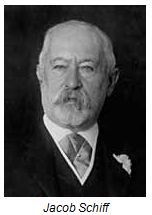 The complicity between Schiff, Marshall and the Jews with the Bolshevik revolution can plainly be seen. The squelching of the American revolution by Harding can be seen as a blow to Jewish ambitions for supremacy in the US as well as in Russia so FDR’s internationalism was the order of the day while ‘isolation’ never was or could be possible. FDR’s abhorred isolationists merely had a different notion of internationalism than FDR and his Jews.
Having delivered one blow to Jewish pretensions Harding delivered another. Ending unrestricted immigration had been a desideratum of the US for decades but had never succeeded. In 1921 under Harding’s leadership it did. As is well known, before August 1914 the Jews had readied the entire Eastern European Jewry for transfer to the US. After the war it was necessary to reorganize and just as they were ready to begin the transfer Harding shut the door in their faces by limiting immigration to more manageable proportions.
Unlike Wilson’s administration, under Harding and his two Republican successors the Jews would have

The Much Underestimated President Warren G. Harding
no place in DC. That would change with the election of Roosevelt.
As far as internationalism went the beginning of Prohibition in 1920 would change international relations dramatically. This during the so-called isolationism of the Republican interregnum.
Prohibition had been in effect for a year and a quarter when Harding assumed office. Criminals are not always as dull as we’d like to think they are. Long before the passing of the Volstead Act criminal minds perceived the fantastic opportunity the law would offer. They were organized to take advantage of the act the day it came into effect. The law was to alter the very nature of the country, turn it into a criminal State. The people in the best position to organize international shipments of liquor to the US were the international Jews led in this instance by the criminal mastermind Arnold Rothstein. Liquor shipments were sent from the British Isles, France et al. while the Bronfmans of Canada made several fortunes transporting booze across Lake Erie to the Mayfield Road Gang and across the Detroit River to the Purple Gang of that city. We’re talking a lot of money and it is filling Jewish pockets.
While this was an unintended consequence of the act it surely was foreseen especially as criminal organizing would not have gone unnoticed. Thus, Harding inherited a unique criminal situation for which there was actually no defense.
Now, I’m carefully searching for words to portray the situation without offending the reader’s sensibilities. We have been conditioned, you and I and all of us, and I mean conditioned like Pavlov’s dogs, to consider the Jews as a much maligned, totally innocent, wrongfully oppressed people. Thus at the cry of ‘anti-Semitism’ we all rush to their defense. Any historian, any interested person who looks into the facts will see that this notion is far from the truth. As Jacob Schiff announced when Taft refused to abrogate the Russian-American treaty: This is war. Any stifling of Jewish wishes was always war, had been war for nearly four thousand years. The war continues.
Internationalism was and is natural to Jews who were dispersed throughout all the nation states of Europe, the Middle East, North Africa and the US. NO matter where they went they could check into a synagogue or Jewish meeting place and, in Europe at least where Yiddish was their lingua franca, communicate with equal understanding. Thus where the various European nations could communicate only with their fellows it was much more easy for Jews to conduct trans-national commerce. They became commodity experts managing the wheat supply for instance.
The huge national colonies in the US whether you choose to call them ghettoes or not, were actually secure areas where new arrivals could begin to acculturate before melding with the outside society. Thus the entry point for most Jews was through New York City, castle Gardens and then Ellis Island.
The main influx of Eastern European, Jews from the Pale began in 1870. The German Jews had preceded them and became fairly acculturated by 1870 so they were able to manage and exploit these East European exotics who they perceived much as White Americans perceived the Negro.
Still, by the eighties the settlement house acculturation centers were created in these colonies where newcomers were given support and had the, to them, very strange culture explained. The Jews of the Pale were on the order of people stepping from a medieval world into the modern world. They developed a strange concept of themselves in reaction to their hosts. Thus they projected America as a hostile environment replicating their situation in Europe.
There were several settlement houses on the Lower East Side. As the numbers of Jews increased drastically from 1870 to , say, 1900, the by then very large colony on the Lower East Side attracted the attention of wealthy do gooders of the very elitist American stock, such as the future Mrs. Franklin Delano Roosevelt, Eleanor. Now remember this elite would never consider talking to people like you and me. We would be sent to servants quarter but never allowed through the front door. Nevertheless the first group of society women, girls, numbered somewhat over eight. They established he Jr. League. They arrived at the settlement houses and began to minister to the colonists, not as equals but as patrons.
Remember, these immigrants, the majority here for less than ten years were still walking around in a dazed condition speaking little or no English and that with a thick heavy accent when the very elite of the natives arrived to ‘serve’ them. Stop and consider the social distance from the elite to you and I and then consider the distance from the elite to the immigrants. Does your heart bleed for those poor, poor people? The elites’ did.
The arrival of the elite ought to have raised the self-estimation and already inflated Jewish sense of self-importance regardless of their impoverished state. They still considered themselves as Jews the elite of mankind. The elite then meeting the elite. As it should be in Jewish eyes.
As strange as it may seem these society maidens also looked on the Jews as the Chosen People carrying some kind of ancient wisdom far superior to their own. This facilitated their ability to give of themselves while enabling themselves in their own minds to be of service to God’s own people.
Eleanor then introduced Franklin to this colony on the Lower East Side. He too was sucked in. As I said Jews were natural internationalists so that the two altruists inhaled this internationalist approach combined with their giving attitude thus conditioning FDR to have a condescending attitude toward the unfortunate but deserving people of the world when he became president. He became used to distributing largesse that cost him nothing.
As socialites he and Eleanor undoubtedly met many if not most of the prominent acculturated German Jews who undoubtedly wasted no time getting to know these society maidens who could introduce them to their other very important family members.
It was these acculturated Jews who owned the tenements, owned the needle trades and who exploited their fellow Jews with high rents and in sweat shops. The famous Triangle building fire was caused when Jewish owners locked their workers in; no natives were involved in any of this.
There was someone else who became aware of the international nature of Judaism and that someone was Henry Ford. Not of the American elite but one might say of the peasantry he saw the situation somewhat differently than the Roosevelts and the fabulously rich society maidens. While the social set could look down on the Jews benevolently Ford could see through the international mindset of the sect. He could see the aggressive nature, the need for autonomy or even dominance. He was dealing with the Anti-Defamation League eyeball to eyeball. He could see the traditional American culture and mores under assault by the invaders with their creeping collectivism.
Having been taken advantage of by them in the Peace Ship incident and resisting further attempts he decided to counter attack. As this was asymmetric warfare, a war of words so to speak, he bought a newspaper and took it countrywide. This was the famous Dearborn Independent. He began to publish a series of exposes detailing Jewish depredations such as the one linked above concerning then former President Taft.
These exposes were not off the shoulder, or from the hip. Ford spent a small fortune building a library of books concerning the Jews. He set his editor the very capable William J. Cameron to work studying and writing. As can be seen from the Taft article which is representative, Cameron knew what he was doing while wasting no words.
These exposes infuriated the Jews causing them to launch a defamation campaign against Ford. Their rage knew no bounds when Ford gathered and published the exposes in four slim volumes called, appropriately enough, The International Jew. To what could the Jews rationally object? Their whole program was internationalist, they had firmly indoctrinated the future president of the United States in their beliefs.
They were in a dither. This was America where freedom of speech, of which they availed themselves liberally, was sacrosanct, a more that was nearly impregnable to change. While they dithered Ford began a campaign against internationalization of American agriculture by a disciple of one David Lubin named Aaron Sapiro.
Sapiro’s mentor, David Lubin, had taught him how to set up farm cooperatives then retired to Italy from whence he attempted to set up coordinated international cooperatives linked with those not only of the United States but Argentina, Australia and all the great wheat growing areas of the world. He was seeking to corner wheat.
A good explanation of the California or Sapiro plan as it was called was given in the Century Magazine of November 1921 by the famed agitator and propagandist Gustavus Myers. A copy may be purchased from Amazon.com. Go to the Gustavus Myers page. More about Myers further on.
Ford saw through this plan and over a series of twenty articles beginning in 1924 exposed it. As it was a Jewish program he identified it as that and Aaron Sapiro and his associates as Jews.
Cooperatives were not new, cooperatives had been attempted before while Herbert Hoover as President would encourage the cooperative movement. Apparently unable to defend the Lubin plan that Sapiro called the Sapiro plan he thought to attack Ford on an irrelevant issue- anti-Semitism. Anti-Semitism had nothing to do with cooperatives while there was no law against anti-Semitism.
Sapiro tried to establish the concept that Ford was defaming a whole people, which was also no crime, that is the Jews, rather than just himself as an individual Jew. This was a great Jewish desideratum which if Sapiro had succeeded would have placed the Jewish people beyond criticism giving them dominance over the American people.
The suit misfired when the trial was deemed a mistrial. It was not resumed. The people who write the histories are pro-Jewish and anti-Ford so that while Ford had been outrageously defamed by them the Jews believed that Ford was entirely discredited amongst his own people. This was not the case.
Ford had done, was doing, great things. He was perhaps the greatest American of the twentieth century and if not of the world certainly among the top three. While his deeds and person are now belittled and disparaged by polemical writers the effect on Ford before 1933 when the Jewish protégé Franklin Roosevelt was elected president was minimal. As significant as their war on Ford was to the Jews it wasn’t that central to the country at large. There was a lot more and a lot more important things to occupy the public’s attention.
The collectivist Judaeo-Communist outlook was still not influential enough to overrule the Americanist individualist approach. In 1924 Coolidge, an individualist if there ever was one, wanted, was eager, to sell the abandoned and deteriorating facilities at Muscle Shoals on the Tennessee River to Ford to develop. Indeed the House of Representatives passed a bill to do so in overwhelming numbers but the vote was scotched by collectivists. In the event nothing was done with the embryo TVA facility until the Roosevelt administration acted on it to create the TVA along collectivist lines. Thus Roosevelt and his collectives were given the credit rather than Coolidge, Hoover, Ford and the American individualist plan.
One can only guess how history might have changed if Ford had been allowed to develop Muscle Shoals and the Tennessee River. Cheap fertilizer might have invigorated agriculture thereby interfering with the Lubin-Sapiro-California plan. In any event the TVA was delayed for ideological reasons, damn the consequences.
Ford remained in good grace through the twenties being especially well thought of by that great individualist Herbert Hoover. Ford was far from shamed. At the grand opening of his incredible Greenfield Village, Disneyland before Disneyland, in 1929 President Herbert Hoover was present for the ribbon cutting. While collectivists disparage the Village it was quite amazing for the time and remains so as it now includes a tour of River Rouge.
In 1933 when Roosevelt was inaugurated America’s past to paraphrase Ford became bunk. In the words of Greil Marcus it became ‘weird old America.’ Roosevelt and his followers of all stripes tried and reasonably succeeded in obliterating the individualistic American past.
As the Jews were at war with the German nationalists in a very different manner than they were against America and indeed against the Russian people they were converting the individualism of the first and second Americas to the European ideology of Fascism. To be opposed to Roosevelt and the New Deal made one a ‘Fascist’, or in Jewish terms an anti-Semite.
Indeed, the Jews became so influential that c. 1940 there was an attempt by the Jews to take credit for the success of the US by pretending that they were the true Americans defending democratic ideals while the older individualistic Americans personified by Charles Lindbergh were Fascists out to destroy democratic America by totalitarian methods. The idea was revived by the contemporary Jewish writer Philip Roth in his novel The Plot Against America in the early years of this century.
Internationalism then was a Jewish concept embraced by Franklin and Eleanor Roosevelt at the beginning of the twentieth century on the Lower East Side. Under Jewish tutelage FDR would then pursue a One World concept with a United Nations. Wilson’s League Of Nations implies a number of disparate nations cooperating together but wanting to retain separate identities. One World and a United Nations implies the obliteration of borders and nations but nations, that is peoples, would still exist separately. Therefore a situation had to be created that commingled all peoples in the puerile belief that one world, one people, one ideology would be created. Of course, the Jewish idea was that the world would all come together under them and their conception of God with themselves as the Chosen People being the administrators.
But I get ahead of myself. To return to 1933.
Part III Nothing To Fear But Fear Itself follows.
Henry Ford And The International Jewish Conspiracy
September 12, 2013
Henry Ford And The International Jewish Conspiracy
A Review Of The Jewish Virtual Library Post ‘Henry Ford
Invents a Jewish Conspiracy’
by
R.E. Prindle

The Great Henry Ford
http://www.jewishvirtuallibrary.org/jsource/anti-semitism/ford1.html
http://contemporarynotes.wordpress.com/2008/08/08/henry-ford-and-louis-marshall/
Jews should always avoid writing on history. Because of their extreme ethnic bias they can produce only the most self serving twaddle. This is no more evident than in their Jewish Virtual Library post concerning Henry Ford. The mere title of the post expresses its falsification of history. Ford neither invented a Jewish conspiracy nor the International Jewish Conspiracy. In the course of events he was swept up into the Jewish War against Europeans much against his wishes.
The JVL isn’t even capable of putting Ford and the auto industry into a historical context without which Ford’s actions cannot be understood. Among the many battle events that appeared after 1900 was that of the bankers versus modern industry. There were of course Aryan banking firms and Jewish banking firms, at the time quite distinct from each other and in competition on an ethnic basis.
The railroad industry had dominated the banker’s attention in the nineteenth century thus they pooh poohed and disparaged new industries such as that of autos.
Both Jewish and Aryan banking firms refused to loan to the auto makers so the makers in turn developed new methods that freed them from dependence on loans from bankers while still allowing them to develop rapidly without interference from bankers. The two stellar auto makers were Henry Ford at Ford Motors and William C. Durant at Buick. Durant, perhaps the most imaginative auto genius but an inveterate over reacher attempted to gather the most prominent auto makers into a combine he called General Motors with which Ford initially flirted.

William Crapo Durant ‘Billy Durant’, A Great Visionary
Now after 1910 when autos seemed to be a permanent fixture and Durant overextended himself the bankers moved in and pushed Durant out. Now as several recent bailouts attest bankers don’t even know how to run banks much less than an auto company in the teens. Under the bankers Buick stood still while Ford shot ahead. Durant regrouped using the auto of Louis Chevrolet to reenter the field while using its success to recapture Buick and regenerate General Motors.
Ever expansive he once again overextended himself being forced out once more. This time the bankers installed an auto maker management that made GM a success capable of challenging and surpassing Ford.
While this was going on WWI was being fought. Woodrow Wilson then president was a socialist so that when the US entered the war in 1917 the government seized either control or direction of industry. The rails were nationalized while industry in general fell under government controls administered by an agency called the War Industries Board, the WIB.
One of Ford’s supposed faults according to the JVL was that he was opposed to government regulation of business. True, but so were all industrialists and such opposition could only be considered a fault by Communists qua socialists. The WIB was the agent of that regulation.
Now, whether the writers of the JVL like it or not it is a fact that Warburg came to the United States where he immediately organized the Federal Reserve System that was owned as a private enterprise by these so-called Socialists by nine international Jewish banking firms plus Rockefeller. This is an undeniable fact.
The Federal Reserve controlled, and still controls, US currency lending it to the US for use. Thus the dollar was a Jewish financial instrument for the use of which US taxpayers paid the Jewish owned Federal Reserve System interest every year. Apparently the Jews thought Ford and others were ignorant of what was happening. Quite fatuous on their part.
While, as I understand it, the Jews still deny that Wilson brought rafts of Jews into government beginning with his inauguration in 1913. In 1917 the WIB board was virtually a Jewish agency. This was all known at the time but strenuously denied by the Jews. Its director was Bernard Baruch who became the grand old Jewish advisor of presidents later in life.
Wilson appointed the first Jew, Louis Brandeis, to the Supreme Court. Brandeis, an ardent Zionist, was reputed to be the wisest of the wise, the sagest of the sage and a universal genius. FDR, a disciple of Wilson in these years, would brand Brandeis during his own administration ‘our Isaiah.’ So while the writers of JVL may simper because ‘rumors were dredged up’ that Wilson took ‘secret’ orders from Brandeis over the phone, while deleting the pejorative word secret, it is not unlikely that Wilson did discuss situations with the ‘wisest of the wise’ whether over the phone or face to face. Nothing would be more likely.
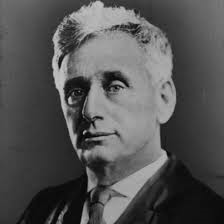
Louis Brandeis ‘Our Isaiah’
Indeed, the Jews so loved Justice Brandeis that they named their national university in the US Brandeis University after him. He and the arch criminal Arnold Rothstein were the big Jewish men of he teens and twenties. Just recently the Jews opened a ‘national’ museum in Las Vegas celebrating Rothstein and other specifically Jewish criminals.
While the railroads were nationalized the Wilson Administration demanded that the major industries file financial statements and business plans with the WIB. The auto industry objected to this rightly believing that through the Jews who ran the WIB their industrial knowledge would pass into the hands of the Jews giving them an inestimable advantage.
One imagines that the JVL will pooh pooh this yet it remains true that at the end of WWII the Alien Properties Board that controlled the confiscated properties of the Germans and Japanese valued into the billions was directed by the Jew David Bazelon who sold these properties without bids to his fellow Jews at less than fire sale prices making their post-war fortunes while robbing American tax payers.
The auto makers then were right to protest these regulations. They, especially the Dodge brothers, did so vociferously while using intemperate racial slurs directed at Baruch that Baruch later rapaid when the Dodge Brothers both died mysterious deaths in 1920. There was even an attempt made on Ford’s life.
After the war friction between Ford and his major stockholder James Couzens was such that Ford was forced to buy him out. Not having the necessary cash he was forced to violate his principles and go to the bankers. They shortly called the loan that Ford was unable to meet on short notice. However by drastic reorganization of his business he was able to meet the loan this thwarting a Jewish attempt to take over Ford Motors. Harboring resentments he was now his own man.
As a major condemnation the JVL says that: ‘He opposed various symbols of social and cultural change aound him, including Hollywood movies, out of house child care, government regulation of business, Eastern European immigration and new styles in dress and music.
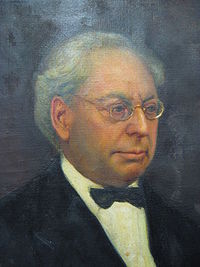
Louis Marshall
Consider these defamatory ‘sins’ in the context of the times. Hollywood movies were under constant attack during the teens and twenties. There were many local moves to ban them. Carl Laemmle of Universal, himself a Jew, even pledged to make no more anti-Semitic movies. The Catholic leagues were pressing for censorship. In 1921 in an effort to quiet criticism Hollywood itself established the Hays Office to censor themselves. Self-censorship is always especially effective. Will Hays, Harding’s very effective Postmaster General, was lured away at a royal salary of millions in today’s currency to run it. So Ford opposed the immorality of Hollywood movies? Then he was on the right side.
He opposed government regulation of business? Well, Harding and the Republican Interregnum of 1920 to 1933 repudiated Wilsonian socialism returning the railroads to private hands and returning the twenties to the most laissez-faire period of American business. Once again Ford was on the right side.
Ford opposed Eastern European immigration? Eastern European is code for Jews. The Jews were in the process of organizing the whole of European Jewry for transportation to the US. Reacting to this the country passed restrictive laws in 1921 and 1924 thwarting the Jewish plan. Once again Ford was in tune with universal sentiment. Me thinketh that Jewish protests are spurious.
As for new styles in dress and music neither did these new modes go unchallenged by a vociferous public while as a young boy in Michigan in the late forties we were still under the influence of Ford’s musical taste singing folk songs on a daily basis in class. One might then without too much of a stretch claim that Ford was the father of the folk revival of the fifties and sixties. It will be remembered that Carl Sandburg published his compendium of old timey songs in this period also.
So, really, the writers of the Jewish Virtual Library ought to either develop better research methods or lose some their ethnocentric chauvinism and xenophobia.
Ford, then, may fairly be said to have been in a contest not of his own making with the Jews when he began to publish his newspaper the Dearborn Independent.
The implication in the Jewish Virtual Library article is that Ford was some insane irate individual crazed lone wolf anti-Semite. Once again, placed in the historical context of the times this accusation is completely false. In fact the Communist Revolution in Russia created a huge furor with large factions in all European countries pointing to the huge involvement of Jews in not only the successful revolution in Russia but all the failed national revolutions of Europe and yes, that of the US. The evidence was overwhelming, denial was absurd, however that was the tack the Jews took.
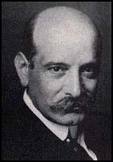
Paul Warburg
Jewish damage controllers rushed into the fray howling anti-Semitic charges right, left and down the middle. As a centerpiece they chose a negligible manifesto culled from earlier Jewish writings called the Protocols Of The Learned Elders Of Zion. The Protocols was a pale imitation of Marx’s Communist Manifesto, hardly worth bothering about. Certainly it was amateurish next to the total Jewish assault on Western Culture led by the Frankfurt School of Critical Theory that would continue from the early twenties through today backed by the emerging technologies of movies, radio and TV. The Jews still talk about the Protocols as some sort of horror.
Ford should have dismissed the book as some sort of Jewish folly but he took it seriously and actually published it as the first volume of his four volume series of essays, The International Jew.
Ford’s use of he term international Jews did not refer to all Jews. Ford himself was tolerant of all religions and nationalities including the Negroes, more than he should have been. Ford’s point was that there was a cadre of international Jewish politicians just as there was an international Communist conspiracy. This cadre of Jewish politicians was easily identifiable although Ford did not name them, probably because they would sue him as he nevertheless was three times. For a confirmation of Ford’s allegations read my post linked above. Louis Marshall who was the international Jewish secretary of state confirms Ford’s analysis in his collected letters.
Now, Cameron’s essays approved by Ford were not wild eyed anti-Semitic rantings as the JVL claims but were well researched documented essays concerning Jewish involvement in specific areas of American society. Ford amassed a several thousand volume library of Jewish writings pro and con that were at Cameron‘s hand. When Ford discontinued his contest with the Jews he asked them what he was to do with the library. He was absolutely disgusted when he was told to donate the library to the Jewish Theological Seminary in Cincinnati. Whatever became of the library is not known.
The articles were however ‘critical theory’ of Jewish activities making them unforgivable in Jewish eyes. Thus, the astonishing campaign of vilification against Ford, slanderous, vile and mean spirited.
The International Jew articles are readily available for reading on the internet today for the inspection of the curious.
Finally, the JVL asserts: Ford’s attempt to prevent unionism at his plants produced strikes and violence, mostly provoked by Ford’s own strike breakers.
While it is true that Ford saw no need for unions as he believed that he took better care of his employee’s interests than any union thugs could.
Ford was the first industrialist to ensure a clean, well lighted, airy work environment for his employees. Even in the Communist Charlie Chaplin’s parody of Ford’s assembly line in his movie Modern Times the line was immaculate. You could eat off the floor. Ford’s line was designed so that there would be little bending and stooping. The parts passed by waist high.
Taylorite efficiency experts determined the most efficient movements to do a task with maximum efficiency. Every consideration of the employee was taken. I, myself, have worked the line at a GM assembly plant, I know how it is done. I know the human material that has to be managed and it is difficult material. Molding the steel is easier.
In addition when Ford realized the money that could be made by efficient operation combined with an unsaturated seemingly inexhaustible demand he voluntarily with no prompting doubled the wages of his employees.
From 1914 to the Depression he increased wages so that by the beginning of the Depression he was paying eight dollars a day or better than three times his 1914 wage. The Depression contrived by the Judaeo-Left forced him to lower wages rather than raising them which he would have continued to do. This reduction caused Ford great anxiety as though he had failed his employees.
Now, the Reds had never forgiven Ford for doubling wages back in ‘14. They hated him and wanted to destroy that symbol of capitalist efficiency, Ford’s River Rouge plant.
While writers such as at the JVL seem to assume that unions were universally favored and Ford was alone in not favoring them, nothing could be further from the truth. Remember the JVL is Jewish fantasy and not history. Workers except for Red doctrinaires didn’t want unions. Unions made little to no headway until the Reds got their man, FDR, into the White House where he passed laws declaring companies and workers had to accept them whether they wanted them or not. Most workers didn’t feel the need for another boss and more fees, taxes by another name, extorted by union thus and they were criminal thugs that nobody can deny. Even today after seventy yeas of favoritism less than 25% of workers belong to unions.
Using FDR’s Wagner Act then the Communists organized a march on River Rouge with the express intent of smashing the assembly line and destroying Ford Motors. Of course the writers at the JVL think any thwarting of their wishes is criminal so Ford’s successful defense of his property in their eyes is a criminal offence. Suffice it to say that in the Battle Of The Overpass two opposing armies were fighting a war that Ford won.
That the JVL can write such twaddle as the Ford article and hope to pass it off as objective history is amazing. After all, the whole world is not only watching but reading. This will not pass.
It is writing such as this at the Jewish Virtual Library that gives the internet a bad name. These people should be ashamed of themselves.

Carl Sandburg- The Great American Songbook
Anything Less Than Real:
Warren G. Harding Rings In The New Era
by
R.E. Prindle
Dedicated to Ann Coulter who is the only other person I have heard of who realizes the importance of Warren G. Harding.
It is time to reevaluate the Harding presidency as well as perhaps the Republican Interregnum between the Socialist Wilson and FDR administrations.
Perhaps the first thing to do is to dispel the notion that the Harding Administration was extraordinarily corrupt as administrations go. If one is going to call the administration corrupt then it must be against a normal standard and not isolated as a phenomenon. While Harding inherited Wilsonian corruption after the Great War, Roosevelt created the corruption of post-WWII. The money involved in the latter dwarfed anything that preceded it by incalculable amounts.
A major source of corruption after the Great War was the disposal of stores purchased for the war. These were fairly trivial amounts by later standards. In contrast the Roosevelt administration sequestered some piddling amounts of Japanese property and mega enormous amounts of German property including huge companies and scads of patents, copyrights and trademarks. Yet one never hears of these thefts, only a couple refrigerators left on back porches by Japanese. Ask yourself why? These German properties were under the personal authority of Pres. Franklin Delano Roosevelt and the officer of the Alien Properties Custodian of David Bazelon. Bazelon was both a Jew and associated with the Super Mob and Chicago’s Outfit.
After the war Bazelon used his office to enrich both Jews and criminals by selling off the pittance of Japanese properties and, in today’s values billions and billions of German properties for a penny or so on the dollar thus stealing from the Germans and defrauding the US Government of billions.
I don’t think it is necessary to list other financial malfeasances; Bazelon alone surpassed any corruption of the Harding years including Tea Pot Dome and Elk Hills. So yes, there was the inevitable postwar corruption in the Harding Administration, but not by it, of negligible proportions compared to Roosevelt.
Having put that out of the way let us now consider the state of the nation Harding inherited from the Democratic Wilson Administration. Two new developments, unprecedented developments, had occurred that were novel for a new administration to deal with. One was the terrible advent of Prohibition and the other was the women’s vote.
In this first election in which women cast their ballots we had the first landslide victory in US history. Harding captured sixty percent of the vote and all but a hundred or so of those of the Electoral College. Apropos of that Harding has been ridiculed because his campaign manager, Harry Daugherty said that Harding looked like a president should. Well, he did.
His opponent, Cox, on the other hand, looked like a mousy dip, which isn’t to say he was one, he looked like one. He was unhandsome. The choice for women thus was between a nice, big handsome Harding who looked the part and a mousy Cox who didn’t. The election was the first landslide in US history. I leave it to you to draw your own conclusions.
The ground rules had changed whether you believed in it or not, elections could no longer recite the issues as men understood them but campaigns had to be crafted to include the very different concerns of women. In my estimation Harding clearly benefited from the female vote.
Prohibition was an entirely different challenge. Prohibition was an achievement of female politics. The campaign for it was carried out by criminal means. The most famous prohibitionist was the violent, psychotic Carrie Nation who entered people’s places of business and began laying about with an axe. She was allowed to get away with it. The promoters of prohibition were too limp brained to think the matter through to its conclusion apparently unaware that alcohol could easily be smuggled in from abroad or even, heaven forbid, manufactured illegally.
Some form of alcohol, wines and beers, had been part of civilization from its inception and gave some surcease from the cares of life. While the vast majority of drinkers were able to manage the pleasures there was naturally a percentage who abused alcohol. When distilled liquors became available the problem of abuse was compounded.
Nevertheless, wine, beer and strong spirits comprised a huge industry employing undoubtedly tens of thousands of people. In the reformers’ mind, as always, it seemed better to punish the majority to suppress the few.
It should have been obvious to these unhappy reformers trying to make everyone’s life as miserable as theirs that an entire illegal industry would rise from the ashes of the legal and that that illegal industry would necessarily have to be criminal and clandestine. What can one say about reformers?
Thus when the Volstead Act was passed an unprecedented wave of criminality swept over the country like a tsunami. We can blame Prohibition on the Wilson Administration on whose watch the bill was passed and enforced. Thus the Harding Administration was called on to deal with this enormous level of corruption generated by do gooders. Once again Prohibition far exceeded any of the usual political corruption of the twenties.
Now, the control of prohibition passed into the exclusive control of two immigrant groups, those of the Italians, actually Sicilians, and the Jews. Using the incredible profits of Prohibition Jews and Sicilians then were able to assume a dominant if not controlling position in US politics while being able to buy into legitimate businesses. As incredible as it may seem by the mid- to late thirties many people considered crime as just another way of doing business, an industry. Needless to say bootleg profits were used to corrupt politics at every level. How could the Harding Administration escape? Once again, just look at the FDR Administration with open eyes.
The US has always taken a romantic or sentimental view of immigration, still does. As if it justified immigration the Romanticists said that the immigrants were only seeking a better life, content themselves in the superiority of having created not only a better life than anywhere else but the best life. Liberals believe in their own superiority.
One imagines that the only reason to emigrate from one’s homeland at any time in history was to seek a better life. Perhaps invaders drove you from your country making it necessary to find a life, better or worse, somewhere else and at someone else’s expense. Perhaps one’s situation was so bitter that any place else was more attractive. Actually the prime motivating force was US employers seeking cheap labor. Not very romantic really.
Nevertheless unlimited immigration began after the Civil War during the seventies increasing yearly until 1914 when the Great War began cutting off all emigration. It was then that problems not seen as too significant became prominent. US immigration had been from Europe and when the continent went to war these old national loyalties caused fractures. It became apparent that the Melting Pot notion had failed and as Teddy Roosevelt said, the US was nothing more than an international boarding house. Sentiment was strong for the Central Powers, who we have all been taught to despise, but not as strong as that for the Allies, who we have all been taught to revere.
The Irish acting on the principle that the enemy of my enemy is my friend openly sided with the Central Powers against the English hence targeting US shipments to England for sabotage. The Jews whose chief enemy was the Russians refused cooperation with the Allies until Germany took Russia out of the war and then at that time and only at that time, the Jews gave the Allies full cooperation against the Germans who they then believed that they could include in the Bolshevik Revolution post war.
The Italians took a stance but issued a recall of men back from the US to fight in the war. After the war Mussolini attempted to send the Italian wounded back to the US to be medically cared for at US expense.
Of all the immigrants US nativists considered Jews and Italians as unassimilable. If nothing else, Prohibition proved that assertion as US laws meant nothing to either group. Thus it was left to the Harding Administration to deal with the long deferred problem of immigration. It would do so for the first time from a realistic perspective rather than a sentimental or romantic one.
A concomitant of immigration was that a great many of those ’seeking a better life’ had left their homelands a step or two ahead of the police as either criminals or political fugitives. They were revolutionaries seeking to overturn their own governments, Communists in a word. Their position had been strengthened by the success of the Bolshevik Revolution in Russia while the Wilson Administration was actually Socialist in sentiment and had the war lasted a year or two longer, in fact. Wilson was on the verge of establishing a third term dictatorship to do just this, not unlike what Roosevelt achieved, when he was struck down by his stroke thus aborting that plan.
The Revolution did not confine itself to Russia but was actually being attempted through 1919 and 1920 into 1921 and the Harding Administration. The country was nearly in total disorder when Harding was sworn in, March of 1921. A necessity of the first importance was to restore order, that is, put down the Revolution. Harding was equal to that task. The Chinese proverb and curse is that may you be born into interesting times. While the elements defeated by Harding have successfully maligned his memory Warren G. Harding was actually one of the greatest US presidents.
2.
No historian I have ever read regards the problems Harding had to solve or his lack of experience in doing so. Harding was the editor of the small town newspaper of Marion, Ohio, West of the Alleghenies in Middle America. Harding worked hard, applying himself intelligently, making a success of his paper.
He became friends with Harry Daugherty, an Ohio politician who propelled him first to the Senate and then in 1921 to the Presidency. Years before his election Harding began an affair with a young women by the name of Nan Britton by whom he had a child. Naturally Harding had no desire to have this publicized yet he behaved honorably always supporting Nan and his child. He was a decent and good man.
Much has been made of this affair as though this were immorality of an extreme nature. Historically affairs and illegitimate children have been common. No big deal. How can one be expected to condemn Harding when the later John F. Kennedy had mistresses in the White House when Jackie was not about. What is one to think of Kennedy when he had his secret service agents rounding up prostitutes from the street, three at a time, for his dalliance?
FDR publicly lived with his mistress in Georgia while his beauteous wife, Eleanor pined away up North. Bill Clinton kept his member limber by having his female aides give him fellatio during business hours in the Oval Office. Hillary didn’t object.
Was Harding a moral reprobate? Hardly.
Then, the historians attempt to make him an ignorant oaf. A competing presidential candidate William McAdoo described Harding’s oratorical abilities, not surprisingly, as ‘an army of pompous phrases marching across the landscape in search of an idea.’
Oh well, politicians, how much sense do you get out of one of them? As an example of supposedly meaningless blather they offer this pre-election statement of Harding:
Quote:
America’s present need is not heroics but healing;
not nostrums, but normalcy;
not revolution but restoration;
not agitation, but adjustment;
not surgery, but serenity;
not the dramatic, but the dispassionate;
not experiment, but equipoise;
not submergence in internationality, but triumphant nationalism…
Unquote.
Rather than the nonsense it is portrayed as by his detractors, the speech details the problems the country was facing and the results Harding hoped to bring about and in which he largely succeeded. I’m sure his audience would have understood, whether consciously or unconsciously, exactly the issues to which he was referring. Only absurd historians have made a jumble of it. What the list amounts to is an eight point program not too different in approach than Wilson’s fourteen points. So we have a sort of political continuity between the administrations.
Let’s consider the list:
1. Not heroics, but healing. Refers to any number of problems, the waves of industrial unrest, hysterical politics and what not, a general calming down, a reduction from hysterics to the dispassionate.
2. Not nostrums but normalcy. A nostrum is a pet scheme for bringing about some social or political reform. There were enough of those going around- Prohibition, Communism et al. The issue here was the use of the word normalcy which in 1920 was incorrect although in common usage now. Normality would have been the correct word but normalcy actually carries the correct meaning that normality misses. His use of normalcy was a cause of immense hilarity and satisfaction to his detractors.
3. Not revolution but restoration. An obvious reference to the Bolsheviks and the social unrest they were causing.
4. Not agitation but adjustment. Once again political and social agitation were rife calling for the discard of current ways for impossible utopian ideals.
5. Not surgery, but serenity. Agitators called for drastic social surgery when once again calm and reflection were called for.
6. Not dramatics, but dispassion. Calm down, lower the level of hysterical passion.
7. Not experiment, but equipoise. Prohibition was a disastrous social experiment from it conception, what was needed was balance.
8. Not submergence in internationality, but triumphant nationalism. Clear enough, the League Of Nations was unworkable, out; tariffs were in, America First. The Naval Treaty.
As Harding was elected by a landslide one has to believe that the electorate knew exactly what Harding meant and whole heartedly approved of his choices. Nor did Harding disappoint; he was very popular during his presidency only successfully denigrated after his death when he was unable to defend himself.
3.
In office only two and half years before he died in suspicious circumstances how did Harding conduct his administration? One can’t imagine today the tremendous political energy released by the Bolshevik Revolution. The world was terrified while an angry civil war ensued across the Western world financially and militarily over an exhausted Europe. The civil war lasting for several years was fought on several fronts. The war had turned from a national war to an ideological war. Reds versus Whites. In Russia the ideological war was fought on three fronts, the North of Archangel, South in the Ukraine and in Siberia East of the Urals. American troops and munitions were involved. In the end the Whites, or Czarist troops lost.
Revolutionary activities sprang up in all countries including the US. While the US was aiding the Whites, the Jews raised enormous amounts that they traitorously funneled to the Bolsheviks under the eyes of the Wilson Administration. Jacob Schiff, the Jewish Prime Minister, was called to Washington by Wilson to defend himself against charges of Bolshevism. Wilson let him off the hook. Thus as in the Viet Nam war of the 1960s and 70s Government efforts were nullified by Fifth Columnists aiding the enemy.
The Bolshevik victory in Russia gave Socialism a political base from which to operate so the Socialists and Communist cells in the US were activated lending their support to Soviet efforts. Suddenly a socialist presence was clear in labor, the churches, the arts, publishing, across the board. While official Communist membership was relatively low so that it could be denigrated as no threat it must be remembered that the successful Bolshevik Party in Russia was just a splinter of US numbers, so size is irrelevant; organization is the key.
America’s first reaction was sharp as A. Mitchell Palmer, the Attorney General of the Wilson Administration rounded up several thousands of Communists for deportation to Russia. Here the Fifth Columnists sabotaged this wise response citing peacetime US practices for this wartime attack instead of the wartime provisions Wilson had used during WWI. Palmer was compelled to release all but a couple hundred who were put aboard ‘the Soviet Ark’ and sent to Russia including Leon Trotsky who had been living in New York City and without whom the Russian Revolution might have been reversed. Trotsky was actually temporarily detained but then released for some reason.
There were substantial crackdowns on all Socialist activities including the IWW or Industrial Workers Of The World who were reduced to impotence. Their leader, Big Bill Haywood was spirited out of the country to Russia. As Harding came to office there was a virtual civil war in progress. The fact has been obscured or erased by subsequent historians who are compelled to take the Red point of view.
At the same time as this undeclared war was being fought the troops were being brought back from the land of hinky, dinky parlay voo. How ya gonna keep them down on the farm after they’ve seen Paree. Even though their lives had been totally disrupted very often destroyed for no reason now that their job was done they were thrown on the trash heap. Except by Warren G. Harding, the new president.
A not overly favorable biographer, Samuel Hopkins Adams, writing in his biography of Harding, The Tragic Years, comments favorable thusly, p. 284-5.
Quote:
The glory of heroes is soon departed. The public which welcomed with oratory, banquets, and ticker-tape our fighters, returning victorious from Europe, quickly forgot those of them most sorely in need of care. Two years after the Armistice the plight of war’s human debris was pitiable. Of these the most desperate cases were 71,000 mental patients and 38,000 tuberculosis victims. F.W. Galbraith, Jr., National Commander of the American Legion, estimated on the basis of an investigation, that there were 10,000 of the disabled in cellars, poorhouses, and insane asylums. T.W. Salmon, a disinterested and competent investigator, thus reported:
“Veterans with nervous or mental troubles were without provision for care and were quartered in institutions for the criminal insane, addicts, and vicious degenerates, without Federal supervision.”
No agency in Washington was equipped to handle a problem of this magnitude. Nor was there any special public interest in it. The war was over. “Let’s forget its’ expressed the attitude of a people sated and bored with emotion.
The President (Harding) did not feel that way about it. His humanitarianism revolted from such neglect. He acted wisely and constructively in welding the disparate, overlapping guardianships into one official entity, the United States Veterans Bureau…
Unquote.
Compare that to the neglect and humiliation of the returning veterans of Viet Nam. The so-called Red tribunes of the people, these creeps who sabotaged their brave men’s efforts on the battlefields, heaved garbage on them as they debarked from ships and planes.
Even WWI vets who had been promised a bonus or tip for the needless disruption of their lives were denied their due by the People’s Commissar Franklin Delano Roosevelt. They were compelled to storm Washington in a semi-violent attempt to compel the fulfillment of the government’s promise. The same army they had served in was turned against them. So much for FDR and the New Deal.
With the end of the war a whole host of what were actually revolutionary acts were released. Palmer of the Wilson Administration certainly treated them that way. As a result his house was bombed putting his teeth on edge. A huge bomb not unlike that used in OK City of recent memory was detonated on Wall Street. Law and order was rapidly breaking down. Mail robberies were a daily occurrence while millions of dollars of stolen Liberty bonds were being traded. Those millions today would represent a billion dollars or more. This was big money happening. Incredible amounts of money that no group of individuals could possibly spend. Where was the money going?
A very able member of the Harding cabinet, Post Master General Will Hays tackled those problems and solved them in short order. Such a man was a danger to the Lords of Misrule. What happened to Hays? In addition to all the other problems, the Guardians of Decency were alarmed, justifiably so, at the moral content of movies. Rather than accept outside censorship of the movies the moguls decided to police themselves and as their Top Cop they lured Will Hays away from his post by an offer he could have refused but found it impossible to do. The offer was for 100,000 dollars a year. That right 100K in 1922. Was that bribery or what? After only nine months in office Hays was offered the equivalent of five million dollars a year to supervise Hollywood morals. Who wouldn’t take that while being flexible enough not to lose the job?
Since the offer came from Hollywood that tells you who was behind the mail robberies and stolen bonds and lets you know what they were worth.
Harding outlawed the Communist Party briefly in 1921 getting right on that offense too but the Fifth Columnists got that overturned.
Thus within months of being in office Harding had cleaned up a large part of untoward activity while if couldn’t actually suppress Communist activity he was at least able to force them to turn their damper down while forcing them into even deeper clandestine activity.
But, as you can see he was building up a lot of enemies who wished him dead while wanting his memory exorcised.
And then Harding had to deal with the problem of immigration, also within the first months in office. The cry for the restriction of immigration, whether it came from North, East or South had been voiced at least as early as the 1840s when the potato famine drove a couple million Irish to the New Island. Really teeming masses. And then the Forty-eighters came over as a result of the failed Communist Revolution of 1848, more wretched refuse, that led ultimately to the post-war revolutionary activity.
These members were relatively small but in the 1870s Jewish immigration from the Pale of Russia began in earnest resulting in several million people who the restrictionists believed, as it turns out, rightly, were unassimilable. And then in the nineties the Sicilians added New York to the terminal end of their migratory route from Buenos Aires through Brazil and Central America. These people too were thought rightly to be unassimilable.
And then those sweet little old ladies hacked Prohibition through the Amendment process apparently believing that the law was the law and everyone would abide by it. They held that futile belief even though they had engaged in rampant lawlessness to get the Amendment approved.
Well, a void had been created and you know what nature thinks of voids. They get filled; nature abhors them or, so we are told. What people rushed in where angels, or at least, less venturesome mortals fear to tread? These two unassimilable peoples, the Jews and Sicilians.
Nobody gets credit for being right in such situations the restrictionists were right.
In most analyses of any period the activities of Jews are always suppressed; you never are allowed to see them until they want to be seen. Nobel awards time being one. While being Omni-present we are asked to believe that their only effect on society is to win Nobel prizes. In point of fact Jews, having great presence of mind, always work behind and under the scene. Thus to understand their effort on the America of the Harding Administration one has to set a background. I’m not going to go back too far settling on the transfer of the Jewish World Government from France when the Alliance Israelite Universelle was sent to the US and became the American Jewish Committee by 1906. This was the international Jewish government that Henry Ford referred to in his Dearborn Independent articles later collected and published under the misleading but accurate title: The International Jew. The articles were published during the Battle For Ford Motors largely during Harding’s tenure.
The leader or Prime Minister of the world Jewish government was a man named Jacob Schiff, himself descended from the German Forty-eighters rather than being a Russian Jew.
In the Jewish war against the Russian Czarist government Schiff played a leading part. He was personally responsible for engineering the Russian defeat during the Russo-Japanese war of 1905.
During that war the Jews of Europe and the US denied the Russians loans to conduct war properly while Jacob Schiff personally provided the Japanese with the funds without which they couldn’t have waged war.
While Schiff himself lacked enough of the ready for the war he was on the board of the Equitable Life Assurance Society. The Equitable was sitting on a hoard of 200 million, in today’s dollars, billions. Schiff illegally used this money to loan to the Japanese. The loan caused a tremendous scandal in which Schiff skillfully avoided detection shifting the blame to the other directors.
The peace treaty was chaired by Theodore Roosevelt in the US at which proceedings Schiff led a delegation of Jews who participated as a Jewish National delegation. Stacking the deck against the Russians.
Not content to punish the Russians for alleged injustices toward Jews in Russia, Schiff and ‘the international’ Jews worked to cause the US to sever diplomatic relations with Russia which result was achieved in 1913. Thus the US became dupes of the Jews.
In 1913 the Federal Reserve System was created as a private corporation owned by ten other corporations of which nine were Jewish firms from the US and Europe. The tenth was the Rockefellers. This private firm printed US currency that it loaned back to the US government at interest, thus creating a tremendous income to be used for worldwide Jewish machinations for which there was no accounting. I would call it a brilliant move but when you’re dealing with Liberal suckers it isn’t much of an achievement.
While the Jews had had no presence in Washington DC prior to the Wilson Administration, beginning in 1913 Wilson flooded his government with them much to the consternation of the English led government of the previous hundred years plus since independence. You know, it’s not like people couldn’t see what was going on.
Coincidentally as Jews were taken into government the Anti-Defamation League of B’Nai B’rith was established to counter any objections on ethnic grounds. Wilson himself was a socialist so that when the US entered the Great War a socialist takeover of the industrial system began. The railroads were immediately nationalized while the War Industries Board required all industries to submit financial details and to submit them for governmental regulations by the WIB controlled by Jews under Bernard Baruch essentially setting them up for seizure.
Of course, this provoked a violent reaction especially from Detroit and the auto industry. Ford and the Dodge Brothers objected strenuously. The Dodge Brothers used intemperate language reflecting on Baruch’s ethnic heritage that Baruch never forgave. Ford was more restrained but tarred with the Dodge’s brush. The Dodge Brothers died mysterious deaths in 1920 while their company went into limbo for years until Wall Street persuaded Walter Chrysler to take the company. An attempt was made on Ford’s life. This confrontation was also the beginning of the Battle For Ford Motors, begun in 1918 but aborted by the war ending. It was begun again on a financial front by Jewish banks trying to force a takeover.
So, the Socialist/Communist takeover of the US was very narrowly avoided. Yet the Socialist revolution had to be financed with hard cash that the Socialists didn’t have. Where was the cash to come from? From the US. The Jews had created the Federal Reserve System in 1913 very fortuitously it would seem just before the major expansion of the money supply caused by the World War. That war from the Allied side was financed entirely by the US. At war’s end the European debt to the US was enormous while it would never be repaid. It was just forgotten. Consider that when you get exercised by the current US debt. It can be forgotten too.
Yet the ten merchant banking firms who owned the Federal Reserve collected interest on every dollar of that debt. Thus the US dollars went to nine Jewish firms in both the US and Europe plus the Rockefellers.
As I have noted, as soon as the Bolsheviks seized power, Jacob Schiff rushed huge loans provided by those banks to finance the Bolshevik takeover. At the same time the devastation of the peoples of Central and Eastern Europe was total. There were still roughly five million Jews in those areas. Jewish American ‘charitable’ organizations operating under the name of the American-Jewish Joint Distribution Committee began to funnel enormous amounts of cash and supplies destined only for their co-religionists into this volatile political environment where the first people on their feet would have a commanding role. Socialism or no socialism money was the key, as always. As the aforementioned Liberty bonds in Jewish hands had been stolen that was a pile of free money that was laundered. Crime was about to be organized in a way that would provide other funds in large amounts. There was a succession of Jewish crime lords that generated the money. The first in the teens was a fellow called Monk Eastman, as his criminal methods became outdated he was sent to jail to be replaced by the notorious Arnold Rothstein who set up the modern organized crime structure but as his methods became outdated he was replaced, murdered, and Lepke Buchalter took over the role to be replaced in the forties by the major fund raiser Meyer Lansky who engineered that huge cash cow, Las Vegas and gambling. As different methods were needed he, in turn, was replaced by Sidney Korshak of the Super Mob. Thus the Jewish over world was integrated with the Jewish underworld functioning as a unit.
In celebration of these criminals the Jews recently created the National Museum Of Organized Crime in its capitol of Las Vegas, Nevada. The nationality referred to in the National Museum is that of the Jews otherwise they would have called it either the American-Jewish Museum or simply the American Museum Of Organized Crime. So you can go to Vegas and admire the criminals deeds of these stellar Jews.
Seemingly almost a gift from heaven to the criminals, Prohibition came along in 1920. This gave the financial basis for organizing crime as a ‘business’ thus opening vistas only dreamed of before the Volstead Act. Prohibition also created an insuperable problem that plagued the Republican Interregnum. Amazingly Prohibition began in a Democratic Administration and ended almost by fiat in the Democratic Administration of Franklin Delano Roosevelt twelve years later, one of the those coincidental linkages between Wilson and FDR. Upon taking office Roosevelt held up a glass of obviously bootleg beer and announced that Prohibition was over. Just like that. Was the fix in from the beginning to end or wasn’t it?
But, back to the Battle Of Ford Motors for a moment. The bankers wanted Ford Motors not only because they hated Henry Ford but because Ford Motors was a bonanza waiting to be realized almost bigger than Prohibition.
Ford valued his company at something over a billion dollars. He had completely vertically integrated his company. That means he not only made the cars but he owned the metal mines and smelted the ores, he owned huge forests he cut and processed, coal mines to fuel his furnaces and even the railroad that carried the coals from the Line to River Rouge. He had subsidiaries worldwide. By 1920 Fords could be bought actually in any country in the world. Like Sherwin-Williams boasted of their paints, Ford covered the world.
The value of the company was compacted. In the bankers’ hands the company could be broken up into its component parts increasing the stock market value to three or four billion, all free money, especially as they were trying to buy Ford at the bankruptcy rate of 10 cents on the dollar. So you see how fiercely the Battle For Ford Motors was fought. You can see why Ford fought back by running his exposes of Jewish machinations, which were true, in his Dearborn Independent. The Independent was also the first nationally distributed newspaper by the way.
Henry Ford won the battle but ultimately lost the war.
So as you can see, Harding was elected into one of, if not the, most tumultuous times in American history and acquitted himself extremely well. His efforts were also appreciated by the American public that awarded him the highest approval ratings during his term in office.
His actions also made him many enemies not least of whom were the Communists and Jews. While Jews were prominent in Washington during the Wilson years and again in the Roosevelt years they were conspicuously absent during the Republican Interregnum. The Communists too, while if not destroyed, were harassed and suppressed forcing them to adopt different tactics while frustrating their desire for an immediate conquest.
On the immigration front too, Harding’s policy of realistic restricted immigration frustrated the desires of the sentimental immigrationists. Harding passed a restrictive bill quickly in 1921 that was augmented under Coolidge’s Administration in 1924 and survived almost intact until 1965 thus giving the country much needed breathing room to attempt to assimilate those already here to attempt to turn them into one national unit. It didn’t happen.
It is not particularly well known but in 1914 the Jews had formulated a plan and organized it to transfer the entire Jewish population of the Pale of Settlement to the US utilizing the ports of New Orleans and Corpus Christi, those ports being less conspicuous than New York City and Boston.
The war, of course, aborted that plan, and just as the Jews were about to activate the plan after the war Harding slammed through a restricted immigration act based on quotas seemingly aimed directly at excluding Jews period. This was an unforgivable crime in Jewish eyes while also forcing them to change their plan of the conquest of the New Promised Land.
Harding also dealt with internationalism rejecting the League Of Nations in favor of nationalistic policies. In the first years of the new century the Japanese had sent paramilitary troops for the pre-invasion of California, thus all the Japanese immigrants were men without women. The Californians who had already forced passage of the Chinese Exclusion Act of 1882 objected vehemently to the Japanese invasion. Rather than offend the Japanese by protecting his own country the Teddy Roosevelt Administration came to a ‘gentlemen’s agreement’ whereby the Japanese would no longer send ‘working men’ but only doctors and lawyers. I think Teddy called his administration the Square Deal. He must have known what he was talking about; that solution was certainly square.
After the war then with no military invasion imminent these men demanded women. Thus began the strange phenomenon of the Japanese Picture Brides. The men and women exchanged pictures making their selection on that basis and then the women were sent to California for marriage. Many interesting situations arose from that.
Still there was a great deal of hostility between the US and Japan. The hostility was actually caused one sidedly by the US. Very embarrassing situation. It began in 1853 when Admiral Matthew Perry ‘opened’ Japan at the mouths of his cannon. What’ll it be he sneered from the poop deck: Yes or no.
The relationship was exacerbated in the 1870s when anti-slavery Yankee planters landed in Yokohama and forcibly abducted a hundred or so Japanese to labor on their old plantations in Hawaii. I can see how the Yankees got so exercised by Southern slavery in the US. So, while I have to side with the US the Japanese have always had a legitimate grievance that could only be satisfied by war. I mean, come on, they had to regain their manhood after having been emasculated in 1853.
Nevertheless in 1908 TR said we would have to fight those fellows within thirty years and he only missed by a few years.
Thus in 1922 the Washington Naval Treaty was negotiated as, we suppose, an example of triumphant nationalism as opposed to the internationalism of the League of Nations. The Naval Treaty limited the size of naval fleets inadvertently favoring the Japanese. But the belligerence remained at a high level that left the then territory of Hawaii vulnerable. Naval fuel was shifting from coal to oil so while coaling stations had been established there were no oil storage facilities on Oahu the site of the Pearl Harbor Naval Station.
This was a dangerous situation. It was difficult to get Congress to act so some enterprising American oil men, Doheny and Sinclair, set about to remedy the situation on their own. Now, too oil fields, Tea Pot Dome in Wyoming and Elk Hills near Bakersfield, had been set aside as Naval Preserves. The storage facilities in Hawaii would be naval, so there is a connection.
Doheny and Sinclair set about to build the oil storage on their own and to fill the tanks they negotiated to use the naval preserves Teapot Dome and Elk Hills for oil supplies. This deal was used as an excuse to create a huge scandal, although after Harding’s death. Nevertheless the storage facilities were built and filled with oil so that when the Japanese attack on Pearl Harbor duly came the US was duly prepared.
Two and a half years into his presidency Harding began a tour of the West Coast during which he suddenly died. Some said poison some said heart attack but they got him into the ground so quickly there was no autopsy. Anytime the rules are broken its cause for suspicion. Some said his wife killed him but I have a hard time believing that.
Of course we have no way of knowing whether he was assassinated or not but there were many who may have wished his dead. Harding had sidetracked the Revolution, derailing it, while forcing the Bolsheviks further underground. His immigration act had thwarted Jewish plans to bring over five million fellow Jews. So actually Harding was ‘responsible’ for the death of all those Jews in the holocaust although I don’t think he’s ever been officially accused.
Neither the Jews nor the Communists have earned a reputation for being forgiving so both groups certainly had a motive. But, the problem is incapable of solution so let it drop.
Harding was only in office for two and a half years but what a two and a half years, hey? What a bunch of insoluble problems dealt with and well. He defused the Revolution, ended unrestricted immigration, tried to limit naval armaments and battled old Demon Rum. I suppose if he had had the chutzpah of FDR he would have said simply that Prohibition was nonsense and refused to implement the law. Would he had.
The profits of Prohibition went to establish Organized Crime. And from booze the criminals went on to gambling breaking down US legal resistance by using States Rights to legalize gambling in Nevada. From Nevada it has spread to every State in the Union. Carrie Nation is ultimately responsible for creating Organized Crime and hence the corruption of the Nation. That’s what happens when you put the girls in charge. And the little girl didn’t even have the vote. No, but she had the Power Of Positive Thinking. Just get it done.
My point is that Warren G. Harding rather than being the worst president of the United States was perhaps one of the greatest. It was just that he offended some vindictive people and they had the power of the press…and radio…and the movies…and…
The Protocols of Zion were so Nineteenth Century. Post-war America was the New Era of the Twentieth Century.
Edgar Rice Burroughs And The Revolt Against Civilization
January 12, 2013
Edgar Rice Burroughs And The Revolt Against Civilization
A Review Of
Lothrop Stoddard’s Eponymous Title
by
R.E. Prindle

Lothrop Stoddard
Stoddard, Lothrop: The Revolt Against Civilization: The Menace Of The Underman, 1922, New York, Charles Scribner’s Sons, First Edition.
In the name of our To-morrow we will burn Rafael
Destroy museums, crush the flowers of art,
Maidens in the radiant kingdom of the Future
Will be more beautiful than Venus de Milo.
Quoted by Stoddard p. 202
A perennial problem in Burroughs’ studies is what did he believe? Was he a racist? Was he an anti-Semite? Was he an irredeemable bigot? Shall we just say he was not of a contemporary Liberal frame of mind. If you listen to Richard Slotkin author of Gunfighter Nation and a professor at Case Western Reserve at the time he wrote his book a couple decades ago, Edgar Rice Burroughs was an evil man responsible for all the evil in the US from 1912 to the present. Slotkin even sees him responsible for the My Lai massacre of Viet Nam.
Himself a Communist Slotkin can overlook all the crimes of the Soviet Union in which tens of millions were exterminated to find the ultimate evil in the killing of a few dozen people in Viet Nam.
Slotkin, who rampages through his history disparaging any non-Liberal writers as atavistic bigots firmly attaches Burroughs’ name to two scholars, Madison Grant and his Passing Of The Great Race of 1916 and Lothrop Stoddard and his historical studies of the twenties. He considers the two hardly less evil than Burroughs. To someone less excitable, perhaps, or lessLiberal, the two writers have written responsible and astute studies. I certainly think they have.
When I first read Slotkin I rejected the notion that Burroughs had been influenced by either. Ten years on I have to retract that opinion. It is now clear that Burroughs read both while being heavily influenced by Lothrop Stoddard, especially his 1922 volume, The Revolt Against Civilization. While the studies of both Grant and Stoddard would at best supplement Burroughs already developed opinions The Revolt can easily be seen as a template for Burroughs’ writing after he read it. While the study complemented his own developed social and political opinions I am sure that Stoddard’s explication of the history provided Burroughs with many new facts. Based on its opinions that appeared in ERB’s novels I would place the reading somewhere about 1926 or 1927.
Contrary to what some admirers want to make him ERB was what today would be considered a very conservative man, today’s Liberals would be anathema to him. He was decidedly anti-Communist, a Eugenicist, while not bigoted he was not a Negrophile or Semitophile. He was essentially a man with a social and historical outlook that was formed before 1900, a pre-immigration outlook formed while the Indian wars were still in progress. In short he was a man of his times.
Thomas Dixon Jr. to whom he is often compared was one of the most successful writers of the period who carefully examined both the Civil War and Reconstruction as well as the growing Socialist/Communist movement. He was not a bigot as he is always construed but a man of his own people. Burroughs was influenced by his work and thought well of him. He did not abhor him. ERB read many of Dixon’s novels and admired the movie based on his books, The Birth Of A Nation. He sympathized with Henry Ford in his struggle for the welfare of America and read the Dearborn Independent, Ford’s newspaper. In short, Burroughs was a stand up guy.
Now, what evidence is there he read The Revolt Against Civilization: The Menace Of The Underman? Let’s begin with this quote, p. 34 et seq.
Quote:
Down to that time the exact nature of the life process remained a mystery. The mystery has now been cleared up. The researches of [August] Weisman and other modern biologists have revealed the fact that all living beings are due to a continuous stream of germ plasm which has existed ever since life first appeared on earth and which will continue to exist as long as any life remains. This germ-plasm consists of minute germ cells which have the power of developing into human living beings. All human beings spring from the union of a male sperm-cell and a female egg-cell. Right here, however, occurs the basic feature of the life process. The new individual consists, from the start, of two sorts of plasm. Almost the whole of him is body plasm – the ever multiplying cells which differentiate into the organs of the body. But he also contains germ- plasm. At his very conception a tiny bit of the life stuff from which he springs is set aside or carefully isolated from the body-plasm, and forms a course of development entirely its own. In fact, the germ-plasm is not really part of the individual; he is merely its bearer, destined to pass it on to other bearers of the life chain.
Now all this was not only unknown but even unsuspected down to a short time ago. Its discovery was in fact dependent upon modern scientific methods. Certainly, it was not likely to suggest itself to even the most philosophic mind. Thus, down to a generation ago, the life stuff was supposed to be a product of the body, not differing essentially in character from other body products. This assumption had two important consequences. In the first place, it tended to obscure the very concept of heredity, and led men to think of environment as virtually all important; in the second place, even where the importance of heredity was dimly perceived the role of the individual was misunderstood, and he was conceived as a creator rather than a mere transmitter. This was the reason for the false theory of “the inheritance of acquired characteristics,” formulated by Lamarck and upheld by most scientists until almost the end of the nineteenth century. Of course, Lamarckianism was merely a modification of the traditional ‘environmentalist’ attitude: it admitted that heredity possessed some importance, but it maintained environment as the basic feature.
Unquote.
Now there you have the argument of God in Tarzan And The Lion Man of 1933 nearly word for word. I hink it unlikely that ERB actually read Weisman who published following 1900 and who ERB may never have heard of, so his source was in all probability Stoddard.
Stoddard’s presentation nicely straddles the change of consciousness from the nineteenth to the twentieth century. It sounds a trifle naïve to our ears but was cutting edge at the time. Weisman’s theories were a big step in the direction of the discovery of DNA a short 26 years after Stoddard’s study.
It is important though to remember that more than fifty percent of the US population today rejects the concept of evolution while being more Lamarckian in outlook than might be supposed. We are as a whole not quite as advanced as we think we are.
As a quick affirmation of the influence of Stoddard on ERB on pages 95-96 he gives an account of the famous Jukes family of degenerates that appeared in ERB’s 1932 novelette, Pirate Blood.
Stoddard was well aware of what was happening historically and presently and one can see that he passed that understanding on to ERB. Almost as though writing today, on page 237 Stoddard writes:
Quote:
Stressful transition is the key-note of our times. Unless all signs be faulty, we stand at one of those momentous crises in history when mankind moves from one well-marked epoch to another of widely different character.
Unquote.
Extremely prescient observation in 1922 while his study has been borne out in detail. The chapter titles give a clear outline of the contents:
1. The Burden Of Civilization
2. The Iron Law Of Equality
3. The Nemesis Of The Inferior
4. The Lure Of The Primitive
5. The Ground Swell Of Revolt
6. The Rebellion Of The Underman
7. The War Against Chaos
8. Neo-Aristocracy
As can be easily seen novelists such as Rider Haggard, ERB, Edgar Wallace as well as many others from 1890 to the 20s were grappling with the problems indicated by the chapter titles.
The natural tendency in humans is to be rather lax in mental activity. Precision calls for an active mentality and concentration. Not everyone is capable of this, yet, beginning in the nineteenth century such mental qualities were increasingly necessary. Such disciplines as Chemistry and Physics didn’t allow for personal vagaries or individual style. One couldn’t bend the disciplines to one’s own desires, precise measurements were necessary requiring mental concentration. A little bit off and who knows what might happen. In a way then the Overman and Underman were created. Either you could or you couldn’t and if you couldn’t you slipped beneath- an Underman. Higher civilization was impossible for you.
Edgar Rice Burroughs
Burroughs addressed this problem continually. In his character Tarzan he resolved the problem giving his creation a split personality, in a loin cloth he was one man, in a tuxedo he was another. Two separate gorillas in one and always a beast. In real life society split into two possibilities- the Over and Underman.
Worse still scientific methods were able to measure the ineffable, the unseen. In chemistry sub-tiny atoms were able to be detected and their sub-miniscule weights actually measured. Measurement is the bane of the Underman. A Mole contains 6,022 x 10 to the 23rd power of atoms, an incredible incomprehensible number that still might weigh 12 grams or less. Astonishing. Beyond the comprehension hence belief of the Underman. As the process can’t be seen it can’t be believed.
In human intelligence the Englishman Francis Galton began to devise measuring devices of intelligence in 1865 shortly after Darwin announced Evolution in 1959. Thus uncertainty about mental capacity was eliminated. As Stoddard calls it, The Iron Law Of Inferiority. Biology and measuring excluded something like eighty-five percent of the population from the ranks of the most intelligent. Without that high measurement of intelligence 85% of the population was automatically excluded from the possibility of higher attainment while at the same time being prejudged.
Big strapping fellows, all man, were relegated to manual labor while wimps like perhaps, John D. Rockefeller, became billionaires. Not right, the big strapping fellows said, but not measuring up in intelligence, which they couldn’t see, they were condemned to the shovel for life.
Intelligence measuring tests were improved between 1865 and 1920 although not as accurate as could be desired. Men entering the armed forces in WWI were an excellent testing group. Of 1,700,000 tested intelligence levels were fairly accurately determined. It was then discovered that only four and a half percent were very bright with another seven or eight percent bright, while the huge bulk were C+ to C- descending from there.
One imagines Burroughs read this with extreme thoughtfulness.
So, now as the bulk of the good things were going to those who could do, what were those who couldn’t do about it? The great issue since 1789 has been equality; the Underman demanded equality as a first condition. He could organize. He could sabotage. He could rage. And that is what the Underman has done.
The Communist Party was formed. And what was their chief demand? Equality. Absolute equality. As they couldn’t rise to a natural equality then the only other feasible solution was to bring the Superior intelligences down to their level. Thus they raged against that great equalizer, education. Screw science, screw physics, screw chemistry, screw biology. Who needed what you couldn’t see and that especially included intelligence measuring?
One of ERB’s bete noires was the I.W.W.- The Industrial Workers Of The World, syndicalists. Imagine his reaction when he read this:
Quote:
Viewed in the abstract, technical sense, Syndicalism does not seem to present any specially startling innovations. It is when we examine the Syndicalists’ animating spirit, their general philosophy of life, and the manner which they propose to obtain their ends, that we realize we are in the presence of an ominous novelty,- the mature philosophy of the Under Man. This philosophy of the Under-Man is today called Bolshevism. Before the Russian Revolution it was known as Syndicalism. But Bolshevism and Syndicalism are basically one and the same thing. Soviet Russia has really invented nothing. It is merely practicing what others had been preaching for years- with such adaptation as normally attend the putting of theory into practice.
Syndicalism, as an organized movement, is primarily the work of two Frenchmen, Fernand Pelloutier and Georges Sorel. Of course, just as there were Socialist before Marx, so there were Syndicalists before Sorel. Syndicalism’s intellectual progenitor was Proudhon, who in his writings had closely sketched out the Syndicalist theory. As for Syndicalism’s savage, violent, uncompromising spirit, it is clearly Anarchist in origin., drawing its inspiration not only from Proudhon but also from Bakunin, [Johann] Most, and all the rest of that furious company of revolt.
Georges Sorel
“Revolt!” This is the essence of Syndicalism: a revolt, not merely against modern society but against Marxian Socialism as well. And the revolt was well timed. When, at the very end of the nineteenth century, Georges Sorel lifted the red banner of Syndicalism, the hour awaited the man. The proletarian world was full of discordant and disillusionment at the long dormant Marxian philosophy. Half a century had passed since Marx first preached his gospel, and the revolutionary millennium was nowhere in sight. Society had not become a world of billionaires and beggars. The great capitalists had not swallowed all. The middle classes still survived and prospered. Worst of all, from the revolutionary viewpoint, the upper grades of the working classes had prospered, too. The skilled workers were, in fact, becoming an aristocracy of labor. They were acquiring property and thus growing capitalistic; they were raising their living standards and thus growing bourgeois. Society seemed endowed with a strange vitality! It was even reforming many of the abuses which Marx had pronounced incurable. When, then, was the proletariat to inherit the earth?
The Proletariat! That was the key word. The van, and even the main body of society, might be fairly on the march, but behind lagged a rear guard. Here, were, first of all, the lower working class strata- the “manual” laborers in the narrower sense, relatively ill paid and often grievously exploited. Behind these again came a motley crew, the rejects and misfits of society. “Casuals” and “unemployables”, “down-and-outs” and declasses, victims of social evils, victims of bad heredity and their own vices, paupers, defectives, degenerates, and criminals- they were all there. They were there for many reasons, but they were all miserable, and they were all bound together by a certain solidarity- a sullen hatred of the civilization from which they had little to hope. To these people evolutionary, “reformist” socialism was cold comfort. Then came the Syndicalists promising, not evolution but revolution; not in the dim future but the here and now; not a bloodless “taking over” by “the workers” hypothetically stretched to include virtually the whole community, but the bloody “dictatorship” of The Proletariat in its narrow revolutionary sense.
Here, at last, was living hope- hope, and the prospect of revenge! Is it then strange that a few short years should have seen revolutionary Socialists, Anarchists, all the anti-social forces of the whole world grouped under the banner of Georges Sorel? For a time they went under different names syndicalists in France, Bolshevists in Russia, I.W.W.s in America but in reality they formed one army, enlisted in a single war.
Now, what was this war? It was, first of all, a war for the conquest of Socialism as a preliminary to the conquest of society. Everywhere the orthodox Socialist parties were fiercely assailed. And these Socialist assaults were formidable, because the orthodox Socialists possessed no moral line of defense. Their arms were palsied by the virus of their revolutionary tradition. For however evolutionary and non-militant the Socialists might have been in practice, in theory they had remained revolutionary their ethics continuing to be those of the “class war”, the destruction of the “possessing classes” and the “dictatorship of the proletariat.”
The American economist, Carver, will describe the ethics of socialism in the following lines: “Marxian Socialism has nothing in common with idealistic Socialism. It rests not on persuasion, but on force. It does not profess to believe, as did the old idealists, that if socialism be lifted up it will draw all men to it. In fact, it has no ideals; it is materialistic and militant. Being materialistic and atheistic, it makes no use of such terms as right and justice, unless it be to quiet the consciences of those who still harbor such superstitions. It insists that these terms are mere conventionalities; the concepts mere bugaboos invented by the ruling caste to keep the masses under control. Except in a conventional sense, from this crude materialistic view there is neither a right or wrong, justice nor injustice, good or bad. Until people who still believe in such silly notions divest their minds of them they will never understand the first principles of Marxian socialism.
“Who creates our ideas of right and wrong?” asks the Socialist. “The ruling class. Why? To insure their domination over the masses by depriving them of the power to think for themselves. We, the proletarians, when we get into power, will dominate the situation; we shall be the ruling class; we shall determine who is right and wrong. Do you ask us if what we propose is just? What do you mean by justice? Do you ask if it is right? What do you mean by right? It will be good for us. That is all that right and justice ever did or ever can mean!
Unquote.
People ask what Burroughs believed? Was he a racist? Was he an anti-Semite? Well, Burroughs’ beliefs can be extrapolated from the above quote as well as Stoddard’s whole book. If Burroughs could have expressed himself concisely he would have written The Revolt Against Civilization. You don’t have to look any further.
There could be no more ardent anti-Communist, anti-Socialist, anti-IWW than ERB. The book was published five years after the Russian Revolution, a mere three years after the narrow quelling of the Communist disturbances of 1919 while in 1922 the Harding administration was putting the finishing touches on the suppression of that Communist revolution in the US. Make no mistake the crimes of 1919 were part of an American Bolshevik revolution. Things would not return to what Harding called normalcy but it would be a reasonable facsimile that would endure until the engineered great crash of 1929 opening the way for the Communist revolution of FDR in the US.
These were perilous times ERB was living in no less than those of today. One can’t be sure when Burroughs read Revolt but many of the same themes almost in quotation were employed in his 1926 novel The Moon Maiden. And from the Moon Maiden he went to the more sophisticated approaches of his great political novels from Tarzan At The Earth’s Core to Tarzan And The Lion Man.
As Stoddard thinks the Underman breeds at a very fast rate while the Overman limits his family the obvious consequence is that people of intelligence decrease rapidly in relation to the Underman. Of course Stoddard has all kinds of tables and charts to prove his point. As this was published in 1922 the results are heavily skewed to prove the English are the top of the heap; a result not uncongenial to Burroughs’ sensibilities.
One imagines that as of induction time in 1917-18 a great many of the recent immigrants at least had underdeveloped English language skills that affected the results but at this point it no longer matters; the general idea has been proved sound.
As we have a war between the Underman and the Overman and make no mistake, as far as Sorel and the Syndicalist/Bolshevik ideology goes it is a war to the knife, it may be asked what Stoddard’s formula for the Overman’s success might be.
This returns us to the Underman’s great fear that science, that is objective analysis supported by an array of facts will condemn him to the virtual condition of servitude. It might be surmised that this is an intolerable but inescapable conclusion unless education and science are destroyed reducing the more intelligent to the masses.
Stoddard then relying on Darwinian and Weismanian evolution and the notion of Eugenics introduced by Francis Galton resolves the problem by ending the reproduction of the ‘defective’ classes, that is, forced sterilization. Forced sterilization was actually employed. It is interesting that he never brings in the issue of race thus on the surface his book is neither racist for anti-Semitic. However as the book assumes that the superior intelligences are English or Nordic the text qualifies as anti-Semitic in Jewish eyes and hence has been placed on the Jewish Index Of Forbidden Literature.
One may be horrified at the Eugenic solution to the intelligence problem but one must be equally horrified at the Underman solution to their Overman problem. Liquidation is more horrifying than sterilization and Liquidation was employed by the Underman in Russia and will be employed again if they can consolidate their gains in the US and Europe today.
The problem is that while being founded in reality it is impossible in execution. The human mind is too subjective to be trusted with such a great responsibility. Many statues were placed on the books commanding forced sterilization and many such were executed.
Schools classes were organized based on supposed mental aptitudes. How objectively I will demonstrate by my own example. Until Jr. High in my home town schools did not systematically differentiate based on mental capacity, however at the end of the ninth grade just before I.Q. testing in the tenth there were three options, Trade School for those deemed not of academic ability, in other words destined for the labor force, and once in high school a division between business, that is white collar, and college prep. This was still a process of self-selection thus I signed up for high school however someone changed my papers to trade school.
Thus when I showed for classes at high school, I was told I was enrolled at trade school. Now, this was the fight of my life, and for it. I was told I was in trade school and to get out. I said I wasn’t leaving and sat down where I waited for four days for the situation to resolve itself. My argument was that the law required that I be given an education and it wouldn’t be at trade school. Whatever the behind the scenes machinations were I was reluctantly allowed to enter but they then insisted it would be business level while I demanded college prep. With an unexplained prescience I was told that I would never go to college so I should be in business. Nevertheless I won that struggle too.
I am sure that if enforced sterilization had been possible at the time I would have been compelled to undergo it.
Now, here’s the kicker. Came time for I.Q. tests and I placed in the upper four percent. I have no idea what the reaction to that was although my critics had to tone down their act. So human passions invalidated the whole Eugenic idea.
In other words there is no equable solution to this terrible human dilemma.
In that sense the solution offered by Aldus Huxley in his famous comic novel Brave New World is of some interest. In Huxley’s story he enlists science, chemistry, to produce different levels of mental competence. The zygote is nurtured in test tubes while at certain levels of development certain chemicals are introduced limiting the development of the fetus. Thus the labor problem is solved by creating classes only capable of menial tasks. The upper classes are bred like race horses to various degrees of excellence. Huxley was tongue in cheek to be sure but, actually the only solution to this otherwise insoluble problem.
Stoddard didn’t introduce any ideas to which Burroughs wasn’t already familiar and in agreement. At best Stoddard’s superb research and explication clarified ERB’s understanding for him. I don’t know how familiar he was with Georges Sorel. Today Sorel is unknown except to specialists although I am beginning to see his name pop up so with the Communist regime of Barack Obama perhaps the way is being prepared for Sorel’s extreme measures of exterminating the Overman.
At any rate I have come to the opinion that Richard Slotkin is correct in thinking the Burroughs had read and was in accord with both Madison Grant and Lothrop Stoddard. However Slotkin evaluates their work through the distortion of his own Communistic lens which is only valid to those of his point of view.
His view does not make Burroughs a racist or anti-Semite. It makes him an objective and accurate observer and analyst of the situation of his time. As indicated above Burroughs absorbed Stoddard’s information, that point of view and used it to create his wonderful works of the late twenties and first half of the thirties. If one bears Stoddard’s book in mind while reading those novels it will make them make great sense while presenting his view of the political and social situation
Of course the novels are not confined solely to dealing with these issues; Burroughs had a much more far ranging mind, both subjectively and objectively.
Stoddard’s The Revolt Against Civilization is a major study as relevant today as the day it was written. The last ninety years have only borne out his theses. The Revolt Against Civilization is well worth a read, perhaps two. At any rate you will have an accurate idea of Burroughs’ social and political beliefs.
Edgar Rice Burroughs Vs. The Comic Book Superheroes
September 20, 2011
EDGAR RICE BURROUGHS VS. THE COMIC BOOK HEROES
by
R.E. Prindle

Adventures In The Unconscious
In the attempt to put together a historical puzzle the missing piece or pieces, the clarifying pieces, appear from time to time. Thus with the release of the movie, Captain America this year a significant piece of the puzzle falls into place that clarifies the role of Edgar Rice Burroughs and his literary creations in the panorama of the twentieth century- the fabulous twentieth century.
It is difficult today to conceive of how the early twentieth century was perceived as a complete break with the Victorian nineteenth. One only has to compare the streamlined Santa Fe Chief in this picture alongside a nineteenth century locomotive to see how the Twentieth Century was perceived as the century of absolute exciting progress. The time certainly justified General Electric’s motto: Progress is our most important product.

Twentieth Century Unlimitied. Santa Fe Super Chief Alongside Nineteenth Century Locomotive- San Diego Calif. Back when the future was something to look forward to.
Burroughs role in this fabulous century is essentially the story of how Edgar Rice Burroughs created the concept of the super hero on the cusp of the emergent movie and comic book industries. It is in the latter two industries that the super hero found his definition.

Photographing The Past- Edgar Rice Burroughs
Just as in the days of yore mankind projected its needs in the psychological projection of Gods so the twentieth century saw the beginning of the demise of the old gods and the birth of the new. While the creators of the Old Gods have disappeared into the mists of time, and there must have been human creators of the Gods, the creators of the new gods can be easily traced.
The predecessors of the Superheroes can be found in the rise of the mega intellects of the nineteenth century detectives such as Monsieur LeCoq, Sherlock Holmes and arch fiends such as Dr. Moriarty and the French Fantomas. Influenced by such as these Edgar Rice Burroughs created the actual prototypes of the mid-century superheroes in the characters of John Carter of Mars and Tarzan The Ape Man. While John Carter is less well known than Tarzan, who became a household word within a half dozen years of his creation, Carter truly had super human powers having been transported from the higher gravity of Earth to the lower gravitational field of Mars, or Barsoom, as Burroughs renamed the planet.
While not able to leap over tall buildings his saltational powers functioned at a level of efficiency unattained by any other Barsoomian. For a decade or so Burroughs had the superhero field to himself while his lessons sunk in to the minds of those following him.

The Shadow Knows
The two most significant men of extraordinary if not super human powers to follow Tarzan and John Carter were Maxwell Grant’s superb character, The Shadow and Lester Dent’s Doc Savage. Preceding the comic book character Superman by a few years Doc Savage was actually advertised as a superman, undoubtedly in reference to Nietzsche.
Then in the early thirties in addition to movies, in which Tarzan was a stellar attraction, the modern comic book or magazine came into existence. Of course newspaper comic strips had been developing from the turn of the century but the actual comic book was a development of the thirties.
As fate would have it the comic book industry like the movie industry became a province of the Jews.
Doc Savage- The Man Of Bronze And Crew
Thus two streams of influence formed comic book heroes. On the one hand the Jewish writers and cartoonists were influenced by John Carter, Tarzan, The Shadow, and Doc Savage and on the other by a fifteenth century Jewish super creature known as the Golem. This was a creature fashioned from clay, as per Adam of the Old Testament, by a Prague Rabbi named Loewe who breathed life into his creation as God had breathed life into Adam. The Golem was created to wreak vengeance on Jewish victims as a sort of avenger as would be the status and role of the latter day Jewish superheroes of the comic books.
First out of the box in 1938 was the prototype of the rest of the comic book heroes, Superman. Like Burroughs with his creations the two Jewish creators built Superman’s origins from the Biblical story of the Exodus. Tarzan of course was born to noble English parents in Darkest Africa who then died or were killed by the Great Apes while the she ape, Kala, snatched him from the cradle and raised him as an ape.
Superman was born of noble parents on the planet Krypton which was about to be destroyed, and sent on a rocket ship to Earth while his parents died. On Earth he was raised by kindly goy Earth people. Thus we have two different versions of Moses in the bullrushes. Superman, then, combined John Carter and Tarzan.
Superman was a good thing in commercial terms being the equivalent of a literary best seller. Imitation is the sincerest form of flattery so that while Superman imitated Burroughs’ great characters a host of comic book superheroes soon trod in Superman’s footsteps. Next in 1939 there was Batman, probably the most successful of the Jewish superheroes, and then in 1940 the temporarily successful Captain America, really the product of WWII, losing his popularity with the end of the war. The most successful of all the superheroes was the strange goyish creation, Capt. Marvel but he doesn’t concern us here.
2.

From Out Of The Unconscious Depths
The above is very interesting I’m sure but what significance does it have; what is its meaning; what is going on? Well, the back story is very interesting indeed. One must remember that our lives are not lived in a social vacuum of unrelated incidents. All is part of a continuum that does not just happen but is created by the participants. All is a drive to attain a desire. The question is who are the participants? As has already been indicated, the Jews and the Gentiles or goyim. From what do those desires arise? Suggestion. Suggestions having been received, when a body of suggestions have been ingested, our minds begin to digest those suggestions. One then interprets the suggested reality according to one’s temperament which itself has been built on a body of suggestions.
All society is education, indoctrination and conditioning, in other words hypnotic suggestion. Burroughs was born in 1875 as the scientific revolution was in an advanced stage of development; by 1893 when Burroughs was seventeen the whole of human knowledge and scientific advances was put on exhibition at the Chicago Columbian Exposition. The Expo was probably the high water mark in Western Civilization or, at least, its confidence in itself. The Expo was an unparalleled achievement of human endeavor far surpassing all expos of the nineteenth century with the possible exception of the 1851 London Exposition. Interestingly both were burned to the ground by anti-civilization elements. The Columbian Expo of 1893 was the most powerful element of Burroughs’ education.
Shortly before the boy’s birth in 1875 the character of immigration changed. In 1871 Jews from the eastern European Pale of Settlement began to flood the country until in 1914 possibly half of European Jewry had been transferred to the United States. The great immigration myth is that the immigrants were assimilated into the ‘Melting Pot’ of the United States; nothing could be further from the truth. The immigrants merely transferred their national cultures to the United States where because they were compelled to speak English it appeared that they had been assimilated. In reality the immigrants came to the sparsely populated United States where they established an outremer population on the New Island as the Irish had it, a new Sicily, a new Zion etc. They came in such numbers that they actually were colonists. The old cultures were merely adapted to the new realities and developed along side the Native peoples.
These alien or invading cultures then shaped the development of the United States in their image as much as possible. Thus they were able to blame their cultural shortcomings on ‘America’ while emphasizing their virtues as their own. Hence ‘America’ developed into a sort of dirty word, a catchall for the crimes of the immigrant cultures. This state of affairs was masked until the Great War when the social conflicts came into the open and were immediately subsumed into the Communist ideology after 1917.
Young Burroughs observed this immigration phenomenon or suggestion with misgivings associating himself with Nativist views although he remained independent to our knowledge of association with Nativist organizations. Thus while interpretations of these social suggestions are found through out his early writings the conflict didn’t come to a head until after the 1917 Bolshevik Revolution in what became the USSR as Russia disappeared from the map. With all the national dissidents operating under the rubric of Communism the world was divided into us and them- ostensibly Communism and Capitalism. The dichotomy was created by the Communists. However each national culture could function with representatives in each camp while furthering their parochial objectives.
It was a new world the morning after the Bolshevik Revolution. Burroughs immediately came into collision with the new realities. As this new world was us and them it was possible to hate Communism while retaining virtue in the Capitalist camp. However one couldn’t detest national, religious or racial components even though they may have been Communists. As Communists always denied being Communists one was always dealing with cultural groups that dissembled their Communism.
When Burroughs began his career in literature even as he wrote the movies began to assume a transcendent place in US and world culture. By the end of the second decade it was evident that movies were where the big money was. That’s when Burroughs’ troubles began.
He quickly ran afoul of the Communists who controlled publishing and the Jews who controlled the movies. The Communists wished to suppress all non-Communist writers who refused to put out the Communist message. The Jews wished to discourage all criticism of their activities. Burroughs was marked out as one to be destroyed.
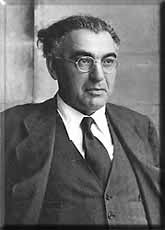
Rabbi Silver- A History Of Messianic Speculation In Israel, 1927
Behind the Communist outrage and obscured by it was the Jewish attempt to realize the Messianic age which assault was begun in Europe and the United States in 1913 and was to continue to 1928 according to Rabbi Abba Hillel Silver. While the assault was violent in Europe emanating from the transformation of Russia to the USSR, in the United States it was more peaceable after the violent year of 1919 while being conducted on a propagandistic and social level buttressed by the doctrines of Sigmund Freud as executed by his nephew and disciple Edward L. Bernays and others. You should become acquainted with Edward Bernays if you aren’t already.
Among the first of these propagandistic efforts was the promulgation of a ‘Jewish Bill Of Rights.’ This document along with a questionnaire was sent to the prominent men and women of America to discover their ‘anti-Semitic’ propensities. Burroughs failed this test so that he was black balled in Hollywood after 1922. The blacklist was broken by Joseph Kennedy and his FBO Studios in 1928. MGM then stepped in with a different approach from blacklisting. They bought the movie rights to Tarzan from Burroughs for much less than a song. Burroughs then was essentially neutralized in 1931 while MGM acquired the supreme super hero Tarzan to shape or mishape as they pleased. Within a few years there were not many who remembered that there was a literary Tarzan. My amazement when I learned there were Tarzan books when I was twelve in 1950 was a revelation of the first order.
The movies were able, of course, to shape all the goy literary heroes from Frankenstein to Sherlock Holmes into their own intellectual mold from then into the present while comic books added Jewish superheroes to displace them.
3.

Tired Old Man- Easy To Manipulate
The planned Jewish revolution hadn’t succeeded by 1928 but the groundwork had been laid leaving the future promising and open. While in the US the Jews were able to sweep all opposition aside even to the extent of putting their creature, Franklin Delano Roosevelt, into the White House for an unprecedented four terms, in Europe unexpected opposition occurred when Wolf Hitler was elected chancellor of German in 1933. While having their creatures Joseph Stalin as Premier of the USSR and FDR in the USA with Popular Front governments if office throughout Europe with the exception of Germany, Italy and Spain, the Jews seemed to be in a position to realize their millennium.
Indoctrination and conditioning was still important in the US thus when sound movies were introduced at the very end of the twenties and the comic book in the early thirties the Jews had two of the most powerful propaganda tools available under their ownership and control.
Their need in the thirties was to isolate and marginalize the Nativist opposition. This would be achieved in the forties wartime conditions when FDR had the prominent Nativists arrested and charged with sedition. At that point the Jews had succeeded in capturing the government and mind of the country although a long mopping up process would be necessary into the fifties and sixties. Thus while Wolf Hitler rounded up Jews in Europe, Jews were rounding up Nativists Americans in the US while advising any dissidents to keep their heads low.
The movies and comic books would play a big role in indoctrinating Americans to believe that the Nativists were Fascists and/or Nazis and not true Americans. It was at this time that Edward L. Bernays succeeded in changing the definition of Democracy from that of individual opportunity to recognition of groups having rights to a share of government based on group identity rather than individual identity. This would be a key concept as the century developed.
4.
After the Bolshevik Revolution the American reaction to Communism was strongly against it. The Communist Party was even outlawed for a time until the Fellow Travelers and Parlor Pinks had the ban lifted. The silent movies of the twenties then were not heavily influenced by the Reds although as indicated the Tarzan movies of Edgar Rice Burroughs were blacklisted. By the thirties the Reds were better organized while with the arrival of sound playwrights capable of producing dialog were needed. The Red exodus to Hollywood began.
The US Communist Party as with all national Communist Parties, was a majority or plurality Jewish affair to the point where an attack on one was an attack on the other. Thus as the thirties advanced the drum roll for US involvement in a war against the Nazis began. This would involve the formation in the US of an opposition led by the America First Committee which was opposed to any involvement in foreign wars as a reaction. As this was opposed to Jewish wishes the America First Committee was designated as Fascist while its putative leader, Charles Lindbergh was designated Hitler’s stooge.

Samuel Dickstein- Congressman From Hell
In order to discredit the opposition, no sooner was FDR sworn in than Samuel Dickstein, a Jewish representative from New York, began to agitate for a House Un-American Activities Committee to stamp out Nativist opposition. As Dickstein was a Soviet agent this meant that the Nativist opposition was un-American while the Jewish Roosevelt government were the true Americans. So, the Jews were well on the way to usurping the American identity which the comic book superheroes represented. Dickstein was successful in establishing his HUAC committee in 1938 but the chair eluded him and went to a real American, Martin Dies of Texas, who then used the committee to harass Communists as well as ‘Fascists’ much to the dismay of Dickstein and FDR.
Hollywood in support of Dickstein began turning out anti-German movies and by implication anti-Nativist well in advance of American involvement in 1942. Involvement in the European conflict was of course brought about by forcing Japan to declare war on the US in late ‘41.
The comic book industry forming about 1932 was becoming real by 1938 when the two Jews from Cleveland devised their Golem character Superman followed by Batman and Captain America. The comic book heroes fell in with the anti-German propaganda. If the Jews, British and FDR were not yet openly promoting the war against Germany the tendency was well formed in that direction.
All those comics were openly anti- German with Capt. America socking Hitler on the cover of the first issue. Capt. America was a creation of two Jews from Brooklyn, Joe Simon and Jack Kirby. To quote the Rabbi Simcha Weinstein from his book Up, Up, And Oy Vey!: How Jewish Culture And Values Shaped The Comic Book Superhero:
Rabbi Simcha Weinstein
Kirby and his partner, Joe Simon, worked at Martin Goodman’s Timely Comics, where the mostly Jewish staff openly despised Hitler. When Goodman saw the preliminary sketches for Captain America, he immediately gave Kirby and Simon their own comic book. The character was an instant hit, selling almost one million copies an issue. “The U.S. hadn’t yet entered the war when Jack and I did Captain America, so maybe he was our way of lashing out at the Nazi menace. Evidently, Captain America symbolized the American people’s sentiments. When we were producing Captain America we were outselling Batman, Superman and all the others.” Simon later commented.

Well, not quite all the others, as Whiz Comics Captain Marvel was the best selling comic of both the war years and later forties. Certainly my favorite. As in the years before the war the America First Committee enjoyed overwhelming popularity amongst ‘Americans’ I would question Simon’s notion that Captain America overwhelmingly represented American opinion. As there were six million Jewish ‘Americans’ in the country I might suggest that the response from that culture of ‘Americans’ was more overwhelming than elsewhere. Jews might easily have accounted for sixty to eighty percent of sales.
It is also probable that no real American would ever have invented a corny jingoistic persona like Captain America, in fact, none did. The image was certainly repulsive to me as a child. My prime comic reading years were from 1947 to 1950 and I and my entire generation rejected Captain America while embracing Captain Marvel. Even then Superman was a distant competitor to Captain Marvel which is why DC comics sued Whiz for copyright violation.

Rabbi Simcha Weinstein- The Story Of Jewish Comic Books.
All the Jewish comics were openly anti-German, thus the FDR administration, the movies and comic books were fighting for the Jewish ‘good war.’ When Charles Lindbergh pointed this out he was immediately portrayed as an agent of the Nazis whereas he was merely telling the truth while being an ideal American. Philip Roth in his 2004 novel, The Plot Against America, recounts the Jewish atmosphere of the time while he postulates that Lindbergh was elected president in 1940 as a satrap of Hitler. Thus the Jews became the real Americans and the real Americans were totalitarians out to destroy the Democracy the Jews had created.
In his essay in the New York Times of 9/19/04 titled: The Story Behind The Plot Against America Roth says that he is recreating America as it really was in 1940 but that is not so. As Roth lived in a New Jersey Jewish colony he and his family was out of touch with the real America as his fictional brother who had gone to Kentucky tries to tell him.
In fact in the America of the time in which Samuel Dickstein was an evil presence the American Jewish Committee and The Anti Defamation League were paramilitary organizations conducting spying operations against the non-Jewish public. Numerous agents unaffiliated with any government agency crisscrossed society looking for any activity that might be considered against Jewish interests. These forays were gathered together in 1943 under the assumed name of John Roy Carlson and published as an indictment against Jewish ‘enemies.’ Many of them were arrested and tried as ‘un-Americans in 1944. So, Roth’s paranoia is at best unbalanced.
Roth says the idea of Lindbergh’s having been elected occured to him while reading Arthur Schlesinger’s autobiography:
I came upon a sentence in which Schlesinger notes that there were some Republican isolationists who wanted to run Lindbergh for president in 1940. That’s all there was, that one sentence with its reference to Lindbergh and to a fact about him I’d not known. It made me think, “What if they had?” and I wrote the question in the margin.
While this may be how Roth came upon the notion his was not the first such idea. As Paul Buhle and Dave Wagner in their Radical Hollywood of 2002 point out, Donald Ogden Stewart in his script for 1943’s Keeper Of The Flame, Charles Lindbergh is posited as a plotter of a coup to replace FDR in alliance with Hitler. This would have been propaganda to indict Lindbergh for the upcoming trial of the Nativists. I don’t know whether Roth saw the movie as a boy but if he did perhaps the idea festered in his brain for several decades until he was reminded by Schlesinger’s book while his mind was half prepared.
So the actual plot of the Jews to take over the American government was displaced to Lindbergh and the Nativists. The Jewish coup was represented in the comic book character of Captain America. This situation is made clear in the current (2011) movie Capt. America: The First Avenger. Thus Philip Roth and Stan Lee of the comics recapitulate and clarify Jewish activities in the 1933-43 era. Captain America is actually Jewish assuming an ultimate American identity.
The origins of Captain America then emanated from the Jewish dream subconscious of Jack Kirby which was quite different form real Americans. He therefore, as all writers must, made Capt. America in his comic book existence from his own dream fantasies. Thus giving his creation the goy name of Steve Rogers he nevertheless gave him a Brooklyn Jewish origin. As Rabbi Weinstein also a Brooklyn Jew explains, Jews have a sort of dual identity as powerless Jews posing as goys in a powerful goy world. Thus the sickly ineffective Rogers undergoes a scientific experiment that turns him essentially from a 98 lb. weakling into an all powerful goy Charles Atlas without the hard work of body building. I’m sure Kirby saw those ads growing up.
Rogers having now been turned into a Superman had to have a name. Superman being taken Super Jew was out for obvious reasons, or even Super Hebrew, there was no Israel at the time, so Kirby settled on Captain America. Rabbi Weinstein again:
Of course a more literal reading of the costume is that it is the American flag brought to life. Captain America’s star is, after all, five pointed, not six pointed like the Star of David. The flag-as-costume [this is what used to make we boys puke] notion reinforces the ideal of assimilation [Jews ‘becoming’ Americans.] By literally cloaking their character in patriotism, Kirby and Simon became true Americans.
In 1940 there was a desperate struggle going on between the Jews and America First who the Jews styled as American Fascists, I.e. actual Hitlerites. By that line of reasoning the Jews became the true Americans, creators and protectors of genuine American Democracy while Anglo-Americans or Native Americans or America Firsters were out to destroy the great American Dream the Jews had created. This is the theme of Philip Roth’s novel The Plot Against America backdated to this period. The current movie Captain America could easily be subtitled The Plot Against America Foiled.
Rabbi Weinstein again:
Despite the patriotic appearance, Captain America’s costume also denotes deeply rooted [Jewish] tradition. Along with other Jewish-penned superheroes, Captain America was in part an allusion to the golem, the legendary creature said to have been constructed by the sixteenth century mystic Rabbi Judah Loew to defend the Jews of medieval Prague. “The golem was pretty much the precursor of the Superhero in that in every society there is a need for mythological characters, wish fulfillment. And the wish fulfillment in the Jewish case of the hero would be someone who could protect us. This kind of storytelling seems to dominate in Jewish culture,” commented Will Eisner.
According to tradition a golem is sustained by inscribing the Hebrew word emet (truth) upon its forehead. When the first letter is removed, leaving the word met (death) the golem will be destroyed. Emet is spelled with the letters aleph, rem and tav. The first letter, aleph, is also the first letter of the Hebrew alphabet, the equivalent of the letter A. Captain America wears a mask with a white A on his forehead- the very letter needed to empower the golem.
I hope this makes clear that Superman, Batman and Captain America are Jewish in identity and what their purpose is in American society.
5.
Having created a competing line of Jewish superheroes the problem then became how to discredit and supplant the goy super heroes. As should be clear by now what we have going on is a religious war but fought by propagandistic means. In other words the battle field was literature, comic books and the movies. As in all religious conflicts the goal is to displace the religious icons of the other; thus, in early Christian times churches were built on the sites of pagan temples while sacred groves were cut down. Nothing has changed; nothing can change. The Jewish goal was the elimination of ‘Christian’ or goy symbols.
Capt. Marvel was gotten rid of in 1953 when the Jews sued him out of his cape. As I’ve pointed out in my review of Tarzan And The Lion Man, parts 8,9.10, a key text in this colossal battle, MGM attempted to destroy the character as well as Burroughs when they bought movie rights to Tarzan in 1931. They got his birthright for a mess of pottage. It may be coincidental but in 1942 after the success of the Jewish comic book super heroes MGM discarded their lucrative rights to Tarzan to movie maker Sol Lesser presumably as worthless or, at least, of no more interest to them. Of course Lesser continued the franchise with phenomenal success. This necessitated a continued campaign to debase the character continuing today. At the same time that Tarzan is debased the Jewish characters, Capt. America is now one of a group of four ‘Avengers’, hence the double entendre of ‘The First Avenger’, who are increasingly Judaisized, while presented in a positive way in the attempt to marginalize Tarzan.
Now, some seventy years after the demise of the man, the continued demonization of Wolf Hitler is becoming less relevant, even annoying if you’re not Jewish, so in Capt. America Wolf Hitler is demoted to an incompetent dead threat while the scepter is passed to the mega Nazi/anti-Semite recreated in the mental projection of Red Skull or the Hydra. The mythical symbol of the Hydra is well chosen to represent anti-Semitism as no matter how many heads you cut off another one, two or three grow back. The threat never ends and the paranoia is justified.
Thus in the Freudian sense Jews have a dual personality: on the one hand you have the ineffective completely innocent assumed goy persona of Steve Rogers, who is the equivalent of Abel, the Chosen one and the crazed madman Hydra who is a projection of the negative aspects of the Jewish character imposed on the other as the anti-Semite. Thus the Jewish character is always at war with itself in the Freudian sense and hence never successful in its aims.

Captain Marvel And Billy Batson
Pt. 2: Tarzan And The River
May 8, 2011
Tarzan And The River
Part II
Edgar Rice Burroughs In Aspic
by
R.E. Prindle
When ‘Omer smote his bloomin’ lyre,
He’d heard men sing by land and sea:
An’ what ‘e thought ‘e might require,
‘E went and took- the same as me!
The market-girls an’ fishermen,
The shepherds and the sailors, too,
They ‘eard old songs turn up again,
But kept it quiet- same as you!
They knew ‘e stole, ‘e knew they knowed,
They didn’t tell, nor make a fuss,
But winked at ‘Omer down the road.
An’ ‘e winked back= the same as us.
-Rudyard Kipling
I want a dream lover,
So I don’t have to dream alone.
–Bobby Darin
First published in the Burroughs Bulletin
Spring 2003 issue.

Last Night He Had The Strangest Dream
As an author Edgar Rice Burroughs belongs to the generation of writers who wrote between the wars. He is or should be placed beside Scott Fitzgerald, Hemingway, Faulkner, Aldous Huxley, P.G. Wodehouse, H.G. Wells, John Dos Passos and John Steinbeck, among others. Further, of all those authors ERB was the best selling writer in the entire world. His reign came to an end in 1939 and then only after his talent was dissipated. This is a remarkable achievement against some very qualified and important writers. One doesn ‘t often hear of Steinbeck societies. Hemingway or any of the others but Burroughs societies exist in many countries around the world.
I consider myself an intellectual and literary snob, yet I acknowledge ERB as important an intellectual and literary figure as any of the savants mentioned above. ERB did not parade his knowledge and savvy as most writers are wont to do. He incorporated a fairly deep understanding of many contemporary issues without a hint of the lamp. Tarzan Triumphant is a case in point. Obviously the two religious groups in the novel refer to Jews and Christians, but there is no reference to either sect. One is left to infer that the Old Testament crowd led by Abraham, son of Abraham, is of the Old Testament while their rivals are New Testament. In so far as ERB allows the story to involve religious discussion, the moral is ‘a pox on both your houses.’
Even more remarkable is that over the writing of the published twenty-one Tarzans before 1940 all the novels are interrelated. ERB was able to keep his Tarzan facts in order over a twenty-seven year period of writing while being involved in the writing of dozens of other books. In point of fact the Tarzan oeuvre is a roman a fleuve- a river novel.
A River novle is a series of novels which traces the course of a nation, people, a family or an an individual over a period of at least decades. The first novel ever written was a River novel, that was the story of the Greek invasion of Troy.
The two surviving complete books of this remakarble story are Homer’s Iliad and Odyssey. Moreover, many fragments exist predating the events of the Iliad and after.
Perhaps the most prodigious of all River novels is the Vulgate Lancelot chronicling the adventures of King Arthur and his knights. The story runs on for thousands of pages.
In modern times Alexander Dumas’ five volume epic concerning the adventures of the Three Musketeers constitute a River novel. Trollope wrote two, that of the Pallisers and the Barchester series. The model for the twentieth century was Remembrance Of Things Past by Marcel Proust.
Edgar Rice Burroughs has always been treated frivolously, yet the Tarzan oeuvre is a work of some magnitude which does not compare unfavorably with Proust.
Proust’s work looks backward as he relives his life trying to make order of his psychology. Burroughs’ Tarzan oeuvre records his psychological development on a current basis as it evolves year by year.
ERB’s work is characterized as imaginative fiction while Proust’s is considered realistic fiction. In other words, realistic fiction builds on real life experience in real life situations, while the imaginative writer is compelled to ‘invent’ incidents.
Thus while the realistic writer draws primarily from personal experience and observations, the imaginative writer has to draw from published sources of either fiction or nonfiction or convert real life experiences into symbolic form. The latter is more true of science and fantasy fiction. If the science fiction writers of the forties and fifties hadn’t had a couple thousand years of esoteric literature to draw on there would have been little science fiction. Of course the writers so disguise their sources that without an extensive education in esoteric writings oneself the stories seem incredibly original.
Borrowing from every source is extensive. For instance, Arthur C. Clarke’s Childhood’s End is the same story as H.G. Wells’ Food Of The Gods with different detailing. Wells himself extrapolated his story farom Darwin’s Origin Of Species and The Descent Of Man. Darwin of course turned to nature, the ultimate source of suggestion, for his story.
That Burroughs borrowed extensively and sometimes blatantly is of little consequence, especially as his original contributions were so extensive and satisfying. As the opening poem by Kipling indicates, at least he was honest enough to admit of outside influences.
The Russian Quartet, or first four novels, is a tentative beginning to the Tarzan oeuvre. It is possible that the first novel, Tarzan Of The Apes, was just an attempt to express certain ideas about heredity and such related topics that ERB wanted to say with no thought of sequels. The story itself is absurd enough that it seems a miaracle that it was accepted and published. It is perhaps less surprising that it was so readily accepted by the reading public as the great figure of Tarzan rises shining from the pages. One ignores any story telling flaws to get a glimpse of the bronzed forest giant, the great Tarmangani, the jungle god, the Lord of the Jungle, Tarzan. A writer should be so lucky to come up with such an archetypal figure.
Return and Beasts find Burroughs groping for a direction. Beasts is is heavily influenced by H.M. Stanley’s writing on Africa as well as that of Mungo Park, not to mention Edgar Wallace’s Sanders Of The River. The story of Paulevitch’s experience in the jungle was obviously taken from Mungo Park’s Travels In The Interior Of Africa. Beasts itself which also has a lot of Defoe in it, is absurd to the extreme yet somehow redeems itself as one becomes entranced by the outrageous notion of apes and men row-row-rowing their boat down the stream. Somewhere either before the beginning of Beasts or after the end, ERB interweaves the story of Barney Custer and the Mad King and the Eternal Lover to bring his own psychology into the Tarzan character. Thus ERB pictures himself as the Son Of Tarzan in the novel of that name.
Having resolved, after a fashion, his conflicts with this father and somewhere in that tremendous gush of writing having integrated his personality, ERB then turns to himself as the conflicted Animus of Tarzan the Hero and Tarzan the Clown to resolve that psychological dilemma over the next seventeen volumes published during his lifetime.
The Russian Quartet was written over a period of three years. The eight novels between Son and Lost Empire were written over fourteen years. Whether the ‘Lost Empire’ refers to Emma and Opar is open to conjecture. In any event Lost Empire signifies a terminal junction in ERB’s psychology.
Then as the problems of his Animus and Anima resolve themselves ERB rapidly turns out six volumes over four years.
He had difficulty writing Tarzans while struggling with his psychology but wrote quickly once he had made up his mind.
From 1934 in psychologically related volumes to 1938 he published the three additional novels of Quest, Forbidden city and Magnificent. The psychologically relevant Madman was discovered and published in 1964, fourteen years after his death. Perhaps the thought the novel was too personal and painful to publish himself.
As noted “Foreign Legion’ is a propagandistic after thought to the oeuvre.
As ERB didn’t begin writing until he was thirty-six it is fair to say that his writing represents the effort of a mature mind. This is even more evident when one reflects that the majority of the Tarzan oeuvre was written between the ages of forty-one and fifty-eight. Lion Man, which is the culminating volume of ERB’s psychological odyssey was written at the last age.
The novels written between 1930 and 1934 which I consider excellent work and the best of the Tarzan oeuvre are the ones most often dismissed as repetitious. One of the very best, Tarzan And The Leopard Men, is, oddly enough, often dismissed as ‘hack work’. Very strange.
But to return to Opar and move forward from there. From 1912 or 1911 if you consider from the first moment ERB put pen to paper to 1915, things developed very rapidly in ERB’s mind. The rich experience of his lifetime, all his opinions, thoughts and fancies were so compressed within his skull that as I say he erupted with more than the force of Spindletop. It took him three years to cap that gusher and then the flow was strong and steady until 1934 when he realized himself.
Return was written in 1913 when his Anima, La of Opar, first pops up. She then disappears until 1916 when wife Emma apparently sneered at the wealth ERB had laid at her feet. She would not so soon forget the first twelve years of her humiliation.
Her rejection of ERB the Hero must have hurt Burroughs to the quick. Following Return he wrote The Mad King in which after numerous trials and tribulations and after he had disposed of Custer’s inept doppelganger, the Mad King, Barney Custer and the Princess Emma were reconciled. In all likelihood the story was a day-dream of wish fulfillment in the Freudian manner because in The Eternal Lover which followed quickly Barney Custer goes to Tarzan’s Equatorial estate but with his sister Victoria and not the ‘Princess Emma’. His marital relationship is obviously still very troubled. As noted, The Eternal Lover is a myth of the nature of Pysche and Eros, the Anima and Animus.
Interestingly, Boy Jack’s wife, which is to say ERB’s at the end of Son of Tarzan is no longer a princess but the daughter of a general. Emma had apparently been demoted in ERB’s emotions.
In a psychological quandary ERB has Tarzan leave Jane in 1916 to return to Opar and La for more gold to lay at Jane/Emma’s feet. This story is crucial for the rest of the oeuvre. ERB’s dream lover, La, spares his life and offers to marry him or in other words take him away from Jane/Emma. At this point in his life ERB is faithful in body if not in spirit. He declines her offer having his faithful Waziri stagger back to Jane under a load of one hundred twenty pounds of gold each.
Apparently the wealth of Opar of which tons of gold remained to be tapped as well as bushels of the very largest of diamonds (move ahead to the Father of Diamonds in the Forbidden City) is not enough to assuage Jane/Emma’s anger at Ed’s failure for the first twelve years of married life. She rejects ERB’s present income. This must have been a staggering blow for Burroughs who at this point in his life wanted to abandon his clown role for that of the hero.
He had already begun Jungle Tales Of Tarzan, which he managed to finish, otherwise from Jewels of Opar to Tarzan the Untamed there is a hiatus in Tarzan novels for thirty-nine months. For over three years he and Emma were apparently at a stalemate making it impossible for him to write further Tarzan adventures.
When Tarzan returns it is as The Untamed and he and Jane have been separated, possibly for good as Tarzan has no idea where she is; common report is that she is dead.
One may infer that the marriage is all but over. It takes another twenty-three months before Tarzan The Terrible appears. Tarzan goes from Untamed to Terrible. Apparently ERB and Emma are now temporarily reconciled as Tarzan finds Jane in the forgotten land of Pal-ul-don (paladin?) and he, she and Jack go swinging down the jungle trails to return to Equatoria. the family is reunited. But is it?
After the passage of twenty-two months Burroughs follows Terrible with Golden Lion. Now the title Golden Lion is somewhat misleading as the Lion doesn’t play that large a role in the story. The Lion seems to have sprung from Burroughs’ subconscious as a defense against the Lion of Emma. In this story Tarzan leaves Jane for a fairly extended visit to his dream lover, La in Opar. They are together for some time as they adventure into the adjacent lost valley called The Valley Of Diamonds. (Once again, see Tarzan And The Forbidden City.) Possibly the Father of Diamonds represents the Jewel of Great Price which turns out ironically to be a piece of coal. This was after ERB left Emma for Florence.
Golden Lion introduces the great doppelganger of Tarzan, Esteban Miranda. I am absolutely fascinated by this character. Miranda looks, talks and walks so much like Tarzan that not only can’t Jane/Emma tell them apart but Miranda even fools the faithful Waziri.
Golden Lion is paired with Tarzan And The Ant Men. You have to read both to get the whole story.
Esteban Miranda is a London actor, a clown and a cowardly fool. ERB goes to great lengths to deliniate the character of this unpleasant but goofily amiable alter ego.
In the confusion Miranda is captured by a savage tribe of Blacks where he is spared because of his resemblance to Tarzan. He escapes finally although he is a blithering idiot who has lost his memory. Get that! Even Tarzan’s doppelganger loses his memory. I haven’t been able to fugure out ERB’s problems with his memory yet.
He is discovered by the Waziri where he is once again mistaken for the real thing. He is taken to the ranch house where Jane nurses him back to health. Still mistakes him for the real Tarzan, he is about to be embraced lovingly by Jane when the terrible, untamed Tarzan appears through the French windows. Tarzan himself had been off having incredible adventures with the Ant Men returning just in the nick of time.
Here apparently Jane rejects Burroughs the Hero in favor of Burroughs the Clown of the first twelve years of her marriage. This is something which ERB can’t forgive. His resentment turns into a divorce about ten years later.
There is then another long hiatus of approximately forty months before Tarzan returns as Lord of the Jungle with Jane in a very subsidiary role. So in twelve years Burroughs wrote only about five Tarzan novels. Then between 1929 and 1934 he whipped out an additional seven.
The change of pace was caused by the quickening resolution of ERB’s psychological dilemma. He was obviously living his life vicariously as Tarzan.
It is this development of his psychology recorded through Tarzan that makes the oeuvre the most fascinating of River novels.
Let us understand that a writer, any writer, is always discussing his own psychology. this applies both to so-called non-fiction as well as fiction. Properly speaking there is no such thing as non-fiction. The difference between the two is that in non-fiction a writer describes actual events through a prism of so-called objectivity. In other words in writing about Edgar Rice Burroughs I am bound to adhere to the facts of ERB’s life and I cannot invent details to improve the story. However, in actuality I see what my own psychology has prepared me to see. My psychology, that is, in conjunction with my intelligence and emotional perspicuity.
Anyone who has read the autobiography of Frank Harris knows that his favorite adage is that no man can see over the top of his head. Therefore it behooves every man to broaden and develop his experience so that he can stand as tall as possible. In that way he can at least hopefully see over the heads of all his fellows. I was once fortunate enough to try this on a crowded street in Hong Kong where I stood head and shoulders above my fellow Chinese pedestrians. You could see the heads and shoulders of all the American sailors inching slowly along like icebergs in a sea of Chinese.
But seriously, one must develop one’s intelligence and that is exactly what Edgar Rice Burroughs did throughout his life. ERB was an avid reader both of fiction and non-fiction. He makes frequent allusion to Poe, Wells, Doyle and who I think he respects most, Rudyard Kipling. If you have read the great African explorers you will have no difficulty identifying sources. ERB was quick in picking up new titles also. Forbidden City was, I believe, based partially on Digging For Lost African Gods by Byron Khun de Protok published in 1926.
ERB was also forced to respond to hectoring outside criticism. I’m sure he little knew the effect that the Bolshevik Revolution of 1917 would have on him personally, but by 1933’s Leopard Men he was thrown on the defensive by what H.G. Wells called the ‘Open Conspiracy’ or the Red Revolution. I will deal with it in the last essay in our series called ‘Star Begotten.’
All of Burroughs stories are many layered if you care to look beyond the surface details. After Golden Lion ERB develops a whole jungle family of attendant animals which follow him through all the stories. Each novel is merely one episode in the life of Tarzan/Burroughs and each leads to the next novel in true River fashion.
This is wonderful stuff. There is no difficulty understanding why Burroughs was the best selling author of his time.
After recording the difficulties of reconciling himself with Emma from 1916 to 1928 ERB reluctantly threw in the towel when he wrote Tarzan And The Lost Empire. The double entendre of the lost empire is explicit in between the lines. It is not only the Lost Empire deep in the Heart Of Darkness but also his dream of building a great empire with Emma. The dissolution of his marriage and his search for a real live La of Opar begins with the book.
At this point he has also come under attack by the Reds who cannot tolerate the success of a Conservative writer. Consolidating rapidly from 1917 to 1923, by this time the Revolution was in control of publishing. They could deny access to new conservative writers, creating the myth that all the best new writers were Communist in faith, but they still had to destroy the reputations of older, non-conforming writers.
I don’t know that any studies have been made of literary or journalistic attacks on ERB, but he responds as though there were many. In 1929 he took time out from his personal psychology to write a major counter-attack against the Revolution with Tarzan At The Earth’s Core.
While this may appear to be simply a critique of Einstein’s Theory of Relativity, in fact Einstein was as much a political figure as a scientific one. Both he and Freud were prominent agents of the ‘Open Conspiracy’ along with that literary political agent, H.G. Wells, so that Earth’s Core is a counter-attack on his detractors.
Then in quick succession ERB turned out Tarzan the Invicinble, (watch the titles) Tarzan Triumphant, Tarzan And The City Of Gold, Tarzan And The Leopard Men and Tarzan And The Lion Man.
After a long struggle Burroughs quickly resolved his psychological dilemma. He rectified his Animus, disposing of the clown side of his nature while at the same time reconciling his Anima. He divorced Emma while marrying what he fancied was a La of Opar in Florence. The final conflict with Emma is recorded in City Of Gold. The basic idea for City was probably borrowed from Bulfinch’s The Legends Of Charlemagne. In Legends, an enchantress has captured many of the leading palladins of Charlemagne which she has imprisoned in a city of gold. The medieval writers borrowed the story of Odysseus and Circe from Homer.
In Burroughs’ story the enchantress Nemone has ‘captured’ a bemused Tarzan who may escape any time he chooses but he elects to stay around to see what will happen.
Lion Man is notable for the way Burroughs blends psychology, fiction, the movies and how the movies affect the perception of reality of movie-goers. Film, which was developed during Burroughs’ young manhood, had a profound effect on the movie-goer’s ability to distinguish real life from movie fantasy. Burroughs was qite precocious in understanding this. There are earlier references to the matter in his work but here he gives it a full scale examination, both as when the fictional Tarzan replaces the even more fictional Obroski in Africa and when as a Burroughs doppelganger Tarzan mixes on set with the movie people in Hollywood where they fail to recognize him as the real thing, Lion Man is perhaps the most interesting of all the Tarzan novels.
After Lion Man, which both rectifies his Animus and reconciles his Anima, his motive for writing fast and furious disappeared. In fact, his subject matter disappears. He had in effect run out of material. Tarzan’s Quest and Tarzan And The Forbidden City record his lingering problems with his two ladies at the age of sixty-three. You can see why he wrote it as a farce.
Tarzan And The Madman caps the story of his pschological development although he did not publish the novel during his lifetime.
At the end, as is not unusual, he returned to the beginning as in The Mad King. The totally farcical Forbidden City is an example of what his writing might have turned into if he had been allowed to publish under his pseudonym, Normal Bean. As a comic novel, Forbidden City is actually very funny, if absurd, as Tarzan is driven from pillar to post by his two women. This undoubtedly reflects his real life situation. In the end, he says, the fabulous diamond he and everyone else is seeking, the Jewel Of Great Price, is merely a mirage turning out to be as worthless as a piece of coal.
Both Lion Man and Forbidden City seem to have influenced Aldous Huxley, one of the major intellectual writers of the period. His novel, After Many A Summer Dies The Swan (1939), has allusions to Burroughs’ two novels. The theme of ‘Lion Man’ of the mad scientist, God, who reverts to a half-ape, half-man creature is replicated in Swan in which an English nobleman who has lived for two hundred years reverts to an apelike existence.
That the theme may be more than coincidental is the fact that Huxley incorporates an imaginary University of Tarzana into the story. Thus one of the great intellectuals of the period found much of deep interest in ERB’s novels while also reacting to Wells.
Edgar Rice Burroughs was in fact a great literary artist, if a trifle coarse. He is, in fact, a great talent which if the critics fail to realize it, the people don’t.
Surviving a hundred years is no small matter, it takes some talent to do that. Yet, after those hundred years ERB is still an active force in the literary coal mines. Well, it’s not like coal doesn’t burn with a pure blue flame and under pressure turn into diamonds.
A Review: Pt. 8, Tarzan The Invincible by Edgar Rice Burroughs
October 31, 2010
A Review
Themes And Variations
The Tarzan Novels Of Edgar Rice Burroughs
by
R.E. Prindle
Part 8
Edgar Rice Burroughs In Idaho
Red, White And Black
Now we get to the ostensible story which is the Red assault on Italian Somaliland. If few people today understand the partition of Africa by the European powers it might be well to recap the situation a little. The two big players were France and England with Spain and Portugal picking up some early real estate to be later joined by the bit players, Germany and Italy. The German possessions were stripped from them after the Great War and given to England.
This novel takes place in the Horn Of Africa or the Northeast corner facing the Arabian Peninsula and the Indian Ocean. The area contained Ethiopia otherwise known as Abyssinia, the only independent State in Africa save Liberia whose independence was guaranteed by the United States.
Ethiopia was bordered by Italian Eritrea and French and British Somaliland on the North, Italian Somaliland on the East, Kenya and Uganda on the South and Anglo-Egyptian Sudan on the West.
The Galla tribe with whom ERB became fascinated had been driven about by the Somals occupying lands mostly in the interior of Ethiopia after the manner of the Middle Eastern Kurds, where they were constantly in conflict with the Ethiopians and the Somals on the border. ERB deals with the Ethiopian-Galla situation in Tarzan And The Mad Man.
The Red camp is located in Ethiopia several days march from the border of Italian Somaliland. Opar which is nearby must now be located in Ethiopia.
The Reds have assembled an international cast of characters or in other words a multi-cultural outfit. Their multi-cultural nature will prove to be a liability rather than an asset as indeed it must in real life.
The organizers are Russian or Soviet Communists of whom there are four, Peter Zveri, the leader, Zora Drinov, Paul Ivitch and Michael Dorsky. They are joined by an American agent acting as a double agent, Wayne Colt.
Burroughs casually mentions that the expedition was put together in the United States by Zveri operating on both coasts. As Burroughs is writing a novel he wisely declines to preach or analyze, he is, as he says, an entertainer. As I who do function as an analyst pointed out in Marcia Of The Doorstep that the US had been used as a safe haven by every conspiratiorial revolutionary group on the planet. Burroughs is noting the same thing but only in passing as part of the story. If one is not attuned to such details they slip right by without significance as do the dots and dashes of the Morse code to the uninitiated.
The group is also composed of a Filipino Red, Antonio Mori and a Mexican revolutionary Miguel Romero. These people form the core group. Affiliated with them are the Moslem Arabs of Abu Batn who appear to have been recruited from the Mahgreb, perhaps Algeria, where some of Tarzan’s early adventures occurred. They do not appear to be Black Arabs of the Horn. While appearing to be Communists they remain Moslem Arabs whose real motive is to drive the Christians or Nasrany as they call them out of Africa. This means Whites of no or any religious affiliation.
Zveri has also patched on the Bantu tribe of Kitembo, the Basembos. This is because Kitembo has actually been to Opar, the only member of their party who has. Kitembo doesn’t appear to be a true Communist but is a former powerful chief from Kenya who had been displaced by the British. He comes from a place on Lake Victoria which should make him a Luo but for reasons perhaps not pertinent I tend to think of him as Kikiyu probably partly based on someone like Jomo Kenyatta who already had notoriety by 1930 although Kitembo’s history is close that that of the Unyoro Chief Kaba Rega whose story Burroughs was definitely familiar with from the memoirs of Samuel Baker.
Kitembo is interested only in recovering his past dignity augmented ten fold. All that becomes irrelevant when he deigns to lay his hands on Zora.
We should remember that Burroughs is writing in 1930 not 2010, so many things that are more or less clear to us now were undetermined at that time while understandings and motivations were quite different then from today and as those of today will be fifty years hence.
For one thing Africa was still a land of mystery where one wouldn’t have been too surprised if someone had discovered a lost civilization, a strange anthropoid- perhaps the so-called Missing Link, very real to the imagination at the time- and any number of things. One of the great losses of my childhood was the recognition that Africa was known; that nothing truly wonderful would be discovered in the world again. All was now cataloguing.
Abercrombie and Fitch who had built a very lucrative business outfitting ‘explorers’ or safaries, having not yet turned to teen porn, lost its raison d’etre as did all the ‘Explorer’ clubs where grown men sat around in khaki Safari gear drinking and dreaming. All that was left for me and my generation was Trader Vic’s and he’s gone now. The miracle is that the National Geographic found a way to survive when they could no longer portray exotic, naked, painted savages with necks supported by copper rings, plates in the upper lip and that. Now of course they don’t have to go as far for such exotica as Whites imitating the Africans sport massive tattooing suported by all kinds of nose rings and body piercings.
So, in 1930 Burroughs’ story still had a degree of probability. Especially in the way he joined contemporary politics to nineteenth century Africa. In one reads closely this is quite a story, a true tour de force.
Not only do the Arabs and the Bantus have their personal motivations apart from Communism, so we learn does Peter Zveri. The streak of individualism is not extinct in his collective mind, he sees the opportunity to make himself Emperor of Africa in Tarzan’s stead. Apparently Soviet intelligence has been keeping close tabs on the doings of the Big Ape Man because Zveri knows of Tarzan’s ‘fool dirigible trip’ believing him absent from Africa and possibly dead as no one has heard from him for the past year. This was before Google Alerts too.
Indeed Tarzan drops as from the clouds into a clearing filled with great apes as the story begins. Just coincidentally Jad-Bal-Ja and Nkima happen to be in this exact part of Tarzan’s estate of Africa at the same time. Zveri then is very disappointed to learn that his nemesis is back. As well he might because he has engaged himself mano a mano with the Big Bwana and Africa, believe it or not, is not big enough for both of them.
In his examination of Communism, multi-culturalism and human nature Burroughs is at his incisive best. Remember few of these stories go over a hundred ninety-two paperback pages. These are tremendously condensed stories. They’re somewhat like a zipped file with megabytes compressed into kilobytes. To really get the stories you have to unzip them and let them expand in y9ur mind. Don’t be deceived by their seeming simplicity.
The various cultures involved in this plot are only loosely held together by Communist ideology. The plot eventually falls apart because the cultures see through the phoniness of the Communist ideal. Zveri himself isn’t even that sincere a Communist as he intends to use the gold of Opar to make himself a third world power as Emperor of Africa. In the end Communism is a fatuous dream,whether utopian or dystopian is up to you.
Burroughs does not emphasize his opinions, he merely tells his story. My conclusions as to his intent are derived from the result of the story. In the end Communism fails because of internal contradictions while the big Bwana is invincible retaining his position as Guardian or Emperor of Africa. Not one world of preachment.
Wayne Colt in his rather absurd trek across Africa arrives too late for the first assault on Opar. He does happen into camp in time to spot the shaking tent and rescue Zora from Jafar, the Indian Communist, with Tarzan’s help. After killing Jafar Tarzan turns his steps to Opar traveling in a bee-line through the Middle Terraces he handily arrives before the first expedition which had left some time before him.
Let me take a moment to discuss Burroughs’ Africa. In the first place these stories are combination dreamscape, fairy tale and mythmaking. His Africa bears no more relation to this planet than Arthur’s Camelot bore to Medieval England. I find it tiresome for scholars to try to find the ‘real’ history of Arthur’s career. Arthur may have a loose connection to real historical events but the story, a great one, is a projection of psychological needs. There isn’t any such thing as a Holy Grail. No knights ever went in search of it.
In the same way Burroughs’ Africa is a psychological projection hopefully leading to his Holy Grail. There are no lower, middle or upper terraces in a nearly uniform jungle in the real Africa. Anyone who tries to find them will be severely disappointed. Such things are merely inventions of Burroughs’ dream world. I am glad he shared it with me, you and the millions.
The frequency with which the characters run into each other way out there is also impossible but in Burroughs’ dreamscape, his fairy tale, his myth, it happens all the time. There is no sense in arguing the impossibility. If you find it too offensive to your sensibilities then the oeuvre is not for you. One just accepts that these are fairy tales and in fairy tales things like this happen all the time. It’s a fantasy, fantastic things go on.
I try to fathom the psychological intent so while I may smile and jest at some impossible details it is only at the naive dream details and not the serious intent of the story. In our time these stories would have been taken at warp speed to another galaxy where in that context all things would be possible. But, that would be pure fiction hence unbelievable. I never did take Star Trek seriously, in fact, I refused to voluntarily watch it. Burroughs’ Africa can still be located on a map of the world connecting psychological reality with temporal reality in a very satisfying blend.
So, as this series is a roman a fleuve or River Story, Tarzan ruminates on his previous visits to Opar as he strides across the hot dusty desert, where the rain never falls, toward the fabled gold and red domes and turrets in the distance.
La’s love for him which began in Return Of Tarzan has caused dissension between her and her people. She has retained her position only through the active intervention of Tarzan. Defeating the revolution that had ousted her in Tarzan And The Golden Lion the big Bwana had replaced her on the throne guarded by the Bolgani of the Valley of Diamonds and the semi-human Gomangani. It is interesting to not that the Oparian revolution occurred after the Russian. Might be a connection.
As he approaches the city he believes that the Oparians appreciated his defeat of Cadj and that they love and respect him so that his reunion with them will be joyous. Not so. In the interim the Oparians who hate and resent Tarzan have deposed La putting her in a foul prison in the vast underground maze of dungeons of Opar. Passing back through the narrow cleft, bounding up the stairs, Tarzan is surprised to find himself attacked by the howling Frightful Men. The Man of the Steel Pate receives another frightful blow which lays him out.
He wakes to find himself the captive of Oah and Dooth. He is placed in a cell the details of which I have already related above.
I haven’t plumbed the signficance of Tarzan and La being imprisoned together while the city is attacked by the Communists unless the dreamworld of Opar represents a sanctuary that is now invaded in the attempt to destroy Burroughs’s literary career. In that event it might be necessary for the Anima and Animus to be together. This story also harks back to the invasion of the Emerald City in Baum’s story The Emerald City Of Oz.
In any event the various strange screams and noises from within Opar unsettle the superstitious Blacks and Arabs who lose their nerve refusing to enter Opar. The Blacks believe in spirits and the Arabs in jinns both of which they fear more than living men. Thus Burroughs is contemptuous of both cultures.
Zveri and his Russians are too cowardly to enter themselves. The only one with the nerve is the Mexican Miguel Romero who gets very good reviews from ERB. Miguel retreats in the the face of the horde of Frightful Men but he is very cool about it.
Returning to camp the Arabs are now disaffected having words with Zveri. The arrival of Colt and Mori puts a little heart into Zveri so that a second attempt on Opar is determined leaving the Arabs to guard the camp.
Tarzan and La escape from Opar between the two assaults becoming subsequently separated. Zveri takes the Blacks and Communists with him. Being left behind dissolves the Arab affinity with the Cause. Never good Communists, being interested only in ejecting the Nasrani from Africa, they decide to disappear into the desert.
About this time La wanders into camp. Sacking the camp, Abu Batn and his Arabs leave with the two women whose value in the North he knows full well. The Arabs are out of the story. The Communist coalition is breaking up. As Burroughs points out the goals of the two are not the same.
Back in Opar Zveri finds it impossible to force his Africans into service while he and his Russians remain cowards. Colt behaving bravely, as only an American can, along with Miguel Romero penetrates to the sanctuary where they are faced by the Frightful Men. Perhaps in a comment on American tactics Colt fires over the heads of the Oparians while the Mexican, Romero, fires directly into the mob.
Why when Americans go to war they are reluctant to do the dirty work of killing is beyond me. The reluctance to engage the enemy in Viet Nam cost us that war. The reluctance to do what we have to do in Iraq is costing us that war. Perhaps we think we can hide behind a wall of steel as our technology wars for us while we imagine we can remain safe. Our punishment of our own soldiers for merely humiliating the enemy must be unique in the annals of warfare. And they wonder why no one wants to join the Army.
Romero who shoots to kill is able to escape while the pussy footing Colt is downed by a thrown club and captured. A thrown club! Once again a Burroughs’ surrogate takes a blow to the head, but how does one survive a thrown club?
Just as Colt and Zora exchange partners in the jungle so now Colt takes Tarzan’s place in jail. Here, he is befriended by a nubile beauty, Nao, rather than as La did Tarzan and, pephaps as Florence was doing for ERB. Afer killing to free him Nao is left behind as Colt disappears into the dusty desert. Not a very thoughtful thing to do as Nao would certainly be discovered.
Zveri returns to his devastated camp to be handed a letter notifying him that Colt is a double agent. Abandoning any thoughts of Opar the Communists concentrate on their mission which is the simulated invasion of Italian Somaliland.
As they are about to leave Tarzan returns Zora to camp. Coldly dropping her off without a word he climbs onto a branch to spy on the conspirators. His leopard skin shorts are mistaken for the real thing. Here we go again. the shot at the imagined leopard grazes the Big Guy’s skull putting him out of commission for a full day. So that is at least two knockouts for Burroughs’ surrogates plus this concussion. Tarzan’s frequent lapses of attention become more intelligible.
Zveri wants to take advantage of his opportunity and kill Tarzan but Zora intervenes so Tarzan is bound which leads to next day’s episode when Dorsky threatens him only to be annihilated by Tantor.
The charming fairy tale between Nkima, Tantor, Tarzan and the Hyena then takes place which is a repeat of the same scene in Jewels Of Opar.
Nkima then goes in search of the Faithful Waziri to aid Tarzan while the Big Fella begins his campaign of terror against the Communist conspirators.
His strategy is to separate Kitembo and his Basembos from Zveri and his Communists. To do this he plays on their superstitious natures. A mysterious voice comes down from the trees, in other words, the sky, telling them to go back. In the meantime Little Nkima has recruited the Faithful Waziri who arrive to help out not with spears and bows and arrows but modern repeating rifles. Arranging themselves in front of the advancing Communists hidden in the tall grass -this stuff grows six feet high- they give the appearance of being many more than they are. Burroughs doesn’t make it clear how they can see the Communists through the grass while the Communists can’t see them but as Tarzan usually navigates pretty well even in total darkness I’m probably making a bigger problem out of it than it is.
Zveri does a rapid advance to the rear which act of cowardice completely destroys his credibility. Dorsky is dead while Romera and Mori renounce their Communism. Zora reveals she’s only in it for the revenge because Zveri had murdered her family twelve years earlier in the Revolution while, as we are aware, Colt is an American agent. This leaves only Zweri and Ivitch who I believe represent Frank Martin and R. H. Patchin, ERB’s old nemeses in Chicago.
Returning to camp Zveri spots Wayne Colt. Calling him a traitor he fires point blank missing while the bullet grazes Colt’s side without breaking the skin. That was a close one. Before Zveri can fire again he is brought down from behind by Zora. Burroughs replays scenes like this over and over with different variations. Just as the constant bashings on the head his surrogates take reflect his own experience in 1899 so must all these conflicts between his surrogates and another man and his surrogate woman reflect his situation with Frank Martin and Emma. In each instance in one way or another the woman rejects the other man. Thus Burroughs ‘fictionizes’ his own situation.
So now Zora kills Zveri so that she and Colt can bridge that gap.
As a sidekick Ivitch/Patchin is allowed to leave Africa. In point of fact Martin died some time before Burroughs although not until after 1934 while Patchin survived both.
Tarzan in the meantime escorts La back to Opar where he reinstalls her on the throne this time doing the sensible thing of eliminating Oah, Dooth and all their sympathizers. One must believe there will be no more trouble in Opar. In any event Opar disappears from the oeuvre.
Tarzan then returns to the camp to dispense justice as becomes the Lord Of The Jungle.
As the story ends the ‘invincible’ Tarzan seems to have solved all the problems confronting he and Burroughs in 1930. The Big Fella has not only thwarted Zveri but defeated Stalin and the whole Soviet empire.
As the exchange between Zveri and Romero explains it: pp. 183-84:
“Which proves,” declared Zveri, “what I have suspected for a long time; that there is more than one traitor among us,” and he looked meaningly at Romero.
“What it means,” said Romero’ “is that crazy, harebrained theories always fail when they are put to the test. You thought that all the blacks in Africa would rush to our standard and drive all the foreigners into th ocean. In theory, perhaps, you were right, but in practice one man, with a knowledge of native psychology, which you did not have, burst your entire dream like a bubble, and for every other harebrained theory in the world there is always the stumbling block of fact.”
Thus Tarzan not only defeats Zveri, Stalin and the Soviets but he disproves the whole Communist ideology as a harebrained theory.
On top of that the Invincible One restored order in Opar while putting his personal life to rights by separating out Colt and Zora or Burroughs and Emma and Tarzan and La or Burroughs and Florence.
The succeeding novel Tarzan The Triumphant- Invincible, Triumphant- will rescue the Russian situation while its successor Tarzan And The City Of Gold disposes of Emma/Jane/Zora/Nemone by her self-immolation while its successor Tarzan And the Leopard Men bring Kali/Florence and Old Timer/Burroughs together. The series climaxes with Tarzan And the Lion Man when Burroughs 2 kills off his early self, Stanley Obroski, or Burroughs 1 to come into his own, or so Burroughs supposes. The rest of the series is playing out the aftermath of the divorce from Emma and the marriage to Florence.
As could have been predicted the marriage to Florence was less than satisfying.
So, perhaps, Burroughs’ solution to his personal dilemma is based on a harebrained theory itself which fell to earth on ‘the stumbling block of fact.’
For the moment however Tarzan has saved Africa from the Communist menace and perhaps the World.
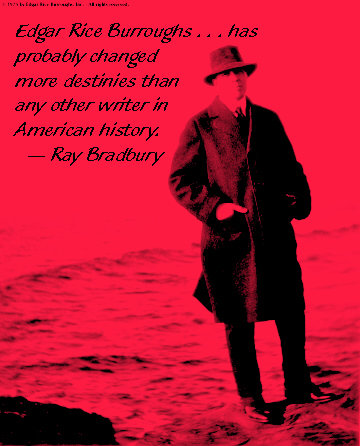
Edgar Rice Burroughs- High On A Mountain By The Sea
Pt. II: H.G. Wells, Sigmund Freud, Edgar Rice Burroughs And The Development Of Contemporary Sexual Attitudes
August 22, 2010
H.G. Wells, Sigmund Freud, Edgar Rice Burroughs
And The Development Of Contemporary Sexual Attitudes
by
R.E. Prindle

Edgar Rice Burroughs And His Tiger
To put our three protagonists into perspective: Sigmund Freud The eldest of the three was born in 1856, Wells in 1866 and Burroughs, the youngest in 1875. All three were heavily influenced by Charles Darwin and the various theories of Evolution. While today Darwin is touted as the sole source of evolution he was in fact one of many voices as the theory of evolution developed. Thus all three spent their formative years in the latter half of the nineteenth century. Freud was 44 as the century turned in 1900, Wells 34 and Burroughs 25 each neatly spaced 10 years from his predecessor.
Wells was the first to make the leap into prominence followed by Freud and then Burroughs. All three men were desperate to find fame and fortune. Freud even advtertised he’d sell his soul to do it.
Wells came from close to the bottom of the social ladder. His parents eked out a living as shopkeepers without commercial abilities on the edge of London. Wells’ father was an able cricket player who gained his self-esteem from that sport. The parents split up. His mother went into domestic service. She placed young Wells as a Draper’s assistant- a clerk in a dry goods shop. As one might well believe Wells rebelled at this dead end destiny in life. Possessing a good brain Wells began a series of educational maneuvers that led to his being a student of T.H. Huxley, an apostle of Evolution. A science career seemed to be opening for Wells but he was led away by his sexual needs. He married a cousin with whom he was a boarder in her mother’s house only to discover her Victorian notions of male-female sexual relations differed widely from his. He divorced her taking up with a fellow student. She was an able financial manager so he put her in charge and began chasing skirts. It didn’t seem to bother his wife Catharine who he renamed Jane. After a series of hairy but educational employments Wells began to find success in journalism and writing. With his story The Time Machine he broke into the bigtime giving Jane some real work to do. Quickly following The Time Machine up with his succession of sci-fi novels by 1900 he was assured of a lifetime income.

Bertie Wells
It was well because his work after 1906 while prolific was unlucrative except for 1922’s Outline Of History. There was a winner. The Outline was his second great break setting him up for the rest of his life along with the science fiction. Ah, those Seven Science Fiction Novels. And, of course, his close to amazing collection of short stories. There was another gold mine. Jane raked in the cash and Bertie, for that was how he wished to be called, spent it.
He associated himself with the socialist Fabian Society of the late nineteenth and early twentieth century with their ‘advanced’ sexual notions. Why the old Hetaerist notion of promiscuity is considered ‘advanced’ is beyond me. At the same time Bertie claimed to be a Feminist. The women’s Matriarchal movement was very active from mid-century on. His Feminism, however, was concerned only with eliminating chastity thereby allowing any man access to any woman at any time, anywhere. Purely Hetaeric, although Wells wouldn’t have understood his ancient roots in that manner.
It was when Wells turned to his sex novels that he put his reputation in jeopardy. After his intial spate of sci-fi his reputation slid, the only bright spot being The Outline Of History. While his later novels, tend toward the tedious and require a certain determination to read through they are almost always redeemed by the social context. I like Wells and don’t mind the stuff too much but I can’t recommend it very strongly. It’s a matter of taste, either you like Wells or you don’t.
Wells major themes are outlined in the last of the Seven Sci-Fi Novels- In The Days Of The Comet- when he shades into the sex novel. In my estimation this is a very fine book as utopian novels go. After Tono-Bungay and When the Sleeper Wakes it may be my favorite. The turn of the century was a hey day of the utopian novel with the dystopian novel being introduced. If you like the genre many fine ones were written: News From Nowhere by William Morris. I came to Morris late in life but if you like the mystical utopian or quasi-utopian novel Morris has a lot to recommend himself including several utopian forays. I’m sure he influenced both Wells and Burroughs; Edward Bellamy’s Looking Backward is another fine example of the period. They’re all bushwa but fun to read. Utopian novels are usually a projection of the author’s own needs and desires into which all humanity is to conform. Usually by some miracle all humanity becomes reconciled to living in universal harmony with no unseemly disturbances of the temper. Museums and lecture halls flourish while dance halls and crime atrophy. Culture is much more elevated. To the most casual observor such an utopia is impossible without an alteration of the human brain. Only one utopianist I have read has addressed that problem and that one is H.G., our Bertie.
In The Days Of The Comet was published in 1906 at the time that Halley’s Comet was due to make its scheduled seventy-five year fly-by in 1910. It was projected to pass very close to the earth which it did unlike its 1985 appearance when you had to know where to look for it. Indeed, the comet came with trails of glory so bright you could read newsprint by it at night.
Thus Wells uses the comet as his agent to change the physical structure of the human brain. Wells fails to mention any change to the brains of the lesser animals and insects. Perhaps the lion really did lie down with the lamb. Before the comet, or the Big Change as the passing was referred to, people’s brains were as ours are now; after the Change they all resembled that of H.G. I am in sympathy with Wells; I fancy that one morning I will sally forth, flick my finger tips a couple times, say abracadabra and the people of the world will be tranformed into clones of myself. What’s holding me back is that I don’t know which will be the Big Morning and I don’t wish to be seen as an eccentric or worse who failed to take his medicine by repeatedly trying and failing. You know, out there flicking my finger tips into the empty air.
But, Wells had it worked out. The comet came trailing this tail of green gas. As the comet passed the gas enveloped the earth much like a magnetar, I suppose, knocking people out for several hours while the gas did its work. When England came to the world was changed and everyone thought like Wells. Sort of the same thing that was thought would happen when Obama was elected. The Magic Negro would save us all.
Actually the Comet reflected a change in Wells own circumstances. In 1898 when Wells published The War Of The Worlds he was balanced between hope and despair. He was close to financial independence but not quite there. Thus in WOW the tone is between hope and despair. The world is invaded by Martians who destroy everything in their path, themselves being destroyed by a virus taken in through their beastly habit of drinking human blood. One neglected detail is that the projectiles they arrived in trailed some green clouds. The last projectile had a larger one so that perhaps Wells was going to develop the notion but then couldn’t work it in. He did have the Martians project a black gas that killed people though.
By 1906 his success was assured, he was shooting his pistol off around London having several sexual affairs so his outlook was brighter and, hence, that of the planet, so the novel describes the transition from the evil old world to the brave new one In other words, Wells had passed from poverty to affluence.
Sex is the issue here.
Before the Comet Willie, the hero, was courting his childhood sweetheart Nettie from whom he expected to be her sole sexual companion. In the weird old world sex was exclusive. They had committed themselves to each other as children which remained a claim in Willie’s mind.
However Willie is a poor boy with no prospects. Nettie is courted by the rich guy’s son, Verrall with whom she runs off. Willie treks 16 miles to see her only to find she has abandoned her parents’ home in company with Verrall. Well, Willie’s not going to endure such treatment from Nettie or take that from Verrall so he steals some money, buys a revolver and a train ticket to track them down and shoot them dead. You see, in the days before The Big Change that was the way things were done.
In the meantime the Comet is getting closer, C-hour is near, and war breaks out between England and Germany, this is eight years before 1914 so Bertie exhibits his prescience. The details are well handled so we have the increasing color of the green cloud and the flash and boom of the big navel guns as the climax takes place by the seashore. This was really nicely handled.
Willie tracks the couple down to a Bohemian enclave on the East Anglian coast. Nettie and Verrall had gotten married so it seems rather odd that they searched out a Bohemian enclave. So, as the battle rages and the green cloud descends on the earth Willie is chasing the couple down the beach firing his pistol wildly. This is the moment of the Big Change. Everybody gets gassed for a few hours then arise, born again, in a new heaven and a new earth. Utopia!
The same device is used a few decades later in the great movie The Village Of The Damned. A good device. It won’t go stale.
In the new world, new rules and reasonings apply. Nettie no longer has to choose between Willie and Verrall. She can have both…and more.
As Willie comes to he hears groaning. The groaning is coming from a prominent politician who was out bicycling at two in the morning when the green fog descended and fell off his bike as he conked breaking his ankle. Thus Willie makes a connection changing the direction of his life allowing him to become prominent in the establishment of this brave new world. Thus he later meets Nettie and Verrall on equal terms.
Nettie informs Verrall that she wants a menage a trois with Willie to which, in this best of all impossible worlds, Verrall compliantly agrees. Later Willie marries making the arrangment a menage a quatre. Neato! Was this all? No…
In the frame for the story it turns out that the story teller is Willie. In the Frame Wells comes upon this white haired old dude, Willie, writing this memoir. He has pages clipped in fascicles of fifty that Willie allows the editor, H.G., to read.
Finishing the last fascicle the author asks if Nettie had sexual relations with others. The white haired dude replies somethng like this: ‘Oh, heavens, yes. Hundreds. You don’t think a beautiful girl like Nettie wouldn’t attract numerous suitors do you?’
So there you have it. In the brave new world the woman of Wells’ dreams is a mere sex object who spends her life being pawed by, shall we say, all comers. A Hetaerist’s dream. This is Wells’ sexual program. At this point he began to lose readers. Too avant garde; you don’t want to get too far out in front of the pack. In addition to the sexual proselytizing of his novels he carried his didacticism to extremes advancing educational theories for instance. For over a hundred years we’ve been told our educational system is faulty. New systems have succeeded new systems. After over a century of tinkering are people better schooled? No. They’re worse. There’s only one way to learn and that’s the drudgery of study. Not every mind is prepared to do that, somebody’s going to be left behind. Wells’ notions as everyone else’s is what they think they would have liked. No study. Lots of play.
At any rate carrying all these utopian notions Wells passed through the horrific war years to have all his expectations disappointed. Not surprisingly his mind broke and he went into a deep depression. First he tried the God trip and when that failed he embraced the Communist Revolution in Russia. He essentially became an agent of Moscow. As a very prominent writer he was a desirable acquistion for the Revolution. As a major theorist and propagandist he had an entree first to Lenin and then after 1924 when Lenin died, Stalin.
In 1921 he interviewed Lenin and received his instructions. the Soviets had a system of State prostitution. These women were assigned as agents to service writers while spying on them for Moscow. In 1921 he met Moura Budberg for whom he fell. At that time she had been assigned to manage a consular agent, Bruce Lockhart, who along with the agency was in process of being expelled. Wells became intensely jealous of Lockhart because of this connection badmouthing him from then on. In any case Moura Budberg was assigned to Maxim Gorky then living in exile in Italy with whom she stayed until Gorky was enticed back to the USSR at which time she was reassigned to shepherd Wells.
Now Wells became a Soviet literary hatchet man. It was his job to interfere and discredit writers who refused to propagate the Party line. Among these was Edgar Rice Burroughs who had proclaimed his anti-Communism with a tract or study titled Under The Red Flag of 1919. Publishers refused the piece. Wells anti-Burroughs campaign was so discreet that my discovery of it three or four years ago was the first mention of it. I repeat the story here for those who have not read my earlier essays.
In the first place all these writers read each other. Kipling and Haggard for instance read each other as well as writers like Wells and Burroughs and vice versa. They could pass disguised messages in their novels. As Burroughs was the last of these writers to begin writing and that in US pulp magazines in 1912 that may never have reached Europe while his book titles only reached print in 1914 after the Great War began and were only the Tarzan titles until the end of the decade Wells may not have read Burroughs until 1918 or slightly after. Nevertheless Burroughs influence shows in Wells’ 1923 effort Men Like Gods. This book also ridicules Burroughs.
Men Like Gods takes place in a parallel universe. There is some resemblance to the Eloi of The Time Machine. For the first time Wells’ characters are nearly nude. This was the only time he ever did this so he was probably under the influence of Burroughs whose characters never wore clothes or only minimally.
Burroughs apparently picked up the references or had them pointed out to him. In any event in 1926 he wrote The Moon Maid in answer to Wells, The First Men In The Moon. Wells’ book was pretty clumsycompared to that of Burroughs who demonstrated his imaginative superiority by running circles around Wells. The second part of the story was a rewrite of Under The Red Flag that was a direct challenge to the Soviets. By 1926 of course Stalin was directing the USSR.
Wells then countered with an undisguised attack that portrayed Burroughs as insane. This was Mr. Blettsworthy On Rampole Island. Here Wells parodied a pulp magazine story not yet in book form, The Lad And The Lion, and the last third of The Land That Time Forgot. Burroughs returned the fire with Tarzan At The Earth’s Core and Tarzan The Invincible that featured Stalin himself as a character.

Moura Budberg Young
At about this time Moura Budberg was assigned to Wells as a concubine as Gorky had returned to the USSR. This was to cause a falling out between Wells and Stalin while perhaps leading to Stalin’s assassination in 1953.
Burroughs’ entire series of novels from Tarzan At The Earth’s Core to Tarzan And The Lion Man deals with Wells and the Reds. The Communists attacked unrelentingly on several fronts probably robbing Burroughs blind in royalties while trying to squeeze off his sales. His British publishers did just that. Although it appears that they refused or were reluctant to keep his titles in print Alan Hodge and Robert Graves in their history of the twenties and thirties, The Long Weekend, twice refer to Burroughs’ great popularity, once in the twenties and once in the thirties.
In Germany the Communists attacked ERB for his anti-German comments in books written during the war
Moura Budberg Old
years thereby destroying that lucrative market. The Soviets never paid royalties anyway so there was no monetary effect from that market. In the US Burroughs had troubles with his publishers McClurg’s and Grossett & Dunlap who seem quite hostile to in the correspondence in the archives at ULouisville. ERB left McClurg in the late twenties going through two more publishers before winning the battle by publishing under his own imprint. Thus by 1930’s Tarzan The Invincible, note the title, he seemed to have won the battle if not the war.
However sound had come to the movies in 1927-28 which rearranged the playing field. Rather than just being ‘flickers’ they were now more on a par with literature while being even more influential. With sound the movie version of a story took pecedence over the book, heck, it took precedence over history. Thus the movie version took precedence as the canon over the book, the latter became an adjunct that few read in comparison to those who saw and heard the movie. As the movies paid in one lump sum what it might take years to dribble in as royalties authors were willing to give the devil a cut to have their novels produced. Books could be issued in their thousands of titles a year but there were only a couple hundred movies released in a year. The number of producers had been consolidated from many to a few after the shakeout of the twenties, hence combines like Metro, Goldwyn and Mayer, Radio-Keith-Orpheum- RKO- and the combine of Twentieth Century Pictures and William Fox.
MGM was of course top dog by far. There was no vacuum there but the Commies moved in anyway soon taking over de facto control. When Burroughs published his own books, quite profitably, he had slipped the noose but only temporarily. As a strategist he did poorly. In 1931, because Burroughs didn’t ever bother to dread his contracts, MGM finessed his meal ticket, Tarzan, from him thereby making him financially dependent on them. Even though they might have exploited the Tarzan character by making two or three movies a year and zillions of dollars they chose to make only six movies between 1931 and 1940 thereby keeping Burroughs on a short financial lease while depriving him of hundreds of thousands of dollars in income. Remember that at the same time Roosevelt after 1933 drove the income tax rate as high as 90% so there was some difficulty forcing a grin in those trying times.
This is a good story and I covered it in some detail in my ten part review of Tarzan And The Lion Man, expecially parts 6-10 to which I refer you if you’re interested. Wells and Burroughs bickered back and forth although it appears that Burroughs lost heart after Tarzan And The Lion Man. By that time he knew he had been had. He did concede defeat in the issuance of a book version of The Lad And The Lion in 1935; a notice to both Wells and Stalin. The story was a short one so while leaving the old story as a notice to Wells who had mocked him and the story in his Blettsworthy novel, Burroughs interpolated chapters with a story mocking the Communist Revolution in Russia. Then he retired from the field.
However he gives Wells a grand slam in the story of ‘God’ in the middle of Lion Man. That is a great story within the story however I wasn’t clear on its relation to Wells at the time so I will give a modified version here.
Now, Burroughs had a remarkable mind. He was able to carry the story lines of hundreds of books he had read in his head retrieving details whenever they suited his needs. He was always conscious of what he was doing but he wrote pastiches anyway.
The story of Tarzan and God mocks Wells’ The Island Of Dr. Moreau. Burroughs had already used Moreau in his 1913 novel The Monster Men plus he wrote around the theme repeatedly. Moreau itself plays around with the Frankenstein theme which also figures prominently in Burroughs’ literary antecedents.
Remember that Burroughs is able to combine numerous details of other books into one composite figure so that Wells is only one source for the character of ‘God’ in Lion Man. For our purposes one may assume that when Tarzan talks to God (smirk) it is equivalent to Burroughs talking to Wells. Gone is the transcendant confidence of Tarzan The Invincible and Tarzan Triumphant. However the coup of the capture of Tarzan in 1931 when Burroughs signed away his rights to the movie representation of Tarzan to MGM had stripped Burroughs of all defences and he himself was now trapped in a cage at the mercy of MGM, Wells and Stalin. During Tarzan’s movie history dating back to the late teens Burroughs had always complained, making a nuisance of himself because the studios weren’t following his stories closely. Now, he had given MGM the right to create their own stories. ERB was dissatisfied with the representation of Tarzan but the character was so good that even though MGM tried they couldn’t destroy it.
Nevertheless they were in a position to substitute the movie Tarzan for the literary Tarzan in the public mind and they did. For me and many others the discovery that there was a literary Tarzan came long after we had been viewing Tarzan movies. We invariably found the literary Tarzan superior. For now Tarzan/ERB was imprisoned in a cell. The best ERB can do is to come up with a better Moreau story than Wells.
So, ERB creates a mock London, England in the wilds of Africa with a replica of the court of Henry VIII peopled by mutated gorillas. By 1930 when this story was written ERB was probably as well informed about evolution as anyone. He had kept up his reading becoming as knowledgeable concerning genetics as any but researchers. Thus while thirty years earlier Moreau had been clumsily experimenting with vivisection ‘God’ had used the lastest genetic techniques that ERB can devize to convert gorillas into a cross between apes and human beings. The apes of God are human in all but appearance. There are many jokes concealed in this episode, apes of God perhaps being one. Wyndham Lewis used the term apes of God as a synonym for writers so he may be calling Wells as God and writer an ape. ‘God’ himself who has exchanged ape genes with himself is now half ape. See, a joke. Whether Wells recognized his portrait isn’t known.
Tarzan sets about to escape but as there is no escape from his real life situation ERB merely burns God’s castle down disrupting one supposes the USSR. Perhaps gratifying to the imagination but futile for changing his situation. No longer in control of his creation Burroughs creative powers begin to atrophy.

Uncle Joe As FDR Would Say
Thus Stalin triumphed over his literary adversary. Perhaps Stalin despised writers for he set out to humiliate Wells after the defeat of Burroughs. As noted the State prostitute Moura Budberg had formerly serviced Maxim Gorky while after his return Budberg was assigned to Wells. H.G. had fallen hard for Budberg apparently seriously in love with her. Stalin called Wells to Moscow in 1936 when Gorky was on his last legs, about to die. Budberg was also in Moscow but when Wells asked to see her she told him she was called out of town. In a rather malicious ploy Stalin arranged for Wells to see Gorky and Budberg together as, of course, she wasn’t out of town.
Wells was completely destroyed unable to penetrate Stalin’s duplicity, or at least believe it, at the time. However when it finally sank in he had no more means to retaliate than Burroughs so he wrote a book too- The Holy Terror. In that book, the ruffian leader of the revolution, or Stalin in real life, has lost the ability to lead the revolution and has to be discreetly removed. A conspiracy is set afoot. A doctor’s plot in which the leader is artfully removed by medical means. I am unaware of how much influence Wells may have had to incite others to achieve his result. At any rate the War intervened making it inexpedient to dispatch Stalin while Wells died in 1946 before he could reactivate the plan.
It may be coincidence but Stalin discovered a doctor’s plot in the early fifties that he was able to foil. However Khruschev and Beria and others poisoned Stalin at a dinner in 1953 thus removing this singularly successful but troublesome dictator.
The turmoil of the thirties may have derailed Wells sexual program somewhat but sexual matters were still moving in his desired direction. Sexual matters had been loosened a great deal but there were still miles to go.

Sex And The Psyche
In Part III I will deal with the key mover in sexual matters, Sigmund Freud who was the second of the three to reach prominence. Thus Burroughs the third to arrive on the scene and the last to leave will be saved for the last part.
A Review
Themes And Variations
The Tarzan Novels Of Edgar Rice Burroughs
#14 Tarzan The Invincible
Part I of X
by
R.E. Prindle
Edgar Rice Burroughs
Introduction
By 1930 ERB was fifty-six years old. An age when many or even most people have become hardened into unchangeable forms. Burroughs seems to have been an exception to this rule. His ability to evolve with the times is remarkable. Some can, some can’t. The problem isn’t one of merely attempting to mimic the style of the period but to adapt one’s mental outlook so that one thinks in the current idiom,
The post-Civil War period into which Burroughs had been born had disappeared now long ago. There might have been a couple survivors of the GAR but not many. The Indian Wars of his childhood were over. The plains had been swept clean of the buffalo. Even the buffalo robe that could easily be found during the first two decades of the century became difficult to find in the twenties and impossible to find in the thirties.
So that past which must still have been vivid in ERB’s memory was no more. Frank James and Cole Younger had died as late as 1915 and 1916 respectively. Buffalo Bill in 1917. TR in 1919. Charlie Siringo who had been present at the shootout with Billy The Kid was giving advice to authenticate Western movies even as he passed away in 1928. Heck, Burroughs could claim to be an authentic cowboy. He was out on the Idaho range in 1890 the heyday of the cowboy, Johnson County war and all that. His Western novels are about as authentic as you can get, maybe even more so than one of ERB’s heroes, Owen Wister.
The guy was carrying impressive baggage from the past to the present and into the future. The era of the first two decades had come and gone disappearing into the Roaring Twenties, the New Era. The twenties were a major transitional period for ERB. He picked up on the new trends by such writers as F. Scott Fitzgerald and kept on hoofing it down the highways and byways. The Shaggy Man of Tarzana.
There was a hiatus of four years between Tarzan And The Ant Men, which may be considered the last of the Tarzan novels of the first period and 1927’s Tarzan, Lord Of The Jungle. The latter may be considered a transitional work between the first and the later period.
Tarzan And The Lost Empire of 1928 shows him saying goodbye to the Lost Empire of his early dreams. By this time he had begun his affair with Florence Gilbert Dearholt that would result in the end of his marriage of thirty-four years to the lovely Emma.
Also a new political element entered his writing competing with the love element of Emma and Florence. Tarzan novels fairly gushed from his pen over the next seven years. Tarzan At The Earth’s Core of 1928-29, Tarzan The Invincible of 1930, Tarzan Triumphant of 1931, Tarzan And The Leopard Men also of 1931, Tarzan And The City Of Gold of 1931-32, Tarzan And The Lion Man of 1933 and Tarzan’s Quest of 1934-35. With the divorce his fecundity ended; he had severed his connection with his origins.
Politics had entered his life in earnest with the Bolshevik Revolution of 1917. He had always been involved with politics to some extent. In his youth his basic attitudes had been formed by immigration while he watched immigrant German socialists parade through the streets of Chicago under the red flag shouting, Down with America. The Russian situation had troubled him too. The villains of the Russian Quartet had been Russians. A very great many of his villains were Russians. The Communist leaders of Tarzan The Invincible are Russian.
In 1919 he rushed his political tract Under The Red Flag denouncing the Russian revolutionaries to his publishers. Haven’t read it but I suspect it was much too polemical for the pulp fiction magazines for which he wrote. It if was anything like The Little Door I can understand why it was rejected on literary grounds. I don’t doubt the novel was rejected for political reasons also as Reds and Fellow Travelers had already worked themselves into the cultural edifices of the US.
Certainly he was flagged as a counterrevolutionary to be watched and interfered with. It is now becoming apparent that ERB was more widely read in the new Soviet union than previously thought. Josef Stalin may even have followed the Tarzan series. We know for certain

Joseph Stalin
that Tarzan novels were read to workers on the job.
H.G. Wells
It appears that H.G. Wells was appointed to harass Burroughs in print. His 1923 novel Men Like Gods seems to reference Burroughs in a negative way. The means of communication between Wells, the Reds and ERB remains to be discovered but there appears to be novelistic warfare between the two. Wells seemingly was the Soviet hatchet man attacking other notable counterrevolutionaries such as Aldous Huxley.
ERB refined his approach getting his condemnatory novel of Bolshevism, The Moon Maid, published in 1926. The Moon Maid wasn’t that satisfactory although Wells replied to it in 1928 with Mr. Blettsworthy of Rampole Island.
Wells unmistakably alludes to Burroughs in this novel calling him insane. Tarzan At The Earth’s Core which is an attack on some core beliefs of the revolutionaries may possibly have been a rushed response to Blettsworthy.
In Tarzan The Invincible which may be incontrovertibly considered his third attack on the Revolution and an answer to Wells ERB succeeded in the grand manner. He shed the nineteenth century trappings of The Moon Maid that was written in the style of Wells’ First Men In The Moon to write a thoroughly modern novel. Invincible might be considered a prototype of the modern spy thriller, one of the first of the genre. Not only a prototype of the genre but as David Adams points out in ERBzine 0199 a superb blending of fact and fiction:
Fictional author: Burroughs pulls off a tour de force by narrating an introduction in his own voice, then slipping into the story so smoothly one is deceived into believing it is part of a newspaper story in a historical setting.
By which David means current events occurring almost as we speak. Tour de force is correct. David got the handle on that one. Tarzan is actually integrated into a current political situation as an actual historical figure. Tarzan interacts with fictional agents of Stalin who are represented as real acting under orders from Moscow. Incredibly Opar devolves from a mere fantasy of Burroughs into an actual geographic location somewhere in southern Abyssinia. The Soviet agent Dorsky tells Tarzan that they know that he knows where the gold of Opar is hidden and that he is going to tell them.
Thus Stalin has apparently kept up on Tarzan’s adventures which he thinks are real being aware of the source of Tarzan’s wealth and his earlier expeditions to Opar. In fact, one knows that Tarzan’s adventures are common knowledge which they should be as several millions of copies had been sold worldwide. Tarzan’s amanuensis Burroughs has seen to that.
The Soviets had located Kitembo of the Basembos who knew where Opar was and had actually seen it. The Basembos were native to the area of the railhead on Lake Victoria. One assumes that Kitembo must have known one of the faithful Warziri who showed him the ruins. As ERB explains only Tarzan and some of the Waziri had been to Opar. That overlooks Ozawa, who probably bore Tarzan a little grudge for the gold taken from him and the bearers of Esteban Miranda of Tazan And The Golden Lion but possibly the well-known Curse of Atlantis had carried them all off. Haven’t heard of the Curse of Atlantis? Well, you’ve heard of the Curse of the Pharaohs haven’t you? Same thing, only different.
The Reds trying to loot Opar isn’t all that far-fetched. As has been mentioned elsewhere Stalin actually ordered his scientists at about this time to cross an ape and a human to attempt to create a new super warrior that could run on regular. We know that Stalin was a fan of the Tarzan series, both books and movies, possibly even a secret admirer of our favorite author. The possibility of Stalin thinking a eugenic hybrid of ape and human possible from reading Burroughs seems to have a high degree of probability. The Oparian males were believed to have some ape blood in them. If word of the experiments had reached Burroughs, Tarzan The Invincible could be part a spoof on Moscow. So, in a way, the blending of fact and fiction David notes could on the other hand be a blending of fiction and science by Stalin. Amusing to think about. I’m sure more information will surface in the future. At any rate this story does read as an unreported behind the scenes actual event.
Let’s take a look at how Burroughs sets it up. From the opening paragraph.
I am no historian, no chronicler of facts…
OK, so we’re warned that we’re about to be put upon.
Had the story I am about to tell you broken in the newspapers of two certain European powers, it might have precipitated another and a more terrible world war. But with that I am not particularly concerned. What interests me is that it is a good story that is particularly well adapted to my requirements through the fact that Tarzan of the Apes was intimately connected with many of its most thrilling episodes.
Ah, so Tarzan really exists.
That passage is reminiscent of both the first framing story of Tarzan of the Apes and any number of story introductions of Dr. Watson for Sherlock Holmes. The echoes are very strong. An overlooked fact is that Burroughs actually plays Dr. Watson’s role for Tarzan. Burroughs
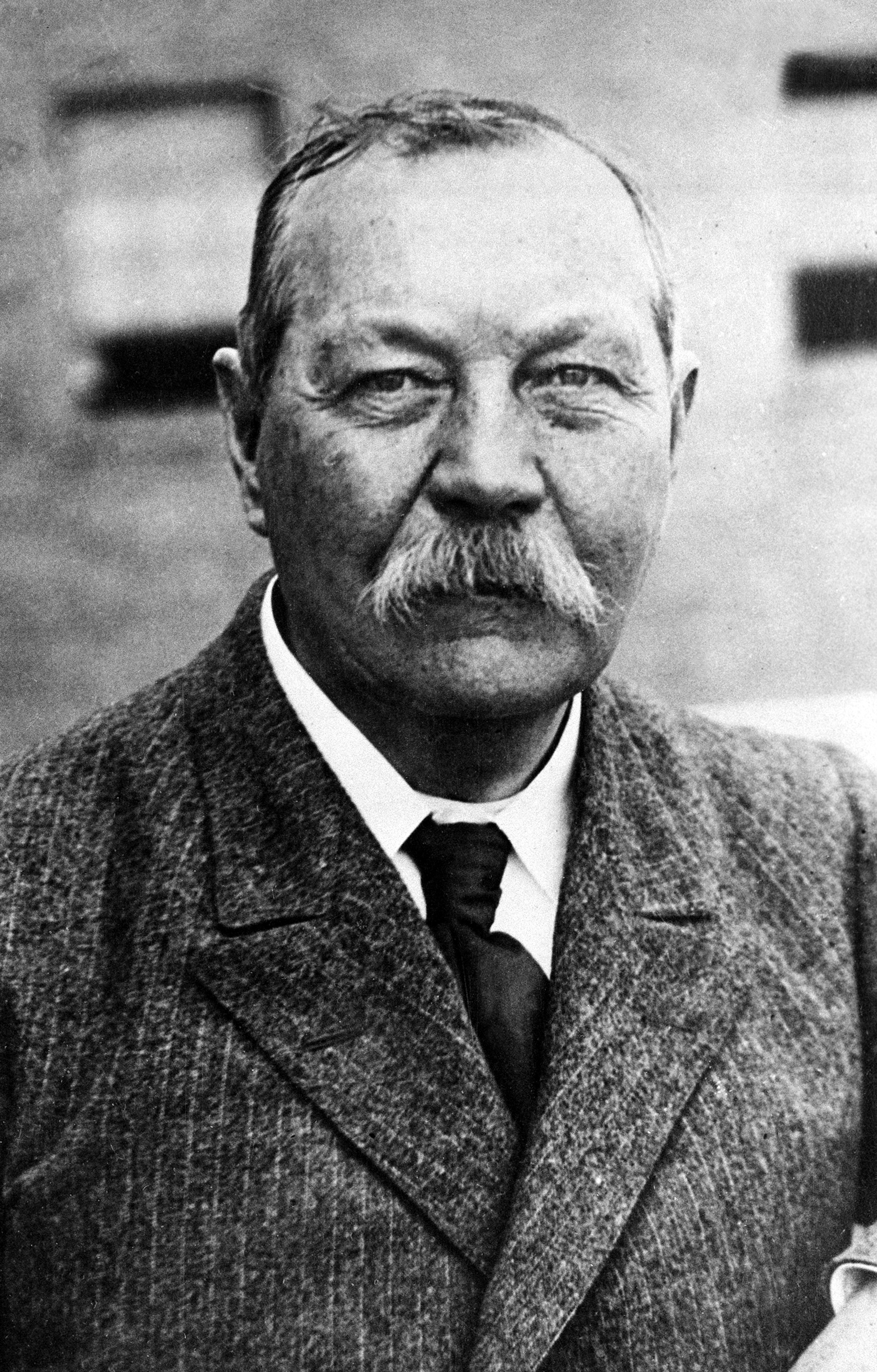
Arthur Conan Doyle
in fact is the chronicler of Tarzan’s adventures as was Watson those of Holmes.
Burroughs goes on to establish his story’s authenticity:
Take the story simply as another Tarzan story, in which, it is hoped, you will find entertainment and relaxation. If you find food for thought so much the better.
Doubtless, very few of you saw, and still fewer will remember having seen, an news dispatch that appeared inconspicuously (how inconspicuously?) in the papers some time since, reporting a rumor that French colonial troops stationed in Somaliland, on the northeast coast of Africa, had invaded an Italian African colony. Back of that news item is a story of conspiracy, intrigue, adventure, and love- a story of scoundrels and of fools, of brave men, of beautiful women, a story of the beasts of the forest and the jungle.
That seems like it covers all the bases of what a story should have. It is also pure Dr. Watson or, rather, Arthur Conan Doyle; let’s not fail to differentiate between fact and fiction. So far what Burroughs has posited could well be true. After all few read and fewer remembered the news item which appeared inconspicuously sometime in the not too distant past. Now Burroughs removes the story from the news item another step and quietly slips into full fiction mode:
If there were few who saw the newspaper acount of the invasion of Italian Somaliland upon the northeast coast of Africa, it is equally a fact that none of you saw a harrowing incident that occurred in the interior some time previous to the affair.
Um, yes, if there were few…then it’s a fact there were none. It seems ERB has established an incontestable ‘fact.’ So if you let that sophistry slip by you he’s going to tell you pure fiction. If you know the difference you won’t care, if you don’t it won’t matter. Anyway his intro was a perfect synthesis of nineteenth century humbug brought completely up to date.
Burroughs’ writing style is even close to reportorial. Tarzan, La and Opar become ‘real’ as ‘real life’ Reds make their assault on the ancient Atlantean colony. So, in a way, Atlantis becomes an established fact rather than an hypothesis.
Burroughs uses clear, concise sentences developing his story news style. For once his story is evenly paced with a well developed beginning, middle and unrushed end. He doesn’t cram a hundred page ending into ten as usual.
While one hesitates to call the book his best Tarzan novel it may be his best written. Thoroughly modern in its swift and pleasant reading with wonderful detailing I certainly can’t consider the novel hack work or inferior to any of the Tarzan novels in any way. The characters are entirely plausible, the premiss doesn’t seem far fetched. There are historical antecedents that we will examine. The novel could easily have take its place among the major spy thrillers written in the last fifty or sixty years. David is right. The novel is a major tour de force.
Part II of X follows.

R.E. Prindle
 I, Dynamo