The High Brow And The Low Brow
The Mucker And Marcia Of The Doorstep
Part VI
Living On Tulsa Time
by
R.E. Prindle, Dugald Warbaby and Dr. Anton Polarion
Livin’ on Tulsa Time.
Livin’ on Tulsa Time.
Gonna set my watch back to it,
‘Cause you know that I’ve been through it,
Livin’ on Tulsa Time.
– Danny Flowers
During the ’60s a lot of energy was put into the notion that one live in the HERE and NOW or someone else’s impression of the NOW. There used to be a big San Francisco poster with nothing but a black background with the giant word IS in white. NOW IS NOW.
They didn’t know how much they were asking. It is impossible to actually live in the NOW; No one can do it. Rather the past is a drag on NOW preventing a full involvement with the present. The period of time it takes to digest the previous NOW and update to an approximate notion of the current NOW is excruciatingly slow. The sharper the break between the past and present the more traumatic the reaction.
In the song Living On Tulsa Time the singer, no matter what time zone he is in sets his watch to Central Tulsa time.
I know where that one is at. One of my shattering breaks with the past was when I went active in the Navy in ’56. Sent from Eastern Standard to Pacific Standard I kept my watch set to Eastern Standard time nearly the whole three years of my enlistment. I only switched to PST in 1959 when I accepted the fact that I would never return East; that California was my new home.
Brought into contact with a new NOW I was still not ready for the present. I continued to dress as we did in ’56 well into the sixties. Got hard to find some new duds. I only ceased dressing that way when I became a Hippie in ’66 and adopted fantastic Hippie garb. I was an urban spaceman:
I’m the Urban Spaceman
I’ve got speed,
I’ve got everything I need.
I don’t feel pleasure,
I don’t feel pain,
If you were to knock me down
I’d just get up again.
I wake up every morning with a smile upon my face.
My natural exuberance spills out all over the place.
-Neil Innes
I was really NOW there for just a little while but I wasn’t alone. As Bob Dylan said, everytime I looked back the past was just behind. When the Hippie era ended I reverted to a modified 1956 style. The past came back again. All those screaming about living in the NOW in ’67-’69 are still back there claiming they’re still living in the NOW but time has passed them by. I didn’t wait around, baby, I slid out into limbo and I’m doing fine now, thank-you.
Thus when ERB began writing in 1911 he was not so much concerned with his NOW as he was in vindicating his past from 1896 to 1905. His reality in those early novels from 1911 to 1915 continue to reflect his earlier travails. Thus in the group of novels embraced by The Girl From Faris’s he is trying to vindicate his past to his present and hopefully to his future.
After nineteen-fifteen he was released from his past to a large extent and began to concentrate on adjusting to the NOW of his altered circumstances. Change is NOW and ERB was going though a lot of ch-ch-changes. His nerves were jangling as he was jerked from time frame to time frame but he didn’t enter the Promised Land of NOW. Oh Lord, he might have prayed, if he could have seen the future- Deliver me from NOW.
Ten years after and a world of different NOWs the Mucker far in a distant past that had disappeared behind a cloud where he couldn’t see he tackled almost the identical theme in a different world, a fast moving world, a world where NOW was so strange it was unrecognizable from day to day. The political situation he had grown up with was no longer recognizable; it had been replaced by a new reality. He was almost living by two different clocks in some strange Einsteinian time zone where the guide posts had been removed and renamed and everything was relative to another reality that couldn’t be recognized by any clock ticking.
Living on Tulsa time in another time zone. There I was in ERB’s sunny Southland with my watch running three hours ahead of everyone else’s. It didn’t matter. I was on the water where time stands still for everyone. The crisis came in ’58 when I stepped back on land to journey through the time zones back to Eastern Standard Time. I was all alone out there, you know, cut off from a past I was soon to learn couldn’t be retrieved. Wolfe was right, you can never go home again. The only secure place, as dangerous and that was, was my ship. My terminal place was also a realtively secure harbor but I was stuck in the middle for six days between the time zones in which I had no place and no identity except the tenuous one of my leave papers. A queer cop threw them into the wind and let those blow away in Illinois. After that I was naked to the universe. I’ve hated cops ever since.
I wouldn’t recommend hitchhiking to anyone. My life was on the line for twenty-five hundred miles and six days. Twenty-five hundred miles and six days on the road without food or sleep. I’d add without drink but in a gas station in Gary I downed six seven ounce bottles of Coca-Cola in a row. Created a minor sensation.
After surviving a lunatic who picked me up on the western edge of the Mojave who wanted to kill me because he was convinced I had two hundred dollars on me, which by a strange coincidence I had, I was picked up Mountain Standard in the Panhandle of Texas by a couple homosexuals who wanted a different treasure I possessed and dropped off Central Time in Tulsa. My watch was only one ahour ahead by then. I was getting close to some kind of NOW or was I? No. Time is much more relative than that. I was soon to be living a strange combination of NOW and THEN.
Tulsa was a tough town. I don’t need to see Tulsa again. I wasn’t about to start living on Tulsa Time. I was an hour ahead which couldn’t have been better. I had to walk through Tulsa, hungry and thirsty. I spied a place across this great expanse of grass between it and the freeway. As I approached the place began to glitter. Fancy, but I could see a coffee shop at the top of a long flight of stairs to the left. I didn’t want to spend money so I thought I’d just get a glass of water.
Oh Dan, can you see
That great green tree
Where the water’s running free
Just waiting there for you and me.
Water…cool…clear…water.
But between me and the water was this big cowboy in high heeled boots, a tuxedo and ten gallon hat. Fancy goings on as I noticed ladies entering to the right in ball gowns escorted by tuxedos. I came prepared or thought I did. I was in my dress blues and my Uncle Sam told me I should never be ashamed of my uniform, it could pass for a tuxedo anywhere. Anywhere but Tulsa. That cowboy had never discussed the issue with my Uncle Sam.
I was bold but the problem was he had the advantage being on the landing at the top of the stairs and I had to climb the stairs to get past him. He had his fist doubled and these high heeled boots with those silver plates on the toes. That was a mean looking business proposition. I had a lot further to fall than he did. Get my uniform messed up and things. Then where would I be out of time and place? Whew! Why does one have to face tough choices?
I’m getting a drink of water, I said, trying to combine thoughness with masculine geniality a al the cowboy ethic.
Not here you ain’t. He said, making a move to kick me down the stairs.
Hey buddy, this is a tuxedo I’m wearing. I faltered.
His reply was not one of which my Uncle Sam would approve.
I left Tulsa still thirsty not liking cowboys any better than I liked cops. NOW has its perils.
A day or so later I was still in Central Time. Tulsa was a tough place and the rest of Oklahoma was no California. I was heading North now which kept me in the same time zone. Then I made the mistake of crossing the Mississippi into East St. Louis. After just a couple minutes I really liked Tulsa. Wished I was back there.
I don’t know what evil forces made me want to hitchhike across country, damn Jack Kerouac, but I was within a hair’s breadth of being sliced and diced on the streets of East St. Louis. Whould have tossed me in the river as so much driftwood. Three Black guys with switchblades in their hands kept inching toward me while I kept inching closer to the middle of the highway.
That morning some guy got in his car for a pleasant drive to Louisville. He decided ot go through East St. Louis for some mysterious but critical reason. He arrived in East St. Louis just as these three knives were deciding to make their move. This guy sized up the situation from a couple blocks away, slammed on his brakes throwing open the passenger door at the same time shouting ‘Get In’ for God’s sake get in, NOW.’ Novel experience for a hitchiker. I wasn’t sure I wanted to rush because if I made a break for it those three knives might move faster than i could. I hopped in casually casting a smiling glance over my shoulder. The driver peeled out of there nearly separating a hand from the wrist on the door handle. I was saved from that particular NOW and END but I was on the road to Louisville which was still a far cry from Eastern Standard which was the time zone I so ardently desired.
It took me another day or so as I had a lot of North to make up but I did get into Eastern Standard. Now my watch matched the time zone but there was a mismatch between the present and the past. Rather there were two different presents and pasts going on at the same time. Mine and theirs. I don’t think Einstein is right but well, maybe, time wasn’t that relative but the uses they and I were making of past and present sure were.
That’s where memory comes in which makes time and space so relative. I had been absent for two years and what I had been experiencing was much different than what they had been experiencing. They had actually been living on Eastern Standard Time while I was just pretending. I knew I was out of time. For me time had been rapidly changing but for them time had more or less stood still or, rather traveled in a straight line. To me they were still living in the past. Oh, they had aged a couple years but their trajectory was different and slower. Relatively they had stood still while I had rocketed away.
It was as though I had been a gamma cloud burped from some collapsed star in some galaxy a billion light years away. As is known once set in motion an object will travel in a straight line at the same speed unless some other agent interferes with it. It was as though I had been careening through space ripping apart the fabric of time and space or disregarding it completely as though it wasn’t there; at any rate completely unaffected by this fabric which apparently has no tensile strength, there was no gravity of any force that deflected my course in a curve while if space is curved I was traveling so fast I careened right off the curved track.
Who knows how many black holes i passed over without being drawn into the vortex; who knows how many puny suns I swept across without having one atom deflected by the puny gravitational pull of the strongest sun; who knows how many planets I depopulated. One billion light years and running, my speed and trajectory were the same as when I was emitted from that distant star.
Now, as though by some miracle here I was back where I began but in two different time zones at one time. Theirs and mine. Obvious I must have passed through a worm hole or fallen into a memory hole. We stared at each other blankly each unable to comprehend the other. They thought I have become weird,or perhaps weirder, because they had stood still while I had been careening through time and space in timezones they would never know.
I smiled and got on a bus, enough of the adventures of hitchhiking. One the way back to Standard Pacific Time I abandoned Eastern Standard adjusting my watch as I passed through Central Standard and Mountain Standard. I was not exactly living in the NOW but I was in the correct time zone.
Minor but vital adjustment.
So, when ERB caught up with himself in 1914-15 he was no longer living on Tulsa time. He was trying to adjust his watch to his current time zone.
But as he was careening through space and time, space and time was moving at an even more frantic pace so it was difficult for him to get his bearings.
Science was changing his world at a rate faster than the mind could follow. Events in the far off Detroit that he had known and loved as a young fellow were going to affect his life just a few years hence. In 1914 Henry Ford had shocked the industrial, moral and social world by ‘unilaterally’ doubling the wage for unskilled labor.
This was a violation of ‘natural law’ which is to say religious sensibilities. At the time a natural law of labor was believed and incorporated into religion. The law was that if only one man can do a job he can command his price. Skilled labor can demand more than unskilled labor but when anyone can do the job as in unskilled labor they will have to take what is offered. Thus Ford pitted science against serious religious beliefs.
At about this time a Judge in a labor dispute asked the strikers if they didn’t know they were going against God’s will on earth.
This was at the time when the Liberal Coalition was forming and there were strangers in the land, to use John Higham’s expression, who believed they truly represented God’s Will. There is no greater enemy to God’s Will on earth than Science and the Scientific Consciousness. If you recall the so-called Christian Scientists reject scientific medical cures preferring to depend on the Will of God. Apparently it has never occurred to them that a case of a ruptured appendix means God’s Will is death while a simple operation means life.
Nevertheless Ford upset the natural or religious order of things and had to be stopped. Ford himself believed he had discovered a universal law in mass production so that he was actually a prophet of his own new religion. Believing himself in the possession of the truth he acted accordingly seeking to apply his method to each and every problem. Thus when the Great War began it was deemed possible to negotiate with the participants on a personal level to get them to cease hostilities. Ford believed he could do it. The Strangers In The Land who were living on Babylon Time saw their opportunity to pit their religion against Ford’s science and they took it. The Man of Science was in their pocket. They convinced Ford to take a horde of well meaning but naive people to Germany for a confab with the Kaiser. Ford fell for it. This was the famous Peace Ship episode that shredded Ford’s reputation two short years after he had made it.
Ford always maintained that after the ship was at sea the Strangers revealed themselves telling him that only they could change the course of the war. They began it and only they could end it. When he returned home he found the Strangers in charge of the War Industries Board and they and the Wilson Administration were telling him how to run his business. Babylon Time had met the Twentieth Century and found it could make the clock run.
Ford with his universal panacea was not the kind of man to take this sort of thing lying down. Ford Motor Co. had as much cash laying around as Bill Gates and Microsoft does today. Ford put his money to use. These are complex times so I am going to edit out all information that doesn’t pertain to my moral.
Ford believed in his method. By applying it properly he saw no reason he couldn’t solve the age old problem of the Jews here and now. He thought reason would work, poor man, so he bought himself a library of Jewish studies, put his man Bill Cameron on the job to study the library and publish the results in his newspaper, the Dearborn Independent, that he bought to disseminate his reasonable solution to the problem. He made the Dearborn Independent a national newspaper, perhaps the first of its kind. He even had a distribution system handy. He made all his Ford dealers distribute the papers, even out in Hollywood, California.
The Independent made such a noise that the papers couldn’t be given the silent treatment.
The independent appealed to a very large number of people although Liberal historians have given the impression that the paper went unread. The paper didn’t go unread. Out in Hollywood a man named Edgar Rice Burroughs apparently read the paper assiduously. As, why not, even if you don’t agree with the premise of a movie like The Passion Of The Christ that doesn’t mean you don’t go to see it. I used to read The Christian Science Monitor and I’ve never been a Christian Scientist. I used to read the Daily Worker and I’ve never been a Communist. A lot of people did go see the Passion making it one of the most lucrative films in history and lots of people read the Dearborn Independent, even devoured it.
Each week the paper issued a new article exposing the true nature of the ‘Jewish Problem.’ The articles were well researched, reasonable and accurate, but as they criticized a religion, no religion will stand any criticism if they can help it, they were necessarily labeled heretical, infidelic, bigoted, anti-Semitist. In this case you can check anti-Semitist. From this particular religion’s point of view they were anti-Semitic but from a reasonable scientific viewpoint they weren’t and aren’t.
The Jewish reaction was strong and violent. As a member of the Liberal Coalition they called in their allies who branded Ford an anti-Semite and ostracized him. Then Ford was out there all alone. A major campaign of vilification and defamation was conducted against him. All the hypnopaedic media were called into play against Ford. William Fox, the Fox part of the later Twentieth Century-Fox, used his Movietone News shorts to portray every Ford that was in an accident as at fault and unsafe. Now that’s defamation with a capital D. By 1925 it was clear that Ford could use some allies.
Enter Edgar Rice Burroughs and Marcia Of The Doorstep.
As we know Marcia was never published so ERB’s aid was hypothetical. A reasonable question is what evidence do I have for ERB’s intent. I offer Marcia Of The Doorstep as my evidence and certain articles from the Dearborn Independent. As I’ve said before ERB in Marcia exhibits a seemingly involved knowledge of the theatre. I have been puzzled as to where he got it.
I think I may have his source. The original Ford articles were issued weekly beginning in 1920-21 later being collected into a series of four volumes entitled ‘The International Jew’. What I am dealing with here is literature and history. I have no concern in the nature of the Ford articles. My only interest is what Ford and Burroughs understood and how they expressed it. Leave it at that. (It wasn’t left at that. As of 10/27/08 this essay has been censored by being left out my catalog of essays and not mentioned under any of the tags; Old habits are hard to break, I guess.)
Like Burroughs believed, or as Burroughs understood Ford there are two types of Jews. The ordinary Jew who goes about his business and the international Jews who is causing all the mischief. Thus the title International Jew excludes the mass of ordinary Jews and refers only the the International trouble makers. For Burroughs there was the ‘type’ of Max Heimer corresponding the the International Jews and the type of Judge Berlanger representing the ordinary of ‘Good Jew.’
In Volume II of the Interntional Jew there is a series of four atrticles on the American Theatre.
The books themselves have long since been stolen from the libraries and destroyed in an informal kind of censorship but due to the wonders of modern technology they’re available on the internet. The relevant theatre chapters can be fund at the URLs below:
http://www.jrbooksonline.com/Intl_Jew_full_version/ij28.htm
http://jrbooksonline.com/Intl_Jew_full_version/ij29.htm
http://jrbooksonline.com/Intl_Jew_full_version/ij31.htm
http://jrbooksonline.com/Intl_Jew_full_version/ij32.htm
The first is entitled Jewish Control of the American Theatre of 1/121; the second: The Rise of the First Theatrical jewish Trust of 1/8/21; the third: Jewish Aspect of the Movie Problem; and the fourth Jewish Supremacy In The Motion Picture World of 2/19/21. I believe all the necessary theatrical information is contained in these four atircles. All were written in 1921 giving ERB plenty of time to involve himself by 1924.
As you may remember ERB was sent a copy of the Jewish Bill Of Rights in 1919 and it was demanded that he endorse them. Thus there are an additional three articles from Vol. II that may be applicable. They are found at:
http://jrbooksonline.com/Intl_Jew_full_version/ij34.htm
http://jrbooksonline.com/Intl_Jew_full_version/ij35.htm
http://jrbooksonline.com/Intl_Jew_full_version/ij36.htm
While the last three do not reflect on Marcia to a great degree they will provide a better backgrund to ERB’s thinking on the issues as he must have studied them carefully.
—————–
It is very probable that ERB coded information into the novel to let Ford know this one was for him. For instance Clara Sackett was probably named after Clara Ford. Could be coincidental but the engineer of the Lady X was named Sorenson while Ford’s Chief Engineer was Charles Sorenson. Given ERB’s obvious connection to the Dearborn independent which Ford would easily have recognized, if he would ever have read the book, I think the references are conclusive.
While on this topic I would also like to point out that when the ban on Tarzan movies was broken in 1926 it was done by the arch ‘anti-Semite’ Joseph Kennedy who owned FBO Studios at the time. FBO was a little later bought by David Sarnoff of RCA who formed RKO. Radio-Keith-Orpheum thus editing Kennedy and FBO out of the picture. Punishment?
Also if you want a lively account of these proceedings check out Upton Sinclair’s self-published Upton Sinclair Presents William Fox. Sinclair’s is a nice first person I Was There type thing plus when William Fox was driven out of the movies, this is really exciting stuff, he went to Sinclair with his story. so Sinclair not only lives through this from a distance but is told part of the story first hand. I just love this stuff.
I am not particularly concerned here with whether the Dearborn Independent articles are true and accurate, although I am sure they are, but my concern is that Burroughs read them, believed them and acted on them. Bearing in mind his contact with the AJC he had no reason to disbelieve the articles.
In the first article ‘Jewish Control Of The American Theatre’, after an introduction that relates Jewish activities in Russia to Jewish activities in the United States a general statement on the theatre is made:
The Theatre has long been a part of the Jewish program for guidance of the public taste (hypnopaedic media) and influencing the public mind…it is the instant ally night by night, week by week of any idea which the ‘power behind the scenes’ wishes to put forth. It is not by accident that in Russia, where they now have scarcely anything else, they still have the Theater, especially revived, stimulated and supported by Jewish-Bolshevists because they believe in the Theater just as they believe in the Press; it is one of the two great means of molding popular opinion.
Cameron should have mentioned movies and song publishing and he would have had the major elements of hypnopaedic conditioning so brilliantly illustrated by Aldous Huxley in his Brave New World.
As we all know Burroughs was opposed to the Bolsheviks; he undoubtedly believed as did any knowledgeable observer that the Bolsheviks were predominantly Jewish. We may believe that he endorses the premises of these article.
Further down (a shortcoming of the internet is that there are no page numbers) the article says:
Down to 1885 the American Theater was in the hands of Gentiles. From 1885 dates the first invasion of Jewish influences. It meant the parting of the ways, and the future historian of the American stage will describe that year with the word “Ichabod.”
Second paragraph below:
About the time that Jewish control appeared, Sheridan, Sothern, McCollough, Madame Junuschek, Mary Anderson, Frank Mayo, John T. Raymond began to pass off the stage.
———————
All that remained after the Hebrew hand fell across the stage were a few artists who had recieved their training under the Gentile school- Julia Marlowe, Tyrone Power, R.D. McLean and a little later Richard Mansfield, Robert Martell. Two of this group remain, and along with Maude Adams they constitute the last flashingsof an era that has gone- an era that apparently leaves no great exemplars to perpetuate it.
There you have the premise of ERB in Marcia and enough history to flesh out the fiction. The old school was gone. ERB then names several players as here. The last surviving exemplar of this tradition is Mark Sackett. But even for Mark there are no plays worthy to perform in. As a member of Abe Finkel’s troupe he condescends to perform in problem plays and the new sex comedy.
The article continues:
“Shakespeare spells ruin”: was the utterance of the Jewish manager. “High brow stuff” is also a Jewish expression. These two sayings, one appealing to the managerial end, the other to the public end of the Theater have formed the epitaph of the classic era.
So there you have the complete story of Mark Sackett.
He was the last of the breed, a fine old Gentile actor of the old school of pre-1885. Corrupted by the Jewish influence on the theatre he accepts demeaning roles.
When he comes in to money he tells Max Heimer that he is going to perform Shakespeare. Max takes the position that ‘Shakespeare spells ruin’ arguing for a Ziegfeld Follies type show, a problem play or a sex comedy which he feels is a surer hope of success than the ‘high brow’ stuff. Straight from the Dearborn Independent.
‘…the rage is for extravaganze and burlesque.’
Now,
In this manner was laid the foundation of the latter day Theatrical Trust. The booking firm was that of Klaw and Erlanger, the former a young Jew from Kentucky who had studied law, but drifted into theatrical life as an agent; the latter a young Jew from Cleveland with little education but with experience as an advance agent.
Thus Abe Finkel is probablly the Klaw of Klaw and Erlanger. It may be coincidence but Judge B-erlanger is Erlanger prefaced with a B. thus those two would reprsent Klaw and Erlanger. Another version would be Finkel and Heimer in Hollywood also patterned after the Potash and Perlmutter movies of Samuel Goldwyn.
The trust was resisted just as Mark Sackett resisted.
(From The Rise Of The Theatrical Trust)
The opposition offered by the artists was prolonged and dignified, Francis Wilson, Nat C. Goodman, James A. Herne, James O’Neill, (Eugene O’ Neill’s father) Richard Mansfield, Mrs. Fiske and James K. Hackett stood out for a time…
Mark Sackett held out then in defiance of theatrical wisdom forming a Shakespearean company. This might be seen as a form of the Little Theatre movement which Cameron says developed in reaction to the first Theatrical Trust.
So the basis for the New York and theatrical end of Sackett’s career may be said to have been inspired by the two theatrical articles of Cameron in the Dearborn Independent. ERB probably read them in newspaper form shortly after publication in 1921. Because of the AJC approach to him as well as heightened anxiety over the immigrant question caused by loyalty concerns in the wake of the War Burroughs was especially receptive to Ford’s concerns.
If the germ of the story was conceived in 1921 the concern over Ford’s struggle was becoming difficult by 1924 may have inspired Burroughs to come to his literary aid. Thus we have this story of Marcia which when examined more closely is very involved in post-war Revolutionary and Jewish problems.
While the novel was universally rejected for publication this was undoubtedly because of ADL censors closely watching the publishing industry.
One can’t be certain but it is possible that Burroughs would have been finished in Hollywood but for Kennedy’s FBO Studios breaking the blacklist on Burroughs in 1926. Jewish movies of Tarzan began again in 1927. After 1932s MGM film which in itself may have been a parody to discredit the Big Bwana, the property became so lucrative especially in a Depression Era climate, that movies continued to be made saving Burroughs from complete ruin.
The war on Ford continued. Henry Ford is an interesting figure who, like Burroughs, would continue to be a Judaeo-Communist target into the thirties and forties, to the end of his life and beyond.
Ford zipped into the NOW in the years around 1914 when his Model T transformed America. But then he slipped back into Tulsa Time. The Model T was so successful for him that he failed to keep up with developments in the industry. The Model T remained essentially the same until 1925 when a better Chevrolet overtook the Ford as the best seller.
Ford then did an extraordinary thing that baffled conventional minds. He shut down production for over a year as he designed the new Model A. For this model he revolutionized the industry by designing the V8. The Model A was an instant success reviving Ford’s fortunes but the present and the future were now so commingled, things were changing so fast that the NOW was gone before you sat down to dinner. Constant model changes were now necessary. The world that Ford had created had gotten away from him.
He realized that he had lost his battle with the Jewish establishment. He capitulated in 1927 when Louis Marshall of the Jewish government demanded an ‘apology’ to call off hostilities. Ford told him to write one out and he would sign it. Marshall wrote an abject apology which Ford signed without edits or reading. Marshall then had the ‘apology’ published, bound and sent to every library free of charge. The apology is easier to find than the Dearborn independent articles.
The fracas came to a humiliating end for Ford and the Scientific Consciousness. ERB’s reaction isn’t known, however on December 10, 1929 (ERB Bio Timeline 1920-29) in a letter to his son Hulbert he made these observation on Religion and Science:
A man can be highly religious, he can believe in God and in an omnipotent creator and still square his belief with advanced scientific discoveries, but he cannot have absolute faith in the teachings and belief of any church, of which I have knowledge, and also believe in the accepted scientific theories of the origin of the earth, of animal and vegetable life upon it, or the age of the human race…(Religious) enthusiasms and sincerity never ring true to me and I think there has been no great change in this all down the ages, insofar as fundamentals are concerned. There is just as much intolerance and hyprocrisy as there ever was, and if any church were able to obtain political power today I believe you would see all the tyranny and inustice and oppression which has marked the political ascendency of the church at all times.
You can’t be any more clear sighted than that. Here ERB has clearly and succinctly stated the religious problem of the twentieth century and beyond. His is an objective analysis of facts; religion is a subjective projection of desires and wishes. As he notes science and religion cannot be reconciled. As he goes on to note in the conflict between the objective and subjective, the conscious and unconscious, the tyranny of the unconscious is an unavoidable fact. The question of which religion he fears would impose all the tyranny, injustice and oppression was clearly the Liberal Coalition and more especially the Jewish element of its multi-cultural diversity.
We now come back to Richard Slotkin and his charges against Burroughs as the ‘mastermind’ of My Lai. that an objection was lodged against Burroughs because he was interested in Eugenics can be discarded. People of all political persuasions were interested in Eugenics. If any abuses of Eugenics were made, Burroughs didn’t make them. Besides, it’s a matter of how you interpret Eugenics. The half man, half beast of Stalin is obviously an objectionable use.
On the score of whether Burroughs was an anti-Semitist, which is what Slotkin really means, from a subjective religious point of view that may be so but it is not a question for the religious to decide; they are not competent to do so. Sigmund Freud himself said that religion is a neurosis. (That means a departure from mental health.) If he is to be respected as a scientific genius why shouldn’t we respect his opinion? If religion is a neurosis then it should be treated as a mental disease.
On a Scienfitic basis then is it possible to call Burroughs an anti-Semitist? Clearly not. The man was a clear minded rational human being of great achievement and should be honored as such.
Should his scientific opinions differ from those of a religious bent it is they who must take a back seat not Burroughs.
Slotkin is clearly wrong in his interpretation of Burroughs. Slotkin represents the unconscious rather than the conscious.
For the foregoing reasons then I think that Marcia Of The Doorstep and 1924 was the pivot of ERB’s career. After 1924 it was no longer possible for him to live on Tulsa Time. He came under attack from the Liberal Coalition which was as formidable for him as it was for Henry Ford.
His novels after Marcia reflect this attack. Those novels are perhaps his greatest. Certainly one of the high points where he meets his enemies head on is Tarzan The Invincible that he was forced to publish under his own imprint. The title says it all.
I may be sentimental but I like Marcia Of The Doorstep. I only wish he had had the patience to flesh out the ending.
ERB wrote well in any time zone there was from Babylon Time to Tulsa Time to the NOW.
You know that I’ve been through it
But I just can’t go back to it.
There is no living on Tulsa Time.
NOW is the time.
End of Review
A Review
The Low Brow And The High Brow
An In Depth Study Of Edgar Rice Burroughs’
The Mucker And Marcia Of The Doortstep
by
R.E. Prindle
Part II
Background Of The Second Decade- Personal
Erwin Porges’ ground breaking biography Edgar Rice Burroughs: The Man Who Invented Tarzan is the basic source for the course of ERB’s life. John Taliaferro’s Tarzan Forever is heavily indebted to Porges adding little new. Robert Fenton’s excellent The Big Swinger is a brilliant extrapolation of Burroughs’ life taken from the evidence of the Tarzan series.
Porges, the first to pore though the unorganized Tarzana archives, is limited by the inadequacies of his method and his deference for his subject. His is an ideal Burroughs rather than a flesh and blood one. Matt Cohen’s Brother Men: The Correspondene Of Edgar Rice Burroughs and Herbert T. Weston has provided much fresh material concerning ERB’s character.
Bearing in mind always that Weston’s evaluation of Burroughs in his August 1934 letter in reply to Charles Rosenberg, whoever he was, about ERB’s divorce is one man’s opinion nevertheless his statements can be corroborated by ERB’s behavior over this decade as well as throughout his life. My intent is not to diminish ERB in any way. Nothing can take away the fact that Burroughs created Tarezan, but like anyone else he was subjected to glacial pressures that distorted and metamorphosed his character.
During the Second Decade as he experienced a realization of who he was, or who he had always thought he should be, or in other words as he evolved back from a pauper to a prince, he was subjected to excruciatingly difficult changes.
A key to his character in this period is his relationship to his marriage. It seems clear that he probably would never have married, stringing Emma along until she entered spinsterhood while never marrying her. He seemingly married her to keep her away from Frank Martin. As he later said of Tarzan, the ape man should never have married.
Rosenberg in his letter to Weston (p.234, Brother Men) said that ‘…Ed says he has always wanted to get rid of Emma….’ The evidence seems to indicate this. After ERB lost Emma’s confidence in Idaho, gambling away the couple’s only financial resources, his marriage must have become extremely abhorrent to him. I’m sure that after the humiliations of Salt Lake City this marriage had ended for him in his mind. That it was his own fault changes nothing. He may simply have transferred his self-loathing to Emma.
That Emma loved and stood by Burroughs is evident. that he was unable to regain her confidence is clear from his writing. The final Tarzan novels of the decade in one of which, Tarzan The Untamed, Burroughs burns Jane into a charred mess identifiable only by her jewelry show a developing breach. Probably the jewelry was that which ERB hocked as the first decade of the century turned. Now, this is a fairly violent reaction.
ERB states that he walked out on Emma several times over the years. In Fenton’s extrapolation of Burroughs’ life from his Tarzan novels this period was undoubtedly one of those times. There seems to have been a reconciliation attempt between Tarzan and Jane between Tarzan The Untamed and Tarzan The Terrible. Then between Tarzan And The Golden Lion and Tarzan And The Ant Men ERB’s attempt to regain Emma’s confidence seems to have failed as Jane chooses the clown Tarzan- Esteban Miranda-, one of my favorite characters- over the heroic Tarzan -ERB – in Tarzan And The Ant Men.
This undoubtedly began ERB’s search for a Flapper wife which took form in the person of Florence Gilbert beginning in 1927.
b.
Weston says of ERB in his disappointment and rage over ERB’s divorce of Emma that ‘…the fact that Ed always has been unusual, erratic and perhaps queer, has been his great charm and attraction for me…’ (p.223, Brother Men) There’s a remote possibility that ‘queer’ may mean homosexual but I suppose he means ‘odd’ or imcomprehensible in his actions. The evidence for this aspect of ERB’s character is overwhelming while being well evidenced by his strange, spectacular and wonderful antics during the second decade. When Weston says of him that ‘…there is no woman on earth that would have lived with him, and put up with him, except Emma…’ there is plenty of reason to accept Weston’s opinion.
Part of ERB’s glacial overburden came from his father, George T. who died on February 13, 1913. Burroughs always professed great love for his father, celebrating his birthday every year of his life, although one wonders why.
Apparently George T. broadcast to the world that he thought ERB was ‘no good.’ His opinion could have been no secret to Burroughs. Weston who says that he always maintained cordial relations with George T., still thought him a difficult man, always dropping in to visit him on trips through Chicago said that George T. complained to him, ERB’s best friend, that his son was no good. While without disagreeing with George T. up to that point, Weston said that he thought there was plenty of good in ERB but that he just hadn’t shown it yet. Kind of a back handed compliment, reminds me of Clarence Darrow’s defense of Big Bill Haywood: Yeah, he did it, but who wouldn’t?’
Such an opinion held by one’s father is sure to have a scarring effect on one’s character. How exactly the effect of this scarring worked itself out during this decade isn’t clear to me. Perhaps Burroughs’ mid year flight to California shortly after his father’s death was ERB’s attempt to escape his father’s influence. Perhaps his 1916 flight was the same while his move to California in 1919 was the culmination of his distancing himself from his father. That is mere conjecture at this point.
Now, what appears erratic from outside follows an inner logic in the subject’s mind unifying his actions. What’s important to the subject is not what obsevers think should be important.
c.
The scholars of the Burroughs Bulletin, ERBzine and ERBList have also added much with additional niggardly releases of material by Danton Burroughs at the Tarzana archives. One of the more valuable additions to our knowledge has been Bill Hillman’s monumental compilation of the books in ERB’s library.
Let’s take a look at the library. It was important to ERB; a key to his identity. Books do furnish a mind, as has been said, so in that light in examining his library we examine the furnishing of his mind. The shelves formed an important backdrop to his office with his desk squarely in front of the shelves. ERB is seated proudly at the desk with his books behind him.
How much of the library survived and how much was lost isn’t known at this time. Hillman lists over a thousand titles. Not that many, really. The library seems to be a working library. There are no the long rows of matching sets by standard authors. The evidence is that Burroughs actually read each and every one of these books. They found their way into the pages of his books in one fictionalized form or another. Oddly authors who we know influenced him greatly like London, Wells, Haggard and Doyle are not represented.
Most of the works of these authors were released before 1911 when Burroughs was short of the ready. Unless those books were lost he never filled in his favorites of those years. That strikes me as a little odd.
It is generally assumed that he picked up his Martian information from Lowell, yet in Skelton Men Of Jupiter he says: ‘…I believed with Flammarion that Mars was habitable and inhabited; then a newer and more reputable school of scientists convinced me it was neither….’ The statement shows that Camille Flammarion’s nineteenth century book was the basis for Burroughs’ vision of Mars while Lowell was not. Further having committed himself to Flammarion’s vision he was compelled to stick to it after he had been convinced otherwise. When that understanding was obtained by him we don’t know but at sometime he realized that the early Martian stories were based on a false premiss.
Thus, his Mars became a true fiction when his restless, searching mind was compelled by judicious reasoning of new material to alter his opinion. That he could change his mind so late in life is an important fact. It means that behind his fantasy was a knowledge of solid current fact. The results of his pen came from a superior mind. It was not the maundering of an illiterate but amusing boob.
Organizing the books of his library into a coherent pattern is difficult. I haven’t and I Imagine few if any have read all his list. Based on my preliminary examination certain patterns can be found. He appeared to follow the Chicago novel by whomever, Edna Ferber’s So Big is a case in point. Seemingly unrelated titles can be grouped aorund certain Burroughs’ titles as infuences.
In 1924 when Marcia Of The Doorstep was written ERB had already formed his intention of leaving, or getting rid, of Emma. He began a fascination with Flappers that would result in his liaison with Florence.
After the move to Hollywood in 1919 a number of sex and Flapper potboilers find their way into his library. The tenor of literature changed greatly after the War showing a sexual explicitness that was not there prior to the Big Event. To be sure the graphic descriptions of the sex act current in contemporary literature was not permissible but the yearning to do so was certainly there. Language was retrained but ‘damn’ began to replace ‘d–n’ and a daring goddamn became less a rarity.
Perhaps the vanguard of the change came in 1919 when an event of great literary and cultural import took place. Bernarr Macfadden whose health and fitness regimes had very likely influenced Burroughs during the first couple decades decided to publish a magazine called “True Story.” The magazine was the forerunner of the Romance pulp genre while certainly being in the van of what would become the Romance genre of current literature.
The advance was definitely low brow, not to say vulgar, indicating the direction of subsequent societal development including the lifting of pornographic censorship. Pornography followed from “True Store” as night follows day.
The magazine coincided with the emergence of the Flapper as the feminine ideal of the twenties. In literature this was abetted by the emergence in literary fiction of F. Scott Fitzgerald. His Beautiful And Damned is a key volume in Burroughs’ library forming an essential part of Marcia. To my taste Fitzgerald is little more than a high quality pulp writer like Burroughs. I can’t see the fuss about him. He riminds me of Charles Jackson’s The Lost Weekend and vice versa. In fact, I think Jackson mined the Beautiful And Damned. Plagiarize would be too strong a word.
“True Story” caught on like a flash. By 1923 the magazine was selling 300,000 copies an issue; by 1926, 2,000,000. Low brow was on the way in. Vulgarity wouldn’t be too strong a word. Macfadden had added titles such as “True Romances” and “Dream World” to his stable. His magazine sales pushed him far ahead of the previous leader, Hearst Publications, and other publishers. Pulpdom had arrived in a big way.
Where Macfadden rushed in others were sure to follow. The sex thriller, the stories of willful and wayward women, which weren’t possible before, became a staple of the twenties in both books and movies.
ERB’s own The Girl From Hollywood published in magazine form in 1922, book form in 1923, might be considered his attempt at entering the genre. Perhaps if he had thrown in a few Flapper references and changed the appearance and character of his female leads he mgiht have created a seamless transition from the nineteenth century to the twenties. A few Flapper terms might have boomed his ales much as when Carl Perkins subsititued ‘Go, cat, go’ for go, man, go’ in his Blue Suede Shoes and made sonversts of all us fifties types.
Certainly ERB’s library shows a decided interest in the genre from 1920 to 1930. Whether the interest was purely professional, an attempt to keep up with times, or personal in the sense of his unhappiness in his marriage may be open to question. I would have to reread his production of these years with the New Woman in mind to seek a balance.
Still, during the period that led up to his affair with Forence ERB seems to have been an avid reader of Flapper and New Woman novels.
He had a number of novels by Elinor Glyn who was the model of the early sex romance. He had a copy of E.M. Hull’s The Sheik, that shortly became the movie starring Rudolph Valentine with its passionate sex scenes. A ‘Sheik’ became the male synonym for Elinor Glyn’s ‘It’ girl.
Of course, the influence of Warner Fabian’s Flaming youth of 1923, both book and movie, on ERB is quite obvious.
Just prior to this relationship with Florence he read a number of novels by Beatrice Burton with such sexy titles as The Flapper wife-The Story Of A Jazz Bride, Footloose, Her Man, Love Bound and Easy published from 1925 to 1930.
I would like to concentrate on Burton’s novels for a couple reasons; not least because of the number of her novels in ERB’s library but that when Burroughs sought publication for his low brow Tarzan in 1913-14 he was coldly rebuffed even after the success of his newspaper serializations. The disdain of the entire publishing industry was undoubtedly because Burroughs was the pioneer of a new form of literature. In its way the publication of Tarzan was the prototype on which Macfadden could base “True Story.” Not that he might not have done it anyway but the trail was already trampled down for him. In 1914 Burroughs violated all the canons of ‘polite’ or high brow literature.
A.L. Burt accepted Tarzan Of The Apes for mass market publication reluctantly and only after guarantees for indemnification against loss. Now at the time of Beatrice Burton’s low brow Romance genre novels, which were previously serialized in newspapers, Grosset and Dunlap sought out Burton’s stories publishing them in cheap editions without having been first published as full priced books much like Gold Seal in the fifties would publish paperback ‘originals’ which had never been in hard cover. Writers like Burton benefited from the pioneering efforts of Burroughs. G& D wasn’t going to be left behind again. Apparently by the mid-twenties profits were more important than cultural correctness.
As ERB had several Burton volumes in his library it might not hurt to give a thumbnail of who she was. needless to say I had never read or even heard of her before getting interested in Burroughs and his Flapper fixation. One must also believe that Elinor Glyn volumes in ERB’s library dating as early as 1902 were purchased in the twenites as I can’t believe ERB was reading this soft sort of thing as a young man. Turns out that our Man’s acumen was as usual sharp. Not that Burton’s novels are literary masterpieces but she has a following amongst those interested in the Romance genre. The novels have a crude literary vigor which are extremely focused and to the point. This is no frills story telling. The woman could pop them out at the rate or two or three a year too.
Her books are apparently sought after; fine firsts with dust jackets go for a hundred dollars or more. While that isn’t particularly high it is more than the casual reader wants to pay. Might be a good investment though. The copies I bought ran from fifteen to twenty dollars, which is high for what is usually filed in the nostalgia section. Love Bound was forty dollars. I bought the last but it was more than I wanted to pay just for research purposes.
There is little biographical information about Burton available. I have been able to piece together that she was born in 1894. No death date has been recorded as of postings to the internet so she must have been alive at the last posting which woud have made her a hundred at least.
She is also known as Beatrice Burton Morgan. She was an actress who signed a contract with David Belasco in 1909 which would have made her fifteen or sixteen. Her stage name may have been Beatrice Morgan. The New York Public Library has several contracts c. 1919 in her papers.
One conjectures that her stage and film career was going nowhere. In The Flapper Wife she disparages Ziegfeld as Ginfeld the producer of the famous follies.
Casting about for alternatives in the arts she very likely noticed the opening in sex novels created by Macfadden and the Roaring Twenties. The Flapper Wife seems to have been her first novel in 1925. The book may possibly have been in response to Warner Fabian/Samuel Hopkins Adams’ Flaming Youth.
As the motto for his book he had “those who know, don’t tell, those who tell, don’t know.’ The motto refers to the true state of mind of women. Burton seems to have taken up the challenge- knows all and tells all. Flapper Wife was an immediate popular success when taken from the newspapers by G&D. Critics don’t sign checks so while their opinion is noted it is irrelevant.
Burton apparently hit it big as the movies came afer her, Flapper Wife was made into a movie in 1925 entitled His Jazz Bride. Burton now had a place in Hollywood. Burroughs undoubtedly also saw the movie. What success Burton’s later life held awaits further research. As there is no record of her death on the internet it is safe to assume that when her copyrights were renewed in the fifties it was by herself.
There are a number of titles in the library having to do with the Flapper. The library, then gives a sense of direction to ERB’s mental changes. There are, of course, the Indian and Western volumes that prepared his way for novels in those genres. As always his off the top of his head style is backed by sound scholarship.
The uses of the various travel volumes, African and Southeast Asian titles are self-evident. I have already reviewed certain titles as they applied to Burroughs’ work; this essay involves more titles and I hope to relate other titles in the future. So the library can be a guide to Burroughs’ inner changes as he develops and matures over the years.
The amont of material available to interpret ERB’s life has expanded greatly since Porges’ groundbreaking biography. Much more work remains to be done.
The second decade is especially important for ERB’s mental changes as his first couple dozen stories were written beginnng in 1911. Moreso than most writers, and perhaps more obviously Burroughs work was autobiographical in method. As he put it in 1931’s Tarzan, The Invincible, he ‘highly fictionalized’ his details. For instance, the Great War exercised him greatly. From 1914 to the end of the War five published novels incorporate war details into the narrative: Mad King II, Beyond Thirty, Land That Time Forgot, Tarzan The Untamed, and Tarzan The Terrible as well as unpublished works like The Little Door. Yet I don’t think the extent that the War troubled him is recognized. The man was a serious political writer.
Thus between the known facts and his stories a fairly coherent life of Burroughs can be written. My essays here on the ERBzine can be arranged in chronological order to give a rough idea of what my finished biography will be like.
Burroughs was a complex man with a couple fixed ideas. One was his desire to be a successful businessman. This fixed obsession almost ruined him. He was essentially a self-obsessed artist and as such had no business skills although he squandered untold amounts of time and energy which might better have been applied to his art than in attempts to be a business success.
In many ways he was trying to justify his failure to be a business success by the time he was thirty rather than making the change to his new status as an artist.
As a successful artist he was presented with challenges that had nothing to do with his former life. These were all new challenges for which he had no experience to guide him while he was too impetuous to nsit down and thnk them out properly. Not all that many in his situation do. Between magazine sales, book publishing and the movies he really should have had a business manager as an intermdiary. Perhaps Emma might have been able to function in that capacity much as H.G. Well’s wife jane did for him. At any rate book and movie negotiations diverted time and energy from his true purpose of writing.
His attempt to single handedly run a five hundred plus acre farm and ranch while writing after leaving Chicago ended in a dismal failure. Even his later investments in an airplane engine and airport ended in a complete disaster. Thank god he didn’t get caught up in stock speculations of the twenties. As a businessman he was doomed to failure; he never became successful. It if hadn’t been for the movie adaptations of Tarzan he would have died flat broke.
Still his need was such that he apparently thought of his writing as a business even going so far as to rent office space and, at least in 1918, according to a letter to Weston, keeping hours from 9:00 to 5:30. Strikes me as strange. Damned if I would.
At the end of the decade he informed Weston that he intended to move to Los Angeles, abandon writing and, if he was serious, go into the commercial raising of swine. The incredulousness of Weston’s reply as he answered ERB’s questions on hog feed comes through the correspondence.
Think about it. Can one take such flakiness on ERB’s part seriously? Did he really think his income as a novice pig raiser would equal his success as a writer with an intellectual property like Tarzan? Weston certainly took him seriously and I think we must also. There was the element of the airhead about him.
A second major problem was his attitude toward his marriage and his relationship with Emma.
He appears to have been dissatisfied with both at the beginning and decade and ready to leave both at the end. According to the key letter of Weston ERB was an extremely difficult husbnad with whom Emma had to be patient. As Weston put it, no other woman would have put up with his antics. Unfortunately he doesn’t give details of those antics but the indications are that Emma was a long suffering wife.
ERB’s resentment of her apparently became an abiding hatred. Danton Burroughs released information about ERB’s third great romance with a woman named Dorothy Dahlberg during the war years of WWII through Robert Barrett the BB staff writer in issue #64.
After having been estranged from her husband for about a decade Emma died on 11-05-44, probably of a broken heart. ERB returned to Los Angeles from Hawaii to dispose of her effects. Arriving on 11/19/44 after visiting his daughter he met with Ralph Rothmund in Tarzana where he proceeded to get soused, apparently in celebration of Emma’s death.
To quote Barrett, p. 25, Burroughs Bulletin #64.
After Ed met with Ralph Rothmund, he opened a case of Scotch and took out a bottle after which he drove to Emma’s home in Bel-Air- where he and Jack “sampled” the Scotch a couple times.” From Bel-Air Jack drove Ed to the Oldknows, some friends also in Bel-Air, where they continued to sample the Scotch. After this visit Ed and Jack returned to Emma’s home at 10452 Bellagio Road, where Jack brought out a nearly full bottle of bourbon. Jack asked the maids to postpone dinner for 30 minutes, while they waited for Joan and Joan II. This evidently irritated the two maids as they both quit and walked out on them! Ed reported in his diary that after the two maids walked out, ‘we had a lovely dinner and a grand time.”
That sort of strikes me as dancing on the grave of Emma which indicates a deep hatred for her on the part of ERB. We are all familiar with the storyof ERB’s pouring the liquor in the swimming pool humiliating Emma in front of guests which she stood so Weston must have known what he was talking about.
There is a certain hypocrisy in Burroughs now getting blotto in celebration of Emma’s death. Between the two of them in the space of a couple hours ERB and his son, John Coleman, finished a fifth of Scotch and went ripping through a bottle of bourbon. I don’t know how rough and tough you are but that would put me under the pool table.
In this inebriated and hostile state they apparently had words with what I assume to have been Emma’s long time maids. Maids don’t walk out because you ask them to hold dinner for a few minutes. Being a maid is a job; they don’t respond that way to reasonable requests. So in his drunken state ERB must have been offensive about Emma or the maids causing their reaction.
Thus sitting totally soused in the ‘alcoholic’ Emma’s home they ‘had a lovely dinner and a grand time.’ The woman was both good to him and good for him but it isn’t incumbent on any man to see his best interests. There was a crtain dignity lacking in ERB’s behavior at this good woman’s death, not to mention the hypocrisy of getting thoroughly jazzed.
d.
The decade also witnesses the unfolding of ERB’s psyche from the repressed state of 1910 to an expanded and partially liberated state at the end of the decade when he fled Chicago. Pyschologically ERB was always a dependent personality. He let his editors both magazine and book bully him and take advantage of his good will. He also needed a strong role model which is one reason his literary role models are so obvious.
From 1911 to 1916 he seemed to lean on Jack London as his role model. The problem with London is that we can’t be sure which of his books ERB read as he had none of his books in his library. It seems certain that he read London’s early Gold Rush books. ERB’s hobo information is probably based on London’s The Road and then he may possibly have read The Abyssmal Brute which is concerned with the results of the Jack Johnson-Jim Jeffries fight and a preliminary to The Valley Of The Moon.
It is difficult to understand how Burroughs could have read much during this decade what with his writing schedule and hectic life style. Yet we know for a fact that between 1913-15 he found time to read Edward Gibbon’s massive The Decline And Fall Of The Roman Empire.
At the same time additions to his library from this decade are rather sparse, the bulk of the library seems to have been purchased from 1920 on. Still, if one assumes that he read all the books of London including 1913’s Valley Of The Moon, then it is possible that his cross=country drive of 1916 may have been partially inspired by Billy and Saxon Roberts’ walking tour of Northern California and Southern Oregon in that book as well as on ERB’s hobo fixation. Certainly London must have been his main influence along with H.H. Knibbs and Robert W. Service. He may have wished to emulate London by owning a large ranch.
I suspect he meant to call on London in Sonoma during his 1916 stay in California but London died in the fall of that year which prevented the possible meeting. With the loss of London Burroughs had to find another role model which he did in Booth Tarkington. He does have a large number of Tarkington’s novels in his library, most of which were purchased in this decade. Tarkington was also closely associated with Harry Leon Wilson who also influenced ERB with a couple two or three novels in his library, not least of which is Wison’s Hollywood novel, Merton Of The Movies. Just as a point of interest Harry Leon Wilson was also a friend of Jack London.
ERB’s writing in the last years of the decade seems to be heavily influenced by Tarkington as in Bridge And The Oskaloosa Kid, The Efficiency Expert and The Girl From Hollywood.
Burroughs was an avid reader and exceptionally well informed with a penetrating mind so that his ‘highly fictionalized’ writing which seems so casual and off hand is actually accurate beneath his fantastic use of his material. While he used speculations of Camille Flammarion and possibly Lowell on the nature of Mars he was so mentally agile that when better information appeared which made his previous speculations untenable he had no difficulty in adjusting to the new reality. Not everyone can do that.
I have already mentioned his attention to the ongoing friction between the US and Japan that appeared in the Samurai of Byrne’s Pacific island. In this connection Abner Perry of the Pellucidar series is probably named after Commodore Matthew Perry who opened Japan in 1853. After all Abner Perry does build the fleet that opened the Lural Az. Admiral Peary who reached the North Pole about this time is another possible influence. The identical pronunciation of both names would have serendipitous for Burroughs.
As no man writes in a vacuum, the political and social developments of his time had a profound influence on both himself and his writing.
The effects of unlimited and unrestricted immigration which had been decried by a small but vocal minority for some time came to fruition in the Second Decade as the Great War showed how fragile the assumed Americanization and loyalty of the immigrants was. The restriction of immigration from 1920 to 1924 must have been gratifying to Burroughs.
I have already indicated the profound reaction that Burroughs, London and White America in general had to the success of the Black Jack Johnson in the pursuit of the heavyweight crown. The clouded restoration of the crown through Jess Willard did little to alleviate the gloom. Combined with the sinking of the Ttitanic and the course of the suicidal Great War White confidence was irrevocably shaken.
Burroughs shared with London the apprehension that the old stock was losiing its place of preeminence to the immigrants. This fear woud find its place in Burroughs writing where he could from time to time make a nasty comment. His characterization of the Irish is consistently negative while his dislike of the Germans first conceived when he saw them as a young man marching through the streets of Chicago under the Red flag was intense. Their participation in the Haymarket Riot combined with the horrendous reports of German atrocities during the War reinforced his dislike almost to the point of fanaticism. While the post-war German reaction in his writing was too belated he had been given cause for misinterpretation.
Always politically conservative he was a devoted admirer of Teddy Roosevelt while equally detesting Woodrow Wilson who was President eight of the ten years of the Second Decade. When the Bolsheviks took over Russia in 1917 polarizing public opinion into the Right and Left ERB was definitely on the Right.
By the end of the decade the world he had known from 1875 to 1920 had completely disappeared buried by a world of scientific and technological advances as well and social and political changes that would have been unimaginable in his earlier life. The changes in sexual attitudes caused by among others Krafft-Ebbing, Havelock Ellis and Margaret Sanger would have been astounding.
The horse had been displaced by the auto. Planes were overhead. The movies already ruled over the stage, vaudeville and burlesque. Cities had displaced the country. The Jazz Age which was the antithesis of the manners and customs of 1875-1920 realized the new sexual mores so that the Flapper and Red Hot Mama displaced the demure Gibson Girl as the model of the New Woman.
When ERB moved from Chicago to LA in 1919 he, like Alice, virtually stepped through the looking glass into a world he never made and never imagined. A Stranger In A Strange Land not different in many ways from the Mars of his imagination.
Go to Part III- Background Of The Second Decade Social And Political
Part 9 Tarzan And The Lion Man: A Review
May 24, 2008
A Review
Themes And Variations
The Tarzan Novels Of Edgar Rice Burroughs
#18 Tarzan And The Lion Man
No. 9 of 10 parts
by
R.E. Prindle
First published on the ezine, ERBzine
Conclusions And Prospectus
A careful reading of the output of the ’30s reveals a developing antagonism, war if you will, between the Communists, the Jews and ERB. The attempt to shut down non-Communist writers appears to have been extended to ERB, forcing him into self-publishing in 1930 with Tarzan The Invincible being the first title. this was followed by its sequel Tarzan Triumphant.
The two titles would seem to indicate he met that challenge successfully.
Then in a seemingly unrelated event MGM released the movie version of Trader Horn in 1931. Trader Horn seems to have led MGM to sign Burroughs on for his Tarzan character shortly after the movie’s release. MGM would then go on to film six Tarzan features over a ten or eleven year period from 1932 to 1942. All the movies were profitable yet after the release of Tarzan’s New York Adventure MGM sold a stellar property to the Sol Lesser Company even allowing Johnny Weissmuller and Sheffield to go with the sale. O’ Sullivan chose to abandon the series.
The entire MGM series used Trader Horn footage transferring it to the Tarzan series as Tarzan’s home base. Over the years they incorporated scenes relying on Tarzan And The Leopard Men and Tarzan And The Lion Man. It would appear they sudied the series closely. Compare this description of Lady Barbara Collis’s flight in Tarzan Triumphant with the scene used twice in MGM movies of the plane approaching the Escarpment. Triumphant, p. 10:
…and when there loomed suddenly close to the tip of her left wing a granite escarpment that was lost immediately above and below her in the all eveloping vapor…
There can be little doubt that the intent was to defame the character of Tarzan with the release of Tarzan, The Ape Man, first of the series. Ten years later in Tarzan’s New York Adventure he is still the ignorant lout he was as the feral boy of the first film after having been the ‘mate’ of the seemingly well bred, well read, intelligent Jane played by Maureen O’ Sullivan. After ‘finding’ a son in 1939, three years later, ‘Boy’, as he was generically named, speaks intelligently and is able to write a note telling his mother he will be gone for a day. At the same time Tarzan is still going around speaking pidgin English like ‘Tarzan kill’ or ‘Me Tarzan, you Jane.’ There’s a guy who isn’t even listening to Jane talk to him. I personally find this amazing. The question then is why didn’t MGM develop the character in a more intelligent manner.
Also, the question arises as to why the character wasn’t made a profit center for MGM as Charlie Chan was for Twentieth Century Fox. As Burroughs notes in ‘Writer’s Markets And Methods’ in 1938 in reference to the Chan movies, the public was hungry for the serialization of popular characters during the thirties. There were nearly fifty Charlie Chan films made, some years at a clip of four. The astonishingly strong and continuing appeal of Tarzan would certainly have justified the attept to produce two or more a year. Certainly an annual film. After assuming the license from MGM beginning in 1943 Lesser released a film a year in a very profitable manner. So, as he found plenty of ideas the argument that MGM exhausted the story potential of the character doesn’t hold up. Something else was going on.
That something else was the role of Burroughs as an anti-Communist and in Jewish eyes, an anti-Semite.
It is important to have an idea of the Jewish role in history as they are invariably in antagonism to the citizens of their host country. One need look no further for an explanation than the Old Testament story of Cain and Abel. The story encapsulates the Jewish attitude toward the other peoples of the world.
The story involves God or in other words, a higher authority, Abel who becomes the the higher authority’s favorite and Cain who is rejected by the higher authority. Abel presents his offering to God or the higher authority and Cain his. Abel’s offering is an exploitation of the natural increase of the flocks. In other words cattle do all the labor while Abel harvests them. Cain labors in the fields offering the produce of his labor which is rejected as unworthy.
Once the higher authority chooses the offering of Abel he makes him his favorite. Abel then lords it over Cain who quite naturally resents this. Cain then invites Abel into the field where he kills him. Eh voila! The origins of Semitism and anti-Semitism. The problem of anti-Semitism is solved.
Now, the Jews will compulsively repeat the story of Cain and Abel after the Freudian manner endlessly over the millennia as the story is encoded in their brains.
Now for the application. In 1995, BenZion Netanyahu published his mammoth volume titled, The Origins Of The Inquisition In Fifteenth Century Spain. BenZion is the father of Benyimin the former Prime Minister of Israel. Mr. Netanyahu’s large sized, eleven hundred pages, book investagates the problem in excruciating and verbose detail. Mr. Netanyahu chats on interminably in an attempt to deny the obvious. It’s as though he believes that if he talks long enough the truth will go away.
Mr. Netanyahu notes that in every instance over the last twenty-five hundred years the Jews have at first been warmly received by the host nation only to have this affection turn to such a hatred over a period of time that the Jews are either killed or thrown out. He examines the problem in fifteenth century Spain. His conclusion is that the cattle, or anti-Semites as he styles them, are at fault while his Jews are as blameless as Abel. Thus he avoids answering the question of why this is the invariable result of Jewish cohabitation in a society.
For Jewish historians there are two versions of Jewish history. One is the annals of the Jews and the other is the history of anti-Semites. This is how the Jews organize their story. Any thing critical of Judaism automatically falls into the category of the History of anti-Semitism. One of the most persistent objections to Judaism over the last twenty-five hundred years is that the Jews see the non-Jews or Cainites as cattle meant to contribute to Jewish welfare. Even though the idea is clearly contained in the story of Cain and Abel the Jews have always considered the charge what they call an anti-Semitic slur. However Mr. Netanyahu describes the system perfectly in his overlong essay. This isn’t history. This is one long whine.
Skipping a repetitious millennium or two let us skip along with Mr. Netanyahu to fifteenth century Spain.
Our author erroneously established the origins of anti-Semitism in the Hellenic and Roman periods of the Middle East. He chose to completely ignore the blueprint of Semitism and anit-Semitism as presented in the story of Cain and Abel in Genesis, the first book of the Bible. For him he has the inexplicable paradox of every people warmly receiving the Jews into their midst while after a period of time universally and brutally rejecting them. He appears to be genuinely so obtuse as to be unable to understand this.
The history of the Jews in Spain goes back at least to the Roman transportation to Spain after the destruction of Jerusalem in 70AD.
While the usual tradition of the Jewish historian, Heinrich Graetz and others, is to portray the Spain before the expulsion as an idyllic sojourn in ‘The Land Of The Three Religions,’ Mr. Netanyahu presents a picture of cultural conflict under the Visigothic kings down to the expulsion.
Of course the Moslems occupied Spain from c. 700AD until they were completely expelled in +1492. The Reconquest began almost immediately, while by c. +1100 when Mr. Netanyahu reaches the beginning of his central story was successful over most of Spain. Following the scenario of Cain and Abel the Jews were able to insinuate themselves into the role of middlemen between the kings of the various kingdoms, or higher authorities, and the indigenous Spaniards, or cattle who Mr. Netanyahu disparages as Christians as though the conflict were of a religious nature rather than a cultural one. Spain was a multi-cultural society that functioned as all multi-cultural societies must until one culture establishes itself as the Top Dog.
We have the classic situation of the Abelites farming their Cainites as a human herd of cattle. The cattle produce the wealth, the middlemen reap the harvest. Thus the kings appointed the Jews tax collectors and tax farmers.
There is no more vicious or unopular job than that of tax collector. Even today when governmental functions are institutionalized and no longer personal the resistance is still strong. The Jews had the advantage of segregating themselves as a distinct culture so that they escaped the opprobrium they would have felt if they had been native tax farmers living amongst their brethren.
In the nature of tax farming per se there is no reason to believe that the Jews were any more honest or gentle than any other tax farmers. Exploiting their human cattle as tax farmers the Jews then dug deeper by acting as loan sharks after having expropriated the wealth of the Spaniards as taxes. Interest or usury as it was called was forbidden the faithful by the Catholic Church so miraculously, almost, the loan sharks had the field to themselves, not ever a shard of competition. And they took advantage of it. So for roughly two or three hundred years the Jews exploited their human kine unmercifully. Mr. Netanyahu acknowledges this although with a different characterization.
As Abel exploited his position as favorite of God with Cain who, becoming exasperated, killed Abel so in 1391 driven past their endurance the Spanish cattle rose up, as Mr. Netanyahu puts it, to virtually exterminate the Jewish population. As exaggeration no doubt. Mr. Netanyahu virtually equates the uprising with the Stalin-Hitler period in Central and Eastern Europe.
In the interests of brevity we will now skip another four hundred years or so to the post-Revolutionary period of 1913 to the present. The story was the same in every society the Jews infiltrated; one of expulsion or slaughter during this intervening period. There is no aberration in history over the period from 1913 to 1945; it is all a continuation of the Abel and Cain story; Semitism and its inevitable reaction. Underline the word inevitable. The United States will not be immune to this reaction.
From 1300 to the French Revolution Jews had been expelled from every Western European country while being placed under civil disabilities in Central and Eastern Europe. The French Revolution reestablished opportunities for them. They quickly reestablished their role as middlemen.
By the time of the Revolution State functions had been depersonalized and institutionalized. The law of fiat by the king had been replaced by the ‘Rule of Law.’ Thus, while individual rulers who remained goyim were still important, they functioned under the higher authority of the ‘Law.’ The term Majesty indicates the concept of The Law had replaced the Royal authority.
Thus to regain their position of middlemen Jews had to subvert the Law. This has been all but completely accomplished in our own time. In the interim between 1913 and 1953, actually, the Jews fully exasperated their Central and Eastern European host States, thus during the Stalin-Hitler period from 1928 to 1953 Nazis and Communists took the psychological solution of inviting Abel out into the field and killing him. Both Stalin and Hitler began to systematically exterminate the Jews. This should surprise no one familiar with the Cain and Abel story and history.
Stalin was assassinated on the eve of the execution of the order to round up Eastern European Jews for transportation to the gulags in the far North. Not only a virtual but an actual death sentence. Thus the Jews in Europe would have been all but destroyed.
I hope this is suffiecient background for us to now return to the story of Burroughs, Tarzan, MGM and the Judaeo-Communists of Hollywood.
it is an accepted fact today that the various national CPs were all 50 to 60% Jewish. Insofar as Jewish Cultural ends coincided with Communist goals, which were not entirely synonymous, all Jews may be said to be Communist sympathizers. After the establishment of Israel in 1948 a rift occurred between the two cultural factions that resulted in a rejection of the Jews by the Communists.
We know that ERB became suspect as an anti-Semite after 1919 and I suspect a confirmed one in AJC/ADL eyes, at least by 1924’s Marcia Of The Doorstep, reinforced by Tarzan Triumphant a few years later. :Little is known of ERB’s attitude toward the Jews before 1919. He must have been aware of the Jewish presence in Chicago.
Gus Russo in his volume Supermob describes their arrival in Chicago in this manner. p. 4:
This community…was centered around the intersection of Halsted and Maxwell Streets, where the population was 90% Jewish. Over the next twenty years (after 1871) an estimated fifty-five thousand Eastern European Jewish immigrants crowded into this tiny locus. So dense had this ghetto become that one social scientist determined that if the rest of the city were similarly clotted, Chicago would boast, instead of two million residents, over thirty-two million people, half the population of the entire country.
We know that ERB was familiar with the area because Billy Byrne, the Mucker, came from the area, so ERB must have observed the Jewish community in this habitat. With further arrivals that brought the Jewish population of Chicago to 350,000 the area of Lawndale was colonized.
Hollywood in the thirties was rapidly changing. (When wasn’t Los Angeles rapidly changing?) Beginning in the thirties a remendous influx of revolutionary and conspiratorial Jews arrived from Germany, especially after 1933. At the same time the Outfit began to annex California as its own crime colony. As part of this organized crime influx came the generation of Jews from Lawndale in Chicago as the so-called financial wizards of the Chicago Outfit. Thus the whole charater of LA Burroughs knew from the teens and twenties changed much for the worse. It will be remembered that ERB was a neighbor of the Sicilian mobster Johnny Roselli in the late thirties while gangsters became prominent in his work beginning with Danny ‘Gunner’ Patrick of Tarzan Triumphant and the assassins of The Swords Of Mars.
As far as I know ERB was too discreet to discuss his opinions of Jews other than what can be gleaned fromt the novels. It does seem clear that he knows who he was dealing with.
We know he was an anti-Communist which was enough to have him shut down as an author, while it is probable that the Jews considered him an anti-Semite which is another reason for him to be brought into line. The means of doing this was to control him economically while subverting his character of Tarzan. It was a fairly easy matter to break him financially, but the strength of the appeal of Tarzan was such and the means applied so covert, that when MGM gave up after Tarzan’s New York Adventure the ape man had been too strong for them.
So, when the string of six MGM Tarzans began in 1932 the intent was to diminish Tarzan to a laughing stock, but the character was too much for them while the movies became extremely profitable. Even then the Studio abandoned the lucrative series in 1942. This is inexplicable unless something is going on behind the scenes.
For the next essay I am going to concentrate on the last of the MGM movies, Tarzan’s New York Adventure primarily because it seems to be directly related to the situation around Tarzan And The Lion Man. It is highly improbable that Lion Man was not read by those involved with this project at MGM. They must therefore have reacted to it. The novel very likely has concealed messages that escape us but which they would have picked up. The movies also have concealed messages which were directed at Burroughs. If I am right Tarzan’s New York Adventure is a lecture tha was directed at the old Lion Man, Edgar Rice Burroughs.
Go to part 10 of 10 Tarzan’s Excellent New York Adventure
Part 8 Tarzan And The Lion Man: A Review
May 22, 2008
A Review
Themes And Variations
The Tarzan Novels Of Edgar Rice Burroughs
#18 Tarzan And The Lion Man
Part 8 of 10 parts
by
R.E. Prindle
First published on the ezine, ERBzine
More Stars Than There Are In Heaven
The last two chapters are titled ‘Goodby Africa; and ‘Hello, Hollywood.’ Burroughs thus complements Ring L1 with Ring R1 completing the circle. If one reads the book with this structure in mind rather than the linear one leading to a climax at the end the story will make more sense and be much more pleasurable.
ERB had had a rocky road in Hollywood since his arrival in 1919. The purchase of the spectacular Otis estate immediately called attention to him, an attention that he would have to fulfill. ERB obviously failed to live up to the expectations he had created while souring the relationship further by writing the muckraking Girl From Hollywood in 1922. In Lion Man he once agains ridicules Hollywood and actually the movie colony, as well it should have been. The first and last chapters are direct attacks. Comments of this sort are always resented and seldom forgiven. MGM was not in a forgiving mood.
Burroughs opens the chapter with a description of Tarzan. p. 180:
A year had passed.
A tall, bronzed man alighted from the Chief (Santa Fe RR passenger train called The Chief) in the railroad station of Los Angeles. The easy majestic grace of his carriage; his tread, at once silent and bold; his flowing muscles; the dignity of his mien; all suggested the leonine, as though he were, indeed a personification of Numa, the lion.
Yes indeed, the Lion Man had hit Tinseltown, flowing muscles, whatever flowing muscles may be, and all. Hollywood had come to Africa and now Africa had come to Hollywood with a silent but bold tread, whatever that is. MGM would make merry over the Lion Man.
Just by coincidence Tarzan arrives at the same time as Balza, The Golden Girl, who had already found fame and stardom in the movie capitol is returning. She now has green hair and has learned to say Mahvelous, in true Hollywood fashion. After all she had a human brain. All Hollywood stars said Mahvelous at the time which was a source of some amusement and derision. ‘That’s mahvelous, darling.’
The Freeman Lang Burroughs mentions was a real person, the Hollywood greeter. ERB had obviously listened to or seen several such spectacles- a nice snapshot of a bygone era.
With the trace of a smile Tarzan continues to downtown Hollywood and the Roosevelt Hotel. Named after TR obviously. The Roosevelt was real and so far as I know is still in use, although I haven’t been to Hollywood for twenty years or so now, so I can’t say for sure. The Hotel was frequented by the movie crowd while having a somewhat seedy reputation according to my sources.
While checking in, one of the local sharpers watches him sign his name- John Clayton of London. ERB has been around, he knows what’s happening. When Tarzan comes down from his room the sharper accosts him in the lobby with a ‘Say, aren’t you John Clayton from London?’
The sharper claims to have met Tarzan in London, although he doesn’t specify the major island of Africa or the lesser island England. Obviously he could never have met John Clayton on the lesser Island. He attaches himself to Tarzan as a guide.
He guides Tarzan to the then famous Brown Derby, an actual restaurant. Hollywood and LA are much different today than they were in the thirties,forties and fifties. All the garish wonder and splendor is gone. The Brown Derby was actually shaped like a brown Derby hat. I saw it before they tore it down but I never ate there; I did eat at the one over in Beverly Hills but it wasn’t the same. Burroughs makes some very unflattering remarks about the movie folk eating lunch there, which probably didn’t help him socially during the rest of the decade.
ERB then offers another slice of Hollywood life portraying the premier of Balza’s new film at Grauman’s Chinese Theatre, which I am sure everyone is familiar with. Freeman Lang again officiates at the mike. I’m sure everyone has seen such a depiction in either newsreels or movies. The Day Of The Locust would be a good example.
After the movies Reece, the sharper, suggests that he, a friend, and Tarzan attend a party. He fails to mention that they’ll be crashing it as they have no invitations, indeed, don’t even know the hosts.
Here ERB is giving an excellent portrayal of a Hollywood type who persists today, although much rougher now that cocaine and other drugs have been introduced. Formerly merely audacious and crooked, now they are vicious and criminal, using drugs as an entree.
Tarzan is not aware of what’s going on as Reece brushes past the doorman. While Tarzan makes himself amenable in small talk Reece and friend set about to rob the hostess of her jewels.
Tarzan is appraised by some studio types as a suitable condidate to play a jungle god. One of the men may be meant to represent Louis B. Mayer although if so, ERB is too cautious to mention his real name.
We also learn that Rhonda has been married to Orman and is now in the South Seas making another movie. If La and Rhonda did represent ERB’s Anima figure, then he has abandoned her which means that as Tarzan is now one undivided person he has no Anima and no woman. Strange situation.
About this time the screams of the hostess announce that Reece and his friend are doing violence to the lady. Tarzan rescues her then jumps through a window into a conveniently placed tree as the cops arrive.
Surprisingly he runs into Reece the next day. Asked why he isn’t in jail Reece casually says that his friend has a contact who fixed it. He feels no remorse or shame secure in the knowledge that nearly any crime can be fixed.
The party and the fixing are realistic portrayals of Hollywood. ERB must have attended such parties, while as a man about town he was familiar with the various Hollywood types.
BO Studios call asking him to come in for an audition. ERB does some flim flam about an adagio dancer playing the Lion Man, gives Tarzan a minor role because he isn’t the type to play the Lion Man, then Tarzan muffs his chance by killing a trained lion. Rather weak from my point of view. Tarzan then turns his back on Hollywood asking for directions back to Africa.
So the novel Tarzan And The Lion Man ends ‘not with a bang but a whimper.’ The duel with MGM has already begun.
Go To Part 9: Conclusions and Prospectus
Tarzan The Untamed
January 3, 2008
Themes And Variations
The Tarzan Novels Of Edgar Rice Burroughs
#7 Tarzan The Untamed
By
R.E. Prindle
Edgar Rice Burroughs seems to be searching for his sexual identity in Tarzan The Untamed. The untamed may refer to the notion that he may be married but Emma has not domesticated the roaring Lion Man.
On my first reading of the novel I merely picked up the surface story, that, to tell the truth, I don’t find very interesting perhaps even implausible and ridiculous. On the second and third readings however the story behind the story, ERB’s psychological dilemma begins to emerge coloring the story with interest.
The story even begins to assume a certain beauty, a poetic shimmer, that takes form as you stare into it. I began to relate Untamed to other novels and stories, that seemed to me to be related and partake of the same dilemma. I don’t know that I can successfully relate them to Untamed but I’ll give it a shot.
For the last few years shifting around in the back of my mind have been the tales of E.T.A. Hoffman. Just a moment ago as I write this I finished another tale of the German romantics, a charming story that I recommend highly, Undine, by Friedrich de la Motte-Fouque. And finally although this may be difficult to see Fyodor Dostoievsky’s Crime and Punishment.
Untamed begins with the murder of Jane, Burroughs aspect of female sexuality, and Tarzan’s killing of the panther or his emasculated sexuality that manifests itself as a homosexual latency.
One then is led to believe that by killing sexual desire Tarzan or ERB believes that he has eliminated the troubling sexual ambivalence of his character. Yet, just a few pages on they flicker to life again in the character of the putative German spy Bertha Kircher. Tarzan first sees Kircher as a woman in the German camp so grasping at the obvious he assumes that she is a German spy. He doesn’t realize and we won’t be told until the end of the story that she is a double agent. In reality she is an English spy posing as a German spy. There’s a complexity there that eludes me at the moment.
She is thus introduced to Tarzan as a woman. The next time he sees her is as a man disguised as a British agent in the English camp. He doesn’t recognize her although he know he has seen him somewhere before. Thus the old sexual ambivalence resurfaces. In what seems to be your standard adventure story delicate psychological nuances begin to flicker around the action story like St. Elmo’s Fire. No matter what the surface story is about the secondary story is about something else.
La Motte Fouque in his Undine also addresses the problem of a man faced with a sexual dilemma that lies within. The path is clear for the hero, Huldbrand, it is only his own weakness that creates the problem for him. In Huldbrand’s case his decision is between two women amidst elemental forces of nature that contrast with the elemental human nature. Undine is a story of astonishing beauty that I can only slaughter in interpreting . I highly recommend you read it. For those deeply into fantasy you will find Undine as fantastic as anything you have ever read; for those into myth and fairytale it is a masterpiece of the kind. Anyone who reads around in this area will have heard it mentioned. I have known of the title for many years but recently in my researches into H.G. Wells it was mentioned that Undine was a favorite of his. I thought it necessary background so I added this gorgeous story to my memory stacks. I should have waited so long; it is a superb Anima-Animus story.
In the December 14th ERBzine George McWhorter provided a list of a few post-WWII books that ERB read. As ERB titles the list, a few of the books he has read, and the list is astonishingly long from a few one can only guess that ERB’s full list must have a couple hundred or more. As reading was a lifelong habit for him and if he consumed titles at that voracious pace then it is truly difficult to guess how many books he read from, say, 1888 to 1910 just before he began writing. Of course his potential list to select from before 1910 was much shorter than ours is today. Titles as obscure today as Undine were relatively well known then. I may be wrong but I pick up hints of Crime and Punishment in ERB’s corpus from time to time. Certainly by his WWII list he had crime on his mind.
We do know that the stories that disappeared into his capacious mind from the period before 1910 gestated for decades in the back of his mind finally finding expression thirty or forty years later. I’m thinking of George W.M. Reynold’s Mysteries Of The Court Of London that burst forth in the 1938 version of The Lad And The Lion. So while I can’t say for certain that ERB read these three authors there is a certain wistfulness and fairy tale quality to the story of Tarzan, Bertha Kircher and Harold Percy Smith-Oldwick that reminds one of the three authors that I have mixed up with Untamed.
So, a woman named Bertalda sends the knight Huldbrand into the elemental forest to prove his love for her. Thus Huldbrand goes to a destiny he never imagined. In the sense of C.G. Jung’s collective unconscious which as I interpret as a set of symbols common to the Western mind, Burroughs also sends Tarzan and his two sexual identities into the elemental jungles of Africa.
La Motte-Fouque invents the water spirit Kuhleborn to forward the action. The presence of so much water indicates that the action takes place in the subconscious of Huldbrand.
Water plays a very different role in Burroughs’ story. In his tale Tarzan braves a watered land to traverse eight very deep and steep ravines that become progressively drier until in the last he almost dies of thirst. As Burroughs’ story covers the four years in his life from late 1914 until mid-1919 one may assume that he had eight bouts of progressively severe depression the eighth and last occurring as he writes his story.
On the other side of the last canyon the well watered jungle begins again. Thus the main story of Tarzan, Bertha and Smith-Oldwick takes place on the edges of the forest and a meadow.
In La Motte-Fouque’s story the elements had set up the conflict from the beginning. As we are told Kuhleborn stole the baby Bertalda away from her parents in an apparent drowning. He then restored a child to the bereaved parents with the child Undine who was actually a water sprite. Bertalda was left by the side of the road where a noble couple found and adopted her. She is the lost daughter of the now aged couple of Undine’s adoptive parents to which Kuhleborn now leads Huldbrand.
Undine’s parents live on an isolated peninsula. As soon as the storm drives Huldbrand to the peninsula the elemental Kuhleborn in the form of a raging torrent turns the peninsula into an island from which there is no escaping. Huldbrand and Undine are thus thrown together. Elemental spirits have no souls. This notion would certainly have had great appeal for Burroughs for whom men without souls was a preoccupation. Undine can only acquire a soul, which she greatly longs for, from the love of a man who has one. She therefore in effect seduces Huldbrand. Kuhleborn disapproves but as to a point Undine’s magic is stronger than his he is reluctantly forced to accede on certain conditions.
A wandering priest is tossed up on shore by Kuhleborn who ties the knot for Undine and Huldbrand. They return to civilization and Berthalda where the conflict between a human woman with a soul and a water sprite without one puts Huldbrand to the test.
So Tarzan who is first associated with Bertha Kircher is once again presented with his emasculation conflict when Smith-Oldwick appears in the picture. The name Smith occurs in Burroughs’ work with some frequency while Old-wick may have sexual connotations unless I’m being too Freudian.
Before Smith-Oldwick does appear Tarzan has to cross the continent from East to West. His wish is to return to his father’s cabin, build an addition or two to make it more roomy and comfortable then settle in as a sort of gentleman farmer. Ah, to be so world weary. And yet that is what Burroughs is about to do.
In a rather remarkable episode Tarzan is crossing Africa when he comes upon Bertha Kircher out there somewhere. He takes her captive but for some unknown reason doesn’t relieve her of the pistol at her side. Even stranger he walks along in front of his captive. Bertha not slow to grasp an opportunity reaches up and lays the butt of her pistol alongside the back of the Big Fella’s head. There’s one bash in the head so far.
Bertha takes off for the railroad leaving Tarzan lying face down in the trail. As he lies Sheeta the panther comes upon him. This presents a sexual problem difficult of analysis. Does it mean that Tarzan is unaware of his attraction to Bertha or what? Tarzan is all but dead as Sheeta prepares to spring on him when who should appear but the Lion whose will Tarzan broke earlier in the story. Now totally devoted to his oppressor he kills Sheeta. Tarzan regains consciousness to find himself nose to nose with Numa. Reminds you of that horrid joke Hillman told a while back about the elephant. In this case it was the same lion.
So the Lion and Tarzan are united in spirit. Tarzan is not yet known as the Lion Man but he will be. In any event the Lion is a guardian spirit for him. In the second book after this one, perhaps reflecting this lion Tarzan will raise and tame the Golden Lion who will be his helpmate and guardian angel. I suspect that the lions Tarzan kills would have been tigers if someone hadn’t objected to the fact that there are no tigers in Africa. In some ways panthers are substitutes for the tiger.
Relieved to find that this lion is his lion Tarzan gets up giving the lion a pat and then trots off down the trail in search of Bertha. In a sort of hobo flashback Bertha finds the train line and hops a freight a few steps ahead of the White Ape. Tarzan misses the connection so we find him forsaking the middle terraces for a trudge down the tracks into town.
I don’t know how many people find these two sequences funny but I do.
Tarzan loses track of Bertha so he begins the long walk to Gabon. Here he has to traverse the eight deep canyons. These canyons have vertical walls while being very deep so that even for the Ape Man these thing become too difficult. Each crevasse gets drier and drier so Tarzan gets weaker and weaker being deprived of, as it were, the feminine water of life. By the time he hits the eighth canyon he is spent. I mean, he has had it. This may be as close to death as the Great Tarmangani has ever come.
He lays down in a manner that indicates he will never get up. The chapter is titled Blood Will Out. A little double entendre. A vulture descends to wait for his meal to die. Instead Tarzan grabs the vulture by the neck sinking his strong white teeth into it throat. Here’s the joke: Blood Will Out. Tarzan’s inherited greatness appears while the vulture’s blood saves his life. Tarzan sucks the vulture dry gaining liquid refreshment while eating the flesh. He now has just enough strength to climb out. He discovers he has crossed the desert and is now in a watered land.
One may assume then that Burroughs has fought off several bouts of severe depression from 1914 to 1919.
Back up on the surface he discover Bertha Kircher in the possession of a Black German trooper. At the same time Smith-Oldwick is flying on a reconnaissance mission when he develops engine trouble landing in a meadow. He whips out his monkey wrench, fixes the problem but before he can take off he is captured by the locals.
Thus he Tarzan and Bertha are brought together. So Tarzan having thought he had resolved his sexual hang-ups at the beginning of the book now learns he hasn’t. The old ambivalence returns in the persons of Bertha and Percy Smith-Oldwick.
In a series of interesting adventures the three Whites are brought together. Tarzan’s male figure falls in love with Bertha. The plane is relocated. An adventure with Usanga the Black German soldier intervenes that is not germane here. Tarzan’s intention is still to go off alone to his father’s cabin so he sees Smith-Oldwick and Bertha off as they begin the flight back to Kenya. Thus we have a second resolution to Burroughs’ sexual dilemma. He packs his sexual problems in a plane and flies them off higher above him than he is high above his daily cares in the trees. He is seen standing in a tree safely above it all watching the plane disappear into the distance. The plane is soaring very high over the tree tops when it takes a dive back to earth. Thus that dream of Burroughs’ getting rid of his ambivalence crashes.
Even this attempt to resolve his sexual dilemma is doomed to failure. He can’t abandon the two so he starts back into the desert from which he almost met his death. His sexual ambivalence has landed in the eighth and most desolate canyon. Undaunted Tarzan returns to near certain death to resolve his problem. The three are in an impossible situation from which it appears that there is no escape.
There he learns that a very unintelligent vulture had apparently mistaken the plane for a dead something. Descending on it the vulture became entangled in the propeller. Never one to lose a chance to bash someone/anyone on the head Burroughs has the bird break a piece of the propeller loose that bashes Smith-Oldwick in the forehead. The bashing definitely establishes Smith-Oldwick as Burroughs’ sexual alter-ego as he presumably now has the same scar on his forehead that both Burroughs and Tarzan sport.
The vulture is an ancient symbol of the mother. One can’t be too sure how aware Burroughs may have been of this but in the Jungian sense of the collective unconscious the symbol would have or may have suggested itself from the common fund. As a student of Africa Burroughs would certainly have had plenty of time to consider vultures especially as his idol Rider Haggard includes vultures in most of his African novels.
If Burroughs is using the vulture as a symbol for his mother that opens the interesting problem of what exactly his relationship to his mother was. First Tarzan strangles, drinks the blood and eats the flesh of the vulture, with perhaps a very sly joke of blood will out, and then the vulture attacks his sexual identity destroying any chance Burroughs may have had of successfully resolving the issue. I merely raise the point.
Having been bashed but not knocked unconscious Smith-Oldwick recovers in time to ease that airplane down. Tarzan arrives but there seems to be no hope of the three leaving the canyon alive.
At this point the residents of the lost civilization of Xuja capture them. Once again not germane to my point here after a series of very interesting hair raising adventures the trio is rescued by some British troops searching for Smith-Oldwick.
Burroughs and Tarzan still have to resolve the sexual dilemma.
The rescue officer advises Tarzan that Jane is not after all dead. This fact apparently resolves the problem for Tarzan. Bertha and Smith-Oldwick return to get married while Tarzan now psychically reunited with Jane returns to East Africa to begin the search for Pal-Ul-Don rather than returning to his father’s cabin.
We don’t know where this leaves Burroughs in August of 1919, more or less the anniversary of the beginning of the Great War in 1914, when he finished the book. We don’t know what his relations with Emma were except that possibly they had reached an accord psychologically.
The story began in Tarzan’s mythical Africa during the War. In the novel the story must take place in 1914-15 but in real life the war ended in November of 1918. This probably coincides with Tarzan drifting off from East Africa back West to Gabon. At the same time in real life Burroughs left Chicago in January 1919 moving West to Los Angeles.
So the village of Usanga in the middle of Africa must represent Chicago. The lost city of Xuja that is located in a desert valley watered by canals brought from a distance must represent the move to LA. So that Burroughs is recording his sexual dilemma and also the move from Chicago to LA against the background of the Great War. Pretty nifty footwork.
He and Emma must have been together as it is very difficult to believe he would have absented himself from her and Tarzana so that this long separation of Tarzan from Jane must represent a mental estrangement from Emma. Perhaps the strain of the move was more than she could bear.
In the next novel Tarzan The Terrible Tarzan makes the long trek to the lost land of Pal-Ul-Don in search of Jane. While the succeeding novel Tarzan And The Golden Lion opens with Jane, Jack and Tarzan returning from Pal-Ul-Don reunited again. At that time there is a distinct coolness between Tarzan and Jane. Whatever reconciliation took place between Emma and Burroughs it was less than satisfactory on Burroughs’ side.
In Golden Lion the two discover a lion cub on the trail that Tarzan takes home to raise as the Golden Lion. The Lion is always cool toward Jane while seeming to protect Tarzan from her. As soon as the lion is mature and trained Tarzan takes off to visit La at Opar. In this instance he and La come close to being a couple while the Golden Lion becomes a close male companion.
Thus Bertha and Smith-Oldwick have turned into La and the Golden Lion. Still unable to resolve his real life problem Burroughs ends Golden Lion by having Tarzan return to Jane. Burroughs has now resolved his emasculation problem by having the Golden Lion as Tarzan’s male buddy. As a beast he is not threat to Burroughs’ masculine identity. The Golden Lion remains Tarzan’s male pal throughout the remaining novels.
Now I have to return to Tarzan The Untamed. This is a very complex novel and I don’t know if I can do it justice.
Addendum To Springtime For Edgar Rice Burroughs
November 16, 2007
Addendum To Springtime For Edgar Rice Burroughs
An Analysis Of Chap. I, Tarzan The Untamed
By
R.E. Prindle
I hope I will be excused for submitting an analysis of only the first Chapter of Tarzan The Untamed. It seems to be very significant while justice couldn’t be done to its remarkable content within a full book review.
Tarzan The Untamed is unusual in that it took ERB a little over a year to write. A very long time for him. The book is also one of the longest Tarzan volumes.
The book was begun three months before Armistice Day on November 11, 1918. This was a tremendously busy period for Burroughs as in January of 1919 he severed his lifelong ties with Chicago forever, moving to Los Angeles. The evidence of the first chapter undoubtedly written by him in August of ‘18 is that this was an especially traumatic period of life for him.
He said he walked out on Emma several times during their marriage. The external evidence of Tarzan The Untamed, Tarzan The Terrible and Tarzan And The Golden Lion is that this period was one of them. At the very least this was a very stormy period for him in his marriage.
The Chapter in question can be divided into three episodes: The killing of Jane and Tarzans discovery of the deed, his reversion to a ‘great white ape’, and the confrontation with the panther. As David Adams has pointed out, whenever a leopard or panther is involved Burroughs is dealing with his sexual problems.
Writing in 1918-19 Burroughs antedates the story to the Fall of 1914 just after the Great War began. He seems to have been particularly aroused by the War. Much to the amazement of his publisher he wanted to become a war correspondent. He was unable to find a place. His writing during this period is replete with references to the War.
It seems possible to relate the death of Jane in the Fall of 1914 to Emma and the Mad King which was written between 9/26 and 11/2 in the Fall of 1914 when the Great War was in progress as reflected in ERB’s story. In the earlier story, ‘Barney Custer of Beatrice’, Barney had performed great services for the Princess Emma, done everything he could do to win her love and trust but she remained distant and distrustful. As the Princess Emma’s attitude refects that of Emma Burroughs this refusal to trust him must have infuriated ERB who at the time must have felt that he done everything a woman could expect of a man. He, in the character of Waldo in 1913’s Cave Girl Part I, actually tells Nadara, who had the same attitude as Princess Emma, that.
ERB’s and Emma’s relationship must have been strained over the intervening four years perhaps reaching a crisis at this time as ERB appears to have walked out at some time in this period although with the turmoil of moving and resettling it is difficult to tell when.
At any rate the brutal murder of Jane burned beyond all recognition except significantly her jewelry indicates the depth of ERB’s emotions. The jewelry may be especially significant in that ERB lamented that in his impoverished days he had to pawn Emma’s jewelry. That time or those times may have been especially bitter for him.
While it is true that he was persuaded to change the story bringing Jane back to life there seems little possibility for the reader to believe anything but that Jane was actually killed. The implication then is that Emma was dead to ERB. He had always regretted marrying Emma, or marrying at all, even going to the extent of saying that Tarzan should never have married which is to say himself. One wonders why, if he felt so strongly he didn’t seek a divorce at this time.
That is how ERB resolves that sexual problem of his wife. ERB then inserts a long paragraph explaining that now that Jane is dead Tarzan reverts to his original identity of the ‘great White ape’ or pure beast. It is explained that he never felt comfortable in his thin veneer of civilization. He assumed it merely because it pleased Jane and now that she is dead he no longer has any use for the guise. Hence as he stalks through the jungle in pursuit of the Germans he does so as a stalking beast no different than a lion or tiger. But more intelligent. He may revert to the beast but he doesn’t abandon the intellectual trappings of the veneer of civilization. Still got Daddy’s knife at his side.
Then in the last third of the chapter having resolved his heterosexual problem he turns to another serious aspect of his sexuality, that of his feeling of emasculation. That aroused homosexual feelings in him that he stoutly rejected.
ERB gave voice to this part of his psychology in Bridge And The Oskaloosa Kid, or otherwise, The Oakdale Affair of 1917, the previous year. Whether there are indications of homosexual feeling between Bridge and Billy Byrne in ‘Out There Somewhere’ is not clear to me at this time. I would have to read it again with that object in mind but they are probably there. As there are abundant indications of the sexual malaise in his subsequent writings it would seem clear that having solved one sexual problem by having others kill it he then turned to the emasculation problem that he had to deal with by himself alone, killing it.
In all other instances where the leopard or panther symbol appears women are involved except in one instance involving the male ape, Akut, in Beasts of Tarzan. There are definite homosexual overtones in that episode. As Tarzan confronts the male panther in this instance alone the beast must refer to Burroughs own sexual ambivalence. Especially as in this instance ERB combines the Panther motif with the terrific storm and extreme darkness.
The theme of storm and leopard is most dramatically portrayed in Tarzan And The Leopard Men of 1931 that opens with leopard men slashing victims, is followed by a terrific storm and succeeds to the confrontation between Old Timer/ERB and Kali Bwana/Florence.
Tarzan the Invincible of 1930 has the terrific storm as Tarzan and La come close to sexual consummation.
So, in this story almost separate from the rest of the novel, the story opens with the brutal murder of Jane followed by Tarzan’s confrontation with Sheeta in the terrific storm.
In this story we learn that Tarzan has some favorite trees. I can’t think of another instance in the oeuvre where Tarzan returns to a tree. In every other instance he merely selects a new tree for the night. In this instance having discovered the murdered Jane he goes to a tree he has often used. I don’t know what that means sexually. Perhaps if he had walked out on her before this he had some place he favored until reconciled.
Goro plays a prominent role. Unlike Greek mythology with which ERB was familiar where the moon is feminine in Burroughs mind the moon is masculine.
Thus it is night with the moon shining although a storm is building. Tarzan climbs the giant bole of the tree to find Sheeta sleeping on his mat in the crotch of the great limb. Thus the emasculation lurking in Burroughs’ subconscious haunts his nighttime bed. At this point the storm begins to break with gale force winds. Clouds obscure the moon and it gets dark, very dark, as dark, one might say as the tomb. It is a peculiarity of Burroughs’ heroes that they can see or find their way in the dark where you or I couldn’t. This is a very potent subconscious symbol. I’m not yet clear on Burroughs’ use of the symbol of darkness.
The Panther in this instance is a male as Burroughs refers to it as ‘he’. Thus in the night in his bed Tarzan comes upon a male sexual symbol. A quote:
Quote:
It was very dark now, darker even than it had ever been before, (see, we’re getting very serious) for almost the entire sky was overcast by thick black clouds.
Presently the man-beast paused, his sensitive nostrils dilating as he sniffed the air about him. Then with the swiftness and agility of a cat, he leaped far outward upon a swaying branch, sprang upward through the darkness, caught another, swung himself upon it and then to one still higher. What could so suddenly have transformed this matter-of-fact ascent (matter-of-fact ascent? What does that mean?) of the giant bole to the swift and wary action of his detour among the branches? You or I could have seen nothing- not even the little platform that an instant before had been just above him and which now was immediately below- but as he swung above it we should have heard an ominous growl; and then as the moon was momentarily uncovered , we should have seen both the platform dimly, and a dark mass that lay stretched upon it- A dark mass that presently, as our eyes became accustomed to the lesser darkness, would take the form of Sheeta, the panther.
Unquote.
As this is obviously a dream or subconscious sequence we don’t have to take into account improbabilities such as the moon breaking through the thick black clouds so conveniently.
Security for Tarzan is always being above things so that once his sensitive nostrils pick out Sheeta on his platform by a series of amazing acrobatics among the waving boughs in the rising gale Tarzan finds a secure place on a branch above the platform. He is now in a position to manage Sheeta. Tarzan always deals with Sheeta by descending upon him or leaping on his back.
In ‘Beasts’ he saves Akut by falling on Sheeta’s back as Sheeta descends from a tree on Akut. At the end of Leopard Men he does a standing leap onto Sheeta’s back. In this instance in a driving rain storm amidst lightening and thunder, on a whipping branch in a gale he does a somersault over Sheeta’s snout onto his back. These are acrobatics I would like to witness.
Now, in 1913’s Cave girl Part I Waldo killed the panther when it fell onto his upright spear. Spear equals penis as symbol. That pelt was given to Nadara after Waldo had worn it himself for some time. If the pelt is associated with both a homo and hetero sexuality homo in the sense of emasculation then there is a real sexual ambivalence indicated. In the case of Cave Girl Waldo assumed the masculinity of the Panther thus augmenting his own to its former state then having regained his masculinity he was able to invest Nadara with his love.
Jane is dead here so that it appears that Tarzan/Burroughs, still troubled by ambivalence as is also evidenced in 1917’s Bridge And The Kid where the Kid is a woman dressed as a man very ambivalently. In that story Bridge/Burroughs is very relieved to discover this boy he has fallen in love with is really a girl. Using his spear, a symbol of the penis, to goad Sheeta to an attack Tarzan retreats in gale force winds to the extremity of a large limb followed by the cat. Had the limb broken one assumes that ERB may have succumbed to his emasculation or latent homosexuality as he plunged back to earth. On earth he has to deal with realities. This is reminiscent of Heracles. Tarzan is a jungle Heracles. Having gotten Sheeta far out on the limb where his footing is insecure, it is at this point in the violence of the storm and wind that he somersaults onto Sheeta’s back.
Sheeta then loses his balance falling from the safety of the trees to earth with Tarzan on his back. Landing splay footed he is smashed to the ground by Tarzan’s weight. Unable to rise in time he is stabbed to death by Tarzan using his father’s knife.
Thus it would appear that so long as Tarzan is in the trees or his imagination he doesn’t really have to deal with earthly problems. But, once on the earth he has to deal with problems directly. As he has killed Sheeta on the earth one is to assume that he believes he has solved the problem of his sexual ambivalence. However the storm rages for a full twenty-four hours with whatever meaning that may have.
Thus in this traumatic day and night Tarzan/ERB’s heterosexual relationship is ended while we are led to believe he slays his emasculated homosexual ambivalence.
Having killed Sheeta Tarzan gathers an armful of fronds that in no way hinder his climbing the giant bole of the tree.
Quote:
Laying a few of the fronds upon the poles he lay down and covered himself against the rain with the others and despite the wailing of the wind and the crashing of thunder, immediately fell asleep.
Unquote.
Good thing the gale didn’t blow the fronds that covered him away. But this is a dream sequence, why would they?
Remember that these scenes of the killing of Jane and ERB’s dealing with his senseof emasculation are occurring in the Fall of 1914 at the time he was in fact writing the sequel to The Mad King, Barney Custer.
In that case Maenck was killing Barney’s alter ego Leopold while Emma/Emma stood round indecisively pondering whether to accept Barney/ERB in his new role as King. In other words ERB’s old loser self was dead while he was permanently assuming his new role as the successful ERB. In Untamed Jane/Emma is killed while Tarzan/ERB slays another troublesome alter ego or sexual problem.
In point of fact Emma Burroughs was quite right to insist that Jane not be killed. Had ERB let the death stand there would have been a gross inconsistency in the oeuvre as he already had Jane playing a prominent role in Jewels of Opar in 1915. Such a glaring inconsistency might have seriously compromised the on going story, actually a roman-a-fleuve, perhaps endangering its continuing success.
The Untamed in the title undoubtedly refers to ERB who is proclaiming his independence from Emma and the bonds of marriage. This theme too was explored in 1913’s Cave Girl which was concerned with the issue of marriage and free love.
Waldo in that story insisted upon waiting to consummate the love between he and Nadara until a minister was handy while she was puzzled as to why there was a need to wait when they were obviously meant for each other.
Untamed begun in Chicago would be finished in Los Angeles under very different circumstances than Burroughs’ life in the Windy City. As the story finished he would be the proud possessor of his own empire- Tarzana.
Burroughs just keeps getting more and more complex.
Lipstick Traces
A Review
Greil Marcus:
A Few Back Pages
by R.E. Prindle
The Man Who Shook The World
For even if they should say something true, one who loves the Truth should not, even so, agree with them. For not all true things are the Truth nor should that truth which seems true according to human opinions be preferred to the true Truth- that according to faith.
–Clement Of Alexandria
Clement was a man defending orthodox Christianity against not only the Pagans but competing Christian sects. Here he enunciates the credo of the true believer- it is True because we believe it, any other opinion even if true, or truer, must be considered false according to the faith.
In the twentieth century the Jewish comedian Woody Allen has a scene in one of his movies where some Jewish men are discussing things at a seder. Allen has one say that he would take God over the Truth. Or, like Clement he would sacrifice reason to the Faith or, in other words, Superstition.
There we have the crux of the matter. To criticize Jews is to criticize God in the Jewish mind. The inevitable result for those who do not accept the true Truth is to be labelled as anti-Semites. Thereon hangs the whole of Jewish history, past, present and future. It is to be devoutly hoped that the following discussion will not be defamed as Semites vs. anti-Semites but approved as Reason vs. Superstition. After all in the age of Science one would hope that Superstition is a thing of the past.
The argument will center on the ideas and career of Sigmund Freud- the man who shook the world. But first the world will have to be placed in the context of competing viewpoints within a Jewish context.
For many millennia the role of Science was given a subsidiary position below that of Religion. The truths of Science were denied because they conflicted with the true Truth of Religion.
In this environment the Jews were advantageously placed to dispute with Roman Catholics. After all Catholicism used the Jewish texts as its holy scripture. Thus in debating contests with Catholicism the Jews almost always came out the victors. This gave them great pride as being superior to the Gentiles. Their very high opinion of themselves seemed justified.
Had things remained a matter of faith the Jewish opinion of themselves would probably still be unchallengeable. However Science which had been treated by the Church more roughly than the Jews refused to be suppressed. Actually a higher percentage of Scientists were persecuted to death by the Church than Jews but this fact has to my knowledge never been considered.
The rise of Science in the seventeenth and eighteenth centuries not only shook the faith of the religious to its roots but actually cast the Semitic faiths into the dust bin of history. With the rise of Science Judaism became irrelevant. It could not win any debates with Science.
In the many crises of the Jewish soul this was a very significant one. It caused the breakup of medieval Judaism. For the first time the Jews left their ghettos and attempted to enter the mainstream of European life.
The Talmud which the Jews had always considered the repository of all true wisdom and knowledge now appeared to enlightened Jews to be the collection of nonsense the goys had always claimed it was.
As the Jews, then, began to enter the mainstream of European society they did so consciously as inferiors trying to impose themselves with their old dignity on superiors. The raison d’ etre of Judaism had to be replaced or the faith would just fade away.
The Talmud was useless to them in argument; they could only embrace the alien ideology of Science and try to excel the European originators of it.
Bearing in mind their desire to avenge themselves on the Europeans by befuddling them because of their expulsion from Spain they campaigned both politically and intellectually.
The first major attempt at establishing a science was that of Karl Marx who espoused ‘scientific’ socialism which was superior to ‘utopian’ socialism. Thus a Jewish social system supposedly scientifically constructed was placed in opposition to a European social system.
In the realm of Physics Einstein managed what seemed to be a more accurate description of reality. So in politics and physics the Jews had established a seeming scientific superiority.
At the same time as Einstein Sigmund Freud coalesced a theory of psychology that was superior to the fragmented state of psychology.
All three men then tried to turn their achievements to the benefit of the Jewish culture. As much as anything this was the cause of the two European wars as Hitler so accurately recognized.
As a little aside it is interesting to note the career of Immanuel Velikovsky. Like Einstein Velikovsky was a very competent Scientist, that is to say, working within an European intellectual milieu. But whereas Einstein stopped short at attempting to prove the veracity of Genesis and Exodus Velikovsky plowed straight ahead. Using his scientific skills to attempt to validate the literal accuracy of every fable he broke on the rock of superstition. Still, he wrote some very entertaining books, somewhat along Marcusian lines.
2.
The influence of Sigmund Freud on psychology has been immense while that influence has been almost entirely of a negative character. The increase in crime can be attributed to the implementation of his theories. Certainly the self-centered attitude of the homosexuals aboard the Teufelsdreck is about to lead to crimes and thwarted crimes which can be laid to Freud’s teachings. Let us review Freud’s ideas in the light of his milieu.
3.
One of Freud’s discoveries was the neurotic need to repeat. In other words, the subject repeatedly acts out the encysted subconscious fixation in an attempt to exorcise or realize the fixation. This phenomenon applies to cultures as well as individuals as Freud taught. In cultures it is called the ‘national character.’ In other words, a people must always act out its characteristic view of reality, the true Truth of the faith vs. the actual scientific state of things.
The Jews by and large have been a Stateless people since their origins. If one takes Genesis as fact, and it is psychological fact for sure, the Jews enter history ‘On The Road’ having been expelled from Ur of the Chaldees seventy-five years after having come into existence as a people. The theme of expulsion is a repeated figure in Jewish history. They are never tolerated for long. This is a fact, a truth, but in variance with the true Truth of the faith.
If we take the Jewish historian, Josephus, at face value they were expelled from Ur because of the jealousy of the Chaldean astronomers who were angry at Abram’s superior skills. The Chaldeans were known as the foremost astronomers of the ancient world so the Jewish ego must excel them at their own game.
The Jews then went to Egypt which was the home of the greatest magicians. After having outperformed Pharaoh’s magicians at feats of magic they take to the road again, fleeing Egypt.
Thus the main tenets of the Jewish character are fixed. They see themselves as an invasive people who are naturally superior to any people whose territory they invade and then they leave. These two themes repeat and repeat.
Thus in the nineteenth century when the Jews move West out of the Pale of Settlement into Vienna the migration must be seen as an invasion of a hostile culture intent on taking over the State as in Ur or Egypt.
A historical characteristic of Jewish invasions is that they are not usually militaristic but infiltratory. Like the military invasion of Hungary by the Magyars the Jewish invasion of Vienna was no less belligerent and exhibited the same needs to impose its culture.
In the biblical account of the invasion of Palestine the Jews put entire peoples to the sword to make living space for themselves. Thus they committed genocide several times over. There is no reason to believe they wouldn’t have done the same in Vienna given time and opportunity.
The bulk of the Jewish people after 1700 had been collected in Eastern Europe in what became known as the Pale of Settlement. This was mainly in Eastern Poland and Western Russia. When Poland was partitioned between Russia, Austria and Germany in the eighteenth century Austria acquired a large Jewish population in Galicia and its other Eastern provinces.
The Western Jews had already realized that the great challenge to their sense of superiority came from Science. What is called the Emancipation of the Jews was done by the French Revolution c. 1789-93. The Emancipation allowed the Jews to begin participation in European society. The work of the Church was undone. Thus the Jewish intellect came into conflict with the European intellect. In Germany this created a reaction known as the Kulturkampf. What the Germans had done was to give their intellect a name. They opposed German Kultur to Jewish Semitism. Semitism is the Jewish name for their intellect. Hence both anti-Semitism and anti-Kulturism came into existence.
Once within the Austrian Empire the Jews began to migrate toward its capitol, Vienna.
The Austro-Hungarian Empire was already an unwieldy amalgam of disputing nationalities and races. Its German governors had their hands full. Austria was sort of an early version of the United States.
Unable to destroy the Germans by the sword the Jews made a cultural assault on the institutions of the Empire. They pitted the Jewish intellect, Semitism, against the German intellect, Kultur. Freud who fully understood the meaning of Kultur wrote a book denouncing it- Civilization And Its Discontents.
Now, Jews are not smarter than anyone else although the mythology of the West so asserts. In fact, Jews are not under the same constraints as the indigenous peoples. Thus, the Jews are always a free, if circumscribed, people. The indigenous peoples were seldom as free. Medieval Europe had been a caste society in which only certain castes had freedom of movement. The Russian Serfs were both unfree and circumscribed until 1861 when they were at least nominally freed although not allowed to freely participate in society. They and other European peasants had a role akin to the American Negro of 1900 in the South who were supposed to know their place and keep it.
Thus a university education was beyond the aspirations of the indigenous lower classes but open to Jews of any class. It doesn’t take a genius to realize that social advancement is much facilitated by a solid education. The Jews accordingly flooded European universities in greatly disproportionate numbers to the population. Any Jew could thus place himself above the majority of the indigenous population.
It was inevitable that they be disproportionately represented in law, the judiciary, medicine, education, the arts and all prestigious occupations. As Semitism was unassimilable to Kultur it was inevitable that if the invasion was not resisted that Semitism would replace Kultur. This left the Germans in a difficult situation. They must either discriminate against the invaders, kill them, or go under.
Given more freedom of movement than the indigenous population and possessing a universal language, Yiddish, the Jews could form the international business corps of any community unrestrained by the business mores of the indigenous people. They could make their own rules, upsetting established traditions and customs as in Egypt and Chaldea.
This too is an established Jewish custom. Things don’t absolutely have to be done in the manner in which they are being done. When the Jews invaded Egypt they began to slaughter the sacred animals which the Egyptians had protected for millennia. The Jews saw no reason for the custom so they rudely pushed Egyptian mores aside. This habit is repeated in every country they invade. The peoples can learn to do it the Jewish way like it or not. They feel they speak with the authority of the true Truth of God.
By 1899 they were over 10% of the population of Vienna which is where critical mass begins. Muscling into the cultural life of the city they acquired a disproportionate number of seats in the symphony orchestras. As in Chaldea and Egypt they assumed that the Semitist style of playing was superior to that of Kultur. As music in Germania occupied an analogous position to astronomy in Chaldea and magic in Egypt the Jews naturally assumed they were better musicians than the Germans although music had never played a large part in their culture before.
As the scientific demands of music are greater than ancient astronomy and magic the Jews were never able to muster a composer of the first rank although their instrumentalists dominated the stage. But then all the empresarios were Jewish so they would necessarily hear with the Jewish intellect. Even today the Jews believe that without the Semitic intellect the orchestras of Europe sound nowhere as good as before the Holocaust.
They established their own newspapers and publishing houses. They used them to defame anyone who dissented from their program.
Without physical resources they had to resort to psychological means to disarm their opponents. They had to ‘psyche’ them out. Anyone who opposed or criticized them was branded as an anti-Semite and his own people were instructed by the Jews to ostracize him. Thus German nationalists became, if not criminals, at least, pariahs in their own land. The Austrian reaction to Jewish nationalism was extremely violent giving expression to itself only after the Anschluss.
These German defense forces were active and powerful during the period from approx. 1890-1914. After 1918 resistance to the Jewish invasion crumpled everywhere. The Millennial Revolution had gone swimmingly. Jews assumed the top positions or became dominantly influential in nearly all governments including the United States. The Jewish Invasion was for all practical purposes a success.
Two men were born into this Viennese environment that would have a profound impact on world history, Sigmund Freud and Adolf Hitler.
4.
Freud’s main desire was to become a great man. This idea was planted in his intellect by his Christian nurse as a child. He succeeded in realizing this in the field of psychology. Freud was himself an immoral man nor does he advocate morality for others. He advocates an unbridled self-indulgence. Like he says: Life is short. To succeed in one’s aims it is permissable to take immoral shortcuts even to use criminal means. The Mafia believes the same thing.
As a young man he was schooled in the tradition of Anton Mesmer from whom modern psychology descends. He was heavily indebted to the teaching of the French psychologist Jean Martin Charcot as well as to the school of Nancy. His own approach was an adaptation of their methods. He at first used Mesmerism or hypnotism as did the schools of Paris and Nancy but later abandoned it in favor of a form of self-hypnotism that he called free association. Hypnotism as a result went into a period of disfavor although applications are being found for it once again.
He got his real start by insinuating himself into the good graces of Josef Breuer whose work he very nearly appropriated. Having plundered Breuer he broke off with him never speaking to him for the rest of Breuer’s life. Thus does conscience make villains of us all.
Unable to admit his indebtedness to his teachers he repudiated their influence acting as though he had evolved his theories out of whole cloth. As an aspect of his character he was unable to suffer any criticism or advancement on his own ideas by others. He eventually acrimoniously broke with any of his associates with intellegence and independence.
Freud was a Jew which is to say devoutly so. He did not consider himself Austrian or German but an ethnic Jew. He believed in the supremacy of the Jewish people.
The most revealing anecdote concerning him was that as a child he was walking with his father who told him how when a young man he was wearing a new hat when a Gentile knocked it off his head into the street.
‘What did you do?’ Freud asked breathlessly expecting the answer to be that his father knocked the Gentile down.
‘I went out into the street and picked it up.’ His father replied.
Freud then lost all respect for his father which troubled him greatly for he wrote: ‘I cannot think of any need in childhood as strong as the need for a father protector.’ His dad wasn’t it.
So Freud’s own psychic needs distorted his approach from one of science as Jung claimed to one based on his personal needs. He falsely maintained that the father figure is the most important in a man’s life. When his disciple Otto Rank had the courage to correctly insist that the mother was the most important, Freud drummed him out of the ranks.
Disappointed by his own father he took as a surrogate father figure Hamilcar Barca, the father of Hannibal. Hamilcar Barca having suffered an injury at the hands of the Romans made his son swear on his sword, which is only a substitute for the ‘thigh’ or penis, that he would avenge him on the Romans. Clearly Freud would have promised his dad to avenge him on the Europeans if he had asked. Maybe he did.
Curiously Freud doesn’t carry Hannibal’s story through to its conclusion. The Romans exterminated the Carthaginians and razed their city.
Freud’s lapses in the application of his psychology are very peculiar. Having discovered the psychological compulsion to repeat he applied it neither to an analysis of himself or of his culture and people. He might have saved the Jews much suffering if he had. In his desire to avenge his father he became a central figure in the millennial period of 1913-28 which ended in yet another attempt to exterminate the Jews.
Post exilic history for the Jews began rather favorably. They returned to Palestine just as the Middle Eastern Empires were entering a time of troubles. The succeeding Hellenistic period left them more or less independent until in 186 BC the Seleucids interfered in their internal affairs. Under the Maccabbees the Jews were able to defeat the relatively weak Seleucid Emperors who were besieged on all sides. The victory gave them a feeling in invincibility.
The feeling was shattered by the Romans.
The Jews tried again and failed in seventeenth century Europe.
Their third repeated attempt was in 1913-28 which can be extended to the present.
Freud made the incredible and mind boggling statement on the eve of the Bolshevik, or Jewish Revolution in Russia: We tell ourselves that anyone who has succeeded in educating himself to truth about himself is permanently defended against the danger of immorality even though the standard of morality may differ in some respects from that which is customary in society. He then goes on to say especially since the existing standards of morality are beneath contempt.
Thus he advocates that a private, personal, obviously self-serving morality is superior to an ideal morality that has evolved over millennia extending those millennia anterior to the Old Testament.
What could Freud, knowing the imperfect nature of man, have found so objectionable about the existing morality? I don’t experience it as he did. It can only have been that it was based on European traditions and not Freud’s Jewish heritage.
The birth of modern Judaism was caused by the rise of the European Scientific attitude. Science was the sole creation of Europeans with which the Jews had nothing to do. Prior to the Enlightenment in their argument with Roman Catholicism the Jews had not only been equals but superiors. As the creator of the corpus followed by the Church the Jews were in a better position to understand and interpret it through the repository of the Talmud.
When as a result of the Enlightenment, scientific Europeans left the puerile biblical debates behind the Jews were hopelessly medieval. The Talmud, so effective against the bible, was worthless against science. The more intelligent or, perhaps, less traditional Jews began to reorganize Judaism to meet the Scientific times. This left them second rate beneath the Europeans, a serious affront to their amour propre.
The real challenge then was to regain their superiority. This could only be done by excelling in Science as they could invent nothing superior to it. The true Truth of religion broke on the rock of reality. If they merely excelled in Science they merely excelled in an European milieu. They were clearly then no longer the Chosen People; they became lost in the ruck. Freud at one time says that he saw no reason why the ‘wisdom’ of the Talmud couldn’t be raised to a level with Science thus bringing the Jews level with the Europeans in their dreams.
Strangely he didn’t understand that the entry into full consciousness caused by the understanding of the workings of the psyche obviated all forms of consciousness that went before including the so-called wisdom of the Talmud.
So, to whom was Freud speaking about educating himself against the danger of immorality? By Freud’s own admission his fellow Jews.
Freud’s vision of psychoanalysis is personal, dealing exclusively with the subjective workings of the subject’s mind. He doesn’t even seem to grasp that the fixations are caused by external forces. He seems to think the mind functions independently of the outside world. Input does not seem important to him.
To Jung and others Man’s relationship to his world is based more on a Challenge and Response system. In other words, the intellect, which Freud denies, plays a very important part.
Freud’s own intellect cast against his ideas places them in a different light. The man was born in 1856 in a Central European Jewish milieu. It will be remembered that the Hasidic religious movement grew out of psychological trauma that occurred in 1648. Founded c. 1700 the Hasidic movement was only about a hundred fifty years old at his birth thus retaining much of its original vitality.
Also arising out of the Jewish disappointments caused by the failed Messiah, Sabbatai Zevi, in 1666 a movement was led by a follower of Zevi by the name of Jacob Frank. This movement also took shape in the first half of the eighteenth century and was still flourishing during Freud’s young manhood.
As a consequence of Zevi’s failure Frank believed that man was inherently evil thus God would never redeem him until the evil was spent. The only way to expel evil was to commit enough crimes to get it out of one’s system. Novel pyschology to say the least. Thus he taught to a large and attentive Jewish audience that one must commit evil for evil’s sake and that good will come of it. So, in a manner of speaking, one is doing good by doing evil.
Now, one can trace the spread of this idea in various forms and guises through space and time. One very interesting advocate who deserves more study is an eighteenth century English Jew by the name of Samuel Falk. Another is a twentieth century American Jew by the name of Arnold Rothstein. And of course, Marx and Freud.
Freud does not go into the external influences that formed his outlook or life or personal Weltanschauung but this emphasis on a personal morality that is superior to prevailing morality seems a sublimation of Jacob Frank and his evil for evil’s sake.
Now, to whom was Freud speaking and why? Certainly Freud considered himself a prophet of the Jewish people amidst the dawning millennium. He had an intense desire to avenge his people on the goyim. Did this Hannibal in that role have anything to do with organizing or directing the Jewish Revolution of the dawning millennium?
There is no question that his statement that anyone who has educated himself to truth about himself is permanently defended against the danger of immorality (and hence a guilty conscience) could be construed as advance absolution for any acts of the Bolsheviks that would be considered crime by ‘conventional morality.’
Freud’s statement and role resembles those a great deal of Simeon Bar Yochai, a second century rabbi of the Roman Wars. The Roman-Jewish war of 66-135 AD was perhaps the first of the Holy Wars. Its rationale and leadership was provided by the religious leaders of Judaism.
Simeon Bar Yochai was a leading architect of that war, probably its guiding light. After Bar Kochba’s defeat in 135 AD Yochai was compelled to go into hiding in a cave from which he daren’t move for many years until the Romans gave up the search. As a tribute to his influence in the war his obituary at his death said that he was the man who shook the world to its foundations.
Just before the bloodbath of 116 when the Jews rose up to slaughter hundreds of thousands of Gentiles a moral quandary arose in the Jewish community. They wondered whether it was permissable to kill ‘good’ Gentiles as well as the ‘bad.’ The rabbis without a moments hesitation replied that it was permissable to kill any and all Gentiles.
In 1666 with the expected advent of the millennium heralded by the messiah, Sabbatai Zevi, the Jews had been prepared on the strength of ‘God’s promise’ to rise up and murder Europeans much as they had done in the Roman War.
The third repeat of the Jewish Revolution of which the millennial date was 1913-28 had come to a slow boil with the Communist Manifesto of 1847.
It will be remembered that following Marx’ manifesto all the national Communist parties were over half Jewish. The non-Jew, Kropotkin, as leader of the anarchists had been discredited and the anarchists disenfranchised from the Communist Movement. The Jews than held all the leading positions.
Thus four Jews led the Bolshevik Revolution in Russia- Lenin, Kamenev, Zinoviev and Trotsky. All the abortive revolutions of Central Europe were led by Jews. They actually repeated the massacres of the Roman Wars in Russia and Hungary and were prepared to do so throughout the world as the Revolution rolled on to success.
In Russia slaughterhouses were established in which Jewish murderers ‘worked’ all day long slaughtering Gentiles until they stood ankle deep in blood and gore. Were they able to do this because Freud and made known to them truths about themselves that prevented them from committing immoral acts? Were they absolved of their crimes in advance as were the Jews of the Roman Wars? They must have been or they couldn’t have performed their ‘work.’ As it was numbers of them had nervous breakdowns as a result.
The atrocities in Hungary and the projected total annihilation in the Crimea have already been mentioned. The similarities between the Roman and European slaughters are quite pronounced in their ferocity. Of course all the details of the former had been recorded in that epistle of ‘science’, the Talmud.
Did the Jews go to Freud to justify their atrocities as they had to Simeon Bar Yochai two thousand years earlier? There is the compulsion to repeat. The Jews were very well organized before, during and after the Great War. Agents of the American Jewish Joint Distribution Committee swarmed over Central and Eastern Europe after the War in an attempt to rehabilitate their brethren first so they could assume control. The AJC and B’nai B’rith were the leading components of the ‘Joint.’ Freud had been a member of B’nai B’rith since 1895. He lectured to them in Austria on a consistent basis for years, even decades. As a psychoanalyst what was he telling them? His intellect deserves closer examination for what else can ‘anyone who has succeeded in educating himself to a few truths about himself is permanently defended against immorality’ mean except a license to kill. If a Jewish supremacy arose out of that evil wouldn’t good have come out of it in Jewish eyes? Yochai, Frank, Freud, there is a succession.
Placed in that context one must reevaluate the whole period as well as the careers of Hitler and Stalin, for as Freud wrote openly in a universal idiom his rationale can be appropriated by any individual for his personal morality.
The invasion of Vienna was preceded by and coincident with the rise of Jews in France. At the time of the Russian Revolution a document became prominent called the Protocols Of The Learned Elders Of Zion. The document outlines a method for creating discord in society so that a junta can easily assume control. It was said that this document was a Jewish blueprint for world dominion. The provenance of the Protocols has never been established for certain. The Jews say it is a ‘forgery’ while their opponents say it is authentic.
Over the years the Jews have managed to discredit the document and have its study suppressed. This is a great disservice because whoever wrote it its precepts are currently being followed by several groups. Have you ever looked at Homeland Security carefully? It behooves every person interested in current affairs to be conversant with the Protocols of Zion.
In point of fact the Protocols are of Jewish provenance.
One thing all disputants agree on is that the Protocols were based on an earlier document of Franco-Jewish provenance called in English: Dialogues Between Montesquiou And Machiavelli In Hell. The Dialogues are of Jewish provenance so whether the Protocols are or not is a moot point.
The Dialogues were attributed to a French Jew by the name of Maurice Joly but internal evidence indicates several hands including that of the ‘Gibbon’ or Jewish historians, Heinrich Graetz.
The creation of the Dialogues was coordinated by a French Jew by the name of Adolph Cremieux. Little known outside Jewish circles but extremely important to a number of situations Cremieux also deserves further study. He was a lawyer and politico deeply involved in the revolutions of 1830 and 1848. If one takes the Jewish ‘Gibbon’ Graetz at his word both revolutions were the result of Jewish machinations. On this point Graetz and Hitler are in accord.
Cremieux was responsible during the annexation of Algeria in 1830 under cover of that year’s revolution for obtaining French citizenship for the Algerian Jews. Thus with the annexation the barbarous medieval Jews of Algeria became full French citizens gaining precedence over the native Algerians in one fell swoop. Clever move for the Jews bad move for France.
As Jewish affairs were consolidating nicely in France twelve years after the 1848 revolution a Jewish central governing body called the Alliance Israelite Universelle was founded by Cremieux in 1860. The Dialogues were supposed to have appeared in 1862. The name means The International Alliance of Jewry or in a slightly different translation: The International Jewish Conspiracy. Actually the Alliance was the seat of the Jewish government until c. 1900 when the seat was transferred to the United States under the guidance of the financier, Jacob Schiff.
Thus the Protocols arose out of the Dialogues in direct succession sometime during the 1880s. It should be noted that the Dialogues was never seen in bookstores. The whole printing was confiscated by Napoleon III according to report against whom they were supposedly directed. It follows that the only people who could have known of the book and provided a copy as a model for the Protocols were its producers the Jews of France.
Nevertheless, as masters of misinformation, disinformation and misdirection the Jewish government was able to shame the liberal parties into rejecting Jewish provenance of the Protocols. The Liberals then condemned any Gentiles who persisted in saying so as anti-Semitic cranks. That is actually the nature of the ‘proof’ that the Protocols aren’t of Jewish provenance.
Jacob Schiff himself was a very effective Prime Minister. He was able to engineer the First Russian Revolution of 1903-05 by funding the Japanese war machine from America while he and European financiers prevented funding to the Russians.
Schiff was able to disrupt American and Russian diplomacy for the benefit of the Jews from 1900 to 1913 when he succeeded in persuading the US to break off diplomatic relations completely. Immediately with the Bolshevik succession he rushed huge loans of American dollars to their coffers even during the Great War to shore up the regime.
Thus absolved by Freud of guilt and supported by world resources from 1917 to 1924 it looked as though the Jews were on the eve of success in their millennial pursuit. With the possible exceptions of Mussolini and Ford it looked at though there were no fences facing.
However Hitler and Stalin sensed the danger. Hitler himself was always hostile to Freudian beliefs; it may be assumed that Hitler read at least some Freud. He was hostile to Freud for much the same reasons that Freud was hostile to Kultur. Living in the Vienna under the governance of the ‘anti-Semitic’ Mayor Lueger Hitler was self-educated. He spent years in the libraries organizing his view of the world.
In Freudian terms both he and Stalin certainly knew truths about themselves which prevented them from committing ‘immoral’ acts. Freud’s dictum could be construed as also authorizing their crimes.
Coming to maturity in the Red Terror of 1917-24 Hitler had a good understanding of the course of events in Central and Eastern Europe. It is silly to think that he acted solely from his own impulses. There was a civil war going on between Reds and Whites from 1918-33 in Germany. Judeo-Communist atrocities were daily before his eyes. As he said, he knew his head would roll in the sand if he lost. That was not mere rhetoric.
Hitler’s experience in Vienna convinced him of the nature of the war between Jews and Gentiles. The evidence is clear that the Viennese shared his views. Once given the upper hand over their invaders the Austrians were much more obdurate than the Germans. Never forget that an Austrian, Hitler, directed the fate of the German nation.
Hitler’s book burning in 1933 might be construed as nothing more than a vindictive censorship of ideas he didn’t like. But the books burned were those of Jewish writers, expecially Freud, it should probably be seen as an attempt to eject Semitism from Kultur. In other words the triumph of Kultur over Semitism. In the end the Germans chose to kill the Jews rather than discriminate against them or go under. You may be sure the Jews would have done the same.
As Stalin usurped power from the Jews in Russia a strange thing happened. Psychoanalytic methods assumed great importance. Spectacular show trials ensued.
When Freud’s disciple Otto Rank defected from the ranks of Freudian pyschoanalysts he was excommunicated. The validity of his views was not examined; even if true they were not the true Truth of the faith. Hence Rank was compelled to submit to criticism, confess his faults and beg for acceptance back into the faith.
The Show Trials of 1936 were conducted in the exact same manner except that the sinners were given the death sentence. The method surfaced again in Red China in 1966 when the Red Guards and Cultural Revolutionaries of Mao Ze Dong overturned that society. The accused were criticized in mass meetings, compelled to confess their ‘faults’ and beg to be allowed to rehabilitate themselves through hard labor.
Thus Marxist and Freudian ideas converged in an orgy of evil to destroy the oldest continuous civilization in the world.
The notion prevails in Politically Correct circles in the US today. Thus Freudianism has had a profound if unsuspected impact on the world.
Freud remained confident through 1928, began to waver in 1930 and by 1938 the horror of the impending destruction of the Jews as a repeat of the Roman War was before his eyes as fled Austria for England. In Moses and Monotheism he pitifully whines that the Jews had given up those notions of world dominion long ago. Or, in other words, I’m sorry.
Like Hannibal, his attempt to avenge his father resulted in the destruction of his people. As in the Roman War the Nazis conducted a manhunt to find every single Jew and kill him. Not only had Bar Kochba and Sabbatai Zevi failed the Jews as messiahs; so had the Revolution. The Jews failed in this third attempt to take over the world but the legacy of Sigmund Freud lives on in the ambiguous words of his corpus. His immediate political aims failed but his undermining of European society was much more successful.
Apart from his political intent Freud had uncovered a great scientific area of study.
5.
The Shirt Of Nessus
While Freud’s short term political goals ended in disaster for his people, as did those of his role model, Hannibal, Freud’s long term goal of destroying the social foundations of the Gentiles has succeeded quite well.
As an innovator Freud cannot be expected to have had a complete and final idea. Much of the information that became available after 1950 was undeveloped in Freud’s time, such as the Matriarchal and Hetairic periods, so he cannot be held accountable for not knowing them. Physiology has made tremendous strides since his day.
Freud’s errors do not so much lay in areas of knowledge but in the areas of intent or motive. He was unable to separate his own psychology of hatred from that of his scientific discipline. Hence his mistaken emphasis on the importance of the father figure and his misbegotten notions of the Oedipus Complex. Then too, he projected his hatred of the Gentiles into his views of religion and sexuality.
The only thing of value Freud had to offer, that of the formation of neuroses, has been rejected by the lay and medical communities alike.
Strangely his nonsense is revered as great revelations of truth, largely because they fit in with prevailing prejudices. In his attack on the Christian religion Freud was curiously unaware that the Scientific Consciousness displaced the anterior consciousnesses of Hetaira, Matriarchy and Patriarchy. Thus the people who were dependent on Religion as the basis of the mentality were people whose beliefs could not be dislodged. On the one hand were the various esoteric religions whose beliefs do not depend on the divinity of Jesus and the Fundamentalists whose belief is so secure that nothing can shake it. For those who need a supernatural agency in their lives New Age people using science as a tool have created alien intelligence from beyond the solar system to serve as their ‘God.’
If Freud thought dispelling Christianity as a religious belief would bring the Gentiles down he was mistaken. The ‘illusion’ had already been replaced by a ‘reality.’ The futility of trying to dispel religious beliefs should have been clear to Freud. The exposure of the illusion or, even delusion, of the compact between the Jewish people and their god had no effect on them; they continue to believe the compact exists and that Palestine was given to them by their tribal god inalienably.
The most potent dissolvent in Freud’s arsenal was his sexual theory. He was quite severely criticised for his sexual beliefs then and they should be rejected now.
Everything Freud believed on the subject was wrong. Basic to his misunderstanding was the physical structure of the human organism.
He quite correctly picked up the ovate and spermatic halves of the psyche but since he didn’t associate them with physical origins he mistakenly thought that men were part woman and vice versa. This was a critical misconception as it opened the door to much erroneous speculation on homosexuality.
There may be rare cases of sexual ambiguity caused by birth defects in the physical apparatus or defective hormonal systems but any other expression of ambiguity is a perversion that is not part of the most perfect specimens but comes about only when the ovate is fixated and spermatic repressed or, in other words when the organism is mentally disturbed. Psychological perversion has nothing to do with the physical organization.
Since Freud misunderstood the physical organism he equated sexuality not with the Power Train itself but only with sexual intercourse. Freud actually equated fucking with mental health. Because psychic discomfort is reflected in sexual urges he actually believed that the more fucking one did the better person one would be. Such nonsense has not only passed unchallenged for eighty years but is actually embraced today as the Gospel of Fuck.
Freud did not believe in the intellect or the effectiveness of intelligence. While he made the grandiose pronouncement: Where Id is, Ego shall be, he failed to explain how this would come about. For whatever reason he considered the intellect nonexistent and intelligence ineffective and unimportant. In keeping with his times he believed in the hereditary transmission of mental traits.
More importantly he invented a whole category of affects he identified as self-sufficient ‘instincts.’ Like the Unconscious instincts do not exist. There are no instincts, not a single one, all is a matter of learning and education.
Even eating is not an instinct but taught at the mother’s breast. Hunger may be a physical reality but it is not an instinct. Assuaging hunger must be learnt and that literally at the mother’s breast. The first lesson an infant is taught is when the mother inserts the nipple in his mouth. His mouth is blocked he has no choice but to resist by sucking. Imagine his surprise when the liquid emitted seems delicious and when he swallows it because he can’t spit it out the physical reaction is terrific. It feels good. Having learnt to eat he wants more. Being a quick learner, from that point on the infant will demand to be fed. But without that first infusion he would die hungry not knowing what the desire to eat meant.
Because Freud wanted to project his own psychic vision he gave instincts precedence over all other psychic functions. He professed that the individual was incapable of resisting or controlling what the Ancients characterized as the Raging Bull and what he called the Ego.
Both the Church and Esoteric religions have devised rigors to control or domesticate this Bull or Ego/instincts by using intelligence. Freud thought that to use your intelligence to control your ‘instincts’ was to incur damaging inhibitions and repressions. Hence he was opposed to European morality. Freud imagined this did irreparable damage to the psyche especially sexual inhibitions and repressions hence the Gospel of Fuck.
If fucking actually made a person better, then the logical conclusion is that libertines and homosexuals would be the best people in the world. Fucking dominates the libertine and homosexual mind. It is not unusual for them to commit thirty or forty sex acts a day for as many days as they can sustain it.
As the only thing that counts in this view of sexual activity is the climax it follows that if machines were placed in prominent places to masturbate the individual on an hourly basis or less that society would be darn near perfect. I don’t know why people are leery of buying the Brooklyn Bridge when they have bought the myth of sexual intercourse.
The fact is that libertines and homosexuals are the worst people in the world so the basis of Freud’s argument is very limp.
The West has generally embraced Freud’s misguided sexual theory. The United States is actually fucked. Freud’s sexual theory was picked up by the lame third rate novelist Henry Miller who actually formulated the Gospel of Fuck during the twenties and thirties in the Tropics of Cancer and Capricorn.
Henry Miller was gaining respectability during the fifties with psychotic fringe groups in the San Francisco Bay Area and elsewhere. By the sixties he would have a profound impact on society with the reverence given his two volumes of the Tropics.
As Freud was interpreted in the common mind repression and inhibition were the causes of psychic discomfort. The common mind had no idea how inhibitions and repressions were caused except by not being allowed to do whatever you wanted to do. Through the forties and fifties children of innumerable families were encouraged to indulge their whims and fancies regardless of who they might hurt. They were given no instruction or correction lest they become inhibited and repressed. It was thought that when they grew up they would naturally gravitate to the intelligent choice.
The so-called ‘Me’ generation of the sixties and seventies lacked proper instruction in managing their ‘instincts.’ The pervading influence of past mores prevented them from expressing themselves with true lack of ‘inhibition’ or repression. The wave of high school shootouts of the later century when the succeeding generation had moved out from the shadow of earlier mores were committed by the offspring of the ‘Me’ generation. They are the logical progression of Freudian sexual theory.
Employing metal detectors and other ‘inhibitory’ or ‘repressive’ systems will not solve the problem. Freud has to be amended.
Freud’s thesis was advanced by the Jewish monologist Lenny Bruce as well as furthered by Jewish interests in Hollywood who produced innumerable ‘action’ films in which the uninhibited and unrepressed protagonist attempts to solve his problems from the barrel of a gun rather than reason them out.
So, this brings us up to Greil Marcus and the present. Greil Marcus is himself a Jew so the question is how does Greil Marcus and his writing fit into this Jewish cultural scheme of things. On my first reading of the book I had no idea what Mr. Marcus was talking about. I had heard of the Situationist International but knew nothing about it. Reading the blurbs I was under the impression that Mr. Marcus was going to explain the SI. Not very clearly anyway. As I turned the last page I had no idea what the book was all about.
Second reading same as the first. Then I read his 2006 effort The Shape Of Things To Come. I gathered from that that Mr. Marcus considered himself in direct descent from the Old Testament Hebrew prophets and that he had conflated Israel and the United States. Armed with that understanding I had the thin edge of the wedge. I went back to a third reading of Lipstick Traces. Pay dirt! I think.
I gather from the third reading that Mr. Marcus considers himself also a direct lineal descendent of Theodore Adorno and Herbert Marcuse, in other words The Frankfurt School or alternatively The Institute For Social Research or alternatively still The New School For Social Research. Now we’re getting somewhere. In addition his intellectual romance with fellow Jew Guy Debord who was the Situationist International seemed that in much the same way Dr. Baum assumed the soul of Dr. Mabuse in Fritz Lang’s The Testament of Dr. Mabuse I gather that Mr. Marcus may feel that like some Buddhist Lama the soul of the dead Debord has passed into himself and he is the new leader of the Situationist International. So as I perceive it Mr. Marcus views himself as an ancient Hebrew prophet, a critic in the mold of the Frankfurt School and the leader of the Situationist International.
For some in depth background on the Frankfurt School the interested reader might try Kevin MacDonald’s ‘The Culture Of Critique.’
Following the above notion of who Greil Marcus might think he is and what he thinks he’s doing I will attempt an interpretation of Lipstick Traces. Mr. Marcus as the leader of the Situationist International seems to have compiled his book which is as much a stream of consciousness impressionistic novel as anything else as a number of situations.
I will deal with each situation as a separate entity which indeed a situation is. Rather than begin with the first situation which as I see it should be last I will begin with the second situation, part of Version Two- A Secret History Of A Time That Passed- Legends Of Freedom.
The theme of the book as a whole seems to be the saying of Karl Marx that Mr. Marcus refers to repeatedly:
I am nothing and I should be everything.
End of Part II.
The Deconstruction Of
Edgar Rice Burroughs’
America
by
R.E. Prindle
Part V
The Byss And The Abyss
You could kiss your lips, and have all the fun
to yourself,
If you only knew the trick.
It would be perfectly easy
If they would only stay there
Until you got around to them.
Why don’t you manage it somehow?
Benjamin Paul Blood:
Quoted by William James
The Varieties Of Religious Experience
In 1914-15 the great modern Jewish cultural adventure was beginning. The culture was prepared. As they say of a good football team, it makes its own breaks. It was a matter of waiting patiently for opportunity then taking advantage of it. In 1917 the Big Break came when the German General Ludendorff transported Lenin and his cadre of Jewish Revolutionaries to the Finland Station in St. Petersburg. In October Trotsky drove the nail home. The Jews had been prepared. They had been working out the details for a couple decades or more. At least since Freud joined with his like minded fellows of B’nai B’rith in 1895.
Little details pop up in his writing. In his 1914 On the History Of The Psychoanalytic Movement he lets drop a line that the progress of the French Revolution had been charted and understood. A few years later the Jewish Revolutionaries in Petersburg would be running around with this little volume of analysis in their back pockets. Freud refers to the revolution, Thermidors, epigones and reaction. Psychologically events have to follow in a certain order. they will follow in that order so if you are aware of things to come in their proper order you will be in a position to anticpate and manipulate. What the French Revolution had to do with the history of the Psychoanalytic movement isn’t made clear.
My feeling is that the study of the French Revolution was the role of the men of B’nai B’rith to which Freud was privy. His role as a psychoanalyst would be to prepare the minds of the revolutionaries for the slaughtering to come while he probably also assisted in the damage control applications for the inevitable reaction when the Europeans had realized what the Jews had done. Remember in a multicultural environment each culture maintains its identity so that it is necessary to speak of a distinct Jewish and European cultures. The cultures will of necessity be antagonistic contrary to the ill informed Liberal projection of universal brotherhood.
Thus in 1917, four years into the Jewish Revolution the culture enjoyed a signal success in Russia; implementing the plan then became the problem. While the culture might well have expected a rapid worldwide success as all allied governments, including the US, were heavily infiltrated with fellow culturalists. However the Jews were baffled by the successes of Hitler and Stalin
While things seemed to be going according to plan in Russia the premature death of Lenin was not accounted for nor the success of Stalin. You can understand the rage of Trotsky in exile in the swamps of Asia against the triumph of what he considered the epigone, Josef Stalin. The Man of Steel was a National Socialist who aborted the international revolution pursued by Trotsky and his culture. This was no small thing for the Jewish Revolution.

Herr Doktor Professor Sigmund Freud
In the West as Freud had predicted a firestorm of protest against the Jewish culture took place. Behind the phalanx of Liberals who took their side the culture had two main lines of defense. One was simply to deny everything much as they accuse the so-called Holocaust deniers of today and the second was to denounce accusers as madmen, conspiracy theorists, cranks and anti-Semites. As they pretty effectively controlled the media, which they denied, these courses were easy for them.
As an historian this stuff is my meat. I like it. It was at that time that a little book appeared entitled The Protocols Of The Learned Elders Of Zion. This volume is the center of the firestorm. Naturally the culture denied any involvement with the book calling it a forgery by which they meant someone other than themselves had written it and palmed it off on them.
Over the next twenty years or so it was claimed that their authorship was ‘proven’ false. This is not true. The authorship is still an open question, nothing has been proven either way. As the book was reproduced by Henry Ford in his Dearborn Independent articles and we know Burroughs read the articles let us deal with that issue first.
————————————
While the Protocols are claimed to be a forgery it is also universally assented that they are pased on an 1864 predecessor by the French Jew Maurice Joly entitled Dialogues Between Machiavelli and Montesquiou in Hell. Clearly so. Both works are now readily available if you’re interested in this sort of thing.
It is claimed that Joly was a Jew while being denied, naturally, by the culture. Joly was at the least of Jewish descent, which is to say the son of Jews, while I have seen his picture and he looks Jewish to me. But perhaps he was a secular and not religious Jew whatever than distinction might mean.
It is said the Dialogues applied to Napoleon III then reigning in France but then it is said the Testament Of Dr. Mabuse parodies the Nazis. I don’t think either is true. How many times can you pull the same trick before someone, anyone catches on?
At any rate it is said that Napoleon III got wind of publication of the book that it so alarmed and inflamed him that he confiscated the entire printing at the printers. Thus the book must have been legendary and unable to influence anyone. The stories are too good to pass over thoughs which is why I like this sort of thing. This stuff would make a good movie.
Here is one version I just pulled up on the internet that I had not heard before.
http://www.jewishvirtuallibrary.org/jsource/anti-semitism/protocols.html
Quote:
Joly’s “Dialogues” while intended as a political satire, soon fell into the hands of a German anti-Semite named Herman Goedsche writing under the name of Sir John Retcliffe. Goedsche was a postal clerk and spy for the Prussian secret police. He had been forced to leave postal work due to his part in forging evidence in the prosecution against the Democratic leader Benedict Waldeck in 1849. Goedsche adapted Joly’s ‘Dialogues’ into a mythical tale of a Jewish conspiracy as part of a series of novels entitled “Biarritz” which appeared in 1868. In a chapter called “The Jewish Cemetery In Prague And The Representatives Of The Twelve Tribes Of Israel,” he spins the fantasy of a secret centennial rabbinical conference which meets at midnight and whose purpose is to review the past hundred years and to make plans for the next century.
Unquote.
To delet the paranoia I am familiar with the Goedsche story, this from Jewish sources only, but I have never heard of his using a copy of the Dialogues before. As a government spy in a government post office I fail to see why the government wouldn’t have covered for him unless something else was involved. In any event there is no shame on Goedsche involved.
He was simply doing his job for the government rather than the revolution.
My studies indicate that the chapter referred to was from a trilogy called ‘To Sedan’ that would indicat a publication date after 1871. I have read the indicated chapter which is good Gothic stuff. As a novel I see no reason to take the chaper seriously as history or based on Joly. It may have happened, it may not have but the atmospheris care terrific and it moves the story along. A nice bit of writing. the bit about the representatives of the twelve tribes I took as a literary touch but then I’m not that sensitive on the matter.
If the Jewish Virtual Library means to imply that the culture was not an organized political entity with specific political goals carried on in a conspiritorial manner than I would have to take issue with the wirter or writers. As we have Rabbi Abba Hillel Silver’s testimony that sometime after 1666 when the Sabatai Zevi messiahship failed that the, shall we call them the Elders Of Zion, met and formulated the hope of the Jewish Revolution. Virtually as Goedsche wrote the ‘elders’ of B’nai B’rith were sitting in Vienna in the company of Herr Doctor Professor Sigmund Freud planning to bring about the Revolution imminently. While I don’t accept the novelist’s meeting of the Elders in the Prague graveyard as a fact I don’t think the idea can even be called a stretcher nor because of the story should Goedsche be defamed as an anti-Semite. One would expect the culture to deny the story, naturally.
Back to the Protocols. It is not improbable that the culture disseminated the Protocols so that its proponensts could be defamed for

Maruice Joly
making a ‘forgery.’ After all mis- and disinformation is a part of the game. One should always look for it. In order to discredit the Protocols, and hence any notion of an international Jewish conspiracy, it was suddenly remembered, by whom it is never said, that the Protocols must have been based on the earlier Dialogues. A great public search was instituted throughout the great public libraries of Europe although if the edition had been confiscated and destroyed one wonders why. Aw heck, in fairness, let’s disregard logic. Needless to say the search was fruitless. No copy could be found of this legendary book, not even that used by Herman Goedsche who we all know must have had one. The suspense mounted hauntingly. Would the Dialogues ever be found? Not to worry. An emigre soldier of Wrangel’s passing through Constantinople, now Istanbul, had a copy missing cover and title page that he sold to a Jewish second hand book dealer. I mean, this is good stuff; I wish the story wasn’t already taken. This more than kind hearted book dealer paid good money for this piece of trash unable to even know what he had bought or what the book was about. Stories of really human kind hearted bood dealers like this warm the heart.
One doesn’t know in what language the book was printed, possible French, which fortunately this kind hearted Jewish second hand book dealer could read. This fellow was also an expert on The Protocols Of The Learned Elders Of Zion. What a concatenation of coincidences, hey? As he was reading along to see what he might have bought he said to himself: Wait a minute! I’ve read this before. A light went on in his head. By golly or perhaps, oy vey, he said to himself, What I’ve got here must be the long lost Dialogues Entre Machiavelle Et Monstesquiou Aux Enfers. Remember this was the first copy of this book anyone had ever seen except, possibly, Herman Goedsche. Be damned it if wasn’t. Filled with joy at his lucky buy the used book dealer turned the book over to B’nai B’rith or whoever and saved the day. It was now ‘proved’ that the Protocols were a forgery based on the Dialogues. Hey, listen, the Dialogues could have been a forgery themselves. There’s a good chance even that the Nineteenth Century is a forgery. The history of the nineteenth century is one of the more implausible stories. I’ve heard. What do you think. At any rate this beat up copy of the Dialogues disappeared never to be found again. One wonders where the copies now being published came from.
So, the damage controllers enlisting the support of their Liberal allies shouted down their accusers. For myself, the culture’s story is so fishy and contrived that I at the very least doubt the defense but I sure as heck like the story. Could Conan Doyle have done any better? Pshh…
Well, so much for the prep work. As there was no longer room in Russia for the dead Czar’s men a very large number of them fled to, where else, the United States of America. Hence all those jokes about waiters who used to be Russian dukes. Some of them were. Among the emigres was a gentleman named Boris Brasol who just happened to have a copy of the Protocols in his back pocket.
The plot thickens. Gets really good. Now, Henry Ford had been picked out as an anti-Semite back in ’14 when he ‘unilaterally’ doubled the prevailing wage. This act was considered a blow at the Revolution. No good deed shall go unpunished.
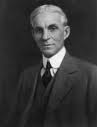
Hooray for Honkety Hank and his hootenanny automobile.
Consequently Ford was lured into the Peace Ship deal of ’16 by the Jewish Rosa Schwimmer. The folly was one from which Ford’s reputation never recovered although the idea of the Peace Ship isn’t as absurd as it sounds. As a result of the Peace Ship Ford began to have his doubts about the sincerity and motives of the culture which were certainly justified.
The doubts were sharpened into certainties by the role of Bernard Baruch and his Jews of the WIB and in the government. It wil be remembered that the Dodge Brothers lost their lives because of a confrontation with Baruch while Ford had his company’s finances attacked as a result of the confrontation in 1919-20. At that point Brasol showed up with his copy of the Protocols which he provided to Ford for the small sum of 10,000. Ford then bought the Dearborn Independent which began to publish the articles that became the four volumes of the famed International Jew.
Today these volumes are classed with the Protocols and are forbidden reading. On the Coalition Index. The Liberal Coalition has the bad habit of denying history by preventing its examination. I haven’t leafed thrugh the Dearborn Independent but there are a couple sample copies on the internet. It was a pretty decent newspaper cum magazine of the uplifting sort.
http://www.rationalrevolution.net/special/library/dearborn_independent.html
The story of Ford and the Independent articles is an interesting study made more delicious by being forbidden. One knows how much better forbidden fruit tastes, doesn’t one?
It should be remembered that the Jewish culture was especially active after the October Revolution, the fourth year of the Jewish Revolution. the fourth through eighth years are especially important. The AJC- American Jewish Committee- wished to ascertain where the centers of American resistance might be the strongest. At sometime either during or after the War the AJC drew up something called the Jewish Bill Of Rights. They sent it to prominent men and women to ascertain their stance toward the Jews. Their responses or non-responses would determine if the recipient was an ‘anti-Semite’ or not. If not, fine; if so then efforts would be made to marginalize or destroy them. Edgar Rice Burroughs was sent a copy of this Jewish Bill Of Rights. He failed the test by questioning one or more clauses while taking an independent attitude. He was thus marked down for destruction. It would be interesting to know to whom this questionnaire was sent and how they fared.

Horace And John Dodge
As I noted the Dodges were assassinated in 1920 while Ford’s business was attacked. It might also be noted that Ford was run off the road while returning home one night suffering injuries but nothing serious. His Ford pulled him out of another one.
Had the bankers succeeded in filching Ford Motor Co. it would have been quite a coup. At the time the company was valued by Ford at a billion dollars, a hundred billion in today’s dollars. In the bankers valuation the company put on the market at that time could be made to produce three to five billion dollars. As I said the Revolution was an expensive affair. If the Jewish banking houses had been able to secure Ford they could have recouped a profit of as much as four or five billion in 1920 dollars for their projects. You will be able to understant the sort of assault that was made on Ford.
The coalition, which has written all the histories, characterizes Ford’s defensive maneuvers as cranky anti-Semitism which he displayed for no other reason than that he was an insane cranky anti-Semite who attacked Jews qua Jews.
Nor were Ford’s Independent articles mere ranting without an understanding of the problem as some would have you believe. The articles were written by William Cameron Ford’s employee. Ford as usual did things in a thorough way. Almost overnight he amassed a huge library concerning Judaism. I mean, this was massive. The Jews wanted it. They asked him for it after the apology. Ford sneered. While the library is described as anti-Semitic it embraced the whole range of Jewish activities. Perhaps a unique collection
Cameron set to work master this huge mass of material. The result was the four volumes of The International Jew with several uncollected articles left over. While the volumes have been defamed as anti-Semitic balderdash they are nothing of the kind. They are well researched accurate accounts of the topics covered. The first volume dealing with the Protocols merely duplicates what already existed but the remaining three volumes recording the various roles of Jews in American are interesting studies and true, which is to say based on verifiable facts. However as we have recently learned- the truth is no defense.
When the articles began appearing they created quite furor. If you have checked the Dearborn Independent samples on the internet site you will have an idea of what the paper looked like. Just insert one of the Jewish articles and you have what the readers of the twenties saw.
Ford’s liquid wealth in today’s terms was in the tens of billions of dollars so he was well able to afford a defense. Mr. Deep Pockets. He created something called the Service Department that was a counterspy outfit not unlike that of Daddy Warbucks of Little Orphan Annie fame. It will be remembered that Little Orphan Annie made its debut at this time. Ford Employed agents who were supposed to get the lowdown on Jewish activities such as those featured in the Dr. Mabuse series. Starting from scratch the Service Department was no match for Jewish agences like the AJC, ADL or B’nai B’rith and others that had had decades if not centuries of experience in subversive activities.
One only has the Coalition accounts of these years of the Jewish Revolution so the reader has undoubtedly been conditioned to view Ford as an insane crank. To my knowledge no other accounts have appeared. How contemporaries other than the Liberal side reacted isn’t recorded at present. However Edgar Rice Burroughs tried in his modest way to assist Ford.’
Ford and Burroughs were Americans raised on the ideals of that scrap of paper, the Constitution. They therefore made the mistake of thinking that they could appeal to the reason of ideologues or bigots. You can’t. An ideologue has his projection and he knows he got it from from God. As I have pointed out before a devout member of a religion must, of necessity, be a bigot; there is no room for any opinion that contradicts dogma. So Ford and Burroughs were wasting their time.
By 1924 Burroughs must have known he was under attack both demestically and internationally by the Communists. His 1919 effort, Under The Red Flag, had signaled his antagonism to Communism just as his response to the Jewish Bill Of Rights signaled his refusal to be bulldozed from that quarter.
Using material gleaned from the Independent concerning the role of Jews in the theatrical business Burroughs wrote a book entitled, Marcia Of The Doorstep in support of Ford and gently rebuking his fellow Americans for their authoritarianism. The book didn’t see print until 1999. The novel isn’t bad. It would have sold reasonably well under the Edgar Rice Burroughs name. As has been indicated the Liberal Coalition was in control of publishing; nothing was published that didn’t pass their censorship. Burroughs novel was rejected. Now, this is interesting. Burroughs began his own imprint in 1930 eventually publishing all his titles but not, I repeat, not Marcia Of The Doorstep. One might well ask stayed his hand on that title.
At any rate, probably as punishment, there were no Tarzan movies made by Jewish controlled studios from 1922 to 1928. Ford also was having his problems. The auto industry was p;rogressing faster than he was. By 1927 the Model T was approaching obsolescence losing its sales lead to Chevrolet which it never recovered.
It became necessary to call off his war with the AJC-ADL to concentrate on saving his business. In 1927 he was forced to sign a bogus apology. It was a forgery. Ford had no hand in its writing. However he promised to abandon the battle.
With Ford’s collapse anything approaching to resistance to the Jewish Revolution in America collapsed.
While the Republican interregnum of 1920-32 slowed the Revolution down the Liberal Wilsonian Revolution was resumed in 1933 by Wilson’s disciple Franklin Delano Roosevelt. With Roosevelt the Jews returned to Washington in force. Among the first things FDR did was to recognize the Soviet Union just as Jacob Schiff had immediately reversed the Jewish policy toward Russia after the Bolshevik Revolution by granting huge loans to the still nascent and insecure Bolshevik government. This was OPM- other people’s money. The money of the citizens of the United States Of America. Thus the everyday American was forced to underwrite the Bolshevik Revolution whether he knew it or not.
 Schiff who was the Prime Minsister of the International Jewish Culture, was called down to Washington by the President of the United States to justify himself on the charges of Bolshevism. He was apparently successful as when he left the capitol of the United States to got back to the Capitol of the Jewish Revolution, NYC, it was with a face wreathed in smiles. Jacob Schiff didn’t smile often. He quickly resumed his loans to the Bolsheviks.
To return to 1919.
This part if followed by Freud which is Part VI and the Deconstruction Of Edgar Rice Burroughs’ America without a part number which is Part VII.
Thanks for your interest.
 I, Dynamo