Edgar Rice Burroughs And The Revolt Against Civilization
January 12, 2013
Edgar Rice Burroughs And The Revolt Against Civilization
A Review Of
Lothrop Stoddard’s Eponymous Title
by
R.E. Prindle

Lothrop Stoddard
Stoddard, Lothrop: The Revolt Against Civilization: The Menace Of The Underman, 1922, New York, Charles Scribner’s Sons, First Edition.
In the name of our To-morrow we will burn Rafael
Destroy museums, crush the flowers of art,
Maidens in the radiant kingdom of the Future
Will be more beautiful than Venus de Milo.
Quoted by Stoddard p. 202
A perennial problem in Burroughs’ studies is what did he believe? Was he a racist? Was he an anti-Semite? Was he an irredeemable bigot? Shall we just say he was not of a contemporary Liberal frame of mind. If you listen to Richard Slotkin author of Gunfighter Nation and a professor at Case Western Reserve at the time he wrote his book a couple decades ago, Edgar Rice Burroughs was an evil man responsible for all the evil in the US from 1912 to the present. Slotkin even sees him responsible for the My Lai massacre of Viet Nam.
Himself a Communist Slotkin can overlook all the crimes of the Soviet Union in which tens of millions were exterminated to find the ultimate evil in the killing of a few dozen people in Viet Nam.
Slotkin, who rampages through his history disparaging any non-Liberal writers as atavistic bigots firmly attaches Burroughs’ name to two scholars, Madison Grant and his Passing Of The Great Race of 1916 and Lothrop Stoddard and his historical studies of the twenties. He considers the two hardly less evil than Burroughs. To someone less excitable, perhaps, or lessLiberal, the two writers have written responsible and astute studies. I certainly think they have.
When I first read Slotkin I rejected the notion that Burroughs had been influenced by either. Ten years on I have to retract that opinion. It is now clear that Burroughs read both while being heavily influenced by Lothrop Stoddard, especially his 1922 volume, The Revolt Against Civilization. While the studies of both Grant and Stoddard would at best supplement Burroughs already developed opinions The Revolt can easily be seen as a template for Burroughs’ writing after he read it. While the study complemented his own developed social and political opinions I am sure that Stoddard’s explication of the history provided Burroughs with many new facts. Based on its opinions that appeared in ERB’s novels I would place the reading somewhere about 1926 or 1927.
Contrary to what some admirers want to make him ERB was what today would be considered a very conservative man, today’s Liberals would be anathema to him. He was decidedly anti-Communist, a Eugenicist, while not bigoted he was not a Negrophile or Semitophile. He was essentially a man with a social and historical outlook that was formed before 1900, a pre-immigration outlook formed while the Indian wars were still in progress. In short he was a man of his times.
Thomas Dixon Jr. to whom he is often compared was one of the most successful writers of the period who carefully examined both the Civil War and Reconstruction as well as the growing Socialist/Communist movement. He was not a bigot as he is always construed but a man of his own people. Burroughs was influenced by his work and thought well of him. He did not abhor him. ERB read many of Dixon’s novels and admired the movie based on his books, The Birth Of A Nation. He sympathized with Henry Ford in his struggle for the welfare of America and read the Dearborn Independent, Ford’s newspaper. In short, Burroughs was a stand up guy.
Now, what evidence is there he read The Revolt Against Civilization: The Menace Of The Underman? Let’s begin with this quote, p. 34 et seq.
Quote:
Down to that time the exact nature of the life process remained a mystery. The mystery has now been cleared up. The researches of [August] Weisman and other modern biologists have revealed the fact that all living beings are due to a continuous stream of germ plasm which has existed ever since life first appeared on earth and which will continue to exist as long as any life remains. This germ-plasm consists of minute germ cells which have the power of developing into human living beings. All human beings spring from the union of a male sperm-cell and a female egg-cell. Right here, however, occurs the basic feature of the life process. The new individual consists, from the start, of two sorts of plasm. Almost the whole of him is body plasm – the ever multiplying cells which differentiate into the organs of the body. But he also contains germ- plasm. At his very conception a tiny bit of the life stuff from which he springs is set aside or carefully isolated from the body-plasm, and forms a course of development entirely its own. In fact, the germ-plasm is not really part of the individual; he is merely its bearer, destined to pass it on to other bearers of the life chain.
Now all this was not only unknown but even unsuspected down to a short time ago. Its discovery was in fact dependent upon modern scientific methods. Certainly, it was not likely to suggest itself to even the most philosophic mind. Thus, down to a generation ago, the life stuff was supposed to be a product of the body, not differing essentially in character from other body products. This assumption had two important consequences. In the first place, it tended to obscure the very concept of heredity, and led men to think of environment as virtually all important; in the second place, even where the importance of heredity was dimly perceived the role of the individual was misunderstood, and he was conceived as a creator rather than a mere transmitter. This was the reason for the false theory of “the inheritance of acquired characteristics,” formulated by Lamarck and upheld by most scientists until almost the end of the nineteenth century. Of course, Lamarckianism was merely a modification of the traditional ‘environmentalist’ attitude: it admitted that heredity possessed some importance, but it maintained environment as the basic feature.
Unquote.
Now there you have the argument of God in Tarzan And The Lion Man of 1933 nearly word for word. I hink it unlikely that ERB actually read Weisman who published following 1900 and who ERB may never have heard of, so his source was in all probability Stoddard.
Stoddard’s presentation nicely straddles the change of consciousness from the nineteenth to the twentieth century. It sounds a trifle naïve to our ears but was cutting edge at the time. Weisman’s theories were a big step in the direction of the discovery of DNA a short 26 years after Stoddard’s study.
It is important though to remember that more than fifty percent of the US population today rejects the concept of evolution while being more Lamarckian in outlook than might be supposed. We are as a whole not quite as advanced as we think we are.
As a quick affirmation of the influence of Stoddard on ERB on pages 95-96 he gives an account of the famous Jukes family of degenerates that appeared in ERB’s 1932 novelette, Pirate Blood.
Stoddard was well aware of what was happening historically and presently and one can see that he passed that understanding on to ERB. Almost as though writing today, on page 237 Stoddard writes:
Quote:
Stressful transition is the key-note of our times. Unless all signs be faulty, we stand at one of those momentous crises in history when mankind moves from one well-marked epoch to another of widely different character.
Unquote.
Extremely prescient observation in 1922 while his study has been borne out in detail. The chapter titles give a clear outline of the contents:
1. The Burden Of Civilization
2. The Iron Law Of Equality
3. The Nemesis Of The Inferior
4. The Lure Of The Primitive
5. The Ground Swell Of Revolt
6. The Rebellion Of The Underman
7. The War Against Chaos
8. Neo-Aristocracy
As can be easily seen novelists such as Rider Haggard, ERB, Edgar Wallace as well as many others from 1890 to the 20s were grappling with the problems indicated by the chapter titles.
The natural tendency in humans is to be rather lax in mental activity. Precision calls for an active mentality and concentration. Not everyone is capable of this, yet, beginning in the nineteenth century such mental qualities were increasingly necessary. Such disciplines as Chemistry and Physics didn’t allow for personal vagaries or individual style. One couldn’t bend the disciplines to one’s own desires, precise measurements were necessary requiring mental concentration. A little bit off and who knows what might happen. In a way then the Overman and Underman were created. Either you could or you couldn’t and if you couldn’t you slipped beneath- an Underman. Higher civilization was impossible for you.
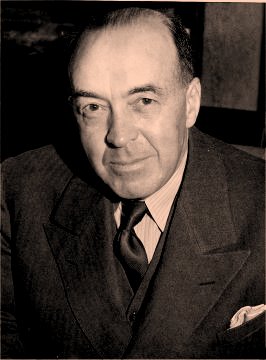
Edgar Rice Burroughs
Burroughs addressed this problem continually. In his character Tarzan he resolved the problem giving his creation a split personality, in a loin cloth he was one man, in a tuxedo he was another. Two separate gorillas in one and always a beast. In real life society split into two possibilities- the Over and Underman.
Worse still scientific methods were able to measure the ineffable, the unseen. In chemistry sub-tiny atoms were able to be detected and their sub-miniscule weights actually measured. Measurement is the bane of the Underman. A Mole contains 6,022 x 10 to the 23rd power of atoms, an incredible incomprehensible number that still might weigh 12 grams or less. Astonishing. Beyond the comprehension hence belief of the Underman. As the process can’t be seen it can’t be believed.
In human intelligence the Englishman Francis Galton began to devise measuring devices of intelligence in 1865 shortly after Darwin announced Evolution in 1959. Thus uncertainty about mental capacity was eliminated. As Stoddard calls it, The Iron Law Of Inferiority. Biology and measuring excluded something like eighty-five percent of the population from the ranks of the most intelligent. Without that high measurement of intelligence 85% of the population was automatically excluded from the possibility of higher attainment while at the same time being prejudged.
Big strapping fellows, all man, were relegated to manual labor while wimps like perhaps, John D. Rockefeller, became billionaires. Not right, the big strapping fellows said, but not measuring up in intelligence, which they couldn’t see, they were condemned to the shovel for life.
Intelligence measuring tests were improved between 1865 and 1920 although not as accurate as could be desired. Men entering the armed forces in WWI were an excellent testing group. Of 1,700,000 tested intelligence levels were fairly accurately determined. It was then discovered that only four and a half percent were very bright with another seven or eight percent bright, while the huge bulk were C+ to C- descending from there.
One imagines Burroughs read this with extreme thoughtfulness.
So, now as the bulk of the good things were going to those who could do, what were those who couldn’t do about it? The great issue since 1789 has been equality; the Underman demanded equality as a first condition. He could organize. He could sabotage. He could rage. And that is what the Underman has done.
The Communist Party was formed. And what was their chief demand? Equality. Absolute equality. As they couldn’t rise to a natural equality then the only other feasible solution was to bring the Superior intelligences down to their level. Thus they raged against that great equalizer, education. Screw science, screw physics, screw chemistry, screw biology. Who needed what you couldn’t see and that especially included intelligence measuring?
One of ERB’s bete noires was the I.W.W.- The Industrial Workers Of The World, syndicalists. Imagine his reaction when he read this:
Quote:
Viewed in the abstract, technical sense, Syndicalism does not seem to present any specially startling innovations. It is when we examine the Syndicalists’ animating spirit, their general philosophy of life, and the manner which they propose to obtain their ends, that we realize we are in the presence of an ominous novelty,- the mature philosophy of the Under Man. This philosophy of the Under-Man is today called Bolshevism. Before the Russian Revolution it was known as Syndicalism. But Bolshevism and Syndicalism are basically one and the same thing. Soviet Russia has really invented nothing. It is merely practicing what others had been preaching for years- with such adaptation as normally attend the putting of theory into practice.
Syndicalism, as an organized movement, is primarily the work of two Frenchmen, Fernand Pelloutier and Georges Sorel. Of course, just as there were Socialist before Marx, so there were Syndicalists before Sorel. Syndicalism’s intellectual progenitor was Proudhon, who in his writings had closely sketched out the Syndicalist theory. As for Syndicalism’s savage, violent, uncompromising spirit, it is clearly Anarchist in origin., drawing its inspiration not only from Proudhon but also from Bakunin, [Johann] Most, and all the rest of that furious company of revolt.
Georges Sorel
“Revolt!” This is the essence of Syndicalism: a revolt, not merely against modern society but against Marxian Socialism as well. And the revolt was well timed. When, at the very end of the nineteenth century, Georges Sorel lifted the red banner of Syndicalism, the hour awaited the man. The proletarian world was full of discordant and disillusionment at the long dormant Marxian philosophy. Half a century had passed since Marx first preached his gospel, and the revolutionary millennium was nowhere in sight. Society had not become a world of billionaires and beggars. The great capitalists had not swallowed all. The middle classes still survived and prospered. Worst of all, from the revolutionary viewpoint, the upper grades of the working classes had prospered, too. The skilled workers were, in fact, becoming an aristocracy of labor. They were acquiring property and thus growing capitalistic; they were raising their living standards and thus growing bourgeois. Society seemed endowed with a strange vitality! It was even reforming many of the abuses which Marx had pronounced incurable. When, then, was the proletariat to inherit the earth?
The Proletariat! That was the key word. The van, and even the main body of society, might be fairly on the march, but behind lagged a rear guard. Here, were, first of all, the lower working class strata- the “manual” laborers in the narrower sense, relatively ill paid and often grievously exploited. Behind these again came a motley crew, the rejects and misfits of society. “Casuals” and “unemployables”, “down-and-outs” and declasses, victims of social evils, victims of bad heredity and their own vices, paupers, defectives, degenerates, and criminals- they were all there. They were there for many reasons, but they were all miserable, and they were all bound together by a certain solidarity- a sullen hatred of the civilization from which they had little to hope. To these people evolutionary, “reformist” socialism was cold comfort. Then came the Syndicalists promising, not evolution but revolution; not in the dim future but the here and now; not a bloodless “taking over” by “the workers” hypothetically stretched to include virtually the whole community, but the bloody “dictatorship” of The Proletariat in its narrow revolutionary sense.
Here, at last, was living hope- hope, and the prospect of revenge! Is it then strange that a few short years should have seen revolutionary Socialists, Anarchists, all the anti-social forces of the whole world grouped under the banner of Georges Sorel? For a time they went under different names syndicalists in France, Bolshevists in Russia, I.W.W.s in America but in reality they formed one army, enlisted in a single war.
Now, what was this war? It was, first of all, a war for the conquest of Socialism as a preliminary to the conquest of society. Everywhere the orthodox Socialist parties were fiercely assailed. And these Socialist assaults were formidable, because the orthodox Socialists possessed no moral line of defense. Their arms were palsied by the virus of their revolutionary tradition. For however evolutionary and non-militant the Socialists might have been in practice, in theory they had remained revolutionary their ethics continuing to be those of the “class war”, the destruction of the “possessing classes” and the “dictatorship of the proletariat.”
The American economist, Carver, will describe the ethics of socialism in the following lines: “Marxian Socialism has nothing in common with idealistic Socialism. It rests not on persuasion, but on force. It does not profess to believe, as did the old idealists, that if socialism be lifted up it will draw all men to it. In fact, it has no ideals; it is materialistic and militant. Being materialistic and atheistic, it makes no use of such terms as right and justice, unless it be to quiet the consciences of those who still harbor such superstitions. It insists that these terms are mere conventionalities; the concepts mere bugaboos invented by the ruling caste to keep the masses under control. Except in a conventional sense, from this crude materialistic view there is neither a right or wrong, justice nor injustice, good or bad. Until people who still believe in such silly notions divest their minds of them they will never understand the first principles of Marxian socialism.
“Who creates our ideas of right and wrong?” asks the Socialist. “The ruling class. Why? To insure their domination over the masses by depriving them of the power to think for themselves. We, the proletarians, when we get into power, will dominate the situation; we shall be the ruling class; we shall determine who is right and wrong. Do you ask us if what we propose is just? What do you mean by justice? Do you ask if it is right? What do you mean by right? It will be good for us. That is all that right and justice ever did or ever can mean!
Unquote.
People ask what Burroughs believed? Was he a racist? Was he an anti-Semite? Well, Burroughs’ beliefs can be extrapolated from the above quote as well as Stoddard’s whole book. If Burroughs could have expressed himself concisely he would have written The Revolt Against Civilization. You don’t have to look any further.
There could be no more ardent anti-Communist, anti-Socialist, anti-IWW than ERB. The book was published five years after the Russian Revolution, a mere three years after the narrow quelling of the Communist disturbances of 1919 while in 1922 the Harding administration was putting the finishing touches on the suppression of that Communist revolution in the US. Make no mistake the crimes of 1919 were part of an American Bolshevik revolution. Things would not return to what Harding called normalcy but it would be a reasonable facsimile that would endure until the engineered great crash of 1929 opening the way for the Communist revolution of FDR in the US.
These were perilous times ERB was living in no less than those of today. One can’t be sure when Burroughs read Revolt but many of the same themes almost in quotation were employed in his 1926 novel The Moon Maiden. And from the Moon Maiden he went to the more sophisticated approaches of his great political novels from Tarzan At The Earth’s Core to Tarzan And The Lion Man.
As Stoddard thinks the Underman breeds at a very fast rate while the Overman limits his family the obvious consequence is that people of intelligence decrease rapidly in relation to the Underman. Of course Stoddard has all kinds of tables and charts to prove his point. As this was published in 1922 the results are heavily skewed to prove the English are the top of the heap; a result not uncongenial to Burroughs’ sensibilities.
One imagines that as of induction time in 1917-18 a great many of the recent immigrants at least had underdeveloped English language skills that affected the results but at this point it no longer matters; the general idea has been proved sound.
As we have a war between the Underman and the Overman and make no mistake, as far as Sorel and the Syndicalist/Bolshevik ideology goes it is a war to the knife, it may be asked what Stoddard’s formula for the Overman’s success might be.
This returns us to the Underman’s great fear that science, that is objective analysis supported by an array of facts will condemn him to the virtual condition of servitude. It might be surmised that this is an intolerable but inescapable conclusion unless education and science are destroyed reducing the more intelligent to the masses.
Stoddard then relying on Darwinian and Weismanian evolution and the notion of Eugenics introduced by Francis Galton resolves the problem by ending the reproduction of the ‘defective’ classes, that is, forced sterilization. Forced sterilization was actually employed. It is interesting that he never brings in the issue of race thus on the surface his book is neither racist for anti-Semitic. However as the book assumes that the superior intelligences are English or Nordic the text qualifies as anti-Semitic in Jewish eyes and hence has been placed on the Jewish Index Of Forbidden Literature.
One may be horrified at the Eugenic solution to the intelligence problem but one must be equally horrified at the Underman solution to their Overman problem. Liquidation is more horrifying than sterilization and Liquidation was employed by the Underman in Russia and will be employed again if they can consolidate their gains in the US and Europe today.
The problem is that while being founded in reality it is impossible in execution. The human mind is too subjective to be trusted with such a great responsibility. Many statues were placed on the books commanding forced sterilization and many such were executed.
Schools classes were organized based on supposed mental aptitudes. How objectively I will demonstrate by my own example. Until Jr. High in my home town schools did not systematically differentiate based on mental capacity, however at the end of the ninth grade just before I.Q. testing in the tenth there were three options, Trade School for those deemed not of academic ability, in other words destined for the labor force, and once in high school a division between business, that is white collar, and college prep. This was still a process of self-selection thus I signed up for high school however someone changed my papers to trade school.
Thus when I showed for classes at high school, I was told I was enrolled at trade school. Now, this was the fight of my life, and for it. I was told I was in trade school and to get out. I said I wasn’t leaving and sat down where I waited for four days for the situation to resolve itself. My argument was that the law required that I be given an education and it wouldn’t be at trade school. Whatever the behind the scenes machinations were I was reluctantly allowed to enter but they then insisted it would be business level while I demanded college prep. With an unexplained prescience I was told that I would never go to college so I should be in business. Nevertheless I won that struggle too.
I am sure that if enforced sterilization had been possible at the time I would have been compelled to undergo it.
Now, here’s the kicker. Came time for I.Q. tests and I placed in the upper four percent. I have no idea what the reaction to that was although my critics had to tone down their act. So human passions invalidated the whole Eugenic idea.
In other words there is no equable solution to this terrible human dilemma.
In that sense the solution offered by Aldus Huxley in his famous comic novel Brave New World is of some interest. In Huxley’s story he enlists science, chemistry, to produce different levels of mental competence. The zygote is nurtured in test tubes while at certain levels of development certain chemicals are introduced limiting the development of the fetus. Thus the labor problem is solved by creating classes only capable of menial tasks. The upper classes are bred like race horses to various degrees of excellence. Huxley was tongue in cheek to be sure but, actually the only solution to this otherwise insoluble problem.
Stoddard didn’t introduce any ideas to which Burroughs wasn’t already familiar and in agreement. At best Stoddard’s superb research and explication clarified ERB’s understanding for him. I don’t know how familiar he was with Georges Sorel. Today Sorel is unknown except to specialists although I am beginning to see his name pop up so with the Communist regime of Barack Obama perhaps the way is being prepared for Sorel’s extreme measures of exterminating the Overman.
At any rate I have come to the opinion that Richard Slotkin is correct in thinking the Burroughs had read and was in accord with both Madison Grant and Lothrop Stoddard. However Slotkin evaluates their work through the distortion of his own Communistic lens which is only valid to those of his point of view.
His view does not make Burroughs a racist or anti-Semite. It makes him an objective and accurate observer and analyst of the situation of his time. As indicated above Burroughs absorbed Stoddard’s information, that point of view and used it to create his wonderful works of the late twenties and first half of the thirties. If one bears Stoddard’s book in mind while reading those novels it will make them make great sense while presenting his view of the political and social situation
Of course the novels are not confined solely to dealing with these issues; Burroughs had a much more far ranging mind, both subjectively and objectively.
Stoddard’s The Revolt Against Civilization is a major study as relevant today as the day it was written. The last ninety years have only borne out his theses. The Revolt Against Civilization is well worth a read, perhaps two. At any rate you will have an accurate idea of Burroughs’ social and political beliefs.
A Review: Pt. II Lick Me by Cherry Vanilla
August 21, 2011
A Review
Cherry Vanilla
Lick Me: How I Became Cherry Vanilla
by
R.E. Prindle
II

Living In The System
Kathy was born in 1943 so as she left high school the sixties were emerging. Everybody talks about the sixties but nobody does anything about them. The sixties didn’t just happen, they erupted, the Exploding Plastic Inevitable as Warhol put it. Andy was right. The reason no one can remember the sixties is because so much was going on all anyone could see was their little fragment, that includes the so-called taste makers. All that crap you get from the sixties politicos glorifying themselves and their exploits is just crap. They were performing their act in a small little corner or the room pretending it was the whole stage. They were just a bunch of hard core losers anyway. Abbie Hoffman! Excuse me! Jerry Rubin, get out of my way. Allen Ginsburg? Pardon me while I puke.
No, no. The sixties were a happening no matter where you were. I’ve already touched on the drugs in Part One. Trust me, everyone but we happy few was on drugs whether prescription or street. I mean, Valium, my god! Straights ‘needed’ it to get through the day.
As I touched on in my Edie Sedgwick series the sixties were ushered in by the big 707 flying non-stop between NY and Europe beginning in 1959. That created the Jet Set who were the envy of all. Airports were small and intimate at the beginning of the decade burgeoning into the behemoths they have become as the airlines reduced prices and seduced people to fly. Not that I was, I didn’t get into the air until the seventies but as soon as I could I emulated the Jet Set flying to Europe and back three times in my best year.
So there were drugs and the Jet Set and the Kennedies. The Kennedies were the worst thing that ever

John F. Kennedy
happened to the country. Of course in pedigree sensitive USA we are all conditioned to ignore national, religious and racial origins as if they don’t count but, let me tell you, they do. John F. Kennedy began the decade in 1960 replacing the vacated spot of Dwight David Eisenhower. The change was not nominal. Eisenhower knew what he was doing, Kennedy didn’t. Ike, as he was affectionately known, engineered the victory in Europe in WWII. He’d done a stellar job from ‘52 to ‘60. Knowing the devastation of war he resisted the hawks to keep the peace, and we hawks were quite vocal. Having inherited the Viet Nam situation from the French and FFL collapse he had contention in Indo-China under control which Nixon, had he been elected, was pledged to honor, if he could have executed.
Like I said, we’re not supposed to think, much less talk about, race, religion and nationality but the Kennedies were Irish Catholics who finally won the triumph over the Anglo-Saxon Protestants in America. The war between the Irish and English was hundreds of years old in 1923 when the Irish freed themselves from the English yoke. The Irish and Anglo-Saxon war in America had only been going on since the 1840s when the potato famine drove the Celtic lads to our shores at which time, in reaction, the so-called Know Nothing Party was created. In 1928 the Irish put Al Smith up as the Irish attempt to capture the New Island after De Valera’s 1923 success on the Ould Sod.
Times were not propitious for an Irish Catholic and Al was soundly defeated. But a gentleman named Joseph P. Kennedy, accruing a bootleg fortune with solid connections to Organized Crime was about to engineer the election of one of his sons to the highest office in the land. God only knows what goes on behind the scenes but his first choice, Joe Jr., was blown up flying over the channel. His second son John F. was given one of the most dangerous posts in the Navy, commanding a PT boat. It’s hard to believe that whoever it was that got Joe Jr. didn’t want him dead but John survived the war and began the corruption of the land from the highest office in 1960.
Kenney with amphetamines coursing through his veins and a mind centered on sex, which is to say fucking, was clueless along with his brother Bobby and his other nitwit sibling, Teddy. Within a matter of months he had us involved in a shooting war in Viet Nam, threatened by Khrushchev in the Cuban missile crisis, after he had taken the drug addicts measure at the summit, and then aborting the reconquest of Cuba at the Bay of Pigs. Is it any wonder the magnificent crew Ike had assembled offed him. Regardless of how history has been revised their were a great many us who sighed and said: Good riddance.
When Bobby stuck his head up from under his rock in 1968 there was no doubt he’d get it blown off, and he did. If you think the two assassinations aren’t connected, think again. So ’63 and ’68 were big years of a decade of big years. Teddy kept his head down after that but gained a measure of revenge by sponsoring the 1965 immigration bill.
In far off Africa a gentleman by the name of Barack Obama Sr. was leaving for Hawaii to get a college degree and beget the future President of the United States on a little simple minded White girl. It was in 1957 when the African colonies renounced their allegiance to their European overlords that Ghana proclaimed independence from Britain. Thus the complexion of the United Nations was changed overnight as colony after colony of a congeries of warring tribes, now known as countries, declared independence and sent emissaries to the UN. Thus the balance of power was shifted from the capable to the incapable in that momentous decade.
It should be noticed that Marcus Garvey began the coordination of the African peoples of the world a
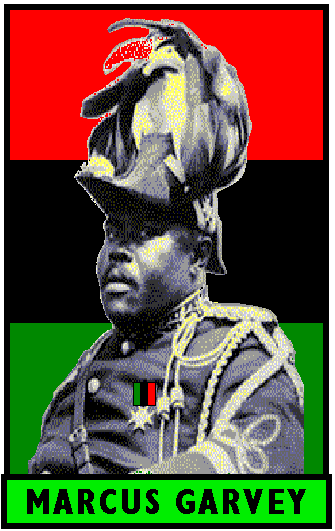
Marcus Garvey
few decades before independence was achieved by Africans and not improbably Garvey also furthered the beginnings of the Civil Rights Movement in the US, thus the African independence movement and the Civil Rights Movement were occurring simultaneously and I suspect coordinated. Thus the African presence in the UN complemented the enormous Black riots that began in LA in ‘65 and reached their apex through ‘67, ‘68 and ‘69. The fabric of the country was rent and torn. The future of the country became increasingly ugly.
It’s difficult to say but after the double whammy of the movies The Blackboard Jungle and Rebel Without A Cause of the mid-50s a new tone emerged in which the youthful violence came to the fore and not just lower class kids. This senseless rebellion without a cause represented a change in outlook occurring in the mid-fifties perhaps aggravated by Elia Kazan’s influential movie. Gangs of young rich guys terrorized the well to do sections of LA in ways that were inexplicable. The graduating classes of ‘53, ‘54 and ‘55 belonged to the previous era while 1956, the year I graduated, was the swing year between what was and what would be that began with the class of ‘57. About half the class of ‘56 looked backward and half, maybe less, faced forward toward the future. I was in the latter half.
Then in 1958, a twenty year old, class of ‘56 actually inspired by Rebel Without A Cause and James
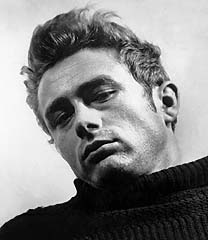
James Dean- Rebel Without A Cause
Dean, so it was said, by the name of Charlie Starkweather went on a murderous rampage in Nebraska murdering several people simply for the sadistic thrills. It was bone chilling, perhaps the first of its kind. Charlie was quickly apprehended and executed in 1959.
Also in the fifties the homosexual, William Inge, wrote and produced the play Bus Stop, turned into a movie starring Marilyn Monroe and Don Murray in 1956. From those emerged the astonishingly violent TV series of one year only, Bus Stop, the production of which was supervised by Inge. That TV series transcended by miles any sadism and violence seen as yet in either TV or the movies. It even made the comic book Tales From The Crypt look tame by comparison.
Perhaps the most sickening episode in a season of sickening episodes was the one starring the teen idol Fabian as a sadistic murderous thrill killer who was obviously based on Charlie Starkweather. The episode by Altman was ambiguously titled: A Lion Walks Among Us. So the sadist was compared to a lion. The episode altered the direction of TV drama breaking down the doors for whatever followed and you know what that’s like. The impact was so strong that a Congressional hearing was called immediately to denounce it.
Already in an excited delirium young people were shown a new direction that was seized. Serial murderers that were unheard of during the early and mid-fifties became commonplace escalating, so it seemed, year by year.
Thus the scene in New York where Kathy was living her life became more violent by the month until after 1969 and the liberation of the homosexual psyche by the Stonewall Riot, when the crime became ultra sadistic and unbearable.
By the early seventies Dirty Harry and Death Wish symbolized the era moving well beyond Rebel Without A Cause or even Bus Stop as sadistic sick, sick violence. Insanity, really, and it characterized the country in the coming decades.
At the same time beginning in the early sixties pornography began its rise into the mainstream. While it was a good sized underground business before, in 1953 Hugh Heffner began publication of Playboy Magazine which brought porn into the mainstream. Playboy was followed by a host of ‘men’s’ magazines that got raunchier and raunchier. In the early sixties in San Francisco I noticed for the first time open advertisements in the Chronicle of porn films. There was a very active push to further pornography which was participated in by Andy Warhol, Paul Morrissey and the Factory. In 1968 I Am

Curious: Yellow Poster
Curious: Yellow and Curious Blue were released. I Am Curious: Yellow was very influential in loosening sexual mores. Blue and Yellow were the colors of the Swedish flag. A Swedish pervert made the movie. This all led up to 1972’s Deep Throat which for all practical purpose shot porn into the mainstream. Porn and the so-called Sexual Revolution went hand in hand.
Since sex had been practiced the same ways since the origin of mankind the real sexual revolution was whether you could say ‘fuck’ in public. The pervert Lenny Bruce led that charge followed by George Carlin and certainly by the mid-seventies few movies were made where the word didn’t constitute 20% or so of the dialogue.
And then, of course there was the Viet Nam war. This effort was hampered in the US by the Judaeo-Communist allies of the Viet Namese. Naturally the US Communists said that there was no reason for the US to be involved blithely ignoring the history of the situation. Actually the war was part of the US-Soviet confrontation in which the US had made several mutual defense pacts with countries on the Communist borders in an effort to contain it. South Viet Nam which came into existence when the French Foreign Legion forsook their reputation was part of a mutual defense pack called SEATO- South East Asian Treaty Organization. When they were attacked by North Viet nam, of which there an be no doubt they were, the clause of the treaty was invoked involving the US in the defense of South Viet Nam. So, the US was legitimate if foolish in going to the defense of South Viet Nam.
Now, because of the seeming passiveness of the Jews during the so-called holocaust the Jews had acquired a reputation for being a weak ineffective people. The skullduggery that established the State of Israel in 1948 did nothing for their pride but the seemingly easy triumph of 1956 against the Egyptians through which war Israel purloined the Negev Desert Jewish pride of prowess began to blossom. You started seeing identifying marks like gold Stars of David necklaces appearing on bosoms of Jewish men with wide open shirt collars unbuttoned to the penis. Little different than Nazi insignia they were now worn with pride.
The 1967 war against the allied Arab States completed the transformation of Israel into the Neighborhood Bully. Jews now began to strut down the streets virtually knocking people out of the way with the Stars of David dangling everywhere. The Jewish Defense League followed in 1968 soon splitting into an even more violent Jewish Defense Organization. Under their leader Rabbi Kahane a war not too different from the Jabotinsky days in Palestine ensued with the ubiquitous bomb exploding in NYC instead of Jerusalem.
Now, as has recently emerged, the crucial years for Jews in the United States, which had nothing to do with any so-called holocaust, were the years between 1933 and the accession of Wolf Hitler in German and the US entry into WWII in 1942. Before the war in the ‘30s the Jews called opponents to their machinations, Fascists. The name included anyone from Henry Ford to Charles Lindbergh. A marginalization campaign was begun against all American nationalists that largely succeeded. In that period the Jews created the notion in their minds that they were the true Americans who had created this near-perfect democracy and the Anglo-Saxons who had preceded them were out to destroy the country and turn it into a Nazi satrapy.
Philip Roth commemorated this attitude in his novel back dated to this period, The Plot To Destroy

Philip Roth- The Plotter
America. Thus through the fifties and sixties the Jews conspired to dispossess the ‘New Nazis’, that is non-Jewish White Americans. The war of ‘56 emboldened them so that by 1964 they were encouraged to seize the university system of the US. The first front opened was the so-called Free Speech Movement on the UC Berkeley campus whose real purpose was to displace Free Speech with Jewish controlled speech.
This was successful and when the dust had settled the Jews were in control of the campus stifling the free speech that had been the ostensible reason for the battle. As Mark Rudd would later say: The issue is not the issue. Jewish commissars set up tables at the Sather Gate to which students were demanded to submit to Jewish governance or else.
From Berkeley the battles strung out to other campuses, the most notable being Columbia in NYC while the other Ivy League campuses fell in line. Freedom of speech was the last thing on their mind.
Having achieved their goal at Berkeley the next step was to escalate the resistance to the Viet Nam war hence shielding their Communist allies in Hanoi. This was furthered significantly by the 1968 world wide offensive led by Chairman Mao and his Cultural Revolution so that by the time of Nixon’s reelection in 1972 the country was in a State of near revolution although it wasn’t that apparent on the street. I was amazed just before the election to see truckloads of soldiers brought into Eugene where I was living and a revolutionary hotbed, to be secreted in the hills in the event of an insurrection.
I have no idea if John Lennon and Yoko Ono knew how close they were to the edge but in retrospect they were not only lucky to be allowed to stay in the country let alone avoid imprisonment. If they hadn’t been so high profile I’m sure they would have been arrested. They were committing some pretty provocative acts. I’m sure that the money they gave to the movement through A.J. Weberman found its way into bombs.
Back in 1964 when Lyndon Johnson had inherited the White House after John F. Kennedy had escalated the war so that there was no way out but to go forward, Johnson was presented with the choice of guns or butter. Would there be a period of austerity as in WWII when the choice had been guns or butter. Between those two choices Lyndon chose a third- guns and butter. Things would go on as close to normal as possible. It was weird. His administration occupied the center years of the decade while the Judaeo-Communists would give him no peace. I mean, you know, the hundreds of bombings went on with no qualms on the part of the domestic terrorists.
And lastly, while all previous generation had been known by their literature the current generation, my generation, was known by its song writers and music. Everyone picked up a guitar and wrote songs. This essentially came in two, maybe, three waves. The first was spearheaded by Elvis Presley, the second by the British Invasion from 1964 to 1966 and the possible third from 1966 to 1974 after which the generation exhausted itself. It was along about 1966 that Kathy made the fateful decision to become a groupie and this would define her life until her mental breakdown in the late seventies.
When the Beatles and the Stones hit these shores they were just singers and bandsmen, popular, but nothing more. The notion of the Group began to be deified in San Francisco after Ken Kesey’s Acid Test. The group members were suddenly invested with nearly superhuman powers and wisdom. All you had to do to become a Holy Guru was stand up on stage, hit a couple of chords, and shout out ‘Mercy, mercy me, the ecology.’ with a raised fist. The Grateful Dead, Jefferson Airplane, Big Brother And The Holding Company, people of questionable character all became secular saints. One grows faint thinking it but, yea verily, gods. And this only from playing the guitar badly and voicing universal popular sentiments. Don’t trust anyone over thirty said a twenty-nine year old and immediately thirty-somethings were posing as teenagers. Too late now, isn’t it?
If you break down the ages, the first wave was born sometime in the early to mid-thirties, Presley was born in ‘35, Little Richard in ‘32.
The first wave of Rockers was spent by the late fifties succeeded by an interim group of nondescripts like Bobby Vee and Bobby Vinton. Nice enough but not essential or memorable. The Beach Boys were the top American group from 1960-64. Then came the second wave, these were men born from 1938 to 1945- Lennon ‘40, Dylan ‘41, Jagger ‘43 and this was the core age through the sixties. So the second wave, the true Rock phenomenon was a product of people born from 1938 to 1945. In the seventies Bowie ‘47, Billy Joel ‘49, those of the fifties came to fore as the generational impetus sputtered out. The Bowies and Joels were of a different sensibility than the main second wave. They grew up under different circumstances.
As the second wave gathered strength not as mere entertainers but as potent pop culture figures, adoring young girls emerged as groupies. Their sexual excesses were scandals although the concept of groupie was nothing new. Anywhere there are glamorous or powerful men accessible women will appear as well as, one might add, homosexuals. There are literary groupies and business groupies, etc. However Rock groupies tended toward being under aged jail bait not infrequently barely out of puberty and unconcerned for any consequences, indeed, not knowing of any.
So when Kathy discovered groupies she determined to become one although incongruously as old as the musicians themselves as she had been born in ‘43. It was kind of like somebody’s mother turning groupie. As she said of her groupie career she wanted a band to offer her a job. Finally David Bowie did.
This was the world in which Kathy Dorrotie was making her way.
A Review: Psychoanalyzing Captain America
August 10, 2011
A Review
Psychoanalyzing Captain America
by
R.E. Prindle
From Out Of The Depths

Must we be responsible for our own dreams?
–Sigmund Freud
In answer to the above question by Herr Doktor Professor Freud in his dream book, The Interpretation Of Dreams. published in the year 1900 Prof. Freud said that dreams were the royal road to the unconscious. He then proceeded to suppress the conscious will releasing the unconscious will to dominate the personality.
Of course in 1900 movies, TV and comic books were in the future and unforeseen by the Professor. It is through those media that the unconscious visualizes itself. The Dream is manifested, the unconscious becomes realized.
In the case of the movie, Captain America: The First Avenger, first came the dream then came the comic book, then with movie technology undreamed of in 1940 when Joe Simon and Jack Kirby conceived the character, brought to the screen today. Comic books and movies are true projections of the unconscious. As might be seen by anyone with a ticket Capt. America is less a story than a dream, a dream that Sigmund Freud defined as wish fulfillment. So, one must examine the movie as a wish from the subconscious fulfilled as a visualization on the screen. What does the dream-wish fulfill?
First off we have a powerless wimp being knocked about by the big bad bully. We have a brief anti-bully list and then move on. However in this Cain and Abel story the rolls of bully and bullied are clear. The wimp then wishes to join the army to fight Hitler and is rejected on several counts of inferiority. But, never fear, the last shall be first.
Now, in 1940 the US was not at war with anybody while the America First Committee was determined to keep the country that way. But a powerful coalition led by the Jews had determined the European conflict was a ‘just’ war while it was morally compulsory for the US to butt in somewhat like Iraq, Afghanistan, Egypt, Libya and a few other places today. Unlike Viet Nam the usual suspects who opposed that war endorse all the current wars. The voice of dissent is unheard throughout the land.
So, bearing Freud’s Interpretation Of Dreams in mind that demonstrates the connection between dreams and the unconscious, Captain America is a daydream or psychological projection of Jack Kirby’s ne Jacob Kurtzberg and Joe Simon’s of Brooklyn N.Y. The relationship of these comic book writers to Judaism is explained by Rabbi Simcha Weinstein in his book Up, Up, And Oy Vey!: How Jewish History, Culture, And Values Shaped The Comic Book Superhero. This quote explains the real life origin of Capt. America:
Growing up in poverty, Kirby (born Jacob Kurtzberg) dreamed of being an artist but was forced to drop out of Brooklyn’s Pratt Institute after only one day because of financial hardship. Instead Kirby worked on newspaper comic strips under gentile-sounding pseudonyms such as Jack Curtis, Curt Davis, and Lance Kirby until he finally settled on the name Jack Kirby.
Kirby and his partner, Joe Simon, worked at Martin Goodman’s Timely Comics, where the mostly Jewish staff openly despised Hitler. When Goodman saw the preliminary sketches for Captain America, he immediately give Kirby and Simon their own comic book. The character was an instant hit, selling almost one million copies an issue. “The U.S. hadn’t yet entered the war when Jack and I did Captain America, so maybe he was our way of lashing out against the Nazi menace. Evidently, Captain America symbolized the American people’s sentiments. When we were producing Captain America we were outselling Batman, Superman and all the others.” Simon later commented.
Well, not quite all the others, as Whiz Comics Captain Marvel was the best selling comic of both the war years and the later forties. Certainly my favorite.
As in the years before the War The America First Committee enjoyed overwhelming popularity amongst Americans I would question Simon’s notion that Captain America overwhelmingly represented American opinion. As there were six million Jews in the country I might suggest the response from that quarter of ‘Americans’ was more overwhelming than elsewhere. Jews might easily have accounted for sixty to eighty percent of sales.
It is also probable that no real American would ever have invented a corny jingoistic persona like Captain American. The image was certainly repulsive to me as a child. My prime comic reading years were from 1947 to 1950 and I and my entire generation rejected Captain America while embracing Captain Marvel. Even then Superman was a distant competitor to Captain Marvel which is why DC comics sued Whiz for copyright violation.
We disliked the hokey repulsive jingoism of Captain America as well as his dumb outfit and the stupid shield. (I’m speaking as a nine year old here.) Of course we knew from nothing about Judaism and almost less about any other religious sects but there was something othery about Capt. America and Superman although we embraced the equally Jewish Batman.
The origins of Captain America then emanated from the Jewish dream subconscious of Jack Kirby which was quite different from ours. He, therefor, as all writers must, made Capt. America in his real existence and from his dream fantasies. Thus, giving his creation the goy name of Steve Rogers he nevertheless gave him a Brooklyn Jewish origin. As Rabbi Weinstein also a Brooklyn Jew explains Jews had a sort of dual identity as powerless Jews posing as goys in a powerful goy world. Thus the sickly ineffective Rogers undergoes a scientific experiment that turns him essentially from a 98 lb. Jewish weakling into an all powerful goy Charles Atlas. I’m sure Kirby saw those ads while growing up.
Rogers having now been turned into a Superman had to have a name. Superman being taken Super Jew was out for obvious reasons or even Super Hebrew, there was no Israel at the time, so Kirby settled on Captain America. Rabbi Weinstein again:
Of course a more literal reading of the costume is that it is the American flag brought to life. Captain America’s star is, after all, five-pointed, not six pointed like the Star of David. The flag-as-costume notion reinforces the ideal of assimilation [Jews ‘becoming’ Americans]. By literally cloaking their character in patriotism, Kirby and Simon became true Americans.
In 1940 there was a desperate struggle going on between the Jews and America First who the Jews styled as American Fascists, i.e. actual Hitlerites. By that line of reasoning the Jews became the true Americans, creators and protector of genuine American Democracy while Anglo-Americans or Native Americans or America Firsters were out to destroy the great American Dream the Jews had discovered. This is the theme of Philip Roth’s novel The Plot Against America backdated to this period. The movie Captain America could easily be subtitled The Plot Against America Foiled.
Rabbi Weinstein once again:
Despite the patriotic appearance, Captain America’s costume also denotes deeply rooted [Jewish] tradition. Along with other Jewish-penned superheroes, Captain America was in part an allusion to the golem, the legendary creature said to have been constructed by the sixteenth century mystic Rabbi Judah Loew to defend the Jews of medieval Prague. “The golem was pretty much the precursor of the superhero in that in every society there is a need for mythological chracters, wish fulfillment. And the wish fulfillment in the Jewish case of the hero would be someone who could protect us. This kind of storytelling seems to dominate in Jewish culture,” commented Will Eisner.
According to tradition a golem is sustained by inscribing the Hebrew word emet (truth) upon its forehead. When the first letter is removed, leaving the word met (death) the golem will be destroyed. Emet is spelled with the letters aleph, rem and tav. The first letter, aleph, is also the first letter of the Hebrew alphabet, the equivalent of the letter A. Captain America wears a mask with a white A on his forehead- the very letter needed to empower the golem.

So, you and I thought the A stood for America but it is actually a symbol of Judaism. Captain America then is an unconscious dream projection of the Jewish subconscious following Freud’s thought in his Interpretation of Dreams. Now we know who and what the Captain America or The First Avenger is.
2.
Like Philip Roth’s The Plot Against America the movie is backdated to 1940 although as the US is already in the war perhaps 1942-43 although in Kirby and Simon’s dream vision they could have already employed the usurped power of America in 1940. However the movie writers, are writing today so assume different interpretations and aspects.
In point of fact Hitler no longer exists except in the Jewish mind so the relevance of the movie is hampered. Goys are not reliving the Hitler experience on a daily basis. To correct this and bring the Nazi threat forward Hitler is relegated to an inept showman while the real brain behind Nazism is the Hydra.
The Hydra in Greek mythology was a matriarchal year deity with seven heads and one neck, Six of the heads prepresented the last six months of the year while the seventh head and neck represented the recurring and indestructible year. Everytime a head was cut off it grew back as time does march on.
When the Patriarchy was displacing the Matriarchy the story changed somewhat. Hercules was sent to fight the Hydra and everytime he cut off a head three grew back. Thus the Hydra is represented in the movie as a Red Octopus with eight arms thus embracing the world. Ils sont partout. Obviously Hydra is a dream projection of anti-Semitism the arch fiend of the Jewish unconscious.
The Jewish Doctor Erskine, Reinstein in the comic, playing God botches his first attempt at creating the superman, Hydra/Cain, but finds perfection in Capt. America/Abel. Thus Cain is blighted while Abel is God’s favorite. While Captain America begins as a song and dance man belittling Hitler on stage, when the fighting starts Hitler is relegated offstage while the super-Hitler, Hydra, steps front and center.
While the Americans that Rogers as Capt. America have nothing like the incredible weapons and organization of Hydra they are nevertheless with their bare hands able to defeat him. He is however immortal like all dream fears so that as Arnold said: He’ll be back.
The action is standard comic book action fare and needs no further comment. You could have written it yourself. Pretty clicheed but if you like this stuff you’ll find it very satisfying.
However Captain America remains a Jewish hero in American drag with a purloined identity.

Cartoon Jack Kirby
A Review: Captain America: The First Avenger Movie.
August 8, 2011
A-Head Vs. The Hydra
A Review of Captain America,
The First Avenger
by
R.E. Prindle
Weinstein, Rabbi Simcha: Up, Up And Oy Vey!: How Jewish History, Culture And Values Shaped The Comic book Superhero, 2006, Leviathan Press.
Must a man be held responsible for his own dreams?
–Sigmund Freud
PLEASE NOTE. THIS REVIEW WAS APPARENTLY SO OBJECTIONABLE TO THE JEWS THAT THEY HAVE TRUNCATED IT BELOW THE INTRODUCTION HAVING HACKED MY MACHINE TO DO SO. IS THE TRUTH SO REPELLENT TO THE JEWS THAT THEY HAVE NO MORALITY?
I will have to rewrite it.

Rabbi Weinstein
I set foot inside a theatre for the first time in twenty years lured by the comic book character of Captain America. Capt. America was about the least favorite of the superheroes for the post-war generation of kids. My primary years for comic books were 1947-50. I was revolted by the jingoism of the strip as well as the stupid costume
While Rabbi Weinstein touts the Jewish superheroes as seminal I should point out that our favorites and the best selling superhero during and after the war was the goy Captain Marvel, much more popular than even Superman. Further while superhero comics declined in sales after WWII I would suggest that it wasn’t loss of interest in the characters so much as a lack of interest in the material. If the comics had shifted from anti-Nazi to anti-Communist the sales might have become inflated. Of course such a shift was impossible as Communists were more or less in cultural control
This movie did nothing to refresh my memories pleasantly. And, further it turns out per Rabbi Weinstein that Captain America was 100% Jewish. Capt. America was the creation of two Jewish young men, Joe Simon and Jack Kirby, assumed names of course. In keeping with that Kirby and Simon had their character socking Hitler on the jaw long before ‘America’ entered the war while being obsessed with Nazis so we may conclude along with the Rabbi that the Capt. was indeed Jewish.
The movie purportedly takes place sometime during WWII. In this movie Hitler has been demoted to a minor threat as the super Nazi, The Hydra, has usurped his place while being immortal so that the Nazi threat can never die. In that case the Hydra must be on Steroids as Hitler was only fueled by amphetamines. Perhaps the A on America’s helmet stands for amphetamines and the Capt. was an a-head. Actually Capt. America’s striped mask or helmet has an A cut in the forehead which the Hydra slyly suggests stands for American arrogance. American arrogance came up two or three times.
So, essentially we have the Jewish Capt. America versus the arch-anti-Semite, the Hydra. It doesn’t stop there though as Hydra appears to be an alter-ego of the Jews. America, as they like to think of themselves and Hydra as they often behave. If you were to read Rabbi Weinstein before you saw the movie it would take on a whole different aspect and signficance.
The story itself is trite with no attempt at believability, after all this is a comic book. It is actually quite camped up. All action with a lot of slap bang stuff, stock characters and horrendous noise effects at a mind numbing volume.
Even though Capt. America crashes Hydra’s flying wing into an ice field at the North Pole Capt. America wakes up seventy years later in a New York CIA facility. Well, Christ, it is a comic book, I had already insulted my own intelligence by buying a ticket. Still, I think Stan Lee should be more than a little ashamed of himself.
Two stars if you’re mentally alert; four stars if you like noise and fireworks, five stars if this is your kind of movie. Pretty dumb in my book.
Exhuming Bob 25: Bob And Sam
June 5, 2010
Exhuming Bob 25:
Bob And Sam
by
R.E. Prindle

Shepard, Sam: The Rolling Thunder Logbook, 1977, Sanctuary Publishing.
Sometime in the mid-seventies, possibly in 1976 Paul Simon wrote in one of his lyrics: I don’t think this stuff is funny anymore. Coincidentally at the same time as I surveyed my record store of a Saturday morning the same thought occurred to me. Things had been overdone. In one bat of an eyelash the whole thing got old.

Bert Williams In Blackface
This was not case with Bob Dylan who in the waning months of 1975 put the greatest clown act New England had ever seen on the road. The Rolling Thunder Revue; or as it might alternatively have been named: The New Bob Dylan Minstrels. One purpose of the Revue seems to have been to spring the convicted triple murderer and ex-boxer Hurricane Carter from jail. That didn’t come until the very end.
Along the way Dylan wanted to film a sort of existential movie that would later be released as Renaldo and Clara. Working from some strange chaos theory Dylan had no actors, no script, no-nothing. Needing some sort of guiding hand he commanded the actor, cowboy, playwright Sam Shepard to attend to his writing needs. Sam then wrote what he called a log of the experience called the Rolling Thunder Logbook.
On the first reading I didn’t think Sam put much into it but the pictures were good. Still there was the nagging feeling that I might have missed something. On the second reading the logbook assumed more significance. It’s kind of impressionistic. It’s not a narrative; like the title says its sort of like a ship’s logbook. The impressions sort of pile up until you have a definite impression. I don’t know if that’s what Sam intended but that’s the way it worked with me.
Bob being the kind of powerful show biz personality he is didn’t bother to negotiate terms with Sam; he didn’t even bother to call himself; his agent or stooge or whatever interrupted the life of Shepard to tell him Dylan wanted him in New England. Sam doesn’t mention any terms, or indeed any payment. He just dropped everything, literally, and drove East. Did I mention he was in California? Well, he was; he was in the process of moving.
Bob tries pretty hard to cultivate that elusive, mysterious image and he succeeded with Sam who couldn’t locate him for a few days after he got there. Bob probably wanted to accustom him to the menagerie before he showed his face. Even then Sam didn’t have any guidelines he just expected Sam to free lance a few lines of dialogue if at any time he saw the cameras running. The film crew was more disorganized than Dylan if that were possible.
What was it all about anyway?

It Takes A Worried Man- Sam Shepard
As we should be aware 1976 was the two hundreth anniversary celebration of the American Revolution. But there were a number of conflicting revolutions running simultaneously. There was the revolt of the Matriarchy, what Eric Foner calls the Unfinished Revolution which was the replacement of Whites by Negroes and of course the perpetual revolution of the Jews against mankind, not to mention the revolution of the gay crowd. Bob as we all know is Jewish so one may reasonably ask why he chose New England for his chaotic Marx Brothers routine on the occasion of the Yankee Revolution around the new England sites such as Bunker Hill? Could he have been thumbing his nose at America? Well, it does look suspicious.
As Sam notes the crew made it a point to visit Plymouth Rock and the replica of the Mayflower which sacred symbols of pre-immigration America they reviled all but pissing on the Rock. The faux American cowboy, Elliott Adnopoz was swinging from the yardarm of the Mayflower. Y’all know Elliott as the yodelin’ cowboy Ramblin’ Jack Elliott o’ course. For the rest they pissed and farted their way across New England carousing and corrupting as they went. Of course it might just have been New England exercising the gang’s Rock n’ Roll genes, no more than that. Sam kept his discontent sotto voce by which I mean between the lines. Bob, with his need for conflict invited not only his old flame Joan Baez and his new flame Joni Mitchell but his wife Sarah playing each against each. Baez who grows more Mexican with each passing year seems willing to put up with whatever Bob does. Shortly after the tour Sara came downstairs one morning to find Bob dandling a strange beauty on his knee for breakfast. Well, you know, she threw in the tower after that, as, who wouldn’t? Bob seemed to be perfectly dismayed by this untoward turn of events. ‘Women in my family just don’t divorce.’ He whined uncomprehendingly. Well, at least, not without due provocation.

Joni Mitchell Looking Out Her Window
That leaves Joni Mitchell. She’s apparently been stewing about her treatment for thirty-five years. She just recently expressed herself by saying in effect that Dylan is just a god-damned phony. Well, Bob can always go join Joanie in that bomb shelter in Viet Nam. They can exchange rings made of the fuselages of American fighter planes, if they haven’t already. So, how sincere is their devotion to this great land of the once free and no longer brave? It would seem their loyalties lie elsewhere.
In my own obtuseness, quivering in my own psychological bomb shelter, I never saw Bob as a revolutionary in those far off days but then I was just listening to records, I didn’t know anything about him; boy, I sure have remedied that situation.
Back in those palmy days of the early sixties before racial and religious animosities had reached their present prominence I don’t know that anyhbody really thought of Dylan as a Jew. Certainly the name Dylan is not Jewish and I’m not sure how many people would have known Zimmerman was. Or, that they would have cared. In those days everyone cheered when Israel won one of those too frequent wars. Now, though, one has to put Bob’s religious affiliation up front. Make no mistake, he’s a fundamentalist, believes the Bible is the literal word of god. Orthodox. Chabad Lubavitcher even. Thinks the universe is fifty-seven hundred years old like his deceased mentor Rabbi Schneerson. Swear to g-d.
Must have picked it all up from Rebbe Rueben who came West from Brooklyn to Hibbing to indoctrinate him in Lubavitcher lore for his Bar Mitzvah. Like Bob said, he learned what he was supposed to learn. He very cleverly inserted the stuff into all those songs too.
Bob broke his mind in the excesses of the sixties, that high mercury sound he was seeking was the result of all those amphetamines he was shooting back then. Andy Warhol had his boy pegged.
In the late sixties and early seventies Bob had to rebuild his personality and he rebuilt it around his religion. His Mom was real proud of the way he had his Bible open on a stand in his living room so he could jump up and check it as the occasion arose.
Then as he got back on his feet he aligned himself with Meyer Kahane’s violent extremist revolutionary Jewish Defense League carrying a couple of JDL thugs around with him as bodyguards. Maybe his Jewish revolutionary mode was getting too obvious so in ’77 he began hanging out with Jews For Jesus and the Christian Vinyard Fellowship organization. Once that clouded the picture he reverted back to his Lubavitchers where he has been since.
So on the Rolling thunder tour one may be excused for thinking that he was in his revolutionary phase. Sam Shepard doesn’t mention it but his experience left a very bad taste in his mouth which he expresses with as much force as Joni Mitchell really has.
On the tour Bob did the strange thing of wearing white makeup which has remained a mystery. It shouldn’t be really. Remember the tour was to end in a successful attempt to free a Black man while the Black boxer Muhammed Ali was unstage at the Garden. A Garden party a la Ricky Nelson, get it? The Revue was actually a parody of the Minstrel show of what Greil Marcus would call the old weird America. In the old Minstrel shows the White actor wore black face in imitation of Black people. This may sound strange to you but Jews don’t consider themselves White notwithstanding their pale complexions they consider themselves Jews and goys as White. So, in disguising himself in White Face he was parodying the old Black Minstrel shows while mocking his ultra-White New England audience.
Bob Dylan was having the time of his life. The joke was on the Honkies. Funny, huh?
As noted, the keynote of the tour was the final concert at Madison Square Garden at Christmas where he took on America over the issue of the Black Hurricane Carter and won. Now, compare that Christmas show with the 2009 release of Bob’s Christmas album. Seemingly done straight it also mocks Whites. In Bob’s video for the song It Must Be Santa Claus you may have noticed that the audience showed minimal diversity. The airheads were all White. Bob comes prancing through wearing a lank blonde White girl’s wig, climbs into a balcony and stands looking down his nose in his wig at us all. It’s great. Nobody gets it. There is something happening here but you don’t know what it is, do you, Mr. Jo-o-o-nes.
Jewish power vs. American power, make no mistake.
Sam jumped ship before the end of the tour, he’d had enough, but he was there for the Garden party. He can’t even force himself to dissimulate a complimentary attitude as he did at the beginning of the Minstrel show. And then the final confrontation between the playwright and the singer.
At this point is is clear that the Rolling Thunder tour is something Sam wished he hadn’t gone on and an experience he preferred to forget.
Shepard closes with a chapter concerning the opening of his play The Geography Of A Horse Dreamer. I don’t know the play but it may have been based on Rolling Thunder. In the play Sam names the horse Sara D. Dylan is in New York at the time wanting to see the play. He wants to make his entrance in company with Sam. Sam writes:
..so I’m in the hotel lobby waiting for the Cadillac convertible to haul us over to the theatre. The big boxcar camper pulls up outside and Dylan hops out. My stomach does a full gainer as I see him approaching the hotel. The idea of him sitting in the audience is more like a nightmare than a blessing…He pauses at one of these signs (reading signs in the lobby) long enough for me to scuttle past him out into the street and hail a cab. It’s bad enough knowing that he’ll be there without having to ride there with him in the same car.
So not only was the tour distasteful to Sam’s sensibilities but the experience of first hand acquaintance with Bob has also left a bitter taste. Well he isn’t the only one. The evening of the opening of Sam’s show is not going to improve relations.
…the so-called curtain is being held up for Dylan’s late arrival. He shows up plastered, along with Neuwirth, Kemp, Sara and Gary Shafner. They take up a whole row.
So whatever the cause of the conflict Dylan is reciprocating his disrespect fully. He means to sabotage Sam’s show and then leave early too.
At intermission Sam doesn’t see Bob so he hopes he’s left the theatre. No such luck. Dylan comes out of the toilet.
He sees me standing there and pauses as though trying to bring certain thoughts into focus. “Hey, Sam, what happens to this guy in the play anyway?’ I’m dumbfounded for a reply but come out with something like, “That’s the reason for seeing the second act.” He stares at the floor, his knees shifting slightly as though he’s about to go into a nose dive.
“Hey, how come you named that horse in the play Sara D?”
“That’s the name of a racing dog in England.” It suddenly cuts through me that it’s also the name of his wife.
“I mean it’s the name of a greyhound. A real greyhound. You know the kind that race around the track.”
He smiles and shuffles through the door, almost making a left turn into the light booth.
Apparently Dylan didn’t find that answer any more satisfactory than I would have. Something is going on here, isn’t it?
As the play draws to its end Dylan makes his move. Shameless. Pure chutzpah immersed in chocolate sauce.
Dylan stands in the back row. “Wait a minute!” Who’s he yelling to? The actors? “Wait a second! why’s he get the shot? He shouldn’t get that shot! The other guy should get it!” Lou Kemp is trying to haul him back down in his seat….
Dylan is struggling to free himself from Kemp’s hammerlock grip. Neuwirth is telling him to shut up…Finally the Sam Peckinpah sequence begins, with shotguns and catsup all over the stage. Dylan leaps up again. “I DON’T HAVE TO WATCH THIS! I DIDN’T COME HERE TO WATCH THIS!
Apparently the Rolling Thunder tour didn’t end until Sam had written this play and run it by Bob. Dylan didn’t like the play any better than Shepard liked the tour. Hard feelings everywhere.
Apparently Bob used people much too roughly. He managed to either blow off a number of people immediately following such as Shepard, Jack Elliott, Neuwirth, the maligned Larry Sloman and probably the whole film crew while Joni Mitchell has weighed in thirty-five years on. We have yet to hear from a number of other people, most notably Roger McGuinn.
Bob managed to trash everybody including the USA with his Minstrel show for the 200th anniversary year. Which revolutions was he leading? I don’t think this stuff is funny anymore, do you?

Bob and Joan, Joan and Bob?
Exhuming Bob 15: Dylan’s Jesus Years Re-examined
November 20, 2008
Exhuming Bob 15:
Dylan’s Jesus Years Reexamined
by
R.E. Prindle
https://idynamo.wordpress.com/2008/11/17/exhuming-bob-14-the-law-and-bob-dylan/
https://idynamo.wordpress.com/2008/10/19/exhuming-bob-13-fit-5-bob-as-messiah/
http://www.forward.com/articles/14574
Stephen Hazan Arnoff has broached an interesting possiblity in his Jewish Forward article cited above. He implies that Dylan is a ‘messianic’ Jew in conspiracy with Mitch Glaser and Al Kasha of Jews For Jesus to promote Jesusism as a sect within the Jewish faith. I think there is some evidence to support this contention.
First let us review the nature of Jesus and relationship to the Judaic faith at the transition from the Arien to the Piscean Age. So far as I know there are no authentic third party references to the Jesus hubbub in Israel. Whatever happened in Israel regarding Jesus was beneath the notice of the outside world. Thus the only accounts we have of the historical Jesus are the accounts of the various gospels. These while hagiographic appear to be eyewitness accounts.
Jesus opposed himself to the Pharasaic establishment. Because of this the Sanhedrin had the Romans arrest and execute him. Yes, I know the Jewish version imposed on the world denies this fact as reported by the eyewitnesses but as the story becomes meaningless outside the context I’m going to stick to the ‘official’ story.
With Jesus removed from the scene the Jesus sect within Judaism flourished nevertheless. The Pharasaic establishment persecuted the Jesusites onto death. Often referred to as Jewish Christians this is a misnomer. The Jesusites didn’t become Christians until after Paul combined Jesusism with the Greek Kyrios Christos cult and the ‘savior’ became Jesus the Christ combining Greek and Jewish influences. That is, he was the Messiah, the Mahdi, the Awaited One.
Jesus the Christ then expanded out of Judaism and the very last in Judaism became the first in the world. The Jews because of the Jewish heretic, Jesus, then made Christians their enemies both within and without the faith. One might compare Jesus to Judaism as Luther to Catholicism.
The Jesus sect has always existed within Judaism. Then sometime in the seventies of the last century Mitch Glaser and Al Kasha formed the sect Jews For Jesus and began to proselytize. Initially Glaser was in San Francisco and Kasha was in LA where Dylan ran into him.
2,
Now, the question of Dylan’s interest in Jesus arises. Dylan, I believe, has the emotional problem where he must be in rebellion against whatever. Whatya got? As Marlon Brando intoned. Also the movie Rebel Without A Cause was Dylan’s favorite. Thus, while he was indoctrinated by Rebbe Reuben Meier, a Lubavitcher, which is to say Ultra-Orthodox and reared by a father and mother of the same persuasion he was in rebellion against those authorities. There can be no question that Dylan was reared as a Jew of the Jews and accepted the role. When Jews For Jesus came into existence Dylan may have found the vehicle for his rebellion against his Orthodox upbringing. Nothing could be more rebellious to the Orthodox Lubavitchers than turning to the arch Jewish heritic, Jesus of Nazareth. Forget this Christian stuff; Dylan was never a sincere Christian. As a Jew of the Jews there was no way he could have been.
Now, it appears that he took up with Al Kasha in LA before he turned up at the Vineyard Fellowship. Dylan was very close to Kasha not only living in his house, old habits are hard to break, but he was given a key to it. He composed many of his religious songs on Kasha’s piano. There is no flirtation with Christianity here.
There must therefore be an ulterior motive in his exploitation of the Vineyard Fellowship.
Let’s follow the sequence of events.
3.
Having written and recorded Slow Train Coming Dylan the decided to introduce his new persona and songs in the city of San Francisco. Why SF? Los Angeles has the largest concentration of Jews in any one city in the world. Why not there? Perhaps because SF also with a very large Jewish population was the Rock mecca of the world.
Now, an interesting thing happens. Dylan already has a close association with Jews For Jesus. Having been a house guest of Kasha while udoubtedly becoming a convert to Jews For Jesus it seems improbable that Mitch Glaser hadn’t also spent some time with Dylan at Kasha’s place in LA. What could be more natural?
Well, gosh, now we go through a charade where Jews For jesus ask if they could proselytize outside the Warwick burlesque house where Dylan was playing. No answer. Then someone ostensibly from Dylan’s organization calls and says Dylan’s amenable. Well, Glaser’s no fool, he and the other Js for J get their heads together and determine to ask for passes as proof. If those are at the window they’ll know Dylan is sincere.
What’s going on here? Obviously this had been planned for months. Dylan is a Jew For Jesus, he knew Glaser pretty well. So why the mysterioso act? Possibly because Dylan wanted to dupe the real Christians, however many of these might have attended his shows, while allowing the Js for J intruders access to any obvious Jews attending for proselytization purposes. Dylan had a very large following amongst the Jews so a very large proportion of the audience would be Jews. Sort of making it easy for them to crack that hard nut.
As Arnoff says of the Js for J:
(The Jews For Jesus were) almost universally regarded by non-messianic Jews as being beyond the margins of organized Jewish life.
Hence they are outside the Law of the Talmud. Thus we have the meaning of Arnoff’s title: Jesus, Bob: To Live Outside The Law You Must Be Honest. Dylan was now both outside the Law and dishonest in Arnoff’s mind at least. A marked man.
However, confusion here, not long after:
Dylan submitted fully to the Law that provides a singular answer to plow through the doubt, paradox, hurt and unbelief…
What more do you need? By that Arnoff means that Dylan submitted to a course in re-indoctrination from Orthodix Lubavitcher Rebbes. If you believe that there’s a bridge that isn’t too far called Brooklyn with your name on it: Fool. Arnoff should think this through twice. It’s not alright.
The Beatles were bigger than Jesus and Bob Dylan undoubtedly thinks he’s bigger than Judaism. At least as a Messiah in the Jesus mold.
4.
So, Joel Gilbert went to a lot of trouble and expense to produce his four hour movie: Rolling Thunder And The Gospel Years. Note: Gospel Years rather than Christian years. In the hopes of spreading his message and failing that, getting his money back Gilbert has separated The Gospel Years from Rolling Thunder and renamed it Inside Bob Dylan’s Jesus years: Busy Being Born…Again! Still no mention of Christianity.
Arnoff is nearly beside himself that anyone would promote such a film. Of course as Dylan said in his song Motorcycle Nightmare: If it hadn’t been for freedom of speech I would have wound up in the swamp. Thank G-d for small favors hey? I don’t know why it isn’t proper to spell God out since he doesn’t exist but that’s the way these people do it, so me too. But hang on tight. Arnoff:
Gilbert’s mere desire may have been to find an audience for his work, but placement of the event by Glaser’s group, as well as messianic Congregation (Jews For jesus) Sha’ar Adonai at The Society For Ethical Culture- founded as a nonsectarian movement by the humanist Jew Felix Adler- added an element of irony to the insult of a messianic soft sell throughout.
Imagine a nonsectarian humanist Jews of you will. A contradiction in terms if I’ve ever seen one. Mr. Arnoff somehow sees himself as nonsectarian while being aghast at the idea of outlaw messianic Jews being allowed to use this ‘nonsectarian’ facility. As he says the insult of a messianic soft sell. Freedom of speech. Right.
So, what about it? Was Dylan brought back within the Law as Mr. Arnoff says or is he still a messianic Jewish outlaw?
Well…he may look like Robert Ford
But he feels just like Jesse James.
Addendum: As a sort of addendum Dylan’s words at the election night bash at U. Minnesota should be looked at more closely.
Now, I was born in 1941. That was the year they bombed Pearl Harbor. I’ve been living in a world of darkness ever since. But it looks like things are going to change now.
What can that mean? The first two sentences set the scene for the last two.
‘I’ve been living in darkness ever since (I was born in 1941.) Does that mean that Dylan thinks Pearl Harbor made the world dark for everyone or does it just mean that Dylan has been denied the light personally ever since the day he was born?
Such a state of things would seem impossible. Born on 5/24/41, Pearl Harbor was bombed on 12/7/41. So Dylan wouldn’t have been aware of that until say 1946 or 1947-48. So, the bombing of Pearl Harbor is related to the bombing or darkening of Dylan’s psyche. He believes himself mentally affected since birth.
‘But it looks like things are going to change now.’ Alright. The change or lifting of his personal darkness is related to Barry Obama. Dylan’s too realistic to believe any politician is going to change anything, so what does he have to look forward to to brighten his outlook?
In his vanity he considers himself a ‘great’ poet. Indeed Christopher Ricks compares him to Shakespeare and Milton. Dylan introduces himself at his concerts as ‘The Poet-Laureate of Rock And Roll. (Snicker, snicker.)
In Chronicles Vol. I in his discussion of the Poet Laureate of the United States he seems to show some interest in succeeding Archibald McLeish in that role.
The idea had already occurred to me that it might happen but I read on the web recently a suggestion that Barry make Dylan the Poet Laureate of the United States. It would cheapen the title but perhaps the deal was a Poet Laureateship for an Endorsement. Cheap enough for Barry while the appointment would apparently lift Dylan’s inspissated gloom.
Ain’t life too strange for words?
A Review: In Your Wildest Dreams by Kimi Foos
August 5, 2008
A Review
In Your Wildest Dreams
by
Kimi Foos
Review by R.E. Prindle
Foos, Kimi, In Your Wildest Dreams, iUniverse, Inc. 2008 14.95
This lovely memoir by Kim Foos is characterized by rare charm and grace. A virtual love letter to her husband of 35 years Rick. From beginning to end one feels how lucky Rick is to be cherished so.
Kim Foos as a young girl of twelve fixed her sights on a much older (in teenage years) Rick determining then and there to make him hers. Kim lovingly chronicles Rick’s doings as a child and young man as though from a watchful distance. The anectdotes are wondrously told. Rick and Kim grew up near Wheaton, Illinois in what seems like a heavenly less populated time spent fishing, weirding out and investigating old subterranean missile sites. Sort of like my old childhood but strikingly different. I didn’t have that much fun. We didn’t have any fantastic abandoned missile sites near us. More detail could have been lavished there by the historically minded Kimi.
The innocence and sprigtliness of Rick’s springtime was rudely blasted apart as he heard a knock on the door and the low chuckle of Uncle Sam saying: Here I am. Yes. And the viet Nam war was raging in far off Asia. Like any good lad who knows his duty Rick chose the Army over Canada. Might not have been the wisest choice in retrospect. Turned his life inside out in one devastating moment when the hell he was standing on in Viet Nam moved skyward. Yes. It was thoroughly mined, a trap, an ambush. Dazed and blonkered Rick came back down to survive and stagger back to help his fellows, ears ringing and staggering nearly aimlessly. He needed as much help as anyone else.
Strangely he was not sent home but remained to serve out his term. And now Kim Foos’ story take a dark turn.
If there were enemies on the Eastern Front they had allies on the Home Front. Inept in Viet Nam our Commanders were cowardly at home. They allowed the traitorous domestic Red allies of the Communist Viet Namese to taunt and revile those who had courageously fought the battle of Justice and right. The returning soldiers who had faced a dogged and vicious enemy were told to keep their heads low on their home turf. This to appease a bunch of criminal, traitorous Red agitators who might just as easily have been shot. I don’t know who to revile more the Command or the scurvy Reds.
The shame of America that Rick experienced was to go much deeper. Returned home, reunited and united with a supportive wife in Kim now old enough to marry Rick, just barely, he took a job as auto repairman. According to Kim he was a born mechanic. When a customer learned that Rick was a returned Vietnamese vet he said he would take his custom elsewhere unless Rick was fired. Didn’t want him working on his car. to the shame of America, to the shame I share on behalf of American ingrates the garage owner fired Rick.
What does it mean to be an American? Don’t ask. It’s only an idea anyway.
Shortly thereafter Kim and Rick removed to the wastes of the Upper Peninsula of Michigan. The story continues there, the review ends here.
I close as I opened: this is a memoir of rare grace and charm. A testament to the love in a young girl’s heart. You won’t be wasting your 14.95.
Reconstruction, Tourgee And Dixon
June 9, 2008
A Review
Reconstruction:
Albion Winegar Tourgee And Thomas Dixon Jr.
by
R.E. Prindle
The conflict between the North and South is the central conflit of United States history. Whether the Civil War was fought to preserve the Union or over slavery the African issue was the central problem of the country. The aftermath of Reconstruction was and has been devastating to US history. Mark Sullivan comments the Reconstruction period in Our Times, Vol. III. He is writing c. 1930:
Hardly to this day has any unbiassed summation been made of the destruction that the North visited upon the South. Rarely has any conqueror in history been so ruthless- by comparison, the treatment of Germany by the Allies was the rebuke of a complaisant parent to a naughty child. The North, by abolishing slavery, wiped out five billion dollars’ worth of the South’s property. That was but the beginning. Abolition of slavery was the complete destruction of the South’s economic system, land in the South was made valueless. Then the North, by conferring suffrage on the negro, set the former slave in power over his recent master, and for ten years maintained him there by arms. The very aorta of civilization in the South was more near to being completely severed than historians have commonly realized. In the University of South Carolina, a State institution authority over which rested the legislature, a corn-field negro, barefooted, illiterate, sat in the chair and drew the salary of the Professor of Greek. Over a period of forty years, including war, reconstruction (ironic word!) and the aftermath of both, the lamp of education in the South was saved from complete extinction only by the devotion and patience of half a dozen men. With the other consequences went a discouragement which accepted the physical deterioration, through disease, of large portions of the rural South, as merely one detail of a fate it was useless to resist.
The excuse of the North was that Southern Whites had enslaved the African. For some reason the New England States made Southern slavery an issue although those states, as Bible pounders, were not opposed to slavery in principle. Shortly after the Civil War certain New England citizens established themselves in the Hawaiian Islands where they began to grow staple agricultural crops. Farm labor therefore became as big a problem for them as it had been in the South. They were not averse to establishng a contract labor system which was a form of wage slavery. The New Englanders, some of them churchmen, saw the Chinese as inferior coolie laborers not unlike the African. Learning from the Reconstruction African situation in the South they were reluctant to import the Chinese as permanent residents.
Thus the contracts of the Chinese specified that the Chinese return to China after the termination of their contracts. This the Chinese saw no reason to do staying on as permanent residents. Reluctant to import more Chinese the New England planters cast about for another alternative. They settled on the Japanese. Thus a ship sailed into Tokyo Bay and the Planters forcefully abducted, kidnapped, a hundred odd Japanese from Yokohama taking them back to Hawaii where they were put to work.
So we may assume that the New Englanders were not entirely sincere in their objection to Southern slavery.
In addition during the Grant administration while Reconstruction was in progress the annexation of San Domingo or Haiti was proposed. Under the French administration of the area using African slave labor San Domingo was the richest and most productive colony in the world. It could be made so again under American administration. How they proposed to farm the land without African labor remains a mystery. It could only have been achieved by some compulsive means.
As the Africans have never worked the land of this richest of areas without compulsion one would be amused to learn the proposed solution to this pressing problem of labor.
One can only conclude that as no region of the US objected to forced labor that truly the Union was the reason for the Civil War. The reason for Reconstruction has to be explained otherwise.
The next problem is the nature of the African. Nowhere in the world without an overawing show of force were the Africans docile. The history of Africa is perpetual genocidal, tribal warfare. The Africans had the very reasonable attitude that the way to treat an enemy was to stamp them flat. Exterminate them.
The attitude is apparent everywhere in Africa today most obivious at the moment in Zimbabwe and South Africa.
In Haiti at the end of the eighteenth century the small number of French planters proved unable to control the overwhelming number of Africans, the latter rising up and defeating their owners. In this action known as the San Domingo Moment the White males were exterminated to the man while the females were given the option of sex slavery or rape and death.
One might say this was race hatred but I say no. The response was no different than any other tribal conflict in Africa; the difference in Haiti being merely that the French were White.
In the US the White Planters managed the Africans by the threat of slightly superior numbers while overawing the Africans into if not total submission something very nearly so. Thus the character the North gave the Africans in the South was at complete variance with the worldwide reality.
The North took the forced submission of the African in the South that produced a seemingly submissive inoffensive, harmless type of being the actual nature of the African. Tourgee refers to Africans as ‘poor innocents.’ Northerners believed that the lack of apparent intellectual capability was due to ill treatment and the lack of opportunity for education. So the real question is who was right about the relative capability of the African to the Caucasian? The North or the South? This problem is important and has to be dealt with.
We are told that the African was first to evolve as a Homo Sapiens from the Last Hominid Predecessor. That was c. 150,000 years ago. Had the African not been disturbed by outside peoples he would be living today as he was when he evolved so long ago. Many peoples have visited sub-Saharan Africa, that is to say, Black Africa, over the last few millennia. Phoenicians and Carthaginians visited sub-Saharan Africa both overland and on voyages around the coasts. Greek traders visited the source of the Nile, identifying the Mountains of the Moon while Romans established trade routes across the Sahara. The Arabs established contact beginning in the seventh century at least while Malays from Indonesia established themselves on Madagascar while penetrating into the continent itself making settlements about the year +1000.
All influences were absorbed by the Africans without any serious changes to their intellectual or social organization. Europeans established stronger settlements in Africa ruling Africa for a hundred years or more. They have been or are being expelled from Africa while most notably in Zimbabwe and South Africa Africans are destroying any traces of European civilization and reverting to their ancestral ways. Only a liberal could deny these obvious facts.
The African capability for civilization was fixed one hundred fifty thousand years ago. The African mind is incapable of permanently adjusting to any higher level of civilization.
The Southern Planters in daily contact with Africans had this fact impressed upon them continuously. The mind is not so elastic that it can escape its evolutionary limitations.
As an example I quote Rudyard Kipling from his American Notes of 1889:
The Americans once having made them (the Africans) citizens cannot unmake them. He says, in his newspaper, they ought to be elevated by education. He is trying this; but it is like to be a long job, because black blood is more adhesive than white, and throws back with annoying persistence. When the negro gets a religion he returns directly as a hiving bee, to the first instincts of his people. Just now a wave of religion is sweeping over some of the Southern States. Up to the present two Messiahs and a Daniel have appeared and several human sacrifices have been offered up to these incarnations. The Daniel managed to get three young men, who he insisted were Shadrach, Meshach and Abednego, to walk into a blast furnace; guaranteeing non-combustion. They did not return. I have seen nothing of this kind, but I have attended a negro church. The congregation were moved by the spirit to groans and tears, and one of them danced up the aisle to the mourners bench. The motive may have been genuine. The movements of the shaken body were those of Zanzibar stick dancers, such as you see at Aden on the coal boats; and even as I watched the people, the links that bound them to the white man snapped one by one and I saw before me- the Hubsha (the Woolly One) praying to a god he did not understand. Those neatly dressed folk on the benches, the gray-headed elder by the window, were savages- neither more nor less. What will the American do with the negro? The South will not consort with him….The North is every year less and less in need of his services. And yet he will not disappear. His friends will urge that he is as good as a white man. His enemies…it is not good to be a negro in the land of the free and the home of the brave.
Of course the Liberal will say that Kipling does not observe accurately and that HE is a ‘bigot.’ Nevertheless if one looks at locales in the United States where the African dominates such as Mississippi, Detroit, Pontiac, Flint, Saginaw, Chicago, New Orleans, what does he find? A replica of Lagos or Zimbabwe. A return to ancestral ways.
I’m not one to quote IQ scores because they only prove what is obvious to the naked eye. Genetic studies prove that as Homo Sapiens continues to evolve, the African who, as a species, is fully evolved, will only continue to fall further and further behind. This may not be his fault but it remains a fact.
To counter these facts the Liberal merely says that a hundred fifty thousand years isn’t enough time to make an accurate assessment; we must be patient.
Thus when the Civil War ended and Reconstruction began Albion Winegar Tourgee went South with his prejudices as a carpetbagger to try to place the African over the Southern White.
Tourgee was an honest man who sincerely believed that he was doing right by punishing the White while trying to impose the African on him. Tourgee moved back North after Reconstruction and took up his pen to become a successful novelist. Among his works were two novels recounting his experiences and opinions during Reconstruction. The novels are: A Fool’s Errand by One Of The Fools and Bricks Without Straw. They are both reasonably good novels although the latter is more or less a strike off of the former but for my tastes a better story and novel.
It is in A Fool’s Errand that Tourgee tackles the problem more head on. Completely disrgarding the character of the African in Africa or Haiti he takes the paternalistic Liberal approach that he is dealing with innocent little children who need his protection. This attitude is actually only a variant on the Southern. His is a good Northern Charlie compared to the bad Southern Charlie.
His anlysis of the Southern attitude is quite accurate and well thought out; his solutions are faulty. A Fool’s Errand is well worth reading to contrast the two viewpoints. His own pretensions of innocence and superiority to the Souterners is revolting. He should have known of Grant’s plans to annex Haiti that should have given him an intimation of the vulnerability of Northern pretensions. I’m sure he probably wasn’t aware of Puritan doings in Hawaii and Japan.
Slavery is detestable, I myself have no problems with that although firms like Nestle’s and Starbuck’s are accused of benefiting from slave labor in the chocolate and coffee businesses. That means that you and I enjoy the fruits of slave labor with our coffee and chocolate. Those big screen TVs we all covet so much are made by slave labor in China. Tourgee if he had thought about it would have noticed that the African franchise he was attempting to force on Southern Whites was denied Africans in his home State of Michigan and nearly universally among all parts of the Northland and West. Kipling writing a few years later than Tourgee was speaking accurately.
Tourgee was indignant at what, as he puts it, the Southern Planter had done to the African. He says quite plainly that there was no punishment too severe for the Southern White nor should it end quickly. He virtually proclaims the need to boil the Southern White in oil. This seems extreme in a world where slavery was rife most especially on the African continent. He might have put just a little of the blame on those greedy African chiefs who sold their people into bondage for filthy lucre.
He might also have noted the Israelite Solomon who when he ran short of money to finance his temple to his god gathered together numbers of His people and sold them into slavery to get on with the building of the House Of The Lord.
Tourgee’s novels went unanswered while selling well for a decade or two. But then Thomas Dixon Jr. took up the cudgels on the behalf of the South and told their version of Reconstruction in his trilogy of The Leopard’s Spots, The Clansman and The Traitor. Of course Liberals who control the seminaries of their religious system sometimes referred to as the American University System, dismiss Dixon as a stone cold bigot and ‘racist.’ One suspects without ever having read him which is of no consquence as they pay no attention to the other side of the story once their minds are made up.
As Dixon points out, those Puritan sea captains made a fortune or two out of the slave trade, the profits of which returned North to finance Puritan bigotry and possibly large bequests to Harvard University. Puritan cotton mills processed the cheap slave produced crop without worrying too much about its provenance. Dixon gives numerous examples of the hypocrisy of the New Englanders.
Slavery of any sort past or present cannot be justified but it was that very cotton that caused slavery to blossom and extend into Alabama and Mississippi. The institution then ran into the unique State of Louisiana.
Louisiana and more specifically New Orleans had a history dating back to the French Caribbean plantations, in fact, New Orleans was part of the French circle but a remote outpost in relation to the British colonies of the East Coast. As on Haiti and other French islands freed Africans were allowed full citizenship privileges including owning slaves. Thus, as the American settlers moved West after 1793 and the invention of the cotton gin becoming mere frontiersmen the closer they got to Louisiana, where the African, French and mixed races already were. Louisiana Africans, as in Haiti, were slave owners.
As W.E.B. Du Bois points out but gives no reasons for it, slavery in Louisiana where Africans were influential was of a different character than in the East. The East was as benevolent a form of slavery as is possible while in Louisiana as Du Bois himself points out the African owners preferred to work slaves to death, fhen buy replacements. This in turn created a market for slave breeders who arose in Kentucky.
The breeding of Africans for slaves was especially repellent to American sensibilities but had slavery continued public opinion would have gotten used to it as it gets used to every other perversion. It can however be no coincidence that slave breeding occurred just up river from the slave consuming States of Mississippi and Louisiana.
I mention this matter only to show that the subject of slavery is not monolithic but much more complex than normally discussed.
Both Tourgee and Dixon write about affairs in North Carolina on the East Coast. This differentiation should not go unnoticed. I suspect that a very large proportion of the illegal importation of slaves that occurred after 1800 was done through ports in Louisiana and Texas far from the central authority. If that should be true then the character of slaves fresh from Africa between, say, 1850 and 1860 would be much different than those Tourgee was familiar on the settled East Coast.
Tourgee, convinced that the Africans were gentle, innocent people, was blind to the outrages committed by both carpetbaggers and the more truculent Africans many of whom wore the Union uniform with the full backing of the Federal government which was bent on persecuting Whites.
Dixon then whose credibility the Liberals wish to destroy writing twenty years or so after Tourgee and probably in reaction to him wishes to give the Southern side of the Reconstruction story. He is much more realistic and sympathetic than Tourgee. The latter writes both his novels with nary a reference to the radical reconstruction of the insane abolitionists in Congress like Stevens and Stanton who quite literally wished to see Southern Whites exterminated ‘root and branch’ a la the San Domingo Moment and the entire South given over to the Africans. As Tourgee himself said, they believed there was no punishment too severe for the Whites.
One need not wonder how Tourgee would view the White genocide occurring in Zimbabwe and South Africa today as his current Liberal counterparts applaud lustily. In that light one shudders to think what will happen in the US if these Liberal assassins are not displaced before they seize the government in the Stalinist style and initiate the genocide of Whites they are currently advocating which one assumes will include themselves.
To understand the problem, the attitude among both Liberals and Africans from the Civil War/Reconstruction period that persist through today a reading of Tourgee, especially A Fool’s Errand, and Thomas Dixon would be some time well spent.
Finis
Lipstick Traces Pt. IX: Greil Marcus
September 11, 2007
A Review
Lipstick Traces:
Greil Marcus
Part IX
Into The Abyss
It sounded like a lot of fun wrecking the world.
It felt like freedom.
Greil Marcus: Lipstick Traces
It is probably time to look a little into Mr. Marcus’ antecedents. He was born in the summer of 1945 between VE and VJ day as he tells us. He was ten, then, in 1954-55 when Rock and Roll came into existence. He doesn’t seem to imply that he was particularly interested in records in the next decade that would have made him twenty in 1964-65. He would have been 15 to 20 from 1960-65 during which time he would have listened to the radio. He also seems to have been in Philadelphia at some time during that period when he attended a Bob Dylan concert. I haven’t read yet where he mentioned that he had a record collection during that period. He doesn’t seem to recall much from memory before 1965 with the possible exception of Bob Dylan.
One is forced to conclude then that most if not all his record lore was acquired between his twentieth and thirtieth years from 1965 to 1974-75. He began his career as a critic in 1966 when he went to work for Rolling Stone. He left that post a year later to write for Creem Magazine. His first book Mystery Train was published in 1975 so he should have acquired his lore over maybe eight years.
He should have been a sophomore in ’64 which means he should have graduated in’66 so his real record education would have been from ’66 to ’74. Not much time for someone posing as an expert in ’75.
He says he was born in San Francisco moving into Menlo Park in 1955 so that he went to Menlo Park-Atherton High. The area is one of the ritziest in the Bay Area. Atherton is top of the line for the Bay so his step-father must have been doing pretty well. In other words Mr. Marcus is a rich kid. I haven’t read exactly where he lived between 1948 when his mother remarried and 1955.
At any rate he comes from a very well to do background. After graduating from MPA he went over to Berkeley to attend UC. He was there for the whole Free Speech brouhaha. At some time after graduation from UC he returned to Berkeley to live which is his home base at the present time.
At the time he wrote Mystery Train I would question the depth and breadth of his knowledge.
He published Mystery Train at the last possible moment such a book could be published. From ’66 to ’75 those of us concerned with records were convinced that something monumental and earth shaking was happening. Wonderful theories of the music’s importance were spun of which Mystery Train is one. I think it probable that Mr. Marcus saw a string of such books rolling off his pen. A funny thing happened on the way to the forum however. Disco and Punk blew up the Rock monolith about the same year destroying the grandiose notions we were all believing in. All of a sudden as Mr. Marcus points out confidence was destroyed and survival became the issue. Mr. Marcus and his plans were thrown for a loop.
Not until 1989 did he find another tack to try to get back on track. In that year he published Lipstick Traces. Feeling that his first career had been blown out of the water by Punk he paid homage to it by concentrating on Johnny Rotten and the Sex Pistols. Broadening out some he incorporated the history of what he considered various Dada movements. His concern with Dada had found expression in Mystery Train so it was only necessary to relate Dada to Punk with which he had no trouble.
Since ’89 he has published a continuous series of books, the most recent being The Shape Of Things To Come.
2.
I hesitate to do this but I feel the reader should know something of my credentials to give some basis for judging my criticism and analysis.
I’m about seven years older than Mr. Marcus having been born in 1938. I was therefore sixteen in 1954 which is more or less the cut off date for the beginning of Rock and Roll.
I grew up in Saginaw, Michigan. We were apparently out of the mainstream of Rock development. Even though we had a fairly large Black population there was no Rhythm And Blues or Black music on the local radio. There were only traditional music shows on radio in 1954 when Top Forty was in embryo. By ’55 and ’56 we had full fledged Top 40 and what a blast it was.
With Top 40 came Black artists like Bill Doggett, Fats Domino and Little Richard but they were a Top 40 sound whether they called it Rhythm And Blues or not. One could tune into Detroit for Black records but I didn’t know anyone who did. I tuned in a couple times but Black music per se repelled me.
I was in the class of ’56. The class of ’55 knew nothing of Rock and Roll at the time and very little of Top 40 radio. I was in a distinct minority in the class of ’56 who listened to Rock at all. The class of ’57 was the first class attuned to the music.
As to first R & R records, who knows? The early and mid-fifties were a blend of musics so I heard a fair amount of Swing. Anyone who traces Rock and Roll directly to Swing is dreaming. I know Buddy Rich, Gene Krupa and the Swing drummers. None of them had the R&R feel. Swing rhythm sections were miniscule compared to Rock which to my mind is a singer, lead guitar and a two or three piece rhythm section. Very faint resemblance to Swing.
When it became financially impossible for Big Band to survive I suppose the instrumental quartet was the next logical step which led to the Big Beat. Neither Elvis nor Sun had a Big Beat. He had rhythm but no beat; he was essentially a hillbilly singer doing fast songs which is how everyone thought of him. That’s what I heard and none of the people I knew would listen to him because he was a hillbilly. As far as I’m concerned the Big Beat was developed by Lonnie Donegan and that is where the English Beat groups come from. Lonnie’s early stuff was as much Rock as anything else although he was primarily a terrific Folk and Blues singers. Unparalleled. He was as good as Elvis but somewhat more traditional sounding than Presley. Elvis could really move you.
Elvis was virtually unknown in Saginaw before Heartbreak Hotel. I missed out on the Sun records by a day. The record store had returned them the day before I got there so I have all RCAs. I never knew anyone else who had heard of Elvis between the time I bought my 45s and Heartbreak Hotel.
I never thought of Elvis as a Rock and Roller on those early records. There really was no Rock and Roll except for Bill Haley And The Comets and that stuff was really leadfooted. I didn’t really enjoy Rock Around The Clock and I never bought it. Elvis was just a hillbilly cat who could really sing a song. I knew from reading the labels that Arthur Crudup wrote That’s All Right Mama but that meant nothing to me. Who ever heard of Arthur Crudup?
I don’t understand why I don’t have Sun Presleys as I bought every Sun record as it came out. I had to have them special ordered as nobody wanted them but I was very familiar with the Sun sound. Not impossibly Sam Phillips had as much to do with Rock and Roll as anyone because all the records he produced had that forward leaning scudding way. You could have substituted Elvis for Johnny Cash on Get Rhythm and there wouldn’t have been much difference.
When Elvis left Sun his production values changed with the sound becoming flat footed and vertical rather than forward leaning. Elvis was always Elvis for me but I never had the incentive to buy his RCA produced 45s.
Some may say the music died with Buddy Holly’s plane crash but that is a gross exaggeration. Holly’s career was virtually over by February ’59. He was singing solo and fading fast. The Big Bopper was a no one who had one trash talking record while Richie Valens was as close to a zero as you can get.
Elvis was kept alive by RCA during his Army years but Little Richard was finished after Heebie Jeebies and Jerry Lee’s Rock career was stalled. High School Confidential was so-so. Jerry Lee’s marriage to his cousin may have put him in bad odor in some quarters but that was a fishing expedition to discredit him. Might have hurt his personal appearances but not his record sales, they were already down. To my mind Duane Eddy came out with Rebel Rouser on the heel of the plane crash and Rock and Roll bounced right along without missing a beat. Apparently not too many people remember the effect of Eddy and Rebel Rouser but it was the second kick in the pants after Presley. Kept us all going.
The big problem for Rock and Roll was Organized Crime. The Mafia and Chicago Outfit controlled Juke boxes. Those idiots determined that only their acts got on the Juke boxes. If you want a good representation of what the record industry was like check out the best Rock and Roll movie ever made- The Girl Can’t Help It. If you watch closely and pay attention you are being told exactly how it was.
An Outfit figure greatly resembling Al Capone, although the time period was long after Capone, controls the Juke boxes for the Outfit. That means the Juke boxes at least West of the Appalachians to the Coast. The Juke boxes in Saginaw were stocked by the Outfit that for all practical purposes controlled the town. All towns.
Girl Can’t Help It stars Jayne Mansfield and Tommy Ewell. Mansfield is the Mafia figure’s moll. He wants to make her a record star which he figures he can do because he controls the Juke boxes. All of ’em. But the Girl Can’t Sing. The producers are at their wits ends because they have to do something with her. They accidentally discover that she has this high pitched squeal. So, a la Tequila in which periodically the instrumental music stops and someone announces ‘Tequila’, at certain points in the record the music stops and Mansfield squeals. This is so captivating the record does become a hit.
Now, the movie highlights several Mafia acts like Teddy Randazzo and the Gum Drops that would never draw anyone into the theatres. Teddy didn’t even have an attractive high pitched squeal to go along with his great accordion playing. But as is usual with non-record types the belief is that if you can expose non-talent acts to enough people they will sell. So the Outfit did understand they needed some draws to get people in to expose the non-talent. Who are you going to go to? Well, Gene Vincent, Eddie Cochran, Little Richard for starters. I went because of Gene Vincent.
The movie was released in ’58 so not many of us had ever actually seen any of these guys. The Mob had their draws but they wanted to showcase the Italian acts which they did. Gene Vincent was shot through the window of a recording studio for about half of Be Bop A Lula; Eddie Cochran did his Twenty Flight Rock shot off a TV set and Little Richard was shot through a crowd in a club about fifty feet away.
As I say if you pay attention you can get a very good idea of what was going on. Mansfield and Ewell were great but they were at the terminal point of their careers.
The early sixties were pretty duddy as far as I was concerned, but that doesn’t necessarily mean I was right, so I went back to my true love, Country and Western. As I noted in Part One I was drawn back into pop by my brother-in -law. As I said I then graduated from college in ’66 going up to Oregon from the Bay Area. It was there in ’67 that I opened a record store. From ’67 to ’80 I was a decent sized player in the record business. I thought I heard everything but I am always amazed at the records for which I have no recollection even seeing.
I was there when the first Rolling Stone came out. I don’t know where the magazine sold but it wasn’t Oregon. Pretty boring actually. Got worse as time went on and then it got Political.
I quit listening to records in 1980 when I closed my record store. Punk was too ridiculous to waste your time on although I do have two or three Disco records I value. Well, Rock and Roll was great while it lasted but it really did die in ’75. Not only Punk and Disco but the untalented Epigone came along. The splitting out of Heavy Metal as a genre didn’t help either. God! I know how Marcus felt. Everything just crashed to the ground.
3.
Mr. Marcus’ themes and direction remain the same from Mystery Train to The Shape Of Things To Come. His attitudes are controlled by his dual Israeli and American passports: his Semitism and anti-Semitism. These two citizenships coincide in his psyche with his twin racial concerns. The Israeli citizenship as Semitism and his American citizenship with anti-Semitism. Naturally his Israeli Semitism takes precedence in his loyalty over his American anti-Semitism. Americans are Nazis in his mind. As with Adam in the Garden of Paradise and God, the twin concepts exist side by side in his mind with Adam representing Semitism and God anti-Semitism. Thus his Jewish/Adamic/Israeli identity represents his absolute purity in his mind while America/God represent his foul or Devil side. He and his fellow Jews think that by trashing the Garden, Europe, Palestine, America or wherever they happen to reside that their ‘purity’ will triumph and they will be as they represent themselves: a Holy People suited to govern mankind, Judge-Penitents. That is what the eighteenth century messiah, Jacob Frank, meant by saying that if the Jews commited all the evil in their minds then this ‘purity’ will shine to light the way for the peoples. You don’t have to be Freud to know it ain’t going to work. Thus Mr. Marcus’ subliminal message is all good comes from Jewish musicians and all evil from American musicians. The Jewish Bob Dylan becomes his ultimate hero taking precedence over the American anti-hero, Elvis Presley.
That’s why in Lipstick Traces he juxtaposes the anti-hero Presley and the Jewish hero Isidore Isou.
Mr. Marcus scatters several clues throughout his work to hint at what he’s attempting. He mentions John Ford’s movie The Man Who Shot Liberty Valence and one of its morals a couple times concentrating on the movie’s stated notion that once an event becomes legendary even though the received version may be untrue people prefer the myth to the fact. There may be some truth to the notion although as Mr. Marcus explores the counter notion of detournement he gives us the means to strip such an ingrained notion from the story and turn it in any direction we want. Thus in the twenties the Judaeo-Communists on the one hand debunked American heroes and myths while at the same time detourning them so that Jefferson and Lincoln become founding members of Communism as Communism in turn becomes Twentieth Century Americanism. A neat trick that didn’t quite work.
Actually the two practices denote the transition from one religion to another which also lays bare Mr. Marcus’ intent. Thus in the first few centuries of the Piscean Age the Catholic Church detourned ancient Taurian and Arien religious sites by stripping them of their pagan connotations replacing the meaning with little balloons containing Christian messages. Eventually they replaced Arien temples with Piscean churches.
Jack Finney’s 1950’s novel The Invasion Of The Body Snatchers describes the same thing in which aliens while maintaining exact replicas of the bodies they take over inform the minds with entirely different content. Finney understood detournement completely long before Guy Debord had it figured out.
That is exactly what the Jews, who are attempting to replace Christianity are doing. Mr. Marcus mentions Philip Roth’s The Plot To Destroy America approvingly. Of course Mr. Marcus and Roth are both Jewish. In Roth’s detournement of American history he portrays the Jewish rescue of the true America, which the Jews in their wisdom created, from the Weird Old Americans who are trying to twist the Promised Land into some Nazi hate filled paranoid perversion of what one is led to believe was the American paradise Jews had created.
Roth chooses to recklessly defame Charles Lindhberg, a great and true American, but that is what detournement is all about. Thus on the one hand Roth detournes ‘Weird Old American’ heroes into villains while at the same time creating the myth of the Jewish saviors a la Liberty Valence.
The Jews then become the men who shot Liberty Valence thus destroying the Weird Old America while bringing into existence this Jewish paradise we enjoy today. Shut your mouth, you anti-Semite.
Why Liberty Valence?
Well, Liberty is the opposite of collectivity or the Jewish Law. He represents the sort of ‘rugged individualism’ that threatened Jewish collectivity or subordination to the Mosaic Law. Valence means valour, courage or valiance. That is, a man who has what it takes to stand out against the crowd or Mosaic Law. I’m sure it was an unintended compliment. No one of the collectivity has what it takes to stand up against him, not even the hero of the collectivity, John Wayne.
The legend that is so hard to kill is that Jimmie Stewart shot Liberty Valance down in a fair and square man to man fight. Actually Wayne is the agent of the collectivity who bushwhacked Liberty from a dark alley, Wayne and his Negro servitor and alter ego who tossed his rifle to him.
So this is the secret message of Lipstick Traces creating a legend and detourning existing beliefs that run counter to those of the collectivity. For that reason the branch of academic history known as American Studies has been captured by Jews who stand up laughingly epatering the Americans, debunking and detourning as they go.
I see where Mr. Marcus and a yoyo by the name of Todd Gitlin are joining forces to epater the Americans together. Ought to be funny if you’ve got the right sense of humor.
4.
All the seeds of Mr. Marcus later work are apparent in his 1975 Mystery Train. One should examine Mr. Marcus construction of Train carefully.
He examines six recording stars. Two of which he calls ancestors and four ‘Inheritors.’ The six are Harmonica Frank, Robert Johnson, Dylan/The Band, Sly Stone, Randy Newman and Elvis Presley.
Out of the period of 1950-75 Mr. Marcus chooses a very personal list of bands. One would call the list debateable but there’s not much to debate. Whether they are supposed to be important or influential isn’t clear. Apart from Presley none of them were overwhelming important or influential. Pink Floyd, Grateful Dead, the Doors? No, they aren’t on board Mr. Marcus’ Mystery Train. So, what do we have?
The list is bracketed by two White performers, Harmonica Frank and Elvis Presley. Robert Johnson and Sly Stone are Black. Dylan/The Band are Jewish and Canadian while Robbie Robertson is mentioned as having a Jewish father. Thus Dylan/The Band and Randy Newman are two Jewish outfits. Two Whites, two Blacks, two Jews. Obviously we have an agenda here.
The two ancestors are questionable. I may have a vague memory of having heard the name Harmonica Frank but the man influenced absolutely no one. Technically he is no ancestor. His only connection with, say, Elvis, is that both were produced by Sam Phillips at Sun records. In that sense Harmonica Frank may be representative of what Phillips as a producer was trying to do but that represents Phillips and not Harmonica Frank.
Thus when Phillips decided to produce Presley he used the same musical tenets or ‘ear.’ Elvis was very fortunate to have Phillips to hear his talent and draw him out. Without Phillips there would never have been an Elvis Presley other than this guy driving a truck.
As far as ‘White’ ancestors go Phillips would have been more appropriate than Frank. I suppose what I am saying is that I find Mr. Marcus either too shallow or too tendentious.
Mr. Marcus doesn’t use a Jewish ancestor but as a Black ancestor he chooses Robert Johnson. As he states there were no Robert Johnson recordings available for anyone to hear before the 1960 Columbia release. Huddie ‘Leadbelly’ Ledbettor would have been a much more influential ancestor. Not only had his recordings been continuously available but his songs formed a staple for Folk artists from the post-war years on. His Good Night Irene and Midnight Special were ten times more influential than anything Robert Johnson ever wrote, a hundred times…heck, a thousand times, more. Johnson’s songs began to appear by other artists only in late sixties.
Mr. Marcus’ enthusiasm for Johnson’s lyrics is absolutely inexplicable. He quotes the following as an example of Johnson’s genius:
Me and the devil, was walking side by side
Oooo, me and the devil was walking side by side.
I’m going to beat my woman until I get satisfied.
Pretty choice stuff, huh? I’m surprised the ladies haven’t boycotted both Johnson and Mr. Marcus’ Mystery Train.
Nevertheless his choice of Johnson seems arbitrary at the best and tendentious at the worst.
I presume he chose the Band because of their association with Bob Dylan. Mr. Marcus definitely sets Dylan up as the greatest of the era replacing Presley. This is patently ridiculous.
His final paragraph detournes Elvis in favor of Dylan. Bear in mind that in 1975 Elvis still had two years to live so Mr. Marcus may be understood to be addressing Presley indirectly:
Quote:
All in all there is one remaining moment I want to see; One epiphany that would somehow bring his (Elvis’) story home. Elvis would take the stage as he always has; the roar of the audience would surround him, as it always will. After a time, he would begin a song by Bob Dylan, singing slowly. Elvis would give it everything he has. “I must have been mad,” he would cry, “I didn’t know what I had- until I threw it all away.”
And then with love in his heart, he would laugh.
Unquote.
That’s a pretty tale. As a detournement the kingof rock n’ roll passes the scepter to Dylan. While as a hypnotic suggestion to the living Elvis Mr. Marcus is attempting to bring his dream to come to pass. We’ll never know if it would have worked but it was the traditional Judaeo-Freudian method.
Thus the two sections on Harmonica Frank and Elvis are slurs on Mr. Marcus’ concept of The Weird Old America. That title of another of his books is itself a detournement of America.
For the last few years I have been wavering but after reading Mr. Marcus’ ideas on Dylan I have probably irrevocably turned against him. To write of the Band is to write of Dylan. Dylan would always have been Dylan but the Band would never have been anything without Dylan. The Band probably stands to Dylan as Presley does to Sam Phillips.
The first two Band LPs are the result of direct contact with Dylan in the sessions that resulted in the basement tapes. With the separation from Dylan the effect wore off with the Band returning to their R & R roots. At their peak they were no Doors or Led Zeppelin. Like Dylan I find them unlistenable today.
Mr. Marcus wrote a two or three hundred page essay on Dylan’s Like A Rolling Stone which he seems to consider the greatest song ever written. He perversely refuses to accept the song for what it is- a hymn to ingratitude. In the song Dylan clearly resents his dependence on Joan Baez for his early success. He, in fact, used her but now in his pride of success he spurns her from him- with his foot so to speak. A real ingrate as a matter of fact.
Mr. Marcus reproduces the lyrics in their entirety as a preface to the book. I’m not going to do the same here but Like A Rolling Stone is in a genre of Dylan songs that can be defined only as mocking or ‘hate songs.’ Along with Rolling Stone one can include Positively Fourth Street, Please, Crawl Out Your Window, Ballad Of A Thin Man, Desolation Row and any number of others. Sooner Or Later, One Of Us Must Know.
Again with Dylan the tone of his voice is more important than the words. For me I responded to the pain and anger in his voice that seemed to reflect my own experiences and which I interpreted in my own way. The same attitude would be reflected differently by the baby boomers born in the early fifties. As noted they came along at the time of Mystery Train’s writing to shatter Mr. Marcus immediate dream of a Rock And Roll Czardom.
One presumes that the song Mr. Marcus wanted Presley to sing in order to detourne himself in favor of Bob Dylan ‘with love in his heart and a laugh’ thus allowing one religious idol to replace another was ‘Like A Rolling Stone.’
Unfortunately due to Mr. Marcus’ interpretation I now see ‘Like A Rolling Stone’ as an actual hymn of hate scorning and mocking Joan Baez. Throughout Bob Dylan’s career he had the habit of purloining things of others…said the Joker to the Thief. In Minneapolis and Colorado he actually stole records from other people. His excuse was that he really needed them. In New york he lifted the arrangement of a song of Dave Von Ronk’s and recorded it without permission. He had a ‘good excuse’ for that too. He needed it.
Perhaps his greatest theft was of the career of Joan Baez. Baez out of a generous heart used her influence and reputation to gain acceptance for the caterwauling Dylan. He couldn’t admit this theft without exposing himself as an ingrate subject to the scorn of the Folk community of Greenwich Village. This may possibly be the secret meaning of Positively Fourth Street in which he seems to heap scorn on the whole Folk community.
Mr. Marcus is especially impressed with the disgustingly hateful lines:
Ain’t it hard
When you discover that
He really wasn’t
Where It’s at
After he took from you everything
He could steal?
How does it feel?
How does it feel to be on your own
No direction home
Like a complete unknown
Like a rolling stone.
Dylan has identified the person he is speaking to as ‘Miss Lowly’ who went to a fine school and here he says that he has stolen everything from her that he can steal and then he taunts her as though he had reduced her to his condition when he first arrived in New York City. ‘How does it feel to be on your own with no direction home like a complete unknown?’
Yes. It must have been terrifying for Dylan to arrive in New York City as a complete unknown with no understanding of how to get started, homeless and starving. Dylan solved his problem by scrounging lodging and his next meal. He just moved in on people, ate their food, read their books, listened to their records, picked their minds, stole from them everything he could steal and then turned his back on them. Cut them cold. Scorned them as in Positively Fourth St. Well, all right. OK. But I don’t find it as admirable as Mr. Marcus does. As I say I never really thought of Like A Rolling Stone deeply before reading Bob Dylan At The Crossroads. (Robert Johnson again. Is Mr. Marcus suggesting that Dylan sold his soul to the Devil?) but now that I have I am appalled at the coarseness of actually composing a song about your perfidy and advertising it to the world.
If Mr. Marcus had handed Presley the song saying this is going to be what you’ll sing next, Presley who had perfect musical sense would have said: ‘Not on your life, Baby Blue.’
No laugh and a shrug from the King.
After Dylan/The Band Mr. Marcus moves on to Sly Stone. Sly was not a major talent. He had a couple fair R&B songs bordering on open racism. Sinking rapidly beneath drugs Sly Stone rapidly sunk his career.
Moving next to Randy Newman I must confess that Mr. Marcus has lost me. Perhaps he is trying to help the career of a fellow Semite along. Got me. Newman’s songs were always repulsive to me and Mr. Marcus’ quotes merely make them more repellent. Gee, I wonder why Elvis never sang ‘Short People?’
And then of course we come to what Mr. Marcus intends as his piece de resistance of criticism, Elvis himself. This piece is a regular tear down job.
Mr. Marcus was a trifle too young during the late forties and first half of the fifties to understand the situation. During those years the musical culture was in the hands of Jews and Italians. New York’s Tin Pan Alley from the twenties on had controlled American popular music. The clubs in which artists performed were all mobbed up as all the artists were mobbed up will they nil they. Thus nobody got through who wasn’t thoroughly vetted.
On the fringes one had areas of Black musicians who were outside the scope of popular music hence not worried about. At the same time one had Hillbilly music that was so despised that proper Whites retched at the mere mention of it and that is no exaggeration. Concomitant with Hillbilly although culturally acceptable was Folk music. Postwar from 1946 to 1964 in my estimation Folk was the only listenable pop musical expression. Unfortunately Folk music was in the hands of the Reds making it culturally suspect.
During the twenties and thirties Tin Pan Alley songs were vital enough to satisfy the nation’s listening ear although there were those who complained about it. Whatever had worked for Tin Pan Alley between the wars the ethic had worn too thin between ’46 and ’54. The music was so godawful and stiff that few could listen to it especially the young. Into the Jewish vacuum stepped the Black and Hillbilly songwriters and performers. While Hank Williams may have slipped slightly over the line of pop his songs were welcomed with open arms by pop cover artists. At that time there was no shame in covering a song made popular by another artist, even as the original version was still moving up the charts.
A golden time was created for unvetted performers and songwriters to step into the vacuum. While Eddie Fisher, Ezio Pinza and Mario Lanza and a stable of Italian pop singers attempted to hold the Tin Pan Alley fort Black street singers were emerging as Doo Wop groups while in Memphis Sam Phillips was developing the distinctive Sun Sound of which Elvis was the cornerstone. Elvis and his songs were completely unvetted by Tin Pan Alley and the Mob. As far as I’m concerned Presley’s breakthrough was such a fortunate concatenation of circumstances as to be miraculous. There are few times when things work out so perfectly for all concerned from Sam Phillips to Elvis to Colonel Parker and RCA. While Elvis was the transcendant talent he was only a component in the Elvis Presley success story. He had the good sense to stick to singing while he had the good fortune to be associated with managers of talent, circumspection, genius and above average integrity. So rare as to be almost unbelievable.
Phillips brought the talent to the surface that anyone else would have overlooked. A shy retiring Elvis given the opportunity dug deep to release the inner singer to become a polished singer almost immediately- in fact immediately. All of his Sun singles are absolutely stunning. There was no reason not to be swept off your feet from the first note of That’s All Right Mama.
Elvis’ genius was that he handled songs in a perfect blend of hillbilly and pop. He may have used some songs written by Blacks but there was no Black singer that could possibly have made of those songs what Elvis did.
Greil Marcus, Guralnick and others seem to be of the opinion that something went wrong with Elvis. Nothing went wrong with Elvis; he had the perfect career from his first single to his death in 1977. He was unable to withstand the pressures of his unparalled success. Unable to move in public because of his fans he was virtually under house arrest. For crying out loud, the guy couldn’t even go to McDonald’s. On top of that he aroused the anger and enmity of the ‘greatest generation’, the Mob and if Mr. Marcus is any example, the Jews. I’m sure he had difficulty just staying alive.
His goal was the movies. Thus his singing style changed to fit the venue. As much as I loved the Sun Elvis there is no possible way he could have continued in the same vein and sustained popularity for twenty some odd years. The new Elvis of Heartbreak Hotel and the early RCA years lost me as a record buyer. Still, as Dr. Hook sang: Elvis, he’s a hero, he’s a superstar…. as a hero Elvis always retained my loyalty.
While the Army seemed a disaster, his tour of duty may have been fortuitous for his career. The Army allowed the excitement to abate even as anticipation increased but when he returned it was as a return with a different feel. His style once again changed from the early RCA years. Listening to those old Mario Lanza and Ezio Pinza records inspired him to sing operatic C&W. Rather startling to my ear but with sure musical sensibility it worked for Elvis.
And then his popularity was so immense that he was able to star in two to three movies a year with all of them being money makers. The songs may have been less than memorable but he had to reach a mass audience for which popular music allowed of no vocal eccentricities. His fan base was strong enough and his talent great enough to sustain his popularity through a couple dozen movies that were frequently scorned and mocked but as Mr. Marcus generously points out they offered something that set them apart.
As all things must his movie career passed its ethic and cannily realizing it Elvis moved on. Thus in 1968 he produced a special that catapulted him back to the top of the musical scene. Even Mr. Marcus was overwhelmed by the ’68 transition from movie star back to recording master.
Nor did Elvis stop there but went on to a musical triumph that dwarfed anything that had gone before it including Frank Sinatra’s whole career- that was the satellite transmission form Hawaii to the whole world, the entire planet, simultaneously. The whole world tuned in to Elvis at one time. The equivalent of several hundred Woodstocks and something that has never been equaled by any other performer or groups of performers.
So, what did go wrong? Elvis had an unimaginably perfect career. The tragedy is that the enormous pressures were too great for this amazingly centered performer. It took a lot to beat him down.
Now, Elvis had a popularity that Bob Dylan couldn’t even dream about. Dylan could sing cranky little songs of hatred and viciousness such as Like A Rolling Stone to the ‘abused, confused, misused strung out ones and worse’ but Elvis couldn’t sing such viciousness to a worldwide audience. Imagine Elvis Live from Hawaii singing to a mob of adoring women lines like this:
Aw, you’ve
Gone to the finest school alright Miss Lowly but you know you only used to get
Juiced in it.
Nobody’s ever taught you to live out on the street
And now you’re gonna
Have to get
Used to it.
You say you never
Compromise
With the mystery tramp but now you
Realize
He’s not selling any
Alibis
As you stare into the vacuum
Of his eyes
And say:
Do you want to
Make a deal?
How does it feel?
How does it feel?
To be on your own
With no direction home
A complete unknown…
Pardon me, I’m laughing so hard at the image I’m falling out of my chair. Oops, there I go.
—–
I’m back. Didn’t hurt myself.
So, anyway I consider Mr. Marcus’ whole critique so skewed as to be vitiated. It would take a whole lot of love in Elvis heart to make such a musical gaffe, blowing his career in one misguided song and then say: ‘I didn’t know what I had until I till I threw it all away.’ Sorry Greil, Bob Dylan is actually a minor talent. Let us not forget that he once opened a show for the Rolling Stones.
5.
There was a long hiatus of fourteen years between Mystery Train and the appearance of Lipstick Traces in 1989. During that period one assumes that Mr. Marcus had ‘no direction home.’ How the elements that make up Lipstick Traces formed is open to conjecture. He attributes his direction to one John Rockwell on the dedication page. His style was also apparently heavily influenced by the Firesign Theatre hence the herky jerky, jumpy non-sequitur style. The Firesign Theatre was one of the great recording acts of the late 60s and the 70s, still going too. They have continued to release CDs on into their old age, such as it is, but, as I say, I stopped listening to anything after 1980.
As the Firesign is essential to Mr. Marcus I suspect there is loads of humor in Traces that I’m not getting. Hard enough to make those difficult jumps. Juxtaposing Presley and Isou wasn’t even a jump, it was a gap.
John Rockwell was some sort of music critic at the NYT so not exactly the sort of influence one would want. As Mr. Marcus would have been already familiar with the Frankfurt School of which he is a continuator and mentions Dada in Mystery Train one imagines that critic Rockwell pushed him in the direction of the Presley lookalike Isidore Isou and incidents like the rather obscure Invasion of Notre Dame. Mr. Marcus was five at the time of the Invasion; one doubts he remembers it. Thus, perhaps Mr. Rockwell directed his eyes to the morgue of intriguing but all but forgotten news clippings with which he would have been familiar. Thus Mr. Marcus found the Lettrist/Situationist International.
The Paris disturbance following on the heels of the Free Speech brouhaha would then have given him a focal point. It appears that at some point Mr. Marcus met Debord becoming very well acquainted with the old drunk and pervert, as it were, a disciple. When Debord shot himself through the heart in 1994 as with Drs. Mabuse and Baum Debord’s soul apparently entered Mr. Marcus’ body so that he appears to have assumed leadership of the SI.
Traumatized by the Punkers who he gives credit for bringing down Rock he also became fascinated with Johnny Rotten and the Sex Pistols as well as several other Punk units. Personally I have always thought Punk was absolutely useless hence I find Mr. Marcus’ fascination with this sub-marginal trash actually objectionable. While his subjects knew that they were nothing and sought to be everything the means they chose to raise their chances of becoming something were ill advised.
However as Mr. Marcus integrates them into the Dada/Lettrist/Situationist program it may be worth considering at least Johnny Rotten and the Sex Pistols who according to Mr. Marcus are an outgrowth of the SI.
After the failure of the 1968 disturbance in Paris Debord’s SI seems to have become truly international what with Greil Marcus in the US and people like Malcom McLaren and Jamie Reid in England. God only knows how many covert cells there were and what looneys they were allied with.
McLaren and Reid were casting about for some way to epater the bourgeois when McLaren had an interview with the New York Dolls. From them he conceived the notion that no talent was needed at all to become a rock band. One only needed the ability to make noise. Fortunately for Reid and McLaren there were myriads of young losers who felt the same way. One only had to pick and choose the most likely candidates on a cosmetic basis and give their repertoire a Situationist slant. You know, create a situation.
Mr. Marcus wonders from where the musical infuences for the Punkers came. I have to say that their inspiration was largely Bob Dylan. Johnny Rotten (ne Lydon) was born in 1956 so in 1975 he was twenty years old. The Punks then would have been eighteen to twenty-five. A primary influence on them would have been Bob Dylan. Dylan’s first records give the impression of an untutored musician. The stuff was just noisy. He could neither sing nor play.
The mean streak that Mr. Marcus finds so attractive in Like A Rolling Stone runs throughout the corpus. As much as I hate to admit it that hateful mocking derisive attitude is the essence of Dylan’s style. After having Mr. Marcus point this out to me so unmistakably I’m having to rearrange my memories of Bob to change their faces and give them all brand new names. I’m having to become a revisionist of my own history.
While Dylan is a real cultural name dropper so that he gives the impression of being learned, he isn’t. Chronicles proved that. His criticisms of society are merely emotional rants rather than informed or intellectual critiques. That he could wing tripe like Masters of War past what must have been a fairly sophisticated Folk crowd is truly phenomenal. Or, maybe I was wrong about them too.
At any rate the Punkers were merely unhappy with their teenage angst. I can assure you that I and my age cohort were too. If the right social environment had been provided perhaps we would have responded in the same way.
Johnny Rotten could not have had many of the thoughts Mr. Marcus attributes to him, the kid was only nineteen, so one must believe that McLaren and Reid filled in the blanks with Situationese and Rotten rearranged the words. While McLaren and Reid may have turned a few dollars from the act it is difficult to see what else they accomplished.
Society was developing rapidly without their help. The band Devo released their significant LP Are We Not Men? A. We Are Devo that quite clearly reflected the direction in which society was headed.
The amazing thing is that Mr. Marcus can discuss these insignificant nits at such length and with such seriousness. His long discussion of Johnathon Richman’s ‘Roadrunner’ was entirely uncalled for. Neither Richman nor his song had any influence in record circles. The record wasn’t even available for sale.
As Mr. Marcus neither owns up to being in the SI or gives any idea of the direction of the SI and ‘revolutionary’ groups I find that his book while full of interesting details is pointless. I have read the thing five or six times for this review. I have given the book more thought than it deserves. If the intent is a sly joke I don’t find it very funny. If the intent is to recruit members for the SI I find nothing agreable in the organization. I remain unrecruited. As a collection of non-sequiturs I find the book actually unreadable.
If Mr. Marcus modeled himself on the Firesign Theatre his choice was admirable but his execution was execrable. As a historian I’m afraid I would have to grade him below a C. Perhaps the quality of the book is best expressed by the cover.
Why is he nothing when he should be everything?
End Of Review
The Deconstruction Of
Edgar Rice Burroughs’ America
by
R.E. Prindle
Part I
Snapshots Of The Twentieth Century
Hey mama, mama, hey papa, papa
Ridin’ on the Mobile Line.
Hey mama, mama, hey papa, papa
I’m talkin’ ’bout the Mobile Line.
Theys a road to ride baby,
Ease your troubled mind.
Trad.
The time is 1912, the place is Harry Hope’s Bar in New York City. A number of hapless alcoholic anarchists and socialists lay about waiting for the Revolution, Lefty, Godot or the one bright spot in their year, the appearance of a traveling salesman named Hickey who will regale them all with free drinks until his money runs out.
Larry Slade, a despondent tired anarchist sits numbly staring into thin air when Don Parritt a young Movement member blows in from the Coast. The Utopian revolution has crashed on the rock of psychological realities. Don Parritt could not tolerate his mother’s one night stands turning her and the West Coast Movement in to the police.
Eugene O' Neill
—–
The scene now shifts to the inside of a rundown movie theatre in Manhattan in 1943. On the end row in the middle back slumps a tall gangly man of twenty-eight intently almost breathlessly watching the flickering movement on the screen listening with great concentration to the words booming from the loudspeakers.
Well he might for the movie is one of the most amazing ever filmed. Originally shot in Germany in 1932 the movie had been confiscated by Dr. Goebbels shortly thereafter as subversive. Dr. Goebbels was right on the mark.
page 1.
Thus the film had disappeared to be discovered and reconstructed only in the post-war years. Wait! How then could the man be watching The Testament Of Dr. Mabuse in 1943? Well, this is an amazing story. The director, Fritz Lang, well knew his film would be suppressed by the German authorities so he had a parallel copy filmed in French at the same time. This version was smuggled from Germany to France and from Occupied France to the United States even as the war raged. What was so important about this film that it had been rescued twice and shown in the middle of the war?

Fritz Lang
The film was and is subversive and not only to Nazi Germany. It is quite frankly a blueprint for the subversion of society, indeed, of all civilization. Anarchism perfected. The faithful were being given their post-war marching orders. The Communists, of which faith the tall gangly man was, cleverly described the movie as an anti-Nazi polemic which it definitely was not. They fooled a great many people but at the same time the faithful were directed to see the movie. The message struck home. The Capitalist State could be undermined. As the man left the theatre he would always recall the moment as one of the great moments of his life. A life changing moment. He would subsequently review the movie many times, finally watching the German version when it was released. The movie so overwhelmed his senses he never could get the story right.
Three years later in 1946 the now thirty-one year old sat in a theatre watching a play with the same rapt intensity. This too electrified him as much as the Testament Of Dr. Mabuse had in 1943. The play depicting an earlier time had been writen in 1939 but for various reasons had never been produced until this evening. The scene is set in Harry Hope’s Bar in New York City in 1912. A group of alcoholic socialists and anarchists sat around waiting for the Revolution, Lefty, Godot or the appearance of a traveling salesman named Hickey whichever came first. Hickey was first on the spot with money for drinks.
Yes, the play was Eugene O’ Neill’s The Iceman Cometh. The opening scene of the play occurred only in Eugene O’ Neill’s imagination. True enough the story was nevertheless. The tall gangly man watched this greatest of all American plays with feelings mixed with admiration and loathing. Stunned by its brilliance, he resented the depiction of his fellow anarchists and socialists as bums. The play was the antithesis of his favorite movie, The Testament Of Dr. Mabuse.
As he left the theatre he was one of the few who realized he had watched a masterpiece. He had to strike back in the name of subversion. The character of Hickey, the traveling salesman, haunted his mind mixed with images of the terrifying sociopathic and insane Dr. Mabuse. As he brooded the faint outline of a play of his own formed in his mind. His play would be about a traveling salesman but would combine both efforts to attack and undermine the fabric of the American State as his favorite movie had taught him.
He and his had been attacked and ridiculed by what he considered the reactionary Eugene O’ Neill. In only one or two years Arthur Miller’s Death Of A Salesman would assault and insult the American people. Miller was clever, the Boobocracy didn’t even know it had been insulted. The Judaeo-Communist propaganda machine went to work. Today O’ Neill is all but ignored while Arthur Miller’s insignificant piece of fluff is mentioned in the same breath with Shakespeare.
—–
Back once more to 1912 where a thirty-six year old man toils over what will be his second published novel. The first novel was strange enough but the novel he is now writing will become perhaps the most unusual novel to ever become a best seller.
O’ Neill wrote conventional prose, long winded sucker too; Lang’s Dr. Mabuse was comprehensible to the simplest mind although understood by few, the novel being written in 1912 would leave men and women scratching their heads incredulously. The novel defied conventional literary logic speaking instead to unspoken hopes and desires. The author himself was terrified that the story was too strange. But as he put a period to the last sentence of Tarzan Of The Apes and mailed it off, Edgar Rice Burroughs heaved a sigh and sat to wait for the verdict of the publisher. It seems almost too incredible that such a bizarre story was immediately accepted with such enthusiasm.
DISASTER BY ANY OTHER NAME IS DISASTER
The Heir to the first disaster, Woodrow Wilson, Franklin Delano Roosevelt was elected President of the United States in 1932.
TWENTY YEARS OF TREASON BEGINS
Samuel Dickstein, a congressman from New York, sitting in the House of Representatives was on the payroll of the Premier of the Union Of Soviet Socialist Republics, Josef Stalin.
In this capacity he pushed for a House Un-American Activities Committee to root out and punish opponents of the Soviet Union and Communism. These people were labeled Fascists whatever their actual politics and defamed by the Judaeo-Communist Propaganda Machine. They were usually anti-Communists opposed to the Soviet Union and perhaps to Uncle Joe himself. Needless to say they were also characterized as anti-Semites. This was done with the full blessing of Frank Roosevelt himself.
In 1938 HUAC was created but the chairmanship went to a Congressman from Texas by the name of Martin Dies. Although his name has been blackened by the Judaeo-Communist Propaganda Machine Dies was a good man. A very good man.
He promptly went after Communists as well as ‘Fascists’, which was not in Uncle Joe’s, Frank’s or Sam Dickstein’s script. Dies was given a very hard time. Captured by Parnell Thomas and the Roman Catholic religious faction after the war HUAC became dedicated to anti-Communism. This was definitely not in the Red script so the Propaganda Machine was turned against HUAC after initially agitating for it. The Communists now did everything they could to destroy the committee they had created.
WITH A SONG IN MY HEART

Irving Berlin
Israel Baline, giddy with the success of the Russian Revolution sat down in Tin Pan Alley to write a sweet little song to the tune of an earlier hit, When Moses Led The Band With His Nose, entitled God Bless America. He exhorted his fellow Culturalists to ‘stand beside her, and guide her’ as presumably he thought Americans were incapable of navigating a course without Semitic assistance.
Presumably as part of the assistance and guidance the media of his ‘home sweet home’ was taken over and administered by his fellow Culturalists. Tin Pan Alley, A Jewish cultural economic niche, was already accounting for a large part of culture forming popular songs. Now in the twenties a flood of books was written by Jews, or Semites, debunking ‘Bad Old America’ as Greil Marcus has characterized it, and the poor ignorant boobs who formed the country the songwriter claimed to love, appeared. Israel Baline’s Home Sweet Home was never to be the same as another of his Culture, Philip Roth, wrote a book eighty years or so on, The Plot Against America, in which, backdating a little to that critical year of 1943, Roth gives the Jewish Culture credit for creating ‘the land that he loved’ while the Bad Old American true creators are accused of corrupting it.
God Bless America wasn’t orignally all that successful. In the critical year of 1938, when HUAC was formed, Irving Berlin, for that’s who Israel Baline became, dusted the song off and rewrote it. For now the game was afoot indeed. In 1918 spreading a new song by sheet music and phonograph, without the use of radio, was along, laborious effort. Things had changed by 1938. In one night a new song broadcast over radio would be heard instantly by millions of people across this great land of ours.
The contest between the Communists and Nazis was raging. Uncle Joe Stalin, Sam Dickstein and Frank Roosevelt had established the House Un-American Activities Committee for the purpose of rooting out not only Nazis but, you guessed it, ‘anti-Semites’ and , if fact, enemies of the New Deal. Irving Berlin’s song reintroduced in 1938 was a very strategic emplacement. The same words have different meaning for different Cultures. Thus the message sent to the Jewish Culture by the song was different from what was heard by the general culture, or most of it. I always had difficulty with the song as a child, refusing to sing along. I couldn’t reconcile the words:
God Bless America land that I love.
Stand beside her,
And guide her
Thru the night with a light from above.
‘Land that I love’ implies a choice of lands and I knew no other lands nor any other choice. As I was ‘America’ to ‘stand beside her, and guide her’ meant that I would have to be beside myself which was clearly impossible. I considered the last line pure nonsense.
I couldn’t articulate my understanding at the time but I was not alone in my perception. Apparently feeling the insult, Woody Guthrie wrote an answer in 1940 originally entitled God Bless America For Me. It seems clear he understood the cultural implications. He later changed the title to the very aggressive This Land Is My Land- this land is your land, from California to the New York Island.’ I didn’t know it but I wasn’t alone.
One of the most popular radio shows of 1938 starring the most stellar of Anglo-Saxon singers was chosen for the debut to make sure the song had strong ‘American’ credentials. Berlin and his culture knew what the song meant. Georgie Jessel wasn’t right for this one. Kate Smith could really belt it out too.
The Kate Smith Society historian Richard K. Hayes tells the story like this:
Quote:
Now Kate Smith was the No. 1 popular songstress in America in 1938, and her weekly Kate Smith Hour was heard by many millions of radio listeners that Thursday, November 10. The shy composer was invited to attend the show but he declined, opting to listen with a few friends in his office at his music publishing company in New York. Kate sang it as her closing number after which Berlin’s phone began to ring, as people began to ask, ‘Where can we get that song Kate Smith just sang?”
The new anthem electrified the nation and Kate sang it on nearly every broadcast through December, 1940.
Unquote.
The song was revived in the equally crucial year of 1943 when Kate Smith rendered it in the Warner Brothers movie This Is The Army. This was the year it became clear in Jewish circles that the Nazis were bent on exterminating European Jewry. It would be more urgent than ever to reinforce the notion of a Jewish and American ‘partnership’ which is what the song implies. The protection by America of the Jews was paramount in Jewish minds. Now more than ever it was necessary for the Culture ‘to stand beside her, and guide her.’
SO LONG, IT’S BEEN GOOD TO KNOW YA
FDR did the United States a favor by passing away in 1944. Could have done it earlier and made it a big favor. Succeeded by his VP Harry Truman the FDR-Truman years would be characterized by the stout Roman Catholic anti-Communist, Joe McCarthy, as Twenty Years Of Treason. Joe got it right but heavily infiltrated by Judaeo-Communists he was made to look ridiculous and a fool. Needless to say the Propaganda Machine has ground an honest American to dust.
BETRAYAL
The man who created Tarzan had been working away developing his creation, who was well on his way to becoming the reigious archetype for the Aquarian Age. Himself a stout anti-Communist, capable of creating a new scientifically based religion, it became necesary for the Machine to co-opt his creation while neutralizing Burroughs himself. Accordingly, the Judaeo-Communists at MGM lured Burroughs into a contract in 1931 then stripped him of his creation while ultimately exiling Burroughs himself from Hollywood in 1940.
SOUR GRAPES
Anxious to join the war against Germany, John Dos Passos joined the ambulance corps in France. the experience of the war was the making of Dos Passos (1896-1970) as a writer. In 1924 he published his novel, Manhattan Transfer, since become a minor classic of the period. During the thirties he began to write and publish his magnum opus the USA Trilogy. Composed of The 42nd Parallel, 1919 and The Big Money the trilogy would cover the years from approximately the time of his birth to the 1920s.
In 1906 he would have been called a muckraker; in 1935 he was one of the Jewish debunkers. He didn’t just debunk one person he debunked a whole people. There is not one single admirable person is his story and few if any immigrants. One asks as one reads, why would anyone want to know these people or live in the US? He’s attacking the ‘Anlgo-Saxons’. These are all Bad Old Americans in Bad Old America. While others were writing utopias Dos Passos ground out these dystopias- people you didn’t want to know in a place you didn’t want to be.
Some caricatures are easily recognizable. Bernarr Macfadden is laughable present. There are some incidents reminiscent of Edgar Rice Burroughs who in the 1930s was a world renowned figure. Dos Passos was born in and spent some of his youth in Chicago but would have been too young to actually have observed what he was writing about. He was only sixteen when he left for France and his ambulance. Thus his writing was based on hearsay and rumor.
John Dos Passos may be considered a key figure in the deconstruction of Edgar Rice Burroughs’ America. His constant derogation of people, places and things either set or reinforced the negative critical attitude which has since become the norm. My most recent reading left me with a slight feeling of nausea for have visited Dos Passos dystopian Bad Old America.
A SOLDIER OF FORTUNE MOVES ON
Invictus
W.E. Henley
Out of the night that cover me,
Black as the pit from pole to pole,
I thank whatever gods may be
For my unconquerable Soul.
In the fell clutch of circumstance
I have not winced nor cried aloud,
Under the bludgeoning of Chance,
My head is bloody but unbowed.
Beyond this Place of wrath and tears,
Looms but the Horror of the Shade,
And yet the Menace of the years
Finds and shall find me Unafraid.
It matters not how strait the gate
How charged with punishments the scroll,
I am the Master of my Fate,
I am the Captain of my Soul.
In March of 1950, if not one of the greatest men of the 1850-1950 period, certainly one of the most influential shuffled of this mortal coil and did his cake walk over to the other side. Edgar Rice Burroughs had seen enough. This stuff wasn’t funny anymore.
It was a tough fight. Burroughs was a tough fighter but life is a fight one must inevitably lose. Like his generation and three or four following it Burroughs embraced Henley’s Invictus of 1896 as his own creed. There are no golden ages except in retrospect; his was as tough and violent as they come. Born at the end of that great criminal holocaust known as Reconstruction, Burroughs was always sympathetic to the South. He owned volume three of Thomas Dixon’s trilogy on Reconstruction while certainly having read the first two.
When it comes to holocaust denials liberals have no interest in acknowledging the great crimes they have perpetrated. The Reconstruction period is barely mentioned in US histories and then with no references to the egregious crimes committed in the name of ‘social justice.’ This is not the place to go into them.
Suffice it to say the bigoted Old Testament Hebrew immitating Puritan wannabes of New England- read New Anglia- meant to reverse the situation in the South making the Whites virtual slaves of the Negroes. That they failed is one of the great epic histories of mankind. Reconstruction is a story that remains untold. In control of the media, text books and all, Liberals have attempted to bury the truth with a slight condemnation of a ‘small minority’ of Yankee thieves known as carpetbaggers.
The crimes of the Reconstruction period rival and surpass even those of Adolf Hitler against the Jews. Many more people were affected by Reconstruction while millions lost their lives during Reconstruction and in the war that preceded it that had nothing to do with Negro slavery.
Filled with stories of the evils of Reconstruction perhaps heard from the lips of victims and victimizers, young Burroughs followed the Indian Wars of the eighties in the pages of his native Chicago papers. He in fact participated in the final suppression of the Apaches.
As a young man he witnessed the terrific technological expansion of America. All the inventions we take for granted today were invented in his lifetime with the exception of photography. He saw the first airplanes fly and watched them metamorphose into supersonic jet planes. He saw the first Model T and watched it metamorphose into what is now considered the classic 1949 models. Movies, radio and even the first glimmerings of television.
Amonst all these positive developments he also watched the deconstruction of the America he grew up in. The advances in technological developments themselves brought about incredible changes. The propaganda capabilites of movies, radio and TV by a process of gradualism in the hands of a selfish culture graually eroded the values of his childhood and youth beginning their replacement by the antithesis of everything he believed in. They turned the Bad Old America of their fancy into the cesspool America has become under their guidance while they stood beside us.
He had been a central figure in the deconstruction of America himself whether he knew it or not. He embodied his character of Tarzan with all those venerable American values placing himself under attack by those who wished to replace them. He survived the brutal battering he took in the thirties his ‘head bloody but unbowed.’
In the menace of those years he continued to patiently endow Tarzan with those qualities we his successors would need to be the ‘Masters of our Fates; the Captains of our Souls.” He was able to organize a hope and belief for the coming Aquarian Age.
So, here’s to Edgar Rice Burroughs and his great projection, Tarzan.
Rest not in peace Old Warrior but alert to the dangers we face on this side of the divide. Live on in our hopes and needs. You continue to inspire and guide us. May we be worthy of your trust.
End of Part I of The Deconstruction Of Edgar Rice Burroughs’ America. Part II Follows.
 I, Dynamo