A Review: Pt. 8, Tarzan The Invincible by Edgar Rice Burroughs
October 31, 2010
A Review
Themes And Variations
The Tarzan Novels Of Edgar Rice Burroughs
by
R.E. Prindle
Part 8
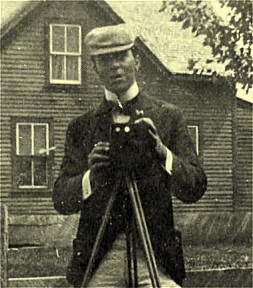
Edgar Rice Burroughs In Idaho
Red, White And Black
Now we get to the ostensible story which is the Red assault on Italian Somaliland. If few people today understand the partition of Africa by the European powers it might be well to recap the situation a little. The two big players were France and England with Spain and Portugal picking up some early real estate to be later joined by the bit players, Germany and Italy. The German possessions were stripped from them after the Great War and given to England.
This novel takes place in the Horn Of Africa or the Northeast corner facing the Arabian Peninsula and the Indian Ocean. The area contained Ethiopia otherwise known as Abyssinia, the only independent State in Africa save Liberia whose independence was guaranteed by the United States.
Ethiopia was bordered by Italian Eritrea and French and British Somaliland on the North, Italian Somaliland on the East, Kenya and Uganda on the South and Anglo-Egyptian Sudan on the West.
The Galla tribe with whom ERB became fascinated had been driven about by the Somals occupying lands mostly in the interior of Ethiopia after the manner of the Middle Eastern Kurds, where they were constantly in conflict with the Ethiopians and the Somals on the border. ERB deals with the Ethiopian-Galla situation in Tarzan And The Mad Man.
The Red camp is located in Ethiopia several days march from the border of Italian Somaliland. Opar which is nearby must now be located in Ethiopia.
The Reds have assembled an international cast of characters or in other words a multi-cultural outfit. Their multi-cultural nature will prove to be a liability rather than an asset as indeed it must in real life.
The organizers are Russian or Soviet Communists of whom there are four, Peter Zveri, the leader, Zora Drinov, Paul Ivitch and Michael Dorsky. They are joined by an American agent acting as a double agent, Wayne Colt.
Burroughs casually mentions that the expedition was put together in the United States by Zveri operating on both coasts. As Burroughs is writing a novel he wisely declines to preach or analyze, he is, as he says, an entertainer. As I who do function as an analyst pointed out in Marcia Of The Doorstep that the US had been used as a safe haven by every conspiratiorial revolutionary group on the planet. Burroughs is noting the same thing but only in passing as part of the story. If one is not attuned to such details they slip right by without significance as do the dots and dashes of the Morse code to the uninitiated.
The group is also composed of a Filipino Red, Antonio Mori and a Mexican revolutionary Miguel Romero. These people form the core group. Affiliated with them are the Moslem Arabs of Abu Batn who appear to have been recruited from the Mahgreb, perhaps Algeria, where some of Tarzan’s early adventures occurred. They do not appear to be Black Arabs of the Horn. While appearing to be Communists they remain Moslem Arabs whose real motive is to drive the Christians or Nasrany as they call them out of Africa. This means Whites of no or any religious affiliation.
Zveri has also patched on the Bantu tribe of Kitembo, the Basembos. This is because Kitembo has actually been to Opar, the only member of their party who has. Kitembo doesn’t appear to be a true Communist but is a former powerful chief from Kenya who had been displaced by the British. He comes from a place on Lake Victoria which should make him a Luo but for reasons perhaps not pertinent I tend to think of him as Kikiyu probably partly based on someone like Jomo Kenyatta who already had notoriety by 1930 although Kitembo’s history is close that that of the Unyoro Chief Kaba Rega whose story Burroughs was definitely familiar with from the memoirs of Samuel Baker.
Kitembo is interested only in recovering his past dignity augmented ten fold. All that becomes irrelevant when he deigns to lay his hands on Zora.
We should remember that Burroughs is writing in 1930 not 2010, so many things that are more or less clear to us now were undetermined at that time while understandings and motivations were quite different then from today and as those of today will be fifty years hence.
For one thing Africa was still a land of mystery where one wouldn’t have been too surprised if someone had discovered a lost civilization, a strange anthropoid- perhaps the so-called Missing Link, very real to the imagination at the time- and any number of things. One of the great losses of my childhood was the recognition that Africa was known; that nothing truly wonderful would be discovered in the world again. All was now cataloguing.
Abercrombie and Fitch who had built a very lucrative business outfitting ‘explorers’ or safaries, having not yet turned to teen porn, lost its raison d’etre as did all the ‘Explorer’ clubs where grown men sat around in khaki Safari gear drinking and dreaming. All that was left for me and my generation was Trader Vic’s and he’s gone now. The miracle is that the National Geographic found a way to survive when they could no longer portray exotic, naked, painted savages with necks supported by copper rings, plates in the upper lip and that. Now of course they don’t have to go as far for such exotica as Whites imitating the Africans sport massive tattooing suported by all kinds of nose rings and body piercings.
So, in 1930 Burroughs’ story still had a degree of probability. Especially in the way he joined contemporary politics to nineteenth century Africa. In one reads closely this is quite a story, a true tour de force.
Not only do the Arabs and the Bantus have their personal motivations apart from Communism, so we learn does Peter Zveri. The streak of individualism is not extinct in his collective mind, he sees the opportunity to make himself Emperor of Africa in Tarzan’s stead. Apparently Soviet intelligence has been keeping close tabs on the doings of the Big Ape Man because Zveri knows of Tarzan’s ‘fool dirigible trip’ believing him absent from Africa and possibly dead as no one has heard from him for the past year. This was before Google Alerts too.
Indeed Tarzan drops as from the clouds into a clearing filled with great apes as the story begins. Just coincidentally Jad-Bal-Ja and Nkima happen to be in this exact part of Tarzan’s estate of Africa at the same time. Zveri then is very disappointed to learn that his nemesis is back. As well he might because he has engaged himself mano a mano with the Big Bwana and Africa, believe it or not, is not big enough for both of them.
In his examination of Communism, multi-culturalism and human nature Burroughs is at his incisive best. Remember few of these stories go over a hundred ninety-two paperback pages. These are tremendously condensed stories. They’re somewhat like a zipped file with megabytes compressed into kilobytes. To really get the stories you have to unzip them and let them expand in y9ur mind. Don’t be deceived by their seeming simplicity.
The various cultures involved in this plot are only loosely held together by Communist ideology. The plot eventually falls apart because the cultures see through the phoniness of the Communist ideal. Zveri himself isn’t even that sincere a Communist as he intends to use the gold of Opar to make himself a third world power as Emperor of Africa. In the end Communism is a fatuous dream,whether utopian or dystopian is up to you.
Burroughs does not emphasize his opinions, he merely tells his story. My conclusions as to his intent are derived from the result of the story. In the end Communism fails because of internal contradictions while the big Bwana is invincible retaining his position as Guardian or Emperor of Africa. Not one world of preachment.
Wayne Colt in his rather absurd trek across Africa arrives too late for the first assault on Opar. He does happen into camp in time to spot the shaking tent and rescue Zora from Jafar, the Indian Communist, with Tarzan’s help. After killing Jafar Tarzan turns his steps to Opar traveling in a bee-line through the Middle Terraces he handily arrives before the first expedition which had left some time before him.
Let me take a moment to discuss Burroughs’ Africa. In the first place these stories are combination dreamscape, fairy tale and mythmaking. His Africa bears no more relation to this planet than Arthur’s Camelot bore to Medieval England. I find it tiresome for scholars to try to find the ‘real’ history of Arthur’s career. Arthur may have a loose connection to real historical events but the story, a great one, is a projection of psychological needs. There isn’t any such thing as a Holy Grail. No knights ever went in search of it.
In the same way Burroughs’ Africa is a psychological projection hopefully leading to his Holy Grail. There are no lower, middle or upper terraces in a nearly uniform jungle in the real Africa. Anyone who tries to find them will be severely disappointed. Such things are merely inventions of Burroughs’ dream world. I am glad he shared it with me, you and the millions.
The frequency with which the characters run into each other way out there is also impossible but in Burroughs’ dreamscape, his fairy tale, his myth, it happens all the time. There is no sense in arguing the impossibility. If you find it too offensive to your sensibilities then the oeuvre is not for you. One just accepts that these are fairy tales and in fairy tales things like this happen all the time. It’s a fantasy, fantastic things go on.
I try to fathom the psychological intent so while I may smile and jest at some impossible details it is only at the naive dream details and not the serious intent of the story. In our time these stories would have been taken at warp speed to another galaxy where in that context all things would be possible. But, that would be pure fiction hence unbelievable. I never did take Star Trek seriously, in fact, I refused to voluntarily watch it. Burroughs’ Africa can still be located on a map of the world connecting psychological reality with temporal reality in a very satisfying blend.
So, as this series is a roman a fleuve or River Story, Tarzan ruminates on his previous visits to Opar as he strides across the hot dusty desert, where the rain never falls, toward the fabled gold and red domes and turrets in the distance.
La’s love for him which began in Return Of Tarzan has caused dissension between her and her people. She has retained her position only through the active intervention of Tarzan. Defeating the revolution that had ousted her in Tarzan And The Golden Lion the big Bwana had replaced her on the throne guarded by the Bolgani of the Valley of Diamonds and the semi-human Gomangani. It is interesting to not that the Oparian revolution occurred after the Russian. Might be a connection.
As he approaches the city he believes that the Oparians appreciated his defeat of Cadj and that they love and respect him so that his reunion with them will be joyous. Not so. In the interim the Oparians who hate and resent Tarzan have deposed La putting her in a foul prison in the vast underground maze of dungeons of Opar. Passing back through the narrow cleft, bounding up the stairs, Tarzan is surprised to find himself attacked by the howling Frightful Men. The Man of the Steel Pate receives another frightful blow which lays him out.
He wakes to find himself the captive of Oah and Dooth. He is placed in a cell the details of which I have already related above.
I haven’t plumbed the signficance of Tarzan and La being imprisoned together while the city is attacked by the Communists unless the dreamworld of Opar represents a sanctuary that is now invaded in the attempt to destroy Burroughs’s literary career. In that event it might be necessary for the Anima and Animus to be together. This story also harks back to the invasion of the Emerald City in Baum’s story The Emerald City Of Oz.
In any event the various strange screams and noises from within Opar unsettle the superstitious Blacks and Arabs who lose their nerve refusing to enter Opar. The Blacks believe in spirits and the Arabs in jinns both of which they fear more than living men. Thus Burroughs is contemptuous of both cultures.
Zveri and his Russians are too cowardly to enter themselves. The only one with the nerve is the Mexican Miguel Romero who gets very good reviews from ERB. Miguel retreats in the the face of the horde of Frightful Men but he is very cool about it.
Returning to camp the Arabs are now disaffected having words with Zveri. The arrival of Colt and Mori puts a little heart into Zveri so that a second attempt on Opar is determined leaving the Arabs to guard the camp.
Tarzan and La escape from Opar between the two assaults becoming subsequently separated. Zveri takes the Blacks and Communists with him. Being left behind dissolves the Arab affinity with the Cause. Never good Communists, being interested only in ejecting the Nasrani from Africa, they decide to disappear into the desert.
About this time La wanders into camp. Sacking the camp, Abu Batn and his Arabs leave with the two women whose value in the North he knows full well. The Arabs are out of the story. The Communist coalition is breaking up. As Burroughs points out the goals of the two are not the same.
Back in Opar Zveri finds it impossible to force his Africans into service while he and his Russians remain cowards. Colt behaving bravely, as only an American can, along with Miguel Romero penetrates to the sanctuary where they are faced by the Frightful Men. Perhaps in a comment on American tactics Colt fires over the heads of the Oparians while the Mexican, Romero, fires directly into the mob.
Why when Americans go to war they are reluctant to do the dirty work of killing is beyond me. The reluctance to engage the enemy in Viet Nam cost us that war. The reluctance to do what we have to do in Iraq is costing us that war. Perhaps we think we can hide behind a wall of steel as our technology wars for us while we imagine we can remain safe. Our punishment of our own soldiers for merely humiliating the enemy must be unique in the annals of warfare. And they wonder why no one wants to join the Army.
Romero who shoots to kill is able to escape while the pussy footing Colt is downed by a thrown club and captured. A thrown club! Once again a Burroughs’ surrogate takes a blow to the head, but how does one survive a thrown club?
Just as Colt and Zora exchange partners in the jungle so now Colt takes Tarzan’s place in jail. Here, he is befriended by a nubile beauty, Nao, rather than as La did Tarzan and, pephaps as Florence was doing for ERB. Afer killing to free him Nao is left behind as Colt disappears into the dusty desert. Not a very thoughtful thing to do as Nao would certainly be discovered.
Zveri returns to his devastated camp to be handed a letter notifying him that Colt is a double agent. Abandoning any thoughts of Opar the Communists concentrate on their mission which is the simulated invasion of Italian Somaliland.
As they are about to leave Tarzan returns Zora to camp. Coldly dropping her off without a word he climbs onto a branch to spy on the conspirators. His leopard skin shorts are mistaken for the real thing. Here we go again. the shot at the imagined leopard grazes the Big Guy’s skull putting him out of commission for a full day. So that is at least two knockouts for Burroughs’ surrogates plus this concussion. Tarzan’s frequent lapses of attention become more intelligible.
Zveri wants to take advantage of his opportunity and kill Tarzan but Zora intervenes so Tarzan is bound which leads to next day’s episode when Dorsky threatens him only to be annihilated by Tantor.
The charming fairy tale between Nkima, Tantor, Tarzan and the Hyena then takes place which is a repeat of the same scene in Jewels Of Opar.
Nkima then goes in search of the Faithful Waziri to aid Tarzan while the Big Fella begins his campaign of terror against the Communist conspirators.
His strategy is to separate Kitembo and his Basembos from Zveri and his Communists. To do this he plays on their superstitious natures. A mysterious voice comes down from the trees, in other words, the sky, telling them to go back. In the meantime Little Nkima has recruited the Faithful Waziri who arrive to help out not with spears and bows and arrows but modern repeating rifles. Arranging themselves in front of the advancing Communists hidden in the tall grass -this stuff grows six feet high- they give the appearance of being many more than they are. Burroughs doesn’t make it clear how they can see the Communists through the grass while the Communists can’t see them but as Tarzan usually navigates pretty well even in total darkness I’m probably making a bigger problem out of it than it is.
Zveri does a rapid advance to the rear which act of cowardice completely destroys his credibility. Dorsky is dead while Romera and Mori renounce their Communism. Zora reveals she’s only in it for the revenge because Zveri had murdered her family twelve years earlier in the Revolution while, as we are aware, Colt is an American agent. This leaves only Zweri and Ivitch who I believe represent Frank Martin and R. H. Patchin, ERB’s old nemeses in Chicago.
Returning to camp Zveri spots Wayne Colt. Calling him a traitor he fires point blank missing while the bullet grazes Colt’s side without breaking the skin. That was a close one. Before Zveri can fire again he is brought down from behind by Zora. Burroughs replays scenes like this over and over with different variations. Just as the constant bashings on the head his surrogates take reflect his own experience in 1899 so must all these conflicts between his surrogates and another man and his surrogate woman reflect his situation with Frank Martin and Emma. In each instance in one way or another the woman rejects the other man. Thus Burroughs ‘fictionizes’ his own situation.
So now Zora kills Zveri so that she and Colt can bridge that gap.
As a sidekick Ivitch/Patchin is allowed to leave Africa. In point of fact Martin died some time before Burroughs although not until after 1934 while Patchin survived both.
Tarzan in the meantime escorts La back to Opar where he reinstalls her on the throne this time doing the sensible thing of eliminating Oah, Dooth and all their sympathizers. One must believe there will be no more trouble in Opar. In any event Opar disappears from the oeuvre.
Tarzan then returns to the camp to dispense justice as becomes the Lord Of The Jungle.
As the story ends the ‘invincible’ Tarzan seems to have solved all the problems confronting he and Burroughs in 1930. The Big Fella has not only thwarted Zveri but defeated Stalin and the whole Soviet empire.
As the exchange between Zveri and Romero explains it: pp. 183-84:
“Which proves,” declared Zveri, “what I have suspected for a long time; that there is more than one traitor among us,” and he looked meaningly at Romero.
“What it means,” said Romero’ “is that crazy, harebrained theories always fail when they are put to the test. You thought that all the blacks in Africa would rush to our standard and drive all the foreigners into th ocean. In theory, perhaps, you were right, but in practice one man, with a knowledge of native psychology, which you did not have, burst your entire dream like a bubble, and for every other harebrained theory in the world there is always the stumbling block of fact.”
Thus Tarzan not only defeats Zveri, Stalin and the Soviets but he disproves the whole Communist ideology as a harebrained theory.
On top of that the Invincible One restored order in Opar while putting his personal life to rights by separating out Colt and Zora or Burroughs and Emma and Tarzan and La or Burroughs and Florence.
The succeeding novel Tarzan The Triumphant- Invincible, Triumphant- will rescue the Russian situation while its successor Tarzan And The City Of Gold disposes of Emma/Jane/Zora/Nemone by her self-immolation while its successor Tarzan And the Leopard Men bring Kali/Florence and Old Timer/Burroughs together. The series climaxes with Tarzan And the Lion Man when Burroughs 2 kills off his early self, Stanley Obroski, or Burroughs 1 to come into his own, or so Burroughs supposes. The rest of the series is playing out the aftermath of the divorce from Emma and the marriage to Florence.
As could have been predicted the marriage to Florence was less than satisfying.
So, perhaps, Burroughs’ solution to his personal dilemma is based on a harebrained theory itself which fell to earth on ‘the stumbling block of fact.’
For the moment however Tarzan has saved Africa from the Communist menace and perhaps the World.
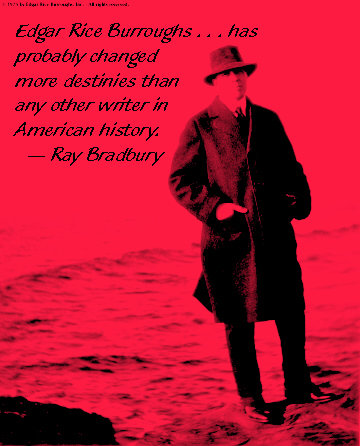
Edgar Rice Burroughs- High On A Mountain By The Sea
Chaps. 3,4 & 5:Edie Sedgwick: Maid Of Constant Sorrow
October 30, 2010
Edie Sedgwick
Maid Of Constant Sorrow
Chaps 3,4 & 5
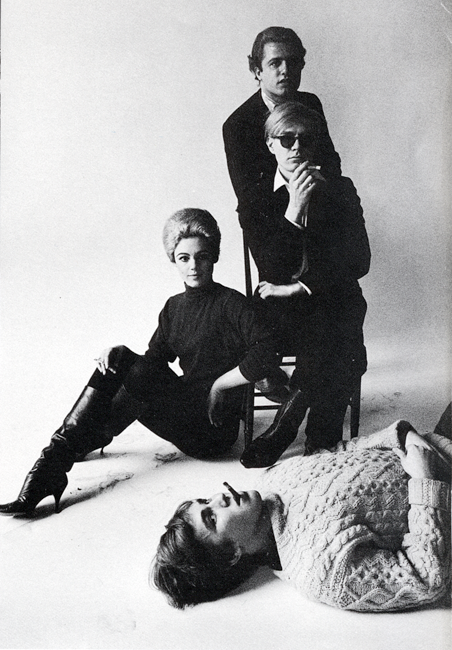
Time Is On My Side
A problem with the sixties is the concept of time. Einstein had gummed up the investigation of the concept considerably. Time is not a static thing but moves at various speeds. Strictly speaking time does not exist but is a human construct. The basis of the construction is the diurnal rotation of the earth and the earth’s revolution around the sun. There is no starting point for the revolution and no end. Man constructed a beginning based on earth’s greatest distance from the sun and because of the Plane Of The Ecliptic, the shortest day of the revolution. This was the most recognizable point to begin. Without the day and the year there is no basis for determining time; there is no other vantage point in the Universe.
Time has no existence in the universe; there is only space and matter and space cannot be defined without matter. No changes take place in the nature of space, only in matter, and time is no operative factor in those changes. Time does not exist outside the human mind.
Time as we usually think about it is a division of the earthly day into hours, minutes and seconds; of the year into seasons, months, weeks and days. As this is objective time keeping without reference to the passing of events or the perception of the individual subjective time is unaffected by objective time.
Now, let us say that the normal rate of perception and living is done in 4/4 time. To try to be specific let us say the standard is time as lived by 18-60 year olds adjusted to their societal needs. Let us just speculate that the mind in its normal state is comfortable with 4 bits of information per second and let us say that normally, whatever that means, bits of information are occuring at 20 bits per second. That means that 16 bits a second are normally over the subject’s head; he may perceive them but he can’t record them on the spot. Part of this is made up in sleep and dreams where removed from external stimulus the individual is able to subconsciously process additional bits that went by him while waking. The remainder then can only be captured and analyzed from a distance in time where what was happening can be seen but what is gained in distance is lost in immediacy. That is history, what I am attempting here. While the big picture can be seen, vast amounts of immediate detail are lost to memory or altered to conform to desires and prejudices. But, that is the way it is.
The period of ’64-’66 was one in which amphetamines and barbiturates altered or distorted 4/4 time. Under the influence of amphetamines subjects were living in, let us say, 16/4 time. They were so alert they couldn’t sleep. So long as they could control their obsessions and not be hung up on details they could turn out prodigious amounts of work. Thus to satisfy this amphetamine induced mania for work Warhol and his assistant, Gerard Malanga, could manually turn out fifty large Presley silk screen prints in an afternoon. In fact, in this period they turned out thousands and thousands of silk screens. There are a lot of Warhols out there.

Dreaming Dylan
Dylan is said to have literally and steadily turned out reams of material. He left a huge sheaf at Baez’s in Carmel in Spring of ’65 which he never reclaimed. As he said, songs just flowed through his amphetamine fueled mind. This sort of activity ceased or drew to a close when both Warhol and Dylan ceased using amphetamines- in other word their time races slowed down and their brains slid back toward 4/4 time.
Now, when the subject’s brain was racing at 16/4 it couldn’t slow down to allow him to sleep. Keith Richards says that in those days he slept only two nights out of seven. Warhol said he got two hours of sleep a night during this period and some said, perhaps with exaggeration, they didn’t sleep at all for one or two years.
So, while your brain is racing along 16/4 and you feel the need for rest you have to take barbiturates, downers, to slow your time down toward 8/4 or hopefully 4/4. This pits one drug against the other, one is speeding, one is dragging. Too much manipulation and of course one’s time slows to 0/4 and you’re dead.
Between events being clustered and racing so fast that no one can keep up, even at 16/4 and certainly at a speed to defy analysis no one had any idea of who or where they were and what was happening. No matter how fast the brain is racing one is still living in 4/4 time.
For those with 16/4 racing brains and no outlets such as art or writing, music, the result was chaos and self-destruction. In addition confusion was caused by making the 18-60 years old time race as an objective standard by which all normality is measured.
When someone says that time stood still, it literally did for the subject, the duration of that stillness cannot be measured by objective time.

All I Have To Do Is Dream
What may seem like a few seconds to an outside observer is literally timeless to the subject. The earth still turns but the mind doesn’t move, but no time is lost because time doesn’t exist. Thus children and mature people live in 2/4 or 3/4 time in which 4/4 time is irrelevant. It takes eons for a day or two to pass as a child while objective time becomes irrelevant if you no longer have to watch the clock. For instance, at 72 I live in a mix between natural time and objective time. I only have to enter objective time when it’s necessary to keep an appointment and I try to eliminate those as much as possible. Otherwise it’s day or night, Spring, Summer, Winter or Fall. I frequently don’t pay attention to what day it is because I don’t need to know and I don’t care. It doesn’t make any difference; it is always my time.
Doctors try to evaluate your memory by applying the needs of 18-60 year olds who are living according to the demands of objective time. So, since we live at different time races those whose speeds differ have a difficult time understanding each other.

Give Me Mo' Mo' Mo'
Chapter 4
Speeding Down The Highway
Lest we associate amphetamines at this time with illegal drugs let’s look at the scene in NYC. Sometime in the early sixties Feel Good doctors were dispensing massive does of amhetamines and vitamins. the most notorious, or well known, of these doctors were Max Jacobson and a man referred to as Dr. Roberts.
Jacobson appears first on the scene with a patient roster of astounding celebrity which included then President John F. Kennedy. Lyndon Johnson took a shot but perceived the situation for what it was and didn’t go back.
George Plimpton
The Beatles mention a Dr. Robert in one of their songs and he’s the man we’re concerned with here in ’65 no to be confused with Dr. Roberts. Dr. Roberts administered to some of the Warhol crowd including Edie Sedgwick. There is an astonishing account of his practice in Stein and Plimpton’s Edie. Quite an extensive account. To excerpt it I’d probably have to have permission; I’ll check into it.
These doctors were carelessly giving incredibly huge injections that kept you speeding for a week or two. But needles, syringes and drug could be obtained easily and they were which brings us to a member of the Factory entourage, Brigid Berlin. She was not old money but came from a very affluent background.
She, obviously laboring under several mental disorders, was an indiscriminate and unsound dispenser of the drug. She ran around the Factory injecting all and sundry with the same dirty needle. Her forte was to inject herself straight through the seat of her jeans.

Jean Stein
Andy, himself, used something call Obetrol which is described as a very high quality amphetamine producing a pleasant and stimulating high. While this drug kept Andy up with the exception of an hour or two of fitful sleep it also allowed him to work, work, work, industriously and with intense concentration for hours at a time. Fifty Presleys in an afternoon, think about it, assembly line pace.
Without a work outlet one had to find other ways to work off the excess energy. Non-stop talking is one but, hell, I can do that all day without the benefit of drugs. Since all these people at the Factory were living in 16/4 time they could communicate on that level with each other. There wasn’t an awful lot of intelligence being communicated. Warhol did us the service of recording 24 hours of what passed for communication and published the result as a book or novel he titled ‘a’. This book is virtually unreadable but as dedicated to my art as I am I am living proof that it can be done. Let’s hear from anyone else who had the patience. The gang was big on non-verbal communication. There are mostly a lot of incomplete sentences in the book but the conversation is forwarded in a pastiche manner each participant adding a phrase so that a sort of idea is parsed out.
As might be expected the group was low on conventional 4/4 morality, but at 16/4 they seem to have worked out a morality that all could accept but one I certainly would reject. Beatings, theft and random sex in view of others or not with anyone or anything seemed to be the moral basis. While Andy disavowed responsibility for anything that hapened at the Factory he was in fact the leader functioning as Magister Ludi. In the novel ‘a’ he is referred to as Drella, a combination of Dracula and Cinderella- a vampire and a fairy. He was in truth a bloodsucker.
He essentially took a whole group of Catholic homosexual Undermen and gave them a clubhouse and a certain immunity under the umbrella of his name and fame. Even then he and his Factory were a thorn in the side of legitimate society, the police visiting the place on a regular basis. And rightly so.
This was the scene, the environment that Chuck Wein brought Edie into. It seemed to suit her state of mind, she stayed.
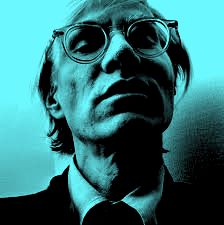
Magister Ludi
Dylan also was an amphetamine freak at the same time while using alcohol, LSD, marijuana and heroin. Warhol who was a perceptive observer said that Dylan’s songs were the amphetamine speaking. According to Andy, Dylan took other people’s words (and tunes) and because of the amphetamine was able to make them sound as though his own. He also astutely divided Dylan’s output into two periods; the first, social protest and the second, personal protest. Pretty much half a side of Another Side, plus Bringing It All Back Home, Highway 61 Revisited and Blonde On Blonde. Once again, he knew whereof he spoke. We’re concerned more with the personal protest here taking little or no interest in the social side.
Dylan’s personal protest by its very nature must be autobiographical. Indeed, Suze Rotolo identifies many of Dylan’s songs as referring to her. She should know. Dylan was quite taken with her. He obviously suffered a painful feeling of desertion whan at her mother’s insistence in 1962 she left NYC to study in Italy. This absention definitely changed the relationship although as Bob was never too constant a lover it is difficult to see how. Ego was hurt, I guess.
Although the relationship was reassumed on Suze’s return her sister, Carla, and her mother disapproved finally breaking the couple up. The break up produced the autobiographical Ballad In Plain D in which Dylan vented his emotions in a loud screaming complaint that was a direct predecessor to his magic mantra ‘Like A Rolling Stone.’
Chapter 5
I Can’t Stand The Pain In Here
According to accounts Dylan began writing Like A Rolling Stone in June of ’65. It began as 20 pages of ‘vomit’ according to Dylan, cut down to 10 and then to its released form. The 45 was a successful disc reaching the Billboard Top 10. The song is quite obviously about Edie when one learns the background. Many New Yorkers who were aware of the scene expressed their opinion that it was about Edie, pointing out further their belief that Warhol was the Napoleon in rags.
If first written in June then Dylan had made a considerable psychological investment in Edie since the previous December of ’64. One wonders where he found the time to cultivate a relationship with her between the two dates. He wrote recorded and released ‘Bringing It All Back Home’ between the meeting with Edie and April. He had performance dates. He divided his time between NYC, Woodstock and Carmel. In the last mentioned place he was staying at the home of Joan Baez while keeping Sara in Woodstock and maintaining some sort of relationship with Suze.
The extent of the rage and hatred of ‘Stone’ seems to be out of all proportion. According to the song Dylan is in a jealous rage because the ‘She’ of the song has deserted him for this ‘Napoleon in rags.’ ‘He calls to you, go to him now.’ What exactly did Dylan intend to do with Edie that he should become so emotonal? There is no question but that he intended to marry Sara; also none that he would marry either Joan, Suze or Edie. Quite simply they weren’t Jewish and Sara was. Dylan had no intention of marrying outside his religion. He intended to obey the Biblical injunction, which he takes as the literal word of God, to be fruitful and he wanted his children raised Jewish.
So what, then? What did Edie represent to him? Apart from being an uptown girl, in Volume I of his autobiographical Chronicles he suggests that one looks for the model of ‘She’ in his mother. I found this puzzling. I couldn’t make it fit the lyrics. None of the ‘facts’ of the song seemed to fit what is known of his mother. Then I saw Dylan’s 2003 movie, Masked And Anonymous. This is a delicate subject of which I am only going to skirt the edges. But, if one reads between the lines of Jack Fate’s soliloquy at his father’s death bed about his mother and faher, the lyrics of Freight Train Blues and what I’m hinting at here the fog should thin out somewhat. Remember that Dylan said his mother was connected to ‘Stone’. Since the song is about Edie it follows that Dylan associated his mother and Edie in his mind; there was a situational similarity to him.
Now, from August ’65 to the recording of Blonde On Blonde nearly the whole of Dylan’s output is centered around Edie, Warhol and the Factory. One of Dylan’s more vicious songs was ‘Leopard Skin Pill Box Hat’ which is about Edie. When Edie dissipated her inheritance she bought a slew of fur coats and a lot of jewelry. She had the leopard skin pill box hat.
Dylan’s mother was also known for having a lot of jewelry and several fur coats. Dylan recorded his version of Freight Train Blues long after 1968 when his father died. Now, immediately after his death the business owned by his father and two uncles either went bankrupt or was forced to close. In other words there was no more money left in the business. While Hibbing was not a flush market there was no competition either. So Abe Zimmerman’s exit came at a propitious moment, or…. At any rate there was no more money.
Just as Edie went through her money so Dylan’s mother kept her husband hopping in all likelihood straining the finances of the appliance store that, after all, had to support three families. Dylan, then, may have conflated Edie with his mother’s extravagance and whatever he had planned for Edie would have been done to his mother surrogate. In fact he was quite brutal to Edie, destroying her in the end. Thus one avenges oneself on one’s mother, ‘Like A Rolling Stone.’ He is probably one of those people who reject but can’t tolerate rejection because of his mother’s rejection of him per Jack Fate. According to his soliloquy in Masked And Anonymous his mother essentially rejected him plnging him into a deep depression from which he has never recovered if the movie is any indicaton. The movie too is autobiographical. He felt: ‘Nobody leaves me, I leave them.’ ‘That’ll be the day when you leave me’ as Dylan’s hero Buddy Holly put it. This was possibly the cause for the eruption of Ballad In Plain D.

Obetrol
In March of ’65 Edie entered the corrupt, even criminal, world of Warhol’s Factory. One can only speculate why Chuck Wein took her there. Perhaps the empresario was having a difficult time getting Edie launched and thought he could get her into Warhol’s hideous movies. Having run through her inheritance Edie was getting desperate for money. Perhaps in her naivete she thought movies were movies and movie stars made big money. Certainly one cause for her break from Andy was his refusal to pay her.
Warhol, in his own delusions believed that Hollywood would come knocking on his door cash in hand. That that never happened was probably a major disappointment. At any rate when this vision of the respectable Overmen appeared in this dump of a studio Andy went ga-ga. In fact, Edie was his ticket, his entry into the Upper East Side crowd. Just as Fred Hughes was to show him how to make money, Edie opened society doors to him.
This King of Scurf was creating quite a scene at the Factory. At the same time he gave a clubhouse to the Undermen, as a leading figure of the art world which, after all, is an upper class affair of wealth, he had a foot in that camp. Led by the more louche of celebrities the Factory was becoming a party destination. So Edie added some instant uptown glamor. Old family, old money.
Whether it was the hope of money from movies that kept her there or whether this degrading atmosphere filled some psychological need Edie stayed on thereby sacrificing her reputation. I imagine there’s always the hope that once you get your face up there something will pop.
Sometime between March and June Dylan became enraged that Edie was at the Factory making some pretty lame Warhol movies with little or no commercial appeal. Thus his work from this time on reflected his tug of war over Edie with Warhol.
Edie says that she didn’t get into heavy drugs before she joined Warhol’s menagerie. This may be true but as Warhol said: How do you stop someone from doing what they want to do? I would imagine the effects of electro-shock are very long lasting and discombobulating. Lou Reed of Velvet Underground was certainly whacked out from electro-shock. As I write my mind keeps going back to the time I stuck my finger in the socket as a child. I mean, it is vivid, so I can’t imagine what Electro-shock does to you. Perhaps speed replicates what electro-shock does do to you. Perhaps speed replicates or complements the feeling of electro-shock in some way.
Of amphetamines Edie is quoted as saying:
The Ghost Of Electricity
The nearly unendurable torment of speed, buzzarama, that acrylic high, horrorous, yodeling, repetitious echoes of an infinity so brutally harrowing that words cannot explain the devastation nor the tone of such a vicious nightmare.
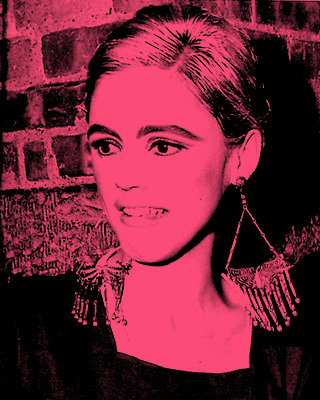
Could be close to the feeling of electro-shock. Kind of reminds me of my finger in the socket. Dylan’s seach for the ‘high mercury sound’ must also have been the result of speed. Cacophonous songs like ‘Highway 61’, ‘Subterranean Homesick Blues’ and ‘Rainy Day Women’ come to mind.
Perhaps also the amphetamine high reflected and complemented the deranged vicious goings on Warhol allowed at the Facatory. The sado-masochism. Brigid Berlin, or the Duchess as she was alternately known, roaming around with her needle and syringe ramming it into anyone will they, nil they, not much choice there. Beatings going on back in the shadows, is it any wonder that Dylan referred to Warhol as Dr. Filth in Desolation Row.
It is difficult to ascertain dates in existing sources but possibly between June and August Dylan invited Edie and Andy to a concert in upstate NY so, there was significant interaction between the three before Highway 61 Revisited. Side one of that record doesn’t reflect Factory activity as much as side two. I suspect all three songs on that side reflect Dylan’s sitation with Andy and Edie while Desolation Row definitely does. Now, while at the time there were few listeners who had any idea of what Dylan’s lyrics meant except for possibly a few, of which Warhol definitely was one. He must have recognized the reference to himself in ‘Stone’ and also in Positively Fourth Street. These songs were hits. ‘Fourth Street’ was pulled from airplay shortly after relaease but when I first heard it the sound just blew me away. I heard the put downs but too fleetingly to grasp them. Hank Williams on steroids.

Stop! In The Name Of Love
Dylan, then, was making, on Warhol a blatant attack over the airwaves of all America plus reviling Edie in a hideous manner. What did Andy think, what was his reaction? Having vented his feelings even more violently than he had in Ballad In Plain D, Dylan’s next move was obvious. Having lost Edie in March he meant to reclaim her in October. And so this epic battle for the person of Edie Sedgwick began. She was only a pawn in their game.
Chaps. 6, 7 and 8 are up on the next post.
Chaps 9,10, 11 and 12 are now up on the post following 6,7 and 8.
Chaps 13, 14 and 15 are now up also. Chap. 16 and end is in contemplation
”
Chaps. 1 & 2: Edie Sedgwick: Maid Of Constant Sorrow
October 21, 2010
Edie Sedgwick: Maid Of Constant Sorrow
Edie Sedgwick, Bob Dylan And Andy Warhol
by
R.E. Prindle
Chapter 1
Some Enchanted Evening

Edie and Andy
Texts:
A movie: Factory Girl
Sedgwick, John: In My Blood: Six Generations Of Madness And Desire In An American Family, Harper Perennial, 2007
Stein, Jean: Edie: An American Biography, Pimlico, First Published 1992, 2006 Paperback edition
www.warholstars.com A comprehensive Andy Warhol site.
The sixties was a period of broken lives. It was the heyday of the users and the used. It was as Donovan aptly put it: The Season Of The Witch. It was a period when all the hounds of hell were loosed. It may be a cliche but it was both the best and worst of times. It was during this period that Edie Sedgwick came of age. Edie’s tragedy was that she was used rather than a user. She was the cat’s paw of two of the greatest users of the period, Andy Warhol and Bob Dylan. It cost her her everything including her life.
Edie was one of the Sedgwicks of Massachusetts and they were old line Americans. If the Sedgwicks missed the Mayflower they were trolling in its wake. Therein lay part of Edie’s charm for the two immigrant lads, Bob and Andy. While from Massachusetts the Sedgwicks had a notable presence in New York City and Long Island. One might say they were venerable. J.P. Marquand who married into the family wrote his novel ‘The Late George Apley’ about them.
In Massachusetts the Sedgwick family was famous for their burial plot known as the Sedgwick Pie. As their legend is intimately connected with the Pie it might be proper to dwell on the Pie for its flavor. The founder of the family back then just after the first Thanksgiving was a gentleman named Theodore Sedgwick. He was a dynast by nature. Hence, he bought a section of the Stockbridge cemetery and had himself buried in the very middle. Subsequent Sedgwick burials were laid feet first toward the Patriarch in round rows emanating outward like the wedges of a pie, thus the name Sedgwick Pie. It was said that on judgment day when reveille was blown the Sedgwicks would all arise facing the founder, Theodore. Pretty story.
Over the centuries following Theodore’s death the Sedgwicks continued to prosper there always being enough money to maintain their position. There also arose the fantastic legend of the Sedgwick Curse, as indicated by John Sedgwick’s subtitle. The idea was that the Sedgwicks were a weak stock and that there was an abnormal amount of madness and suicide in the family. Considering the extent of the family I think this was a romanticized vision of themselves. Not that there wasn’t a sort of madness and a few suicides but hardly more than in any several hundred member family over a few centuries. Nevertheless in Edie’s generation this fatalistic notion took firm hold. It’s almost as if the generation rose to embrace the notion. Her biographers speak of it in awe as though the Curse of the Pharaohs had morphed into the Curse of the Sedgwicks. Jean Stein, the author of Edie, seems entranced with it and even John Sedgwick, Edie’s younger cousin, in his memoir seems possessed by it. Feels he’s got it. Slim chance for being true in my estimation.
For an inconsequential girl Edie’s life has been well examined. There are actually several books written about or featuring her while the legacy of movies she appeared in and movies about her is fairly extensive. Most of the early information on her life here is abstracted from Jean Stein’s biography. Stein, herself, is accused of writing the biography in a fit of sour grapes because Warhol wouldn’t make her one of his superstars. No matter, it is an exceptional book of its kind.
‘Edie’ is presented as an oral biography in the voice of many participants. However as all the voices are pretty uniform it would seem as though the editor, George Plimption, is pervasively evident. George Plimpton, otherwise a nobody, began his career as a celebrity in the sixties and the seventies by becoming a professional old line American, nearly the last of a vanishing breed.
He clowned around by trying out for various professional sports teams then writing books about the experience. Thus he became the American Man Of Letters touted on his website and a well known celebrity who could actually measure his press releases in inches. He and Stein put together an excellent more than readable book in their biography of Edie Sedgwick.
Edie was the daughter of Francis Sedgwick of Long Island, NY, he otherwise being known as Fuzzy. The family left New York for Santa Barbara, California just before Edie was born so she knew nothing of New York or the East Coast. In California she led what would seem to thave been an idyllic life. The family lived on a 3000 acre ranch which was exhanged after oil was found on it for a much larger ranch and finally an 18,000 acre ranch where she spent her teens. This was a functioning cattle ranch with ranch hands and the whole works.
The Sedgwicks did not attend either public or private schools being rather schooled by private teachers along with a few neighbor children. Thus unfamiliar with the world she may have had a very diffiuclt time adjusting to real life people. She probably did not have time to do so before she was thrown into the boiling cauldron of New York City. Francis, or Fuzzy, was a difficult father; his children blamed him for their shortcomings while Edie said he had sexual relations with her. She then was, or believed herself, mentally unbalanced by the time she arrived at Radcliffe to begin college.
She may very well have been unbalanced but where I grew up I didn’t know anyone who didn’t have mental problems, parents or children, and by the time of high school graduation I was literally a basket case, nearly immobile. Yet, so far as I know, everyone got on with their lives including myself. Seems to me everyone has to work themselves out of that hole as best they can.
Of course, drugs were becoming a definite problem by the time Edie showed up in Cambridge in the early sixties. It one reads Raymond Chandler novels, for instance, drugs were a problem in the thirties and forties and further reading will show that they had been a problem for decades. Most narcotics became regulated in 1910 in the US, still, new pharmaceuticals were being developed constantly and some of them including the psychedelics were not covered by narcotics laws at the time.
The first wonder drug I heard of was Miltown about 1950. I was too young to understand but Miltown was the Valium of its time, a panacea for all forms of stress, the stressed and housewives began to line up for prescriptions. By 1960 the list of users must have been stupendous.
Along with the barbituate downers came the uppers. First Bennies and then amphetamines. My first knowledge of the pervasiveness of drugs was 1956 when I wrote a high school essay on LSD. Of course glue sniffing was endemic in high school. Then in 1958 in the Navy was the first time I saw people ingesting bennies and heard of peyote, mescaline and the actual use of LSD. By the early sixties I knew a lot of people who were smoking pot and popping pills but I was never a user myself. I watched drugs put a lot of people over the edge. In most cases they weren’t aware that they were freefalling.
So, an unsettled socially naive Edie moved into a fast, loose society in Cambridge. While I can’t see much in her from the pictures apparently she was a sensation live, possibly influenced by her seemingly casual attitude toward sex. I don’t know about on the East Coast but on the West Coast girls were either more circumspect or I was out of it.
Edie was picked up by a homosexual crowd and attended many fetes in that milieu. At the same time the other folk scene, that of Boston was burgeoning with Jim Kweskin and the Jug Band, Eric Von Schmidt and Mel Lyman being the standouts. Dylan came up to Boston at this time to meet them where, I believe, he first became acquainted with Bobby Neuwirth who was hanging out around the art and folk scene. Certainly Edie would have come to Neuwirth’s attention at this time. I wouldn’t be surprised if he and Dylan discussed the ‘hot chick’ from a distance at that time.
At some time Edie became erratic enough in her parents’ eyes that they decided to commit her to an insane asylum called Silverhill near Boston. This to me seems very extreme. Apart from Edie’s not doing things as they saw fit I can’t find anything in her behavior to have her committed. I mean, I’ve seen some pretty zany behavior and after drugs really got rolling in about ’67 half the population could have been put away with the other half waiting in line.
At some point you have to let your kid go while parents always have to take responsibility for their behavior at least for the first few years after they’ve left the nest until they work through those parental childhood traumas. The Sedgwicks had the money so as long as the offspring weren’t financially out of control they at least deserved their allowance. Edie was what would have been described as an airhead.
But then I’m sure that with the asylum experience the cure is worse than the disease. Edie was repeatedly given electro-shock ‘therapy.’ Electro-shock ranks right up there with the pre-frontal lobotomy as the most bizarre psychiatric treatments. Talk about Hitler and the Nazi doctors! If the Nazis had practiced frontal lobotomies and electro-shock you can imagine the Liberal howling from the West. It would have made the flap over Eugenics a mere whimper.
I can’t imagine what electro-shock does to the mind and nervous system. When I was four I was playing with an open socket. When I connected the jolt was such I lost consciousness. Fortunately I was repelled being thrown completely across the kitchen floor where I became alert again after a few seconds but still buzzing. Plus, I remember it as though yesterday. Imagine being strapped down and having those volts sent coursing through your existence. My god! For what purpose? That’s going to change your psychology? It doesn’t, so why they kept at it is beyond me.
Since Edie wasn’t insane when she checked in the good doctors of Silverhill checked her out as sane. Somewhere along the way she met some guy named Chuck Wein who believed himself to be an impresario of some sort who was going to take Edie to New York and make a star of some sort of her. Toward the end of 1964 then Edie and Chuck showed up in Manhattan.
Edie moved in with her grandmother on the Upper East Side. Good address. Enviable. She had come into an inheritance of 80,000 dollars which she proceeded to squander in six months. In 2010 dollars that might be the equivalent of from 300,000 to 500,000 dollars. One had to have a careless disregard for money.
In 1964 the sixties had started moving, approaching maximum velocity. The Beatles had splashed down in January of ’64 followed by the Rolling Stones, Animals, Dave Clark Five and a host of others including Freddie And The Dreamers which was the beginning of the hip explosion as rock and roll morphed into folk rock. It doesn’t matter who was the first with folk rock it was inevitable. The electric bass and guitars along with better and more powerful amplifiers ever evolving there was no other way to go. I mean, Duane Eddy and Eddie Cochran were proto-heavy metal. And they were exciting bands. The music had been loosening up for several years. Tequila by The Champs was fairly revolutionary in its day. But then the recording companies and artists put a lot of effort into trying to astonish us with new styles and forms and frequently did, every week. Mule Skinner Blues by the Fendermen, a folk song was done in a folk rock style long before Bob Dylan went electric and set us all on our ear. That song has probably never been surpassed. Besides by 1964 the whole folk thing was passe and worn out, boring, apparently the word probably hadn’t reached Peter Seeger and that bunch in New york yet.
Each day was a new adventure where you had no idea what you would see or hear. Andy Warhol’s soup can is a case in point. The arrival of the Lovin’ Spoonful in Edie’s big year of ’65 was a revelation. As far as I’m concerned, the most influential band of the era. If Yanovsky hadn’t given up his dealer there’s no telling how far they could have gone. From there everything accelerated to super sonic speed. There was even a group called the Super Sonics. Songs like Telestar. Men even walked on the moon. So, while the external world was racing with the moon the internal, personal world ran along at the same slow pace unable to keep up with developments. No one knew what was going on except in their small mental space. Thus, even while Dylan and Warhol were succeeding spectacularly in their own spheres life was racing past them making them passe while there was no way they could keep up.
In that atmosphere Edie arrived in New York City and spent her money. And then the money was gone. As ’65 progresseed her parents became disenchanted with her life style so they cut her allowance way back, and then, off. But that’s getting ahead of our story. What Chuck Wein’s plan was for turning Edie into some sort of star or celebrity isn’t clear. She did get some modeling jobs for magazines, probably because of her name, but they were put off by her drug intake and her corresponding erratic behavior.
Bobby Neuwirth
Then Bobby Neuwirth, the legend goes, noticed she was in town. by this time Neuwirth was playing Robin to Dylan’s Batman, his sidekick in other words, and he notified Dylan that ‘there was a hot new girl in town.’ In the movie Factory Girl, sometime in ’65 Neuwirth showed up at the Factory and said: Come with me. Someone wants to meet you.’ Edie leaves with this total stranger, who cons her into paying the fare, escorts her back stage at a Dylan performance to be introduced to the Star with whom she is dazzled.
That’s one version. According to Jean Stein in Edie in December of ’64 Neuwirth invited her down from the Upper East Side to the Mafia club, Kettle of Fish, to meet the folk singer himself. Edie had arrived in NYC driving a big grey Mercedes. Her flipped out driver crashed the car so she was using a limousine service to get about. Accordingly her limousine pulled up in front of the Kettle of Fish, Edie got out of the car, entered the bar and contact was made. The history of her life over the next eighteen months, the Dance of Death, began.
Dylan, then, laid claim to the dazzling girl before Andy Warhol. Edie met Andy at the film producer Lester Persky’s a few weeks later at a party in January of ’65. Dylan and his entourage were heterosexual while Warhol, Persky and that crowd were homosexuals. Thus Edie began to fulfill her destiny as a pawn in Dylan’s and Warhol’s games.
Chapter 2
Never Felt More Like Singin’ The Blues
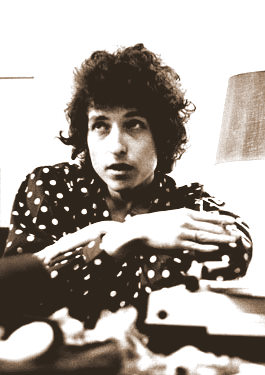
Dylan In Polka Dots
Who were these guys Bob Dylan and Andy Warhol and what interest could they take in this uninteresting and rather dull girl. Interestingly both men considered themselves revolutionists. Dylan forwarded the Jewish and Underman revolutions while Warhol spearheaded the homosexual and doubled up on the Underman. Both men came from immigrant backgrounds. Dylan from Jewish immigrants and Warhol from Ruthenians. Dylan was originally Robert Zimmerman and Andy Andrew Warhola. Dylan grew up in small town Hibbing, Minnesota, Warhol in the ‘melting pot’ of Pittsburgh, Pennsylvania. Both developed monster grudges against American society.
At the end of ’64 both men were on the way to being of the most influential people of the second half of the twentieth century.
Dylan at twenty had come to New york with the ambition of becoming a folk singer. Even though a not easily appreciated singer he was as close to an instantaneous success as it is possible to be. Arriving at the beginning of 1961, at the close of ’64 when he met Edie he was an international sensation, a prolific and successful song writer.
Strangely his success was built on resentment and hatred. The dominant characteristic of his songwriting was a rancorous bitter putting down of his society and associates. He fairly spews hatred in such songs as Hattie Carroll, Like A Rolling Stone and Positively Fourth Street to name only a few of his diatribes. His most prolific period would revolve around his desire for Edie Sedgwick and his detestation for his rival for her affections, Andy Warhol.
Dylan had a fixation on destroying the happiness of women. At the time he began his pursuit of Edie he had sequestered his future wife, Sara Lownds, who he would marry in November of ’65 and who he had purloined from another man. At the same time he was carrying on long time affairs with his first New York girl friend, Suze Rotolo and his fellow folk singer, Joan Baez. Why this need to injure the happiness of women?
Of course I’ve read most of the important works on Dylan if not all and many of secondary importance. Using that background, I’m going to concentrate on the movie Dylan wrote and starred in, Masked And Anonymous. This is a very autobiographical movie showing a Dylan who had progressed little from his heyday of the mid-sixties. Dylan believes that the journey is more important than the result so that in the various episodes he gives little symbolical vignettes of his life journey leading up to a contrived ending. Many of the most important eipisodes and people are represented. The promoter in the film, for instance, can be recognized as his manager Albert Grossman; the sidekick is Bobby Neuwirth etc. I’m not going to review the movie here but Dylan gives us some insight into when and how his world went wrong.
In the movie when Jack Fate’s, Dylan’s movie alter-ego, father, who is the dictator of ‘this god-forsaken country’, lies dieing, Fate revisits him on his death bed. In fact that is where the ‘path’ of the movie actually leads. Fate reminisces about his relation with father and mother. To put it succinctly let me quote the lyrics of an old song, Freight Train Blues. Dylan would rewrite the lyrics to this song and claim it as his own:
I was born in Dixie
In a boomer’s shack,
Just a half a mile
From the railroad tracks.
My daddy was a fireman
And my mama dear,
She was the only daughter
Of an engineer.
She could spend the money
And that ain’t no joke,
It’s a shame the way
She kept a good man broke.
Well, Jack Fate’s daddy wasn’t much better and the movie couple had an unhappy marriage which probably reflects Dylan’s view of his own parents. As to his mother she just found Jack in the way and wished she never had him because it interfered with her happiness. I suspect that more or less sums up Dylan’s relationship with his mother. One can’t say for sure but I suspect that when his mother conveyed this attitude to the young Dylan it just shattered his mind and from that day forth he was one lost soul on the lost highway with the freight train blues. Now, it is impossible to avenge oneself on one’s mother directly as mother’s are sacred as the vessel of your life. Dylan never tried, even escorting his mother as a date to major events. You can take it out on yourself by becoming a derelict yourself which Dylan did thereby punishing your mother or you can take it out on surrogate women. Dylan did both. He himself was and has been a heavy drug user and a heavy drinker. He ruined the lives of several women including Rotolo, Baez and Edie; then, after making Sara a wife and mother, most importantly a mother, he completely shattered her life as his mother had his. That may have satisfied him, then again, maybe not. Since then he has been wandering aimlessly as a ‘modern troubadour.’ Ramblin’ Jack Fate.
The period of the sixties was Dylan’s time of most intense reaction. After that he waxed and waned but Andy Warhol was focused on an unwavering need for vengeance. He knew how to use people to obtain his goals without actually exposing himself. He arrived in New York in 1950 as a graphic artist where he too was an instantaneous success. He made his mark in shoe ads where his drawing, usually described as ‘fey’, but displaying real genius at the same time, brought the customers to Miller Shoes for whom he drew.
During the fifties he was a very highly paid commercial artist designing everything from his shoe ads to stationery to book and record covers. Usually very nice but not infrequently letting his sexual proclivities shine through. He was alwa;ys pushing the homosexual agenda preferring to associate his work with writers or musicians from either the Undermen or those writing on those themes.
About 1960 he decided to tackle the fine arts with the purpose of detroying them. He entered the world of painters at the transition from Abstract Expressionism to Pop Art. He had always been a sort of pop artist with his shoe ads so he was an incrdible success as a pop artist when he painted Campbell’s soup cans. With the soup cans he effected one of the most instantaneous and successful revolutions or transitions from one style to another, ever. I don’t think it would be out of line to say the sixties were born in that moment. If there is one single symbol that characterizes the sixties, for me at least, it is Andy’s soup cans. Tomato soup can. It enraged and energized so many people. It has been an inspiration for me.
I can’t remember when I first saw it but I was simply stunned. Perhaps in the pages of Time Magazine. I don’t know whether the copying of a soup can is art but as I mused about it I came to the conclusion that the can was a sort of urban landscape. It was something one gazed at frequently while grocery shopping, so I said, what difference did it make whether one copied a mountain or curling wave or a soup can. I suppose the difference is that a soup can can only be done once before the joke is stale.
My favorite image of the soup can was a poster in which a soup can had a gaping hole from being blasted with a .45 automatic. That sort of settled the arguement for me but that was as late as 1968. Andy went on attempting to outrage us by painting duplicates of Brillo boxes and such like, Heinz Bean cans, but that fell flat. The joke had been made, there was only one Campbell soup image.
Painting all those soup cans, he did all the varieties, must have been a tedious way to while away the time. Then he discovered silk screening. What a good idea. Warhol, the child of industrial processes. I can only imagine that he thought Henry Ford and his assembly line turning out identical copies of cars was the ideal expression of art. After all you can make a million cars, same model and make, but in painting a picture, prior to Warhol, they all had been one offs and then you needed another idea. In that period of rapid change an idea became obsolete immediately. Coming up with new ideas was a tough business. Warhol could turn out an idea like the Presleys like Henry Ford turned out cars. Wow! Man! The future of art had arrived.
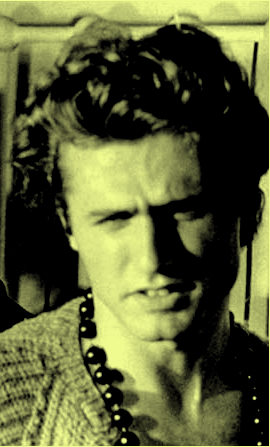
Gerard Malanga
Perhaps he thought up silk screening or perhaps the idea was suggested to him by his assistant, Gerard Malanga. Malanga thinks that’s the way it was. At the time he was hired Malanga was already an accomplished silk screener. Malanga was the beginning of Warhol’s actual use, consumption and discarding of people. One might say Malanga was exploited.
Malanga took a job with Andy at the minimum wage above which Andy never raised him. Malanga insists that he was essentially a collaborator of Warhol’s. I am inclined to agree with him. In the first place Andy never drew his own pictures. He essentially had no ideas. He had his screens made up from photos of others he found attractive. His famous flower screen was from a purloined photo. HIs Elvis paintings, posters actually, were traced from a promotional still. To me that strengthens Malanga’s claim. The screens were mechanically produced and screening is a mechanical act. Both Malanga and Warhol manipulated the screens together. There are films showing them doing it.
Between the two of them they produced fifty Presley images in an afternoon. For a show at LA’s Ferus Gallery Andy shipped them a two

Malanga and Dylan
hundred foot roll of Presleys and told them to cut up the roll as they saw fit. Collaboration was just Andy’s way. Hence one has single, double, triple, quadruple and octuple Presleys. I saw one display where there were twenty or more strung out for a couple hundred feet in one immense string. Enough Elvis Presleys to go around the world three or four times were produced. (That’s a joke, son.)
It is a good image although Andy never asked Presley or his studio for permission to use it and as far as I know never gave them a dime. He just appropriated the image. I can’t imagine how Andy kept the Colonel cool. He didn’t keep the flower lady cool, once she recognized her image she sued him. Of course, she took her image from God but God didn’t sue her.
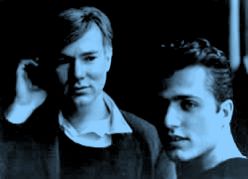
Warhol and Malanga
Now, all this silk screening takes up a bit of space, these Presleys kept getting bigger and bigger, life size and then some. Some were twenty-five feet by twenty-five. So Andy outgrew his home facility leaving it to seek much bigger spaces. If one thinks about it all this is very daring. There was no artist in New York even approaching the concept. Finally he rented an entire floor of a building on 47th Street that became known as the Factory. Dylan would characterize it as Desolation Row. When Edie made her appearance there in March of ’65 it was at that Factory. There were subsequent and even larger ones.
This is where Dylan and Warhol stood at the beginning of 1965 when Edie became a pawn in their game. Why did they want her? As noted, the two were immigrants or the sons of immigrants so they knew the discomforts of being strangers in a strange land. They knew the sense of inferiority among the ‘natives.’ They knew what being outsiders was especially as Dylan was a Jew and Warhol a homosexual.
Edie Sedgwick was a symbol of that envy and desire. In a way she was the acme of the old line American and she was accessible. She probably could have been half ugly and it wouldn’t have made much difference.

Malanga and Edie
From, say, 1870 to 1940 there was native America and there was immigrant America and they were separate but equal size. While intelligent immigrants never had it rough there was still resentment and outright hatred for Anglo-America. All this anti-America stuff comes from the immigrants or at least was fostered by them. With those of the Undermen, those of low IQ, the hatret was worse. WWII gave the immigrants a feeling of equality. They fought too. By 1950 they were superior in numbers assaulting every Anglo tradition and trashing it while doing their best to lower Anglos. Of course, the Anglos were too stupid to see it or unwilling to acknowledge it. After all, this was the magic ‘melting pot’ in which all resentments disappeared. Americans had discovered the solution to world problems. Both Dylan and Warhol shared in this resentment.
Thus when this female symhol of the old Anglo aristocracy appeared who they held responsible for their humilaition, whether they acknowledged it or not, they wanted to possess her, humiliate and destroy her. Dylan today would deny it while Warhol’s excuse at the time was ‘How do you stop someone from doing what they want to do?’ Well, Andy, at least you don’t hand them the revolver cocked and loaded. That Edie was humiliated and destroyed by her association with the two is proof enough of their intent.
The problem is to piece together the events of that year and a half over ’65 and ’66 from less than adequate documentation. I think I can produce a reasonable facsimle.
Chaps. 3, 4 and 5 are posted
Chaps. 6, 7 and 8 are posted
Chaps. 9, 10, 11 and 12 are posted
A Review: Part III Tarzan And The Madman by Edgar Rice Burroughs
October 13, 2010
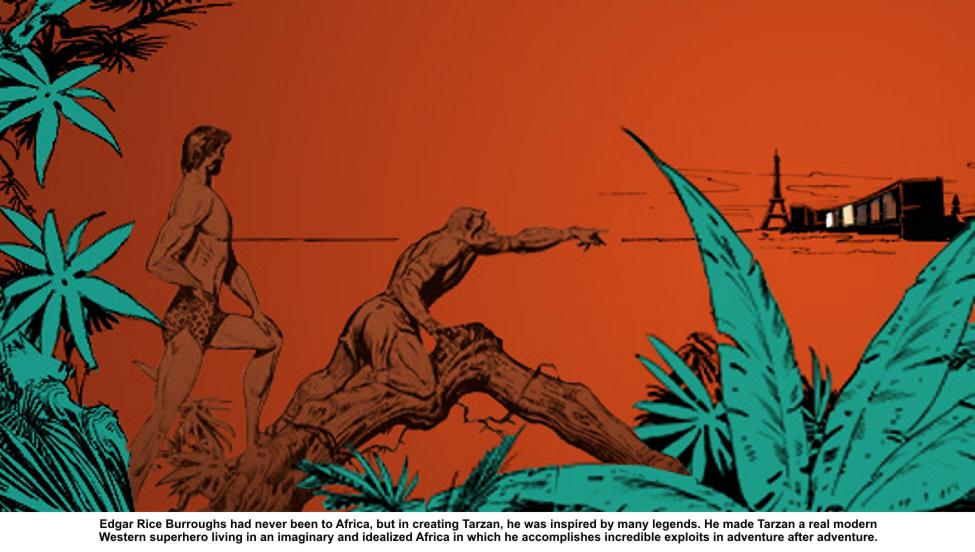
The Aquarian Archetype
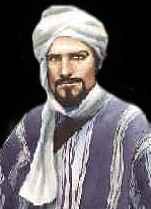
The Renowned Arab Traveler- Mohammed Ibn Batuta
Writing in the fourteenth century Ibn Batuta had visited the East African coast trodding the soil of Kilwa Island on the southern border of Tanganyika, now Tanzania. Zanzibar replaced Kilwa as the Moslem trading entropot on the East Coast. Haggard apparently had done the same as he mentions ruins that dated back to before the tenth century. So, we have established commercial activity in Southern Africa before the arrival of the Shona people in Zimbabwe.
Ruiz stood behind a low, stone altar which appeared to have been painted a rusty brown red.For a long time Ruiz the high priest held the center of the stage. The rites where evidently of a religious nature that went on interminably. Three times Ruiz burned powder upon the altar. From the awful stench Sandra judged the powder must have consisted mostly of hair. The assemblage intoned a chant to the weird accompaniment of heathenish tom toms. The high priest occasionally made the sign of the cross, but it seemed obvious to Sandra that she had become the goddess of a bastard religion which bore no relationship to Christianity beyond the symbolism of the cross, which was evidently quite meaningless to the high priest and his followers.She heard mentioned several times Kibuka, the war god; and Walumbe the god of death, was often supplicated, while Mizimo departed spirits, held a prominent place in the chant and the progress. It was evidently a very primitive form of heathenish worship from which voodooism is derived.
Looking up, she saw a dozen naked dancing girls enter the apartment, and behind them two soldiers dragging a screaming Negro girl of about thirteen. Now the audience was alert, necks craned and every eye centered upon the child. The tom-toms beat out a wild cadence. The dancers, leaping, bending, whirling, approached the altar; and while they danced the soldiers lifted the still screaming girl and held her face up, upon its stained brown surface.The high priest made passes with his hands above the victim, the while he intoned some senseless gibberish. The child’s screams had been reduced to moaning sobs, as Ruiz drew a knife from beneath his robe. Sandra leaned forward in her throne-chair, clutching the arms, her wide eyes straining at the horrid sight below her.A deathly stillness fell upon the room broken only by the choking sobs of the girl. Ruiz’s knife flashed for an instant above his victim; and then the point was punged into her heart. Quickly he cut the throat and dabbing his hands in the spurting blood sprinkled it upon the audience, which surged forward to receive it…
“Well, what of it?’ demanded da Gama. “I am king. Do I not sit on a level with God and his goddess? I am as holy as they. I am a god as well as a king; and the gods can do no wrong.”“Rubbish!” exclaime the high priest. “You know a well as I do that the man is not a god, and the woman no goddess. Fate sent the man down from the skies- I don’t know how; but I’m sure he’s as mortal as you or I; then you get the idea that by controlling him you could control the country. You were jealous of me that’s all; then you get the idea that by controlling him you could control the church, for you know that who controls the church controls the country. You were jealous of me that’s all; then you conceived the idea of having a goddess, too, which you thought might double your power. Well, you have them; but they’re going to be just as useful to me as they are to you. Already, the people believe in them, and if I should go to them and say that you had harmed the god, they would tear you to pieces…”
“…you don’t stand any too well with the people, Chris, anyway; and there are plenty of them who think da Serra would make a better king.”“Sh-h-h,” cautioned da Gama. “Don’t talk so loud. Somebody may overhear you. But let’s not quarrel, Pedro. Our interests are identical. If Osorio da Serra becomes king of Alemtejo, Pedro Ruiz will die mysteriously; and Quesada the priest will become high priest. He might become high priest while I am king.”
“You should know,” he said. “You are a woman.”“I am not a mortal woman. I am a goddess.” She grasped at a straw.Rateng laughed at her. “There is no god but Allah.”“If you harm me you will die.” she threatened.“You are an infidel,” said Rateng, “and for every infidel I kill, I shall have greater honor in heaven.”
A Review: Jungle Girl By Edgar Rice Burroughs
September 19, 2010

Borobudur In Bali

Idealized Apsara

Real Apsaras
 King becomes injured and in a fairy tale fashion he is nursed to health by a poor peasant couple living far from the haunts of men. Before being saved King in his feverish delirium sees a group of ancient Khmer warriors conducting a beauteous maiden through the jungle on an elephant. When he recovers he learns it was not delirium but a fact.
Anghor Thom
A Review: Bob Dylan In America by Sean Wilentz
September 17, 2010
A Review
Bob Dylan In America
By
Sean Wilentz
by
R.E. Prindle

Dylan Back Then
There was a lot of hoopla and drum rolling before this book was released. A full chapter was published in Atlantic Magazine in August, the excerpt here, the excerpt there, the full treatment. Wilentz opened a website with teasers added daily trying to draw you in. A lot of talk about Wilentz being the official historian with, one supposed, full access to Dylan himself so that one was being admitted to the inside. ’Oh,’ I said to myself, ’it looks like Dylan is breaking silence, emerging from his cherished privacy through a surrogate.’
Well, I was right. Wilentz has written a major kvetch and justification. Kvetch- Jewish for bitch.
Part of the problem is against ‘wannabe Dylan writers’ polluting the internet. Not wishing to voice complaints in his own voice Dylan has Al Kooper do it for him. Something like telling an intermediary to tell the guy next to him what you think of him. Right there on the front cover face level with Dylan’s picture. Big Al is quoted:
Quote:
Unlike so many Dylan-writer-wannabes and phony encyclopedia compilers, Sean Wilentz makes me feel he was in the room when he chronicles events that I participated in. Finally a breath of fresh words founded in hard-core intelligent research.
Unquote.
We Dylan wannabe writers are duly chastened. I read your own book, Al, and certainly felt I was in the studio with you and Mike and Bob. When you snuck over to the organ, I tell ya, it took my breath away. Nice move. Grossman was there too, wasn’t he, or was he just listening to the replay? Well, I could do the same hard-core research and writing if I had access to the archives like Sean. But, I guess that’s out of the question.
Still, I couldn’t believe that we wannabes were the whole excuse for Dylan’s emergence from privacy and I was right there, too. I could feel the tension building as Sean went through his rather laughable exercise of connecting Dylan to the Popular Front and Aaron Copland. Sean kind of has us believing Dylan was aware of Copland from the cradle untill well past his arrival in NYC while apparently sitting through the Children Of Paradise as a toddler. He gives it away when he says that Norman Raeben introduced Bob to the movie in 1974 just in time for Bob to be influenced for the Rolling Thunder Review. I think Bob must have heard Copland about the same time too.
The tension was building, my breathing becoming more labored, when near the end of the book it burst. God, what suspense. The real reason for Dylan commissioning Wilentz to write the book was this famous outburst from another noted folkish singer:
Quote:
Bob is not authentic at all. He’s a plagiarist and a fake. Bob is a deception.

Bob The Deception
Unquote.
Wow, that one really hurt. I don’t know whether Joni had bottled that up since her treatment in Rolling Thunder but I suspect so. Sam Shepard wasn’t over impressed with his treatment on the tour either. The reporter of the Joni Mitchell quote couldn’t reach Dylan for comment: According to his representative, Dylan was unavailable for comment.’ Hiding on his bus no doubt.
That was then, this is now. Dylan’s mouthpiece and official historian, Sean Wilentz, fires back. He devotes a couple dozen subsequent pages, maybe more, after referring to Mitchell by name and date. (Ooh, it’s like falling on your tailbone, you know how that smarts.)
Just to mend a few fences Bob through Sean apologizes to Geoff Muldaur for that Carolyn Hester remark during Bob’s amphetamine fueled days. Wise move.
Sean denies out of hand that Dylan is a fake; he just approaches authenticity from a different direction. He’s not plagiarizing he’s reconstructing the music that is danger of disappearing so that it will last. Apparently the folk thing that had a run from about 1910 to 1980 or so has lost its influence in the ongoing rush of the globe’s multitudes to America. The times they are, indeed, a changin’. What did they expect, that a Korean peasant was going to embrace a song they couldn’t understand like ‘I wish I was a mole in the ground?’
As Wilentz explains: Borrowing three different lines from three different writers in succession for one verse isn’t plagiarism, it’s…well…something else. Preservation. Not that I care. I don’t listen anyway. I do expect some original lyrics though. If I want to listen to some old folk songs I’ll tune in toJohnny Cash’s Delia’s Gone or maybe even put an old Geoff Muldaur side on.
Bob’s not really interested in the whole folk genre anyway; he seems to be more interested in Darky murder songs. That’s part of folk, of course, but so is the saga of Mollie and Tenbrooks and the Tennessee Stud. There’s more to folk than depressing murder ballads. Who cares if Delia got shot. I don’t. Stagger Lee’s OK.
I think something’s being lost in the shuffle here. These are songs, only songs, there’s nothing monumentally important in them. Three Jolly Coachmen and There’s A Tavern In The Town are just as important. If Bob wants to be a musicologist he’ll suffer the fate of musicologists. What do I care about musicology when all I want to do is listen to a good unadulterated tune. And when I want to listen to a good tune there are a lot of better singers around than Dylan. Geoff Muldaur, for instance. Old Lonnie Donegan sides. The Kingston Trio, Chad Mitchell Trio. Peter, Paul And Mary for Chrissakes.
Let’s get real. Bob was 1964-66 when the amphetamines rushed through his bloodstream. Since then, well…he’s got a good following and should be thankful for that. Be a musicologist, rewrite Frankie And Johnny, see if I care. If I want to quote a song as a leader for one of my essays I rewrite them myself so they mean what I want . Most of those lines have lousy meter anyway. Still, I give the original writers credit.
Dylan could rewrite a song for Joni: You’ve gotten under my skin.
The book doesn’t call for much more of a review. Slight. Can I have my money back?
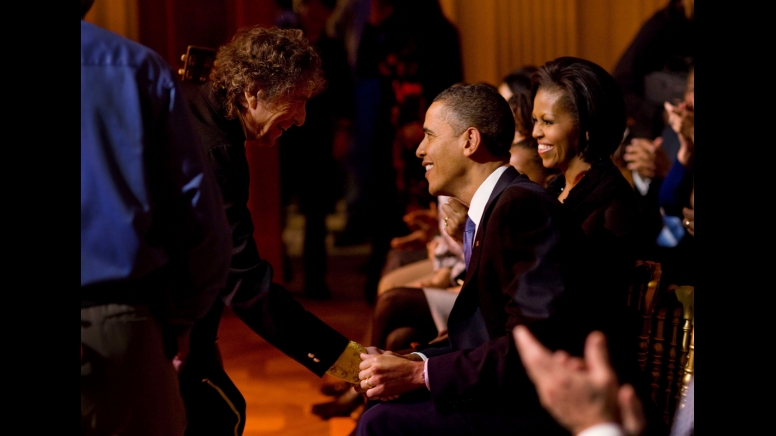
We did it!
Pt. II: H.G. Wells, Sigmund Freud, Edgar Rice Burroughs And The Development Of Contemporary Sexual Attitudes
August 22, 2010
H.G. Wells, Sigmund Freud, Edgar Rice Burroughs
And The Development Of Contemporary Sexual Attitudes
by
R.E. Prindle

Edgar Rice Burroughs And His Tiger
To put our three protagonists into perspective: Sigmund Freud The eldest of the three was born in 1856, Wells in 1866 and Burroughs, the youngest in 1875. All three were heavily influenced by Charles Darwin and the various theories of Evolution. While today Darwin is touted as the sole source of evolution he was in fact one of many voices as the theory of evolution developed. Thus all three spent their formative years in the latter half of the nineteenth century. Freud was 44 as the century turned in 1900, Wells 34 and Burroughs 25 each neatly spaced 10 years from his predecessor.
Wells was the first to make the leap into prominence followed by Freud and then Burroughs. All three men were desperate to find fame and fortune. Freud even advtertised he’d sell his soul to do it.
Wells came from close to the bottom of the social ladder. His parents eked out a living as shopkeepers without commercial abilities on the edge of London. Wells’ father was an able cricket player who gained his self-esteem from that sport. The parents split up. His mother went into domestic service. She placed young Wells as a Draper’s assistant- a clerk in a dry goods shop. As one might well believe Wells rebelled at this dead end destiny in life. Possessing a good brain Wells began a series of educational maneuvers that led to his being a student of T.H. Huxley, an apostle of Evolution. A science career seemed to be opening for Wells but he was led away by his sexual needs. He married a cousin with whom he was a boarder in her mother’s house only to discover her Victorian notions of male-female sexual relations differed widely from his. He divorced her taking up with a fellow student. She was an able financial manager so he put her in charge and began chasing skirts. It didn’t seem to bother his wife Catharine who he renamed Jane. After a series of hairy but educational employments Wells began to find success in journalism and writing. With his story The Time Machine he broke into the bigtime giving Jane some real work to do. Quickly following The Time Machine up with his succession of sci-fi novels by 1900 he was assured of a lifetime income.

Bertie Wells
It was well because his work after 1906 while prolific was unlucrative except for 1922’s Outline Of History. There was a winner. The Outline was his second great break setting him up for the rest of his life along with the science fiction. Ah, those Seven Science Fiction Novels. And, of course, his close to amazing collection of short stories. There was another gold mine. Jane raked in the cash and Bertie, for that was how he wished to be called, spent it.
He associated himself with the socialist Fabian Society of the late nineteenth and early twentieth century with their ‘advanced’ sexual notions. Why the old Hetaerist notion of promiscuity is considered ‘advanced’ is beyond me. At the same time Bertie claimed to be a Feminist. The women’s Matriarchal movement was very active from mid-century on. His Feminism, however, was concerned only with eliminating chastity thereby allowing any man access to any woman at any time, anywhere. Purely Hetaeric, although Wells wouldn’t have understood his ancient roots in that manner.
It was when Wells turned to his sex novels that he put his reputation in jeopardy. After his intial spate of sci-fi his reputation slid, the only bright spot being The Outline Of History. While his later novels, tend toward the tedious and require a certain determination to read through they are almost always redeemed by the social context. I like Wells and don’t mind the stuff too much but I can’t recommend it very strongly. It’s a matter of taste, either you like Wells or you don’t.
Wells major themes are outlined in the last of the Seven Sci-Fi Novels- In The Days Of The Comet- when he shades into the sex novel. In my estimation this is a very fine book as utopian novels go. After Tono-Bungay and When the Sleeper Wakes it may be my favorite. The turn of the century was a hey day of the utopian novel with the dystopian novel being introduced. If you like the genre many fine ones were written: News From Nowhere by William Morris. I came to Morris late in life but if you like the mystical utopian or quasi-utopian novel Morris has a lot to recommend himself including several utopian forays. I’m sure he influenced both Wells and Burroughs; Edward Bellamy’s Looking Backward is another fine example of the period. They’re all bushwa but fun to read. Utopian novels are usually a projection of the author’s own needs and desires into which all humanity is to conform. Usually by some miracle all humanity becomes reconciled to living in universal harmony with no unseemly disturbances of the temper. Museums and lecture halls flourish while dance halls and crime atrophy. Culture is much more elevated. To the most casual observor such an utopia is impossible without an alteration of the human brain. Only one utopianist I have read has addressed that problem and that one is H.G., our Bertie.
In The Days Of The Comet was published in 1906 at the time that Halley’s Comet was due to make its scheduled seventy-five year fly-by in 1910. It was projected to pass very close to the earth which it did unlike its 1985 appearance when you had to know where to look for it. Indeed, the comet came with trails of glory so bright you could read newsprint by it at night.
Thus Wells uses the comet as his agent to change the physical structure of the human brain. Wells fails to mention any change to the brains of the lesser animals and insects. Perhaps the lion really did lie down with the lamb. Before the comet, or the Big Change as the passing was referred to, people’s brains were as ours are now; after the Change they all resembled that of H.G. I am in sympathy with Wells; I fancy that one morning I will sally forth, flick my finger tips a couple times, say abracadabra and the people of the world will be tranformed into clones of myself. What’s holding me back is that I don’t know which will be the Big Morning and I don’t wish to be seen as an eccentric or worse who failed to take his medicine by repeatedly trying and failing. You know, out there flicking my finger tips into the empty air.
But, Wells had it worked out. The comet came trailing this tail of green gas. As the comet passed the gas enveloped the earth much like a magnetar, I suppose, knocking people out for several hours while the gas did its work. When England came to the world was changed and everyone thought like Wells. Sort of the same thing that was thought would happen when Obama was elected. The Magic Negro would save us all.
Actually the Comet reflected a change in Wells own circumstances. In 1898 when Wells published The War Of The Worlds he was balanced between hope and despair. He was close to financial independence but not quite there. Thus in WOW the tone is between hope and despair. The world is invaded by Martians who destroy everything in their path, themselves being destroyed by a virus taken in through their beastly habit of drinking human blood. One neglected detail is that the projectiles they arrived in trailed some green clouds. The last projectile had a larger one so that perhaps Wells was going to develop the notion but then couldn’t work it in. He did have the Martians project a black gas that killed people though.
By 1906 his success was assured, he was shooting his pistol off around London having several sexual affairs so his outlook was brighter and, hence, that of the planet, so the novel describes the transition from the evil old world to the brave new one In other words, Wells had passed from poverty to affluence.
Sex is the issue here.
Before the Comet Willie, the hero, was courting his childhood sweetheart Nettie from whom he expected to be her sole sexual companion. In the weird old world sex was exclusive. They had committed themselves to each other as children which remained a claim in Willie’s mind.
However Willie is a poor boy with no prospects. Nettie is courted by the rich guy’s son, Verrall with whom she runs off. Willie treks 16 miles to see her only to find she has abandoned her parents’ home in company with Verrall. Well, Willie’s not going to endure such treatment from Nettie or take that from Verrall so he steals some money, buys a revolver and a train ticket to track them down and shoot them dead. You see, in the days before The Big Change that was the way things were done.
In the meantime the Comet is getting closer, C-hour is near, and war breaks out between England and Germany, this is eight years before 1914 so Bertie exhibits his prescience. The details are well handled so we have the increasing color of the green cloud and the flash and boom of the big navel guns as the climax takes place by the seashore. This was really nicely handled.
Willie tracks the couple down to a Bohemian enclave on the East Anglian coast. Nettie and Verrall had gotten married so it seems rather odd that they searched out a Bohemian enclave. So, as the battle rages and the green cloud descends on the earth Willie is chasing the couple down the beach firing his pistol wildly. This is the moment of the Big Change. Everybody gets gassed for a few hours then arise, born again, in a new heaven and a new earth. Utopia!
The same device is used a few decades later in the great movie The Village Of The Damned. A good device. It won’t go stale.
In the new world, new rules and reasonings apply. Nettie no longer has to choose between Willie and Verrall. She can have both…and more.
As Willie comes to he hears groaning. The groaning is coming from a prominent politician who was out bicycling at two in the morning when the green fog descended and fell off his bike as he conked breaking his ankle. Thus Willie makes a connection changing the direction of his life allowing him to become prominent in the establishment of this brave new world. Thus he later meets Nettie and Verrall on equal terms.
Nettie informs Verrall that she wants a menage a trois with Willie to which, in this best of all impossible worlds, Verrall compliantly agrees. Later Willie marries making the arrangment a menage a quatre. Neato! Was this all? No…
In the frame for the story it turns out that the story teller is Willie. In the Frame Wells comes upon this white haired old dude, Willie, writing this memoir. He has pages clipped in fascicles of fifty that Willie allows the editor, H.G., to read.
Finishing the last fascicle the author asks if Nettie had sexual relations with others. The white haired dude replies somethng like this: ‘Oh, heavens, yes. Hundreds. You don’t think a beautiful girl like Nettie wouldn’t attract numerous suitors do you?’
So there you have it. In the brave new world the woman of Wells’ dreams is a mere sex object who spends her life being pawed by, shall we say, all comers. A Hetaerist’s dream. This is Wells’ sexual program. At this point he began to lose readers. Too avant garde; you don’t want to get too far out in front of the pack. In addition to the sexual proselytizing of his novels he carried his didacticism to extremes advancing educational theories for instance. For over a hundred years we’ve been told our educational system is faulty. New systems have succeeded new systems. After over a century of tinkering are people better schooled? No. They’re worse. There’s only one way to learn and that’s the drudgery of study. Not every mind is prepared to do that, somebody’s going to be left behind. Wells’ notions as everyone else’s is what they think they would have liked. No study. Lots of play.
At any rate carrying all these utopian notions Wells passed through the horrific war years to have all his expectations disappointed. Not surprisingly his mind broke and he went into a deep depression. First he tried the God trip and when that failed he embraced the Communist Revolution in Russia. He essentially became an agent of Moscow. As a very prominent writer he was a desirable acquistion for the Revolution. As a major theorist and propagandist he had an entree first to Lenin and then after 1924 when Lenin died, Stalin.
In 1921 he interviewed Lenin and received his instructions. the Soviets had a system of State prostitution. These women were assigned as agents to service writers while spying on them for Moscow. In 1921 he met Moura Budberg for whom he fell. At that time she had been assigned to manage a consular agent, Bruce Lockhart, who along with the agency was in process of being expelled. Wells became intensely jealous of Lockhart because of this connection badmouthing him from then on. In any case Moura Budberg was assigned to Maxim Gorky then living in exile in Italy with whom she stayed until Gorky was enticed back to the USSR at which time she was reassigned to shepherd Wells.
Now Wells became a Soviet literary hatchet man. It was his job to interfere and discredit writers who refused to propagate the Party line. Among these was Edgar Rice Burroughs who had proclaimed his anti-Communism with a tract or study titled Under The Red Flag of 1919. Publishers refused the piece. Wells anti-Burroughs campaign was so discreet that my discovery of it three or four years ago was the first mention of it. I repeat the story here for those who have not read my earlier essays.
In the first place all these writers read each other. Kipling and Haggard for instance read each other as well as writers like Wells and Burroughs and vice versa. They could pass disguised messages in their novels. As Burroughs was the last of these writers to begin writing and that in US pulp magazines in 1912 that may never have reached Europe while his book titles only reached print in 1914 after the Great War began and were only the Tarzan titles until the end of the decade Wells may not have read Burroughs until 1918 or slightly after. Nevertheless Burroughs influence shows in Wells’ 1923 effort Men Like Gods. This book also ridicules Burroughs.
Men Like Gods takes place in a parallel universe. There is some resemblance to the Eloi of The Time Machine. For the first time Wells’ characters are nearly nude. This was the only time he ever did this so he was probably under the influence of Burroughs whose characters never wore clothes or only minimally.
Burroughs apparently picked up the references or had them pointed out to him. In any event in 1926 he wrote The Moon Maid in answer to Wells, The First Men In The Moon. Wells’ book was pretty clumsycompared to that of Burroughs who demonstrated his imaginative superiority by running circles around Wells. The second part of the story was a rewrite of Under The Red Flag that was a direct challenge to the Soviets. By 1926 of course Stalin was directing the USSR.
Wells then countered with an undisguised attack that portrayed Burroughs as insane. This was Mr. Blettsworthy On Rampole Island. Here Wells parodied a pulp magazine story not yet in book form, The Lad And The Lion, and the last third of The Land That Time Forgot. Burroughs returned the fire with Tarzan At The Earth’s Core and Tarzan The Invincible that featured Stalin himself as a character.

Moura Budberg Young
At about this time Moura Budberg was assigned to Wells as a concubine as Gorky had returned to the USSR. This was to cause a falling out between Wells and Stalin while perhaps leading to Stalin’s assassination in 1953.
Burroughs’ entire series of novels from Tarzan At The Earth’s Core to Tarzan And The Lion Man deals with Wells and the Reds. The Communists attacked unrelentingly on several fronts probably robbing Burroughs blind in royalties while trying to squeeze off his sales. His British publishers did just that. Although it appears that they refused or were reluctant to keep his titles in print Alan Hodge and Robert Graves in their history of the twenties and thirties, The Long Weekend, twice refer to Burroughs’ great popularity, once in the twenties and once in the thirties.
In Germany the Communists attacked ERB for his anti-German comments in books written during the war
Moura Budberg Old
years thereby destroying that lucrative market. The Soviets never paid royalties anyway so there was no monetary effect from that market. In the US Burroughs had troubles with his publishers McClurg’s and Grossett & Dunlap who seem quite hostile to in the correspondence in the archives at ULouisville. ERB left McClurg in the late twenties going through two more publishers before winning the battle by publishing under his own imprint. Thus by 1930’s Tarzan The Invincible, note the title, he seemed to have won the battle if not the war.
However sound had come to the movies in 1927-28 which rearranged the playing field. Rather than just being ‘flickers’ they were now more on a par with literature while being even more influential. With sound the movie version of a story took pecedence over the book, heck, it took precedence over history. Thus the movie version took precedence as the canon over the book, the latter became an adjunct that few read in comparison to those who saw and heard the movie. As the movies paid in one lump sum what it might take years to dribble in as royalties authors were willing to give the devil a cut to have their novels produced. Books could be issued in their thousands of titles a year but there were only a couple hundred movies released in a year. The number of producers had been consolidated from many to a few after the shakeout of the twenties, hence combines like Metro, Goldwyn and Mayer, Radio-Keith-Orpheum- RKO- and the combine of Twentieth Century Pictures and William Fox.
MGM was of course top dog by far. There was no vacuum there but the Commies moved in anyway soon taking over de facto control. When Burroughs published his own books, quite profitably, he had slipped the noose but only temporarily. As a strategist he did poorly. In 1931, because Burroughs didn’t ever bother to dread his contracts, MGM finessed his meal ticket, Tarzan, from him thereby making him financially dependent on them. Even though they might have exploited the Tarzan character by making two or three movies a year and zillions of dollars they chose to make only six movies between 1931 and 1940 thereby keeping Burroughs on a short financial lease while depriving him of hundreds of thousands of dollars in income. Remember that at the same time Roosevelt after 1933 drove the income tax rate as high as 90% so there was some difficulty forcing a grin in those trying times.
This is a good story and I covered it in some detail in my ten part review of Tarzan And The Lion Man, expecially parts 6-10 to which I refer you if you’re interested. Wells and Burroughs bickered back and forth although it appears that Burroughs lost heart after Tarzan And The Lion Man. By that time he knew he had been had. He did concede defeat in the issuance of a book version of The Lad And The Lion in 1935; a notice to both Wells and Stalin. The story was a short one so while leaving the old story as a notice to Wells who had mocked him and the story in his Blettsworthy novel, Burroughs interpolated chapters with a story mocking the Communist Revolution in Russia. Then he retired from the field.
However he gives Wells a grand slam in the story of ‘God’ in the middle of Lion Man. That is a great story within the story however I wasn’t clear on its relation to Wells at the time so I will give a modified version here.
Now, Burroughs had a remarkable mind. He was able to carry the story lines of hundreds of books he had read in his head retrieving details whenever they suited his needs. He was always conscious of what he was doing but he wrote pastiches anyway.
The story of Tarzan and God mocks Wells’ The Island Of Dr. Moreau. Burroughs had already used Moreau in his 1913 novel The Monster Men plus he wrote around the theme repeatedly. Moreau itself plays around with the Frankenstein theme which also figures prominently in Burroughs’ literary antecedents.
Remember that Burroughs is able to combine numerous details of other books into one composite figure so that Wells is only one source for the character of ‘God’ in Lion Man. For our purposes one may assume that when Tarzan talks to God (smirk) it is equivalent to Burroughs talking to Wells. Gone is the transcendant confidence of Tarzan The Invincible and Tarzan Triumphant. However the coup of the capture of Tarzan in 1931 when Burroughs signed away his rights to the movie representation of Tarzan to MGM had stripped Burroughs of all defences and he himself was now trapped in a cage at the mercy of MGM, Wells and Stalin. During Tarzan’s movie history dating back to the late teens Burroughs had always complained, making a nuisance of himself because the studios weren’t following his stories closely. Now, he had given MGM the right to create their own stories. ERB was dissatisfied with the representation of Tarzan but the character was so good that even though MGM tried they couldn’t destroy it.
Nevertheless they were in a position to substitute the movie Tarzan for the literary Tarzan in the public mind and they did. For me and many others the discovery that there was a literary Tarzan came long after we had been viewing Tarzan movies. We invariably found the literary Tarzan superior. For now Tarzan/ERB was imprisoned in a cell. The best ERB can do is to come up with a better Moreau story than Wells.
So, ERB creates a mock London, England in the wilds of Africa with a replica of the court of Henry VIII peopled by mutated gorillas. By 1930 when this story was written ERB was probably as well informed about evolution as anyone. He had kept up his reading becoming as knowledgeable concerning genetics as any but researchers. Thus while thirty years earlier Moreau had been clumsily experimenting with vivisection ‘God’ had used the lastest genetic techniques that ERB can devize to convert gorillas into a cross between apes and human beings. The apes of God are human in all but appearance. There are many jokes concealed in this episode, apes of God perhaps being one. Wyndham Lewis used the term apes of God as a synonym for writers so he may be calling Wells as God and writer an ape. ‘God’ himself who has exchanged ape genes with himself is now half ape. See, a joke. Whether Wells recognized his portrait isn’t known.
Tarzan sets about to escape but as there is no escape from his real life situation ERB merely burns God’s castle down disrupting one supposes the USSR. Perhaps gratifying to the imagination but futile for changing his situation. No longer in control of his creation Burroughs creative powers begin to atrophy.

Uncle Joe As FDR Would Say
Thus Stalin triumphed over his literary adversary. Perhaps Stalin despised writers for he set out to humiliate Wells after the defeat of Burroughs. As noted the State prostitute Moura Budberg had formerly serviced Maxim Gorky while after his return Budberg was assigned to Wells. H.G. had fallen hard for Budberg apparently seriously in love with her. Stalin called Wells to Moscow in 1936 when Gorky was on his last legs, about to die. Budberg was also in Moscow but when Wells asked to see her she told him she was called out of town. In a rather malicious ploy Stalin arranged for Wells to see Gorky and Budberg together as, of course, she wasn’t out of town.
Wells was completely destroyed unable to penetrate Stalin’s duplicity, or at least believe it, at the time. However when it finally sank in he had no more means to retaliate than Burroughs so he wrote a book too- The Holy Terror. In that book, the ruffian leader of the revolution, or Stalin in real life, has lost the ability to lead the revolution and has to be discreetly removed. A conspiracy is set afoot. A doctor’s plot in which the leader is artfully removed by medical means. I am unaware of how much influence Wells may have had to incite others to achieve his result. At any rate the War intervened making it inexpedient to dispatch Stalin while Wells died in 1946 before he could reactivate the plan.
It may be coincidence but Stalin discovered a doctor’s plot in the early fifties that he was able to foil. However Khruschev and Beria and others poisoned Stalin at a dinner in 1953 thus removing this singularly successful but troublesome dictator.
The turmoil of the thirties may have derailed Wells sexual program somewhat but sexual matters were still moving in his desired direction. Sexual matters had been loosened a great deal but there were still miles to go.

Sex And The Psyche
In Part III I will deal with the key mover in sexual matters, Sigmund Freud who was the second of the three to reach prominence. Thus Burroughs the third to arrive on the scene and the last to leave will be saved for the last part.
A Review
The Last Days Of John Lennon
by
Fred Seaman
Part III
Review by R.E. Prindle
Key Texts:
Green, John: Dakota Days: The True Story Of John Lennon’s Final Years, 1983, St. Martin’s
Haden-Guest, Anthony: The Last Party, Studio 54, Disco, And The Culture Of The Night,1997, William Morrow
Seaman, Frederic: The Last Days Of John Lennon: A Personal Memoir. 1991, Birch Lane
You know, someone once said
That the world’s a stage
And each must play a part.
Fate had me playin’ in love,
You as my sweetheart.
Act one was when we met,
I loved you at first glance,
You read your lines so cleverly
And never missed a cue.
Then came act two.
You seemed to change and acted strange,
And why, I’ll never know.
Honey, you lied when you said you loved me,
Now the stage is bare
And I’m standing here
With emptiness all around.
And if you don’t come back to me
Then make them bring the curtain down.
Are You Lonesome Tonight?
As Recited By Elvis Presley

The question here is what was Yoko’s attitude toward her conquest at the beginning of Act Two. Did she really fall in love with a relatively unsophisticated rube like John Lennon or were her motives more calculated. Yoko was a Japanese aristocrat which she never let John forget who could trace her ancestry back to the emperors of Japan. She came from major financial families on both sides. Her father had an illustrious diplomatic career while having artistic pretensions. She considered herself as one of the leading lights of the NYC avant garde. Although I haven’t seen it mentioned she acknowledged the authority of the reigning avant garde doyen, Marcel Du Champ who actually founded the NYC avant garde at the 1913 Armory Show. His greatest artistic feat was the display of an actual pissoir as an original work of art. Yoko followed his example of outre suggestions in her small volume Grapefruit. Andy Warhol to whom she was attracted can be considered a disciple of Du Champ. So, in one sense, she was in with the ultimate artistic in group. She then, had delusions of grandeur while probably looking down on and humouring, John Lennon.
She used this background to baffle the mind of Lennon. At the least Lennon was a very unsophisticated young man from what in America would be considered the boondocks. Bad enough that he grew up in a cultural but vital backwater but barely out of high school he and his band were immersed in the criminal underworld of Hamburg. They were at one point under the protection of the master criminal of Europe. This in some of your most impressionable years.

John And Yoko In Better Days
So, in comparison with Yoko Lennon felt insignificant. As he said Yoko had all these attributes while what did he have- nothing. Lennon had actually achieved the impossible but he had very low self-esteem. Like many musicians he longed for recognition but was terrified of actual success. Unlike some bands who can’t get beyond the rehearsal stage Lennon had the drive and ability to realize his stated goal, to be ‘the toppermost of the poppemost.’ He probably didn’t believe he’d ever make it but when that goal had been reached, in spades, he began to falter not believing his success was deserved. The first step in rejecting his role was the abandonment of touring. He then sank into a fairly severe depression not unlike that between 1975 and 1980. Whether he might then have scotched his role, his intent was aborted by the drive and ambition of partner Paul McCartney who having reached the toppermost of the poppermost intended to stay there, make a career of being no. 1 if possible. Any conflicts are secondary to Lennon’s feeling of unworthiness. That was the rock on which the Beatles broke.
It would have taken Yoko two seconds to analyze Lennon’s psychological state. That she exploited it is clear from Lennon’s abject servility that she cultivated and most likely induced.
In point of fact Lennon was everything while Yoko was nothing. Quite against his will he had made himself more of a spokesman for his generation than his cross-ocean rival, Bob Dylan. His social capital was enormous while his fortune, even being grossly mismanaged, was gigantic. He and the Beatles had created intellectual properties that extended 0ut over fifty years were worth billions. Yoko managed to finesse this enormous legacy of money and prestige.
How did she do it?
Quite simply she hypnotized Lennon. As Lennon complained to the Tarot reader, John Green, Yoko wanted to play the Count To Ten Game. Lennon lay his head in her lap while she stroked his hair and counted slowly back from ten to one. Classic hypnotism. The essence of hypnotism is the suggestion, more especially the post-hypnotic suggestion. This means that, while hypnotized it is suggested to the subject that he will perform certain acts at a later date after he has been awakened. Once the suggestion is in the subject’s mind he will act on the suggestion. Hypnotism would then explain the seemingly irrational acts of Lennon at the very least from 1973 to 1980 and probably before. May Pang describes how Yoko hypnotized her to take up with John while in all probability she hypnotized John to run off with May. Thus John’s reputation was compromised to some extent.
While Lennon was in LA Yoko was on the phone to him many times a day. Anyone who has seen the movie, The Manchurian Candidate, realizes the importance of post-hynotic trigger words. Thus Lennon’s peculiarly destructive and bizarre behavior in LA was probably programmed by Yoko to make him appear weird in comparison to her ‘stability.’
Thus when he and May Pang returned to New York Yoko made a phone call, John put down the phone, walked out of his and May’s apartment and returned to Yoko. According to May John said he was essentially made captive while being put through some horrible hypnotic indoctrination for a couple of days by ‘them.’ We don’t know who ‘they’ were except for Yoko but I’m guessing probably she and John Green or perhaps some other occult accomplices of which she had several.

Ultra Sophisticated Yoko
This brings up another important side of Yoko. She was a devotee of black magic, or, perhaps, magick. She even recorded a song titled: Yes, I’m A Witch. Yoko had an extensive library of magical texts that she apparantly studied plus she was into all the great conspiracy theories as is evidenced on one of the multitude of Ono and Lennon sites on the web today. Imagine Peace for instance is a remarkable site.
At the basis of her magic was a return to the most primitive form of magical shamanism. She combined this magical shamanism with her Feminism to found an organization named One On One which is designed to aid female shamans of the Pacific Islands. Certainly a specialized foundation, one would think.
In 1974 just prior to John’s return Yoko hired John Green as her Tarot reader cum curioso. Green was an accomplished magician affiliated with the Santeria religion of the African Yoruba tribe of Nigeria. He was also familiar with the Caribbean magicians known as curanderas if female and curiosos if male.
When Yoko and John Green traveled to Colombia SA to barter with Satan for her soul it was necessary for Green to offer his curioso credentials to the curandera which he successfully did. Thus, to obtain her heart’s desire in 1977 Yoko sold her soul to the Devil, or believed she did which is the same thing.
The point is that Yoko was thoroughly immersed in hypnotism and magical practices. Put into practice we have the remarkable incident in John’s immigration hearings. To ensure success Yoko contacted a Black witch to provide assisstance. This witch was apparently well versed in the techniques of aromatherapy. She gave John a package folded in a recondite way that he was to unfold in court in a specified way. John concealing the folded paper in his lap did so. He said the courtroom filled with an unpleasant aroma. the judge asked what that smell was and ordered the windows opened. John repeated the act the next day after which, he says, the judge’s attitude softened toward him.
Thus, we have a pattern of Yoko resorting to magical means to gain her ends.

Psychedelic John
Now, let’s consider Lennon’s attachment to this rather eccentric woman. Contrary to Yoko’s assertion that she was just so darn cute John had to fall head over heels in love with her, the evidence is that he required a great deal of active persuasion. Yoko showed up unannounced at his door completely violating the sanctity of Cynthia’s home. At one point as John and Cynthia were leaving an event Yoko appeared and got into the car with John and Cynthia. At the time it was reported that Yoko sat between them but in her memoir, John, Cynthia says that Yoko entered first sitting on her left side. Yoko sat silently, mysteriously, exiting the car without a word. A hypnotic technique.
Yoko bombarded Lennon with cards and letters through the mails including one with the suggestion: Look at the sky, see a cloud, that cloud is me. In other words- Je suis partout. I surround you.
Thus when Cynthia was gone on vacation Yoko spent the night with John in Cynthia’s house once again violating the sanctity of her private space, displacing her as it were. Drugs were involved which would have made John more susceptible to hypnotic suggestion. The fact that the duo recorded ‘Two Virgins’ at this session and John wasn’t revolted at her so-called singing proves he must have been hypnotized to me.
The fact that he was depressed, overwhelmed by his success, and unhappy in his marriage to Cynthia merely means that he was very susceptible. Perhaps the turning point in their relationship came with the death of the Beatles’ manager Brian Epstein just the Beatles were leaving for a Transcendental Meditation retreat in India.
Up to Epstein’s death the Beatles had had no responsibilities; Epstein had managed all business and monetary matters for them. Now, bereft of their management the Beatles were cast adrift on their own with disastrous or near disastrous consequences. In his personal desperation Lennon undoubtedly clung to Yoko Ono as his security blanket and surrogate mother. Yoko had obtained her goal, she had captured a Beatle and the Beatle’s reputation was nearly that of a secular saint; he was held in religious awe by the Beatles’ fans.
Yoko exploited her opportunity with brilliance. As I think, through hypnosis she had John make the attempt to insinuate her into the group as the Fifth Beatle. Not content with Two Virgins she intended to screech her way through a few Beatles’ side thus attributing their success to herself. Because of her friendship with the experimental composer, John Cage, she considered herself a better musician than the combined Beatles. She failed in her attempt to join the boys breaking up the band instead.
Nothing daunted she decided to exploit John with her astouonding avant garde performance art. Thus she organized the Bed-In events which were actually successes of sorts. From there she persuaded John to form the Plastic Ono Band to gain some musical credentials. Despite sensational packaging the record flopped.
At this point Yoko decided to return to New York City and reestablish her art connections. By this time, in my estimation, the avant garde was dead, killed by Andy Warhol and perhaps by diffusion into the general culture by groups like the Beatles.
At this point, I believe, John became a liability. Still Yoko was nothing without him. She wanted to connect up with Andy Warhol but her intro to Warhol was Lennon. Nevertheless John, Andy and Yoko did become fairly intimate.
Two years after her return she sent John away with May Pang. Act Two was well under way. Then eighteen months later she called him back again. I have to believe that from ’66 to ’75 John was under hypnotic influence. That’s about the only thing that explains his bizarre behavior then and certainly is the only thing that can explain his even more bizarre behavior in the five years leading up to his death.
It seems certain that at least upon Lennon’s return he was being regularly hypnotized by Yoko. As I mention with my ‘Look at the sky’ reference it is clear to me that Yoko was using hypnotic techniques and suggestion from ’66. Even the story of John climbing the ladder at the Indica Gallery to look through a magnifying glass to decipher the word ‘Yes’ can be construed as a technique of hypnosis or suggestion. Climbing the ladder is well know sexual symbolism.
Unless hypnotized it is difficult for me to understand how a man could emasculate himself so far as to turn his identity over to a woman of whom John Green, himself, advised Lennon to be suspicious. And Green who read Yoko’s Tarot hundreds of times over those five years would have been able to figure out what Yoko was thinking. She was unguarded.
Yoko’s first step in emasculating Lennon was to tell the media that he was withdrawing from the world to become a house husband. There were few men in the world who didn’t understand that to mean that Lennon had been deballed. This was also a Feminist revolutionary move to turn the Patriarchy back to the Matriarchy.

Lennon Lighting Up
Having made Lennon ex-communicado the story of his withdrawal from life during this period into clinical depression was also released. From a careful reading of John Green and Fred Seaman this notion can be disrgarded. He may have been entering a period of what Dynamic Psychologists call a ‘creative illness’ but he wasn’t just brooding. He had to have a period to sort out the crowded years from 1958 to 1974 and deal with what must have been some very painful memories. Keeping the channel button on his remote depressed to let the channels flip thorugh continuously could be construe as an attempt to deal with multitudinous memories flashing through his mind.
While supposedly in this inert state, Warhol records in his diaries that Lennon while eating lunch at another table in a fashionable eatery came over to Warhol’s table surprising him by laying on the floor by his chair on his back with arms and legs simulating a puppy and panting with his tongue lolling out. Now, that is lack of self-esteem.
So his so-called depression was more an attempt to understand the past more than just depressive brooding. In fact he did get his life organized. While he claimed he was incapable of writing during this period as his muse had left him, which is to say he had writer’s block, by 1980 he had resolved his problems and was ready to go back to work. Personally I have to admire the guy for achieving this regeneration. He had a lot of fortune and misfortune to sort through while coming to terms with being a success he had never hoped to be.
Now, what was Yoko doing during these five years?
First, let’s keep track of the various revolutions subsumed under the Warhol umbrella. Andy was shot by Valerie Solonas in 1969 which effectively shut down Factory #1 although #2 was already in existence. The seventies were a dull period for Warhol as he recovered his lustre after actually having been declared dead. The homosexual nightlife was burgeoning however, while reaching a dfinitive point in 1977 when the nightclub Studio 54 was created by Steve Rubell and Ian Schrager. It was the serendipitous moment for the Homo Revos and Rubell and Schrager hit the groove as sharp as a knife. The criminal/revolutionary elements working out of Andy’s old Factory had found a new home. Andy had found a new home; he apparently haunted the place nearly every night of its existence. A real fixture.
There’s a very interesting book that was issued in 1997 by Anthony Haden-Guest titled: The Last Party, Studio 54, Disco And the Culture Of The Night. The book sank but left traces. A remainder copy, first edition, can be picked up new for a couple dollars on the internet. If you’re interested in this topic you should do it.
As an example of how vile these revolutionaries were conducting, say the sexual revolution, Haden-Guest tells an alarming story. Now, Studio 54 was in existence only eighteen months before the Feds loaded them into the vans. I’m sure Rubell and Schrader were not involved directly in this escapade but while Warhol at the Factory was using the Undermen as his foils in ’77 and ’78 some unnamed revolutionaries, perhaps Warhol among them, set out to corrupt the WASP students at prep schools. This must have been on the drawing boards for some time waiting for the opportunity because there wasn’t much time to act. The students were fourteen, fifteen and sixteen year olds. Lists of students were compiled and approached. Haden-Guest says likely subjects were pointed out by ‘moles’ in the schools. We all know what moles are from spy novels so already having moles in the schools shows some advanced planning. What they were doing while waiting for opportunity is a question worth pursuing.
Now, these decidedly underage kids were enticed to the come to Studio 54, bussed to it, where they were given free admittance as bait to entice other underage children. At Studio 54 they were systematically debauched with free drinks and free drugs. The perves then were delivered young boys and girls drunk or on drugs to seduce which was done.
Many if not most of these kids beca,e drunks and debased drug addicts, heroin and what all. Haden-Guest draws an astonishing picture. While Haden-Guest doesn’t say Warhol was one behind this plan to debauch the most priviliged of Young America he leaves room for conjecture. So, things were getting rough in this toughest of American cities.
Yoko had set her cap for Warhol. She cultivated his acquaintance with Lennon as celebrity bait. She befriended his associate Sam Green who was an art dealer and procurer of desirable legal or illegal items for those with the money. In 1977, for instance, he was able to procure tickets to the Carter inauguration for himself, John and Yoko. Sam Green’s associate Bart Gorin also delivered Yoko’s heroin to her. This is interesting.
Anthony Haden-Guest in his The Last Party says in his coded way that a major heroin dealer lived in a gothic apartment house on Central Park West, that would be the Dakota. He calls the dealer The Elfin Queen, that’s a small eccentric woman. I don’t know how many small eccentric women lived at the Dakota but the specifics do describe Yoko Ono. The Elfin Queen was also a denizen of Nightworld which would seem to narrow things further.
Yoko in the late seventies was a heroin addict which is an additional point. She had her paper delivered daily by Sam Green’s assistant Bart Gorin. That means that Sam Green was holding. It is also clear that Yoko only held her daily dose so she was smart enough to have no evidence around. If this is true there had to be contact with an underworld wholesaler. Whether that was Sam Green or another buffer to distance themselves or not isn’t known. It is beyond dispute however that Sam Green was the supplier for Yoko.
I find little evidence that Yoko was a financial genius who went from John’s current income to 25 million in three years with the usual figure of 150 million being mentioned. There might have been some sub-rosa dealing.
It is also true that Sam Green was active as an agent obtaining items for Yoko’s various art collection. He was undoubtedly her gigilo, there being hope for him to replace Lennon after he was shot in 1980.
Sam Green and John Green were both known to each other while there is some speculation that the Greens collaborated to overcharge Yoko for items. It may be true but whatever she overpaid was insignficant as in the seventies the prices of all collectibles just sky rocketed. The 70s was the decade of the collector.
In ’77 Yoko met Sam Havadtoy while on one of her shopping expeditions who became a fast friend while actually replacing Lennon on the day of his death.
Now, during John’s absence in ’74 Yoko had tested the waters for her solo screeching and found the temperature tepid. She still needed John for his reputation as well as his money. John had her on the short leash of 300 K during his absence which Yoko found irksome. She now set out to gain control of John’s entire fortune and income. She secured a Power of Attorney and the legal assumption of his entire identity so that she acted not only in his name but as himself. I can’t believe Lennon would agree to this, which isn’t to say he didn’t, but I find it more likely he was following a post-hypnotic suggestion. Now in control of his money and having assumed his identity as well as her own Yoko had little use for him. As Seaman records during ’79 and ’80 she sent him out to Long Island for long stretches of time and then on a dangerous sea voyage to the Bahamas that almost claimed his life which would have been very fortuitous for Yoko. John stayed in the Bahamas several months.
It was there his writer’s block unblocked or, as he might express it, his muse returned and he was able to begin writing again. Thus, perhaps to Yoko’s surprise, he returned to NYC with a packet of new songs ready to go back into the studio. Here the plot thickens.
Yoko had John out of the Dakota for much of 1980. During that time her relations with both Sam Green and Sam Havadtoy intensified, so there was a reason John was sent away. That he was so complaisant to her wishes is truly amazing unless he was controlled through post-hypnotic suggestion. When John came back from the Bahamas he went into the studio. At this point Yoko and he were inseparable. She insisted on alternating songs on the LP- one of his, one of hers. There was a giveaway there. One of John’s songs was I’m Losing You followed by Yoko’s I’m Moving On.
A reading of Seaman’s memoir shows a Yoko who was inconsiderately entertaining both Sams in a closed room at the studio not only in front of John but the whole band. It seems clear that that the two song titles were more than relevant.
Now, by this time Yoko had all the money in her control and possibly in her name and this was legally irrevocable although John could revoke future use of his identity and cancel the POA and possibly regain control of his royalties unless Yoko had also assigned those to herself. So the day she ‘moved on’ John would be effectively penniless. If you thought Colonel Parker was the manager from hell Yoko was the topper. She literally was from hell as she had sold her soul to Satan.
There remained the matter of popularity. It seems clear that Yoko thought she had created a mega chart buster, not John. She sincerely thought that the success of the record would depend on her contributions, but the record sold well on the basis of Lennon’s reputation alone. This was a setback for Yoko necessitating a change in procedures.
In any event Lennon was assassinated by a ‘lone nut’ on December 8, 1980. John lost Yoko and she moved on.
The case against Mark Chapman, the man who shot Lennon, would seem to have been open and shut. Several witnesses saw him shoot Lennon while he quietly laid the gun down and quietly assumed responsibility, never denying it. Attorney’s wanted to plead insanity but Chapman refused. As often happens in ‘lone nut’ assassinations many found the fact inconclusive. And, indeed, there are reasons to believe that Mark Chapman was just a tool, a pawn in someone’s game. The question has been, who? Many people believe Chapman was a Manchurian Candidate hypnotized to commit the murder. The Manchurian Candidate is a book and movie in which a former American soldier ws given a post-hypnotic code word that activated certain instructions. The question once again was, who? Some suggested the government. There is no clear solution so one can’t rule a Fed hit out but the Ono-Lennon’s quarrel was with the Nixon White House. The Carter administration was then in office while John and Yoko had wrangled tickets to Carter’s inauguration. I don’t think the Carter administration probable.
There is also a sizeable group who believe Yoko herself was involved. The idea involves more of a how than the government accusation. What seems clear to doubters is that Chapman seemed to act programmed rather then autonomous. Before I tackle a probable how let’s review Yoko’s situation before and after the assassination. There seems to be an incongruous continuity.
Lennon had been away from the Dakota for much of 1980 returning from the Bahamas mid-year to go into the recording studio. We know that a close associate of Yoko, Sam Green, was at the very least a conduit for Yoko’s heroin. Heroin may account for his presence in the Studio and Yoko’s need for a private room.
She also became close to Sam Havadtoy, another art dealer, who has the appearance of an enforcer. Indeed, he moved into the Dakota the day John died where he remained for twenty years. Shortly after John’s death Havadtoy sent for two Hungarian ‘cooks’ from then Soviet ruled Hungary. Why Yoko would need two cooks isn’t clear so let us assume that the two were bodyguards or assistant enforcers.
The peaceable Yoko turned violent after John’s death. As Fred Seaman records she had a couple of thugs beat him in the attempt to force him to give up John’s diaries. I would think that peaceable attempts to recover the diaries would have worked just as well on Seaman.
Yoko had wanted to connect up with Andy Warhol since about 1965. On her return to NYC in 1971 she cultivated Warhol assiduously but John was in the way and for various reasons she couldn’t just divorce him. I am convinced her only iinterest in him had been for monetary and publicity reasons.
Three months after John’s death she offered herself to Andy Warhol. Warhol’s diary entry for Friday, March 20, 1981, three months after the murder reads:
Andy- Classic Phone Pose
We had to do our Rex Smith interview, Bob (Colacello) and I, so I decided it was easier to stay uptown because it was going to be at Quo Vadis. We fell in love with him. He had the curly Vitas Gerulaitis look but better looking.
And then we heard a voice say, “Andy!” It was Yoko Ono. We were so stunned. She looked so elegant, like the Duchess of Windsor with her hair back and dark wraparound glasses, and beautiful makeup and Fendi furs and jewelry- an emerald ring with a big ruby in it and Elso Peritte diamond earrings. So I said that I wanted to call her for lunch and so she gave me her phone number. It was really strange, a whole new Yoko.
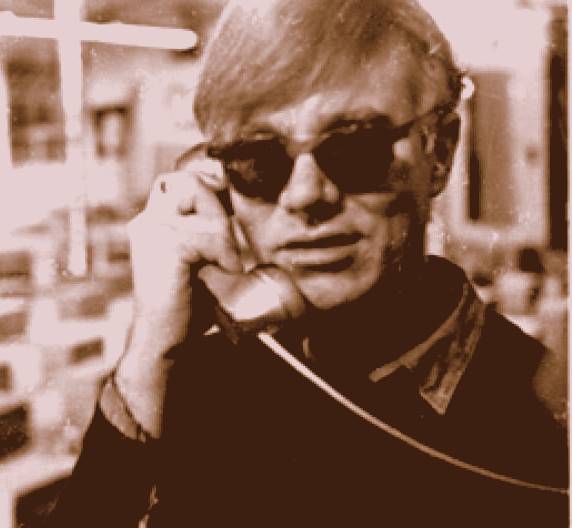
And all Andy had to do to unify the whole avant garde was to climb that ladder, take the magnifying glass and read out loud one little word- YES. Some little time later when he thought he might need a woman who could accompany him to parties he did think of Yoko but then nixed the idea. He’d already been shot once.
So, not only was there no period of mourning for Yoko but three months after she in effect proposed to the man who she thought of as her dream husband.
So that is Yoko’s situation in the period on both sides of John’s death. His was a convenient murder releasing Yoko to attempt to gratify her secret ambitions.
Let us assume that Yoko programmed or had Chapman programmed. Yoko was connected to a number of magical networks that could have located Chapman as a perpetrator. John Green was a Santeria priest and curioso. Santeria was functioning all up and down the East Coast and especially in Atlanta where Chapman was from and which he visited before the shooting. Plus the religion is dispersed around.
‘Magic’ had been employed to help John’s immigration problem, apparently provided by a Black witch from Chicago. Chapman stopped over in Chicago on one of his trips to NYC to dispose of a painting. Yoko was Japanese, her numerologist was Japanese and Gloria Abe, Chapman’s new wife was Japanese. Yoko’s One On One Foundation was involved with female Shamanistic magicians from the Pacific Islands that might have included Hawaii so, shall we say, he was mentally unstable which is an aid in hypnotism?
Thus there are ways Chapman could have been recruited and having been recruited and brought under mind control so that a telephone call from anywhere in the world could have been used to utter the trigger word. And then there is the question of where the money came from for Chapman’s frequent air flights especially his flight around the world with several layovers. He had in excess of two thousand dollars on him at the time of his arrest.
None of this is conclusive, of course, there is always the chance that Chapman was a ‘lone nut.’ These things do happen. On the other hand someone who had provided for herself so well and was so prepared to weather the shock must be equally rare. Those things happen too.
As Seaman notes, he was more grief stricken than Yoko. And at the same time Yoko had sold her soul to Satan to obtain desires that were never revealed. The astonishing coincidence is the Satanic stuff took place not only in the Dakota of Rosemary’s Baby but on the same floor and in some of the same rooms. An early candidate for the mother of Satan’s baby threw herself from the seventh floor window landing on nearly the spot where Lennon was shot. Very eerie, almost Rosemary’s Baby II.

Fred Seaman then
A Review
Themes And Variations
The Tarzan Novels Of Edgar Rice Burroughs
#14 Tarzan The Invincible
Part VI of X
by
R.E. Prindle
Inside The Gates Of Opar

Edgar Rice Burroughs
Life is just too short for some folks,
For other folks it just drags on.
Some folks like the taste of smokey whiskey
Others think that tea’s too strong.
Me, I’m the kind of guy who likes to ride the middle
I don’t like this bouncing back and forth.
Me, I want to live with my feet in Dixie
And my head in the cool blue North.
–Jesse Winchester: Nothing But A Breeze
And now we come to the heart of Edgar Rice Burroughs. One reason he is literarily disdained is that the story is not the story. Porges, p.524:
As the story progresses the perceived theme of a worldwide conspiracy is abruptly abandoned. Burroughs in his contempt for the communists refuses to allow them to be sincere even in their Marxist goals.
This is not true. Porges has misconceived the story. To quote the sixties Jewish revolutionary Mark Rudd: The issue is not the issue. By that Rudd meant that the Jews had created a diversion to mask the true issue which was the establishment of the Jewish culture as top culture or dictator in this multi-cultural world.
Burroughs intent is exactly the same as regards Tarzan. True, Burroughs has contempt for Communism but that is merely a frame story and a side issue. The true issue is that Tarzan’s authority as guardian of Africa is being challenged on the spot. The duel is between himself and Sveri mano a mano. He discredits the collectivity through the individuals. Thus at novel’s end Tarzan sits in state as Guardian or Emperor disposing the fates, godlike, of the remaining conspiritors. Magnanimously he allow Paul Ivitch (Paulevitch) to be escorted out of Africa rather than be thrown on his own resources that would have resulted in his certain death.
The issue within the issue, as always, is Burroughs attempt to resolve his psychological difficulties. Thus one has the Colt-Drinov combination, possibly reprsenting ERB and Emma, an episode within Opar of Nao who may represent Florence releasing him from the prison of his marriage to Emma, and Colt-La, the Anima and Animus problem. Tarzan and Colt change partners so that La nurses Colt and Tarzan nurses Zora. But to that in the next section.
While one expects a pure shoot out with the Communists, Tarzan is not going to defeat them by direct action but by a terrorist campaign of which Tarzan is the jungle master.
To compound the problem Burroughs confuses realism with dreamwork. This is not a realistic novel but a dream fantasy. It was said that Burroughs wrote out his dreams which has a basis in fact. The scenarios may have originated in his sleeping dreams but then he modifies them in day dream style while consciously molding the story for political and commercial purposes. A writer does need readers.
To give a basis for comparison for the dreamwork I’m going to play Freud here and offer up a dream of my own; it is similar to Burroughs’ in many way. Since integrating my personality I don’t have wonderful dreams like this anymore. As Jung correctly surmised when one integrates the conscious and sub-conscious minds memory destroys the symbolic basis of your dreams. I can analyze the common place dreams I have now even as I dream them. Something is lost, something is gained, but it might be of lesser value. I think I like the mysterious flavor of the smokey whiskey even though the water I have to drink now is better for me.
In my dream I began on the edge of a vast desert dotted with a few oases while far off in the distance twenty years away, rather than miles, away in the the distance a great white shining mountain arose. The distances were so vast they were measured not in miles but years. Indeed, the years of my life. I had to traverse the vast desert reaches between the oases. Each oasis merely refreshed me for the next perilous journey. Having traversed the years I came to the great white shining mountain. One might compare it to the tor containing the treasure vaults of Opar out on its desert. These are symbols common to multitudes.
I then came to the white shining mountain which might compare to the city of Opar. Censorship prevented me from climbing the mountain at that time. In other words in the control of my subconscious, consciousness was denied me. I approached the mountain from the back where I noticed a trickle of water leading into and down the mountain. I tried to drink the water but as it ran through a pure salt bed it was too salty. Unlike Burroughs who was in the pits of darkness I was always bathed in a clear light which came from nowhere.
I followed the little stream down the subterranean path into the mountain. Thus I had all land and no water, a barren psychological situation. Following the cave down I came to a series of gates made entirely of steel. I hesitated to go forward but there was no going back. I was impelled into one of the gates which turned into a chute that spilled me out onto a steel floor where unseen hands seized me pushing me into a steel room as the steel door slammed shut. Like Tarzan beneath Opar I was a prisoner with no seeming way out.
As I looked around I realized that this was a laundry room. All steel, of course. While I had no food I now had sinks full of water. My situation had been reversed from all land to all water, from the pure masculine to almost pure feminine. Where before I was barren now I was spilling over with wisdom. I knew I had to get out of there reasonably soon or I would starve to death. There was impenetrable steel all around. But I had plenty of water. Too much water. Looking around I spotted ventilation ducts along the ceiling. I conceived the notion that I could drink lots of water then urinate in the ducts which would create a foul odor that would be distributed throughout the rooms above. They would search for the source of the odor thus opening the door of my prison.
The ducts were difficult to reach but I was able to urinate in them. As I expected voices came down the duct asking ‘What is that smell?’. The door to my prison opened inward so I stood to the side that opened waiting. Sure enough a couple maintenance men flung the door open bursting into the room. I slipped out the door behind them unnoticed.
I now descended still further until I came to a bank of elevators. One door was open for which I made a rush. The elevator was packed with boys I knew from high school. With doubled fists they pushed me back refusing to allow me in the elevator with them. Mocking me as the doors closed I was left alone way down there.
There was a flight of stairs but censorship prevented my using them. I waited in vain for another elevator. As with dreams I next found myself at the back of the mountain but the path into the mountain had disappeared so I now had to climb The Great White Shining Mountain.
If, like Burroughs, I were writing a story I would provide a plausible story line for my escape but I’m not. I’m merely transcribing a dream.
The reason the mountain shone was because it was covered by snow several hundreds of feet, possibly thousands, thick. As previously the water in the stream was too salty to drink now it was frozen. The sun shone brightly, not only brightly, but brilliantly, as I began my climb. I had left the subconscious for the conscious as I strove for the light. The climb was long from the back of the brain to the forebrain but not tiring. Apart from the barrenness of the snow I was enjoying myself. Would it be too offensive a pun if I said I enjoyed being high? After a long climb I came to a precipice past which I could go no further. Nor could I go back.
As I studied my position I looked down this sheer precipice to the desert thousands of feet below. There was snow all the way to the desert floor. Down there, way down there, I could see the tiny ant-like people in the barren sands doing obeisance to the moutain which they apparently treated as a god.
Looking down the sheer face of snow I could dimly perceive the outlines of a great face carved in the snow. This god, then, retained all the water behind his visage that could make the desert bloom. Just as I had used water to escape the prison of my subconscious I conceived the notion that I could release the water and make the desert bloom freeing the people from their bondage.
Now, this was hard snow. I had no trouble walking the surface without breaking through while if the snow didn’t give way as I jumped on it to destroy the snow god I would plummet several feet into the desert. Neverthless I leaped up landing on my bottom. The snow gave way as I rode the avalanche several thousand feet down the mountain side to land on the desert floor while I destroyed the god who had been impounding the water.
Many streams now flowed out from the mountain. The desert bloomed turning green and bursting with flowers. Now that we have a comparison let us examine Burroughs’ great dream of Opar.
Opar first found expression way back at the end of 1912 and the beginning of 1913. Appearing at the end of The Return Of Tarzan the story was included in Burroughs’ fourth published story and fifth written story, the Outlaw Of Torn had been written but not published yet.
As with Invincible the story of The Return was not the story. The story was what Burroughs hung the details of what appeared to be the story on. Hence Return was rejected by Metcalf Burroughs’ first editor at Munsey’s who undoubtedly couldn’t understand it. This is the novel in which Tarzan makes his first raid on the fabulous treasure vaults of Opar. Burroughs will continue his wonder stories of Opar through three more books. Each return occurs at a crucial point in his life.
That Opar is a dream location is proven by the topography of the location. It is not too dissimilar to any dream. The jungle grows right up to the base of towering mountains behind which Opar is hidden. On the other side of these it is a dry dusty desert exemplifying Burroughs’ life as the twenty year desert in my dream did mine. Entry into the valley in this story is through a narrow defile apparently several thousands of feet high above which the peaks of the surrounding mountain range tower several thousand feet more. This entry also closely resembles that of Haggard in King Solomon’s Mines. Haggard is never far from Burroughs’ mind as he writes his stuff.
Working your way down into the dreamscape is considerably more easy than climbing it. And then off in the distance rose the shining red and gold domes and turrets of Opar. A dream city if there ever was one. One is reminded of the two great literary and psychological influences on Burroughs, H. Rider Haggard and L. Frank Baum. Of Haggard’s work beyond King Solomon’s Mines I have Heart Of The World and People Of The Mist most readily called to mind. It might be appropriate to mention that Freud also read some Haggard. He specifically mentions Heart Of The World and She but I suspect he probably read others as well. Opar might be a ruined version of Baum’s Emerald City of Oz. Opar is red and gold while from a distance its ruination is not obvious. Mine was a shining white mountain. Burroughs probably tinkered with his to make a good story better.
Now, the fabled Thebes of Greek mythology had seven gates. Cities Of The Sun had up to a hundred. Opar doesn’t have any. The entrance is a narrow cleft in the wall on which on entering this narrow 20″ gap for which Tarzan had to turn his massively broad shoulders sideways and then immediatley climb a flight of ancient stairs. This appears to be a reverse birth story in which Tarzan is reentering the womb, an impossible feat, but then, Tarzan goes where even devils fear to tread. Try some of the books of the psychologist Stanislav Grof. There’s definitely a sexual image that requires a little thought to understand. Hmm. No gates but a narrow cleft too narrow for the shoulders and a flight of steps leading back into the what, womb? Whose cleft? ERB mother’s, Emma’s, possibly Florence’s by this time, or that of his Anima figure? Well, the last is waiting for him inside the domed inner chamber of this sacred city who is aptly named La, which is French for She. ‘She’ was Ayesha the heroine of Haggard’s novel She. I’m sure Burroughs is not writing consciously here.
At this point Tarzan is accompanied by fifty of his brave and faithful but superstitious Waziri. In fact, in this story as Tarzan goes through his incarnation of a Black savage he is Chief Waziri, eponymous head of the Waziri. P. 42:
As the ape man and his companions stood gazing in varying degrees of wonderment at this ancient city in the midst of savage Africa, several of them became aware of movement within the structure at which they were looking. There was nothing tangible that the eye could grasp- only an uncanny suggestion of life where it seemed that there should be no life, for living things seemed out of place in this weird, dead city of the long dead past.
Dead city of the long dead past. That’s what dreams are all about, one’s own long dead past. Thus the ridge separating the lush live jungle from this dry, dusty plain eight years wide was Burroughs own dead past. I suggest the mountain range, perhaps sixteen thousand feet high, represented ERB’s confrontation with John the Bully when he was eight or nine. On the jungle side was his early life as a Little Prince while on the dry dusty side was his blighted, blasted life after John. Opar represents his ruined mind inhabited by the suggestion of life and the Queen of his dreams the beautiful High Priestess of the Flaming God, the woman of indescribable beauty, La of Opar.
La is obviously a combination of Haggard’s She and L. Frank Baum’s Ozma Of Oz.
Tarzan is seized by the Frightful Men, bound and gagged and left lying in a courtyard at high noon. The rays of the Flaming God bear down on him. Whether this is merely part of an ancient Oparian religious rite or whether Tarzan becomes the chosen Son of theSun a god among men, isn’t clear to the reader. The Oparians have their own ideas.
Burroughs describes this rite in a really masterful way. The maddened murderous Oparian who disturbs the ceremony just before Tarzan is to be sacrificed is nicely handled. Believe me, I feel like I am there. As La looks down on Tarzan’s form on the altar she recognizes the One, the Son of the Sun, the One for which she is destined. Once again, Haggard’s She.
Freed in the melee caused by the crazed Oparian Tarzan is taken down to the Chamber of the Dead by La where she hides him. As she said nobody would look for him in the Chamber of the Dead. This Chamber answers very well to the laundry room of my dream. Tarzan/Burroughs is in a stone dungeon with walls fifteen feet thick, fourteen in Invincible, in total darkness while I was in a steel room with no exit but bright light. These locations answer to the rigid confines of one’s owned damaged psyche. There is no way out but there is, there has to be. While palpating this stony prison at the back of the cell Tarzan discerns a flow of air coming through. This scene is a replication of one in Haggard’s King Solomon’s Mines while becoming a B movie staple. The big Bwana discovers some loose stones. He is able to dislodge these creating an exit through the fifteen foot depth of stones of the fortress wall. Somehow Burroughs has worked his psyche to give himself a chance. Once beyond the foundation walls, free of the Chamber of the Dead (I once dreamed I was looking for my soul in the House of the Distraught) but act among the living, Tarzan feels his way down this long dark corridor. One can’t be certain of ERB’s age when he achieved this escape. As it takes place just before Tarzan marries Jane the time might have been 1898-99. Perhaps when he was in the stationery business in Idaho. Perhaps something he read acted as a lever. Apart from Darwin’s Origin Of Species I would venture to say he read Eugene Sue’s Mysteries Of Paris a copy of which is in his library while traces of it are here in his earliest work.
Sue’s rare mentality permeates every page of this first visit while Sue’s extraordinary consciousness is everywhere apparent throughout ERB’s entire corpus. Burroughs himself is absolutely incredible in the manner he associates with numerous other writer’s intellects, seemingly simultaneously within a given passage or even sentence. Myself, Adams, Hillman, Broadhurst, Burger and others have written extensively on these influences. Hillman even goes so far as to virtually twin Burroughs with some of his major literary influences. Burroughs does make all these writers his virtual doubles.
I have stressed Sue’s influence in several earlier essays. I can only urge you to read Sue’s Mysteries Of Paris- a big three-volume work and too short at that- which Burroughs in his own reading found a life changing experience. Possibly he did read it in 1898-99. I found it a life changing experience; I’ve never been able to free myself of its influence, while it appears that Burroughs couldn’t either. A lot of the late nineteenth century writers make reference to Eugene Sue. H.G. Wells based the beginning of an early novel on Sue. The remnant remains only as a short story.
Sue wrote from outside the bounds of sanity. Privately I consider him insane but so brilliantly rational as to transcend the very meaning of insanity. He’s a dangerous writer. His last work was confiscated by the French authorities. It undoubtedly had such a private personal sense of morality that I am sure it would have undone society much as the pornography from Hollywood has undone ours. DeSade and Restif De La Bretonne, who in some ways Sue resembles, were mere unbalanced pornographers who disturb only the disturbed. Sue’s vision of morality is coldly clear, it forms the basis of Tarzan’s but is always on the side of reason and virtue. This fact makes it no less dangerous to a weak mind or that of the obsessive-compulsive Liberal. Still, only the strong survive. I heartily recommend you take your chance.
Tarzan freed from the prison of the psyche, was he insane? was I? or were we merely trapped by a device of other’s making? I can’t say but ERB’s sanity after he escaped was conditioned by that of Eugene Sue. I, of course, rise above all influences.
Progressing down the corridor Tarzan comes to the First Censor. He finds a gap in the floor into which he might have fallen had he not been careful. He would have fallen into the unknown but he would have been alright. He would have fallen into water which in his condition would have been life-giving water rather than dangerous or perhaps he might have drowned in the waters of the subcoscious or Oblivion.
In high school I had a teacher who used to chalk a half dozen slogans on the black board, one each morning. The only one I remember is ‘when you reach the end of your rope tie a knot and hang on.’ I did this for a couple decades then one day I let go. The joke was on me. There was nowhere to fall. I was only a fraction of an inch from a solid surface. However Tarzan culdn’t have known this since he didn’t fall in, this time. He would three years later.
By chance he looked up where he saw some light entering to discover he was at the edge of a well. Yes, you see, the water of life. He dimly descried the other side fifteen feet away which was child’s play for him to leap. Thus he passed the First Censor. Mine was at the elevators which I apparently merely disregarded.
Continuing on for some time in total darkness, so far that he believes himself outside the walls of Opar he enters the treasure vaults. These vaults are filled with what appears to be forty pound barbells of solid gold. Now, this gold is old. So old that no Oparian knows that it is there nor do any old legends even mention it. This is an intriguing part. The gold was mined millennia in the past after the sinking of Atlantis. This raises the question of what did Burroughs know of Atlantis and did he believe in it? I can’t answer the sources of the former but I’m betting on Ignatius Donnelly as one of them. As to the latter I believe he did. He mentions Atlantis in Invincible with a confidence and familiarity that convinces me that over the eighteen years since Return he has read and thought enough to convince himself of the reality of the lost continent. He appears to accept a mid-Atlantic location.
The gold represents the income he’s receiving for his stories. The stories spring from his dead past. That the vaults are outside Opar indicates he freed his mind from its prison or that the money comes from outside the prison, i.e. his publishers. That the gold is Atlantean indicates that his stories are based on his own ancient experience. In other words he is mining his past already completed as ingots or accomplished facts.
What experience then catalyzed his ability to write? I believe that from 1908-10 when he read L. Frank Baum’s Ozma of Oz, Dorothy And The Wizard Of Oz and The Emerald City Of Oz he found a means to express himself. These books bypassed his last censor allowing him to write Minidoka. That book was not suitable for publication but it freed his genius so that he immediately followed it with A Princess Of Mars.
Now, outside the gates of the Emerald City/Opar in the midst of the equivalent of Baum’s Great Sandy Desert he found the handle on his own destiny.
Tarzan locates the fifty faithful but superstitious Waziri loading them up with two forty pound ingots each and points them toward the coast.
At the same time Fifty Frightful Men from Opar who are tracking him discover Jane instead. Dreamy enough for you? Given a choice between Tarzan and Jane I’d take Jane and so did the Fifty Frightful Men.
So now Jane’s on the altar under the sacrifical knife of La. Skipping the irrelevant details La discovers Jane is Tarzan’s beloved. Interesting confrontation between Tarzan/Burroughs real life woman and his Anima. La is shattered as Tarzan rejects her for Jane.
This is a key point in the oeuvre. This is what makes the novels so repulsive to the literary mind. The story is not the story; the issue is not the issue. Opar is the story within the story that will be told in four short parts over eighteen years. So we have part one here without any indication the story will be continued. A segment of the story is just plopped down into The Return Of Tarzan, sort of irrelevantly.
Weird style actually. I’m not even sure it works, but it nevertheless must be effective else why would the stuff still be in print a century on. You’re on your own, Jack, I can’t even attempt to solve that one. Not today anyway.
The next novel examining this psychological is the 5th novel of the oeuvre, Tarzan And The Jewels Of Opar of 1915.
At this point Tarzan, a profligate if there ever was one, has run through the two tons of gold the fifty faithful Waziri brought out and is broke. Two tons of gold in three years. Think about it. He needs to make another run on Opar.
The character of the series changes with Jewels Of Opar from the character of the Russian Quartet, the first four novels. They not only have an Oz influence but they become Ozlike. Burroughs apparently drew on The Beasts Of Tarzan as the foundation for what is essentially a new series.
After writing five Oz stories, in the sixth, The Emerald City Of Oz, Baum attempted to abandon the series. He closed the series off with the news that there will be no more communication from the fairy kingdom. Because Oz has been invaded three times now, what with the advent of airplanes that will be able to spot Oz from the air Ozma is making the kingdom invisible. Is it coincidence that Opar disappears from the oeuvre after the third invasion?
Baum’s Emerald City Of Oz appeared in 1910. It was the last of the stories to be datelined Coronado in his prefaces. When he was forced to begin writing Oz stories again in 1913 they were datelined Ozcot in Hollywood. In 1910 Hollywood was just a pleasant Los Angeles suburb. The movies didn’t begin to make Hollywood the center of the world porn industry until 1914.
Whether Burroughs knew that Baum left Coronado in 1911 isn’t known but I find it signficant that when he went to California in 1913 his first choice of residence was Coronado where he perhaps thought he would be close to Baum who afer all had a close connection with Chicago. Baum wasn’t in Coronado so Burroughs moved across the bay to San Diego.
The question then is: did Burroughs make a pilgrimage to Ozcot to see Baum in 1913? I have to believe he did. Tarzan was one heck of an entree such that Baum could hardly refuse to see ERB. How long or how often the men met then is conjectural but I think it was long enough for Baum to give Burroughs some tips on fantasy writing. Already an ardent admirer of the Oz books Burroughs would have had no trouble accepting advice from this master.
Thus when Burroughs returned to LA and Ozcot in 1916 it is certain that they met while they were probably already familiar with each other. In 1919, when Burroughs moved to LA permanently, Baum was on his deathbed so there was no chance to renew the acquaintance. I also believe that Baum’s Ozcot influenced Burroughs in naming his own estate Tarzana.
In any event Tarzan returns to Opar in 1915. Except for the first visit when Tarzan following the directions of the old Waziri, chief of the Waziri, visited Opar to take the gold, in the rest of the visits he is battling interlopers who wish to steal the gold from him. It might pay to look at the nature of the intrusions and the intruders.
In 1911-12 Burroughs had for the first time in his life come into more money than he could spend, only for a brief moment of course. Thus Tarzan removes the gold more on a whim not really knowing what to do with it. One might think this a strange attitude for one who had tasted the night life of Paris; but a foolish conisistency is the bugbear of small minds as one of those venerated old timers once said. I don’t wish to be thought of as small minded so we’ll let the observation pass.
By 1915 having lost his two tons of gold in some bad investments Tarzan has better learned the value of money or, at least, the absence of it. And so, perhaps, has Edgar Rice Burroughs. One can see the ghost of old George T. shaking his head muttering: ‘When will that boy ever learn?” Well, George, it would take more time than allotted to him.
After 1912 Burroughs had created something of value. That value could be stolen or at least exploited. In 1914 McClurg’s offered him a publishing contract. Nicely crafted it gve all the advantages to McClurg’s and none to Burroughs. Burroughs undoubtedly did not understand the legal implications of what he signed. I can’t explain this but McClurg’s made no effort to merchandise a sure fire hit. They didn’t even publish the full fifteen thousand copies called for in the contract. They released the book to reprint publisher A.L. Burt after p;rinting only ten thousand copies themselves. Explain it how you will but there was a guaranteed huge absolutely visible market waiting for book publication. Syndication in newspapers had guaranteed the book’s success. So why did McClurg’s willfully refuse to take advantage of such a deal?
Burroughs probably had stars in his eyes at the prospect of 10-15% royalties on hundreds of thousands if not millions of books. Instead he got comparatively nothing. The royalties from Burt were miniscule and to be shared 50/50 with McClurg’s. You can imagine Burroughs’ disappointment as a golden future became brass before his eyes.
Back to Opar. Tarzan entered the vaults before his faithful Waziri who were warriors and would act as bearers for no other man. Alone Tarzan made six trips from the vaults to the top of the tor bringing up forty-eight forty-pound ingots. That’s 320 lbs. per carry for a total of 1920 lbs or nearly a ton. According to Freud, and I believe him, all numbers are significant, although I don’t have enough information to delve completely into the meaning of these numbers. The Waziri then brought up fifty-two ingots. some two of the fifty got stuck with carrying two ingots or two went back for one more. That made slightly over a standard of 2000 lbs.
Tarzan’s forty-eight ingots are roughly half of the total that undoubtedly represents the fifty-fifty split with McClurg’s. At the time Ogden McClurg, the son of the father who built the company, Alexander McClurg, was the nominal head of the company. The firm was actually owned by the employees since about 1902, which Burroughs probably didn’t know. The man he dealt with, Joseph Bray, was probably the real head of the company. Actually Ogden was away from the company for long stretches on adventures in Central America and WWI so that he would have been unfamiliar with the day-to-day workings of the company. Burroughs, however, formed a grudge against Ogden McClurg. I suspect that the Belgian villain Albert Werper is based partly on Ogden McClurg while also being an alter ego of Burroughs. So, a story behind the story is how Ogden McClurg stole ERB’s royalties.
At the same time Tarzan spurns La for a second time so the Anima-Animus story of Tarzan, Jane and La continues. La has Tarzan within her power but in the life and death situation love triumphs over her hurt so she spares the The Big Guy. Not without consequences. The Fifty Frightful Men, or what’s left of them after the maddened Tantor tramples a few, led by Cadj, who now makes his appearance, feel betrayed repudiating La. Thus is begun the conspiracy to replace La which will be the focal point of the next two visits. You know, love or hate, I don’t know which is to be feared the most.
In the next visit in Tarzan And The Golden Lion Tarzan has gone through his second two tons of gold. That is four tons of gold in roughly ten years plus the Jewels of Opar that our spendthrift hero has managed to go through. Four tons of gold! That’s 128,000 ounces of gold. At today’s price of over a thousand dollars an ouce it works out to 128 billion dollars and change. My friends, that is prodigality. Good thing there was more where that came from, hey?
Of course a lot of the loss came from loans to the British Empire to float the Great War. But like certain other borrowings, to which Burroughs may be making an allusion, the Empire had no intention of repaying.
Once again this sort of excess had brought Tarzan to the edge of bankruptcy not unlike ERB in 1922. Just as creditors were besieging ERB for money so some private individuals led by a former employee, Flora Hawkes, attempt to extract the gold from Opar. Tarzan first fails, then recovers not only the gold but the bag of diamonds. The significance of the jewels is explained in the Tarzan and Esteban Miranda story contained in Tarzan And The Ant Men. That story is a duplicate Jewels Of Opar with different details. The history of the Jewels Of Opar also duplicates the history of Tarzan’s locket in Ant Men. If you’ve found something good don’t hesitate to use it more than once.
Fifteen years after the visit in Jewels Of Opar and eight years after the Golden Lion/Ant Men the scene returns to Opar, where once again others are to make a run on Tarzan’s private bank at Opar. Apparently Tarzan has them baffled from the start as, although they know there are treasure vaults at Opar, they have no idea where they are. It appears the Communists have read the earlier books, but not with close attention, nor did they bring their copies along with them to bone up during all those idle moments in camp. Playing cards is alright after reading, but time better spent before. You can see why these dodos failed.
Burroughs had read his Oz stories. One can’t be sure whether he ever reread the stories or whether he was working from twenty year old memories. There are similarities here with the Emerald City Of Oz of 1910. In that book Baum attempts to end the series. He says that it will be the last communication from Oz. It too involves an invasion of Oz by the Nome King and his horrid allies. In Baum’s story Ozma refused to defend her Communist State, predating Russia by seven years, but arranges it so that the invaders who are tunneling beneath the Great Sandy Desert emerge in front of the fountain of the Waters of Oblivion. The fountain has apparently been spiked with LSD as the drinkers get lost in a world of their own returning through the tunnel without a fight. Perhaps the first military use of drugs in history. An excellent fairy tale, hey?
Burroughs’ Communists make two attempts to enter Opar. Circling the city unable to find any gates to Burroughs dreamworld they do find the narrow cleft in the wall. Spooky sounds and happenings disconcert the Blacks and Arabs of this multi-cultural coalition so that any concerted action is frustrated. Although the Russians and the Mexican, Romero, enter, only Romero has the courage to penetrate beyond the courtyard. The Russians are arrant cowards who flee at the sound of the first Oparian shriek.
Returning to base camp they find that Wayne Colt, having tramped the breadth of Africa, has joined the group.
A second attempt is made. The superstitious Arabs refuse to return being also disgusted by Zveri’s lack of leadership and cowardice. Taking the six Communists and the Blacks Zveri returns to Opar for a second attempt. While absent from the base camp the coalition begins to come apart as the Arabs desert the cause, looting and burning the camp while taking the two White women with them. La has joined Zora but more on that in the next section.
The second expedition fares no better than the first for the same reasons. On this attempt both Wayne Colt and Romero enter the sanctuary where they are engaged in a serious battle with the Frightful Men. Colt is felled by a thrown bludgeon that knocks him down but doesn’t crush his skull. Romero retreats, Colt is dropped unconscious before the high priestess, now Oah and Dooth. Cadj was destroyed by Jad-Bal-Ja in Golden Lion so Dooth has taken his place.
If La is the good mother aspect of the male psyche, Oah is the bad or wicked mother. Still beautiful but not quite as much so as La.
She orders Colt taken to a dungeon to await the full moon or some other propitious moment to sacrifice him.
Oah’s plans will be foiled because among those present is a nubile young maiden named Nao who falls head over heels for Wayne at first sight. Burroughs describes Nao as having entered the first bloom of womanhood. To me that represents a fourteen-year old girl. Indeed, Nao is fresh as a flower.
One remembers Uhha who accompanied Esteban Mirands in Ant Men was specifically mentioned as being fourteen. So the ages fourteen, nineteen and twenty have special female connotations in Burroughs’ stories. As Freud rightly says people should only be held responsible for their actions and not their thoughts. Certainly there is no mention of Miranda having relations with Uhha while Nao had to be content with watching Colt disappear into the night after she released him from prison, murdering a man, be it noted, to do it. All that Priestess sacrificial training with knives comes in handy.
It will be remembered that ERB is said to have begun proposing to Emma when she was in the first bloom of womanhood at fourteen. So it is probable that the memory is associated with Uhha and Nao.
Colt as Burroughs alter ego thus allows Burroughs to visit Opar and have his fling with Nao as Colt while Tarzan has his with La. there’s a sort of joining of the two aspects of Burroughs’ Animus much as there was with Esteban Miranda and Tarzan in Golden Lion/Ant Men as well as Werper and Tarzan in Jewels Of Opar.
Tarzan himself returns to Opar before the first expedition of the Communists.
It has been eight years and four novels since Tarzan visited the fabled red and gold city of Burroughs’ dreams. Tarzan has a number of misconceptions of his relationship with the Oparians. The high priest Cadj who had become a problem in Jewels Of Opar was killed by Jad-Bal-Ja in Golden Lion. La had been replaced on her throne with the Bolgani of the Valley of Diamonds as her body guard and the Gomangani, who had no thin veneer of civilization at all, as her slaves, I guess. Tarzan then sees himself as an Oparian benefactor, not unlike the US in today’s Iraq, who will be received as a friend. Our hero shows himself a poor psychologist.
With a light springing step he turns sideways to enter the cleft, bounds up the stairs to enter the inner sanctum where the howling Frightful Men bash him over the head yet again. Tarzan could have been tagged Skull Of Steel to survive all these bashings with very heavy clubs and grazing by full metal jacket bullets. I tell you, man, I’d reather read of adventures like this than live them.
Coming to, Tarzan is surprised to find Oah as High Priestess with Dooth as her High Priest.
‘Where is La?’ Tarzan asks.
‘Dead.’ Replies Oah. ‘Throw him in the dungeon.’
Back to the pits of Opar for the Big Bwana where one imagines his sensitive nostrils will be grossly offended.
Once again Tarzan escapes his prison. Seeking a way out he is spotted by some hairy bandy-legged men. Fleeing down an endless corridor flanked by doors he chooses one and enters. Whew! What an aroma assails his sensitive nostrils. He is face to face with a half starved lion. The Big Guy hears the hairy men rushing down the corridor just as the lion springs. The door opens inward, unlike most prisons but apparently commonly in dreamscapes, so Tarzan opens it and steps behind it. As the lion springs past him he slams the door which was not too swift a move as the bar falls locking him in. He has the comfort of hearing the lion tearing up the Frightful Men but the stench of the lion’s den for once is so powerful it disguises the aroma of a White woman at the back of the cell. Surprise! La isn’t dead she’s been palling around with this lion for a while. Fortunately as in Ant Men there is a door between her inner cell and that of the lion that she can open. They built prisons differently back then.
So, the Animus and Anima are reunited but in prison once again. As in all dream sequnces there is a way out.
There’s a lot of shuffling about; this one is fairly complicated. In order to bring food to La at the back of the cell it is necessary to first feed the lion. There is a corridor across the front of the cell. a barred gate separates it from the lion’s den while La’s cell with its unlocked door is at the back. The corridor leads to a little chamber that is open from above. The lion’s food is thrown down after the gate has been lifted and closed somehow. While the lion is feeding in this corridor the attendant picks his way among the lion piles and puddles to take the food back to La. The chow must be tasteless in this overpowering stench.
Tarzan investigates then raising the gate for La when she advises him that the Oparians are coming back with the lion. This is very fast work by the Oparians so you can see the stuff is dreamwork. Tarzan raises La into the opening following her.
They follow the winding staircase until they enter a chamber that is the highest point in Opar. Thus they have ascended from the subconscious to the conscious. Here La once again confesses her love for the Beast of Beasts. The Big Guy is still not interested.
As they are plotting a way to get down from the tower they hear someone ascending a ladder. As the fellow pops his head above floor level Tarzan seizes the guy by the neck. My first reaction was to think that this was the Old Stowaway from Tarzan And The Golden Lion who would now be sixty-eight. Apparently not although Burroughs makes him sound different from one of the Frightful Men.
The old boy assures Tarzan and La that he is faithful as he as wellas most of the Oparians pine for the return of La. Plans are made for La to return to her throne. The Old Boy was a master of deceit however. Oah, Dooth and the Frightful Men who are still very angry with La and Tarzan are waiting for the pair when they enter from behind the curtain. A little Wizard of Oz touch. Humor, I think.
Tarzan might well have voiced the words of Marty Robbins in El Paso:
Many thoughts ran through my mind
As I stood there.
I had but one chance
And that was to run.
And run the Big Bwana did in a scene that was almost as comical as when he ran from the Alalus women in Tarzan And The Ant Men.
Breaking through the ring of Frightful Men Tarzan tosses the slower La over a shoulder and rapidly puts one of his clean limbs before the other. The bandy little legs of the Frightful Men are no match for the Big Bwana. Shouting epithets like: Good riddance of bad rubbish and Don’t come back again if you know what’s good for you. they snarlingly turned back to the City of Red and Gold.
Far across the dusty plain Tarzan and La climbed the ridge separating Opar from the outside world. First outside the gates of Opar in 1915s Jewels Of Opar chasing after Tarzan, once again in Tarzan And The Golden Lion to rescue Tarzan, La now makes her longest and most hazardous stay in the great wide world.
Part Seven follows.
A Review
Themes And Variations
The Tarzan Novels Of Edgar Rice Burroughs
#14 Tarzan The Invincible
Part V of X
by
R.E. Prindle
First Published On The Ezine, ERBzine

The Man
Six White Men In Search Of An African Empire
If one believes that Burroughs is merely on a rant against Communism in Tarzan The Invincible and Tarzan Triumphant then there is nothing more to say. Still, it is remarkable that ERB specifically names Stalin as a persecutor of Tarzan in both books. As Burroughs says he doesn’t mind fictionizing political and religious realities the question is , is he fictionizing a real life situation where Stalin, or the Communists are giving him a hard time?
Seems really improbable doesn’t it? People are used to thinking of Burroughs as a barely literate fantasy writer better ignored by the literati. But more insignificant men than ERB have been the victims of hate campaigns.

Dr. Harvey Springer- The Cowboy Evangelist
Who now, for instance, remembers Harvey Springer? Harvey Springer? Never heard of him? I don’t wonder. Oddly enough when I was in San Diego in 1957-58 Harvey Springer, who was some kind of evangelicalist, was going to appear at some church out where no sailor ever went. He was kind of a cowboy evangelical from Denver. His most dramatic stunt was placing one of size fourteens, he was a tall rangy man, on one chair and the other on another to harangue the crowd.
I hadn’t heard of him, you know, nor had anyone I knew, but Harvey Springer was reputed to be an arch anti-Semite. Could have been for all I knew, but I’m not going to take anyone’s word for it. The point is the Jews sent all kinds of people into the streets to tell people not to go see Harvey. I don’t how many times they must have heard- Who’s Harvey Springer?- in reply. Rather than say he’s an anti-Semite, of which I had even less knowledge at the time never having heard the term, all that was necessary was to say the two words, church and evangelical to cool my ardor, if I had any, to find where he was speaking and go see him.
In addition the AJC and ADL published books in which they denounced Harvey Springer as a very dangerous anti-Semite. Now, if certain people would go to such extremes to persuade someone not to do something he had no intention of doing what would they do to defame someone with an international reputation? The only one who didn’t realize the extent of ERB’s fame seems to have been ERB himself. He was no self promoter, he thought it best to keep his head down.
In that sense, judging from the unpublished Under The Red Flag and the published Moon Maid, Invincible and Triumphant Burroughs was actually a leading anti-Communist voice. I mean, people read this stuff. They read it in America , they read it in England, they read it in numerous translations and they read it in the Soviet Union. Here’s the kicker, Stalin read it. Not only that, Stalin was a movie buff. And he requested Tarzan films (reported in a recent UK Telegraph story and the book of Simon Sebag Montefiori: Stalin: The Court Of The Red Tsar.)
History is not a mystery, it’s just schoolyard bullies bigger than life.
We also know that Stalin ordered his scientists in the 1920s to attempt to cross an ape and a human to create a super warrior. It’s clear to me that Stalin had read Beasts Of Tarzan. The Man of Steel may have had a difficult time distinguishing between fact and fiction as many another. Besides, remember eugenics was a hot topic of conversation in Red circles then as it is today. Not knowing what we know now about genetics crossing an ape and human may not have seemed that far fetched. It doesn’t to a lot of people now. Heck, the Old Testament enjoins one to destroy the results of an animal-human union so the ancient Hebrews thought it was not only possible but a regular occurrence.
There is very clear evidence that the Reds were conducting a campaign of vilification against Burroughs. I’ve mentioned it before but the clearst evidence is H.G. Wells’ novel Mr. Blettsworthy On Rampole Island.

Bertie Wells
May we take a moment to look more closely at Wells? Don’t think I’m antagonistic toward Wells. I dearly love Wells just as I do Burroughs. I have a complete collection of Burroughs while I’m looking for the odd volume of the more obscure Wells. I’m not boasting, I’m just saying this in the way of credentials. I’ve read all of Burroughs more than once and I’ve read all the Wells’ titles I have, many of them more than once. In point of fact I love all the literature from say, Haggard’s King Solomon’s Mines to 1930 and perhaps an odd year or so beyond. I love. I mean, I love it. I love Edgar Wallace who, if you can believe it, is claimed to have sold one out of four books sold in England during this period. If you don’t know him he was one of the co-writers of the movie King Kong and then he died. All this stuff of this period is wonderful. Robert Hitchens, P.C. Wren.
So, you know, it’s like this: H.G. Wells was a Soviet literary hatchet man.
The man had a wonderful career. You know his most famous novels, The War Of The Worlds, First Men In The Moon, The Island Of Dr. Moreau, In The Days Of The Comet. If you like Wells, and I do, those are the tip of the iceberg. A few of his short stories and he wrote many are as good as short stories get.
He was always a socialist and perhaps a terrorist conspiritor, but he was a child of the nineteenth century until his mind broke at the end of the Great War. At that time he lost faith, in god, transferring his faith to the Revolution, becoming a Soviet dupe. His literary career may be divided into two halves, pre-God- The Invisible King and post-God. That was one of his books.
He was not taken seriously as a fiction writer after the war. During the twenties and thirties he turned out an unending stream of novels that were ignored. It’s not difficult to see why, but I find them a little more tolerable. I like Wells. His reputation and career were saved by his 1922 effort An Outline Of History. It was a massive volume and it sold massively for twenty years or more while being hugely influential in literature. Put him on easy street for the rest of his long life. As much as any artist who is skilled at spending money can be on Easy Street.
As a novelist however, he was pretty much a has been. While none of his post-1920 novels take off he hits the spot with me.
From 1920 on his soul belonged to the Revolution, which is to say the Socialist homeland, which is to say the Union Of Soviet Socialist Republics. That means he was more loyal to Russia than he was to England. In short, a traitor in intent if not in deed. While no Liberal ever deals in realities hence are in constant denial, The Man of Steel, Josef Stalin, was his boss. Wells naturally would have denied this.
The Soviets had a pretty comprehensive system which once again is denied. There were a number of State prostitutes who were assigned to the various important Red writers to service them as mistresses, while reporting back to the Kremlin. This is, of course, denied by the Liberals. I don’t understand living a life that has to be denied, where everything you do has to be represented as something else, but such duplicity is apparently congenial to the Liberal mind. They must seek it.
Moura Budberg
Wells was assigned a woman named Moura Budberg. She must have known how to turn on the charm as she was able to make a number of men she was assigned to sincerely love her, including the British diplomat Bruce Lockhart, the Russian writer Maxim Gorky and H.G. Wells. She wasn’t that good looking either. All of these people led double, triple or quadruple lives. They must have been really able to compartmentalize their minds. Freud didn’t touch that type.
After Wells’ visit to Lenin in 1921 he was signed on. He began his career as literary hatchet man. In his writing he portrayed recognizable people, sometimes under their real names, in negative or positive lights. As a skilled writer, whether you like his later stuff or not, he was more than competent to do this. It appears that he first targeted Burroughs in his 1923 novel Men Like Gods. Among his science fiction novels this one should rank more highly than it does. Burroughs’ 1926 Moon Maid reads like a reply to Wells. Especially the first part of the trilogy where Burroughs dances imaginative rings around the First Men In The Moon. From there Wells took up the challenge with Mr. Blettsworthy On Rampole Island of 1928 which unmistakably is a parody of Burroughs in which he portrays Burroughs as insane, but not a bad analysis.
Burroughs responded possibly with At The Earth’s Core but definitely with Tarzan The Invincible. At the same time one interprets Stalin’s interest in crossing apes with humans as being derived from Beasts Of Tarzan and other Tarzan novels there may have been more direct Soviet interest in ERB. One notes that Tarzan The Invincible was the first title published under the Burroughs imprint. I think it highly probable that his publishing was being interfered with by the Reds in addition to whatever other grievances against his publishers Burroughs may have had.
One may say that Burroughs was too insignificant for Stalin to bother with, yet according to Simon Sebag Montefiori Stalin put out a contract on John Wayne because he was such an ardent anti-Communist. Khruschev is said to have told Wayne that he concelled the contract after Stalin’s death. Edgar Rice Burroughs was at least as significant in 1930 as Wayne in the 1940s and 50s.
At any rate in 1930 Burroughs has Stalin and the Reds invading his dream world of Opar to steal his gold, i.e. put him out of the publishing business. Invincible and Triumphant, notice the titles, both deal with Stalin and the Soviets then the topic disappears from the oeuvre. Was Burroughs given incentive to counter-attack the Reds? I think there is enough evidence to warrant the opinion while time will tell even more. Research is just beginning.
It is signficant that Burroughs introduces the story in his own voice, not a framing device. He may be simply talking to the reader or he may be addressing Wells and, dare I say say it, The Man Of Steel himself. Perhaps a subtitle could be ‘The Big Bwana Meets The Man Of Steel.’ Now, it should also be remembered that this is the fourteenth novel of the series. the first title had been written eighteen years earlier. At that time the surprise of the character had knocked the socks off the reading public. In 1930 Tarzan was in danger of becoming old hat. Burroughs had to think up new and interesting devices to keep his readers coming back. As with most series of this type the readership was limited. Maximum sales could be predicted so that success meant not falling below a certain level of interest or letting interest diminish below unsupportable levels. As his own publisher Burroughs was now taking all the risks financial as well as literary. He had to turn out a successful book.
I think he did a superb job. Since the series continued to flourish his readers must have thought so too. I do wish ERB, Inc. would release some sales figures though.
For the premiss of his story Burroughs postulates that Stalin and the Soviets wish to instigate a new world war which will allow them to pick up the pieces establishing a complete European dictatorship. Not at all farfetched. Burroughs postulates that Mussolini and his Fascists are aiming at a European hegemony. This is 1930 so Hitler and the Nazis are not on anyone’s radar as a threat to world peace except for a few fringe elements. At the time Hitler and the NSDAP were in hand to hand combat with the Communists for control of Germany. They would not assume power until three years hence.
The Reds then wish to create an incident that would cause the Italians to attack France. The indirect approach is usually more effective than the direct approach so they wish to create an incident in Africa where French colonial troops appear to invade Italian Somaliland.
At that instant expendable confederates in Italy would reveal a bogus French plan to Mussolini. It is assumed that Italy would then declare war on France and the holocaust would begin. As we all know Italy did not declare war on France in 1930 so the plan must have misfired somewhere along the way. Tarzan was the reason. Burroughs gives these little known details that would have been lost to…well… if not history, remembrance. So, uh, really ERB is providing a valuable service here.
There may be two sides to every story, but usually one is on one side or the other. We don’t have to be reminded ERB is not on the side of the Reds. In fact, ERB is exposing their plans and weaknesses. He displays a fairly profound understanding of the goals and workings of the Communists. He is read up on the subject, He has studied. He is not shooting from the hip. He knows whereof he speaks. If not an authority on the subject he is pretty darn close.
ERB has his eyes on how ‘American’ manufacturers are relating to Moscow. He has Zora Drinov analyze the situation this way, p. 12
“But what do the puny resources of this single American (Wayne Colt) mean to us?” demanded Zora. “A mere nothing compared to what America is already pouring into Soviet Russia. What is his treason compared with the treason of those others who are already doing more to hasten the day of world communism than the Third Internationale itself- it is nothing, not a drop in the bucket.’
“What do you mean Zora?” asked Miguel.
“I mean the bankers, and manufacturers, and engineers of America, who are selling their own country and the world to us in the hope of adding more gold to their already bursting coffers. One of their most pious and lauded citizens is building great factories for us in Russia, where we may turn out tractors and tanks; their manufacturers are vying with each other to furnish us with engines for countless thousands of airplanes; their engineers are selling us their brains and their skill to build a grreat modern manufacturing city, in which ammunitions and engines of war may be produced. These are the traitors, these are the men who are hastening the day when Moscow shall dictate the policies of our world.”
“…their government is a capitalistic government that is so opposed to our beliefs that it has never recognized our government; yet in their greed, these swine are selling out their own kind and their own country for a few more rotten dollars.”
Sound anything like the US and China today? That was a mouthful. The first thing FDR did upon taking the reins of government was to recognize Soviet Russia. Tell you anything about FDR? That was a mouthful that should have eraned ERB the hatred of the Liberal Coalition.
You can see why they wanted to stop his mouth. Passages such as this are probably the reason Richard Slotkin and his crowd, John Taliaferro, group ERB with Madison Grant and Lothrop Stoddard. A charge of racism is usually a cover for a multitude of offences that have nothing to do with race. One is merely opposing the Liberal program. If they were to say- the fellow opposes the Liberal program they would get no rise- they might even have to explain the Liberal program- so the charge of racism is used as a red herring. One should always suspect such an accusation and disregard it.
Liberals however, never answer such charges. They merely deny them. In 1953-54 they were even denying themselves as Communists or taking the Fifth, which is the euivalent of saying, yes I am, but I’m not going to admit it.
The Revolution was only twelve years old in 1930. The CPUSA had been briefly outlawed in the early twenties but ‘disinterested parties’ believing in the time honored notion of ‘free speech’ had the ban lifted. Over in Russia their free speech loving comrades were filling cattle cars with dissenters destined for the Gulag or else they were murdered outright. Today, of course, these freedom loving people are throwing dissenters in prison on the basis of trumped up laws. The Program is moving right along isn’t it?
Even William Z. Foster denied he was a Communist as he was running for President on the Communist ticket. Today a tenured Law  Professor at Harvard actually denies that AIPAC, which is a registered lobby group, exists. They ought to throw such people into cells next to David Irving. Denial of themselves is what Liberalism is all about. You couldn’t find anyone to admit to being a Communist. They all denied it. The hypocrisy of Liberals throwing men as decent or moreso than themselves into jail for denying the holocaust is mind boggling. Well, it would be, if you didn’t already know what’s going on.
So ERB would have been roundly denounced as a paranoid delusive for the above passage.

Henry Ford- Philanthropist
Men like Armand Hammer, Bernard Baruch, essentially the whole Jewish government in exile here in the US were working furiously to make the Revolution a global reality. They really had no idea of Hitler’s intentions at the time, yet they attempted assassination while through the German Communist Party they were waging street warfare against the National Socialists. The word National is what they objected to not so much the man Hitler. Burroughs mentions the Third International. The Comintern- short for Communist International as it was known- was essentially a beta model for what is now multi-culturalism. It was the Jewish cultural vision of the world. Thus industrialists like Armand Hammer and Bernard Baruch using their Jewish identity as a shield from criticism, any criticism would be characterized as anti-Semitism, were directing huge sums of money into the development of Soviet Russia.
In addition a well-meaning industrialist, Henry Ford, who would later be denounced as a Nazi, was doing the

Armand Hammer
same thing. The mention of tractor factories refers to Henry Ford- the Jewish bete noir- who was trying to relieve the Communist induced famine by selling or even giving tractors to the Russians to increase food production. He was also building the factories for them. I mean, you know, gratis; altruism run rampant. The great industrial city probably refers to Stalingrad.
Even Burroughs biographers Porges and Taliaferro disparage Burroughs for his rational stance against Communism. Burroughs doesn’t stop his analysis with the multi-cultural contradiction within American society, p. 35:
“The general plan, of course, is no secret to any of us here,” said Zora, “and I shall betray no confidence in explaining it to you. It is part of a larger plan to embroil the capitalistic powers in wars and revolutions to such an extent that they will be helpless to unite against us.”
“Our emissaries have been laboring a long time toward the culmination of the revolution in India that will distract the attention and armed forces of Great Britain. We are not succeeding so well in Mexico as we had planned, but there is still hope, while our prospects in the Philippines are very bright. The conditions in China you well know. She is absolutely helpless, and we have hope that with our assistance she will eventually constitute a real menace to Japan. Italy is a very dangerous enemy, and it is largely for the purpose of embroiling her in war with France that we are here.”
Once again you will note that there is no reference to a threat from Germany. No one could have seen it but the Communists who were opposed not merely to Hitler but any Volkish attempt to govern. The Volkish movement was inherently anti-Communist. To be anti-Communist was equivalent to being anti-Semitic, so that Hitler was automatically an enemy to be destroyed. When he and the Nazis assumed power in 1933 an automatic boycott of Germany and things German was instituted by the Jews. One might say that WWII began in January of 1933 at the instance of the Jews. The obvious conclusion is that if Hitler’s actions against the Jews were not self-defense, they were acts of war in which the first offensives had been begun by the Jews. Needless to say any such opinion is and will be denied. Any such discussion of such matters will be ridiculed and suppressed. But there you have it. At any rate ERB was not one of those far-sighted individuals who foresaw the rise of Hitler. Italy turned out to be a not so dangerous enemy.
In his story Italy was merely to be a dupe of the Soviets.
In order to present his analysis ERB had to be especially well informed. What he read or where isn’t clear as there is nothing in the existing library that even deals with the Communists per se. ERB does have a copy of Hitler’s Mein Kampf but that could only have been obtained after 1940 when the war was in progress.
As the story opens then, the Reds are assembling their forces for the march on Italian Somaliland.
Things aren’t to be quite so simple as the leader of the expedition, Peter Sveri, develops delusions of grandeur hoping to establish his own Empire in Africa with himself as Emperor. On the one hand Communism breaks down on the rocks of the interests of the various cultures, while in seeking to establish himself in Africa Zveri is infringing on the domain of its current Emperor, Tarzan.
Tarzan handily frustrates Zveri’s designs, while at the same time beating Stalin and the Reds, hence the title Tarzan The Invincible. One imagines though that there may be something more behind it. Originally titled Tarzan, Guardian Of Africa the change of title indicates something deeper.
In order to finance his operations Zveri intends to loot the fabled treasure vaults of Opar of which, one assumes, he has read about in The Return Of Tarzan, Jewels Of Opar and Tarzan And The Golden Lion. This makes him somewhat a fan of the amanuensis of the Big Bwana.
This is the fourth and last of Burroughs’ Opar stories. In section six let’s review Opar and its significance to this story.
 I, Dynamo