Pt. II Time Traveling With R.E. Prindle
May 20, 2019
Pt. II: Time Traveling With R.E. Prindle
G.W.M Reynolds On Vice And Virtue
by
R.E. Prindle

This essay will concentrate on the novels, Robert Macaire or, The French Bandit In England, The Mysteries Of London, Faust, and Wagner, The Wehr Wolf. Their respective dates were 1840, 1844-48, 1845-46 and 1846-47. As can be seen the latter two novels are encompassed by the dates of The Mysteries Of London and they must be related to the greater novel- two side excursions, so to speak.
We know that Reynolds went out on his own in a foreign country at the age of sixteen, going immediately to take up residence in France with a fair sized sum of money in his pocket inherited from his father as he hints in his novel Faust; then in 1833 at the age of nineteen he inherited a bit more through his mother. He was a natural scholar so that he studied extensively in many fields including literature and history. For such a young man, twenty-five and twenty-six in 1839-40 he writes with an astonishing, indeed, unbelievable maturity and knowledge both experientially and from study. Apart from being fictionalized his history seems to be accurate.
He is especially interested in vice and virtue in humanity. The configurations of his interest were formed by his reading of the Marquis de Sade; he read and internalized de Sade’s novels Justine, Juliette and Philosophy of the Boudoir. While de Sade, from whom the term Sadism is derived, is probably known by name only to most. I append here a short biography so that the reader knows how I understand him. De Sade was born in 1740 and died in 1814, the year Reynolds was born so we may assume that de Sade was still something of a sensation when Reynolds hit Paris in 1830.
De Sade’s fame as the source of the term Sadism was well earned although somewhat stale in the 21st century as films and novels have far surpassed his exploits. There is no longer anything to astonish in his novels. His problems began when his parents denied him marriage to the woman of his choice thus causing an extreme reaction. His reaction was so extreme and notorious, causing his parents such grief, that they had him imprisoned where he began writing his novels. Released by the French Revolution, which was crazier than himself, he functioned well. Napoleon, not so tolerant, had him committed to the famous insane asylum of Charenton. This aided immeasurably in making him a cult figure which he remains to this day.
He committed his grief to two most read novels, Justine and Juliette. He posited as a universal reality that a life of virtue led to unhappiness, pain and failure as characterized by Justine; and a life of libertinage and self-indulgence characterized by Juliette led to happiness and self-fulfillment.
When Reynolds read de Sade’s novels between 1830 and 1837 isn’t known. My guess is that he read them sooner than later and the antitheses between virtue and vice worked in him as he began writing.
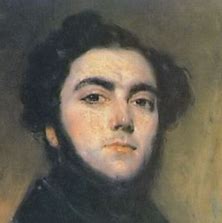
Author of Mysteres de Paris and The Wandering Jew
An echo of Justine and Juliette can be found in the Mysteries of London. Reynolds transposes the sexes and has two male brothers Eugene and Richard Markham as protagonists. They are associated with two trees. (The symbolism of the two trees isn’t yet clear to me.) A financial disaster hits the Markham family leaving it and them destitute. Eugene, following the path of Juliette’s example opts for a life of crime to repair his fortunes while Richard decides to pursue virtue. They are to meet by the trees twenty years on to compare results.
This gives Reynolds the means to display his knowledge of vice and virtue. He certainly seems to know the ways of criminality. This investigation is continued in the first two novels written in conjunction with Mysteries titled Faust and Wagner the Wehrwolf. The first of his crime novels was Alfred de Rosann, quite astonishing as a novice novel, I will deal with it later, followed by Grace Darling, the Heroine of the Ferne Islands and the Robert Macaire or the French Bandit In England. After a hiatus of two years from 1842 to 1844 when he wrote nothing Mysteries began. Faust and Wagner were written in succession.
The third of his crime novels was Robert Macaire or the French Bandit In England.
One imagines that Reynolds first heard of the famous French bandit at the theater either in 1833 or ’35 or perhaps he saw both. Macaire was a famous French highwayman, but as Reynolds has Macaire tell his sidekick Bertrand, times were changing and the place of the highwayman was becoming as obsolete as buggy whips would in the twentieth century. Thus while Macaire was involved in stagecoach situations his milieu was shifting to swindling and financial crimes. The future was clear. Reynolds has his ear to the ground.
Published in 1840 Macaire was his third effort following Pickwick Abroad. By this novel he has pretty well learned his craft although his powers will grow exponentially by Mysteries. Macaire is tightly plotted and well written with every evidence of Reynold’s powerful mind. It shows little evidence of de Sade, clear evidence, even borrowing, from Frederic Soulie. Soulie was a French writer of ghastly crime/horror fiction who was, at least, an early model for Reynolds.
As in Mysteries of the Court of London an inspiring incident carried throughout the story ends it. The novel involves an enmity between the practitioner of virtue, Charles Stanmore, and the follower of vice, Robert Macaire. Close to the plots of de Sade’s Justine and Juliette.
The novel opens with Macaire in France holding up a stage containing Stanmore and killing two people while sadistically tying Stanmore to one of the large wheels. If the horse hadn’t remained still as Stanmore remarks he would surely have been killed by the revolving wheel. A sadistic crime in itself.
Papers taken from Stanmore tell of a banker in England who looks ripe for the plucking so Macaire and Bertrand head for England. It is not clear how these two desperadoes pass themselves off as businessmen, especially the clownish Bertrand but they do and Pocklington, the English businessmen invites them in, indeed, ask them to take up residence while in London. He has a beauteous sixteen year old niece, Maria, who falls head over heels for the forty some year old Macaire. As she is to inherit a large fortune Macaire plays the swain.
It so happens that Stanmore also has his eyes on Maria so he develops an inveterate hatred of his rival not realizing that the French bandit and Macaire are the same. Now, it also happens that Stanmore’s father had disappeared on a journey to Lyons in France where he was to establish a new business five years previously. He had waylaid by Macaire, robbed and murdered in a town thirty some miles from Paris on the way to Lyons as will appear later in the story. Macaire was acting as a member of an organized ring of criminals to which he still belongs being one of the leaders.
After mentioning that Macaire is posing as the financial agent named LeBeau who he learns is now on his way to London the two bandits determine to kill him before he arrives to prevent his ruining their plans. Using old skills they waylay his stage on his way to London, brutally drag him from the stage and stab him to death. These two are thoroughly evil men. This is important because while Reynolds is contrasting virtue and vice, he also holds that virtue and vice are equally mixed in a person so that after a life of vice, Macaire will very improbably turn to a life of virtue. But, Reynolds believes he can and it’s his story.
Stanmore becomes suspicious of Macaire and more especially Bertrand so he returns to France to investigate them. His findings lead him to an inn in the town in which his father was murdered. He is directed to the out of the way inn in which the murder occurred. The innkeeper intends to kill Stanmore for his money, but the latter overhears the plot being discussed and in the ensuing struggle kills the innkeeper. Questioning the innkeeper’s wife about his father she points out the place in the inn where Stanhope’s father’s body was immured. Concentrating on opening the wall Stanhope fails to notice that the wife has set the building on fire and fled.
The wife runs for some woods where Stanmore overtakes her. Then borrowing an incident from Frederic Soulie (pronounced Souliay) he ties the woman to a tree while he goes back to main road and inn and forgets her in the rush of events. By the time he gets back to her she is dead, half eaten by varmints.
Macaire has to return to France to account for Lebeau’s absence. Macaire gets into financial schemes and is recognized by the police and arrested. He would have been a goner except for his criminal network. Having pulled off a couple successful escapades Macaire does the necessary repairing to the gang’s den to distribute their share of the booty. This gets an immediate reward when his confederates help him escape from two different prisons.
This brings up the question of Reynolds’ own relationship to the law. Reynolds provides such exact descriptions of various prisons, police quarters, court affairs and prison customs that one wonders how he obtained his knowledge and familiarity. As a newspaperman he would have perhaps entered the various criminal retreats but that doesn’t seem a satisfactory explanation. Dick Collins, an eminent researcher of Reynolds and the period of Penny Dreadfuls gives Reynolds a questionable character.
Collins seems to have ransacked official sources for his information but fails to reference them. In addition to cheating at dice, that rather indicates that Reynolds was one of the shifty hangers on in Paris that he mentions in Pickwick Abroad.
Collins says: Quote: It is alleged- on poor evidence- that Reynolds stayed at the expensive Long’s Hotel in Bond Street and was arrested for trying to steal jewelry to pay the bill.
Unquote.
And there were a series of bankruptcies. One in France in which he was arrested in Calais trying to flee. Then in England in 1939 he spent six months in the Queens Bench Prison for unpaid debt. After becoming a leader in the Chartist movement he displeased the leadership because of unnamed financial schemes. So, let us say that Reynolds was probably flexible in his attitude toward strict probity. One does get that feeling.
One wonders then, was Reynolds personally aware of these criminal hangouts; did he actually mingle with them? His knowledge seems too precise for sheer invention. Also he seems too complimentary of the gendarmes who he says have absolute integrity and are the only upright characters in his novels. Was he trying to stay on their good side just in case?
In any event his descriptions of the prisons from which Macaire escapes are described in minute detail. Having once been caught in the meshes of the French police Macaire seems doomed to remain there as the police are hot on his trail after his last escape.
Now, at the inn at which Macaire had murdered his father, a beautiful young orphan girl, Blanche de Longville, had been placed there by Macaire who for some reason had been made her guardian. She had captured Stanmore’s heart, making him forget Maria, and resulting in a marriage. They were living in a posh area in Paris.
Macaire, quite desperate to escape finds his way to Stanmore and Blache’s mansion to throw himself on her mercy after maltreating through her teen years, expecting what that mercy might be wasn’t clear. Stanmore returns home to find police combing the area and Macaire, his arch enemy, in his wife’s boudoir. However Blanche manages to placate him explaining that if Macaire escapes the police and finds his way to Switzerland he is going to change his ways and end his days as the archetypal French bandit.
So, this Macaire, who had robbed him, possibly condemned him to death by tying him to the carriage wheel, actually murdered and robbed his father, beat him out for the love of the delectable Maria and other crimes too numerous to mention as well as heading up organized crime in France, throws himself on the mercy of Stanmore.
Well, love conquers all, doesn’t it? Rather than offend his wife, Blanche, Stanmore forgives all, gives Macaire traveling money, lets him out the back door and directs the police in the opposite direction, and sententiously pats himself on the back for redeeming a hardened criminal. Reynolds has Macaire living out his days living quietly in Switzerland and that redeems his murders and crimes, for you see good and evil are equally mixed in men. No one is totally bad.
His next novel, Master Timothy’s Bookcase concluded his first period and after a two year hiatus when, one presumes, Reynolds was recharging his batteries, perhaps searching for a more successful approach, organizing himself for the grand charge he began his magnum opus The Mysteries of London, that was a great compendium of crime. He was in fact inspired by Eugene Sue’s Mysteres de Paris but Mysteries of London doesn’t reflect much derivation from that work, however, this was apparently because he couldn’t fit much of it into his story.
Wonderful details preyed on his imagination so that at the same time he was writing Mysteries he also wrote two longish novels, Faust in 1845-46 and Wagner the Wehr Wolf in 1846-48.
Faust is rather an extraordinary novel. Here his inspiration was derived from the European myth of the man who sold his soul to Satan. He combines this story with the story of the German criminal organization called the Holy Vehm. As an adjunct to all he gives an exciting account of the Borgias, Pope Alexander VI, Caesar and Lucretia, or Lucreza as he spells it, Borgia. An amazing novel.
In this novel Reynolds extends his field from France and England to encompass Central Europe—Germany, Austria, Carniola and Italy. Eventually he will draw a circle from England into the Mediterranean touching the Africa of Homer’s Lotus Eaters, through the Dardanelles to Mingrelia or ancient Colchis where the Golden Fleece was kept through the Crimea thus encircling historic Europe. Interesting conception.
Whether he visited these parts during his period in France isn’t clear and his details are fairly sketchy although fairly sharp for Italy. Carniola is an Alpine province of Austria along with Styria and Corinthia. Reynolds probably chose this province for a couple of reasons, the first because as no one had probably heard of it, it was therefore exotic and secondly because a ferocious sexual pervert who lived there in a castle as recorded by de Sade in his novel Juliette. This guy was so incredible that even de Sade hastened away.
Murder, crime and gore in profusion, Reynolds seems in a frenzy to outdo de Sade, Frederic Soulie and Eugene Sue combined and a fine job he does of it too.
Eugene Sue in his magnificent Wandering Jew, that great Armageddon, as his story unfolds the great march of Cholera out of the East that advances at the rate of thirty miles a day closes in on the Paris of 1830 and its revolution of that year. Sue knew how to erase millions of people at a time. What a story, and it goes on for over a thousand pages. Now, if Reynolds did reach Paris in 1830 he must have witnessed the devastation caused by the Cholera epidemic or, at the very least, its aftermath which would have been a topic of conversation. If as Collins suspects he arrived in 1833 he still would have heard stories of the great Cholera terror. If the hints in Reynolds novel, Grace Darling, are correct he places the time of that novel in 1833 so he might likely have still been in England at that time. His descriptions of the Revolution of 1830 in Alfred de Rosann are so sketchy that he may not have arrived in France in 1830 on the heels of the action as he claims.
In Faust he replicates the Cholera epidemic of Sue when Faust orders Satan to create an immense bubonic plague in Vienna and Europe that like the Cholera epidemic rises in the East and rolls over Europe. Thus the spectre derived from Sue’s Rodin makes its appearance in Reynolds. Further both the Cholera and bubonic plague are accurate history. Reynolds’ Faust takes place from 1480 through the first decade of the sixteenth century. Reynolds is very careful with his dates so that events actually occurred in the years he indicates. The bubonic plague he mentions occurred between 1500 and 1503. Interestingly he doesn’t blame fleas from rats in Genoa but, like the Cholera, has it arrive from the East. Current theories indicate that that may have been the case. The first plague of mid-fourteenth century swept through Europe so quickly that there must have been another source than ship rats. In the first place no crew would have been immune to the flea bites hence the Med would have been filled with ghost ships while the spread would have been slower and the diffusion more easily traced. Reynolds always appears to have read and thought deeply.
Faust is essentially a historical novel so that the eruption of Vesuvius in 1485 is accurate but the accuracy of the description of the actual eruption must be fictional. The eruption was however a major one.
So also Reynolds account of the Borgias is historically accurate allowing for description and motives to be interpretations. The villains of Sue’s Wandering Jew are the religious sect of the Jesuits, Reynolds replaces them with the German organization of the Holy Vehm whose description is accurate given a little novelistic license. What we have here, then, in this story is a magnificent contrast between virtue and vice, good and evil. The contrasts are carried out on many levels. The Vehm operates as a government within the government just as the Jesuits were a church within the church. In this case the Austrian government is upright but the Holy Vehm is not. Faust once he has sold his soul to Satan is the representative of a blend of virtue and vice with vice having the upper hand. Faust as the story develops is guilty through his machinations of the deaths of millions. As the representative of vice Faust’s counterpart is Otto Pianella who represents undivided virtue. Faust’s wife represents virtue, or Justine, while Faust’s mistress, Ida, Otto’s sister, represents Juliette or vice. Of course, she is as nothing compared to the mighty Lucreza Borgia, the scariest woman who ever lived.
Reynolds while considered a feminist is, actually, a realist. In general, he deplores the manner in which women are treated but he isn’t so silly as to believe all women are above reproach, thus one has a variety of female types. Lucreza Borgia in the novel is a willful completely evil woman while Nisida in the next novel, Wagner the Wehr Wolf is a ‘strong’ woman but a blend of good and evil. Thus, Reynolds avoids the sappy feminist sentiment of the present.
He was perhaps overawed b Lucreza’s ruthless exercising of her will so that there is no good mixed with her evil. Lucreza was not going to go to Switzerland and while away her time after the Borgias’ power was destroyed.
Mortally offended by de Sade’s dictum that vile living always succeeds on this Earth while virtue always leads to unhappiness, in this novel practicing virtue succeeds while vice fails. Perhaps in Sue’s breathtaking Armageddon in which all the characters but one are immolated, Reynolds changes the end so that each virtuous character lives happily in the end while all the vicious characters die or end unhappily.
The Holy Vehm is destroyed, Ida checks out early, the Borgias seemingly on the way to success are thwarted, first their power is broken, then as fugitives Caesar Borgia after a number of failures is killed in an ignominious battle in Spain while Lucreza suffers a horrible death at the hands of her husband on the island of Lissa belonging to the Duke of Ferrara near Venice. This is one of the most terrifying depictions in the novel. Disregarding Lucreza’s terrible reputation the Duke of Ferrara espouses her with the assumption that she will reform her wicked ways, that is, give up vice.
Apparently, she has until Otto Pianella and his family are marooned on the way back to Vienna by snowstorms in the Julian Alps of Carniola. They put up on Lissa which comes to Lucreza’s attention. She arrests Otto and places him in the Iron Coffin. I won’t replicate the entire story that Reynolds makes as suspenseful as possible, but the Iron Coffin is a large room made of iron shaped like a giant coffin. The walls are moveable and gradually compress down to the size of an actual coffin in which the victim is entombed, where he gradually dies of starvation and dehydration.
As Otto’s situation grows dire Satan appears offering him the Faustian deal. No, no, says Otto, never, never, I put my faith in a higher power. So, in a choice between vice or virtue Otto remains true to God, or virtue. Well, one of Lucreza’s retinue finks to the Duke who is outraged that Lucreza has violated her oath so, at the last moment he releases Otto, justifying Otto’s trust in God, while condemning Lucreza to what would have been Otto’s fate. Thus, the terrible end of the truly vicious Lucreza Borgia.
Now, we are down to Faust himself. Faust had driven a lousy bargain with Satan receiving only twenty-six years of seeming prosperity and unlimited power. Now both hands of the clock, or clysidra, clocks hadn’t been invented yet, are pointing straight up. Remembering Reynolds’ description of the 1485 eruption of Vesuvius Satan takes Faust to the edge of the boiling caldera and after a lengthy triumph and lecture Satan pushes Faust in.
De Sade is repudiated, the results of Justine’s and Juliette’s lives are reversed and Reynolds triumphs over the Marquis de Sade.
While the main novel, The Mysteries Of London, raged on in its contests of virtue and vice, Reynolds began another rather lengthy novel he titled Wagner the Wehr Wolf.
And why not? While good and certainly interesting it doesn’t quite toe the mark made by Faust. Faust was well above the average while Wagner is closer to average but still with all of Reynolds’ inventiveness.
Too few people die and Nisida the villainess is a pale reflection of Lucreza Borgia, but still no slouch as a ‘strong’ woman. Nor is there a Jesuit Order or the Holy Vehm, just a highly organized criminal gang that is terrorizing Florence Italy. Reynolds may have lifted that idea from Dumas’ Count of Monte Christo and the gang in the Italian catacombs. The main story takes place in Florence but changes location to more exotic places including Constatinople, name not yet changed to Istanbul, and Sicily.
Reynolds’ geography embraces a rather large area from England, France, Central Europe, the Balkans, Italy to just off the coast of Africa to include the Greek Islands, Western Anatolia and Mingrelia on the East Coast of the Black Sea, formerly the Colchis of the Argonauts then turning west to the Crimea following in the tracks of the Argonauts and that pretty well encompasses the parameters of historical Europe. One wonders how Reynolds is writing all these novels, maintaining a growing family, keeping up on his reading and accumulating fairly detailed historical studies and he wrote several historical novels, Faust being one.
The adoption of a fantastic Werewolf story seems strange, but then, James Malcolm Rymer, his contemporary Penny Dreadful author was scoring big with his novel Varney The Vampire and would soon after write the classic story of Sweeney Todd, the Demon Barber of Fleet Street. Sweeney Todd, a hit musical fifty years ago was the barber who turned his customers into sausages and sold them to another set of customers. Who would believe cannibalism in nineteenth century England?
Varney the Vampire, an incredibly long novel must have nudged Reynolds’ interest in that supernatural direction so he chose to explore another of the great medieval myths or legends of Medieval Europe, that of the Wehr Wolf. So, really, this era produced the subject matter for the next hundred and fifty years or so, Frankenstein, Faust, Varney the Vampire, Sweeney Todd and Werewolves and organized crime. The Curse of the Mummy would come later.
Wagner has a highly organized criminal gang that is central to the story maintaining its connection to the main frame of Mysteries of London. It is a true underworld inhabiting caverns deep into the earth. Whether meant intentionally or not by Reynolds its lower levels rest next to the lower levels of the Catholic nunnery that has an extensive underground. The doings in the nunnery in its underworld are as criminal as those of the criminals only a few feet awaythrough the rock. The two worlds are blended when the crime world is attacked, and the walls accidentally broken through and down. Thus, both the criminal underworld and the equally criminal nunnery were destroyed.
Reynold’s religious interests are intriguing. At this time in his life Reynolds was thirty-two. The Mysteries had solved his financial problems to this moment so his mental comfort zone was probably elevated. He had every reason to believe he could continue his success although the success of his future blockbuster, Mysteries of the Court of London might have astonished even him. At any rate he was relieved of youthful anxieties; he was successfully launched.
How he developed, or found time to develop his religious ideas isn’t obvious to me. Collins alleges that he did write a book of biblical criticism in 1833 when he was only 19 years old and would have had to have been in London at that time. At this point he has the North European abhorrence of the Catholic Church although an apparent strong belief in the existence of God or a deity, however, that could have been a front so as not to offend the reading public. His attitude toward the Moslem world seems to be a tolerant affection. Wagner makes a visit to then Constantinople, now Istanbul, a mere twenty-five years after the Christian capital fell to the Moslems. He forms connections and in order to free Florence from the dominion of the criminal gang he marches a Moslem army to Florence to do it. I must say I read that episode with a certain amount incredulousness.
One imagines that his fantasy was that he could unite the two worlds. The novel was placed in the years following 1516, a mere twenty-four years after the Moorish expulsion from Spain and the completion of the Reconquista. The Moslem slave raids probably hadn’t begun and from this time to 1830 when the French annexed Algeria and wiped out the Corsairs, the Moslem predations on the Mediterranean coast was constant. Eugene Sue’s The knight of Malta is a good representation of the situation and reads as well as Reynolds.
Sue, as Reynolds, was entranced with Byron’s epic poem The Corsair; the sentiments seem to coincide with their own. Indeed, The Knight of Malta can be read as Byron’s poem in novelized form. The opening lines of Byron establish the mental state:
Quote:
O’er the glad waters of the dark blue sea,
Our thoughts as boundless, and our souls as free,
Far as the breeze can bear, the billows foam,
Survey our empire, and behold our home!
These are our realms, no limits to their sway—
Our flag the scepter all who meet obey.
Ours the wild life in tumult still to range
From toil to rest, and joy in every change.
Unquote.
To a large extent The Corsair forms a part of the mental equipment of all these early Victorian authors.
In addition to Christian and Moslem concerns one considers his evaluation of the Jews as an independent nation living in and on its host; this is difficult because Westerners have been indoctrinated and conditioned to believe that Jews are innocent victims. They are not, not in Hellenic times, not in Roman times and not in Medieval times and certainly not now. During early Christian times they were given the greatest boon that could be imagined: the monopoly of loaning money at interest. Christians, the Catholic Church, laid its congregation at the feet of the Jews to be exploited.
Do not believe that the Jews became money lenders because they were forced to. They have always been money changers. They did so on the porches of the temple where Jesus overturned their tables as sacrilegious. As usurers, even the simplest mind could easily figure out that the entire money supply must inevitably be in their hands. Nor did they loan on reasonable terms but at expropriatory rates of forty or fifty percent for a single day. The West was impoverished so that in Florence first, a State pawn shop was instituted to save both the State and its people financial grief. Other cities followed Florence’s example.
Thus Reynolds introduces us to the Jewish money lender, Issachar. Now, both Reynolds and Dickens had had their run in with Jewish damage controlmen. Dickens was disciplined over his Jewish character in Oliver Twist, Fagin. Reynolds had been dressed down for some remarks in Grace Darling.
Jewish emancipation from the rule of the Catholic Church had begun in France by Napoleon after 1800, by 1840 it was working its way through Central Europe. The Jews qua Jews didn’t become powerful until after Napoleon’s defeat and Nathan Rothchild’s capture of the English currency in 1815. As a result of England’s victory the Rothschilds were in the early stages of consolidating their power. Naturally one of the first steps was controlling the press and publishing, at that time the only effective means of disseminating information. By the time of Wagner Disraeli had published most of his novels and was becoming a power in the State. Both Dickens and Reynolds had heeded their chastening, Dickens submissively and Reynolds with his usual cheek.
Issachar is portrayed as the archetypal Yiddish money changer living in dirty squalid quarters but above the physical portrayal of the usual Jewish caricature he is lauded as the long suffering noble victim, a man of virtue unfairly maligned and Jews so for millennia. Thus Reynolds has fulfilled his obligation to laud the Jews. He describes Issachar as a man of integrity however Issachar is the biggest cheat and crook alive. Nisida’s mother had pawned the family diamonds with Issachar, however, Issachar without hesitation steals the diamonds replacing them with paste. The father being something of an expert immediately discovers the imposture. Issachar justifies himself in some unsatisfactory way and Reynolds blithely goes on about the long suffering Jews.
It is generally thought therefore that Reynolds was genuinely sympathetic to the Jews. I’m not sure that’s true. I think he was just doing to wise thing so he could go on publishing.
For story continuation, we have Wagner, a ninety year old man, living deep in the Black Forest of Germany with his beauteous grand-daughter. Reynolds is very keen on sixteen year old beauties. They abound in his stories. According to Dick Collins Reynolds married his wife Susannah when she was seventeen. Collins says Reynolds may have been her second husband, she having already been taken to wife at 14.
Clara, Wagner’s granddaughter and main support, disappeared one day no one knew where. Wagner is unable to support himself and about to expire when a demon appears offering to restore him to youth. This a much better deal than Satan offered Faust in the previous novel. All Wagner has to do is spend one day a month as a wolf. He knows the day because his fate is based on the lunar calendar. The contract ends when Wagner fails to honor it. As can easily be seen this, on the face of it is good deal, what makes it a great deal is Wagner also gets a substantial guaranteed annual income. Wagner may be old but he is no fool; he signs the deal.
Now a sprout of forty with cash in hand Wagner need no longer skulk about the woods of the Black Forest where all things strange happen. Anyone who is up with German stories of this period knows there are so many desperadoes haunting these woods that they are no place for a fun loving young Wehr Wolf. Wagner hies himself to Florence, Italy where the climate agrees with his clothes.
There he runs into his granddaughter Clara. It wasn’t easy to pass himself off to her as his grandfather but like any young guy of independent means Wagner is a smooth talker.
He then finds some digs and runs into Nisida, the daughter of a Lord who, in fact, turns out to be the reason that Clara disappeared from the Black Forest. He has persuaded the virtuous and beautiful Clara to abandon her virtue and become his secluded mistress. Daughter Nisida learns this determining to kill Clara and therein hangs the tale.
Reynolds throws in the description of some of Wagners transformations which are exciting and well done. On his monthly rampage Wagner merely tears through the countryside like a tornado.
The other part of interest is at the end when Wagner establishes contact with the Rosicrucian Order in Sicily. This perhaps establishes Reynolds’ own religious position. He is a Rosicrucian. He is said to have been a Deist so that fits. I rather accept that Rosicrucianism was his faith. Having studied the religion somewhat I consider myself a Rosicrucian also if one needs a label. And we all do.
Between 1844-48 then Reynolds has launched his career successfully with his Mysteries of London, worked through his French period and examined a major legend of Germany and Central Europe.
In Part III I will deal with Dickens early output in relation to Reynolds.
Immigration, Al Smith And The 1928 Election
February 24, 2019
Immigration, Al Smith, And The 1928 Election
by
R.E. Prindle
People don’t seem to realize that time and changes pass quickly. What was applicable yesterday will not apply to today or tomorrow. Nothing changes society more rapidly than immigration. While attention is applied to race and religion it might better be applied to manners and mores. Whether you think immigration is good or bad immigration changes reality very quickly while all one’s reactions are predicated on a vanished state of affairs.
The cultural changes, that is manners and mores had been occurring at a rapid rate during the nineteenth century and early twentieth century driven by immigration. By 1921 and 1924 unlimited indiscriminate immigration had been limited to more or less controllable numbers. Nevertheless the damage had been done. While the attempt was made to limit the most different mores and manners by favoring Northern European immigrants it was too late. The two chief groups of immigrants, the Irish and the Jews had acculturated enough to challenge the traditional English and Protestant supremacy.
Thus, led by Al Smith, a Catholic Irishman who surrounded himself with Jews the two nationalities were ready to challenge the Anglo-Protestant majority. Note that the Jews are considered a distinct nationality with their own manners and mores acting in their own interests. He, Al, or they chose the inappropriate moment to challenge the Anglo-Protestant majority as the country was in a period of roaring prosperity, had two presidents, Harding and Coolidge and were to be followed by Herbert Hoover who in the circumstances there was no chance of defeating. And so it was that Herbert Hoover became the last ‘American’ president. Hoover was followed by Roosevelt to whom the Jews transferred their alliance while the Irish were forgotten. Thus the Liberal and Jewish combination have written all histories and distorted the old American contribution to founding the US.
Now, in the 1928 election the Jewish-Irish faction could not accept their loss on any other grounds than the bigotry of Anglo-American voters. In fact, Al Smith was merely a New York City machine politician who, used to campaigning in New York chose as his theme song ‘The Streets of New York’ and spoke with a heavy New York City accent. His manners and mores were those of his home town. To the rest of the country those manners and mores were humorous.
The New York accent alone would have made him unpalatable to the rest of Americans who thought that NYC had an economic stranglehold on America. And then the to thrust The Streets of New York into their faces was sheer folly.
Being Catholic, of course, didn’t help Al with the Protestants but it surely was a charm for the Catholics who were the largest religious denomination in America. But there appears to have been no block voting along religious lines. The Economy ruled.
Whether Al’s Irish background swung the electorate against him is open to conjecture but I would put more weight behind that than the religion. At that point, 1928, there was still a strong antipathy between the Anglos and the Irish. Even in 1956 in my home town the antipathy was noticeable. Apart from Jack Kennedy’s being a Democrat and offensive because of his father’s criminal background his Catholicism and nationality was a factor in my voting against him in 1960. The Irish came over to what they call the New Island in large numbers during the potato famine in Ireland in the eighteen forties and beyond. There was immediately a huge conflict between them and the Anglos in which bloody battles were fought largely aggravated by the Irish. Thus the Irish-English conflict was carried to American shores.
With the Irish came the notion that immigrants rights were superior to nativist rights. Hence the political organization known as the Know Nothing Party that arose to oppose Irish violence was demonized out of existence for its efforts to protect American manners and mores and some kind of control of their destiny. They lost that control as the Irish formed a sort of competing government called Tammany that seized control of NYC and retained it until Jimmy Walker the last Tammany mayor was booted out of the country in the early thirties. It was as though the Irish had control of London.
The Irish were then replaced by the Jews who seized both NYC and New York State. As an immigrant group, the Jews, although the smallest national supplier of immigrants also came as the highest percentage of their nation and thus had equality of numbers with the other national immigrants. There were more Jews in NYC than in any other city of the world. The only place with a higher number was the Russian Pale of the Settlement that covered millions of square acres.
The vast majority of Jews arrived from 1890 to 1914. Like the Irish the Jews created a national enclave, or colony, in NYC. By 1913 they were able to effect a socialist revolution by electing Woodrow Wilson as presidient. This revolution, for such it was, has been unrecognized by Jewish and Liberal historians but the Wilson Administration, turned out in 1920, after a hiatus of the twelve years of the Republican Interregnum would morph into the fully fledged socialist presidency of Franklin Roosevelt beginning in 1932 and ending only with his death in 1945. Thus Roosevelt was the undeclared president for life.
So, Al Smith represented the end of Irish dominance in the affairs of NY and the hope of national dominance in a Jewish-Irish coalition. If that attempt had succeeded immigrants would have seized control of the United States of America. An entire new set of manners and mores would have replaced those of the original settlers. Immigration has adverse consequences like it or not.
While there was a conflict then between the Catholic and Protestant religions and between the English and Irish and Jewish nationalities the election itself was determined on the basis of extreme economic prosperity that Republicans could claim as their own and, indeed, it was called the Coolidge Prosperity after the middle Republican president of the Interregnum- Harding, Coolidge, Hoover.
Then came the deluge. Collectivism replaced Individualism and Socialism replaced Laissez-faire, which had been the system of the nineteenth century Gilded Age. A new set of manners and mores appeared based on an immigrant ideal with its symbol of Ellis Island.
A similar transition is occurring today.
Pt.2b-2 Mysteries Of The Second Thirty Years War
September 13, 2018
Eugenics and Dysgenics Pt. 2b-2
Mysteries Of The Second Thirty Years War
by
R.E. Prindle
Continued from Pt. 2b-1
According to Lion Feuchtwanger Jud Suss’ biographer cum novelist, Suss, who was advisor to Duke Karl Alexander of the German Duchy of Wurttemberg, next to Bavarian Germany flourished in the 1730s and 40s. In his story Feuchtwanger details how Suss swindled and corrupted Duke Karl, bedded his wife and turned her against him, raised money by taxing such necessities as the right to use public roads thereby virtually bankrupting the whole populace much as Netanyahu’s Jewish tax farmers in Spain and generally disrupting the dukedom. In other words, Suss supplanted the Duke. This was done through chutzpah and effrontery. A regular textbook for the Jews and one which seems to have been followed.
The Rothschilds coming along in the footsteps of Suss through chutzpah and luck perfected the system and essentially named the nineteenth and twentieth centuries. While the Europeans were inventing the scientific modern world the Jews were fleecing the Europeans. Thus, out of the disappointments of the nineteenth century that weakened their religious mission and the European rise of Science in the nineteenth century the Jews lost their belief in the supernatural becoming for all intents and purposes the first atheist nation.
The nineteenth century found them floundering around trying to find the way. Numerous religious avenues were explored fracturing the Jews into various religious sects much like Protestantism. Suss’ directive to follow the money led them to seek control of European currency and later in the century US currency which they successfully did. The Euroamerican banking systems were effectively in their near absolute control by 1913.
The Talmud not being a particularly religious work, the Bible, Old Testament, was very secondary to the Talmud and not very assiduously read. Judaism then was embedded in the Talmud. This is what Barbara Spectre of Paideia refers to as ‘Jewish knowledge’ which she places on an equal plane with European knowledge, that is, Science. That is one particularly hard sell.
Thus, in the nineteenth century Judaism was entirely eclipsed by European Science. The old debates between Judaism and Christianity were kaput, irrelevant. Unable to come up with something that could equal or surpass Science the only recourse the Jews had was to inject Talmudist magic into European Science, that is, corrupt it. This is Spectre’s goal. By the turn of the twentieth century they had found the formula.
The change of centuries was a very important period for the Jews. On the religious front the stage was being set to reunite them into one ideology. That ideology was to become Zionism. And behind this whole schemata was the rise of a new arena and power. The United States of America. While the rise of the US happened very, very fast from a group of wild, untutored English colonies whose first president was inaugurated in 1793, that is, the beginning of the nineteenth century, and whose domain at the time barely extended beyond the first range of mountains some hundreds of miles even from the Mississippi and yet a mere hundred years later extended from the Atlantic Coast to the Pacific Ocean and through the choice latitudes of the continent. Further it was a country of unexampled prosperity with no settled social mores, ripe for the picking.
It was as though the heavens had opened up and fulfilled Jewish hopes and desires. As the nineteenth century had begun Napoleon had conquered all Europe save Russia with which he had an accommodation. Napoleon, in an attempt in which he would later would be joined by Henry Ford and many others trying to find a solution to the Jewish problem, emancipated the European Jews. As their complaint was that they were discriminated against, and with good reason, Napoleon attempted to remove the cause of that discrimination. In his fatuousness, he misunderstood the Jewish attitude. He thought that since the gates were open to join the main body, European civilization, that the Jews would drop their nationalism, being supposedly a religion, and rush into a melding with the European populations. Little did he realize that the Jews wished to subordinate the European population not to be absorbed into it.
Nevertheless, the cat was out of the bag and couldn’t be put back in. The Jews were then, if not full citizens, still citizens of their respective host countries with the rights pertaining thereto.
Following Jud Suss and his currency ideas were the Rothschilds. Nathan, the son who went to England, was the greatest success. Originally he went to England to enter the textile trade in Manchester in which he was a failure. Not competent in commerce he went into the banking business in which the currency controlled commerce and was a roaring success. He went into banking at the propitious moment if not originating at least perfecting the role of exploiting the entire European population by loaning to governments and managing their currencies. Thus the Rothschilds perfected the Jud Suss idea becoming more important and richer than any European.
The US was a fertile field in which the Jews finally succeeded in taking over the US currency in 1913 with the establishment of the Federal Reserve. The Federal reserve was established as a private corporation of which the owners were nine international Jewish banking firms joined by the Rockefeller interests as the tenth to make a minyan. Truly the Fed was a money machine as the Jews and Rockefellers collected annual interest on every US dollar they issued. Plus, the Fed was an independent entity not being under the control of either the President or Congress. It was responsible to no one.
Now, all this occurred just as Science was creating the greatest technological revolution the world would ever see. Technology is the practical arm of Science. Science for instance discovers and develops the understanding of electricity while technology exploits electricity in the form of dynamos, light bulbs and what have you. Fabulous fortunes were thus made. But, that’s not the best part. The resultant businesses were large affairs that couldn’t be financed by an individual thus stock shares were invented to raise money. Very good, now to make the shares liquid a stock market was required. Et voila! Another money machine to be exploited.
So, shortly after the turn of the twentieth century the stage was set for the takeover of the world. All the money in the world was in control of a few hands. The Money Trust.
Lacking any supernatural consciousness, God had effectively been expelled from Jewish concerns, the Jews only claim was the national ego and its desire for world dominion. While the trust in the supernatural was expelled Science was still a threat to Jewish dominance. A way had to be found to convert Science, i.e. European Knowledge, to Jewish Knowledge per Barbara Spectre and then eliminate European Knowledge leaving only Jewish Knowledge with a slight scientific infusion.
Once again, the Jewish plan first conceived by Joseph Oppenheimer and brought to perfection by the Rothschilds was based on a Jewish-Christian confrontation in which the Jews as the elder branch thought they had the upper hand. They were blind sided by the rise of Science that changed the paradigm and gave Europeans absolute supremacy. Bear in mind that Science moved from West to East slowly so that even by 1900 Poland, Russia and the whole of Eastern Europe was barely affected. While Western Jews were splintered into sects the East was still Rabbinic and Orthodox including the Hasidim. All three divisions were medieval in outlook. Hence Zionism took root there quickly and was then exported to the US in the mass migration of 1900-14.
Now, the Jews’ only choice was to submit to Science and inject it with magical elements. Freud said that the religious consciousness took three major blows to its confidence, the heliocentric astronomy, Darwinian evolution, and, modestly, his own psycho-analytic psychology. The evolutionary theory was attacked by Henri Bergson who injected it with creation magic that successfully brought evolution within the scope of religious or Talmudic discussion
Franz Boas did the same with Anthropology even more successfully, removing almost all scientific inquiry turning the subject from an unpalatable scientific discussion into a form of religious humanism. Astronomy was tackled by a nincompoop named Albert Einstein who created astronomical phenomena out of whole cloth with the fabric of time and space in fact.
The main hammer however was the putative psychologist Sigmund Freud. Freud’s assault was on the mores of the Europeans and Americans, especially sexual mores, in which he was eminently successful. He was actually able to remold the sexual mores of Europeans and, of course, their offshoot in the United States of America.
While, at least until fairly recently, Freud was able to capture the whole psychological discipline and the become the putative ‘father’ of psychology, he was nothing of the sort. Psychology was a purely European science until he captured it. This was done by the Jewish propaganda machine.
After 1897 and the First Zionist Congress the spirit of the Jewish people passed from their god into the souls of Jews. They now learned or thought they had that their redemption would not come from the divine but the people, that is themselves. There was no more waiting for the Messiah; they were their own messiah.
The decried Protocols of the Learned Elders of Zion were a result of the 1897 Zionist conference in Vienna. Although as yet the exact provenance of the Protocols can’t be determined; certain well founded conjectures can be made. I, myself, would look to the lodge of the Order of B’nai B’rith of Vienna. If anybody had been plotting this, it was plotted there. Also, since 1895 Sigmund Freud had been a prominent member.
Theodore Herzl who was the originator of Zionism was a Viennese. Vienna at this time had replaced Frankfort-on-the-Main as the guiding center of European Judaism. I have not seen it reported that Herzl was a member of the International Order of B’nai B’rith, but he must certainly have been acquainted with and associated with various members. He was a prominent journalist. The Viennese chapter was a revolutionary chapter. In 1895 a significant figure joined the chapter and that significant figure was Sigmund Freud. Freud was imbued with a deep hatred of Europe and its people and things European. He was bloody minded.
As a devout Jew he, not unlike his twenty-first century successor, Barbara Spectre, worked to see Jewish mores and morality replace those of Europe and Europeans. He longed for the physical destruction of Europe and Europeans. In 1895 his career as a psychologist was in its infancy. Yet, he was a protégé of Joseph Breuer and he had studied for a brief but important time with the great Parisian Dr. Jean-Martin Charcot and had rubbed shoulders with Charcot’s acolyte, the near great Pierre Janet, from whom he appropriated many of his ideas. He had also studied with the great French hypnotist Auguste Liebeault and his Jewish acolyte Hippolyte Bernstein. I might also mention Freud appropriated whole passages from Gustave Lebon’s The Crowd: A Study of the Popular Mind which he uncharacteristically credited. Thus he was well founded in contemporary psychological and hypnotic ideas. And it should not be forgotten that he was a cocaine addict although this life long habit is suppressed.
One can only speculate that he, being especially enthusiastic about the drug, turned on the members of B’nai B’rith along with his friends and acquaintances. Thus, I suspect, if Zionism originated with Herzl in association with B’nai B’rith it was done in a cocaine fog. I also suspect, might even maintain, that the Protocols were composed in the lodge of B’nai B’rith, hence definitely are of Jewish provenance. At any rate Freud developed his ideas, possibly discussing and refining them at the weekly meetings in the Lodge that he attended religiously until the Nazis marched into Vienna causing him to remove. Thus one might say Freud functioned as a secular Messiah of the Jews replacing Sabbatai Zevi while planning the destruction of Europe and Europeans in the spirit of 1666.
This hatred would find expression in the Second Thirty Years’ War of 1914-45 during which the devastation was worse than that of the First Thirty Years’ War. While the First was between Catholics and Protestants, the Second was between Jews and Aryans.
You may say such a thing was impossible but the template for the method was recorded in Greek Mythology as the invasion of the Semite Cadmus into Aryan Greek Boeotia, just North of Athens.
According to the story Cadmus sowed discord between the native Boeotians who then engaged in a civil war destroying each other as Cadmus ‘ immigrants didn’t have the strength or numbers to take them on. Then, when the Boeotians had exhausted themselves Cadmus negotiated a peace between while stablishing himself (that is his people) as supreme. This was followed by the two Theban wars and the Trojan War reclaiming Europe for Europeans.
Of course this is expressed in mythological poetic language in the Greek myths. As the Jews in Europe were in the same situation as Cadmus in Boeotia they employed the same method, as they are now in the US and Europe. In the first half of the war they were successful in gaining supremacy in Russia and maintaining supremacy on the continent until the rise of Hitler in Germany who then destroyed their success in Germany but necessitating the second half of the war in which Jewish hopes were temporarily shattered by the attempted genocide. Unlike the Peace Conference of WWI, WWII, the Thirty years’ War ended with the US and Europe vs. the Soviet Union as two armed camps.
Thus, when WWI ended the Jews via Communism were supreme across Europe although not yet in undisguised dominance. Their success in WWI was achieved through their manipulation of the US which was the weight that tipped the balance. Thus, the Kaiser, the Czar and the Austrian Emperor were eliminated as entities. Democracy as a political tool then opened the field to Jewish pre-eminence.
The opposition of Hitler and the NSDAP necessitated another war. The success in WWII would depend on US involvement as had WWI. WWI had altered circumstances. Apparently unbeknownst to Europeans there were now two superpowers of which a Europe divided into smaller powers was, as it were, superannuated. The Soviet Union and the USA were calling all the shots. The European situation was truly pathetic.
Continued in Part 2b-3
Mysteries of the Second Thirty Year’s War
September 11, 2018
Eugenics and Dysgenics Pt. 2b-1
The Mysteries of the Second Thirty Year’s War
by
R.E. Prindle
Just as the Land of Faerie was antiquated by Science so was the concept of the imaginary god or gods and goddesses and one imagines also the angels and all other intermediaries between heaven and earth. Just as the Faerie was of the earth so the gods were imagined as ‘spiritual’ or of the heavens. As the Enlightenment came into existence the field of usable imaginable beings was reduced to one in two versions, the god of the Jews and the god of the Christians. We are, in this part, concerned with the Jewish reaction to Science which reduced them to ordinary mortals.
The Jews were an intrusion into Europe, an alien element like some great stone or monument, some terminal errant boulder that seemed to have no place in the environment. A continual irritant like a stone in your shoe.
Perhaps the Jews can be explained by their origin. They boast of a mere 4000 year existence and in their sacred writings even record, if not the year, the period of their birth. The celestial Zodiac is today but poorly understood. The recent announcement of the coming of the
Age of Aquarius was taken as some kind of joke but it was no joke when the Age changed four thousand years ago, or even two thousand.
The Zodiac is, in fact a time keeping artefact. It keeps time for the Great Year. The Great Year is some twenty-five thousand odd years long and is divided into twelve periods of the Zodiac. It is created by the anomaly of the Plane of the Ecliptic, or, in other words the twenty-three and a half degree declination of the Earth’s axis. This wobble is what creates the two tropics, Cancer and Capricorn. A corresponding effect occurs in the Great Year. At the present the North Pole points to Polaris and the year is in the Tropic of Cancer, twelve thousand years from now the North Pole will point to Vega and at that time we will be in a new ice age and the Tropic of Capricorn. We are currently in the Inter-Ice Age Summer, hence global warming. In fact, the Earth has been under going a climatic warming for about twelve thousand years.
The last Ice Age ended with a bang at the cusp of the Age of Virgo and Leo. About the year 4000 the Age changed from the Age of Taurus to the Age of Aries, the planet was well into the Spring of the Great Year. Now, each Age in the mind of mankind has its religious avatars. The god of Taurus was Saturn while the God of Aries in Greek terms was Zeus, he succeeded Cronus the Greek Saturn. Zeus was to be succeeded by Dionysus but the collision with the Jews occurred about the dawning of the Age of Pisces and the Jewish prophet Jesus of Nazareth replaced Dionysus as Jesus the Christ, or awaited one. When Jesus told Ahasereus, the man who mocked him, that he would have to wander until Jesus returned he was actually telling in Astrological terms that he would be walking for twenty-five thousand years when Pisces returned again.
At the transition to Aries the people who became the Jews were Semites living in Mesopotamia according to their sacred literature. They record the name of their founder who seceded from the main Semitic body as Terah. Seventy-five years from the founding their chief appears to have been Abram. According to the texts he was a great astrologer or astronomer, far surpassing those of the majority in his knowledge, in fact, the greatest astrologer of them all. The Einstein of his day.
As the Age shifted from Taurus to Aries the old god was displaced by the new avatar. In the Greek term he was banished to Tartarus. That place was probably at the opposite Age of the Zodiac. It seems that Terah took a contrarian position and said that the old god Saturn didn’t depart but was Eternal. Thus the Jewish stone in the shoe was created. This position resulted seventy-five years of contention later in the expulsion of the Jews, then known as Hebrews, from Mesopotamia. The first of many expulsions from many places and always with the same result.
As an example of what might be termed Jewish crankiness, apart from claiming Saturn was eternal was their claim that Earth had been created a mere seventeen hundred years previously and that would buttress their claim that Saturn was eternal being the first and only god. Of course, the Mesopotamians believed that the earth was very old and had records, of a sort, for a hundred thousand years or more.
The Mesopotamian mind must have been boggled and exasperated by such ignorant obstinance. While the Jews or Hebrews would thus be known as the archetypal cranks they nevertheless outlasted all of the ancient civilizations into the Age of Pisces, or the current Age, having Jesus the Christ as the religious archetype not Saturn. Indeed, the Jews denied the obvious, that they still worshipped Saturn. However the Hellenistic and Roman period creating universal States obliterated all the ancient cultures of the Middle East and the astrological argument while incorporating the Greeks and all their legends and myths, found the Jews, now known as Jews, as the stone in their shoe along with their absurd notions.
These notions were preserved in the Piscean Age, having left the Arien Age, through the adoption of the Jewish prophet Jesus of Nazareth as the avatar of the Piscean Age. The silly Jewish notions, such as the age of the Earth became dogma in the Christian era thus entering Europe and perverting the Aryan mind. Even today there are millions who believe the Earth was created six thousand years ago despite irrefutable scientific evidence to the contrary.
The character of the Jews has been much misrepresented. While the invasion of the Huns was clearly a subjection of the Europeans, the invasion of Europe by the Jews was intended no less a subjection of Europe but lacking a military force it had to be done by asymmetric warfare or any means necessary. This has been done by the perversion of the European, or Aryan, mind through the propagandistic Judeo-Christian religion codified in the Jewish bible that was adopted in Western Europe as the gospel of truth.
A dangerous split occurred when the Jew Paul adapted the Jewish Jesus cult into a universal one. The reactionary Jews refused to accept the Piscean avatar. Thus the Christians and Jews became antagonists and enemies although the Roman Catholic Church always preached tolerance of the Jews.
In a reversal of the Mesopotamian situation in which the Hebrews were the junior religion- Abel to Cain- in the European situation the Jews became the senior or parent religion, in their mind, while Christianity derived partially from Judaism became the junior religion. As the Jews express it their religion was the olive tree on which the Christian branch was grafted. Hence, Christianity took its life from Judaism. The origins of Judaism from predecessor religions was then forgotten.
The Roman Catholic hierarchy accepted this interpretation. However, socially and politically the Jews were a foreign and exotic element in Europe. As the Bible was the foundation of the religion and society the Jews as successors of the Hebrews received a consideration they not normally would have had.
The Jews therefore had no desire to assimilate and lose their special identity with either Christianity or Aryan Europe always considering themselves an autonomous people in a European milieu. They always had the hope of becoming rulers instead of ruled thus creating both political and social antagonism.
As exotics many wonderful legends and superstitions grew around them not least of which was the wonderful legend of Ahasereus , the Wandering Jew. The story was that Ahasereus mocked Jesus on his way to Calvary even striking him so that Jesus cursed him condemning him to wander until he came again. Thus, Ahasereus was thought to wander through Europe for centuries. Many reported seeing him while many Jews took the pose for what it was worth.
Indeed, the Jews had a rocky time in Europe, and, actually, everywhere else. While cursed by Jesus they were blessed by the Catholic Pope with the greatest boon of all time. That was the permission to be usurers. Christians were denied the right to loan money at interest so the Pope handed the Jews a monopoly on the greatest money machine ever invented. The gift that keeps on giving.
By interest, we’re not talking seven or eight percent, we’re talking forty, fifty percent or more for as little as a few days. So, essentially all the money in Europe came into Jewish hands. Also as a strange people in a strange land they were able to function as intermediaries between the kings and their peoples as tax farmers.
Ben Zion Netanyahu proudly explained how it worked in his history of the Jews in Spain. The king requested that they provide a sum of money for his annual expenses. The Jewish tax farmers then went out and squeezed the populace as dry as they could, gave the king his share and kept the rest. As the populace had no money or even seed or equipment they were then compelled to borrow their own money back at exorbitant interest to continue in their trade of farming. Netanyahu was quite proud of this method of extortion.
While the Jews lament that they were forced into usury because all other occupations were closed to them, if one remembers, Jesus overturned the money lenders tables on the porch of the Temple in Jerusalem. Usury was nothing new to them in Europe.
Because of usury and many other reasons, the presence of the Jews in Europe was always troubled. Perhaps as the Jews considered themselves the senior element of the Semito-Aryan religion they believed that they had the right to rule over the Aryans. The Jews had many misconceptions. Because of their short ill-informed memory they thought their short two or three thousand year history, at the time, gave them precedence over the Europeans when the reverse was true. Aryan religious concepts went far back in time perhaps to the mystical kingdom of Shambala deep in Central Asia. In fact, the Aryans made their entrance into the Middle East sometime in the Taurean Age long before the Jews split off from their Semitic ancestors, when the Sumerians arrived.
Because the Aryans were equally ignorant of their past, history not yet having been invented, they have always accepted Jewish claims. In fact, as the Jews claim that the House of David has a permanent claim to rule the British monarchs claim to be descended from the House of David.
While the actual term anti-Semitism dates only from 1875 devised by the German Wilhelm Mars, the problem of so-called anti-Semitism has been an ancient issue in Europe. To the Jews the term is one of opprobrium which they have made a sin of the first magnitude and which the Aryans have accepted. In fact, anti-Semitism merely a reaction to the claims of Semitism as why should it not be.
The Jews assiduously maintained an autonomy within Europe making no effort to be assimilated or absorbed by the dominant Aryan culture. Thus Jews and Aryans lived in a state of cold war, much like an irritating boil on the neck. The bounds of toleration were always strained and actually one way as the Jews did not tolerate the Europeans. At times the Aryans rebelled at the Semitic irritations. In 1190 they were expelled from Britain, in 1307 they were expelled from France, at various times they were expelled from the various principalities of Germany and in 1492 as the Spaniards completed the reconquest of Spain they were expelled from that State. Of course, all these expulsions were done because of the unaccountable bigotry of the various States but not by irritating Jewish behavior.
The expulsions were never complete and total and Jews either wheedled their way back where they could or lived quietly disguised.
They nevertheless lived an independent existence maintaining their customs and culture relatively intact but over the centuries they had always assimilated facets of host cultures.
The expulsion from Spain on top of all the other expulsions that remained in effect exasperated the Jews to the boiling point and at that time they declared war on Europe. Their hatred of Aryans knew no bounds and still doesn’t. They vowed the total destruction of Europe. Remember the Amalekites.
So, as I say, the expulsion from Spain threw the Jews into a frenzy. They vowed utter and total vengeance on Europe. The vengeance began to take shape a little over a hundred years later in mid-seventeenth century. After a succession of failed messiahs, it was thought the real thing had arrived in the person of one Sabbatai Zevi. The year designated for the uprising was 1666. The new date of the millennium. In the frenzy of the expected millennium many Jews sold or gave away everything, liquidating their lives to that point as all would be provided in the new age. The attitude was something like that of the Jewish-Roman wars at the beginning of the Age of Pisces when the redemption was thought to be nigh.
At the signal from the messiah, Zevi, living in Turkey, Jews were prepared to begin slaughtering their European neighbors much as they had done in Egypt and Cyprus in the second century. The signal never came from Zevi as he turned Moslem instead. However the ball was now rolling.
Just about this time, the end of the sixteenth, beginning of the seventeenth, the European Enlightenment began to unfold. The Enlightenment did not include the Jews. The progress of the Enlightenment as might be expected was slow and embraced the cognoscenti first.
Just as the Enlightenment destroyed the imaginary Land of Faerie so also began the attack on the imaginary Kingdom of Heaven and God. There were no fairies and there was no God. Moreso than the Christian world that worshipped the man-god Jesus for which there was some concrete evidence, the loss of their god kicked the legs out from under Judaism. Their reason d’etre was gone. As their foundation was based on the magic of the Talmud and other sacred writing they had no counter argument to Science nor could they compete scientifically as they were still rooted in Talmudic magic.
Thus, while the European world moved rapidly ahead with scientific discovery after discovery Judaism was in a Time of Troubles trying to discover the way ahead and regain the supremacy they thought they had enjoyed as the senior member of the Jewish-Catholic Semitic faith. For the Jews, the nineteenth century as one of perceived inferiority.
It was not until the beginning of the twentieth century that the Jews found any answer to Science and that answer was to undermine the foundation of Science by introducing Jewish magic into it. In the twenty-first century the Jew Barbara Specter would found her organization Paideia specifically to re-instate Talmudic magic that she called Jewish knowledge. She wishes to put ‘Jewish knowledge’ on a basis of equality with ‘European knowledge’, that is Science, as she says. That is Science and Magic as of equal credibility.
And what is magic? Magic is the invisible world of faeries and gods. An imagined world that cannot be brought into existence, a notion that Science had destroyed, those imaginary worlds. As Robert Graves expressed it in his poem, Old Gods Almost Dead.
Owls- they whinny down the night;
Bats go zig-zag by.
Old gods tamed to silence, there
In the woods they lurk,
Greedy of human stuff to snare
In nets of murk.
Look up, else your eyes will drown
In a moving sea of black;
Between the tree-tops, upside down,
Goes the sky-track.
Look up, else your feet will stray
Into that ambuscade
Where spider like they trap their prey
With webs of shade.
For though creeds whirl away in dust,
Faith dies and men forget,
These aged gods of power and lust
Cling to life yet—
Old gods almost dead, malign
Starving for unpaid dues:
Incense and fire, salt, blood and wine
And a drumming muse.
Banished to woods and a sickly moon,
Shrink to mere bogey things,
Who spoke with thunder once at noon
To prostrate kings.
With thunder from an open sky
To warrior, virgin, priest,
Bowing in fear with a dazzled eye
Toward the dread East—
Proud gods, humbled, sunk so low,
Living with ghosts and ghouls,
And ghosts of ghosts of last year’s snow
And dead toad stools.
Yes, the bold attempt to establish an Eternal God in 4000BC while surviving a marvelous length of time was coming to a close. The magic associated with that god was being invalided out of existence. The death of gods was not uncommon, the fields of history were littered with them. Yet even as Science arose remnants of old gods live on, wrecks in quiet enclaves. The great pantheon of Greek history still lead a hidden existence in the character of Diana the matriarchal archetype of Northern Europe who had buried the patriarchal Merlin of that greatest of all fairy stories The Tales Of King Arthur. The monument of Arthur still lives on.
The Jewish god after a long history of failure in protecting his people fatally failed in Spain when the Spaniards ejected the Jews from their presence, and then the last efflorescence in 1666 when the last messiah failed at his task.
Initially the Jews were thrown into disarray. Quirky cults arose, one Hasidism, created by BalShemTov in the Ukraine, and another by the crazed visionary Jacob Frank.
The Jews abandoned their god and tuned to terrestrial solutions of their problem. Now, along with Science the rise of money began in earnest. The possession of vast estates that produced little money began to give way before the developing money economy of the Jews and that not long after the failure of Zevi and the quirky new sects.
The way was shown by one Joseph Oppenheimer, known as the Jud Suss, coming from the hot bed of new Judaism, Frankfort-on-the-Main in the principality of Hesse Cassel, that would also produce the perfection of money manipulators in the Rothschild Dynasty that many say ruled the world of the nineteenth and twentieth centuries.
Continued in Part 2b-2
 I, Dynamo