Understanding The Myth And Music Of Bob Dylan
December 1, 2010
Understanding The Myth And Music Of Bob Dylan
by
R.E. Prindle
Stephen Hazan Arnoff: www.forward.com/articles/133344/

Bob Blowin' Smoke
Stephen Hazan Arnoff comes back among us to talk around Sean Wilentz’ Bob Dylan In America and Greil Marcus’ Bob Dylan: Writing 1968-2000 by which is meant Marcus’ writings on Dylan, more specifically reviews of songs and LPs. I have read and reviewed Wilentz while having bought Marcus I flipped through it determining it was more for possible reference than reading, definitely not literature per se.
Startlingly Arnoff is able to compare the Dylan portrayed to both Homer and God.
In “Odysseus’ Scar,’ the first chapter of his study “Mimesis: The Representation of
Stephen Hazan Arnoff
Reality in Western Literature” (1953), Eric Auerbach presents the history of Western literature as a choice between two creative paths. “It would be difficult” he writes, “to imagine styles more contrasted than those of these two equally ancient and equally epic texts.” The first epic mode is that of Homer, a realm where the narrator shines an overwhelmingly bright light on the characters and situations of his story. There are no gaps in the Homeric narrative. No details of circumstance or motivations of characters are left unexplained.
The second mode is biblical. Here, Auerbach finds a storytelling tradition depending on gaps and fragments “fraught with background.” For biblical literature and its narrative decendants, motivation and detail are purposely obscured so that a life of interpretation and commentary thrives continually. While biblical scribes and their rabbinic heirs cluster around laconic narratives that leave the burden of imagination to interpreters, the Homeric mode prefers richly detailed depictions of reality in which the responsibility for imagination lies with the storyteller.

In other words the Bible, like Dylan’s lyrics, is just words. I suppose Homer’s ‘overwhelmingly bright light’ is why the Iliad is the least understood of the world’s great literature while as much commentary on it exists as on the Bible. Mr. Arnoff is sometimes difficult to follow.
One reason that Homer writes so will with relative clarity is that he is the prototype of Western scientific thought in which the purpose is to make things clear with an overwhelmingly bright light while the murky mythopoeic thinking associated with Semitic thought is based on supernatural hocus pocus that defies rational explanation.
Much the same as the latter can Dylan’s approach to ‘literature’ be explained. Dylan’s movie Masked And Anonymous written by himself has his character Penelope explaining Dylan’s lyric approach to his other character Pope John-Paul II thusly as she makes little boxes with her fingers: “I like Jack Fate’s songs because they don’t have definite sense. They don’t mean anything except what you want them to mean. I like that.” (or words to that effect.)
Well, Bob is Jewish as are Wilentz, Marcus, Arnoff and Auerbach so I suppose there is no reason that they wouldn’t reject precise science in favor of biblical gobbledegook. I wouldn’t brag about it though.
Of course one can see any artist’s work through any lens one wants but one always leaves oneself open to ridicule whether just or not. Certainly Arnoff is ridiculous as he goes on:
Christopher Rick’s “Dylan’s Visions Of Sin (Ecco, 2004) and Dylan’s own memoirs, “Chronicles, Volume One (Simon and Schuster, 2004), now share the title of “Brilliant Studies Of Dylan’s Work” because they model how Dylan- a combination of market-savvy rocker, Homeric bard and biblical seer- has carved out a place in popular culture for art “fraught with background.”
I just can’t see Dylan as more than a ‘market-savvy rocker.’ He is in no manner a Homeric bard while he definitely poses as a biblical seer. No matter what his past he is now a mediocre country and western singer in the pattern of 50s artists like Slim Whitman and Hank Snow, who he even imitates, in Masked And Anonymous. His band might be competent, good or, even, excellent but they aren’t playing anything out of the ordinary.
Bob Dylan is a legend only in Stephen Hazan Arnoff’s mind and those of Dylan’s die hard fans which, while numerous, are not universal. He is the product of incessant drum beating by people like Arnoff, Marcus and his house shill, Sean Wilentz.
We are not talking Shakespeare, Homer or even the Bible. We are talking about a market savvy ‘rocker’ who writes meaningless lyrics subject to whatever the hearer chooses to project on them. He admits that his lyrics mean nothing. That is neither poetry or literature.
If a ‘market savvy rocker’ can make hundreds of millions of dollars on this basis I suppose that does make him a legend for his time. However, Mr. Arnoff, spare us the comparison with Homer.
Chaps. 9, 10, 11, 12: Edie Sedgwick, Maid Of Constant Sorrow
November 30, 2010

The 707

DC 6B
A week or so after Philadelphia I got a real lesson in show business and Pop style. Just when you think you’re getting famous, somebody comes along and makes you look like a warm up act for amateur night. Pope Paul VI, talk about advance PR- I mean, for centuries.Definitely the most Pop public appearance tour of the sixties was that visit of the Pope to New York City. He did it all in one day- October, 15, 1965. It was the most well-planned media covered personal appearance in religious (and probably show business) history. “Never Before in This Country! One Day Only! The Pope in New York City!”The funny thing for us, of course, was that Ondine was known in our crowd as “the Pope,” and one of his most famous routines was “giving the papal bull.”The (real) Pope and his entourage of aides, press and photographers left Rome early that morning on an Alitalia DC-8. Eight hours and twenty minutes later, they got off the plane at Kennedy with the Pope’s shiny robes blowing in the wind. They drove in a motorcade through Queens- the streets were lined with people- through Harlem crowds, and then down to the jammed- for blocks St. Patrick’s Cathedral area in the Fifties- where the Pope seemed to want to go out in “the audience” but you could see his aides talking him out of it. After all the stuff in the cathedral he ran down the street to the Waldorf-Astoria where President Johnson was waiting. They exchanged gifts and talked for a little under an hour about world troubles. Then it was over to address the UN General Assembly (essentially he said, “Peace, disarmament and no birth control”) out to Yankee Stadium to say Mass in front of ninety thousand people, over to the closing World’s Fair to see Michelangelo’s Pieta in its Pop context before it went back to the Vatican, and back out to Kennedy and onto a TWA plane, saying, when the reporters asked him what he liked best about New York, “Tutti Buoni” (Everything is good”) which was the Pop philosophy exactly. He was back in Rome that same night. To do that much in that short a time with that kind of style- I can’t imagine anything more Pop than that.

The Heyday Of Andy And Edie

Edie And Andy- Sitting On Top Of The World
Velvet Underground And Nico


Edgar Deep In Thought
I’d dreamt about Billy Name, that he was living under the stairs of my house and doing sommersaults and everything was very colorful. It was so weird, because his friends sort of invaded my house and were acting crazy in colorful costumes and jumping up and down having so much fun and they took over, they took over my life. It was so weird. It was like clowns.Everybody was a clown in a funny way, and they were just living there without letting me know, they’d come out in the morning when I wasn’t there and they’d have a lot of fun and then they’d go back and live in the closet.

Malanga and Dylan
I was invited to speak at the annual banquet of the New York Society For Clinical Psychiatry by the doctor who was chairman of the event. I told him I’d be glad to ‘speak’ if I could do it though movies, that I’d show Harlot and Henry Geldzahler and he said fine. Then when I met the Velvets I decided that I wanted to speak with them instead, and he said fine to that too.So one evening in the middle of January everybody in the Factory went over to the Delmonico Hotel where the banquet was taking place. We got there just as it just was starting. There were about three hundred pychiatrists and their mates and dates- and all they’d been told was that they were going to see movies after dinner. The second the main course was served, the Velvets started to blast and Nico started to wail. Gerard and Edie jumped up on the stage and started dancing, and the doors flew open and Jonas Mekas and Barbara Rudin with her crew of people with cameras and bright lights came storming into the room and rushing over to the psychiatrists asking them questions like:‘What does her vagina feel like?’‘Is his penis big enough?’‘Do you eat her out? Why are you getting embarrassed? You’re a psychiatrist; you’re not supposed to get embarrassed!Edie had come with Bobby Neuwirth. While the crews filmed and Nico sang her Dylan song, (I’ll Keep It With Mine) Gerard noticed (and he told me this later) that Edie was trying to sing, too, but even in that incredible din, it was obvious she didn’t have a voice. He always looked back to that night as the last she ever went out with us in public, except for a party here and there. He thought she’d felt upstaged that night, that she’d realized that Nico was the new girl in town.Edie and Nico were so different, there was no good reason to compare them, really. Nico was so cool, and Edie was so bubbly. But the sad thing was, Edie was taking a lot of heavy drugs, and she was getting vaguer and vaguer. Her society lady attitude toward pills had changed to an addict attitude. Some of her good friends tried to help her, but she couldn’t listen to them. She said she wanted a “career” and that she’d get one since Grossman was managing her. But how can you have a career when you don’t have the discipline to work at anything?Gerard had noticed how lost Edie looked at that psychiatrists’ banquet, but I can’t say I noticed; I was too busy watching the psychiatrists. They were really upset and some of them started to leave, the ladies in their long dresses and the men in their black ties. As if the music- the feedback actually- that the Velvets were playing wasn’t enough to drive them out, the movie lights were blinding them and the questions were making them turn red and stutter because the kids wouldn’t let up, they just kept asking for more. And Gerard did his notorious whip dance. I loved it all.http://www.youtube.com/watch?v=iNwp4nNTeJg Clip of performance.

Dylan

Neuwirth

The Man Of A Thousand Faces
Sigmund Alone Is His Study

Her Fogs Her Amphetamines And Her Pearls

Lou Running A Temperature

John Cale as Old Hipster Contemplating The Dynamo Hum

Gerard

Andy And Gerard

Bomber Billy Ayers

Andy And Fred Hughes


All The Fame Anybody Needs

Tell ’em Andy
A Review, Pt. 10: Tarzan The Invincible by Edgar Rice Burroughs
November 21, 2010
A Review
Themes And Variations
The Tarzan Novels Of Edgar Rice Burroughs
#14 Tarzan The Invincible
by
R.E. Prindle
Part 10

The Prohpet- Edgar Rice Burroughs
Religion: Standing On The Promises
Even though at the beginning of the novel Burroughs says he does not consider Politics and Religion suitable topics for fiction- unless highly fictionalized- the two topics seem to constitute a major portion of his work.
The Great One does not feel called upon to exhibit a foolish consistency. In Invincible the first sentence is: I am no historian. In Tarzan Triumphant he says: ‘Being merely a simple historian and no prophet…’ So in the few months between Invincible and Triumphant he has gone from no historian to a mere simple one while hinting that while he is no prophet he may become one. We can’t be certain what the future holds in store for him. I’ve already sensed that he is a prophet. Tarzan is the god and Edgar Rice Burroughs is his prophet. So much for Mohammed being the end of the prophetic line.
Under cover of fiction Triumphant will deal extensively with the Jewish and Christian religions so this might be an appropriate place to review some aspects of the history and nature of religion.
Evolution occurs on many levels other than the biological. The biological naturally controls all other forms of evolution. The species has developed from a time of pre-hominid ancestors that must at some time have diverged from that of the other anthropoids as unpleasant as that may be for a certain type of mind although, for the life of me, I can’t imagine why. One of the more significant areas of evolution has been that of the brain. Nothing should be clearer than that the brain of HSIII is superior to the brain of the first Homo Sapiens and species which evolved from the Last Hominid Predecessor. I mean gorillas must have a relatively primitive brain.
There is no reason for this not to be so. The brain of the infant Homo Sapiens continues to develop outside the womb until at least the early twenties. At each stage the ability of the brain to function increases. As above, so below; as in the macro so in the micro.
Thus as in each stage of evolution from the first Homo Sapiens to the present most highly evolved specimen Homo Sapiens III, abilities to think and function have increased. Thus HS’s understanding of the world and universe are immeasurably different from the first Homo Sapiens model. I can’t imagine anyone who would dissent from that conclusion.
Now, except for the intermingling of human species certain human species would still be unacquainted with the approximately true nature of the world and universe that we have attained. I don’t see how this can be disputed. Without European influence the rest of the world would still think the earth was flat. These are facts whether one likes them or not. Indeed, even among the most advanced human species there are very large numbers who resist the scientific explanation of nature. These people still prefer the atavistic, antiquated religious Semitic explanation of natural phenomena. These people can barely accept the notion of a heliocentric solar system, many don’t. Why should anyone pay attention to them?
If one accepts that Homo Sapiens is 150K to 200K years old then it seems to me impossible that all human intellectual development has occurred in the last ten thousand years. Weapons of some sort have been in existence for many tens of thousands of years if not from the beginning of Homo Sapiens having been evolved from the Last Hominid Predecessor. It seems evident to me that a highly developed civilization existed in the Med Basin beginning c. 100K years ago. That doesn’t mean they had advanced Science it merely means that they had an organized society with relatively sophisticated thought processes and tools. Religion is basically an attempt to understand and make order of the world. All interpretations of the natural order must be based on that order.
Hence the North Polar stars which never set are the basis of religion. The Polar stars rotate about the Pole over a period of some 25K odd years forming what is called a Great Year. The Great year was made to conform to the terrestrial year of twelve months therefore being divided into twelve periods called Ages.
The Great Year with it twelve Ages formed the basis of religion. We will call that religion the Astrological Religion. Thus the religion goes back for tens of thousands of years as Sumerian records indicate. These Ancients did not make up their lives or talk through the backs of their necks.
Each Age of the Astrological Religion had its male and female religious archetypes. These are, perhaps most easily traced as far back as four ages, possibly five, in the Greco-Cretan mythology. The historical ages are the Taurian, Arien, Piscean and the next, the Aquarian. I am not a New Ager although I see no reason to disparage them and I am in sympathy with the outlook. One may say that I am of the Astrological religious tradition as we will see, I think, was Edgar Rice Burroughs.
In ancient days the Hom Sapiens species were separated each having distinct territories so that in the Darwinian sense they were not yet in conflict. When the last Ice Age came to an end flooding the Med Basin- this is not speculation, but fact- the civilization of the Basin was forced to higher ground bringing them into contact with the highland savages from West to East. Thus civilization as we now know it began.
The first settlers of Mesopotamia brought the Astrological Religion with them or, according to Mesopotamian mythology a man-god named Oannes- the name Oannes evolved into Johannes or John- appeared from the sea to teach them the rudiments of civilization and the Astrological Religion. Immense amounts of lore must have been lost, that is forgotten, so perhaps that is where the legend of the Lost Word comes in.
Now, off to the East on the Arabian Peninsula a different species lived. These were called the Semites or would be after the later Hebrews so named them after their mythical ancestor, Shem. Mere desert dwellers the Semites were attracted to the glitter of the Astrological Religion. There is no evidence that the Semites had a civilization or anything that could be called an actual culture of their own. They merely mimicked the existing culture infiltrating it much as Europe and America are being infiltrated today by their descendants. Eventually they will succeed the European civilization just as their ancestors did the Sumerian.
The evidence is that they had no religious forms of their own so that they attempted to take over both the physical and cultural edifices of their predecessor civilization, the Sumerian.
The Semites did not have the same mental organization or capabilities as their predecessors so they could maintain neither the civilization nor the religion. The major conflict came at the transition from the Age of Taurus to the Age of Aries. Here is where the real conflict between the Semites and Indo-Europeans or the Semites and HSII & III begins to take its historical form.
When the Astrological Age changes the religious archetypes change. For instance Cronus had been succeeded by Zeus at the transition from Taurus to Aries. Zeus himself was succeeded by Jesus the Christ at the transition from Aries to Pisces. Zeus would have been succeeded by Dionysus but the Semites either had to be accommodated or they forced Jesus of Nazareth on the Age which was later combined with the Kyrios Christos to form the composite deity the Semitic Jesus and Hellenic Christ. The role of Paul was very important in forcing Jesus of Nazareth on the goyim as Burroughs attests in Triumphant.
As we are now about to transit from Pisces to Aquarius a new set of archetypes will emerge representing the current intellectual and psychological development of Homo Sapiens.
This raises the question of whether Burroughs was merely a simple historian or was he also a prophet. Is Tarzan his offering for the role of the male archetype for the Aquarian Age? I think he is. For those who scoff at such an idea it would be wise to examine Burroughs relation to Mormonism during his stay in Salt Lake City. If it was possible for Joseph Smith to befuddle the minds of intelligent Westerners with his nonsense in the middle of the nineteenth century, or Mohammed to impose his twaddle even in the seventh, then I see no reson to be amazed that Burroughs would attempt the same thing in the twentieth century. I mean, look at this stuff for what it is.
Also, believe it or not, I read recently where someone thinks Oprah Winfrey could be the female archetype for the Aquarian Age. Get out of here. I don’t whether to laugh or barf. So, the notion of religious archetypes for the new age is a fairly active one. Any such discussions are in conflict with Semitism. So, we’re back to that problem.
Semitism took identifiable form at the transit from Taurus to Aries.
The record of such happenings is, of course, much more recent than the transition from Taurus to Aries. It could have been made up during the Babylonian captivity. The Old Testament record was only recorded, perhaps even formulated, after the Captivity which began in 586 BC lasting for only fifty years although rather than return to the pleasure of the temple most Jews remained behind by the waters of Babylon just as their ancestors yearned for the fleshpots of Egypt.
To clarify the nature of human species according to Jewish sources: The Jews argue that all mankind is derived from Jewish or Hebrew stock. The only survivors of the great flood were Jews- Noah and his family. The ancient Hebrews while knowing many cultures knew of only three species or stocks. They acccordingly named them Hamites, Shemites and Japhetites after sons of Noah. In their conversations with De Great Lawd which were frequently carried on in public He apparently dispensed information on a need to know basis so he withheld the info on the Mongolids and West African Negroes as no account of them is taken in the descendants of Noah. A little gap in the perfect knowledge of the Old Testament.
Thus the Old Testament acknowledges the differences between the Semites, the Europeans or Japhetites and the Hamites are more than merely racial, which is to say Cosmetic. Such an idea is of course in line with genetic learning.
The Med People or HSII devised a fluid religious system that allowed for the development or evolution of the human mind. In other words they not only accepted but embraced change. This is a quality of mind not shared by HSI, the Semites or the Mongolids.
Depending on what time period the Semites began the infiltration of Mesopotamia which may have overlapped the Geminian and Taurian Ages or perhaps fell completely within the Taurian Age there would have been no conflict with the Semitic need for stasis and the Astrological allowance for development, evolution or growth. However, by the time of the transit from Taurus to Aries the Semites had gained political control of Mesopotamia while the religious control was still in the hands of the Aryan priesthood.
Following Astrological precedents the ancient Aryan priesthood wanted to change to the Arien archetypes. In European Greece where the Semitic influence was lower the transit from Cronus to Zeus was made with only the usual warfare hence the legends of the Cronian Titans and the Olympians.
In Mesopotamia where the Semites were in the ascendant, according to Jewish myhthology, the Terahites, under the tutelage of Abram, disputed the succession with the ancient priesthood. According to Jewish mythology Abram and the Terahites argued that the religious archetypes were eternal and there was no Astrological tradition. Thus in the ancient world the Jews were believed to worship Saturn. If Saturn were the Taurian archetype then this was very likely true as Saturn would then be the basis for the Eternal which the Jews do acknowledge worshipping.
In the Semitic manner, then, the Semitic mind being incapable of accepting change, having been fully developed before they emerged from the desert, went into opposition to the Astrological Religion. Thus the conflict changed from a termporal one to a ‘spiritual’ one. At that point then diaspora was possible without the laws of national identity. As a spiritual entity, Judaism was born. The notion of Semitism developed along with its opposite anti-Semitism. Christ = Anti-Christ. Thus the explanation of the origin of this so-called anti-Semitism is simply explained. In reality Semitism was in conflict with the Astrological Religion and hence was anti-Astrological. Any other religion must perforce be anti-Semitism. The struggle then became a struggle for the souls of men as well as their bodies.
Once again in direct conflict Europe and Asia began a long theological dispute. As the Piscean transition progressed the Semites began their attempt to convert the Astrological religion to Semitism. They were effective in shutting down intellectual inquiry which is the motive force for change. We will see this again in the nineteenth century efforts of Marx, Freud and Einstein.
As the ancient world ended, its religious legatees were the Catholic Church and Judaism. All other ancient religions disappeared from the face of the earth except in ineffective remnants or underground movements.
It is interesting that fourteen hundred years after being forbidden the Arien Age worship of Zeus has been made lawful again in Greece. There’s really no place in the Aquarian Age for the Olympian pantheon but it is an interesting atavistic attempt reviving as it were the struggle between the Arien Age religions of Olympia and Israel.
Gradually the Egyptian and Anatolian elements of the Christian manifestation of the Piscean archetypes have been displaced in favor of the Semitic models. The Catholic Church was able to contain the Semitic influence in Europe from the end of the Western Roman Empire to the Age of the Enlightenment of the seventeenth and eighteenth centuries. The Enlightenment let Simitism loose on the world again.
While the Roman Empire militarily defeated the political entity of Jerusalem from 66 AD to 135 AD the battle weakened the Empire allowing in Asiatic influences like the Emperor Heliogabalus. Then in the seventh century AD the present form of the struggle between Europe and Asia took form when the prophet Mohammed formed the Moslem Religion based largely on its predecessor religion, Judaism.
The Moslems stormed across North Africa into Spain and France where they were stopped at Tours by Charles The Hammer. It took nearly one thousand years to drive the Moslems from France and Spain which result was finally obtained in 1492.
As the Moors were driven from Europe by Ferdinand and Isabella they also expelled the Semitic Jews. In the evolutionary sense this was the other correct response to an invasion of a competing species. The other, of course, would have been extermination. Thus at this stage of European history they were responding in an evolutionarily correct manner. England had expelled the Jews in 1190 and France in 1307. The various small German States fluctuated in their attitude sometimes expelling sometimes readmitting. There were always German States that allowed Semites. Otherwise the great mass of European Semites lived in the no-mans land between Russia and Germany that would after Russian annexation be called the Pale of the Settlement meaning this area was roped off for Jewish residence.
While these actions may have been evolutionarily correct and probably even politically correct the defensive party seldom thinks in such grand terms as evolutionary inevitability. So, really, in evolutionary terms the only correct response is extermination. The Shona of Zimbabwe fully understand this principle. I say this to show I am not springing anything new or unusual on you. These natural responses are going on today in Zimbabawe, South Africa, South and West Sudan, Indonesia, in former Yugoslavia where Moslems are exterminating non-Moslems. If you don’t believe these things, open your eyes, open your eyes.
Now, wars do not end after seeming victory. The expelled Moslems of Spain continued the war establishing the Barbary Pirates who then preyed on Europe for the next three hundred years plundering and enslaving Europeans. The actual invasion of North Africa first by Spain and then by France was an attempt to end this savage warfare.
Burroughs would have been brought up on the legend of millions for defense but not one cent for tribute as was my generation. Until recently I believed that Americans had ended Barbary piracy. This was just something we were told in the fourth grade. Actually the Barbary pirates were put down only in 1830 when France conquered and annexed Algeria.
France at that time ought to have either exterminated or driven out the Moslems. Having once expelled them, if they had had the power, they should have swept across North Africa, as the Moslems had done, driving the Moslems before them until they had reached Suez.
Thus Africa would have been reclaimed for Europe. First it was held by the HSII survivors of the Med Basin flooding, then the Semitic-Carthaginians, then HSII Romans and back again to the Semitic Arabs. So such a preemption was certainly historically justified. The Moslems make a great noise about the Crusades but the modern problem was their offense of the Eruption From The Desert. Get straight.
At the same time the Jewish and Arab Semitic struggles were going on the yeast of the suppressed religions of the Middle East and philosophies of Greece were converting the Europeans from Semitic stasis to Aryan intellectual activity. The Eastern Roman Empire fell at the time of the expulsion of the Jews and Moslems from Spain. Scholars flooded out of the East. These Egyptian, Greek and Syrian influences burst forth in the seventeenth and eighteenth century as the Enlightenment. Previously the discussion had been between the Semitic reigions of Judaism, Moslemism and Christianity. The level of human consciousness between the three was nearly equal although still retaining some measure of the Astrological Religion. This is a very serious subject for study. Christianity, such as it was, was intellectually superior. Remember, however, that Catholicism was so imbued with the limited Semitic intellect that the Pope made Galileo deny the notion of a heliocentric system.
The release of the Scientific Consciousness after the long suppression of several hundreds of years put the inferior religious consciousnesses on the defensive. The Semitic counterattack going on today is the culmination of the Jewish response to the Enlightenment. It is imperative that a Scientific offensive be made against this anterior and surpassed form of the evolution of human consciousness. As in the past a victory cannot be achieved without a perhaps bloody and costly struggle. Such as is going on now.
We, you readers, Burroughs and I, are concerned with the middle of the Englightenment period here, say from 1890 to 1935. I think we will see that Edgar Rice Burroughs is deeply and constructively involved in this struggle between the Religious and Scientific Consciousnesses.
As I’ve noted before, the Christian response to the scientific challenge was to declare either the Pope or the Bible infallible. Protestants didn’t have a Pope so they declared the Bible infallible. Same thing. American Liberals who evolved from the Puritan/Abolitionist nexus essentially became secular religionists. It is to be remembered that the Puritans the Liberals evolved from considered themselves neo-Hebrews hence the new Chosen People. According to John Adams as Neo-Hebrews they even rejected the celebration of Christmas. Thus Liberals tend to give science a religious spin rejecting Christianity.
The Jews on the other hand confronted by a hard edged Science that could not be bent to Semitic ideas decided to co-opt Science perverting it so that it resembles their religion. All these responses have been taking place since the French Revolution of 1789 which emancipated the Jews removing them from Roman Catholic control.
As I pointed out in an earlier essay there was a brilliant episode on the TV show Twilight Zone in which monks had captured and imprisoned Satan. They made the mistake of allowing a lost traveler to stay the night in the monestery. The monks warned the visitor to pay no attention to the entreaties of the prisoner to release him. The traveler did not heed the warning and prisoner who was Satan was released again in the world. A little allegory.
Thus the Revolution and Napoleon emancipated the Jews who immediately began the conquest of Europe. France was the first to fall. Karl Marx then hi-jacked Socialism in the name of Communism. Communism negates change in favor of stasis. Its story is all regulation and control, no different than Judaism. An elite administers to the ‘masses’ as the Chosen People administers to the goys.
Just as the Moslems are called to prayer five times a day and the Jews are expected to apply their 613 commands to every action before they take it, so Communism coopts the individual into the collectivity and regulates his every action.
Using Socialism as its cutting edge the way was paved for Communism in Europe.
Burroughs first encountered Socialism on the streets of Chicago as Socialists marched along under their waving red banners. The scene made an indelible impression on the young boy resulting after the Russian Revolution in his book, Under The Red Flag. Thus the Semites coopted the political ideology of the next one hundred years.
Science unfolded very quickly in the years following Darwin’s Origin Of Species. Particularly great progress was made in the scientific understanding of the mind. Psychology then was coopted by the Jew, Sigmund Freud. It is rather difficult to understand why all research seems to have been channeled through Freudianism. A rather fecund area of research seems to have been enveloped into one train of thought.
Freud quickly established his version of the static ‘unconscious’ as the sole vision of the mind. He demoted the conscious mnd to a position of irrelvance. His intention is quite clear. The conscious mind is the engine of change. By emphasizing the static unconscious combined with is vision of sex, which is to say only sexual intercourse, he was attempting to disarm the conscious mind and hence stop change or in other words establish stasis. Success in such a course is not instantaneous so naturally science continues to progress as the pall of the unconscious spreads. It doesn’t take a genius to understand why scientists are male and white. Once you have established the fact that scientists will be male and white it becomes necessary to stultify and emasculate white males, thereby establishing stasis. One would have to be blind not to see that that is exactly what is happening.
In point of fact the unconscious does not have an objective existence. Its apparent existence is merely a mind in an arrested state of development. The stasis is caused by fixations from challenges too stressful for the conscious mind to handle. Once the fixations are dealt with and disappear, which is included in Freud’s understanding of the mind, the mind or personality is allowed to integrate, the Freudian unconscious disappearing.
Freud never integrated his personality remaining under the influence of his ‘unconscious’ so it is possible he didn’t understand the integration of the personality although his disciple, Jung, did.
However in Freud’s hands the unconscious became a weapon in the Semitic attempt to subjugate mankind. This subjugation is not religious or moral but a matter of one species seeking dominance over the others. Thus as Marx perverted the science of politics so Freud perverted the science of the mind. The third perversion of Science was the conquest of physics by Einstein. As Marx and Freud had interjected Semitic religious concepts into Politics and Psychology so Einstein did the same in Physics. It matters little that there is some scientific content in the the theories of these men. Their intent is to subordinate science to religion just as they had done vis-a-vis the Astrological Religion to the Semitic Religion when the Religious Consciousness was supreme.
That Einsten has been able to befog the minds of very intelligent men with his nonsense about the ‘fabric’ of space and time is nothing short of incredible. Yet, by the second decade of the twentieth century the perverted notions of these three men were directing the course of research in these three essential disciplines.
Thus cored from within the Aryans were made susceptible to the rising time of Wahabi Moslemism that Lothrop Stoddard noted and warned against but which warning was defused due to the machinations of Jewish Semites within Western Civilization.
Running concurrently in the background contra to the Semitic stream was the evolving Astrological Religion. Just as the evolution of the Dionysiac Archetype of the Age of Pisces developed for hundreds of years within the Arien dispensation of Zeus so the formation of the Aquarian has been taking place in the Age of Pisces.
The Enlightenment with its advance in the development of scientific consciousness was undoubtedly the opening salvo. Unlike Semitic development the Astrological evolution was not institutionalized. It is an idea that once set in motion is maintained by volunteers who get the idea and keep it perpetuating.
The principle is known. For instance the notion that America is a land of immigrants has been allowed to develop to the point of self-destruction. Of course that notion is constantly forwarded by the Liberal Coalition. Even though it is obvious to the feeblest intelligence that the land is capable of supporting only a finite number of humans the madness has now reached the point where it is beleived that the whole world can be imported ‘to share what we have.’ One of the most, if not the most, bizarre notions in all history. Such insanity is difficult to understand.
If one assumes, as one must, that human consciousness has been developing over the 150K years since humans evolved from the Last Hominid Predecessor then this transition to the Aquarian Age is the most dramatic development of history. All previous stages of evolution have involved the progression from one stage of supernatural religion to another. In this transition, for the first time, it has been proclaimed that ‘God is dead.’ That is to say a supernatural being who guide’s our destiny.
With the age of Science mankind realizes the true nature of appearances or Nature itself. The concept of Evolution destroyed the basis of the Semitic religion. There is no God, no Yahweh, no Allah, no stasis. Oh, Lord, crikey Massa, don’t put me jail for saying that! People who still believe in such non-existent deities have not been relegated to the dustbin of history.
Burroughs, and I consider this fairly remarkable, seems to have accepted the New Order of Science upon his first contact with Darwin and Evolution. To say that ‘God is dead’ creates a vacuum in human consciousness such as the integration of the personality changes one’s mental structure leaving an aching vacancy between the vacation of the old personality and its replacement by the new. Thus for the last hundred years or so mankind has been seaching for a metaphysical sucessor to the supernatural concept of God.
Just as the Enlightenment may have opened the way to the transition to the new consciousness so men have appeared to direct consciousness into constructive channels. One of these writing as Burroughs writhed through the years between his marriage and the epiphany that produced his writing career and Tarzan was a man called Levi Dowling writing under the name of Levi. His effort, I’m certain what he considered his gift to the world, was a work called The Aquarian Gospel Of Jesus The Christ.
I doubt Burroughs read this book although one never knows. Chicago in the period before Los Angeles was the American hotbed of religious speculation. One should never overlook that. Burroughs lived in a welter of religious speculation. Added to that Burroughs was heavily influenced by Lew Sweetser who was particularly interested and well informed on such topics. Plus Burroughs lived in Mormonland for a decent period of time making a special visit ot the Mormon capital in 1898, while living in Salt Lake City for several months in 1903-04. It would be hard to believe that he wasn’t learning of the Mormon doctrines especially how a noodle brain like Joseph Smith was able in the nineteenth century to impose his religious will on thousands of people.
Joseph Smith, the founder of Mormonism, came from an area highly influenced by the fantastic religious notions of the Rhineland Pietistic Germans who became known as the Pennsylvania Dutch in America. Magazines would have been full of this stuff while the Chicago papers must have covered these religious speculations in detail. There is no reason to believe that Burroughs’ mind wasn’t filled with these speculations. Such ideas spill out all over the pages of his books.
Many writers have noted that the initials of John Carter and John Clayton are JC the same as Jesus the Christ. No Freudian believes in coincidence so there must be an intellectual connection. Burroughs repeatedly says that the next deity must be a man-god and that is explicitly what Tarzan is.
There is nothing supernatural about Tarzan. He is completely a man of science. The most highly involved specimen of humanity ever. If like Jesus the Christ he doesn’t have a magical birth he certainly has a miraculous upbringing from the age of one. Unlike Sargon and Moses who were fished from rivers in baskets thus breaking continuity with human predecessors Tarzan was taken from the cradle by an ape thus breaking continuity with human predecessors while establishing a new human paradigm. He in fact unites nature with civilization or, at least, a thin veneer of it. Now, this is completely in keeping with the Dionysiac paradigm.
Dionysus has two sides. The soft feminine side which has characterized the Piscean Age and the wild natural side which is meant to characterize the Aquarian Age. The undisciplined natural side of human consciousness that the Patriarachy tried to suppress in favor of the strictly rational as characterized by Apollo wouldn’t be suppressed. As mythology relates it, women could not be rational thus they embraced the Dionysiac religion imposing its ecstasies on society. The Dionysiac ethos was so strong that it forced itself on the Delphic Oracle in partnership with Apollo. Thus Delphi came to represent both the rational and irrational sides of consciousness. The conscious and unconscious if you will.
Thus as the Piscean Age dawned and the religious archetypes changed from Zeus and Hera to Dionysus and Isis the struggle was to keep consciousness or the rational uppermost. Of course, Dionysus and Isis were supplanted by the Semitic ideals Jesus and his mother, Mary who later became the Mother of God. Later the Dionysiac Kyrios Christos was grafted onto Jesus of Nazareth and he became Jesus the Christ as Levi Dowling correctly notes.
One can’t be certain how learned Burroughs was in this lore. He most probably was somewhat read in it while brilliantly intuiting the direction the evolution of consciousness must take. One can never be sure although there is little in the surviving library to indicate he read deeply in such lore. But then, so much of his knowledge he does evidence can’t be found in the library either. Suffice it to say that such knowledge seems to be apparent in his stories.
Needless to say the idea of Tarzan expanded and developed over his career. The Tarzan of the teens is quite different from the Tarzan of the thirties. There are a couple of passages in Tarzan Triumphant that make you do a double take. To wit: p. 12
…Tarzan with knitted brows, looked down upon the black kneeling at his feet.
“Rise!” he commanded, and then; “Who are you and why have you sought Tarzan Of The Apes?”
“I am Kabarega, O Great Bwana,” replied the black. “I am chief of the Bangalo people of Bungalo. I come to the Great Bwana because my people suffer much sorrow and great fear and our neighbors, who are related to the Gallas, have told us that you are the friend of those who suffer wrongs at the hands of bad men.”
So here Tarzan as become a Sultan, a King, an Emperor, a great judge and dispenser of justice; shall we say a god? Certainly the Lord Of The Jungle. He also seems to have lost perspective but then, perhaps a god must keep up appearances. We do have a new imperious Tarzan here who was not in any books before Invincible.
And then in Chapter 13, p. 98 in the Bowlderized Ballantine edition:
The “Gunner” was waiting for him upon the summit of the cliff directly behind the village, and for the second time these strangely dissimilar men met- dissimilar and yet, in some respects alike. Each was ordinarily quiet to taciturnity, each was self-reliant, each was a law unto himself in his own environment; but there their similarity ceased for the extremes of environment had produced psychological extremes (opposites) as remotely separated as the poles.
The ape-man had been reared amidst scenes of eternal beauty and grandeur, his associates the beast of the jungle, savage perhaps, but devoid of avarice, petty jealousy, treachery, meanness, and intentional cruelty; while the “Gunner” had known naught but the squalid aspects of scenery defiled by man, of horizons grotesque with screaming atrocities of architecture, of an earth hidden by concrete and asphaltum and littered with tin cans and garbage, his associates, in all walks of life activated by grand and petty meannesses unknown to any but mankind.
“A machine gun has its possibilities,” said the ape-man, with the flicker of a smile.
The last near hundred years has been characterized by the attempt to overturn the Scientific Consciousness in the name of two Arien Age Semitic religions, Judaism and Moslemism. Indeed the ‘hand of God’ moves in mysterious ways. Let’s look at one called ‘The Iron Law Of Wages.’ When you read in the Old Testament that ‘the poor shall be always with us’ you probably didn’t notice the arrogance of the remark nor that it is an actual ‘eternal’ tenet of Semitic religious belief. The remark put into academic terms might be that the price of labor is the lowest price that a man can be gotten to do a job and that they may be worked to death like slaves thereby insuring that the poor shall always be with us.
The religious theory was formulated in scientific terms by David Ricardo in 1817. Described as a British economist Ricardo was actually a Sephardic Jew. That is to say his people fled Spain c.1492 in this case first to Holland and then to England which was undoubtedly done illegally after a period of Dutch acculturation. It will be easily seen that Ricardo is adapting the ancient Semitic belief that the poor will always be with us to British conditions. Indeed, as his formulation became the bedrock of employment practices it may be said he created poverty as the industrial age took shape until Henry Ford disproved this ancient historical bunk in 1914. At that time he ‘unilaterally’ doubled the wages of unskilled labor to begin to create the prosperity that characterized American society until the reemergence of Semitic beliefs in the twenty-first century.
I personally deplore unionism but I also see its necessity. Ford’s action raised the price of labor across the board. Unionism was successfully fought by managers until unionism gained the backing of the government under FDR. Backed by the government support unions made excessive and ridiculous demands until their momentum was stopped when Ronald Reagan sent the Air Controllers back to work which put unionism on the defensive.
Ricardo’s Iron Law Of Wages was not re-instituted at that time. Fordism still prevailed. Then jobs were exported wholesale to ‘multi-cultural’ areas of low wages. This was a crucial mistake for the world. Even this did not break the back of labor.
The next strategic move was simply to open the borders allowing millions of immigrants who would work for lower wages under distressing conditions. While immigration makes no sense on any other level it does put the Biblical managers in control of labor once again. President Bush himself was a primitive religionist unacquainted even with the twentieth century who had surrounded himself with even more primitive Jewish religionists. The war of religion against Science goes on.
Thus the Semitic counterattack against Science goes on. Both major races of Semites, the Jews and Arabs, are waging war on the most primitive basis. The issue is not the issue. Immigration, the ostensible issue, is simply a Red Herring to disguise the true issue which is to defeat Fordism and re-institute Ricardo’s Iron Law Of Wages to ensure that the poor will always be with us. The streets are now filled with the homeless.
This is the real reason Ford is called an anti-Semite and on that basis he certainly was. God bless his memory.
So, the unsuspecting young Burroughs thrust himself into this melee. Just as Ford was in actuality a religious prophet with a new industrial dispensation so Burroughs, judging from results set himself the task of creating an archetype for the Aquarian Age. Something of value for one to aspire to. One can trace the development of Tarzan from the miraculous babe to the finished archetype as the man-god.
As H.G. Wells noted in his First And Last Things there is a necessity for metaphysics. Man does not live by bread alone. While Science reduced everything to its material basis it destroyed the means of ‘spiritual’ or psychological comfort. With God dead mankind lost its identity and sense of direction. As the old psychological projection of its identity had failed a new one was required that would be based on scientific material realities.
Levi Dowling’s vision of an Aquarian Jesus is unsatisfactory. Burroughs vision of the competent Tarzan satisfies on several different levels. Burroughs seems to have caught the essence of the Astrological Religion although there is difficulty in understanding how he came by his knowledge. The rudiments can be clearly seen so the answer must be in his personal digestion of the ideas. Lew Sweetser is obvious while perhaps Burroughs loyalty to a medical charlatan like Dr. Stace may possibly be explained by the man’s esoteric knowledge. Such knowledge frequently goes hand in hand with special diets and medical nostrums. There is no reason to believe that Stace didn’t sincerly believe in his nostums just because science couldn’t find a reason for them to be effective. Men have misled themselves to a much greater degree than that. Nevertheless I am convinced that Burroughs acquired his New Age beliefs as evidenced by Tarzan more from his associates’ conversation than reading.
The idea of Tarzan as the man-god culminates in Tarzan The Invincible and Tarzan Triumphant. With these two novels he is a fully functioning psychological projection of the Aquarian Age. The ‘spritual’ basis for Western man to regain its psychological balance destroyed by the ‘death’ of God.
He is what stands between the immolation of Euroamerican men on the altars of Semitism and the triumph of the scientific Aquarian Age.
Mankind, or at least Euroamerican mankind, must make the great leap for mankind into the Scientific Consciousness, into evolution to the next level. The old Religious Consciousness must be rejected. One cannot tolerate primitive belief systems any more than there can be no tolerance of the intolerant whatever that may mean.
Burroughs has given us an avatar of the future. It is up to us only to accept him and make use of the gifts he brought us.
Chaps. 6,7,8: Edie Sedgwick, Maid Of Constant Sorrow
November 20, 2010
Edie Sedgwick: Maid Of Constant Sorrow
Chs. 6,7,8
Chapter 6
The Pillow That We Dreamed On

Revolt Of The Undermen
While this is a history it is also a history I lived through. Thus, while history from a distance in time loses much detail it gains in perspective. While these events were transpiring in New York an interpretation of them was being dispersed throughout the country by magazines. While I have no first hand knowledge of the scene in New York my reality at the time was formed by magazine reports. I considered myself pretty well informed from those magazines and in an intra-social sense I guess I was although that only made me less superficial than some others.
The sixties was a fabulous time for magazines. Endless specialized titles came and went after only a few issues, or even a single issue. One of my favorites was the long lasting Horizon, a hard cover quarterly boasting a whole hundred thousand subscribers. Obviously it was for the fortunate few. Of the big bombers chief of all was Time-Life. The two magazines were probably the backbone of American culture during the fifties and sixties. Time lost its credibility during the sixties.
Time was founded by Henry and Clair Booth Luce in 1923. By the fifties it was not only a money machine but gave the Luces a position from which they could actually direct the course of American culture. A heady responsibility. The Luce’s always claimed to be Conservatives but their publications always seemed to have a decidedly leftward bend.
For me the 60s was a most exciting intellectual period. Things were moving fast and generally opening up the American mind. Time-Life publications, all those mail order books. I love mail order. I especially love getting books through the mail. The sixties was my time. Horizon had annual volumes I cherish. Time-Life published a series of paperbacks, actually linoleum like covers, called the Time-Life Library, sent out four titles a quarter, complete set of 108. I completed it. They did delete one title replacing it with another that I don’t have.
However the titles seemed to further a Left agenda. Biographies of Marx and others with the explanation that it was important to know how the enemy thought. True enough, I’m sure, and I bought it at the time but they issued precious little concerning other political angles. I soured on Time-Life as it went.
I also discontinued subscribing to Time sometime in the mid-sixties although it was impossible to stop reading the magazine as there was always a copy lying around somewhere. I became revolted when I read a marvelous piece describing Howard Hughes exit from Las Vegas. It was an astonishing eye witness piece. Then we learned that the whole account was fiction; it never happened. Not only inaccurate but it never happened. They just made it up. That ended my fascination with Time. Still it was where I continued to get most of my information while it had formed my mind for over a decade.
The magazines- Time, Life- were where I got my information on the NYC art scene. Time was especially attentive to it. Pop Art was covered pretty extensively by both magazines. A complete collection of both Time and Life is available on line for reference.
On the West Coast where I was, then, my personal knowledge of Warhol and the art scene pretty much came from Time-Life as did that of most others. Probably not that many were actually interested. Time was a big weekly magazine, how much of it could you actually read. One looked at the magnitude of the weekend NYTimes, sniffed, and just walked away. Who could even begin to read it.
When Edie hooked up with Warhol she gained a national recognition second to none for a nonentity, quite astounding in retrospect.
In August of ‘65 she and Warhol received a good write up in the Arts section of Time while as late as November she received a very nice photo essay in Life. She hadn’t even done anything but hang out with Warhol. Judging from what I read on the internet these articles impressed a number of people giving Edie a national reputation, at least in some circles. This is quite startling because she was only a cute girl, nothing more. She could never have achieved this without her association with Warhol. And she was in a position to turn her allure and fame to account.
Warhol was not going to pay her for the movies. His position was that he had given her this fame so that it was her responsibility to do something with it. There were things she could have done to retrieve her fortunes. Supposedly Chuck Wein was on the lookout to make her into something. He was useless. He should have given his brain an enema and looked at things more clearly. There were things that could have been attempted. It wouldn’t have been impossible for her to set up an advice column such as Edie Says, or What Would Edie Do. My god, she was in NYC. The idea could have been sold to the NYTimes and from there perhaps syndicated. She wouldn’t even have had to do anything but collect the money. Others could have handled everything.
Edie had already modeled so she was in Fashion. So…a line called Edie Sedgwick Party Clothes, Casual Fashion, you name it. Heck, Warhol should have been on the ball and taken his cut, led the way, instead of stupidly taking Ondine’s chat for a novel called ‘a’. Who bought it?
Having raised Edie then to near iconic status within just a few months Warhol, Wein and Edie let the opportunity of a life time slip through their hands. Perhaps it was the drugs.
Chapter 7
Hatred In His Heart
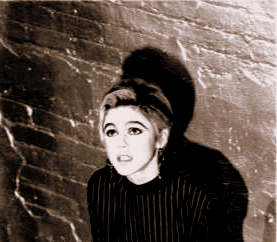
But She Breaks Just Like A Little Girl
At the beginning of May Dylan left for a tour of England. At the same time Warhol took Edie along with Gerard Malanga and Chuck Wein for a gallery show in Paris. Warhol, Edie and Dylan were in Europe at the same time. Whether this influenced Dylan’s rage or not isn’t known but in June shortly after his return he began to vent his rage as he began the composition of Like A Rolling Stone.
Now, Edie’s brother Jonathon told a story he says he got from Edie that she was impregnated by Dylan and carried his baby. There is no time frame for this story. According to Jonathon Edie was determined to have Dylan’s child. As she told it it took four men to hold her down for the abortion to be performed. If true, this is an interesting situation. For one thing abortions were illegal at the time, so a rogue doctor was required. Edie says that she was adamant about having the baby so that she would have had to have been either lured to the doctor or essentially kidnapped. If she resisted and four men, who happened to be in attendance, were required to subdue her then we have a crime of some magnitude.
Bear in mind that all the alleged participants are whacked out of their minds on amphetamines so no one is thinking clearly. At any event Dylan was committed to marry Sara if this is before the wedding or married to her if after. Edie is a celebrity of some distinction who in all likelihood would tell everyone it was Dylan’s love child. What effect this might have on Sara can’t be known but it might possibly have disturbed Dylan’s plans. If he’s like the rest of us he would have held Edie responsible for getting pregnant.
The gist of it is Jonathon Sedgwick says Edie told him the story. It is a possibility, after all if you’re having sex with somebody as she undoubtedly was with Dylan, the possibility of pregnancy is there. But that’s in the background.
During the summer while Dylan stewed Edie and Andy’s star was rising. New York dailies ran stories on the pair that told of Edie drawing Andy into uptown society; and then in late November Life ran its photo essay on Edie. Let’s let Andy recap the period as he told it in his autobiography Popism, recalled in 1980, p. 107:
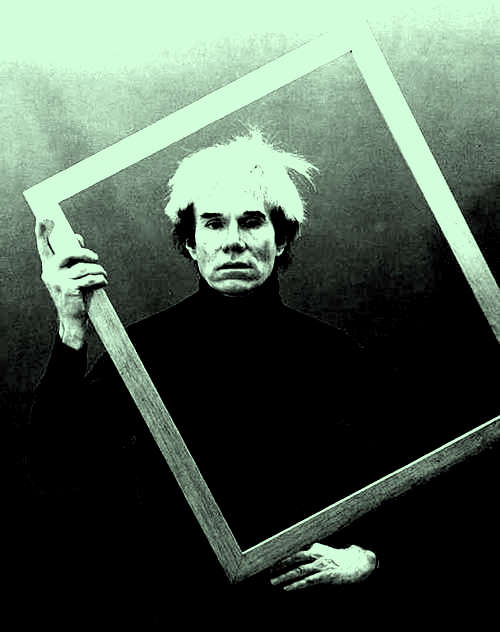
(At the party) There were a few guys in the latest velvets and silk shirts, but not too many- the boys were still mostly in blue jeans and button-down shirts. Edie brought Bob Dylan to the party and they huddled by themselves over in a corner. Dylan was spending a lot of time then up at his manager Al Grossman’s place near Woodstock, and Edie was somehow involved with Grossman too- she said he was going to manage her career.
I’d met Dylan through the MacDougal Street/Kettle Of Fish/Café Rienzi/Hip Bagel/ Café Figaro scene, which Danny Fields claims got started when he and Donald Lyons saw Eric Andersen, they went up and asked if he wanted to be in an Andy Warhol movie. “How many times did we all use that one?” Danny laughed. And after that Eric got interested in Edie and suddenly we were all around the Village together. But I think Edie actually knew Dylan because of Bobby Neuwirth. Bobby was a painter who originally started singing and guitar playing up in Cambridge just to make money to paint with, he told me once. Then he hooked up with Dylan and became part of that group- he was something like Dylan’s road manager-confidant. And Bobby was a friend of Edie’s.
At Sam’s party Dylan was in blue jeans and high-heeled boots and a sports jacket, and his hair was sort of long. He had deep circles under his eyes, and even when he was standing he was all hunched in. He was around twenty-four then and the kids were all just starting to talk and act and dress and swagger like he did. But not many people except Dylan could ever pull that anti-act off- and if he wasn’t in the right mood, he couldn’t either. He was already slightly flashy when I met him, definitely not folksy anymore- I mean, he was wearing satin polka-dot shirts. He’d released Bringing It All Back Home, so he’d already started his rock sound at this point, but he hadn’t played the Newport Folk Festival yet, or Forest Hills, the places where the old-style folk people booed him for going electric, but where the kids started getting really crazy for him. This was just before “Like A Rolling Stone” came out. I liked Dylan, the way he’d created a brilliant new style. He didn’t spend his career doing homage to the past, he had to do things his own way, and that was just what I respected. I even gave him one of my silver Elvis paintings in the days when he was first around. Later on, though, I got paranoid when I heard rumors that he had used the Elvis as a dart board up in the country. When I’d ask, “Why would he do that.” I’d invariably get hearsay answers like “I hear he feels you destroyed Edie,” or “Listen to ‘Like A Rolling Stone’- I think you’re the ‘diplomat on the chrome horse’, man.” I didn’t know exactly what they meant by that- I never listened much to the words of songs- but I got the tenor of what people were saying- that Dylan didn’t like me, that he blamed me for Edie’s drugs.
So it is quite clear from Andy’s recollection that he had known Dylan from the early Spring of ‘65 and that Edie was quite clearly dating him. Whether the pregnancy story comes from this time would be an interesting question. After the release of Highway 61 Revisited Dylan conceived a plan to take Edie away from Andy. It would seem quite clear from the bags under Dylan’s eyes that he was no stranger to drugs.
Perhaps the August Time article on Andy and Edie was the high point of their relationship although the October art exhibit at UPennsylvania was still to come. That show was astonishing in that Warhol was treated like a rock star with apparently the same crowd attending. Of course, Andy’s pal Sam Green had masterfully whipped up enthusiasm with his promotion of the show preceding it by several weeks. The show was probably the first time an artist received such adulation.
Though Andy was enough of a rage that a big crowd would come out for him. I was in attendance at the UOregon lecture in Fall ’67 when Allen Midgette impersonated him and a crowd of about 1500 paid to see him. It isn’t true that Midgette’s impersonation was that good.
I was standing at the end of the line waiting to enter when Midgette and Morrissey were brought in to the elevator just behind me. The guy in front of me asked if that was him.
I was watching Midgette who was a midget, little skinny short guy. There was a superficial resemblance but he seemed too short and he wasn’t wearing a wig. I said, ‘It looks like him but I don’t think it is.’ Midgette raised his eyebrows while Morrissey looked like the jig was up but the admins ignored me.
During the so-called lecture there were several groups of us dispersed throughout the audience loudly debating the issue. They got away with it but later the school learned they had been pranked and demanded their money back. I always thought that was rude. What did they expect of Warhol. He had a reputation. Didn’t the administration read Time?
In September of ‘65 Dylan began to court Edie with promises, one believes, of a good income from movies, recording or such. One is amazed that geniuses like Dylan, Grossman and Neuwirth couldn’t come up with something more inventive to promote Edie.
Edie was torn between two lovers, Andy and Bob. It must have been quite head turning to be the object of contention between the number one celebrity artist of the time and one of the most famous recording and performing acts at the same time as receiving national exposure in Time and Life.
Warhol, even though a homosexual, said that he was as close to in love with Edie as he had been with any other person in his life, he even took her home to meet his mother. Mrs. Warhola who had been urging her son to marry would certainly have taken Edie’s appearance as an indication that Andy was serious about her.
Having committed himself even that far would mean that her receptiveness to Dylan was a crushing rejection of himself as, say, a male object, while her abscontsion to Dylan’s camp would be a traitorous act. Unforgivable in his eyes.
Thus as Edie wavered between Dylan and Andy her life at the Factory became untenable. Andy quietly brought in other superstars including Dylan’s old flame, Nico. Whether conscious of it or not Andy was displacing Edie. She was mocked and reviled. While this was happening at the Factory Edie was evidently taken to Woodstock where Albert Grossman was talking contract to her as her manager. Dylan had had his May gig in England filmed although it would be a while before it was released. There was talk of another film of which Edie would have the starring role. That film apparently wasn’t made for several decades until Dylan finally got it together to make Masked And Anonymous. Perhaps the blond female lead was meant to remind the viewer of Edie.
So, rejected by her family who disapproved of her modeling as well as scorning her association with Warhol, desperately in need of money Edie was in an agonizing mental dilemma. Remember that by this time she was a national figure having appeared in Time and even as her position disintegrated featured in Life, yet she had no money to back her celebrity status. She couldn’t participate in the social life.
We don’t know what Dylan was promising her personally whether he hinted at marriage or stated it but it seems clear from the evidence of One Of Us Must Know (Sooner Or Later) and Most Likely You Go Your Way And I’ll Go Mine that Edie believed Dylan was serious about her.
Dylan married Sara in November of ‘65 secretly but how to keep a secret. Warhol learned of the marriage tauntingly informing Edie of it in December. Edie was incredulous. It follows, and can’t be otherwise, that she confronted Dylan with the alleged fact. This was undoubtedly a moment of triumph for Dylan as he could now reject Edie as he believed she had rejected him in March.
One can imagine Edie demanding of Dylan whether he was with her or Sara. The intense mocking derision of Sooner Or Later when Dylan sings: I couldn’t believe what I did hear- was I leaving with you or her?
At that time Edie’s game was up. Warhol had destroyed her reputation; she could no longer get modeling jobs; she was broke with no hope of a good encore. With a loud sneer Dylan passed her to his sidekick, Bobby Neuwirth then a song to commemorate it: She’s Your Lover Now.
Chapter 8
Down The Trail Of Broken Hearts

Dylan Lifting Off
The motivations of the actors are difficult to determine. However that insofar as any actions relate to the others than the actions of any of the others are interrelated. Thus Andy had Edie and wished to keep her as she was as close to love as he ever came. Perhaps he realized that he would need money to do so while perhaps his various activities from the Factory to filmmaking were keeping him financially strapped so that even if he wished to he couldn’t pay Edie. He had expenses.
Of course today an authenticated Warhol may go for millions up to the one hundred millions paid for the Eight Elvises picture but at the time you could have scooped up several paintings for under ten thousand dollars that might have been worth tens of millions twenty to thirty years on.
Dylan is ridiculed for trading his Presley taken from Warhol for a sofa but at the time that wasn’t necessarily a bad deal depending on the sofa. Warhol would give his actors the choice between a painting and a hundred dollars cash. The Factoryites elected the cash over the picture. So, it’s not like Warhol could just sell a painting anytime he needed to raise the ready. His question was how to raise some cash, he had overhead.
His adversaries were Dylan and Albert Grossman, one a recording artist the other a manager both swimming in cash. There seemed like a pot of gold at the end of that particular rainbow. Andy thought about it and came up with what he thought was a winning formula, and it actually was but he let it slip away.
Taking his cue from Bobby and Albert then Andy decided to manage a band. He also conceived at the same time an artistic light show to create an even more unique and exciting ambience, The Exploding Plastic Inevitable. When the student is ready the teacher will appear. And so it was. Andy’s scouts went looking for a band and came back with a group called the Warlocks who were renamed The Velvet Underground. An SM band extraordinaire whose chief songs were Heroin and Waiting For My Man. Only Andy could have shouted Eureka! at such a find.
The band came straight out of the avant garde. The chief instrumentalist, John Cale, had belonged to the John Cage/La Monte Young musical circle. The ostensible leader, Lou Reed, another survivor of electro-shock therapy, not much of a musician, was the group’s songwriter and lead singer. Between Warhol, the Factory hands and the Velvets they were a Happening of the first order.
Andy now had his band and his concept but no venue. No way to present the package for popular consumption. But, that too appeared when someone suggested a hall called the Dom. Andy rented the hall but, here’s the catch, he didn’t lease it. He cautiously wanted to try it out first. The trial was a major success, wowing hip New York while also bringing in an astonishing amount of cash for a three or four week run. Should have been a hint.
Now, Andy negotiated a recording contract for the Velvet Underground and the band actually recorded its SM anthems Heroin and Waiting For My Man. Remember the Velvets had no history and horrible songs but Andy’s influence was so great this unknown band was given a recording contract. Not so bad. Of course the record wasn’t released until 1967 but it fell flat as one would have expected with an eighteen minute song called Heroin. Also the record was released as Andy Warhol Presents The Velvet Underground. Andy’s credibility wasn’t too great outside NYC and I, for one, looked at the record as a probable joke, especially as the cover was a peel away banana. After listening to the record I knew it was a joke.
A couple years earlier Dylan had been in Greece where he met a German woman going by the name of Nico. They apparently had a short fling and he wrote the song I’ll Keep It With Mine for her. Time passes and paths meander. Having passed through London Nico showed up in New York City at this time where, as chance would have it, she hooked up with Warhol and became a Factory girl. Andy in his usual way foisted her on the Velvets as a chanteuse, Nico And The Velvet Underground, did I mention that before? So, not only did one ask what the hell was a velvet underground but who the hell was Nico? We knew who Andy Warhol was. And how.
Dylan undoubtedly thought of Nico as his, thus he showed up in Warhol’s scene to push songs on Nico with the intent no doubt to woo her away as he had done Edie. The contest between Andy, Bobby and Albert was heating up.
I think it probably came to a head over the Dom. Andy and the Velvets left for a gig in LA and when they returned they attempted to resume their shows at the Dom. Lo and behold they found that Albert Grossman had leased the venue from under them. They had the winning formula but once again no venue. Albert called his place something stupid like The Balloon Farm but under different management it became The Electric Circus. Andy was offered the light show but didn’t take it, but by then light show paraphenalia was being manufactured as a commercial product.
From my point of view the most astonishing and impressive thing Andy ever did was the Exploding Plastic Inevitable. It had a long lasting effect. Of course by this time the whole light show paraphernalia had turned into an industry and anyone could do it.
Toward the end of ‘65 Edie had become peripheral to both Andy and Dylan.
Chapters 9,10,11 and 12 are now up on one post.
Tarzan The Invincible Pt. 9: by Edgar Rice Burroughs
November 1, 2010
A Review
Themes And Variations
The Tarzan Novels Of Edgar Rice Burroughs
#14, Tarzan The Invincible
by
R.E. Prindle
Part 9: Politics
The Entertainer

The Big Bwana
The past is a foreign country; they do things differently there.
–L.P. Hartley- The Go Between
I would like to take a moment to organize the content and direction of the Tarzan oeuvre within the context of Tarzan The Invincible and Tarzan Triumphant.
It is close onto a century now since Edgar Rice Burroughs burst onto the international literary scene. He was not literarily well regarded by the intelligentsia. In the language of the time he wrote adventure novels. They were thought of as sub-literary. In our times after literature has evolved from Burroughs’ time into its various genres that didn’t exist as such back then he would more properly be designated as a fantasy or sci-fi writer.
Even though very great minds wrote ‘adventure’ stories their efforts are usually classified as sub-literary, relegated to the teen section. There has certainly never been a more profound writer than H. Rider Haggard nor is his literary style inferior in any way to the pretensions of literary fiction. Conan Doyle, H.G. Wells, Edgar Rice Burroughs all had a great deal to offer. If it is necessary to say so their work has remained popular while most literary heavyweights of the past are unknown and unread in non-specialist circles today.
Edgar Rice Burroughs is not usually accorded the dignity of being ranked with even the above adventure writers. It pains me to say it but I think the literary consensus is that Burroughs is a semi-literate lightweight trash writer with no other value than ‘entertainment’ or a diversion for men and women who haven’t quite grown up yet. I receive sniggers and raised eyebrows whenever I am forced to admit I write what I hope are scholarly essays on Edgar Rice Burroughs. I have to scramble to find any scrap that will give me a little dignity. But that’s not the way I see it myself. The way I see it is that there are two groups of people who do take Burroughs seriously. The small group of which I am a member that sees something of value lying like a huge diamond in the tall grass and a much larger group of Left-Liberals who quite correctly see Burroughs as a threat to everything they wish to believe.
Burroughs’ publishing career has not been well researched or examined. The research I have done leads me to believe that ERB was exploited while his career was sabotaged by McClurg’s from the start. Although MClurg’s seem to have had no intent to promote his work from the beginning they nevertheless tied him up with a contract that went on forever. Compare it with MGM’s contract twenty years later.
Ten years after ERB’s death with the firm of McClurg’s on the edge of bankruptcy ERB, Inc. had to buy out the contract. This is all so contradictory it boggles the mind. Rather than attempting to maximize sales and therefore profits McClurg’s took the opposite approach of minimizing sales while reducing profits both for themselves and ERB to the lowest possible level. If it hadn’t been for the movies Burroughs’ benefits from his efforts would have been minimal, a fraction of what they should have been.
From 1914 to 1919 politics do not seem to have been involved; there is some other reason for McClurg’s behavior. Then from 1919 to 1924 ERB’s relationship to the Liberal Coalition took form. His Under The Red Flag of 1919 let the Reds know where he stood politically. Also in 1919 he was felt out by the American Jewish Committee for his stance on Semitism. He failed this test by taking an insubordinate stance. So from 1919 to 1924 he seems to have been under attack from the Left. He remained defiant through his Marcia Of The Doorstep with its very reasonable criticism of Semitism but then he seems to have been ovewhelmed by economic pressures that were exacerbated by his own poor decisions.
While McClurg’s should have been supportive of their, or what should have been their walking gold mine, they strangely continued to get in his way.
Burroughs wanted his reissues to be sold at a dollar but G&D and McClurg’s adamantly insisted on 50 cents which gave ERB a very small return. Why McClurg’s should have resisted higher prices that would have doubled their own income must remain a mystery. A dollar doesn’t seem unreasonable to me but there seems to have been the intent to restrict Burroughs’ income as far as possible.
By the late twenties the Liberal Coalition was also actively interfering in Burroughs’ career. There seems to have been a blacklist against making Tarzan movies from 1922 to 1928. As Hollywood was controlled by the Coalition it was possible to restrict Burroughs’ income from movies to zero.
The blacklist was broken in 1927 when Joseph Kennedy’s FBO Studios made a Tarzan film. ERB also began searching for another publishing arrangement. Not finding anything satisfactory he took the last ditch recourse of self-publishing. He established the Burroughs imprint. As this act was taken just as the stock market crash took place the move was fraught with dangers.
Now freed from publishing restraints does it seem like a coincidence that the first title under the Burroughs imprint was Tarzan The Invincible? Or, with its success it was followed by Tarzan Triumphant? Perhaps taking vengeance for 1919’s snub of Under The Red Flag, Tarzan The Invincible is a full scale attack on the Communism in general and Uncle Joe Stalin in particular.
Perhaps also responding to 1924’s rejection of Marcia Of The Doorstep the succeeding novel, Tarzan Triumphant parodies the Jewish religion while making some not so subtle comments about big noses and receding chins. Either book would be difficult for the Liberal Coalition to misunderstand.
While Burroughs would publicly proclaim that he undertook self-publication because he was too greedy for high royalties, certainly tongue in cheek, privately he complained that McClurg’s refused to promote his books, turning them over immediately to reissue houses depriving him of his just royalties. I’m sure the industry understood the irony of his first reason while the second is true.
Tarzan The Invincible is both a defense and a counterattack. Burroughs himself said that defensive wars could never be won. One must take the offensive. With Invincible he was doing just that in what was in fact a literary and cultural war.
The power arrayed against him was terrifying. The Reds could prevent the publication of his books through regular channels. I believe they did. ERB publicly said he took up self-publication in the relentless pursuit of the dollar. What else could he say? One doesn’t go around saying people are out to get you. That’s giving your enemies ammunition.
Ask, is it a coincidence that the first novel under the Burroughs imprint is a direct attack on Liberal Communism? A work that almost certainly would not have been published by any mainstream publisher, including McClurg’s. There isn’t a Freudian in the world who believes in coincidence. I sure don’t. Burroughs launched his publishing effort in 1930 the year after the depression began in 1929. The guy was either crazy or knew something other publishers didn’t wish to acknowledge.
When he met his former publisher, Joe Bray, of McClurg’s afer the crash he sneeringly told Bray who was complaining about business that he was doing very well with the Burroughs imprint and he was. In the height of the depression Burroughs’ books turned a profit. That was a profit no publisher seemed to want. McClurg’s certainly never exploited this literary gold mine.
Was it political? Well, Burroughs’ first publishing venture certainly was. And remember that Tarzan The Invicincible must have caused a reaction. The Reds had to say among themselves omething like ‘Don’t worry we’ll get that bastard yet.’ It had to be, nor did his even more sneering Tarzan Triumphant smooth anything over. Think about this for a moment; let it sink in, this is open warfare. There must have been a retaliation. What was it? The Reds did not cease their campaign of vilification during his lifetime nor have they ceased to this very day nor will they cease until either the Reds or Tarzan is triumphant.
I have discussed Richard Slotkin’s Gunfighter Nation several times previously. Slotkin in his book tries to pin responsibility for the My Lai massacre in Viet Nam on Burroughs. He uses nearly seven hundred pages of fine print to try to prove that My Lai was the inevitable result of Burroughs’ writing. The guy’s got a job at a prestigious university too.
While one can discount the hysteria of Liberal academics heavily no one necessarily attacks someone they do not consider a threat. So what Bibliophiles have to ask themselves is whether there is a basis for the Liberal reaction or not?
I think my analyses of Tarzan books so far shows that Burroughs had a much more serious political intent than is commonly thought. Underneath the buck and wing, the old soft shoe of the entertainer is some very serious thought and reflection. Also his means of expression itself is the very antithesis of Liberalism.

Joseph P. Kennedy
Burroughs’ writing does reflect the sea change in world history noted by such academic analysts as Madison Grant and Lothrop Stoddard. Whether ERB ever read these thinkers or not there is no conflict between their conclusions and his own. ERB is of the same mindset so on that basis Slotkin is correct. None of the three writers is eiher wrong or evil it’s just that Liberals think any opinion but their own is inherently evil in intent and ought to be censored. I say censor the censors.
Liberalism is a religious reaction to the Scientific Consciousness. Their core constituent, Judaism’s sole purpose is to defeat Science and reimpose the religious yoke of absolute conformity to its religious ideal. As I’ve noted, American Liberalism which evolved from the quasi-Hebrew sect of Puritanism is in complete accord. Combined of fundamentalist Christians, who pursue an Old Testament program not much different from the Liberal agenda and the insurgent Moslem fundamentalists, the challenge to Science and all that Burroughs represented is formidable.
The determined effort to plow the concept of Evolution under is a supreme threat to the whole Scientific Consciousness. Of course, the Liberals talk peace, while as the Old Testament proclaims, peace, peace, everyone talks peace but there is no peace. There is no peace anywhere on earth and there never will be.
Burroughs realized that war was inevitable. He decried the disarmement movement and applauded preparedness. In Triumphant he makes the wry comment that the Chicago underworld gunner, Danny Patrick, and his fellow criminals believed in pareparedness, always having a gun with them.
Burroughs was brought into a world of conflict, nor so far has the world disappointed his expectations. As he says the only good defense is a terrific offense. Defensive wars cannot be won. I believe he has been proven right there too. Whether you’re looking at John Carter, Tarzan or any of his protagonists you will see that they never barricade themselves. They are always on the offensive, nor do they hesitate to kill as part of that offense. My god, Tarzan ripped a man’s head off in Ant Men. His Beyond The Farthest Star posits a world of never-ending war. Prefigures the Cold War in its way. Any concept of ‘peace’ is merely a temporary cessation of hostilities; war by other means. The Liberal, Slotkin, may lament such a reality but being a man of ‘peace’ making endless appeasements and concessions to belligerents can end only in disaster to oneself. There aren’t any Americas left to bail civilization out; that possiblility ended with WWII.
I think it fair to say that in today’s war situation versus the Moslem and Mexican invasions ERB would take the aggressive position of throwing them out. As the Shona state explicitly, and believe me the Mexicans and Moslems are no different from them, if you need to hear it from an African there are those who dominate and those who are dominated, which is another way of saying perpetual conflict. Either Americans will dominate Mexicans and Moslems or they will be subservient to them. Need anyone go further than to look at the condition of both Matabele and European in Shonaland? It is a given that Burroughs would rather dominate as Tarzan does at the end of Invincible. If you’ve got to fight you might as well win.
Let us never forget that Burroughs participated in the opening of the frontier and he saw its closing. He lived through the two most devastating wars in history. One must fight or die was the lesson he learned. Tarzan still lives.
And then we must deal with the persistent charge of racism brought against ERB. One finds it difficult to understand what Liberals mean by the term ‘racism.’ There is nothing more inherent in human nature than pride in one’s own kind. In that sense all peoples are racist. What then? Racism is the natural state of affairs. Certainly Liberal heroes like Robert Mugabe and the Shona are as racist as could possibly be, yet, he and they are Liberal heroes. There must be something else going on.
Liberals themselves are responsible for passing racial laws that would have staggered the imagination of Adolf Hitler. Someone who they say they despise. Whereas Hitler called his laws what they were, Liberals are more adept at disguising their intent, still they appropriately call their laws ‘hate’ laws which is exactly what they are. The unspoken assumption behind them is that ‘White’ males ‘hate’ everyone who is neither White nor male, excluding homosexuals, and that they therefore have to be socially isolated and denied.
The apparent belief is that only White males are capable of ‘hating’ while the rest of the world is a loving brother and sisterhood. Of course such a notion leaves the Moslem attack on the Twin Towers unexplainable as well as the Shona extermination of Black brothers like the Matabele.
Hey fellas, it’s the exception, even multiple exception that proves the rule, isn’t it?
I have no doubt that ERB would have been opposed to such ridiculous racial laws no matter what language was used to disguise them. He does seem to have been aware of the dangers of the evolutionary collision of the human species. ERB was an evolutionist. His novels explore evolutionary possiblities in enormous variety and detail. While much of his speculations and jokes seem ridiculous in the light of current knowledge, at the time of composition most if not all of the speculations would have appeared to be not that far fetched, even possible.
At the least Burroughs was on the side of Science at that time when the controversy really raged, while even today over fifty percent of Americans reject evolution in favor of religious explanations, that’s one hundred fifty years after Darwin, while the Moslem invasion of the world is rapidly spreading the slime of superstition over scientific knowledge. As I understand it, it has progressed so far that I could be put in jail in France, Germany or Austria for blaspheming the prophet and Allah by referring to their atavistic religion as ‘the slime of superstition.’
Within just a very few years since 9/11 an intolerant superstition like Moslemsism has overturned the scientific attitude of the Enlightenment. May Georges Chirac burn in hell forever and a day. If President Obama doesn’t back off, him too. Don’t any of these guys listen to what people are saying about them?
As I have noted, by the second decade of the twentieth century more sensitive minds perceived the sea change in the relationship of the various human species. Among these, in fiction, were Sax Rohmer with his Fu Manchu stories and Edgar Rice Burroughs. Prominent in non-fiction were Madison Grant with his Passing Of The Great Race and Lothrop Stoddard ‘s Rising Tide Of Color.
At the risk of repeating myself, I flatter myself that at least some Bibliophiles have been reading my stuff for the last few years, let me place a quote from Darwin here that clearly explains what happens when similar species compete for the same territory on the same economic basis. Darwin: On The Origin Of Species, Chap. III, Para. Struggle For Existence- Struggle for life most severe between individuals and varieties of the same species:
As species of the same genus have usually, but by no means invariably, some similarity in habits and constitution and always in structure, the struggle will generally be more severe between species of the same genus, when they come into competition with each other, than between species of distinct genera. We see this in the recent extension over parts of the United States of one species of swallow having caused the decrease of another species. The recent increase of the missal thrush in parts of Scotland has caused the decrease of the song-thrush. How frequently we hear of one species of rat taking the place of another species under the most different climates! In Russia the small Asiatic cockroach has everywhere driven before it itx great congenor. One species of Charlock will supplant another, and so in other cases. We can dimly see why the competition should be most severe between allied forms, which fill nearly the same place in the economy of nature; but probably in no one case could we precisely say why one species has been victorious over another in the great battle of life.
As we are certain that Burroughs read the Origin Of Species we can be sure that he read the above passage. If it struck him as forcibly as it strikes me then we share the same basic outlook on life and the passage shaped his way of looking at the intra-genus conflict between Homo Sapiens species.
As most agree that Homo Sapiens has an African history of 150K to 200K years, most assume, and this is only an assumption, that the First Born of Homo Sapiens were black because the indigenes of Africa today are black. This may or may not be true, we have no way of knowing, but let us assume it is. There are no people in Africa today who can absolutely trace their descent unbroken from the Last Hominid Predecessor or the first specimen of Homo Sapiens. No one knows what the individual looked like or what his mental constitution was compared to the various African races of today.
It therefore follows that over that course of a very long history peoples have been exterminated to make way for others innumerable times. One wave of rats, one wave of cockroaches after another have succeeded for a moment only to be replaced by another in due time. This is how evolution and nature work. Homo Sapiens is not outside either history or nature and it is foolish to act as though it were. One must understand the natural process and adjust one’s actions to it.
To use the Shona example. The Shona are not indigenous to the soil. At one time they must have exterminated and displaced a predecessor people in what they now consider ‘their’ territory. Beginning about 1830 the Ndebele Zulu as an incoming wave of new people began to exterminate and displace them. There is no difference between this Ndebele invasion of Shonaland and the Moslem and Mexican invasion of the United States. Nature is red in tooth and claw. What can one say?
Had the Matabele, to use the Ndebele’s other name, not been interrupted by another wave of incoming people, the Europeans, (color and race have no real bearing on this issue of Nature and evolution) the Zulus, (the Matabele were Zulus) would have completed the process and today the Shona would be at best a memory. But the succeeding wave of Europeans did come crowding after the Matabele. So far Darwin’s thesis is correct. One species of rat drives out another. Had the Europeans behaved normally they would have exterminated their predecessors and driven them before them.

But then evolution throws in a clinker. The Europeans were evolutionarily more advanced than the Blacks. While the fact that the evolution of the human species is continuing is clear from the visual physical evidence, scientific research has proven it beyond any quibble. So, even though those at the turn of the century lacked the evidence to prove their case they were right. The most obvious evolution is taking place in the brain and it is not taking place in all human species. Only one species is evolving while the others are now sterile. Hard thing to accept but it’s true. Thus Europeans had developed consciences that prevented them from doing what Nature commanded them to do. Instead they set themselves up as a parasite class believing they could control the Blacks without special intermixture forever.
As Burroughs would have noted this put them on the defensive and no defense outlasts a good offense as the Shona have proven. Thus the Shona having been given a breathing space reorganized, regained the initiative and won the dominant position. They are now doing the natural thing exterminating or driving out both the Ndebele Zulu and the Europeans. If you won’t fight or can’t, you lose everything.
So, you have the Darwinian struggle for existence presented to you in plain terms in a human context that cannot be misunderstood. No rats or cockroaches as necessary examples. One must be intolerant of other species. One must be a ‘bigot’ as the Shona are or go under.
Now, not having the will and perhaps no longer having the power to do as Nature commands Europeans attempted to retreat, to withdraw within their own territories. As anyone knows they all come out at the first sign of weakness. One would have to be stupid or utopian not to realize that. As a sonsequence Europe and America are being invaded by the other human species in the Darwinian sense. I mean, folks, they call evolution science. Science means knowing. Anyone who does not act on certain knowledge is foolish or, perhaps, too religious.
However in the first two decades of the twentieth century the Liberal ideology was formed by the weakest and lamest members of Western civilization. Not understanding actual differences between the human species, even denying them on religious grounds, they used conscience as a weapon to first emasculate themselves, and I mean this in the literal sense, and then they shamed those who knew better into silence.
Among those silenced were Grant, Stoddard and Burroughs. Although all these men were initially very influential telling Americans the nature of evolution and its consequences their reputations were dismantled. By the beginning of WWII Grant and Stoddard were regarded as mere ‘racist’ cranks.
It is time to debunk the debunkers. The wheel has turned. Bunk is bunk and shouldn’t be tolerated by anyone.
Burroughs who hadn’t left himself quite so open was provoked into acts of defiance so that sanctions could be applied against him as much as had been done to Henry Ford. Ford is another whose reputation should be rehabilitated much as Khruschev rehabilitated the reputations of various Communists after the death of Stalin. The tool preferred by the Liberal Coalition to discredit someone was the charge of ‘anti-Semitism’, a religious charge be it noted.
The most potent weapon in the Liberal religious armament is the term ‘anti-Semite.’ It is used liberally usually combined with Fascist to defame and control an opponent. Oddly enough they couldn ‘t make it stick on Burroughs. Even Slotkin in Gunfighter Nation only hints that ERB might have anti-Semitic tendencies.
I know it is unpleasant to discuss the Semitic issue but I think the time has come to discuss the issue head on especially as Burroughs was and is involved to a much more serious degree than might be apparent at first blush. The problem of Asia, from whence the Semites come, and Europe has roots in prehistory. Indeed it is a tale of two species. This is one of those eternal conflicts that will not be settled until one side annihilates the other much as the Shona are doing in Zimbabwe to their competitors.
In ancient days both the European Greeks and the Mediterranean Egyptians were in a constant conflict with what the Egyptians referred to as ‘vile Asiatics’, the Greeks as ‘barbarians.’ The Asiatics were vile not on the basis of race but because of the differing view of life of the two species. As regards the Egyptians and the Semites one or the other had to be exterminated. If you know anything of Egyptian history you will know that few true Egyptians still survive. The Semites have exterminated the true Egyptians.
Thus the related species of HSII, the Egyptians and HSIII, the Europeans found the Semitic species unassimilable. We are back to Darwin’s competing species of rats and cockroaches. In the religious terms in which the problem is usually stated one says the animosity is racial or in other words, moral; in scientific terms one says that it is genetic or special. In other words, the problem is much deeper than mere surface appearances. It extends to the genetic development of the brain. The Semite cannot understand as any other human species understands and vice versa.
Thus the current problem in the Sudan between Negroes and Semites which is genetic or biological can only be resolved by the extermination or expulsion of the other. The whole course of this new African conflict can be projected historically and scientifically. It may be delayed but it cannot be stopped. Compare it with the Shona in Zimbabwe. There is no question as to what course the conflict will take.
Why Liberals choose to make an issue of Darfur while they ignore the South Sudan and Zimbabwe and South Africa where genocide is also going on is known only to themselves. It is absolutely necessary to analyze the matter in scientific rather than emotional or religious terms. These are not matters of race but species. The mental capabilities of the Negro, the Semite and the European are different and irreconcilable. An unpleasant fact, perhaps, but true.
The conflict between Europe and Asia or the Semites and Indo-Europeans began according to legend with the Semitic abduction of the European woman Io from Argos. The history of the Mediterranean in ancient times was the perpetual warfare between Europeans and Asiatics or Semites. At one time the Semites seemed to be besting Europeans and then turn about. For the long Hellenic and Roman period the Europeans seemed to have won. But, and this is a big but, they failed to exterminate or drive the Semites out. A very bad mistake.
Two things happened. The Jewish Semites began a peaceful infiltration into Europe which came to a head in the long Jewish Wars that lasted from 66 AD to 135 AD. The Jewish Semites were militarily defeated in their homeland but came to spiritually dominate Europeans through the Judaeo-Catholic religion.
None of this struggle went unobserved by the Semitic peoples of the Arabian penenisula. In the seventh century the Arab or Ishamelite, to use the Jewish term, branch of the Semitic peoples led by Moslem ideology which had its base in Jewish ideology overran North Africa, large parts of the Eastern Mediterranean into the steppes of Asia and over the Hindu Kush into India. More or less following the path of Alexander. The Indo-European Persians, now known as Iranians, were Islamized or Semitized which they remain today. They were stultified hence their ridiculous position today.
The southerly Egyptians, the native Copts, are on the verge of extinction or what the modern world fondly describes as genocide. There are few surviving true Egyptians today.
Thus the Hellenic-Roman hegemony was reversed.
The Semitic Arab incursion into Europe which was a continuation of the multi-thousand year conflict between Europeans and Semites was defeated by Charles the Hammer at Tours in the heart of Europe. Over the next nearly thousand years the Moslems were expelled from Western Europe but they advanced in Eastern Europe.
From the expulsion of the Moors from Spain in 1492 the southern Med if not the Med itself was controlled by the Barbary pirates. During that period Europeans supinely submitted to a slave trade that greatly resembled that of sub-Saharan Africa. Even as Negroes were being transported to the Americas countless Europeans were captured on European soil, transported to Africa and enslaved. So, the Africans have no cause to complain of Europeans. Some people whine some people don’t.
No one European State was strong enough or determined enough to clear the seas of the Moslems while they were unable to concert a united attack. The piracy and enslavement continued until France annexed Algeria in 1830. Rightfully so.
In Darwinian terms it is quite clear that the struggle was one of the replacement of one population by another. Thus when France conquered Algeria it behove them to either exterminate or drive out the existing population replacing it with Europeans. They ought to have relentlessly warred on every North African people until North Africa was once again European.
The attempt to coexist was a defensive war that could only end in defeat. The defeat was adjudicated by General De Gaulle in the nineteen sixties. The French stupidly and erroneously thought the war was over, but in reality the momentum shifted once again to the Semites.
As noted by Lothrop Stoddard the Wahabi Moslems went onto the offensive. No longer able to comptete militarily with Europeans they resorted to guerilla warfare, something the West now chooses to call terrorism, combined with an infiltration of Europe using their reproductive capabilities as a weapon. The situation now is a replica of the 3000 BC infiltration of Sumer. Hence the balance of power of the age old war between the Semites of Asia and Europeans has once again shifted toward the Asiatics.
As the Libyan, Moamar Qadaffi gloated in May 2006 there are fifty million Moslems in Europe. Europeans have the option of fighting or submitting. He knows whereof he speaks. As the war will now be conducted on European soil with the certain loss of the entire cultural superstructure of the last two thousand years there seems little chance of any European resistance. Notre Dame will be renamed and become a mosque.
If there is resistance then Burroughs’ prophecy of a flattened Europe turned Black over the centuries is a distinct, nay, certain probability. In addition to their submission to the Wahabi Arabs, Europeans seem incapable of resisting the Black Moselm invasion from sub-Saharan Africa. Thus once Blacks and Moslems have the strength they will undoubtedly follow the ancient plan of killing the men and keeping the women. Need I point to Haiti after the slave rebellion as an example? Within three or four generations both Arabs and Europeans will be absorbed into Black Africa.
Any discussion of the problem is now impossible in Europe as the blackest censorship has been imposed on dissent. Astonishing that the enlightenment could disappear just like that, isn’t it? Anyone who dissents from the Semitic program is liable to imporisonment, heavy fines or both. The term Semite includes both the Jewish and Arab branches.
Once the Moslem are powerful enough to direct the European military it will mean the end of Israel as that State will be completely encircled by Moslem powers with irresistable might and control of all land, sea, air and satellite communications.
With European technological war materiel at their disposal the Moslems will be able to isolate the United States by depriving it of oil or with the huge and growing population in the US sabotage any war effort if threatened. Let’s have a round of applause for the brilliant leadership of Chirac, Blair, Bush and Obama not to mention the morons of the US Senate.
Burroughs foresaw the results of the West’s waffling before the Communists, the Moslems and perhaps the Africans but he was prevented from examining the problems too openly for fear of bringing the Liberal Coalition with its charges of anti-Semitism down on his head. Both he and Henry Ford were having a tough fight for survival. W.R. Hearst.
Burroughs had already called attention to himself by questioning a survey sent him by the American Jewish Committee in 1919. It seems apparent the survey drew his attention to Jewish matters which he had ignored up till that time. This resulted in the character of Bluber in Tarzan And The Golden Lion as well as several characters in 1924’s Marcia Of The Doorstep. As the AJC would have considered these characterizations ‘anti-Semitic’ the publication of the book was prohibited. Censored as it were.
Probably as a result of questioning the AJC survey he was put under surveillance. While a number of movies had been made from his books, in 1921 movie making from his novels ceased reducing his income potential drastically at a very critical time in his finances. For whatever reason there was a hiatus in the production of Tarzan films that lasted until 1928. It is only fair to assume that Tarzan had not lost his box office appeal which is the usual Hollywood cover for blacklisting. One also imagines that Burroughs would have leapt at any movie money. Indeed, in 1922 the Stern Bros. and Louis Jacobs, a trio of Jewish movie makers, tied up the rights to Jungle Tales Of Tarzan and Jewels of Opar for $40,000. This was a very decent sum to spend yet the movie makers made no effort make the movies, they were content to tie up the titles. Whether Burroughs was being disciplined for being ‘anti-Semitic’ or not can’t be determined for certain at this time.

Richard Slotkin
Hollywood was notorious for being a Jewish industry. W.R. Hearst was one of the few goys making movies. D.W. Griffith was being increasingly marginalized. In the interim then, the noted ‘anti-Semite’ Joseph P. Kennedy, the father of the future president John F. Kennedy, formed or bought FBO Studios. The story of this multi-cultural struggle for dominance has never been adequately researched for obvious reasons, but what with the Ford conflict with the Semitic Jewish culture flaring in the foreground it is not unlikely that there was a great deal of maneuvering in the background. It will be noted that when RKO was formed which incorporated FBO Studios the R for Radio came from RCA and KO for Keith Orpheum were retained while FBO was deleted. The R and KO were Jewish concerns while FBO had been a great goyish disrupter.
Nevertheless, as Burroughs was blacklisted by Hollywood which the Hollywood historian Neal Gabler describes as a Jewish empire, it is noteworthy that an ‘anti-Semite’ broke the blacklist making Tarzan movies again. It would have been the equivalent of Dalton Trumbo being allowed to script movies under his own name again in the 1960s.
The blacklist broken, the Stern Bros. and Jacobs then decided in 1928 to exercise their rights to the two Tarzan novels to release Tarzan The Tiger and Tarzan The Mighty. Calling Tarzan a tiger may have been a slam at Burroughs who erroneously introduced tigers into Africa in the magazine version of Tarzan Of The Apes.
The silent era of movies over, MGM produced the first talkie of Tarzan in 1932. Watch the dates.
Now, in both Tarzan The Invincible and Tarzan Triumphant Burroughs takes undisguised hits at Communism, pointing fingers and naming names; in Triumphant he continues his open attack on Communism and covertly ridicules the Jews in his portrayal of Midians with their enormous noses and receding chins. Both attributes are well known caricatures of Jews. Was this a gratuitous insult or was he responding to insults to himself?
If he had been given courage by the presence of Joseph Kennedy and FBO Studios then he might have relaxed his vigilance a little. However his open and blatant attack would not have been unresented by Judaeo-Communists. While Hollywood had always been run by Jews, by 1930 Communists had also made much more serious inroads than is usually admitted. In other words, ERB’s well being in this multi-cultural war zone depended on his sworn enemies. As both a goy and counter-revolutionary ERB was an odd man out. It could not possibly be any other way.
There can be no question that he would have to be gotten for what could only be seen as egregious insults to both Communists and Jews. In fact, the two were nearly one. The question then was how best to get Burroughs short of outright assassination. The blacklist had already been broken by Kennedy but possible a movie could be made to make ERB’s great creation ridiculous. Destroy him in that way, you see.
Thanks to technological marvels like DVDs it is now possible to study old movies at will. I have a sets of most of the films. I have viewed Tarzan Of The Apes a number of times.
Bearing in mind that Burroughs was in a struggle with both Communists and Semites as exemplified in 1930’s Tarzan The Invincible and 1931’s Tarzan Triumphant while being surreptitiously listed as an anti-Semite by the American Jewish Committee, I think it worthwhile to speculate on the intent of Louis B. Mayer and Irving Thalberg’s productions.
Having watched the movie a number of times while bearing books Invincible and Triumphant in mind I have come to the conclusion that the movie’s ulterior motive was an attempt to ridicule the Big Bwana into oblivion. We all know that ridicule is a most effective weapon, especially when it can’t be answered. It was undoubtedly thought Tarzan could be destroyed in this manner.
MGM did not negotiate to obtain rights to any particular story but, and this is important, they bought the right to use the characters as they thought fit. Thus as the movie poster picture in Bibliophile David Fury’s book Kings Of The Jungle on p.63 published by McFarland, it is stated that the movie is ‘based on the characters created by Edgar Rice Burroughs.’ In other words, this is not the Tarzan of Invincible and Triumphant. Oh no, no. This is Tarzan The Defeated, Tarzan The Buffoon.
The vision is no longer Tarzan Of The Apes but Tarzan, The Ape Man. A subtle but important shift in emphasis. Tarzan is no longer a man raised among apes he is a man who is an ape. The fabulous brain of Tarzan which allowed him to master reading and writing with the aid of only a picture book, that allowed him to learn new languages instantly has now been replaced by an inarticulate moron who does five minutes of ‘me Tarzan, you Jane.’
This was free love in the jungle between a hunk and a babe. Apparently it slipped by unnoticed at the time until it was picked up thirty years later by an astute librarian. Tarzan and Jane are no longer married in the movies, Jane just began cohabiting with Tarzan because he was such a handsome hunk. Fortunately she, he, or both were infertile. Thus Tarzan was subtly defamed, his universality removed. His audience constricted by that much.
Having slipped this bit past the censors, as incredible as it may seem, in the next movie, Tarzan And His Mate, not wife but mate, you know, a live in, MGM included the famous nude swimming scene that did not get past the censors.
Both these items would have had the effect of defaming Tarzan and constricting his audience. A certain type of viewer would be offended by these items and refuse to see the movies while another type would gratified by such items and drawn to the movies but lower the quality of the audience moving Tarzan toward porn. Thus by degrees Tarzan movies would gain the reputation as porn flicks. Porn is porn even if it is Tarzan so you aren’t going to let your kids eat popcorn in front of dirty movies nor are legitimate first run theatres going to show them. At least, not then.
Thus MGM was well on their way to making Tarzan porn before the censors forced a change in plan. There was nothing Burroughs could have done about this as he, or rather his office manager signed away all his rights to his character.
The MGM poster then portrays Tarzan as a criminal freak:
Mothered by an ape- He knew only the law of the jungle- to seize what he wanted.
The ‘to seize’ is in attention grabbing italics.
Mothered by an ape is ambiguous and meant to be repulsive. It could mean that Tarzan was fathered by a human on an ape or it could be so obscure as to be meaningless. If you were familiar with the books you could probably guess what was intended but if you weren’t who knows what it could mean to you. Remember the first volume, Tarzan Of The Apes, was no longer in print even in 1930 so the original story couldn’t even be bought. The later volumes don’t recapitulate his birth and raising so there may have been actually few who knew the whole story. We are led to believe that the MGM Tarzan is completely lacking in morality. If he wants something he just steals it. Not the Tarzan I would want to emulate.
The director was W.S. Van Dyke who had just had a major success with his Trader Horn, another African picture. That one had been phenomenally successful and Tarzan is billed as “Another Miracle Picture directed by W.S. Van Dyke, Creator Of “Trader Horn.” Van Dyke was certainly not the creator of Trader Horn as the movie was adapted from the book by Trader horn, there was such a man, thus in a way Tarzan, The Ape Man is subordinated to W.S. Van Dyke and Trader Horn.
What is called ‘the adaptation’ is done by someone called Cyril Hume. As the dialogue was written by Ivor Novello I presume that both the storyline and the alterations to Tarzan’s character can possibly be attributed to Hume.
There is little on Hume on the internet but a New York Times review that was cribbed from All Movie Guide. It says ‘…During the 1920s, Hume proved a worthy rival of Fitzgerald with such lost generation novels as Wife Of The Centaur and Cruel Fellowship.’ An interesting couple of titles in relation to this Tarzan movie. The review then goes on to say ‘…During the 1930s , he was the principal writer of MGM’s “Tarzan ” films, bringing prestige to these escapist exercises by treating them with dignity and respect…’ That’s one man’s opinion anyway.
As we all know the attributed movie writer frequently has very little to do with the finished script so we will assume that Hume’s script went through many revisions by many minds with perhaps different agendas than his. One wonders why Ivor Novello, who was a well known playwright of the time was broght in to do dialogue. Apart from the Tarzan yell, with which Novello is given no connection, that seems to be the major portion of the dialogue along with the famous ‘Tarzan-Jane’ sequence, there seems to be little dialog that an amateur couldn’t have written.
The net result is a movie that seriously demeans Tarzan as conceived and portrayed over fifteen novels. In order for their ridicule to be successful MGM did have to produce a movie that someone would go see. They were apparently successful beyond their wildest hopes or fears as the movie was described as a ‘surprise’ hit and an enormous grosser. Now MGM was stuck with the character.
If it was a surprise hit then one can discount the publicity that the movie cost a million dollars to produce. There are no well-known stars in the movie, while much of it is footage left over from Trader Horn which had already been amortized with the rest being shot on lot. If the movie cost MGM a quarter million I would still be astonished.
In their attempt to ridicule Tarzan they were too clever by half. The character of Tarzan may not have that of the books but audiences still found it satisfying, especially the yell.
Those of us who have read the books have always been uneasy with those MGM movies although Johnny Weismuller was perfectly cast in the role of the Ape Man.
So, while the NYT reviewer may believe Cyril Hume brought ‘prestige to these escapist exercises by treating them with dignity and respect’ there are dissenting opinions other than mine.
Another interpretation was that of the first movie Tarzan, Elmo Lincoln, who commented to ERB “the house seemed to think it was a comedy. Why do they portray Tarzan without dignity?…with the right treatment and portrayal, Tarzan could a romantic, thrilling character, and still have the sympathy of his audience…I don’t like to see him treated as a clown…”
Elmo Lincoln and I both see the MGM version in the same light, while I have to question the interpretation of the NYTimes writer. I think Lincoln was right, the movie was a comedic effort meant to defame the persona of ERB’s great creation and thus destroy Edgar Rice Burroughs. After all ERB, Inc.’s publishing arm was dependent on sales of Tarzan’s.
By 1932 the troublesome ERB had learned which side his bread was buttered on so he publicly endorsed the MGM movies, after all this was big money, bigger than any other souces of income combined. It may be said then that just as Henry Ford recanted and apologized for offending the Jewish Cultural entity in the ongoing culture wars so Burroughs bent the knee to Liberal suzerainty.
As ERBzine reports, privately Burroughs had other thoughts:
Daughter Joan Burroughs revealed: “Dad found it hard to reconcile himself to the movie versions of the Tarzan stories and never did understand the movie Tarzan. He wanted Tarzan to speak like an educated Englishman instead of grunting. One time we saw a movie together and after it was over, although the audience seemed enthusiastic, my father remained in his seat and kept shaking his head sadly.”
So Burroughs and Lincoln both resented the screen adaptation based on the Tarzan ERB had created.
There was nothing Burroughs could do about it. His rights had been signed away by his agent Ralph Rothmund. Rothmund must have been aware of the tension between Burroughs, Communists and Jews, yet he essentially gave the courthouse away. He placed Burroughs in the hands of his enemies. He gave Tarzan to MGM stripping Burroughs of his only weapon and asset. Why? Did he contact MGM or did MGM contact him? Why did he negotiate behind Burroughs’ back presenting him with a fait accompli? Why not tell his employer, ‘I’ve got this deal worked out with MGM. Do you want to take it?’
Presented instead with a check, Our Man seduced by vain desires went out and bought five Packard automobiles. Ah, ERB…
Did he repent of this deal? I believe so. Trapped by the contract his only way of retaliation was a futile one through his novels.

Louis B. Mayer
Can it be a coincidence that Tarzan And The Lion Man written over February to May of 1933, published by ERB, Inc. in book form on September 1, 1934 (Septimus Favonius BB#55 p. 34) ridiculed MGM, Irving Thalberg and Trader Horn. The second MGM movie Tarzan And His Mate was released on April 16, 1934. Bear these two dates in mind, the movie was released five months before the book leaving time for a revision of the book text.
Certainly severely wounded by the MGM adaptation of Tarzan Burroughs had been beaten. He had lost the culture war between himself, the Communists and the Jews. Having lost control of his character in the vital field of movies his only recourse was to lampoon MGM in a book which he did in Tarzan And The Lion Man. Strangely his illustrator St. John chose this book to experiment with an unrepresentative cover that was believed to have killed sales. Thus this magnficent achievement was undersold.
Lion Man recounts W.S. Van Dyke’s movie making in Africa, telling it in a ridiculing manner. MGM’s version of Tarzan is portrayed by a character named Stanley Obroski, perhaps a takeoff on Johnny Weismuller, who is a pale imitation of the real Tarzan. Burroughs makes a careful comparison showing what a joke the MGM Tarzan was. In a fit of pique he kills the fake Lion Man off.
One of the more interesting characters is Balza- The Golden Girl. After escaping from the Valley of Diamonds she joins the movie company where she cavorts about in the nude. This scene has baffled me but if one remembers that in Tarzan And His Mate Maureen O’ Sullivan is stripped by Tarzan followed by the nude swimming scene, the novel makes sense. ERB had seen the movie in April of 1934 possibly an earlier studio screening and incorporated the changes in his text for the 9/1/34 release date.
So his retort against MGM while ineffective made for what must rank as one of his very best efforts.
Just as an aside note that while this struggle was going on in Hollywood Adolf Hitler became Chancellor of Germany in January of 1933; Franklin Delano Roosevelt became President of the United States in March of ’33.
One of FDR’s first deeds was to recogtnize the USSR regime of Joseph Stalin. In late 1933 a chubby little ex-draper’s assistant acted as a go-between for Stalin and Roosevelt. Having first visited Stalin, H.G. Wells carried his messages to Roosevelt. Thus under the very eyes of the world some very important communications were passed back and forth. Nineteen thirty-three was also the year the former draper’s assistant wrote his Shape Of Things To Come.
These things can’t be stated with absolute certainty but the character of God– the formerly handsome Englishman in Lion Man, is certainly based on the pompous little H.G. Wells.
Thus while I at first objected to Slotkin’s accusations against ERB, barring the My Lai stuff, I think I am beginning to see ERB’s relation to the cultural wars between Communists, Jews, Liberals and Conservatives. there is more going on here than meets the eye.
But let us look at some of the religous aspects of this interesting situation. The religious war between Semitism and the Astrological Religion as represented by Tarzan Of The Apes.

Weissmuller As Tarzan
A Review: Pt. 8, Tarzan The Invincible by Edgar Rice Burroughs
October 31, 2010
A Review
Themes And Variations
The Tarzan Novels Of Edgar Rice Burroughs
by
R.E. Prindle
Part 8
Edgar Rice Burroughs In Idaho
Red, White And Black
Now we get to the ostensible story which is the Red assault on Italian Somaliland. If few people today understand the partition of Africa by the European powers it might be well to recap the situation a little. The two big players were France and England with Spain and Portugal picking up some early real estate to be later joined by the bit players, Germany and Italy. The German possessions were stripped from them after the Great War and given to England.
This novel takes place in the Horn Of Africa or the Northeast corner facing the Arabian Peninsula and the Indian Ocean. The area contained Ethiopia otherwise known as Abyssinia, the only independent State in Africa save Liberia whose independence was guaranteed by the United States.
Ethiopia was bordered by Italian Eritrea and French and British Somaliland on the North, Italian Somaliland on the East, Kenya and Uganda on the South and Anglo-Egyptian Sudan on the West.
The Galla tribe with whom ERB became fascinated had been driven about by the Somals occupying lands mostly in the interior of Ethiopia after the manner of the Middle Eastern Kurds, where they were constantly in conflict with the Ethiopians and the Somals on the border. ERB deals with the Ethiopian-Galla situation in Tarzan And The Mad Man.
The Red camp is located in Ethiopia several days march from the border of Italian Somaliland. Opar which is nearby must now be located in Ethiopia.
The Reds have assembled an international cast of characters or in other words a multi-cultural outfit. Their multi-cultural nature will prove to be a liability rather than an asset as indeed it must in real life.
The organizers are Russian or Soviet Communists of whom there are four, Peter Zveri, the leader, Zora Drinov, Paul Ivitch and Michael Dorsky. They are joined by an American agent acting as a double agent, Wayne Colt.
Burroughs casually mentions that the expedition was put together in the United States by Zveri operating on both coasts. As Burroughs is writing a novel he wisely declines to preach or analyze, he is, as he says, an entertainer. As I who do function as an analyst pointed out in Marcia Of The Doorstep that the US had been used as a safe haven by every conspiratiorial revolutionary group on the planet. Burroughs is noting the same thing but only in passing as part of the story. If one is not attuned to such details they slip right by without significance as do the dots and dashes of the Morse code to the uninitiated.
The group is also composed of a Filipino Red, Antonio Mori and a Mexican revolutionary Miguel Romero. These people form the core group. Affiliated with them are the Moslem Arabs of Abu Batn who appear to have been recruited from the Mahgreb, perhaps Algeria, where some of Tarzan’s early adventures occurred. They do not appear to be Black Arabs of the Horn. While appearing to be Communists they remain Moslem Arabs whose real motive is to drive the Christians or Nasrany as they call them out of Africa. This means Whites of no or any religious affiliation.
Zveri has also patched on the Bantu tribe of Kitembo, the Basembos. This is because Kitembo has actually been to Opar, the only member of their party who has. Kitembo doesn’t appear to be a true Communist but is a former powerful chief from Kenya who had been displaced by the British. He comes from a place on Lake Victoria which should make him a Luo but for reasons perhaps not pertinent I tend to think of him as Kikiyu probably partly based on someone like Jomo Kenyatta who already had notoriety by 1930 although Kitembo’s history is close that that of the Unyoro Chief Kaba Rega whose story Burroughs was definitely familiar with from the memoirs of Samuel Baker.
Kitembo is interested only in recovering his past dignity augmented ten fold. All that becomes irrelevant when he deigns to lay his hands on Zora.
We should remember that Burroughs is writing in 1930 not 2010, so many things that are more or less clear to us now were undetermined at that time while understandings and motivations were quite different then from today and as those of today will be fifty years hence.
For one thing Africa was still a land of mystery where one wouldn’t have been too surprised if someone had discovered a lost civilization, a strange anthropoid- perhaps the so-called Missing Link, very real to the imagination at the time- and any number of things. One of the great losses of my childhood was the recognition that Africa was known; that nothing truly wonderful would be discovered in the world again. All was now cataloguing.
Abercrombie and Fitch who had built a very lucrative business outfitting ‘explorers’ or safaries, having not yet turned to teen porn, lost its raison d’etre as did all the ‘Explorer’ clubs where grown men sat around in khaki Safari gear drinking and dreaming. All that was left for me and my generation was Trader Vic’s and he’s gone now. The miracle is that the National Geographic found a way to survive when they could no longer portray exotic, naked, painted savages with necks supported by copper rings, plates in the upper lip and that. Now of course they don’t have to go as far for such exotica as Whites imitating the Africans sport massive tattooing suported by all kinds of nose rings and body piercings.
So, in 1930 Burroughs’ story still had a degree of probability. Especially in the way he joined contemporary politics to nineteenth century Africa. In one reads closely this is quite a story, a true tour de force.
Not only do the Arabs and the Bantus have their personal motivations apart from Communism, so we learn does Peter Zveri. The streak of individualism is not extinct in his collective mind, he sees the opportunity to make himself Emperor of Africa in Tarzan’s stead. Apparently Soviet intelligence has been keeping close tabs on the doings of the Big Ape Man because Zveri knows of Tarzan’s ‘fool dirigible trip’ believing him absent from Africa and possibly dead as no one has heard from him for the past year. This was before Google Alerts too.
Indeed Tarzan drops as from the clouds into a clearing filled with great apes as the story begins. Just coincidentally Jad-Bal-Ja and Nkima happen to be in this exact part of Tarzan’s estate of Africa at the same time. Zveri then is very disappointed to learn that his nemesis is back. As well he might because he has engaged himself mano a mano with the Big Bwana and Africa, believe it or not, is not big enough for both of them.
In his examination of Communism, multi-culturalism and human nature Burroughs is at his incisive best. Remember few of these stories go over a hundred ninety-two paperback pages. These are tremendously condensed stories. They’re somewhat like a zipped file with megabytes compressed into kilobytes. To really get the stories you have to unzip them and let them expand in y9ur mind. Don’t be deceived by their seeming simplicity.
The various cultures involved in this plot are only loosely held together by Communist ideology. The plot eventually falls apart because the cultures see through the phoniness of the Communist ideal. Zveri himself isn’t even that sincere a Communist as he intends to use the gold of Opar to make himself a third world power as Emperor of Africa. In the end Communism is a fatuous dream,whether utopian or dystopian is up to you.
Burroughs does not emphasize his opinions, he merely tells his story. My conclusions as to his intent are derived from the result of the story. In the end Communism fails because of internal contradictions while the big Bwana is invincible retaining his position as Guardian or Emperor of Africa. Not one world of preachment.
Wayne Colt in his rather absurd trek across Africa arrives too late for the first assault on Opar. He does happen into camp in time to spot the shaking tent and rescue Zora from Jafar, the Indian Communist, with Tarzan’s help. After killing Jafar Tarzan turns his steps to Opar traveling in a bee-line through the Middle Terraces he handily arrives before the first expedition which had left some time before him.
Let me take a moment to discuss Burroughs’ Africa. In the first place these stories are combination dreamscape, fairy tale and mythmaking. His Africa bears no more relation to this planet than Arthur’s Camelot bore to Medieval England. I find it tiresome for scholars to try to find the ‘real’ history of Arthur’s career. Arthur may have a loose connection to real historical events but the story, a great one, is a projection of psychological needs. There isn’t any such thing as a Holy Grail. No knights ever went in search of it.
In the same way Burroughs’ Africa is a psychological projection hopefully leading to his Holy Grail. There are no lower, middle or upper terraces in a nearly uniform jungle in the real Africa. Anyone who tries to find them will be severely disappointed. Such things are merely inventions of Burroughs’ dream world. I am glad he shared it with me, you and the millions.
The frequency with which the characters run into each other way out there is also impossible but in Burroughs’ dreamscape, his fairy tale, his myth, it happens all the time. There is no sense in arguing the impossibility. If you find it too offensive to your sensibilities then the oeuvre is not for you. One just accepts that these are fairy tales and in fairy tales things like this happen all the time. It’s a fantasy, fantastic things go on.
I try to fathom the psychological intent so while I may smile and jest at some impossible details it is only at the naive dream details and not the serious intent of the story. In our time these stories would have been taken at warp speed to another galaxy where in that context all things would be possible. But, that would be pure fiction hence unbelievable. I never did take Star Trek seriously, in fact, I refused to voluntarily watch it. Burroughs’ Africa can still be located on a map of the world connecting psychological reality with temporal reality in a very satisfying blend.
So, as this series is a roman a fleuve or River Story, Tarzan ruminates on his previous visits to Opar as he strides across the hot dusty desert, where the rain never falls, toward the fabled gold and red domes and turrets in the distance.
La’s love for him which began in Return Of Tarzan has caused dissension between her and her people. She has retained her position only through the active intervention of Tarzan. Defeating the revolution that had ousted her in Tarzan And The Golden Lion the big Bwana had replaced her on the throne guarded by the Bolgani of the Valley of Diamonds and the semi-human Gomangani. It is interesting to not that the Oparian revolution occurred after the Russian. Might be a connection.
As he approaches the city he believes that the Oparians appreciated his defeat of Cadj and that they love and respect him so that his reunion with them will be joyous. Not so. In the interim the Oparians who hate and resent Tarzan have deposed La putting her in a foul prison in the vast underground maze of dungeons of Opar. Passing back through the narrow cleft, bounding up the stairs, Tarzan is surprised to find himself attacked by the howling Frightful Men. The Man of the Steel Pate receives another frightful blow which lays him out.
He wakes to find himself the captive of Oah and Dooth. He is placed in a cell the details of which I have already related above.
I haven’t plumbed the signficance of Tarzan and La being imprisoned together while the city is attacked by the Communists unless the dreamworld of Opar represents a sanctuary that is now invaded in the attempt to destroy Burroughs’s literary career. In that event it might be necessary for the Anima and Animus to be together. This story also harks back to the invasion of the Emerald City in Baum’s story The Emerald City Of Oz.
In any event the various strange screams and noises from within Opar unsettle the superstitious Blacks and Arabs who lose their nerve refusing to enter Opar. The Blacks believe in spirits and the Arabs in jinns both of which they fear more than living men. Thus Burroughs is contemptuous of both cultures.
Zveri and his Russians are too cowardly to enter themselves. The only one with the nerve is the Mexican Miguel Romero who gets very good reviews from ERB. Miguel retreats in the the face of the horde of Frightful Men but he is very cool about it.
Returning to camp the Arabs are now disaffected having words with Zveri. The arrival of Colt and Mori puts a little heart into Zveri so that a second attempt on Opar is determined leaving the Arabs to guard the camp.
Tarzan and La escape from Opar between the two assaults becoming subsequently separated. Zveri takes the Blacks and Communists with him. Being left behind dissolves the Arab affinity with the Cause. Never good Communists, being interested only in ejecting the Nasrani from Africa, they decide to disappear into the desert.
About this time La wanders into camp. Sacking the camp, Abu Batn and his Arabs leave with the two women whose value in the North he knows full well. The Arabs are out of the story. The Communist coalition is breaking up. As Burroughs points out the goals of the two are not the same.
Back in Opar Zveri finds it impossible to force his Africans into service while he and his Russians remain cowards. Colt behaving bravely, as only an American can, along with Miguel Romero penetrates to the sanctuary where they are faced by the Frightful Men. Perhaps in a comment on American tactics Colt fires over the heads of the Oparians while the Mexican, Romero, fires directly into the mob.
Why when Americans go to war they are reluctant to do the dirty work of killing is beyond me. The reluctance to engage the enemy in Viet Nam cost us that war. The reluctance to do what we have to do in Iraq is costing us that war. Perhaps we think we can hide behind a wall of steel as our technology wars for us while we imagine we can remain safe. Our punishment of our own soldiers for merely humiliating the enemy must be unique in the annals of warfare. And they wonder why no one wants to join the Army.
Romero who shoots to kill is able to escape while the pussy footing Colt is downed by a thrown club and captured. A thrown club! Once again a Burroughs’ surrogate takes a blow to the head, but how does one survive a thrown club?
Just as Colt and Zora exchange partners in the jungle so now Colt takes Tarzan’s place in jail. Here, he is befriended by a nubile beauty, Nao, rather than as La did Tarzan and, pephaps as Florence was doing for ERB. Afer killing to free him Nao is left behind as Colt disappears into the dusty desert. Not a very thoughtful thing to do as Nao would certainly be discovered.
Zveri returns to his devastated camp to be handed a letter notifying him that Colt is a double agent. Abandoning any thoughts of Opar the Communists concentrate on their mission which is the simulated invasion of Italian Somaliland.
As they are about to leave Tarzan returns Zora to camp. Coldly dropping her off without a word he climbs onto a branch to spy on the conspirators. His leopard skin shorts are mistaken for the real thing. Here we go again. the shot at the imagined leopard grazes the Big Guy’s skull putting him out of commission for a full day. So that is at least two knockouts for Burroughs’ surrogates plus this concussion. Tarzan’s frequent lapses of attention become more intelligible.
Zveri wants to take advantage of his opportunity and kill Tarzan but Zora intervenes so Tarzan is bound which leads to next day’s episode when Dorsky threatens him only to be annihilated by Tantor.
The charming fairy tale between Nkima, Tantor, Tarzan and the Hyena then takes place which is a repeat of the same scene in Jewels Of Opar.
Nkima then goes in search of the Faithful Waziri to aid Tarzan while the Big Fella begins his campaign of terror against the Communist conspirators.
His strategy is to separate Kitembo and his Basembos from Zveri and his Communists. To do this he plays on their superstitious natures. A mysterious voice comes down from the trees, in other words, the sky, telling them to go back. In the meantime Little Nkima has recruited the Faithful Waziri who arrive to help out not with spears and bows and arrows but modern repeating rifles. Arranging themselves in front of the advancing Communists hidden in the tall grass -this stuff grows six feet high- they give the appearance of being many more than they are. Burroughs doesn’t make it clear how they can see the Communists through the grass while the Communists can’t see them but as Tarzan usually navigates pretty well even in total darkness I’m probably making a bigger problem out of it than it is.
Zveri does a rapid advance to the rear which act of cowardice completely destroys his credibility. Dorsky is dead while Romera and Mori renounce their Communism. Zora reveals she’s only in it for the revenge because Zveri had murdered her family twelve years earlier in the Revolution while, as we are aware, Colt is an American agent. This leaves only Zweri and Ivitch who I believe represent Frank Martin and R. H. Patchin, ERB’s old nemeses in Chicago.
Returning to camp Zveri spots Wayne Colt. Calling him a traitor he fires point blank missing while the bullet grazes Colt’s side without breaking the skin. That was a close one. Before Zveri can fire again he is brought down from behind by Zora. Burroughs replays scenes like this over and over with different variations. Just as the constant bashings on the head his surrogates take reflect his own experience in 1899 so must all these conflicts between his surrogates and another man and his surrogate woman reflect his situation with Frank Martin and Emma. In each instance in one way or another the woman rejects the other man. Thus Burroughs ‘fictionizes’ his own situation.
So now Zora kills Zveri so that she and Colt can bridge that gap.
As a sidekick Ivitch/Patchin is allowed to leave Africa. In point of fact Martin died some time before Burroughs although not until after 1934 while Patchin survived both.
Tarzan in the meantime escorts La back to Opar where he reinstalls her on the throne this time doing the sensible thing of eliminating Oah, Dooth and all their sympathizers. One must believe there will be no more trouble in Opar. In any event Opar disappears from the oeuvre.
Tarzan then returns to the camp to dispense justice as becomes the Lord Of The Jungle.
As the story ends the ‘invincible’ Tarzan seems to have solved all the problems confronting he and Burroughs in 1930. The Big Fella has not only thwarted Zveri but defeated Stalin and the whole Soviet empire.
As the exchange between Zveri and Romero explains it: pp. 183-84:
“Which proves,” declared Zveri, “what I have suspected for a long time; that there is more than one traitor among us,” and he looked meaningly at Romero.
“What it means,” said Romero’ “is that crazy, harebrained theories always fail when they are put to the test. You thought that all the blacks in Africa would rush to our standard and drive all the foreigners into th ocean. In theory, perhaps, you were right, but in practice one man, with a knowledge of native psychology, which you did not have, burst your entire dream like a bubble, and for every other harebrained theory in the world there is always the stumbling block of fact.”
Thus Tarzan not only defeats Zveri, Stalin and the Soviets but he disproves the whole Communist ideology as a harebrained theory.
On top of that the Invincible One restored order in Opar while putting his personal life to rights by separating out Colt and Zora or Burroughs and Emma and Tarzan and La or Burroughs and Florence.
The succeeding novel Tarzan The Triumphant- Invincible, Triumphant- will rescue the Russian situation while its successor Tarzan And The City Of Gold disposes of Emma/Jane/Zora/Nemone by her self-immolation while its successor Tarzan And the Leopard Men bring Kali/Florence and Old Timer/Burroughs together. The series climaxes with Tarzan And the Lion Man when Burroughs 2 kills off his early self, Stanley Obroski, or Burroughs 1 to come into his own, or so Burroughs supposes. The rest of the series is playing out the aftermath of the divorce from Emma and the marriage to Florence.
As could have been predicted the marriage to Florence was less than satisfying.
So, perhaps, Burroughs’ solution to his personal dilemma is based on a harebrained theory itself which fell to earth on ‘the stumbling block of fact.’
For the moment however Tarzan has saved Africa from the Communist menace and perhaps the World.
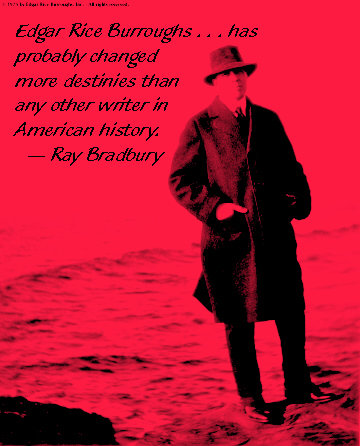
Edgar Rice Burroughs- High On A Mountain By The Sea
Chaps. 3,4 & 5:Edie Sedgwick: Maid Of Constant Sorrow
October 30, 2010
Edie Sedgwick
Maid Of Constant Sorrow
Chaps 3,4 & 5
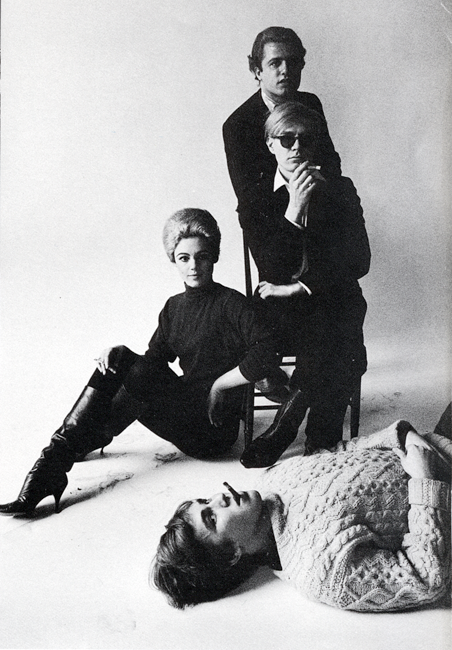
Time Is On My Side
A problem with the sixties is the concept of time. Einstein had gummed up the investigation of the concept considerably. Time is not a static thing but moves at various speeds. Strictly speaking time does not exist but is a human construct. The basis of the construction is the diurnal rotation of the earth and the earth’s revolution around the sun. There is no starting point for the revolution and no end. Man constructed a beginning based on earth’s greatest distance from the sun and because of the Plane Of The Ecliptic, the shortest day of the revolution. This was the most recognizable point to begin. Without the day and the year there is no basis for determining time; there is no other vantage point in the Universe.
Time has no existence in the universe; there is only space and matter and space cannot be defined without matter. No changes take place in the nature of space, only in matter, and time is no operative factor in those changes. Time does not exist outside the human mind.
Time as we usually think about it is a division of the earthly day into hours, minutes and seconds; of the year into seasons, months, weeks and days. As this is objective time keeping without reference to the passing of events or the perception of the individual subjective time is unaffected by objective time.
Now, let us say that the normal rate of perception and living is done in 4/4 time. To try to be specific let us say the standard is time as lived by 18-60 year olds adjusted to their societal needs. Let us just speculate that the mind in its normal state is comfortable with 4 bits of information per second and let us say that normally, whatever that means, bits of information are occuring at 20 bits per second. That means that 16 bits a second are normally over the subject’s head; he may perceive them but he can’t record them on the spot. Part of this is made up in sleep and dreams where removed from external stimulus the individual is able to subconsciously process additional bits that went by him while waking. The remainder then can only be captured and analyzed from a distance in time where what was happening can be seen but what is gained in distance is lost in immediacy. That is history, what I am attempting here. While the big picture can be seen, vast amounts of immediate detail are lost to memory or altered to conform to desires and prejudices. But, that is the way it is.
The period of ’64-’66 was one in which amphetamines and barbiturates altered or distorted 4/4 time. Under the influence of amphetamines subjects were living in, let us say, 16/4 time. They were so alert they couldn’t sleep. So long as they could control their obsessions and not be hung up on details they could turn out prodigious amounts of work. Thus to satisfy this amphetamine induced mania for work Warhol and his assistant, Gerard Malanga, could manually turn out fifty large Presley silk screen prints in an afternoon. In fact, in this period they turned out thousands and thousands of silk screens. There are a lot of Warhols out there.

Dreaming Dylan
Dylan is said to have literally and steadily turned out reams of material. He left a huge sheaf at Baez’s in Carmel in Spring of ’65 which he never reclaimed. As he said, songs just flowed through his amphetamine fueled mind. This sort of activity ceased or drew to a close when both Warhol and Dylan ceased using amphetamines- in other word their time races slowed down and their brains slid back toward 4/4 time.
Now, when the subject’s brain was racing at 16/4 it couldn’t slow down to allow him to sleep. Keith Richards says that in those days he slept only two nights out of seven. Warhol said he got two hours of sleep a night during this period and some said, perhaps with exaggeration, they didn’t sleep at all for one or two years.
So, while your brain is racing along 16/4 and you feel the need for rest you have to take barbiturates, downers, to slow your time down toward 8/4 or hopefully 4/4. This pits one drug against the other, one is speeding, one is dragging. Too much manipulation and of course one’s time slows to 0/4 and you’re dead.
Between events being clustered and racing so fast that no one can keep up, even at 16/4 and certainly at a speed to defy analysis no one had any idea of who or where they were and what was happening. No matter how fast the brain is racing one is still living in 4/4 time.
For those with 16/4 racing brains and no outlets such as art or writing, music, the result was chaos and self-destruction. In addition confusion was caused by making the 18-60 years old time race as an objective standard by which all normality is measured.
When someone says that time stood still, it literally did for the subject, the duration of that stillness cannot be measured by objective time.

All I Have To Do Is Dream
What may seem like a few seconds to an outside observer is literally timeless to the subject. The earth still turns but the mind doesn’t move, but no time is lost because time doesn’t exist. Thus children and mature people live in 2/4 or 3/4 time in which 4/4 time is irrelevant. It takes eons for a day or two to pass as a child while objective time becomes irrelevant if you no longer have to watch the clock. For instance, at 72 I live in a mix between natural time and objective time. I only have to enter objective time when it’s necessary to keep an appointment and I try to eliminate those as much as possible. Otherwise it’s day or night, Spring, Summer, Winter or Fall. I frequently don’t pay attention to what day it is because I don’t need to know and I don’t care. It doesn’t make any difference; it is always my time.
Doctors try to evaluate your memory by applying the needs of 18-60 year olds who are living according to the demands of objective time. So, since we live at different time races those whose speeds differ have a difficult time understanding each other.

Give Me Mo' Mo' Mo'
Chapter 4
Speeding Down The Highway
Lest we associate amphetamines at this time with illegal drugs let’s look at the scene in NYC. Sometime in the early sixties Feel Good doctors were dispensing massive does of amhetamines and vitamins. the most notorious, or well known, of these doctors were Max Jacobson and a man referred to as Dr. Roberts.
Jacobson appears first on the scene with a patient roster of astounding celebrity which included then President John F. Kennedy. Lyndon Johnson took a shot but perceived the situation for what it was and didn’t go back.
George Plimpton
The Beatles mention a Dr. Robert in one of their songs and he’s the man we’re concerned with here in ’65 no to be confused with Dr. Roberts. Dr. Roberts administered to some of the Warhol crowd including Edie Sedgwick. There is an astonishing account of his practice in Stein and Plimpton’s Edie. Quite an extensive account. To excerpt it I’d probably have to have permission; I’ll check into it.
These doctors were carelessly giving incredibly huge injections that kept you speeding for a week or two. But needles, syringes and drug could be obtained easily and they were which brings us to a member of the Factory entourage, Brigid Berlin. She was not old money but came from a very affluent background.
She, obviously laboring under several mental disorders, was an indiscriminate and unsound dispenser of the drug. She ran around the Factory injecting all and sundry with the same dirty needle. Her forte was to inject herself straight through the seat of her jeans.

Jean Stein
Andy, himself, used something call Obetrol which is described as a very high quality amphetamine producing a pleasant and stimulating high. While this drug kept Andy up with the exception of an hour or two of fitful sleep it also allowed him to work, work, work, industriously and with intense concentration for hours at a time. Fifty Presleys in an afternoon, think about it, assembly line pace.
Without a work outlet one had to find other ways to work off the excess energy. Non-stop talking is one but, hell, I can do that all day without the benefit of drugs. Since all these people at the Factory were living in 16/4 time they could communicate on that level with each other. There wasn’t an awful lot of intelligence being communicated. Warhol did us the service of recording 24 hours of what passed for communication and published the result as a book or novel he titled ‘a’. This book is virtually unreadable but as dedicated to my art as I am I am living proof that it can be done. Let’s hear from anyone else who had the patience. The gang was big on non-verbal communication. There are mostly a lot of incomplete sentences in the book but the conversation is forwarded in a pastiche manner each participant adding a phrase so that a sort of idea is parsed out.
As might be expected the group was low on conventional 4/4 morality, but at 16/4 they seem to have worked out a morality that all could accept but one I certainly would reject. Beatings, theft and random sex in view of others or not with anyone or anything seemed to be the moral basis. While Andy disavowed responsibility for anything that hapened at the Factory he was in fact the leader functioning as Magister Ludi. In the novel ‘a’ he is referred to as Drella, a combination of Dracula and Cinderella- a vampire and a fairy. He was in truth a bloodsucker.
He essentially took a whole group of Catholic homosexual Undermen and gave them a clubhouse and a certain immunity under the umbrella of his name and fame. Even then he and his Factory were a thorn in the side of legitimate society, the police visiting the place on a regular basis. And rightly so.
This was the scene, the environment that Chuck Wein brought Edie into. It seemed to suit her state of mind, she stayed.

Magister Ludi
Dylan also was an amphetamine freak at the same time while using alcohol, LSD, marijuana and heroin. Warhol who was a perceptive observer said that Dylan’s songs were the amphetamine speaking. According to Andy, Dylan took other people’s words (and tunes) and because of the amphetamine was able to make them sound as though his own. He also astutely divided Dylan’s output into two periods; the first, social protest and the second, personal protest. Pretty much half a side of Another Side, plus Bringing It All Back Home, Highway 61 Revisited and Blonde On Blonde. Once again, he knew whereof he spoke. We’re concerned more with the personal protest here taking little or no interest in the social side.
Dylan’s personal protest by its very nature must be autobiographical. Indeed, Suze Rotolo identifies many of Dylan’s songs as referring to her. She should know. Dylan was quite taken with her. He obviously suffered a painful feeling of desertion whan at her mother’s insistence in 1962 she left NYC to study in Italy. This absention definitely changed the relationship although as Bob was never too constant a lover it is difficult to see how. Ego was hurt, I guess.
Although the relationship was reassumed on Suze’s return her sister, Carla, and her mother disapproved finally breaking the couple up. The break up produced the autobiographical Ballad In Plain D in which Dylan vented his emotions in a loud screaming complaint that was a direct predecessor to his magic mantra ‘Like A Rolling Stone.’
Chapter 5
I Can’t Stand The Pain In Here
According to accounts Dylan began writing Like A Rolling Stone in June of ’65. It began as 20 pages of ‘vomit’ according to Dylan, cut down to 10 and then to its released form. The 45 was a successful disc reaching the Billboard Top 10. The song is quite obviously about Edie when one learns the background. Many New Yorkers who were aware of the scene expressed their opinion that it was about Edie, pointing out further their belief that Warhol was the Napoleon in rags.
If first written in June then Dylan had made a considerable psychological investment in Edie since the previous December of ’64. One wonders where he found the time to cultivate a relationship with her between the two dates. He wrote recorded and released ‘Bringing It All Back Home’ between the meeting with Edie and April. He had performance dates. He divided his time between NYC, Woodstock and Carmel. In the last mentioned place he was staying at the home of Joan Baez while keeping Sara in Woodstock and maintaining some sort of relationship with Suze.
The extent of the rage and hatred of ‘Stone’ seems to be out of all proportion. According to the song Dylan is in a jealous rage because the ‘She’ of the song has deserted him for this ‘Napoleon in rags.’ ‘He calls to you, go to him now.’ What exactly did Dylan intend to do with Edie that he should become so emotonal? There is no question but that he intended to marry Sara; also none that he would marry either Joan, Suze or Edie. Quite simply they weren’t Jewish and Sara was. Dylan had no intention of marrying outside his religion. He intended to obey the Biblical injunction, which he takes as the literal word of God, to be fruitful and he wanted his children raised Jewish.
So what, then? What did Edie represent to him? Apart from being an uptown girl, in Volume I of his autobiographical Chronicles he suggests that one looks for the model of ‘She’ in his mother. I found this puzzling. I couldn’t make it fit the lyrics. None of the ‘facts’ of the song seemed to fit what is known of his mother. Then I saw Dylan’s 2003 movie, Masked And Anonymous. This is a delicate subject of which I am only going to skirt the edges. But, if one reads between the lines of Jack Fate’s soliloquy at his father’s death bed about his mother and faher, the lyrics of Freight Train Blues and what I’m hinting at here the fog should thin out somewhat. Remember that Dylan said his mother was connected to ‘Stone’. Since the song is about Edie it follows that Dylan associated his mother and Edie in his mind; there was a situational similarity to him.
Now, from August ’65 to the recording of Blonde On Blonde nearly the whole of Dylan’s output is centered around Edie, Warhol and the Factory. One of Dylan’s more vicious songs was ‘Leopard Skin Pill Box Hat’ which is about Edie. When Edie dissipated her inheritance she bought a slew of fur coats and a lot of jewelry. She had the leopard skin pill box hat.
Dylan’s mother was also known for having a lot of jewelry and several fur coats. Dylan recorded his version of Freight Train Blues long after 1968 when his father died. Now, immediately after his death the business owned by his father and two uncles either went bankrupt or was forced to close. In other words there was no more money left in the business. While Hibbing was not a flush market there was no competition either. So Abe Zimmerman’s exit came at a propitious moment, or…. At any rate there was no more money.
Just as Edie went through her money so Dylan’s mother kept her husband hopping in all likelihood straining the finances of the appliance store that, after all, had to support three families. Dylan, then, may have conflated Edie with his mother’s extravagance and whatever he had planned for Edie would have been done to his mother surrogate. In fact he was quite brutal to Edie, destroying her in the end. Thus one avenges oneself on one’s mother, ‘Like A Rolling Stone.’ He is probably one of those people who reject but can’t tolerate rejection because of his mother’s rejection of him per Jack Fate. According to his soliloquy in Masked And Anonymous his mother essentially rejected him plnging him into a deep depression from which he has never recovered if the movie is any indicaton. The movie too is autobiographical. He felt: ‘Nobody leaves me, I leave them.’ ‘That’ll be the day when you leave me’ as Dylan’s hero Buddy Holly put it. This was possibly the cause for the eruption of Ballad In Plain D.

Obetrol
In March of ’65 Edie entered the corrupt, even criminal, world of Warhol’s Factory. One can only speculate why Chuck Wein took her there. Perhaps the empresario was having a difficult time getting Edie launched and thought he could get her into Warhol’s hideous movies. Having run through her inheritance Edie was getting desperate for money. Perhaps in her naivete she thought movies were movies and movie stars made big money. Certainly one cause for her break from Andy was his refusal to pay her.
Warhol, in his own delusions believed that Hollywood would come knocking on his door cash in hand. That that never happened was probably a major disappointment. At any rate when this vision of the respectable Overmen appeared in this dump of a studio Andy went ga-ga. In fact, Edie was his ticket, his entry into the Upper East Side crowd. Just as Fred Hughes was to show him how to make money, Edie opened society doors to him.
This King of Scurf was creating quite a scene at the Factory. At the same time he gave a clubhouse to the Undermen, as a leading figure of the art world which, after all, is an upper class affair of wealth, he had a foot in that camp. Led by the more louche of celebrities the Factory was becoming a party destination. So Edie added some instant uptown glamor. Old family, old money.
Whether it was the hope of money from movies that kept her there or whether this degrading atmosphere filled some psychological need Edie stayed on thereby sacrificing her reputation. I imagine there’s always the hope that once you get your face up there something will pop.
Sometime between March and June Dylan became enraged that Edie was at the Factory making some pretty lame Warhol movies with little or no commercial appeal. Thus his work from this time on reflected his tug of war over Edie with Warhol.
Edie says that she didn’t get into heavy drugs before she joined Warhol’s menagerie. This may be true but as Warhol said: How do you stop someone from doing what they want to do? I would imagine the effects of electro-shock are very long lasting and discombobulating. Lou Reed of Velvet Underground was certainly whacked out from electro-shock. As I write my mind keeps going back to the time I stuck my finger in the socket as a child. I mean, it is vivid, so I can’t imagine what Electro-shock does to you. Perhaps speed replicates what electro-shock does do to you. Perhaps speed replicates or complements the feeling of electro-shock in some way.
Of amphetamines Edie is quoted as saying:
The Ghost Of Electricity
The nearly unendurable torment of speed, buzzarama, that acrylic high, horrorous, yodeling, repetitious echoes of an infinity so brutally harrowing that words cannot explain the devastation nor the tone of such a vicious nightmare.

Could be close to the feeling of electro-shock. Kind of reminds me of my finger in the socket. Dylan’s seach for the ‘high mercury sound’ must also have been the result of speed. Cacophonous songs like ‘Highway 61’, ‘Subterranean Homesick Blues’ and ‘Rainy Day Women’ come to mind.
Perhaps also the amphetamine high reflected and complemented the deranged vicious goings on Warhol allowed at the Facatory. The sado-masochism. Brigid Berlin, or the Duchess as she was alternately known, roaming around with her needle and syringe ramming it into anyone will they, nil they, not much choice there. Beatings going on back in the shadows, is it any wonder that Dylan referred to Warhol as Dr. Filth in Desolation Row.
It is difficult to ascertain dates in existing sources but possibly between June and August Dylan invited Edie and Andy to a concert in upstate NY so, there was significant interaction between the three before Highway 61 Revisited. Side one of that record doesn’t reflect Factory activity as much as side two. I suspect all three songs on that side reflect Dylan’s sitation with Andy and Edie while Desolation Row definitely does. Now, while at the time there were few listeners who had any idea of what Dylan’s lyrics meant except for possibly a few, of which Warhol definitely was one. He must have recognized the reference to himself in ‘Stone’ and also in Positively Fourth Street. These songs were hits. ‘Fourth Street’ was pulled from airplay shortly after relaease but when I first heard it the sound just blew me away. I heard the put downs but too fleetingly to grasp them. Hank Williams on steroids.

Stop! In The Name Of Love
Dylan, then, was making, on Warhol a blatant attack over the airwaves of all America plus reviling Edie in a hideous manner. What did Andy think, what was his reaction? Having vented his feelings even more violently than he had in Ballad In Plain D, Dylan’s next move was obvious. Having lost Edie in March he meant to reclaim her in October. And so this epic battle for the person of Edie Sedgwick began. She was only a pawn in their game.
Chaps. 6, 7 and 8 are up on the next post.
Chaps 9,10, 11 and 12 are now up on the post following 6,7 and 8.
Chaps 13, 14 and 15 are now up also. Chap. 16 and end is in contemplation
”
Chaps. 1 & 2: Edie Sedgwick: Maid Of Constant Sorrow
October 21, 2010
Edie Sedgwick: Maid Of Constant Sorrow
Edie Sedgwick, Bob Dylan And Andy Warhol
by
R.E. Prindle
Chapter 1
Some Enchanted Evening

Edie and Andy
Texts:
A movie: Factory Girl
Sedgwick, John: In My Blood: Six Generations Of Madness And Desire In An American Family, Harper Perennial, 2007
Stein, Jean: Edie: An American Biography, Pimlico, First Published 1992, 2006 Paperback edition
www.warholstars.com A comprehensive Andy Warhol site.
The sixties was a period of broken lives. It was the heyday of the users and the used. It was as Donovan aptly put it: The Season Of The Witch. It was a period when all the hounds of hell were loosed. It may be a cliche but it was both the best and worst of times. It was during this period that Edie Sedgwick came of age. Edie’s tragedy was that she was used rather than a user. She was the cat’s paw of two of the greatest users of the period, Andy Warhol and Bob Dylan. It cost her her everything including her life.
Edie was one of the Sedgwicks of Massachusetts and they were old line Americans. If the Sedgwicks missed the Mayflower they were trolling in its wake. Therein lay part of Edie’s charm for the two immigrant lads, Bob and Andy. While from Massachusetts the Sedgwicks had a notable presence in New York City and Long Island. One might say they were venerable. J.P. Marquand who married into the family wrote his novel ‘The Late George Apley’ about them.
In Massachusetts the Sedgwick family was famous for their burial plot known as the Sedgwick Pie. As their legend is intimately connected with the Pie it might be proper to dwell on the Pie for its flavor. The founder of the family back then just after the first Thanksgiving was a gentleman named Theodore Sedgwick. He was a dynast by nature. Hence, he bought a section of the Stockbridge cemetery and had himself buried in the very middle. Subsequent Sedgwick burials were laid feet first toward the Patriarch in round rows emanating outward like the wedges of a pie, thus the name Sedgwick Pie. It was said that on judgment day when reveille was blown the Sedgwicks would all arise facing the founder, Theodore. Pretty story.
Over the centuries following Theodore’s death the Sedgwicks continued to prosper there always being enough money to maintain their position. There also arose the fantastic legend of the Sedgwick Curse, as indicated by John Sedgwick’s subtitle. The idea was that the Sedgwicks were a weak stock and that there was an abnormal amount of madness and suicide in the family. Considering the extent of the family I think this was a romanticized vision of themselves. Not that there wasn’t a sort of madness and a few suicides but hardly more than in any several hundred member family over a few centuries. Nevertheless in Edie’s generation this fatalistic notion took firm hold. It’s almost as if the generation rose to embrace the notion. Her biographers speak of it in awe as though the Curse of the Pharaohs had morphed into the Curse of the Sedgwicks. Jean Stein, the author of Edie, seems entranced with it and even John Sedgwick, Edie’s younger cousin, in his memoir seems possessed by it. Feels he’s got it. Slim chance for being true in my estimation.
For an inconsequential girl Edie’s life has been well examined. There are actually several books written about or featuring her while the legacy of movies she appeared in and movies about her is fairly extensive. Most of the early information on her life here is abstracted from Jean Stein’s biography. Stein, herself, is accused of writing the biography in a fit of sour grapes because Warhol wouldn’t make her one of his superstars. No matter, it is an exceptional book of its kind.
‘Edie’ is presented as an oral biography in the voice of many participants. However as all the voices are pretty uniform it would seem as though the editor, George Plimption, is pervasively evident. George Plimpton, otherwise a nobody, began his career as a celebrity in the sixties and the seventies by becoming a professional old line American, nearly the last of a vanishing breed.
He clowned around by trying out for various professional sports teams then writing books about the experience. Thus he became the American Man Of Letters touted on his website and a well known celebrity who could actually measure his press releases in inches. He and Stein put together an excellent more than readable book in their biography of Edie Sedgwick.
Edie was the daughter of Francis Sedgwick of Long Island, NY, he otherwise being known as Fuzzy. The family left New York for Santa Barbara, California just before Edie was born so she knew nothing of New York or the East Coast. In California she led what would seem to thave been an idyllic life. The family lived on a 3000 acre ranch which was exhanged after oil was found on it for a much larger ranch and finally an 18,000 acre ranch where she spent her teens. This was a functioning cattle ranch with ranch hands and the whole works.
The Sedgwicks did not attend either public or private schools being rather schooled by private teachers along with a few neighbor children. Thus unfamiliar with the world she may have had a very diffiuclt time adjusting to real life people. She probably did not have time to do so before she was thrown into the boiling cauldron of New York City. Francis, or Fuzzy, was a difficult father; his children blamed him for their shortcomings while Edie said he had sexual relations with her. She then was, or believed herself, mentally unbalanced by the time she arrived at Radcliffe to begin college.
She may very well have been unbalanced but where I grew up I didn’t know anyone who didn’t have mental problems, parents or children, and by the time of high school graduation I was literally a basket case, nearly immobile. Yet, so far as I know, everyone got on with their lives including myself. Seems to me everyone has to work themselves out of that hole as best they can.
Of course, drugs were becoming a definite problem by the time Edie showed up in Cambridge in the early sixties. It one reads Raymond Chandler novels, for instance, drugs were a problem in the thirties and forties and further reading will show that they had been a problem for decades. Most narcotics became regulated in 1910 in the US, still, new pharmaceuticals were being developed constantly and some of them including the psychedelics were not covered by narcotics laws at the time.
The first wonder drug I heard of was Miltown about 1950. I was too young to understand but Miltown was the Valium of its time, a panacea for all forms of stress, the stressed and housewives began to line up for prescriptions. By 1960 the list of users must have been stupendous.
Along with the barbituate downers came the uppers. First Bennies and then amphetamines. My first knowledge of the pervasiveness of drugs was 1956 when I wrote a high school essay on LSD. Of course glue sniffing was endemic in high school. Then in 1958 in the Navy was the first time I saw people ingesting bennies and heard of peyote, mescaline and the actual use of LSD. By the early sixties I knew a lot of people who were smoking pot and popping pills but I was never a user myself. I watched drugs put a lot of people over the edge. In most cases they weren’t aware that they were freefalling.
So, an unsettled socially naive Edie moved into a fast, loose society in Cambridge. While I can’t see much in her from the pictures apparently she was a sensation live, possibly influenced by her seemingly casual attitude toward sex. I don’t know about on the East Coast but on the West Coast girls were either more circumspect or I was out of it.
Edie was picked up by a homosexual crowd and attended many fetes in that milieu. At the same time the other folk scene, that of Boston was burgeoning with Jim Kweskin and the Jug Band, Eric Von Schmidt and Mel Lyman being the standouts. Dylan came up to Boston at this time to meet them where, I believe, he first became acquainted with Bobby Neuwirth who was hanging out around the art and folk scene. Certainly Edie would have come to Neuwirth’s attention at this time. I wouldn’t be surprised if he and Dylan discussed the ‘hot chick’ from a distance at that time.
At some time Edie became erratic enough in her parents’ eyes that they decided to commit her to an insane asylum called Silverhill near Boston. This to me seems very extreme. Apart from Edie’s not doing things as they saw fit I can’t find anything in her behavior to have her committed. I mean, I’ve seen some pretty zany behavior and after drugs really got rolling in about ’67 half the population could have been put away with the other half waiting in line.
At some point you have to let your kid go while parents always have to take responsibility for their behavior at least for the first few years after they’ve left the nest until they work through those parental childhood traumas. The Sedgwicks had the money so as long as the offspring weren’t financially out of control they at least deserved their allowance. Edie was what would have been described as an airhead.
But then I’m sure that with the asylum experience the cure is worse than the disease. Edie was repeatedly given electro-shock ‘therapy.’ Electro-shock ranks right up there with the pre-frontal lobotomy as the most bizarre psychiatric treatments. Talk about Hitler and the Nazi doctors! If the Nazis had practiced frontal lobotomies and electro-shock you can imagine the Liberal howling from the West. It would have made the flap over Eugenics a mere whimper.
I can’t imagine what electro-shock does to the mind and nervous system. When I was four I was playing with an open socket. When I connected the jolt was such I lost consciousness. Fortunately I was repelled being thrown completely across the kitchen floor where I became alert again after a few seconds but still buzzing. Plus, I remember it as though yesterday. Imagine being strapped down and having those volts sent coursing through your existence. My god! For what purpose? That’s going to change your psychology? It doesn’t, so why they kept at it is beyond me.
Since Edie wasn’t insane when she checked in the good doctors of Silverhill checked her out as sane. Somewhere along the way she met some guy named Chuck Wein who believed himself to be an impresario of some sort who was going to take Edie to New York and make a star of some sort of her. Toward the end of 1964 then Edie and Chuck showed up in Manhattan.
Edie moved in with her grandmother on the Upper East Side. Good address. Enviable. She had come into an inheritance of 80,000 dollars which she proceeded to squander in six months. In 2010 dollars that might be the equivalent of from 300,000 to 500,000 dollars. One had to have a careless disregard for money.
In 1964 the sixties had started moving, approaching maximum velocity. The Beatles had splashed down in January of ’64 followed by the Rolling Stones, Animals, Dave Clark Five and a host of others including Freddie And The Dreamers which was the beginning of the hip explosion as rock and roll morphed into folk rock. It doesn’t matter who was the first with folk rock it was inevitable. The electric bass and guitars along with better and more powerful amplifiers ever evolving there was no other way to go. I mean, Duane Eddy and Eddie Cochran were proto-heavy metal. And they were exciting bands. The music had been loosening up for several years. Tequila by The Champs was fairly revolutionary in its day. But then the recording companies and artists put a lot of effort into trying to astonish us with new styles and forms and frequently did, every week. Mule Skinner Blues by the Fendermen, a folk song was done in a folk rock style long before Bob Dylan went electric and set us all on our ear. That song has probably never been surpassed. Besides by 1964 the whole folk thing was passe and worn out, boring, apparently the word probably hadn’t reached Peter Seeger and that bunch in New york yet.
Each day was a new adventure where you had no idea what you would see or hear. Andy Warhol’s soup can is a case in point. The arrival of the Lovin’ Spoonful in Edie’s big year of ’65 was a revelation. As far as I’m concerned, the most influential band of the era. If Yanovsky hadn’t given up his dealer there’s no telling how far they could have gone. From there everything accelerated to super sonic speed. There was even a group called the Super Sonics. Songs like Telestar. Men even walked on the moon. So, while the external world was racing with the moon the internal, personal world ran along at the same slow pace unable to keep up with developments. No one knew what was going on except in their small mental space. Thus, even while Dylan and Warhol were succeeding spectacularly in their own spheres life was racing past them making them passe while there was no way they could keep up.
In that atmosphere Edie arrived in New York City and spent her money. And then the money was gone. As ’65 progresseed her parents became disenchanted with her life style so they cut her allowance way back, and then, off. But that’s getting ahead of our story. What Chuck Wein’s plan was for turning Edie into some sort of star or celebrity isn’t clear. She did get some modeling jobs for magazines, probably because of her name, but they were put off by her drug intake and her corresponding erratic behavior.
Bobby Neuwirth
Then Bobby Neuwirth, the legend goes, noticed she was in town. by this time Neuwirth was playing Robin to Dylan’s Batman, his sidekick in other words, and he notified Dylan that ‘there was a hot new girl in town.’ In the movie Factory Girl, sometime in ’65 Neuwirth showed up at the Factory and said: Come with me. Someone wants to meet you.’ Edie leaves with this total stranger, who cons her into paying the fare, escorts her back stage at a Dylan performance to be introduced to the Star with whom she is dazzled.
That’s one version. According to Jean Stein in Edie in December of ’64 Neuwirth invited her down from the Upper East Side to the Mafia club, Kettle of Fish, to meet the folk singer himself. Edie had arrived in NYC driving a big grey Mercedes. Her flipped out driver crashed the car so she was using a limousine service to get about. Accordingly her limousine pulled up in front of the Kettle of Fish, Edie got out of the car, entered the bar and contact was made. The history of her life over the next eighteen months, the Dance of Death, began.
Dylan, then, laid claim to the dazzling girl before Andy Warhol. Edie met Andy at the film producer Lester Persky’s a few weeks later at a party in January of ’65. Dylan and his entourage were heterosexual while Warhol, Persky and that crowd were homosexuals. Thus Edie began to fulfill her destiny as a pawn in Dylan’s and Warhol’s games.
Chapter 2
Never Felt More Like Singin’ The Blues
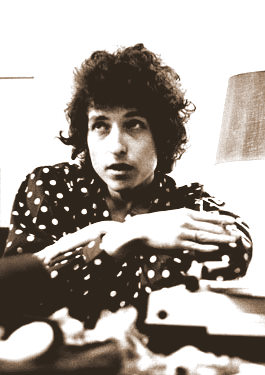
Dylan In Polka Dots
Who were these guys Bob Dylan and Andy Warhol and what interest could they take in this uninteresting and rather dull girl. Interestingly both men considered themselves revolutionists. Dylan forwarded the Jewish and Underman revolutions while Warhol spearheaded the homosexual and doubled up on the Underman. Both men came from immigrant backgrounds. Dylan from Jewish immigrants and Warhol from Ruthenians. Dylan was originally Robert Zimmerman and Andy Andrew Warhola. Dylan grew up in small town Hibbing, Minnesota, Warhol in the ‘melting pot’ of Pittsburgh, Pennsylvania. Both developed monster grudges against American society.
At the end of ’64 both men were on the way to being of the most influential people of the second half of the twentieth century.
Dylan at twenty had come to New york with the ambition of becoming a folk singer. Even though a not easily appreciated singer he was as close to an instantaneous success as it is possible to be. Arriving at the beginning of 1961, at the close of ’64 when he met Edie he was an international sensation, a prolific and successful song writer.
Strangely his success was built on resentment and hatred. The dominant characteristic of his songwriting was a rancorous bitter putting down of his society and associates. He fairly spews hatred in such songs as Hattie Carroll, Like A Rolling Stone and Positively Fourth Street to name only a few of his diatribes. His most prolific period would revolve around his desire for Edie Sedgwick and his detestation for his rival for her affections, Andy Warhol.
Dylan had a fixation on destroying the happiness of women. At the time he began his pursuit of Edie he had sequestered his future wife, Sara Lownds, who he would marry in November of ’65 and who he had purloined from another man. At the same time he was carrying on long time affairs with his first New York girl friend, Suze Rotolo and his fellow folk singer, Joan Baez. Why this need to injure the happiness of women?
Of course I’ve read most of the important works on Dylan if not all and many of secondary importance. Using that background, I’m going to concentrate on the movie Dylan wrote and starred in, Masked And Anonymous. This is a very autobiographical movie showing a Dylan who had progressed little from his heyday of the mid-sixties. Dylan believes that the journey is more important than the result so that in the various episodes he gives little symbolical vignettes of his life journey leading up to a contrived ending. Many of the most important eipisodes and people are represented. The promoter in the film, for instance, can be recognized as his manager Albert Grossman; the sidekick is Bobby Neuwirth etc. I’m not going to review the movie here but Dylan gives us some insight into when and how his world went wrong.
In the movie when Jack Fate’s, Dylan’s movie alter-ego, father, who is the dictator of ‘this god-forsaken country’, lies dieing, Fate revisits him on his death bed. In fact that is where the ‘path’ of the movie actually leads. Fate reminisces about his relation with father and mother. To put it succinctly let me quote the lyrics of an old song, Freight Train Blues. Dylan would rewrite the lyrics to this song and claim it as his own:
I was born in Dixie
In a boomer’s shack,
Just a half a mile
From the railroad tracks.
My daddy was a fireman
And my mama dear,
She was the only daughter
Of an engineer.
She could spend the money
And that ain’t no joke,
It’s a shame the way
She kept a good man broke.
Well, Jack Fate’s daddy wasn’t much better and the movie couple had an unhappy marriage which probably reflects Dylan’s view of his own parents. As to his mother she just found Jack in the way and wished she never had him because it interfered with her happiness. I suspect that more or less sums up Dylan’s relationship with his mother. One can’t say for sure but I suspect that when his mother conveyed this attitude to the young Dylan it just shattered his mind and from that day forth he was one lost soul on the lost highway with the freight train blues. Now, it is impossible to avenge oneself on one’s mother directly as mother’s are sacred as the vessel of your life. Dylan never tried, even escorting his mother as a date to major events. You can take it out on yourself by becoming a derelict yourself which Dylan did thereby punishing your mother or you can take it out on surrogate women. Dylan did both. He himself was and has been a heavy drug user and a heavy drinker. He ruined the lives of several women including Rotolo, Baez and Edie; then, after making Sara a wife and mother, most importantly a mother, he completely shattered her life as his mother had his. That may have satisfied him, then again, maybe not. Since then he has been wandering aimlessly as a ‘modern troubadour.’ Ramblin’ Jack Fate.
The period of the sixties was Dylan’s time of most intense reaction. After that he waxed and waned but Andy Warhol was focused on an unwavering need for vengeance. He knew how to use people to obtain his goals without actually exposing himself. He arrived in New York in 1950 as a graphic artist where he too was an instantaneous success. He made his mark in shoe ads where his drawing, usually described as ‘fey’, but displaying real genius at the same time, brought the customers to Miller Shoes for whom he drew.
During the fifties he was a very highly paid commercial artist designing everything from his shoe ads to stationery to book and record covers. Usually very nice but not infrequently letting his sexual proclivities shine through. He was alwa;ys pushing the homosexual agenda preferring to associate his work with writers or musicians from either the Undermen or those writing on those themes.
About 1960 he decided to tackle the fine arts with the purpose of detroying them. He entered the world of painters at the transition from Abstract Expressionism to Pop Art. He had always been a sort of pop artist with his shoe ads so he was an incrdible success as a pop artist when he painted Campbell’s soup cans. With the soup cans he effected one of the most instantaneous and successful revolutions or transitions from one style to another, ever. I don’t think it would be out of line to say the sixties were born in that moment. If there is one single symbol that characterizes the sixties, for me at least, it is Andy’s soup cans. Tomato soup can. It enraged and energized so many people. It has been an inspiration for me.
I can’t remember when I first saw it but I was simply stunned. Perhaps in the pages of Time Magazine. I don’t know whether the copying of a soup can is art but as I mused about it I came to the conclusion that the can was a sort of urban landscape. It was something one gazed at frequently while grocery shopping, so I said, what difference did it make whether one copied a mountain or curling wave or a soup can. I suppose the difference is that a soup can can only be done once before the joke is stale.
My favorite image of the soup can was a poster in which a soup can had a gaping hole from being blasted with a .45 automatic. That sort of settled the arguement for me but that was as late as 1968. Andy went on attempting to outrage us by painting duplicates of Brillo boxes and such like, Heinz Bean cans, but that fell flat. The joke had been made, there was only one Campbell soup image.
Painting all those soup cans, he did all the varieties, must have been a tedious way to while away the time. Then he discovered silk screening. What a good idea. Warhol, the child of industrial processes. I can only imagine that he thought Henry Ford and his assembly line turning out identical copies of cars was the ideal expression of art. After all you can make a million cars, same model and make, but in painting a picture, prior to Warhol, they all had been one offs and then you needed another idea. In that period of rapid change an idea became obsolete immediately. Coming up with new ideas was a tough business. Warhol could turn out an idea like the Presleys like Henry Ford turned out cars. Wow! Man! The future of art had arrived.
Gerard Malanga
Perhaps he thought up silk screening or perhaps the idea was suggested to him by his assistant, Gerard Malanga. Malanga thinks that’s the way it was. At the time he was hired Malanga was already an accomplished silk screener. Malanga was the beginning of Warhol’s actual use, consumption and discarding of people. One might say Malanga was exploited.
Malanga took a job with Andy at the minimum wage above which Andy never raised him. Malanga insists that he was essentially a collaborator of Warhol’s. I am inclined to agree with him. In the first place Andy never drew his own pictures. He essentially had no ideas. He had his screens made up from photos of others he found attractive. His famous flower screen was from a purloined photo. HIs Elvis paintings, posters actually, were traced from a promotional still. To me that strengthens Malanga’s claim. The screens were mechanically produced and screening is a mechanical act. Both Malanga and Warhol manipulated the screens together. There are films showing them doing it.
Between the two of them they produced fifty Presley images in an afternoon. For a show at LA’s Ferus Gallery Andy shipped them a two

Malanga and Dylan
hundred foot roll of Presleys and told them to cut up the roll as they saw fit. Collaboration was just Andy’s way. Hence one has single, double, triple, quadruple and octuple Presleys. I saw one display where there were twenty or more strung out for a couple hundred feet in one immense string. Enough Elvis Presleys to go around the world three or four times were produced. (That’s a joke, son.)
It is a good image although Andy never asked Presley or his studio for permission to use it and as far as I know never gave them a dime. He just appropriated the image. I can’t imagine how Andy kept the Colonel cool. He didn’t keep the flower lady cool, once she recognized her image she sued him. Of course, she took her image from God but God didn’t sue her.

Warhol and Malanga
Now, all this silk screening takes up a bit of space, these Presleys kept getting bigger and bigger, life size and then some. Some were twenty-five feet by twenty-five. So Andy outgrew his home facility leaving it to seek much bigger spaces. If one thinks about it all this is very daring. There was no artist in New York even approaching the concept. Finally he rented an entire floor of a building on 47th Street that became known as the Factory. Dylan would characterize it as Desolation Row. When Edie made her appearance there in March of ’65 it was at that Factory. There were subsequent and even larger ones.
This is where Dylan and Warhol stood at the beginning of 1965 when Edie became a pawn in their game. Why did they want her? As noted, the two were immigrants or the sons of immigrants so they knew the discomforts of being strangers in a strange land. They knew the sense of inferiority among the ‘natives.’ They knew what being outsiders was especially as Dylan was a Jew and Warhol a homosexual.
Edie Sedgwick was a symbol of that envy and desire. In a way she was the acme of the old line American and she was accessible. She probably could have been half ugly and it wouldn’t have made much difference.

Malanga and Edie
From, say, 1870 to 1940 there was native America and there was immigrant America and they were separate but equal size. While intelligent immigrants never had it rough there was still resentment and outright hatred for Anglo-America. All this anti-America stuff comes from the immigrants or at least was fostered by them. With those of the Undermen, those of low IQ, the hatret was worse. WWII gave the immigrants a feeling of equality. They fought too. By 1950 they were superior in numbers assaulting every Anglo tradition and trashing it while doing their best to lower Anglos. Of course, the Anglos were too stupid to see it or unwilling to acknowledge it. After all, this was the magic ‘melting pot’ in which all resentments disappeared. Americans had discovered the solution to world problems. Both Dylan and Warhol shared in this resentment.
Thus when this female symhol of the old Anglo aristocracy appeared who they held responsible for their humilaition, whether they acknowledged it or not, they wanted to possess her, humiliate and destroy her. Dylan today would deny it while Warhol’s excuse at the time was ‘How do you stop someone from doing what they want to do?’ Well, Andy, at least you don’t hand them the revolver cocked and loaded. That Edie was humiliated and destroyed by her association with the two is proof enough of their intent.
The problem is to piece together the events of that year and a half over ’65 and ’66 from less than adequate documentation. I think I can produce a reasonable facsimle.
Chaps. 3, 4 and 5 are posted
Chaps. 6, 7 and 8 are posted
Chaps. 9, 10, 11 and 12 are posted
A Review: Part III Tarzan And The Madman by Edgar Rice Burroughs
October 13, 2010
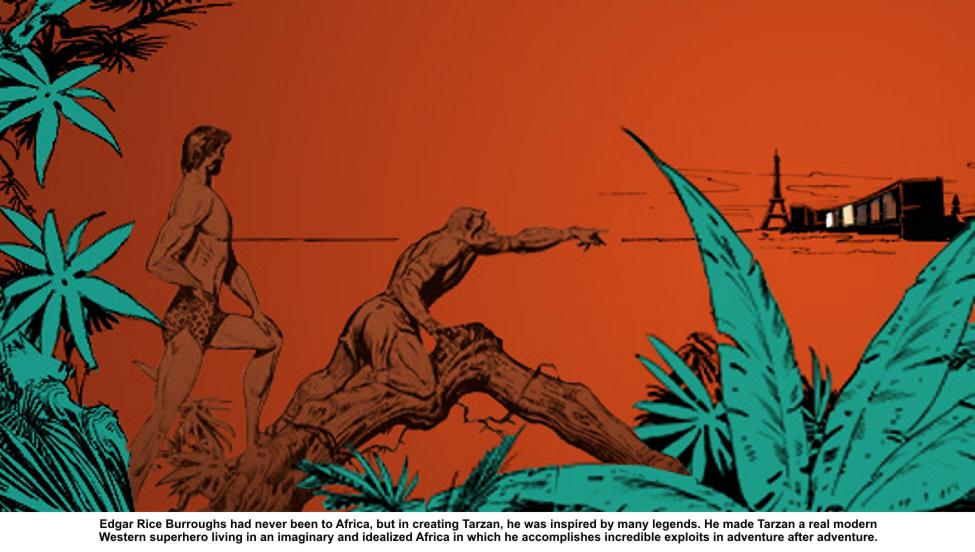
The Aquarian Archetype
The Renowned Arab Traveler- Mohammed Ibn Batuta
Writing in the fourteenth century Ibn Batuta had visited the East African coast trodding the soil of Kilwa Island on the southern border of Tanganyika, now Tanzania. Zanzibar replaced Kilwa as the Moslem trading entropot on the East Coast. Haggard apparently had done the same as he mentions ruins that dated back to before the tenth century. So, we have established commercial activity in Southern Africa before the arrival of the Shona people in Zimbabwe.
Ruiz stood behind a low, stone altar which appeared to have been painted a rusty brown red.For a long time Ruiz the high priest held the center of the stage. The rites where evidently of a religious nature that went on interminably. Three times Ruiz burned powder upon the altar. From the awful stench Sandra judged the powder must have consisted mostly of hair. The assemblage intoned a chant to the weird accompaniment of heathenish tom toms. The high priest occasionally made the sign of the cross, but it seemed obvious to Sandra that she had become the goddess of a bastard religion which bore no relationship to Christianity beyond the symbolism of the cross, which was evidently quite meaningless to the high priest and his followers.She heard mentioned several times Kibuka, the war god; and Walumbe the god of death, was often supplicated, while Mizimo departed spirits, held a prominent place in the chant and the progress. It was evidently a very primitive form of heathenish worship from which voodooism is derived.
Looking up, she saw a dozen naked dancing girls enter the apartment, and behind them two soldiers dragging a screaming Negro girl of about thirteen. Now the audience was alert, necks craned and every eye centered upon the child. The tom-toms beat out a wild cadence. The dancers, leaping, bending, whirling, approached the altar; and while they danced the soldiers lifted the still screaming girl and held her face up, upon its stained brown surface.The high priest made passes with his hands above the victim, the while he intoned some senseless gibberish. The child’s screams had been reduced to moaning sobs, as Ruiz drew a knife from beneath his robe. Sandra leaned forward in her throne-chair, clutching the arms, her wide eyes straining at the horrid sight below her.A deathly stillness fell upon the room broken only by the choking sobs of the girl. Ruiz’s knife flashed for an instant above his victim; and then the point was punged into her heart. Quickly he cut the throat and dabbing his hands in the spurting blood sprinkled it upon the audience, which surged forward to receive it…
“Well, what of it?’ demanded da Gama. “I am king. Do I not sit on a level with God and his goddess? I am as holy as they. I am a god as well as a king; and the gods can do no wrong.”“Rubbish!” exclaime the high priest. “You know a well as I do that the man is not a god, and the woman no goddess. Fate sent the man down from the skies- I don’t know how; but I’m sure he’s as mortal as you or I; then you get the idea that by controlling him you could control the country. You were jealous of me that’s all; then you get the idea that by controlling him you could control the church, for you know that who controls the church controls the country. You were jealous of me that’s all; then you conceived the idea of having a goddess, too, which you thought might double your power. Well, you have them; but they’re going to be just as useful to me as they are to you. Already, the people believe in them, and if I should go to them and say that you had harmed the god, they would tear you to pieces…”
“…you don’t stand any too well with the people, Chris, anyway; and there are plenty of them who think da Serra would make a better king.”“Sh-h-h,” cautioned da Gama. “Don’t talk so loud. Somebody may overhear you. But let’s not quarrel, Pedro. Our interests are identical. If Osorio da Serra becomes king of Alemtejo, Pedro Ruiz will die mysteriously; and Quesada the priest will become high priest. He might become high priest while I am king.”
“You should know,” he said. “You are a woman.”“I am not a mortal woman. I am a goddess.” She grasped at a straw.Rateng laughed at her. “There is no god but Allah.”“If you harm me you will die.” she threatened.“You are an infidel,” said Rateng, “and for every infidel I kill, I shall have greater honor in heaven.”
A Review: Jungle Girl By Edgar Rice Burroughs
September 19, 2010

Borobudur In Bali

Idealized Apsara

Real Apsaras
 King becomes injured and in a fairy tale fashion he is nursed to health by a poor peasant couple living far from the haunts of men. Before being saved King in his feverish delirium sees a group of ancient Khmer warriors conducting a beauteous maiden through the jungle on an elephant. When he recovers he learns it was not delirium but a fact.
Anghor Thom
 I, Dynamo