Edgar Rice Burroughs: The Early Married Years
November 18, 2007
Edgar Rice Burroughs:
The Early Married Years
by
R.E. Prindle
First published in Burroughs Bulletin
#60 Fall 2004
Why am I stumbling down the highway
When I should be rolling ‘cross the skyway?
– Donovan
It wasn’t supposed to be like this.
-Edgar Rice Burroughs
1.
The marriage to Emma on January 31, 1900 was the definite turning point in Edgar Rice Burroughs’ life. He wasn’t ready for marriage and he didn’t want it. Up to this point his life had had no direction; it was leading nowhere, the guy was just drifting. ERB had no clear cut goals and if had had one he had no plan in place to attain it.
Beyond a vague interest in art and literature he had no career ideas. Judging from the evidence between his brief and unsatisfactory stint at the Chicago Art Institue at which he refused to subject himself to discipline and the commencement of his literary career, his mind was always tending or drifting to some such end. However at the beginning of 1900, with a new wife and the attendant responsibilites he had to find some way to end his rough and rowdy ways and succeed in business, to make his pile before he was thirty.
Striking it rich before he was thirty was important to him. That desire may have influenced him to head West in 1903 to join his brothers in their gold dredging business. Perhaps he thought he might get in on a major find. Finding a pile of gold or precious stones would be a dominating theme in his Tarzan novels. Tarzan was an extension of his primary personality facet.
But now, as his own life entered the second phase, the country was entering the second of the three distinct phases it would embrace during Burroughs’ lifetime. The first phase we have already covered in depicting Burroughs’ first twenty-five years. The transition from Davy Crockett and Daniel Boone and the Wild Frontier to modern industrial America was completed in such a bewilderingly rapid manner that one wonders that anyone kept his sanity. The world you lived in today was literally gone tomorrow.
The life of George T. Burroughs spanned this transition from conestoga wagons to the Model T. From the invention of the telegraph and Morse Code to the long distance telephone lines with a phone in the living room. From Virgin forests and unbroken sod to cutover wastelands and McCormickReapers cutting over immense fields of golden wheat.
The world of Fennimore Cooper’s Natty Bumppo in the The Prairie had disappeared almost before it was seen. there was barely time to write about it. Right behind Bumppo the skyscrapers of Chicago were thrust into the air while the conflict between the White City and the Black City erupted into industrial warfare. Out of the smoke and flames of burning railway carriages the twentieth century was born.
The streamlined Twentieth Century Limited took the place of purpose built looking locomotives. the might ten-wheel drive ushered in the new era. My god, it takes your breath away just to think about it! What had happened almost wasn’t even a beginning it was just a foretaste of things to come.
One wonders how it affected Edgar Rice Burroughs. Perhaps it was happening too fast to register on the conscious mind. I don’t know if anyone alive has ingested and digested the changes since the great convulsion of 1789. God knows I have tried and failed miserably, as this pitiful effort shows, yet I do honestly believe that I have succeeded better than a very few.
Perhaps in his way Edgar Rice Burroughs made the attempt with his Martian chronicles representing science and the future, with the Tarzan novels dealing with his contemporary life, while the Pellucidar series may possible have represented the unspoiled vistas of primordial Cooperesque America. It’s not an unattractive notion, but I don’t know how true it might be.
By 1900 America was ‘won’. Won and lost. Many plunged fearlessly into the furture while others dragged their feet trying to reclaim that which, while it could still be seen, was no longer there. The Vanished Frontier had a profound effect on American life. It spawned a whole new class of men or at least defined their manifestation. They were men and a way of life which had a profound effect on the mind of Burroughs. While he would never join them, he fantasized the life and if one looks closely wrote a great deal about them. These men were the hoboes, tramps and bums, the inveterate roamers who made Chicago the main stem of their transient empire.
In Chicago their main stem or gathering place was on Madison Avenue, the street on which the battery factory was located. Young Burroughs must have marveled at the phenomenon every spring as the hoboes cleared out of Chicago to spread over the mid-west to help in the sowing and harvesting of the great crops of grain. Every fall they poured out of the boxcars to return to winter in the Windy City.
All they needed was a stake of thirty dollars to get them through the whole winter. Thirty dollars for six months! That’s all it took in those days. When one hears ERB plead poverty when he was earning two thousand or more a year one wonders whether his claims were real or only answered a psychological need.
Nor were these mere down-and-out men as they are pictured in the imagination. As Robert Service was to picture them, these were ‘The Men Who Don’t Fit In’; men who made an ideology of their roaming which was given political form and organization beginning in the first decade of the twentieth century. As Burroughs identified with hoboes as an aspect of his Animus or personality given him by his encounter with John the Bully, I would like to take some space to describe the Hobo phenomenon.
Hoboes are perhaps the most amazing and unique of historical phenomena. They were born of the railroad and are inseparable from it. As we all know, the Golden Spike uniting the East and West coasts was driven on Promontory Point in Utah immediately after the end of the Civil War. The line was audaciously laid through unconquered Indian territory and buffalo wallows. We all remember movie scenes of Indians attacking the Iron Horse with bows and arrows and ‘hunters’ shooting buffalo from train cars dragged behind locomotives belching smoke and flames.
Before the Civil War trains were an innovation in world history arriving in America only in the mid-1830s. After the War Between The States, rail lines proliferated with amazing speed so that by the time of ERB and Emma’s wedding there were literally hundreds of thousands of miles of rail lines crisscrossing the country from North to South and East to West. Passenger trains which are not particularly well suited for hoboing formed a very small percentage of trains, while freight trains formed the bulk of the cars. Box cars were deadheaded or shuttled back and forth empty, no freight. These were the preferred hobo mode of conveyance; they were dry, out of the weather and comparatively warm and comfortable.
Like any other war, the Civil War produced a legion or two of men whose nerves had been so disorganized by the excitement of war that they found it difficult to reintegrate themselves into society. Many of them took to working on the railroads, building the lines here and there. Tansportation was provided by boxcar so, I suppose, they got used to riding in boxcars.
As the lines spread and proliferated, it became possible to just hop a train and ride. As the hobo songwriter Jimmie Rodgers put it:
When a woman gets the blues
She hangs her little head and cries;
When a woman gets the blues
She hangs her little head and cries;
When a man get the blues
He hops a train and rides.
Before the Civil War that wasn’t possible.
Thus, as time passed and the first generation of hoboes left the road, anyone who was restless, adventurous, didn’t want to work or just didn’t fit in could take to a life of roaming. The roaming life was a romantic ideal that had its charms.
Not unsurprisingly a body of literature developed espousing the ideals that motivated hoboing. These took the forms of songs and poems, all narratives are suspect, the Hobo mind falling to rhyme. Large amounts of the literature are anonymous probably growing to fruition around campfires in the hobo jungles as their gathering sites were known. Hence the line from the song ‘Wabash Cannoball’: You’re riding through the jungles on the Wabash Cannonball.
However there were also poets who composed for their audience. The Wobbly Joe Hill wrote one of the most famous songs: ‘Hallelujah, I’m A Bum.’ Perhaps the currently most famous of the Hobo poets is Woody Guthrie. His Grand Coulee Dam and Roll On Columbia are noteworthy songs for any genre. One of his songs which has become an anthem for the disaffected only makes real sense when it is placed in the context of hobo ideology. That was:
This land is your land,
This land is my land,
From California,
To the New York Island.
Guthrie means that this land is the true possession of the wandering hobo and not businessmen or straights like you and me.
For a thumbnail sketch of the Hobo of Burroughs’ time and his ideals, let’s read a song which has retained some currency down to this day. There are apparently innumerable verses and variations on verses that were concocted around the jungle fires but his is the recension printed in The Oxford Book of American Verse (Oxford University Press, 1927) It’s probably cleaned up a little for academic tastes but it still has a nice breezy quality.
The Big Rock Candy Mountain
Introduction
On a summer day in the month of May,
A burly little bum come a hikin’,
He was travelin’ down that lonesome road.
A lookin’ for his likin’.
He was headed for a land that’s far away,
Beside those crystal fountains,
I’ll see you all, this comin’ fall
In the Big Rock Candy Mountains.
1.
In the Big Rock Candy Mountains
You never change your socks,
And the little streams of alkyhol
Come a tricklin’ down the rocks.
Where the shacks all have to tip their hats,
And the railroad bulls are blind.
There’s a lake of stew, and whiskey too,
And you can paddle all around ’em
In your big canoe,
In the Big Rock Candy Mountains.
Chorus: O…the buzzin’ of the bees
In the cigarette trees,
Round the soda water fountains,
Next to the lemonade springs,
Where the wangdoodle sings
In the Big Rock Candy Mountains.
2.
In the Big Rock Candy Mountains,
There’s a land that fair and bright
Where the handouts grow on bushes,
And you sleep out every night,
Where the boxcars all are empty
And the sun shines every day,
O I’m bound to go where there ain’t no snow,
Where the rain don’t fall and the wind don’t blow,
In the Big Rock Candy Mountains.
(Chorus)
3.
In the Big Rock Candy Mountains,
The jails are made of tin,
And you can bust right out again
As soon as you get in.
The farmers trees are full of fruit,
The barns are full of hay,
I’m going to stay where you sleep all day,
Where they boiled in oil the inventory of toil,
In the Big Rock Candy Mountains. (Chorus)
Now there’s a utopia in a parallel universe worthy of the pen of H.G. Wells.
The poem does not refer to the dreams of a defeated man but rather a defiant one, one who has rejected the motivations of the ordinary man who does work for a living. This man is going to pluck the labor of other men for his own benefit- the farmers trees are full of fruit- while using another’s toil for his own benefit- the barns are full of hay. the Hobo is going to a place where they ‘boiled in oil the man who invented toil.’ The Hobo won’t work.
In another poem he says: ‘I could be a banker if I wanted to be. But the thought of an iron cage is too suggestive to me. Now, I could be a broker without the slightest excuse. But look at 1929 and tell me what’s the use.’
As can be seen, the Hobo equates himself with the executive class but to reach his true position in society he would have to apply himself or ‘toil’ against which alternative he adamantly sets his face.
He would rather lament a fate that has inexplicably denied him his birthright, his true place in society.
As another of the great hobo songwriters, Jimmie Rodgers (1897-1933) put it in his ‘Hobo’s Meditation’.
Tonight as I lay on the boxcar
Just waiting for a train to pass by,
What will become of the hobo
When their time comes to die.
Has the Master up there in heaven
Got a place we might call a home
Will we have to work for a living
Or can we continue to roam?
Will there be any freight trains in heaven
Any boxcars in which we might hide
Will there be any tough cops or brakemen
Will they tell us that we cannot ride?
Will the hobo chum with the rich man
Will he always have money to spare
Will they have respect for a hobo
In the land that is hidden up there?
The ‘land that is hidden up there’ is the same as the Big Rock Candy Mountain where the rich man will admit the hobo to equality and respect, by which the hobo means supremacy. For make no mistake, the hobo as H.H. Knibbs indicates has the true vision of life:
We are the true nobility!
Sons of rest and the outdoor air!
Knights of the tie and rail are we,
Lightly wandering everywhere.
Having no gold we have no care,
As over the crust of world we go,
Stepping in time to this ditty rare:
Take up your bundle and beat it, ‘Bo.
That’s almost a political agenda to match the ideology. Knibbs say in his ‘The Grand Old Privilege.:
Folks say we got no morals- that they all fell in the soup,
And no conscience- so the would-be goodies say.
And perhaps our good intentions did just up and flew the coop,
While we stood around and watched them fade away.
But there’s one thing that we’re loving more than money, grub or booze,
Or even the decent folks that speaks us fair,
And that’s the grand old privilege and chuck our luck and choose
Any road at any time anywhere.
Well, that’s a fine impatience with any state of affairs.
So it’s best ‘Bo, while your feet are mates;
Take a look at the whole United States.
Oh the fire and a pal and a smoke at night,
And up again in the morning bright,
With nothing but road and sky in sight!
And nothing to do but go.
I love the sound of it myself, but if you look behind the glitter of Knibbs you’ll see a man with alternatives talking. Knibbs is kind of your Fifth Avenue penthouse hobo talking. Henry Herbert Knibbs (1874-1945), who had such a profound effect on Edgar Rice Burroughs, was a year older while dying a few years earlier.
He came from a well-to-do family where he developed a feeling of romance for cowboys and bums back East, although he never really belonged to either. He may even have chosen the road for a couple years experience, for something to write about, as he intended to write being an English major in college. He certainly became prosperous enough writing for the slicks like The Saturday Evening Post, The American and even breaking into H.L. Mencken’s Smart Set, none of which his chum Edgar Rice Burroughs could ever break into.
Yes, so it’s up ‘Bo for a trip from Barstow to old Berdoo and back to LA for a hot bath and bottle of scotch. That’s my kind of life on the road.
Ta, ta, I’m getting away from myself.
Knibbs and Rodgers and Guthrie actually came after the peak of the phenomenon which was ending by 1903 when the ‘Boes and Tramps and Bums were organizing into their supreme effort to create the Big Rock Candy Mountain right here on earth; when they made their supreme attempt to snatch supremacy from those snooty executives who wouldn’t chum with them; yes, damn them, we’ll combine in the I.W.W. and then we’ll see.
For, don’t you see, the West is dead.
What path is left for you to tread
When hunger wolves are slinking near
Do you not know the West is dead?
The ‘blanket stiff’ now packs his bed
Along the trail of yesteryear
What path is left for you to tread?
Your fathers gold sunsets led
To virgin prairies wide and clear
Do you not know the West is dead?
Now dismal cities rise instead
And freedom is not there nor here
What path is left for you to tread?
Your father’s world, for which they bled,
Is fenced and settled far and near
Do you not know the West is dead?
Your fathers gained a crust of bread
Their bones bleach on the lost frontier,
What path is left for you to tread
Do you not know the West is dead?
Anon. As quoted by Ralph Chaplin (1887-1961) in his autobiography , Wobbly: The Rough And Tumble Story Of An American Radical (University of Chicago Press, 1948)
So that was the problem the bindle stiffs faced, it was work or die, no place to move on to, and which they began to attempt to resolve. Burroughs was stuck in the middle, he couldn’t become a bum which he romantically would have liked nor could he realistically aspire to a seat on the board. Nature’s gold was all taken so he could only aspire to the gold in his mind.
While he might have yearned to be the hobo Bridge of his ‘Out There Somewhere; when he married, he had to abandon that hope, although nearly twenty years later he wrote ‘Tarzan The Untamed’ which can be read as ‘Burroughs the Untamed’. He still yearned after his rough and rowdy ways.
The End.
Addendum To Springtime For Edgar Rice Burroughs
November 16, 2007
Addendum To Springtime For Edgar Rice Burroughs
An Analysis Of Chap. I, Tarzan The Untamed
By
R.E. Prindle
I hope I will be excused for submitting an analysis of only the first Chapter of Tarzan The Untamed. It seems to be very significant while justice couldn’t be done to its remarkable content within a full book review.
Tarzan The Untamed is unusual in that it took ERB a little over a year to write. A very long time for him. The book is also one of the longest Tarzan volumes.
The book was begun three months before Armistice Day on November 11, 1918. This was a tremendously busy period for Burroughs as in January of 1919 he severed his lifelong ties with Chicago forever, moving to Los Angeles. The evidence of the first chapter undoubtedly written by him in August of ‘18 is that this was an especially traumatic period of life for him.
He said he walked out on Emma several times during their marriage. The external evidence of Tarzan The Untamed, Tarzan The Terrible and Tarzan And The Golden Lion is that this period was one of them. At the very least this was a very stormy period for him in his marriage.
The Chapter in question can be divided into three episodes: The killing of Jane and Tarzans discovery of the deed, his reversion to a ‘great white ape’, and the confrontation with the panther. As David Adams has pointed out, whenever a leopard or panther is involved Burroughs is dealing with his sexual problems.
Writing in 1918-19 Burroughs antedates the story to the Fall of 1914 just after the Great War began. He seems to have been particularly aroused by the War. Much to the amazement of his publisher he wanted to become a war correspondent. He was unable to find a place. His writing during this period is replete with references to the War.
It seems possible to relate the death of Jane in the Fall of 1914 to Emma and the Mad King which was written between 9/26 and 11/2 in the Fall of 1914 when the Great War was in progress as reflected in ERB’s story. In the earlier story, ‘Barney Custer of Beatrice’, Barney had performed great services for the Princess Emma, done everything he could do to win her love and trust but she remained distant and distrustful. As the Princess Emma’s attitude refects that of Emma Burroughs this refusal to trust him must have infuriated ERB who at the time must have felt that he done everything a woman could expect of a man. He, in the character of Waldo in 1913’s Cave Girl Part I, actually tells Nadara, who had the same attitude as Princess Emma, that.
ERB’s and Emma’s relationship must have been strained over the intervening four years perhaps reaching a crisis at this time as ERB appears to have walked out at some time in this period although with the turmoil of moving and resettling it is difficult to tell when.
At any rate the brutal murder of Jane burned beyond all recognition except significantly her jewelry indicates the depth of ERB’s emotions. The jewelry may be especially significant in that ERB lamented that in his impoverished days he had to pawn Emma’s jewelry. That time or those times may have been especially bitter for him.
While it is true that he was persuaded to change the story bringing Jane back to life there seems little possibility for the reader to believe anything but that Jane was actually killed. The implication then is that Emma was dead to ERB. He had always regretted marrying Emma, or marrying at all, even going to the extent of saying that Tarzan should never have married which is to say himself. One wonders why, if he felt so strongly he didn’t seek a divorce at this time.
That is how ERB resolves that sexual problem of his wife. ERB then inserts a long paragraph explaining that now that Jane is dead Tarzan reverts to his original identity of the ‘great White ape’ or pure beast. It is explained that he never felt comfortable in his thin veneer of civilization. He assumed it merely because it pleased Jane and now that she is dead he no longer has any use for the guise. Hence as he stalks through the jungle in pursuit of the Germans he does so as a stalking beast no different than a lion or tiger. But more intelligent. He may revert to the beast but he doesn’t abandon the intellectual trappings of the veneer of civilization. Still got Daddy’s knife at his side.
Then in the last third of the chapter having resolved his heterosexual problem he turns to another serious aspect of his sexuality, that of his feeling of emasculation. That aroused homosexual feelings in him that he stoutly rejected.
ERB gave voice to this part of his psychology in Bridge And The Oskaloosa Kid, or otherwise, The Oakdale Affair of 1917, the previous year. Whether there are indications of homosexual feeling between Bridge and Billy Byrne in ‘Out There Somewhere’ is not clear to me at this time. I would have to read it again with that object in mind but they are probably there. As there are abundant indications of the sexual malaise in his subsequent writings it would seem clear that having solved one sexual problem by having others kill it he then turned to the emasculation problem that he had to deal with by himself alone, killing it.
In all other instances where the leopard or panther symbol appears women are involved except in one instance involving the male ape, Akut, in Beasts of Tarzan. There are definite homosexual overtones in that episode. As Tarzan confronts the male panther in this instance alone the beast must refer to Burroughs own sexual ambivalence. Especially as in this instance ERB combines the Panther motif with the terrific storm and extreme darkness.
The theme of storm and leopard is most dramatically portrayed in Tarzan And The Leopard Men of 1931 that opens with leopard men slashing victims, is followed by a terrific storm and succeeds to the confrontation between Old Timer/ERB and Kali Bwana/Florence.
Tarzan the Invincible of 1930 has the terrific storm as Tarzan and La come close to sexual consummation.
So, in this story almost separate from the rest of the novel, the story opens with the brutal murder of Jane followed by Tarzan’s confrontation with Sheeta in the terrific storm.
In this story we learn that Tarzan has some favorite trees. I can’t think of another instance in the oeuvre where Tarzan returns to a tree. In every other instance he merely selects a new tree for the night. In this instance having discovered the murdered Jane he goes to a tree he has often used. I don’t know what that means sexually. Perhaps if he had walked out on her before this he had some place he favored until reconciled.
Goro plays a prominent role. Unlike Greek mythology with which ERB was familiar where the moon is feminine in Burroughs mind the moon is masculine.
Thus it is night with the moon shining although a storm is building. Tarzan climbs the giant bole of the tree to find Sheeta sleeping on his mat in the crotch of the great limb. Thus the emasculation lurking in Burroughs’ subconscious haunts his nighttime bed. At this point the storm begins to break with gale force winds. Clouds obscure the moon and it gets dark, very dark, as dark, one might say as the tomb. It is a peculiarity of Burroughs’ heroes that they can see or find their way in the dark where you or I couldn’t. This is a very potent subconscious symbol. I’m not yet clear on Burroughs’ use of the symbol of darkness.
The Panther in this instance is a male as Burroughs refers to it as ‘he’. Thus in the night in his bed Tarzan comes upon a male sexual symbol. A quote:
Quote:
It was very dark now, darker even than it had ever been before, (see, we’re getting very serious) for almost the entire sky was overcast by thick black clouds.
Presently the man-beast paused, his sensitive nostrils dilating as he sniffed the air about him. Then with the swiftness and agility of a cat, he leaped far outward upon a swaying branch, sprang upward through the darkness, caught another, swung himself upon it and then to one still higher. What could so suddenly have transformed this matter-of-fact ascent (matter-of-fact ascent? What does that mean?) of the giant bole to the swift and wary action of his detour among the branches? You or I could have seen nothing- not even the little platform that an instant before had been just above him and which now was immediately below- but as he swung above it we should have heard an ominous growl; and then as the moon was momentarily uncovered , we should have seen both the platform dimly, and a dark mass that lay stretched upon it- A dark mass that presently, as our eyes became accustomed to the lesser darkness, would take the form of Sheeta, the panther.
Unquote.
As this is obviously a dream or subconscious sequence we don’t have to take into account improbabilities such as the moon breaking through the thick black clouds so conveniently.
Security for Tarzan is always being above things so that once his sensitive nostrils pick out Sheeta on his platform by a series of amazing acrobatics among the waving boughs in the rising gale Tarzan finds a secure place on a branch above the platform. He is now in a position to manage Sheeta. Tarzan always deals with Sheeta by descending upon him or leaping on his back.
In ‘Beasts’ he saves Akut by falling on Sheeta’s back as Sheeta descends from a tree on Akut. At the end of Leopard Men he does a standing leap onto Sheeta’s back. In this instance in a driving rain storm amidst lightening and thunder, on a whipping branch in a gale he does a somersault over Sheeta’s snout onto his back. These are acrobatics I would like to witness.
Now, in 1913’s Cave girl Part I Waldo killed the panther when it fell onto his upright spear. Spear equals penis as symbol. That pelt was given to Nadara after Waldo had worn it himself for some time. If the pelt is associated with both a homo and hetero sexuality homo in the sense of emasculation then there is a real sexual ambivalence indicated. In the case of Cave Girl Waldo assumed the masculinity of the Panther thus augmenting his own to its former state then having regained his masculinity he was able to invest Nadara with his love.
Jane is dead here so that it appears that Tarzan/Burroughs, still troubled by ambivalence as is also evidenced in 1917’s Bridge And The Kid where the Kid is a woman dressed as a man very ambivalently. In that story Bridge/Burroughs is very relieved to discover this boy he has fallen in love with is really a girl. Using his spear, a symbol of the penis, to goad Sheeta to an attack Tarzan retreats in gale force winds to the extremity of a large limb followed by the cat. Had the limb broken one assumes that ERB may have succumbed to his emasculation or latent homosexuality as he plunged back to earth. On earth he has to deal with realities. This is reminiscent of Heracles. Tarzan is a jungle Heracles. Having gotten Sheeta far out on the limb where his footing is insecure, it is at this point in the violence of the storm and wind that he somersaults onto Sheeta’s back.
Sheeta then loses his balance falling from the safety of the trees to earth with Tarzan on his back. Landing splay footed he is smashed to the ground by Tarzan’s weight. Unable to rise in time he is stabbed to death by Tarzan using his father’s knife.
Thus it would appear that so long as Tarzan is in the trees or his imagination he doesn’t really have to deal with earthly problems. But, once on the earth he has to deal with problems directly. As he has killed Sheeta on the earth one is to assume that he believes he has solved the problem of his sexual ambivalence. However the storm rages for a full twenty-four hours with whatever meaning that may have.
Thus in this traumatic day and night Tarzan/ERB’s heterosexual relationship is ended while we are led to believe he slays his emasculated homosexual ambivalence.
Having killed Sheeta Tarzan gathers an armful of fronds that in no way hinder his climbing the giant bole of the tree.
Quote:
Laying a few of the fronds upon the poles he lay down and covered himself against the rain with the others and despite the wailing of the wind and the crashing of thunder, immediately fell asleep.
Unquote.
Good thing the gale didn’t blow the fronds that covered him away. But this is a dream sequence, why would they?
Remember that these scenes of the killing of Jane and ERB’s dealing with his senseof emasculation are occurring in the Fall of 1914 at the time he was in fact writing the sequel to The Mad King, Barney Custer.
In that case Maenck was killing Barney’s alter ego Leopold while Emma/Emma stood round indecisively pondering whether to accept Barney/ERB in his new role as King. In other words ERB’s old loser self was dead while he was permanently assuming his new role as the successful ERB. In Untamed Jane/Emma is killed while Tarzan/ERB slays another troublesome alter ego or sexual problem.
In point of fact Emma Burroughs was quite right to insist that Jane not be killed. Had ERB let the death stand there would have been a gross inconsistency in the oeuvre as he already had Jane playing a prominent role in Jewels of Opar in 1915. Such a glaring inconsistency might have seriously compromised the on going story, actually a roman-a-fleuve, perhaps endangering its continuing success.
The Untamed in the title undoubtedly refers to ERB who is proclaiming his independence from Emma and the bonds of marriage. This theme too was explored in 1913’s Cave Girl which was concerned with the issue of marriage and free love.
Waldo in that story insisted upon waiting to consummate the love between he and Nadara until a minister was handy while she was puzzled as to why there was a need to wait when they were obviously meant for each other.
Untamed begun in Chicago would be finished in Los Angeles under very different circumstances than Burroughs’ life in the Windy City. As the story finished he would be the proud possessor of his own empire- Tarzana.
Burroughs just keeps getting more and more complex.
Part 3 Something Of Value I
October 24, 2007
SOMETHING OF VALUE I, PART III
by
R.E. Prindle
Part 3 of Vol. I.
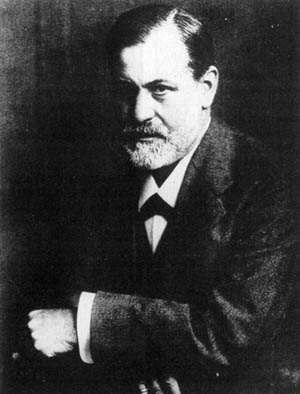
Freud was severely emasculated in both personal ego and in his group ego. He was in fact a practicing homosexual. His relationship with Fliess was homosexual in nature which Freud confessed vowing never to do it again. His group, the Jews, were and are a severely emasculated people. They have been since they walked away from Ur. But on with Freud.
Freud was fond of telling the story of his father and his hat, it seems that Mr. Freud related a story to Sigmund, or Sigismund as he was known then, (His Hebrew name significantly was Solomon) of how when he was a young man walking down the street proudly wearing his new hat, a gentile knocked the hat from his head into the gutter, snarling: ‘Go get your hat, Jew.’
When Sigmund asked breathlessly what his father did, expecting an heroic response, the old gentleman replied: ‘I stepped into the gutter and picked up my hat.’ severely disappointing the young boy.
Since Freud told and retold this story we may be forgiven for believing it had a profound effect on his young conscious and subconscious minds and possibly his ‘unconscious’ too. On the one hand he may have been so ashamed of his father’s very reasonable reaction that he shared his emasculation encapsulating it in his subconscious as a fixation. It is possible that this story either made or contributed to his homosexuality. On the other hand we know for a fact that it inflamed his group ego with an ardent desire for revenge against the gentiles.
As a result of the story he made the Carthaginian Semite, Hannibal, his alter ego. When Hannibal’s father was defeated by the Romans he had his son swear that the would never cease waging war on the Romans until he died. Obviously Freud made his vow against the Europeans although his father didn’t demand it.
It is no coincidence that both Freud and Hannibal were Semites and that the Romans and Europeans were gentiles. Nor is it a coincidence that both Hannibal and Freud were defeated after seemingly winning the war and that rather than fighting the enemy to the end both fled. Now, it therefore follows that Freud never ceased waging war against the Europeans.
You say: How? Come along. I can’t take you into the Inner Sanctum, which way you will have to find on your own, but I can show you some of the records I have been allowed to abstract from the files.
This will involve the secret history of the human race but don’t be alarmed. If you don’t want to believe it you don’t have to. It still is a rousing good story. Besides, if you should ever come around the archives you’ll find it is true.
Freud himself made an attempt to explain a little of the origins of the Jewish psyche in Inhibitions, Symptoms and Anxiety and Moses And Monotheism. The earlier millennia don’t concern us here. The Jews throughout history in their egotism have felt much put upon. This sense of grievance grew until with the expulsion from Spain after the Reconquest their sense of injustice burst into open flames. The group swore revenge on Europe. It must be remembered that at the end of the thirteenth century they were expelled from England, at the beginning of the fourteenth from France and for the duration, well, they were really welcome nowhere.
They swore to stultify Europe. Judaism is the history of messianism.
Sabbatai Zevi.
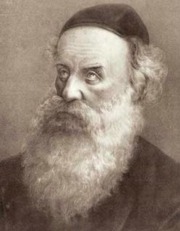
Zevi- The Last Of The Messiahs
This man was the last great messianic imposter. In 1666, the number of the beast plus a thousand, the Jews of Europe awaited the word from Sabbatai, then at the Ottoman Court to begin the slaughter. But Zevi apostatized to Moslemism instead. The uprising never came off. Hung fire. Fizzled.
Hope beats eternal. The learned Rabbis vowed never to place their hopes on a single individual again. They now concocted a plan for the group to rise as one man in rebellion. The date selected for the revolution was the period 1913-28. You want to give yourself a little leeway there. Born in 1856, in 1913 Sigmund Freud was fifty-seven years old. Although none of his biographers say much about his his Jewish background it is quite clear that he was read in Jewish lore. You may say that he wasn’t a religious Jew but he nevertheless was devoutly Jewish.
Freud quite consciously hated the gentiles for personal reasons that meshed quite well into those of his group identity.
During 1913-17 Freud’s reputation was immense both within and without the Jewish community. It was true his heir apparent, C.J. Jung had broken with him perhaps for this very reason but he and Psychoanalytic Movement had suffered no damage.
In psychoanalyis Freud had the means to instruct his group and control the gentiles. It is said that he gave up hypnotism when he turned to psychoanalysis but as a perusal of ‘Group Psychology’ will show he was preparing for a breathtaking attempt at hypnotizing the entire Western world not unlike that of Burroughs’ Lotharians against their invaders.
Freud lived in Vienna where for years, even decades before 1913, emigrating Jews had flowed through from the entry port into Austria from the East of Brody on their way to America via the North German ports. The prosperity of the whole German shipping lines was built on steerage passengers. Nor were the decisions to emigrate necessarily individual; it may have begun that way but to emigrate was soon organized and directed by the international Jewish community. Check the career of Baron Maurice Hirsch.
The Jewish establishments of both Europe and America provided funding. At about this time provisions were made to transport the entire Jewish population of the Pale, from Lithuania to Romania, to the United States Of America. At the time the international Jewish goverment led by Jacob Schiff and Louis Marshall was located in the United States, New York City. The decks were being cleared so as to remove resistance in America. So as not to call too much attention to the fact by having hordes disembark entirely in New York and Boston, for there would be resistance however feeble, the ports of New Orleans and Galveston were organized to deal with millions of immigrants.
This plan was aborted by the Great War. The Jews had already been at war with Russia, or the Czar as they personalized it, for a hundred years. The international Jewish community had engineered the Russo-Japanese war almost pulling off a revolution in its wake in 1905.
Activities were now intensified. At the time and for about the next sixty years the Jews threw a veil of obfuscation over their activities always denying involvement in Communist or Revolutionary matters. In recent years Jewish scholars, for whatever reason, have now found it expedient to admit that which they were accused of but always denied. They now admit that every national subversive Communist part was over fifty percent Jewish. Those of Russia and Germany were considerably higher. Freud had been involved in Jewish subversive organizations like the B’nai B’rith for many years. As the master psychologist, an expert in the unconscious, he prepared the Jewish mind for the great task of the millennial years in Central and Eastern Europe, which would require much bloodshed, while formulating his psychological plan of conquest not dissimilar from the military plans of his hero, Hannibal.
Freud himself was centered in Vienna. A lieutenant, Abraham, was his man in Berlin while Frerenczi was posted to Budapest in Hungary. The three crucial central European points were covered. Jung in Zurich had split off shortly before this. It is interesting that the Jewish psychoanalytic extablishment spitefully denounced him as a Nazi.
The Jewish millennial years began in 1913. The Great War began in 1914. The Bolshevik Revolution occurred in 1917. Freud’s Introductory Lectures On Psychoanalysis appeared in 1917 also, even though there must have been an extreme paper shortage; it is not a short book. Freud encoded last minute instructions to the Revolutionists in the book.
At this point in 1917 Freud released the inhibitions of millions of Mr. Hydes in Russia, Hungary and Germany. The Bolsheviks took Russia out of the war signing a seemingly humiliating peace treat at Brest-Litovsk. As Lenin said the peace treaty was meaningless because it was his intent to stab Germany in the back.
Germany had a huge Communist Party which it is now admitted was around sixty percent Jewish. Now with the United States in the war, Germany debilitated internally and crippled psychologically, thousands of Jewish revolutionaries intent on the realization of the millennium flowed back into Germany from Russia in hopes of achieving the Revolution there, giddy with the hopes of thereby annexing Central and Eastern Europe. That they didn’t was because of the efforts of the German Volkish groups such as Hitler and his Nazi Party.
The unconscious psychoses of the Jewish people who it will be remembered as a group were suffering from severe emasculation were erupting. Emasculation of the Ego is always expressed in a sexual manner frequently sadistic. Freud had been preaching the practice of unrestrained sexual activity for years. Murder is a sexual act. He was against ‘repression’ you remember.
When Russia began its program of expansion under the Romanovs it annexed an enormous number of nationalities. The Russians then tried to impose their language and manners on the conquered peoples in an attempt to form an homogeneous State. In so doing they emasculated the subject peoples. Those same subject peoples were now the masters of the Russians with permission to indulge their ‘unconscious.’
Jews, Letts, Poles and others let loose. Stalin himself was a Georgian.
Jacob Schiff- PM of the International Jewish Government at this time.
As Jean Genet correctly saw of the Nazi State, in Russia a criminal intellect was now joined to the political and legal apparatus of the State. The criminal code was changed from an objective one to a subjective one; one of vengeance. For a period of years law was suspended in Russia. Amidst the chaos International Jewish organizations including those of the United States operated openly to coordinate their hopes for the millennium.
Bela Kun- Communist Psychopath
What I’m about to say has been denied and suppressed but the example was before both Hitler and Stalin. In Hungary Freud had his man Ferenczi to coordinate the Hungarian Jews. The Jewish Bela Kun (Cohn) seized the government beginning a reign of terror against the gentiles during which thousands of non-Jews were murdered in a horrible sadistic manner commensurate with a severely emasculated Ego.
For some time the Jews had been clamoring for a State of their own. Taking advantage of the chaos in Russia the Jewish American Joint Distribution Committee under the leadership of Schiff and Marshall decided to appropriate the Crimea. Bela Kun who had escaped Hungary during the inevitable reaction, going to Moscow, was sent down to the Crimea to exterminate the population to make lebensraum for the Jews. He was in the process when Lenin died. Stalin then recalled him to Moscow where he was subsequently shot.
All these activities were obscured and suppressed. It is forbidden in American universities to study the subject to this day.
Still, Europe was so horrified that they declined to discuss it or even acknowledge it. But Hitler and Stalin remembered.
The Communists in Moscow being composed solely of emasculated peoples functioning from Freud’s vision of the unconscious like so many Hydes conducted a criminal homosexual style State that would have delighted Genet had he been there. The author the The Thief’s Journal would have gasped at the warehouses full of stolen furs, diamonds and other jewels, art objects and whatever of value that the poor emasculated wretches had stolen from their murdered victims. It was the triumph of the Common Man.
As soon as Stalin gained power he began to discredit and remove Jews from influential positions. Trotsky was sent to a malarial swamp in Siberia to die but from which he escaped to be killed by Stalin’s assasins later. As Stalin consolidated his power he acted more directly until he held the famous show trials of 1936. He then began the systematic elimination of Jews which resulted by the end of 1945 in the death of millions.
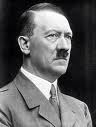
Adolf Hitler

Joseph Stalin
Thus Hitler, an emasculated man leading an emasculated people had the Judaeo-Communist example before him. As an avid anti-Communist and open anti-Semite he was virtually isolated by the world that by 1936 was under the control of Judaeo-Communists. He was the antagonist not the protagonist.
While Stalin who had religious training was clever enough to seemingly work through the system openly followed legal controlled methods although the law had been subordinated to his ends. Hitler acted as a homosexual with an ax in his hand. Stalin’s officers dispatched prisoners hidden in the depths of the Lubyanka with a bullet in the back of the head, which method, by the way, was favored by Jewish and Italian members of Organized Crdime in America of the time, while the Nazis brutally beat prisoners, finally shooting them in the back while escaping.
Stalin, Hitler, Freud, which was worse? Freud enabled, Stalin and Hitler executed. They were all the same.
In Russia during the first year or so of Lenin some Russian workers were being read to as they worked. Were they being read the works of Marx or Lenin? No. They were being read the Tarzan novels of Edgar Rice Burrougs. This infuriated the Politburo. The State was trying to impose a collectivist unconscious psychology on the Russians while Burroughs and his great psychological projection were individualist and responsible. In fact, Burroughs offered a concept of the unconscious which was directly opposed to that of Freud. One might say that Burroughs was Dr. Jekyll to Freud’s Mr. Hyde.
Burroughs himself had been severely emasculated at the age of nine. The situation seems to be this: Burroughs came from a prosperous Chicago family. His parents were very proud of their English ancestry. If you’re unwilling to understand national and racial prejudices that were very pronounced at the time then you probably won’t be able to understand. There were strong feelings between the Anglo-Saxon and Celt or English and Irish. The Anglos considered the Celts if not inferior at least eccentric. The Burroughses employed two Irish girls as servants. In all probability Young Burroughs assumed an attitude of superiority which the girls resented. They then concocted a plan to cut young Burroughs down to size.
They had a friend or relative by the name of John who was aged twelve to Burroughs’ nine. Being much larger and tougher than Burroughs he stopped the younger boy on the way to school one day where he thoroughly intimidated and terrified him. It is quite possible that Burroughs messed his pants. In any event, he suffered severe emasculation that was to haunt him all his life. He does not seem to have ever practiced homosexuality although he was haunted by a feeling of sexual ambiguity.
The incident with John the Bully not only played havoc with Burroughs personal psychlogy in the narrow sense of creating a psychosis but there was also an effect in what Freud’s erstwhile associate, C. J. Jung called the collective unconscious. The individual is limited by his very humanity to a small number of general responses.
Thus Burroughs was given a cast of mind which the Hindus denoted as Shivaistic. This is a general outlook or philosophy of life, if you wish, which one adopts unconsciously as the consequence of one’s experience. I share it although it took me nearly a lifetime to recognize and accept it.

Edgar Allan Poe- The Father Of Modern Literature
Burroughs himself was aware of the fact by at least 1931 when he wrote Tarzan And The Leopard Men. In one key or on one level the story is one of Shiva and Kali his consort. Burroughs names his heroine Kali while she is selected to be the White Goddess of the Leopard Men as part of their death cult.
As can be seen by their complete disregard for life Freud, Hitler and Stalin were also Shivaites.
Shiva and Kali are the Hindu representation of Life and Death. Shiva plays unconcernedly on the pipes while the carnage of life and death goes on around him. The song goes on. Kali, his consort, the goddess of death and regeneration dances on the bodies of the dead to Shiva’s music while wearing a necklace of skulls. Death means nothing because she as the eternal mother has the means to multiply unendingly. Do multitudes die? Why then, multitudes die. Not to worry. Life goes on.
Burroughs also developed an interest in psychology in his attempt to free his mind of the fixation given him by John the Bully. As his psychological notions were well formed by 1911 when he began to write in his attempt to expiate his guilt it follows that he acquired his knowledge during his early married years from 1900 to 1911. He married at 24. He had little opportunity to do his reading before then as the major works were only appearing in the late ’90s.
His main concern was the subconscious mind. While his evolutionary ideas are easier to trace he has left no mention of his psychological reading. It seems certain that he was familiar with FWH Myers who, as noticed, first defined the notion of the unconscious in 1886. He must have read James while Freud’s notions would have been discussed, if not yet translated; thus DH Lawrence had highly developed ideas on the Freudian unconscious in his 1911 Psychoanalysis And The Unconscious while I doubt Burroughs had read Freud in the German.
Also it seems probable that Burroughs had read Le Bon.
Burroughs’ idea of the unconscious differed greatly from Freud’s while being more soundly based in the actual functioning of the mind. While Burroughs’ hero Tarzan seems to function with an integrated personality from his creation in 1911-12 Burroughs himself came very close to integrating his own from 1913 to ’17 or may have although he always had trouble with his Animus and Anima.
Even though Freud advertised the fact that he had taken a year off (golly, a whole year) for self-analysis, whatever the results may have been he never succeeded in integrating his personality or, apparently, realized he should have. He was severely conflicted all his life. Just take a look at his photo where you can see that huge welt running from his lover right cheek across his nose into his forehead. That was caused either by excessive cocaine use or mental conflict in the brain stem, probably both.
As did all mythographers, Burroughs had read his Poe, like them he was concerned with the conscious and subconscious minds. While Stevenson’s Jekyll lost his conscious mind in his subconscious mind, Burroughs cencentrated on the concept of the beast within the man, the relationship between the conscious and the subconscious. In Chapter 3 of The Return Of Tarzan, in what appears to be a plagiarization of the murder scene of Poe’s Murders In The Rue Morgue, Burroughs has Tarzan act out the parts of both the Sailor and the Orang.
Lured up to the apartment on the pretext of helping a young woman, Tarzan is set upon by her accomplices. Discarding the trappings of his recently acquired civilization Tarzan reverts to his anthropoid education of the Jungle becoming Poe’s Orang, yet always retaining the restraints of his humanity or the Sailor.
When the police come he leaps out the window to a telephone pole which one imagines were more common in Chicago than Paris. (Burroughs had never been to Paris so he replicated the urban scene he knew.) While still in his ape guise he has the sense to look down where he sees a policeman below so he climbs up leaping to a rooftop.
Racing across the rooftops of Paris he climbs down another pole. Then in a Hyde-like transformation back to Jekyll he shakes himself from his ape self back into his human self, without the aid of drugs, enters a restaurant to clean up in the rest room then saunter jauntily down the street as though nothing had happened.
Thus the plagiarization of not only Poe but Stevenson was merely an attempt to give a better solution by using the mythological symbols.
Return was written at the end of 1912 and the beginning of 1913.
Burroughs’ own self-analysis would continue through his astonishing output of 1911-17 when he finally integrated his personality with the final volume of his Mucker Trilogy published as the Oakdale Affair but alternately titled Bridge And The Oskaloosa Kid which is the better title. At that time he had exorcised his major fixations which should have integrated his personality.
In understanding that the disintegration of the personality was caused by an affront or affronts to the Ego or Animus that resulted in the creation of fixations that festered in the subconscious that in turn manufactured affects that evidenced themselves in various physical and psychological ways he realized that the same could be exorcised returning the Ego to a whole state.
Unfortunately he strung his theory on through a couple dozen works of fiction disguised as incident. A very few would read all the novels while the only possible interpreters could be those who had read them all not only with a psychological background but an open, inquisitive mind. We’re a very small minority.
If I hadn’t been through the same process on my own I probably never would have recognized it. However as his theories were embodied in his hero Tarzan as mythology they passed into the unconscious of his readers of which, as a teenager, I was one, so shall we say, my mind was prepared.
Part VII Springtime For Edgar Rice Burroughs
October 6, 2007
Springtime For Edgar Rice Burroughs
by
R.E. Prindle
Part VII

Edgar Rice Burroughs
The Sequels
The return from San Diego in March-April 1914 was a turning point in Burroughs’ life. In a sense it was a childhood’s end. The past was now the past. ERB’s future lay ahead.
The fact that he had won the gamble of the stay in San Diego being able to spend recklessly and still have his back financially covered must have been a tonic to his self-confidence. He was able to do nearly anything he wanted to do. One was to begin his library. A key book in his library was Edward Gibbon’s Decline And Fall Of The Roman Empire. He recorded its purchase date in 1913 and the day he completed the work just after his birthday in 1915. One imagines that by the time he wrote his three sequels in mid-1914 he had read a few of the volumes of his twelve volume set.
This is important because reading Gibbon is a life changing event. In the language of the sixties the history is consciousness expanding. In a sense it is a transition from childhood to maturity.
It is impossible to stress sufficiently the changes that ERB is going through or the rapidity of the changes. Already just returned from San Diego he is purchasing a new automobile, a Hudson. It is perhaps no coincidence that The Mad King opens with Barney Custer/ERB careening down the road in a new Roadster. That it is gray is of very little significance because the only colors available in 1914 were probably grey and black. Or perhaps as the Hudson appears to be grey in black and white photos Barney’s car for that reason was grey.
One can only imagine the exhilaration ERB experienced as he climbed behind the wheel of big new touring car. It was Hudson not a cheap Ford. Nineteen fourteen was also a turning point in the history of Ford Motors. ERB always disparages Fords in these years proud that he’s driving a more expensive automobile. The woes of not being able to afford a car from 1903 on must have melted away.
Not only did ERB buy a new car but he and his family of wife and three children moved into luxurious new quarters in the affluent Chicago suburb of Oak Park. So ERB began a new life on his return to Chicago.
Shortly after his return Tarzan Of The Apes was released in book form by A.C. McClurg. Magazine and newspaper response to his stories had been terrific so there was no reason for Burroughs not to anticipate large sales. One can imagine him sitting up nights calculating the number. A hundred thousand? Too low. A million? Well, if he got really lucky. We’ve all enjoyed the anticipation of some sort along those lines.
The book was released in May, 1914 but there is no indication that McClurg’s even sold through the fifteen thousand of the contract or, indeed, that they even ever printed that many. The title was turned over to the reprint house of A.L. Burt early the next year in 1915. Burt was so uncertain of the books reception that they made McClurgs guarantee the first printing. When Burt turned the title over to Grossett and Dunlap they claimed to have sold less than seven hundred thousand copies at fifty cents each. Royalties were only four and a half cents a copy of which McClurg’s got half so Burroughs realized a mere pittance.
So what then?
He was thrown back almost wholly on his magazine revenues. He began to receive some money from newspaper syndication but this was relatively a pittance given his expectations. Within a few years movie money would begin coming in but for the time being Burroughs had to keep writing bcause as usual he was spending in advance of receipts.
I believe one can detect a change in the style of his writing at this point.
Whereas prior to the return from San Diego with the energy of the bloom of Spring relying perhaps on stories that had evolved in his mind as he daydreamed in the lean years stories just flowed from his pen. It seems likely that he exhausted that reservoir in San Diego so that now he had actually to work at dreaming up stories. In all three of the titles the sequels are significantly longer than the first halves while changing from personal revelations more toward formal stories.
The editorship of Munsey’s had also changed from Metcalf to Bob Davis- Robert H. Davis. From the available evidence Metcalf seems to have been the more tolerant and indulgent of Burroughs’ writing. When Davis was assigned Burroughs in 1914 the latter was an established star of the Munsey stable of writers. Davis wrote an autobiography c. 1940 that I haven’t been able to obtain but which should have much information on his dealing with ERB.
Davis appears to have been much more critical of Burroughs, even bullying him, pushing suggestions on him that the vulnerable writer couldn’t resist. Davis was the one who suggested that Tarzan have a son something Burroughs always regretted doing. Davis seems to have been of the opinion that ERB used a number of trite situations, situations that have subsequently been amply exploited by the movies. Not having grown up in ERB’s milieu and being sufficienctly underread in the various literatures of the times I am unable to say whether or not Burroughs presentation of Barney Custer’s execution by firing squad was trite or not as Davis states. Why Davis should have accepted the grazing of the head by the bullet that has become so commonplace in the movies and rejected the first episode is beyond me.
That Davis accepted Barney’s escape through the sewer without a demur when the episode is a blatant plagiarism of Jean Valjean’s escape through the sewer in Les Miserables is beyond me also. Burroughs even duplicates the upturned face as the filth rises about Valjean. ERB does provide the original twist of Barney being completely submerged in the sewage. Gruesome enough.
So Davis’ intent seems to have been a contest for control and dominance. It seems then that there were large variations between the magazine stories and the published books as ERB reinserted deleted passages and changed details back to his original writing. Overall, from the available evidence, I hold an unfavorable opinion of Davis’ interference.
On the home front, while ERB may have thought to find acceptance for his success as a writer and his newfound prosperity he was to be bitterly disappointed as his writing was disparaged and his topics made him a literary clown in his contemporaries eyes. To my undertanding he has never been accorded the respect that is his due to this day either in Oak Park or Chicago.
The fact is that he was able to please his audience in the pulp fiction genre mightily not only in 1913-14 but for at least a quarter century until his medium, pulp fiction, began to flounder in the thirties and forties. Having now read so many of his novels four to six times I am beginning now to have a much greater respect for ERB’s writing abilities.
The sequels of all three novels under consideration show an extreme focus on exactly what the story is and told with great economy yet with words so well chosen that the reader learns everything that he has to know. I am especially impressed with the single minded drive of The Mad King.
While obviously desiring acceptance and even importance in Chicago’s society ERB made an effort to be accepted by the newspaper columnists he had so admired from young manhood on. These men were very much admired by ERB. Indeed the columnists occupied a position analogous to the drive time radio commentators of our day. Chicago had some of the best.
Burroughs had collections of Eugene Field and George Ade in his library so that it is clear that he was much influenced by them. He does not seem to have cared for Peter Finley Dunne and his Mr. Dooley Irish dialect stories. Now as man he began to contribute to the successors of Field and Ade. Bert Leston Taylor’s column A Line Of Type Or Two in the Chicago Tribune printed some of Burroughs’ verse submitted under his pseudonym, Normal Bean, as well as another column in the Tribune, In The Wake Of The News by Hugh E. Keogh also known as HEK. (source: Porges) Both columns were prestigious so that the acceptance of ERB’s verse would indicate that it was high enough quality for the columns. After all it isn’t that easy to get into such columns or even have a letter to the editor published. Burroughs also joined the White Paper Club that sounds like a catchall scribblers club. He was ignored and shunned by the prestigious clubs.
A note on cars and then to the books on review. In 1913 he had and sold a Velie. In 1914 he bought and drove a Hudson while he drove a Mitchell in 1915.
The Velie is of interest (see http://www.angelfire.com/mt/velie/ )
The Velie was a low priced model bought second hand so it probably didn’t put ERB out too much. Willard Velie attended Yale at the same time as the Burroughs Boys graduating in 1888. One wonders if the Brothers knew of Velie at Yale. Perhaps such a knowledge may have influenced Burroughs choice or perhaps not.
The choice of the Hudson was undoubtedly influenced by the fact that ERB’s hero, L. Frank Baum, who ERB almost certainly visited in 1913, drove one.
If there is a possible story behind the Mitchell I haven’t learned it as yet. Also it shoud be noted that the movie industry did not affect Baum’s decision to move to Hollywood. Cecil B. Demille and Jesse Lasky didn’t step off the train in LA until 1914 when they introduced Hollywood to the movies.
2.
So now ERB began to organize his life around his future rather than his past. The first burst of writing in which he released his pent up emotions was now spent. On the return to Chicago his writing becomes a vocation in which he had to turn out stories every year for the pulps so that he became a professional writer rather than a quasi-amateur.
Tarzan Of The Apes was published in May upon his return but it would seem to disappointing sales. It was even difficult for McClurg’s to get the reprint firm of A.L. Burt to take it however it did well for Burt although apparently not in the spectacular numbers so often reported. Nevertheless money began to come in from that source.
Burroughs’ writing would also be influenced by the political situation presented by the Wobblies or I.W.W. as well as the outbreak of the Great War in August. That conflict became the subject of the sequel to The Mad King that was written after the war began.
The tone of the three sequels then changed from the first halves becoming less personal in their presentation but still concerned with ERB’s relationship with Emma.
The opening sequence of The Cave Girl-The Mad King-The Eternal Lover was changed to The Cave Man-Sweethearts Primeval (Eternal Lover)-and Barney Custer Of Beatrice (Mad King).
Barney Custer of Beatrice seems to display some first hand knowledge of Bert Weston’s business so it is possible that ERB and family visited Weston and Beatrice on the way back from California. In the only letter in the Weston correspondence near the 1914 date, that of June 14, ERB does not allude to any such visit which may or may not mean anything.
The Cave Man then was written first of the sequels as was The Cave Girl of the original stories. There are very significant elements to the story. ERB would later use the Nadara as the White Goddess in Tarzan And The Leopard Men. That in turn links Nadara to La and thence to Florence. In this story Nadara has been captured by some aborigines and made their goddess as will be Kali Bwana. Just as Nadara was wearing the Panther pelt so Kali Bwana would be associated with the Leopard as goddess of the Leopard Men. So both women are invested with ERB’s symbol of female sexuality.
Just as the long temple here was on a river so would be the Leopard temple. Waldo as Thandar uses the roof as does Tarzan. ERB thus duplicates the story. As Florence entered his life he began to associate her with this early dream of Nadara as well as her successor, La. Signficantly La makes her last appearance in 1930s Tarzan The Invincible transformed to reappear immediately as Kali Bwana of Leopard Men. That would indicate that by 1930 ERB had decided to leave Emma for Florence.
Another interesting twist is the similarity of Nadara and the temple to those of Trader Horn. We know that Trader Horn read Burroughs so it is probable that he somehow picked up a copy of the magazine version of Cave Man gestating the story for a decade or so when it came out of his head in 1927. Thus the close association of Burroughs and Horn before and after the publication of the latter’s story. Keeps getting more and more interesting, doesn’t it?
A second major issue seems to be ERB trying to reconcile himself and his parents. The second half of the Cave Man is very concerned with portraying Thandar/ERB’s father as a fine old man in contrast to the crazy deaf mute of Lad And The Lion. In this story the father figure is sympathetic while the mother figure is more harsh. She does become reconciled to Nadara in the end when she learns the girl is a French Princess. French again. One wonders if ERB’s mother was opposed to his marrying Emma.
Nadara herself who waffles between a representation of Emma/Jane and La in the Cave Girl begins Cave Man as more Ema but becomes morel like La/Kali Bwana as the story progresses ending strongly as the latter which would indicate that ERB already preferred his dream Golden Girl to Emma. He finally settled for the rather commonplace Florence as his version of the Wild Thing.
The story opens with the usual adventures. Getting Nadar back to her people it is necessary to kill King Big Fist to keep her. Thus we have a series of male images that reflect ERB’s conflict with Frank Martin.
Big Fist dead the people appoint Tandar/Waldo as their king. Thandar is in the process of converting the tribe to American Democracy when the earth quake strikes. In addition to head bashing one is astonished at the role earthquakes play in these early stories along with memory loss.
In this one Thandar/Waldo is creating a new society somewhat in imitation of the bizarre improvements Jules Verne made to his Mysterious Island when the earthquake strikes ending Thandar’s experiment.
The earthquake separates him from Nadara who is then pursued by another neanderthal type; perhaps this is a varation on the theme of ERB’s ccontest with marank Martin for Emma’s hand.
In a bizarre episode Thandar puts to sea in a bobbing strange little boat finally falling in with Pirates. From then on the story resembles Pirate Blood. Pirate Blood appeared at the same time as his relationship with Florence developed so the two are proable related to his Anima fantasies.
All comes out right in the end as the Pirates restore the belongings of Waldo’s father and mother whose yacht they had captured. Thandar rescues Nadara, all are reunited and Thandar/Waldo and Nadara are able to consummate their natural union with the marriage rites of civilization. An odd little story overall.
ERB next turned to the sequel of The Eternal Lover, Sweethearts Primeval. I just like this story. Nu and Victoria return to the Niocene. ERB missed some opportunities here. While Nu left the Niocene to go to the present Nat-ul never did. So when Victoria made her first trip to the Niocene both she and Nat-Ul should have been there. It would have been well if ERB had explained how their two being meshed after the munerous rebirths of Nat-Ul that produced Victoria.
In this story Nat-Ul who is a variation of La, and Nu become separated. The story is their attempt to reunite. Once again a character who may represent Frank Martin attempts to abduct Nat-Ul but she escapes him to fall into the clutches of another cave man only to escape finding her way to a small island.
The imagery is quite wonderful. Burroughs at his best. The scenery is quite reminiscent of Pellucidar with its coasts and islands. The pirate theme is also prominent in the Pellucidar stories of this time.
Nat-Ul manages to be abducted a number of times escaping each time.
Nu is hampered in his search for Nat-Ul by the appearance of a woman named Gron the wife of Tur of the Boat People. She attches herself to Num who has a difficult time getting rid of her. In the end Nu goes off in seach of the tiger OO this time dying while Victoria/Nat-Ul returns to the present leaving a hole in Space and Time.
In the end we learn that the whole story of Nu took place in the three mintues Victoria was unconcious.
Burroughs then turned to the sequel of The Mad King. The reversal in sequence of The Mad King and The Eternal Lover was necessitated by the fact that after the first part of The Mad King Barney had gone to Africa so that it was now necessary to get him back to Lutha.
Thus the Mad King and The Eternal Lover are actually one novel of the History of Barney Custer. The two books could be combined and titled something like The Adventures Of Barney Custer in Lutha and Africa.
The proper way to read the two books then is Part I of The Mad King, both parts of The Eternal Lover and then the sequel to The Mad King.
After losing Emma in Mad King Part I, Barney goes to Africa to ‘forget’ along with Butzow. Leaving Africa we next find him and Butzow in Beatrice, Nebraska visiting Bert and Margaret and their grain mill.
If Peter of Bletz had lost rack of Barney in Africa he relocates him in Beatrice (I am informed that Beatrice if pronounced Be-at-trice). After a failed murder attempt by Peter’s henchman Maenck Barney and Butzow return to Lutha.
As the story was written after the beginning of the Great War Austria is now attempting to annex Lutha. Apparently ERB was opposed to Austria as he sides with the Serbs.
Having been unable to forget Emma in Africa Barney now attempts to win her hand from King Leopold.
Barney and Leopold are yet another variation on The Prince And The Pauper then. Barney is captured trying to enter Lutha and put before a firing squad. Miraculously escaping death he escapes the Austrians by a direct borrowing of Jean Valjean’s escape through the sewers of Paris.
He is temporarily reunited with Emma but then captured by Maenck. Taken to Leopold he is sentenced to death but contrives to escape by exchanging identities with Leopold. In the guise of Leopold Barney manages to save Lutha from the Austrians. He dressed in Royal and Leopold dressed in rages the two are impossible to tell apart which replicates Twain’s story.
Barney is more seriously injured than Leiop[old so more vulnerable and also stupidly trusting. It should be clear that Barney and Leopold are doppelgangers of ERB. The crux of the problme here is the struggle for Emma. She had been promised in marriage to Leopold so that she is unwilling to disengage fromt he agreement without Leopold’s consent.
ERB writes this remarkable passage about his tow identities, the one the loser of yesteryear, Leopold, and the other the success of his present, Barney.
Quote:
‘What do you intend doing with me?” (Leopold) said. “Are you going to keep your word and return my identity?”
“I have promised,” replied Barney, “and what I promise I always perform.”
“Then exchange clothing with me at once,” cried the king, half rising from his cot.
‘Not so fast, my friend,” replied the American. “There are a few trifling details to be arranged before we resume our proper personalities.”
Unquote.
One of the trifling details is the release of Emma from her obligation to Leopold. Barney extorts the letter releasing the king placing it under his pillow. Exhausted from his wound he then falls asleep. Not so tired Leopold waits until Barney is asleep than recovers his clothes takes back the letter and leaves Barney to his fate.
Up to this point in 1913-14’s output ERB has been struggling to make amends with for his dismal performance in the first thirteen yers of marriage and regain her confidence. Thus Leopold represents the old ERB and Barney the new. As Emma has been married to ERB and is familiar with his loser persona it is difficult for her to transit from Leopold to Barney in her affections. As they are so similar in appearance she had difficulty telling them apart. This has been ERB;s dilemma for the last year and a half, convincing Emma that he is trustworthy and will continue to be a good provider.
ERB has confidence in his ability to continue his writing and finanical success but his future was not so clear to Emma as he continued his wastrel ways. As she could not share his optimism she continued to be wary refusing to accord him the trust and actually the respect he desired.
Leopold in possession of the letter identifying him as Barney races to Lustadt presumably with the intent to present Emma with the letter identifying him as Barney, the man she really wants, the marrying her quickly under the false pretense thus foiling Barney.
His own plan is foiled when upon arriving at the castle in Lustadt he is shot dead by Maenck who mistakes him for Barney . Barney then shows up claiming the hand of Emma.
He is then proclaimed king. Emma says to him:
Quote:
“There is no other way, my lord King,” she said with grave dignity. “With her blood your mother requeated you a duty which you may not shirk. It is not for you or me to choose. God chose for you when you were born.”
Unquote.
Thus with the line: God chose for out ERB unites the stories of Little Lord Fauntleroy and The Prince And The Pauper. The Little Prince of ERB’s early years returns to his God appointed place. He and Emma are united.
One believes that the story and its ending was intended for Emma to observe ahd heed. Apparently she didn’t because in the next Tarzan story, Jewels Of Opar of 1915, Tarzan and La flirt again.
Anyway The Mad King sequel rounds out the stories of 1913 bringing Burroughs’ springtime to an end. The tragedy is that Emma couldn’t foresee that ERB had tapped into the Mother Lode. No matter how improvident ERB would continute to be the money would always be there to continue their new life style. Perhaps if she had surrendered to fate and Made ERB her king in fact both she and La would have been united in one figure.
It seems that the Cave Girl, The Eternal Lover and The Mad King explored ERB’s relationship with Emma fromt he beginning to the point aht ERB was minded to replace her with an ideal woman.
The notion would develop in his mind until in 1927 he actually did so.
The three sequels ended the quest of his Springtime. His youthful enthusiasm was exhausted. From this point on he would compose more formal novels searching for story lines.
Personally I find his post 1914 to 1920 work some of his best. The two sequels to The Mucker yet to come are outstanding.
Female problems continued to dominate his work. Then in 1921 he read a work on male-female relations by E.M. Hull that had a profound effect on him. that was the novel of The Sheik. I would like to do a review of that next before I return to the Tarzan series.
Part 4c Springtime For Edgar Rice Burroughs
July 10, 2007
Springtime For Edgar Rice Burroughs
by
R.E. Prindle
4c
How Waldo Became A Man
In the complex of meanings of Waldo the question is how much Burroughs bases the character on himself. In the question of health there is no question that Burroughs had issues after his bashing in Toronto in 1899.
Judging from the Girl From Farris’s his health was a serious problem for him at least until early 1914 when he finished Farris’s. During those years he suffered from debilitating excruciatingly painful headaches for at least half the day. He either awakened with them or they developed mid-day. There is evidence that he became interested in Bernarr Macfadden’s body building and health techniques when Macfadden opened his Chicago facilities in 1908. If he were involved then perhaps the benefits of such a regimen were becoming apparent in1913-14. In 1916 in the photograph in puttees taken at Coldwater he looks like a healthy specimen and proud of it.
ERB gives Waldo the wasting disease Tuberculosis putting him on a regimen of exercise in the healthy dry air of his island thus curing him within a few months. This process is reminiscent of Grey’s hero John Hare of Heritage Of The Desert or the development of the Virginian in Owen Wister’s novel.
Burroughs claimed that his writing was heavily influenced by his dreamworld. If so then in this story as well as his others each character must represent a real person who figures in his life; the story must represent a real situation in symbolical form.
As authors so often claim their characters are composites it is likely that Burroughs also combines memories of other people with his own dreams. As Burroughs consciously manipulates his dream material he tweaks it into shape to make an entertaining novel then overlaying his conscious desires on his subconscious hopes and fears.
page 1.
In addition Burroughs retains his literary influences using them to give form to his dreamscapes. Indeed, his influences fill his mind so full they become part of his dreamscapes. The island he creates is similar to but not identical with Jules Verne’s Mysterious Island. This becomes very apparent in the sequel, The Cave Man, when Waldo sets about to improve his little society. He isn’t as obsessive-compulsive as Verne but along those lines.
Verne’s island figures prominently in many of Burroughs narratives. Oddly the book isn’t in his library.
ERB began telling his life’s story the moment he took up his pen. While John Carter seems to be dissociated from his own personality Tarzan is a true alter ego, a psychic doppelganger. Tarzan Of The Apes is a symbolical telling of his life’s story from birth to 1896 while the Return of Tarzan covers the four years from 1896 to 1900 and his marriage. (See my Four Crucial Years In The Life Of Edgar Rice Burroughs here on ERBzine.)
The Girl From Farris’s deals with the troubled years from 1899 to, it appears, March of 1914. Thus Cave Girl addresses his difficulties in making the transition to writer and then full time writer with the attendant marital or sexual problems. These marital or sexual problems occupy him through many novels in this first burst of creativity from 1913 to 1915.
Porges in working from Burroughs’ own papers in his biography has very little input from outside sources but some. The first material we have to work with from an outsider’s point of view is Matt Cohen’s fine edition of Brother Men, the collection of the Burroughs-Weston correspondence. Weston being ERB’s friend from MMA days. At the time of the divorce they had been in touch for forty years.
However I think that figure may be a little misleading as the two men had very little contact during that period. ERB met Weston in 1895 at the MMA at the beginning of the school year. He was one year younger than ERB. As Burroughs left the MMA in May of ’96 the two must have become fast friends in just eight or nine months. It isn’t probable that they met again before 1905 when Weston was passing through Chicago with his wife Margaret. At that time both Westons would have met Emma. From that time to the end of ERB’s Chicago period except for the occasional brief layover in Chicago the relationship was carried on by correspondence although as Burroughs seems to have some knowledge of Weston’s home town, Beatrice, Nebraska as evidenced in the second half of The Mad King it is possible he and Emma visited Weston but that would have had to have been between March ’14 and August ’14. Narrow window.
Thus when Weston talks so knowingly of Burroughs’ character in the letter of 1934 I will refer to I would have to question the depth of his knowledge. At any rate he claims to have knowledge of the difficulties of the marriage.
Weston was completely devastated by the announcement of the divorce. He immediatly sided with Emma breaking off relations with ERB for several years.
It appears from the letter of 1934 reproduced on page 233 of Brother Men that he contacted Burroughs’ LA friend Charles Rosenberger for information on the divorce. We have only Weston’s reply but not Rosenberger’s letter.
In reply to Rosenberger Weston says:
Quote:
I have known Ed since the fall of ’95. He has always been unusual and erratic. I have told Margaret many times, when Ed has done or said anything which seemed sort of queer that as long as I had known him he had always done or said such things.
(One of the most significant odd things would have been Burroughs leaving the MMA in mid-term in May to join the Army. One imagines that when he didn’t show up for classes next day the faculty asked: Where’s Burroughs. Perhaps Weston was the only one who knew and had to say: Uh, he joined the Army.)
I suppose looking back, that the fact that Ed has always been unusual, erratic and perhaps queer, has been his great charm and attraction for me.
Unquote.
I don’t know about you but if my best friend talked about me like that I would be less than flattered. There is another back handed compliment that Weston made to Burroughs’ father in his defense.
Burroughs’ father had made the comment to Weston that his son was no damn good. Good to have your dad on your side too. Weston defended ERB vigorously saying that he thought there was plenty of good in ERB, he just hadn’t shown it yet. Thank you, Herb Weston.
If one judges from the actions of Ogden Secor in Girl From Farris’s after he was hit on the head and if his actions approximated those of Burroughs from 1899 on then there was probably a very good reason for ERB’s unusual, erratic perhaps queer behavior apart from the fact that ERB had developed the typical character of his difficult childhood.
In reading the correspondence Weston comes across as a very conventional and highly respectable person; in other words, stodgy. It must have been that settled bourgeois quality in him that ERB appreciated. Weston did many of the things that Burroughs would have liked to have done. Weston did go on to Yale from the MMA which is what Burroughs would have liked to have done. Weston did become an officer in the Army.
On page 157 of Brother Men is a discussion of the Spanish American War. If I read it correctly Weston actually served in Cuba with a Tennessee regiment. So Burroughs had reason to be envious of him as he failed in his own attempts to get into Teddy Roosevelt’s Rough Riders.
Nevertheless Weston’s evaluation of Burroughs uses some strong language who after all didn’t have that intimate a relationship with him: unusual, erratic perhaps queer. Honestly, I don’t think I would have a friend very long who thought of me that way.
Weston is bitterly disappointed but later in the letter he refers to Burroughs as a crazy old man so, at the least, we can assume that to the average mentality Burroughs appeared eccentric. As one in the same boat I can’t help but root for the author of Tarzan. What but an unconventional mind could have conceived such a story.
Burroughs antecedents had created his persona by 1895 so the crack on the head in Toronto merely added to his unusual persona.
Apart from any inferences about Ralph Waldo Emerson and the Transcendentalists the sickly character of Waldo may represent Burroughs’ own health problems from 1899 to the time of The Cave Girl.
I feel certain that Burroughs followed some sort of health or body building regimen from perhaps 1908-09 when the American body building king Bernarr Macfadden opened his Chicago facilities to 1913. Although Ogden Secor of Girl From Farris’s was still sickly in 1914 perhaps Burroughs health was improving as Waldo evolves from a skinny sickly person to a ‘blond giant’ before our eyes. ‘Blond Giant’ also brings to mind Nietzsche’s ‘Great Blond Beast.’ I think it would be pushing it to say Burroughs read Nietzsche, nevertheless Burroughs always seems to be well informed when you look closely. He might easily have picked up references to the ‘Blond Beast’ from newspapers, magazines and conversation.
Weston is especially incensed at Burroughs leaving Emma who both he and his wife Margaret seem to have preferred. They did travel to California to visit Emma while ignoring ERB.
Weston quotes Rosenberger to the effect that ERB told Rosenberger that he had always wanted to rid himself of Emma. To which Weston replies:
Quote:
Charming, unusual, erratic personality that Ed is, there is no woman on earth that would have lived with him, and put up with him except Emma, and do not be fooled! Emma suited Ed plenty, until this insane streak hit him.
Unquote.
So we have an outsider’s view of the situation. He considers Burroughs over the line in his personality to be redeemed by his charm. Weston had asked Rosenberger his opinion of the situation between ERB and Emma. ERB had apparently told Rosenberger after the split that he had always wanted to rid himself of Emma.
As far as Burroughs’ persdonality goes it would be in keeping with a person of his background who had been bounced from school to school. Waldo may in part be a nasty caricature of the East Coasters Burroughs associated with at the Phillips Academy. As is well known Easterners at the time and still today disdain those from the West. One has the feeling that Burroughs valued his Idaho experiences highly thus the transformation from the wimpy Easterner of Waldo to the Blond Giant of the great outdoors may be Burroughs snub of his Eastern classmates.
At any rate when Weston met Burroughs at the beginning of classes in ’95 ERB’s personality seems set.
By ‘saying things’ one presumes that Weston means Burroughs had an outsider’s ‘eccentric’ sense of humor. I have a feeling that a few of we Bibliophiles know where that’s at. Certainly Burroughs’ stories reflect this trait. So, between Burroughs and Weston we have a clash of two different backgrounds.
As to Emma I believe that Burroughs was always dissatisfied with the fact that he had married when he did whoever he might have married. He has been quoted as saying that Tarzan never should have married so that idea can probably be applied to him.
If circumstances hadn’t forced his hand he very likely would have remained single. According to his psychology the right time for him to find a woman and marry would have been after 1913 and his success when he was in effect born again and a new man.
So when he says he never really wanted Emma as a wife I’m sure that is true. However he did marry the woman. So from 1913 to 1920 we have Burroughs struggling with his desire to honor his life long committment to Emma and his contrary desire to find his ideal ‘mate’ a la Dejah Thoris, La, Nadara and a number of others. Not so easily done in real life and after great success but still possible.
Added to his problem was his embarrassing behavior in Idaho when he gambled away the couple’s last forty dollars. Emma reacted badly to the Western interlude in their marriage. Burroughs’ rather feckless attitude toward earning a living between the return from Idaho and his early success in 1913 undoubtedly caused emotional problems for Emma but as Weston says she stuck by him during those lean years and as he says, there were a lot of them.
Even in 1913 when the couple earned the first real money they had ever seen Burroughs was recklessly spending it before he got it based only on his confidence that he would always be a successful writer something which by no means necessarily follows.
Emma was very proud of Burroughs as the photo ERBzine published of the couple in San Diego shows however her pride obviusly conflicted with her fears so that she may have nagged ERB in what he considered an unjustified way.
On one level Cave Girl can be construed to be a record of their relationship up to the moment with Burroughs trying to reconcile the relationship according to his confident understanding of the situation.
Writing in February-March in Chicago we have this view. In September of 1913 the family left for San Diego. Writing in San Diego during October-November in the Mad King things seem to be deteriorating as Burroughs seems to be pleading with Emma to be reasonable. Thus the Mad King concerns Prince and Pauper doppelgangers who are appealing to the same woman.
This situation may have been caused by a situation that would be very reminiscent to Emma of her situation in Idaho of ten years earlier. On this trip in which ERB and Emma were as alone and isolated as in Idaho ERB was taking another very large gamble with Emma’s and her three little children’s wellbeing at stake. As ERB proudly tells it the family, no longer just a wife, but a family of five were within an ace of being flat broke if any one of the stories Burroughs wrote in 1913 failed to sell. Unlike Idaho this was a gamble the Roving Gambler won. Now, perhaps Burroughs thought this redeemed his earlier faux pas, probably to himself it did. But what about Emma? What terrific anxieties assailed her as she wondered whether they would have a roof over their heads from day to day.
We need more facts. Perhaps the move from Coronado to San Diego was forced by necessity to reduce costs. Perhaps selling the Vellie was necessary to raise cash. Thus Emma in the midst of this actual plenty of a $10,000 income was a virtual pauper in silks and diamonds. Would there be any wonder if she were cross and nagging? As Weston said there were difficulties in living with Burroughs.
Burroughs then rather than attempting to make reasonable adjustments in his behavior yearned for the perfect mate who would ‘understand’ him.
Nevertheless he had to bear the burden assigned him. Let us assume that as Weston said, at one time Emma suited Ed plenty. That’s an outsider’s opinion but the evidence of this group of novels is that ERB was doing his best to rectify his past for Emma. If Waldo is portrayed as clownish I’m sure that ERB had played the clown in real life for some time. As Weston said ERB had always said and done unusual things. He doesn’t say what they were but in all likelihood the things he said and did were meant to be jokes, to be funny. After all he describes Tarzan as a jungle joker. The jokes that Tarzan perpetrated originated in ERB’s mind so he had to think those jokes were funny. They were usually practical jokes. No one really like a practical joker. The psychological needs that go into a practical joke are compensatory.
Where he failed Emma in the past he seems to be trying to make up for it. Perhaps his financial gamble in 1913 in some way compensates for his gambling failure in 1903 reversing the outcome of 1903 and making it alright. His actions in 1913 are so zany one has to ask what he thinks he is doing.
e.
Leaving their little Eden Waldo and Nadara set out for her village where Korth and Flatfoot await him with Nagoola in the background.
Thus Waldo’s tasks as set for him by Nadara are to kill Korth and Flatfoot. Waldo quite correctly realizes that these two tasks are beyond his present powers. So, within sight of the village he makes excuses to Nadara then abandons her running away. He heads out to the Wasteland. He appears to be living in a near desert.
Over the next several months he transforms himself from a tubercular wimp into a ‘Blond Giant.’ Tarzan has black hair so perhaps Waldo has to be blond.
One can’t be sure but this period may represent the years from John The Bully to ERB’s proposal to Emma. At any rate Waldo can’t forget Nadara having a longing for her. During his period in the Wasteland he fashions weapons for himself that make him superior in prowess to the cave men. He fashions a spear, a shield and what Burroughs jokingly, I hope, refers to as a sword, that is a sharp pointed short stick with a handle. No bow and arrow. So rather than a primitive Tarzan we have a primitive Lancelot. Waldo is actually outfitted as a knight, a la Pyle, while when he acquires the pelt of Nagoola he will be, as it were, encased in armor. So Pyle, or at least Arthur, is an influence.
In a comedy of errors Nagoola manages to kill himself by falling on Waldo’s spear. In one sense this means that Waldo has invested his sexual desires in Nadara while perhaps it is symbolic of Burroughs’ desire to do the same with Emma. At the same time the panther skin makes Nadara the best dressed girl around. It is perhaps significant that he kills Nagoola first before Korth and Flatfoot.
If one looks again at that ERBzine photo of ERB and Emma in San Diego one will notice that Emma is wearing some spiffy new togs. In her father’s house Emma was a clothes horse. In another ERBzine photo showing ERB and Emma walking in the wilds of Idaho Emma is still dressed to the nines while ERB shambles along beside her in a cheap baggy suit.
From that point in 1903 to the efflorescence of wealth in 1913 Emma had to make do with whatever garb she could afford which must have been depressing for her. As Weston says that was a sacrifice she was willing to make for her man.
Not in 1913 in Cave Girl but in 1914 in Cave Man Waldo invests Nadara with Nagoola’s pelt. Now, Waldo suffered grievously to acquire this skin. That was a major battle out there in the Wasteland. Let us assume that the skin represents Waldo’s sexual desires and that in clothing Nadara in the skin he is making her his queen or princess.
Thus in 1913-14 for the first time in his life ERB is able to reestablish Emma as a clothes horse. He has finally been able to do his duty as a man and husband. She can now buy as many clothes of whatever quality she likes and ERB is happy to have her do it. So, in a symbolic way ERB had a terrific struggle that scarred him psychologically as Waldo was physically scarred by the talons of Nagoola. Now, Burroughs was proud to be able to dress Emma to her desires. In the same way that the panther represents Waldo’s investing Nadara with his sexual desires so Emma’s clothes represent the same to ERB.
It was now up to Emma to forgive ERB for his failings and treat him as her hero. Perhaps ERB was a little premature. I think that he would have had to woo her all over again. While he had conficence he would be able to go on writing indefinitely the surety of such was problematic to others like Emma and actually ERB’s editor at Munsey, Bob Davis. Davis told him point blank that guys like Burroughs start strong, shoot their wad and fall out after two or three years. As far as others were concerned Burrroughs future remained to be seen. The evidence is that Davis and other editors thought that Burroughs had Tarzan and that was it. Apart from the Mars series how much of this other stuff was pubished to humor Burroughs to cajole more Tarzan novels is a question. Still, the fans seemed to receive it well. Cave Girl was even serialized in the New York papers.
Nadara has set Waldo three tasks all of them murderous. He is to kill Nagoola, Korth and Flatfoot. Having fulfilled the killing of Nagoola Waldo after several months sets out to return to Nadara to fulfill his last two committments.
Before he invests Nadara with Nagoola’s pelt he first kills Korth and Flatfoot. These are monster battles where like the knights of old, Lancelot, Waldo is hurt near to death.
Now, what would Emma nag ERB about during those lean years? The clothes have already been discussed so that leaves the monetary success to acquire them. So the slaying of the pair of cave men may represent financial success. Financial success came with the creation of John Carter and Tarzan. So let’s assume that Korth represents John Carter and Flatfoot Tarzan. The creation of the two or the slaying of those dragons opens the way for the hero Waldo/ERB to present Nadara/Emma with the first task, clothing.
Having killed Korth and Flatfoot Waldo still has to make up with Nadara for abandoning her at the threshhold to her village. Not an easy task. Waldo pleads that he has done everything she asked but she remains obdurate. This probably relflects ERB and Emma’s situation. A situation that apparently was never satisfactorily resolved.
But then it seems as though there is a change in the characterization and Nadara reverts back to Nadara of the beginning of the book while Waldo, believe it or not, becomes a god, if Nadara had known what gods were. Waldo scrambles up some fruit trees to toss down some food that seems to bring them together. In the last pages Burroughs gets schmaltzy writing close to purple passages.
At this time Nadara spots a yacht out over the waves. The yacht is a major theme during the teens and especially in this 1913-14 period. The significance seems to be that Burroughs envisioned his early life as The Little Prince as life on a yacht. Then the big storm comes changing his life as it sinks. Then begins the struggle for existence capped by the eventual triumph.
The yacht first appeared in Return Of Tarzan. This is its second appearance. Tarzan wasn’t on the yacht in Return and Waldo doesn’t get on the yacht in Cave Girl although he does in the sequel The Cave Man but that was a year later in 1914. So things are evolving rapidly in ERB’s psychology.
In this case he plans to join the yacht that he recognizes as his father’s. Having abandoned Nadara once she imagines he is about to do so again so she runs off.
Thoughts run through Waldo’s mind as he envisions a return to civilization with Nadara.
Quote:
For a time the man stood staring at the dainty yacht and far beyond it the civilization which it represented, and he saw there suave men and sneering women, and among them was a slender brown beauty who shrank from the cruel glances of the women- and Waldo writhed at this and at the greedy eyes of the suave men as they appraised the girl and he, too, was afraid.
—-
“Come,” he said, taking Nadara by the hand, “let us hurry back into the hills before they discover us.”
Unquote.
And so Waldo decides to remain in the stone age.
He and Nadara had left the little bag containing the relics of her mother behind. The crew of the yacht discover the bag just on the inland side of the forest.
Then we discover that Nadara is in fact the daughter of French nobles. Burroughs seems to have some love affair going on with the French. Many of his most attractive characters such as Paul D’Arnot, Nadara here, Miriam of Son of Tarzan are Gallic. So Burroughs admires most the English, the French and the Virginians it would seem.
Nadara is the daughter of Eugenie Marie Celeste de la Valois so she is a legitimate princess.
Thus ends the Cave girl with seeming finality. The way is open to the sequel but the closing seems final.
I haven’t read a book that replicates the final scene but I suspect that ERB borrowed it. I wouldn’t be surprised to learn of an earlier duplicate.
End Of Part 4c.
Part 4a,b Springtime For Edgar Rice Burroughs
June 21, 2007
Springtime For Edgar Rice Burroughs
3.
In The Beginning:
The Renascent Burroughs
a.
The psychological release Burroughs experienced when he began to realize the potential he had always felt must have been especially gratifying. In all likelihood he believed he was beginning a new life, born again, as it were. It wouldn’t have been unusual in this circumstance that he wished to dissociate himself from his entire past of failure.
For this reason it is possible that California loomed as the destination in which his new life would unfold. Making the change was difficult and would take him six years to consummate. One asks, why California? Why not Florida, for instance. I think the answer may be in his three most favorite novels: Mark Twain’s Prince And The Pauper, Little Lord Fauntleroy and Owen Wister’s The Virginian. Wister posits the West as a place of redemption and fulfillment while Burroughs youthful visit to Idaho may have had that effect on him. Hence Waldo the consumptive lands on an island as primitive as Idaho was to Chicago and becomes a man. So Burroughs may have viewed his visits in the West.
In the Prince And The Pauper a Prince becomes a Pauper and a Pauper becomes a Prince. In Fauntleroy the unknown princeling discovered his true identity thus exchanging the role of Pauper for a Prince while his alter ego the pauper Dick The Shoeshine Boy is transformed as well and through luck and pluck assumes a role of success in California as a rancher at the end of the story.
The Burroughs born a princeling then disinherited to a Pauper reassumed his role as a Prince but he had been inefaceably declassed hence though now a Prince as Fauntleroy he retains the psychology of the declasse as in the character of Dick The Shoeshine Boy. Dick at the end of Fautleroy moves to California where he finds work on a rach eventually becoming a success as a rancher himself.
It seem obvious that burroughs considered Little Lord Fauntleroy a book of destiny. Thus California would appear as his destiny. I believe that the reason for the six year delay in the actual move was necessitated by a need to combine the Fauntleroy and Dick the Shoe Shine Boy or The Prince and the Pauper into one identity. He had to have enough money to support the appearance of the Prince. I haven’t figured out why he wanted to raise hogs as yet but when he moved he anticipated only buying 20-40 acres which was well within his means, but when he arrived there Colonel Otis’ magnificent estate presented an opportunity to realize both identities in a property he couldn’t resist although he may have known he was acting in an unwise manner.
Even then it may have been possible to sustain the property if his economic situation hadn’t come under attack by the Judaeo/Red/Liberal Coalition in the early twenties.
A second very major p;roblem for him was Emma who now definitely became unwanted baggage. But, he also had the three children who were also as definitely wanted baggage. It is possible that for their sake he didn’t abandon Emma until they were grown.
His Anima ideal was foreshadowed in Dejah Thoris while in Tarzan Of The Apes he creates the stodgy but beautiful Jane Porter as a flesh and blood woman but not an Anima ideal.
The actual split begins to occur in The Return Of Tarzan when Burroughs bursting with confidence realizes that he is about to realize his visions of self-worth. At that point the past and all related to it becomes hateful to him. As might be expected he wanted to put all that behind him. Thus in creating a land of his fossilized past in Opar he also creates a vision of the ideal woman he would like to have in La of Opar. In Return the conflict between Jane and La becomes apparent when La is about to sacrifice Jane on the altar of the Flaming God. That she doesn’t means that Burroughs has elected to stay with Emma undoubtedly for the children’s sake.
But he begins to toy with ideal images in resolution of his sexual dilemma. Another woman becomes a possiblity that didn’t exist before. It would seem apparent that as Burroughs fame grew and he became a desirable sex object to women that opportunities for philandering would present themselves. At one time I believed for certain that he didn’t. Now I am less certain but there is nothing to indicate he did.
Nevertheless he does begin to explore other ideal possibilities. Nadara of Cave Girl can be seen as one of those explorations. Having created other possibilities in La of Opar Burroughs begins to develop the idea with the cave girl, Nadara. She is perhaps the most human of all of Burroughs’ Anima ideals. She is the daughter of civilized French aristocrats raised by a caveman to be a primitive woman. Thus she has none of the civilized inhibitions especially toward sex. Burroughs will now begin a series of novels concerning the sexual relationship well in advance of what he may have heard about Freud.
Once Nadara has accepted Waldo as her mate she is ready to cohabit. Burroughs seems to be advocating this as a sociological ideal; a revolt against the strict limits of civilization. However in a clash of cultures Waldo who is subject to the strict limits of civilization finds it impossible to establish sexual relations unless they have married according to civilized rites and customs. As there is no one in this stone age society to perform these rites Waldo keeps putting consummation off until such an opportunity arises, if it ever shall.
Bearing the psycho-sexual situation in mind an interpretation of The Cave Girl is possible on a number of levels. The story is set in motion with a variation of what will become the familiar ship wreck motif. In this case the Prince, Waldo, is washed off the deck of the ship by a huge wave that deposits him on the strand of a large stone age island in the South Seas. Thus Waldo has to begin life without any survival skills, born again as it were as a new born babe. He has become the Pauper.
At this point it might be best to introduce the major sources for the story that I have found. As usual there are several.
And then I received an email a day or so before this writing from Mr. Caz Cazedessus of Pulpdom Magazine. Having read the first couple sections he pointed out that Mr. J.G. Huckenpohler had written an article in the first Pulpdom issue relating Cave Girl to Zane Grey’s Heritage Of The Desert. I haven’t read Huck’s essay but I have read The Heritage Of The Desert which I have just reviewed. I can see a possible line of argument that shows a number of similarities in the plotting of the two novels.
Heritage was published at some point in 1910 while Cave Girl was written in February-March of 1913. That does leave a sufficient window for Burroughs to have read Grey’s book but it seems a little light especially as Grey was a newish author at the time without a definite reputation. However whether or not he may have read the book earlier it is possible that he read the book shortly before writing Cave Girl having elements of his plot suggested to him.
Thus both Waldo and John Hale, the hero of Heritage, are consumptives or ‘lungers’ as they say Out West. Waldo is from Boston, Hare from Connecticut. Hare goes West to Mormon Country to begin his regeneration while Waldo lands on his island. In both cases a woman is involved and two enemies are overcome by their respective heroes. So, as I say, I don’t know Huck’s argument but I’m sure it’s a good one. There are good reasons to believe that the plot line was an influence, an additional influence, on Cave Girl. Thus Heritage would be another influence on Cave Girl. OK, Caz?
As Burroughs was beginning life over there is also a definite influence from the first eleven chapters of Genesis from the Bible which I will make apparent in my essay.
Another very major influence seems to be the King Arthur mythology. I will make this apparent as I go along. While there is no doubt that Burroughs would have been familiar with Genesis it might do to try the root out his possible Arthurian influences.
While we have at least a portion of Burroughs’ library listed here on ERBzine we should never gorget that while growing up ERB would have had access to the libraries of his brothers as well as that of his father. George T.’s library would have gone back to the 1840s and probably earlier not including the then English classics such as Milton’s Paradise Lost, Bunyan’s Pilgrim’s Progress et al.
One imagines that there were Arthurian titles in the collections, at least Mallory’s Arthur. If the young Burroughs didn’t read the volumes through he would at least have handled them, browsed them and looked at the pictures, if any. We know his brothers recommended the related Greek mythology to him.
Certainly the medieval world was more often discussed in papers and magazines then than in our day. And then Burroughs did like Tennyson having his collected poems in his library. Thus ERB was likely familiar with the poet’s Idyls Of The King dealing with Arthurian stories. And those not following Mallory. Perhaps the most important Arthurian influence was Howard Pyle’s four volume retelling that while similar to Mallory’s differs significantly while Pyle adjusts the story to his own perceptions and moral concepts.
The reputation of Pyle would have loomed large to ERB. There is one Pyle title in his library, Stolen Treasure, but Pyle’s reputation as an illustrator would have drawn ERB’s attention to him. Pyle was the most influential illustrator of his time and perhaps in US history. His disciples were legion including Burroughs’ own illustrator, St. John. Pyle founded what is known as the Brandywine school of illustration.
It should be borne in mind that Burroughs had an aborted career as an illustrator before he began his successful career as writer. Burroughs was very proud of the time he spent at the Chicago Art Institute. So it would seem that ERB would have kept up on Pyle, Maxfield Parrish and others.
Pyle began rewriting the Arthurian story in 1903 completing the last volume in 1910 so Burroughs had plenty of time to ingest and digest the work before he began to egest it. Nor would Pyle and Tennyson be his only Arthurian influences.
I didn’t catch this in time to include the idea in my review of The Lad And The Lion but that story seems to be highly influenced by Pyle’s telling of the story of Percival from Pyle’s second volume, The Champions Of The Round Table. Naturally Burroughs borrows elements rather than the complete story.
Percival, I follow Pyle, was an orphan living in the forest with his mother far from the haunts of men. P. 263, prologue to Percival.
Quote:
Nor did he ever see anyone from the outside world, saving only an old man who was a deaf mute.
Unquote.
So Burroughs took the hint of the deaf mute and elaborated the idea.
The Lad’s entry into the world follows that of Percival. So also the Lad’s first sight of the desert horsemen replicates Percival’s first view of the ‘angelic’ knights.
As I did mention in my review there is a similarity between lad’s being named Aziz, translated as Beloved, by Nakhla and Percival’s thinking his name was ‘Darling Boy’ as his mother referred to him. If this last connection is valid then Burroughs also read some other Arthurian story as Pyle doesn’t tell his version in that way.
So, as usual, Burroughs mines the literature of the world to tell his story. Just as I was not aware of the influence of Grey’s Heritage Of The Desert I’m sure there are more I haven’t noticed. I may even find more as my essay unfolds.
Across the strand at no great distance is a forest representing the search for self-discovery and realization. On the mragin of the forest at dusk a figure appears. As we will learn this is the beautiful Nadara but Waldo in his hyper-fear and cowardice imagines the form to be some kind of monster of which he is terrified. The monster stands between him and the food and water he needs. In a metaphoric way then he is between the devil and the deep blue sea. He cannot go back and he is afraid to go forward.
In Burroughs own situation as he is making the fateful decision to quit his day job to devote his life to full time writing the meaning of the metaphor is quite clear.
There is also a way of looking at the tale as retelling of the Biblical Genesis. This opening scene may be represented as the Biblical chaos in which nothing is differentiated with the upper and lower firmaments resting on each other. Then a divine wind arose which separated the upper and lower firmaments.
Waldo is a comic figure while the novel itself is intended to be a comic or satiric novel. Thus Waldo who can stand the tension between the devil and the deep blue sea no more runs howling and screaming into the forest to do or die against the monster.
The shrieking may be seen as a humorous representation of the divine wind. Man having been created first as it seems pursues the phantom who turns out to be a woman. Thus Waldo and Nadara represent Adam and Eve.
Waldo’s charge into the wood can also be seen as a representation of Burroughs’ decision to become a full time writer. This must have been as stressful a decision for him as was Waldo’s charge against the demon. Once through the wood Waldo is presented with a sheer cliff that appears to be inpenetrable. So, another barrier presents itself.
Having traversed the forest that was after all fairly narrow Waldo had seen a woman scrambling up the barrier. Rather than pursue her directly Waldo reenters the wood to pick fruit and refresh himself.
This can be seen as Burroughs’ desperate attempt to become a writer. Another view of the strand and the demon of the forest- between the devil and the deep blue sea- is that Burroughs had to make the desperate attempt to redeem his life by writing. Thus that original difficult decision that might possibly be compared to Waldo’s being washed off deck by the wave while now Burroughs is faced with the even more difficult decision of working at it full time. Thus the charge through the woods might represent his giving up his day job.
It would be interesting to know at what point in the story’s composition his father died. What is even more interesting is that his father’s death did not interrupt his writing schedule. In fact in a year packed with traumatic occurrences nothing did; Burroughs continued to turn out his stories at two month intervals no matter what. It is true that he had several incomplete stories in this year which means he hadn’t thought the stories through so that it is possible that while he averted severe writer’s block when he reached the end of his chain of thought he just stopped, resuming the story when he had thought it out.
A prime example would be The Girl From Farris’s that he began about this time finishing it nearly a year later. The Cave Girl was completed at this point while The Cave Man its other half and sequel was completed the following July and August of 1914. It is possible Burroughs was trying to double his monetary return but I think it more probable that he was writing so fast with such a tight schedule that he didn’t have time to worry over completion so he just terminated his story at a convenient point and moved on to the next one that was also only half thought out.
As all this stuff is based on autobiography I am truly astonished that Burroughs was so undisturbed by the happenings in his life that he had so little reaction. I have read of authors who found writing personal stuff so difficult that they were driven to bed for a week or two at a stretch. I have never faced a long stretch like that but I have sought refuge in bed for a day or two a couple times. So Burroughs writing achievement here over 1913, ’14 and ’15 is fairly remarkable.
At any rate having made the decision to become a full time writer as symbolized by the charge through the wood. Burroughs if faced with an unforeseen barrier so he goes back to pick fruit. This could possibly be seen as having written his intial ideas out, that is John Carter and Tarzan, he had to organize his second crop of stories none of which had the impact of Carter or the Jungle God. Grey’s Heritage may fit in here as Burroughs searching for ideas and plot lines may have the read Grey’s stories at this time or just previously.
Led on by the woman Waldo had mistaken for a demon he now faces the new barrier seeking a way through. He has difficulty finding the path but once on it he discovers the opening through the wall. This is a motif Burroughs will use a number of times most notably in The Land That Time Forgot and Tarzan Triumphant, not to mention the entrance to Opar.
Now, all these openings resemble the birth canal or being born again. In the instance of The Cave Girl the result of the rebirth is self-evident as well as perhaps Tarzan Triumphant when he is about to leave Emma for Florence. The Oparian episodes would have to be examined more closely from that point of view especially as the four episodes occur at critical points in Burroughs’ life while involving sexual conflict between himself and Jane/Emma and another woman represented by his Anima ideal La. Thus, in Golden Lion when Tarzan leaves Opar with La to enter the Valley of Diamonds is it possible that he had a dalliance with another woman? One wonders.
At any rate Waldo squeezed through the opening to come out on a wonderland on the other side. There is never a thought of going back. In fact a cave man places himself between Waldo and the opening driving him forward. This could correspond to the flaming sword protecting the entrance to the Garden of Eden which would continue the biblical motif.
At the same time we have a clear reference to Alice In Wonderland or down the rabbit hole. We know Burroughs was familiar with the two Lewis Carroll stories.
Yet another barrier presents itself. Another cliff is before Waldo this one of cave dwellers another favorite motif of Burroughs especially during this period. Burroughs would have been familiar with actual cliff houses from his sojourn in Arizona with the Army while he would have been fascinated with the replica built for the Columbian Expo of ’93. At this point God created Woman as Waldo pairs up with nadara. Thus Waldo’s fears on the strand when he projected the character of a demon on this beautiful and compliant female were totally unjustified. But if Nadara represents the success that had eluded him for so long then his fears born of hysteria were warranted by his past. This is a comic novel at least at the beginning when Waldo begins his transition from the skinny, consumptive academic bookworm to that of a man of Tarzanic proportions. Thus at this stage of the book Waldo is a bumbling buffoon.
Burroughs is obviously ridiculing the Boston Transcendalist school of Ralph Waldo Emerson as Waldo’s name merely leaves off the Ralph and adds the ridiculous hyphenated Smith-Jones. The latter of course has pretensions to nobility but is compounded of the two most plebeian and common English names. Waldo’s name is as comic as Burroughs could make it. Worth a laugh or two on its own.
He may also be making a snub at his fellow students of Phillips Academy when he went East. It is well known that Easterners of the time, if not still, deprecated Westerners. Burroughs would have had to put up with much jesting and ridicule while there so perhaps he is now ridiculing those who ridiculed him.
Also he may be ridiculing his own former self.
Burroughs is fairly hostile to New England throughout his writing. He is positive on the South having more than one hero from Virginia while he is considerate of the middle states. Thus Waldo beginning as an effete New Englander will turn into something resembling John Carter/Tarzan or the Virginian of Owen Wister’s strange novel. Thus if one views Waldo in light of Burroughs three most favorite novels, The Prince And The Pauper, Little Lord Fauntleroy and The Virginian the basic tenor of all the stories is made apparent.
Waldo being pursued toward the cliff dwellings by the cave men with his legs pumping up to his chin and the stick twirling in his hand resembles a scene from a newspaper comic strip. It would seem that Burroughs was an ardent reader of the newspaper Funnies. David Innes Earth Borer was undoubtedly taken from a newspaper comic strip also. This incessant modeling or borrowing may explain a bit of the contempt for his work by contemporaries. ERB comes real close from time to time.
Having paired up with Nadara she and Waldo hold off the cave men slipping away in the night to Chapter 3, The Little Eden, which is a key chapter.
4b.
It’s A Lover’s Question
This chapter is so compacted I find it difficult to find a starting point. If Burroughs’ marriage with Emma had not run smoothly from 1900 to 1913 their relationship would become even more stressed from 1913 to 1920. The marriage apparently barely survived a major crisis c. 1918-20 finally being terminated in 1934.
The relationship of ERB and Emma is very difficult to comprehend. It seems clear that ERB had no intention of actually marrying her but wished to keep her on a string. This arrangement was doing well until Frank Martin entered the scene in 1897 or ’98. Martin forced Burroughs’ hand who was then compelled to marry Emma in 1900.
Over the years from 1900 on Burroughs developed an intense antipathy to Emma which expressed itself in its most naked form at the time of her death when ERB did everything but desecrate her grave. There must have been some deep psychological cause for this that isn’t apparent from what we know for sure of the relationship.
Perhaps the most critical event in their lives occurred on that streetcorner on the way to Brown School in the fifth grade when ERB was emasculated by John the Bully. Burroughs was then removed to the girl’s school a few months later. I have no evidence that ERB and Emma were walking to school together on that the fateful day but subsequent literary evidence points in that direction.
As a result of his emasculation it would appear that ERB was fixated in such a manner that he was unable to form relationships with women after that date and that Emma was the only female with whom he retained one. But as she reminded him of that fateful day he both rejected her and couldn’t do without her. Thus he refused to marry her yet didn’t want her to marry anyone else. When circumstances forced him to marry her this may have begun his irrational resentment toward her. As there was no other woman possible for him until the beginning of his psychological liberation in 1913 he may have tolerated her, but just.
Success seemed to liberate repressed areas of his personality and we find him dreaming of an ideal mate quite different from Jane/Emma. If one assumes that John Carter is an idealized Edgar Rice Burroughs although Burroughs projects the role of uncle on him while maintaining a dissociation from him until the end then Carter’s affiliation with Dejah Thoris on Mars would be ERB’s first Anima projection. However Dejah Thoris is more closely related to Jane. In La of Opar and Nadara Burroughs’ Anima ideal shifts more toward a wild or nature woman. This aspect of the ideal is realized in Balza, The Golden Girl of 1933 who is also represented by Florence.
So, in Cave Girl an emaciated, consumptive, over intellectualized Waldo Emerson Smith-Jones mates with the primitive Nadara who still retains the imprint of her civilized parents down by the river in the Little Eden. Thus we have Adam and Eve in the Garden before they leave never to return.
The problem of male-female relations is a dominant theme in Burroughs’ writing. Indeed the theme is one that preoccupies all writers of fiction in one degree or another. In this aspect Freud is merely a prominent writer on the sexual condition of men and women. He is perhaps more systematic but not necessarily more profound.
For instance Freud asked in a title to one of his essays What Does Woman Want and gives neither a profound nor very thoughtful answer. If he had read E.M. Hull’s 1921 novel, The Sheik, he would have have had somthing of an answer written by a woman. Burroughs did read the Sheik. He understood what Hull was saying. His answer was the major burlesque of the Alalus people of the Tarzan And The Ant Men of 1922. In this charming story of the The Cave Girl he give his 1913 answer to the question of what woman wants in a credible manner.
The answer in this case is age old. The answer was clear from ancient times to E.M. Hull’s clear story. Mostly it would appear what woman wants is a powerful protector willing to perform her will when a problem exceeds her own powers thus recompensing her for the missing X and more especially the missing y chromosome. The latter what Freud called Penis Envy. One can only conclude that woman wants to be whole, to be chomosomally undivided. Thus as a famed LA procuress once said: A woman is only as powerful as the man beside her.
Now, Nadara projects a character on Waldo as her fierce and powerful protector. As love begins in Waldo’s heart the spectre of sex arises in their little Eden in the form of the Black Panther Nagoola. Is it a coincidence that the first syllable of both names is the smae while both end in a long A? Nadara the sexual temptress.
Prompting Waldo she demands whether he could kill Nagoola. That may have a couple meanings. It may mean could he despatch the animal and it may mean can he conquer or control the sexual urge. In Waldo’s case the anwer will be yes to both questions.
He does kill Nagoola in a comedy of errors in this comic novel. In its sequel The Cave Man he will adorn Nadara with the pelt of Nagoola thus making her the physical incarnation of sexual desire. Who says Burroughs wasn’t subtle.
Too desirous of impressing Nadara as a man of prowess he allows her to think he has already killed several Nagoolas.
Very pleased to hear this she says: ‘Good. When we get to my village I want you to kill Korth and Flatfoot.’ Well now, there was a committment that Waldo had no intention of honoring, at least in his present condition.
Thus, we have a demonstration of the thesis that women are responsible for conflict. Woman proposes, man imposes.
As they can’t stay in their little Eden forever they make the trek to Nadara’s people. Waldo is committed to killing the fearsome Korth and Flatfoot. He is terrified to confront them as well he might be. As they approach the village Waldo sends Nadara ahead then legs it out of there.
Thus we have the flight or fight dilemma that is another major theme of Burroughs. At this point in his career he isn’t ready to articulate his feelings as he will later. The dilemma relates to his confrontation with John the Bully in the fifth grade. At that time as Waldo in this story Burroughs elected to run. Now, you will notice that Waldo is with Nadara which is a pretty sure indication that ERB was with Emma that fateful morning on the way to school.
In point of fact either Korth or Flatfoot would easily have killed Waldo at this stage in his career as John would have cremated the much younger Burroughs. When he would later rationalize it there is no dishonor if fleeing overwhelming force which is surely true but has its consequences.
Thus Waldo like Burroughs was sent into the Wasteland. His problem now will be to figure out how to return to kill Korth and Flatfoot to reclaim Nadara.
4c.
How Waldo Became A Man
The Deconstruction Of
Edgar Rice Burroughs’ America
Part II
Organizing The Unorganizable
Don’t you leave me here,
No, don’t you leave me here.
If you must go, Sweet Pollyanne,
Well, leave a dime for beer.
Trad.
There has at present been no good history of America written. All histories have been written by partisan Liberals with no real attempt to deal with multi-culturalism in an objective manner. While I offer no comprehensive history here I do attempt to get at some underlying cultural motives of what was and is actually being attemped by the various cultures and the ends they pursue.
The key problem for American history is why the Civil War was fought. Contrary to propaganda it wasn’t over the issue of Black slavery. None of the cultures involved had ever been opposed to slavery historically or on principle, although the moral issue did evolve in Europe and the United States leading to the abolition of the slave trade at the beginning of the nineteenth century.
The cultural roots of the conflict do not being in the US but go back to the conquest of England by the Norman, William The Conquerer, in 1066. Nor do either of the cultures involved talk about the real issue; they project a false or surrogate issue. The issue is not the issue and seldom is. Underline that: The issue is not the issue.
The conflict began when the conquering Normans enslaved the Anglo-Saxons, especially those of East Anglia. The issue then is that like the biblical Hebrews the Anglo-Saxons objected to their ill treatment only. None of the cultures objected to slavery per se. The Hebrews not only held slave but in order to finance the building of Solomon’s Temple Solomon sold his countrymen into slavery. The Normans held English slaves until within a hundred years of the regicide of Charles I. The East Anglians themselves under Cromwell expatriated tens of thousand of Irish to the Caribbean Ilands as slaves to work cheek by jowl with the Negro slaves, no distinctions because of race or species. In addition, the South took no part in the procurement of Negro slaves. The slave trade was run in part by New England Puritan seamen who took the profits from the trade. Thus both the Puritans of New England and the Cavaliers of Virginia had no particular aversion in principle to slavery. The true issue was not whether but who.
page 1.
The scepter of the chosen people had been literally transferred from the Hebrews to their successors the inhabitants of England in the years following the conquest of 1066. This is a fact. The substance of the story of how the transfer was made can be found in the Lancelot-Grail. The complete Lancelot-Grail. The monarch of England are annointed according to the Jewish rites of David as administered by the high priest Zadok.
When printing made inexpensive bibles possible the East Anglians immediately associated themselves with the Israelites who according to the bible had been slaves in Egypt. Already of the new chosen people of England the East Anglians identified completely with the Hebrews of the bible becoming, if not in fact, at least as a mental projection the same. They adopted Hebrew customs, or attempted to, to the letter.
As stiff-necked as the originals they made themselves as unpopular among the other colonials who despised them and even ran them out of their communities from time to time. Their arch enemies the Norman Cavaliers of the southern counties of England followed the East Anglians to the New World when Charles I was beheaded and Cromwell and the Puritans seized power. They established themselves in Virginia and the South. The East Anglians glared at them over the barrier of the Middle Colonies. And then at some point they found a casus bellus in Negro slavery.
Negro slaves were not the issue- they were the good reason; the former enslavement of the East Anglians was the real issue. Othrs might fight for the former reason but not the latter.
I doubt if few Westerners can be found to defend slavery yet slavery was the natural order of things. If you are a Liberal your view of slavery will be very narrow concentrating on the Atlantic trade. Facts don’t matter the religious mind and Liberalism is a religion but they do to the Scientific mind. Thus slavery was endemic to Africa. Every African was a slave and possession of their king who could and did dispose of their bodies in any way he chose. It was also just as natural for the African to enslave any other people who came in his way who were not strong enough to maintain their freedom. Thus while African slaves poured out of Africa, having been sold by their chiefs, into the Atlantic trade other millions if not tens of millions gushed from Africa to the Semitic East destined for Arabia, Iran and India. The Semites paid for nothing; they merely shot up the tribes and took what they wanted.
While Africans were leaving Africa, Africans raided the shores of Europe abducting Europeans to endure worse treatment than Africans ever did in the South. Needless to say the Africans paid for nothing. If any reparations are due they are due from Africa to Europe.
Yes, slavery is wrong, is bad, but there are absolutely no innocents. All, all are guilty of the same crime against humanity. Now that we’ve got that straight we can deal with the attitude of the East Angians toward the Cavaliers of the South during the period called Reconstruction that ran in its first form from 1865 to 1877. Edgar Rice Burroughs was two years old when Reconstruction ended.
The term chosen for this period is instructive. What changes were to be made? How was the South to be reconstructed and according to whose vision? Why, according to the whims and fancies of the South’s arch enemy the East Anglians of New England- read New East Anglia. If 1865 these people had been souring their intellects on the Hebrew writings for four hundred years or so. Let that fact sink in. For four hundred years- that’s a long time- these people had been chanting refrains like- the Lord shall deliver mine enemy to me and I shall smite him hip and thigh. Take a moment to dwell on this bitter, dare I say evil, doctrine of the hateful Anglians. I grew up with this horrid doctrine and maybe you did too. Well, the Cavaliers could expect no mercy from these deep dyed bigots and they didn’t get any.
At the same time the Anglians were self-righteous, that is to say, dis-honest. They considered themselves the most virtuous of men and women just as did their fellow biblicals, the Hebrew Children. You have to remember that nearly everyone believed that God literally rescued the Hebrew Children from the fiery furnace. The Puritan was a justified sinner, wrong in their hands became right by virtue of their sanctity. They had united the will of God with their own. What they chose to believe was just; there could be no other oinion, no reasonable objection. The essence of bigotry.
page 2.
At this precise psychological moment American Liberalism came into existence. Liberalism was equated with virtue; opposition to as evil. It is that simple. In the classic mode: If you’re not with ’em, you’re against ’em. If you’re against ’em then you have to be destroyed. In order for Liberals to believe this false religion no one can be allowed to call them on it, so opinion must be strictly controlled; no dissenting allowed. Anyone thinking other wise must be demonized. Thus the conflict that will run throughout American history.
The Anglians had their enemy where they wanted them. Left to their own untrammeled desires I have no doubt that they would have annihilated every White person, that is to say, Norman Cavalier, in the South. Genocide runs like a red thread through the Liberal left from La Vendee throught the European aftermath of the Great War through the Hitler/Stalin genocidal programs to Mao, Pol Pot and beyond. It must be remembered that members of theFDR administration pressed for the genocide of German after WWII. Genocide is part of the Liberal mentality.
But the more placid people of the Middle Colonies limited Anglian hopes for a genuine holocaust. If the Anglians had been able to succeed in their ‘reconstruction’ plans the crime against humanity would have exceeded anything that happened up to 1950, or after, even exceeding the Liberal atrocities of Chairman Mao.
The reconstructed society would have reversed the pre-war situation dispossessing the Southern Whites while making them the virtual slaves of the Blacks. You see, if slavery was the issue it wasn’t Black slavery but how to impose slavery on the descendants of the Normans of the latter had imposed slavery on the Anglians hundreds of year before.
As with all Leftists the Anglians were unscrupulous disregarding all conventions and rules. That they didn’t disregard the Law was only because they were able to make the laws to serve their purposes. Hitler who had studied the period fairly closely probably learned a lot from them. Quite simply, right was equated with their desires, wrong with anything that refused to follow them. You can see the making of the Old Testament Hebrew based reliigion slowly displacing that of the Founding Fathers. As I have said before, religion equals bigotry, which is what religion must be.
The Anglian program was so unjust and transparent that reasonable men in the country instinctively opposed it while the men of the South who were directly affected took up cover armed resistance as they ought to have and must have. Just as we will have to soon.
Liberal denial of their program began with their defeat while the true horrors of this genocidal holocaust have been sswept under the rug and never discussed historically. Quite similar to the Armenian Holocaust and the Hungarian Holocaust. The Liberals, however, did not give up the war because they lost this battle. They continued to vilify the South and Southerners. One has only to look at how the South has been portrayed in movies of the last eighty years or so to understand the slander. Much of the trouble in the South today is the result of the implacable hatred of the Anglians now converted to the arrogant hatred known as Liberalism. The Second Reconstruction goes on today under the Leftist understanding of multi-culturalism. You can read Left Multi-Culturalism as the Second Reconstruction. This program calls for the abolitionof the entire ‘white race.’
The enemy of the Liberal religion became, just as with the Hebrew bible, anyone who refused to endorse and follow the program.
Prominent among these was a man of the generation of the 1850s who was revered by the people of his and the next couple generations. The tumultuous times of the twentieth century took their toll on this man who attempted to live the ‘strenuous life,’ Theodore Roosevelt. Too close to the men and the times to see it clearly, this man led such a full life, inreflected in his too short autobiography, to remember to tell all that much about it.
page 3.
Born in 1859 TR had seen America during Reconstruction and before the vast influx of immigration that began in the 1870s. He had seen the America of legend and even took part in it. He had been a rancher in the Dakotas when the West was still unwon. He had been the Police Commissioner of New York City at the height of its corruption in that most wide open town where anything went and did. I tis only by some strange myopia that untrammeled vice in the major cities of the United Sates is not recognized for far exceeding whatever vice has gone on before. Very peculiar. De Sade could have learned something from Hollywood. TR had been President of the United States from 1900 through 1908 riding in on the coattails of the assassinated President McKinley whose VP he was.
These were tumultuous times, sure, when weren’t they, as America sought to adjust to rapid changes, assimilating the Western conquests of the nineteenth century, trying to absorb scientific, technological and economic changes occurring with bewildering rapidity, while trying to reconcile differences in a rapidly growing immigration of diverse cultures.
Everyone who came to America seemed to be nursing a centuries or millennia old grudge they couldn’t give up against someone and possibly everyone. They call it multi-culturalism. The East Anglians had a half millennium old grudge against the Norman Cavaliers. The Irish had an even longer grudge against all the English. The Sicilians had a grudge that went on no one knows howlong against whomever. Perhaps the grudge was antediluvian going backt to when the sunny Mediterranean was unflooded. Probably even before the Sicels were known as Sicels. And then there was the paragon of grudge holders going back four millennia against all mankind, the Jews. Not to mention the Negroes who had only begun to to nurse their grudge against the Whites of America. The United States became a seething cauldron of hate with all these haters joining forces with the Liberals to form a coalition to Reconstruct anyone who disagreed with any of their programs out of existence. The coalition was coming together during TR’s presidency.
While Tr might have run for president in 1908 he instead ‘appointed’ a successor he believed ould continue his policies then went off to shoot lions and tigers in Africa. (Oops, did I say tigers? Everyone knows there are no tigers in Africa.) By the time he came back and realized his error he wanted to be President again. Rejected by the Republican Party he foolishly decided to run on a third party Progressive, or Bull Moose, ticket. Disastrously splitting the Republican vote he allowed the ineffably destruction Woodrow Wilson to become the first Liberal or, even Red President. At this point democracy in America began to deconstruct.
He threw himself into ineffective oppostion although too late. When the War began in 1914 he was for immediate intervention on the side of England and France in a European struggle that could have no real influence on the United States. The status quo would have assumed a different temporary form, that is all. If the Soviets couldn’t impose their will on subject Europeans for more than a very few decades how then could have the Germans? The consequences of the War would have had to have been dealt with one way or another, that’s all. When the US did enter how effective was the Liberal Wilson’s intervention? The next twenty-five years tell the story. More tens of millions of deaths. Furious with Wilson for staying out TR vociferously berated him. Quite violent language.
When war came to America, inflaming the American population, so diverse and multi-cultural, questions of loyalty arose. TR, who like so many had never examined the motives of the immigrants but expected them to embrace ‘American’ iceals, asked whether America was no more than an international boarding house. And he might have added, nothing more than something to be merely plundered.
And then in 1919 he died.
Backing TR all the way was that writer in Chicago. He’d been writing away furiously. His best selling Tarzan Of The Apes was followed by numerous other books as well as a steady stream of Tarzan sequels. In 1919 when TR pulled up stakes and left the planet Edgar Rice Burroughs pulled up his Chicago roots heading for LA to begin his second or was it his third, lifeteem. He was riding a crest of popularity as his creation, Tarzan had become a household word.
Burroughs had always been an admirer of TR. He had even tried to join the Rough Riders during the Spanish American War. Growing up in the eighties and nineties as he did, TR and his generation made an impact on his own development. The Wild West was real to him. The memory of the Wild West was a major influence on America through my youth until Hollywood began to demythologize American culture in favor of Post-WWII Jewish influences drifting away from the moral and heroic model to cringing guilt and angst.
During Burroughs’ early Hollywood years real Western badmen and lawmen, real cowboys men who had been there when it was happening, so rapidly the West came and went, served as advisors and consultants for Western movies. An important fact too easily glossed over is that Edgar Rice Burroughs experienced that West. He had seen it first hand. First in the midst of the Johnson County War in 1891 and in 1896-7 during his brief stint in Arizona when he took part in suppressing the Apache raids.
I don’t know if Burroughs scholars have yet related his first stay in Idaho with the Johnson County War going on in Wyoming. There is a good chance that the murderer Burroughs talks of having known at that time was a fugitive from Wyoming’s Johnson County.
Burroughs was a great admirer of Owen Wister reading his Virginian six or seven times. That book was about the Johnson County War in which the big ranchers tried to squeeze the little ranchers out. It was a shooting war. In Wister’s book the big ranchers purseued a member of the small ranchers into Idaho and lynched him as a ‘murderer’. Of course Wister and TR were great friends.
Then too, Burroughs would have been familiar with the fabulous career of Buffalo Bill. What a live Buffalo Bill led. A showman capitalizing on his career in the West before Little Big Horn in 1876, he returned to the West the next year to serve in the punitive campaign engaging and killing a Dioux cheif by the name of Yellow Hand in hand to hand combat then displaying the fancy clothes he had worn in the fight in his show. Mind blowing. Bill reenacted the Little Big Horn with the real Sitting Bull as an actor. How mindblowing must that have been to a seventeen year old Edgar Rice Burroughs watching the show at the Columbian Expo in 1893 with all the intenseness of youth. One imagines Burroughs hanging around the show hoping to get a glimpse of the hero up close and personal, perhaps even brushing past him with a shy, “Hello, Bill.”
So this vision of what Greil Marcus is pleased to call Bad Old America was deeply graven on the character of Edgar Rice Burroughs, nor did he consider it Bad Old America. That was the immigrant experience surfacing in Marcus.
At the same time, as a cross current, while he lived in Chicago he was to witness the tremendous immigrant invasion that took place from 1870 until the Great War did what no agitation could. It stopped immigration. Burroughs witnessed the beginnings of the conflict between Marcus’ Bad Old America and the American Cesspool since created by the culture that Marcus apprently believes is the Good New America. He may be surprised that there are dissenters to his opinion.
As a young boy at the time of the Haymarket Riot Burroughs watched immigrants, German in memory, marching throught the Chicago streets waving red flags and shouting: Down with America. He visited the tremendous Jewish community of Halsted and Maxwell streets in which people were piled on top of people to create the most densely populated location on the face of the earth in an attempt to prevent the dilution of their culture.
One need only read Upton Sinclair’s novel of the stockyards, The Jungle, to get an idea of what sights, sounds and smells seared the consciousness of a young man growing up in what was then considered the freest and and greatest nation in the world; and it was regardless of what a legion of Greil Marcuses might think. It was the Bad Old America that Greil Marcus ancestors considered The Promised Land. How attitudes change with circumstances.
page 5.
It was the freest but these immigrant cultures who were to make the United States the most polyglot nation in the world were chronically dissatisfied. They brought their clotted politics with them projecting them on their new home before they even discovered what it was.
A conflict between the Western dream of TR, Wister and Burroughs and the immigrant projection of America took shape. There was still that conflict within in the ranks of oldtime Americans however.
After Reconstruction was terminated, Liberals, who still projected the destruction of their Southern enemies, began to align themselves with the incoming discontented and hateful cultures to form a strange vision of utopia. A fantastic dream that disregarded all reality. The Liberals asked: What if apples were oranges? And then decided they could be.
Perhaps H.G. Wells writing his 1921 effort The Salvaging Of Civilization, the title displays his own personal angst, expressed the essence of the fantasy. P. 14.
Quote:
It is, if people will but think steadfastly, inconceivable that there should be any world control without the a merger of sovereignty, but the framers of these early tentatives toward world unity have lacked the courage of frankness in this respect. They have been afraid of bawling outbreaks of patriotism, and they had tried to believe, that they contemplate nothing more than a league of nations, when in reality they contemplate a subordination of nations and administration to one common rule and law.
Unquote.
Wells here presents a masterly example of the studied disingenuous of the Liberal or in Orwellian terms, doublethink. Wells doesn’t explain to which one common rule of law we are all to submit ourselves. In point of fact the nationality the Liberals claim to despise did not disappear. They merely changed the name to multi-culturalism. Thus each culture is trying to impose its law on all the others. Thus the Jews, thus the Moslems, thus the Africans. But there is and will be no actual synthesis.
The Liberal always denies his real intent preferring subterfuge to honest discussion. In point of fact no Liberal objective will stand up to examination so, convinced of their rightness, or rather preferring their pleasant daydream of their vision of a utopia they feel the need to mislead and deny.
In this quote Wells is actuall admitting that Liberals are lieing about their objectives, further it is perfectly obvious they are lieing. As Wells admits here it is inconceivable that there should be any world control without a merger of sovereignty. But what does he mean by a merger of sovereignty. That the rest of the world shall submit to Jewish or Moslem rule? Is that a merger? Disbelievers have called the Liberals on this issue. Liberals have been lieing says Wells. Why? Because they have been afraid of ‘bawling outbreaks of patriotism.’
Here, with consummate skill Wells defames those who disagree with him as irrational dissenters mired in a ‘superstition’ of the past. Their objections are not reasonable nor presented in a rational manner but are ‘bawling outbreaks’, hysterical, shrieking objections, one might say, of ‘patriotism.’ Patriotism we have all been informed elsewhere is ‘the last refuge of the scoundrel.’ Samuel Johnson, if I remember correctly. Thus Wells characterizes any dissenters as irrational hysterical scoundrels. When you can’t convice, defame. The old ad hominem. Wells might as have come right out and called the dissenters ‘anti-Semites’ and gotten it over with.
Wells and his ilk, and I know he didn’t honestly believe this, assume not only that all people are equal but that they are at the same level of civilization and psychology. What is clear to anyone with a grain of sense is that they aren’t. The Asia psychology is incompatibleto the Western and the African. The Africans first made contact with more than a stone age culture, come into real contact with higher civilization only about one hundred fifty years ago. They still have no concept of civilization as is evidenced by Zimbabwe and the congeries of tribes in South Africa who when they have committed genocide against the Whites will renew the old tribal conflicts.
The only way to merge cultures is to the lowest denominator and that is the African.
Wells assumes that all people see the problem as he and his Euroamerican Liberals see it. They don’t. China has always considered itself the Middle Kingdom- that is the country around which all others revolve. And it always has been except for the last couple hundred years. Currently it is using economic means to reestablish that position. I’ll put it before you as plainly as I can. People with that attitude don’t merge with anybody; they assume overlordship of subservients.
page 6.
The same is true of the Semites who believe they have a mandate from god to rule mankind. These are facts no one can dispute, you just have to apply them.
On top of that each bears grudges against the others that they are unwilling to either forgive or forget. Do the Liberals really believe the Africans don’t want to avenge the ignominy of subjection to White, and White is the key problem, Euroamericans? Five hundred years of resentment against the Normans by the Anglians led to the bloodiest war of all time and it isn’t over yet. Are the Liberals really so naive as to believe that Africans are going to forgive or forget a mere hundred years after the fact? They are mad, obtuse, crazy projectors.
And then there’s the question of the Law. Wells and Liberals apparently assume that Western Law will prevail. Well, they forgot to ask the Moslems abut that, who since their declaration of war against the world in the seventh century will accept nothing less than their barbaric Sharia code. How smart do you have to be to figure that one out? Lothrop Stoddard had no difficulty.
The Jews work quietly to overturn Western Law in favor of the Talmudic. The Chinese certainly favor authoritarian rule and African notions of Law are real howlers.
Is the recognition of these problems an outbreak of ‘bawling patriotism’? I don’t think so. Unless Wells and his Liberals are will to defame intelligence itself. Bad enough to defame another simply because they disagree with your blather.
Immigration was a mistake from the beginning. By what mode of reasoning men like Theodore Roosevelt believed that dozens of cultures could be mingled with their own without conflict is a mystery. There was and is no possibility that such cultures with no attempt to define and understand them or even with it can be introduced without changing the dominant culture. When TR asks is America just an international boarding house one has to regard him with some surprise. Why, of course, how could it be otherwise?
Even a population monster like China which discourages immigration for obvious reasons is finding it must give way to militant Moslemism. Even while ti seeks to destroy a number of other relitions it is accommodating Moslems. Strange isn’t it? Must be some kind of consanguinity in outlook.
Thus Americans really surrendered their country when Red President Wilson assumed the presidency. That was when the Liberal Coalition took over. A settlement house mentality of government where the superior Liberals looked after the not inferior but permanently less capable Negroes and immigrants. The Libereals didn’t yet think in terms of multi-culturalism, ne nationalism, that was an immigrant Jewish invention, but they gave preference to Negroes and immigrants over Bad Old Americans who couldn’t quite agree with them. All who disagreed were equivalent to the Southern Cavaliers.
In future years Liberals would pervert the Law, to isolate those not of their merry band and submerge them beneath the rest just as they attempted to do during Reconstruction: Affirmative Action = Reconstruction.
In latter days they constructed a ladder of minorities which included even a majority like women and sexual psychotics like homosexuals while isolating the non-Liberal heterosexual White male. These madmen poured out their hatred and scorn on these surrogates of the Norman invaders of 1066.
Little of this was clear at the time, however it suddenly dawned on some of the ‘advanced’ thinkers like Madison Grant and Lothrop Stoddard that there was indeed a new direction to America that they didn’t like. A brief flurry of anti-immigration literature appeared from 1915 into the twenties but that was vigorously opposed by the Judaeo-Communist propagandists.
We can see how Wells and his Open Conspiracy functioned fairly clearly. Let us tuen now the more obscure Revolution
Go to Part III. Organizing The Revolution
 I, Dynamo