Part III: Mourning Becomes Yoko
April 3, 2010
Mourning Becomes Yoko Ono
The Passing Of John Lennon Part III
by
R.E. Prindle

Doppleganger #1
When John Lennon met Yoko Ono he knew very little of art and nothing of the New York art scene. His high school years had been spent in open and futile rebellion; the next few years had been spent only in the German underworld with no time for cultivation. From there he went into the whirl of the Beatles years so one might say he had been in cultural suspended animation for all his adult life.
Yoko Ono since 1960 had been engaged in the New York avant garde art scene. She was au courant when she left for London in 1966. Hooking up with Lennon she began to educate him according to her understanding of art. By the time the Ono-Lennons arrived in New York in the late sixties that scene was dominated by the POP art of Andy Warhol while the world both she and Lennon knew in 1960 was unrecognizable. Yoko wasted no time in ingratiating herself with Andy but not the factory. After he was shot in 1969 the old Factory disappeared and after his recovery Warhol began a new life. It is possible that she tried to establish

Doppelganger #2
contact with him between ’64 and ’66. She did know warhol’s associate, Sam Green, from her first days in the Village in 1960.
By the time of her return to NYC Yoko had achieved world wide fame by using Lennon and his fame in their charades for ‘Peace.’ Now she had the perfect entree to enter Warhol’s circle. Warhol was a sucker for celebrities, he did Lennon’s portrait, so he was flattered when Yoko asked him to introduce she and John into society. If Warhol could pester, Yoko was unstoppable. While Andy wasn’t exactly persona gratis at that time he was thick with Sam Adams Green who did have entree to society. Between the the two of them they set up a party to introduce the Ono-Lennons.
John was, of course, no Mick Jagger. While Mick adapted himself quickly to the demands of his fame and moved easily in society, John was awkward being out of the element of his self-styled working class hero. Yoko, too, was no mixer so at the party Yoko and John sat silently in a corner as though in one of Yoko’s bags watching the party goers.

Warhol Jagger 2

- Warhol Jagger
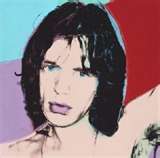
It might be apropos to point out that Jagger and Warhol were fairly close. Jagger was one of the few people attending Warhol’s funeral in Pittsburgh while Bianca was in Warhol’s entourage in the eighties. Warhol also painted a portfolio of Jagger pictures that today command healthy prices.
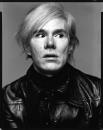
The Devil In Disguise

- Witchy Woman and Warhol

Yoko still persisted with Warhol but Andy having been disappointed once was not up for it twice. He distanced himself from the pair describing them to Sam Green as boring. An ultimate putdown.
Initially the Lennons lived in the Bohemian scene downtown. Mickey Ruskin, the owner of Max’s Kansas City, described the Bohemian scene thusly: the well-to-do Bohos, the middle and the lower class. Those associated with the Kettle of Fish and its environs of which Dylan was a member were of the lower class while the Kettle of Fish itself was owned by the Mafia. He believed Max’s was in the middle. John and Yoko first lived in New York in the West Village at 105 Bank Street next door to Yoko’s her, John Cage. They took over Joe Butler’s apartment, he formerly the drummer of Lovin’ Spoonful so Ruskin would have classed John and Yoko as haut ton beatniks.
At any rate they soon left those environs to migrate to the Upper West Side where they secured apartments in the famous, or soon to be famous, Dakota. It was then that their NYC life took its definitive form.
I have been to NYC a few times so that I know the general layout and have some feel for the place but I have by no means an intimate knowledge so essentially I’m working from maps. I know where MOMA and some few prominent art landmarks are from experience but not that many.
At any rate the Dakota is a famous landmark.. Acceptance as a tenant is by committee approval. John and Yoko were strenuously vetted but finally admitted. They took over actor Robert Ryan’s apartment #72. If you have seen the movie Rosemary’s Baby the camera pans past apartments 71 and 72. No filming was allowed inside the Dakota so while the exterior shots are authentic the interiors were shot on sets. Thus the apartment of the Satanists is a fictional 7E. The apartment next to it in which the young couple resided may have been number 72. The man of the couple who was an actor sold his wife’s body to Satan as the carrier of his child for success in the theatre which he was granted. Thus the Ono-Lennons moved into an apartment closely associated with devil worship, the occult and witchcraft.. This will become more important as Yoko associated herself with all three. In fact, Yoko through John Green would have been familiar with the Yoruban Santeria religion that she in all likelihood would have reverenced. The Spirit Foundation that she established is concerned with the preservation of just such tribal institutions.

Dakota Entrance
These are magnificent apartments that I presume Rosemary’s Baby duplicates. Huge fifty foot long living rooms as part of a ten room apartment. The Ono-Lennons would soon own both 71 and 72 lacking only the fictional 7E while having a Studio apartment as well.
Being now permanently settled Yoko having access to John’s superb income began to spend it. Of course, she virtually cleaned out department stores on her buying binges, any girl’s dream. But, she also began to buy heavily into art and antiques as investments. This brought Warhol’s friend Sam Adams Green into a close association with her. Rich society women were Sam’s forte. He has an interesting story. He was actually descended from the second president of the United States, Samuel Adams. He arrived in New york in 1960 about the same time Andy Warhol was trying to establish himself as a fine artist and Yoko the same. Warhol of course began as a commercial artist doing shoe ads but in 1960 he changed the emphasis of his career.
In the fine arts field one of the first gallery people Andy met was Sam Green of the Green Gallery. Different Green, Sam only

The Dakota
worked there and shared the name. He and Andy hit it off. By 1965 Green was associated with the art department of UPennsylvania where he staged a Warhol exhibition in the same year. From there he gravitated bck to NYC where he began a career as art consultant to rich women on both continents. They liked him. Through the socialite Cecile Rothschild he was introduced to Greta Garbo with whom he was sort of a trusted companion for 15 years.
He was very knowledgeable about art as an investment traveling between Euorpe and the US advising socialites on the most investment worthy art. He apparently derived a more than comfortable income from his efforts. He was a trusted advisor of Yoko. Some say that he and Yoko’s Tarot reader, John Green, who would enter John and Yoko’s life at about this time, combined to bilk Yoko for overpriced objects. This presumes that both men were dishonest and that Yoko was a fool. As Yoko’s investments have prospered I think we can dismiss the latter, although Yoko did take pride in being able to spend vast sums. She would have taken pleasure in overpaying.
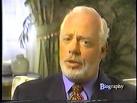
Sam Green- Current
Rather I would say that Sam Green was a very knowledgeable expert whose task was to find art that would appreciate in value. Thus the question is did he perform that function and the answer is, yes. Yoko’s acquistions increased in value far above her purchase prices. I think it is unfair then to say that the Greens bilked her. Surely the laborer is worth his hire.

Warhol Portrait
Now, Sam Green as her agent had to buy the items he acquired for her. Being knowledgeable as to who in society wanted to sell what at distressed prices he may have made some excellent buys that he then tacked on his margin which of course meant that he sold to Yoko for ‘more than they were worth.’ But, heck, even Christie’s and Sotheby’s take twenty per cent each from the buyer and seller. That’s a forty per cent surcharge. However Sam served his function of providing investment pieces so I see no evidence of bilking.
Sam Green also formed a close, probably romantic, liaison with Yoko that persisted until after John’s death. Another art dealser she became close to was a Sam Havadtoy with whom she subsequently lived for twenty years beginning immediately the day after John’s death.
Now the men Yoko associated herself with were all effetes, that were either emasculated when she found them or who she emasculated. Strangely Lennon was the strongest of the lot. Both her first Japanese husband and Tony Cox appear to have been heterosexuals but both Sam Green and Sam Havadtoy were dependent homosexuals. With Havadtoy Yoko may have had her ideal relationship. He was thoroughly emasculated while with the fortune Yoko inherited from Lennon he was totally dependent on her. The classic toy boy a couple decades younger than herself. He, by the way, after his twenty year stint as live-in retired to Hungary with an abundant palimony but he isn’t talking.
In my reading of the situation then, a not particularly compliant John became somewhat of a liability to her, especially as he began to reassert himself with the return to the recording studio in 1980. The problem has the surface appearance of separating the man form his money and discarding the man.
Yoko began building her entourage, Sam Green, John Green, Sam Havadtoy and her various occult people with what appears to be an admiration for and some sort of connection with Andy Warhol. Sam Green and Havadtoy would be a troublesome presence in Lennon’s life during the recording of Double Fantasy while he does not appear to have been enchanted with the Warhol connection
As has been mentioned Yoko became involved in occult practices. She did practice hypnotism on Lennon and was an adept at suggestion which is the essence of hypnotism. Thus on the one hand she suggested forcefully to May Pang that she take up with Lennon while it is probable she hypnotized Lennon into taking up with May Pang. Post hypnotic suggestion would give her a command over all Lennon’s actions. Once implanted she would only have to say the word and Lennon would follow her suggestions.
How complicit John Green would have been in this isn’t exactly clear but any of Yoko’s suggestions to John could have been complemented by a reading. John Green was after all dependent on Yoko for a very generous income beyond whatever he may have scammed.
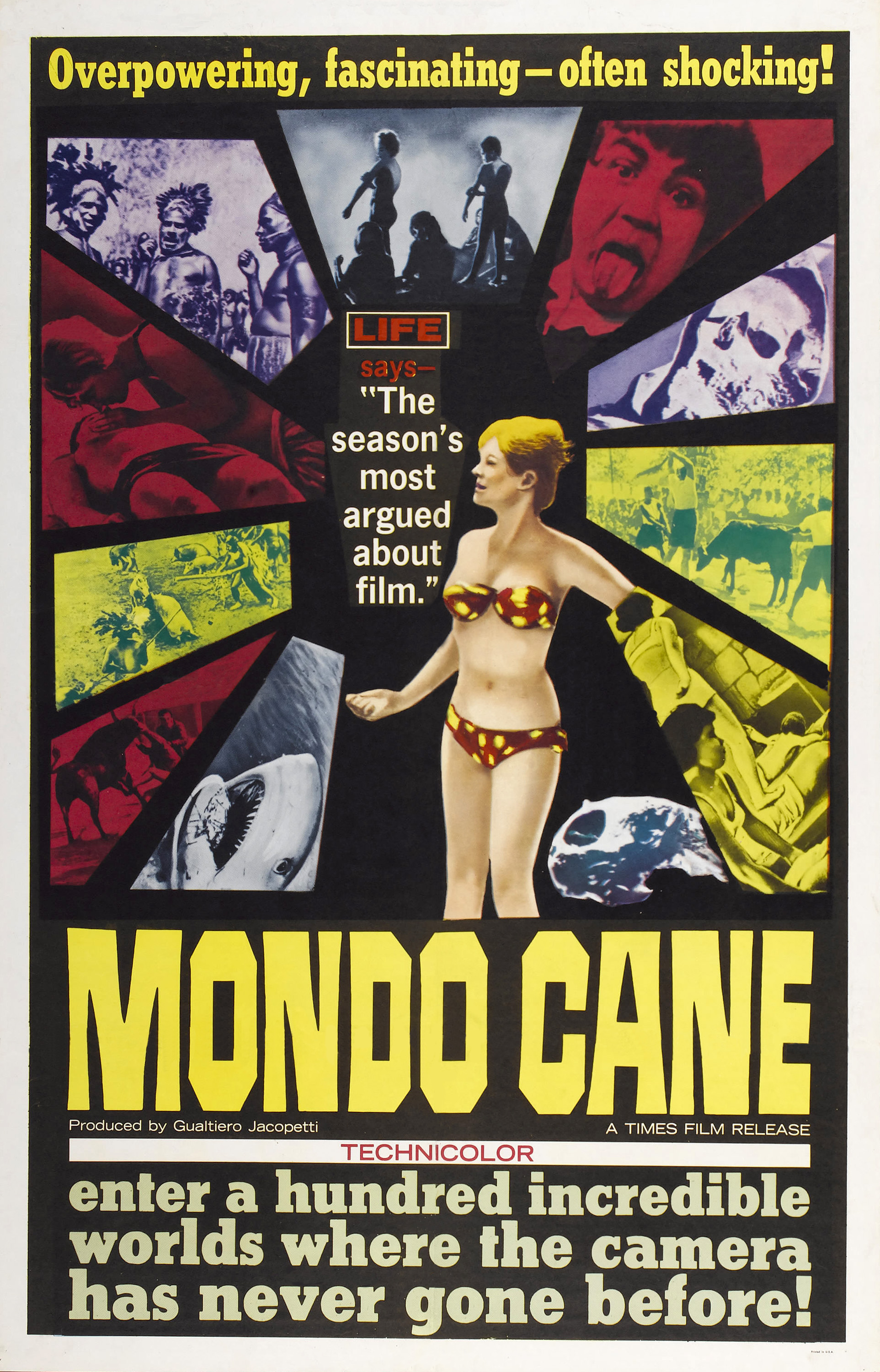
John Green is another interesting case. He was apparently successful as a Tarot reader before he met Yoko while he is reported to hae been a student of the African Yoruba religion called Santeria. The Yoruba are a tribe in Nigeria, middle river, Western side. He would have obtained much of the magic information he displayed in Cartagena, Columbia, SA from that source. The sixties themselves were the great period of the dissolution of the American mind and personality. One of the key items in the disintegration was the 1962 movie, Mondo Cane. (It’s A Dog’s World). It is difficult to assess the impact of this movie on the malleable college age mind of the times.
I saw the movie then and while it passed out of my conscious mind it struck me most forcibly and lodged in my subconscious mind. I, of course, reviewed the movie for this essay and while I at first remembered little gradually my conscious mind recovered the images so that I remember almost all. The viewing at the time was very repulsive and unsettling to my mind as it was for everyone I talked to about it and every college kid saw it. Still, consciously I missed the true import of the movie completely.
The filmmakers equated some New Guinea stone age people with modern Whites and equated them- said both states of
Mondo Cane Poster
consciousness were the same- and that there had been no advance between the primitive and modern. Then they showed Whites at their goofiest and most ridiculous. Drunks at a German Oktoberfest, aged tourists clumsily trying to do a hula. The movie was a real exercise in moral relativity. It was shortly after viewing the movie that I first remember hearing the phrase ‘Nothing is good or bad but thinking makes it so.’ I don’t want to philosophize on this but my thought was that if I think something is bad therefore it must be because I think it and I can’t be wrong.
The movie had a devastating effect on the attitude of the generation. It was a form of hypnosis with a great deal of post-hypnotic suggestion. Whether John Green saw the movie or not I can’t say but if he had it would have prepared him for accepting Yoruban Santeria. In fact these primitive forms of religion and what not flourished in the wake of Mondo Cane. At the same, as I indicated, Yoko would have been very open to Santeria. I think there is little doubt that Green and she at least discussed the religion and its African tribal origin. Especially as she established something she calls the Spirit Foundation. In the online prospectus she describes the foundation thusly:
The Spirit Foundation is…concerned with the protection and promotion of creative and cultural diversity amongst shamanic tribal communities worldwide. Part of the foundations work is the International Shamanic Network which aims at promoting the ancient creative archetypes of man and their binding ecological realtionship to the world.
Our emphasis is on education for action.
As mentioned Yoko and Lennon moved into the suites used in Rosemary’s Baby with its Satanic overtones. In the movie a young woman living with the Satanic couple either jumps or is pushed to her death not far from where Lennon was shot. In this very location Yoko took up Satanism. She decided she wanted to make a pact with the Devil to obtain her wishes. The ubiquitous Sam Green knew of a witch who could serve as an intermediary between Yoko and Satan. (Remember I am only retailing the story, I don’t believe Satan exists.)
Sam Green who had prospered as an art consultant had used some of his earnings to purchase what he called a castle in Cartagena, Colombia. He recommended his witch to Yoko who asked John Green to take her to the witch as he doubled as Tarot reader and Wizard. John Green did so and the witch duly negotiated a deal between Yoko and the Lord of Fire. When it came time to sign the pact Yoko asked Green to do it for her which he did. She was aghast when he told her he didn’t sign his name but hers. Yoko trying to cheat the devil.
We don’t know what she asked Satan for but we are compelled to believe she got it.

Santeria Illustration
As I believe she hypnotized Lennon into taking the Long Weekend I don’t know exactly why she wanted him out of the house. She certainly closely monitored his activities while he was away both in NYC and LA. During his absence Yoko didn’t have a Power of Attorney so she was somewhat constrained as John had her on a 300K budget. When he returned she quickly obtained his POA so that she had unlimited use of his money and, in fact, his identity.
Lennon is criticized for being a recluse in the years between 1975-80. He certainly wasn’t a recluse in that he withdrew from the world. He merely limited his contacts with it. It is said there was a fifteen month period when he was completely withdrawn. While he was obviously suffering from a mental malise in my opinion the withdrawal was completely justified. He had mental issues that had to be resolved. He had the money and time to work at it as he did.
He had a mother/father fixation he had to resolve. he had the feeling that he had been either a genius or a lunatic from boyhood. In a remarkable rant within the 1970 Rolling Stone interview he rants for pages because no one recognized him as a genius in his youth while he had now convinced himself that he was and had been a genius. The fact that he never did his schoolwork doesn’t seem to him that that may have a reason why people missed his genius and though him somewhat mad. What would theyhave done if they had? So he had to reconcile the issue in his mind.
He seems to have made no advance past his school years except in music. The years between leaving school and taking up with Yoko were completely wasted intellectually while the pressures of phenomenal success and wealth disoriented him completely not to mention the massive doses of drugs. At some time then he had to come down and organize his mind and life. From 1968 to let us say 1980 he was completely dependent on Yoko for his mental balance. In NYC he went where she did and did what she did. Hence the connection to Andy Warhol and Sam Green.
There are numerous pictures of Yoko, Lennon and Warhol. Yoko even patterned some of her work after Warhol’s style as in the ‘work’ below patterned after Warhol’s double Elvis. Thus she associates herself and Lennon with Presley.

Yoko Goes Warhol, Imitation of Double Elvis
As I mentioned before the social entree arranged by Warhol and Sam Green failed because of the social ineptness of the Ono-Lennons.
While we have a full record of what Lennon was doing during his ‘Lost Weekend’ we have a less full account of what Yoko was doing. She seems to have had romantic liaisons with at least three men- Sam Green, Sam Havadtoy and the guitarist David Spinozza.

Sam Havadtoy
Perhaps she wanted to see how well she could do on her own as a musician, to see if her reputation as a performance artist and, in her mind, musician, was sufficient to maintain a career on her own without John. If so, she was brutally disappointed as in her only solo performance she failed miserably. Thus she realized that as of 1974 her reputation as well as her wealth depended on Lennon.
It was during Lennon’s absence that John Green came into her life. While John Green tells a fairly smooth story in his Dakota Years one has the feeling that he is being highly selective in what he tells while he slyly ridicules the Ono-Lennons as their superior. The attitude easily leads to contempt and from contempt to abuse. Of course he would have to dissimulate both the contempt and abuse as Ono would be reading the book. As I imagine, a priest in the Santeria religion, he would have been in the company of some shady characters. I don’t know how many actual Yorubas were in NYC but I have met a couple elsewhere.
One imagines most of the hierarchy Green came into contact with was African or American Blacks. Santeria involves a deal of ritual sacrifice while money would be needed. I suspect that John Green was involved in the extortion attempt on the Ono-Lennons. This may have been Santeria related. Thus a sort of Black Hand organization was created. Rather than go for the big money that would have created a stir, the group settled for hitting up people with millions for a mere 200K each. An unpleasant tax for being rich but one more conveniently paid than to die resisting.
We have only Green’s version of the extortion and his relationship to it. He paints himself in a relatively good light. The Ono-Lennons did call in the FBI, they did give the extortionists newspaper rather than cash as the FBI advised. But then things went wrong. The FBI apparently had only one tail on the extortionist who came for the money rather than a series of back ups. The agent inexplicably lost his man. The Ono-Lennons never received another call but they had been warned that if they failed to pay Lennon would be killed whether it took one, two or more years. In December of 1980 the bill fell due. On December 8th he was shot. December 7th is Pearl Harbor Day so there may be a Japanese connection. Yoko Ono being Japanese, her numerologist and the assassin’s wife while Chapman missed the appointed day by one.
The question then hangs on Mark David Chapman the shooter. He is still alive and in prison. He was an assassin as the classic lone nut like Lee Harvey Oswald and any number of assassins who pay the law for the crime while the organizers go free. The technique has been well known to criminals for centuries. Any time a lone nut assassinates someone you may be sure that they were a patsy as Oswald announced over TV he was.
It seems likely that Chapman had been hypnotized. Witnesses said Chapman acted as though in a trance and he himself said he heard a voice in his head saying: Do it. Do it. Do it. The problem would be how he was recruited. I, of course, can say nothing for certain while what I am saying now is merely an hypothesis or inquiry. The main thing is that Chapman was supposed to be a lone nut. Ridiculous.
The most obvious recruitment method was the Santeria of which John Green was a member and to which Yoko Ono was
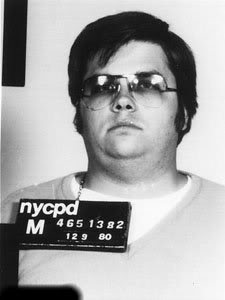
Mark Chapman
sympathetic. There are some oddities in the Chapman story that have to be explained not least of which are the large sums of money expended by Chapman in relation to his income. He was a married man therefore had a wife to support. Yet in 1978 he was in Japan at the same time as the Ono-Lennons beginning an around the world flight.
Perhaps Tokyo was the first stop of the trip around the world that then led to Seoul, Hong Kong, Bangkok, Delhi, Israel, Geneva, Paris, London, Dublin, Atlanta and back to Hawaii. His travel agent was a Japanese woman, Gloria Abe, who he then courted and married. She is reported to have been involved in occult circles. She may have seen so involved that, through Takahashi Yoshikawa, Yoko’s numerologist she was brought in to arrange the trip. Such an around the world trip in a Westerly direction- sundown to sunup- according to Yoshikawa’s numerology would be characteristic of Yoko Ono. She and Lennon made a round the world trip for occult reasons as did both Lennon individually and John Green at her instance. Green made his trip in 59 1/2 hours only leaving a plane once to change to another. As the financing of Chapman’s trip is unknown I would suggest Yoko Ono.
Two years after this very costly trip around the world Chapman flew from Hawaii to first Chicago, then Atlanta, then to New York where he landed a few days before the assassination. Once again, well beyond his means. It is said that he took paintings to Chicago that he sold. Where he would have gotten the paintings isn’t known but once again Yoko is the obvious source. She had an art gallery of valuable art work.
While in Atlanta he contacted a former roommate, then a Deputy Sheriff, Gene Scott, who gave him the hollow point exploding

Santeria Priestess
bullets for a handgun. One assumes such bullets couldn’t be bought over the counter. One wonders why Scott didn’t ask what Chapman intended to do with them. And if he did and Chapman told him Gene Scott is clearly an accomplice and should be questioned.
Chapman himself came from Atlanta where in his teen years he was known to ingest any and all drugs. Atlanta was also a Santeria center with several weird Black cults. Lennon’s death took place at the same time as the Atlanta child murders for which Wayne Williams was later convicted. The Santeria religion has been suspected in these obvious sacrificial murders while John Green establishes a Santeria connection to the Ono-Lennons and Yoko in particular.
Yoko was an excellent hypnotist who understood the use and power of suggestion. The Santerists as Africans would be well versed in the use of suggestion and hypnotism.
Chapman said he was possessed by the Devil while appearing to be in a hypnotic trance. All this rather amusingly is taking place at the Dakota, the scene of the Devil’s birth in Rosemary’s Baby. Indeed, the identical apartment.
After Lennon’s death there was no period of mourning or sense of loss by Yoko. All Lennon’s assets were in her control and name before his death. The so-called will of Lennon is suspicious, although the will was unnecessary becaue I doubt if Lennon thought of a will while the will appointed the art dealer Sam Green as the gaurdian of son Sean in the event the Ono-Lennons perished together. Lennon wasn’t that enamored of Sam Green.
Within a few days Sam Havadtoy was installed as Yoko’s live-in where he remained for twenty years.
While Yoko’s success as an artist and rock n’ roller wasn’t affected by Lennon’s death she now had the money to pay to have her art exhibited. Even then she found her reputation was indissolubly linked to her dead husband. She has become a caretaker for the Lennon legend parceling out old recordings while humiliatingly Lennon’s artwork is more in demand than hers.
She seems to have patterned her later career on that of Andy Warhol who as he acquired fame and fortune managed to insinutate himself into certain society circles. So has Yoko. Now, at 78, she has attained a certain status although still extremely self-centered while having an appearance of terminal aloneness.
Animus and Anima

A Review: Part II She By H. Rider Haggard
November 20, 2009
A Contribution To The
ERBzine ERB Library Project
She
by
H. Rider Haggard
Review by R.E. Prindle
From London To The The Caves Of Kor
She is dedicated to Andrew Lang:
I Inscribe This History To
ANDREW LANG
In Token Of Personal Regard
And Of
My Sincere Admiration For His Learning
And His Works
One may well ask then who is this Andrew Lang and what is his learning? In point of fact Haggard not only dedicated She to Lang but wrote three books in collaboration with him. Andrew Lang, 1884-1912, was a Scottish scholar specializing in folklore, mythology and religion so you can see where Haggard came by much of his esoteric knowledge. In addition Lang was one of the founding members of the Society For Psychic Research and a past-President. Lang wrote dozens of books over his lifetime. He even wrote a parody of She in 1887 called He. Today he is remembered only for his collections of fairy tales. Twelve volumes in all each titled after a color such as The Crimson, or Blue or Pink or Gray Fairy Book. The volumes are undergoing a fair revival now with a collector’s edition published by Easton Press and several nicely bound volumes by the Folio Society.
The nineteenth century was the one in which advanced knowledge of the past was rapidly extending European knowledge greatly. The Rosetta Stone deciphering Egyptian hieroglyphics had been achieved as recently as the 1830s. Nineveh and the Assyrian ruins had been unearthed. Schlieman had discovered the locations of Troy and Mycenae.
The exoteric side was covered by the academics while the esoteric side was covered by independent scholars like Madame Blavatsky and probably Andrew Lang. There was a clean split between the academic Patriarchal view of ancient history and the emerging Matriarchal view that had just been developed by the Swiss mythologist, J.J. Bachofen. Bachofen organized ancient history into Hetaeric, Matriarchal and Patriarchal periods. He himself was a member of the successor Scientific period.
The academics totally rejected the notion of a Matriarchal period. This, of course, led to a complete inability to understand Homer, both Iliad and Odyssey. The Iliad especially is a description of the war by the Patriarchy to destroy Matriarchy.
Lang seems to have understood the Matriarchal phase of ancient history. He must have passed this knowledge on to Haggard. Ayesha, as She, rules a Matriarchal society. While the ideas represented in She must have seemed bizarre or merely an amusing reversal of the Patriarchal world at the time, today it all reads comprehensibly. It rings true if not exact.
C.G. Jung, the psychologist, who developed such notions as the male Anima and the Shadow was very immpressed by what he saw as the male Anima in She. Madame Blavatsky lauded the book for its esoteric content. But then, Haggard was firing on all eight cylinders when he wrote it, it is difficult to conceive of a more perfect fantasy/adventure novel. Indeed Haggard subtitles the novel: The History Of An Adventure.
Haggard was an excellent Egyptian scholar. He not only visualized Egypt convincingly in his Egyptian novels but his Egyptian ideas pervade the African novels. Many of them involve Egyptian influences and even peoples filtering down into East and Central Africa. The Ivory Child is a case in point as is She.
The set up to the trip out is brilliant incorporating details that become cliches in B movies.
Leo Vincey’s father before he died gave a metal box to Leo’s guadian, Horace Holly, that wasn’t to be opened until Leo was twenty-five. This box is now opened. It contained a letter to Leo, a potsherd (a piece of a broken jar) covered with ‘uncial’ Greek lettering, a miniature and a scarab containing Egyptian hieroglyphics that read ‘Royal Son of the Sun.’
Thus Haggard captured most if not all of the elements that went into the intellectual aura fostered by B moves primarily in the first years of the talkies through the thirties. That entailed things like the Curse of the Pharaohs, movies like The Mummy melding into Wolf Man, Dracula, Frankenstein and African juju spells. Things against which Europeans had no defense because the ancient magic was stronger than modern science, or so we were led to believe. I can’t speak for others but it took me a while to shake this oppressive spirit. This was pretty strong stuff for my ten to twelve year old brain. Not to mention being bombarded by The Creature From The Black Lagoon, The Thing and The Day The Earth Stood Still. We wuz tried in the fire and come through good.
The gist of it is that Leo’s ancestor Kallicrates lived in the time of the last Pharaoh Nectanebo as one of the royal family. Spookier still Nectanebo was said to have fled Egypt before the conquering hordes, going to Macedon where he secretly impregnated Olympia, Philip’s wife, who then gave birth to Alexander which made him the rightful heir to the Pharaohship instroducing Greeks as rulers into his city of Alexandria.
At any rate Kallicrates girl friend, Ayesha, killed him in a jealous rage. The family nursing vengeance for all these two thousand years it is Vincey’s mission if he chooses to accept it, to follow the ancient map to the Caves of Kor and kill Ayesha or, She-Who-Must-Be-Obeyed who has been nursing regrets over killing Kallicrates two thousand years previously. Listen to me, I’m tellin’ ya it’s all here.
So Vincey, Holly and their man Job set out to find this place in Africa even more remote, if possible, than King Solomon’s Mines. And a heck of a lot more hostile too.
The trip out is some of Haggard’s finest writing. They are to be looking for a rock formation on the coast in the shape of a gorilla’s head. Sailing the coast they miraculously spot this head just as a terrific squall sends their felucca, dhow or other exotic ship from foreign climes to the b ottom.
But, even though the ship sinks they beat the reaper because they brought a boat containing unsinkable water tight compartments. As the storm subsides the three survivors along with an Arab float into the mouth of the appropriate stream as though it were all foreordained. What follows is some excellent writing with details I don’t need to recount.
Suffice it to say they are dragging their boat along an ancient canal when they are accosted by men from Kor. Ordinarily these guys would have speared them and moved on, no strangers needed in Kor. Using her magic She had learned of Leo’s coming a week previously thus ordering their lives spared while they were to be brought to her. Uh huh.
The detailing is terrific, this book is tight and well organized. It moves right along. The land is under the thumb of She-Who-Must-Be-Obeyed. This is a tight Matriarchy as we now recognize not just some strange place where a woman is in charge.
While the three are entering the Caves of Kor, Leo Vincey, being the cynosure of all female eyes, a knockout named Ustane steps up and kisses him. Not averse to a public display of affection Leo lays one on her back. New to the area and not aware of the customs of the place Leo had just accepted Ustane as his woman. In town for a few minutes and already married. That’s the way things happen in this particular Matriarchy. Ustane is now in conflict with Ayesha, She-Who-Must-Be-Obeyed.
The stage is now set for the main drama when Ayesha recognizes Leo as her long lost Kallicrates come back from all those reincarnations at last.
The exoteric Catholic Church is thus thrust aside in favor of all the heretical doctrines of the esoteric which have been bubbling under the Hot 100 for two thousand years. These unfamiliar esoteric doctrines would become the mainstay and staple of science fiction/fantasy for the next one hundred years.
Just as an example of how Burroughs probably learned esoterica, I became familiar with estoeric themes myself from reading 1950s science fiction and fantasy- Amazing Stories, William Tenn, Robert Heinlein, Ray Bradbury and all that sort of stuff without realizing what I was taking in, thus Burroughs surrounded by the Society for Psychical Research, Camille Flammarion, George Du Maurier and Stevenson et al. naturally learned the esoteric language. No mystery, he was speaking in tongues before he knew it.
Leo is awaiting the summons from Ayesha which will be covered in Part III.
Conversations With Robin Page 3
August 20, 2009
< Wep>
Conversations With Robin, Page 3
Conversations between R.E. Prindle And Robin Mark
Well, well, well. Robert Goulet. I should have known that filthy bastard would be mixed up in there somewhere. What amazes me is that Guralnik could write two fat volumes on Elvis and never mention the Mob once. I think we can begin to integrate Elvis’ Mob conflicts pretty clearly now, although research will have to establish the connections for sure.
For starters, entertainment is a Mob industry both records and movies; that includes both Jews and Sicilians. If you haven’t read Gus Russo’s Supermob yet, do so. The Sidney Korshak role at MCA is crucial.
Anent shooting out TVs remember that Sinatra had a plane he called Superwop or something to that effect so it is clear he bore a grudge against the Anglo world. The plane was a small ‘Lear’ if I remember correctly. Elvis went out and bought a 707. Big plane, big penis; little plane little penis. Not exactly true in Frank’s case, but you get the point. So at least Goulet and Sinatra. I can understand why Dean Martin tried to distance himself from those creeps.
Parker must have had the business dealings with the Outfit. As he ran into gambling problems the only commodity he had to barter was Presley. Thus he would have had to ‘sell’ Presley to keep both his legs under him. Elvis’ rapid deterioration could have been because of his realization that he was ‘caught in a trap. I can’t get out.’ Devastating awareness. One could only retreat into booze and/or drugs.
Now, Leiber said that he and Stoller at one time worked for the Mafia. This wouldn’t be unusual nor should it be held against them because if you’re in entertainment you’re involved, like it or not. The question is when were they involved, for how long, and for what purpose.
We all know Fabian was a Mob creation. Why not others? If you haven’t seen and studied The Girl Can’t Help It, do so. The movie is an alegory of the record business. Everything you see in the movie is the Outfit in action. In the fifties every Juke Box in America was stocked by the Outfit. You didn’t get your record stocked unless you were Mobbed up somewhere along the line. Someone recently told me that the girls on the Dick Clark Show were prostitutes and Bandstand was used to showcase them for Johns. Don’t know that it’s true but I wouldn’t be surprised.
Leiber and Stoller could have been co-opted to write songs for, say, The Coasters. A Black act with interchangeable personnel. Kind of an early Back Street Boys. I don’t know but I’d like to hear Leiber talk about it. Might prove enlightening.
So, let us assume that the Colonel was drawn into the Mob scene from the beginning of Presley’s movie career. That might explain some of his stupid decisions and those dumb movies. Perhaps Parker didn’t have a free hand but was ‘wise’ enough to figure out that something is better than nothing.
Then after Vegas Presley was increasingly drawn into orbit until he learned the horrifying truth. Guralnik seems to have his head up his ass as far as I’m concerned.
As Presley learned the truth looking forward to forty more years of slavery he found drugs more comfortable than reality. Possible, it would make things make sense.
Edgar Rice Burroughs On Mars
A Review
Thuvia, Maid Of Mars
Part II
by
R.E. Prindle
Apparently at this time in his life ERB’s mind was focused on hypnotism. The raison d’ etre of the novel seems to be his explanation of hypnotism and some of its effects. He certainly makes a fascinating story of the phenomenon. In fact the whole story concerns hypnotism with a few embellishments to get Carthoris and Thuvia to Lothar and once he’d exhausted the possibilities of his hypnotic theme he ended the story and even then he ends on a wild hypnotic note.
Thuvia was his fourth Mars novel and his first without John Carter. The hero is Carthoris the son of John Carter and Dejah Thoris. ERB’s father, George T. had died about a year previous to the writing. This novel was written shortly after The Lad And The Lion. As it includes a scene of psychological rebirth it may be a declaration of independence from his father, severing the relationship more denfinitely than did Lad.
On entering the land of the Lotharians Carthoris passes through a cave quite similar to the birth canal. There are Banths, Martian lions, before and one huge one behind him. Those before seem to vanish while the one large Banth remained behind him; that would be the memory of his father and the past. Carthoris placed himself in a posture of defense in the dark but the charging Banth passed to his side missing him much as a ghost from the past might do. Thus ERB seems to dispense with the Old Looney aboard ship in The Lad And The Lion who did represent ERB’s dad.
Thuvia had been kidnapped by a disappointed suitor who had her taken to Aanthor, one of the innumerable dead cities lining the shores of the vanished seas. There she was captured by the Green Men who fled through the cave to Lothar. There Carthoris and Thuvia are delivered to the scene of the action by ERB.
Carthoris then finds Thuvia in the possession of the Green Men who are waging a gigantic battle against the Phantom Bowmen of Lothar, themselves aided by large prides of both phantom and real Banths.
Piles of Green Men killed by little arrows lie about amongst legions of Bowmen who have been cut down, and still they stream through the city gates. Carthoris who has gotten to the side of Thuvia and she marvel at the carnage. They turn to watch the defeated Green Men flee. When they look back they are astonished to see that the dead Bowmen have all disappeared while the dead Green Men no longer have phantom arrows sticking in them. The pair are at a loss for an explanation. The Banths however were real and were now gorging themselves on the remains of the Greenies.
As a nice touch ERB has Thuvia essentially hypnotize the Banths. Rather than fear them as Carthoris does she merely makes a low melodic warbling sound that so charms the Banths that they come fawning before her.
This may seem improbable or even impossible and yet I have seen it done but with house cats. What can be done with one size cat I’m sure can be done with all sizes. The effect was quite astonishing with the woman I saw do it but the result was exactly as ERB describes it. Apparently he’d seen it done too. ERB thus establishes the ability of Thuvia that will be even more important soon.
Thus they gain access to the city of Lothar by passing through the Banths with safety. As a nice touch ERB gives Lothar an exotic round gate that rolls back into a slot. Perhaps he had seen a house with such a door somewhere. Once inside they meet the Lotharian Jav who begins to unfold the story while unfolding the hypnotic power of the mind.
If ERB had read H. Rider Haggard’s Cleopatra that deals quite extensively with hypnotism in a scenario somewhat similar to this one Haggard may have been another source for Thuvia. Quite possibly ERB had ingested and digested his earlier reading so that he wasn’t aware of how close he was to the originals. After all, anyone who could learn of Numa, the Roman King, from his Jr. High studies and think he had invented the name Numa for the king of beasts twenty years later, which he says is what happened, probably could think he was inventing his details himself.
Many strange phenomena appear to the pair on their way to the palace of the despot who was named Tario. They see marching files of Bowmen who appear and disappear. But the Bowmen are not real they are a projection of the mind of Tario who has hypnotized the pair into seeing what isn’t there.
While it is clear that ERB is quite familiar with Homer’s Odyssey it isn’t quite so clear what he knows of Homer’s Iliad or Greek mythology in general. One hesitates to give him too much knowledge and yet elements from the Iliad and Greek mythology seem to materialize before one’s eyes like the Phantom Bowmen of Lothar.
One can’t know whether ERB read the Iliad more than once and whether that once was in the seventh or eighth grade. How much he understood of an early reading like that would be questionable. I first read the Iliad in the seventh grade but got nothing but impressions of the action from it. The gods, goddesses and humans were very confusing. Lot of boy and girl stuff that was well beyond my experience. I have read the book seven times in various translations since. It was only in the fifth, sixth and seventh readings that I began to develop what I would consider any real understanding of Homer’s message.
One of the things I understand is that the Iliad is a story about the power of mind and its limitations. Zeus, of course had the mind of ultimate power that gave him the advantage over mortals and the other gods. Tario in Thuvia has the most powerful mind in Lothar which keeps him in authority over the few permanent emanations in Lothar. But, these are all figments of his or someone’s imagination.
It seems that long generations before the women had all died out leaving only the men who over a period of time would also have died out but they survived by being able to imagine themselves. Here we have a possible reference to Poe’s The Facts In The Case Of M. Valdemar. In that story Valdemar was a dying man who was first hypnotized and then expired. Being under hypnosis while alive he could not actually die as he was hypnotized alive. This is somewhat the condition of the Lotharians.
Taking hypnosis a step further ERB posits that there are phantom ‘realists’ who believe they can wish themselves into a permanent corporeal existence of which Jav is one. Opposed to them are the phantom ‘etherealists’ represented by Tario who believe they must remain imaginary.
Getting back to Greek mythology in which we do know that ERB was read the ‘realists’ believe that they have to eat so they conjure up ‘ephemeral fruits’ on which to gorge themselves.
Ephemeral fruits make their appearance in the myth of Typhon and Zeus. So there is a possibility that Jav and Tario is a version of that myth. Hera in her squabbles for supremacy with Zeus conjures up the monster Typhon to take on Zeus. Typhon makes mincemeat of Zeus removing his sinews and bones and placing them in a leather bag in a cave in Caria. Sad plight for the Big Fella with the all powerful mind and no sinews. Worse yet, as a god he is immortal so there he and his all powerful mind are in his sack perhaps for all eternity.
While Apollo and Hermes come to the Big Guy’s aid by putting the dry bones back together and reattaching the sinews the nymphs feed Typhon ‘ephemeral fruit’ that looks like the real thing but lacks nourishment. Thus when Zeus is reassembled and ready for action he faces an enfeebled Typhon who this time he easily defeats. Great story when you think about it. So there you have two stories reflected that ERB may or may not have read but having read them probably didn’t consciously remember them as he was writing. I can’t guarantee ERB read those stories but I can state with assurance that ERB just didn’t make this stuff up. He never does; it all has been suggested from someplace. It is not impossible that he heard similar stuff from Baum and the Theosophists in California. ERB does have a retentive memory that provides him with a lot of material.
Thuvia and its successor Martian novel- The Chessmen Of Mars- are an examination of mind and matter. The later Mastermind of Mars and the Synthetic Men Of Mars are examinations of the application of mind to matter. In the Chessmen the mind and body were separate entities. It will be remembered that the Kaldanes were also skilled hypnotists.
Here ERB is interested in a projected reality, in itself a form on insanity in an unbalanced mind. PP 66-67, Ace paperback:
Jav speaking: “(The Banths) that remained about the field were real. Those we loosed as scavengers to devour the bodies of the dead Torquasians. This thing is demanded by the realists among us. I am a realist. Tario is an etherealist.
“The etherealists maintain there is no such thing as matter- that all is mind. They say that none of us exists, except in the imagination of his fellows, other than as an intangible, invisible mentality.
“According to Tario, it is but necessary that we all unite in imagining that there are no dead Torquasians beneath our walls, and there will be none, nor any need for the fierce scavenging banths.”
‘You, then do not hold to Tario’s beliefs?” asked Carthoris.
“In part only,” replied the Lotharian. “I believe, in fact I know, that there are some truly ethereal creatures. Tario is one, I am convinced. He has no existence except in the imaginations of his people.
“Of course, it is the contention of all us realists that all etherealists are but figments of the imagination. They contend that no food is necessary nor do they eat, but anyone of the most rudimentary intelligence must realize that food is a necessity to creatures having actual existence.”
“Yes,” agreed Carthoris, “not having eaten today I can readily agree with you.”
“Ah, pardon me,” exclaimed Jav. “Pray be seated and satisfy your hunger,” and with a wave of his hand he indicated a beautifully laden table that had not been there an instant before he spoke….”It is well,” continued Jav, “that you did not fall into the hands of an etherealist, then indeed, you would have gone hungry.”
An interesting passage laden with humor and a joke or two. On the one hand this is a takeoff on Bishop Berkeley and those who believe that nothing is real but only a figment of our imaginations. They do believe that when you close your eyes the world ceases to exist. I could never follow the argument, and on the other hand the ideas can be construed as a variation on the Theosophical belief that the gods were first ethereal becoming more materialistic as existence descended to man who is most material. Thus Tario is visible air, as it were, as an ethereality while Jav is condensed into, as he believes, permanent air/matter while Carthoris and Thuria are solid matter as humans.
The food Jav produces is ephemeral food. It looks real but having no real substance has no nourishment. As he smirkingly says: It is well that you did not fall into the hands of an etherealist. Then, indeed, you would have gone hungry.” A funny joke. But Jav has hypnotized the pair into seeing the food even though Carthoris is not so hypnotized as to not realize it is not real food. He eats it anyway.
Once in this land where nothing is real but the Banths, one wonders that we don’t have a situation that was replicated later in the movie The Manchurian Candidate. In that movie the hypnotized soldiers imagine they are at a ladies social and actually see American women where Korean people are.
Perhaps Carthoris and Thuvia are standing in an empty field talking to themselves. Perhaps the Lotharians exist only in their own imaginations but have conjured Carthoris and Thuvia out of thin air. Pretty spacy stuff.
As Carthoris is hypnotized he is easily persuaded to do things he wouldn’t ordinarily do such as letting Thuvia be led away alone to Tario. He does and Thuvia meets Tario alone mystyfied that Carthoris would let her out of his sight. Seeing Thuvia the etherealist’s phantom cojones are aroused and he makes an all out assault on Thuvia. As he doesn’t exist, of course, the assault can only have force in Thuvia’s imagination. Just as those little arrows the Torquasians believed were real killed them one wonders what effect a phantom penetration would have on Thuvia. Would she have a little phantom child after a phantom pregnancy?
We’ll never know because she pulls out her thin blade stabbing Tario to his phantom heart. He falls apparently dead seemingly oozing out his lifeblood. But, as we know he is an etherealist hence only a figure of someone’s imagination we know he must be feigning death with phantom blood.
Hearing Thuvia’s screams Carthoris races to the rescue followed by Jav. Jav, who should have known better, is overjoyed confessing his desire to replace Tario. It was almost like a plan. Tario leaps up explaining he always thought Jav did and now he is going to execute him.
Here ERB evades the issue taking a cheap but effective way out. These two guys are actually magicians and should be made to match powers in efforts to do the other in. ERB isn’t up to it so he has Jav cave just awaiting his fate that he could always evade with his hypnotic powers. Now, we’ve all been advised not to trust our senses so whether any of this happened is open to question. Nevertheless a hole opens in the floor, the floor dishes so that all falls into the memory hole. The three are ostensibly history.
They are precipitated into the chamber of the Lotharian god. One might expect this god to be pure essence but instead he is pure matter. As so often is the case a Burroughsian god turns out to be a lion or the Martian Banth. Why Jav should be concerned isn’t clear as he has no real substance and can’t be eaten while with his hypnotic powers he could make the Banth believe it was a mouse.
Carthoris draws his sword but this one’s a piece of cake for Thuvia. Using her own particular hypnotic talents she charms the Banthian god and all four walk out through the Banth’s quarters as chums.
At this point Jav calls into existence old Lothar for us all to see.
Outside the gates of Lothar Jav conceives a desire for Thuvia. Using considerable hypnotic talent he persuades Carthoris that he and Thuvia are heading for the woods. Carthoris walks off alone convinced he is leading Thuvia by the hand. He is soon disillusioned. Returning he finds the realist Jav really mauled by the Banth and dying. Thuvia and the Banth have headed back to Aanthor. Carthoris has no choice but to follow.
B.
Now, what’s been going in addition to this hypnosis stuff is ERB’s ongoing attempt to reconcile his Anima and Animus. He has followed the usual Pyche and Eros storyline of Apuleius’ Golden Ass of Greek mythology. The Anima and Animus get together, circumstances separate them, then during the rest of the novel they try to get together amid difficulties, finally succeeding.
In Lad And The Lion ERB introduced the lion as his totem. Even though a male lion it is associated with his female Anima. At the risk of repeating myself, just in case anybody has been reading this stuff for the last four or five years the cause and evolution of his dilemma progress thusly:
In 1883 or 1884 ERB was terroized on a street corner by a young thug he identifies only as John. Possibly Emma was with him and kept walking abandoning him to his fate. Thus it was suggested to his subconscious that his Anima had abandoned him. John being the terrorist filled the vacancy. Thus ERB had the seemingly impossible anomaly of a male representing his female Anima.
We know this was the result because ERB writes incessantly about it. In the Outlaw of Torn the king’s fencing master, De Vac lures young Prince Norman/Burroughs outside the gate. Norman’s nurse Maud representing his Anima noticing too late rushes to the scene to be struck down dead by De Vac. Thus ERB’s Anima is murdered. How does ERB handle this? In his dream image ERB has De Vac take Norman to London where they live in the attic of a house over the Thames River. The house is a symbol for self, the attic being the mind. Water is a symbol of the female. The house extending out over the water but separated from it indicated the separation from the Anima. To compensate for the impossible situation of a male on the Anima, De Vac improbably dresses as a woman for the three years they live together in their attic. At the end of the novel Norman/Burroughs kills De Vac.
In the succeeding novel The Mucker he associates himself with the Irish thug Billy Byrne. Byrne being paired up with the socialite Barbara Harding is also an impossible match. It would seem probable that ERB’s father and John were two of the components clothing ERB’s Animus. Thus ERB has this very strong feeling about having a dual personality that he talks about constantly.
In Lad And The Lion we have the improbable situation of a powerless ship, representing the self, drifting up and down the Atlantic endlessly, manned by the deaf and dumb Old Looney, the Lad, and a Lion in a cage on deck. That the Old Looney who represents ERB’s father was deaf and dumb probably indicates he wouldn’t listen to ERB and had nothing to say that the Lad/ERB wanted to hear. So, the Lad was brutally abused the whole of his childhood. That’s how ERB saw the Bad Father. It would seem that John Carter represents the Good Father as ERB would have liked him to have been.
With De Vac and John dead the Lion begins to take his place as the male aspect of ERB’s Anima which has now been reoccupied by a female reprsentative. The male lion becomes a permanent aspect of the Anima in 1922s Tarzan And The Golden Lion as Jad-Bal-Ja. In Lad he and the Lion go ashore after the death of the Old Looney, or, in other words, his father, where the lion is loosely associated with the Arab princess Nakhla. Lad was written a short two months before Thuvia.
Now Thuvia wows Carthoris/ERB by charming the raging Banths/lions of the battlefield and the Lotharian God. Thuvia and the god become as one as she walks by his side her fingers twisted in his mane. So the traditional goddess of the male Anima is united with a male god to form ERB’s Anima. The female Anima who moved closer to reassuming her place in Lad now definitely becomes part of ERB’s psyche.
They pass through the tunnel before Carthoris. As ERB exits the tunnel he encounters his doppelganger Kar Komak. This is great stuff actually. Komak is literally a new man. He was the first successful materialization of an hypnotic imaginary man of the Lotharians. That’s likely enough, isn’t it?
He comes running through the scarlet furze, naked, to greet Carthoris. Well, picture that. Nakedness is something else appearing regularly in ERB”s works most notably in Tarzan And The City Of Gold. (See my review.)
The duo then continue on to Aanthor where as they arrive they are met by Torquasians who upset the plans of the men of Dusar who had come back to pick up Thuvia. We know that Carthoris for sure represents ERB because he takes a sword swipe to the forehead that lays him out. Thus the novel has the obligatory bash to the head recalling ERB’s adventure in Toronto.
When the sleeper wakes he finds the dead carcass of Thuvia’s lion lying half across his body. Probably his left half that derives from the ovum. Must have been uncomfortable to say the least. Thus the male half of his Anima is now dead and the female half in possession of the Dusarians. ERB gets her back and as in Psyche and Eros the Anima and Animus we may assume are permanently reunited.
Not quite but that will take us too far afield to discuss it this moment. I deal with the future development of the problem in my reviews of Out There Somewhere (The Return Of The Mucker), Bridge And The Oskaloosa Kid (The Oakdale Affair) and Marcia Of The Doorstep.
A Part 3 will follow that attempts to deal with the bigotry charges against Burroughs. If there is such a thing as guilt concerning the issue, ERB is not guilty, of course.
Thuvia, Maid Of Mars by Edgar Rice Burroughs: A Review
March 14, 2009
Edgar Rice Burroughs On Mars
A Review
Thuvia, Maid Of Mars
by
Edgar Rice Burroughs
Part I
Review by R.E. Prindle
This very interesting sdtory was written shortly after ERB returned to Chicago from his first San Diego excursion. It was placed between the Girl From Fariss’s, the last story written in San Diego and The Cave Man.
The material deals almost exclusively with suggestion and hypnosis. Although hypnosis is a recurring theme in Burroughs one is startled by his concentration on the subject and his seemingly informed ideas of it, especially the role of suggestion.
One wonders why his interest surfaced at this time and where ERB learned or developed this information. He was just back from San Diego and I’m going to suggest he picked it up from his hero, L. Frank Baum. As Baum was such a significant influence on Edgar Rice Burroughs perhaps it may be worthwhile to attempt an assessment on Baum’s role in literature and history. There can be no question but that the OZ series of Baum took a central place in the American psyche and a place in the European psyche. Baum’s books have been in demand since 1900 when he began writing them to the present. Baum put Kansas on the map. The Wizard, Dorothy and Toto are household names. Baum’s play from the Wizard was a box office success while MGM’s movie is certainly in the top ten of influential movies, perhaps even in a tie for first with Gone With The Wind. Even American Negroes made their own Black version called The Wiz. The list goes on.
I’m going to suggest that Fritz Lang, the movie Director, was highly influenced by Baum as reflected in his important film, The Testament Of Dr. Mabuse. I wouldn’t be surprised if Lang was also very familiar with Burroughs.
Baum himself was a committed Theosophist. Introduced to the religion by his mother-in-law Baum picked up his card in 1893. By 1913 when he met Burroughs he had been a practicing member for twenty years. When he left Chicago he first went to Coronado across the Bay from San Diego. Katherine Tingley had established her Theosophical organization on Point Loma near that city. Baum must have been an important member of that congregation. Perhaps he had a falling out with Tingley but he did remove himself to Hollywood in 1910. In Hollywood he undoubtedly connected with the Pasadena Theosophical Society that at present is the mother organization.
As a Theosophist Baum would have had to have been familiar with the works of Madame Helena Blavatsky. Her great works are Isis Unveiled and The Secrect Doctrine. Theosophy of course is on a par with the Semitic religions of Judaism and Christianity. While Madame B is often referred to as nonsense she is in fact very learned in the ancient religious doctrines of the human mind that went to form all Middle Eastern religious expressions. Hence while Madame B’s works are metaphysical in nature they are no less relevant to the development of the human intellect than say, St. Augustine or others of the metaphysical ilk.
Madame B had some strong opinions on hypnotism. Hypnotism had come to the fore of Euroamerican consciousness in the years preceding the French Revolution through the efforts of Dr. Franz Mesmer. Though discredited as as a charlatan he was dealing with the real thing as subsequent history shows. He originally called hypnotism Animal Magnetism. That was changed to Mesmerism and then to Hypnotism. As far as possible influences on Burroughs it will be remembered that Edgar Allan Poe wrote Mesmeric Revelation in 1844 and The Facts In The Case Of M. Valdemar in 1845. There are clear indications that ERB was familiar with the Valdemar story.
Now, the essence of hypnotism is the suggestion. Suggestion is perhaps the most important intellectual or psychological phenomenon. Suggestion isperhaps the basis of intellect, intelligence and psychology. C.G. Jung in his investigations of symbols was dealing with the nature of universal suggestion from nature. Freud early learned to separate suggestion from the hypnotic trance. Artfully used suggestion obviates the need for trancelike states. Thus people don’t understand that and how they are hypnotized by movies and TV.
The art of successful literature is merely to suggest scenes and situations and have the reader visualize them in his own mind. Once accepted the suggestion becomes part of the intellect of the reader. He may be able to reject it later but that is a separate volitional act. The great writers realize this. Freud understood perfectly, while Baum developed the art of the concrete image to a remarkable degree. His works are a series of remarkable images. If Freud had had Baum’s skill, and he wasn’t far short, he would have been even more effective than he has been.
The prescient Fritz Lang picked up on Freud, Baum and hypnotism in his remarkable Dr. Mabuse series of movies. The first story, Dr. Mabuse The Gambler of 1922, concerns a Freudlike megalomaniac named Dr. Mabuse. Freud’s activities during the Great War and after would be known to the cognoscenti. It would be foolish to think that Adolf Hitler and other Volkish leaders wouldn’t have been aware of what Freud was up to. Mabuse is into all kinds of criminal activities to undermine society and the State, as was Freud. He is also a master hypnotist as was Freud. In a scene reminiscent of the scene in Thuvia where Jav says ‘You want to see them? Then, look.’ The scene of ancient bustling Lothar then appears to Carthoris and Thuvia’s wondering hypnotized eyes. As well as mine, certainly. I had no trouble seeing what Burroughs wanted me to see. So Dr. Mabuse in his role of stage hypnotizer, the man wore many hats, makes a parade appear before the wondering eyes of his audience. It can be done. I saw a man make Diamond Head disappear before the whole world on TV. Pretty amazing.
At the end of the movie Mabuse is captured and conveniently tucked away in an insane asylum. He goes catatonic until 1930 or so when Lang made the sequel The Testament Of Dr. Mabuse. The Dr. emerging from his catatonic state makes signs that he wants pen and paper which the head of the asylum, one Dr. Baum, provides.
Mabuse then turns out page after endless page of instructions to destroy civilization not unlike what Herr Dr. Freud was doing from his study in Vienna. The writing had an hypnotic effect on Dr. Baum who executes the plans of the cell bound Dr. Mabuse.
The use of the name Baum could be a coincidence but Dr. Baum like the Wizard Of Oz is an unseen superior. He issues orders but is otherwise an unknown to those he directs. In issuing his orders we are led to believe that he sits behind a curtain unseen while giving his directions. Then, just as Dorothy did, the hero dares to pull back the curtain and he finds…a phonograph player. Unlike Dorothy who finds a tubby timid little imposter, there is no one there. Surely this is a parody of Dorothy’s famous scene which makes the name Dr. Baum less of a coincidence.
So it would seem that L. Frank Baum’s influence extended to Germany and an originator of film noir. Not so unlike as Baum’s stories are much darker than they might appear at first reading. At any rate his literary images make long remembered illusions of reality not unlike that of Dr. Baum while being of a suggestive hypnotic nature. I can still visualize Dorothy pulling the curtain back exposing the mild mannered Big Brother sixty years after. I can remember the image I formed.
So, my suggestion is that L. Frank Baum was the direct inspiration for Thuvia of Mars. As noted ERB was probably familiar with Poe’s stories of hypnotism while I am certain that he had read George Du Maurier’s Trilby concerning the hypnotist Svengali and probably also Du Maurier’s other two novels, Peter Ibbetson, and The Martian both related to unusual psychological states. Len Carter believes that ERB read William Morris who also uses some hypnotic themes in his fantasy novels. Lew Sweetser, ERB’s mentor in Idaho via Yale, might also have given him some information on hypnotism while ERB was still a boy. Plus I’m sure hypnotism was a hot topic of popular discussions.
ERB’s emphasis on suggestion as the operative means of hypnotism points to some more direct instruction. Most think that ERB first met Baum in 1916 which means the two formed a fast friendship immediately. I think it more likely that they met in 1913 renewing the acquanitance in 1916. Whether Baum had read any of Burroughs’ stories in 1913 which seems would be paying pretty close atention to literary trends in pulp magazines he may have heard of Tarzan. Probably aware of this ERB may have brought along a magazine or two to show Baum. If Baum then read the proffered stories he certainly would have seen his influence in the Mars stories if ERB didn’t actually point them out to him hoping for the Zeusian nod of approval from the master.
Probably flattered Baum would have encouraed the relationship. Assuming that to be true the two men having similar interests would certainly engage in conversations on Theosophy, hypnotism, writing techniques and whatever.
Certainly Burroughs writing style which while always colorful was a little heavy on the narrative side seems to open up to a more allusive suggestive style blossoming significantly in 1915’s Tarzan And The Jewels of Opar.
I can’t find a more immediate source for ERB’s sudden interest in hypnotism. But, on to the story.
Exhuming Bob XVI: Bob Dylan’s Dream..Or Nightmare?
November 27, 2008
Exhuming Bob XVI
Bob Dylan’s Dream or…Nightmare?
by
R.E. Prindle
I’ll let you be in my dream if you’ll let me be in yours.
-Bob Dylan

http://www.nextbook.org/cultural/print.html?id=1725
When Dylan wrote those words, was he sincere or was it just part of the con? I was recently asked not ot contribute anymore to expectingrain.com by person or persons unknown. The webmaster refuses to identify he or them to me. Too ashamed to let their names by known, I guess. Or chicken. I know I’d rather not be known as a rasty, nasty censor.
I was ejected for voicing pretty much the same sentiments as Jay Michaelson does in the above referenced review of Joel Gilbert’s The Jesus Years. Maybe the difference between Jay and me is that I don’t think Dylan is such a mysterious elusive guy. Anybody with a little Freud under his belt has got Dylan pinned.
He suffers from a fairly severe depression while being very emasculated. He is so emasculated he can’t even fix on an identity for himself. His natal Bobby Zimmerman failed him so he apparently attempted to become Elston Gunn which he wasn’t able to sustain so he then became Bob Dylan which also became too much of a burden to him so he threw that identity up for grabs saying anybody can be Bob Dylan who wants it, then he became Masked and Anonymous eschewing any identity whatever. An empty suit.
If that isn’t clear to you then there is no reason for you to tackle Freud or psychology now.
So, what was the conflict? Duh. Could it have been that between his Jewish upbringing and his Christian milieu? Gosh, I don’t know, do you? Is there anything in his subsequent history that would suggest such a conflict? Let me think. I think there is, therefore I am.
Is there a conflict in the minds of Dylan’s disciples. Well, now there we’re on firm gound. Just listen to Jay:
There’s a telling moment in Joel Gilbert’s new (?) documentary Inside Bob Dylan’s Jesus Years: an interviewee says that when Dylan became a born again Christian, he went, in two short years, from being an American Jewish hero to the “greatest apostate of the twentieth century”… But worse, because Dylan embodied a specific kind of liberal American Jewish hope that someone would speak truth to power, and that the world would listen. These were very Jewish dreams, and Dylan fulfilled them for awhile.
Damn, then it wasn’t anything I said as the messenger. I guess it was just not being Jewish that I shouldn’t have attempted to deliver the message. Right message, wrong face. Gee, I guess I can’t be in Dylan’s dream because I’m not Jewish. Whatever happened to One World, One Dream? Everybody being brothers? The Global Village? They didn’t think there wouldn’t be variations on the theme I hope. Well, no matter Dylan and his People can still be in my dream. I’m inclusive.
But Jay and his People themselves apparently feel excluded from Dylan’s dream also. Jay says:
Dylan never wanted to be the voice of his generation, and he certainly never asked to be King of the Jews or vessel for our hopes and dreams. (My italics.)
Wow! King of the Jews, Jesus Christ. I may have thought it but I didn’t have the cojones (My italics), Jay does and actually says it. Jesus, I’d be running for my life let alone being kicked off expectingrain.com.
Jay and his People just can’t seem to get it. Dylan never became a Christian, he became a Jew For Jesus. Jay even has the answer before him but his religious bigotry won’t let him see it: “Why did Dylan…record two religious albums proclaiming the word of G-d?” There you have it Jay. Dylan was conflating Jesus and God into one and then substituting G-d for Jes-s. Jesus is Christian, God is Jewish. Duh. For Christ’s sake, c’mon Jay.
Well enough of that. I’m sure you can’t stop laughing. Jay is supposed to be reviewing Gilbert’s documentary. Michaelson; is not either well read on his subject of Dylan or well researched. Maybe he smoked enough dope that he thinks he automatically knows everything about Dylan. I’ve seen it happen.
As far as the film goes, it may not be a particularly good movie but then it is a documentary and has to judged differently. As documentaries go I found it more than satisfactory. The clip art was an unusual special effect but I actually found some of them humorous. I wouldn’t have done it that way myself but Gilbert can do as he pleases and did.
Gilbert doesn’t mysteriously look like Dylan as Jay says. There is no mystery involved. Gilbert is trying to clone himself as Dylan; does a good job. He has a good understanding of his subject, after all he’s trying to be Dylan. His selection of subjects provided enough penetrating information that I have to think they were well chosen. Perhaps they were all that Gilbert could get, in which case the film maker drew them out well. Rob Stoner was the key. He was intelligent, understanding, and well informed- he knew what he was talking about. Kasha and Glaser gave you all the information you needed to understand the Christian-Jews For Jesus scam. Come on Jay, open your eyes.
Weberman has been saying that Dylan was a heroin addict since Christ was a baby. At least from 1964. It may have been true, I don’t know, but it didn’t have anything to do with Dylan’s crash. If Jay knew anything about his subject he would realize that the divorce was the key. Dylan had finally, after a life time of trying, become so defiled that he had to turn to God/Jesus to lead him back. I hope he found the way. Freud again.
For Michaelson who can’t separate his Jewishness from Dylan the problem is a paramount betrayal because ‘We’re (Jews) scarred and traumatized by two thousand years of Christian hegemony… So, there you have it, the cat’s out of the bag, couldn’t have said it better myself. Jay and his People thought Dylan was the Messiach who was going to establish a Jewish hegemony over ‘Christians,’ ‘speak the truth to power.’
I’m not so sure Dylan won’t still try but that has little to do with the documentary. The con and exploitation was not that of Dwyer on Dylan but Dylan over the Vineyard Fellowship. Dylan was using them to try to reach his fellow Jews in his faith of Jews For Jesus. As we are never tired of being told: Jes-s was a J-w. Case closed. Forget hegemony.
In summation Gilbert, in my estimation, did an excellent job for what he set out to do. I was properly instructed and…I got it. But, I was still kicked out of Dylan’s dream. He conned me too. What a nightmare!
Exhuming Bob 15: Dylan’s Jesus Years Re-examined
November 20, 2008
Exhuming Bob 15:
Dylan’s Jesus Years Reexamined
by
R.E. Prindle
https://idynamo.wordpress.com/2008/11/17/exhuming-bob-14-the-law-and-bob-dylan/
https://idynamo.wordpress.com/2008/10/19/exhuming-bob-13-fit-5-bob-as-messiah/
http://www.forward.com/articles/14574
Stephen Hazan Arnoff has broached an interesting possiblity in his Jewish Forward article cited above. He implies that Dylan is a ‘messianic’ Jew in conspiracy with Mitch Glaser and Al Kasha of Jews For Jesus to promote Jesusism as a sect within the Jewish faith. I think there is some evidence to support this contention.
First let us review the nature of Jesus and relationship to the Judaic faith at the transition from the Arien to the Piscean Age. So far as I know there are no authentic third party references to the Jesus hubbub in Israel. Whatever happened in Israel regarding Jesus was beneath the notice of the outside world. Thus the only accounts we have of the historical Jesus are the accounts of the various gospels. These while hagiographic appear to be eyewitness accounts.
Jesus opposed himself to the Pharasaic establishment. Because of this the Sanhedrin had the Romans arrest and execute him. Yes, I know the Jewish version imposed on the world denies this fact as reported by the eyewitnesses but as the story becomes meaningless outside the context I’m going to stick to the ‘official’ story.
With Jesus removed from the scene the Jesus sect within Judaism flourished nevertheless. The Pharasaic establishment persecuted the Jesusites onto death. Often referred to as Jewish Christians this is a misnomer. The Jesusites didn’t become Christians until after Paul combined Jesusism with the Greek Kyrios Christos cult and the ‘savior’ became Jesus the Christ combining Greek and Jewish influences. That is, he was the Messiah, the Mahdi, the Awaited One.
Jesus the Christ then expanded out of Judaism and the very last in Judaism became the first in the world. The Jews because of the Jewish heretic, Jesus, then made Christians their enemies both within and without the faith. One might compare Jesus to Judaism as Luther to Catholicism.
The Jesus sect has always existed within Judaism. Then sometime in the seventies of the last century Mitch Glaser and Al Kasha formed the sect Jews For Jesus and began to proselytize. Initially Glaser was in San Francisco and Kasha was in LA where Dylan ran into him.
2,
Now, the question of Dylan’s interest in Jesus arises. Dylan, I believe, has the emotional problem where he must be in rebellion against whatever. Whatya got? As Marlon Brando intoned. Also the movie Rebel Without A Cause was Dylan’s favorite. Thus, while he was indoctrinated by Rebbe Reuben Meier, a Lubavitcher, which is to say Ultra-Orthodox and reared by a father and mother of the same persuasion he was in rebellion against those authorities. There can be no question that Dylan was reared as a Jew of the Jews and accepted the role. When Jews For Jesus came into existence Dylan may have found the vehicle for his rebellion against his Orthodox upbringing. Nothing could be more rebellious to the Orthodox Lubavitchers than turning to the arch Jewish heritic, Jesus of Nazareth. Forget this Christian stuff; Dylan was never a sincere Christian. As a Jew of the Jews there was no way he could have been.
Now, it appears that he took up with Al Kasha in LA before he turned up at the Vineyard Fellowship. Dylan was very close to Kasha not only living in his house, old habits are hard to break, but he was given a key to it. He composed many of his religious songs on Kasha’s piano. There is no flirtation with Christianity here.
There must therefore be an ulterior motive in his exploitation of the Vineyard Fellowship.
Let’s follow the sequence of events.
3.
Having written and recorded Slow Train Coming Dylan the decided to introduce his new persona and songs in the city of San Francisco. Why SF? Los Angeles has the largest concentration of Jews in any one city in the world. Why not there? Perhaps because SF also with a very large Jewish population was the Rock mecca of the world.
Now, an interesting thing happens. Dylan already has a close association with Jews For Jesus. Having been a house guest of Kasha while udoubtedly becoming a convert to Jews For Jesus it seems improbable that Mitch Glaser hadn’t also spent some time with Dylan at Kasha’s place in LA. What could be more natural?
Well, gosh, now we go through a charade where Jews For jesus ask if they could proselytize outside the Warwick burlesque house where Dylan was playing. No answer. Then someone ostensibly from Dylan’s organization calls and says Dylan’s amenable. Well, Glaser’s no fool, he and the other Js for J get their heads together and determine to ask for passes as proof. If those are at the window they’ll know Dylan is sincere.
What’s going on here? Obviously this had been planned for months. Dylan is a Jew For Jesus, he knew Glaser pretty well. So why the mysterioso act? Possibly because Dylan wanted to dupe the real Christians, however many of these might have attended his shows, while allowing the Js for J intruders access to any obvious Jews attending for proselytization purposes. Dylan had a very large following amongst the Jews so a very large proportion of the audience would be Jews. Sort of making it easy for them to crack that hard nut.
As Arnoff says of the Js for J:
(The Jews For Jesus were) almost universally regarded by non-messianic Jews as being beyond the margins of organized Jewish life.
Hence they are outside the Law of the Talmud. Thus we have the meaning of Arnoff’s title: Jesus, Bob: To Live Outside The Law You Must Be Honest. Dylan was now both outside the Law and dishonest in Arnoff’s mind at least. A marked man.
However, confusion here, not long after:
Dylan submitted fully to the Law that provides a singular answer to plow through the doubt, paradox, hurt and unbelief…
What more do you need? By that Arnoff means that Dylan submitted to a course in re-indoctrination from Orthodix Lubavitcher Rebbes. If you believe that there’s a bridge that isn’t too far called Brooklyn with your name on it: Fool. Arnoff should think this through twice. It’s not alright.
The Beatles were bigger than Jesus and Bob Dylan undoubtedly thinks he’s bigger than Judaism. At least as a Messiah in the Jesus mold.
4.
So, Joel Gilbert went to a lot of trouble and expense to produce his four hour movie: Rolling Thunder And The Gospel Years. Note: Gospel Years rather than Christian years. In the hopes of spreading his message and failing that, getting his money back Gilbert has separated The Gospel Years from Rolling Thunder and renamed it Inside Bob Dylan’s Jesus years: Busy Being Born…Again! Still no mention of Christianity.
Arnoff is nearly beside himself that anyone would promote such a film. Of course as Dylan said in his song Motorcycle Nightmare: If it hadn’t been for freedom of speech I would have wound up in the swamp. Thank G-d for small favors hey? I don’t know why it isn’t proper to spell God out since he doesn’t exist but that’s the way these people do it, so me too. But hang on tight. Arnoff:
Gilbert’s mere desire may have been to find an audience for his work, but placement of the event by Glaser’s group, as well as messianic Congregation (Jews For jesus) Sha’ar Adonai at The Society For Ethical Culture- founded as a nonsectarian movement by the humanist Jew Felix Adler- added an element of irony to the insult of a messianic soft sell throughout.
Imagine a nonsectarian humanist Jews of you will. A contradiction in terms if I’ve ever seen one. Mr. Arnoff somehow sees himself as nonsectarian while being aghast at the idea of outlaw messianic Jews being allowed to use this ‘nonsectarian’ facility. As he says the insult of a messianic soft sell. Freedom of speech. Right.
So, what about it? Was Dylan brought back within the Law as Mr. Arnoff says or is he still a messianic Jewish outlaw?
Well…he may look like Robert Ford
But he feels just like Jesse James.
Addendum: As a sort of addendum Dylan’s words at the election night bash at U. Minnesota should be looked at more closely.
Now, I was born in 1941. That was the year they bombed Pearl Harbor. I’ve been living in a world of darkness ever since. But it looks like things are going to change now.
What can that mean? The first two sentences set the scene for the last two.
‘I’ve been living in darkness ever since (I was born in 1941.) Does that mean that Dylan thinks Pearl Harbor made the world dark for everyone or does it just mean that Dylan has been denied the light personally ever since the day he was born?
Such a state of things would seem impossible. Born on 5/24/41, Pearl Harbor was bombed on 12/7/41. So Dylan wouldn’t have been aware of that until say 1946 or 1947-48. So, the bombing of Pearl Harbor is related to the bombing or darkening of Dylan’s psyche. He believes himself mentally affected since birth.
‘But it looks like things are going to change now.’ Alright. The change or lifting of his personal darkness is related to Barry Obama. Dylan’s too realistic to believe any politician is going to change anything, so what does he have to look forward to to brighten his outlook?
In his vanity he considers himself a ‘great’ poet. Indeed Christopher Ricks compares him to Shakespeare and Milton. Dylan introduces himself at his concerts as ‘The Poet-Laureate of Rock And Roll. (Snicker, snicker.)
In Chronicles Vol. I in his discussion of the Poet Laureate of the United States he seems to show some interest in succeeding Archibald McLeish in that role.
The idea had already occurred to me that it might happen but I read on the web recently a suggestion that Barry make Dylan the Poet Laureate of the United States. It would cheapen the title but perhaps the deal was a Poet Laureateship for an Endorsement. Cheap enough for Barry while the appointment would apparently lift Dylan’s inspissated gloom.
Ain’t life too strange for words?
Exhuming Bob 14: The LAW And Bob Dylan
November 17, 2008
Exhuming Bob 14:
The LAW And Bob Dylan
by
R.E. Prindle
https://idynamo.wordpress.com/2008/10/14/exhuming-bob-13-fit-4-bob-as-messiah/
http://www.forward.com/articles/14574
Stephen Hazan Arnoff wrote the aove referenced Forward article titled: Jesus, Bob: To Live Outside The LAW You Must Be Honest: Dylan’s Born Again Years Documented.
Mr. Arnoff is very difficult to follow. Kern writing in the comments to Mr. Arnoff’s article puts it succinctly: Mr. Arnoff you have written a lot of words, but after reading them all, I have no idea what you are saying.
I think part of the problem is cross cultural references. By living outside the LAW Mr. Arnoff means Talmudic Law and not the legal code of the United States of America. Mr. Arnoff is what I suppose he would call a ‘secular’ Jew reviewing ‘messianic’ Jews in the Jewish Forward, a ‘secular’ Jewish web magazine.
I have no idea what Kern is but as a goy I have to read standard English words and try to put them into trans-cultural contexts. If I make a mistake or two I hope I may be forgiven.
I perceive the title To Live Outside The Law You Must Be Honest to mean that Dylan is living his life outside the Jewish Law rather than an outlaw to the US legal code. This is a construction of Dylan’s line I hadn’t made but it may very well be accurate. Depending on whether the line from ‘Absolutely Sweet Marie’, read, possibly, Mary, is addressed to his fellow Jews explaining a seeming dalliance with goyish ways or in some sort of general ‘poetic’ license referring to the US legal code or societal mores, Arnoff’s understanding of the line may be correct. As we are coming to realize Dylan’s religious conflicts appear to dominate his work. After all anyone who believes the Bible is the actual word of God is living a religious delusion. After he had established himself by 1966 his mother proudly informed us that Dylan had an open bible on a stand in his living room, of all places to which he hopped up regularly to check for references. There is a C&W connection here in the song, If Jesus Came To Your House. The rhetorical question was would he find a Bible open on the table or a Playboy Magazine. Dylan could answer affirmitively: The Bible. That’s what his mother proudly announced.
While Mr. Arnoff proudly says that Dylan was busy trashing goy, what he calls Christian, culture he fails to note that Dylan was no less disrepectful of traditional Jewish ways. But that brings us to what Mr. Arnoff’s ostensible intent is, that is, to review Joel Gilbert’s film: The Gospel Years.
As I understand it, Mr. Gilbert, who is Jewish trying to be a Dylan clone, made a four hour film entitled Rolling Thunder And The Gospel Years from which he abstracted the final two hours and has reissued it in the two hour version. Acting on that information I obtained the four hour DVD while I haven’t seen the two hour film, if it is different. I’m assuming that it is identical to the four hour version.
As I am not a Jew my sensibilities are different than Mr. Arnoff’s who is ensconced within the Jewish faith, culture, nation or by whatever name it is going by this week. Mr. Arnoff, ignoring Dylan’s early upbringing, see my above referenced essay Fit 4, Bob As Messiah, and psychology assumes that Dylan abandoned Judaism and turned to Christianity because:
…deep pain drives deep “witnessing” in the realm of born again Christian acolytes; that the tumult of drugs, social and political burnout and the failures of the sexual revolution left many people broken in ways that the Jesus movement- rooted in heady Southern California, where Dylan and many other counterculture heroes lived at the time- exploited to attract vulnerable souls.
One assumes that Mr. Arnoff is characterizing Dylan as a ‘vulnerable soul’ rather than a conscious human being. The question in my mind is who was exploiting whom. My notions of Christianity and Judaism and their relationship to each other is obviously culturally opposed to that of Mr. Arnoff. I believe Dylan was much more calculating, or to put it another way, had an agenda, then might appear at first glance. His vision of Christianity and Judaism was also much different than that of the ‘secular’ Mr. Arnoff.
Life is more complex, as are psychologies, than any of us can possibly express but we must try. Gilbert’s full video, Rolling Thunder And The Gospel Years, seems to be such a serious attempt.
Dylan’s life may be characterized as a downward spiral from, say, 1959 when he left home to his encounter with Jesus in 1979 when as Mr. Arnoff suggests, he hit bottom but for different reasons than Mr. Arnoff suggests. Mr. Arnoff seem oblivious to the fact that Dylan was indoctrinated by a Lubavitcher Rebbe for his Bar Mitzvah.
Gilbert picks up Dylan’s life from 1975 to 1981 the last few years before the singer bumped against the lower depths, and examines it closely. Viewed from one perspective Dylan led a disgusting life from 1955 to 1979 as he groped to ind his way out of his self-confessed confusion. A large part of his confusion was the conflict between his Jewish and Christian milieux.
The few years between the abandonment of the first phase of his career when ‘He Threw It All Away’ and the resumption of his profligate ways with 1975’s Rolling Thunder Review after he had given birth to his brood in fulfillment of the Jewish Law to be fruitful and multiply was his only attempt to quiet his confusion. Those few years were also years in which he studied the Bible evidently trying to reconcile his Orthodox Jewish upbringing with his surrounding Christian milieu.
After this relatively quiet period, having fulfilled the Biblical injunction to be fruitful and multiply, Dylan savaged his marriage so brutally that his wife had no choice but to leave him. Incredibly in view of his behavior this astonished him so much that it caused him to reevaluate his conduct somewhat and thus ‘deep pain’ drove him into the realm of born again Christian acolytes.’
On one level this may be true. However it must be borne in mind that at one time, or perhaps many times, his father told him that a son could become so defiled that his parents would reject him but that God could lead him back to virtue again. This notion seems to have dominated his life from that point on so that when he hit the bottom of the divorce fulfilling his father’s prophecy he began to seek God to bring him ‘home.’ A little analysis might have been more fruitful but Dylan is a ‘true believer.’ Thus on another level it is not improbable that Dylan attempted to resolve his confusion by an attempted amalgamation of Christianity and Judaism into one faith. One faith=no more confusion. Not by converting the one to the other but gently leading them to one confession. Of course, since this would obliterate the distinction between Jews and Christians the idea is as much anathema to the Jews as actual conversion to Christianity. At that point then Dylan contravened Judaic LAW and become an outlaw to Judaism.
Thus it appears that Mr. Arnoff accuses Dylan of both living outside the LAW and being dishonest. This seems to be his complaint. That combined with the review of the film being conducted by the ‘messianic’ Jews For Jesus. The mere mention of the word Jesus throws the ‘secular’ Mr. Arnoff into a frenzy. He excuses Gilbert on the grounds that he is merely trying for exposure for his film but can’t conceal his distaste for Mitch Glaser and Al Kashi of Jews For Jesus.
Mr. Arnoff doesn’t seem to understand what Dylan is doing so that he is conflicted between Dylan’s ‘jewish’ work and his Jesus period. Note I do not use the term ‘Christian.’ That is because I don’t think Dylan ever embraced Christianity but approached Jesus as a Jewish persona from a standpoint similar to Jews For Jesus; Dylan was essentially blowing smoke into the eyes of Christians. Mr. Anrnoff complains:
Most of the time, Dylan embodies a multi-layered approach to his subject- with wordplay, rich cultural allusions, insinuations, irony and clusters of unexplained questions. In his writing and perforning, Dylan grasps at defining themes with ferocity and dynamism that allow renowned critics like Milton scholar Christopher Ricks (who dedicated some 500 pages to Dylan in his 2004 book “Dylan’s Vision Of Sin”) to compare his canon without reservation to that of Shakespeare and Milton. With few exceptions including the aforementioned songs, the Christian (Jesus) period of Dylan’s work remains unconvincingly simplistic, overly literal, humorless and blunt.
Well maybe so. I’ve never listened to it having no interest in what I consider an unlistenable singer after Blonde On Blonde. Whatever happened the muse walked away from Dylan after 1966 and never spoke his again. While as Mr. Arnoff approvingly notes of the Jewish Dylan, Christopher Ricks compares Dylan favorably to Shakespeare and Milton, I can only say that Mr. Ricks is bereft of his senses.
Dylan wrote some nice songs, most of them on Another Side, but that’s just about as far as you can take it. Always highly derivative, after 1966 borrowing became so explicit as to narrowly skirt plagiarism. Indeed not a few of his contemporary folk singers openly accuse him of plagiarism. I’m a little more lenient; hell, they’re only popular songs, not even good Country and Western.
Edgar Rice Burroughs On Mars
November 16, 2008
Edgar Rice Burroughs On Mars
by
R.E. Prindle
ERB scholars have long noted that the entire corpus of novels reads almost as one long book. I believe this is because ERB records his life in his novels. If one reads the novels in the sequence in which they were written and if one understands the symbolism used by Burroughs against a background of what’s happening in his life ERB actually records his mental state of the moment.
In this essay I am going to concentrate on a role of John Carter in the Mars series and that of Ulysses Paxton in the Mastermind Of Mars.
In real life before ERB began writing he was powerless on earth. I would call him an abject failure but even though he appeared one he was only on the verge of being one and if his attempt at a writing career in 1911 had failed he would have been plunged into the abyss.
As he was a failure or at least an unfulfilled seeker in 1911 he makes John Carter into a mold he admired, that of a Virginian and a soldier who was seeking his post-Civil War fortune in the deserts of the Southwest. Carter, whose initials are JC, actually finds his gold mine but attacked by Indians he escapes death by transporting himself to Mars.
Mars has a lesser gravity than Earth so on Mars he has superhuman powers. Thus unable to realize any of his ambitions on Earth ERB transports himself in his imagination to Mars as the Superman, John Carter.
Amazingly the idea struck a responsive chord in his soon to be Editor at Munsey’s, Metcalf, who bought the story. It doesn’t matter for how much, the point is it validated ERB’s lofty opinion of his destiny. Fortified by this response he brought himself down to Earth in the fantastic form of Tarzan Of The Apes in an imaginary Africa. Here was the gold mine he as John Carter was seeking. There was no one, no Indians, to drive him off so he was off to the races.
The first rush carried him through the line into 1920 when he left Chicago behind and fled to Los Angeles.
In LA his careless financial habits soon led him into hot water virtually bankrupting him but definitely stripping him of his assets. By 1926 when he wrote The Mastermind Of Mars he was virtually financially prostrate.
The hero of Mastermind is Ulysses Paxton. Ulysses can stand for the Greek wanderer and seeker Odysseus or for the great warrior, Ulysses S. Grant. So what we have is a duplicate of John Carter.
ERB is on record as saying that he thought that every man was two persons not unlike Dr. Jekyll And Mr. Hyde, some more divided , some less. Under stress the two personas like Jekyll and Hyde became distinct.
Now, in 1911 ERB was an unrealized genius but in 1926 he was a failed genius. In other words he had had his legs cut from beneath him. He might as well have been dead. Therefore Ulysses Paxton while serving in the Great War has a shell explode beside him. When he comes to he realizes his legs have been blown away. While he lies dying he looks up to Mars as John Carter had fifteen years before. When he next comes to his legs are restored and he is standing in a garden on Mars.
Thus in real life ERB imagines himself figuratively in Paxton’s situation returning in his imagination to the Red Planet in the hope of making lightning strike twice.
He hadn’t written a Tarzan novel since Ant Men four years previously. He was black listed by the movie colony that refused to make any Tarzan movies even though they would have been lucrative. He was under attack nationally and internationally by the Reds who were doing everything possible to destroy his sales and reputation. ERB truly had his back to the wall or figuritively had had his legs cut off.
Fortune would once again favor him when FBO Studios broke the blacklist against him. After a couple fumbling attempts at Tarzan novels he would hit a magnificent stride through the Tarzan novels from 1929 to 1936.
The Mastermind Of Mars was his attempt to recover his career. His style while revered by his fans was old hat by 1926 so he could no longer take the world by storm as he had in 1911.
Mastermind is a complex novel of which I haven’t completely broken the code but let us concentrate on two aspects. The first is ERB’s troubled state of mind over his marriage. Thus he invents the story of Xaxa and Valla Dia as he fights to deal with his sexual problem. The second is the religious problem caused by his confrontation with the Jews beginning in 1919 and continuing not only through 1924’s Marcia Of The Doorstep, and 1926 but to the end of his career.
In 1926 ERB had not yet met Florence Dearholt although he was probably already familiar with her husband Ashton and through that acquaintance he may already have seen her, and perhaps, also on the screen as she was an actress. He did meet her in March of ’27 when Dearholt approached him on a movie deal and was either immediately smitten or had the opinion of her he already had confirmed.
In Mastermind ERB expresses the thought that he has a wife to whom he owes everything but who he hates. This strong emotion would be realized at his own Emma’s death.
In this novel Emma is represented by the brain of the horrid Xaxa. Ras Thavas, the demon mastermind of Mars and physician nonpareil, has transplanted the brain of Xaxa into the beautiful body of Valla Dia and vice versa. Dia is Latin for goddess. I don’t know what Valla means.
The body of Xaxa containing the brain of Valla Dia is held in suspended animation by Ras Thavas. Bringing the body to life Paxton is smitten by the beauty of Valla Dia’s brain. Knowing that her body is of incomparable beauty he conceives the notion of restoring her brain to her body and taking her to wife. Valla Dia may also be seen a version of Helen of Troy.
I interpret this to mean that ERB’s Anima ideal was the beautiful Valla Dia, perhaps as he had once viewed Emma. But to his mind Emma had developed an ugly mind that animated the body of his Anima ideal. the beautiful mind he sought was thus in an ugly body while an ugly mind was in a beautiful body. ERB’s dilemma was to shuck Emma and find a beautiful mind in a beautiful body. When he met Florence in 1927 he thought he had found his Anima ideal of a beautiful mind in a beautiful body. His problem then was how to rid himself of Emma.
On that level then ERB is struggling with his sexual problem. In this book his struggle would take the form of an astonishing number of dual and split personalities. This is quite a study in that sense and an indication of ERB’s extreme stress. Perhaps Mastermind is a worthy successor to Stevenson’s Dr. Jekyll And Mr. Hyde.
The second and less resolvable problem is the religious issue. At this moment in time the Jews of Hollywood have got ERB boxed. Indeed, they have cut off his legs. The logjam was about to be broken by FBO Studios which would free ERB up until the late thirties when he was forced into exile in Hawaii. For now though he has to deal with this very difficult problem. He has by now learned that freedom of speech ends where Judaism begins. If I am right he was denied publication of Marcia Of The Doorstep because of the manner in which he discussed his dilemma.
In Mastermind while the religious issue assumes primary importance ERB puts it into an ecumenical form denouncing all religion. Does he refer to his Jewish situation in any cloudy form? I think he does.
The god in this story is a huge several story high idol named Tur to which all must bow down. The name Tur is an odd name for a god, at least in my mind. I have said before you cannot talk about that which isn’t in your mind. If you haven’t studied religions there is nothing you can say about them. As ERB has a great deal to say it is obvious that he knows something about religion and religions. Theology isn’t the issue here, that is a separate matter.
Given ERBs method, when he learned he had a problem with Judaism I’m sure he went out and learned something about it. It isn’t necessary that he had a profound knowledge; it is only necessary that he learned some things. We can’t be sure what. The word Tur is signficant in Jewish historiography. His use of Tur may be a coincidence but there you have it- Tur is Tur any way you turn it, frontwards or backwards, Tur is Tur.
The word Tur appears in Judaic lore in this manner:
…Rabbi Jacob (Yaakov) ben Asher (1270-1343) the “Baal ha-Turim” compiled the Arba Turim, first printed in 1458. “Tur” is used as shorthand for both the title of the whole work and for Rabbi Asher himself since it is customary in Judaism to call a compiler by the name of his compilation. The Tur is the predecessor of Rabbi Joseph Karo’s Schulchan Aruch. The four part structure of the Tur and its division into chapters (simanim) were adopted by Karo in the later code, Shulchan Aruch. Each of the four divisions of the work is a Tur, so a particular passage is cited a Tur…
p. 127 Hoffman, Michael, Judaism Discovered, 2008
While one can’t be certain ERB learned the above fact it isn’t particularly recondite and might have been easily learned. At the least the use of Tur for the god is a remarkable coincidence.
Making Tur an idol to which all must bow would have been an egregious offence to the Jews and one which any knowledgeable Jew, who might have read the book, always a precondition, would have picked up on it whether Burroughs intended it or not. Paranoia strikes deep.
The idol itself could possibly be modeled on the Alexandrine Egypto-Greek god, Sarapis. Burroughs would have known of this from the Bible if not from his readings in the classics. We know he reread Plutarch’s Lives at least twice with one of those times just previous to writing Mastermind. If he read the Lives twice he undoubtedly read other classics so there is no reason to believe that he didn’t have knowledge in these matters.
The manner of Paxton’s posing as Tur and bamboozling the bamboozlers is a mockery of religion in general although given the context of the word Tur the application of the mockery might have been taken more personally.
Forced to use the most discreet measures to avoid accusations of anti-Semitism ERB may have thought he was undetectably clever while he is certainly having a good laugh. Paxton congratulates himself and gives himself a couple pats on the back at the success of his ruse.
The end result, of course, is that he frees the people from the bondage to the false religion of Tur.
I’m not quite clear on the nature of Ras Thavas who is named after the Ethiopian Prince Ras Tafari who became the Emperor Haile Selassie and the namesake of the Jamaican Rastafarians.
The book is a worthy of the attempted second birth of ERB’s faltering career. The characters are magnificent and finely drawn. Ras Thavas is surely one of the great characters of pulp fiction. Mastermind paired with The Synthetic Men Of Mars makes for one of the greatest diptyches of science fiction.
 I, Dynamo