Four Crucial Years
In The Life Of Edgar Rice Burroughs
Part II
by
R.E. Prindle
…presumptuous attempts to conquer the outer world of appearances by the inner world of wishful thinking.
–S. Freud, Letter To Arnold Zweig 5/8/32.
Quoted by Schur: Freud: Living and Dying
Now back in Chicago he had to consider what direction his life was to take. At least secure working for his Dad, ERB made a tentative move in the direction of an artistic career. During the summer he enrolled in the Chicago Art Institute.
Chicago is billed as America’s Second City but in many ways it is or was, America’s First, certainly West of the Appalachians. The city was much more important to the Southern States than New York City, while its importance to the West is shown by the fact that the Outfit- the Chicago Mafia- considers the whole West as its province. The Outfit ruled everything west of the Appalachians by the end of the fifties
At the time in question when Chicago’s population was a mill six the population of the country was about 75 million so Chicago represented over 2% of the total. West of the towers rising from the mud there was virtually no one and those that existed were rubes and hicks or living on the reservation. During Burroughs entire youth this most modern of American capitals stood a beacon of civilization, such as it was, on what was then known as the great American desert.
Burroughs was to approach this metropolis from the West several times so is it any wonder that when John Carter emerged from the deserts of the Green Men- read Indians- the towers of Helium rose from nowhere much like Chicago. The twin of Chicago was probably New York City in ERB’s mind.
As the capital of the Empire, Helium, like Chicago, reflected the racial and ethnic makeup of Mars.
Chicago was polyglot and the mix was troubling. Bruce Grant who wrote the history of the Union Club of Chicago entitled characteristically ‘Fight For A City’ in 1955 characterized the situation during Burroughs’ time in this manner, page 96:
The thousands of laborers and adventurers who were attracted to Chicago during the rebuilding era following the fire of 1871 were for the most part uneducated newcomers. Ignorant of the underlying spirit of American institutions. Chicago was the Western distributing point for a vast European immigration. With the good came the bad, and borne along with the stream were the scum and dregs of countries where despotism had made paupers and tyranny had bred conspirators. From Russia came the Nihilists, described by one newspaper as ‘the gift of centuries of Slavic slavery and cruelty.’ From the German states came the Socialists, the offspring of military exactions and autocratic government. And from Europe generally, including Great Britain and Ireland, Chicago drained the feverish spirit of human resentment against laws and life; of property and of conduct which it had no hand in making or enforcing.
This was the environment Burroughs was growing up in. I suppose he was getting his Russian and Jewish information from the newspapers. Therefore it was heavily slanted in favor of the Jews. But as he walked around Chicago he must have thought himself a Stranger In A Strange Land. I do today. No more than 10% of Chicago’s population could be considered native. The city had a larger Irish population than Dublin, was the most populous German city in the world, The Polish population could compete with Warsaw and on down the line.
The Socialists paraded shouting and screaming Revolution under the Red banner which may have made sense in Germany but made no sense to the native born. Anarchists unfurled the Black Flag with their preposterous social conceptions.
The remarkable thing about America is the extent that the Anglos went to accommodate the immigrants. Of course there were movements such as the APA- American Protective Association- and later the Ku Klux Klan, but these were scorned and ineffective in any event, regardless of how seriously some paranoid immigrant writers like Gustavus Myers might take them.
Then as now Liberals controlled the country. More typical of the reaction was this querulous little poem gleaned from the pages of ‘Chicago’s Public Wits: a Chapter In The American Comic Spirit,’ Edited by Kenny J. Williams and Bernard Duffy. LSU Press, 1983:
I Wish I Was A Foreigner
by
An American
I wish I was a foreigner, I really, really do.
A right down foreign foreigner; pure foreigner through and through;
Because I find Americans, with all of native worth,
Don’t stand one half the chances here with men of foreign birth.
It seems to be unpopular for us to hold a place,
For we are made to give it up to men of foreign race.
The question of necessity and fitness to possess
Must never be considered- who cares for our distress.
Perhaps it is not wicked to be of foreign birth,
Or to mutter a mild protest when an alien wants the earth;
But the latest importation is sure to strike a job,
And be the sooner qualified to strike and lead a mob.
A Dutchman (German) or an Irishman, a Frenchman or a Turk
Comes here to be a voter, and is always given work;
A native born American is here, and here he must stay;
So it matters little how he lives, he cannot get away.
The Spaniard and Bohemian, the Russian and the Pole,
Are looking toward America with longings in the soul,
Because the politicians will receive them with open arms,
And the goddess of our freedom bid them welcome to her charms.
But the law abiding Chinaman from the Celestial shore,
Because he has no franchise, is driven from our shore;
Americans and Chinamen are not in much demand,
The one remains neglected while the other is barred the land.
So I wish I was a Dutchman, or some other foreign cuss
I’d lord it over the natives- who don’t dare to make a fuss,
But my blushes tell the story, I am native to the soil’
So the aliens hold the places- visitors must never toil.
With the real American response as above, the retiring Bill Moyer doesn’t have to worry much about ‘the thunder on the Right’ caused by a few radio announcers. The real threat to them is that the Liberal ideology will be shown to be false and ridiculous not that the ‘danger from the Right’ is pernicious.
One believes that if Burroughs were alive today Rush Limbaugh and Bill O’Reilly would find him an ardent supporter. One wouldn’t want to be called ‘an unapologetic Conservative.’ The Liberal oppression is that strong.
The resignation is fairly bitter in the above poem. The Chinese, the only nationality ever excluded, had been denied entry in 1882, which was shortly before the above poem was written; thus the writer laments that ‘Americans and Chinamen are not in much demand’ comparing natives with the excluded Chinese.
By the nineties the Irish had seized control of many municipal administrations, including Chicago’s, so that they were in control of political patronage. The boodle as it was known. All the sinecures, city and county, were theirs to distribute to friends and cronies. The Irish effectively controlled Chicago. As the poem indicates this privilege was obtained by the vote and votes were obtained by corruption thus the Irish and the Democrats, then as today, were the party of corruption. All Irish city administrations were corrupt.
The failure of the potato, of course, sent the Irish fleeing Ireland for more emerald pastures, but the Scottish emigration to the US and Canada caused by the Highland Clearances is virtually unknown. There were two clearances, one in the eighteenth century which sent the Highlanders to the colonies or US and second , 1800-1860 which populated Canada.
After the Union when the Scottish Lairds no longer had need of armed retainers they simply cleared the natives off the land in about as brutal a manner as the Americans cleared the Indians to make room for sheep. All these people who had lived in the highlands for centuries discovered they were mere squatters on land which legally belonged to the Laird. Past services were forgotten; they were literally thrown off the land. How do you like that? Matches any hardluck story you’ve ever heard, doesn’t it?
The Lairds then invoked the law to kick their former retainers not only off the land but out of the country. Dig that, and take heed for the future. Sheriffs burned down their houses around their ears. There was then no place for them in their homeland. They were ordered to emigrate. What was that Walter Scott said:
Breathes there a man
With Soul so dead,
Who to himself hath not said,
This is my home,
My native land…
Well, with a mere change of place you can that about Canada, too. That’s how the Scots came to the US and Canada.
The Irish supremacy in the US lasted until the thirties when the massive immigration of the nineties through 1914 wrested power from them. Fiorello LaGuardia, the Jewish-Italian politician, replaced Jimmy Walker in New york ending the long Celtic rule of that city. James T. O’Farrell in his Studs Lonigan trilogy has the Irish lamenting that the Slavs are swamping the Irish causing them to lose control of the boodle. The Irish of Chicago must have rallied because Mayor Daley put the Irish back on top but because of the huge Negro influx into Chicago the Irish have to share power with the Blacks.
If one makes an analogy of the present with the past it won’t be long before Mexicans and Moslems are directing the affairs of municipalities and States. A vote is a vote.
Be that as it may, in 1897 I believe ERB would have been in sympathy with the author of I Wish I Was A Foreigner. The Irish certainly figure largely in both his personal and political images of the time. David Adams writing in the ERBzine has come up with several possible origins for the name of the Mahars of Pellucidar. I think the most obvious is that the Mahars are intended to be a parody of the Irish administration of Chicago. Mahar is an Irish name.
Earlier in the century the city of Chicago which was built on slightly different gradients so that sidewalks had a lot of up and down stairs had been literally jacked up to one level making the sidewalks even. Entire huge buildings and city blocks were raised several feet above ground to make a level city. The resulting cavity produced an underground city which the indigent occupied.
This might suggest the image of the occupants as slimy reptiles into an imaginative mind. Putting the images together one comes up with an Irish administration of slimy reptiles. I haven’t figured out why they’re deaf and female yet unless ERB was unhappy with Emma who may have been deaf to his entreaties. For the present I’ll leave that one up to you.
2.
I shall permit myself to send you a small book which is sure to be unknown to you. Group Psychoogy And The Analysis Of The Ego, published in 1921. Not that I consider this work to be particularly successful, but it shows a way from the analysis of the individual to an understanding of society.
— S. Freud to Romain Rolland.
Quoted by Max Schur: Freud Living And Dying
Working at the Battery Company, starting from the ground up, his father must still have allowed ERB flexible hours because Our Man found time to attend classes at the Chicago Art Institute. He was not a very cooperative student, refusing to accept any discipline. According to Porges he only wanted to draw horses and that without acquiring the fundamentals of drawing. As he couldn’t find anyone willing to drop some hints on the fine points of equine deliniation he lost interest dropping out of school
I for one would be very much interested in learning exaclty how he passed his time during this halcyon period. If he and Emma went to the theatre as Porges suggests I would like to know what shows or lecture they attended. Lecturers were a much more important adjunct to entertainment than they are today. Robert Ingersoll had a huge reputation and of course Mark Twain. There was also the Chautauqua Circuit.
In the much discussed issue of Theosophy in Burroughs’ life it is quite possible that he attended a lecture or series of lectures either in their own building or some other place. There undoubtedly would have been reviews of lecture in the papers. Chicago had at least a dozen, in which the tenets or beliefs would be discussed. In the crowd in which Burroughs associated I’m sure the fairly amazing doctrines would be discussed.
When the US government places its 30 million pages of newspapers on the internet by 2006 dating back to the earlyh nineteenth century we will be able to examine this pertinent period in detail.
At the theatre he and Emma would most likely have seen an actor by the name of John McCulloch who was a fixture of the Chicago stage. This would have struck ERB as quite a coincidence as his mother had a John McCulloch as an ancestor. If I am right in my surmise John the Bully was surnamed McCulloch.
Nor would this be such a far fetched coincidence. There must have been a couple dozen John McCullochs in Chicago at the time, probably hundreds in the United States. As I write, my phone book lists a half dozen John McCullochs in this area.
If Emma introduced ERB to the theatre at this time, there seem to be no reference3s to the theatre earlier, it held an attraction for him he never lost. The old actor in Marcia Of The Doorstep is probably based on John McCulloch while ERB wrote his play You Lucky Girl at about the same time for his daughter Joan.
Then at the beginning of the thirties ERB wrote his novelette Pirate Blood using the pseudonym John T. McCulloch which united the McCulloch references in his life. It is said that ERB capitalized too much in his writing on improbable coincidences which on the one hand may be true but on the other, life is just like that, isn’t it?
A near contermporary of ERB, Vachel Lindsay, who was born in 1879 in Springfield, Illinois, catalogs the influences to which he and his generation were subject. It might not hurt to look through the poem here to try to capture some of the essence of what it meant to be young during this period. The piece is entitled: John L. Sullivan, The Strong Boy Of Boston.
The poem may be especially relevant to Burroughs as it centers on boxing which was a special interest of his. During the period from 1892 to 1897 Burroughs’ idol, Gentleman Jim Corbett, was the heavyweight champion. Corbett had defeated the incredible hulk, John L. Sullivan, in 1892 by landing one on the solar plexus making that piece of anatomy a topic of conversation down to when I was a kid. In 1897 Bob Fitzsimmons took the title from Corbett.
In the poem, Lindsay lists the many influences on his young life centered around 1889. Pervading and overriding all is the ominous figure of Sullivan and the Irish. Both Lindsay and Burroughs were Anglos. The refrain ‘East side, West side’ refers to the Irish domination of New York City while the capitalized LONDON BRIDGE IS FALLING DOWN of the last stanza implies that the Irish were conquering the Anglos.
When I was nine years old in 1889,
I sent my love a lacy valentine.
Suffering boys were dressed like Fauntleroys,
While Puck and Judge in quiet humor vied.
The Gibson Girl came shining like a bride
To spoil Tennyson’s Elaine.
Louisa Alcott was my gentle guide….
Then…
I heard a battle trumpet sound.
Nigh New Orleans
Upon an emerald plain
John L. Sullivan
The strong boy
of Boston
Fought seventy-five red round with Jake Kilrain.
In simple sheltered 1889
Nick Carter I would piously deride.
Over the Elsie books I moped and sighed.
St. Nicholas magazine was all my pride;
While coarser boys on cellar doors would slide.
The grownups bought refinement by the pound.
Rogers groups had not been told to hide.
E.P. Roe had just begun to wane.
Howells was rising, surely to attain!
The nation for a jamboree was gowned.
The hundreth year of roaring freedom crowned.
The British Lion ran and hid from Blaine
The razzle-dazzle hip-hoorah from Maine.
The mocking bird was singing in the lane….
Yet…
“East side, west side, all around the town the tots sang: ‘Ring a rosie-
‘London Bridge is falling down.’
And…
John L. Sullivan
The strong boy
Of Boston
Broke every single rib of Jake Kilrain.
In dear provincial 1889
Barnum’s bears and tigers could astound
Ingersoll was called a most vile hound,
And named with Satan, Judas, Thomas Paine!
Phillips Brooks for heresy was fried.
Boston Brahmins patronized Mark Twain.
The baseball rules were changed. That was a gain!
Pop Anson was our darling pet and pride.
Native sons in Irish votes were drowned.
Tammany once more escaped it chain.
Once more each raw slaoon was raising Cain.
The mocking bird was singing in the lane….
Yet…
“East side, west side, all around the town
The tots sang: ‘Ring a rosie’
‘London Bridge is falling down.'”
And…
John L. Sullivan
The strong boy
Of Boston
Finished the ring career of Jake Kilrain.
In mystic, ancient 1889
Wilson with pure learning was allied.
Roosevelt gave forth a chriping sound.
Stanley found old Emin and and his train.
Stout explorers sought the pole in vain.
To dream of flying proved a man insane.
The newly rich were bathing in champagne.
Van Bibber Davis, at a single bound
Displayed himself and a simpering glory found.
John J. Ingalls, like a lonely crane
Swore and swore and stalked the Kansas plain.
The Cronin murder was the ages’ stain.
Johnstown was flooded, and the whole world cried.
We heard of Louvain and Lorraine,
Of a million heroes for their freedom slain.
Of Armageddon and the world’s birth-pain,
The League of nations, the new world allied,
With Wilson crucified, then justified.
We thought the world would loaf and sprawl and mosey,
The gods of Yap and Swat were sweetly dozy,
We thought the far off gods of Chow had died.
The mocking bird was singing in the lane….
Yet…
“East side, west side, all around the town
the tots sang: ‘Ring a rosie’
‘LONDON BRIDGE IS FALLING DOWN.'”
And…
John L. Sullivan knocked out Jake Kilrain.
So many of the references which had an influence on Vachel Lindsay have lost their relevance but there are two which are important for our story. One is that: The Gibson Girl came shining like a bride to spoil the cult of Tennyson’s Elaine. Elaine came from Tennyson’s Arthurian poem ‘Idylls Of The King.’ She was sort of pale and wan. The Gibson Girl was created by the illustrator, Charles Gibson. The latter girl was a robust saucy temptation of the All American Girl. Emma made the choice between the two the Gibson Girl her role model which is why I find her so entrancing. In that sense Emma was forward looking heading into the twentieth century. The Gibson Girl may be said to epitomize the woman of the myth of the twentieth century. From the Gibson Girl the ideal progressed to the Vargas pinup girl of the heyday of Esquire Magazine and from there she degenerated to the sex fantasies of Hugh Hefner and on down to Larry Flynt’s Hustler. The story could have had a happy ending but didn’t. It’s gotten worse. I don’t want to go into that.
The second key point is the general regretful tone concerning the Irish. Just as in the poem I Wish I Was A Foreigner where the American complains …’the foreigner comes here to be a voter,’ so Lindsay notes ‘Native sons in Irish votes were drowned.’ This is serious. This was a major problem with the ‘democracy’ when its intended fairness was turned against itself. In a homogeneous society votes are used to determine an issue regarding the welfare of the whole people. In a heterogeneous society votes are used to advance the interests of one segment against the others. Thus the whole democratic process is subverted.
Thus while the Anglos were concerned with regulating the country and immigration for the benefit of all, the Irish put themselves forward as the benefactors of the immigrants against the Anglos taking moral shortcuts which undermined the integrity of the State. Immigrants then were brought in on the Irish side condemning the Anglos who were their true benefactors.
Hence the baffling undercurrent of condemnation and complaint that runs thorugh American historical writing.
Vachel Lindsay would also run afoul of the Diversity with his poem of the Congo which the Left portrayed as anti-Negro while it merely was an expression of Lindsay’s understanding of the culture of the Negro Group within the Diversity. The Negro deserves to have his own psychology and he does. We should value and honor that.
Such censoring of opinion will have its consequences. Burroughs himself was and is charged with racism merely for having prescient views. The man was a deep thinker. Viewing the world around him at this time he came to a remarkably accurate conclusion. I can’t tell what his thought processes were but analyzing history he came to this conclusion.
In his prophetic futuristic novel ‘Beyond Thirty’ of 1915, just after the Great War began, he has a post-war Europe ruled, as I thought improbably by Black Africans. In light of recent events this now seems not so improbable.
Life is not what we would have it: The world is not run on any principles we can cheerfully accept. The twentieth century was one of unprecedented disasters in their scope. Shiva and Kali rule whether we will or not. The twenty-first century will be even more destructive. Now, beginning in the fifteenth century Europe, in essence, began the invasion of the world. Scientifically far in advance of the rest of the world its success was dazzling. However, somewhere in these years, we are considering, perhaps specifically 1893, the Euroamericans, the West, lost its will to dominate. This lack of will was presciently picked up by a number of writers including Burroughs.
The way of the world is that one either conquers or one is conquered. Having begun to impose its will on the world there was no turning back for the West. However it has attempted to do so. The result is that instead of invading and conquering the West is now being invaded and conquered.
Any Freudian analysis of the ego of the various peoples or, Groups, will provide a record of their mental processes, objectives and desires, not mention, capabilities. The myth of the twentieth century was destroyed on 9/11/01 when the Moslems destroyed the religious symbol of the World Trade Center.
The West at the height of their confidence moved peoples about the world to satisfy their needs. East Indians were taken to all corners of the world while Chinese were moved into areas in the Pacific where their skills were in advance of the native populations. During the two wars Africans were recruited to fight from Europe to the Far East. A great deal of the consequences have been suppressed. Having set the peoples of the world in motion, the West withdrew from its conquests, the conquered peoples began to assert their Group egos realizing that it was either conquer or be destroyed. Then they began their invasions.
The Japanese attempt to expel the West from Asia was successful although costly for themselves. Nevertheless by the 50s the West had been expelled from Asia while the enclave in Hong Kong was allowed to live out the terms of their lease.
By the early sixtes the Africans had expelled the West except in South Africa. that fearful drama is not yet finished.
Africans had been dispersed throughout the Americas during gthe 16th through 19th centuries. Beginning recently they have begun to invade Europe from the North African ports especially from Libya.
At the same time the world’s population has grown so large that there are areas that can no longer support their populations. Whether by design or natural increase the Semitic States were so productive that they began exporting people throughout th world beginning in the seventies while their populations at home continue to grow.
As the Moslems invaded the world in this second Eruption From The Desert this narrow, bigoted, antiquated religious faith came into conflict with Western Scientific knowledge.
To accept scientific knowledge would destroy the Moslem faith in much the same way that the Christian and Jewish faiths in the West have been affected. There can be no compromise between the two; this is an either-or situation.
While Moslem proselytizing has never ceased since the seventh century there was now a renewed burst of activity combined with an all out assault on the West, well conducted within Moslem military limitations.
On 9/11/01 they were successful in destroying the symbol of scientific achievement, the World Trade Center in New York City. They aimed directly at the strength of the West- its economic system.
It is a mistake to think that anything can be achieved by fair minded discussion or concessions, otherwise known as appeasement. Appeasement didn’t work out so well in the thirties when another determined ideology asserted its will. This is a war to the knife; only one side will be left standing.
More remarkable still, having disturbed the Africans in their nest, the Africans are on the move having begun an invsion of Euorpe which is already over populated there being no room for vast numbers of either Africans or Moslems, unless…. Religious and racial intolerance began to take a vicious turn in the twentieth centgury when racial clashes began almost simultaneoulsy in Europe and Asia.
Since then genocidal wars of either a racial or religious nature have proliferated. The Moslems have opened a guerilla war on the world. In areas where resources are insufficient to support an Arab or Semitic population against other races the Semites or Arabs are conducting genocidal wars as in the Sudan where they are wiping out the Negroes or driving them beyond the borders.
As Moslems and Negroes flood into Europe this must result in a terrific struggle for survival of the Europeans, probably breaking out within the next ten or twenty years.
The resultant war must be genocidal in nature. If the European struggle is successful it must result in the death of alien populations or their being driven out of Europe the same as the long struggle to drive the Moslems out of Spain. Or the Europeans will be annihilated.
This is an unpleasant but inevitable prospect.
If the Europeans fail as I am sure they will then Burroughs remarkable prophecy of a Black Europe in ‘Beyond Thirty’ is almost certain to become a reality. Life does not give you any easy choices. Here in America you’re not even supposed to talk about this problem in a realistic manner so there is no hope of avoiding destruction.
ERB’s head must have been aswirl with all these thoughts that society forbade him to express directly.
Probably wrestling with all these macro thoughts he had the really important micro thoughts to deal with. Really, what to do with Emma who he wanted but didn’t want to marry, while still not losing her to Frank Martin.
In February of ’98 he once again for some reason decided to seek an officer’s appointment. He wrote to a former commandant at the MMA, Capt. Fred A. Smith, seeking his assistance. Smith, of course, replied that there was nothing he could do. ERB still didn’t understand the consequences of abandoning his post in 1896.
Shortly thereafter ERB pulled up stakes to return to Idaho abruptly abandoning Emma again. Why he should have done so is not clear although perhaps there is a clue in the Return Of Tarzan. Remember that dream displacement and disfiguration are in operation so that one cannot expect a literal representation of the incident. One has to demythologize it.l In the Return W.C. Clayton, Tarzan’s rival for Jane, and Jane have been stranded in the jungle.
Tarzan has chanced upon their camp. As he watched an aged, toothless lion was about to spring on a cringing W.E. Clayton as Jane watches. Tarzan transfixes the lion with his spear. He then sees Clayton get up to embrace and kiss Jane. Mistaking the import of the embrace and kiss, Tarzan turns sorowfully back to disappear into the jungle.
Burroughs himself may have seen Frank Martin kissing Emma. Perhaps he thought that a pauper like himself had lost out to a prince like Martin. Thinking himself cut out might have been the reason for his departure to Idaho much as Tarzan melted back into the jungle.. With no more thought for his Dad at the Battery Company than he had for Col. Rogers at the MMA ERB just up and left. Poor old Emma must have been wondering what she had done. Couldn’t have been anything she said.
Continue to Part III.
Four Crucial Years
In The Life Of Edgar Rice Burroughs, Pt. I
by
R.E. Prindle
Every artist writes his own autobiography.
Even Shakespeare’s works contain a life of himself for those who know how to read it.
–Havelock Ellis as quoted by Robert W. Fenton

The Great One
Eighteen ninety-six found Edgar Rice Burroughs confronting the first great crisis of his adult life. The weight of his childhood experiences pressed on his mind as he turned twenty. His subconscious mind was directing his actions while his conscious intelligence futilely struggled against it. He had no plans; nor could he form any. He was in a state of emotional turmoil. He obviously did not think out his moves nor weigh the effects of his actions on others. He was to burn many bridges as he flayed about like the proverbial bull in the china shop trying to find his way out.
Having graduated from the Michigan Military Academy he had been serving in the capacity of instructor for the previous year. All his heroes were military men. He fancied a military career as an Army officer even though he had failed the West Point exam the year before. Still, he was in a fine position to realize his objective. Men who could help him were nearby friends. Captain, soon to be General, Charles King, who had befriended him as a cadet, and the Commandant of the MMA, Colonel Rogers. All he had to do was to be patient and those men of some influence would surely have obtained an appointment for him.
They had given a mere boy a position of great trust and responsibility in making him an instructor. They were military men who judged others in the military manner. Then in the Spring of 1896 Burroughs did one of the most inexplicable things in a career of the inexplicable; he abandoned his post. Without notice to those career officers who were depending on him he resigned his post and on May 13th of 1896 he joined the Army as an enlisted man, a common soldier, a grunt. Within days he was on his way to his asignment.
As he was to say of so many of his later fictional heroes: ‘for me to think is to act.’ He oughtn’t have been so precipitate. He should have thought twice. He shouldn’t have had to think about it at all.
If he seriously wanted a military career as an officer he should have known that it is virtually impossible for an enlisted man to rise through the ranks. Even in the rare cases when this occurs, the enlisted man is always an odd duck between the officer caste and the enlisted men.
In this case he had not only forteited caste but as far as Rogers and King were concerned he had deserted, the worst crime that a military man can commit. Both men wrote him off at that time. Strangely he never understood that his precipitate act would be held against him by those he disappointed.
Apparently joining in a fit of despair- for me to think is to act- as the date of the 13th would indicate he requested the worst duty the Army had ensuring his desire to fail. On one level it is almost as though he did have his next move worked out. Not normally too receptive to the desires or needs of its grunts in this case the Army was only too glad to accommodate him. Burroughs was sent into Apacheria to a place called Fort Grant in what was then the territory of Arizona. Neither Arizona nor New Mexico became States until after the turn of the century so Burroughs had actually ‘lit out for the territories’ as Huck Finn would have put it. There was still some Apache resistance going on, thus ERB was a part of the Wild West.
According to Philip R. Burger, writing in the Winter 1999 issue of the Burroughs Bulletin, the standard term of enlistment at the time was three years but, as there would be no reason to join the Army except to make it a career, the reasonable assumption for those left behind in Chicago without a word of goodbye would have been that Burroughs was out of their lives. He was a dead man.
For those of you who have never joined the services, once you leave you’re out of the lives of those left behind. Your traditions have been broken. Even when you come back for leave you are only tolerated as a visitor who will leave, the sooner the better, so you don’t disrupt their lives any longer than necessary.
Burroughs didn’t even have traditions in Chicago except with a few people. From the sixth grade on he had a record of broken attendance at a number of schools, from the girl’s school to Harvard School and then back East, to Idaho and on to the MMA. He would have known but few people well, intimate with none except the lovely Emma Hulbert.
He could have seen her but rarely over the last years which included high school. He really had no ties in Chicago. His relationshlip to Emma dated back to Brown grade school. At sometime before he began his peripatetic education he began to propose to her. As he was gone from Chicago all this time it is very difficult to believe that Emma sat home pining. She must have been dating other boys, however, at the same time she must have been waiting for Burroughs since, at 24, when she married him she was only a couple years from spinsterhood. She must have been giving her parents some cause for alarm.
Thus when Burroughs appeared to walk out of her life in 1896 without a word about his intentions one wonders what her response was. Certainly it was about this time that Frank Martin began to pay his court. We will learn more of Frank Martin a little later.
For Burroughs, like so many of us once we were inducted, ERB speedily learned his mistake. For the men who don’t fit in ‘each fresh move is a fresh mistake.’ He regretted his decision immediately. For him to think was to act, so from his arrival at Fort Grant he began a petition for discharge.
As he had been under twenty-one when he joined, he had had to ask his father for his consent. He now asked him to use his influence to get him out.
Perhaps we do not have enough information on why he now so desperately wanted out. In later life this short ten month period of his life would be fraught with great significance in his mind. Just before he divorced his lovely wife Emma in 1933 ERB took a solo vacation to return to this scene of his young manhood. That would indicate that Emma and Fort Grant were linked in his mind.
Two of his Martian novels are associated with the Fort Grant experience. In his first novel, A Princess Of Mars, John Carter serves in the Army in Arizona, is discharged, then returns as a prospector. Under attack by Apaches he seeks refuge in a mountain cave in which he leaves his body while his astral projection goes to Mars. Viewed from one point that’s as neat a description of going insane as I’ve ever come across.
During his 1933 visit to Arizona, Carter returns to visit a trembling fearful Burroughs in his mountain cabin. One gets the impression that Burroughs felt like a whipped dog.
The Apaches made a terrific impression on the young man. So much so that he could see himself joining them as a Brave as is evidenced by his two Apache novels, The War Chief and Apache Devil. Then too his two cowboy novels are placed in Arizona rather than in Idaho where one would expect them.
In his Return Of Tarzan the trip to the Sahara is an obvious reference to Apacheria. The French government sends Tarzan into the desert rather than the US government sending ERB to Arizona. In the deseart Tarzan develops a strong liking for the Arabs, much as ERB did for the Apaches. Tarzan considered becoming a Son Of The Desert just as ERB thought he might become Apache.
A large part of ERB’s fascination for the military life was based on his respect for Capt. Charles King under whom he had served briefly at the MMA. King was, I would imagine, a boy’s dream of a dashing Calvalry Officer. In this wildly romantic period of the Indian Wars, not to mention the proximity of the Civil War, a man who had served at the same time and the same place General Custer must have been held in some awe. King had also served with and knew Buffalo Bill, a nonpareil hero of the time and one ERB may have met at the 1893 Columbian Expo.
Burroughs names two of his characters after Custer.
On top of all this King was a successful writer of military novels. He wote an excellent analysis of Custer’s defeat, which is available on ERBzine, as well as a first hand account of the resultant campaign to quell the uprising, Campaigning With Crook. the latter is a superb recreation of a time and place we’ll never see again. In just a few words King is able to recreate a Deadwood, South Dakota for which the movies have filmed endless miles of photographs with less result. His single reference to barbaric cowboys wearing their guns on their hips says more than dozens of Hollywood films. ERB was also able to capture some of this feeling in his two excellent Western novels as well as his two Apache novels.
King was prolific writing nearly seventy books in his long career. I have read only a few, which I find of only of journeyman quality. King has an emascualted precious style which is reflected in his photographs. Burroughs enthusiastically said he wrote the best Army novels ever, which may be true, I haven’t come across any other novels of Army life. among his many novels of Army life are three that deal with the Pullman strike when the Seventh was stationed at Fort Sheridan. One, An Apache Princess written in 1903 might possibly have been an influence on A Princess Of Mars.
At any rate King glorifies the officer’s life. He fooled a young green ERB. In any event ERB failed to notice the haughty distinctions King drew between the relative status of the officers and the enlisted men. King had all the prejudices of the officer class seeing the enlisted man as a subhuman species. Knowing this, as Burroughs should have, I am baffled by his enlisting.
Perhaps as at the MMA he thought that one entered as a buck private working up to officer rapidly as he had at the MMA. If so he must have had a very rude awakening. It couldn’t have taken him long to realize that advancing through the ranks was rare while at the same time a long process for such an impatient lad as he.
While he was cleaning those stalls he must have had plenty of time to think out his dilemma. As he thought back over his past actions it must have occurred to him that perhaps he erred in walking out on Colonel Rogers the previous May. Accordingly on December 2 of 1896 he sent a letter back to Rogers of which the reply is extant. We don’t know what ERB said but I imagine he was feeling Rogers out to see if he couldn’t get him an officer’s appointment. Rogers reply was, of course, polite but cool and distant firmly placing Burroughs as oneof the rest of Rogers’ students. Yuh. ERB should have thought twice about abandoning his post.
The many, many references to this period of his life point to a great regret later in life that he had left it. He associated this regret with Emma. Perhaps the visit of the officer, John Carter, to him in his lonely cabin in the White Mountains of Arizona represents his lost career as an Army officer but was one of the reasons for his wanting to get back to Chicago that he hadn’t dealt with his relationship with Emma? Did he now learn that in his absence someone else was playing his old love song to Emma? Someone who Papa Alvin Hulbert much preferred to ERB?
It would be interesting to know what Emma thought when her beau just up and removed himself to Arizona. Perhaps perplexed but still hopeful she sent him her picture on his birthday in September. Remember me, perhaps?
Unhappy with his life at ‘the worst post in the Army’, how one’s attitude changes when one’s dreams are realized, he petitioned his father to use his influence to return him to civilian life.
Surprisingly his father was easily able to do this. By March of 1897 ERB had his discharge papers in his hand. He was a free man again. How many tens of thousands of us would have appreciated such an easy resolution to the problem.
2.
Our Man still didn’t have a plan. What we he going to do with his life? Apparently Colonel Rogers’ reply to his letter didn’t apprise him of the facts of life. Nor did he seem to realize that once you reject the military the Army has no use for you. At the time, the US Army was very small, perhaps seventy-five thousand men. The officer corps was about ten per cent or seventy-five hundred men. This is virtually a club. The officers would have known each other personally, by name or by reputation. The same was more or less true of the enlisted men.
Thus Porges records a letter ERB received in 1936 from one W.L. Burroughs of Charlotte, N.C. who probes:
This morning an old army sergeant whom I soldiered with back in the nineties dropped in my office and our conversation started at Fort Sheridan, ILl. when the 7th US Cavalry and the 15th U.W. Infantry left that post for Arizona and New Mexico. He asked me if I remembered Edgar Rice Burroughs of Troop ‘B’ Seventh Cavalry, said he was discharged during the summer of 1896 at Fort Grant, Arizona account of a ‘Tobacca heart’…will be delighted to know for certain that we soldiered with so distinguished a person back in the nineties.
Whether true or not these men remembered ERB as a malingerer who obtained a fraudulent discharge. I interpet ‘Tobacco heart’ to be a feigned ailment which would make ‘so distinguished a person’ a sarcastic and insulting remark. If W.L. Burroughs is correct then ERB got himself out by reasonable discreditable means rather than through the efforts of his father. Thus forty years on an Army reputation followed ERB.
Burroughs replied cooly a few days later ‘…seldom have been in touch with any of the men I soldiered with since I left Fort Grant.’ ERB didn’t say ‘AND GOODBYE.’ but I think that is implied.
So having committed blunder after blunder it would have been wise for Our Man to reevaluate his position. Strangely he didn’t do this, hoping against hope, as I imagine to pull that particualr rabbit out of the hat over the next few years. Good luck, Edgar Rice Burroughs.
3.
For now he could only think of returning to Chicago. As we know the Burroughs Boys were ranching up in Idaho. ERB always wanted to prove that he was a businessman. Why, I don’t know. The fact of the matter seems to be that the Burroughs family was particularly inept at business. Papa George T. had been burned out of his distillery while his battery business was steadily running down, due for extermination about a decade later.
The Boys would turn to dredging for gold after failing at ranching. Perhaps one of the reasons they failed at ranching was just this operation coming up. They had bought a Mexican herd, apparently sight unseen. They were then in Nogales to receive and transship the herd to KC. I suspect they lost their shirt. In less than two years they would be gold dredging.
The world is full of sharpers. Out West so many salted gold mines were sold to greenhorns that it doesn’t bear telling. Frank Harris, the British magazine editor in his autobiography has a great story about how he and his outfit lifted a Mexican herd driving it back across the Rio Grande. I have no doubt that some Mexican sharpers took advantage of the Burroughs Boys. They would later buy a salted gold claim.
The herd ERB put on board the train he describes as no bigger than jackrabbits while probably being less well fed. The death rate of the cows on the trip back to KC was horrendous, while the survivors became starved and dehydrated. I don’t think the Burroughs Boys did well on that transaction. You gotta watch your back or, hopefully, see ’em coming.
4.
Edgar Rice Burroughs came home. Perhaps he had now reached childhood’s end. At twenty-one perhaps he now realized that he had a life to lead. Perhaps. If so, it was slow dawning. But then ERB’s was not an ordinary mind, a normal bean as he would have put it. No, his was a slow ripening melon. But then, why should everyone develop at the same pace? If up to this point I seem to have been overly critical of Our Young Man it’s because there has been much to be critical of; just as there will be more, but he hasn’t done anything really reprehensible. Your record may not be much better; mine certainly wasn’t. He’s a good sort of guy; just a little on the goofy side. Slow to learn. He doesn’t seem to catch on.
However he’s watching. He’s observing. He’s ingesting and there out of sight he’s digesting all the information coming in. Plus, he will give it a brilliant interpretation when he egests it.
These four years would be of great use to him in his writing career. Always a subtle psychologist ERB was also a skillful employer of the Freudian concepts of condensation, displacement and sublimation and this before he could have read Freud. An attentive reading of any of his novels always reveals layers of hidden meaning. Simply put Edgar Rice Burroughs is the most poetic of novelists.
His poetic tastes weren’t always elevated. He did have a copy or two of Eddie Guest in his library. Edgar A. Guest. Perhaps forgotten today Guest was a people’s poet. In the 1950s when I spread out the Detroit Free Press on the floor one of the first things I read was the daily poem of Edgar Guest. Of course, I thought he had written each one the night before. I marveled at his facility. Nice homey thoughts though.
Burroughs tastes ran to the likes of Rudyard Kipling, H.H. Knibbs, Robert W. Service and others of the jingly-jangly people’s school. Although he did know enough about a high brow like Robert Browning to consider him a bore. Rightly from my point of view. He liked Tennyson, who was considered a high brow, also I suspect Walter Scott, Shelley and Byron. He frequently hints at Longfellow’s ‘Wreck Of The Hesperus’ while he probably had to read Hiawatha in school
He knows all the popular stuff of the day like ‘Over The Hill To The Poor House’ too while he had probably read that anthem of doomed labor, Edward Markham’s Man With The Hoe, too. If that one didn’t gag him he’s not the man I think he was.
Song lyrics were big with him too. On his cross country auto tour he mentions three records by name that his family wore out- of course a battery operated portable played in a field with the plows they called styluses (well, cultured people called them styluses or styli, us near illiterates called them needles) in those days they might have worn out a record in two or three plays. One song was ‘Are You From Dixie?’, another was ‘Do What Your Mother Did; and the last ‘Hello- Hawaii, How Are Ya?’ I guess he liked songs that asked questions. I’ll examine the lurics a little farther on down the road but when we’re considering the literary influences don’t forget the poetry. After all ERB wrote a whole book around the lyrics of H.H. Knibbs ‘Out There Somewhere.’
Just before he returned to Chicago one of the great newspaper literary lights and poets of Chicago Eugene Field had died- 1895. Burroughs had a collection of Field’s writings in his library while Field, when alive, hung out at the McClurg’s book store. Perhaps there were sentimental reasons for Burroughs pursuing McClurg’s so ardently as well as practical ones.
Another Chicago writer among ERB’s collection of books who was reaching an apex at this time was George Ade. While these Chicago stalwarts are mostly forgotten now they were considered immortal at the time. Ade especially is a very clever writer with a real skill at turning a phrase. His ‘Fables In Slang’ would have knocked ERB flat. ERB’s own interest in the colloquial, which is very pronounced, may have been influenced by Ade’s style.
Another columnist of the period, Peter Finley Dunne, with his Irish dialect stuff written around his character Mr. Dooley doesn’t seem to have made much of an impression on ERB.
Thus while involved in his attempts to correct his mistake of enlisting he was very attentive and observant of the life going on around him in whatever milieu.
As I mentioned earlier, when you leave for the military your friends edit you out of their lives. Returning is not so easy. Even when I returned on leave, actually almost ten months after I left, people demanded almost belligerently, ‘What are you doing here? I thought you joined the Navy.’ After explaining I was on leave, nearly asking permission to hang around for a couple weeks, I was grudgingly given permission but let it be known that if I wasn’t gone I would have some explaining to do.
ERB has left a record of his reception by his friends in Chicago. He had sixteen years to let it run around his mind before he wrote it down. It came out in Return Of Tarzan which, I imagine might be read as the Return Of Edgar Rice Burroughs. Actually as Havelock Ellis hints in the opening quote, both Tarzan Of The Apes and The Return Of Tarzan can be read as autobiographical sketches from birth to the marriage with Emma in 1900.
Burroughs describes his reception in Chapter 23 of the The Return. The jungle is a Burroughsian symbol for society as in ‘It’s a jungle out there.’ Tarzan in the jungle can be read as ERB in Chicago. Tarzan is resting in the crotch of a great limb of a jungle giant when he hears a troop of apes approaching the clearing beneath the tree. The tree is a symbol of security or getting out of or above the tumult. Trees probably correspond to his imagination.
Tarzan recognized the troop as his old band of which he is still nominally king. Having been gone for two years he rightly thinks the dull brutes will have trouble remembering him:
‘From the talk which he overheard he learned that they had come to choose a new king- their late chief (the successor of Terkoz?) had fallen a hundred feet beneath a broken limb to an untimely end.
Tarzan walked to the end of an overhanging limb in plain view of them. The quick eyes of a female (Emma?) caught sight ofhim first. With a barking guttural she called the attention of the others. Several fhuge bulls stood erect to get a better view of the intruder. With bared fangs and bristling necks they advanced slowly toward him, with deep ominous growls.
‘Karnath, I am Tarzan Of The Apes,’ said the ape-man in the nernacular of the tribe. ‘You remember me. Together we teased Numa when we were still little apes, throwing sticks and nuts at him form the saftey of high branches.’
‘And Magor,’ continued Tarzan, addressing another, ‘do you not recall your former king- he who slew the mighty Kerchak? Look at me! Am I not the same Tarzan- mighty hunter- invincible fighter- that you knew for many seasons?’
The apes all crowded orward now, but more in curiosity than threatening. They muttered among themselves for a few moments.
‘What do you want among us now?’ Asked Karnath.
‘Only peace.’ answered the ape-man.
Again the apes conferred. At leangth Karnath spoke again.
‘Come in peace, then, Tarzan Of The Apes.’ He said.
So Tarzan and ERB returned to the fold. However there were two young bulls who were not ready to receive Tarzan back. We will find that two young men resented Burroughs’ return. The resentment of the principal young man would nearly cost Burroughs his life while forcing him to commit to a marriage against his will.
Thus Burroughs was received back into Chicago.
5.
He would spend about ten months before he uprooted himself once again to make his second visit to his brothers in Idaho. I should think that this period in Chicago was perhaps the most idyllic of his life. He found gainful employment with his father at the Battery Company. However at fifteen dollars a week it was much less than his allowance had been at the MMA. However he was living and eating at home so one imagines it was all pocket cash which afforded a certain limited affluence. He could afford to take Emma out.
Emma appears to have preferred him but he was no favorite of Papa Alvin and the Mrs. If Frank Martin had begun to pay his court he was much the preferred suitor. The son of Col. A.N. Martin who was a millionaire railroad man he was to be much preferred to a penniless Ed Burroughs whose father had apostacized to William Jennings Bryan in the election of 1896. No, Martin should be given the inside track. Burroughs was forbidden the house in an attempt to disrupt his relationship with Emma.
The Hulberts looked askance at Burroughs patchy history. He was less than promising. While his father had gotten him released from his enlistment, people are wont to say there’s more to that story than meets the eye. Plenty of room for rumor, if you know what I mean. ERB probably had to explain a lot.
So while he could date Emma he couldn’t go hang around all evening every evening as lovers are wont to do.
So what did ERB do with his spare time. He obviously read. H.Rider Haggard was popping them out two or three a year at the time which is clear from the evidence ERB read. Jules Verne was alive and producing although much of his production remained untranslated.
There weren’t any movies or television, however there was the Levee, Chicago’s Sin City. In later novels ERB would show what appears to be first hand rather detailed knowledge of this area of brothels, saloons and gambling joints. Burroughs was certainly no stranger to drinking and gambling, whether he frequented brothels may not be known but, if you’re in the area….
In a city of a million six there were only about forty thousand library cards issued but it is probable that one of them was in the wallet of our investigator of curious and unusual phenomena. He sure knew a lot of odd details. One of the big intellectual questions is whether or not he knew of Theosophy. A volume of William Q. Judge, a leading Theosophist who died in 1896, is to be found among Burroughs’ books. His first story Minidoka 937th Earl of One Mile which is concerned with this period while unpublished until just recently makes mention in the descent to Nevaeh of the Seven Worlds which is a reference to either Theosophy, Dante or both.
Again, hanging around a library one might come across volumes of Dante and Theosophy. Shoot, Tarzan spent his afternoons in the Paris library becoming discouraged by the surfeit of knowledge to be covered.
And all around him floods of changes were rolling over him. The world was moving with breathtaking rapidity. If a guy wasn’t half crazy already trying to keep up would get him the rest of the way. Actually these four years were the intellectual bottom, in the musical sense, of the rest of Burroughs; life. perhaps sensory overload occured culminating with his bashing in Toronto and subsequent marriage to Emma so that he was no longer open to new experiences afater his marriage. Everything after 1900 was interpreted in the light of this experience. the interpretations were inventive enough.
His situation might be compared to that of Zeus and Metis of Greek mythology. Ordinarily when the Patriarchy took over a Matriarchal cult the event was comemorated in a myth of sexual union.
In the case of Metis, a Goddess of wisdom, she went down into the belly of the monster like a plate of oysters perhaps meaning the Patriarchy had attempted to stamp the Metis cult flat or eat it up as the Zulus would say. If so Zeus and the boys had bitten off more than they could chew or digest, as it were.
Metis lived on in his belly giving him unwanted advice until I would imagine the Patriarchy came up with a compromise solution. Thus Metis gave birth to Athene who was born fully formed from the forehead of Zeus, which is to say that the cult of Metis was transformed into the cult of Athene. Athene retained all the attributres of the goddess of Matriarchy but ‘she was all for the Patriarchy.’
So now with Burroughs; he ingested all this experience which he gave a ‘definite impression of fictionalizing’ to appear full blown from his forehead +- twenty years later.
Porges reproduces a political cartoon of Young Burroughs on page 68 of the First Edition in which Uncle Sam and John Bull are watching a scene. One or the other says: ‘How would you like to be a Russian?’
In the cartoon Russian soldiers are shooting and bayonetting obvious Jews while the Jews are bombing the Russians. The villains of the first four Tarzan novels, ‘The Russian Quartet; are two Russians Nikolas Rokoff and Paulevitch. Thus, if the cartoon was drawn in this period, twenty years later the Russians show up as villains.
Now, among all the ‘minor’ events like the depression after 1893, the Pullman Strike, Coxey’s Army, Altgeld’s pardoning of the Haymarket bombers, the Sino-Japanese war and such like trivia was the infamous Dreyfus Affair in France.
This minor event involving a Judaeo-French spy was magnified into an international cause celebre by accusations of anti-Semitism. Alfred Dreyfus was a Jewish French army officer who was accused of spying for the Germans or of selling information to them. Originally convicted and sent to Devil’s Island, a few year later after key evidence was tainted or disappeared and key witnesses had died or been discredited the case was reopened and after a terrific media blitz resulting in Zola’s article with the famous title: J’ Accuse, Dreyfus was acquitted.
The man convicted in his place, strangely enough, was probably also Jewish, one Walsin Esterhazy. Supposedly of Hungarian descent, at the instance of the chief Rabbi of Paris he was given financial assistance by the Rothschild family. It would be very unusual in that case if he weren’t Jewish.
Burroughs must have followed the Affair Dreyfus closely as it unfolded during the lat nineties. In 1913’s Return Of Tarzan he chose to fictionalize Esterhazy’s end of the Affair in the character of Gernois. Burroughs must have studied the Affair because Esterhazy actually served in North Africa where he came in contact with German agents. Of course, Gernois is compromised by our old friend Nilolas Rokoff, the Russian agent. Thus ERB combines his dislike of the Russians as eveidenced by his cartoon with sympathy for Dreyfus.
In real life Esterhazy led a dissipated life which, it is said, led him to be a spy. In ‘Return’ Gernois is led into syping because Rokoff, the hyper-arch villain had something on him.
In a sort of editorial comment on Dreyfus ERB has Rokoff tell Gernois: ‘If you are not agreeable I shall send a note to your commandant tonight that will end in the degradation Dreyfus suffered– the only difference being that he did not deserve it.’
Thus ERB comes down firmly on the side of Dreyfus.
For those who will misread racial and ethnic attitudes I believe ERB’s attitude in the Jewish-Russian conflict and the Dreyfus Affair should exonerate him, if the need exists, of any charges of anti-Semitism. Especially in the light of his portrayal of the worthy Jewish gentleman in ‘The Moon Maid’ trilogy. It would seem that all of ERB’s later attitudes remain consistent with these brought to fruition between 1896 and 1900.
Continue on to Part II
A Review
Woman
by
Alan Clayson
Yoko Ono And The Men Who Influenced Her
Review by R.E. Prindle
Clayson, Alan: Woman: The Incredible Life Of Yoko Ono, Chrome Dreams, 2004.

Girlish Yoko- Warhol School by Richard Bernstein
Yoko Ono involved herself with several of the most influential men in the arts during the sixties, seventies and eighties of the twentieth century. She drew her inspiration from them patterning her own efforts after them. At the same time she was one of the leading feminists of the day having her share in shaping and furthering the movement. The mantra was female liberation, equality between men and women. In fact women were equal to men in the West but only by acknowledging the biological differences between men and women. The fact is the differences are real and not social constructs as women would have us believe. The fact is women are women and men are men. So, in seeking ‘female liberation’ feminists were seeking much more than ‘equality’ however the term may be defined.
The fact is that in the Ages old war between the sexes feminists are seeking to restore the Matriarchy and destroy the Patriarchy. That is why many men favor feminism, they prefer the Matriarchy. Thus the feminists are atavistic. Yoko and her cohorts wished, in her words, to restore ‘heart’ as she viewed the Matriarchy and eliminate ‘reason’ as she viewed quite rightly the basis of Patriarchalism. Nevermind that bilogical science has invalidated the concepts of Matriarachy and Patriarchy. This is a post Matriarchy and Patriarchy world.
Circa -2000 in the West men revolted against the mind stifling Matriarchy and the vaginal swamp of the ‘heart’ seeking to establish

Smilin' Jack Cage
the authority of the infinite power of the mind of Zeus on ethereal Olympus. This is the story of Homer’s Iliad and Odyssey and the Greek myths in general recording the struggle.
The Western male was able to impose the ascendency of reason over the heart for 3000 years until the disestablishment of the old order by science about mid-nineteenth century. The center could not hold during this period of extreme change as W.B. Yeats put it as the rearrangement of the intellectual order moved into the twentieth century.
Yoko Ono sought with her feminist fellows to return to the biological innocence of 2000 BC. She herself had no talent. Filled with audacity she pitted her ‘heart’ against the reason of John Cage, Andy Warhol and John Lennon. I’m sure she had a mentor for her so-called performance art but I am as yet unaware of who he may be. Perhaps Maciunas and the Fluxus group.
Thus her first manifestation as an artist was based on the musical ideas of John Cage while her artistic efforts were at least based in the avant garde ideas of the Fluxus group. Her first assault on the NYC art world failed so in 1961 she returned in defeat to Japan. When she returned to NYC in 1964 she found an entirely different art scene. On the musical side the focus was on Bobby Dylan and the Beatles while on the artistic side Andy Warhol and his Factory had destroyed the Abstract Expressionists and the old avant garde. Dylan, the Beatles and Warhol had in fact usurped the avant garde which now had little meaning. From my point of view held at the time the avant garde had ceased to exist. Of course I didn’t understand exactly why or how.
From 1964 when Yoko returned to NYC until 1966 when she left for London I’m sure Yoko was at a loss. She developed her silly

The Bag Yoko And Tony Are In
notion of Bagism at this time even having a black bag on a stand in Max’s Kansas City that some one or ones were supposed to slide into. This seems to have been thought a lame idea at the time as it seems now.
At this time while retaining allegiance to John Cage’s musical ideas she was falling under the influence of Andy Warhol’s artistic notions. Warhol’s intent had been to destroy the idea of ‘fine art’. In this he pretty well succeeded. As Yoko expressed it you didn’t need any talent to be an artist. She seems to demonstrate this notion in her own artistic efforts. Warhol had also redefined the notion of film with his static studies. He then sought to combine his film ideas with live music, probably in competition with Bob Dylan who was also attempting to move in that direction. Warhol adopted Lou Reed and his band the Velvet Underground as the Factory house band while creating a multi-media show called the Exploding Plastic Inevitable, innovative for its time. Thus a concert at his hall, the Dom, was an ‘experience.’
While Yoko makes no mention about how this, actually, incredible development affected her there can be no doubt that she was well aware of Dylan, the Beatles and the Warhol Experience and was affected by it. Indeed, the first manifestation was the making of her Warhol style films such as Bottoms.
The second manifestation was her removal to London to seduce either Lennon or McCartney of the Beatles, thus in the manner of Warhol’s adoption of the Velvet Underground she sought to co-opt the Beatles, the premier rock group in the world. Real chutzpah and more than one upping Warhol. I think it would be nonsense to think she had any other goal in mind.
She undoubteldy learned that Paul McCartney was actively involved with John Dunbar and his Indica Gallery that opened in 1965.
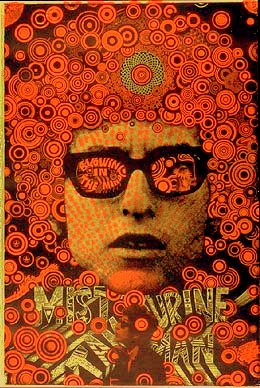
Psychedelic Dylan
Some say she first set her sights on McCartney but the more vulnerable Lennon showed up and the Spider Woman spread her web.
She was still married to her second husband, Tony Cox, but, regardless of what she says she very aggressively pursued, or attacked, Lennon. Lennon was emotionally under water unable to handle his success while drugging himself out of his mind. He was unwillingly married to his wife Cynthia. It appears that he married Cynthia out of duty when she became pregnant. He doesn’t seem to have been happy in his virtue. Yoko had no difficulty in capturing his affections.
Now, just as Warhol had adopted the Velvets and imposed his female singer, Nico, on the band Yoko sought to imp[ose herself on the Beatles through Lennon. At this time she was still musically completely in thrall to John Cage understanding nothing about Rock music. She and Lennon had made a ridiculous LP called Two Virgins in 1968. She combined her cagian screechings while using an avant garde ‘performance’ notion of the couple posing nude on the cover; full frontal on the obverse, full posterior on the reverse. As no store would carry the cover the couple reverted to Yoko’s idea of Bagism placing the cover inside a plain manila envelope or bag. While it didn’t sell the record this form of Bagism was actually a successful artistic statement. The nude cover given an outer garment so to speak.
Well, the public was prepared to forgive the Beatles anything but the other three Beatles weren’t prepared to forgive Yoko for forcing herself on them thus she broke up the most successful act of the sixties. Still, she had succeeded according to her wildest dream. Lennon and his wonderful reputation and fortune were hers. She had gone from a neglected, nondescript ‘performance’ artist to center stage, not on her own womanly talents but by attaching herself to a talented man. Yoko’s ‘heart’ was useless without the male intellect. Yoko was now the most influencial feminist in the world. She knew what to do with that.
After several ‘performance’ acts such as the ‘Bed In For Peace’ the couple left England to return to the place Yoko wished to subjugate artistically, New York City. She had raised herself to a par with Andy Warhol. She now had to meld her musical and artistic goals through Lennon and Warhol.
On the musical side she began to develop her rock n’ roll skills under the tutelage of Lennon. While not abandoning the avant garde notions of John Cage she now emasculated her husband. Always semi-delusional or perhaps completely so, she fantasized that she was not only equal to Lennon in skill and popularity but superior to him. She imagined herself more popular than Lennon. Thus one has such travesties as the LP Double Fantasy. It was only after Lennon’s death that she was forced to recognize than Lennon’s fans did not appreciate her efforts. So she failed as a musician.
She quickly tired of being Mrs. Lennon. Thus she and Lennon separated for eighteen months or so during the years 1973-75. She then realized that her financial well being and musical acceptance depended on Lennon. In 1975 she called him back resuming their relationship until his death in 1980. But, things had changed.
She began to adopt Warhol’s life style on her return to NYC. While she propagated the notion that she was some sort of business whiz Iam having difficulties discovering any such skills. It appears that with the enormous income of Lennon she emulated Warhol in

Andy the Demon
spending her way to prosperity.
She was in a position to not only match Warhol’s spending but exceeding it by many times. Through the seventies and eighties Warhol came into his own as an artist while reaping a fortune doing portraits. There appears to have been no effort on his part to invest in income producing vehicles. Rather he bought stuff. He purchased buildings in NYC and elsewhere while acquring undeveloped acreage in places like Aspen. He shopped nearly every day buying antiques from furniture to objets d’ art by the bushel almost as though he were trying to excel the incredible W.R. Hearst.
He usually didn’t even look at the stuff once he bought it merely filling rooms with his shopping bags. At his death all this junk was auctioned off for 25 million dollars, a nice appreciation in value.
Yoko followed the exact pattern buying apartments and houses as well as an extensive dairy farm with a herd of prize cows. She not only had but has five apartments in her principal dwelling, the Dakota apartment building and many other houses scattered around.
Like Warhol the Dakota apartments are stuffed with junk. Valuable, but, you know, stuff. She bought at good prices. Her extensive collection of Egyptian antiquities was mostly purchased before a steep rise in value.
Like the Rothschilds of old Yoko didn’t do all her own shopping but employed agents to search things out. Chief among these was an associate of Warhol’s, Sam Green, and an Hungarian immigrant by the name of Sam Havadtoy.

Buddies- Yoko, John, Andy
There should be no surprise then that she now has an extensive collection of Warhol’s artwork as well as his portraits of Lennon. The Warhols would have been purchased for form 25 to 50K while now being listed on her assets at tens of millions. She also has been said to have a good collection of Magrittes as well as one assumes other artists. So, much of her net worth is tied up in artwork purchased through Sam Green.
Sam Havadtoy was an antiques dealer as well as an interior designer. He appears to have been a somewhat shady character. It is very difficult to find much about him, however there is a sharp portrait available from the notorious A.J. Weberman ( http://www.acid-trip.org/lennon/ )
…(the Lennons) hired a sleazy Eastern European bisexual to renovate the pad. (Dakota) I had heard of this dude, whose name escapes me, from an asswipe named BRUCE KIRSH, who worked for him. KIRSH told me that the dude, who worked for the King of Morocco, would form a dummy renovation company, hire employees like Kirsch who were willing to work under false names, then, when it came time to pay taxes, everyone would disappear. I learned of him long before he was hired by John and Yoko, and I was taken aback when Yoko took up with him after John’s death.
I know that Weberman is not particularly well thought of by fandom but this is because of his harassment of Dylan who did, after all, misrepresent himself to the revolutionaries like Weberman. A.J. himself is an intelligent observer who was wading through it when it was deep. I do believe he knows what he’s talking about although his interpretations of Dylan’s lyrics seem absurd.
I would have to question Yoko’s judgment in taking him in. Both he and Sam Green were candidates as successors to Lennon with

Lennon by Warhol
whom she consorted in front of Lennon before he died while Yoko chose Havadtoy as his successor the day he died.
Perhaps she selected Havadtoy over Green because he was more rough trade. With Lennon while managing to reconcile revolution with peace and love with Havadtoy she discarded peace and love in favor of strong arm methods against her former employee Fred Seaman when it was totally unnecessary.
Havadtoy was living in a homosexual arrangement with his business partner when Yoko beckoned him to switch to her. Apparently an able switch hitter he was lured by the money to this much older woman. The arrangement did last for twenty years before Havadtoy removed to his native Hungary taking a nice cash settlement and several of the Warhols.
Thus, just as Warhol had his live-in homosexual arrangement so after Lennon’s death Yoko adopted the exact arrrangement. Today she apparently lives alone, a seventy-eight year old woman.
After Lennon’s death there was an accession of from 30 million to a possible 100 million dollars as their last album, Double Fantasy, sold into the millions while the rest of Lennon’s catalog and one assumes the Beatles’ catalog was reinvigorated while all things Lennon sold. This is, of course, no reflection on Yoko but the inevitable result with intellectual properties when the maker dies.
Post-Lennon, then, Yoko realized that her recording and art careers were nil. Heart without intellect is worthless. She then became the caretaker of the Lennon legacy. His recordings, of course, continued to sell, but even his artwork eclipsed that of Yoko. So she suffered the humiliation of being a mere appendage to a man. The feminine dismal swamp was eclipsed by the Olympian heights of the male intellect. As in ancient times the God had trumped the Goddess. And yet as with Hera and Zeus the Goddess gets her way. Yoko came up with the money and goods while Lennon’s spirit was wafted into the stratosphere.
As any reader of mythology knows Hera ruled the Lernean swamps of Argolis while Zeus ruled the gods on ethereal Olympus. Thus one has the symbolism of the biological difference between the male and female.
In ancient times the female had her share in magic. She knew herbs and plants, was familiar with poisons and cures as with the arch witch of the ancient world, Medea. The reputation of the female witch even as a consort of Satan persisted down through medieval and post-medieval times, indeed, even up to the dawn of the scientific enlightenment. One would have thought that magic and witchery were a thing of the past in the 1960s and yet Yoko embodied the whole female swamp mentality.
She established something called the Spirit Foundation attributing the direction to Lennon who in fact knew nothing of these matters but followed her lead. The Spirit Foundation celebrated the ancient art of the Shaman or witch doctor. Shamanism itself even preceded the Matriarchal swamps of Argolis. It was a rich repository of magical tradition. Further the Foundation was feminist in that it was dedicated to preserving the magical traditions of the women of the Pacific islands still living in such archaic societies. The wealth generated by the male intellect was appropriated by the female vagina or ‘heart.’
In her own life and that of Lennon’s Yoko was addicted to a variety of magical practices- astrology, numerology, Tarot readings, and indeed she traveled to the Caribbean to sell her soul to Satan through the offices of a female curandera. Her Tarot reader, John Green, was a priest in the shamanistic, magical, Yoruban African cult of Santeria.
Her feminism was more a magical effort to restory Matriarchal supremacy over the Patriarchy thus reversing the Patriarchal victory of three thousand years previously. Indeed, what has been called the movement for female equality is nothing more than a covert campaign to restore the Matriarchy.
Thus while Yoko o9riginatd nothing she usurped the abilities of the reason of men- Cage, Warhol, Lennon and male magicians such as John Green. Indeed the Trojan War itself was a war of men in service of women.
In her associations with men she preferrred to deal with emasculated types such as homosexuals like Cage, Warhol, Sam Green and Sam Havadtoy. Lennon claimed to have always been dependent of women for comfort and guidance while Yoko caught him at his most confused and vulnerable.
While she received direction from Cage and Warhol she was able to manipulate Lennon out of his talent somewhat as Vivian did that of Merlin of the Arthurian saga. When Vivian had usurped Merlin’s magical knowledge she buried him deep much as Lennon was put out of the way. Yoko then appropriated his wealth and residual income after his death. It was this constant inflow of cash that allowed her to propagate the notion that she was a financial genius.
Then as the female of the ‘heart’ or vaginal swamp she managed and appropriated the reason of Olympus through Cage, Warhol and Lennon. What she got from Havadtoy other than brute strength is not clear to me.
As such Yoko is Woman. In her case a seeming reversion to the archetypal Shaman of the most ancient times.
Themes And Variations
The Tarzan Novels Of Edgar Rice Burroughs
#5 Tarzan And The Jewels Of Opar
Part V
by
R.E. Prindle
Texts:
Du Maurier, George: Peter Ibbetson
Dudgeon, Piers: Captivated: J.M. Barrie, The Du Mauriers & The Dark Side Of Neverland, 2008, Chatto And Windus
Hesse, Herman: The Bead Game
Neumann, Erich: The Origins and History Of Consciousness, 1951, Princeton/Bollingen
Vrettos, Athena: “Little Bags Of Remembrance: Du Maurier’s Peter Ibbetson And Victorian Theories Of Ancestral Memories” Erudit Magazine Fall 2009.
While it is today commonly believed that Sigmund Freud invented or discovered the Unconscious this is not true. As so happens a great cataclysm, The Great War of 1914-18, bent civilization in a different direction dissociating it from its recent past.
Studies in the earlier spirit of the unconscious continued to be carried on by C.G. Jung and his school but Freud successfully suppressed their influence until quite recently actually. Through the fifties of the last century Freud’s mistaken and harmful, one might say criminal, notion of the unconscious held the field. Thus there is quite a difference in the tone of Edgar Rice Burroughs writing before and after the 1917 Bolshevik Revolution.
There are those who argue that Burroughs was some kind of idiot savant who somehow knew how to write exciting stories. In fact he was a well and widely read man of varied interests who kept up on intellectual and scientific matters. He was what might be called an autodidact with none of the academic gloss. He was very interested in psychological matters from hypnotism to dream theory.
The scientific investigation of the unconscious may probably be dated to the appearance of Anton Mesmer and his interest in hypnotism also variously known as Mesmerism and Animal Magnetism. The full fledged investigation of the unconscious began with hypnotism. Slowly at first but by the last quarter of the nineteenth century in full flower with varied colors. Science per se was a recent development also flowering along with the discovery of the unconscious.
While Charles Darwin had brought the concept of evolution to scientific recognition in 1859 the key discipline of genetics to make sense of evolution was a missing component. It is true that Gregor Mendel discovered the concept of genetics shortly after Darwin’s Origin Of Species was issued but Mendel’s studies made no impression at the time. His theories were rediscovered in 1900 but they were probably not widely diffused until after the Great War. Burroughs knew of the earlier Lamarck, Darwin and Mendel by 1933 when he wrote Tarzan And The Lion Man. His character of ‘God’ is the result of genetic mutation.
Lacking the more complete knowledge of certain processes that we have today these late nineteenth century speculators seem ludicrous and wide of the mark but one has to remember that comprehension was transitting the religious mind of the previous centuries to a scientific one, a science that wasn’t accepted by everyone then and still isn’t today. The Society For Psychical Research sounds humorous today but without the advantage of genetics, especially DNA such speculations made more sense except to the most hard nosed scientists and skeptics. The future poet laureate John Masefield was there. Looking back from the perspective of 1947 he is quoted by Piers Dudgeon, p. 102:
Men were seeking to discover what limitations there were to personal intellect; how far it could travel from its home personal brain; how deeply it could influence other minds at a distance from it or near it; what limits, if any, there might be to an intense mental sympathy. This enquiry occupied many doctors and scientists in various ways. It stirred George Du Maurier…to speculations which deeply delighted his generation.
Whether believer or skeptic Burroughs himself must have been delighted by these speculations as they stirred his own imagination deeply until after the pall of the Revolution and Freud’s triumph.
Burroughs was subjected to dreams and nightmares all his life. Often waking from bad dreams. He said that his stories were derived from his dreams but there are many Bibliophiles who scoff at this notion. The notion of ‘directed dreaming’ has disappeared from popular consideration but then it was a serious topic. Freud’s own dream book was issued at about this time. I have already reviewed George Du Maurier’s Peter Ibbetson on my blog, I, Dynamo and on ERBzine with Du Maurier’s notions of ‘Dreaming True’. It seems highly probable that Burroughs read Ibbetson and Du Maurier’s other two novels so that from sometime in the nineties he would have been familiar with dream notions from that source.
Auto-suggestion is concerned here and just as support that Burroughs was familiar with the concept let me quote from a recent collection of ERB’s letters with Metcalf as posted on ERBzine. This letter is dated December 12, 1912.
If they liked Tarzan, they will expect to like this story and this very self-suggestion will come to add to their interest in it.
Athena Vrettos whose article is noted above provides some interesting information from Robert Louis Stevenson who developed a system of ‘directed dreaming’ i.e. auto-suggestion. We know that Burroughs was highly influenced by Stevenson’s Dr. Jekyll And Mr. Hyde while he probably read other novels of Stevenson. How could he have missed Treasure Island? Whether he read any of Stevenson’s essays is open to guess but in an 1888 essay A Chapter On Dreams Stevenson explained his method. To Quote Vrettos:
Rather than experiencing dreams at random, fragmented images and events, Stevenson claims he has learned how to shape them into coherent, interconnected narratives, “to dream in sequences and thus to lead a double life- one of the day, one of the night- one that he had every reason to believe was the true one, another that he had no means of proving false.” Stevenson describes how he gains increasing control of his dream life by focusing his memory through autosuggestion, he sets his unconscious imagination to work assisting him in his profession of writer by creating “better tales than he could fashion for himself.” Becoming an enthusiastic audience to his own “nocturnal dreams”, Stevenson describes how he subsequently develops those dreams and memories into the basis for many of his published stories, most notably his 1886 Dr. Jekyll And Mr. Hyde.
Now, directed dreaming and Dreaming True sound quite similar. One wonder if there was a connection between Stevenson and Du Maurier. It turns out that there was as well as with nearly the entire group of English investigators. Let us turn to Piers Dudgeon again, p. 102:
Shortly after they met, the novelist Walter Besant invited [Du Maurier] to join a club he was setting up, to be named ‘The Rabelais’ after the author of Gargantua and Pantagruel. Its name raised expectations of bawdiness, obscenity and reckless living, (which were not in fact delivered) as was noted at the time. Henry Ashbee, a successful city businessman with a passion for pornography, and reputed to be Robert Louis Stevenson’s model for the two sides of his creation, Dr. Jekyll And Mr. Hyde, denounced its members as ‘very slow and un-Rabelaisian’, and there is a story that Thomas Hardy, a member for a time, objected to the attendance of Henry James on account of his lack of virility.
Virility was not the issue however. The members of the Rabelais were interested in other worlds. Charles Leland was an expert on fairy lore and voodoo. Robert Louis Stevenson was the author of The Strange Case Of Dr. Jekyll And Mr. Hyde (1886) which epitomized the club’s psychological/occult speculations. Arthur Conan Doyle, who became a member of the British Society For Psychical Research, was a dedicated spiritualist from 1916. Henry James was probably more at home than Hardy, for both his private secretary Theodora Besanquet, and brother William, the philosopher, were members of the Psychical Society.
In many ways the Rabelais was a celebration that [Du Maurier’s] time had come. Parapsychological phenomena and the occult were becoming valid subjects for rigorous study. There was a strong feeling that the whole psychic scene would at any moment be authenticated by scientific explanation.
Du Maurier was obviously well informed of various psychical ideas when he wrote Ibbetson. In addition he had been practicing hypnosis since his art student days in the Paris of the late 1850s.
So this was the literary environment that Burroughs was growing up in. As Bill Hillman and myself have attempted to point out, ERB’s mental and physical horizons were considerably broadened by the Columbian Expo of 1893. Everything from the strong man, The Great Sandow, to Francis Galton’s psychological investigations were on display. The cutting edge of nineteenth century thought and technology was there for the interested. Burroughs was there for every day of the Fair. He had time to imbibe all and in detail. The Expo shaped his future life. That he was intensely interested in the intellectual and literary environment is evidenced by the fact that when he owned his stationery story in Idaho in 1898 he advertised that he could obtain any magazine or book from both England and America. You may be sure that he took full advantage of the opportunity for himself. As this stuff was all the rage there can be no chance that he wasn’t familiar with it all if he didn’t actually immerse himself in it. Remember his response to Kipling’s The White Man’s Burden was instantaneous. Thus you have this strange outpost of civilization in Pocatello, Idaho where any book or magazine could be obtained. Of course, few but Burroughs took advantage of this fabulous opportunity. It should also be noted that he sold the pulp magazines so that his interest in pulp literature went further back than 1910.
In addition ERB was enamored of the authors to the point of hero worship much as musical groups of the 1960s were idolized so he would have thirsted for any gossip he could find. It isn’t impossible that he knew of this Rabelais Club. At any rate his ties to psychology and the occult become more prominent the more one studies.
It seems to me that longing as he did to be part of this literary scene, that if one reads his output to 1920 with these influences in mind, the psychological and occult content of, say, the Mars series, becomes more obvious. He is later than these nineteenth century lights so influences not operating on them appear in his own work making it more modern.
At least through 1917 the unconscious was thought of as a source of creativity rather than the source of evil impulses. If one could access one’s unconscious incalculable treasures could be brought up. Thus gold or treasure is always depicted in Burroughs’ novels as buried. The gold represents his stories, or source of wealth, brought up form his unconscious. The main vaults at Opar are thus figured as a sort of brain rising above ground level. One scales the precipice to enter the brain cavity high up in the forehead or frontal lobe. One then removes the ‘odd shaped ingots’ to cash them in. Below the vaults are two levels leading back to Opar that apparently represent the unconscious. Oddly enough these passageways are configured along the line of Abbot’s scientific romance, Flatland.
In Tarzan And The Jewels Of Opar the gold is taken to the Estate and buried replicating the vaults. Once outside Opar and in circulation, so to speak, the ingots are accessible to anyone hence the duel of Zek and Mourak for them. The first gold we hear of in the Tarzan series is brought ashore and buried by the mutineers. This also sounds vaguely like Stevenson’s Treasure Island. The watching Tarzan then digs the gold up and reburies it elsewhere. In The Bandit Of Hell’s Bend the gold is stolen and buried beneath the floorboards of the Chicago Saloon. Thus gold in the entire corpus is always from or in a buried location. These are never natural veins of gold but the refined ingots.
Not only thought of as a source of treasure during this period the unconscious was thought to have incredible powers such as telekinesis, telepathy and telecommunication. One scoffs at these more or less supernatural powers brought down from ‘God’ and installed in the human mind. As they have been discredited scientifically Western man has discarded them.
On the other hand Western Man deludes himself into accepting the oriental Freud’s no less absurd assertion that the unconscious exists independently of the human body somewhat like the Egyptian notion of the ka and is inherently evil while controlling the conscious mind of the individual. This notion is purely a religious concept of Judaism identifying the unconscious as no less than the wrathful, destructive tribal deity of the old testament Yahweh. Further this strange Judaic concept of Freud was allowed to supersede all other visions of the unconscious while preventing further investigation until the writing of C.G. Jung were given some credence beginning in the sixties of the last century.
In point of fact there is no such unconscious. The supernatural powers given to the unconscious by both Europeans and Freud are preposterous on the face of it. For a broader survey of this subject see my Freud And His Vision Of The Unconscious on my blogsite, I, Dynamo.
This so-called unconscious is merely the result of being born with more or less a blank mind that needs to be programmed. The programming being called experience and education. The maturation and learning process are such that there is plenty of room for error. All learning is equivalent to hypnosis, the information being suggestion which is accepted and furthers the development of the individual. Learning the multiplication tables for instance is merely fixing them in your mind or, in other words, memorizing them. All learning is merely suggestion thus it is necessary that it be constructive or education and not indoctrination or conditioning although both are in effect. Inevitably some input will not be beneficial or it may be misunderstood. Thus through negative suggestion, that is bad or terrifying suggestions, fixations will result. A fixation is impressed as an obsession that controls one’s behavior against one’s conscious will, in the Freudian sense. The fixation seems to be placed deep in the mind, hence depth psychology. Thus when ERB was terrified and humiliated by John the Bully certain suggestions occurred to him about himself that became fixations or obsessions. These obsessions directed the content of his work.
To eliminate the fixations is imperative. This is what so-called depth psychology is all about. The subconscious, then, is now ‘seprarated’ from the conscious, in other words the personality or ego is disintegrated. The goal is to integrate the personality and restore control. Once, and if that is done the fixations disappear and the mind become unified, integrated or whole; the negative conception of the unconscious is gone and one is left with a functioning conscious and subconscious. The subconscious in sleep or dreams then reviews all the day’s events to inform the conscious of what it missed and organize it so that it can be acted on. No longer distorted by fixations, or obsessions, the individual can act in his own interests according to his abilities. The sense of living a dream life and a real life disappears.
That’s why experience and education are so important. What goes into the mind is all that can come out.
But, the investigation of the unconscious was blocked by Freudian theory and diverted from its true course to benefit the individual in order to benefit Freud’s special interests.
So, after the War ERB forgot or abandoned the wonderful notions of the unconscious and was forced to deal with and defend himself against Freudian concepts. The charactger of his writing begins to change in the twenties to meet the new challenges of aggressive Judaeo-Communism until by the thirties his work is entirely directed to this defense as I have shown in my reviews of his novels from 1928 to 1934.
Tarzan And The Jewels Of Opar then reflects this wonderful vision of the subconscious as portrayed by George Du Maurier and Robert Louis Stevenson
Then the grimmer reality sets in.
End Of Review.
Themes And Variations
The Tarzan Novels Of Edgar Rice Burroughs
#5 Tarzan And The Jewels Of Opar
by
R.E. Prindle

Edgar Rice Burroughs
Part IV
From Achmet Zek’s Camp To The Recovery Of The Jewels
The nature of the story changes from the departure of Werper and Jane from Achmet Zek’s camp . To that point the story had been developed in a linear fashion. From Zek’s camp on ERB either loses control of his story or changes into an aggregation of scenes between the camp and the Estate leading to the return. Perhaps there is a modification in his psychology.
The struggle for the possession of the jewels and the woman contunues unabated. As always Burroughs tries to construct a story of many surprising twists and turns. This may be an influence of the detective story, Holmes, on him. He may be trying to emulate Doyle.
The problem of who the characters represent in ERB’s life becomes more difficult to determine. Werper continues as ERB’s failed self. I think as relates to Zek and the jewels Zek represents Burroughs’ old sexual competitor, Frank Martin, while Zek, the gold and the Abyssinians represent the deal between McClurg’s and its deal in 1914-15 with A. L. Burt. Burt first had the reprint rights to Tarzan Of The Apes, published in the summer of 1914. Those rights shortly passed to Grossett and Dunlap.
In my estimation Martin never ceased interfering with Burroughs’ marriage at least from 1900 to 1919 when Burroughs fled Chicago. We know that Martin tried to murder Burroughs in 1899 and that his pal, R.S. Patchin, looked up Burroughs in LA after the divorce in 1934 and sent a mocking condolence letter in 1950 when Burroughs died and after Martin had died sometime earlier. Patchin would obviously have been directed by Martin to taunt Burroughs in ’34. It’s clear then that Martin carried a lifelong grudge against Burroughs because of Emma.
Martin is thus portrayed as being in competition with Burroughs in 1914-15 and possibly but probably to a lesser extent in LA.
Jane is shown being captured by Zek twice in the story. Thus Emma was courted or captured by Martin when Burroughs was in Arizona and Idaho. In this story Jane is captured while Tarzan is absent in Opar. The second capture or courting by Martin is diffiicult to pinpoint by the inadequate information at our disposal but following the slender lead offered by the novelist, John Dos Passos, in his novel The Big Money I would think it might be in 1908 when ERB left town for a few weeks or months probably with Dr. Stace. It was of that time that the FDA (Federal Food And Drug Administration) was after Stace for peddling his patent medicines. Burroughs was probably more deeply involved with that than is commonly thought. At any rate his being out of town would have provided an opportunity for Martin. Whether something more current was going on I don’t find improbable but I can’t say.
I would also be interested to learn whether there was any connection between McClurg’s and Martin. Martin was Irish, his father being a railroad executive which explains the private rail car at his disposal, as were, of course, the McClurgs and so was the chief executive Joe Bray. If Martin knew Bray he might have pressured Bray to reject publication of Tarzan doing a quick turnaround when interest was shown by the Cincinatti firm. Martin then might have meddled with Burroughs’ contract with McClurg’s. The contract and McClurg’s attitude is difficult to understand otherwise.
The gold is buried which Zek is supposed to have gotten through Werper, then they have a falling out and Werper is captured by Mourak and his Abyssinians. Mourak would then represent A.L. Burt and a division of the the royalties. If McClurg’s had promoted Tarzan Of The Apes, which they didn’t, Burroughs would have received 10% of 1.30 per copy. Thus at even 100,000 or 200,000 copies he would have received 13,000 or 26.000 dollars. that would have been a good downpayment on his yacht. Martin who must have thought of Burroughs as a hard core loser from his early life would have been incensed by such good fortune that might have placed Burroughs’ income well above his own.
Instead, it doesn’t appear that McClurg’s even printed the whole first edition of 15,000 copies. The book immediately went to A.L. Burt where the price of the book was reduced to 75 or 50 cents with the royalty much reduced to 4 1/2 cents divided fifty-fifty between McClurg’s and Burroughs. It’s hard to believe that ERB wasn’t robbed as he certainly thought he had been. Thus when Mourak unearths the gold he is settling for a portion of the hoard when Zek’s men show up and the battle necessary for the story begins.
In this manner the key issues of gold, jewels and woman are resolved.
So, Werper with the jewels goes in search of Jane to find that she has already fled Zek’s camp. The scenes of the story now take place between the camp, perhaps representing McClurg’s offices and the Estate, representing Burroughs.
The latter half of the book, pages 81-158 in the Ballantine paperback is very condensed in a dream like fashion. The action within the very prescribed area with a multitude of people and incidents is impossible except as a dream story. The appearance of the Belgian officer and askaris must have been photoshopped it is so impossible. In other words, then, the whole last half of the book, if not the whole book, is a dream sequence in which dream logic prevails. I will make an attempt to go into late nineteenth century dream speculation in Part V.
A key point of the story is the regaining of the memory of Tarzan. This occurs near story’s end on page 139 and following. It’s fairly elaborate. In connection with his memory return I would like to point out the manner of his killing the lion when he rescues Jane from Mourak’s boma. The roof fell on Tarzan in imitation of his braining in Toronto while now he picks up a rifle swinging on the rearing lion’s head splintering the stock along with the lion’s skull so that splinters of bone and wood penetrate the brain while the barrel is bent into a V. Rather graphic implying a need for vengeance. Not content with having the roof fall on Tarzan’s head, while trying to escape the Belgian officer an askari lays him out with a crack to the back of the head but ‘he was unhurt.’ One can understand how Raymond Chandler marveled. My head hurts from writing about it. Also Chulk has his head creased by a bullet adding another skull crusher to the story.
The description of the return of Tarzan’s reason seems to fit exactly with Burroughs’ injury. I would have to question whether Burroughs himself didn’t have periods of amnesia. P. 139:
Vaguely the memory of his apish childhood passed slowly in review- then came a strangely tangled mass of faces, figures and events that seemed to have no relation to Tarzan of the Apes, and yet which were, even in this fragmentary form, familiar.
Slowly and painfully recollection was attempting to reassert itself, the hurt brain was mending, as the course of its recent failure to function was being slowly absorbed or removed by the healing process of perfect circulation.
According to medical knowledge of his time the description seems to apply to his own injury. His own blood clot had either just dissolved or was dissolving. Then he says almost in the same manner as in The Girl From Farriss’s:
The people who now passed before his mind’s eye for the first time in weeks were familiar faces; but yet he could neither place them in niches they had once filled in his past life nor call them by name.
In this hazy condition he goes off in search of the She he can’t remember clearly. His memory fully returns as he has Werper by the throat who calls him Lord Greystoke. That and the name John Clayton bring Tarzan fully back to himself. For only a few pages at the end of the book does he have his memory fully recovered.
In order to summarize the rest I have had to outline the actions of the main characters for as with Tarzan and his memory the story is one of ‘a strangely tangled mass of faces, figures and events.’ Whether this is artistry on Burroughs’ part or a dream presentation I am unable to ascertain for certain. Let’s call it artistry.
We will begin with Werper’s activities. While Tarzan promised to retrieve La’s sacred knife Werper appears to no longer have it as it disappears from the story. When Werper escaped from Zek unable to locate Jane he heads East into British territory. He is apprehended by one of Zek’s trackers. On the way back a lion attacks the Arab unhorsing him. Werper mounts the horse riding away directly into the Abyssinian camp of Mourak. Mugambi is captured at the same time. While the troop bathes in a river Mugambi discovers the gems managing to exchange them for river pebbles. Werper tempts Mourak with the story of Tarzan’s gold. While digging the gold they are attacked by Zek and his men. Werper rides off as Mourak is getting the worst of the fight. Zek rides after him. Werper’s horse trips and is too exhausted to rise. Using a device that ERB uses in one of his western novels Werper shoots the horse of the following Zek, crouching behind his own for cover. Zek has lost the woman but now wants the jewels. Werper hasn’t the woman while unknown to himself he neither has the jewels. In exchange for his life he offers Zek the pouch of river stones believing it contained the jewels. Zek accepts. Both men are treacherous. Werper waits to shoot Zek but Zek out foxes him picking up the bag by the drawstring with his rifle barrel from the security of the brush.
Discovering the pebbles he thinks Werper has purposely deceived him stalking down the trail to finish him off. Werper is waiting and pots him with his last shell. As Zek falls the woman, Jane, appears as if by a miracle reuniting the two. Could happen I suppose but definitely in dreams.
So, what are the two men fighting over? The sex interest, as the jewels are involved. Who do Werper and Zek represent? Obviously Burroughs and Martin. The stones are false but as Werper disposes of Zek in the competition for the woman Jane appears as if by magic to run to Werper/ Burroughs with open arms.
Werper with Jane returns to Zek’s camp now under the direction of Zek’s lieutenant, Mohammed Beyd. Rigamarole, then Werper deposits Jane in a tree from whence he expects to retrieve her on the following morning. The next day she is gone.
Werper once again turns East. He is spotted riding along by Tarzan. The Big Guy falls from a tree throwing Werper to the ground demanding to know where his pretty pebbles are. It is at this point Werper recalls Tarzan to his memory by calling him Lord Greystoke. Also at the moment the Belgian officer appears from nowhere, having miraculously ascertained Werper’s whereabouts, to arrest him.
Tarzan wants Werper more than the Belgian so tucking his man under his arm he breaks through the circle of askaris. On the point of success he is brought down from behind. Another thwack on the head. Apparently in a desperate situation Tarzan hears voices from the bush. The Great Apes have their own story line but here it is necessary to introduce them as Tarzan’s saviors. The voice is from Chulk who Tarzan sends after the troop. They attack routing the Africans. In the process Chulk, who is carrying the bound Werper is shot. If you remember Chulk stole the stones from Mugambi, or maybe I haven’t mentioned that yet. Werper falls across him in such a way that his hands bound behind his back come into contact with the pouch. Werper quickly recognizes what the bag contains although he has no idea how the ape came by them.
He then advises Tarzan where he left Jane. The two set out when the furore in Mourak’s camp reaches his ears. ‘Jane might be involved.’ Says Werper. ‘She might.’ says Tarzan telling Werper to wait for him while he checks.
Werper waits not, disappearing into the jungle where his fate awaits him.
Those are the adventures of only one character in this swirling vortex of seventy some pages.
Let’s take Mugambi next as he is the key to the story of the jewels yet plays a minor role. After crawling after Jane and regaining his strength he arrives at Zek’s camp at the same time as Tarzan and Basuli but none are aware of the others. Werper and Jane have already escaped when Tarzen enters the camp to find them missing. Mugambi follows him later also finding both missing. He goes in search of Jane. He walks through the jungle ludicrously calling out ‘Lady’ after each quarter mile or so. Leathern lungs never tiring he shouts Lady into the face of Mourak and is captured. Being a regular lightfoot he escapes having lifted the jewels from Werper. Chulk then lifts them from him, Mugambi disappears until story’s end.
Let’s see: Jane next. Jane along with the jewels is the key to the story. The jewels represent the woman as man’s female treasure. Jane is the eternal woman in that sense. The various men’s attitude toward the jewels reflects their own character. Thus, Tarzan in his amnesiac simplicity wants the jewels for their intrinsic beauty. He rejected the uncut stones for the faceted ones in Opar. Even in the semi darkness of the vaults, or in other words, his ignorance, he perceived the difference.
Werper at various times thinks he can get the gold, the jewels and the woman at once. He is happy to settle for the jewels taking them to his grave. Mourak knowing nothing of the jewels is willing to settle for a few bars of gold. When he takes the woman into his possession it is for the sole purpose of a bribe to his Emperor to mitigate his overall failure. Not at all unreasonable.
Zek is too vile to consider as a human being dying in the fury of losing all. Mugambi and Basuli are happy in their devotion to the woman to whom neither jewels or gold mean anything.
Tarzan then, pure in soul and spirit wins it all, woman, jewels and gold. One is tempted to say he lived happily forever after but, alas, we know the trials ahead of him.
So Jane is carried off to Zek’s camp where all the action is centred while she is there. Both Tarzan and Mugambi show up to rescue her but she has escaped just ahead of Werper who would thus have had the woman and the jewels. Alone in the jungle she once again falls into Zek’s hands- that is to say those of Frank Martin.
Now, Tarzan, who has fallen in with a troop of apes chooses two, Taglat and Chulk, to help him rescue Jane from Zek. Chulk is loyal but Taglat is an old and devious ape, apparently bearing an old grudge against Tarzan, who intends to steal Jane for his own fell purposes much worse than death.
In Tarzan’s attempt to rescue Jane, Taglat succeeds in abducting her. He is in the process of freeing her bonds when a lion leaps on him. In the succeeding battle Jane is able to escape the lion who had just killed Taglat.
Wandering through the jungle she hears shots, the voices of men. Approaching the noise she discover Werper and Zek fighting it out. She climbs a tree behind Werper. When he shoots Zek he hears a heavenly voice from above congratulating him. Jane runs to him hands outstretched. So now Werper has the woman again while believing he can retrieve the jewels. He can’t find them because unbeknownst to him Mugambi had substituted river rocks.
Improbably, except in a dream, he returns to Zek’s camp where he has to solve the problem of Zek’s second in command, Mohammed Beyd. Werper spirits Jane out of the camp but finds her gone the next morning. She had mistaken Mourak and his Abyssinians for Werper. Mourak now in possession of the woman, no gold no jewels, thinks to redeem himself with his Emperor, Menelik II, with this gorgeous female.
During that night’s camp the boma is attacked by hordes of lions. Lions play an amazingly central role in this story. Interestingly this scene is replicated almost exactly in the later Tarzan And The City Of Gold. In Jewels Tarzan rescues a woman while in Gold Tarzan rescues a man. That story’s woman becomes his enemy.
But now Tarzan and Werper hear the tremendous battle with Tarzan entering the boma to rescue Jane. By the time of the rescue Tarzan has regained the woman and the gold but lacks the jewels.
Unless I’m mistaken we now have only Tarzan and the apes to account for.
ERB’s life was at a turning point. At this stage in his career he must have realized that he would have a good annual income for the rest of his life. If only 5000 copies of the first edition of Tarzan of the Apes sold he would have received 6,500.00 Add his magazine sales to that and other income and 1914 must have equaled his income of 1913 or exceeded it. His income probably grew until he was earning c. 100,000 per year for three years from 1919-1922. So he had every reason to believe the world was his oyster through the teens. That must have been an exhilarating feeling. A sense of realization and power must have made him glow. But the period was one of transition, a casting off of the old skin while growing into the new. Thus one sees ERB abandoning his old self -Werper- while attempting to assume the new in Tarzan. Thus in death Werper transfers the jewels, call them the Family Jewels, from himself to Tarzan.
Tarzan begins the novel as an asexual being unaware of what jewels were or their value and receives them a the end of the novel as a release from emasculation or awareness of his sexual prowess. Once again Werper fades in the novel while Tarzan unaware of who he is comes to a full realization. Presumably Burroughs thinks he is able to assume his new role as 1915 ends.
In the novel when Tarzan realizes Werper has stolen the jewels he goes off in search of this symbol of his manhood. Werper is not in Zek’s camp. On the trail Tarzan comes across the dead body of the Arab sent after Werper with he face bitten off. He assumes this is Werper but can’t find the jewels. Wandering about he discovers a troop of apes deciding to run with them for a while. Selecting Chulk and Taglat he goes back to Zek’s camp to rescue Jane. At that point Taglat makes off with Jane. Discovering Zek and Werper on the way to the Estate Tarzan becomes involved in the battle between Zek and Mourak. He sees Zek take the jewels and then throw them to the ground as worthless river rocks.
He encounters Werper in the jungle again and prompted by the man fully regains his memory only to have Werper arrested by the Belgian police officer. The battle between Mourak and the lions ensues. Tarzan goes to rescue Jane, Werper goes to his death.
The unarmed Tarzan faces a rampant lion. Picking up an abandoned rifle he brains the lion, apparently in vengeance for all the indignities and injuries ERB has suffered in life.
Leaping with Jane into a tree they begin the journey back to the Estate to begin life anew. Some time later they come across the bones of Werper to recover the jewels and make the world right.
The novel closes with Tarzan’s exclamation.
“Poor devil!”…Even in death he has made restituion- let his sins lie with his bones.”
Was Burroughs speaking of Werper as his own failed self? I believe sothe latter. Remember that a favorite novel of ERB was Dr. Jekyll and Mr. Hyde and that he believed that every man was two men or had two more or less distinct selves. Human duality is one of the most prominent themes in the corpus; thus ERB himself must have believed that he had a dual personality. Tarzan will have at least two physical doubles, one is Esteban Miranda in Golden Lion and Ant Men, and the other Stanley Obroski in Lion Man. Both were failed men as Werper is here. Both obviously represented the other or early Burroughs as Werper does here.
In killing Werper ERB hoped to eliminate the memory of his failed self as he did with Obroski in Lion Man. In other words escape his emasculation and regain his manhood.
The jumbled and incredibly hard to follow, or at least, remember, last half of the book with its improbable twists and turns in such a compressed manner gives the indication that this is a dream story. Only dream logic makes the story comprehensible if still unbelievable. The story then assumes fairy tale characteristics that don’t have to be probable to be understood as possible.
Can be genius, can be luck. I will examine Burroughs novels in relation to dreams in Part V. This part will not be as comprehensive as I would like but time grows short and it is better to make the attempt as not.
Part V follows.
A Contribution To The
Erbzine Library Project.
Edgar Rice Burroughs, Science And Spiritualism
Camille Flammarion, Scientist and Spiritualist
by
R.E. Prindle

The last story in Ray Bradbury’s Martian Chronicles is about the expulsion from Earth of the various supernatural or imaginary beings such as fairies, elves, the elementals, all those beings external to ourselves but projections of our minds on Nature, to Mars as a last resort and how they were all dieing as Mars became scientifically accessible leaving no place for them to exist.
On Earth the rejection of such supernatural beings began with the Enlightenment. When the smoke and fury of the French Revolution and the Napoleonic years settled and cleared it was a new world with a completely different understanding of the nature of the world. Science, that is, knowing, had displaced belief as a Weltanschauung.
The old does not give way so easily to the new. Even while knowing that fairies did not exist the short lived reaction of the Romantic Period with its wonderful stories and fictions followed the Napoleonic period.
Supernatural phenomena displaced from the very air we breathed reformed in the minds of Men as the ability of certain people called Mediums to communicate with spirits although the spirits were no longer called supernatural but paranormal. Thus the fairies morphed into dead ancestors, dead famous men, communicants from beyond the grave. Men and women merely combined science with fantasy. Science fiction, you see.
Spiritualism was made feasible by the rediscovery of hypnotism by Anton Mesmer in the years preceding the French Revolution. The first modern glimmerings of the sub- or unconscius began to take form. The unconscious was the arena of paranormal activity.
Hypnotism soon lost scientific credibility during the mid-century being abandoned to stage performers who then became the first real investigators of the unconscious as they practiced their art.
While the antecedents of spiritualism go back much further the pehnomena associated with it began to make their appearance in the 1840s. Because the unconscious was so little understood spiritualism was actually thought of as scientific. The investigators of the unconscious gave it incredible powers and attributes, what I would call supernatural but which became known as paranormal. Communicating with spirits, teleportation, telecommunications, all the stuff that later became the staples of science fiction.
Thus in 1882, Jean-Martin Charcot, a doctor working in the Salpetriere in Paris made hypnotism once again a legitimate academic study.
The question here is how much innovation could the nineteenth century take without losing its center or balance. Yeats’ poem The Second Coming presents the situation well. Freud, who was present at this particular creation, was to say that three discoveries shattered the confidence of Man; the first was the Galilean discovery that the Earth was not the center of the universe, the second revelation was Darwin’s announcement that Man was not unique in creation and the last was the discovery of the unconscious. Of these three the last two happened simultaneiously amidst a welter of scientific discoveries and technological applications that completely changed Man’s relationship to the world. One imagines that these were the reasons for the astonishing literary creativity as Victorians grappled to deal with these new realities. There was a sea change in literary expression.
Key to understanding these intellectual developments is the need of Man for immortality. With God in his heaven but disconnected from the world supernatural explanations were no longer plausible. The longing for immortality remained so FWH Myers a founder of the Society For Psychical Research changed the word supernatural into paranormal. As the notion of the unconscious was now wedded to science and given, in effect, supernatural powers under the guise of the paranormal it was thought, or hoped, that by tapping these supernormal powers one could make contact with the departed hence spiritism or Spiritualism.
While from our present vantage point after a hundred or more years of acclimatizing ourselves to an understanding of science, the unconscious and a rejection of the supernatural, the combination of science and spiritualism seems ridiculous. Such was not the case at the time. Serious scientists embraced the notion that spirtualism was scientific.
Now, a debate in Burroughs’ studies is whether and/or how much Burroughs was influenced by the esoteric. In my opinion and I believe that of Bibliophile David Adams, a great deal. David has done wonderful work in esbatlishing the connection between the esotericism of L. Frank Baum and his Oz series of books and Burroughs while Dale Broadhurst has added much.
Beginning in the sixties of the nineteenth century a French writer who was to have a great influence on ERB, Camille Flammarion, began writing his scientific romances and astronomy books. Not only did Flammarion form ERB’s ideas of the nature of Mars but this French writer was imbued with the notions of spiritualism that informed his science and astronomy. He and another astronomer, Percival Lowell, who is often associated with ERB, in fact, spent time with Flammarion exchanging Martian ideas. Flammarion and Lowell are associated.
So, in reading Flammarion ERB would have imbibed a good deal of spiritualistic, occult, or esoteric ideas. Flammarion actually ended his days as much more a spiritualist than astronomer. As a spiritualist he was associated with Conan Doyle.
Thus in the search for a new basis of immortality, while the notion of God became intenable, Flammarion and others began to search for immortality in outer space. There were even notions that spirits went to Mars to live after death somewhat in the manner of Bradbury’s nixies and pixies. In his book Lumen Flammarion has his hero taking up residence on the star Capella in outer space after death. Such a book as Lumen must have left Burroughs breathless with wonderment. Lumen is some pretty far out stuff in more ways than one. After a hundred fifty years of science fiction these ideas have been endlessly explored becoming trite and even old hat but at the time they were
Camille Flammarion
excitingly new. Flammarion even put into Burroughs’ mind that time itself had no independent existence. Mind boggling stuff.
I believe that by now Bibliophiles have assembled a library of books that Burroughs either did read or is likely to have read before 1911 that number at least two or three hundred. Of course, without radio, TV, or movies for all of Burroughs’ childhood, youth and a major portion of his young manhood, although movies would have become a reality by the time he began writing, there was little entertainment except reading. Maybe a spot of croquet.
As far as reading goes I suspect that ERB spent a significant portion of his scantily employed late twenties and early thirties sitting in the Chicago Library sifting through the odd volume. It can’t be a coincidence that Tarzan lounged for many an hour in the Paris library before he became a secret agent and left for North Africa.
I have come across a book by the English author Charles Howard Hinton entitled Scientific Romances of which one explores the notion of a fourth dimension . Hinton is said to have been an influence on H.G. Wells’ The Time Machine. It seems certain that Burroughs read The Time Machine while he would have found many discussions of the fourth dimension as well as other scientific fantasies in the magazines and even newspapers as Hillman has so amply demonstrated on ERBzine. We also know that ERB had a subscription to Popular Mechanics while probably reading Popular Science on a regular basis. Popular Science was established in 1872.
It is clear that ERB was keenly interested in psychology and from references distributed throughout the corpus, reasonably well informed.
I wouldn’t go so far as to maintain that ERB read the French psychologist Theodore Flournoy’s From India To The Planet Mars but George T. McWhorter does list it as a volume in Vern Corriel’s library of likely books read by Burroughs. The book was published in 1899 just as Burroughs was entering his very troubled period from 1900 to 1904-05 that included his bashing in Toronto with subsequent mental problems, a bout with typhoid fever and his and Emma’s flight to Idaho and Salt Lake City. So that narrows the window down a bit.
However the book seems to describe the manner in which his mind worked so that it provides a possible or probable insight into the way his mind did work.
ERB’s writing career was born in desperation. While he may say that he considered writing unmanly it is also true that he tried to write a lighthearted account of becoming a new father a couple years before he took up his pen in seriousness. Obviously he saw writing as a way out. His life had bittely disappointed his exalted expectations hence he would have fallen into a horrible depression probably with disastrous results if the success of his stories hadn’t redeemed his opinion of himself.
Helene Smith the Medium of Fluornoy’s investigation into mediumship was in the same situation. Her future while secure enough in the material sense, as was Burroughs, fell far short of her hopes and expectations. Thus she turned to mediumship to realize herself much as Burroughs turned to literature. She enjoyed some success and notoriety attracting the attention of, among others, the psychologist Theodore Flournoy. Fournoy who enjoyed some prominence at the time, was one of those confusing spiritualism with science because of his misunderstanding of the unconscious. Thus as Miss Smith unfolded her conversations with the inhabitants of Mars it was taken with some plausibility.
If any readers I may have have also read my review of Du Maurier’s Peter Ibbetson he or she will remember that Peter and Mary were restricted in their dream activities to only what they had done, seen and remembered or learned. As I have frequently said, you can only get out of a mind what has gone into it. In this sense Miss Smith was severely handicapped by an inadequate education and limited experience. While she was reasonably creative in the construction of her three worlds- those of ancient India, Mars and the court of Marie Antoinette- she was unable to be utterly convincing. In the end her resourcefulness gave out and the scientific types drifted away. She more or less descended into a deep depression as her expectations failed. Had she been more imagination she might have turned to writing as Burroughs did.
If Burroughs did read Flournoy, of which I am not convinced, he may have noted that Miss Smith’s method was quite similar to his habit of trancelike daydreaming that fulfilled his own expectations of life in fantasy.
In Burroughs’ case he had the inestimable advantage of having stuffed his mind with a large array of imaginative literature, a fairly good amateur’s notions of science and technology, along with a very decent range of valuable experience. His younger days were actually quite exciting. He was also gifted with an amazing imagination and the ability to use it constructively.
Consider this possibility. I append a poem that he would have undoubtedly read- When You Were A Tadpole And I Was A Fish. Read this and then compare it to The Land That Time Forgot.
Evolution
by
Langdon Smith
When you were a tadpole and I was a fish
In the Paleozoic time,
And side by side on the ebbing tide
We sprawled through the ooze and slime,
Or skittered with many a caudal flip
Through the depths of the Cambrian fen,
My heart was rife with the joy of life,
For I loved you even then.
Mindless we lived and mindless we loved
And mindless at last we died;
And deep in the rift of the Caradoc drift
We slumbered side by side.
The world turned on in the lathe of time,
The hot lands heaved amain,
Til we caught our breath from the womb of death
And crept into light again.
We were Amphibians, scaled and tailed,
And drab as a dead man’s hand;
We coiled at ease ‘neath the dripping trees
Or trailed through the mud and sand.
Croaking and blind, with out three-clawed feet
Writing a language dumb,
With never a spark in the empty dark
To hint at a life to come.
Yet happy we lived and happy we loved,
And happy we died once more;
Our forms were rolled in the clinging mold
of a Neocomian shore.
The eons came and the eons fled
And the sleep that wrapped us fast
Was riven away in a newer day
And the night of death was past.
Then light and swift through the jungle trees
We swung in our airy flights,
Or breathed in the balms of the fronded palms
In the hush of the moonless nights;
And, oh! what beautiful years were there
When our hearts clung each to each;
When life was filled and our senses thrilled
In the first faint dawn of speech.
Thus life by life and love by love
We passed through the cycles strange,
And breath by breath and death by death
We followed the chain of change,
Till there came a time in the law of life
When over the nursing side
The shadows broke and the soul awoke
In a strange, dim dream of God.
I was thewed like Auroch bull
And tusked like the great cave bear;
And you, my sweet, from head to feet
Were gowned in your glorious hair,
Deep in the gloom of a fireless cave,
When the night fell o’er the plain
And the moon hung red o’er the river bed
We mumbled the bones of the slain.
I flaked a flint to a cutting edge
And shaped it with brutish craft;
I broke a shank from the woodland lank
And fitted it, head and haft;
Then I hid me close to the reedy tarn,
Where the mammoth came to drink;
Through the brawn and bone I drove the stone
And slew him upon the brink.
Loud I howled through the moonlit wastes,
Loud answered our kith and kin,
From west and east to the crimson feast
The clan came tramping in.
O’er joint and gristle and padded hoof
We fought and clawed and tore,
And cheek by jowl with many a growl
We talked the marvel o’er.
I carved that fight on a reindeer bone
With rude and hairy hand;
I pictured his fall on the cavern wall
That men might understand,
For we lived by blood and the right of might
Ere human laws were drawn,
And the age of sin did not begin
Till our brutal tush were gone.
And that was a million years ago
In a time that no man knows;
Yet here tonight in the mellow light
We sit at Delmonico’s.
Your eyes are deep as the Devon springs,
Your hair is dark as jet,
Your years are few, your life is new,
Your soul untried, and yet-
Our trail is on the Kimmeridge clay
And the scarp of the Purbeck flags;
We have left our bones in the Bagshot stones
And deep in the Coralline crags;
Our love is old, our lives are old,
And death shall come amain;
Should it come today, what man may say
We shall not live again?
God has wrought our souls from the Tremadoc beds
And furnished them wings to fly;
He sowed our spawn in the world’s dim dawn,
And I know that it shall not die,
Though cities have sprung above the graves
Where the crook-bone men make war
And the oxwain creaks o’er the buried caves
Where the mummied mammoths are.
Then as we linger at luncheon here
O’er many a dainty dish,
Let us drink anew to the time when you
Were a tadpole and I was a fish.
With something like that stuffed into his subconscious what wonders might ensue. Obviously The Land That Time Forgot and The Eternal Lover.
As Miss Smith had turned to spiritualism and mediumship, Burroughs turned his talents to writing. According to himself he used essentially mediumistic techniques in hiswriting. He said that he entered a tracelike state, what one might almost call automatic writing to compose his stories. He certainly turned out three hundred well written pages in a remarkably short time with very few delays and interruptions. He was then able to immediately begin another story. This facility lasted from 1911 to 1914 when his reservoir of stored material ws exhausted. His pace then slowed down as he had to originate stories and presumably work them out more rather than just spew them out.
Curiously like Miss Smith he created three main worlds with some deadends and solo works. Thus while Miss Smith created Indian, Martian and her ‘Royal’ identity Burroughs created an inner World, Tarzan and African world, and a Martian world.
Perhaps in both cases three worlds were necessary to give expression to the full range of their hopes and expectations. In Burroughs’ case his worlds correspond to the equivalences of the subconscious in Pellucidar, the conscious in Tarzan and Africa and shall we say, the aspirational or spiritual of Mars. In point of fact Burroughs writing style varies in each of the three worlds, just as they did in Miss Smith’s.
Having exhausted his early intellectual resources Burroughs read extensively and exhaustively to recharge his intellectual batteries. This would have been completely normal because it is quite easy to write oneself out. Indeed, he was warned about this by his editor, Metcalf. Having, as it were, gotten what was in your mind on paper what you had was used up and has to be augmented. One needs fresh experience and more knowledge. ERB was capable of achieving this from 1911 to about 1936 when his resources were essentially exhausted. Regardless of what one considers the quality of the later work it is a recap, a summation of his work rather than extension or innovatory into new territory. Once again, not at all unusual.
As a child of his times his work is a unique blend of science and spiritualism with the accent on science. One can only conjecture how he assimiliated Camille Flammarion’s own unique blend of spiritualism and science but it would seem clear that Flammarion inflamed his imagination setting him on his career as perhaps the world’s first true science-fiction writer as opposed to merely imaginative or fantasy fiction although he was no mean hand at all.
A Review: Peter Ibbetson by George Du Maurier
May 8, 2009
A Review
The Novels Of George Du Maurier
Peter Ibbetson, Trilby, The Martian
Part IV
Peter Ibbetson
Singers and Dancers and Fine Romancers
What do they know?
What do they know?
-Larry Hosford
Review by R.E. Prindle
Table of Contents
I. Introduction
II Review of Trilby
III. Review of The Martian
IV. Review of Peter Ibbetson
Peter Ibbetson is the first of the three novels of George Du Maurier. As elements of the later two novels are contained in embryo in Ibbetson it would seem that Du Maurier had the three novels at least crudely plotted while a fourth dealing with politics but never realized is hinted at. Actually Du Maurier has Ibbetson who writes this ‘autobiography’ write several world changing novels from inside the insane asylum to which he had been committed. In the Martian Barty Josselin wrote several world changing books while ‘possessed’ by an alien intelligence, in a way, not too dissimilar to the situation of Ibbetson. Du Maurier himself comes across, as I have said, as either a half demented lunatic or a stone genius.
He has Ibbetson and the heroine, The Duchess of Towers write in code while they read encrypted books. Du Maurier says that Ibbetson and hence the two following books deal with weighty subjects but in a coded manner that requires attention to understand.
On page 362 of the Modern Library edition he says:
…but more expecially in order to impress you, oh reader, with the full significance of this apocalyptic and somewhat minatory utterance (that may haunt your fever sense during your midnight hours of introspective self-communion), I have done my best, my very best to couch it in the obscurest and most unitelligible phraseology, I could invent. If I have failed to do this, if I have unintentionally made any part of my meaning clear, if I have once deviated by mistake into what might almost appear like sense, mere common-sense- it is the fault of my half French and wholly imperfect education.
So, as Bob Dylan said of the audiences of his Christian tour: Those who were meant to get it, got it, for all others the story is merely a pretty story or perhaps fairy tale. The fairy tale motif is prominent in the form of the fee Tarapatapoum and Prince Charming of the story. Mary, the Duchess of Towers is Tarapatapoum and Peter is Prince Charming. It might be appropriate here to mention that Du Maurier was highly influenced by Charles Nodier the teller of fairy tales of the Romantic period. Interestingly Nodier wrote a story called Trilby. Du Maurier borrowed the name for his novel Trilby while he took the name Little Billee from a poem by Thackeray. A little background that makes that story a little more intelligible.
Those that watch for certain phobias such as anti-Semitism and Eugenics will find this story of Du Maurier’s spolied for them as was Trilby and probably The Martian. One is forced to concede that Du Maurier deals with those problems in a coded way. Whether his meaning is derogatory or not lies with your perception of the problems not with his.
Thus on page 361 just above the previous quote Du Maurier steps from concealment to deliver a fairly open mention of Eugenics. After warning those with qualities and attributes to perpetuate those qualities by marrying wisely, i.e. eugenically, he breaks out with this:
Wherefore, also, beware and be warned in time, ye tenth transmitters of a foolish face, ye reckless begetters of diseased or puny bodies, with hearts and brains to match! Far down the corridors of time shall clubfooted retribution follow in your footsteps, and overtake you at every turn.
Here we have a premonition of Lothrop Stoddards Overman and Underman. The best multiply slowly while the worst rear large families. Why anyone would find fault with the natural inclination to marry well if one’s handsome and intelligent with a similar person is beyond me. Not only is this natural it has little to do with the Eugenics Movement. Where Eugenics falls foul, and rightly so, is in the laws passed to castrate those someone/whoever deemed unworthy to reproduce. This is where the fault of the Eugenics Movement lies. Who is worthy to pass such judgment? Certainly there are obvious cases where neutering would be appropriate and beneficial for society but in my home town, for instance, no different than yours I’m sure, the elite given the opportunity would have had people neutered out of enmity and vindictiveness. that is where the danger lies. There is nothing wrong with handsome and intelligent marrying handsome and intelligent. How may people want a stupid, ugly partner?
Du Maurier had other opinions that have proved more dangerous to society. One was his belief in the virtues of Bohemians, that is say, singers and dancers and fine romancers. On page 284 he says:
There is another society in London and elsewhere, a freemasonry of intellect and culture and hard work- la haute Ashene du talent- men and women whose names are or ought to be household words all over the world; many of them are good friends of ine, both here and abroad; and that society, which was good enough for my mother and father, is quite good enough for me.
Of course, the upper Bohemia of proven talent. But still singers and dancers and fine romancers. And what do they know? Trilby was of the upper Bohemia as was Svengali but Trilby was hypnotized and Svengali but a talented criminal. What can a painter contribute but a pretty picture, what can a singer do but sing his song, I can’t think of the dancing Isadora Duncan or the woman without breaking into laughter. And as for fine romancers, what evil hath Jack Kerouac wrought.
I passed part of my younger years in Bohemia, Beat or Hippie circles, and sincerely regret that Bohemian attitudes have been accepted as the norm for society. Bohemia is fine for Bohemians but fatal for society which requires more discipline and stability. Singers and dancers and fine romancers, wonderful people in their own way, but not builders of empires.
In that sense, the promotion of Bohemianism, Du Maurier was subversive.
But the rules of romancing are in the romance and we’re talking about Du Maurier’s romance of Peter Ibbetson.
Many of the reasons for criticizing Du Maurier are political. The man whether opposed to C0mmunist doctrine or not adimired the Bourgeois State. He admired Louis-Philippe as the Beourgeois king of France. This may sound odd as he also considered himself a Bohemian but then Bohemians are called into existence by a reaction to the Bourgeoisie. Perhaps not so odd. He was able to reconcile such contradictions. Indeed he is accused of having a split personality although I think this is false. Having grown up in both France and England he developed a dual national identity and his problem seems to be reconciling his French identity with his English identity thus his concentration on memory.
In this novel he carefully builds up a set of sacred memories of his childhood. He very carefully introduces us to the people of his childhood. Mimsy Seraskier his little childhood sweetheart. All the sights and sounds and smells. In light of the quote I used telling how he disguises his deeper meaning one has to believe that he is giving us serious theories he has worked out from science and philosophy.
Having recreated his French life for us Peter’s parents die and Ibbetson’s Uncle Ibbetson from England adopts him and takes him back to the Sceptered Isle. Thus he ceases to be the French child Pasquier and becomes the English child Peter Ibbetson. A rather clean and complete break. From this point on his childhood expectations are disappointed with the usual psychological results. He develops a depressed psychology. The cultural displacement prevents him from making friends easily or at all. His Uncle who has a difficult boorish personality is unable to relate to a sensitive boy with a Bohemian artistic temperament. Hence he constantly demeans the boy for not being like himself and has no use for him.
This is all very skillfully handled. We have intimations that bode no good for Peter. The spectre is prison. The hint of a crime enters into the story without anything actually being said. But the sense of foreboding enters Peter’s mind and hence the reader’s. This is done extremely well. It’s a shame the Communists are in control of the media so that they can successfully denigrate any work of art that contradicts or ignores their beliefs. For instance the term bourgeois itself. The word is used universally as a contemptuous epithet even though the Bourgeois State was one of the finest created. Why then contempt? Simply because the Communists must destroy or denigrate any success that they canot hope to surpass. I was raised believing that what was Bourgeois was contemptible without ever knowing what Bourgeois actually meant. It is only through Du Maurier at this late stage in life that I begin to realize what the argument really was and how I came to accept the Communist characterization. I’m ashamed of myself.
Hence all Du Maurier criticism is unjust being simply because it is the antithesis of Communist beliefs. The man as a writer is very skillful, as I have said, a genius. If I were read these novels another couple of times who knows what riches might float up from the pages.
Colonel Ibbetson apprentices Peter to an architect, a Mr Lintot, which, while not unhappy, is well below Peter’s expectations for his fairy Prince Charming self. As a lowly architect he is placed in a position of designing huts for the workers of the very wealthy. The contrast depresses him even further. He has been disappointed in love and friendship and then he is compelled by business exigencies to attend a ball given by a wealthy client. He definitely feels out of place. Psychologically incapable of mixing he stands in a corner.
At this ball the most beautiful woman he has ever seen, The Duchess of Towers, is in attendance. From across the room she seems to give him an interested glance. Peter can only hope, hopelessly. As a reader we have an intimation that something will happen but we can’t be sure how. I couldn’t see. Then he sees her in her carriage parading Rotten Row in Hyde Park. She sees him and once again it seems that she gives him a questioning look.
Then he takes a vacation in France where he encounter her again. After talking for a while he discovers that she is a grown up Mimsey Seraskier, his childhood sweetheart. Thus his French childhood and English adulthood are reunited in her. Wow! There was a surprise the reader should have seen coming. I didn’t. I had no trouble recognizing her from childhood in France but Du Maurier has handled this so skillfully that I am as surprised as was Peter. I tipped my imaginary hat to Du Maurier here.
Perhaps I entered into Du Maurier’s dream world here but now I began to have flashbacks, a notion that I had read this long ago, most likely in high school or some other phantasy existence. I can’t shake the notion but I can’t remember reading the book then at all. Don’t know where I might have come across it. Of course that doesn’t mean an awful lot. If asked if I had ever read a Charles King novel I would have said no but when George McWhorter loaned me a couple to read that he had in Louisville I realized I had read one of them before. Eighth grade. I could put a handle on that but not Peter Ibbetson. Perhaps Du Marurier has hypnotized me. Anyway certain images seem to stick in my mind from a distant past.
It was at this time that Mary, the Duchess if Towers, formerly Mimsy, enters Peter’s dream, in an actual real life way. This is all well done, Peter dreamt he was walking toward an arch when two gnomish people tried to herd him into prison. Mary appears and orders the gnomes to vanish which they do. ‘That’s how you have to handle that.’ She says. And that is very good advice for dreams that Du Maurier gives. As we’ll see Du Maurier has some pretensions to be a psychologist.
She then instructs Peter in the process of ‘dreaming true.’ In such a manner they can actually be together for real in a shared dream. Now, Trilby, while seemingly frivolous, actually displays a good knowledge of hypnotism. More than that it puts Du Maurier in the van of certain psychological knowledge. Hypnotism and psychology go together. Without an understanding of hypnotism one can’t be a good psychologist. If he wasn’t ahead of Freud at this time he was certainly even with him. Remember this is 1891 while Freud didnt’ surface until 1895 and then few would have learned of him. He wrote in German anyway.
Freud was never too developed on auto-suggestion. Emile Coue is usually attributed to be the originator of auto-suggestion yet the technique that Mary gives to Peter is the exact idea of auto-suggestion that Coue is said to have developed twenty or twenty-five years on.
Du Maurier speaks of the sub-conscious which is more correct than the unconscious. He misunderstands the nature of the subconscious giving it almost divine powers but in many ways he is ahead of the game. Now, Ibbetson was published in 1891 which means that Du Maurier was in possession of his knowledge no later than say 1889 while working on it from perhaps 1880 or so on. It will be remembered that Lou Sweetser, Edgar Rice Burroughs mentor in Idaho, was also knowledgable in psychology in 1891 but having just graduated a couple of years earlier from Yale. So Freud is very probably given too much credit for originating what was actually going around. This earlier development of which Du Maurier was part has either been suppressed in Freud’s favor or has been passed over by all psychological historians.
So, Mary gives Peter psychologically accurate information on auto-suggestion so that he can ‘dream true.’ I don’t mean to say that anyone can share another’s dreams which is just about a step too far but by auto-suggestion one can direct and control one’s dreams. Auto-suggestion goes way back anyway. The Poimandre of Hermes c. 300 AD is an actual course in auto-suggestion.
Peter is becoming more mentally disturbed now that his denied expectations have returned to haunt him in the person of Tarapatapoum/Mimsey/Mary. Once again this is masterfully done. The clouding of his mind is almost visible. Over the years he has generated a deep seated hatred for Colonel Ibbetson even though the Colonel, given his lights, has done relatively well by him. Much of Peter’s discontent is internally generated by his disappointed expectations. The Colonel has hinted that he might be Peter’s father rather than his Uncle. This completely outrages Peter’s cherished understanding of his mother and father. The Colonel according to Peter was one of those guys who claimed to have made every woman he’d ever met. One must bear in mind that Peter is telling the story while the reader is seeing him become increasingly unstable.
While Peter doesn’t admit it to himself he confronts the Colonel with the intention of murdering him. He claims self-defense but the court doesn’t believe it nor does the reader. It’s quite clear the guy was psycho but, once again, Du Maurier handles this so skillfully that one still wonders. Given the death penalty his friends and supporters, the influential Duchess of Towers, get the sentence commuted to life imprisonment.
Then begins Peter’s double life in prison that goes on for twenty years. By day a convict, at night Peter projects hemself into a luxurious dream existence with his love, Mary, the Duchess of Towers. Quite insane but he has now realized his expections if only in fantasy. Now, this novel as well as Du Maurier’s other novels is textually rich. The style is dense while as Du Maurier tells us it is written in more than one key, has encoded messages, so I’m concentrating on only the main thread here. That concerns memory.
While it is possible to subconsciously manage one’s dreams, I do it to a minor extent, of course it is impossible for two people to dream toether and share that dream. This is to venture into the supernatural. Spiritualism and Theosophy both dealing with the supernatural as does all religion including Christianity, were at their peak at this time. Du Maurier has obviously studied them. Just because one utilizes one’s knowledge in certain ways to tell a story doesn’t mean one believes what one writes. Ibbetson is written so well that the writer seems to have fused himself with the character. If I say Du Maurier believes that may not be true but as the same themes are carried through all his novels without a demurrer it seems likely.
Du Maurier seems to be pleading a certain understanding of the subconscious giving it as many or more supernatural powers as Freud himself will later. This might be the appropriate place to speculate on Du Maurier’s influence on Mark Twain. We know Twain was an influence on Burroughs so perhaps both were.
Before he died Twain wrote a book titled the Mysterious Stranger. This was twenty-five years after Peter Ibbetson. Operator 44, the Mysterious Stranger, is a time time traveler who has some sort of backstair connecting years as a sort of memory monitor. Peter and Mary over the years work out a system that allows them to travel back through times even to prehistoric times. Thus Peter is able to sketch from life stone age man hunting mastodons, or Napoleon at the Battle of Waterloo. They are present at these events but as sort of ghost presences without substance. they have no substance hence cannot affect reality.
This would be a major them in fifties science fiction in which, for instance, a time traveler steps on a grub, then comes back to his present time finding everyone talking a different language. Change one item and you change all others. Du Maurier avoids this problem that he very likely thought of in this clever way.
We can clearly see the future of twentieth century imaginiative writing taking form here. One can probably trace several twentieth century sci-fi themes back to Du Maurier.
Peter and Mary have a magic window through they can call up any scene within their memories. In their dream existence they are dependent on memory they can only re-experience, they cannot generate new experiences. The memory extends back genetically although Du Maurier speaks in terms of reincarnation. Peter hears Mary humming a tune he has never heard before. Mary explains that the tune is a family melody written by an ancestress hundreds of years before. Thus one has this genetic memory persisting through generations. This gives Du Maurier room to expatiate on the persistence of memory through past, present and future.
Du Maurier has worked out an elaborate scheme in which memory unites past, present and future, into a form of immortality. This is actually a religious concept but a very beautiful concept, very attractive in its way.
Peter and Mary had elected to stay at one age- twenty-six to twenty-eight- so for twenty years they retained their youthful form and beauty. Then one night Peter enters the mansion of his dreams through a lumber room to find the way blocked. He knows immediately that Mary has died. He then learns that in attempting to save a child from a train she was herself killed.
Peter goes into an insane rage attacking the prison guards while calling each Colonel Ibbetson. Clearly insane and that’s where the send him. The mad house. Originally he continues to rage so they put him in a straight jacket where he remains until his mind calms enough to allow him to dream. In his dream he returns to a stream in France. Here he believes he can commit suicide in his dream which should be shock enough to stop his heart in real life. Something worth thinking about. Filling his pockets with stones he means to walk in over his head. Then, just ahead he spies the back of a woman sitting on a log. Who else but Mary. She has done what has never been done before, what even Houdini hasn’t been able to do, make it to back to this side.
Now outside their mansion, they are no longer young, but show their age. This is nicely done stuff. Of course I can’t replicate the atmosphere and feel but the Du Maurier feeling is ethereal. As I say I thought he was talking to me and I entered his fantasy without reserve.
Here’s a lot of chat about the happiness on the otherside. When Peter awakes back in the asylum he is calm and sane. He convinces the doctors and is restored to full inmate rights. Once himself again he begins to write those wonderful books that right the world.
One gets the impression that Du Maurier believes he himself is writing those immortal books that will change the world. Time and fashions change. Today he is thought a semi-evil anti- Semite, right wing Bourgeois writer. I don’t know if he’s banned from college reading lists but I’m sure his works are not used in the curriculum. I think he’s probably considered oneof those Dead White Men. Thus a great writer becomes irrelevant.
It’s a pity because from Peter Ibbetson through Trilby to The Martian he has a lot to offer. The Three States of Mind he records are thrilling in themselves, as Burroughs would say, as pure entertainment while on a more thoughtful read there is plenty of nourishment. Taken to another level his psychology is very penetrating. His thought is part of the mind of the times. Rider Haggard shares some of the mystical qualities. The World’s Desire is comparable which can be complemented by his Heart Of The World. The latter may turn out to be prophetic shortly. H.G. Wells’ In The Days Of The Comet fits into this genre also. Another very good book. Of course Burroughs’ The Eternal Lover and Kipling and Haggard’s collaboration of Love Eternal. Kipling’s Finest Story In The World might also fit in as well, I’m sure there are many others of the period of which I’m not aware. I haven’t read Marie Corelli but she is often mentioned in this context. You can actually slip Conan Doyle in their also.
Well, heck, you can slip the whole Wold Newton Universe, French and Farmerian in there. While there is small chance any Wold Newton meteor had anything to do with it yet as Farmer notes at about that time a style of writing arose concerned with a certain outlook that was worked by many writers each contributing his bit while feeding off the others as time went by.
I don’t know that Du Maurier is included in the Wold Newton Universe (actually I know he isn’t) but he should be. He was as influential on the group as any other or more so. He originated many of the themes.
Was Burroughs influenced by him? I think so. There was no way ERB could have missed Trilby. No possible way. If he read Trilby and the other two only once which is probable any influence was probably subliminable. ERB was not of the opinion that a book could change the world, so he disguised his more serious thoughts just as Du Maurier did his. He liked to talk about things though.
Singers and dancers. What do they know? What do they know? In the end does it really matter what they know. Time moves on, generations change, as they change the same ideas come around expressed in a different manner. They have their day then are replaced. The footprint in the concrete does remain. Genius will out.
Part II A Review: Trilby by George Du Maurier
April 29, 2009
A Review
Trilby
by
George Du Maurier

George Du Maurier
Review by R.E. Prindle
Du Maurier is interesting as a possible influence on Burroughs. Du Maurier not only borrows from authors he admires but tells the reader he’s borrowing. Burroughs borrows without creditation. The great literature of the nineteenth century was written during Du Maurier’s lifetime. Thus Alexandre Dumas’ Three Musketeers of 1845 was a new book. It was also a book that overwhelmed Du Maurier’s imagination while having a later profound effect on Burroughs. Thus Du Maurier tells the reader his plot is based on The Three Musketeers. Like Burroughs Du Maurier incorporates several sources in an obvious manner. He was apparently fascinated by Henry Murger’s Scenes De La Vie Boheme of 1851. I haven’t read the book as yet but other reviewers say the influence is there. I pick up an influence from La Dame Aux Camellias by Dumas fils also. Du Maurier refers to many poets and writers whose writing left him helpless but as I am not that well grounded in many aspects of early nineteenth century literature I can’t identify the influences myself but they are as plentiful and obvious as with Burroughs himself.
In his own life Du Maurier had aspirations to be an opera singer but lacked the powerful voice. He then aspired to be an artist but lacked that talent becoming one of the premier illustrators of the century instead. And then as he felt death approaching he turned to writing. Thus a failure as a singer, a failure as an artist but success as an illustrator he became a huge success as a novelist. The careers of his protagonists generally follow the same course.
He is also a nostalgic writer as he lovingly recreates the scenes of his youth and life. He always retained the impress of La Boheme living his life in a genteel bohemian style. I suppose today he would be like an old hippy walking around in a gray pony tail, sandals and the garb of the sixties while making a fortune as a stock broker.
Thus Trilby opens in an artist’s atelier on the Left Bank of Paris in the Latin Quarter. The Latin Quarter of his time may be compared to New York’s Greenwich Village or San Francisco’s North Beach of the fifties and sixties. Du Maurier himself lived such an existence for a couple years at the end of the eighteen fifties.
We are thus introduced to his three musketeers- Taffy, the Laird and Little Billee. They are fine comrades living the Bohemian life style much as some upper middle class hippies took to a bohemian life style with torn jeans and the pose of the impoverished in the nineteen-sixties.
The whole ensemble is gathered thogether in the atelier for the opening section. Taffy, The Laird and Billy are letting the studio. As Du Maurier says on the title page this is a love story. Trilby O’ Farrell the love interest turns up immediately. She and Billy love each other but Trilby is classed as a grisette which was apparently the equivalent of a hippy chick who was somewhat free living. Trilby declassed herself completely by posing as an artist’s model in the altogether or, in another word, nude. This was no small thing to all concerned although the bohos tended to be a little tolerant.
After Trilby arrives come Svengali and his sidekick Gecko. They are musicians. Svengali is billed as an incomparable musician which is to say performer. He was a great pianist. He taught Gecko his violinist everything he knew.
We are discussing the nineteenth century and nineteenth century views in context. The story can’t be told any other way. If the attitudes and opinions of other times and other people offend y0u be forewarned and proceed at you own risk. I will bowlderize history to suit no one’s whims. As Walter Duranty facetiously said: I write as I please. Du Maurier, the gentlest of men, nevertheless had well formed opinions. Svengali is a Jew and pretty much a stereotype of the Jew at the time. He appears to be a beteljew from the Pale actually although he is said to be German but the accent Du Maurier gives him could just as well be Yiddish as German. It is important to bear all this in mind because in the contest for the possession of Trilby between Billy and Svengali the latter is going to obtain her.
There’s an interesting contrast here the meaning of which isn’t exactly clear to me. Trilby has a beautiful foot, the kind that drives fetichists wild. After this first encounter Billy, the consummate artist, sketches the foot on the wall to perfection. All the others are amazed at the likeness. This sketch occupies as central place in the story as does Svengali’s hypnotism of Trilby. Svengali on the other hand demands that Trilby open her mouth wide so he can look in. Raises your eyebrows when you read this. Not only does Trilby have a beautiful foot but she has a cavernous mouth that made for an amazing sound chamber, the kind that comes along apparently once in ever.
The problem is that Trilby can’t put two notes together nor can she even find the note while finding the key is bothersome. Much is made of her inability to sing as she screeches ludicrously through Sweet Alice, Ben Bolt. (Ben Bolt was one of the most popular songs of the century on both sides of the Atlantic. Due to the wonders of the internet if you’ve never heard Ben Bolt you can get a good performance on the net. I’d heard of the song but never heard it until I checked it out on the net. Just amazing.)
Her rendition was a cause of great merriment. So you have the European sketching the foundation of the girl while the Jew is inspecting the intellectual possibilities. The Jew will win because he’s at the right end. As I say the mystery of these images float over my head. I’m merely making a stab at the meaning. I know there’s a contest and what it’s about but the symbolism is shaky to me.
And so the introduction ends with everyone agreeing that Svengali is a cad after he left and all three musketeers falling in love with Trilby.
Svengali Type
There is much description of the fine times the musketeers have. One gets the impression that Du Maurier was living the life in the sixties in Paris but such was not the case. He signed on at Punch in 1860 and thus was working as an illustrtor for them from that date until his death. He seems to have been familiar with the Pre-Raphaelite painters of London of whom he speaks highly most especially of Millais. He seems to have been friends with a Fred Walker who he thought was a great artist but who seems to have been lost in the mists of time. I’d never heard of him anyway but one can find his pictures on the internet. Du Maurier loved the artist’s life.
Much of this book as well as the other is a loving recreation of the times and his memory of the times is one of wonderful things. Very refreshing against the unremitting negativity of modern literature. The book is set mainly in the sixties but the ‘horrible’ year of 1871 and the French Commune obtrudes. Du Maurier while recognizing its ugliness nevertheless passes over it quickly with a shrug and back to the good times. He introduces some additional charming characters but then come the crisis.
Billy had asked the declassed Trilby to marry him nineteen times and she had always refused because she knew she wasn’t in his class. After an amazingly wonderful Christmas feast in the atelier Billy asks again. Trilby, as she says, in a moment of weakness accepts. When the news reaches Billy’s mother, Mrs. Bagot, she scurries over to Paris from London to check Trilby out. When she learns that Trilby had posed in the altogether she persuades Trilby to give up her son.
Trilby leaves town without a goodbye. When Billy finds out he has his brain fever or a nervous breakdown that prostrates him for weeks. There was a chance he wouldn’t make it. He does but with psychological consequences. He can no longer love while he lives in a deep melancholia. There are some who know where that’s at. After he recovers he returns to England. the wonderful Bohemian rhapsody is over.
Trilby had left Paris to go to the provinces. She had a little brother who she was supporting and bringing up who she took with her and who then dies of a fever. This devastates Trilby who cuts her hair, dresses as a man and walks back to Paris. Her old haunts have disappeared in the interim so she shows up on the doorstep of Svengali who is but too happy to take her in. The hypnotized Trilby is a small part of the book. The next hundred pages or so describe Billy’s wonderful success as a painter and the loss of camaraderie as the young idealists of the Latin Quarter age and lose their affinity for each other. Charmingly told with just the right touch of heartache.
In the meantime and off stage, as it were, Svengali accompanied by Gecko keeps Trilby in a hypnotic trance as he

Henri Murger
teaches her to use her tremendous oral cavity to sing. While she has the exact equipment to be a great singer she lacks the musical sense and can’t learn it sober. Svengali instills the musical sense through hypnosis but as Gecko later explains Trilby is merely providing the instrument while Svengali is actually singing through her. For three years they labor in the salt mines, as they say, performing on street corners or wherever. Then Trilby is properly trained becoming the rage of Europe as La Svengali becoming bigger and better than such stars as Adelina Patti or Jenny Lind, two real life divas.
Thus while Billy has lost Trilby’s foot or body, Svengali has captured her soul or oral cavity. That’s about the only way I can make sense of foot and cavity.
Now, in real terms the Jews had been emancipated beginning in 1789 by the French Revolution although occuring at different localities in Europe at different times. With the emanicipation a contest began for the soil and soul of Europe. Europeans owned the soil but the Jews while originating nothing became the cultural virtuosi of Europe. Not only in the performing arts but in finance, science and as entrepreneurs. The soil temporarily remained European but the culture was becoming Judaized. It was then that Freud made his assault on European concepts of morality. So Du Maurier has portrayed the situation poetically in a magnificent manner.
Thus the Jews while offering no Beethovens, Bachs or Mozarts became virtuoso interpreters of the music as performers. As Svengali says: Piff, what is the composition compared to my ability to render it. There you have the exploiter’s motto. The Allen Kleins and Albert Grossmans of the world suck the talent, as it were, out of their performers or, boys, as they call them, as agents taking nearly everything leaving the actual talent a pittance.
Nothing changes, this is what Svengali was doing with Trilby or, in another word, Europe. He was making a fortune while Trilby in her hypnotized state was wasting away. Oh, Svengali dressed her well but for the sake of his appearance not hers. When she died, of the fortune that she had made for Svengali none was left to her. Except for presents she had received in appreaciation of her singing she had nothing. They were supposed to be man and wife but, in fact, Svengali never married her. Here I think we have the real import of the story; the competition for Europe between the Jew and the European. Having given up the soul of Europe Europeans were losing their very substanc, the soil, or Trilby’s foot.
Du Maurier is also describing the rise of the artist from a despised menial to the central position in society that they have attained today, especially movie, TV and musical stars. One only has to look at the position Bob Dylan has attained to see the result today. Here is a man with no qualities revered as if he was the savior while poised to begin a tour of stadiums at 67.50 a head that will sell out earning him a fortune within a couple months. Thus as with Svengali he has conquered the soul and wealth of virtually the world. This is truly astonishing.
So Svengali is on top of the world. Despised as a beteljew in the atelier a short five years ago he now has Trilby/Europe and the fortune that goes with her. Alas, he is sucking the life’s blood from her to do this and she is within weeks of death when the Three Musketeers hearing of La Svengali’s fame travel back to Paris to see her perform.
Of course they are so astonished at seeing someone who looks like Trilby singing that they can’t believe it is indeed her. Svengali harbors ill will toward Billy because Billy is always in her heart while her relationship with Svengali is strictly professional.
The Musketeers and the Svengalis are staying at the same hotel where Svengali meeting Billy can’t resist spitting in his face. Billy, who is actually known in the story as Little Billee is much smaller than the six foot Svengali but he nevertheless goes after him getting the worst of the fight until Taffy, a giant body builder type, shows up grabbing Svengali’s ‘huge Hebrew nose’ between his first two fingers leading him around by the nose. Oh, those unintended consequences. The humiliation is too much for Svengali, he becomes vicious toward Trilby in revenge. Readying for their London debut he bullies Trilby in front of Gecko, now his first violinist, who stabs Svengali in the neck with a small knife.
Svengali while wounded is not hurt that bad but his physicians advise him not to conduct the opening performance. This creates a problem because Svengali must make eye contact to sing through Trilby.
He takes a box directly in front of Trilby. But he spots Billy and the other two musketeers in the pit in front of him. The malice and venom he has toward Billy makes his heart fail. His face freezes into a risus sardonicus as he sits lifelessly leering at the Three Musketeers, triumphant in death. Of course Trilby can’t sing a note on her own so that ends a fine career. Now begins the denouement. While seemingly superfluous this is a very important part of the story giving it its secondary meaning.
The Musketeers take Trilby in charge. No one is aware she had been hypnotized while she has no memory of performing and little of the lost five years. The situation between she and Mrs. Bagot, Billy’s mother, are now reversed. Trilby is the great lady while Mrs. Bagot is merely a middle class hausfrau. One might say Svengali has created the real Trilby. Mrs. Bagot still hadn’t posed in the altogether however. Where was Hugh Heffner when you needed him.
On the surface it looks as though Mrs. Bagot has gotten her comeuppance but as Trilby is the creation of Svengali she would have remained the simple little grisette that Billy loved without him. She would have remained the foot without realizing the potential of her oral cavity. Nevertheless this Trilby was Trilby as she should have been.
The woman was fading fast. Svengali had drawn the vital energy from her in his exploitation of her. Mysteriously, just before she dies, a life sized portrait of Svengali is delivered. The contest between he and Billy is still in effect. Gazing in the painted eyes of the hypnotist Trilby breaks into song as a final effort in her best manner.
Billy is grasping desperately for Trilby’s love. On her death bed he leans close to hear her breath out- Svengali, Svengali, Svengali. Thus he believes she loved Svengali more than he. His brain fever is reactivated, he dies. In grand operatic style the love story ends. All because Mrs. Bagot was a snob. But, I think a correct one. Although, what the heck, Billy was just a boho painter.
As an anti-climax in a final chapter titled Twenty Year After as tribute to Dumas whose sequel to The Three Musketeers was title Twenty Years After, Taffy takes a trip to Paris where he finds Gecko playing fiddle in a music hall. He sends a note that Gecko accepts requesting a meeting at his hotel. There Gecko resolves the mystery filling Taffy in on Trilby’s missing five years. He reveals that Trilby had always loved Little Billee and never Svengali.
The reading public then and now has concentrated on the Svengali-Trilby hypnotism aspect of the novel ignoring the rest. That aspect is actually a very small part of the novel but without it I suppose the story woud have fallen flat. Even today a manager like Colonel Tom Parker is thought of as a Svengali to Elvis Presley, so the name has come into common usage for someone’s inexplicable control of someone else.
Edgar Rice Burroughs who had a fascination with hypnotism was probably charmed by that aspect of the story. In his most detailed reference to hypnotism in Thuvia, Maid Of Mars he seems most influenced by stage hypnotism in which the audience is induced to see what is not there rather than the Svengali type. Still, Thuvia-Trilby and the relationship between Jav and Thuvia and Thuvia and Tario has some resonances. I dout that ERB would have been conscious of his borrowing imagining rather that he was creating the story from whole cloth.
End of Part Two, Go to Part Three the Review of The Martian.
A Review
Thuvia, Maid Of Mars
by
Edgar Rice Burroughs.
Part III-C

Review by R.E. Prindle
Edgar Rice Burroughs
Civilization And Its Malcontents
Let us say that for the fifty years or so before the 1920s there was a growing sense of societal malaise. This malaise was reflected most notably in the creation of Edgar Rice Burroughs’ psychological projection, Tarzan Of The Apes. One has to account for the immediate acceptation by society of such an absurdity. Tarzan, in fact, completely rejected civilization for the life of the romantic ‘unrestrained freedom’ of the jungle. The noble savage in fact.
Thus in a metaphor Burroughs reflected the malaise of his time so brilliantly that his creation was accepted as virtually a real person. Writers like Grant and Stoddard put the same theme into more scholarly terms. As noted, contrary to Richard Slotkin’s idea, Grant had little or no influence on Burroughs while the slightly later Lothrop Stoddard whose three relevant works appeared only from 1920 to 1922 could have had no influence on Burroughs’ formative years. It seems probable that Burroughs did read Stoddard and was influenced by his work but only after his ideas were fully formed. Even then The Revolt Against Civilization appeared after Burroughs had examined some of the same problems in his rejected manuscript, Under The Red Flag of 1919.
The problem of the malcontents and their war on civilization was examined by a number of writers during the twenties and thirties so why Slotkin singled out Burroughs, Grant and Stoddard isn’t as clear as it might be. Postwar German cinema was intensely concerned with the matter as why should it not? Germany was under asault by what Stoddard called the Underman. Nor need Slotkin think Stoddard was alone. I’m sure there were dozens of forgotten books prophesying the end of the world by one means or another including the Undermen of Communism.

The Underman, or the Communist, was not even a term unique to Stoddard. Gustave Le Bon, the French scholar on whose work Sigmund Freud based his study Group Psychology And The Analysis Of The Ego wrote prolifically on the psychological foundations of the Underman. Freud based his book on Le Bon’s 1895 study The Psychology Of Crowds. Unless I’m mistaken he based his 1930 study Civilization And Its Discontents on Le Bon’s 1921 book The World In Revolt: A Psychological Study Of Our Times.
On the cinematic side the problem was examined in the great silent films The Cabinet Of Dr. Caligari and Fritz Lang’s 1922 film Dr. Mabuse, The Gambler. Lang would follow that ten years later with the sound film The Testament Of Dr. Mabuse.
Even though Buroughs’ Under The Red Flag was rejected in 1919 he persisted, rewriting and extending the text into the 1926 story, The Moon Maid. This story reflects a possible reading of The Revolt Against Civilization but such a reading was much more evident in 1934’s Tarzan And The Lion Man.
The development of the problem was evident to all these writers which it seems to have escaped Slotkin who attributes the recognition of societal evolution to mere ‘racism’ in the writers. One thinks that perhaps Slotkin is too involved in his own agenda.
Rider Haggard enunciated the problem quite clearly in his 1888 novel Allan Quatermain in which Quatermain grouses about the ‘strict limits’ of civilization compared to the ‘natural’ life of the African Zulus. It might almost seem that the idea of Tarzan arose in Burroughs’ mind from that observation. In fact science was undermining all the comforting beliefs that mankind had been settled in for a hundred thousand years. During that long period characterized by the mental mode of what is called mythopoeic thinking man’s mind devoid of true knowledge projected a vision of reality that resulted in the notion of God. Thus reasoning from insufficient knowledge man’s mind came up with an erroneous result. You can’t get out of a mind what isn’t in it; all education is suggestion.
As Freud was to say, man’s settled view of reality received its three great shocks when Galileo disproved the geocentric notion of the universe, Darwin disproved the uniqueness of man’s position in the animal kingdom and he, Freud, displaced the conscious mind with his vision of the unconscious mind. Once again Le Bon was there ahead of him.
Thus as the nineteenth century opened and progressed the bases of mankind’s notions of reality were shattered leaving him emotionally and intellectually bereft of foundations of belief. Adrift without an anchor.
As if that were not bad enough the great cataclysm that ushered in the modern era, The French Revolution, was based on the the absolute notion that not only were all men created equal but remained equal in all aspects of their existence. The advance of civilization would toss this certainty into the trash can of history also.
As civilization placed greater and greater demands on the intelligence and self-discipline of men and women the incontestable gap between those less intelligent and those more intelligent became more and more obvious. Thus as the century progressed the notion of the Overman and the Underman began to become clear.
At the same time the first tentative efforts at measuring the intellectual potential of the individual began to become possible. Of course the basic inequality of men and women in its physical aspect had always been apparent. Some men were naturally stronger and better muscled than others. But, even that was changing. The science of physical culture was making it possible for the 98 lb. weakling to develop himself into a man mountain. Thus artifically developed srongmen like the Great Sandow ushered in the golden age of the strong man topped off by Charles Atlas who guaranteed he could turn you into a man mountain if you followed his program.
There was the promise that you could dethrone that bully and kick sand back in his face. On the other side Francis Galton was originating the first primitive tests to measure intelligence potential. Burroughs would have seen both proponents during his miraculous summer of 1893 at the Chicago Columbian Exposition. I mean to say that both facts entered his mind where they could be digested and emerge later. Nothing can come out of your mind that didn’t go in it.
And then after the turn of the century Binet devised he first actual IQ test. Thus, just as Sandow and Atlas could measure the size of muscles, the psychologists became able to measure the intelligence potential. Those with high IQs were set up; those with low IQs were cooked. The upshot was that all men were not created equal nor could they ever attain intellectual equality.
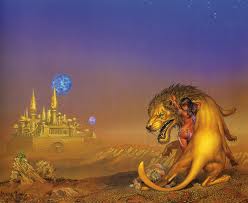
To a very large extent what became the Communist Party recognized the inequality while demanding equality against reason. Recognizing subconsciously, perhaps, that men could never be intellectual equals rather than try the futile task of raising the less fortunate they sought to destroy education which brings out the inequality but doesn’t create it. No matter what happens there are always going to be the more intelligent just as there will always be the physically stronger. As Le Bon points out, if you needed to hear it, nature don’t know from equality.
Thus the Communist Party devised the well sounding slogan- From each according to his ability; to each according to his need. Good plan for the needy, slavery for the able. The needy were organized beginning their struggle to achieve superiority by collective action. This was accomplished in Russia in 1917. The battle was joined.
Just as individuals are created with different capabilities so are peoples and races. Some can achieve and some can’t. Slotkin who must be a Communist thus takes offence at what he perceives to be, and is, an attitude of White Supremacy in Burroughs, Grant and Stoddard. While I am aware there are those who will disagree with White superiority it is nevertheless not an attitude but an evolutionary fact. That is the reason Communists have Darwin under attack. While Darwin doesn’t say it, it is the inevitable result of his studies. Just as it was necessary for the Undermen to destroy education in the hopes of creating intellectual equality so it became necessary to destroy White achievement of the last five hundred years. The whites must be demonized and made to feel evil and inferior morally. That is the import of Slotkin’s Gunfighter Nation.
At that level all three writers are guilty. As has been stated in Canadian courts- Truth is not a defense. So there’s nothing to discuss. Might is right and whoever has the might will prevail.
It is a fact that all three writers were anti-Communists so it may be assumed that whatever Communists believe, they didn’t. And why should they? Might may be right but it can still be nonsense. Communism is a flawed ideology based on a false premiss. It always fails wherever it is introduced. Failure is not evidence of a bad plan in Communist eyes. One just continues to shovel sand against the tide and pray. So succeed or fail they always think they can succeed by the same flawed ideology. The fault for failure lies elsewhere.
In that sense Burroughs was wasting his time assailing this religion of failure with his Under The Red Flag and its successor The Moon Maid. The only people who would applaud his effort would be we non-Communists but he could never convince anyone with Communist leanings. Of course that wasn’t well understood at the time.

If Burroughs were accused of not believing in equality that would be true. Not only are John Carter and Tarzan superior to any contemporaries on two worlds but Burroughs has a whole hierarchy of value. John Carter is the Warlord of Mars ruling from the top city of Mars, Helium. The races of Mars pretty much reflect those of Earth and their relative stations. The main exception is the ruling Red race. As Whites do and have existed on Mars in Burroughs stories while at one time being the dominant race perhaps the Red race is some sort of amalgam of the various Eropean immigrants of the United States. I believe the Green Men represent the American Indian. Both roam the great plains while being essentially savages.
Tarzan though always spoken of as being White is described as a bronze giant. Bronze is a fairly dark metal so that Tarzan and the Red men of Mars may be more or less identical in color.
Tarzan is the man-god so there are none superior or even equal to him. Below him come the English who are the cream of mankind. Perhaps slightly below the English are the French and then the rest of the Whites. Tarzan himself is psychologically an animal having been raised by the Apes. Not your ordinary gorilla or Chimp but a species intermediate between Gorilla and the Negro. Slotkin hasn’t read enough Burroughs to make an intelligent comment but the undeniable attitude of Burroughs is enough for Slotkin to condemn him as an unregenerate bigot. The reader may believe as he likes. I have stated my opinion eslewhere and that is enough. Whether any of these opinions of Burroughs influenced American soldiers at My Lai is open to question. The burden of proof is on Slotkin and he hasn’t provided it.
Along with the Undermen however, speaking through Tarzan, Burroughs is heartily discontented with civilization.
The spectacle of Chicago of the 1890s as a dirty unpleasant place haunts Burroughs. In contrast to the great White City of the Columbian Expo was what was afterwards known as the Black City of everyday Chicago. The contrast was so strong and so offensive to the Undermen that within a year of the Expo’s closing the entire White City was burned to the ground with the exception of one building. Hence perhaps the decayed crimson and gold ruins of Opar and the crimson and gold twin cities of Helium. One wonders what effect the sight of the ruin of the White City had on Burroughs when he revisited the site sometime after his miraculous summer of ’93. The mind creates nothing from nothing so there must have been models of the great cities of ERB’s imagination.
There are points at which Burroughs and Communism have quite similar views. It will be remembered that Burroughs only reluctantly married and throughout his life expressed discontent with the institution. To some extent or other ERB must have been an advocate of free love. Communists would have heartily approved of ERB’s women who went nude except for certain ‘adornments.’ Communists of course want women to be accesible to any man who wants them at any time while they have always advocated bare breasts.
In many ways when the Communists appropriated Tarzan for the MGM movies it took but slight changes to make Tarzan conform to their ideals. The MGM Tarzan and Jane were not married. While Burroughs’ Tarzan was a highly educated on-again off-again sophisticate the MGM Tarzan was a stupid illiterate oaf and one who rejected the attributes of civilization high up there in the Cloud Cuckoo Land of the Mutia Plateau.
On the essentials though Burroughs rejected the demands of the Underman as The Moon Maid clearly shows. There was very little in Stoddard’s The Revolt Against Civilization that Burroughs would have disagreed with. At the same time there was probably very little he didn’t already believe although he had never codified his information as Stoddard had. Slotkin’s contention that Burroughs was influenced by either Grant or Stoddard is surely wrong. ERB had already taken hs positions before either men had begun to write.
Each writer was, in his own way, an advocate of White Supremacy. It now become clear that White Supremacy has nothing to do with a fringe element in Liberal ideology. All Whites are White Supremacists in that ideology unless they reject ‘White skin privilege’ whatever that is. Ayers and Dorhn explain in their recent Race Course In White Supremacy. Interestingly constructed title. Nor as Slotkin would have it is the attitude based on mere racial pride and bigotry but on a solid record of achievement unattained by any other people. The quesiton is not was it right for some people to rule or be supreme because in the nature of things some people will rule and be supreme but which of the peoples are most qualified to be supreme.
All people have had equal opportunity so that one can only conclude that the race has gone to the most qualified participant. In the contest the Whites unified the other peoples against them as must inevitably be the consequence of being the top people. As they say, getting there is the easy part; staying there is the hard part.
Slotkin merely represents the envious losers, the Undermen. who clutch at any firebrand to burn the White House down. Who is most to be admired and emulated? Builders or destroyers?
Finis of Thuvia, Maid Of Mars Review
Edgar Rice Burroughs On Mars
A Review
Thuvia, Maid Of Mars
Part III-A
What We Have Here Is Change
by
R.E. Prindle
In the recent American presidential campaign in the US the winner won by promising the inevitable, Change. A very safe promise as the history of the world is one of change. Indeed, the life of the individual is one of unending change from the cradle to the grave. Change is now and forever. The question is, what response is made to the changes.
The times of Edgar Rice Burroughs were a period of the most earth shaking and rapid of all. At the same time most perilous, as the evolution of actual scientific knowledge in all fields was in its infancy and subject to misinterpretation. One might say in Burroughsian imagery that a series of doors stood before mankind, entering the right door would be more beneficial than the wrong doors.
Burroughs and others made tantative moves for the right door but others entered by the wrong door drawing most others through with them. What looked like progress turned into a regression. To shut up criticism the regressives began to demonize all those of different opinions. Burroughs was among those.
Some say he adapted poorly to the flood of change but the peole who do so are so confident in their opinions that to disagree with them is to be accused of being not only wrong but either criminal or insane. One doesn’t take their opinions too seriously as change will certainly demonstrate their opinions as ludicrous if it hasn’t already. Nevertheless as they are quite vocal in their condemnation of Edgar Rice Burroughs we have to consider the accuracy of their accusations as well as that of their own viewpoint. How well do they understand the issues?
ERB has some interesting observations on the changes occurring in the history, society and racial matters of his times as well as the concealed role of hypnotism in the transformation of that society. The basis of hypnotism is suggestion. As ERB say in Thuvia all is based on suggestion and counter-suggestion. If one conciders life and learning from that angle it presents some interesting possibilites.
What is learning? What is suggestion?
When the child is conceived he must of necessity have a mind with a blank slate. Freud, Jung and many others seem to seriously believe that newborns can inherit ancestral memories even though there is no one beyond the womb who has ever recalled any.
In fact without experience or learning that has has been introjected into the mind there is nothing for the mind to consider, hence no cogitation at all. This mind can only begin to form with the ejection from the womb. This occurs with a brain still in the process of formation. The development of the brain can only be considered completed shortly after puberty.
It seems obvious then that you can’t get out of a mind what isn’t in it. It behooves society then to begin loading the mind of a child as soon as the child is capable of handling education. The education of the mind must be built step by step to provide a firm foundation for the intellectual superstructure. Whatever is in the mind must come from or be suggested from outside the mind. There is no internal system of knowledge. Thus all knowledge is suggested to the child’s mind by his caretakers. They may be good or bad, well or ill intentioned. The brain is organized to receive suggestions or, in another word, experience. The reactive structure may already be in place dut to experiences in the womb and the actual birthing process but the actual learning process begins the moment the newborn emerges from the womb and receives a slap on the bottom to get his lungs started.
Thus the mind of the child is extremely malleable during the time until about puberty and shortly thereafter. If education is neglected during this early period and shortly thereafter it is unlikely that the adult can ever make up the lack. For instance if the basics or reading, writing and arithmetic are not loaded into the brain during this malleable period it is very rare that the skills can be acquired at a later time.
Thus, as it was always known that the child is father to the man various doctrinaire organizations such as the Jesuits believed that if they could form the education of the child or, in another word, indoctrinte him, they could shape the future in their own image. In Burroughs’ time the mechanisms of education were more fully understood. Various schemes were proposed to revise educational methods many of which were just odd or crude, but the better thought to change the direction of society toward a higher ideal.
The Communists were well are at the time that suggestion was the basis of education. Lothrop Stoddard writing in his The Revolt Against Civilization of 1922 quotes Eden and Cedar Paul from their book Proletcult of 1921:
“There is no such thing as “scientific” economics or sociology. For these reasons…there should be organized and spread abroad a new kind of education, “Proletcult.” Thus…in a fighting culture aimed at the overthrow of capitalism and at the replacement of democratic culture and bourgeois ideology by ergatocratic culture and proletarian ideology…” The authors warmly endorse the Soviet government’s prostitution of education and all other forms of intellectual activity to Communist propaganda, for we are told that the “new education” is inspired by the “new psychology”, which “provides the philosophical justification of Bolshevism and supplies a theoretical guide for our efforts in the field of proletarian culture…. Education is suggestion. The recognition that suggestion is auto suggestion, and that auto suggestion is the means whereby imagination controls the subconscious self, will enable us to make a right use of the most potent force which has become available to the members of the human herd since the invention of articulate speech.
I’m sure you can find appropriate application of the doctrine since Stoddard wrote in education, movies, TV, books and phonograph records and CDs. While I would disagree with the Pauls’ notion of suggestion and auto suggestion the Freudian influence is quite clear. This would be abetted by John Dewey’s notions on education that deemphasized the educational foundation while directing it more toward ideological considerations, or ‘relatively unstructured, free, student-directed progressive education.’
God only knows what free, progressive education is but this sort of social engineering was the wrong turn being taken in this era of rapid change.
So, loading the brain to deal with life’s exigencies is of necessity a slow process. As the brain continues to develop outside the womb there is plenty of room for malfunction. As man is incapable of creating anything original the education of the child may be compared to the loading of a computer. First the operating system. Whether consciously or unconsciously since all man knows is his own brain he has replicated it in his machine. A computer functions just like a brain, which should astound no one, as man can only devise what he already knows.
Now, human experience dates back about a hundred thousand years. I intentionally leave out the African development as it had nothing to do with the education of mankind. The African contribution is nil. Education began outside Africa. Having painfully and laboriously accumulated the huge fund of knowledge it must be entered into the brain of the new being. This sort of suggestion is called education. There’s not much room for anything called ‘free’ or ‘progressive.’ Getting it ain’t going to be free, the child has to work like a mule. This is a slow, laborious process as extensive foundations must be laid down before any superstructure can rise. Thus years are consumed just to teach the child reading, writing and arithmetic. With these three tools he can learn anything else. Inexplicably this fact seems to have been lost sight of in today’s educational theories unless of course the Pauls’ dictum is being followed.
Once the foundation has been laid, a form of suggestion and actually hypnosis, the child, now a student, must be taught how to manage and interpret what he learns at an increasingly rapid pace. Unfortunately there will be children left behind; any other expectation is fatuous, some are just brighter than others. Managing and interpreting comes from within the experience of the organism. Here’s the real problem because the same data will by analyzed differently and produce different results and opinions.
Along with learning factual matters the child must at the same time develop emotionally and psychologically. Nasty work. This is a difficult part. As the child has little ability to understand and even less ability to accurately analyze it he has to reason from faulty premisses. This ignorance of reality is what forms Freud’s notion of the unconscious or Id. Correcting this unconscious to consciousness is the conversion of Freud’s Id to Ego. A child misinterprets suggestions. Some become fixated in his un- or subconscious. The fixations are what distort consciousness from the subconscious interfering with the integration of the subconscious and the conscious. While the child is made more conscious in his ability to understand and reject harmful suggestions these fixations like post-hypnotic suggestions control his responses. The fixations must be exorcised which is the intended function of the psychoanalysis of Freud and Jung.
Once again, suggestion is everything outside your mind. Your mind cannot function without these suggestions because there will be nothing in the mind to function. Be carefull of what you put into your mind or, at least, that you do put something of value into it. Whether ERB realized this or not, his ideas of hypnosis and suggestion indicate he might have, he pursued a program of continuing education all his adult life. At the time of writing Thuvia he was working through Edward Gibbons’ Decline And Fall Of The Roman Empire, a vast minefield of amazing and truly educational suggestion.
Part B follows.
 I, Dynamo