A Review
Woman
by
Alan Clayson
Yoko Ono And The Men Who Influenced Her
Review by R.E. Prindle
Clayson, Alan: Woman: The Incredible Life Of Yoko Ono, Chrome Dreams, 2004.

Girlish Yoko- Warhol School by Richard Bernstein
Yoko Ono involved herself with several of the most influential men in the arts during the sixties, seventies and eighties of the twentieth century. She drew her inspiration from them patterning her own efforts after them. At the same time she was one of the leading feminists of the day having her share in shaping and furthering the movement. The mantra was female liberation, equality between men and women. In fact women were equal to men in the West but only by acknowledging the biological differences between men and women. The fact is the differences are real and not social constructs as women would have us believe. The fact is women are women and men are men. So, in seeking ‘female liberation’ feminists were seeking much more than ‘equality’ however the term may be defined.
The fact is that in the Ages old war between the sexes feminists are seeking to restore the Matriarchy and destroy the Patriarchy. That is why many men favor feminism, they prefer the Matriarchy. Thus the feminists are atavistic. Yoko and her cohorts wished, in her words, to restore ‘heart’ as she viewed the Matriarchy and eliminate ‘reason’ as she viewed quite rightly the basis of Patriarchalism. Nevermind that bilogical science has invalidated the concepts of Matriarachy and Patriarchy. This is a post Matriarchy and Patriarchy world.
Circa -2000 in the West men revolted against the mind stifling Matriarchy and the vaginal swamp of the ‘heart’ seeking to establish

Smilin' Jack Cage
the authority of the infinite power of the mind of Zeus on ethereal Olympus. This is the story of Homer’s Iliad and Odyssey and the Greek myths in general recording the struggle.
The Western male was able to impose the ascendency of reason over the heart for 3000 years until the disestablishment of the old order by science about mid-nineteenth century. The center could not hold during this period of extreme change as W.B. Yeats put it as the rearrangement of the intellectual order moved into the twentieth century.
Yoko Ono sought with her feminist fellows to return to the biological innocence of 2000 BC. She herself had no talent. Filled with audacity she pitted her ‘heart’ against the reason of John Cage, Andy Warhol and John Lennon. I’m sure she had a mentor for her so-called performance art but I am as yet unaware of who he may be. Perhaps Maciunas and the Fluxus group.
Thus her first manifestation as an artist was based on the musical ideas of John Cage while her artistic efforts were at least based in the avant garde ideas of the Fluxus group. Her first assault on the NYC art world failed so in 1961 she returned in defeat to Japan. When she returned to NYC in 1964 she found an entirely different art scene. On the musical side the focus was on Bobby Dylan and the Beatles while on the artistic side Andy Warhol and his Factory had destroyed the Abstract Expressionists and the old avant garde. Dylan, the Beatles and Warhol had in fact usurped the avant garde which now had little meaning. From my point of view held at the time the avant garde had ceased to exist. Of course I didn’t understand exactly why or how.
From 1964 when Yoko returned to NYC until 1966 when she left for London I’m sure Yoko was at a loss. She developed her silly

The Bag Yoko And Tony Are In
notion of Bagism at this time even having a black bag on a stand in Max’s Kansas City that some one or ones were supposed to slide into. This seems to have been thought a lame idea at the time as it seems now.
At this time while retaining allegiance to John Cage’s musical ideas she was falling under the influence of Andy Warhol’s artistic notions. Warhol’s intent had been to destroy the idea of ‘fine art’. In this he pretty well succeeded. As Yoko expressed it you didn’t need any talent to be an artist. She seems to demonstrate this notion in her own artistic efforts. Warhol had also redefined the notion of film with his static studies. He then sought to combine his film ideas with live music, probably in competition with Bob Dylan who was also attempting to move in that direction. Warhol adopted Lou Reed and his band the Velvet Underground as the Factory house band while creating a multi-media show called the Exploding Plastic Inevitable, innovative for its time. Thus a concert at his hall, the Dom, was an ‘experience.’
While Yoko makes no mention about how this, actually, incredible development affected her there can be no doubt that she was well aware of Dylan, the Beatles and the Warhol Experience and was affected by it. Indeed, the first manifestation was the making of her Warhol style films such as Bottoms.
The second manifestation was her removal to London to seduce either Lennon or McCartney of the Beatles, thus in the manner of Warhol’s adoption of the Velvet Underground she sought to co-opt the Beatles, the premier rock group in the world. Real chutzpah and more than one upping Warhol. I think it would be nonsense to think she had any other goal in mind.
She undoubteldy learned that Paul McCartney was actively involved with John Dunbar and his Indica Gallery that opened in 1965.
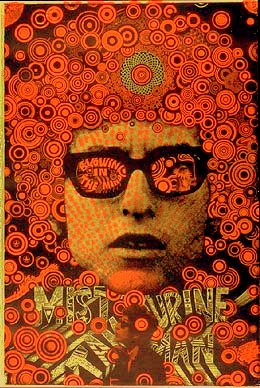
Psychedelic Dylan
Some say she first set her sights on McCartney but the more vulnerable Lennon showed up and the Spider Woman spread her web.
She was still married to her second husband, Tony Cox, but, regardless of what she says she very aggressively pursued, or attacked, Lennon. Lennon was emotionally under water unable to handle his success while drugging himself out of his mind. He was unwillingly married to his wife Cynthia. It appears that he married Cynthia out of duty when she became pregnant. He doesn’t seem to have been happy in his virtue. Yoko had no difficulty in capturing his affections.
Now, just as Warhol had adopted the Velvets and imposed his female singer, Nico, on the band Yoko sought to imp[ose herself on the Beatles through Lennon. At this time she was still musically completely in thrall to John Cage understanding nothing about Rock music. She and Lennon had made a ridiculous LP called Two Virgins in 1968. She combined her cagian screechings while using an avant garde ‘performance’ notion of the couple posing nude on the cover; full frontal on the obverse, full posterior on the reverse. As no store would carry the cover the couple reverted to Yoko’s idea of Bagism placing the cover inside a plain manila envelope or bag. While it didn’t sell the record this form of Bagism was actually a successful artistic statement. The nude cover given an outer garment so to speak.
Well, the public was prepared to forgive the Beatles anything but the other three Beatles weren’t prepared to forgive Yoko for forcing herself on them thus she broke up the most successful act of the sixties. Still, she had succeeded according to her wildest dream. Lennon and his wonderful reputation and fortune were hers. She had gone from a neglected, nondescript ‘performance’ artist to center stage, not on her own womanly talents but by attaching herself to a talented man. Yoko’s ‘heart’ was useless without the male intellect. Yoko was now the most influencial feminist in the world. She knew what to do with that.
After several ‘performance’ acts such as the ‘Bed In For Peace’ the couple left England to return to the place Yoko wished to subjugate artistically, New York City. She had raised herself to a par with Andy Warhol. She now had to meld her musical and artistic goals through Lennon and Warhol.
On the musical side she began to develop her rock n’ roll skills under the tutelage of Lennon. While not abandoning the avant garde notions of John Cage she now emasculated her husband. Always semi-delusional or perhaps completely so, she fantasized that she was not only equal to Lennon in skill and popularity but superior to him. She imagined herself more popular than Lennon. Thus one has such travesties as the LP Double Fantasy. It was only after Lennon’s death that she was forced to recognize than Lennon’s fans did not appreciate her efforts. So she failed as a musician.
She quickly tired of being Mrs. Lennon. Thus she and Lennon separated for eighteen months or so during the years 1973-75. She then realized that her financial well being and musical acceptance depended on Lennon. In 1975 she called him back resuming their relationship until his death in 1980. But, things had changed.
She began to adopt Warhol’s life style on her return to NYC. While she propagated the notion that she was some sort of business whiz Iam having difficulties discovering any such skills. It appears that with the enormous income of Lennon she emulated Warhol in
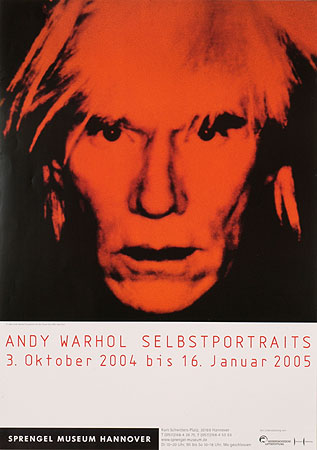
Andy the Demon
spending her way to prosperity.
She was in a position to not only match Warhol’s spending but exceeding it by many times. Through the seventies and eighties Warhol came into his own as an artist while reaping a fortune doing portraits. There appears to have been no effort on his part to invest in income producing vehicles. Rather he bought stuff. He purchased buildings in NYC and elsewhere while acquring undeveloped acreage in places like Aspen. He shopped nearly every day buying antiques from furniture to objets d’ art by the bushel almost as though he were trying to excel the incredible W.R. Hearst.
He usually didn’t even look at the stuff once he bought it merely filling rooms with his shopping bags. At his death all this junk was auctioned off for 25 million dollars, a nice appreciation in value.
Yoko followed the exact pattern buying apartments and houses as well as an extensive dairy farm with a herd of prize cows. She not only had but has five apartments in her principal dwelling, the Dakota apartment building and many other houses scattered around.
Like Warhol the Dakota apartments are stuffed with junk. Valuable, but, you know, stuff. She bought at good prices. Her extensive collection of Egyptian antiquities was mostly purchased before a steep rise in value.
Like the Rothschilds of old Yoko didn’t do all her own shopping but employed agents to search things out. Chief among these was an associate of Warhol’s, Sam Green, and an Hungarian immigrant by the name of Sam Havadtoy.

Buddies- Yoko, John, Andy
There should be no surprise then that she now has an extensive collection of Warhol’s artwork as well as his portraits of Lennon. The Warhols would have been purchased for form 25 to 50K while now being listed on her assets at tens of millions. She also has been said to have a good collection of Magrittes as well as one assumes other artists. So, much of her net worth is tied up in artwork purchased through Sam Green.
Sam Havadtoy was an antiques dealer as well as an interior designer. He appears to have been a somewhat shady character. It is very difficult to find much about him, however there is a sharp portrait available from the notorious A.J. Weberman ( http://www.acid-trip.org/lennon/ )
…(the Lennons) hired a sleazy Eastern European bisexual to renovate the pad. (Dakota) I had heard of this dude, whose name escapes me, from an asswipe named BRUCE KIRSH, who worked for him. KIRSH told me that the dude, who worked for the King of Morocco, would form a dummy renovation company, hire employees like Kirsch who were willing to work under false names, then, when it came time to pay taxes, everyone would disappear. I learned of him long before he was hired by John and Yoko, and I was taken aback when Yoko took up with him after John’s death.
I know that Weberman is not particularly well thought of by fandom but this is because of his harassment of Dylan who did, after all, misrepresent himself to the revolutionaries like Weberman. A.J. himself is an intelligent observer who was wading through it when it was deep. I do believe he knows what he’s talking about although his interpretations of Dylan’s lyrics seem absurd.
I would have to question Yoko’s judgment in taking him in. Both he and Sam Green were candidates as successors to Lennon with

Lennon by Warhol
whom she consorted in front of Lennon before he died while Yoko chose Havadtoy as his successor the day he died.
Perhaps she selected Havadtoy over Green because he was more rough trade. With Lennon while managing to reconcile revolution with peace and love with Havadtoy she discarded peace and love in favor of strong arm methods against her former employee Fred Seaman when it was totally unnecessary.
Havadtoy was living in a homosexual arrangement with his business partner when Yoko beckoned him to switch to her. Apparently an able switch hitter he was lured by the money to this much older woman. The arrangement did last for twenty years before Havadtoy removed to his native Hungary taking a nice cash settlement and several of the Warhols.
Thus, just as Warhol had his live-in homosexual arrangement so after Lennon’s death Yoko adopted the exact arrrangement. Today she apparently lives alone, a seventy-eight year old woman.
After Lennon’s death there was an accession of from 30 million to a possible 100 million dollars as their last album, Double Fantasy, sold into the millions while the rest of Lennon’s catalog and one assumes the Beatles’ catalog was reinvigorated while all things Lennon sold. This is, of course, no reflection on Yoko but the inevitable result with intellectual properties when the maker dies.
Post-Lennon, then, Yoko realized that her recording and art careers were nil. Heart without intellect is worthless. She then became the caretaker of the Lennon legacy. His recordings, of course, continued to sell, but even his artwork eclipsed that of Yoko. So she suffered the humiliation of being a mere appendage to a man. The feminine dismal swamp was eclipsed by the Olympian heights of the male intellect. As in ancient times the God had trumped the Goddess. And yet as with Hera and Zeus the Goddess gets her way. Yoko came up with the money and goods while Lennon’s spirit was wafted into the stratosphere.
As any reader of mythology knows Hera ruled the Lernean swamps of Argolis while Zeus ruled the gods on ethereal Olympus. Thus one has the symbolism of the biological difference between the male and female.
In ancient times the female had her share in magic. She knew herbs and plants, was familiar with poisons and cures as with the arch witch of the ancient world, Medea. The reputation of the female witch even as a consort of Satan persisted down through medieval and post-medieval times, indeed, even up to the dawn of the scientific enlightenment. One would have thought that magic and witchery were a thing of the past in the 1960s and yet Yoko embodied the whole female swamp mentality.
She established something called the Spirit Foundation attributing the direction to Lennon who in fact knew nothing of these matters but followed her lead. The Spirit Foundation celebrated the ancient art of the Shaman or witch doctor. Shamanism itself even preceded the Matriarchal swamps of Argolis. It was a rich repository of magical tradition. Further the Foundation was feminist in that it was dedicated to preserving the magical traditions of the women of the Pacific islands still living in such archaic societies. The wealth generated by the male intellect was appropriated by the female vagina or ‘heart.’
In her own life and that of Lennon’s Yoko was addicted to a variety of magical practices- astrology, numerology, Tarot readings, and indeed she traveled to the Caribbean to sell her soul to Satan through the offices of a female curandera. Her Tarot reader, John Green, was a priest in the shamanistic, magical, Yoruban African cult of Santeria.
Her feminism was more a magical effort to restory Matriarchal supremacy over the Patriarchy thus reversing the Patriarchal victory of three thousand years previously. Indeed, what has been called the movement for female equality is nothing more than a covert campaign to restore the Matriarchy.
Thus while Yoko o9riginatd nothing she usurped the abilities of the reason of men- Cage, Warhol, Lennon and male magicians such as John Green. Indeed the Trojan War itself was a war of men in service of women.
In her associations with men she preferrred to deal with emasculated types such as homosexuals like Cage, Warhol, Sam Green and Sam Havadtoy. Lennon claimed to have always been dependent of women for comfort and guidance while Yoko caught him at his most confused and vulnerable.
While she received direction from Cage and Warhol she was able to manipulate Lennon out of his talent somewhat as Vivian did that of Merlin of the Arthurian saga. When Vivian had usurped Merlin’s magical knowledge she buried him deep much as Lennon was put out of the way. Yoko then appropriated his wealth and residual income after his death. It was this constant inflow of cash that allowed her to propagate the notion that she was a financial genius.
Then as the female of the ‘heart’ or vaginal swamp she managed and appropriated the reason of Olympus through Cage, Warhol and Lennon. What she got from Havadtoy other than brute strength is not clear to me.
As such Yoko is Woman. In her case a seeming reversion to the archetypal Shaman of the most ancient times.
Part III: Mourning Becomes Yoko
April 3, 2010
Mourning Becomes Yoko Ono
The Passing Of John Lennon Part III
by
R.E. Prindle

Doppleganger #1
When John Lennon met Yoko Ono he knew very little of art and nothing of the New York art scene. His high school years had been spent in open and futile rebellion; the next few years had been spent only in the German underworld with no time for cultivation. From there he went into the whirl of the Beatles years so one might say he had been in cultural suspended animation for all his adult life.
Yoko Ono since 1960 had been engaged in the New York avant garde art scene. She was au courant when she left for London in 1966. Hooking up with Lennon she began to educate him according to her understanding of art. By the time the Ono-Lennons arrived in New York in the late sixties that scene was dominated by the POP art of Andy Warhol while the world both she and Lennon knew in 1960 was unrecognizable. Yoko wasted no time in ingratiating herself with Andy but not the factory. After he was shot in 1969 the old Factory disappeared and after his recovery Warhol began a new life. It is possible that she tried to establish

Doppelganger #2
contact with him between ’64 and ’66. She did know warhol’s associate, Sam Green, from her first days in the Village in 1960.
By the time of her return to NYC Yoko had achieved world wide fame by using Lennon and his fame in their charades for ‘Peace.’ Now she had the perfect entree to enter Warhol’s circle. Warhol was a sucker for celebrities, he did Lennon’s portrait, so he was flattered when Yoko asked him to introduce she and John into society. If Warhol could pester, Yoko was unstoppable. While Andy wasn’t exactly persona gratis at that time he was thick with Sam Adams Green who did have entree to society. Between the the two of them they set up a party to introduce the Ono-Lennons.
John was, of course, no Mick Jagger. While Mick adapted himself quickly to the demands of his fame and moved easily in society, John was awkward being out of the element of his self-styled working class hero. Yoko, too, was no mixer so at the party Yoko and John sat silently in a corner as though in one of Yoko’s bags watching the party goers.

Warhol Jagger 2

- Warhol Jagger
It might be apropos to point out that Jagger and Warhol were fairly close. Jagger was one of the few people attending Warhol’s funeral in Pittsburgh while Bianca was in Warhol’s entourage in the eighties. Warhol also painted a portfolio of Jagger pictures that today command healthy prices.
The Devil In Disguise

- Witchy Woman and Warhol

Yoko still persisted with Warhol but Andy having been disappointed once was not up for it twice. He distanced himself from the pair describing them to Sam Green as boring. An ultimate putdown.
Initially the Lennons lived in the Bohemian scene downtown. Mickey Ruskin, the owner of Max’s Kansas City, described the Bohemian scene thusly: the well-to-do Bohos, the middle and the lower class. Those associated with the Kettle of Fish and its environs of which Dylan was a member were of the lower class while the Kettle of Fish itself was owned by the Mafia. He believed Max’s was in the middle. John and Yoko first lived in New York in the West Village at 105 Bank Street next door to Yoko’s her, John Cage. They took over Joe Butler’s apartment, he formerly the drummer of Lovin’ Spoonful so Ruskin would have classed John and Yoko as haut ton beatniks.
At any rate they soon left those environs to migrate to the Upper West Side where they secured apartments in the famous, or soon to be famous, Dakota. It was then that their NYC life took its definitive form.
I have been to NYC a few times so that I know the general layout and have some feel for the place but I have by no means an intimate knowledge so essentially I’m working from maps. I know where MOMA and some few prominent art landmarks are from experience but not that many.
At any rate the Dakota is a famous landmark.. Acceptance as a tenant is by committee approval. John and Yoko were strenuously vetted but finally admitted. They took over actor Robert Ryan’s apartment #72. If you have seen the movie Rosemary’s Baby the camera pans past apartments 71 and 72. No filming was allowed inside the Dakota so while the exterior shots are authentic the interiors were shot on sets. Thus the apartment of the Satanists is a fictional 7E. The apartment next to it in which the young couple resided may have been number 72. The man of the couple who was an actor sold his wife’s body to Satan as the carrier of his child for success in the theatre which he was granted. Thus the Ono-Lennons moved into an apartment closely associated with devil worship, the occult and witchcraft.. This will become more important as Yoko associated herself with all three. In fact, Yoko through John Green would have been familiar with the Yoruban Santeria religion that she in all likelihood would have reverenced. The Spirit Foundation that she established is concerned with the preservation of just such tribal institutions.

Dakota Entrance
These are magnificent apartments that I presume Rosemary’s Baby duplicates. Huge fifty foot long living rooms as part of a ten room apartment. The Ono-Lennons would soon own both 71 and 72 lacking only the fictional 7E while having a Studio apartment as well.
Being now permanently settled Yoko having access to John’s superb income began to spend it. Of course, she virtually cleaned out department stores on her buying binges, any girl’s dream. But, she also began to buy heavily into art and antiques as investments. This brought Warhol’s friend Sam Adams Green into a close association with her. Rich society women were Sam’s forte. He has an interesting story. He was actually descended from the second president of the United States, Samuel Adams. He arrived in New york in 1960 about the same time Andy Warhol was trying to establish himself as a fine artist and Yoko the same. Warhol of course began as a commercial artist doing shoe ads but in 1960 he changed the emphasis of his career.
In the fine arts field one of the first gallery people Andy met was Sam Green of the Green Gallery. Different Green, Sam only

The Dakota
worked there and shared the name. He and Andy hit it off. By 1965 Green was associated with the art department of UPennsylvania where he staged a Warhol exhibition in the same year. From there he gravitated bck to NYC where he began a career as art consultant to rich women on both continents. They liked him. Through the socialite Cecile Rothschild he was introduced to Greta Garbo with whom he was sort of a trusted companion for 15 years.
He was very knowledgeable about art as an investment traveling between Euorpe and the US advising socialites on the most investment worthy art. He apparently derived a more than comfortable income from his efforts. He was a trusted advisor of Yoko. Some say that he and Yoko’s Tarot reader, John Green, who would enter John and Yoko’s life at about this time, combined to bilk Yoko for overpriced objects. This presumes that both men were dishonest and that Yoko was a fool. As Yoko’s investments have prospered I think we can dismiss the latter, although Yoko did take pride in being able to spend vast sums. She would have taken pleasure in overpaying.
Sam Green- Current
Rather I would say that Sam Green was a very knowledgeable expert whose task was to find art that would appreciate in value. Thus the question is did he perform that function and the answer is, yes. Yoko’s acquistions increased in value far above her purchase prices. I think it is unfair then to say that the Greens bilked her. Surely the laborer is worth his hire.

Warhol Portrait
Now, Sam Green as her agent had to buy the items he acquired for her. Being knowledgeable as to who in society wanted to sell what at distressed prices he may have made some excellent buys that he then tacked on his margin which of course meant that he sold to Yoko for ‘more than they were worth.’ But, heck, even Christie’s and Sotheby’s take twenty per cent each from the buyer and seller. That’s a forty per cent surcharge. However Sam served his function of providing investment pieces so I see no evidence of bilking.
Sam Green also formed a close, probably romantic, liaison with Yoko that persisted until after John’s death. Another art dealser she became close to was a Sam Havadtoy with whom she subsequently lived for twenty years beginning immediately the day after John’s death.
Now the men Yoko associated herself with were all effetes, that were either emasculated when she found them or who she emasculated. Strangely Lennon was the strongest of the lot. Both her first Japanese husband and Tony Cox appear to have been heterosexuals but both Sam Green and Sam Havadtoy were dependent homosexuals. With Havadtoy Yoko may have had her ideal relationship. He was thoroughly emasculated while with the fortune Yoko inherited from Lennon he was totally dependent on her. The classic toy boy a couple decades younger than herself. He, by the way, after his twenty year stint as live-in retired to Hungary with an abundant palimony but he isn’t talking.
In my reading of the situation then, a not particularly compliant John became somewhat of a liability to her, especially as he began to reassert himself with the return to the recording studio in 1980. The problem has the surface appearance of separating the man form his money and discarding the man.
Yoko began building her entourage, Sam Green, John Green, Sam Havadtoy and her various occult people with what appears to be an admiration for and some sort of connection with Andy Warhol. Sam Green and Havadtoy would be a troublesome presence in Lennon’s life during the recording of Double Fantasy while he does not appear to have been enchanted with the Warhol connection
As has been mentioned Yoko became involved in occult practices. She did practice hypnotism on Lennon and was an adept at suggestion which is the essence of hypnotism. Thus on the one hand she suggested forcefully to May Pang that she take up with Lennon while it is probable she hypnotized Lennon into taking up with May Pang. Post hypnotic suggestion would give her a command over all Lennon’s actions. Once implanted she would only have to say the word and Lennon would follow her suggestions.
How complicit John Green would have been in this isn’t exactly clear but any of Yoko’s suggestions to John could have been complemented by a reading. John Green was after all dependent on Yoko for a very generous income beyond whatever he may have scammed.
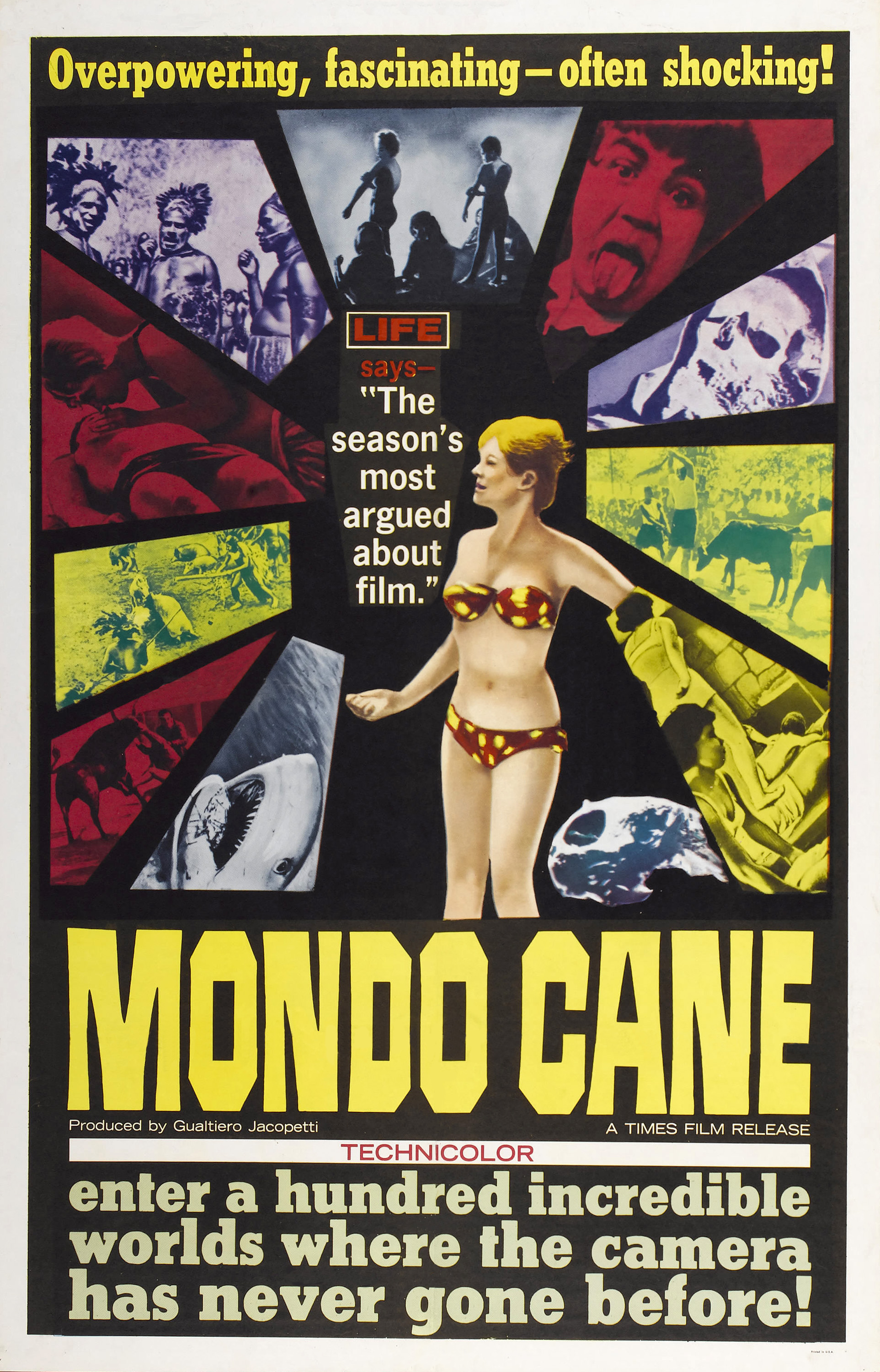
John Green is another interesting case. He was apparently successful as a Tarot reader before he met Yoko while he is reported to hae been a student of the African Yoruba religion called Santeria. The Yoruba are a tribe in Nigeria, middle river, Western side. He would have obtained much of the magic information he displayed in Cartagena, Columbia, SA from that source. The sixties themselves were the great period of the dissolution of the American mind and personality. One of the key items in the disintegration was the 1962 movie, Mondo Cane. (It’s A Dog’s World). It is difficult to assess the impact of this movie on the malleable college age mind of the times.
I saw the movie then and while it passed out of my conscious mind it struck me most forcibly and lodged in my subconscious mind. I, of course, reviewed the movie for this essay and while I at first remembered little gradually my conscious mind recovered the images so that I remember almost all. The viewing at the time was very repulsive and unsettling to my mind as it was for everyone I talked to about it and every college kid saw it. Still, consciously I missed the true import of the movie completely.
The filmmakers equated some New Guinea stone age people with modern Whites and equated them- said both states of
Mondo Cane Poster
consciousness were the same- and that there had been no advance between the primitive and modern. Then they showed Whites at their goofiest and most ridiculous. Drunks at a German Oktoberfest, aged tourists clumsily trying to do a hula. The movie was a real exercise in moral relativity. It was shortly after viewing the movie that I first remember hearing the phrase ‘Nothing is good or bad but thinking makes it so.’ I don’t want to philosophize on this but my thought was that if I think something is bad therefore it must be because I think it and I can’t be wrong.
The movie had a devastating effect on the attitude of the generation. It was a form of hypnosis with a great deal of post-hypnotic suggestion. Whether John Green saw the movie or not I can’t say but if he had it would have prepared him for accepting Yoruban Santeria. In fact these primitive forms of religion and what not flourished in the wake of Mondo Cane. At the same, as I indicated, Yoko would have been very open to Santeria. I think there is little doubt that Green and she at least discussed the religion and its African tribal origin. Especially as she established something she calls the Spirit Foundation. In the online prospectus she describes the foundation thusly:
The Spirit Foundation is…concerned with the protection and promotion of creative and cultural diversity amongst shamanic tribal communities worldwide. Part of the foundations work is the International Shamanic Network which aims at promoting the ancient creative archetypes of man and their binding ecological realtionship to the world.
Our emphasis is on education for action.
As mentioned Yoko and Lennon moved into the suites used in Rosemary’s Baby with its Satanic overtones. In the movie a young woman living with the Satanic couple either jumps or is pushed to her death not far from where Lennon was shot. In this very location Yoko took up Satanism. She decided she wanted to make a pact with the Devil to obtain her wishes. The ubiquitous Sam Green knew of a witch who could serve as an intermediary between Yoko and Satan. (Remember I am only retailing the story, I don’t believe Satan exists.)
Sam Green who had prospered as an art consultant had used some of his earnings to purchase what he called a castle in Cartagena, Colombia. He recommended his witch to Yoko who asked John Green to take her to the witch as he doubled as Tarot reader and Wizard. John Green did so and the witch duly negotiated a deal between Yoko and the Lord of Fire. When it came time to sign the pact Yoko asked Green to do it for her which he did. She was aghast when he told her he didn’t sign his name but hers. Yoko trying to cheat the devil.
We don’t know what she asked Satan for but we are compelled to believe she got it.

Santeria Illustration
As I believe she hypnotized Lennon into taking the Long Weekend I don’t know exactly why she wanted him out of the house. She certainly closely monitored his activities while he was away both in NYC and LA. During his absence Yoko didn’t have a Power of Attorney so she was somewhat constrained as John had her on a 300K budget. When he returned she quickly obtained his POA so that she had unlimited use of his money and, in fact, his identity.
Lennon is criticized for being a recluse in the years between 1975-80. He certainly wasn’t a recluse in that he withdrew from the world. He merely limited his contacts with it. It is said there was a fifteen month period when he was completely withdrawn. While he was obviously suffering from a mental malise in my opinion the withdrawal was completely justified. He had mental issues that had to be resolved. He had the money and time to work at it as he did.
He had a mother/father fixation he had to resolve. he had the feeling that he had been either a genius or a lunatic from boyhood. In a remarkable rant within the 1970 Rolling Stone interview he rants for pages because no one recognized him as a genius in his youth while he had now convinced himself that he was and had been a genius. The fact that he never did his schoolwork doesn’t seem to him that that may have a reason why people missed his genius and though him somewhat mad. What would theyhave done if they had? So he had to reconcile the issue in his mind.
He seems to have made no advance past his school years except in music. The years between leaving school and taking up with Yoko were completely wasted intellectually while the pressures of phenomenal success and wealth disoriented him completely not to mention the massive doses of drugs. At some time then he had to come down and organize his mind and life. From 1968 to let us say 1980 he was completely dependent on Yoko for his mental balance. In NYC he went where she did and did what she did. Hence the connection to Andy Warhol and Sam Green.
There are numerous pictures of Yoko, Lennon and Warhol. Yoko even patterned some of her work after Warhol’s style as in the ‘work’ below patterned after Warhol’s double Elvis. Thus she associates herself and Lennon with Presley.

Yoko Goes Warhol, Imitation of Double Elvis
As I mentioned before the social entree arranged by Warhol and Sam Green failed because of the social ineptness of the Ono-Lennons.
While we have a full record of what Lennon was doing during his ‘Lost Weekend’ we have a less full account of what Yoko was doing. She seems to have had romantic liaisons with at least three men- Sam Green, Sam Havadtoy and the guitarist David Spinozza.

Sam Havadtoy
Perhaps she wanted to see how well she could do on her own as a musician, to see if her reputation as a performance artist and, in her mind, musician, was sufficient to maintain a career on her own without John. If so, she was brutally disappointed as in her only solo performance she failed miserably. Thus she realized that as of 1974 her reputation as well as her wealth depended on Lennon.
It was during Lennon’s absence that John Green came into her life. While John Green tells a fairly smooth story in his Dakota Years one has the feeling that he is being highly selective in what he tells while he slyly ridicules the Ono-Lennons as their superior. The attitude easily leads to contempt and from contempt to abuse. Of course he would have to dissimulate both the contempt and abuse as Ono would be reading the book. As I imagine, a priest in the Santeria religion, he would have been in the company of some shady characters. I don’t know how many actual Yorubas were in NYC but I have met a couple elsewhere.
One imagines most of the hierarchy Green came into contact with was African or American Blacks. Santeria involves a deal of ritual sacrifice while money would be needed. I suspect that John Green was involved in the extortion attempt on the Ono-Lennons. This may have been Santeria related. Thus a sort of Black Hand organization was created. Rather than go for the big money that would have created a stir, the group settled for hitting up people with millions for a mere 200K each. An unpleasant tax for being rich but one more conveniently paid than to die resisting.
We have only Green’s version of the extortion and his relationship to it. He paints himself in a relatively good light. The Ono-Lennons did call in the FBI, they did give the extortionists newspaper rather than cash as the FBI advised. But then things went wrong. The FBI apparently had only one tail on the extortionist who came for the money rather than a series of back ups. The agent inexplicably lost his man. The Ono-Lennons never received another call but they had been warned that if they failed to pay Lennon would be killed whether it took one, two or more years. In December of 1980 the bill fell due. On December 8th he was shot. December 7th is Pearl Harbor Day so there may be a Japanese connection. Yoko Ono being Japanese, her numerologist and the assassin’s wife while Chapman missed the appointed day by one.
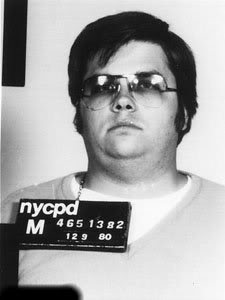
The question then hangs on Mark David Chapman the shooter. He is still alive and in prison. He was an assassin as the classic lone nut like Lee Harvey Oswald and any number of assassins who pay the law for the crime while the organizers go free. The technique has been well known to criminals for centuries. Any time a lone nut assassinates someone you may be sure that they were a patsy as Oswald announced over TV he was.
It seems likely that Chapman had been hypnotized. Witnesses said Chapman acted as though in a trance and he himself said he heard a voice in his head saying: Do it. Do it. Do it. The problem would be how he was recruited. I, of course, can say nothing for certain while what I am saying now is merely an hypothesis or inquiry. The main thing is that Chapman was supposed to be a lone nut. Ridiculous.
The most obvious recruitment method was the Santeria of which John Green was a member and to which Yoko Ono was
Mark Chapman
sympathetic. There are some oddities in the Chapman story that have to be explained not least of which are the large sums of money expended by Chapman in relation to his income. He was a married man therefore had a wife to support. Yet in 1978 he was in Japan at the same time as the Ono-Lennons beginning an around the world flight.
Perhaps Tokyo was the first stop of the trip around the world that then led to Seoul, Hong Kong, Bangkok, Delhi, Israel, Geneva, Paris, London, Dublin, Atlanta and back to Hawaii. His travel agent was a Japanese woman, Gloria Abe, who he then courted and married. She is reported to have been involved in occult circles. She may have seen so involved that, through Takahashi Yoshikawa, Yoko’s numerologist she was brought in to arrange the trip. Such an around the world trip in a Westerly direction- sundown to sunup- according to Yoshikawa’s numerology would be characteristic of Yoko Ono. She and Lennon made a round the world trip for occult reasons as did both Lennon individually and John Green at her instance. Green made his trip in 59 1/2 hours only leaving a plane once to change to another. As the financing of Chapman’s trip is unknown I would suggest Yoko Ono.
Two years after this very costly trip around the world Chapman flew from Hawaii to first Chicago, then Atlanta, then to New York where he landed a few days before the assassination. Once again, well beyond his means. It is said that he took paintings to Chicago that he sold. Where he would have gotten the paintings isn’t known but once again Yoko is the obvious source. She had an art gallery of valuable art work.
While in Atlanta he contacted a former roommate, then a Deputy Sheriff, Gene Scott, who gave him the hollow point exploding

Santeria Priestess
bullets for a handgun. One assumes such bullets couldn’t be bought over the counter. One wonders why Scott didn’t ask what Chapman intended to do with them. And if he did and Chapman told him Gene Scott is clearly an accomplice and should be questioned.
Chapman himself came from Atlanta where in his teen years he was known to ingest any and all drugs. Atlanta was also a Santeria center with several weird Black cults. Lennon’s death took place at the same time as the Atlanta child murders for which Wayne Williams was later convicted. The Santeria religion has been suspected in these obvious sacrificial murders while John Green establishes a Santeria connection to the Ono-Lennons and Yoko in particular.
Yoko was an excellent hypnotist who understood the use and power of suggestion. The Santerists as Africans would be well versed in the use of suggestion and hypnotism.
Chapman said he was possessed by the Devil while appearing to be in a hypnotic trance. All this rather amusingly is taking place at the Dakota, the scene of the Devil’s birth in Rosemary’s Baby. Indeed, the identical apartment.
After Lennon’s death there was no period of mourning or sense of loss by Yoko. All Lennon’s assets were in her control and name before his death. The so-called will of Lennon is suspicious, although the will was unnecessary becaue I doubt if Lennon thought of a will while the will appointed the art dealer Sam Green as the gaurdian of son Sean in the event the Ono-Lennons perished together. Lennon wasn’t that enamored of Sam Green.
Within a few days Sam Havadtoy was installed as Yoko’s live-in where he remained for twenty years.
While Yoko’s success as an artist and rock n’ roller wasn’t affected by Lennon’s death she now had the money to pay to have her art exhibited. Even then she found her reputation was indissolubly linked to her dead husband. She has become a caretaker for the Lennon legend parceling out old recordings while humiliatingly Lennon’s artwork is more in demand than hers.
She seems to have patterned her later career on that of Andy Warhol who as he acquired fame and fortune managed to insinutate himself into certain society circles. So has Yoko. Now, at 78, she has attained a certain status although still extremely self-centered while having an appearance of terminal aloneness.
Animus and Anima

Mourning Becomes Yoko: Part II
March 13, 2010
Mourning Becomes Yoko
Part II:
The Passing Of John Lennon
by
R.E. Prindle
About John
This magic moment
So different and so new
Was like any other
Until there was you.
–Pomus-Shuman

The King
To understand the sixties one has to go back in time to the foundation of Astrology. In Time beyond Ancient, Astrology and Astronomy were one. The very old gods and the sky were one. It was only when science, a more clear understanding of ‘creation’, if you will, removed the sky from the gods’ purview that Astronomy and Astrology separated. Astrology in those days had meaning that is not apparent today when the sky is just part of our natural surroundings.
The Zodiac was divided into twelve periods of roughly 2000 years each which formed the Great Year. The periods were called Ages with each Age having its own avatars. The avatars of the current Piscean Age have been Jesus the Christ for the first thousand years, and for the succeeding thousand years Artemis or Diana in northern Europe and Mother Mary to the south. Sometime within a few hundred years near the end of an Age a new avatar begins to form.
The first intimation of the dawning of the Age of Aquarius that I am aware of occurred at the beginning of the twentieth century. While not the first, the chief proponent seems to have been Edgar Rice Burroughs and his creation, Tarzan The Ape Man. Not one to

The Prophet- Edgar Rice Burroughs
be dogmatic Burroughs left his intent open only to, dare I use the word again, the initiated.
Tarzan is timeless, he represents the past, being associated with the Atlanteans and the range of evolution, the present and, as the exemplar of the perfect man, the future. While rejecting organized religion Burroughs also rejected the Piscean avatar, Jesus The Christ in favor of the coming man-god. Thus the coming man-god must be a projection of the Aquarian avatar. Tarzan, a magnificent specimen is both physically and mentally the perfect man and hence representative of the future Aquarian man-god. Do not confuse the movie Tarzan with the literary creation of Edgar Rice Burroughs.
The longing then for a new messiah had been developing for half a century, at least, when circumstances came together for the appearance of a new avatar pointing toward the Age of Aquarius. This manifestation appeared on the stage of Ed Sullivan, in of all places, New York City. It was the Tupelo Mississippi Flash himself, Elvis Presley. In that brief magic moment on Sullivan’s stage he revealed himself and was recognized by his people.
Interestingly the appearance on 10/9 coincided with the birthday of John Lennon.
In that moment Presley’s future was cast. Whether the old order recognized who he was they knew how he was perceived and made every effort to slander, denigrate and destroy him short of actual murder. All to no avail. They might have been able to kill him, murder him, but he was inviolable to any defamation. It made no difference that they ridiculed him in a couple dozen fatuous films, he was the man-god. People endured his humiliations with bowed heads and resentful miens.
From him succeeding generations have taken their guidance. The first awe struck generation took the stage in direct emulation of him. While many had better songs (Gene Vincen’ts Be-Bop-A-Lula) none of the generation were anointed thereby developing a devoted following in the magnitude of Presley.
Elvis was not the last word but the first in what will be a procession. While the American Pharisees persecuted and scattered the faithful a new, younger generation was growing up in Elvis’ shadow. Their epiphany, that Magic Moment, would take place on the same Ed Sullivan stage in that same strange city of destiny, NYC, nine years later.
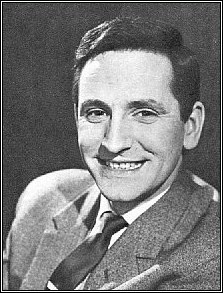
The gestation of this second manifestation of the godhead would take place in Liverpool, England. Inspired by Elvis Presley four young men of the second manifestation would be filtered through the persona of a young Scottish musician named Lonnie Donegan
The Geat Lonnie Donegan
.
When the settlers from the British Isles settled America they brought their musical traditions with them, most prominently to the Southern tier of States. Thus both the White and Black musical traditions of America stem from essentially the Celtic peoples. In the mid-fifties Donegan brought this music in the form of American Folk back to England in a form he named Skiffle Music. It swept England and its youth up being combined with Presley. Donegan added a ferocious beat to the music that evolved into the form termed the Big Beat. Thus the British musicians were schooled in American music as it had evolved from their own.
Now, the Magic Moment requires the man who has been prepared for the moment. If all goes right he is equal to his destiny, if not the moment fails.
While Presley was the man, the second avatar would be four men seemingly acting as one. The four men seemed to represent four archetypal personalities as in the four faces of the godhead. Those of us who didn’t ‘get’ them, of which I was one, were mystified by their apotheosis.
Just as Elvis had his unique preparation so did this fabulous foursome. Raised as four ordinary kids from varying levels of poverty and varying psychological backgrounds they were united by the music of Presley and Donegan.
They began a grueling and astonishing apprenticeship in the red light district of Hamburg, Germany. Unable to speak German they were thus compelled to rely on each other for companionship which created a unique bond. They were required to be on stage for up to twelve hours at a stretch for weeks at a time thus honing their musical skills apparently to perfection.
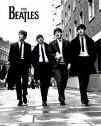
The Beatles
Thus the four aspects of humanity, one might say, were placed in a unique situation creating a unique combination of personalities seemingly as one. In those circumstances they were forced to be able to communicate instantly with their audience night after night. Valuable training.
Returning to Liverpool with their abilities seemingly uniquely developed they were adrift with no direction home and no other future than earning their livelihoods as best they might. But then, as by a miracle, a man appeared with no managerial experience who said he could take them to the top. Amazingly he got them launched. Even more astonishing they were assigned to perhaps the only record producer in the world who could bring out their unique talents. Thus this Fab Foursome took their home British Isles by storm succeeding as no other had succeeded before them but their Magic Moment, that lunge for the Golden Ring had not yet arrived.
The Magic Moment was awaiting them in NYC. A big jetliner brought the foursome to America’s shores in January of 1964 to appear on the Ed Sullivan show where they were to stand in Elvis’ footsteps so to speak. The difference in presentation between the two is interesting. With Elvis, he and his backing duo were standing in front of the drawn curtains on the edge of the stage, no set, his two band members were huddled behind him while the guitar player is turned sideways not even facing the audience. Presley is directly in front of them cavorting on a minuscule part of the stage. Mort Sahl would do his standup routine a few years later in the same manner with a newspaper as a prop.
In contrast the Beatles were given an open stage with decor behind them while the group was spaced dramatically and attractively. A very positive image which from long experience they knew how to take advantage of . But the appearance on the Sullivan stage merely confirmed their Magic Moment placing it indelibly in the American psyche.
The actual Magic Moment occurred when the Beatles announced themselves on the tarmac. Gods descending from the skies. For
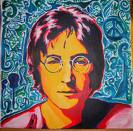
John Lennon
whatever reason there were thousands of screaming girls awaiting them and a battery of newsmen and photographers. Some say the girls were bussed in, it isn’t unlikely that the astute promotion men of Capitol had a hand in the arrangements, but on the receiving end of the tube it looked genuine. Mystifying but genuine.
Posed a bunch of questions by the news cameras all four Beatles fielded them with aplomb, the cheekiest and most confident acting was John Lennon himself. All four personalities established themselves at that time as one- the Beatles. In that little flash of time the role of the Beatles was established for all time.
While each individual Beatle was adored for the face of mankind he presented each had only an identity as an aspect of the Beatles. When they split they became merely humans rising or falling based solely on the musical merits. Of the four, Lennon adopted the messianic mantle, was accorded it, and took it when he left. In one sense the Magic Moment had been his.
There would be argument about when the Beatles began to break up over the years but the when was coincidental with their annunciation. John Lennon was the weak link in the chain. Having now won what he had been struggling for for so long John Lennon discovered he wasn’t worthy. Incredibly he wrote, and the Beatles recorded his song, ‘I’m A Loser.’ He was a loser, not the winner he appeared. Now conflicted he tried to both accept and reject the role of ‘messiah.’ He was well on his way to losing the role two short years later in 1966.
The course of his career was affected by two people, Bob Dylan in 1964 and Yoko Ono in 1966. Historical ifs are difficult. It seems impossible that Bob Dylan’s career would have been possible without the overwhelming success of the Beatles. Dylan lacked commercial appeal then as he does now. He appealed to a minority audience- as opposed to the majority audience of the Beatles. Dylan lacked universal appeal then as he does now.
While the Beatles were one as a group they were two as the songwriting team of Lennon-McCartney. Since 1962 they had been turning out a steady stream of million sellers both for their own use and that of others. They were catchy tunes in the Tin Pan Alley manner that could be sung and whistled but very introspective at the same time. Dylan on the other hand wrote tortured introspective lyrics that resisted anything close to whistling or a Mitch Miller singalong.
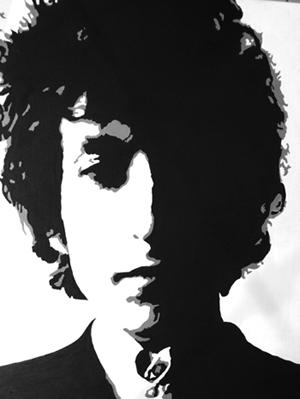
Bob Dylan
Dylan considered his stuff amazingly thoughtful and profound. He apparently put himself in the same class as Elliot and Pound. He fooled most of his audience for a long time too. The Beatles for whatever reason became the top news story of the day; for months they either were, or seemed to be, on the news every night. Seriously, one had to ask: What’s Going On?
Just as mysteriously Dylan began getting the same treatment. Now, the Beatles were selling unprecedented millions of records on both sides of the Atlantic, at one time occupying the top five spots of the Top 10. Dylan was doing diddly squat with his tortured lyrics. He wasn’t selling records in any quantities while having essentially a cult following. Now, mysteriously he began to be given the same treatment as the Beatles. Time Magazine sent a reporter to interview him on camera. Dylan imitated the Beatles by giving smart ass answers. The Time reporter took his jibes seriously. Sitting out in front of the tube my eyebrows shot up. What is this? The rest of the world went wild in their applause of the Beatle’s and Dylan’s cheekiness. God, they were giving the finger to the Greatest Generation. The latter may have crushed Elvis but these boys were getting their own back.
Maybe Dylan got the attention because he was the only American act available, to balance the relative status of Britain and the US. Perhaps in the emerging racial politics of the time he was offered as Jewish competition to the great goy champions of Elvis and the Beatles. He entered the Beatles’ life in August of ’64 when the Jewish journalist Al Aronowitz took it upon himself to introduce him to the four-in-one. The meeting was more momentous for the Beatles than Dylan.
The story goes that Dylan introduced the boys to marijuana at that meeting. More importantly he lectured Lennon-McCartney on songwriting. Dylan told them in effect that they should stop writing hit songs and write the pretentious crap he did. Now, consider, the Beatles were incredibly successful at what they wrote, Dylan couldn’t do what they did and what he did do couldn’t compete in the marketplace with the Beatles. I mean, they should have been lecturing him, but they didn’t while accepting his viewpoint at the same time. They listened to the little twerp and fell under his infuence to begin trying to imitate him.
The imitation was not very good but as the current avatar of the messiah the Beatles were industructible, as the leader, for whatever reason, John Lennon was accorded the role of messianic leader, a role that he took quite seriously.
While the Beatles had always used various pill forms of speed or amphetamines after Dylan’s introduction to pot they quickly expanded their repertoire to include Acid or LSD. The other three seem not to have been so conflicted in their personalities not becoming as drug dependent as Lennon. He claims perhaps with exaggeration, perhaps not, to have taken LSD thousands of times in the next few years. Under the influence of LSD his personality already distressed by the transition from failure to success disintegrated completely. As he says, he lost his ego totally.
If so, adrift, he was open to a strongly directed personality to manage his. This personality appeared in 1966 in the person of Yoko Ono. She quickly commandeered his personality displacing his British wife, Cynthia. It would be two years before Lennon divorced Cynthia but he left her a year earlier.
Since signing with Brian Epstein as their manager the Beatles had had an ideal artists arrangement. Trusting him they left the business details to him which allowed them full time to devote to their creative efforts. If they needed money they asked for it while all business details such as negotiations, titles and even check writing were handled by Epstein so that the Beatles had no worldly business experience. In 1967 Epstein died.
With Brian gone the Beatles were left rudderless with no one they could trust to manage their corporate and personal finances. Forming Apple as their business alter ego they attempted to manage their affairs themselves resulting in a business regime of such dissolute ineptitude that it has been referred to as The Longest Weekend.
Having attached herself to Lennon, Yoko Ono now tried to insinuate herself into the group as the ego of John Lennon. Thus the group would have been comprised of McCartney, Harrison, Starr and Lennon-Ono. A clear impossibility, the Beatles would be dissolved. As the avatar of the sixties the era had no choice but to disappear along with them.
This was now the late sixties. The world as it had been , the world that gave birth to the Beatles c. 1960 had all but disappeared. Blown away in the wind, so to speak. Just as the sixties called for the Beatles as the messiah of the period so it called forth its anti-messiah of satanism. In 1966 Time Magazine’s cover story was Is God Dead? A title that offended Bob Dylan who petulantly asked: How would you like to be talked about like that? Right.
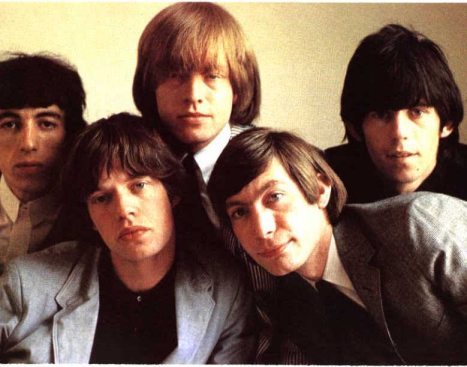
Stones With Brian
In 1966 Roman Polansky began filming a movie titled Rosemary’s Baby that actually portrayed the birth of Satan’s child. The story took place in the future home of the Onos- The Dakota Apartments. And then the Rolling Stones released their rather bizarre record, Their Satanic Majesty’s Request with its famous song Sympathy For The Devil. Right about then the Broadway musical Hair was staged that celebrated the Dawning Of The Age Of Aquarius. Synchronicity? Not a bit.
As the messiahs had abdicated it remained for the anti-messiahs the Rolling Stones to place the epitaph on the period which they did in 1969 at Altamont.
However John Lennon as the messianic figurehead was rescued by Yoko Ono. As an unsuccessful performance artist now with Lennon’s audience and financial clout to realize her wildest fantasies she, using Lennon, organized some of the most outrageous extravaganzas that catapulted she and Lennon onto the world stage playing messianic figures. The Bed-In was the most jaw dropping stunt since flag p0le sitting.

John And Yoko
Part III will consist of the career of the Ono-Lennon’s to John Lennon’s death in 1980 and perhaps a little beyond. There’s some really interesting stuff involving John Green and a possible associate, Sam Green. The latter is an interesting story.
A Review:
Dakota Days
The True Story Of John Lennon’s Final Years
by
John Green
Review by R.E. Prindle
Green, John: Dakota Days- The True Story Of John Lennon’s Final Years, St. Martin’s Press, 1983

John and Yoko looking pretty palmy.
The book should perhaps be subtitled: A True Story. John Green has crafted very nice portraits here of Yoko Ono and John Lennon, especially that of Yoko. She was very superstitious being dedicated to the occult from witchcraft to Japanese numerology to Tarot readings. It was the last that brought Green within her ken. She not only wanted a reading of the Tarot cards but she kept Green hopping day and night giving her readings on whatever little problem that pressed her mind. So for six years Green made a very good living reading for John and Yoko while developing a profound familiarity with their characters; in other words, he knows whereof he speaks.
Neither he nor the Japanese numerologist who he mever met were the only occultists Yoko was consulting but Green seems to have been unaware of the others. He is very careful and doesn’t overstep the bounds of what he knows first hand. There was a great deal that Green wasn’t privy to making this A rather than The true story.
While I know that many people know what the Tarot is I will give an explanation for those who don’t. While I don’t participate in Tarot myself I do have a deck of cards on hand to study for historical reasons.
The Tarot is a deck of 78 cards of some psychological subtlety. It arose as a means to preserve the Egyptian religion when after the various invasions of the first millennium BC the matrix of the religion was shattered. The Tarot was devised as a means of perpetuating the religion. The various spreads of cards provide means of interpreting responses to a problem.
Over the centuries many different decks have evolved representing various time periods. I have the Egyptian deck. It would be
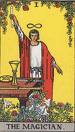
Tarot Card From Deck
interesting to know which deck Green used. He fails to tell us.
To be able to read well one must have an implicit understanding of each of the cards as well as being a subtle enough psychologist to apply the meanings to he or she for whom you read. Green apparently had both qualifications. Thus over thousands of readings over the six years he became very familiar with the characters and personalities of his subjects John and Yoko. Still, they seem to have been very successful in letting him know only what they wanted him to know.
As he apparently didn’t take notes, limiting in itself, he relies on his memory and familiarity with the Ono’s mental processes to reconstruct a continuum of the six years. While one may question the veracity of his method he seems to capture the mental and vocal traits of both John and Yoko. I have no trouble accepting the portraits while as the details can be corroborated elsewhere I see no reason to question Green’s general accuracy. Otherwise there is no one who doesn’t make mistakes in fact or interpretation.
His two portraits while revealing conflict with other accounts such as that of May Pang or Fred Seaman the obvious reason is that

May Pang
the Onos are only letting him see what they want him to see. For instance, in their 1980 interview the Onos state that Yoko had brought the estate up to 150 million dollars yet Green has Yoko spending so fast that they are always on the brink of insolvency. At times expenditures seem to exceed cash on hand.
Green believes himself to be their only investment advisor but that isn’t the case. Just as Yoko had her Japanese numerologist who Green didn’t come into contact with and other occult advisors she must have had other financial advisors.
The picture Green paints of Yoko is far from pretty while he never openly denigrates her yet as he creates his layers of detail she not only becomes but goes beyond eccentric. Her dependence on the occult is such that when someone advised her of a ‘genuine’ witch in Colombia she dragged Green along on the trip to South America to visit the woman. Always lavish in her expenditures, she gave one medium a blank check for her to fill out, she gave this woman 60,000 dollars for her ministrations. When Green protested that the woman had meant pesetas rather than dollars Yoko was unfazed.
Thus while Yoko denied any dependence on John she only was able to realize her vision of herself through the former Beatle’s wealth and influence.

Yoko in one of her many guises.
This was no more evident than in Yoko’s competition with her mother. For two successive summers John and Yoko visited Japan. According to Yoko the intent was to establish some rapport so that her son Sean wouldn’t be cut out of the family fortune that was considerable. The trips were conducted on such an extravagant scale that according to Green the Onos were cash poor as a result. Nevertheless Yoko went on spending so either they had funds of which Green knew nothing or they got money from somewhere.
The fact that they always seemed to have enough cash to do anything from spending a few millions on dairy farms and cows to Japanese vacations that it seems strange that when they received an extortion attempt for 200,000 dollars Yoko said they had no money. The extortion attempt seems to have been a protection racket- pay and live or go the police and die. As the extortioners told Yoko that if she went to the cops they would only protect her for a while. When they left whether a year or two later the extortioners would strike.
The Onos refused to comply calling in the FBI. The FBI advised them to substitute newspaper for money and they would arrest the pickup man. Strangely the pick up man was able to elude the FBI. And then two years or so later Lennon was hit by exploding bullets and killed on his doorstep. While one cannot say the two events are connected yet the assassination followed the extortionists plans. Chapman did make a stop to speak to an unidentified party before he pulled the trigger. But nothing is clear.
Yoko first contacted Green during Lennon’s ‘Lost Weekend.’ While Lennon believed, and it seems clear, that Yoko had informants watching John while he was in LA, Green has her denying this saying that it was his card readings that kept her informed of John’s doings. In all likelihood she checked her spies’ information against his readings.
From ’75 to ’80 Lennon was in a severe depression being unable or unwilling to function in a normal way. Of course there was no reason for him to act ‘normal’ as he was able to deal with his funk in his own way. Who is there to say that ‘normal’ was better? As he told Green his muse had left him leaving him unable to write. As he said, call it writer’s block or whatever, he couldn’t work. Enough reason for depression in an artist.
Then in 1980 when he came out of it being again able to write, Yoko in her desperate attempt to be his equal insisted on being part of the new record she called Double Fantasy. John adamantly refused to let her perform on his own tracks while she didn’t want her tracks all on one side for fear that no one would listen to side B, so they alternated tracks.
Thus, even though Yoko insisted that she was the most talented artistically and musically of the two she was forced to hitch her wagon to John’s star.

Yoko in one of her variety of men's hats and double fantasy glasses.
2.
I found Green’s treatment of Lennon to be more sympathetic than his treatment of Yoko. The inevitable conclusion one comes to about Yoko is that at best she was a pathetic human being while at worst an obsessive-compulsive and a dangerous one at that.
The portrait he depicted of John is that of a man with a completely disintegrated personality entering the mid-life crisis. During this five year period he begins a process of reintegration. Actually his course is that of the mythological hero who experiences his ‘madness’ at this period of the mid-life crisis.
During this period Lennon is essentially egoless. Part of Timothy Leary’s LSD mantra was that one should abandon the ego. Of course to abandon the ego leaves one defenseless and a prey to sharpers who use their ego only too well, nevertheless Lennon bought in and abandoned his ego, or so he says. As he abdicated his identity to the use of Yoko Ono this was obviously the case.
So, he allowed himself to be manipulated by Yoko spending long periods of months over years ruminating naked in his bed, totally exposed as it were protected only by the good will of Yoko. Then, for whatever ulterior motive, Yoko sent John on a solo trip around the world. This was her mistake.
While in Macau, China Lennon had an epiphany in his hotel room. This is a fairly common one but self-revelatory. One might name it the peeling of the onion. In Lennon’s case he obviously felt that he had multiple personalities acquired through various traumatic events in his life.
As he described it to Green he was in his hotel room when he succeeded in peeling a layer of the onion, a personality, off which appeared as real and visible to him as shirt or a suit of clothes. He draped the personality over a chair then began to peel off layer after layer hanging them about the room or draping them over the furniture. When he awoke the next morning he could see them just where he put them. He then conceived the notion of leaving them there as he ran away from their influence.
This is a beautiful little fantasy. But then he turned the corner and there was oneof his selves waiting for him. Visualize the Rock And Roll cover and I think you begin to have it. He then realized he couldn’t escape in that fashion so he went back to his hotel and said ‘C’mon’ to his personalities and continued on his journey. However having identified his ‘problems’ by name, as it were, the seeds for resolving those problems had been sown.
He then returned to the Dakota and while he confined himself to his room rather than merely sinking into depression he began working through those layers of fixations or depression gradually recovering his muse and removing his writer’s block enabling him to compose again.
It would seem that Yoko preferred John psychologically incapacitated so that she could either control him or make herself believe that she was the more talented. Green notes that as John improved Yoko seemed to deteriorate. He quotes her as saying that she had heard some of John’s new songs and they were not very good while hers were.
Dissociated from reality as she was then she couldn’t let John record an LP of songs that might be a hit while anything she recorded on her own would be relegated to the garbage. She even refused to record one side all John and one side all her for fear that no one would listen to her side so she demanded they alternate tracks. I presume that is one reason the LP is entitled Double Fantasy.
While Yoko actually believed in the Tarot and her Japanese numerology, witchcraft and whatever John intelligently disregarded the occult aspects while he might have seen the utility of the Egyptian religous aspects to reveal character and motivation. In fact the innumerable readings of the Tarot might have led up to the revelatory epiphany in China and hence the lifting of his depression.
If that were the case then there would have been little difference between the Egyptian system of Tarot and psychoanalysis. But, as I say, I have no idea of which deck Green was using although the principle remains the same.
3.
After having been on 24/7 call for six years as the Onos moved into what seems to have been a new phase Green lost his usefulness to Yoko sitting by a phone that never rang.
Green had succeeded too well. As he has John explain to him when Yoko first employed him she set him seven tasks. He had successfully completed all seven being now redundant. While John promised to look out for him, of course events eliminated any such possibility.
Regardless of whether the Ono Lennons were the subject of Green’s book I found the whole concept interesting. I like the way Green told his story, his tone and his outlook. His telling made me take an interest in himself. Unfortunately his name being so common makes it too difficult to search out anything of his subsequent career other than he moved to Washington DC.
Perhaps he could write a sequel to Dakota Days from another angle and with more detail. Pressing issues might not be so pressing now. I’d be interested.

Happy Trails To You.
Exhuming Bob 24: Bob And Expecting Rain
February 11, 2010
Exhuming Bob 24: Bob And Expecting Rain
by
R.E. Prindle
…or else they’re expecting rain.
My recent essay Exhuming Bob 23a: Bob, Andy, Edie And Like A Rolling Stone posted on the Expecting Rain site drew a few comments. As I’ve been excluded from the site I was very surprised to find the site published the essay. I’m not going to sign up for the discussion board so I’ll respond in this way. If it gets posted, fine.
I consider Exhuming Bob 23a a pretty good piece of scholarship so I’m pleased to have elicited a response that wasn’t all that negative.
The chief criticism came from CL Floyd so I’ll concentrate on his. Some of Floyd’s objections I consider worth answereing but some I find curious.
Floyd began his criticism: this is an incredible piece of reductionism… Yeah? What’s the problem? One has to begin somewhere. Dylan has said that he had this 20 pages of ”vomit’ tentatively titled Like A Rolling Stone. Right on. So he’s got twenty pages of inchoate kvetching that Edie Sedgwick catalyzed into several verses that while it applied directly to her as a symbol, what it symbolized was ‘this pain in here’ that centered around Dylan’s childhood. Thus as Warren Peace perceived, even though the central kvetch precedes Sedgwick the context centers directly on her person.
Floyd relates the whole to the title: ‘I especially enjoyed the in depth analysis of where the use of the phrase “rolling stone” came from.’ Muddy Waters had nothing to do with it. I doubt if Dylan had even heard of Waters’ song before he came to NYC if he did then.
The meaning of the phrase ‘a rolling stone gathers no moss’ is obvious while its use must go back very, very far. Apparently Dylan thinks being a rolling stone is a curse too hard to bear. His own understanding of the term goes back to Hank Williams’ not Muddy Waters’ song ‘Lost Highway.’
I’m just a rolling stone
All alone and lost
For a life of sin
I have paid the cost…
I’m just a rolling stone
On the lost highway.
I don’t mean to be rude but there were millions of us who related to Williams’ lyric in exactly the same way as Dylan.
But Floyd seems especially offended by the twist given to the meaning by my correspondent, Robin Mark. She has thought about the problem for some time. She realized that Stone was his mother’s maiden name so that there was a double entendre in Beattie Stone and a rolling (Bob) stone. Now, Mr. Floyd (or Miss, perhaps, CL is indeterminate) is apparently unaware that one can only be considered Jewish through the female side. If your father is Jewish and your mother isn’t then you are not a Jew, thus Jewishness is matrilineal not patrilineal even though your Jewish name may be Moishe Ben Avram- that is Moses the son of Abram. So, Dylan can claim the Stone name also. I thought it was a clever application and a neat double entendre.
Now, a major concern of my writing is to place Dylan within a context of his place and time. Shelton, Heylin, Sounes and others have done an excellent job of organizing the details of Dylan’s career to the exclusion of the other participants such as, for instance, Albert Grossman.
As Peter Yarrow says, without Grossman there would be no PPM and no Dylan. I have always been mystified as to who Grossman’s connections were that allowed him to finance the organization of PPM and get them a WB contract without a single performance.
I broached this subject in my essay, Exhuming Bob XVII My Son The Corporation. Since then I have learned that Grossman was aligned with Mo Ostin of WB and that the financing came from that quarter. That the group was immediately successful must have been gratifying. With the success of PPM the promotiuon of Dylan became possible. https://idynamo.wordpress.com/2008/12/10/exhuming-bob-xviii-bob-dylan-my-son-the-corporation/
That’s a start.
Mr. Floyd finds it coincidental that the key participants are Jewish. He apparently does not recognize a Jewish cultural and political influence directed to the realization of Jewish ends. If he’s complicit, so be it, but as an historian I have an obligation to note motivations from whatever quarter they come from. You don’t need a weatherman to tell which way the wind blows. I have no sacred cows and that is as it should be.
And finally, I believe that I have uncovered or illuminated, take your choice, a signficant and important sub-text of Dylan’s history. I dig the term ‘NY gossip’ that Mr. Floyd uses to discredit the facts. In point fact, David Bourdon who was there gives an almost gang like division of NYC. As he saw it Dylan was ‘pope’ of Downtown, Warhol ‘pope’ of mid-town and something vague uptown.
After BOnB in mid ’66 Dylan hadn’t abandoned Manhattan. The motorcycle accident with concussion and three cracked vertebrae changed his plans. After he had healed he in fact moved back to MacDougal St. to begin having his garbage searched by Weberman. By then the sixties were essentially over. Warhol was shot in ’69 changing the direction of his career, while Altamont put the period to the whole sixties fantasy. Shortly Dylan would be releasing an album called New Morning. Optimistic.
So, I certainly appreciate the kind attention of those who commented. If Matchlighter’s ‘mouth popped’ from 23a I hope he finds 23b just as entertaining. It has been posted.
Thank you and you’re invited one and all.https://idynamo.wordpress.com/2010/01/27/exhuming-bob-23b-of-a-b-bob-andy-edie-and-like-a-rolling-stone/
Conversations With Robin Page 4
January 28, 2010
Conversations With Robin Page 4.
Conversations between R. E. Prindle and Robin Mark
Concerning certain musical questions.
Robin:
Sorry to be so remiss but I was really involved with writingt Exhuming Bob 23 a and b: Bob, Andy, Edie and Like A Rolling Stone. I got them up a couple days ago and then I was really exhausted.
I think they’re really good work, real Sherlock Holmes stuff. The feud between Dylan and Warhol with Edie Sedgwick as their pawn is very important althougth Dylan has been very effective in shuffling it under the carpet.
I’ve always been amazed that no one came after Dylan because of the savage badgering he and Neuwirth put people through during what was apparently his Acid phase. Anent that I’ve always been suspicious of the back wheel of his bike locking up, obvious sabotage to me. Of course the reuslt would be flying over the handle bars that did happen. A probable result of that would be damage to the head neck and/or back with a very good chance of being paralyzed from the neck down much as Christopher Reeve did from his horse jumping accident which was also contrived.
Who would take that exact means to attempt to paralyze Dylan, I don’t think murder was intended. Warhol is my first choice. In addition to other humiliations Dylan publically insulted him in both Stone and Street using motorcycle imagery. Of course, it is now clear that chrome horse refers to a motorcycle so the line reads: You used to ride on a bike behind your diplomat…. Warhol had a bike and was Edie’s ‘diplomat’ so stripped of an obscure term the meaning is clear- Edie and Andy.
In Street Dylan sings: You know you’d like to see me paralyzed…so the bike accident is prefigured in the imagery of the two songs that have references to Warhol. If and when you read Part b of Bob And Andy the inference that Warhol’s crew were the perpetrators will become more evident.
That was hard work pulling all those details together but rewarding. Still, I’m going to have to take a week or so to recover. Research goes on of course. I think next I’ll tackle Exhuming Bob 24: Bob, Jack and Allen. I’ll start working on the ton of the period some.
Part of Elvis’ problem was that the ton shifted so dramatically after he was drafted. He began his career in the post-war ton of the late forties and early fifties actually causing the shift or, at least, abetting it. Then he was removed from the flow for two crucial years. when he came back the Kingston Trio had already shifted the ton toward the Folk genre that made Dylan possible but made Elvis an anachronism. While I don’t believe Elvis was part of any Illuminati type thing earlier or later it is quite possible that some such sort of conspiracy found him a useful tool. Of course, Parker, who was in the country illegally, could easily be manipulated to betray his and ‘his boy’s’ interests.
By the time of the return from the military Presley’s career was obviously being directed by Hollywood. So, who was getting what from mismanaging Elvis’ career?
Just thoughts.
Exhuming Bob 23b of a & b: Bob, Andy, Edie And Like A Rolling Stone
January 27, 2010
Exhuming Bob 23b
Of a & b.
Bob, Andy, Edie
And Like A Rolling Stone
by
R.E. Prindle
The System Of Doctor Tarr And Professor Fether
All the fags and dykes they boogien’ together
Leather freaks dressed in all kinds of leather
The greatest of the sadists and the masochists too
Screamin’ please hit me and I’ll hit you.
The FBI dancin’ with the junkies
All the straights are swingin with the funkies
Cross the floor and up the wall
Freakin’ at the Freakers ball,
y’all
Freakin’ at the Freakers ball.
–Shel Silverstein
Oh no! Must be the season of the witch.
–Donovan

Don't Look Back, Something Might Be Gaining On Ya
It may be true that the answer was blowin’ in the wind but, if so, as Donovan said: You might as well try to catch the wind and nobody did. Nobody even had a clue as the inmates poured out their cells and seized the asylum. Even then it wasn’t so easy to tell the nuts from the Docs.
His parents brought a seventeen year old to the asylum to be cured of homosexual tendencies. The psychiatrists had an astonishing method for a cure. Strapping the kid to the torture rack they fixed a couple of electrodes to his body and sent some serious voltage coursing the through his existence rearranging a few brain cells on the way. As his body arched when the juice hit him one is reminded of the prisoner on death row when the steel cap was lowered on his shaved skull. As maximum voltage coursed through his body he too convulsed but when the skull cap was removed the temperature of his blood in his brain was 212 degrees. They’d boiled him to death.
The kids temperature didn’t rise that high but they still managed to scramble his brain. His memory was so blotted he got lost trying to walk around his own block. The cure was worse than the disease. The cure was in fact, no cure as he remained a homosexual. And they call that medicine.
As soon as the kids eyes uncrossed he picked up a guitar and began to wail. Then he formed a band and began to formulate what he would call Metal Machine Music. He hooked up with Doctor Filth who ran an asylum called The Factory that he filled with mental cases. Unlike the psychiatrists Dr. Filth intended to create mental cases.
The kid picked up a whip, donned his leathers and began to boogie. Those leather freaks. Uncomfortable in their own skins they wear the flayed skins of cows, a feminine skin not their own. A guitar and a spike all anyone needed. Jamming his spike in his arm the kid flew from the asylum Factory out to the Cuckoo’s Nest in Keseyland.
Now known as the Velvet Underground, the kid, going by the personal of Lou Reed landed in a disused bowling alley where he and his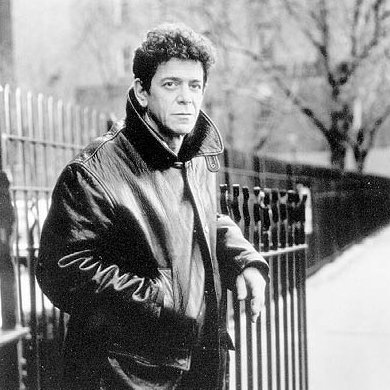 three bandmates gave a concert. there were perhaps a hundred fifty people in the audience of which a hundred had been let in free by one of the promoters. Imagine a promoter opening the back door for free.
The audience in the bleachers stepped up to the ceiling where the top row required them to stoop to seat themselves edged into their seats. Keep your eye on the right top corner, that’s where the action will be. This was the first concert the promoters had done. The band stood on the floor two thirds of the way down the alleys. The spotlight was on their right directed across the group rather than down on them. I thought it was an interesting effect. The Cuckoo’s Nest had never seen anyhthing like this. A girl drummer had what appeared to be a single snare drum with a mallet underslung so it hammered the bottom of the snare while she banged away at the top with the sticks. Not exactly a beat more like a steady unvarying rumble, an effect almost as interesting as the lights. The two guitars and the bass of the leather clad crew began to hammer out the sound which was just like what became Metal Machine Music although more articulated. Not exactly as continuous am MMM but close.
Then the singer began to chant something about heroin. This wasn’t The Factory this was the Cuckoo’s Nest. A disquieting murmur underscored the machine music. Then some local agitators had a guy stand up to shout out incitements to a riot. The light guy got uneasy. The Velvets twitched, a note of panic came into Reed’s voice. Without so much as a change of tone he incorporated ‘Turn off the light’ into the lyric as the crowd began to think of rushing the Velvets and they gave every indication of bolting.
Turn off the lights, hell. I knew who the agitators must be so I swung the light from the Velvets across the crowd to the right corner where I picked up the agitators. I left the spot on them steadily. Their anonymity stripped from them the crowd recognized them and quieted down. The Velvets hadn’t missed a beat but they did get a little wobbly.
I quickly picked out the ‘mastermind’ , who was who I thought he was and his stooge who had been loaded up with something. With the spot on him he thought he was the star continuing to orate as Reed intoned on while the band chugged along like an assembly line gone berserk.
The ‘mastermind’ now ordered me to turn the light off him. The noise was too loud for him to hear me laughing. At last he got his stooge to sit down and the light swung back to the Velvet Underground and they continued their chaunt to the glories of heroin as though nothing had happened. Nothing had, just a variation on the show down on Desolation Row. They left the Cuckoo’s Nest finding their way back to the Factory and Dr. Filth.
Back home in The Factory the fags and dikes were cracking their whips, blowing their whistles and banging their gongs while the necrophiliacs were looking for dead ones.
As we left them in part a, Dr. Filth had been castigated by the Man Of The Hour over the air for all to hear if not recognize in his musical rants, Like A Rolling Stone and Positively 4th Street.
I’m not prepared to say it’s so but others have suggested that a few lines in Desolation Row refer to the Factory and Andy Warhol. As Desolation Row was recorded on August 4th a few days after Stone and Street it is quite possible ill feeling lingered and found expression in Dylan’s lines.
The lyrics are purposely written in obscure language meant to imitate poetry and mystify. Without a key one can speculate all day ending up where you began. Dylan does give us a clue as to his imagery in Chronicles where he says Pound and Elliot were fighting it out in the Captains’s tower. The Captain’s Tower refers to Dylan’s brain and the discussion of the two poets.
There is a very large discussion of this stuff on the internet if anyone wants to go through it. Anyway the lines thought to refer to Warhol are these.
Dr. Filth, he keeps his world
Locked inside his leather cup
But all his sexless patients
They’re trying to blow it up.
Now, his nurse, some local loser,
She’s in charge of the cyanide hole
She also keeps the cards that read
“Have mercy on his soul.”
They all play on the pennywhistle
You can hear them blow
If you hang your head out far enough
From Desolation Row.
Contemporary Bob
I think most commonly people take Dr. Filth to refer to Freud. Multiple meanings are possible while the cast of characters in Row appear to be well known historical figures or characters from literature. At the same time, as Warhol points out, the songs of this period are personal protests so the figures can stand in for people Dylan knows. He changed their faces and gave them brand new names.
On the other hand Dr. Filth could refer to Warhol whose reputation was suffering by mid-’65. The society people had begun to avoid the Factory leaving Andy only the derelicts.
As I said I can’t find anything totally convincing to pin Dr. Filth on Warhol but the next verse isn’t applicable to Freud and the verse after depending on how you interpet pennywhistle and blow might apply to the Factoryites.
And then there are these lines:
Now, at midnight all the agents
And the supernatural crew
Come out and round up everyone
That knows more than they do.
Then they take them to the Factory…
Like I say, it’s up to you. What is clear is that there was serious competition between Dylan and Warhol and that Sedgwick was a bone of contention.
As the late fall and summer progressed then, Dylan worked hard to draw Edie from Warhol. This made Andy very, very jealous and he turned from Edie spurning her from him ‘with his foot.’ There is a possibility that in some weird homosexual way Warhol loved Edie. According to the movie Factory Girl Warhol took her home to meet his mom. It might mean that that was an actual declaration of love and that he considered her his girl.
By this time Edie was broke having gone thorugh her inheritance whnile even having her stipend from her parents suspended because of her association with Warhol and the Factory crowd. ‘In her prime when she dressed so fine’ she refused to use taxis having a white limo waiting at the curb for her use. Now that she could no longer afford one Dylan rented a black one for her use. Thus when she rode around town in Dylan’s limo she would be known as Dylan’s kept woman. This would also have been a direct insult to Warhol who was penniless in comparison being unable even to pay Sedgwick for her roles in his films or even, her rent. Thus as the Dylan figure in Factory Girl tells her: You’re just one of Warhol’s props.
Now, Dylan in his first English tour had Donn Pennebaker do a film verite that would be released in 1967 as Dont Look Back. Dylan and his entourage who all had parts in the film just like the Factory crew did in Warhol’s would have been talking up the film thus actually becoming direct competitiors of Warhol. As an enticement to Edie Albert Grossman threatened to become her manager while promises were made to her that she would be Dylan’s co-star in a planned movie and even be paid for her services. Remember she was stone broke at this time being desperately in need af an adequate income. Rather than being Dylan’s girl friend she was passed to his gofer, stooge, right hand man, Bobby Neuwirth who became her possessor while she was living at the Chelsea.
That November of ’65 Dylan married Sara Lowndes. According to Bob Spitz in his biography Dylan met Lowndes in 1963 installing her in Grossman’s apartment where he ‘lived’ with her which I suppose means visited her from time to time as among his other duties he was living with Suze Rotolo and heavy with Joan Baez.
Dylan attempted to keep his marriage secret, it was publicly revealed in April of ’66 but Warhol got word of it in December spitefully revealing the news to Edie. The news was devastating to Edie who was nurturing her fantasies of being Dylan’s woman and future co-star. Apparently at that time she was told that any movie role was in some very distant future. At any rate with her relationship with Andy broken Dylan no longer had any use for her. She was just a pawn in his game.
Perhaps in competition or emulation of Dylan’s recording career Warhol decided he wanted to manage a band thus recruiting the

Nico, Andy And The Velvets
Velvet Underground. To assist the Velvets he picked up on Nico who had just arrived from Europe. As fate would have it Dylan had already had a fling with her during his 1962 visit to England when he worte I’ll Keep It With Mine for her. Warhol now insisted she front the Velvet Underground, thus the Velvets first LP with Nico and the famous Banana cover.
Apparently forgetting Edie Dylan renewed his acquaintance with Nico showing up with songs to give her. Lou Reed of the Velvets is a great admirer of Dylan but I don’t believe any of his songs made it to the record. In any event Nico was gone by the time of the second Velvets LP. Possibly as part of the Dylan-Warhol feud.
Dylan wasn’t finished with Edie yet nor was Warhol finished with Dylan.
In the Spring of ’66 Dylan recorded his ultimate record Blonde On Blonde. the songs of personal protest as Warhol pointed out revolved around this period. There are two songs that are pointedly about Edie Sedgwick- Leopard Skin Pill Box Hat and Just Like A Woman while other references seem to be scattered about. The two songs were unnecessarily cruel.
In the Spring of ’66 Warhol began a film titled The Bob Dylan Story. This was a derogatory depiction of the Folk Singer that Warhol thought better of releasing. Giving Dylan’s reaction to Factory Girl, Warhol’s pockets weren’t deep enough to take Dylan on who by ’67 when the film first could have been released Dylan was worth millions while warhol was still essentially penniless.
Anent the Bob Dylan Story I quote from the web site http://www.warholstars.org/ :
Sterling Morrison speaking:
“Dylan was always around, giving Nico songs. there was one film Andy [Warhol] made with Paul Caruso called The Bob Dylan Story. I don’t think Andy has ever shown it. It was hysterical. they got Marlowe Dupont to play Al Grossman. Paul Caruso not only looks like Bob Dylan but as a super caricature he makes even Hendrix look pale by comparison. This was around 1966 when the film was made and his hair was way out here. When he was walking down the street you had to step out of his way. On the eve of filming, Paul had a change of heart and got his hair cut off- close to his head and he must have removed about a foot so everyone was upset about that. then Dylan had his accident and that’s why the film was never shown.”
Although sterling Morrison suggested that the Bob Dylan film was never shown because of Dylan’s motorcycle accident, the accident occured at the end of July 1966 and Susan Pile was filmed for the movie in October 1966.
Susan Pile speaking:
“Andy filmed The Bob Dylan Story, starring Paul Caruso…Ingrid Superstar and I were folkrock groupies who rushed in (to the studio), attacked his body and taped him to the motorcycle… Paul Morrisey suggested all of Paul Caruso’s lines be from songs, but Andy, knowing it was a good idea (this is a direct relay from Paul Morrissey) vetoes….My one line (which I wasn’t supposed to say; I was to remain mutely sinister) was: “You’re just like P.F. Sloane and all the rest- you want to become famous so you can get rid of those pimples.” (accompanied by quick slaps to P. Caruso’s acne-remnanted cheeks)…
The psychology is clear but noteworthy is the taping of Dylan to his ‘Chrome horse.’ When Dylan had his bike accident the rear wheel locked throwing him over the handle bars. Thus taping him to the bike would prevent that. Now, the animosity between the two was real and deep. It may have seemed to Dylan that he had trumped Warhol. While Warhol may have passively taken the humiliation it is also quite likely he would have retaliated. The wheel locking would seem to indicate someone tampering with the bike. Either Warhol had the bike tampered with and was gloating over Dylan here in his movie or else it is a cruel joke. Whether Warhol was responsible for the bike accident or not he was certainly gleeful about it as evidenced here. If the bike was tampered with then someone wanted to see him paralyzed.
Thus matters stood at the end of ’66. In 1971 Edie Sedgwick in circumstance of total degradation, shamefully abandoned by her parents and both Dylan and Warhol who both disclaimed any responsiblity died.
In closing I quote Andy Warhol from his Philosophy Of Andy Warhol From A To B:
Handy Andy
“(Edie) drifted away from us after she started seeing a singer-musician who can only be described as the Definitive Pop Star- possibly of all time- who was then first gaining recognition on both sides of the Atlantic as the thinking man’s Elvis Presley. I missed having her around, but I told myself that it was probably a good thing that he was taking care of her now, because maybe he knew how to do it better than we had.
Snide, very snide.
There’s gonna be a Freaker’s Ball, tonight at the Freaker’s Hall
Ya know you’re invited one and all.
Exhuming Bob 23a: Bob, Andy, Edie And Like A Rolling Stone
January 22, 2010
Exhuming Bob 23a of a and b
Bob, Andy, Edie And Like A Rolling Stone
by
R.E. Prindle
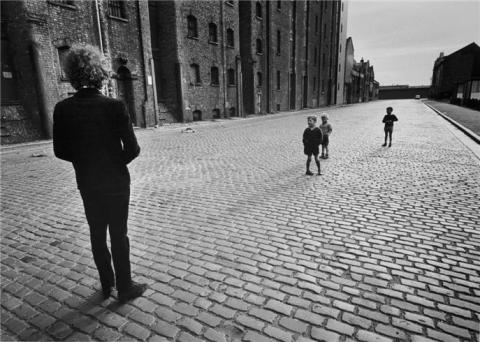
If Tomorrow Wasn't Such A Long Time
As concerns the oeuvre of Bob Dylan through 1966 Andy Warhol astutely remarked that the first phase that established Dylan’s reputation was social protest while the latter half was personal protest. Warhol should have known. That’s what the Jews call kvetching and American’s whining. It was from this latter period that a pure kvetches like Positively Fourth Street and Like A Rolling Stone would be written.
There is absolutely nothing prophetic or profound in songs of this type by Dylan. They are simply complaints. In this early phase the finger pointing was directed at society; in the later at people. John Lennon, who was heavily influenced by Dylan analyzed his method, said the notion is to seem to say more than you are saying. So Dylan disguises his kvetches in obscure language while the subject remains simple.
Thus the subject of Like A Rolling Sone is Dylan’s relationship with the woman, Edie Sedgwick. Edie is a sore point with Dylan because

Andy Warhol
he has been blamed for her death in 1971 some six years later. Doesn’t seem likely but he’s sensitive to the accusation. So sensitive that he obscures whatever relationship he had. When questioned he doesn’t deny it saying instead that he couldn’t remember one. Well, Dylan’s always had a ready hand with the ladies so it is quite possible he’s forgotten a few of them.
But I think Edie would have been one of the Big Four and he remembers her quite well. Dylan then had four women on the string at one time. The first was Suze Rotolo, a long time girl friend and live in dating back to his arrival in NYC in 1961; the second was Joan Baez who he met a little later. The third was Sara Lownds who he was keeping at the Chelsea Hotel; the fourth was Edie Sedgwick, of whom he wrote at least three songs.
Of course there were many other women married and unmarried that he ‘comforted.’ One or more of these might have been ongoing relationships. Dylan married Sara Lownds in November of ’65 without mentioning the fact to any of his other women. His relationship with Suze Rotolo blew up in 1964 when Suze’s sister Carla and her mother grew tired of Dylan’s abuse of the relationship ordering him away. Dylan maintained a relationship with Suze even asking her to be his mistress after he married. He records the dispute with Carla in Ballad In Plain D when he heard Carla scream out the famous imprecation: Leave my sister alone. Goddamn you, get out. In his usual way Dylan makes himself the aggrieved party as though there were four Bob Dylan’s in town and he had nothing to do with the other three.
He must have known something of the other three because the Dylan of Bob and Sara offered Suze a role out on the side. Hep. Hep.
To Edie Sedgwick: I’ve read several versions about Dylan and Edie. In one both Dylan and Bobby Neuwirth knew Edie in Boston where she attended Radcliffe and whose eccentric behavior had already made her notorious. Both Dylan and Neuwirth were in Boston at

Edie Sedgwick
times so that is possible. It was in Boston Dylan met the folksinger Eric Von Schmidt who he admired greatly. Some say he met Edie only in December of ’65. Whether he first met Edie in December of ’65 or renewed the acquaintance it seems clear that Edie became involved with Dylan personally or with the Dylan organization.
Remember that Dylan arrived in NYC in 1961 with nothing, no money, no reputation. he was a hick from the sticks. It might have been deadly to admit that he was just another kid from Podunksville come to the big city, so, to give himself glamour and mystery he invented a preposterous past, claiming to have been an orphan, the babe in the bullrushes, just like Sargon or Moses, Romulus or Remus out in the woods feeding off a wolf. Undoubtedly a very wise move. He gained credibility and he was to a large extent granted his glamour and mystery.
Four years later he was a pinnacle in the NYC underground. As ’65 was ending he seems to have been in competition with Andy Warhol for the top spot. Warhol had been a successful commercial artist in the fifties. Beginning in 1960 almost as the same time as Dylan he made his move into fine art being one of the innovators in the move to Pop Art. Unlike Dylan’s career in Folk Warhol had had a diffiucult time breaking into the fine art world. Having succeeded he remained an outsider running an atelier he called The Factory populated by bums, drug addicts and losers. Like Dylan everything he touched he wanted to destroy. He wanted to destroy the concept of fine art and largely he did it. By 1965 he fancied himself a filmmaker. One of his stars was Edie Sedgwick.
Dylan himself takes credit for destroying Tin Pan Alley because they had no place for him. While he didn’t destroy folk music he transformed it along with others. Of course by 1964 folk artists had about exhausted the genre. The same songs were being sung while the artists had stylized the genre to boredom. Who wanted to go see trios in loden green Robin Hood outfits? If anything Dylan escaped a dying scene.
Dylan and Warhol were nearly identical while both were vying to be King of the Underground. Perhaps Edie Sedgwick became merely a pawn in their game. She became the prize that would determine the winner. That contest raged between December ’65 through February ’66.
The competition between the two- Dylan and Warhol- went back further. Perhaps Dylan’s screen test with Warhol in the summer of ’65

The fabled Silver Elvis
crystalized the conflict. Dylan went down to the Factory, Warhol’s atelier for the screen test claiming a copy of Warhol’s silk screen, the Silver Elvis, as his price. Warhol is reported to have been outraged by the appropriation.
While both men tried to maintain their cool the underlying hostility was apparent. On Warhol’s part he said that he heard that Dylan was using the painting as a dart board so maybe he, Warhol, should be worried. While Dylan may have been doing so he showed his contempt for Warhol by trading the Silver Elvis with his manager Albert Grossman for a sofa.
Now, as Warhol correctly said, after Another Side, Dylan edged into personal protest. That means that the songs of the personal trilogy- Home, ’61 and Blonde, were written about specific events or people. Both of Dylan’s two most irate kvetches were written back to back. One should compare them to Ballad In Plain D for intent. First was Like A Rolling Stone directed at Edie and then Positively Fourth Street directed at Warhol. Both obviously written around the Factory. Stone evinces a sexual scream of perhaps the rejected lover addressed to a woman while Street is a sneering putdown of a man.
It may be true that Stone began as a twenty page vomit of pain as Dylan says but the catalyst to distill the actual song from the kvetch was Sedgwick.
To take the second song, Positively Fourth Street, first. The sixth verse terminates with the line, what HE don’t know to begin with, so the song is directed at a single man, a he. This is not a generalized he, a philosphical rant but a putdown of one specific guy.
The first verse states the HE wasn’t around when Dylan could have used him, the second verse states the HE is merely an opportunist, the third verse addresses a kvetch by HIM that Dylan disappointed HIM, the fourth verse claims a loss of faith in Dylan that Dylan scoffs at, the fifth verse acknowledges that HE defames Dylan behind his back, the sixth verse derides him as a poseur who ‘tried to hide what he didn’t know to begin with’, the seventh verse accuses HIM of insincerity, while the eigth verse say that HE wishes Dylan ill luck.
Coming to the ninth verse we have this telling line: No, I do not feel that good when I see the heartbreaks you embrace. Warhol filled the Factory with drug addicts, losers and nutty street people of all kinds so that it actually sickens one to read about them much less see or mingle with them. Then Dylan adds, Perhaps if I were a master thief I’d rob them. Well, Dylan was a master thief and he did steal the only superstar Warhol had who was Edie Sedgwich so perhaps the struggle for her body and soul began that summer of ’65.
Next Dylan adds the verse:
And I know you’re dissatisfied
With your position and your place
Don’t you understand
It’s not my problem.
OK, that describes Warhol to a T and warns him not to use Dylan as a stepping stone. The last two verses describe how Dylan is revolted by Warhol
So, rather than being some allegorical complaint the song is a description of Dylan’s kvetch against Warhol. If one bears that in mind the song reads like a letter rather than an allegory.
Having solved that problem let us turn to Like A Rolling Stone. this song too reads like a letter if you bear in mind Deylan’s relationship to Warhol and Edie.
By mid-sixty-five Dylan had become a success. At this stage in his career Dylan’s success consisted of his publishing royalties brought about by the efforts of his manager, Albert Grossman. Grossman’s first effort was to create and establish his folk group, Peter Paul And Mary. As this was astonishingly quick and easy one believes that Grossman was well connected. As PPM were on Warner Bros. run by Jews his connections most probably originated in Chicago where he had established The Gate Of Horn as the premier folk club.
Once PPM was a big hit Grossman had them record Dylan’s songs which then allowed him to place Dylan’s songs elsewhere. Thus Dylan was known outside NYC as a songwriter while not so much as a performer. But he was a songwriting sensation thereby receiving substantial royalties making him the richest and most powerful folkie. The future promised to be even more golden once he got into touring.
Now his mind disoriented by success and even further disoriented by his massive intake of drugs Dylan and Grossman needed to flex their muscles lording it over the scene.
Dylan apparently wished to have a sexual relationship with Edie Sedgwick who was being billed and the next Marilyn or America’s ‘It’ girl because of her role in Warhol’s trashy films. She too was another drug abuser and unstable personality. Whether she and Dylan did get together is unclear. Edie is dead, of course, and can say nothing while Dylan neither denies or affirms. He says that he can’t remember having relations with Edie and you’d think he’d remember if he had, wouldn’t he? Given the drugs, who knows, but saying you can’t remember such a desired object as America’s new ‘It’ girl is the same as saying yhou didn’t, while saying you would remember if you had is expressing regret or resentment.
I will write on the assumption that at least by the time of writing he hadn’t and Like A Rolling Stone is a frustrated rant of rejection not too different than Ballad In Plain D. For the time Dylan ony vents his anger at both Sedgwick and Warhol while he begins plotting his revenge against both.
Edie had come from a wealthy California family but a difficult home environment. She was pampered, having a Mercedes to drive around campus in Cambridge so she went to the finest school and now would have to learn to live out on the NYC streets as the song says. She also had an 80,000 dollar inheritance in 1964, the equivalent of 300 to 500 K today that she went through in a few months leaving her only a stipend from her parents although living in her grandmother’s penthouse’ in NYC.
The first verse of Stone then describes Edie perfectly. There is nothing allegorical about it. No abstruse meaning, this is pure kvetch. It should be read only as a spiteful rant against Edie.
Once upon a time you dressed so fine
You threw the bums a dime in your prime, didn’t you.
Edie had spent a large part of her fortune on clothes, as Dylan asserts, dishing out the change to the bums as she went along.
People’d call, say, “Beware doll, you’re bound to fall”
You thought they were all kiddin’ you.
Born to wealth she couldn’t conceive not having money.
You used to laugh about
Everybody that was hangin’ out.
Like, for instance, Bob Dylan.
Now you don’t talk so loud
Now you don’t seem so proud,
About having to scrounge for your next meal,
Self explanatory, then comes the chorus:
How does it feel,
How does it feel,
To be without a home,
Like a complete unknown.
Like a Rolling Stone.
Here Dylan, the rejected lover, compares Edie’s fall to his own situation when he arrived in NYC. Like a Rolling Stone seems to be an inept comparison but my corespondent, Robin Mark, (see Conversations With Robin on I, Dynamo) points out that Stone was Dylan’s mother’s name. Robin, also Jewish, points out that descent is matriarchal in Judaism so that Dylan would consider himself more a Stone than a Zimmerman. Given his psychology then Bob Stone is a footloose rolling stone without a home. That makes the term make more sense than ‘a rolling stone gathers no moss.’ The latter meaning has no application to the song.
The second verse continues the description of Edie:
You’ve gone to the finest school (singular in the lyric) all right, Miss Lonely
But you know you only used to get juiced in it.
The school was Harvard’s Ratcliffe and Dylan implies that that doesn’t make her any better than himself who didn’t attend any university as she only partied and never studied.
And nobody has taught you how to live on the street
And now you find you’re gonna have to get used to it.
The second line especially indicates that this is an immediate situation Dylan is referring to : you FIND you’re gonna have to get used to it. Edie is now out of her familiar environment no longer protected by her money into Dylan’s, who said he once hustled Times Square, where she had better make some rapid adjustments, beginning now.
You said you’d never compromise
With the mystgery tramp, but now you realize
He’s not selling any alibis
Mystery Tramp is Dylan’s romantic term for himself- Rolling Stone= Tramp- and he’s turning a deaf ear to any excuses she’s offering.
As you stare into the vacuum of his eyes
And ask HIM do you want to make a deal?
The roles are now reversed, Dylan has a lot of money coming in the future while Edie is all but broke. Vacuum is the blank, unresponsive stare Dylan gives while listening to her try to make a deal.
Princess on the steeple and all the pretty people
They’re drinkin’, thinkin’ that they got it made
Exhangin’ all kinds of precious gifts and things
But you’d better lift your diamond ring, you’d better pawn it, babe
Here Edie is thought of as a princess among the Harvard types that Warhol noted drifting down from Cambridge to make the scene, the ‘Beautiful’ privileged class that Dylan has been excluded from both by his social background and lack of college education. It’s a party he can’t join. Worse still, they’ve been laughing every time they see him. Now the party is over, if Edie needs money she can pawn her jewelry.
You used to be so amused
At Napoleon in rags and the language he used
Go to him now, he calls you, you can’t refuse.
This implies Dylan knew Edie before Warhol as she apparently used to tell him how Warhol’s language amused her. Napoleon in rags is Warhol who like Dylan has been trying to undermine the social order thus he has delusion of grandeur, of being a Napoleon. As Warhol and Dylan are twins in intent Dylan is also inadvertantly describing himself.
When you’ve got nothin’ you’ve got nothin’ to lose
You’re invisible now, you’ve got no secrets to conceal
Now that Edie has been reduced to street level, anything goes because from where Dylan was when he hit NYC it was all up from hustling Times Square. Being invisible means as the invisible man in the Ralph Ellison novel sense. One walks by negroes without acknowledging their existance hence they are invisible. Now broke, that is Edies case since she is now insignificant per Dylan she has nothing anyone wants to hear as per Ellison’s Invisible Man, hence no secrets to conceal.
So as of mid-summer Dylan has vented his frustrations on Warhol in Positively Fourth Street i.e. the bottom, and Edie in Like A Rolling Stone. More remarkably he has vented, blasted his privacy all over America on a thousand radio stations as well as in Europe and the world. The two songs are as searing as Ballad In Plain D although the subjects of his rants are not so obvious. For him to now say that he want’s to protect his privacy is preposterous.
The story does not end here. In Dylan’s war for the top spot of the NYC underground scene, the avant garde, he has to establish himself there for all to see and acknowledge. In a shameful display of callous disregard for the well being of Edie she will be the object of a tug-of-war between Dylan and Warhol. She will be the symbol of supremacy in the underground. That struggle will be the topic of Exhuming Bob 23b which follows.
Exhuming Bob 22: Prophet, Mystic, Poet?
December 17, 2009
Exhuming Bob 22:
Prophet, Mystic, Poet?
by
R.E. Prindle
http://www.forward.com/articles/120548/
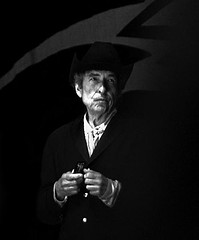
Looking for a direction hom.
Back in the early sixties a film appeared under the title: The Man Who Shot Liberty Valence. It was a Jewish fable clothed in Western Americana not unlike Bob Dylan’s lyrics.
The story line is about how to deconstruct one legend and reconstruct it to suit one’s purposes. The gist is that once a falsehood is enshrined as legendary truth it is impossible to debunk it. This film and notion was obviously for goyish consumption. As we know from experience a whole culture with a long history can be ‘debunked’ with minimal trouble if you control the media. Thus in fifty short years Americans have gone from being the most benevolent and generous people on Earth to the most destructive self-centered Nazi types. Furthermore Americans were conditioned to believe it about themselves. ‘Why do they hate us?’
The secret was contained in The Man Who Shot Liberty Valence. One of the primary agents of that change was the prophet, mystic ans seer, the very Jewish Bob Dylan. I left off poet because at best Dylan is merely an effective lyricist.
A San Francisco Bay Area fellow, Seth Rogovoy, has written an essay on Dylan with the above title without the question mark. Stephen Hazan Arnoff who is the executive directory of New York’s 14th St. YMHA has written a review of Rogovoy which he subtitles ‘Jerimiah, Nostradamus and Allen Ginsberg all Rolled Up Into One.’ High praise indeed, if unwarranted. Just as Mr. Arnoff inflates Dylan’s significance he grossly inflates that of the pornographic so-called poet, Allen Ginsberg. Perhaps it is time to use techniques learned from ‘Liberty Valence to debunk the reputation of Dylan.
Dylan is no prophet, he is merely topical using enigmatic phrasing to give the appearance of depth. There is little actual difference between the topical material of Dylan and Phil Ochs. Mr. Arnoff improbably writes:
(Dylan’s) prophetic persona is particularly resonant in his first few albums where songs like “Blowin’ In The Wind” and “The Times They Are a-Changin'” sets the gold standard for prophecy in popular music.
Prophecy in popular music? What’s that? Actually neither song is prophetic. ‘Blowin” actually refers to the past of Dylan’s youth in Hibbing although topically it has usually been extended to represent the then current civil rights activities in the South. ‘Times’ is merely a cocky know-it-all sneer at politicians who aren’t aware that the kids are alright, on the move, have a voracious apetite to eat them up. Both songs have borrowed tunes (no crime or even sin in my estimation) and, if Rogovoy is correct lyrics cribbed from the Bible.
As Mr. Arnoff notes, Rogovoy chooses a single critical lens- Judaism- for understanding Dylan and his work. No fault in an essay, pointing out the Jewish influence in Dylan’s work. Actually Mr. Rogovoy is no innovator or pathfinder, the same material has been adequately covered by numerous investigators including myself in a series of essays.
But Mr. Arnoff also notes there are other avenues to approach the songs that Mr. Arnoff believes are equally valid: Greil Marcus explains him as a mystic raconteur of the secret history of the United States, coded thorugh traditional music while Christopher Ricks describes a master interpreter of classical Western literature and thought.’ (cough, cough)
While Greil Marcus is another good Jewish boy I hardly think he is a responsible authority on anything. He takes roughly the same approach as Mr. A.J. Weberman while the latter is vastly more entertaining. I have to combine Mr. Marcus and Mr. Ricks. While I certainly respect Dylan’s intelligence and acumen I would have to question both the breadth and depth of his education.
Dylan attended high school in Hibbing, Minnesota which is a far cry from any of the leading cultural centers of either the Western or Eastern worlds. I grew up in a slightly larger town up North than Dylan although probably not much different than Hibbing intellectually. I keenly felt the lack of intellectual opportunites when I went out into the large world.
There is a question as to whether Dylan graduated from high school while he never attended college. Immediately immersing himself in folk music he left Minnesota for NYC. There he found people with libraries of which he availed himself while boarding with them. This was a very brief period during which he could only have picked up names and impressions such as he employed in his song Desolation Row. His girl friend Suze Rotolo introduced him to more culture than he could have imagined from 1961 to 1965. This could not have been much.
During that time Dylan spent a lot of time writing songs, drinking and drugging and touring. Not a lot of opportunity to become a ‘master interpreter of classical Western literature and thought.’ I have no idea what Mr. Arnoff means by ‘classical.’ I doubt seriously if Dylan is any authority on, say, the pre-Socratics. If Mr. Ricks believes as Mr. Arnoff represents him I would have to question Professor Ricks’ qualifications for his post. There’s something wrong there.
Now, as to Mr. Marcus and his mystic raconteur of the secret history of the US. What secret history? Dylan says he studied the ante-bellum South from newspaper accounts in the archives of the NYC library. This would have been over a couple of months only. As near as I can tell he did so with an enquiring and open mind and is fully capable of making cogent observations. This however is scarcely a secret history while being only one brief period and region.
What Dylan has done is immerse himself in the songs of the US. He says that when he visited Carl Sandburg it was with the itent to discuss Sandburg’s ‘American Song Bag.’ One certainly has to respect Dylan’s song knowledge and his excellent taste. This knowledge however is well beyond Mr. Marcus’ ability to understand. He, as far as I have been able to ascertain had nil knowledge of songs and music until he joined Rolling Stone Magazine in the late sixties.
Up in Hicksville Dylan immersed himself in every kind of music, without discrimination. He was fully conversant with Hillbilly as his native music. The Carter Family was a living entity to him and not an academic study. All those now obscure names were living legends to him and not mere footnotes at the bottom of a page. Thus while Dylan’s Jewish influences are prominent, uppermost and dominant he nevertheless has a foot in both cultures. His American culture is musical however, and what sounds like ‘a secret history’ to Mr. Marcus is merely the hillbilly interpretation of ‘revenuers’ ‘white lightning’ and such. I do not see Dylan as a ‘classically’ educated man.
Mr. Arnoff displays his Jewish bigotry when he says: Messianic Judaism (or Jews for Jesus) is the weakest form of interpretation for Dylan. So far as I know no one interprets Dylan’s work through the lens of Messianic Judaism. However it is equally apparent that Dylan was interested enough to study the topic carefully. That says more for Dylan’s open mindedness than Mr. Arnoff’s narrow minded bigotry. One must be ‘open minded’ n’est-ce pas?
As Mr. Arnoff notes, Dylan always said he was ‘a song and dance man’ and I think that says as much as need be said. Anyone who has been able to entertain a significant audience nearly fifty years now has to have a serious talent. One should bear in mind though that Dylan appeals to a relatively small and well-defined audience he himself defines as ‘the abused, misused, confused, strung out ones and worse.’ This is his core constituency to which he ‘kvetches.’ Apparently English isn’t good enough for Mr. Arnoff.
Dylan’s greatest song is Positively Fourth Street which is maximum kvetching. I considered myself abused and misused when I first heard the song. The lyrics had me slavering like one of Pavlov’s dogs when he heard the dinner bell ring. But, like Pavlov’s dog there wasn’t really anything on the plate. Once I passed through that phase of my psychology I lost interest in Dylan.
While Dylan has managed to retain, recruit and entertain his audience he is far from the man who shot Liberty Valence or Jeremiah, Nostrodamus and Allen Ginsberg all rolled up into one. I’m afraid that’s one legend that will be debunked before it’s formed.
Kvetcher or not I still can’t listen to him.
 I, Dynamo