A Review
Catherine James
Dandelion: Memoir Of A Free Spirit
by
R.E. Prindle

I looked at the sea and it seemed to say,
“I took your baby from you away.”
I heard a voice cryin’ in the deep,
Come join me baby in my endless sleep.
Ran in the water, heart full of fear,
There in the breakers I saw her near.
Reached for my darlin’, held her to me,
Stole her away from the angry sea.
-Jody Reynolds- The Endless Sleep
Texts:
Des Barres, Pamela: Let’s Spend The Night Together, Chapter- The Elusive Miss James, Chicago Review Press, 2008
James, Catherine: Dandelion Memoir Of A Free Spirit, St. Martin’s, 2007
https://idynamo.wordpress.com/2008/11/10/a-review-pamela-des-barres-lets-spend-the-night-together/
Dandelion by Catherine James is an excellent read whether you consider it a memoir, a novel, or based on a true story. As a memoir it is a little too sketchy, while as a novel it is a charming read with some effective, real touches of pathos. The tenderly related death scenes of her Grandmother and mother may not rank with the passing of Little Nell but they do choke you up a bit.
Dandelion was apparently written by Miss James unaided by a co-author. When one considers that she had no schooling beyond the seventh grade this is a remarkable achievement. In the explanation of her skill, apart from a native intelligence, at a rather advanced age she returned to Jr. College where she took a writing class apparently with good effect. After a remarkable childhood and youth she is now entering an equally remarkable old age, uh, maturity.
Miss James had a childhood a bit out of the ordinary in its horridness, a crazy mother, and a succession of housing changes including a stint in a reformatory and a couple years in an orphanage. My own childhood experiences parallel those of Miss James to some extent so I think I can write of her situation with some sympathy.
Miss james’ narrative is a coherent psychological whole progressing from beginning to end in an impressive manner, but I am only going to deal with the first half of her memoir.
I understand the following: Catherine’s mother, Diana, was vain of her appearance while aspiring to a recording and performing career. She did succeed in recording an LP titled Dian And The Greenbrier Boys. I’m guessing that she had no intention of having children but as she married at seventeen on an impulse Catherine is probably a result of that impulse.
Diana probably then resented her daughter for inhibiting her ability to realize her ambitions. She then took her frustrations out on her child. She apparently developed a Hydelike personality in relation to her child. Mad to the nth degree. On her death bed she c0nfessed to Catherine that ‘the witches got her.’ One assumes then that Diana was what in the old days was known as being ‘possessed’ by the ‘witches’ when she was around her child. In a manner of speaking she wasn’t responsible for her actions toward her daughter. She was severely psychotic.
By all rights Miss James should have developed into a schizophrenic. That she didn’t is the result of peculiarity of mind that I share. Like Miss James I had some difficult years and like her I was able to maintain a separate identity in a world seemingly insane.
When Catherine’s mother divorced her father she was placed in a high class orphanage, call it a boarding school perhaps, for a period of time. Understandably Catherine’s notion of time is hazily remembered at this period although she seems to have retained startlingly clear memories beginning from about the year two. Catherine has no memory of an explanation being given to her for the removal to the boarding school. It just happened one day. She was inexplicably dropped off where she remained uncontested by any of her family until one day Grandmother Mimi picked her up from the home. Catherine lived for perhaps two years with her grandparents without any communication from mother until for some reason her mother reclaimed her. Perhaps because she had remarried. The marriage flopped and after some time her mother took up with Travis Edmundson (deceased this year) of the Bud and Travis folk duo. Her mother had aspirations to be a folksinger having, as mentioned, actually recorded an album as Dian And The Greenbrier Boys. Dian was shortened from Diana. More exotic.
According to Catherine Travis was as bizarre as her mother with the result that at the tender age of ten or eleven she left the house. The police picked her up but she refused to give them any information. Stangely they sent her to Los Padrinos Girl’s Reformatory in Downey, California. She either was or believes she was committed until she was eighteen. This seems extraordinary to me, although stranger things have happened I’m sure. But to lock a very young girl up without charges, trial and sentencing for six or seven years boggles the mind.
With her child safely behind bars, Diana renounced her daughter making her a ward of the State. Good God! Talk about cruel and inhuman. One can’t be sure exactly what Catherine knew of what was going on but Diana and Travis refused to allow the girl to be released to her grandparents care. Since her mother had made the girl a ward of the State it isn’t clear what she would have had to say about it. Her grandparents now sought to reclaim her but after legal maneuvers the best they could do for her was to get her released to an orphanage. Orphanages are slight improvements over lockups.
Here Catherine becomes intentionally vague. Her grandfather was named Al Newman and he wrote musical scores for the movies. The only Al Newman who wrote for the movies I have been able to locate over the internet is Alfred Newman. Alfred Newman wrote scores for about a hundred movies receiving an incredible amount of awards. Catherine mentions that when she was staying with her grandparents a large number of Hollywood film people visited the home including Harpo and Chico Marx. I would assume that she is coyly indicating that her grandparents were the Alfred Newmans.
If that’s so then her mother’s maiden name was Diana Newman and Randy Newman must therefore be Catherine’s cousin. Now, she was placed in a country club Jewish orphanage. Her grandfather Al Newman, she tells us, was a benefactor of the orphanage, so she assumes that is what got a Catholic girl into a Jewish orphanage. If Al Newman was a benefactor then whether he was the famous Alfred Newman who was Jewish or not, Al Newman must have been Jewish. In that case it shouldn’t have been that difficult to place her in the Jewish orphanage. Even so, she says, she was not allowed to visit her grandparents on weekends. An inexplicable lack of clout, but this is Catherine’s story.
She implies that efforts were made to convert her from Catholicism to Judaism which she stoutly resisted. This all requires some clarification here. She nevertheless learned Hebrew and could at the time recite some Jewish prayers in the language. She was in the orphanage for about two years from eleven or twelve to fourteen.
Once agains this seems odd. Things are done differently in different places no doubt but I also spent a couple years in the municipal orphanage which was much less posh than the place she describes. She says they gave her good food; the food in our place was so execrable that I virtually didn’t eat for the two years. She implies she had rather been in a Catholic orphanage but I do believe I can disabuse her of that notion. An orphanage immediately declasses the inmates placing them outside society so that upon entry a child becomes a societal outcast.
In the municipal orphanage we were pretty free to come and ago as we chose provided we were back for dinner but even if we hadn’t I’m not so sure anything would or could have been done about it. We were a coed facility but the kids were moved out into foster homes at ten to avoid the inevitable sexual problems of old boys among younger girls and boys so I’m surprised Catherine was allowed to stay until she was fourteen.
I have a little experience with a Catholic orphanage. There was one down the street from our place. This place was a hell hole. The municipal orphanage had a chain link fence around it but the Catholic place had a ten foot high brick wall. The difference between that and Los Padrinos was non-existent. Los Padrinos guards probably were more lenient than the nuns and priests. The latter were not lovely people. We used to be invited to the Catholic home for special occasions like Catholic movies and other events. They used to show the Catholic kids what the world outside their institution looked like through the movies. Like they say, no matter how bad off you are there are others worse off but of course that doesn’t improve your own situation. I was very happy to return to the municipal home after visiting the Catholic home. I think I ran all the way back.
Theirs was a rough life. I’ll tell you a little story.
Catherine mentions that kids at the Jr. High she attended didn’t want to have anything to do with orphans. True in spades all over the world. We had this kid, all this happened to him in one year, who began the school year with the Catholics. Those kids were schooled on premises, I’m not kidding you, they never saw the outside world, never. His parents transferred him to the municipal home where he had to try to fit into the public school we were abused at. Then he was transferred back to the Catholic home. I was never so happy to see anyone leave as I was him. He was already stark raving mad. Then they transferred the kid back to the municipal home. Barely holding unto to my own sanity the bastard was pushing me over the edge when fate intervened once again and he was sent back to the Catholic home. I have no idea who or what he imagined he was by that time. I had enough trouble surviving in the public school without switching back and forth. Of course, with the right attitude it would have been a real learning experience but I hadn’t learned to dissociate like that yet. I lived in total fear he would return.
A couple years later after my mother remarried and we moved into a garage I was reading the paper where I read that this kid, having returned to his parents from the Catholic home, locked all the doors of the house one night and torched it incinerating parents, siblings and himself. I was shocked when I recognized who they were writing about. I understood the situation expliclitly. I had to keep my mouth shut of course but I lustily cheered what he had done although I certainly would not have burned myself up. What could they do to you that already hadn’t been done? It would just be a move from one institution to another. I’m sure this kid was thought of as the ‘monster.’ Nobody knew the trouble he’d seen, man’s inhumanity to man. Well, we all have our crosses to bear.
He was an extreme case but not that far gone compared to the rest of us. Getting to my point with Catherine. The boys in the orphanage tended toward violent reactions, rebillion as it was amusingly called. I would imagine most of them became criminals of one stripe or another. The girls on the other hand responded to their emotional neglect by offering themselves to anyone who would give them seemingly tender attention. And there were a lot of them waiting to do that. The fence of the orphanage was lined with perverts hitting on their preference- either boys or girls eight to ten years old. Cops said there was no way they could run them off. Free country. Whoever said this wasn’t a great country, right?
So, at puberty, Miss James fled the orphanage, unchaperoned, into the great wide world with an instiable desire to be loved and somehow regain her social status as provided by the Al Newmans. She fled into a world of rock ‘n roll where unlimited opportunites with guitar ‘gods’ existed. This was a unique historical opportunity to realize her desires. A couple years earlier…?
The story she tells must be a severely edited and corrected version of the reality. One wonders what really happened.
Let me explain the genesis of this review. I wrote a review of Miss Pamela’s ‘Let’s Spend The Night Together’ in which I was critical of Miss James’ claim that she met Bob Dylan while in an orphanage. She appended a comment to the review suggesting I reread Miss Pamela and then read her own book- Dandelion. As she said, she doesn’t make things up. All right. I did both. As I say, I am sympathetic to any former alumnus of Orphanage U. but you don’t want to drift too far off the band in your reminiscing; that way lies madness. Who wants to burn their own house down except for the irretrievably damaged- destroyed.
Miss James’ book of adventures is very tightly edited to produce a certain effect or opinion of the author while not all her memories check out. Not terribly unusual in itself but she tries very hard to convince you that she is absolutely truthful and accurate. I will say I’m getting a heck of an education checking her stories out though. As they fit in with my agenda I have no problem with that. The extension of my folk knowledge through the investigation of Bud and Travis has been very beneficial.
Miss James career was essentially from 1965 (possibly very late ’64) to 1970. That’s five years more or less. She managed to live two or three lifetimes in those years. Ah, the sixties, weren’t those the times though?
Her mother’s agent who was hot after a ten, eleven or twelve year old Catherine was named Jim Dickson (Catherine says some names have been changed so…but then there was a Jim Dickson, talent scout and producer who helped work up the Byrds around LA at that time.) He was working with the Byrds in ’63-’64 and he had something to do with Dylan according to Miss James. The orphanage would barely allow Al Newman, a large benefactor of the home to visit his grand-daughter and yet they allowed an adult unrelated male to pick a 13 year old girl up and drive away with her. Well, OK, if Catherine says so…
Dickson then took her to a Dylan concert. Dylan was in LA in May and/or June of ’63 for a short time according to biographer, Sounes, and again in ’64. In ’63 Catherine, who certainly must have looked young, if Dickson hadn’t told Dylan that she was 13, says that Dylan asked her to a party where he spent, she says, several hours sitting talking to her while ignoring the big girls and execs. Well, I don’t know, but I doubt it. I can’t imagine how Dickson explained things to the orphanage when he brought Catherine back in the wee small hours of the morning.
Dylan was interested in her, she says, to the extent that every time he came to town he called on her at the orphanage. These were in addition to the ’63 and ’64 visits so it is difficult to account for them. Hard to believe, but as we’ll see she says all these famous rock musicians beat a path to her door, she didn’t pursue them.
Al Newman’s influence with the orphanage notwithstanding his large contributions was pretty limited so that he would have been unable to prevent Catherine being sent back to the reformatory which was then proposed. One night she scooted out the back door to take her chances. Brave girl; I shudder to think of it.
She says she took two hours to hoof it down to the Troubadour Folk Club at the junction of Melrose and Santa Monica. Doug Weston founded the club in ’57 and this was early ’64. Catherine is usually shy about identifying the seasons so one can’t pinpoint time within any given year. She says because her step-father Travis of Bud and Travis was a performer there she was also allowed to perform at the troubadour as a twelve or thirteen year old. Seems like a trifle of a stretch; she gives us no idea of her repertoire, Mary Had A Little Lamb or whatever.
In two short hours the orphanage had missed her presence, not very likely in my experience, divined that she was headed for the Troubadour, called the plice who were already on the spot passing her picture around: Seen this here thirteen year old around here, anywheres? OK. Sure, why wouldn’t the cops have her photo already on file? Handy.
Rather than turning tail she slips into the club ascending the balcony to the right rear seat that just happened to be the only seat left. I didn’t get to the Troubadour until the early seventies. Saw Pentangle there. I din’t go back. The club was already on the way to becoming the rough place it became. Anyway I know where she’s talking about.
This girl cannot possibly have looked, spoken or acted any older than she was. She tells the guy next to her to pretend he knows her. She later describes this guy to be in his early twenties although he was only nineteen. He obligingly wraps his arm around a 13 year old. Alright! That’s a chance I wouldn’t have taken. Probably worth twenty to life in California and we had been terrorized at the prospect of statutory rape. That was when you looked cross eyed at underage which was against the statutes.
Catherine tells him all those cops swarming the place are after her. Can he get her out of there? Nothing daunted by anything like a statutory rape charge he throws his jacket over her shoulders and he and 13 year old Catherine stroll out right under the noses of the coppers. I think I saw that movie.
The Good Sam turns out to be the brother of John Stewart of the Kingson Trio, Michael. In 1964 he was up at San Francisco State where he was forming the We Five but at the time he hadn’t. You Were On My Mind was a year in the future. He first drops her off at a house with a whole bunch of guys way back in the hills but she was not afraid. Michael then drives her North to Mill Valley, remember those statutory rape laws if caught, and brother John’s house where she is taken in as a nanny, and California’s Most Wanted Child, for his kids. The Stewarts want to adopt her which is her cue to split. It is amazing how lovable this troubled child is.
As I say, I’ve been researching these astounding stories. The problem with this one is that John Stewart was single at the time not marrying until 1968 when he wed Buffy Ford. This story is definitely on the shaky side so that affects Catherine’s credibility a little more than somewhat.
Traveling to Berkeley with some ‘hippie’ kids she hit the high spot of fabled Telegraph Avenue. Hippy kids seem a stretcher in ’64. Now, we’re on home ground though. I was around Berkeley a bit from ’64-’66. she appears to be describing a later edition of Telegraph. In ’64 the street was in transition from trad collegiate to what it later became. It was the first time I had ever been panhandled. Some girl wanted 3.98 to get her dog out of the vet. Could have been Catherine for all I know. Naw, this girl was well past 13.
On Telegraph she chances into the son of Barbara Dane and Rolf Cahn. Cahn, a guitarist, is living up at Inverness on the ocean side of Marin County. The younger Cahn puts her up at a sorority, which might seem plausible unless you’ve met some of those stuck ups. To get her over to Inverness he invents the story that the police are passing pictures around. Well, they couldn’t find Patty Hearst a couple years later either. Not to worry, his bed in Inverness awaits. Just one look was all it too, having his fill of her he splits the next morning with no intention of returning. His dad also splits leaving her alone in the house. A different world than I grew up in, no offense. These things can happen, I don’t say they don’t, but ten or fifteen in a row is worthy of Guiness.
The next day this guy from Boston shows up looking for Rolf, he’s a music lover. Likes the stuff, flew out from Boston to listen to Rolf for an afternoon. He is vastly amused at this endlessly charming 13 year old offering to fly her back to Boston with him which offer she accepts.
Once in Boston she’s hot to get to NYC so someone going that way offers to drive her down to the East Village while Dr. Cummins, for that was his name, gives her a twenty for bus fare back. Am I going too fast? Catherine tells a fast paced story.
Now, in NYC where Dylan mostly hangs out she has to locate this lad who found her so charming in California. We’ve moved up from ’63 to very late ’64 or early ’65 so Bob is heading into the thick of his ’64-’66 epiphany. Thanks to Peter Paul and Mary he is now – Somebody. Things are rollin’ for Bob.
At this point Catherine tells two different stories. In her memoir she calls Woodstock where she says a woman answers and informs her that Dylan has gone on tour. In Miss Pamela’s book she says she asked some kids where to find Bob Dylan. Dylan obligingly pulls to a stop in front of her, slow moving traffic. She runs over to say hi. Dylan rolls down the window, coldly says he’s on his way to a concert, driving off. She made no further attempt to contact him and he would have been easy to find.
Alright, I read and reread. What am I supposed to believe?
So, this is 1965, the next five years are truly spectacular. Unlike any other groupie I’ve ever heard of the rock stars gravitated toward the now fifteen year old Miss James with no effort on her part. She doesn’t have to shriek for their attention or bare her boobs, she’s stunning and they come running. Here she makes another minor error. She says she sees Morrison and The Doors performing Light My Fire in NYC. A couple of years ahead of the facts. A small error doesn’t mean much but what about the rest.
From this point on in order to create an impression of herself Catherine severely edits the facts distorting the reality at the least, what one puts in, what one leaves out.
In ’65 she met Denny Laine, make-up naturally fooled him, although still young she is now 15. Close but still statutory. I’m surprised the Moodies were in the US in ’65 because Go Now, their first hit, didn’t make that big an impression. Still, on their website the Moodies describe themselves as part of the British Invasion. In my experience they didn’t hit until ’68.

The two met more or less formally at a party so the meeting was formalized rather than a groupie-star existential encounter. Catherine always wishes to create a meeting Southern Belle style where the stars are impressed by her as much as she is by them. “Oh, Rhett, you don’t mean it?’
Laine forms the central theme of her groupie years. She has a child by him which carries her into seventeen and 1967. It isn’t easy creating a time frame or setting for her cast of characters. During the three years 1967-1970 she has relations of some sort with the following without mentioning Bob Dylan who dropped off the radar in 1965.
Roger Daltrey
David Gilmour
John Mayall
Jimmy Webb
Roman Polanski
Jimi Hendrix
Jimmy Page
Eric Clapton
Jackson Browne
Ginger Baker
Mick Jagger
Geno, partner in Granny Takes A Trip
+ Denny Laine
As you can see it is a regular A list. George Harrison could be included but she had no relations with him, just a friend.
Catherine doesn’t mention Geno or David Gilmour herself. Miss Pamela provides that in Spend The Night. The gig with Geno and Miss Pamela also took a couple months. Miss Pamela came to England with Geno’s partner. The four then took up residence together all sleeping in the same bed with baby Damian in a crib in the corner. He must have a Freudian memory or two.
Catherine artfully tells her groupie career bringing the story to a grand climax before she throws in the towel and tries to establish a life as a respectable hausfrau. The apex of groupiedom was Mick Jagger. A story made the rounds at the time of a groupie who finally made it to the bed of Mick. When asked how he was the next day, her reply was: Well, he was OK, but he was no Mick Jagger.
Catherine characteristically was wooed by Mick, herself doing no chasing. She was staying at Eric Clapton’s when Mick came over for a party. Catherine tells it this way:
I remember being engrossed in a book in the study when he peeked in and said: “You’re pretty.” With a blush, all I could think to say was a faint “thank you”, and went back to reading my book.
Just like a debutante Catherine was engrossed in her book. As the party got into swing and as the mescaline punch was about to hit Catherine thought to call Denny Laine while still coherent.
As I was speaking with Denny, Mick came into the room and closed the door behind him. I was seated at the desk in a regal, antique high-back chair with ornate carved arms. Mick walked up next to me and just stood there. He was wearing these delicious black-and-white checkered houndstooth wool trousers with a soft cotton white shirt. When I looked over, all I could see was the undulating moving pattern of the houndstooth. Mick didn’t say a word, but I felt the electricity. He was clearly waiting for me to get off the phone.
I think that’s pretty effective writing for a girl who barely finished grade school. Obviously she put her time to good use after giving up the life. Just picture sweet Lady Catherine sitting there as her Prince Charming came into her life, ‘regal, antique, high backed chair with ornate carved arms!’
The above passage is for the girls who never made it with Jagger. You can just hear Miss James cooing: Eat your hearts out girls.
Catherine not only has one night with Mick but moves into the mansion for ‘a couple of months’. The absolute untopable climax comes next.
For the event I wore my long, whimsical, gypsy dress from the posh Ozzie Clark’s boutique. The velvet bodice was formfitting, buttoning down to a billowing skirt of colored silk layers. My pale pink platform boots with appliqued silver cresent moons and stars from Granny Takes A Trip went perfectly with my outfit. Stevie Wonder was the hottest ticket in town, and I felt like a female divinity sitting between Mick and Eric, taking in Mr. Wonder’s stellar performance.
Yes, there was the fairy princess sitting with not one but two Prince Charmings watching Stevie Wonder. There was no way to top that so apparently Catherine’s philosophy was quit while you’re on top. I quite agree with her if you know when that is. And thus perhaps after having gratified one compensatory fantasy she returned to the US to begin her redemption by hard work. As she has written this book she apparently did that too.
After knowing all those rock gods so intimately I think it noteworthy that only Roger Daltrey deigned to write a blurb for the jacket. He and Miss Pamela.
The book was a very interesting read leading me to some other interesting discoveries that added substance to my understanding of the era. I have Miss James to thank for that.
As an alumnus of the orphanage, and believe me orphanages are all one form of horror story or another, I have solidarity with Miss James and wish her well. I’m sure everything she wrote was based on the facts but I still want some corroboration for the Dylan bit.
Miss James’ book has enjoyed some success. My copy is of the second printing so she sold out the first. At the last check the title was listed as about the 100,000th best seller on Amazon. I’m not sneering, mine is at about 5,500,000.
If anyone likes horror stories of this nature may I direct them to my description of an orphanage- Far Gresham Vol. I- that can be found at reprindle.wordpress.com. May I also direct your attention to my The Sonderman Constellation by R.E. Prindle published by iUniverse available through alibris, Amazon etc. I need some readers and sales too. I probably don’t need more than two sales to jump up to the 1,000.000th best selling. C’mon help a fellow out It’s a good book, you won’t regret it.
7/27/12 Update.

The Book
Here is corroboration for Catherine’s liaison with Mick Jagger. The following quote can be found on pp. 223-4 of the Tony Sanchez/John Blake memoir Up And Down With The Rolling Stones, 1979, John Blake Publishing (6.95) originally published as I Was Keith Richard’s Drug Dealer. Reprint 2010.
While I have no reason to doubt Catherine, corroboration is always a good thing. This corroborates both Mick and Eric Clapton. Quote:
Then along came Catherine. She was an exotic-looking Californian who’d enjoyed a brief affair with Eric Clapton. Eric introduced her to Mick at a party, and a couple hours later Catherine was tucked in Mick’s huge three-hundred-year-old bed in Cheyne Walk. The two of them stayed in bed for the next twenty-four hours, and after that, Catherine moved her things in.
Jan was piqued. She seemed to have fallen in love with Mick. Next to him other men lacked imagination and energy. I had seen other girls, even tough little groupies, entranced in much the same way, Jagger’s feminine qualities seem to give him an unusual insight into women, and he uses that insight to give him total power over them. But Jan said nothing- to do so whould be un-cool, and Mick hated uncoolness in women. Besides, she was a paid employee- no strings attached.
The friction between Jan and Catherine sent sparks flying almost every day. Jan hated Catherine because she had won Jagger’s body. Catherine hated Jan because she seemed to have captiviated Jagger’s mind. The situation was untenable, and when Mick was out, the girls would have bitter, screaming arguments. In his presence they attempted to feign sycophantic devotion. For Mick it was a perfect set-up. He had all the sex and company he wanted without involvement. Neither girl was secure enough to dare complain….
Mick loved to set them against each other until they were at the screaming point. It was as if he had become the person he pretended to be on stage, he needed his fans fighting over him, even in his living room. He was so egocentric now that he couldn’t love anyone except himself. He was emulating mad, debauched , oversexed Turner, the character he had played in Performance. With Marianne gone, Mick’s last link to earth was severed and his image swallowed him up. Michael Philip Jagger had ceased to exist. Now there was only Mick Jagger, Superstar, twenty-four hours a day.
The farce at Cheyne Walk couldn’t drag on forever. Mick’s cosy menage a trois came to a stormy close when he announced in August that the Stones were off on a tour of Europe and that Catherine would not be coming. “Sorry, darling.” he told her. “It’s a band rule, always has been, I don’t take my old lady on the road.”
…Catherine wept for days. She knew it was over. Jagger wanted her out of the house by the time he returned from the tour. All her dreams of being the next Marianne Faithfull were flying out the window. When the final explosion came she lashed out at Jagger, kicking, spitting, scratching and trying to tear his hair out by the roots. It was, of course, a very uncool thing to do. Catherine left quietly that night.
A slightly different version than Catherine’s which was ultra-cool.
By the way, disregard any negative criticism of this book. It is authentic. Sanchez was inside and his co-author, John Blake, was a very well informed, intelligent journalist from an outside perspective. Essential for Stones’ fans.
Update 8/11/12
Another version of Catherine’s stay with Mick comes from Christoper Andersen’s Mick, Gallery Books, 2012. Anderson does not give his sources.
(Mick) preferring instead to amuse himself by rotating among the members of his floating harem. Among them: Janice Kenner, a stunning blonde from LA, ostensibly hired to be a housekeeper cook and “personal assistant”; New Yorker Patti D’Arbanville, a nineteen-year-old model and actress; another leggy California, Catherine James and Brian’s ex-girlfriend Suki Poitier.
Even for these women, there were limits when it came to sharing Mick. When one girl came upon Catherine James in bed with Mick at Stargroves, he merely suggested a menage a trois. James, furious, stormed out. After hastily making love to the interloper, Jagger spent the rest of the evening trying to talk James out of catching the next flight home. He succeeded, but it wasn’t long before James decided she “definitely wasn’t the right girlfriend for Mick. “Eventually I would have killed him in his sleep. I’ve a jealous nature.”
A different version than that of either Catherine or Sanchez. Anderson goes on to provide corroboration for Catherine’s account in which she called Mick after Bianca moved in. This paragraph refers to the account of Miss Pamela but is nevertheless confirmatory:
Now ensconced with Mick at Stargroves, Bianca began cleaning house. One by one, she ordered the other women in Mick’s life to stay away from her man. When Miss Pamela called, she was surprised when a husky voiced woman answered the phone. “You are never, ever, under any circumstances to call Mick, ever again.” Bianca said. “Get the picture.”
So, we acquire richly varied accounts of Catherine and Mick.
Update 9/13/12
Ronnie Wood, Ronnie, 2007, St. Martin’s Press. This from Ronnie Wood page 69:
On the subject of women, on another Beck tour I fell for Kathy James, who is famous in rock and roll mythology because she was the original groupie. And absolutely gorgeous woman, believe me, she had a special feel for special musicians.
Update 10/4/12
Philip Norman: Mick Jagger, Harper Collins, 2012 pp, 402, 405
For a time, just like Performance’s Turner, he had two live-in female companions, albeit in this case both Californian rather than French and polyglot Danish. The first to be installed, a bubble-haired blonde named Janice Kenner, had found herself alone with Mick in the back of his car and received a well-tried Jagger line: “Do you like waking up in the city or the country?” Replying “the country,” she had been spirited away to Stargroves, there acquitting herself well enough to be asked to wake up in the city with him as well. Soon afterward, he also brought home Catherine James, a solemn-looking twenty-two-year-old who had taken the same roundabout car ride via Berkshire. The two coexisted in Cheyne Walk without rancor, each fixing on a distinct role for herself” Catherine was Mick’s girlfriend while Janice was his cook, but available for the occasional “romp.” In fact, their easy relationship rather irked Mick, who preferred the women around him to be at loggerheads for his attention. One day, to their bemusement, he got them to plaster each other with strawberries and whipped cream like a polite English garden-party version of mud wrestling.
As further proof of his rather lonely state, he also asked “Miss Pamela” on the tour (she decided to return to her boyfriend, however) and took along one of Cheyne Walk’s two resident houris, his “cook” Janice Kenner. The other, Catherine James, was dismissed as she lay in bed, with a farewell kiss and instructions to lock up the house before returning home to California.
Update 1/22/13
From Scaduto, Tony: Mick Jagger, Everybody’s Lucifer, David McKay Company, Inc., 1974. pp. 348, 349, 350.
Eventually, however, Catherine came along- introduced to Jagger by Eric Clapton- and she moved in, a replacement for Marianne in a way. Catherine is a Californian, outstandingly beautiful, but Janice didn’t think she was especially sophisticated. Catherine is a super-groupie, the elite of the groupies: Instead of flying on her own to meet a superstar, the superstars send her plane tickets so she won’t forget to come to them. Jagger impressed on Catherine the fact that she was living in a grand house, had a lot of money to spend on it, and must learn to be a real English lady, Janice recalls. But Catherine seemed to have no idea how to be a lady: she took to flickering her cigarette ashes on the floor because there was someone around to clean them up, Janice felt. Catherine appeared to be trying to play the role Jagger was forcing on her, telling Janice it was all so romantic to be Mick Jagger’s lady and how madly in love she was with him. And Janice thought: Mick’s not in love with you, he’s just interested in fucking you and having a good time. He’s fucking around with your head, and you’re going to be terribly hurt when you wake up. Jagger’s games made Janice angry, and she tried to warn Catherine about it, gently. Catherine refused to permit reality to get in the way of romantic dreams, Janice felt, and the two women started getting into arguments over it. Janice later said: “Mick knew it and loved it. he played it up and instigated arguments between us. I remember thinking: “The guy is fantasizing that we’re fighting over him.”
The Stones were going off on tour again- a month in Europe through September and part of October. Catherine appeared furious because she was being left behind, and even Janice was being taken along, a last minute assignment to help Anita take care of her baby because Shirley Arnold had sprained her ankle and couldn’t go. They were up in Jagger’s bedroom, packing his clothes for the tour. Catherine sat on the bed crying that she was being left behind, and Jagger seemed to be feeling sorry for her. He leaned over and stroked her hair very lightly. “Let’s go downstairs to the other bedroom,” he said. Turning to Janice: “Finish packing this shit.” They left the room, and Janice sat on the bed, lit up a huge joint, and thought: He’s giving her a farewell fuck. She sat there a long while, smoking, getting too stoned to finish packing. And she thought: I’m really glad he took her downstairs because it’ll make her feel a lot better; she’s done nothing but cry for days.
Suddenly, Jagger came rushing back into the bedroom, shouting: “I don’t understand her,” followed by a tall, willowy and very exotic woman, a friend who had dropped in to visit. She also shouts: “I don’t understand.” Catherine rushes in, screaming: “I hate you, I hate you.” And Janice, stoned, sits there thinking: It’s like a fucking movie comedy. When everyone quiets down, and the woman goes home, and Jagger leaves the room for moment, Catherine explains what the commotion was all about:
“We’re in bed, fucking.” she tells Janice, when in walks this bitch and makes some remark, and Mick invites her to get in bed with us. I guess I just got hysterical and I started screaming and kicking Mick and scratching. My last night in bed with Mick, and he wants another chick to join us.”
Update 3/29/13
Hodkinson, Mark: Marianne Faithfull, As Tears Go By, 1991, Omnibus Press
p. 136
On his visits to England, Jagger began sleeping with a succession of girls, and Stargroves, the grandiose emblem for Jagger and Marianne’s love, became the setting of his numerous one night stands. He had a longer romance with Suki Potier, a former girlfriend of Brian Jones, and spent several weeks in the company of a Californian girl called Catherine James.
Update 4/21/14
Eric Clapton: The Autobiography, 2007, Broadway Books
On the first day, while I was sitting in the theater during rehearsals, watching the various acts do their turn, a very beautiful blond girl came and sat next to me. We struck up a conversation, and at some point she asked if I would like to stay with her while I was in town. She was gorgeous, and seeming to sense my shyness with women, did her best to put me at ease. Her name was Kathy, and she took care of me the whole time I was in New York.
She had her own apartment, and I moved in with her. She showed me around, taking me to the various places where I could tick off the list of things I wanted to experience. I remember her taking me to various coffee bars in the Village, and we went to one or two music stores, like Manny’s on Forty-eight Street She also took me to a big saddler’s called Kaufman’s which sold western gear, where I bought my first cowboy boots, and with this beautiful girl on my arm, I thought I had died and gone to heaven.
Exhuming Bob XIX: Bob And Karl
April 1, 2009
http://fakekarl.blogspot.com/2009/03/bob-dylans-6548th-dream.html
Exhuming Bob XIX: Bob And Karl
by
R.E. Prindle
A Spoof.
Hey man. Come on over here. I’ve got the Ruminatin’ Blues and I’m going to ruminate all over you. You’ll be able to take home a bucket or two. Now dig this, I’m sittin’ at my computer and up comes this site Karl Lagerfeld’s Guide To Life. It pops up on my computer. I thought it was a virus or somethin’ but it turns out to be a message to me from Bob.
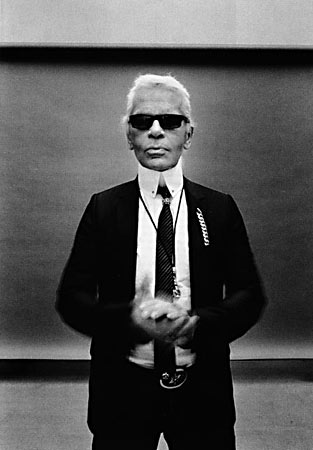
- Lagerfeld, The Guide To Life
This things turns out to be, if you can believe this, Bob Dylan’s 6548th Dream. Putting my Freudian training to immediate use I begin to study the number . Notice the 654 desecends by one unit that makes three then the last digit 4 is doubled to make an increase of four that adds up to seven. Pretty heavy huh? Next I added up 65 & 48 and the number was 113. Wow! I knew I was on to something.. Then I added up all four numbers seqentially and get this- 23. That’s right, 23! Twenty-three skiddoo. Get it? This was a personal message from Bob Dylan to me. Wow! That internet is somethin’ else, isn’t it?
I take a look at the picture of Lagerfeld showing me his ass and I can tell you I’m less then impressed. Moving down the page I notice the guy has turned around. Dig this, this can’t be a coincidence, he’s wearing the same dark glasses I do. Boy howdy, hey? And he looks like a guru from beyond the farthest star. So do I. Now I’m really getting excited. The only thing separating me from this new reality is the darn computer screen. I can’t get through it. I try but I can’t figure it out. Doesn’t matter which key or combination of keys I press.
Aw, shoot, I’m forgetting the most important part, Bob Dylan’s dream. Mr. Cool is going to relate directly to me.
The thing is written in some kind of mysterious code, some kind of hip patois, New Yorkese or whatever. Dylan has been commanded apparently by his guru Lagerfeld to commit his thoughts to this blog. Wow, I said to myself, this Lagerfeld has the force behind him. Imagine telling Bob Dylan what to do!
Now, we all know that Dylan says that what he writes has no objective meaning. He says he writes meaningless stuff that is understood differently by whoever reads it. That must be why I think his stuff is heavy, because I’m a really, really heavy guy. I don’t have the look down yet, like this Lagerfeld guru, but I ‘m working on it.
Dig this quote:
And here’s a song I wrote, uh, some time ago back when I was raking in these blondes, man. Could say I was raking in the pennies. (Pennies. Get it. Pennies are heavy. Bob was heavy.) I was doing more than raking these chicks though. If you dig.
Do I dig? I’ll say I dig. A super sleuth am I actually so I really dig, raking in the blondes has several covert meanings. Bob’s a poet, but, hey, that’s one of the things I do best, too. So Blonde on Blonde was released in ’66 so he wrote the poem that follows in ’66. Sharp deduction don’t you think? Blonde on Blonde means one blonde after another, heaps of ’em. Bob’s probably the cocksman of the century. So Bob’s got his dick out and he’s not wavin’ it to the empty air…if you dig. No sir, Bob is planking those blondes. He was actually known for his generosity with his dick. One time Liam Clancy was out touring so as a friendly gesture Bob went over and planked Liam’s wife so she she wouldn’t be so lonely. That’s the kind of guy Bob is. Yeah. Now that’s friendship, isn’t it?
Back when he was young he did more than rake blondes chicks he says. I don’t know what ‘more than rake’ means. Maybe S&M or something really exciting like that.
Further along Bob get deep into the dark meat. See what I mean about me bein’ a poet too? He wouldn’t touch anything else. Did the whole darn chorus line. Get real heavy with one of the back up singers, married her and had a little ebon baby. Nobody’s seen him though. He didn’t even grow up to be a soul singer as far as I know. Lived in Tarzana- yeah.
I’m going to tell you though I don’t think I woulda published Dream #6548. 23 skiddoo, indeed. I’d a been outta there before the door hit me on the ass. Back in those days of blondes Bob was heavy, well he was heavy in a lot of ways but he was heavy into drugs, too.
Check this quote out:
…I spotted some kids…and I walked right over to them.
=======
I said kids, “could I interest you in some visions?”
Some visions of Johanna, someone’s gonna get stoned;
They asked me if it tasted kinda like a milkshake
I said yes, and took out some pills
Then a policeman came most hurriedly
And arrested me on account of free love…
Bob And The Little Children

What is one to think? I know this Lagerfeld guru is a way out guy. I used to buy his soap and boy was it slippery. It was the slickest soap I ever used, almost couldn’t hold onto the bar and it was huge too. Lagerfeld is suspected to be completely sexually liberated too, as well as everything else. I mean, man, this guy is free, free as the breeze, free as the Fourth Of July, like, look up free in the dictionary and his picture is the definition. So, I guess that means he won’t stop at nothin’ and he’s Bob Dylan’s guru.
Don’t know what he’s tellin’ Bob but I wouldn’t even make bad jokes about corrupting innocent little kids as a candyman. Speaking of candy, here’s another quote:
“Oh” said the boy, as I gave him a lolly
And offered him a ride in my Cadillac car…
Now at this point the boy’s mother comes in,
And she’s waving and wailing at me like I done something wrong.
I don’t know who Bob’s been fraternizing with, other than Soapy Lagerfeld, and I know there is no meaning to anything Bob writes except what I think it means but then if the only meaning is what I think then that meaning must be true, Freud again, and since it means what I think it means I wouldn’t have published it lest someone think I’m serious.
Probably just some unconscious posturing but a position I wouldn’t want to assume.
Bob Dylan: Dark As A Dungeon Way Down In A Mind
January 15, 2009
Bob Dylan:
Dark As Dungeon Way Down In A Mind
by
R.E. Prindle
We’re on a bad motorcycle with the devil in the seat
Going ninety miles an hour down a dead end street.
Hank Snow

Dylan Feinstein Photo
My correspondent replied to my post Bob Dylan The Reactionary. An excerpt:
Poetry is a funny thing: it bypasses the cerebral when it is best IMHO…Poetry is nonsense, making the nonsense of mortality a bit more bearable for a moment in time.
I suppose that’s a valid reflection. There has been some debate as to whether song lyrics are poetry. In a lyric’s effort to condense experience into the fewest possible words my own thinking is that they are of the essence of poetry whether or not one considers them ‘true poetry.’
I certainly carry innumerable song lyrics around in my head while very little ‘true poetry’ has had the same effect on me. A great many of the lyrics are Country and Western and what passed for Folk. I find references in Dylan of the same importance of favorites that I have.
I recently ran Hank Snow’s Ninety Miles An Hour Down A Dead End Street on Rhapsody and was surprised to discover that Dylan had actually recorded a heavily edited version as a religious gospel dirge. Don’t get the connection but if Dylan says so…
The part of the lyric that has always struck me the most forcefully is the line: We’re on a bad motorcycle with the devil in the seat going ninety miles an hour down a dead end street. I apply the line to all kinds of situations including the present political quagmire. Dylan seems to emphasize the illicit love affair. Doesn’t really matter, the point is that that little piece of ephemera had a profound influence on us. Dylan resurrected the song fifty years on while I use the image that appealed to me in my writing frequently. Poetry? Well, I think maybe.
There are a couple of other country classics that live in my mind by Merle Travis: Dark As A Dungeon Way Down In A Mine and Nine Pound Hammer. I always imagined those were folk songs dating back to the 1880s or something but Travis wrote as late as 1947. The relevant quotes for me:
It’s dark as a dungeon way down in a mine
Where the wind never blows, and the sun never shines,
Where the dangers are double and the pleasures are few.
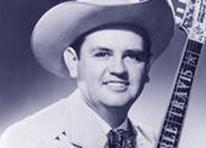
Merle Travis- Sixteen Tons
———————–
Roll on buddy, don’t you roll so slow,
Tell me, how can I roll when the wheels won’t go.
This nine pound hammer is a little too heavy
For my size, boys, for my size.
The first quote is from Dungeon, the latter from Nine Pound Hammer.
For myself I always gave the lyrics a psychological twist saying ‘mind’ for mine. Roll on buddy referred to my habitual procrastination, psychological blockage preventing action. Had problems. Solved ’em. Are these songs poetry? They are in my mind. I make all kinds of things out of them even the innocuous line:
It’s a long way to Harlan,
It’s a long way to Hazard,
Just to get a little brew. boys,
Just to get a little brew.
I’m not thinking of booze either as in ‘My Buckets Got A Hole In It.’ Can’t buy no beer.
I’m sure Dylan cherishes both those songs. They’re the classics that people in the know know. They don’t call us cognoscenti for nothing. Roll on buddy…
As a last example before I get to the gist of this thing is the song ‘Grand Coulee Dam written by Woody Guthrie a man I really despise- damn it. But talent will out and while I have my prejudices I’m no bigot. For me this lyric is as poetic as you can get.
Well, the world holds seven wonders that the travelers always tell,
Some gardens and some towers, I guess you know them well,
But now the greatest wonder is in Uncle Sam’s fair land,
It’s the great Columbia River and the big Grand Coulee Dam.
She heads up the Canadian Rockies where the rippling waters glide,
Comes a-roaring down the canyon to meet the salty tide,
Of the wide Pacific Ocean where the sun sets in the West
And the big Grand Coulee country in the land I love the best.
Uncle Sam took up the challenge in the year of thirty-three,
For the farmer and the factory hand and for all of you and me,
He said, “Roll along, Columbia, you can ramble to the sea,
But river, while you’re rambling, you can do some work for me.”
Now in Washington and Oregon you can hear the factories hum,
Making chrome and making manganese and bright aluminum,
And there roars the Flying Fortress now to fight for Uncle Sam,
Spawned upon the King Columbia past the Big Grand Coulee Dam.
In the misty crystal glitter of that wild and windward spray,
Men have fought the pounding waters and met a watery grave,
Well she tore their boats to splinters but she gave men dreams to dream
Of the day the Coulee Dam would cross that wild and wasted stream.
Nice stuff from my point of view. Doesn’t get any better than that. The song gave me dreams to dream. If you want to hear the best rendition ever by Lonnie Donegan click this:
http://www.youtube.com/watch?v=0Jc2efqj5Js
My verdict is that good lyrics are good poetry while bad poetry doesn’t necessarily make a good lyric.
2.
Now as to the lyrics to Highwater by Dylan that my correspondent referred me to that I discussed in the post: Bob Dylan The Reactionary.
As the lyric touched my correspondent’s psychology I tackled the lyric from a different angle as the way I was interpreting it may not have reflected his. For all I know this doesn’t either but I think it’s interesting.
The lyric in question:
Well, George Lewis told the Englishman, the Italian and the Jew
You can’t open up your mind, boys, to
every conceivable point of view
They got Charles Darwin trapped out on Highway 5
Judge says to the high sheriff, I want him dead or alive
Either one, I don’t care
Highwater everywhere.
The format Dylan uses here is that of the genre of old jokes that begins something like this: A Protestant, a Catholic and a Jew… then moves on to the punchline. Dylan’s presentation can be interpreted as flip so he is probably thinking of the verse as a joke.
As I said in my previous post George Lewis represents a Black, the Englishman as Science or Darwin, the Italian Catholicism or Christianity and the Jew Judaism. Four different conceivable views that can’t be held simultaneously no matter how open you think your mind is.
These are four crucial irreconcilable conflicts in Dylan’s mind while they probably represent the major psychological dilemma of most White or Jewish people.
The problem is especially acute for Dylan who was indoctrinated into Jewish Lubavitcher beliefs for his Bar Mitzvah while having
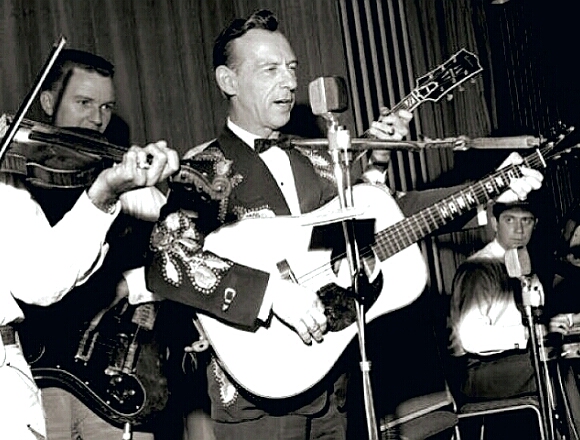
Hank Snow- It Don't Get No Better
been brought up from infancy on Hillbilly music, Country if you prefer, which is quintessential Christian music whether sung in church or honky-tonk. Those good old boys live with their religion even when they’re robbing banks so even with0ut going to church Dylan has a strong Christian background. He did sing a sexual anthem like Ninety Miles An Hour as a hymn. Ponder that for a minute.
So Dylan has had to reconcile his dual religious beliefs seeming to have come down on the side of his Lubavitcher Judaism which is no surprise. He then has to do something about his religious vs. scientific or evolutionary beliefs. Darwin doesn’t go with Judaism. He centers the problem on Darwin as Science. Here he has made the decision to imprison or kill Evolutionary beliefs. Dead or Alive, either way, Judge says, he don’t care. Having eliminated Science and Christianity we have Judasim and the Blacks on the racial issue. Dylan has subordinated himself to the Blacks on the racial issue and is willing to take the inferior position. While he believes he has resolved these for him difficult problems they still trouble him or he wouldn’t be talking about them. Strange.
Why did my correspondent associate me with the verse? He says: Just thought of you and the line(s) for some reason. My correspondent seems to be wrestling with Dylan’s problem himself. As I have written on all four topics fairly extensively and I know the correspondent has read lots of my stuff I suppose the lines suggested me. The song isn’t good poetry and not even good lyrics but if it succeeded at least on my correspondent’s level one would have to concede that lyrics are poetry. The better the lyric the better the poetry. And now for a little circular logic: The better the poetry the better the lyric.
Bob Dylan The Reactionary
January 14, 2009
Bob Dylan The Reactionary
by
R.E. Prindle
As I say I haven’t listened to anything by Dylan since ’66. Not exactly true, I have listened to and watched a couple of newer items on You Tube or wherever but I hope I won’t be judged too harshly on account of a chance listening like that.
What I mean to say is a correspondent sent me a quote from a song called Highwater- for Charlie Patton.
I’m more clear now on why I haven’t listened to later Dylan because I didn’t think the song was very good. The Poet Laureate of Rock can surely do better than that. The song was from an album called Love and Theft. I’m not sure which half of the equation this song represents.
As the quote has religious overtones perhaps my correspondent was reacting to the recent examination of Dylan’s religious attitudes in the movie by Joel or perhaps to some religious essays on Dylan I’ve written like for instance, Lubavitcher Bob. Beyond that I don’t know what he could have meant.
From the lyrics it looks like Dylan takes himself quite seriously as a man in black. I thought the lyrics were pretty nonsensical as represented by these three lines:
Well, the cuckoo is a pretty bird, she warbles as she flies
I’m preachin’ the word of G-d, I’m puttin’ out your eyes
I asked Fat Nancy for somethin’ t’ eat
Well, I’m not going to struggle too hard to unravel the deep inner meaning of those lines, let Charlie do it, but I am taking Dylan literally on the middle one. As a man in black he is preachin’ some word anyway- G-d, the D-vil or somewhere in between. Not always easy t’ tell.
But back t’ the quote my correspondent sent that does have probable religious overtones. Since it’s expressed so cryptically of course, it’s all deniable:
Well, George Lewis told the Englishman, the Italian and the Jew
You can’t open your mind, boys,
to every conceivable point of view.
They got Charles Darwin trapped out there on Highway 5
Judge says to the high sheriff, I want him dead or alive.
Either way, I don’t care.
Highwater everywhere.
In this song of unlimited non-sequiturs this verse can almost be read to make sense.
In the next verse which may make it related, or perhaps not, Dylan says he’s a preacherman so we’ll assume Dylan is speaking Biblically. He is a Bible scholar you know as well as a Lubavitcher. Dylan always blazes new trails, don’t he?
OK. I don’t know who George Lewis is supposed to be. There’s a couple Black musicians by that name so let’s assume a Black man is ‘tellin’ the Englishman, Italian and Jew what’s what. Nobody can believe three things at one time so the wise thing would be to bet on the Jew if you want to win, win, win. That last is a parody on a line or two from the old folk song Stewball for those who didn’t recognize it. I almost didn’t.
We will assume that Darwin and Evolution are meant by the Englishman, the Pope and Catholicism by the Italian while the Jew needs no explanation. Might be Dylan, I don’t know. Two, Pope and Jew, are religious while Darwin is Scientific and his science demolishes religion. “The King takes the Queen every time’ to quote a new folk song by Larry Hosford. So the Pope and Jew are out to get Darwin in order to preserve their folly. Thus they have Darwin trapped out on Highway 5. Why 5? Why not 61? Dylan must have been cruising the highway from LA to Seattle at the time looked out the window of the bus saw a sign saying I5 so he said ‘That rhymes’ and put it in.
Dylan trapped on Highway 5 is filler so to the Judge i.e. Biblical authority tells the high sheriff- high sheriff sounds real wild west, don’t it, I knowed you’d think so- he wants Evolution/Darwin brought in dead or alive. OK. So as Dylan believes that the Bible is literally true and the veritable word of G-d proceeding from his own lips then it follows that Dylan is anti-Evolution and Darwin. Must be or we’ve got ourselves a contradiction here. Dylan is thus first cousin to William Jennings Bryan who persecuted Scopes way down there in Tennessee where they make that sippin’ whiskey. Hence Dylan is a reactionary rejecting the truth, as Woody Allen would say, for G-d.
Well, brav-, but a big raspberry for B-b if that is what he meant. Who can say? It’s poetry. Of sorts. A bigger raspberry for my c-rresp-ndent who should learn to say what he means without pinching his heroe’s words.
Highwater everywhere. He’s a drowning man.
Exhuming Bob XVIII: Bob Dylan, My Son, The Corporation
December 10, 2008

Electrified Dylan
…Bobby stems from a middle class background in which much emphasis is placed on education and conformity and plans for a respectable career.Bobby didn’t quite fit into that framework and preferred a more bohemian type of life. His parents say he frowns on being called a beatnik, and they don’t like that designation for him either. But he was in fact adopting some of the manners associated with beatniks- or folkniks- in an area where that makes a person stand out as a strange character.
Zimmerman as Dylan
People who knew him before he set out to become a folknik chuckle at his back country twang and attire and at the imaginative biographies they’ve been reading about him. They remember him as a fairly ordinary youth from a respectable family, perhaps a bit peculiar in his ways, but bearing little resemblance to the sham show business character he is today.
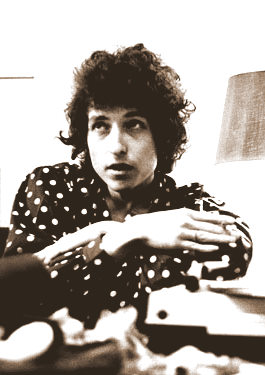
“He wanted to have a free rein.” says Zimmerman. “He wanted to be a folk singer, an entertainer. We couldn’t see it, but we felt he was entitled to the choice. It’s his life, after all, and we didn’t want to stand in the way. So we made an agreement that he could have one year to do as he pleased, and if at the end of that year we were not satisfied with his progress he’d go back to school.”
“It was eight months after that, says (Abe) Zimmerman, that Bobby received a glowing ‘two column’ review in the New York Times. So we figured that anybody who can get his picture and two columns in the New York Times is doing pretty good. Anyway it was a start.”
His rise in barely three years has been almost as impressive as the fortune he has already amassed…
My son is a corporation and his public image is strictly an act…Hard to follow this act.

Albert Grossman was born in Chicago on May 21, 1926, the son of Russian Jewish immigrants who worked as tailors. He attended Lane Technical School and graduated from Roosevelt University, Chicago with a degree in economics.After university he worked for the Chicago Housing Authority, leaving in the late 1950s to go into the club business. Seeing folk star Bob Gibson perform at the Off Beat Room in 1956 prompted Grossman’s idea of a ‘listening room’ to showcase Gibson and other talent, as the folk movement grew. The result was The Gate Of Horn in the basement of the Rice Hotel, where Jim (Roger) McGuinn began his career as a 12 string guitarist. Grossman moved into managing some of the acts who appeared at his club and in 1959, he joined forces with George Wein, who founded the Newport Jazz Festival, to start up the Newport Folk Festival. At the first Newport Folk Festival, Grossman told New York Times critic, Robert Shelton: “The American public is like Sleeping Beauty, waiting to be kissed awake by the Prince of Folk Music.
In the decades prior to the 60s, through the work of such avatars as Woody Guthrie, the Weavers and Pete Seeger, folk music had become identified with sociopolitical commentary, but the notion had been forced underground in the Senator Joe McCarthy witch-hunting era… Peter Paul and Mary came together to juxtapose these cross currents and thus to reclaim folk’s potency as a social, cultural and political force.
“We have absolutely no part in his affairs. Those are his own operation. He’s a corporation and he has a manager.”
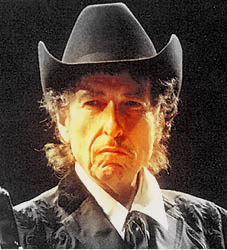
The Burden Of Being Cowboy Bob Dylan
Exhuming Bob XVII: Bob Dylan, A Napoleon In Rags
December 1, 2008
Exhuming Bob XVII
A Napoleon In Rags
by
R.E. Prindle
Hoffman, Michael, Judaism Discovered, 2008
Jay Michaelson: http://www.nextbook.org/cultural/feature.html?id=1725
Cornyn, Sean: http://www.rightwingbob.com/weblog/archives/1850
Hartley, Mick: http://www.mickhartley.typepad.com/blog/2008/10/dylans-true-message.html
Prindle, R.E. https://idynamo.wordpress.com/2008/06/25/exhuming-b0b-x-lubavitcher-bob/
How does the ‘Napoleon in rags’, Bob Dylan, conceive himself in his role as a reformer of Judaism because that is what Messianic Judaism is. What does this believer in the Bible as the literal word of God see as his mission? One should note that as Dylan places the Bible above the Talmud he is a Rabbinical Judaic outlaw as Michaelson says. Did Dylan really just wake up one morning and say: ‘Oh L-ordy, I have crashed. I need the crutch of Jesus’ as Michaelson, Cornyn and Hartley suggest or was there an ulterior motive? Perhaps a conceptual idea if not a well thought out program.
Jay Michaelson, claiming to be a ‘secular’ Jew takes exception to ‘Messianic’ Judaism. What exactly is Messianic Judaism? The notion may take many readers by surprise; those who are only familiar with mainstream Judaism and Christianity. Most non-Jews don’t realize that Judaism has as many sects as Christianity.
For instance Dylan’s stance smacks of Karaitism. the Karaites are a Jewish sect that denies the authority of the oral law or Talmud and hence the Rabbis. They are outlawed as a cult. Messianic Jews accepting Jesus as the Jewish Messiah and hence the New Dispensation are and always have been by definition Outlaws, being outside THE LAW.
The Rabbi David M. Hargis of The Messianic Bureau International is quoted by Michael Hoffman in his Judaism Discovered p. 844:
“Messianic Judaism” is a means for subverting Christianity by incorporated reverence for the rabbis who are heirs to the religion and customs of the ancient Pharisees as recorded in the Talmud. The claim of Messianic Judaism is that historic Christianity is “pagan” and imbued with “gentile culture” needlessly alienating and offending Judaics who might otherwise convert to Jesus Christ. Their “solution” is to fashion a supposedly pagan-free form of Judaism that allegedly believes in Jesus. ‘We believe it would be the best and is ultiamtely necessary for all Jewish people to know their Messiah Yeshua, but we do not believe that God has called any Jewish person to become Gentile or Western Christian in custom. Rather, we believe it would be best and is ultimately necessary for Christianity to remove its pagan influences and return to the roots of Judaism, that is, to return to the way of Yeshua as He walked by example and set forth in His entire Word….However this does not mean that Modern Rabbinical Judaism does not have truth within it.”- Rabbi David M. Hargis & Messianic Bureau International, “Basics of Messianic Judaism.” www.messianic.com/articles/basics.htm (as of Feb. 25, 2008; it may be altered after that date.)
So it would appear that Messianic Jews want a return to pre-Pauline Jesusism deleting all non-Jewish influences in Christianity. These would include Platonic influences, the Dionysian Kyrios Christos, the Persian influences, Gnostic influences and the Egyptian influence that made Mary the Mother of God as patterned after Isis. In other words the Messianic Jewish Jesus would be one that Christians would scarcely recognize.
As can be seen by the title of Rabbi Hargis’ organization that it is an international one; indeed, Dylan’s outfit Jews For Jesus is international in scope. You can call that a conspiracy if you like as Cronyn and Hartley do.
It would be fair to assume that Mitch Glaser’s and Al Kasha’s organization, Jews For Jesus, also an international organization, is affiliated to, or at least is associated with the Messianic Bueau International in some way or other as like minded organizations. We know for certain that Dylan was and is associated with Jews For Jesus. A purpose of Messianic Judaism is to strip Western, that is to say “pagan” influences from the figure of Jesus returning him to the status of ‘pure’ Semite.
That is to say that the Greek cult of Kyrios Christos is to be abstracted so that Jesus is no longer The Christ. So the purpose of Messianic Judaism is to take back Jesus from the Christians while reuniting Messianic and Rabbinical Judaism. The messianics are willing to concede that there is some ‘truth’ in Rabbinical Judaism.
Dylan was not merely preaching Messianic Judaism to Jews but whiffing it past Christians also. It is true that he thinned out his audience rather quickly having apparently misjudged the religiosity of his following. As a Jew of Orthodox sensibiities Dylan, in his mission as Messiah, or King of the Jews as Michaelson styles him, would have to learn something of Christian beliefs and sensibilities. It would seem likely then that he approached Dwyer of the Vineyard Fellowship to pick his brains. The question then was Dylan exploited by the Christians as Michaelson believes or was Dylan exploiting the Christians?
A question then arises as to whether Dylan wasn’t ‘speaking falsely now’ when he said ‘he never wanted to be the voice of his generation, and he certainly never asked to be ‘King of the Jews’ or a vessel for our hopes and dreams.’ Can we believe the denial of this self-styled ‘Napoleon in rags?’ If Napoleon wasn’t a ‘leader’ who demanded following who has ever been? How mistaken could his contemporaries have been in taking this ‘Napoleon in rags’ as their spokesman. Can Dylan have changed direction in 1979 when he wanted to become a great Messianic spokesman leading his people to some Promised Land? What else could have been his intent in becoming a Jim Jones style religious preacher? ‘There’s something happening here and you don’t know what is, do you Mr. Jones?’
Dylan definitely confuses Michaelson who opines ‘his latest incarnation, as a mustachioed journeyman musician, is made of equal parts of authenticity and con’ and ‘Dylan, who always seems to be in on the con when he’s not perpetrating one himself.’ Indeed. Dylan does project a duplicitous character; speaks out of both sides of his mouth at once. Or once again as Michaelson understands it: ‘…like him, I think I can understand the appeal of authentic religious experience in the context of superficiality and doublespeak.’ Uh huh!
Thus Dylan’s double edged mission was and is to strip ‘Christians’ of their ‘pagan’ sensibilities- i.e. Western culture- while converting Rabbinical Jews to Messianism or Jesus. So, whether Cornyn and Hartley believe it or not, yes, there is a ‘Great Bob Dylan Conspiracy.’
It is embarrassing that at this late date in the evolution of human consciousness that Bob Dylan believes the Bible to be the literal word of God. Consciousness has evolved to that level that the sham of the Religious Consciousness should be apparent to all. Both Science and Communism have been proclaiming the falsity of the religion and extreme Jewish nationalism that Dylan affects for a hundred years or more.
I certainly have to reject the Religious Consciousness. As such I feel defrauded by Dylan’s early career and my attachment to it. Dylan willfully misrepresented himself, doublespeak, and cheated me as well as all his fans who thought he was enlightened. I was misled.
Sorry Bob, but you’re a fraud.
Exhuming Bob XVI: Bob Dylan’s Dream..Or Nightmare?
November 27, 2008
Exhuming Bob XVI
Bob Dylan’s Dream or…Nightmare?
by
R.E. Prindle
I’ll let you be in my dream if you’ll let me be in yours.
-Bob Dylan

http://www.nextbook.org/cultural/print.html?id=1725
When Dylan wrote those words, was he sincere or was it just part of the con? I was recently asked not ot contribute anymore to expectingrain.com by person or persons unknown. The webmaster refuses to identify he or them to me. Too ashamed to let their names by known, I guess. Or chicken. I know I’d rather not be known as a rasty, nasty censor.
I was ejected for voicing pretty much the same sentiments as Jay Michaelson does in the above referenced review of Joel Gilbert’s The Jesus Years. Maybe the difference between Jay and me is that I don’t think Dylan is such a mysterious elusive guy. Anybody with a little Freud under his belt has got Dylan pinned.
He suffers from a fairly severe depression while being very emasculated. He is so emasculated he can’t even fix on an identity for himself. His natal Bobby Zimmerman failed him so he apparently attempted to become Elston Gunn which he wasn’t able to sustain so he then became Bob Dylan which also became too much of a burden to him so he threw that identity up for grabs saying anybody can be Bob Dylan who wants it, then he became Masked and Anonymous eschewing any identity whatever. An empty suit.
If that isn’t clear to you then there is no reason for you to tackle Freud or psychology now.
So, what was the conflict? Duh. Could it have been that between his Jewish upbringing and his Christian milieu? Gosh, I don’t know, do you? Is there anything in his subsequent history that would suggest such a conflict? Let me think. I think there is, therefore I am.
Is there a conflict in the minds of Dylan’s disciples. Well, now there we’re on firm gound. Just listen to Jay:
There’s a telling moment in Joel Gilbert’s new (?) documentary Inside Bob Dylan’s Jesus Years: an interviewee says that when Dylan became a born again Christian, he went, in two short years, from being an American Jewish hero to the “greatest apostate of the twentieth century”… But worse, because Dylan embodied a specific kind of liberal American Jewish hope that someone would speak truth to power, and that the world would listen. These were very Jewish dreams, and Dylan fulfilled them for awhile.
Damn, then it wasn’t anything I said as the messenger. I guess it was just not being Jewish that I shouldn’t have attempted to deliver the message. Right message, wrong face. Gee, I guess I can’t be in Dylan’s dream because I’m not Jewish. Whatever happened to One World, One Dream? Everybody being brothers? The Global Village? They didn’t think there wouldn’t be variations on the theme I hope. Well, no matter Dylan and his People can still be in my dream. I’m inclusive.
But Jay and his People themselves apparently feel excluded from Dylan’s dream also. Jay says:
Dylan never wanted to be the voice of his generation, and he certainly never asked to be King of the Jews or vessel for our hopes and dreams. (My italics.)
Wow! King of the Jews, Jesus Christ. I may have thought it but I didn’t have the cojones (My italics), Jay does and actually says it. Jesus, I’d be running for my life let alone being kicked off expectingrain.com.
Jay and his People just can’t seem to get it. Dylan never became a Christian, he became a Jew For Jesus. Jay even has the answer before him but his religious bigotry won’t let him see it: “Why did Dylan…record two religious albums proclaiming the word of G-d?” There you have it Jay. Dylan was conflating Jesus and God into one and then substituting G-d for Jes-s. Jesus is Christian, God is Jewish. Duh. For Christ’s sake, c’mon Jay.
Well enough of that. I’m sure you can’t stop laughing. Jay is supposed to be reviewing Gilbert’s documentary. Michaelson; is not either well read on his subject of Dylan or well researched. Maybe he smoked enough dope that he thinks he automatically knows everything about Dylan. I’ve seen it happen.
As far as the film goes, it may not be a particularly good movie but then it is a documentary and has to judged differently. As documentaries go I found it more than satisfactory. The clip art was an unusual special effect but I actually found some of them humorous. I wouldn’t have done it that way myself but Gilbert can do as he pleases and did.
Gilbert doesn’t mysteriously look like Dylan as Jay says. There is no mystery involved. Gilbert is trying to clone himself as Dylan; does a good job. He has a good understanding of his subject, after all he’s trying to be Dylan. His selection of subjects provided enough penetrating information that I have to think they were well chosen. Perhaps they were all that Gilbert could get, in which case the film maker drew them out well. Rob Stoner was the key. He was intelligent, understanding, and well informed- he knew what he was talking about. Kasha and Glaser gave you all the information you needed to understand the Christian-Jews For Jesus scam. Come on Jay, open your eyes.
Weberman has been saying that Dylan was a heroin addict since Christ was a baby. At least from 1964. It may have been true, I don’t know, but it didn’t have anything to do with Dylan’s crash. If Jay knew anything about his subject he would realize that the divorce was the key. Dylan had finally, after a life time of trying, become so defiled that he had to turn to God/Jesus to lead him back. I hope he found the way. Freud again.
For Michaelson who can’t separate his Jewishness from Dylan the problem is a paramount betrayal because ‘We’re (Jews) scarred and traumatized by two thousand years of Christian hegemony… So, there you have it, the cat’s out of the bag, couldn’t have said it better myself. Jay and his People thought Dylan was the Messiach who was going to establish a Jewish hegemony over ‘Christians,’ ‘speak the truth to power.’
I’m not so sure Dylan won’t still try but that has little to do with the documentary. The con and exploitation was not that of Dwyer on Dylan but Dylan over the Vineyard Fellowship. Dylan was using them to try to reach his fellow Jews in his faith of Jews For Jesus. As we are never tired of being told: Jes-s was a J-w. Case closed. Forget hegemony.
In summation Gilbert, in my estimation, did an excellent job for what he set out to do. I was properly instructed and…I got it. But, I was still kicked out of Dylan’s dream. He conned me too. What a nightmare!
A Review: Ian Whitcomb: Rock Odyssey
November 26, 2008
A Review
You Really Turn Me On
Rock Odyssey
by
Ian Whitcomb
Review by R.E. Prindle
Whitcomb, Ian: Rock Odyssey, 1973
I don’t suppose too many people today remember Ian Whitcomb. He surfaced in 1965 with his hit song

Young Ian
‘You Really Turn Me On. In 1965 I was a very old twenty-seven but getting younger every day. I saw Whitcomb once while visiting my wife’s relatives. Her young cousin was watching the Lloyd Thaxton show out of LA. I’d never heard of Lloyd Thaxton either but according to the cousin he was the hottest thing on TV. If I remember correctly the Kinks had just sung Dedicated Follower Of Fashion that I thought was very OK. The Ian came on and did his breathy falsetto androgynous song: You Really Turn Me On. At one point after suggestively fondling the microphone stand he shot down out of sight like a tower from the World Trade Center resurfacing moments later. Pretty startling stuff at a time when nearly every new group was an actual mind blower- The Rolling Stones, Animals, Dave Clark Five and this was just the beginning. More and even stranger and stronger stuff was to follow quickly only to begin a slow fizzle even as it peaked ending in the Rap and stuff that passes for music today. A very old Bob Dylan trying to bring light into the heart of his growing darkness. After the startling sixties came the sedentary seventies. But then Whitcomb disappeared like his fall from the microphone stand and I never saw or heard of him again. A true one hit wonder.
Years later I came across his LP Under A Ragtime Moon. Then I knew why he had disappeared. He was into that English music hall stuff. But then, I didn’t mind that. He sounded quite a bit like one of my personal favorites The Bonzo Dog Doo Wah Band. Of course they didn’t really get that far with that stuff either. You have to be a member of the cult to really dig it. In order to like the Bonzos you have to have a fairly eccentric side to your musical taste. A little out of the mainstream which is where I preferred to live my life. I thought the Bonzos were wonderful, still do. But I was pretty much all alone out there. I liked and like, Neil Innes and the late great Viv Stanshall, two of the Bonzo stalwarts. ‘Legs’ Larry Smith. Ragtime Moon lacked the modern rock foundation the Bonzos infused into their music but to this day I couldn’t tell you whose version of Jollity Farm I’m familiar with. Anyway I have a soft spot for this sort of thing so over the years I’ve played a side of the Bonzos fairly often and dusted off my copy of Ragtime Moon occasionally.
You Really Turn Me On always stuck in my mind, great song. Kinda struck my lost chord and made it gong into the distance. If you’re only going to have one hit you might as well make it a good one. And then for some reason, I don’t know, I googled Whitcomb and saw that he’d written a few books, including this autobiographical sketch cum pop history so, as it was cheap on alibris, I sent for a copy. I was delighted with the volume as I read it through. As biographies go this is one of the better ones, right up there with Wolfman Jack’s not to mention that of that phony Jean-Jacques Rousseau although I stop short at Casanova. Casanova is one hard one to top. As a history of the period it is more balanced and beats the hell out of that crap from the Boys Of ’64.
Ian took offense at being a one hit wonder; he really wanted to be up there with, say, Jim Morrison of the Doors, Mick Jagger, people of that ilk. I have to believe that stories Ian tells are true although some are stunningly improbable but then those things can and do happen that way, you know. It’s all in how you see what goes on around you. Toward the end of the book he’s pondering on where he went wrong, he’s sunk into a fair depression over this, he flees from his apartment in his pajamas one early morning to take a stool in a coffee shop. That’s depression. But, let Ian tell it in his own inimitable fashion. As improbable as it may seem he took a stool next to Jim Morrison who recognized him first.
When ‘Light My Fire’ had reached number one, Jim had gone out and bought a skintight leather outfit. At the Copper Skillet, it wasn’t so skintight anymore.
“How do you do it?” I asked.
“I never dug Jerry And The Pacemakers. How do I do what?”
I wanted to kick myself for bringing up my obsession with pop success, but I plowed on: “How do you stay intellectual and still be a hit with the kids, the masses?”
“You could have done it. You were into the theater of the absurd. I saw you on ‘Shindig’ and ‘Lloyd Thaxton’ goofing off and telling the audience that rock n’ roll was a big joke. That the whole of existence is a big bad joke. You were too comic. Tragedy’s the thing. Western civilization is ending and we don’t even need an earthquake; we’re performing crumble music for the final dance of death and you know what? Truth lies beyond the grave. I’ll pick up the tab.”
I couldn’t have put it better. Ian’s problem was that he was working from a different ethic. He didn’t understand that the singer and the song was the show, the whole show. Nothing else was needed. We were only there to see the singer sing his song. It’s nice to know that Jim and I were watching the same Thaxton show together. If I hadn’t seen Ian on Thaxton I wouldn’t have been as impressed because on that show singer and song were a single projection.
Due to the wonders of the internet I was recently able to catch several versions of Ian’s song but not the Thaxton one. One had him and a half dozen other guys charging around a series of pianos. Completely missed the point of the singer and his song. Not even good entertainment. Ian considered himself an entertainer bacause of a childhood encounter with a music hall comic named O. Stoppit. Fateful encounter. Because of it Ian wanted to be a comic, ended up a singer and as Morrison noted the two were too dissimilar to work.
Ian was probably headed for depression from the age of five or six or so as he came to terms with bombed out London in ’46 or ’47. His biographical sketch is a wonderful tale of a seemingly cheerful man’s descent into a deep depression. By book’s end Ian is nearly out of his mind.
He quotes a psychoanalyst for his definition of depression:
It was the great Serbian psychoanalyst Josef Vilya who concluded that chronic depression is the result of a head on collision between dream and reality. The patient dreams of becoming King but goes on to become a member of the tax paying public.
That’s probably what Morrison meant by tragedy. Life always fails to meet our expectations so that humanity responds by assuming at least a low grade depression that makes comedy an adjunct to tragedy. Thus in the Greek theatre there was a terrifically depressive tragic trilogy followed by some comic relief. The burlesque of an Aristophanes.
Ian’s problem was as Morrison noted that he saw the absurdity of the human condition but was too jokey about it. Absurdity is a serious thing and has to be so treated. O. Stoppit taught Ian a silliness unmixed with tragedy. A tragedy in itself. When silliness such as You Really Turn Me On met the tragedy of a one hit wonder Ian began his descent into depression as Vilya suggested.
I’ve never been depressed myself, never had the blues, but I have visited the lower depths as a tourist so I have some notion of what Ian’s talking about. Dirty Harry in drag. I just never got off the bus that’s all, except once, to walk through Haight-Ashbury where I saw first hand how horrible true depression could be. Boy, did Ian find out about that. Good thing he never found his Debbie.
In his narrative combining grim humor with his developing depression Ian gets off some rippers. I had a good many uproarious belly floppers. Try these few lines. Two good ones in succession. You do have to have the same sense of humor. The North and South are those of England.
These frightening stories of Southern travelers stranded in woebegone depressed cities and suffering under the rough natives. For example a well known Shakespearean actor, having missed the last train out of Crewe, knocked on the door of a hotel. “Er, do you have special terms for actors?” the traveler asked. “Yes- and here’s one: Fuck off!”
And if they weren’t being aggressive, the Northerners were acting daft. One heard of a Lancashire lad down in London demanding another helping of dressed crab (in the shell): “Give us another of them pies- and don’t make the crust so hard.”
Of course Ian can’t do that on every page but laughs are liberally sprinkled throughout the underlying depression.
Ian’s book opens with his youthful encounter with O. Stoppit and ends with another unifying his theme nicely.
In between Ian enters the world of rock almost serendipitously with his one hit song: You Really Turn Me On. After that his story is a search for a sequel that he can never find but which he pursues somewhat as Alice down the rabbit hole. He loved his one brush with fame so much that the clash between his cherished hopes of finding his sequel and the grim reality of not being able plunges him deeper and deeper into depression. Personally I would have gone out and found a songwriter. There were thousands in LA.
However his odyssey, as he calls it, Brave Ulysses ne Ian, led him through the heart and soul of the Golden Age of Rock And Roll from the Beach Boys and Beatles and Rolling Stones through Morrison and the Doors, Procol Harum, Cream, Pink Floyd, Donovan, you know, like that. After that crescendo followed the diminuendo ending in Rap and the current rather laughable music scene.
Ian has encounters with the aforementioned Morrison, Mick Jagger and others. His observations of the social scene are trenchant. He makes an acute observation do in place of a couple hundred pages of twaddle a la Todd Gitlin and Greil Marcus.
Along the way he sprinkles the little known odd fact:
Procol Harum is Latin for ‘beyond these things.’ Have no idea what that has to do with Procol Harum’s music.
…the name Pink Floyd was taken from a record by two Georgia bluesmen named Pink Anderson and Floyd Council. Amaze your friends with that one.
And in conversation with Bobby Vee he confirmed a question about Bob Dylan that I needed confirming:
The afternoon I taped “Hollywood A Go Go” a syndicated TV rock n’ roll show that’s allegedly seen as far away as Rhodesia and Finland. The set was sparse- cameras, lights and a few rostrums. The empty spaces were filled with boys and girls who danced or gazed. All the acts had to lip synch their records. Chubby Checker (the Twist King) was on the set and, when he heard my record he pronounced it “bitching!” Bobby Vee was a special guest and looked every inch a star in his sheeny silk suit. He really had his hand movements and head turns down to an art. We chatted during a break and I brought up the subject of Bob Dylan and my concern about him. To my amazement, Vee told me that Dylan- before he got into the folk kick and when he was plain Bobby Zimmerman back in Minnesota- had played a few gigs with Vee’s band- as pianist! Vee said Dylan was very good, in the Jerry Lee Lewis sytle, but he could only play in C. He said he knew a lot about country music, too. As it was hard to find pianos at their gigs Dylan didn’t play with Vee very long. But as he has fond memories of him and said he was really well versed in current rock n’ roll at the time of their meeting. He had the impression that Dylan was very hip to whatever was happening. ;I wondered if the young Zimmerman had ever been a Bill Haley fan.
So, that would confirm that Dylan did play with Vee in the summer of ’59 after his graduation.
The book is a great read, a very good book, as Ian struggles and fails to find success. In a fit of depression he returns to the seaside pier on which he had seen O. Stoppit. An old poster is hanging that he secures then finding his model’s address he visits him to present him with the poster. O. Stoppit tells him bluntly to stop living in the past. A fine thing to tell a historian but Mr. Stoppit was apparently a blunt, unfeeling brute. Also well past the sunny side of life.
Has Ian ever adjusted to his being a one hit wonder? I’m afraid not. It still rankles. As late as December 1997 in an essay written for American Heritage Magazine Ian quotes a letter from fan Arlene:
Dear Mr. Whitcomb:
I have watched you several times now and I want to say that sure you have talent and you’re magnetic, but why, oh, why, do you screw it all up by horsing around, being coy, by camping, as if you’re embarrassed by show business? You could be great if you found your potential and saw it through, but that would take guts. Instead you mince, and treat it all as big joke. Come on now!
Well, that was the same thing Morrison told him thirty years earlier; the vaccination didn’t take then either.
I think Ian entered his depression early in life, as many of us do. Then one has to face it. Some become phony chipper optimists in their attempt to overcome the conflict between expectations and reality. Some become goofs and jokers. Something I fought for years. Some like Ian become silly. The most extreme type of this I ever saw was Red Skelton the ‘great’ clown who was painful for me to watch. In fact I couldn’t do it. I saw too much of myself in him and ended up hating the bastard.
If Ian wants that second hit and more he has to master his silliness. Weld the singer and the song like greats like Jagger and Morrison. Be to some extent what his fans want. A good sense of humor on songs done with respect for the song, himself and his audience. Scratch Red Skelton. People want to love Ian, just as Ian wants to be loved, but as the saying goes, he won’t let ’em. I’m not criticizing or demeaning, I know where that’s at too. I am recommending the course of action however. I, Arlene, Jim of blessed memory and others want a sort of closure that has been left hanging.
The book is a great one through Ian’s struggles to come to terms with his times, himself and the future.

Ian Later On
Exhuming Bob 15: Dylan’s Jesus Years Re-examined
November 20, 2008
Exhuming Bob 15:
Dylan’s Jesus Years Reexamined
by
R.E. Prindle
https://idynamo.wordpress.com/2008/11/17/exhuming-bob-14-the-law-and-bob-dylan/
https://idynamo.wordpress.com/2008/10/19/exhuming-bob-13-fit-5-bob-as-messiah/
http://www.forward.com/articles/14574
Stephen Hazan Arnoff has broached an interesting possiblity in his Jewish Forward article cited above. He implies that Dylan is a ‘messianic’ Jew in conspiracy with Mitch Glaser and Al Kasha of Jews For Jesus to promote Jesusism as a sect within the Jewish faith. I think there is some evidence to support this contention.
First let us review the nature of Jesus and relationship to the Judaic faith at the transition from the Arien to the Piscean Age. So far as I know there are no authentic third party references to the Jesus hubbub in Israel. Whatever happened in Israel regarding Jesus was beneath the notice of the outside world. Thus the only accounts we have of the historical Jesus are the accounts of the various gospels. These while hagiographic appear to be eyewitness accounts.
Jesus opposed himself to the Pharasaic establishment. Because of this the Sanhedrin had the Romans arrest and execute him. Yes, I know the Jewish version imposed on the world denies this fact as reported by the eyewitnesses but as the story becomes meaningless outside the context I’m going to stick to the ‘official’ story.
With Jesus removed from the scene the Jesus sect within Judaism flourished nevertheless. The Pharasaic establishment persecuted the Jesusites onto death. Often referred to as Jewish Christians this is a misnomer. The Jesusites didn’t become Christians until after Paul combined Jesusism with the Greek Kyrios Christos cult and the ‘savior’ became Jesus the Christ combining Greek and Jewish influences. That is, he was the Messiah, the Mahdi, the Awaited One.
Jesus the Christ then expanded out of Judaism and the very last in Judaism became the first in the world. The Jews because of the Jewish heretic, Jesus, then made Christians their enemies both within and without the faith. One might compare Jesus to Judaism as Luther to Catholicism.
The Jesus sect has always existed within Judaism. Then sometime in the seventies of the last century Mitch Glaser and Al Kasha formed the sect Jews For Jesus and began to proselytize. Initially Glaser was in San Francisco and Kasha was in LA where Dylan ran into him.
2,
Now, the question of Dylan’s interest in Jesus arises. Dylan, I believe, has the emotional problem where he must be in rebellion against whatever. Whatya got? As Marlon Brando intoned. Also the movie Rebel Without A Cause was Dylan’s favorite. Thus, while he was indoctrinated by Rebbe Reuben Meier, a Lubavitcher, which is to say Ultra-Orthodox and reared by a father and mother of the same persuasion he was in rebellion against those authorities. There can be no question that Dylan was reared as a Jew of the Jews and accepted the role. When Jews For Jesus came into existence Dylan may have found the vehicle for his rebellion against his Orthodox upbringing. Nothing could be more rebellious to the Orthodox Lubavitchers than turning to the arch Jewish heritic, Jesus of Nazareth. Forget this Christian stuff; Dylan was never a sincere Christian. As a Jew of the Jews there was no way he could have been.
Now, it appears that he took up with Al Kasha in LA before he turned up at the Vineyard Fellowship. Dylan was very close to Kasha not only living in his house, old habits are hard to break, but he was given a key to it. He composed many of his religious songs on Kasha’s piano. There is no flirtation with Christianity here.
There must therefore be an ulterior motive in his exploitation of the Vineyard Fellowship.
Let’s follow the sequence of events.
3.
Having written and recorded Slow Train Coming Dylan the decided to introduce his new persona and songs in the city of San Francisco. Why SF? Los Angeles has the largest concentration of Jews in any one city in the world. Why not there? Perhaps because SF also with a very large Jewish population was the Rock mecca of the world.
Now, an interesting thing happens. Dylan already has a close association with Jews For Jesus. Having been a house guest of Kasha while udoubtedly becoming a convert to Jews For Jesus it seems improbable that Mitch Glaser hadn’t also spent some time with Dylan at Kasha’s place in LA. What could be more natural?
Well, gosh, now we go through a charade where Jews For jesus ask if they could proselytize outside the Warwick burlesque house where Dylan was playing. No answer. Then someone ostensibly from Dylan’s organization calls and says Dylan’s amenable. Well, Glaser’s no fool, he and the other Js for J get their heads together and determine to ask for passes as proof. If those are at the window they’ll know Dylan is sincere.
What’s going on here? Obviously this had been planned for months. Dylan is a Jew For Jesus, he knew Glaser pretty well. So why the mysterioso act? Possibly because Dylan wanted to dupe the real Christians, however many of these might have attended his shows, while allowing the Js for J intruders access to any obvious Jews attending for proselytization purposes. Dylan had a very large following amongst the Jews so a very large proportion of the audience would be Jews. Sort of making it easy for them to crack that hard nut.
As Arnoff says of the Js for J:
(The Jews For Jesus were) almost universally regarded by non-messianic Jews as being beyond the margins of organized Jewish life.
Hence they are outside the Law of the Talmud. Thus we have the meaning of Arnoff’s title: Jesus, Bob: To Live Outside The Law You Must Be Honest. Dylan was now both outside the Law and dishonest in Arnoff’s mind at least. A marked man.
However, confusion here, not long after:
Dylan submitted fully to the Law that provides a singular answer to plow through the doubt, paradox, hurt and unbelief…
What more do you need? By that Arnoff means that Dylan submitted to a course in re-indoctrination from Orthodix Lubavitcher Rebbes. If you believe that there’s a bridge that isn’t too far called Brooklyn with your name on it: Fool. Arnoff should think this through twice. It’s not alright.
The Beatles were bigger than Jesus and Bob Dylan undoubtedly thinks he’s bigger than Judaism. At least as a Messiah in the Jesus mold.
4.
So, Joel Gilbert went to a lot of trouble and expense to produce his four hour movie: Rolling Thunder And The Gospel Years. Note: Gospel Years rather than Christian years. In the hopes of spreading his message and failing that, getting his money back Gilbert has separated The Gospel Years from Rolling Thunder and renamed it Inside Bob Dylan’s Jesus years: Busy Being Born…Again! Still no mention of Christianity.
Arnoff is nearly beside himself that anyone would promote such a film. Of course as Dylan said in his song Motorcycle Nightmare: If it hadn’t been for freedom of speech I would have wound up in the swamp. Thank G-d for small favors hey? I don’t know why it isn’t proper to spell God out since he doesn’t exist but that’s the way these people do it, so me too. But hang on tight. Arnoff:
Gilbert’s mere desire may have been to find an audience for his work, but placement of the event by Glaser’s group, as well as messianic Congregation (Jews For jesus) Sha’ar Adonai at The Society For Ethical Culture- founded as a nonsectarian movement by the humanist Jew Felix Adler- added an element of irony to the insult of a messianic soft sell throughout.
Imagine a nonsectarian humanist Jews of you will. A contradiction in terms if I’ve ever seen one. Mr. Arnoff somehow sees himself as nonsectarian while being aghast at the idea of outlaw messianic Jews being allowed to use this ‘nonsectarian’ facility. As he says the insult of a messianic soft sell. Freedom of speech. Right.
So, what about it? Was Dylan brought back within the Law as Mr. Arnoff says or is he still a messianic Jewish outlaw?
Well…he may look like Robert Ford
But he feels just like Jesse James.
Addendum: As a sort of addendum Dylan’s words at the election night bash at U. Minnesota should be looked at more closely.
Now, I was born in 1941. That was the year they bombed Pearl Harbor. I’ve been living in a world of darkness ever since. But it looks like things are going to change now.
What can that mean? The first two sentences set the scene for the last two.
‘I’ve been living in darkness ever since (I was born in 1941.) Does that mean that Dylan thinks Pearl Harbor made the world dark for everyone or does it just mean that Dylan has been denied the light personally ever since the day he was born?
Such a state of things would seem impossible. Born on 5/24/41, Pearl Harbor was bombed on 12/7/41. So Dylan wouldn’t have been aware of that until say 1946 or 1947-48. So, the bombing of Pearl Harbor is related to the bombing or darkening of Dylan’s psyche. He believes himself mentally affected since birth.
‘But it looks like things are going to change now.’ Alright. The change or lifting of his personal darkness is related to Barry Obama. Dylan’s too realistic to believe any politician is going to change anything, so what does he have to look forward to to brighten his outlook?
In his vanity he considers himself a ‘great’ poet. Indeed Christopher Ricks compares him to Shakespeare and Milton. Dylan introduces himself at his concerts as ‘The Poet-Laureate of Rock And Roll. (Snicker, snicker.)
In Chronicles Vol. I in his discussion of the Poet Laureate of the United States he seems to show some interest in succeeding Archibald McLeish in that role.
The idea had already occurred to me that it might happen but I read on the web recently a suggestion that Barry make Dylan the Poet Laureate of the United States. It would cheapen the title but perhaps the deal was a Poet Laureateship for an Endorsement. Cheap enough for Barry while the appointment would apparently lift Dylan’s inspissated gloom.
Ain’t life too strange for words?
Exhuming Bob 14: The LAW And Bob Dylan
November 17, 2008
Exhuming Bob 14:
The LAW And Bob Dylan
by
R.E. Prindle
https://idynamo.wordpress.com/2008/10/14/exhuming-bob-13-fit-4-bob-as-messiah/
http://www.forward.com/articles/14574
Stephen Hazan Arnoff wrote the aove referenced Forward article titled: Jesus, Bob: To Live Outside The LAW You Must Be Honest: Dylan’s Born Again Years Documented.
Mr. Arnoff is very difficult to follow. Kern writing in the comments to Mr. Arnoff’s article puts it succinctly: Mr. Arnoff you have written a lot of words, but after reading them all, I have no idea what you are saying.
I think part of the problem is cross cultural references. By living outside the LAW Mr. Arnoff means Talmudic Law and not the legal code of the United States of America. Mr. Arnoff is what I suppose he would call a ‘secular’ Jew reviewing ‘messianic’ Jews in the Jewish Forward, a ‘secular’ Jewish web magazine.
I have no idea what Kern is but as a goy I have to read standard English words and try to put them into trans-cultural contexts. If I make a mistake or two I hope I may be forgiven.
I perceive the title To Live Outside The Law You Must Be Honest to mean that Dylan is living his life outside the Jewish Law rather than an outlaw to the US legal code. This is a construction of Dylan’s line I hadn’t made but it may very well be accurate. Depending on whether the line from ‘Absolutely Sweet Marie’, read, possibly, Mary, is addressed to his fellow Jews explaining a seeming dalliance with goyish ways or in some sort of general ‘poetic’ license referring to the US legal code or societal mores, Arnoff’s understanding of the line may be correct. As we are coming to realize Dylan’s religious conflicts appear to dominate his work. After all anyone who believes the Bible is the actual word of God is living a religious delusion. After he had established himself by 1966 his mother proudly informed us that Dylan had an open bible on a stand in his living room, of all places to which he hopped up regularly to check for references. There is a C&W connection here in the song, If Jesus Came To Your House. The rhetorical question was would he find a Bible open on the table or a Playboy Magazine. Dylan could answer affirmitively: The Bible. That’s what his mother proudly announced.
While Mr. Arnoff proudly says that Dylan was busy trashing goy, what he calls Christian, culture he fails to note that Dylan was no less disrepectful of traditional Jewish ways. But that brings us to what Mr. Arnoff’s ostensible intent is, that is, to review Joel Gilbert’s film: The Gospel Years.
As I understand it, Mr. Gilbert, who is Jewish trying to be a Dylan clone, made a four hour film entitled Rolling Thunder And The Gospel Years from which he abstracted the final two hours and has reissued it in the two hour version. Acting on that information I obtained the four hour DVD while I haven’t seen the two hour film, if it is different. I’m assuming that it is identical to the four hour version.
As I am not a Jew my sensibilities are different than Mr. Arnoff’s who is ensconced within the Jewish faith, culture, nation or by whatever name it is going by this week. Mr. Arnoff, ignoring Dylan’s early upbringing, see my above referenced essay Fit 4, Bob As Messiah, and psychology assumes that Dylan abandoned Judaism and turned to Christianity because:
…deep pain drives deep “witnessing” in the realm of born again Christian acolytes; that the tumult of drugs, social and political burnout and the failures of the sexual revolution left many people broken in ways that the Jesus movement- rooted in heady Southern California, where Dylan and many other counterculture heroes lived at the time- exploited to attract vulnerable souls.
One assumes that Mr. Arnoff is characterizing Dylan as a ‘vulnerable soul’ rather than a conscious human being. The question in my mind is who was exploiting whom. My notions of Christianity and Judaism and their relationship to each other is obviously culturally opposed to that of Mr. Arnoff. I believe Dylan was much more calculating, or to put it another way, had an agenda, then might appear at first glance. His vision of Christianity and Judaism was also much different than that of the ‘secular’ Mr. Arnoff.
Life is more complex, as are psychologies, than any of us can possibly express but we must try. Gilbert’s full video, Rolling Thunder And The Gospel Years, seems to be such a serious attempt.
Dylan’s life may be characterized as a downward spiral from, say, 1959 when he left home to his encounter with Jesus in 1979 when as Mr. Arnoff suggests, he hit bottom but for different reasons than Mr. Arnoff suggests. Mr. Arnoff seem oblivious to the fact that Dylan was indoctrinated by a Lubavitcher Rebbe for his Bar Mitzvah.
Gilbert picks up Dylan’s life from 1975 to 1981 the last few years before the singer bumped against the lower depths, and examines it closely. Viewed from one perspective Dylan led a disgusting life from 1955 to 1979 as he groped to ind his way out of his self-confessed confusion. A large part of his confusion was the conflict between his Jewish and Christian milieux.
The few years between the abandonment of the first phase of his career when ‘He Threw It All Away’ and the resumption of his profligate ways with 1975’s Rolling Thunder Review after he had given birth to his brood in fulfillment of the Jewish Law to be fruitful and multiply was his only attempt to quiet his confusion. Those few years were also years in which he studied the Bible evidently trying to reconcile his Orthodox Jewish upbringing with his surrounding Christian milieu.
After this relatively quiet period, having fulfilled the Biblical injunction to be fruitful and multiply, Dylan savaged his marriage so brutally that his wife had no choice but to leave him. Incredibly in view of his behavior this astonished him so much that it caused him to reevaluate his conduct somewhat and thus ‘deep pain’ drove him into the realm of born again Christian acolytes.’
On one level this may be true. However it must be borne in mind that at one time, or perhaps many times, his father told him that a son could become so defiled that his parents would reject him but that God could lead him back to virtue again. This notion seems to have dominated his life from that point on so that when he hit the bottom of the divorce fulfilling his father’s prophecy he began to seek God to bring him ‘home.’ A little analysis might have been more fruitful but Dylan is a ‘true believer.’ Thus on another level it is not improbable that Dylan attempted to resolve his confusion by an attempted amalgamation of Christianity and Judaism into one faith. One faith=no more confusion. Not by converting the one to the other but gently leading them to one confession. Of course, since this would obliterate the distinction between Jews and Christians the idea is as much anathema to the Jews as actual conversion to Christianity. At that point then Dylan contravened Judaic LAW and become an outlaw to Judaism.
Thus it appears that Mr. Arnoff accuses Dylan of both living outside the LAW and being dishonest. This seems to be his complaint. That combined with the review of the film being conducted by the ‘messianic’ Jews For Jesus. The mere mention of the word Jesus throws the ‘secular’ Mr. Arnoff into a frenzy. He excuses Gilbert on the grounds that he is merely trying for exposure for his film but can’t conceal his distaste for Mitch Glaser and Al Kashi of Jews For Jesus.
Mr. Arnoff doesn’t seem to understand what Dylan is doing so that he is conflicted between Dylan’s ‘jewish’ work and his Jesus period. Note I do not use the term ‘Christian.’ That is because I don’t think Dylan ever embraced Christianity but approached Jesus as a Jewish persona from a standpoint similar to Jews For Jesus; Dylan was essentially blowing smoke into the eyes of Christians. Mr. Anrnoff complains:
Most of the time, Dylan embodies a multi-layered approach to his subject- with wordplay, rich cultural allusions, insinuations, irony and clusters of unexplained questions. In his writing and perforning, Dylan grasps at defining themes with ferocity and dynamism that allow renowned critics like Milton scholar Christopher Ricks (who dedicated some 500 pages to Dylan in his 2004 book “Dylan’s Vision Of Sin”) to compare his canon without reservation to that of Shakespeare and Milton. With few exceptions including the aforementioned songs, the Christian (Jesus) period of Dylan’s work remains unconvincingly simplistic, overly literal, humorless and blunt.
Well maybe so. I’ve never listened to it having no interest in what I consider an unlistenable singer after Blonde On Blonde. Whatever happened the muse walked away from Dylan after 1966 and never spoke his again. While as Mr. Arnoff approvingly notes of the Jewish Dylan, Christopher Ricks compares Dylan favorably to Shakespeare and Milton, I can only say that Mr. Ricks is bereft of his senses.
Dylan wrote some nice songs, most of them on Another Side, but that’s just about as far as you can take it. Always highly derivative, after 1966 borrowing became so explicit as to narrowly skirt plagiarism. Indeed not a few of his contemporary folk singers openly accuse him of plagiarism. I’m a little more lenient; hell, they’re only popular songs, not even good Country and Western.
 I, Dynamo