Chaps. 3,4 & 5:Edie Sedgwick: Maid Of Constant Sorrow
October 30, 2010
Edie Sedgwick
Maid Of Constant Sorrow
Chaps 3,4 & 5
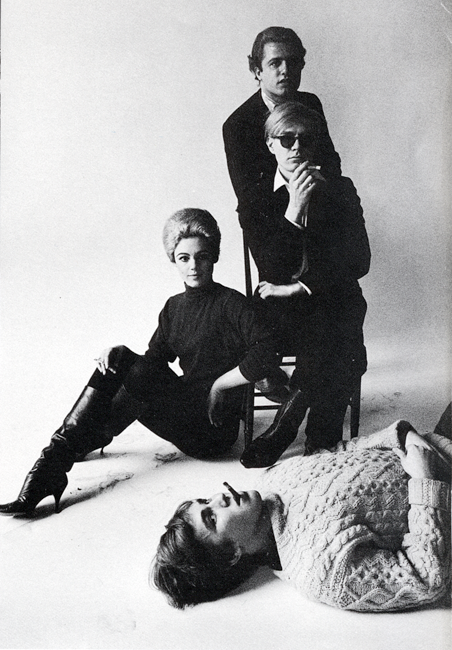
Time Is On My Side
A problem with the sixties is the concept of time. Einstein had gummed up the investigation of the concept considerably. Time is not a static thing but moves at various speeds. Strictly speaking time does not exist but is a human construct. The basis of the construction is the diurnal rotation of the earth and the earth’s revolution around the sun. There is no starting point for the revolution and no end. Man constructed a beginning based on earth’s greatest distance from the sun and because of the Plane Of The Ecliptic, the shortest day of the revolution. This was the most recognizable point to begin. Without the day and the year there is no basis for determining time; there is no other vantage point in the Universe.
Time has no existence in the universe; there is only space and matter and space cannot be defined without matter. No changes take place in the nature of space, only in matter, and time is no operative factor in those changes. Time does not exist outside the human mind.
Time as we usually think about it is a division of the earthly day into hours, minutes and seconds; of the year into seasons, months, weeks and days. As this is objective time keeping without reference to the passing of events or the perception of the individual subjective time is unaffected by objective time.
Now, let us say that the normal rate of perception and living is done in 4/4 time. To try to be specific let us say the standard is time as lived by 18-60 year olds adjusted to their societal needs. Let us just speculate that the mind in its normal state is comfortable with 4 bits of information per second and let us say that normally, whatever that means, bits of information are occuring at 20 bits per second. That means that 16 bits a second are normally over the subject’s head; he may perceive them but he can’t record them on the spot. Part of this is made up in sleep and dreams where removed from external stimulus the individual is able to subconsciously process additional bits that went by him while waking. The remainder then can only be captured and analyzed from a distance in time where what was happening can be seen but what is gained in distance is lost in immediacy. That is history, what I am attempting here. While the big picture can be seen, vast amounts of immediate detail are lost to memory or altered to conform to desires and prejudices. But, that is the way it is.
The period of ’64-’66 was one in which amphetamines and barbiturates altered or distorted 4/4 time. Under the influence of amphetamines subjects were living in, let us say, 16/4 time. They were so alert they couldn’t sleep. So long as they could control their obsessions and not be hung up on details they could turn out prodigious amounts of work. Thus to satisfy this amphetamine induced mania for work Warhol and his assistant, Gerard Malanga, could manually turn out fifty large Presley silk screen prints in an afternoon. In fact, in this period they turned out thousands and thousands of silk screens. There are a lot of Warhols out there.

Dreaming Dylan
Dylan is said to have literally and steadily turned out reams of material. He left a huge sheaf at Baez’s in Carmel in Spring of ’65 which he never reclaimed. As he said, songs just flowed through his amphetamine fueled mind. This sort of activity ceased or drew to a close when both Warhol and Dylan ceased using amphetamines- in other word their time races slowed down and their brains slid back toward 4/4 time.
Now, when the subject’s brain was racing at 16/4 it couldn’t slow down to allow him to sleep. Keith Richards says that in those days he slept only two nights out of seven. Warhol said he got two hours of sleep a night during this period and some said, perhaps with exaggeration, they didn’t sleep at all for one or two years.
So, while your brain is racing along 16/4 and you feel the need for rest you have to take barbiturates, downers, to slow your time down toward 8/4 or hopefully 4/4. This pits one drug against the other, one is speeding, one is dragging. Too much manipulation and of course one’s time slows to 0/4 and you’re dead.
Between events being clustered and racing so fast that no one can keep up, even at 16/4 and certainly at a speed to defy analysis no one had any idea of who or where they were and what was happening. No matter how fast the brain is racing one is still living in 4/4 time.
For those with 16/4 racing brains and no outlets such as art or writing, music, the result was chaos and self-destruction. In addition confusion was caused by making the 18-60 years old time race as an objective standard by which all normality is measured.
When someone says that time stood still, it literally did for the subject, the duration of that stillness cannot be measured by objective time.

All I Have To Do Is Dream
What may seem like a few seconds to an outside observer is literally timeless to the subject. The earth still turns but the mind doesn’t move, but no time is lost because time doesn’t exist. Thus children and mature people live in 2/4 or 3/4 time in which 4/4 time is irrelevant. It takes eons for a day or two to pass as a child while objective time becomes irrelevant if you no longer have to watch the clock. For instance, at 72 I live in a mix between natural time and objective time. I only have to enter objective time when it’s necessary to keep an appointment and I try to eliminate those as much as possible. Otherwise it’s day or night, Spring, Summer, Winter or Fall. I frequently don’t pay attention to what day it is because I don’t need to know and I don’t care. It doesn’t make any difference; it is always my time.
Doctors try to evaluate your memory by applying the needs of 18-60 year olds who are living according to the demands of objective time. So, since we live at different time races those whose speeds differ have a difficult time understanding each other.

Give Me Mo' Mo' Mo'
Chapter 4
Speeding Down The Highway
Lest we associate amphetamines at this time with illegal drugs let’s look at the scene in NYC. Sometime in the early sixties Feel Good doctors were dispensing massive does of amhetamines and vitamins. the most notorious, or well known, of these doctors were Max Jacobson and a man referred to as Dr. Roberts.
Jacobson appears first on the scene with a patient roster of astounding celebrity which included then President John F. Kennedy. Lyndon Johnson took a shot but perceived the situation for what it was and didn’t go back.
George Plimpton
The Beatles mention a Dr. Robert in one of their songs and he’s the man we’re concerned with here in ’65 no to be confused with Dr. Roberts. Dr. Roberts administered to some of the Warhol crowd including Edie Sedgwick. There is an astonishing account of his practice in Stein and Plimpton’s Edie. Quite an extensive account. To excerpt it I’d probably have to have permission; I’ll check into it.
These doctors were carelessly giving incredibly huge injections that kept you speeding for a week or two. But needles, syringes and drug could be obtained easily and they were which brings us to a member of the Factory entourage, Brigid Berlin. She was not old money but came from a very affluent background.
She, obviously laboring under several mental disorders, was an indiscriminate and unsound dispenser of the drug. She ran around the Factory injecting all and sundry with the same dirty needle. Her forte was to inject herself straight through the seat of her jeans.

Jean Stein
Andy, himself, used something call Obetrol which is described as a very high quality amphetamine producing a pleasant and stimulating high. While this drug kept Andy up with the exception of an hour or two of fitful sleep it also allowed him to work, work, work, industriously and with intense concentration for hours at a time. Fifty Presleys in an afternoon, think about it, assembly line pace.
Without a work outlet one had to find other ways to work off the excess energy. Non-stop talking is one but, hell, I can do that all day without the benefit of drugs. Since all these people at the Factory were living in 16/4 time they could communicate on that level with each other. There wasn’t an awful lot of intelligence being communicated. Warhol did us the service of recording 24 hours of what passed for communication and published the result as a book or novel he titled ‘a’. This book is virtually unreadable but as dedicated to my art as I am I am living proof that it can be done. Let’s hear from anyone else who had the patience. The gang was big on non-verbal communication. There are mostly a lot of incomplete sentences in the book but the conversation is forwarded in a pastiche manner each participant adding a phrase so that a sort of idea is parsed out.
As might be expected the group was low on conventional 4/4 morality, but at 16/4 they seem to have worked out a morality that all could accept but one I certainly would reject. Beatings, theft and random sex in view of others or not with anyone or anything seemed to be the moral basis. While Andy disavowed responsibility for anything that hapened at the Factory he was in fact the leader functioning as Magister Ludi. In the novel ‘a’ he is referred to as Drella, a combination of Dracula and Cinderella- a vampire and a fairy. He was in truth a bloodsucker.
He essentially took a whole group of Catholic homosexual Undermen and gave them a clubhouse and a certain immunity under the umbrella of his name and fame. Even then he and his Factory were a thorn in the side of legitimate society, the police visiting the place on a regular basis. And rightly so.
This was the scene, the environment that Chuck Wein brought Edie into. It seemed to suit her state of mind, she stayed.
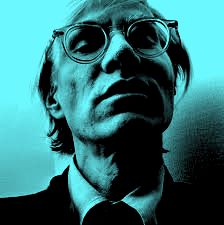
Magister Ludi
Dylan also was an amphetamine freak at the same time while using alcohol, LSD, marijuana and heroin. Warhol who was a perceptive observer said that Dylan’s songs were the amphetamine speaking. According to Andy, Dylan took other people’s words (and tunes) and because of the amphetamine was able to make them sound as though his own. He also astutely divided Dylan’s output into two periods; the first, social protest and the second, personal protest. Pretty much half a side of Another Side, plus Bringing It All Back Home, Highway 61 Revisited and Blonde On Blonde. Once again, he knew whereof he spoke. We’re concerned more with the personal protest here taking little or no interest in the social side.
Dylan’s personal protest by its very nature must be autobiographical. Indeed, Suze Rotolo identifies many of Dylan’s songs as referring to her. She should know. Dylan was quite taken with her. He obviously suffered a painful feeling of desertion whan at her mother’s insistence in 1962 she left NYC to study in Italy. This absention definitely changed the relationship although as Bob was never too constant a lover it is difficult to see how. Ego was hurt, I guess.
Although the relationship was reassumed on Suze’s return her sister, Carla, and her mother disapproved finally breaking the couple up. The break up produced the autobiographical Ballad In Plain D in which Dylan vented his emotions in a loud screaming complaint that was a direct predecessor to his magic mantra ‘Like A Rolling Stone.’
Chapter 5
I Can’t Stand The Pain In Here
According to accounts Dylan began writing Like A Rolling Stone in June of ’65. It began as 20 pages of ‘vomit’ according to Dylan, cut down to 10 and then to its released form. The 45 was a successful disc reaching the Billboard Top 10. The song is quite obviously about Edie when one learns the background. Many New Yorkers who were aware of the scene expressed their opinion that it was about Edie, pointing out further their belief that Warhol was the Napoleon in rags.
If first written in June then Dylan had made a considerable psychological investment in Edie since the previous December of ’64. One wonders where he found the time to cultivate a relationship with her between the two dates. He wrote recorded and released ‘Bringing It All Back Home’ between the meeting with Edie and April. He had performance dates. He divided his time between NYC, Woodstock and Carmel. In the last mentioned place he was staying at the home of Joan Baez while keeping Sara in Woodstock and maintaining some sort of relationship with Suze.
The extent of the rage and hatred of ‘Stone’ seems to be out of all proportion. According to the song Dylan is in a jealous rage because the ‘She’ of the song has deserted him for this ‘Napoleon in rags.’ ‘He calls to you, go to him now.’ What exactly did Dylan intend to do with Edie that he should become so emotonal? There is no question but that he intended to marry Sara; also none that he would marry either Joan, Suze or Edie. Quite simply they weren’t Jewish and Sara was. Dylan had no intention of marrying outside his religion. He intended to obey the Biblical injunction, which he takes as the literal word of God, to be fruitful and he wanted his children raised Jewish.
So what, then? What did Edie represent to him? Apart from being an uptown girl, in Volume I of his autobiographical Chronicles he suggests that one looks for the model of ‘She’ in his mother. I found this puzzling. I couldn’t make it fit the lyrics. None of the ‘facts’ of the song seemed to fit what is known of his mother. Then I saw Dylan’s 2003 movie, Masked And Anonymous. This is a delicate subject of which I am only going to skirt the edges. But, if one reads between the lines of Jack Fate’s soliloquy at his father’s death bed about his mother and faher, the lyrics of Freight Train Blues and what I’m hinting at here the fog should thin out somewhat. Remember that Dylan said his mother was connected to ‘Stone’. Since the song is about Edie it follows that Dylan associated his mother and Edie in his mind; there was a situational similarity to him.
Now, from August ’65 to the recording of Blonde On Blonde nearly the whole of Dylan’s output is centered around Edie, Warhol and the Factory. One of Dylan’s more vicious songs was ‘Leopard Skin Pill Box Hat’ which is about Edie. When Edie dissipated her inheritance she bought a slew of fur coats and a lot of jewelry. She had the leopard skin pill box hat.
Dylan’s mother was also known for having a lot of jewelry and several fur coats. Dylan recorded his version of Freight Train Blues long after 1968 when his father died. Now, immediately after his death the business owned by his father and two uncles either went bankrupt or was forced to close. In other words there was no more money left in the business. While Hibbing was not a flush market there was no competition either. So Abe Zimmerman’s exit came at a propitious moment, or…. At any rate there was no more money.
Just as Edie went through her money so Dylan’s mother kept her husband hopping in all likelihood straining the finances of the appliance store that, after all, had to support three families. Dylan, then, may have conflated Edie with his mother’s extravagance and whatever he had planned for Edie would have been done to his mother surrogate. In fact he was quite brutal to Edie, destroying her in the end. Thus one avenges oneself on one’s mother, ‘Like A Rolling Stone.’ He is probably one of those people who reject but can’t tolerate rejection because of his mother’s rejection of him per Jack Fate. According to his soliloquy in Masked And Anonymous his mother essentially rejected him plnging him into a deep depression from which he has never recovered if the movie is any indicaton. The movie too is autobiographical. He felt: ‘Nobody leaves me, I leave them.’ ‘That’ll be the day when you leave me’ as Dylan’s hero Buddy Holly put it. This was possibly the cause for the eruption of Ballad In Plain D.

Obetrol
In March of ’65 Edie entered the corrupt, even criminal, world of Warhol’s Factory. One can only speculate why Chuck Wein took her there. Perhaps the empresario was having a difficult time getting Edie launched and thought he could get her into Warhol’s hideous movies. Having run through her inheritance Edie was getting desperate for money. Perhaps in her naivete she thought movies were movies and movie stars made big money. Certainly one cause for her break from Andy was his refusal to pay her.
Warhol, in his own delusions believed that Hollywood would come knocking on his door cash in hand. That that never happened was probably a major disappointment. At any rate when this vision of the respectable Overmen appeared in this dump of a studio Andy went ga-ga. In fact, Edie was his ticket, his entry into the Upper East Side crowd. Just as Fred Hughes was to show him how to make money, Edie opened society doors to him.
This King of Scurf was creating quite a scene at the Factory. At the same time he gave a clubhouse to the Undermen, as a leading figure of the art world which, after all, is an upper class affair of wealth, he had a foot in that camp. Led by the more louche of celebrities the Factory was becoming a party destination. So Edie added some instant uptown glamor. Old family, old money.
Whether it was the hope of money from movies that kept her there or whether this degrading atmosphere filled some psychological need Edie stayed on thereby sacrificing her reputation. I imagine there’s always the hope that once you get your face up there something will pop.
Sometime between March and June Dylan became enraged that Edie was at the Factory making some pretty lame Warhol movies with little or no commercial appeal. Thus his work from this time on reflected his tug of war over Edie with Warhol.
Edie says that she didn’t get into heavy drugs before she joined Warhol’s menagerie. This may be true but as Warhol said: How do you stop someone from doing what they want to do? I would imagine the effects of electro-shock are very long lasting and discombobulating. Lou Reed of Velvet Underground was certainly whacked out from electro-shock. As I write my mind keeps going back to the time I stuck my finger in the socket as a child. I mean, it is vivid, so I can’t imagine what Electro-shock does to you. Perhaps speed replicates what electro-shock does do to you. Perhaps speed replicates or complements the feeling of electro-shock in some way.
Of amphetamines Edie is quoted as saying:
The Ghost Of Electricity
The nearly unendurable torment of speed, buzzarama, that acrylic high, horrorous, yodeling, repetitious echoes of an infinity so brutally harrowing that words cannot explain the devastation nor the tone of such a vicious nightmare.
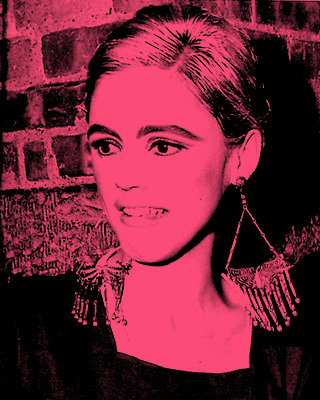
Could be close to the feeling of electro-shock. Kind of reminds me of my finger in the socket. Dylan’s seach for the ‘high mercury sound’ must also have been the result of speed. Cacophonous songs like ‘Highway 61’, ‘Subterranean Homesick Blues’ and ‘Rainy Day Women’ come to mind.
Perhaps also the amphetamine high reflected and complemented the deranged vicious goings on Warhol allowed at the Facatory. The sado-masochism. Brigid Berlin, or the Duchess as she was alternately known, roaming around with her needle and syringe ramming it into anyone will they, nil they, not much choice there. Beatings going on back in the shadows, is it any wonder that Dylan referred to Warhol as Dr. Filth in Desolation Row.
It is difficult to ascertain dates in existing sources but possibly between June and August Dylan invited Edie and Andy to a concert in upstate NY so, there was significant interaction between the three before Highway 61 Revisited. Side one of that record doesn’t reflect Factory activity as much as side two. I suspect all three songs on that side reflect Dylan’s sitation with Andy and Edie while Desolation Row definitely does. Now, while at the time there were few listeners who had any idea of what Dylan’s lyrics meant except for possibly a few, of which Warhol definitely was one. He must have recognized the reference to himself in ‘Stone’ and also in Positively Fourth Street. These songs were hits. ‘Fourth Street’ was pulled from airplay shortly after relaease but when I first heard it the sound just blew me away. I heard the put downs but too fleetingly to grasp them. Hank Williams on steroids.

Stop! In The Name Of Love
Dylan, then, was making, on Warhol a blatant attack over the airwaves of all America plus reviling Edie in a hideous manner. What did Andy think, what was his reaction? Having vented his feelings even more violently than he had in Ballad In Plain D, Dylan’s next move was obvious. Having lost Edie in March he meant to reclaim her in October. And so this epic battle for the person of Edie Sedgwick began. She was only a pawn in their game.
Chaps. 6, 7 and 8 are up on the next post.
Chaps 9,10, 11 and 12 are now up on the post following 6,7 and 8.
Chaps 13, 14 and 15 are now up also. Chap. 16 and end is in contemplation
”
Chaps. 1 & 2: Edie Sedgwick: Maid Of Constant Sorrow
October 21, 2010
Edie Sedgwick: Maid Of Constant Sorrow
Edie Sedgwick, Bob Dylan And Andy Warhol
by
R.E. Prindle
Chapter 1
Some Enchanted Evening

Edie and Andy
Texts:
A movie: Factory Girl
Sedgwick, John: In My Blood: Six Generations Of Madness And Desire In An American Family, Harper Perennial, 2007
Stein, Jean: Edie: An American Biography, Pimlico, First Published 1992, 2006 Paperback edition
www.warholstars.com A comprehensive Andy Warhol site.
The sixties was a period of broken lives. It was the heyday of the users and the used. It was as Donovan aptly put it: The Season Of The Witch. It was a period when all the hounds of hell were loosed. It may be a cliche but it was both the best and worst of times. It was during this period that Edie Sedgwick came of age. Edie’s tragedy was that she was used rather than a user. She was the cat’s paw of two of the greatest users of the period, Andy Warhol and Bob Dylan. It cost her her everything including her life.
Edie was one of the Sedgwicks of Massachusetts and they were old line Americans. If the Sedgwicks missed the Mayflower they were trolling in its wake. Therein lay part of Edie’s charm for the two immigrant lads, Bob and Andy. While from Massachusetts the Sedgwicks had a notable presence in New York City and Long Island. One might say they were venerable. J.P. Marquand who married into the family wrote his novel ‘The Late George Apley’ about them.
In Massachusetts the Sedgwick family was famous for their burial plot known as the Sedgwick Pie. As their legend is intimately connected with the Pie it might be proper to dwell on the Pie for its flavor. The founder of the family back then just after the first Thanksgiving was a gentleman named Theodore Sedgwick. He was a dynast by nature. Hence, he bought a section of the Stockbridge cemetery and had himself buried in the very middle. Subsequent Sedgwick burials were laid feet first toward the Patriarch in round rows emanating outward like the wedges of a pie, thus the name Sedgwick Pie. It was said that on judgment day when reveille was blown the Sedgwicks would all arise facing the founder, Theodore. Pretty story.
Over the centuries following Theodore’s death the Sedgwicks continued to prosper there always being enough money to maintain their position. There also arose the fantastic legend of the Sedgwick Curse, as indicated by John Sedgwick’s subtitle. The idea was that the Sedgwicks were a weak stock and that there was an abnormal amount of madness and suicide in the family. Considering the extent of the family I think this was a romanticized vision of themselves. Not that there wasn’t a sort of madness and a few suicides but hardly more than in any several hundred member family over a few centuries. Nevertheless in Edie’s generation this fatalistic notion took firm hold. It’s almost as if the generation rose to embrace the notion. Her biographers speak of it in awe as though the Curse of the Pharaohs had morphed into the Curse of the Sedgwicks. Jean Stein, the author of Edie, seems entranced with it and even John Sedgwick, Edie’s younger cousin, in his memoir seems possessed by it. Feels he’s got it. Slim chance for being true in my estimation.
For an inconsequential girl Edie’s life has been well examined. There are actually several books written about or featuring her while the legacy of movies she appeared in and movies about her is fairly extensive. Most of the early information on her life here is abstracted from Jean Stein’s biography. Stein, herself, is accused of writing the biography in a fit of sour grapes because Warhol wouldn’t make her one of his superstars. No matter, it is an exceptional book of its kind.
‘Edie’ is presented as an oral biography in the voice of many participants. However as all the voices are pretty uniform it would seem as though the editor, George Plimption, is pervasively evident. George Plimpton, otherwise a nobody, began his career as a celebrity in the sixties and the seventies by becoming a professional old line American, nearly the last of a vanishing breed.
He clowned around by trying out for various professional sports teams then writing books about the experience. Thus he became the American Man Of Letters touted on his website and a well known celebrity who could actually measure his press releases in inches. He and Stein put together an excellent more than readable book in their biography of Edie Sedgwick.
Edie was the daughter of Francis Sedgwick of Long Island, NY, he otherwise being known as Fuzzy. The family left New York for Santa Barbara, California just before Edie was born so she knew nothing of New York or the East Coast. In California she led what would seem to thave been an idyllic life. The family lived on a 3000 acre ranch which was exhanged after oil was found on it for a much larger ranch and finally an 18,000 acre ranch where she spent her teens. This was a functioning cattle ranch with ranch hands and the whole works.
The Sedgwicks did not attend either public or private schools being rather schooled by private teachers along with a few neighbor children. Thus unfamiliar with the world she may have had a very diffiuclt time adjusting to real life people. She probably did not have time to do so before she was thrown into the boiling cauldron of New York City. Francis, or Fuzzy, was a difficult father; his children blamed him for their shortcomings while Edie said he had sexual relations with her. She then was, or believed herself, mentally unbalanced by the time she arrived at Radcliffe to begin college.
She may very well have been unbalanced but where I grew up I didn’t know anyone who didn’t have mental problems, parents or children, and by the time of high school graduation I was literally a basket case, nearly immobile. Yet, so far as I know, everyone got on with their lives including myself. Seems to me everyone has to work themselves out of that hole as best they can.
Of course, drugs were becoming a definite problem by the time Edie showed up in Cambridge in the early sixties. It one reads Raymond Chandler novels, for instance, drugs were a problem in the thirties and forties and further reading will show that they had been a problem for decades. Most narcotics became regulated in 1910 in the US, still, new pharmaceuticals were being developed constantly and some of them including the psychedelics were not covered by narcotics laws at the time.
The first wonder drug I heard of was Miltown about 1950. I was too young to understand but Miltown was the Valium of its time, a panacea for all forms of stress, the stressed and housewives began to line up for prescriptions. By 1960 the list of users must have been stupendous.
Along with the barbituate downers came the uppers. First Bennies and then amphetamines. My first knowledge of the pervasiveness of drugs was 1956 when I wrote a high school essay on LSD. Of course glue sniffing was endemic in high school. Then in 1958 in the Navy was the first time I saw people ingesting bennies and heard of peyote, mescaline and the actual use of LSD. By the early sixties I knew a lot of people who were smoking pot and popping pills but I was never a user myself. I watched drugs put a lot of people over the edge. In most cases they weren’t aware that they were freefalling.
So, an unsettled socially naive Edie moved into a fast, loose society in Cambridge. While I can’t see much in her from the pictures apparently she was a sensation live, possibly influenced by her seemingly casual attitude toward sex. I don’t know about on the East Coast but on the West Coast girls were either more circumspect or I was out of it.
Edie was picked up by a homosexual crowd and attended many fetes in that milieu. At the same time the other folk scene, that of Boston was burgeoning with Jim Kweskin and the Jug Band, Eric Von Schmidt and Mel Lyman being the standouts. Dylan came up to Boston at this time to meet them where, I believe, he first became acquainted with Bobby Neuwirth who was hanging out around the art and folk scene. Certainly Edie would have come to Neuwirth’s attention at this time. I wouldn’t be surprised if he and Dylan discussed the ‘hot chick’ from a distance at that time.
At some time Edie became erratic enough in her parents’ eyes that they decided to commit her to an insane asylum called Silverhill near Boston. This to me seems very extreme. Apart from Edie’s not doing things as they saw fit I can’t find anything in her behavior to have her committed. I mean, I’ve seen some pretty zany behavior and after drugs really got rolling in about ’67 half the population could have been put away with the other half waiting in line.
At some point you have to let your kid go while parents always have to take responsibility for their behavior at least for the first few years after they’ve left the nest until they work through those parental childhood traumas. The Sedgwicks had the money so as long as the offspring weren’t financially out of control they at least deserved their allowance. Edie was what would have been described as an airhead.
But then I’m sure that with the asylum experience the cure is worse than the disease. Edie was repeatedly given electro-shock ‘therapy.’ Electro-shock ranks right up there with the pre-frontal lobotomy as the most bizarre psychiatric treatments. Talk about Hitler and the Nazi doctors! If the Nazis had practiced frontal lobotomies and electro-shock you can imagine the Liberal howling from the West. It would have made the flap over Eugenics a mere whimper.
I can’t imagine what electro-shock does to the mind and nervous system. When I was four I was playing with an open socket. When I connected the jolt was such I lost consciousness. Fortunately I was repelled being thrown completely across the kitchen floor where I became alert again after a few seconds but still buzzing. Plus, I remember it as though yesterday. Imagine being strapped down and having those volts sent coursing through your existence. My god! For what purpose? That’s going to change your psychology? It doesn’t, so why they kept at it is beyond me.
Since Edie wasn’t insane when she checked in the good doctors of Silverhill checked her out as sane. Somewhere along the way she met some guy named Chuck Wein who believed himself to be an impresario of some sort who was going to take Edie to New York and make a star of some sort of her. Toward the end of 1964 then Edie and Chuck showed up in Manhattan.
Edie moved in with her grandmother on the Upper East Side. Good address. Enviable. She had come into an inheritance of 80,000 dollars which she proceeded to squander in six months. In 2010 dollars that might be the equivalent of from 300,000 to 500,000 dollars. One had to have a careless disregard for money.
In 1964 the sixties had started moving, approaching maximum velocity. The Beatles had splashed down in January of ’64 followed by the Rolling Stones, Animals, Dave Clark Five and a host of others including Freddie And The Dreamers which was the beginning of the hip explosion as rock and roll morphed into folk rock. It doesn’t matter who was the first with folk rock it was inevitable. The electric bass and guitars along with better and more powerful amplifiers ever evolving there was no other way to go. I mean, Duane Eddy and Eddie Cochran were proto-heavy metal. And they were exciting bands. The music had been loosening up for several years. Tequila by The Champs was fairly revolutionary in its day. But then the recording companies and artists put a lot of effort into trying to astonish us with new styles and forms and frequently did, every week. Mule Skinner Blues by the Fendermen, a folk song was done in a folk rock style long before Bob Dylan went electric and set us all on our ear. That song has probably never been surpassed. Besides by 1964 the whole folk thing was passe and worn out, boring, apparently the word probably hadn’t reached Peter Seeger and that bunch in New york yet.
Each day was a new adventure where you had no idea what you would see or hear. Andy Warhol’s soup can is a case in point. The arrival of the Lovin’ Spoonful in Edie’s big year of ’65 was a revelation. As far as I’m concerned, the most influential band of the era. If Yanovsky hadn’t given up his dealer there’s no telling how far they could have gone. From there everything accelerated to super sonic speed. There was even a group called the Super Sonics. Songs like Telestar. Men even walked on the moon. So, while the external world was racing with the moon the internal, personal world ran along at the same slow pace unable to keep up with developments. No one knew what was going on except in their small mental space. Thus, even while Dylan and Warhol were succeeding spectacularly in their own spheres life was racing past them making them passe while there was no way they could keep up.
In that atmosphere Edie arrived in New York City and spent her money. And then the money was gone. As ’65 progresseed her parents became disenchanted with her life style so they cut her allowance way back, and then, off. But that’s getting ahead of our story. What Chuck Wein’s plan was for turning Edie into some sort of star or celebrity isn’t clear. She did get some modeling jobs for magazines, probably because of her name, but they were put off by her drug intake and her corresponding erratic behavior.
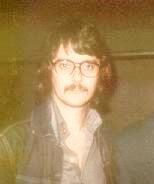
Bobby Neuwirth
Then Bobby Neuwirth, the legend goes, noticed she was in town. by this time Neuwirth was playing Robin to Dylan’s Batman, his sidekick in other words, and he notified Dylan that ‘there was a hot new girl in town.’ In the movie Factory Girl, sometime in ’65 Neuwirth showed up at the Factory and said: Come with me. Someone wants to meet you.’ Edie leaves with this total stranger, who cons her into paying the fare, escorts her back stage at a Dylan performance to be introduced to the Star with whom she is dazzled.
That’s one version. According to Jean Stein in Edie in December of ’64 Neuwirth invited her down from the Upper East Side to the Mafia club, Kettle of Fish, to meet the folk singer himself. Edie had arrived in NYC driving a big grey Mercedes. Her flipped out driver crashed the car so she was using a limousine service to get about. Accordingly her limousine pulled up in front of the Kettle of Fish, Edie got out of the car, entered the bar and contact was made. The history of her life over the next eighteen months, the Dance of Death, began.
Dylan, then, laid claim to the dazzling girl before Andy Warhol. Edie met Andy at the film producer Lester Persky’s a few weeks later at a party in January of ’65. Dylan and his entourage were heterosexual while Warhol, Persky and that crowd were homosexuals. Thus Edie began to fulfill her destiny as a pawn in Dylan’s and Warhol’s games.
Chapter 2
Never Felt More Like Singin’ The Blues
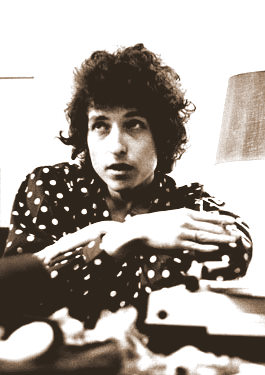
Dylan In Polka Dots
Who were these guys Bob Dylan and Andy Warhol and what interest could they take in this uninteresting and rather dull girl. Interestingly both men considered themselves revolutionists. Dylan forwarded the Jewish and Underman revolutions while Warhol spearheaded the homosexual and doubled up on the Underman. Both men came from immigrant backgrounds. Dylan from Jewish immigrants and Warhol from Ruthenians. Dylan was originally Robert Zimmerman and Andy Andrew Warhola. Dylan grew up in small town Hibbing, Minnesota, Warhol in the ‘melting pot’ of Pittsburgh, Pennsylvania. Both developed monster grudges against American society.
At the end of ’64 both men were on the way to being of the most influential people of the second half of the twentieth century.
Dylan at twenty had come to New york with the ambition of becoming a folk singer. Even though a not easily appreciated singer he was as close to an instantaneous success as it is possible to be. Arriving at the beginning of 1961, at the close of ’64 when he met Edie he was an international sensation, a prolific and successful song writer.
Strangely his success was built on resentment and hatred. The dominant characteristic of his songwriting was a rancorous bitter putting down of his society and associates. He fairly spews hatred in such songs as Hattie Carroll, Like A Rolling Stone and Positively Fourth Street to name only a few of his diatribes. His most prolific period would revolve around his desire for Edie Sedgwick and his detestation for his rival for her affections, Andy Warhol.
Dylan had a fixation on destroying the happiness of women. At the time he began his pursuit of Edie he had sequestered his future wife, Sara Lownds, who he would marry in November of ’65 and who he had purloined from another man. At the same time he was carrying on long time affairs with his first New York girl friend, Suze Rotolo and his fellow folk singer, Joan Baez. Why this need to injure the happiness of women?
Of course I’ve read most of the important works on Dylan if not all and many of secondary importance. Using that background, I’m going to concentrate on the movie Dylan wrote and starred in, Masked And Anonymous. This is a very autobiographical movie showing a Dylan who had progressed little from his heyday of the mid-sixties. Dylan believes that the journey is more important than the result so that in the various episodes he gives little symbolical vignettes of his life journey leading up to a contrived ending. Many of the most important eipisodes and people are represented. The promoter in the film, for instance, can be recognized as his manager Albert Grossman; the sidekick is Bobby Neuwirth etc. I’m not going to review the movie here but Dylan gives us some insight into when and how his world went wrong.
In the movie when Jack Fate’s, Dylan’s movie alter-ego, father, who is the dictator of ‘this god-forsaken country’, lies dieing, Fate revisits him on his death bed. In fact that is where the ‘path’ of the movie actually leads. Fate reminisces about his relation with father and mother. To put it succinctly let me quote the lyrics of an old song, Freight Train Blues. Dylan would rewrite the lyrics to this song and claim it as his own:
I was born in Dixie
In a boomer’s shack,
Just a half a mile
From the railroad tracks.
My daddy was a fireman
And my mama dear,
She was the only daughter
Of an engineer.
She could spend the money
And that ain’t no joke,
It’s a shame the way
She kept a good man broke.
Well, Jack Fate’s daddy wasn’t much better and the movie couple had an unhappy marriage which probably reflects Dylan’s view of his own parents. As to his mother she just found Jack in the way and wished she never had him because it interfered with her happiness. I suspect that more or less sums up Dylan’s relationship with his mother. One can’t say for sure but I suspect that when his mother conveyed this attitude to the young Dylan it just shattered his mind and from that day forth he was one lost soul on the lost highway with the freight train blues. Now, it is impossible to avenge oneself on one’s mother directly as mother’s are sacred as the vessel of your life. Dylan never tried, even escorting his mother as a date to major events. You can take it out on yourself by becoming a derelict yourself which Dylan did thereby punishing your mother or you can take it out on surrogate women. Dylan did both. He himself was and has been a heavy drug user and a heavy drinker. He ruined the lives of several women including Rotolo, Baez and Edie; then, after making Sara a wife and mother, most importantly a mother, he completely shattered her life as his mother had his. That may have satisfied him, then again, maybe not. Since then he has been wandering aimlessly as a ‘modern troubadour.’ Ramblin’ Jack Fate.
The period of the sixties was Dylan’s time of most intense reaction. After that he waxed and waned but Andy Warhol was focused on an unwavering need for vengeance. He knew how to use people to obtain his goals without actually exposing himself. He arrived in New York in 1950 as a graphic artist where he too was an instantaneous success. He made his mark in shoe ads where his drawing, usually described as ‘fey’, but displaying real genius at the same time, brought the customers to Miller Shoes for whom he drew.
During the fifties he was a very highly paid commercial artist designing everything from his shoe ads to stationery to book and record covers. Usually very nice but not infrequently letting his sexual proclivities shine through. He was alwa;ys pushing the homosexual agenda preferring to associate his work with writers or musicians from either the Undermen or those writing on those themes.
About 1960 he decided to tackle the fine arts with the purpose of detroying them. He entered the world of painters at the transition from Abstract Expressionism to Pop Art. He had always been a sort of pop artist with his shoe ads so he was an incrdible success as a pop artist when he painted Campbell’s soup cans. With the soup cans he effected one of the most instantaneous and successful revolutions or transitions from one style to another, ever. I don’t think it would be out of line to say the sixties were born in that moment. If there is one single symbol that characterizes the sixties, for me at least, it is Andy’s soup cans. Tomato soup can. It enraged and energized so many people. It has been an inspiration for me.
I can’t remember when I first saw it but I was simply stunned. Perhaps in the pages of Time Magazine. I don’t know whether the copying of a soup can is art but as I mused about it I came to the conclusion that the can was a sort of urban landscape. It was something one gazed at frequently while grocery shopping, so I said, what difference did it make whether one copied a mountain or curling wave or a soup can. I suppose the difference is that a soup can can only be done once before the joke is stale.
My favorite image of the soup can was a poster in which a soup can had a gaping hole from being blasted with a .45 automatic. That sort of settled the arguement for me but that was as late as 1968. Andy went on attempting to outrage us by painting duplicates of Brillo boxes and such like, Heinz Bean cans, but that fell flat. The joke had been made, there was only one Campbell soup image.
Painting all those soup cans, he did all the varieties, must have been a tedious way to while away the time. Then he discovered silk screening. What a good idea. Warhol, the child of industrial processes. I can only imagine that he thought Henry Ford and his assembly line turning out identical copies of cars was the ideal expression of art. After all you can make a million cars, same model and make, but in painting a picture, prior to Warhol, they all had been one offs and then you needed another idea. In that period of rapid change an idea became obsolete immediately. Coming up with new ideas was a tough business. Warhol could turn out an idea like the Presleys like Henry Ford turned out cars. Wow! Man! The future of art had arrived.
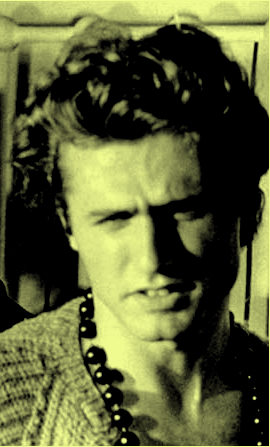
Gerard Malanga
Perhaps he thought up silk screening or perhaps the idea was suggested to him by his assistant, Gerard Malanga. Malanga thinks that’s the way it was. At the time he was hired Malanga was already an accomplished silk screener. Malanga was the beginning of Warhol’s actual use, consumption and discarding of people. One might say Malanga was exploited.
Malanga took a job with Andy at the minimum wage above which Andy never raised him. Malanga insists that he was essentially a collaborator of Warhol’s. I am inclined to agree with him. In the first place Andy never drew his own pictures. He essentially had no ideas. He had his screens made up from photos of others he found attractive. His famous flower screen was from a purloined photo. HIs Elvis paintings, posters actually, were traced from a promotional still. To me that strengthens Malanga’s claim. The screens were mechanically produced and screening is a mechanical act. Both Malanga and Warhol manipulated the screens together. There are films showing them doing it.
Between the two of them they produced fifty Presley images in an afternoon. For a show at LA’s Ferus Gallery Andy shipped them a two

Malanga and Dylan
hundred foot roll of Presleys and told them to cut up the roll as they saw fit. Collaboration was just Andy’s way. Hence one has single, double, triple, quadruple and octuple Presleys. I saw one display where there were twenty or more strung out for a couple hundred feet in one immense string. Enough Elvis Presleys to go around the world three or four times were produced. (That’s a joke, son.)
It is a good image although Andy never asked Presley or his studio for permission to use it and as far as I know never gave them a dime. He just appropriated the image. I can’t imagine how Andy kept the Colonel cool. He didn’t keep the flower lady cool, once she recognized her image she sued him. Of course, she took her image from God but God didn’t sue her.
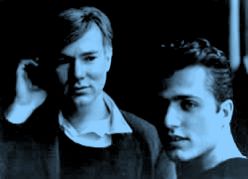
Warhol and Malanga
Now, all this silk screening takes up a bit of space, these Presleys kept getting bigger and bigger, life size and then some. Some were twenty-five feet by twenty-five. So Andy outgrew his home facility leaving it to seek much bigger spaces. If one thinks about it all this is very daring. There was no artist in New York even approaching the concept. Finally he rented an entire floor of a building on 47th Street that became known as the Factory. Dylan would characterize it as Desolation Row. When Edie made her appearance there in March of ’65 it was at that Factory. There were subsequent and even larger ones.
This is where Dylan and Warhol stood at the beginning of 1965 when Edie became a pawn in their game. Why did they want her? As noted, the two were immigrants or the sons of immigrants so they knew the discomforts of being strangers in a strange land. They knew the sense of inferiority among the ‘natives.’ They knew what being outsiders was especially as Dylan was a Jew and Warhol a homosexual.
Edie Sedgwick was a symbol of that envy and desire. In a way she was the acme of the old line American and she was accessible. She probably could have been half ugly and it wouldn’t have made much difference.

Malanga and Edie
From, say, 1870 to 1940 there was native America and there was immigrant America and they were separate but equal size. While intelligent immigrants never had it rough there was still resentment and outright hatred for Anglo-America. All this anti-America stuff comes from the immigrants or at least was fostered by them. With those of the Undermen, those of low IQ, the hatret was worse. WWII gave the immigrants a feeling of equality. They fought too. By 1950 they were superior in numbers assaulting every Anglo tradition and trashing it while doing their best to lower Anglos. Of course, the Anglos were too stupid to see it or unwilling to acknowledge it. After all, this was the magic ‘melting pot’ in which all resentments disappeared. Americans had discovered the solution to world problems. Both Dylan and Warhol shared in this resentment.
Thus when this female symhol of the old Anglo aristocracy appeared who they held responsible for their humilaition, whether they acknowledged it or not, they wanted to possess her, humiliate and destroy her. Dylan today would deny it while Warhol’s excuse at the time was ‘How do you stop someone from doing what they want to do?’ Well, Andy, at least you don’t hand them the revolver cocked and loaded. That Edie was humiliated and destroyed by her association with the two is proof enough of their intent.
The problem is to piece together the events of that year and a half over ’65 and ’66 from less than adequate documentation. I think I can produce a reasonable facsimle.
Chaps. 3, 4 and 5 are posted
Chaps. 6, 7 and 8 are posted
Chaps. 9, 10, 11 and 12 are posted
A Review: Bob Dylan In America by Sean Wilentz
September 17, 2010
A Review
Bob Dylan In America
By
Sean Wilentz
by
R.E. Prindle

Dylan Back Then
There was a lot of hoopla and drum rolling before this book was released. A full chapter was published in Atlantic Magazine in August, the excerpt here, the excerpt there, the full treatment. Wilentz opened a website with teasers added daily trying to draw you in. A lot of talk about Wilentz being the official historian with, one supposed, full access to Dylan himself so that one was being admitted to the inside. ’Oh,’ I said to myself, ’it looks like Dylan is breaking silence, emerging from his cherished privacy through a surrogate.’
Well, I was right. Wilentz has written a major kvetch and justification. Kvetch- Jewish for bitch.
Part of the problem is against ‘wannabe Dylan writers’ polluting the internet. Not wishing to voice complaints in his own voice Dylan has Al Kooper do it for him. Something like telling an intermediary to tell the guy next to him what you think of him. Right there on the front cover face level with Dylan’s picture. Big Al is quoted:
Quote:
Unlike so many Dylan-writer-wannabes and phony encyclopedia compilers, Sean Wilentz makes me feel he was in the room when he chronicles events that I participated in. Finally a breath of fresh words founded in hard-core intelligent research.
Unquote.
We Dylan wannabe writers are duly chastened. I read your own book, Al, and certainly felt I was in the studio with you and Mike and Bob. When you snuck over to the organ, I tell ya, it took my breath away. Nice move. Grossman was there too, wasn’t he, or was he just listening to the replay? Well, I could do the same hard-core research and writing if I had access to the archives like Sean. But, I guess that’s out of the question.
Still, I couldn’t believe that we wannabes were the whole excuse for Dylan’s emergence from privacy and I was right there, too. I could feel the tension building as Sean went through his rather laughable exercise of connecting Dylan to the Popular Front and Aaron Copland. Sean kind of has us believing Dylan was aware of Copland from the cradle untill well past his arrival in NYC while apparently sitting through the Children Of Paradise as a toddler. He gives it away when he says that Norman Raeben introduced Bob to the movie in 1974 just in time for Bob to be influenced for the Rolling Thunder Review. I think Bob must have heard Copland about the same time too.
The tension was building, my breathing becoming more labored, when near the end of the book it burst. God, what suspense. The real reason for Dylan commissioning Wilentz to write the book was this famous outburst from another noted folkish singer:
Quote:
Bob is not authentic at all. He’s a plagiarist and a fake. Bob is a deception.

Bob The Deception
Unquote.
Wow, that one really hurt. I don’t know whether Joni had bottled that up since her treatment in Rolling Thunder but I suspect so. Sam Shepard wasn’t over impressed with his treatment on the tour either. The reporter of the Joni Mitchell quote couldn’t reach Dylan for comment: According to his representative, Dylan was unavailable for comment.’ Hiding on his bus no doubt.
That was then, this is now. Dylan’s mouthpiece and official historian, Sean Wilentz, fires back. He devotes a couple dozen subsequent pages, maybe more, after referring to Mitchell by name and date. (Ooh, it’s like falling on your tailbone, you know how that smarts.)
Just to mend a few fences Bob through Sean apologizes to Geoff Muldaur for that Carolyn Hester remark during Bob’s amphetamine fueled days. Wise move.
Sean denies out of hand that Dylan is a fake; he just approaches authenticity from a different direction. He’s not plagiarizing he’s reconstructing the music that is danger of disappearing so that it will last. Apparently the folk thing that had a run from about 1910 to 1980 or so has lost its influence in the ongoing rush of the globe’s multitudes to America. The times they are, indeed, a changin’. What did they expect, that a Korean peasant was going to embrace a song they couldn’t understand like ‘I wish I was a mole in the ground?’
As Wilentz explains: Borrowing three different lines from three different writers in succession for one verse isn’t plagiarism, it’s…well…something else. Preservation. Not that I care. I don’t listen anyway. I do expect some original lyrics though. If I want to listen to some old folk songs I’ll tune in toJohnny Cash’s Delia’s Gone or maybe even put an old Geoff Muldaur side on.
Bob’s not really interested in the whole folk genre anyway; he seems to be more interested in Darky murder songs. That’s part of folk, of course, but so is the saga of Mollie and Tenbrooks and the Tennessee Stud. There’s more to folk than depressing murder ballads. Who cares if Delia got shot. I don’t. Stagger Lee’s OK.
I think something’s being lost in the shuffle here. These are songs, only songs, there’s nothing monumentally important in them. Three Jolly Coachmen and There’s A Tavern In The Town are just as important. If Bob wants to be a musicologist he’ll suffer the fate of musicologists. What do I care about musicology when all I want to do is listen to a good unadulterated tune. And when I want to listen to a good tune there are a lot of better singers around than Dylan. Geoff Muldaur, for instance. Old Lonnie Donegan sides. The Kingston Trio, Chad Mitchell Trio. Peter, Paul And Mary for Chrissakes.
Let’s get real. Bob was 1964-66 when the amphetamines rushed through his bloodstream. Since then, well…he’s got a good following and should be thankful for that. Be a musicologist, rewrite Frankie And Johnny, see if I care. If I want to quote a song as a leader for one of my essays I rewrite them myself so they mean what I want . Most of those lines have lousy meter anyway. Still, I give the original writers credit.
Dylan could rewrite a song for Joni: You’ve gotten under my skin.
The book doesn’t call for much more of a review. Slight. Can I have my money back?
We did it!
Exhuming Bob XXVI
Bob And Edie
(Sooner Or Later All Of Us Must Know)
by
R.E. Prindle

On the New York Bohemian scene 1965 and 1966 were the pivotal years. Near the beginning of 1965 Edie Sedgwick came down from Boston to become the catalyst in the struggle for dominance of the Bohemian scene between Andy Warhol and Bob Dylan.
Both men began their rise almost simultaneously in 1960-61. Both camps were drug fueled primarily by amphetamines.
While Edie, who as I perceive it was a psychotic nothing chick, entered Warhol’s world about March of ’65 it seems probable that Dylan was eyeing her from earlier in the year through the offices of his advance man, Bobby Neuwirth. While the early period is poorly documented as the battle for the soul of Edie Sedgwick reached fever heat in the summer of ’65 when Dylan recorded his diatribes Like A Rolling Stone and Positively Fourth Street concerning Edie and Andy the origins must reach further back into the first half of the year. It is interesting that in Dylan’s song Desolation Row he cast Edie in the role of Hamlet’s Ophelia.
Thus the key to understanding Dylan’s albums Highway 61 Revisited and Blonde On Blonde is primarily Edie Sedgwick. I haven’t analyzed the data thoroughly but the meaning of One Of Us Must Know (Sooner Or Later) became transparent while studying Warhol. One of my favorite Dylan’s songs its meaning has always troubled me.

In November of ’65 Dylan married Sara Lownds while still carrying on an affair with Edie, among others. Warhol told Edie that Dylan was married shortly thereafter. Edie was as a pawn in their game torn between leaving with Dylan and staying with Warhol. In their effort to steal Edie away Dylan and his manager Albert Grossman were promising her stardom and money in both recording and movies.
Finally in a December 6th meeting with Edie, Warhol and Dylan Edie was forced to choose between the one or the other. Dylan commemorated this scene in his song One Of Us Must Know (Sooner Or Later). The ‘poem’ of this ‘great poet’ is in three stanzas and reads like a letter to Edie when you have the key. The first four lines are a mocking apology for using Edie as a pawn:
I didn’t mean to treat you so bad
You shouldn’t take it so personal
I didn’t mean to make you so sad
You just happened to be there, that’s all.
So Dylan admits he was using Edie who just happened to be Warhol’s chick, nothing personal, Dylan was after Warhol. But he didn’t mean to hurt her ‘so bad’ or make her ‘so sad’. Hey, it just happened. The second and fourth lines are so insulting, callous and sadistic as to pass the bounds of good judgment to write. They shouldn’t have been written and if written they shouldn’t have been shouted to the world to hear. It must have been obvious to Dylan that both Edie and Warhol would know he was talking about them. The Ballad Of Plain D was just mean but this is almost too hateful to bear. Ah well, the love and peace crowd.
The fifth line:
When I saw you say “goodbye” to your friend and smile…
The scene is The Kettle Of Fish and the friend is Andy Warhol.
I thought it was understood
That you’d be comin’ back in a little while
I didn’t know that you were sayin’ “goodbye” for good.
This is an outright lie else why put goodbye in parentheses. Dylan’s attempt to disavow his and Grossman’s promises making it seem like a trivial boy-girl thing is too coarse. This whole verse is definitely meant to hurt while both Edie and Warhol will understand the full import.

Ever Weird
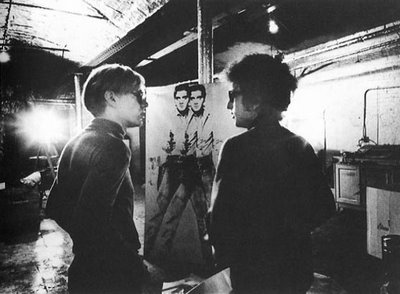
Andy, Elvis, Bob
And then the chorus which will be used three times for maximum pain:
But sooner or later, one of us must know
You just did what you were supposed to do
Sooner or later one of us must know
That I really did try to get close to you.
The key line here is that ‘I really did try to get close to you.’ At The Kettle Of Fish Edie murmured to Dylan that no matter how hard she tried she couldn’t get close to him. ‘Who?’ asked Dylan. ‘Andy.’ Edie replied. Dylan apparently took that as a rebuff although he was already married to Sara and would soon spawn a host of children on her.
I quote the second verse in its entirety:
I couldn’t see what you could show me
Your scarf had kept your mouth well hid
I couldn’t see how you could know me
But you said you knew me and I believed you did.
When you whispered in my ear
And asked me if I was leavin’ with you or her
I didn’t realize just what I did hear
I didn’t realize how young you were.
Apparently Edie didn’t realize that she was just a rainy day woman. While it’s a matter of interpretation I assume that Edie confronted Dylan with the fact of his marriage to Sara and naively asked if he were going to dump Sara for herself. Dylan was incredulous, astonished by her request, he thought she was more sophisticated than that, after all, a rainy day woman….
Rainy Day Woman is a very mocking put down of women as the lead off song and theme setter of the album titled Blonde On Blonde. Perhaps the title might be interpreted as Woman On or After Woman with Rainy Day Women establishing the theme. The song limits the range of women to two- numbers 12 and 35. Why 12, why 35? Who are they? One has to be Edie. If one does a little number manipulation a la Freud, in sequence the numbers add up to 11 which in turn adds up to 2. Two women. Seven come eleven? Three and eight, twelve and thirty-five added separately- three for male, eight for female. Twelve subtracted from thirty-five is twenty-three, Edie’s age. Just guessing.
As Sara is the only other identifiable woman in the lyrics the two women must be Edie and Sara. Let me venture the guess that all women are rainy day women for Dylan. Thus once Sara had borne his offspring fullfilling a religious obligation Dylan took seriously he drove her away oblivious to the pain and suffering he was causing or perhaps he was continuing to punish mother surrogates.
Dylan was drugged and crazed while he was writing this so this is a reflection of deep subconscious drives.

Andy And Edie As Beautiful People
The final lyric begins:
I couldn’t see when it started snowin’
Your voice was all I heard
Snowin’ either refers to a snow job by Edie so he was blinded by light hearing only her words or drugs of some sort, either amphetamines or cocaine.
I couldn’t see where you were goin’
But you said you knew an’ I took your word.
Once again Dylan shifts the full responsibility from himself and Grossman to Edie. He implies that she was leading him on rather than vice versa. This when it was clear to everyone that he and Grossman were promising her the moon in the attempt to pry her loose from Warhol.
And then you told me later, as I apologized
That you were just kiddin’ me, you weren’t really from the farm
An’ I told you as you clawed out my eyes
That I never really meant t’ do you any harm
Well, Dylan’s intents were pure, he says, but the results were deplorable; Edie was done harm by Dylan’s actions and the harm was deep and lasting, well beyond any hypocritical apologies. If the lines are to be believed Edie’s reaction was quite violent. As she was a total amphetamine addict her reaction would be quite plausible.
And then Dylan mockingly closes with his ‘whadaya goin’ to do about it line’- I really did try to get close to you.
As this period clears up for me I suspect that the whole of Blonde On Blonde is concerned with this Edie, Andy/Dylan duel. Blonde On Blonde itself then may refer to the silver hair of both Edie and Andy.
It should be clear that Dylan’s motorcycle fall was no accident. In Exhuming Bob 23b: Bob, Andy and Edie I hypothesize that Dylan’s bike was rigged by the Factory crowd. Dylan survived with minimal damage. For his own sins Warhol was shot a couple years later but he survived that one too. Edie died a physical wreck in 1971.

Dead Ophelia- Consider Ciao Manhattan with Edie shot in a swimming pool/
What goes around comes around as they used to say.

R.E. Prindle
Exhuming Bob 25: Bob And Sam
June 5, 2010
Exhuming Bob 25:
Bob And Sam
by
R.E. Prindle

Shepard, Sam: The Rolling Thunder Logbook, 1977, Sanctuary Publishing.
Sometime in the mid-seventies, possibly in 1976 Paul Simon wrote in one of his lyrics: I don’t think this stuff is funny anymore. Coincidentally at the same time as I surveyed my record store of a Saturday morning the same thought occurred to me. Things had been overdone. In one bat of an eyelash the whole thing got old.

Bert Williams In Blackface
This was not case with Bob Dylan who in the waning months of 1975 put the greatest clown act New England had ever seen on the road. The Rolling Thunder Revue; or as it might alternatively have been named: The New Bob Dylan Minstrels. One purpose of the Revue seems to have been to spring the convicted triple murderer and ex-boxer Hurricane Carter from jail. That didn’t come until the very end.
Along the way Dylan wanted to film a sort of existential movie that would later be released as Renaldo and Clara. Working from some strange chaos theory Dylan had no actors, no script, no-nothing. Needing some sort of guiding hand he commanded the actor, cowboy, playwright Sam Shepard to attend to his writing needs. Sam then wrote what he called a log of the experience called the Rolling Thunder Logbook.
On the first reading I didn’t think Sam put much into it but the pictures were good. Still there was the nagging feeling that I might have missed something. On the second reading the logbook assumed more significance. It’s kind of impressionistic. It’s not a narrative; like the title says its sort of like a ship’s logbook. The impressions sort of pile up until you have a definite impression. I don’t know if that’s what Sam intended but that’s the way it worked with me.
Bob being the kind of powerful show biz personality he is didn’t bother to negotiate terms with Sam; he didn’t even bother to call himself; his agent or stooge or whatever interrupted the life of Shepard to tell him Dylan wanted him in New England. Sam doesn’t mention any terms, or indeed any payment. He just dropped everything, literally, and drove East. Did I mention he was in California? Well, he was; he was in the process of moving.
Bob tries pretty hard to cultivate that elusive, mysterious image and he succeeded with Sam who couldn’t locate him for a few days after he got there. Bob probably wanted to accustom him to the menagerie before he showed his face. Even then Sam didn’t have any guidelines he just expected Sam to free lance a few lines of dialogue if at any time he saw the cameras running. The film crew was more disorganized than Dylan if that were possible.
What was it all about anyway?

It Takes A Worried Man- Sam Shepard
As we should be aware 1976 was the two hundreth anniversary celebration of the American Revolution. But there were a number of conflicting revolutions running simultaneously. There was the revolt of the Matriarchy, what Eric Foner calls the Unfinished Revolution which was the replacement of Whites by Negroes and of course the perpetual revolution of the Jews against mankind, not to mention the revolution of the gay crowd. Bob as we all know is Jewish so one may reasonably ask why he chose New England for his chaotic Marx Brothers routine on the occasion of the Yankee Revolution around the new England sites such as Bunker Hill? Could he have been thumbing his nose at America? Well, it does look suspicious.
As Sam notes the crew made it a point to visit Plymouth Rock and the replica of the Mayflower which sacred symbols of pre-immigration America they reviled all but pissing on the Rock. The faux American cowboy, Elliott Adnopoz was swinging from the yardarm of the Mayflower. Y’all know Elliott as the yodelin’ cowboy Ramblin’ Jack Elliott o’ course. For the rest they pissed and farted their way across New England carousing and corrupting as they went. Of course it might just have been New England exercising the gang’s Rock n’ Roll genes, no more than that. Sam kept his discontent sotto voce by which I mean between the lines. Bob, with his need for conflict invited not only his old flame Joan Baez and his new flame Joni Mitchell but his wife Sarah playing each against each. Baez who grows more Mexican with each passing year seems willing to put up with whatever Bob does. Shortly after the tour Sara came downstairs one morning to find Bob dandling a strange beauty on his knee for breakfast. Well, you know, she threw in the tower after that, as, who wouldn’t? Bob seemed to be perfectly dismayed by this untoward turn of events. ‘Women in my family just don’t divorce.’ He whined uncomprehendingly. Well, at least, not without due provocation.

Joni Mitchell Looking Out Her Window
That leaves Joni Mitchell. She’s apparently been stewing about her treatment for thirty-five years. She just recently expressed herself by saying in effect that Dylan is just a god-damned phony. Well, Bob can always go join Joanie in that bomb shelter in Viet Nam. They can exchange rings made of the fuselages of American fighter planes, if they haven’t already. So, how sincere is their devotion to this great land of the once free and no longer brave? It would seem their loyalties lie elsewhere.
In my own obtuseness, quivering in my own psychological bomb shelter, I never saw Bob as a revolutionary in those far off days but then I was just listening to records, I didn’t know anything about him; boy, I sure have remedied that situation.
Back in those palmy days of the early sixties before racial and religious animosities had reached their present prominence I don’t know that anyhbody really thought of Dylan as a Jew. Certainly the name Dylan is not Jewish and I’m not sure how many people would have known Zimmerman was. Or, that they would have cared. In those days everyone cheered when Israel won one of those too frequent wars. Now, though, one has to put Bob’s religious affiliation up front. Make no mistake, he’s a fundamentalist, believes the Bible is the literal word of god. Orthodox. Chabad Lubavitcher even. Thinks the universe is fifty-seven hundred years old like his deceased mentor Rabbi Schneerson. Swear to g-d.
Must have picked it all up from Rebbe Rueben who came West from Brooklyn to Hibbing to indoctrinate him in Lubavitcher lore for his Bar Mitzvah. Like Bob said, he learned what he was supposed to learn. He very cleverly inserted the stuff into all those songs too.
Bob broke his mind in the excesses of the sixties, that high mercury sound he was seeking was the result of all those amphetamines he was shooting back then. Andy Warhol had his boy pegged.
In the late sixties and early seventies Bob had to rebuild his personality and he rebuilt it around his religion. His Mom was real proud of the way he had his Bible open on a stand in his living room so he could jump up and check it as the occasion arose.
Then as he got back on his feet he aligned himself with Meyer Kahane’s violent extremist revolutionary Jewish Defense League carrying a couple of JDL thugs around with him as bodyguards. Maybe his Jewish revolutionary mode was getting too obvious so in ’77 he began hanging out with Jews For Jesus and the Christian Vinyard Fellowship organization. Once that clouded the picture he reverted back to his Lubavitchers where he has been since.
So on the Rolling thunder tour one may be excused for thinking that he was in his revolutionary phase. Sam Shepard doesn’t mention it but his experience left a very bad taste in his mouth which he expresses with as much force as Joni Mitchell really has.
On the tour Bob did the strange thing of wearing white makeup which has remained a mystery. It shouldn’t be really. Remember the tour was to end in a successful attempt to free a Black man while the Black boxer Muhammed Ali was unstage at the Garden. A Garden party a la Ricky Nelson, get it? The Revue was actually a parody of the Minstrel show of what Greil Marcus would call the old weird America. In the old Minstrel shows the White actor wore black face in imitation of Black people. This may sound strange to you but Jews don’t consider themselves White notwithstanding their pale complexions they consider themselves Jews and goys as White. So, in disguising himself in White Face he was parodying the old Black Minstrel shows while mocking his ultra-White New England audience.
Bob Dylan was having the time of his life. The joke was on the Honkies. Funny, huh?
As noted, the keynote of the tour was the final concert at Madison Square Garden at Christmas where he took on America over the issue of the Black Hurricane Carter and won. Now, compare that Christmas show with the 2009 release of Bob’s Christmas album. Seemingly done straight it also mocks Whites. In Bob’s video for the song It Must Be Santa Claus you may have noticed that the audience showed minimal diversity. The airheads were all White. Bob comes prancing through wearing a lank blonde White girl’s wig, climbs into a balcony and stands looking down his nose in his wig at us all. It’s great. Nobody gets it. There is something happening here but you don’t know what it is, do you, Mr. Jo-o-o-nes.
Jewish power vs. American power, make no mistake.
Sam jumped ship before the end of the tour, he’d had enough, but he was there for the Garden party. He can’t even force himself to dissimulate a complimentary attitude as he did at the beginning of the Minstrel show. And then the final confrontation between the playwright and the singer.
At this point is is clear that the Rolling Thunder tour is something Sam wished he hadn’t gone on and an experience he preferred to forget.
Shepard closes with a chapter concerning the opening of his play The Geography Of A Horse Dreamer. I don’t know the play but it may have been based on Rolling Thunder. In the play Sam names the horse Sara D. Dylan is in New York at the time wanting to see the play. He wants to make his entrance in company with Sam. Sam writes:
..so I’m in the hotel lobby waiting for the Cadillac convertible to haul us over to the theatre. The big boxcar camper pulls up outside and Dylan hops out. My stomach does a full gainer as I see him approaching the hotel. The idea of him sitting in the audience is more like a nightmare than a blessing…He pauses at one of these signs (reading signs in the lobby) long enough for me to scuttle past him out into the street and hail a cab. It’s bad enough knowing that he’ll be there without having to ride there with him in the same car.
So not only was the tour distasteful to Sam’s sensibilities but the experience of first hand acquaintance with Bob has also left a bitter taste. Well he isn’t the only one. The evening of the opening of Sam’s show is not going to improve relations.
…the so-called curtain is being held up for Dylan’s late arrival. He shows up plastered, along with Neuwirth, Kemp, Sara and Gary Shafner. They take up a whole row.
So whatever the cause of the conflict Dylan is reciprocating his disrespect fully. He means to sabotage Sam’s show and then leave early too.
At intermission Sam doesn’t see Bob so he hopes he’s left the theatre. No such luck. Dylan comes out of the toilet.
He sees me standing there and pauses as though trying to bring certain thoughts into focus. “Hey, Sam, what happens to this guy in the play anyway?’ I’m dumbfounded for a reply but come out with something like, “That’s the reason for seeing the second act.” He stares at the floor, his knees shifting slightly as though he’s about to go into a nose dive.
“Hey, how come you named that horse in the play Sara D?”
“That’s the name of a racing dog in England.” It suddenly cuts through me that it’s also the name of his wife.
“I mean it’s the name of a greyhound. A real greyhound. You know the kind that race around the track.”
He smiles and shuffles through the door, almost making a left turn into the light booth.
Apparently Dylan didn’t find that answer any more satisfactory than I would have. Something is going on here, isn’t it?
As the play draws to its end Dylan makes his move. Shameless. Pure chutzpah immersed in chocolate sauce.
Dylan stands in the back row. “Wait a minute!” Who’s he yelling to? The actors? “Wait a second! why’s he get the shot? He shouldn’t get that shot! The other guy should get it!” Lou Kemp is trying to haul him back down in his seat….
Dylan is struggling to free himself from Kemp’s hammerlock grip. Neuwirth is telling him to shut up…Finally the Sam Peckinpah sequence begins, with shotguns and catsup all over the stage. Dylan leaps up again. “I DON’T HAVE TO WATCH THIS! I DIDN’T COME HERE TO WATCH THIS!
Apparently the Rolling Thunder tour didn’t end until Sam had written this play and run it by Bob. Dylan didn’t like the play any better than Shepard liked the tour. Hard feelings everywhere.
Apparently Bob used people much too roughly. He managed to either blow off a number of people immediately following such as Shepard, Jack Elliott, Neuwirth, the maligned Larry Sloman and probably the whole film crew while Joni Mitchell has weighed in thirty-five years on. We have yet to hear from a number of other people, most notably Roger McGuinn.
Bob managed to trash everybody including the USA with his Minstrel show for the 200th anniversary year. Which revolutions was he leading? I don’t think this stuff is funny anymore, do you?

Bob and Joan, Joan and Bob?
A Review: Fred Seaman: The Last Days Of John Lennon
May 18, 2010
A Review
Fred Seaman:
The Last Days Of John Lennon
Review by R.E. Prindle
Seaman Fred: The Last Days Of John Lennon, A Personal Memoir. Citadel Press, 1991.
The Ghost Of Elvis Presley

Double Elvis- Andy Warhol
In order to understand the zeitgeist of the sixties one has to go back to the fifties. The central event of the fifties was the annunciation of Elvis Presley. The post-war world was a grey world of fear. The country and the world had emerged from the greatest of all catastrophes, the Second World War. WWII itself was fought in the shadow of the Great War of 1914-18, afterwards known as WWI.
Most of the older generation had lived through both wars which was a terrifically horrifying experience. In 1950 those who were seventy or older had memories of the Indian Wars of the late nineteenth century also. In addition perhaps the most terrifying memory of the pre-WWII generations was that of the Great Depression of the thirties. From 1945 to 1960 they lived in terror that the Depression would return. There was thus a great generational divide between them and those of us who had no memory of the Depression and only vague memories of the second world cataclysm.
The older generations were struggling to restore the normalcy of the period between the wars as they wished it might have been. Technology had made this impossible. Not only had the Atomic Bomb come into existence but almost immediately after the war the sky was filled with the most extraordinary of phenomena- the faster than the speed of sound jet plane. The pilots of this wondrous piece of technology delighted in flying low over cities breaking the sound barrier as they did and sending a sonic boom shimmering down. If you’ve never experienced a sonic boom you have yet to be there.
The miracle of the age however was television. (Some people call it the boring fifties but they obviously weren’t there.) Television made the greatest threat to civilization yet known to man possible. That threat was Elvis Presley. Elvis simple announced by his presence that the pre-war world would not be returning- ever. The younger generation would fashion the world in his image.
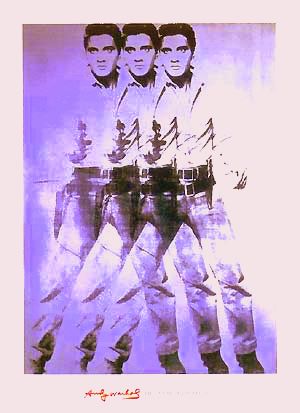
Triple Elvis- Andy Warhol
More than that Presley wasn’t an image of the upper class college youth like Pat Boone but the avatar of the downtrodden and suppressed not unlike Jesus the Christ himself. They took one look at Elvis and realized that he was the Atomic Bomb that would blow up their world. And he did.
Every move Elvis made was an insult to them. Things that had no relevance to them they took as a personal insult. One such was the innocuous anthem by the songwriters Leiber and Stoller originally written as a Negro ghetto sex anthem, Hound Dog. When Elvis sang You ain’t nothin’ but a hound dog, for some reason they projected it as a reference to themselves and they deeply resented it.
Of course every attempt to suppress Elvis deepened the generational divide. Not only did Elvis himself exist but it seemed as though every upcoming rock n’ roll singer wanted to be Elvis. Before the Presley clones of Vegas there were the Elvis imitators in every family’s living room like Gene Vincent, Ricky Nelson, Eddie Cochran and nearly the whole roster of Sun Records, plus, plus, plus….
For most of the old folks rock n’ roll itself was a mystery. They thought it was a Communist plot, might have been I don’t rule it out, but if so we were not conspirators but dupes. We just reveled in it. They almost succeeded in destroying it. Elvis got drafted, in his absence the great rock n’ rollers were driven out, discredited and in some cases killed. When Presley returned in 1960 he was different from when he went in. He had been contained.
John Lennon famously said in 1977 after Elvis died that he died the day he went into the army. While a relevant statement it was not quite true. The first stage in Elvis long immolation was when he fell under the control of his manager Col. Tom Parker, the second stage in his demise was when Parker delivered him to RCA Records, the third stage in his death was when RCA assigned Steve Sholes as his producer.
For those of us who were there the real Elvis Presley ceased to exist when he left the Sun record label. RCA was in no position to understand rock n’ roll values. It wasn’t that they willfully sabotaged Elvis it was just that they didn’t know how to rock. Their idea of rock was Neil Sedaka. Sholes himself was antipathetic to rock ‘n roll no less than his crosstown rival Mitch Miller over at Columbia Records. Both men hated the concept. This was made evident in Sholes arrangement of Gene Austin’s Are You Lonesome Tonight with its plodding guitar riff and Elvis’ imitation of the thirties crooner. Sholes failed to ruin Elvis’ career but it took Mitch Miller one LP to trash the career of the great Dion of the Belmonts.
Very few if any of the great rock records were produced by the majors. Nearly everything of value was produced by independent labels, many of them one shot efforts. Gene Vincent and his Be-Bop-A-Lula was a notable exception although his label, Capitol, soon had him singing Somewhere Over The Rainbow.
After the first run of actual imitators Elvis and rock worked their way into the subconscious of the next wave that included Lennon and the Beatles to produce an extension of rock.
Upon Presley’s return from the army his manager, Parker, removed him from recording and put Elvis into the movies almost exclusively. The movie Elvis was an extension of the personality of Tom Parker. Elvis was Elvis and his appearance was always galvanic. His charisma could be diminished but it couldn’t be destroyed. I was as disappointed by his movies as much as anyone dropping in only occasionally over the sixties to see if anything had changed. It hadn’t.
Thus as we all moved into the sixties while Presley still lived it was only as the ghost of the Sun Records innovator.
The Ghost of Elvis Presley was captured by the artist Andy Warhol in a number of renderings.
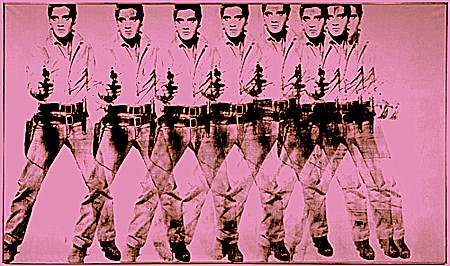
Octopresley- Andy Warhol
He presented Elvis in various single screens or multiples of two, three and up to the eight as in the image above. He ignored the musical Elvis in favor of an image taken from a Western movie. As Warhol was a homosexual he rendered Elvis as a gay cowboy. In truth Elvis had an ambiguous persona. Many people thought he was queer. Any male fan felt himself under the accusation. Elements of his persona indicate a severely emasculated personality that lend credence to at least a latent feeling of homosexuality. Elvis’ fellow students called him ‘squirrel.’ Indeed, the use of eye shadow, pants with a stripe down the leg and pink shirts in 1951-52 and ’53 would have led to open accusations of homosexuality. And yet, even though I identified with his obvious emasculation when I was only sixteen and seventeen it never occurred to me that he might have been one. I don’t think he ever was. Had he been his more than macho entourage would have had nothing to do with him. Nevertheless his portraitist Warhol perfectly captured his ambivalence and androgyny.
The number of portraits by the artist clearly betrays Warhol’s own hero worship. Perhaps his own gay cowboy movie owed some reverence to his idol. Oddly enough Warhol never designed a record cover for Presley even though he designed over fifty during a career from 1949 to 1987.
Andy had always been a pop music fan. This was very unusual for a man born in 1928. This would have made him 26 if one assumes ’54 as the birth of rock and 28 in ’56 when Presley exploded onto the scene. Anyone older than 18 in ’56 rejected rock. It is true that Warhol was dualistic, capabhle of listening to opera and rock at the same time, I mean simultaneously, so he may have had his personality split by the times. At any rate Warhol who apparently wished to excel in all the arts attempted to enter the music field by managing a band, while establishing a rock venue. In 1965 he took The Velvet Underground in as his house band while setting up a venue called The Dom. Not stopping there he also created an ambient experience, or light show, he called The Exploding Plastic Inevitable. The combination of music and light was innovative and widely imitated. Unfortunately Warhol didn’t have a secure lease and the venue got away from him. Perhaps realzing he was spreading himself too thin he never followed up letting the Velvets go their own way.
Warhol nevertheless established close bonds with other musicians. His attempted connection to Bob Dylan failed. Whether sour grapes or not he comitted this thought to his diary in July of 1985:
Watched the Live-Aid thing on TV. Bobby Zaren’s office had been calling, wanting me to go down there, but with that many big celebrities you never get any publicity. Later on that night Jack Nicholson introduced Bob Dylan and called him “transcendental.” But to me, Dylan was never really real- he was just mimicking real people and the amphetamine made it come out magic. With amphetamine he could copy words and make it all sound right. But that boy never felt a thing- (laughs) I just never bought it.
Warhol did succeed with Mick and Bianca Jagger and the Rolling Stones. While his cover for the first Velvet Underground album was considered innovative (read: weird) his cover for the Stones’ Sticky Fingers album with its functional zipper was as the term of the time went, mindblowing.
While Warhol never established contact with the Beatles, when his fellow artist Yoko Ono led her trophy husband, John Lennon, from London to New York in 1970 another firm connection to musicians and the inheritor of Elvis Presley’s mantle as the Savior was formed. Over all floated the Ghost of Elvis Presley.
Part II: John & Yoko In New York follows.

After the Topps Baseball Card Style
A Review
Woman
by
Alan Clayson
Yoko Ono And The Men Who Influenced Her
Review by R.E. Prindle
Clayson, Alan: Woman: The Incredible Life Of Yoko Ono, Chrome Dreams, 2004.

Girlish Yoko- Warhol School by Richard Bernstein
Yoko Ono involved herself with several of the most influential men in the arts during the sixties, seventies and eighties of the twentieth century. She drew her inspiration from them patterning her own efforts after them. At the same time she was one of the leading feminists of the day having her share in shaping and furthering the movement. The mantra was female liberation, equality between men and women. In fact women were equal to men in the West but only by acknowledging the biological differences between men and women. The fact is the differences are real and not social constructs as women would have us believe. The fact is women are women and men are men. So, in seeking ‘female liberation’ feminists were seeking much more than ‘equality’ however the term may be defined.
The fact is that in the Ages old war between the sexes feminists are seeking to restore the Matriarchy and destroy the Patriarchy. That is why many men favor feminism, they prefer the Matriarchy. Thus the feminists are atavistic. Yoko and her cohorts wished, in her words, to restore ‘heart’ as she viewed the Matriarchy and eliminate ‘reason’ as she viewed quite rightly the basis of Patriarchalism. Nevermind that bilogical science has invalidated the concepts of Matriarachy and Patriarchy. This is a post Matriarchy and Patriarchy world.
Circa -2000 in the West men revolted against the mind stifling Matriarchy and the vaginal swamp of the ‘heart’ seeking to establish

Smilin' Jack Cage
the authority of the infinite power of the mind of Zeus on ethereal Olympus. This is the story of Homer’s Iliad and Odyssey and the Greek myths in general recording the struggle.
The Western male was able to impose the ascendency of reason over the heart for 3000 years until the disestablishment of the old order by science about mid-nineteenth century. The center could not hold during this period of extreme change as W.B. Yeats put it as the rearrangement of the intellectual order moved into the twentieth century.
Yoko Ono sought with her feminist fellows to return to the biological innocence of 2000 BC. She herself had no talent. Filled with audacity she pitted her ‘heart’ against the reason of John Cage, Andy Warhol and John Lennon. I’m sure she had a mentor for her so-called performance art but I am as yet unaware of who he may be. Perhaps Maciunas and the Fluxus group.
Thus her first manifestation as an artist was based on the musical ideas of John Cage while her artistic efforts were at least based in the avant garde ideas of the Fluxus group. Her first assault on the NYC art world failed so in 1961 she returned in defeat to Japan. When she returned to NYC in 1964 she found an entirely different art scene. On the musical side the focus was on Bobby Dylan and the Beatles while on the artistic side Andy Warhol and his Factory had destroyed the Abstract Expressionists and the old avant garde. Dylan, the Beatles and Warhol had in fact usurped the avant garde which now had little meaning. From my point of view held at the time the avant garde had ceased to exist. Of course I didn’t understand exactly why or how.
From 1964 when Yoko returned to NYC until 1966 when she left for London I’m sure Yoko was at a loss. She developed her silly

The Bag Yoko And Tony Are In
notion of Bagism at this time even having a black bag on a stand in Max’s Kansas City that some one or ones were supposed to slide into. This seems to have been thought a lame idea at the time as it seems now.
At this time while retaining allegiance to John Cage’s musical ideas she was falling under the influence of Andy Warhol’s artistic notions. Warhol’s intent had been to destroy the idea of ‘fine art’. In this he pretty well succeeded. As Yoko expressed it you didn’t need any talent to be an artist. She seems to demonstrate this notion in her own artistic efforts. Warhol had also redefined the notion of film with his static studies. He then sought to combine his film ideas with live music, probably in competition with Bob Dylan who was also attempting to move in that direction. Warhol adopted Lou Reed and his band the Velvet Underground as the Factory house band while creating a multi-media show called the Exploding Plastic Inevitable, innovative for its time. Thus a concert at his hall, the Dom, was an ‘experience.’
While Yoko makes no mention about how this, actually, incredible development affected her there can be no doubt that she was well aware of Dylan, the Beatles and the Warhol Experience and was affected by it. Indeed, the first manifestation was the making of her Warhol style films such as Bottoms.
The second manifestation was her removal to London to seduce either Lennon or McCartney of the Beatles, thus in the manner of Warhol’s adoption of the Velvet Underground she sought to co-opt the Beatles, the premier rock group in the world. Real chutzpah and more than one upping Warhol. I think it would be nonsense to think she had any other goal in mind.
She undoubteldy learned that Paul McCartney was actively involved with John Dunbar and his Indica Gallery that opened in 1965.
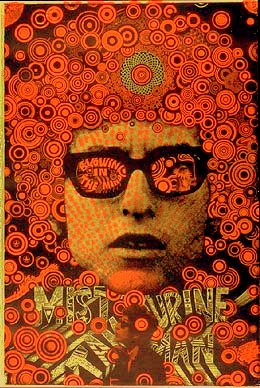
Psychedelic Dylan
Some say she first set her sights on McCartney but the more vulnerable Lennon showed up and the Spider Woman spread her web.
She was still married to her second husband, Tony Cox, but, regardless of what she says she very aggressively pursued, or attacked, Lennon. Lennon was emotionally under water unable to handle his success while drugging himself out of his mind. He was unwillingly married to his wife Cynthia. It appears that he married Cynthia out of duty when she became pregnant. He doesn’t seem to have been happy in his virtue. Yoko had no difficulty in capturing his affections.
Now, just as Warhol had adopted the Velvets and imposed his female singer, Nico, on the band Yoko sought to imp[ose herself on the Beatles through Lennon. At this time she was still musically completely in thrall to John Cage understanding nothing about Rock music. She and Lennon had made a ridiculous LP called Two Virgins in 1968. She combined her cagian screechings while using an avant garde ‘performance’ notion of the couple posing nude on the cover; full frontal on the obverse, full posterior on the reverse. As no store would carry the cover the couple reverted to Yoko’s idea of Bagism placing the cover inside a plain manila envelope or bag. While it didn’t sell the record this form of Bagism was actually a successful artistic statement. The nude cover given an outer garment so to speak.
Well, the public was prepared to forgive the Beatles anything but the other three Beatles weren’t prepared to forgive Yoko for forcing herself on them thus she broke up the most successful act of the sixties. Still, she had succeeded according to her wildest dream. Lennon and his wonderful reputation and fortune were hers. She had gone from a neglected, nondescript ‘performance’ artist to center stage, not on her own womanly talents but by attaching herself to a talented man. Yoko’s ‘heart’ was useless without the male intellect. Yoko was now the most influencial feminist in the world. She knew what to do with that.
After several ‘performance’ acts such as the ‘Bed In For Peace’ the couple left England to return to the place Yoko wished to subjugate artistically, New York City. She had raised herself to a par with Andy Warhol. She now had to meld her musical and artistic goals through Lennon and Warhol.
On the musical side she began to develop her rock n’ roll skills under the tutelage of Lennon. While not abandoning the avant garde notions of John Cage she now emasculated her husband. Always semi-delusional or perhaps completely so, she fantasized that she was not only equal to Lennon in skill and popularity but superior to him. She imagined herself more popular than Lennon. Thus one has such travesties as the LP Double Fantasy. It was only after Lennon’s death that she was forced to recognize than Lennon’s fans did not appreciate her efforts. So she failed as a musician.
She quickly tired of being Mrs. Lennon. Thus she and Lennon separated for eighteen months or so during the years 1973-75. She then realized that her financial well being and musical acceptance depended on Lennon. In 1975 she called him back resuming their relationship until his death in 1980. But, things had changed.
She began to adopt Warhol’s life style on her return to NYC. While she propagated the notion that she was some sort of business whiz Iam having difficulties discovering any such skills. It appears that with the enormous income of Lennon she emulated Warhol in
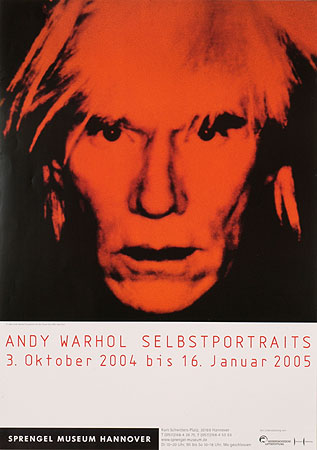
Andy the Demon
spending her way to prosperity.
She was in a position to not only match Warhol’s spending but exceeding it by many times. Through the seventies and eighties Warhol came into his own as an artist while reaping a fortune doing portraits. There appears to have been no effort on his part to invest in income producing vehicles. Rather he bought stuff. He purchased buildings in NYC and elsewhere while acquring undeveloped acreage in places like Aspen. He shopped nearly every day buying antiques from furniture to objets d’ art by the bushel almost as though he were trying to excel the incredible W.R. Hearst.
He usually didn’t even look at the stuff once he bought it merely filling rooms with his shopping bags. At his death all this junk was auctioned off for 25 million dollars, a nice appreciation in value.
Yoko followed the exact pattern buying apartments and houses as well as an extensive dairy farm with a herd of prize cows. She not only had but has five apartments in her principal dwelling, the Dakota apartment building and many other houses scattered around.
Like Warhol the Dakota apartments are stuffed with junk. Valuable, but, you know, stuff. She bought at good prices. Her extensive collection of Egyptian antiquities was mostly purchased before a steep rise in value.
Like the Rothschilds of old Yoko didn’t do all her own shopping but employed agents to search things out. Chief among these was an associate of Warhol’s, Sam Green, and an Hungarian immigrant by the name of Sam Havadtoy.

Buddies- Yoko, John, Andy
There should be no surprise then that she now has an extensive collection of Warhol’s artwork as well as his portraits of Lennon. The Warhols would have been purchased for form 25 to 50K while now being listed on her assets at tens of millions. She also has been said to have a good collection of Magrittes as well as one assumes other artists. So, much of her net worth is tied up in artwork purchased through Sam Green.
Sam Havadtoy was an antiques dealer as well as an interior designer. He appears to have been a somewhat shady character. It is very difficult to find much about him, however there is a sharp portrait available from the notorious A.J. Weberman ( http://www.acid-trip.org/lennon/ )
…(the Lennons) hired a sleazy Eastern European bisexual to renovate the pad. (Dakota) I had heard of this dude, whose name escapes me, from an asswipe named BRUCE KIRSH, who worked for him. KIRSH told me that the dude, who worked for the King of Morocco, would form a dummy renovation company, hire employees like Kirsch who were willing to work under false names, then, when it came time to pay taxes, everyone would disappear. I learned of him long before he was hired by John and Yoko, and I was taken aback when Yoko took up with him after John’s death.
I know that Weberman is not particularly well thought of by fandom but this is because of his harassment of Dylan who did, after all, misrepresent himself to the revolutionaries like Weberman. A.J. himself is an intelligent observer who was wading through it when it was deep. I do believe he knows what he’s talking about although his interpretations of Dylan’s lyrics seem absurd.
I would have to question Yoko’s judgment in taking him in. Both he and Sam Green were candidates as successors to Lennon with

Lennon by Warhol
whom she consorted in front of Lennon before he died while Yoko chose Havadtoy as his successor the day he died.
Perhaps she selected Havadtoy over Green because he was more rough trade. With Lennon while managing to reconcile revolution with peace and love with Havadtoy she discarded peace and love in favor of strong arm methods against her former employee Fred Seaman when it was totally unnecessary.
Havadtoy was living in a homosexual arrangement with his business partner when Yoko beckoned him to switch to her. Apparently an able switch hitter he was lured by the money to this much older woman. The arrangement did last for twenty years before Havadtoy removed to his native Hungary taking a nice cash settlement and several of the Warhols.
Thus, just as Warhol had his live-in homosexual arrangement so after Lennon’s death Yoko adopted the exact arrrangement. Today she apparently lives alone, a seventy-eight year old woman.
After Lennon’s death there was an accession of from 30 million to a possible 100 million dollars as their last album, Double Fantasy, sold into the millions while the rest of Lennon’s catalog and one assumes the Beatles’ catalog was reinvigorated while all things Lennon sold. This is, of course, no reflection on Yoko but the inevitable result with intellectual properties when the maker dies.
Post-Lennon, then, Yoko realized that her recording and art careers were nil. Heart without intellect is worthless. She then became the caretaker of the Lennon legacy. His recordings, of course, continued to sell, but even his artwork eclipsed that of Yoko. So she suffered the humiliation of being a mere appendage to a man. The feminine dismal swamp was eclipsed by the Olympian heights of the male intellect. As in ancient times the God had trumped the Goddess. And yet as with Hera and Zeus the Goddess gets her way. Yoko came up with the money and goods while Lennon’s spirit was wafted into the stratosphere.
As any reader of mythology knows Hera ruled the Lernean swamps of Argolis while Zeus ruled the gods on ethereal Olympus. Thus one has the symbolism of the biological difference between the male and female.
In ancient times the female had her share in magic. She knew herbs and plants, was familiar with poisons and cures as with the arch witch of the ancient world, Medea. The reputation of the female witch even as a consort of Satan persisted down through medieval and post-medieval times, indeed, even up to the dawn of the scientific enlightenment. One would have thought that magic and witchery were a thing of the past in the 1960s and yet Yoko embodied the whole female swamp mentality.
She established something called the Spirit Foundation attributing the direction to Lennon who in fact knew nothing of these matters but followed her lead. The Spirit Foundation celebrated the ancient art of the Shaman or witch doctor. Shamanism itself even preceded the Matriarchal swamps of Argolis. It was a rich repository of magical tradition. Further the Foundation was feminist in that it was dedicated to preserving the magical traditions of the women of the Pacific islands still living in such archaic societies. The wealth generated by the male intellect was appropriated by the female vagina or ‘heart.’
In her own life and that of Lennon’s Yoko was addicted to a variety of magical practices- astrology, numerology, Tarot readings, and indeed she traveled to the Caribbean to sell her soul to Satan through the offices of a female curandera. Her Tarot reader, John Green, was a priest in the shamanistic, magical, Yoruban African cult of Santeria.
Her feminism was more a magical effort to restory Matriarchal supremacy over the Patriarchy thus reversing the Patriarchal victory of three thousand years previously. Indeed, what has been called the movement for female equality is nothing more than a covert campaign to restore the Matriarchy.
Thus while Yoko o9riginatd nothing she usurped the abilities of the reason of men- Cage, Warhol, Lennon and male magicians such as John Green. Indeed the Trojan War itself was a war of men in service of women.
In her associations with men she preferrred to deal with emasculated types such as homosexuals like Cage, Warhol, Sam Green and Sam Havadtoy. Lennon claimed to have always been dependent of women for comfort and guidance while Yoko caught him at his most confused and vulnerable.
While she received direction from Cage and Warhol she was able to manipulate Lennon out of his talent somewhat as Vivian did that of Merlin of the Arthurian saga. When Vivian had usurped Merlin’s magical knowledge she buried him deep much as Lennon was put out of the way. Yoko then appropriated his wealth and residual income after his death. It was this constant inflow of cash that allowed her to propagate the notion that she was a financial genius.
Then as the female of the ‘heart’ or vaginal swamp she managed and appropriated the reason of Olympus through Cage, Warhol and Lennon. What she got from Havadtoy other than brute strength is not clear to me.
As such Yoko is Woman. In her case a seeming reversion to the archetypal Shaman of the most ancient times.
Mourning Becomes Yoko: Part II
March 13, 2010
Mourning Becomes Yoko
Part II:
The Passing Of John Lennon
by
R.E. Prindle
About John
This magic moment
So different and so new
Was like any other
Until there was you.
–Pomus-Shuman

The King
To understand the sixties one has to go back in time to the foundation of Astrology. In Time beyond Ancient, Astrology and Astronomy were one. The very old gods and the sky were one. It was only when science, a more clear understanding of ‘creation’, if you will, removed the sky from the gods’ purview that Astronomy and Astrology separated. Astrology in those days had meaning that is not apparent today when the sky is just part of our natural surroundings.
The Zodiac was divided into twelve periods of roughly 2000 years each which formed the Great Year. The periods were called Ages with each Age having its own avatars. The avatars of the current Piscean Age have been Jesus the Christ for the first thousand years, and for the succeeding thousand years Artemis or Diana in northern Europe and Mother Mary to the south. Sometime within a few hundred years near the end of an Age a new avatar begins to form.
The first intimation of the dawning of the Age of Aquarius that I am aware of occurred at the beginning of the twentieth century. While not the first, the chief proponent seems to have been Edgar Rice Burroughs and his creation, Tarzan The Ape Man. Not one to

The Prophet- Edgar Rice Burroughs
be dogmatic Burroughs left his intent open only to, dare I use the word again, the initiated.
Tarzan is timeless, he represents the past, being associated with the Atlanteans and the range of evolution, the present and, as the exemplar of the perfect man, the future. While rejecting organized religion Burroughs also rejected the Piscean avatar, Jesus The Christ in favor of the coming man-god. Thus the coming man-god must be a projection of the Aquarian avatar. Tarzan, a magnificent specimen is both physically and mentally the perfect man and hence representative of the future Aquarian man-god. Do not confuse the movie Tarzan with the literary creation of Edgar Rice Burroughs.
The longing then for a new messiah had been developing for half a century, at least, when circumstances came together for the appearance of a new avatar pointing toward the Age of Aquarius. This manifestation appeared on the stage of Ed Sullivan, in of all places, New York City. It was the Tupelo Mississippi Flash himself, Elvis Presley. In that brief magic moment on Sullivan’s stage he revealed himself and was recognized by his people.
Interestingly the appearance on 10/9 coincided with the birthday of John Lennon.
In that moment Presley’s future was cast. Whether the old order recognized who he was they knew how he was perceived and made every effort to slander, denigrate and destroy him short of actual murder. All to no avail. They might have been able to kill him, murder him, but he was inviolable to any defamation. It made no difference that they ridiculed him in a couple dozen fatuous films, he was the man-god. People endured his humiliations with bowed heads and resentful miens.
From him succeeding generations have taken their guidance. The first awe struck generation took the stage in direct emulation of him. While many had better songs (Gene Vincen’ts Be-Bop-A-Lula) none of the generation were anointed thereby developing a devoted following in the magnitude of Presley.
Elvis was not the last word but the first in what will be a procession. While the American Pharisees persecuted and scattered the faithful a new, younger generation was growing up in Elvis’ shadow. Their epiphany, that Magic Moment, would take place on the same Ed Sullivan stage in that same strange city of destiny, NYC, nine years later.
The gestation of this second manifestation of the godhead would take place in Liverpool, England. Inspired by Elvis Presley four young men of the second manifestation would be filtered through the persona of a young Scottish musician named Lonnie Donegan
The Geat Lonnie Donegan
.
When the settlers from the British Isles settled America they brought their musical traditions with them, most prominently to the Southern tier of States. Thus both the White and Black musical traditions of America stem from essentially the Celtic peoples. In the mid-fifties Donegan brought this music in the form of American Folk back to England in a form he named Skiffle Music. It swept England and its youth up being combined with Presley. Donegan added a ferocious beat to the music that evolved into the form termed the Big Beat. Thus the British musicians were schooled in American music as it had evolved from their own.
Now, the Magic Moment requires the man who has been prepared for the moment. If all goes right he is equal to his destiny, if not the moment fails.
While Presley was the man, the second avatar would be four men seemingly acting as one. The four men seemed to represent four archetypal personalities as in the four faces of the godhead. Those of us who didn’t ‘get’ them, of which I was one, were mystified by their apotheosis.
Just as Elvis had his unique preparation so did this fabulous foursome. Raised as four ordinary kids from varying levels of poverty and varying psychological backgrounds they were united by the music of Presley and Donegan.
They began a grueling and astonishing apprenticeship in the red light district of Hamburg, Germany. Unable to speak German they were thus compelled to rely on each other for companionship which created a unique bond. They were required to be on stage for up to twelve hours at a stretch for weeks at a time thus honing their musical skills apparently to perfection.
The Beatles
Thus the four aspects of humanity, one might say, were placed in a unique situation creating a unique combination of personalities seemingly as one. In those circumstances they were forced to be able to communicate instantly with their audience night after night. Valuable training.
Returning to Liverpool with their abilities seemingly uniquely developed they were adrift with no direction home and no other future than earning their livelihoods as best they might. But then, as by a miracle, a man appeared with no managerial experience who said he could take them to the top. Amazingly he got them launched. Even more astonishing they were assigned to perhaps the only record producer in the world who could bring out their unique talents. Thus this Fab Foursome took their home British Isles by storm succeeding as no other had succeeded before them but their Magic Moment, that lunge for the Golden Ring had not yet arrived.
The Magic Moment was awaiting them in NYC. A big jetliner brought the foursome to America’s shores in January of 1964 to appear on the Ed Sullivan show where they were to stand in Elvis’ footsteps so to speak. The difference in presentation between the two is interesting. With Elvis, he and his backing duo were standing in front of the drawn curtains on the edge of the stage, no set, his two band members were huddled behind him while the guitar player is turned sideways not even facing the audience. Presley is directly in front of them cavorting on a minuscule part of the stage. Mort Sahl would do his standup routine a few years later in the same manner with a newspaper as a prop.
In contrast the Beatles were given an open stage with decor behind them while the group was spaced dramatically and attractively. A very positive image which from long experience they knew how to take advantage of . But the appearance on the Sullivan stage merely confirmed their Magic Moment placing it indelibly in the American psyche.
The actual Magic Moment occurred when the Beatles announced themselves on the tarmac. Gods descending from the skies. For
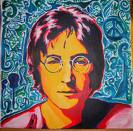
John Lennon
whatever reason there were thousands of screaming girls awaiting them and a battery of newsmen and photographers. Some say the girls were bussed in, it isn’t unlikely that the astute promotion men of Capitol had a hand in the arrangements, but on the receiving end of the tube it looked genuine. Mystifying but genuine.
Posed a bunch of questions by the news cameras all four Beatles fielded them with aplomb, the cheekiest and most confident acting was John Lennon himself. All four personalities established themselves at that time as one- the Beatles. In that little flash of time the role of the Beatles was established for all time.
While each individual Beatle was adored for the face of mankind he presented each had only an identity as an aspect of the Beatles. When they split they became merely humans rising or falling based solely on the musical merits. Of the four, Lennon adopted the messianic mantle, was accorded it, and took it when he left. In one sense the Magic Moment had been his.
There would be argument about when the Beatles began to break up over the years but the when was coincidental with their annunciation. John Lennon was the weak link in the chain. Having now won what he had been struggling for for so long John Lennon discovered he wasn’t worthy. Incredibly he wrote, and the Beatles recorded his song, ‘I’m A Loser.’ He was a loser, not the winner he appeared. Now conflicted he tried to both accept and reject the role of ‘messiah.’ He was well on his way to losing the role two short years later in 1966.
The course of his career was affected by two people, Bob Dylan in 1964 and Yoko Ono in 1966. Historical ifs are difficult. It seems impossible that Bob Dylan’s career would have been possible without the overwhelming success of the Beatles. Dylan lacked commercial appeal then as he does now. He appealed to a minority audience- as opposed to the majority audience of the Beatles. Dylan lacked universal appeal then as he does now.
While the Beatles were one as a group they were two as the songwriting team of Lennon-McCartney. Since 1962 they had been turning out a steady stream of million sellers both for their own use and that of others. They were catchy tunes in the Tin Pan Alley manner that could be sung and whistled but very introspective at the same time. Dylan on the other hand wrote tortured introspective lyrics that resisted anything close to whistling or a Mitch Miller singalong.
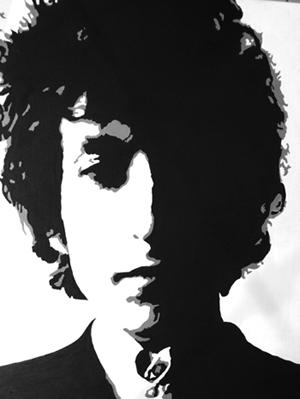
Bob Dylan
Dylan considered his stuff amazingly thoughtful and profound. He apparently put himself in the same class as Elliot and Pound. He fooled most of his audience for a long time too. The Beatles for whatever reason became the top news story of the day; for months they either were, or seemed to be, on the news every night. Seriously, one had to ask: What’s Going On?
Just as mysteriously Dylan began getting the same treatment. Now, the Beatles were selling unprecedented millions of records on both sides of the Atlantic, at one time occupying the top five spots of the Top 10. Dylan was doing diddly squat with his tortured lyrics. He wasn’t selling records in any quantities while having essentially a cult following. Now, mysteriously he began to be given the same treatment as the Beatles. Time Magazine sent a reporter to interview him on camera. Dylan imitated the Beatles by giving smart ass answers. The Time reporter took his jibes seriously. Sitting out in front of the tube my eyebrows shot up. What is this? The rest of the world went wild in their applause of the Beatle’s and Dylan’s cheekiness. God, they were giving the finger to the Greatest Generation. The latter may have crushed Elvis but these boys were getting their own back.
Maybe Dylan got the attention because he was the only American act available, to balance the relative status of Britain and the US. Perhaps in the emerging racial politics of the time he was offered as Jewish competition to the great goy champions of Elvis and the Beatles. He entered the Beatles’ life in August of ’64 when the Jewish journalist Al Aronowitz took it upon himself to introduce him to the four-in-one. The meeting was more momentous for the Beatles than Dylan.
The story goes that Dylan introduced the boys to marijuana at that meeting. More importantly he lectured Lennon-McCartney on songwriting. Dylan told them in effect that they should stop writing hit songs and write the pretentious crap he did. Now, consider, the Beatles were incredibly successful at what they wrote, Dylan couldn’t do what they did and what he did do couldn’t compete in the marketplace with the Beatles. I mean, they should have been lecturing him, but they didn’t while accepting his viewpoint at the same time. They listened to the little twerp and fell under his infuence to begin trying to imitate him.
The imitation was not very good but as the current avatar of the messiah the Beatles were industructible, as the leader, for whatever reason, John Lennon was accorded the role of messianic leader, a role that he took quite seriously.
While the Beatles had always used various pill forms of speed or amphetamines after Dylan’s introduction to pot they quickly expanded their repertoire to include Acid or LSD. The other three seem not to have been so conflicted in their personalities not becoming as drug dependent as Lennon. He claims perhaps with exaggeration, perhaps not, to have taken LSD thousands of times in the next few years. Under the influence of LSD his personality already distressed by the transition from failure to success disintegrated completely. As he says, he lost his ego totally.
If so, adrift, he was open to a strongly directed personality to manage his. This personality appeared in 1966 in the person of Yoko Ono. She quickly commandeered his personality displacing his British wife, Cynthia. It would be two years before Lennon divorced Cynthia but he left her a year earlier.
Since signing with Brian Epstein as their manager the Beatles had had an ideal artists arrangement. Trusting him they left the business details to him which allowed them full time to devote to their creative efforts. If they needed money they asked for it while all business details such as negotiations, titles and even check writing were handled by Epstein so that the Beatles had no worldly business experience. In 1967 Epstein died.
With Brian gone the Beatles were left rudderless with no one they could trust to manage their corporate and personal finances. Forming Apple as their business alter ego they attempted to manage their affairs themselves resulting in a business regime of such dissolute ineptitude that it has been referred to as The Longest Weekend.
Having attached herself to Lennon, Yoko Ono now tried to insinuate herself into the group as the ego of John Lennon. Thus the group would have been comprised of McCartney, Harrison, Starr and Lennon-Ono. A clear impossibility, the Beatles would be dissolved. As the avatar of the sixties the era had no choice but to disappear along with them.
This was now the late sixties. The world as it had been , the world that gave birth to the Beatles c. 1960 had all but disappeared. Blown away in the wind, so to speak. Just as the sixties called for the Beatles as the messiah of the period so it called forth its anti-messiah of satanism. In 1966 Time Magazine’s cover story was Is God Dead? A title that offended Bob Dylan who petulantly asked: How would you like to be talked about like that? Right.
Stones With Brian
In 1966 Roman Polansky began filming a movie titled Rosemary’s Baby that actually portrayed the birth of Satan’s child. The story took place in the future home of the Onos- The Dakota Apartments. And then the Rolling Stones released their rather bizarre record, Their Satanic Majesty’s Request with its famous song Sympathy For The Devil. Right about then the Broadway musical Hair was staged that celebrated the Dawning Of The Age Of Aquarius. Synchronicity? Not a bit.
As the messiahs had abdicated it remained for the anti-messiahs the Rolling Stones to place the epitaph on the period which they did in 1969 at Altamont.
However John Lennon as the messianic figurehead was rescued by Yoko Ono. As an unsuccessful performance artist now with Lennon’s audience and financial clout to realize her wildest fantasies she, using Lennon, organized some of the most outrageous extravaganzas that catapulted she and Lennon onto the world stage playing messianic figures. The Bed-In was the most jaw dropping stunt since flag p0le sitting.

John And Yoko
Part III will consist of the career of the Ono-Lennon’s to John Lennon’s death in 1980 and perhaps a little beyond. There’s some really interesting stuff involving John Green and a possible associate, Sam Green. The latter is an interesting story.
A Review:
Dakota Days
The True Story Of John Lennon’s Final Years
by
John Green
Review by R.E. Prindle
Green, John: Dakota Days- The True Story Of John Lennon’s Final Years, St. Martin’s Press, 1983

John and Yoko looking pretty palmy.
The book should perhaps be subtitled: A True Story. John Green has crafted very nice portraits here of Yoko Ono and John Lennon, especially that of Yoko. She was very superstitious being dedicated to the occult from witchcraft to Japanese numerology to Tarot readings. It was the last that brought Green within her ken. She not only wanted a reading of the Tarot cards but she kept Green hopping day and night giving her readings on whatever little problem that pressed her mind. So for six years Green made a very good living reading for John and Yoko while developing a profound familiarity with their characters; in other words, he knows whereof he speaks.
Neither he nor the Japanese numerologist who he mever met were the only occultists Yoko was consulting but Green seems to have been unaware of the others. He is very careful and doesn’t overstep the bounds of what he knows first hand. There was a great deal that Green wasn’t privy to making this A rather than The true story.
While I know that many people know what the Tarot is I will give an explanation for those who don’t. While I don’t participate in Tarot myself I do have a deck of cards on hand to study for historical reasons.
The Tarot is a deck of 78 cards of some psychological subtlety. It arose as a means to preserve the Egyptian religion when after the various invasions of the first millennium BC the matrix of the religion was shattered. The Tarot was devised as a means of perpetuating the religion. The various spreads of cards provide means of interpreting responses to a problem.
Over the centuries many different decks have evolved representing various time periods. I have the Egyptian deck. It would be
Tarot Card From Deck
interesting to know which deck Green used. He fails to tell us.
To be able to read well one must have an implicit understanding of each of the cards as well as being a subtle enough psychologist to apply the meanings to he or she for whom you read. Green apparently had both qualifications. Thus over thousands of readings over the six years he became very familiar with the characters and personalities of his subjects John and Yoko. Still, they seem to have been very successful in letting him know only what they wanted him to know.
As he apparently didn’t take notes, limiting in itself, he relies on his memory and familiarity with the Ono’s mental processes to reconstruct a continuum of the six years. While one may question the veracity of his method he seems to capture the mental and vocal traits of both John and Yoko. I have no trouble accepting the portraits while as the details can be corroborated elsewhere I see no reason to question Green’s general accuracy. Otherwise there is no one who doesn’t make mistakes in fact or interpretation.
His two portraits while revealing conflict with other accounts such as that of May Pang or Fred Seaman the obvious reason is that

May Pang
the Onos are only letting him see what they want him to see. For instance, in their 1980 interview the Onos state that Yoko had brought the estate up to 150 million dollars yet Green has Yoko spending so fast that they are always on the brink of insolvency. At times expenditures seem to exceed cash on hand.
Green believes himself to be their only investment advisor but that isn’t the case. Just as Yoko had her Japanese numerologist who Green didn’t come into contact with and other occult advisors she must have had other financial advisors.
The picture Green paints of Yoko is far from pretty while he never openly denigrates her yet as he creates his layers of detail she not only becomes but goes beyond eccentric. Her dependence on the occult is such that when someone advised her of a ‘genuine’ witch in Colombia she dragged Green along on the trip to South America to visit the woman. Always lavish in her expenditures, she gave one medium a blank check for her to fill out, she gave this woman 60,000 dollars for her ministrations. When Green protested that the woman had meant pesetas rather than dollars Yoko was unfazed.
Thus while Yoko denied any dependence on John she only was able to realize her vision of herself through the former Beatle’s wealth and influence.

Yoko in one of her many guises.
This was no more evident than in Yoko’s competition with her mother. For two successive summers John and Yoko visited Japan. According to Yoko the intent was to establish some rapport so that her son Sean wouldn’t be cut out of the family fortune that was considerable. The trips were conducted on such an extravagant scale that according to Green the Onos were cash poor as a result. Nevertheless Yoko went on spending so either they had funds of which Green knew nothing or they got money from somewhere.
The fact that they always seemed to have enough cash to do anything from spending a few millions on dairy farms and cows to Japanese vacations that it seems strange that when they received an extortion attempt for 200,000 dollars Yoko said they had no money. The extortion attempt seems to have been a protection racket- pay and live or go the police and die. As the extortioners told Yoko that if she went to the cops they would only protect her for a while. When they left whether a year or two later the extortioners would strike.
The Onos refused to comply calling in the FBI. The FBI advised them to substitute newspaper for money and they would arrest the pickup man. Strangely the pick up man was able to elude the FBI. And then two years or so later Lennon was hit by exploding bullets and killed on his doorstep. While one cannot say the two events are connected yet the assassination followed the extortionists plans. Chapman did make a stop to speak to an unidentified party before he pulled the trigger. But nothing is clear.
Yoko first contacted Green during Lennon’s ‘Lost Weekend.’ While Lennon believed, and it seems clear, that Yoko had informants watching John while he was in LA, Green has her denying this saying that it was his card readings that kept her informed of John’s doings. In all likelihood she checked her spies’ information against his readings.
From ’75 to ’80 Lennon was in a severe depression being unable or unwilling to function in a normal way. Of course there was no reason for him to act ‘normal’ as he was able to deal with his funk in his own way. Who is there to say that ‘normal’ was better? As he told Green his muse had left him leaving him unable to write. As he said, call it writer’s block or whatever, he couldn’t work. Enough reason for depression in an artist.
Then in 1980 when he came out of it being again able to write, Yoko in her desperate attempt to be his equal insisted on being part of the new record she called Double Fantasy. John adamantly refused to let her perform on his own tracks while she didn’t want her tracks all on one side for fear that no one would listen to side B, so they alternated tracks.
Thus, even though Yoko insisted that she was the most talented artistically and musically of the two she was forced to hitch her wagon to John’s star.

Yoko in one of her variety of men's hats and double fantasy glasses.
2.
I found Green’s treatment of Lennon to be more sympathetic than his treatment of Yoko. The inevitable conclusion one comes to about Yoko is that at best she was a pathetic human being while at worst an obsessive-compulsive and a dangerous one at that.
The portrait he depicted of John is that of a man with a completely disintegrated personality entering the mid-life crisis. During this five year period he begins a process of reintegration. Actually his course is that of the mythological hero who experiences his ‘madness’ at this period of the mid-life crisis.
During this period Lennon is essentially egoless. Part of Timothy Leary’s LSD mantra was that one should abandon the ego. Of course to abandon the ego leaves one defenseless and a prey to sharpers who use their ego only too well, nevertheless Lennon bought in and abandoned his ego, or so he says. As he abdicated his identity to the use of Yoko Ono this was obviously the case.
So, he allowed himself to be manipulated by Yoko spending long periods of months over years ruminating naked in his bed, totally exposed as it were protected only by the good will of Yoko. Then, for whatever ulterior motive, Yoko sent John on a solo trip around the world. This was her mistake.
While in Macau, China Lennon had an epiphany in his hotel room. This is a fairly common one but self-revelatory. One might name it the peeling of the onion. In Lennon’s case he obviously felt that he had multiple personalities acquired through various traumatic events in his life.
As he described it to Green he was in his hotel room when he succeeded in peeling a layer of the onion, a personality, off which appeared as real and visible to him as shirt or a suit of clothes. He draped the personality over a chair then began to peel off layer after layer hanging them about the room or draping them over the furniture. When he awoke the next morning he could see them just where he put them. He then conceived the notion of leaving them there as he ran away from their influence.
This is a beautiful little fantasy. But then he turned the corner and there was oneof his selves waiting for him. Visualize the Rock And Roll cover and I think you begin to have it. He then realized he couldn’t escape in that fashion so he went back to his hotel and said ‘C’mon’ to his personalities and continued on his journey. However having identified his ‘problems’ by name, as it were, the seeds for resolving those problems had been sown.
He then returned to the Dakota and while he confined himself to his room rather than merely sinking into depression he began working through those layers of fixations or depression gradually recovering his muse and removing his writer’s block enabling him to compose again.
It would seem that Yoko preferred John psychologically incapacitated so that she could either control him or make herself believe that she was the more talented. Green notes that as John improved Yoko seemed to deteriorate. He quotes her as saying that she had heard some of John’s new songs and they were not very good while hers were.
Dissociated from reality as she was then she couldn’t let John record an LP of songs that might be a hit while anything she recorded on her own would be relegated to the garbage. She even refused to record one side all John and one side all her for fear that no one would listen to her side so she demanded they alternate tracks. I presume that is one reason the LP is entitled Double Fantasy.
While Yoko actually believed in the Tarot and her Japanese numerology, witchcraft and whatever John intelligently disregarded the occult aspects while he might have seen the utility of the Egyptian religous aspects to reveal character and motivation. In fact the innumerable readings of the Tarot might have led up to the revelatory epiphany in China and hence the lifting of his depression.
If that were the case then there would have been little difference between the Egyptian system of Tarot and psychoanalysis. But, as I say, I have no idea of which deck Green was using although the principle remains the same.
3.
After having been on 24/7 call for six years as the Onos moved into what seems to have been a new phase Green lost his usefulness to Yoko sitting by a phone that never rang.
Green had succeeded too well. As he has John explain to him when Yoko first employed him she set him seven tasks. He had successfully completed all seven being now redundant. While John promised to look out for him, of course events eliminated any such possibility.
Regardless of whether the Ono Lennons were the subject of Green’s book I found the whole concept interesting. I like the way Green told his story, his tone and his outlook. His telling made me take an interest in himself. Unfortunately his name being so common makes it too difficult to search out anything of his subsequent career other than he moved to Washington DC.
Perhaps he could write a sequel to Dakota Days from another angle and with more detail. Pressing issues might not be so pressing now. I’d be interested.

Happy Trails To You.
 I, Dynamo