Henry Ford And The International Jewish Conspiracy
September 12, 2013
Henry Ford And The International Jewish Conspiracy
A Review Of The Jewish Virtual Library Post ‘Henry Ford
Invents a Jewish Conspiracy’
by
R.E. Prindle

The Great Henry Ford
http://www.jewishvirtuallibrary.org/jsource/anti-semitism/ford1.html
http://contemporarynotes.wordpress.com/2008/08/08/henry-ford-and-louis-marshall/
Jews should always avoid writing on history. Because of their extreme ethnic bias they can produce only the most self serving twaddle. This is no more evident than in their Jewish Virtual Library post concerning Henry Ford. The mere title of the post expresses its falsification of history. Ford neither invented a Jewish conspiracy nor the International Jewish Conspiracy. In the course of events he was swept up into the Jewish War against Europeans much against his wishes.
The JVL isn’t even capable of putting Ford and the auto industry into a historical context without which Ford’s actions cannot be understood. Among the many battle events that appeared after 1900 was that of the bankers versus modern industry. There were of course Aryan banking firms and Jewish banking firms, at the time quite distinct from each other and in competition on an ethnic basis.
The railroad industry had dominated the banker’s attention in the nineteenth century thus they pooh poohed and disparaged new industries such as that of autos.
Both Jewish and Aryan banking firms refused to loan to the auto makers so the makers in turn developed new methods that freed them from dependence on loans from bankers while still allowing them to develop rapidly without interference from bankers. The two stellar auto makers were Henry Ford at Ford Motors and William C. Durant at Buick. Durant, perhaps the most imaginative auto genius but an inveterate over reacher attempted to gather the most prominent auto makers into a combine he called General Motors with which Ford initially flirted.

William Crapo Durant ‘Billy Durant’, A Great Visionary
Now after 1910 when autos seemed to be a permanent fixture and Durant overextended himself the bankers moved in and pushed Durant out. Now as several recent bailouts attest bankers don’t even know how to run banks much less than an auto company in the teens. Under the bankers Buick stood still while Ford shot ahead. Durant regrouped using the auto of Louis Chevrolet to reenter the field while using its success to recapture Buick and regenerate General Motors.
Ever expansive he once again overextended himself being forced out once more. This time the bankers installed an auto maker management that made GM a success capable of challenging and surpassing Ford.
While this was going on WWI was being fought. Woodrow Wilson then president was a socialist so that when the US entered the war in 1917 the government seized either control or direction of industry. The rails were nationalized while industry in general fell under government controls administered by an agency called the War Industries Board, the WIB.
One of Ford’s supposed faults according to the JVL was that he was opposed to government regulation of business. True, but so were all industrialists and such opposition could only be considered a fault by Communists qua socialists. The WIB was the agent of that regulation.
Now, whether the writers of the JVL like it or not it is a fact that Warburg came to the United States where he immediately organized the Federal Reserve System that was owned as a private enterprise by these so-called Socialists by nine international Jewish banking firms plus Rockefeller. This is an undeniable fact.
The Federal Reserve controlled, and still controls, US currency lending it to the US for use. Thus the dollar was a Jewish financial instrument for the use of which US taxpayers paid the Jewish owned Federal Reserve System interest every year. Apparently the Jews thought Ford and others were ignorant of what was happening. Quite fatuous on their part.
While, as I understand it, the Jews still deny that Wilson brought rafts of Jews into government beginning with his inauguration in 1913. In 1917 the WIB board was virtually a Jewish agency. This was all known at the time but strenuously denied by the Jews. Its director was Bernard Baruch who became the grand old Jewish advisor of presidents later in life.
Wilson appointed the first Jew, Louis Brandeis, to the Supreme Court. Brandeis, an ardent Zionist, was reputed to be the wisest of the wise, the sagest of the sage and a universal genius. FDR, a disciple of Wilson in these years, would brand Brandeis during his own administration ‘our Isaiah.’ So while the writers of JVL may simper because ‘rumors were dredged up’ that Wilson took ‘secret’ orders from Brandeis over the phone, while deleting the pejorative word secret, it is not unlikely that Wilson did discuss situations with the ‘wisest of the wise’ whether over the phone or face to face. Nothing would be more likely.
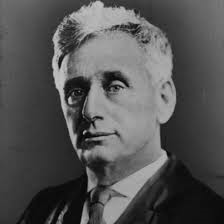
Louis Brandeis ‘Our Isaiah’
Indeed, the Jews so loved Justice Brandeis that they named their national university in the US Brandeis University after him. He and the arch criminal Arnold Rothstein were the big Jewish men of he teens and twenties. Just recently the Jews opened a ‘national’ museum in Las Vegas celebrating Rothstein and other specifically Jewish criminals.
While the railroads were nationalized the Wilson Administration demanded that the major industries file financial statements and business plans with the WIB. The auto industry objected to this rightly believing that through the Jews who ran the WIB their industrial knowledge would pass into the hands of the Jews giving them an inestimable advantage.
One imagines that the JVL will pooh pooh this yet it remains true that at the end of WWII the Alien Properties Board that controlled the confiscated properties of the Germans and Japanese valued into the billions was directed by the Jew David Bazelon who sold these properties without bids to his fellow Jews at less than fire sale prices making their post-war fortunes while robbing American tax payers.
The auto makers then were right to protest these regulations. They, especially the Dodge brothers, did so vociferously while using intemperate racial slurs directed at Baruch that Baruch later rapaid when the Dodge Brothers both died mysterious deaths in 1920. There was even an attempt made on Ford’s life.
After the war friction between Ford and his major stockholder James Couzens was such that Ford was forced to buy him out. Not having the necessary cash he was forced to violate his principles and go to the bankers. They shortly called the loan that Ford was unable to meet on short notice. However by drastic reorganization of his business he was able to meet the loan this thwarting a Jewish attempt to take over Ford Motors. Harboring resentments he was now his own man.
As a major condemnation the JVL says that: ‘He opposed various symbols of social and cultural change aound him, including Hollywood movies, out of house child care, government regulation of business, Eastern European immigration and new styles in dress and music.
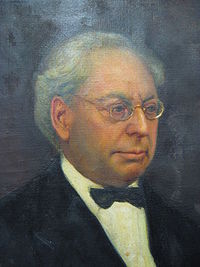
Louis Marshall
Consider these defamatory ‘sins’ in the context of the times. Hollywood movies were under constant attack during the teens and twenties. There were many local moves to ban them. Carl Laemmle of Universal, himself a Jew, even pledged to make no more anti-Semitic movies. The Catholic leagues were pressing for censorship. In 1921 in an effort to quiet criticism Hollywood itself established the Hays Office to censor themselves. Self-censorship is always especially effective. Will Hays, Harding’s very effective Postmaster General, was lured away at a royal salary of millions in today’s currency to run it. So Ford opposed the immorality of Hollywood movies? Then he was on the right side.
He opposed government regulation of business? Well, Harding and the Republican Interregnum of 1920 to 1933 repudiated Wilsonian socialism returning the railroads to private hands and returning the twenties to the most laissez-faire period of American business. Once again Ford was on the right side.
Ford opposed Eastern European immigration? Eastern European is code for Jews. The Jews were in the process of organizing the whole of European Jewry for transportation to the US. Reacting to this the country passed restrictive laws in 1921 and 1924 thwarting the Jewish plan. Once again Ford was in tune with universal sentiment. Me thinketh that Jewish protests are spurious.
As for new styles in dress and music neither did these new modes go unchallenged by a vociferous public while as a young boy in Michigan in the late forties we were still under the influence of Ford’s musical taste singing folk songs on a daily basis in class. One might then without too much of a stretch claim that Ford was the father of the folk revival of the fifties and sixties. It will be remembered that Carl Sandburg published his compendium of old timey songs in this period also.
So, really, the writers of the Jewish Virtual Library ought to either develop better research methods or lose some their ethnocentric chauvinism and xenophobia.
Ford, then, may fairly be said to have been in a contest not of his own making with the Jews when he began to publish his newspaper the Dearborn Independent.
The implication in the Jewish Virtual Library article is that Ford was some insane irate individual crazed lone wolf anti-Semite. Once again, placed in the historical context of the times this accusation is completely false. In fact the Communist Revolution in Russia created a huge furor with large factions in all European countries pointing to the huge involvement of Jews in not only the successful revolution in Russia but all the failed national revolutions of Europe and yes, that of the US. The evidence was overwhelming, denial was absurd, however that was the tack the Jews took.
Paul Warburg
Jewish damage controllers rushed into the fray howling anti-Semitic charges right, left and down the middle. As a centerpiece they chose a negligible manifesto culled from earlier Jewish writings called the Protocols Of The Learned Elders Of Zion. The Protocols was a pale imitation of Marx’s Communist Manifesto, hardly worth bothering about. Certainly it was amateurish next to the total Jewish assault on Western Culture led by the Frankfurt School of Critical Theory that would continue from the early twenties through today backed by the emerging technologies of movies, radio and TV. The Jews still talk about the Protocols as some sort of horror.
Ford should have dismissed the book as some sort of Jewish folly but he took it seriously and actually published it as the first volume of his four volume series of essays, The International Jew.
Ford’s use of he term international Jews did not refer to all Jews. Ford himself was tolerant of all religions and nationalities including the Negroes, more than he should have been. Ford’s point was that there was a cadre of international Jewish politicians just as there was an international Communist conspiracy. This cadre of Jewish politicians was easily identifiable although Ford did not name them, probably because they would sue him as he nevertheless was three times. For a confirmation of Ford’s allegations read my post linked above. Louis Marshall who was the international Jewish secretary of state confirms Ford’s analysis in his collected letters.
Now, Cameron’s essays approved by Ford were not wild eyed anti-Semitic rantings as the JVL claims but were well researched documented essays concerning Jewish involvement in specific areas of American society. Ford amassed a several thousand volume library of Jewish writings pro and con that were at Cameron‘s hand. When Ford discontinued his contest with the Jews he asked them what he was to do with the library. He was absolutely disgusted when he was told to donate the library to the Jewish Theological Seminary in Cincinnati. Whatever became of the library is not known.
The articles were however ‘critical theory’ of Jewish activities making them unforgivable in Jewish eyes. Thus, the astonishing campaign of vilification against Ford, slanderous, vile and mean spirited.
The International Jew articles are readily available for reading on the internet today for the inspection of the curious.
Finally, the JVL asserts: Ford’s attempt to prevent unionism at his plants produced strikes and violence, mostly provoked by Ford’s own strike breakers.
While it is true that Ford saw no need for unions as he believed that he took better care of his employee’s interests than any union thugs could.
Ford was the first industrialist to ensure a clean, well lighted, airy work environment for his employees. Even in the Communist Charlie Chaplin’s parody of Ford’s assembly line in his movie Modern Times the line was immaculate. You could eat off the floor. Ford’s line was designed so that there would be little bending and stooping. The parts passed by waist high.
Taylorite efficiency experts determined the most efficient movements to do a task with maximum efficiency. Every consideration of the employee was taken. I, myself, have worked the line at a GM assembly plant, I know how it is done. I know the human material that has to be managed and it is difficult material. Molding the steel is easier.
In addition when Ford realized the money that could be made by efficient operation combined with an unsaturated seemingly inexhaustible demand he voluntarily with no prompting doubled the wages of his employees.
From 1914 to the Depression he increased wages so that by the beginning of the Depression he was paying eight dollars a day or better than three times his 1914 wage. The Depression contrived by the Judaeo-Left forced him to lower wages rather than raising them which he would have continued to do. This reduction caused Ford great anxiety as though he had failed his employees.
Now, the Reds had never forgiven Ford for doubling wages back in ‘14. They hated him and wanted to destroy that symbol of capitalist efficiency, Ford’s River Rouge plant.
While writers such as at the JVL seem to assume that unions were universally favored and Ford was alone in not favoring them, nothing could be further from the truth. Remember the JVL is Jewish fantasy and not history. Workers except for Red doctrinaires didn’t want unions. Unions made little to no headway until the Reds got their man, FDR, into the White House where he passed laws declaring companies and workers had to accept them whether they wanted them or not. Most workers didn’t feel the need for another boss and more fees, taxes by another name, extorted by union thus and they were criminal thugs that nobody can deny. Even today after seventy yeas of favoritism less than 25% of workers belong to unions.
Using FDR’s Wagner Act then the Communists organized a march on River Rouge with the express intent of smashing the assembly line and destroying Ford Motors. Of course the writers at the JVL think any thwarting of their wishes is criminal so Ford’s successful defense of his property in their eyes is a criminal offence. Suffice it to say that in the Battle Of The Overpass two opposing armies were fighting a war that Ford won.
That the JVL can write such twaddle as the Ford article and hope to pass it off as objective history is amazing. After all, the whole world is not only watching but reading. This will not pass.
It is writing such as this at the Jewish Virtual Library that gives the internet a bad name. These people should be ashamed of themselves.

Carl Sandburg- The Great American Songbook
A Review: Part III Tarzan And The Madman by Edgar Rice Burroughs
October 13, 2010
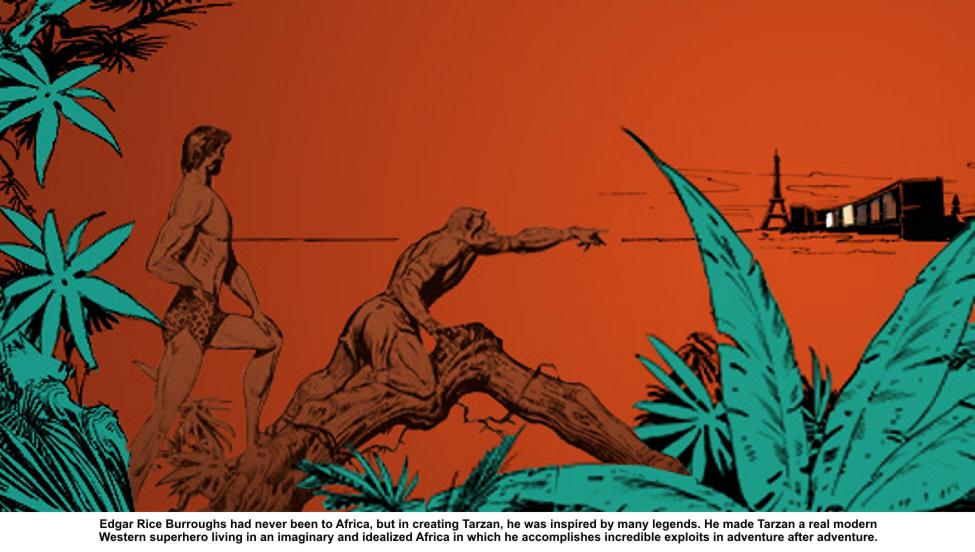
The Aquarian Archetype
The Renowned Arab Traveler- Mohammed Ibn Batuta
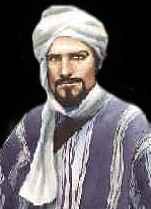
Writing in the fourteenth century Ibn Batuta had visited the East African coast trodding the soil of Kilwa Island on the southern border of Tanganyika, now Tanzania. Zanzibar replaced Kilwa as the Moslem trading entropot on the East Coast. Haggard apparently had done the same as he mentions ruins that dated back to before the tenth century. So, we have established commercial activity in Southern Africa before the arrival of the Shona people in Zimbabwe.
Ruiz stood behind a low, stone altar which appeared to have been painted a rusty brown red.For a long time Ruiz the high priest held the center of the stage. The rites where evidently of a religious nature that went on interminably. Three times Ruiz burned powder upon the altar. From the awful stench Sandra judged the powder must have consisted mostly of hair. The assemblage intoned a chant to the weird accompaniment of heathenish tom toms. The high priest occasionally made the sign of the cross, but it seemed obvious to Sandra that she had become the goddess of a bastard religion which bore no relationship to Christianity beyond the symbolism of the cross, which was evidently quite meaningless to the high priest and his followers.She heard mentioned several times Kibuka, the war god; and Walumbe the god of death, was often supplicated, while Mizimo departed spirits, held a prominent place in the chant and the progress. It was evidently a very primitive form of heathenish worship from which voodooism is derived.
Looking up, she saw a dozen naked dancing girls enter the apartment, and behind them two soldiers dragging a screaming Negro girl of about thirteen. Now the audience was alert, necks craned and every eye centered upon the child. The tom-toms beat out a wild cadence. The dancers, leaping, bending, whirling, approached the altar; and while they danced the soldiers lifted the still screaming girl and held her face up, upon its stained brown surface.The high priest made passes with his hands above the victim, the while he intoned some senseless gibberish. The child’s screams had been reduced to moaning sobs, as Ruiz drew a knife from beneath his robe. Sandra leaned forward in her throne-chair, clutching the arms, her wide eyes straining at the horrid sight below her.A deathly stillness fell upon the room broken only by the choking sobs of the girl. Ruiz’s knife flashed for an instant above his victim; and then the point was punged into her heart. Quickly he cut the throat and dabbing his hands in the spurting blood sprinkled it upon the audience, which surged forward to receive it…
“Well, what of it?’ demanded da Gama. “I am king. Do I not sit on a level with God and his goddess? I am as holy as they. I am a god as well as a king; and the gods can do no wrong.”“Rubbish!” exclaime the high priest. “You know a well as I do that the man is not a god, and the woman no goddess. Fate sent the man down from the skies- I don’t know how; but I’m sure he’s as mortal as you or I; then you get the idea that by controlling him you could control the country. You were jealous of me that’s all; then you get the idea that by controlling him you could control the church, for you know that who controls the church controls the country. You were jealous of me that’s all; then you conceived the idea of having a goddess, too, which you thought might double your power. Well, you have them; but they’re going to be just as useful to me as they are to you. Already, the people believe in them, and if I should go to them and say that you had harmed the god, they would tear you to pieces…”
“…you don’t stand any too well with the people, Chris, anyway; and there are plenty of them who think da Serra would make a better king.”“Sh-h-h,” cautioned da Gama. “Don’t talk so loud. Somebody may overhear you. But let’s not quarrel, Pedro. Our interests are identical. If Osorio da Serra becomes king of Alemtejo, Pedro Ruiz will die mysteriously; and Quesada the priest will become high priest. He might become high priest while I am king.”
“You should know,” he said. “You are a woman.”“I am not a mortal woman. I am a goddess.” She grasped at a straw.Rateng laughed at her. “There is no god but Allah.”“If you harm me you will die.” she threatened.“You are an infidel,” said Rateng, “and for every infidel I kill, I shall have greater honor in heaven.”
Exhuming Bob IX: Pensees 6 Bob And Dave A Review
June 28, 2008
Exhuming Bob IX
Pensee 6: Bob And Dave
A Review
Dave Van Ronk: The Mayor Of Macdougal Street
by
R.E. Prindle

Dave At Work
Texts:
Dylan, Bob Chronicles Volume One Simon And Schuster 2004
Thompson, Toby Positively Main Street U. Minnesota 2008, reprint of 1971 text.
Van Ronk, Dave The Mayor Of MacDougal Street: A Memoir Da Capo Press 2006
Van Ronk’s memoir published in 2006 becomes part of the ongoing Bob Dylan debate. A part of the Greenwich Village folk scene of the early sixties Van Ronk little knew how his life would be affected, destroyed, by the arrival of Bob Dylan from out of the West in 1961.
At the time of Dylan’s arrival Van Ronk was one of the most important, if not the most important, folk singer in the Village. Thus Bob set his sights to suck out Dave’s substance and cast the empty husk aside.
On page 211 of the paperback Dylan is quoted at the beginning of Chaper 15:
I once thought the biggest I could ever hope to get was like Van Ronk. And it’s bigger than that now, ain’t it? Yeah, man, it’s bigger than that.
-Bob Dylan c. 1964
Once Dylan learned of Van Ronk on his arrival, it is doubtful that he had heard of him in Minneapolis, he made it his goal to insinuate himself into Van Ronk’s life. Dylan tells how he began his assault on page 21 of his Chronicles. The scene takes place in the Folklore Center:
One winter day a big burly guy stepped in off the street. He looked like he’d come from the Russian Embassy, shook the snow off his sleeves, took off his gloves and put them on the counter, asked to see a Gibson guitar that was hanging up on the brick wall. It was Dave Van Ronk. He was gruff, a mass of bristling hair, don’t give a damn attitude, a confident hunter. My mind went into a rush. (My italics.) There was nothing between him and me. Izzy took the guitar down and gave it to him. Dave fingered the strings and played some kind of jazzy waltz, put the guitar back on the counter. As he put the guitar down, I stepped over and put my hands on it and asked him at the same time how does someone get to work down at the gaslight, who do you have to know? It’s not like I was trying to get buddy-buddy with him, I just wanted to know.
Van Ronk looked at me curiously, was snippy and surly, asked if I did janitor work.
I told him, no, I didn’t and he could perish the thought, but could I play something for him? He said, “Sure.”
I played him “Nobody Knows You When You’re Down And Out.” Dave then said I could come down about eight or nine in the evening and play a couple songs in his set. That was how I met Dave Van Ronk.
Bob and Dave
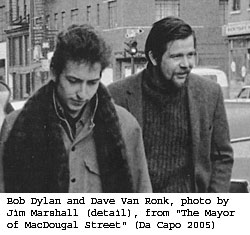
Possibly. But one learns to take Dylan’s stories with a shaker full of salt. Bob has a difficult time separating fact from fancy. The way Van Ronk tells it he was hanging around with a bunch of the boys when someone burst in and said ‘New guy, come on, you got to hear this.’ and it was Bob. So Van Ronk would have had an idea who Bob was not that he necessarily would have acknowledged him. There are some interesting points in Dylan’s narrative which I believe is Bob at his most fanciful. That he marked Van Ronk for destruction is apparent when he says he looked like he came from the Russian Embassy. Maybe. But Bob was a Jew and the Russians were the enemies of the Jews throughout the last two hundred years so Bob was casting him in the role of the enemy. Then he identifies Van Ronk as a ‘confident hunter.’ Jews usually associate hunting with goys while traditionally despising the practice so Bob is saying that the hunter didn’t know he was being hunted. And then Bob placed his hands on the guitar as he spoke to Van Ronk indicating that he was appropriating the man’s tool or emasculating him. Very significant action.
Bob says Van Ronk was snippy and surly. Well, maybe but since I think he’s making this up he is casting a character on Van Ronk to make you dislike him. Besides who wouldn’t appear surly if you placed your hands on the musician’s guitar. The exchange after that when Dave asked if Bob did janitor’s work was a particular Jewish insult that gave Bob his excuse for hurting Van Ronk.
Then like a parasite or lamphrey eel Bob latches onto Van Ronk slowly ‘stealing everything that he could steal.’
When the process was complete and Bob was way bigger than Dave could hope to be Bob then disses Van Ronk off. As Van Ronk tells it p. 217: Van Ronk:
For myself I consider it fortunate that Bobby and I reached our parting of the ways fairly early. Shortly after his third or fourth record had come out had gone diamond or whatever, he was holding court in the Kettle of Fish and he got on my case and started giving me all of this advice about how to manage my career, how to go about becoming a star. It was complete garbage, but by that point he had gotten used to everybody hanging on his every word and applauding any idea that came into his head. So I sat and listened for a while, and while I was polite and even asked him a couple of questions, but it became obvious that he was simply prodding and testing me. He was saying things like “Why don’t you give up the blues? You do that, and I”ll produce an album on you, you can make a fortune.” He wasn’t making a lick of sense, and I finally pushed back my chair and said, “Dylan, if you’re so rich, how come you ain’t smart?’ And I walked out.
So within three years Bob met and surpassed his mentor then trashed him like he trashed everyone and everything else in his life. Beware of Bob. To a very large extent MacDougal Street is the story of Bob Dylan within the folk scene of Greenwich Village although within that context Van Ronk tells a rich and rewarding story of the emergence of Folk from 1940 to c. 1970. A fabulous book with a generous dollop of belly laughs. I loved the book.
2.
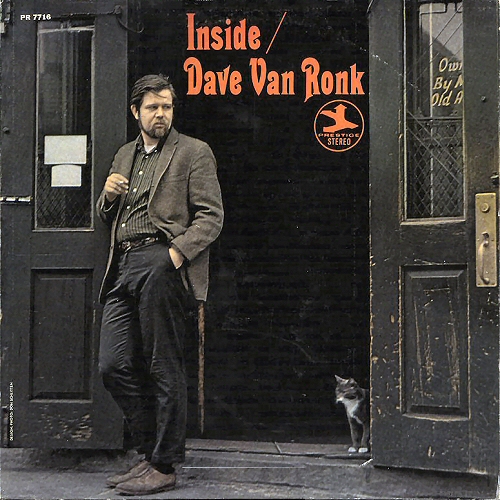
Van Ronk himself never made it. I first heard of him in 1967 and listened to the Prestige Folksinger album. There was nothing there. Van Ronk rasped out all his vocals in a monotonous fashion in that same gargling hoarse voice with nary a variation from song to song. At that age and time I found the songs uninteresting. The arrangments didn’t grab me. The music was about as exciting as the New Lost City Ramblers which is to say a stone bore.
Van Ronk may have prided himself on his musicianship and it may have been pretty good, I couldn’t care less. I know few people who listen to records for musicianship and I don’t care to listen to records with those who do. So Dave was concentrating on all the wrong things.
There were people running around saying how great he was but I was in the record business and nobody bought his records. you can foget the Hudson Dusters. Over the years his legend grew with that of the vanished Folk Scene and I guess twenty-five years or so after the fact he was able to cash in on that basis.
There is one really great song Van Ronk did though called Don’t Leave Me Here. I have it on The Folk Box, Elektra EKL 9001. That’s a really fine four record collection compiled and annotated by THE Robert Shelton. It has selections from nearly all the folkies of the Greenwich Village scene excluding Dylan. A terrific collection and a perfect representation of the scene. Hard to find though; I couldn’t find any copies on a quick search of the internet.
However the story of Dave’s learning process is vastly interesting. His history of the folk era, especially the late fifties and the people and personalities make the book a best buy. But then we get back to Dylan.
Bob not only wheedled his way onto Van Ronk’s stage but he wheedled his way into his very household appropriating Dave’s couch for his living quarters. Now comes an interesting conjecture. In Chronicles Bob says that he met a Ray Gooch and Chloe Kiel with whom he stayed for some time. Now, Bob arrived in New York in January of ’61 and he rented his apartment with Suze Rotolo in the Fall of that year becoming financially independent thereafter never going back to anyone’s couch.
So that gives him a maximum of nine months to sleep on all those peoples’s couches. He says in Chronicles that he first met Van Ronk and through Van Ronk Paul Clayton. These are two colorful characters. He then says that through Clayton he met Ray Gooch. So far, so good. But then he gives a fairly minute description of the street the Gooches lived on, the building, the apartment and significantly the church across the street.
Before w go on let us consider an incident from Van Ronk on page 4:
…Bob Dylan heard me fooling around with one of my grandmother’s favorites, “The Chimes Of Trinity,” a sentimental ballad about Trinity Church that went something like:
Tolling for the outcast, tolling for the gay,
Tolling for the (something, something), long passed away,
As we whiled away the hours, down on old Broadway,
And we listened to the chimes of Trinity.
He made me sing it for him a few times until he had the gist of it, then reworked it into the “Chimes Of Freedom.” Her version was better.
Now let’s check into a passage from Toby Thompson’s ‘Positively Main Street’ pp. 210-211:
But the larger portraits of Ray Gooch and Chloe Kiel are complex and layered with mystery. Why haven’t we seen them before? Correct me if I’m wrong, but their names appear in no biography of Bob. Could they be projectionsof his own divided psyche. Ray, the competent man of the world, the toolsmith, the gun collector, the would be warrior, and Chloe, the dreamy, slightly stoned performance oriented homebody? Bob’s not certain whether they are siblings or lovers. I’m not certain they are real. Chloe was the heroine of Longus’s second century novel Daphnis and Chloe. She was an orphan, nurtured by sheep, and is described as ‘a naive lily-white girl” who falls for the youth, Daphnis. Echo is mentioned in the story. In my case the apartment Ray and Chloe inhabit on Vestry is a boho Eden, Every hipster’s wettest dream of Manhattan digs.
The Sunday after reading Chronicles, a blustery afternoon in New York I took a subway to Franklin Street and walked north then west along Vestry, looking for the building that might have housed it. Bob describes it precisely, Federal style, facing a Roman Catholic church with a bell tower, on the same block as the Bull’s Head Tavern, below Canal Street, not far from the Hudson River. The neighborhood hasn’t changed much since the early sixties, but I could find no building that resembled it. Not the church, not the Bull’s Head Tavern. Houses disappear, but churches aren’t often torn down. I wanted to locate that apartment, only because he described it so beautifully.
So I think it safe to say the whole dozen pages or so in Chronicles is a fabrication. Bob dreamed it a few times and wrote it down as fact. A clue lies in the progression Van Ronk>Clayton>Gooch. Gooch has a made up quality to it so Gooch is probably a conflation of the personalities of Van Ronk and Clayton. And possibly the pair are also a sentimental portrait of Abe and Beattie, the mother and father. Not as they were but wouldn’t it have been loverly if they had been. Ray’s background also coincides with Bob’s studies of the pre-Civil War era in the South in the New York Library.
The church across the street reflects Trinity Cathedral in Dublin as in Dave’s song the Bells Of Trinity so that places the story after his stay with Van Ronk. Note the specified bell tower on the church. Bob’s not there and neither is most of his early reported life. I’ll say again anything he says is untrustworthy. As they say in Hollywood: Based on a true story.
The last couple chapters of MacDougal tell of the changes in the Village and performance after 1960 to 1967 when drugs took the scene down. These are relevant and important chapters as he describes how Dylan’s success caused the failure of the scene. ‘There’s no success like failure and failure is no success at all.’
Altogether I give Van Ronk’s Mayor Of MacDougal Street exceptionally high marks, worth a second reading and retention as a reference work. Positively Fourth Street by Toby Thompson has a place on your shelf also. I’ll review that after a second reading. It is well worthy of study, picking up the stray hint and fact here and there.
Chronicles of course is important to understand what Dave called the convoluted workings of Bob’s mind. Bob’s an interesting study because he has managed to fool a lot of people all the time and another pack of us for a time. I tell ya folks if I could live my life over I’d do some serious homework before I began but then even that probably wouldn’t help.
 I, Dynamo