A Review: Chris O’ Dell: Famous Groupies Of The Sixties Series
October 17, 2009
A Review
Chris O’ Dell
Miss O’ Dell:
My Hard Days And Long Nights With The Beatles, The Stones, Bob Dylan, Eric Clapton
And The Women They Loved
by
R.E. Prindle

Miss O’ Dell
As Chris says, she wasn’t famous but she was in the thick of things. Worth a lot. She disapproves of being called a groupie but I would say that she was the most successful of all. All the groupies would have snapped up Chris’ life without a dare.
Chris did have somewhat of an advantage in being twenty when she went to work for the Apple. She had some skills and maturity rather than being underaged jail bait. Boy, the Federales could have had these guys anytime: drugs and teenage girls.
Chris soon fell into the booze and drug trap. The most tedious part of the book is that of booze and drugs. Of course her co-author, heavy on the co-, Kathleen Ketchum’s previous writings have been about drug rehabilitation so she flogs the drug issue into oblivion. Hard to believe any one took drugs back in those happy uncomplicated days. Alright! Surprise, surprise, the middle name of Rock n’ Roll is Drugs- Sex, Drugs, Rock n’ Roll. Yes, it is also true that Chris engaged in some hanky panky too. Gosh, she bedded down with a couple Beatles, Mick Jagger and Bob Dylan. I suspect those revelations are more for the groupies than the general public. Eat your hearts out, kids. Clapton wouldn’t have anything to do with her by the way.
For me the real story that unfolded slowly and inconspicuously was the changing relationships between the Beatles and their women with Chris in the middle. Chris was friends with Harrison and Ringo Starr having little to do with John and Paul.
The first 100 pages are the most interesting of the book. They detail her actual working activies at Apple from the bright days of total indulgence to the takeover of Apple by Allan Klein. After Klein the fun stopped as Klein set about plundering Apple. Not before Chris had established a sterling relationship with George Harrison himself. As time and drugs wore on the youthful relationships came apart. These people were so into booze and drugs that their subconsciouses overwhelmed the conscious- I’m sure that at some point they wandered into a drug and alcohol induced haze. The good thing was that they didn’t have to worry about money although they sure went through it.
Chris’ description of the evolutions and transitions of the relationships of these key people of the musical era then forms the most interesting part of what is, frankly, a fairly boring story. The background story of Harrison, Boyd, Clapton didn’t exactly happen as it looked to us on the outside. We thought at the time that Clapton recorded Layla and Boyd came running but such was not the case. As Chris tells it Harrison, if he didn’t drive Boyd away neglected her and allowed her to drift away.
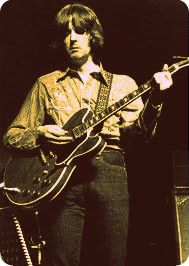
Eric Clapton
Clapton, says Chris, was a total junkie although he’s still hanging in there today. His records had no appeal to me so I could care less.
Uncertain of her precarious standing as either an employee or freeloader Chris drifted back and forth from LA to London while still apprently being part of the gang. The breaking point was when she was visiting Ringo’s ex-wife Maureen and took a tongue lashing from Ringo. Moving away she took up with a German promoter she knew through a large part of the eighties.
Part of her concern was hitting bottom, the rebound point when you know you have to change your life. From my observation point that happened in two stages. the first was when her German boy friend’s promotion company could no longer stand the ravages of drug and alcohol induced incompetence and Chris violated all the rules of friendship with Harrison. Something she thought she’d never do.
Her boy friend’s company bankrupt she asked for money from Harrison. George was a brick and handed over six thousand pounds without a murmur. The money of course went down the drug drain.
Now, Chris had developed sterling credentials as a tour organizer for various groups. She was with Dylan and the Rolling Thunder tour for instance. That is what she was doing with this German fellow. After the Beatles, Stones and Dylan the crowning indignity was when she was assigned to tour Echo And The Bunnymen. These guys are still going so what can you say. But, you know, time had rolled along under the bridge and Rock was becoming a shadow of its former glory. Who really cared anymore? I mean, you know, I’ve never listened to Echo And The Bunnymen and you can be sure I’m not going to buy their latest effort which is out now.
She then married an English aristocrat, had a baby and a divorce and went back home to Tucson.
End of story. Oh yeah, she’s now a rehab counselor.
The main interest is the level of rock society she moved in. The hand of Ketchum is too obvious. One had the feeling one was reading a novel of O’ Dell’s life rather than a living memoir. Wrong voice. Probably a must for the cast of characters and inside information but the drug and alcohol stuff is too, too boring. For Christ’s sake, who didn’t do drugs? Everybody’s got a million drug stories. Let it be.
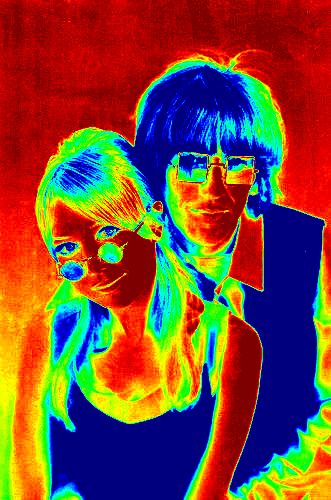
George Harrison, Patti Boyd, Sixties Style
Themes And Variations
The Tarzan Novels Of Edgar Rice Burroughs
#5 Tarzan And The Jewels Of Opar
by
R.E. Prindle

Edgar Rice Burroughs
Part IV
From Achmet Zek’s Camp To The Recovery Of The Jewels
The nature of the story changes from the departure of Werper and Jane from Achmet Zek’s camp . To that point the story had been developed in a linear fashion. From Zek’s camp on ERB either loses control of his story or changes into an aggregation of scenes between the camp and the Estate leading to the return. Perhaps there is a modification in his psychology.
The struggle for the possession of the jewels and the woman contunues unabated. As always Burroughs tries to construct a story of many surprising twists and turns. This may be an influence of the detective story, Holmes, on him. He may be trying to emulate Doyle.
The problem of who the characters represent in ERB’s life becomes more difficult to determine. Werper continues as ERB’s failed self. I think as relates to Zek and the jewels Zek represents Burroughs’ old sexual competitor, Frank Martin, while Zek, the gold and the Abyssinians represent the deal between McClurg’s and its deal in 1914-15 with A. L. Burt. Burt first had the reprint rights to Tarzan Of The Apes, published in the summer of 1914. Those rights shortly passed to Grossett and Dunlap.
In my estimation Martin never ceased interfering with Burroughs’ marriage at least from 1900 to 1919 when Burroughs fled Chicago. We know that Martin tried to murder Burroughs in 1899 and that his pal, R.S. Patchin, looked up Burroughs in LA after the divorce in 1934 and sent a mocking condolence letter in 1950 when Burroughs died and after Martin had died sometime earlier. Patchin would obviously have been directed by Martin to taunt Burroughs in ’34. It’s clear then that Martin carried a lifelong grudge against Burroughs because of Emma.
Martin is thus portrayed as being in competition with Burroughs in 1914-15 and possibly but probably to a lesser extent in LA.
Jane is shown being captured by Zek twice in the story. Thus Emma was courted or captured by Martin when Burroughs was in Arizona and Idaho. In this story Jane is captured while Tarzan is absent in Opar. The second capture or courting by Martin is diffiicult to pinpoint by the inadequate information at our disposal but following the slender lead offered by the novelist, John Dos Passos, in his novel The Big Money I would think it might be in 1908 when ERB left town for a few weeks or months probably with Dr. Stace. It was of that time that the FDA (Federal Food And Drug Administration) was after Stace for peddling his patent medicines. Burroughs was probably more deeply involved with that than is commonly thought. At any rate his being out of town would have provided an opportunity for Martin. Whether something more current was going on I don’t find improbable but I can’t say.
I would also be interested to learn whether there was any connection between McClurg’s and Martin. Martin was Irish, his father being a railroad executive which explains the private rail car at his disposal, as were, of course, the McClurgs and so was the chief executive Joe Bray. If Martin knew Bray he might have pressured Bray to reject publication of Tarzan doing a quick turnaround when interest was shown by the Cincinatti firm. Martin then might have meddled with Burroughs’ contract with McClurg’s. The contract and McClurg’s attitude is difficult to understand otherwise.
The gold is buried which Zek is supposed to have gotten through Werper, then they have a falling out and Werper is captured by Mourak and his Abyssinians. Mourak would then represent A.L. Burt and a division of the the royalties. If McClurg’s had promoted Tarzan Of The Apes, which they didn’t, Burroughs would have received 10% of 1.30 per copy. Thus at even 100,000 or 200,000 copies he would have received 13,000 or 26.000 dollars. that would have been a good downpayment on his yacht. Martin who must have thought of Burroughs as a hard core loser from his early life would have been incensed by such good fortune that might have placed Burroughs’ income well above his own.
Instead, it doesn’t appear that McClurg’s even printed the whole first edition of 15,000 copies. The book immediately went to A.L. Burt where the price of the book was reduced to 75 or 50 cents with the royalty much reduced to 4 1/2 cents divided fifty-fifty between McClurg’s and Burroughs. It’s hard to believe that ERB wasn’t robbed as he certainly thought he had been. Thus when Mourak unearths the gold he is settling for a portion of the hoard when Zek’s men show up and the battle necessary for the story begins.
In this manner the key issues of gold, jewels and woman are resolved.
So, Werper with the jewels goes in search of Jane to find that she has already fled Zek’s camp. The scenes of the story now take place between the camp, perhaps representing McClurg’s offices and the Estate, representing Burroughs.
The latter half of the book, pages 81-158 in the Ballantine paperback is very condensed in a dream like fashion. The action within the very prescribed area with a multitude of people and incidents is impossible except as a dream story. The appearance of the Belgian officer and askaris must have been photoshopped it is so impossible. In other words, then, the whole last half of the book, if not the whole book, is a dream sequence in which dream logic prevails. I will make an attempt to go into late nineteenth century dream speculation in Part V.
A key point of the story is the regaining of the memory of Tarzan. This occurs near story’s end on page 139 and following. It’s fairly elaborate. In connection with his memory return I would like to point out the manner of his killing the lion when he rescues Jane from Mourak’s boma. The roof fell on Tarzan in imitation of his braining in Toronto while now he picks up a rifle swinging on the rearing lion’s head splintering the stock along with the lion’s skull so that splinters of bone and wood penetrate the brain while the barrel is bent into a V. Rather graphic implying a need for vengeance. Not content with having the roof fall on Tarzan’s head, while trying to escape the Belgian officer an askari lays him out with a crack to the back of the head but ‘he was unhurt.’ One can understand how Raymond Chandler marveled. My head hurts from writing about it. Also Chulk has his head creased by a bullet adding another skull crusher to the story.
The description of the return of Tarzan’s reason seems to fit exactly with Burroughs’ injury. I would have to question whether Burroughs himself didn’t have periods of amnesia. P. 139:
Vaguely the memory of his apish childhood passed slowly in review- then came a strangely tangled mass of faces, figures and events that seemed to have no relation to Tarzan of the Apes, and yet which were, even in this fragmentary form, familiar.
Slowly and painfully recollection was attempting to reassert itself, the hurt brain was mending, as the course of its recent failure to function was being slowly absorbed or removed by the healing process of perfect circulation.
According to medical knowledge of his time the description seems to apply to his own injury. His own blood clot had either just dissolved or was dissolving. Then he says almost in the same manner as in The Girl From Farriss’s:
The people who now passed before his mind’s eye for the first time in weeks were familiar faces; but yet he could neither place them in niches they had once filled in his past life nor call them by name.
In this hazy condition he goes off in search of the She he can’t remember clearly. His memory fully returns as he has Werper by the throat who calls him Lord Greystoke. That and the name John Clayton bring Tarzan fully back to himself. For only a few pages at the end of the book does he have his memory fully recovered.
In order to summarize the rest I have had to outline the actions of the main characters for as with Tarzan and his memory the story is one of ‘a strangely tangled mass of faces, figures and events.’ Whether this is artistry on Burroughs’ part or a dream presentation I am unable to ascertain for certain. Let’s call it artistry.
We will begin with Werper’s activities. While Tarzan promised to retrieve La’s sacred knife Werper appears to no longer have it as it disappears from the story. When Werper escaped from Zek unable to locate Jane he heads East into British territory. He is apprehended by one of Zek’s trackers. On the way back a lion attacks the Arab unhorsing him. Werper mounts the horse riding away directly into the Abyssinian camp of Mourak. Mugambi is captured at the same time. While the troop bathes in a river Mugambi discovers the gems managing to exchange them for river pebbles. Werper tempts Mourak with the story of Tarzan’s gold. While digging the gold they are attacked by Zek and his men. Werper rides off as Mourak is getting the worst of the fight. Zek rides after him. Werper’s horse trips and is too exhausted to rise. Using a device that ERB uses in one of his western novels Werper shoots the horse of the following Zek, crouching behind his own for cover. Zek has lost the woman but now wants the jewels. Werper hasn’t the woman while unknown to himself he neither has the jewels. In exchange for his life he offers Zek the pouch of river stones believing it contained the jewels. Zek accepts. Both men are treacherous. Werper waits to shoot Zek but Zek out foxes him picking up the bag by the drawstring with his rifle barrel from the security of the brush.
Discovering the pebbles he thinks Werper has purposely deceived him stalking down the trail to finish him off. Werper is waiting and pots him with his last shell. As Zek falls the woman, Jane, appears as if by a miracle reuniting the two. Could happen I suppose but definitely in dreams.
So, what are the two men fighting over? The sex interest, as the jewels are involved. Who do Werper and Zek represent? Obviously Burroughs and Martin. The stones are false but as Werper disposes of Zek in the competition for the woman Jane appears as if by magic to run to Werper/ Burroughs with open arms.
Werper with Jane returns to Zek’s camp now under the direction of Zek’s lieutenant, Mohammed Beyd. Rigamarole, then Werper deposits Jane in a tree from whence he expects to retrieve her on the following morning. The next day she is gone.
Werper once again turns East. He is spotted riding along by Tarzan. The Big Guy falls from a tree throwing Werper to the ground demanding to know where his pretty pebbles are. It is at this point Werper recalls Tarzan to his memory by calling him Lord Greystoke. Also at the moment the Belgian officer appears from nowhere, having miraculously ascertained Werper’s whereabouts, to arrest him.
Tarzan wants Werper more than the Belgian so tucking his man under his arm he breaks through the circle of askaris. On the point of success he is brought down from behind. Another thwack on the head. Apparently in a desperate situation Tarzan hears voices from the bush. The Great Apes have their own story line but here it is necessary to introduce them as Tarzan’s saviors. The voice is from Chulk who Tarzan sends after the troop. They attack routing the Africans. In the process Chulk, who is carrying the bound Werper is shot. If you remember Chulk stole the stones from Mugambi, or maybe I haven’t mentioned that yet. Werper falls across him in such a way that his hands bound behind his back come into contact with the pouch. Werper quickly recognizes what the bag contains although he has no idea how the ape came by them.
He then advises Tarzan where he left Jane. The two set out when the furore in Mourak’s camp reaches his ears. ‘Jane might be involved.’ Says Werper. ‘She might.’ says Tarzan telling Werper to wait for him while he checks.
Werper waits not, disappearing into the jungle where his fate awaits him.
Those are the adventures of only one character in this swirling vortex of seventy some pages.
Let’s take Mugambi next as he is the key to the story of the jewels yet plays a minor role. After crawling after Jane and regaining his strength he arrives at Zek’s camp at the same time as Tarzan and Basuli but none are aware of the others. Werper and Jane have already escaped when Tarzen enters the camp to find them missing. Mugambi follows him later also finding both missing. He goes in search of Jane. He walks through the jungle ludicrously calling out ‘Lady’ after each quarter mile or so. Leathern lungs never tiring he shouts Lady into the face of Mourak and is captured. Being a regular lightfoot he escapes having lifted the jewels from Werper. Chulk then lifts them from him, Mugambi disappears until story’s end.
Let’s see: Jane next. Jane along with the jewels is the key to the story. The jewels represent the woman as man’s female treasure. Jane is the eternal woman in that sense. The various men’s attitude toward the jewels reflects their own character. Thus, Tarzan in his amnesiac simplicity wants the jewels for their intrinsic beauty. He rejected the uncut stones for the faceted ones in Opar. Even in the semi darkness of the vaults, or in other words, his ignorance, he perceived the difference.
Werper at various times thinks he can get the gold, the jewels and the woman at once. He is happy to settle for the jewels taking them to his grave. Mourak knowing nothing of the jewels is willing to settle for a few bars of gold. When he takes the woman into his possession it is for the sole purpose of a bribe to his Emperor to mitigate his overall failure. Not at all unreasonable.
Zek is too vile to consider as a human being dying in the fury of losing all. Mugambi and Basuli are happy in their devotion to the woman to whom neither jewels or gold mean anything.
Tarzan then, pure in soul and spirit wins it all, woman, jewels and gold. One is tempted to say he lived happily forever after but, alas, we know the trials ahead of him.
So Jane is carried off to Zek’s camp where all the action is centred while she is there. Both Tarzan and Mugambi show up to rescue her but she has escaped just ahead of Werper who would thus have had the woman and the jewels. Alone in the jungle she once again falls into Zek’s hands- that is to say those of Frank Martin.
Now, Tarzan, who has fallen in with a troop of apes chooses two, Taglat and Chulk, to help him rescue Jane from Zek. Chulk is loyal but Taglat is an old and devious ape, apparently bearing an old grudge against Tarzan, who intends to steal Jane for his own fell purposes much worse than death.
In Tarzan’s attempt to rescue Jane, Taglat succeeds in abducting her. He is in the process of freeing her bonds when a lion leaps on him. In the succeeding battle Jane is able to escape the lion who had just killed Taglat.
Wandering through the jungle she hears shots, the voices of men. Approaching the noise she discover Werper and Zek fighting it out. She climbs a tree behind Werper. When he shoots Zek he hears a heavenly voice from above congratulating him. Jane runs to him hands outstretched. So now Werper has the woman again while believing he can retrieve the jewels. He can’t find them because unbeknownst to him Mugambi had substituted river rocks.
Improbably, except in a dream, he returns to Zek’s camp where he has to solve the problem of Zek’s second in command, Mohammed Beyd. Werper spirits Jane out of the camp but finds her gone the next morning. She had mistaken Mourak and his Abyssinians for Werper. Mourak now in possession of the woman, no gold no jewels, thinks to redeem himself with his Emperor, Menelik II, with this gorgeous female.
During that night’s camp the boma is attacked by hordes of lions. Lions play an amazingly central role in this story. Interestingly this scene is replicated almost exactly in the later Tarzan And The City Of Gold. In Jewels Tarzan rescues a woman while in Gold Tarzan rescues a man. That story’s woman becomes his enemy.
But now Tarzan and Werper hear the tremendous battle with Tarzan entering the boma to rescue Jane. By the time of the rescue Tarzan has regained the woman and the gold but lacks the jewels.
Unless I’m mistaken we now have only Tarzan and the apes to account for.
ERB’s life was at a turning point. At this stage in his career he must have realized that he would have a good annual income for the rest of his life. If only 5000 copies of the first edition of Tarzan of the Apes sold he would have received 6,500.00 Add his magazine sales to that and other income and 1914 must have equaled his income of 1913 or exceeded it. His income probably grew until he was earning c. 100,000 per year for three years from 1919-1922. So he had every reason to believe the world was his oyster through the teens. That must have been an exhilarating feeling. A sense of realization and power must have made him glow. But the period was one of transition, a casting off of the old skin while growing into the new. Thus one sees ERB abandoning his old self -Werper- while attempting to assume the new in Tarzan. Thus in death Werper transfers the jewels, call them the Family Jewels, from himself to Tarzan.
Tarzan begins the novel as an asexual being unaware of what jewels were or their value and receives them a the end of the novel as a release from emasculation or awareness of his sexual prowess. Once again Werper fades in the novel while Tarzan unaware of who he is comes to a full realization. Presumably Burroughs thinks he is able to assume his new role as 1915 ends.
In the novel when Tarzan realizes Werper has stolen the jewels he goes off in search of this symbol of his manhood. Werper is not in Zek’s camp. On the trail Tarzan comes across the dead body of the Arab sent after Werper with he face bitten off. He assumes this is Werper but can’t find the jewels. Wandering about he discovers a troop of apes deciding to run with them for a while. Selecting Chulk and Taglat he goes back to Zek’s camp to rescue Jane. At that point Taglat makes off with Jane. Discovering Zek and Werper on the way to the Estate Tarzan becomes involved in the battle between Zek and Mourak. He sees Zek take the jewels and then throw them to the ground as worthless river rocks.
He encounters Werper in the jungle again and prompted by the man fully regains his memory only to have Werper arrested by the Belgian police officer. The battle between Mourak and the lions ensues. Tarzan goes to rescue Jane, Werper goes to his death.
The unarmed Tarzan faces a rampant lion. Picking up an abandoned rifle he brains the lion, apparently in vengeance for all the indignities and injuries ERB has suffered in life.
Leaping with Jane into a tree they begin the journey back to the Estate to begin life anew. Some time later they come across the bones of Werper to recover the jewels and make the world right.
The novel closes with Tarzan’s exclamation.
“Poor devil!”…Even in death he has made restituion- let his sins lie with his bones.”
Was Burroughs speaking of Werper as his own failed self? I believe sothe latter. Remember that a favorite novel of ERB was Dr. Jekyll and Mr. Hyde and that he believed that every man was two men or had two more or less distinct selves. Human duality is one of the most prominent themes in the corpus; thus ERB himself must have believed that he had a dual personality. Tarzan will have at least two physical doubles, one is Esteban Miranda in Golden Lion and Ant Men, and the other Stanley Obroski in Lion Man. Both were failed men as Werper is here. Both obviously represented the other or early Burroughs as Werper does here.
In killing Werper ERB hoped to eliminate the memory of his failed self as he did with Obroski in Lion Man. In other words escape his emasculation and regain his manhood.
The jumbled and incredibly hard to follow, or at least, remember, last half of the book with its improbable twists and turns in such a compressed manner gives the indication that this is a dream story. Only dream logic makes the story comprehensible if still unbelievable. The story then assumes fairy tale characteristics that don’t have to be probable to be understood as possible.
Can be genius, can be luck. I will examine Burroughs novels in relation to dreams in Part V. This part will not be as comprehensive as I would like but time grows short and it is better to make the attempt as not.
Part V follows.
A Review: Beau Ideal By P.C. Wren
October 5, 2009
A Contribution To The
ERBzine ERB Library Project
The Beau Ideal Trilogy Of
P.C. Wren
Beau Geste~Beau Sabreur~Beau Ideal
Review by R.E. Prindle
Part I. Introduction
Part II. Review of Beau Geste
Part III. Review of Beau Sabreur
Part IV. Review of Beau Ideal
The first novel of the trilogy signifies a good, beautiful or noble deed. The deed being the Geste brothers taking the odium of the theft of the sapphire on themselves. The second, Beau Sabreur, meaning the Noble Warrior or Fighter. The story then centers on its Lancelot like character, De Beaujolais with attention to the noble actions of subsidiary characters. Hank and Buddy fit in as noble warriors also. Beau Ideal then centers on the noble ideals that activate the characters and are part of Western Culture as against that the the others.
I will put the dramatic first chapter second begin with the second section called The History of Otis Van Brugh, perhaps meant to be a Gawaine type. Beau Ideal is Otis’ book as the first was that of Michael Geste and his brothers and the second that of De Beaujolais.
Otis, Hank and Mary are brothers and sister with a last sister who remained at home in Texas. Their father was a brute of a fellow who drove all his children from home except the last sister. Wren himself must have had a wretched father because all the fathers in the trilogy are failed men, fellows who don’t have a grip on the meaning of really being a man.
Neal, or Hank Vanbrugh, refused to put up with it taking to a wandering life. On the road he met Buddy where they became pals ending up in the Legion.
Otis and mary being younger subsequently left Texas to lead a peripatetic ex-patriot life of the well to do. The history of Mary, Hank and Buddy has been given in Beau Sabreur.
When Otis left De Beaujolais he tried to reach the French contingent in the fort. Along the way he ran into Redon who filled him in. Otis was to try to reach the fort to request them to assist a detached unit fighting their way to the fort. He succeeds.
In the process Redon diverting the attack away from the fort is shot by friendly fire. Both he and Otis were dressed as Moslems. Otis attempts to reach Redon but is shot falling unconscious outside the fort. Thus when the French are massacred he is the sole survivor.
He returns to England where psychologically shattered he is stopped by a policeman. While being interviewed he is conveniently rescued by the leading ‘alienist’ of England. Given refuge in his asylum Otis discovers Isobel whose mental health is destabilized because her husband John Geste is in the penal battalion of the FFL. She implores Otis to find John and bring him back alive. Here’s a beau ideal. Ever loving Isobel Otis agrees to sacrifice his happiness to go back to Africa to find John.
What a guy! Otis joins the Foreign Legion with the intent of being sent to the penal battalion called the Zephyrs. He joins and succeeds in being sent to the Zephyrs. Now we return to the opening chapter.
Anyone who ever fancied joining the Legion, and the notion was discussed a lot down to the sixties of the last century when I was launching my bark upon the waters, should have read Erwin Rosen’s In The Legion first. The Legion was unconcionably cruel to its soldiers in everyday life let alone the penal battalion. As an example, the Legionnaires complained of excessive marching. They were required to do thirty miles a day carrying 50 lbs. or more with pack and rifle. One really has to read Rosen’s description to realize the horror. Those who dropped out were left where they fell. Arab women found them subjecting them to horrid tortures.
This became so common that the Legionnaires were given leave to slaughter the Arab women as a lesson. This they did with a vengeance. Rosen was shown a purse by a fellow soldier made from the severed breast of a woman. Rosen said they were common at one time; an example of what can happen when civilization meets savagery. Civilization is lowered but savagery isn’t raised. The Beau Ideal is lost.
One of the punishments Rosen mention was called the Silo. As he describes it these were holes dug into the ground with a funnel put where the victim had to stand exposed to the blazing sun during the day and freezing cold at night.
Wren converts the idea of these silos into an actual underground grain storage unit capable of holding several men. In his version the funnel was closed off admitting no light. As the story opens several men are sweltering in the pit. A Taureg raid was made on the penal colony building a road near the pit that killed the whole contingent so that no new supplies were lowered. The men are dying one by one.
Otis is in the silo the next to last survivor. He discovers that the other survivor is none other than John Geste. On the point of expiring a scout from Hank and Otis’ tribe, or headquarters, discovers the silo and hauls the two out. Coincidences and miracles just naturally go with the desert.
The scout take them to a member tribe of the federation. Both are now wanted men by the FFL with no hope of salvation. They have no alternative but to get out of Africa hopefully avoiding France.
I can’t ask you to guess who was in the camp because you wouldn’t. Remember the Arab dancing girl Otis met in Beau Sabreur? She’s the one and she’s still in love with Otis. Wren names her the Death Angel. Wren was heavily influenced by E.M. Hull’s The Sheik. Maud in Beau Sabreur was mad about sheiks, overjoyed when she won one in the person of Hank. Of couse Hank was an American sheik and not an Arab one, much as Hull’s sheik was in reality half English and half Spanish.
So, perhaps Otis and the Death Angel are revenants of the Sheik and Diana from Hull’s novel. In this case the woman has power over the man but the sexual roles remain the same as the king trumps the queen every time as Larry Hosford sings. If you don’t lose track of who you are it’s true too. Otis doesn’t lose track of who he is. Revisit the story of Circe and Ulysses.
The tribe that rescues Otis and Geste is a rival of Hank Sheik’s but a subordinate member of the confederation. Hank has organized a sort of United Emirates of the Sahara of which he serves as President for life but without any democratic trimmings. In a parody of the Sheik then the Death Angel demands ‘kiss me’ of Otis. He’s not so easy to deal with as Diana. Even with the Death Angel’s knife at his breast he refuses.
In the meantime the Zephyrs reclaim Geste and he goes back to his old job of building roads. Rosen’s account of the FFL compares with Burroughs’ account of his army days. ERB too was put to work building roads, complaining of moving or perhaps breaking huge boulders. Both his experience and that of the penal colony of the FFL are quite similar to the chain gangs of the old South of the United States.
Even when not of the Zephyrs the Legionnaires were given detestable tasks unbefitting the dignity of soldiers. According to Rosen the men were required to clean out sewers in the Arab quarter of Sidi Bel Abbes. That’s enough to make anybody desert. And then get sent to the penal battalion. Crazy, crazy world. Rosen’s In The Legion is well worth reading if you like this sort of thing. Download it from the inernet. Only a hundred pages or so.
Geste then has to be re-rescued. This forms the central part of the story along with Otis’ struggles with the Death Angel. Hank and Buddy get windof the two FFL captives coming to investigate. Otis then discovers his long lost brother. It is settled then that Hank and Buddy will give up their Sheikdom to return to pappy’s farm, or ranch.
Even though Hank and Buddy are powerful sheiks they are still deserters from the Legion so getting out of Algeria is a problem. Rosen tells a story of a deserter who made it back to Austria where he became a rich and successful manufacturer. He made the mistake of exhibiting his manufactures in Paris in person. There he was recognized by his old officer who arrested him sending him back to Africa. There he died. So Hank and Buddy run the risk of being recognized and arested on the way out of Africa as well as Otis and Geste.
Geste’s rescue is effected. The quartet successfully exit Africa arriving safely back in Texas. However the Death Angel’s help was necessary. To obtain that help Otis promises to marry her. He doesn’t want to but a Beau Ideal is a Beau Ideal and so he is going to honor his commitment. On the eve of departure the Angel gives Otis a locket she wears as a good luck charm. Very bad move. The locket contains pictures of her mother and father. Otis examines the mother with some interest then turns his attention to the father….
Should I ruin a perfectly good ERB ending for you? Sure, why not? I’ve got a little sadistic streak too. Everyone was using this one. No fooling now, the Death Angel was Otis’ sister because dear old Dad was her mother’s wife; he was known as Omar out there on the burning sands. Well, there’s a revelation, not that keen sighted readers like you and I didn’t see it coming from miles away. You can see a long way out there in the desert.
Hank, Buddy and Otis’ excellent African adventure is over. The whole episode was like watching a movie except real. But, back in Texas it may as well have been a dream. The old codger is still living as the troop of Mary and De Beaujolais, Hank and Buddy and Otis assemble at the ranch, John and Isobel are there too. Sister Janey is still waiting on her father.
Well, Hank has Maud, De Beaujolais has Mary, Geste has Isobel but Buddy’s staring at the moon alone. Still there’s Janey and that’s a match made in heaven but Dad won’t let her go and Janey waon’t leave without his consent. Otis intervenes pushing Janey toward Buddy then turning to face down his Dad for the first time in his life.
Pop doubles his fist moving to deck Otis. Otis holds up the locket like a cross before Dracula stopping the old man in his tracks. Confronted with the truth the old fellow buckles giving his son the triumph. So the Beau Ideal triumphs.
That’s all there is, no more verses left.
Part III Tarzan And The Jewels Of Opar: Edgar Rice Burroughs
September 25, 2009
Themes And Variations
The Tarzan Novels Of Edgar Rice Burroughs
#5 Tarzan And The Jewels Of Opar
by
R.E. Prindle
Part III
From Opar To Achmet Zek’s Camp
Tarzan and Werper begin the trek back to the Estate. As Tarzan is an amnesiac that indicates that Burroughs is under stress. What kind of stress? As the stress involves sparkling Jewels it is therefore sexual stress. During the stories of the Russian Quartet the personalities of Tarzan and Burroughs were much more separate and distinct.
Success seems to now affect Burroughs so that he begins to identify himself with his great creation. He begins to assume a dual personality. His last Tarzan novel, Tarzan And The Madman will be a confession of his failure to realize his dream. For now we may consider the bewildered Tarzan as the emergence of the new Burroughs while Werper represents the loser Burroughs of his first 36 years. Bear in mind at all times that Burroughs has to tell his sotry so the apparent story has a different appearance than the allegorical story. The jewels then represent the discovery of his submerged sexuality.
As Werper and Tarzan are trekking they have gotten ahead of the slower moving Waziri. The Waziri catch up to them each bearing 120 lbs. of gold or two 60 lb. ingots. Six thousand pound or three tons of gold. So, for a brief moment Burroughs financial success and sexual prowess are on the same spot.
Tarzan not recognizing the jewels for what they are in his befuddled state indicates that Burroughs isn’t aware of how to take advantage of his new desirability.
Tarzan’s first thought when he sees the Waziri is to kill them as he vaguely recalls that Kala, his ape mother, was murdered by a Black. Werper talks him out of it. What story lies behind Kala?
The Waziri reach the burned out Estate, bury the gold, and go in search of Jane. Tarzan and Werper arrive on the heels of the Waziri.
Tarzan sees the Waziri burying the gold. Werper tells him that the Waziri are hiding it for safe keeping. Tarzan decides that would be an excellent thing to do with the jewels. When he believes Werper is asleep that night he digs a hole with his father’s knife burying the jewels.
On the ashes of his former existence then the gold representing his novels and the jewels representing his sexuality are buried.
Werper representing Burroughs old self was not sleeping; waiting for Tarzan to sleep he digs up the jewels fleeing to the camp to Achmet Zek and Jane. Thus the jewels and Jane are reunited with Werper being the possessor of the jewels and hence Jane. Fearing that Zek will murder him for the jewels in the middle of the night Werper persuades Jane to accompany him in flight thus setting up the next transfer of the jewels and Jane.
Meanwhile Tarzan wakes up finding Werper missing and reverts back to his role as an ape, or Great White Beast. peraps this signifies returning to his rough and rowdy ways of bachelorhood. However La and the little hairy men have left Opar in search of Tarzan and the sacred knife. They track him down to essentially the Estate. Perhaps this represents a new beginning on the ashes of the old.
This is the first time La has been outside the gates of Opar.
She is infuriated that Tarzan has rejected her love. After the usual hoopla about sacrificing the Big Guy night falls. La spends time pleading with Tarzan to return her love. She collapses over Tarzan much as over Werper in Opar. She lays atop Tarzan. Remember both Tarzan and La are always nearly nude so we have a very sensual image here. Finding Tarzan unresponsive La curls up beside Tarzan thus sleeping with him although chastely.
The next day the sacrificial hoopla begins again. Just as Tarzan is about to be sacrificed he hears Tantor the elephant in the distance. He emits a cry to attract Tantor.
As the elephant approaches Tarzan realizes that Tantor is in must, sexually aroused. He warns La who releases him just as Tantor charges into the clearing. Seizing La Tarzan runs up the convenient tree. Tantor thoroughly aroused directed his lust specifically at Tarzan and La. The tree is a large one but Tantor tries to bull it over. Failing this the mighty beast wraps his trunk around the bole and rearing titanically actually manages to uproot the tree.
As the tree topples Tarzan throws La on his back making a terrific leap to a lesser tree. Tantor follows as Tarzan leaps from tree to tree. Tantor’s attention wanders and he runs off in another direction leaving La and Tarzan.
So what does this scene mean? Possibly the temptation of Edgar Rice Burroughs. As I said it would be highly improbable if, as a successful writer, Burroughs didn’t attract the attention of other women who would make themselves available to him. This would place incredible stress on him making himself unable to ‘remember’ who he was, what he had been for 36 years.
He said he walked out on Emma a number of times. Leaving for Opar could be equivalent to walking out on Emma. The first night with La could be the first temptation. The elephant in must might indicate surrender to the temptation or at least a terrific struggle to avoid it.
In any event Tarzan returns La to the little hairy men then returning to the Estate to recover the jewels. This could be interpreted as a reconciliation. He finds the jewels gone. Realizing Werper stole them he sets out on the spoor to Zek”s camp.
In the meantime Basuli wounded as he was had crawled after Zek. Recovering his strength he returns to fighting form. The fifty Waziri also followed after Zek. All three parties arrive at the same time.
Clambering over the wall as usual Tarzan discovers that both Werper and Jane were gone. Now in pursuit of the jewels and Jane Tarzan returns to the jungle.
Part IV follows.
Part II: Tarzan And The Jewels Of Opar By Edgar Rice Burroughs
September 1, 2009
Themes And Variations
The Tarzan Novels Of Edgar Rice Burroughs
#5: Tarzan And The Jewels Of Opar
Part II
by
R.E. Prindle
Reliving Past Crimes And Humiliations
Let us put Chapter 6: The Arab Raid at this point in the discusssion so as to achieve greater continuity at the scenes in Opar.
With Tarzan absent from the Estate Zek makes his move to obtain Jane. The brave Waziri warriors rally around Jane putting up a fierce resistance. For whatever reason Tarzan hasn’t armed them with the latest repeating rifles and perhaps a Gatling Gun preferring they fight their battles with spears; hence they are no match for Zek whose men are armed with some woefully outdated firearms. We aren’t even told whether they’re Snyders. Burroughs just calls them ‘long guns.’
Jane herself is armed with what seems to be a repeating rifle. While there are those who refer to Jane as wimpy she is far from wilting here as she gamely fires through the closed door.
It is difficult to determine ERB’s intent here. In 1903-04 when Emma traveled to the wilds of Idaho with her husband she was far from the frontier type. ERB undoubtedly wanted her to be the dauntless frontier woman perhaps as was the wife portrayed in the Virginian but he discovered she was a citified fashion queen. Perhaps here he is demonstrating to Emma what he had wanted her to be.
The Estate is fired as it will be again three years hence when the Germans arrive. At that time ERB led us to believe that Jane was murdered while here she is about to be taken far away. In ERB’s troubled mind it would appear that he wanted to be rid of Emma. He would actually say he always wanted to be rid of her twenty years hence.
Oblivious of the fate of Jane Tarzan is in far away Opar loading the remaining faithful Waziri with the oddly shaped gold ingots.
Werper has followed him into the vaults. As an allegory Werper in this place can represent Ogden McClurg. The vaults can represent ERB’s mind where the wealth of his imagination is stored. Thus the publisher is taking what is rightfully ERB’s labor.
In actuality Ogden McClurg was seldom in Chicago. He was a naval officer who was in the Caribbean most of the time coming back briefly and then when The Great War broke out he became involved in those operations. The manager Joe Bray seems to have been the responsible person. I haven’t been able to ascertain McClurg’s position while I have been told the records for McClurg’s were destroyed so that may be impossible. I have gone through the correspondence between McClurg’s, A.L. Burt and Grosset and Dunlap in the archives of the University of Louisville. There seems to have been an agreement between McClurg’s and G&D to, how shall I say it, defraud Burroughs of royalties. If Burroughs was the best selling author of the time he is represented to be his royalty checks were ludicrously small, by the late thirties five, six and seven dollars per title. Hardly worth either McClurg’s or G&D’s bother if accurate. One is at a loss to understand why they clung so obstinately to the titles. One compares such small checks with the enormous sales of the 1960s. You can draw your own conclusions but it definitely seems there are some unsolvable contradictions.
Burroughs always believed he was being cheated. Based on the evidence I have seen I have to agree with him.
The gold has been brought to the top of the shaft. Tarzan goes back for a last look when the roof literally caves in. An earthquake occurs; a portion of the roof lands on Tarzan’s head putting him out. Werper who was in the same place with Tarzan is uninjured. Unable to go forward he takes the candle stub fleeing down the corridor toward Opar. In this instance he appears almost as a doppelganger of Tarzan.
Tarzan when locked in a cell on the previous occasion had removed the bricks in the wall opening into this corridor. Werper now traces Tarzan’s steps in reverse. Coming to the well he makes the same leap with with same success. Removing the bricks he retraces Tarzan’s steps back up into the sacrificial chamber. Here the little hairy men seize him tossing him onto the altar where La awaits. Duplicating the sacrifical scene with Tarzan she is about to plunge the knife into Werper’s breast when the air is shattered by a deafening roar. A lion has announced his presence in the chamber. The little hairy men flee, La faints and Werper prays.
We know this story because it is ERB’s favorite theme written in many variations.
ERB leaves Werper at the altar and returns to Tarzan who we last saw lying on the floor in a spreading pool of blood. The sequence in Opar recapitulates the main psychological traumas in ERB’s life in one of its many variations. The story changes and evolves but the facts remain the same. The overriding trauma here was ERB’s bashing in Toronto in 1899. The blow from the sap or pipe had a fixating effect on ERB. I’m sure he relived the situation over two or three times every day. It remains to be discovered if he blamed Emma for it. Had he not been competing with Martin for her hand the blow would never have happened. Here he couples the memory of the blow with the abduction of Emma.
Inert for a period of time he recovers but has lost his memory. A usual occurrence in periods of great stress for ERB. He didn’t think he lost consciousness in Toronto but he was knocked down having his scalp torn so that he was covered in blood by the time he arrived at the hospital. I think he did lose consciousness although he may not have been ‘out cold.’
I compare the situation with one of mine. At fifteen I was ice skating when I saw a boy scoot between two girls holding hands at arm’s length. I thought I would emulate him but the two girls closed up as I came from behind. I was better at starting than stopping. My legs flew up and I landed on the back of my head. I literally saw stars, five pointed colored stars in a burst of light. I can still recall the sound of my skull striking the ice. It was an odd sound. I never thought I lost consciousness but I remember opening my eyes so I must have been unconscious for some seconds at least. I suspect that ERB as he fell lost consciousness for at least a few seconds if not longer. Here in Opar he has Tarzan knocked cold for some time which must have been the way he had felt. ERB had fairly serious mental problems for at least a couple decades. While he doesn’t record losing his memory as such he has the hero of Girl From Farriss’s who received a blow duplicate to that received by himself, Ogden Secor, walking past friends as though he didn’t know them. A form of memory loss.
There is no story of Burroughs in which the main character doesn’t get bopped once or twice. This was noticed by Raymond Chandler, the creator of Philip Marlowe, who wrote a semi-dissertaion on bopping in one of his stories. Chandler had read Burroughs extensively. He speculated that no man could survive so many bashings as Tarzan received. Probably true. Chandler then proceeds to have a character bashed twice in succession. Chandler preferred the lump behind the ear which produces euphoric dreams.
At any rate Tarzan recovers while dimly remembering his ‘heavy war spear’ that he searches for. It is interesting that Tarzan never adopts modern weapons even though Jane had a repeater and one as knowledgeable as Tarzan must have been up on the Maxim gun by the time these stories were written. Rope, knife, spear and bow and arrows, Tarzan scorned guns.
Now, following in the footsteps of Werper, he comes to the well and falls in but doesn’t lose his grasp of his heavy war spear. The well probably represents a descent into the subconscious into the waters of the feminine. Bobbing to the surface he clambers out where the waters are level with the floor. An odd situation. Perhaps overflowing into the corridor from time to time making the floor treacherous, Tarzan has a difficult time keeping his footing until he climbs some stairs of many turnings. This is all terrific atmosphere although the meaning eludes me. Tarzan thus enters the forgotten jewel room of Opar. Here the Jewels of Opar come into play. Like the old singalongs at the Saturday movie matinee where you followed the bouncing ball now we begin to follow the course of the Jewels through the rest of the story.
This associates Werper and Opar with the novels of Tarzan And The Golden Lion and Tarzan And The Ant Men. In that sense Werper becomes a prototype of Esteban Miranda, one of my favorite characters. In those two novels Miranda like Werper tries to steal the gold. Miranda unlike Werper was a Tarzan lookalike. Instead of following the jewels in those two novels we follow Tarzan’s locket containing the pictures of his mother and father. Thus the stories change but the themes remain the same.
Tarzan merely sees the jewels as fascinating pretty baubles unable to discern their value because of his memory loss. He keeps the cut stones which diffract the light throwing the uncut stones back. Odd detail but perhaps significant. Just as the gold represents Burrough’s writing earnings the Jewels, especially diamonds, are associated with his sexual goals. Thus in Lion Man he associated Balza, who represents Florence, with an abundance of diamonds as he thinks he has realized his sexual goals. Then when he realizes his error in Tarzan And The Forbidden City the much sought after ‘father of diamonds’ turns out to be a piece of coal.
He then emerges into the sanctuary just as the lion emits its fearful roar. Let’s examine this scene in detail as ERB here replicates symbolically his confrontation with John the Bully on the street corner in the fourth grade.
For those who haven’t followed my essays ERB was confronted by a bully named John when eight or nine who terrorized his soul fixating him forever.
I know there are Bibliophiles who find the analysis of the confrontation as I have dealt with it to this point difficult to believe. The majority of people, in fact, appear to not undertand how something that happened when you were eight or nine can affect your mind for life. Most people think things are just forgotten. It is all a matter of suggestion when your mind is in a hypnoid state. The interpretation of the event enters your mind where it becomes fixated. Compare it to the clipboard of your computer. You can’t see the information copied but it exists on your computer nonetheless and in certain conditions manifests itself. This is probably close to what the French psychologist Pierre Janet meant by his term ‘idee fixe.’ Once in your mind the idea may take a few days or longer to become fixed thereafter directing your actions. The suggestion becomes a reality to your essentially hypnotized mind.
When confronted by John, a much larger and older boy, and a hoodlum, the young ERB was terrorized; this opened his mind to the hypnotic suggestion creating a hypnoid state. As ERB replicates this scene almost as often as the Toronto incident these two scenes are the twin poles of his psychosis. They are closely allied in his mind as Tarzan has just come from a bashing and now meets his nemesis John in the form of the lion. The lion is big and fearsome as was John.
When ERB was a child John, or the lion, destroyed ERB’s self-image. In this instance Tarzan is a giant with the thews of steel, a heavy war spear and his father’s knife. He is loaded for lions and eager to kill.
On the sacrifical altar, probably a metaphor of the psychological death he experienced with John, is Werper. As I believe Werper is a prototype of the latter doppelgangers Esteban Miranda and Stanley Obroski. Miranda and thus Werper represent the inefective Burroughs who quailed before John. Miranda is a Tarzan lookalike, an identical twin as it were. Neither in Werper nor Miranda does ERB resolve his conflict between the defeated wimp of his youth and the heroic Tarzan he now visualizes himself as. Werper and Miaranda then will morph into Stanley Obroski of Tarzan And The Lion Man who is another twin where Werper/Miranda/Obroski die as ERB beilieves or hopes that he has succeeded in realizing a heroic character. When he wrote Tarzan And The Madfman he realized that he was not the man he hoped to become.
In Opar the lion is about to leap on Werper and La has fainted across his body thus associating the Anima and Animus. In this instance La represents ERB’s failed Anima while Werper is the emasculated Animus. Tarzan/ERB then steps between the lion and La and Werper to save them. He drives his heavy war spear into the lion’s chest, itself an act that ERB portrays often.
Then, leaping on the back of the lion he repeatedly drives his father’s knife into its side. This is in itself a simulation of the sexual act, probably anal. At the same time the violence of copulation is an act of supreme hatred, very homosexual in nature actually. Having killed his adversary, John the Lion, he puts his foot on the body and exults with the terrifying victory cry of the bull ape. In his fantasy then he corrects his defeat on the street corner.
Now, the effect of the encounter with John on ERB’s psychology was profound. When John defeated the child ERB here represented by Werper and La, he assumed a half share role in both ERB’s Anima and Animus. Remember the fainted La is lying over the body of Werper. Thus the lion becomes Tarzan/ERB’s symbol of both helper and enemy; the lion becomes the enemy of his Animus and helper to his Anima. It is quite possible that if it hadn’t been pointed out to him after the publication of Tarzan Of The Apes that there were no tigers in Africa that the lion would have been a helpmate and the tiger the enemy. In that case there mgiht have been dramatic lion and tiger fights in which the tiger was always defeated. It is also possible that the lion would have been male and the tiger female thus prefiguring Burroughs’ later pronounced misogyny.
As John was male so is the lion so we have the anomaly of an Anima represented half by a loser female and half by a man in drag while the Animus is a loser male that ERB has to dispose of if he is to reintegrate his personality. This must have been a terrible conflict with potentially disastrous consequences.
The dilemma is most clearly represented in ERB’s second written book, The Outlaw Of Torn. Outlaw is not a book he chose to write but one which was suggested to him by his editor, Metcalf, at All Story Magazine. ERB casts his story in his familiar Prince and Pauper format. His mental dilemma is clearly depicted.
Norman, the hero, is the son of the English king, Henry. Henry insults his fencing instructor De Vac who avenges himself on Norman. The child is playing in a fenced yard attended by his nurse, Maud, who represents his Anima. She is chatting with a domestic failing to keep a close eye on Norman. He is lured through the gate outside the garden (of Eden) where De Vac waits to kidnap him. Realizing the boy’s danger Maud rushes to Norman’s rescue where De Vac brutally murders her. Thus Norman/ERB’s Anima is now destroyed. The mind cannot exist without an Anima so De Vac takes the young boy to London where they occupy the attic of a house over the Thames. The river represents the waters of the feminine while the house represents ERB and the attic his mind. Now, to replace the anima De Vac dresses as an old woman associating with Norman in that guise until Norman/ERB’s mind heals enough for ERB to function. At that time De Vac shifts to the Animus side training Norman in the manly arts. Thus Norman becomes a sort of predecessor of Tarzan. Tarzan Of The Apes will be the third novel ERB writes. At that point drawing on the clear example of Outlaw Of Torn ERB began to evolve his way out of his psychological dilemma.
The reason he can never develop a relationship with La is because she represents ERB’s failed Anima. In this scene La is on her knees pleading with Tarzan to accept her love. Tarzan coldly replies that he does not want her. Then walks away taking Werper his alter ego with him.
The little hairy men come shrieking after them. Tarzan’s heroic side clubs them down with his heavy war spear thus replicating the blow he recieved in Toronto on his enemies, correcting that insult and injury. Over and over the heavy war spear falls on head after head. Werper, befitting a coward, follows Tarzan in his shadow as it were clutching the sacred sacrifical knife of Opar.
Thus we have two knives. Tarzan’s father’s knife and the sacred knife of Opar as two sides to the same man. The hairy men do not attack Werper out of respect for the sacred knife. Werper discovers this. Reversing the role he precedes Tarzan waving the sacred knife as the little hairy men part before them. I don’t have an explanation of the sacred knife at this time.
The hairy men do not pursue them. Searching for the exit they come upon a tribe of great apes. Not content with having reenacted his traumas once ERB gains a little extra gratification by having Tarzan challenged by a large bull much, once again, as John confronted him on the street corner. Thus the apes may have an association with John. Tarzan is ready for the ape:
Werper saw a hairy bull swing down from a broken column and advance, stiff legged and bristling, toward the naked giant. The yellow fangs were bared, angry snarls and barkings rumbled threateningly through the thick and hanging lips….
But there was no battle. It ended as the majority of such jungle encounters end- one of the boasters loses his nerve and becomes suddenly interested in a blowing leaf, a beetle, or the lice on his hairy stomach.
Notice how all these offensive types are hairy.
And so ERB caps the reliving of Toronto and John. in his imagination he had corrected both encounters reversing actuality to a more psychologically comfortable conclusion. But, after all, it was just a fantasy and temporary fix. ERB would continue to deal with the two traumas in an attempt to exorcize them. I don’t think he ever found a satisfactory resolution. In fact in a manner Frank Martin continued the warfare from his grave to that of ERB. After ERB died R.S. Patchin, Martin’s partner in crime, sent a letter to John Coleman Burroughs in which he maliciously related the story of the bashing or, in reality, attempted murder. Martin through Patchin got the last laugh. Emma was dead by then anyway.
We can continue to Part III.
Conversations With Robin Page 3
August 20, 2009
< Wep>
Conversations With Robin, Page 3
Conversations between R.E. Prindle And Robin Mark
Well, well, well. Robert Goulet. I should have known that filthy bastard would be mixed up in there somewhere. What amazes me is that Guralnik could write two fat volumes on Elvis and never mention the Mob once. I think we can begin to integrate Elvis’ Mob conflicts pretty clearly now, although research will have to establish the connections for sure.
For starters, entertainment is a Mob industry both records and movies; that includes both Jews and Sicilians. If you haven’t read Gus Russo’s Supermob yet, do so. The Sidney Korshak role at MCA is crucial.
Anent shooting out TVs remember that Sinatra had a plane he called Superwop or something to that effect so it is clear he bore a grudge against the Anglo world. The plane was a small ‘Lear’ if I remember correctly. Elvis went out and bought a 707. Big plane, big penis; little plane little penis. Not exactly true in Frank’s case, but you get the point. So at least Goulet and Sinatra. I can understand why Dean Martin tried to distance himself from those creeps.
Parker must have had the business dealings with the Outfit. As he ran into gambling problems the only commodity he had to barter was Presley. Thus he would have had to ‘sell’ Presley to keep both his legs under him. Elvis’ rapid deterioration could have been because of his realization that he was ‘caught in a trap. I can’t get out.’ Devastating awareness. One could only retreat into booze and/or drugs.
Now, Leiber said that he and Stoller at one time worked for the Mafia. This wouldn’t be unusual nor should it be held against them because if you’re in entertainment you’re involved, like it or not. The question is when were they involved, for how long, and for what purpose.
We all know Fabian was a Mob creation. Why not others? If you haven’t seen and studied The Girl Can’t Help It, do so. The movie is an alegory of the record business. Everything you see in the movie is the Outfit in action. In the fifties every Juke Box in America was stocked by the Outfit. You didn’t get your record stocked unless you were Mobbed up somewhere along the line. Someone recently told me that the girls on the Dick Clark Show were prostitutes and Bandstand was used to showcase them for Johns. Don’t know that it’s true but I wouldn’t be surprised.
Leiber and Stoller could have been co-opted to write songs for, say, The Coasters. A Black act with interchangeable personnel. Kind of an early Back Street Boys. I don’t know but I’d like to hear Leiber talk about it. Might prove enlightening.
So, let us assume that the Colonel was drawn into the Mob scene from the beginning of Presley’s movie career. That might explain some of his stupid decisions and those dumb movies. Perhaps Parker didn’t have a free hand but was ‘wise’ enough to figure out that something is better than nothing.
Then after Vegas Presley was increasingly drawn into orbit until he learned the horrifying truth. Guralnik seems to have his head up his ass as far as I’m concerned.
As Presley learned the truth looking forward to forty more years of slavery he found drugs more comfortable than reality. Possible, it would make things make sense.
A Review: Tarzan And The Jewels Of Opar by Edgar Rice Burroughs
August 19, 2009
Themes And Variations
The Tarzan Novels Of Edgar Rice Burroughs
#5: Tarzan And The Jewels Of Opar
by
R.E. Prindle
Part 1:
On The Road To Opar
I have put off reviewing this Tarzan several times. I like it but I find it difficult. This may have been the first Tarzan book I read, probably in 1950. While I have always liked Tarzan And The Ant Men and Tarzan The Terrible Opar was always my favorite.
Of course in 1950 one’s choice was limited to eight or ten, not including the first, so I read the later novels only recently. Tarzan And The Lion Man is my current favorite. Opar was written in 1915 about a year after the commencement of The Great War, the occupation of Haiti and war scares with Mexico. This was also after ERB’s first spurt that ran from 1911-1914. The latter year emptied the pent up reservoir containing the residue of his early reading and experiences. That period may be described as ERB’s ‘amateur period.’ The latter part of 1914 began what may be described as his professional life as a writer. The spontaneous automatic period was over; he had to think out his stories. That meant he had to do some new reading. Opar coincided with his completion of reading Gibbon’s Decline And Fall Of The Roman Empire. What effect that may have had on Opar I’m not sure.
At the foundation of ERB’s approach to his stories are the three titles of Twain’s Prince And The Pauper, Burnett’s Little Lord Fauntleroy and Wister’s The Virginian. After 1914 he would refer to Jack London and write a series based on the style of Booth Tarkington. While he continued to produce during the twenties, the period was also one of intense reading that produced the magnificent stories of the early thirties. That need not concern us here.
While his favorite three books were the rock on which he built his church, the Oz stories of Baum contribute to the superstructure as they do so prominently in Tarzan And The Jewels Of Opar. The second chapter is even titled: On The Road To Opar. ERB only left out the yellow brick and changed the Emerald City to Opar. It is clearly indicated that Opar is based on the Emerald City.
Rather than being emerald Opar is red and gold. La, the high priestess of Opar can be considered a combination of Baum’s Ozma and Rider Haggard’s She.
The Baum connection is strengthened by the fact that, as I believe but can only conjecture at this point, Burroughs visited Baum at his Hollywood home during ERB’s residence in Southern California in 1913. One guesses but it is probable that ERB got some pointers from Baum on how to keep the Tarzan series going as Baum was producing volume after volume of Oz stories. In point of fact Baum had run out of ideas in 1910 attempting to close off the series. He was compelled to restart the series in 1913 at the insistence of his fans.
Burroughs had effectively closed the Tarzan series with The Son Of Tarzan. Son is a favorite of a lot of people but for me it’s pretty much a rehash of the first three stories; I call the four The Russian Quartet after the villains of the series. Tarzan was already old in Beasts Of Tarzan but by Son he had to come out of retirement. There was no future then, so the Big Bwana had to be reborn. The old Tarzan ended with Son; the new Tarzan began with Jewels Of Opar. A fine new beginning it was.
The Ballantine edition of 1963 prefaces the story with a quote titled: ‘In Quest Of A Lost Identity’, that might easily be changed to ‘A Search For A New Identity’, for in fact, Burroughs old identity had been lost when he gained success and riches. ERB wanted to go forward not back:
Tarzan staggered to his feet and groped his way about among the underground ways of Opar. What was he? Where was he? His head ached, but otherwise he felt no ill effects from the blow that had felled him. He did not recall the accident, nor aught of what had led up to it.
At last he found the doorway leading inward beneath the city and temple. Nothing spurred his hurt memory to a recollection of past familiarity with his surroundings. He blundered on through the darkness as though he were traversing an open plain under a noonday sun.
Suddenly he reached the brink of a well, stepped outward into space, lunged forward, and shot downward into the inky depths below. Still clutching his spear, he struck the water and sank beneath its surface…
Tarzan loses his memory at great stress points in Burroughs’ life. They take place at Opar in underground caverns surr9unded by a wealth of gold. One might think then that they are related to Burroughs’ financial success and through La to his sex life.
One must bear in mind that ERB came into the beginnings of his success just as he was edging into the mid-life crisis. Given a reasonable amount of money in 1913 he reacted in a nouveau riche manner. Remembering back to 1899 and his private railcar trip to NYC and back he tried to relive it with Emma. His trip with Frank Martin troubled his memory. He recalled it 1914 when he took the job on the railroad in Salt Lake City. In 1913 he packed the family aboard with all his belongings and rode out to Los Angeles and San Diego. He may very well have rented a whole Pullman car for himself and family that would be equivalent to a private car but we don’t know for sure at this time. We only know that he was fixated on a private car and that he rode first class.
We can be sure that he was realizing all his dreams as fast as he could earn the money to pay for them or perhaps before he had the money.
He was moving through uncharted territory thus ‘he blundered on through the darkness as though he were traversing an open plain under a noonday sun.’
ERB has his eyes wide open but the unfamiliar demands being placed on him were equivalent to darkness: he couldn’t be sure whether he was making the right decisions. ‘What was he? Where was he.’ This is a dilemma of the newly successful. And then by late 1914, early 1915 he realized that he was in over his head.
Suddenly he reached the brink of a well, stepped outward into space, lunged forward, and shot downward into the inky depths below. Still clutching his spear, he struck the water and sank beneath the surface…
What? Of course. McClurg’s released the first Tarzan as a book in 1914 treating the release in what seems a peculiar way. The contract had been signed, apparently perpetual and unbreakable, ERB, Inc. only bought it out in the fifties, so he must have realized that he had been had. He committed the same error in 1931 when he signed his contract with MGM so he didn’t learn much over the years.
His contract would certainly have been a contributing factor but there may have been other sources that put him in over his head. It is significant that Tarzan didn’t drop his spear; he was still capable fo defending himself.
Now, one would have to believe that Burroughs was at least famous in Chicago. By 1917-18 Tarzan was a household word recognized it seems by everyone. It would be odd indeed if sexual temptations weren’t placed before him. Literary groupies surrounded authors then as groupies did musicians in the ’60s.
La herself is a repressed sexual image while the novel abounds in sexual images. Perhaps signficantly when the rutting elephants charge the priests of Opar Tarzan takes refuge in a tree high above the ruckus. Even then the rutting elephants try to uproot his tree to bring the Big Bwana to earth but do not succeed. One may infer that while temptation was strong ERB remained faithful to Emma.
However by 1918’s Tarzan The Untamed, note the title, Jane is killed while Tarzan’s eye immediately wanders forming a near dalliance with another woman. It was also at this period that ERB walked out on Emma. As told in Tarzan The Terrible, note the title, and Tarzan And The Golden Lion Tarzan and Emma were separated through those two novels and Tarzan The Untamed.
So, Jewels of Opar may be describing the dark side of success when the master tempter attacks you at your most vulnerable plus Burroughs was in full blown mid-life crisis by 1914-15.
The forces of change were shaking him like a terrier shaking a rat. His situation was terrible and wonderful at the same time. So, with Tarzan And The Jewels Of Opar he launched himself on his career as a professional writer.
Part 2.
The novels of Burroughs previous to Opar had flowed from his experience and early reading. The reading had provided the framework that ERB fleshed out with his interests, ideas and experience in essentially an allegorical form. David Adams quite justly points out that Burroughs relies quite heavily on a fairy tale format although it took me a long time to recognize it. ERB’s wonderlands are lands of enchantment as much as that of Mallory’s and Pyles Arthurian England. That is certainly clear in this book.
Now Burroughs has to actually invent and construct a story from scratch. Once again he relies on his reading. The first chapter titled The Belgian And The Arab encapsulates his reading and perhaps watercooler discussions of the Belgian administration of the Congo with the depredations of the Arab slaver Tippu Tib as gleaned from Stanley’s two tremendous adventures, Through The Dark Continent and In Darkest Africa.
In the first Stanley encountered Tib on the upper Congo, Lualaba he calls it, when Tib was just beginning to extract the Congo tribes for slaves. A few years later Stanley encountered Tib on his way across the Congo from the West to East. By that time Tib was halfway across the Congo basin toward the West depopulating it on his way. In this story Achmet Zek is based on Tippu Tib while Albert Werper, the Belgian, meets him well into the Congo moving up river as in Stanley’s In Darkest Africa.
Werper, as a Belgian, epitomizes King Leopold of Belgium’s administration of the Congo. For a few decades the entire Congo Free State as it was then known was his personal possession Tippu Tib or no. As such he had to make it pay and make it pay he did. Rubber was the engine of that prosperity. As the tree was not yet cultivated as Firestone would in Malaya, the Africans were required to collect balls of rubber from the wild. Not naturally inclined to collect rubber some harsh disciplinary measures were required to give them incentive. One method if they failed to bring in their quota was to cut off their right hand. Seemingly counter-productive it was nevertheless effective although there were a lot of Africans walking around with only a left hand. In Leopold’s defense the method was suggested by Africans themselves.
Leopold made money but incurred the hatred of Africans while giving himself an atrocious reputation in Europe and America. The Belgians removed the Free State from his administration after which it became known as the Belgian Congo. Thus Burroughs unites two men of evil reputation in the Belgian Albert Werper and the Arab Achmet Zek. They naturally conspire evil.
ERB also leans on Joseph Conrad’s Heart Of Darkness for his opening episode. Heart Of Darkness was Conrad’s most famous work and it may be said his reputation has been founded on it. A sensation when published it is or was still widely read today.
The opening scene takes place at the Stanley Pool where the Congo begins its descent from the plateau. Perhaps the post was the nascent Stanleyville. Werper commits his crime then flees into the jungle where he is captured by the Arab Achmet Zek/Tippu Tib.
The Belgian and the Arab are two of a kind forming a natural partnership with Zek being the senior partner. Zek may have been able to carry on his depredations without hindrance except for the Great White Lord of the jungle, Tarzan. Thus Burroughs rectifies the situation in his imagination. Prior to Werper Zek had no way to reach the Big Bwana but with the European Werper he has an entree.
Jane, of course, will be captured to be taken to the North to Algiers or Tunis to be sold into a Moslem harem. That would have been a nifty trick from the Congo to the Mediterranean. The walk alone might have taken a year or more.
So, as the chapter ends the plan is to kill Tarzan giving Zek a free hand and capture Jane.
Part 3.
Chapter two ‘On The Road To Opar’ introduces what will be a recurrent theme in Tarzan’s life- insolvency. In this case the Big Fella has made a bad investment, not unlike Burroughs’ habit, and been wiped out. Being now impoverished he has to recruit a new fortune by taking several hundred pounds of gold from the vaults of Opar.
Tarzan justifies himself:
…the chances are that they inhabitants of Opar will never know that I have been there again and despoiled them of another portion of the treasure, the very existence of which they are as ignorant of as they would be of its value.
Thus, the Zen question, are you stealing from someone if you take what they don’t know they have or its value somewhere else? I would be interested in ERBs justification of what seems to be a felony. After all Tarzan isn’t going to show up with a brassband and waving banners; he’s going to sneak in and out hopefully unnoticed. It’s too late to ask now.
The raid on Opar may have reflected ERB’s financial condition after 1913-14’s stay in San Diego. He had to write another Tarzan novel to recoup his finances.
As Tarzan is about to leave, Zek and Werper have concocted their plan. Werper is to gain admittance to the household under guise of being a lost great white hunter and prepare the way for Zek. Werper posing as the Frenchman Frecoult overhears Tarzan and Jane discussing Opar quickly realizing there is more at stake here than killing Tarzan and selling a White woman into a Sheik’s harem in the North.
He warns Zek while following Tarzan on the road to Opar.
Chapter 3 is titled The Call Of The Jungle. As On The Road To Opar reflects Baum’s Oz stories so the Call Of The Jungle resonates rather well with Jack London’s Call Of The Wild. the jungle that Tarzan inhabits is a wonderful place, no bugs, no mosquitoes. In Africa the land of fevers that would still be unknown if Europeans had not invaded the continent Tarzan never has one. We know that ERB read Stanley. That explorer speaks of no romance of the jungle. For him it was a dark dank horrible place he couldn’t get out of fast enough. He not only suffered terrible fevers but so did everyone else. Yet in Burroughs’ imagination the jungle becomes a paradise.
Perhaps that might reflect thte lost paradise of America conquered by industrialism and cities. Perhaps in its way it represents the White City of the Columbian Exposition as opposed to the Black City of industrial Chicago. Idaho vs. Chicago; something of that order.
Now hungry Tarzan kills a deer with his favored bare hands method plunging Dad’s knife deep into its heart. Dad’s knife and plunging it into the heart of its victim. There’s an image. ERB had a terrible relationship with his father. Perhaps he visualized the relationship as his father killing him with heartaches. Haven’t actually worked out the meaning yet. Interrupted by a lion he retreats to a tree with a haunch between his strong white teeth. Another sexual image. Now, here we have another psychological problem. Tarzan is a very unforgiving guy, petty even. Having been disturbed in his dinner which surely must have been a frequent occurrence in the jungle, he is not going to let the lion eat his kill in peace. Up in his convenient tree he finds another tree nearby bearing hard fruit. Not the soft mushy kind but hard. He bombards the lion until it leaves the kill.
The lion slinks off after his own game, a lone African witch doctor. Tarzan doesn’t care if the lion kills the African but just as his dinner was disrupted he wants to punish the lion by depriving him of his. So just as the lion mauls the African Tarzan jumps on the lion’s back and kills him merely for interrupting the Big Guy’s dinner. You know, that’s capital punishment for a very minor offence. This is a little excessive to my mind.
What does it say about ERB’s own state of mind? Was he also unforgiving and draconian in his revenges? ERB himself mostly stood in his relationships as the African to the lion. There is a certain irony in the symbol of MGM being Leo The Lion. In his last major confrontation with MGM, Leo mauled ERB pretty badly. There was no room left for revenge in that struggle.
The mauled witch doctor had appeared in Tarzan Of The Apes. He recognized Tarzan but was unrecognized by the latter.
In his youth he would slain the witch-doctor without the slightest compuncition, but civilization had had its softening effect on him even as it does upon the natives and races which it touches though it had not gone far enough with Tarzan to render him either cowardly or effeminate.
From this we may infer that ERB believed Europeans and Americans to have become effeminate and cowardly. Perhaps so.
The witch doctor reminds him of Mbonga’s village of the old days when they made Tarzan the god Munango-Keewati and now he makes a prophecy:
…I shall reward you. I am a great witch-doctor. Listen to me, white man! I see bad days ahead of you…A god greater than you wil rise up and strike you down. Turn back, Munango-Keewati! Turn back before it is too late. Danger lurks ahead of you and danger lurks behind; but greater is the danger before. I see…
And then characteristically he croaks. Werper was behind and Opar ahead. But what was danger to the Big Bwana; danger was his life. Of course ERB could have been talking about himself as well. Certainly by this time ERB must have realized that success and fame was going to be no bed of roses. He needed more money to continue his new life style. Could he get it now that his first spurt was finished. He had been warned by his editor Metcalf that most pulp writers had success for a couple years but then exhausted their sources. He must have feared that he was already there.
A new period of anxiety loomed before him, probably debt behind. As Tarzan is about to lose his memory, stress may have been addling ERB’s brain. Nevertheless impelled by necessity- onward.
Part II in another post.
Two , Three And Four Dimensional Burroughs
August 2, 2009
Two, Three And Four Dimensional Burroughs
by
R.E. Prindle
George McWhorter, the headmaster of our school, published a couple of very interesting letters in the Burroughs Bulletin, New Series #79, Summer 2009 issue.
In the first letter a Leo Baker from Nova Scotia proposed an idea to ERB. Burroughs gave a very interesting reply:
On March 16, 1920, I started a story along similar lines based on a supposed theory of angles rather than planes. If we viewed our surrundings from our own “angle of experience,” the aspect of the vibrations which are supposed to consitute both matter and thought were practically identical with those pervceived by all the creatures of the world that we know, whereas, should our existence have been cast in another angle, everything would be different, including the flora and fauna and the physical topography of the world.
The thought underlying the story was that wherefrom, viewed thus from a different angle, the vibrations that are matter took on an entirely different semblance, so that where before we had seen oceans, we might now see mountains, plains and rivers inhabited by creatures that might be identical with those which we had hithertoo been familiar, or might vary diametrically.
You see that it was a crazy story….
Now, Burroughs was a child of his times. Part of those times were some very remarkable speculative works by a remarkable thinker, Camille Flammarion. In his work Lumen for instance he demonstrates the non-existence of time. We know that ERB read Flammarion. We know that Burroughs went to lengths to demonstrate the non-existence of time. He may have drawn his own conclusions but as he read Flammarion say, by 1900, the notion at least was deposited in his mind where subconsciously it came to fruition prompted by Einstein no doubt. There were a couple other imaginative scientific writers of the late nineteenth century that my Burroughs studies led to me read. As has been said of old: When the student is ready the teacher will appear. I suppose I was ready and I read. Having read them they resonated quite strongly of ERB’s work but without anything other than ‘resonances’ to go on I didn’t dare suggest the ERB might have read them.
Other than Flammarion the two works I have in mind are Edwin Abbott’s Flatland: A Romance Of Many Dimensions and Charles Howard Hinton’s Scientific Romances. Flatland was published in 1884, Scientific Romances undoubtedly inspired by Flatland appeared in 1886. Flatland is still a famous if recondite book while Hinton is less well known.
Both works deal with lines and angles in a manner that as ERB suggests is ‘crazy.’ One has an unreal feeling in reading the books. Either ERB felt the same of his story or he was so close to Abbott and Hinton that he desisted. One notes, however, that his description of his 1920 story is very close to his Pellucidar stories and it was Pellucidar that was brought to my mind while reading Hinton and Abbott. ERB notices a theory of angles rather than planes combined with ‘vibrations.’ This suggests a continuing interest intitally excited by Abbott and Hinton combined with the originator of the theory of vibrations. The last is unkown to me at present.
While there are many who believe there is no intellectual depth to Burroughs I find a great deal of mounting evidence to suggest he was very interested in the intellectual and scientific ideas of his time and, indeed, built his entire corpus around them.
Both Hinton and Abbott are readily available, as well as Flammarion, if anyone want to join in a discussion.
A Review: Beau Sabreur by P.C. Wren
August 1, 2009
Note: I mistakenly placed the review of Beau Geste on another of my blogs: reprindle.wordpress.com. The review may be found there.
A Contribution To The
Erbzine Library Project
The Beau Ideal Trilogy Of
P.C. Wren
Beau Geste~Beau Sabreur~Beau Ideal
Part III
Review Of Beau Sabreur
by
R.E. Prindle
Part I: Introduction
Part II: A Review Of Beau Geste
Part III: A Review Of Beau Sabreur
Part IV: A Review Of Beau Ideal
Bibliographial Entry: Welland, James: ‘The Merchandise Was Human’, Horizon Magazine, Vol. VII, No. 1, Winter 1965. PP. 111-117
Beau Sabreur shifts from the classic literary style of the mid-nineteenth century to the vernacular of pulp or, perhaps, Wold Newton era. The pulp writers seem to have all read each other and Wren has certainly done his share of reading.
This novel begins at a pre-Zinderneuf time when Charles De Beaujolais was a mere cadet entering the service. If Beau Geste began in c. 1888 Beau Sabreur is set back at the beginning to perhaps 1875. De Beaujolais’ circumstances quite parallel those of the hero of Joseph Conrad’s Heart Of Darkness. Conrad has maintained a very respectable readership down to the present even though stoutly anti-Communist and a colonial writer. Both Communists and Africans are working hard to bury his reputation. It’s amazing how guys like Conrad manage to hang on, but that may not be for long as Western influence in society declines.
So it is that De Beaujolais is a sort of lounger applying himself to nothing in particular when his uncle recruits him for the French secret service as an agent to be attached to the African Spahis, an army corps. His uncle says that he will severely try him and should he fail in any particular he will be immediately dismissed. This essentially means that if De Beaujolais lets a woman come between him and his duty it is all over for him. So we are forewarned that there will a choice between love and duty.
The book was written after 1917 so Wren introduces a subversive Communist or anarchist character. In this book he assumes the name of Becque at the beginning. In Beau Geste he went by Rastignac and late in the novel he will be recognized as Rastignac although he appears to be going by another name. Wren has a good idea of the type describing him thusly under the name Becque:
He was clearly a monomaniac whose whole mental content was hate- hate of France; hate of all who had what he had not; hate of control, discipline and government; hate of whatsoever and whomever did not meet his approval. I put him down as one of those sane lunatics, afflicted with a destructive complex; a diseased egoist, and a treacherous, dangerous mad dog. Also a very clever man indeed, an eloquent, plausible and forceful personality…The perfect agent-provacteur, in fact.
Thus Becque in his various incarnations is always subversive, whether of army morale or working the Moslems up against the French. This will be a major theme of the novel. the same theme will appear in Tarzan The Invincible developed for his own needs.
Having been recruited by his uncle, De Beaujolais is sent to a sort of boot camp to learn the hard way. His ordeal is very convincingly described by Wren. It seems authentic enough to make one believe that Wren himself actually experienced such an indoctrination but there is no record that he did. He is just a consummate artist.
While learning to be a soldier Becque attempts to recruit him as a Communist agent. This leads to a sword fight in which De Beajuolais injures Becque but does not kill him.
Having completed his boot camp De Beaujolais takes his station with the secret service and the Spahis in Africa. Spahis are not FFL but a different corps.
When the French conquered Algeria in 1830 they disrupted a thousand year old social system. The North African Moslems had an insatiable need for slaves. Not only did they raid European shores to abduct Whites but an immense system for deliviering Negro slaves had been in existence since the Moslem conquest. This system had been run by the Tuaregs. This people was descended from Whites dating back to at least the Phoenician conquest of North Africa. Their alphabet probably precedes that of the Phoenicians. Undoubtedly they were the descendants of the former inhabitants of Mediterranean Valley known as Libyans in Egypt flushed out by the melting of the ice age.
What they did before the arrival of the Moslems isn’t known but with the African conquest of the Moslems they became the middle men between Africans of the Sahel and the Moslems of the North. Every year for a thousand years the Tuaregs had collected convoys of Negroes from the South driving them North across the Sahara. This was necessarily done with great loss of life as the Tuaregs were not that tender toward the Negroes.
With the advent of the Atlantic Slave Trade in the sixteenth century the Tuaregs also captured Negroes and drove them to St. Louis in Senegal for sale and transshipment to the Americas. According to James Welland the depredations on the Blacks was so great that the area around Lake Tchad had been cleared of inhabitants. This age old life style was disrupted in 1830 by the French. By that time Europeans had discontinued the slave trade so that the French disrupted the trans-Sahara trade causing a disruption in the Tuareg economy from which there was no recovery. Welland explains:
In short, the official abolition of the slave trade, the desert tribes, the desert itself for that matter began to play a diminished part in human affairs, and the Tuareg, who had been the only link for two and a half thousand years between Central Africa and the Mediterranean- in other words, between the Negro and the White world- began to pass from the stage of history. They were left unemployed and purposeless, with the result that they turned to intertribal war and oasis raiding to keep some semblance of their nationhood. Then again, as the supply of black labor dried up, the palmeries were increasingly neglected and often, as the consequence of a razzia, comepletely destroyed. The size and number of oases decreased, sand filled the wells and cisterns- many of which had been maintained since Roman times- and the age old trails became more hazardous and finally were hardly used at all.
In the secret service in Africa De Beaujolais becomes involved in the maelstrom of change, racial conflict and bad memories which were now exacerbated by the arrival of the non-Moslem, or Christian, French. The novel beomes then a sort of proto-thriller. De Beaujolais is on a mission to a town called Zaguig when he is caught up in a Moslem revolt. In Zaguig he meets the touring Mary and Otis Vanbrugh. Otis, you will remember returns from Beau Geste.
Mary is the love interest in the story and she will conflict De Beaujolais between his love for her and his duty as imposed by his uncle. Frankie Laine or Tex Ritter and songwriters Dimitri Tiomkin and Ned Washington (I tried to work Trad. in there somewhere but couldn’t do it) expressed the balance well in the song High Noon:
Oh to be torn ‘betwixt’ love and duty
Supposin’ I lose my fair haired beauty…
De Beaujolais relates the story of another agent who chose his beauty over duty and was drummed out of the service ultimately being killed. De Beaujolais has a premonition. Wren cleverly resolves the choice so that De Beaujolais gets his beauty while fulfilling his duty.
At the same time Otis Vanbrugh meets the apparent Arab dancing girl, who yet retains European features, who will figure largely in the sequel.
As the revolt erupts these conflicts emerge. As is usual in thrillers things are not what they seem. Raoul D’Auray De Redon, a close friend of De Beaujolais’ remains behind disguised as an Arab to confuse their attack on a small French garrison destined to be wiped out. De Beaujolais has important dispatches which must be delivered. Thus duty makes him appear to be an ingrate and coward humiliating him before Mary. His job is to locate the latest Arab Mahdi and suborn him the the French side.
De Beaujolais thinks little of Otis Vanbrugh and we are meant to accept his opinion. His true story will appear in the sequel.
Mary was one of those women who flirt by taunting or ridiculing her guy. In her case when De Beaujolais was within hearing she mockingly whistled a tune De Beaujolais couldn’t quite place but was called Abdullah Bulbul Amir. This was a very popular song and poem of the time that can be found at http://wiki.answers.com/Q/lyrics_of_bhulbhuliya. A couple of verses of its 19 will suffice to give its tenor but the poem is one you should be familiar with.
The sons of the Prophet are hardy and bold,
And quite unaccustomed to fear,
But the most reckless of life or of limb
Was Abdullah Bulbul Amir.
When they wanted a man to encourage the van
Or harass a foe from the rear,
Storm fort or redoubt, they had only to shout
For Abdullah Bulbul Amir.
Apparently the poem was so well known that Wren felt no need to name it and he doesn’t.
The time to leave Zaguig comes, so taking his entourage of faithful soldiers, Mary and her maid Maud, he sets out into the desert toward Oran.
Soon Tuareg or Arab raiders pick his party up and they are forced to fight a pitched battle although from an advantageous position. Here De Beaujolais has to make a very difficult choice between between loyalty to his men and his duty to get his dispatches through. Getting his men into position he is compelled to abandon them to their fate and push on.
This puts a strain on his relationship with Mary who cannot understand the concept of duty or necessity- the necessity to get the dispatches through. After a long flight the party falls into the hands of a desert tribe. But this is a strange desert tribe. Rather than the usual unorganized tactics these fellows seem to have the scientific training of the French. Another mystery.
As luck would have it De Beaujolais and the women were captured by the Mahdi’s troops. By way of explanation the Moslem Mahdi is equivalent to the Jewish Messiah but not the Christian Messiah. There’s only one Christ but Jewish Messiahs and Moslem Mahdis pop up everywhere.
So now, going back to the ending of Beau Geste, the two Americans Hank and Buddy were out there somewhere trodding the burning sands. Hank was discovered and rescued on the point of death by a kind hearted Sheik while Buddy was captured by hard hearted Tuaregs being saved from death when Hank Sheik’s tribe defeated his captors. Buddy was out there somewhere for a long time because Hank had been rescued years before.
Having been rescued at the point of death Hank was aware of the necessity to pass as a Moslem so he pretends to be dumb until he has learned the language so well he can pass. He then cleverly becomes the tribe’s sheik. The tribe is then threatened by a razzia of Tuaregs. As this takes place in the North Tuaregs no longer having Negroes to convoy have taken to raiding the oases. Normally the tribe would have run and hid leaving their goods and a few token members as slaves for the Tuaregs. Hank has a better idea and using his superior scientific French training the tribe rather than waiting to be attacked unexpectedly attack the Tuareg camp handily defeating them. Buddy is thus rescued. Coincidences are dime dozen out on the burning sands.
Teaching Buddy the language while he too plays dumb, Buddy becomes Hank’s vizier. With Buddy as military commander the tribe is trained in scientific methods in earnest. They then begin to organize the tribes into a confederation thus earning Hank the title of Mahdi in French eyes. De Beaujolais was thus on a mission to co-opt the new Mahdi.
As luck, or coincidence, would have, at the same time De Beaujolais and the girls arrive so does Becque/Rastignac. Becque is now employed one supposes by the Soviet Union to arouse the Moslems to a jihad. He comes bearing gifts not realizing that Hank and Buddy are his old Legion comrades. He doesn’t recognize them but Hank recognizes him. Becque and De Beaujolais have that old unsettled score to settle. De Beaujolais now settles his hash removing that source of irritation.
I’ve pointed out before that Burroughs very likely drew inspiration for his series of political Tarzan novels from 1930 to 1933 after reading this trilogy from 1924 to 1928. The Sahara had fascinated him long before he read Wren. David Innes of Pelucidar even surfaces in the Sahara returning from the Inner World. The great desert and the Sahel is not quite as we Westerners have imagined it. The thousand year long history of amazing suffering boggles the imagination. A thousand years of thousand mile treks from South to North, untold millions of Africans were trekked across the burning sands with equally untold millions falling along the way. This is not all. This is a horror story. Welland again, p. 116:
Even after the slave trade had been suppressed, the old life of the desert survived for a while for one simple reason…the absence of salt in the Sudan. Nearly all the salt in Central Africa had always come from the north across the Sahara on the backs of camels, donkeys, horses and men. The salt mines in the middle of the most terrible wastelands of the desert- at Taghaza, at Taodeni, and at Bilma- had always been worked all the year round by Negro slaves, who died within a few years of their arrival at the mines and were immediately replaced by new workers. The salt they mined was worth its weight in gold in Timbuktu, and its transport across the desert was a considerable enterprise of unbelievable size, involving the assembling of as many as 40,000 camels to make the quick dash from Bilma to Kano.
Think of it. For a thousand years Negroes were dropped down a funnel in a steady stream to live the most miserable of lives for a very few years. Over a millennium! Think of it. I should think those Negroes who travelled the Middle Passage in the Atlantic Slave Trade ending up in the paradise of the Caribbean and the Americas should bless their deliverers from that African hell.
Africans should bless the French for delivering them from total servitude and degradation. When one digs for facts beneath the surfice, the things one finds.
Thus without giving any historical background Wren is telling the story of how Europe saved the Africans from themselves. Indeed, Hank and Buddy singlehandely rearrange North Africa on livable lines. The two, in the story, break the power of the Tuaregs while establishing an African paradise in a hundred square mile oasis. Their people are delivered into prospeirty by a million franc subsidy from France that Hank and Buddy use for the betterment of their people rather than sequestering it in a numbered Swiss bank account. A new day for Africa indeed courtesy of Western enlightenment.
Thus De Beaujolais accomplishes his mission to align the new Mahdi, Hank, with France while winning his fair heared beauty and pleasing his uncle.
Hank marries Maud the maid leaving Buddy hanging out but not for long. We still have the last of the trilogy, Beau Ideal to go. Let’s go.
Exhuming Bob 21: Will The Real Bob Dylan…?
July 27, 2009
Exhuming Bob 21:
Will The Real Bob Dylan…?
http://contemporarynotes.wordpress.com/2009/04/05/greil-marcus-bob-dylan-bill-ayers-barry-obama/

Dylan
Our friend Bob Dylan has given the impression that he knew nothing of Barry Obama, The Great Black Hope, until the summer of 2008 with just a few months left in the campaign when he gave the candidate his endorsement. Surely this isn’t so. Surely he not only knew of the Hope but knew him personally probably before 9/11/01.
In my essay Bill Ayers, Greil Marcus, Bob Dylan and Barry Obama on my Contemporary Notes blog, linked above, I posit that all four knew each other and of 9/11 before it happened. Impossible, huh? Stranger things have happened.
I hadn’t thought about it much after writing my piece but then a few days ago- 7/22/09- I came across a post by one Lark, The Times Are A Changing (Again): Bob Dylan On Obama. Lark quotes Dylan on Obama in the London Times. Let’s review it:
Dylan begins: “Well you know right now America is in a state of upheaval.”
True enough. Many sorts of upheaval. What sort of upheaval does Dylan refer to:

Bomber Billy Ayers
Poverty is demoralizing.
Can’t argue with that. Is he talking about coal miners, fruit pickers, the unemployed, or what?
You can’t expect people to have the virtue of purity when they’re poor.
More problematic here. Purity isn’t a virtue it’s a state or condition. Has nothing to do with poverty. Well, Dylan’s a poet, one of the enigmatic kind, so I presume he may mean honest by pure. But which people, is he talking about Blacks?
Well, I come from a long line of poor people and so far as I know we were the kind described as ‘poor but honest.’ In other words we didn’t steal or cheat. I’m not sure how scrupulous we were about lieing. Seems to be a much more common fault. I’ve been around the block a few times now and I’ve come to the conclusion that crime has nothing to do with poverty. Rich or poor a thief steals and is well able to justify his thefts. Need I point out the 50 billion dollar thief Bernie Madoff? Or about the raft of Rabbis just arrested in New Jersey for some very serious financial crimes. And then I read about this reasonably well off one guy who stole some records because he thought he could use them better than the rightful owner. So it may be common to think you have to be poor to be ‘impure’ or dishonest but mistaken nevertheless.
Bob makes himself a little more clear:
But we’ve got this guy out there now who is redefining the nature of politics from the ground up…Barack Obama.
Naive but sincere. Spoken like a true cheerleader. ‘This guy out there’ sounds like affection if not familiarity to me. So now, when and how did Dylan become aware of the Hope? As I conjecture it Greil Marcus is the key to the riddle. I’m guessing, but my guess is that Marcus’ curiosity led him to introduce himself or be introduced to Bill Ayers, the ole Mad Weatherman Bomber, probably in Chicago. Ayers and Marcus being of the school of Whiteness is a plague on the Earth probably quickly came into accord. And then the Hope was probably on the way under the sponsorship of Ayers so Marcus and the Hope were introduced when certain anti-American and anti-White plans were discussed probably among them a projected attack on America. Certainly one remembers that Ayers had already made several bomb attacks on America so why not the Big One…the Really Big One…the World Trade Center.

Greil Marcus
Dylan and Marcus are pretty close. Dylan is either a Lubavitcher or close to them. Lubavitchers hate Whites, especially of the Christian sort. That partially excludes me by the way, White but not of the Christian persuasion.
As it appears that Dylan was much more familiar with the Hope than he let on and his album Love And Theft seems to reflect a pre-knowledge of 9/11 coupled with Marcus’ Rolling Stone article as detailed in the link to my essay above, there is every reason to believe, or think, or fear that Dylan, Marcus, Ayers and Obama were privy to 9/11 well before it happened. Possibly if not probably in on the planning stages.
Dylan goes on: He’s redefining what a politician is, so we’ll have to see how things play out.
If the Hope is redefining what a politician is then the definition is toward that of an African chief. An African chief owned every bit of his territory personally. He owned every inhabitant as his slave to dispose of as he wished. He was free to do with all as he chose with or without their consent.
That seems to be how the Hope is playing things out. True, the Hope is somewhat hobbled by the remains of the old political system but with his Liberal allies he has so far met with no insuperable resistance. To oppose his plans is to be vile. So far the fear of being considered vile has prevailed.
Then Dylan: Am I hopeful? Yes. I’m hopeful that things might change. Some things are going to have to.
Well things have changed. Many of us believe the way things are changing is in a direction more destructive than beneficial. In short the Hope is already a complete failure. We’d all be pleased to have a detailed opinion from Dylan on whether his hopes have been realized.
Dylan then closes with a platitude: You should always take the best from the past, leave the worst back there and go forward into the future.

Yep. Sure enough. I suppose the argument would break down over the issue of what’s best or worst and which has been left behind. There’s no doubt we’re headed into the future. Some kind of future at least.
 I, Dynamo