Edgar Rice Burroughs As A Feral Child
July 18, 2011
Edgar Rice Burroughs As A Feral Child
by
R.E. Prindle
Cronus:
Cronus married his sister Rhea, to whom the oak is sacred, But it was prophesized by Mother Earth and by his dying father Uranus, that one of his own sons would dethrone him. Every year, therefore, he swallowed the children whom Rhea bore him, first Hestia, then Demeter and Hera, then Hades, then Poseidon~ Robert Graves, The Greek Myths
I. The Father As A Cannibal Figure
Following Poseidon came Zeus. In place of Zeus Cronus was given a stone which he swallowed instead. When Zeus grew up he then castrated Cronus, replacing him.
While on the one hand an astrological myth denoting the precession of the equinoxes from one Astrological Age to another, on a psychological level the myth relates the fear of the Father that as the strength of his sons waxes his own wanes resulting in an eclipse.
Different human fathers react in different ways. Some nurture, some castrate or cannibalize their young. This is a serious problem for the son. For instance, what Tom Brokaw, a thoroughly castrated son, is pleased to call The Greatest Generation who were so enamored of their success in WW II, that they chose to emasculate a whole generation rather than surrender or even share power.
I correspond with David Adams from time to time while doing my writing from whom I sometimes receive valuable input. I had come to the conclusion that ERB’s father, George T, was a problem for ERB, especially as represented by ‘God’ in Tarzan And The Lion Man. The new year opened with Hillman publishing Dodds’ feral child collection which clicked in my mind. The week before ERBzine published my Part III, Two Peas And A Pod of the Tarzan Triumphant review. David Adams commented favorably on my comments about the Jungian Old Man archetype. He said in an email to me:
I agree with your interpretation that “characters like Tarzan and John Carter serve in the capacity of Old Man/Jekyll figures while the actual Old Man figures who are betrayers serve perhaps as Hydelike figures as represented by the father.” (David quoting me.) Those old man figures, early and late, are also cannibals who are hell-bent on eating him up while then spreading the bones across some desert for the hyenas to chew. Who was that old cannibal with the cancerous face followed by a pair of African wolves? (Jungle Tales of Kipling)
As can be seen I picked up on the Father figure but adding the cannibal detail adds the needed dimension for full comprehension.
George T. had been bothering me for some time. The love-hate relationship ERB had with him is quite obvious, but then it occurred to me that the other sons had the same relationship to their father while George T. appeared to program them all for failure- that is they not surpass him in their lifetime somewhat like Cronus of Greek mythology. He made them all dependent on him. The supplicating tone of the letters from college of sons George and Harry is all too obvious. George T. sending the boys to Yale without the means to support a position would have had the effect of emasculating them relative to their fellow students thus subordinating them.
Then on graduation he took them into his battery business. As a businessman in Chicago it wouldn’t be unreasonable to believe that George T. had some relatively influential contacts in town who might have been able to place Yale graduates advantageously but he chose to keep the boys with him and subordinate to him.
The battery factory proved dangerous for his son Harry who developed respiratory problems from the battery chemicals plus perhaps in psychological reaction to suppression by his father. He went West to join fellow Yalie, Lew Sweetser, in Idaho. Son George, who had had enough of working for his father, also fled to Idaho to join Harry and Sweetser.
None of the three knew enough about the cattle business to survive so that by 1913 when George T. had his basket pulled up all the sons were back in Chicago in various degrees of failure or, at least, lack of success. As of that date it would appear that like Cronus George T. had swallowed or cannibalized his sons.
There was a Zeus figure in the bunch who didn’t want to be swallowed and that Zeus figure was ERB. Like Zeus ERB was the youngest son. ERB developed independently of his brothers who were approximately ten years older than he. Thus when they were at Yale ERB was attending grade school.
As I pointed out in my Books, Burroughs and Religion George T. was especially rigorous in the attempt to emasculate his youngest son. His effort culminated when he sent ERB to military school. This was a form of dislocation and rejection that ERB could not bear. He tried to escape but his father sternly returned him to the Michigan Military Academy.
The effects of this were that ERB was declassed as he considered the MMA a rich kid’s reform school. Thus to some extent he was criminalized in his own mind. His reaction was also seminal in the formation of his two principal characters John Carter and Tarzan.
His hurt was so strong, his separation from his parents and home so complete that he became psychologically orphaned. His parents died to him the day he was returned to the MMA. He adopted the drunken Commandant, Charles King, as his mentor or surrogate father. While betrayed by his father ERB apparently thought he found a friend in King. In that capacity King became the model for Lt. Paul D’Arnot of the French Navy. D’Arnot was the man who tamed the feral boy that was Tarzan introducing him to civilization much as King taught Burroughs how to survive and prosper at MMA. Or Burroughs remembered it in that manner. There may also be a literary connection to D’Artagnan of Dumas’ Three Musketeers.
This makes the period between the arrival of Jane and her party and the arrival of D’Arnot in Tarzan Of The Apes of special interest. I’m not sure what the period represents in Burroughs’ own life.
As his creation Tarzan is a feral child it follows that ERB considered himself alone and on his own as a feral child himself. A romantic notion but one no less real to him. Thus just as Tarzan’s parent’s died with the baby becoming a member of an ape tribe so Burroughs began a wild and difficult period as his parents died for him.
These events occurred just as Rider Haggard was becoming famous for his great African trilogy of King Solomon’s Mines, She and Allan Quatermain which ERB undoubtedly read at this time. Conan Doyle began his Sherlock Holmes mysteries and H.M. Stanley disappeared into an unknown Congo in pursuit of Emin Pasha. The West to East transit of the Congo impressed ERB greatly as his own heroes later crossed Africa in the same direction.
Being a complex individual ERB no longer wished to even acknowledge that he had ever had parents; thus his first creation- John Carter. As Carter only came into existence when ERB was 36 the writer had plenty of time to knock around learning the odd legend here and there. John Carter then is a version of the Great Historical Bum- the hundred thousand year old man of folklore.
John Carter could not remember his parents. In his memory he had always been the same age he was. In the words of one of my famorite songs, Stewball, he didn’t say he was born at all, just blew down in a storm. Certainly Burroughs had heard of the Comte de St. Germain who flourished at the time of the French Revolution. As esoterical cult figure today, St. Germain’s legend would have been more prominent from 1875 to 1911 than today. Like Carter St. Germain claimed to have been alive forever. In Revolutionary Europe he got away with it. Calgiostro was another Revolutionary charlatan claiming mysterious antecedents who would have intrigued ERB’s imagination. It seems certain the two would have been topics of conversation in the time before radio, TV and movies so it wouldn’t have been necessary for ERB to have read anything.
I doubt if he had read any of the books on Dodds’ list although one never knows but the list goes to show that the feral child would have been a popular topic of conversation. In my opinion then ERB’s literary future was cast when his cannibal father returned him to MMA.
He graduated from the MMA in ’95 but either couldn’t or wouldn’t return home staying on as an instructor. In ’96, just before the summer break which might have necessitated a return home he joined the Army being sent directly to Arizona without passing through Chicago. Was he avoiding returning home? One can’t say as in ’97 having found Army life not to his liking he received an early discharge. He could have kept going, of course, as many of us in his boots did, to LA, San Francisco or wherever but he chose at that time to return to Chicago. Of course, Emma was calling.
From ’97 to ’03 or so he worked for his father which he found as difficult as his brothers had. Fleeing Chicago to Idaho in 1903, when he came back a year and a few months later to do anything (that word anything has some meaning in this context) rather than work with his father. He became one of the poet Robert Service’s ‘men who don’t fit in.’ He had a very difficult few years from 1905 to 1913 bumping along the bottom.
But then in 1911 he began his rise via his intellect. He began to write becoming an immediate literary success of sorts. By 1913 when he was about to become a financial success through his intellectual efforts thus escaping his father’s curse, his father died. The young Zeus thus never got to castrate his father Cronus.
One can’t know what would have happened to his psychology had ERB been able to present his father with evidence of his success. I’m reasonably certain George T. would have belittled or rejected his success as like Cronus his youngest would have replaced him. He wouldn’t have liked that.
II. A Hand From The Grave
Had that happened and ERB been able to prove himself a greater than his father it is interesting to speculate as to what effect that might have had on ERB’s psychological development. As it was, a few months after his father’s death he packed up family and belongings and got out of town as far as he could go to San Diego, California and stayed away nine months. Time enough to be reborn.
There are numerous examples of betrayers who are cannibals in his corpus, in fact there is so much betraying and cannibalism in Burroughs’ work I find it slightly offensive. Rather than work up a list, which for the time being I leave to David, I’d rather concentrate on the most spectacular cannibalistic betrayer of the oeuvre, God of Lion Man.
I know I just wrote about Lion Man but with David’s interpretation of cannibalism I can present a much more cogent image. David’s much more into Jungian synchronicity than I am but the scene with God presents a remarkable occurrence of synchronicity. The scene is very complex.
George T. was born in 1833 so the book was written on his 100th birthday. Chicago was incorporated in 1833 while it was celebrating its Century Of Progress forty years after the Columbian Expo at the same time. Both events occurred just at the time that Burroughs realized he had lost control of his ‘meal ticket’ to MGM.
MGM was undoubtedly a component of God, the Father, being combined with the Chicago that fathered him and George T., his actual father, in his mind. From these components ERB then creates the magnificent apparition of God as man and beast. God has the mind of divine power such as had Zeus but is still a Cronus, is, in fact, the ultimate cannibal.
Tarzan and Rhonda represent Burroughs’ Anima and Animus so that God has the whole man in his power in its component parts- the X and y chromosomes. God tells the pair that he is going to use them to rejuvenate himself by cannibalizing them. The Father’s desire and the Son’s fear.
If God represents George T. on one side, MGM on another and organized religion on a third then even though ERB thought he escaped his father in 1913 by his intellectual efforts the father reaches up from the grave on his 100th anniversay to claim his son again.
At this time Burroughs also wrote Pirates Of Venus and Pirate Blood. Both would refer to the idea that MGM pirated his creation from him while the very despondent Pirate Blood is almost terrifying in its manic depression as the balloon rises and sinks being almost submerged in the ocean or the waters of oblivion, the subconscious mind, insanity, that I believe we can see it as the insanity of despair. At the end of that story the hero pairs up with a desperate woman who I believe we can read as Florence. All very transparent really.
So there Tarzan/Rhonda/Burroughs is trapped in a prison. He attempts his earlier escape of rising through his intellectual powers, that is, he ascends through a shaft in the roof. Unlike the first time when he surprised and astonished the world with John Carter and Tarzan, God, the Father, is waiting for him preventing his use of his intellect. In point of fact Tarzan And The Lion Man was a dismal sales failure thought by Burroughs to be caused by MGM.
If his previous four previous Tarzans under the Burroughs imprint had been successes it seems strange that the truly excellent Tarzan And The Lion Man should have failed. Failing proof of sabotage on the part of, say, MGM, one can only say the public taste is fickle or perhaps the innovative dust jacket didn’t look like the usual Tarzan dust jacket and fans just passed it by. It is also true that the book was a put down of MGM.
Tarzan/Burroughs sallies forth from his hiding place against superior forces. He is knocked unconscious. A sure sign that Burroughs is under supreme stress. Meanwhile God’s castle, in other words the literary structure of the last twenty years is going up in flames. The MGM pirates have lifted ERB’s life work.
He has to finish the story so he turns the tables on God taking him captive and making him do his bidding. Tarzan helps God recapture his City then abandons him disappearing down the hole of the subconscious to a lower level from when he emerges to be claimed by the Wild Thing- Balza, the Golden Girl, or Florence.
In a thinly disguised scene Tarzan, unwittingly it seems, wins Balza from her former husband much as Burroughs took Florence from Ashton Dearholt. The important thing here is that a transition has been effected from one world to another. The intellectual City of God has been abandoned in favor of a world of the senses.
It is at this point ERB abandons his own feral boy persona of horses, puttees and other symbols to become a sort of effeminate Dandy. He now affects tightly fitted fashionable suits almost effeminate in appearance. He turn into a party animal and if he had been a moderate drinker during his teens, twenties and early thirthies he now becomes almost a lush.
So, in the end, ERB was probably devoured by the Father in Cronus fashion. In the Myth Zeus forced Cronus to vomit up his brothers and sisters and he castrated him. In real life ERB was castrated and swallowed down.
He put up one heck of a fight that arouses the warmest admiration of him. One wonders, that if when all is said and done anyone can escape the imprint of those formative years. Is one’s whole horoscope cast in the womb and those few short months after birth? Sure hope not.
Chapter 14 Edie Sedgwick, Maid Of Constant Sorrow
June 23, 2011
Chapter 14
Edie Sedgwick, Maid Of Constant Sorrow
by
R.E. Prindle
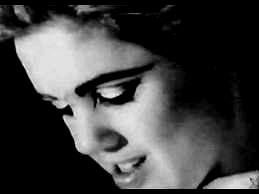
Edie
In the interest of keeping things in perspective and since a huge part of the readership obviously didn’t experience the sixties, I’d like, if I may, to give a little additional background to understand what happened here. I hope I don’t offend by mixing in some of my own background, not merely from vanity, but so the reader will have some understanding of both my limitations and strengths in interpreting Edie, Andy and Dylan.
Nearly everything you read about the sixties today is written by former activists, usually Jewish, or dopers of one stripe or another. Shall we say they skew the period in the direction of their beliefs. Theirs was only the point of view of small minority. In fact, they seized the leadership playing a much different game than the majority who were busy getting on with their lives.
The period now coming under discussion is 1966-’68 which changed the direction of the sixties. In mid-’66 Dylan had his motorcycle accident and was effectively removed from the scene for the duration. When he resurfaced in the seventies it was in a much diminished role. The first Bob Dylan was dead and the second was busy being born. No matter what he’s done since then, compared to his mid-sixties trilogy it has had minimal impact.
Warhol reached his apogee in this period while he was shot by Vallerie Solanas in 1968 which changed the direction of his career when like Dylan he became a corporation while business affairs were managed by other men, most notably Fred Hughes.
Edie was heartbreakingly dragged through the mud in these years until her evil genius, Chuck Wein, connected her to the movie Ciao, Manhattan which was the most degrading, humiliating experience possible. It eventually killed her. All three of our participants then suffered life threatening experiences within two or three years of each other. Edie was the only one not to survive.
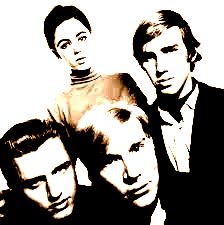
Andy, Edie And Friends
The sixties were tumultuous times; it was like walking around with a perpetual thunderstorm over your head. I was on the West Coast in the San Francisco Bay area till 1966 and at grad school at UOregon in Eugene from ‘66 to ‘68 and then in the record business for the rest of the period. I got my degree from California State College At Hayward now Cal State U. East Bay in 1966. It’s a long and irrelevant story but I entered Cal State in ‘64 taking enormous credit loads of up to 24 hours a quarter. You can do things like that when you’re young and not too bright. Hayward is just South of UC Berkeley. Cal State was a new school with a very small library so we were allowed library privileges at Berkeley of which I availed myself so I was around the Free Speech Movement scene but not of it. I was a first hand observer.
Once in Eugene in the fall of ‘66 things were getting in full swing in our own cultural revolution that would be joined to that of Chairman Mao in ‘68. I was entranced by the poster art work coming out of San Francisco eventually dropping out of grad school to sell posters and then phonograph records at which I was successful. Thus I was involved in the scene on an intimate basis from 1967 on.
While other generations were characterized by their literature our, the, generation was depicted by songwriters on phonograph records, thus records were central to the scene, don’t look for it in novels. The first efflorescence occurred in the US during the mid-fifties while going into an incubation period in England from then until the early sixties when in 1964 the Beatles, Stones and Animals among others provided the transition from fifties Rock n’ Roll to sixties rock. I don’t know how true it is but for me the revolution really got underway with the breathtaking first Doors LP in ‘66. The blues bands and the next wave of British bands provided the impetus to move things into the seventies where the creative impulse ended by 1974 although inertia carried things through until sometime in ‘78. Disco doesn’t count that was the beginning of an entire new ethic based in the homosexual revolution.

Morrison, Densmore, Krieger, Manzarek
When Andy, then in his quest for money, moved into records by managing the Velvet Underground, probably in imitation of Dylan, he did so just before the music scene broke. New York bands were never that popular on the West Coast and the Velvets were no exception. Andy, however, was an innovative guy. Light shows were already news on the West Coast but Andy came up with a new multi-media formulation that blew our minds, as we used to say, while having a very lasting cultural effect.
In the Spring of ‘66 he rented a hall called the Dom in NYC. Using the Velvets as his house band and his light show he managed to overwhelm the hipsters of the Big Apple. He would have had a major success had he continued on but he was fixated on movies, wanting to do his Western put down, so the Factory crowd decamped for Tucson, Arizona, thinking to pick up the strand on their return.
While away Albert Grossman and Dylan leased the Dom from under Warhol and opened it as The Balloon Farm. Between taking Edie from Andy and then the ballroom I’m convinced that Dylan sealed his doom. I hope there aren’t too many people who think the rear wheel of his motorcycle locking was an accident. Once again, conclusive proof is lacking, but there are indications that Andy and the Factory crowd did it.

Before The Fall
By late ‘66 Andy’s brief period in the spotlight was over. His creative burst had run its course and while afloat financially, there was not any great income in sight. Paul Morrissey had come on board as a filmmaker and his vision was more commercial than Andy’s but Andy was in charge so Paul had to bide his time waiting for his opportunity. At the same time a man from Houston by the name of Fred Hughes came on board who knew how to monetize Andy’s reputation and art skills and then, Bang! Andy was writhing on the floor in pain. One of those little zig-zags fate has in store for us sometimes. The sixties were over for Andy but the change in direction made his future in the seventies and eighties.
Now, let’s go back to ‘64 and take a look at one of the defining members of the decade I’ve slighted till now, Prof. Tim Leary. I’m convinced Leary was not in his right mind or, if he was, he shouldn’t have been there. By the time Timmy latched onto psychedelics they were pretty well established. LSD, discovered in 1938 by Hoffman and brought to prominence in 1943 was almost passe when Leary was turned on. Aldous Huxley had published his Doors Of Perception in 1954 and Heaven And Hell in ‘56, that celebrated the joys of mescaline.
When I was in high school maybe ‘54 the kids of Scarsdale were notorious for using marijuana, written up in Time if I remember right. Those were rich kids and by ‘56 our elite were very covertly using it. In the Navy aboard ship from ‘57 to ‘59 Bennies and other pills were prominent while the occasional heroin addict passed through. The Marines of Camp Pendleton were heavy into everything, barbiturates, mescaline, peyote buttons, LSD, you name it. For cryin’ out loud, Hollywood had been the drug capitol of the US for decades. One only has to read Raymond Chandler. There wasn’t anything they didn’t know. Cary Grant had been an old LSD hand for years before Leary, the apostle of acid, made it to town bearing the good news in 1960. He was received with some amusement.
A very amusing story Leary tells in his autobiography is that Marilyn Monroe fell to his lot at a party. They were actually in bed together. As you may know Marilyn knew more about drugs than any pharmacologist. Probably disgusted by Timmy’s ranting about LSD she handed him a pill and said take this. Timmy did then decided to get up to go the dresser for something. ‘Are you sure you want to do that?’ Marilyn asked. Timmy was. He took about two steps and seemed to sink through the carpet until only his nose was above the rug. He lay there inert all night while Marilyn laughed softly from the bed.
From his position on the faculty of Harvard Timmy was a very visible advocate of LSD hogging headlines in Time and other mags that were the envy of Andy. Tim was to amuse us with his antics all through the sixties. Now, all this stuff was happening very fast. It was impossible almost to keep up with the headlines let alone any indepth reporting or analysis. Besides there was no internet so all news was comparatively old news, perhaps weeks after the occurrence if you heard of it at all. Also it was impossible to be where it was happening unless it was happening where you were and then you didn’t know it was happening because you were in the middle of it. I happened on the Free Speech Movement because I was in school but I missed the SF scene going on at the same time because I couldn’t be in two places at once and keep up grades in the third place at the same time. New York was out of the question, London was across a wide, deep ocean, and LA hadn’t caught on yet. Thus, I was invited to the Kesey/Dead Trips Festival but passed on it. For various reasons I only caught the end of the Fillmore/Family Dog scene and then only fleetingly.
Even Morrison and the Doors who can claim to have been in the center could only have caught their small share however central it was. Nobody got it all. How could you be in Swinging London, New York, San Francisco and LA at the same time? Couldn’t be done although there were many who tried spending their time criss crossing the country from West to East and reversed and for all I know popping into London too trying to be jetsetters but they were merely vagrants peripheral to everything.
So marijuana, acid, speed and barbiturates or downers as they were called then made up the pharmacopeia. Amphetamines were obviously big in NYC from the early sixties and must have been in the West too but my first acquaintance with that was the Speed Kills buttons. Heroin was a danger drug for the addict type only. Cocaine came along in the seventies. At the time little or none of the marijuana crop was home grown. It came from Mexico and there are smuggling and pot running stories galore. At first the dealers were amateurs, boys and girls next door, but that slowly turned into the criminal professionals.
Andy’s crew were all what he called A-heads, but you may be sure they smoked and did booze too. It must have been uproarious in the early years but by ‘66 psychotic and physical reactions were beginning to slow the troops down. It was hard to keep up that pace.
Now, Edie when she came to New York in late ‘64 was a naif. Not many of us knew much better but she was a true naif, fresh from the farm, so to speak, while having had her brains addled by electro-shock treatment at Silver Hill Sanitarium. At Radcliffe-Harvard she had hung out with homosexual men gaining the reputation as a fag hag. Alright, I suppose, as she didn’t know how to handle herself around boys anyway. She came down to New York with the group of homosexuals that Andy called the Harvard kids with some distaste. She associated herself with her evil genius, Chuck Wein, who, as a homosexual, sought her destruction.
The Factory of Andy Warhol she entered was created in Andy’s image. In reading of it, I was never there, it comes across as a hell hole from which any reasonable person would have fled at first glance. Many did. Andy hurt a lot of people being of a sado-masochistic frame of mind. Outside his circle he was universally referred to as ‘that Warhol creep’ and yet events conspired with him to realize his perverted dreams and triumph over all.
Andy considered himself ugly and descriptions of him by others are unpleasant but whatever everyone and himself saw doesn’t show up so clearly in his pictures. He may not be the handsomest fellow around but he has a cherubic, pleasant look that I don’t find unattractive. But, because of this feeling he surrounded himself with beautiful people. Fred Hughes his business manager was quite handsome. Morrissey was OK, Malanga had his moments, Edie was considered a knockout, although I can’t see it, and the other women he associated with were quite attractive.
And then, as a little immigrant boy who wasn’t acceptable to mainliners of Pittsburgh Andy was especially pleased to have society women attached to him and especially the titled or rich English girls. Edie fit in as a beauty, as Andy called her then, and as an old line New York society girl. The combination was almost too tantalizing for this lifetime homosexual. Andy said Edie was as close to love with a woman that he ever got. He even took her home to meet mom. Edie apparently missed the import of that.
Andy has been blamed for making an A-head out of Edie. Once she tasted amphetamines it is clear that there was no stopping her. In truth the Factory was no place for her and Chuck Wein who introduced her into it must have known that. Still, as Dylan sang, there’s something going on here and you don’t know what it is, do you? Most people didn’t including Dylan, and I certainly was out of my depth. It was disconcerting metaphorically to step on what was once solid ground to feel it giving beneath your feet.
Actually there were several revolutions going on which would result in massive social changes. Those of us firmly grounded could only see the so-called change as a rising tide of insanity. Aided by drugs these revolutionists became totally dissociated from reality. Drugs alone cause a withdrawal into an inner fantasy world of wishful thinking. The external world appears as something that wishful thinking can manipulate to one’s desires in some magical way. When the two got really out of sync as they inevitably must you ended up in Bellevue psychiatric wards as happened to a heavy user like Edie many times while most of Warhol’s crew checked in at least once.
Andy, who used these people for entertainment and self-aggrandizement, provided a hospitable retreat or club house where the cognitive dissociation wasn’t quite so apparent or, at least, normal. The scene must have been incoherent. A reading of Warhol’s so-called novel, ‘a’, shows that by 1966 his crew was indeed incoherent. Ostensibly a tape recording of Ondine’s conversation over twenty-four hours, whose conversation Andy found engaging, the tapes show Ondine unable to complete a sentence along with Rotten Rita and the rest of the crew including Edie.
Further the whole bunch were absolute thieves. In Edie’s decline through sixty-six they walked into her apartment and chose their favorites from her collection of fur coats along with anything else of value. In her demented state all she could say is that everyone was wearing her coats. One wonders how much internal anguish there was as she knew there was nothing she could do about it.
At the same time Andy was a leader of the Homosexual and Underman revolutions. Perhaps nobody knew what was going on but Warhol, Rotten and others were working for homosexual liberation which they achieved with the Stonewall Riot of 1969.
New York was unique in that for decades homosexuals from the South and Midwest flowed into New York each year in a great internal migration. The chief destination was the Village. Christopher Street was the main fag drag. The Stonewall Tavern was on Christopher. Why the cops would disturb the lads in their own colony is beyond me, but they did and then gave up without a fight.
Perhaps the most astounding revolution of all was that of the Undermen. Untermensch in German. While Warhol’s crew was a prime example of the Other Half rising to control the direction of society, the main impetus seems to have been the West Coast, San Francisco and Haight-Ashbury, specifically the Hippies. It was really there that the poverty look took hold, torn, faded jeans and whatever. LA never really went for it but it spread up the coast to Eugene, Portland and Seattle. The Sorority and Fraternity look went out the window with millionaire’s kids posing as the down and out.
I would imagine a naïve thing like Edie got caught up in the so-called sexual revolution too. We’re not talking Feminist Movement here but the sexual aspect of the Communist Revolution in which women are common property to be had anytime or anyplace by whoever. The Pill that came along in 1960 really facilitated the change in sexual mores. Nothing exemplified that more than the mini-skirt. So you’ve got drugs, the Pill, the Mini Skirt and the Ideology. The world was not so slowly turning upside down.
All these revolutions might have gotten not too far but they were all collected and subsumed under the directing force of the Communist Revolution under the leadership of Chairman Mao and the Chinese Party. The money really flowed in after 1968. Driving the whole thing and what made the turmoil possible was the Viet Nam War. It served the Communist cause more than the American as while taking a beating in Viet Nam the Communists subverted the United States. Strangely Viet Nam had no effect on Warhol at all. His disaster paintings ignored Viet Nam while a couple napalm drops would have made a terrific topic.
In the early days of the war it was filmed like a reality TV show with the daily haps relayed on TV to the US. The reality of napalm drops while our soldiers cheered and howled while a couple dozen Vietnamese where incinerated was too much for the entertainment starved public to take. I sure couldn’t handle it. The films were quickly removed. The reality of war is a private thing between the armies, not quite like the Super Bowl.
I don’t recall a single mention of Viet Nam in Andy’s Diaries, Philosophy From A To B or ‘a’. The war appears in none of the biographies or auto-biographies or even novels written by various denizens of the Factory. Rather strange, but then I can recall no references to it in Dylan’s songs either.
The Communist Revolution connection developed when John and Yoko arrived in NYC in 1971. The two of them were clearly involved in revolutionary activities linking various art and entertainment figures with them including, Dylan, Warhol, David Bowie and others. What exactly they were doing isn’t clear to me yet. Yoko was and is on some Feminist rag.
So, in 1966 while an apparent apex for Warhol, his world was actually coming apart while Edie’s was descending like a Stuka dive bomber.
The period from December ‘65 to Easter of ‘66 must have been traumatic for a crazed and confused A-head like Edie. She sacrificed her position with Andy, seduced by the fallacious promises of Dylan and Grossman who certainly had no plans to make a movie, and if they did, to put Edie in it.

Velvet Underground & Nico
Warhol had all the sadistic cruelty characteristic of homosexuals that he turned on to the distraught girl. Edie must have been thoroughly crushed when Dylan rejected her love while passing her on to Neuwirth. Edie was not at her wit’s end with no money, cut off by her parents who objected to this life style, while having no means to make money to support the station in life she had seemingly attained. Both Dylan and Warhol abandoned her after accepting her largesse for several months. Warhol is especially reprehensible. Dylan sure is a close second.
Her heavy dependence on amphetamines was literally eating away her brain, her body and her personality.
I really can’t believe that Edie loved Neuwirth as she claimed. I don’t think either was capable of love. Yet, she abandoned her body to him claiming she could make love for forty-eight hours straight but crashed whenever he left her. That is a sign of despair and fear. I can only imagine the horror she felt when she looked into the future and saw only a blank wall. As Dylan was to sing of her: Time will tell just who has fell and who’s been left behind.
Perhaps the cruelest trick of all was played on Edie by Dylan, Grossman and Neuwirth at the Easter Parade of 1966 when Neuwirth filmed the promised movie.
In a November issue of Life Magazine in 1965 Edie had been photographed standing on top of a toy leather rhinoceros about two feet high and three feet long, popular at the time. Whether the three of them, Grossman, Dylan and Neuwirth, put their heads together to come up with this or Dylan brainstormed it by himself, Neuwirth persuaded Edie to pull the rhino down Fifth Avenue as the parade progressed, filming as they went. Then Bobby tied the rhino to a parking meter and persuaded a passing cop to write Edie a ticket. Thus Grossman and Dylan fulfilled their obligation to put Edie in a movie while mocking her cruelly. Those guys had a reputation for cruel put downs. They live up to it here.
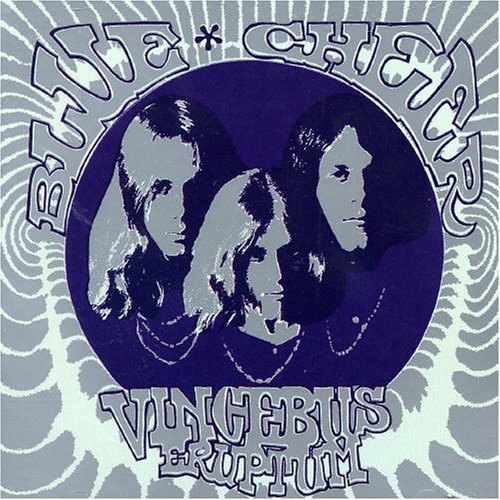
It was just after Easter that Warhol opened the Dom to stage his Exploding Plastic Inevitable. The reports we got of it on the West Coast made it sound absolutely astounding. If any one thing characterized the sixties I would have to say it was the Exploding Plastic Inevitable. It brought everything the era valued together. As usual with Warhol he couldn’t resist turning it into a sado-masochistic experience. The chaos must have been extraordinary. One can imagine the scene with dope peddlers trying to push their drugs on you, the lights flashing, strobing and pulsing, the howling music, the bodies bumping against each other, Malanga doing his whip dance, Edie bopping around the stage with her odd skip and step. They talk about the Velvet Underground being loud but they must mean for the times. Blue Cheer with its wall of Marshalls was just around the corner while the electronics improved almost daily until the sound passed the limits of endurance. Created a whole generation of deaf Beethovens. Musicians literally without ears.
I actually promoted the Underground once in either ‘68 ot ‘69, might have been pre-Blue Cheer. BC’s main claim to fame was that they were the first mega blasters, loudest band alive for their brief moment. Sort of a Great Divide in Rock music.
Things were still building but it wasn’t that the Velvets were that loud; they were just super strange. Reed was the original one-note man, he played it over and over fast. Sterling was there but he must have been background noise because I don’t remember much of an effect there. Whatever Cale was doing passed over my head but it must have been some kind of La Monte Young dynamo hum, all the songs were. I was most fascinated by Mo on drum. Yeah, right, drum, in the singular. She had a six inch deep tom with an under slung mallet. The mallet hammered away at the bottom skin while Mo pounded the upper skin with the sticks. In keeping with the dynamo hum she never varied the beat once but she was right on time just in case time was important. Quite an experience. You shoulda been there, and paid at the door. I wouldn’t have lost as much money.
Andy made a bundle in the month long run and then he made what would have been the mistake of his life in leaving for Arizona, or would have been if he hadn’t been shot. While he was out of it Hughes and Morrissey put together the means to put Andy over the top.

Turn On, Tune In, Drop Out
Chaper 15 follows.
Exhuming Bob XXX: Pt. 3 A Review of Masked And Anonymous
June 11, 2011
Exhuming Bob XXX
Part III
A Review Of Bob Dylan’s Movie
Masked And Anonymous
by
R.E. Prindle

A Catalog Of The Usual Suspects
I will now deal with the leading characters of Masked And Anonymous and what story line the movie has. It is clear that not many have seen this movie so I will try to relate the review of the movie to Dylan’s life as the film is clearly autobiographical.
The characters have their individual roles while being paired up in various combinations. The most obvious is that of Fate and the Promoter or Manager Uncle Sweetheart played by John Goodman. Uncle Sweetheart has a very large dose of Dylan’s real life manager Albert Grossman while being a composite of every promoter who ever existed. Uncle is also paired with Nina Veronica played by Jessica Lange as the exploited female Producer. She also does a very creditable job.
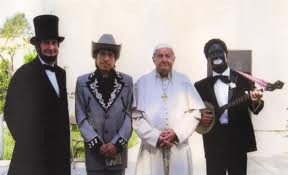
Later in the movie Bobby Cupid is introduced played by Luke Wilson. Cupid is obviously Bobby Neuwirth, Dylan’s sidekick of the early sixties, and who also shared the spotlight with him on the Rolling Thunder extravaganza. Cupid is a smart ass put down artist as Neuwirth was reputed to be. Cupid forms a pair with Uncle Sweetheart also as an antagonist which may have been the case in real life with manager Albert Grossman but one can’t be sure. At any rate Cupid merges his identity with that of Fate while acting as his enforcer.

The interest is not the movie but what Dylan reveals of himself.

2.
A Run Through The Scenes
Influences
In many ways this movie is based on all the Rock n’ Roll movies of the fifties. All of them could have been written by the same hand, at least the American ones. The English Tommy Steele’s Doomsday Rock might have slightly different being from England but probably not. Cliff Richard’s movie that I’ve seen only recently was from the American mold. Dylan ‘s movie is on a par with all except for the greatest of them, the apotheosis of Rock n’ Roll films- The Girl Can’t Help It. That movie told the whole story of Rock n’ Roll while being a perfect summary of the fifties. Can’t recommend it too highly; had more stars than the Big Dipper.
The big drawback of Dylan’s movie is that once he gets out of jail Fate can’t stop droning on about his opinions about everything. He might have thought he was on a par with Phil Marlowe but he wasn’t. Dylan’s close with Greil Marcus and he and his crowd are big on Raymond Chandler, the creator of Philip Marlowe. Chandler is great but not transcendental, and I’ve read all his stuff short stories and novels but not the letters so his mystique for Marcus, Dylan and that crowd escapes me. Marlowe narrates with comment as Dylan does here so there may be a strong Chandler influence.
Enter The Characters
Scene 1 is the fireworks. Scenes 2 through seven introduce, in order, Uncle Sweetheart, Nina Veronica, Jack Fate, Prospero, Tom Friend and Pagan Lace. The scenes establish the main characters while providing the raison d’etre for the movie, or in other words, what passes for a plot.
 Scene one is the violent opening. Scenes two and three present Uncle Sweetheart and Nina Veronica. The name Sweetheart is obviously ironic as Uncle is conniving and irresponsible. John Goodman who plays the role is a big fellow as was Albert Grossman. As the movie is autobiographical Uncle Sweetheart must refer to Grossman who came across to Dylan as doing something for him but who wound up taking more of the earnings than went to the singer and writer of the songs. Still he is a composite of every promoter than ever existed. Nina Veronica played by Jessica Lange is a smart talking long suffering legman for Uncle. Lange co-starred in a Presley movie thus establishing Dylan’s connection to Elvis without whom, as he says, he couldn’t have been doing what he is doing. I can’t really identify a specific model for her but she is blonde. Might be some connection to Edie Sedgwick and Echo Helstrom among others.
Scenes four, five and six introduce Jack Fate with an interlude with Cheech of Cheech and Chong as Prospero referring to A Midsummer Night’s Dream thus establishing Dylan’s connection to Shakespeare to whom some inexplicably compare him. Scene six brings Tom Friend into the stream.
As Uncle cannot find a ‘Star’ to perform solo at this benefit concert he is staging, he is forced to dip into the bottom of the bucket to spring Fate from prison where he is apparently doing life for being a bad singer without parole. Fate collects his guitar and moseys down to the bus stop where he finds his old friend Prospero waiting for him. Here Dylan begins his marvelous collection of clichés. ‘Where you goin’” asks Prospero. ‘That way.’ says Fate pointing to the right. ‘Oh yeah? That way’s pretty good too.’ Prospero says pointing to the left. Whew! Are you prepared? The use of Prospero for this downer film must be ironic.
Boarding the jalopy bus Fate asks the Black female bus driver: ‘This bus cross the border?’ ‘Oh no, you’re going the wrong way, mister.’ ‘Alright’ Fate replies resignedly. And this is only the beginning of the movie. Fates passes the Mexicans and chicken to find a seat at the back of the bus. I presume that this is a racial comment that it is now time for Whites to sit in back. After all as Dylan sings in his song: Them that are first shall be the last. To give credit when credit is due, Dylan with great economy lays out the direction down the midway of his view of Desolation Row that the movie will pursue. This is Dylan’s version of reality that even a hundred million dollars obviously can’t change.
The scene that introduces Friend takes place in the Editor’s office. Here we have a contrast between

Recent Dylan Persona
the archetypical, cynical, hard drinking nineteenth century newspaper editor confronted by a wise ass current edition of Dylan in hoody and dark glasses. This is an interesting contrast in historical periods. Not only do Friend and the Editor come from different periods but the Editor has a copy of the statuette of the monkey reading Darwin’s Origin Of Species on the desk. As Friend is associated with both Dylan’s early New York period and his present this might be a time to note the influence on Dylan’s mind, which he acknowledges, caused by his study of Civil War era newspapers in the New York City library during ‘61-’62. Actually he studied the social scene North and South in the years just before the war. It would be interesting to know how many different papers he read. The old black-face minstrel Oscar Vogel who appears later in the movie refers to these studies as also does probably Dylan’s inexplicable inclusion of his version of the Southern anthem, Dixie. He might have done better to have performed Cowboy Copas’ Alabam‘. One might add his version isn’t very good. Nevertheless those studies color his mind.

The Day The World Changed Eras
Dylan And The Press
Friend also raises the question of Dylan’s relationship with the press. Now, Dylan had before him the example of the Beatles and their amazing exchange with the media upon touchdown at Idlewild airport, renamed JFK, in January of ‘64. We were fairly electrified at the aplomb of the Fab Four and their cheekiness. This was in contrast to the humble pie other musicians ate before the microphones. The Beatles established a superior distance to ‘all that thing’ that struck just the right tone with the generation. In that one brief exchange they changed the direction of the history of the world. Of course, scruffs like the Rolling Stones and Animals who followed them maintained the tone creating the right antagonism between the generation and their elders. This was the beginning of the generation gap. The old timers who had survived the Depression, WWII and the Korean War had developed a definite world outlook that we with different experiences couldn’t share but the cleavage between the two generations was so sharp that conflict was inevitable. This is where it began.

The Bad Boys Of Rock
Dylan’s father in his interview with Walter Eldot of Duluth let the cat out of the bag when he said his son was a corporation and his whole persona was an act, a character that Dylan had assumed to make it. That being said then Dylan had plenty of time to assess the situation and prepare an act for the press when his turn came with good and correct examples before him. Since he couldn’t be flippant and amusing like Lennon and the others of the Fab Four he had to create an antagonism between himself and the press so we may assume his proto-Keith Richards act was a put on from the start. It seems impossible that a young man like Dylan wouldn’t have been flattered and awed by being interviewed by the international press while being broadcast on the evening news on two continents on a regular basis.

The Name Terrified The Old Folks
Nobody expected much from the unknown quality of the Beatles in ‘64 but Dylan in ‘65 was already ‘the spokesman for his generation’ whether he wishes to acknowledge it or not. His shucking and jiving and renunciation of his role did have a cooling effect. He was supposed to be supremely wise, ‘Something’s going on here but you don’t know what it is, do you?’, with answers for everything but he wasn’t and didn’t. He could say anything stupendous nor could anyone have. Knowing his incapacity he chose to pick a fight; probably the wisest thing he could have done. He didn’t answer any questions but asked more questions back than were given him. That way he didn’t have to take a position on anything.
It’s interesting that his alter ego, Friend, is full of sage and trite expressions of opinion, he spouts them non-stop a la Phil Marlowe. Friend who represents the Dylan of ‘61-’65 has Lace/Cruz as his live in. It follows then that Pagan Lace must represent Suze Rotolo.
Searching For The Vacant Couch
In his memoir Chronicles Vol I Dylan creates Ray Gooch and Chloe Kiel who he says he stayed with for some time on the West Side, sort of the Bank Street crowd. There is no possible way to fit them into the time frame nor had anyone ever heard of them before Chronicles so they must be a composite of the MacKenzies, Dave Van Ronk and various other couches he slept on. He very quickly moved in with Suze Rotolo by late ‘61 down on Fourth Street. As near as I can tell he stayed there until perhaps ‘63 when they split up. By 1963 he would have been famous and prosperous enough so that he couldn’t go back to sleeping on other people’s couches so between then and the time he showed up at the Chelsea Hotel it isn’t too clear where he lived. That was before Warhol demolished what was left of the Chelsea’s reputation when he made his movie Chelsea Girls.
Friend’s really great Beatnik pad was probably a composite of locations Dylan knew. It’s terrific. Not a lot of books in it though as Dylan describes in his memoir.
Memories Of Suze
As I noted Pagan Lace was very fearful much as Dylan always described Suze. Suze was intellectually vital in introducing Dylan to art and the theatre while Pagan Lace being Mexican is reminiscent of the Ramona of Dylan’s song To Ramona. ‘I could forever talk to you by my words would soon become a meaningless hum…’ which is essentially the relationship between Friend and Lace. Friend and Lace go in search of the Benefit Concert to track down the elusive Jack Fate.
Scene eight is the totally irrelevant interlude with the paramilitary who has no idea which side he’s on. The movie could have done without it.
Dylan insists on talking over the scenes like some Philip Marlowe but more vapid. If he wouldn’t give the reporters his opinions in his prime he makes up for it here while amply demonstrating the wisdom of having kept his mouth shut previously.
In scene 9 Fate’s father lies dying. Why he’s Mexican isn’t clear to me unless Dylan is merely eliminating as many White faces as possible. Dylan relates the particulars of Fate’s mom and dad which obviously correspond to those of himself and his parents. In another long interlude he checks into a hotel in what is supposed to be a dead pan comedy routine with the desk clerk. Another very long stretch of clichés.

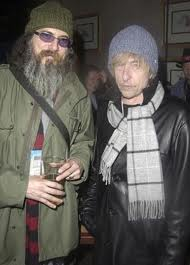
Robert C. Neuwirth
In scene 10 Fate makes a phone call to his old buddy Bobby Cupid who during Fate’s incarceration has been working as a bartender. A very dissatisfying scene takes place between Cupid and a customer. Wretched acting and even more miserable writing. If Warhol was right that amphetamines made Dylan’s lyrics sparkle in the sixties, he should have fortified himself with some while writing this script. Having received his summons from Fate Cupid throws down his towel leaving the cash drawer open and liquor on display and leaves the building.
In the meantime Fate has found his way to the studio cum bar. This scene may be dated back to

A More Mature Neuwirth
Dylan’s teen fantasy that he is living out today. Contrary to what he would have people believe Dylan’s oeuvre is singularly free of Blues or Negro influence. Dylan quite frankly is a pseudo-Hillbilly. Well, maybe not that pseudo. He has been since the first day he showed up in Greenwich Village disguised as Woody Guthrie. In fact one reason it took him two months after arriving in New York to reach the Village was that he was actually scoping it out, reading the scene to develop an act as he couldn’t play straight country and succeed. Not too confident he backed up his Woody Guthrie/James Dean act with a large dollop of the lovable Charlie Chaplin for comedic relief. Still, he knew all the great Country songs and acts of the fifties. He had probably seen all the greats and lesser lights come through Hibbing. Awe inspiring. They used to have these great package shows. Where I lived I remember one show headlined by Ernest Tubb backed up by lesser lights like Johnnie and Jack and others. Both the show and the audience was a trip. I’m sure Dylan on more than one occasion was outside the stage door to watch the performers troop in. A sight to see. They weren’t gods but they’ve never been replaced. The Rocker never even came close.
The whole benefit sequence is Country and Western probably what Dylan calls traditional music. Bearing in mind the country concerts, Dylan makes a marvelous entrance as the traveling country troubadour shot from the back. Wonderful. He has the shambling bowlegged gait, guitar case in hand in the oversized cowboy suit down pat. He even manages the bowlegged stiff back stoop so you might think it was I don’t know who rambling past. He does all kinds of imitations of the Country stars he knew and loved: Hank Snow, Webb Pierce, Slim Whitman, I don’t know who all. If you know country these scenes give away Dylan’s major influences. Heck, when he hired Mike Bloomfield for Highway 61 he told him he didn’t want any of that blues crap and he made Bloomfield play out of his genre. If he could have gotten Country picking out of him he probably would have been happier.
Back In The Country Mode
Once he got out of the miasma he’d fallen into from ‘61-’66 he went straight Western with John Wesley Harding and just in case you didn’t get the message on Nashville Skyline he comes out of the country closet tipping his hat to you as if to introduce himself in his real guise. Obviously that is the real Bob Dylan. My problem with that, as my jaw dropped, was that he’s a lousy country singer and writer. Merle Travis he’s not.

Dylan In White-Face, Rolling Thunder
Now, the bar in the scene is a real old fashioned Country bar although this one is improbably populated by Negroes and Mexicans and the occasional old girl friend. The only thing the scene is missing is the chain link fencing around the band to keep the boys from catching a flying bottle with their teeth. I can tell you that those crowds were rowdy and I’m only alive to talk about it by the grace of god. In Dylan’s fantasy all those peaceable Negroes and Mexicans are so enthralled by Fate’s hillbilly music that they just keep smiling’ and boppin’ along. Heck even the Black Country singer Charlie Pride didn’t like the music that much, he only went to C&W when he realized he wasn’t going to make the major leagues as a ball player. So, during performance time here we’re in Fantasyland.
To put the scene into some kind of perspective it would appear that Dylan is combining the Rolling Thunder Revue and the We Are The World Benefit concert. The stage has a couple different backdrops here and they are quite reminiscent of the backdrops for the Rolling Thunder Revue of 1976 which in turn were based on the drop curtain of the movie, Children of Paradise.. Apparently that was a happy period of Dylan’s life.
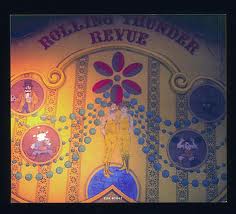
Rolling Thunder BackdropHighway 61 RevisitedRemember it’s all symbolism here and Dylan is telling his life story, not as it happened but corrected to what he would have liked to have happened. Thus he has a couple different backdrops based on the designs of the Rolling Thunder Revue. I didn’t get it all but one is revealing. There is some speculation as to whether Dylan was a Juvenile Delinquent who did time at the Minnesota Reform School at Red Wing. Red Wing is a town down on Highway 61. Highway 61 begins in Duluth at the wrong end of 61 and ends down in New Orleans in Blues country. So one should not confuse the wrong end with that end. Dylan is talking abou the Wrong End of Highway 61. It has nothing to do with the Blues. The town of Red Wing is also home to the Red Wing boot and shoe company, the last American made boots and shoes available, if they still are. Even though the very literal minded Duluth reporter, Walter Eldot, made a point of saying that Red Wing did not have walls as claimed in Dylan’s song The Wall Of Red Wing there must still be at least a chain link fence. I’ve never been to Red Wing but I’m speculating that you can see the Red Wing shoe factory through the fence at the reformatory. I may not be right on that speculation but one backdrop advertises American Made Shoes in a cartouche to the right and Retail in a cartouche to the left. If you remember the song Highway 61 Dylan makes reference enigmatically to 40,000 red, white and blue shoe strings. So there are a number of ties to Red Wing for Dylan. The Minnesota Dept. of Corrections isn’t going to tell us whether Robert Zimmerman was an inmate in 1959 but I think there’s enough evidence here to make the surmise conclusive. I’ve never seen Dylan live but if his show is anything like this movie I’m not going to spend seventy dollars to do it. His band are good musicians as far as that goes but Dylan doesn’t believe in a good bottom. He’s got a drummer but no rhythm section. He brings three guitars up front not including his own leaving his drummer flailing away, not particularly concerned with keeping time in the background. If Country drummers can’t do anything else they can at least keep time. The songs he uses here are not distinctive.. I wouldn’t pay money to see Dylan do an insipid Diamond Joe and I’d have walked out before he finished Dixie. God, playing Dixie to an audience of Negroes and Mexicans. He should have had the Stars and Bars suspended behind him to complete the insult.Mississippi On My Mind While we’re on this Southern kick we might as well include the scene between Fate and the black-face minstrel, Oscar Vogel. This appears to be a significant name. Oscar is an old English name meaning Spear of God while Vogel is German, possibly Yiddish, for bird. A singer is a sort of bird while Oscar was assassinated for speaking ‘truth to power’ or a Spear of God. Vogel would seem to refer to Dylan’s stint as a ‘freedom rider’ in the Civil Rights era of the early sixties. In point of fact people were killed during this period while it is likely that Dylan escaped an early demise by a hair’s breadth. For example in his song Motorpsycho Nightmare which take place Bates Motel style from Hitchcock’s recent 1960 movie Psycho the last line is ‘if it hadn’t been for freedom of speech I would have wound up in the swamp.’ If one considers Dylan’s outspoken career during ‘63 and ‘64 it is not inconceivable that he made many powerful enemies. Between songs like Blowin’ In The Wind, The Times They Are A’Changin’ and Masters Of War combined with the his appearance in the Washington Mall with Joan Baez and Martin Luther King it would seem certain that he at least came to the attention of then director of the FBI, J. Edgar Hoover. It is clear that Hoover would like to have discredited King who he correctly believed was either a Communist or Communist inspired. In the early years Dylan might not have counted for much but by 1964 he was becoming the ‘spokesman for his generation’ and much more influential. Hoover would have to have become concerned. Thus when that nerd Pete Seeger induced Dylan to travel to Mississippi to lend his voice to the freedom riders Hoover for one might have said to himself, ‘That boy has got to be stopped.’ In Motorpsycho Nightmare in order to outrage the Farmer Dylan shouts: I like Fidel Castro and I like his beard. The Farmer calls him a Commie as Dylan, the narrator, hit’s the ground running. In another song commentary Dylans says in his 1997 Mississippi, ‘I stayed in Mississippi one day too long.’ Sad Sack Current Dylan
In that light Fate’s confrontation with Vogel is interesting. One imagines Vogel was a pre-Civil War minstrel so that he refers back to Dylan’s Civil War studies undertaken in Dylan’s pre-Civil Rights period. Being in black-face could refer to Dylan’s Mississippi incursion with that twit Pete Seeger. Let us say then that the connection to Vogel is Mississippi.
Now, Dylan had been shooting off his mouth insulting Congressmen or whoever in songs like The Times They Are A’ Changin’, Blowin’ In The Wind and Masters Of War, callow, sophomoric songs all expressing high school essay sentiments. He was at the DC protest so the Mississippi trip and a song like Oxford Town might have been the last straw for the Feds, the tipping point.
Vogel delivers a monologue on his own murder while the doleful, long faced Dylan sits quietly listening. Vogel, played by Ed Harris in a particularly glossy black Shine, tells Fate that at one time he was a very famous minstrel but that a cause came up and as he had a podium as an entertainer he undertook to ‘speak truth to power.’ As he tells Fate it’s not what goes into your mouth that gets you in trouble it’s what comes out. Freedom of Speech didn’t save him from the swamp, so let’s say it was probably a combination of Freedom Of Speech and intervention by Albert Grossman to save his meal ticket that did it. I have read someone’s opinion that Grossman served that function for Dylan more than once.
Fate having heard the story began walking away. When he looks back Vogel is gone, proving he was merely a projection of Fate’s/Dylan’s psyche. In place of Vogel is a real Mississippi Negro with a baseball bat. The implication is- don’t come back. In this connection during 1976’s Rolling Thunder tour Dylan appeared not in black face but in white face perhaps referring back to his Mississippi blunder. Thank you Pete.
Trouble Begins For The Children Of Paradise
On Fate’s arrival at the bar Dylan begins to lose control of his movie as the story gets more complicated. His relationship with Uncle becomes tense as in real life his relationship with his manager Grossman begins to come apart. By 1970 Grossman and Dylan were in court. That tenseness is aggravated by the arrival of both Bobby Cupid and Tom Friend along with Pagan Lace. The key players in Dylan’s life are assembling. To top it the writing becomes even more execrable and the acting worse.
The best scene is the arrival of Cupid. Bobby is not a composite character but seems like a real life characterization of Dylan’s sidekick Bobby Neuwirth. Neuwirth was a fixture with Dylan in the mid-sixties when he served as sort of an enforcer. The two went their separate ways until the 1976 Rolling Thunder tour for which Neuwirth was summoned somewhat as here in Masked And Anonymous. In this scene he returns absurdly bearing Blind Lemon’s old beat up guitar, or reputedly Blind Lemon’s guitar. When Uncle asks where he got it Cupid replies in Houston from a friend of a friend of Blind Lemon’s who said he had been told the guitar had been Blind Lemon’s.
Uncle remarks that he can get a guitar just like that at any pawn shop in town. ‘Well, maybe you can,’ Cupid answers, ‘But it wouldn’t be this guitar.’ That is an unanswerable reply but lame logic. Cupid wanders off saying he is going to restring the guitar. Get it? Fate/Dylan is the new Blind Lemon.
While Cupid is diddling with the guitar Friend shows up asking for directions to Fate. Ha, ha. In the language of today Cupid serves as the Gatekeeper and won’t let Friend through. However Uncle wants the publicity and insists that Fate let himself be interviewed. This leads to the rather incongruous requisition by Friend of Fate. In this instance, as Vogel served as a sort of conscience for Fate so does Friend here. Not exactly what one expects given Dylan’s relationship with the press. Remember that Friend is wearing Dylan’s 1965 clothes while talking to the currently dressed Dylan. ‘Yonder come the vagabond in the clothes that you once wore.’ In that sense Fate or Dylan is talking to himself as though his conscience. Strange conversation.
Friend reprimands Fate for not having been at Woodstock. His absence must have bothered Dylan  more than he lets on. Then Tom runs on about Jimi Hendrix being out in the rain with his guitar in that horrible rendition of the Star Spangled Banner. On and on about Hendrix being a native son. And then even more strangely Tom brings up Frank Zappa and his eight and a half hour movie Uncle Meat. Talk about out of the blue. There is no direct reference to Dylan’s Renaldo and Clara at four and a half hours except that Zappa was able to let it all hang out which took him another four hours apparently to get it all out. I must say whatever was going on in Dylan’s mind it did escape me.
And then comes another irrelevant interlude harking back to 1963 and possibly Mississippi of the genre ‘and a little child shall lead them.’ A White woman leads her little Negro daughter up to the assembled cast and orders her daughter to sing The Times They Are A’ Changin’ for Dylan. The mother says her daughter had memorized every song Fate/Dylan had written. Not exactly a feat like memorizing the Bible but daunting nevertheless. ‘Why did you do that darlin’?’ Fate coaxes. The mean, nasty White woman interjects: ‘Because I made her do it, that’s why.’ That’s one mom from hell.
So then as this little Negro girl begins singing the Master’s song a kind of a hush fell over the world. As the little Negro girl intoned the more than Shakespearian lyrics the screen goes silent except for the little Negro girl’s voice as the cast experiences an epiphany not unlike Paul when he fell down in the dust of Israel. I tell ya folks it was angelic, there was a lump in my throat. I was eating popcorn at the time.
Of course, the girl wouldn’t have given the kid Michael Jackson the tremors, nor Donny Osmond for that matter, but she got all the words right and knew when to quit. About this time Fate decides to walk out on the benefit, he borrows Cupid’s car which he wrecks and goes to visit his faithful old Negro prostitute spouting clichés all the way. This scene is apparently reminiscent of 1968 when Dylan’s dad died before Dylan could reconcile himself with him. Here also Fate’s dad dies as Fate sits quietly on the bed beside him shedding his last tear. It wasn’t as good as Little Nell.
Junior Jive, his putative brother played by Mickey Rourke, then takes over for pop. Once braceros they are now running the country he says. Rourke was unconvincing in the role.
There Must Be Some Way Outta Here
Well, this thing has to end sometime so Fate goes back to the bar to perform the Benefit. One has the feeling that this was some sort of apology for the We Are The World benefit when Dylan and Keith Richards took the stage before the world wide audience and showed how stellars make fools of themselves. In this replay Edmund (Rourke) begins a destruction of Desolation Row and the rest of the world which erases Fate from the television screen and hopefully We Are The World from Dylan’s memory. And then comes what we have all been fervently praying for- The Grande Finale. Probably the lamest scene in a movie of lame scenes.
Edmund has unleashed Armageddon on the world simultaneously eliminating Dylan’s Save The World embarrassment and fulfilling his need for universal destruction a la Hitler down on Desolation Row where everything was broken and is now disintegrating. While all the colored people of the world are off destroying themselves Dylan’s White elite are about to self-immolate a la The Twilight Of The Gods. Ragnarok, Hiroshima a hundred fold.
All the world’s a stage as that minor poet said and this scene appropriately takes place in front of the stage but not on it. It’s a major rumble. I hope I can describe it right. Fate, the fate of fates has arrived. This is the fate that no one can escape. Now you know why Jack’s last name is Fate.
Fat old corrupt Uncle Sweetheart makes a move on Pagan Lace trying to persuade her to have a drink on him. The girl was a teetotaler. She resists Uncle’s enticing. Uncle grabs the delicate thing making a move to pour the firewater down her throat will she, nil she. We hear a dog whistle off stage and its SuperFriend to the rescue. He has apparently always wanted to kill Uncle so he grabs the erratic microphone cord proceeding to throttle Uncle.
Everything might have worked out fine from Friend’s point of view but for the fearful little Pagan Lace who drags him off thereby leading to his death. Fate shows up challenging Friend. Dylan settles accounts with the press here. I don’t know how big Jeff Bridges is but if Dylan is 5’ 10” 150 Bridges is 6’ 5” and 250. Odds do not daunt Fate. They go into a clinch with Friend’s back to the camera. I don’t know what Dylan did to Friend, perhaps twisted his balls, but Friend recoils fifteen feet clutching either his stomach or his gonads- the picture gets fuzzy. In perhaps the hokiest bit ever devised for film a thoroughly unconvincing Fate breaks the fat end off a JD bottle steps coyly up to the prone Friend and wiggles the jagged end in front of his nose, then steps back. You really have to see it to believe it.
Well, Friend is lying down but he’s still not going to take it. He pulls out a flat gun, might be a .45, might be a 9mm., I’m not an expert on firearms, and instead of shooting, leers menacingly while waving the gun around like he intends to shoot it sometime in the future. Or, perhaps Dylan and Charles were expertly building suspense because Bobby Cupid is creeping up behind bearing the murder weapon which is, you guessed it, or maybe not, Blind Lemon’s old guitar. Or, quite possibly as Uncle suggested, it was just an old guitar from a pawn shop. No matter, sneaking up behind Cupid bashes Friend with the unstrung front side. The guitar flies to pieces, it was old and flimsy, leaving Cupid holding the neck stump.
Unlike Fate and his JD bottle neck Cupid plunges the guitar neck into Friend’s throat. Death by guitar, perhaps a Movieland first. Symbolically Blind Lemon and all Negro musicians have avenged themselves for the purloined royalties. But, Bobby is now a murderer although for a good cause. Someone shouts here cum de fuzz. The ever magnanimous Fate gives his own guitar to Bobby thus replacing the broken Blind Lemon and one assumes passing the baton of musical justice on to Cupid while he shows Bobby the door and tells him to run. Cupid does one of the lamest exits ever. You can see him stop running when he thinks he’s out of camera range. So, the faithful servant’s fate is reconciled.
Meanwhile the two Black loan enforcers from the first scene show up to seal Uncle Sweetheart’s fate. They give the sage but cliché’d advice: ‘Everybody pays Sweetheart. Some pay up front some pay at the end. Come with us.’ Uncle resignedly marches off to his fate.
The cops show up. Nina Veronica steps up, points to Fate and says he did it, I saw him do it. This may possibly connect Dylan to 1958 when he and Echo were caught burglarizing in Hibbing and possibly Echo laid it on Bob. Just a guess. Well, the concerts over and it’s back to the Black Hole Of Calcutta for Fate. A woman put him in jail to begin with and a woman returns him to jail. It is Fate’s fate.
Yoicks, can this movie be finished? No. Frank Zappa made an eight and a half hour movie, this one only feels like it. Dylan’s not finished philosophizing. The camera focuses steadily on Dylan full face for four and half minutes as Dylan drones on. I’d given up, I wasn’t listening anymore. I will say this though, consider these pictures of Bob and Dave Zimmerman. If they don’t have two different fathers I’d be amazed.

How Did I Get Roped Into That Picture?
A Note On My Method
A note on my method: I do not compose at the computer. I write my essays out long hand first. I then transfer to the computer using a different site. I save and print a copy then copy and paste to WordPress so I always have backup copies in case the copy flies away from WordPress while all restore methods have been disabled.
So while disabling restore and removing the copy is an inconvenience I always have backup copies. I then enter the photos printing copies page by page so I can always reconstruct the work.
The education has been less than pleasant but I presume it has been worthwhile. Thank you.
A Note On Bob Dylan And His Privacy Lament
Dylan seems to be unaware that by offering his efforts for sale he has sacrificed his privacy. His music and songs are open for criticism whether he likes it or not. Masked And Anonymous and his other films are automatically subject to minute scrutiny and interpretation. If he doesn’t like that then he should not have taken up his pen.
Secondly: Dylan invaded the privacy of every listener by offering his efforts for public consumption. There was no escaping his songs broadcast over the radio so his listeners had their minds violated in that sense. He made a personal mental contact and if he doesn’t like the results of the message he gave out, that is just too bad.
Thirdly: He often says he never asked to be the spokesman of his generation. That shows either a lack of understanding or is an outright lie. The Times They Are A’ Changin’, Blowin’ In The Wind and Masters of War imply that he has answers of which his elders are unaware. Ballad Of A Thin Man positively states that he knows what’s happening and others don’t. Desolation Row is a Ship Of Fools put down song that claims that Dylan has a loftier and more accurate view.
His audience accepted him at his word and when the burden became too heavy for him he betrayed that audience and abandoned them. That was a criminal offence.
It is time Dylan accepts the responsibility of his actions.
Correction: based on the Rolling Thunder Revue should read ‘based on the French movie Children Of Paradise.’
Exhuming Bob XXX
A Review: Part II
Masked And Anonymous
by
R.E. Prindle
Desolation Row

Aww, Sing It , Bob
When Dylan left home in the summer of ’59 for UMinnesota he would have been at the bottom of his despondency in its raw form. His subconscious would have been in possession of his mind. He manifested this condition at UMinnesota by a burst of degraded behavior, drunkeness and an inability to study. He did know his salvation lay in his music. He then practiced hard and assiduously. He apparently realized that he wasn’t rock n’ roll material while Folk Music was the rage, at the height of its popularity, although the slough of its despond could be seen from the heights. It was petering out even as Dylan rode it to fame and fortune. As he says in the revised Shelton he always knew that Folk Music was a shuck but he could do it and use it as a springboard.
Using his friends and acquaintances in Minneapolis to educate him he learned to sing and play quickly. Still deep in the throes of depression, ruled by his subconscious, he left for New York to try his luck there. It was two months after his arrival in New York before he turned up in Greenwich Village. He has said that during those two months he was hustling in Times Square. No one knows whether to take him seriously but given his state of mind he may have attempted to degrade himself beyond redemption to satisfy his father’s prophesy. He remained a heavy drinker in New York adding drugs to his repertoire. According to Andy Warhol who should have known an A Head when he saw

A. Warhol
one Dylan was racing on amphetamines. It wouldn’t have been hard to do as nearly everyone in New York at the time was. The Village was a tough place and getting much tougher as Dylan went along.
He took up his station at a bar called the Kettle Of Fish which was a Mafia owned bar and undoubtedly tough enough. It may have been there that he and Andy Warhol first crossed paths as Andy frequented the place also. While it has not been recognized, they were actually competitors for the role of King of Bohemia. Although Warhol was much older they both began their rise at the same time coming to an apex simultaneously. A war of sorts ensued in which Dylan’s base was Downtown and Warhol’s base Midtown. Later Lennon and Ono would form an Uptown base but by that time Dylan had moved along although he continued to associate with Ono at least through the eighties. They may still meet but I haven’t come across any references.
Despondent people usually see the world as a Zoo, an insane asylum, a desert, a hole or in Dylan’s case as a state of desolation. In 1965 he wrote the song Desolation Row as he fought to free himself from his depression. He has retained this despondent state of mind from then to the present if his movie Masked And Anonymous is any indication. Thus the movie is a visualization of a tour of Desolation Row with ‘all the clowns and jugglers doing their tricks for you.’ The movie is a real side show if seen from that perspective. Indeed Dylan depicts a side show carnival act of The Man Eating Chicken which when you part the curtain shows a man eating chicken. My favorite memory of the midway was the Black Widow Spider Woman. Had a little chat with her too. At any rate Dylan hasn’t really advanced beyond 1959 when he left home.
There is nothing attractive in the movie. The lighting is usually dark and depressing. I don’t remember one scene in which the sun was out. The streets are vile, everything is a shambles or broken as he said in his song, Everything’s Broken. That means that he views himself as a broken man, beyond repair. One can see why Suze Rotolo was fearful. She had every right to be if one judges from the way Dylan treated his madonna, Sara. After psychologically abusing her for a decade she had no choice but to leave when she came down for breakfast one day and found her husband carousing with another woman. Dylan hasn’t been able to change his self-destructive behavior; if he weren’t able to make the money he does he himself would have been a bum on Desolation Row long ago.
Thus we are treated to a longish filmed tour down skid row to look into the blank despairing faces of derelicts as if they were the norm. Normal people do not exist to Dylan’s mind. The streets were dotted with burning oil drums, the streets look pockmarked and unkempt left by a society unable to care and incapable of maintaining its infrastructure. Echoes of Greil Marcus and David Lynch abound.
Dylan injects his religious fundamentalism into the story where the desk of the Editor bears a copy of the statue of the monkey reading Darwin’s Origin Of Species prominently displayed. Again, the building beside which the rundown bar cum TV studio is placed is the Masonic Hall on LA’s preeminent Whilshire Blvd, one of the great streets of the world. The Masons who once shaped the world and were the founders of the United States Of America, competitors with Judaism for rule of the world have fallen on hard times. Members have drifted away and no new ones recruited so the magnificent building stands empty. That old Masonic Lodge is vacant now with its grand ideals inscribed on its outside walls, as are Masonic Lodges across the country. Ours has been taken over by the museum.
Dylan in his Hibbing days was trained for the his Bar Mitzvah by an Orthodox Jewish Rabbi of the Lubavitcher sect brought in by his father who was powerful both among the Jews and Gentiles of Hibbing. Dylan has never lost his Lubavitcher or at least Orthodox sympathies so that the use of the Temple is a mockery of Freemasonry by Judaism in Dylan’s hands. Behold the winner, he says.
At the same time, for the duration of the movie Dylan was able to make a stink pit of the grand Wilshire Miracle Mile making it reflect his vision of reality. He was to project his psycological miasma on it to obliterate the beauty.
As I say, to him, everything is broken down. At one point he borrows his buddy , Bobby Cupid’s car which is a broken down old monster from Detroit’s golden era of the fifties and sixties. He is on the way to visit a Black prostitute. He crashes the car into a telphone pole walking away leaving it there smoking. Once again this is dark, even though night it is a duller dark than need be, a Halloween night before the demons are released from hell to reclaim the night for their annual visit.
The fallen woman, the Negro prostitute, lives in what once was a fine old mansion but now has fallen on hard times itself. What was once a grand approach is now a ruins blending in with the shadows that have no bottom. You can hear the earth groan as Dylan steps on it. The effect is so repulsive and unredeemable that one has no sympathy with the movie or Dylan and Larry Charles.
I could go on describing each degraded, broken scene but the record of that depressing aura would bring me down as well as yourself.
2.
Let us take a look at the way Dylan uses his extras who populate the movie. If you thought the locations were depressing the cast is even more desolated.
The racial composition of the movie is of interest if this is how Dylan sees reality. There are no obvious Jews in the movie. Of course one knows that Dylan is Jewish but he is disguised as a goy cowboy, an incarnation of Rambling Jack Elliott. Perhaps Dylan has patterned this stage of his life after that of Jack Elliott after whom he patterned his early career also, actually studying and imitating him to the point where people said: ‘Look Jack, he’s stealing your act.’ As Elliott had priority in the persona Dylan might almost be perceived as Jack’s doppelganger although more successful. His character is named Jack. Elliott is also a Brooklyn Jewish cowboy.
The main actors are all White except for Penelope Cruz’ Pagan Lace who appears to be Mexican while apparently being a devout Catholic is no pagan. The bit players and extras are predominantly Mexican. They all have a bracero appearance, the kind of look that used to seen as typically Mexican. On Fate’s bus ride to the City the entire bus is filled with Mexicans which means, I suppose, the place was either Mexico or LA.
The Muzak of the background seems to always be a group singing Dylan’s songs in Spanish, rather puzzling. As mentioned, Fate’s father inexplicably seems to be Mexican while Fate’s mother also looks Mexican. The Micky Rourke character, who is apparently Fate’s half brother, is Mexican. Rourke muses that his people began as servants but own the big house now while they are taking over the country.
In the barroom scenes those enraptured by Dylan’s Country and Western tunes are improbably Mexicans and Negroes. To watch them bop out the rhythm rapturously to Dylan’s version of Dixie (I wish I was in the land of cotton…) is a sight to behold- defies all reason and experience. Who ever saw an African American at a Dylan concert? One wonders what Dylan was smoking, snorting, shooting, drinking or perhaps doing a combination of all four.
The manner in which our old Civil Rights activist portrays Blacks is also astounding. They are all thugs, criminals and prostitutes without exception. Well, except for the little mulatto girl who sings The Times They Are A Changin’. However she has a mean, nasty White mother in combat boots. The mother says that her daughter has memorized all of Fate’s songs. Fate asks: ‘Why did you do that, honey?’ The mean, nasty White mother interjects: ‘Because I made her, that’s why.’ Almost made me ashamed to be White. I had to brush up on my nasty act. The little girl launches into the song while everyone listens rapturously, enthralled at truth coming from the mouth of a babe. I know she is supposed to be a scene stealer but the kid was only passable. Not only was she no threat to the reputation of the young Michael Jackson, she wasn’t even a threat to Donnie Osmond. But, this is Dylan’s movie.
The first Negroes we see are two loan enforcers who are explaining the facts of life to Uncle Meat, excuse me, Uncle Sweetheart who owes more than he can pay. The Blacks give him a good beating informing him that they’ll be back.
The next Negroes we are introduced to improbably run the TV Network, possibly CBS, which also seems to be a stretcher. Not only do the Mexicans look like they missed high school but the Black Pres. of the Network acts like he left school after the sixth grade.
The head of the Network conducts business with a loaded .45 automatic on the conference table.
I don’t know what number this is in Dylan’s list of bad dreams but one does wonder what he ate before he climbed into bed. Dylan seems to search out freaks for his Desolation Row. He has a close up after the Animal Lover scene of a guy’s face that looks like a very bad case of scabies after being run over by a truck. I don’t know whether he was made up or Dylan found him somewhere and gave him scale and all the pot he could smoke.
If this movie is Dylan’s version of reality then the congressmen and senators should gather around and lend him a helping hand. Thank god Dylan doesn’t strive for verisimilitude, the whole movie is acted like Jr. High kids playing adults while filming it in the basement. It would help if they were mixing up some medicine. Since everything is fake you don’t have to run from the theatre screaming although I’m told that many did. I’m tough, I’ve sat through ten showings of this thing but, yes, I do believe I’ve had enough.
Part III follows in the next post.
Pt. 2: Tarzan And The River
May 8, 2011
Tarzan And The River
Part II
Edgar Rice Burroughs In Aspic
by
R.E. Prindle
When ‘Omer smote his bloomin’ lyre,
He’d heard men sing by land and sea:
An’ what ‘e thought ‘e might require,
‘E went and took- the same as me!
The market-girls an’ fishermen,
The shepherds and the sailors, too,
They ‘eard old songs turn up again,
But kept it quiet- same as you!
They knew ‘e stole, ‘e knew they knowed,
They didn’t tell, nor make a fuss,
But winked at ‘Omer down the road.
An’ ‘e winked back= the same as us.
-Rudyard Kipling
I want a dream lover,
So I don’t have to dream alone.
–Bobby Darin
First published in the Burroughs Bulletin
Spring 2003 issue.

Last Night He Had The Strangest Dream
As an author Edgar Rice Burroughs belongs to the generation of writers who wrote between the wars. He is or should be placed beside Scott Fitzgerald, Hemingway, Faulkner, Aldous Huxley, P.G. Wodehouse, H.G. Wells, John Dos Passos and John Steinbeck, among others. Further, of all those authors ERB was the best selling writer in the entire world. His reign came to an end in 1939 and then only after his talent was dissipated. This is a remarkable achievement against some very qualified and important writers. One doesn ‘t often hear of Steinbeck societies. Hemingway or any of the others but Burroughs societies exist in many countries around the world.
I consider myself an intellectual and literary snob, yet I acknowledge ERB as important an intellectual and literary figure as any of the savants mentioned above. ERB did not parade his knowledge and savvy as most writers are wont to do. He incorporated a fairly deep understanding of many contemporary issues without a hint of the lamp. Tarzan Triumphant is a case in point. Obviously the two religious groups in the novel refer to Jews and Christians, but there is no reference to either sect. One is left to infer that the Old Testament crowd led by Abraham, son of Abraham, is of the Old Testament while their rivals are New Testament. In so far as ERB allows the story to involve religious discussion, the moral is ‘a pox on both your houses.’
Even more remarkable is that over the writing of the published twenty-one Tarzans before 1940 all the novels are interrelated. ERB was able to keep his Tarzan facts in order over a twenty-seven year period of writing while being involved in the writing of dozens of other books. In point of fact the Tarzan oeuvre is a roman a fleuve- a river novel.
A River novle is a series of novels which traces the course of a nation, people, a family or an an individual over a period of at least decades. The first novel ever written was a River novel, that was the story of the Greek invasion of Troy.
The two surviving complete books of this remakarble story are Homer’s Iliad and Odyssey. Moreover, many fragments exist predating the events of the Iliad and after.
Perhaps the most prodigious of all River novels is the Vulgate Lancelot chronicling the adventures of King Arthur and his knights. The story runs on for thousands of pages.
In modern times Alexander Dumas’ five volume epic concerning the adventures of the Three Musketeers constitute a River novel. Trollope wrote two, that of the Pallisers and the Barchester series. The model for the twentieth century was Remembrance Of Things Past by Marcel Proust.
Edgar Rice Burroughs has always been treated frivolously, yet the Tarzan oeuvre is a work of some magnitude which does not compare unfavorably with Proust.
Proust’s work looks backward as he relives his life trying to make order of his psychology. Burroughs’ Tarzan oeuvre records his psychological development on a current basis as it evolves year by year.
ERB’s work is characterized as imaginative fiction while Proust’s is considered realistic fiction. In other words, realistic fiction builds on real life experience in real life situations, while the imaginative writer is compelled to ‘invent’ incidents.
Thus while the realistic writer draws primarily from personal experience and observations, the imaginative writer has to draw from published sources of either fiction or nonfiction or convert real life experiences into symbolic form. The latter is more true of science and fantasy fiction. If the science fiction writers of the forties and fifties hadn’t had a couple thousand years of esoteric literature to draw on there would have been little science fiction. Of course the writers so disguise their sources that without an extensive education in esoteric writings oneself the stories seem incredibly original.
Borrowing from every source is extensive. For instance, Arthur C. Clarke’s Childhood’s End is the same story as H.G. Wells’ Food Of The Gods with different detailing. Wells himself extrapolated his story farom Darwin’s Origin Of Species and The Descent Of Man. Darwin of course turned to nature, the ultimate source of suggestion, for his story.
That Burroughs borrowed extensively and sometimes blatantly is of little consequence, especially as his original contributions were so extensive and satisfying. As the opening poem by Kipling indicates, at least he was honest enough to admit of outside influences.
The Russian Quartet, or first four novels, is a tentative beginning to the Tarzan oeuvre. It is possible that the first novel, Tarzan Of The Apes, was just an attempt to express certain ideas about heredity and such related topics that ERB wanted to say with no thought of sequels. The story itself is absurd enough that it seems a miaracle that it was accepted and published. It is perhaps less surprising that it was so readily accepted by the reading public as the great figure of Tarzan rises shining from the pages. One ignores any story telling flaws to get a glimpse of the bronzed forest giant, the great Tarmangani, the jungle god, the Lord of the Jungle, Tarzan. A writer should be so lucky to come up with such an archetypal figure.
Return and Beasts find Burroughs groping for a direction. Beasts is is heavily influenced by H.M. Stanley’s writing on Africa as well as that of Mungo Park, not to mention Edgar Wallace’s Sanders Of The River. The story of Paulevitch’s experience in the jungle was obviously taken from Mungo Park’s Travels In The Interior Of Africa. Beasts itself which also has a lot of Defoe in it, is absurd to the extreme yet somehow redeems itself as one becomes entranced by the outrageous notion of apes and men row-row-rowing their boat down the stream. Somewhere either before the beginning of Beasts or after the end, ERB interweaves the story of Barney Custer and the Mad King and the Eternal Lover to bring his own psychology into the Tarzan character. Thus ERB pictures himself as the Son Of Tarzan in the novel of that name.
Having resolved, after a fashion, his conflicts with this father and somewhere in that tremendous gush of writing having integrated his personality, ERB then turns to himself as the conflicted Animus of Tarzan the Hero and Tarzan the Clown to resolve that psychological dilemma over the next seventeen volumes published during his lifetime.
The Russian Quartet was written over a period of three years. The eight novels between Son and Lost Empire were written over fourteen years. Whether the ‘Lost Empire’ refers to Emma and Opar is open to conjecture. In any event Lost Empire signifies a terminal junction in ERB’s psychology.
Then as the problems of his Animus and Anima resolve themselves ERB rapidly turns out six volumes over four years.
He had difficulty writing Tarzans while struggling with his psychology but wrote quickly once he had made up his mind.
From 1934 in psychologically related volumes to 1938 he published the three additional novels of Quest, Forbidden city and Magnificent. The psychologically relevant Madman was discovered and published in 1964, fourteen years after his death. Perhaps the thought the novel was too personal and painful to publish himself.
As noted “Foreign Legion’ is a propagandistic after thought to the oeuvre.
As ERB didn’t begin writing until he was thirty-six it is fair to say that his writing represents the effort of a mature mind. This is even more evident when one reflects that the majority of the Tarzan oeuvre was written between the ages of forty-one and fifty-eight. Lion Man, which is the culminating volume of ERB’s psychological odyssey was written at the last age.
The novels written between 1930 and 1934 which I consider excellent work and the best of the Tarzan oeuvre are the ones most often dismissed as repetitious. One of the very best, Tarzan And The Leopard Men, is, oddly enough, often dismissed as ‘hack work’. Very strange.
But to return to Opar and move forward from there. From 1912 or 1911 if you consider from the first moment ERB put pen to paper to 1915, things developed very rapidly in ERB’s mind. The rich experience of his lifetime, all his opinions, thoughts and fancies were so compressed within his skull that as I say he erupted with more than the force of Spindletop. It took him three years to cap that gusher and then the flow was strong and steady until 1934 when he realized himself.
Return was written in 1913 when his Anima, La of Opar, first pops up. She then disappears until 1916 when wife Emma apparently sneered at the wealth ERB had laid at her feet. She would not so soon forget the first twelve years of her humiliation.
Her rejection of ERB the Hero must have hurt Burroughs to the quick. Following Return he wrote The Mad King in which after numerous trials and tribulations and after he had disposed of Custer’s inept doppelganger, the Mad King, Barney Custer and the Princess Emma were reconciled. In all likelihood the story was a day-dream of wish fulfillment in the Freudian manner because in The Eternal Lover which followed quickly Barney Custer goes to Tarzan’s Equatorial estate but with his sister Victoria and not the ‘Princess Emma’. His marital relationship is obviously still very troubled. As noted, The Eternal Lover is a myth of the nature of Pysche and Eros, the Anima and Animus.
Interestingly, Boy Jack’s wife, which is to say ERB’s at the end of Son of Tarzan is no longer a princess but the daughter of a general. Emma had apparently been demoted in ERB’s emotions.
In a psychological quandary ERB has Tarzan leave Jane in 1916 to return to Opar and La for more gold to lay at Jane/Emma’s feet. This story is crucial for the rest of the oeuvre. ERB’s dream lover, La, spares his life and offers to marry him or in other words take him away from Jane/Emma. At this point in his life ERB is faithful in body if not in spirit. He declines her offer having his faithful Waziri stagger back to Jane under a load of one hundred twenty pounds of gold each.
Apparently the wealth of Opar of which tons of gold remained to be tapped as well as bushels of the very largest of diamonds (move ahead to the Father of Diamonds in the Forbidden City) is not enough to assuage Jane/Emma’s anger at Ed’s failure for the first twelve years of married life. She rejects ERB’s present income. This must have been a staggering blow for Burroughs who at this point in his life wanted to abandon his clown role for that of the hero.
He had already begun Jungle Tales Of Tarzan, which he managed to finish, otherwise from Jewels of Opar to Tarzan the Untamed there is a hiatus in Tarzan novels for thirty-nine months. For over three years he and Emma were apparently at a stalemate making it impossible for him to write further Tarzan adventures.
When Tarzan returns it is as The Untamed and he and Jane have been separated, possibly for good as Tarzan has no idea where she is; common report is that she is dead.
One may infer that the marriage is all but over. It takes another twenty-three months before Tarzan The Terrible appears. Tarzan goes from Untamed to Terrible. Apparently ERB and Emma are now temporarily reconciled as Tarzan finds Jane in the forgotten land of Pal-ul-don (paladin?) and he, she and Jack go swinging down the jungle trails to return to Equatoria. the family is reunited. But is it?
After the passage of twenty-two months Burroughs follows Terrible with Golden Lion. Now the title Golden Lion is somewhat misleading as the Lion doesn’t play that large a role in the story. The Lion seems to have sprung from Burroughs’ subconscious as a defense against the Lion of Emma. In this story Tarzan leaves Jane for a fairly extended visit to his dream lover, La in Opar. They are together for some time as they adventure into the adjacent lost valley called The Valley Of Diamonds. (Once again, see Tarzan And The Forbidden City.) Possibly the Father of Diamonds represents the Jewel of Great Price which turns out ironically to be a piece of coal. This was after ERB left Emma for Florence.
Golden Lion introduces the great doppelganger of Tarzan, Esteban Miranda. I am absolutely fascinated by this character. Miranda looks, talks and walks so much like Tarzan that not only can’t Jane/Emma tell them apart but Miranda even fools the faithful Waziri.
Golden Lion is paired with Tarzan And The Ant Men. You have to read both to get the whole story.
Esteban Miranda is a London actor, a clown and a cowardly fool. ERB goes to great lengths to deliniate the character of this unpleasant but goofily amiable alter ego.
In the confusion Miranda is captured by a savage tribe of Blacks where he is spared because of his resemblance to Tarzan. He escapes finally although he is a blithering idiot who has lost his memory. Get that! Even Tarzan’s doppelganger loses his memory. I haven’t been able to fugure out ERB’s problems with his memory yet.
He is discovered by the Waziri where he is once again mistaken for the real thing. He is taken to the ranch house where Jane nurses him back to health. Still mistakes him for the real Tarzan, he is about to be embraced lovingly by Jane when the terrible, untamed Tarzan appears through the French windows. Tarzan himself had been off having incredible adventures with the Ant Men returning just in the nick of time.
Here apparently Jane rejects Burroughs the Hero in favor of Burroughs the Clown of the first twelve years of her marriage. This is something which ERB can’t forgive. His resentment turns into a divorce about ten years later.
There is then another long hiatus of approximately forty months before Tarzan returns as Lord of the Jungle with Jane in a very subsidiary role. So in twelve years Burroughs wrote only about five Tarzan novels. Then between 1929 and 1934 he whipped out an additional seven.
The change of pace was caused by the quickening resolution of ERB’s psychological dilemma. He was obviously living his life vicariously as Tarzan.
It is this development of his psychology recorded through Tarzan that makes the oeuvre the most fascinating of River novels.
Let us understand that a writer, any writer, is always discussing his own psychology. this applies both to so-called non-fiction as well as fiction. Properly speaking there is no such thing as non-fiction. The difference between the two is that in non-fiction a writer describes actual events through a prism of so-called objectivity. In other words in writing about Edgar Rice Burroughs I am bound to adhere to the facts of ERB’s life and I cannot invent details to improve the story. However, in actuality I see what my own psychology has prepared me to see. My psychology, that is, in conjunction with my intelligence and emotional perspicuity.
Anyone who has read the autobiography of Frank Harris knows that his favorite adage is that no man can see over the top of his head. Therefore it behooves every man to broaden and develop his experience so that he can stand as tall as possible. In that way he can at least hopefully see over the heads of all his fellows. I was once fortunate enough to try this on a crowded street in Hong Kong where I stood head and shoulders above my fellow Chinese pedestrians. You could see the heads and shoulders of all the American sailors inching slowly along like icebergs in a sea of Chinese.
But seriously, one must develop one’s intelligence and that is exactly what Edgar Rice Burroughs did throughout his life. ERB was an avid reader both of fiction and non-fiction. He makes frequent allusion to Poe, Wells, Doyle and who I think he respects most, Rudyard Kipling. If you have read the great African explorers you will have no difficulty identifying sources. ERB was quick in picking up new titles also. Forbidden City was, I believe, based partially on Digging For Lost African Gods by Byron Khun de Protok published in 1926.
ERB was also forced to respond to hectoring outside criticism. I’m sure he little knew the effect that the Bolshevik Revolution of 1917 would have on him personally, but by 1933’s Leopard Men he was thrown on the defensive by what H.G. Wells called the ‘Open Conspiracy’ or the Red Revolution. I will deal with it in the last essay in our series called ‘Star Begotten.’
All of Burroughs stories are many layered if you care to look beyond the surface details. After Golden Lion ERB develops a whole jungle family of attendant animals which follow him through all the stories. Each novel is merely one episode in the life of Tarzan/Burroughs and each leads to the next novel in true River fashion.
This is wonderful stuff. There is no difficulty understanding why Burroughs was the best selling author of his time.
After recording the difficulties of reconciling himself with Emma from 1916 to 1928 ERB reluctantly threw in the towel when he wrote Tarzan And The Lost Empire. The double entendre of the lost empire is explicit in between the lines. It is not only the Lost Empire deep in the Heart Of Darkness but also his dream of building a great empire with Emma. The dissolution of his marriage and his search for a real live La of Opar begins with the book.
At this point he has also come under attack by the Reds who cannot tolerate the success of a Conservative writer. Consolidating rapidly from 1917 to 1923, by this time the Revolution was in control of publishing. They could deny access to new conservative writers, creating the myth that all the best new writers were Communist in faith, but they still had to destroy the reputations of older, non-conforming writers.
I don’t know that any studies have been made of literary or journalistic attacks on ERB, but he responds as though there were many. In 1929 he took time out from his personal psychology to write a major counter-attack against the Revolution with Tarzan At The Earth’s Core.
While this may appear to be simply a critique of Einstein’s Theory of Relativity, in fact Einstein was as much a political figure as a scientific one. Both he and Freud were prominent agents of the ‘Open Conspiracy’ along with that literary political agent, H.G. Wells, so that Earth’s Core is a counter-attack on his detractors.
Then in quick succession ERB turned out Tarzan the Invicinble, (watch the titles) Tarzan Triumphant, Tarzan And The City Of Gold, Tarzan And The Leopard Men and Tarzan And The Lion Man.
After a long struggle Burroughs quickly resolved his psychological dilemma. He rectified his Animus, disposing of the clown side of his nature while at the same time reconciling his Anima. He divorced Emma while marrying what he fancied was a La of Opar in Florence. The final conflict with Emma is recorded in City Of Gold. The basic idea for City was probably borrowed from Bulfinch’s The Legends Of Charlemagne. In Legends, an enchantress has captured many of the leading palladins of Charlemagne which she has imprisoned in a city of gold. The medieval writers borrowed the story of Odysseus and Circe from Homer.
In Burroughs’ story the enchantress Nemone has ‘captured’ a bemused Tarzan who may escape any time he chooses but he elects to stay around to see what will happen.
Lion Man is notable for the way Burroughs blends psychology, fiction, the movies and how the movies affect the perception of reality of movie-goers. Film, which was developed during Burroughs’ young manhood, had a profound effect on the movie-goer’s ability to distinguish real life from movie fantasy. Burroughs was qite precocious in understanding this. There are earlier references to the matter in his work but here he gives it a full scale examination, both as when the fictional Tarzan replaces the even more fictional Obroski in Africa and when as a Burroughs doppelganger Tarzan mixes on set with the movie people in Hollywood where they fail to recognize him as the real thing, Lion Man is perhaps the most interesting of all the Tarzan novels.
After Lion Man, which both rectifies his Animus and reconciles his Anima, his motive for writing fast and furious disappeared. In fact, his subject matter disappears. He had in effect run out of material. Tarzan’s Quest and Tarzan And The Forbidden City record his lingering problems with his two ladies at the age of sixty-three. You can see why he wrote it as a farce.
Tarzan And The Madman caps the story of his pschological development although he did not publish the novel during his lifetime.
At the end, as is not unusual, he returned to the beginning as in The Mad King. The totally farcical Forbidden City is an example of what his writing might have turned into if he had been allowed to publish under his pseudonym, Normal Bean. As a comic novel, Forbidden City is actually very funny, if absurd, as Tarzan is driven from pillar to post by his two women. This undoubtedly reflects his real life situation. In the end, he says, the fabulous diamond he and everyone else is seeking, the Jewel Of Great Price, is merely a mirage turning out to be as worthless as a piece of coal.
Both Lion Man and Forbidden City seem to have influenced Aldous Huxley, one of the major intellectual writers of the period. His novel, After Many A Summer Dies The Swan (1939), has allusions to Burroughs’ two novels. The theme of ‘Lion Man’ of the mad scientist, God, who reverts to a half-ape, half-man creature is replicated in Swan in which an English nobleman who has lived for two hundred years reverts to an apelike existence.
That the theme may be more than coincidental is the fact that Huxley incorporates an imaginary University of Tarzana into the story. Thus one of the great intellectuals of the period found much of deep interest in ERB’s novels while also reacting to Wells.
Edgar Rice Burroughs was in fact a great literary artist, if a trifle coarse. He is, in fact, a great talent which if the critics fail to realize it, the people don’t.
Surviving a hundred years is no small matter, it takes some talent to do that. Yet, after those hundred years ERB is still an active force in the literary coal mines. Well, it’s not like coal doesn’t burn with a pure blue flame and under pressure turn into diamonds.
Tarzan Meets The Wizard
April 21, 2011

The Big Bwana
Tarzan Meets The Wizard
by
R.E. Prindle
I opened the door…(this was way back in nineteen-fifty when I was twelve years old and bought my first Tarzan book)…and stepped inside the Argonaut Bookstore. This America was in a parallel universe compared to what you see today. What I’m telling you here seemingly happened millions of years ago on another planet in a different universe. Believe me, you couldn’t function in the world I’m talking about.
The Argonaut was downtown. That won’t mean anything to you now, but in those days there were no shopping malls. Things weren’t big and strung out. Downtown was not only the center of activity, there was no other activity. You had to shop downtown. Thus if your store wasn’t located on the four main blocks of Genessee, and two didn’t really count, your store was, as they say, marginalized. The Argonaut was half a block off Genesee but in the center street off the two good blocks on the right side, the left side was a lot weaker than the right. There was a chance someone might turn the corner and see your store. Not too likely though.
The scale would amaze you. This was small. Imagine yourself as you playing with your Lionel electric train. Yeah, it was that small in comparison. Barnes & Noble mega bookstores weren’t even a gleam in a booksellers’ eyes. The thought would have been incredible. It would have taken up one of the two good blocks on the right side. The Argonaut was maybe twelve feet wide and fifty feet deep. Mahogany shelving down one side beginning waist high with storage underneath, nothing there, a couple display tables down the middle, check out to the right. The prop. would have been lucky to take home two hundred fifty dollars a day. So out of a hundred dollars markup he not only met all expenses but lived as a respected business man. As I say, a different world.
The owner dealt only with White people. The only minority was the Black folk and they were confined to the First Ward. The Italians were emerging from their ghettoes in the post-war world so pizza shops were showing as a novelty. The owner only had to stock his shelves for one buying public. Half of his inventory would have been ‘the classics.’ There were virtually no novels published after WWI on sale except for current literature and that was generally considered inferior to the classics.
Great immigration changes were in the air while the last vestiges of the previously dominant English club style were slowly disappearing. Thus the Argonaut was designed to look like it might have been Lord Greystoke’s personal library, mahogany, dark woods and all.
I was only two years out of the Orphanage and feeling my way to some sort of identity. I would never find it in my old home town, it wasn’t there.
I hadn’t ever bought a book at the Argonaut before, as an Orphan I would have been shooed out in the most unkindly manner. As it was the classiest and only real book store in town I was anxious with anticipation. The library at the Orphanage had been my refuge, a very nice library too, as big or bigger than the Argonaut and all kid’s books. The other orphans viewed it as The Black Hole Of Calcutta so I had always had the place to myself. Donations to the Orphanage were terrific so I was familiar with the whole range of children’s books from Raggedy Ann And Andy to my favorites, the Oz series. In those days I was mystified by the change of authorship after the first dozen books but I was quick to note the inferior style of his successors.
I don’t remember any Tarzans or other Burroughs.
I was a free rover back in the Orphanage days so I knew about the Argonaut as it was across the street from the magazine store where I bought my Blackhawks, Daredevil and Plastic Man comics. They were only a dime so all I had to do was pick up five bottles with a redemption value of 2 cents each and I was in business; but now I was going to spend a dollar. Don’t know where I got it.
I had scouted the place and knew where everything was so when I entered and looked down the long row of shelves stocked with what would now be a miniscule library I knew to turn left just inside the door to the space alotted to Juvenile Literature. Tom Swift and the Rover Boys among others were still available but nobody bought them. Stiff stuff. Swift was too stiff for words. I never could enjoy the stuff although the oldtimers swore by him. And there next to the Oz books was Tarzan. There were only about eight of them available at the time along with five of the Martian series.
The Burroughs stuff was all put out by Grossett and Dunlap, my favorite publishers. Something about the paper and the binding. There were several other publishers who put out classy kid books, Cupples And Leon. They had the look and feel that made you feel like a man on the way. Now the Barnes and Noble Juvenile section, bigger than the whole Argonaut, is a pile of indoctrination in generally offensive looking and feeling volumes. Lot of ’em made in China. Chinese don’t know a thing about paper and books. I’m glad I spent my youth in that other universe.
Back then you could buy Whitman Co., Racine, Wisconsin, abridgments for fifty-nine cents if you didn’t have a dollar. I could never get over why Whitman’s were published in Racine when everything else was published in New York City. I’m sure there was some weird reason. I had my dollar in my hand. I focused my concentration in a steady beam and was intensely glancing from title to title comparing the dust jacket illustrations when, as though from afar, faintly a voice partially intruded into my conscious to say: ‘I’m Jason, can I help you?’
It was so faint I didn’t really hear it, the voice merely brushed past my concentration; then I felt what I thought was a very hard tap on my shoulder. Wincing, I looked up.
‘I’m Jason, can I help you?’ he said more imperiously, left hand on hip with his left leg resting on the tip of his shoe.
‘Help me do what?’ I asked uncomprehendingly.
‘Find the book you’re looking for?’ He replied with a condescending, well, not a sneer, but you know what I mean.
At the same time I realized that although I wanted a Tarzan book I didn’t have any idea which one was the best to start with.
This guy Jason as I surveyed him in my pre-teen way was a pretty impressive guy He was an easy six feet. I was about four feet ten, imperially slim (a phrase I’ve always wanted to work in) dressed to the nines in a collegiate cut suit, blue button down oxford cloth shirt (still the only kind of shirt material), and rep stripe tie. (Never liked rep stripes, prefer paisleys and foulards). He was good looking, he could have stepped out of an Arrow shirt ad or modeled for one of those German postage stamps of the late thirties. God, those Leyendecker ads were just awesome.
Jason would have been a killer with the girls too, if he had just come unstuck from himself. But, heck, if I looked like that I might have been satisfied with myself too.
He stood there leaning on the counter with his right arm, his left arm cocked on his hip and his right leg across his left leg. God, I’ve never seen a pair of pants with a crease like that and I never will again. I’ve never been able to get it and I’ve bought more suits than Huey Long who couldn’t get that crease either.
I can say that I was overawed by Jason.
‘I wanted to buy a Tarzan book.’ I began timidly. ‘Do you know anything about them?’
‘Do I know anything about them?’ He said with a knowing chuckle as he brought his bent fingers up for a minute examination of his nails. ‘I should think so. I’ve read them all.’
‘OK. Which one. I’ve got my dollar.’
‘Which one?’ He asked irritatingly. He had this annoying habit of repeating your question as well as his now constant steady admiration of his finger nails. He did have a good manicure. A manicure of any kind was a rarity in our town. Hair cuts were pretty common. First he would do one hand and then the other. Sometimes both at once. He was something to watch. Enjoyed preening for me too.
‘Hmm. For you?’ He said musingly as though I were a special case. ‘Well, you know, there’s only eight available out of twenty so you can only choose from those eight. I’ve got them all, every one. Had to go to second hand stores which I’m loath to do but this case called for an exception. Those eight are new though. I’ve thought about the Tarzan novels a great deal. I divide them into three categories for convenience. The first four I call the Russian Quartet, the next eight I call the Jungle Rhapsodies and the eight after them, Political Undertones.
These eight are all from Grosset and Dunlap and they’re all that’s available new. The titles Burroughs self-published are all out of print…
‘What do you mean Russian Quartet?’ This was the beginning of the McCarthy Reaction and I was a pretty keen anti-Communist, or about to become one.
‘Well, it seems to me that Burroughs concieved the first four volumes as a unit without plans to go further. Of course, the first volume introduces Tarzan but then he used the literary devices of the two Russian nihilists who are after Tarzan to continue the story through volumes two and to four. He kills off the last Russian in Son Of Tarzan and then leaves no room for a continuation of the series.
The Quartet is probably written in too literary a style for you. Burroughs was trying hard to follow the rules of fine literature in the Quartet.’
‘What happened then?’
‘What happened then?’ There he went again bringing up both sets of nails for scrutiny and adopting that wide apart stance of that famous picture of Burroughs flexing his muscles.
‘I think he was at a loss what to do next. I think he had written out his original conception of Tarzan. I mean, Tarzan was virtually a moribund old man at the end of Son of Tarzan.’
‘Yeah, but you said there’s a whole bunch of other books.’
‘His original conception, I said. About this time he went way out West in Hollywood, where I’m going soon, I’m going to be a big movie star with my looks, where he met L. Frank Baum. Baum wrote a number of the Oz stories, have heard of him?’
‘Of course I have.’ I snuffed, deeply offended that anyone would think I didn’t know who L. Frank Baum was. Ozma of Oz was the first book I ever read on my own.
‘Uh huh.” He said, condescendingly looking down his nose, but impressed. ‘I think that he and Baum had some long walks and summer talks and Baum gave him some pointers. Baum was older than Burroughs. He was born in eighteen fifty-fix and died in nineteen-nineteen just after he passed the torch to Burroughs, so to speak.’
‘How do you know when L. Frank Baum lived and died, I wonder?’
‘It’s my job to know these things.’ He smiled condescendingly. ‘Just like Burroughs was born in eighteen seventy-five and died the day before yesterday.’
‘You’re kidding me, now?’ I said, unwilling to be taken in.
‘I kid you not, kid. Day before yesterday he breathed his last breath. Expired, just like that. As I was saying, Baum probably told him to make Tarzan and Africa over on the model of Dorothy, the Wizard and Oz. That way he could move Tarzan North, South, East and West just as Baum did with his characters in the Oz series. Oz has its metropolis of the Emerald City and then the outlying areas where all these odd creatures live.
Burroughs listened. So in the fifth Tarzan book, Tarzan And The Jewels Of Opar, the story changes from a more or less realistic vision of Africa to one of hidden cities, lost empires and strange mythical locations like the giant boma of the Ant Men or Pal-ul-don. Tarzan, as the Wizard, works out of his estate in East Africa as a substitute for the Emerald City.
By adopting Baum’s formula Burroughs was able to keep his series going until he died, the day before yesterday. His writing style changes too, from formal to Baum’s loose…’
‘Gridley,’ Came the voice of the proprietor, ‘You’ve got a customer over here if you can spare the time.’
‘What am I, a grilled cheese sandwich?’ I thought resentfully looking over to the cash register where I saw a man holding a copy of James Jones’ From Here To Eternity. ‘Oh, that’s different,’ I rationalized. That was worth two-fifty in this man’s Democracy so I could see why he was going for the big money first.
Jason grabbed a copy of The Jewels Of Opar, thrust it in my hands and said: ‘Here, kid, start with this one.’
I was leery of the Russian Quartet for obvious political reasons while Jason had said that Jewels Of Opar was like Oz so taking his expert advice it was my first Tarzan.
This guy having purchased his James Jones walked over me like I wasn’t there, didn’t even look down, he was only about five-six too. I put my Tarzan and dollar on the counter, received my bagged book in return.
‘Come again, kid.’ Jason said flippantly as I opened he door.
‘I guess you’ll be off to Hollywood starring in movies before then.’ I waved. ‘I’ll be back.’ Then it was down Genesee and back to home, the proud possessor of my first Tarzan book that I still have.
Last I time I checked they were selling the same book for forty-five dollars without a dust jacket. Mine still has an excellent jacket.
Chap. 13: Edie Sedgwick, Maid Of Constant Sorrow
April 17, 2011
Edie Sedgwick
Maid Of Constant Sorrow
by
R.E. Prindle
https://idynamo.wordpress.com/2010/12/27/exhuming-bob-xxviii-visions-of-johanna-decoded/
Chapter 13
Blonde On Blonde

Her Fogs, Her Amphetamines And Her Pearls
One can only guess at Edie’s feelings when Dylan dismissed her so brutally from the lines of One Of Us Must Know (Sooner Or Later). She must have intuited if not known that her short and glorious career as the toast of New York was going nowhere. She came to New York with a handsome inheritance that she squandered in a trice, her parents disapproved of her conduct to the the point that they cut her off from support leaving her as Dylan had sneered in Like A Rolling Stone, a poor little rich girl ‘who had never lived out on the streets but now she was going to have to get used to it.’ Screamingly in pain from amphetamines one can only imagine her bewilderment with no way to rectify the situation. Whatever golden opportunities she may have had were now gone forever. Frome here to her death in 1971 would be one long wailing ‘horrorous’ nosedive that is terrifying to relive as a writer even. My stomach quakes as I try to organize the course of events.
Chuck Wein, one of the Harvard homosexuals she had associated with and who had come to New York with her was her evil genius, some say Svengali, who had guided her to Warhol and the

The Poet
Factory and then presided over her self-destruction. Then for that brief glorious summer of ’65 she had set New York on its ear as a companion to Andy Warhol. Made her feel giddy and indestructible. Andy was apparently in love with her but as a self-centered homosexual was too flaky to work out a relationship that would give her dignity while he was unable to support her more than extravagant tastes.
Behind Warhol was Dylan competing for Edie’s favors which he won in December of ’65 and then discarded her like an old shoe. He recorded the course of his relationship with Edie in various songs from mid-1965 to the completion of Blonde On Blonde in the Spring of ’66. His own career course was changed dramatically in July of ’66 when he had his motorcycle accident.
It might be well to review the songs that comprise Blonde On Blonde now. The song list of Blonde On Blonde is as follows:
1. Rainy Day Women #12 And 35
2. Pledging My Time
3. Visions Of Johanna
4. One Of Us Must Know (Sooner Or Later)
5. I Want You
6. Stuck Inside Of Mobile With The Memphis Blues Again
7. Leopard Sking Pillbox Hat
8. Just Like A Woman
9. Most Likely You Go Your Way And I’ll Go Mine
10. Temporary Like Achilles
11. Absolutely Sweet Marie
12. Fourth Time Around
13. Obviously Five Believers
14. Sad Eyed Lady Of The Low Lands
With a knowledge of the lyrics the titles themselves read consecutively tell story while the lyrics confirm the tale. The story hinges on who the two women are. One is Dylan’s mother who blasted herson’s psyche when at about the age of twelve she told him in so many words that he had ruined her life by being born. Apparently it was more than Dylan could handle because it was then that his lifelong misogyny began. It is forbidden for a son to revenge himself on his mother so his only recourse was to take it out on another woman or women. Dylan has been a serial misogynist.
One of the women he chose to vent his spleen on was Edie Sedgwick. Thus the two rainy day women most likely are his mother and Edie. All the time Dylan was bedeviling Edie he was courting Sara Lowndes who he eventually married in November of ’65. It was a quiet wedding that didn’t became known for several months and not widely known until later than that. He married just before he succeeded in abstracting Edie from Andy’s entourage so there is no doubt that he was only toying with Edie as a surrogate for his mother.
He may actually have cherished her vulnerability from drugs, inexperience in the world and low self-esteem. She would have been as helpless as a baby, almost like shot gunning fish in a barrel. Sara was his Madonna, Edie his whore. He waits to the very end of Blonde On Blonde to mention Sara and then he wrote Sad Eyed Lady Of The Low Lands for her. Of course, this was all very mysterious for us back in ’66 because we knew nothing of what was happening in New York. None of us had even heard of Sara Lowndes until she showed up as Dylan’s wife
As blogger Jim De Rogatis says, when he sat down to listen to Blonde: What I discovered was an artist who sneered and snarled with more venom and conviction than Johnny Rotten, and

The Artist
finally it dawned on me: Dylan was a punk…
Jim wasn’t there at the creation as I was, he is a younger man. I guess my soul was so canchred at the time that I welcomed the sneering and snarling as an expression of my own trauma while today I find the venom is so grating that I can no longer listen to Dylan’s records. Besides he borrows nearly everything.
The album opens on a note of forced sardonic merriment as though in a house of ill fame and ends with the dirge dedicated to his wife, Sara. I leave the interpretation of that up to you. I can’t pretend at this date to understand the lyrics to Sad Eyed Lady. One would have to know more of her and Dylan’s courtship. Dylan thought she was supposed to be impressed that he wrote a song for her with a title that sounds like another of his caustic insults.
To take the songs in order: Rainy Day Women is a raucous, very noisy mocking song along the lines of Like A Rolling Stone with its refrain of ‘How does it feel?’ On release the song was so noisy it was nearly unlistenable, certainly objectionable and barely music. Time has conditioned our ears. The refrain here: Everyboyd must get stoned, has layers of possible meaning. While the allegory of stoned meaning pelted with rocks is present, stoned can also have a secondary meaning of smoking marijuana. I don’t think the meaning has anything to do with getting ‘stoned’ from dope. I think it’s a combination of the first meaning and what was perceived by Dylan as a devastating insult from his mother.
The refrain must refer on one hand to his mothers perceived ‘stoning’ of Dylan by her announcement to him that he had been basically unwanted. That stoning is turned around to apply to his ‘stoning’ of Edie in vengeance. He then gleefully taunts and mocks her with the refrain: Do not feel so all alone, everybody must get stoned (How does it feel?) which refers back to his earlier song about Edie, Like A Rolling Stone.
In order to make ‘poetry’ of his taunt, our incipient ‘Shakespeare’ gives several poetic references that have nothing to do with rocks or joints. For instance the line ‘They’ll stone you when you’re riding in your car’ must refer to radio DJs pitching products. Thus stoning is meant as a verbal assault. One can compare that line with the Rolling Stone’s Mick Jagger’s lyrics to his song Satisfaction:
When I’m drivin’ in my car
And that man comes on the radio
The Singer
He’s tellin’ me more and more
About some useless information
Supposed to fire my imagination
I can’t get no, Oh, no, no, no
Hey, hey, hey, that’ what I say
I can’t get no
Satisfaction
So Dylan’s use of ‘stoning’ is giving or getting unpleasant information.
Song #2, Pledging My Time merely means he is obsessed with his mother’s ‘information’ that he was unwanted which is reflected in song #3, Visions Of Johanna when he sings: These visions of Johanna have conquered my mind. Johanna being his mother. Then there is discussion about Andy and Edie. (see my essay at https://idynamo.wordpress.com/2010/12/27/exhuming-bob-xxviii-visions-of-johanna-decoded/ for a full discussion.)
Song#4 Sooner Or Later mocks Edie who he ‘really did try to get close to’ as he dismisses here as he would have like to have dismissed his mother. Song #5 is self-explanatory.
Song #6, Stuck Inside Of Mobile With The Memphis Blues Again awhile the lyrics are unclear must refer back to I Want You on one hand and forward to Leopard Skin Pill Box Hat and Just Like A Woman on the other. He’s stuck inside of Mobile, i.e. he wants his mother with the Memphis Blues, i.e. he want his vengeance on Edie is a possible interpretation. At any rate it is placed between I Want You and the two Edie songs so it must be related to all three.
Then come two really unnecessarily vicious songs that everyone agrees are about Edie- Leopard Skin Pill Box Hat and Just Like A Woman. There are no obvious reasons for Dylan to express such vehement, disfiguring hatred of the poor girl unless he’s visiting his repressed hatred of his mother on her.
Song #10 Temporary Like Achilles involves Edie and Andy and himself. I doubt if Dylan had any understanding of the Iliad, if he had even read it, so apart from Achilles short life and the seven month interruption of his relationship with Edie by Warhol an interpretation is somewhat of a hazard.
Songs 11, 12, 13, Absolutely Sweet Marie, Fourth Time Around, and Obviously 5 Believers seem to wander off topic. I have read one interpretation in which the blogger thought Obviously 5 Believers was a response to the Beatles Norwegian Wood. Or possibly they lead into song #14 Sad Eyed Lady Of The Low Lands that Dylan says he wrote about Sara Loundes. The lyrics of this ‘poem’ are incomprehensible but if I had been Sara I wouldn’t have taken the title as a compliment, especially not after being locked out of a discussion about Dylan, Edie and his mother. After all, this is a married man lashing out at Edie.
After completing the LP Dylan left for his 1966 tour of England in which there was such a violent reaction to his electric backup band. I don’t remember their being a violent reaction made on the West Coast. For myself I welcome it. I never did like that faux folk crap he did anyway. Apparently Dylan didn’t either. A new expanded edition, lots of new material. of Robert Shelton’s biography, No Direction Home, just released by Omnibus Press is available, speaking in 1965 Shelton quotes Dylan thusly: ‘There never was any change. No instrument will ever change love, death in any soul. My music is my music. Folk music was such a shuck. I never recorded a folk song.’ He did however call himself a folk singer.
So, whoever shouted Judas at the Manchester concert knew what he was talking about. I never listened to those nauseous early Dylan records anyway. Blonde On Blonde was released in June of 1966 while Dylan was thrown by his ‘chrome horse’ on 7/29/66 thus putting an end to the first phase of his career.
I don’t know what Edie thought wen she heard the record that summer but one supposes she would have recognized herself as the topic of the conversation. Warhol certainly did and he was not amused. Knew something about motorcycles too.
Both Edie and Dylan were so heavily into amphetamines that they probably were not responsible for their actions. Drugs tend to put one into an internal state in which the outside world assumes a subordinate position, almost irrelevant, to one’s interior reality. A person functions in his own mind as a sort of magician who can comman the world to his own world. A certain type of insanity I suppose. Right and wrong are merely expressions of one’s own subconscious will. As Dylan confused Edie with his mother who he subconsciously wished to punish he transferred those feelings, that resentment, that hatret onto Edie as his surrogate mother thus gaining his revenge. How much satisfaction he got isn’t known and he’s not telling.
Edie herself was so far gone into amphetamines as to be oblivious to what was happening in her life. As far as she could dissociate her life from reality she could obviously make black white and vice versa.
Having dealt with Dylan’s relationship with Edie, let us return to January of ’66 to take up again the story from there.
Chap. 14 has been posted as of 6/23/11
Pt. I: Tarzan And The River
April 14, 2011
Tarzan And The River
by
R.E. Prindle & Dr. Anton Polarion
I know those ideas;
In my boyhood days I read Shelley
and dreamed of Liberty.
There is no Liberty save wisdom and self-control.
Liberty is within-
not without.
It is each man’s own affair.
–H.G. Wells, When The Sleeper Wakes
The River don’t stop here anymore.
–Carly Simon, Let The River Run
Dr. Polarion and I have undertaken to write this essay together: He to handle the psychological aspects while I deal with the literary parts. As he has been called away on business I write his ideas from personal coversations and notes he has given me.
The reference to the river in the title is not to the Congo as one might suspect but to the river of life in the psychological sense and to the roman a fleuve or River Novel in the literary sense.
In the psychological sense the River refers to the Flood on which we are all borne heedlessly to the sea of oblivion unless we somehow free ourselves of the current. That is the meaning of the quote from Carly Simon. She thought she had gained control of her life and emotions; reclaimed herself from the vast irresistable flow of the River, so to speak.
As Dr. Polarion has explained in the other essays, ERB was working out his psychological difficulties through his writing. He first integrated his personality and then rectified his Animus concluding with reconciling his Anima and Animus. As in all lives ERB’s early life was an accumulation of fixations that had to be exorcised in later life. One either succumbs to one’s psychology in the sense of Hamlet’s complaint: To be or not to be…whether ’tis nobler, in the mind to suffer the slings and arrows of outrageous fortune or to take arms against a sea of troubles, and by opposing, end them,’ or, in other words, one confronts the psychological issues and resolves them.
Understanding, that is the problem. For ERB’s first thirty-seven years he suffered the slings and arrows in his mind, but then at age thirty-seven a glimmer of understanding appeared in his mind and he chose to take arms to end his sea of troubles.
One can only guess at the pricks and prods that drove him on his way. Fortunately ERB left a very wide and detailed paper trail of the workings of his mind. For the first thirty-seven years of his life the subliminal pressures built and built until with a mighty roar they rose to the surface in a terrific eruption not unlike the fabled gusher Spindletop.
Title after title spewed forth from ERB’s pen in an impetuous irresistible flow. From 1912 to 1915 no less than seventeen novels were unleashed on the world. Included in those novels was the creation of one of the great mythological figures of world literature- Tarzan Of The Apes.
It was through these novels that Burroughs took up arms against that sea of troubles to end them.
Dr. Polarion who is a Depth psychologist, believes and demonstrates to my satisfaction that as a result of ‘talking’ his way through his fixations ERB integreted his personality in 1915.
The integration of the personality is a major desideratum although, while a blessing, the integration is much less of a blessing than many Depth psychologists believe. When one eliminates one thing one must replace it with another. An empty self cannot be allowed to exist, nor will the self tolerate it. I have had to fill the void left left when with Dr. Polarion’s assistance I integrated my personality.
For ERB who had little understanding and no guidance, the integration of his personality was as much a curse as a blessing. But more on that in Part II.
Following Dr. Polarion: the disintegration of the personality occurs when the individual is presented with challenges to which he cannot satisfactorily respond. The most serious reactions occur in one’s youthful years when one’s understanding is least developed. Quite minor incidents cause the most serious fixations as the child or youth has not the intellectual means to understand and respond to them successfully.
Each failure of response causes a fixation in the subconsious mind. At this point Dr. Polarion discards the Freudian notion of the Unconscious in favor of the subconscious. He believes that there is no such thing as the Unconscious. Each psychological fixation has a corresponding psychological or physical affect. These are what Freud identified as neuroses and psychoses or what were later recognized as psychosomatic reactions. Thus a neurosis may interfere with one’s basic responses while a psychosis has a debilitating effect. An example of a neurosis might be a nervous twitch while the most debilitating of psychoses might be manic-depression or schizophrenia. The less severe the cause, the easier to reach.
It is here that Freud’s ‘talking cure’ comes into effect. Freud discovered, or learned from his colleague, Breuer, that when a person recognized his fixation and discussed it the physical or psychological manifestations disappeared. In many cases such affects appear only in certain circumstances.
Let me give you three quick examples: The modern pop singer Meatloaf,, the nineteenth century explorer Richard Francis Burton and ERB himself.
The pop singer, Meatloaf acquired a deep inferiority complex during his childhood. He had been made to believe that he was worthless. When he became a pop star he felt unworthy of his success. Hence, having a subconscious fixation or need to reject his success for which he felt unworthy, he one day lost his singing voice. In orther words, his subconscious fixation blocked his ability to vocalize and continue to be a success. The physical manifestation of his fixation was the loss of his singing voice.
Meatloaf sought the advice of a psychologist who was both astutue and honest. After talking to Meatloaf for a few minutes in his first session, the psychologist had his client figured. he simply asked Meatloaf to admit out loud that he was a Star. Meatloaf resisted as one might expect, but on the psychologist’s insistence he reluctantly said: ‘Oh, all right, I’m a star.’
That’s all it took. That is the ‘talking cure’. From that moment on, Meatloaf exorcised his fixation and regained his singing voice. Of course, that only eliminated the symptom but not the underlying cause. Meatloaf just shifted his psychosomatic affect to another manifestation of it.
Not all fixations are that easy to reach. The more painful the fixation the harder it is to reach. Thus while Meatloaf’s symptom was relieved the fixation of unworthiness remained intact. The explorer Richard Burton (Richard Francis Burton, not to be confused with the late actor husband of the late Elizabeth Taylor.) sought the source of the Nile in the eighteen-sixties. If he had succeeded, he would have been made for life as well as having a secure place in history.
Burton was however severely conflicted on the Animus while have a debilitating central childhood fixation in his subconscious, a killer combination. Actually, he was a latent homosexual.
There was only one way to travel in Africa and that was on foot. Hence his subconscious placed a psychosomatic affect on his legs making it impossible to walk! Burton naturally failed in his quest but regained the full use of his legs when failure was irremediable. He never had trouble with his legs again.
While suffering from fever in Africa, Burton had the remarkably vivid vision of himself as two different personalities, the one always defeating the ambitions of the other. The two personalities were visions of his conscious and subconscious minds Thus the fixation symbolically represented itself to him, but Burton was unable to penetrate the symbol. Had he been able to do so he would immediately have been able to get on his feet as nimble as ever.
The true natue of Burton’s conflict was that he couldn’t acknowledge his homosexual reaction to his fixation. His youthful sexual violation or molestation was his central childhood fixation, but we’ll let that pass. The central childhood fixation is the most fearful of all.
Edgar Rice Burroughs had a fixation from his father. He believed his dad to be a great man, probably one that could never be equaled or surpassed. ERB’s early failures may have been a fear of challenging his father’s image. His father had been a military success in the War Between The States. ERB probably joined the Army to emulate his father. He was sent to Apache territory. However, the fear of failing to measure up to his father or exceed him caused a psychological reaction or psycho-somatic affect.
For the length of his service, which was cut short by his appeal to his father, he contracted a case of diarrhea which didn’t leave him until he gave up the military, thus ending any fear of equaling of surpassing his father. ERB’s diarrhea was purely a defensive psychological reaction to his fixation.
ERB began his writing career in desperation. It probably never occurred to him that his writing would make him not only as successful as his father but more successful, else he mgiht not have been able to write. Judging from the context of the Tarzan novels, I would say that this conflict with his father was resolved between the writing of The Son Of Tarzan and The Jewels Of Opar. There is a decided change of direction from the one to the other.
The Russian Quartet of the first four novels therefor forms a sort of prolegomena or introduction to the rest of the oeuvre There is a fair amount of indecision in the four novels as ERB seeks for the handle of his great works
In his tradition of Tarzan doppelgangers the two novels of Tarzan Of The Apes and Son Of Tarzan may be considered near duplicates of each other; in fact, Father and Son as the titles indicate.
Two other novels separate from but related to the Tarzan oeuvre may be counted as part of it due to their role in the development of ERB’s psychology. These two are The Mad King and The Eternal Lover. The MadKing is a preliminary attempt by ERB to rectify the conflicting aspects of his Anima through the doppelgangers of the Mad King and Barney Custer, while the Eternal Lover is a precocious attempt to reconcile his Animus and Anima. Not surprisingly, Barney Custer is prominent in both novels. Custer then melds into the neo-Tarzan of Jewels Of Opar where the two conflicted aspects Burroughs’ Animus appear in one Tarzan, off set.
The name Barney Custer as an alter ego for ERB is interesting, General George Custer who we all know was massacred at the Little Big Horn a year after ERB was born was amongst the greatest of American heroes for about seventy-five years. After 1950 the luster was diminished and then turned completely around to the point that he is now the most prominent villain of American history and a symbol of shame to the Paleface.
But in 1914, by taking the name of Custer, ERB was identiying himself with America’s greatest contemporary hero. The first name, Barney, undoubtedly refers to the daredevil auto racer Barney Oldfield. This must be especially apparent in the Mad King in which Barney Custer is a daring, even wild auto driver. It should be noted too that ERB had only recently become an auto owner and driver so he is probably projecting an ideal of what he wanted to be. So the character of Barney Custer itself is a doppelganger rolled into one.
The novel The Eternal Lover takes place either in the time between Return Of Tarzan and Beasts or between Beasts and Son. In either case, Barney Custer is melded into either Tarzan or boy Jack, probably the latter as Tarzan repesents Burroughs’ father in Son.
Son Of Tarzan is a charming coming of age novel in which boy Jack emulates his father, grows into his loin cloth, or g-string and is finally reunited with his dad in London. Here the Russian Quartet is completed and the story logically comes to an end, as there are no loose ends for sequels.
In real life during this three year period from 1912 to 1915 ERB has risen from a more or less abject failure to a towering success. From a position of hapless inadequacy compared to his father as the novel Son Of Tarzan records, he has succeeded in his mind at least in equaling his father, athough as on the return to London Tarzan remains a patriarch and boy Jack recedes into the background it is fairly obvious that ERB did not really believe he surpassed his dad. Lingering traces of diarrhea, no doubt.
What ERB has done however is to eliminate the fixation in his subconscious. By doing so he integrated his personality.
Conflicted as he was, this rapid turnaround in financial status must have been a tremendous ego boost to a very frustrated man on the cusp of his mid-life crisis.
One can argue the relative value of the dollar but I estimate the buying power of Burroughs’ earnings for the period in today’s dollars of least three to five million dollars.
When one considers that he bought a house, which he turned into a country club with out buildings and enough land to build a city for one hundred thousand dollars which wouldn’t equal a single lot today the value of the dollar has no real comparison. ERB chose to call his new estate Tarzana which gives some indication of the importance of Tarzan in his mind.
Following the principles of Freud’s ‘talking cure’ somewhere in that great gush of writing ERB brought his central childhood fixation into the open where he resolved it so that the fixation’s mental and physical affects disappeared, uniting his conscious and subconscious minds into one interated personality.
Following psychological roles ERB must then have resolved fixation after fixation until he was free of compusive behavior.
Having united his conscious and subconscious minds, ERB was then given the psychological task of rectifying his Animus into one single directed sexual identity or Ego and then reconciling his Animus with his Anima. ERB did this, placing him ahead of Freud and Jung as a psychologist, although he may not have known how to express his achievement in scientific terms.
Dr. Polarion believes that ERB was aware of his achievement but as he had no scientific standing he must have thought it better to demonstrate his achievement in the Tarzan oeuvre while keeping his mouth shut.
There can be no question that ERB was a very educated, even learned man, although without the Ivy League credentials for which he so obviously yearned. The amount of learning evident in the Tarzan oeuvre is really quite astonishing. His background n African studies alone is extensive.
Having integrated his personality through the Russian Quartet, those four novels form a completed unit. In order to keep writing Tarzan novels Burroughs had to shift his emphasis. Then with the novel Tarzan And The Jewels Of Opar he began a more extended roman a fleuve or River Novel.
The subsequent novels are all involved with the problem of working out the rectification of the Animus and reconciliation with his Anima.
I personally (Dr. Polarion concurs) do not consider Tarzan And The Foreign Legion part of the true Tarzan oeuvre. The book was an afterthought written duing World War II for propagandistic purposes, consequently being outside ERB’s psychological development.
The last book apart from Foreign Legion published during his lifetime was Tarzan The Magnificent. Richard A. Lupoff discovered three stories after Burroughs’ death which were combined into Tarzan And The Castaways and a completed manuscript, Tarzan And The Madman, which is the culminating value in ERB’s psychologcal development and may be genuinely considered part of the oeuvre.
Thus the liberty of which H.G. Wells spoke in the introductory quote was achieved by ERB. He had acquired wisdom and self-control. One might say he was as ‘free’ as any man can be which, after all, as the mystics say, is merely uniting oneself with the ‘will of god’ or nature, in other words, integrating one’s personality.
Having disposed of the Russian Quartet which forms a sort of prolegomena to the oeuvre, I will now turn to Part II to the explication of the Tarzan oeuvre as a roman a fleur.
Tarzan Meets Einstein Somewhere In Time
April 11, 2011
Tarzan Meets Einstein Somewhere In Time
by
R.E. Prindle
Texts:
Burroughs, E.R.: Tarzan At the Earth’s Core, 1929
Burroughs, E.R.: Tarzan The Invincible, 1930
Gott, J. Richard: Time Travel In Einstein’s Universe, 2001
Wells, H.G., The Time Machine, 1895
Time travel seems strange because we are unaccustomed
to seeing time travelers. But if we saw them
everyday we might not be surprised to meet a man
who was his own mother and father.
— J. Richard Gott, Time Travel In Einstein’s Universe
When you eliminate the impossible whatever remains,
no matter how improbable,
must be the truth.
— Watson/Holmes/Doyle
All possible universes exist.
Unfortunately you are
in the wrong one.
— J. Richard Gott
Akashic Records:
Upon time and space is written, thoughts,
the deeds, the activities of an entity
in relationship to its environs,
its hereditary influence and its judgments
drawn according to the entity’s ideal.
Hence, it has often been called
The reward of God’s book of remembrance.
— Edgar Cayce, 1 February 1946

Away We Go

The Man With The Keys To The Universe
Somewhere in time, let’s say 1905, a man named Levi Dowling says, in all seriousness, that he traveled out to the belt of stars girdling Earth known as the Zodiac. There at the cusp of the departing Age of Pisces and the arriving Age of Aquarius he was met by celestial beings who allowed him to examine the Akashic Records to learn the shape of things to come in the Age of Aquarius.
Wouldn’t it have been nice if he had taken Madame Blavatsky and Albert Einstein with him? They might have taken folding chairs and a card table along and read the Tarot cards or cast the I Ching. Madame B who had already examined the Akashic Records in the mystical land of Tibet could have guided Mr. Dowling through the Records while Albert Einstein offered a useful comment from time to time on how better to order all the possible universes. By the way Mr. Gott should know that it is not necessary for all the possible universes to exist simultaneously. Some might be in the garage for repairs, so to speak. Tweaked a little.
Perhaps J. Richard could have traveled back through Time and Space to 1905 to be present out

Dick Gott And His Mom And Dad
on the cusp and serve as the trio’s Ganymede to roll their Tea behind a cloud where we can’t see as they played celestial Rummy or read each other’s Tarot using the Akashic deck.
Levi Dowling returned with gleanings he had picked up from the fabled Akashic Records which he placed in his book The Aquarian Gospel Of Jesus The Christ. Madame B had already given us the results of her study, so she would have little to add, perhaps a few corrections. Albert Einstein undoubtedly learned what he needed to know from the Records to write his own Special Theory Of Relativity which upon mature reflection he expanded to the General Theory Of Relativity. There is a certain similarity in style in the writing of all three time travelers as they rolled around heaven if only for one day.
While I have found no evidence that Edgar Rice Burroughs ever read Dowling, or indeed the Akashic Records, who, I might add has made more of an historical impression than you might thnk, even than Blavatsky, there is proof that he wrestled with the ideas of the Special and General Theories of Relativity of Einstein.
ERB Capturing The Moment
In Chapter 9 of Tarzan The Invincible Burroughs says: …but though time and space go on forever, whether in curves or straight lines, all other things must end…
You can’t refer to curved space without being aware of Einstein’s Theory Of Relativity. What Burroughs read of Einstein’s is not clear but that he was familiar with the notion of relativity is clear.
What a time it must have been in those fifty years from 1870 to 1920 when literary greats literally strode the Earth like giants: Haggard, Doyle, Wells, Freud, Kipling, Einstein, Burroughs. The most earth shaking fiction writers the world has ever seen. None were so marvelous as Freud, Einstein and Burroughs, super charged, they flashed across the skies like bolts from the mighty arm of Zeus.
Einstein is one part of a triumvirate of the ‘three greatest geniuses’ of the twentieth century by some people’s reckoning: that is Marx, Freud and Einstein. Marx was dead by the time Einstein and Freud flourished. Both of the latter men claim to have been scientists but one should note that they were both deeply inolved in religious matters of one group of the Semitic peoples. Both were promoting their religious beliefs through their ‘sciences.’ They were even so close they collaborated on a book, Why War?
Marx, Freud and Einstein are colossal frauds. These three men based their life’s work on false
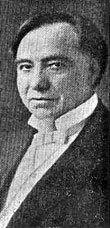
Levi Dowling Back From The Cusp
premisses no less egregious than that Tarzan existed and was guardian of Africa. ERB in a mind boggling way sports with the notions of all three men in his oeuvre. One has to admire his audacity as no one has ever accused him of being a genius on the order of the three ‘greats.’
Central to Einstein’s relativity thesis is that Time is a Fourth Dimension. Just as the discussion of the Unconscious was appropriated by Freud from the literary atmosphere dating back to Edgar Allan Poe and the German Romantics, so as Richard Gott points out in his 2001 book Time Travel In Einstein’s Universe, subtitled ‘The Physical Possiblilites Of Travel Through Time,’ old Herbert George introduced the notion of Time as a Fourth Dimension in his 1895 novel, The Time Machine.
Are these things coincidences? Well, I don’t know.
Wells takes credit for having introduced the notion of Time as a Fourth Dimension but I rather imagine that the idea had been bruited about for several years before Wells gave it literary expression. Just as Freud developed a scientific notion of the Unconscious from discussions floating about, so Einstein elaborated on the existing notions of Time as a Fourth Dimension.
Model A Time Machine
It is my contention that Burroughs was absorbed in the ideas of these three men exploring their possibilities over the course of the oeuvre. At the Earth’s Core is apparently when the nettle of Time jarred ERB into a full scale examination of the problem. In Earth’s Core ERB was on the right track that Time has no independent existence but he backed off in apparent frustration for he says, once again in Chapter 9 of Invincible:
The beasts of the jungle acknowledge no master, least of all the cruel tyrant that drives civilized man throughout his headlong race from the cradle to the grave- Time, the master of countless millions of slaves. Time, the measurable unit of duration, was measureless to Tarzan and Tantor. Of all the vast resources that Nature had placed at their disposal, she had been most profligate with Time, since she had awarded to each all that he could use during his lifetime, no matter how extravagant of it he might be. So great was the supply of it that it could not be wasted, since there was always more, even up to the moment of death, after which it ceased, with all things, to be essential to the individual. Tantor and Tarzan, therefore, were wasting no time as they communed together in silent meditation; but though Time and Space go on forever, whether in curves or straight lines, all other things must end.
I’ve read a little bit here and there and I find the above a remarkably profound passage. At the last Burroughs contradicts himself for on the one hand he says ‘Time and Space go on forever,’ while on the other hand he says that ‘Time is a measure of duration.’
That latter is correct. A measure of duration implies that Time has no independent existence; it is merely a convenient way devised by the mind of man to measure duration from point A to point B. It has been said that the progress of man is the improvement in the ability to measure. A nanosecond is a vast advance in measurement over the crude second just as the ability to measure a billionth of an inch is a refinement of the measurement of the inch. However neither the second or the inch have an independent existence in reality on that account. As an alternate measure of distance there is also the centimeter which in itself can altered ad infinitum.
‘Time, the measurable aspect of duration’ is what At The Earth’s Core is all about. What ERB should have said is that Time is only the measureable aspect of duration. The implication of Earth’s Core is that time cannot exist without periodicity and the question is whether Time is merely a function of periodicity when conceived by sentient beings or does Time exist independently in and of itself. Einstein’s Theory Of Relativity hangs on that question. My own answer and the unresolved answer of ERB is that it does not.
When Burroughs says that Time and Space go on forever, he gives in to Relativity Theory on the one hand and denies it on the other. Einstein thought that both the Universe and Space were bound by limits. In saying that Space goes on forever Burroughs attacks a main thesis of the theory.
Also, if Wells expressed the notion of Time as the Fourth Dimension, as the scientist Gott acknowledges, does that give him priority over Einstein? It should. One sort of fiction has no greater claim to legitimacy than another.
What then is Burroughs’ relation to Wells and Einstein? That Burroughs read and was heavily influenced by Wells’ Time Machine seems self-evident. Not only is there a seeming reference to the Eloi and Morlocks in Jewels of Opar, but Wells also says: ‘Are you so sure we can move freely in Space? Right and left we can go, backward and forward freely enough. But how about up and down?’
It seems that Tarzan anweres that question by his use of the lower, middle and upper terraces. Burroughs merely incorporates answers posed to others’ questions but he never refers to the questions. My own opinion is that Wells’ Time Machine posed troubling questions to Burroughs which he tried to resolve over several novels.
At the beginning of Invincible he says quite starkly: ‘…it seems to me not unethical to pirate an idea occasionally…’ Admittedly the quotation is taken out of context but it is consistent with Burroughs’ practice. As it was, one might note Shakespeare, Homer, Chaucer, Milton and a host of others down through time did the same. Complete originality has only been demanded in modern times and never met.
As Time has no independent existence. I believe that ERB undestood the idea of time travel to be impossible, hence, even though he covers many different time periods from the prehistoric to the ‘modern’ post-Atlantean society of Opar, he never uses the method of time travel. Those various ages still exist fossilized in Time and Space. I have to believe that Opar is an early reflection on the notion of time travel as posed by Wells, as the Oparians reflect Eloi and Morlocks so closely. But still puzzled by what he thought about it, ERB merely placed Opar in a place similar to where the Time Machine stopped in 802701 and played with the notion of Eloi and Morlocks.
ERB does have an instance of actual time travel in The Eternal Lover in which the Lovers move back and forth in time.
As The Jewels Of Opar was written before Einstein achieved world wide notoriety, Burroughs could only critique and reflect on the notion of Time as a Fourth Dimension from Wells, and also actually Camille Flammarion who was a major influence on him. It would be a little later that the notion put into scientific language by Einstein exercized his thought processes.
Just as when Jason Gridley and the O-220 pass between two time periods when it leaves the crust for the core, the O-220 has really traveled through Time but it has never left the present. The prehistoric Core exists as a parallel world.
Whereas the crust is ruled by Time or periodicity as measured as Time, the Earth’s core exists in a perpetual high noon in which there is no periodicity to measure the passage of Time. Thus, the inhabitants have all the Time in their world for the period of their lives. Periodicity is determined by their existence rather than years, months, days, hours and minutes as Burroughs pointed out in the communion of Tarzan and Tantor quoted from Invincible above.
The life span of a Pellucidarian cannot be measured except as biological unit.
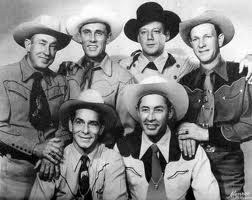
Sons Of The Pioneers: Winning The West While H.G. Made The Conquest Of Time
A charming epression of the notion is presented in the lyrics of the song Tumbling Tumbleweeds:
I know when day is done,
That a new world’s born at dawn;
But I’ll keep drifting along….
As I understand the lyrics in relation to Einstein and the Fourth Dimension of Time is that the Earth makes one complete rotation between sunups. When the sun ‘rises’ each morning the planet has not only rotated a full turn on its axis but revolved around the sun a notch of the three hundred sixty-five rotations that comprise one revolution around the sun. Thus, a new world’s born at dawn. There is no time involved at all but there is periodicity.
Each rotation is a fact in and of itself. There is no way to recover it or travel back to it. It is done. It had no existence before its occurrence and it has no existence after it. To retrieve the irretrievable is impossible. To occupy space before arriving there is equally impossible. Time is not a continuum, therefore Time travel is impossible.
As the cowboy in Tumbling Tumbleweeds says, the duration of is life is not governed by the periodicity of the earth cycle. One day is done and a new world begins the next dawn but his biological existence drifts along quite independent of another measurement.
This is what Burroughs says in At The Earth’s Core. In the eternal noon of Pellucidar men and women have no way of ageing themselves; they drift along from birth to death unconscious of birthdays. There are only two phases to life: birth and death.
As Bob Dylan put it, ‘If you’re not busy being born you’re busy dying.’ Thus the Pellucidarians go through life conscious only, if that, of the process of life. There is no need for time. Nature has given them all they need and more to live their lives.
Time, then, is an illusion created by the periodicity of the daily rotation of earth on its axis and its yearly revolution around the sun. However the Earthly year would have no meaning on the planet Uranus which takes more than a hundred earth years in its revolution around the sun. The majority of earthlings would never be more than a year old. Neither would the Earth hour have any meaning on Jupiter which consumes less than twenty-four hours in its rotation. Time is certainly no absolute but in a parody of Einstein it is relative. What indeed does Time mean from the perspective of the Sun which controls the different periodic revolutions of nine planets in its course through Space? It’s all relative until you triangulate the center and then it’s absolute.
In a joke as elegant as any that I have read, Burroughs depicts the frustration of Robert Jones, the cook aboard the O-220. ERB expects the reader to get the joke, which he stretches out over the length of the novel,even though he calls no direct attention to the fact that he is making a joke. Jones is the cook of the expedition. On the crust, our active and passive periods are determined for us by the natural periodicity of night and day. We, or most people, are active during the day and sleep at night. Our eating periods are determined by the position of the sun in the sky. At daybreak (in theory) we break our fast and have breakfast, at noon we have lunch and at day’s end we have supper or dinner (which one depends on your social class.)
At the Earth’s core the sun is at perpetual noon. One eats when hungry, one sleeps when tired. As the cook, when Jones looks outside to see what time it is, it is always lunch time. He has a clock, not even a twenty-four hour military clock, but apparently a twelve hour alarm clock, which he checks against the sun. As it is always noon outside, he can’t even tell if its AM or PM which his clock reads simply as 7:00. He can’t tell whether it is night or day, breakfast time or dinner. He doesn’t know which end is up, quite literally, as everything at the core is reversed. At every stop, he writes in his journal: ‘Arrived here at noon.’
His frustration increases because he doesn’t know which meal to serve- except…lunch. Finally in complete exasperation he throws the clock overboard, or he throws time out the window or to the winds. This really funny shaggy dog story took Burroughs the whole book to develop.
So, really, Burroughs is saying that time is dependent on periodicity or its relevance and is only a measure of that periodicity. Time has no independent existence, which is correct. Burroughs thereby disproved Einstein’s Theory Of Relativity which is dependent on a continuum of both Time and Space.
Without a continuum of Time and Space there can be no time travel. There is no time travel which is a staple of science fiction, in Burroughs’ work. There might easily have been but rather than following Herbert George’s example, which seemed impossible to him, he effectively refutes Wells and the notion of Time as a Fourth Dimension.
To retrieve the irretrievable which is that which has ceased to exist or to obtain the unobtainable which is that which has no existence is a mere conundrum created by Einstein and Wells not unlike the ancient Greek story of the Fox that nothing could catch and Laelaps, the dog that nothing could outrun
In that story, in brief, the citizens of the area in which a man called Cephalus had antagonized a god who in anger sent a Fox that could never be caught to ravage the countryside. Earlier Cephalus had acquired Laelaps, the dog which could outrun everything, from a goddess.
Keep your eye on the bouncing ball- god/goddess.
The citizens implored Cephalus to turn Laelops loose on the Fox to rid the country of the menace. Thus we have the scene of the Fox that nothing could catch being chased interminably by the dog that nothing could outrun.
The Greeks, too, were fond of conundrums such as what happens when an irresistable force meets an unmoveable object. Thus the problem posed by time travel, whether in Einstein’s universe or any other, is how to retrieve the unretrievable, which is: That which has cesed to exist, or how to otain the unobtainable which is that which has no existence.
As these problems have no resolution, the Greeks solved the problem of Laelaps and the Fox by having them both turned to stone in mid-run. And there they remain today as all conundrums must.
So until you run into a Time Traveler who is both his own mother and father, be content to live in this universe while you await transportation to any of the other ‘possible universes.’ Check the Akashic Records before you book. Unlike Tarzan who could board the O-220 to Pellucidar at the Core of the Earth where the sun was at perpetual high noon, we’ll all have to watch the sun come up in the East and set in West for all the days of our time.
In the meantime, credit ERB as a man of great common sense.

Model T Space Buggy
The Treasure Vaults Of Edgar Rice Burroughs’ Unconscious
April 10, 2011
The Treasure Vaults Of Edgar Rice Burroughs’ Unconscious
by
R.E. Prindle
Originally published in the Spring 2002
issue of the Burroughs Bulletin

Edgar Rice Burroughs
What makes an immortal writer? One thing and one thing only! Being able to captivate the mind of the reader. One may say that a magnificent use of grammar, vocabulary, syntax and such literary devices are important but only minimally. The greatest users of the language will be forgotten before their books have littered the remainder tables. Great ‘storytellers’ come and go with regularity. Every generation has its dozens. They are mere entertainment; amusing for a day and then forgotten.
An immortal writer may have faults, but with all his faults he is simply a writer who grips the reader’s imagination and won’t let go. Bulldogs. Such writers are in essence mythmakers. Conan Doyle’s Sherlock Holmes; D’Artagnan and the Three Musketeers of Dumas. Bram Stoker’s Dracula. If Walter Scott, the greatest of all novelists is slipping into oblivion it is because no matter how great a storyteller he may have been he has failed to create great mythological characters.
Tarzan himself would be no more than another Conan the Barbarian except that his adventures are placed in the mythical Africa which was dispelled by the advance of the twentieth century. Tarzan in Paris, Wisconsin or Baltimore in a suit of clothes is a mere laugh. In North Africa among the Berbers as a French ‘secret agent’ he begins to assume his true form, still there is something lacking there. Burroughs’ North Africa looks and feels too much like the real North Africa. When Tarzan arrives back in the jungle he assumes proportions that exceed one’s dreams.
The Greek myths are not historical reality; the fairy tales derived from the Greek myths take flight as mere fantasy. The difference between Perseus and Puss In Boots is immense. Yet Greek myths are a true representation of the human psyche while fairy tales are mere flights of fancy.
Edgar Rice Burroughs reverses the process and derives the creation of his life, Tarzan, from the fairy tales of H. Rider Haggard whose stories he turns into adventures of the greatest of the great mythical figures of the modern age.
The Tarzan series succeeds not from any literary skill of Burroughs, not because he replicates an authentic image of Africa, but because the mighty image of Tarzan exists in his mind as a living being in his imaginary Africa that bears more resemblance to Fenimore Cooper’s New England than any real Africa.
Nor was Burroughs an original author who drew his inspiration from vague sources. Burroughs very nearly copied out his stories from other men’s books. Who else would have named a character Lorna Downs after Lorna Doone. The fabulous world of Tarzan could never have come into existence if H. Rider Haggard had never written his three great African novels: King Solomon’s Mines, She and Allan Quatermain.
Every incident in Haggard’s novels are replicated in Burroughs’ novels. He even paraphrases the most memorable of Haggard’s phrases in the Tarzan series:

H. Rider Haggard
…he dreams of the sight
of Zulu impis
breaking on the foe
like surf upon the rocks
and his heart rises in rebellion
against the strict limits
of the civilized life.
Not only does Burroughs paraphrase the passage but the content of the quote informs the whole of the Tarzan series. The passage might be the motto of the Tarzan saga.
Haggard’s great trio of African adventures first appeared from 1885 to 1888 when Burroughs was from eleven to fourteen years old. Sensational successes in their day, one assumes that they would have come to the young adventurous boy’s attention quickly. I don’t know when Burroughs read them or how many times but I would think they had become part of his mental furniture sometime between the time he was fourteen or twenty.
There the fabulous exploits of Sir Henry Curtis, John Good and Allan Quatermain would have seethed and simmered away in his unconscious until they erupted from his imagination in 1912 as the incredible Great White Ape, Tarzan. Tar=White, zan=skin. Whiteskin. Tarzana=Whiteskin City.
Burroughs’ Tarzan is clearly derived in part from H. Rider Haggard.
There was a huge difference between the two writers. Haggard grew up in an England where he came into contact with the Esoteric tradition. His sojourn in Natal, South Africa intensified this streak of the occult. As Haggard was putting pen to paper Madame Blavatsky’s great ‘Isis Unveiled’ had already been in print for ten years. Bulyer Lytton’s esoteric novels were at the peak of their popularity.
Haggard was absorbed in esoterica so his stories partake a great deal of the supernatural. Burroughs on the other hand was born in the heart of pragmatic Chicago, USA in 1875 coming to young manhood in the Edisonian experimental scientific America that allowed little room for the supernatural. By 1900 the great Madame B had published both her masterworks but there is no indication that Burroughs read them.
Burroughs was from the Chicago someone styled ‘The Hog Butcher Of The World.’ It was said of the meat packing plants that they used every part of the pig but the squeal. The meat packers eventually created a product that looked like meat, sort of tasted like meat and possibly utilized the pig’s squeal for an attempt at zest. They called it Spam.
At the same time, Henry Ford was experimenting with this marvelous plant called the soy bean. By scientifically manipulating the oil chemically you can make door knobs or crab meat. Ford used the stuff to make the little revolving knobs for inside door handles. Others used the same stuff to create reasonable facsimiles of steak or crab meat. It’s not real steak or crab but it can be made to look sort of like the real thing and it has a flavor that would only fool anyone who has never had the real thing, but it is an approximation.
Thus by applying such scientific methods to H. Rider Haggard’s novels Burroughs converted Sir Henry Curtis into Tarzan. Then he took every impossible fantasy of Haggard to convert it into a scientifically plausible incident. You have only minimal necessity to suspend your sense of disbelief- once you accept his impossible premiss- in Burroughs while Haggard’s imaginative flight never bear up to examination.
In ‘Allan Quatermain’ the protagonists disappear into a cavern exposed only at low water to begin their journey through a huge tunnel that forms the course of an ‘underground river.’
Well, the entrance wouldbe visible at either low or high water. At high water the location of the entrance would identified by a fierce maelstrom down which the water would be drawn as though down a kitchen sink.
Once within the channel itself the roof was an improbable ten feet ove the trio’s head.
Burroughs would have found this explanation ludicrous and clearly scientifically impossible.
However when Haggard’s river delivers the intrepid adventurers safe and sound into the hidden valley the reader is entranced by the medieval civilization found there. This locale can also be found in Tarzan, Lord Of The Jungle.
When the adventure ended Good and Quatermain elected to return home while Sir Henry Curtis married the princess, sealed off the ground exit and elected to remain there until civilization should discover him. Compare that to the ending of Zane Grey’s Riders Of The Purple Sage.

Edward Borein- Six Riders On The Purple Sage
Gosh, what a story! Burroughs must have said to himself. I’d like to write something like that some day. One day he did. That was about 1926. In his story everything had to be scientifically plausible. Thus he has a remnant of Richard Coeur De Lion’s crusaders who had become separated from the main body living in a secluded African valley somewhere in Gallaland.
Haggard couldn’t explain how his White medieval society found his hidden valley among the Mountains of the Moon. Burroughs could explain his. Furthermore his crusaders had developed in a scientifically probable way. The entrance and exit, both similar to Haggard’s, are probable too. Burroughs has the entrance which is a tunnel, not dissimilar to Haggard’s tunnel, guarded by Black soldiers in medieval garb speaking medieval English which, the example of Chaucer not withstanding, was not too different from our own. Once in custody, the hero, Jim Blake, paraphrasing Il Duce says: Take me to your Director’ as he has mistakenly believed he was on a movie set.
Once within the valley the incidents follow Haggard’s story very closely. A battle takes place between two contending factions. The way out of this valley is identical to the way out of Haggards’ valley with the exception that rather than being obscure it is well know by the surrounding Gallas but as they are no match for the Valley’s inhabitants they avoid it.
In the end Blake, like Curtis, elects to remain with the Princess in a simpler but not necessarily kinder society.
Thus while Burroughs lifts the whole story from Haggard he manages to take the incredible and make it scientifically plausible. The place could have existed. You or I could go there if we only had a map and couple dozen Black porters.
So also the treasure vaults of Opar are a transliteration of the treasure chamber of Ophir in Haggard’s King Solomon’s Mines. As John Talliaferro points out in his Tarzan Forever, La is based on Haggard’s She. Although this had passed over my head I was somewhat mystified by the name La. But as La is the French feminine article as in le, la, meaning he, she or it, the name La might even be translated as She. If La is She then the vaults of Opar are a combination of Ophir and the labyrinth of She.
There are also a couple other readily identifiable sources for Opar. One is H.G. Wells and the other is Sigmund Freud. As I always have the haunting presence of L. Frank Baum while reading Tarzan we may assume his presence too.
Many of the Tarzan books seem to be literary composographs. Burrughs wrote very fast turning out three or even four books in some years. This speed of writing doesn’t leave much time for real composition. It becomes almost necessary to borrow from other writers. Thus Burroughs offers a sort of literary Spam; If you examine it closely you can identify the parts but you have essentially a new product.
In the same way Burroughs combines his parts in such a way that you have a new original product.
The terrific Baumian feeling of Tarzan, Jane and Korak the Killer swinging down the jungle lanes on their way back from Pal-Ul-Don just really reminds me of Dorothy, the Tin Man and the Scare Crow swinging down the Yellow Brick Road.
Once back home, Tarzan learns that his profligate loans to the British Empire, which the Empire has apparently no intention of paying back, have impoverished him. He realizes that he will have to make another run on the Bank of Opar.
He returns to Opar. Opar greatly resembles the land of H.G. Wells’ Time Machine. There are even Morlocks and Eloy. The men are all Morlocks and the women are all Eloy. This effect is achieved by unnatural selection or dysgenics on one hand and eugenics on the other. Over the ages since the sinking of Atlantis any normal men have been disposed of, only the degraded and misshapen kept. On the other hand the ugly women have been discarded while only beautiful women have been kept. One wonders at the genetic problems involved but it is so in Opar. Burroughs chucks in a little science while you’re not watching, showing what the effect will be if inferior specimens of humanity are allowed to live and propagate and the contrary results if eugenics are followed. A very popular idea is made palatable.
Thus we have this scene replicated from Wells’ Time Machine taking place in a land that time never knew.
So far we have Baum, Wells and Haggard represented. Now Burroughs throws in a little Freud. There is no doubt Burroughs read Freud up to at least 1922 as his notion on the theory of dreams in ‘Tales of Tarzan’ shows. By 1922 Freud was all the rage in America. One of Freud’s theories that challenged the psyche of the times was that of the Unconscious.
The nature of or even the existence of the Unconscious was highly controversial at the time with most people rejecting the notion. Interestingly ERB meets the challenge head on as he did with Freud’s theory of dreams. He seems to understand and accept the notion.
In King Solomon’s Mines the treasure vault of Ophir is concealed behind a fore chamber adorned with Haggard’s ghoulish trappings. The treasure room is hidden behind a counter-weighted door of which only the vile Kukuana priest knows the secret. He traps Good, Curtis and Quatermain in the chamber by lowering the door.
Apparently doomed the trio are delivered when Good notices that the air in the room hasn’t gone stale as it should. The men set about to discover the source of the fresh air which turns out to be a trap door in the floor. Descending, the men grope their way in total darkness through a maze of tunnels. They are forced to turn back when Good nearly falls into one of Haggard’s ever present underground rivers..
Forced to turn back they discover a ray of light they missed the first time. The light is coming from the end of the tunnel made by a small furry burrowing animal. The men force their way through the hole tumbling into the pit King Solomon’s men excavated for diamonds centuries before.
In Burroughs the deformed priests of Opar capture Tarzan and put him in a darkened room with no apparent egress other than the barred door. Tinkering around somewhat like Edison Tarzan discovers that ages ago long forgotten Oparians had sealed up a tunnel.
Cannily Tarzan removes the bricks one by one making an opening just large enough for him to pass through. He then replaces the bricks from inside the tunnel so the Oparians will by mystified by his disappearance.
The underground structure as we learn from various books is on two levels. On its upper level a long tunnel leads from the temple to a room containing the forgotten gold vaults of Opar. Halfway along there a, I don’t know, twenty foot wide gap over a pool of water. Tarzan is going to have to leap this gap to go on. It would be impossible to do this in a low tunnel. Consequently Burroughs has a large dome built over the gap with a small opening at the top which admits some few shards of light.
On the other side the tunnel continues on until one enters the gold vaults. Now, it would be impossible to return across the gap carrying a sixty pound ingot of gold which is what the ingots weigh.
Another literary source is here introduced. Burroughs was familiar with the Greek myths. Surely he had read Bulfinch as well as having studied Greek and Latin at Harvard Latin School in Chicago. The nether entrance/exit is so peculiar that if one weren’t already absorbed in the impossible African world of Tarzan it would certainly shake one’s sense of belief.
The nether exit leads steeply up a path to emerge from the top of a gigantic rock formation standing alone in a plain. Strangely neither the degraded Oparian males or the intelligent Oparian females have ever, over a period of at least six ages, investigated it. They’ve been there since the Flood.
The structure reminds me of the story of Metis and Zeus. In that story Zeus had swallowed the goddess Metis. She proved a bit much for the big fella’s digestion so in some kind of psychological manifestation of his indigestion Athene emerged fully formed from the Big Guy’s forehead. So Tarzan who has entered the body of Zeus from a different analogous part of Zeus’ anatomy emerges fully formed from the aperture in the rock.
Really funny if you think about it. Entrance through the nether end, leaping over the belly in the middle then emeging from the forehead. But then that is why one cherishes Burroughs. There is so much to discover in his Africa.

H.M. Stanley, African Explorer
Take the matter of the weight of the ingots. Why sixty pounds? Once can only guess of course but if you read H.M. Stanley’s In Darkest Africa you will learn that the normal weight Stanley’s porters were to carry on their heads was sixty pounds. The men of Tippu Tib, an adversary of Stanley’s rebelled at the weight, demanding the loads be reduced to forty-five pounds or even twenty pounds.
Tarzan’s faithful Waziri, who would act as porters for no other than the Big Bwana, not only joyfully picked up a single sixty pound ingot but grabbed two, staggering across the lianas and creepers under the incredible burden of one hundred twenty pounds. ERB really knew how to top the next guy.
While we have In Darkest Africa in view, which Burroughs obviously read as Stanley mentions an upper Congo tribe called the Waziri, we might compare his version of the jungle with Burroughs’. One didn’t swing blithely barefoot down Stanley’s jungle trails. They were dangerous places full of both poisoned snakes and stakes. One might step on a horrid red ant nest, disturb wasps or have black ants drop on you.
In Tarzan’s Africa there are such things as lower, middle and upper terraces, one drops from a lower limb to the ground. Obviously Burroughs is not replicating the Africa of Stanley or Livingstone where the great trees are sheer for the first fifty or sixty feet in the air.
Burroughs obviously discarded the unpleasant realities of Africa for a replication of Fenimore Cooper’s New England forests of oaks and maples where there are low branches and no snakes, stakes or fire ants.
The diagram of the tunnels is not yet complete. We learn after an earthquake has the brought the treasure vault down on Tarzan’s head while closing the exit through Zeus’ forehead, Tarzan completely bereft of memory, suffering from amnesia as they used to do on the old radio Soaps, staggers back along the tunnel falling into the gap in the middle. Here he drops into the water which is level with the floor of the lower tunnel. This is real close to King Solomon’s Mines. Swimming to the further edge, once you’ve learned to swim you never forget, Tarzan climbs up to continue on where he comes to the spectacular jewel vaults of Opar. A near paraphrase of Haggard. Cases of giant stones fill this huge room. It may be true that De Beers has destroyed all roads to Opar in order to protect its monopoly. (That’s a yolk, son.)
From thence Tazan emits into a counsel room. Perhaps the darkness and obscurity of his exit from the tunnel prevented the incurious Oparians from discovering it.
What Burroughs has created here is a sort of map of Freud’s Unconscious as Burroughs understood it. I can’t tell exactly what Burroughs understood of Freud’s notion of the Unconscious but I interpret his understanding thusly: An idea for a great character enters the mind through a back door. Illuminated by a little candle the idea progresses through the canyons or corridors of the mind seeking resolution. Perhaps halfway through its genesis it meets an obtacle. If the idea can’t pass the obstacle it is aborted. If the obstacle can be passed the idea develops. But as the light was blown out by the leap perhaps the idea gestates deep in the unconscious no longer directed by the light of consciousness.
In Burroughs’ representation Tarzan, or the idea’s progress, was lit by a little candle until the light was extinguished by Tarzan’s leap across the gap. From then on Tarzan had to grope his way into the gold vaults which lie beneath the rock or mind of Zeus.
The idea of Tarzan having come to fruition bursts forth fully formed as with Athene and Zeus. The monetary value of the idea of Tarzan is represented by the gold lurking in the mind which is coverted to cash when the idea is expressed.
Perhaps Burroughs is here telling us how he conceived the idea of Tarzan. Back in 1890 or so when he read Rider Haggard the notion of Tarzan entered his mind through a chink in his psyche. Unable to develop the idea at the time the notion of Tarzan continued to gestate until in 1912 it burst from his mind like Athene from the forehead of Zeus.
There’s a joke in there somewhere and it’s a pretty nifty way of telling the cognoscenti how he developed the idea of Tarzan while incorporating the telling in the exposition of a Freudian theory.
Thus Burroughs has cobbled together a story from assorted literary parts. A little Fenimore Cooper, a little of L. Frank Baum, some H.G. Wells, a Greek myth, a lot of Haggard and a fairly serious discussion of Freud for those who have eyes to see and ears to hear.
By all rights such a compendium of other men’s stories and ideas ought to have been not only obvious but a failure. But like Spam, Burroughs was able to make easily seen parts unrecognizable while adding his own genius and brilliant creation into a fabulous myth which there is no need to check against reality. It is true because it fills a deep inner need.
If Tarzan wasn’t true he should have been. We love his idea as we love ourselves.
We are true. Tarzan is true. That truth exists in my mind and the mind of every reader. I will never find Tarzan’s Africa no matter where or how far I travel. No anthropologist will ever unearth the remains of Tarzan’s parents, Kerchak or Kala, but they still rest in God’s green earth. Tarzan cannot age. He can never die.
As I pass through the canyons of my mind I have found a little box canyon. In that box canyon I have discovered that I exist as Tarzan. I am Tarzan. I’m sure the reader has discovered that he too is Tarzan. Tarzan lives!
 I, Dynamo