Conversations With Robin Page 3
August 20, 2009
< Wep>
Conversations With Robin, Page 3
Conversations between R.E. Prindle And Robin Mark
Well, well, well. Robert Goulet. I should have known that filthy bastard would be mixed up in there somewhere. What amazes me is that Guralnik could write two fat volumes on Elvis and never mention the Mob once. I think we can begin to integrate Elvis’ Mob conflicts pretty clearly now, although research will have to establish the connections for sure.
For starters, entertainment is a Mob industry both records and movies; that includes both Jews and Sicilians. If you haven’t read Gus Russo’s Supermob yet, do so. The Sidney Korshak role at MCA is crucial.
Anent shooting out TVs remember that Sinatra had a plane he called Superwop or something to that effect so it is clear he bore a grudge against the Anglo world. The plane was a small ‘Lear’ if I remember correctly. Elvis went out and bought a 707. Big plane, big penis; little plane little penis. Not exactly true in Frank’s case, but you get the point. So at least Goulet and Sinatra. I can understand why Dean Martin tried to distance himself from those creeps.
Parker must have had the business dealings with the Outfit. As he ran into gambling problems the only commodity he had to barter was Presley. Thus he would have had to ‘sell’ Presley to keep both his legs under him. Elvis’ rapid deterioration could have been because of his realization that he was ‘caught in a trap. I can’t get out.’ Devastating awareness. One could only retreat into booze and/or drugs.
Now, Leiber said that he and Stoller at one time worked for the Mafia. This wouldn’t be unusual nor should it be held against them because if you’re in entertainment you’re involved, like it or not. The question is when were they involved, for how long, and for what purpose.
We all know Fabian was a Mob creation. Why not others? If you haven’t seen and studied The Girl Can’t Help It, do so. The movie is an alegory of the record business. Everything you see in the movie is the Outfit in action. In the fifties every Juke Box in America was stocked by the Outfit. You didn’t get your record stocked unless you were Mobbed up somewhere along the line. Someone recently told me that the girls on the Dick Clark Show were prostitutes and Bandstand was used to showcase them for Johns. Don’t know that it’s true but I wouldn’t be surprised.
Leiber and Stoller could have been co-opted to write songs for, say, The Coasters. A Black act with interchangeable personnel. Kind of an early Back Street Boys. I don’t know but I’d like to hear Leiber talk about it. Might prove enlightening.
So, let us assume that the Colonel was drawn into the Mob scene from the beginning of Presley’s movie career. That might explain some of his stupid decisions and those dumb movies. Perhaps Parker didn’t have a free hand but was ‘wise’ enough to figure out that something is better than nothing.
Then after Vegas Presley was increasingly drawn into orbit until he learned the horrifying truth. Guralnik seems to have his head up his ass as far as I’m concerned.
As Presley learned the truth looking forward to forty more years of slavery he found drugs more comfortable than reality. Possible, it would make things make sense.
Exhuming Bob 21: Will The Real Bob Dylan…?
July 27, 2009
Exhuming Bob 21:
Will The Real Bob Dylan…?
http://contemporarynotes.wordpress.com/2009/04/05/greil-marcus-bob-dylan-bill-ayers-barry-obama/

Dylan
Our friend Bob Dylan has given the impression that he knew nothing of Barry Obama, The Great Black Hope, until the summer of 2008 with just a few months left in the campaign when he gave the candidate his endorsement. Surely this isn’t so. Surely he not only knew of the Hope but knew him personally probably before 9/11/01.
In my essay Bill Ayers, Greil Marcus, Bob Dylan and Barry Obama on my Contemporary Notes blog, linked above, I posit that all four knew each other and of 9/11 before it happened. Impossible, huh? Stranger things have happened.
I hadn’t thought about it much after writing my piece but then a few days ago- 7/22/09- I came across a post by one Lark, The Times Are A Changing (Again): Bob Dylan On Obama. Lark quotes Dylan on Obama in the London Times. Let’s review it:
Dylan begins: “Well you know right now America is in a state of upheaval.”
True enough. Many sorts of upheaval. What sort of upheaval does Dylan refer to:

Bomber Billy Ayers
Poverty is demoralizing.
Can’t argue with that. Is he talking about coal miners, fruit pickers, the unemployed, or what?
You can’t expect people to have the virtue of purity when they’re poor.
More problematic here. Purity isn’t a virtue it’s a state or condition. Has nothing to do with poverty. Well, Dylan’s a poet, one of the enigmatic kind, so I presume he may mean honest by pure. But which people, is he talking about Blacks?
Well, I come from a long line of poor people and so far as I know we were the kind described as ‘poor but honest.’ In other words we didn’t steal or cheat. I’m not sure how scrupulous we were about lieing. Seems to be a much more common fault. I’ve been around the block a few times now and I’ve come to the conclusion that crime has nothing to do with poverty. Rich or poor a thief steals and is well able to justify his thefts. Need I point out the 50 billion dollar thief Bernie Madoff? Or about the raft of Rabbis just arrested in New Jersey for some very serious financial crimes. And then I read about this reasonably well off one guy who stole some records because he thought he could use them better than the rightful owner. So it may be common to think you have to be poor to be ‘impure’ or dishonest but mistaken nevertheless.
Bob makes himself a little more clear:
But we’ve got this guy out there now who is redefining the nature of politics from the ground up…Barack Obama.
Naive but sincere. Spoken like a true cheerleader. ‘This guy out there’ sounds like affection if not familiarity to me. So now, when and how did Dylan become aware of the Hope? As I conjecture it Greil Marcus is the key to the riddle. I’m guessing, but my guess is that Marcus’ curiosity led him to introduce himself or be introduced to Bill Ayers, the ole Mad Weatherman Bomber, probably in Chicago. Ayers and Marcus being of the school of Whiteness is a plague on the Earth probably quickly came into accord. And then the Hope was probably on the way under the sponsorship of Ayers so Marcus and the Hope were introduced when certain anti-American and anti-White plans were discussed probably among them a projected attack on America. Certainly one remembers that Ayers had already made several bomb attacks on America so why not the Big One…the Really Big One…the World Trade Center.

Greil Marcus
Dylan and Marcus are pretty close. Dylan is either a Lubavitcher or close to them. Lubavitchers hate Whites, especially of the Christian sort. That partially excludes me by the way, White but not of the Christian persuasion.
As it appears that Dylan was much more familiar with the Hope than he let on and his album Love And Theft seems to reflect a pre-knowledge of 9/11 coupled with Marcus’ Rolling Stone article as detailed in the link to my essay above, there is every reason to believe, or think, or fear that Dylan, Marcus, Ayers and Obama were privy to 9/11 well before it happened. Possibly if not probably in on the planning stages.
Dylan goes on: He’s redefining what a politician is, so we’ll have to see how things play out.
If the Hope is redefining what a politician is then the definition is toward that of an African chief. An African chief owned every bit of his territory personally. He owned every inhabitant as his slave to dispose of as he wished. He was free to do with all as he chose with or without their consent.
That seems to be how the Hope is playing things out. True, the Hope is somewhat hobbled by the remains of the old political system but with his Liberal allies he has so far met with no insuperable resistance. To oppose his plans is to be vile. So far the fear of being considered vile has prevailed.
Then Dylan: Am I hopeful? Yes. I’m hopeful that things might change. Some things are going to have to.
Well things have changed. Many of us believe the way things are changing is in a direction more destructive than beneficial. In short the Hope is already a complete failure. We’d all be pleased to have a detailed opinion from Dylan on whether his hopes have been realized.
Dylan then closes with a platitude: You should always take the best from the past, leave the worst back there and go forward into the future.
Yep. Sure enough. I suppose the argument would break down over the issue of what’s best or worst and which has been left behind. There’s no doubt we’re headed into the future. Some kind of future at least.
Exhuming Bob XX: Bob And Johnny: In Defense Of Dylan
May 31, 2009
Exhuming Bob XX:
Bob And Johnny:
In Defense Of Dylan
by
R.E. Prindle
http://www.independent.ie/national-news/dylans-view-of-cash-shortchanges-legacy-1756667.html
The least said, the soonest mended.
In Dylan’s recent interview published by Rolling Stone Magazine Dylan raised his own litle fire storm. 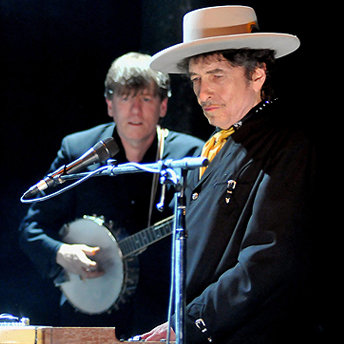 Whatever his intent the appearance was that he was trashing Elvis Presley and Johnny Cash, both more important and stellar than himself.
Both Presley and Cash were originators while what followed including Dylan were epigones. Accident of time, like it or not, Dylan and the rest are derivatives. They can never exceed their masters. So Dylan should have retained his modesty. However I come not to bash Bob but to defend him.
While I think there is a growing arrogance in his attitude as he seems to be beginning to believe his press releases, and while with Cash there may be something else going on in the background, yet, I am in sympathy with his opinion but not to the point of blackguarding Cash, I just listen to my favorites, among which is Big River, when I listen. That isn’t too often anymore.
One who did take deep offence to Dylan’s comments was fellow artist Joe Jackson of the pointy shoes in the Irish Times:
… in the Rolling Stone interview, which was reprinted in last weeks Sunday Times, Bobby,
baby, finally revealed himself to be a musical illiterate, in one quintessential sense, when he stupidly dismissed as “low grade” everything Johnny Cash recorded after leaving Sun Records in 1958.
Dylan didn’t express himself very well, but he is a sort of an authority, he was there while Joe only heard Cash well after the fact having therefore a historical perspective having probably heard the old stuff after he heard the new stuff. Dylan was born in ’41 while Jackson was born in ’54. It therefore behooves someone born in ’54 to be rather circumspect in criticizing the opinion of someone who was there or almost there. I’ve got three years on Bob and was actually there at the creation. Dylan’s taste in music is nevertheless impeccable.
As I say, Jackson knows early Cash only in a historical sense. Time dulls all brilliance. No one can really
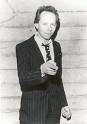
- Joe Jackson at 52
understand the effect of the music of Johnny Cash on the people who were there if they weren’t.
The early Sun of Cash was volcanic, other worldly, the equivalent of five or six of those mushroom clouds over Hiroshima. And remember, as a country artist Cash debuted in heavy traffic, the greatest of the great where reaching their apogee- that is to say Hank Snow and Webb Pierce and a host of other lesser lights but still greats. Dylan and I both revere Hank Snow, hey little buddy? Webb is unbelievable so into this milieu strides Johnny Cash with three or four mind stunners followed by I Walk The Line, not to mention writing Warren Smith’s Rock n’ Roll Ruby. Now, not everybody got it at the time, you had to be hep, you had to know in your guts. We were the congnoscenti. Of course by Line the word was out.
But these records of incomparable genius were as we said at the time Cash’s wad, after he shot it every thing was of a lesser quality; even on Sun, he followed up with Ballad Of The Teenage Queen and other such drivel only for the die hards of which I was one but I knew the best of Cash was in the past. Dylan apparently did too but that early flowering was enough to respect Cash forever. Dylan should have expressed himself differently. After all it was Cash’s endorsement that opened much wider horizons to Dylan.
Pushed by the interviewer further Dylan was quoted:
I tell people if they are interested that they should listen to the Johnny on his Sun Records and reject all the notorious low grade stuff he did in later years. It can’t hold a candlelight to the frightening depth of the man you have on early records. That’s the way he should be remembered.
That seems unduly harsh about a singer who followed his Sun hits with Ring Of Fire and many other excellent recordings although he may not have written them. In any event Dylan’s career parallels that of Cash: A short burst of relative genius followed by a long tedious fifty years.
So while I sympathize with Joe Jackson’s outrage at Dylan’s inexplicable gaucherie I understand what Dylan means. He was there and Joe Jackson wasn’t and that’s the difference, different memories. What was it Zappa said? Shut up and play yer guitar.
I fondly remember both Cash’s and Dylan’s best.
Cool Cat Jackson
Exhuming Bob XIX: Bob And Karl
April 1, 2009
http://fakekarl.blogspot.com/2009/03/bob-dylans-6548th-dream.html
Exhuming Bob XIX: Bob And Karl
by
R.E. Prindle
A Spoof.
Hey man. Come on over here. I’ve got the Ruminatin’ Blues and I’m going to ruminate all over you. You’ll be able to take home a bucket or two. Now dig this, I’m sittin’ at my computer and up comes this site Karl Lagerfeld’s Guide To Life. It pops up on my computer. I thought it was a virus or somethin’ but it turns out to be a message to me from Bob.
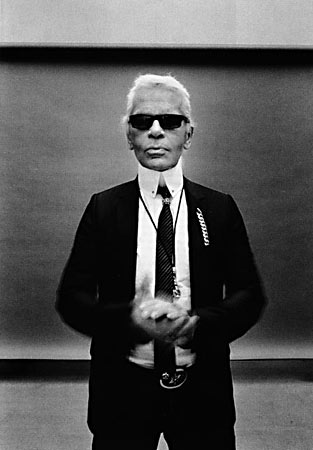
- Lagerfeld, The Guide To Life
This things turns out to be, if you can believe this, Bob Dylan’s 6548th Dream. Putting my Freudian training to immediate use I begin to study the number . Notice the 654 desecends by one unit that makes three then the last digit 4 is doubled to make an increase of four that adds up to seven. Pretty heavy huh? Next I added up 65 & 48 and the number was 113. Wow! I knew I was on to something.. Then I added up all four numbers seqentially and get this- 23. That’s right, 23! Twenty-three skiddoo. Get it? This was a personal message from Bob Dylan to me. Wow! That internet is somethin’ else, isn’t it?
I take a look at the picture of Lagerfeld showing me his ass and I can tell you I’m less then impressed. Moving down the page I notice the guy has turned around. Dig this, this can’t be a coincidence, he’s wearing the same dark glasses I do. Boy howdy, hey? And he looks like a guru from beyond the farthest star. So do I. Now I’m really getting excited. The only thing separating me from this new reality is the darn computer screen. I can’t get through it. I try but I can’t figure it out. Doesn’t matter which key or combination of keys I press.
Aw, shoot, I’m forgetting the most important part, Bob Dylan’s dream. Mr. Cool is going to relate directly to me.
The thing is written in some kind of mysterious code, some kind of hip patois, New Yorkese or whatever. Dylan has been commanded apparently by his guru Lagerfeld to commit his thoughts to this blog. Wow, I said to myself, this Lagerfeld has the force behind him. Imagine telling Bob Dylan what to do!
Now, we all know that Dylan says that what he writes has no objective meaning. He says he writes meaningless stuff that is understood differently by whoever reads it. That must be why I think his stuff is heavy, because I’m a really, really heavy guy. I don’t have the look down yet, like this Lagerfeld guru, but I ‘m working on it.
Dig this quote:
And here’s a song I wrote, uh, some time ago back when I was raking in these blondes, man. Could say I was raking in the pennies. (Pennies. Get it. Pennies are heavy. Bob was heavy.) I was doing more than raking these chicks though. If you dig.
Do I dig? I’ll say I dig. A super sleuth am I actually so I really dig, raking in the blondes has several covert meanings. Bob’s a poet, but, hey, that’s one of the things I do best, too. So Blonde on Blonde was released in ’66 so he wrote the poem that follows in ’66. Sharp deduction don’t you think? Blonde on Blonde means one blonde after another, heaps of ’em. Bob’s probably the cocksman of the century. So Bob’s got his dick out and he’s not wavin’ it to the empty air…if you dig. No sir, Bob is planking those blondes. He was actually known for his generosity with his dick. One time Liam Clancy was out touring so as a friendly gesture Bob went over and planked Liam’s wife so she she wouldn’t be so lonely. That’s the kind of guy Bob is. Yeah. Now that’s friendship, isn’t it?
Back when he was young he did more than rake blondes chicks he says. I don’t know what ‘more than rake’ means. Maybe S&M or something really exciting like that.
Further along Bob get deep into the dark meat. See what I mean about me bein’ a poet too? He wouldn’t touch anything else. Did the whole darn chorus line. Get real heavy with one of the back up singers, married her and had a little ebon baby. Nobody’s seen him though. He didn’t even grow up to be a soul singer as far as I know. Lived in Tarzana- yeah.
I’m going to tell you though I don’t think I woulda published Dream #6548. 23 skiddoo, indeed. I’d a been outta there before the door hit me on the ass. Back in those days of blondes Bob was heavy, well he was heavy in a lot of ways but he was heavy into drugs, too.
Check this quote out:
…I spotted some kids…and I walked right over to them.
=======
I said kids, “could I interest you in some visions?”
Some visions of Johanna, someone’s gonna get stoned;
They asked me if it tasted kinda like a milkshake
I said yes, and took out some pills
Then a policeman came most hurriedly
And arrested me on account of free love…
Bob And The Little Children

What is one to think? I know this Lagerfeld guru is a way out guy. I used to buy his soap and boy was it slippery. It was the slickest soap I ever used, almost couldn’t hold onto the bar and it was huge too. Lagerfeld is suspected to be completely sexually liberated too, as well as everything else. I mean, man, this guy is free, free as the breeze, free as the Fourth Of July, like, look up free in the dictionary and his picture is the definition. So, I guess that means he won’t stop at nothin’ and he’s Bob Dylan’s guru.
Don’t know what he’s tellin’ Bob but I wouldn’t even make bad jokes about corrupting innocent little kids as a candyman. Speaking of candy, here’s another quote:
“Oh” said the boy, as I gave him a lolly
And offered him a ride in my Cadillac car…
Now at this point the boy’s mother comes in,
And she’s waving and wailing at me like I done something wrong.
I don’t know who Bob’s been fraternizing with, other than Soapy Lagerfeld, and I know there is no meaning to anything Bob writes except what I think it means but then if the only meaning is what I think then that meaning must be true, Freud again, and since it means what I think it means I wouldn’t have published it lest someone think I’m serious.
Probably just some unconscious posturing but a position I wouldn’t want to assume.
Bob Dylan: Dark As A Dungeon Way Down In A Mind
January 15, 2009
Bob Dylan:
Dark As Dungeon Way Down In A Mind
by
R.E. Prindle
We’re on a bad motorcycle with the devil in the seat
Going ninety miles an hour down a dead end street.
Hank Snow

Dylan Feinstein Photo
My correspondent replied to my post Bob Dylan The Reactionary. An excerpt:
Poetry is a funny thing: it bypasses the cerebral when it is best IMHO…Poetry is nonsense, making the nonsense of mortality a bit more bearable for a moment in time.
I suppose that’s a valid reflection. There has been some debate as to whether song lyrics are poetry. In a lyric’s effort to condense experience into the fewest possible words my own thinking is that they are of the essence of poetry whether or not one considers them ‘true poetry.’
I certainly carry innumerable song lyrics around in my head while very little ‘true poetry’ has had the same effect on me. A great many of the lyrics are Country and Western and what passed for Folk. I find references in Dylan of the same importance of favorites that I have.
I recently ran Hank Snow’s Ninety Miles An Hour Down A Dead End Street on Rhapsody and was surprised to discover that Dylan had actually recorded a heavily edited version as a religious gospel dirge. Don’t get the connection but if Dylan says so…
The part of the lyric that has always struck me the most forcefully is the line: We’re on a bad motorcycle with the devil in the seat going ninety miles an hour down a dead end street. I apply the line to all kinds of situations including the present political quagmire. Dylan seems to emphasize the illicit love affair. Doesn’t really matter, the point is that that little piece of ephemera had a profound influence on us. Dylan resurrected the song fifty years on while I use the image that appealed to me in my writing frequently. Poetry? Well, I think maybe.
There are a couple of other country classics that live in my mind by Merle Travis: Dark As A Dungeon Way Down In A Mine and Nine Pound Hammer. I always imagined those were folk songs dating back to the 1880s or something but Travis wrote as late as 1947. The relevant quotes for me:
It’s dark as a dungeon way down in a mine
Where the wind never blows, and the sun never shines,
Where the dangers are double and the pleasures are few.
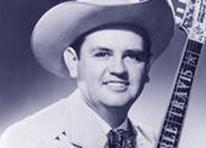
Merle Travis- Sixteen Tons
———————–
Roll on buddy, don’t you roll so slow,
Tell me, how can I roll when the wheels won’t go.
This nine pound hammer is a little too heavy
For my size, boys, for my size.
The first quote is from Dungeon, the latter from Nine Pound Hammer.
For myself I always gave the lyrics a psychological twist saying ‘mind’ for mine. Roll on buddy referred to my habitual procrastination, psychological blockage preventing action. Had problems. Solved ’em. Are these songs poetry? They are in my mind. I make all kinds of things out of them even the innocuous line:
It’s a long way to Harlan,
It’s a long way to Hazard,
Just to get a little brew. boys,
Just to get a little brew.
I’m not thinking of booze either as in ‘My Buckets Got A Hole In It.’ Can’t buy no beer.
I’m sure Dylan cherishes both those songs. They’re the classics that people in the know know. They don’t call us cognoscenti for nothing. Roll on buddy…
As a last example before I get to the gist of this thing is the song ‘Grand Coulee Dam written by Woody Guthrie a man I really despise- damn it. But talent will out and while I have my prejudices I’m no bigot. For me this lyric is as poetic as you can get.
Well, the world holds seven wonders that the travelers always tell,
Some gardens and some towers, I guess you know them well,
But now the greatest wonder is in Uncle Sam’s fair land,
It’s the great Columbia River and the big Grand Coulee Dam.
She heads up the Canadian Rockies where the rippling waters glide,
Comes a-roaring down the canyon to meet the salty tide,
Of the wide Pacific Ocean where the sun sets in the West
And the big Grand Coulee country in the land I love the best.
Uncle Sam took up the challenge in the year of thirty-three,
For the farmer and the factory hand and for all of you and me,
He said, “Roll along, Columbia, you can ramble to the sea,
But river, while you’re rambling, you can do some work for me.”
Now in Washington and Oregon you can hear the factories hum,
Making chrome and making manganese and bright aluminum,
And there roars the Flying Fortress now to fight for Uncle Sam,
Spawned upon the King Columbia past the Big Grand Coulee Dam.
In the misty crystal glitter of that wild and windward spray,
Men have fought the pounding waters and met a watery grave,
Well she tore their boats to splinters but she gave men dreams to dream
Of the day the Coulee Dam would cross that wild and wasted stream.
Nice stuff from my point of view. Doesn’t get any better than that. The song gave me dreams to dream. If you want to hear the best rendition ever by Lonnie Donegan click this:
http://www.youtube.com/watch?v=0Jc2efqj5Js
My verdict is that good lyrics are good poetry while bad poetry doesn’t necessarily make a good lyric.
2.
Now as to the lyrics to Highwater by Dylan that my correspondent referred me to that I discussed in the post: Bob Dylan The Reactionary.
As the lyric touched my correspondent’s psychology I tackled the lyric from a different angle as the way I was interpreting it may not have reflected his. For all I know this doesn’t either but I think it’s interesting.
The lyric in question:
Well, George Lewis told the Englishman, the Italian and the Jew
You can’t open up your mind, boys, to
every conceivable point of view
They got Charles Darwin trapped out on Highway 5
Judge says to the high sheriff, I want him dead or alive
Either one, I don’t care
Highwater everywhere.
The format Dylan uses here is that of the genre of old jokes that begins something like this: A Protestant, a Catholic and a Jew… then moves on to the punchline. Dylan’s presentation can be interpreted as flip so he is probably thinking of the verse as a joke.
As I said in my previous post George Lewis represents a Black, the Englishman as Science or Darwin, the Italian Catholicism or Christianity and the Jew Judaism. Four different conceivable views that can’t be held simultaneously no matter how open you think your mind is.
These are four crucial irreconcilable conflicts in Dylan’s mind while they probably represent the major psychological dilemma of most White or Jewish people.
The problem is especially acute for Dylan who was indoctrinated into Jewish Lubavitcher beliefs for his Bar Mitzvah while having
Hank Snow- It Don't Get No Better
been brought up from infancy on Hillbilly music, Country if you prefer, which is quintessential Christian music whether sung in church or honky-tonk. Those good old boys live with their religion even when they’re robbing banks so even with0ut going to church Dylan has a strong Christian background. He did sing a sexual anthem like Ninety Miles An Hour as a hymn. Ponder that for a minute.
So Dylan has had to reconcile his dual religious beliefs seeming to have come down on the side of his Lubavitcher Judaism which is no surprise. He then has to do something about his religious vs. scientific or evolutionary beliefs. Darwin doesn’t go with Judaism. He centers the problem on Darwin as Science. Here he has made the decision to imprison or kill Evolutionary beliefs. Dead or Alive, either way, Judge says, he don’t care. Having eliminated Science and Christianity we have Judasim and the Blacks on the racial issue. Dylan has subordinated himself to the Blacks on the racial issue and is willing to take the inferior position. While he believes he has resolved these for him difficult problems they still trouble him or he wouldn’t be talking about them. Strange.
Why did my correspondent associate me with the verse? He says: Just thought of you and the line(s) for some reason. My correspondent seems to be wrestling with Dylan’s problem himself. As I have written on all four topics fairly extensively and I know the correspondent has read lots of my stuff I suppose the lines suggested me. The song isn’t good poetry and not even good lyrics but if it succeeded at least on my correspondent’s level one would have to concede that lyrics are poetry. The better the lyric the better the poetry. And now for a little circular logic: The better the poetry the better the lyric.
Bob Dylan The Reactionary
January 14, 2009
Bob Dylan The Reactionary
by
R.E. Prindle
As I say I haven’t listened to anything by Dylan since ’66. Not exactly true, I have listened to and watched a couple of newer items on You Tube or wherever but I hope I won’t be judged too harshly on account of a chance listening like that.
What I mean to say is a correspondent sent me a quote from a song called Highwater- for Charlie Patton.
I’m more clear now on why I haven’t listened to later Dylan because I didn’t think the song was very good. The Poet Laureate of Rock can surely do better than that. The song was from an album called Love and Theft. I’m not sure which half of the equation this song represents.
As the quote has religious overtones perhaps my correspondent was reacting to the recent examination of Dylan’s religious attitudes in the movie by Joel or perhaps to some religious essays on Dylan I’ve written like for instance, Lubavitcher Bob. Beyond that I don’t know what he could have meant.
From the lyrics it looks like Dylan takes himself quite seriously as a man in black. I thought the lyrics were pretty nonsensical as represented by these three lines:
Well, the cuckoo is a pretty bird, she warbles as she flies
I’m preachin’ the word of G-d, I’m puttin’ out your eyes
I asked Fat Nancy for somethin’ t’ eat
Well, I’m not going to struggle too hard to unravel the deep inner meaning of those lines, let Charlie do it, but I am taking Dylan literally on the middle one. As a man in black he is preachin’ some word anyway- G-d, the D-vil or somewhere in between. Not always easy t’ tell.
But back t’ the quote my correspondent sent that does have probable religious overtones. Since it’s expressed so cryptically of course, it’s all deniable:
Well, George Lewis told the Englishman, the Italian and the Jew
You can’t open your mind, boys,
to every conceivable point of view.
They got Charles Darwin trapped out there on Highway 5
Judge says to the high sheriff, I want him dead or alive.
Either way, I don’t care.
Highwater everywhere.
In this song of unlimited non-sequiturs this verse can almost be read to make sense.
In the next verse which may make it related, or perhaps not, Dylan says he’s a preacherman so we’ll assume Dylan is speaking Biblically. He is a Bible scholar you know as well as a Lubavitcher. Dylan always blazes new trails, don’t he?
OK. I don’t know who George Lewis is supposed to be. There’s a couple Black musicians by that name so let’s assume a Black man is ‘tellin’ the Englishman, Italian and Jew what’s what. Nobody can believe three things at one time so the wise thing would be to bet on the Jew if you want to win, win, win. That last is a parody on a line or two from the old folk song Stewball for those who didn’t recognize it. I almost didn’t.
We will assume that Darwin and Evolution are meant by the Englishman, the Pope and Catholicism by the Italian while the Jew needs no explanation. Might be Dylan, I don’t know. Two, Pope and Jew, are religious while Darwin is Scientific and his science demolishes religion. “The King takes the Queen every time’ to quote a new folk song by Larry Hosford. So the Pope and Jew are out to get Darwin in order to preserve their folly. Thus they have Darwin trapped out on Highway 5. Why 5? Why not 61? Dylan must have been cruising the highway from LA to Seattle at the time looked out the window of the bus saw a sign saying I5 so he said ‘That rhymes’ and put it in.
Dylan trapped on Highway 5 is filler so to the Judge i.e. Biblical authority tells the high sheriff- high sheriff sounds real wild west, don’t it, I knowed you’d think so- he wants Evolution/Darwin brought in dead or alive. OK. So as Dylan believes that the Bible is literally true and the veritable word of G-d proceeding from his own lips then it follows that Dylan is anti-Evolution and Darwin. Must be or we’ve got ourselves a contradiction here. Dylan is thus first cousin to William Jennings Bryan who persecuted Scopes way down there in Tennessee where they make that sippin’ whiskey. Hence Dylan is a reactionary rejecting the truth, as Woody Allen would say, for G-d.
Well, brav-, but a big raspberry for B-b if that is what he meant. Who can say? It’s poetry. Of sorts. A bigger raspberry for my c-rresp-ndent who should learn to say what he means without pinching his heroe’s words.
Highwater everywhere. He’s a drowning man.
Exhuming Bob XVIII: Bob Dylan, My Son, The Corporation
December 10, 2008

Electrified Dylan
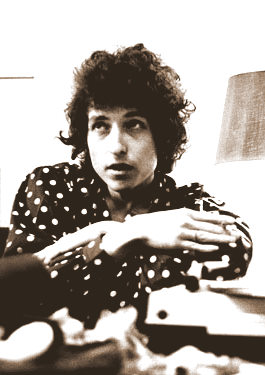
…Bobby stems from a middle class background in which much emphasis is placed on education and conformity and plans for a respectable career.Bobby didn’t quite fit into that framework and preferred a more bohemian type of life. His parents say he frowns on being called a beatnik, and they don’t like that designation for him either. But he was in fact adopting some of the manners associated with beatniks- or folkniks- in an area where that makes a person stand out as a strange character.
Zimmerman as Dylan
People who knew him before he set out to become a folknik chuckle at his back country twang and attire and at the imaginative biographies they’ve been reading about him. They remember him as a fairly ordinary youth from a respectable family, perhaps a bit peculiar in his ways, but bearing little resemblance to the sham show business character he is today.
“He wanted to have a free rein.” says Zimmerman. “He wanted to be a folk singer, an entertainer. We couldn’t see it, but we felt he was entitled to the choice. It’s his life, after all, and we didn’t want to stand in the way. So we made an agreement that he could have one year to do as he pleased, and if at the end of that year we were not satisfied with his progress he’d go back to school.”
“It was eight months after that, says (Abe) Zimmerman, that Bobby received a glowing ‘two column’ review in the New York Times. So we figured that anybody who can get his picture and two columns in the New York Times is doing pretty good. Anyway it was a start.”
His rise in barely three years has been almost as impressive as the fortune he has already amassed…
My son is a corporation and his public image is strictly an act…Hard to follow this act.

Albert Grossman was born in Chicago on May 21, 1926, the son of Russian Jewish immigrants who worked as tailors. He attended Lane Technical School and graduated from Roosevelt University, Chicago with a degree in economics.After university he worked for the Chicago Housing Authority, leaving in the late 1950s to go into the club business. Seeing folk star Bob Gibson perform at the Off Beat Room in 1956 prompted Grossman’s idea of a ‘listening room’ to showcase Gibson and other talent, as the folk movement grew. The result was The Gate Of Horn in the basement of the Rice Hotel, where Jim (Roger) McGuinn began his career as a 12 string guitarist. Grossman moved into managing some of the acts who appeared at his club and in 1959, he joined forces with George Wein, who founded the Newport Jazz Festival, to start up the Newport Folk Festival. At the first Newport Folk Festival, Grossman told New York Times critic, Robert Shelton: “The American public is like Sleeping Beauty, waiting to be kissed awake by the Prince of Folk Music.
In the decades prior to the 60s, through the work of such avatars as Woody Guthrie, the Weavers and Pete Seeger, folk music had become identified with sociopolitical commentary, but the notion had been forced underground in the Senator Joe McCarthy witch-hunting era… Peter Paul and Mary came together to juxtapose these cross currents and thus to reclaim folk’s potency as a social, cultural and political force.
“We have absolutely no part in his affairs. Those are his own operation. He’s a corporation and he has a manager.”
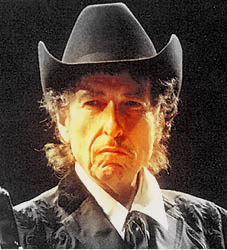
The Burden Of Being Cowboy Bob Dylan
Exhuming Bob XVII: Bob Dylan, A Napoleon In Rags
December 1, 2008
Exhuming Bob XVII
A Napoleon In Rags
by
R.E. Prindle
Hoffman, Michael, Judaism Discovered, 2008
Jay Michaelson: http://www.nextbook.org/cultural/feature.html?id=1725
Cornyn, Sean: http://www.rightwingbob.com/weblog/archives/1850
Hartley, Mick: http://www.mickhartley.typepad.com/blog/2008/10/dylans-true-message.html
Prindle, R.E. https://idynamo.wordpress.com/2008/06/25/exhuming-b0b-x-lubavitcher-bob/
How does the ‘Napoleon in rags’, Bob Dylan, conceive himself in his role as a reformer of Judaism because that is what Messianic Judaism is. What does this believer in the Bible as the literal word of God see as his mission? One should note that as Dylan places the Bible above the Talmud he is a Rabbinical Judaic outlaw as Michaelson says. Did Dylan really just wake up one morning and say: ‘Oh L-ordy, I have crashed. I need the crutch of Jesus’ as Michaelson, Cornyn and Hartley suggest or was there an ulterior motive? Perhaps a conceptual idea if not a well thought out program.
Jay Michaelson, claiming to be a ‘secular’ Jew takes exception to ‘Messianic’ Judaism. What exactly is Messianic Judaism? The notion may take many readers by surprise; those who are only familiar with mainstream Judaism and Christianity. Most non-Jews don’t realize that Judaism has as many sects as Christianity.
For instance Dylan’s stance smacks of Karaitism. the Karaites are a Jewish sect that denies the authority of the oral law or Talmud and hence the Rabbis. They are outlawed as a cult. Messianic Jews accepting Jesus as the Jewish Messiah and hence the New Dispensation are and always have been by definition Outlaws, being outside THE LAW.
The Rabbi David M. Hargis of The Messianic Bureau International is quoted by Michael Hoffman in his Judaism Discovered p. 844:
“Messianic Judaism” is a means for subverting Christianity by incorporated reverence for the rabbis who are heirs to the religion and customs of the ancient Pharisees as recorded in the Talmud. The claim of Messianic Judaism is that historic Christianity is “pagan” and imbued with “gentile culture” needlessly alienating and offending Judaics who might otherwise convert to Jesus Christ. Their “solution” is to fashion a supposedly pagan-free form of Judaism that allegedly believes in Jesus. ‘We believe it would be the best and is ultiamtely necessary for all Jewish people to know their Messiah Yeshua, but we do not believe that God has called any Jewish person to become Gentile or Western Christian in custom. Rather, we believe it would be best and is ultimately necessary for Christianity to remove its pagan influences and return to the roots of Judaism, that is, to return to the way of Yeshua as He walked by example and set forth in His entire Word….However this does not mean that Modern Rabbinical Judaism does not have truth within it.”- Rabbi David M. Hargis & Messianic Bureau International, “Basics of Messianic Judaism.” www.messianic.com/articles/basics.htm (as of Feb. 25, 2008; it may be altered after that date.)
So it would appear that Messianic Jews want a return to pre-Pauline Jesusism deleting all non-Jewish influences in Christianity. These would include Platonic influences, the Dionysian Kyrios Christos, the Persian influences, Gnostic influences and the Egyptian influence that made Mary the Mother of God as patterned after Isis. In other words the Messianic Jewish Jesus would be one that Christians would scarcely recognize.
As can be seen by the title of Rabbi Hargis’ organization that it is an international one; indeed, Dylan’s outfit Jews For Jesus is international in scope. You can call that a conspiracy if you like as Cronyn and Hartley do.
It would be fair to assume that Mitch Glaser’s and Al Kasha’s organization, Jews For Jesus, also an international organization, is affiliated to, or at least is associated with the Messianic Bueau International in some way or other as like minded organizations. We know for certain that Dylan was and is associated with Jews For Jesus. A purpose of Messianic Judaism is to strip Western, that is to say “pagan” influences from the figure of Jesus returning him to the status of ‘pure’ Semite.
That is to say that the Greek cult of Kyrios Christos is to be abstracted so that Jesus is no longer The Christ. So the purpose of Messianic Judaism is to take back Jesus from the Christians while reuniting Messianic and Rabbinical Judaism. The messianics are willing to concede that there is some ‘truth’ in Rabbinical Judaism.
Dylan was not merely preaching Messianic Judaism to Jews but whiffing it past Christians also. It is true that he thinned out his audience rather quickly having apparently misjudged the religiosity of his following. As a Jew of Orthodox sensibiities Dylan, in his mission as Messiah, or King of the Jews as Michaelson styles him, would have to learn something of Christian beliefs and sensibilities. It would seem likely then that he approached Dwyer of the Vineyard Fellowship to pick his brains. The question then was Dylan exploited by the Christians as Michaelson believes or was Dylan exploiting the Christians?
A question then arises as to whether Dylan wasn’t ‘speaking falsely now’ when he said ‘he never wanted to be the voice of his generation, and he certainly never asked to be ‘King of the Jews’ or a vessel for our hopes and dreams.’ Can we believe the denial of this self-styled ‘Napoleon in rags?’ If Napoleon wasn’t a ‘leader’ who demanded following who has ever been? How mistaken could his contemporaries have been in taking this ‘Napoleon in rags’ as their spokesman. Can Dylan have changed direction in 1979 when he wanted to become a great Messianic spokesman leading his people to some Promised Land? What else could have been his intent in becoming a Jim Jones style religious preacher? ‘There’s something happening here and you don’t know what is, do you Mr. Jones?’
Dylan definitely confuses Michaelson who opines ‘his latest incarnation, as a mustachioed journeyman musician, is made of equal parts of authenticity and con’ and ‘Dylan, who always seems to be in on the con when he’s not perpetrating one himself.’ Indeed. Dylan does project a duplicitous character; speaks out of both sides of his mouth at once. Or once again as Michaelson understands it: ‘…like him, I think I can understand the appeal of authentic religious experience in the context of superficiality and doublespeak.’ Uh huh!
Thus Dylan’s double edged mission was and is to strip ‘Christians’ of their ‘pagan’ sensibilities- i.e. Western culture- while converting Rabbinical Jews to Messianism or Jesus. So, whether Cornyn and Hartley believe it or not, yes, there is a ‘Great Bob Dylan Conspiracy.’
It is embarrassing that at this late date in the evolution of human consciousness that Bob Dylan believes the Bible to be the literal word of God. Consciousness has evolved to that level that the sham of the Religious Consciousness should be apparent to all. Both Science and Communism have been proclaiming the falsity of the religion and extreme Jewish nationalism that Dylan affects for a hundred years or more.
I certainly have to reject the Religious Consciousness. As such I feel defrauded by Dylan’s early career and my attachment to it. Dylan willfully misrepresented himself, doublespeak, and cheated me as well as all his fans who thought he was enlightened. I was misled.
Sorry Bob, but you’re a fraud.
Exhuming Bob XVI: Bob Dylan’s Dream..Or Nightmare?
November 27, 2008
Exhuming Bob XVI
Bob Dylan’s Dream or…Nightmare?
by
R.E. Prindle
I’ll let you be in my dream if you’ll let me be in yours.
-Bob Dylan

http://www.nextbook.org/cultural/print.html?id=1725
When Dylan wrote those words, was he sincere or was it just part of the con? I was recently asked not ot contribute anymore to expectingrain.com by person or persons unknown. The webmaster refuses to identify he or them to me. Too ashamed to let their names by known, I guess. Or chicken. I know I’d rather not be known as a rasty, nasty censor.
I was ejected for voicing pretty much the same sentiments as Jay Michaelson does in the above referenced review of Joel Gilbert’s The Jesus Years. Maybe the difference between Jay and me is that I don’t think Dylan is such a mysterious elusive guy. Anybody with a little Freud under his belt has got Dylan pinned.
He suffers from a fairly severe depression while being very emasculated. He is so emasculated he can’t even fix on an identity for himself. His natal Bobby Zimmerman failed him so he apparently attempted to become Elston Gunn which he wasn’t able to sustain so he then became Bob Dylan which also became too much of a burden to him so he threw that identity up for grabs saying anybody can be Bob Dylan who wants it, then he became Masked and Anonymous eschewing any identity whatever. An empty suit.
If that isn’t clear to you then there is no reason for you to tackle Freud or psychology now.
So, what was the conflict? Duh. Could it have been that between his Jewish upbringing and his Christian milieu? Gosh, I don’t know, do you? Is there anything in his subsequent history that would suggest such a conflict? Let me think. I think there is, therefore I am.
Is there a conflict in the minds of Dylan’s disciples. Well, now there we’re on firm gound. Just listen to Jay:
There’s a telling moment in Joel Gilbert’s new (?) documentary Inside Bob Dylan’s Jesus Years: an interviewee says that when Dylan became a born again Christian, he went, in two short years, from being an American Jewish hero to the “greatest apostate of the twentieth century”… But worse, because Dylan embodied a specific kind of liberal American Jewish hope that someone would speak truth to power, and that the world would listen. These were very Jewish dreams, and Dylan fulfilled them for awhile.
Damn, then it wasn’t anything I said as the messenger. I guess it was just not being Jewish that I shouldn’t have attempted to deliver the message. Right message, wrong face. Gee, I guess I can’t be in Dylan’s dream because I’m not Jewish. Whatever happened to One World, One Dream? Everybody being brothers? The Global Village? They didn’t think there wouldn’t be variations on the theme I hope. Well, no matter Dylan and his People can still be in my dream. I’m inclusive.
But Jay and his People themselves apparently feel excluded from Dylan’s dream also. Jay says:
Dylan never wanted to be the voice of his generation, and he certainly never asked to be King of the Jews or vessel for our hopes and dreams. (My italics.)
Wow! King of the Jews, Jesus Christ. I may have thought it but I didn’t have the cojones (My italics), Jay does and actually says it. Jesus, I’d be running for my life let alone being kicked off expectingrain.com.
Jay and his People just can’t seem to get it. Dylan never became a Christian, he became a Jew For Jesus. Jay even has the answer before him but his religious bigotry won’t let him see it: “Why did Dylan…record two religious albums proclaiming the word of G-d?” There you have it Jay. Dylan was conflating Jesus and God into one and then substituting G-d for Jes-s. Jesus is Christian, God is Jewish. Duh. For Christ’s sake, c’mon Jay.
Well enough of that. I’m sure you can’t stop laughing. Jay is supposed to be reviewing Gilbert’s documentary. Michaelson; is not either well read on his subject of Dylan or well researched. Maybe he smoked enough dope that he thinks he automatically knows everything about Dylan. I’ve seen it happen.
As far as the film goes, it may not be a particularly good movie but then it is a documentary and has to judged differently. As documentaries go I found it more than satisfactory. The clip art was an unusual special effect but I actually found some of them humorous. I wouldn’t have done it that way myself but Gilbert can do as he pleases and did.
Gilbert doesn’t mysteriously look like Dylan as Jay says. There is no mystery involved. Gilbert is trying to clone himself as Dylan; does a good job. He has a good understanding of his subject, after all he’s trying to be Dylan. His selection of subjects provided enough penetrating information that I have to think they were well chosen. Perhaps they were all that Gilbert could get, in which case the film maker drew them out well. Rob Stoner was the key. He was intelligent, understanding, and well informed- he knew what he was talking about. Kasha and Glaser gave you all the information you needed to understand the Christian-Jews For Jesus scam. Come on Jay, open your eyes.
Weberman has been saying that Dylan was a heroin addict since Christ was a baby. At least from 1964. It may have been true, I don’t know, but it didn’t have anything to do with Dylan’s crash. If Jay knew anything about his subject he would realize that the divorce was the key. Dylan had finally, after a life time of trying, become so defiled that he had to turn to God/Jesus to lead him back. I hope he found the way. Freud again.
For Michaelson who can’t separate his Jewishness from Dylan the problem is a paramount betrayal because ‘We’re (Jews) scarred and traumatized by two thousand years of Christian hegemony… So, there you have it, the cat’s out of the bag, couldn’t have said it better myself. Jay and his People thought Dylan was the Messiach who was going to establish a Jewish hegemony over ‘Christians,’ ‘speak the truth to power.’
I’m not so sure Dylan won’t still try but that has little to do with the documentary. The con and exploitation was not that of Dwyer on Dylan but Dylan over the Vineyard Fellowship. Dylan was using them to try to reach his fellow Jews in his faith of Jews For Jesus. As we are never tired of being told: Jes-s was a J-w. Case closed. Forget hegemony.
In summation Gilbert, in my estimation, did an excellent job for what he set out to do. I was properly instructed and…I got it. But, I was still kicked out of Dylan’s dream. He conned me too. What a nightmare!
A Review: Ian Whitcomb: Rock Odyssey
November 26, 2008
A Review
You Really Turn Me On
Rock Odyssey
by
Ian Whitcomb
Review by R.E. Prindle
Whitcomb, Ian: Rock Odyssey, 1973
I don’t suppose too many people today remember Ian Whitcomb. He surfaced in 1965 with his hit song
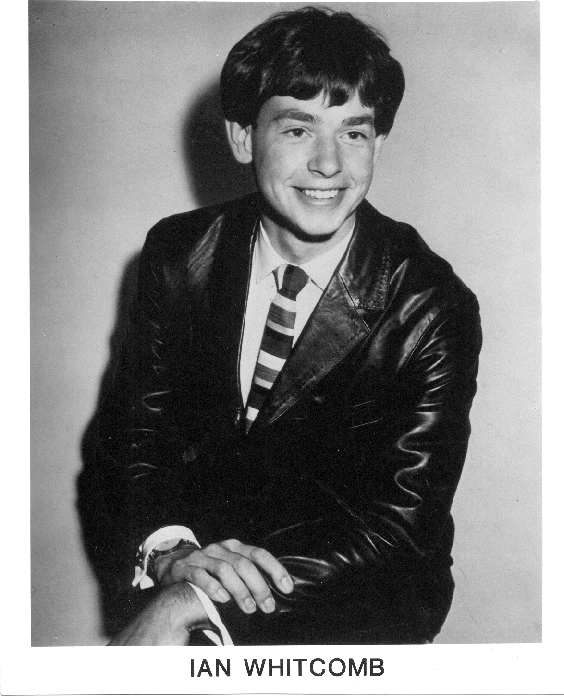
Young Ian
‘You Really Turn Me On. In 1965 I was a very old twenty-seven but getting younger every day. I saw Whitcomb once while visiting my wife’s relatives. Her young cousin was watching the Lloyd Thaxton show out of LA. I’d never heard of Lloyd Thaxton either but according to the cousin he was the hottest thing on TV. If I remember correctly the Kinks had just sung Dedicated Follower Of Fashion that I thought was very OK. The Ian came on and did his breathy falsetto androgynous song: You Really Turn Me On. At one point after suggestively fondling the microphone stand he shot down out of sight like a tower from the World Trade Center resurfacing moments later. Pretty startling stuff at a time when nearly every new group was an actual mind blower- The Rolling Stones, Animals, Dave Clark Five and this was just the beginning. More and even stranger and stronger stuff was to follow quickly only to begin a slow fizzle even as it peaked ending in the Rap and stuff that passes for music today. A very old Bob Dylan trying to bring light into the heart of his growing darkness. After the startling sixties came the sedentary seventies. But then Whitcomb disappeared like his fall from the microphone stand and I never saw or heard of him again. A true one hit wonder.
Years later I came across his LP Under A Ragtime Moon. Then I knew why he had disappeared. He was into that English music hall stuff. But then, I didn’t mind that. He sounded quite a bit like one of my personal favorites The Bonzo Dog Doo Wah Band. Of course they didn’t really get that far with that stuff either. You have to be a member of the cult to really dig it. In order to like the Bonzos you have to have a fairly eccentric side to your musical taste. A little out of the mainstream which is where I preferred to live my life. I thought the Bonzos were wonderful, still do. But I was pretty much all alone out there. I liked and like, Neil Innes and the late great Viv Stanshall, two of the Bonzo stalwarts. ‘Legs’ Larry Smith. Ragtime Moon lacked the modern rock foundation the Bonzos infused into their music but to this day I couldn’t tell you whose version of Jollity Farm I’m familiar with. Anyway I have a soft spot for this sort of thing so over the years I’ve played a side of the Bonzos fairly often and dusted off my copy of Ragtime Moon occasionally.
You Really Turn Me On always stuck in my mind, great song. Kinda struck my lost chord and made it gong into the distance. If you’re only going to have one hit you might as well make it a good one. And then for some reason, I don’t know, I googled Whitcomb and saw that he’d written a few books, including this autobiographical sketch cum pop history so, as it was cheap on alibris, I sent for a copy. I was delighted with the volume as I read it through. As biographies go this is one of the better ones, right up there with Wolfman Jack’s not to mention that of that phony Jean-Jacques Rousseau although I stop short at Casanova. Casanova is one hard one to top. As a history of the period it is more balanced and beats the hell out of that crap from the Boys Of ’64.
Ian took offense at being a one hit wonder; he really wanted to be up there with, say, Jim Morrison of the Doors, Mick Jagger, people of that ilk. I have to believe that stories Ian tells are true although some are stunningly improbable but then those things can and do happen that way, you know. It’s all in how you see what goes on around you. Toward the end of the book he’s pondering on where he went wrong, he’s sunk into a fair depression over this, he flees from his apartment in his pajamas one early morning to take a stool in a coffee shop. That’s depression. But, let Ian tell it in his own inimitable fashion. As improbable as it may seem he took a stool next to Jim Morrison who recognized him first.
When ‘Light My Fire’ had reached number one, Jim had gone out and bought a skintight leather outfit. At the Copper Skillet, it wasn’t so skintight anymore.
“How do you do it?” I asked.
“I never dug Jerry And The Pacemakers. How do I do what?”
I wanted to kick myself for bringing up my obsession with pop success, but I plowed on: “How do you stay intellectual and still be a hit with the kids, the masses?”
“You could have done it. You were into the theater of the absurd. I saw you on ‘Shindig’ and ‘Lloyd Thaxton’ goofing off and telling the audience that rock n’ roll was a big joke. That the whole of existence is a big bad joke. You were too comic. Tragedy’s the thing. Western civilization is ending and we don’t even need an earthquake; we’re performing crumble music for the final dance of death and you know what? Truth lies beyond the grave. I’ll pick up the tab.”
I couldn’t have put it better. Ian’s problem was that he was working from a different ethic. He didn’t understand that the singer and the song was the show, the whole show. Nothing else was needed. We were only there to see the singer sing his song. It’s nice to know that Jim and I were watching the same Thaxton show together. If I hadn’t seen Ian on Thaxton I wouldn’t have been as impressed because on that show singer and song were a single projection.
Due to the wonders of the internet I was recently able to catch several versions of Ian’s song but not the Thaxton one. One had him and a half dozen other guys charging around a series of pianos. Completely missed the point of the singer and his song. Not even good entertainment. Ian considered himself an entertainer bacause of a childhood encounter with a music hall comic named O. Stoppit. Fateful encounter. Because of it Ian wanted to be a comic, ended up a singer and as Morrison noted the two were too dissimilar to work.
Ian was probably headed for depression from the age of five or six or so as he came to terms with bombed out London in ’46 or ’47. His biographical sketch is a wonderful tale of a seemingly cheerful man’s descent into a deep depression. By book’s end Ian is nearly out of his mind.
He quotes a psychoanalyst for his definition of depression:
It was the great Serbian psychoanalyst Josef Vilya who concluded that chronic depression is the result of a head on collision between dream and reality. The patient dreams of becoming King but goes on to become a member of the tax paying public.
That’s probably what Morrison meant by tragedy. Life always fails to meet our expectations so that humanity responds by assuming at least a low grade depression that makes comedy an adjunct to tragedy. Thus in the Greek theatre there was a terrifically depressive tragic trilogy followed by some comic relief. The burlesque of an Aristophanes.
Ian’s problem was as Morrison noted that he saw the absurdity of the human condition but was too jokey about it. Absurdity is a serious thing and has to be so treated. O. Stoppit taught Ian a silliness unmixed with tragedy. A tragedy in itself. When silliness such as You Really Turn Me On met the tragedy of a one hit wonder Ian began his descent into depression as Vilya suggested.
I’ve never been depressed myself, never had the blues, but I have visited the lower depths as a tourist so I have some notion of what Ian’s talking about. Dirty Harry in drag. I just never got off the bus that’s all, except once, to walk through Haight-Ashbury where I saw first hand how horrible true depression could be. Boy, did Ian find out about that. Good thing he never found his Debbie.
In his narrative combining grim humor with his developing depression Ian gets off some rippers. I had a good many uproarious belly floppers. Try these few lines. Two good ones in succession. You do have to have the same sense of humor. The North and South are those of England.
These frightening stories of Southern travelers stranded in woebegone depressed cities and suffering under the rough natives. For example a well known Shakespearean actor, having missed the last train out of Crewe, knocked on the door of a hotel. “Er, do you have special terms for actors?” the traveler asked. “Yes- and here’s one: Fuck off!”
And if they weren’t being aggressive, the Northerners were acting daft. One heard of a Lancashire lad down in London demanding another helping of dressed crab (in the shell): “Give us another of them pies- and don’t make the crust so hard.”
Of course Ian can’t do that on every page but laughs are liberally sprinkled throughout the underlying depression.
Ian’s book opens with his youthful encounter with O. Stoppit and ends with another unifying his theme nicely.
In between Ian enters the world of rock almost serendipitously with his one hit song: You Really Turn Me On. After that his story is a search for a sequel that he can never find but which he pursues somewhat as Alice down the rabbit hole. He loved his one brush with fame so much that the clash between his cherished hopes of finding his sequel and the grim reality of not being able plunges him deeper and deeper into depression. Personally I would have gone out and found a songwriter. There were thousands in LA.
However his odyssey, as he calls it, Brave Ulysses ne Ian, led him through the heart and soul of the Golden Age of Rock And Roll from the Beach Boys and Beatles and Rolling Stones through Morrison and the Doors, Procol Harum, Cream, Pink Floyd, Donovan, you know, like that. After that crescendo followed the diminuendo ending in Rap and the current rather laughable music scene.
Ian has encounters with the aforementioned Morrison, Mick Jagger and others. His observations of the social scene are trenchant. He makes an acute observation do in place of a couple hundred pages of twaddle a la Todd Gitlin and Greil Marcus.
Along the way he sprinkles the little known odd fact:
Procol Harum is Latin for ‘beyond these things.’ Have no idea what that has to do with Procol Harum’s music.
…the name Pink Floyd was taken from a record by two Georgia bluesmen named Pink Anderson and Floyd Council. Amaze your friends with that one.
And in conversation with Bobby Vee he confirmed a question about Bob Dylan that I needed confirming:
The afternoon I taped “Hollywood A Go Go” a syndicated TV rock n’ roll show that’s allegedly seen as far away as Rhodesia and Finland. The set was sparse- cameras, lights and a few rostrums. The empty spaces were filled with boys and girls who danced or gazed. All the acts had to lip synch their records. Chubby Checker (the Twist King) was on the set and, when he heard my record he pronounced it “bitching!” Bobby Vee was a special guest and looked every inch a star in his sheeny silk suit. He really had his hand movements and head turns down to an art. We chatted during a break and I brought up the subject of Bob Dylan and my concern about him. To my amazement, Vee told me that Dylan- before he got into the folk kick and when he was plain Bobby Zimmerman back in Minnesota- had played a few gigs with Vee’s band- as pianist! Vee said Dylan was very good, in the Jerry Lee Lewis sytle, but he could only play in C. He said he knew a lot about country music, too. As it was hard to find pianos at their gigs Dylan didn’t play with Vee very long. But as he has fond memories of him and said he was really well versed in current rock n’ roll at the time of their meeting. He had the impression that Dylan was very hip to whatever was happening. ;I wondered if the young Zimmerman had ever been a Bill Haley fan.
So, that would confirm that Dylan did play with Vee in the summer of ’59 after his graduation.
The book is a great read, a very good book, as Ian struggles and fails to find success. In a fit of depression he returns to the seaside pier on which he had seen O. Stoppit. An old poster is hanging that he secures then finding his model’s address he visits him to present him with the poster. O. Stoppit tells him bluntly to stop living in the past. A fine thing to tell a historian but Mr. Stoppit was apparently a blunt, unfeeling brute. Also well past the sunny side of life.
Has Ian ever adjusted to his being a one hit wonder? I’m afraid not. It still rankles. As late as December 1997 in an essay written for American Heritage Magazine Ian quotes a letter from fan Arlene:
Dear Mr. Whitcomb:
I have watched you several times now and I want to say that sure you have talent and you’re magnetic, but why, oh, why, do you screw it all up by horsing around, being coy, by camping, as if you’re embarrassed by show business? You could be great if you found your potential and saw it through, but that would take guts. Instead you mince, and treat it all as big joke. Come on now!
Well, that was the same thing Morrison told him thirty years earlier; the vaccination didn’t take then either.
I think Ian entered his depression early in life, as many of us do. Then one has to face it. Some become phony chipper optimists in their attempt to overcome the conflict between expectations and reality. Some become goofs and jokers. Something I fought for years. Some like Ian become silly. The most extreme type of this I ever saw was Red Skelton the ‘great’ clown who was painful for me to watch. In fact I couldn’t do it. I saw too much of myself in him and ended up hating the bastard.
If Ian wants that second hit and more he has to master his silliness. Weld the singer and the song like greats like Jagger and Morrison. Be to some extent what his fans want. A good sense of humor on songs done with respect for the song, himself and his audience. Scratch Red Skelton. People want to love Ian, just as Ian wants to be loved, but as the saying goes, he won’t let ’em. I’m not criticizing or demeaning, I know where that’s at too. I am recommending the course of action however. I, Arlene, Jim of blessed memory and others want a sort of closure that has been left hanging.
The book is a great one through Ian’s struggles to come to terms with his times, himself and the future.

Ian Later On
 I, Dynamo