Pt. I: Tarzan And The River
April 14, 2011
Tarzan And The River
by
R.E. Prindle & Dr. Anton Polarion
I know those ideas;
In my boyhood days I read Shelley
and dreamed of Liberty.
There is no Liberty save wisdom and self-control.
Liberty is within-
not without.
It is each man’s own affair.
–H.G. Wells, When The Sleeper Wakes
The River don’t stop here anymore.
–Carly Simon, Let The River Run
Dr. Polarion and I have undertaken to write this essay together: He to handle the psychological aspects while I deal with the literary parts. As he has been called away on business I write his ideas from personal coversations and notes he has given me.
The reference to the river in the title is not to the Congo as one might suspect but to the river of life in the psychological sense and to the roman a fleuve or River Novel in the literary sense.
In the psychological sense the River refers to the Flood on which we are all borne heedlessly to the sea of oblivion unless we somehow free ourselves of the current. That is the meaning of the quote from Carly Simon. She thought she had gained control of her life and emotions; reclaimed herself from the vast irresistable flow of the River, so to speak.
As Dr. Polarion has explained in the other essays, ERB was working out his psychological difficulties through his writing. He first integrated his personality and then rectified his Animus concluding with reconciling his Anima and Animus. As in all lives ERB’s early life was an accumulation of fixations that had to be exorcised in later life. One either succumbs to one’s psychology in the sense of Hamlet’s complaint: To be or not to be…whether ’tis nobler, in the mind to suffer the slings and arrows of outrageous fortune or to take arms against a sea of troubles, and by opposing, end them,’ or, in other words, one confronts the psychological issues and resolves them.
Understanding, that is the problem. For ERB’s first thirty-seven years he suffered the slings and arrows in his mind, but then at age thirty-seven a glimmer of understanding appeared in his mind and he chose to take arms to end his sea of troubles.
One can only guess at the pricks and prods that drove him on his way. Fortunately ERB left a very wide and detailed paper trail of the workings of his mind. For the first thirty-seven years of his life the subliminal pressures built and built until with a mighty roar they rose to the surface in a terrific eruption not unlike the fabled gusher Spindletop.
Title after title spewed forth from ERB’s pen in an impetuous irresistible flow. From 1912 to 1915 no less than seventeen novels were unleashed on the world. Included in those novels was the creation of one of the great mythological figures of world literature- Tarzan Of The Apes.
It was through these novels that Burroughs took up arms against that sea of troubles to end them.
Dr. Polarion who is a Depth psychologist, believes and demonstrates to my satisfaction that as a result of ‘talking’ his way through his fixations ERB integreted his personality in 1915.
The integration of the personality is a major desideratum although, while a blessing, the integration is much less of a blessing than many Depth psychologists believe. When one eliminates one thing one must replace it with another. An empty self cannot be allowed to exist, nor will the self tolerate it. I have had to fill the void left left when with Dr. Polarion’s assistance I integrated my personality.
For ERB who had little understanding and no guidance, the integration of his personality was as much a curse as a blessing. But more on that in Part II.
Following Dr. Polarion: the disintegration of the personality occurs when the individual is presented with challenges to which he cannot satisfactorily respond. The most serious reactions occur in one’s youthful years when one’s understanding is least developed. Quite minor incidents cause the most serious fixations as the child or youth has not the intellectual means to understand and respond to them successfully.
Each failure of response causes a fixation in the subconsious mind. At this point Dr. Polarion discards the Freudian notion of the Unconscious in favor of the subconscious. He believes that there is no such thing as the Unconscious. Each psychological fixation has a corresponding psychological or physical affect. These are what Freud identified as neuroses and psychoses or what were later recognized as psychosomatic reactions. Thus a neurosis may interfere with one’s basic responses while a psychosis has a debilitating effect. An example of a neurosis might be a nervous twitch while the most debilitating of psychoses might be manic-depression or schizophrenia. The less severe the cause, the easier to reach.
It is here that Freud’s ‘talking cure’ comes into effect. Freud discovered, or learned from his colleague, Breuer, that when a person recognized his fixation and discussed it the physical or psychological manifestations disappeared. In many cases such affects appear only in certain circumstances.
Let me give you three quick examples: The modern pop singer Meatloaf,, the nineteenth century explorer Richard Francis Burton and ERB himself.
The pop singer, Meatloaf acquired a deep inferiority complex during his childhood. He had been made to believe that he was worthless. When he became a pop star he felt unworthy of his success. Hence, having a subconscious fixation or need to reject his success for which he felt unworthy, he one day lost his singing voice. In orther words, his subconscious fixation blocked his ability to vocalize and continue to be a success. The physical manifestation of his fixation was the loss of his singing voice.
Meatloaf sought the advice of a psychologist who was both astutue and honest. After talking to Meatloaf for a few minutes in his first session, the psychologist had his client figured. he simply asked Meatloaf to admit out loud that he was a Star. Meatloaf resisted as one might expect, but on the psychologist’s insistence he reluctantly said: ‘Oh, all right, I’m a star.’
That’s all it took. That is the ‘talking cure’. From that moment on, Meatloaf exorcised his fixation and regained his singing voice. Of course, that only eliminated the symptom but not the underlying cause. Meatloaf just shifted his psychosomatic affect to another manifestation of it.
Not all fixations are that easy to reach. The more painful the fixation the harder it is to reach. Thus while Meatloaf’s symptom was relieved the fixation of unworthiness remained intact. The explorer Richard Burton (Richard Francis Burton, not to be confused with the late actor husband of the late Elizabeth Taylor.) sought the source of the Nile in the eighteen-sixties. If he had succeeded, he would have been made for life as well as having a secure place in history.
Burton was however severely conflicted on the Animus while have a debilitating central childhood fixation in his subconscious, a killer combination. Actually, he was a latent homosexual.
There was only one way to travel in Africa and that was on foot. Hence his subconscious placed a psychosomatic affect on his legs making it impossible to walk! Burton naturally failed in his quest but regained the full use of his legs when failure was irremediable. He never had trouble with his legs again.
While suffering from fever in Africa, Burton had the remarkably vivid vision of himself as two different personalities, the one always defeating the ambitions of the other. The two personalities were visions of his conscious and subconscious minds Thus the fixation symbolically represented itself to him, but Burton was unable to penetrate the symbol. Had he been able to do so he would immediately have been able to get on his feet as nimble as ever.
The true natue of Burton’s conflict was that he couldn’t acknowledge his homosexual reaction to his fixation. His youthful sexual violation or molestation was his central childhood fixation, but we’ll let that pass. The central childhood fixation is the most fearful of all.
Edgar Rice Burroughs had a fixation from his father. He believed his dad to be a great man, probably one that could never be equaled or surpassed. ERB’s early failures may have been a fear of challenging his father’s image. His father had been a military success in the War Between The States. ERB probably joined the Army to emulate his father. He was sent to Apache territory. However, the fear of failing to measure up to his father or exceed him caused a psychological reaction or psycho-somatic affect.
For the length of his service, which was cut short by his appeal to his father, he contracted a case of diarrhea which didn’t leave him until he gave up the military, thus ending any fear of equaling of surpassing his father. ERB’s diarrhea was purely a defensive psychological reaction to his fixation.
ERB began his writing career in desperation. It probably never occurred to him that his writing would make him not only as successful as his father but more successful, else he mgiht not have been able to write. Judging from the context of the Tarzan novels, I would say that this conflict with his father was resolved between the writing of The Son Of Tarzan and The Jewels Of Opar. There is a decided change of direction from the one to the other.
The Russian Quartet of the first four novels therefor forms a sort of prolegomena or introduction to the rest of the oeuvre There is a fair amount of indecision in the four novels as ERB seeks for the handle of his great works
In his tradition of Tarzan doppelgangers the two novels of Tarzan Of The Apes and Son Of Tarzan may be considered near duplicates of each other; in fact, Father and Son as the titles indicate.
Two other novels separate from but related to the Tarzan oeuvre may be counted as part of it due to their role in the development of ERB’s psychology. These two are The Mad King and The Eternal Lover. The MadKing is a preliminary attempt by ERB to rectify the conflicting aspects of his Anima through the doppelgangers of the Mad King and Barney Custer, while the Eternal Lover is a precocious attempt to reconcile his Animus and Anima. Not surprisingly, Barney Custer is prominent in both novels. Custer then melds into the neo-Tarzan of Jewels Of Opar where the two conflicted aspects Burroughs’ Animus appear in one Tarzan, off set.
The name Barney Custer as an alter ego for ERB is interesting, General George Custer who we all know was massacred at the Little Big Horn a year after ERB was born was amongst the greatest of American heroes for about seventy-five years. After 1950 the luster was diminished and then turned completely around to the point that he is now the most prominent villain of American history and a symbol of shame to the Paleface.
But in 1914, by taking the name of Custer, ERB was identiying himself with America’s greatest contemporary hero. The first name, Barney, undoubtedly refers to the daredevil auto racer Barney Oldfield. This must be especially apparent in the Mad King in which Barney Custer is a daring, even wild auto driver. It should be noted too that ERB had only recently become an auto owner and driver so he is probably projecting an ideal of what he wanted to be. So the character of Barney Custer itself is a doppelganger rolled into one.
The novel The Eternal Lover takes place either in the time between Return Of Tarzan and Beasts or between Beasts and Son. In either case, Barney Custer is melded into either Tarzan or boy Jack, probably the latter as Tarzan repesents Burroughs’ father in Son.
Son Of Tarzan is a charming coming of age novel in which boy Jack emulates his father, grows into his loin cloth, or g-string and is finally reunited with his dad in London. Here the Russian Quartet is completed and the story logically comes to an end, as there are no loose ends for sequels.
In real life during this three year period from 1912 to 1915 ERB has risen from a more or less abject failure to a towering success. From a position of hapless inadequacy compared to his father as the novel Son Of Tarzan records, he has succeeded in his mind at least in equaling his father, athough as on the return to London Tarzan remains a patriarch and boy Jack recedes into the background it is fairly obvious that ERB did not really believe he surpassed his dad. Lingering traces of diarrhea, no doubt.
What ERB has done however is to eliminate the fixation in his subconscious. By doing so he integrated his personality.
Conflicted as he was, this rapid turnaround in financial status must have been a tremendous ego boost to a very frustrated man on the cusp of his mid-life crisis.
One can argue the relative value of the dollar but I estimate the buying power of Burroughs’ earnings for the period in today’s dollars of least three to five million dollars.
When one considers that he bought a house, which he turned into a country club with out buildings and enough land to build a city for one hundred thousand dollars which wouldn’t equal a single lot today the value of the dollar has no real comparison. ERB chose to call his new estate Tarzana which gives some indication of the importance of Tarzan in his mind.
Following the principles of Freud’s ‘talking cure’ somewhere in that great gush of writing ERB brought his central childhood fixation into the open where he resolved it so that the fixation’s mental and physical affects disappeared, uniting his conscious and subconscious minds into one interated personality.
Following psychological roles ERB must then have resolved fixation after fixation until he was free of compusive behavior.
Having united his conscious and subconscious minds, ERB was then given the psychological task of rectifying his Animus into one single directed sexual identity or Ego and then reconciling his Animus with his Anima. ERB did this, placing him ahead of Freud and Jung as a psychologist, although he may not have known how to express his achievement in scientific terms.
Dr. Polarion believes that ERB was aware of his achievement but as he had no scientific standing he must have thought it better to demonstrate his achievement in the Tarzan oeuvre while keeping his mouth shut.
There can be no question that ERB was a very educated, even learned man, although without the Ivy League credentials for which he so obviously yearned. The amount of learning evident in the Tarzan oeuvre is really quite astonishing. His background n African studies alone is extensive.
Having integrated his personality through the Russian Quartet, those four novels form a completed unit. In order to keep writing Tarzan novels Burroughs had to shift his emphasis. Then with the novel Tarzan And The Jewels Of Opar he began a more extended roman a fleuve or River Novel.
The subsequent novels are all involved with the problem of working out the rectification of the Animus and reconciliation with his Anima.
I personally (Dr. Polarion concurs) do not consider Tarzan And The Foreign Legion part of the true Tarzan oeuvre. The book was an afterthought written duing World War II for propagandistic purposes, consequently being outside ERB’s psychological development.
The last book apart from Foreign Legion published during his lifetime was Tarzan The Magnificent. Richard A. Lupoff discovered three stories after Burroughs’ death which were combined into Tarzan And The Castaways and a completed manuscript, Tarzan And The Madman, which is the culminating value in ERB’s psychologcal development and may be genuinely considered part of the oeuvre.
Thus the liberty of which H.G. Wells spoke in the introductory quote was achieved by ERB. He had acquired wisdom and self-control. One might say he was as ‘free’ as any man can be which, after all, as the mystics say, is merely uniting oneself with the ‘will of god’ or nature, in other words, integrating one’s personality.
Having disposed of the Russian Quartet which forms a sort of prolegomena to the oeuvre, I will now turn to Part II to the explication of the Tarzan oeuvre as a roman a fleur.
Edgar Rice Burroughs, H.G. Wells
And The
Wold Newton Mythology
by
R.E. Prindle
It Came From Outer Space
For some decades now I have been struggling with the problem of a new mythology for the scientific consciousness. When the old mythopoeic mythology was invalidated by science it left sort of a void in the human psyche. In the Arthurian sense we had entered the Wasteland of disappointed expectations, otherwise known as depression.
Over the last twenty years of unremitting labor I have been either trying to discover or create such an existing scientific mythology. Perhaps my efforts have been rewarded. I modestly offer the following for your approval.
When The Student Is Ready…
Unlike the internet where I get most of what passes for news by current standards, this day I was reading the newspaper. I hadn’t come to that, it was just lying handy and I had the idle moment. owever I read that our giant combined new and used Pulsar Book Store had laid off a couple dozen employees, or workers as they are sometimes amusingly described, because of declining in store sales. I further read that sixty percent of Pulsar’s sales were over the internet.
I’ve been doing all my book buying over the internet and hadn’t been in the Pulsar store for years. Casting about for a reason for a decline in sales, apart from a growing illiteracy in the body politic, it occurred to me that on line electronic transmission of books was cutting into book sales deeply. I mean, Amazon offers oodles of older books free, many of which you will never see in books stores but are offered by Print On Demand publishers over the internet. Ask yourself when you last saw a Charles King? Lots of them for free on Amazon. That has to hurt sales. I then reasoned that Pulsar’s shelves must be groaning. I might be able to find a superb selecion at good prices, and I was right.
I was rewarded with an armful of books at my first stop in the Bs. I picked an armful of hard to find Balzac titles dirt cheap, thousand page nineteenth century omnibus volumes for six dollars and ninety-five cents each, Good God Almighty. As close to heaven as you can get without taking the chance of dieing.
Then I bethought myself to check the H.G. Wells section. I have a complete collection of Wells’ fiction but I’m still missing a few titles of the non-fiction. The Wells shelf was loaded and with cream, titles that I had had trouble finding over the year were now there in profusion. I had to laugh to see nearly a whole shelf loaded down with copies of Wells’ Seven Science Fiction Novels in many editions. I bought my copy of that at sixteen when it became the foundation of my psychic reality. There were a number of editions I had never seen before. In a fit of curiosity and affection I pulled a copy out just to fondle it. As I did a small slim volume concealed between thetwo larger ones tumbled out and fell to the floor.
I picked the paperback up. It was by one Garrett P. Serviss titled Edison’s Conquest Of Mars and sub-titled as the Original 1898 Sequel To The War Of The Worlds. I laughed at what seemed ludicrous and slid it back on the shelf. I must not have been adept because it fell out on the floor again.
I stood looking at it for a few seconds then decided that a mysterious power was bidding me to read it. I know how ridiculous that sounds but it happens to me often and always with an important book for me to read. Call it serendipitous, call it destiny, I follow my star. They wanted nine-ninety nine for a paperback of two hundred pages. I had an armful of thousand page, hundred year old, hard backs on really good paper for six ninety-five each. I wavered. But then I rememberd the mysterious way it had been concealed between two books destiny knew I would look at. I thought of the old esoteric adage, when the student is ready the teacher will appear. This same thing had happened to me many times before. Often when my mind had been prepared a book had suggested itself. Here it was, deja vu all over again. Was I going to let a little literary bigotry stand between me and my obvious destiny? Not I. I begrudged the ten dollars but when I got home and examined the tiny volume I saw that I had discovered the missing link. I can now make a case for a new scientific mythology.
When It All Comes Down, I Hope It Lands On Me
The search for a new mythology goes on apace. Perhaps the catalyst in the organization of the search was a sci-fi writer named Philip Jose Farmer. Back in 1972 he formulated a scheme in his fantasy novel Tarzan Alive called the Wold Newton Universe. He provides a very rigorous framework for the search. Farmer posited that a meteorite fell to Earth near Wold Newton in the North of England in 1795, which is true, a meteorite did come down. He further posits following the lead of H.G. Wells novel In The Days Of The Comet that this 1795 comet produced a change in men’s minds, and in point of fact there was a change of consciousness that occurred at this exact time.
Several years ago, decades now, I bought a collection of the British magazine The Monthly Review, a run from 1781 to 1795. Isn’t this spooky? These volumes reflect a late medieval consciousness. As an example the volumes use f for s internally in a word- paf try for pastry for instance while beginning and ending esses are the convention letter s. After 1800 this form disappears. I wondered at what precise time The Monthly Review changed its orthography. Through the wonders of the internet I was able to determine that precise date. It was at the beginning of 1796, the volume following the last I own. Thus 1795 is, in fact, a very good date for the change to the modern consciousness.
After 1795 then Euroamerica looked at reality with different and fresh eyes. Also a new literary style arose that led into the genre literatures of the present. A magic generation of writers then arose with one foot in the medieval world and the other in its successor, with modern orthography of course. Shelley and Byron, Peacock and the greatest of all, the father of modern fiction, Walter Scott. Scott has lost nearly all his glamor now but he was the presiding genius of nineteenth century fiction. I mention only the great French Bohemians Honore De Balzac and Alexandre Dumas. Toss in Edgar Allan Poe.
Searching For The Thread
Thus in Tarzan Alive Philip Jose Farmer began a classification system for the new approach to mythology. Currently there are two Wold Newton systems- The French Wold Newton Universe and the Anglo-American. Generally speaking a Wold Newton author’s whole work, or the major part of it, is a series of novels, a roman a fleuve, built around a character or a theme, thus Conan Doyle’s Sherlock Holmes, Baums Oz stories or Edgar Rice Burroughs’ Tarzan and John Carter/Mars stories. All the Wold Newton novels develop the new scientific mythology. Some themes are developed by several hands such as the Vampire corpus or that of Frankenstein/artificial life.
A major writer falling somewhere between literary and Wold Newton fiction is H.G. Wells. He neither created a great fictional character nor works that fit easily into nor works that are exactly genre literature. Still, Wells is at the center of the Wold Newton mythology.
There are three novels of Wells that I think can fit into and define the Wold Newton Universe. These are The War Of The Worlds, When The Sleeper Wakes and Tono Bungay. With the exception of the Seven Science Fiction novels, of which only four have made an indelible impact, the rest of Wells’ novelistic corpus is today disregarded having apparently no relevance to the modern world.
Of course I like Wells and I have read the entire fiction corpus. There are a few novels that I think merit attention but in the hundred years since they first began appearing the body of fiction that has been written obscures all but the brightest stars of novels so that vas amounts of meritorious fiction is only read by the specialist or literary enthusiast exploring the past.
War Of The Worlds is what got me started on this investigation, isn’t it? I’ve read War Of The Worlds three or four times now and each time it’s a new book and not the one portrayed on the screen or what I perceived from my childhood reading. I’ve come to the conclusion that the book isn’t really all that good although it has set the world on its ear. It must have played into the fears of a society desperately grappling with a sea change in history. Every conventional way of viewing the world was falling into the dust as the old mythology vaporized as before the Martian tripods and a new mythology was as invisible as Griffin in Wells’ Invisible Man. When you removed the wrappings of Griffin there was nothing there but the invisible power of the past.
Perhaps Wells’ Martians symbolized the all too visible power of the new scientific reality destroying the old magical religious vision of reality. At any rate the book was received with startling avidity at its publication in 1898. An nowhere was this book seized upon with such voracity as in America. The effect has also been enduring including the radio broadcast of Orson Wells in 1938 and a number of movie treatments. We often think Wells created this genre but not so.
In fact the space opera centered on Mars was an exciting new genre that developed rapidly during the nineties and the first decade of the new century. Burroughs with his great Martian Trilogy was merely taking advantage of an established theme which he epitomized so well that his books are a culmination of Martian writing to that point. His were the apex of the nineteenth century Martian theme, a new starting point for the future.
He was apparently well read in the genre although apart from a few obvious titles one can’t be sure how deeply he had read.
Robert Godwin explains in the introduction to Edison’s Conquest Of Mars:
Late in 1897 the great H.G. Wells struck gold when he submitted for publication- in Pearson’s Magazine of London- the future-war story to end all future-war stories, The War Of The Worlds. It was not the first story of aliens coming to Earth, Edgar Allan Poe had done that sixty years earlier. It was not even the first to involve humans fighting Martians, that had been done by Percy Greg in 1880, while German author Kurd Lasswitz had brought Martians to Earth to wage war with the British earlier that year. It was Wells who brought this novel idea home with star realism. The War Of The Worlds has little dialogue and few characters but is literally dripping with paranoia. His invading Martians were completely alien and they had the technology to rampage right across the capitol city of the most powerful nation on Earth. The War Of The Worlds soon appeared in America through the pages of Hearst’s Cosmopolitan Magazine.
Will This Nightmare Never End?
Perhaps the dripping in paranoia was the key to Wells’ American success. America is a very paranoid ountry and the paranoia is shared equally by both the Right and the Left. If War Of The Worlds dripped with paranoia it was as nothing compared to Wells’ next book, When The Sleeper Wakes. Sleeper is all bombs, sirens and searchlights playing across the dark night skies. Sleeper is the masterpiece of paranoia. I just love it. Wells must hav been going through a period of deep anxiety when he wrote it. Sleeper is one great long anxiety attack wich he translated into a fear of being buried alive. The hero, Graham, is actually buried alive although above ground. He’s placed in a glass case where he sleeps for a couple hundred years until one day he awakes to find himself in possession of all the wealth in the world. His money had been in trust gathering interest for all these centuries until his estate equalled the world’s wealth. Of course he is more dangerous awake than asleep so he begins running scared.
But that fear or paranois also characterized The War Of The Worlds which is one long flight from danger. Godwin continues:
Cosmopolitan was not cheap and so it would not be until the following January that the impressionable and imaginative young inventor Robert Goddard would first encounter Wells’ Martian war machines. Copyright laws in America were still somewhat tenuous and newspapers were at liberty to do as they pleased. Obtaining permission was often the last thing a newspaper editor would worry about and this modus operandi was especially prevalent in the smaller newspapers such as the New York Evening Journal, The Milwaukee Sentinel and the Boston Post. Many of these newspapers decided to jump on Wells’ bandwagon.
In the Boston Post, a Sunday, January 9th 1898, an entirely revised version of The War Of The Worlds appeared under the title Fighters From Mars- or, The Terrible War Of The Worlds, as it Was Waged in or Near Boston in the year 1900. What is particularly remarkable about this is that the story is completely transposed from London to Boston. All of the familiar scenes which take place in south London are suddenly taking place in Concord Masschusetts. The Boston Post was fairly well circulated in the New England area and Robert Goddard soon learned of the remarkable serial. The Post certainly did their part to stoke the fires of enthusiasm, they repeated the first chapter the next day in Monday’s newspaper and then not a day went by for the next few weeks without another installment appearing. On the 3rd of February the serialization was complete and Wells’ great story was soon destined to appear in America as a full fledged book.
Then something altogether unexpected happened. The editors of the Boston Post revealed that they had acquired a “sequel” to Wells’ story, the advert in the Post read. “Edison’s Conquest Of Mars- A Sequel To ‘Fighters From Mars’… written in collaboration with Edison by Garrett P. Serviss the well known astronomical author.”
A truly astounding development. Here was immediate impact to be followed forty years later by the even more astonishing reaction to Orson Wells radio script of the novel which was accepted as fact, real by the radio listeners who grabbed their shotguns and ran into the streets to repel the Martian invaders. Obviously the novel answered a deep seated psychological need of Americans which would be reflected in a series of movies such as The Day The Earth Stood Still with Gort an Klaatu as well as such later developments as Roswell, New Mexico and Area 51. Aliens and space were united to the New Mythology. Of course such aliens are only God thinly disguised. After all such characters as Klaatu are always preaching to us to mend our misbegotten ways or else. Religion or no religion.
A Giant Leap For Americans
The remarkable thing is that the Boston Post or one or more of its editors got a British copy in their hands, or the Cosmopolitan reprint, read it had his mind transformed on the spot immediately beginnning the transposition from London to Boston while at the same time beginning he process to create a sequel that was ready to begin publishing as soon as the original finished. Plus Edison had to be immediately amenable to the idea so as to give his permission to use his name.
Now, all this is transpiring during the Spanish-American war and the insurrection in the Philippines. Also as if one phenomenon weren’t enough this was also the moment that Kipling’s poem The White Man’s Burden appeared. Kipling’s poem was, of course, a commentary on the Philippine insurrection.
Serviss then had probably no more than a month to draft his sequel. Serviss himself had a scientific background which he fully employs in his sequel. He was up to date on Martian theory. As incredible as it may seem the book could have been a pilot for Star Trek. He got it all in one book. The Boston Post serialization ran and then the story disappeared. It never made book form at the time. In 1947 it was unearthed and published in a truncated form so unless by a miracle the Post episodes were seen by Edgar Rice Burroughs they had no influence on him although it seems like they could have. However Percival Lowell the astronomer who is often mentioned as an influence on Burroughs was from Boston. By 1899 he had already established his observatory in Flagstaff and written the first of his three Martian books, ‘Mars.’ He might then have had an influence on Serviss. Lowell’s other two Martian books Mars And The Canals and Mars As The Abode Of Life written in 1906 and 1908 respectively might have been influenced by Serviss. As a budding Mars expert it is likely that he might have had his attention called to both Wells’ and Serviss’ efforts. If Burroughs read Lowell he would have been indirectly influenced by Serviss. Anyway Serviss has a full discussion of how the water imagined to be on Mars flowed from the South to the North because the South Pole was thought to be elevated over the North and water, of course, flows down hill. Serviss doesn’t explain how the water gets back to the South Pole.
Serviss and undoubtedly Lowell have the water flowing on the surface so Burroughs has it flowing underground somehow.
At the time Edison’s reputation was at its zenith as a technologist. He was the epitome of the American can do attitude. Serviss was pretty fair at this first attempt at sci-fi. One has to assume that all the scientific ideas were in the air but Serviss skillfully blends them together in that can do attitude within virtually days.
Edison creates a fleet of anti-gravity ships within thirty days. The anti-gravity ship is a plausible way of inter-planetary travel while the ships are designed in the projectile shape of current rockets. The disintegrator guns Edison designs, also within thirty days, eliminate the bonds between atoms also in a plausible manner thus scattering the stricken entity to the winds.
Thus a few years before the Wrights not only does Edison have heavier than air craft but the Martians have huge air fleets along the line of Burroughs. So, as I say, Burroughs was stepping into an established genre not originating anything.
Serviss merely makes the Martians giants so we essentially have a Gullivar and the Lilliputians story reversed. It’s a reasonably good story while being a very proper scientific novel. There is nothing really for future writers to add, just rearrange the details. And that was in 1899.
The Boston response to the invasion from Mars was to ‘organize’ its own invasion of Mars and annihilate them as a psychological projection. Very interesting.
From One Dark Spot To Another
I have found no response from Wells to this rewrite of War Of The Worlds and its sequel. H.G. got busy writing another fantastic futuristic sci fi effort title, When The Sleeper Wakes. This book can actually be bundled with 1909’s Tono Bungay. Both wonderful paranoid books. These two books plus War Of The Worlds form the core of my psyche and if the truth were known probably a large part of the psyche of Edgar Rice Burroughs; most especially he was influenced by Tono Bungay which can be readily traced.
Sleeper is a wonderfully paranoid tone poem. By 1898-99 Wells was realizing his ambition of rising above his origins while his Anima-Animus problem was becoming paramount. Wells was born into the lower social level of society with almost no hope of realizing his considerable potential. He was seemingly condemned to a life as a Draper’s Assistant which was little above servitude or even slavery. On his own efforts he rebelled seeking a way out through education. He achieved this after enduring several years on the razor’s edge uncertain as to what his future would be. Combining his scientific background with his literary skills he began to rise above his origins financially although he was never to escape the psychological stigma of his lower class origins.
Thus through his short stories which were sensational at the time and some still are he got a foothold in the literary scene. Wells wrote at least two or three masterpieces. His The Time Machine put him in the writer’s top notch class. War Of The Worlds and When The Sleeper Wakes, close to a diptich, written out of acute anxiety as to his future put him over the top. He was a force to be reckoned with.
Thus both novels pit his heroes against overwhelming forces that they must defeat. In the War Of The Worlds the enemies fade away through natural causes. In Sleeper, Graham the Sleeper, awakes to find himself the richest man in the world only to discover that all is to be taken away from him. This is normal anxiety for someone on the rise. The new man is always resented and his way made difficult. He is to be prevented if possible. Hence the intense fear and paranoia of Sleeper. In the denouement Graham takes to the air in the last remaining airship to single handedly drive back the Negro police summoned from Africa. Prescient really. The Sleeper’s plane spirals into a crash but then Wells takes the copout that it is only a dream. At any rate in real life he wakes up to find that he is now a guru. His non-fiction Anticipations- a guide to the future- published two years later in 1901 established him irrevocably as a ‘futurist’. All he had do then was write passable books.
Both of his masterpieces Worlds and Sleeper also dealt with Wells’ troubled sexuality. As in the life of all men his Anima became estranged from his Animus which Wells was never able to reconcile as he developed a rather bizarre sex life as he searched for a way to recover his Anima.
In WOW as the populace was fleeing the Martians his hero was driving a cart along with his Anima figure. The two became separated when a crowd came between them and she was lost. In Sleeper Graham finds his Anma but once gain events separate them and he is about to crash his plane alone.
And then ten years later Wells crowned his work with the very wonderful Tono Bungay. Not close to the finest story ever told it is nevertheless one of the world’s great novels. The book had a profound influence on me. I first read it when I was twenty while I have subsequently read the book three times. I cherish my first reading because I projected myself into the story so much that I rewrote the book in my imagination to suit my own needs. Tono Bungay was an entirely new book in my last reading. I hope to show that the book had a profound influence on Edgar Rice Burroughs as his and Wells lives touched as the 1930s arrived. It’s always a strange world.
Wells seems to have been interested in the patent medicine businss in the US during the first decade of the century. Strangely it is not impossible that the story refers to the situation of a Dr. Stace of Chicago. I’m just guessing now. Stace’s partner was a young man named Edgar Rice Burroughs. So it may be coincidence that Edward Ponderevo, the inventor of the tonic Tono Bungay, and George Ponderevo his nephew, may have been based in part on Stace and Burroughs. I mean, the patent medicine stories are identical. Probably a coincidence though but I’m just guessing.
During the first decade of the twentieth century the patent medicine business had developed in the United States to magnificent proportions. As great national magazines arose the potential of the business rose accordingly. The active ingredient in the patents was usually alcohol although drugs, which were unregulated were frequently used. It is well known, for instance, that the Coca in Coca Cola referred to the cocaine with which the drink was laced. Coke was a real pick me up back then. Amphetamines were isolated in 1897 so imagine Methedrine Cola. Quite an idea.
The US government saw the dangers of these patent medicines, not a few of which used the opium based laudanum. I mean, these were loose times, they used to give infants opium based laudamun to keep them quiet. Better than TV. So, during the teens the government was forced to conduct a campaign against patent medicines. First they came for the patent medicines then they came for the alcohol and then they came for the cigarettes. Now they’re working on sugar and salt and caffeine. You’re next, you miserable user you. Wells was watching this fascinating activity from Britain. In one instance Edward Ponderevo remarks that six or seven go-getter Americans would wake England up. Then he invented Tono Bungay, the patent medicine par excellence.
Strangely, leading the anti-patent medicine campaign in the US was Samuel Hopkins Adams who would affect Stace-Burroughs then and sixteen years or so later would upset Burroughs’ life when he published his very successful novel, Flaming Youth. Strangely, strangely how many people who have never met can be so influential on others. Almost paranormal.
So, Burroughs took up with Stace in the sale of patent medicines just as the government was cracking down on them, putting them out of business, filing legal complaints, doing the double nasty. Stace and Burroughs developed a close relationship, almost as close as father and son or, uncle and nephew. Even after the two were put out of business they continued in another line of business before parting. Erwin Porges in his biograpy of ERB doesn’t go into a lot of detail over this relationship, maybe from a mistaken sense of delicacy, but this was a big event in Burroughs’ life perhaps straining his marriage with Emma. I believe it was here that he gained his personal experience of sheriffs and grand juries.
Stace may have been a big enough operator to come to Wells’ attention so that he was captivated by this story of the older man and his younger acolyte.
At any rate Edward Ponderevo goes bust in a provincial town through his aggressive business practices removing to London where he develops the idea of Tono Bungay. Wells then diverges from the patent medicine story as Ponderevo, who was a real go-getter, develops an empire based on legitimate products, like soap, so that Tono Bungay takes a back seat in his success story.
Interestingly Ponderevo buys a huge estate not unlike Tarzana around which he begins to build a ten foot high wall some eleven miles in length. Then, of course, he overextends himself and goes bust.
In reading this story, as I’m sure Burroughs did, he must have really related to the patent medicine story while probably rewriting the story in his mind to suit his circumstances. In this story too, Wells finds his perfect soul mate or Anima who once again he loses.
If by chance Wells was aware of the Stace story and did know he had a junior partner, Burroughs, he undoubtely forgot about him and the patent medicine business in the turmoil of the years to come.
The story of Ponderevo, his large estate and the eleven mile ten foot high wall must have stuck in Burroughs’ mind. The story may have been instrumental in his decision to buy Tarzana while it appears spectacularly in 1933’s Tarzan And The Lion Man.
Let me say that this whole group of writers who would nearly all find a place in the Wold Newton Universe read each other. While Kipling, Haggard, Wells and Doyle were reading Burroughs after he became famous as well. Indeed, Wells in Sleeper mentions three stories that had a profound effect on all these writers: Kipling’s The Man Who Would Be King, Conrad’s Heart Of Darkness and Henry James’ The Madonna Of The Future. Writers appearing after ERB’s fame appear to have been universally influenced by his, too. Haggard and Kipling’s Love Eternal was a response to ERB’s The Eternal Lover and unless I’m oversensitive they talked to him in it, too.
In a way then this was a form of telepathy, so controversial a topic at the time- true long distance communication and this would continue through the thirties if you’ve read enough and thought about it.
Anyway Burroughs read extensively incorporating almost everything that impressed him into his stories one way and sometime or other. I’m sure he was unconscious of using most of the sources. Thus the story of Tono Bungay, Ponderevo and the ten foot fence entered his subconscious.
In 1919 he left Chicago for LA for good. His intent was to buy twenty acres or so to raise hogs. This he could easily have afforded avoiding all the subsequent economic pain. However Harrisons Gray Otis, the publisher of the LA Times had died in 1917 and his 540 acre estate, Rancho Del Cabrillo, was on the market. ERB made an abrupt about face and bought it. I’ve often wondered why, what was the impetus? If one reads of Ponderevo’s estate in England one has a pretty good match of Tarzana. Burroughs has been quoted as saying he would have liked to have a large estate that he could build a ten foot high wall around. Of course he had the estate and lost it. But the Ponderevo estate seems to have been on his mind.
This may sound completely conjectural but let’s move ahead to 1933 when ERB penned what I consider his magnum opus, Tarzan And The Lion Man. He includes a novella in the story that might be entitled, Tarzan And The City Of God. This is a pretty good story. By 1933 the talkies had been in existence for five years. Many of the more magnificent early horror stories had already been filmed. I may be a sucker for these early horror films but given the limitations of the industry at the time they have never been equaled. So, in addition to all the books stored in ERB’s mind, fifteen years or so of silent films, he now added a full catalog of talkies. Himself a virtual father of all B movies with his own catalog of novels all these B horror films reinforced his imagination. Even though he had little to do with the filming of his own movie starring Herman Brix as Tarzan, The New Adventures Of Tarzan, the movie was nevertheless perfect of the B genre. Sort of an a correction and example to MGM.
Tarzan And The City Of God is perfect in the Pulp genre which is the literary counterpart of the B movie but now ERB seamlessly joins the Pulp to the B genre.
Tarzan And The Lion Man mocks the making of MGM’s film, Trader Horn. As I have pointed out in other reviews in 1931 ERB signed a contract with MGM that removed the Tarzan character in the movies from his control to MGM. MGM then proceeded to mock the Tarzan character on the screen in an attempt to destroy ERB’s creation. Of course, the mockery failed, Tarzan going on to greater glory and an immortality he might not have attained otherwise.
At the same time ERB was locked in a battle with Joseph Stalin and, at the risk of seeming preposterous, the Soviet Union. This war was brought to the surface n 1930’s Tarzan The Invincible. Now, Stalin and the Communists of all countries were attempting to discredit all pre-Revolutionary writers who rejected the Communist program. ERB was one of these while, oddly, Tarzan was one of Stalin’s favorite characters, especially in the MGM movies.
H.G. Wells who accepted the Revolution in substitution for God in about 1920 was one of Stalin’s literary hatchet men. During this period Stalin assigned State prostitutes to service certain Western literary men to report back to him on their doings. Moura Budberg had been assigned to H.G. Wells. Amazingly Wells fell deeply in love with her although he had to have known that he was her job. One of Wells’ targets was Edgar Rice Burroughs. Thus beginning in the twenties Wells began parodying and vilifying Burroughs in various books to which Burroughs replied in other of his own books. Thus, in a sense, there was telepathic communication.
In 1933 the combined attack of MGM, one imagines Louis B. Mayer, Wells and Stalin had overwhelmed Burroughs.
In 1930’s Tarzan The Invincible Burroughs had been forced to abandon the valley of Opar and La to Wellsian and Soviet interference. The Communists invaded Opar destroying ERB’s imagined paradise. So now, in a masterful creation he attacks Wells, MGM and the Communists in the City of God, London, England transposed to the Mutia Escarpment in Africa The Mutia Escarpment was MGM’s imaginary location for the Tarzan movies named after an African actor who appeared in Trader Horn. We do have telepathic communication here if you’ve got your radio turned on and tuned in. So there is layer after layer of mockeries in what is actually a titanic combat involving film and literature carried on right before the eyes of an unseeing world. Stalin, Burroughs, Wells and L.B. Mayer knew but virtually no one else. I might never have caught on but for the internet and the availability of films on DVD and flat screen TVs programmed through my wireless computer network. I have a complete collection of ERB’s novels, nearly all of Wells, and a nearly complete collection of Tarzan DVD’s. There’s always one or two that elude you. So I can read and watch at will. Rather amazing really. All one’s intellectual influences on one shelf while every library and film archive is only a click away. Isn’t God good to us?
So, Tarzan scales the Mutia Escarpment which at his point of attack is a sheer wall of granite. this probably indicates the difficulties ERB was facing. As usual there is an easier ascent for the ladies but Tarzan knows nothing of it. In real life, the location of Van Dyke’s Trader Horn was Murchison Falls on the Nile and the plateau would have been the land around Lake Victoria.
On the plateau Tarzan approaches the City of God/London which is surrounded by a, guess what, ten foot high wall. The circumference must have been at least eleven miles. Thus we have a replica of Ponderevo’s estate as imagined by H.G. Wells of London, England. Instead of Ponderevo’s modern ‘castle’ we have a replica of what might be Frankenstein’s castle or some othe horror film castle with the requisite village at its base.
Now, ‘God’ who was a ‘formerly handsome Englishman’ had come to this country in 1859. This is now 1933 so 74 years previously. As God will tell Tarzan shortly he was a biological scientist experimenting in evolution and creating artificial life a la Frankenstein, when his studies involving corpses brought the authorities down on him forcing him to flee England but not before he had removed, essentially DNA, which ERB calls ‘germs’, from the corpses of Henry VIII and his court buried in Westminster Abbey. In London, Africa God had forced the evolution of a tribe of gorillas turning them into barbaric replicas of Henry VIII and his court. Still having the appearance of gorillas they have more or less human minds speaking and acting as archaic Englishmen.
Tarzan having scaled the impossible cliffs of the plateau is now faced with a ten foot wall with sharply pointed wooden stakes pointing downward making a leap and hoist impossible. ERB has left out the overarching tree in this instance so Tarzan does his strongman act. The body builders are never far from ERB’s imagination. Tarzan pulls off an impossible stunt. Leaping up he grabs a couple stakes lifting himself over his wrists until he was above the wall then rolled forward. Only time that trick’s ever been performed. Thus ERB enters that ‘sacred city.’ The sort of Troy that refused Achilles.
The scaling of the cliffs, the clearing of the wall might have been suggested to ERB by his struggle to achieve success which he had done for one brief moment. Lifting himself by his bootstraps, as it were, he had gained entry into that sacred city. His success was to be shortlived and almost as tragic as Tarzan’s visit to the City of God or ERB’s Tarzana or Ponderevo’s estate.
While Wells was born to poverty ERB’s course in life had been different; he was a Golden Child with the highest expectations. And then in his teens it was all taken from him as he was plunged into poverty although not as abject as he makes it out to be. Thuse he had a different personal myth than that of Wells. He identified with Mark Twain’s Prince And The Pauper in which the Prince changes places with his impoverished doppelganger, then regains his position. His other favorite book of this type was Little Lord Fauntleroy in which a British heir lives a normal life in America until he inherits his English title. Thus these two books combined with Tono Bungay suggested a course to his life that he actually realized and as the three titles suggest lived his life in a boom and bust fashion. as though compelled to gain and lose, lose and gain his fortunes until he died in bed a comparatively well off man. ERB was a very suggestible guy. At this point in his life he was heading into a major bust part of the cycle and this story tells of it.
Once inside the walls there sits the castle, The City of God, the City on the Hill, the sacred city of Achilles, his goal. Tarzan mounts a very long flight of steep stairs as ‘God high above on the castle ramparts watches with grim satisfaction. the fly has come to the spider. Just like L.B. Mayer and MGM he’s got his man all but trapped.
Having just been trapped by his enemies ERB belatedly has it all figured out. Tarzan enters a oyer faced by three doors. At this point all decisions are Tarzan’s. He can go back or he can go forward. He elects to go on. Two of the doors are locked while one is ajar. This scene of Tarzan and the doors is repeated several times in the corpus. I’ve tried to figure it out. The nearest I can come is a short story of 1898 by Frank Stockton titled The Lady Or The Tiger.
Since this was a very famous story I, for myself, have no doubt that ERB read it and was suitably impressed. This is arbitrary, I know, however there is a great deal of similarity between this story and the story of Queen Nemone and Tarzan in the arena from Tarzan And The City Of Gold. Now, in the Lady Or The Tiger the story hinges on two doors, behind one of which is a tiger and the other a gorgeous lady. This is the trial by ordeal that Stockton’s king has chosen to decide his criminal cases. In his story a young lowly man has dared to love the king’s daughter. She is inn attendance but displeased because the lover will possible marry another. She indicates to him to take the right hand door. The question is left unanswered whether the lady or the tiger was behind the door by Stockton leaving it to the reader whether the one or the other was the man’s fate.
In the city of God, of course, the choice has been made for Tarzan as the middle door is left unlatched. Tarzan enters descends some steps, passes through another door that latches behind him to find himself facing…the lady. Well,I don’tknow, could be unrelated to Stockton’s story, but then, again….
At any rate it relates to ERB’s obsessions with tigers. As we all know the magazine story of Tarzan Of The Apes had both tigers and lions that public opinion forced Tarzan to change as the literalists pointed out that there were no tigers in Africa. ERB changed the tiger to a lioness he called Sabor so that female lions can be thought of as tigers. I think most of the lions Tarzan kills are females. If tigers and ladies are associated in ERB’s mind then in City of God Tarzan got both the symbol and the real thing, who was his preferred Anima figure Rhonda. I’m pretty sure that’s how ERB’s mind worked.
Speaking of tigers, for those lovers of the Pulp and B movie genres, a perfect of its kind, the grande finale of the genre so to speak is Fritz Lang’s Indian diptich The tiger Of Eschnapur and The Indian Tomb of 1959. Set in India but pure Burroughs with plenty of tigers, as there are no lions in India as everyone knows. Stunning color and the perfect pulp story of the twenties and thirties. Three or four hours of bliss.
So Tarzan/ERB is in a cage with his other half, his Anima. He’s been in tight spots before but this is it, the real thing, the place that’s a leap too far. Rider Haggard all over again. While the Big Guy and Rhonda are talking things over their captor, ‘God’, makes his appearance. A jolly fellow, a formerly handsome Englishman, now piebald, who might go by the name of H.G. Wells.
As I said Wells is one of my favorites and when I was younger and slightly more obtuse Wells struck me as he probably did ERB as a stunning writer. Later as I learned of Wells’ politics and other failings he lost much of his gitter but the glory pretty much remains although resented. Burroughs had much more reason to consider Wells a ‘formerly handsome Englishman’. Thus he takes a certain malicious pleasure in making his God character half black, half white, half ape and half human. There’s a lot more to analyze in the character of God but I’m working this side of the track right now.
The reason God is half and half is because as he aged he took germ cells from the apes to rejuvenate himself thus slowly adopting ape characteristis, regressing as it were in an evolutionary sense and making a fine joke on the Stokes Trial in Tennessee of a few years earlier. God is delighted to have captured two such fine White DNA specimens as he hopes their germ cells may restore him to his former splendor.
We’ll never know now because while God absents himself, in the best pulp/B movie fashion Tarzan feels a breeze stirring. This leads to what is hopefully an escape oute but merely tuns into an avenue leading to Tarzan’s Gotterdamerung. A fire starts rising up through the flue Tarzan found and ascended so that the whole City of God on the hill perishes in flames.
While Burroughs may have said back in the teens that he had never read Wells, that may be dismissed. Actually when one delves behind the obvious facts one finds a fairly intimate connection with their careers contacting on the psychological level, that is to say ‘telepathically’, several times. Between Wells and Burroughs almost continuously from, say, 1908 to the thirties.
If one assumes that Wells was aware of the Stace-Burroughs situation, which is only a possibility, then Wells formed part of Burroughs subconscious with his Tono Bungay. That influence probably surfaced when Burroughs purchased Tarzana and then became continuous through the twenties and thirties when Wells became Stalin’s literary hatchet man.
Wells eludes the Wold Newton because he never created a mythic character or series of novels although the psychological situations of the seven science fiction novels and Tono Bungay along with many of his short stories give him a significant place in the Wold Newton mythos. The WNU is of course a state of mind giving mythological form to history since 1795 when the meteor landed altering consciousness.
Exhuming Bob XXIX: Dylan And His Blonde Problems
March 23, 2011
Exhuming Bob XXIX: Dylan And His Blonde Problems
by
R.E. Prindle
An Examination Of Temporary Like Achilles

Searching For Inspiration
Temporary Like Achilles is another ’64-’66 piece. It has the feel of being improvisational, out of focus. I believe it is a companion piece to Visions Of Johanna while it might be connected to Rainy Day Women #12 & 35.
Dylan always said that he had no physical relations with the song’s subject Edie Sedgwick. I’m certainly in no position to say but if this song is accurate then Edie for some reason played the virgin for him. Either that or because she represented his mother to him it would have been an incestuous situation. Edie did say she was pregnant by Dylan but then she says that she was in the psycho ward and that the doctor’s held her down and aborted the baby. Of course she must have been delusional at that time having over dosed on amphetamines. God, how she punished her mind. I’m of the opinion that she probably was not pregnant by Dylan although there may be hospital records.
If one takes the last verse first:
Achilles is in your alleyway
He don’t want me here, he does brag
He’s pointing to the sky
And he’s hungry, like a man in drag.
How come you get someone like him to be your guard
You know I want your lovin’
Honey why are you so hard.
Warhol, the man in drag is obviously Achilles, perhaps meant humorously. Achilles of course lived a short but glorious life. Warhol is temporary because Dylan is moving in on Edie.
In answer to the refrain ‘you know I want your lovin, honey why are you so hard’, it is probably that Edie wanted to marry Dylan but in the way of women wanted to pose as a virgin so as to come to him pure.
When she was at Harvard in Boston she was known as a premier fag hag. The men she knew were all gay so one presumes her chastity was safe there. Of course, Andy Warhol, known here as Achilles here was gay. Insofar as she associated with Andy, and he apparently really was smitten by her, as close to being in love as he could get with anyone, as he put it, her chastity was safe with him too. Perhaps that is why Dylan has Achilles in Edie’s allegory, near but not close sexually.
As there was rivalry between Dylan and Warhol for Edie it follows that ‘he don’t want me here he does brag.’ The line
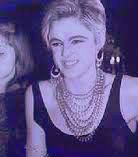
Her fogs, her amphetamines and her pearls.
would point to the situation as it stood in August or September of ’65. He’s hungry like a man in drag may refer to his homosexuality which prevents him from satisfying his lust I don’t know why he’s pointing at the sky but Dylan says disgustedly ‘how come you get someone (a fag) like him to be your guard. Dylan was known to be macho at the time.
The first verse points to a period perhaps November-December of ’65. Dylan, of course, married Sara in November of ’65 so that at this point Dylan would be playing with Edie as perhaps he thought she was playing with him before.
Hence:
Standing on your window, honey
Yes. I’ve been here before
Feeling so harmless
I’m looking at your second door
How come you don’t send me no regards?
You know I want you lovin’
Honey why are you so hard?
Here is a reference to Dylan and Edie’s first meeting in December of ’64. And then in March Chuck Wein introduced Edie to the Factory although she had met Warhol a couple weeks after Dylan in January of ’65. Dylan may have been too busy at the beginning of ’65 to actively pursue Edie, he also did have to pay attention to Sara who he was courting at the same time, plus engagements and whatever.
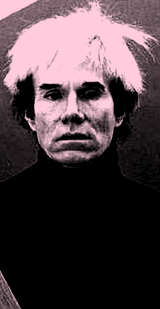
Andy
At any rate Edie teamed up with Warhol from March to about December of ’65. At that point Dylan who was wooing Edie and Grossman his manager were promising to make Edie a star at something. If as a star, she couldn’t sing, but then that didn’t stop Dylan from having a career.
Now, Andy had been trying to make Edie his movie star. According to Ronnie Tavel who scripted many of Andy’s movies Andy saw Edie as his ticket to breaking into Hollywood. That was one of Andy’s chief ambitions that was never realized. Tavel says that he and Andy used to coach Edie in her lines. When time to film came she always dosed herself with amphetamines before hand and, of course, uncoached herself. Thus in Andy’s account of his appearance at the psychiatrists’ banquet in January of ’66 he remarks that it was futile for Dylan and Grossman to work with her because she was unable to concentrate long to get anything done. Edie wouldn’t work hence no career. Andy might have been able to get her something if she had. He sounds rueful and hurt.
So in late ’65 this was Dylan’s second attempt to connect with Edie.
The second verse:
Kneeling ‘neith your ceiling
Yes, I guess I’ll be here for a while
I’m trying to read your portrait, but
I’m helpless, like a rich man’s child.
How come you send someone out to have me barred:
You know I want your lovin’
Honey, why are you so hard?
Kneeling ‘neath your ceiling fits in with standing in your window and looking at your second door. Kneeling ‘neath your ceiling is probably somewhat like Paul Simon’s ‘One man’s ceiling is another man’s floor or Tony Orlando’s Stomp three time on the floor. In other words Dylan is in the room beneath Edie unable to get to her unless she calls him.
Thus the addendum to verse two:
Like a poor fool in his prime
Yes’ I know you can hear me walk
But is our heart made out of stone, or is it lime
Or is it just solid rock?
In other words Edie knows he’s down there pacing anxiously back and forth but a hard hearted woman she refuses to call him to her, stomping three times on the floor.
The fourth verse:
Well, I rush into your hallway
Lean against your velvet door
I watch upon your scorpion
Who crawls across your circus floor
Just what do you think you have to guard?
You know I want your lovin’
Honey why are you so hard?
The ardent and frustrated would be lover can’t breach Edie’s window, door. ceiling, hallway, velvet door. The scorpion/circus reference escapes me except that Edie may have appeared to be leading some circus life as does Ophelia in Desolation Row.
Apparently this was a throw away song for Dylan as other than recording it he has never played it in concert. It was one of my favorites on the album however. Perhaps after Dylan’s motorcycle accident the song became irrelevant to him. Too topical, not universal enough as was its counterpart Visions of Johanna.
As far as Blonde On Blonde goes I’m tentatively of the opinion that Rainy Day Women #12 & 35 refers to Edie and his mother. The only reference to Sara in the album would be Sad Eyed Lady Of The Lowlands.
Your secrets are safe with me, Bob, of course you don’t have anything to hide.
A Review: Pt. 8, Tarzan The Invincible by Edgar Rice Burroughs
October 31, 2010
A Review
Themes And Variations
The Tarzan Novels Of Edgar Rice Burroughs
by
R.E. Prindle
Part 8
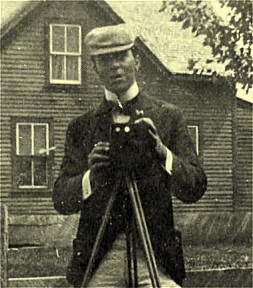
Edgar Rice Burroughs In Idaho
Red, White And Black
Now we get to the ostensible story which is the Red assault on Italian Somaliland. If few people today understand the partition of Africa by the European powers it might be well to recap the situation a little. The two big players were France and England with Spain and Portugal picking up some early real estate to be later joined by the bit players, Germany and Italy. The German possessions were stripped from them after the Great War and given to England.
This novel takes place in the Horn Of Africa or the Northeast corner facing the Arabian Peninsula and the Indian Ocean. The area contained Ethiopia otherwise known as Abyssinia, the only independent State in Africa save Liberia whose independence was guaranteed by the United States.
Ethiopia was bordered by Italian Eritrea and French and British Somaliland on the North, Italian Somaliland on the East, Kenya and Uganda on the South and Anglo-Egyptian Sudan on the West.
The Galla tribe with whom ERB became fascinated had been driven about by the Somals occupying lands mostly in the interior of Ethiopia after the manner of the Middle Eastern Kurds, where they were constantly in conflict with the Ethiopians and the Somals on the border. ERB deals with the Ethiopian-Galla situation in Tarzan And The Mad Man.
The Red camp is located in Ethiopia several days march from the border of Italian Somaliland. Opar which is nearby must now be located in Ethiopia.
The Reds have assembled an international cast of characters or in other words a multi-cultural outfit. Their multi-cultural nature will prove to be a liability rather than an asset as indeed it must in real life.
The organizers are Russian or Soviet Communists of whom there are four, Peter Zveri, the leader, Zora Drinov, Paul Ivitch and Michael Dorsky. They are joined by an American agent acting as a double agent, Wayne Colt.
Burroughs casually mentions that the expedition was put together in the United States by Zveri operating on both coasts. As Burroughs is writing a novel he wisely declines to preach or analyze, he is, as he says, an entertainer. As I who do function as an analyst pointed out in Marcia Of The Doorstep that the US had been used as a safe haven by every conspiratiorial revolutionary group on the planet. Burroughs is noting the same thing but only in passing as part of the story. If one is not attuned to such details they slip right by without significance as do the dots and dashes of the Morse code to the uninitiated.
The group is also composed of a Filipino Red, Antonio Mori and a Mexican revolutionary Miguel Romero. These people form the core group. Affiliated with them are the Moslem Arabs of Abu Batn who appear to have been recruited from the Mahgreb, perhaps Algeria, where some of Tarzan’s early adventures occurred. They do not appear to be Black Arabs of the Horn. While appearing to be Communists they remain Moslem Arabs whose real motive is to drive the Christians or Nasrany as they call them out of Africa. This means Whites of no or any religious affiliation.
Zveri has also patched on the Bantu tribe of Kitembo, the Basembos. This is because Kitembo has actually been to Opar, the only member of their party who has. Kitembo doesn’t appear to be a true Communist but is a former powerful chief from Kenya who had been displaced by the British. He comes from a place on Lake Victoria which should make him a Luo but for reasons perhaps not pertinent I tend to think of him as Kikiyu probably partly based on someone like Jomo Kenyatta who already had notoriety by 1930 although Kitembo’s history is close that that of the Unyoro Chief Kaba Rega whose story Burroughs was definitely familiar with from the memoirs of Samuel Baker.
Kitembo is interested only in recovering his past dignity augmented ten fold. All that becomes irrelevant when he deigns to lay his hands on Zora.
We should remember that Burroughs is writing in 1930 not 2010, so many things that are more or less clear to us now were undetermined at that time while understandings and motivations were quite different then from today and as those of today will be fifty years hence.
For one thing Africa was still a land of mystery where one wouldn’t have been too surprised if someone had discovered a lost civilization, a strange anthropoid- perhaps the so-called Missing Link, very real to the imagination at the time- and any number of things. One of the great losses of my childhood was the recognition that Africa was known; that nothing truly wonderful would be discovered in the world again. All was now cataloguing.
Abercrombie and Fitch who had built a very lucrative business outfitting ‘explorers’ or safaries, having not yet turned to teen porn, lost its raison d’etre as did all the ‘Explorer’ clubs where grown men sat around in khaki Safari gear drinking and dreaming. All that was left for me and my generation was Trader Vic’s and he’s gone now. The miracle is that the National Geographic found a way to survive when they could no longer portray exotic, naked, painted savages with necks supported by copper rings, plates in the upper lip and that. Now of course they don’t have to go as far for such exotica as Whites imitating the Africans sport massive tattooing suported by all kinds of nose rings and body piercings.
So, in 1930 Burroughs’ story still had a degree of probability. Especially in the way he joined contemporary politics to nineteenth century Africa. In one reads closely this is quite a story, a true tour de force.
Not only do the Arabs and the Bantus have their personal motivations apart from Communism, so we learn does Peter Zveri. The streak of individualism is not extinct in his collective mind, he sees the opportunity to make himself Emperor of Africa in Tarzan’s stead. Apparently Soviet intelligence has been keeping close tabs on the doings of the Big Ape Man because Zveri knows of Tarzan’s ‘fool dirigible trip’ believing him absent from Africa and possibly dead as no one has heard from him for the past year. This was before Google Alerts too.
Indeed Tarzan drops as from the clouds into a clearing filled with great apes as the story begins. Just coincidentally Jad-Bal-Ja and Nkima happen to be in this exact part of Tarzan’s estate of Africa at the same time. Zveri then is very disappointed to learn that his nemesis is back. As well he might because he has engaged himself mano a mano with the Big Bwana and Africa, believe it or not, is not big enough for both of them.
In his examination of Communism, multi-culturalism and human nature Burroughs is at his incisive best. Remember few of these stories go over a hundred ninety-two paperback pages. These are tremendously condensed stories. They’re somewhat like a zipped file with megabytes compressed into kilobytes. To really get the stories you have to unzip them and let them expand in y9ur mind. Don’t be deceived by their seeming simplicity.
The various cultures involved in this plot are only loosely held together by Communist ideology. The plot eventually falls apart because the cultures see through the phoniness of the Communist ideal. Zveri himself isn’t even that sincere a Communist as he intends to use the gold of Opar to make himself a third world power as Emperor of Africa. In the end Communism is a fatuous dream,whether utopian or dystopian is up to you.
Burroughs does not emphasize his opinions, he merely tells his story. My conclusions as to his intent are derived from the result of the story. In the end Communism fails because of internal contradictions while the big Bwana is invincible retaining his position as Guardian or Emperor of Africa. Not one world of preachment.
Wayne Colt in his rather absurd trek across Africa arrives too late for the first assault on Opar. He does happen into camp in time to spot the shaking tent and rescue Zora from Jafar, the Indian Communist, with Tarzan’s help. After killing Jafar Tarzan turns his steps to Opar traveling in a bee-line through the Middle Terraces he handily arrives before the first expedition which had left some time before him.
Let me take a moment to discuss Burroughs’ Africa. In the first place these stories are combination dreamscape, fairy tale and mythmaking. His Africa bears no more relation to this planet than Arthur’s Camelot bore to Medieval England. I find it tiresome for scholars to try to find the ‘real’ history of Arthur’s career. Arthur may have a loose connection to real historical events but the story, a great one, is a projection of psychological needs. There isn’t any such thing as a Holy Grail. No knights ever went in search of it.
In the same way Burroughs’ Africa is a psychological projection hopefully leading to his Holy Grail. There are no lower, middle or upper terraces in a nearly uniform jungle in the real Africa. Anyone who tries to find them will be severely disappointed. Such things are merely inventions of Burroughs’ dream world. I am glad he shared it with me, you and the millions.
The frequency with which the characters run into each other way out there is also impossible but in Burroughs’ dreamscape, his fairy tale, his myth, it happens all the time. There is no sense in arguing the impossibility. If you find it too offensive to your sensibilities then the oeuvre is not for you. One just accepts that these are fairy tales and in fairy tales things like this happen all the time. It’s a fantasy, fantastic things go on.
I try to fathom the psychological intent so while I may smile and jest at some impossible details it is only at the naive dream details and not the serious intent of the story. In our time these stories would have been taken at warp speed to another galaxy where in that context all things would be possible. But, that would be pure fiction hence unbelievable. I never did take Star Trek seriously, in fact, I refused to voluntarily watch it. Burroughs’ Africa can still be located on a map of the world connecting psychological reality with temporal reality in a very satisfying blend.
So, as this series is a roman a fleuve or River Story, Tarzan ruminates on his previous visits to Opar as he strides across the hot dusty desert, where the rain never falls, toward the fabled gold and red domes and turrets in the distance.
La’s love for him which began in Return Of Tarzan has caused dissension between her and her people. She has retained her position only through the active intervention of Tarzan. Defeating the revolution that had ousted her in Tarzan And The Golden Lion the big Bwana had replaced her on the throne guarded by the Bolgani of the Valley of Diamonds and the semi-human Gomangani. It is interesting to not that the Oparian revolution occurred after the Russian. Might be a connection.
As he approaches the city he believes that the Oparians appreciated his defeat of Cadj and that they love and respect him so that his reunion with them will be joyous. Not so. In the interim the Oparians who hate and resent Tarzan have deposed La putting her in a foul prison in the vast underground maze of dungeons of Opar. Passing back through the narrow cleft, bounding up the stairs, Tarzan is surprised to find himself attacked by the howling Frightful Men. The Man of the Steel Pate receives another frightful blow which lays him out.
He wakes to find himself the captive of Oah and Dooth. He is placed in a cell the details of which I have already related above.
I haven’t plumbed the signficance of Tarzan and La being imprisoned together while the city is attacked by the Communists unless the dreamworld of Opar represents a sanctuary that is now invaded in the attempt to destroy Burroughs’s literary career. In that event it might be necessary for the Anima and Animus to be together. This story also harks back to the invasion of the Emerald City in Baum’s story The Emerald City Of Oz.
In any event the various strange screams and noises from within Opar unsettle the superstitious Blacks and Arabs who lose their nerve refusing to enter Opar. The Blacks believe in spirits and the Arabs in jinns both of which they fear more than living men. Thus Burroughs is contemptuous of both cultures.
Zveri and his Russians are too cowardly to enter themselves. The only one with the nerve is the Mexican Miguel Romero who gets very good reviews from ERB. Miguel retreats in the the face of the horde of Frightful Men but he is very cool about it.
Returning to camp the Arabs are now disaffected having words with Zveri. The arrival of Colt and Mori puts a little heart into Zveri so that a second attempt on Opar is determined leaving the Arabs to guard the camp.
Tarzan and La escape from Opar between the two assaults becoming subsequently separated. Zveri takes the Blacks and Communists with him. Being left behind dissolves the Arab affinity with the Cause. Never good Communists, being interested only in ejecting the Nasrani from Africa, they decide to disappear into the desert.
About this time La wanders into camp. Sacking the camp, Abu Batn and his Arabs leave with the two women whose value in the North he knows full well. The Arabs are out of the story. The Communist coalition is breaking up. As Burroughs points out the goals of the two are not the same.
Back in Opar Zveri finds it impossible to force his Africans into service while he and his Russians remain cowards. Colt behaving bravely, as only an American can, along with Miguel Romero penetrates to the sanctuary where they are faced by the Frightful Men. Perhaps in a comment on American tactics Colt fires over the heads of the Oparians while the Mexican, Romero, fires directly into the mob.
Why when Americans go to war they are reluctant to do the dirty work of killing is beyond me. The reluctance to engage the enemy in Viet Nam cost us that war. The reluctance to do what we have to do in Iraq is costing us that war. Perhaps we think we can hide behind a wall of steel as our technology wars for us while we imagine we can remain safe. Our punishment of our own soldiers for merely humiliating the enemy must be unique in the annals of warfare. And they wonder why no one wants to join the Army.
Romero who shoots to kill is able to escape while the pussy footing Colt is downed by a thrown club and captured. A thrown club! Once again a Burroughs’ surrogate takes a blow to the head, but how does one survive a thrown club?
Just as Colt and Zora exchange partners in the jungle so now Colt takes Tarzan’s place in jail. Here, he is befriended by a nubile beauty, Nao, rather than as La did Tarzan and, pephaps as Florence was doing for ERB. Afer killing to free him Nao is left behind as Colt disappears into the dusty desert. Not a very thoughtful thing to do as Nao would certainly be discovered.
Zveri returns to his devastated camp to be handed a letter notifying him that Colt is a double agent. Abandoning any thoughts of Opar the Communists concentrate on their mission which is the simulated invasion of Italian Somaliland.
As they are about to leave Tarzan returns Zora to camp. Coldly dropping her off without a word he climbs onto a branch to spy on the conspirators. His leopard skin shorts are mistaken for the real thing. Here we go again. the shot at the imagined leopard grazes the Big Guy’s skull putting him out of commission for a full day. So that is at least two knockouts for Burroughs’ surrogates plus this concussion. Tarzan’s frequent lapses of attention become more intelligible.
Zveri wants to take advantage of his opportunity and kill Tarzan but Zora intervenes so Tarzan is bound which leads to next day’s episode when Dorsky threatens him only to be annihilated by Tantor.
The charming fairy tale between Nkima, Tantor, Tarzan and the Hyena then takes place which is a repeat of the same scene in Jewels Of Opar.
Nkima then goes in search of the Faithful Waziri to aid Tarzan while the Big Fella begins his campaign of terror against the Communist conspirators.
His strategy is to separate Kitembo and his Basembos from Zveri and his Communists. To do this he plays on their superstitious natures. A mysterious voice comes down from the trees, in other words, the sky, telling them to go back. In the meantime Little Nkima has recruited the Faithful Waziri who arrive to help out not with spears and bows and arrows but modern repeating rifles. Arranging themselves in front of the advancing Communists hidden in the tall grass -this stuff grows six feet high- they give the appearance of being many more than they are. Burroughs doesn’t make it clear how they can see the Communists through the grass while the Communists can’t see them but as Tarzan usually navigates pretty well even in total darkness I’m probably making a bigger problem out of it than it is.
Zveri does a rapid advance to the rear which act of cowardice completely destroys his credibility. Dorsky is dead while Romera and Mori renounce their Communism. Zora reveals she’s only in it for the revenge because Zveri had murdered her family twelve years earlier in the Revolution while, as we are aware, Colt is an American agent. This leaves only Zweri and Ivitch who I believe represent Frank Martin and R. H. Patchin, ERB’s old nemeses in Chicago.
Returning to camp Zveri spots Wayne Colt. Calling him a traitor he fires point blank missing while the bullet grazes Colt’s side without breaking the skin. That was a close one. Before Zveri can fire again he is brought down from behind by Zora. Burroughs replays scenes like this over and over with different variations. Just as the constant bashings on the head his surrogates take reflect his own experience in 1899 so must all these conflicts between his surrogates and another man and his surrogate woman reflect his situation with Frank Martin and Emma. In each instance in one way or another the woman rejects the other man. Thus Burroughs ‘fictionizes’ his own situation.
So now Zora kills Zveri so that she and Colt can bridge that gap.
As a sidekick Ivitch/Patchin is allowed to leave Africa. In point of fact Martin died some time before Burroughs although not until after 1934 while Patchin survived both.
Tarzan in the meantime escorts La back to Opar where he reinstalls her on the throne this time doing the sensible thing of eliminating Oah, Dooth and all their sympathizers. One must believe there will be no more trouble in Opar. In any event Opar disappears from the oeuvre.
Tarzan then returns to the camp to dispense justice as becomes the Lord Of The Jungle.
As the story ends the ‘invincible’ Tarzan seems to have solved all the problems confronting he and Burroughs in 1930. The Big Fella has not only thwarted Zveri but defeated Stalin and the whole Soviet empire.
As the exchange between Zveri and Romero explains it: pp. 183-84:
“Which proves,” declared Zveri, “what I have suspected for a long time; that there is more than one traitor among us,” and he looked meaningly at Romero.
“What it means,” said Romero’ “is that crazy, harebrained theories always fail when they are put to the test. You thought that all the blacks in Africa would rush to our standard and drive all the foreigners into th ocean. In theory, perhaps, you were right, but in practice one man, with a knowledge of native psychology, which you did not have, burst your entire dream like a bubble, and for every other harebrained theory in the world there is always the stumbling block of fact.”
Thus Tarzan not only defeats Zveri, Stalin and the Soviets but he disproves the whole Communist ideology as a harebrained theory.
On top of that the Invincible One restored order in Opar while putting his personal life to rights by separating out Colt and Zora or Burroughs and Emma and Tarzan and La or Burroughs and Florence.
The succeeding novel Tarzan The Triumphant- Invincible, Triumphant- will rescue the Russian situation while its successor Tarzan And The City Of Gold disposes of Emma/Jane/Zora/Nemone by her self-immolation while its successor Tarzan And the Leopard Men bring Kali/Florence and Old Timer/Burroughs together. The series climaxes with Tarzan And the Lion Man when Burroughs 2 kills off his early self, Stanley Obroski, or Burroughs 1 to come into his own, or so Burroughs supposes. The rest of the series is playing out the aftermath of the divorce from Emma and the marriage to Florence.
As could have been predicted the marriage to Florence was less than satisfying.
So, perhaps, Burroughs’ solution to his personal dilemma is based on a harebrained theory itself which fell to earth on ‘the stumbling block of fact.’
For the moment however Tarzan has saved Africa from the Communist menace and perhaps the World.
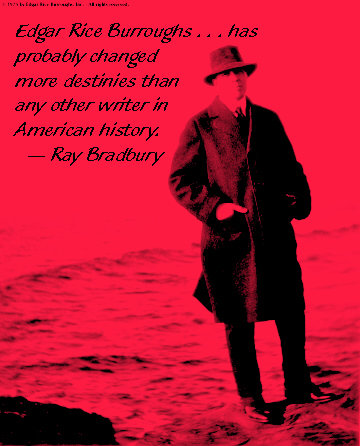
Edgar Rice Burroughs- High On A Mountain By The Sea
A Review: Jungle Girl By Edgar Rice Burroughs
September 19, 2010

Borobudur In Bali

Idealized Apsara

Real Apsaras
 King becomes injured and in a fairy tale fashion he is nursed to health by a poor peasant couple living far from the haunts of men. Before being saved King in his feverish delirium sees a group of ancient Khmer warriors conducting a beauteous maiden through the jungle on an elephant. When he recovers he learns it was not delirium but a fact.
Anghor Thom
A Review
Themes And Variations
The Tarzan Novels Of Edgar Rice Burroughs
#14 Tarzan The Invincible
Part VI of X
by
R.E. Prindle
Inside The Gates Of Opar

Edgar Rice Burroughs
Life is just too short for some folks,
For other folks it just drags on.
Some folks like the taste of smokey whiskey
Others think that tea’s too strong.
Me, I’m the kind of guy who likes to ride the middle
I don’t like this bouncing back and forth.
Me, I want to live with my feet in Dixie
And my head in the cool blue North.
–Jesse Winchester: Nothing But A Breeze
And now we come to the heart of Edgar Rice Burroughs. One reason he is literarily disdained is that the story is not the story. Porges, p.524:
As the story progresses the perceived theme of a worldwide conspiracy is abruptly abandoned. Burroughs in his contempt for the communists refuses to allow them to be sincere even in their Marxist goals.
This is not true. Porges has misconceived the story. To quote the sixties Jewish revolutionary Mark Rudd: The issue is not the issue. By that Rudd meant that the Jews had created a diversion to mask the true issue which was the establishment of the Jewish culture as top culture or dictator in this multi-cultural world.
Burroughs intent is exactly the same as regards Tarzan. True, Burroughs has contempt for Communism but that is merely a frame story and a side issue. The true issue is that Tarzan’s authority as guardian of Africa is being challenged on the spot. The duel is between himself and Sveri mano a mano. He discredits the collectivity through the individuals. Thus at novel’s end Tarzan sits in state as Guardian or Emperor disposing the fates, godlike, of the remaining conspiritors. Magnanimously he allow Paul Ivitch (Paulevitch) to be escorted out of Africa rather than be thrown on his own resources that would have resulted in his certain death.
The issue within the issue, as always, is Burroughs attempt to resolve his psychological difficulties. Thus one has the Colt-Drinov combination, possibly reprsenting ERB and Emma, an episode within Opar of Nao who may represent Florence releasing him from the prison of his marriage to Emma, and Colt-La, the Anima and Animus problem. Tarzan and Colt change partners so that La nurses Colt and Tarzan nurses Zora. But to that in the next section.
While one expects a pure shoot out with the Communists, Tarzan is not going to defeat them by direct action but by a terrorist campaign of which Tarzan is the jungle master.
To compound the problem Burroughs confuses realism with dreamwork. This is not a realistic novel but a dream fantasy. It was said that Burroughs wrote out his dreams which has a basis in fact. The scenarios may have originated in his sleeping dreams but then he modifies them in day dream style while consciously molding the story for political and commercial purposes. A writer does need readers.
To give a basis for comparison for the dreamwork I’m going to play Freud here and offer up a dream of my own; it is similar to Burroughs’ in many way. Since integrating my personality I don’t have wonderful dreams like this anymore. As Jung correctly surmised when one integrates the conscious and sub-conscious minds memory destroys the symbolic basis of your dreams. I can analyze the common place dreams I have now even as I dream them. Something is lost, something is gained, but it might be of lesser value. I think I like the mysterious flavor of the smokey whiskey even though the water I have to drink now is better for me.
In my dream I began on the edge of a vast desert dotted with a few oases while far off in the distance twenty years away, rather than miles, away in the the distance a great white shining mountain arose. The distances were so vast they were measured not in miles but years. Indeed, the years of my life. I had to traverse the vast desert reaches between the oases. Each oasis merely refreshed me for the next perilous journey. Having traversed the years I came to the great white shining mountain. One might compare it to the tor containing the treasure vaults of Opar out on its desert. These are symbols common to multitudes.
I then came to the white shining mountain which might compare to the city of Opar. Censorship prevented me from climbing the mountain at that time. In other words in the control of my subconscious, consciousness was denied me. I approached the mountain from the back where I noticed a trickle of water leading into and down the mountain. I tried to drink the water but as it ran through a pure salt bed it was too salty. Unlike Burroughs who was in the pits of darkness I was always bathed in a clear light which came from nowhere.
I followed the little stream down the subterranean path into the mountain. Thus I had all land and no water, a barren psychological situation. Following the cave down I came to a series of gates made entirely of steel. I hesitated to go forward but there was no going back. I was impelled into one of the gates which turned into a chute that spilled me out onto a steel floor where unseen hands seized me pushing me into a steel room as the steel door slammed shut. Like Tarzan beneath Opar I was a prisoner with no seeming way out.
As I looked around I realized that this was a laundry room. All steel, of course. While I had no food I now had sinks full of water. My situation had been reversed from all land to all water, from the pure masculine to almost pure feminine. Where before I was barren now I was spilling over with wisdom. I knew I had to get out of there reasonably soon or I would starve to death. There was impenetrable steel all around. But I had plenty of water. Too much water. Looking around I spotted ventilation ducts along the ceiling. I conceived the notion that I could drink lots of water then urinate in the ducts which would create a foul odor that would be distributed throughout the rooms above. They would search for the source of the odor thus opening the door of my prison.
The ducts were difficult to reach but I was able to urinate in them. As I expected voices came down the duct asking ‘What is that smell?’. The door to my prison opened inward so I stood to the side that opened waiting. Sure enough a couple maintenance men flung the door open bursting into the room. I slipped out the door behind them unnoticed.
I now descended still further until I came to a bank of elevators. One door was open for which I made a rush. The elevator was packed with boys I knew from high school. With doubled fists they pushed me back refusing to allow me in the elevator with them. Mocking me as the doors closed I was left alone way down there.
There was a flight of stairs but censorship prevented my using them. I waited in vain for another elevator. As with dreams I next found myself at the back of the mountain but the path into the mountain had disappeared so I now had to climb The Great White Shining Mountain.
If, like Burroughs, I were writing a story I would provide a plausible story line for my escape but I’m not. I’m merely transcribing a dream.
The reason the mountain shone was because it was covered by snow several hundreds of feet, possibly thousands, thick. As previously the water in the stream was too salty to drink now it was frozen. The sun shone brightly, not only brightly, but brilliantly, as I began my climb. I had left the subconscious for the conscious as I strove for the light. The climb was long from the back of the brain to the forebrain but not tiring. Apart from the barrenness of the snow I was enjoying myself. Would it be too offensive a pun if I said I enjoyed being high? After a long climb I came to a precipice past which I could go no further. Nor could I go back.
As I studied my position I looked down this sheer precipice to the desert thousands of feet below. There was snow all the way to the desert floor. Down there, way down there, I could see the tiny ant-like people in the barren sands doing obeisance to the moutain which they apparently treated as a god.
Looking down the sheer face of snow I could dimly perceive the outlines of a great face carved in the snow. This god, then, retained all the water behind his visage that could make the desert bloom. Just as I had used water to escape the prison of my subconscious I conceived the notion that I could release the water and make the desert bloom freeing the people from their bondage.
Now, this was hard snow. I had no trouble walking the surface without breaking through while if the snow didn’t give way as I jumped on it to destroy the snow god I would plummet several feet into the desert. Neverthless I leaped up landing on my bottom. The snow gave way as I rode the avalanche several thousand feet down the mountain side to land on the desert floor while I destroyed the god who had been impounding the water.
Many streams now flowed out from the mountain. The desert bloomed turning green and bursting with flowers. Now that we have a comparison let us examine Burroughs’ great dream of Opar.
Opar first found expression way back at the end of 1912 and the beginning of 1913. Appearing at the end of The Return Of Tarzan the story was included in Burroughs’ fourth published story and fifth written story, the Outlaw Of Torn had been written but not published yet.
As with Invincible the story of The Return was not the story. The story was what Burroughs hung the details of what appeared to be the story on. Hence Return was rejected by Metcalf Burroughs’ first editor at Munsey’s who undoubtedly couldn’t understand it. This is the novel in which Tarzan makes his first raid on the fabulous treasure vaults of Opar. Burroughs will continue his wonder stories of Opar through three more books. Each return occurs at a crucial point in his life.
That Opar is a dream location is proven by the topography of the location. It is not too dissimilar to any dream. The jungle grows right up to the base of towering mountains behind which Opar is hidden. On the other side of these it is a dry dusty desert exemplifying Burroughs’ life as the twenty year desert in my dream did mine. Entry into the valley in this story is through a narrow defile apparently several thousands of feet high above which the peaks of the surrounding mountain range tower several thousand feet more. This entry also closely resembles that of Haggard in King Solomon’s Mines. Haggard is never far from Burroughs’ mind as he writes his stuff.
Working your way down into the dreamscape is considerably more easy than climbing it. And then off in the distance rose the shining red and gold domes and turrets of Opar. A dream city if there ever was one. One is reminded of the two great literary and psychological influences on Burroughs, H. Rider Haggard and L. Frank Baum. Of Haggard’s work beyond King Solomon’s Mines I have Heart Of The World and People Of The Mist most readily called to mind. It might be appropriate to mention that Freud also read some Haggard. He specifically mentions Heart Of The World and She but I suspect he probably read others as well. Opar might be a ruined version of Baum’s Emerald City of Oz. Opar is red and gold while from a distance its ruination is not obvious. Mine was a shining white mountain. Burroughs probably tinkered with his to make a good story better.
Now, the fabled Thebes of Greek mythology had seven gates. Cities Of The Sun had up to a hundred. Opar doesn’t have any. The entrance is a narrow cleft in the wall on which on entering this narrow 20″ gap for which Tarzan had to turn his massively broad shoulders sideways and then immediatley climb a flight of ancient stairs. This appears to be a reverse birth story in which Tarzan is reentering the womb, an impossible feat, but then, Tarzan goes where even devils fear to tread. Try some of the books of the psychologist Stanislav Grof. There’s definitely a sexual image that requires a little thought to understand. Hmm. No gates but a narrow cleft too narrow for the shoulders and a flight of steps leading back into the what, womb? Whose cleft? ERB mother’s, Emma’s, possibly Florence’s by this time, or that of his Anima figure? Well, the last is waiting for him inside the domed inner chamber of this sacred city who is aptly named La, which is French for She. ‘She’ was Ayesha the heroine of Haggard’s novel She. I’m sure Burroughs is not writing consciously here.
At this point Tarzan is accompanied by fifty of his brave and faithful but superstitious Waziri. In fact, in this story as Tarzan goes through his incarnation of a Black savage he is Chief Waziri, eponymous head of the Waziri. P. 42:
As the ape man and his companions stood gazing in varying degrees of wonderment at this ancient city in the midst of savage Africa, several of them became aware of movement within the structure at which they were looking. There was nothing tangible that the eye could grasp- only an uncanny suggestion of life where it seemed that there should be no life, for living things seemed out of place in this weird, dead city of the long dead past.
Dead city of the long dead past. That’s what dreams are all about, one’s own long dead past. Thus the ridge separating the lush live jungle from this dry, dusty plain eight years wide was Burroughs own dead past. I suggest the mountain range, perhaps sixteen thousand feet high, represented ERB’s confrontation with John the Bully when he was eight or nine. On the jungle side was his early life as a Little Prince while on the dry dusty side was his blighted, blasted life after John. Opar represents his ruined mind inhabited by the suggestion of life and the Queen of his dreams the beautiful High Priestess of the Flaming God, the woman of indescribable beauty, La of Opar.
La is obviously a combination of Haggard’s She and L. Frank Baum’s Ozma Of Oz.
Tarzan is seized by the Frightful Men, bound and gagged and left lying in a courtyard at high noon. The rays of the Flaming God bear down on him. Whether this is merely part of an ancient Oparian religious rite or whether Tarzan becomes the chosen Son of theSun a god among men, isn’t clear to the reader. The Oparians have their own ideas.
Burroughs describes this rite in a really masterful way. The maddened murderous Oparian who disturbs the ceremony just before Tarzan is to be sacrificed is nicely handled. Believe me, I feel like I am there. As La looks down on Tarzan’s form on the altar she recognizes the One, the Son of the Sun, the One for which she is destined. Once again, Haggard’s She.
Freed in the melee caused by the crazed Oparian Tarzan is taken down to the Chamber of the Dead by La where she hides him. As she said nobody would look for him in the Chamber of the Dead. This Chamber answers very well to the laundry room of my dream. Tarzan/Burroughs is in a stone dungeon with walls fifteen feet thick, fourteen in Invincible, in total darkness while I was in a steel room with no exit but bright light. These locations answer to the rigid confines of one’s owned damaged psyche. There is no way out but there is, there has to be. While palpating this stony prison at the back of the cell Tarzan discerns a flow of air coming through. This scene is a replication of one in Haggard’s King Solomon’s Mines while becoming a B movie staple. The big Bwana discovers some loose stones. He is able to dislodge these creating an exit through the fifteen foot depth of stones of the fortress wall. Somehow Burroughs has worked his psyche to give himself a chance. Once beyond the foundation walls, free of the Chamber of the Dead (I once dreamed I was looking for my soul in the House of the Distraught) but act among the living, Tarzan feels his way down this long dark corridor. One can’t be certain of ERB’s age when he achieved this escape. As it takes place just before Tarzan marries Jane the time might have been 1898-99. Perhaps when he was in the stationery business in Idaho. Perhaps something he read acted as a lever. Apart from Darwin’s Origin Of Species I would venture to say he read Eugene Sue’s Mysteries Of Paris a copy of which is in his library while traces of it are here in his earliest work.
Sue’s rare mentality permeates every page of this first visit while Sue’s extraordinary consciousness is everywhere apparent throughout ERB’s entire corpus. Burroughs himself is absolutely incredible in the manner he associates with numerous other writer’s intellects, seemingly simultaneously within a given passage or even sentence. Myself, Adams, Hillman, Broadhurst, Burger and others have written extensively on these influences. Hillman even goes so far as to virtually twin Burroughs with some of his major literary influences. Burroughs does make all these writers his virtual doubles.
I have stressed Sue’s influence in several earlier essays. I can only urge you to read Sue’s Mysteries Of Paris- a big three-volume work and too short at that- which Burroughs in his own reading found a life changing experience. Possibly he did read it in 1898-99. I found it a life changing experience; I’ve never been able to free myself of its influence, while it appears that Burroughs couldn’t either. A lot of the late nineteenth century writers make reference to Eugene Sue. H.G. Wells based the beginning of an early novel on Sue. The remnant remains only as a short story.
Sue wrote from outside the bounds of sanity. Privately I consider him insane but so brilliantly rational as to transcend the very meaning of insanity. He’s a dangerous writer. His last work was confiscated by the French authorities. It undoubtedly had such a private personal sense of morality that I am sure it would have undone society much as the pornography from Hollywood has undone ours. DeSade and Restif De La Bretonne, who in some ways Sue resembles, were mere unbalanced pornographers who disturb only the disturbed. Sue’s vision of morality is coldly clear, it forms the basis of Tarzan’s but is always on the side of reason and virtue. This fact makes it no less dangerous to a weak mind or that of the obsessive-compulsive Liberal. Still, only the strong survive. I heartily recommend you take your chance.
Tarzan freed from the prison of the psyche, was he insane? was I? or were we merely trapped by a device of other’s making? I can’t say but ERB’s sanity after he escaped was conditioned by that of Eugene Sue. I, of course, rise above all influences.
Progressing down the corridor Tarzan comes to the First Censor. He finds a gap in the floor into which he might have fallen had he not been careful. He would have fallen into the unknown but he would have been alright. He would have fallen into water which in his condition would have been life-giving water rather than dangerous or perhaps he might have drowned in the waters of the subcoscious or Oblivion.
In high school I had a teacher who used to chalk a half dozen slogans on the black board, one each morning. The only one I remember is ‘when you reach the end of your rope tie a knot and hang on.’ I did this for a couple decades then one day I let go. The joke was on me. There was nowhere to fall. I was only a fraction of an inch from a solid surface. However Tarzan culdn’t have known this since he didn’t fall in, this time. He would three years later.
By chance he looked up where he saw some light entering to discover he was at the edge of a well. Yes, you see, the water of life. He dimly descried the other side fifteen feet away which was child’s play for him to leap. Thus he passed the First Censor. Mine was at the elevators which I apparently merely disregarded.
Continuing on for some time in total darkness, so far that he believes himself outside the walls of Opar he enters the treasure vaults. These vaults are filled with what appears to be forty pound barbells of solid gold. Now, this gold is old. So old that no Oparian knows that it is there nor do any old legends even mention it. This is an intriguing part. The gold was mined millennia in the past after the sinking of Atlantis. This raises the question of what did Burroughs know of Atlantis and did he believe in it? I can’t answer the sources of the former but I’m betting on Ignatius Donnelly as one of them. As to the latter I believe he did. He mentions Atlantis in Invincible with a confidence and familiarity that convinces me that over the eighteen years since Return he has read and thought enough to convince himself of the reality of the lost continent. He appears to accept a mid-Atlantic location.
The gold represents the income he’s receiving for his stories. The stories spring from his dead past. That the vaults are outside Opar indicates he freed his mind from its prison or that the money comes from outside the prison, i.e. his publishers. That the gold is Atlantean indicates that his stories are based on his own ancient experience. In other words he is mining his past already completed as ingots or accomplished facts.
What experience then catalyzed his ability to write? I believe that from 1908-10 when he read L. Frank Baum’s Ozma of Oz, Dorothy And The Wizard Of Oz and The Emerald City Of Oz he found a means to express himself. These books bypassed his last censor allowing him to write Minidoka. That book was not suitable for publication but it freed his genius so that he immediately followed it with A Princess Of Mars.
Now, outside the gates of the Emerald City/Opar in the midst of the equivalent of Baum’s Great Sandy Desert he found the handle on his own destiny.
Tarzan locates the fifty faithful but superstitious Waziri loading them up with two forty pound ingots each and points them toward the coast.
At the same time Fifty Frightful Men from Opar who are tracking him discover Jane instead. Dreamy enough for you? Given a choice between Tarzan and Jane I’d take Jane and so did the Fifty Frightful Men.
So now Jane’s on the altar under the sacrifical knife of La. Skipping the irrelevant details La discovers Jane is Tarzan’s beloved. Interesting confrontation between Tarzan/Burroughs real life woman and his Anima. La is shattered as Tarzan rejects her for Jane.
This is a key point in the oeuvre. This is what makes the novels so repulsive to the literary mind. The story is not the story; the issue is not the issue. Opar is the story within the story that will be told in four short parts over eighteen years. So we have part one here without any indication the story will be continued. A segment of the story is just plopped down into The Return Of Tarzan, sort of irrelevantly.
Weird style actually. I’m not even sure it works, but it nevertheless must be effective else why would the stuff still be in print a century on. You’re on your own, Jack, I can’t even attempt to solve that one. Not today anyway.
The next novel examining this psychological is the 5th novel of the oeuvre, Tarzan And The Jewels Of Opar of 1915.
At this point Tarzan, a profligate if there ever was one, has run through the two tons of gold the fifty faithful Waziri brought out and is broke. Two tons of gold in three years. Think about it. He needs to make another run on Opar.
The character of the series changes with Jewels Of Opar from the character of the Russian Quartet, the first four novels. They not only have an Oz influence but they become Ozlike. Burroughs apparently drew on The Beasts Of Tarzan as the foundation for what is essentially a new series.
After writing five Oz stories, in the sixth, The Emerald City Of Oz, Baum attempted to abandon the series. He closed the series off with the news that there will be no more communication from the fairy kingdom. Because Oz has been invaded three times now, what with the advent of airplanes that will be able to spot Oz from the air Ozma is making the kingdom invisible. Is it coincidence that Opar disappears from the oeuvre after the third invasion?
Baum’s Emerald City Of Oz appeared in 1910. It was the last of the stories to be datelined Coronado in his prefaces. When he was forced to begin writing Oz stories again in 1913 they were datelined Ozcot in Hollywood. In 1910 Hollywood was just a pleasant Los Angeles suburb. The movies didn’t begin to make Hollywood the center of the world porn industry until 1914.
Whether Burroughs knew that Baum left Coronado in 1911 isn’t known but I find it signficant that when he went to California in 1913 his first choice of residence was Coronado where he perhaps thought he would be close to Baum who afer all had a close connection with Chicago. Baum wasn’t in Coronado so Burroughs moved across the bay to San Diego.
The question then is: did Burroughs make a pilgrimage to Ozcot to see Baum in 1913? I have to believe he did. Tarzan was one heck of an entree such that Baum could hardly refuse to see ERB. How long or how often the men met then is conjectural but I think it was long enough for Baum to give Burroughs some tips on fantasy writing. Already an ardent admirer of the Oz books Burroughs would have had no trouble accepting advice from this master.
Thus when Burroughs returned to LA and Ozcot in 1916 it is certain that they met while they were probably already familiar with each other. In 1919, when Burroughs moved to LA permanently, Baum was on his deathbed so there was no chance to renew the acquaintance. I also believe that Baum’s Ozcot influenced Burroughs in naming his own estate Tarzana.
In any event Tarzan returns to Opar in 1915. Except for the first visit when Tarzan following the directions of the old Waziri, chief of the Waziri, visited Opar to take the gold, in the rest of the visits he is battling interlopers who wish to steal the gold from him. It might pay to look at the nature of the intrusions and the intruders.
In 1911-12 Burroughs had for the first time in his life come into more money than he could spend, only for a brief moment of course. Thus Tarzan removes the gold more on a whim not really knowing what to do with it. One might think this a strange attitude for one who had tasted the night life of Paris; but a foolish conisistency is the bugbear of small minds as one of those venerated old timers once said. I don’t wish to be thought of as small minded so we’ll let the observation pass.
By 1915 having lost his two tons of gold in some bad investments Tarzan has better learned the value of money or, at least, the absence of it. And so, perhaps, has Edgar Rice Burroughs. One can see the ghost of old George T. shaking his head muttering: ‘When will that boy ever learn?” Well, George, it would take more time than allotted to him.
After 1912 Burroughs had created something of value. That value could be stolen or at least exploited. In 1914 McClurg’s offered him a publishing contract. Nicely crafted it gve all the advantages to McClurg’s and none to Burroughs. Burroughs undoubtedly did not understand the legal implications of what he signed. I can’t explain this but McClurg’s made no effort to merchandise a sure fire hit. They didn’t even publish the full fifteen thousand copies called for in the contract. They released the book to reprint publisher A.L. Burt after p;rinting only ten thousand copies themselves. Explain it how you will but there was a guaranteed huge absolutely visible market waiting for book publication. Syndication in newspapers had guaranteed the book’s success. So why did McClurg’s willfully refuse to take advantage of such a deal?
Burroughs probably had stars in his eyes at the prospect of 10-15% royalties on hundreds of thousands if not millions of books. Instead he got comparatively nothing. The royalties from Burt were miniscule and to be shared 50/50 with McClurg’s. You can imagine Burroughs’ disappointment as a golden future became brass before his eyes.
Back to Opar. Tarzan entered the vaults before his faithful Waziri who were warriors and would act as bearers for no other man. Alone Tarzan made six trips from the vaults to the top of the tor bringing up forty-eight forty-pound ingots. That’s 320 lbs. per carry for a total of 1920 lbs or nearly a ton. According to Freud, and I believe him, all numbers are significant, although I don’t have enough information to delve completely into the meaning of these numbers. The Waziri then brought up fifty-two ingots. some two of the fifty got stuck with carrying two ingots or two went back for one more. That made slightly over a standard of 2000 lbs.
Tarzan’s forty-eight ingots are roughly half of the total that undoubtedly represents the fifty-fifty split with McClurg’s. At the time Ogden McClurg, the son of the father who built the company, Alexander McClurg, was the nominal head of the company. The firm was actually owned by the employees since about 1902, which Burroughs probably didn’t know. The man he dealt with, Joseph Bray, was probably the real head of the company. Actually Ogden was away from the company for long stretches on adventures in Central America and WWI so that he would have been unfamiliar with the day-to-day workings of the company. Burroughs, however, formed a grudge against Ogden McClurg. I suspect that the Belgian villain Albert Werper is based partly on Ogden McClurg while also being an alter ego of Burroughs. So, a story behind the story is how Ogden McClurg stole ERB’s royalties.
At the same time Tarzan spurns La for a second time so the Anima-Animus story of Tarzan, Jane and La continues. La has Tarzan within her power but in the life and death situation love triumphs over her hurt so she spares the The Big Guy. Not without consequences. The Fifty Frightful Men, or what’s left of them after the maddened Tantor tramples a few, led by Cadj, who now makes his appearance, feel betrayed repudiating La. Thus is begun the conspiracy to replace La which will be the focal point of the next two visits. You know, love or hate, I don’t know which is to be feared the most.
In the next visit in Tarzan And The Golden Lion Tarzan has gone through his second two tons of gold. That is four tons of gold in roughly ten years plus the Jewels of Opar that our spendthrift hero has managed to go through. Four tons of gold! That’s 128,000 ounces of gold. At today’s price of over a thousand dollars an ouce it works out to 128 billion dollars and change. My friends, that is prodigality. Good thing there was more where that came from, hey?
Of course a lot of the loss came from loans to the British Empire to float the Great War. But like certain other borrowings, to which Burroughs may be making an allusion, the Empire had no intention of repaying.
Once again this sort of excess had brought Tarzan to the edge of bankruptcy not unlike ERB in 1922. Just as creditors were besieging ERB for money so some private individuals led by a former employee, Flora Hawkes, attempt to extract the gold from Opar. Tarzan first fails, then recovers not only the gold but the bag of diamonds. The significance of the jewels is explained in the Tarzan and Esteban Miranda story contained in Tarzan And The Ant Men. That story is a duplicate Jewels Of Opar with different details. The history of the Jewels Of Opar also duplicates the history of Tarzan’s locket in Ant Men. If you’ve found something good don’t hesitate to use it more than once.
Fifteen years after the visit in Jewels Of Opar and eight years after the Golden Lion/Ant Men the scene returns to Opar, where once again others are to make a run on Tarzan’s private bank at Opar. Apparently Tarzan has them baffled from the start as, although they know there are treasure vaults at Opar, they have no idea where they are. It appears the Communists have read the earlier books, but not with close attention, nor did they bring their copies along with them to bone up during all those idle moments in camp. Playing cards is alright after reading, but time better spent before. You can see why these dodos failed.
Burroughs had read his Oz stories. One can’t be sure whether he ever reread the stories or whether he was working from twenty year old memories. There are similarities here with the Emerald City Of Oz of 1910. In that book Baum attempts to end the series. He says that it will be the last communication from Oz. It too involves an invasion of Oz by the Nome King and his horrid allies. In Baum’s story Ozma refused to defend her Communist State, predating Russia by seven years, but arranges it so that the invaders who are tunneling beneath the Great Sandy Desert emerge in front of the fountain of the Waters of Oblivion. The fountain has apparently been spiked with LSD as the drinkers get lost in a world of their own returning through the tunnel without a fight. Perhaps the first military use of drugs in history. An excellent fairy tale, hey?
Burroughs’ Communists make two attempts to enter Opar. Circling the city unable to find any gates to Burroughs dreamworld they do find the narrow cleft in the wall. Spooky sounds and happenings disconcert the Blacks and Arabs of this multi-cultural coalition so that any concerted action is frustrated. Although the Russians and the Mexican, Romero, enter, only Romero has the courage to penetrate beyond the courtyard. The Russians are arrant cowards who flee at the sound of the first Oparian shriek.
Returning to base camp they find that Wayne Colt, having tramped the breadth of Africa, has joined the group.
A second attempt is made. The superstitious Arabs refuse to return being also disgusted by Zveri’s lack of leadership and cowardice. Taking the six Communists and the Blacks Zveri returns to Opar for a second attempt. While absent from the base camp the coalition begins to come apart as the Arabs desert the cause, looting and burning the camp while taking the two White women with them. La has joined Zora but more on that in the next section.
The second expedition fares no better than the first for the same reasons. On this attempt both Wayne Colt and Romero enter the sanctuary where they are engaged in a serious battle with the Frightful Men. Colt is felled by a thrown bludgeon that knocks him down but doesn’t crush his skull. Romero retreats, Colt is dropped unconscious before the high priestess, now Oah and Dooth. Cadj was destroyed by Jad-Bal-Ja in Golden Lion so Dooth has taken his place.
If La is the good mother aspect of the male psyche, Oah is the bad or wicked mother. Still beautiful but not quite as much so as La.
She orders Colt taken to a dungeon to await the full moon or some other propitious moment to sacrifice him.
Oah’s plans will be foiled because among those present is a nubile young maiden named Nao who falls head over heels for Wayne at first sight. Burroughs describes Nao as having entered the first bloom of womanhood. To me that represents a fourteen-year old girl. Indeed, Nao is fresh as a flower.
One remembers Uhha who accompanied Esteban Mirands in Ant Men was specifically mentioned as being fourteen. So the ages fourteen, nineteen and twenty have special female connotations in Burroughs’ stories. As Freud rightly says people should only be held responsible for their actions and not their thoughts. Certainly there is no mention of Miranda having relations with Uhha while Nao had to be content with watching Colt disappear into the night after she released him from prison, murdering a man, be it noted, to do it. All that Priestess sacrificial training with knives comes in handy.
It will be remembered that ERB is said to have begun proposing to Emma when she was in the first bloom of womanhood at fourteen. So it is probable that the memory is associated with Uhha and Nao.
Colt as Burroughs alter ego thus allows Burroughs to visit Opar and have his fling with Nao as Colt while Tarzan has his with La. there’s a sort of joining of the two aspects of Burroughs’ Animus much as there was with Esteban Miranda and Tarzan in Golden Lion/Ant Men as well as Werper and Tarzan in Jewels Of Opar.
Tarzan himself returns to Opar before the first expedition of the Communists.
It has been eight years and four novels since Tarzan visited the fabled red and gold city of Burroughs’ dreams. Tarzan has a number of misconceptions of his relationship with the Oparians. The high priest Cadj who had become a problem in Jewels Of Opar was killed by Jad-Bal-Ja in Golden Lion. La had been replaced on her throne with the Bolgani of the Valley of Diamonds as her body guard and the Gomangani, who had no thin veneer of civilization at all, as her slaves, I guess. Tarzan then sees himself as an Oparian benefactor, not unlike the US in today’s Iraq, who will be received as a friend. Our hero shows himself a poor psychologist.
With a light springing step he turns sideways to enter the cleft, bounds up the stairs to enter the inner sanctum where the howling Frightful Men bash him over the head yet again. Tarzan could have been tagged Skull Of Steel to survive all these bashings with very heavy clubs and grazing by full metal jacket bullets. I tell you, man, I’d reather read of adventures like this than live them.
Coming to, Tarzan is surprised to find Oah as High Priestess with Dooth as her High Priest.
‘Where is La?’ Tarzan asks.
‘Dead.’ Replies Oah. ‘Throw him in the dungeon.’
Back to the pits of Opar for the Big Bwana where one imagines his sensitive nostrils will be grossly offended.
Once again Tarzan escapes his prison. Seeking a way out he is spotted by some hairy bandy-legged men. Fleeing down an endless corridor flanked by doors he chooses one and enters. Whew! What an aroma assails his sensitive nostrils. He is face to face with a half starved lion. The Big Guy hears the hairy men rushing down the corridor just as the lion springs. The door opens inward, unlike most prisons but apparently commonly in dreamscapes, so Tarzan opens it and steps behind it. As the lion springs past him he slams the door which was not too swift a move as the bar falls locking him in. He has the comfort of hearing the lion tearing up the Frightful Men but the stench of the lion’s den for once is so powerful it disguises the aroma of a White woman at the back of the cell. Surprise! La isn’t dead she’s been palling around with this lion for a while. Fortunately as in Ant Men there is a door between her inner cell and that of the lion that she can open. They built prisons differently back then.
So, the Animus and Anima are reunited but in prison once again. As in all dream sequnces there is a way out.
There’s a lot of shuffling about; this one is fairly complicated. In order to bring food to La at the back of the cell it is necessary to first feed the lion. There is a corridor across the front of the cell. a barred gate separates it from the lion’s den while La’s cell with its unlocked door is at the back. The corridor leads to a little chamber that is open from above. The lion’s food is thrown down after the gate has been lifted and closed somehow. While the lion is feeding in this corridor the attendant picks his way among the lion piles and puddles to take the food back to La. The chow must be tasteless in this overpowering stench.
Tarzan investigates then raising the gate for La when she advises him that the Oparians are coming back with the lion. This is very fast work by the Oparians so you can see the stuff is dreamwork. Tarzan raises La into the opening following her.
They follow the winding staircase until they enter a chamber that is the highest point in Opar. Thus they have ascended from the subconscious to the conscious. Here La once again confesses her love for the Beast of Beasts. The Big Guy is still not interested.
As they are plotting a way to get down from the tower they hear someone ascending a ladder. As the fellow pops his head above floor level Tarzan seizes the guy by the neck. My first reaction was to think that this was the Old Stowaway from Tarzan And The Golden Lion who would now be sixty-eight. Apparently not although Burroughs makes him sound different from one of the Frightful Men.
The old boy assures Tarzan and La that he is faithful as he as wellas most of the Oparians pine for the return of La. Plans are made for La to return to her throne. The Old Boy was a master of deceit however. Oah, Dooth and the Frightful Men who are still very angry with La and Tarzan are waiting for the pair when they enter from behind the curtain. A little Wizard of Oz touch. Humor, I think.
Tarzan might well have voiced the words of Marty Robbins in El Paso:
Many thoughts ran through my mind
As I stood there.
I had but one chance
And that was to run.
And run the Big Bwana did in a scene that was almost as comical as when he ran from the Alalus women in Tarzan And The Ant Men.
Breaking through the ring of Frightful Men Tarzan tosses the slower La over a shoulder and rapidly puts one of his clean limbs before the other. The bandy little legs of the Frightful Men are no match for the Big Bwana. Shouting epithets like: Good riddance of bad rubbish and Don’t come back again if you know what’s good for you. they snarlingly turned back to the City of Red and Gold.
Far across the dusty plain Tarzan and La climbed the ridge separating Opar from the outside world. First outside the gates of Opar in 1915s Jewels Of Opar chasing after Tarzan, once again in Tarzan And The Golden Lion to rescue Tarzan, La now makes her longest and most hazardous stay in the great wide world.
Part Seven follows.
Exhuming Bob XXVI
Bob And Edie
(Sooner Or Later All Of Us Must Know)
by
R.E. Prindle

On the New York Bohemian scene 1965 and 1966 were the pivotal years. Near the beginning of 1965 Edie Sedgwick came down from Boston to become the catalyst in the struggle for dominance of the Bohemian scene between Andy Warhol and Bob Dylan.
Both men began their rise almost simultaneously in 1960-61. Both camps were drug fueled primarily by amphetamines.
While Edie, who as I perceive it was a psychotic nothing chick, entered Warhol’s world about March of ’65 it seems probable that Dylan was eyeing her from earlier in the year through the offices of his advance man, Bobby Neuwirth. While the early period is poorly documented as the battle for the soul of Edie Sedgwick reached fever heat in the summer of ’65 when Dylan recorded his diatribes Like A Rolling Stone and Positively Fourth Street concerning Edie and Andy the origins must reach further back into the first half of the year. It is interesting that in Dylan’s song Desolation Row he cast Edie in the role of Hamlet’s Ophelia.
Thus the key to understanding Dylan’s albums Highway 61 Revisited and Blonde On Blonde is primarily Edie Sedgwick. I haven’t analyzed the data thoroughly but the meaning of One Of Us Must Know (Sooner Or Later) became transparent while studying Warhol. One of my favorite Dylan’s songs its meaning has always troubled me.

In November of ’65 Dylan married Sara Lownds while still carrying on an affair with Edie, among others. Warhol told Edie that Dylan was married shortly thereafter. Edie was as a pawn in their game torn between leaving with Dylan and staying with Warhol. In their effort to steal Edie away Dylan and his manager Albert Grossman were promising her stardom and money in both recording and movies.
Finally in a December 6th meeting with Edie, Warhol and Dylan Edie was forced to choose between the one or the other. Dylan commemorated this scene in his song One Of Us Must Know (Sooner Or Later). The ‘poem’ of this ‘great poet’ is in three stanzas and reads like a letter to Edie when you have the key. The first four lines are a mocking apology for using Edie as a pawn:
I didn’t mean to treat you so bad
You shouldn’t take it so personal
I didn’t mean to make you so sad
You just happened to be there, that’s all.
So Dylan admits he was using Edie who just happened to be Warhol’s chick, nothing personal, Dylan was after Warhol. But he didn’t mean to hurt her ‘so bad’ or make her ‘so sad’. Hey, it just happened. The second and fourth lines are so insulting, callous and sadistic as to pass the bounds of good judgment to write. They shouldn’t have been written and if written they shouldn’t have been shouted to the world to hear. It must have been obvious to Dylan that both Edie and Warhol would know he was talking about them. The Ballad Of Plain D was just mean but this is almost too hateful to bear. Ah well, the love and peace crowd.
The fifth line:
When I saw you say “goodbye” to your friend and smile…
The scene is The Kettle Of Fish and the friend is Andy Warhol.
I thought it was understood
That you’d be comin’ back in a little while
I didn’t know that you were sayin’ “goodbye” for good.
This is an outright lie else why put goodbye in parentheses. Dylan’s attempt to disavow his and Grossman’s promises making it seem like a trivial boy-girl thing is too coarse. This whole verse is definitely meant to hurt while both Edie and Warhol will understand the full import.

Ever Weird
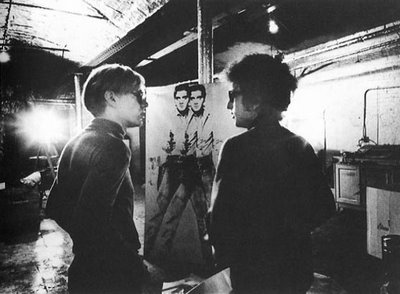
Andy, Elvis, Bob
And then the chorus which will be used three times for maximum pain:
But sooner or later, one of us must know
You just did what you were supposed to do
Sooner or later one of us must know
That I really did try to get close to you.
The key line here is that ‘I really did try to get close to you.’ At The Kettle Of Fish Edie murmured to Dylan that no matter how hard she tried she couldn’t get close to him. ‘Who?’ asked Dylan. ‘Andy.’ Edie replied. Dylan apparently took that as a rebuff although he was already married to Sara and would soon spawn a host of children on her.
I quote the second verse in its entirety:
I couldn’t see what you could show me
Your scarf had kept your mouth well hid
I couldn’t see how you could know me
But you said you knew me and I believed you did.
When you whispered in my ear
And asked me if I was leavin’ with you or her
I didn’t realize just what I did hear
I didn’t realize how young you were.
Apparently Edie didn’t realize that she was just a rainy day woman. While it’s a matter of interpretation I assume that Edie confronted Dylan with the fact of his marriage to Sara and naively asked if he were going to dump Sara for herself. Dylan was incredulous, astonished by her request, he thought she was more sophisticated than that, after all, a rainy day woman….
Rainy Day Woman is a very mocking put down of women as the lead off song and theme setter of the album titled Blonde On Blonde. Perhaps the title might be interpreted as Woman On or After Woman with Rainy Day Women establishing the theme. The song limits the range of women to two- numbers 12 and 35. Why 12, why 35? Who are they? One has to be Edie. If one does a little number manipulation a la Freud, in sequence the numbers add up to 11 which in turn adds up to 2. Two women. Seven come eleven? Three and eight, twelve and thirty-five added separately- three for male, eight for female. Twelve subtracted from thirty-five is twenty-three, Edie’s age. Just guessing.
As Sara is the only other identifiable woman in the lyrics the two women must be Edie and Sara. Let me venture the guess that all women are rainy day women for Dylan. Thus once Sara had borne his offspring fullfilling a religious obligation Dylan took seriously he drove her away oblivious to the pain and suffering he was causing or perhaps he was continuing to punish mother surrogates.
Dylan was drugged and crazed while he was writing this so this is a reflection of deep subconscious drives.

Andy And Edie As Beautiful People
The final lyric begins:
I couldn’t see when it started snowin’
Your voice was all I heard
Snowin’ either refers to a snow job by Edie so he was blinded by light hearing only her words or drugs of some sort, either amphetamines or cocaine.
I couldn’t see where you were goin’
But you said you knew an’ I took your word.
Once again Dylan shifts the full responsibility from himself and Grossman to Edie. He implies that she was leading him on rather than vice versa. This when it was clear to everyone that he and Grossman were promising her the moon in the attempt to pry her loose from Warhol.
And then you told me later, as I apologized
That you were just kiddin’ me, you weren’t really from the farm
An’ I told you as you clawed out my eyes
That I never really meant t’ do you any harm
Well, Dylan’s intents were pure, he says, but the results were deplorable; Edie was done harm by Dylan’s actions and the harm was deep and lasting, well beyond any hypocritical apologies. If the lines are to be believed Edie’s reaction was quite violent. As she was a total amphetamine addict her reaction would be quite plausible.
And then Dylan mockingly closes with his ‘whadaya goin’ to do about it line’- I really did try to get close to you.
As this period clears up for me I suspect that the whole of Blonde On Blonde is concerned with this Edie, Andy/Dylan duel. Blonde On Blonde itself then may refer to the silver hair of both Edie and Andy.
It should be clear that Dylan’s motorcycle fall was no accident. In Exhuming Bob 23b: Bob, Andy and Edie I hypothesize that Dylan’s bike was rigged by the Factory crowd. Dylan survived with minimal damage. For his own sins Warhol was shot a couple years later but he survived that one too. Edie died a physical wreck in 1971.

Dead Ophelia- Consider Ciao Manhattan with Edie shot in a swimming pool/
What goes around comes around as they used to say.

R.E. Prindle
Four Crucial Years
In The Life Of Edgar Rice Burroughs
Part IV of IV
by
R.E. Prindle
Edgar Rice Burroughs
“HE’S BACK!”
By this time ERB would have been viewed as a real upsetter. Since 1890, except for a summer vacation or so, ERB had only been in Chicago from late Spring ’97 to Spring of ’98. Then he had gone away for a year and now he was back spoiling some other people’s plans.
Even after having deserted Emma Hulbert twice, the first time without notice for sure, and probably the second also, she was still waiting for him. Amazing! Ten full years when when the biological clock was ticking loudest she was still there. If that’s not true love I don’t know what is.
It must be that ERB took it for granted that she would always be waiting for him because he was still willing to leave her at the drop of a hat, if he could only get that coveted officer’s appointment.
As ERB walked down his street you could almost hear Alvin Hulbert say ‘Drat! that young man is not going to set foot in this house.’
Papa George T., quietly holding that three hundred dollar note, welcomed him back restoring his old job to him.
The following account is based on two letters, one from R.H. Patchin dated 3/21/1950 and the reply from Jack Burroughs dated 4/4/50. I learned of the letters which were quoted in part by Burroughs scholar Robert Barrett in the Fall 2003 issue of the BB. Danton Burroughs of ERB, Inc. subsequently was gracious enough to provide me with full copies as he had Mr. Barrett.
As of the time of the letter Mr. Patchin was from 68 to 70-75 years old. My guess is that Frank Martin couldn’t have been younger than Emma so was probably at least 25 to 30 years old in 1899. It is not impossible that he was older but as his exemplars in ‘W.C. Clayton and Terkoz in Tarzan Of The Apes and The Return Of Tarzan are approximately the same age as Tarzan Martin was most likely 25-27.
As Emma would be 23 at the beginning of 1899 which would be close to spinsterhood one may believe there was some anxiety on Papa Alvin’s part to get her safely married. Martin was about the most advantageous marriage possible. At, say 27, he was looking at one of the last unmarried women of his age cohort. If he failed with Emma he would have to find a much younger woman than himself or take a woman who had already been married. He has some reason to repent this man he could not have known well who not seeming to care that much for Emma yet stood between himself and her.
Patchin says a lot in his letter to Jack Burroughs. He mentions the three times his and ERB’s paths crossed. They were all unfortunate for Burroughs. In the first ERB got his head bashed in; in the second Patchin showed up just after ERB divorced Emma which divorce was national news; the third was the condolence letter at ERB’s death. Talk about an ill omened bird.

Jack Burroughs’ Reply
Sometime between ERB’s divorce and 1950 Frank Martin became a statistic. He didn’t survive his nemesis. I am guessing of course but Patchin’s meeting with ERB after his divorce must have been arranged by Martin. He may even have been watching from a distance. One wonders if he ever married.
I only mention the following as a point of interest. By the time John Dos Passos wrote the third volumeof his USA trilogy, The Big Money, Burroughs was already a major literary figure. As he didn’t seem to court publicity he can’t be said to have been a celebrity. In The Big Money Dos Passos cameos a number of interesting people among them Bernarr Macfadden.
It should be clear to everyone that nothing can be done in secret. Whatever passed between Martin, ERB and Emma must have been a source of gossip among Chicagoans. Somewhere along the way Dos Passos may have heard the gossip. In The Big Money he includes a story about a woman named Evaline Hutchins. A segment of the story bears some resemblance to the situation between the three under consideration. In the episode the Martin-like character takes the Emma character driving. He cracks up the car leaving the woman with some explaining to do to her husband.
I don’t say it’s so but suppose that in 1907-08 Martin, still seething at his rejection, in some way got Emma to go out driving with him with the above result throwing Burroughs into a panic. It was in 1908 that Joan was born to be followed immediately by Hulbert. Is it possible that after eight childless years Burroughs suddenly began a family as a defensive move against Martin? I can’t say but it is a hint I would dearly love to follow up.
At the time Patchin wrote the letter in 1950, judging from his stationery, he was down on his luck. His sloppy typing can’t be accounted for by age alone, or perhaps a lifetime of hard living had left him a wreck. My conjecture is that he had been drinking when he wrote the letter.
You will notice that the staionery bears only a street address- 555 Park Avenue- and no indication in the body of the letter as to what city. Burroughs’ reply provides the location. New York City. Patchin must have been clever enough to provide a return address on the envelope. The street address is printed rather than engraved so it is less expensive stationery. With no other address details provided it is obviously not Patchin’s personal stationery. The paper must have come from a mailing address. The stationery was probably available to anyone. 555 Park Avenue is a lower East Side address so Patchin was totally down on his luck. Probably drunk as he wrote.
He makes a glaring Freudian slip in the first paragraph when he says of ERB, ‘He lived his wife well. Wife for life! Hence the letter is as much about Emma as ERB. Emma meant nothing to Patchin so he must be speaking for Frank Martin. He then immediately relates the anecdote concerning ERB’s bashing in Toronto; thus Emma and the bashing are related. The one caused the other.
What follows now is extrapolated from Patchin’s virtual confession and Jack Burroughs’ reply. Burroughs hints that he knows more of the story than he is letting out. He and ERB had discussed this matter shortly before ERB passed over, he says. Obviously among the last things on ERB’s mind.
Martin viewed Burroughs’ return from Idaho with apprehension. Emma’s delight at Burroughs’ reappearance disconcerted Martin’s plans which he and Alvin probably thought were progressing well. Martin perhaps in talking with Patchin, if they were equals and friends, which I doubt, may have said, ‘How am I going to get rid of this guy?’ ‘Let’s think about it.’ Said Patchin. ‘What kind of accident could he have?’
Indeed, that’s how people get rid of someone they don’t like, the victim has an ‘accident.’ Murder is for amateurs. With murder the Law has to be paid, with accidents it doesn’t. No investigation. Perhaps he steps on a banana peel; gets run over by a car going the wrong way down a one way street, pushed in front of a trolley car. The next question would have been, where, how, when?
Better that it should be out of town rather than in town.
How to get Burroughs out of town? Now we’re talking old hat. You find a desirable reason for going somewhere, say New York City, then you make arrangements.
In Frank Martin’s case he had a perfect situation. Frank’s father, Col. L.N. Martin, was a multi-millionaire railroad man who had his own private rail car. In July of ’99 the Col. was going to NYC so Martin, extended an invitation to Burroughs to travel by private car to New York City. What a deal, huh?
Burroughs should have been surprised at the offer since the two weren’t that close friends while they were rivals for Emma’s favor. There should have been enough there to give one pause. Still, what a tempting offer.
The trip appears to have lasted at least three to four weeks, returning to Chcago at the beginning of August. Clearly ERB and Martin were not in the same economic league. Our Man was receiving fifteen dollars a week. Martin could spend that much for lunch every day of the week and take Emma to the theatre every night without a single concern for expense. There was no way ERB could have kept up so that the Martins had to have paid his way. Didn’t ERB wonder why they would do that for a comparative stranger?
There was no questioning expenses from the Martin point of view. They owned a luxurious private railroad car. It cost more than Burroughs made in a week to connect it to a train. Jack Coleman Burroughs recalls: ‘Dad also recalled on the same trip, a colored porter would knock on the stateroom doors the first thing every morning. The porter bore a silver tray upon which was a choice of ‘eye openers’. According to Dad, this went on over different parts of the private car during the rest of the days and into the evenings.’
Thus ERB was accepting lavish hospitality he couldn’t hope to reciprocate. This is a fairly humiliating situation. You cannot feel like an equal nor will you actually be treated as one. One the other hand he was kept tipsy, to say the least, for the whole trip.
When they got to New York ERB does not appear to have lived on the car. Once again with the Army fever on him he wrote to Col. Rogers who was then in Washington D.C. in the hopes of gaining an officer’s appointment. The return address Rogers was given was 11 17th in NYC. That is the lower East Side somewhere in the vicinity of the Bowery. Patchin was writing from somewhere in the same vicinity. Of course, the address could possibly have been a box of the railroad; the information is incomplete. At the same time the Martin party was staying on the posh Riverside Drive. There’s a degree of separation there.
ERB’s letter was sent on the 15th while Rogers very quick reply came back on the 22nd in the negative. He didn’t have to give his reply much thought. Now, ERB was ready to abandon Emma again. Marrying her must have been a low priority in his mind.
If Martin had been thinking, rather than preparing an ‘accident’ for ERB he would have gotten his father, ‘the Colonel’ who must have had some influence, to secure Burroughs an appointment and have him shipped to the Philippines. That would have made ERB eternally grateful while getting him out of Martin’s hair. Frank missed a chance.
Sometime after the 22nd the return trip to Chicago began. As is usual in attempts of this kind the hit was delayed until the last minute. In this case the assassination was to take place in Canada to which, if anything went wrong, Martin would have to be extradited as they would cross the river into the United States from Toronto the next morning.
More rounds of drinks were served as the train moved from NYC to Montreal and thence to Toronto. Probably a fairly lengthy trip as they might have had to switch trains a couple times while wating in the yards.
Neither Patchin nor Jack Burroughs gives a date for Toronto. As this took place in 1899 there were no motorized taxis. As Patchin says the railcar was parked in the Grand Trunk yards. These ‘three gentlemen songsters out on a spree’ would have had to walk into town or hire a carriage, probably the latter as Martin had the money.
At this point someone would have had to have previously hired the thugs to bash Burroughs. As I figure it the logistics were Patchin’s job. I don’t see him so much a friend of Martin’s as an accomplice or stooge. In his letter he does not claim to be a friend of Martin, he does not say ‘our’ old friend but claims to have been a friend of ERB while ERB was a friend of Martin. Stange circumlocution when he could have just said ‘our friend.’
Although Patchin describes the thugs as ‘Canadian hoodlums’ I wouldn’t be surprised if they had been brought from Chicago contracted by Patchin there. It would have been easier and surer.
If you study Patchin’s letter you will see that other than the slip of ‘He loved his wife well’ there are no other typos in the first paragraph. As he gets into his story in the second paragraph he begins to have difficulties. By the third paragraph when guilt seizes him he can’t even spell his last word or keep the words on the same line. He begins emergency with two Es, can’t spell the critical word ‘hospital’, crossing it out. Serious stuff.
Where did they go in Tornonto on that memorable evening. Probably to the red light and gambling district. Toronto’s answer to Chicago’s Levee. Where else could you arrange a fight with such hoodlums so easily. Patchin doesn’t say whether the fight took place indoors or outdoors, just that Burroughs took a smack to the head. Since the scalp was opened he was coshed with a sap or pipe.
Burroughs says that he didn’t lose consciousness but he must have been knocked flat on his back. He must have had time to get his arm up to partially block the blow or he would most likely have been killed by it. As I see it, then, this was an assassination attempt. Martin meant to permanently get Burroughs out of the way. Put him in a place from where he couldn’t come back.
As I see it Martin and Patchin faked the brawl. Patchin doesn’t say that he and Martin had a hard time of it. No. Just Burroughs got hit. Only Burroughs got hurt which is suspicious. After the first blow which could have been interpreted to be in the heat of anger which would still have been manslaughter, to have continued to belabor Burroughs would have been a clear case of murder which would have had to have been thoroughly investigated. The Law would have to be paid. Thus the opportunity was lost when the first blow failed. Martin and Patchin didn’t even report the incident to the police. The ‘Canadian hoodlums’ could still have legged it across the border though. It is not impossible that they weren’t Canadian but Chicago hoodlums contracted for the job before the private car left the Big Windy. Why not? Perfect job.
So at two in the morning when asked where he was staying by the hospital doctor ERB replied in our private car down in the Grand Trunk Station. Not Martin’s car but our car. He quickly got used to the luxury of a private car. Never forgot it either.
As he was able to walk he was released the party returned to the yards returning to Chicago the next morning.
2.
One may ask is there any evidence to show that Burroughs after he had thought about it for a while ever came to the conclusion that Martin and Patchin had meant him harm? I think there is. In The Return Of Tarzan Burroughs puts these words into the mouth of Jane perhaps thereby admonishing more sternly who might, not unreasonably, be expected to be reading these books. He obviously would get more out of them than we might.
Jane says ‘…this terrible jungle. It renders even the manifestations of friendship terrifying.’
A manifestation of friendship was the invitation to NYC from Martin. This indeed had been terrifying. So that for the parties concerned if they read between the lines they had every reason to believe that Burroughs understood everything.
One of the consequences of the attempt on Burroughs’ life was that he rushed back home to propose to Emma. Within five months they were wed thus taking her away from Martin. Emma had had a choice between a prince and a pauper and by some miracle had chosen the pauper. Really a very romantic story worth of a movie on its own. Grand Opera the way I see it. Andrew Lloyd Weber should look into this one.
There were other serious consequences. Of the blow, Jack Buroughs says: “He suffered for a number of years with bad headaches from the blow he received in that fight, and attributed one or two short periods of amnesia to that rap. (Amnesia is a recurrent theme in the Tarzan oeuvre.) I remember the scar was quite evident on his forehead when we were children (Jack Burroughs was born in 1913 so the scar must still have been visible in 1920 although it doesn’t show up in photographs.) but it seemed to disappear in his later life. Mother used to jokingly attribute his success to that blow.”
Emma would be in a position to know.
So Burroughs suffered lasting injury from that blow– one doesn’t have periods of amnesia unless there is internal pressure on the brain. There is evidence that he suffered from such pressure. Perhaps brain damage is too strong a phrase in this case but here is a clinical description that seems to fit the case. Per Brodal: The Central Nervous System: Structure and Function (3rd. Edition, page 433):
A peculiar form or amnesia occurs together with confabulation; that is the patient invents stories (without knowing that they are not real). Most of the patients have a lesion involving the substantia inominata, the medial hypothalamus, and the orbito frontal cortex (usually caused by a ruptured aneurism in the anterior cerebral artery). The often bizarre stories can usually be traced back to real events, although they consist of various, unrelated fragments from memory. It seems the patient is unable to suppress irrelevant associations, and cannot chack them against reality.
That is pretty close to ERB’s situation although he doesn’t appear to have lost his connection to reality although his stories as fantastic as they come always relate to his own memories. The Corpus seems to form one gigantic web of psychological unity as Richard A. Lupoff has pointed out.
One could think that after such a fearsome blow he would have been kept at the hospital for observation for at least a day or two but as he appeared to have no more than an open wound the doctor sewed him up and sent him on his way. As Patchin says the doctor came down to the yards the next morning to check up on the private car story which may have seemed incredible to him causing him to the think the patient deluded perhaps being more hurt than he looked as, indeed, he was.
There seems to be no reason to doubt that the blow ruptured the anterior cerebral artery. Thus internal bleeding over the next couple days would have created a clot which would have put pressure on the prefrontal lobe causing cobwebs, headaches and obviously a faulty memory with periods of amnesia.
There must be a medical reason for all these.
The symptoms should have begun showing up within a week or so, so that the several months of faintness ERB experienced began then. It was in this mental condition that he proposed to Emma.
Disappointed by the quick rejection of Col. Rogers while at least intuitively understanding that he had been set up in Toronto, ERB quickly went to work to capture Emma from Martin. I see little reason to believe that he had intended to marry her any time soon before he went o NYC, if at all. Back in Chicago in August he proposed and he and Emma were married by the end of January. In terms of years he was twenty-five and she twenty-four but in reality ERB was only four months older than Emma.
The sudden wedding must have been disconcerting to the Hulberts. I’m sure they envisioned a magnficent society wedding for their daughter. There was now no time to plan one so they must have been bitterly disappointed.
ERB now had to face a reality he hadn’t planned for. His rough and rowdy days were over.
3.
While solidly based on documentation the foregoing is at present somewhat conjectural but let us see if we can find some discussion by ERB of these events in his writing. There are four titles that go over these events in slightly different ways. Certainly ERB had to ask himself what had happened. He gave it a lot of thought. Beginning in 1909 his answers came pouring forth. Minidoka 937th Earl Of One Mile, Series M which was unpublished in his lifetime was the first of these efforts followed by Tarzan Of The Apes, The Return Of Tarzan and The Girl From Farris’s. As ‘The Girl’ is concerned with the early married years rather than this period I will forego discussion of that title although it should be read in sequence with Minidoka.
Minidoka, which actually began ERB’s writing career is directly concerned with this struggle between himself, Alvin Hulbert and Frank Martin. In the story the evil Brady represents Alvin Hulbert with the genuine thoroughbred godling, Rhi, representing Frank Martin.
The wars and battles represent Hulbert’s attempts to keep ERB away from Emma which ultimately fail. However the story may explain a curious situation in which ERB and Emma took up residence in the Hulbert home after marriage. Not a situation most newlyweds would want, but one that the Brady or Hulbert insisted on.
Alvin Hulbert had thought little of ERB for several years. The Army episode and the Denver marching band stunt did little to improve his opinion of Our Man. How the New York trip was represented to him by Martin would be interesting to know. Probably Martin who had every incentive to slander Burroughs said he was drunk all the way to New York and back, drank continually, started the day with liquor. He may have said that they were in the red light district of Toronto at ERB’s insistence. In other words, he probably made the most of the situation.
Undoubteldly terrified at his daughter’s willfulness in marrying this ne’er-do-well Hulbert made it a condition of his consent that the couple live in his house where he could keep a close eye on ERB. I’m sure he was ready to have the marriage annulled at a moment’s notice.
In Minidoka Rhi by a very devious trick puts Minidoka/Burroughs in a situation where he is meant to be killed, a situation not unlike Toronto- then rushes to the heroine Bodine/Emma to inform her that Minidoka is dead proposing marriage to himself instead. It could have really happened that way.
As in real life Emma/ Bodine remains steadfast and true to Burroughs/Minidoka, all wool and a yard wide as Burroughs puts it.
Thus Minidoka mirrors the real life events in a fantastic manner as Per Brodal would suggest.
Minidoka was never published so the same material was available for a retelling. This was done in the first two Tarzan novels. Tarzan Of The Apes tells the story of Burroughs life up to 1896 with some interpolations from the later period. The Return Of Tarzan covers the four years from 1896 to his marriage with Emma in 1900.
Always bear in mind that Burroughs has to tell his story with commercial ends in mind.
The blow to the skull made an indelible impression on ERB as well it might. In Tarzan Of The Apes, Tarzan takes three serious beatings, one with a gorilla from another tribe, perhaps representing John the Bully, and with Kerchak and Terkoz of his own tribe. In all of them Tarzan is beaten about the head and shoulders. Terkoz/Martin rips his scalp open from above the left eye over to his right ear. Clearly an exaggeration of the true wound but that must have been how it felt.
Kerchak delivers a blow to the head that would have killed him had he not deflected its force with his raised arm.
Then when Tarzan and Jane are in the jungle Terkoz abducts Jane causing Tarzan to rescue her killing Terkoz in the process. Thus in Program A Tarzan kills his adversary.
Running concurrently in Program B Tarzan is a penniless jungle ape-man up against W.C. Clayton who is a genuine thoroughbred godling as was Rhi in Minidoka. Tarzan feels he doesn’t have a chance against Clayton so he magnanimously resigns Jane to him at the end of Tarzan Of The Apes. There must have been a sequel in mind because, as in reality Burroughs won Emma, Tarzan must win Jane.
The end of Tarzan Of The Apes may correspond to Burroughs joining the Army in 1896 while finding Clayton embracing Jane in the jungle may correspond to his second Idaho trip in 1898.
So that between 1896 and 1898 it may have appeared to him that he had lost out to Frank Martin. In ‘Return’ Tarzan retreats to Opar which is his fantasy world with the beautiful but unobtainable anima figure, La. At this early date she and Emma/Jane are fighting it out in his mind for his allegiance. He would rather have La, that is remain unmarried, but his rivalry with Martin is pushing him toward Emma.
Tarzan is captured by the Oparians destined for sacrifice to the Flaming God of which La is High Priestess. Burroughs reverses the situation and instead of squelching his imaginary La she is about to sacrifice him. Burroughs can’t renounce his Anima fantasy so rather than kill him which would end both Burroughs’ wish persona of Tarzan and his relationship with La, she releases him. Tarzan/Burroughs then triumphs over W.C. Clayton winning Jane/Emma. Jane/Emma leaves Opar never to return. La remains in Opar until Tarzan The Invincible when Burroughs is about to leave Emma and take up with his Anima figure, Florence Gilbert. La then comes out of Opar in the same way Burroughs leaves Emma for Florence. Opar disappears from the oeuvre, never being mentioned again.
Then as ‘Return’ ends Burroughs and Emma are married mirroring his fantasy where Tarzan and Jane are married. While not literal as Burroughs is writing for publication and must construct an interesting and, at least, nominally plausible story he confabulates events from his life into a fantastic and improbable tale.
The history of his slugging which closes this period was mysteriously obscured by his youngest son John Coleman Burroughs. These two letters were only discovered by Danton Burroughs, John Coleman’s son, recently. They were unknown to biographers Fenton, Porges and Taliaferro. For decades it was believed that Burroughs had been coshed in Idaho by a policeman as an innocent bystander in a saloon brawl.
In an interview with Porges Jack Burroughs told this latter story in 1970. Porges then dutifully reported the Idaho story in his biography. the question is why would Jack invent the latter story to replace the true one with which he was aware. As he himself replied to Patchin having previously discussed the event with his father I don’t see how he could have forgotten it. Nor was there any need for him to even tell Porges the Idaho invention.
Perhaps Jack knew details buried away in the archives wishing to lay down a false trail to disarm the curiosity of Porges.
In 1899 ERB had had the direction of his life changed by a rap on the head. He now had to face a life filled with heavy responsiblities which he had been able to avoid to this point.
We see a new Edgar Rice Burroughs emerge from his early married years.
A Review: Part IV, She by H. Rider Haggard
December 4, 2009
A Contribution To The
ERBzine Library Project
A Review Of
SHE
by
H. Rider Haggard
Review by R.E. Prindle
Part IV and end:
Herself Portrayed

Model of She
The idea of a twenty-two hundred year old woman patiently waiting for the reincarnation of a man she had murdered in that far off time is in itself an extraordinary concept. As an imaginative flight of fancy very likely Rider Haggard can be seen as its originator. Burroughs would borrow the notion twenty-seven years later in his The Eternal Lover when he reverses the sexes and has a cave man asleep for millennia wake to find his reincarnated woman. Since then variations on the theme have become quite common.
She, or Ayesha, was a powerful image of a woman. C.G. Jung saw her as the personification of his Anima theory. Haggard drew on many personal and historical details to create her. Ayesha was titled She-Who-Must-Be-Obeyed. As a child Haggard had a doll to which he gave that name. The doll must have represented his mother. If he invested characteristics of his mother into Ayesha then she must have been both warm and loving and cold and imperious. Over all one gets the impression that she was not particularly loving. Thus, Ayesha, while appearing to be in love with Leo/Kallicrates is nevertheless imperious, demanding and self-centered. In her only real display of afftection she kisses Leo on the forehead, as Haggard says, like a mother. As Haggard says of Meriamun in The World’s Desire, her love was not so much for her lover but an expression of her own vanity.
Haggard represents her as a living corpse in white funereal garments, completely shrouded. She has a strange accoutrement in the serpent belt with two heads facing each other. This is close to the caduceus. Perhaps Haggard had no idea of what the symbol meant in 1886 but by 1890 he had come up with an explanation. In The World’s Desire of that year Queen Meriamun of Egypt keeps something she calls the Ancient Evil in a box. The Evil is a small blob. When she warms it in her bosom it grows. World’s Desire pp. 144-45:
Thrice she breathed upon it, thrice she whispered, “Awake! Awake! Awake!”
And the first breath she breathed the Thing stirred and sparkled. The second time that she breathed it undid its shining folds and reared its head to her. The third time that she breathed it slid from her bosom to the floor, then coiled itself about her feet and grew as grows a magician’s magic tree.
Greater it grew and greater yet, and as it grew it shone like a torch in a tomb, and wound itself about the body of Meriamun, wrapping her in its fiery folds till it reached her middle. Then it reared its head on high, and from its eyes there flowed a light like the light of a flame, and lo! its face was the face of a fair woman- it was the face of Meriamun!
Now face looked on face, and eyes glared on eyes. Still as a white statue of the Gods stood Meriamun the Queen, and all about her form and in and out of her dark hair twined the flaming snake.
At length the Evil spoke- spoke with a human voice, with the voice of Meriamun, but in the dead speech of a dead people!
“Tell me my name,” it said.
“Sin is thy name,” answered Meriamun the Queen.
“Tell me whence I came.” it said again.
“From the evil within me.” answered Meriamun.
“Tell me where I go.”
“Where I go there thou goest, for I have war and thee in my breast and thou art twined about my heart.”
This quote gives an idea of what the snake belt worn by Ayesha signifies.
Of signficance while Meriamun is dealing in magic Ayesha denies all connection with the art saying she utilizes nature. She doesn’t use the word science but nature; nature would include psychology. She therefore draws on natural processes discovered but not scientific processes exposed. Thus when she kills her rival Ustane she does it by utilizing electro-magnetism, somehow using her own electro-magnetism to negate Ustane’s thus extinguishing her life force. We have then an example of tele-kinesis- action at a distance. As I’ve noted in other essays tele-kinesis was amongst an array of mental powers thought to reside in the unconscious being investigated by the Society For Psychical Research. Thus Haggard, probably through Lang, is up on the latest psychic developments.
Ursula Andress As She
The ability to kill by telekinesis places a moral burden on Ayesha. If one agrees that the use of such a power may be necessary the question arises of when it may be misused. It would seem that the killing of a sexual rival was an inappropriate use, so the warring good and evil heads of her snake belt refers to the moral dilemma Ayesha faces.
Her belt seems somewhat different than that of Queen Meriamun of The World’s Desire. The latter having accepted the aid of the Ancient Evil was committed to evil being unable to remove the belt. There seems to be an element of volition remaining to Ayesha. She is not ‘possessed.’ Of course Ayesha began her life some thousand years after Meriamun so perhaps psychology was somewhat further evolved at that time or evolved with her over her two thousand year life span.
Indeed, a topic of discussion Haggard introduces shouldn’t be dimissed lightly. That topic is the age old discussion of whether good can come from evil and evil from good. This is indeed a dilemma as bad results can arise from good intentions and vice versa. There is a serious side here.
Ayesha is pure irresistable beauty. Once she shows her face no man can resist her. She glories in this power. In The World’s Desire of four years hence Haggard will separate good and evil making Meriamun represent evil while Helen, the world’s desire, is all good.
Holly is an interesting character who may be a back hand slap at the concept of evolution. Holly also makes this the story of a beauty and a beast. Holly is described as having a low forehead with a hairline growing out of his eyebrows, further his beard and his hairline meet. He is said to have a hugely broad chest and shoulders with extra long arms, perhaps down to his knees although this is not stated. What we have in Holly then is the Wolf Man combined with King Kong. Monstrous indeed.
In contrast Leo Vincey is a Greek god, a sort of Apollo. As Ayesha is irresistable to men Leo seems likewise to be irresistable to women. Indeed, he was married to Ustane within minutes of arriving in Kor. He appears to have sincerely liked Ustane even though on sighting Ayesha’s face he too loved her. Ustane was a rival for a portion of Leo’s affections so Ayesha cut off her electrical supply.
Of several truly dramatic scenes in this spectacularly well constructed story a very dramatic one is when Leo confronts his twenty-two hundred year old incarnation 0f Kallicrates. Haggard doesn’t dwell on Leo’s understanding of this strange phenomenon although from the potsherd and his father’s letter he must have been convinced of the truth. Strangely he doesn’t ask Ayesha for an account of this earlier life, nor how it was that she came to Egypt from Yemen to interfere in his romance with Amenartas.
Haggard and Lang were aware of the early history of Yemen from whence Ayesha as a pure Semite came. She was pre-Christian, although not pre-Jewish, of some ancient Arabic religious beliefs. How she got to Egypt is never disclosed or how she came into conflict with the Egyptian princess Amenartas for Kallicrate’s affections.
Ayesha, by the way the name translates as Life, merely confronts Leo as the neo-Kallicrates without any preparation. A year or so to get to know her and become accustomed to her face might have been nice. Although, Leo was married within minutes of arrival in Kor and was apparently satisfied with his wife. He was a pretty adaptable guy.
At any rate Ayesha rushes him into immortality and while tomorrow may be a long, long time, eternity is even longer. One might want to consider a moment about a relationship of that duration. Nor does she adequately prepare Leo’s mind for the ordeal of fire that she wants him to go through to become immortal. Twenty-two hundred years of waiting had done little to improve her patience.
Haggard has put everything he has into this story. He was granted clear vision only once in his life and he took advantage of it. In later years he was frequently asked why he didn’t write another story as good as She. His reply was that such a story may only come once in a man’s lifetime. The concentration and focus probably will never return again. While Allan Quatermain, his third successive attempt to create a lost civilization was on the weak side I would argue that his last, Treasure of the Lake, comes close to She.
So, the four of them set out for the place of the fire of life. Masterful effects. High in the mountains there is a gigantic balancing rock, a huge mushroom type cap balanced on a spire. It would seems that Zane Grey was also greatly affected by She as Riders Of The Purple Sage hews very close to She. A narrow ledge of rock extends out opposite with a gap of fifteen feet. To cross this gap with high winds howling through, a plank carried by the ever patient Job has to be lowered across the gap. No mean task I’m sure, with only one chance of getting it right. Once in place, thousands of feet above the gorge each has to walk from side to side; plus they have only a few minutes for all four to get over during a single beam of light from the setting sun.
Fortunately all four make it crossing the balancing rock to descend into a cave leading to the bowels of the mountain. There an eternal flame that ensures the life of the planet rumbles by every so often. Twenty-two hundred years before Ayesha had bathed in this fire which following esoteric doctrines had burned away her gross, earthly, moral impurities making her essentially, pure spirit.
A famous incident of the process is recounted of the goddess Demeter in her travels after the abduction of her daughter Persephone by Hades. Coming to Eleusis Demeter in her form of an old crone was taken in by King Celeus and his wife Metaneira. As a reward for her kind treatment Demeter set about to make their infant son Demophon immortal. Thus each night she held him over the hearth fire to burn away his mortal impurities. Surprised one night by a startled mother, Metaneira, the process was disrupted so that Demophon retained mortal impurities and failed to attain to godhood.
In this sense then the fire that maintained the life of the Earth traveled a route through this mountain at the center of the Earth. It appeared something like Old Faithful at Yellowstone periodically. When it swept by, if one stood in the flame it burned away one’s mortal impurities leaving one, it is to be assumed, wholly Spiritual. All the materiality was gone.
Spirituality and materiality are still being discussed today. Some talk of Spirit as though it exists while the materialists aver that all so-called spirituality is a seeming effect of materiality. I am of the latter school of thought. Oneself is all there is, there is nothing more. The effect of spirituality is nothing more than a mirage created by intellect and consciousness which is entirely material. It is all reduced to psychology which is a description of material existence.
Come To Me
In Haggard’s story it is clear that Ayesha having lost her materiality to the flames is purely spiritual. This is going to cause her problems as she steps into the flames the second time.
The flame passes by while Leo dithers. Impatient for Leo to assume immortality Ayesha strips, as the flames will flame the material garments about her but not her body. As the flame comes around again Ayesha eagerly stands in its way. However having been once purified it is good for eternity. The second time is disastrous. Perhaps spiritually dessicated by the double dose Ayesha begins to wither devasted even in her death throes by her loss of beauty. Love in vain.
Job is so horrified he dies of fright leaving Leo and Holly alone.
The story for all intents is over but Haggard takes a dozen pages or so to get his heroes out of the caves and back to civilization.
Ayesha’s existence wasn’t extinguished. Her dying words were that She would return. Room left for the sequel which not surprisingly was called The Return Of She appeared in 1906.
Haggard hit the groove sharp as a knife in this incredibly well devised and executed story. One will find evidences of it strewn all through Burroughs’ corpus. Not least in his own character of La of Opar. La itself translates from the French as She, of course, so Burroughs even appropriates the name.
La is as ardent for Tarzan as She was for Leo/Kallicrates. Tarzan himself remains cold and indifferent to La throughout all four Opar stories finally abandoning her in Tarzan The Invincible.
She by Haggard is well worth three or four reads to set the story in mind and savor the wonderful and unearthly details
The End.
End of Review
A Review: Pt. III She by H. Rider Haggard
November 25, 2009
A Contribution To The
ERBzine ERB Library Project
She
by
H. Rider Haggard
Review by R.E. Prindle
Part III
The Gruesome, The Morbid AndThe Hideous
Rider Haggard was criticized severely by certain of his contemporaries for employing so many gruesome, morbid and hideous details. Indeed, ‘ She’ seems to be a study in the hideous, the gruesome and the morbid. If one concentrates on those aspects of the story one might actually question Haggard’s mental health.
Haggard himself calls attention to this morbidity. In King Solomon’s Mines he pointed out his humor with references to the Ingoldsby Legends; in She he makes a pointed reference to a Mark Tapley. I had no idea who Mark Tapley might be but thought I’d consult that most magnificent of encyclopedias, the internet. No problem. Mark Tapley was a character from Charles Dickens’ Martin Chuzzlewit. No matter how adverse the circumstances were Tapley was always cheerful and ebullient. Haggard must have thought him ridiculous. Thus he is devising a series of incidents that would bring even Mark Tapley down. Hmm. Interesting experiment.
It would seem then that Haggard was suffering from a fairly deep depression. In that sense She is sort of a horror story not too different in intent than, say, Bram Stoker’s Dracula. Indeed, at one point Ayesha explains that she rules by terror. That being the most effective way to control brutes like the Amahagger.
Certainly the storm at sea prior to entering Kor was an example of terror on the part of nature, a portent of things to come. Not least of these was the hot potting and projected cannibalism of the surviving member of the ship’s crew, Mohammed. ‘She’ had only required the safety of the Whites; as Mohammed was apparently a negrified Arab the Amahagger excluded him from the ban on Whites. An interesting example of White Skin privilege.
Their custom of killing their victims was to heat a pot red hot and turn it over on the victim’s head. There’s a gruesome and hideous enough example. You can see where Burroughs picked up his fascination for the gruesome and hideous.
The Caves of Kor are actually a city of the dead. Kor was an active civilization before Egypt existed in the fifth or sixth millennium BC. As embalming was a known practice when the Dynasties began c. 3400 the practice must have developed long before. Quite possibly it was practiced by the peoples of the Basin before the Mediterranean was flooded. In The World’s Desire Haggard mentions that the ancient Egyptians possessed writings in a precedent language. If so, how far back things like embalming go might be prodigious.
Egyptian embalming was primitive compared to that of the Korians. While Egyptian mummies became desicated the Korian process was such that the body was preserved forever in an apparent state of health. Thus bodies perhaps ten thousand years old or older had the appearance of freshness.
Now, this is positively creepy. Holly’s Amahagger attendent Bilalli while discussing Korian embalming told Holly that while he was a young man a particularly beautiful female corpse occupied the very slab on which Holly slept. Bilalli used to enter the cell and sit looking admiringly on the beautiful corpse by the hour. One day his mother caught him at it. The embalming fluid used was extremely flammable. Bilalli’s mother stood the body up and lit it. Like a huge torch the body burned down to the feet. The feet were still as good as new. Bilalli wrapped them and stored them beneath Holly’s slab. Groping around beneath the slab he brought out those ten thousand year old feet, still fresh, except for some charring at the ankles.
Haggard doesn’t stop there but goes on to emphasize the beauty of one particular foot. One wonders if perhaps George Du Maurier read She becoming entranced by the foot image thus reproducing the image in his novel Trilby when Little Billee draws Trilby’s beautiful foot on th wall. It is a thing Du Maurier would do as he inserted his literary baggage as profusely as Burroughs.
What effect this image had on Haggard’s contemporary readers may be guessed from the complaints about his gruesomeness.
In fact Haggard projects a depressed brooding evil permeating the Caves of Kor very well. This may have been caused by his and Lang’s theories of the Matriarchy. Human sacrifice was an integral part of the Matriarchal world. The sacrifices were invariably of men because women had greater economic value. When men were no longer sacrificed bulls, rams, the males of the species were substituted, the female still having greater economic value. Thus the story of Isaac and the Ram. That would be a great advance in civilization. About that time Isis ceased being the Egyptian symbol of the firmament being replaced by the female cow as the symbol of economics. Something like the kings of England sitting on the woolsack.
Depending on Haggard’s and Lang’s theories of the Matriarchy then Haggard may have been portraying a consciousness that has ceased to exist. There is always an element of misogyny in Haggard’s stories that is no longer tolerated. Then men were men and women were women instead of the attempted strange unisexuality of today. Thus the tens of miles of swamp between the Amahagger quarters and the citadel of Kor indicate the extent and quality of the Matriarchy. Swamps are the symbol of the female and the Matriarchy or, in other words, this very primitive superstitious consciousness.
The Korian swamp was haunted by mephitic vapors, evil smelling and oppressive. The ground they walked on was of uncertain solidity; it might look firm but this was only illusory as one could break through the crust. Often the litter bearers were walking through evil smelling muck up to their knees.
At one point an accident occurs and Bilalli’s litter with him in it is dumped into the slimy water. He would have drowned if Holly hadn’t leaped into the rank female waters to save him. They emerge looking something like the creature from the Black Lagoon.
It will be remembered that Holly was something of a misogynist. One may be stretching a point but even though rejecting women and marriage Holly managed to inherit a son from a man who was also a womanless widower. Haggard makes a strong contrasting point when he says that Leo was not averse to female company. The manservant, Job, is absolutely terrified of the female.
After traversing this desolate swamp of the female for days they arrive at the citadel or temple of Kor. Now, the citadel of Kor was built on an ancient lake bed that had been drained ten thousand years before. In that sense Ayesha is the same as Nimue or the Lady Of The Lake of King Arthur. Nemue lived at the bottom of a lake where she raised Lanclot who consequently was called Lancelot of the Lake.
Compare this also with Haggard’s postumously published Treasure of the Lake in which the Anima figure lives on an island in the middle of a lake in the middle of a volcanic crater. The lake of Kor was also in the middle of a crater.
When the Korian civilization was extinguished it wasn’t by invasion or other external reasons but by a monster plague something like the fourteenth century european Black Death that wiped out nearly everyone. At the resulting rate of death it wasn’t possible to embalm everyone so that tens of thousands of bodies were dumped into a huge subterranean pit.
In conducting Holly and Leo on a guided tour of Kor which was one gigantic necropolis, talk about depressing, Ayesha brings them to this pit. I quote:
Accordingly I followed (She) to a side passage opening out of the main cave, then down a great number of steps, and along an underground shaft that cannot have been less than sixty feet beneath the surface of the rock, and was ventilated by curious borings that ran upward, I do not know where. Suddenly this passage ended, and Ayesha halted, bidding the mutes return, and, as she prophesied, I saw a scene such as I was not likely to behold again. We were standing in an enormous pit, or rather on the brink of it, for it went down deeper- I do not know how much- than the level on which we stood, and was edged in with a low wall of rock. So far as I could judge, this was about the size of the space beneath the dome of St. Paul’s in London, and when the lamps were held up I saw that it was nothing but one vast charnel-house, being literally fullof thousands of human skeletons, which lay piled up in an enormous gleaming pyramid, formed by the slipping down of the bodies at the apex as others were dropped in from above. Anything more appalling than this mass of human remains of a departed race I cannot imagine, and what made it even more dreadful was that in this dry air a considerable number of bodies had become dessicated with the skin still on them, and now, fixed in every conceivable position, stared at us out of a mountain of white bones, grotesquely horrible caricatures of humanity. In my astonishment I uttered an ejaculation, and the echoes of my voice, ringing in that vaulted space, disturbed a skull which hd been accurately balanced for many thousands of years near the apex of the pile. Down it came with a run, bounding along merrily towards us, and of course bringing an avalanche of other bones after it, till at last the whole pit rattled with their movement, even as though the skeletons were rising up to greet us.
Talk about a holocaust! Imagine standing in that dimly lit space far beneath ground, in the grave itself so to speak,and viewing that. Holly was overcome and perhap Mark Tapley himself would have lost a little of his cheeriness. If that didn’t do it the ball Ayesha threw would have.
Before I move on to that though let’s take a penultimate example that might actually unsettle Mark Tapley. This is truly unsettling with truly macabre and voyeuristic soft porn details that are quite remarkable. Let me say that it is only with the fourth reading that the horrific nature of these details really began to sink in. I hope to really make this clear in the next section in which I intend to do an in depth analysis of Ayesha.
In his cell at the citadel of Kor Holly notices a cleft in the wall he hadn’t noticed before. This cleft is going to lead him to Ayesha’s sleeping room. This is not unlike King Solomon’s Mines in which upon entering the symbolic vagina they were led to the womb or treasure box. As I say Holly entered this cleft, let your imagination dwell on that, and followed a dark, dank, narrow corridor until he perceived a light.
He is looking into Ayesha’s sleeping room where in a certain deshabille, very erotic, she is addressing a covered form on a bier next to hers. This is the embalmed body of Kallicrates who she murdered twenty-two hundred years before. So she has been sleeping with this corpse for twenty-two centuries. Now, dwell on that for moment, let the horror of it sink in.
She addresses the corpse in a fairly demented way. Twenty-two hundred years of this would drive anybody nuts. Finally to the dismay of Holly she animates the body by telekinetic powers actually causing it to stand zombie like so she can kiss and caress it. A lot of necrophilia in this novel. Haggard must have been half dotty when he wrote this. Of course Kallicrates is a double of Leo so Holly has all he can do to keep from crying out. Causing the dead man to lay himself down Ayesha covers him and blows out the light.
Holly has to find his way back in the dark reminding one of innumerable passages in Burroughs where his characters have to find their way in the dark. Holly gets only so far and collapses in the tunnel. Waking he sees a light coming in from his cell allowing him to find his way back.
And then Ayesha throws her ball. If you’ve read carefully and really ingested these macabre, gruesome, and as Burroughs’ would say, hideous details they’re beginning to oppress your mind, perhaps even a mind like Mark Tapley’s.
Now Haggard trundles out the frosting. To illuminate her ball Ayesha brings out piles of ten thousand year old corpses placing them around the perimeter as human torches. Laying out a large bonfire the corpses are stacked alternately like so much cordwood and replaced as they were consumed. Remember these are as fresh looking as you or I. The Roman emperor Nero actually used live humans in the same manner. Haggard notes this in the text which I thought weakened the effect.
Ayesha seems to be aware of the effect, indeed, intended it and appears to relish the reaction.
These are the high points of these horrfic details. Minor ones are constant so that the cumulative effect leading up to the terrific images of the demise of Ayesha, temporary though it might be, is overwhelming. But about She, Ayesha, in the next part.
 I, Dynamo