Chap. 7: Marianne Faithfull: Faerie Queene Of The Sixties
January 27, 2013
Marianne Faithfull: The Faerie Queene Of The Sixties
by
R.E. Prindle
Chapter 7
We skipped a light fandango
Turned Cartwheels across the floor
I was feeling kind of seasick
But the crowd called out for more
The room was humming harder
As the ceiling flew away
And so it was that later
As the Miller told his tale
She said there is no reason
And the truth is plain to see
That her face at first just ghostly
Turned a white shade of pale.
–Procol Harum

Marianne A Few Years Back
Now in 1968 both Mick and Marianne’s life were rolling by while both were teetering on the edge. Shortly after Godard’s filming of Sympathy For The Devil in June Mick was signed by Donald Cammell for the lead role in his film Performance. The invitation to star didn’t come from nowhere. There are many links from Mick and his friends to Cammell. Cammell was already known to the Stones having met them in 1965 at the time of the Paris Olympia shows. He was naturally first attracted to Brian Jones but then found some kind of love for Mick. Over the subsequent years he formed many projects that he offered to Mick. As Mick’s asking price was a million or more the projects did not pan out.
Not only did Cammell know the Stones but his live in the Parisian model Deborah Dixon had had a menage a trois with Anita Pallenberg. She had moved on to Brian Jones, passing on to Keith with whom she was living when the movie was shot. She had also viewed and/or worked on the script with Cammell a year previously so she knew that she was playing opposite Mick in advance. She then, was well aware of what the movie entailed.
In addition Cammell knew Robert Fraser and Chris Gibbs while being involved with the American
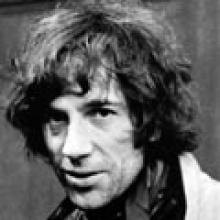
Donald Cammell
Satanist Kenneth Anger. Anger was himself a disciple of the arch Satanist of the Golden Dawn, Aleister Crowley. Cammel’s father had known Crowley reasonably well while Cammell himself had at least seen Crowley live. His father even wrote a biography of Crowley, so let’s just say that the sex magic of Crowley and his Golden Dawn played a prominent role during the filming.
Mick would have brought his knowledge of The Master And Margarita to the proceedings. He may have persuaded Cammell to read the book or perhaps as a Satanist Cammell had already read it.
Marianne who had become pregnant perhaps in January or February was sent to Ireland during the filming so as to be out of the way for the sex stuff where she became distraught. She was giving herself and was being given a psychological beating that was disappointing all her expectations leading her into a deep depression. This was furthered along when she had a miscarriage at eight months losing the child. I would imagine the miscarriage was the result of the stresses Mick had placed on her by sending her away along with his sexual misconduct. It may have been her own subconscious rejection of Mick that caused her to subconsciously refuse to have his baby.
Thus as 1968 drew to a close as the Stones recorded their Satanic Majesties Request album Marianne was trying to recover from her miscarriage and put her life in order. She probably ought to have left Mick at the time but as she tacitly admits in an interview video on You Tube the reason that she went with Mick was because her own royalties were dropping and she had gotten used to the money. Mick was a source untapped. I think that this is an underlying cause of her anguish. Nineteen sixty-nine would be a traumatic year for all concerned.
2.
What To Do About Brian?
Marianne was a sentimental girl who formed sincere attachments to the people of her world. Thus Brian was not just someone on the scene but one might say a part of Marianne’s life. She cared for him. As we all know Brian Jones was the actual founder of the Rolling Stones. He named them and gave them their original musical direction. He held them together during the early stages. Naturally he considered himself their leader. He was actually a much more charismatic figure than Mick. While Mick was wiggling around all eyes were on Brian. There was just something about him.
This aroused Mick’s jealousy who once stated that the lead singer was supposed to be the center of attention. Mick also had the most powerful personality so that while he may not have been the leader he made himself the director. And then he and Keith shifted the direction of the music. While never a fan of the Stones I found myself reviewing the albums when I began writing of the group. My original opinion was only confirmed.
It became immediately apparent that Oldham’s first recordings done necessarily on the cheap were not good recordings, four track on primitive and worn equipment. While Brian and the Stones thought they were doing a good job imitating American Negro rhythm and blues it’s actually not even close. Mick makes a terrible imitation of a Negro blues shouter while its painfully obvious that the music doesn’t come close to the original. It’s so far off that it might as well be an original genre while being very close to a garage band.
Perhaps Mick who thought it impossible for an English band to pass themselves off as authentic was right to change the direction of the band to Negro influenced Rock and Roll. Brian was probably too close to his aspirations to know how far from the mark they were.
The original tunes are somewhat better but the inspiration for those soon ran dray so that by the 1966 and ‘67 albums Aftermath and Between The Buttons the band was quickly approaching the rocks. The West Coast fans were disappointed by both albums and, quite frankly, they’re not listenable today. As the albums veered toward English music hall Brian was quite right in thinking that they had abandoned his original intent. The 1968 Their Satanic Majesties Request, intended to be psychedelic in imitation of the Beatles Sgt. Pepper’s wandered off to a musical somewhere although one can sense the transition from the Old Stones to the New Stones of Beggar’s Banquet.
The cover of Satanic Majesties must have really sickened Brian as it had the boys dressed up in some sort of magician’s getup. A long way from Negro rhythm and blues.

Mick by Andy
Mick’s conception of the band judging from the current situation was always himself, Keith and Charlie. Bill Wyman, the bass player, being several years older was always an awkward fit. Mick marginalized him as much as he could until Wyman finally gave up terminating his role in 1993. So, was Brian forced out? Of course.
Andrew Oldham who promoted the Stones to a prominence far beyond their then abilities was the first that Mick pushed away in 1967. As a parting present Oldham turned them over to the American Jewish pirate, Allen Klein. As Oldham owned the masters to the Stones catalog he sold it lock stock and barrel to Klein who then legitimately owned them much to Mick’s chagrin.
As Brian was being marginalized by Mick, losing control of the band and its direction his behavior became erratic while he also sunk in the haze of drug addiction. It became obvious to the casual viewer of him on stage that his days must be numbered. On the Ed Sullivan show in the US he could barely stand on his feet but everyone was watching him placed back in the shadows by Mick.
Mick and Keith continued their petty harassments until Brian became a shambles of himself. After the Redlands bust the police turned their attention to Brian who hadn’t the emotional resources to bear the burden. It then in June of 1969 that Mick and Keith advised him that he was no longer in the band.
Brian either drowned in his swimming pool on the night of 7 July or was drowned. There is controversy over his death that may never be conclusively resolved.
Marianne, who by 1969 was not in a healthy sate of mind, was herself sinking into drug addiction, actually becoming a heroin addict, watched these proceedings. She was shocked by Brian’s death. And this came on top of her other woes. But life goes on. It is always painful when death removes a loved one from the building but painful or not the sun does not stand still in the sky nor do the bills stop coming in. Life goes on without missing a beat and you better had too.
So, Mick had movie offers coming in. Both he and Marianne as reigning pop couple were signed to do a movie in Australia. Ned Kelley an Australian bandit. In the 1840s when plays and books began celebrating former outlaws, highwaymen and crooks they were called Newgates after the equally famed Newgate Calendar of criminal trials. This would be a sort of Newgate movie.
Less than a week after Brian’s death Marianne and Mick arrived in Australia to begin their commitment; after all they had signed well before Brian’s death. Psychologically however all of Marianne’s misgivings were adding up to a heavy burden. While the reasonable approach may be that life goes on not everyone is so reasonable and I suspect Marianne was one of these. Perhaps, too, she realized that she and Mick were becoming estranged. Mick’s history was beginning to become apparent; his abominable treatment of women, Chrissie Shrimpton, of Oldham, of Brian; perhaps she began to wonder if she were next. While Mick may have had justifiable reasons for Oldham and Jones they may not have been that apparent to Marianne.
Certainly Brian was on her mind when the place touched down in Sydney. Exhausted by the long flight she and Mick checked into their hotel. Mick promptly flopped down on the bed to doze off. Marianne troubled in mind picked up a bottle of Tuinals and perhaps in a hypnoid state of grief and confusion dropped a hundred forty of them. Wow! That must have taken five or ten minutes. Shows determination. Who would do that if they weren’t serious about suicide.
For whatever reason Mick woke up and probably groggy himself scoped the situation. He rushed Marianne to the hospital for medical attention. But Marianne had overloaded her brain, she lay in a coma for six days.
The last thing on her mind before she suspended animation or slowed her synapses to a crawl was Brian. Since she was still alive although unconscious synapses must have continued; she must have continued to work on her problems, the anguish that had caused her attempt at self-destruction. Thus, when she came to Brian was still on her mind. I quote from her auto-biography Marianne Faithfull, pp.175-79:
By the time we got to the hotel in Sydney I’d forgotten not only where I was but who I was. I looked in the mirror. What I saw was a very thin, frightened face. I’d cut my hair, I was anorexic, and my skin looked cadaverous. I saw someone literally falling apart. Someone with blond hair and looking very scared. In my drug induced stupor I dimly recognized the ravaged face of Brian Jones staring back at me. I was Brian, and I was dead.
…At that moment Brian was my twin. I identified with him because he had been a public sacrifice; it was a role I understood.
Quite logically, I thought I was Brian.
It was all very rational in the way these things are when you’re unhinged. I reasoned that since I was Brian and since Brian was dead…(ellipsis in original) I had to take the rest of the pills so I could be dead too.
…The Tuinals were taking forever to kick in, I looked down and saw things on the street that shouldn’t have been there…And then I saw Brian Jones. At that moment I went into a coma that lasted six days.

Brian Jones
When I first spotted Brian he was far below at street level, but greatly enlarged…Various parts of him- his face, his hands- expanded and extended toward me as he spoke, and then he rose straight up as from a shaft of air until he was directly opposite the window of our room.
…He beckoned to me the way spirits traditionally beckon to mortals in the movies. I passed through the plate glass and found myself outside. But instead of standing suspended above the street, I was now in an unstable landscape that pulsed and shifted as we spoke. I had I assumed gone over to the other side.
The grandeur and enormity of the place had the phantasmagoric mood of illustrations by Edmund Dulac or Durer engravings of Hell. As we were walking along, I realized that Brian had no more idea of where we were going than I did. Obviously he had woke up dead, not known where he was and decided to call for me!
It was the nicest chat I ever had with him, actually. He told me how he had woken up and put out his hand for his bottle of Valium, and about the panic that seized when there was nothing there. He said he had been lonely and confused and had brought me to him because he needed to talk to someone he knew.
We strolled blithely along as the quivering earth crumbled away on either side of us, and he told me about the miniature coronation set with Beefeaters and the coach and horses. He said he like books about railway bridges, guides to switching boxes, George McDonald’s fairy stories and Fox’s Book of Martyrs.
…Afterward he became weepy like the Mock Turtle in Alice In Wonderland and said he was sorry to have put me to all this trouble. He didn’t seem to know he was dead. I’m sure this happens frequently…They don’t know where they are. Hence ghosts.
…’Brian, Dear, isn’t this lovely, I said, trying…to distract him from grisly realities. But my sudden descent to small talk must have tipped him off that something was wrong. I was speaking to him in the patronizing way people talk to mad people, children and small dogs. Nevertheless, he plunged ahead in typical Brian fashion.
“Death is the next great adventure.” he said portentously. This something I used to go around saying myself, so I nodded wisely.
“Oh, yes, I quite agree,” I said fervently, as if we were speaking of a new religion. Or a new drug.
…”Welcome to death!” he said brightly.
…”Oh, is that where we are?” I asked.
…We came to the edge of the Dulac landscape. It dropped off abruptly and completely. There was a very obvious point where you chose to go over the edge or not. Brian said, “Coming?” and slipped off the cliff. I drew back. I heard a chorus of voices calling to me, but I wasn’t ready just yet.
Getting back took a long time. I was stranded in a desert town. The color had been drained from everything. The houses were empty. I was in Albania! Wandering down long deserted streets with names like the Avenue of the 17th October. Looking pretty incongruous, people I knew floated by (their feet didn’t quite touch the ground.) I called out, but they hurried past as if they hadn’t seen me.
I was lost in an airport. People came up to me and asked me the sort of questions you ask a child stranded at a railway station. “Are you lost, dear?” “Do you know your name?” And I would answer, “I’m waiting for Mick to come and get me.”
This was obviously the crisis of Marianne’s life. She associates her life with the desolation despair of Brian’s. She must have had the fate of Chrissie Shrimpton in mind, who Mick had crushed so completely. Mick had treated Chrissie and Brian in much the same way. Certainly Marianne could see the same fate for herself on the horizon. So now in an attempt to escape she slips into a Tuinal coma. She doesn’t explain what medical procedures were used to sustain her but she maintained mental activity throughout the coma.
Essentially the first half of her coma is a near death experience and a pretty interesting one. Wonderful, wonderful story; I could have stood another dozen pages. I’m sure she could call it up if she wanted to. I’ve had a couple near death experiences myself. They really leave indelible memories as this has done for Marian. It is possible to relive at any time you choose. I can run both concurrently through my mind.
Marianne’s problem at this time has been building since 1964 when the the life she living came into conflict with her youthful ideals obtained in the convent school. In those years she was much influenced by the chivalric literature of King Arthur, especially the quest for the Holy Grail.
Now, only the pure of mind and body, I. e. virginal, can ever hope to experience the Holy Grail. It takes only one sexual encounter. Even the great Lancelot who was tricked into a sexual act by Elaine forfeited the Grail even though he was innocent of intent. In chivalric terms Marianne was way beyond any hope of redemption. She must have known that. Thus the earth heaved beneath her feet and crumbled away beside her.
Having left Brian at the brink her way back was through a desolate wasteland of colorless desert. Thus, all hope had been lost. Her awakening must have been bleak, as her life would soon become.
She doesn’t mention the Arthurian fairy tales by name but she does recreate a dream landscape from the fairy tale illustrations of Edmund Dulac. (coincidentally Edmund Of The Lake). It is possible that she also confates Dulac with Arthur Rackham, another famous illustrators of fairy tales and also King Arthur.
Marianne also references other of her formative reading bringing in Alice In Wonderland, quintessential for the druggies of the sixties, plus George McDonald’s fairy stories and significantly, Fox’s Booke Of Martyrs. Very good browsing by the way as is Butler’s Lives of the Saints which is terrific.
I wondered if Brian liked books about railway bridges and the surprising guides to switching boxes? There can’t be too many of the latter so ‘switching’ may have a different reference point. It may mean switching horses in mid stream as Marianne said to Mick when she opened her eyes: Wild horses couldn’t drag me away.
The landscape ‘pulsed and shifted’ which may refer to her emotional instability. The Allman Brothers had a great line in one of their songs; See that clock up upon the wall? Rushing tides could make it fall. So possibly she could feel the ground moving out from beneath her feet.
‘He said he had been lonely and confused and brought me to him because he needed someone to talk to someone he knew! Sounds like Marianne is reversing the situation as it was only possible that she brought Brian to her reinforcing the similarity of their situations vis-à-vis Mick.
Then some more chit chat and Brian passes into the Great Beyond while Marianne stands on the brink at road’s end. Great story. I know where that’s at. In one of my experiences my heart stopped and I was standing in a huge empty concrete bunker type thing wondering what to do next. I dead no problem with being dead but I had no instructions what to do next. ‘Oh, well..’ I thought and turned to my right to start hoofing it when my heart started up and I was back in bed.
Obviously for Marianne her medical crisis passed and she was to return to consciousness. But then getting back took a long time. The first part of her fantasy then my have lasted a day or possibly two while reconstructing her nervous system took a little longer leaving room for mistakes that she feels might have occurred. She has obviously began to come to in her post-singing career with its overwhelming challenges that she wasn’t able to successfully deal with. The Avenue of the 17th October sounds as though it may be the Bolshevik October Revolution, if so she got the date wrong, it was the 25th not the 17th. She is obviously returning in a depression. I can dig that, too.
Marianne’s own brief interpretation of her experience is on p.178:
In anguished relationships like the one I had with Mick; it’s much easier and more satisfactory for all concerned if the one playing my role dies, after which I could turn into a sainted mythical figure- like Brian- and no longer be a threat to anyone and- more importantly- no longer be a bother to anyone.
They martyred Marianne…thus Fox’s Book Of Martyrs.
Marianne knew she had come to a turning point in her life or, rather, a dead end. She could no longer rely on Mick, he was a weak reed, a failure as the man he posed to be. At this time she chose to renew her acquaintance with her father at his sex shop who she says was a man Mick could never hope to be. Thus, goodbye Mick. She had been financially dependent on him and having known money liked it. Why not? But she was in no position to make money or at least sufficient money. Royalties of a diminished sort would keep coming in. There was seldom a year that went by that something wasn’t released in her name although she wasn’t recording. As she says Oldham had a re-release of her greatest hits edged in black on the streets before she recovered.
But she would have to record again, perform again for any real money. It was not possible to return again as the Virgin Queen of yesterday. As she was part of the myth making period she would always be the Faerie Queene of the sixties, she was secure in that position, but with four tarnished wings. She sank into a deeper depression finally ending up sitting on her wall above the bomb pit, thinking what to do next.
Her resurrection, such as it was, will be the topic of Chapter 8.
A Review: Ian Whitcomb: Rock Odyssey
November 26, 2008
A Review
You Really Turn Me On
Rock Odyssey
by
Ian Whitcomb
Review by R.E. Prindle
Whitcomb, Ian: Rock Odyssey, 1973
I don’t suppose too many people today remember Ian Whitcomb. He surfaced in 1965 with his hit song
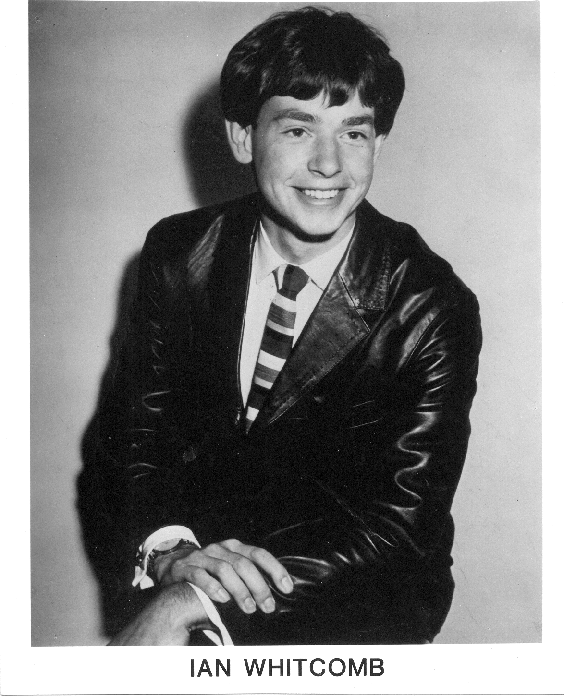
Young Ian
‘You Really Turn Me On. In 1965 I was a very old twenty-seven but getting younger every day. I saw Whitcomb once while visiting my wife’s relatives. Her young cousin was watching the Lloyd Thaxton show out of LA. I’d never heard of Lloyd Thaxton either but according to the cousin he was the hottest thing on TV. If I remember correctly the Kinks had just sung Dedicated Follower Of Fashion that I thought was very OK. The Ian came on and did his breathy falsetto androgynous song: You Really Turn Me On. At one point after suggestively fondling the microphone stand he shot down out of sight like a tower from the World Trade Center resurfacing moments later. Pretty startling stuff at a time when nearly every new group was an actual mind blower- The Rolling Stones, Animals, Dave Clark Five and this was just the beginning. More and even stranger and stronger stuff was to follow quickly only to begin a slow fizzle even as it peaked ending in the Rap and stuff that passes for music today. A very old Bob Dylan trying to bring light into the heart of his growing darkness. After the startling sixties came the sedentary seventies. But then Whitcomb disappeared like his fall from the microphone stand and I never saw or heard of him again. A true one hit wonder.
Years later I came across his LP Under A Ragtime Moon. Then I knew why he had disappeared. He was into that English music hall stuff. But then, I didn’t mind that. He sounded quite a bit like one of my personal favorites The Bonzo Dog Doo Wah Band. Of course they didn’t really get that far with that stuff either. You have to be a member of the cult to really dig it. In order to like the Bonzos you have to have a fairly eccentric side to your musical taste. A little out of the mainstream which is where I preferred to live my life. I thought the Bonzos were wonderful, still do. But I was pretty much all alone out there. I liked and like, Neil Innes and the late great Viv Stanshall, two of the Bonzo stalwarts. ‘Legs’ Larry Smith. Ragtime Moon lacked the modern rock foundation the Bonzos infused into their music but to this day I couldn’t tell you whose version of Jollity Farm I’m familiar with. Anyway I have a soft spot for this sort of thing so over the years I’ve played a side of the Bonzos fairly often and dusted off my copy of Ragtime Moon occasionally.
You Really Turn Me On always stuck in my mind, great song. Kinda struck my lost chord and made it gong into the distance. If you’re only going to have one hit you might as well make it a good one. And then for some reason, I don’t know, I googled Whitcomb and saw that he’d written a few books, including this autobiographical sketch cum pop history so, as it was cheap on alibris, I sent for a copy. I was delighted with the volume as I read it through. As biographies go this is one of the better ones, right up there with Wolfman Jack’s not to mention that of that phony Jean-Jacques Rousseau although I stop short at Casanova. Casanova is one hard one to top. As a history of the period it is more balanced and beats the hell out of that crap from the Boys Of ’64.
Ian took offense at being a one hit wonder; he really wanted to be up there with, say, Jim Morrison of the Doors, Mick Jagger, people of that ilk. I have to believe that stories Ian tells are true although some are stunningly improbable but then those things can and do happen that way, you know. It’s all in how you see what goes on around you. Toward the end of the book he’s pondering on where he went wrong, he’s sunk into a fair depression over this, he flees from his apartment in his pajamas one early morning to take a stool in a coffee shop. That’s depression. But, let Ian tell it in his own inimitable fashion. As improbable as it may seem he took a stool next to Jim Morrison who recognized him first.
When ‘Light My Fire’ had reached number one, Jim had gone out and bought a skintight leather outfit. At the Copper Skillet, it wasn’t so skintight anymore.
“How do you do it?” I asked.
“I never dug Jerry And The Pacemakers. How do I do what?”
I wanted to kick myself for bringing up my obsession with pop success, but I plowed on: “How do you stay intellectual and still be a hit with the kids, the masses?”
“You could have done it. You were into the theater of the absurd. I saw you on ‘Shindig’ and ‘Lloyd Thaxton’ goofing off and telling the audience that rock n’ roll was a big joke. That the whole of existence is a big bad joke. You were too comic. Tragedy’s the thing. Western civilization is ending and we don’t even need an earthquake; we’re performing crumble music for the final dance of death and you know what? Truth lies beyond the grave. I’ll pick up the tab.”
I couldn’t have put it better. Ian’s problem was that he was working from a different ethic. He didn’t understand that the singer and the song was the show, the whole show. Nothing else was needed. We were only there to see the singer sing his song. It’s nice to know that Jim and I were watching the same Thaxton show together. If I hadn’t seen Ian on Thaxton I wouldn’t have been as impressed because on that show singer and song were a single projection.
Due to the wonders of the internet I was recently able to catch several versions of Ian’s song but not the Thaxton one. One had him and a half dozen other guys charging around a series of pianos. Completely missed the point of the singer and his song. Not even good entertainment. Ian considered himself an entertainer bacause of a childhood encounter with a music hall comic named O. Stoppit. Fateful encounter. Because of it Ian wanted to be a comic, ended up a singer and as Morrison noted the two were too dissimilar to work.
Ian was probably headed for depression from the age of five or six or so as he came to terms with bombed out London in ’46 or ’47. His biographical sketch is a wonderful tale of a seemingly cheerful man’s descent into a deep depression. By book’s end Ian is nearly out of his mind.
He quotes a psychoanalyst for his definition of depression:
It was the great Serbian psychoanalyst Josef Vilya who concluded that chronic depression is the result of a head on collision between dream and reality. The patient dreams of becoming King but goes on to become a member of the tax paying public.
That’s probably what Morrison meant by tragedy. Life always fails to meet our expectations so that humanity responds by assuming at least a low grade depression that makes comedy an adjunct to tragedy. Thus in the Greek theatre there was a terrifically depressive tragic trilogy followed by some comic relief. The burlesque of an Aristophanes.
Ian’s problem was as Morrison noted that he saw the absurdity of the human condition but was too jokey about it. Absurdity is a serious thing and has to be so treated. O. Stoppit taught Ian a silliness unmixed with tragedy. A tragedy in itself. When silliness such as You Really Turn Me On met the tragedy of a one hit wonder Ian began his descent into depression as Vilya suggested.
I’ve never been depressed myself, never had the blues, but I have visited the lower depths as a tourist so I have some notion of what Ian’s talking about. Dirty Harry in drag. I just never got off the bus that’s all, except once, to walk through Haight-Ashbury where I saw first hand how horrible true depression could be. Boy, did Ian find out about that. Good thing he never found his Debbie.
In his narrative combining grim humor with his developing depression Ian gets off some rippers. I had a good many uproarious belly floppers. Try these few lines. Two good ones in succession. You do have to have the same sense of humor. The North and South are those of England.
These frightening stories of Southern travelers stranded in woebegone depressed cities and suffering under the rough natives. For example a well known Shakespearean actor, having missed the last train out of Crewe, knocked on the door of a hotel. “Er, do you have special terms for actors?” the traveler asked. “Yes- and here’s one: Fuck off!”
And if they weren’t being aggressive, the Northerners were acting daft. One heard of a Lancashire lad down in London demanding another helping of dressed crab (in the shell): “Give us another of them pies- and don’t make the crust so hard.”
Of course Ian can’t do that on every page but laughs are liberally sprinkled throughout the underlying depression.
Ian’s book opens with his youthful encounter with O. Stoppit and ends with another unifying his theme nicely.
In between Ian enters the world of rock almost serendipitously with his one hit song: You Really Turn Me On. After that his story is a search for a sequel that he can never find but which he pursues somewhat as Alice down the rabbit hole. He loved his one brush with fame so much that the clash between his cherished hopes of finding his sequel and the grim reality of not being able plunges him deeper and deeper into depression. Personally I would have gone out and found a songwriter. There were thousands in LA.
However his odyssey, as he calls it, Brave Ulysses ne Ian, led him through the heart and soul of the Golden Age of Rock And Roll from the Beach Boys and Beatles and Rolling Stones through Morrison and the Doors, Procol Harum, Cream, Pink Floyd, Donovan, you know, like that. After that crescendo followed the diminuendo ending in Rap and the current rather laughable music scene.
Ian has encounters with the aforementioned Morrison, Mick Jagger and others. His observations of the social scene are trenchant. He makes an acute observation do in place of a couple hundred pages of twaddle a la Todd Gitlin and Greil Marcus.
Along the way he sprinkles the little known odd fact:
Procol Harum is Latin for ‘beyond these things.’ Have no idea what that has to do with Procol Harum’s music.
…the name Pink Floyd was taken from a record by two Georgia bluesmen named Pink Anderson and Floyd Council. Amaze your friends with that one.
And in conversation with Bobby Vee he confirmed a question about Bob Dylan that I needed confirming:
The afternoon I taped “Hollywood A Go Go” a syndicated TV rock n’ roll show that’s allegedly seen as far away as Rhodesia and Finland. The set was sparse- cameras, lights and a few rostrums. The empty spaces were filled with boys and girls who danced or gazed. All the acts had to lip synch their records. Chubby Checker (the Twist King) was on the set and, when he heard my record he pronounced it “bitching!” Bobby Vee was a special guest and looked every inch a star in his sheeny silk suit. He really had his hand movements and head turns down to an art. We chatted during a break and I brought up the subject of Bob Dylan and my concern about him. To my amazement, Vee told me that Dylan- before he got into the folk kick and when he was plain Bobby Zimmerman back in Minnesota- had played a few gigs with Vee’s band- as pianist! Vee said Dylan was very good, in the Jerry Lee Lewis sytle, but he could only play in C. He said he knew a lot about country music, too. As it was hard to find pianos at their gigs Dylan didn’t play with Vee very long. But as he has fond memories of him and said he was really well versed in current rock n’ roll at the time of their meeting. He had the impression that Dylan was very hip to whatever was happening. ;I wondered if the young Zimmerman had ever been a Bill Haley fan.
So, that would confirm that Dylan did play with Vee in the summer of ’59 after his graduation.
The book is a great read, a very good book, as Ian struggles and fails to find success. In a fit of depression he returns to the seaside pier on which he had seen O. Stoppit. An old poster is hanging that he secures then finding his model’s address he visits him to present him with the poster. O. Stoppit tells him bluntly to stop living in the past. A fine thing to tell a historian but Mr. Stoppit was apparently a blunt, unfeeling brute. Also well past the sunny side of life.
Has Ian ever adjusted to his being a one hit wonder? I’m afraid not. It still rankles. As late as December 1997 in an essay written for American Heritage Magazine Ian quotes a letter from fan Arlene:
Dear Mr. Whitcomb:
I have watched you several times now and I want to say that sure you have talent and you’re magnetic, but why, oh, why, do you screw it all up by horsing around, being coy, by camping, as if you’re embarrassed by show business? You could be great if you found your potential and saw it through, but that would take guts. Instead you mince, and treat it all as big joke. Come on now!
Well, that was the same thing Morrison told him thirty years earlier; the vaccination didn’t take then either.
I think Ian entered his depression early in life, as many of us do. Then one has to face it. Some become phony chipper optimists in their attempt to overcome the conflict between expectations and reality. Some become goofs and jokers. Something I fought for years. Some like Ian become silly. The most extreme type of this I ever saw was Red Skelton the ‘great’ clown who was painful for me to watch. In fact I couldn’t do it. I saw too much of myself in him and ended up hating the bastard.
If Ian wants that second hit and more he has to master his silliness. Weld the singer and the song like greats like Jagger and Morrison. Be to some extent what his fans want. A good sense of humor on songs done with respect for the song, himself and his audience. Scratch Red Skelton. People want to love Ian, just as Ian wants to be loved, but as the saying goes, he won’t let ’em. I’m not criticizing or demeaning, I know where that’s at too. I am recommending the course of action however. I, Arlene, Jim of blessed memory and others want a sort of closure that has been left hanging.
The book is a great one through Ian’s struggles to come to terms with his times, himself and the future.

Ian Later On
 I, Dynamo