A Review: II of II Wonderful Tonight by Pattie Boyd
December 17, 2009
A Review
Wonderful Tonight:
George Harrison, Eric Clapton. And Me
by
Pattie Boyd
Review by R.E. Prindle
Boyd, Pattie: Wonderful Tonight: George Harrison, Eric Clapton, And Me. Three Rivers Press, 2007

Good Morning Little Schoolgirl. The sixties fixation on young girls,
The darkest hour is just before dawn.
There’s one thing I want you to do
Especially for me.
And it’s something everybody needs…
Whisper a little prayer for me.
–Bass, Ralph. Pauling, Lawson
One needs a little encouragement in the black night of the soul. One needs a little encouragement amidst the trials and tribulations of life. The way is dark, the night is long and who knows what is waiting at the end of the road. All the mythological heroes went through a period of madness. Most likely at the mid-life crisis. The greater the stresses the more difficult to avoid errors. Why judge others so harshly when neither you nor I could have done better in the same circumstances. If a person is of good will and not ill why not be a little forgiving? Especially if no crimes are committed.
As Pattie points out, when manager Brian Epstein died the Beatles were suddenly on their own. To that time Brian had managed all the details, business as well as personal leaving the Beatles to do what they did best, write, record and perform songs. The relationship had been perfect of its kind. Given that the Beatles were now major successes rather than fledglings it would have been nearly impossible for them to put together a management team.
Of course, the Beatles were no businessmen. In the attempt their musical skills were compromised while the business end could not prosper. Cares such as they had not known descended on them. Nor, did they understand that the smallest action or word of theirs would reverberate around the world. They were no longer able to say or do what they pleased. Millions of vulnerable young people and unstable adults hung on every word giving them whatever interpretation suited them best. McCartney’s song Maxwell’s Silver Hammer did uncalculable damage.
When the Beatles closed their boutique waves of reaction crossed the world. It was said they opened the doors and invited anyone to take what they wanted. Away off in Keseyland on the West Coast of the US where I owned a record store a wave of kids descended on my store asking if everything was free. These were zany times where everything was possible so, mystified, I asked why they would think that. I was told the Beatles had just given away everything in their store and why wouldn’t I? I became a bastard for not following the Beatles lead.
So, when Pattie noticed a change in George when they came back from India it was probably caused by business cares, a new reality that neither he nor the others knew exactly how to deal with, nor was there time to learn. Those stresses, in the way of the human mind, are converted to sexual expressions. In George’s case he began to mumble about having a lot of concubines. A pretty normal reaction that he may never have acted upon. I’m sure that when he showed up with Chris O’ Dell in tow it may have seemed like the first step. (See Chris O’ Dell’s auto for a fuller description.) Chris became Pattie’s friend denying any relations with George, at least during her extended stay with the Harrisons, although after Pattie’s divorce the two came to terms. But, for now she and Pattie became bosom buddies shopping and cavorting together.
What a wonderful time to have unlimited money and a huge mansion to furnish.
While the sixties are primarily thought of for the groups and records that was only one component of that truly wonderful and amazing time, at least looking at the bright side of the penny.
P.F. Sloan, who penned Eve Of Destruction, titled one of his own LPs Raised On Records. The title explained the generation. Starting with perhaps Johnnie Ray leading on to Elvis the history of our generation was written by recording artists rather than novelists or even movies. You might question starting with Johnnie Ray but he was the first mind blowing departure from the norm. Mind blowing explains the whole period. Rock’s John the Baptist preceding the Jesus of Elvis. A trail of great records led up to the British Invasion when the world tipped on its axis. It was one mind blowing act after another.
First the Beatles upset the elders, long hair but clean cut. Then came the not so clean cut Rolling Stones with the weirdest thing you ever saw on stage, Brian Jones. You couldn’t take your eyes off him. Fantastic hair and the strangest clothes. Mick probably had to get rid of the competition. If the Stones weren’t bad enough they were followed by the appropriately named Animals. The name said it all sending the old folks wild with gnashing teeth. But backed up by Dylan and Peter, Paul And Mary the group mind was conditioned to move in the same direction in unison.

As Pattie says, she found the most wonderful art nouveau artefacts. Indeed, Aubrey Beardsley, Alphone Mucha, Toulouse Lautrec, 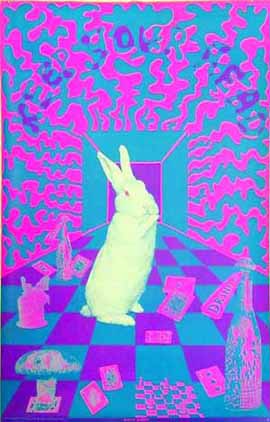 god, even the names, whoever heard of anyone named Aubrey? The art focus shifted from that NY art junk. Travel posters had been a staple for several years but now other posters began to augment them, Peter Max, East Totem West, the Fillmore and Avalon posters and the most spectacular of all- the giant personality posters. Originally the posters were blown up real grainy so that if you stood close the picture wasn’t visible but stepping back and then back further the portrait emerged. Drove the old folks wild, mytified the less hip; minds weren’t prepared. Although by that time Telstar was old hat, and men had walked on the moon. The impossible was no longer impossible, anything was possible and it kept happening. Andy Warhol and his Campbell Soup can. Good god. Remember the Robert Indiana LOVE poster with the lopsided O?

Robert Indiana- Love
In the US the tax laws were such that you could make money on records and books without turning a profit. Publishing exploded. Nifty expensive art books of the strangest and most outre artists were available. Virtual toys like the works of Victor Vaserelly. It was incredible, it was magnificent, it was mind candy as never seen before.
I hope Pattie with all that coin took advantage of it. There was a canchre in wonderland though. Pattie didn’t keep her hand on the throttle but let her attention be diverted by sex. Some reviewer said that Pattie wasn’t the brightest bulb. Hmm. I do wonder what she was thinking.
Now comes the part difficult of analysis. Pattie, like all women portrays herself as an innocent, the helpless beauty in the clutches of two beasts who refuse to turn into princes when kissed. I defend n o one but like a clear picture. It was clear that Pattie is haunted by her parents relationships as she always mentions them at critical points. She perceives her mother as a victim so it is possible that she was seeking revenge for her.
The time sequence Pattie presents is inadequate to follow the actual course of the relationship’s deterioration. It is possible that Pattie decided to turn the tables and become polyandrous first. She did conduct herself in that manner or, at least, try to. The information is insufficient to determine the actual sequence of events. She appears to always have been flirtatious with other men. In reference to Clapton she says she allowed him to seduce her. This implies volition and that she encouraged his attentions. One might say she almost solicited the famous letter from Clapton she showed George. It wouldn’t have taken a genius to figure out the small e it was signed with referred to Clapton. George was no dummy. Pattie blithely passed it off as from an unknown fan. Then she innocently expresses surprise when Clapton called that evening and asked if she had gotten his letter. Oh please, Pattie.
George unable to take it anymore invites Clapton over, gives him one guitar, takes another engaging in a guitar duel with the prize being the fair lady. Well, George found her, raised her up to where she was and then let Clapton take her.
Now, this is fairly reprehensible I think, Pattie left, but rather than seeking a divorce she lived with Clapton for two years while married to Harrison. Affairs of the heart are beyond me so all I can say is that Harrison was too kind hearted, Pattie callous and cruel and Clapton a simple cad. George always did the honorable by Pattie and she should have done the same by him.

Forty Years Of Hard Travelin'. Lost innocence.
One questions Clapton’s motivations. Clapton had a housefull of women when he professed his great love for Pattie; a nice girl I’m sure, but not to die for. Pattie cagily put Clapton off so his threat was to become a heroin addict unless she came with him. He was only snorting the heroin not shooting it. Pattie let him, she says, for three years.
The only reason I can see for Clapton’s wanting her is emasculation games. George was a Beatle with a guitar reputation therefore above him. When the two had their guitar duel, by consensus, George lost thereby losing status. Clapton then took the woman thereby emasculationg the man he had made his rival. But now he was stuck with this woman he didn’t really want.
In an interesting twist in the contest for supremacy both Clapton and Pattie were put down by the redoubtable Mick Jagger. Pattie and Clapton had been married and threw a huge bash with mega fireworks, everything.
Mick Jagger came with Jerry Hall, who had been engaged to Brian Ferry but had left him for Mick.
So Jagger is leaving no stone unturned in his quest for supremacy even putting down a weak rival like Brian Ferry.

Jerry Hall and Mick
The party started in the afternoon and ended in the dawn.
By the time Eric and I went upstairs to bed it was daylight. We were ready to drop- but Mick and Jerry were tucked up and fast asleep in our bed, with little Jade, his daughter with Bianca Jagger sleeping sweetly beside them. Trust Mick to have found the best bed in the house.
So Jagger put down both Clapton and Pattie. Childless herself she saw Mick’s child. They could have turned Jagger out of the bed appearing boorish but if they had, dog tired, they would have had to change the sheets then crawling into a bed warmed by Jagger. Mick aced them both demonstrating his supremacy. Ah, those emasculation games.
Now, Pattie left George, supposedly because, or after, Clapton wrote Layla, but she didn’t divorce him for two years. Thus as another man’s wife she was living as Clapton’s concubine. Call me old fashioned but I can’t endorse such behavior. Amazingly George didn’t press for a divorce letting Pattie divorce him on the grounds of lack of cohabitation for two years.
Perhaps she was avenging her mother’s treatment when her father carried on with the wife of an intimate friend for some time, perhaps two years, before divorcing the mother. Obviously some psychological end is being served.
Clapton was no where near as generous monetarily as Harrison. Pattie describes it as keeping her on a tight leash. Nor did this man who professed to love his Layla so deeply then marry her. No, they shambled along in his loose situation.
When they did marry it was under the most humiliating situation for Pattie. We have only her side here but she says that Clapton and his manager had a bet that the manager couldn’t get a story about Clapton in the papers. The manager without Clapton’s knowledge invented a story which was printed that Clapton would marry Pattie the next Tuesday.
Pattie had just walked out on Clapton and was in LA. On the Friday before Clapton called her and said he needed an immediate answer. Marry him by Tuesday or forget it. Pattie folded. After the I do-s Clapton left on an extended tour leaving Pattie to find her way home.
Amazingly she stayed with him for some time. Even so she had not severed emotional ties with Harrison who remained unmarried.
Clapton was still playing money games with her. One Christmas she went shopping running up a 5,000 pound tab at Harrod’s expecting to charge it to her Harrison account. Surprise! The account had been closed. Not having enough money in her checking account which Clapton apprently wouldn’t let her have she had the effrontery to ask Harrison who gave her a five thousand pound check. Apparently Pattie misunderstood the meaning of the word divorce.
For whatever reason she showed the check to Clapton who, realizing he had been aced in the emasculation game, refused to let her cash it.
Now tiring of the games with Clapton Pattie sought a divorce. More money games.
With Harrison, as a divorce settlement after abandoning him and cohabiting with another man, Pattie received 120,000 pounds. In the circumstances I would see that as very generous. She doesn’t say exactly what she received from Clapton but it was enough to provide her with a very sufficient investment income.
Not content with that while apparently assuming divorce or no that Clapton owed her more she demanded he buy her a million pound house as he had spent that much on one for himself. She was denied but it was agreed to buy her a 300,000 pound house although title would remain with Clapton. She found one for approx. 350,000 pounds and was allowed to live in that.
Subseqently Clapton remarried. The canny Pattie realizing that if Clapton died his wife would turn her out attempted some successful maneuvers. She asked for 40,000 pounds for some remodeling. Clapton refused but replying that he wasn’t aware that he was her landlord he deeded the house to her so she came out very well indeed.
During this time she was living with her third man named Rod. He was nine years her junior. Tiring of him she cruelly told him that his life as a ‘toy boy’ was up and to move on.
The inevitable conclusion is that Pattie viewed her mother’s relationships with men as she was growing up and came to some conclusions. Although neither Harrison or Clapton were perfect men I am convinced that whatever their shortcomings Pattie was not an innocent victim. She actively encouraged Clapton while married to Harrison, abandoning George for Clapton. She knew Clapton’s attitude toward women and stimulants, both drugs and alcohol before she ‘allowed herself to be seduced’ so his addictions came as no surprise. She has no complaint on that score.
Pattie made the remark in closing that if the right man came along she would snap him up in a minute. Having lived every groupie’s dream of snaring a Beatle and Clapton the only eligible rock star to complete her trifecta would be the Man himself- Mick Jagger.
I would be interested to see that combination. The odysseys of this simple Kenyan girl from Harrison to Clapton to Jagger would certainly equal the odyssey of her fellow Kenyan, Barack Obama.

Pattie today. Further down the road.
End.
A Review: Wonderful Tonight by Pattie Boyd I of II: Famous Groupies Of The Sixties Series
December 9, 2009
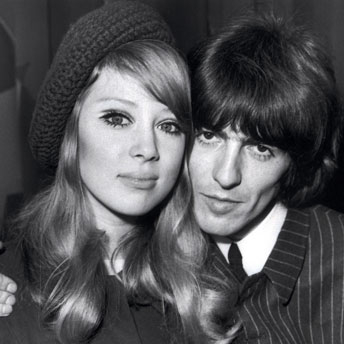
Pattie & George
A Review
Wonderful Tonight:
George Harrison, Eric Clapton, And Me
by
Pattie Boyd
I of II
Review by R.E. Prindle
Boyd, Pattie: Wonderful Tonight: George Harrison, Eric Clapton, And Me, Three Rivers Press, 2007
I don’t believe in boogie bars,
Macro biotics or souped up cars.
I don’t believe the price of gold;
The certainty of growing old,
But, I believe in you.
–Don Williams.
Perhaps it’s because I lived through the era experiencing what I did and vicariously the rest that I was thoroughly charmed by Pattie’s autobiography. I hope I will be excused for calling Pattie by her first name throughout but Boyd sounds so brutally unisexual eliminating amything but female sexual aspects that it doesn’t seem fitting and I don’t wish to sound formal otherwise.
This part of the review will cover pretty much Chapter 3: Modeling, 4: George and 5: Mrs Harrison. The chapters brought back the glittering memories of the sixties, memories created more by magazines and television shows than reality for most people but perhaps more or less real for some. If it wasn’t real for Pattie than it probably wasn’t real for anyone. But then it’s hard to tell where you are at any given moment in time.
She was there in what was called ‘Swinging London’ at the time. From a distance it was just dazzling. We were entranced by the possibility. As the late great Roger Miller put it: London swings like a pendulum do. By the time I got there in the seventies the pendulum was stationary. Pattie herself began life as a hair stylist but in a top notch salon. While there she was given an intro to a modeling firm and was lucky enough to catch on. From the looks of the photos whe was in the Twiggy line. She could have become a high fashion queen.
And London was a place where staying on top of fashion was a full time job. The scene was perhaps best captured by Ray Davies and the Kinks in their song: Dedicated Follower Of Fashion. If memory serves it was written about Marc Bolan.
…his clothes are loud but never square
It will make him or break him
So he’s got to buy the best
‘Cos He’s a dedicated follower of fashion.
He does his little rounds
Amongst the boutiques of London Town
Eagerly pursuing all the lates fads and fashions.
Pattie was in the thick of it mentioning the people she associated with, mere names to us, like Ossie Clarke, Twiggy, Mary Quant, David Hockley, photographers, artists, fashion designers who were realities to her although the glitter is brighter than the shabby fabric beneath. But then, how else could it be?
One feels envy at her luck. I was on the West Coast viewing it all from a distance with wonder, but owning a record store. By the time I got to London in the early seventies the swing had swung. Carnaby St. was deserted when I strolled down it all alone past the shops empty of customers. What sounded so good in song looked effete in reality. Of course I was straight Beverly Hills, dressed completely Eric Ross, quite a standout, but strange and exotic to Londoners.
Oh well, there were always the great book stores.
Pattie had begun her career as a fashion mdoel when she received a call to appear on the set of the Beatles movie in progress, A Hard Day’s Night. I suspect that George Harrison had seen her about town and requested her by name, only a guess, but he certainly glommed on to her when she arrived. Honorable intentions too. The couple got together and it was on. Thus she entered the charmed circle of the Beatles. You couldn’t get no higher.
The Beatles? Who cared really? other than the millions. Whatever was happening there passed me flatter than the Grateful Dead, and that’s flat. I was cool to both the Beatles and the Stones. I wasn’t really a dedicated fan of anybody; I liked certain records- Superlungs by Terry Reid. The first Jeff Beck with Rod Stewart when he still had intact pipes, the second with Bob Tench wasn’t bad either, lousy cover. Beck apparently hated vocalists because he played so loud, on purpose, I was backstage once and watched him do it, that he blew out their pipes. Donovan’s Sunshine Superman was tops, Procol Harum’s first, Alan Price’s This Price Is Right, stuff like that. Dillard and Clark, Flying Burrito Brothers’ White Line Fever, some Johnny Rivers. Nice stuff. Two or three Byrds.
But, the Beatles were gods and here were George Harrison and Pattie Boyd trying to fashion a normal lower middle class life in a hundred room mansion. The Beverly Hillbillies in London. Good luck boy and girl. And that was not taking into account drugs. Pattie’s story of the maniac dentist sends a chill through the marrow; a real demon dentist, the Sweeny Todd of the profession. Lord, deliver us from evil. It was he who introduced Pattie and Harrison to LSD, surreptitiously of course. Spiked their coffee just as they were about to leave his house.
Then the stuff came on, a little like the Airplane’s song, White Rabbitt- one side makes you larger, one side makes you smaller. Pardon me for writing myself into the story but the pen is in my hand:
Happened to me once. I was down in Berkeley at what was supposed to be a party. Pot parties in that time and place meant everyone sat around self-absorbed looking out vaguely at what could possibly have been you, or possibly just empty space. This particular set played draggy jazz so possibly they weren’t even looking out, their eyes were just open. As I was to learn it wasn’t pot. I had never smoked before anyway. Nobody could have ever been busted for whatever it was I smoked. Nothing was happening except the draggy jazz, maybe John Coltrane going around in fifths, and I was getting bored so I said I was leaving. As with the dentist of Pattie’s experience I was abjured not to leave. I never knew really what it was until I read Pattie’s story. It hit me a couple blocks down the street. The ‘tobacco’ must have been laced with acid.
Getting out of the maze of streets of Berkeley always required a little concentration on my part anyway and now I didn’t have any. I didn’t even know where I was or where I was going. Fortunately for me the car drove itself. I did have to keep my hands on the wheel though it wasn’t always uppermost in my mind. The car did strange things when I took my hands off the wheel, wandering here and there. A voice spoke saying: Keep your hands on the wheel.
The car found its way to the MacArthur Freeway which, although it was a road I knew by heart I couldn’t recognize. Plus everything had turned a shiny patent leather black, the highway just glittered and shown so. Colors had disappeared; the lights of the cars shot through my eyes to the back of my brain. They were all driving very slowly it seemed but passed me going very fast. Of course I was driving about twenty-five per which was as much as I could handle. I got in the slow lane. A good thing because it seemed like I was going around this curve for twenty-five minutes. Everytime I looked it seemed like I was in the same place. I decided to put my foot back on the gas.
The next problem was that the sky and highway were bonded together. Fortunately the car was able to separate them and they moved apart before us- the car and me.
My next big problem, after a seeming eternity, was that in order to make a left exit to Castro Valley I had to cross three lanes dotted with cars moving at varying speeds in different lanes. I had to time it just right to get in between cars in two different lanes. Sort of a Rubiks Cube kind of problem. While I was dithering my car changed lanes for me and I was on the off ramp with a smile.
An underpass lay before me where the most miraculous event in my life took place. As I began to enter the underpass this set of ram’s horns, you know, like a male sheep, began to grow from my forehead. Great white curling things they were, magnificent. It was at that moment I realized I was Master Of The World. Just as I was about to assume the mantle I came out the other side losing my spectacular rack and my crown. While I was pondering the imponderable my car finding its way back gliding noiselessly up the street into the driveway where it pertly came to a halt. Heaving a sigh of relief I got out and entered the house.
I don’t know what I looked like, perhaps fierce because of the loss of my horns, but my wife and mother-in-law seemed to run from me. Entering the kitchen I saw my brother-in-law about to have some tacos he’d cooked up. The guy was a wizard with hamburger; he could do things with hamburger than no chef had ever done. I had issues with him which I won’t go into. When I saw the tacos I became ravenous and wanted them. He was experienced. He took one look at me and realized the situation his hand stopping before his open mouth.
I didn’t hesitate, I remembered being Master Of The World. I snatched his tacos from his hands saying: I want those. He was knowing. He made no resistance, just said, sure. Smart move because I wouldn’t have taken no for an answer while still feeling superhuman. I wolfed those suckers down; best tacos I ever ate. But now there were fireworks going off in my head. I got in bed and watched the light show going off behind my closed eyes for a couple hours. I woke up grouchy and ragged. I took care in the future to make sure that never happened again. Wherever I had been I didn’t want to go back. I sure missed those horns though.
Apparently Harrison and his band mates liked it going back repeatedly. But then Pattie discovered that old fraud the Maharishi Mahesh Yogi and his Transcendental Meditation. What a fraud. She turned Harrison on and the band followed. First it was Bangor, Wales and then on to the big temple in the Himalayas of India.

The Cosmic Joker
There are many wondrous stories of their Indian sojourn at the ashram. The upshot was that the holy man liked girls as much, perhaps more, than the rest of the fellows. This tore a rent in his spirituality and disillusioned the group who left in a huff.
Pattie does tell a good story about Ringo who was wary of spicy Indian food having had digestive problems as a youth. He took along a suitcase full of Heinz Baked Beans. Imagine going through customs with that. Imagine watching the guy in front of you opening a suitcase full of cans of Heinz Baked Beans. US Customs would have made him open each can on the spot. I’d be laughing yet.
After their marriage George wanted her to give up the job of modeling. she had regrets but as far as modeling went she was getting old. Younger women were pushing up. The Twiggy look was dated from the start anyway. She might have been near the end of her career whether she liked it or not.
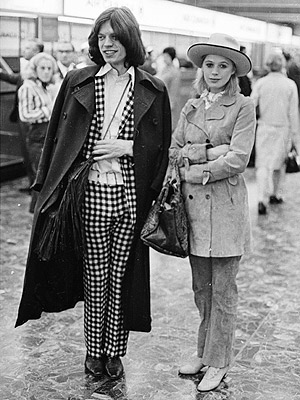
Mick & Marianne
Couple intesting points before this idylic phase of her life and life with George Harrison ended. Mick Jagger and Marianne Faithfull came to their house one night. Jagger wrote on the Harrison’s wall: Mick and Marianne were here. Strange action for guests. The only thing I can figure is that Mick was marking out the limits of his territory like one of the big cats who go around peeing on bushes to set up their territory. As a Beatle and tops of the pop world it was incumbent on each Beatle to establish their priority, their dominance over the lesser princes. When Mick wrote that on Harrison’s wall without demurrer he was establishing dominance over his superior. Eric Clapton would later do the same when he took Harrison’s wife while defeating him, as some say, in a guitar duel.
If you watched the 2009 Rock and Roll Hall of Fame show you saw Jagger and Bono dueling it out for the crown. A very haughty Jagger beat Bono into absolute submission having him groveling before himself worse than Obama before the Emperor of Japan. Jagger was so taut that after he flipped off Bono he almost dismissed the audience but then caught himself and gave a dismissive back hand wave in acknowledgment. That was somethin’ else man.
Jagger as leader of the Rolling Stones also foisted Allen Klein on the Beatles also demonstrating the priority of the Stones over the Beatles. And lastly Jagger, how shall I say, induced Bob Dylan to open a show for the Stones placing Dylan therefore beneath the Stones. I would have to say that the Stones have finished as the undisputed Kings of Rock of Roll. There’s always more going on than you think.
And then Pattie and Harrison were in attendance at the famous first drug bust of Jagger, Richards and Marianne Faithfull. As Pattie tells it she and her husband left the party at 3:00 AM. Immediately after they left the police raided. She believes the fuzz waited until they left as they were Beatles. The Beatles were thought of as clean at that time while the Stones and Marianne were monsters. She may be right. If the type of glamour achieved by the Beatles and Stones was new to them and difficult to manage perhaps the same was true of society. The Phenomenon of the British Invasion was so spectacular that you just had to stand back and ask: What’s this? So maybe the cops did honor The Top Of The Pops.
Whether she was slapping back at Mick for writing on her wall by the observation I can’t tell although both stories found a prominent place in her narrative. High school never ends.
The contest for her favors by Harrison and Clapton is very complex, a lot of psychology involved. I’ll have to work on it some but that will be covered in my review of the second half of the book to follow.
https://idynamo.wordpress.com/2009/12/17/a-review-ii-of-ii-wonderful-tonight-by-pattie-boyd/
A Review: Faithfull by Marianne Faithful: Famous Groupies Of The Sixties
November 11, 2009
A Review
Famous Groupies Of The Sixties Series
Faithfull: An Autobiography
by
Marianne Faithfull

Marianne Faithfull
Review by R.E. Prindle
Season Of The Witch
All night, all day, Marianne
Down by the seaside sifting sand.
Even little children love Marianne,
Down by the seaside sifting sand.
-Terry Gilkyson And The Easy Riders
Technically Marianne Faithfull wasn’t a groupie. Her early years resembled one but in her later years she was sought after as a conquest by men of the groupie mentality. I’m sure as everyone knows Marianne Faithfull began her career as a very successful pop singer. Produced originally by Andrew Loog Oldham she was among the first of the new breed of Rock singers, as opposed to Rock n’ Roll. She belongs to the new rather than the old school.
Her first song was As Tears Go By. Single and album were very successful, more or less establishing her reputation for all time- or at least until the generation passes away.
My first knowledge of Marianne Faithful was when the strains of As Tears Go By wafted into my study window. They continued to waft all day long for weeks. The girl in the apartment next door was fixated on the song. A little fat girl. So after the 7000th rendition of As Tears Go By I had my first nervous breakdown. Marianne Faithfull was a sour taste.

Mick Jagger
Then as far as I’m concerned she dropped out of the pop scene.
Her auto was first published in 1994, I just read the paperback the other day so the book is probably old hat to most of you but as I didn’t find any real reviews on the internet I decided to give it a try. I don’t see any reason to do the whole book so I’ll concentrate on the three Bob Dylan incidents, aspects of her relationship with Mick Jagger and Donald Cammell and his movie, Performance. The book is highly readable and entertaining until after her divorce form Jagger about two thirds of the way through the book when she falls into a drug stupor. At that point it is necessary to avoid falling into Marianne’s own depression. Too late for her to get over it now.
Her career began when she was selected for her looks by Andrew Loog Oldham, producer of the Stones, who saw her at a party. Asked if she could sing she said yes. Next, there she was behind a microphone lisping As Tears Go By. Thus she was an established big pop singer when she first met Dylan and later came under the thumb of Mick Jagger. She brought something to the table, she didn’t come empty handed. She was an equal. To be treated as an appendage enraged her probably contributing to her drug addiction
She met Dylan during his ’65 tour. You can see her sitting in the corner in the movie Don’t Look Back. She has some trenchant comments to make of the various prticipants in the Savoy Hotel debacle. She’s very intelligent. She was a young girl at the time, Dylan being five years older. She was in awe of Dylan who she considered the hippest god on the planet.
Dylan is supposed to be a master seducer. It wasn’t that Marianne wasn’t ready and willing, she was. In her mocking portrayal of the scene Dylan rather than complimenting her beauty and talent made an attempt to overawe she who was already overawed with his own wizardry. In the process the seduction fell through. Mazrianne skipped merrily away.
Now, this is a girl who a year or two younger , while on tour with a review including Roy Orbison responded to him when he knocked on her door and said: Hi. I’m Roy Orbison. I’m in room 602. And Marianne skipped on down the hall. How could Dylan have missed?
Later in the book, the year was 1979 when Dylan was going though his Jesus years, while Marianne had entered clinical depression doing heroin and sitting on her wall like Humpty-Dumpty all day, every day, Dylan arrived for another tour. His dealer was a friend of Marianne’s and he asked if she knew where Marianne was. Oh yes. Demelza, the heroin dealer got Marianne to come over. Dylan and Marianne’s second verse was worse than the first. By this time depressed, enraged and seeking vengeance against the men in her life Marianne was far from compliant. She had recently released Broken English, I’ve never heard the record so I can’t comment on the lyrics, so she mocked the Wise One by asking him if he understood her lyrics. He couldn’t explain hers any better than she could his. A little drip on the name of Bob, a little triumph for Marianne. Dylan went away unfulfilled again.
Oop, there is a third meeting. Marianne now beyond depression walking down railway ties none of us will ever be able to see. She overdosed on heroin, staggered and fell breaking her jaw. Complications arose requiring serious surgery. Pins were put in her jaw along with some contraption to hold the two parts together that apparently went

Keith Richards
through her cheek sticking out like a water spigot. Had to sleep on one side.
While Dylan was playing in Boston she presented herself backstage in this grotesque appearance. Too weird for Dylan. Three strikes and he was out. Never spoke to him again, she says. (To 1994 when the book went to press.
After the first meeting Marianne hooked up with Mick Jagger of the Rolling Stones for whom we have to thank for As Tears Go By.
In late 1966 the great Donovan included a song on Sunshine Superman called Season Of The Witch. The song epitomized the era. At the time the song made little sense to me but in reading Faithfull it all began to fall into place. While the sixties were terrific they were also horrific. Today the horrific impressions dominate my mind. All standards, all morality disintegrated before our eyes. It was the end of the world as it dissolved into stange and perplexing LSD fantasy. Hell, I never even took LSD and I think I know the feeling perfectly. I’m still getting flashbacks.
Nothing was real, it was all an illusion. You could turn yourself inside out right before everyone’s eyes and get no reaction. Hey, everyone was living through their own movie. Marianne captures this feeling perfectly in 300 pages but so did Donovan in three verses:
When I look out my window
Many sights to see.
When I look in my window
So many different people to be
That it’s strange, so strange,
Must be the season of the witch,
Must be the season of the witch.
Marianne’s succession of people to be began in childhood. She as well as all these musicians, singers and dancers came from humble backgrounds with low expectations but grand hopes and dreams. Picked for the size of her bust to be a rock star, piles of money were thrown at her. Inevitably dissociation occurred as the possiblity to be anyone appeared possible only to be held back by that humble past of low expectations. how to behave in these new circumstances, not so easy, not so easy.
The rabbits are running in the ditch
Beatniks are out to make it rich.
Sang Donovan. Standards and barriers were down, libertines crawled out of the woodwork nd there stood Mick and Keith, two libertine beatniks who could actually wallow in money.
Mick took a fancy to Marianne and moved her in. Married in heart if not in law, but she was to lose her independence. There was Swinging London or the tail end of it and swinging is what Mick and Marianne did. However Marianne did not come to Mick as a nameless groupie. She was a somebody that the fans admired and wanted to get close to also. Marianne Faithfull, all in capitals. All that was submerged into the personality of Mick Jagger. At first her own money was coming in allowing her independence but as her catalog grew old her money had to come from Mick. Her lost independence made it impossible to function as a wife and expect a joint account where she didn’t have to ask for money, it was hers by right. A conflict and contest arose.
When I look over my shoulder
What do you think I see?
Some other cat looking over
His shoulder at me.
And he’s strange, sure he’s strange.
Oh no, must be the season of the witch.
And the witching got serious. All kinds of users, abusers and losers followed the libertines out of the woodwork, masters of manipulation they knew how to easily hypnotize whacked out marijuana smokers, cokeheads and general druggies to get them to do various things, sex things, criminal acts, whatever to gratify their evil schemes. People did things they never thought they would do and fortunately some or a lot them couldn’t remember doing them. Such a character was waiting in the ether to snare Mick and Marianne. The movies, ah, the movies, what a way to snare unwary souls. Everyone wants to be a movie star.
Donald Cammell, one such, had his nose to the wind and the wind brought the sexual antics of Mick and Marianne wafting his way. Truly, it was the season of the witch.
Cammell had a novie he wanted to make; Mick and Marianne and assorted friends were just the libertines to bring Performance to life. Oh no, oh no, must be, must be the season of the witch.
According to Marianne, Cammell replicated the sex scene the set had had as though he had been there. Uncanny? Maybe or maybe it was such a far out thing participants talked and word got around and Cammell’s imagination was inflamed.
According to Marianne the filming brought disaster into the actor’s lives. Cammell, the manipulator escaped, of course, as his kind always does. The pleasure was all his, you may be sure.
The filmwas a turning point in the relationship of Marianne and Mick. Perhaps the film stirred memories of when she had been The Marianne Faithfull, since submergeed into Mick’s identity. She had been unable to adjust to the new circumstances. Pentulantly she just walked away. Immersed in drugs the downslide slow and pleasant became precipitous until she could be found sitting on her wall of the bombed out building not rebuilt as yet.
Could it be that the remaining wall of that Marianne Faithfull of low expectations was bombed out by the force of a success undreamt of in her pleasant teenage dreaming? Was that the fascination that kept her glued to the wall in pleasant heroin dreams? Would Humpty Dumpty fall into the abyss or not?
This was now the seventies. Hard realities existed on every side. It was’t fun anymore either. The actual season of the witch had passed over. This was hell.
After Marianne left Mick drugs are the topic of her converstation. What is more boring than a junkie talking drugs. Shoot up and shut up. Who wants to hear?
But she did regain her identity, she had shed Marianne of the little m and was Marianne Faithfull again. Men sought her out. Producers came around again, there was still money in that drug wracked carcassof Marianne.
When she walks along the shore,
People pause to greet,
While little birds fly round her,
Little fish come to her feet…Marianne.
Somehow from that drug drenched state Marianne was able to cobble together enough strength and concentration to begin doing a Mick and Keith. Maybe her time had not been wasted by the proximity to Mick and Keith. While still with Mick she had written Siser Morphine, later recorded by the Stones. She got no writing credit because of old contractual problems with discarded agents but she did receive a third of the royalities which were considerable.
And now she began to string words together to make songs. The stuff was nothing I would ever listen to. I mean, choice lyrics like ‘Every time I see your dick I imagine her cunt in my bed.’ Maybe that’s why Dylan couldn’t understand the lyics. I’m not going to try. It worked for Marianne though. Today she’s proudly known as the Edith Piaf of her generation. I’m happy for her that things worked out for her after a fashion. Her smile still photographs well but I’m not going to buy her records, CDs, whatever they’re called nowadays. Time has gone by and I can’t get As Tears Go By out of my head. I’ll carry that tune to my grave.
All night, all day, Marianne,
Down by the seaside sifting sand.
Even little children love Marianne,
Down by the seaside sifting sand.

Bob Dylan
A Review: Chris O’ Dell: Famous Groupies Of The Sixties Series
October 17, 2009
A Review
Chris O’ Dell
Miss O’ Dell:
My Hard Days And Long Nights With The Beatles, The Stones, Bob Dylan, Eric Clapton
And The Women They Loved
by
R.E. Prindle

Miss O’ Dell
As Chris says, she wasn’t famous but she was in the thick of things. Worth a lot. She disapproves of being called a groupie but I would say that she was the most successful of all. All the groupies would have snapped up Chris’ life without a dare.
Chris did have somewhat of an advantage in being twenty when she went to work for the Apple. She had some skills and maturity rather than being underaged jail bait. Boy, the Federales could have had these guys anytime: drugs and teenage girls.
Chris soon fell into the booze and drug trap. The most tedious part of the book is that of booze and drugs. Of course her co-author, heavy on the co-, Kathleen Ketchum’s previous writings have been about drug rehabilitation so she flogs the drug issue into oblivion. Hard to believe any one took drugs back in those happy uncomplicated days. Alright! Surprise, surprise, the middle name of Rock n’ Roll is Drugs- Sex, Drugs, Rock n’ Roll. Yes, it is also true that Chris engaged in some hanky panky too. Gosh, she bedded down with a couple Beatles, Mick Jagger and Bob Dylan. I suspect those revelations are more for the groupies than the general public. Eat your hearts out, kids. Clapton wouldn’t have anything to do with her by the way.
For me the real story that unfolded slowly and inconspicuously was the changing relationships between the Beatles and their women with Chris in the middle. Chris was friends with Harrison and Ringo Starr having little to do with John and Paul.
The first 100 pages are the most interesting of the book. They detail her actual working activies at Apple from the bright days of total indulgence to the takeover of Apple by Allan Klein. After Klein the fun stopped as Klein set about plundering Apple. Not before Chris had established a sterling relationship with George Harrison himself. As time and drugs wore on the youthful relationships came apart. These people were so into booze and drugs that their subconsciouses overwhelmed the conscious- I’m sure that at some point they wandered into a drug and alcohol induced haze. The good thing was that they didn’t have to worry about money although they sure went through it.
Chris’ description of the evolutions and transitions of the relationships of these key people of the musical era then forms the most interesting part of what is, frankly, a fairly boring story. The background story of Harrison, Boyd, Clapton didn’t exactly happen as it looked to us on the outside. We thought at the time that Clapton recorded Layla and Boyd came running but such was not the case. As Chris tells it Harrison, if he didn’t drive Boyd away neglected her and allowed her to drift away.
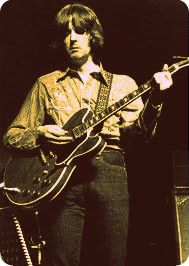
Eric Clapton
Clapton, says Chris, was a total junkie although he’s still hanging in there today. His records had no appeal to me so I could care less.
Uncertain of her precarious standing as either an employee or freeloader Chris drifted back and forth from LA to London while still apprently being part of the gang. The breaking point was when she was visiting Ringo’s ex-wife Maureen and took a tongue lashing from Ringo. Moving away she took up with a German promoter she knew through a large part of the eighties.
Part of her concern was hitting bottom, the rebound point when you know you have to change your life. From my observation point that happened in two stages. the first was when her German boy friend’s promotion company could no longer stand the ravages of drug and alcohol induced incompetence and Chris violated all the rules of friendship with Harrison. Something she thought she’d never do.
Her boy friend’s company bankrupt she asked for money from Harrison. George was a brick and handed over six thousand pounds without a murmur. The money of course went down the drug drain.
Now, Chris had developed sterling credentials as a tour organizer for various groups. She was with Dylan and the Rolling Thunder tour for instance. That is what she was doing with this German fellow. After the Beatles, Stones and Dylan the crowning indignity was when she was assigned to tour Echo And The Bunnymen. These guys are still going so what can you say. But, you know, time had rolled along under the bridge and Rock was becoming a shadow of its former glory. Who really cared anymore? I mean, you know, I’ve never listened to Echo And The Bunnymen and you can be sure I’m not going to buy their latest effort which is out now.
She then married an English aristocrat, had a baby and a divorce and went back home to Tucson.
End of story. Oh yeah, she’s now a rehab counselor.
The main interest is the level of rock society she moved in. The hand of Ketchum is too obvious. One had the feeling one was reading a novel of O’ Dell’s life rather than a living memoir. Wrong voice. Probably a must for the cast of characters and inside information but the drug and alcohol stuff is too, too boring. For Christ’s sake, who didn’t do drugs? Everybody’s got a million drug stories. Let it be.

George Harrison, Patti Boyd, Sixties Style
Conversations With Robin Page 3
August 20, 2009
< Wep>
Conversations With Robin, Page 3
Conversations between R.E. Prindle And Robin Mark
Well, well, well. Robert Goulet. I should have known that filthy bastard would be mixed up in there somewhere. What amazes me is that Guralnik could write two fat volumes on Elvis and never mention the Mob once. I think we can begin to integrate Elvis’ Mob conflicts pretty clearly now, although research will have to establish the connections for sure.
For starters, entertainment is a Mob industry both records and movies; that includes both Jews and Sicilians. If you haven’t read Gus Russo’s Supermob yet, do so. The Sidney Korshak role at MCA is crucial.
Anent shooting out TVs remember that Sinatra had a plane he called Superwop or something to that effect so it is clear he bore a grudge against the Anglo world. The plane was a small ‘Lear’ if I remember correctly. Elvis went out and bought a 707. Big plane, big penis; little plane little penis. Not exactly true in Frank’s case, but you get the point. So at least Goulet and Sinatra. I can understand why Dean Martin tried to distance himself from those creeps.
Parker must have had the business dealings with the Outfit. As he ran into gambling problems the only commodity he had to barter was Presley. Thus he would have had to ‘sell’ Presley to keep both his legs under him. Elvis’ rapid deterioration could have been because of his realization that he was ‘caught in a trap. I can’t get out.’ Devastating awareness. One could only retreat into booze and/or drugs.
Now, Leiber said that he and Stoller at one time worked for the Mafia. This wouldn’t be unusual nor should it be held against them because if you’re in entertainment you’re involved, like it or not. The question is when were they involved, for how long, and for what purpose.
We all know Fabian was a Mob creation. Why not others? If you haven’t seen and studied The Girl Can’t Help It, do so. The movie is an alegory of the record business. Everything you see in the movie is the Outfit in action. In the fifties every Juke Box in America was stocked by the Outfit. You didn’t get your record stocked unless you were Mobbed up somewhere along the line. Someone recently told me that the girls on the Dick Clark Show were prostitutes and Bandstand was used to showcase them for Johns. Don’t know that it’s true but I wouldn’t be surprised.
Leiber and Stoller could have been co-opted to write songs for, say, The Coasters. A Black act with interchangeable personnel. Kind of an early Back Street Boys. I don’t know but I’d like to hear Leiber talk about it. Might prove enlightening.
So, let us assume that the Colonel was drawn into the Mob scene from the beginning of Presley’s movie career. That might explain some of his stupid decisions and those dumb movies. Perhaps Parker didn’t have a free hand but was ‘wise’ enough to figure out that something is better than nothing.
Then after Vegas Presley was increasingly drawn into orbit until he learned the horrifying truth. Guralnik seems to have his head up his ass as far as I’m concerned.
As Presley learned the truth looking forward to forty more years of slavery he found drugs more comfortable than reality. Possible, it would make things make sense.
Exhuming Bob XX: Bob And Johnny: In Defense Of Dylan
May 31, 2009
Exhuming Bob XX:
Bob And Johnny:
In Defense Of Dylan
by
R.E. Prindle
http://www.independent.ie/national-news/dylans-view-of-cash-shortchanges-legacy-1756667.html
The least said, the soonest mended.
In Dylan’s recent interview published by Rolling Stone Magazine Dylan raised his own litle fire storm. 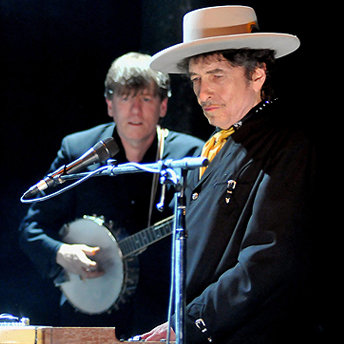 Whatever his intent the appearance was that he was trashing Elvis Presley and Johnny Cash, both more important and stellar than himself.
Both Presley and Cash were originators while what followed including Dylan were epigones. Accident of time, like it or not, Dylan and the rest are derivatives. They can never exceed their masters. So Dylan should have retained his modesty. However I come not to bash Bob but to defend him.
While I think there is a growing arrogance in his attitude as he seems to be beginning to believe his press releases, and while with Cash there may be something else going on in the background, yet, I am in sympathy with his opinion but not to the point of blackguarding Cash, I just listen to my favorites, among which is Big River, when I listen. That isn’t too often anymore.
One who did take deep offence to Dylan’s comments was fellow artist Joe Jackson of the pointy shoes in the Irish Times:
… in the Rolling Stone interview, which was reprinted in last weeks Sunday Times, Bobby,
baby, finally revealed himself to be a musical illiterate, in one quintessential sense, when he stupidly dismissed as “low grade” everything Johnny Cash recorded after leaving Sun Records in 1958.
Dylan didn’t express himself very well, but he is a sort of an authority, he was there while Joe only heard Cash well after the fact having therefore a historical perspective having probably heard the old stuff after he heard the new stuff. Dylan was born in ’41 while Jackson was born in ’54. It therefore behooves someone born in ’54 to be rather circumspect in criticizing the opinion of someone who was there or almost there. I’ve got three years on Bob and was actually there at the creation. Dylan’s taste in music is nevertheless impeccable.
As I say, Jackson knows early Cash only in a historical sense. Time dulls all brilliance. No one can really
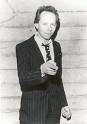
- Joe Jackson at 52
understand the effect of the music of Johnny Cash on the people who were there if they weren’t.
The early Sun of Cash was volcanic, other worldly, the equivalent of five or six of those mushroom clouds over Hiroshima. And remember, as a country artist Cash debuted in heavy traffic, the greatest of the great where reaching their apogee- that is to say Hank Snow and Webb Pierce and a host of other lesser lights but still greats. Dylan and I both revere Hank Snow, hey little buddy? Webb is unbelievable so into this milieu strides Johnny Cash with three or four mind stunners followed by I Walk The Line, not to mention writing Warren Smith’s Rock n’ Roll Ruby. Now, not everybody got it at the time, you had to be hep, you had to know in your guts. We were the congnoscenti. Of course by Line the word was out.
But these records of incomparable genius were as we said at the time Cash’s wad, after he shot it every thing was of a lesser quality; even on Sun, he followed up with Ballad Of The Teenage Queen and other such drivel only for the die hards of which I was one but I knew the best of Cash was in the past. Dylan apparently did too but that early flowering was enough to respect Cash forever. Dylan should have expressed himself differently. After all it was Cash’s endorsement that opened much wider horizons to Dylan.
Pushed by the interviewer further Dylan was quoted:
I tell people if they are interested that they should listen to the Johnny on his Sun Records and reject all the notorious low grade stuff he did in later years. It can’t hold a candlelight to the frightening depth of the man you have on early records. That’s the way he should be remembered.
That seems unduly harsh about a singer who followed his Sun hits with Ring Of Fire and many other excellent recordings although he may not have written them. In any event Dylan’s career parallels that of Cash: A short burst of relative genius followed by a long tedious fifty years.
So while I sympathize with Joe Jackson’s outrage at Dylan’s inexplicable gaucherie I understand what Dylan means. He was there and Joe Jackson wasn’t and that’s the difference, different memories. What was it Zappa said? Shut up and play yer guitar.
I fondly remember both Cash’s and Dylan’s best.
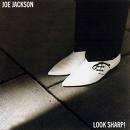
Cool Cat Jackson
Bob Dylan: Dark As A Dungeon Way Down In A Mind
January 15, 2009
Bob Dylan:
Dark As Dungeon Way Down In A Mind
by
R.E. Prindle
We’re on a bad motorcycle with the devil in the seat
Going ninety miles an hour down a dead end street.
Hank Snow

Dylan Feinstein Photo
My correspondent replied to my post Bob Dylan The Reactionary. An excerpt:
Poetry is a funny thing: it bypasses the cerebral when it is best IMHO…Poetry is nonsense, making the nonsense of mortality a bit more bearable for a moment in time.
I suppose that’s a valid reflection. There has been some debate as to whether song lyrics are poetry. In a lyric’s effort to condense experience into the fewest possible words my own thinking is that they are of the essence of poetry whether or not one considers them ‘true poetry.’
I certainly carry innumerable song lyrics around in my head while very little ‘true poetry’ has had the same effect on me. A great many of the lyrics are Country and Western and what passed for Folk. I find references in Dylan of the same importance of favorites that I have.
I recently ran Hank Snow’s Ninety Miles An Hour Down A Dead End Street on Rhapsody and was surprised to discover that Dylan had actually recorded a heavily edited version as a religious gospel dirge. Don’t get the connection but if Dylan says so…
The part of the lyric that has always struck me the most forcefully is the line: We’re on a bad motorcycle with the devil in the seat going ninety miles an hour down a dead end street. I apply the line to all kinds of situations including the present political quagmire. Dylan seems to emphasize the illicit love affair. Doesn’t really matter, the point is that that little piece of ephemera had a profound influence on us. Dylan resurrected the song fifty years on while I use the image that appealed to me in my writing frequently. Poetry? Well, I think maybe.
There are a couple of other country classics that live in my mind by Merle Travis: Dark As A Dungeon Way Down In A Mine and Nine Pound Hammer. I always imagined those were folk songs dating back to the 1880s or something but Travis wrote as late as 1947. The relevant quotes for me:
It’s dark as a dungeon way down in a mine
Where the wind never blows, and the sun never shines,
Where the dangers are double and the pleasures are few.
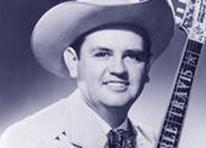
Merle Travis- Sixteen Tons
———————–
Roll on buddy, don’t you roll so slow,
Tell me, how can I roll when the wheels won’t go.
This nine pound hammer is a little too heavy
For my size, boys, for my size.
The first quote is from Dungeon, the latter from Nine Pound Hammer.
For myself I always gave the lyrics a psychological twist saying ‘mind’ for mine. Roll on buddy referred to my habitual procrastination, psychological blockage preventing action. Had problems. Solved ’em. Are these songs poetry? They are in my mind. I make all kinds of things out of them even the innocuous line:
It’s a long way to Harlan,
It’s a long way to Hazard,
Just to get a little brew. boys,
Just to get a little brew.
I’m not thinking of booze either as in ‘My Buckets Got A Hole In It.’ Can’t buy no beer.
I’m sure Dylan cherishes both those songs. They’re the classics that people in the know know. They don’t call us cognoscenti for nothing. Roll on buddy…
As a last example before I get to the gist of this thing is the song ‘Grand Coulee Dam written by Woody Guthrie a man I really despise- damn it. But talent will out and while I have my prejudices I’m no bigot. For me this lyric is as poetic as you can get.
Well, the world holds seven wonders that the travelers always tell,
Some gardens and some towers, I guess you know them well,
But now the greatest wonder is in Uncle Sam’s fair land,
It’s the great Columbia River and the big Grand Coulee Dam.
She heads up the Canadian Rockies where the rippling waters glide,
Comes a-roaring down the canyon to meet the salty tide,
Of the wide Pacific Ocean where the sun sets in the West
And the big Grand Coulee country in the land I love the best.
Uncle Sam took up the challenge in the year of thirty-three,
For the farmer and the factory hand and for all of you and me,
He said, “Roll along, Columbia, you can ramble to the sea,
But river, while you’re rambling, you can do some work for me.”
Now in Washington and Oregon you can hear the factories hum,
Making chrome and making manganese and bright aluminum,
And there roars the Flying Fortress now to fight for Uncle Sam,
Spawned upon the King Columbia past the Big Grand Coulee Dam.
In the misty crystal glitter of that wild and windward spray,
Men have fought the pounding waters and met a watery grave,
Well she tore their boats to splinters but she gave men dreams to dream
Of the day the Coulee Dam would cross that wild and wasted stream.
Nice stuff from my point of view. Doesn’t get any better than that. The song gave me dreams to dream. If you want to hear the best rendition ever by Lonnie Donegan click this:
http://www.youtube.com/watch?v=0Jc2efqj5Js
My verdict is that good lyrics are good poetry while bad poetry doesn’t necessarily make a good lyric.
2.
Now as to the lyrics to Highwater by Dylan that my correspondent referred me to that I discussed in the post: Bob Dylan The Reactionary.
As the lyric touched my correspondent’s psychology I tackled the lyric from a different angle as the way I was interpreting it may not have reflected his. For all I know this doesn’t either but I think it’s interesting.
The lyric in question:
Well, George Lewis told the Englishman, the Italian and the Jew
You can’t open up your mind, boys, to
every conceivable point of view
They got Charles Darwin trapped out on Highway 5
Judge says to the high sheriff, I want him dead or alive
Either one, I don’t care
Highwater everywhere.
The format Dylan uses here is that of the genre of old jokes that begins something like this: A Protestant, a Catholic and a Jew… then moves on to the punchline. Dylan’s presentation can be interpreted as flip so he is probably thinking of the verse as a joke.
As I said in my previous post George Lewis represents a Black, the Englishman as Science or Darwin, the Italian Catholicism or Christianity and the Jew Judaism. Four different conceivable views that can’t be held simultaneously no matter how open you think your mind is.
These are four crucial irreconcilable conflicts in Dylan’s mind while they probably represent the major psychological dilemma of most White or Jewish people.
The problem is especially acute for Dylan who was indoctrinated into Jewish Lubavitcher beliefs for his Bar Mitzvah while having
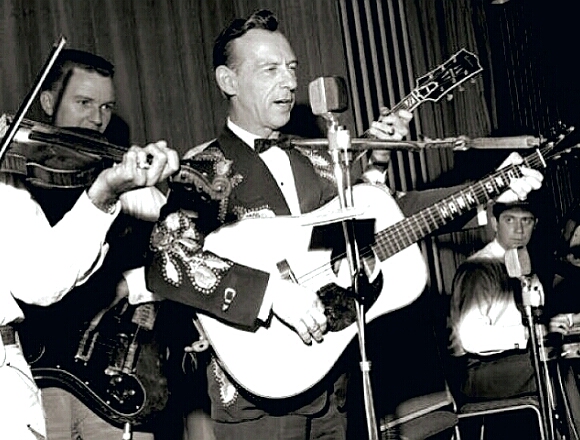
Hank Snow- It Don't Get No Better
been brought up from infancy on Hillbilly music, Country if you prefer, which is quintessential Christian music whether sung in church or honky-tonk. Those good old boys live with their religion even when they’re robbing banks so even with0ut going to church Dylan has a strong Christian background. He did sing a sexual anthem like Ninety Miles An Hour as a hymn. Ponder that for a minute.
So Dylan has had to reconcile his dual religious beliefs seeming to have come down on the side of his Lubavitcher Judaism which is no surprise. He then has to do something about his religious vs. scientific or evolutionary beliefs. Darwin doesn’t go with Judaism. He centers the problem on Darwin as Science. Here he has made the decision to imprison or kill Evolutionary beliefs. Dead or Alive, either way, Judge says, he don’t care. Having eliminated Science and Christianity we have Judasim and the Blacks on the racial issue. Dylan has subordinated himself to the Blacks on the racial issue and is willing to take the inferior position. While he believes he has resolved these for him difficult problems they still trouble him or he wouldn’t be talking about them. Strange.
Why did my correspondent associate me with the verse? He says: Just thought of you and the line(s) for some reason. My correspondent seems to be wrestling with Dylan’s problem himself. As I have written on all four topics fairly extensively and I know the correspondent has read lots of my stuff I suppose the lines suggested me. The song isn’t good poetry and not even good lyrics but if it succeeded at least on my correspondent’s level one would have to concede that lyrics are poetry. The better the lyric the better the poetry. And now for a little circular logic: The better the poetry the better the lyric.
Bob Dylan The Reactionary
January 14, 2009
Bob Dylan The Reactionary
by
R.E. Prindle
As I say I haven’t listened to anything by Dylan since ’66. Not exactly true, I have listened to and watched a couple of newer items on You Tube or wherever but I hope I won’t be judged too harshly on account of a chance listening like that.
What I mean to say is a correspondent sent me a quote from a song called Highwater- for Charlie Patton.
I’m more clear now on why I haven’t listened to later Dylan because I didn’t think the song was very good. The Poet Laureate of Rock can surely do better than that. The song was from an album called Love and Theft. I’m not sure which half of the equation this song represents.
As the quote has religious overtones perhaps my correspondent was reacting to the recent examination of Dylan’s religious attitudes in the movie by Joel or perhaps to some religious essays on Dylan I’ve written like for instance, Lubavitcher Bob. Beyond that I don’t know what he could have meant.
From the lyrics it looks like Dylan takes himself quite seriously as a man in black. I thought the lyrics were pretty nonsensical as represented by these three lines:
Well, the cuckoo is a pretty bird, she warbles as she flies
I’m preachin’ the word of G-d, I’m puttin’ out your eyes
I asked Fat Nancy for somethin’ t’ eat
Well, I’m not going to struggle too hard to unravel the deep inner meaning of those lines, let Charlie do it, but I am taking Dylan literally on the middle one. As a man in black he is preachin’ some word anyway- G-d, the D-vil or somewhere in between. Not always easy t’ tell.
But back t’ the quote my correspondent sent that does have probable religious overtones. Since it’s expressed so cryptically of course, it’s all deniable:
Well, George Lewis told the Englishman, the Italian and the Jew
You can’t open your mind, boys,
to every conceivable point of view.
They got Charles Darwin trapped out there on Highway 5
Judge says to the high sheriff, I want him dead or alive.
Either way, I don’t care.
Highwater everywhere.
In this song of unlimited non-sequiturs this verse can almost be read to make sense.
In the next verse which may make it related, or perhaps not, Dylan says he’s a preacherman so we’ll assume Dylan is speaking Biblically. He is a Bible scholar you know as well as a Lubavitcher. Dylan always blazes new trails, don’t he?
OK. I don’t know who George Lewis is supposed to be. There’s a couple Black musicians by that name so let’s assume a Black man is ‘tellin’ the Englishman, Italian and Jew what’s what. Nobody can believe three things at one time so the wise thing would be to bet on the Jew if you want to win, win, win. That last is a parody on a line or two from the old folk song Stewball for those who didn’t recognize it. I almost didn’t.
We will assume that Darwin and Evolution are meant by the Englishman, the Pope and Catholicism by the Italian while the Jew needs no explanation. Might be Dylan, I don’t know. Two, Pope and Jew, are religious while Darwin is Scientific and his science demolishes religion. “The King takes the Queen every time’ to quote a new folk song by Larry Hosford. So the Pope and Jew are out to get Darwin in order to preserve their folly. Thus they have Darwin trapped out on Highway 5. Why 5? Why not 61? Dylan must have been cruising the highway from LA to Seattle at the time looked out the window of the bus saw a sign saying I5 so he said ‘That rhymes’ and put it in.
Dylan trapped on Highway 5 is filler so to the Judge i.e. Biblical authority tells the high sheriff- high sheriff sounds real wild west, don’t it, I knowed you’d think so- he wants Evolution/Darwin brought in dead or alive. OK. So as Dylan believes that the Bible is literally true and the veritable word of G-d proceeding from his own lips then it follows that Dylan is anti-Evolution and Darwin. Must be or we’ve got ourselves a contradiction here. Dylan is thus first cousin to William Jennings Bryan who persecuted Scopes way down there in Tennessee where they make that sippin’ whiskey. Hence Dylan is a reactionary rejecting the truth, as Woody Allen would say, for G-d.
Well, brav-, but a big raspberry for B-b if that is what he meant. Who can say? It’s poetry. Of sorts. A bigger raspberry for my c-rresp-ndent who should learn to say what he means without pinching his heroe’s words.
Highwater everywhere. He’s a drowning man.
Exhuming Bob XVIII: Bob Dylan, My Son, The Corporation
December 10, 2008

Electrified Dylan
…Bobby stems from a middle class background in which much emphasis is placed on education and conformity and plans for a respectable career.Bobby didn’t quite fit into that framework and preferred a more bohemian type of life. His parents say he frowns on being called a beatnik, and they don’t like that designation for him either. But he was in fact adopting some of the manners associated with beatniks- or folkniks- in an area where that makes a person stand out as a strange character.
Zimmerman as Dylan
People who knew him before he set out to become a folknik chuckle at his back country twang and attire and at the imaginative biographies they’ve been reading about him. They remember him as a fairly ordinary youth from a respectable family, perhaps a bit peculiar in his ways, but bearing little resemblance to the sham show business character he is today.
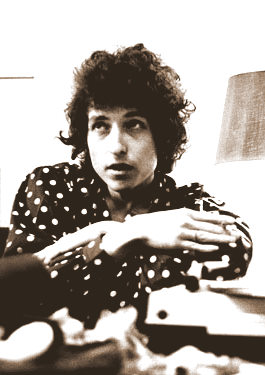
“He wanted to have a free rein.” says Zimmerman. “He wanted to be a folk singer, an entertainer. We couldn’t see it, but we felt he was entitled to the choice. It’s his life, after all, and we didn’t want to stand in the way. So we made an agreement that he could have one year to do as he pleased, and if at the end of that year we were not satisfied with his progress he’d go back to school.”
“It was eight months after that, says (Abe) Zimmerman, that Bobby received a glowing ‘two column’ review in the New York Times. So we figured that anybody who can get his picture and two columns in the New York Times is doing pretty good. Anyway it was a start.”
His rise in barely three years has been almost as impressive as the fortune he has already amassed…
My son is a corporation and his public image is strictly an act…Hard to follow this act.

Albert Grossman was born in Chicago on May 21, 1926, the son of Russian Jewish immigrants who worked as tailors. He attended Lane Technical School and graduated from Roosevelt University, Chicago with a degree in economics.After university he worked for the Chicago Housing Authority, leaving in the late 1950s to go into the club business. Seeing folk star Bob Gibson perform at the Off Beat Room in 1956 prompted Grossman’s idea of a ‘listening room’ to showcase Gibson and other talent, as the folk movement grew. The result was The Gate Of Horn in the basement of the Rice Hotel, where Jim (Roger) McGuinn began his career as a 12 string guitarist. Grossman moved into managing some of the acts who appeared at his club and in 1959, he joined forces with George Wein, who founded the Newport Jazz Festival, to start up the Newport Folk Festival. At the first Newport Folk Festival, Grossman told New York Times critic, Robert Shelton: “The American public is like Sleeping Beauty, waiting to be kissed awake by the Prince of Folk Music.
In the decades prior to the 60s, through the work of such avatars as Woody Guthrie, the Weavers and Pete Seeger, folk music had become identified with sociopolitical commentary, but the notion had been forced underground in the Senator Joe McCarthy witch-hunting era… Peter Paul and Mary came together to juxtapose these cross currents and thus to reclaim folk’s potency as a social, cultural and political force.
“We have absolutely no part in his affairs. Those are his own operation. He’s a corporation and he has a manager.”
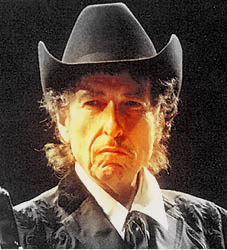
The Burden Of Being Cowboy Bob Dylan
 I, Dynamo