Chaps. I & II Marianne Faithfull, The Faerie Queene Of The Sixties
November 15, 2012
Marianne Faithfull, The Faerie Queene Of The Sixties
Chapters I and II
by
R.E. Prindle

She’s one of those girls
Who come with the Spring
One look in her eyes
Makes you forget everything.
Younger Girl- John Sebastian
The sixties came walking in slowly, hands in pockets shuffling along barely recognized going down the road. Few recognized that it was a period of god formation. All the icons of later years came from those days. John Lennon, Jim Morrison, Jimi Hendrix, Mick Jagger. The comptetion for goddesses was less crowded, Janis Joplin carried too much baggage, Grace Slick had her shortcomings and the rest were wannabes- except for Marianne Faithfull. She floated through, became entangled with his Satanic majesty, Mick Jagger, crashed and disappeared from sight to reemerge damaged but triumphant. When she resurfaced it was in another guise bearing little resemblance to the Faerie Queene of he sixties.
Perhaps only in retrospect does she appear as the angel of the sixties. Only looking back does she stand head and shoulders above the women of the decade. In her day she aspired to be Guenivere to Mick Jagger’s Lancelot. High expectations doomed to disappointment. Buth then the high, even ridiculous, expectations of the sixties couldn’t hope to be more than failed and fail they did.
The sixties were born in the despair of the World War II, the Korean War and the Atom Bomb. The decade was shaped by the children born from 1934-38 to 1945 most heavily represented by the years of ‘42 and ‘43. The years had their effect on those nborn in the United States but devastated those of England who formed the backbone of the sixties in both the US and England. Stunted by ill nutrition the English boys and girls entered childhood in a world of deprivation, millions of bomb craters, square miles of devastation, limited amounts of food that were rationed until they reached their teens. Nutrition triumphed over genes leaving perhaps a majority stunted almost to the height of midgets. Then in the mid-fifties they came off rations as the country rebuilt and a degree of prosperity returned. Thus the favored members of a generation with low or no expectations burst into an energized prosperity, as the flower of the sixties grew and blown in a trice.
Marianne herself was born in 1946, a baby boomer, in one of those ill-starred marriages of the post-war world. Thousands of young English girls married American servicemen and left the lad of their birth forever. Perhaps more wisely than they knew as the hundred of thousands of English men who never returned live would have left them spinsters all their lives. As it was Marianne’s father, Glynn Faithfull met her mother in occupied Austria returning with her to England where Marianne was born. As might be expected of a marriage made under Third Man circumstances the marriage proved ill matched each partner going their own way. Thus by 1953 when Marianne was seven and rationing was lifted she divided her time between her two parents.
One ponders the effect this had on the psychological development of the girl. Her father was one of those strange utopianists who believed the Holy Grail of personal redemption could be found in fucking so he founded some Jim Jones type of sex retreat where all the inmates were encouraged to copulated indiscriminately and freely.
One doesn’t know Glynn Faithfull’s background. There may have been a couple reasons for this faith in fucking. A significant underground current was Aleister Crowley and his faith in sex magic. Crowley and his disciples with figure in
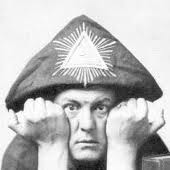
Aleister Crowley
Marianne’s life in the sixties. His influence would continue to grow during the forties, fifties and sixties. Perhaps more significant was the sex therapy of the one of the centuries most eminent madmen, Sigmund Freud. While generally unaccredited for his sexual influence, his sex theories combined with his bizarre vision of the unconscious did terrific damage to the world’s psyche, especially during the fifties and sixties when his notion dominated psychology.
As a young girl Marianne was encouraged to observe the inmates copulate. They apparently did so in front of open windows in a series of rooms fronted by a ledge or sort of long balcony. As a young girl her father encouraged Marianne to use this ledge to view the couples at play. In the innocence of youth she little knew what to make of this although what effect the flickering memories played in her development she either does not say or doesn’t know.
Her mother removed her from this environment placing her in a Catholic convent school until she was sixteen. The transition from open sex practices to a chastity minded Catholic education must have provided an unusual contrast in the growing memory bank of her mind. At least Marrianne was out of harm’s way for a few years.
Marrianne’s mother, Mrs. Faithfull, was an Austrian. She had witnessed the years of the Anschluss and the Nazi administration of the war years. Necessarily as the Soviet troops moved in she suffered the horrors of the rape of the German women by the Communist troops. This event made the Rape of the Sabine women look like a pleasure romp. History records that when things had settled that there were long lines of pregnant German women before the hospitals waiting their turn for an abortion of a hateful pregnancy.
It was in this environment that Eva met her future husband Glynn Faithfull. It was possibly love among the ruins in which Marianne was conceived. Born out of the ashes so to speak. ;Marianne’s mother Eva was of the Sacher Masoc line; he who gave masochism its name and wrote the Venus In Furs that Lou Reed purloined for the title of his song. Hard core rock and rollers have been in awe of Marianne’s ancestry as though she had a hand in masochism’s naming. Sins of one’s distant relatives and all that.
When Marianne escaped or was released from the nunnery she was ill prepared to deal with life on the streets, but then aren’t we all. So as the sixties dawned this attractive girl with no prospects began to wend her way through life. The Catholics gave her some vocal training of some sort, perhaps Gregorian chant, so Marianne took up folk singing. Rather than the subdued tones of A Years Go By she was more of the bellowing Joan Baez variety. Thus when Andrew Oldham asked John Dunbar if she could sing and John answered yes he was stating a fact.
In John Dunbar Marianne fell into one of the hippest young crowds London had to offer. Dunbar himself was of a Bohemian mentality and he associated with the future historian of the musical and artistic scene of the sixties, Barry Miles. Miles has never gotten the recognition he deserves. To begin with he co-founded the very avant garde Indica Art Gallery with Dunbar. The Indica lasted only a couple seasons but those were two memorable seasons.
The two entrepreneurs were discovered by Paul McCartney who, I don’t know if active is the right word, took at least an active inte3rest in the gallery which led to John Lennon’s eureka moment with the scourge of rock and roll, Yoko Ono.
In the course of time this led to Dunbar’s being invited to the famous party in which Andrew Oldham is said to have gallantly remarked: Who’s the broad with the big tits? Or words very close to that.
It was at that point that Oldham asked the musical question: Can she sing? To which Dunbar unwisely responded yes. Marianne, given that she was already a folksinger, sagely pretended to be at sea so that Oldham was afforded the pleasure of coaching her along. Whether he made it inside the Magic Circle or not he had to come up with a song for Marianne to record. More at sea over this matter the legend has it that Andrew locked Mick and Keith of the Rolling Stones into a closet, toilet or kitchen and said he wouldn’t let them out until they wrote him a song. Thus Marianne indirectly is responsible for the Richards-Jagger song writing team with its ill fated effect on popular culture.
With Marianne Oldham struck gold the first time out. The song Richards-Jagger wrote was a languid ditty titles As Tears Go By sung in a lisping fainting manner by the newly nominated Faerie Queene. Songs are pretty much ephemeral to the time but within the ephemera of the time both Marianne and As Tears Go By were a very major hit. In her way Marianne and her song was the sunrise 1964 was waiting for.

Gracie
II
…I trusted you and did my best
To make you happy.
Is this what I get for loving you?
Spector, King, Goffin
Marianne was some kind of folksinger cum chanteuse. She had a high virginal voice. She came from a Catholic convent school that signified purity to the English public. In her early interviews she appears shy, modest, and if I may say, virginal. The very antithesis of the increasing vulgarity of the times. They set Marianne on a pedestal.
In the early sixties rock and roll had not yet driven every other rorm of music off the field as it would by 1970. From 1960 to 1964-65 folk music was the dominant musical form although not of the New York purist variety; more along the commercial lines of Harry Belafonte, the Brothers Four, the Kingston Trio and Randy Sparks’ New Christy Minstrels. Peter Paul and Mary were at their peak not year claiming to ‘love your rock and roll music’ until 1968. In 1966 the Christies spin off The Association was a big hit.
Apart from sappy team acts he Beatles sparked the rock and roll revival although their wasn’t too much difference between them and the sappy teen acts. I never did understand what the public revered in them. Listening to the early Stones recently reminded me why I didn’t like them the first time around either; they sound quite a bit like a bad garage band. Jagger isn’t much better a singer than Dylan, he couldn’t have been much worse. But fate is fate and a hit is a hit. Can’t argue with it.
Marianne then entered the lists with a number nine hit in the UK and a number twenty-two in the US. Her second song Blowin’ In The Wind, didn’t chart while her third, Come And Stay With Me was number four UK and twenty-six US.
She released four LPs in 1965 which is at an exploitative rate. No one at the time realized that the next wave of pop acts would be extremely long lived. No one thought that the Beatles, even though they broke up, would go on dominating popular music for fifty years. No one would have believed that the Stone would be projected a tour fifty years on. No one could have believed that Marianne would still have a career fifty years on. So they were trying to gut the goose that laid the golden eggs as soon as they could. How could anyone at the time have believed that Jagger would become a pop god and Marianne a goddess? Icons for a generation. Unthinkable.
The first two UK albums charted at twelve and fifteen while in he US Marianne Faithful charted at twelve. Her US sales then were somewhere between seventy-five and a hundred thousand copies. She didn’t make the charts with a new title until 1974s Broken English weakly settling on the US charts at eighty-two.
Prior to 1964 most British bands had little presence outside their native England. With the arrival of the Boeing 707 in 1959 the US became readily accessible while the vista for global band was opened. First through the breach, of course, were the Beatles, soon to be followed by Bob Dylan and The Stone and even Donovan. Most people don’t understand how big Donovan was in the sixties; almost an equal to the Beatles and Stones. Thus the era of global popularity was inaugurated changing the face of popular music and group economics. Oddly enough the field was limited to English and American bands for a very long time.
An astute manager with his eye on the future might easily have turned Marianne into a global attraction. However Marianne after jettisoning Andrew Loog Oldham after her first two single signed with some small minded English putzes who were both incompetents and only interested in exploiting her. Somewhat like Edie Sedgwick in New York it was all there waiting to be picked up but no one saw it.
It does seem that they saw the image ready for use but ignored it. Where was that eagle eyed Allen Klein I wonder. Marianne herself was into Queen Quenivere, King Arthur, the Holy Grail and the faerie aspects of the epic. The record people got it. For instance the liner notes on the back of the US Faithfull Forever US release quote from Keats’ La Belle Dame San Merci:
I met a lady in the meads
Full beautiful- a fairy’s child.
Her hair was long, her foot was light
And her eyes were wild.
I made a garland for her head
And bracelets too, and fragrance zone
She looked at me as she did love
And made sweet moan.
I set her on my pacing steed
And nothing else saw all day long
For sidelong she would bend and sing
A fairy’s song.
She found me roots of relish sweet
And honey wild and manna dew
As sure in language strange she said
“I love thee true.”
So there it was. Everything was in place but the management wasn’t there.
It really couldn’t be seen in 1964 that this was the year of myth making in popular culture, actually ‘64, to ‘66. Marianne had all the elements to make her as big and long lasting as, say, Bob Dylan. She already was a myth.
Perhaps Mick Jagger of the Rolling Stones surveying the horizon saw this. Ever envious he may have said to himself ‘This woman is a threat to my supremacy; I must destroy her.’ I can’t say but he did sidle up to her, pour some wine down between her breasts and with that introduction proceed to seduce her whispering ‘Come stay with me.’ A couple years later he threw the remains aside.
And Marianne plunged into a deep depression.
Chapter 14 Edie Sedgwick, Maid Of Constant Sorrow
June 23, 2011
Chapter 14
Edie Sedgwick, Maid Of Constant Sorrow
by
R.E. Prindle
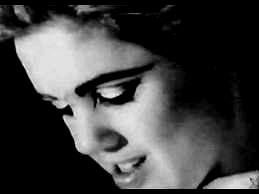
Edie
In the interest of keeping things in perspective and since a huge part of the readership obviously didn’t experience the sixties, I’d like, if I may, to give a little additional background to understand what happened here. I hope I don’t offend by mixing in some of my own background, not merely from vanity, but so the reader will have some understanding of both my limitations and strengths in interpreting Edie, Andy and Dylan.
Nearly everything you read about the sixties today is written by former activists, usually Jewish, or dopers of one stripe or another. Shall we say they skew the period in the direction of their beliefs. Theirs was only the point of view of small minority. In fact, they seized the leadership playing a much different game than the majority who were busy getting on with their lives.
The period now coming under discussion is 1966-’68 which changed the direction of the sixties. In mid-’66 Dylan had his motorcycle accident and was effectively removed from the scene for the duration. When he resurfaced in the seventies it was in a much diminished role. The first Bob Dylan was dead and the second was busy being born. No matter what he’s done since then, compared to his mid-sixties trilogy it has had minimal impact.
Warhol reached his apogee in this period while he was shot by Vallerie Solanas in 1968 which changed the direction of his career when like Dylan he became a corporation while business affairs were managed by other men, most notably Fred Hughes.
Edie was heartbreakingly dragged through the mud in these years until her evil genius, Chuck Wein, connected her to the movie Ciao, Manhattan which was the most degrading, humiliating experience possible. It eventually killed her. All three of our participants then suffered life threatening experiences within two or three years of each other. Edie was the only one not to survive.
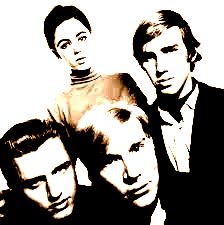
Andy, Edie And Friends
The sixties were tumultuous times; it was like walking around with a perpetual thunderstorm over your head. I was on the West Coast in the San Francisco Bay area till 1966 and at grad school at UOregon in Eugene from ‘66 to ‘68 and then in the record business for the rest of the period. I got my degree from California State College At Hayward now Cal State U. East Bay in 1966. It’s a long and irrelevant story but I entered Cal State in ‘64 taking enormous credit loads of up to 24 hours a quarter. You can do things like that when you’re young and not too bright. Hayward is just South of UC Berkeley. Cal State was a new school with a very small library so we were allowed library privileges at Berkeley of which I availed myself so I was around the Free Speech Movement scene but not of it. I was a first hand observer.
Once in Eugene in the fall of ‘66 things were getting in full swing in our own cultural revolution that would be joined to that of Chairman Mao in ‘68. I was entranced by the poster art work coming out of San Francisco eventually dropping out of grad school to sell posters and then phonograph records at which I was successful. Thus I was involved in the scene on an intimate basis from 1967 on.
While other generations were characterized by their literature our, the, generation was depicted by songwriters on phonograph records, thus records were central to the scene, don’t look for it in novels. The first efflorescence occurred in the US during the mid-fifties while going into an incubation period in England from then until the early sixties when in 1964 the Beatles, Stones and Animals among others provided the transition from fifties Rock n’ Roll to sixties rock. I don’t know how true it is but for me the revolution really got underway with the breathtaking first Doors LP in ‘66. The blues bands and the next wave of British bands provided the impetus to move things into the seventies where the creative impulse ended by 1974 although inertia carried things through until sometime in ‘78. Disco doesn’t count that was the beginning of an entire new ethic based in the homosexual revolution.

Morrison, Densmore, Krieger, Manzarek
When Andy, then in his quest for money, moved into records by managing the Velvet Underground, probably in imitation of Dylan, he did so just before the music scene broke. New York bands were never that popular on the West Coast and the Velvets were no exception. Andy, however, was an innovative guy. Light shows were already news on the West Coast but Andy came up with a new multi-media formulation that blew our minds, as we used to say, while having a very lasting cultural effect.
In the Spring of ‘66 he rented a hall called the Dom in NYC. Using the Velvets as his house band and his light show he managed to overwhelm the hipsters of the Big Apple. He would have had a major success had he continued on but he was fixated on movies, wanting to do his Western put down, so the Factory crowd decamped for Tucson, Arizona, thinking to pick up the strand on their return.
While away Albert Grossman and Dylan leased the Dom from under Warhol and opened it as The Balloon Farm. Between taking Edie from Andy and then the ballroom I’m convinced that Dylan sealed his doom. I hope there aren’t too many people who think the rear wheel of his motorcycle locking was an accident. Once again, conclusive proof is lacking, but there are indications that Andy and the Factory crowd did it.

Before The Fall
By late ‘66 Andy’s brief period in the spotlight was over. His creative burst had run its course and while afloat financially, there was not any great income in sight. Paul Morrissey had come on board as a filmmaker and his vision was more commercial than Andy’s but Andy was in charge so Paul had to bide his time waiting for his opportunity. At the same time a man from Houston by the name of Fred Hughes came on board who knew how to monetize Andy’s reputation and art skills and then, Bang! Andy was writhing on the floor in pain. One of those little zig-zags fate has in store for us sometimes. The sixties were over for Andy but the change in direction made his future in the seventies and eighties.
Now, let’s go back to ‘64 and take a look at one of the defining members of the decade I’ve slighted till now, Prof. Tim Leary. I’m convinced Leary was not in his right mind or, if he was, he shouldn’t have been there. By the time Timmy latched onto psychedelics they were pretty well established. LSD, discovered in 1938 by Hoffman and brought to prominence in 1943 was almost passe when Leary was turned on. Aldous Huxley had published his Doors Of Perception in 1954 and Heaven And Hell in ‘56, that celebrated the joys of mescaline.
When I was in high school maybe ‘54 the kids of Scarsdale were notorious for using marijuana, written up in Time if I remember right. Those were rich kids and by ‘56 our elite were very covertly using it. In the Navy aboard ship from ‘57 to ‘59 Bennies and other pills were prominent while the occasional heroin addict passed through. The Marines of Camp Pendleton were heavy into everything, barbiturates, mescaline, peyote buttons, LSD, you name it. For cryin’ out loud, Hollywood had been the drug capitol of the US for decades. One only has to read Raymond Chandler. There wasn’t anything they didn’t know. Cary Grant had been an old LSD hand for years before Leary, the apostle of acid, made it to town bearing the good news in 1960. He was received with some amusement.
A very amusing story Leary tells in his autobiography is that Marilyn Monroe fell to his lot at a party. They were actually in bed together. As you may know Marilyn knew more about drugs than any pharmacologist. Probably disgusted by Timmy’s ranting about LSD she handed him a pill and said take this. Timmy did then decided to get up to go the dresser for something. ‘Are you sure you want to do that?’ Marilyn asked. Timmy was. He took about two steps and seemed to sink through the carpet until only his nose was above the rug. He lay there inert all night while Marilyn laughed softly from the bed.
From his position on the faculty of Harvard Timmy was a very visible advocate of LSD hogging headlines in Time and other mags that were the envy of Andy. Tim was to amuse us with his antics all through the sixties. Now, all this stuff was happening very fast. It was impossible almost to keep up with the headlines let alone any indepth reporting or analysis. Besides there was no internet so all news was comparatively old news, perhaps weeks after the occurrence if you heard of it at all. Also it was impossible to be where it was happening unless it was happening where you were and then you didn’t know it was happening because you were in the middle of it. I happened on the Free Speech Movement because I was in school but I missed the SF scene going on at the same time because I couldn’t be in two places at once and keep up grades in the third place at the same time. New York was out of the question, London was across a wide, deep ocean, and LA hadn’t caught on yet. Thus, I was invited to the Kesey/Dead Trips Festival but passed on it. For various reasons I only caught the end of the Fillmore/Family Dog scene and then only fleetingly.
Even Morrison and the Doors who can claim to have been in the center could only have caught their small share however central it was. Nobody got it all. How could you be in Swinging London, New York, San Francisco and LA at the same time? Couldn’t be done although there were many who tried spending their time criss crossing the country from West to East and reversed and for all I know popping into London too trying to be jetsetters but they were merely vagrants peripheral to everything.
So marijuana, acid, speed and barbiturates or downers as they were called then made up the pharmacopeia. Amphetamines were obviously big in NYC from the early sixties and must have been in the West too but my first acquaintance with that was the Speed Kills buttons. Heroin was a danger drug for the addict type only. Cocaine came along in the seventies. At the time little or none of the marijuana crop was home grown. It came from Mexico and there are smuggling and pot running stories galore. At first the dealers were amateurs, boys and girls next door, but that slowly turned into the criminal professionals.
Andy’s crew were all what he called A-heads, but you may be sure they smoked and did booze too. It must have been uproarious in the early years but by ‘66 psychotic and physical reactions were beginning to slow the troops down. It was hard to keep up that pace.
Now, Edie when she came to New York in late ‘64 was a naif. Not many of us knew much better but she was a true naif, fresh from the farm, so to speak, while having had her brains addled by electro-shock treatment at Silver Hill Sanitarium. At Radcliffe-Harvard she had hung out with homosexual men gaining the reputation as a fag hag. Alright, I suppose, as she didn’t know how to handle herself around boys anyway. She came down to New York with the group of homosexuals that Andy called the Harvard kids with some distaste. She associated herself with her evil genius, Chuck Wein, who, as a homosexual, sought her destruction.
The Factory of Andy Warhol she entered was created in Andy’s image. In reading of it, I was never there, it comes across as a hell hole from which any reasonable person would have fled at first glance. Many did. Andy hurt a lot of people being of a sado-masochistic frame of mind. Outside his circle he was universally referred to as ‘that Warhol creep’ and yet events conspired with him to realize his perverted dreams and triumph over all.
Andy considered himself ugly and descriptions of him by others are unpleasant but whatever everyone and himself saw doesn’t show up so clearly in his pictures. He may not be the handsomest fellow around but he has a cherubic, pleasant look that I don’t find unattractive. But, because of this feeling he surrounded himself with beautiful people. Fred Hughes his business manager was quite handsome. Morrissey was OK, Malanga had his moments, Edie was considered a knockout, although I can’t see it, and the other women he associated with were quite attractive.
And then, as a little immigrant boy who wasn’t acceptable to mainliners of Pittsburgh Andy was especially pleased to have society women attached to him and especially the titled or rich English girls. Edie fit in as a beauty, as Andy called her then, and as an old line New York society girl. The combination was almost too tantalizing for this lifetime homosexual. Andy said Edie was as close to love with a woman that he ever got. He even took her home to meet mom. Edie apparently missed the import of that.
Andy has been blamed for making an A-head out of Edie. Once she tasted amphetamines it is clear that there was no stopping her. In truth the Factory was no place for her and Chuck Wein who introduced her into it must have known that. Still, as Dylan sang, there’s something going on here and you don’t know what it is, do you? Most people didn’t including Dylan, and I certainly was out of my depth. It was disconcerting metaphorically to step on what was once solid ground to feel it giving beneath your feet.
Actually there were several revolutions going on which would result in massive social changes. Those of us firmly grounded could only see the so-called change as a rising tide of insanity. Aided by drugs these revolutionists became totally dissociated from reality. Drugs alone cause a withdrawal into an inner fantasy world of wishful thinking. The external world appears as something that wishful thinking can manipulate to one’s desires in some magical way. When the two got really out of sync as they inevitably must you ended up in Bellevue psychiatric wards as happened to a heavy user like Edie many times while most of Warhol’s crew checked in at least once.
Andy, who used these people for entertainment and self-aggrandizement, provided a hospitable retreat or club house where the cognitive dissociation wasn’t quite so apparent or, at least, normal. The scene must have been incoherent. A reading of Warhol’s so-called novel, ‘a’, shows that by 1966 his crew was indeed incoherent. Ostensibly a tape recording of Ondine’s conversation over twenty-four hours, whose conversation Andy found engaging, the tapes show Ondine unable to complete a sentence along with Rotten Rita and the rest of the crew including Edie.
Further the whole bunch were absolute thieves. In Edie’s decline through sixty-six they walked into her apartment and chose their favorites from her collection of fur coats along with anything else of value. In her demented state all she could say is that everyone was wearing her coats. One wonders how much internal anguish there was as she knew there was nothing she could do about it.
At the same time Andy was a leader of the Homosexual and Underman revolutions. Perhaps nobody knew what was going on but Warhol, Rotten and others were working for homosexual liberation which they achieved with the Stonewall Riot of 1969.
New York was unique in that for decades homosexuals from the South and Midwest flowed into New York each year in a great internal migration. The chief destination was the Village. Christopher Street was the main fag drag. The Stonewall Tavern was on Christopher. Why the cops would disturb the lads in their own colony is beyond me, but they did and then gave up without a fight.
Perhaps the most astounding revolution of all was that of the Undermen. Untermensch in German. While Warhol’s crew was a prime example of the Other Half rising to control the direction of society, the main impetus seems to have been the West Coast, San Francisco and Haight-Ashbury, specifically the Hippies. It was really there that the poverty look took hold, torn, faded jeans and whatever. LA never really went for it but it spread up the coast to Eugene, Portland and Seattle. The Sorority and Fraternity look went out the window with millionaire’s kids posing as the down and out.
I would imagine a naïve thing like Edie got caught up in the so-called sexual revolution too. We’re not talking Feminist Movement here but the sexual aspect of the Communist Revolution in which women are common property to be had anytime or anyplace by whoever. The Pill that came along in 1960 really facilitated the change in sexual mores. Nothing exemplified that more than the mini-skirt. So you’ve got drugs, the Pill, the Mini Skirt and the Ideology. The world was not so slowly turning upside down.
All these revolutions might have gotten not too far but they were all collected and subsumed under the directing force of the Communist Revolution under the leadership of Chairman Mao and the Chinese Party. The money really flowed in after 1968. Driving the whole thing and what made the turmoil possible was the Viet Nam War. It served the Communist cause more than the American as while taking a beating in Viet Nam the Communists subverted the United States. Strangely Viet Nam had no effect on Warhol at all. His disaster paintings ignored Viet Nam while a couple napalm drops would have made a terrific topic.
In the early days of the war it was filmed like a reality TV show with the daily haps relayed on TV to the US. The reality of napalm drops while our soldiers cheered and howled while a couple dozen Vietnamese where incinerated was too much for the entertainment starved public to take. I sure couldn’t handle it. The films were quickly removed. The reality of war is a private thing between the armies, not quite like the Super Bowl.
I don’t recall a single mention of Viet Nam in Andy’s Diaries, Philosophy From A To B or ‘a’. The war appears in none of the biographies or auto-biographies or even novels written by various denizens of the Factory. Rather strange, but then I can recall no references to it in Dylan’s songs either.
The Communist Revolution connection developed when John and Yoko arrived in NYC in 1971. The two of them were clearly involved in revolutionary activities linking various art and entertainment figures with them including, Dylan, Warhol, David Bowie and others. What exactly they were doing isn’t clear to me yet. Yoko was and is on some Feminist rag.
So, in 1966 while an apparent apex for Warhol, his world was actually coming apart while Edie’s was descending like a Stuka dive bomber.
The period from December ‘65 to Easter of ‘66 must have been traumatic for a crazed and confused A-head like Edie. She sacrificed her position with Andy, seduced by the fallacious promises of Dylan and Grossman who certainly had no plans to make a movie, and if they did, to put Edie in it.

Velvet Underground & Nico
Warhol had all the sadistic cruelty characteristic of homosexuals that he turned on to the distraught girl. Edie must have been thoroughly crushed when Dylan rejected her love while passing her on to Neuwirth. Edie was not at her wit’s end with no money, cut off by her parents who objected to this life style, while having no means to make money to support the station in life she had seemingly attained. Both Dylan and Warhol abandoned her after accepting her largesse for several months. Warhol is especially reprehensible. Dylan sure is a close second.
Her heavy dependence on amphetamines was literally eating away her brain, her body and her personality.
I really can’t believe that Edie loved Neuwirth as she claimed. I don’t think either was capable of love. Yet, she abandoned her body to him claiming she could make love for forty-eight hours straight but crashed whenever he left her. That is a sign of despair and fear. I can only imagine the horror she felt when she looked into the future and saw only a blank wall. As Dylan was to sing of her: Time will tell just who has fell and who’s been left behind.
Perhaps the cruelest trick of all was played on Edie by Dylan, Grossman and Neuwirth at the Easter Parade of 1966 when Neuwirth filmed the promised movie.
In a November issue of Life Magazine in 1965 Edie had been photographed standing on top of a toy leather rhinoceros about two feet high and three feet long, popular at the time. Whether the three of them, Grossman, Dylan and Neuwirth, put their heads together to come up with this or Dylan brainstormed it by himself, Neuwirth persuaded Edie to pull the rhino down Fifth Avenue as the parade progressed, filming as they went. Then Bobby tied the rhino to a parking meter and persuaded a passing cop to write Edie a ticket. Thus Grossman and Dylan fulfilled their obligation to put Edie in a movie while mocking her cruelly. Those guys had a reputation for cruel put downs. They live up to it here.
It was just after Easter that Warhol opened the Dom to stage his Exploding Plastic Inevitable. The reports we got of it on the West Coast made it sound absolutely astounding. If any one thing characterized the sixties I would have to say it was the Exploding Plastic Inevitable. It brought everything the era valued together. As usual with Warhol he couldn’t resist turning it into a sado-masochistic experience. The chaos must have been extraordinary. One can imagine the scene with dope peddlers trying to push their drugs on you, the lights flashing, strobing and pulsing, the howling music, the bodies bumping against each other, Malanga doing his whip dance, Edie bopping around the stage with her odd skip and step. They talk about the Velvet Underground being loud but they must mean for the times. Blue Cheer with its wall of Marshalls was just around the corner while the electronics improved almost daily until the sound passed the limits of endurance. Created a whole generation of deaf Beethovens. Musicians literally without ears.
I actually promoted the Underground once in either ‘68 ot ‘69, might have been pre-Blue Cheer. BC’s main claim to fame was that they were the first mega blasters, loudest band alive for their brief moment. Sort of a Great Divide in Rock music.
Things were still building but it wasn’t that the Velvets were that loud; they were just super strange. Reed was the original one-note man, he played it over and over fast. Sterling was there but he must have been background noise because I don’t remember much of an effect there. Whatever Cale was doing passed over my head but it must have been some kind of La Monte Young dynamo hum, all the songs were. I was most fascinated by Mo on drum. Yeah, right, drum, in the singular. She had a six inch deep tom with an under slung mallet. The mallet hammered away at the bottom skin while Mo pounded the upper skin with the sticks. In keeping with the dynamo hum she never varied the beat once but she was right on time just in case time was important. Quite an experience. You shoulda been there, and paid at the door. I wouldn’t have lost as much money.
Andy made a bundle in the month long run and then he made what would have been the mistake of his life in leaving for Arizona, or would have been if he hadn’t been shot. While he was out of it Hughes and Morrissey put together the means to put Andy over the top.

Turn On, Tune In, Drop Out
Chaper 15 follows.
Exhuming Bob XXX: Pt. 3 A Review of Masked And Anonymous
June 11, 2011
Exhuming Bob XXX
Part III
A Review Of Bob Dylan’s Movie
Masked And Anonymous
by
R.E. Prindle

A Catalog Of The Usual Suspects
I will now deal with the leading characters of Masked And Anonymous and what story line the movie has. It is clear that not many have seen this movie so I will try to relate the review of the movie to Dylan’s life as the film is clearly autobiographical.
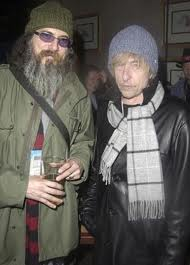
The characters have their individual roles while being paired up in various combinations. The most obvious is that of Fate and the Promoter or Manager Uncle Sweetheart played by John Goodman. Uncle Sweetheart has a very large dose of Dylan’s real life manager Albert Grossman while being a composite of every promoter who ever existed. Uncle is also paired with Nina Veronica played by Jessica Lange as the exploited female Producer. She also does a very creditable job.
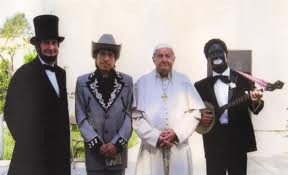
Later in the movie Bobby Cupid is introduced played by Luke Wilson. Cupid is obviously Bobby Neuwirth, Dylan’s sidekick of the early sixties, and who also shared the spotlight with him on the Rolling Thunder extravaganza. Cupid is a smart ass put down artist as Neuwirth was reputed to be. Cupid forms a pair with Uncle Sweetheart also as an antagonist which may have been the case in real life with manager Albert Grossman but one can’t be sure. At any rate Cupid merges his identity with that of Fate while acting as his enforcer.

The interest is not the movie but what Dylan reveals of himself.

2.
A Run Through The Scenes
Influences
In many ways this movie is based on all the Rock n’ Roll movies of the fifties. All of them could have been written by the same hand, at least the American ones. The English Tommy Steele’s Doomsday Rock might have slightly different being from England but probably not. Cliff Richard’s movie that I’ve seen only recently was from the American mold. Dylan ‘s movie is on a par with all except for the greatest of them, the apotheosis of Rock n’ Roll films- The Girl Can’t Help It. That movie told the whole story of Rock n’ Roll while being a perfect summary of the fifties. Can’t recommend it too highly; had more stars than the Big Dipper.
The big drawback of Dylan’s movie is that once he gets out of jail Fate can’t stop droning on about his opinions about everything. He might have thought he was on a par with Phil Marlowe but he wasn’t. Dylan’s close with Greil Marcus and he and his crowd are big on Raymond Chandler, the creator of Philip Marlowe. Chandler is great but not transcendental, and I’ve read all his stuff short stories and novels but not the letters so his mystique for Marcus, Dylan and that crowd escapes me. Marlowe narrates with comment as Dylan does here so there may be a strong Chandler influence.
Enter The Characters
Scene 1 is the fireworks. Scenes 2 through seven introduce, in order, Uncle Sweetheart, Nina Veronica, Jack Fate, Prospero, Tom Friend and Pagan Lace. The scenes establish the main characters while providing the raison d’etre for the movie, or in other words, what passes for a plot.
 Scene one is the violent opening. Scenes two and three present Uncle Sweetheart and Nina Veronica. The name Sweetheart is obviously ironic as Uncle is conniving and irresponsible. John Goodman who plays the role is a big fellow as was Albert Grossman. As the movie is autobiographical Uncle Sweetheart must refer to Grossman who came across to Dylan as doing something for him but who wound up taking more of the earnings than went to the singer and writer of the songs. Still he is a composite of every promoter than ever existed. Nina Veronica played by Jessica Lange is a smart talking long suffering legman for Uncle. Lange co-starred in a Presley movie thus establishing Dylan’s connection to Elvis without whom, as he says, he couldn’t have been doing what he is doing. I can’t really identify a specific model for her but she is blonde. Might be some connection to Edie Sedgwick and Echo Helstrom among others.
Scenes four, five and six introduce Jack Fate with an interlude with Cheech of Cheech and Chong as Prospero referring to A Midsummer Night’s Dream thus establishing Dylan’s connection to Shakespeare to whom some inexplicably compare him. Scene six brings Tom Friend into the stream.
As Uncle cannot find a ‘Star’ to perform solo at this benefit concert he is staging, he is forced to dip into the bottom of the bucket to spring Fate from prison where he is apparently doing life for being a bad singer without parole. Fate collects his guitar and moseys down to the bus stop where he finds his old friend Prospero waiting for him. Here Dylan begins his marvelous collection of clichés. ‘Where you goin’” asks Prospero. ‘That way.’ says Fate pointing to the right. ‘Oh yeah? That way’s pretty good too.’ Prospero says pointing to the left. Whew! Are you prepared? The use of Prospero for this downer film must be ironic.
Boarding the jalopy bus Fate asks the Black female bus driver: ‘This bus cross the border?’ ‘Oh no, you’re going the wrong way, mister.’ ‘Alright’ Fate replies resignedly. And this is only the beginning of the movie. Fates passes the Mexicans and chicken to find a seat at the back of the bus. I presume that this is a racial comment that it is now time for Whites to sit in back. After all as Dylan sings in his song: Them that are first shall be the last. To give credit when credit is due, Dylan with great economy lays out the direction down the midway of his view of Desolation Row that the movie will pursue. This is Dylan’s version of reality that even a hundred million dollars obviously can’t change.
The scene that introduces Friend takes place in the Editor’s office. Here we have a contrast between

Recent Dylan Persona
the archetypical, cynical, hard drinking nineteenth century newspaper editor confronted by a wise ass current edition of Dylan in hoody and dark glasses. This is an interesting contrast in historical periods. Not only do Friend and the Editor come from different periods but the Editor has a copy of the statuette of the monkey reading Darwin’s Origin Of Species on the desk. As Friend is associated with both Dylan’s early New York period and his present this might be a time to note the influence on Dylan’s mind, which he acknowledges, caused by his study of Civil War era newspapers in the New York City library during ‘61-’62. Actually he studied the social scene North and South in the years just before the war. It would be interesting to know how many different papers he read. The old black-face minstrel Oscar Vogel who appears later in the movie refers to these studies as also does probably Dylan’s inexplicable inclusion of his version of the Southern anthem, Dixie. He might have done better to have performed Cowboy Copas’ Alabam‘. One might add his version isn’t very good. Nevertheless those studies color his mind.

The Day The World Changed Eras
Dylan And The Press
Friend also raises the question of Dylan’s relationship with the press. Now, Dylan had before him the example of the Beatles and their amazing exchange with the media upon touchdown at Idlewild airport, renamed JFK, in January of ‘64. We were fairly electrified at the aplomb of the Fab Four and their cheekiness. This was in contrast to the humble pie other musicians ate before the microphones. The Beatles established a superior distance to ‘all that thing’ that struck just the right tone with the generation. In that one brief exchange they changed the direction of the history of the world. Of course, scruffs like the Rolling Stones and Animals who followed them maintained the tone creating the right antagonism between the generation and their elders. This was the beginning of the generation gap. The old timers who had survived the Depression, WWII and the Korean War had developed a definite world outlook that we with different experiences couldn’t share but the cleavage between the two generations was so sharp that conflict was inevitable. This is where it began.

The Bad Boys Of Rock
Dylan’s father in his interview with Walter Eldot of Duluth let the cat out of the bag when he said his son was a corporation and his whole persona was an act, a character that Dylan had assumed to make it. That being said then Dylan had plenty of time to assess the situation and prepare an act for the press when his turn came with good and correct examples before him. Since he couldn’t be flippant and amusing like Lennon and the others of the Fab Four he had to create an antagonism between himself and the press so we may assume his proto-Keith Richards act was a put on from the start. It seems impossible that a young man like Dylan wouldn’t have been flattered and awed by being interviewed by the international press while being broadcast on the evening news on two continents on a regular basis.

The Name Terrified The Old Folks
Nobody expected much from the unknown quality of the Beatles in ‘64 but Dylan in ‘65 was already ‘the spokesman for his generation’ whether he wishes to acknowledge it or not. His shucking and jiving and renunciation of his role did have a cooling effect. He was supposed to be supremely wise, ‘Something’s going on here but you don’t know what it is, do you?’, with answers for everything but he wasn’t and didn’t. He could say anything stupendous nor could anyone have. Knowing his incapacity he chose to pick a fight; probably the wisest thing he could have done. He didn’t answer any questions but asked more questions back than were given him. That way he didn’t have to take a position on anything.
It’s interesting that his alter ego, Friend, is full of sage and trite expressions of opinion, he spouts them non-stop a la Phil Marlowe. Friend who represents the Dylan of ‘61-’65 has Lace/Cruz as his live in. It follows then that Pagan Lace must represent Suze Rotolo.
Searching For The Vacant Couch
In his memoir Chronicles Vol I Dylan creates Ray Gooch and Chloe Kiel who he says he stayed with for some time on the West Side, sort of the Bank Street crowd. There is no possible way to fit them into the time frame nor had anyone ever heard of them before Chronicles so they must be a composite of the MacKenzies, Dave Van Ronk and various other couches he slept on. He very quickly moved in with Suze Rotolo by late ‘61 down on Fourth Street. As near as I can tell he stayed there until perhaps ‘63 when they split up. By 1963 he would have been famous and prosperous enough so that he couldn’t go back to sleeping on other people’s couches so between then and the time he showed up at the Chelsea Hotel it isn’t too clear where he lived. That was before Warhol demolished what was left of the Chelsea’s reputation when he made his movie Chelsea Girls.
Friend’s really great Beatnik pad was probably a composite of locations Dylan knew. It’s terrific. Not a lot of books in it though as Dylan describes in his memoir.
Memories Of Suze
As I noted Pagan Lace was very fearful much as Dylan always described Suze. Suze was intellectually vital in introducing Dylan to art and the theatre while Pagan Lace being Mexican is reminiscent of the Ramona of Dylan’s song To Ramona. ‘I could forever talk to you by my words would soon become a meaningless hum…’ which is essentially the relationship between Friend and Lace. Friend and Lace go in search of the Benefit Concert to track down the elusive Jack Fate.
Scene eight is the totally irrelevant interlude with the paramilitary who has no idea which side he’s on. The movie could have done without it.
Dylan insists on talking over the scenes like some Philip Marlowe but more vapid. If he wouldn’t give the reporters his opinions in his prime he makes up for it here while amply demonstrating the wisdom of having kept his mouth shut previously.
In scene 9 Fate’s father lies dying. Why he’s Mexican isn’t clear to me unless Dylan is merely eliminating as many White faces as possible. Dylan relates the particulars of Fate’s mom and dad which obviously correspond to those of himself and his parents. In another long interlude he checks into a hotel in what is supposed to be a dead pan comedy routine with the desk clerk. Another very long stretch of clichés.

Robert C. Neuwirth
In scene 10 Fate makes a phone call to his old buddy Bobby Cupid who during Fate’s incarceration has been working as a bartender. A very dissatisfying scene takes place between Cupid and a customer. Wretched acting and even more miserable writing. If Warhol was right that amphetamines made Dylan’s lyrics sparkle in the sixties, he should have fortified himself with some while writing this script. Having received his summons from Fate Cupid throws down his towel leaving the cash drawer open and liquor on display and leaves the building.
In the meantime Fate has found his way to the studio cum bar. This scene may be dated back to

A More Mature Neuwirth
Dylan’s teen fantasy that he is living out today. Contrary to what he would have people believe Dylan’s oeuvre is singularly free of Blues or Negro influence. Dylan quite frankly is a pseudo-Hillbilly. Well, maybe not that pseudo. He has been since the first day he showed up in Greenwich Village disguised as Woody Guthrie. In fact one reason it took him two months after arriving in New York to reach the Village was that he was actually scoping it out, reading the scene to develop an act as he couldn’t play straight country and succeed. Not too confident he backed up his Woody Guthrie/James Dean act with a large dollop of the lovable Charlie Chaplin for comedic relief. Still, he knew all the great Country songs and acts of the fifties. He had probably seen all the greats and lesser lights come through Hibbing. Awe inspiring. They used to have these great package shows. Where I lived I remember one show headlined by Ernest Tubb backed up by lesser lights like Johnnie and Jack and others. Both the show and the audience was a trip. I’m sure Dylan on more than one occasion was outside the stage door to watch the performers troop in. A sight to see. They weren’t gods but they’ve never been replaced. The Rocker never even came close.
The whole benefit sequence is Country and Western probably what Dylan calls traditional music. Bearing in mind the country concerts, Dylan makes a marvelous entrance as the traveling country troubadour shot from the back. Wonderful. He has the shambling bowlegged gait, guitar case in hand in the oversized cowboy suit down pat. He even manages the bowlegged stiff back stoop so you might think it was I don’t know who rambling past. He does all kinds of imitations of the Country stars he knew and loved: Hank Snow, Webb Pierce, Slim Whitman, I don’t know who all. If you know country these scenes give away Dylan’s major influences. Heck, when he hired Mike Bloomfield for Highway 61 he told him he didn’t want any of that blues crap and he made Bloomfield play out of his genre. If he could have gotten Country picking out of him he probably would have been happier.
Back In The Country Mode
Once he got out of the miasma he’d fallen into from ‘61-’66 he went straight Western with John Wesley Harding and just in case you didn’t get the message on Nashville Skyline he comes out of the country closet tipping his hat to you as if to introduce himself in his real guise. Obviously that is the real Bob Dylan. My problem with that, as my jaw dropped, was that he’s a lousy country singer and writer. Merle Travis he’s not.

Dylan In White-Face, Rolling Thunder
Now, the bar in the scene is a real old fashioned Country bar although this one is improbably populated by Negroes and Mexicans and the occasional old girl friend. The only thing the scene is missing is the chain link fencing around the band to keep the boys from catching a flying bottle with their teeth. I can tell you that those crowds were rowdy and I’m only alive to talk about it by the grace of god. In Dylan’s fantasy all those peaceable Negroes and Mexicans are so enthralled by Fate’s hillbilly music that they just keep smiling’ and boppin’ along. Heck even the Black Country singer Charlie Pride didn’t like the music that much, he only went to C&W when he realized he wasn’t going to make the major leagues as a ball player. So, during performance time here we’re in Fantasyland.
To put the scene into some kind of perspective it would appear that Dylan is combining the Rolling Thunder Revue and the We Are The World Benefit concert. The stage has a couple different backdrops here and they are quite reminiscent of the backdrops for the Rolling Thunder Revue of 1976 which in turn were based on the drop curtain of the movie, Children of Paradise.. Apparently that was a happy period of Dylan’s life.
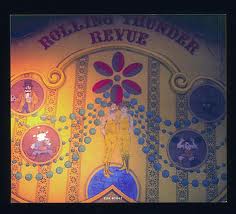
Rolling Thunder BackdropHighway 61 RevisitedRemember it’s all symbolism here and Dylan is telling his life story, not as it happened but corrected to what he would have liked to have happened. Thus he has a couple different backdrops based on the designs of the Rolling Thunder Revue. I didn’t get it all but one is revealing. There is some speculation as to whether Dylan was a Juvenile Delinquent who did time at the Minnesota Reform School at Red Wing. Red Wing is a town down on Highway 61. Highway 61 begins in Duluth at the wrong end of 61 and ends down in New Orleans in Blues country. So one should not confuse the wrong end with that end. Dylan is talking abou the Wrong End of Highway 61. It has nothing to do with the Blues. The town of Red Wing is also home to the Red Wing boot and shoe company, the last American made boots and shoes available, if they still are. Even though the very literal minded Duluth reporter, Walter Eldot, made a point of saying that Red Wing did not have walls as claimed in Dylan’s song The Wall Of Red Wing there must still be at least a chain link fence. I’ve never been to Red Wing but I’m speculating that you can see the Red Wing shoe factory through the fence at the reformatory. I may not be right on that speculation but one backdrop advertises American Made Shoes in a cartouche to the right and Retail in a cartouche to the left. If you remember the song Highway 61 Dylan makes reference enigmatically to 40,000 red, white and blue shoe strings. So there are a number of ties to Red Wing for Dylan. The Minnesota Dept. of Corrections isn’t going to tell us whether Robert Zimmerman was an inmate in 1959 but I think there’s enough evidence here to make the surmise conclusive. I’ve never seen Dylan live but if his show is anything like this movie I’m not going to spend seventy dollars to do it. His band are good musicians as far as that goes but Dylan doesn’t believe in a good bottom. He’s got a drummer but no rhythm section. He brings three guitars up front not including his own leaving his drummer flailing away, not particularly concerned with keeping time in the background. If Country drummers can’t do anything else they can at least keep time. The songs he uses here are not distinctive.. I wouldn’t pay money to see Dylan do an insipid Diamond Joe and I’d have walked out before he finished Dixie. God, playing Dixie to an audience of Negroes and Mexicans. He should have had the Stars and Bars suspended behind him to complete the insult.Mississippi On My Mind While we’re on this Southern kick we might as well include the scene between Fate and the black-face minstrel, Oscar Vogel. This appears to be a significant name. Oscar is an old English name meaning Spear of God while Vogel is German, possibly Yiddish, for bird. A singer is a sort of bird while Oscar was assassinated for speaking ‘truth to power’ or a Spear of God. Vogel would seem to refer to Dylan’s stint as a ‘freedom rider’ in the Civil Rights era of the early sixties. In point of fact people were killed during this period while it is likely that Dylan escaped an early demise by a hair’s breadth. For example in his song Motorpsycho Nightmare which take place Bates Motel style from Hitchcock’s recent 1960 movie Psycho the last line is ‘if it hadn’t been for freedom of speech I would have wound up in the swamp.’ If one considers Dylan’s outspoken career during ‘63 and ‘64 it is not inconceivable that he made many powerful enemies. Between songs like Blowin’ In The Wind, The Times They Are A’Changin’ and Masters Of War combined with the his appearance in the Washington Mall with Joan Baez and Martin Luther King it would seem certain that he at least came to the attention of then director of the FBI, J. Edgar Hoover. It is clear that Hoover would like to have discredited King who he correctly believed was either a Communist or Communist inspired. In the early years Dylan might not have counted for much but by 1964 he was becoming the ‘spokesman for his generation’ and much more influential. Hoover would have to have become concerned. Thus when that nerd Pete Seeger induced Dylan to travel to Mississippi to lend his voice to the freedom riders Hoover for one might have said to himself, ‘That boy has got to be stopped.’ In Motorpsycho Nightmare in order to outrage the Farmer Dylan shouts: I like Fidel Castro and I like his beard. The Farmer calls him a Commie as Dylan, the narrator, hit’s the ground running. In another song commentary Dylans says in his 1997 Mississippi, ‘I stayed in Mississippi one day too long.’ Sad Sack Current Dylan
In that light Fate’s confrontation with Vogel is interesting. One imagines Vogel was a pre-Civil War minstrel so that he refers back to Dylan’s Civil War studies undertaken in Dylan’s pre-Civil Rights period. Being in black-face could refer to Dylan’s Mississippi incursion with that twit Pete Seeger. Let us say then that the connection to Vogel is Mississippi.
Now, Dylan had been shooting off his mouth insulting Congressmen or whoever in songs like The Times They Are A’ Changin’, Blowin’ In The Wind and Masters Of War, callow, sophomoric songs all expressing high school essay sentiments. He was at the DC protest so the Mississippi trip and a song like Oxford Town might have been the last straw for the Feds, the tipping point.
Vogel delivers a monologue on his own murder while the doleful, long faced Dylan sits quietly listening. Vogel, played by Ed Harris in a particularly glossy black Shine, tells Fate that at one time he was a very famous minstrel but that a cause came up and as he had a podium as an entertainer he undertook to ‘speak truth to power.’ As he tells Fate it’s not what goes into your mouth that gets you in trouble it’s what comes out. Freedom of Speech didn’t save him from the swamp, so let’s say it was probably a combination of Freedom Of Speech and intervention by Albert Grossman to save his meal ticket that did it. I have read someone’s opinion that Grossman served that function for Dylan more than once.
Fate having heard the story began walking away. When he looks back Vogel is gone, proving he was merely a projection of Fate’s/Dylan’s psyche. In place of Vogel is a real Mississippi Negro with a baseball bat. The implication is- don’t come back. In this connection during 1976’s Rolling Thunder tour Dylan appeared not in black face but in white face perhaps referring back to his Mississippi blunder. Thank you Pete.
Trouble Begins For The Children Of Paradise
On Fate’s arrival at the bar Dylan begins to lose control of his movie as the story gets more complicated. His relationship with Uncle becomes tense as in real life his relationship with his manager Grossman begins to come apart. By 1970 Grossman and Dylan were in court. That tenseness is aggravated by the arrival of both Bobby Cupid and Tom Friend along with Pagan Lace. The key players in Dylan’s life are assembling. To top it the writing becomes even more execrable and the acting worse.
The best scene is the arrival of Cupid. Bobby is not a composite character but seems like a real life characterization of Dylan’s sidekick Bobby Neuwirth. Neuwirth was a fixture with Dylan in the mid-sixties when he served as sort of an enforcer. The two went their separate ways until the 1976 Rolling Thunder tour for which Neuwirth was summoned somewhat as here in Masked And Anonymous. In this scene he returns absurdly bearing Blind Lemon’s old beat up guitar, or reputedly Blind Lemon’s guitar. When Uncle asks where he got it Cupid replies in Houston from a friend of a friend of Blind Lemon’s who said he had been told the guitar had been Blind Lemon’s.
Uncle remarks that he can get a guitar just like that at any pawn shop in town. ‘Well, maybe you can,’ Cupid answers, ‘But it wouldn’t be this guitar.’ That is an unanswerable reply but lame logic. Cupid wanders off saying he is going to restring the guitar. Get it? Fate/Dylan is the new Blind Lemon.
While Cupid is diddling with the guitar Friend shows up asking for directions to Fate. Ha, ha. In the language of today Cupid serves as the Gatekeeper and won’t let Friend through. However Uncle wants the publicity and insists that Fate let himself be interviewed. This leads to the rather incongruous requisition by Friend of Fate. In this instance, as Vogel served as a sort of conscience for Fate so does Friend here. Not exactly what one expects given Dylan’s relationship with the press. Remember that Friend is wearing Dylan’s 1965 clothes while talking to the currently dressed Dylan. ‘Yonder come the vagabond in the clothes that you once wore.’ In that sense Fate or Dylan is talking to himself as though his conscience. Strange conversation.
Friend reprimands Fate for not having been at Woodstock. His absence must have bothered Dylan  more than he lets on. Then Tom runs on about Jimi Hendrix being out in the rain with his guitar in that horrible rendition of the Star Spangled Banner. On and on about Hendrix being a native son. And then even more strangely Tom brings up Frank Zappa and his eight and a half hour movie Uncle Meat. Talk about out of the blue. There is no direct reference to Dylan’s Renaldo and Clara at four and a half hours except that Zappa was able to let it all hang out which took him another four hours apparently to get it all out. I must say whatever was going on in Dylan’s mind it did escape me.
And then comes another irrelevant interlude harking back to 1963 and possibly Mississippi of the genre ‘and a little child shall lead them.’ A White woman leads her little Negro daughter up to the assembled cast and orders her daughter to sing The Times They Are A’ Changin’ for Dylan. The mother says her daughter had memorized every song Fate/Dylan had written. Not exactly a feat like memorizing the Bible but daunting nevertheless. ‘Why did you do that darlin’?’ Fate coaxes. The mean, nasty White woman interjects: ‘Because I made her do it, that’s why.’ That’s one mom from hell.
So then as this little Negro girl begins singing the Master’s song a kind of a hush fell over the world. As the little Negro girl intoned the more than Shakespearian lyrics the screen goes silent except for the little Negro girl’s voice as the cast experiences an epiphany not unlike Paul when he fell down in the dust of Israel. I tell ya folks it was angelic, there was a lump in my throat. I was eating popcorn at the time.
Of course, the girl wouldn’t have given the kid Michael Jackson the tremors, nor Donny Osmond for that matter, but she got all the words right and knew when to quit. About this time Fate decides to walk out on the benefit, he borrows Cupid’s car which he wrecks and goes to visit his faithful old Negro prostitute spouting clichés all the way. This scene is apparently reminiscent of 1968 when Dylan’s dad died before Dylan could reconcile himself with him. Here also Fate’s dad dies as Fate sits quietly on the bed beside him shedding his last tear. It wasn’t as good as Little Nell.
Junior Jive, his putative brother played by Mickey Rourke, then takes over for pop. Once braceros they are now running the country he says. Rourke was unconvincing in the role.
There Must Be Some Way Outta Here
Well, this thing has to end sometime so Fate goes back to the bar to perform the Benefit. One has the feeling that this was some sort of apology for the We Are The World benefit when Dylan and Keith Richards took the stage before the world wide audience and showed how stellars make fools of themselves. In this replay Edmund (Rourke) begins a destruction of Desolation Row and the rest of the world which erases Fate from the television screen and hopefully We Are The World from Dylan’s memory. And then comes what we have all been fervently praying for- The Grande Finale. Probably the lamest scene in a movie of lame scenes.
Edmund has unleashed Armageddon on the world simultaneously eliminating Dylan’s Save The World embarrassment and fulfilling his need for universal destruction a la Hitler down on Desolation Row where everything was broken and is now disintegrating. While all the colored people of the world are off destroying themselves Dylan’s White elite are about to self-immolate a la The Twilight Of The Gods. Ragnarok, Hiroshima a hundred fold.
All the world’s a stage as that minor poet said and this scene appropriately takes place in front of the stage but not on it. It’s a major rumble. I hope I can describe it right. Fate, the fate of fates has arrived. This is the fate that no one can escape. Now you know why Jack’s last name is Fate.
Fat old corrupt Uncle Sweetheart makes a move on Pagan Lace trying to persuade her to have a drink on him. The girl was a teetotaler. She resists Uncle’s enticing. Uncle grabs the delicate thing making a move to pour the firewater down her throat will she, nil she. We hear a dog whistle off stage and its SuperFriend to the rescue. He has apparently always wanted to kill Uncle so he grabs the erratic microphone cord proceeding to throttle Uncle.
Everything might have worked out fine from Friend’s point of view but for the fearful little Pagan Lace who drags him off thereby leading to his death. Fate shows up challenging Friend. Dylan settles accounts with the press here. I don’t know how big Jeff Bridges is but if Dylan is 5’ 10” 150 Bridges is 6’ 5” and 250. Odds do not daunt Fate. They go into a clinch with Friend’s back to the camera. I don’t know what Dylan did to Friend, perhaps twisted his balls, but Friend recoils fifteen feet clutching either his stomach or his gonads- the picture gets fuzzy. In perhaps the hokiest bit ever devised for film a thoroughly unconvincing Fate breaks the fat end off a JD bottle steps coyly up to the prone Friend and wiggles the jagged end in front of his nose, then steps back. You really have to see it to believe it.
Well, Friend is lying down but he’s still not going to take it. He pulls out a flat gun, might be a .45, might be a 9mm., I’m not an expert on firearms, and instead of shooting, leers menacingly while waving the gun around like he intends to shoot it sometime in the future. Or, perhaps Dylan and Charles were expertly building suspense because Bobby Cupid is creeping up behind bearing the murder weapon which is, you guessed it, or maybe not, Blind Lemon’s old guitar. Or, quite possibly as Uncle suggested, it was just an old guitar from a pawn shop. No matter, sneaking up behind Cupid bashes Friend with the unstrung front side. The guitar flies to pieces, it was old and flimsy, leaving Cupid holding the neck stump.
Unlike Fate and his JD bottle neck Cupid plunges the guitar neck into Friend’s throat. Death by guitar, perhaps a Movieland first. Symbolically Blind Lemon and all Negro musicians have avenged themselves for the purloined royalties. But, Bobby is now a murderer although for a good cause. Someone shouts here cum de fuzz. The ever magnanimous Fate gives his own guitar to Bobby thus replacing the broken Blind Lemon and one assumes passing the baton of musical justice on to Cupid while he shows Bobby the door and tells him to run. Cupid does one of the lamest exits ever. You can see him stop running when he thinks he’s out of camera range. So, the faithful servant’s fate is reconciled.
Meanwhile the two Black loan enforcers from the first scene show up to seal Uncle Sweetheart’s fate. They give the sage but cliché’d advice: ‘Everybody pays Sweetheart. Some pay up front some pay at the end. Come with us.’ Uncle resignedly marches off to his fate.
The cops show up. Nina Veronica steps up, points to Fate and says he did it, I saw him do it. This may possibly connect Dylan to 1958 when he and Echo were caught burglarizing in Hibbing and possibly Echo laid it on Bob. Just a guess. Well, the concerts over and it’s back to the Black Hole Of Calcutta for Fate. A woman put him in jail to begin with and a woman returns him to jail. It is Fate’s fate.
Yoicks, can this movie be finished? No. Frank Zappa made an eight and a half hour movie, this one only feels like it. Dylan’s not finished philosophizing. The camera focuses steadily on Dylan full face for four and half minutes as Dylan drones on. I’d given up, I wasn’t listening anymore. I will say this though, consider these pictures of Bob and Dave Zimmerman. If they don’t have two different fathers I’d be amazed.

How Did I Get Roped Into That Picture?
A Note On My Method
A note on my method: I do not compose at the computer. I write my essays out long hand first. I then transfer to the computer using a different site. I save and print a copy then copy and paste to WordPress so I always have backup copies in case the copy flies away from WordPress while all restore methods have been disabled.
So while disabling restore and removing the copy is an inconvenience I always have backup copies. I then enter the photos printing copies page by page so I can always reconstruct the work.
The education has been less than pleasant but I presume it has been worthwhile. Thank you.
A Note On Bob Dylan And His Privacy Lament
Dylan seems to be unaware that by offering his efforts for sale he has sacrificed his privacy. His music and songs are open for criticism whether he likes it or not. Masked And Anonymous and his other films are automatically subject to minute scrutiny and interpretation. If he doesn’t like that then he should not have taken up his pen.
Secondly: Dylan invaded the privacy of every listener by offering his efforts for public consumption. There was no escaping his songs broadcast over the radio so his listeners had their minds violated in that sense. He made a personal mental contact and if he doesn’t like the results of the message he gave out, that is just too bad.
Thirdly: He often says he never asked to be the spokesman of his generation. That shows either a lack of understanding or is an outright lie. The Times They Are A’ Changin’, Blowin’ In The Wind and Masters of War imply that he has answers of which his elders are unaware. Ballad Of A Thin Man positively states that he knows what’s happening and others don’t. Desolation Row is a Ship Of Fools put down song that claims that Dylan has a loftier and more accurate view.
His audience accepted him at his word and when the burden became too heavy for him he betrayed that audience and abandoned them. That was a criminal offence.
It is time Dylan accepts the responsibility of his actions.
Correction: based on the Rolling Thunder Revue should read ‘based on the French movie Children Of Paradise.’
Exhuming Bob XXX
A Review: Part II
Masked And Anonymous
by
R.E. Prindle
Desolation Row

Aww, Sing It , Bob
When Dylan left home in the summer of ’59 for UMinnesota he would have been at the bottom of his despondency in its raw form. His subconscious would have been in possession of his mind. He manifested this condition at UMinnesota by a burst of degraded behavior, drunkeness and an inability to study. He did know his salvation lay in his music. He then practiced hard and assiduously. He apparently realized that he wasn’t rock n’ roll material while Folk Music was the rage, at the height of its popularity, although the slough of its despond could be seen from the heights. It was petering out even as Dylan rode it to fame and fortune. As he says in the revised Shelton he always knew that Folk Music was a shuck but he could do it and use it as a springboard.
Using his friends and acquaintances in Minneapolis to educate him he learned to sing and play quickly. Still deep in the throes of depression, ruled by his subconscious, he left for New York to try his luck there. It was two months after his arrival in New York before he turned up in Greenwich Village. He has said that during those two months he was hustling in Times Square. No one knows whether to take him seriously but given his state of mind he may have attempted to degrade himself beyond redemption to satisfy his father’s prophesy. He remained a heavy drinker in New York adding drugs to his repertoire. According to Andy Warhol who should have known an A Head when he saw

A. Warhol
one Dylan was racing on amphetamines. It wouldn’t have been hard to do as nearly everyone in New York at the time was. The Village was a tough place and getting much tougher as Dylan went along.
He took up his station at a bar called the Kettle Of Fish which was a Mafia owned bar and undoubtedly tough enough. It may have been there that he and Andy Warhol first crossed paths as Andy frequented the place also. While it has not been recognized, they were actually competitors for the role of King of Bohemia. Although Warhol was much older they both began their rise at the same time coming to an apex simultaneously. A war of sorts ensued in which Dylan’s base was Downtown and Warhol’s base Midtown. Later Lennon and Ono would form an Uptown base but by that time Dylan had moved along although he continued to associate with Ono at least through the eighties. They may still meet but I haven’t come across any references.
Despondent people usually see the world as a Zoo, an insane asylum, a desert, a hole or in Dylan’s case as a state of desolation. In 1965 he wrote the song Desolation Row as he fought to free himself from his depression. He has retained this despondent state of mind from then to the present if his movie Masked And Anonymous is any indication. Thus the movie is a visualization of a tour of Desolation Row with ‘all the clowns and jugglers doing their tricks for you.’ The movie is a real side show if seen from that perspective. Indeed Dylan depicts a side show carnival act of The Man Eating Chicken which when you part the curtain shows a man eating chicken. My favorite memory of the midway was the Black Widow Spider Woman. Had a little chat with her too. At any rate Dylan hasn’t really advanced beyond 1959 when he left home.
There is nothing attractive in the movie. The lighting is usually dark and depressing. I don’t remember one scene in which the sun was out. The streets are vile, everything is a shambles or broken as he said in his song, Everything’s Broken. That means that he views himself as a broken man, beyond repair. One can see why Suze Rotolo was fearful. She had every right to be if one judges from the way Dylan treated his madonna, Sara. After psychologically abusing her for a decade she had no choice but to leave when she came down for breakfast one day and found her husband carousing with another woman. Dylan hasn’t been able to change his self-destructive behavior; if he weren’t able to make the money he does he himself would have been a bum on Desolation Row long ago.
Thus we are treated to a longish filmed tour down skid row to look into the blank despairing faces of derelicts as if they were the norm. Normal people do not exist to Dylan’s mind. The streets were dotted with burning oil drums, the streets look pockmarked and unkempt left by a society unable to care and incapable of maintaining its infrastructure. Echoes of Greil Marcus and David Lynch abound.
Dylan injects his religious fundamentalism into the story where the desk of the Editor bears a copy of the statue of the monkey reading Darwin’s Origin Of Species prominently displayed. Again, the building beside which the rundown bar cum TV studio is placed is the Masonic Hall on LA’s preeminent Whilshire Blvd, one of the great streets of the world. The Masons who once shaped the world and were the founders of the United States Of America, competitors with Judaism for rule of the world have fallen on hard times. Members have drifted away and no new ones recruited so the magnificent building stands empty. That old Masonic Lodge is vacant now with its grand ideals inscribed on its outside walls, as are Masonic Lodges across the country. Ours has been taken over by the museum.
Dylan in his Hibbing days was trained for the his Bar Mitzvah by an Orthodox Jewish Rabbi of the Lubavitcher sect brought in by his father who was powerful both among the Jews and Gentiles of Hibbing. Dylan has never lost his Lubavitcher or at least Orthodox sympathies so that the use of the Temple is a mockery of Freemasonry by Judaism in Dylan’s hands. Behold the winner, he says.
At the same time, for the duration of the movie Dylan was able to make a stink pit of the grand Wilshire Miracle Mile making it reflect his vision of reality. He was to project his psycological miasma on it to obliterate the beauty.
As I say, to him, everything is broken down. At one point he borrows his buddy , Bobby Cupid’s car which is a broken down old monster from Detroit’s golden era of the fifties and sixties. He is on the way to visit a Black prostitute. He crashes the car into a telphone pole walking away leaving it there smoking. Once again this is dark, even though night it is a duller dark than need be, a Halloween night before the demons are released from hell to reclaim the night for their annual visit.
The fallen woman, the Negro prostitute, lives in what once was a fine old mansion but now has fallen on hard times itself. What was once a grand approach is now a ruins blending in with the shadows that have no bottom. You can hear the earth groan as Dylan steps on it. The effect is so repulsive and unredeemable that one has no sympathy with the movie or Dylan and Larry Charles.
I could go on describing each degraded, broken scene but the record of that depressing aura would bring me down as well as yourself.
2.
Let us take a look at the way Dylan uses his extras who populate the movie. If you thought the locations were depressing the cast is even more desolated.
The racial composition of the movie is of interest if this is how Dylan sees reality. There are no obvious Jews in the movie. Of course one knows that Dylan is Jewish but he is disguised as a goy cowboy, an incarnation of Rambling Jack Elliott. Perhaps Dylan has patterned this stage of his life after that of Jack Elliott after whom he patterned his early career also, actually studying and imitating him to the point where people said: ‘Look Jack, he’s stealing your act.’ As Elliott had priority in the persona Dylan might almost be perceived as Jack’s doppelganger although more successful. His character is named Jack. Elliott is also a Brooklyn Jewish cowboy.
The main actors are all White except for Penelope Cruz’ Pagan Lace who appears to be Mexican while apparently being a devout Catholic is no pagan. The bit players and extras are predominantly Mexican. They all have a bracero appearance, the kind of look that used to seen as typically Mexican. On Fate’s bus ride to the City the entire bus is filled with Mexicans which means, I suppose, the place was either Mexico or LA.
The Muzak of the background seems to always be a group singing Dylan’s songs in Spanish, rather puzzling. As mentioned, Fate’s father inexplicably seems to be Mexican while Fate’s mother also looks Mexican. The Micky Rourke character, who is apparently Fate’s half brother, is Mexican. Rourke muses that his people began as servants but own the big house now while they are taking over the country.
In the barroom scenes those enraptured by Dylan’s Country and Western tunes are improbably Mexicans and Negroes. To watch them bop out the rhythm rapturously to Dylan’s version of Dixie (I wish I was in the land of cotton…) is a sight to behold- defies all reason and experience. Who ever saw an African American at a Dylan concert? One wonders what Dylan was smoking, snorting, shooting, drinking or perhaps doing a combination of all four.
The manner in which our old Civil Rights activist portrays Blacks is also astounding. They are all thugs, criminals and prostitutes without exception. Well, except for the little mulatto girl who sings The Times They Are A Changin’. However she has a mean, nasty White mother in combat boots. The mother says that her daughter has memorized all of Fate’s songs. Fate asks: ‘Why did you do that, honey?’ The mean, nasty White mother interjects: ‘Because I made her, that’s why.’ Almost made me ashamed to be White. I had to brush up on my nasty act. The little girl launches into the song while everyone listens rapturously, enthralled at truth coming from the mouth of a babe. I know she is supposed to be a scene stealer but the kid was only passable. Not only was she no threat to the reputation of the young Michael Jackson, she wasn’t even a threat to Donnie Osmond. But, this is Dylan’s movie.
The first Negroes we see are two loan enforcers who are explaining the facts of life to Uncle Meat, excuse me, Uncle Sweetheart who owes more than he can pay. The Blacks give him a good beating informing him that they’ll be back.
The next Negroes we are introduced to improbably run the TV Network, possibly CBS, which also seems to be a stretcher. Not only do the Mexicans look like they missed high school but the Black Pres. of the Network acts like he left school after the sixth grade.
The head of the Network conducts business with a loaded .45 automatic on the conference table.
I don’t know what number this is in Dylan’s list of bad dreams but one does wonder what he ate before he climbed into bed. Dylan seems to search out freaks for his Desolation Row. He has a close up after the Animal Lover scene of a guy’s face that looks like a very bad case of scabies after being run over by a truck. I don’t know whether he was made up or Dylan found him somewhere and gave him scale and all the pot he could smoke.
If this movie is Dylan’s version of reality then the congressmen and senators should gather around and lend him a helping hand. Thank god Dylan doesn’t strive for verisimilitude, the whole movie is acted like Jr. High kids playing adults while filming it in the basement. It would help if they were mixing up some medicine. Since everything is fake you don’t have to run from the theatre screaming although I’m told that many did. I’m tough, I’ve sat through ten showings of this thing but, yes, I do believe I’ve had enough.
Part III follows in the next post.
Chap. 13: Edie Sedgwick, Maid Of Constant Sorrow
April 17, 2011
Edie Sedgwick
Maid Of Constant Sorrow
by
R.E. Prindle
https://idynamo.wordpress.com/2010/12/27/exhuming-bob-xxviii-visions-of-johanna-decoded/
Chapter 13
Blonde On Blonde

Her Fogs, Her Amphetamines And Her Pearls
One can only guess at Edie’s feelings when Dylan dismissed her so brutally from the lines of One Of Us Must Know (Sooner Or Later). She must have intuited if not known that her short and glorious career as the toast of New York was going nowhere. She came to New York with a handsome inheritance that she squandered in a trice, her parents disapproved of her conduct to the the point that they cut her off from support leaving her as Dylan had sneered in Like A Rolling Stone, a poor little rich girl ‘who had never lived out on the streets but now she was going to have to get used to it.’ Screamingly in pain from amphetamines one can only imagine her bewilderment with no way to rectify the situation. Whatever golden opportunities she may have had were now gone forever. Frome here to her death in 1971 would be one long wailing ‘horrorous’ nosedive that is terrifying to relive as a writer even. My stomach quakes as I try to organize the course of events.
Chuck Wein, one of the Harvard homosexuals she had associated with and who had come to New York with her was her evil genius, some say Svengali, who had guided her to Warhol and the

The Poet
Factory and then presided over her self-destruction. Then for that brief glorious summer of ’65 she had set New York on its ear as a companion to Andy Warhol. Made her feel giddy and indestructible. Andy was apparently in love with her but as a self-centered homosexual was too flaky to work out a relationship that would give her dignity while he was unable to support her more than extravagant tastes.
Behind Warhol was Dylan competing for Edie’s favors which he won in December of ’65 and then discarded her like an old shoe. He recorded the course of his relationship with Edie in various songs from mid-1965 to the completion of Blonde On Blonde in the Spring of ’66. His own career course was changed dramatically in July of ’66 when he had his motorcycle accident.
It might be well to review the songs that comprise Blonde On Blonde now. The song list of Blonde On Blonde is as follows:
1. Rainy Day Women #12 And 35
2. Pledging My Time
3. Visions Of Johanna
4. One Of Us Must Know (Sooner Or Later)
5. I Want You
6. Stuck Inside Of Mobile With The Memphis Blues Again
7. Leopard Sking Pillbox Hat
8. Just Like A Woman
9. Most Likely You Go Your Way And I’ll Go Mine
10. Temporary Like Achilles
11. Absolutely Sweet Marie
12. Fourth Time Around
13. Obviously Five Believers
14. Sad Eyed Lady Of The Low Lands
With a knowledge of the lyrics the titles themselves read consecutively tell story while the lyrics confirm the tale. The story hinges on who the two women are. One is Dylan’s mother who blasted herson’s psyche when at about the age of twelve she told him in so many words that he had ruined her life by being born. Apparently it was more than Dylan could handle because it was then that his lifelong misogyny began. It is forbidden for a son to revenge himself on his mother so his only recourse was to take it out on another woman or women. Dylan has been a serial misogynist.
One of the women he chose to vent his spleen on was Edie Sedgwick. Thus the two rainy day women most likely are his mother and Edie. All the time Dylan was bedeviling Edie he was courting Sara Lowndes who he eventually married in November of ’65. It was a quiet wedding that didn’t became known for several months and not widely known until later than that. He married just before he succeeded in abstracting Edie from Andy’s entourage so there is no doubt that he was only toying with Edie as a surrogate for his mother.
He may actually have cherished her vulnerability from drugs, inexperience in the world and low self-esteem. She would have been as helpless as a baby, almost like shot gunning fish in a barrel. Sara was his Madonna, Edie his whore. He waits to the very end of Blonde On Blonde to mention Sara and then he wrote Sad Eyed Lady Of The Low Lands for her. Of course, this was all very mysterious for us back in ’66 because we knew nothing of what was happening in New York. None of us had even heard of Sara Lowndes until she showed up as Dylan’s wife
As blogger Jim De Rogatis says, when he sat down to listen to Blonde: What I discovered was an artist who sneered and snarled with more venom and conviction than Johnny Rotten, and

The Artist
finally it dawned on me: Dylan was a punk…
Jim wasn’t there at the creation as I was, he is a younger man. I guess my soul was so canchred at the time that I welcomed the sneering and snarling as an expression of my own trauma while today I find the venom is so grating that I can no longer listen to Dylan’s records. Besides he borrows nearly everything.
The album opens on a note of forced sardonic merriment as though in a house of ill fame and ends with the dirge dedicated to his wife, Sara. I leave the interpretation of that up to you. I can’t pretend at this date to understand the lyrics to Sad Eyed Lady. One would have to know more of her and Dylan’s courtship. Dylan thought she was supposed to be impressed that he wrote a song for her with a title that sounds like another of his caustic insults.
To take the songs in order: Rainy Day Women is a raucous, very noisy mocking song along the lines of Like A Rolling Stone with its refrain of ‘How does it feel?’ On release the song was so noisy it was nearly unlistenable, certainly objectionable and barely music. Time has conditioned our ears. The refrain here: Everyboyd must get stoned, has layers of possible meaning. While the allegory of stoned meaning pelted with rocks is present, stoned can also have a secondary meaning of smoking marijuana. I don’t think the meaning has anything to do with getting ‘stoned’ from dope. I think it’s a combination of the first meaning and what was perceived by Dylan as a devastating insult from his mother.
The refrain must refer on one hand to his mothers perceived ‘stoning’ of Dylan by her announcement to him that he had been basically unwanted. That stoning is turned around to apply to his ‘stoning’ of Edie in vengeance. He then gleefully taunts and mocks her with the refrain: Do not feel so all alone, everybody must get stoned (How does it feel?) which refers back to his earlier song about Edie, Like A Rolling Stone.
In order to make ‘poetry’ of his taunt, our incipient ‘Shakespeare’ gives several poetic references that have nothing to do with rocks or joints. For instance the line ‘They’ll stone you when you’re riding in your car’ must refer to radio DJs pitching products. Thus stoning is meant as a verbal assault. One can compare that line with the Rolling Stone’s Mick Jagger’s lyrics to his song Satisfaction:
When I’m drivin’ in my car
And that man comes on the radio
The Singer
He’s tellin’ me more and more
About some useless information
Supposed to fire my imagination
I can’t get no, Oh, no, no, no
Hey, hey, hey, that’ what I say
I can’t get no
Satisfaction
So Dylan’s use of ‘stoning’ is giving or getting unpleasant information.
Song #2, Pledging My Time merely means he is obsessed with his mother’s ‘information’ that he was unwanted which is reflected in song #3, Visions Of Johanna when he sings: These visions of Johanna have conquered my mind. Johanna being his mother. Then there is discussion about Andy and Edie. (see my essay at https://idynamo.wordpress.com/2010/12/27/exhuming-bob-xxviii-visions-of-johanna-decoded/ for a full discussion.)
Song#4 Sooner Or Later mocks Edie who he ‘really did try to get close to’ as he dismisses here as he would have like to have dismissed his mother. Song #5 is self-explanatory.
Song #6, Stuck Inside Of Mobile With The Memphis Blues Again awhile the lyrics are unclear must refer back to I Want You on one hand and forward to Leopard Skin Pill Box Hat and Just Like A Woman on the other. He’s stuck inside of Mobile, i.e. he wants his mother with the Memphis Blues, i.e. he want his vengeance on Edie is a possible interpretation. At any rate it is placed between I Want You and the two Edie songs so it must be related to all three.
Then come two really unnecessarily vicious songs that everyone agrees are about Edie- Leopard Skin Pill Box Hat and Just Like A Woman. There are no obvious reasons for Dylan to express such vehement, disfiguring hatred of the poor girl unless he’s visiting his repressed hatred of his mother on her.
Song #10 Temporary Like Achilles involves Edie and Andy and himself. I doubt if Dylan had any understanding of the Iliad, if he had even read it, so apart from Achilles short life and the seven month interruption of his relationship with Edie by Warhol an interpretation is somewhat of a hazard.
Songs 11, 12, 13, Absolutely Sweet Marie, Fourth Time Around, and Obviously 5 Believers seem to wander off topic. I have read one interpretation in which the blogger thought Obviously 5 Believers was a response to the Beatles Norwegian Wood. Or possibly they lead into song #14 Sad Eyed Lady Of The Low Lands that Dylan says he wrote about Sara Loundes. The lyrics of this ‘poem’ are incomprehensible but if I had been Sara I wouldn’t have taken the title as a compliment, especially not after being locked out of a discussion about Dylan, Edie and his mother. After all, this is a married man lashing out at Edie.
After completing the LP Dylan left for his 1966 tour of England in which there was such a violent reaction to his electric backup band. I don’t remember their being a violent reaction made on the West Coast. For myself I welcome it. I never did like that faux folk crap he did anyway. Apparently Dylan didn’t either. A new expanded edition, lots of new material. of Robert Shelton’s biography, No Direction Home, just released by Omnibus Press is available, speaking in 1965 Shelton quotes Dylan thusly: ‘There never was any change. No instrument will ever change love, death in any soul. My music is my music. Folk music was such a shuck. I never recorded a folk song.’ He did however call himself a folk singer.
So, whoever shouted Judas at the Manchester concert knew what he was talking about. I never listened to those nauseous early Dylan records anyway. Blonde On Blonde was released in June of 1966 while Dylan was thrown by his ‘chrome horse’ on 7/29/66 thus putting an end to the first phase of his career.
I don’t know what Edie thought wen she heard the record that summer but one supposes she would have recognized herself as the topic of the conversation. Warhol certainly did and he was not amused. Knew something about motorcycles too.
Both Edie and Dylan were so heavily into amphetamines that they probably were not responsible for their actions. Drugs tend to put one into an internal state in which the outside world assumes a subordinate position, almost irrelevant, to one’s interior reality. A person functions in his own mind as a sort of magician who can comman the world to his own world. A certain type of insanity I suppose. Right and wrong are merely expressions of one’s own subconscious will. As Dylan confused Edie with his mother who he subconsciously wished to punish he transferred those feelings, that resentment, that hatret onto Edie as his surrogate mother thus gaining his revenge. How much satisfaction he got isn’t known and he’s not telling.
Edie herself was so far gone into amphetamines as to be oblivious to what was happening in her life. As far as she could dissociate her life from reality she could obviously make black white and vice versa.
Having dealt with Dylan’s relationship with Edie, let us return to January of ’66 to take up again the story from there.
Chap. 14 has been posted as of 6/23/11
Exhuming Bob XXIX: Dylan And His Blonde Problems
March 23, 2011
Exhuming Bob XXIX: Dylan And His Blonde Problems
by
R.E. Prindle
An Examination Of Temporary Like Achilles

Searching For Inspiration
Temporary Like Achilles is another ’64-’66 piece. It has the feel of being improvisational, out of focus. I believe it is a companion piece to Visions Of Johanna while it might be connected to Rainy Day Women #12 & 35.
Dylan always said that he had no physical relations with the song’s subject Edie Sedgwick. I’m certainly in no position to say but if this song is accurate then Edie for some reason played the virgin for him. Either that or because she represented his mother to him it would have been an incestuous situation. Edie did say she was pregnant by Dylan but then she says that she was in the psycho ward and that the doctor’s held her down and aborted the baby. Of course she must have been delusional at that time having over dosed on amphetamines. God, how she punished her mind. I’m of the opinion that she probably was not pregnant by Dylan although there may be hospital records.
If one takes the last verse first:
Achilles is in your alleyway
He don’t want me here, he does brag
He’s pointing to the sky
And he’s hungry, like a man in drag.
How come you get someone like him to be your guard
You know I want your lovin’
Honey why are you so hard.
Warhol, the man in drag is obviously Achilles, perhaps meant humorously. Achilles of course lived a short but glorious life. Warhol is temporary because Dylan is moving in on Edie.
In answer to the refrain ‘you know I want your lovin, honey why are you so hard’, it is probably that Edie wanted to marry Dylan but in the way of women wanted to pose as a virgin so as to come to him pure.
When she was at Harvard in Boston she was known as a premier fag hag. The men she knew were all gay so one presumes her chastity was safe there. Of course, Andy Warhol, known here as Achilles here was gay. Insofar as she associated with Andy, and he apparently really was smitten by her, as close to being in love as he could get with anyone, as he put it, her chastity was safe with him too. Perhaps that is why Dylan has Achilles in Edie’s allegory, near but not close sexually.
As there was rivalry between Dylan and Warhol for Edie it follows that ‘he don’t want me here he does brag.’ The line

Her fogs, her amphetamines and her pearls.
would point to the situation as it stood in August or September of ’65. He’s hungry like a man in drag may refer to his homosexuality which prevents him from satisfying his lust I don’t know why he’s pointing at the sky but Dylan says disgustedly ‘how come you get someone (a fag) like him to be your guard. Dylan was known to be macho at the time.
The first verse points to a period perhaps November-December of ’65. Dylan, of course, married Sara in November of ’65 so that at this point Dylan would be playing with Edie as perhaps he thought she was playing with him before.
Hence:
Standing on your window, honey
Yes. I’ve been here before
Feeling so harmless
I’m looking at your second door
How come you don’t send me no regards?
You know I want you lovin’
Honey why are you so hard?
Here is a reference to Dylan and Edie’s first meeting in December of ’64. And then in March Chuck Wein introduced Edie to the Factory although she had met Warhol a couple weeks after Dylan in January of ’65. Dylan may have been too busy at the beginning of ’65 to actively pursue Edie, he also did have to pay attention to Sara who he was courting at the same time, plus engagements and whatever.
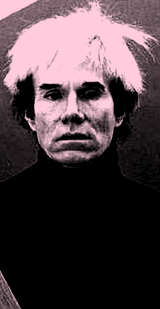
Andy
At any rate Edie teamed up with Warhol from March to about December of ’65. At that point Dylan who was wooing Edie and Grossman his manager were promising to make Edie a star at something. If as a star, she couldn’t sing, but then that didn’t stop Dylan from having a career.
Now, Andy had been trying to make Edie his movie star. According to Ronnie Tavel who scripted many of Andy’s movies Andy saw Edie as his ticket to breaking into Hollywood. That was one of Andy’s chief ambitions that was never realized. Tavel says that he and Andy used to coach Edie in her lines. When time to film came she always dosed herself with amphetamines before hand and, of course, uncoached herself. Thus in Andy’s account of his appearance at the psychiatrists’ banquet in January of ’66 he remarks that it was futile for Dylan and Grossman to work with her because she was unable to concentrate long to get anything done. Edie wouldn’t work hence no career. Andy might have been able to get her something if she had. He sounds rueful and hurt.
So in late ’65 this was Dylan’s second attempt to connect with Edie.
The second verse:
Kneeling ‘neith your ceiling
Yes, I guess I’ll be here for a while
I’m trying to read your portrait, but
I’m helpless, like a rich man’s child.
How come you send someone out to have me barred:
You know I want your lovin’
Honey, why are you so hard?
Kneeling ‘neath your ceiling fits in with standing in your window and looking at your second door. Kneeling ‘neath your ceiling is probably somewhat like Paul Simon’s ‘One man’s ceiling is another man’s floor or Tony Orlando’s Stomp three time on the floor. In other words Dylan is in the room beneath Edie unable to get to her unless she calls him.
Thus the addendum to verse two:
Like a poor fool in his prime
Yes’ I know you can hear me walk
But is our heart made out of stone, or is it lime
Or is it just solid rock?
In other words Edie knows he’s down there pacing anxiously back and forth but a hard hearted woman she refuses to call him to her, stomping three times on the floor.
The fourth verse:
Well, I rush into your hallway
Lean against your velvet door
I watch upon your scorpion
Who crawls across your circus floor
Just what do you think you have to guard?
You know I want your lovin’
Honey why are you so hard?
The ardent and frustrated would be lover can’t breach Edie’s window, door. ceiling, hallway, velvet door. The scorpion/circus reference escapes me except that Edie may have appeared to be leading some circus life as does Ophelia in Desolation Row.
Apparently this was a throw away song for Dylan as other than recording it he has never played it in concert. It was one of my favorites on the album however. Perhaps after Dylan’s motorcycle accident the song became irrelevant to him. Too topical, not universal enough as was its counterpart Visions of Johanna.
As far as Blonde On Blonde goes I’m tentatively of the opinion that Rainy Day Women #12 & 35 refers to Edie and his mother. The only reference to Sara in the album would be Sad Eyed Lady Of The Lowlands.
Your secrets are safe with me, Bob, of course you don’t have anything to hide.
Exhuming Bob XXVIII: Visions Of Johanna Decoded
December 27, 2010
Exhuming Bob XXVIII
Visions of Johanna Decoded
by
R.E. Prindle

This is an attempt to place Visions Of Johanna in a context of Dylan, Andy Warhol and Edie Sedgwick. In this interpretation Louise is Edie, Johanna is Dylan’s mother, Louise’s lover is Andy Warhol and the narrator is Dylan,
Visions of Johanna
Ain’t it just like the night to play tricks when you’re trying to be so quiet?
We sit here stranded though we’re doing our best to deny it.
I.e. we’re alone in the night of the universe doing our best to pretend we aren’t. A night without dawn and we find the situation intolerable.
And Louise holds a handful of rain, temptin’ you to defy it.
Rain is a symbol for the misery of life that one finds inescapable. ‘Raindrops keep falling on my head.’ etc. Louise/Edie who is a bearer of pain mixed with love offers a handful of rain to Dylan essentially saying take it or leave it. If Bob takes it he has to find a way around the pain of loving Louise/Edie.
Lights flicker from the opposite loft
In this room the heat pipes just cough
The country station plays soft
But there’s nothing really, nothing to turn off.
It looks brighter in the opposite loft, greener grass on the other side of the fence, but it is freezing in Dylan’s room where no heat comes from the pipes that just cough. ‘Seems like a freezeout.’ C&W is a lot of songs about love gone wrong so let it play softly in the background.
Just Louise and her lover so entwined
And these visions of Johanna that conquer my mind.
Dylan has a real problem with his mother who he says in his movie Masked and Anonymous rejected him because he upset her life by being born. Thus his love for his mother was turned to dust and his life made miserable. He has confused Edie with his mother who he thinks she resembles. Edie after seeming to be found as a mother surrogate in the first quarter of 1965 then seemingly abandoned him for ‘her lover’ Warhol with whom she is ‘entwined.’ In his confusion and resentment of Edie he sees ‘these visions of Johanna that conquer his mind.’ He looks at Edie and sees his mother. His resentment at his mother’s rejection then turns to hatred of Edie. As a son he can’t revenge himself on his mother but he can on Edie who has become his mother surrogate.
After his father’s death in 1968 Dylan is able to step into his father’s shoes as his mother’s support. Pleading poverty, which was probably real, shortly after her husband’s death Dylan wrote her a five figure check to tide her over. There’s more, but…I’ll save that for the review of Masked And Anonymous.

The Ghost Of Electricity
In the empty lot where the ladies play blind man’s bluff with the key chain
And the all night girls they whisper of escapades out on the “D” train
We can hear the night watchman click his flashlight
Ask himself if it’s him or them that’s really insane
Verbiage setting up the next six lines that get to the heart of the matter:
Louise, she’s all right, she’s just near
She’s delicate and seems like the mirror
But she just makes it all too concise and too clear
That Johanna’s not here.
Here the physically delicate Edie is present but she seems like a reflection of Johanna/Dylan’s mother. Dylan has so identified Edie/Louise with this mother/Johanna that Edie makes it ‘too concise and that too clear’ that Mother/Johanna is not here.
The ghost of ‘lectricity howls in the bones of her face (Edie’s)
Where these visions of Johanna have now taken my place.
Ghosts of electricity is ambiguous but may refer to the traces left by the electro-shock treatments which undoubtedly scarred Edie’s mind indelibly while Dylan has now completely blended Edie/Louise and Mother/Johanna into one.
Now, little boy lost, he takes himself so seriously
He brags of his misery, he likes to live dangerously,
This obviously refers to Warhol of whom it’s a pretty good description. Living dangerously probably refers to the hoodlums hanging around the Factory.
Muttering small talk at the wall while I’m in the hall
How can I explain?
Oh, it’s so hard to get on
And these visions of Johanna, they kept me up past dawn
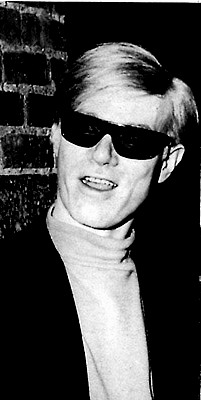
Dapper Andy
Dylan mutters small talk at the wall where he is placed outside the relationship with Edie in the hall ‘while visions of Mother/Johanna trouble him into the small hours of the night.
Verses four and five seem to be verbiage that sounds meaningful and may be to Dylan but escape me. The song is copyrighted 1966 which would be after Dylan had taken his vengeance on Edie so the lines of the last verse:
But like Louise always says
“Ya can’t look at much, can ya man?”
As she herself prepares for him
And Madonna, she still has not showed
We see the empty cage now corrode
Where her cape of the stage once had flowed
The fiddler, he now steps to the road
He writes ev’rything’s been returned which was owed.
Edie/Louise is preparing for ‘him’ who might be Warhol or Neuwirth but it isn’t made clear.
Dylan referred to Sara as a Madonna so she is probably the Madonna referred to. ‘Empty cage’ is personal to Dylan, no idea, anyway he was already married to Sara. So having crushed Edie as his mother had crushed him and passed her to Neuwirth he thinks he has settled his score with Mother/Johanna. ‘Ev’rything’s been returned which was owed.’ Edie has repaid his mother’s debt but he apparently feels some guilt ‘as his conscience explodes.’
After the ball was over, after the dance was through’ these visions of Johanna are now all that remain.’ So, if the song means anything, written in 1966 it must refer to Edie who Dylan has confused with his mother in his mind. While songs like Like A Rolling Stone and She’s Your Lover Now read clearly once you have the Edie key, Johanna is a little more ambigious but while I con’t guarantee this reading as yet, I think it is on whole accurate.
Understanding The Myth And Music Of Bob Dylan
December 1, 2010
Understanding The Myth And Music Of Bob Dylan
by
R.E. Prindle
Stephen Hazan Arnoff: www.forward.com/articles/133344/

Bob Blowin' Smoke
Stephen Hazan Arnoff comes back among us to talk around Sean Wilentz’ Bob Dylan In America and Greil Marcus’ Bob Dylan: Writing 1968-2000 by which is meant Marcus’ writings on Dylan, more specifically reviews of songs and LPs. I have read and reviewed Wilentz while having bought Marcus I flipped through it determining it was more for possible reference than reading, definitely not literature per se.
Startlingly Arnoff is able to compare the Dylan portrayed to both Homer and God.
In “Odysseus’ Scar,’ the first chapter of his study “Mimesis: The Representation of
Stephen Hazan Arnoff
Reality in Western Literature” (1953), Eric Auerbach presents the history of Western literature as a choice between two creative paths. “It would be difficult” he writes, “to imagine styles more contrasted than those of these two equally ancient and equally epic texts.” The first epic mode is that of Homer, a realm where the narrator shines an overwhelmingly bright light on the characters and situations of his story. There are no gaps in the Homeric narrative. No details of circumstance or motivations of characters are left unexplained.
The second mode is biblical. Here, Auerbach finds a storytelling tradition depending on gaps and fragments “fraught with background.” For biblical literature and its narrative decendants, motivation and detail are purposely obscured so that a life of interpretation and commentary thrives continually. While biblical scribes and their rabbinic heirs cluster around laconic narratives that leave the burden of imagination to interpreters, the Homeric mode prefers richly detailed depictions of reality in which the responsibility for imagination lies with the storyteller.

In other words the Bible, like Dylan’s lyrics, is just words. I suppose Homer’s ‘overwhelmingly bright light’ is why the Iliad is the least understood of the world’s great literature while as much commentary on it exists as on the Bible. Mr. Arnoff is sometimes difficult to follow.
One reason that Homer writes so will with relative clarity is that he is the prototype of Western scientific thought in which the purpose is to make things clear with an overwhelmingly bright light while the murky mythopoeic thinking associated with Semitic thought is based on supernatural hocus pocus that defies rational explanation.
Much the same as the latter can Dylan’s approach to ‘literature’ be explained. Dylan’s movie Masked And Anonymous written by himself has his character Penelope explaining Dylan’s lyric approach to his other character Pope John-Paul II thusly as she makes little boxes with her fingers: “I like Jack Fate’s songs because they don’t have definite sense. They don’t mean anything except what you want them to mean. I like that.” (or words to that effect.)
Well, Bob is Jewish as are Wilentz, Marcus, Arnoff and Auerbach so I suppose there is no reason that they wouldn’t reject precise science in favor of biblical gobbledegook. I wouldn’t brag about it though.
Of course one can see any artist’s work through any lens one wants but one always leaves oneself open to ridicule whether just or not. Certainly Arnoff is ridiculous as he goes on:
Christopher Rick’s “Dylan’s Visions Of Sin (Ecco, 2004) and Dylan’s own memoirs, “Chronicles, Volume One (Simon and Schuster, 2004), now share the title of “Brilliant Studies Of Dylan’s Work” because they model how Dylan- a combination of market-savvy rocker, Homeric bard and biblical seer- has carved out a place in popular culture for art “fraught with background.”
I just can’t see Dylan as more than a ‘market-savvy rocker.’ He is in no manner a Homeric bard while he definitely poses as a biblical seer. No matter what his past he is now a mediocre country and western singer in the pattern of 50s artists like Slim Whitman and Hank Snow, who he even imitates, in Masked And Anonymous. His band might be competent, good or, even, excellent but they aren’t playing anything out of the ordinary.
Bob Dylan is a legend only in Stephen Hazan Arnoff’s mind and those of Dylan’s die hard fans which, while numerous, are not universal. He is the product of incessant drum beating by people like Arnoff, Marcus and his house shill, Sean Wilentz.
We are not talking Shakespeare, Homer or even the Bible. We are talking about a market savvy ‘rocker’ who writes meaningless lyrics subject to whatever the hearer chooses to project on them. He admits that his lyrics mean nothing. That is neither poetry or literature.
If a ‘market savvy rocker’ can make hundreds of millions of dollars on this basis I suppose that does make him a legend for his time. However, Mr. Arnoff, spare us the comparison with Homer.
Chaps. 9, 10, 11, 12: Edie Sedgwick, Maid Of Constant Sorrow
November 30, 2010

The 707

DC 6B
A week or so after Philadelphia I got a real lesson in show business and Pop style. Just when you think you’re getting famous, somebody comes along and makes you look like a warm up act for amateur night. Pope Paul VI, talk about advance PR- I mean, for centuries.Definitely the most Pop public appearance tour of the sixties was that visit of the Pope to New York City. He did it all in one day- October, 15, 1965. It was the most well-planned media covered personal appearance in religious (and probably show business) history. “Never Before in This Country! One Day Only! The Pope in New York City!”The funny thing for us, of course, was that Ondine was known in our crowd as “the Pope,” and one of his most famous routines was “giving the papal bull.”The (real) Pope and his entourage of aides, press and photographers left Rome early that morning on an Alitalia DC-8. Eight hours and twenty minutes later, they got off the plane at Kennedy with the Pope’s shiny robes blowing in the wind. They drove in a motorcade through Queens- the streets were lined with people- through Harlem crowds, and then down to the jammed- for blocks St. Patrick’s Cathedral area in the Fifties- where the Pope seemed to want to go out in “the audience” but you could see his aides talking him out of it. After all the stuff in the cathedral he ran down the street to the Waldorf-Astoria where President Johnson was waiting. They exchanged gifts and talked for a little under an hour about world troubles. Then it was over to address the UN General Assembly (essentially he said, “Peace, disarmament and no birth control”) out to Yankee Stadium to say Mass in front of ninety thousand people, over to the closing World’s Fair to see Michelangelo’s Pieta in its Pop context before it went back to the Vatican, and back out to Kennedy and onto a TWA plane, saying, when the reporters asked him what he liked best about New York, “Tutti Buoni” (Everything is good”) which was the Pop philosophy exactly. He was back in Rome that same night. To do that much in that short a time with that kind of style- I can’t imagine anything more Pop than that.

The Heyday Of Andy And Edie

Edie And Andy- Sitting On Top Of The World
Velvet Underground And Nico


Edgar Deep In Thought
I’d dreamt about Billy Name, that he was living under the stairs of my house and doing sommersaults and everything was very colorful. It was so weird, because his friends sort of invaded my house and were acting crazy in colorful costumes and jumping up and down having so much fun and they took over, they took over my life. It was so weird. It was like clowns.Everybody was a clown in a funny way, and they were just living there without letting me know, they’d come out in the morning when I wasn’t there and they’d have a lot of fun and then they’d go back and live in the closet.

Malanga and Dylan
I was invited to speak at the annual banquet of the New York Society For Clinical Psychiatry by the doctor who was chairman of the event. I told him I’d be glad to ‘speak’ if I could do it though movies, that I’d show Harlot and Henry Geldzahler and he said fine. Then when I met the Velvets I decided that I wanted to speak with them instead, and he said fine to that too.So one evening in the middle of January everybody in the Factory went over to the Delmonico Hotel where the banquet was taking place. We got there just as it just was starting. There were about three hundred pychiatrists and their mates and dates- and all they’d been told was that they were going to see movies after dinner. The second the main course was served, the Velvets started to blast and Nico started to wail. Gerard and Edie jumped up on the stage and started dancing, and the doors flew open and Jonas Mekas and Barbara Rudin with her crew of people with cameras and bright lights came storming into the room and rushing over to the psychiatrists asking them questions like:‘What does her vagina feel like?’‘Is his penis big enough?’‘Do you eat her out? Why are you getting embarrassed? You’re a psychiatrist; you’re not supposed to get embarrassed!Edie had come with Bobby Neuwirth. While the crews filmed and Nico sang her Dylan song, (I’ll Keep It With Mine) Gerard noticed (and he told me this later) that Edie was trying to sing, too, but even in that incredible din, it was obvious she didn’t have a voice. He always looked back to that night as the last she ever went out with us in public, except for a party here and there. He thought she’d felt upstaged that night, that she’d realized that Nico was the new girl in town.Edie and Nico were so different, there was no good reason to compare them, really. Nico was so cool, and Edie was so bubbly. But the sad thing was, Edie was taking a lot of heavy drugs, and she was getting vaguer and vaguer. Her society lady attitude toward pills had changed to an addict attitude. Some of her good friends tried to help her, but she couldn’t listen to them. She said she wanted a “career” and that she’d get one since Grossman was managing her. But how can you have a career when you don’t have the discipline to work at anything?Gerard had noticed how lost Edie looked at that psychiatrists’ banquet, but I can’t say I noticed; I was too busy watching the psychiatrists. They were really upset and some of them started to leave, the ladies in their long dresses and the men in their black ties. As if the music- the feedback actually- that the Velvets were playing wasn’t enough to drive them out, the movie lights were blinding them and the questions were making them turn red and stutter because the kids wouldn’t let up, they just kept asking for more. And Gerard did his notorious whip dance. I loved it all.http://www.youtube.com/watch?v=iNwp4nNTeJg Clip of performance.

Dylan

Neuwirth

The Man Of A Thousand Faces
Sigmund Alone Is His Study

Her Fogs Her Amphetamines And Her Pearls

Lou Running A Temperature

John Cale as Old Hipster Contemplating The Dynamo Hum

Gerard

Andy And Gerard

Bomber Billy Ayers

Andy And Fred Hughes

All The Fame Anybody Needs

Tell ’em Andy
Chaps. 6,7,8: Edie Sedgwick, Maid Of Constant Sorrow
November 20, 2010
Edie Sedgwick: Maid Of Constant Sorrow
Chs. 6,7,8
Chapter 6
The Pillow That We Dreamed On

Revolt Of The Undermen
While this is a history it is also a history I lived through. Thus, while history from a distance in time loses much detail it gains in perspective. While these events were transpiring in New York an interpretation of them was being dispersed throughout the country by magazines. While I have no first hand knowledge of the scene in New York my reality at the time was formed by magazine reports. I considered myself pretty well informed from those magazines and in an intra-social sense I guess I was although that only made me less superficial than some others.
The sixties was a fabulous time for magazines. Endless specialized titles came and went after only a few issues, or even a single issue. One of my favorites was the long lasting Horizon, a hard cover quarterly boasting a whole hundred thousand subscribers. Obviously it was for the fortunate few. Of the big bombers chief of all was Time-Life. The two magazines were probably the backbone of American culture during the fifties and sixties. Time lost its credibility during the sixties.
Time was founded by Henry and Clair Booth Luce in 1923. By the fifties it was not only a money machine but gave the Luces a position from which they could actually direct the course of American culture. A heady responsibility. The Luce’s always claimed to be Conservatives but their publications always seemed to have a decidedly leftward bend.
For me the 60s was a most exciting intellectual period. Things were moving fast and generally opening up the American mind. Time-Life publications, all those mail order books. I love mail order. I especially love getting books through the mail. The sixties was my time. Horizon had annual volumes I cherish. Time-Life published a series of paperbacks, actually linoleum like covers, called the Time-Life Library, sent out four titles a quarter, complete set of 108. I completed it. They did delete one title replacing it with another that I don’t have.
However the titles seemed to further a Left agenda. Biographies of Marx and others with the explanation that it was important to know how the enemy thought. True enough, I’m sure, and I bought it at the time but they issued precious little concerning other political angles. I soured on Time-Life as it went.
I also discontinued subscribing to Time sometime in the mid-sixties although it was impossible to stop reading the magazine as there was always a copy lying around somewhere. I became revolted when I read a marvelous piece describing Howard Hughes exit from Las Vegas. It was an astonishing eye witness piece. Then we learned that the whole account was fiction; it never happened. Not only inaccurate but it never happened. They just made it up. That ended my fascination with Time. Still it was where I continued to get most of my information while it had formed my mind for over a decade.
The magazines- Time, Life- were where I got my information on the NYC art scene. Time was especially attentive to it. Pop Art was covered pretty extensively by both magazines. A complete collection of both Time and Life is available on line for reference.
On the West Coast where I was, then, my personal knowledge of Warhol and the art scene pretty much came from Time-Life as did that of most others. Probably not that many were actually interested. Time was a big weekly magazine, how much of it could you actually read. One looked at the magnitude of the weekend NYTimes, sniffed, and just walked away. Who could even begin to read it.
When Edie hooked up with Warhol she gained a national recognition second to none for a nonentity, quite astounding in retrospect.
In August of ‘65 she and Warhol received a good write up in the Arts section of Time while as late as November she received a very nice photo essay in Life. She hadn’t even done anything but hang out with Warhol. Judging from what I read on the internet these articles impressed a number of people giving Edie a national reputation, at least in some circles. This is quite startling because she was only a cute girl, nothing more. She could never have achieved this without her association with Warhol. And she was in a position to turn her allure and fame to account.
Warhol was not going to pay her for the movies. His position was that he had given her this fame so that it was her responsibility to do something with it. There were things she could have done to retrieve her fortunes. Supposedly Chuck Wein was on the lookout to make her into something. He was useless. He should have given his brain an enema and looked at things more clearly. There were things that could have been attempted. It wouldn’t have been impossible for her to set up an advice column such as Edie Says, or What Would Edie Do. My god, she was in NYC. The idea could have been sold to the NYTimes and from there perhaps syndicated. She wouldn’t even have had to do anything but collect the money. Others could have handled everything.
Edie had already modeled so she was in Fashion. So…a line called Edie Sedgwick Party Clothes, Casual Fashion, you name it. Heck, Warhol should have been on the ball and taken his cut, led the way, instead of stupidly taking Ondine’s chat for a novel called ‘a’. Who bought it?
Having raised Edie then to near iconic status within just a few months Warhol, Wein and Edie let the opportunity of a life time slip through their hands. Perhaps it was the drugs.
Chapter 7
Hatred In His Heart
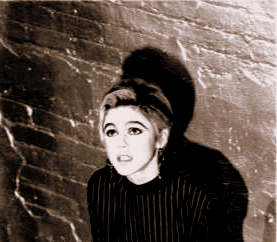
But She Breaks Just Like A Little Girl
At the beginning of May Dylan left for a tour of England. At the same time Warhol took Edie along with Gerard Malanga and Chuck Wein for a gallery show in Paris. Warhol, Edie and Dylan were in Europe at the same time. Whether this influenced Dylan’s rage or not isn’t known but in June shortly after his return he began to vent his rage as he began the composition of Like A Rolling Stone.
Now, Edie’s brother Jonathon told a story he says he got from Edie that she was impregnated by Dylan and carried his baby. There is no time frame for this story. According to Jonathon Edie was determined to have Dylan’s child. As she told it it took four men to hold her down for the abortion to be performed. If true, this is an interesting situation. For one thing abortions were illegal at the time, so a rogue doctor was required. Edie says that she was adamant about having the baby so that she would have had to have been either lured to the doctor or essentially kidnapped. If she resisted and four men, who happened to be in attendance, were required to subdue her then we have a crime of some magnitude.
Bear in mind that all the alleged participants are whacked out of their minds on amphetamines so no one is thinking clearly. At any event Dylan was committed to marry Sara if this is before the wedding or married to her if after. Edie is a celebrity of some distinction who in all likelihood would tell everyone it was Dylan’s love child. What effect this might have on Sara can’t be known but it might possibly have disturbed Dylan’s plans. If he’s like the rest of us he would have held Edie responsible for getting pregnant.
The gist of it is Jonathon Sedgwick says Edie told him the story. It is a possibility, after all if you’re having sex with somebody as she undoubtedly was with Dylan, the possibility of pregnancy is there. But that’s in the background.
During the summer while Dylan stewed Edie and Andy’s star was rising. New York dailies ran stories on the pair that told of Edie drawing Andy into uptown society; and then in late November Life ran its photo essay on Edie. Let’s let Andy recap the period as he told it in his autobiography Popism, recalled in 1980, p. 107:
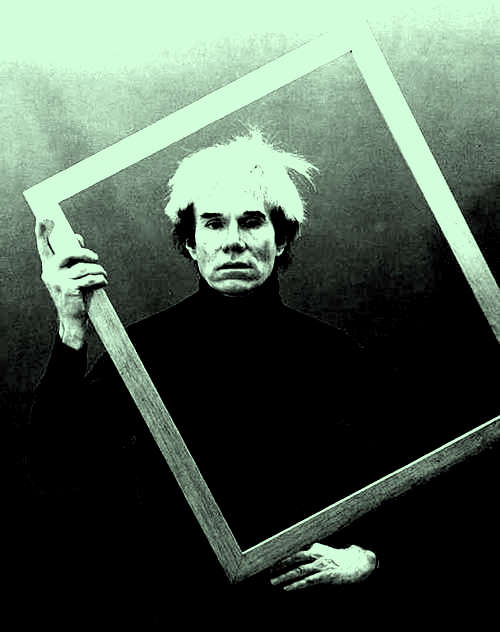
(At the party) There were a few guys in the latest velvets and silk shirts, but not too many- the boys were still mostly in blue jeans and button-down shirts. Edie brought Bob Dylan to the party and they huddled by themselves over in a corner. Dylan was spending a lot of time then up at his manager Al Grossman’s place near Woodstock, and Edie was somehow involved with Grossman too- she said he was going to manage her career.
I’d met Dylan through the MacDougal Street/Kettle Of Fish/Café Rienzi/Hip Bagel/ Café Figaro scene, which Danny Fields claims got started when he and Donald Lyons saw Eric Andersen, they went up and asked if he wanted to be in an Andy Warhol movie. “How many times did we all use that one?” Danny laughed. And after that Eric got interested in Edie and suddenly we were all around the Village together. But I think Edie actually knew Dylan because of Bobby Neuwirth. Bobby was a painter who originally started singing and guitar playing up in Cambridge just to make money to paint with, he told me once. Then he hooked up with Dylan and became part of that group- he was something like Dylan’s road manager-confidant. And Bobby was a friend of Edie’s.
At Sam’s party Dylan was in blue jeans and high-heeled boots and a sports jacket, and his hair was sort of long. He had deep circles under his eyes, and even when he was standing he was all hunched in. He was around twenty-four then and the kids were all just starting to talk and act and dress and swagger like he did. But not many people except Dylan could ever pull that anti-act off- and if he wasn’t in the right mood, he couldn’t either. He was already slightly flashy when I met him, definitely not folksy anymore- I mean, he was wearing satin polka-dot shirts. He’d released Bringing It All Back Home, so he’d already started his rock sound at this point, but he hadn’t played the Newport Folk Festival yet, or Forest Hills, the places where the old-style folk people booed him for going electric, but where the kids started getting really crazy for him. This was just before “Like A Rolling Stone” came out. I liked Dylan, the way he’d created a brilliant new style. He didn’t spend his career doing homage to the past, he had to do things his own way, and that was just what I respected. I even gave him one of my silver Elvis paintings in the days when he was first around. Later on, though, I got paranoid when I heard rumors that he had used the Elvis as a dart board up in the country. When I’d ask, “Why would he do that.” I’d invariably get hearsay answers like “I hear he feels you destroyed Edie,” or “Listen to ‘Like A Rolling Stone’- I think you’re the ‘diplomat on the chrome horse’, man.” I didn’t know exactly what they meant by that- I never listened much to the words of songs- but I got the tenor of what people were saying- that Dylan didn’t like me, that he blamed me for Edie’s drugs.
So it is quite clear from Andy’s recollection that he had known Dylan from the early Spring of ‘65 and that Edie was quite clearly dating him. Whether the pregnancy story comes from this time would be an interesting question. After the release of Highway 61 Revisited Dylan conceived a plan to take Edie away from Andy. It would seem quite clear from the bags under Dylan’s eyes that he was no stranger to drugs.
Perhaps the August Time article on Andy and Edie was the high point of their relationship although the October art exhibit at UPennsylvania was still to come. That show was astonishing in that Warhol was treated like a rock star with apparently the same crowd attending. Of course, Andy’s pal Sam Green had masterfully whipped up enthusiasm with his promotion of the show preceding it by several weeks. The show was probably the first time an artist received such adulation.
Though Andy was enough of a rage that a big crowd would come out for him. I was in attendance at the UOregon lecture in Fall ’67 when Allen Midgette impersonated him and a crowd of about 1500 paid to see him. It isn’t true that Midgette’s impersonation was that good.
I was standing at the end of the line waiting to enter when Midgette and Morrissey were brought in to the elevator just behind me. The guy in front of me asked if that was him.
I was watching Midgette who was a midget, little skinny short guy. There was a superficial resemblance but he seemed too short and he wasn’t wearing a wig. I said, ‘It looks like him but I don’t think it is.’ Midgette raised his eyebrows while Morrissey looked like the jig was up but the admins ignored me.
During the so-called lecture there were several groups of us dispersed throughout the audience loudly debating the issue. They got away with it but later the school learned they had been pranked and demanded their money back. I always thought that was rude. What did they expect of Warhol. He had a reputation. Didn’t the administration read Time?
In September of ‘65 Dylan began to court Edie with promises, one believes, of a good income from movies, recording or such. One is amazed that geniuses like Dylan, Grossman and Neuwirth couldn’t come up with something more inventive to promote Edie.
Edie was torn between two lovers, Andy and Bob. It must have been quite head turning to be the object of contention between the number one celebrity artist of the time and one of the most famous recording and performing acts at the same time as receiving national exposure in Time and Life.
Warhol, even though a homosexual, said that he was as close to in love with Edie as he had been with any other person in his life, he even took her home to meet his mother. Mrs. Warhola who had been urging her son to marry would certainly have taken Edie’s appearance as an indication that Andy was serious about her.
Having committed himself even that far would mean that her receptiveness to Dylan was a crushing rejection of himself as, say, a male object, while her abscontsion to Dylan’s camp would be a traitorous act. Unforgivable in his eyes.
Thus as Edie wavered between Dylan and Andy her life at the Factory became untenable. Andy quietly brought in other superstars including Dylan’s old flame, Nico. Whether conscious of it or not Andy was displacing Edie. She was mocked and reviled. While this was happening at the Factory Edie was evidently taken to Woodstock where Albert Grossman was talking contract to her as her manager. Dylan had had his May gig in England filmed although it would be a while before it was released. There was talk of another film of which Edie would have the starring role. That film apparently wasn’t made for several decades until Dylan finally got it together to make Masked And Anonymous. Perhaps the blond female lead was meant to remind the viewer of Edie.
So, rejected by her family who disapproved of her modeling as well as scorning her association with Warhol, desperately in need of money Edie was in an agonizing mental dilemma. Remember that by this time she was a national figure having appeared in Time and even as her position disintegrated featured in Life, yet she had no money to back her celebrity status. She couldn’t participate in the social life.
We don’t know what Dylan was promising her personally whether he hinted at marriage or stated it but it seems clear from the evidence of One Of Us Must Know (Sooner Or Later) and Most Likely You Go Your Way And I’ll Go Mine that Edie believed Dylan was serious about her.
Dylan married Sara in November of ‘65 secretly but how to keep a secret. Warhol learned of the marriage tauntingly informing Edie of it in December. Edie was incredulous. It follows, and can’t be otherwise, that she confronted Dylan with the alleged fact. This was undoubtedly a moment of triumph for Dylan as he could now reject Edie as he believed she had rejected him in March.
One can imagine Edie demanding of Dylan whether he was with her or Sara. The intense mocking derision of Sooner Or Later when Dylan sings: I couldn’t believe what I did hear- was I leaving with you or her?
At that time Edie’s game was up. Warhol had destroyed her reputation; she could no longer get modeling jobs; she was broke with no hope of a good encore. With a loud sneer Dylan passed her to his sidekick, Bobby Neuwirth then a song to commemorate it: She’s Your Lover Now.
Chapter 8
Down The Trail Of Broken Hearts

Dylan Lifting Off
The motivations of the actors are difficult to determine. However that insofar as any actions relate to the others than the actions of any of the others are interrelated. Thus Andy had Edie and wished to keep her as she was as close to love as he ever came. Perhaps he realized that he would need money to do so while perhaps his various activities from the Factory to filmmaking were keeping him financially strapped so that even if he wished to he couldn’t pay Edie. He had expenses.
Of course today an authenticated Warhol may go for millions up to the one hundred millions paid for the Eight Elvises picture but at the time you could have scooped up several paintings for under ten thousand dollars that might have been worth tens of millions twenty to thirty years on.
Dylan is ridiculed for trading his Presley taken from Warhol for a sofa but at the time that wasn’t necessarily a bad deal depending on the sofa. Warhol would give his actors the choice between a painting and a hundred dollars cash. The Factoryites elected the cash over the picture. So, it’s not like Warhol could just sell a painting anytime he needed to raise the ready. His question was how to raise some cash, he had overhead.
His adversaries were Dylan and Albert Grossman, one a recording artist the other a manager both swimming in cash. There seemed like a pot of gold at the end of that particular rainbow. Andy thought about it and came up with what he thought was a winning formula, and it actually was but he let it slip away.
Taking his cue from Bobby and Albert then Andy decided to manage a band. He also conceived at the same time an artistic light show to create an even more unique and exciting ambience, The Exploding Plastic Inevitable. When the student is ready the teacher will appear. And so it was. Andy’s scouts went looking for a band and came back with a group called the Warlocks who were renamed The Velvet Underground. An SM band extraordinaire whose chief songs were Heroin and Waiting For My Man. Only Andy could have shouted Eureka! at such a find.
The band came straight out of the avant garde. The chief instrumentalist, John Cale, had belonged to the John Cage/La Monte Young musical circle. The ostensible leader, Lou Reed, another survivor of electro-shock therapy, not much of a musician, was the group’s songwriter and lead singer. Between Warhol, the Factory hands and the Velvets they were a Happening of the first order.
Andy now had his band and his concept but no venue. No way to present the package for popular consumption. But, that too appeared when someone suggested a hall called the Dom. Andy rented the hall but, here’s the catch, he didn’t lease it. He cautiously wanted to try it out first. The trial was a major success, wowing hip New York while also bringing in an astonishing amount of cash for a three or four week run. Should have been a hint.
Now, Andy negotiated a recording contract for the Velvet Underground and the band actually recorded its SM anthems Heroin and Waiting For My Man. Remember the Velvets had no history and horrible songs but Andy’s influence was so great this unknown band was given a recording contract. Not so bad. Of course the record wasn’t released until 1967 but it fell flat as one would have expected with an eighteen minute song called Heroin. Also the record was released as Andy Warhol Presents The Velvet Underground. Andy’s credibility wasn’t too great outside NYC and I, for one, looked at the record as a probable joke, especially as the cover was a peel away banana. After listening to the record I knew it was a joke.
A couple years earlier Dylan had been in Greece where he met a German woman going by the name of Nico. They apparently had a short fling and he wrote the song I’ll Keep It With Mine for her. Time passes and paths meander. Having passed through London Nico showed up in New York City at this time where, as chance would have it, she hooked up with Warhol and became a Factory girl. Andy in his usual way foisted her on the Velvets as a chanteuse, Nico And The Velvet Underground, did I mention that before? So, not only did one ask what the hell was a velvet underground but who the hell was Nico? We knew who Andy Warhol was. And how.
Dylan undoubtedly thought of Nico as his, thus he showed up in Warhol’s scene to push songs on Nico with the intent no doubt to woo her away as he had done Edie. The contest between Andy, Bobby and Albert was heating up.
I think it probably came to a head over the Dom. Andy and the Velvets left for a gig in LA and when they returned they attempted to resume their shows at the Dom. Lo and behold they found that Albert Grossman had leased the venue from under them. They had the winning formula but once again no venue. Albert called his place something stupid like The Balloon Farm but under different management it became The Electric Circus. Andy was offered the light show but didn’t take it, but by then light show paraphenalia was being manufactured as a commercial product.
From my point of view the most astonishing and impressive thing Andy ever did was the Exploding Plastic Inevitable. It had a long lasting effect. Of course by this time the whole light show paraphernalia had turned into an industry and anyone could do it.
Toward the end of ‘65 Edie had become peripheral to both Andy and Dylan.
Chapters 9,10,11 and 12 are now up on one post.
 I, Dynamo