Chap. 6: Marianne Faithfull, Faerie Queene Of The Sixties
January 1, 2013
Chap. 6, Marianne Faithfull: Faerie Queene Of The Sixties
by
R.E. Prindle
Chapter 6
Orders From Headquarters
This chapter will center around the Global Communist Cultural Revolution phase kicked off in 1968 while being managed by Mao Tse Tung who replaced the Russians as managing director.
The purpose of the CR was to destroy the Bourgeois past replacing it with itself. Hence Ira Levin who wrote Rosemary’s Baby in which Satan’s child is named Andy posited 1966 as the Year One much as the failed new dating of the French Revolution of 1789. ‘89 was the Year One of that Revolutionary calendar. Perhaps in preparation for the CR in 1965 in the US new immigration reform was pushed through Congress that opened the gates of the US to the world, especially Africa, Mexico and the East. By 1968 West and East Asians were flooding into the country. As seems obvious now this was with the intent to subvert and destroy the Aryan hold on the US.
In his song Bob Dylan would sing: In the museums infinity goes up on trial, in an opening blast on destroying past culture as displayed in museums. In China Mao was less timorous as huge gangs of the Red Guards coursed through museums smashing irreplaceable cultural artefacts. They even invaded peoples homes ransacking the houses destroying anything of value. Culture bearers such as college professors or any educated persons were rounded up and sent out to reeducation camps to work at manual labor; tens of millions were murdered outright. Regular people were called before neighborhood re-education cells to confess their bourgeois faults and pledge to Communists faults.
Outside of China local agents were recruited from Communist ranks; college campuses suddenly sprouted Chinese Communist stores selling Mao’s Little Red Book and those pretty little pins sporting a

Chairman Mao Ze Dong
gold Mao against a red enameled background. Nice work and cheap too. Any campus that hadn’t been disrupted by ‘Free Speech Movements’ now came under attack by the Cultural Revolution. The end result would be Kent State.
As no one knew what was going on the Cultural Revolutionists seized the institutions beginning to establish the tone, the matrix with which opinions would be considered. This was established in subtle ways that few noticed and even they hadn’t a clue as to who or why. The Revolutionists had seized the cultural venues of movies, TV, newspapers, magazines and music, or, recordings. One of the key units in recorded music was the Rolling Stones. Mick was a Communist, at least since his London School of Economics days.
Even before the Redlands Bust he had been bleating that victory was his side’s because ‘they had the kids’ in the palm of their hands. The bust had been a cold douche that rankled Mick to his core. The revolutionists were of the mind set that they were going to fight and win and never lose. Thus the mild reprimand of the bust struck Mick as foul play, an unforgivable insult and injury.
Many people in the US were brought up short when their outrages were tried and sentences passed. I know people who went to prison for their outrageous criminal acts. They were considered martyrs. They couldn’t comprehend what they had done wrong anyway. Of course, by their own revolutionary lights what they had done was right; unfortunately the law, the authorities and the people, who Nixon called the Silent Majority were not of the same mind.
Mick found this out to his chagrin although he vowed revenge. Like Sigmund Freud and many another if he couldn’t move the higher powers he would enlist the aid of the lower. Thus after escaping his prison sentence the Stones metamorphosed into Satanic sorcerers for the cover of their Dec. 1968 album, Their Satanic Majesties Request.
Mick After A Lifetime Walking Down The Long And Winding Road
The title itself was a play on the Queen’s request on British passports for the visited countries to allow the visitor to pass. Thus in the Freudian sense Mick elevated himself to a competing royal status with the crown as their Satanic enemy. One presumes that being a Stones’ fan was the entre into Satanic circles.
Mick was not new to Satanic ideas. He ran with Bob Fraser and Chris Gibbs while having at least met the US Satanist Kenneth Anger who was associated with the West Coast big daddy of Satanists, Anton La Vey. In addition he was probably already known to Donald Cammell who would star Mick in his film Performance and Marianne in his Lucifer Rising.
In June of ‘68 Mick would be recording his song Sympathy For The Devil in studio while being filmed by Jean Luc Godard for his revolutionary film One+One, retitled Sympathy For The Devil. Sympathy was inspired by Satanic Russian novel titled: The Master And Margarita. The novel had been given to him to read by Marianne.
The Master And Margarita
For the promoters of The Master And Margarita the novel is an astounding mind blower. Maybe if you’re Russian and haven’t been exposed to the stunning variety of truly astonishing unending mind blowing fiction and movies of the US. The cultural scene in Russia was primitive compared to the unbroken line of development in the West where very few limitations, none actually, were placed on expression. Bulgakov has his Satanic girls running around without clothes as though that were something not routine in the West. I mean, beginning in the sixties there was a pornographic explosion. Movies were made that would have made the Marquis de Sade blush. That poor guy was egregiously defamed according to current standards. De Sade’s puerile novels were thrown into the shade. By 1972 a movie like Deep Throat was being shown in legitimate theaters to the general public. How’s that for a cultural revolution?
Before the wars we had Edgar Rice Burroughs whose female characters on both Earth and Mars ran around robust except for a few ornaments. Woo woo Bulkagov.
My god, we had the Shadow and Doc Savage and then in the thirties comic books were invented. Superman was born the same year I was in 1938 but he grew up faster and already had a job by 1948 while I was sitting in the orphanage as a kid. Superman, Batman, Capt. America came in a flood of characters that was unceasing. There were marvels presented every month that exceeded anything Bulgakov can come up with. And then…and then…William C. Gaines at EC Comics (Educational Comics, and what an education it was) came out with Tales From The Crypt with its copycats. You want to talk about mind blowing!!! There I was a ten year old kid permeated with terrific pornographic images, sadistic violence and mayhem that even I said, reading on, they shouldn’t let ten year old kids see this. I don’t know what kind of brain damage they did but I feel OK. But they did and I read every single story. Now that was mind expanding.
Of course the parents of America did catch up with Gaines forcing him to withdraw the comics. Then as if to thumb his nose at the United Parents of America he created the aptly named Mad Magazine. Boy oh boy, those were the days. Never see those again.
And then the science fiction through the fifties. My god. There was school and there was school and the best school was the sci-fi. Arthur Clarke’s Childhood’s End, John Wyndham’s Midwich Cuckoos and its two movies The Village Of The Damned and the sequel Children Of The Damned. I mean, Jack Schaefer and William Tenn. Try to top those two. The movie Dr. Strangelove Or How I Learned To Stop Worrying And Love The Bomb. Christ! And for God’s sake the stunning James Bond movies. I could go on an on. The clearly Satanic Bus Stop TV series. Jesus Christ! All the scripts could have been written by Charlie Starkweather. All that and more. Much, much more before 1967 when M&M was published. Since then, I mean, have you seen the TV shows Dexter or Breaking Bad? Hell on wheels, guys, hell on wheels. All men to their battle stations. It’s not that M&M isn’t decent sci-fi/fantasy/horror, but that’s all it is. Doesn’t even compare with Bram Stoker’s Dracula. But, then, maybe I’m over educated. Still, I think of myself as an average All American Boy.
Hey, have you seen A Giant Crab Come Forth? I have. Have you seen a single octopus tentacle demolish the city of San Francisco? I have. Have you seen the eggplant that ate Chicago…I could go on.
I don’t know how deeply or extensively the Russian author Mikhail Bugakov’s novel has penetrated the Western mind. It was certainly unknown in the sixties except to the initiated. Definitely not a best seller. I can’t remember ever hearing of it until the turn of the century when references to it as a literary marvel began popping up in my reading. In 2010 the book was published as a selection of the Folio Society of which I have been a long time member and so I acquired a copy. I have read it twice and while I recognize its purpose I am unimpressed with it as a novel.
Essentially a manual of social deconstruction the book is being heavily promoted in Communist circles. In Russia the book has been turned into a TV series, at least a couple movies and several stage plays for Western consumption.
In addition to the book I have acquired a three disc set of Vladimir Bercko’s film version and the TV series. The blurb on the back cover gives some idea of what the book means to its promoters:
Quote:
…An imagined world where one’s consciousness actually perceives and experiences sorcery. The Master And Margarita by Mikhail Bulgakov, the novel on which this film is based, is a rare, mind-expanding pleasure, a journey whenever one takes and reads. The book is about the great, burning, perennial areas of the human predicament, story of the Christ, seen by Matthew, Judas and Pilate; the tale of Faust’s pact with the devil; the confrontation between individual genius and the demands of an ideologically driven State; the meaning of entertainment in society; and the love of man and woman. Bulgakov is an early precursor of the literary genre of magic realism exemplified by the South American writers Jorge Luis Borges and Gabriel Garcia Marquez.
Unquote.
The above seems somewhat overblown to me; about the only thing I would agree to unequivocally is that it is of the sci-fi/fantasy/horror genre. Its actual purpose is as a manual for disrupting society, of cultural upending; in other words, of furthering the Cultural Revolution.
After the novel was finished , in a long post-climax, this passage is inserted into the novel.
Quote:
…the two blackguards marched down the asphalt path under the lindens straight to the veranda of the unsuspecting restaurant.
A pale and bored citizeness in white socks and a white beret with a nib sat on a Viennese chair at the corner entrance to the veranda, where amid the greenery of the trellis an opening for the entrance had been made. In front of her on simple kitchen table lay a fat book of the ledger variety, in which the citizeness for unknown reasons wrote down all those who entered the restaurant. It was precisely this citizeness who stopped Koroviev and Behemoth.
‘Your identification cards?’ She was gazing in amazement at Koroviev’s pince nez, and also at Behemoth’s primus and Behemoth’s torn elbow.
‘A thousand pardons, but what identification cards?’ asked Koroviev in surprise.
‘You’re writers?’ The citizeness asked in her turn.
‘Unquestionably,’ Koroviev answered with dignity.
‘My sweetie…’ Koroviev began tenderly.
‘I’m no sweetie,’ interrupted the citizeness.
‘More’s the pity,’ Koroviev said disappointedly and went on: ‘Well, so, if you don’t want to be a sweetie, which would be quite pleasant, you don’t have to be. So, then, to convince yourself that Dostoevsky was a writer, do you have to ask for his identification card? Just take any five pages from any one of novels and you’ll be convinced, without any identification card that you’re dealing with a writer? And I don’t think he even had an identification card, what do you think?’
‘…You’re not Dostoevsky,’ said the citizeness who was getting muddled by Koroviev.
‘Well, who knows, who knows,’ he replied.
‘Dostoevsky’s dead.’ Said the citizeness…
‘I protest!’ Behemoth exclaimed hotly. ‘Dostoevsky is immortal!’
‘Your identification cards, citizens,’ said the citizeness.
Unquote.
This passage served as a blueprint for obstructionists. Passing into common use by the late seventies Village Fucks of this variety harassed innocent clerks to distraction. As an instruction manual how then did the book fit into the continuum of the proto-Cultural Revolution from the end of WWI to the present, for there is a question of authorship found here.
The passage concerning Koroviev and Behemoth might well have been written by the Dadaists of the Café Voltaire in Zurich. Their efforts were meant to disorient European culture, knock it off center. Themselves Jewish they were followed by the establishment of the Jewish Critical Theory school in Germany. Critical Theory meant that European customs, ideas and politics were to be denigrated whether virtues or vices as though by superior beings viewing from above and apart. This led to the debunking school of the twenties in the US by which all American heroes were attacked turning their virtues into vices and vices as evidence of ghastly criminality. Eventually the Critical Theorists would leave Germany migrating to the US en masse along with the entire Freudian psycho-analytic establishment. How this must have cheered Hitler.
One then begins to see the similarities between The Master And Margarita and this Jewish continuum. The protagonist of the novel was Satan going by the name of Woland (Woe to the Land) who was a master hypnotist dealing in counterfeiting.
Woland is almost a duplicate of Fritz Lang’s Dr. Mabuse who was also a counterfeiter and a master hypnotist. He also was out to destroy European society. Lang’s first effort was the silent flick Dr. Mabuse: The Gambler of 1922 which it is possible Bulgakov might seen but the events of the Russian Civil War make that improbable. There is no chance that Bulgakov could have seen Lang’s talkie sequel of 1933 The Testament Of Dr. Mabuse in which Dr. Mabuse having been placed in an insane asylum in 1922 has hypnotized his analyst, Dr. Baum, through his writing, into carrying out his subversive schemes. While Bulgakov couldn’t have been influenced by Lang the similarities are so close one may posit a central organization directing the publication of books and movies of this sort. This becomes more evident when one looks for similarities in the US.
In the US a coordinating agency had been founded in 1906 called the American Jewish Committee, the AJC, under the direction of Jacob Schiff and Louis Marshall. Those are two names that don’t mean much outside of Jewish circles but they should. Louis Marshall’s collected correspondence is very interesting.
Now, the Great War of 1914-18 devastated Europe to be following by the greater devastation of WWII from approximately 1938 to 1945. At the same time in the Far East Japan opened hostilities that engulfed and unsettled that area beginning in the 1930s also through 1945. Hostilities continued in China through 1950 between the Communists and the Nationalists aided and abetted by massive shipments of US arms which even though granted to the Nationalists passed directly into Communist hands and then the Korean conflict began that ran through 1953.
In contrast the US and North America were not directly affected by these wars allowing permitting a unique uninterrupted culture to develop.
This period also coincided with astonishing technological advances that only the US was able to take full advantage. Thus radio became a reality beginning in the twenties although it didn’t become commercially effective until the early thirties. Perhaps even more significant was the introduction of sound to movies. The talkies made movies the most effective propaganda tool available until the emergence of television in the fifties.
As is probably not all that well known TV was commercially feasible in the late thirties but WWII postponed its introduction into homes until after the war.
Significantly the first successful talkie was the Jewish themed The Jazz Singer starring Al Jolson. Following that would be the series of films featuring the Marx Bros. Their movies would mesh with the Dada attack in art and the emerging Critical Theory school riding over a bed of Freudian psychology. All were direct attacks on Aryan Culture. As Joseph Goebbels told Fritz Lang when he denied a license to show The Testament Of Dr. Mabuse: No government could withstand propaganda if its kind. The truth of Goebbels statement was proven in 2008 with the US election of the Communist Barack Obama. After decades of the most vitriolic criticism and denunciation of US politics and society by the Left, all of a sudden such criticism was denied the opposition who were described as Domestic Terrorists and denied access to the media with the exception of the internet.
So, from 1930 to 1954 the Marx Bros. systematically mocked and vilified as many social institutions and Aryan mores as they could. In Germany before the wars this was called the Kultur kampf or culture wars, an early version of the Cultural Revolution. And of course the same program was carried on in films in general. Naturally it was all denied but now looking at those same films through the new spectacles provided post 9/11 it all seems clear and apparent. One sees with new eyes. Thus there are great similarities between the techniques of the Marx Bros. and The Master And Margarita.

What I consider the greatest of the Marx Bros. movies, although the Marx Bros. didn’t appear in it, was the movie of the Year One, 1966, A Funny Think Happened On The Way To The Forum starring the very Jewish Zero Mostel. The movie was the ultimate instruction manual for the demolition of society that The Master And Margarita follows very closely. Forum appeared in 1966 in the US while M&M was discovered in Russia the very same year #1. A succession of similarly themed movies followed of which the most significant perhaps was the movie Cabaret.
The question of the provenance of The Master And Margarita remains. Its similarities to the cultural trend of the previous decades is too strong to be coincidental. It is possible that in old religious terms the book could be called a pious fraud, something along the lines of The Protocols of Zion.
The provenance is certainly somewhat suspect. According to the legend that is impossible to adequately check, the novel was labored over for ten years by Bulgakov at which time he realized that Stalin would take the novel as a personal affront insuring that it would never be published while he would end up in the infamous Lubyanka Prison where in all likelihood he would receive a bullet to the base of his skull. No, better to put it in a drawer and forget about it until a better day should a better day ever come.
So who was Mikhail Bulgakov? He was apparently a novelist and a playwright. As improbable as it may seem, during the Russian civil war between the Communist Reds and the Royalist Whites after the Great War ended he was on the side of the Whites. In Revolutionary terminology white referred to the white cockade of the French royalists and not the color or their skin. Nevertheless according to legend he was a favorite of Stalin who actually favored this enemy of the State. Wouldn’t let his stuff be published but still thought him a fine fellow worth preserving. Bulgakov survived all the purges so common to the era.
Time passes, WWII, the rape of the German women, the Atom Bomb, the Korean War, the death of Stalin in 1953 while the precious manuscript sits quietly yellowing in its drawer. I might add that five hundred hand written pages fills a good sized drawer.
Beria and Khruschev follow Stalin followed in turn by Leonid Brezhnev and then this astonishing twist of fate happened. From the Orlando Figes Folio introduction:
Quote:
After Bulgakov’s death in 1940, the manuscript was hidden in a drawer by Elena Sergeevna until 1966, when, by one of the most ironic twists in Russian literary history, unknown until recently, it was prepared for publication by Konstantin Simonov, one of Stalin’s henchmen in the Writers’ Union who had taken part in the persecution of many writers before the Khruschev thaw. In 1956 Simonov had been made the chairman of the commission in charge of Bulgakov’s literary estate by the writer’s widow, who was an old acquaintance of Simonov’s mother, Alexandra Ivanisheva. (nee Princess Obolenskaya). Simonov then gave the manuscript ..to his ex-wife Evgenia Laskina, who was the working at Moskva (Magazine)…
Unquote.
To make a long story short, Moskva was a failing magazine and as there was great doubt in Simonov’s mind as to whether it would pass the censorship of now premier Leonid Brezhnev’s stringent rule he, I guess, decided to let his ex-wife take the fall if it didn’t pass. Better her than him and a subtle revenge indeed. But, why even take the chance against apparently insuperable odds.
Well, golly, the book did get past some very stupid or traitorous censors and the rest, as they say, is history, although the time line is very tight.
Moskva published Part One in its November 1967 issue doubling its subscriber list Moscow was so bowled over, and Part Two in January 1968. Now, Marianne received a copy of the translation of the American Grove Press imprint, read it, got it to Mick who by the June recording sessions for Sympathy For The Devil had read and digested it. Not much time in there for the Russian publication, translation into English and publication and distribution by the Grove Press, shipment to England and acquisition by Marianne. I mean, what was the big rush for something that might not sell? Therefore I believe something else must have been uppermost in certain minds. As I said earlier this book reeks of a fraud or forgery. Its happened before. The Donation Of Constantine as an egregious example.
The 1997 Hollywood movie Wag The Dog demonstrated exactly how it is done. In Wag The Dog the President of the US asks a Hollywood producer to stage a phony war to shore up his flagging popularity. The producer does this but as Shakespeare wrote: What a tangled web we weave when first we deceive. As the variables unfold in unforeseen manner the producer’s ingenuity is strained but equal to the task. He creates a war hero who while on the way to the ceremony dies. Consequently he manufacturers a sentimental story about Schumacher, the dead would be hero, who they dub Old Shoe.
The producer contacts a couple songwriters, explains his needs and they come up with an old timey 20s-30s type country cum folk ditty. The performance is doctored to sound like a scratchy old 78RPM.
Now, here’s the key point. It is arranged to place a copy of this forgery in the appropriate thirties archive location in The Library Of Congress. Miracle of miracles the forgery is ‘discovered’ becoming a hit generating a worshipful attitude for ‘Old Shoe.’ Old Shoe is buried in Arlington Cemetery, full military honors and mission accomplished.
There you have it- that was a forgery no different than, say, The Donation of Constantine or The Protocols of Zion.
The question then is why did The Master And Margarita surface in Year One in 1966 in time for the Cultural Revolution already begun actually but not announced by Mao until 1968, Year Three.
Quite simply it was necessary to place an instruction manual into the hands of certain key people and agitators. The passage I quoted at the beginning of this chapter is an example of a lesson. Mick received his copy through Marianne and understood. How then did this unknown Russian novel immediately find its way into Marianne’s hands upon publication of the English translation of Grove Press?
I mean, how did the Jewish translator, Mirra Ginsburg, receive a copy immediately after the Russian book publication. I imagine she didn’t. The window of opportunity between January 1968 and end of May 1968 is too narrow. She must have been involved either immediately after the Moskva publication of Part One or possibly even before. Therefore that indicates a plan by somebody.
We know for a fact that the novel as published was not as written by Bulgakov. We are told that several hands altered the text including various censors. A full sixty pages were deleted in Mirra Ginsburg’s translation to be restored thirty years later…to reflect what?
There is plenty of reason then to believe the book was a put up job or, indeed, intended as a disguised instruction manual for easier distribution to interested parties…like Mick.
Mick when he received his copy immediately began to write or conceive the lyrics for Sympathy For The Devil. Satan the key figure in the novel is a master magician and hypnotist. He hypnotizes virtually the entire city of Moscow. As a refresher on continuity lets remember that Dr. Sigmund Freud was a master hypnotist seeking the destruction of European civilization and so was Lang’s Dr. Mabuse who was based on Freud.
We know that Bulgakov couldn’t have been aware of Lang’s Mabuse and I doubt that Bulgakov was much of a Freudian so that leaves forgery as the most probable explanation. As a point of fact the AJC, American Jewish Committee, has employed a stable of writers in the US since at least the thirties to churn out plausibly academic diatribes condemning those they consider anti-Semites. The AJC was global in scope having been active in European politics from its beginning so it would be easy enough to concoct The Master And Margarita either in toto or possibly a revision and claim to have discovered it in a drawer in 1966 The Year One by one Simon-ov in much the same manner that the fictional ‘Old Shoe’ was discovered in the Library Of Congress.
 Jean Luc Godard
In an interview Mick said that the Master and Margarita influenced the writing of Sympathy For The Devil. In the furtherance of the Cultural Revolution Jean Luc Godard of the French Nouvelle Vague school of film makers made his revolutionary movie One+One, reissued as Sympathy For The Devil filming the Stones recording the song. So the Stones are placed in the heart of The Cultural Revolution.
Mick was fully aware of hypnosis as, actually, were a very great many of the rockers, so that he and Keith set the piece to a Samba rhythm. As Mick said in the interview the Samba is a very hypnotic rhythm. Thus, by creating a hypnotic mode everyone would receive the lyrics as suggestion. The suggestion being that the devil is a good fellow and one should have sympathy for him discarding one’s prejudices. There was actually a strong effort to rehabilitate Satan in the years following Year One. It will be remembered that both Mick and Marianne were tight with the Satanist Kenneth Anger who had a huge LUCIFER tattooed across his chest. Marianne would later perform in Anger’s Lucifer Rising while Mick performed a soundtrack for another of Anger’s offerings.
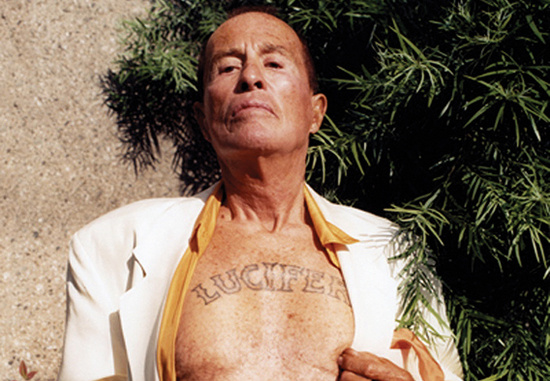
Kenneth Anglemeyer aka Kenneth Anger
Mick beginning shortly after Year Three would turn his act into performance art of a highly suggestive nature accompanied by an intentional hypnotic beat with stun gun volume, flashing lights and the stimulated hysteria of the crowd reaction. A proper atmosphere for hypnotic suggestion.
Mick’s vengeance for the drug bust then was to play the Pied Piper to lead the ‘kids’ to their destruction.
Marianne would be a casualty of his mania as she sank into the deepest of depression.

Chapter 7 follows.
R.E. Prindle 101: Basic Facts, Or Close To It
July 1, 2012
Re: Text
No responsibilty is accepted for the accuracy of any of the below. As Ripley said: Believe it or not.
- FROM:
- TO:

R.E. Prindle
—– Original Message —–From:Ronald E. PrindleSent: Sunday, July 01, 2012 6:03 PMSubject: Re: TextRight clicking won’t allow me to save the page and while I can get the header and footer and the index the text doesn’t show. Try the email if you can.
Reply to Bill and Sue-On Hillman
Edgar Rice Burroughs Vs. The Comic Book Superheroes
September 20, 2011
EDGAR RICE BURROUGHS VS. THE COMIC BOOK HEROES
by
R.E. Prindle

Adventures In The Unconscious
In the attempt to put together a historical puzzle the missing piece or pieces, the clarifying pieces, appear from time to time. Thus with the release of the movie, Captain America this year a significant piece of the puzzle falls into place that clarifies the role of Edgar Rice Burroughs and his literary creations in the panorama of the twentieth century- the fabulous twentieth century.
It is difficult today to conceive of how the early twentieth century was perceived as a complete break with the Victorian nineteenth. One only has to compare the streamlined Santa Fe Chief in this picture alongside a nineteenth century locomotive to see how the Twentieth Century was perceived as the century of absolute exciting progress. The time certainly justified General Electric’s motto: Progress is our most important product.

Twentieth Century Unlimitied. Santa Fe Super Chief Alongside Nineteenth Century Locomotive- San Diego Calif. Back when the future was something to look forward to.
Burroughs role in this fabulous century is essentially the story of how Edgar Rice Burroughs created the concept of the super hero on the cusp of the emergent movie and comic book industries. It is in the latter two industries that the super hero found his definition.

Photographing The Past- Edgar Rice Burroughs
Just as in the days of yore mankind projected its needs in the psychological projection of Gods so the twentieth century saw the beginning of the demise of the old gods and the birth of the new. While the creators of the Old Gods have disappeared into the mists of time, and there must have been human creators of the Gods, the creators of the new gods can be easily traced.
The predecessors of the Superheroes can be found in the rise of the mega intellects of the nineteenth century detectives such as Monsieur LeCoq, Sherlock Holmes and arch fiends such as Dr. Moriarty and the French Fantomas. Influenced by such as these Edgar Rice Burroughs created the actual prototypes of the mid-century superheroes in the characters of John Carter of Mars and Tarzan The Ape Man. While John Carter is less well known than Tarzan, who became a household word within a half dozen years of his creation, Carter truly had super human powers having been transported from the higher gravity of Earth to the lower gravitational field of Mars, or Barsoom, as Burroughs renamed the planet.
While not able to leap over tall buildings his saltational powers functioned at a level of efficiency unattained by any other Barsoomian. For a decade or so Burroughs had the superhero field to himself while his lessons sunk in to the minds of those following him.

The Shadow Knows
The two most significant men of extraordinary if not super human powers to follow Tarzan and John Carter were Maxwell Grant’s superb character, The Shadow and Lester Dent’s Doc Savage. Preceding the comic book character Superman by a few years Doc Savage was actually advertised as a superman, undoubtedly in reference to Nietzsche.
Then in the early thirties in addition to movies, in which Tarzan was a stellar attraction, the modern comic book or magazine came into existence. Of course newspaper comic strips had been developing from the turn of the century but the actual comic book was a development of the thirties.
As fate would have it the comic book industry like the movie industry became a province of the Jews.
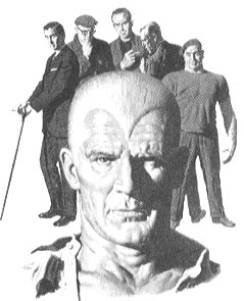
Doc Savage- The Man Of Bronze And Crew
Thus two streams of influence formed comic book heroes. On the one hand the Jewish writers and cartoonists were influenced by John Carter, Tarzan, The Shadow, and Doc Savage and on the other by a fifteenth century Jewish super creature known as the Golem. This was a creature fashioned from clay, as per Adam of the Old Testament, by a Prague Rabbi named Loewe who breathed life into his creation as God had breathed life into Adam. The Golem was created to wreak vengeance on Jewish victims as a sort of avenger as would be the status and role of the latter day Jewish superheroes of the comic books.
First out of the box in 1938 was the prototype of the rest of the comic book heroes, Superman. Like Burroughs with his creations the two Jewish creators built Superman’s origins from the Biblical story of the Exodus. Tarzan of course was born to noble English parents in Darkest Africa who then died or were killed by the Great Apes while the she ape, Kala, snatched him from the cradle and raised him as an ape.
Superman was born of noble parents on the planet Krypton which was about to be destroyed, and sent on a rocket ship to Earth while his parents died. On Earth he was raised by kindly goy Earth people. Thus we have two different versions of Moses in the bullrushes. Superman, then, combined John Carter and Tarzan.
Superman was a good thing in commercial terms being the equivalent of a literary best seller. Imitation is the sincerest form of flattery so that while Superman imitated Burroughs’ great characters a host of comic book superheroes soon trod in Superman’s footsteps. Next in 1939 there was Batman, probably the most successful of the Jewish superheroes, and then in 1940 the temporarily successful Captain America, really the product of WWII, losing his popularity with the end of the war. The most successful of all the superheroes was the strange goyish creation, Capt. Marvel but he doesn’t concern us here.
2.

From Out Of The Unconscious Depths
The above is very interesting I’m sure but what significance does it have; what is its meaning; what is going on? Well, the back story is very interesting indeed. One must remember that our lives are not lived in a social vacuum of unrelated incidents. All is part of a continuum that does not just happen but is created by the participants. All is a drive to attain a desire. The question is who are the participants? As has already been indicated, the Jews and the Gentiles or goyim. From what do those desires arise? Suggestion. Suggestions having been received, when a body of suggestions have been ingested, our minds begin to digest those suggestions. One then interprets the suggested reality according to one’s temperament which itself has been built on a body of suggestions.
All society is education, indoctrination and conditioning, in other words hypnotic suggestion. Burroughs was born in 1875 as the scientific revolution was in an advanced stage of development; by 1893 when Burroughs was seventeen the whole of human knowledge and scientific advances was put on exhibition at the Chicago Columbian Exposition. The Expo was probably the high water mark in Western Civilization or, at least, its confidence in itself. The Expo was an unparalleled achievement of human endeavor far surpassing all expos of the nineteenth century with the possible exception of the 1851 London Exposition. Interestingly both were burned to the ground by anti-civilization elements. The Columbian Expo of 1893 was the most powerful element of Burroughs’ education.
Shortly before the boy’s birth in 1875 the character of immigration changed. In 1871 Jews from the eastern European Pale of Settlement began to flood the country until in 1914 possibly half of European Jewry had been transferred to the United States. The great immigration myth is that the immigrants were assimilated into the ‘Melting Pot’ of the United States; nothing could be further from the truth. The immigrants merely transferred their national cultures to the United States where because they were compelled to speak English it appeared that they had been assimilated. In reality the immigrants came to the sparsely populated United States where they established an outremer population on the New Island as the Irish had it, a new Sicily, a new Zion etc. They came in such numbers that they actually were colonists. The old cultures were merely adapted to the new realities and developed along side the Native peoples.
These alien or invading cultures then shaped the development of the United States in their image as much as possible. Thus they were able to blame their cultural shortcomings on ‘America’ while emphasizing their virtues as their own. Hence ‘America’ developed into a sort of dirty word, a catchall for the crimes of the immigrant cultures. This state of affairs was masked until the Great War when the social conflicts came into the open and were immediately subsumed into the Communist ideology after 1917.
Young Burroughs observed this immigration phenomenon or suggestion with misgivings associating himself with Nativist views although he remained independent to our knowledge of association with Nativist organizations. Thus while interpretations of these social suggestions are found through out his early writings the conflict didn’t come to a head until after the 1917 Bolshevik Revolution in what became the USSR as Russia disappeared from the map. With all the national dissidents operating under the rubric of Communism the world was divided into us and them- ostensibly Communism and Capitalism. The dichotomy was created by the Communists. However each national culture could function with representatives in each camp while furthering their parochial objectives.
It was a new world the morning after the Bolshevik Revolution. Burroughs immediately came into collision with the new realities. As this new world was us and them it was possible to hate Communism while retaining virtue in the Capitalist camp. However one couldn’t detest national, religious or racial components even though they may have been Communists. As Communists always denied being Communists one was always dealing with cultural groups that dissembled their Communism.
When Burroughs began his career in literature even as he wrote the movies began to assume a transcendent place in US and world culture. By the end of the second decade it was evident that movies were where the big money was. That’s when Burroughs’ troubles began.
He quickly ran afoul of the Communists who controlled publishing and the Jews who controlled the movies. The Communists wished to suppress all non-Communist writers who refused to put out the Communist message. The Jews wished to discourage all criticism of their activities. Burroughs was marked out as one to be destroyed.
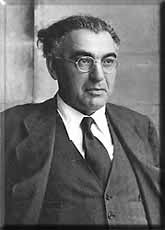
Rabbi Silver- A History Of Messianic Speculation In Israel, 1927
Behind the Communist outrage and obscured by it was the Jewish attempt to realize the Messianic age which assault was begun in Europe and the United States in 1913 and was to continue to 1928 according to Rabbi Abba Hillel Silver. While the assault was violent in Europe emanating from the transformation of Russia to the USSR, in the United States it was more peaceable after the violent year of 1919 while being conducted on a propagandistic and social level buttressed by the doctrines of Sigmund Freud as executed by his nephew and disciple Edward L. Bernays and others. You should become acquainted with Edward Bernays if you aren’t already.
Among the first of these propagandistic efforts was the promulgation of a ‘Jewish Bill Of Rights.’ This document along with a questionnaire was sent to the prominent men and women of America to discover their ‘anti-Semitic’ propensities. Burroughs failed this test so that he was black balled in Hollywood after 1922. The blacklist was broken by Joseph Kennedy and his FBO Studios in 1928. MGM then stepped in with a different approach from blacklisting. They bought the movie rights to Tarzan from Burroughs for much less than a song. Burroughs then was essentially neutralized in 1931 while MGM acquired the supreme super hero Tarzan to shape or mishape as they pleased. Within a few years there were not many who remembered that there was a literary Tarzan. My amazement when I learned there were Tarzan books when I was twelve in 1950 was a revelation of the first order.
The movies were able, of course, to shape all the goy literary heroes from Frankenstein to Sherlock Holmes into their own intellectual mold from then into the present while comic books added Jewish superheroes to displace them.
3.

Tired Old Man- Easy To Manipulate
The planned Jewish revolution hadn’t succeeded by 1928 but the groundwork had been laid leaving the future promising and open. While in the US the Jews were able to sweep all opposition aside even to the extent of putting their creature, Franklin Delano Roosevelt, into the White House for an unprecedented four terms, in Europe unexpected opposition occurred when Wolf Hitler was elected chancellor of German in 1933. While having their creatures Joseph Stalin as Premier of the USSR and FDR in the USA with Popular Front governments if office throughout Europe with the exception of Germany, Italy and Spain, the Jews seemed to be in a position to realize their millennium.
Indoctrination and conditioning was still important in the US thus when sound movies were introduced at the very end of the twenties and the comic book in the early thirties the Jews had two of the most powerful propaganda tools available under their ownership and control.
Their need in the thirties was to isolate and marginalize the Nativist opposition. This would be achieved in the forties wartime conditions when FDR had the prominent Nativists arrested and charged with sedition. At that point the Jews had succeeded in capturing the government and mind of the country although a long mopping up process would be necessary into the fifties and sixties. Thus while Wolf Hitler rounded up Jews in Europe, Jews were rounding up Nativists Americans in the US while advising any dissidents to keep their heads low.
The movies and comic books would play a big role in indoctrinating Americans to believe that the Nativists were Fascists and/or Nazis and not true Americans. It was at this time that Edward L. Bernays succeeded in changing the definition of Democracy from that of individual opportunity to recognition of groups having rights to a share of government based on group identity rather than individual identity. This would be a key concept as the century developed.
4.
After the Bolshevik Revolution the American reaction to Communism was strongly against it. The Communist Party was even outlawed for a time until the Fellow Travelers and Parlor Pinks had the ban lifted. The silent movies of the twenties then were not heavily influenced by the Reds although as indicated the Tarzan movies of Edgar Rice Burroughs were blacklisted. By the thirties the Reds were better organized while with the arrival of sound playwrights capable of producing dialog were needed. The Red exodus to Hollywood began.
The US Communist Party as with all national Communist Parties, was a majority or plurality Jewish affair to the point where an attack on one was an attack on the other. Thus as the thirties advanced the drum roll for US involvement in a war against the Nazis began. This would involve the formation in the US of an opposition led by the America First Committee which was opposed to any involvement in foreign wars as a reaction. As this was opposed to Jewish wishes the America First Committee was designated as Fascist while its putative leader, Charles Lindbergh was designated Hitler’s stooge.

Samuel Dickstein- Congressman From Hell
In order to discredit the opposition, no sooner was FDR sworn in than Samuel Dickstein, a Jewish representative from New York, began to agitate for a House Un-American Activities Committee to stamp out Nativist opposition. As Dickstein was a Soviet agent this meant that the Nativist opposition was un-American while the Jewish Roosevelt government were the true Americans. So, the Jews were well on the way to usurping the American identity which the comic book superheroes represented. Dickstein was successful in establishing his HUAC committee in 1938 but the chair eluded him and went to a real American, Martin Dies of Texas, who then used the committee to harass Communists as well as ‘Fascists’ much to the dismay of Dickstein and FDR.
Hollywood in support of Dickstein began turning out anti-German movies and by implication anti-Nativist well in advance of American involvement in 1942. Involvement in the European conflict was of course brought about by forcing Japan to declare war on the US in late ‘41.
The comic book industry forming about 1932 was becoming real by 1938 when the two Jews from Cleveland devised their Golem character Superman followed by Batman and Captain America. The comic book heroes fell in with the anti-German propaganda. If the Jews, British and FDR were not yet openly promoting the war against Germany the tendency was well formed in that direction.
All those comics were openly anti- German with Capt. America socking Hitler on the cover of the first issue. Capt. America was a creation of two Jews from Brooklyn, Joe Simon and Jack Kirby. To quote the Rabbi Simcha Weinstein from his book Up, Up, And Oy Vey!: How Jewish Culture And Values Shaped The Comic Book Superhero:
Rabbi Simcha Weinstein
Kirby and his partner, Joe Simon, worked at Martin Goodman’s Timely Comics, where the mostly Jewish staff openly despised Hitler. When Goodman saw the preliminary sketches for Captain America, he immediately gave Kirby and Simon their own comic book. The character was an instant hit, selling almost one million copies an issue. “The U.S. hadn’t yet entered the war when Jack and I did Captain America, so maybe he was our way of lashing out at the Nazi menace. Evidently, Captain America symbolized the American people’s sentiments. When we were producing Captain America we were outselling Batman, Superman and all the others.” Simon later commented.

Well, not quite all the others, as Whiz Comics Captain Marvel was the best selling comic of both the war years and later forties. Certainly my favorite. As in the years before the war the America First Committee enjoyed overwhelming popularity amongst ‘Americans’ I would question Simon’s notion that Captain America overwhelmingly represented American opinion. As there were six million Jewish ‘Americans’ in the country I might suggest that the response from that culture of ‘Americans’ was more overwhelming than elsewhere. Jews might easily have accounted for sixty to eighty percent of sales.
It is also probable that no real American would ever have invented a corny jingoistic persona like Captain America, in fact, none did. The image was certainly repulsive to me as a child. My prime comic reading years were from 1947 to 1950 and I and my entire generation rejected Captain America while embracing Captain Marvel. Even then Superman was a distant competitor to Captain Marvel which is why DC comics sued Whiz for copyright violation.

Rabbi Simcha Weinstein- The Story Of Jewish Comic Books.
All the Jewish comics were openly anti-German, thus the FDR administration, the movies and comic books were fighting for the Jewish ‘good war.’ When Charles Lindbergh pointed this out he was immediately portrayed as an agent of the Nazis whereas he was merely telling the truth while being an ideal American. Philip Roth in his 2004 novel, The Plot Against America, recounts the Jewish atmosphere of the time while he postulates that Lindbergh was elected president in 1940 as a satrap of Hitler. Thus the Jews became the real Americans and the real Americans were totalitarians out to destroy the Democracy the Jews had created.
In his essay in the New York Times of 9/19/04 titled: The Story Behind The Plot Against America Roth says that he is recreating America as it really was in 1940 but that is not so. As Roth lived in a New Jersey Jewish colony he and his family was out of touch with the real America as his fictional brother who had gone to Kentucky tries to tell him.
In fact in the America of the time in which Samuel Dickstein was an evil presence the American Jewish Committee and The Anti Defamation League were paramilitary organizations conducting spying operations against the non-Jewish public. Numerous agents unaffiliated with any government agency crisscrossed society looking for any activity that might be considered against Jewish interests. These forays were gathered together in 1943 under the assumed name of John Roy Carlson and published as an indictment against Jewish ‘enemies.’ Many of them were arrested and tried as ‘un-Americans in 1944. So, Roth’s paranoia is at best unbalanced.
Roth says the idea of Lindbergh’s having been elected occured to him while reading Arthur Schlesinger’s autobiography:
I came upon a sentence in which Schlesinger notes that there were some Republican isolationists who wanted to run Lindbergh for president in 1940. That’s all there was, that one sentence with its reference to Lindbergh and to a fact about him I’d not known. It made me think, “What if they had?” and I wrote the question in the margin.
While this may be how Roth came upon the notion his was not the first such idea. As Paul Buhle and Dave Wagner in their Radical Hollywood of 2002 point out, Donald Ogden Stewart in his script for 1943’s Keeper Of The Flame, Charles Lindbergh is posited as a plotter of a coup to replace FDR in alliance with Hitler. This would have been propaganda to indict Lindbergh for the upcoming trial of the Nativists. I don’t know whether Roth saw the movie as a boy but if he did perhaps the idea festered in his brain for several decades until he was reminded by Schlesinger’s book while his mind was half prepared.
So the actual plot of the Jews to take over the American government was displaced to Lindbergh and the Nativists. The Jewish coup was represented in the comic book character of Captain America. This situation is made clear in the current (2011) movie Capt. America: The First Avenger. Thus Philip Roth and Stan Lee of the comics recapitulate and clarify Jewish activities in the 1933-43 era. Captain America is actually Jewish assuming an ultimate American identity.
The origins of Captain America then emanated from the Jewish dream subconscious of Jack Kirby which was quite different form real Americans. He therefore, as all writers must, made Capt. America in his comic book existence from his own dream fantasies. Thus giving his creation the goy name of Steve Rogers he nevertheless gave him a Brooklyn Jewish origin. As Rabbi Weinstein also a Brooklyn Jew explains, Jews have a sort of dual identity as powerless Jews posing as goys in a powerful goy world. Thus the sickly ineffective Rogers undergoes a scientific experiment that turns him essentially from a 98 lb. weakling into an all powerful goy Charles Atlas without the hard work of body building. I’m sure Kirby saw those ads growing up.
Rogers having now been turned into a Superman had to have a name. Superman being taken Super Jew was out for obvious reasons, or even Super Hebrew, there was no Israel at the time, so Kirby settled on Captain America. Rabbi Weinstein again:
Of course a more literal reading of the costume is that it is the American flag brought to life. Captain America’s star is, after all, five pointed, not six pointed like the Star of David. The flag-as-costume [this is what used to make we boys puke] notion reinforces the ideal of assimilation [Jews ‘becoming’ Americans.] By literally cloaking their character in patriotism, Kirby and Simon became true Americans.
In 1940 there was a desperate struggle going on between the Jews and America First who the Jews styled as American Fascists, I.e. actual Hitlerites. By that line of reasoning the Jews became the true Americans, creators and protectors of genuine American Democracy while Anglo-Americans or Native Americans or America Firsters were out to destroy the great American Dream the Jews had created. This is the theme of Philip Roth’s novel The Plot Against America backdated to this period. The current movie Captain America could easily be subtitled The Plot Against America Foiled.
Rabbi Weinstein again:
Despite the patriotic appearance, Captain America’s costume also denotes deeply rooted [Jewish] tradition. Along with other Jewish-penned superheroes, Captain America was in part an allusion to the golem, the legendary creature said to have been constructed by the sixteenth century mystic Rabbi Judah Loew to defend the Jews of medieval Prague. “The golem was pretty much the precursor of the Superhero in that in every society there is a need for mythological characters, wish fulfillment. And the wish fulfillment in the Jewish case of the hero would be someone who could protect us. This kind of storytelling seems to dominate in Jewish culture,” commented Will Eisner.
According to tradition a golem is sustained by inscribing the Hebrew word emet (truth) upon its forehead. When the first letter is removed, leaving the word met (death) the golem will be destroyed. Emet is spelled with the letters aleph, rem and tav. The first letter, aleph, is also the first letter of the Hebrew alphabet, the equivalent of the letter A. Captain America wears a mask with a white A on his forehead- the very letter needed to empower the golem.
I hope this makes clear that Superman, Batman and Captain America are Jewish in identity and what their purpose is in American society.
5.
Having created a competing line of Jewish superheroes the problem then became how to discredit and supplant the goy super heroes. As should be clear by now what we have going on is a religious war but fought by propagandistic means. In other words the battle field was literature, comic books and the movies. As in all religious conflicts the goal is to displace the religious icons of the other; thus, in early Christian times churches were built on the sites of pagan temples while sacred groves were cut down. Nothing has changed; nothing can change. The Jewish goal was the elimination of ‘Christian’ or goy symbols.
Capt. Marvel was gotten rid of in 1953 when the Jews sued him out of his cape. As I’ve pointed out in my review of Tarzan And The Lion Man, parts 8,9.10, a key text in this colossal battle, MGM attempted to destroy the character as well as Burroughs when they bought movie rights to Tarzan in 1931. They got his birthright for a mess of pottage. It may be coincidental but in 1942 after the success of the Jewish comic book super heroes MGM discarded their lucrative rights to Tarzan to movie maker Sol Lesser presumably as worthless or, at least, of no more interest to them. Of course Lesser continued the franchise with phenomenal success. This necessitated a continued campaign to debase the character continuing today. At the same time that Tarzan is debased the Jewish characters, Capt. America is now one of a group of four ‘Avengers’, hence the double entendre of ‘The First Avenger’, who are increasingly Judaisized, while presented in a positive way in the attempt to marginalize Tarzan.
Now, some seventy years after the demise of the man, the continued demonization of Wolf Hitler is becoming less relevant, even annoying if you’re not Jewish, so in Capt. America Wolf Hitler is demoted to an incompetent dead threat while the scepter is passed to the mega Nazi/anti-Semite recreated in the mental projection of Red Skull or the Hydra. The mythical symbol of the Hydra is well chosen to represent anti-Semitism as no matter how many heads you cut off another one, two or three grow back. The threat never ends and the paranoia is justified.
Thus in the Freudian sense Jews have a dual personality: on the one hand you have the ineffective completely innocent assumed goy persona of Steve Rogers, who is the equivalent of Abel, the Chosen one and the crazed madman Hydra who is a projection of the negative aspects of the Jewish character imposed on the other as the anti-Semite. Thus the Jewish character is always at war with itself in the Freudian sense and hence never successful in its aims.

Captain Marvel And Billy Batson
A Review: Pt. II Lick Me by Cherry Vanilla
August 21, 2011
A Review
Cherry Vanilla
Lick Me: How I Became Cherry Vanilla
by
R.E. Prindle
II

Living In The System
Kathy was born in 1943 so as she left high school the sixties were emerging. Everybody talks about the sixties but nobody does anything about them. The sixties didn’t just happen, they erupted, the Exploding Plastic Inevitable as Warhol put it. Andy was right. The reason no one can remember the sixties is because so much was going on all anyone could see was their little fragment, that includes the so-called taste makers. All that crap you get from the sixties politicos glorifying themselves and their exploits is just crap. They were performing their act in a small little corner or the room pretending it was the whole stage. They were just a bunch of hard core losers anyway. Abbie Hoffman! Excuse me! Jerry Rubin, get out of my way. Allen Ginsburg? Pardon me while I puke.
No, no. The sixties were a happening no matter where you were. I’ve already touched on the drugs in Part One. Trust me, everyone but we happy few was on drugs whether prescription or street. I mean, Valium, my god! Straights ‘needed’ it to get through the day.
As I touched on in my Edie Sedgwick series the sixties were ushered in by the big 707 flying non-stop between NY and Europe beginning in 1959. That created the Jet Set who were the envy of all. Airports were small and intimate at the beginning of the decade burgeoning into the behemoths they have become as the airlines reduced prices and seduced people to fly. Not that I was, I didn’t get into the air until the seventies but as soon as I could I emulated the Jet Set flying to Europe and back three times in my best year.
So there were drugs and the Jet Set and the Kennedies. The Kennedies were the worst thing that ever

John F. Kennedy
happened to the country. Of course in pedigree sensitive USA we are all conditioned to ignore national, religious and racial origins as if they don’t count but, let me tell you, they do. John F. Kennedy began the decade in 1960 replacing the vacated spot of Dwight David Eisenhower. The change was not nominal. Eisenhower knew what he was doing, Kennedy didn’t. Ike, as he was affectionately known, engineered the victory in Europe in WWII. He’d done a stellar job from ‘52 to ‘60. Knowing the devastation of war he resisted the hawks to keep the peace, and we hawks were quite vocal. Having inherited the Viet Nam situation from the French and FFL collapse he had contention in Indo-China under control which Nixon, had he been elected, was pledged to honor, if he could have executed.
Like I said, we’re not supposed to think, much less talk about, race, religion and nationality but the Kennedies were Irish Catholics who finally won the triumph over the Anglo-Saxon Protestants in America. The war between the Irish and English was hundreds of years old in 1923 when the Irish freed themselves from the English yoke. The Irish and Anglo-Saxon war in America had only been going on since the 1840s when the potato famine drove the Celtic lads to our shores at which time, in reaction, the so-called Know Nothing Party was created. In 1928 the Irish put Al Smith up as the Irish attempt to capture the New Island after De Valera’s 1923 success on the Ould Sod.
Times were not propitious for an Irish Catholic and Al was soundly defeated. But a gentleman named Joseph P. Kennedy, accruing a bootleg fortune with solid connections to Organized Crime was about to engineer the election of one of his sons to the highest office in the land. God only knows what goes on behind the scenes but his first choice, Joe Jr., was blown up flying over the channel. His second son John F. was given one of the most dangerous posts in the Navy, commanding a PT boat. It’s hard to believe that whoever it was that got Joe Jr. didn’t want him dead but John survived the war and began the corruption of the land from the highest office in 1960.
Kenney with amphetamines coursing through his veins and a mind centered on sex, which is to say fucking, was clueless along with his brother Bobby and his other nitwit sibling, Teddy. Within a matter of months he had us involved in a shooting war in Viet Nam, threatened by Khrushchev in the Cuban missile crisis, after he had taken the drug addicts measure at the summit, and then aborting the reconquest of Cuba at the Bay of Pigs. Is it any wonder the magnificent crew Ike had assembled offed him. Regardless of how history has been revised their were a great many us who sighed and said: Good riddance.
When Bobby stuck his head up from under his rock in 1968 there was no doubt he’d get it blown off, and he did. If you think the two assassinations aren’t connected, think again. So ’63 and ’68 were big years of a decade of big years. Teddy kept his head down after that but gained a measure of revenge by sponsoring the 1965 immigration bill.
In far off Africa a gentleman by the name of Barack Obama Sr. was leaving for Hawaii to get a college degree and beget the future President of the United States on a little simple minded White girl. It was in 1957 when the African colonies renounced their allegiance to their European overlords that Ghana proclaimed independence from Britain. Thus the complexion of the United Nations was changed overnight as colony after colony of a congeries of warring tribes, now known as countries, declared independence and sent emissaries to the UN. Thus the balance of power was shifted from the capable to the incapable in that momentous decade.
It should be noticed that Marcus Garvey began the coordination of the African peoples of the world a
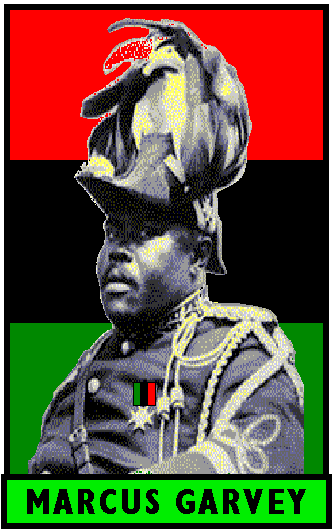
Marcus Garvey
few decades before independence was achieved by Africans and not improbably Garvey also furthered the beginnings of the Civil Rights Movement in the US, thus the African independence movement and the Civil Rights Movement were occurring simultaneously and I suspect coordinated. Thus the African presence in the UN complemented the enormous Black riots that began in LA in ‘65 and reached their apex through ‘67, ‘68 and ‘69. The fabric of the country was rent and torn. The future of the country became increasingly ugly.
It’s difficult to say but after the double whammy of the movies The Blackboard Jungle and Rebel Without A Cause of the mid-50s a new tone emerged in which the youthful violence came to the fore and not just lower class kids. This senseless rebellion without a cause represented a change in outlook occurring in the mid-fifties perhaps aggravated by Elia Kazan’s influential movie. Gangs of young rich guys terrorized the well to do sections of LA in ways that were inexplicable. The graduating classes of ‘53, ‘54 and ‘55 belonged to the previous era while 1956, the year I graduated, was the swing year between what was and what would be that began with the class of ‘57. About half the class of ‘56 looked backward and half, maybe less, faced forward toward the future. I was in the latter half.
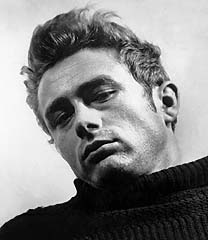
Then in 1958, a twenty year old, class of ‘56 actually inspired by Rebel Without A Cause and James
James Dean- Rebel Without A Cause
Dean, so it was said, by the name of Charlie Starkweather went on a murderous rampage in Nebraska murdering several people simply for the sadistic thrills. It was bone chilling, perhaps the first of its kind. Charlie was quickly apprehended and executed in 1959.
Also in the fifties the homosexual, William Inge, wrote and produced the play Bus Stop, turned into a movie starring Marilyn Monroe and Don Murray in 1956. From those emerged the astonishingly violent TV series of one year only, Bus Stop, the production of which was supervised by Inge. That TV series transcended by miles any sadism and violence seen as yet in either TV or the movies. It even made the comic book Tales From The Crypt look tame by comparison.
Perhaps the most sickening episode in a season of sickening episodes was the one starring the teen idol Fabian as a sadistic murderous thrill killer who was obviously based on Charlie Starkweather. The episode by Altman was ambiguously titled: A Lion Walks Among Us. So the sadist was compared to a lion. The episode altered the direction of TV drama breaking down the doors for whatever followed and you know what that’s like. The impact was so strong that a Congressional hearing was called immediately to denounce it.
Already in an excited delirium young people were shown a new direction that was seized. Serial murderers that were unheard of during the early and mid-fifties became commonplace escalating, so it seemed, year by year.
Thus the scene in New York where Kathy was living her life became more violent by the month until after 1969 and the liberation of the homosexual psyche by the Stonewall Riot, when the crime became ultra sadistic and unbearable.
By the early seventies Dirty Harry and Death Wish symbolized the era moving well beyond Rebel Without A Cause or even Bus Stop as sadistic sick, sick violence. Insanity, really, and it characterized the country in the coming decades.
At the same time beginning in the early sixties pornography began its rise into the mainstream. While it was a good sized underground business before, in 1953 Hugh Heffner began publication of Playboy Magazine which brought porn into the mainstream. Playboy was followed by a host of ‘men’s’ magazines that got raunchier and raunchier. In the early sixties in San Francisco I noticed for the first time open advertisements in the Chronicle of porn films. There was a very active push to further pornography which was participated in by Andy Warhol, Paul Morrissey and the Factory. In 1968 I Am

Curious: Yellow Poster
Curious: Yellow and Curious Blue were released. I Am Curious: Yellow was very influential in loosening sexual mores. Blue and Yellow were the colors of the Swedish flag. A Swedish pervert made the movie. This all led up to 1972’s Deep Throat which for all practical purpose shot porn into the mainstream. Porn and the so-called Sexual Revolution went hand in hand.
Since sex had been practiced the same ways since the origin of mankind the real sexual revolution was whether you could say ‘fuck’ in public. The pervert Lenny Bruce led that charge followed by George Carlin and certainly by the mid-seventies few movies were made where the word didn’t constitute 20% or so of the dialogue.
And then, of course there was the Viet Nam war. This effort was hampered in the US by the Judaeo-Communist allies of the Viet Namese. Naturally the US Communists said that there was no reason for the US to be involved blithely ignoring the history of the situation. Actually the war was part of the US-Soviet confrontation in which the US had made several mutual defense pacts with countries on the Communist borders in an effort to contain it. South Viet Nam which came into existence when the French Foreign Legion forsook their reputation was part of a mutual defense pack called SEATO- South East Asian Treaty Organization. When they were attacked by North Viet nam, of which there an be no doubt they were, the clause of the treaty was invoked involving the US in the defense of South Viet Nam. So, the US was legitimate if foolish in going to the defense of South Viet Nam.
Now, because of the seeming passiveness of the Jews during the so-called holocaust the Jews had acquired a reputation for being a weak ineffective people. The skullduggery that established the State of Israel in 1948 did nothing for their pride but the seemingly easy triumph of 1956 against the Egyptians through which war Israel purloined the Negev Desert Jewish pride of prowess began to blossom. You started seeing identifying marks like gold Stars of David necklaces appearing on bosoms of Jewish men with wide open shirt collars unbuttoned to the penis. Little different than Nazi insignia they were now worn with pride.
The 1967 war against the allied Arab States completed the transformation of Israel into the Neighborhood Bully. Jews now began to strut down the streets virtually knocking people out of the way with the Stars of David dangling everywhere. The Jewish Defense League followed in 1968 soon splitting into an even more violent Jewish Defense Organization. Under their leader Rabbi Kahane a war not too different from the Jabotinsky days in Palestine ensued with the ubiquitous bomb exploding in NYC instead of Jerusalem.
Now, as has recently emerged, the crucial years for Jews in the United States, which had nothing to do with any so-called holocaust, were the years between 1933 and the accession of Wolf Hitler in German and the US entry into WWII in 1942. Before the war in the ‘30s the Jews called opponents to their machinations, Fascists. The name included anyone from Henry Ford to Charles Lindbergh. A marginalization campaign was begun against all American nationalists that largely succeeded. In that period the Jews created the notion in their minds that they were the true Americans who had created this near-perfect democracy and the Anglo-Saxons who had preceded them were out to destroy the country and turn it into a Nazi satrapy.
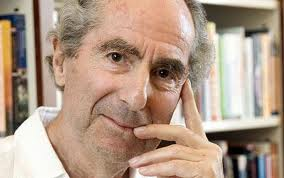
Philip Roth commemorated this attitude in his novel back dated to this period, The Plot To Destroy
Philip Roth- The Plotter
America. Thus through the fifties and sixties the Jews conspired to dispossess the ‘New Nazis’, that is non-Jewish White Americans. The war of ‘56 emboldened them so that by 1964 they were encouraged to seize the university system of the US. The first front opened was the so-called Free Speech Movement on the UC Berkeley campus whose real purpose was to displace Free Speech with Jewish controlled speech.
This was successful and when the dust had settled the Jews were in control of the campus stifling the free speech that had been the ostensible reason for the battle. As Mark Rudd would later say: The issue is not the issue. Jewish commissars set up tables at the Sather Gate to which students were demanded to submit to Jewish governance or else.
From Berkeley the battles strung out to other campuses, the most notable being Columbia in NYC while the other Ivy League campuses fell in line. Freedom of speech was the last thing on their mind.
Having achieved their goal at Berkeley the next step was to escalate the resistance to the Viet Nam war hence shielding their Communist allies in Hanoi. This was furthered significantly by the 1968 world wide offensive led by Chairman Mao and his Cultural Revolution so that by the time of Nixon’s reelection in 1972 the country was in a State of near revolution although it wasn’t that apparent on the street. I was amazed just before the election to see truckloads of soldiers brought into Eugene where I was living and a revolutionary hotbed, to be secreted in the hills in the event of an insurrection.
I have no idea if John Lennon and Yoko Ono knew how close they were to the edge but in retrospect they were not only lucky to be allowed to stay in the country let alone avoid imprisonment. If they hadn’t been so high profile I’m sure they would have been arrested. They were committing some pretty provocative acts. I’m sure that the money they gave to the movement through A.J. Weberman found its way into bombs.
Back in 1964 when Lyndon Johnson had inherited the White House after John F. Kennedy had escalated the war so that there was no way out but to go forward, Johnson was presented with the choice of guns or butter. Would there be a period of austerity as in WWII when the choice had been guns or butter. Between those two choices Lyndon chose a third- guns and butter. Things would go on as close to normal as possible. It was weird. His administration occupied the center years of the decade while the Judaeo-Communists would give him no peace. I mean, you know, the hundreds of bombings went on with no qualms on the part of the domestic terrorists.
And lastly, while all previous generation had been known by their literature the current generation, my generation, was known by its song writers and music. Everyone picked up a guitar and wrote songs. This essentially came in two, maybe, three waves. The first was spearheaded by Elvis Presley, the second by the British Invasion from 1964 to 1966 and the possible third from 1966 to 1974 after which the generation exhausted itself. It was along about 1966 that Kathy made the fateful decision to become a groupie and this would define her life until her mental breakdown in the late seventies.
When the Beatles and the Stones hit these shores they were just singers and bandsmen, popular, but nothing more. The notion of the Group began to be deified in San Francisco after Ken Kesey’s Acid Test. The group members were suddenly invested with nearly superhuman powers and wisdom. All you had to do to become a Holy Guru was stand up on stage, hit a couple of chords, and shout out ‘Mercy, mercy me, the ecology.’ with a raised fist. The Grateful Dead, Jefferson Airplane, Big Brother And The Holding Company, people of questionable character all became secular saints. One grows faint thinking it but, yea verily, gods. And this only from playing the guitar badly and voicing universal popular sentiments. Don’t trust anyone over thirty said a twenty-nine year old and immediately thirty-somethings were posing as teenagers. Too late now, isn’t it?
If you break down the ages, the first wave was born sometime in the early to mid-thirties, Presley was born in ‘35, Little Richard in ‘32.
The first wave of Rockers was spent by the late fifties succeeded by an interim group of nondescripts like Bobby Vee and Bobby Vinton. Nice enough but not essential or memorable. The Beach Boys were the top American group from 1960-64. Then came the second wave, these were men born from 1938 to 1945- Lennon ‘40, Dylan ‘41, Jagger ‘43 and this was the core age through the sixties. So the second wave, the true Rock phenomenon was a product of people born from 1938 to 1945. In the seventies Bowie ‘47, Billy Joel ‘49, those of the fifties came to fore as the generational impetus sputtered out. The Bowies and Joels were of a different sensibility than the main second wave. They grew up under different circumstances.
As the second wave gathered strength not as mere entertainers but as potent pop culture figures, adoring young girls emerged as groupies. Their sexual excesses were scandals although the concept of groupie was nothing new. Anywhere there are glamorous or powerful men accessible women will appear as well as, one might add, homosexuals. There are literary groupies and business groupies, etc. However Rock groupies tended toward being under aged jail bait not infrequently barely out of puberty and unconcerned for any consequences, indeed, not knowing of any.
So when Kathy discovered groupies she determined to become one although incongruously as old as the musicians themselves as she had been born in ‘43. It was kind of like somebody’s mother turning groupie. As she said of her groupie career she wanted a band to offer her a job. Finally David Bowie did.
This was the world in which Kathy Dorrotie was making her way.
A Review: Psychoanalyzing Captain America
August 10, 2011
A Review
Psychoanalyzing Captain America
by
R.E. Prindle
From Out Of The Depths
Must we be responsible for our own dreams?
–Sigmund Freud
In answer to the above question by Herr Doktor Professor Freud in his dream book, The Interpretation Of Dreams. published in the year 1900 Prof. Freud said that dreams were the royal road to the unconscious. He then proceeded to suppress the conscious will releasing the unconscious will to dominate the personality.
Of course in 1900 movies, TV and comic books were in the future and unforeseen by the Professor. It is through those media that the unconscious visualizes itself. The Dream is manifested, the unconscious becomes realized.
In the case of the movie, Captain America: The First Avenger, first came the dream then came the comic book, then with movie technology undreamed of in 1940 when Joe Simon and Jack Kirby conceived the character, brought to the screen today. Comic books and movies are true projections of the unconscious. As might be seen by anyone with a ticket Capt. America is less a story than a dream, a dream that Sigmund Freud defined as wish fulfillment. So, one must examine the movie as a wish from the subconscious fulfilled as a visualization on the screen. What does the dream-wish fulfill?
First off we have a powerless wimp being knocked about by the big bad bully. We have a brief anti-bully list and then move on. However in this Cain and Abel story the rolls of bully and bullied are clear. The wimp then wishes to join the army to fight Hitler and is rejected on several counts of inferiority. But, never fear, the last shall be first.
Now, in 1940 the US was not at war with anybody while the America First Committee was determined to keep the country that way. But a powerful coalition led by the Jews had determined the European conflict was a ‘just’ war while it was morally compulsory for the US to butt in somewhat like Iraq, Afghanistan, Egypt, Libya and a few other places today. Unlike Viet Nam the usual suspects who opposed that war endorse all the current wars. The voice of dissent is unheard throughout the land.
So, bearing Freud’s Interpretation Of Dreams in mind that demonstrates the connection between dreams and the unconscious, Captain America is a daydream or psychological projection of Jack Kirby’s ne Jacob Kurtzberg and Joe Simon’s of Brooklyn N.Y. The relationship of these comic book writers to Judaism is explained by Rabbi Simcha Weinstein in his book Up, Up, And Oy Vey!: How Jewish History, Culture, And Values Shaped The Comic Book Superhero. This quote explains the real life origin of Capt. America:
Growing up in poverty, Kirby (born Jacob Kurtzberg) dreamed of being an artist but was forced to drop out of Brooklyn’s Pratt Institute after only one day because of financial hardship. Instead Kirby worked on newspaper comic strips under gentile-sounding pseudonyms such as Jack Curtis, Curt Davis, and Lance Kirby until he finally settled on the name Jack Kirby.
Kirby and his partner, Joe Simon, worked at Martin Goodman’s Timely Comics, where the mostly Jewish staff openly despised Hitler. When Goodman saw the preliminary sketches for Captain America, he immediately give Kirby and Simon their own comic book. The character was an instant hit, selling almost one million copies an issue. “The U.S. hadn’t yet entered the war when Jack and I did Captain America, so maybe he was our way of lashing out against the Nazi menace. Evidently, Captain America symbolized the American people’s sentiments. When we were producing Captain America we were outselling Batman, Superman and all the others.” Simon later commented.
Well, not quite all the others, as Whiz Comics Captain Marvel was the best selling comic of both the war years and the later forties. Certainly my favorite.
As in the years before the War The America First Committee enjoyed overwhelming popularity amongst Americans I would question Simon’s notion that Captain America overwhelmingly represented American opinion. As there were six million Jews in the country I might suggest the response from that quarter of ‘Americans’ was more overwhelming than elsewhere. Jews might easily have accounted for sixty to eighty percent of sales.
It is also probable that no real American would ever have invented a corny jingoistic persona like Captain American. The image was certainly repulsive to me as a child. My prime comic reading years were from 1947 to 1950 and I and my entire generation rejected Captain America while embracing Captain Marvel. Even then Superman was a distant competitor to Captain Marvel which is why DC comics sued Whiz for copyright violation.
We disliked the hokey repulsive jingoism of Captain America as well as his dumb outfit and the stupid shield. (I’m speaking as a nine year old here.) Of course we knew from nothing about Judaism and almost less about any other religious sects but there was something othery about Capt. America and Superman although we embraced the equally Jewish Batman.
The origins of Captain America then emanated from the Jewish dream subconscious of Jack Kirby which was quite different from ours. He, therefor, as all writers must, made Capt. America in his real existence and from his dream fantasies. Thus, giving his creation the goy name of Steve Rogers he nevertheless gave him a Brooklyn Jewish origin. As Rabbi Weinstein also a Brooklyn Jew explains Jews had a sort of dual identity as powerless Jews posing as goys in a powerful goy world. Thus the sickly ineffective Rogers undergoes a scientific experiment that turns him essentially from a 98 lb. Jewish weakling into an all powerful goy Charles Atlas. I’m sure Kirby saw those ads while growing up.
Rogers having now been turned into a Superman had to have a name. Superman being taken Super Jew was out for obvious reasons or even Super Hebrew, there was no Israel at the time, so Kirby settled on Captain America. Rabbi Weinstein again:
Of course a more literal reading of the costume is that it is the American flag brought to life. Captain America’s star is, after all, five-pointed, not six pointed like the Star of David. The flag-as-costume notion reinforces the ideal of assimilation [Jews ‘becoming’ Americans]. By literally cloaking their character in patriotism, Kirby and Simon became true Americans.
In 1940 there was a desperate struggle going on between the Jews and America First who the Jews styled as American Fascists, i.e. actual Hitlerites. By that line of reasoning the Jews became the true Americans, creators and protector of genuine American Democracy while Anglo-Americans or Native Americans or America Firsters were out to destroy the great American Dream the Jews had discovered. This is the theme of Philip Roth’s novel The Plot Against America backdated to this period. The movie Captain America could easily be subtitled The Plot Against America Foiled.
Rabbi Weinstein once again:
Despite the patriotic appearance, Captain America’s costume also denotes deeply rooted [Jewish] tradition. Along with other Jewish-penned superheroes, Captain America was in part an allusion to the golem, the legendary creature said to have been constructed by the sixteenth century mystic Rabbi Judah Loew to defend the Jews of medieval Prague. “The golem was pretty much the precursor of the superhero in that in every society there is a need for mythological chracters, wish fulfillment. And the wish fulfillment in the Jewish case of the hero would be someone who could protect us. This kind of storytelling seems to dominate in Jewish culture,” commented Will Eisner.
According to tradition a golem is sustained by inscribing the Hebrew word emet (truth) upon its forehead. When the first letter is removed, leaving the word met (death) the golem will be destroyed. Emet is spelled with the letters aleph, rem and tav. The first letter, aleph, is also the first letter of the Hebrew alphabet, the equivalent of the letter A. Captain America wears a mask with a white A on his forehead- the very letter needed to empower the golem.

So, you and I thought the A stood for America but it is actually a symbol of Judaism. Captain America then is an unconscious dream projection of the Jewish subconscious following Freud’s thought in his Interpretation of Dreams. Now we know who and what the Captain America or The First Avenger is.
2.
Like Philip Roth’s The Plot Against America the movie is backdated to 1940 although as the US is already in the war perhaps 1942-43 although in Kirby and Simon’s dream vision they could have already employed the usurped power of America in 1940. However the movie writers, are writing today so assume different interpretations and aspects.
In point of fact Hitler no longer exists except in the Jewish mind so the relevance of the movie is hampered. Goys are not reliving the Hitler experience on a daily basis. To correct this and bring the Nazi threat forward Hitler is relegated to an inept showman while the real brain behind Nazism is the Hydra.
The Hydra in Greek mythology was a matriarchal year deity with seven heads and one neck, Six of the heads prepresented the last six months of the year while the seventh head and neck represented the recurring and indestructible year. Everytime a head was cut off it grew back as time does march on.
When the Patriarchy was displacing the Matriarchy the story changed somewhat. Hercules was sent to fight the Hydra and everytime he cut off a head three grew back. Thus the Hydra is represented in the movie as a Red Octopus with eight arms thus embracing the world. Ils sont partout. Obviously Hydra is a dream projection of anti-Semitism the arch fiend of the Jewish unconscious.
The Jewish Doctor Erskine, Reinstein in the comic, playing God botches his first attempt at creating the superman, Hydra/Cain, but finds perfection in Capt. America/Abel. Thus Cain is blighted while Abel is God’s favorite. While Captain America begins as a song and dance man belittling Hitler on stage, when the fighting starts Hitler is relegated offstage while the super-Hitler, Hydra, steps front and center.
While the Americans that Rogers as Capt. America have nothing like the incredible weapons and organization of Hydra they are nevertheless with their bare hands able to defeat him. He is however immortal like all dream fears so that as Arnold said: He’ll be back.
The action is standard comic book action fare and needs no further comment. You could have written it yourself. Pretty clicheed but if you like this stuff you’ll find it very satisfying.
However Captain America remains a Jewish hero in American drag with a purloined identity.

Cartoon Jack Kirby
A Review: Captain America: The First Avenger Movie.
August 8, 2011
A-Head Vs. The Hydra
A Review of Captain America,
The First Avenger
by
R.E. Prindle
Weinstein, Rabbi Simcha: Up, Up And Oy Vey!: How Jewish History, Culture And Values Shaped The Comic book Superhero, 2006, Leviathan Press.
Must a man be held responsible for his own dreams?
–Sigmund Freud
PLEASE NOTE. THIS REVIEW WAS APPARENTLY SO OBJECTIONABLE TO THE JEWS THAT THEY HAVE TRUNCATED IT BELOW THE INTRODUCTION HAVING HACKED MY MACHINE TO DO SO. IS THE TRUTH SO REPELLENT TO THE JEWS THAT THEY HAVE NO MORALITY?
I will have to rewrite it.

Rabbi Weinstein
I set foot inside a theatre for the first time in twenty years lured by the comic book character of Captain America. Capt. America was about the least favorite of the superheroes for the post-war generation of kids. My primary years for comic books were 1947-50. I was revolted by the jingoism of the strip as well as the stupid costume
While Rabbi Weinstein touts the Jewish superheroes as seminal I should point out that our favorites and the best selling superhero during and after the war was the goy Captain Marvel, much more popular than even Superman. Further while superhero comics declined in sales after WWII I would suggest that it wasn’t loss of interest in the characters so much as a lack of interest in the material. If the comics had shifted from anti-Nazi to anti-Communist the sales might have become inflated. Of course such a shift was impossible as Communists were more or less in cultural control
This movie did nothing to refresh my memories pleasantly. And, further it turns out per Rabbi Weinstein that Captain America was 100% Jewish. Capt. America was the creation of two Jewish young men, Joe Simon and Jack Kirby, assumed names of course. In keeping with that Kirby and Simon had their character socking Hitler on the jaw long before ‘America’ entered the war while being obsessed with Nazis so we may conclude along with the Rabbi that the Capt. was indeed Jewish.
The movie purportedly takes place sometime during WWII. In this movie Hitler has been demoted to a minor threat as the super Nazi, The Hydra, has usurped his place while being immortal so that the Nazi threat can never die. In that case the Hydra must be on Steroids as Hitler was only fueled by amphetamines. Perhaps the A on America’s helmet stands for amphetamines and the Capt. was an a-head. Actually Capt. America’s striped mask or helmet has an A cut in the forehead which the Hydra slyly suggests stands for American arrogance. American arrogance came up two or three times.
So, essentially we have the Jewish Capt. America versus the arch-anti-Semite, the Hydra. It doesn’t stop there though as Hydra appears to be an alter-ego of the Jews. America, as they like to think of themselves and Hydra as they often behave. If you were to read Rabbi Weinstein before you saw the movie it would take on a whole different aspect and signficance.
The story itself is trite with no attempt at believability, after all this is a comic book. It is actually quite camped up. All action with a lot of slap bang stuff, stock characters and horrendous noise effects at a mind numbing volume.
Even though Capt. America crashes Hydra’s flying wing into an ice field at the North Pole Capt. America wakes up seventy years later in a New York CIA facility. Well, Christ, it is a comic book, I had already insulted my own intelligence by buying a ticket. Still, I think Stan Lee should be more than a little ashamed of himself.
Two stars if you’re mentally alert; four stars if you like noise and fireworks, five stars if this is your kind of movie. Pretty dumb in my book.
Chapter 14 Edie Sedgwick, Maid Of Constant Sorrow
June 23, 2011
Chapter 14
Edie Sedgwick, Maid Of Constant Sorrow
by
R.E. Prindle
Edie
In the interest of keeping things in perspective and since a huge part of the readership obviously didn’t experience the sixties, I’d like, if I may, to give a little additional background to understand what happened here. I hope I don’t offend by mixing in some of my own background, not merely from vanity, but so the reader will have some understanding of both my limitations and strengths in interpreting Edie, Andy and Dylan.
Nearly everything you read about the sixties today is written by former activists, usually Jewish, or dopers of one stripe or another. Shall we say they skew the period in the direction of their beliefs. Theirs was only the point of view of small minority. In fact, they seized the leadership playing a much different game than the majority who were busy getting on with their lives.
The period now coming under discussion is 1966-’68 which changed the direction of the sixties. In mid-’66 Dylan had his motorcycle accident and was effectively removed from the scene for the duration. When he resurfaced in the seventies it was in a much diminished role. The first Bob Dylan was dead and the second was busy being born. No matter what he’s done since then, compared to his mid-sixties trilogy it has had minimal impact.
Warhol reached his apogee in this period while he was shot by Vallerie Solanas in 1968 which changed the direction of his career when like Dylan he became a corporation while business affairs were managed by other men, most notably Fred Hughes.
Edie was heartbreakingly dragged through the mud in these years until her evil genius, Chuck Wein, connected her to the movie Ciao, Manhattan which was the most degrading, humiliating experience possible. It eventually killed her. All three of our participants then suffered life threatening experiences within two or three years of each other. Edie was the only one not to survive.
Andy, Edie And Friends
The sixties were tumultuous times; it was like walking around with a perpetual thunderstorm over your head. I was on the West Coast in the San Francisco Bay area till 1966 and at grad school at UOregon in Eugene from ‘66 to ‘68 and then in the record business for the rest of the period. I got my degree from California State College At Hayward now Cal State U. East Bay in 1966. It’s a long and irrelevant story but I entered Cal State in ‘64 taking enormous credit loads of up to 24 hours a quarter. You can do things like that when you’re young and not too bright. Hayward is just South of UC Berkeley. Cal State was a new school with a very small library so we were allowed library privileges at Berkeley of which I availed myself so I was around the Free Speech Movement scene but not of it. I was a first hand observer.
Once in Eugene in the fall of ‘66 things were getting in full swing in our own cultural revolution that would be joined to that of Chairman Mao in ‘68. I was entranced by the poster art work coming out of San Francisco eventually dropping out of grad school to sell posters and then phonograph records at which I was successful. Thus I was involved in the scene on an intimate basis from 1967 on.
While other generations were characterized by their literature our, the, generation was depicted by songwriters on phonograph records, thus records were central to the scene, don’t look for it in novels. The first efflorescence occurred in the US during the mid-fifties while going into an incubation period in England from then until the early sixties when in 1964 the Beatles, Stones and Animals among others provided the transition from fifties Rock n’ Roll to sixties rock. I don’t know how true it is but for me the revolution really got underway with the breathtaking first Doors LP in ‘66. The blues bands and the next wave of British bands provided the impetus to move things into the seventies where the creative impulse ended by 1974 although inertia carried things through until sometime in ‘78. Disco doesn’t count that was the beginning of an entire new ethic based in the homosexual revolution.

Morrison, Densmore, Krieger, Manzarek
When Andy, then in his quest for money, moved into records by managing the Velvet Underground, probably in imitation of Dylan, he did so just before the music scene broke. New York bands were never that popular on the West Coast and the Velvets were no exception. Andy, however, was an innovative guy. Light shows were already news on the West Coast but Andy came up with a new multi-media formulation that blew our minds, as we used to say, while having a very lasting cultural effect.
In the Spring of ‘66 he rented a hall called the Dom in NYC. Using the Velvets as his house band and his light show he managed to overwhelm the hipsters of the Big Apple. He would have had a major success had he continued on but he was fixated on movies, wanting to do his Western put down, so the Factory crowd decamped for Tucson, Arizona, thinking to pick up the strand on their return.
While away Albert Grossman and Dylan leased the Dom from under Warhol and opened it as The Balloon Farm. Between taking Edie from Andy and then the ballroom I’m convinced that Dylan sealed his doom. I hope there aren’t too many people who think the rear wheel of his motorcycle locking was an accident. Once again, conclusive proof is lacking, but there are indications that Andy and the Factory crowd did it.

Before The Fall
By late ‘66 Andy’s brief period in the spotlight was over. His creative burst had run its course and while afloat financially, there was not any great income in sight. Paul Morrissey had come on board as a filmmaker and his vision was more commercial than Andy’s but Andy was in charge so Paul had to bide his time waiting for his opportunity. At the same time a man from Houston by the name of Fred Hughes came on board who knew how to monetize Andy’s reputation and art skills and then, Bang! Andy was writhing on the floor in pain. One of those little zig-zags fate has in store for us sometimes. The sixties were over for Andy but the change in direction made his future in the seventies and eighties.
Now, let’s go back to ‘64 and take a look at one of the defining members of the decade I’ve slighted till now, Prof. Tim Leary. I’m convinced Leary was not in his right mind or, if he was, he shouldn’t have been there. By the time Timmy latched onto psychedelics they were pretty well established. LSD, discovered in 1938 by Hoffman and brought to prominence in 1943 was almost passe when Leary was turned on. Aldous Huxley had published his Doors Of Perception in 1954 and Heaven And Hell in ‘56, that celebrated the joys of mescaline.
When I was in high school maybe ‘54 the kids of Scarsdale were notorious for using marijuana, written up in Time if I remember right. Those were rich kids and by ‘56 our elite were very covertly using it. In the Navy aboard ship from ‘57 to ‘59 Bennies and other pills were prominent while the occasional heroin addict passed through. The Marines of Camp Pendleton were heavy into everything, barbiturates, mescaline, peyote buttons, LSD, you name it. For cryin’ out loud, Hollywood had been the drug capitol of the US for decades. One only has to read Raymond Chandler. There wasn’t anything they didn’t know. Cary Grant had been an old LSD hand for years before Leary, the apostle of acid, made it to town bearing the good news in 1960. He was received with some amusement.
A very amusing story Leary tells in his autobiography is that Marilyn Monroe fell to his lot at a party. They were actually in bed together. As you may know Marilyn knew more about drugs than any pharmacologist. Probably disgusted by Timmy’s ranting about LSD she handed him a pill and said take this. Timmy did then decided to get up to go the dresser for something. ‘Are you sure you want to do that?’ Marilyn asked. Timmy was. He took about two steps and seemed to sink through the carpet until only his nose was above the rug. He lay there inert all night while Marilyn laughed softly from the bed.
From his position on the faculty of Harvard Timmy was a very visible advocate of LSD hogging headlines in Time and other mags that were the envy of Andy. Tim was to amuse us with his antics all through the sixties. Now, all this stuff was happening very fast. It was impossible almost to keep up with the headlines let alone any indepth reporting or analysis. Besides there was no internet so all news was comparatively old news, perhaps weeks after the occurrence if you heard of it at all. Also it was impossible to be where it was happening unless it was happening where you were and then you didn’t know it was happening because you were in the middle of it. I happened on the Free Speech Movement because I was in school but I missed the SF scene going on at the same time because I couldn’t be in two places at once and keep up grades in the third place at the same time. New York was out of the question, London was across a wide, deep ocean, and LA hadn’t caught on yet. Thus, I was invited to the Kesey/Dead Trips Festival but passed on it. For various reasons I only caught the end of the Fillmore/Family Dog scene and then only fleetingly.
Even Morrison and the Doors who can claim to have been in the center could only have caught their small share however central it was. Nobody got it all. How could you be in Swinging London, New York, San Francisco and LA at the same time? Couldn’t be done although there were many who tried spending their time criss crossing the country from West to East and reversed and for all I know popping into London too trying to be jetsetters but they were merely vagrants peripheral to everything.
So marijuana, acid, speed and barbiturates or downers as they were called then made up the pharmacopeia. Amphetamines were obviously big in NYC from the early sixties and must have been in the West too but my first acquaintance with that was the Speed Kills buttons. Heroin was a danger drug for the addict type only. Cocaine came along in the seventies. At the time little or none of the marijuana crop was home grown. It came from Mexico and there are smuggling and pot running stories galore. At first the dealers were amateurs, boys and girls next door, but that slowly turned into the criminal professionals.
Andy’s crew were all what he called A-heads, but you may be sure they smoked and did booze too. It must have been uproarious in the early years but by ‘66 psychotic and physical reactions were beginning to slow the troops down. It was hard to keep up that pace.
Now, Edie when she came to New York in late ‘64 was a naif. Not many of us knew much better but she was a true naif, fresh from the farm, so to speak, while having had her brains addled by electro-shock treatment at Silver Hill Sanitarium. At Radcliffe-Harvard she had hung out with homosexual men gaining the reputation as a fag hag. Alright, I suppose, as she didn’t know how to handle herself around boys anyway. She came down to New York with the group of homosexuals that Andy called the Harvard kids with some distaste. She associated herself with her evil genius, Chuck Wein, who, as a homosexual, sought her destruction.
The Factory of Andy Warhol she entered was created in Andy’s image. In reading of it, I was never there, it comes across as a hell hole from which any reasonable person would have fled at first glance. Many did. Andy hurt a lot of people being of a sado-masochistic frame of mind. Outside his circle he was universally referred to as ‘that Warhol creep’ and yet events conspired with him to realize his perverted dreams and triumph over all.
Andy considered himself ugly and descriptions of him by others are unpleasant but whatever everyone and himself saw doesn’t show up so clearly in his pictures. He may not be the handsomest fellow around but he has a cherubic, pleasant look that I don’t find unattractive. But, because of this feeling he surrounded himself with beautiful people. Fred Hughes his business manager was quite handsome. Morrissey was OK, Malanga had his moments, Edie was considered a knockout, although I can’t see it, and the other women he associated with were quite attractive.
And then, as a little immigrant boy who wasn’t acceptable to mainliners of Pittsburgh Andy was especially pleased to have society women attached to him and especially the titled or rich English girls. Edie fit in as a beauty, as Andy called her then, and as an old line New York society girl. The combination was almost too tantalizing for this lifetime homosexual. Andy said Edie was as close to love with a woman that he ever got. He even took her home to meet mom. Edie apparently missed the import of that.
Andy has been blamed for making an A-head out of Edie. Once she tasted amphetamines it is clear that there was no stopping her. In truth the Factory was no place for her and Chuck Wein who introduced her into it must have known that. Still, as Dylan sang, there’s something going on here and you don’t know what it is, do you? Most people didn’t including Dylan, and I certainly was out of my depth. It was disconcerting metaphorically to step on what was once solid ground to feel it giving beneath your feet.
Actually there were several revolutions going on which would result in massive social changes. Those of us firmly grounded could only see the so-called change as a rising tide of insanity. Aided by drugs these revolutionists became totally dissociated from reality. Drugs alone cause a withdrawal into an inner fantasy world of wishful thinking. The external world appears as something that wishful thinking can manipulate to one’s desires in some magical way. When the two got really out of sync as they inevitably must you ended up in Bellevue psychiatric wards as happened to a heavy user like Edie many times while most of Warhol’s crew checked in at least once.
Andy, who used these people for entertainment and self-aggrandizement, provided a hospitable retreat or club house where the cognitive dissociation wasn’t quite so apparent or, at least, normal. The scene must have been incoherent. A reading of Warhol’s so-called novel, ‘a’, shows that by 1966 his crew was indeed incoherent. Ostensibly a tape recording of Ondine’s conversation over twenty-four hours, whose conversation Andy found engaging, the tapes show Ondine unable to complete a sentence along with Rotten Rita and the rest of the crew including Edie.
Further the whole bunch were absolute thieves. In Edie’s decline through sixty-six they walked into her apartment and chose their favorites from her collection of fur coats along with anything else of value. In her demented state all she could say is that everyone was wearing her coats. One wonders how much internal anguish there was as she knew there was nothing she could do about it.
At the same time Andy was a leader of the Homosexual and Underman revolutions. Perhaps nobody knew what was going on but Warhol, Rotten and others were working for homosexual liberation which they achieved with the Stonewall Riot of 1969.
New York was unique in that for decades homosexuals from the South and Midwest flowed into New York each year in a great internal migration. The chief destination was the Village. Christopher Street was the main fag drag. The Stonewall Tavern was on Christopher. Why the cops would disturb the lads in their own colony is beyond me, but they did and then gave up without a fight.
Perhaps the most astounding revolution of all was that of the Undermen. Untermensch in German. While Warhol’s crew was a prime example of the Other Half rising to control the direction of society, the main impetus seems to have been the West Coast, San Francisco and Haight-Ashbury, specifically the Hippies. It was really there that the poverty look took hold, torn, faded jeans and whatever. LA never really went for it but it spread up the coast to Eugene, Portland and Seattle. The Sorority and Fraternity look went out the window with millionaire’s kids posing as the down and out.
I would imagine a naïve thing like Edie got caught up in the so-called sexual revolution too. We’re not talking Feminist Movement here but the sexual aspect of the Communist Revolution in which women are common property to be had anytime or anyplace by whoever. The Pill that came along in 1960 really facilitated the change in sexual mores. Nothing exemplified that more than the mini-skirt. So you’ve got drugs, the Pill, the Mini Skirt and the Ideology. The world was not so slowly turning upside down.
All these revolutions might have gotten not too far but they were all collected and subsumed under the directing force of the Communist Revolution under the leadership of Chairman Mao and the Chinese Party. The money really flowed in after 1968. Driving the whole thing and what made the turmoil possible was the Viet Nam War. It served the Communist cause more than the American as while taking a beating in Viet Nam the Communists subverted the United States. Strangely Viet Nam had no effect on Warhol at all. His disaster paintings ignored Viet Nam while a couple napalm drops would have made a terrific topic.
In the early days of the war it was filmed like a reality TV show with the daily haps relayed on TV to the US. The reality of napalm drops while our soldiers cheered and howled while a couple dozen Vietnamese where incinerated was too much for the entertainment starved public to take. I sure couldn’t handle it. The films were quickly removed. The reality of war is a private thing between the armies, not quite like the Super Bowl.
I don’t recall a single mention of Viet Nam in Andy’s Diaries, Philosophy From A To B or ‘a’. The war appears in none of the biographies or auto-biographies or even novels written by various denizens of the Factory. Rather strange, but then I can recall no references to it in Dylan’s songs either.
The Communist Revolution connection developed when John and Yoko arrived in NYC in 1971. The two of them were clearly involved in revolutionary activities linking various art and entertainment figures with them including, Dylan, Warhol, David Bowie and others. What exactly they were doing isn’t clear to me yet. Yoko was and is on some Feminist rag.
So, in 1966 while an apparent apex for Warhol, his world was actually coming apart while Edie’s was descending like a Stuka dive bomber.
The period from December ‘65 to Easter of ‘66 must have been traumatic for a crazed and confused A-head like Edie. She sacrificed her position with Andy, seduced by the fallacious promises of Dylan and Grossman who certainly had no plans to make a movie, and if they did, to put Edie in it.

Velvet Underground & Nico
Warhol had all the sadistic cruelty characteristic of homosexuals that he turned on to the distraught girl. Edie must have been thoroughly crushed when Dylan rejected her love while passing her on to Neuwirth. Edie was not at her wit’s end with no money, cut off by her parents who objected to this life style, while having no means to make money to support the station in life she had seemingly attained. Both Dylan and Warhol abandoned her after accepting her largesse for several months. Warhol is especially reprehensible. Dylan sure is a close second.
Her heavy dependence on amphetamines was literally eating away her brain, her body and her personality.
I really can’t believe that Edie loved Neuwirth as she claimed. I don’t think either was capable of love. Yet, she abandoned her body to him claiming she could make love for forty-eight hours straight but crashed whenever he left her. That is a sign of despair and fear. I can only imagine the horror she felt when she looked into the future and saw only a blank wall. As Dylan was to sing of her: Time will tell just who has fell and who’s been left behind.
Perhaps the cruelest trick of all was played on Edie by Dylan, Grossman and Neuwirth at the Easter Parade of 1966 when Neuwirth filmed the promised movie.
In a November issue of Life Magazine in 1965 Edie had been photographed standing on top of a toy leather rhinoceros about two feet high and three feet long, popular at the time. Whether the three of them, Grossman, Dylan and Neuwirth, put their heads together to come up with this or Dylan brainstormed it by himself, Neuwirth persuaded Edie to pull the rhino down Fifth Avenue as the parade progressed, filming as they went. Then Bobby tied the rhino to a parking meter and persuaded a passing cop to write Edie a ticket. Thus Grossman and Dylan fulfilled their obligation to put Edie in a movie while mocking her cruelly. Those guys had a reputation for cruel put downs. They live up to it here.
It was just after Easter that Warhol opened the Dom to stage his Exploding Plastic Inevitable. The reports we got of it on the West Coast made it sound absolutely astounding. If any one thing characterized the sixties I would have to say it was the Exploding Plastic Inevitable. It brought everything the era valued together. As usual with Warhol he couldn’t resist turning it into a sado-masochistic experience. The chaos must have been extraordinary. One can imagine the scene with dope peddlers trying to push their drugs on you, the lights flashing, strobing and pulsing, the howling music, the bodies bumping against each other, Malanga doing his whip dance, Edie bopping around the stage with her odd skip and step. They talk about the Velvet Underground being loud but they must mean for the times. Blue Cheer with its wall of Marshalls was just around the corner while the electronics improved almost daily until the sound passed the limits of endurance. Created a whole generation of deaf Beethovens. Musicians literally without ears.
I actually promoted the Underground once in either ‘68 ot ‘69, might have been pre-Blue Cheer. BC’s main claim to fame was that they were the first mega blasters, loudest band alive for their brief moment. Sort of a Great Divide in Rock music.
Things were still building but it wasn’t that the Velvets were that loud; they were just super strange. Reed was the original one-note man, he played it over and over fast. Sterling was there but he must have been background noise because I don’t remember much of an effect there. Whatever Cale was doing passed over my head but it must have been some kind of La Monte Young dynamo hum, all the songs were. I was most fascinated by Mo on drum. Yeah, right, drum, in the singular. She had a six inch deep tom with an under slung mallet. The mallet hammered away at the bottom skin while Mo pounded the upper skin with the sticks. In keeping with the dynamo hum she never varied the beat once but she was right on time just in case time was important. Quite an experience. You shoulda been there, and paid at the door. I wouldn’t have lost as much money.
Andy made a bundle in the month long run and then he made what would have been the mistake of his life in leaving for Arizona, or would have been if he hadn’t been shot. While he was out of it Hughes and Morrissey put together the means to put Andy over the top.
Turn On, Tune In, Drop Out
Chaper 15 follows.
Exhuming Bob XXX: Pt. 3 A Review of Masked And Anonymous
June 11, 2011
Exhuming Bob XXX
Part III
A Review Of Bob Dylan’s Movie
Masked And Anonymous
by
R.E. Prindle

A Catalog Of The Usual Suspects
I will now deal with the leading characters of Masked And Anonymous and what story line the movie has. It is clear that not many have seen this movie so I will try to relate the review of the movie to Dylan’s life as the film is clearly autobiographical.
The characters have their individual roles while being paired up in various combinations. The most obvious is that of Fate and the Promoter or Manager Uncle Sweetheart played by John Goodman. Uncle Sweetheart has a very large dose of Dylan’s real life manager Albert Grossman while being a composite of every promoter who ever existed. Uncle is also paired with Nina Veronica played by Jessica Lange as the exploited female Producer. She also does a very creditable job.
Later in the movie Bobby Cupid is introduced played by Luke Wilson. Cupid is obviously Bobby Neuwirth, Dylan’s sidekick of the early sixties, and who also shared the spotlight with him on the Rolling Thunder extravaganza. Cupid is a smart ass put down artist as Neuwirth was reputed to be. Cupid forms a pair with Uncle Sweetheart also as an antagonist which may have been the case in real life with manager Albert Grossman but one can’t be sure. At any rate Cupid merges his identity with that of Fate while acting as his enforcer.

The interest is not the movie but what Dylan reveals of himself.

2.
A Run Through The Scenes
Influences
In many ways this movie is based on all the Rock n’ Roll movies of the fifties. All of them could have been written by the same hand, at least the American ones. The English Tommy Steele’s Doomsday Rock might have slightly different being from England but probably not. Cliff Richard’s movie that I’ve seen only recently was from the American mold. Dylan ‘s movie is on a par with all except for the greatest of them, the apotheosis of Rock n’ Roll films- The Girl Can’t Help It. That movie told the whole story of Rock n’ Roll while being a perfect summary of the fifties. Can’t recommend it too highly; had more stars than the Big Dipper.
The big drawback of Dylan’s movie is that once he gets out of jail Fate can’t stop droning on about his opinions about everything. He might have thought he was on a par with Phil Marlowe but he wasn’t. Dylan’s close with Greil Marcus and he and his crowd are big on Raymond Chandler, the creator of Philip Marlowe. Chandler is great but not transcendental, and I’ve read all his stuff short stories and novels but not the letters so his mystique for Marcus, Dylan and that crowd escapes me. Marlowe narrates with comment as Dylan does here so there may be a strong Chandler influence.
Enter The Characters
Scene 1 is the fireworks. Scenes 2 through seven introduce, in order, Uncle Sweetheart, Nina Veronica, Jack Fate, Prospero, Tom Friend and Pagan Lace. The scenes establish the main characters while providing the raison d’etre for the movie, or in other words, what passes for a plot.
 Scene one is the violent opening. Scenes two and three present Uncle Sweetheart and Nina Veronica. The name Sweetheart is obviously ironic as Uncle is conniving and irresponsible. John Goodman who plays the role is a big fellow as was Albert Grossman. As the movie is autobiographical Uncle Sweetheart must refer to Grossman who came across to Dylan as doing something for him but who wound up taking more of the earnings than went to the singer and writer of the songs. Still he is a composite of every promoter than ever existed. Nina Veronica played by Jessica Lange is a smart talking long suffering legman for Uncle. Lange co-starred in a Presley movie thus establishing Dylan’s connection to Elvis without whom, as he says, he couldn’t have been doing what he is doing. I can’t really identify a specific model for her but she is blonde. Might be some connection to Edie Sedgwick and Echo Helstrom among others.
Scenes four, five and six introduce Jack Fate with an interlude with Cheech of Cheech and Chong as Prospero referring to A Midsummer Night’s Dream thus establishing Dylan’s connection to Shakespeare to whom some inexplicably compare him. Scene six brings Tom Friend into the stream.
As Uncle cannot find a ‘Star’ to perform solo at this benefit concert he is staging, he is forced to dip into the bottom of the bucket to spring Fate from prison where he is apparently doing life for being a bad singer without parole. Fate collects his guitar and moseys down to the bus stop where he finds his old friend Prospero waiting for him. Here Dylan begins his marvelous collection of clichés. ‘Where you goin’” asks Prospero. ‘That way.’ says Fate pointing to the right. ‘Oh yeah? That way’s pretty good too.’ Prospero says pointing to the left. Whew! Are you prepared? The use of Prospero for this downer film must be ironic.
Boarding the jalopy bus Fate asks the Black female bus driver: ‘This bus cross the border?’ ‘Oh no, you’re going the wrong way, mister.’ ‘Alright’ Fate replies resignedly. And this is only the beginning of the movie. Fates passes the Mexicans and chicken to find a seat at the back of the bus. I presume that this is a racial comment that it is now time for Whites to sit in back. After all as Dylan sings in his song: Them that are first shall be the last. To give credit when credit is due, Dylan with great economy lays out the direction down the midway of his view of Desolation Row that the movie will pursue. This is Dylan’s version of reality that even a hundred million dollars obviously can’t change.
The scene that introduces Friend takes place in the Editor’s office. Here we have a contrast between

Recent Dylan Persona
the archetypical, cynical, hard drinking nineteenth century newspaper editor confronted by a wise ass current edition of Dylan in hoody and dark glasses. This is an interesting contrast in historical periods. Not only do Friend and the Editor come from different periods but the Editor has a copy of the statuette of the monkey reading Darwin’s Origin Of Species on the desk. As Friend is associated with both Dylan’s early New York period and his present this might be a time to note the influence on Dylan’s mind, which he acknowledges, caused by his study of Civil War era newspapers in the New York City library during ‘61-’62. Actually he studied the social scene North and South in the years just before the war. It would be interesting to know how many different papers he read. The old black-face minstrel Oscar Vogel who appears later in the movie refers to these studies as also does probably Dylan’s inexplicable inclusion of his version of the Southern anthem, Dixie. He might have done better to have performed Cowboy Copas’ Alabam‘. One might add his version isn’t very good. Nevertheless those studies color his mind.

The Day The World Changed Eras
Dylan And The Press
Friend also raises the question of Dylan’s relationship with the press. Now, Dylan had before him the example of the Beatles and their amazing exchange with the media upon touchdown at Idlewild airport, renamed JFK, in January of ‘64. We were fairly electrified at the aplomb of the Fab Four and their cheekiness. This was in contrast to the humble pie other musicians ate before the microphones. The Beatles established a superior distance to ‘all that thing’ that struck just the right tone with the generation. In that one brief exchange they changed the direction of the history of the world. Of course, scruffs like the Rolling Stones and Animals who followed them maintained the tone creating the right antagonism between the generation and their elders. This was the beginning of the generation gap. The old timers who had survived the Depression, WWII and the Korean War had developed a definite world outlook that we with different experiences couldn’t share but the cleavage between the two generations was so sharp that conflict was inevitable. This is where it began.

The Bad Boys Of Rock
Dylan’s father in his interview with Walter Eldot of Duluth let the cat out of the bag when he said his son was a corporation and his whole persona was an act, a character that Dylan had assumed to make it. That being said then Dylan had plenty of time to assess the situation and prepare an act for the press when his turn came with good and correct examples before him. Since he couldn’t be flippant and amusing like Lennon and the others of the Fab Four he had to create an antagonism between himself and the press so we may assume his proto-Keith Richards act was a put on from the start. It seems impossible that a young man like Dylan wouldn’t have been flattered and awed by being interviewed by the international press while being broadcast on the evening news on two continents on a regular basis.

The Name Terrified The Old Folks
Nobody expected much from the unknown quality of the Beatles in ‘64 but Dylan in ‘65 was already ‘the spokesman for his generation’ whether he wishes to acknowledge it or not. His shucking and jiving and renunciation of his role did have a cooling effect. He was supposed to be supremely wise, ‘Something’s going on here but you don’t know what it is, do you?’, with answers for everything but he wasn’t and didn’t. He could say anything stupendous nor could anyone have. Knowing his incapacity he chose to pick a fight; probably the wisest thing he could have done. He didn’t answer any questions but asked more questions back than were given him. That way he didn’t have to take a position on anything.
It’s interesting that his alter ego, Friend, is full of sage and trite expressions of opinion, he spouts them non-stop a la Phil Marlowe. Friend who represents the Dylan of ‘61-’65 has Lace/Cruz as his live in. It follows then that Pagan Lace must represent Suze Rotolo.
Searching For The Vacant Couch
In his memoir Chronicles Vol I Dylan creates Ray Gooch and Chloe Kiel who he says he stayed with for some time on the West Side, sort of the Bank Street crowd. There is no possible way to fit them into the time frame nor had anyone ever heard of them before Chronicles so they must be a composite of the MacKenzies, Dave Van Ronk and various other couches he slept on. He very quickly moved in with Suze Rotolo by late ‘61 down on Fourth Street. As near as I can tell he stayed there until perhaps ‘63 when they split up. By 1963 he would have been famous and prosperous enough so that he couldn’t go back to sleeping on other people’s couches so between then and the time he showed up at the Chelsea Hotel it isn’t too clear where he lived. That was before Warhol demolished what was left of the Chelsea’s reputation when he made his movie Chelsea Girls.
Friend’s really great Beatnik pad was probably a composite of locations Dylan knew. It’s terrific. Not a lot of books in it though as Dylan describes in his memoir.
Memories Of Suze
As I noted Pagan Lace was very fearful much as Dylan always described Suze. Suze was intellectually vital in introducing Dylan to art and the theatre while Pagan Lace being Mexican is reminiscent of the Ramona of Dylan’s song To Ramona. ‘I could forever talk to you by my words would soon become a meaningless hum…’ which is essentially the relationship between Friend and Lace. Friend and Lace go in search of the Benefit Concert to track down the elusive Jack Fate.
Scene eight is the totally irrelevant interlude with the paramilitary who has no idea which side he’s on. The movie could have done without it.
Dylan insists on talking over the scenes like some Philip Marlowe but more vapid. If he wouldn’t give the reporters his opinions in his prime he makes up for it here while amply demonstrating the wisdom of having kept his mouth shut previously.
In scene 9 Fate’s father lies dying. Why he’s Mexican isn’t clear to me unless Dylan is merely eliminating as many White faces as possible. Dylan relates the particulars of Fate’s mom and dad which obviously correspond to those of himself and his parents. In another long interlude he checks into a hotel in what is supposed to be a dead pan comedy routine with the desk clerk. Another very long stretch of clichés.

Robert C. Neuwirth
In scene 10 Fate makes a phone call to his old buddy Bobby Cupid who during Fate’s incarceration has been working as a bartender. A very dissatisfying scene takes place between Cupid and a customer. Wretched acting and even more miserable writing. If Warhol was right that amphetamines made Dylan’s lyrics sparkle in the sixties, he should have fortified himself with some while writing this script. Having received his summons from Fate Cupid throws down his towel leaving the cash drawer open and liquor on display and leaves the building.
In the meantime Fate has found his way to the studio cum bar. This scene may be dated back to

A More Mature Neuwirth
Dylan’s teen fantasy that he is living out today. Contrary to what he would have people believe Dylan’s oeuvre is singularly free of Blues or Negro influence. Dylan quite frankly is a pseudo-Hillbilly. Well, maybe not that pseudo. He has been since the first day he showed up in Greenwich Village disguised as Woody Guthrie. In fact one reason it took him two months after arriving in New York to reach the Village was that he was actually scoping it out, reading the scene to develop an act as he couldn’t play straight country and succeed. Not too confident he backed up his Woody Guthrie/James Dean act with a large dollop of the lovable Charlie Chaplin for comedic relief. Still, he knew all the great Country songs and acts of the fifties. He had probably seen all the greats and lesser lights come through Hibbing. Awe inspiring. They used to have these great package shows. Where I lived I remember one show headlined by Ernest Tubb backed up by lesser lights like Johnnie and Jack and others. Both the show and the audience was a trip. I’m sure Dylan on more than one occasion was outside the stage door to watch the performers troop in. A sight to see. They weren’t gods but they’ve never been replaced. The Rocker never even came close.
The whole benefit sequence is Country and Western probably what Dylan calls traditional music. Bearing in mind the country concerts, Dylan makes a marvelous entrance as the traveling country troubadour shot from the back. Wonderful. He has the shambling bowlegged gait, guitar case in hand in the oversized cowboy suit down pat. He even manages the bowlegged stiff back stoop so you might think it was I don’t know who rambling past. He does all kinds of imitations of the Country stars he knew and loved: Hank Snow, Webb Pierce, Slim Whitman, I don’t know who all. If you know country these scenes give away Dylan’s major influences. Heck, when he hired Mike Bloomfield for Highway 61 he told him he didn’t want any of that blues crap and he made Bloomfield play out of his genre. If he could have gotten Country picking out of him he probably would have been happier.
Back In The Country Mode
Once he got out of the miasma he’d fallen into from ‘61-’66 he went straight Western with John Wesley Harding and just in case you didn’t get the message on Nashville Skyline he comes out of the country closet tipping his hat to you as if to introduce himself in his real guise. Obviously that is the real Bob Dylan. My problem with that, as my jaw dropped, was that he’s a lousy country singer and writer. Merle Travis he’s not.

Dylan In White-Face, Rolling Thunder
Now, the bar in the scene is a real old fashioned Country bar although this one is improbably populated by Negroes and Mexicans and the occasional old girl friend. The only thing the scene is missing is the chain link fencing around the band to keep the boys from catching a flying bottle with their teeth. I can tell you that those crowds were rowdy and I’m only alive to talk about it by the grace of god. In Dylan’s fantasy all those peaceable Negroes and Mexicans are so enthralled by Fate’s hillbilly music that they just keep smiling’ and boppin’ along. Heck even the Black Country singer Charlie Pride didn’t like the music that much, he only went to C&W when he realized he wasn’t going to make the major leagues as a ball player. So, during performance time here we’re in Fantasyland.
To put the scene into some kind of perspective it would appear that Dylan is combining the Rolling Thunder Revue and the We Are The World Benefit concert. The stage has a couple different backdrops here and they are quite reminiscent of the backdrops for the Rolling Thunder Revue of 1976 which in turn were based on the drop curtain of the movie, Children of Paradise.. Apparently that was a happy period of Dylan’s life.
Rolling Thunder BackdropHighway 61 RevisitedRemember it’s all symbolism here and Dylan is telling his life story, not as it happened but corrected to what he would have liked to have happened. Thus he has a couple different backdrops based on the designs of the Rolling Thunder Revue. I didn’t get it all but one is revealing. There is some speculation as to whether Dylan was a Juvenile Delinquent who did time at the Minnesota Reform School at Red Wing. Red Wing is a town down on Highway 61. Highway 61 begins in Duluth at the wrong end of 61 and ends down in New Orleans in Blues country. So one should not confuse the wrong end with that end. Dylan is talking abou the Wrong End of Highway 61. It has nothing to do with the Blues. The town of Red Wing is also home to the Red Wing boot and shoe company, the last American made boots and shoes available, if they still are. Even though the very literal minded Duluth reporter, Walter Eldot, made a point of saying that Red Wing did not have walls as claimed in Dylan’s song The Wall Of Red Wing there must still be at least a chain link fence. I’ve never been to Red Wing but I’m speculating that you can see the Red Wing shoe factory through the fence at the reformatory. I may not be right on that speculation but one backdrop advertises American Made Shoes in a cartouche to the right and Retail in a cartouche to the left. If you remember the song Highway 61 Dylan makes reference enigmatically to 40,000 red, white and blue shoe strings. So there are a number of ties to Red Wing for Dylan. The Minnesota Dept. of Corrections isn’t going to tell us whether Robert Zimmerman was an inmate in 1959 but I think there’s enough evidence here to make the surmise conclusive. I’ve never seen Dylan live but if his show is anything like this movie I’m not going to spend seventy dollars to do it. His band are good musicians as far as that goes but Dylan doesn’t believe in a good bottom. He’s got a drummer but no rhythm section. He brings three guitars up front not including his own leaving his drummer flailing away, not particularly concerned with keeping time in the background. If Country drummers can’t do anything else they can at least keep time. The songs he uses here are not distinctive.. I wouldn’t pay money to see Dylan do an insipid Diamond Joe and I’d have walked out before he finished Dixie. God, playing Dixie to an audience of Negroes and Mexicans. He should have had the Stars and Bars suspended behind him to complete the insult.Mississippi On My Mind While we’re on this Southern kick we might as well include the scene between Fate and the black-face minstrel, Oscar Vogel. This appears to be a significant name. Oscar is an old English name meaning Spear of God while Vogel is German, possibly Yiddish, for bird. A singer is a sort of bird while Oscar was assassinated for speaking ‘truth to power’ or a Spear of God. Vogel would seem to refer to Dylan’s stint as a ‘freedom rider’ in the Civil Rights era of the early sixties. In point of fact people were killed during this period while it is likely that Dylan escaped an early demise by a hair’s breadth. For example in his song Motorpsycho Nightmare which take place Bates Motel style from Hitchcock’s recent 1960 movie Psycho the last line is ‘if it hadn’t been for freedom of speech I would have wound up in the swamp.’ If one considers Dylan’s outspoken career during ‘63 and ‘64 it is not inconceivable that he made many powerful enemies. Between songs like Blowin’ In The Wind, The Times They Are A’Changin’ and Masters Of War combined with the his appearance in the Washington Mall with Joan Baez and Martin Luther King it would seem certain that he at least came to the attention of then director of the FBI, J. Edgar Hoover. It is clear that Hoover would like to have discredited King who he correctly believed was either a Communist or Communist inspired. In the early years Dylan might not have counted for much but by 1964 he was becoming the ‘spokesman for his generation’ and much more influential. Hoover would have to have become concerned. Thus when that nerd Pete Seeger induced Dylan to travel to Mississippi to lend his voice to the freedom riders Hoover for one might have said to himself, ‘That boy has got to be stopped.’ In Motorpsycho Nightmare in order to outrage the Farmer Dylan shouts: I like Fidel Castro and I like his beard. The Farmer calls him a Commie as Dylan, the narrator, hit’s the ground running. In another song commentary Dylans says in his 1997 Mississippi, ‘I stayed in Mississippi one day too long.’ Sad Sack Current Dylan
In that light Fate’s confrontation with Vogel is interesting. One imagines Vogel was a pre-Civil War minstrel so that he refers back to Dylan’s Civil War studies undertaken in Dylan’s pre-Civil Rights period. Being in black-face could refer to Dylan’s Mississippi incursion with that twit Pete Seeger. Let us say then that the connection to Vogel is Mississippi.
Now, Dylan had been shooting off his mouth insulting Congressmen or whoever in songs like The Times They Are A’ Changin’, Blowin’ In The Wind and Masters Of War, callow, sophomoric songs all expressing high school essay sentiments. He was at the DC protest so the Mississippi trip and a song like Oxford Town might have been the last straw for the Feds, the tipping point.
Vogel delivers a monologue on his own murder while the doleful, long faced Dylan sits quietly listening. Vogel, played by Ed Harris in a particularly glossy black Shine, tells Fate that at one time he was a very famous minstrel but that a cause came up and as he had a podium as an entertainer he undertook to ‘speak truth to power.’ As he tells Fate it’s not what goes into your mouth that gets you in trouble it’s what comes out. Freedom of Speech didn’t save him from the swamp, so let’s say it was probably a combination of Freedom Of Speech and intervention by Albert Grossman to save his meal ticket that did it. I have read someone’s opinion that Grossman served that function for Dylan more than once.
Fate having heard the story began walking away. When he looks back Vogel is gone, proving he was merely a projection of Fate’s/Dylan’s psyche. In place of Vogel is a real Mississippi Negro with a baseball bat. The implication is- don’t come back. In this connection during 1976’s Rolling Thunder tour Dylan appeared not in black face but in white face perhaps referring back to his Mississippi blunder. Thank you Pete.
Trouble Begins For The Children Of Paradise
On Fate’s arrival at the bar Dylan begins to lose control of his movie as the story gets more complicated. His relationship with Uncle becomes tense as in real life his relationship with his manager Grossman begins to come apart. By 1970 Grossman and Dylan were in court. That tenseness is aggravated by the arrival of both Bobby Cupid and Tom Friend along with Pagan Lace. The key players in Dylan’s life are assembling. To top it the writing becomes even more execrable and the acting worse.
The best scene is the arrival of Cupid. Bobby is not a composite character but seems like a real life characterization of Dylan’s sidekick Bobby Neuwirth. Neuwirth was a fixture with Dylan in the mid-sixties when he served as sort of an enforcer. The two went their separate ways until the 1976 Rolling Thunder tour for which Neuwirth was summoned somewhat as here in Masked And Anonymous. In this scene he returns absurdly bearing Blind Lemon’s old beat up guitar, or reputedly Blind Lemon’s guitar. When Uncle asks where he got it Cupid replies in Houston from a friend of a friend of Blind Lemon’s who said he had been told the guitar had been Blind Lemon’s.
Uncle remarks that he can get a guitar just like that at any pawn shop in town. ‘Well, maybe you can,’ Cupid answers, ‘But it wouldn’t be this guitar.’ That is an unanswerable reply but lame logic. Cupid wanders off saying he is going to restring the guitar. Get it? Fate/Dylan is the new Blind Lemon.
While Cupid is diddling with the guitar Friend shows up asking for directions to Fate. Ha, ha. In the language of today Cupid serves as the Gatekeeper and won’t let Friend through. However Uncle wants the publicity and insists that Fate let himself be interviewed. This leads to the rather incongruous requisition by Friend of Fate. In this instance, as Vogel served as a sort of conscience for Fate so does Friend here. Not exactly what one expects given Dylan’s relationship with the press. Remember that Friend is wearing Dylan’s 1965 clothes while talking to the currently dressed Dylan. ‘Yonder come the vagabond in the clothes that you once wore.’ In that sense Fate or Dylan is talking to himself as though his conscience. Strange conversation.
Friend reprimands Fate for not having been at Woodstock. His absence must have bothered Dylan  more than he lets on. Then Tom runs on about Jimi Hendrix being out in the rain with his guitar in that horrible rendition of the Star Spangled Banner. On and on about Hendrix being a native son. And then even more strangely Tom brings up Frank Zappa and his eight and a half hour movie Uncle Meat. Talk about out of the blue. There is no direct reference to Dylan’s Renaldo and Clara at four and a half hours except that Zappa was able to let it all hang out which took him another four hours apparently to get it all out. I must say whatever was going on in Dylan’s mind it did escape me.
And then comes another irrelevant interlude harking back to 1963 and possibly Mississippi of the genre ‘and a little child shall lead them.’ A White woman leads her little Negro daughter up to the assembled cast and orders her daughter to sing The Times They Are A’ Changin’ for Dylan. The mother says her daughter had memorized every song Fate/Dylan had written. Not exactly a feat like memorizing the Bible but daunting nevertheless. ‘Why did you do that darlin’?’ Fate coaxes. The mean, nasty White woman interjects: ‘Because I made her do it, that’s why.’ That’s one mom from hell.
So then as this little Negro girl begins singing the Master’s song a kind of a hush fell over the world. As the little Negro girl intoned the more than Shakespearian lyrics the screen goes silent except for the little Negro girl’s voice as the cast experiences an epiphany not unlike Paul when he fell down in the dust of Israel. I tell ya folks it was angelic, there was a lump in my throat. I was eating popcorn at the time.
Of course, the girl wouldn’t have given the kid Michael Jackson the tremors, nor Donny Osmond for that matter, but she got all the words right and knew when to quit. About this time Fate decides to walk out on the benefit, he borrows Cupid’s car which he wrecks and goes to visit his faithful old Negro prostitute spouting clichés all the way. This scene is apparently reminiscent of 1968 when Dylan’s dad died before Dylan could reconcile himself with him. Here also Fate’s dad dies as Fate sits quietly on the bed beside him shedding his last tear. It wasn’t as good as Little Nell.
Junior Jive, his putative brother played by Mickey Rourke, then takes over for pop. Once braceros they are now running the country he says. Rourke was unconvincing in the role.
There Must Be Some Way Outta Here
Well, this thing has to end sometime so Fate goes back to the bar to perform the Benefit. One has the feeling that this was some sort of apology for the We Are The World benefit when Dylan and Keith Richards took the stage before the world wide audience and showed how stellars make fools of themselves. In this replay Edmund (Rourke) begins a destruction of Desolation Row and the rest of the world which erases Fate from the television screen and hopefully We Are The World from Dylan’s memory. And then comes what we have all been fervently praying for- The Grande Finale. Probably the lamest scene in a movie of lame scenes.
Edmund has unleashed Armageddon on the world simultaneously eliminating Dylan’s Save The World embarrassment and fulfilling his need for universal destruction a la Hitler down on Desolation Row where everything was broken and is now disintegrating. While all the colored people of the world are off destroying themselves Dylan’s White elite are about to self-immolate a la The Twilight Of The Gods. Ragnarok, Hiroshima a hundred fold.
All the world’s a stage as that minor poet said and this scene appropriately takes place in front of the stage but not on it. It’s a major rumble. I hope I can describe it right. Fate, the fate of fates has arrived. This is the fate that no one can escape. Now you know why Jack’s last name is Fate.
Fat old corrupt Uncle Sweetheart makes a move on Pagan Lace trying to persuade her to have a drink on him. The girl was a teetotaler. She resists Uncle’s enticing. Uncle grabs the delicate thing making a move to pour the firewater down her throat will she, nil she. We hear a dog whistle off stage and its SuperFriend to the rescue. He has apparently always wanted to kill Uncle so he grabs the erratic microphone cord proceeding to throttle Uncle.
Everything might have worked out fine from Friend’s point of view but for the fearful little Pagan Lace who drags him off thereby leading to his death. Fate shows up challenging Friend. Dylan settles accounts with the press here. I don’t know how big Jeff Bridges is but if Dylan is 5’ 10” 150 Bridges is 6’ 5” and 250. Odds do not daunt Fate. They go into a clinch with Friend’s back to the camera. I don’t know what Dylan did to Friend, perhaps twisted his balls, but Friend recoils fifteen feet clutching either his stomach or his gonads- the picture gets fuzzy. In perhaps the hokiest bit ever devised for film a thoroughly unconvincing Fate breaks the fat end off a JD bottle steps coyly up to the prone Friend and wiggles the jagged end in front of his nose, then steps back. You really have to see it to believe it.
Well, Friend is lying down but he’s still not going to take it. He pulls out a flat gun, might be a .45, might be a 9mm., I’m not an expert on firearms, and instead of shooting, leers menacingly while waving the gun around like he intends to shoot it sometime in the future. Or, perhaps Dylan and Charles were expertly building suspense because Bobby Cupid is creeping up behind bearing the murder weapon which is, you guessed it, or maybe not, Blind Lemon’s old guitar. Or, quite possibly as Uncle suggested, it was just an old guitar from a pawn shop. No matter, sneaking up behind Cupid bashes Friend with the unstrung front side. The guitar flies to pieces, it was old and flimsy, leaving Cupid holding the neck stump.
Unlike Fate and his JD bottle neck Cupid plunges the guitar neck into Friend’s throat. Death by guitar, perhaps a Movieland first. Symbolically Blind Lemon and all Negro musicians have avenged themselves for the purloined royalties. But, Bobby is now a murderer although for a good cause. Someone shouts here cum de fuzz. The ever magnanimous Fate gives his own guitar to Bobby thus replacing the broken Blind Lemon and one assumes passing the baton of musical justice on to Cupid while he shows Bobby the door and tells him to run. Cupid does one of the lamest exits ever. You can see him stop running when he thinks he’s out of camera range. So, the faithful servant’s fate is reconciled.
Meanwhile the two Black loan enforcers from the first scene show up to seal Uncle Sweetheart’s fate. They give the sage but cliché’d advice: ‘Everybody pays Sweetheart. Some pay up front some pay at the end. Come with us.’ Uncle resignedly marches off to his fate.
The cops show up. Nina Veronica steps up, points to Fate and says he did it, I saw him do it. This may possibly connect Dylan to 1958 when he and Echo were caught burglarizing in Hibbing and possibly Echo laid it on Bob. Just a guess. Well, the concerts over and it’s back to the Black Hole Of Calcutta for Fate. A woman put him in jail to begin with and a woman returns him to jail. It is Fate’s fate.
Yoicks, can this movie be finished? No. Frank Zappa made an eight and a half hour movie, this one only feels like it. Dylan’s not finished philosophizing. The camera focuses steadily on Dylan full face for four and half minutes as Dylan drones on. I’d given up, I wasn’t listening anymore. I will say this though, consider these pictures of Bob and Dave Zimmerman. If they don’t have two different fathers I’d be amazed.

How Did I Get Roped Into That Picture?
A Note On My Method
A note on my method: I do not compose at the computer. I write my essays out long hand first. I then transfer to the computer using a different site. I save and print a copy then copy and paste to WordPress so I always have backup copies in case the copy flies away from WordPress while all restore methods have been disabled.
So while disabling restore and removing the copy is an inconvenience I always have backup copies. I then enter the photos printing copies page by page so I can always reconstruct the work.
The education has been less than pleasant but I presume it has been worthwhile. Thank you.
A Note On Bob Dylan And His Privacy Lament
Dylan seems to be unaware that by offering his efforts for sale he has sacrificed his privacy. His music and songs are open for criticism whether he likes it or not. Masked And Anonymous and his other films are automatically subject to minute scrutiny and interpretation. If he doesn’t like that then he should not have taken up his pen.
Secondly: Dylan invaded the privacy of every listener by offering his efforts for public consumption. There was no escaping his songs broadcast over the radio so his listeners had their minds violated in that sense. He made a personal mental contact and if he doesn’t like the results of the message he gave out, that is just too bad.
Thirdly: He often says he never asked to be the spokesman of his generation. That shows either a lack of understanding or is an outright lie. The Times They Are A’ Changin’, Blowin’ In The Wind and Masters of War imply that he has answers of which his elders are unaware. Ballad Of A Thin Man positively states that he knows what’s happening and others don’t. Desolation Row is a Ship Of Fools put down song that claims that Dylan has a loftier and more accurate view.
His audience accepted him at his word and when the burden became too heavy for him he betrayed that audience and abandoned them. That was a criminal offence.
It is time Dylan accepts the responsibility of his actions.
Correction: based on the Rolling Thunder Revue should read ‘based on the French movie Children Of Paradise.’
Pt. 2: Tarzan And The River
May 8, 2011
Tarzan And The River
Part II
Edgar Rice Burroughs In Aspic
by
R.E. Prindle
When ‘Omer smote his bloomin’ lyre,
He’d heard men sing by land and sea:
An’ what ‘e thought ‘e might require,
‘E went and took- the same as me!
The market-girls an’ fishermen,
The shepherds and the sailors, too,
They ‘eard old songs turn up again,
But kept it quiet- same as you!
They knew ‘e stole, ‘e knew they knowed,
They didn’t tell, nor make a fuss,
But winked at ‘Omer down the road.
An’ ‘e winked back= the same as us.
-Rudyard Kipling
I want a dream lover,
So I don’t have to dream alone.
–Bobby Darin
First published in the Burroughs Bulletin
Spring 2003 issue.

Last Night He Had The Strangest Dream
As an author Edgar Rice Burroughs belongs to the generation of writers who wrote between the wars. He is or should be placed beside Scott Fitzgerald, Hemingway, Faulkner, Aldous Huxley, P.G. Wodehouse, H.G. Wells, John Dos Passos and John Steinbeck, among others. Further, of all those authors ERB was the best selling writer in the entire world. His reign came to an end in 1939 and then only after his talent was dissipated. This is a remarkable achievement against some very qualified and important writers. One doesn ‘t often hear of Steinbeck societies. Hemingway or any of the others but Burroughs societies exist in many countries around the world.
I consider myself an intellectual and literary snob, yet I acknowledge ERB as important an intellectual and literary figure as any of the savants mentioned above. ERB did not parade his knowledge and savvy as most writers are wont to do. He incorporated a fairly deep understanding of many contemporary issues without a hint of the lamp. Tarzan Triumphant is a case in point. Obviously the two religious groups in the novel refer to Jews and Christians, but there is no reference to either sect. One is left to infer that the Old Testament crowd led by Abraham, son of Abraham, is of the Old Testament while their rivals are New Testament. In so far as ERB allows the story to involve religious discussion, the moral is ‘a pox on both your houses.’
Even more remarkable is that over the writing of the published twenty-one Tarzans before 1940 all the novels are interrelated. ERB was able to keep his Tarzan facts in order over a twenty-seven year period of writing while being involved in the writing of dozens of other books. In point of fact the Tarzan oeuvre is a roman a fleuve- a river novel.
A River novle is a series of novels which traces the course of a nation, people, a family or an an individual over a period of at least decades. The first novel ever written was a River novel, that was the story of the Greek invasion of Troy.
The two surviving complete books of this remakarble story are Homer’s Iliad and Odyssey. Moreover, many fragments exist predating the events of the Iliad and after.
Perhaps the most prodigious of all River novels is the Vulgate Lancelot chronicling the adventures of King Arthur and his knights. The story runs on for thousands of pages.
In modern times Alexander Dumas’ five volume epic concerning the adventures of the Three Musketeers constitute a River novel. Trollope wrote two, that of the Pallisers and the Barchester series. The model for the twentieth century was Remembrance Of Things Past by Marcel Proust.
Edgar Rice Burroughs has always been treated frivolously, yet the Tarzan oeuvre is a work of some magnitude which does not compare unfavorably with Proust.
Proust’s work looks backward as he relives his life trying to make order of his psychology. Burroughs’ Tarzan oeuvre records his psychological development on a current basis as it evolves year by year.
ERB’s work is characterized as imaginative fiction while Proust’s is considered realistic fiction. In other words, realistic fiction builds on real life experience in real life situations, while the imaginative writer is compelled to ‘invent’ incidents.
Thus while the realistic writer draws primarily from personal experience and observations, the imaginative writer has to draw from published sources of either fiction or nonfiction or convert real life experiences into symbolic form. The latter is more true of science and fantasy fiction. If the science fiction writers of the forties and fifties hadn’t had a couple thousand years of esoteric literature to draw on there would have been little science fiction. Of course the writers so disguise their sources that without an extensive education in esoteric writings oneself the stories seem incredibly original.
Borrowing from every source is extensive. For instance, Arthur C. Clarke’s Childhood’s End is the same story as H.G. Wells’ Food Of The Gods with different detailing. Wells himself extrapolated his story farom Darwin’s Origin Of Species and The Descent Of Man. Darwin of course turned to nature, the ultimate source of suggestion, for his story.
That Burroughs borrowed extensively and sometimes blatantly is of little consequence, especially as his original contributions were so extensive and satisfying. As the opening poem by Kipling indicates, at least he was honest enough to admit of outside influences.
The Russian Quartet, or first four novels, is a tentative beginning to the Tarzan oeuvre. It is possible that the first novel, Tarzan Of The Apes, was just an attempt to express certain ideas about heredity and such related topics that ERB wanted to say with no thought of sequels. The story itself is absurd enough that it seems a miaracle that it was accepted and published. It is perhaps less surprising that it was so readily accepted by the reading public as the great figure of Tarzan rises shining from the pages. One ignores any story telling flaws to get a glimpse of the bronzed forest giant, the great Tarmangani, the jungle god, the Lord of the Jungle, Tarzan. A writer should be so lucky to come up with such an archetypal figure.
Return and Beasts find Burroughs groping for a direction. Beasts is is heavily influenced by H.M. Stanley’s writing on Africa as well as that of Mungo Park, not to mention Edgar Wallace’s Sanders Of The River. The story of Paulevitch’s experience in the jungle was obviously taken from Mungo Park’s Travels In The Interior Of Africa. Beasts itself which also has a lot of Defoe in it, is absurd to the extreme yet somehow redeems itself as one becomes entranced by the outrageous notion of apes and men row-row-rowing their boat down the stream. Somewhere either before the beginning of Beasts or after the end, ERB interweaves the story of Barney Custer and the Mad King and the Eternal Lover to bring his own psychology into the Tarzan character. Thus ERB pictures himself as the Son Of Tarzan in the novel of that name.
Having resolved, after a fashion, his conflicts with this father and somewhere in that tremendous gush of writing having integrated his personality, ERB then turns to himself as the conflicted Animus of Tarzan the Hero and Tarzan the Clown to resolve that psychological dilemma over the next seventeen volumes published during his lifetime.
The Russian Quartet was written over a period of three years. The eight novels between Son and Lost Empire were written over fourteen years. Whether the ‘Lost Empire’ refers to Emma and Opar is open to conjecture. In any event Lost Empire signifies a terminal junction in ERB’s psychology.
Then as the problems of his Animus and Anima resolve themselves ERB rapidly turns out six volumes over four years.
He had difficulty writing Tarzans while struggling with his psychology but wrote quickly once he had made up his mind.
From 1934 in psychologically related volumes to 1938 he published the three additional novels of Quest, Forbidden city and Magnificent. The psychologically relevant Madman was discovered and published in 1964, fourteen years after his death. Perhaps the thought the novel was too personal and painful to publish himself.
As noted “Foreign Legion’ is a propagandistic after thought to the oeuvre.
As ERB didn’t begin writing until he was thirty-six it is fair to say that his writing represents the effort of a mature mind. This is even more evident when one reflects that the majority of the Tarzan oeuvre was written between the ages of forty-one and fifty-eight. Lion Man, which is the culminating volume of ERB’s psychological odyssey was written at the last age.
The novels written between 1930 and 1934 which I consider excellent work and the best of the Tarzan oeuvre are the ones most often dismissed as repetitious. One of the very best, Tarzan And The Leopard Men, is, oddly enough, often dismissed as ‘hack work’. Very strange.
But to return to Opar and move forward from there. From 1912 or 1911 if you consider from the first moment ERB put pen to paper to 1915, things developed very rapidly in ERB’s mind. The rich experience of his lifetime, all his opinions, thoughts and fancies were so compressed within his skull that as I say he erupted with more than the force of Spindletop. It took him three years to cap that gusher and then the flow was strong and steady until 1934 when he realized himself.
Return was written in 1913 when his Anima, La of Opar, first pops up. She then disappears until 1916 when wife Emma apparently sneered at the wealth ERB had laid at her feet. She would not so soon forget the first twelve years of her humiliation.
Her rejection of ERB the Hero must have hurt Burroughs to the quick. Following Return he wrote The Mad King in which after numerous trials and tribulations and after he had disposed of Custer’s inept doppelganger, the Mad King, Barney Custer and the Princess Emma were reconciled. In all likelihood the story was a day-dream of wish fulfillment in the Freudian manner because in The Eternal Lover which followed quickly Barney Custer goes to Tarzan’s Equatorial estate but with his sister Victoria and not the ‘Princess Emma’. His marital relationship is obviously still very troubled. As noted, The Eternal Lover is a myth of the nature of Pysche and Eros, the Anima and Animus.
Interestingly, Boy Jack’s wife, which is to say ERB’s at the end of Son of Tarzan is no longer a princess but the daughter of a general. Emma had apparently been demoted in ERB’s emotions.
In a psychological quandary ERB has Tarzan leave Jane in 1916 to return to Opar and La for more gold to lay at Jane/Emma’s feet. This story is crucial for the rest of the oeuvre. ERB’s dream lover, La, spares his life and offers to marry him or in other words take him away from Jane/Emma. At this point in his life ERB is faithful in body if not in spirit. He declines her offer having his faithful Waziri stagger back to Jane under a load of one hundred twenty pounds of gold each.
Apparently the wealth of Opar of which tons of gold remained to be tapped as well as bushels of the very largest of diamonds (move ahead to the Father of Diamonds in the Forbidden City) is not enough to assuage Jane/Emma’s anger at Ed’s failure for the first twelve years of married life. She rejects ERB’s present income. This must have been a staggering blow for Burroughs who at this point in his life wanted to abandon his clown role for that of the hero.
He had already begun Jungle Tales Of Tarzan, which he managed to finish, otherwise from Jewels of Opar to Tarzan the Untamed there is a hiatus in Tarzan novels for thirty-nine months. For over three years he and Emma were apparently at a stalemate making it impossible for him to write further Tarzan adventures.
When Tarzan returns it is as The Untamed and he and Jane have been separated, possibly for good as Tarzan has no idea where she is; common report is that she is dead.
One may infer that the marriage is all but over. It takes another twenty-three months before Tarzan The Terrible appears. Tarzan goes from Untamed to Terrible. Apparently ERB and Emma are now temporarily reconciled as Tarzan finds Jane in the forgotten land of Pal-ul-don (paladin?) and he, she and Jack go swinging down the jungle trails to return to Equatoria. the family is reunited. But is it?
After the passage of twenty-two months Burroughs follows Terrible with Golden Lion. Now the title Golden Lion is somewhat misleading as the Lion doesn’t play that large a role in the story. The Lion seems to have sprung from Burroughs’ subconscious as a defense against the Lion of Emma. In this story Tarzan leaves Jane for a fairly extended visit to his dream lover, La in Opar. They are together for some time as they adventure into the adjacent lost valley called The Valley Of Diamonds. (Once again, see Tarzan And The Forbidden City.) Possibly the Father of Diamonds represents the Jewel of Great Price which turns out ironically to be a piece of coal. This was after ERB left Emma for Florence.
Golden Lion introduces the great doppelganger of Tarzan, Esteban Miranda. I am absolutely fascinated by this character. Miranda looks, talks and walks so much like Tarzan that not only can’t Jane/Emma tell them apart but Miranda even fools the faithful Waziri.
Golden Lion is paired with Tarzan And The Ant Men. You have to read both to get the whole story.
Esteban Miranda is a London actor, a clown and a cowardly fool. ERB goes to great lengths to deliniate the character of this unpleasant but goofily amiable alter ego.
In the confusion Miranda is captured by a savage tribe of Blacks where he is spared because of his resemblance to Tarzan. He escapes finally although he is a blithering idiot who has lost his memory. Get that! Even Tarzan’s doppelganger loses his memory. I haven’t been able to fugure out ERB’s problems with his memory yet.
He is discovered by the Waziri where he is once again mistaken for the real thing. He is taken to the ranch house where Jane nurses him back to health. Still mistakes him for the real Tarzan, he is about to be embraced lovingly by Jane when the terrible, untamed Tarzan appears through the French windows. Tarzan himself had been off having incredible adventures with the Ant Men returning just in the nick of time.
Here apparently Jane rejects Burroughs the Hero in favor of Burroughs the Clown of the first twelve years of her marriage. This is something which ERB can’t forgive. His resentment turns into a divorce about ten years later.
There is then another long hiatus of approximately forty months before Tarzan returns as Lord of the Jungle with Jane in a very subsidiary role. So in twelve years Burroughs wrote only about five Tarzan novels. Then between 1929 and 1934 he whipped out an additional seven.
The change of pace was caused by the quickening resolution of ERB’s psychological dilemma. He was obviously living his life vicariously as Tarzan.
It is this development of his psychology recorded through Tarzan that makes the oeuvre the most fascinating of River novels.
Let us understand that a writer, any writer, is always discussing his own psychology. this applies both to so-called non-fiction as well as fiction. Properly speaking there is no such thing as non-fiction. The difference between the two is that in non-fiction a writer describes actual events through a prism of so-called objectivity. In other words in writing about Edgar Rice Burroughs I am bound to adhere to the facts of ERB’s life and I cannot invent details to improve the story. However, in actuality I see what my own psychology has prepared me to see. My psychology, that is, in conjunction with my intelligence and emotional perspicuity.
Anyone who has read the autobiography of Frank Harris knows that his favorite adage is that no man can see over the top of his head. Therefore it behooves every man to broaden and develop his experience so that he can stand as tall as possible. In that way he can at least hopefully see over the heads of all his fellows. I was once fortunate enough to try this on a crowded street in Hong Kong where I stood head and shoulders above my fellow Chinese pedestrians. You could see the heads and shoulders of all the American sailors inching slowly along like icebergs in a sea of Chinese.
But seriously, one must develop one’s intelligence and that is exactly what Edgar Rice Burroughs did throughout his life. ERB was an avid reader both of fiction and non-fiction. He makes frequent allusion to Poe, Wells, Doyle and who I think he respects most, Rudyard Kipling. If you have read the great African explorers you will have no difficulty identifying sources. ERB was quick in picking up new titles also. Forbidden City was, I believe, based partially on Digging For Lost African Gods by Byron Khun de Protok published in 1926.
ERB was also forced to respond to hectoring outside criticism. I’m sure he little knew the effect that the Bolshevik Revolution of 1917 would have on him personally, but by 1933’s Leopard Men he was thrown on the defensive by what H.G. Wells called the ‘Open Conspiracy’ or the Red Revolution. I will deal with it in the last essay in our series called ‘Star Begotten.’
All of Burroughs stories are many layered if you care to look beyond the surface details. After Golden Lion ERB develops a whole jungle family of attendant animals which follow him through all the stories. Each novel is merely one episode in the life of Tarzan/Burroughs and each leads to the next novel in true River fashion.
This is wonderful stuff. There is no difficulty understanding why Burroughs was the best selling author of his time.
After recording the difficulties of reconciling himself with Emma from 1916 to 1928 ERB reluctantly threw in the towel when he wrote Tarzan And The Lost Empire. The double entendre of the lost empire is explicit in between the lines. It is not only the Lost Empire deep in the Heart Of Darkness but also his dream of building a great empire with Emma. The dissolution of his marriage and his search for a real live La of Opar begins with the book.
At this point he has also come under attack by the Reds who cannot tolerate the success of a Conservative writer. Consolidating rapidly from 1917 to 1923, by this time the Revolution was in control of publishing. They could deny access to new conservative writers, creating the myth that all the best new writers were Communist in faith, but they still had to destroy the reputations of older, non-conforming writers.
I don’t know that any studies have been made of literary or journalistic attacks on ERB, but he responds as though there were many. In 1929 he took time out from his personal psychology to write a major counter-attack against the Revolution with Tarzan At The Earth’s Core.
While this may appear to be simply a critique of Einstein’s Theory of Relativity, in fact Einstein was as much a political figure as a scientific one. Both he and Freud were prominent agents of the ‘Open Conspiracy’ along with that literary political agent, H.G. Wells, so that Earth’s Core is a counter-attack on his detractors.
Then in quick succession ERB turned out Tarzan the Invicinble, (watch the titles) Tarzan Triumphant, Tarzan And The City Of Gold, Tarzan And The Leopard Men and Tarzan And The Lion Man.
After a long struggle Burroughs quickly resolved his psychological dilemma. He rectified his Animus, disposing of the clown side of his nature while at the same time reconciling his Anima. He divorced Emma while marrying what he fancied was a La of Opar in Florence. The final conflict with Emma is recorded in City Of Gold. The basic idea for City was probably borrowed from Bulfinch’s The Legends Of Charlemagne. In Legends, an enchantress has captured many of the leading palladins of Charlemagne which she has imprisoned in a city of gold. The medieval writers borrowed the story of Odysseus and Circe from Homer.
In Burroughs’ story the enchantress Nemone has ‘captured’ a bemused Tarzan who may escape any time he chooses but he elects to stay around to see what will happen.
Lion Man is notable for the way Burroughs blends psychology, fiction, the movies and how the movies affect the perception of reality of movie-goers. Film, which was developed during Burroughs’ young manhood, had a profound effect on the movie-goer’s ability to distinguish real life from movie fantasy. Burroughs was qite precocious in understanding this. There are earlier references to the matter in his work but here he gives it a full scale examination, both as when the fictional Tarzan replaces the even more fictional Obroski in Africa and when as a Burroughs doppelganger Tarzan mixes on set with the movie people in Hollywood where they fail to recognize him as the real thing, Lion Man is perhaps the most interesting of all the Tarzan novels.
After Lion Man, which both rectifies his Animus and reconciles his Anima, his motive for writing fast and furious disappeared. In fact, his subject matter disappears. He had in effect run out of material. Tarzan’s Quest and Tarzan And The Forbidden City record his lingering problems with his two ladies at the age of sixty-three. You can see why he wrote it as a farce.
Tarzan And The Madman caps the story of his pschological development although he did not publish the novel during his lifetime.
At the end, as is not unusual, he returned to the beginning as in The Mad King. The totally farcical Forbidden City is an example of what his writing might have turned into if he had been allowed to publish under his pseudonym, Normal Bean. As a comic novel, Forbidden City is actually very funny, if absurd, as Tarzan is driven from pillar to post by his two women. This undoubtedly reflects his real life situation. In the end, he says, the fabulous diamond he and everyone else is seeking, the Jewel Of Great Price, is merely a mirage turning out to be as worthless as a piece of coal.
Both Lion Man and Forbidden City seem to have influenced Aldous Huxley, one of the major intellectual writers of the period. His novel, After Many A Summer Dies The Swan (1939), has allusions to Burroughs’ two novels. The theme of ‘Lion Man’ of the mad scientist, God, who reverts to a half-ape, half-man creature is replicated in Swan in which an English nobleman who has lived for two hundred years reverts to an apelike existence.
That the theme may be more than coincidental is the fact that Huxley incorporates an imaginary University of Tarzana into the story. Thus one of the great intellectuals of the period found much of deep interest in ERB’s novels while also reacting to Wells.
Edgar Rice Burroughs was in fact a great literary artist, if a trifle coarse. He is, in fact, a great talent which if the critics fail to realize it, the people don’t.
Surviving a hundred years is no small matter, it takes some talent to do that. Yet, after those hundred years ERB is still an active force in the literary coal mines. Well, it’s not like coal doesn’t burn with a pure blue flame and under pressure turn into diamonds.
Tarzan Meets The Wizard
April 21, 2011

The Big Bwana
Tarzan Meets The Wizard
by
R.E. Prindle
I opened the door…(this was way back in nineteen-fifty when I was twelve years old and bought my first Tarzan book)…and stepped inside the Argonaut Bookstore. This America was in a parallel universe compared to what you see today. What I’m telling you here seemingly happened millions of years ago on another planet in a different universe. Believe me, you couldn’t function in the world I’m talking about.
The Argonaut was downtown. That won’t mean anything to you now, but in those days there were no shopping malls. Things weren’t big and strung out. Downtown was not only the center of activity, there was no other activity. You had to shop downtown. Thus if your store wasn’t located on the four main blocks of Genessee, and two didn’t really count, your store was, as they say, marginalized. The Argonaut was half a block off Genesee but in the center street off the two good blocks on the right side, the left side was a lot weaker than the right. There was a chance someone might turn the corner and see your store. Not too likely though.
The scale would amaze you. This was small. Imagine yourself as you playing with your Lionel electric train. Yeah, it was that small in comparison. Barnes & Noble mega bookstores weren’t even a gleam in a booksellers’ eyes. The thought would have been incredible. It would have taken up one of the two good blocks on the right side. The Argonaut was maybe twelve feet wide and fifty feet deep. Mahogany shelving down one side beginning waist high with storage underneath, nothing there, a couple display tables down the middle, check out to the right. The prop. would have been lucky to take home two hundred fifty dollars a day. So out of a hundred dollars markup he not only met all expenses but lived as a respected business man. As I say, a different world.
The owner dealt only with White people. The only minority was the Black folk and they were confined to the First Ward. The Italians were emerging from their ghettoes in the post-war world so pizza shops were showing as a novelty. The owner only had to stock his shelves for one buying public. Half of his inventory would have been ‘the classics.’ There were virtually no novels published after WWI on sale except for current literature and that was generally considered inferior to the classics.
Great immigration changes were in the air while the last vestiges of the previously dominant English club style were slowly disappearing. Thus the Argonaut was designed to look like it might have been Lord Greystoke’s personal library, mahogany, dark woods and all.
I was only two years out of the Orphanage and feeling my way to some sort of identity. I would never find it in my old home town, it wasn’t there.
I hadn’t ever bought a book at the Argonaut before, as an Orphan I would have been shooed out in the most unkindly manner. As it was the classiest and only real book store in town I was anxious with anticipation. The library at the Orphanage had been my refuge, a very nice library too, as big or bigger than the Argonaut and all kid’s books. The other orphans viewed it as The Black Hole Of Calcutta so I had always had the place to myself. Donations to the Orphanage were terrific so I was familiar with the whole range of children’s books from Raggedy Ann And Andy to my favorites, the Oz series. In those days I was mystified by the change of authorship after the first dozen books but I was quick to note the inferior style of his successors.
I don’t remember any Tarzans or other Burroughs.
I was a free rover back in the Orphanage days so I knew about the Argonaut as it was across the street from the magazine store where I bought my Blackhawks, Daredevil and Plastic Man comics. They were only a dime so all I had to do was pick up five bottles with a redemption value of 2 cents each and I was in business; but now I was going to spend a dollar. Don’t know where I got it.
I had scouted the place and knew where everything was so when I entered and looked down the long row of shelves stocked with what would now be a miniscule library I knew to turn left just inside the door to the space alotted to Juvenile Literature. Tom Swift and the Rover Boys among others were still available but nobody bought them. Stiff stuff. Swift was too stiff for words. I never could enjoy the stuff although the oldtimers swore by him. And there next to the Oz books was Tarzan. There were only about eight of them available at the time along with five of the Martian series.
The Burroughs stuff was all put out by Grossett and Dunlap, my favorite publishers. Something about the paper and the binding. There were several other publishers who put out classy kid books, Cupples And Leon. They had the look and feel that made you feel like a man on the way. Now the Barnes and Noble Juvenile section, bigger than the whole Argonaut, is a pile of indoctrination in generally offensive looking and feeling volumes. Lot of ’em made in China. Chinese don’t know a thing about paper and books. I’m glad I spent my youth in that other universe.
Back then you could buy Whitman Co., Racine, Wisconsin, abridgments for fifty-nine cents if you didn’t have a dollar. I could never get over why Whitman’s were published in Racine when everything else was published in New York City. I’m sure there was some weird reason. I had my dollar in my hand. I focused my concentration in a steady beam and was intensely glancing from title to title comparing the dust jacket illustrations when, as though from afar, faintly a voice partially intruded into my conscious to say: ‘I’m Jason, can I help you?’
It was so faint I didn’t really hear it, the voice merely brushed past my concentration; then I felt what I thought was a very hard tap on my shoulder. Wincing, I looked up.
‘I’m Jason, can I help you?’ he said more imperiously, left hand on hip with his left leg resting on the tip of his shoe.
‘Help me do what?’ I asked uncomprehendingly.
‘Find the book you’re looking for?’ He replied with a condescending, well, not a sneer, but you know what I mean.
At the same time I realized that although I wanted a Tarzan book I didn’t have any idea which one was the best to start with.
This guy Jason as I surveyed him in my pre-teen way was a pretty impressive guy He was an easy six feet. I was about four feet ten, imperially slim (a phrase I’ve always wanted to work in) dressed to the nines in a collegiate cut suit, blue button down oxford cloth shirt (still the only kind of shirt material), and rep stripe tie. (Never liked rep stripes, prefer paisleys and foulards). He was good looking, he could have stepped out of an Arrow shirt ad or modeled for one of those German postage stamps of the late thirties. God, those Leyendecker ads were just awesome.
Jason would have been a killer with the girls too, if he had just come unstuck from himself. But, heck, if I looked like that I might have been satisfied with myself too.
He stood there leaning on the counter with his right arm, his left arm cocked on his hip and his right leg across his left leg. God, I’ve never seen a pair of pants with a crease like that and I never will again. I’ve never been able to get it and I’ve bought more suits than Huey Long who couldn’t get that crease either.
I can say that I was overawed by Jason.
‘I wanted to buy a Tarzan book.’ I began timidly. ‘Do you know anything about them?’
‘Do I know anything about them?’ He said with a knowing chuckle as he brought his bent fingers up for a minute examination of his nails. ‘I should think so. I’ve read them all.’
‘OK. Which one. I’ve got my dollar.’
‘Which one?’ He asked irritatingly. He had this annoying habit of repeating your question as well as his now constant steady admiration of his finger nails. He did have a good manicure. A manicure of any kind was a rarity in our town. Hair cuts were pretty common. First he would do one hand and then the other. Sometimes both at once. He was something to watch. Enjoyed preening for me too.
‘Hmm. For you?’ He said musingly as though I were a special case. ‘Well, you know, there’s only eight available out of twenty so you can only choose from those eight. I’ve got them all, every one. Had to go to second hand stores which I’m loath to do but this case called for an exception. Those eight are new though. I’ve thought about the Tarzan novels a great deal. I divide them into three categories for convenience. The first four I call the Russian Quartet, the next eight I call the Jungle Rhapsodies and the eight after them, Political Undertones.
These eight are all from Grosset and Dunlap and they’re all that’s available new. The titles Burroughs self-published are all out of print…
‘What do you mean Russian Quartet?’ This was the beginning of the McCarthy Reaction and I was a pretty keen anti-Communist, or about to become one.
‘Well, it seems to me that Burroughs concieved the first four volumes as a unit without plans to go further. Of course, the first volume introduces Tarzan but then he used the literary devices of the two Russian nihilists who are after Tarzan to continue the story through volumes two and to four. He kills off the last Russian in Son Of Tarzan and then leaves no room for a continuation of the series.
The Quartet is probably written in too literary a style for you. Burroughs was trying hard to follow the rules of fine literature in the Quartet.’
‘What happened then?’
‘What happened then?’ There he went again bringing up both sets of nails for scrutiny and adopting that wide apart stance of that famous picture of Burroughs flexing his muscles.
‘I think he was at a loss what to do next. I think he had written out his original conception of Tarzan. I mean, Tarzan was virtually a moribund old man at the end of Son of Tarzan.’
‘Yeah, but you said there’s a whole bunch of other books.’
‘His original conception, I said. About this time he went way out West in Hollywood, where I’m going soon, I’m going to be a big movie star with my looks, where he met L. Frank Baum. Baum wrote a number of the Oz stories, have heard of him?’
‘Of course I have.’ I snuffed, deeply offended that anyone would think I didn’t know who L. Frank Baum was. Ozma of Oz was the first book I ever read on my own.
‘Uh huh.” He said, condescendingly looking down his nose, but impressed. ‘I think that he and Baum had some long walks and summer talks and Baum gave him some pointers. Baum was older than Burroughs. He was born in eighteen fifty-fix and died in nineteen-nineteen just after he passed the torch to Burroughs, so to speak.’
‘How do you know when L. Frank Baum lived and died, I wonder?’
‘It’s my job to know these things.’ He smiled condescendingly. ‘Just like Burroughs was born in eighteen seventy-five and died the day before yesterday.’
‘You’re kidding me, now?’ I said, unwilling to be taken in.
‘I kid you not, kid. Day before yesterday he breathed his last breath. Expired, just like that. As I was saying, Baum probably told him to make Tarzan and Africa over on the model of Dorothy, the Wizard and Oz. That way he could move Tarzan North, South, East and West just as Baum did with his characters in the Oz series. Oz has its metropolis of the Emerald City and then the outlying areas where all these odd creatures live.
Burroughs listened. So in the fifth Tarzan book, Tarzan And The Jewels Of Opar, the story changes from a more or less realistic vision of Africa to one of hidden cities, lost empires and strange mythical locations like the giant boma of the Ant Men or Pal-ul-don. Tarzan, as the Wizard, works out of his estate in East Africa as a substitute for the Emerald City.
By adopting Baum’s formula Burroughs was able to keep his series going until he died, the day before yesterday. His writing style changes too, from formal to Baum’s loose…’
‘Gridley,’ Came the voice of the proprietor, ‘You’ve got a customer over here if you can spare the time.’
‘What am I, a grilled cheese sandwich?’ I thought resentfully looking over to the cash register where I saw a man holding a copy of James Jones’ From Here To Eternity. ‘Oh, that’s different,’ I rationalized. That was worth two-fifty in this man’s Democracy so I could see why he was going for the big money first.
Jason grabbed a copy of The Jewels Of Opar, thrust it in my hands and said: ‘Here, kid, start with this one.’
I was leery of the Russian Quartet for obvious political reasons while Jason had said that Jewels Of Opar was like Oz so taking his expert advice it was my first Tarzan.
This guy having purchased his James Jones walked over me like I wasn’t there, didn’t even look down, he was only about five-six too. I put my Tarzan and dollar on the counter, received my bagged book in return.
‘Come again, kid.’ Jason said flippantly as I opened he door.
‘I guess you’ll be off to Hollywood starring in movies before then.’ I waved. ‘I’ll be back.’ Then it was down Genesee and back to home, the proud possessor of my first Tarzan book that I still have.
Last I time I checked they were selling the same book for forty-five dollars without a dust jacket. Mine still has an excellent jacket.
 I, Dynamo