Mick Jagger, The Rolling Stones And The Yobbo Revolution
Part III
By
R.E. Prindle
Mick And Keith Come Face To Face With Nemesis
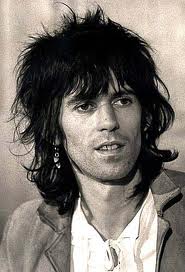
Keith Richards- Face Of The Stones
The sixties were very critical years for the various revolutions that made up The Revolution. Yet their activities were very disguised to prevent detection. At no time could they admit who they were or what they were doing. For Instance the takeover of the university system of the US that began at UC Berkeley in 1964 was disguised as some sort of ‘student protest’ over some supposed lack of or suppression of free speech, hence its name, The Free Speech Movement. While it appeared spontaneous it must have been a planned maneuver. I was at Cal State Hayward a couple of miles down the road. We had library privileges at UC that had one of the spectacular libraries of the world that I used so I was on campus when this noise was going down. It was quite professional, extremely well organized and no student revolt per se. The leaders were well instructed in the psychology of crowds. Something the ordinary person would never recognize. From UC it spread throughout the US intensifying in the years 1968-72.

Chairman Mao Ze Dong
Nineteen sixty-eight, of course, kicked off the worldwide Cultural Revolution orchestrated by Chairman Mao’s China. It was all organized from China. The Paris fiasco, everything even into remote corners such as the University of Oregon in Eugene was run from China. By 1968 I was a grad student at UOregon and in the poster and record business. Some crazed Chinese styled Communists from out on the rural route opened this Communist book store right next to my store. Needless to say police surveillance increased drastically as I was already under suspicion for selling posters and rock and roll music, literally the devil’s music in fundamentalist Eugene. As the whole world knew anyone in the record business was also dealing drugs whether they were or not and I wasn’t. And then the nutty SDS Jews from New York City flooded into town in their hip denims and abetted the Maoists. This increased the fun.
Wait a minute now, there’s more. Eldridge Cleaver and the loony revolutionaries in the Bay Area were conducting open
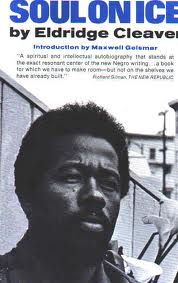
Eldridge Cleaver
warfare, guns and bombs you know, with the Feds and local police that naturally enough led to the arrest of such Negro revolutionists. But then, quite naturally, Eldridge escaped from maximum custody or something just like it and disappeared. No one knew where he was and they really wanted to. He didn’t surface for a few weeks so in the interim where did they look for him?
I hesitate to say this because I know you’re not going to believe it. They asked me if I had him hidden in my four hundred square foot record store. You see the logical progression, revolution= rock and roll= dope, Marxist store next door- where else is Eldridge going to hide, right? The store was an open square with a two by four enclosure for a toilet in the right corner. I pointed out to the cop that he was already looking at the entire store and he could see that there was no Eldridge Cleaver. But he wanted to check the 2×4 enclosure. I knew better than to laugh but I could barely contain myself. The cop opened the door to find himself staring into a toilet bowl. Eldridge cabled from Algeria shortly after.
I certainly was not aware of revolutionary activity per se or else I couldn’t take their stuff seriously but looking back things remained on red alert until at least ‘72. For the election of the second Nixon term, which I now see as serious potential danger, I saw them move several truckloads of Army troops out beyond Spencer’s Butte. One might say Mick Jagger and John Lennon, and I say this modestly in a local way, myself, had them worried.
I’ve always respected the intelligence agencies but placing me in the same category with Mick and John makes me have some doubts. I had no revolutionary or drug connections. It wasn’t that they couldn’t find them, as they thought, they didn’t exist.
There you have it, ‘68 was the crucial year. The authorities in both Europe and America were aware that something was going down. They were not taken by surprise. The Stones were.
They might have asked why are they busting us in ‘67 when they had plenty of cause for at least three years. Undoubtedly in an attempt to defuse the ‘68 show as much as possible. The direct action of the revolution failed so whatever counter revolutionary action the authorities took voided that while the revolutionaries themselves misgauged their popular support by a little more than somewhat. There were only a few fanatics backing them. The ‘kids’ were just not that dissatisfied. We were getting plenty of satisfaction.
According to Tony Sanchez/John Blake in their Up And Down With The Rolling Stones Mick fumed thusly after the ‘67 bust, p. 62:
I see a great deal of danger in the air. Teenagers are not screaming over pop music anymore, they’re screaming for much

Tony Sanchez
deeper reasons. Pop music is just the superficial issue….When I’m on that stage I sense that the teenagers are trying to communicate with me, like by telepathy, a message of some urgency. Not about me or our music, but about the world and the way they live. I interpret it as their demonstration against society and its sick attitude. Teenagers the world over are weary of being pushed around by half-assed politicians who attempt to dominate their way of thinking and set a code for their living…..This is a protest against the system. And I see a lot of trouble coming in the dawn.
I don’t know about Mick’s mental telecommunications but the message he was getting was maybe being scrambled by some alien force. Apart from some experts at crowd control and excitation there wasn’t that much interest in fighting in the streets.
Mick remained pugnacious personally, according to Sanchez/Blake:
They think they can break us, man, but no way. We’ll take everything that they can throw at us, and we’ll still win. We’re in a position to tell the kids about all the shit that’s going down, and that’s just what we’re going to do.
Mick was smoking some powerful stuff while taking the teaching of the London School Of Economics a little too seriously. He should have said ‘some kids’, by no means all the kids were concerned with the Stones while as the events in Chicago during the worldwide insurrection of ‘68 showed that concentrating on sex and drugs was not conducive to direct political action. ‘The kids’ made a poor showing. Besides which teenagers were only a part of the rock audience; most of us were at least over twenty.
Nor in ‘72 in Miami after much hoopla and the expenditure of large sums of John and Yoko’s money was there much of an insurrection. Keith in his auto of 2010 speaking of 1985 and 1972 had this to say about that on page one no less.
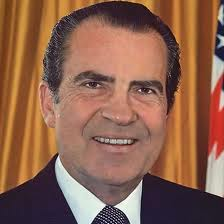
Every copper wanted to bust us by any means available, to get promoted and potentially rid America of these little fairy Englishmen. It was 1975, a time of brutality and confrontation. Open season on the Stones had been declared on our last tour [that of the inflatable penis], the tour of ‘72, known as the STP. The Department had noted riots (true), civil disobedience (also true), illicit sex, (whatever that is) and violence across the United States. All the fault of us, mere minstrels. We had been inciting youth to rebellion, we were corrupting America, and they ruled never to let us travel in the United States again. It had become, in the time of Nixon, a serious political matter. He had personally deployed his dogs and dirty tricks against John Lennon, who he thought might cost him an election. We…they told our lawyer officially, where the most dangerous rock-and-roll band in the world.
Richard Nixon
Kind of tells it like it was. I was in the record business, considered an arch liberal, and I thought the Stones were attempting to corrupt the US if not succeeding. I mean, you have only to look at the original picture inside their Black And Blue album to confirm that. The Stones, Lennon-Ono, Dylan, the outlaw groups like the Baader-Meinhoff gang, the Weathermen, the Red Brigades and their ilk saw the world through some drug induced mental haze in which the finest, most just, most democratic and widest opportunity society the world had ever seen and will see was just the opposite of repressive and undemocratic.
I mean, I had been pushed down hard in life, I come from the orphanage, and I still made a major success in the record business and that was against the wishes, not of the system, but the people, the shitheads, I had to deal with. Good god, you have to bully the bullies, elude their repression. It will never be any other way.
Whence came such a bizarre interpretation of reality. As the German politician in the movie, The Baader Meinhoff Complex thought, the insurrectionists were motivated by a myth. The Robin Hood Complex.
Yes, by a sense of materialistic frustration which they justified by the myth of Robin Hood. The problem was the same as the Negro insurrectionists in Watts. The range and quality of material goods increased on a daily basis continually out of reach. Yobbos like the Stones with no discernible abilities other than to write trite lines of lyrics and play hashed over music taken from nearly musically illiterate street corner Negro bands were realizing their material fantasies. What did they do in their rebellion in Watts? Break into stores and steal Tvs and stuff. Mere economic frustration. The Beatles were buying Rollers then desecrating them with psychedelic mockery. Richards himself driving without a legitimate license bought Rollers and smashed them up with glee laughing as he skipped away to avoid arrest. Keith was living the Yobbos dream. Baader-Meinhoff tried to replicate the dream by stealing Mercedes to go joy riding through the night. Same thing the Negroes were doing. That was what the revolution was about. To revel in cash money as the Stones, Beatles and other rockers did they robbed banks to ease their frustration. A leading hatred of the revolutionists was Consumerism. In other words there were more goods than they could come up with money to buy.
Then, as that would garner no sympathy from hardworking people who looked on the cynosure of their eye- the Mercedes and Rolls Royces being destroyed- with horror the gang claimed to be expropriating the expropriators a la Robin Hood and many another criminal but they bought no Thanksgiving dinner for the starving a la Pretty Boy Floyd.
Did the Stones believe the authorities so stupid that they didn’t know what was going on? Apparently so. Didn’t the Stones realize that they were merely taking advantage of the system the claimed to despise? Apparently not. The intelligence agencies infiltrated even the one man organizations of a nincompoop without a chance of success. I was invited to join one by agents in which the ‘mastermind’ was the only non-agency member. What are you supposed to think?
Who was this cocaine supplier to Keith, Freddie Sessler, if not a government agent? I’ll go into him later. Ask yourself, who can obtain unlimited quantities of sealed Merck cocaine containers if not government agents. Some believe that during the sixties the availability of LSD was provided by the CIA/FBI. There was so much LSD coming out of UC/Berkeley and Stanford programs that the whole Bay Area could have been supplied. Who was Owsley? Ask yourself.
The Agencies were funding programs by importing Indo-Chinese heroin also plentiful at that time. What was the result of plentiful Acid, Cocaine and Heroin? Incompetent malcontents. Work it over in your mind. Think about it. Electro-shock therapy? There’s a good one; scrambles your brain forever. Then add Acid and Heroin. Whoo-ee baby.
Anyway, the authorities knew what the Stones, Warhol, Lennon-Ono and the revolutionary crowd were up to. If the West had been the Soviet Union the whole lot would have been shivering the winter through out in the gulag instead of making millions riding giant inflated penises. Hello Mick, are you listening?

Andy Warhol
But, back to 1967 and the Redlands bust.
It is difficult to know exactly when Oldham and the Stones appeared on the authorities radar. A reasonable assumption would be perhaps sometime in late ‘64 or early ‘65. On the other hand Mick associated himself with David Bailey who probably was politically active since the late fifties who then drew Mick into a revolutionary circle including Andy Warhol in New York. Perhaps some sort of notice was taken at that time but probably of a cursory sort.
Why the Stones would have gotten a shot on the Ed Sullivan show isn’t all that clear to me; they had no reputation in the States at all. Or, for that matter why the Beatles got a shot. Nor why Dave Clark and all the early Invasion groups were hooplaed and accepted so readily as the next big thing by the Sullivan show. Obviously something was going on behind the scenes that we aren’t aware of.

Ed Sullivan
At any rate the Stones got their shot making a not overly favorable impression; definitely inferior to the Beatles although, as we were informed, top competitors of the Beatles over in England. Well, bully. Somebody must have figured out a money angle and it wasn’t in records. In ‘64 a top selling record was 250,000 copies or a million dollars retail. That was the definition of a million seller. And there weren’t a lot of those.
Even drugs were not yet that prominent although the use of grass had been spreading since the fifties. An elite clique in my high school in Michigan was covertly smoking it in 1956 imitating the kids in Scarsdale New York who were apparently leading the curve.
Pharmaceuticals and psychedelics were in use while I was in the Navy ‘56-’59 but not that widespread. Then in the ‘60s psychedelics came into fairly widespread use. I had no idea that amphetamines were practically universal in NY during the early and mid-sixties. LSD became a phenomenon early in the sixties with Leary given the most attention at his post at Harvard becoming the spokesman for turning on, tuning in and dropping out. One way streets were becoming ubiquitous at the time too. That phrase may have sounded the alarm for the authorities as multitudes actually did drop out becoming rather a useless burden on society. I can tell you, Haight-Ashbury wasn’t all that cool.
That ought to have been about ‘65-’66 when the revolution itself was gathering steam.
Mick, of course, was a political revolutionary committed to the cause while his lyrics are a negative portrayal of society if not a put down. Richards was soured on society at age 13 or so when his voice changed. He had been a boy soprano at his school where he and two others were so excellent that they won many prizes. In the process they were excused from certain classes. Then their voices changed and naturally enough they were given their walking papers.
At this point their award winning efforts were thrown back in their faces as they were demoted in grade to make up the classes from which they had been excused. The trio might have tutored to bring them up to speed but Keith felt that had been discarded like so much refuse. Society made itself an enemy who as time would prove would be able to wreak his vengeance with effect.
Keith accepted adoption by the revolutionaries as one being shown the inner sanctum of the Red Brigades of Italy and other revolutionary groups. So he and Mick were more or less of one mind.
Actually by even playing rock music in the fifties and sixties would be to know that he was infuriating the teacher class that had wronged him. Rock was the devil’s music. The notion that rock was part of the Communist conspiracy to corrupt youth was fairly widely believed, speaking of the US. Folk Music was held to be subversive and there is a fair amount of truth in both assertions.
Certainly the Reds didn’t invent Rock but they quickly took advantage of it to inculcate their doctrines.
After the assault on youth in the late fifties when even Dion of the Belmonts was toned down by Mitch Miller and Columbia, the ‘sweet Jewish rock ‘n’ roll of Carole King and Bob Crewe’ and the promotion of a series of bland ballad singers rock seemed to have been contained by the reaction. In Britain the pop scene had been managed so that only bright, pretty faces and perky personas were universal.
The Stones in a very rebellious revolutionary manner broke that mold. On their entry to the United States they struck people as somehow dirty, compared to the Beatles I suppose. They were actually more repulsive, although that might have been Oldham’s hype, although not so much so as The Animals who absolutely horrified the old guard so that it seemed like the scruffy and scruffier were seizing the youth. And of course even on their first Sullivan appearance you could easily see that Brian Jones was under the influence of something. So the Stones may have come under suspicion by the authorities sometime in 1964.
Before 1965 pot and drugs were still somewhat clandestine among youth but by 1965 and after especially with the surfacing of Haight-Ashbury at least pot and LSD were endemic. In very early ‘64 I used to know a guy who kept a bowl of LSD tabs on his living room table. Of course that was Berkeley. In those days acid was considered a sacrament or some kind of transcendental experience. While not that common the experienced walked around like they had been transformed from ordinary mortals into demi-gods. They wouldn’t talk to anyone who hadn’t dropped. It was quite a sight to see although I never indulged myself.
There was one golden moment of, oh, perhaps a half a second in 1966 when the essence of the ‘60s came and went. It was short and quick and even if you got it it was gone before you could grasp it, little golden shimmers filtered through your fingers and that was that. Sic transit gloria and away we went to Altamont. But I anticipate myself.
You’ve heard of the Generation Gap and that was real. Nineteen thirty-eight when I was born was the year of the lowest number of recorded births in some time. We weren’t as rare as hens teeth but even the war babies out numbered us and when they were born half the male population was overseas, so you figure it. Somebody was having a good time. Then in 1946, of course, when the men who survived began to return the population really began to boom, hence baby boomers. So, there was this gap between a huge youth and an older population. The old folks didn’t like us and, well, the relationship was difficult, kind of like between Martians and Earthmen.
The Stones had that jungle beat the old folks couldn’t tolerate. Shucks, the Stones hadn’t even heard real Negro music. All they knew was Motown and that Chicago shit blues music that no one in the US would even listen to. I owned a record store beginning in ‘67 and, let me tell ya, you couldn’t even give that stuff away and that includes Robert Johnson. Oh sure, some stumblebum blues aficionado would shuffle in to ask for Lightning Hopkins, Little Walter or something like that but when you stocked it they would only fondle it say something like I like knowing it’s here. To hell with those guys.
This was a university town and these fanatics would actually bring Lightning Hopkins, for instance, to town for a concert before twenty people in somebody’s living room. Those guys couldn’t play guitar and they couldn’t sing. Leadbelly! Spare me. Memorized Carl Sandburg’s American Song Bag. I never could figure it out.
Shoot! The Stones missed out on the real thing. They should have been in Oakland in ‘60 to ‘66 where I was. Boy, we had the real thing. The most godawful stuff you’d ever want to hear came blasting out of KDIA. White disc jockeys though. The Stones could have learned a lot.
The jungle beat might have garnered them some real attention.

Louis Malle
But then, under Andrew’s urging the Stones began to write and compose their own songs. These were often cruel sexual songs expressing the desire to oppress and hurt women or else mocking the older generation. Very strange, unsettling stuff at the time. Now everyone has been unsettled, can’t move them now. As Jagger and Richards, who wrote the songs, found their way in songwriting, the songs became ever more revolutionary while they meshed with a slew of revolutionary movies released during the mid-sixties on. These were often coded plans of action that an agitator provided with the key could decode for other revolutionaries and direct action. Such a key movie that was very influential for the Baader-Meinhoff gang and among German revolutionaries in general was Louis Malle’s Viva Maria. While on the surface a nonsensical even stupid movie when one has the key the movie becomes coherent indeed. Part of the Matriarchal Revolution for starters, but watch it.
Jean Luc Godard, another Nouvelle Vaguer also filmed the very propagandistic film One + One (reissued as Sympathy For The Devil) built around the Stones song of the same title. There was also a slew of satanic movies such Roman
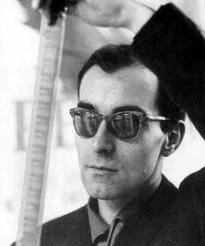
Jean-Luc Godard
Polansky’s Rosemary’s Baby that aimed at undermining Christian Beliefs. I Am Curious: Yellow that aimed at destroying female chastity. But more of that in the appropriate place.
So, by ‘67 the time of the bust the Stones were building up a dangerous reputation. Always remember that all of these outfits were infiltrated by espionage agents. And those guys were the ones bringing in the dope so how couldn’t the authorities know what drugs the Stones were using and in what quantities. Nice calling card, isn’t it: an unopened ounce of Merck cocaine?
At any rate they decided in 1967 to rein the Stones in a little bit. Shoot the old warning shot across the bow. Also remember that as much as the authorities wanted to suppress the Stones there were just as many Communists or revolutionaries in just as high places to thwart their efforts and actually place the Stones above the law. Their credo: To revolutionaries all things are permitted. Now, you figure it out.
In point of fact the older generation just couldn’t understand the youthful attitude. Everything was going along swimmingly as far as they were concerned. The war recovery was proceeding nicely while the economy seemed stabilized, no return of the Depression. That’s what really scared them and now the little creeps benefiting from this wanted to destroy it. Go figure. That high point of Western Civilization has been subverted today.
As far as the bust at Redlands the authorities were just giving the Stones a good razzing, a taste of what could happen if they were serious. In all likelihood they probably had no intention of making Jagger and Richards serve their sentences. Robert Fraser, the art dealer, arrested with them, was a different situation. He was a member of the establishment having held high military responsibility in Kenya possibly during the Mau Mau insurrection. Therefore he had no excuse whatsoever.
The Stones are quite right that it was a setup. The supposed dope dealer, the American Jew Schneiderman was quite obviously a CIA plant, hence his unlimited supply of pharmaceutical Acid.
Rees-Mogg’s editorial ‘Who Breaks A Butterfly On The Wheel’ was obviously an inside joke as well as well as an insult to the effeminate Jagger. One doesn’t take butterflies seriously hence they were calling Mick a little twit. Why bother with someone so inconsequential? Mick and Keith don’t seem to have understood this. Indeed, Mick, according to Tony Sanchez blubbered:
They think they can break us, man but no way. We’ll take everything they can throw at us, and we’ll still win. We’re in a position to tell the kids about all the shit that’s going down, and that’s just what we are going to do.
Well, bravo, Mick. But you might have been speaking from jail, a rather poor pulpit, had they chosen to put you there while you were not speaking for ‘the kids’ just the yobbos who weren’t going to do anything.
Then according to Sanchez/Blake Mick launches into a clairvoyant séance:
I see a great of danger in the air. Teenagers are not screaming over pop music anymore. We’re only serving as a means of giving them an outlet. Pop music is just a superficial issue…When I’m on that stage I sense that the teenagers are trying to communicate to me, like by telepathy, a message of some urgency. Not about me or our music but about the world and the way they live. I interpret it as their demonstration against society and its sick attitude…This is a protest against the system. And I see a lot of trouble coming in the dawn.
So did the authorities and they were taking measures if not to avert it at least to minimize it. I fail to see how the Paris imbroglio of 1968 took anyone by surprise. I mean, there was no organization not infiltrated by the intelligence agencies. The Chinese Cultural Revolution of which Paris and the rest was part, was directed from Beijing so the West’s intelligence agencies had to be well informed. But as the enemy was their own children they had to be sparing in the use of force. Even Chicago that would have been a great excuse to eliminate the proven troublemakers wasn’t used. Instead we ended up with the farce of the Chicago Eight trial.
They should have just dumped on them. No one was going to riot; those creeps didn’t have that much sympathy.
And then just to show Mick how little they thought of him they sent a helicopter to bring him to them for a little mocking chat. A helicopter: give me a break. Keith does have this to say about that in his autobiography Life of 2010:
The same day we were released the strangest TV discussion ever took place between Mick- flown in by helicopter to some English lawn- and representatives of the ruling establishment. They were like figures from Alice, chessmen: a bishop, a Jesuit, an attorney general and Rees-Mogg. They’d been sent out as a scouting party, waving a white flag, to discuss whether the new youth culture was a threat to the established order. Trying to bridge the unbridgeable gap between the generations. They were earnest and awkward, and it was ludicrous. Their questions amounted to: what do you want?….They were trying to make peace with us, like Chamberlin. Little bit of paper…Yet you know they’re carrying weight, they can bring down some heavy duty shit, so there was this underlying aggressiveness. In a way they were begging Mick for answers. I thought Mick came off pretty well. He didn’t attempt to answer them; he just said, you’re living in the past.
They flew Mick in a helicopter. It was a mocking importance and it came off that way. I saw the bit at the time and came to some different conclusions than Keith. Mick staggered out of the chopper and had to walk across a broad expanse of lawn as though a suppliant to the haughty waiting establishment, sort of like going to see the school principal. They awaited on the patio of a huge house. It was the back door and Mick wasn’t even invited into the kitchen: he was treated like a servant or better yet, a beggar. Butterfly indeed.
They were condescending enough to make your bones ache, Rees-Mogg, one of the establishment, included. They asked the spokesperson of the generation: What do the kids want? Mick flopped. He just stuttered. Keith may have thought he came off well but at my end of the tube I burst out laughing. As far as I was concerned Mick humiliated himself, but then, it was planned that way. All the power was on their side; Mick could really only stand like some penitent school boy and that’s pretty much what he did. Mick wasn’t and couldn’t have been prepared. The deck was stacked against him. But then he, in his turn, shouldn’t have blustered in the aftermath. I wonder if he had to walk home as the heli lifted off without him. That would have been the usual part of the trick; to leave the victim stranded.
In their own way the establishment succeeded in that they knocked the Jagger-Richards writing team off center. Or possibly the duo had exhausted their first momentum, much as Dylan had done and had to regroup as Dylan did. Keith acknowledged that they were dry after the bust. As he says the duo was able to find a new center that was just as successful, perhaps moreso, than the first.
The revolutions were still on and about to reach their first climax.

William Rees-Mogg 1967: An interesting article about the case:http://www.nickelinthemachine.com/2008/09/brixton-prison-and-mick-jagger/
Next: Leading to Altamont
Mick Jagger, The Rolling Stones And The Revolt Of The Yobbos
Part II
by
R.E. Prindle
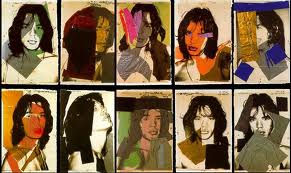
Warhol Jagger
Mick, Dave And Andy
If you had looked you wouldn’t have seen it but Sigmund Freud, or at least, his ghost was quietly at work transforming the psychology of Western Man. The old chivalric ideals of the Arthurian sagas was rapidly being replaced by the Jewish hopes and fears of Sigmund Freud and the Jewish people.
The Aryan ideal was based on an intense consciousness and objectivity while the Jewish understanding was unconscious and subjective. Aryans followed a concept of honor, Jews followed a concept of chutzpah. The transformation was understood if not clearly seen by the science fiction writers of the fifties. Stories subsequently made into movies such as The Blob, Invasion Of The Body Snatchers, book title: The Body Snatchers, and I Am Legend told the tale of the subversion of the conscious as people were portrayed as the living dead or zombies.

Warhol Jagger
With the way prepared then the next step was the free expression of subconscious desires undeterred by reflection and the subversion of men and women in sex. Freud proclaimed that the more frequently men ejaculated the better a person they would be, at the same time preaching the dangers of repressing those psychological ‘needs’ or desires to the exclusion of all others.
The Libertine element or Bohemians of society seized the opportunity while those yet imbued with Chivalric or Christian ideals held out while those ideals were slowly eroded replaced by Jewish ideals. Of course the Pill and drugs came along to push Freudian ideals into fast forward, a bunch of Charlie Chaplins rushing to the future.

Warhol Jagger
At the same time movies and TV began to glorify the expression of an undefined rage against Western ideals and justifications of its impression appeared regularly in ever more sadistic and uncontrolled expressions. Movies glorifying drug use and homosexuality appeared regularly. This enabled homosexuals, sadists and what have you to recognize and find each other thus being able to organize in associations. The Homosexual, Sexual and Yobbo, or Undermen, revolutions were thus able to more forward much more rapidly. One was able to discuss these aberrations as normal conversation, mere expressions of the varieties of sexual experience. Then in 1962 Anthony Burgess published the Yobbo bible, A Clockwork Orange, which in 1971 was made into the most despicable of movies.
The Yobbo bible apparently found a ready audience awaiting it. In New York, the Prince, even the King, of the Yobbos, Andy Warhol, teamed up with the London fashion photographer David Bailey to buy the screen rights from Burgess at bargain basement rates. They obviously saw the book’s potential for forwarding the revolutions on the screen for the corruption of Western youth. Bailey who must have been one the earliest jet setters having met Andy on an earlier occasion perhaps after Andy had introduced his soup cans unless Andy had been recognized as a leader of the revolutions before he had gained fame as an artist.
Warhol and Bailey were quick off the block obtaining the rights in either late ‘62 or early ‘63. Certainly a prescient move. As Andy was just beginning his switch from art to film while having no experience in film making Bailey’s collaboration seems as though it were a leap of faith. Perhaps if they met in ‘62 or even earlier he and Andy jabbered about the potential of movies while riding a white horse name Obetrol.
David Bailey who had risen rapidly in the late fifties at British Vogue is credited with being one of the originators of
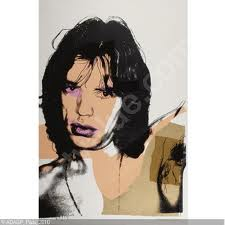
Warhol Jagger
Swinging London. What a knockout combination that was, had us all slavering at the mouth wishing we were part of it. Bailey even had his career commemorated in Antonioni’s film, Blow Up of 1966. A sensational film in its day though I find it difficult to see the significance today although still good mood and photography.
David had met Mick sometime in 1963 through his girl friend model Jean Shrimpton. Mick was dating Jean’s sister Chrissie who introduced him to Jean. Jean had no trouble spotting the Stones potential introducing David to Mick with the giddy news that he and the Stones were going to be bigger than the Beatles. Slightly enthusiastic; the Stones were going to be big but not bigger. Nothing really approaches the impact of the Beatles. The dead Lennon is either a god or nearly one while none of the Stones will reach that status.
David and Mick bonded immediately becoming in David’s word, mates. David was five years older than Mick and already successful so that must have enhanced his appeal to Mick. As David looked at Mick and saw the Stones play he apparently said to himself; These are the yobbos I need for my movie, droogs if I ever saw them. He and Mick boarded a big 707 jetliner, one assumes, in mid to late ’63 to be introduced to co-owner of the movie rights of the intellectual property as the star of the semi-porn flick, at least as it would be filmed in 1971.

David Bailey- Fashion Photographer
This was a fateful connection for Mick and the Stones. Now, Mick had been attending the London School of Economics, LSE, during ‘62 and ‘63 only leaving university in late ‘63 when he believed the Stones were going to make it. It is hard to believe that he would give up school for the ephemeral success of England- two good years and out, replaced by the next pretty face. Perhaps Bailey and Warhol were already planning the exploitation of the record industry as a propaganda tool. Certainly Bailey was conscious of the trans-Atlantic connection between British and American Vogue. For guys on the qui vive it wouldn’t be much of a leap to imagine trans-Atlantic musicians, after all, the Englishman (Scot, I know) Lonnie Donnegan had already had a few hits, including a monster, The Rock Island Line, in America. If, in their discussion Mick could have seen the potential, leaving university would be a bet on a bigger and more glorious future.
Some think Bailey and Warhol would have made the movie but ALO placed the price of the Stone’s too high. As Oldham was as keen on Clockwork Orange as anyone that doesn’t necessarily ring true. There must have been other reasons.
Nor was Mick studying bookkeeping at LSE as often represented. The school was established by the Fabian socialist Webbs c. 1900 and was a Communist training ground. Mick did have a scholarship which means he must have been vetted as good future material. Although LSE does have an accounting department Mick was enrolled in political science with the intention of being a Communist politician. So, Mick, David and Andy were to follow a revolutionary agenda pushing the envelope in sex and unruliness. The emerging drug scene promoted both aspects and added a new one.
Shortly after Mick returned home the Beatles burst upon the scene from the Ed Sullivan show in February of ‘64. This was the avant garde of the British Invasion opening up fabulous new vistas for the yobbos of small insular England. For whatever reason the Beatles were an immediate sensation. I’ve got a very good ear but I couldn’t hear it then and I still can’t. The Stones, not really that big a deal yet, followed shortly after gaining full national exposure on Sullivan’s show. Young America was watching. Regardless of the opinion of Stones’ fans they didn’t cut it. There didn’t seem to be much there other than the hype. Mick couldn’t sing while having a very weird appearance. All eyes were on the magnetism of Brian Jones, looking right past Mick. You can see him noticing where the attention was going and looking over at Brian as though to say: But I’m the singer and should be the center of attention. Perhaps Brian’s fate was sealed at that moment. Certainly if he had been brought up front, as all four Beatles had been, there might have been more interest.
No matter, the first tour may have been a bummer but the conquest was still quick enough. The Stones were after all British. Gold, at the moment.
In any event Warhol and Jagger became fast friends. A friendship that was to endure to Andy’s death in 1987. By the time the Stones had gotten settled in Andy had been shot in 1968 actually killing him but the doctors brought him back.
The early endorsement of Warhol had cemented the relationship of the Stones with the yobbos of Bohemia. In ‘63-64 Warhol was only just getting the Factory, the clubhouse of homosexual drug addicted Yobbos, going but that gang would have spread the word effectively in Manhattan club land.
I’m sure Mick’s sexual ambiguity, bi-sexuality, or whatever you wanted to call it kept the enormous homosexual population of Greenwich Village Bohemia in his corner. After Andy’s recovery in 1969-70 the relationship between the two men developed.

Andy Warhol
To quote the website
http://www.montauklife.com/history/hist-main2.htm :
Mick Jagger was painted [by Warhol] while he was at the height of fame. Andy and Jagger first met in 1963. Warhol spent a lot of time with Jagger and his wife, Bianca, but claimed he was the closest to their daughter Jade, whom Andy remembers teaching to paint. Over the years the artistically inclined Jagger kept tabs on the musically inclined Warhol. Mick was such an admirer, that in 1972 when the Stones formed their own record company, they tapped Andy to design their logo.
Montauk is the easternmost town at the end of Long Island. Andy and Paul Morrisey had bought a twenty acre compound there that they rented out. In 1975 they would rent it to the Stones for 5K a month while they were making Black and Blue.
In the meantime the Stones expanded their list of celebrity acquaintances on their 1972 Exile On Main Street tour. Needless to say these celebrities were all related to Warhol and the Bohemian scene. This included meeting the Warholite photographer Peter Beard who directed the Stones to Montauk. The linked Montauk site is worth reading.

Clockwork Orange Poster
All right. A Clockwork Orange was released in 1971 with devastating results. Just previously in 1969 the Homosexual Revolution had succeeded in escaping the restraints of New York City laws with the Stonewall Riots leading to the golden age of homosexuality before AIDS hit. The Stonewall Inn was on Christopher Street in the Village, the very heart of the Homosexual Revolution and Warhol’s empire. This led to an increase in the corruption of society. Following on the heels of the Riots perhaps encouraged by them the effects of A Clockwork Orange were much greater than The Blackboard Jungle and Rebel Without A Cause of the mid-fifties.
There were serious consequences not least of which was a sado-masochistic tone to the Stones as exhibited in their Black And Blue release of 1975. It is hard to believe that this record didn’t reflect Andy’s sado-masochistic influence. The inside cover depicting a bound woman being brutalized, the title Black and Blue seeming to indicate the bruises she was getting from the beating caused a major uproar, especially amongst Lesbian groups, resulting in the photo’s being withdrawn to be replaced by a group shot. Warhol and Mick were in sync.
In addition to providing the Stones’ logo Andy also designed three record covers for them which advanced the homosexual sadistic agenda. The first was the blatantly homo Sticky Fingers. The title was interpreted to mean the result of beating off while the cover has the famous zippered jeans with the working zipper.
The second cover was Love You Live with its double entendre of cannibalism. The third, Emotional Tattoo, a bootleg, featured Mick on the cover of 1983.
In 1975 showing Andy’s great admiration or love or Mick he made a portfolio of large 42 x29 inch prints reproduced in this article.

During this whole period of the seventies Mick’s wife Bianca was the reigning queen of the Warhol/Halston entourage. While Mick promoted satanic sex riding an enormous inflated penis on the stage he was somewhat more puritan with his wife off stage. He found Bianca’s sexual behavior in the Warhol entourage so humiliating that he was forced to divorce her. One can say that he was patient with her past the endurance of most guys.
But Andy and Mick remained good friends. In 1987 when Andy took the one way barge trip to a new life Mick was the only celebrity friend who took the time to attend Andy’s funeral in Pittsburgh. Thus ended probably one of the most significant friendships of our time.
By the time Andy died they and one presumes, David Bailey, had been more successful in achieving their goals than they might have hoped. Of course Sigmund Freud gave them more than a leg up.
Next: Nemesis Catches Up With The Stones.
Chap. 13: Edie Sedgwick, Maid Of Constant Sorrow
April 17, 2011
Edie Sedgwick
Maid Of Constant Sorrow
by
R.E. Prindle
https://idynamo.wordpress.com/2010/12/27/exhuming-bob-xxviii-visions-of-johanna-decoded/
Chapter 13
Blonde On Blonde

Her Fogs, Her Amphetamines And Her Pearls
One can only guess at Edie’s feelings when Dylan dismissed her so brutally from the lines of One Of Us Must Know (Sooner Or Later). She must have intuited if not known that her short and glorious career as the toast of New York was going nowhere. She came to New York with a handsome inheritance that she squandered in a trice, her parents disapproved of her conduct to the the point that they cut her off from support leaving her as Dylan had sneered in Like A Rolling Stone, a poor little rich girl ‘who had never lived out on the streets but now she was going to have to get used to it.’ Screamingly in pain from amphetamines one can only imagine her bewilderment with no way to rectify the situation. Whatever golden opportunities she may have had were now gone forever. Frome here to her death in 1971 would be one long wailing ‘horrorous’ nosedive that is terrifying to relive as a writer even. My stomach quakes as I try to organize the course of events.
Chuck Wein, one of the Harvard homosexuals she had associated with and who had come to New York with her was her evil genius, some say Svengali, who had guided her to Warhol and the

The Poet
Factory and then presided over her self-destruction. Then for that brief glorious summer of ’65 she had set New York on its ear as a companion to Andy Warhol. Made her feel giddy and indestructible. Andy was apparently in love with her but as a self-centered homosexual was too flaky to work out a relationship that would give her dignity while he was unable to support her more than extravagant tastes.
Behind Warhol was Dylan competing for Edie’s favors which he won in December of ’65 and then discarded her like an old shoe. He recorded the course of his relationship with Edie in various songs from mid-1965 to the completion of Blonde On Blonde in the Spring of ’66. His own career course was changed dramatically in July of ’66 when he had his motorcycle accident.
It might be well to review the songs that comprise Blonde On Blonde now. The song list of Blonde On Blonde is as follows:
1. Rainy Day Women #12 And 35
2. Pledging My Time
3. Visions Of Johanna
4. One Of Us Must Know (Sooner Or Later)
5. I Want You
6. Stuck Inside Of Mobile With The Memphis Blues Again
7. Leopard Sking Pillbox Hat
8. Just Like A Woman
9. Most Likely You Go Your Way And I’ll Go Mine
10. Temporary Like Achilles
11. Absolutely Sweet Marie
12. Fourth Time Around
13. Obviously Five Believers
14. Sad Eyed Lady Of The Low Lands
With a knowledge of the lyrics the titles themselves read consecutively tell story while the lyrics confirm the tale. The story hinges on who the two women are. One is Dylan’s mother who blasted herson’s psyche when at about the age of twelve she told him in so many words that he had ruined her life by being born. Apparently it was more than Dylan could handle because it was then that his lifelong misogyny began. It is forbidden for a son to revenge himself on his mother so his only recourse was to take it out on another woman or women. Dylan has been a serial misogynist.
One of the women he chose to vent his spleen on was Edie Sedgwick. Thus the two rainy day women most likely are his mother and Edie. All the time Dylan was bedeviling Edie he was courting Sara Lowndes who he eventually married in November of ’65. It was a quiet wedding that didn’t became known for several months and not widely known until later than that. He married just before he succeeded in abstracting Edie from Andy’s entourage so there is no doubt that he was only toying with Edie as a surrogate for his mother.
He may actually have cherished her vulnerability from drugs, inexperience in the world and low self-esteem. She would have been as helpless as a baby, almost like shot gunning fish in a barrel. Sara was his Madonna, Edie his whore. He waits to the very end of Blonde On Blonde to mention Sara and then he wrote Sad Eyed Lady Of The Low Lands for her. Of course, this was all very mysterious for us back in ’66 because we knew nothing of what was happening in New York. None of us had even heard of Sara Lowndes until she showed up as Dylan’s wife
As blogger Jim De Rogatis says, when he sat down to listen to Blonde: What I discovered was an artist who sneered and snarled with more venom and conviction than Johnny Rotten, and

The Artist
finally it dawned on me: Dylan was a punk…
Jim wasn’t there at the creation as I was, he is a younger man. I guess my soul was so canchred at the time that I welcomed the sneering and snarling as an expression of my own trauma while today I find the venom is so grating that I can no longer listen to Dylan’s records. Besides he borrows nearly everything.
The album opens on a note of forced sardonic merriment as though in a house of ill fame and ends with the dirge dedicated to his wife, Sara. I leave the interpretation of that up to you. I can’t pretend at this date to understand the lyrics to Sad Eyed Lady. One would have to know more of her and Dylan’s courtship. Dylan thought she was supposed to be impressed that he wrote a song for her with a title that sounds like another of his caustic insults.
To take the songs in order: Rainy Day Women is a raucous, very noisy mocking song along the lines of Like A Rolling Stone with its refrain of ‘How does it feel?’ On release the song was so noisy it was nearly unlistenable, certainly objectionable and barely music. Time has conditioned our ears. The refrain here: Everyboyd must get stoned, has layers of possible meaning. While the allegory of stoned meaning pelted with rocks is present, stoned can also have a secondary meaning of smoking marijuana. I don’t think the meaning has anything to do with getting ‘stoned’ from dope. I think it’s a combination of the first meaning and what was perceived by Dylan as a devastating insult from his mother.
The refrain must refer on one hand to his mothers perceived ‘stoning’ of Dylan by her announcement to him that he had been basically unwanted. That stoning is turned around to apply to his ‘stoning’ of Edie in vengeance. He then gleefully taunts and mocks her with the refrain: Do not feel so all alone, everybody must get stoned (How does it feel?) which refers back to his earlier song about Edie, Like A Rolling Stone.
In order to make ‘poetry’ of his taunt, our incipient ‘Shakespeare’ gives several poetic references that have nothing to do with rocks or joints. For instance the line ‘They’ll stone you when you’re riding in your car’ must refer to radio DJs pitching products. Thus stoning is meant as a verbal assault. One can compare that line with the Rolling Stone’s Mick Jagger’s lyrics to his song Satisfaction:
When I’m drivin’ in my car
And that man comes on the radio
The Singer
He’s tellin’ me more and more
About some useless information
Supposed to fire my imagination
I can’t get no, Oh, no, no, no
Hey, hey, hey, that’ what I say
I can’t get no
Satisfaction
So Dylan’s use of ‘stoning’ is giving or getting unpleasant information.
Song #2, Pledging My Time merely means he is obsessed with his mother’s ‘information’ that he was unwanted which is reflected in song #3, Visions Of Johanna when he sings: These visions of Johanna have conquered my mind. Johanna being his mother. Then there is discussion about Andy and Edie. (see my essay at https://idynamo.wordpress.com/2010/12/27/exhuming-bob-xxviii-visions-of-johanna-decoded/ for a full discussion.)
Song#4 Sooner Or Later mocks Edie who he ‘really did try to get close to’ as he dismisses here as he would have like to have dismissed his mother. Song #5 is self-explanatory.
Song #6, Stuck Inside Of Mobile With The Memphis Blues Again awhile the lyrics are unclear must refer back to I Want You on one hand and forward to Leopard Skin Pill Box Hat and Just Like A Woman on the other. He’s stuck inside of Mobile, i.e. he wants his mother with the Memphis Blues, i.e. he want his vengeance on Edie is a possible interpretation. At any rate it is placed between I Want You and the two Edie songs so it must be related to all three.
Then come two really unnecessarily vicious songs that everyone agrees are about Edie- Leopard Skin Pill Box Hat and Just Like A Woman. There are no obvious reasons for Dylan to express such vehement, disfiguring hatred of the poor girl unless he’s visiting his repressed hatred of his mother on her.
Song #10 Temporary Like Achilles involves Edie and Andy and himself. I doubt if Dylan had any understanding of the Iliad, if he had even read it, so apart from Achilles short life and the seven month interruption of his relationship with Edie by Warhol an interpretation is somewhat of a hazard.
Songs 11, 12, 13, Absolutely Sweet Marie, Fourth Time Around, and Obviously 5 Believers seem to wander off topic. I have read one interpretation in which the blogger thought Obviously 5 Believers was a response to the Beatles Norwegian Wood. Or possibly they lead into song #14 Sad Eyed Lady Of The Low Lands that Dylan says he wrote about Sara Loundes. The lyrics of this ‘poem’ are incomprehensible but if I had been Sara I wouldn’t have taken the title as a compliment, especially not after being locked out of a discussion about Dylan, Edie and his mother. After all, this is a married man lashing out at Edie.
After completing the LP Dylan left for his 1966 tour of England in which there was such a violent reaction to his electric backup band. I don’t remember their being a violent reaction made on the West Coast. For myself I welcome it. I never did like that faux folk crap he did anyway. Apparently Dylan didn’t either. A new expanded edition, lots of new material. of Robert Shelton’s biography, No Direction Home, just released by Omnibus Press is available, speaking in 1965 Shelton quotes Dylan thusly: ‘There never was any change. No instrument will ever change love, death in any soul. My music is my music. Folk music was such a shuck. I never recorded a folk song.’ He did however call himself a folk singer.
So, whoever shouted Judas at the Manchester concert knew what he was talking about. I never listened to those nauseous early Dylan records anyway. Blonde On Blonde was released in June of 1966 while Dylan was thrown by his ‘chrome horse’ on 7/29/66 thus putting an end to the first phase of his career.
I don’t know what Edie thought wen she heard the record that summer but one supposes she would have recognized herself as the topic of the conversation. Warhol certainly did and he was not amused. Knew something about motorcycles too.
Both Edie and Dylan were so heavily into amphetamines that they probably were not responsible for their actions. Drugs tend to put one into an internal state in which the outside world assumes a subordinate position, almost irrelevant, to one’s interior reality. A person functions in his own mind as a sort of magician who can comman the world to his own world. A certain type of insanity I suppose. Right and wrong are merely expressions of one’s own subconscious will. As Dylan confused Edie with his mother who he subconsciously wished to punish he transferred those feelings, that resentment, that hatret onto Edie as his surrogate mother thus gaining his revenge. How much satisfaction he got isn’t known and he’s not telling.
Edie herself was so far gone into amphetamines as to be oblivious to what was happening in her life. As far as she could dissociate her life from reality she could obviously make black white and vice versa.
Having dealt with Dylan’s relationship with Edie, let us return to January of ’66 to take up again the story from there.
Chap. 14 has been posted as of 6/23/11
A Review: Wonderful Tonight by Pattie Boyd I of II: Famous Groupies Of The Sixties Series
December 9, 2009
Pattie & George
A Review
Wonderful Tonight:
George Harrison, Eric Clapton, And Me
by
Pattie Boyd
I of II
Review by R.E. Prindle
Boyd, Pattie: Wonderful Tonight: George Harrison, Eric Clapton, And Me, Three Rivers Press, 2007
I don’t believe in boogie bars,
Macro biotics or souped up cars.
I don’t believe the price of gold;
The certainty of growing old,
But, I believe in you.
–Don Williams.
Perhaps it’s because I lived through the era experiencing what I did and vicariously the rest that I was thoroughly charmed by Pattie’s autobiography. I hope I will be excused for calling Pattie by her first name throughout but Boyd sounds so brutally unisexual eliminating amything but female sexual aspects that it doesn’t seem fitting and I don’t wish to sound formal otherwise.
This part of the review will cover pretty much Chapter 3: Modeling, 4: George and 5: Mrs Harrison. The chapters brought back the glittering memories of the sixties, memories created more by magazines and television shows than reality for most people but perhaps more or less real for some. If it wasn’t real for Pattie than it probably wasn’t real for anyone. But then it’s hard to tell where you are at any given moment in time.
She was there in what was called ‘Swinging London’ at the time. From a distance it was just dazzling. We were entranced by the possibility. As the late great Roger Miller put it: London swings like a pendulum do. By the time I got there in the seventies the pendulum was stationary. Pattie herself began life as a hair stylist but in a top notch salon. While there she was given an intro to a modeling firm and was lucky enough to catch on. From the looks of the photos whe was in the Twiggy line. She could have become a high fashion queen.
And London was a place where staying on top of fashion was a full time job. The scene was perhaps best captured by Ray Davies and the Kinks in their song: Dedicated Follower Of Fashion. If memory serves it was written about Marc Bolan.
…his clothes are loud but never square
It will make him or break him
So he’s got to buy the best
‘Cos He’s a dedicated follower of fashion.
He does his little rounds
Amongst the boutiques of London Town
Eagerly pursuing all the lates fads and fashions.
Pattie was in the thick of it mentioning the people she associated with, mere names to us, like Ossie Clarke, Twiggy, Mary Quant, David Hockley, photographers, artists, fashion designers who were realities to her although the glitter is brighter than the shabby fabric beneath. But then, how else could it be?
One feels envy at her luck. I was on the West Coast viewing it all from a distance with wonder, but owning a record store. By the time I got to London in the early seventies the swing had swung. Carnaby St. was deserted when I strolled down it all alone past the shops empty of customers. What sounded so good in song looked effete in reality. Of course I was straight Beverly Hills, dressed completely Eric Ross, quite a standout, but strange and exotic to Londoners.
Oh well, there were always the great book stores.
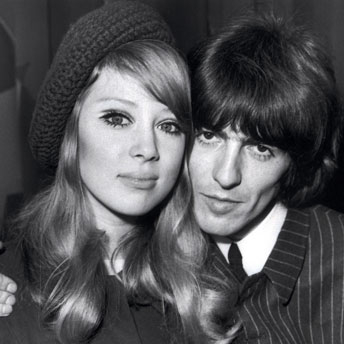
Pattie had begun her career as a fashion mdoel when she received a call to appear on the set of the Beatles movie in progress, A Hard Day’s Night. I suspect that George Harrison had seen her about town and requested her by name, only a guess, but he certainly glommed on to her when she arrived. Honorable intentions too. The couple got together and it was on. Thus she entered the charmed circle of the Beatles. You couldn’t get no higher.
The Beatles? Who cared really? other than the millions. Whatever was happening there passed me flatter than the Grateful Dead, and that’s flat. I was cool to both the Beatles and the Stones. I wasn’t really a dedicated fan of anybody; I liked certain records- Superlungs by Terry Reid. The first Jeff Beck with Rod Stewart when he still had intact pipes, the second with Bob Tench wasn’t bad either, lousy cover. Beck apparently hated vocalists because he played so loud, on purpose, I was backstage once and watched him do it, that he blew out their pipes. Donovan’s Sunshine Superman was tops, Procol Harum’s first, Alan Price’s This Price Is Right, stuff like that. Dillard and Clark, Flying Burrito Brothers’ White Line Fever, some Johnny Rivers. Nice stuff. Two or three Byrds.
But, the Beatles were gods and here were George Harrison and Pattie Boyd trying to fashion a normal lower middle class life in a hundred room mansion. The Beverly Hillbillies in London. Good luck boy and girl. And that was not taking into account drugs. Pattie’s story of the maniac dentist sends a chill through the marrow; a real demon dentist, the Sweeny Todd of the profession. Lord, deliver us from evil. It was he who introduced Pattie and Harrison to LSD, surreptitiously of course. Spiked their coffee just as they were about to leave his house.
Then the stuff came on, a little like the Airplane’s song, White Rabbitt- one side makes you larger, one side makes you smaller. Pardon me for writing myself into the story but the pen is in my hand:
Happened to me once. I was down in Berkeley at what was supposed to be a party. Pot parties in that time and place meant everyone sat around self-absorbed looking out vaguely at what could possibly have been you, or possibly just empty space. This particular set played draggy jazz so possibly they weren’t even looking out, their eyes were just open. As I was to learn it wasn’t pot. I had never smoked before anyway. Nobody could have ever been busted for whatever it was I smoked. Nothing was happening except the draggy jazz, maybe John Coltrane going around in fifths, and I was getting bored so I said I was leaving. As with the dentist of Pattie’s experience I was abjured not to leave. I never knew really what it was until I read Pattie’s story. It hit me a couple blocks down the street. The ‘tobacco’ must have been laced with acid.
Getting out of the maze of streets of Berkeley always required a little concentration on my part anyway and now I didn’t have any. I didn’t even know where I was or where I was going. Fortunately for me the car drove itself. I did have to keep my hands on the wheel though it wasn’t always uppermost in my mind. The car did strange things when I took my hands off the wheel, wandering here and there. A voice spoke saying: Keep your hands on the wheel.
The car found its way to the MacArthur Freeway which, although it was a road I knew by heart I couldn’t recognize. Plus everything had turned a shiny patent leather black, the highway just glittered and shown so. Colors had disappeared; the lights of the cars shot through my eyes to the back of my brain. They were all driving very slowly it seemed but passed me going very fast. Of course I was driving about twenty-five per which was as much as I could handle. I got in the slow lane. A good thing because it seemed like I was going around this curve for twenty-five minutes. Everytime I looked it seemed like I was in the same place. I decided to put my foot back on the gas.
The next problem was that the sky and highway were bonded together. Fortunately the car was able to separate them and they moved apart before us- the car and me.
My next big problem, after a seeming eternity, was that in order to make a left exit to Castro Valley I had to cross three lanes dotted with cars moving at varying speeds in different lanes. I had to time it just right to get in between cars in two different lanes. Sort of a Rubiks Cube kind of problem. While I was dithering my car changed lanes for me and I was on the off ramp with a smile.
An underpass lay before me where the most miraculous event in my life took place. As I began to enter the underpass this set of ram’s horns, you know, like a male sheep, began to grow from my forehead. Great white curling things they were, magnificent. It was at that moment I realized I was Master Of The World. Just as I was about to assume the mantle I came out the other side losing my spectacular rack and my crown. While I was pondering the imponderable my car finding its way back gliding noiselessly up the street into the driveway where it pertly came to a halt. Heaving a sigh of relief I got out and entered the house.
I don’t know what I looked like, perhaps fierce because of the loss of my horns, but my wife and mother-in-law seemed to run from me. Entering the kitchen I saw my brother-in-law about to have some tacos he’d cooked up. The guy was a wizard with hamburger; he could do things with hamburger than no chef had ever done. I had issues with him which I won’t go into. When I saw the tacos I became ravenous and wanted them. He was experienced. He took one look at me and realized the situation his hand stopping before his open mouth.
I didn’t hesitate, I remembered being Master Of The World. I snatched his tacos from his hands saying: I want those. He was knowing. He made no resistance, just said, sure. Smart move because I wouldn’t have taken no for an answer while still feeling superhuman. I wolfed those suckers down; best tacos I ever ate. But now there were fireworks going off in my head. I got in bed and watched the light show going off behind my closed eyes for a couple hours. I woke up grouchy and ragged. I took care in the future to make sure that never happened again. Wherever I had been I didn’t want to go back. I sure missed those horns though.
Apparently Harrison and his band mates liked it going back repeatedly. But then Pattie discovered that old fraud the Maharishi Mahesh Yogi and his Transcendental Meditation. What a fraud. She turned Harrison on and the band followed. First it was Bangor, Wales and then on to the big temple in the Himalayas of India.

The Cosmic Joker
There are many wondrous stories of their Indian sojourn at the ashram. The upshot was that the holy man liked girls as much, perhaps more, than the rest of the fellows. This tore a rent in his spirituality and disillusioned the group who left in a huff.
Pattie does tell a good story about Ringo who was wary of spicy Indian food having had digestive problems as a youth. He took along a suitcase full of Heinz Baked Beans. Imagine going through customs with that. Imagine watching the guy in front of you opening a suitcase full of cans of Heinz Baked Beans. US Customs would have made him open each can on the spot. I’d be laughing yet.
After their marriage George wanted her to give up the job of modeling. she had regrets but as far as modeling went she was getting old. Younger women were pushing up. The Twiggy look was dated from the start anyway. She might have been near the end of her career whether she liked it or not.
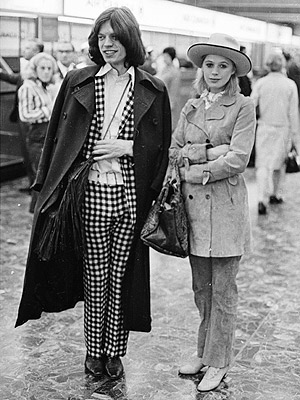
Mick & Marianne
Couple intesting points before this idylic phase of her life and life with George Harrison ended. Mick Jagger and Marianne Faithfull came to their house one night. Jagger wrote on the Harrison’s wall: Mick and Marianne were here. Strange action for guests. The only thing I can figure is that Mick was marking out the limits of his territory like one of the big cats who go around peeing on bushes to set up their territory. As a Beatle and tops of the pop world it was incumbent on each Beatle to establish their priority, their dominance over the lesser princes. When Mick wrote that on Harrison’s wall without demurrer he was establishing dominance over his superior. Eric Clapton would later do the same when he took Harrison’s wife while defeating him, as some say, in a guitar duel.
If you watched the 2009 Rock and Roll Hall of Fame show you saw Jagger and Bono dueling it out for the crown. A very haughty Jagger beat Bono into absolute submission having him groveling before himself worse than Obama before the Emperor of Japan. Jagger was so taut that after he flipped off Bono he almost dismissed the audience but then caught himself and gave a dismissive back hand wave in acknowledgment. That was somethin’ else man.
Jagger as leader of the Rolling Stones also foisted Allen Klein on the Beatles also demonstrating the priority of the Stones over the Beatles. And lastly Jagger, how shall I say, induced Bob Dylan to open a show for the Stones placing Dylan therefore beneath the Stones. I would have to say that the Stones have finished as the undisputed Kings of Rock of Roll. There’s always more going on than you think.
And then Pattie and Harrison were in attendance at the famous first drug bust of Jagger, Richards and Marianne Faithfull. As Pattie tells it she and her husband left the party at 3:00 AM. Immediately after they left the police raided. She believes the fuzz waited until they left as they were Beatles. The Beatles were thought of as clean at that time while the Stones and Marianne were monsters. She may be right. If the type of glamour achieved by the Beatles and Stones was new to them and difficult to manage perhaps the same was true of society. The Phenomenon of the British Invasion was so spectacular that you just had to stand back and ask: What’s this? So maybe the cops did honor The Top Of The Pops.
Whether she was slapping back at Mick for writing on her wall by the observation I can’t tell although both stories found a prominent place in her narrative. High school never ends.
The contest for her favors by Harrison and Clapton is very complex, a lot of psychology involved. I’ll have to work on it some but that will be covered in my review of the second half of the book to follow.
https://idynamo.wordpress.com/2009/12/17/a-review-ii-of-ii-wonderful-tonight-by-pattie-boyd/
A Review: Faithfull by Marianne Faithful: Famous Groupies Of The Sixties
November 11, 2009
A Review
Famous Groupies Of The Sixties Series
Faithfull: An Autobiography
by
Marianne Faithfull

Marianne Faithfull
Review by R.E. Prindle
Season Of The Witch
All night, all day, Marianne
Down by the seaside sifting sand.
Even little children love Marianne,
Down by the seaside sifting sand.
-Terry Gilkyson And The Easy Riders
Technically Marianne Faithfull wasn’t a groupie. Her early years resembled one but in her later years she was sought after as a conquest by men of the groupie mentality. I’m sure as everyone knows Marianne Faithfull began her career as a very successful pop singer. Produced originally by Andrew Loog Oldham she was among the first of the new breed of Rock singers, as opposed to Rock n’ Roll. She belongs to the new rather than the old school.
Her first song was As Tears Go By. Single and album were very successful, more or less establishing her reputation for all time- or at least until the generation passes away.
My first knowledge of Marianne Faithful was when the strains of As Tears Go By wafted into my study window. They continued to waft all day long for weeks. The girl in the apartment next door was fixated on the song. A little fat girl. So after the 7000th rendition of As Tears Go By I had my first nervous breakdown. Marianne Faithfull was a sour taste.

Mick Jagger
Then as far as I’m concerned she dropped out of the pop scene.
Her auto was first published in 1994, I just read the paperback the other day so the book is probably old hat to most of you but as I didn’t find any real reviews on the internet I decided to give it a try. I don’t see any reason to do the whole book so I’ll concentrate on the three Bob Dylan incidents, aspects of her relationship with Mick Jagger and Donald Cammell and his movie, Performance. The book is highly readable and entertaining until after her divorce form Jagger about two thirds of the way through the book when she falls into a drug stupor. At that point it is necessary to avoid falling into Marianne’s own depression. Too late for her to get over it now.
Her career began when she was selected for her looks by Andrew Loog Oldham, producer of the Stones, who saw her at a party. Asked if she could sing she said yes. Next, there she was behind a microphone lisping As Tears Go By. Thus she was an established big pop singer when she first met Dylan and later came under the thumb of Mick Jagger. She brought something to the table, she didn’t come empty handed. She was an equal. To be treated as an appendage enraged her probably contributing to her drug addiction
She met Dylan during his ’65 tour. You can see her sitting in the corner in the movie Don’t Look Back. She has some trenchant comments to make of the various prticipants in the Savoy Hotel debacle. She’s very intelligent. She was a young girl at the time, Dylan being five years older. She was in awe of Dylan who she considered the hippest god on the planet.
Dylan is supposed to be a master seducer. It wasn’t that Marianne wasn’t ready and willing, she was. In her mocking portrayal of the scene Dylan rather than complimenting her beauty and talent made an attempt to overawe she who was already overawed with his own wizardry. In the process the seduction fell through. Mazrianne skipped merrily away.
Now, this is a girl who a year or two younger , while on tour with a review including Roy Orbison responded to him when he knocked on her door and said: Hi. I’m Roy Orbison. I’m in room 602. And Marianne skipped on down the hall. How could Dylan have missed?
Later in the book, the year was 1979 when Dylan was going though his Jesus years, while Marianne had entered clinical depression doing heroin and sitting on her wall like Humpty-Dumpty all day, every day, Dylan arrived for another tour. His dealer was a friend of Marianne’s and he asked if she knew where Marianne was. Oh yes. Demelza, the heroin dealer got Marianne to come over. Dylan and Marianne’s second verse was worse than the first. By this time depressed, enraged and seeking vengeance against the men in her life Marianne was far from compliant. She had recently released Broken English, I’ve never heard the record so I can’t comment on the lyrics, so she mocked the Wise One by asking him if he understood her lyrics. He couldn’t explain hers any better than she could his. A little drip on the name of Bob, a little triumph for Marianne. Dylan went away unfulfilled again.
Oop, there is a third meeting. Marianne now beyond depression walking down railway ties none of us will ever be able to see. She overdosed on heroin, staggered and fell breaking her jaw. Complications arose requiring serious surgery. Pins were put in her jaw along with some contraption to hold the two parts together that apparently went

Keith Richards
through her cheek sticking out like a water spigot. Had to sleep on one side.
While Dylan was playing in Boston she presented herself backstage in this grotesque appearance. Too weird for Dylan. Three strikes and he was out. Never spoke to him again, she says. (To 1994 when the book went to press.
After the first meeting Marianne hooked up with Mick Jagger of the Rolling Stones for whom we have to thank for As Tears Go By.
In late 1966 the great Donovan included a song on Sunshine Superman called Season Of The Witch. The song epitomized the era. At the time the song made little sense to me but in reading Faithfull it all began to fall into place. While the sixties were terrific they were also horrific. Today the horrific impressions dominate my mind. All standards, all morality disintegrated before our eyes. It was the end of the world as it dissolved into stange and perplexing LSD fantasy. Hell, I never even took LSD and I think I know the feeling perfectly. I’m still getting flashbacks.
Nothing was real, it was all an illusion. You could turn yourself inside out right before everyone’s eyes and get no reaction. Hey, everyone was living through their own movie. Marianne captures this feeling perfectly in 300 pages but so did Donovan in three verses:
When I look out my window
Many sights to see.
When I look in my window
So many different people to be
That it’s strange, so strange,
Must be the season of the witch,
Must be the season of the witch.
Marianne’s succession of people to be began in childhood. She as well as all these musicians, singers and dancers came from humble backgrounds with low expectations but grand hopes and dreams. Picked for the size of her bust to be a rock star, piles of money were thrown at her. Inevitably dissociation occurred as the possiblity to be anyone appeared possible only to be held back by that humble past of low expectations. how to behave in these new circumstances, not so easy, not so easy.
The rabbits are running in the ditch
Beatniks are out to make it rich.
Sang Donovan. Standards and barriers were down, libertines crawled out of the woodwork nd there stood Mick and Keith, two libertine beatniks who could actually wallow in money.
Mick took a fancy to Marianne and moved her in. Married in heart if not in law, but she was to lose her independence. There was Swinging London or the tail end of it and swinging is what Mick and Marianne did. However Marianne did not come to Mick as a nameless groupie. She was a somebody that the fans admired and wanted to get close to also. Marianne Faithfull, all in capitals. All that was submerged into the personality of Mick Jagger. At first her own money was coming in allowing her independence but as her catalog grew old her money had to come from Mick. Her lost independence made it impossible to function as a wife and expect a joint account where she didn’t have to ask for money, it was hers by right. A conflict and contest arose.
When I look over my shoulder
What do you think I see?
Some other cat looking over
His shoulder at me.
And he’s strange, sure he’s strange.
Oh no, must be the season of the witch.
And the witching got serious. All kinds of users, abusers and losers followed the libertines out of the woodwork, masters of manipulation they knew how to easily hypnotize whacked out marijuana smokers, cokeheads and general druggies to get them to do various things, sex things, criminal acts, whatever to gratify their evil schemes. People did things they never thought they would do and fortunately some or a lot them couldn’t remember doing them. Such a character was waiting in the ether to snare Mick and Marianne. The movies, ah, the movies, what a way to snare unwary souls. Everyone wants to be a movie star.
Donald Cammell, one such, had his nose to the wind and the wind brought the sexual antics of Mick and Marianne wafting his way. Truly, it was the season of the witch.
Cammell had a novie he wanted to make; Mick and Marianne and assorted friends were just the libertines to bring Performance to life. Oh no, oh no, must be, must be the season of the witch.
According to Marianne, Cammell replicated the sex scene the set had had as though he had been there. Uncanny? Maybe or maybe it was such a far out thing participants talked and word got around and Cammell’s imagination was inflamed.
According to Marianne the filming brought disaster into the actor’s lives. Cammell, the manipulator escaped, of course, as his kind always does. The pleasure was all his, you may be sure.
The filmwas a turning point in the relationship of Marianne and Mick. Perhaps the film stirred memories of when she had been The Marianne Faithfull, since submergeed into Mick’s identity. She had been unable to adjust to the new circumstances. Pentulantly she just walked away. Immersed in drugs the downslide slow and pleasant became precipitous until she could be found sitting on her wall of the bombed out building not rebuilt as yet.
Could it be that the remaining wall of that Marianne Faithfull of low expectations was bombed out by the force of a success undreamt of in her pleasant teenage dreaming? Was that the fascination that kept her glued to the wall in pleasant heroin dreams? Would Humpty Dumpty fall into the abyss or not?
This was now the seventies. Hard realities existed on every side. It was’t fun anymore either. The actual season of the witch had passed over. This was hell.
After Marianne left Mick drugs are the topic of her converstation. What is more boring than a junkie talking drugs. Shoot up and shut up. Who wants to hear?
But she did regain her identity, she had shed Marianne of the little m and was Marianne Faithfull again. Men sought her out. Producers came around again, there was still money in that drug wracked carcassof Marianne.
When she walks along the shore,
People pause to greet,
While little birds fly round her,
Little fish come to her feet…Marianne.
Somehow from that drug drenched state Marianne was able to cobble together enough strength and concentration to begin doing a Mick and Keith. Maybe her time had not been wasted by the proximity to Mick and Keith. While still with Mick she had written Siser Morphine, later recorded by the Stones. She got no writing credit because of old contractual problems with discarded agents but she did receive a third of the royalities which were considerable.
And now she began to string words together to make songs. The stuff was nothing I would ever listen to. I mean, choice lyrics like ‘Every time I see your dick I imagine her cunt in my bed.’ Maybe that’s why Dylan couldn’t understand the lyics. I’m not going to try. It worked for Marianne though. Today she’s proudly known as the Edith Piaf of her generation. I’m happy for her that things worked out for her after a fashion. Her smile still photographs well but I’m not going to buy her records, CDs, whatever they’re called nowadays. Time has gone by and I can’t get As Tears Go By out of my head. I’ll carry that tune to my grave.
All night, all day, Marianne,
Down by the seaside sifting sand.
Even little children love Marianne,
Down by the seaside sifting sand.

Bob Dylan
A Review: Chris O’ Dell: Famous Groupies Of The Sixties Series
October 17, 2009
A Review
Chris O’ Dell
Miss O’ Dell:
My Hard Days And Long Nights With The Beatles, The Stones, Bob Dylan, Eric Clapton
And The Women They Loved
by
R.E. Prindle

Miss O’ Dell
As Chris says, she wasn’t famous but she was in the thick of things. Worth a lot. She disapproves of being called a groupie but I would say that she was the most successful of all. All the groupies would have snapped up Chris’ life without a dare.
Chris did have somewhat of an advantage in being twenty when she went to work for the Apple. She had some skills and maturity rather than being underaged jail bait. Boy, the Federales could have had these guys anytime: drugs and teenage girls.
Chris soon fell into the booze and drug trap. The most tedious part of the book is that of booze and drugs. Of course her co-author, heavy on the co-, Kathleen Ketchum’s previous writings have been about drug rehabilitation so she flogs the drug issue into oblivion. Hard to believe any one took drugs back in those happy uncomplicated days. Alright! Surprise, surprise, the middle name of Rock n’ Roll is Drugs- Sex, Drugs, Rock n’ Roll. Yes, it is also true that Chris engaged in some hanky panky too. Gosh, she bedded down with a couple Beatles, Mick Jagger and Bob Dylan. I suspect those revelations are more for the groupies than the general public. Eat your hearts out, kids. Clapton wouldn’t have anything to do with her by the way.
For me the real story that unfolded slowly and inconspicuously was the changing relationships between the Beatles and their women with Chris in the middle. Chris was friends with Harrison and Ringo Starr having little to do with John and Paul.
The first 100 pages are the most interesting of the book. They detail her actual working activies at Apple from the bright days of total indulgence to the takeover of Apple by Allan Klein. After Klein the fun stopped as Klein set about plundering Apple. Not before Chris had established a sterling relationship with George Harrison himself. As time and drugs wore on the youthful relationships came apart. These people were so into booze and drugs that their subconsciouses overwhelmed the conscious- I’m sure that at some point they wandered into a drug and alcohol induced haze. The good thing was that they didn’t have to worry about money although they sure went through it.
Chris’ description of the evolutions and transitions of the relationships of these key people of the musical era then forms the most interesting part of what is, frankly, a fairly boring story. The background story of Harrison, Boyd, Clapton didn’t exactly happen as it looked to us on the outside. We thought at the time that Clapton recorded Layla and Boyd came running but such was not the case. As Chris tells it Harrison, if he didn’t drive Boyd away neglected her and allowed her to drift away.
Eric Clapton
Clapton, says Chris, was a total junkie although he’s still hanging in there today. His records had no appeal to me so I could care less.
Uncertain of her precarious standing as either an employee or freeloader Chris drifted back and forth from LA to London while still apprently being part of the gang. The breaking point was when she was visiting Ringo’s ex-wife Maureen and took a tongue lashing from Ringo. Moving away she took up with a German promoter she knew through a large part of the eighties.
Part of her concern was hitting bottom, the rebound point when you know you have to change your life. From my observation point that happened in two stages. the first was when her German boy friend’s promotion company could no longer stand the ravages of drug and alcohol induced incompetence and Chris violated all the rules of friendship with Harrison. Something she thought she’d never do.
Her boy friend’s company bankrupt she asked for money from Harrison. George was a brick and handed over six thousand pounds without a murmur. The money of course went down the drug drain.
Now, Chris had developed sterling credentials as a tour organizer for various groups. She was with Dylan and the Rolling Thunder tour for instance. That is what she was doing with this German fellow. After the Beatles, Stones and Dylan the crowning indignity was when she was assigned to tour Echo And The Bunnymen. These guys are still going so what can you say. But, you know, time had rolled along under the bridge and Rock was becoming a shadow of its former glory. Who really cared anymore? I mean, you know, I’ve never listened to Echo And The Bunnymen and you can be sure I’m not going to buy their latest effort which is out now.
She then married an English aristocrat, had a baby and a divorce and went back home to Tucson.
End of story. Oh yeah, she’s now a rehab counselor.
The main interest is the level of rock society she moved in. The hand of Ketchum is too obvious. One had the feeling one was reading a novel of O’ Dell’s life rather than a living memoir. Wrong voice. Probably a must for the cast of characters and inside information but the drug and alcohol stuff is too, too boring. For Christ’s sake, who didn’t do drugs? Everybody’s got a million drug stories. Let it be.
George Harrison, Patti Boyd, Sixties Style
A Review: Ian Whitcomb: Rock Odyssey
November 26, 2008
A Review
You Really Turn Me On
Rock Odyssey
by
Ian Whitcomb
Review by R.E. Prindle
Whitcomb, Ian: Rock Odyssey, 1973
I don’t suppose too many people today remember Ian Whitcomb. He surfaced in 1965 with his hit song
Young Ian
‘You Really Turn Me On. In 1965 I was a very old twenty-seven but getting younger every day. I saw Whitcomb once while visiting my wife’s relatives. Her young cousin was watching the Lloyd Thaxton show out of LA. I’d never heard of Lloyd Thaxton either but according to the cousin he was the hottest thing on TV. If I remember correctly the Kinks had just sung Dedicated Follower Of Fashion that I thought was very OK. The Ian came on and did his breathy falsetto androgynous song: You Really Turn Me On. At one point after suggestively fondling the microphone stand he shot down out of sight like a tower from the World Trade Center resurfacing moments later. Pretty startling stuff at a time when nearly every new group was an actual mind blower- The Rolling Stones, Animals, Dave Clark Five and this was just the beginning. More and even stranger and stronger stuff was to follow quickly only to begin a slow fizzle even as it peaked ending in the Rap and stuff that passes for music today. A very old Bob Dylan trying to bring light into the heart of his growing darkness. After the startling sixties came the sedentary seventies. But then Whitcomb disappeared like his fall from the microphone stand and I never saw or heard of him again. A true one hit wonder.
Years later I came across his LP Under A Ragtime Moon. Then I knew why he had disappeared. He was into that English music hall stuff. But then, I didn’t mind that. He sounded quite a bit like one of my personal favorites The Bonzo Dog Doo Wah Band. Of course they didn’t really get that far with that stuff either. You have to be a member of the cult to really dig it. In order to like the Bonzos you have to have a fairly eccentric side to your musical taste. A little out of the mainstream which is where I preferred to live my life. I thought the Bonzos were wonderful, still do. But I was pretty much all alone out there. I liked and like, Neil Innes and the late great Viv Stanshall, two of the Bonzo stalwarts. ‘Legs’ Larry Smith. Ragtime Moon lacked the modern rock foundation the Bonzos infused into their music but to this day I couldn’t tell you whose version of Jollity Farm I’m familiar with. Anyway I have a soft spot for this sort of thing so over the years I’ve played a side of the Bonzos fairly often and dusted off my copy of Ragtime Moon occasionally.
You Really Turn Me On always stuck in my mind, great song. Kinda struck my lost chord and made it gong into the distance. If you’re only going to have one hit you might as well make it a good one. And then for some reason, I don’t know, I googled Whitcomb and saw that he’d written a few books, including this autobiographical sketch cum pop history so, as it was cheap on alibris, I sent for a copy. I was delighted with the volume as I read it through. As biographies go this is one of the better ones, right up there with Wolfman Jack’s not to mention that of that phony Jean-Jacques Rousseau although I stop short at Casanova. Casanova is one hard one to top. As a history of the period it is more balanced and beats the hell out of that crap from the Boys Of ’64.
Ian took offense at being a one hit wonder; he really wanted to be up there with, say, Jim Morrison of the Doors, Mick Jagger, people of that ilk. I have to believe that stories Ian tells are true although some are stunningly improbable but then those things can and do happen that way, you know. It’s all in how you see what goes on around you. Toward the end of the book he’s pondering on where he went wrong, he’s sunk into a fair depression over this, he flees from his apartment in his pajamas one early morning to take a stool in a coffee shop. That’s depression. But, let Ian tell it in his own inimitable fashion. As improbable as it may seem he took a stool next to Jim Morrison who recognized him first.
When ‘Light My Fire’ had reached number one, Jim had gone out and bought a skintight leather outfit. At the Copper Skillet, it wasn’t so skintight anymore.
“How do you do it?” I asked.
“I never dug Jerry And The Pacemakers. How do I do what?”
I wanted to kick myself for bringing up my obsession with pop success, but I plowed on: “How do you stay intellectual and still be a hit with the kids, the masses?”
“You could have done it. You were into the theater of the absurd. I saw you on ‘Shindig’ and ‘Lloyd Thaxton’ goofing off and telling the audience that rock n’ roll was a big joke. That the whole of existence is a big bad joke. You were too comic. Tragedy’s the thing. Western civilization is ending and we don’t even need an earthquake; we’re performing crumble music for the final dance of death and you know what? Truth lies beyond the grave. I’ll pick up the tab.”
I couldn’t have put it better. Ian’s problem was that he was working from a different ethic. He didn’t understand that the singer and the song was the show, the whole show. Nothing else was needed. We were only there to see the singer sing his song. It’s nice to know that Jim and I were watching the same Thaxton show together. If I hadn’t seen Ian on Thaxton I wouldn’t have been as impressed because on that show singer and song were a single projection.
Due to the wonders of the internet I was recently able to catch several versions of Ian’s song but not the Thaxton one. One had him and a half dozen other guys charging around a series of pianos. Completely missed the point of the singer and his song. Not even good entertainment. Ian considered himself an entertainer bacause of a childhood encounter with a music hall comic named O. Stoppit. Fateful encounter. Because of it Ian wanted to be a comic, ended up a singer and as Morrison noted the two were too dissimilar to work.
Ian was probably headed for depression from the age of five or six or so as he came to terms with bombed out London in ’46 or ’47. His biographical sketch is a wonderful tale of a seemingly cheerful man’s descent into a deep depression. By book’s end Ian is nearly out of his mind.
He quotes a psychoanalyst for his definition of depression:
It was the great Serbian psychoanalyst Josef Vilya who concluded that chronic depression is the result of a head on collision between dream and reality. The patient dreams of becoming King but goes on to become a member of the tax paying public.
That’s probably what Morrison meant by tragedy. Life always fails to meet our expectations so that humanity responds by assuming at least a low grade depression that makes comedy an adjunct to tragedy. Thus in the Greek theatre there was a terrifically depressive tragic trilogy followed by some comic relief. The burlesque of an Aristophanes.
Ian’s problem was as Morrison noted that he saw the absurdity of the human condition but was too jokey about it. Absurdity is a serious thing and has to be so treated. O. Stoppit taught Ian a silliness unmixed with tragedy. A tragedy in itself. When silliness such as You Really Turn Me On met the tragedy of a one hit wonder Ian began his descent into depression as Vilya suggested.
I’ve never been depressed myself, never had the blues, but I have visited the lower depths as a tourist so I have some notion of what Ian’s talking about. Dirty Harry in drag. I just never got off the bus that’s all, except once, to walk through Haight-Ashbury where I saw first hand how horrible true depression could be. Boy, did Ian find out about that. Good thing he never found his Debbie.
In his narrative combining grim humor with his developing depression Ian gets off some rippers. I had a good many uproarious belly floppers. Try these few lines. Two good ones in succession. You do have to have the same sense of humor. The North and South are those of England.
These frightening stories of Southern travelers stranded in woebegone depressed cities and suffering under the rough natives. For example a well known Shakespearean actor, having missed the last train out of Crewe, knocked on the door of a hotel. “Er, do you have special terms for actors?” the traveler asked. “Yes- and here’s one: Fuck off!”
And if they weren’t being aggressive, the Northerners were acting daft. One heard of a Lancashire lad down in London demanding another helping of dressed crab (in the shell): “Give us another of them pies- and don’t make the crust so hard.”
Of course Ian can’t do that on every page but laughs are liberally sprinkled throughout the underlying depression.
Ian’s book opens with his youthful encounter with O. Stoppit and ends with another unifying his theme nicely.
In between Ian enters the world of rock almost serendipitously with his one hit song: You Really Turn Me On. After that his story is a search for a sequel that he can never find but which he pursues somewhat as Alice down the rabbit hole. He loved his one brush with fame so much that the clash between his cherished hopes of finding his sequel and the grim reality of not being able plunges him deeper and deeper into depression. Personally I would have gone out and found a songwriter. There were thousands in LA.
However his odyssey, as he calls it, Brave Ulysses ne Ian, led him through the heart and soul of the Golden Age of Rock And Roll from the Beach Boys and Beatles and Rolling Stones through Morrison and the Doors, Procol Harum, Cream, Pink Floyd, Donovan, you know, like that. After that crescendo followed the diminuendo ending in Rap and the current rather laughable music scene.
Ian has encounters with the aforementioned Morrison, Mick Jagger and others. His observations of the social scene are trenchant. He makes an acute observation do in place of a couple hundred pages of twaddle a la Todd Gitlin and Greil Marcus.
Along the way he sprinkles the little known odd fact:
Procol Harum is Latin for ‘beyond these things.’ Have no idea what that has to do with Procol Harum’s music.
…the name Pink Floyd was taken from a record by two Georgia bluesmen named Pink Anderson and Floyd Council. Amaze your friends with that one.
And in conversation with Bobby Vee he confirmed a question about Bob Dylan that I needed confirming:
The afternoon I taped “Hollywood A Go Go” a syndicated TV rock n’ roll show that’s allegedly seen as far away as Rhodesia and Finland. The set was sparse- cameras, lights and a few rostrums. The empty spaces were filled with boys and girls who danced or gazed. All the acts had to lip synch their records. Chubby Checker (the Twist King) was on the set and, when he heard my record he pronounced it “bitching!” Bobby Vee was a special guest and looked every inch a star in his sheeny silk suit. He really had his hand movements and head turns down to an art. We chatted during a break and I brought up the subject of Bob Dylan and my concern about him. To my amazement, Vee told me that Dylan- before he got into the folk kick and when he was plain Bobby Zimmerman back in Minnesota- had played a few gigs with Vee’s band- as pianist! Vee said Dylan was very good, in the Jerry Lee Lewis sytle, but he could only play in C. He said he knew a lot about country music, too. As it was hard to find pianos at their gigs Dylan didn’t play with Vee very long. But as he has fond memories of him and said he was really well versed in current rock n’ roll at the time of their meeting. He had the impression that Dylan was very hip to whatever was happening. ;I wondered if the young Zimmerman had ever been a Bill Haley fan.
So, that would confirm that Dylan did play with Vee in the summer of ’59 after his graduation.
The book is a great read, a very good book, as Ian struggles and fails to find success. In a fit of depression he returns to the seaside pier on which he had seen O. Stoppit. An old poster is hanging that he secures then finding his model’s address he visits him to present him with the poster. O. Stoppit tells him bluntly to stop living in the past. A fine thing to tell a historian but Mr. Stoppit was apparently a blunt, unfeeling brute. Also well past the sunny side of life.
Has Ian ever adjusted to his being a one hit wonder? I’m afraid not. It still rankles. As late as December 1997 in an essay written for American Heritage Magazine Ian quotes a letter from fan Arlene:
Dear Mr. Whitcomb:
I have watched you several times now and I want to say that sure you have talent and you’re magnetic, but why, oh, why, do you screw it all up by horsing around, being coy, by camping, as if you’re embarrassed by show business? You could be great if you found your potential and saw it through, but that would take guts. Instead you mince, and treat it all as big joke. Come on now!
Well, that was the same thing Morrison told him thirty years earlier; the vaccination didn’t take then either.
I think Ian entered his depression early in life, as many of us do. Then one has to face it. Some become phony chipper optimists in their attempt to overcome the conflict between expectations and reality. Some become goofs and jokers. Something I fought for years. Some like Ian become silly. The most extreme type of this I ever saw was Red Skelton the ‘great’ clown who was painful for me to watch. In fact I couldn’t do it. I saw too much of myself in him and ended up hating the bastard.
If Ian wants that second hit and more he has to master his silliness. Weld the singer and the song like greats like Jagger and Morrison. Be to some extent what his fans want. A good sense of humor on songs done with respect for the song, himself and his audience. Scratch Red Skelton. People want to love Ian, just as Ian wants to be loved, but as the saying goes, he won’t let ’em. I’m not criticizing or demeaning, I know where that’s at too. I am recommending the course of action however. I, Arlene, Jim of blessed memory and others want a sort of closure that has been left hanging.
The book is a great one through Ian’s struggles to come to terms with his times, himself and the future.

Ian Later On
 I, Dynamo