Exhuming Bob VIII The Walls Of Red Wing
April 10, 2008
Exhuming Bob
VIII
The Walls Of Red Wing
1.
Bob And The Radio

Haunted By Old Memories
It seems like most of Bob’s biographers are English. This poses certain problems as they try to write about things that they are not familiar with. Radio and music are two of them.
As regards the two it is very important to fix Bob’s age in the years of the fifties. He graduated high school in the last year of the fifties- 1959- at the age of eighteen. That means he began high school in 1957. That also means he attended Junior High from 1953 to 1956. Born in 1941 that means he was twelve in 1953.
There was no Rock and Roll in 1953 especially in Hibbing. It takes a lot of years for modern times to penetrate such outposts. I am three years older than Bob. My birthdate is two days after Bob’s so when he had just urned 12 I had just turned 15. My brother is the same age as Bob. The first true Rock and Roll song I remember was Bill Haley And The Comets. Shake, Rattle And Roll was OK but Rock Around The Clock was thin for me. Haley was pioneering but unsatisfying.
Things stayed that way pretty much until 1955 when RnR broke loose. Now, I was probably as much into records as Bob was. The town in mid-State Michigan that I grew up in was probably not too different from Hibbing although larger. Like Bob I went to an all White high school.
The only records I heard before Rock that were interesting were Hillbilly records after 1954 called Country and Western. They became ashamed of Hillbilly and wanted to dignify the genre. Country which is apparently thought to have a great deal more dignity than Hillbilly became the first half and Cowboy songs where dignified by Western becoming the second half. Wolfman Jack speaking of his station in the area around Shreveport said that they played both kinds of music- Country and Western. There is a rather sharp division there for those who have the eyes to see it.
Things stayed that way for me pretty much until 1955 when RnR broke loose. That was probably Elvis doing Heartbreak Hotel which played John to the Jesus of Be-bop-a-lula by Gene Vincent. Vincent faded quickly but Be-bop-a-lula strikes me as the actual birth of teenage rock and roll. It was backed by Woman Love which was even as great as the A side. Actually I think it was intended as the A side but the B side became the hit.
I didn’t really get into records until about 1955, mainly because there weren’t any records that merited getting into. I was then a Junior which put Bob in the eighth grade. If he says he was listening to all those downstream radio stations in eighth grade maybe he was but I tend to doubt it. That seems a little early but, may be.
Now the early to mid-fifties was a time of real diversity in pop music. Not only diverse but the hostility of not only old people but half of my class toward rock and roll was quite pronounced. Everything was done so suppress ‘moron’ or ‘pimple’ music. Ministers proclaimed it the devil’s music and a Communist plot. Might have been something to both charges but if there was it made no difference to me. And there really wasn’t much of rock and roll until late ’55 early ’56.
Big Band was still tailing off. The Dorseys had a big hit with the swing song So Rare as Rock took off. The male quartet, Four Lads, Crew Cuts, Hi Los were very popular, lots of big hits. Mitch Miller produced many excellent folk flavored records- The Bowery Grenadiers, She Wore A Yellow Ribbon. Hank Williams songs were crossing over into pop performed by guys like Guy Mitchell. Even Marty Robbins, country itself, scored with A White Sport Coat And A Pink Carnation. Heylin may make fun of ‘Poor People Of Paris’ and songs of that ilk but they were at least equally as popular as RnR. Jim Lowe’s Green Door. Couldn’t be better. After all Pat Boone ran neck and neck with Elvis for a number of years. No kid at the time would have turned up his nose at such songs. Napoleon XIV They’re Taking Me Away, Ha Ha. Leroy Anderson has always been a favorite of mine- Syncopated Clock and others.
Of course in late ’55 and into ’56 Black ‘pop’ acts like Bill Doggett, Little Richard and Fats Domino -Chuch Berry- began to score. I recently bought a book by Cousin Brucie the New York Jock of the era; I never even heard of half his so-called classics. Where I was and where Bob was we never heard any real Black music nor would I , for instance, have listened to it. I tuned into Detroit Black stations a couple times and tuned out just as quickly. To put it politely, it was foreign sounding. Chicago was another country. So whatever Brucie and Alan Freed thought they were doing they were doing it in a major metropolitan area. It never reached the hinterlands. There was stuff that never even reached New York City. I’ve heard it and know why.
Bob and his family got a TV in 1951. That was kind of early but then his dad ran an appliance store. We only got our TV in 1954 so TV made an impact on me but more negligibly than on Bob. I was surprised that Bob doesn’t ever mention Dick Clark and his American Bandstand which should have been very influential in the life of Junior high kids in ’55 and ’56. High schoolers in ’57, ’58.
It should also be pointed out that there was little programming for TV in those years and fewer channels. For instance in Oakland, California where I was in 1958 there were only two of the three major networks on TV and there was barely enough advertising to support them.
If more than two channels could be pulled in in Hibbing I would be surprised. One of them carried Ed Sullivan because Bob saw Johnnie Ray on the Ed Sullivan show in ’53 or ’54. Heylin is mistaken in calling Bob on that one thinking Dylan could possibly confuse Johnnie Ray with Johnnie Ace.
Johnny Ray’s act was as outre as they come. It was so astonishing one could only gawk. All the other singers at the time tried to be sophisticated, cool, or whatever you want to call it. Ray was so emotionally unrestrained that he was psychotic. His song was ‘Cry.’ ‘When you sweetheart sends you a letter of goodbye, you’ll feel better if you let your hair down and cry-y-y.’ And Ray did just that right there on Ed Sullivan’s stage. He sobbed and moaned, leant over backwards until he doubled up then fell on the stage floor and sobbed from there. J. Geils went even crazier but by that time it was old hat. When Ray did it the first time your eyes just popped, you stopped breathing, looked around the room in wonder and pointed silently at the screen. That’s what Bob remembers. It was not Johnny Ace.
So that’s an approximation of the musical background we grew up with. Bob was picking this up three years before me at the same time. As a punk kid I can’t gauge his reactions accurately. If I’d known him at the time I would have thought he was a little moron. That was what I thought of my brother, a totally out of it kid, it didn’t matter what he liked or didn’t like.
We were all, those of us record literate, dissatisfied with our local radio stations. I don’t know if I was really dissatisfied but I knew or heard that there was more out there. Duluth was about the same size as my town so there would have been several local stations for Bob including Hibbing’s sole radio station. But, they would have been nothing compared to the down river mega blasters.
For the benefit of English readers the area between the Rockies and the Appalachians called the Mississippi Valley is an enormous flat area fifteen hundred miles wide by fifteen hundred miles long, give or take a mile. That means that a radio signal can travel unimpeded if it is non-direction over the whole expanse. After six o’ clock in the evening in those days a lot of stations shut down so there was less interference for the 24 hour stations. There was only one non-directional mega blaster tha I know of and that was XERB in Del Rio, Texas. The studio was in Del Rio but the transmitter was across the Rio Grande in Mexico. Mexico didn’t regulate it’s stations so their wattage was unbelievable. At the time Wolfman Jack began his career they were blasting 250,000 non directional watts from across the river from Del Rio. Since I presume any readers are interested in this sort of thing Wolfman Jack does a fabulous telling of the history of XERB from ‘Goat Glands’ Brinkley to the present in his no less fabulous autobiography. The Wolfman’s slipped by unnoticed but it is well worth seeking out.
Strangely to my ear Bob is never mentioned in the same breath as Del Rio. XERB must have come in clear as a bell straight up river to Hibbing.
Bob merely talks about Shreveport, the home of the Louisiana Hayride. This is also the area that the Wolfman got his start. I believe he talks about Gatemouth and that he patterned his act on his. I could get Shreveport but I didn’t like it as well. Besides I was probably off to the side of the signal and it didn’t come in as well. I listened mainly to Del Rio, Wheeling, West Virginia, Waterloo, Iowa and WCKY Cincinatti, Ohio. C for Cincinatti and KY for Kentucky just across that particular river. Those were all pure country stations especially Wheeling. If Bob didn’t get them they may have been directional off his band.
At any rate for all his talk of listening to Black music when people mention items in his record collection they’re usually country. Webb Pierce was of course tops. Bob also listened to a fair amount of Hank Snow. He owned Hank Snow Sings Jimmie Rodgers but he doesn’t seem to have had any of Rodgers records themselves. He apparently listened to those over at Echo’s. Rodgers requires a certain taste but if you have it he can’t be beat.
My impression from listening to Bob is that he had a lot stronger country background than Rhythm and Blues. I can’t believe there was too much R&B up there on the Iron Range.
And then he got those Leadbelly records for his graduation. Heylin may think it was spelled Lead Belly but I never heard that anywhere but in Heylin’s biography of Bob. Bob and I must have heard Leadbelly together for the first time in different places. Just for background I was in San Francisco in ’59 in the Navy. There was a record store down on Market St. specializing in Folk, Blues and Jazz. Some really obscure stuff. Don’t know how he sold enough to stay in business. Didn’t actually, when I went back the store was gone.
That was where I was introduced to groups like the New Lost City Ramblers and Bob Gibson and people like that and of course Leadbelly. Leadbelly was already legendary to me perhaps from Seeger and the Weavers. Huddie Ledbetter, his real name, was the most godawful stuff I ever heard up until that time. Since then, of course,…but why go into it. The songs were transcribed from worn out 78s onto a 10″ LP and not only was there nothing but noise but even with sound quality it would have been just hideous moaning. Bucklen was right; it wasn’t great, it was only OK. It always amazed me that people who wouldn’t listen to Hillbilly because it was ignorant would go gaga over stuff like Leadbelly.
So, anyway, that was pretty much Bob’s musical background until he showed up at U. Minnesota.
2.
Bob’s Social Status
It is necessary to reconstruct to some extent Bob’s social status and his relationship to Echo Helstrom. Bob has a very deep seated psychotic reaction to his childhood in Hibbing. It is something that almost seems to grow with time. He had a real sense of rejection. This is not an uncommon situation of course but Bob had the uncommon talent to impose his psychosis on the world, a psychosis he has never been able to resolve.
This pyschosis is a difficult thing to work out. I have to combine my thinking here with an email correspondent whose initials are RM. The complete file of correspondence which is more than two hundred pages long can be found on the Lipstick Traces Part IX post on I, Dynamo if you want to read through it. RM has a real stream of consciousness writing style but she is extremely well read in the area of Dylan and Presley while having very good ideas.
The work is a matching of known details as reported by the biographers and an analysis of the lyrics of Dylan’s songs. The biographers seldom agree on the exact details while Heylin and Sounes seem to borrow extensively from Scaduto and Shelton. The general outline seems to be clear.
Bob”s early childhood seems to have been relatively happy but then the turning point in his life seems to have been his Bar Mitzvah. Rather this is so or not by the age of fifteen his sense of rejection and resentment had been firmly established in his mind.
Much is made of the so-called ‘anti-Semitism’ in Hibbing and its few Jews. Actually Hibbing had a fairly large Jewish population for its size and they were very influential. Nadine Epstein and Rebecca Frankel wrote an article for Moment Magazine, August 2005, titled: Bob Dylan; The Unauthorized Spiritual Biography. Moment is a Jewish magazine that doesn’t publish online so you’ll have to go to the library to download a copy of the article if you want it.
The two authors describe Hibbing thusly:
Hibbing’s downtown stands as a monument to its once vibrant Jewish community. “Every single store except for the J.C. Penney’s was owned by Jews,” recalls Neil Scwartz, 53, who grew up in Hibbing and is now a cantor in Chattanooga, Tennessee. A glance at the 1942 Hibbing City Directory confirms this observation: Hyman Bloom owned the Boston Department Store, Jacob Jowolsky operated Hibbing Auto Wrecking, Nathan Nides owned Nides Fashion Shop, sold insurance and lent money. The first Avenue Market was owned by David M. Shapiro, Jack and Israel Sher ran the Insurance Service Agency and Louis Stein was the proprietor of Stein’s Drug Store. The Edelstein- Stones owned a string of movie palaces, including the local drive-in and the Lybba Theater on Howard Street, named after Bob Dylan’s maternal great-grandmother Lybba Edelstein, who came to the United States from Lituania in 1902.
———-
By the 1970s, most of these businesses were gone. “When the mine closed and the miners lost their jobs, people were forced to move, and so the Jews who owned the stores lost their customers,” says Steve Jowolsky, 45. One of the handful of Jews remaining in Hibbing. Jowolsky runs his family’s scrap yard.
So Bob grew up in a town perhaps divided by a religious and social barrier. The Jews who owned the businesses and the goys who patronized them may have been resentful. There must have been inevitable conflicts which is probably why Bob didn’t like to be identified as a Jew.
The critical point is that after his Bar Mitzvah at thirteen for the next four years he attended a Zionist summer camp- Camp Herzl in Webster, Wisconsin. The Camp was and is a large 120 acre summer camp. There it seems that the Jewish youth of Minnesota and, actually from around the country and world, met and became acquainted so that Bob had extensive Jewish connections in Minneapolis-St. Paul the home of U. Minnesota.
There is some mystery concerning Bob’s Bar Mitzvah. For non-Jews, a Bar Mitzvah is a coming of age ceremony for men. If you’ve read your Golden Bough by J.G. Frazer you’ll know that when a boy was young he passed his time with his mother and the girls but when passing into puberty he was taken from the women by the men and underwent a born again ceremony to become a man going to live with the men. An example Frazer uses is that of passing through a rolled up cowhide symbolizing rebirth as a man. The story of Achilles in the women’s quarters is a coming of age of ‘Bar Mitzvah’ story.
In Bob’s case it is said that as there was no Rabbi on the Iron Range a Rabbi was brought in from Brooklyn specifically to give Bob a crash course in Judaism for his Bar Mitzvah. The mission having been accomplished the Rabbi was put back on the bus for Brooklyn.
This is a strange story. Shelton tells us that there was a synogogue and Rabbi in Hibbing while Duluth with a fairly large Jewish population had four. Certainly the several dozen Jewish families in Hibbing educated their sons for Bar Mitzvahs without resorting to each individual parent bringing in a Rabbi from Brooklyn, New York.
If the Rabbi was actually brought in then something else was going on.
Now, Bob’s Jewish name is Sabtai, that is he was named after Sabatai Zevi the last great Jewish Messiah. This says something about Abraham Zimmerman’s state of mind. A sect was founded on Zevi’s death in the seventeenth century that flourished as a signficant portion of Judaism in the eighteenth and nineteenth centuries and continues to this day. Freud was of this particular Jewish persuasion. So must have been Abe Zimmerman.
If the story is true then the reason for rejecting the local and Duluth Rabbis must have been the the Sabbatian or Frankist Rabbi was essential to Abe Zimmerman’s conception of the religious education he wanted his boy Bob to have. The sect was centered in Brooklyn. Thus Bob’s adolescent and pubertal mind was clouded at thirteen with a concentrated infusion of Sabbatian-Frankist, possibly Lubavitcher, lore. Bob was now well on his way to his fabled ‘mixed up confusion.’ He had to reconcile extreme fundamentalist Jewish religion with a Country and Western goi outlook. This is what makes the guy really interesting.
Then on top of his Frankist crap he began to spend several weeks at the Zionist Camp Herzl. I interpret several to mean four to six, so that would be a large chunk of the summer separating him from the social life of Hibbing. Obviously his father wanted to immerse him in some fairly intense Jewish nationalism and religion. Theodore Herzl is of course the originator of Zionism which is a nationalist Jewish movement.
Bob attended four consecutive summers beginning in 1953. No person is independent of their environment. The Jews had become very distraught as a people after WWII. For some reason they projected Nazism on Americans and were very fearful that Americans were going to create an Auschwitz for them here. When McCarran built camps in 1953 for a possible Communist roundup the Jews felt sure it was for them. By coincidence Bob began attending Camp Herzl in that year.
As an example of the Jewish paranoia William Paley who owned CBS was so fearful that an attempt at extermination was near that he devised a plan to ‘save’ as many Jewish performers as he could. Thus he incorporated a number of Jewish musical and comedy stars as businesses and sold shares in their careers to prominent gois. TV emerged shortly after the war thus for ten years or so there was a long parade of Jewish performers down to Red Buttons who were given TV shows to provide a return for their investors thus ‘securing the lives’ of the performers. Jack Benny was a difficult act for them to program but once they did he amply rewarded his investors who had bought into him. I believe Benny was the last of the packages. So for all those years the performers were merely on salary when they could have been raking in the coin less the paranoia.
So that is the Jewish environment Bob was living in I am not Jewish but my wife is. Growing up in the fifties she was indoctrinated in the notion that everyone hated the Jews and were out to kill them. This affected her psychology profoundly but her reasoning was why woud anyone want to be something everyone hated when you didn’t have to be. She consequently rejected religion entirely, so there was no religious incompatibility between us as I from my side also rejected religion.
So Bob began his several week visit to Camp every summer in this environment. They don’t show extermination camp movies on TV like they used to but you may be sure Bob was given a steady diet of them every summer. Boy, they used to piss me off.
Before his Bar Mitzvah it is said that he was a friendly outgoing guy but became withdrawn and solitary in his high school years. I have little doubt that his religious training was responsible for it. If his father considered himself somewhat of a Jewish scholar as represented by this Hasidic or whatever Rabbi from Brooklyn then this added to Bob’s feeling of separation from what is described as almost wholly a Catholic environment. I would have felt stranger than he did.
Thus, while Red Wing may have precipitated a crisis in his psychology it was merely the icing on the cake, the straw that broke the camel’s back, etc.
3.
Bob And Echo
Bob entered high school in 1956 at tge age if 15, At 15 he would have been fully aware. Little Richard would have burst on him in ’55 when he was either 14 or 15. Apparently Little Richard’s seeming lack of inhibitions made a tremendous impression on the already inhibited Bob. Richard hit at about the same time as the movie Rebel Without A Cause. The movie and its star, James Dean also blew Bob away. He saw it several times. He saw it at 14 I saw it at 17. I loved the movie but I was unimpressed by Dean. I saw the movie with a bunch of friends and while I was in awe they appeared to be in shock. This was serious stuff. Of course I fell in love with Natalie Wood while I was repelled by the bug-eyed Sal Mineo.
What spoiled the movie for me was Dean himself. It didn’t take me long to realize that he was an adult playing a ‘juvenile’ role. In his most famous scene, rolling the milk bottle over his forehead and actually drinking out of the bottle offended my so much I can’t explain it. He looked old there, at least 28, and he actually looked ancient in the scene in the police station. I may be the only one that ever thought that though.
Now, Heylin misunderstands the chicken or emasculation contest at the end of the movie. To set the scene properly America was just emerging from the Depression. Parents were still virtually paralyzed by their memories of the pre-war years. Teenagers were just beginning to be able to afford cars. The gut was full on Saturday nights but most were driving the family car.
For those that had cars the exhilaration was fantastic. That was the golden age of customization. Cars were lowered in the back, dual exhausts were put in, cars were souped up so that for a few years kids had cars that could outrun the stock models of the cops. Wow! Hey! John Dillinger never had it so good. Pretty Boy Floyd would have thought he was in heaven.
So, you’ve got the hot wheels and all that power so what do you do with it? You invent the game of Chicken. That Hollywood thing on the Pacific Palisades if it ever happened in real life was only possible because of the location on the Palisades.
The idea everywhere else was for two cars, two drivers to face each other from maybe three or four blocks away then floor the beast, accelerating all the way head on at each other. The first guy to swerve lost and was the chicken. Thoroughly emasculated. Some guys chickened out early some didn’t. I watched a few of these and thought I’d never seen such craziness. I hadn’t up to that time, but since…
So the idea in Rebel on the Palisades was not to jump out as close to the edge as possible which was so crazy some movie guy would have had to have invented it but to drive as close to the last stopping point as possible before hitting the brakes. I mean, this was so stupid. So the winner went well behond the stopping point and his car went over the cliff with him in it. Who’s going to get into a chicken contest and try to jump out of a car going sixty or seventy miles an hour? Kids are crazy but I hope there’s a limit. Although, I don’t know, I once played Russian Roulette with a loaded gun. Three rounds. I don’t like to admit it but you can’t change history.
So at this point Bob and Abe came into direct conflict. If Abe couldn’t understand Dean you can imagine Little Richard’s effect on him. So here his wonderful Hasidic Jewish kid is entering high school and flushing himself down the goi toilet. The conflict must have been intense. Apropos of parental conflict that was so intense it led to his disowning him. I read somewhere that his mother Beattie was the model for Visions Of Johanna. Bob’s own words but I can’t remember where I read it.
So Bob began what appears to be the three most action packed years of his life. Leaving the tenth grade shortly shortly after his sixteenth birthday Bob pestered his dad for a motorcycle now that he could get a license. Not a scooter either but a big machine. Harley. No Hondas. So at the incredibly young age of sixteen Bob got himself a big bike. Bob’s dad must have been a very indulgent father. You can ride a bike up on the Iron Range for only a few months a year. Bob went to summer camp between 10th and 11th too so he really didn’t have much time to ride it. But somewhere in there he met Echo Star Helstrom.
Echo impresses me as a tough chickie from the other side of the tracks. she apparently impressed others that way too.
Scaduto quotes one Linda Fuller:
Bob was considered one of the tough motorcycle crowd. Always with the black leather jacket, the cigarette in the corner of his mouth, rather hoody. And Echo with her bleached hair and vacant look; That’s mostly how I first noticed him, running around with this freaky girl hanging on the back of his motorcycle, with her frizzy white hair flying and her false eyelashes. It was shocking to me. I tried not to be narrow minded, but I thought that crowd was a bunch of creeps. We used to laugh at the sight of them on the motorcycles. They used to zip through town and it was funny to see them.
The thing is motorcycles were taboo because motorcycle guys were automatically bad. I had to stay away from them. They were terrifying, Bob with his big boots and his tight pants.
Then Echo chips in:
(Bob) didn’t fit in with the bums. I knew the real bums. All my friends were the wrong-side-of-the-tracks people, the dropouts, and Bob didn’t fit in with them. He didn’t fit in with anyone in town, really.
So here we have the portrait of a Nowhere Man posing as a Bad Motorcycle, acting a screamer on stage but quiet and withdrawn in the classroom and school. Almost a manic depressive.
Without meaning to cast aspersions on Echo she was what we would have called ‘cheap’. She knew the real bums, they were all her friends. The Fugs could have written their song ‘Slum Goddess From The Lower East Side’ about her.
When she first met Bob she said she thought he was a ‘goody goody.’ Must not have been on his bad motorcycle with those boots and tight fitting pants; one of those directly opposite of ‘cheap’ or hoody, not one of the bums. Echo would have seen Bob as ‘upper class’. Echo was probably going to put Bob on. That he went for her must have seemed too good to be true.
Probably Bob moved in on her and meant to pick her up for a cheap thrill or whatever then found to his delight that the girl knew every rock, R&B and Country song in the catalog. Bob wanted to impress her with his own musical chops so on their ‘first date’ they break and enter the Moose Lodge so Bob can cavort on the piano. Didn’t even have to think about it, he flipped out a knife forced the lock and they were inside. Easy as pie. Must have done it a time or two before somewhere, don’t you think? The story comes out in different variations in the biographers. Either Bob or Echo sprung the lock with either his knife or her knife or she with her own knife. In any case they both appear to be experienced housebreakers. This is important.
And now we have a minor problem. Bob told Echo that he didn’t have an allowance so she ponied up for the hotdogs and cokes. Yet at the same time Abe bought Bob a motorcycle that would have been expensive while requiring gas and lots of maintenance. Bikes never run right. Abe seemed to to give Bob enough money for that. So through October or whenever the snow began flying Bob is driving Echo around with her frizzy bleached blonde hair blowing in the wind.
None of the biographers handle the details of these years carefully so I am reconstructing and attempting to arrange the chronology to fit with the details in the time frame.
Now, Abe and Beattie are watching the apple of their eye get wormy right before their eyes. Neither Beattie nor Abe had any use for Echo. Being respectable middle class people they were horrified that Bob was running around with such a cheap trick. Abe was horrified to see his son ‘defiling’ himself. At some point in Bob’s young life Abe told him that it was possible for a son to become so defiled his parents would reject him but possibly God would lead him back to the path of righteousness. These are very strong words and Bob must have strayed from the path for Dad to have expressed himself to strongly. But I don’t think he mentioned this fact to Bob just yet, although Bob’s behavior would get worse. So bad that it is not impossible that his dad may have essentially had him committed for psychiatric attention.
According to Heylin Beattie did let out that Bob was ‘away’ for a couple months in the summer of ’59 that was a cause of intense embarrassment to her. One report says that he was sent to a reform school or clinic in Philadelphia while another says that he spent the summer in the house of detention of Red Wing Reform school down on Highway ’61. Highway ’61 revisited, you see. As there are no references to psychiatric treatment in the songs I am going to pursue the Red Wing side of it of which there are many references and a clear paper trail in the songs.
As Bob entered the eleventh grade he and Echo were evidently quite serious or at least Echo thought they were. At some point they committed themselves to going steady and Bob gave her his ID bracelet to wear. ID bracelets were popular at this time. I wore one for several months in my senior year, maybe even to the end, I can’t remember. They were a little silver plaque with your name on it. Kind of like a wrist watch without the watch.
For what it was worth they talked of marriage even choosing babynames. Given Bob’s later fecundity they should have chosen several.
In the eleventh grade Bob also launched himself as a band with a somewhat mixed reception. Well, it wasn’t really mixed, it was more a form of rejection. He not only got booed for the first time, but laughed at.
The question here is how did it affect his reputation in Hibbing. If your fellow students laugh and boo your act that has to result in a certain amount of contempt in the halls. People have to make snide comments. So Bob really had to develop a thick skin. This would have set him in good stead for his world tour a few years later.
I smiled when in his autobiography he tells of how Ricky Nelson was booed when he tried to change his style. He wryly commented that he and Ricky had something in common. Hurt like hell though.
And then comments must have been made to his parents. Already sensitive about his relationship with Echo Abe and Beattie must have begun consulting friends for psychiatric recommendations. People don’t understand; they didn’t understand me either but like Bob I ignored them and kep on bopping along. Of course Abe and Beattie belonged to the sub-societal Jewish set also. So they must have taken redoubled abuse from that quarter. Synagogue must have been unbearable in those trying days.
Nevertheless Bob was calling unfavorable attention to himself. Not only was he ‘getting’ it from Echo through the eleventh grade but we are led to believe that he was succeeding quite well with numerous maidens with shelf like breasts.
Always indiscreet Bob couldn’t conceal his activities from Echo. Echo claims that she was faithful to Bob over this year long romance. I can’t quite believe that of a girl who knew all the bad boys in town but she may actually have given Bob her heart. Faithful or not this is a very serious situation for when you have given your heart to someone they have it with them and it’s not always that easy to get it back.
That Echo was hurt to the quick is evident by the manner in which she broke off the engagement. She chose to do it publicly by handing Bob back his bracelet in the halls at school. Makes a boy shudder just to think of the ignominy.
May have hurt Bob as much as anything in his life.
However, and this is serious, Echo felt like a woman scorned. Scorning women is serious business which I know from experience. I wouldn’t recommend it to boy or man, young or old. They don’t leave the matter where you think they should and Echo was not going to be satisfied with merely humiliating Bob in school. She didn’t get adequate satisfaction from that.
Now we’re at the end of the eleventh grade. According to the biographers Bob had been after Abe to get him a car. Abe couldn’t resist his son. Really, now, Bob had an affluent boyhood in addition to getting laid enough to be the envy of the school. This guy did a lot better than I ever did on both counts. If Bob expects sympathy from me for having a tough childhood he can forget it.
Between eleventh and twelfth grades Bob had a car that he used to drive down to Minneapolis several times that summer. In one account it was a ’50 Ford with the metal showing through the paint and according to Sounes it was a pink convertible. No ’50 Ford was ever pink while anyone living in the Minnesota winters would have to be crazy to buy a convertible but I merely report what the biogrpahers say.
Cars are even more expensive than motorcycles. Even if mileage was low and gas was cheap dollars were less plentiful back then. Since Bob hasn’t done a lick of work yet Abe must have had an open handed attitude. Wait a minute, it is said that Abe sent Bob out to repossess TVs which must have been about this time. Tough job.
In fact Bob was costing Abe a lot of money. The report is that Bob was riding down the street on his motorcycle and a kid ran into the street and bounced off the bike. Must have given Bob the idea for his ‘accident’ a few years later. Did he really have that famous fall from his bike? I can’t say but I’m waiting for further developements before I make up my mind.
If Bob was dangerous on a bike that was nothing compared to Bob in an automobile. There are reports of more than one accident but the worst one cost Abe four thousand dollars to make good. That one tested Abe’s notions of defilement.
Four thousand dollars in 1958 was a chunk of money. You could still buy paper back books for from twenty-five to fifty cents each that now cost 7.95 and 8.95. Calculate four thousand dollars to that ratio. In the Navy in the same year I was making two thousand dollars a year. I was twenty-five years old before I topped four thousand dollars a year.
So Abe forked over a sum. Besides which Bob would definitely have been cited perhaps arraigned in court. He may have been facing a jail sentence if Abe hadn’t bought the plaintiffs off. Bob was becoming known at least as a wild man in the rather small Hibbing legal environment.
4.
The Chimes Of Freedom
But it’s hard lookin’ in and you can’t see out.
Dylan- Cold Irons Bound
During the summer of ’58 when Bob was spending so much time down in Minneapolis doing god only knows what Echo was stewing home alone. That was equivalent to being ignored and when you’re going steady. Naturally a girl wants vengeance but the question was how to get it. Echo would have known a lot more about Bob’s reputation in Hibbing than he did. Bob may have been oblivious to the outside world paying attention only to what was going on inside his head. The appearances are that he was probably thought of as a troublesome lad. Proabably a lot of people would have liked to have seen him take a fall, go to jail. I think it probable that Echo arranged that fall.
It probably didn’t take much to get Bob to go around with her a bit in the Fall of ’58 so he would have thought that everything was alright and he’d gotten away with things. The evidence from his songs that we’ll get to here in a bit is that Echo lured him into breaking and entering. My surmise is that she had arranged for them to be caught and caught they were.
As we know from the Moose Lodge Bob was an adept at breaking and entering. One can’t say that he was suspected of other such breakins for sure but his reputation was such that he had to be taught a lesson.
From appearances I would say that he was caught, tried and sentenced sometime in the late Winter of ’58-’59. The question is when did he serve his sentence?
My original thought as expressed here was in the Summer of ’59 but as he would then have been an adult of eighteen he would have been too old for Red Wing where the top age was seventeen.
In Chronicles I Bob says he left home in early Spring of ’59. Based on that slender hint I’m going to suggest that he was in Red Wing from Possibly March 25th 1959, released on his birthday of May 24th or the day before.
Thus he was back in Hibbing in time for graduation. His reluctance to attend the large party his parents got up may have been from shame just as the party may have been to welcome him back to acceptance. His reluctance was overcome and he is said to have had a great time at the party. So, awaiting further information I am inclined toward the last two months of his senior year.
As we have seen Abram Zimmerman and his fellow Jews were powerful in the city so that it is possible that In order to let Bob finish school his father may have pleaded with the Judge and he was allowed to serve perhaps a two month sentence in July and August of ’59 just before he began U. Minnesota. His senior year was when he fell off the honor roll according to his mother. It was probably at this time that a mortified Abe advised him that he could defile himself to the point that his parents would renounce him.
After having extricated Bob from all previous difficulties so that Bob may have thought he was Bobby Teflon Bob may have held his father responsible for his having to do time at Red Wing.
At any rate Bob graduated in June of ’59 collected his Leadbelly records, spent a couple two or three weeks as a busboy in Fargo then returned to do his time out on Highway 61. This esay will stop at his possible release from Red Wing. And now for the evidence from Bob’s songs to give credibility to the above scenario.
The actual breaking and entering for which he was arrested and sentenced is recorded in his song The Chimes Of Freedom. Bob had a way of clothing things in words that made common place events ethereal. Chimes of Freedom is one of those. The song seems to record the breakin in a stream of high flown metaphors.
The first line: Far between sundown’s finish an’ midnight’s broken toll, means literally well after sundown that in Winter in Hibbing would probably be 3:30 in the afternoon and between midnight something happened late during that interval. That’s pretty clear just confused by language.
What happened was: We ducked inside the doorway, thunder crashing. In other words the ‘we’, who I asume to be Bob and Echo slipped the knife into the lock and sprung the door. The excitement of the moment made each noise sound like thunder crashing. In other words Bob is describing his psychological state of mind.
Then he has the nonsense phrase ‘As majestic bells of bolts…’ That is literally meaningless but gives a sense of his heightened sensibilities. ‘…struck shadows in the sounds seeming to be the chimes of freedom flashing.’ more emotional tension and atmosphere. This was a key moment in Bob’s life and he’s making the most of it. Bob wrote this in ’63 or ’64 some four or five years after the incident.
And then he goes into a flight of self-pity comparing himself and Echo to loners against the world.
Flashing for the warriors whose strength is not to fight
Flashing for the refugees on the unarmed road of flight
An’ for each and every underdog soldier in the night
An’ we gazed upon the chimes of freedom flashing.
There you go. That sounds heavy and coming from the speakers backed by the emotional wailing voice, howling harmonica and flailing driving guitar rhythm it sounded then and sounds now like there’s meaning there that isn’t transparent but in fact there isn’t any deep meaning. Bob has just generalized his break in emotions. One hears the tone of voice and listen to the music and gropes for what isn’t there.
Bob goes on like this through six long verses as he milks the tale for all it’s worth. Actually the first four lines of the second verse if you know the story are quite well done:
In the city’s melted furnace, unexpectedly we watched
With faces hidden while the walls were tightening
As the echo of the wedding bells before the blowin’ rain
Dissolved into the bells of the lightning
In so many words he’s saying that the authorities are closing in and that he and Echo are about to be caught as the ‘walls close in.’ If he and she were attempting a reconciliation that ended as the wedding bells dissolved as the authorities arrested them- in other words, the lightning.
And then four more lines of self-pity:
Tolling for the rebel, tolling for the rake
Tolling for the luckless, the abandoned and forsaked
Tolling for the outcast burnin’ constantly at the stake
There’s a neat little description of Bob’s situation in Hibbing as he sees it. Jim Stark the Rebel Without a Cause. Bob obviously considered himself a rake. Luckless is obvious and writing four years later he realized that he was abandoned and forsaken by Echo. He ignores his own actions that led her to forsake him. And then the eternal outcast burning at the stake.
Another couple verses follow that go on in the same vein; then Bob comes to the climax of his story.
Starry eyed and laughing as I recall when we were caught
Here Star reflects the Echo of the first verse and indentifies his companion as Echo Star Helstrom so that she would know he was talking to and about her. This is for world wide consumption. This is unimagined success, laying your complaint before the whole world. But, Bob doesn’t explain that he and Echo were caught in the act of breaking and entering.
So now he and Echo are apprehended by the authorities; caught in the act:
Trapped by no track of hours for they hanged suspended
So they became so involved in their crime- starry eyed and laughing- that they lost track of time. Remember Charlie Starkweather and Carol had just committed their crimes a little to the West so the authorities would have been on edge.
As we listened one last time an’ we watched with one last look
Spellbound an’ swallowed ’til the tolling ended.
Yes, now like Jim Stark of Rebel Without A Cause Bob is down at the jailhouse coming down. He’s been busted and busted good. His dad can’t get him off and the Judge gives him his time in Red Wing. I imagine that his father may have negotiated terms that let Bob down as easy as possible such as allowing him to graduate and do his time in the summer or possibly an easier task of negotiating with the school to allow Bob to graduate.
Echo apparently skated out of there but Bob for the rest of the year was a convicted criminal as the whole school sneered at him. I don’t think there was any question that Bob was set up. Echo was the agent but there must have been others involved or else they probably wouldn’t have been caught, unless Bob turned all the lights on.
The crime created what seems to be an undissolvable bond between Bob and Echo. R.M. has followed Bob’s career whereas I signed off at John Wesley Harding so she pointed out the 1997 song from Time Out Of Mind called Cold Irons Bound. This song appears to be an ode to Echo and Hibbing.
I would guiess that for the remainder of the school year she snubbed Bob refusing to acknowledge his existence. Bob expreses this snubbing as a metaphor in Cold Irons Bound:
I went to church on Sunday and she passed me by
My love for her is taking such a long time to die
And then Bob records his feelings fresh as green grass nearly forty years after as the cops drove him down Highway 61 to Red Wing.
In waist deep, waist deep in the mist
It’s almost like, almost like I don’t exist
I’m twenty miles out of town, in cold irons bound.
Yep. Echo got him good. You can be sure she was standing out of sight when they put Bob into the car for the long drive down to Red Wing and relishing every moment of it. Hell hath no fury like a woman scorned. She might not be finished yet. They wait and wait and plot and plot.
My own corroborating experience that I have recorded in my novelette, The Angeline Constellation on reprindle.wordpress.com, check it out if you’re interested, it’s a good story, 100 pages, confirms Bob’s. I got off light at the time although I’m not anxious to give Ange a second chance.
Briefly the romance took place when I was in the tenth grade. Ange other than making my life miserable in the background could find no opportunity, or if she did I’m unaware of it. There is one incident in my life sort of like Bob’s that I’m not sure of but if she planned it it misfired and didn’t come off satisfactorily.
But I went into the Navy in ’56 returning on leave in the summer of ’57. Ange was, if not waiting for me, quick on her feet. I ran into a girl I had known right after Ange who Ange turned against me. I saw her on leave and asked her out being haughtily, coldly and, dare I say, insultingly refused. Well OK, no problem. Then she must have mentioned that she saw me to Ange. Ange came up with a plan immediately. This girl then asked me to go to a party. Well, after having been told what I could do with myself one would have thought I would have said: No thanks. I’ll never be that dumb again.
I went to this party. She insisted I wear my Navy uniform. I don’t get that. I was not allowed to escort her to the party but was to meet her there. Yeah, well, I’m not so easy now. Of course, I’m not so young either.
At the party I was plied with booze. I didn’t drink at the time. I had never even had a bottle of beer. So I got schnockered pretty quick. I mean stumbling drunk. The hostess kept pouring. So Ange went to this woman who hosted the party and a number of her girl friends, I don’t remember any guys at this party, to set me up and be done. Ange stayed out of sight until I was pretty drunk then she came out of the back of the house to gloat at my back. She doesn’t know to this day that I knew she was there and I saw her. But I did.
Now drunk and sick it was time to leave. I asked for a ride but was refused. I asked for my hat but was again refused. So there I was stumbling down the street a sailor without a hat, in undress. You can be sure Ange was following my progress and laughing bitterly. Bad enough but the next day it gave my stepfather, a drunk, with who I was on bad terms a chance to scorn me. So four years later a scorned woman wreaked some revenge. And that is the way it works. Watch your step.
You can bet that Echo stood gloating out of sight as they put Bob in the car and drove down the side of the gaping pit toward Highway 61 and Red Wing. I believe that’s how Bob’s little drama may have worked out.
5.
He’s In The Jailhouse Now
I used to know a guy named Rambiin’ Bob,
Who used to steal, gamble and rob,
He thought he was the smartest guy around.
Well, I found out last Monday,
They arrested Bob last Sunday,
They got him down (on Highway 61) in the can.
He’s in the jailhouse now.
Immie Rodgers
The question is was Robert A. Zimmerman ever at Red Wing Reformatory for Boys? On the one hand we have the evidence of his songs and his actual statement to the NYC journalist Al Aronowitz that he did time at the prison. On the other hand we have the claim of the Minnesota Department of Corrections that Bob Dylan never served time at Red Wing. Of course Bob Dylan didn’t. There was no Bob Dylan in existence in the Spring or Summer of ’59.
The DOC however declines to say whether a Robert Allen Zimmerman did time. And then there is the competing claim that Bob was under psychiatric care in Phildelphia at the same time. Still no records. There seem to be no references to this latter option in the songs so I do not consider it a viable option.
Certainly the key piece of evidence is the song The Walls Of Redwing. The song was first copyright in 1963 so it was possibly written in 1962 which would be roughly three years after the event. Unlike the very heavy metaphors Bob uses elsewhere Walls was written in plain English as though the terror was still on him.
There are those that say the song didn’t require direct experience to write, that it is just generalized stuff that could be filched from movies or whatever but both R.M. and I agree that the allusions are too personal, reflect actual experiences, than to be just a story.
I’ll reproduce the lines here. These are taken from the Bob Dylan website:
The Walls Of Red Wing
Oh, the age of the inmates
I remember quite freely,
No younger than twelve,
No older than seventeen.
Thrown in like bandits
And cast off like criminals
Inside the walls,
The walls of Red Wing.
From the dirty old mess hall
You march to the brick wall,
Too weary to talk
And too tired to sing.
Oh, it’s all afternoon
You remember your hometown
Inside the walls,
The walls of Red Wing.
Oh, the gates are cast iron
And the walls are barbed wire.
Stay far from the fence
With the ‘lectrified sting.
And It’s keep down your head
And stay in your number,
Inside the walls,
The walls of Red wing.
Oh, it’s fare thee well
To deep hollow dungeon,
Farewell to the boardwalk
That takes you to the screen.
And farewell to the minutes
They threaten you with it,
Inside the walls,
The walls of Red Wing.
It’s many a guard
That stands around smilin’,
Holding his club
Like he was a king.
Hopin’ to get you
Behind a wood pilin’
Inside the walls,
The walls of Red Wing.
The night aimed shadows
Through the cross bar windows,
And the wind punched hard
To make the wall siding sing.
It’s many a night I pretended to be sleepin’,
Inside the walls,
The walls of Red Wing.
As the rain rattled heavy
On the bunk house shingles
And the sounds in the night,
They made my ears ring.
‘Til the keys of the guards
Clicked the tune of the morning,
Inside the walls,
The walls of Red Wing.
Oh, some of us’ll end up
In St. Cloud Prison
And some of us’ll wind up
To be lawyers and things,
And some of us’ll stand up
To meet you on your crossroads,
From inside the walls,
The walls of Red Wing.
Bob at eighteen would have been the oldest boy there so he could watch them more or less as an outsider. Bob is obviously the one who is going to meet us at our crossroads where he intends to take his pound of flesh. His whole career is one of wreaking vengeance on somebody.
I’ve never been in prison but I have been in the Orphange and the Navy. While not jails or prisons they are similar enough so that I have some understanding of the experience. Altogether I spent five years out of my first twenty behind fences under the control of men and women but little different than prison guards.
I know many of the things Bob is talking about and my understanding of the lyrics is that Bob was there and knows what he is talking about from first hand experience.
I would never lie to a journalist about being in prison whose very job is to broadcast tidbits about celebrities. Or maybe Bob would claim that it was only ‘hophead’ talk and not to be taken seriously. If it were me I wouldn’t even let it be known I knew what hophead talk was. Bob told so many tall stories he could compulsively slip in an occasional truth without expecting to be believed. The difference is that none of the rest of the tall stories found their way into his songs.
The song was so painful and personal that he never released it at the time. It was eventually released in the Bootleg Series. R.M. who has followed the playlists says that Bob only sang it in public one time. That one time was in New York when had flown his parents out to a Carnegie Hall concert. However Mike Bloomfield who saw Bob in Chicago says he was singing the song that time.
Remember that, if Abe had disowned him, Bob had disowned his parents. He claimed in New York to be an orphan maintaining that dodge. People were very surprised to learn that his parents were still alive. So, with his parents in the audience, singing, one imagines directly to them, he recited the Walls Of Red Wing. I don’t understand exactly why he held them responsible. There are some things even a father in a small town can’t fix. In looking over his career I don’t think Bob even knew the meaning of restraint. He seems to have believed that whatever he wanted or wanted to do should never be denied.
The effect of his being restrained and constrained in Red Wing was devastating to Bob’s mind. And Red Wing was forever linked in Bob’s mind with Echo. R.M. points to You Ain’t Goin’ Nowhere written at Woodstock, copyrighted in 1967, as an example. Two verses, the first and the second, are relatively clear:
Clouds so swift
Rain won’t lift
Gate won’t close
Railing’s froze
Get your mind off wintertime
You ain’t going nowhere.
Whooee ride me high
Tomorrow’s the day
My bride’s gonna come
Oh,oh are we gonna fly
Down in the easy chair.
Incarcerated in July and August Bob’s thoughts turn to wintertime when he will be free, in the meantime R.M. thinks he believes that Echo is going to relieve the tedium of his imprisonment by visiting him- his bride, but she’s punishing Bob like Bob punished her. He put her in a psychological prison and now as a prelude to a psychological prison she has him in a real prison and she is going to let him rot there.
The feeling was translated into words in the song Steel Bars copyrighted in 1991:
In the night I hear you speak
Turn around, you’re in my sleep
Feel your hands inside your soul
You’re holding on and won’t let go.
I’ve tried running but there’s no escape
Can’t bend them, and (I know) I just can’t
break these…
Steel bars wrapped all around me
I’ve been your prisoner since the day you found me
I’m bound forever, till the end of time
Steel bars wrapped around this heart of mine.
So Bob is learning the hard way inside the walls, the walls of Red Wing.
I don’t care
How many letters they sent
Morning came and morning went
Pick up your money
And pack your tent
You ain’t goin’ nowhere.
So apparently Mom and Dad sent letters but nobody would pay the visit Bob so desperately needed.
As R.M. points out visiting hours were in the morning so that the morning came and the morning went and Bob’s hope of a friendly face went on being frustrated. As for those letters they could have stuffed them.
And then in 1968 in a show of bravado Bob wrote a demand letter to Echo, possibly, in the song Nothing Was Delivered:
Nothing was delivered
And I tell this truth to you,
Not out of spite or in anger
But simply because it’s true.
Now, I hope you won’t object to this,
Giving back all of what you owe,
The fewer words you have to waste on this,
The sooner you can go.
Perhaps Bob thought he could bully his way to freedom. but he couldn’t. Echo didn’t have to listen.
And so Bob left Red Wing at the end of his term, the die was cast for the rest of his life. He ‘tried running but there was no escape.’ ‘He thought he was alone but the past was just behind.’
Echo had trapped him behind the walls of a psychological Red Wing.
Finis.
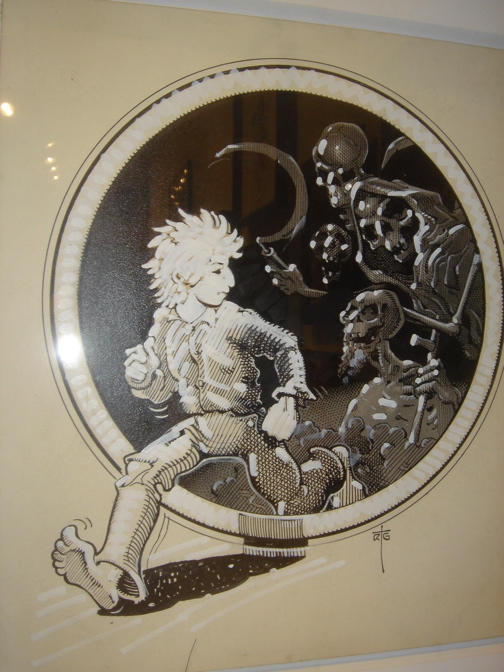
I Thought I Was Alone But The Past Was Just Behind
A Review: Reconstruction: America’s Unfinished Revolution
March 29, 2008
A Review
Reconstruction:
America’s Unfinished Revolution 1863-1877
by
Eric Foner
Review by R.E. Prindle

Eric Foner
Foner’s Reconstruction was originally published in 1988 some twenty years ago. Some water has passed under the bridge since then. For instance genetic advances have been startling. The role of biology in the various species of Homo Sapiens is becoming more apparent and clear. The question is now not one of prejudice but of science, of knowing. One imagines that Mr. Foner would have or should have incorporated these discoveries into his study. One might say that the study of history has been profoundly affected by the new findings.
Mr. Foner takes the old sentimental view of the race, or species rather, problem in the United States. While we may all agree that slavery is an evil that should never be tolerated in a society or be begun by one, slavery has nevertheless been ever present , even endemic, in human society for many thousands of years down to the present. Slavery has been practiced in every society on every continent, there are no innocents. There were slave cities in China at the beginning of WWII and there are those who say that current labor conditions in China differ not at all from slavery. Indeed there are tens of thousands of women and children serving as sex slaves on every continent at the present. Nothing is done about sex slavery, in fact, there is little or no publicity or protest.
Granting then that slavery is and has been endemic to human society, there is no reason to consider White slave owners in the South of the United States as worse than any other slave owners whether we are revolted at the concept of slavery or not. And, I might point out, not everyone is. As slave owners in Africa, for instance, had the right of life, death and mutilation over their slaves and the US slave owners didn’t it is clear that US slave owning was much more humane than the African. That’s not an awful lot to be proud of but, as I say, the issue of slavery in the world and in the US is not a dead letter yet. The future looks more bleak than promising.
While not unique, slavery in the US was characterized by one race or species being paramount and the other subordinate. A peculuarity of US slavery is that the slaves were classed as a sort of farm animal. I think it clear that we are dealing with two different Homo Sapiens species one of which is more highly evolved than the other. As the African was first evolved as all agree it would follow that the first evolved, the African, would be a predecessor to following more highly evolved human species. Thus the problem shifts from merely freeing equals to what to do with the less highly evolved species. That has been the central problem of Reconstruction past and present.
The reading of the human genome has proven the ongoing evolution of the human species to be true. The scientific fact or reality runs counter to human inner wishful thinking, at least White inner wishful thinking, that desires all Men to be equal. The majority prefer wishful thinking to reality. Reality must assert itself over wishful thinking however.
The myth that powerful White people went to Africa and ripped these poor defenseless Africans forcefully from their soil is also false. The slaves were legally sold by their chiefs to the Whites. It is erroneous to think that Whites were ever the uncontested lords of Africa. Until the introduction of modern firearms human physical realities were paramount and the Africans were physical equals. Europeans by no means have ever had a physical advantage. With the development of modern arms, military tactics and discipline Europeans developed a clear advantage over the mentally limited Africans. Still Europeans never had the will or were able to dictate to Africans in the manner that slave owners could dictate to their slaves.
The ability to command only came into existence briefly in the last quarter or so of the nineteenth century. African resistance movements began after this brief window opened and closed.
Whatever conception the average person has of Euroean-African relationships is certainly erroneous.
Now, the Africans who came out of the jungles to be taken to the United States were primitive beyond belief while all concepts of civilization as practiced in the United States were foreign to them The transition was no different than entering a parallel universe.
Indeed as Foner points out when the former slaves were encouraged to return to Africa, the return to the jungles after having been elevated by White civilization was no longer possible for them. The nation of Liberia created for them was not more enticing than discrimination against them in the United States. Those who could quickly returned from Liberia to conditions in the Reconstruction South.
The Southern planter who bought these slaves may perhaps be forgiven because he believed that he was dealing with a superior form of farm animal but a lower form of humanity- something between a cross of ape and human. I do not say this is true only that it was believed. As near as I can tell this was a common belief. Indeed, I know of no early African explorer who believed differently.
One has only to compare National Geographic photos of Africans from the twenties with current pictures to see that contact with Western civilization has worked a mremarkable transformation in the appearance of the of the African.
While African slavery began toward the end of the seventeenth century in the US importation was the heaviest from 1790 to 1860. A large number of Africans entered the country as slaves, albeit illegally, between 1810 and 1860. Thus at the beginning of the Civil War a fairly large number of Africans had had little time to become acclimated to civilization at the time of emancipation. Thus there were a fair number of literal savages that the North attempted to elevate over Southern Whites during Reconstruction.
Mr. Foner does not seem to take into account the impossibility of near savages and Africans who had been in slavery for actual generations becoming citizens capable of governing a heterogeneous population in a system that was completely foreign to their experience in Africa overnight if at all. This is to make no adverse reflections on the Africans as people. You might just as well take a homeless person from the streets and make him President of the United States.
The number of Africans in the South were almost equal to the Whites. In South Carolina, Louisiana and Mississippi the Africans were actually in the majority. Thus as Southern society disintegrated and the full weight of Northern bigots was thrown behind the Africans in order to subjugate the Whites there was a real recipe for trouble.
Nor was White society North or South all that developed in 1860 compared to that of today. Universal education was far from a fact with compulsary schooling still in the future. The University system was miniscule compared to the enormous industry of today. Illiteracy in fact was quite high North or South. Northern laborers in fact thought of themselves as wage slaves less well off even than the Southern Africans and this is too close to the truth to be lightly dismissed. Small White children were forced to work in mines, for instance, at wages that would have shamed an ogre let alone should have shamed an ‘enlightened industrialist.’ If that wasn’t child slavery then no African was ever a slave in the US.
So for the North to be condemnatory of the South was hypocrisy of the highest order. It is all in how you characterize yourself compared to the other fellow. Nevertheless there were different intellectual approaches to reality.
Mr. Foner, who is an Israeli citizen, has little to feel superior about himself. While Mr. Foner expresses great sympathy for the African while condemning Southern Whites, the Israeli solution to the Arab problem in Palestine makes one’s eyebrows rise, while they wish to expel recent Black African immigrants from the country so as not to pollute White Israelis. While condemning segregation in the South one can’t help but notice that Mr. Foner’s own Israelis have built a fence between Israelis and Arabs and allow no Arabs on their side. The Arabs are even Semites of the same human species as the Israelis and yet the Israelis call the Palestinians sub-human worthy of extermination.
The Israelis just pound their cousins to death too. I don’t even want to got into the detestable state of Lebanon. I suppose my question is from whence this moral superiority of Mr. Foner and his Israelis arises. His fellows even have terrorist camps like the ADL, AJC and SPLC that they run on American soil itself in order to control American opinion.
US race relations have never been anything like relations between the Israelis and the Palestinians or even between them and us. Thus while I’m sure that Mr. Foner has done quite a bit of research, at least as indicated by his footnotes, I’m not sure his vision is so unclouded as to make an accurate assessment of the facts. One feels what’s sauce for the goose is not sauce for the gander in Mr. Foner’s book and with his Israelis as well.
I’m happy that Mr. Foner has made a lucrative home for himself here in the US with a darn good paying prestigious job in the University industry. I don’t quarrel with his scholarship, such as it is, but I think his interpretation is a trifle suspect.
Exhuming Bob VII: Blowin’ In The Wind
March 26, 2008
Exhuming Bob VII: Blowin’ In The Wind
by
R.E. Prindle
It is commonly believed that Bob’s protest catalogue of the early sixties is related to the Civil Rights Movement. It is further believed that Bob changed his direction or emphasis beginning with Another Side. I’m going to suggest that there is only one side of Bob and that that is continous from 1961 through 1966 after which a discontinuity did occur.
I recently viewed a video of Bob performing with Joan Baez. The video was undated and did not identify the performance but was of the period when Bob wore the napkin on his head. The video is a performance of Blowin’ In The Wind at the beginning of which Bob dedicates the song to Hibbing, Minnesota. He couldn’t or wouldn’t have done that unless the song applied. It follows then that Blowin’ In The Wind has nothing to do with the Civil Rights Movement but to Bob himself. I never understood at the time how people could relate the song to Negroes but they did.
The character may have been projected on it by the expectations of the time perhaps even taking Bob by surprise. Then perhaps encouraged by Suze Rotolo he was able to convert his resentments against Hibbing and U. Minnesota into Civil Rights ‘anthems.’
Even such songs as Masters Of War and Only A Pawn In The Game can be converted into reflections of Hibbing. The masters of war would be enemies in Hibbing while his being arrested and sent to Red Wing would make him only a pawn in their game.
Even James Meredith at U. Mississippi can be converted to the experience of Bobby Zimmerman attempting to morph into Bob Dylan at U. Minnesota.
In an exchange on Lipstick Traces IX correspondent RM and I have worked out an interlocking set of songs relating to Echo Helstrom’s betrayal of Bob and the subsequent term spent at Red Wing Reformatory. I will try to write this up soon.
While Bob first puts his complaints in song from 1961-66 he merely shifted the emphasis from John Wesley Harding on when he added his current complaints to his repertoir.
In any event it is now possible to interpret his catalogue from 1961-66 as one unit addressing one set of problems. Of course William Zanzinger does pose a problem but one may be able to find his counterpart in Hibbing if one can find the necessary information.
If Bob ever gets around to Vols. II and III of his autobiography I rather imagine he isn’t going to go into much detail on this matter. We would rather find the answer on the pages of his autobiography than blowin’ in the wind.
Pt. 2 Greil Marcus In The Threepenny Review
March 16, 2008
Greil Marcus In The Threepenny Review
Part II
Greil Marcus At Sea
When in doubt consult the internet. It would seem that the USS Hull along with the Monaghan and Spence is a celebrated episode in Naval history.
A history of the movements of the Hull during the war is to be found on Wikipedia. There have been several Hulls. The one is question is DD 350. Fox News appears to replicate whatever Mr. Marcus saw on TV. That site may be found at HTTP://www.patriotwatch.com/
These sites provide us with dates to deal with. The Hull went down on December 18, 1944. Therefore Mr. Marcus was born on June 19, 1945 or possibly July 19.
The Hull was active during the entire war having a very distinguished record. On August 25, 1944 it entered Puget Sound for repairs. Although the biography says Seattle, I suppose that means the Bremeton Naval Yards on the West side of the Sound opposite Seattle.
Depending on whether Greil Gerstley had been with the Hull several years or only recently he obtained a much needed leave heading for the flesh pots of San Francisco. The leave was probably a thirty day leave so he had to back in Seattle sometime in October. He probably left the ship at the beginning of September or shortly after so he may have been in San Francisco about September 10th. If he met and married Mr. Marcus’ mother in September that was indeed a whirlwind romance. I don’t mean to be snide but after several years at sea Gerstley was ready for anything. And then he may have thought it’s now or never, unlike MacArthur I may not return.
The Hull put out to sea again on October 23, 1944 so that the newly weds had probably less than a month together so truly Mr. Marcus’ mother had little to tell him other than that his dad was a nice guy.
And then on December 18th the Hull caught a wave and wiped out.
Now, was any one person responsible as Mr. Marcus thinks? I think not. Unless Mr. Marcus has a verifiable alternate version the official version is that the whole fleet under the command of Admiral Halsey was taken by surprise by the typhoon. Halsey didn’t maliciously order the three DDs into the typhoon to see what they were made of. I feel certain there was no talk of a mutiny involving Gerstley or anyone else. The storm hit, the ship sank within a day. No possiblity for mutiny talk. No reason for it. Mr. Marcus’ imagination is overheated by the Caine Mutiny nonsense aboard, get this, a Minesweeper.
In Seattle he (the former Captain) was replaced by a martinet from Annapolis, a man so vain and incompetent, so impatient with advice from experienced sailors and sure of his own right way, that…twenty men went AWOL… in Seattle.
The above is from Mr. Marcus’ article. It appears that he believes that Capt. Marks (for that was his name) came directly from Annapolis to assume command. If so, that is an impossibility. DDs (Destroyers) had a Commander as Captain. I served on a DE (Destroyer Escort) which required only a Lieutenant Commander as Captain. To become a Commander one must have first passed through the grades of Ensign, Lieutenant JG, Lieutenant and Lieutenant Commander so that apart from possibly over rapid wartime promotion Captain Marks was an experienced sailor. What his commanding syle was I can’t say but I wouldn’t take Capt. Queeg of the fictional novel The Caine Mutiny as a model for Naval officers. If anything both of the Captains I had were over lenient. Twenty men going AWOL, apparently wisely, to avoid entering a war zone doesn’t strike me as unusual.
Now, when the storm struck it caught Halsey and his fleet unawares. More damage was caused than most minor naval engagements. Not only were the three DDs lost but another 26 ships were seriously damaged while the carriers had 145 aircraft destroyed.
So while it is tragic for Mr. Marcus that his father was lost at sea that was only one very small part of a natural disaster no different than a hurricane leveling a midwest town. Mr. Marcus should get over this feeling of official dereliction on Halsey’s part. There was a war going on, the ships were involved in an invasion of Mindanao. Good god, somebody is going to die.
As it was the Hull came off better than the other two ships. Only six survived the Monaghan, twenty-four the Spence, while sixty-two survived the Hull. Whether Capt. Marks was a martinet or not he managed to save the largest proportion of his crew. He himself says he stepped into the water from the bridge as the ship rolled over. Sounds OK to me.
Now, sailing Tin Cans through typhoons. DDs and DEs were called Tin Cans hence I or any who served on them are called Tin Can Sailors. The Hull was relatively small for a DD at 341 feet and a beam of 34 feet. The DE I served on was only 306 feet with a comparable beam to the Hull. The DDs I saw were all of the order of 400+ feet.
Except for the Hull the ships were top heavy having deballasted preparatory to refueling at sea. Refueling became impossible as the seas rose. It is quite possible that with a normal center of gravity the ships would not have rolled. The Hull is stated as having 70% of its fuel so it was riding lower.
Next, Mr. Marcus blames Capt. Marks for being an inept sailor making a wrong decision in a ‘trough.’
A this point let me say that myself and my shipmates are of the few sailors to have experienced an actual typhoon. At the end of 1958 we were ordered to sail thorugh a typhoon two days sail above Mindanao off the coast of Japan. As the rest of the squadron sailed around the typhoon one may conclude our orders were of the malicious sort. If you want the whole story see Part V of my novel Our Lady Of The Blues especially Clip on my R.E. Prindle blog here on WordPress.
What is a trough? A trough is the depression between waves. A ship will have a crest fore and aft and a crest on both the port and starboard. In our case the trough was actually a good sized valley perhaps a half mile in circumference. As I describe in Our lady at one time we entered a trough crossing over a crest and descending head first toward the bottom. This is a heartstopper because when the ship levels at the bottom the whole ship from stem to stern except for the superstructure is under water. I know that’s an impossibility but it is also a fact. Good god almighty, one doesn’t say prayers, one says: Hello Davy Jones, good bye world. I can get tears in my eyes just thinking about it. Like now. The water is always moving under the ship so troughs are not stationary. They may lift you relative to your stem and stern or they may lift the ship broadside up the whole height of a seventy foot wave then rolling you over the crest and into the next trough. That one give a whole noter idea on the value you place on your life. But I and the crew sailed into Tokyo Harbor on the ship.
The question is then was our Captain a good sailor? Yes, I believe he was, but no matter how good he was survival was always a matter of luck. There were times when we had no control of the ship, one factor or another could have been the end. Perhaps a gust of wind at an inappropriate moment.
The next question then is was Capt. Marks at least a good sailor. The large number of survivors of the the Hull relative to the other two ships would indicate to me that he was a conscientious Captain and heads up sailor.
Anybody who would cut their engines at any point in a typhoon should have his head examined. You cannot maintain control without power. Also you cannot ‘break out’ of a trough. If the commentators suggest the trough was ‘stationary’ I suggest that the commentators have never been to sea let alone been in a typhoon.
I think I can state that the Hull didn’t go down because of a trough. It rolled, hence it was ascending or descending a wave. Case closed. You can’t ride out a typhoon without ascending or descending waves.
It is tragic that the Hull rolled over and Gerstley was killed. Still, the man was simply doing his duty and like a million or so others had his head up at the wrong time. Mr. Marcus should be proud of his father. He wasn’t one of the cowards who went AWOL.
As far as this convention in 2006, sixty years after the event, I wouldn’t take seriously anything these eighty some year old guys said. I couldn’t even remember my last Captain’s name the day after I left the ship. I have recently learned from a website that his name was Dodge. I can’t ever remember my mouth forming the name Dodge and Captain Dodge doesn’t even look like the Captain I remember.
Crews shift and change so often one can remember only the handful of men you were in constant contact with, if those. First Division, of which I was part, must have had six First Louies while I was aboard and I can remember the name of only the first one, Mossbarger. I wouldn’t be able to recognize him today.
So, I would suggest that these old duffs were just trying to make Mr. Marcus’ cute young daughter feel good. Telling her what they thought she wanted to hear. Perhaps what her father told her to ask.
I’m sure Mr. Marcus’ father was as conscientious and heroic as he could be. He was a fine man who went down with his ship. Mr. Marcus should be content with this proud fact. Indeed, he has no choice. Make a virtue of necessity.
Personally, if I knew my ship was going to be involved in a typhoon I would go AWOL too. Surviving one once is all luck. I might not be so lucky the second time.
What the hell. Greil Gerstley helped us win the war. It was the peace we lost.
Greil Marcus In The Threepenny Review
March 16, 2008
Greil Marcus And His Problem Fathers
A Psychological Analysis
by
R.E. Prindle
Part I
Greil Marcus has a new article on his old theme in the Spring 2008 Threepenny Review. The way it is written it appears to have been a talk or lecture at some unidentified place. His obsession must be intense for while the theme is of an interesting psychological motif I don’t really understand why he thinks the theme is of such general interest it bears repeating so often.
If he’s looking for a psychological interpretation I am prepared to offer him one. It must be understood that I offer an objective analysis of that which M. Marcus has publicly aired. Whatever I say is based on what he says. No unkindness is intended. This version of his obsession is the fullest he has yet offered. To read the article go to: http://www.threepennyreview.com/samples/marcus_sp08.html
The main facts are these: M. Marcus’ father and mother met in 1944 during WWII. She had just graduated from Stanford in May or June. He, Greil Gerstley, came from Philadelphia. He was an officer in the Navy, apparently a full lieutenant so he may have been in uniform since shortly after hostilities began. They met in San Francisco which was crawling with Navy in 1944. M. Marcus either doesn’t know or doesn’t tell us but it would appear that as a wartime romance they met and married within a week or two. M. Marcus doesn’t tell us what Gerstley’s social status in Philadelphia was but it appears as though he came from an affluent background. We are left uninformed as to the time of year they met. I’m guessing September or October. Shortly after marriage the couple left for Seattle where Gerstley shipped out. He was subsequently lost at sea six months and a day before M. Marcus was born in the summer of ’45.
Approximately three years later in 1948 his mother married Mr. Marcus whose first name, I believe is or was Gerald. He apparently married the mother and adopted the son in one swift movement.
Thus, and this is crucial, for the first three years of his life of which he says he has only haunting memories, M. Marcus was Greil Gerstley. Even though he has only faint memories of the period this dual identity has left an indelible impression.
Now we get into what C.G. Jung calls the collective unconscious. M. Marcus is not responsible for any of his reactions. They all emerge from the true unconscious.
Gerald Marcus and his mother gave him siblings. M. Marcus’ half-brother Bill looks out for him and runs an internet alert. I have been in communication with brother Bill. In 1955 the family moved into a fine new home in Menlo Park, California. Menlo Park is a very affluent suburb on the San Francisco Peninsula so Gerald Marcus was a good provider. M. Marcus seems to have no complaints about his step-father. Indeed as Gerald adopted him on marriage it would appear that he was trying to sidestep unconscious psychological animosities by making another man’s child his own, at least in name.
Shortly after moving into the house in Menlo Park M. Marcus was toying with the radio and heard an announcement about American GIs fathering babies on Korean mothers and then abandoning them. M. Marcus immediately related that announcement to his biological father’s marriage to his mother and subsequent death that struck a subliminal chord related to the abandonment of the Korean children. Now the response is not rational but unconscious and fully explicable on that level.
At some later time M. Marcus saw David Lynch’s movie Blue Velvet. Certain homey scenes struck the subliminal chord of his father’s abandonment making him believe that the idyllic scenes were what he had lost with his father’s death or abandonment. He subconsciously perceived his father’s death or non-return as abandonment.
These are the facts for Part I.
In analysis there seems to be a sense of loss between birth and the age of three when his mother remarried. A blank spot in his life. When he questioned his mother (now deceased) about his father she had nothing to tell him as she had only known the man for two months or even less. Thus M. Marcus virtually knew this man he had never met almost as well as his mother. Whether he has been able to accept her statement or not he doesn’t make clear but there seems to be some doubt. Some nagging sense of the need for closure which cannot be obtained.
Now, M. Marcus carries the genes of Greil Gerstley and not those of Gerald Marcus. Therefore Gerald and his progeny must always have seemed foreign to him. M. marcus may have resented Gerald’s co-habitation with his mother. For instance my mother divorced my father when I was three although I have plenty of memories of my first three years, remarrying seven years later. I never thought about it then but I always resented my step-father having access to my father’s woman at the same time, my mother. The attitude comes from the collective unconscious and is not a conscious reaction. There is no defense against it. Therefore from three to ten M. Marcus probably suffered a degree of alienation from his step-father with some lingering resentment of his mother and that resentment was brought into focus in this new house when he heard of the abandoned Korean children. Even though his step-father was providing well M. Marcus believed, thought or hoped that his real father would have provided even better. Once again, the reaction was unconscious and could not be helped. Still this attitude must have distanced him from his step father a little probably causing some resentment on Gerald’s part.
When M. Marcus saw Blue Velvet with its idyllic opening scenes the subliminal message was that life would have been like that with Gerstley but that had been irrevocably lost when he ‘abandoned’ M. Marcus in the same way the Korean children were abandoned. I’m almost surprised that he didn’t change his name back to Greil Gerstley.
A secondary problem is with his mother. I suspect that he has a haunting feeling that perhaps Greil Gerstley may not be his father and indeed there is a chance that this is so.
M. Marcus makes a point of saying he was born exactly six months and a day after his father was lost at sea. but, he refuses to give us his birth date instead saying that he was born between VE and VJ days which leaves some lattitude. Nor does he give us the date the couple were married or the date Gerstley shipped out. His mother destroyed any letters received from Gerstley so that resource is missing.
Certainly apart from the wartime conditions of romance the hasty marriage might have implications. No one can now know but I suspect the fear haunts M. Marcus.
I know that children in his situation have real difficulties with their fathers. I have known adopted children who went to great lengths to locate a biological parent inevitibly being disappointed. For myself I never saw my father again but neither have I had real curiosity about him.
Greil Gerstley is gone from M. Marcus’ life and his is stuck with the frustrating situation of being able to do nothing about it except possibly accepting the fact that that was the hand fate dealt him. That’s how I’ve always dealt with this early part of my life. What can you do but play the cards you were dealt. Wartime conditions produce wartime results. What can anyone say or do?
Then one day M. Marcus almost miraculously learned the details of the day his father’s ship went down.
That in Part 2.
A Review: Exhuming Bob 3: Weird Old Greil Marcus
January 17, 2008
A Review
Exhuming Bob 3
Weird Old Greil Marcus
by
R.E. Prindle
We have a very interesting phenomenon here. Greil Marcus is technically a non-fiction writer. I don’t know if I can fully agree with that. I think I would classify him as a fiction writer using a non-fiction base. I always have the feeling of reading a novel. That’s not bad but it’s not non-fiction. This is nowhere more evident than in his amusing The Old Weird America.
The interesting thing is that he has managed to convince his readers that his personal vision of Al Capp’s Dog Patch is in reality true, or factual. Yes, I’m afraid Greil’s vision of America falls into the Anglo-Saxon baiting genre I noted in my essay Exhuming Bob 2-2: Detourning The Folks. In this effort Greil continues to make a specific minority of people look goofy damning the whole people in the process.
In this respect he is reminiscent of the movies of Adam Sandler and Steven Seagal. Both of these Jewish actors, Greil is Jewish of course, constantly put down non-Jews in their movie roles. In Fire Down Below Seagal goes into the hills of old Kaintuck to show the Anglo-Saxon Hillbillies how to stand up for theyselves.
Part of Greil’s success is that the majority of his readers seemingly are as unfamiliar with country music as he is. As I pointed out in Exhuming Bob 2-2 the majority of White Americans despise, to use the old and correct term, Hillbilly music.
That is what the performers on Harry Smith’s Anthology Of American Folk Music are. In a country of, shall we say, unusual ethnic musics it is difficult to understand why Hillbilly music should be considered quintessentially weird. Actually I’ve already explained it in Bob 2-2 but we’ll ignore that. Certainly the Country Blues of the Blacks, which is not so distant from Hillbilly, the Blacks had to learn somewhere and where closer than their Southern roots, is virtually unlistenable music. It take a lot of good will toward Negroes to sit through that stuff and that goes for the majority of Black Gospel.
The Klezmer music of Greil’s own Jews is some of the least listenable stuff available. If you want weird try Klezmer music of Weird Old Judaism. I could go on but I won’t.
The problem with greil’s reverence for Harry Smith is that he lacks background while having no real appreciation for the music. It’s too weird. Some of my ancestors came down from the hills of old Kaintuck so I was raised on Hillbilly music. I know most of the tunes of Harry’s Anthology without ever having heard the records. I mean, this stuff used to be played on the radio. Back in 1950 there wasn’t really all that much else to play. Heck, even guys like Hank Snow and Webb Pierce were just getting started. The great Hillbilly recordings of the fifties were still in the future. The world of the LP hadn’t even been thought of yet. 45 RPM records were introduced only in 1949 although they caught on fast. I remember the first spindle I ever saw with amazement yet. You just bought a spindle to connect to your radio. Amazing innovation. Unlike 78s, 45s didn’t break when you looked at them.
So, really, as far as Hillbilly went back then there wasn’t much else to listen to other than the stuff Harry collected. Patsy Montana’s I Want To Be A Cowboy’s Sweetheart could easily have made Harry’s collection if it had fit his particular psychosis. I mean, really, the guy was straining it, booze, drugs and all; living on the same street Greil Marcus would live on. That could unsettle an intellect…or two.
By the time Greil got hold of Harry’s compendium he was four or five times removed from the music, maybe more. He never talks about remembering Lonnie Donnegan so I don’t know if he knows him but Lonnie sang a lot of stuff as ‘weird’ as anything Harry Smith ever collected. I’ll even go on record as saying that old Lon was the greatest recording singer who ever lived. Yes, Sir, I would say that. He was that good.
Greil has Bob down in the basement mixin’ up the medicine at Big Pink which he surely was. Now, Bob goes back musically almost as far as I do.
He grew up in the same kind of semi-rural backwater. I mean, Little Jimmy Dickens held down the quarter hour Hillbilly show at noon right after the farm report on our local station. Little Jimmy was definitely Harry material if he had fit Harry’s psychosis. Little Jimmy sang such humorous, but ain’t they true, though sad songs, rueful actually, such as Take An Old Cold Tater And Wait and Sleepin’ At The Foot Of The Bed. I’ve been there done both those things so I didn’t think they was so weird. I knowed how it felt.
Having access to the same kind of midwest mega blaster radio stations that I had I’m sure Bob didn’t need Harry’s memorable compendium to give him any roots although he sure goes on like he did. Still, I think anyone who could sing Accentuate The Positive at four didn’t need Harry to give himself much help. There’s musical stuff going on in Bob Dylan’s mind that he cain’t even remember. I mean, that there boy’s got roots, roots down below the roots where they don’t even show and there ain’t nobody can never convince me other wise. Weird Old Bob they usta call him. Weird Old America. Weird Old Greil Marcus. Weird Old…well, just plain weird and old. I’ve been to both places and I’ll take weird over old. There, I said it and I ain’t sorry for it either and I ain’t goin’ ta ‘pologize to nobody neither. Don’t ask.
So, in point of fact bob’s got some weird old stuff running ’round his mind mixed in with the cocaine or whatever. Bob had seen a lot of movies. Weird Old Cinema, read some Weird Old Books. Weird old American stuff. Weird Old Jewish stuff; Bob was just into weird I guess. Sounds like it some times if you listen real close.
Greil locked onto this weird thing and began to run with it. Tom Wolfe did it lots better though. What was it the Tangerine Flake something or other. I can see the influence of Wolfe on Greil even if it’s not there. Remember that piece about the stock car driver? Compare that with Greil’s handling of Dock Boggs. There’s some real similarities there or I ain’t as weird as I usta be. Still just a Hillbilly boy though. You knowed that though didn’t yuh. I always like it in those hillbilly sharecropper movies when you can tell you’re dealing with real rural types when they say ‘knowed’ even though they look like they have a luxury apartment on Wilshire Blvd. I knowed that when I fust seen him. Yes, Sir, I did.
Greil creates this novelistic atmosphere out of his material but he doesn’t have the feel of the material. What did Bob say? Everything is phony. Actually Bob portrays himself as a better hick in Chronicles Vol. I. Some his book is OK.
So, really, I think Greil should have written after a couple of hours of reading Tom Wolfe. While the glow lasted he might have turned out some hot stuff; wouldn’t sounded any more authentic but the heat would have covered up the lack of authenticity.
Kandy Kolored Tangerine Flake Baby was pretty flashy but its a lot harder to do than it looks, even Tom Wolfe couldn’t keep it up but when he was hot he was hot like with that Hillbilly stock car driver. Loved it.
Even though Greil has made a terrific impact with Weird Old America very successfully detourning the image of Anglo-Saxon America in the direction he wanted it to go I’m afraid I’m going to have to give him his second C. If he had wanted to be more convincing he should have gone back to them hills of old Kaintuck and immersed himself in the culture for a weekend and made it his own. They got some snappy new modern motels now although yu can still find the old cabins if yu really want to do it up authentic.
End.
Exhuming Bob 2-2 Detourning The Folks
December 24, 2007
A Critique
Exhuming Bob 2-2
Detourning The Folks
Greil Marcus has written of detournment extensively especially in his Lipstick Traces. The French word means hijacking, rerouting or diversion, or in other words changing the direction of the flow or meaning. Thus one strips an object of its familiar values and replaces them with others but leaves the object intact. In a conflict of cultures the question becomes who will assign the values or meanings to objects and words.
I will use as a starting point for my purposes here H.L. Mencken of the twenties. The values into which immigrants migrated were those of the Anglo-Saxons. From the immigrant viewpoint the Anglo-Saxons detourned their languages and cultures attempting to replace them with English and Anglo-Saxon values. The inevitable result was that immigrants felt that they had been devalued and demeaned. So it is no wonder that having recovered some balance by the end of WWII they fought back by attempting to detourne Anglo-Saxon culture in their favor.
This is nowhere more apparent than between the Jews and Angl0-Saxons. No matter whether you place the conflict between the Old Dispensation or the New Dispensation the Jews always view themselves as a separate, independant and potentially dominant culture. Hence the drive is always first for autonomy and then detourning the host culture to reflect Jewish laws and customs, hopefully making Hebrew the official language. To Jews, like Greil Marcus and Bob Dylan then ‘freedom’ means the replacement of the Anglo-Saxon law and culture with Jewish law and culture with the Jews as arbiters of the fate of what become essentially subject peoples. The Jews can never be ‘free’ no matter how unrestrained they may be so long as they are subject to others legal and social systems. This is the central problem the United States and the West refuse to face. The same is true of the Semitic Moslems. It is the purpose of Moslems to detourne Western culture for a Moslem Culture. It is quite simple.
By the time H.L. Mencken was making his rise Anglo-Saxon pride was at its maximum. I haven’t been able to determine whether Mencken was Jewish but he allied himself with the Jews making common cause with them. The approach naturally was to defame Anglo-Saxonism. Mencken naturally chose the least sophisticated Anglo-Saxons to represent the whole. Thus he went to the mountain folk of Appalachia and the hill country all along the Line. He began to ridicule these people as representative of all Anglo-Saxons. I mean, he was mean; he was vicious; his Jews caused a huge fuss for much less criticism or in their terms- defamation.
Expanding the arena, using these rural folk as their model the Communists then picked up on these people with the least possibility of education as the example of Anglo-Saxonism. In 1932 and 1933 following Mencken’s example Erskine Caldwell, a Communist writer, published two mammoth best sellers, Tobacco Road and God’s Little Acre. These books were especially mean and vicious making Mencken look laudatory in comparison. Perhaps using Mencken and Caldwell as inspirations a Jewish cartoonist by the name of Al Capp created the L’il Abner comic strip in 1934. This strip also ridiculed Anglo-Saxons but in a less demeaning manner that not only didn’t offend the majority but actually pleased them. There were some few of us who saw through the sham but there was nothing obvious enough that the majority could see.
Capp would be convicted on a morals charge late in his career that effectively ended his influence. The motif was carried forward on television in the series Archie Bunker.
Now, the Anglo-Saxons used to represent the whole were the custodians of the Folk music that was so revered by the New York City Jews of the late fifties and early sixties. So you actually have Jews imitating Hillbillies.
The vilification the Mountain Folk endured actually shamed the city Anglo-Saxons causing a dichotomy in their character. They rejected the Mountain Folk as representing all Anglo-Saxons. This is made quite clear in Caldwell’s novel when his urban relative throws his rural cousins out of his house and tells them to never come back. Something like a son testifying against his father. The Liberal-Conservative split was given a difinitive form.
The Mountain Folk formed what Greil Marcus calls the Weird Old America. After the Roosevelt administration was elected and the New Deal was established as a continuation of the Wilsonian New Democracy Jews flooded back into Washington as under Wilson.
During the twenties as radio became a reality and recording technology became more widespread and available a number of Mountain Folk and/or White Trash as they were alternately known, recorded their distinctive music in their own voice. Nor was this music ill received, many of the recordings were huge sellers according to the standards of the times while some like Jimmie Rodgers and the Carter Family became very successful recording acts. Thus what was known as Hillbilly music until 1954 came into existence. For whatever reason whoever controls these things thought the term Hillbilly was insulting so the various rural flavored musics were grouped under the term, Country and Western. Hicks are hicks to me whatever you call them, Hillbilly or Country, I’ve been called worse. Having ancestors that came down from the Kentucky hills I have no objection to my Hillbilly ancestry.
The Anglo-Saxon dichotomy was such that those who were shamed by Communist efforts had an extreme aversion to Hillbilly or Country music that they considered ignorant while professing to admire the Blues simply because it was performed by Blacks even though the intellectual content was well below that of Hillbilly music.
Nevertheless the Hill Folk were the custodians of the old English folk traditions. Folk music was then separated from Hillbilly music and approved on that basis. Thus after the Roosevelt administration was installed in an effort to counter the Depression certain cultural programs were developed. One involved the attempt to preserve the quaint customs and music of the Hill Folk and the rural Blacks. These two peoples were treated as anthropological specimens on the same level as Tobriand Islanders and others.
The New Deal of the Roosevelt administration was a direct continuation of Wilsonian New Democracy. It was as though they’d never been gone. With the creation of a huge new bureaucracy Jews came flooding back into Washington as they had in the two Wilson administrations. In many if not most cases these people were the ones sent out to deal with our homegrown anthropological specimens as Superior to Inferior. Sort of a domestic Peace Corps. Yes, they did profess to revere the music of these simple folks.
So Folk Music always had an honored place in Anglo-Saxon cultivated circles perhaps spurred to some extent by the ‘field’ recordings of the New Dealers. Folk played a prominent part in popular music from the end of WWII on. Foremost practioners of the genre were the Almanac Singers and their successors The Weavers.
A key member of both groups was Pete Seeger. Pete was both Jewish and Red. This was a bad combination during the post-war anti-Communist reaction. While making hits of a number of Leadbelly songs under Seeger’s guidance The Weavers had a major success with the Jewish melody Hava Nagila. It was a catchy tune. I liked it.
Capitalizing on this success The Weaver’s under Seeger’s guidance concocted a ‘folk’ tune called Song of the Sabra celebrating Jewish ‘pioneer’ efforts in Israel. Apparently the Sabras were some kind of hobo outfit that sat around campfires and ate stew a lot. Thus the effort to detourne American Folk Music began. The Song of the Sabras was so egregiously promotive of Israeli/Jewish interests that the song caused a big reaction. If I remember correctly it was staged at least once on a TV version of the Lucky Strike Hit Parade. That’s where I got the camp fire bit as Pete roasted his weeny and sang. Whether it was an extra or supposedly in the Top Ten I can’t remember.
Somewhere about then Seeger and The Weavers were found to be subservice giving a bad name to Folk Music as long as the genre lasted in 1966 or ’67. The Weavers disappeared from the air waves. However at least one member would be instrumental in guiding the musical direction of the Kingston Trio.
Folk music continued strong between the demise of The Weavers and the emergence of the Kingston Trio both as popular music and ‘purist’ Folk. The greatest of them all was Lonnie Donegan who had a successful career in the US and a tremendous impact on the British scene from England to Australia as Skiffle Music. Josh White, Odetta, Harry Belafonte, Terry Gilkyson and the Easy Riders among others, one might add Mitch Miller, had many memorable folk tunes competing equally with Rock and Roll if not its superior. If one considers the Presley Sun recordings objectively they also can be seen as Folk or highly influenced by Folk. After all Elvis was known as the Hillbilly Cat.
The Kingston Trio with their Tom Dooley that was an actual sensation in 1958 sort of broke the taboo against Folk music although the Kingstons were plenty subversive. The great Chad Mitchell Trio emerged at this time also as an even more politically subversive group but also with a popular sound and enough bite to defuse Dylan’s claim to have introduced serious lyrics into popular music. The Chad Mitchell Trio is probably running neck and neck with the Kingstons as my favorite folk groups although Terry Gilkyson along with the Pozo-Seco Singers are right behind them. The old Seekers from Australia are hot stuff too.
So that brings us up to Grossman’s Gate of Horn in Chicago of ’58 and the founding of the Newport Folk Festival in ’59 as well as Dylan’s entry into the New York Folk Scene in ’61.
3.
After WWII the Jews had introduced the raw form of multi-culturalism designed to replace the Anglo-Saxon model of society with the Jewish. With the election of the Irish Catholic John F. Kennedy it appeared that the Anglos had been defeated.
The next phase of the Jewish program was put in place. The thing was to detourne or hijack American culture.
Detourning Folk music was part of it. The study of Dylan concentrates on the New York City East Village group that was virtually Jewish with its specific outlook. Actually the Folk scene was very diverse and different in its emphasis in each locale. Bob would focus the entire Folk movement in himself.
Boston with the Mel Lyman family and Jim Kweskin Jug Band, Geoff and Maria Muldaur was quite different from NYC. The strictly commercial LA scene with Randy Sparks’ New Christy Minstrels had its own flavor. In San Francisco Jerry Garcia, Robert Hunter and others had credentials that easily matched those of Dylan. The whole San Francisco Sound was Folk based.
The top bands like Kingston Trio, Chad Mitchell Trio and semi-pop groups like the Brothers Four and the Christy Minstrels really carried the banner for folk.
And then there was the Country or Hillbilly faction that was considerable. Great old tunes like Jimmy Brown The News Boy were Country smashes. Hank Snow recorded a passel of old Folk songs like Nobody’s Child. New murder ballads appeared for people who like that sort of thing that were fabulous like Snow’s Miller’s Cave and Lefty Frizzell’s dazzling The Long Black Veil. It would be years before it was known that Veil was newly written and not an old Hillbilly song. If you compare the Kingston’s Tom Dooley with Frizzell’s Long Black Veil you can’t tell the difference.
A word about Harry Smith’s Anthology Of American Folk Music that Greil Marcus and Bob Dylan revere so much. The collection is a very small selection of songs culled from a huge mass of material that just happened to fit Harry Smith’s personal psychosis. Anyone going over the same mass of material could select an entirely different selection of songs that reflected their own personal outlook and would be just as ‘authentic.’ I mean, I heard The Cuckoo and I Wish I Was A Mole In The Ground over the radio decades ago as a kid. I was signally unimpressed. I never called in to hear either again. So as far as being some authentic voice of America I rather think the collection reflects Jewish and Communist ideals.
What is the message exactly of ‘I wish I were a mole in the ground, I would burrow until I brought that mountain down.’
It that isn’t a call to detournement I don’t know what is. So Harry Smith is Harry Smith and welcome to him but I have my own agenda.
So Dylan left his old life behind to begin a new life in New york City but with an old agenda. His secret agenda was to detourne American culture. Of course the word ‘detourne’ was unknown in America at that time. I have to thank Greil Marcus for adding that very useful word to my vocabulary.
Bob started out detourning Woody Guthrie. Within a couple months he had hijacked Woody’s life. Clinton Heylin believes that even the Guthrie persona was second hand having been detourned from Jack Elliot who had of course detourned it from Guthrie. Boy, there was another stone bore I never could listen to, Ramblin’ Jack Elliot.
Dylan more or less confirms this in his Chronicles Vol. I. I’m copying a quote from Chronicles as noted by Jim Kunstler in his excellent review of Bob’s memoir:
http://www.kunstler.com/mags_dylan.html
Quote:
“You’re trying hard, but you’ll never turn into Woody Guthrie,’ (John) Pankake says to me as if he’s looking down from some high hill, like something has violated his instincts. It was no fun being around Pankake. He made me nervous. He breathed fire through his nose. ‘You’d better think of something else. You’re doing it for nothing. Jack Elliot’s already been where you are and gone. Ever heard of him?’ No, I ‘d never heard of Jack Elliot. When Pankake said his name it was the first time I’d heard it. ‘Never heard of him, no….’ Pankake lived in an apartment over McCosh’s bookstore, a place that specialized in eclectic, ancient texts, philosophical political pamphlets from the 1800s on up. It was a neighborhood hangout for intellectuals and Beat types, on the main floor of an old Victorian house only a few blocks away. I went there with Pankake and saw it was true, he had all the incredible records, ones you never saw and wouldn’t know where to get. For somone who didn’t sing and play it was amazing he had so many….Pankake was right. Elliot was far beyond me….I sheepishly left the apartment and went back out in the cold street, aimlessly walked around, I felt like I had nowhere to go, felt like one of the deadmen walking through the catacombs. It would be hard not to be influenced by the guy….He was overseas in Europe, anyway, in a self-imposed exile. The US hadn’t been ready for him. Good. I was hoping he’d stay gone, and I kept hunting for Guthrie songs.”
Unquote.
Of course the US hadn’t been ready for Elliot. One Guthrie was one too many. Who needed a Guthrie detourned by another Jew? Let the English have Elliot. But that didn’t stop Bob from detourning both Guthrie and Elliot when he got to the Big Apple. He followed Elliot around studying and copying his mannerisms. Elliot should have painted on his guitar the slogan: This machine kills copycats.
Well, no matter Bob learned his error when he learned another Guthrie copycat wasn’t needed in NYC but Bob had mastered a style, a persona on which he could build. That was more than he had had before.
Pete Seeger and the Jewish busybodies were busy fomenting discord in the South. Already knee deep in the Big Muddy Seeger was encourging others to write political diatribe songs. The path was clear and Bob met a girl named Suze Rotolo. Rotolo worked at CORE. She then encouraged Bob to write ‘politically relevant’ songs. Well, what are you going to do but go with the flow, swim with the current? Bob didn’t like the topical songs though. You have to give him credit for good sense there. He wrote literary style lyrics that talked around the political issues without dealing with them directly.
Now there were songs that other voices could sing.
As a lyricist Bob was not a tunesmith so he merely borrowed tunes from old ballads and other people. In other words he detourned Anglo-Saxon folk tunes grafting on Jewish sensibilities. Heylin gives a perfect example in an exchange Dylan had with Martin Carthy in England. Carthy showed him the old English ballad Greensleeves. Bob dutifully learned the song. Then he went away for a few weeks. When he came back he collared Carthy and played him Greensleeves. Here’s your Greensleeves he said. Then he played the tune set to the words of Girl From The North Country. Thus he detourned tune after tune to his own Jewish sensibilities.
Now things were heating up on the Jewish revolutionary front. The so-called Free Speech Movement was being launched at UC Berkeley.
As I mentioned Jews could never be ‘free’ so long as they were merely part of a dominant other culture. So ‘Freedom’ meant to them detourning the dominant culture so that their own law and culture was supreme. Freedom for the Jews meant slavery for everyone else. Thus we have Greil Marcus in the bleachers cheering his heart out at Free Speech rallies for ‘freedom.’ There were many of us in the bleachers much less enthusiastic. But then we weren’t Jewish and we weren’t clear as to what was going on.
Dylan as a Jew came to Berkeley to play where he was received as a hero by his fellow Jews. Both must have been aware of what they were doing. Jerry Rubin was the sparkplug whether Greil Marcus slyly disagrees with him or not.
The revolt at Berkeley soon spread to Columbia and the rest of the Ivy League and across the country where it meshed with Mao’s Cultural Revolution.
Dylan himself progressed from his political associations to Another Side of Bob Dylan in which he worked out his own personal problems in a Jewish social context in highly symbolic language. The lyrics are complex, poetical and not easily understood. the concept of ‘Freedom’ plays a prominent role.
4.
Freedom as the idea of a complete lack of constraints developed in the latter half of the twentieth century. Prior to this ‘freedom’ meant to be free so long as your own freedom didn’t conflict with the freedom of others. Latterly it has taken the meaning that others be damned so long as one can do what one wants. This entails the related notion: consequences be damned. Consequences won’t be damned so if one does the crime one must do the time. I suppose the notion is that if you can run fast enough you can avoid the consequences. I don’t know if one can but some have done a very presentable job of it. Mao was one, Dylan is another. Of course there was that one little incident at Redwing that didn’t work out too well but since then it has been fairly smooth sailing for Bob and he may leave the building without suffering too many serious consequences.
Now, in order to be free one has to dominate everyone else. If one is obligated to an other then one isn’t free according to this latter day interpretation of ‘freedom.’ In that sense in the entertainment industry Frank Sinatra was as free as anyone has ever been. The man need only place a call to anyone elses wife and she would leave her husband’s bed and run over and give Frank a blow job and there was nothing the husband could do about it. This is no joke. Sinatra could have anyone beaten up with impunity. When he was offended by President Kennedy, Kennedy was shot. There are those who maintain Frank had a hand in it. Never been proven but there are reasons to so believe. Frank Sinatra had ‘freedom’ while he escaped the most serious consquences dying in bed a very old man. Alone and despised perhaps but then one can’t escape all the consequences.
So while limiting himself to a field in which he could be successful Bob has perhaps been the most ‘free’ of the Rock ‘n Rollers. He never took on Frank however and if he had he would have discovered the limits of his ‘freedom.’ Although Albert Grossman may have limited Bob’s ‘freedom’ somewhat I find it interesting that Bob came out at least even in his brush with the current Hollywood hard-on, David Geffen.
Now, Bob wasn’t so free that he could achieve his goals without leaning on or being dependent on others. However to compensate himself he destroyed, trashed whoever and whatever he had used as stepping stones to achieve his ‘freedom.’ In the pursuit of his freedom he became a very vicious and nasty man.
There is no reason to believe that at the 1965 Newport Folk Festival he wasn’t trashing the whole Folk scene that he had used to get him to the launching pad of his Rock ‘n Roll dream.
The arguments about how or who brought Folk Rock into existence may well be interminable. The fact is that both Folk and Rock at the time were stagnant. Whether the music died in that corn field in Iowa in 1959 or not the big labels had pretty well tamed the music of the fifties. Columbia had separated Dion from the Belmonts and had him singing standards to syrupy instrumentals. Ruby Baby was his last great effort before Columbia detourned him. Safe teen acts and emasculated falsettos dominated the airwaves . By late 1963 and early 1964 the Folk ethic had worn out as Folk groups dressed in loden green pull overs and sang like the Brothers Four. Even the emasculated and detourned version of Michael Row The Boat Ashore couldn’t prop up Folk for long.
So musicians had to be searching for something different if not new. Folk Rock was as new as anything while the electric blues served as different. Thus as the middle sixties came in one had Folk Rock, the electric blues and rough sounding garage bands like the Seeds. Oh yes, that was another development temper tantrum teenagers screaming ‘I don’t want to be like anybody else.’ Not to worry.
Folk rock would have or did develop without any real help from Bob. He already had electric recordings out so that if he didn’t want to stick it in their ear he could have done an acoustic set at Newport and let his electric side take its natural course.
I’m not so sure even then that electricity was the problem. Personally I welcomed the electric Bob. I was glad to see him leave the Folk stuff behind. I was on the West Coast but I didn’t run into many or any people who were emotionally involved. Even Greil Marcus doesn’t seem to be put out by the change.
I think you had to be emotionally invested in Bob the protest singer. When that fellow in Manchester cried out Judas I would have to think that his problem wasn’t an electric guitar but the fact that Bob seemingly betrayed the political stuff he had been singing. He had pandered to the protest crowd and now he wasn’t letting them down easy. He was turning his back on them. Rathr than being the standard bearer of spokesman for the generation that he had let them believe he was he now trashed everything they believed in. They had given him his and now he didn’t need them anymore.
His whole career was based on trashing his believers. Not that I understood any of this at the time. I didn’t even know about it and if I had I wouldn’t have cared.
Positively Fourth Street was his ‘kiss my ass’ song to all those Folkies he had used and abused and now abandoned.
An interesting aside that could use closer examination was his visit to Carl Sandburg in 1964. All the biographers assume that Carl Sandburg snubbed Bob because he hadn’t heard of him. Maybe, I can’t say but it is significant that Sandburg was a folksinger himself or, at least, he sang folk songs. While Bob and Greil are enthusiastic about Harry Smith Sandburg himself had published his American Songbag in 1928 and then followed it up in 1950 with a new collection. Unless he was brain dead in ’64 there is little reason to believe he hadn’t maintained his interest in folk into the sixties and kept up with it.
After all the Christies were doing a number of songs from the 1928 Songbag so Sandburg must have experienced great satisfaction that everything he had been hoping for had come to pass. I don’t know his singing style, and he did publicly perform the songs, but I suspect it was more Christy style than the cacophony of Bob.
I don’t think it improbable that he in fact knew exactly who Bob Dylan was, had probably heard him on record and/or the radio and fully detested him, so that when he opened his door and found Bob Dylan, let us say the folk devil himself, standing there he just froze. It would be nice to know exactly what was said. I think it unlikely that he would have been familiar with Paul Clayton but as Clinton Heylin suggests if he had dropped the needle into the groove there is little doubt which record would have been played through.
If Sandburg had shown any preference for Clayton at all for any reason, manners for instance, there is little doubt that that sealed Clayton’s fate with Bob.
If It’s All Over Now Baby Blue was a put down of Clayton which seems likely then the odds are that it was resentment over something that was said or done at Sandburg’s is the reason.
That would have been added to the fact that Bob had stolen a couple tunes from Clayton that required the trashing of the man in ’64 to cover up the evidence. One can’t hold it against Bob that Clayton committed suicide, after all, we’re all big boys here, but he must certainly have contributed to a deteriorating mental state.
The trashing of Joan Baez also at this time doesn’t require further comment in this place. Suffice it to say that Bob had taken hers to keep with his and now it was her turn for the circular file. It is hard to believe Bob didn’t enjoy what he was doing amidst the flashing gongs on the road to ‘freedom.’
In ’66 Bob’s mind broke. He had what used to be called a nervous breakdown. In his terms a motorcycle accident. There was a long recovery period of several years. I certainly don’t hold the nervous breakdown against him. He was pushing too hard. Even if he had been straight he would have become distraught, but under the influence of what all his biographers agree were monumental amounts of drugs washed down with quantities of alcohol it is a wonder if not a miracle that he lasted as long as he did. Apparently he was driven to complete the sound in his head and vomit out all his rage accumulated up there in the North country before he cracked.
When he went down he went down hard but in pleasant enough circumstances.
Why he came out isn’t clear unless it was to trash his fans. It didn’t take much for me to catch on back then but then on the first hearing of Blonde on Blonde I realized he’d ridden his board all the way to shore. From there he would have to start all over again while he would never catch a wave like that again.
Bob still had a lot of past to bury though.
He achieved this in spectacular fashion in 1975 on his Rolling Thunder tour as an overseer on his very own Maggie’s Farm. The tour mayby be considered as a vision of Plantation Bob. And he was a sadistic overseer too.
As Heylin points out the shows were over four hours long while Bob may have been on stage only a few minutes to a half hour or possibly a little more. Thus his cast of characters were slaving on Maggie’s Farm while Maggie or Bob showed up from time to time to make sure his darkies were singing as they slaved. A very good joke. If you step back and look at it the gig is pretty transparent.
Now, Dylan asked people if they were for it. As the only ‘free’ man in the group Bob had no trouble in getting his victims to come on board his ship that had just come in. The performers couldn’t have been paid much if at all. The payroll and expenses of such an extravaganza couldn’t have been recouped at all. If there was any money left over it went into Bob’s pocket.
Bob reached way back in the past to bring Ramblin’ Jack Elliot aboard. Bob owed Elliot a lot so the old man had to be trashed. McGuinn was brought along because he had traded on Bob’s talent or else had done such sparkling versions of Bob’s songs that he had made Bob look bad.
Phil Ochs wasn’t allowed to come along not because Bob had pity on his fragile mental state but simply because Bob didn’t owe him anything. If he had had reason to trash Ochs you may be sure he would have.
One may guess that he was already finished with Sara, his wife, as he not only allowed her to come along to witness his degenerate behavior but actually cast her as a prositute in his movie Reynaldo and Clara. One just doesn’t allow the mother of one’s children much less a woman one respects to play a prostitute. I find it unforgiveable while Sara took him for much much more than thirty-five million if Heylin and Sounes are correct which is pretty good wages of sin.
As if that wasn’t enough Bob brought along his old inamorata Joan Baez to confront his wife, Sara. Gratuitously cruel and unnecessary so I suppose Bob was attempting to trash his entire pre-1975 past. Like a snake shedding his skin he was attempting to begin a new existence.
Here his Frankist upbringing rose up to bite him because you can’t pour out that quart and half of evil. As Bob said you can change your name but you can’t run from yourself. Bob wasn’t released and one can never be released, only the truth can set you free. You have to come to terms with yourself and acept things as they were and are. Even then your freedom is conditional; at best you are only out on parole. You can’t trash reality.
End of Exhuming Bob 2-2
Exhuming Bob 2: With One Hand Waving Free
December 19, 2007
A Critique
Exhuming Bob 2:
With One Hand Waving Free
by
R.E. Prindle
TEXTS
Scaduto, Anthony: Bob Dylan 1972
Shelton, Robert: No Direction Home 1986
Heylin, Clinton: Behind The Shades Revisited 2000
Sounes, Howard: Down The Highway 2001
Marcus, Greil: Articles and Essays.
Prindle, R.E.: Essays
Come on, give it to me,
I’ll keep it with mine.
-Bob Dylan
Time to tackle a few basic assumptions. For instance what is the conception of freedom as entertained by Bob Dylan and latterly his alter ego, Greil Marcus. Both are Jews so freedom must be examined in the context of the Jewish understanding of the term and contrasted with the Gentile understanding.
With the emergence of the supremacy of cultural differences in the United States made stark by the doctrine of Multi-culturalism such a definition seems to be demanded. Cultural expectations are quite different. What is freedom for Jews is not freedom for others. My concept of freedom differs markedly from that of Dylan, Marcus and their fellow Jews.
As is pointed out by both Sounes and Heylin Dylan’s given Jewish name is Sabbatai. That means that his father was probably of the Sabbatian-Frankist Jewish sect. This sect holds that the messiah can never come until the Jews have expelled all the evil from their souls. Therefore they should commit any and all crimes in the effort to purge their souls of evil. In other words apparently according to Frankist beliefs there is, oh, about a quart and half of evil in a Jew which once that is poured out their souls will be purged of evil.
In his 12/30/04 review in Rolling Stone of Dylan’s Chronicles Vol. I Greil Marcus quotes Dylan recollecting a saying of his father:
Quote:
“My father,” Dylan writes of Abraham Zimmerman, “wasn’t so sure the truth would set anybody free”- and those words sound down through the book.
Unquote.
Marcus goes on to say:
Quote:
This isn’t just the stiff-necked Jew turning on Jesus pronouncing that “the truth shall set you free.”
Unquote.
Thus we are led to the core of the issue. If the truth won’t set you free, what will? This seems to be an internal Jewish problem as at the time Jesus is quoted he was merely an itinerant Jewish prophet speaking solely to his fellow Jews as a Jew while demanding recognition as a prophet.
It is often forgotten that prior to Paul’s universalizing of the teaching of the Jew, Jesus of Nazareth, the Jesus cult was confined to the Jews.
The Jewish Jesus cult only became Christian after it was grafted on to the Greek Kyrios Christos cult and therefore became Christian through the association with Aryan Greek religious thinking. Christos means merely the Expected One, the same as the Jewish term Messiah and the Moslem Mahdi. Who are you going to believe, right?
So, the question is what Truth did Jesus have to offer to his fellow Jews that would set them free and free from what? This seems to have been a problem that Abraham Zimmerman was pondering. As he was most likely a Frankist the struggle would have been between expelling the quart and half of evil by committing it while rejecting ‘the truth’ as expounded by the Jewish would be prophet, Jesus of Nazareth.
The Jews reacted violently to Jesus and his message causing his death, then persecuting his following attempting genocide on them. So whatever ‘truth’ Jesus sought to impart to his fellow Jews was thoroughly rejected.
Symbolically Dylan whose personality was divided between the goiish world of Hibbing and the Jewish world of his father speaks of ‘dancing with one hand waving free.’ Which hand?
There is quite obviously a terrific conflict going on in Dylan’s mind from then to now. Not only was his father probably a Frankist but Bob was sent to a Jewish summer camp over several years. This was Camp Herzl. Theodore Herzl was the founder of the Zionism that captured the Jewish identity in the twentieth century. Bob attended those camps in the decade or so after the realization of the Nazi extermination camps. He must therefore have been indoctrinated with the paranoia of post-war Jewry. When he is described as ‘plenty Jewish’ he obviously endured heavy indoctrination with the endless showing of heaps of dead bodies being pushed around with bulldozers.
So then, ‘one hand waving free?’
As Jesus’ message to the world was that God so loved the world that he gave his only begotten son this notion was in conflict with the traditional Jewish notion that God so loved the Jews exclusively that he made them his chosen people. The plea of the Jewish prophet Jesus of Nazareth to his people may well have been to come out of the isolation of their chosenness to join the rest of humanity and become ‘free’ of a ridiculous prejudice. This the Jews refused to do choosing to eliminate the messenger instead.
Abraham Zimmerman obviously understood this but chose the Frankist approach rather than the Jesusite. As Greil Marcus so aptly noticed he seems to have been successful in passing this notion on his son. Bob himself, it seems to me, has lived his life in the most represhensible manner running roughshod over everyone, indulging his evil impulses.
A key issue that Heylin emphasizes is what happened in the summer of ’59? This was the summer of Bob’s graduation and a year before he spent the summer in Colorado. The period seems to have been one of extreme psychological turmoil as Bob’s Jewish persona took over his life.
It seems pretty obvious that Dylan committed some crime around his graduation for which he was sent to the Redwing Reformatory of Minnesota. Heylin accepts Beatty Zimmerman’s explanation that Abraham for some reason voluntarily sent Bob to a reformatory in Pennsylvania. This makes no sense to me. As we know Bob committed more than one theft in the year after he began at U. Minnesota. I think it more likely that he appropriated something of someone else in Hibbing and ‘kept it with his.’ What it could have been must have been pretty serious to send a first time offender to the reformatory for a couple months expecially at the age of 18.
It seems possible if not probable that the offence was not Bob’s first and that he had been let off with a warning on earlier offences. At any rate Bob wrote a song concerning the walls of Redwing. It would seem likely that he was familiar with them from the inside.
If so he didn’t learn his lesson as he took to theft at Minnesota. It is also interesting that he also sang ‘why am I always the thief?’ The Pankake record theft at Minnesota was a most ill-considered and egregious theft as the material ‘kept with his’ led directly to him. Bob continued his thefts in Colorado where when the police were called, according to Sounes, he went into a real panic. The panic may have been caused by the fact that if the Minnesota police history became known, as a second offender and an adult, he may have been facing a more serious sentence and that in the men’s prison rather than the boy’s reformatory. Realizing he had outworn his welcome Bob skipped back to Minnesota.
When Pankake was tracking Bob down he discovered that a lot of people were looking for Bob. Why would they be looking for him? Either he owed them money or they too were missing something that Bob was ‘keeping with his.’
Whether Dylan actually wanted to go East to meet Woody or whether the times were changing enough that it was opportune for him to skip Minneapolis requires further investigation but it is probable that it was time to move along.
His mental turmoil was such that people posted an unwanted sign upon their hearts whenever he came around. Heylin quotes Bonnie Beecher concerning an incident that would have made me want to leave the planet. Apparently in mid-day Bob got so drunk that he collapsed in the middle of a campus sidewalk soaking in his own vomit. Beecher was more than a good friend to him in helping the besotted boy to his feet. When Dylan later described his song Like A Rolling Stone as pure vomit his mental state in both instances must have been the same.
At any rate at this point Dylan took his problems to New York City where he began to live out the most improbable of fantasies although in an almost 100% Jewish milieu.
2.
Go to: Exhuming Bob 2-2 Detourning The Folks
Exhuming Bob: The Jewel In The Forehead Of The Toad
December 11, 2007
Exhuming Bob:
The Jewel In The Forehead Of The Toad
By
R.E. Prindle
I ride on a mail train; can’t buy a thrill.
-Bob Dylan
Bob Dylan. How did this guy get into my life? As someone said of Hank Williams: Bob Dylan sang my life. Up to a point. How he could know so much about me is totally unbelievable. I’m three years older than Bob which is not all that much, especially at this age. Our mental states were quite similar while we were working out our mental problems in somewhat the same way, not that Bob had ever heard of me but one of the hazards of exposing yourself on records or in print is that kindred spirits recognize each other. One of the occupational hazards, I suppose.
I’m going to use as a starting point Dylan’s record of Mixed Up Confusion. I must confess that I had never heard the song until a couple years ago. I had bought three copies of Biograph when it came out but never opened one. I bought all three copies as an investment and that turned out to be one lousy investment. So after twenty years these sealed copies weren’t listed for much more than I paid for them so I didn’t think I’d be losing much by opening one. It was then I first heard Mixed Up Confusion. Was it a revelation you ask? Hell no. It was just a noisy song. But as I was sitting watching the river flow and reading Greil Marcus’ Lipstick Traces it occurred to me that the book needed some constructive criticism so I gave it. You may have read that criticism right here on this blog. Then having the kind of mind I do I had to read the rest of Marcus so as to make knowing and intelligent comments on the guy. Marcus reopened the subject of Dylan in my mind. I dismissed the guy a few years ago, right after hearing Mixed Up Confusion. I had to start thinking about the Bob again because I couldn’t figure out exactly what I used to see in him.
Bob and I first made extra-sensory contact back in ‘64 and as you are well aware this is ‘08. A lot of water had flowed by in the river and under the bridge while I was sitting and watching it since way back when.
In the interval I had worked out my mental problems even integrating my personality according to the tenets of C.G. Jung. I’ve got the same old face, and getting older, but I’m a different guy.
Here’s the rub. I lived by Dylan for maybe five years from Blonde On Blonde until my life began running so fast I had too many other things to think about. Greil Marcus raised some irritating points about Dylan that made me regret my former adulation. Now, this created a small problem because I love my life and I have the notion that I have perfect taste and that whatever I have ever liked I must still like or I don’t really have perfect taste. You can see how Marcus put me up against the wall. Another one of those extrasensory contacts. And there was Bob getting more ambiguous by the moment as Marcus plodded on.
Damn near threw me into a panic.
So now I had to develop a new perspective for my infatuation of the toad with the jewel in his forehead. That’s how I look at Bob now. Well, you know, I’ve read most of the books on Bob, not so much reviews or interviews so that I have the means to analyze this prime influence on my young manhood.
I’m standing in my library when my hand fell on a Dylan book I bought some time ago. It occurred to me that maybe I hadn’t read this one yet. The book was the Rough Guide To Bob Dylan by Nigel Williamson. English fellow, obviously never been to America. Nigel had a pretty good handle on Bob so my mind focused on the jewel in Bob’s forehead. Mixed Up Confusion. This was where Bob was at in 1962. The rest of his career is the working out of this song. Trying to clear up the confusion. Get Straight. Walk like a man and the words of that tune..
Not enough attention has been devoted to Bob’s boyhood in Hibbing although guys like Howard Sounes in Down The Highway: The Life Of Bob Dylan have made a stab at it. Nobody has touched on the real source of Bob’s malaise though. I mean why was he living in mixed up confusion? His songs give off hints that could be investigated by someone in the right frame of mind but it’s not going to be me. I’ve got other things to think about. I’ve got my own life to live. Bob does generously provide the lyrics on his web site however for anyone interested.
Obviously the early years were not so happy as they could have been. Bob had difficulties with his mother and father; nothing too egregious but one gets the notion that perhaps Bob thought parents and child were mismatched. Should have been born to someone else. I live with that feeling too. Bob and I both knelt at the same altar praying: There must be some way out of here… But just through that door over there and when it closes behind you you can’t get back in. I didn’t design this place I just live here.
How well he got along at school isn’t absolutely clear but it seems that no one felt any compunction to take Bob at his word which should be the finger on the sign pointing: This Way.
That Bob had time on his hands is obvious by his listening habits on the radio and his reading habits. Bob took it all in as did I. Country, Rock, Swing, Folk, Easy Listening. He doesn’t seem to remember the Folk very much but he must have heard those Harry Smith songs before if he crawled all those late night country stations beaming up on a million watts or so from Del Rio, Texas. He must have got Waterloo real clear. One of the great country stations of the Midwest. I don’t know if he could get WCKY in Cincinatti O-ha-o, as the announcer always pronounced it up there in Hibbing or Wheeling West Virginia. Boy Wheeling used to play some unusual items. Came in pretty clear in Michigan where I lived. Carter’s and all that? Old hat.
So I don’t know what blew his mind so much when he got to Dinkytown down at U. Minnesota. Atmosphere I guess. The hip thing was pretty heady. Tickled my fancy.
I’m totally amazed he was blown away by Woody Guthrie. Never had much use for Guthrie myself. This machine kills fascists! Who the hell ever saw a Fascist in America? I never did and I looked. I was curious. I wanted to find one.
Read Bound For Glory too. Left me cold but then that’s a matter of taste or perhaps temperament. Anyway Bob’s got all these musical influences rolling around in his mind and he meant to do something with them. He took off hitchhiking for NYC in the middle of a Minnesota winter. God, what balls. If anything got him into the Hall of Fame that must have been it.
I’ve done it. Not Minnesota but over on the Illinois, Indiana, Michigan side. Must have been out of my mind. Well, just young and dumb, but even that’s no excuse. I bet Bob feels the same way. There I was in three feet of snow with trucks going by at fifty miles an hour. Rearranged my own personal snow bank every time it happened. But this isn’t about me, well, actually it is but only in relation to Bob.
This hitchhike through the winter wonderland must have left an indelible stamp on Bob’s mind. Did mine. Made him cold. Bitter. Put bite into some of his songs. Tears of rage. Hello New York City sayonara Chitown. Boy, there’s two places that’ll give you a vivid impression of mankind. Did me.
Bob was there at the creation of Rock and Roll and it was a life changing experience for him. Some guys like Eddie Cochran and Ricky Nelson could settle into quick and easy imitations but Bob had trouble sorting our his influences and making a sound that was his own. Landing in Greenwich Village and its vibrant Folk scene, if some of those guys can be called vibrant. I’ve got a whole collection of their records and some of ‘em are so dull they make Bobby shine.
So Bob settled in doing things like Talking New York and other folkie stuff as he put his musical roots down coming up with Hank Williams influenced Folk stuff. He was doin’ all right too but he couldn’t forget those Rock and Roll rhythms.
So just as he was drolling out Folk anthems in ‘62 he went into the studio and did this strange Rock and Roll record called Mixed Up Confusion. Tryin’ to be Elvis Presley. Sun years. Hot licks and all that jazz.
So Mixed Up Confusion is not good but it’s not bad either. All his miserable past is focused into that song and all his magnificent rise emanates from it. The song is a knot. It’s like when I first started writing. I could tell my whole life story in three Ernest Hemingway style sentences. Brief and pithy but there couldn’t possibly be that big a demand for a haiku on my life. I’d have to kind of elaborate, get loquacious, a little. That’s what Bob did after Mixed Up Confusion. He began to elaborate. Stretch it out. Separate those musical strands. Mercerize it whatever mercerize means. Seen the world somewhere. Memorized it. This might be the appropriate time to use it; might not.
2.
Now, I only heard the song in 2005 but in the way memory works I was able to shift it from here to there so that me and Bob was in two places at the same time together. You know, we went to the same school together at different times. It was a lot easier to do than explain.
Bob and I began to work out our problem in the same way, he singing, me listening. See, I told you it was easy. First though Bob had to dump those Folkies. He was made of stiff stuff though. It was a lot easier for him to do it than it would have been for me. But he was gonna climb that mountain no matter how high. When you get to the top you’ve left everyone behind anyway. I’ll say I know but that wouldn’t be 100% true. Wouldn’t be a 100% lie either though. Kinda half way between the pillar and the post. You could kinda reach out and touch each one with your hands. Have to be kind of a contortionist though. I saw a guy once who could fit himself into a shoe box, big shoes, cowboy boots, size nineteens, but I never wanted to emulate him.
So Bob had been laying this folk stuff on the people pretty thick. They believed in him. They thought he was sincere, didn’t bother to ask. But he got himself a hot electric band and showed ‘em what boogie folk was. That’s when the sh.., uh stuff, hit the fan. It was messy. Got all over everybody. But Bob was kind of a Magic Man. He survived it. Prospered. Took more balls than I got to do it though.
They booed him. Loud. Shouted things at him. Like, Judas and Traitor and Go Home. He said he didn’t believe them but that must have been sheer bravado. They had their point. Well, don’t look back as Farragut said in Mobile Bay. Full speed ahead boys. Let ‘em deal with this.
Bob knew a thing or two about himself, if you know what I mean. He was beginning to sort his Rock and Roll ideas out. Tears of Rage. All the anger and frustration of his youth was finding a vent. The mood was terrific, who in the hell cared what it meant. If you wanted your songs to sound heavy but mean something plain you could borrow the Sound of Silence from Simon and Garfunkle.
He was beginning to be able to project his vision of Rock and Roll. It would appear that he wanted to create an entirely new paradigm as he does manage to sound different but retains similarities to both Presley and Little Richard, two of his major influences. The tentative gropings of Bringing It All Back Home progressed through Highway 61 Revisited to full realization in Blonde On Blonde. Rainy Day Women is a weird and raucous vision of Rock music but in reality is neither fish nor fowl. The general reaction to Blonde On Blonde was one of puzzlement. The music of Rainy Day Women was repellent to most while the lyrics of that summer of ‘66 were impenetrable. Nobody and I mean nobody had any idea of what Sad Eyed Lady Of The Lowlands was about. Still Dylan’s vision of Rock was loose and exciting.
Bob Dylan had also reached a plateau with the release of this his major opus. He had realized or perfected the style. No farther development was possible. The rage and resentment that had fueled the music even perhaps psychotic had reached a culmination.
Thus in the summer of ‘66 Dylan had no place to go. I presume he was out of ideas hence his accident and retirement.
The summer of ‘66 was traumatic for the Dylan, myself and the country. While Bob’s new record lay on the counter waiting to be bought on July 13th Richard Speck committed a horrific crime in Chicago. He ritually murdered a passel of nursing students. At the time the memory of Kennedy’s assassination was still strong. At the time he was shot there were people who thought and said that the assassination would release an epidemic of murder. I don’t know that Speck had any relationship to Kennedy, perhaps his killing was merely a harbinger of the murderous unrest stalking the land.
I had just graduated from Cal State at Hayward that June of ’66. I was taking graduate courses at UC Berkeley. Twenty-eight years old at the time. The Dylan record had hit the stores at the end of June. Now, the record was psychologically disturbing and unsettling by itself. Records were the generation’s means of expressing itself, replacing the movies of the previous generation and books of still earlier generations, so Blonde On Blonde had earth shaking qualities not present in CD s today. Not only did Blonde On Blonde erupt in that memorable summer but Procol Harum, Cream and Canned Heat first emerged. All exhibited a new form of craziness what with Cream’s I Feel Free and Canned Heat being named after a drug substitute. The following June, The Summer Of Love would see the release of the even crazier record Sgt. Pepper’s Lonely Hearts Club Band by the Beatles.
So we were reeling from Speck’s astounding crime under the influences of the psychotic or near psychotic Blonde On Blonde when two weeks after Speck Charlie Whitman barricaded himself in his tower and opened fire on the world or at least as much of it as he could reach on the University of Texas campus. Whitman killed or wounded dozens.
At the time I was cracking my brain trying to learn a year’s worth of Latin in an intensive six week course while trying to prepare for a move to graduate school at the University of Oregon.
At the same time Bob was working out his rage and hatred in full view of the world with what were actually night thoughts I was privately doing the same under the influence of his lunacy as he exposed himself on records. I was still hurtin’ every single day searching for my own release and the way out of from where I was at. I was strange enough, hair parted in the middle getting longer by the day, to feel some affinity to Speck and Whitman as well as Dylan. Whatever I saw in Dylan I saw aspects of in Speck and Whitman. Dylan did too; at least he said so at an awards ceremony setting his audience on their ears. I know what he was talking about and everyone in that audience should have too. No man is an island, send not for whom the bell tolls, it tolls for thee.
3.
In the summer of ‘66 the so-called Free Speech Movement at Berkeley was in the mopping up stage. The new paradigm of ‘Freedom’ was in place at the home of the Golden Bears. The obscene rag The Berkeley Barb was being hawked on the street corners and wherever. The homeless and runaways were throwing down their sleeping bags in doorways creating the new street sitcom of the Brave New America.
The man who dubbed what went before as The Old Weird America had graduated from US Berkeley that very same June of ‘66. He was on his way over to San Francisco to become the reviews editor of the new journalism espoused by The Rolling Stone, the most successful of the generations publishing ventures. The San Francisco Oracle published for a year then disappeared.
I gathered my things together and headed North to the land of perpetual overcast, Oregon.
While I was familiar with Bringing It All Back Home and Highway 61 with the addition of Blonde On Blonde I began to immerse myself in the three records for about three years. I listened to a side a day every morning when I got up. I know that when Bob talks about his hour of darkness he really means his whole life. That’s what I would mean by it. That’s what I meant by it. It wasn’t a question of not dark yet it was a question of when is the sun going to shine. I was trying to stay on the sunny side of the street but I just couldn’t figure out which side was it. It was going to be dark for a while yet.
Those Dylan years were dark years for me. Probably as dark as it has ever been. Let’s hope so because I don’t want to go there again. But I suppose I have to thank Bob for steadying me through the dark period. Apart from the stray line popping up in my memory from time to time I cannot remember the lyrics of a single song or could I quote a whole verse. The titles were terrific though and I remember a lot of them. Whole novels were in those titles. Whole novels were in many of the lines. I responded to the title It Takes A Lot To Laugh, It Takes A Train To Cry. How great. I didn’t need the song that rumbled and loped in the background of the thoughts it released. The tone and mood were the perfect background to the darkness swirling in my mind. Occasionally a line that was another novel in itself would break in like ‘I ride on a mail train, baby, can’t buy a thrill.’ One more line and I would have had a trilogy. Possibly I could have named the trilogy The Weird Old Greil Marcus. I might yet.
4.
Here’s Greil Marcus forming this weird extrasensory relationship with Bobby. Marcus gets himself all wrapped up in the lyrics of Like A Rolling Stone; begins to live his life like it’s the fifth gospel right after John. I mean, Dylan’s good, but…
Dylan had an effect on a lot of people not least Greil Marcus. Marcus had seen Dylan in ‘63 in Philly and was blown away. He attended several concerts between ‘63 and ‘66 each apparently a religious epiphany. As just a spectator in the audience he could do nothing but adore his idol. Beginning with his job at Rolling Stone in ‘66 he had an entrée backstage at anyone’s concert including his idol Bob’s. Thus he could get up close and personal with his hero. Ask almost any question; form a relationship. Shape Bob’s thinking and attitude a little even in time display his SI credentials.
Apparently Marcus got as involved with Bobby’s lyrics as much as I did, heck, as much as a multitude did. Marcus has followed Bobby down seemingly owning all the records and CD s having heard all the songs at least once, as indeed has Nigel Williamson who wrote the Rough Guide. I can’t really go much further than John Wesley Harding. I gave up on Bob after that, not necessarily because his stuff wasn’t that good, but wherever he was going I wasn’t following. Our minds and problems slipped out of sync. Most likely he went his way and I went mine.
But Greil Marcus became obsessed with one Dylan song: Like A Rolling Stone. He went so far as to write a long essay on the song published as a single volume. A song has to be in your gene’s to devote that much effort to it.
From this point on I’m going to refer to Marcus as Greil for convenience and because I’m going to get more personal. I hope there are no objections.
Speaking from the ‘bully pulpit’ that Greil has created for himself he has declared Like A Rolling Stone not only the best of Bobby’s extensive canon but the greatest song of all time. As an influential critic he has got the ball rolling in the direction he wants it to go. But, there are dissenters.
Nigel Williamson, who may be considered an authority on Dylan’s entire oeuvre equal to Greil, in his Rough Guide to Dylan lists what he considers Bobby’s Top 50. He lists Like A Rolling Stone no higher than eighteen of Dylan’s best not even considering the whole song corpus of the world. Williamson’s top 18 all come from Bobby’s albums before John Wesley Harding. Further of those songs which I know well I would agree with Williamson with the exceptions of #4 Girl From The North Country, #5 Mixed Up Confusion and #8 Lonesome Death Of Hattie Carroll. I would move To Ramona closer to the top. The Flying Burrito Bros. Version of the song is as good as it gets.
The extravagance of Greil is alarming in a critic. The excess can only be explained by Greil’s relation of the song to some intense personal problem. Now, Greil has not only written several books that almost repeat the same thematic material, John Winthrop- Abraham Lincoln-Mike King Jr., but he has written numerous reviews, essays and been interviewed many times. A great many are available for downloading from the internet so that Greil’s psyche can be searched. In searching through his essays one comes to a remarkably irrelevant and revealing essay. Irrelevant because it has nothing to do with any subject anyone would go to here him lecture about.
On Oct. 13, 2006 Greil read a piece for an audience at the Richard Hugo House. In it he revealed his central childhood fixation.. Because of the death of the inseminator of his mother, a father he never knew by the name of Greil Gerstley, Greil Marcus apparently considers himself an orphan which he is in a manner of speaking in fact.
The incident that catalyzed his feeling he tells thusly:
http://www.hugohouse.org/newwork/marcus_obsessive_memories/
Quote:
It was 1955; I was 10. We had just moved into a new
house in Menlo Park, California. There was a big radio set up, and I’d play with it at night, trying to pull in the drifting signals from across the country; Chicago, Cleveland, Omaha, even New Jersey. One night a few lines came out. I don’t remember the exact words, but the gist is clear: “When American GI s left Korea, they also left behind countless fatherless babies. Once everyone talked about this. Now nobody cares.”
————————–
As I got older I realized it was an echo of something other than what the words from the radio described. I know it was an echo of an absent memory of my own father, whose name was Greil Gerstley, who was lost in a typhoon in the Pacific when his destroyer went down.
———————————
So in times of teenage unhappiness, the fantasy that I might have lived a different life, been a different person with a different name, was more a fact than a fantasy. If my father had lived, both my mother and I would have lived very different lives. But it was the kind of fact that, when you try to hold onto it, slips through your fingers like water.
Unquote.
Alright. Bobby’s song is addressed to a woman while Greil dwells on, delights in the line ‘How does it feel.’ So, what woman does Dylan’s song call to mind in Greil’s experience. I’m afraid it must be his mother. I won’t speculate on whatever lingering fears Greil may have. Suffice it to say that his mother and father in the pressures of war were a dockside romance and marriage. Virtually as the marriage was consummated Greil Gerstner was shipped to his death in a Pacific typhoon.
Greil tells us that he was born six months and a day after his father’s ship went down. Thus as his father sank into the waters of the Pacific Greil was a mass of stem cells evolving into hands, fingers, ears, eyes, nose and…a memory. It is almost eerie the way he dates his memories from this period when he was scarcely recognizable as a human being..
I suspect he considers his mother’s remarriage in 1948 some sort of betrayal of the memory of Greil Gerstner. One wonders if Greil is a Junior. One has the feeling that he was never really comfortable with his adoptive father, Mr. Marcus. I can understand this. There was no genetic affinity to the man. When my mother remarried also in 1948 when I was ten I could never consider my step-father as other than a stranger and an interloper in my mother’s bed. I was furious that he was sleeping with her when my inseminator, my own genetic material, wasn’t.
Both Greil’s reaction and my own were irrational but fully natural and understandable. It matters little that the Gerstners would have undoubtedly been divorced within two years of his father’s return while he would have ended up with a step-father anyway. He can thank his lucky stars his mother remarried as well as she did.
At least his half brother Bill is looking out for him. Thank the Lord for what few favors he bestows.
Greil’s mother is his problem and the source of his admiration for his favorite song and he has become obsessed with his dead father. Then things began to happen. Someone was doing a documentary on the death of the Hull, his father’s ship. Certain stories were told Greil in the course of the documentary that don’t make sense to my experience.
I was in the Navy on a Destroyer Escort, a hundred feet or so shorter than a Destroyer. We were sent through the heart of a typhoon also. I know what the term ‘towering seas’ means. The ship came close to dying several times but we made it through. If the ship had rolled there would have been no survivors. I can’t understand how there were any survivors of the Hull, Gerstner’s ship. In seas like that the ship is tightly sealed to prevent flooding and consequent sinking. The only exit is on the bridge to allow changes of the watch and whatever. When that sucker rolls it is a floating coffin. Nobody gets out. If you happened to be on watch on the bridge you would be thrown into frigid waters with a life expectancy of two minutes at most. To protect myself from the numbing cold I had on so many clothes that they would have saturated and pulled me down before I could come up for air the first time.
I do not understand that there could be survivors of the Hull.
Greil should check his facts more closely, the ship rolls over it doesn’t pitch over. The ship will not right itself at something like a thirty degree roll. Anything more than that and it’s Hello, Davy Jones, goodbye San Francisco.
All that baloney about breaking out of a trough is sheer nonsense. Only a fool would cut the engines. There are so many things happening with the water that survival is sheer luck. At one time the seas were flowing beneath us faster than our headway. That makes the rudders useless. If you don’t have control of the ship you’re sunk. I don’t know how we made it. I really don’t.
So Greil should research his father’s situation more fully and stop blaming everyone. It was just one of those things. Could have happened to anyone. Ask me.
At any rate Greil made the connection of those abandoned Korean children with his own and his father’s. Greil obviously believes that he is as one of those abandoned kids.
The problem then gets back to the woman of Like A Rolling Stone. Only Greil’s mom situation makes Like A Rolling Stone the greatest song ever written. He has to come to terms with his feelings about his mother. That’s all I’ll say. If he rereads Obsessive Memories closely she should be able to find his way out and maybe find another world’s greatest song.
Greil’s obsessions with Like A Rolling Stone soured Bobby beyond redemption for me. However in forcing me to reexamine my own fixation on Bob’s three greatest LP s he has compelled me to come to a truer understanding of what I found in those songs. The use I made of them.
Unfortunately as one door closes another opens. Memories come flooding back of that memorable summer of ‘66. I ride on a mail train, baby, can’t buy a thrill while it takes a lot to laugh, it takes a train to cry. Blonde On Blonde, Richard Speck, Charlie Whitman, there’s a novel or two or a trilogy in there somewhere. Can it be found before I die?
The Ballad Of Bobby And Albert
November 30, 2007
by
R.E. Prindle
For some reason the notion has grown that Folk music erupted in 1958 with the Kingston Trio’s version of Tom Dooley. I don’t understand this. We sang Folk and Old Timey all the way through grade school. Grade school ended for me in 1950. Folk music was always a conscious part of my life. I grew so tired of singing Go Tell Aunt Rhody and She’ll Be Comin’ Round The Mountain that I shouted for joy upon hearing The Weaver’s sing On Top Of Old Smokey and Goodnight Irene.
That was in the days of ‘Your Hit Parade’. That show was a key program before TV wiped programmed radio off the Networks. They thought radio was dead. Didn’t think anyone would listen to music twenty-four hours a day. We not only did that but we listened to the same four songs over and over in fifteen minute segments. They called it Top Forty but I remember it more like the Top Four. When one song wore out they plugged in another one and kept going. Of course that was only temporary; things evolved fast.
Folk and Folk related music was a strong stream all through the fifties. Burl Ives was the rage for a while but you can only get so far on Jimmie Crack Corn And I Don’t Care and The Blue Tail Fly. Tennessee Ernie Ford and his Sixteen Tons was as close as you could get to Folk without actually stepping over the line. Harry Belafonte occupied the mid-fifties as a Folksinger, academic quality, with his stupid Mark Twain. In a more pop vein Mitch Miller churned out stuff like She Wore A Yellow Ribbon and The Bowery Grenadiers. I didn’t care for it at the time but his sing along stuff is pretty good.
Who can forget the greatest of them all with his fabulous hit tune The Rock Island Line in 1955. The Great

The Great Lonnie Donegan
Lonnie Donegan. The song was played once every fifteen minutes around the clock on every station for a couple of weeks. I once artfully shifted stations so that I got to hear the song seven times in a row. Lonnie Donegan could sing circles around the entire Greenwich Village crowd including any number of Dylans. He was very successful in combining a listenable approach to a trad style. All the trad stuff done trad style was OK for the enthusiasts but had no commercial potential. None of the Greenwich Village crowd had a future except Dylan. Even the best of them, Fred Neil, fell flat.
Fred Hellerman of the Weavers was musical advisor to the Kingstons who merely continued the Weavers’ tradition. The music that Bob Dylan tuned into in 1959 had been an established fact for ten years or better. His future manager Albert Grossman had established the premier folk venue, The Gate Of Horn in Chicago the year before while helping to establish the Newport Folk Festival in 1959
The trad folk types were running the Village by the time Dylan got there. Some people liked the traditional style, they usually smoked pipes. I can handle it but I don’t like those precious antiquarian stylists; I much prefer the pop styles of the Kingstons and the Chad Mitchell Trio. Did you ever listen to Terry Gilkyson and the Easy Riders? Pozo Seco Singers?
It didn’t take Dylan long to understand that the way to success was through the pop style rather than the trad. Thus Dylan as a folk act can be classed with the Kingstons, the Mitchell Trio and The New Christy Minstrels.
His muse, however, spoke with a purer voice; the muse belonged to him, he said, or at least she shacked with him for a couple years before moving on. As talented as Dylan was in those years he did not make it alone. As he said, he wanted to sing to people on his own wavelength. That was a small audience.
While he was shifting the dial to the high numbers at the right hand side of the band he passed through the broad band. In order to get to his own audience he had to appeal to a broader cross section; so he wrote stuff like Blowin’ In The Wind.
As someone who was there at the time I had to roll my eyes at the song’s obviousness while Bob’s vocals drove me up the wall. The sales figures for the first three or four albums bear me out.
So how did Bob get from there to superstar? Two words- Albert Grossman. This article might be subtitled: The Genius And The Promoter. For that brief one or two year period Bob turned out generalized songs that caught the spirit of the g-g-generation. It is questionable how far the songs would have gone had not the promotional genius of Albert Grossman seized the main chance.
Grossman would be as fascinating a study as Bobby. While Dylan has gotten all the credit his early career was in fact a fifty-fifty partnership with Albert.
Bob had no business sense, still doesn’t; nor should any artist be expected to. Everyone would have

The Manager
stolen him blind. It’s the music business. The performers about him either professed to reject financial success because they couldn’t find the handle or may have been so purist that they actually despised the money. Sorta hard to believe but that’s the way they talked.
Now, Albert not only saw the financial potential of the caterwauling Dylan but more importantly he foresaw that phonographs records would be the medium of expression for the entire generation. Records were how the generation would communicate. Rather than looking back at what the recording industry had been he looked foward to what it would be.
Noting the song writing potential of the 1962-63 Dylan he determined to make Bob the keystone of his grab for the golden ring. He succeeded in capturing Bob. He had his keystone but he lacked the supports. He’d already thought that out working at it from the time he founded the Gate of Horn. Having gotten himself a fecund folk style songwriter he now needed a sweet singing Top 40 folk style group a la the Kingston Trio. The latter was perhaps the easiest part of the equation.
Secure in his source of material Albert organized the commercial sounding folk group called Peter, Paul and Mary, three former purists who opted for the cash. Packaging a sound for his group was relatively easy. Taking the songs of his keystone he had them set to pretty three part harmonies. Presto! Albert had dumped the harsh cacophony of Dylan and the songs shone.
Parts one and two of his plan were complete. He had partnered himself with Dylan and he owned Peter, Paul and Mary. The rest fell into place. The public was entranced by the songs of Bob Dylan; now they wanted to know who the writer was. Essentially the singer-songwriter was called into existence by demand. Albert put his publicity act in motion. It is doubtful that he knew how Dylan would respond but Dylan’s mysterioso act was perfect for the times while being executed to perfection. Albert’s keystone captured the imagination of the world.
As a genius promoter Albert understood his contribution to the equation. Albert engineered Bobby’s success while with an artist’s ego Dylan totally underestimated Albert’s contribution. Nevertheless Albert Grossman wanted his fair share which he calculated as much higher than the established ten percent for perfunctuory management while probably going over the line of fair which a promoter’s ego will.
The structure of the contemporary music business was in its formative stages. Albert was a presage of the future. He formed groups with an identity in which he took only fifty percent, but the groups were his creation he was entitled to it. Later the artists would simply be put on salary. By the end of the century when the music industry had evolved, his successors concceived a group concept from start to finish providing concept and songs while merely hiring some musical working stiffs, probably not all that musical, just stiffs. The performers were interchangeable like members of a sports team. Heck they didn’t even play or sing they just danced to records. It didn’t matter whether one or more or the whole group was replaced. The performers had no talent merely acrobatic skills. Promotion had evolved since Albert.

Bob and Albert Out On Highway 61
Albert understood the artistic ego but too well. Two colossal ambitions came into collision.
One of the first things Albert did when he captured Bobby was to buy back the publishing from M. Witmark. He then set up a new publishing company, Dwarf Music, in which he gave himself a fifty percent interest. At first glance fifty percent looks like he really took advantage of Bobby.
Certainly he was underhanded. Remember, this is only the record business and Albert was relatively honest. He never explained himself to Bobby. He did go to lengths to conceal the fifty-fifty split from Dylan. Albert Grossman was after all a promoter. The record industry itself will never get high marks for probity. The equation for theft is when one group controls the money and the other group provides the product.
The question here is not whether Albert stole from Bobby in the sense of juggling the accounting, you can be sure Albert took advantage of his position, but whether he cheated Bobby by taking a fifty percent interest in Dwarf is open to qestion.
I don’t think so.
It is hard to believe that Bob Dylan would have amounted to much if Albert Grossman hadn’t been a promotional genius who recognized the potential which no one else, in fact, could see.
Of course, today, long after the fact, Dylan’s genius seems to have ensured success. At the time that genius wasn’t quite so obvious, indeed, I’m not so sure it ever existed.
I wasn’t Johnny on the Spot when it came to recognizing Dylan’s talent. I didn’t hear of him until 1964 when my brother-in-law played the first couple records for me. All I could hear was a guy thwacking away noisily on guitar punctuating his horrid screeching with cacophonous bursts on an harmonica. It might as well have been an air raid.
I was thoroughly repelled. I wouldn’t have listened to Dylan again but my brother-in-law who had a curious ability to scent out the next big thing insisted I listen to what he was saying. ‘The answer, my friend, is blowin’ in the wind.’ To be sure. Well, I’m from the midwest too. I recognized the catch phrases; Dylan uses a lot of midwest catch phrases. I still wasn’t impressed.
To me Dylan sounded illiterate. I ask you, what does ‘How many times can a man look up until he sees the sky?’ mean? What does ‘How many seas must a white duck cross before it can sleep in the sand?’ mean? Is there such a thing as a migrating white duck and do they ever sleep in the sand? Am I supposed to let my heart bleed for white ducks who can’t sleep in the sand tonight? The anwer to those questions, my friend, aren’t blowing in the wind.
The guy just said whatever came into his head. After his mind broke in 1966 and his muse left him he came up with ‘Shut the light, Shut the shade, you don’t have to be afraid.’ I mean, shade and fraid do rhyme. I had problems understanding where the talent was.
Protest singer? What’s that to me? I never did march anyway.
If you listen to the 1963 Newport Folk Festival album Dylan’s singing of Blowin’ In The Wind is sandwiched between Joan Baez and the Freedom Singers. Both back Bobby with a religious fervor the song doesn’t bear before launching into an even more religious shouting of We Shall Overcome…Someday.
Masters of War? You’ve got to be kidding? This is a really puerile song. Dylan just said what no one else wanted to put into words, although once said all those Sing Out types seemed to love it. But, does anyone really believe that wars are promoted by a bunch of professional warriors sitting in a room trying to come up with ideas? Before Bush I mean. Is that a valid explanation of how politics work? What happened to Bobby’s notions of ‘fixtures and forces.’
I really couldn’t go with stuff like this.
Impressed more by my brother-in-law’s unerring ability to spot the next big thing than Bobby I went out and bought the records but I didn’t listen to them although I was increasingly impressed by the number of cover versions that were appearing. Albert Grossman was doing that work, not Bobby.
And then Bringing It All Back Home with its vicious sounding title tuned into my wavelength down around 1600. I was one of those confused, accused, misused, abused, strung out ones and worse. I placed myself in the accused, abused and misused categories; A.J. Weberman obviously placed himself with the strung out ones and worse sorting through garbage cans. But, here we have the spectrum of Bobby’s wavelength.
It just keeps right on a hurtin’.
By the time of Highway 61 Revisited and Blonde On Blonde Bobby was like strong drink to me. I became a bobaholic as he backed deeper and deeper into the inner recesses of his mind where a different logic prevailed in an attempt to narrow his audience as much as possible. Strangely the more he found his own audience the greater his reputation grew.
Even though I became absorbed in Bob Dylan’s ‘genius’ I always remembered those lovely cover versions of his early songs. Don’t you think those Byrds’ covers are too beautiful? I asked myself would I have stuck with Bobby if it hadn’t been for those. I can’t say, but they homogenized Bobby’s quirky personality into a palatable product. When you couldn’t handle Bobby’s Mr. Tambourine Man you could switch to that of the Byrds.
Those cover versions Albert obtained are what made Bob Dylan successful.
Bob wrote them but he had nothing to do with either their placement or production. Bobby’s self appointed ‘partner’ Albert did.
First he created Peter, Paul and Mary. Grossman’s group was the key to Bob’s success. It must be credited

Albert Grossman's Group
to Grossman that he seized the moment. This was his one chance for success and he caught the Golden Ring as it came around. The rest of Grossman’s career was trying to replicate this golden moment and that he could not do although he did have a ‘critical’ success in establishing Bearsville Records. The label turned out some nice stuff including the very lovely catalog of Jesse Winchester.
However Grossman’s success was based on PP&M. Albert cleverly recognized the quasi-religious spirt of the times. While the catchword at the time was ‘God Is Dead’ Albert chose to name his group after three Christian saints. This was mildly off-putting to those of us of the time. Grossman, himself a Jew, had his private joke as these three ‘Christian’ saints were all Jews.
His group started out singing stupid quasi-religious songs like If I Had A Hammer and This Land Is Your Land. Guthrie Stuff. Grossman was actually mired in the tastes of the fifties. This material in itself was off-putting, even though popular, as being too overtly political. PP&M really caught fire when Bobby, Albert’s ace in the hole, came up with Blowin’ In The Wind. The song was still quasi-religious in tone but cleaner and more modern sounding while being, from my point of view, completely apolitical.
Jesse At The Time
After a couple successful covers by PP&M the Byrds came in with really stunning contemporary versions of Bobby’s songs. Within a year or two of that whole albums were issued trying to cash in on Bobby as a songwriter. Barry McGuire ex of the New Christy Minstrels for Chrissakes. Even that embarrassing Sinatra clone, Trini Lopez.
So Albert had turned Bobby’s catalog gold. Not a trick to be despised.
Bobby’s star rose as his reputation as a songwriter rose.

He's On His Way
Albert pushed the envelope to secure as large a portion of the revenues for himself and Bobby as he could. Columbia had conned Dylan into a disadvantageous contract so Albert forced a change. He secured twenty-five percent of the revenues from Bobby’s records for himself which was far in advance of practice. However Albert had been right. Pop album sales which had been miniscule in 1960 burgeoned into a mult-billion dollar segment by the end of the decade. Albert had positioned Bobby to benefit from this huge market.
Albert had bullied Columbia Records, Bobby’s label, into giving him producers who would make the most of his talents. His unusual terroristic tactics threw the fear of god into Columbia’s executives. If Bobby hadn’t signed a new contract, a fairly generous contract, behind Albert’s back Albert probably would have secured an even richer contract. Remember Albert had the incentive of twenty-five percent of Dylan’s record revenues.
One must accept the fact that Albert Grossman managed Bob Dylan’s career to perfection. One must accept the fact tht Dylan would have been worth much less financially, perhaps, worthless without the aid and support of Albert Grossman.
But then, Bob discovered that Albert had, and this is improtant, given himself fifty percent of Dwarf Music not only without telling Bobby but actively preventing his knowing.
Bobby saw only his own genius while ignoring Albert’s. Without thinking it out he chose to feel betrayed. Albert traded on Bobby’s trust but I do not believe Albert betrayed him. I think Albert was the best friend Bobby ever had.
I believe that Albert was entitled to fifty percent of Bobby’s earnings in perpetuity. I’d have to say that Bobby played the churl in not recognizing Albert’s contribution to his success.
Still, Bobby is the artist, Bob Dylan, while Albert is only the promoter, Albert Grossman. Which is the tail and which is the dog? Did you ever see a dog run round and round chasing its tail?
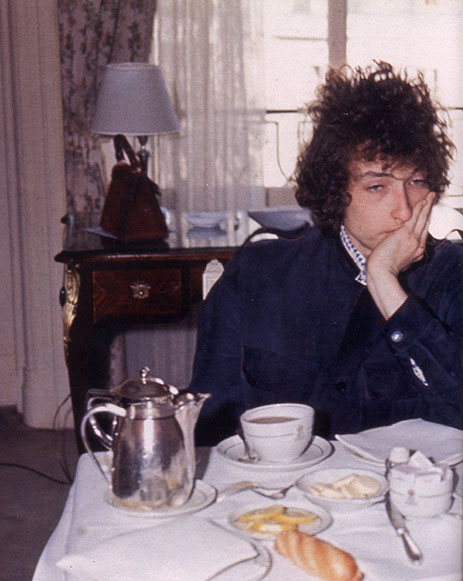
I Ate The Whole Thing
The End.
 I, Dynamo