Exhuming Bob 31e: A Review of Victor Maymudes’ Another Side Of Bob Dylan
November 26, 2014
Exhuming Bob 31e
A Review Of
Victor Maymudes’
Another Side Of Bob Dylan
by
R.E. Prindle
There’s nothing left for me,
I live in memory among my souvenirs.
Some letters tied with blue,
a photograph or two,
I see a rose from you

The Late Great Ferlin Husky
Among my souvenirs.
A few more tokens rest
Within my treasure chest,
And though they do their best
To give me consolation
I count them all apart and
As the teardrops start
I find a broken heart
Among my souvenirs.
As sung by Ferlin Husky
There is now an interregnum of a decade or two where Victor goes off to New Mexico to live his life without Bob nursing his bad memories among his souvenirs.
Dylan has left a memory over the years of cruel and vicious behavior to friend and foe alike. While his victims endured his insults and injuries during the high tide of his fame some are now coming out to denounce him. Joni Mitchell, a competitor for top folk honors, has denounced Bob as a plagiarist and all around fraud. Al Aronowitz registered his complaints long ago in now unavailable books and ignored articles. Jacob Maymudes has taken this time to release his father’s list of complaints.
Victor’s life was so entwined with Bob’s that he still wished to conceal the depth of his grievances not wishing as he said to write a tell all book. More’s the pity. He did relate his worst stories to Al telling him to use them. Not necessary, Al had enough complaints of his own to fill volumes. Even then Al’s respect for Dylan’s talent was such that he too restrained himself relating only his most hurtful remembrances among his souvenirs.
The amazing thing is that Dylan couldn’t even restrain himself with his Madonna, Sad Eyed Lady Of The Lowlands, and wife Sara. One is astounded that in her own home he allowed her to come downstairs one morning to find him dandling another woman on his knee in the kitchen. Sara promptly filed for divorce astounding Bob: ‘People in my family just don’t get divorced.’ he complained uncomprehendingly.
Either that is embarrassingly naïve or perhaps in his parents troubled relationship something similar had happened and he was only acting naturally. Some sort of repetition compulsion such as happens, as Bob’s heart was broken he left a trail of broken hearts behind him. Certainly the root of his behavior can be found in his hometown of Hibbing. Apparently Bob suffered unbearable humiliations at home thus venting his anger on those around him throughout the rest of his life. During the Sixties ‘what goes around comes around’ was a common expression. It was a long winded way of saying karma, so once he was in power he made everyone look out. ‘Trouble in front, trouble behind’ as Bob Hunter wrote. Man, woman and child beware, Bob’s chugging on down the line.
Al, who hung around with Bob the longest relates a situation or two with Dylan at the Isle of Wight Festival in England shortly after Woodstock. Al was in Levon Helm’s dressing room when Dylan came in. Dylan glowered at Al snarling ‘What are you doing here? Get the fuck out of here.’
You can imagine the effect that had on Al who hadn’t yet figured out the imperial Dylan. Al stifled himself and left. Astonishingly he was able to endure such an insult as he continued his duties while remaining loyal to his idol.
Perhaps Dylan was just trying to get rid of Al who was in reality an eternal presence while I’m not sure he was invited or just stringing along. As a journalist his presence could be explained as pursuing a story. If Al didn’t take that hint Dylan gave a stronger one that Al managed to surf also.
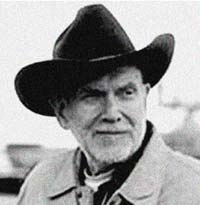
Al Aronowitz At The End
This is a rather amazing story. Al tells it well too.
It isn’t clear whether this was a setup to humiliate Al or not but if not then it was a major testing of the audience to see what they would take. The show had been going on all day a roaring success. The time of Dylan’s appearance was scheduled for about ten o’clock at night. He was to be preceded by The Band. The Band’s technical expert decided that the sound was not quite to his liking although according to Al it had been excellent all day. The technician began checking the cables, crawling around in the equipment and what not taking a very long time. Al was in Dylan’s camper so Bob ordered him to go find the reason for the delay.
Al didn’t really have official status so he had to be especially courteous. He explained to the tech that Bob was getting irritated at the delay wanting to get the show moving. The tech fobbed him off.
Bob was even more irritated when Al reported back abusing him further. After a while, the delay was getting to be quite long, Bob sent Al forth again this time to see Robbie Robertson, prod him to get his guy moving. Robertson merely turned his back on Al walking away.
Al reported back to be abused further. More time passed, Bob sent Al back to the tech. The tech told Al that The Band wasn’t going on until he was satisfied with the sound. Al returned for a torrent of abuse from Dylan. Enduring the abuse must have been a deep humiliation. It was probably meant to send Al packing but Al hung in there. Eventually the show got on the road; Bob made his appearance.
Over the years many people have noticed Dylan’s seeming contempt for his audience so it may be that he was combining an opportunity to see how much Al could take while testing his audience.
Of especial significance here is Bob’s use of the phrase ‘Get the fuck out of here.’ He would also use this phrase in dismissing Victor’s daughter from his coffee house. Victor of course could not allow Bob to talk to his daughter using such language putting forth a mild protest although the incident precipitated his final break with Dylan.
It seems pretty clear that in his career Dylan was acting out his resentment of the way he had been treated back home in Hibbing. It is not improbable that someone had used the same phrase to him back in Hibbing so that Bob reacted in his life by setting up situations in which he could shift his burden onto someone else.
Dylan could be emotionally quite violent in venting his anger and making it public too. The really hate filled rant Ballad In Plain D directed at Carla Rotolo and her mother is really quite astonishing. He would vent his rage over incidents more than once on record over quite trivial things although they may have represented more serious disturbances in his psyche. Most notable of course is his hate filled rant against Edie Sedgwick in Like A Rolling Stone.
Bobby Newirth had taken Edie Sedgwick to meet Dylan in late ’64. Dylan was taken with her even though he was in the midst of several affairs including Suze Rotolo and his future wife Sara. Edie and he had a meeting the next month in January of ’65 where some sort of understanding was apparently reached. Bob then left on tour including England where he tried to establish a relationship with Marianne Faithfull, returning in May of that year.
In the interim Edie met Andy Warhol. Edie was living on an inheritance that she was quickly consuming thus she was seeking some way to earn money. Teaming up with Warhol seemed promising so her magic summer of ’65 was about to begin.
Dylan returned to find his own plans for Edie disrupted. They had it out at a party in June during which Edie explained her financial situation to Dylan.
In a towering rage at his seeming rejection Dylan sat down venting his emotions in what turned out to be Like A Rolling Stone. While none of us record buyers had a clue of what the song was really about, we devised all kinds of fantastic explanations that make us look ridiculous now. The hate anthem was merely about Dylan’s situation vis-à-vis Edie and Andy. Thus the lines:
You used to ride on the chrome horse
With your diplomat
Who carried on his shoulder a Siamese cat
Ain’t it hard when you discover that
He really wasn’t where it was at.
After he took from you
Everything he could steal.
In the context of Bob, Edie and Andy then Dylan is excoriating Edie who may or may not have gotten the reference. Bob’s technique was to make a sort of dream displacement from the fact to the image. Thus he makes Andy Edie’s diplomat while Andy did have a Siamese cat. The term chrome horse is merely a motorcylist’s term for his bike although it seems like a tough image to crack for those of us who took it symbolically.
Edie had opted for a relationship with Andy but that was not working out well as Andy, while using her in his movies, was not providing her with income. Hence he really wasn’t where it was at, money being the issue whether with Bob or Andy.
In his effort to woo Edie from Andy to get his revenge Dylan and Grossman would promise to put Edie in a movie with Dylan. Perhaps that was the crux of the meeting in June.
Edie who was of old stock New York society, the Sedgwicks were socially important, had introduced Andy into a society to which he could never have been admitted on his own. Thus while he benefited Edie’s reputation was destroyed by her association with him hence she was out on the street where she couldn’t function. Andy had taken everything from her that he could steal and then dropped her.
Of course, the same would have been true with Dylan who was not exactly a society icon and never would be. Having lured her away from Warhol Dylan then dumped her while writing another vicious song about her, One Of Us Must Know (Sooner Or Later).
This viciousness was part and parcel of Dylan’s personality. Somewhat miraculously he writes that he has a clear conscience down among his souvenirs. I truly hope he has but I don’t see how.
Victor left Dylan’s employ mid-1966 going off to live his own life until he rejoined Dylan a few years down the road.
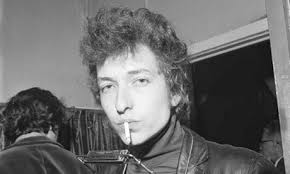
Johnny Cool
We will examine those years in Exhuming Bob 31f.
Exhuming Bob 31d: A Review Of Victor Maymudes’ Another Side Of Bob Dylan
November 16, 2014
Exhuming Bob 31d
A Review Of Victor Maymudes’
Another Side Of Bob Dylan
by
R.E. Prindle

I’ve got a tangled mind,
I’ve got a broken heart,
I got a gal somewhere,
I guess she thinks I’m dead.
I’d go back home if
I could clear my head.
Cryin’, cryin’, all of the time,
I’ve got a broken heart,
I’ve got a tangled mind.
-As sung by Hank Snow
In Exhuming Bob 31c I said I was waiting for a copy of Al Aronowitz’s book Bob Dylan And The Beatles. It arrived and I read it. Like Victor’s book it is a first hand account of Dylan. Strangely, or perhaps not so strangely, Al like Victor wanted to be Bob. Dylan epitomized their hopes and vision of themselves. Couldn’t be improved on.
However not being Bob the next best thing was to be as close to being his shadow as possible. Amazingly, or perhaps not so amazingly, both men were glorifying Dylan at the same time during those magic years of the Sixties Bob. Al once asked Bob why he wanted to perform. Bob replied simply: I want to be exalted.
There may be a key to Dylan. He wants you and I, the country, the whole world to make him feel exalted and he achieved that goal in spades. In that context one can only imagine how crushed Bob’s feelings must have been when he was booed and booed and booed when he went electric in 1965. No exaltation there.
As a side note Murray The K in his book says that one reason Dylan was booed, especially at Forest Hills was because he was switching to rock and roll which the folkies considered pimple music. Murray who MC’d part of the show was also booed but because he was considered a bubble gum disc jockey. So Dylan was perceived as switching from serious folk to teeny bopper rock n’ roll.
It must have been a period of profound fear that perhaps he would be rejected and never be exalted again. It must have been quite similar to when he did his Little Richard act during assembly to an uncomprehending student body and faculty back in Hibbing. The principal wanted to pull his plug that day just as Alan Lomax would want to take an axe to the cables in ’65.
Bob persevered, overcame resistance, or elected a new body of fans, and then crashed in ’66 from the strain. He laboriously and falteringly rebuilt his career after ’66. And this is important, he would make his audience exalt him no matter what he did. I saw his October ’14 Portland show and he had taken electricity to a new level of voltage. I would have said he took electricity out of Arkansas but I don’t know how many have heard or remember Black Oak Arkansas’ When Electricity Came to Arkansas. Dylan remembered it because his sound was close to lifted from that performance; spectacular for the early seventies.
Dylan’s show was fabulous; perhaps the finest rock show I’ve ever seen. The band was the thing. Dylan’s performance truly being peripheral. He no longer sings per se but gargles along in tune with the band; if you catch his drift not bad at all. As a composer and conductor is where he excels.
Bob however has been in pain all his life. He acquired a tangled mind, tangled up in blue. Never a fashion plate, for the show he came out in some godawful gauche and need I say outre version of a Southern planter’s suit while he acted as though we of the audience were slaves on his plantation down in Dixie. As is well known Bob studied the Southern plantation systems in the New York City public library while he was waiting for stardom to strike him. Apparently he learned his lessons well. So, I’m from Dixie too. I got it.
Although from a distance he looks pretty frail he stood at the mike and in front of a wall of sound that Phil Spector would have envied lectured us on how he wasn’t as stupid as us living humdrum lives, the very idea of which he had renounced from the first time he heard Accentuate The Positive on the radio before he could walk.
Something happened along the way as Bob hasn’t accentuated the positive since he was five.
Perhaps Victor and Al had also been slapped down hard along the way becoming those of the ‘abused, misused, strung out one’s or worse’ Bob materializes in his song The Chimes Of Freedom. Back in the old days he says that was the audience he was reaching for and that’s the audience he got. It was that appeal that brought the ones who felt abused and misused into his sphere. Either I outgrew the feeling or Bob left the hall in ’66 for another show. He forgot about us after that.
Victor and Al, as I say, obviously knew the feeling, bonding to Dylan like a Siamese twin.
Al, by the way, corroborates everything Victor said. He really did say into a tape recorder rather than write in text. So in Chapter five Victor relates how he and Bob turned on the world. Victor must have been sidelined after the August ’65 meeting with the Beatles because the period from August ’65 through the ’66 motor bike accident he merely summarizes his relationship few details. No mention of Andy Warhol, Edie Sedgwick or even Bobby Neuwirth. Nothing about the ’66 tour on which he was the road manager.
In point of fact after picking up Neuwirth in SF Bobby replaced Victor as Bob’s sidekick and confidant. It was the arrival of Neuwirth that completed the fearsome putdown act of him, Dylan and Grossman.
While Neuwirth is a hazy figure in the biographies, Al Aronowitz gives the fullest profile of Neuwirth that I have read. According to Al Neuwirth was an excellent performer and prolific songwriter. Dylan had first met him in Boston where he sang in the folk clubs around Harvard. Unfortunately Bobby was a psychopath which prevented him from ever recording successfully or having a career. Al says that there were efforts to get him on record. Twice he recorded material but snuck into the studios and destroyed the tapes. The record for David Geffen that he did complete is quite a story among Al’s great stories. After running up studio costs of nearly 200,000 dollars he delivered product that Geffen said would sell only six copies. He appears to have been a prophet. If the record was actually ever released try to find a copy now. Perhaps a key to Neuwirth’s psyche is the song of Don Gibson he recorded for Geffen , A Legend In My Time. Key lyrics,
If tears and regrets
Were gold statuettes
I’d be a legend in my own time.
In his way then his relationship to Dylan was the same as Victor’s and Al’s. Neuwirth could see or sense that Dylan would get the gold statuettes, be a legend in his own time, tears and regrets Bobby’s lot. Dylan had the ego and the drive. Neuwirth had the fear of success (there’s no success like failure and failure’s no success at all, perhaps that line of Dylan’s was written with Neuwirth in mind) or perhaps as accurately, fear of failure. Probably also he realized he would never equal or surpass Dylan. Paralyzed his will. While Bob could and would realize his dream of success Neuwirth could never have been able to measure up to that. Like Victor and Al then Neuwirth lived his fantasy through Bob.
There was no place for Neuwirth in Bob’s life after the ’66 accident so he drifted off doing other people. According to Al he drifted around attaching himself to people with money. Al admired him greatly, considering him much hipper than Dylan. His account, his thumbnail of Bobby, is really worth reading. Al has been neglected as a source by the biographers but both his own career and account are significant Not a lot of copies of his book around though, mine came with Al’s autograph although made out Michael Gross whoever he may be.
So, during this crucial year in Bob’s life Victor seems to have been marginalized but he still makes himself central to Bob’s life showing him how to be cool.
Victor says, p. 115:
Bob and I searched for an identity in the clothes that we bought; granted, it was only after Bob started to have an income that we really dove into fashion. He and I would go shopping at thrift stores together, searching for new identities when the one we were using started to get picked up by those around us. This cat-and-mouse game pushed us to wear increasingly outre clothes. We would try on every odd ball outfit we could find, trying to stay one step ahead of our social group. On tours around the country, we would seek out the salvage clothing stores and pick out the wild stuff. I found polka-dot shirts with Bob, and I made that a big deal. Polka-dots would become our contribution to the fashion of the sixties I look back on it now and I think it’s pretty funny how ridiculous we looked and how everyone around us took us so seriously. Bob and I shared this together, but I didn’t have the spotlight on me the whole time as he did.
Note he heavy use of I, we, us. Sounds like they were joined at the hip with Victor in control guiding Dylan on the path to higher achievement. Al wanted to be Bob and in his way so did Victor but they chose different paths. Probably because Victor was six years older he assumed what is really a patronizing attitude. Must have irritated Bob.
In this year covering mid ’65 to ’66 then Dylan had three intense buddy associates to deal with, Victor Al and Bobby, all three of varying types of servility. Of the three Aronowitz would last the longest while Victory and Bobby were followed by Robbie Robertson, who, by the way was born Jaime Robert Klegerman. He was the son of a Jewish father and a Mohawk mother, an interesting combination.
Bob treated these guys quite contemptibly. Both Victor and Al have very bitter memories and both were dismissed in the rudest of manners. I don’t know the situation with Robertson but I imagine he and Bob aren’t talking either.
And then Victor may have been perceived by Albert Grossman as a troublemaker. Anent that, Victor on p. 127:
I called Albert the “brain” based on the fact that he looked like a potato and the only muscle he used was his brain. For me, he was a very powerful person. I respected him like my big brother. But we had our issues because I would tell Bob the truth, about anything. Even if it was just my hunch someone was trying to manipulate him I would make sure Bob was aware of what was going on. Albert felt threatened by my transparency, and my criticism of his management.
Albert was an asshole who bent over for quarters when dollars were flying by
And then Victor says he clued Dylan to how Grossman was appropriating revenues from song rights. Little wonder that Grossman felt threatened or any surprise he fired Victor after the accident thus ending that relationship for several years.
If we are to believe Victor about this first phase of Dylan’s career he was the guiding light for Dylan. Thus he makes it sound as though he nearly was the author of Dylan’s success. He wouldn’t have been Bob without Victor by his telling.
Nevertheless Bob always came out on top and Victor, Al and Bobby and Grossman were left in the dust. Bob began his career with a tangled mind, beginning his second phase in the same mental state.

Victor and Bob
Exhuming Bob 31e follows.
Exhuming Bob 31c
A Review
Victor Maymudes’
Another Side Of Bob Dylan
by
R.E. Prindle
It becomes clear at this point in Victor’s memoir, Chaps. 4 & 5, that he has such great admiration for the ‘genius’ of Dylan that he begins to meld his personality into Dylan’s person and persona. Being six years older and considering himself more worldly wise thus a guide to the younger more naïve Dylan he feels actually superior to Bob, or at least compensate for his felt inferiority. He thus becomes protective and paternalistic. Dylan must have found the attitude annoying.
In Chapter 4 that concerns Dylan’s 8/22/64 meeting with the Beatles in New York City, he actually does displace Dylan assuming his role.
This meeting is perhaps the most famous incident in rock and roll history. This ‘summit’ meeting arranged by the journalist Al Aronowitz of whom more below is when Dylan is said to have introduced the Beatles to marijuana. The below is Victor’s gloss on the story.
Victor’s relationship with Dylan has almost supernatural aspects. While he realizes that Bob has the gift and he doesn’t his admiration and perhaps envy is so great that as time goes by he seems to be melding his persona into Bob’s almost to the extent that he becomes an incubus attempting to inhabit Bob’s mind and body almost like an internal double.
Aronowitz arranged the meeting between Dylan and the Beatles but his account is truncated on the website. The Blacklisted Journalist offers only a teaser of the story referring you to his book Bob Dylan And The Beatles, now out of print. A used copy is costing me 75.00 and it had better be worth it. I will probably rewrite this section when I receive it; but for now Victor’s version and, really, this is Victor’s story.
This is a great moment for Victor and he does it justice in the telling. He borrowed Bob’s muse to write it. You should probably read Victor’s account for the full flavor. It will suffice here to show how Victor elbowed Bob out of the story.
His account begins with their arrival at the Delmonico Hotel where there is an immense crowd blocking the entire street and gathered beneath the windows of the Beatles’ suite. If you were checking in as a guest at that time it would have been one of the major events of your life, if the police had allowed you through to check in. The roar as Victor describes it begins as persistent white noise like the ocean surf as Dylan’s group approaches mounting in volume to a tremendous roar at the hotel door.
On the Beatles’ floor, which is sealed off, the glitterati being more privileged than the hoi polloi replicate the scene below as they crowd the hallway. PP&M, the Kingstons, everybody is there, everybody. Probably Truman Capote and Andy Warhol. It staggers the mind that four unknown musicians could create such an uproar. One imagines the glow of importance on Victor’s brow as he surpasses all the glitterati to enter the Beatle’s suite with Bob and Al. One of the chosen.
Introductions finished, the pot comes out. This is the first time the Beatles were to get high on pot although with a knowing wink Victor explains that they have smoked some inferior stuff before with little TCP content.
Bob undertakes to roll a joint but bungles the job. Now here’s were Victor takes over Bob’s role. He reaches over and takes the papers and weed from Bob’s hands. I would have fired him on the spot. Victor then rolls perfect numbers for all concerned. Bob takes a couple swigs from a bottle and then passes out on the floor. From that point on in Victor’s account he is the show; he has become Bob or Bob has become him. The Beatles are suitably impressed becoming Victor’s great friends.
For a brief moment Victor and Bob were one in Victor’s mind.
His account is a fully detailed extended account well worth reading. I will compare it later with that of Aronowitz.
Aronowitz himself was a journalist, the music and entertainment reviewer with the New York Post. He seems to have had Victor’s need to become those he reviewed. He had a long and illustrious career breaking Billie Holliday among others in music and the movies as he says. When the Beatles landed, recognizing the next big thing he moved in on rock and roll. Being able to deliver Dylan to the Beatles was his big coup hopefully establishing him with the two biggest pop acts ever.
After the Beatles-Dylan encounter however his career went into decline. As he says on the Blacklisted Journalist neither Bob nor Victor would talk to him anymore. It seems as though the whole rock world rejected him. Perhaps he appeared to be an opportunist from another era or generation and wasn’t wanted. And then he did something to cause him to be blacklisted as a journalist.
2.
Victor and Bob
Chapter 5 concerns Bob, Victor, Paul Clayton and Pete Karman’s cross country tour from New York, down through the South and out to San Francisco.
Victor gives a very nice sketch of Paul Clayton one of the premier folk musicians and musicologists of the period. I will highlight the visit to Carl Sandburg here as Victor gives the fullest and best account that I have read.
Carl Sandburg was of course the Chicago poet- Chicago, Hog butcher to the world, tool maker, stacker of wheat, player with railroads…city of big shoulders, etc. etc. as well as the author of the Pulitzer Prize winning biography of Abraham Lincoln. Also he was the compiler of the American Song Book, published in 1927, a collection of songs roughly from the turn of the twentieth century that contains nearly the whole of the sixties’ repertoire- Midnight Special, Stack-o-lee, alternate versions of St. James Infirmary, Nearly everything that has been attributed to Huddie ‘Leadbelly’ Ledbetter. I think most people think Ledbetter wrote The Midnight Special. I did until acquiring a copy of the Son Book at an estate sale. Apparently he must have had an early copy of the Song Book.
Bob says that he wanted to talk to Carl about the collection.
Victor gives the fullest and best account of the encounter. Bearing in mind that this gang of four burst upon the Sandburg’s unannounced they sprang on the Sandburgs’ like a summer squall. Mrs. Sandburg who was sitting on her porch greeted them graciously going in to get her husband. Remember this is 1964 and this rag tag bunch with wild hair, manners disordered by drugs, sort of exploded from the car onto the lawn. Perhaps Mrs. Sandburg was terrified.
Sandburg himself being an old trooper from the hog butchering capitol of the world rose to meet the challenge. According to Victor Sandburg spent an hour with them. In this scene Victor hung back while the bumptious Pete Karman shouldered Bob aside trying to monopolize Sandburg.
Sandburg, pushing ninety, tired, excused himself and returned to his nap or whatever, perhaps practicing banjo licks.
Victor’s account clarified this situation that has always puzzled me. Sounds about right.
Victor gives a good account of Bob in New Orleans and the trip West through Colorado to San Francisco.
Altogether two very worthwhile chapters. Good enough for general reading in my opinion.
Exhuming Bob 3d follows.
Exhuming Bob 31b
A Review
Victor Maymudes’ Another Side Of Bob Dylan
by
R.E. Prindle
A Stranger Came Walking…
This book is actually written by Victor’ son Jacob Maymudes, since Victor died a couple decades ago. The tapes Victor recorded appear to be heavily edited while Jacob is defending his father against Dylan. In such a situation the temptation to rewrite as well as editing might be too strong to resist. It would have been better to have used the full transcripts as spoken.
Jacob has really written a biography of his family focusing on his dad’s relationship with Dylan. It is a bittersweet tale while Jacob has written a very readable and pleasant little volume. He captures well the personal tragedy of his father.
Victor and Bob
In this part of the review I will concentrate on Tapes 2 and 3 of Victor’s aural memoir.
After leaving Bob in 1962, almost ’63, Victor took up residence in Yelapa, Mexico a village of 300 at the time with a half dozen Hippies lounging about. Today, let us say, it has been discovered. Yelapa is in Jalisco State of which Guadalajara is the capital and Puerta Vallarta the main tourist destination. Yelapa is on the southern end of the 7th largest beach in the world. Undeveloped when Victor stayed there it is well developed now. Victor doesn’t explain how he knew of this, what he considers, a terrestrial paradise, but he stays there until…
One day just before sun down, I was laying on the beach with Tom Law, one of my great friends, who would later became the road manager for Peter, Paul and Mary. But at that moment He was sitting up watching the Mexico sunset while I lay with my feet in the warm glow of the sand. A stranger came walking down the beach toward us. There was nobody else in sight….The Stranger stopped in front of us and asked, “You guys know this guy, Victor Maimondez?” mispronouncing my last name.
Tom, who was always cautious and protective of me, squinted up, “Yeah, maybe. What do you want him for?”
The stranger said, “I have a message for him. From someone named Bob Dylan in New York City. He wants Victor to come back. They’re going on tour.”
Like something out of the Twilight Zone isn’t it? If it happened, it happened. Who am I to say differently.
Victor returns triumphantly as Dylan’s tour manager. Grossman grant’s Victor the magnificent salary of 65.00 a week. Victor was ecstatic. Heck, even I was making twice that in 1964 although I’m sure I wasn’t having as good a time.
Tape 3, Chapter 3 is a very long chapter of thirty four pages covering approximately eight months in 1964. These boys were certainly living an action packed life as the events covered may be the central part of Bob’s 1960-66 career.
Victor arrives back in LA on November 22, 1963 just in time for the Kennedy assassination. Victor is an authentic voice of the period. His thoughts are representative of about half the people at the time While time has sanctified Kennedy’s memory at the time about half the people were relieved to be rid of him. I was in that half.
Victor’s voice however is phrased in the spirit of the times. It brings the period back in high relief.
In February Dylan, Paul Clayton, Pete Karman and Victor took the well reported cross country auto tour from NYC to SF with Victor doing most of the driving. Today they probably would have used an SUV but theirs was a more modestly sized station wagon.
While Victor adds a few new details his relation places the story in more human terms than other accounts. He and Dylan were outraged at the Kentucky miners’ plight and the civil rights situation in Dixie so they decide on a drive through for a look see.
The key points are Dylan’s visit to Carl Sandburg in Asheville and the visit to New Orleans and the drive from Denver to SF.

Bob At The time. Note Subdued Hair Style
Victor’s account of the Sandburg visit makes more sense than other accounts I have read. Rather than a cranky reception for this unannounced visit as often reported the boys were met cordially by Mrs. Sandburg who went to get her husband. Sandburg himself was in his late eighties and apparently frail, tiring easily. According to Victor he spent about an hour with the boys then tiring returned to the house.
According to Victor Paul Clayton smoothed over the situation while Pete Karman boorishly tried to brush Dylan aside to monopolize the interview.
Carl Sandburg
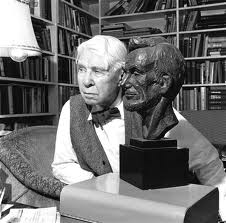
Carl and Friend
For those who for one reason or another are vague as to who Carl Sandburg was his date are 1/6/1878-7/22/67. He gained fame for what is called his poetry, not only fame but he bagged two Pulitzer Prizes and his biography of Abraham Lincoln netted him another.
He was a Civil Rights activist gaining an award from the NAACP. Dylan’s interest stemmed from is 1927 collection called The American Song Bag. The volume was very successful and extremely influential. Pete Seeger was said to swear by it and if I am not mistaken Huddie Leadbelly Ledbettor memorized a great deal of it.
I managed to pick up a copy at an estate sale for a couple bucks. it is a fairly amazing collection of what might be called folk songs. Lots of tunes from the turn of the century and some earlier stuff. Midnight Special, Frankie and Johnny, the backbone of the Sixties repertoire. Words and music, nice collection.
Bob said he wanted to talk to Carl about it. Pete Karman got in the way.
Victor gives a nice tribute and portrait of Paul Clayton who he admired as a great folk figure although time has now passed him by.
The next stop was New Orleans which holds no interest for me although the stories are well told while being well known.
The inner dynamics of the car with Karman being the trouble are well known. Apparently Suze Rotolo included him, probably as a chaperone to make sure Bob didn’t stray too far. Strange attitude for a Communist girl. When they reached SF Karman was given a plane ticket and sent back to NYC. Karman was replaced by Bobby Neuwirth who would himself replace victor as Dylan’s confidant. Neuwirth fit in where Karman didn’t. But then as a friend of Suze’s who forced him on the trip perhaps his quality of mind was more equal to hers.
After returning , in May of ’64 Dylan left for England with Victor in tow. This was the English trip that formed the material for the film Don’t Look Back. Unless the tape is edited too heavily by Jacob one would gain the impression that it is just Bob and Victor on this trip. There is no mention of Grossman or Baez, the movie or even the famous scene at the Savoy, no Lennon, no Beatles, no nothing but Bob and Victor. One gains the impression that Victor is in love with Bob, practically man and wife.
After England he and Dylan make Bob’s trip to Greece. There are some interesting details here. According to Victor Dylan wrote the whole of Another Side Of bob Dylan in Greece recording it without practice on returning to New York.
There is no mention of Nico here for whom Dylan wrote I’ll Keep It With Mine at this time. Victor excludes anything except what he and Bob were doing while Victor is guiding Bob and showing him the world.
They then return to NYC
Exhuming Bob 32: Didn’t We Ramble Though, A Review Of The Bob Dylan Show, Portland Performance 10/21/14
October 22, 2014
Exhuming Bob 32
Didn’t We Ramble Though
A Review Of The Bob Dylan Show, Portland Performance 10/21/14
by
R.E. Prindle
The steel is moanin’, the guitars are speakin’,
The piano plays a jelly roll.
The man on the drums is far from dumb,
The bassman he plays from his soul.
The tables are quakin’, and your nerves are shakin’
But you keep on beggin’ for more.
You’re havin’ your fun you lucky son of a gun
On that Honky Tonk hardwood floor.
Sung by the late great Johnny Horton
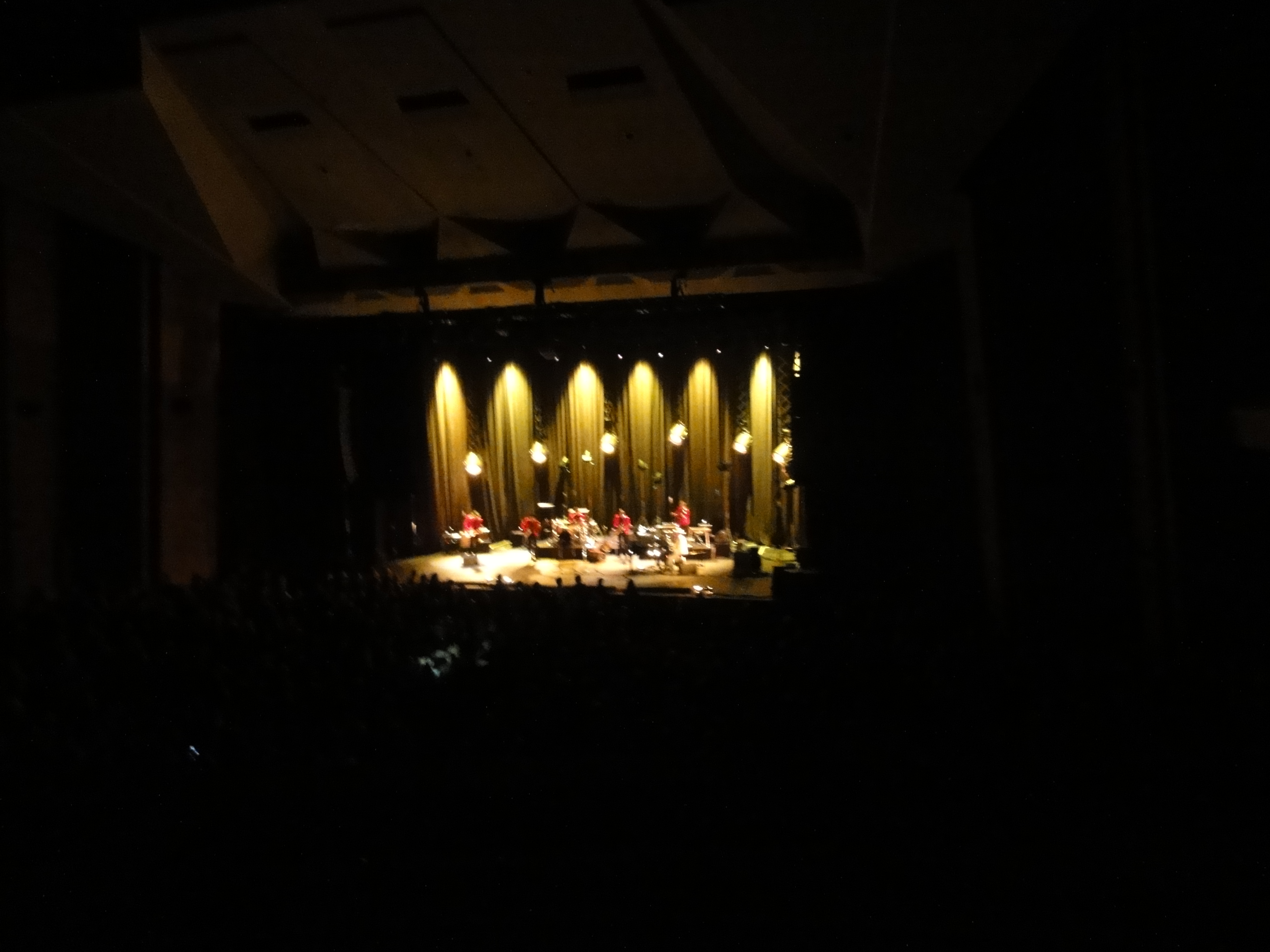
The Bob Dylan show dropped into town last night. And what a show it was. My first Dylan show, from reading all these reviews depicting the shows as atrocious my expectations were very low.
I can’t imagine what these critics are thinking. The Show was absolutely sensational. Dylan is one of the great Rock and Roll showmen. Beats anyone else I’ve ever seen.
I hope I can hit a stride here commensurate with the show and my muse doesn’t let me down. The venue, the Keller Auditorium, is a twenty-five hundred capacity house and it was filled. The stage is relatively big about sixty wide and fifty high. Bob and his musicians used the whole space like they had been performing there for a year. The lighting while minimal was dramatic, effective and beautiful putting one in a good mood. An aura was provided that brought one into the Secret Garden.
The electronic gear seemed to be artfully scattered haphazardly across the whole stage. The musicians wore red blazers while Bob came out in a white planter’s outfit, uniting the Templars with the old plantation down South. Jeb Stuart rides again.
The musicians appeared to be encamped among the gear with the lead and rhythm guitarists to the audience’s left. The drum stand was middle as is proper flanked by the bass player and finally a steel guitar player cum banjoist on the right end. Bob’s keyboard was forward and on a level with the steel. It was all very minimalist and effective. They filled the stage while being placed in perspective by the high fifty foot frame keeping everything human size. Dylan must have been studying performance art under Yoko.
It is a mistake to go to the concert to hear Dylan sing. He apparently learned to vocalize by singing along to Lou Reed’s Metal Machine Music. At first I thought it was a cabover with two cylinders not hitting coming up a mountain grade hauling a hundred thousand K in triple bottoms. Then I saw that it was Bob. The music is the thing; as a composer and conductor lies Bob’s genius.
The band was incredibly disciplined, everyone knew his role, fit tightly with the others and played their instruments without exhibitionism. The harmonics and spacing was incredible.
The drummer carried the band on his back. He was so sensational that like the Hindu elephant he could carry the world on his back. I mean, he had time in his hands, the money in his pocket and could walk the dog on a long leash. I haven’t seen anyone like that since Michael Shrieve. The guy was terrific, he couldn’t only play he looked good doing it. The bass player standing next to the kit kept the beat rolling forward. Bob understands the rhythm section. No amateurishness near.
While relatively unobtrusive the steel player was carrying a lot of the weight.
Now, the band doesn’t play any songs; what Bob has written is some sort of symphonic suite in several movements. The lead and rhythm play a succession of chord progressions loud; there is no melody as such. The music has a strong forward flow that sweeps along like the Mississippi in flood before it was channeled and diked.
The band set the crowd off from the first chord; it was all daylight from there. Like nearly everyone else I flipped to the ozone, shouting and howling, lost in the noise. Amazingly the audience responded differently to different chord progressions; sections would shoot from seats with a roar that competed with the amplification. It was like a huge sea of deep rollers rising and falling.
A wonderful crowd, best I’ve ever seen. Everyone looked good and went way into the show. There was no one not having the time of their life. Dylan was flattered and showed it, trying a little harder to deliver the goods.
His singing was irrelevant. Why he is charged with plagiarism is beyond me. I won’t say you couldn’t understand a word because I was able to snag a few while even getting a phrase or two- Tangled Up In Blue but he shouted that out in his normal voice.
If he was singing from his catalogue it was hardly noticeable although I did get the faint impression that one of them was She Belongs To Me. Either that or Love – Zero = No Limits, or something else, might have been The Star Spangled Banner. Didn’t matter, Bob had to do something to justify his being there. He had the band so tight they could have performed without him.
The band was the cake. The progressions were so powerful it was like Godzilla walking in rhythm. There were two sets and the first one was a power walk. Just unbelievable. If all Bob’s shows are like this one I can’t imagine what critics are belittling. Forget the singing, it’s some kind of frosting to add a little variety. So is Bob’s posturing. He struts around a little like the Lord of the Manse directing the slaves striking what I suppose are meant to be power poses.
The end of the first set leaves you exhausted but energized and hoarse. During the intermission most people didn’t leave their seats but in their high excitement there was a huge billowing roar rising up. I was in the first row, first balcony. It was a kindly roar, mellow even. Dylan’s fans are OK. No weirdos there regardless of Kinney’s book, The Dylanologists: Adventures In The Land Of Bob.
I was there with my wife and our friends Mark and Jenna, two old fans. On my left I sat next to a couple from Medicine Hat, Alberta who had driven down for the show. He was a wheat farmer with 600 acres. Using three John Deere combines he harvests all 600 acres in one day. Gives him a lot of leisure I suppose.
The second set was a little more frivolous lowering the energy level considerably. But, before you went to sleep he pepped it up a little ending on a power note.
I had heard that he doesn’t do encores but after a steady drum roll of applause for about ten minutes he and the band came back for not a one piece encore, but two, ending the show with a medium power progression while Bob mumbled the words to Blowing In The Wind apparently a very personal lyric. Ah, Hibbing.
By this time I had a firm grip on the situation paying attention to the band, but it is Bob’s band and I imagine that he has composed the music. As a composer he is no mean hand. I hesitate to say it but the music is at least as good as Beethoven although falling short of Mozart.
I don’t know how long the piece was but they must have given us five to ten minutes with the crowd and myself going wild. The woman four seats to my left had virtually taken leave of her senses screaming doing a wild gyration of a dance. Really spectacular.
OK, I confess it. I did some involuntary things myself. The band was really showing off their discipline and expertise. Now this is really spectacular, they were powering along then cut off simultaneously leaving a half beat silence before resuming at the same pace and volume. They did this three times in succession.
I sensed it coming on, now I’m not bragging because I wasn’t conscious of what I was doing, but in that brief half beat space was total silence. I shouted out a perfect rock and roll ‘hey’. I did it the second time slipping that hey into that narrow opening. Perfect timing on both our parts. I think the band was surprised by the first one then sort of amazed at the second one. Then consciousness came slipping back and I missed the third opening. It was still terrific.
As the encore drew to an end the cell phones came out and whole rows held them up to snap pictures. Endless tiny images shown back to up above. Bob came center stage to pose for the cameras while the band lined up behind him.
The band was terrific. Dylan was terrific, the whole show was breathtaking and invigorating. If you are being swayed by all the negative reviews, disregard them. Dylan’s show is a can’t miss situation. Carpe Diem! Good things don’t last forever.

Exhuming Bob 31a
A Review
Another Side Of Bob Dylan
by
Victor Maymudes
Review by
R.E. Prindle

It Ain’t Dark Yet
31a will concern itself with Chapter 1 only. Victor Maymudes while closely connected with Dylan has always been written of as a shadowy slightly malevolent character. My impression has been that he was an enforcer of some sort for Dylan.
In this his own memoir he is a friend, advisor and confidante. Maymudes, born in 1935, was six years older than Dylan who he met in 1961. Maymudes was already in a career in show business. In 1955 near the heart of the Beatnik era he had opened a folk club coffee house on the Sunset Strip in Los Angeles called The Unicorn. He was subsequently advised by Jack Elliot who he was managing at that time to go to New York to take in a new performer who turned out to be Bob Dylan.
Elliot explained that Dylan was copying his act but doing it better. Ramblin’ Jack himself introduced Victor to Bob giving the latter a run down on Victor’s achievements. According to Victor he and the twenty year old Dylan hit it off immediately. They began to pal around.
Maymudes gives a slightly different view of this period than has yet been around. The first chapter covers the period from the Spring of ’61 to Dylan’s Carnegie Hall performance in the Fall of ’61.
According to Maymudes shortly after meeting Dylan they went on a long drive and walks around the perimeter of New York City.
To quote Victor:
Bob mentioned going to Juvenile Hall and how he quickly realized there was a social structure inside and either you are going to get along or you really shouldn’t be there.
Hopefully this should settle the issue of whether Dylan was incarcerated in Red Wing Reformatory of Minnesota. While the paper trail has always indicated he did yet his term has been denied by all. In what amounts to a self-admission this should settle the issue.
There is also a piece on the internet by someone who had been in Red Wing at an earlier time but said he knew someone who was in Red Wing at the same time as Bob. Dylan says according to Victor that in order to get along you had to go along. I take that as a reflection after the fact, while Bob probably held himself aloof from the other boys as his possible fellow prisoner as above said he did. No one has believed the article but there may be something to it.
At any rate it seems clear that Bob did serve a sentence which was very unpleasant for him as why wouldn’t it be. The stay had a devastating effect on his personality, as why not? Bob’s song The Walls Of Red Wing thus seems to be a personal reminiscence.
Some of Bob’s stories such as touring with a carnival while false as told seem to be based on actual facts while being definitely embroidered. In the same paragraph Victor says: He talked about going with the carnival when they came to town. I would take that to mean that perhaps he volunteered to help in setting up the carnival as an extra hand as was common. There were temporary jobs when the circus came to town. You could drive stakes for instance and maybe get a free ticket.
2.
It also seems clear that Bob’s family life was far from harmonious. The Zimmerman’s seemed to have covered up a lot. Maymudes, same paragraph, p.4:
He told me deeply personal stuff like his dad leaving town and how he would have to stay at his dad’s mother in Minneapolis, how she would tell him his mother was a whore, sleeping around with other men. It was the kind of thing that probably wasn’t true about his mother, but his grandmother was sticking up for his father and trying to use her power to distance Bob from his own mother. Terrible thing to do to a child.
Bob’s grandmother may have been telling tales about Bob’s mother but I think not. My impression at looking at her picture was that she was a goodtime girl. She certainly kept Abe broke buying her furs, jewels and Cadillacs.
In Dylan’s portrayal of his putative father and his mother in his movie Masked And Anonymous his alter ego Jack Fate’s father is portrayed on his death bed while his mother with a red dress on appears to be gallivanting about.
I find it hard to believe Dylan’s grandmother would say those things about his mother if she didn’t mean them. It is also the first time I’ve heard that Dylan’s mother and father separated from time to time. As such behavior is common knowledge in a small town like Hibbing Dylan’s life may have been made miserable partly from that cause. He certainly has no love lost for that period in his life.
3.
One major question everyone asks is why Robert Shelton wrote such a glowing review about a performance of Bob’s and why John Hammond gave a nondescript Bob a recording contract. Maymudes may shed some light on that. He says on p. 46:
Over the next week Bob and I ended up hanging out non-stop. We were together all the time. We would depart and arrange to meet the following day. Eventually we even exchanged numbers. We had extensive conversations about everything. During the day we would go see Fellini’s movies and stop by the happening clubs and cafes like the Bitter End. We would stay up till dawn each morning. I would introduce him to everyone I knew, like Richard Alderson, the guy you hear announcing bands at Woodstock. We went to Dave Von Ronk’s house and played our guitars. John Hammond Sr. had a house on lower MacDougal St. and we would go there too.
All this has to fit into a time frame of about six months but the interesting thing here is that Victor and Bob visited John Hammond Sr. apparently several times before Shelton’s New York Times article of 9/29/61 and Dylan signing a Columbia Records Contract with Hammond on 9/30/61. Did Hammond really have time to read the article and say to himself, I’ve got to find this boy and sign him by the next day? Astonishing on the face of it. It would seem to have been a plan.
No other writer, no biographer places Dylan at Hammond Sr.’s house before 9/30/61. But according to Maymudes, and why should he lie although he might misremember, Hammond and Dylan were familiar with each other as early as the summer of ’61. Hammond must have heard Dylan play and sing before Shelton’s article. Thus his behavior in the studio where he had Bob just play and sing into the microphone while he read the newspaper is more understandable.
While every other folk label in NYC had rejected Bob evidently Hammond saw and heard something they didn’t. It would seem highly improbable he could sign Bob’s nearly indiscernible talent on his own hook. It may be then that he conspired with Shelton who he surely would have known to write an extremely favorable review to be published in the premier newspaper in the country and then sign Dylan on the strength of that. As it was his prescience was not immediately justified as the record bombed.
At any rate the above scenario would make the article and signing plausible.
On the other hand Hammond may just have had the golden ears with which he is attributed. In that context my brother-in-law played me all four of Dylan’s first LPs in 1964 that I found excruciatingly painful to listen to. I thought Dylan was going nowhere but my brother-in-law said, you watch, this guy is going to be big. That goes to prove whatever Bob had could be heard but only apparently by the elect.
4.
The Winter and Spring of 1961-62 Victor was touring with his act Wavy Gravy who he managed. He then returned to New York where Dylan was now living with Suze Rotolo. They continued their friendship.
Dylan had returned to Minnesota that Winter and had just returned as Victor hit town. Bob was now looking for management. He discussed this with Victor, pp. 51-52
During our walks on this second trip to New York, Bob and I talked about the future. He asked me about Manny Greenhill and Albert Grossman; he was wondering who he should sign with. Manny Greenhill was managing Joan Baez and her commercial success was increasing every day. At the same time Dave Von Ronk’s wife was managing Bob, but he was ready for the next step. Flat out he asked me which one he should sign with. I asked him how traditional he wanted to be and how far he wanted to reach. Those questions appealed to him and he expressed he wanted to go the distance, more commercial than Greenhill was doing. His day-to-day routine didn’t point to someone who wanted to go mainstream; he was more folky and traditional at this point. But he knew what he wanted and where he wanted to go from the start. So I said Albert was the logical choice. He was much more aggressive and much more commercial. Bob signed with Grossman a few days later.
——-
Bob’s ability to bend and refashion words was like magic; he was the one that could break into the mainstream while still playing socially conscientious music. Bob believed in himself and so did I, and that’s why Albert entering the picture made sense. Albert had commercial connections and wouldn’t ask Bob to change his tune to fit in. With Albert’s help Bob could force his style in front of the broader public and ultimately make everyone else fit into what he was doing.
That’s a pretty good insider’s synopsis. Grossman who would soon launch Peter Paul and Mary on the back of Dylan’s songs certainly had recording connections although Warner Bros. at the time was fairly low down the list of successful, maybe unsuccessful, record companies. Anyway Bob was already signed to CBS, the actual premier recording company at the time.
Victor goes on to give an interesting thumbnail of Albert Grossman that is immediate and accurate.
Always handy with the advice Victor tells Albert how to go about handling Bob while at his own expense he was setting up Dylan’s first Carnegie Hall appearance, not the main stage but a side stage.
Victor says Albert took the concert away from him while it is usually attributed to Izzy Young. In the event nobody came and the show was a total financial loss. Victor had a falling out with Albert deciding for ‘spiritual’ reasons to depart for Yelapa Mexico. Apparently Victor had been inhaling too much from The Teaching Of Don Juan.
His last words to Bob at this time were that if he ever needed him to say to whoever he was standing next to, Get Victor, and he would come.
It was the Sixties you know.
That is the end of the revelations of Tape 1. A remarkable and interesting account. We do know that Victor and Bob were friends so barring any embroidery or misremembering the account should be accurate. If so, all biographies are now askew. The period has to be reexamined and reevaluated to include Victor’s account.
A Review: The Rock And Roll Circus Movie Of The Rolling Stones
September 12, 2014
A Review
The Rock And Roll Circus Movie
Of The Rolling Stones
by
R.E. Prindle
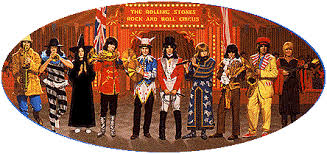 All Dressed Up For The Party
In December 1968 Mick Jagger decided to make a film, or rather, he shot the film having decided earlier. Perhaps he was inspired by The Beatles’ Magical Mystery Tour of the previous year. These years from 1966 to 1968-69 were a tumultuous time for Jagger and his sidekick Keith Richards. Not least significant was that Mick had taken up with the songstress Marianne Faithfull. Then in 1967 there was perhaps the most famous drug bust in history at Keith’s Redlands house.
The boys had been pushing the drug envelope hard more or less inviting a crackdown and it came in 1967 involving Mick, Keith and Marianne with devastating results for all three characters in the drama.
As the authorities wished to make an example of the baddest boys of rock and roll Mick and Keith received prison sentences of which however they only served two or three days. Nevertheless their psyches had been criminalized, changed their views on their role in society.
While the arrest and jail time were merited in society’s eyes, Mick and Keith who were among the legions marching to Altruria on the wings of pot convinced that their elders had irrevocably messed the world up while they were going to set it right under the influence of marijuana, LSD, amphetamines and whatever else was handy, saw the bust and conviction as unjustified interference in their dreams of perfection.
The revolution was on as far as they were concerned hence they began a string of songs along the lines of Street Fighting Man and Sympathy For The Devil, unintended consequences of the bust.
Oh yeah, Mick and Marianne, Keith and his main squeeze Anita Pallenberg had become involved in Satanism which was going around like the flu. Not necessarily dilettantish either like, say, I just read a great book by Satan, but the real kind as fostered by the Great Beast 666 Aleister Crowley himself as interpreted by his epigoni Kenneth Anger and Anton LaVey, not to mention the Process Church Of The Final Judgment. Mick and Marianne disavow any serious interest in Satanism but the Rock and Roll Circus contradicts that.
Combined with these irritants in their lives Mick had just starred in a Satanic movie, Performance, and Marianne had had the misfortune of a miscarriage. To say that they weren’t suffering at the time they made their movie would be a understatement.
In this hazy mental state, compounded by too many drugs, Mick cobbled together his Circus.
What is the meaning of the title Circus? Ostensibly it meant literally a circus, after all it had a fire eater and trapeze artists. However it could also be a double entendre. Just as the title of their 1967 album, Their Satanic Majesties Request, parodied the Queens request on passports so the word Circus also parodied the name the British intelligence agency gave to their gig. The title can be construed as a challenge to the establishment. It would seem clear then that Mick was still seething inside because of Redlands.
His film is negligible as a movie but a good concert film. The symbolism is non stop as the guest audience in dressed in some sort of Munchkin costumes. The cast was bizarre to say the least. While little more than a musical oddity Jethro Tull led by Ian Anderson in his disgusting dirty old man persona opens the show while he was followed by the Who caught in pre-Tommy persona. Never one of my favorite bands, others thought they were a good performance while we are treated to a young Pete Townshend doing a series of his trademark windmills.
The couple circus acts are entertaining enough; the fire eater is pretty spectacular.
John Lennon performing separately from the Beatles was probably the musical highlight of the show for me. While obviously in the throes of a serious depression personally, as a performer once on stage Lennon is charisma spilling out all over the place. The depression does show up in the name he chose for his ad hoc group- The Dirty Mac. The name characterizes the general depression and malaise of the whole show. Lennon’s group brought together some stellar lights of the time. Besides himself he had Mitch Mitchell of the Jimi Hendrix Experience on drums, Eric Clapton on lead guitar and Keith on rhythm. They are joined a by fiddler, I presume Ivry Gitlis, and the irrepressible Yoko Ono.
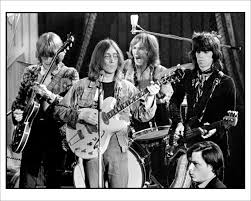
The Dirty Mac
Yoko was in her Bagism phase. While the movie is loosely shot during Lennon’s gig, if you watch the lower right corner of the film you can see a black object sort of pulsing. That’s the bag Yoko is in. I suppose as she was a performance artist the bag was Yoko’s joke- that’s the bag I’m in, get it?
After a noisy rendition of Yer Blues Yoko wiggles out of the bag bouncing up with her arms outstretched as in Here I am, aren’t I wonderful? Well, she certainly shocked Ivry when she began to squeal. Yoko is very tiny so Ivry kind of looks down at Yoko with raised eyebrows, looks over at John, backs up a couple steps, stops playing momentarily and has this incredulous am I believing what I’m seeing and hearing look on his face. One might say Yoko stole the show. Really, I had to start laughing.

Marianne: I have since learned that Marianne’s performance was deleted. Jody Klein substituted this picture from a French performance. It has nothing to do with the Circus.
The real show stopper comes next when the camera shifts to Marianne Faithfull. She was decorously posed in a stunning black designer gown. At her most beautiful with a fine folky voice that entrancingly recalled her As Tears Go By but strong and more focused. I missed the words but caught the mood of this enchanting chanteuse. Marianne definitely trumped Yoko as a showstopper.
Taj Mahal was a special case. Believe it or not Taj is still out there challenging the Interminable Tourist Dylan himself. Taj works, or did, about 170 days a year, every year. While he is not well known he began as a duo with Ry Cooder called the Rising Sons then added a string of records on his own. The guitarist is Jesse Ed Davis, a failed guitar god, who had a couple solo Lps of his own. Taj’s first two records are superb blues Lps, two of my favorites of the period. The third LP, a two record set is also quite good but begins his political period that obviated his musical career. He goes rapidly down hill after that.
For some reason he chose a rather lame piece from his repertoire. If he was making an appeal for a girl or girls to join him backstage his salacious version of Hey, Little School Girl might have served him better.
The Stones rounded out the show at the end. While the Who were supposed to have buried the Stones I didn’t find it so. The tension had been well maintained throughout the show with the comic interlude of Yoko and the Stones maintained it through to the end with a climax of sorts.

The Who
It was obvious that Mick, Keith and Marianne were in a world of hurt….and Brian Jones. That tragedy would play out over the next year when Brian drowned and Marianne almost drowned in her own tears and Mick spawned a real live Satan at Altamont.
The movie ended in hurt and Satanism- homage to the Devil.
Mick and Marianne had gone to see Jimi Hendrix a few months earlier. After performing Hendrix had sat at Marianne and Mick’s table where he put the make on Marianne telling her to dump the White dude and go with him. Marianne hesitated a moment too long giving Mick offense so that he commemorated the evening in his song, You Can’t Always Get What You Want. Suddenly I realized the meaning of the line, you and your friend Jimi as Mick shouted it to someone off stage to the right. OK, not my problem.
So Jagger was still wearing his hair as he did in the movie Performance. That soul corrupting film was obviously still influencing him. As Marianne said, it changed his personality.
The show closed with Sympathy For The Devil. There was a little stage extension on which Mick prostrated himself as though doing obeisance as the song played. It looked like he was groveling, then he looked up making a couple goofy grimaces at the camera beginning to pull off his shirt. Not necessary, Mick, not necessary. Then with the shirt off he straightened to a kneeling position to reveal Satanic tattoos a la Kenneth Anger.
Anger had a large LUCIFER tattooed across his chest. Here Mick seemed to be imitating him apparently trying to tell us that the Great Satan had arrived. I hope they were transfers. Interesting, especially as the movie Rosemary’s Baby appeared in 1968 in which Rosemary gives birth to the Son of Satan. Even more interestingly in the 1990’s book sequel Son Of Rosemary Satan’s little lad was named Andy. After Andy Warhol, I presume.
I suppose then that Mick conceived the film as a coming out party for himself as The Great Beast. Apparently he took his Satanism very seriously. It make one wonder, was Altamont a projection of the Great Satan?

A Review: Ed Sanders: An Informal History Of The Countercultures In The Lower East Side
October 31, 2013
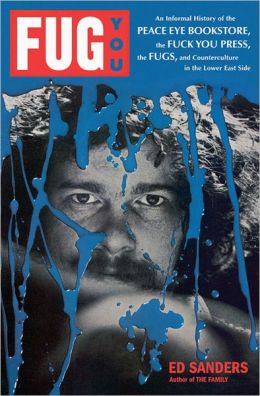
Got His Pitchur On The Cover Of Life Magazine
A Review: Ed Sanders:
An Informal History Of The Counterculture
In The Lower East Side
By
R. E. Prindle

Ed Sanders- Chief Fug
Sanders, Ed: Fug You, An Informal History Of The Peace Eye Bookstore, the Fuck You Press, The Fugs, And Counterculture In The Lower East Side, 2011, The Da Capo Press, 424 pages.
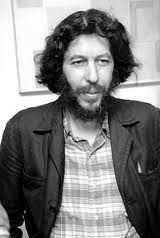
Tuli Kupferberg
Ed Sanders? How few out of a hundred have even heard of him? Yet, Ed had an effect on the society of the Sixties not inferior to Andy Warhol. Perhaps a few more have heard of his recording group The Fugs. Originally the Village Fugs, and aptly named.
While never much of a success out of the East Side Bohemia of NYC Ed nevertheless merits attention. Ed was born in 1939 making him a graduate of the high school class of ‘57. I was class of ‘56 making Ed one year younger than me. But, what a difference a year makes. Let us do a little demographic study.
The swing years between Greil Marcus’ ‘old weird America’ and the new even ‘weirder America’ were the years of 1955, 1956 and 1957 with ‘56, my year, being the transition year between old and new. The key events of the turn was the effect of television and the destruction of network radio that resulted in teen oriented all music Top Forty radio. The class of ‘55 was the last year of ‘old weird’ America while ‘56 was maybe 70-30 the old and new with the old part the largest. Fifty-seven began the ‘new’ weirder America. Thus while Ed and I are only a year apart we still come from two different social outlooks as do all who followed after.
Demographics are important. By 1955 older teachers were fifty-five or sixty years old so they were born in say, 1890-95 to 1910. Not quite frontier but in the transition from horse and buggy to automobiles and airplanes. They were born into an America of the introduction of new technological wonders that actually went well beyond their imaginations. I mean, the fantasy of men flying came true. They saw Victoriana die and the modern world born. I mean, they saw biplanes turn into jet planes. They lived through two world wars witnessing the incredible changes succeeding those two wars. They were teens or in their twenties during the New Era of the Twenties. They were in their thirties in the Depression and Dust Bowl of the thirties. After enduring WWII they were hit by the Korean War and the struggles between the Communists and Honest people that ended in the defeat of their champion Joseph McCarthy. The three years in question were lived at the beginning of the on-going Negro revolution following the Brown vs. The Board Of Education decision that led to the unimaginable fact of Army troops invading Little Rock to cancel the rights of the majority in favor of a minority. Full lives to say the least.

Sanders, Kupferberg, Weaver- The Core Fugs
They had some strongly held opinions about life and America they passed on to us or attempted to do so. It was a clumsy attempt. The chaos of the Sixties and subsequent decades stemmed from that teaching. Most of them were rooted in pre-1920 attitudes as was to be expected. No matter how hip we are to the NOW our outlook is always conditioned on the past, near or far.
Teddy Roosevelt’s politics seem to have been the basis of their outlook. The twin themes of freedom and revolution were uppermost in their minds. Freedom was always ill defined if defined at all while revolution was held up to us as the highest ideal especially the American Revolution which was sort of the apex of history although Simon Bolivar who rode throughout Spanish South America bringing revolution to every colony on his way was a very close second. Of course the success of the countries he established failed to measure up that of the US. The French and Bolshevic Revolutions were never mentioned and were disregarded as they didn’t fit the fantasy. As these teachers were in place post-war through the fifties whole cadres of students were indoctrinated in this nonsense.
Basking in the fairly incredible triumph of the US in a two front war against very formidable enemies the teachers fairly glowed with the glory. Perhaps influenced by that achievement they made the incredible statement that each and every one of us could be whatever we wanted to be. That idea perhaps astonished us more than any other. It was obvious that some were smarter than others, all were of different physical stature, some had social disadvantages that meant denial by those that had them. Some had already made decisions that closed off vast areas of achievement and there was room for only so many at the top. Still, I suppose, that if we had the proper attitude there was a modicum of truth in the statement. Really, if you don’t try you don’t get anywhere. However rooted in a past now thirty or more years distant all the teachers were not dealing with current realities. The were not living in the NOW enough as we were in the Sixties.
There was a basic insecurity with Americans, even though we were taught to believe we were the greatest. A silly novel by Eugene Burdick of 1958, The Ugly American, turned that idea on its head. The idea of the novel was that in their foreign relations Americans were clumsy and inept compared to the smooth Communists of Russia, we antagonized the Third World despite sending wads of money and tons of food for free. I do suppose it’s true that you can’t buy love and Burdick seemed to revel at the thought.
As a result of Burdick’s novel Americans high and low embraced the notion that he or she was an Ugly American thus becoming inferior in their minds to every other people of the world. Just as the American South condemned a portion of their people to be White Trash, so Americans became the White Trash of the world. It was something to witness. Forty years or so on some nitwit rocker sang: ‘I’ll be your Ugly American if you’ll be my Asian Rose.’ Is that a deal or not? Blows your mind, doesn’t it? Blew mine.
I’m sure that most of us in the fifties had never heard of the CIA and if we had the initials conveyed little meaning. By the early sixties after the incident of the Bay Of Pigs not to mention the Kennedy assassination we had all heard of it but with little comprehension. Ed Sanders as well as the whole Left would fixate on the CIA as the epitome of evil. Of course they were either Communists or Communist sympatizers, Ed claimed to be a socialist, and hence were trying to divert attention away from the KGB and Communist activities. The James Bond movies beginning to appear in 1962 were metaphors of the cold war between the ‘Free World’ and the captive nations.
With some variation of this indoctrination under his belt Ed graduated HS, spent a couple semesters at UMissouri-KC then headed East to attend NYU. He say his intent was to become a rocket scientist but once in NYC he gravitated down to the Village which gradually enchanted him so that he abandoned solid propellants and took up ancient Greek, Latin and Egyptian because his mother told him the classical languages were the accoutrements of a gentleman. Perhaps so but there was no danger of a Village Fug ever being mistaken for a gentleman. Ed never was.
Once settled in the Village Ed involved himself with Village politics as he sought a place for himself under that black sun as a poet. The late fifties and early sixties were a time of the Beatnik poet. Coffee houses sprang up where the ‘poets’ could read to an eager audience, mostly of other would be poets. I was in the Bay Area of San Francisco at the time and while I wouldn’t call myself an habitué of North Beach I did attend a couple readings in 1964 where Ferlinghetti and a couple others read. Apparently it was the Coffee and Confusion Coffee House as I see from the web, but I don’t remember the name of the place. By 1964 things were pretty commercial and, at least, in SF the house was packed with employed weekend wannabe Beats.
Ed himself writes a humorous piece about a poetry reading in his Tales Of Beatnik Glory. While fiction the tales accurately portray the life. I have never been a big poetry fan and my expectations were not disappointed. Ed is an accurate barometer of his time and life on the Set.
On his quote page at the beginning of the book he quotes Maxim Gorky who said: ‘I was typing with all my might to make myself “a potent social force.” That pretty much sums up Ed’s career in ‘Beatnik heaven’ on the Lower East Side. His approach as he puts it was ‘A Total Assault On The Culture.’
Which culture isn’t exactly clear. Ed was a Catholic boy and he acquired and exhibited all the neuroses that the Catholic confession induces especially the rebellion against sexual repression, hence he turns to the pornography peculiar to Catholics. While there are some maybe many who were or are in full sympathy with Ed’s sexual neuroses I find them repellant while at the same time liking Ed.
Ed gives no indication that he himself indulged in licentiousness preferring the role of voyeur. He was a heavy drinker while going on dope binges. While sympathetic to homosexuality he says he passed on a night with his great hero Allen Ginsberg while he married young to his wife of fifty years now, Miriam. He had a couple kids and approximated a normal sexual life.
He did become a voyeur par excellence. In the enthusiasm of the time he became an underground film maker (read pornographer) with his hand held Bolex camera. He took up filming at the same time as Andy Warhol. He and Andy became acquaintances.
At the time that Andy began to create his Factory populated by an assortment of criminal amphetamine heads Ed did the same. During the late fifties and early sixties New York City was awash in amphetamines at all levels of society. One Dr. Max Jacobson otherwise known as Dr. Feelgood was busy administering massive doses of his amphetamine and vitamin cocktails, himself freely using it nearly on 24/7 basis. At one point he is said to have gone sleepless for thirty straight days.
While amphetamine used on that scale is destruction Max said and people believed that the vitamins destroyed the destructive qualities of the drug. Maybe so but within a few years there were burned out cases walking all over NYC.
Ed had his own reasons. I make an extensive quote interspersed with commentary. As Ed says the hips called the Village ‘the Set’ as in movie set. As would develop during the decade the notion that one was a mere performer in your own movie became prevalent if not endemic. Anyone’s life was a role. One could do anything without the loss of self-respect. The notion was that when your movie role was over you could revert to your former condition. People went to prison without any idea they were affecting their psychology and subsequent social position. I watched slack jawed.
In this passage Ed seems to see himself as a sociologist, pp. 54-55:
Another of my projects I called Amphetamine Head…Since 1959 I had been studying a group of artists and bohemians known around the Lower East Side as “A-heads,” amphetamine heads.
In those days people were called ‘heads’ as in he was a good head. A-heads means full time amphetamine freaks, vitamins or no vitamins.
They shot up amphetamine and often stayed up on A for days. Warhol said that he never slept more than two hours a day for years. There were plentiful supplies of amphetamines, sold fairly cheaply, in powder form on the set.
Amphetamine was legal at the time.
That fall I began filming Amphetamine Head. I decided to focus on the A-head artists, mainly painters, but there were some poets and jazz musicians as well who could be put under the banner of A. Anyone who lived on the Lower East Side and spent much time mixing with the street culture encountered A-heads. They roamed the streets, bistros, and pads compulsively shooting, or gobbling unearthly amounts of amphetamine, methidrine, dysoxin, bennies, cocaine, procaine- all of this burning for the flash that would to FLASH! It was almost neo-Platonic, as beneath the galactic FLASH! Were subsumed the dime flashes all urging toward FLASH!
Everybody from Washington Square to Tompkins Square called the street “the set”- “I’ve been looking for you all over the set, man. Where’s my amphetamine?” With a generation of folks readily present who viewed their lives as taking place on a set, there was no need to hunt afar for actors and actresses. What a cast of characters roamed the Village streets of 1963!
So there we have a set of fully blown minds. People who were out of it, insane for all practical purposes, Ginsberg’s ‘best minds of his generation,” running from fix to fix. These were us who back in ‘56 were billed as the hope and future or America with a capital A- no pun intended.
I’d heard rumors about a doctor [Max Jacobson- Dr. Feelgood] giving President Kennedy shots. Uppers. It turned out…that the rumors had a basis in truth. So there was plenty of gossip at the time that the President used amphetamines and that his doctors [actually only Max] injected him every morning. There were further speculations that the generals who met in the Pentagon war room every day planning atomic snuffs were a bit A-bombed themselves.
Possibly true. When I was in the Navy in ‘58-’59 bennies were commonly used while the Marine Camp Pendleton was awash with everything heard and unheard of.
I was fascinated with an amph-artist named Jim Kolb…I had observed the violence of the amphetamine heads and the raw power grabs that occurred in their glassy eyed universe after a few months of sleeping just twice a week.
One can compare this to Dylan’s Desolation Row in which he portrays Dr. Filth, that is Andy Warhol, and says:
Now at midnight all the agents
And the superhuman crew
Come out and round up everyone
That knows more than they do
Then they bring them to the Factory
Where the heart attack machine
Is strapped across their shoulders…
It was true that Warhol’s A-heads who were strung out on A would emerge from the Factory at midnight and predate on the streets. Dylan who was strung out on A himself would encounter them on the streets where there were undoubtedly stand offs between them and Dylan’s own crew.
While at the time we were attributing all kinds of fantastic interpretations to Dylan’s lyrics they can all be explained by what was going on in the Village. As the years progressed the clubs would become more vicious and violent until the apex of club land Studio 54 opened in 1977 giving the diamond glitz to that movie set of violence.
It was also commonly accepted on the set that the Germans had invented amphetamines and that the Nazis had shot up amphetamine during campaigns in WWII inspiring tales on the Lower East Side of futuristic battles involving fierce-breathing amphetamine humanoids, babbling shrilly like rewinding tapes, in frays of total blood.
It is true that a German did first synthesize A but at the end of the nineteenth century. A was further developed by a Japanese in 1919. In the early thirties Dr. Feelgood, Max Jacobson a Jewish German put together amphetamine and newly discovered vitamins to make his potent cocktail that he brought to the US in1936. Actually all combatants in WWII hopped up their troops on A, most notably the US and British pilots flying long bombing raids over Germany,
The heads also seemed proud that A-use destroyed brain cells. One of the A-heads might shout, “I lose trillions of cells every day, man, grooo-vy!”
Amphetamine altered sex. Some under A’s spell waxed unable in eros or sublimated their desire beneath a frenzy of endless conversation or art projects. Others with strong natural urges experienced this: that the erogenous areas became extended under A to include every inch of bodily skin. Men could not easily come, and women loved it forever. The image of amphetamine driven Paolos and Francescas writing for hours on a tattered mattress was humorous but true.
The Village has been described as the independent Republic of Bohemia. Certainly within the boundaries of the Set a certain hot house atmosphere prevailed. Ed is representative of that ethos of film makers, artists, musicians and hangers on. Ed was quite famous on the Set developing an opinion of himself quite at variance to what his influence was off the Set.
Ed’s attitude toward the A-heads while couched in sociological terms was also somewhat sadistic and perverted. He observed that may of the A-heads became compulsive drawers covering their apartment walls with drawings. Combining the art with his prurient sexual needs Ed conceived the idea of buying four ounces of A for about thirty dollars, renting an apartment then allowing A-heads to shoot up freely on the condition that he be allowed to film them at lovemaking and other activities. Through this approach at what must be considered pornography Ed amassed a couple thousand reels.
Unfortunately they were confiscated by the authorities during a raid and never returned. Maybe the CIA studied them in their search for a mind control drug.
Time flows along while Ed’s brain was hyper active. The idea of being a poet was paramount at the time. People who thought that they were poets were everywhere. Of course, that meant denying that anyone else was a poet. Heck I even flirted with the notion but realized that I much preferred prose. Ed developed a fair reputation as a poet. He can be seen reciting on videos on the internet. I would say he was a cut above the ordinary however I have little use for poetry.
Combining his interests in sex and poetry Ed decided to start a poetry magazine. For whatever reason he may have had he decided to name the magazine Fuck You- A Magazine Of The Arts. Had Ed consulted those with a little market savvy he might have reconsidered. While Fuck You is certainly an attention getter it makes buying it without a brown paper sack or even displaying it in your home a chancy affair. In fact, Ed gave most of them away. A non-Bohemian could go down to Soho for a laugh.
Ed was industrious and applied himself. He canvassed the big NYC poetic names and compiled an impressive list of contributors beginning with the arch freak, best mind of his generation, Allen Ginsberg. So, if you’re into poetry especially the sex obsessed Boho kind you would probably like Fuck You. Ed should have started a second magazine titled Fuck You Two.
Rapidly moving into retail Ed found a space in the center of things and opened his Peace Eye book store modeled on City Lights in San Francisco that Ed had not yet seen. I was familiar with City Lights and personally I wouldn’t have modeled anything on it. I can’t believe they actually sold enough to pay the rent. Who the hell buys poetry?
Ed aggressively promoted his sexual agenda in his Assault On the Culture drawing unwonted attention to himself from the authorities. Time was moving along. The hand on the dial was pointing to 1964. That year was the year of the World’s Fair. As should be obvious the social life on the Set had become fairly raucous and actually offensive to those not on the Set. Mayor Wagner determined it was time to tone things down on the Set lest tourists be offended. On the other hand maybe they would have come downtown to sample the outrageousness.
The hounds were on Ed’s trail. He experienced some difficulty as his ‘secret location on the Lower East Side’ was raided, the authorities illegally removing Ed’s precious porn flicks and anything else suspicious looking, naturally that included everything in their eyes. No receipts, no returns. Well! Who wouldn’t be offended? There was little Ed could do about it except try to stay out of jail. That became a struggle. After harassing the bejesus out of him the authorities declined to press charges. All those dirty movies were probably prize enough.
For Ed though his Total Assault On The Culture was going swimmingly. The great so-called Free Speech Movement began its course in 1964 on the campus of UC Berkeley in California. This was the turning point of the US group of revolutions. Trained from childhood to believe in revolution, any revolution, was good, Ed and several age cohorts enthusiastically applauded all revolution.
As part of the revolution a thing so small as a possible minute change in a detergent was described as a revolutionary new product. The idea of revolution as a positive thing was everywhere. It filled people’s minds. After the revolution, so to speak, occurring in the sixties commercial products shifted from revolutionary to ‘new and improved.’ The revolution was over; no new ones were to be entertained. Today detergents are just detergents, no need even for anything new and improved.
Ed’s description of his own revolutionary program was ‘a total assault on the culture.’ The Negro revolution well in progress of which Ed was part was a total assault on the culture; the Jewish revolution to which Ed was sympathetic was brought into focus by the so-called Free Speech Movement of which it was the leading edge. The sexual revolution encompassed both the Homosexual revo and women’s lib both of which fit into Ed’s total assault and he backed the Yobbo revo.
None of these revolutions could have taken place as they did without the US constitutionally guaranteed freedom of speech, assembly etc.. Indeed Ed ingenuously celebrates that freedom, without which all other freedoms are meaningless, explaining that he was making unlimited use of it.
That he and the Negroes, Jews and others were able to do so was because all Americans believed in freedom of speech. Sharing that belief was to cause me all sorts of problems. Even though the concept was being stretched to the breaking point, that is turned against itself, the mantra at the time was ‘ I may disagree with what you say but I’ll fight to the death for your right to say it! You don’t hear that mantra anymore; now you hear ‘Words can kill’ or hurtful things should be censored as they are so offensive. We are post-revolutions.
Ed himself began to become bitter when it slowly dawned on the government that indeed a violent assault on the government was taking place. At that point security agencies such as the FBI and CIA began serious surveillance. After all at the same time all these revolutions were taking place domestically we were becoming totally committed to the war against Communist Viet Nam. Ed claims to have been a socialist so that the backed that subversion too.
Since he vocally proclaimed his position in Fuck You Magazine, the name itself was intended to enrage, it can easily be understood why the authorities placed him on their list of desperadoes. It just seemed like fun at the time but it was more serious than we thought.
Obviously freedom of speech was no more threatened in 1964 than it ever had been, perhaps less. The lines between the various thems and us had just been drawn. The revolutionaries meant to deny freedom speech to the other, or bury it, as in these latter days has been nearly done.
Indeed in 1960 when I was attending Oakland (Calif.) City College anti-free speech limitations were in use by Liberals. We were forbidden to even mention let alone discuss what have become ‘protected’ minorities today. Crimes were committed in the name of what is now called diversity. In one class I had the misfortune to be sitting next to a Negro. A test paper came back on which I got a C while I noticed the Negro got a B. Then I noticed my score was a 78 while the Negroe’s was a 64. I objected saying I didn’t care if he got a B or not no matter what his score but since I had a higher score I should have an A or at the very least a B.
In full arrogance the teacher said he had only so many Bs to give out and since I had been the recipient of White Skin Privilege it was the Negroes turn and I would have to pay the debt. So obviously the revolution was prepared to lie, cheat and steal to succeed no matter who or how many get hurt.
Ed may have bought into that revolution and freedom crap as taught in schools but I obviously would have to be a counterrevolutionary.
So while Ed, absent from the scene, applauded the Berkeley Free Speech Movement I was on the spot viewing things somewhat differently. As I said the Free Speech Movement was part of the Jewish Revolution. There was no denial of free speech at UC before 1964 but by 1966 when the dust had settled the Jews were in control of the university and free speech was definitely curtailed.
As I entered the campus at Sather Gate in the summer of ‘66 a Jewish commissar sat at a table just inside the gate where we were to be vetted as to our politics which meant were we philo-semitic or not. Obviously one was not welcome if it was determined that one was ‘reactionary.’
Whatever Ed believed he was doing it was neither revolutionary in a positive sense nor was it furthering freedom of speech.
Into The Music

An Early Incarnation
Busying himself with his poetry, at which he was very successful as poetry goes, and running his Peace Eye bookstore, Ed conceived the idea of forming a musical group and why not? Musical groups were the generation’s mode of expression. This one he would give the most offensive name he could think of, The Fugs. The Fugs! Everyone in the world knew that fug was a euphemism for fuck. The ’comedian’ Redd Foxx had a punch line that went ’if you can’t fugg your can sugg it.’ So Ed calls his group the Village Fucks. Alright. So we know where that’s at. Nevertheless this low level pornography would get him national exposure. It even got his picture on the cover of Life Magazine in 1967 as part of the world wide cultural revolution. The Total Assault was working. He came to my attention out on the West Coast.
Ed thought of forming the Fugs interestingly enough at the same time that Andy Warhol had the idea and adopted the Velvet Underground as his house band. Both were influenced by Albert Grossman’s success in promoting Peter Paul And Mary and Bob Dylan. PP&M were already a big success in 1964 making barrels of money so why not go for the golden ring?
From 1964 to ’67 Ed and his Fugs scored a major success within the Set. After a fashion the Fugs became a sort of cabaret or burlesque act somewhat after the fashion of the theatre in the French movie The Children of Paradise. That movie served as the East Village model. The Great Boogie Woogie Dylan himself would imitate it in his film ’Masked And Anonymous’. A slight redundancy as to be masked is to make oneself anonymous. Bob was a poet.
As a sort of off Broadway act at the Players Theatre on the heart of Bleecker Street the Fugs may have appeared to be giving Dylan and the whole folk scene a run for their money. Café Society that was finding its way to Warhol’s Factory midtown also called on the Fugs at their theatre dropping back stage to pay their regards. Heady stuff, and I’m not being sarcastic.
At the same time Ed was negotiating with major labels Atlantic and Reprise. He was already on the local label ESP but that was run by a less than astute businessman. Terrific catalog of records though, perhaps the most interesting label in existence on many levels. The two major labels were soon to be subsumed under the Warner Bros umbrella. Atlantic fearing that Ed’s content might block its chance to be acquired by Warner’s dropped the group but they were picked up by Reprise. Reprise was owned by Frank Sinatra. When label Pres. Mo Ostin presented the deal for Sinatra’s approval Frank remarked sarcastically “I guess you know what you’re doing.” Frank hopped on the wave of the future as he rode the rock surf board into shore. Mo didn’t know that much as the Fugs were much less than a stellar act for them.
As 1967 ended then Ed and his band seemed poised for the major break through. However the year 1967 was unfortunate in being followed by the year 1968; the year of the Big Change. Ed’s total assault on the culture would be a success but he would be left behind.
It was a long way from 1960 when the decade began to 1968 just a year before the whole decade crashed at Altamont. The Snark the 60s pursued was a boojum you see.
Nineteen sixty eight was the year China stepped center stage with its and the world’s Cultural Revolution. Didn’t seem terrifying on this side of the Pacific but it sure was in retrospect. Ed might have thought that his Total Assault On The Culture was a success but he seems to have missed the year’s impact. The ethos that had carried he and his Fugs from ’62 to ’68 was exhausted. The year would see the shootings of Andy Warhol, M.L. King and Bobby Kennedy. Only Warhol would survive and that only through the miracle of modern medicine. Andy was actually brought back from the dead living on borrowed time for another twenty years.
The death of Bobby Kennedy killed Ed’s spirit while the course of events had grown far beyond his ability to deal with.
The Fugs had done well in the hothouse atmosphere of the Lower East Side but Ed was to find that that success couldn’t be exported from Bohemia. Even if the group succeeded in playing a venue they were frequently advised that it would be dangerous for them to try again.
Perhaps this was nowhere more obvious than when the Fugs were booked into the college town of Eugene, Oregon on May 4th of 1968. That was the day the revos went over the top in Paris. Nineteen sixty-eight was the year Mao kicked off the worldwide Cultural Revolution. The Chinese even financed the revolution in the small college town of Eugene, the home of the UofO. The Hippie invasion that Ed also represented had erupted, in the Eugenians’ eyes leaving then on a sharp knife edge of anxiety when the Maoists arrived. Wait, we’re not finished yet. In addition to those irritants there was the invasion of the SDSers, Students For A Democratic Society led by New York City Jews in denims who hit town like a small tsunami adding to the disruption.
As if the phony Free Speech Movement hadn’t been enough, the arrival of the phony Students for a Democratic Society added insult to injury. We all, at least myself, believed we had freedom of speech in a democratic society but then along came these freaks redefining terms. Got away with it too.
Eugene’s home grown hippie ’cancer’ that wouldn’t go away was a record store by the name of Chrystalship. You are free to guess who owned it. That’s right, me. I am not now ever was a revolutionary or even a Liberal, discontented but no revo, card holding or not. I just wanted to get to Paris in some style. As it was the town fathers determined that I was behind everything. I almost had my own personal FBI agent. I was followed, my mail was opened, phone tapped and had my shipments illegally searched with no attempt to conceal what they were doing and no recourse. Some democracy.
Even they couldn’t stop the Cultural Revolution or keep the SDSers out of town but they sure as hell weren’t going to let some pornographic group with the name of Fugs, short for Fucks, play in town. Mao was one thing, Ed Sanders was another.
On May 2nd the door was slammed shut in Eugene, the venue denied. Acting quickly the promoters found a spot twenty miles out of town in the still smaller village of Creswell. A phone call scuttled that plan. At that we ticket holders thought the jig was up but, not so. A secret location on the east side of town was found that was so secret I’m sure that half the ticket holders couldn’t find it and gave up.
Ed’s memory is fairly clear on this. I’m comparing his notes with mine to reconstruct the scene as accurately as possible. About ten miles to the South of Eugene, maybe a few miles further, was a new motel, fairly glitzy for Eugene, maybe built by drug money, named The Lemon Tree. Obviously the owners were Peter Paul and Mary fans because there were no lemon trees in Oregon. Ed remembers playing at the motel but I respectfully disagree with him. He stayed there but he didn’t play there.
I honestly can’t say where the place he played was except that it was out in the country turn right here turn left there and when you got there you couldn’t be sure that was it plus there was only a fifty-fifty chance you could find your way back to the highway in the dark. Once arrived you drove over a cow pasture out to this largish barn and parked in the high grass.
There were no lights in the barn except for a couple spots jury rigged over the stage, if there was a stage, hard to see in the dark. For some reason there were actual bleachers three or four tiers high arranged against the back wall. All fifteen attendees strung out on the benches in the dark. We could barely see each other. I held on tight to my wife so that we didn’t separated and have to stumble around trying to find each other. ’Hello, over there, over here.’
Way across the barn on the opposite wall was this stage faintly illuminated on which the band would and did stand. Thus, unless we made some noise the Fugs had no way of knowing that they were not playing to an empty barn. We were forbidden to get any closer, nor did we know whose hands we were in. Could have been plain clothes cops for all we knew.
So, away over there the Fugs stepped up to the microphone. They were a mangy looking group, voluntary poverty was in evidence. As a child were asked to pray for the poor heathen Chinese before dinner but we should have been praying for our poor heathen selves. The Chinese are doing OK. But Ed and the boys could sing joyfully in their rags. At the time we thought they were trying to be as far out as possible. They weren’t doing a bad job. Tuli Kupferberg, the absolute weirdest of the lot, Tuli had mastered weird, and remember we in the audience had nothing to brag about, was playing an eight foot long staff. It had six or seven clatter devices on it so he could keep a semblance of a beat. He lifted it up and slammed it into the ground to some effect. Beyond that I can’t even remember if they played Ah, Sunflower Weary Of Time or Boobs A Lot, Slum Goddess Of The Lower East Side which is what I came for. I may have been the only one of the Eugene Fifteen who had ever heard the Fugs on record. I sure as hell hadn’t been able to sell any.
When the concert ended we tripped and stumbled out of the barn, hopped in our cars and hoped the hell we could find our way back to I5. The concert was the high point of my concert going career. It was what one calls an adventure. I have relived it over in my imagination many times over the years. An evergreen if there ever was one. Ed recalled it in his pages with good reason. It was a turning point in his career.
Ed tells it this way, page 312:
We flew up to Portland, Oregon, May 3 after our fun in LA for a gig there and the next day drove to Eugene, the very day protesting students were occupying the streets of Paris. We played a club called the Lemon Tree next to a beaver pond. Before the performance I walked out to the water’s edge, where I experienced a great transmission of peace. I had to go back in my mind to the lakes of my Missouri youth or Elvis Presley’s rendition of “Peace In The Valley”, which helped me through the grief from my mother’s death in ‘57, to find much consolation as I had during those moments. The beaver pond by the Lemon Tree was the best time for me in ‘68.
That wasn’t a beaver pond Ed. That was an artificial pond the owners dug to glitz up their motel. It was situated between the motel and I5. There hadn’t been a beaver in those parts since John Jacob Astor founded Astoria at the mouth of the Columbia. If there had been it would have been killed as a nuisance. Beaver’s chew down saplings Of course saplings spring up all by themselves by the millions but we don’t want no beaver felling even one.
My memory could be wavering but I think that on the way out from the barn I saw Ed after the concert squatting beside the pond. I’m sure he must have been crushed by that bizarre performance to a seemingly empty barn. It had to have been hard after four years of very hard work. It appears that he did have an epiphany of some kind. If he had known he was going to be playing to fifteen people he couldn’t see in a dilapidated barn I’m sure he would have thought of retiring and he did then. As his mind was made up to end the Fugs at the beginning of ‘69 I suspect that that dismal concert set his mind on the track.
Well, Ed, I really enjoyed the show.
It Is Impossible To See Where You Are
When You’re There
While Ed was living his life time was passing and circumstances were changing. When Ed began the Fugs in 1964 what he was doing was fitted to the time and was possible. By the end of 1968 when he determined to end the group he was still acting on his 1964 impulse while by 1969 he would have had to adjust to new conditions. Led Zeppelin, the Moody Blues and a host of other bands were more contemporary than the Fugs. The Fugs were old hat.
Even Ed’s solo album, Sander’s Truck Stop, of ‘69 was a stale joke. I thought it was OK myself and I liked his second effort Beer Cans On The Moon but they also were out of time. Ed and his Fugs were part and parcel of the Sixties. A very few if any of the Sixties groups made it into the seventies and those that did reinvented themselves. The Jefferson Airplane became the Starship. Other split off and went solo. Donovan just evaporated although he was as talented in the seventies as before.
The Rolling Stones adapted despite themselves. When their manager, Andrew Loog Oldham sold them out to Allen Klein it may have been their saving. With Klein in control of their outdated sixties output the Stones were forced to change. Jagger found a financial manager in Rupert Loewenstein who turned them into a prosperous stage act, sort of performance art, cabaret or burlesque, along the lines of Yoko On or Andy Warhol or even the Fugs. Jagger certainly saw the Fugs on Bleecker and may have picked up an idea or two. They were able to successfully adapt their musical style to the seventies.
As a Sixties group Ed and the Fugs were finished. You can never go home again; when they left the East Side to assault the culture of the entire United States their East Side base was destroyed.
Out in the real world what were record stores supposed to do with a band called the Fugs and a record titled It Crawled Into My Hand Honest? Ed was a vaudeville act, soft porn, how could a store recommend stuff like that to the underage person who formed a large part of the business? Who wanted to bring the law down on themselves. Couldn’t be done. Hell, The Rolling Stones nearly got me clubbed down with their sado-masochistic cover for their record Black And Blue, as in welts and bruises. It got ugly in the seventies, post Stonewall.
Ed closed up shop and returned to civilian life. Civilian life had changed a great deal too. A lot social errors were accruing. The generation hadn’t done such a great job. The influx of Puerto Ricans and Negroes into the Bronx combined with the efflorescence of hard drugs, heroin, was turning the Bronx into a hell hole or worse; even an abandoned hell hole as the turmoil drove peaceable citizens out. And then they burned it down. Ed even left to move to the Lower East Side. Even there things were turning violent. The streets were no longer safe. Near Ed’s apartment a well known Hippie couple around the Set were murdered in a basement, the girl after being raped repeatedly. The perp was a Negro living upstairs from them. He felt obligated to commit the crime because of his religion which was described as the Yoruba religion.
Probably not one in a thousand knew who the Yorubas were and that they migrated from Nigeria in Africa and that their so-called Yoruba religion was actually a form of Voodoo called Santeria. Santeria was popular with Negroes and some Whites along the entire Eastern Seaboard yet few knew of it then and few do today.
Ed had moved from the Bronx to the Lower East Side and from there to the West Village where he was greeted with another double murder outside his front door. Where next? Where any reasonable person would go. Ed moved to the country and painted his mailbox blue, up in Woodstock, the feudal estate of Bob Dylan’s manager Albert Grossman. And then the Tate-La Bianca murders occurred out West in LA. Ed decided to investigate Charlie Manson and his Family. Write a book.
Actually the murder of the Hippie couple by the Voodoo killer on Ed’s former block was as horrific as the Tate-La Bianca killings but no one had ever heard of the dead Hippies on the Set and if they had they wouldn’t have cared.
So Ed went West where he stayed a couple years pretty thoroughly investigating Charlie’s shenanigans. He did a good job of it too. Of course he had to pull his punches somewhat to avoid lawsuits but he apparently lowered his guard at the wrong time. Some Satanist group called the Process Church Of The Final Judgment, these were apocalyptic times, not wishing the truth of their organization to surface threatened legal action on the publisher. They gutted Ed’s book. It was probably a publicity stunt as the Process made no objection to the English edition.
At this point in Ed’s memoir he folded his tent and quietly slipped away remarking only that all his Fugs tapes and artefacts lay neglected in boxes for the next fifteen years until the Hippie romantic revival began.
Ed had created a legacy of sorts, intellectual properties, that he could exploit after 1985. So he was restored to some significance in the aftermath.
Ed does not let grass grow under his feet however. When he wearied of running a rock group he returned to his scholarly roots as so many of us did when the Sixties vanished into thin air. He did have a solid education in the Classics. Since then he has written extensively although with the same level of popularity as the Fugs.
However no matter how audacious a nine volume history of the United States in verse- in verse!- may be, epic poetry of that kind has a very low threshhold of sales. I’m sorry Ed, I’d like to but I’m just not going to do it, I’m not going to read American history in verse, especially not a socialist interpretation.
Social Redemption And The Fugs
So forty years on Ed tells all. I’ve read the book twice now while I’ll read it at least a third time. Many of the nuances pass over one’s head the first and even the second time. Ed has a direct style as though one on one and as an document explaining a part of the Sixties the book is essential. Presented in a chronological form probably patterned after Andy Warhol’s Popism: The Warhol Sixties Ed avoids any intellectual pretensions laying things out as they were street level. Deceptively simple as they say. Well worth picking up if you have a love affair with the Sixties going, or are a student of the times. An essential document as I said.
But what were the results of Ed’s ‘total assault on the culture?’ Of course Ed was only part of the assault which was endemic to the time. Everyone had been reared on the notion of romanticized revolution and unrestricted freedom. Warhol was a key figure on the Lower East Side, although midtown and uptown himself, as was Jonas Mekas of the underground cinematheque. The filmmakers impact would have been nil without Mekas. I can only tolerate underground stuff because I’m a dedicated scholar. Kenneth Anger may have been the best of the lot and that is not saying much. Still, there are believers and so much of the corpus is stored at MOMA.
Drugs have turned into a way of life a la Brave New World although others than Ed were responsible for that. Today it’s not do you use drugs but which drugs do you use. Ed’s fixation on sex has developed as he would have liked. There are few mainstream Hollywood films produced today without an obligatory fuck scene within the first ten minutes, full frontal nudity female and male with fellatio and cunnilingus scattered here and there. Homosexual and Lesbian movies are readily available for the interested and show on TV. On that level Ed’s assault was a total success.
Plus there are forty or fifty thousand reported female rapes a year. Gangs of youths roam the streets practicing their game of knockout king; that is sucker punching pedestrians seriously injuring many and killing not a few. Huge riots take place at fair grounds where wild youths exercise their freedom by assaulting fair goers. The police make little effort to curtail their activities. So some people are exercising their total freedom at the cost of others.
We have a socialist redistributor of wealth, also a Negro, as our president so all that marching down South Ed participated in paid off handsomely.
In addition his oppressed Negroes are now in control of some pretty impressive real estate where they are so oppressive that White people run screaming for the suburbs Detroit, Chicago, Memphis, Montgomery, Atlanta, Philly, half of New Jersey and beginning November 5, 2013 New York City are Negro towns as well as many many more not to exclude the capitol of the Confederacy itself, Richmond, Virginia. So, Ed gets an A+ for his efforts there.
And of course homosexuality is a ‘protected’ activity in which they have obtained the right to teach pederasty to kindergartners in public schools. Also any girl a virgin past fourteen or sixteen at the latest is considered a freak who had better get promiscuous or else.
Over all, I would say Ed’s total assault on the culture has been a roaring success. There are some though, myself included, who consider Ed’s success a crime against humanity. Illiteracy is on the rise, diseases once though eradicated are returning with a vengeance. Bedbugs, once thought eradicated have returned with a thump infesting half the country with solid prospects of infesting the rest.
Well, nobody’s perfect. I’m sure Ed sits back, Guiness in hand, smiling to himself and thinking job well done. Well, handsome is as handsome does as my old high school teacher used to say.
And then that other guy said: If you can’t fugg it, sugg it.
Chap. VIII: Marianne Faithfull: The Faerie Queene Of The Sixties
October 4, 2013
Marianne Faithfull:
The Faerie Queene Of The Sixties
by
R.E. Prindle
Chapter VIII
Changes
Would anybody like to try the changes I’m going through?
–Donovan.
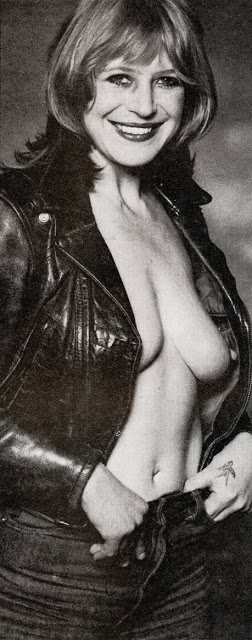
In Her Glory
Life at best is difficult. Change after difficult change presents itself. Of necessity life is lived on the fly. One must always deal with fixtures and forces one cannot comprehend on first confrontation. In a way then we can hardly be responsible for the decisions we make unless we have enough experience to interpret that with which we are confronted correctly. At any point a controlling psychological fixation through misinterpretation may cause to act against our best interests. All further experience then will be interpreted through and disturbed by one or more fixations in our subconscious of which we probably are not aware.
Sexually Marianne was probably confused by the sexual scenes she observed at her father’s Braziers Institute contrasted with her subsequent teaching of abstinence at St. Joseph’s Convent School. The confusions conflicted her sexual attitudes in later life, attitudes she was unaware of and never resolved.
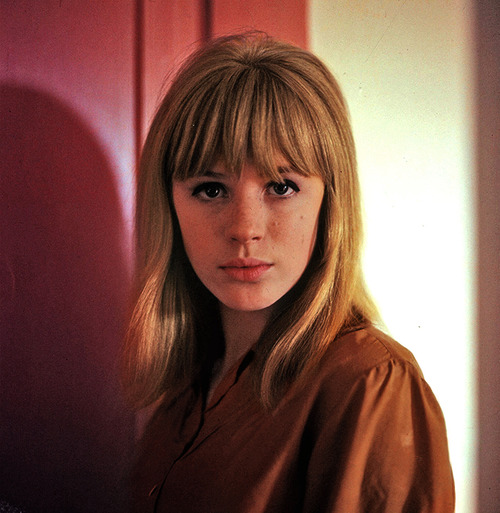
Young Marianne
Once she left her father’s governance passing into that of her mother’s she lived not in poverty but in relative hardship; luxuries if experienced at all were few and far between yet she did received an upper class education and outlook at St. Joseph’s.
Her mother was apparently strongly Bohemian having been involved with the stage pre-WWII. She encouraged Marianne in the Bohemian direction which Marianne found congenial, sought and never abandoned. The girl was interested in the stage while becoming a Joan Baez style folk singer after leaving convent school in Reading at seventeen.
While not beautiful in any classic sense she was yet attractive with a great figure making her a desirable sexual object. The sixties was the decade of wide open sex making all women mere sexual objects. Her first reaction was to seek a stable married life choosing John Dunbar as an appropriate husband. Dunbar was Bohemian in outlook while apparently headed for an academic career.
At this point fate intervened. At a party with Dunbar she met the record producer Andrew Loog Oldham who perceived her persona as a marketable commodity in the pop music world. As an added bonus Marianne could actually sing, having performed as a folk singer.
She was still an impressionable girl of just seventeen just after the Pill had been introduced with little ability to successfully traverse the changes she would be called upon to go through. These would be formidable and rapid calling for huge energy reserves on a day to day basis. Not an enviable situation.
While most musicians go through a relatively long learning process and struggle to succeed Marianne struck gold the first time out without even trying. Her first minimal three minute effort, if it was an effort, established her as the pop princess or queen of the generation. Her innocent convent school persona was perfect in a vulgar world. But it was a persona at odds with the one Marianne would seek and embrace- she became the devil with a blue dress on.
While the music or, really, record business seems very attractive from a distance it is literally vile from the inside. Everything connected with it is dishonest, the record companies, musicians, lackeys, the whole number. Nobody remains unstained.
It is truly a man’s world, even a gay man’s world, in which the men have no respect for womankind. Women are expected to merely service the sexual desires of the male performers. They have no use beyond that. Thus one has the phenomenally debauched groupie scene that amazed the world during the sixties. After that there was no longer anything amazing.
Having witnessed sex acts at Braziers of numerous descriptions the pop music world satisfied this side of Marianne’s psyche. At the same time a desire for a chaste life pushed her in the direction of marriage with Dunbar which desire she consummated, however Dunbar proved to be not the ideal choice.
While Marianne thought she would be leading a sedate intellectual academic life with him as a professor he turned out to be as much or more a Bohemian as she was. Quite frankly he failed her.
Having acquired a wife he did not act responsibly toward her. He was blindsided by her recording success and perhaps belittled by her financial success. In effect he was supported by his wife which is always a difficult situation. The changes he faced were in themselves formidable and he didn’t have the character to meet them. Still, a man doesn’t fill his house with dopers and heroin addicts. Marianne can hardly be faulted for resenting it after getting up in the morning to find a house full of conked out junkies in rooms littered with used needles. The transition from Braziers to St. Joseph’s to high degeneration must have been changes hard to adapt to. Sent her head spinning.

Marianne Searching
The change from the straitened circumstances of her childhood and youth still actually in progress to one of affluence in which she could indulge her wildest fancies in buying clothes and more clothes. Her lack of maturity hurt her badly. In this case her hero William Blake’s notion that the road of excess leads to wisdom was not quite true, it led to penury.
Not clearly seen by many at the time the pop world split into two streams, the British pop stream of the fifties soon to be extinct and the Rock world of pop princes and princesses of the future. The Beatles straddled both worlds while curiously Marianne may have been the first to emerge as a star of the Rock world soon to be followed by the Rolling Stones.
As such even though having only one hit single to her name she was on a par with the Beatles and the Stones while being superior to the lesser groups following in the train of the Beatles and Stones. Thus in the salon formed around the pop art dealer Robert Fraser she held a place of primacy that she never realized. Her tragedy was that she was too young and inexperienced to grasp her opportunity making a series of inept decisions while being seen only as so much poontang by the Rockers and of transitory fame by a series of inept managers.
Thus, unable to find someone capable of carefully building her career she did become transitory, or her career going into hiatus, she did lose her place while gravitating to the dominance of Mick Jagger and the Rolling Stones. Gradually her royalties diminished so that she was financially dependent on Jagger while still married to John Dunbar. Deep in a milieu of drug users she found their allure irresistible.
However conscious she was that she had been and still was to some extent a celebrity she thought to regain that identity. Feeling unable to compete with Jagger as a recording star she chose to follow her mother’s wishes and take up acting. In her enthusiasm to and need to show Jagger that she was somebody too, that she was his equal, as a performing artist she aroused Jagger’s interest in also being a movie star. He, being a more marketable commodity soon gave evidence of eclipsing her as an actor rather than staying in recording as she assumed he would.
Her own space having been preempted she developed an affinity for Brian Jones of the Stones who was essentially in her situation in his relation to the group. He too was being forced out thereby losing his identity.
When Brian died she then in sympathy decided to follow him overdosing with pills that would have killed her had not Jagger been alert enough to rush her to the hospital. As much as anything her suicide attempt was meant to get away from Jagger’s dominance. That move now being thwarted she had no choice but to walk out which she did in 1970. Thus began the rest of her life.
II

Marianne The Wild Thing
The Rock and Art scene was a drug scene. Bob Fraser’s salon centered around Rock musicians was also a drug center. Fraser introduced members of his salon to all drugs including heroin. Marianne had a favored position in Fraser’s salon early learning of heroin to which Fraser himself was addicted. By the time she walked out on Jagger in 1970 she had been addicted for some time. Heroin was to remain her central fixation throughout her life.
Jagger disapproved of her addiction so she was forced to conceal it from him. When her royalties decreased she no longer had her own money becoming dependent on Jagger. Not wishing to plead for large sums of money from Jagger in order to obtain her heroin she prostituted herself to Keith Richard’s factotum Spanish Tony Sanchez.
Sanchez was an aspiring criminal who came to Richards through Groovy Bob Fraser. Sanchez had met Fraser in a bar after which the friendship blossomed. Fraser had contracted gambling debts to the notorious Kray Brothers, the criminal kingpins of London. The Krays were threatening Fraser with grievous bodily harm if they didn’t get their money. According to Sanchez in his autos Up And Down With The Rollings Stones and I was Keith Richard’s Drug Dealer he volunteered to negotiate the debt with the Krays which he did.
At that time, following their US Mafia model, the Krays were attempting to lift the Beatles from Brian Epstein who also had large gambling debts to them so there is no reason to disbelieve Sanchez. Following the episode with Fraser Sanchez was employed by Richards as drug/procurer-factotum at the fabulous salary of two hundred fifty pounds a week. This leads me to believe that the Krays were using Sanchez to infiltrate the Stones possibly with the intent of taking them over.
Sanchez was always resented by Richards and the Stones but he managed to stick with them until the mid seventies when Richards was able to shake him. In his vanity Sanchez considered himself an essential member of the Stones’ entourage, if not an actual member of the Stones.
Marianne’s misfortune was that everyone wanted to sleep with her, a further misfortune was that she obliged. Thus she and Tony had a sexual liaison for several years. This raises the question then whether Tony was also pimping for her. Certainly as his criminal associates knew he was sleeping with her they would want to also. Not being a fool Tony may have named a price and received it. Whether he or she could have successfully resisted is open to question. The US Mafia certainly used their female artists to gratify their desires.
In the mid sixties additionally, once again, through Fraser Marianne had become part of the Satanic crowd. Through Fraser she was introduced to the arch US Satanist, Kenneth Anger. Through them she was introduced to the writing of Great Satanist of the twentieth century, Aleister Crowley and also the writing of the nineteenth century French arch Satanist, Eliphas Levi, not Jewish despite the name. And then the modern Satanist classic the Russian Bulgakov’s The Master And Margarita published in 1968.
Also in this period she became involved with the Satanist Process Church Of The Final Judgment. Marianne downplays her involvement with Satanism but it was much more serious than she is willing to admit.
Playing against this background Marianne renewed an acquaintance with the Irishman Lord Patrick Rossmore. He was 43 to her 24. I merely mention this, it makes me no never mind what the ages are so long as the couple is comfortable with each other. In this case they weren’t comfortable. The two, in a sort of a farce became engaged but never married parting as they met in a friendly sort of way within several months.
While Mick was aggressively dominating, Marianne seems to have chosen Lord Rossmore because shy and retiring as he was she could dominate him. According to Hodkinson the couple rarely saw each other, he being in Ireland while Marianne remained in London closer to her dope supply.
True to her interpretation of William S. Burroughs degenerate novel, Naked Lunch, she led a totally debased and degraded life as a street junkie or, at least, her version of it. Remember it was her movie of Marianne and she was pretending to be a sociologist. She cultivated the friendship of total degenerates such as the artists Francis Bacon and Lucien Freud. She also became friends with the total junkie, writer Alexander Trocchi. Also at this time becoming fast friends with another lowlife, Henrietta Moraes who she says was a close friend until she died. Marianne was able to sink to lower levels than any of these people and gloried in it.
It was during this period of 1970-71 that she says she sat on the wall in Soho staring into the bomb crater. In his first biography Hodkinson scoffed at this. According to him this wall was a waiting station lined with junkies alert for their supply.
By 1971 the Stones had become tax exiles in the South of France so that Spanish Tony was with Keith no longer able to supply Marianne with her drugs, thus, we suppose, the wall. As Marianne had no regular income during this period, although adequate royalty checks still arrived irregularly, there does arise the question of how she paid for her dope. As a junkie Marianne had no qualms about running up tabs she couldn’t pay and apparently didn’t. At one point she boasts she left New York owing several dealers 20K each while flippantly adding she had no intention of ever paying. Whether she succeeded or not is not known.
Marianne vehemently denies that she resorted to prostitution although there is a fair amount of circumstantial evidence she did. A careful reading of her second auto, Memories, Dreams And Reflections, gives some hints. At one point she retorts to an admirer that she is not a two-bit prostitute, that it would take 200 pounds to be with her. Perhaps a joke but the price sounds right, her retort has the ring of authenticity.
In the same auto she claims first hand acquaintance with all the working girls of the area. There is only one way such first hand knowledge could be obtained. There is or was a video on the internet in which a camera had been placed within a building between two half open doors. Marianne dressed in some pretty snappy expensive looking working girl gear walks in front of the camera, notices it, shows alarm, then quickly turns a corner then flattening herself against the wall to peer back at the camera. It seems evident that she was going to or returning from a job.
She seems to have worked from 1970-71 through at least 1974 through her association with Madeleine D’Arcy. In 1971- during the recording of Exile On Main Street when Tony Sanchez accompanied Keith to the South of France Tony met Madeleine with whom he fell deeply in love and had a relationship with her in France.
Upon returning to England he apparently resumed some sort of relationship with Marianne as well as Madeleine. Marianne in her turn began a lesbian relationship with Madeleine, perhaps to spite Tony, who she despised personally, or so she says. Tony was angry at the relationship.
It then appears that Marianne and Madeleine functioned as high price prostitutes or perhaps call girls between ‘72 to ‘74. In ‘74 Madeleine as Marianne recalls had gone back to turning fifteen pound tricks in Brighton. ’Going back’ implies that formerly she received higher payouts, perhaps 200+ as Marianne received.
As she hadn’t heard from Madeleine for a little while she called at her apartment. When no one answered she called a couple bravos to break down the door. One was a Maltese pimp and drug dealer. At that time in London the Maltese are said to have controlled crime in the West End. That Marianne could call on them to supply help implies a certain degree of familiarity with the underworld. The other person’s identity Marianne doesn’t indicate so there is the possibility it could have been Tony. When no one answered the door the two men broke it down.
Entering the apartment Madeleine was found dead on her bed. She had apparently been beaten to death although not molested as she was artfully laid out in a beautiful full gown. Thus whoever killed her loved her. This points to Tony although the crime was never solved.
So, if Marianne says she never turned to prostitution perhaps not, but there is sufficient evidence to indicate she did. The whole period from 1970-1974 is very hazy in her memoirs.
While she was supposedly incognito on the streets of Soho, as if Marianne could ever be incognito, lost to view of the music world, Michael Leander, who had been her producer suddenly got the idea to make an LP with her so he beat the bushes, scoured the walls so to speak, like any good detective, tracking her down in Soho supposedly sitting on her wall staring into the bomb pit. He induced her back into the studio where they recorded the LP Rich Kid Blues, a return to Marianne’s folk roots.
For some reason the record was shelved not being released until decades later. After this she took up with Oliver Musker who she was associated with for the two years from ’72 to ’74.
III
The Myth Of Marianne

Down And Out In Soho
For all her emotional problems Marianne was a bright girl. She read. Among her readings were those of the psychologist C.G. Jung. Among Jung’s ideas was that of the personal myth. By that he means everyone must have a personal myth to survive, to make sense of what one is doing or what is happening to you. This was more or less the same notion of Andy Warhol’s that if you don’t like the way your life is going pretend it’s a movie. That’s a sort of displacement so what’s happening is just a script that was written for you. Your own personal myth. Lots of people were living in their own movie.
It seems probable, in observing Marianne’s life, that she came across Jung’s observation and set about creating her myth. For proper understanding I quote Jung: p. 197 of the Red Book as quoted in the introduction by Sonu Shamdesani:
I was driven to ask myself in all seriousness: “what is the myth you are living?” I found no answer to the question and had to admit that I was not living with a myth, but rather in an uncertain cloud of theoretical possibilities which I was beginning to regard with increasing distrust…
So in the most natural way, I took on myself to know “my” myth– so I told myself– how could I, when treating my patients, make due allowance for the personal factor, for my personal equation, which is yet so necessary for a knowledge of the other person, if I was unconscious of it.”
During the period of 1970 ‘72 Marianne had fallen on the hardest times, the lack of a model for her life. It seems obvious that the wall bit is perhaps a metaphor for her mental state while sunk into her heroin addiction which perhaps had led to other unsavory activities.
If she really thought she was incognito amongst the street people and shopkeepers who she tells us were wonderful to her, what would have been just another junkie earning money by any means necessary, she is either misremembering or was oblivious to the truth. Marianne was a nationally recognized figure on TV and records who had won the hearts of the people. If anything, one can only think that they wondered how she could have fallen so low but in a manner they still revered the image she had been. On the other hand she says guys drove by and yelled ‘you dirty slag’ out the window. Marianne was in denial.
Without a myth of herself that was all she could do. I don’t know when after her fall from grace in 1967 she had read Jung to conceive of creating her myth but the period after 1970 has certainly been mythologized. Remember she titled her second auto Memories Dream And Reflections which just happens to be the title of Jung’s own auto without the And.
As it was necessary for Marianne to form a new persona after the Redlands bust it appears that the persona began taking shape during this period of extreme depression from ‘70 to ‘72. When she met Musker and perhaps even Leander recorded Rich Kid Blues with her, she began to form the myth and regain an identity and perhaps sanity.
Musker led to Ben Brierly which was a key recovery period and then later she grabbed hold of the supreme works of despair and depression, the works of Brecht and Weil. God, that’s hurting.
All her associates in the mid seventies were Creatures From The Black Lagoon. Black Lagoon was one of the great psychological sci-fi parodies of the fifties. Freud’s vision of the unconscious dominated the period so in Lagoon some ‘scientists’, always portrayed as evil themselves, discover a black lagoon in the Brazilian jungles. The circular pool, of course, represents Freud’s vision of the unconscious in which demons and monsters lurk so the Creature, stirred up by the scientists, perhaps it may be read as psycho-analysts, emerges in all his horror dripping with weeds from the black lagoon. Coulda been me I thought as I sat watching.
So, Burroughs, Gysin, Ginsburg, Corso, Bacon, Lucien Freud,, Moraes, all the people a reasonable person would run from. No matter how attractive they may appear on the printed page they were much less so in person. I’ve met a few of them and, shall we say, I knew I would never fit in.
Marianne did fit in. She was beginning to reconcile her Braziers Park sexual education with her high Catholic teaching. Andy Warhol said if your life is not going as you like it, pretend it’s a movie. Marianne was in the unique position where she could live her myth in movies, on the stage and on phonograph records as well as in real life. In her mind she could make it work but real life upsets things once in a while. Plus Marianne in her reading read William Blake whose line ‘the road of excess leads to the palace of wisdom’ was the mantra of the whole junkie crowd as well as Marianne’s. Who would be seduced by bull shit like that? Beaudelaire, Rambeau and the French Symbolists also provided such like justification for the path she was on. Thus Marianne was able to justify her myth by such philosophy.
Marianne could thus justify sexual excesses, perhaps even prostitution, as drinking the cup to the dregs on the path to wisdom. At the same time she was able to split her personality in a Braziers/St. Joseph’ contrast so that she could remain ‘pure’ while sympathizing with the plight of all those unfortunate prostitutes she knew so well. That actually was a sort of Rich Kid Blues so Leander was perhaps more prescient than Marianne thought.
Marianne who had many acting offers during these years and at least one serious role with Roman Polanski all of which she blew ostensibly because of her heroin addiction but also possibly because as she felt so degraded she didn’t think she deserved success because of Redlands. At any rate she was the darling of the counter culture and remains so down and out or not.
Oliver Musker an old Etonian met her through Christopher Gibbs who paled with Bob Fraser at a party in 1972 so she wasn’t so incognito that she wasn’t attending parties. Still her addiction was obvious enough that Musker wanted to save her. Therefore he took control and put her in rehab. But what’s rehab to an addict? Perhaps a time out. Of course Marianne says Musker saved her life. Well, romance, romance, romance.
Musker was an apparent stable interlude in Marianne’s self-destructive course. He kept her on a more or less even keel for these two years. No less destitute than she had ever been Marianne accepted a role filmed in India titled Ghost Story. Not quite the hardship Marianne attests, indeed, very glamorous to anyone in her fan base and elsewhere.
She and Musker traveled to India and from there to Hong Kong. So she was leading a life many could envy. Not too much is available about Musker but he apparently found India congenial as a business opportunity. He currently runs a furniture factory out of Delhi.
But he was an overbearing, dominant sort enforcing his will with violence. He knocked out Marianne’s upper two front teeth. When he tried to manage Marianne’s career he became too much for her and they parted company. Or, perhaps, Musker was just a crutch to get her over a very rough patch. By 1974 perhaps she thought she no longer needed him.
And then as part of the road of excess leading to the palace of wisdom Musker was a type of male and as part of her identity she was to experiment with different types. That would lead to her future second husband Ben Brierly. The music scene about to transit the very destructive Punk era so, perhaps Marianne saw it as chance to revive her recording career.
As I see it Marianne went into shock after Redlands. The shame of the Mars bar bit was too much for her psyche to handle. The court’s denial of the chance to defend herself and possibly explain was an egregious insult that she could find no way to handle. This kind of shock takes time to digest and find some way to regain one’s composure. Thus Marianne’s life from that point to her suicide attempt in 1969 can be explained in that context.
Her rejection of Mick can largely be explained as the aftermath of Redlands.
Marianne had been used as sex object once she entered the record industry. It was a role she didn’t reject apparently being a hot mama. But as one matures one finds ways to use as well as be used. Thus after 1969 Marianne turned predator using her sexual desirability to turn predator herself.
She stayed with Lord Rossmore after leaving Mick while she used Musker to regain some balance although kicking heroin is just a mirage junkies pursue. One grows weary of their stories of becoming ‘clean.’ At best after Musker she discovered her limits although she really tested them.
While I don’t think it’s true, Marianne felt that Mick was a superior musician to herself. Marianne let the notion destroy her self-confidence. Jagger is no singer, has no voice, is a mediocre lyricist, can’t dance but is a great showman with a burning desire to corrupt society.
Marianne’s problem was that she couldn’t find the proper agent or musical guide. Issuing four albums in 1965 was a crass error for which she was apparently responsible. She took no time to enter the spirit of the songs while many of the backing arrangements are revolting. Nevertheless she was Marianne.
Having felt herself overshadowed by Mick she now picked the poor shlub Ben to musically dominate and overshadow in revenge on Mick. As she left Musker she was emerging from the horrible reaction to Redlands while finding a musical persona to allow her to go on living the pop life she had learned to appreciate.
In keeping with her newly found myth combined with the Blake/Symbolist fantasy of plumbing the depths in search of the pearl of great price she embraced Brierly’s punk life style living in squalor in desperate squats. During this period she was forming the persona that would emerge with her 1979 release of Broken English. That record reestablished her musical credentials while providing her with a substantial cash windfall. She might as well have worked for nothing as she took a 90K check and promptly blew it on clothes and drugs. In some ways Marianne was a real slow learner.
She was able to disburse her cash faster than Edie Sedgwick threw away her 80K inheritance. Edie had no hopes for another windfall although Marianne did.
Broken English was a boundary line between the middle Marianne and what came after.

Marianne Soldiers On, A Real Trooper
Chapter IX will follow but I have other projects first.
The Sixties: A Comic Book Heaven
February 17, 2013
The Sixties: A Comic Book Heaven
by
R.E. Prindle

Look Out Sixties, Here I Come
Of course, everyone is, and always has been, slightly mad. Still, repressing the unreasonable side of his nature man in the Western world has, since the eighteenth century, built a civilization based on scientific reason and classic Aristotelian logic- the heritage of the Enlightenment. And the result, especially in this country [US] during the past fifty years [article dated 1970], has been a rational society that has made one technological break through after another, from the invention of the pop-up toaster to the ability to land men on the moon. Here, until recently, two plus two had inevitably equaled four, not five, as Eastern mystics suggest, and no one other than J.D. Salinger had been able to imagine the sound of one hand clapping.
–Thomas Meehan- Horizon Magazine, Spring 1970.
Comic books were first sold in 1933-34. Thus the first two comic book generations coincide with those too young to serve in WWII while many of the first generation was obliged to serve in the Korean war while the second generation missed both.
How deeply the mind of the first generation of comic book readers was formed is problematical. Comic books didn’t take their classic form until 1938 when the character of Superman was formed. The number of comic characters proliferated during WWII but as these, i.e. Capt. America, were war specific they fell out of favor after WWII.
The first generation of potential comic book readers, those born from 1933-34 formed the substratum for the sixties when they created rock and roll and the base for 60s pop culture during the 50s. That was Presley, Sanford Clark, Cash, Vincent, Nelson et al.
Following the war those born in 1937-38 and subsequently through about 1943-44 had their minds formed by comic books although not all to the same degree. A significant percentage of them were forbidden to read comics by their parents, perhaps wisely. There were some who indulged themselves indiscriminately. I was one of those. I read them all, avidly. The question is how were we affected?
There was a terrific reaction against comic books. Angry parents fought to have them banned. In perhaps the only, certainly of a very few, successful efforts of censorship, comics were banned in 1954. The survivor, of course, was Mad Magazine published by the worst offender, William C. Gaines. All of the comic book readers plus many of those formerly excluded shifted to Mad thus further polluting our brains. While I never gave up reading the comic books till their banning I did abandon Mad for political reasons after a year or so.
Now, with the exception of Capt. Marvel, and that may only be partial, the comics were exclusively of Jewish origins. Thus we in the US, Britain was excluded, were shown the Jewish point of view without our knowing.
One of the key themes was the all male group of do-gooders. These were some of my favorites. The tops, perhaps, was the very influential Blackhawks comics. The Blackhawks were a group of five ex-WWII pilots who each owned his P-38 fighter and flew around the world, Third World mainly, if I remember correctly, righting wrongs they recognized more quickly and efficiently, that is vigilante style, than organized government could or would. I remember the Blackhawks as terrific, I loved them. The fellowship of the pilots, each with a different character, each loyal to the others was something that I and I suppose every reader wished to emulate, especially the notion of a bonded group of five like minded guys.
Another was called the Daredevil. He had a red and blue set of body tights upper right and lower left red and vice versa for the blue. Weird but that’s the way he was. Daredevil was a surrogate father figure to five orphan boys, same character makeup as the Blackhawks, who righted wrongs in their neighborhood and lived in the same clubhouse. The later musical group The Monkees was probably based on them. The Monkees were short one, being four, which lessened their impact. If they’d had that fifth member I would have been an avid fan although older by then.

The Blackhawks- Vigilante Justice At Its Best
Thus in 1954 the origins of Top 40 began on radio. Twenty four hours round the clock seven days a week full time music. An innovation created by the arrival of television. The first generation of rockers were solo artists. Some came attached with a band such as Bill Haley And The Comets or Gene Vincent And The Blue Caps who were proto-Blackhawk type groups but mainly they were solo artists with a band not a group. Presley, Sanford Clark and that curious mixture of both, Ricky Nelson.
The societal maturation process was continuing and then in the mid-sixties the Charlatans came down from the hills of Virginia City dressed in movie style cowboy outfits to home base San Francisco and the first group of costumed crusaders a la the Blackhawks burst forth in full flower.
2.
In Britain the situation was somewhat different although coeval with the US. While the US escaped devastation in WWII the South of England was bombarded mercilessly destroying millions of buildings. A good representation of the situation may be found in John Boorman’s I suppose accurate, I wasn’t there, movie, The Hope And The Glory. As Boorman, who was there, portrays it, acres and acres of rubble stretched in every direction. The kids who scavenged and roamed the area are portrayed as little savages. An interesting education for the age cohort that came of age in the fifties.
Those born in the early forties, the core of the second generation of rockers, themselves played in this same although shrinking devastation. But rations were short in hard hit Britain, restrictions were not lifted until 1954. How their psychology was impaired isn’t so clear, although in the mid-sixties a wild party time called Swinging London appeared. Gay abandon one might say.
The group situation there may have been the result of the generation’s discovery of American slave music- Rhythm And Blues. R&B as a new entry to the British music scene met with resistance so that the devotees were possibly forced to form small groups who recognized each other, many wanting to play the music so they naturally formed groups, two guitars, drums, bass and a singer.
At any rate the British invasion of the US consisted of these four and five man groups coinciding with the comic book groups of the US.
3.
Other formative influences other than comics and radio were films and TV. Those all involved a specific point of view repeated ad nauseum or lessons from a know-it-all crusader cum super hero.
Of course we all grew up with Hopalong Cassidy and Gene Autry among others during the forties but with the fifties came the fantastic science fiction movies. One of the most important was The Day The Earth Stood Still with its famous characters Klaatu and Gort. The premise was preposterous but no one got it. Klaatu is an alien landing a saucer in the US. He is here to vet Earthlings to see if the they are ready to enter the intergalactic community in which peace reigns. Alas, Earthlings, you and me, are hopelessly primitively addicted to violence. Klaatu boards his saucer with a sign of benediction delivering a long sermon about shaping up and saying he’ll be back if we ever sort things out. Alright.
Movie after movie repeated the same message until today people actually believe that extra-terrestrials are all peaceful and Earth is the only rogue planet in the universe. Ask anyone. Flying Saucers were portrayed as hovering out there where the communications satellites would soon be. There they carefully studied mankind for any sign of the diminution of violence. Boy, I bet they think they’ve been wasting their time. Imagine circling Earth for seventy years waiting for indications of peacefulness. Obviously they’ve been sadly disappointed while being joined by the Negro Mother Wheel that appeared some time in the seventies to keep them company Hello, Earth calling Mother Wheel.
These movies established the idea that the whole universe except for Earth is highly developed and pacific along with the idea that Earthlings are worthless, hence most people accepted as fact we were being watched by superior beings and found wanting. We were inferior.
The movies established the notion that there were millions of inhabited worlds out there inhabited by superior beings who could travel billions of light years and get to home base in time for dinner. ‘Honey, I’m home.’
Now, at the same time, pulp magazines existed. Monthly editions of Amazing Stories, Astounding Tales and others poured out endless reams of the most astonishing stuff imaginable. Thus, all three, comics, pulps and movies, sci-fi and movies were rushing through our minds, forming expectations. Of course, the number of us who read sci-fi, almost as despised by parents as the comics, was small, but then as TV developed, Rod Serling’s Twilight Zone and Star Trek came along both of which mined the sci-fi stories of the fifties while spreading the notions throughout the entire population. This reduced the intellectual discrimination of the people whose minds were prepared to accept anything.
4.

The Bunny Himself
These years of the fifties were very crowded with the most exciting new developments. TV was perhaps at the top of the list. Bear in mind that cable didn’t exist. There weren’t even three channels in most places including a major market like the San Francisco Bay Area. People didn’t think TV would be profitable. The channels didn’t even broadcast until noon and shut down at ten o’clock prime time. There was no 24/7 TV.
There wasn’t even enough original programming to fill a ten hour day so they ran old movies and almost anything anyone could think up. Arthur Godfrey’s show ran for hours every day.
One of those odd things they chose to fill time was a character called Crusader Rabbit. I don’t know how well remembered the Rabbit is today but he had a profound effect in forming the minds of the 60s generation. Crusader Rabbit was a distant relative of the Blackhawks. While they flew around the world able to determine who were the good guys and who the bad, Crusader Rabbit was a self-righteous little bastard of a vigilante squad who instilled certain little minds with his self-righteousness and made them think they should impose their vision of reality on the world by mounting ‘crusades.’ Hawkeye of the later TV series Mash combined Crusader Rabbit with the Blackhawks.
Now, all this was happening in a short six years from 1950 to 1956. In many ways this was a major intellectual/psychological revolution preceding those revolutions of the sixties.
Equally, if not more important, was what was happening in the classrooms of our schools.
5.
If an astonishing variety of educations was going on outside the classrooms what was going on inside was no less astonishing. I don’t know if everyone saw it the way I did but I had a tough time assimilating what I heard. Of course American superiority and the inferiority of Europeans was standard staple. At the same time we were warned to be humble as bearers of these great gifts and to share them with our inferiors who after all couldn’t help it that they weren’t born Americans. True enough I suppose.
And, because of the success of our own American revolution, barring any negative thoughts caused by the French and Bolshevik revolutions, we were taught, indeed, indoctrinated and conditioned to believe that revolution per se was good, indeed, a blessing. Ignoring whatever may have been going on in the world we were taught to revere the South American George Washington, Simon Bolivar, who flitted from country to country on the whole continent until he came to end of it in Venezuela tossing the Spanish aside like so much chaff. Viva Bolivar, hey? Well, Viva Zapata next.
Well, I came from the orphanage and I had a different idea of right and wrong. Heroes were much scarcer for me than for the kids from normal homes.
By the time we got to high school, 1953-56, teachers were preaching revolution, revolution, revolution full bore. Revolution was everywhere. Minute changes in processed breakfast cereals were described as revolutions. Crusader Rabbit was a revo. Who wasn’t?
The reverence for revolution continued in college too. Another four years of revo, rah, rah, rah followed in college which ended for my class in 1960. Portentous year, what? That was the year our limp President, John F. Kennedy created the Peace Corps. We were eager to share our wonderful achievement so recent college graduates with absolutely no knowledge of the world and inadequate educations sallied forth to tell the world how to do it right. OK? How’s that for arrogance?
Now, there were plenty of revolutions in progress in 1960 and all those graduates from say, 1954 to 1959, were primed for revo. Lived for it, breathed it. They didn’t even have to be recruited; they went searching for it. Give us revolution, they screamed.
These were years of the magnificent march of progress too. Years of change and hope, revolutions one might say, in all areas of endeavor. The people born from 1938 to 1945 leaped in with both feet and arms flailing. The sixties belonged to us, it was a world that we would make ourselves.
The next age cohort born from ‘46-’53 would be instrumental in forming the seventies, the eighties going to the next age cohort. Of course these cohorts created nothing merely extending the ethic of the 60s’ cohort. The interesting thing is that there was a fairly complete break between us and The Greatest Generation as our fathers have been styled.
Those revolutionary minded teachers of ours were mostly born c. 1890 so they were at the tail end of the post-Civil War corps, lived through two world wars and the Great Depression. Our fathers born somewhere around 1918 caught the Depression and WWII while witnessing the Korean War. We younger ones, in the US, avoided that while TV, Top 40 and other assorted wonders made us rather distinct, nothing alike in outlook. Our fathers didn’t really like, couldn’t trust us, and certainly were not going to accord us the dignity of adulthood and the authority that goes with it. So we grew distant from them not really thinking an awful lot of them or giving them our trust. Fuck, they couldn’t even deal with the Mafia.
Politically they kept control during the sixties while culturally and socially we managed affairs. As it was a new beginning of sorts the succeeding age cohorts respected us and what may be called our achievements, sex, drugs and rock and roll, but still maintaining that sense of breakfast cereal revo.
To make the break even sharper, in 1960 the real old guard headed by Eisenhower checked out and an Irish upstart son of a bootlegger, Jack Kennedy, leader of the Celtish Camelot and a guy who could twist the night away even with a bad back, attempted to lead the way.
His best wasn’t very good and he caught a piece of flying lead allowing that pale Texan reincarnation of FDR to see how badly he could muff it. He did a good job of muffing it too.
So, there we were on the brink of 1960 raring to show the world what we could do. Really revo the whole machine? We’ll see.
6.

Charlie Whitman
Richard Speck
The psychological background of the sixties as exhibited by the second rock generation from 1938 to 1945 is a major manifestation of an effort begun back in the WWII days. It is the realization of the theologico-metaphysical notion of what Sigmund Freud dubbed the Unconscious. As the quote opening this essay indicates the sixties was the undoing of the several hundred year effort to realize the conscious. We thought we’d seen enough of the unconscious to last much more than a millennium. As the effort was begun before the awareness of the nature of the Un or subconscious the effort was achieved as Mr. Meehan states by the repression of sub-conscious motives not their elimination.
Freud quickly discerned this and he understood the function of dreams that he called the ‘royal road to the unconscious.’ Thus the motto he appended to his volume The Interpretation Of Dreams published appropriately in 1900 is ‘Flectare si nequeo, Superos, Acheronta movebo.” which translated means ‘If I cannot deflect the will of heaven I shall move hell.’
Freud interpreting the conscious mind as heaven chose to deemphasize consciousness in favor of his vision of the unconscious that he interpreted as Hell. Thus, you will find almost nothing in Freudian psychology referring to the conscious mind while he enthrones his Unconscious as the moderator of the human mind. He actually believed that the Unconscious was an agency separate from the body. In theological terms it had a supernatural existence. Thus, he has negated consciousness, or Science, in favor of Religion. As he has rejected God or Heaven then it follows that he embraced Satan and Hell.
As the sixties progressed the generation abandoned consciousness embracing unconsciousness. Time Magazine proclaimed in 1966 ‘God Is Dead’ while Satanism came alive, indeed according to Ira Levin in his novel, Rosemary’s Baby, Satan’s son, Andy, was born in 1966 just as God died. Levin continued his story in 1999’s Son Of Rosemary. Interesting.
It is no coincidence that Freud was both a druggie and a homosexual. Now, the royal road to free the mind of consciousness or Heaven is an obsession with sex and the free indulgence of drugs especially Freud’s favorite, cocaine backed with a pounding jungle beat. Eh voila- the sixties.
Sex, drugs and the hypnotic jungle beat of Rock and Roll. The sex was facilitated by the introduction of the birth control pill and anti-biotics; the amusing Shel Silverstein sang of Penicillin Penny who always had VD. If the girls took the pill both they and their boys were freed from the fear of pregnancies while the ga-ga types had no fear of Venereal disease because the cure was quick and easy by a regimen of anti-biotic pills. Almost paradise here and now and on Earth. For less than a buck you could get a nice big piece of pie too.
Freud had achieved his goal; he had overturned Aryan society.
Freud essentially by fraud allowed us to indulge forbidden appetites and responsibility from forbidden acts, for after all as the conscious mind had no authority and the will of the unconscious was unresistible we had no responsibility for our acts- If it felt good, we did it, as the mantra was. Hence by 1966 we had Richard Speck killing all those nurses in Chicago and Charlie Whitman up his clock tower at UT blowing away his fellow students. Guns aren’t the problem; Freud is the problem.
Hell, Dick and Charlie just wanted to be free. Indeed, freedom in the freest of all societies became a problem to the generation.
Sally Banks in her Greenwich Village 1963, Chapter 5, appropriately titled, Dreaming Freedom, explains her views on what being free actually meant to her and a very large part of the age cohort. She is writing from New York City.
In 1963 freedom was a vital political issue charged with artistic consequences for both the mainstream and avant-garde. Part of the avant-garde’s utopian vision was that liberty could be found within community. But, in fact, the very concept of freedom sets autonomy and the notion of individualism in conflict with the bondedness of community. For social life is a potent source of restraint [suppression of freedom], yet, paradoxically, total freedom would mean the humanly unrealizable (and unbearable) state of complete isolation. Thus there is a deep ambivalence in Western culture toward freedom and social life. The dream of community, itself, may be incompatible with the dream of freedom, a contradiction the avant-garde sought to discover.
The Sixties artists constructed an art that re-imagined daily life in terms of achieving both liberation and community. If such a situation proved illusory, in 1963 it seemed necessary- and it still seemed possible given the booming economic infrastructure- to find a model that would make these imaginings concrete.
Yes, people wanted total freedom- that is a disconnect from the reality of having to deal with unpleasant facts- free from all restraints including gravity and mostly free from themselves. The drugs seemed to serve as those releases. Under the influence people could imagine themselves as someone else who ‘really had their shit together‘, miracle men and women able to leap tall buildings in a single bound, move mountains with the wave of a hand, fly through the air like a host of angels but they inevitably came back down where if they were anywhere near a mirror they could watch their bodies disintegrate.
Freedom from reality has its price.
So, the sixties that began with such ‘High Hopes’ to realize ‘The Impossible Dream’ of Camelot began to crash in 1966 just as like a flash of lightning in the sky the realization of those dreams seemed to dawn. As Lewis Carroll said, be careful that your Snark is not a boojum, for you see….
7.
The Truth Is No Defense
The sixties, then, was when the impasse between the Scientific Method came into its latter day conflict with the Theologico-Metaphysical mindset. The T-M system is merely a mental state that not only does not require objective validation but positively rejects it in favor of subjectiveness; what Freud called inner wishful thinking.
While the sciences of sociology and anthropology and biology produced irrefutable, by logical methods, results that ran counter to the inner wishful T-M thinking, as there were no means to refute the scientific results the T-M people merely denied them and forced scientists to suppress their accurate but uncongenial truths.
To ensure that the truths were suppressed and remained suppressed the T-M partisans passed laws making it criminal to express these truths. These laws called ‘hate’ laws were then applied to any who spoke these truths. As the truths were undeniable T-M partisans corrupted the law, common sense, and, one might say, the will of God to declare in a court of law by the judges that ‘the truth is not a defense.’
The truth is not a defense! Think about it. Such a rule of law is the triumph of absolute criminality and ignorance. And this happened during the watch of an age cohort that claimed to love freedom and revolution. Well, it was a revolution, one that enslaves the mind.
Now, in a position to punish those who disagreed with them the beneficiaries of the T-M mentality were able to enshrine their will as the law of the land. As the law was no longer concerned with the judgment of facts as evidence but the religious beliefs of the T-Ms the US at that point turned into a theocracy. The religious left became an established religion running counter to the old dispensation of the Constitution in favor of something not yet codified and something not approved by the former electorate that now became passive and an ineffective annoyance to the new slave masters.
8.
The ruling social ethos in the US when the sixties dawned was the theory of the Melting Pot formulated by the Jewish writer Israel Zangwill c. 1900. According to that theory that had nearly the effect of a law all the disparate social elements forming the population of the US would fuse into one people of uniform American belief.
In 1960 or thereabouts the new theory of multi-culturalism was introduced which stated that each culture should have an autonomous existence. This was the dream, wishful thinking, of the wannabe Jewish Autonomous people. Nothing new, it was their age old dream. Thus the body politic of the US as a matter of principle was fractured into many warring cultures.
While the Melting Pot had always been a fantasy having no real existence in fact multi-culturalism was alive and real and exacerbated in 1965 when the immigration act was reformed allowing unlimited immigration to all the peoples of the world. And if they didn’t come willingly members of the T-M mentality went into the actual jungles of Africa, dragged the natives out, put them on a plane, free fare, and flew them to the US.
What can one say to such zaniness.
The whole notion of freedom advocated by the age cohort was thus negated. Dozens of laws were passed giving these ‘immigrants’ precedence over the rights of the native population, depriving the natives of equal rights. This is a true story. Incredible but true.
9.
And lastly, for this essay we come to the complete overturn of reason in favor of a comic book utopia and the installation of an age of inner wishful thinking caused by the introduction of drugs as a mass phenomenon.
Drugs in the sixties were nothing new. Drugs begin to show up in literature during the nineteenth century Romantic period. Thomas de Quincey’s Confessions Of An English Opium Eater is the first famous confession or novel on the topic. Opium was much used in Victorian England as an ingredient in Laudanum which was given to infants to make them stop crying.
Opium was further reduced to morphine and then heroin. Freud is famous as the promoter of the joys of cocaine, synthesized from the coca plant. As chemistry developed, synthetic chemical drugs such as amphetamine began making their appearance at the end of the century.
Drug labs were busy and soon creating drugs that attacked any area of the brain. LSD was discovered in 1938 and popularized after 1943. Drugs like Miltown and other tranquilizers began filling women’s purses after 1950. Pot and hash had been simmering below the Hot 100 for some time but moved up the charts after 1960. So the whole pharmacopeia was available as the decade began. New formulas would be discovered in the following decades as drugs became part of the entertainment industry.
Drugs of course suppress the conscious mind exposing the raw wiring of the user. They also lower resistance to hypnotic influence. Hypnosis is merely a heightened sensitivity to suggestion. A drugged out population can be swayed by propaganda as no other, which is merely suggestion by another name, in any direction. They can be swayed but you mist control the means to do so. The mass media was the means, namely TV, Movies and records, and it was in the control of Jews with their special agenda.
Thus Movies, TV and Records propagandized a pro Jewish revolution agenda along with its subordinate Negro revolution agenda.
It is strange how all trends worked to favor the Negro/Jewish agenda. Of course, Jews had been instrumental in breaking down Aryan resistance to Negro music. Jewish DJs such as Alan Freed and Cousin Brucie along with Jewish song writers such as the hugely influential Leiber and Stoller and Goffin-King led the assault.
The songs they wrote were performed by Negro artists. While the Jewish song writers were not so familiar with Aryan culture as is supposed it was enough to bridge the Aryan-Negro gap making the Negro performances potable while paving the way for Barry Gordy’s Motown label.
As of 1960 there was virtually no one who listened to or was familiar with Negro Blues. The Blues was

Robert Johnson
brought forward by the British Invasion who apparently listened to that crap. I am always astonished by White Blues artists citing Robert Johnson as a source. There was nothing available by Robert Johnson until 1960 when CBS released its first collection that virtually no one bought. The second collection was released in ‘62 with the same result.
I first heard of Robert Johnson in 1968 when I owned a record store. Many people talked about the Blues but when I started a first rate Blues section the records remained untouched and unsold. I doubt that I ever had a Robert Johnson sale.
I was in a university town and when such Blues artists as Lightning Hopkins were brought to town the ‘séances’ were held in someone’s living room with maybe fifteen people attending, ten of which were girls worshipping blackness. Nevertheless White Blues was popularized by the British, spreading to American performers.
I should point out that White performers of the forties and early fifties such as the Singing Cowboy Gene Autry sang many Blues based songs. Autry’s song The Yellow Rose Of Texas is of course about a Negro woman, high yellow.
By decades end the cohort’s fascination with exaggerated notions of freedom and revolution had turned into drug addiction and violence. By the late sixties looney tunes like Bomber Billy Ayers and his female side kick Bernardine Dohrn with their Weatherman organization and the Jewish Defense League and its offshoot the Jewish Defense Organization were killing and bombing at will and furthermore they would get away with it. ‘Free as a bird and guilty as Hell.’ as Bomber Billy Ayers would put it.
So by the end of decade ending with the Caped Crusader, Mick Jagger, at Altamont a comic book vision of reality had triumphed over the real thing. Who can forget Mick Jagger mounted on a giant inflatable cock on stage before sixty thousand people. Now, there was a comic book fantasy. Two and two added up to any number you wanted.
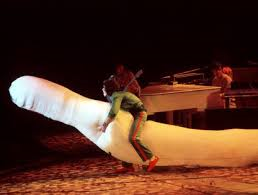
Ride ’em High Mick
 I, Dynamo