Exhuming Bob: The Jewel In The Forehead Of The Toad
December 11, 2007
Exhuming Bob:
The Jewel In The Forehead Of The Toad
By
R.E. Prindle
I ride on a mail train; can’t buy a thrill.
-Bob Dylan
Bob Dylan. How did this guy get into my life? As someone said of Hank Williams: Bob Dylan sang my life. Up to a point. How he could know so much about me is totally unbelievable. I’m three years older than Bob which is not all that much, especially at this age. Our mental states were quite similar while we were working out our mental problems in somewhat the same way, not that Bob had ever heard of me but one of the hazards of exposing yourself on records or in print is that kindred spirits recognize each other. One of the occupational hazards, I suppose.
I’m going to use as a starting point Dylan’s record of Mixed Up Confusion. I must confess that I had never heard the song until a couple years ago. I had bought three copies of Biograph when it came out but never opened one. I bought all three copies as an investment and that turned out to be one lousy investment. So after twenty years these sealed copies weren’t listed for much more than I paid for them so I didn’t think I’d be losing much by opening one. It was then I first heard Mixed Up Confusion. Was it a revelation you ask? Hell no. It was just a noisy song. But as I was sitting watching the river flow and reading Greil Marcus’ Lipstick Traces it occurred to me that the book needed some constructive criticism so I gave it. You may have read that criticism right here on this blog. Then having the kind of mind I do I had to read the rest of Marcus so as to make knowing and intelligent comments on the guy. Marcus reopened the subject of Dylan in my mind. I dismissed the guy a few years ago, right after hearing Mixed Up Confusion. I had to start thinking about the Bob again because I couldn’t figure out exactly what I used to see in him.
Bob and I first made extra-sensory contact back in ‘64 and as you are well aware this is ‘08. A lot of water had flowed by in the river and under the bridge while I was sitting and watching it since way back when.
In the interval I had worked out my mental problems even integrating my personality according to the tenets of C.G. Jung. I’ve got the same old face, and getting older, but I’m a different guy.
Here’s the rub. I lived by Dylan for maybe five years from Blonde On Blonde until my life began running so fast I had too many other things to think about. Greil Marcus raised some irritating points about Dylan that made me regret my former adulation. Now, this created a small problem because I love my life and I have the notion that I have perfect taste and that whatever I have ever liked I must still like or I don’t really have perfect taste. You can see how Marcus put me up against the wall. Another one of those extrasensory contacts. And there was Bob getting more ambiguous by the moment as Marcus plodded on.
Damn near threw me into a panic.
So now I had to develop a new perspective for my infatuation of the toad with the jewel in his forehead. That’s how I look at Bob now. Well, you know, I’ve read most of the books on Bob, not so much reviews or interviews so that I have the means to analyze this prime influence on my young manhood.
I’m standing in my library when my hand fell on a Dylan book I bought some time ago. It occurred to me that maybe I hadn’t read this one yet. The book was the Rough Guide To Bob Dylan by Nigel Williamson. English fellow, obviously never been to America. Nigel had a pretty good handle on Bob so my mind focused on the jewel in Bob’s forehead. Mixed Up Confusion. This was where Bob was at in 1962. The rest of his career is the working out of this song. Trying to clear up the confusion. Get Straight. Walk like a man and the words of that tune..
Not enough attention has been devoted to Bob’s boyhood in Hibbing although guys like Howard Sounes in Down The Highway: The Life Of Bob Dylan have made a stab at it. Nobody has touched on the real source of Bob’s malaise though. I mean why was he living in mixed up confusion? His songs give off hints that could be investigated by someone in the right frame of mind but it’s not going to be me. I’ve got other things to think about. I’ve got my own life to live. Bob does generously provide the lyrics on his web site however for anyone interested.
Obviously the early years were not so happy as they could have been. Bob had difficulties with his mother and father; nothing too egregious but one gets the notion that perhaps Bob thought parents and child were mismatched. Should have been born to someone else. I live with that feeling too. Bob and I both knelt at the same altar praying: There must be some way out of here… But just through that door over there and when it closes behind you you can’t get back in. I didn’t design this place I just live here.
How well he got along at school isn’t absolutely clear but it seems that no one felt any compunction to take Bob at his word which should be the finger on the sign pointing: This Way.
That Bob had time on his hands is obvious by his listening habits on the radio and his reading habits. Bob took it all in as did I. Country, Rock, Swing, Folk, Easy Listening. He doesn’t seem to remember the Folk very much but he must have heard those Harry Smith songs before if he crawled all those late night country stations beaming up on a million watts or so from Del Rio, Texas. He must have got Waterloo real clear. One of the great country stations of the Midwest. I don’t know if he could get WCKY in Cincinatti O-ha-o, as the announcer always pronounced it up there in Hibbing or Wheeling West Virginia. Boy Wheeling used to play some unusual items. Came in pretty clear in Michigan where I lived. Carter’s and all that? Old hat.
So I don’t know what blew his mind so much when he got to Dinkytown down at U. Minnesota. Atmosphere I guess. The hip thing was pretty heady. Tickled my fancy.
I’m totally amazed he was blown away by Woody Guthrie. Never had much use for Guthrie myself. This machine kills fascists! Who the hell ever saw a Fascist in America? I never did and I looked. I was curious. I wanted to find one.
Read Bound For Glory too. Left me cold but then that’s a matter of taste or perhaps temperament. Anyway Bob’s got all these musical influences rolling around in his mind and he meant to do something with them. He took off hitchhiking for NYC in the middle of a Minnesota winter. God, what balls. If anything got him into the Hall of Fame that must have been it.
I’ve done it. Not Minnesota but over on the Illinois, Indiana, Michigan side. Must have been out of my mind. Well, just young and dumb, but even that’s no excuse. I bet Bob feels the same way. There I was in three feet of snow with trucks going by at fifty miles an hour. Rearranged my own personal snow bank every time it happened. But this isn’t about me, well, actually it is but only in relation to Bob.
This hitchhike through the winter wonderland must have left an indelible stamp on Bob’s mind. Did mine. Made him cold. Bitter. Put bite into some of his songs. Tears of rage. Hello New York City sayonara Chitown. Boy, there’s two places that’ll give you a vivid impression of mankind. Did me.
Bob was there at the creation of Rock and Roll and it was a life changing experience for him. Some guys like Eddie Cochran and Ricky Nelson could settle into quick and easy imitations but Bob had trouble sorting our his influences and making a sound that was his own. Landing in Greenwich Village and its vibrant Folk scene, if some of those guys can be called vibrant. I’ve got a whole collection of their records and some of ‘em are so dull they make Bobby shine.
So Bob settled in doing things like Talking New York and other folkie stuff as he put his musical roots down coming up with Hank Williams influenced Folk stuff. He was doin’ all right too but he couldn’t forget those Rock and Roll rhythms.
So just as he was drolling out Folk anthems in ‘62 he went into the studio and did this strange Rock and Roll record called Mixed Up Confusion. Tryin’ to be Elvis Presley. Sun years. Hot licks and all that jazz.
So Mixed Up Confusion is not good but it’s not bad either. All his miserable past is focused into that song and all his magnificent rise emanates from it. The song is a knot. It’s like when I first started writing. I could tell my whole life story in three Ernest Hemingway style sentences. Brief and pithy but there couldn’t possibly be that big a demand for a haiku on my life. I’d have to kind of elaborate, get loquacious, a little. That’s what Bob did after Mixed Up Confusion. He began to elaborate. Stretch it out. Separate those musical strands. Mercerize it whatever mercerize means. Seen the world somewhere. Memorized it. This might be the appropriate time to use it; might not.
2.
Now, I only heard the song in 2005 but in the way memory works I was able to shift it from here to there so that me and Bob was in two places at the same time together. You know, we went to the same school together at different times. It was a lot easier to do than explain.
Bob and I began to work out our problem in the same way, he singing, me listening. See, I told you it was easy. First though Bob had to dump those Folkies. He was made of stiff stuff though. It was a lot easier for him to do it than it would have been for me. But he was gonna climb that mountain no matter how high. When you get to the top you’ve left everyone behind anyway. I’ll say I know but that wouldn’t be 100% true. Wouldn’t be a 100% lie either though. Kinda half way between the pillar and the post. You could kinda reach out and touch each one with your hands. Have to be kind of a contortionist though. I saw a guy once who could fit himself into a shoe box, big shoes, cowboy boots, size nineteens, but I never wanted to emulate him.
So Bob had been laying this folk stuff on the people pretty thick. They believed in him. They thought he was sincere, didn’t bother to ask. But he got himself a hot electric band and showed ‘em what boogie folk was. That’s when the sh.., uh stuff, hit the fan. It was messy. Got all over everybody. But Bob was kind of a Magic Man. He survived it. Prospered. Took more balls than I got to do it though.
They booed him. Loud. Shouted things at him. Like, Judas and Traitor and Go Home. He said he didn’t believe them but that must have been sheer bravado. They had their point. Well, don’t look back as Farragut said in Mobile Bay. Full speed ahead boys. Let ‘em deal with this.
Bob knew a thing or two about himself, if you know what I mean. He was beginning to sort his Rock and Roll ideas out. Tears of Rage. All the anger and frustration of his youth was finding a vent. The mood was terrific, who in the hell cared what it meant. If you wanted your songs to sound heavy but mean something plain you could borrow the Sound of Silence from Simon and Garfunkle.
He was beginning to be able to project his vision of Rock and Roll. It would appear that he wanted to create an entirely new paradigm as he does manage to sound different but retains similarities to both Presley and Little Richard, two of his major influences. The tentative gropings of Bringing It All Back Home progressed through Highway 61 Revisited to full realization in Blonde On Blonde. Rainy Day Women is a weird and raucous vision of Rock music but in reality is neither fish nor fowl. The general reaction to Blonde On Blonde was one of puzzlement. The music of Rainy Day Women was repellent to most while the lyrics of that summer of ‘66 were impenetrable. Nobody and I mean nobody had any idea of what Sad Eyed Lady Of The Lowlands was about. Still Dylan’s vision of Rock was loose and exciting.
Bob Dylan had also reached a plateau with the release of this his major opus. He had realized or perfected the style. No farther development was possible. The rage and resentment that had fueled the music even perhaps psychotic had reached a culmination.
Thus in the summer of ‘66 Dylan had no place to go. I presume he was out of ideas hence his accident and retirement.
The summer of ‘66 was traumatic for the Dylan, myself and the country. While Bob’s new record lay on the counter waiting to be bought on July 13th Richard Speck committed a horrific crime in Chicago. He ritually murdered a passel of nursing students. At the time the memory of Kennedy’s assassination was still strong. At the time he was shot there were people who thought and said that the assassination would release an epidemic of murder. I don’t know that Speck had any relationship to Kennedy, perhaps his killing was merely a harbinger of the murderous unrest stalking the land.
I had just graduated from Cal State at Hayward that June of ’66. I was taking graduate courses at UC Berkeley. Twenty-eight years old at the time. The Dylan record had hit the stores at the end of June. Now, the record was psychologically disturbing and unsettling by itself. Records were the generation’s means of expressing itself, replacing the movies of the previous generation and books of still earlier generations, so Blonde On Blonde had earth shaking qualities not present in CD s today. Not only did Blonde On Blonde erupt in that memorable summer but Procol Harum, Cream and Canned Heat first emerged. All exhibited a new form of craziness what with Cream’s I Feel Free and Canned Heat being named after a drug substitute. The following June, The Summer Of Love would see the release of the even crazier record Sgt. Pepper’s Lonely Hearts Club Band by the Beatles.
So we were reeling from Speck’s astounding crime under the influences of the psychotic or near psychotic Blonde On Blonde when two weeks after Speck Charlie Whitman barricaded himself in his tower and opened fire on the world or at least as much of it as he could reach on the University of Texas campus. Whitman killed or wounded dozens.
At the time I was cracking my brain trying to learn a year’s worth of Latin in an intensive six week course while trying to prepare for a move to graduate school at the University of Oregon.
At the same time Bob was working out his rage and hatred in full view of the world with what were actually night thoughts I was privately doing the same under the influence of his lunacy as he exposed himself on records. I was still hurtin’ every single day searching for my own release and the way out of from where I was at. I was strange enough, hair parted in the middle getting longer by the day, to feel some affinity to Speck and Whitman as well as Dylan. Whatever I saw in Dylan I saw aspects of in Speck and Whitman. Dylan did too; at least he said so at an awards ceremony setting his audience on their ears. I know what he was talking about and everyone in that audience should have too. No man is an island, send not for whom the bell tolls, it tolls for thee.
3.
In the summer of ‘66 the so-called Free Speech Movement at Berkeley was in the mopping up stage. The new paradigm of ‘Freedom’ was in place at the home of the Golden Bears. The obscene rag The Berkeley Barb was being hawked on the street corners and wherever. The homeless and runaways were throwing down their sleeping bags in doorways creating the new street sitcom of the Brave New America.
The man who dubbed what went before as The Old Weird America had graduated from US Berkeley that very same June of ‘66. He was on his way over to San Francisco to become the reviews editor of the new journalism espoused by The Rolling Stone, the most successful of the generations publishing ventures. The San Francisco Oracle published for a year then disappeared.
I gathered my things together and headed North to the land of perpetual overcast, Oregon.
While I was familiar with Bringing It All Back Home and Highway 61 with the addition of Blonde On Blonde I began to immerse myself in the three records for about three years. I listened to a side a day every morning when I got up. I know that when Bob talks about his hour of darkness he really means his whole life. That’s what I would mean by it. That’s what I meant by it. It wasn’t a question of not dark yet it was a question of when is the sun going to shine. I was trying to stay on the sunny side of the street but I just couldn’t figure out which side was it. It was going to be dark for a while yet.
Those Dylan years were dark years for me. Probably as dark as it has ever been. Let’s hope so because I don’t want to go there again. But I suppose I have to thank Bob for steadying me through the dark period. Apart from the stray line popping up in my memory from time to time I cannot remember the lyrics of a single song or could I quote a whole verse. The titles were terrific though and I remember a lot of them. Whole novels were in those titles. Whole novels were in many of the lines. I responded to the title It Takes A Lot To Laugh, It Takes A Train To Cry. How great. I didn’t need the song that rumbled and loped in the background of the thoughts it released. The tone and mood were the perfect background to the darkness swirling in my mind. Occasionally a line that was another novel in itself would break in like ‘I ride on a mail train, baby, can’t buy a thrill.’ One more line and I would have had a trilogy. Possibly I could have named the trilogy The Weird Old Greil Marcus. I might yet.
4.
Here’s Greil Marcus forming this weird extrasensory relationship with Bobby. Marcus gets himself all wrapped up in the lyrics of Like A Rolling Stone; begins to live his life like it’s the fifth gospel right after John. I mean, Dylan’s good, but…
Dylan had an effect on a lot of people not least Greil Marcus. Marcus had seen Dylan in ‘63 in Philly and was blown away. He attended several concerts between ‘63 and ‘66 each apparently a religious epiphany. As just a spectator in the audience he could do nothing but adore his idol. Beginning with his job at Rolling Stone in ‘66 he had an entrée backstage at anyone’s concert including his idol Bob’s. Thus he could get up close and personal with his hero. Ask almost any question; form a relationship. Shape Bob’s thinking and attitude a little even in time display his SI credentials.
Apparently Marcus got as involved with Bobby’s lyrics as much as I did, heck, as much as a multitude did. Marcus has followed Bobby down seemingly owning all the records and CD s having heard all the songs at least once, as indeed has Nigel Williamson who wrote the Rough Guide. I can’t really go much further than John Wesley Harding. I gave up on Bob after that, not necessarily because his stuff wasn’t that good, but wherever he was going I wasn’t following. Our minds and problems slipped out of sync. Most likely he went his way and I went mine.
But Greil Marcus became obsessed with one Dylan song: Like A Rolling Stone. He went so far as to write a long essay on the song published as a single volume. A song has to be in your gene’s to devote that much effort to it.
From this point on I’m going to refer to Marcus as Greil for convenience and because I’m going to get more personal. I hope there are no objections.
Speaking from the ‘bully pulpit’ that Greil has created for himself he has declared Like A Rolling Stone not only the best of Bobby’s extensive canon but the greatest song of all time. As an influential critic he has got the ball rolling in the direction he wants it to go. But, there are dissenters.
Nigel Williamson, who may be considered an authority on Dylan’s entire oeuvre equal to Greil, in his Rough Guide to Dylan lists what he considers Bobby’s Top 50. He lists Like A Rolling Stone no higher than eighteen of Dylan’s best not even considering the whole song corpus of the world. Williamson’s top 18 all come from Bobby’s albums before John Wesley Harding. Further of those songs which I know well I would agree with Williamson with the exceptions of #4 Girl From The North Country, #5 Mixed Up Confusion and #8 Lonesome Death Of Hattie Carroll. I would move To Ramona closer to the top. The Flying Burrito Bros. Version of the song is as good as it gets.
The extravagance of Greil is alarming in a critic. The excess can only be explained by Greil’s relation of the song to some intense personal problem. Now, Greil has not only written several books that almost repeat the same thematic material, John Winthrop- Abraham Lincoln-Mike King Jr., but he has written numerous reviews, essays and been interviewed many times. A great many are available for downloading from the internet so that Greil’s psyche can be searched. In searching through his essays one comes to a remarkably irrelevant and revealing essay. Irrelevant because it has nothing to do with any subject anyone would go to here him lecture about.
On Oct. 13, 2006 Greil read a piece for an audience at the Richard Hugo House. In it he revealed his central childhood fixation.. Because of the death of the inseminator of his mother, a father he never knew by the name of Greil Gerstley, Greil Marcus apparently considers himself an orphan which he is in a manner of speaking in fact.
The incident that catalyzed his feeling he tells thusly:
http://www.hugohouse.org/newwork/marcus_obsessive_memories/
Quote:
It was 1955; I was 10. We had just moved into a new
house in Menlo Park, California. There was a big radio set up, and I’d play with it at night, trying to pull in the drifting signals from across the country; Chicago, Cleveland, Omaha, even New Jersey. One night a few lines came out. I don’t remember the exact words, but the gist is clear: “When American GI s left Korea, they also left behind countless fatherless babies. Once everyone talked about this. Now nobody cares.”
————————–
As I got older I realized it was an echo of something other than what the words from the radio described. I know it was an echo of an absent memory of my own father, whose name was Greil Gerstley, who was lost in a typhoon in the Pacific when his destroyer went down.
———————————
So in times of teenage unhappiness, the fantasy that I might have lived a different life, been a different person with a different name, was more a fact than a fantasy. If my father had lived, both my mother and I would have lived very different lives. But it was the kind of fact that, when you try to hold onto it, slips through your fingers like water.
Unquote.
Alright. Bobby’s song is addressed to a woman while Greil dwells on, delights in the line ‘How does it feel.’ So, what woman does Dylan’s song call to mind in Greil’s experience. I’m afraid it must be his mother. I won’t speculate on whatever lingering fears Greil may have. Suffice it to say that his mother and father in the pressures of war were a dockside romance and marriage. Virtually as the marriage was consummated Greil Gerstner was shipped to his death in a Pacific typhoon.
Greil tells us that he was born six months and a day after his father’s ship went down. Thus as his father sank into the waters of the Pacific Greil was a mass of stem cells evolving into hands, fingers, ears, eyes, nose and…a memory. It is almost eerie the way he dates his memories from this period when he was scarcely recognizable as a human being..
I suspect he considers his mother’s remarriage in 1948 some sort of betrayal of the memory of Greil Gerstner. One wonders if Greil is a Junior. One has the feeling that he was never really comfortable with his adoptive father, Mr. Marcus. I can understand this. There was no genetic affinity to the man. When my mother remarried also in 1948 when I was ten I could never consider my step-father as other than a stranger and an interloper in my mother’s bed. I was furious that he was sleeping with her when my inseminator, my own genetic material, wasn’t.
Both Greil’s reaction and my own were irrational but fully natural and understandable. It matters little that the Gerstners would have undoubtedly been divorced within two years of his father’s return while he would have ended up with a step-father anyway. He can thank his lucky stars his mother remarried as well as she did.
At least his half brother Bill is looking out for him. Thank the Lord for what few favors he bestows.
Greil’s mother is his problem and the source of his admiration for his favorite song and he has become obsessed with his dead father. Then things began to happen. Someone was doing a documentary on the death of the Hull, his father’s ship. Certain stories were told Greil in the course of the documentary that don’t make sense to my experience.
I was in the Navy on a Destroyer Escort, a hundred feet or so shorter than a Destroyer. We were sent through the heart of a typhoon also. I know what the term ‘towering seas’ means. The ship came close to dying several times but we made it through. If the ship had rolled there would have been no survivors. I can’t understand how there were any survivors of the Hull, Gerstner’s ship. In seas like that the ship is tightly sealed to prevent flooding and consequent sinking. The only exit is on the bridge to allow changes of the watch and whatever. When that sucker rolls it is a floating coffin. Nobody gets out. If you happened to be on watch on the bridge you would be thrown into frigid waters with a life expectancy of two minutes at most. To protect myself from the numbing cold I had on so many clothes that they would have saturated and pulled me down before I could come up for air the first time.
I do not understand that there could be survivors of the Hull.
Greil should check his facts more closely, the ship rolls over it doesn’t pitch over. The ship will not right itself at something like a thirty degree roll. Anything more than that and it’s Hello, Davy Jones, goodbye San Francisco.
All that baloney about breaking out of a trough is sheer nonsense. Only a fool would cut the engines. There are so many things happening with the water that survival is sheer luck. At one time the seas were flowing beneath us faster than our headway. That makes the rudders useless. If you don’t have control of the ship you’re sunk. I don’t know how we made it. I really don’t.
So Greil should research his father’s situation more fully and stop blaming everyone. It was just one of those things. Could have happened to anyone. Ask me.
At any rate Greil made the connection of those abandoned Korean children with his own and his father’s. Greil obviously believes that he is as one of those abandoned kids.
The problem then gets back to the woman of Like A Rolling Stone. Only Greil’s mom situation makes Like A Rolling Stone the greatest song ever written. He has to come to terms with his feelings about his mother. That’s all I’ll say. If he rereads Obsessive Memories closely she should be able to find his way out and maybe find another world’s greatest song.
Greil’s obsessions with Like A Rolling Stone soured Bobby beyond redemption for me. However in forcing me to reexamine my own fixation on Bob’s three greatest LP s he has compelled me to come to a truer understanding of what I found in those songs. The use I made of them.
Unfortunately as one door closes another opens. Memories come flooding back of that memorable summer of ‘66. I ride on a mail train, baby, can’t buy a thrill while it takes a lot to laugh, it takes a train to cry. Blonde On Blonde, Richard Speck, Charlie Whitman, there’s a novel or two or a trilogy in there somewhere. Can it be found before I die?
The Ballad Of Bobby And Albert
November 30, 2007
by
R.E. Prindle
For some reason the notion has grown that Folk music erupted in 1958 with the Kingston Trio’s version of Tom Dooley. I don’t understand this. We sang Folk and Old Timey all the way through grade school. Grade school ended for me in 1950. Folk music was always a conscious part of my life. I grew so tired of singing Go Tell Aunt Rhody and She’ll Be Comin’ Round The Mountain that I shouted for joy upon hearing The Weaver’s sing On Top Of Old Smokey and Goodnight Irene.
That was in the days of ‘Your Hit Parade’. That show was a key program before TV wiped programmed radio off the Networks. They thought radio was dead. Didn’t think anyone would listen to music twenty-four hours a day. We not only did that but we listened to the same four songs over and over in fifteen minute segments. They called it Top Forty but I remember it more like the Top Four. When one song wore out they plugged in another one and kept going. Of course that was only temporary; things evolved fast.
Folk and Folk related music was a strong stream all through the fifties. Burl Ives was the rage for a while but you can only get so far on Jimmie Crack Corn And I Don’t Care and The Blue Tail Fly. Tennessee Ernie Ford and his Sixteen Tons was as close as you could get to Folk without actually stepping over the line. Harry Belafonte occupied the mid-fifties as a Folksinger, academic quality, with his stupid Mark Twain. In a more pop vein Mitch Miller churned out stuff like She Wore A Yellow Ribbon and The Bowery Grenadiers. I didn’t care for it at the time but his sing along stuff is pretty good.
Who can forget the greatest of them all with his fabulous hit tune The Rock Island Line in 1955. The Great

The Great Lonnie Donegan
Lonnie Donegan. The song was played once every fifteen minutes around the clock on every station for a couple of weeks. I once artfully shifted stations so that I got to hear the song seven times in a row. Lonnie Donegan could sing circles around the entire Greenwich Village crowd including any number of Dylans. He was very successful in combining a listenable approach to a trad style. All the trad stuff done trad style was OK for the enthusiasts but had no commercial potential. None of the Greenwich Village crowd had a future except Dylan. Even the best of them, Fred Neil, fell flat.
Fred Hellerman of the Weavers was musical advisor to the Kingstons who merely continued the Weavers’ tradition. The music that Bob Dylan tuned into in 1959 had been an established fact for ten years or better. His future manager Albert Grossman had established the premier folk venue, The Gate Of Horn in Chicago the year before while helping to establish the Newport Folk Festival in 1959
The trad folk types were running the Village by the time Dylan got there. Some people liked the traditional style, they usually smoked pipes. I can handle it but I don’t like those precious antiquarian stylists; I much prefer the pop styles of the Kingstons and the Chad Mitchell Trio. Did you ever listen to Terry Gilkyson and the Easy Riders? Pozo Seco Singers?
It didn’t take Dylan long to understand that the way to success was through the pop style rather than the trad. Thus Dylan as a folk act can be classed with the Kingstons, the Mitchell Trio and The New Christy Minstrels.
His muse, however, spoke with a purer voice; the muse belonged to him, he said, or at least she shacked with him for a couple years before moving on. As talented as Dylan was in those years he did not make it alone. As he said, he wanted to sing to people on his own wavelength. That was a small audience.
While he was shifting the dial to the high numbers at the right hand side of the band he passed through the broad band. In order to get to his own audience he had to appeal to a broader cross section; so he wrote stuff like Blowin’ In The Wind.
As someone who was there at the time I had to roll my eyes at the song’s obviousness while Bob’s vocals drove me up the wall. The sales figures for the first three or four albums bear me out.
So how did Bob get from there to superstar? Two words- Albert Grossman. This article might be subtitled: The Genius And The Promoter. For that brief one or two year period Bob turned out generalized songs that caught the spirit of the g-g-generation. It is questionable how far the songs would have gone had not the promotional genius of Albert Grossman seized the main chance.
Grossman would be as fascinating a study as Bobby. While Dylan has gotten all the credit his early career was in fact a fifty-fifty partnership with Albert.
Bob had no business sense, still doesn’t; nor should any artist be expected to. Everyone would have

The Manager
stolen him blind. It’s the music business. The performers about him either professed to reject financial success because they couldn’t find the handle or may have been so purist that they actually despised the money. Sorta hard to believe but that’s the way they talked.
Now, Albert not only saw the financial potential of the caterwauling Dylan but more importantly he foresaw that phonographs records would be the medium of expression for the entire generation. Records were how the generation would communicate. Rather than looking back at what the recording industry had been he looked foward to what it would be.
Noting the song writing potential of the 1962-63 Dylan he determined to make Bob the keystone of his grab for the golden ring. He succeeded in capturing Bob. He had his keystone but he lacked the supports. He’d already thought that out working at it from the time he founded the Gate of Horn. Having gotten himself a fecund folk style songwriter he now needed a sweet singing Top 40 folk style group a la the Kingston Trio. The latter was perhaps the easiest part of the equation.
Secure in his source of material Albert organized the commercial sounding folk group called Peter, Paul and Mary, three former purists who opted for the cash. Packaging a sound for his group was relatively easy. Taking the songs of his keystone he had them set to pretty three part harmonies. Presto! Albert had dumped the harsh cacophony of Dylan and the songs shone.
Parts one and two of his plan were complete. He had partnered himself with Dylan and he owned Peter, Paul and Mary. The rest fell into place. The public was entranced by the songs of Bob Dylan; now they wanted to know who the writer was. Essentially the singer-songwriter was called into existence by demand. Albert put his publicity act in motion. It is doubtful that he knew how Dylan would respond but Dylan’s mysterioso act was perfect for the times while being executed to perfection. Albert’s keystone captured the imagination of the world.
As a genius promoter Albert understood his contribution to the equation. Albert engineered Bobby’s success while with an artist’s ego Dylan totally underestimated Albert’s contribution. Nevertheless Albert Grossman wanted his fair share which he calculated as much higher than the established ten percent for perfunctuory management while probably going over the line of fair which a promoter’s ego will.
The structure of the contemporary music business was in its formative stages. Albert was a presage of the future. He formed groups with an identity in which he took only fifty percent, but the groups were his creation he was entitled to it. Later the artists would simply be put on salary. By the end of the century when the music industry had evolved, his successors concceived a group concept from start to finish providing concept and songs while merely hiring some musical working stiffs, probably not all that musical, just stiffs. The performers were interchangeable like members of a sports team. Heck they didn’t even play or sing they just danced to records. It didn’t matter whether one or more or the whole group was replaced. The performers had no talent merely acrobatic skills. Promotion had evolved since Albert.

Bob and Albert Out On Highway 61
Albert understood the artistic ego but too well. Two colossal ambitions came into collision.
One of the first things Albert did when he captured Bobby was to buy back the publishing from M. Witmark. He then set up a new publishing company, Dwarf Music, in which he gave himself a fifty percent interest. At first glance fifty percent looks like he really took advantage of Bobby.
Certainly he was underhanded. Remember, this is only the record business and Albert was relatively honest. He never explained himself to Bobby. He did go to lengths to conceal the fifty-fifty split from Dylan. Albert Grossman was after all a promoter. The record industry itself will never get high marks for probity. The equation for theft is when one group controls the money and the other group provides the product.
The question here is not whether Albert stole from Bobby in the sense of juggling the accounting, you can be sure Albert took advantage of his position, but whether he cheated Bobby by taking a fifty percent interest in Dwarf is open to qestion.
I don’t think so.
It is hard to believe that Bob Dylan would have amounted to much if Albert Grossman hadn’t been a promotional genius who recognized the potential which no one else, in fact, could see.
Of course, today, long after the fact, Dylan’s genius seems to have ensured success. At the time that genius wasn’t quite so obvious, indeed, I’m not so sure it ever existed.
I wasn’t Johnny on the Spot when it came to recognizing Dylan’s talent. I didn’t hear of him until 1964 when my brother-in-law played the first couple records for me. All I could hear was a guy thwacking away noisily on guitar punctuating his horrid screeching with cacophonous bursts on an harmonica. It might as well have been an air raid.
I was thoroughly repelled. I wouldn’t have listened to Dylan again but my brother-in-law who had a curious ability to scent out the next big thing insisted I listen to what he was saying. ‘The answer, my friend, is blowin’ in the wind.’ To be sure. Well, I’m from the midwest too. I recognized the catch phrases; Dylan uses a lot of midwest catch phrases. I still wasn’t impressed.
To me Dylan sounded illiterate. I ask you, what does ‘How many times can a man look up until he sees the sky?’ mean? What does ‘How many seas must a white duck cross before it can sleep in the sand?’ mean? Is there such a thing as a migrating white duck and do they ever sleep in the sand? Am I supposed to let my heart bleed for white ducks who can’t sleep in the sand tonight? The anwer to those questions, my friend, aren’t blowing in the wind.
The guy just said whatever came into his head. After his mind broke in 1966 and his muse left him he came up with ‘Shut the light, Shut the shade, you don’t have to be afraid.’ I mean, shade and fraid do rhyme. I had problems understanding where the talent was.
Protest singer? What’s that to me? I never did march anyway.
If you listen to the 1963 Newport Folk Festival album Dylan’s singing of Blowin’ In The Wind is sandwiched between Joan Baez and the Freedom Singers. Both back Bobby with a religious fervor the song doesn’t bear before launching into an even more religious shouting of We Shall Overcome…Someday.
Masters of War? You’ve got to be kidding? This is a really puerile song. Dylan just said what no one else wanted to put into words, although once said all those Sing Out types seemed to love it. But, does anyone really believe that wars are promoted by a bunch of professional warriors sitting in a room trying to come up with ideas? Before Bush I mean. Is that a valid explanation of how politics work? What happened to Bobby’s notions of ‘fixtures and forces.’
I really couldn’t go with stuff like this.
Impressed more by my brother-in-law’s unerring ability to spot the next big thing than Bobby I went out and bought the records but I didn’t listen to them although I was increasingly impressed by the number of cover versions that were appearing. Albert Grossman was doing that work, not Bobby.
And then Bringing It All Back Home with its vicious sounding title tuned into my wavelength down around 1600. I was one of those confused, accused, misused, abused, strung out ones and worse. I placed myself in the accused, abused and misused categories; A.J. Weberman obviously placed himself with the strung out ones and worse sorting through garbage cans. But, here we have the spectrum of Bobby’s wavelength.
It just keeps right on a hurtin’.
By the time of Highway 61 Revisited and Blonde On Blonde Bobby was like strong drink to me. I became a bobaholic as he backed deeper and deeper into the inner recesses of his mind where a different logic prevailed in an attempt to narrow his audience as much as possible. Strangely the more he found his own audience the greater his reputation grew.
Even though I became absorbed in Bob Dylan’s ‘genius’ I always remembered those lovely cover versions of his early songs. Don’t you think those Byrds’ covers are too beautiful? I asked myself would I have stuck with Bobby if it hadn’t been for those. I can’t say, but they homogenized Bobby’s quirky personality into a palatable product. When you couldn’t handle Bobby’s Mr. Tambourine Man you could switch to that of the Byrds.
Those cover versions Albert obtained are what made Bob Dylan successful.
Bob wrote them but he had nothing to do with either their placement or production. Bobby’s self appointed ‘partner’ Albert did.
First he created Peter, Paul and Mary. Grossman’s group was the key to Bob’s success. It must be credited

Albert Grossman's Group
to Grossman that he seized the moment. This was his one chance for success and he caught the Golden Ring as it came around. The rest of Grossman’s career was trying to replicate this golden moment and that he could not do although he did have a ‘critical’ success in establishing Bearsville Records. The label turned out some nice stuff including the very lovely catalog of Jesse Winchester.
However Grossman’s success was based on PP&M. Albert cleverly recognized the quasi-religious spirt of the times. While the catchword at the time was ‘God Is Dead’ Albert chose to name his group after three Christian saints. This was mildly off-putting to those of us of the time. Grossman, himself a Jew, had his private joke as these three ‘Christian’ saints were all Jews.
His group started out singing stupid quasi-religious songs like If I Had A Hammer and This Land Is Your Land. Guthrie Stuff. Grossman was actually mired in the tastes of the fifties. This material in itself was off-putting, even though popular, as being too overtly political. PP&M really caught fire when Bobby, Albert’s ace in the hole, came up with Blowin’ In The Wind. The song was still quasi-religious in tone but cleaner and more modern sounding while being, from my point of view, completely apolitical.
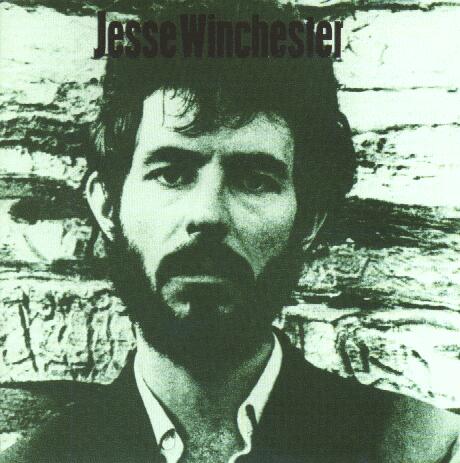
Jesse At The Time
After a couple successful covers by PP&M the Byrds came in with really stunning contemporary versions of Bobby’s songs. Within a year or two of that whole albums were issued trying to cash in on Bobby as a songwriter. Barry McGuire ex of the New Christy Minstrels for Chrissakes. Even that embarrassing Sinatra clone, Trini Lopez.
So Albert had turned Bobby’s catalog gold. Not a trick to be despised.
Bobby’s star rose as his reputation as a songwriter rose.

He's On His Way
Albert pushed the envelope to secure as large a portion of the revenues for himself and Bobby as he could. Columbia had conned Dylan into a disadvantageous contract so Albert forced a change. He secured twenty-five percent of the revenues from Bobby’s records for himself which was far in advance of practice. However Albert had been right. Pop album sales which had been miniscule in 1960 burgeoned into a mult-billion dollar segment by the end of the decade. Albert had positioned Bobby to benefit from this huge market.
Albert had bullied Columbia Records, Bobby’s label, into giving him producers who would make the most of his talents. His unusual terroristic tactics threw the fear of god into Columbia’s executives. If Bobby hadn’t signed a new contract, a fairly generous contract, behind Albert’s back Albert probably would have secured an even richer contract. Remember Albert had the incentive of twenty-five percent of Dylan’s record revenues.
One must accept the fact that Albert Grossman managed Bob Dylan’s career to perfection. One must accept the fact tht Dylan would have been worth much less financially, perhaps, worthless without the aid and support of Albert Grossman.
But then, Bob discovered that Albert had, and this is improtant, given himself fifty percent of Dwarf Music not only without telling Bobby but actively preventing his knowing.
Bobby saw only his own genius while ignoring Albert’s. Without thinking it out he chose to feel betrayed. Albert traded on Bobby’s trust but I do not believe Albert betrayed him. I think Albert was the best friend Bobby ever had.
I believe that Albert was entitled to fifty percent of Bobby’s earnings in perpetuity. I’d have to say that Bobby played the churl in not recognizing Albert’s contribution to his success.
Still, Bobby is the artist, Bob Dylan, while Albert is only the promoter, Albert Grossman. Which is the tail and which is the dog? Did you ever see a dog run round and round chasing its tail?
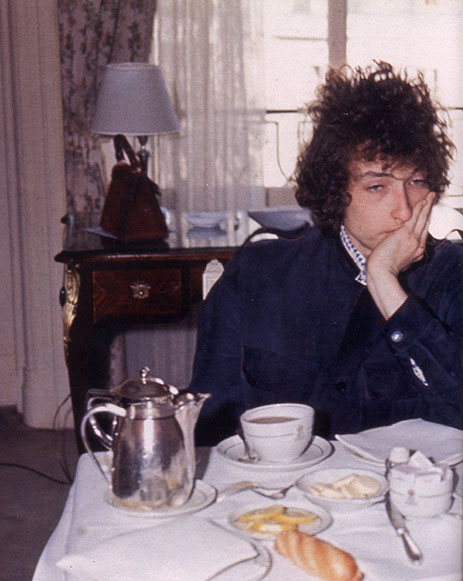
I Ate The Whole Thing
The End.
Lipstick Traces Pt. IX: Greil Marcus
September 11, 2007
A Review
Lipstick Traces:
Greil Marcus
Part IX
Into The Abyss
It sounded like a lot of fun wrecking the world.
It felt like freedom.
Greil Marcus: Lipstick Traces
It is probably time to look a little into Mr. Marcus’ antecedents. He was born in the summer of 1945 between VE and VJ day as he tells us. He was ten, then, in 1954-55 when Rock and Roll came into existence. He doesn’t seem to imply that he was particularly interested in records in the next decade that would have made him twenty in 1964-65. He would have been 15 to 20 from 1960-65 during which time he would have listened to the radio. He also seems to have been in Philadelphia at some time during that period when he attended a Bob Dylan concert. I haven’t read yet where he mentioned that he had a record collection during that period. He doesn’t seem to recall much from memory before 1965 with the possible exception of Bob Dylan.
One is forced to conclude then that most if not all his record lore was acquired between his twentieth and thirtieth years from 1965 to 1974-75. He began his career as a critic in 1966 when he went to work for Rolling Stone. He left that post a year later to write for Creem Magazine. His first book Mystery Train was published in 1975 so he should have acquired his lore over maybe eight years.
He should have been a sophomore in ’64 which means he should have graduated in’66 so his real record education would have been from ’66 to ’74. Not much time for someone posing as an expert in ’75.
He says he was born in San Francisco moving into Menlo Park in 1955 so that he went to Menlo Park-Atherton High. The area is one of the ritziest in the Bay Area. Atherton is top of the line for the Bay so his step-father must have been doing pretty well. In other words Mr. Marcus is a rich kid. I haven’t read exactly where he lived between 1948 when his mother remarried and 1955.
At any rate he comes from a very well to do background. After graduating from MPA he went over to Berkeley to attend UC. He was there for the whole Free Speech brouhaha. At some time after graduation from UC he returned to Berkeley to live which is his home base at the present time.
At the time he wrote Mystery Train I would question the depth and breadth of his knowledge.
He published Mystery Train at the last possible moment such a book could be published. From ’66 to ’75 those of us concerned with records were convinced that something monumental and earth shaking was happening. Wonderful theories of the music’s importance were spun of which Mystery Train is one. I think it probable that Mr. Marcus saw a string of such books rolling off his pen. A funny thing happened on the way to the forum however. Disco and Punk blew up the Rock monolith about the same year destroying the grandiose notions we were all believing in. All of a sudden as Mr. Marcus points out confidence was destroyed and survival became the issue. Mr. Marcus and his plans were thrown for a loop.
Not until 1989 did he find another tack to try to get back on track. In that year he published Lipstick Traces. Feeling that his first career had been blown out of the water by Punk he paid homage to it by concentrating on Johnny Rotten and the Sex Pistols. Broadening out some he incorporated the history of what he considered various Dada movements. His concern with Dada had found expression in Mystery Train so it was only necessary to relate Dada to Punk with which he had no trouble.
Since ’89 he has published a continuous series of books, the most recent being The Shape Of Things To Come.
2.
I hesitate to do this but I feel the reader should know something of my credentials to give some basis for judging my criticism and analysis.
I’m about seven years older than Mr. Marcus having been born in 1938. I was therefore sixteen in 1954 which is more or less the cut off date for the beginning of Rock and Roll.
I grew up in Saginaw, Michigan. We were apparently out of the mainstream of Rock development. Even though we had a fairly large Black population there was no Rhythm And Blues or Black music on the local radio. There were only traditional music shows on radio in 1954 when Top Forty was in embryo. By ’55 and ’56 we had full fledged Top 40 and what a blast it was.
With Top 40 came Black artists like Bill Doggett, Fats Domino and Little Richard but they were a Top 40 sound whether they called it Rhythm And Blues or not. One could tune into Detroit for Black records but I didn’t know anyone who did. I tuned in a couple times but Black music per se repelled me.
I was in the class of ’56. The class of ’55 knew nothing of Rock and Roll at the time and very little of Top 40 radio. I was in a distinct minority in the class of ’56 who listened to Rock at all. The class of ’57 was the first class attuned to the music.
As to first R & R records, who knows? The early and mid-fifties were a blend of musics so I heard a fair amount of Swing. Anyone who traces Rock and Roll directly to Swing is dreaming. I know Buddy Rich, Gene Krupa and the Swing drummers. None of them had the R&R feel. Swing rhythm sections were miniscule compared to Rock which to my mind is a singer, lead guitar and a two or three piece rhythm section. Very faint resemblance to Swing.
When it became financially impossible for Big Band to survive I suppose the instrumental quartet was the next logical step which led to the Big Beat. Neither Elvis nor Sun had a Big Beat. He had rhythm but no beat; he was essentially a hillbilly singer doing fast songs which is how everyone thought of him. That’s what I heard and none of the people I knew would listen to him because he was a hillbilly. As far as I’m concerned the Big Beat was developed by Lonnie Donegan and that is where the English Beat groups come from. Lonnie’s early stuff was as much Rock as anything else although he was primarily a terrific Folk and Blues singers. Unparalleled. He was as good as Elvis but somewhat more traditional sounding than Presley. Elvis could really move you.
Elvis was virtually unknown in Saginaw before Heartbreak Hotel. I missed out on the Sun records by a day. The record store had returned them the day before I got there so I have all RCAs. I never knew anyone else who had heard of Elvis between the time I bought my 45s and Heartbreak Hotel.
I never thought of Elvis as a Rock and Roller on those early records. There really was no Rock and Roll except for Bill Haley And The Comets and that stuff was really leadfooted. I didn’t really enjoy Rock Around The Clock and I never bought it. Elvis was just a hillbilly cat who could really sing a song. I knew from reading the labels that Arthur Crudup wrote That’s All Right Mama but that meant nothing to me. Who ever heard of Arthur Crudup?
I don’t understand why I don’t have Sun Presleys as I bought every Sun record as it came out. I had to have them special ordered as nobody wanted them but I was very familiar with the Sun sound. Not impossibly Sam Phillips had as much to do with Rock and Roll as anyone because all the records he produced had that forward leaning scudding way. You could have substituted Elvis for Johnny Cash on Get Rhythm and there wouldn’t have been much difference.
When Elvis left Sun his production values changed with the sound becoming flat footed and vertical rather than forward leaning. Elvis was always Elvis for me but I never had the incentive to buy his RCA produced 45s.
Some may say the music died with Buddy Holly’s plane crash but that is a gross exaggeration. Holly’s career was virtually over by February ’59. He was singing solo and fading fast. The Big Bopper was a no one who had one trash talking record while Richie Valens was as close to a zero as you can get.
Elvis was kept alive by RCA during his Army years but Little Richard was finished after Heebie Jeebies and Jerry Lee’s Rock career was stalled. High School Confidential was so-so. Jerry Lee’s marriage to his cousin may have put him in bad odor in some quarters but that was a fishing expedition to discredit him. Might have hurt his personal appearances but not his record sales, they were already down. To my mind Duane Eddy came out with Rebel Rouser on the heel of the plane crash and Rock and Roll bounced right along without missing a beat. Apparently not too many people remember the effect of Eddy and Rebel Rouser but it was the second kick in the pants after Presley. Kept us all going.
The big problem for Rock and Roll was Organized Crime. The Mafia and Chicago Outfit controlled Juke boxes. Those idiots determined that only their acts got on the Juke boxes. If you want a good representation of what the record industry was like check out the best Rock and Roll movie ever made- The Girl Can’t Help It. If you watch closely and pay attention you are being told exactly how it was.
An Outfit figure greatly resembling Al Capone, although the time period was long after Capone, controls the Juke boxes for the Outfit. That means the Juke boxes at least West of the Appalachians to the Coast. The Juke boxes in Saginaw were stocked by the Outfit that for all practical purposes controlled the town. All towns.
Girl Can’t Help It stars Jayne Mansfield and Tommy Ewell. Mansfield is the Mafia figure’s moll. He wants to make her a record star which he figures he can do because he controls the Juke boxes. All of ’em. But the Girl Can’t Sing. The producers are at their wits ends because they have to do something with her. They accidentally discover that she has this high pitched squeal. So, a la Tequila in which periodically the instrumental music stops and someone announces ‘Tequila’, at certain points in the record the music stops and Mansfield squeals. This is so captivating the record does become a hit.
Now, the movie highlights several Mafia acts like Teddy Randazzo and the Gum Drops that would never draw anyone into the theatres. Teddy didn’t even have an attractive high pitched squeal to go along with his great accordion playing. But as is usual with non-record types the belief is that if you can expose non-talent acts to enough people they will sell. So the Outfit did understand they needed some draws to get people in to expose the non-talent. Who are you going to go to? Well, Gene Vincent, Eddie Cochran, Little Richard for starters. I went because of Gene Vincent.
The movie was released in ’58 so not many of us had ever actually seen any of these guys. The Mob had their draws but they wanted to showcase the Italian acts which they did. Gene Vincent was shot through the window of a recording studio for about half of Be Bop A Lula; Eddie Cochran did his Twenty Flight Rock shot off a TV set and Little Richard was shot through a crowd in a club about fifty feet away.
As I say if you pay attention you can get a very good idea of what was going on. Mansfield and Ewell were great but they were at the terminal point of their careers.
The early sixties were pretty duddy as far as I was concerned, but that doesn’t necessarily mean I was right, so I went back to my true love, Country and Western. As I noted in Part One I was drawn back into pop by my brother-in -law. As I said I then graduated from college in ’66 going up to Oregon from the Bay Area. It was there in ’67 that I opened a record store. From ’67 to ’80 I was a decent sized player in the record business. I thought I heard everything but I am always amazed at the records for which I have no recollection even seeing.
I was there when the first Rolling Stone came out. I don’t know where the magazine sold but it wasn’t Oregon. Pretty boring actually. Got worse as time went on and then it got Political.
I quit listening to records in 1980 when I closed my record store. Punk was too ridiculous to waste your time on although I do have two or three Disco records I value. Well, Rock and Roll was great while it lasted but it really did die in ’75. Not only Punk and Disco but the untalented Epigone came along. The splitting out of Heavy Metal as a genre didn’t help either. God! I know how Marcus felt. Everything just crashed to the ground.
3.
Mr. Marcus’ themes and direction remain the same from Mystery Train to The Shape Of Things To Come. His attitudes are controlled by his dual Israeli and American passports: his Semitism and anti-Semitism. These two citizenships coincide in his psyche with his twin racial concerns. The Israeli citizenship as Semitism and his American citizenship with anti-Semitism. Naturally his Israeli Semitism takes precedence in his loyalty over his American anti-Semitism. Americans are Nazis in his mind. As with Adam in the Garden of Paradise and God, the twin concepts exist side by side in his mind with Adam representing Semitism and God anti-Semitism. Thus his Jewish/Adamic/Israeli identity represents his absolute purity in his mind while America/God represent his foul or Devil side. He and his fellow Jews think that by trashing the Garden, Europe, Palestine, America or wherever they happen to reside that their ‘purity’ will triumph and they will be as they represent themselves: a Holy People suited to govern mankind, Judge-Penitents. That is what the eighteenth century messiah, Jacob Frank, meant by saying that if the Jews commited all the evil in their minds then this ‘purity’ will shine to light the way for the peoples. You don’t have to be Freud to know it ain’t going to work. Thus Mr. Marcus’ subliminal message is all good comes from Jewish musicians and all evil from American musicians. The Jewish Bob Dylan becomes his ultimate hero taking precedence over the American anti-hero, Elvis Presley.
That’s why in Lipstick Traces he juxtaposes the anti-hero Presley and the Jewish hero Isidore Isou.
Mr. Marcus scatters several clues throughout his work to hint at what he’s attempting. He mentions John Ford’s movie The Man Who Shot Liberty Valence and one of its morals a couple times concentrating on the movie’s stated notion that once an event becomes legendary even though the received version may be untrue people prefer the myth to the fact. There may be some truth to the notion although as Mr. Marcus explores the counter notion of detournement he gives us the means to strip such an ingrained notion from the story and turn it in any direction we want. Thus in the twenties the Judaeo-Communists on the one hand debunked American heroes and myths while at the same time detourning them so that Jefferson and Lincoln become founding members of Communism as Communism in turn becomes Twentieth Century Americanism. A neat trick that didn’t quite work.
Actually the two practices denote the transition from one religion to another which also lays bare Mr. Marcus’ intent. Thus in the first few centuries of the Piscean Age the Catholic Church detourned ancient Taurian and Arien religious sites by stripping them of their pagan connotations replacing the meaning with little balloons containing Christian messages. Eventually they replaced Arien temples with Piscean churches.
Jack Finney’s 1950’s novel The Invasion Of The Body Snatchers describes the same thing in which aliens while maintaining exact replicas of the bodies they take over inform the minds with entirely different content. Finney understood detournement completely long before Guy Debord had it figured out.
That is exactly what the Jews, who are attempting to replace Christianity are doing. Mr. Marcus mentions Philip Roth’s The Plot To Destroy America approvingly. Of course Mr. Marcus and Roth are both Jewish. In Roth’s detournement of American history he portrays the Jewish rescue of the true America, which the Jews in their wisdom created, from the Weird Old Americans who are trying to twist the Promised Land into some Nazi hate filled paranoid perversion of what one is led to believe was the American paradise Jews had created.
Roth chooses to recklessly defame Charles Lindhberg, a great and true American, but that is what detournement is all about. Thus on the one hand Roth detournes ‘Weird Old American’ heroes into villains while at the same time creating the myth of the Jewish saviors a la Liberty Valence.
The Jews then become the men who shot Liberty Valence thus destroying the Weird Old America while bringing into existence this Jewish paradise we enjoy today. Shut your mouth, you anti-Semite.
Why Liberty Valence?
Well, Liberty is the opposite of collectivity or the Jewish Law. He represents the sort of ‘rugged individualism’ that threatened Jewish collectivity or subordination to the Mosaic Law. Valence means valour, courage or valiance. That is, a man who has what it takes to stand out against the crowd or Mosaic Law. I’m sure it was an unintended compliment. No one of the collectivity has what it takes to stand up against him, not even the hero of the collectivity, John Wayne.
The legend that is so hard to kill is that Jimmie Stewart shot Liberty Valance down in a fair and square man to man fight. Actually Wayne is the agent of the collectivity who bushwhacked Liberty from a dark alley, Wayne and his Negro servitor and alter ego who tossed his rifle to him.
So this is the secret message of Lipstick Traces creating a legend and detourning existing beliefs that run counter to those of the collectivity. For that reason the branch of academic history known as American Studies has been captured by Jews who stand up laughingly epatering the Americans, debunking and detourning as they go.
I see where Mr. Marcus and a yoyo by the name of Todd Gitlin are joining forces to epater the Americans together. Ought to be funny if you’ve got the right sense of humor.
4.
All the seeds of Mr. Marcus later work are apparent in his 1975 Mystery Train. One should examine Mr. Marcus construction of Train carefully.
He examines six recording stars. Two of which he calls ancestors and four ‘Inheritors.’ The six are Harmonica Frank, Robert Johnson, Dylan/The Band, Sly Stone, Randy Newman and Elvis Presley.
Out of the period of 1950-75 Mr. Marcus chooses a very personal list of bands. One would call the list debateable but there’s not much to debate. Whether they are supposed to be important or influential isn’t clear. Apart from Presley none of them were overwhelming important or influential. Pink Floyd, Grateful Dead, the Doors? No, they aren’t on board Mr. Marcus’ Mystery Train. So, what do we have?
The list is bracketed by two White performers, Harmonica Frank and Elvis Presley. Robert Johnson and Sly Stone are Black. Dylan/The Band are Jewish and Canadian while Robbie Robertson is mentioned as having a Jewish father. Thus Dylan/The Band and Randy Newman are two Jewish outfits. Two Whites, two Blacks, two Jews. Obviously we have an agenda here.
The two ancestors are questionable. I may have a vague memory of having heard the name Harmonica Frank but the man influenced absolutely no one. Technically he is no ancestor. His only connection with, say, Elvis, is that both were produced by Sam Phillips at Sun records. In that sense Harmonica Frank may be representative of what Phillips as a producer was trying to do but that represents Phillips and not Harmonica Frank.
Thus when Phillips decided to produce Presley he used the same musical tenets or ‘ear.’ Elvis was very fortunate to have Phillips to hear his talent and draw him out. Without Phillips there would never have been an Elvis Presley other than this guy driving a truck.
As far as ‘White’ ancestors go Phillips would have been more appropriate than Frank. I suppose what I am saying is that I find Mr. Marcus either too shallow or too tendentious.
Mr. Marcus doesn’t use a Jewish ancestor but as a Black ancestor he chooses Robert Johnson. As he states there were no Robert Johnson recordings available for anyone to hear before the 1960 Columbia release. Huddie ‘Leadbelly’ Ledbettor would have been a much more influential ancestor. Not only had his recordings been continuously available but his songs formed a staple for Folk artists from the post-war years on. His Good Night Irene and Midnight Special were ten times more influential than anything Robert Johnson ever wrote, a hundred times…heck, a thousand times, more. Johnson’s songs began to appear by other artists only in late sixties.
Mr. Marcus’ enthusiasm for Johnson’s lyrics is absolutely inexplicable. He quotes the following as an example of Johnson’s genius:
Me and the devil, was walking side by side
Oooo, me and the devil was walking side by side.
I’m going to beat my woman until I get satisfied.
Pretty choice stuff, huh? I’m surprised the ladies haven’t boycotted both Johnson and Mr. Marcus’ Mystery Train.
Nevertheless his choice of Johnson seems arbitrary at the best and tendentious at the worst.
I presume he chose the Band because of their association with Bob Dylan. Mr. Marcus definitely sets Dylan up as the greatest of the era replacing Presley. This is patently ridiculous.
His final paragraph detournes Elvis in favor of Dylan. Bear in mind that in 1975 Elvis still had two years to live so Mr. Marcus may be understood to be addressing Presley indirectly:
Quote:
All in all there is one remaining moment I want to see; One epiphany that would somehow bring his (Elvis’) story home. Elvis would take the stage as he always has; the roar of the audience would surround him, as it always will. After a time, he would begin a song by Bob Dylan, singing slowly. Elvis would give it everything he has. “I must have been mad,” he would cry, “I didn’t know what I had- until I threw it all away.”
And then with love in his heart, he would laugh.
Unquote.
That’s a pretty tale. As a detournement the kingof rock n’ roll passes the scepter to Dylan. While as a hypnotic suggestion to the living Elvis Mr. Marcus is attempting to bring his dream to come to pass. We’ll never know if it would have worked but it was the traditional Judaeo-Freudian method.
Thus the two sections on Harmonica Frank and Elvis are slurs on Mr. Marcus’ concept of The Weird Old America. That title of another of his books is itself a detournement of America.
For the last few years I have been wavering but after reading Mr. Marcus’ ideas on Dylan I have probably irrevocably turned against him. To write of the Band is to write of Dylan. Dylan would always have been Dylan but the Band would never have been anything without Dylan. The Band probably stands to Dylan as Presley does to Sam Phillips.
The first two Band LPs are the result of direct contact with Dylan in the sessions that resulted in the basement tapes. With the separation from Dylan the effect wore off with the Band returning to their R & R roots. At their peak they were no Doors or Led Zeppelin. Like Dylan I find them unlistenable today.
Mr. Marcus wrote a two or three hundred page essay on Dylan’s Like A Rolling Stone which he seems to consider the greatest song ever written. He perversely refuses to accept the song for what it is- a hymn to ingratitude. In the song Dylan clearly resents his dependence on Joan Baez for his early success. He, in fact, used her but now in his pride of success he spurns her from him- with his foot so to speak. A real ingrate as a matter of fact.
Mr. Marcus reproduces the lyrics in their entirety as a preface to the book. I’m not going to do the same here but Like A Rolling Stone is in a genre of Dylan songs that can be defined only as mocking or ‘hate songs.’ Along with Rolling Stone one can include Positively Fourth Street, Please, Crawl Out Your Window, Ballad Of A Thin Man, Desolation Row and any number of others. Sooner Or Later, One Of Us Must Know.
Again with Dylan the tone of his voice is more important than the words. For me I responded to the pain and anger in his voice that seemed to reflect my own experiences and which I interpreted in my own way. The same attitude would be reflected differently by the baby boomers born in the early fifties. As noted they came along at the time of Mystery Train’s writing to shatter Mr. Marcus immediate dream of a Rock And Roll Czardom.
One presumes that the song Mr. Marcus wanted Presley to sing in order to detourne himself in favor of Bob Dylan ‘with love in his heart and a laugh’ thus allowing one religious idol to replace another was ‘Like A Rolling Stone.’
Unfortunately due to Mr. Marcus’ interpretation I now see ‘Like A Rolling Stone’ as an actual hymn of hate scorning and mocking Joan Baez. Throughout Bob Dylan’s career he had the habit of purloining things of others…said the Joker to the Thief. In Minneapolis and Colorado he actually stole records from other people. His excuse was that he really needed them. In New york he lifted the arrangement of a song of Dave Von Ronk’s and recorded it without permission. He had a ‘good excuse’ for that too. He needed it.
Perhaps his greatest theft was of the career of Joan Baez. Baez out of a generous heart used her influence and reputation to gain acceptance for the caterwauling Dylan. He couldn’t admit this theft without exposing himself as an ingrate subject to the scorn of the Folk community of Greenwich Village. This may possibly be the secret meaning of Positively Fourth Street in which he seems to heap scorn on the whole Folk community.
Mr. Marcus is especially impressed with the disgustingly hateful lines:
Ain’t it hard
When you discover that
He really wasn’t
Where It’s at
After he took from you everything
He could steal?
How does it feel?
How does it feel to be on your own
No direction home
Like a complete unknown
Like a rolling stone.
Dylan has identified the person he is speaking to as ‘Miss Lowly’ who went to a fine school and here he says that he has stolen everything from her that he can steal and then he taunts her as though he had reduced her to his condition when he first arrived in New York City. ‘How does it feel to be on your own with no direction home like a complete unknown?’
Yes. It must have been terrifying for Dylan to arrive in New York City as a complete unknown with no understanding of how to get started, homeless and starving. Dylan solved his problem by scrounging lodging and his next meal. He just moved in on people, ate their food, read their books, listened to their records, picked their minds, stole from them everything he could steal and then turned his back on them. Cut them cold. Scorned them as in Positively Fourth St. Well, all right. OK. But I don’t find it as admirable as Mr. Marcus does. As I say I never really thought of Like A Rolling Stone deeply before reading Bob Dylan At The Crossroads. (Robert Johnson again. Is Mr. Marcus suggesting that Dylan sold his soul to the Devil?) but now that I have I am appalled at the coarseness of actually composing a song about your perfidy and advertising it to the world.
If Mr. Marcus had handed Presley the song saying this is going to be what you’ll sing next, Presley who had perfect musical sense would have said: ‘Not on your life, Baby Blue.’
No laugh and a shrug from the King.
After Dylan/The Band Mr. Marcus moves on to Sly Stone. Sly was not a major talent. He had a couple fair R&B songs bordering on open racism. Sinking rapidly beneath drugs Sly Stone rapidly sunk his career.
Moving next to Randy Newman I must confess that Mr. Marcus has lost me. Perhaps he is trying to help the career of a fellow Semite along. Got me. Newman’s songs were always repulsive to me and Mr. Marcus’ quotes merely make them more repellent. Gee, I wonder why Elvis never sang ‘Short People?’
And then of course we come to what Mr. Marcus intends as his piece de resistance of criticism, Elvis himself. This piece is a regular tear down job.
Mr. Marcus was a trifle too young during the late forties and first half of the fifties to understand the situation. During those years the musical culture was in the hands of Jews and Italians. New York’s Tin Pan Alley from the twenties on had controlled American popular music. The clubs in which artists performed were all mobbed up as all the artists were mobbed up will they nil they. Thus nobody got through who wasn’t thoroughly vetted.
On the fringes one had areas of Black musicians who were outside the scope of popular music hence not worried about. At the same time one had Hillbilly music that was so despised that proper Whites retched at the mere mention of it and that is no exaggeration. Concomitant with Hillbilly although culturally acceptable was Folk music. Postwar from 1946 to 1964 in my estimation Folk was the only listenable pop musical expression. Unfortunately Folk music was in the hands of the Reds making it culturally suspect.
During the twenties and thirties Tin Pan Alley songs were vital enough to satisfy the nation’s listening ear although there were those who complained about it. Whatever had worked for Tin Pan Alley between the wars the ethic had worn too thin between ’46 and ’54. The music was so godawful and stiff that few could listen to it especially the young. Into the Jewish vacuum stepped the Black and Hillbilly songwriters and performers. While Hank Williams may have slipped slightly over the line of pop his songs were welcomed with open arms by pop cover artists. At that time there was no shame in covering a song made popular by another artist, even as the original version was still moving up the charts.
A golden time was created for unvetted performers and songwriters to step into the vacuum. While Eddie Fisher, Ezio Pinza and Mario Lanza and a stable of Italian pop singers attempted to hold the Tin Pan Alley fort Black street singers were emerging as Doo Wop groups while in Memphis Sam Phillips was developing the distinctive Sun Sound of which Elvis was the cornerstone. Elvis and his songs were completely unvetted by Tin Pan Alley and the Mob. As far as I’m concerned Presley’s breakthrough was such a fortunate concatenation of circumstances as to be miraculous. There are few times when things work out so perfectly for all concerned from Sam Phillips to Elvis to Colonel Parker and RCA. While Elvis was the transcendant talent he was only a component in the Elvis Presley success story. He had the good sense to stick to singing while he had the good fortune to be associated with managers of talent, circumspection, genius and above average integrity. So rare as to be almost unbelievable.
Phillips brought the talent to the surface that anyone else would have overlooked. A shy retiring Elvis given the opportunity dug deep to release the inner singer to become a polished singer almost immediately- in fact immediately. All of his Sun singles are absolutely stunning. There was no reason not to be swept off your feet from the first note of That’s All Right Mama.
Elvis’ genius was that he handled songs in a perfect blend of hillbilly and pop. He may have used some songs written by Blacks but there was no Black singer that could possibly have made of those songs what Elvis did.
Greil Marcus, Guralnick and others seem to be of the opinion that something went wrong with Elvis. Nothing went wrong with Elvis; he had the perfect career from his first single to his death in 1977. He was unable to withstand the pressures of his unparalled success. Unable to move in public because of his fans he was virtually under house arrest. For crying out loud, the guy couldn’t even go to McDonald’s. On top of that he aroused the anger and enmity of the ‘greatest generation’, the Mob and if Mr. Marcus is any example, the Jews. I’m sure he had difficulty just staying alive.
His goal was the movies. Thus his singing style changed to fit the venue. As much as I loved the Sun Elvis there is no possible way he could have continued in the same vein and sustained popularity for twenty some odd years. The new Elvis of Heartbreak Hotel and the early RCA years lost me as a record buyer. Still, as Dr. Hook sang: Elvis, he’s a hero, he’s a superstar…. as a hero Elvis always retained my loyalty.
While the Army seemed a disaster, his tour of duty may have been fortuitous for his career. The Army allowed the excitement to abate even as anticipation increased but when he returned it was as a return with a different feel. His style once again changed from the early RCA years. Listening to those old Mario Lanza and Ezio Pinza records inspired him to sing operatic C&W. Rather startling to my ear but with sure musical sensibility it worked for Elvis.
And then his popularity was so immense that he was able to star in two to three movies a year with all of them being money makers. The songs may have been less than memorable but he had to reach a mass audience for which popular music allowed of no vocal eccentricities. His fan base was strong enough and his talent great enough to sustain his popularity through a couple dozen movies that were frequently scorned and mocked but as Mr. Marcus generously points out they offered something that set them apart.
As all things must his movie career passed its ethic and cannily realizing it Elvis moved on. Thus in 1968 he produced a special that catapulted him back to the top of the musical scene. Even Mr. Marcus was overwhelmed by the ’68 transition from movie star back to recording master.
Nor did Elvis stop there but went on to a musical triumph that dwarfed anything that had gone before it including Frank Sinatra’s whole career- that was the satellite transmission form Hawaii to the whole world, the entire planet, simultaneously. The whole world tuned in to Elvis at one time. The equivalent of several hundred Woodstocks and something that has never been equaled by any other performer or groups of performers.
So, what did go wrong? Elvis had an unimaginably perfect career. The tragedy is that the enormous pressures were too great for this amazingly centered performer. It took a lot to beat him down.
Now, Elvis had a popularity that Bob Dylan couldn’t even dream about. Dylan could sing cranky little songs of hatred and viciousness such as Like A Rolling Stone to the ‘abused, confused, misused strung out ones and worse’ but Elvis couldn’t sing such viciousness to a worldwide audience. Imagine Elvis Live from Hawaii singing to a mob of adoring women lines like this:
Aw, you’ve
Gone to the finest school alright Miss Lowly but you know you only used to get
Juiced in it.
Nobody’s ever taught you to live out on the street
And now you’re gonna
Have to get
Used to it.
You say you never
Compromise
With the mystery tramp but now you
Realize
He’s not selling any
Alibis
As you stare into the vacuum
Of his eyes
And say:
Do you want to
Make a deal?
How does it feel?
How does it feel?
To be on your own
With no direction home
A complete unknown…
Pardon me, I’m laughing so hard at the image I’m falling out of my chair. Oops, there I go.
—–
I’m back. Didn’t hurt myself.
So, anyway I consider Mr. Marcus’ whole critique so skewed as to be vitiated. It would take a whole lot of love in Elvis heart to make such a musical gaffe, blowing his career in one misguided song and then say: ‘I didn’t know what I had until I till I threw it all away.’ Sorry Greil, Bob Dylan is actually a minor talent. Let us not forget that he once opened a show for the Rolling Stones.
5.
There was a long hiatus of fourteen years between Mystery Train and the appearance of Lipstick Traces in 1989. During that period one assumes that Mr. Marcus had ‘no direction home.’ How the elements that make up Lipstick Traces formed is open to conjecture. He attributes his direction to one John Rockwell on the dedication page. His style was also apparently heavily influenced by the Firesign Theatre hence the herky jerky, jumpy non-sequitur style. The Firesign Theatre was one of the great recording acts of the late 60s and the 70s, still going too. They have continued to release CDs on into their old age, such as it is, but, as I say, I stopped listening to anything after 1980.
As the Firesign is essential to Mr. Marcus I suspect there is loads of humor in Traces that I’m not getting. Hard enough to make those difficult jumps. Juxtaposing Presley and Isou wasn’t even a jump, it was a gap.
John Rockwell was some sort of music critic at the NYT so not exactly the sort of influence one would want. As Mr. Marcus would have been already familiar with the Frankfurt School of which he is a continuator and mentions Dada in Mystery Train one imagines that critic Rockwell pushed him in the direction of the Presley lookalike Isidore Isou and incidents like the rather obscure Invasion of Notre Dame. Mr. Marcus was five at the time of the Invasion; one doubts he remembers it. Thus, perhaps Mr. Rockwell directed his eyes to the morgue of intriguing but all but forgotten news clippings with which he would have been familiar. Thus Mr. Marcus found the Lettrist/Situationist International.
The Paris disturbance following on the heels of the Free Speech brouhaha would then have given him a focal point. It appears that at some point Mr. Marcus met Debord becoming very well acquainted with the old drunk and pervert, as it were, a disciple. When Debord shot himself through the heart in 1994 as with Drs. Mabuse and Baum Debord’s soul apparently entered Mr. Marcus’ body so that he appears to have assumed leadership of the SI.
Traumatized by the Punkers who he gives credit for bringing down Rock he also became fascinated with Johnny Rotten and the Sex Pistols as well as several other Punk units. Personally I have always thought Punk was absolutely useless hence I find Mr. Marcus’ fascination with this sub-marginal trash actually objectionable. While his subjects knew that they were nothing and sought to be everything the means they chose to raise their chances of becoming something were ill advised.
However as Mr. Marcus integrates them into the Dada/Lettrist/Situationist program it may be worth considering at least Johnny Rotten and the Sex Pistols who according to Mr. Marcus are an outgrowth of the SI.
After the failure of the 1968 disturbance in Paris Debord’s SI seems to have become truly international what with Greil Marcus in the US and people like Malcom McLaren and Jamie Reid in England. God only knows how many covert cells there were and what looneys they were allied with.
McLaren and Reid were casting about for some way to epater the bourgeois when McLaren had an interview with the New York Dolls. From them he conceived the notion that no talent was needed at all to become a rock band. One only needed the ability to make noise. Fortunately for Reid and McLaren there were myriads of young losers who felt the same way. One only had to pick and choose the most likely candidates on a cosmetic basis and give their repertoire a Situationist slant. You know, create a situation.
Mr. Marcus wonders from where the musical infuences for the Punkers came. I have to say that their inspiration was largely Bob Dylan. Johnny Rotten (ne Lydon) was born in 1956 so in 1975 he was twenty years old. The Punks then would have been eighteen to twenty-five. A primary influence on them would have been Bob Dylan. Dylan’s first records give the impression of an untutored musician. The stuff was just noisy. He could neither sing nor play.
The mean streak that Mr. Marcus finds so attractive in Like A Rolling Stone runs throughout the corpus. As much as I hate to admit it that hateful mocking derisive attitude is the essence of Dylan’s style. After having Mr. Marcus point this out to me so unmistakably I’m having to rearrange my memories of Bob to change their faces and give them all brand new names. I’m having to become a revisionist of my own history.
While Dylan is a real cultural name dropper so that he gives the impression of being learned, he isn’t. Chronicles proved that. His criticisms of society are merely emotional rants rather than informed or intellectual critiques. That he could wing tripe like Masters of War past what must have been a fairly sophisticated Folk crowd is truly phenomenal. Or, maybe I was wrong about them too.
At any rate the Punkers were merely unhappy with their teenage angst. I can assure you that I and my age cohort were too. If the right social environment had been provided perhaps we would have responded in the same way.
Johnny Rotten could not have had many of the thoughts Mr. Marcus attributes to him, the kid was only nineteen, so one must believe that McLaren and Reid filled in the blanks with Situationese and Rotten rearranged the words. While McLaren and Reid may have turned a few dollars from the act it is difficult to see what else they accomplished.
Society was developing rapidly without their help. The band Devo released their significant LP Are We Not Men? A. We Are Devo that quite clearly reflected the direction in which society was headed.
The amazing thing is that Mr. Marcus can discuss these insignificant nits at such length and with such seriousness. His long discussion of Johnathon Richman’s ‘Roadrunner’ was entirely uncalled for. Neither Richman nor his song had any influence in record circles. The record wasn’t even available for sale.
As Mr. Marcus neither owns up to being in the SI or gives any idea of the direction of the SI and ‘revolutionary’ groups I find that his book while full of interesting details is pointless. I have read the thing five or six times for this review. I have given the book more thought than it deserves. If the intent is a sly joke I don’t find it very funny. If the intent is to recruit members for the SI I find nothing agreable in the organization. I remain unrecruited. As a collection of non-sequiturs I find the book actually unreadable.
If Mr. Marcus modeled himself on the Firesign Theatre his choice was admirable but his execution was execrable. As a historian I’m afraid I would have to grade him below a C. Perhaps the quality of the book is best expressed by the cover.
Why is he nothing when he should be everything?
End Of Review
Lipstick Traces: Part VI: Greil Marcus
August 24, 2007
A Review
Lipstick Traces:
Greil Marcus
Part VI
by R.E. Prindle
Sometime in the early 1920s that supreme fantasist Sigmund Freud belatedly discovered the supreme impediment to the Jewish fantasy of world dominion- the Reality Principle. He should have discovered it in the Garden Of Paradise right at the beginning.
Freud had spent most of his life constructing a shining vision of the realization of Jewish dreams but he encountered that wall so wide you can’t go around it and so high you can’t go over it and it wouldn’t matter how many masochists beat their head against it that wall won’t fall down.
This was exactly the problem that the Free Spirits who are the centerpiece of this chapter faced. The Free Spirits of the 13th, 14th and 15th centuries sect who evolved into the Libertines of the 18th century essentially were precursors of the ancient Jewish attitude that nothing was to be denied them; all things were permitted to the elect. As wild fantasists as the Jews they purportedly believed that if a woman had consecutive sex with ten different men if the last was a Free Spirit her virginity would be restored. As you can see the Reality Principle had no meaning for either sect.
Freud in the end chose to ignore the Reality Principle although how he maintained hope for the redemption of Jewish hopes is difficult to follow. It should have been clear to him that no matter how strenuously Jews pursued their dreams and fantasies they would always be doomed to failure.
As with the Garden of Paradise expulsion destruction would always be their lot. Ah, but there would always be that…remnant. What sort of dream is that?
Thus as Mr. Marcus points out even after the devastation of the death camps the Jews of Europe bounced back even before the ovens were cold with schemes to take over ‘our’ Europe. That is the remarkable story that Mr. Marcus tells us in this chapter.
I don’t know if Mr. Marcus is aware that every character in his historical novel is a psychotic. All of them are in full retreat from the Reality Principle. While I’m not sure he intends it all of them are facing terrific tensions in their daily living especially the ostensible protagonist of this story, Michel Mourre. I’m going to treat Mr. Marcus’ book as a novel and accept his interpretation of the feelings and emotions of his characters as real. Certainly he puts thoughts and notions in their minds that are beyond historians. So while the situations and characters he portrays may be factual enough his story isn’t.
The ostensible protagonist of the Invasion Of Notre Dame is a disturbed, psychotic Roman Catholic by the name of Michel Mourre. He had been reared a Communist with all the attendant utopian projections and fantasies. The test of the Communists and Mourre’s disillusionment came in 1940 when the Nazis arrived and the brave Communists including his father who had indoctrinated him crowded the train stations in an attempt to flee South.
Having lost one faith Mourre attempted a replacement in Catholicism. Catholicism failing him he was intellectually adrift wandering around the cafes of Paris spouting his discontent. He was a perfect tool. He quickly found those who knew how to use him.
These were a group of young Jews seeking to epater l’eglise. Scarcely skipping a beat on the way back from the extermination camps if they were ever in one they were continuing the Jewish war on Christianity and Europe that began long before Hitler and Stalin.
The group worked up a plan using Mourre as a tool to disrupt Easter services at Notre Dame in the year of Our Lord, 1950. How Mourre could allow himself to be duped in such an egregious manner is beyond me. Well, maybe it’s not. I was absolutely amazed- non-plussed, blown out of the water- to watch on television when Queen Elizabeth visited Jamaica to watch her being handed a sheaf of paper just before the cameras rolled and told that this was her speech. She actually read it sight unseen. If the Queen of England with a body of advisors to protect her from just such egregious errors can be duped, managed, hustled by bunch of ganja smoking hustlers then perhaps Mourre wasn’t at fault or perhaps White people are just fools. I’m still working on that one but I’m afraid of the conclusion I might have to reach.
At any rate Mourre wearing a Dominican outfit rushed up the aisles bearing a speech written for him by his Jewish confreres. Mourre must have been drugged or hypnotized. I don’t know what Queen Elizabeth’s excuse might be.
According to Mr. Marcus the speech was written by a Serge Berna one of Mourre’s Jewish handlers. The speech is written in the familiar J’ accuse manner made popular by the dupe and fool Emile Zola during the Dreyfuss Affair of the 1890s. One wonders whether Zola drafted his own letter or whether his Jewish handlers wrote it for him as in the case of Mourre. One is reminded of the ‘apology’ of Henry Ford that the American Jews wrote for him.
Although written in the first person so that Mourre mouthing the words would appear to be voicing his own thoughts he is actually expressing the views of his Jewish handlers. The language is violent, vicious and coarse expressing the deep Jewish hatred of Europe and America. It seems incredible that this message went unheeded especially coming as it did on the heels of the war. Despite both Hitler and Stalin the Jews had learned nothing.
Two quotes are outstanding of this deep abiding hatred. One should never hate nothing but hatred- Bob Dylan.
Quote:
I accuse the Catholic Church…of being the running sore on the decomposed body of the West (and)…your prayers have been the greasy smoke over the battlefields of our Europe.
Unquote.
That is very strong and violent language. The reference to our Europe clearly states that the conflict between Hitler, Stalin and the Jews was not one sided. It is less a question of Hitler and Stalin exterminating Jews than whether they authorized the killing of Jews before the Jews authorized the killing of Europeans. I have already mentioned the Jewish plan as expressed by their spokesperson, Noel Ignatiev, to exterminate the entire billion strong White species. The plan has been made public. If the reader refuses to take the plan and threat seriously the more fool he.
Once can cite numerous examples of Jewish murderousness as I have in my writing both on I, Dynamo and my writing on the site, ERBzine. I’m not going to repeat them now. You may consider me a prophet as Mr. Marcus considers himself.
The whole plan to bring ‘multi-culturism’ to the West is merely a variation on the Biblical story of the Tower of Babel. Just as the story of the expulsion from the Garden of Paradise shows the contradiction of the Jewish mind in which Semitism and anti-Semitism exist side by side so the story of the Tower of Babel that is a product of Jewish aspirations merely elucidates the principle of divide and conquer. The original notion said to be that in the building of the tower all spoke one language hence they could effectively coordinate their efforts. ‘God’, or the Jewish intellect, realized that if they spoke many languages i.e. if ‘multi-culturalism’ were introduced the peoples would not only not be unable to coordinate their efforts but there would be perpetual fighting.
Hence ‘multi-culturalism’ was introduced into Europe and America after the holocaust. That the Euroamericans would eagerly buy such a bill of goods shows what superb salesmen the Jews are.
Mr Marcus rather confusingly posits the origin of Lettrism to 1952 but then, if I read correctly, attributes the invasion of Notre Dame in 1950 to Isou and the Lettrists. I’m sure if I make Lipstick Traces my life’s work all will come clear.
At any rate Isou and disciple somehow kept Lettrism alive until 1957 when Guy Debord became involved and began the conversion of Lettrism to Situationism. Situationism somehow became involved with Theodore Adorno and the Frankfurt School. As soon as things calmed down in Europe and the Jews were safe again Adorno and the School sans Herbert Marcuse returned to the scene. Thus in this mysterious way Debord and the Situationist International, Adorno and the Frankfort School and Greil Marcus are brought into the same bundle and Mr. Marcus assumes his prophetic role.
It takes a tangled mind to tell a tangled tale.
The next stop on Mr. Marcus’ itinerary is entitled The Attack On Charlie Chaplin. A review of that will follow in Part VII.
The Beginning Of A Review Of
Greil Marcus’ Lipstick Traces
She Belonged To Him:
Me And Bob Dylan
by R.E. Prindle
I was bouncing around the internet the other day and I came across a guy who wondered why Dylan since his sales were so poor had become such an overriding influence. And then I was working my way through Greil Marcus’ Lipstick Traces for the third time trying to figure out where he was coming from, where he wanted to go and how he proposed to get there when he posed the problem of where were the roots of Punk.
And then, I’ve been thinking about Dylan lately wondering where he went after Blonde On Blonde and I think I may be able to answer all three questions. I don’t listen to Dylan anymore, can’t, whatever charm he had for me went South and I mean South Of The Borders, I mean South of the Equator, I mean…South.
Can’t listen to him but Bob’s overriding influence remains. I still buy every book about him that comes out. Bought one today. I even bought and read and reread Chronicles Vol. I. Disappointing. Wish he hadn’t written it. But if Volume II comes out you can bet I’ll buy that too. So, Yes, Dylan was a major influence on my life but only three records- Bringing It All Back Home, Highway 61 Revisited and Blonde On Blonde. God, what great titles. The mystique was built in.
I was at grad school at the University Of Oregon in 1967-’68. My mental state was such that I began each day, right after getting up, with a side from one of those three albums. Everyday for a year and a half. You’d think I’d have those records memorized but, you know, I couldn’t quote one complete verse but I remember the tones of his voice and the moods of the songs quite well.
I don’t know what my wife thought of those records. Never said anything to me about them, never complained but she’s never put a Dylan record on the turntable and she still has never mentioned those records.
So, the influence came from those moods, those seeming articulations of the 60s angst. The lack of sales came from that godawful voice he used.
I was out in California in ’64. Had no idea what was going on in Greenwich Village in the Big Apple. I’d never heard of Bob Dylan but one day I dropped in on my brother-in-law. The guy had an impeccable ear for the next big thing at the time. He took off the Righteous Brothers and said listen to this. I don’t know what record it was of Dylan’s but one of the first three. What godawful noise, the guy couldn’t sing and he couldn’t play. Sounded like he’d just picked up a guitar and blew harmonica like a six year old. I was shocked beyond description. Well, listen to the words my brother-in-law said. Well, they still weren’t much but the guy seemed offended at everything going on in the world and was sincere. Boy, there’s a recommendation.
That’s where the Punk came in. You can interchange early Dylan with Johnny Rotten and you’ve got Punk. Dylan was an eye opener for younger kids with no talent and a lot of angst. Check out the Chocolate Watch Band and their ‘I’m Not Like Anybody Else’ Post Dylan-pre Rotten. I don’t understand why the Sex Pistols didn’t do this, uh, song.
Actually I’m grateful to Bob; he saved me from myself. In 1964 I was on my way to being a mental eighty year old man. Following Dylan I’m younger than that now. He pulled me back from the mental graveyard and restored my youth. Of course Bob would have been in the musical graveyard except for a little good luck.
I wasn’t there so what I’m going to say now comes from reading all those books. Dylan started out as a complete snit. I don’t care if he changed his name or not. Tiny Tim had the right idea. If one name isn’t working try another. Well, Dylan worked perfectly for Bob so he only needed one name change. Tiny Tim went through several. Probably looking for a new one right now if he’s still alive.
Bob’s early adventures in Minnesota may be interesting but they don’t concern me now. Somewhere along the way he developed a fixation on Woody Guthrie. God, I wouldn’t give you a quarter for any record Guthrie made unless I could turn a quick profit on it.
So, Bob shows up in New York City as a Guthrie clone. Didn’t do him any good. Dressed funny too. Like a Hollywood vision of the Dust Bowl. People said things to him about it. Dylan realized he was peddling his bicycle as fast as could down a dead end street. He decided to give it up. Had to search around for a new persona. Took him a while but he found one. Plundered all his friends of their styles but, a boy’s got to learn somewhere. What’s plagiarism to some is education to others.
He was bright and he could mangle words and images. If you really parse ‘Blowin’ In The Wind’ it doesn’t hang together, makes no sense. But the MOOD, god, the mood is terrific. The lyrics don’t have to mean anything. Of course with his raucus voice and guitar banging and harp blowing the song would have just lain there. But as Bob would later sing- She belonged to him. And she planted a kiss on him the likes of which very few ever experience. Don’t want to get over confident though. Like Jesse Winchester later sang- First She’s yours and then She’s his and that’s the way it is and always will be. In ’63 and ’64 She was just toying with him. Albert Grossman was on the other end of the line. Enough to scare anybody. He formed Peter, Paul And Mary, kind of a sweet singing Kingston Trio and they picked up on Blowin’ In The Wind and coming from their sweet harmonies Bob became established as a songwriter. That’s where the mega influence came in. Pretty soon all the good singers were doing his songs. Songs that no one would listen to on his own albums. The Byrds called it Folk Rock. The generation loved it.
So people began to reverence Bob Dylan as a songwriter. Then in ’64 or so She really entered his life. Both Sides Of Dylan was a record groping for the future and in the next Bringing It All Back Home he really began to do that. We went into the future and the future sold.
Bringin’ It All Back Home was supposed to be a radical departure for Dylan; he threw over Folk for Rock n’ Roll. Smart move. He may have sounded terrible but he wasn’t dumb besides with a sharp rock band behind him you couldn’t hear him as well. Look what Frank Zappa did for Wild Man Fischer. Folk had worn out its ethic; there was no future for it; all past tense. Now, when Johnny Rotten sang no future, no future in 1975 Rock had also worn out its ethic. It was on the verge of becoming stale or already over the line, so sounding as rotten as early Dylan the Sex Pistols pulled the plug on Rock. Had to happen. Everything gets old.
Well, anyway Bringin’ It Back opened the eyes of all us doubters while Highway ’61 Revisited made us sit up and pay attention. There was something happening there wasn’t there? Not much in retrospect but it was a revelation at the time. That was when She came to live with Bob for a year or so. It was bliss, you ask him. Words just spilled out of his mouth. Highway ’61 was such an advance on rock n’ roll you just didn’t know what to think. Everyone stood around breathlessly waiting for the next one. That came out in the summer of ’66. I had just graduated from Cal State At Hayward attending summer school at UC Berkeley. Boy, was I a strange one in a state of transition from squarish to hippish. Bob’s Blonde On Blonde lay there next to Procol Harum and Canned Heat. Man, the rock revolution was really on.
She and Bob were really making it. Blonde On Blonde was such a peak no one could see how it could ever be topped. It couldn’t. That was when She and Bob split. She went one way and Bob went another. We heard about his accident. Reports came he was alive but had broken his neck. I stopped worrying about what Bob would do next; I knew it wouldn’t top Blonde. I wasn’t sure about Her but I knew his mind had stopped. I knew because I saw Her walking down the street. I tried to catch up but She was too fleet for me.
Bob recovered and came back with the insipid John Wesley Harding- Lay Lady Lay- for Chrissakes, give me a break. For Bob a kiss was just a kiss but what a kiss. The kind you never forget.
I tried to follow his career but the stuff was just, well, ordinary. Blood On The Tracks was so-so. Tangled Up In Blue was a good song but that’s just it, it was a good song. A simple narrative with a beginning, middle and end, certainly no Sad Eyed Lady Of The Lowlands or Desolation Row. I’m not big on depression, at least not anymore, but I sure loved those songs. Stuck Inside Of Mobile Again? She was cooing in his ear during that sweet moment of bliss. Lay, lady, lay?
So Johnny Rotten did MacDougal And Bleecker Revisited and went over like the proverbial lead. Nobody liked Rotten’s crap; nobody listened to it. Don’t know what Greil Marcus is talking about; who does he think he’s kidding?
Anyway, kid, you wanted to know why Dylan is so important and sold so few records. This is the crux of the matter. Might be a little more to it. I’m still working on Greil Marcus and what he is trying to say in Lipstick Traces. I’ll get back to you on it. This is only a beginning.
 I, Dynamo