A Review Of The Traitor By Thomas Dixon Jr.
March 15, 2008
A Contribution To The ERB Library Project
A Review of
THE TRAITOR
by
Thomas F. Dixon Jr.

Thomas F. Dixon, Jr.
Review by R.E. Prindle
Of Thomas Dixon’s Reconstruction Trilogy- The Leopard’s Spots, The Clansman and The Traitor- only the last is found in ERB’s library. It would seem reasonably sure that he read the other two also. As The Traitor was published in 1907 it seems certain that the trilogy was read before ERB put pen to paper so that Dixon was influential on the whole of ERB’s career.
This is no small influence as the Civil War and Reconstruction are central to ERB’s works. Once again, one is amazed at how ERB could absorb so many influences and keep each nearly discrete. Further on I will postulate the possible influence of Alexandre Dumas’ French Revolution series.
Of interest to ERB’s reading habits Bill Hillman recently posted a list of books in ERBzine of ERB’s post WWII reading list that Burroughs described as a few of the books he’d read. As the list was substantial the complete list must have been enormous. The list mainly consisted of books in the areas of crime and other topics which certain minds share. As I happen to be one of those minds based on the internal evidence of the novels and shared intellectual direction I feel a fair amount of confidence in my speculations concerning his reading although I leave room for error.
I am also of the opinion now that he could have read from 500 to 750 books from, say, fifteen to thirty-five when he began writing. His consumption from 1911 to 1940 must have been enormous. Fortunately we can get a pretty good fix on the type of books he preferred from his library.
Thomas Dixon Jr. lived from 1864 to 1946. Reconstruction was in effect from 1865 to 1877 when the last occupation troops were withdrawn. Dixon grew up in Shelby, North Carolina where his father was an important figure in the first Ku Klux Klan. The Traitor is apparently based on his father’s career. It is said that because of corruption in the Klan his father was instrumental in disbanding it.
Dixon although young would then have had first hand experience with both Reconstruction and the Clan.
Dixon believed, and I second him, that Reconstruction was one of the most brutal crimes in history. It certainly ranks in the same category as the French Revolution’s criminal acts in The Vendee and Hitler and Stalin’s actions from 1925 to 1945. One should not underestimate the horrors of Reconstruction. Liberals, for their own reasons, have attempted to excise the period from US history while sanitizing what little is taught. One is certain than an inquiring mind like Burroughs sought out the true and whole story.
Liberals have blackened Dixon’s name as they have that of Dixon’s fellow Southerner, D.W. Griffith, who produced the Dixon trilogy as the most amazing movie of its time- The Birth Of A Nation. In 1915.
While both Griffith and Dixon have been defamed as racists in today’s multi-cultural society they must no longer be seen as racists merely as representatives of an anti-Liberal segment of White culture.
Dixon was one of the most popular American writers of the period to at least until the aftermath of the Russian Revolution when he and writers like him, including Burroughs, came under attack from the Communists. With the exception of Burroughs all have been defamed into oblivion today.
As we know Burroughs’ father, George T., served in the Union Army during the Civil War. His father’s more admirable attributes seem to have gone into the character of John Carter, the hero of the first three Martian stories. He seems to have been combined with a Confederate Officer of Virginia stock as well as a character of the nature of Count Caliogstro of the pre-French Revolution period.
Here the problem of Alexandre Dumas and his Revolutionary romances enters. John Carter’s tomb in Connecticut is probably based on Graham’s tomb in The Traitor. The similarity is striking. Carter’s longevity may be based in part on Dumas’ description of the charlatanry of Cagliostro who claimed to be as old as the Great Historical Bum while rationalizing his ability to survive much as the thousand year old Martians did.

The Great Alexandre Dumas
The Martians were in fact deathless as was Cagliostro’s claim unless they were killed by some sort of physical accident. Dumas’ Caliogstro describes his situation in these exact terms. The novels in Dumas’ roman a fleuve are the Memoirs Of A Physician, Joseph Balsamo, The Queen’s Necklace, Ange Pitou, The Countess Of Charny, The Chevalier Of The Maison Rouge and The Blue And The White. I can recommend them highly. We know that Burroughs read The Three Musketeers and probably The Count Of Monte Cristo. He may have read one, two or more of the Revolution series also.
There is an interesting passage in the Physician in which an ignorant country boy teaches himself to write both printed and cursive letters after a very rudimentary instruction in reading. The passage bears comparison to Tarzan’s teaching himself to read and write. The point being that Burrough’s imagination was probably fired by this series.
Now, we know that Burroughs was always opposed to the Revolution. Dumas would have introduced him to conspiracy theory. I would guess that ERB read Dumas before 1900 but that is just a guess. Also bear in mind what we consider ‘classical’ literature was current in Burroughs’ youth. All these books would have been new and therefore doubly exiting. As David Adams noted to me concerning Baum’s Oz series the books would have been equivalent to a new Beatles record in the sixties when people rushed to stores at the earliest possible moment to get their copy. Knowing this stuff would have made one a very hep cat.
We also know that prior to 1911 Burroughs associated with several knowing people among which were Sweetser and Dr. Stace. These buys are always into conspiracy theory as, indeed, am I . As I have said as Burroughs and I share the same reading tastes I think it less than pure speculation that Burroughs also knew something about the Revolutionary conspiracy. Difficult to tell what.
It doesn’t appear that ERB was ever a Freemason. The Revolution was attributed to the Masons. The lodges then would have been thought Communist then by their opponents. Communist and Illuminated. The Illuminati are, of course, central to any conspiracy theory.
In theory and certainly in fact the lodges were instrumental in the overthrow of the French monarchy. I have even read that Oliver Cromwell and the Puritans were involved with the Rosicrucians, hence the Freemasons and hence the Masonic revolution against thrones. While I don’t find the idea improbable I haven’t got enough evidence to speculate one way or the other. I find it interesting though to see that John Adams was thought to be Illuminated. It is certain that Revolutionary cadres in the form of Libertines were active in England during the seventeenth century and were certainly instrumental in the destruction of London’s Newgate Prison some few years before the destruction of the Bastille.
It is also certain that Adam Weishaupt’s Illuminati infiltrated the French Freemasons some few years before 1789 and that the Jacobins arose from them. It is also clear that the Illuminatti infiltrated American Freemasons at least by 1799. There are those who believe with good evidence that Thomas Jefferson was Illuminated. Indeed, the Communists of the twenties called Jefferson one of their own. It seemed ridiculous until one looks a little further. Whether Lincoln was one of the Communists’ own along with Jefferson as they claim seems preposterous on the surface of it.
However an illuminated Mason by the name of Morgan was about to publish a book exposing the Masonic plot in 1843 when he was abducted and murdered. A symbol of the Illuminatti was the Phrygian Cap. The Union enlisted cap is nothing less than the Phrygian Cap with the front knob truncated and replaced by a flat board. So, shall we say that the Illuminatti took a prominent but disguised role in the Civil War.
If this Jacobin-Illuminatti attitude was in the Northern attitude then it must have been represented in the Abolitionist attitude. Their hatred always directed against authority was the directed against the Southern Whites and in favor of the Negroes. And in fact it was attempted to make Whites slaves to the Negroes. Just as in France the hatred was directed against not only Aristocracy but against peasants or anyone who resisted the Jacobin or Liberal will. In the Vendee of France which remained loyalist genocide was carried out on the Vendeans. I have no doubt out and out genocide would have been committed against Southerners if it had been possible. In that respect perhaps Sherman’s antecedents should be examined to determine unrecognized motives for the march from Atlanta to the sea.
There is no question that a great many of the post-Civil War immigrants were Communists or socialists and that they refused to accept a non-socialist America. Many if not most of the 48ers who fled Europe after the failure of the Revolution of 1848 were socialist while there is no reason to suppose that a large number of those were Jacobins or Illuminated.
Burroughs first contact with these people was as a child or teenager when he saw them parading through Chicago under the Red banner. It seems very unlikely that he wouldn’t have picked up a lot of anti-Socialist information. At any rate his hatred of German and things German began at that time developing into a near mania during the Great War and a firmest attitude by WWII.
I can’t guarantee that he read Dumas’ Revolutionary novels but there are enough seeming contact points in the novels to indicate that he may have. Thus John Carter’s longevity may be based on Dumas’ portrayal of Cagliostro. This input Burroughs combined then combined with his readings of The Virginian and the positive aspects of his father to create John Carter. It is probably significant that Carter was the main character in only the first three Martian novels before ERB’s father died. When George T. died John Carter ceased being the dominant character being replaced by his son Carthoris in the next novel, Thuvia, Maid Of Mars. Burroughs may not have been able to divide his own alter-ego between Carthoris and Tarzan as the former disappears being replaced by a number of different personae.
However ERB understood the Civil War and Reconstruction the two events were a significant part of his mental makeup.

Pioneering Filmmaker, D.W. Griffith
The three Dixon novels were formative before he began to wirte while the Dixon scripted The Birth Of A Nation filmed by D.W. Griffith and released in 1915 had a terrific impact on Burroughs as well as the Nation.
The movie would have revived all his emotions on the two topics. I have read the novels of the subsequent years with this thought in mind but echoes may be there.
Over the following decades Liberals have succeeded in characterizing Birth Of A Nation as ‘racist’ which it is not. The story may be culturally centered on the White side of the story rather than the Black but this fact doesn’t make the movie any more racist than if it had been culturally centered on the Black aspect. The issue of race simply cannot be avoided.
The movie misunderstands the breach between the two White viewpoints of the North and the South. While the movie is plea for Whites to never do this again and to reunite as one people, the bigots of the North wished only for the destruction of Southern Whites. As the Jewish historian Eric Foner writes, Reconstruction is the unfinished Revolution that is still going on today and will culminate in the election of Barry Dunham-Obama and its sequel.
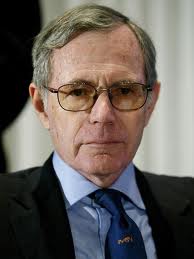
Eric Foner
Eric Foner is part of the Foner dynasty of Communist historians. His uncle Phil Foner wrote distorted labor chronicles while his Pappy Jack was dismissed from his academic position in the ‘50s as a Communist.
The movie was the most successful of its time providing the funds for the MGM empire. Louis B. Mayer who was a theatre operator at the time made enough from the movie to go to Hollywood and establish the Mayer studios which Loews later combined into Metro-Goldwyn-Mayer when they crushed William Fox of Fox Studios which then was combined with Twentieth Century to become Twentieth-Century Fox.
The movie certainly was not considered racist at the time except by the Jacobin faction who were not as influential then as they have become today. The Democratic president of the time, Woodrow Wilson, thought it a superb movie.
Interestingly both Wilson (1856-1924) and Dixon were together at Johns Hopkins University with Dixon being a champion of Wilson. D.W. Griffith, from the South as was Wilson, was Burroughs nearly exact contemporary. Griffith was born in Louisville, Kentucky also in 1875 dying in 1948 two years before Burroughs. Griffith was another who was marginalized by the Communists.
Thus the essential Edgar Rice Burroughs was taking its final form in the years from 1900-1911. I would like to organize those years as part of his early married years. This is not easy. As we are aware when he and Emma returned to Chicago from Idaho and Salt Lake City in 1904 ERB was suffering from the excruciating headaches that lasted half a day incurred from his beating in Toronto.
His sojourn in Salt Lake must also be included as part of his education as with his innate anthropological curiosity he would have investigated the absurdities of that religion. Once again he was much closer to the origins of the religion as it had only about sixty years of history to deal with rather than one hundred and sixty.
Even on the train trip back to Chicago ERB would have traveled through an entirely different landscape along approximately the Mormon Trail than today. The geographic changes have been enormous. The earlier geography would have influenced Mormon memories and stories that he would have heard. As an example of a feature that has been completely destroyed is a description from a book titled: The Mormon Trail: Voyage Of Discovery, The Story Behind The Scenery by Stanley B. and Violet Kimball. Page 35:
Weary teamsters and tired oxen struggled onward despite the difficult, rocky terrain. Many journals commented on the hordes of grasshoppers that had helped deplete the area of grass. Still, the optimism remained high in camp for they knew the Sweetwater River was just around the bend. The ground here proved to be miry, “smelled bad”, was swampy and many oxen got “buried in the mud.” Mosquitoes and “Gad flies” were numerous, and both oxen and humans were plagued for miles. The water along this route was so bad that even the cattle refused to drink. Most of the time they had to use sage for firewood here because buffalo chips were scarce and so was wood.Among the several landmarks along this part of the Trail were the Avenue Of Rocks and The Devil’s Backbone. Today the quarter-mile-long Avenue Of Rocks is gone, a victim of road widening.
That’s how little Americans care for their environment. Possibly the Avenue of Rocks was used by Fennimore Cooper as a locale in his novel The Prairie that Burroughs was certain to have read.
The Mormons would have made the trip a scant thirty or so years before so Burroughs would have been regaled with stories by those who had made the trip, probably before Buffalo Bill cleared the prairie of buffalo. Certainly before the tremendous network of reservoirs that now cover the area.
Having returned to Chicago Burroughs had to get down to some serious living; something he wasn’t good at. One would imagine that his father with a long history in business in Chicago could have gotten him a decent job to start but for some reason of which we are not informed he seemed to be in disrepute. ERB literally started at the bottom taking jobs for which there were few applicants.
Burroughs ran through an odd assortment of jobs over the next seven or nine years. After all it was only seven years from 1904 to 1911. Short enough in the telling but the equivalent of several lifetimes in the living. I won’t do a recital of the jobs as I’ve done it before while everyone is familiar with the story.
Intellectually these were stimulating times for Burroughs. L. Frank Baum’s Oz books began at the turn of the century, Baum trying to end the series in 1910. The Oz stories had a great influence on ERB. Jack London began publishing whose hobo experiences probably rekindled Burroughs interest in that life find expression in the trilogy of novel involving Billy Byrne that began in 1913 shortly after ERB began writing.
Owen Wister published The Virginian that would be so influential on Burroughs’ writing going into the character of John Carter. The Graustark novels of George Barr McCutcheon also began appearing the memory of which ERB would cherish to his dying day.
And of course ERB had his relationship with Dr. Stace. Now, Porges gives us very little information on this period in ERB’s life. However John Dos Passos in his USA trilogy includes a character who closely resembles Burroughs. This is in the third volume, The Big Money. Dos Passos was a vicious little man. At the time he was an open Red. Somewhat later in life he supposedly became a ‘conservative.’ As Reds go becoming ‘conservative’ in my opinion merely means getting old. I don’t see how anyone who has based their life on Communist principles can ever embrace opposite principles but many people can, or at least, they allow themselves to think they can.
It would be absurd to think that there would be no stories circulating about one of the most successful writers in the world. Dos Passos was actually from Chicago although absent most of his life, still he undoubtedly picked up some stories on Burroughs who would have been thought of, at the very least, as a colorful character. Thus writing in the thirties Dos Passos may very well have picked up stories from people like Frank Martin himself. Can’t be sure at this time of course…but if you look…
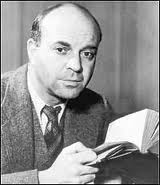
John Dos Passos
Dos Passos carefully describes the type of businessman ERB was. There apparently was a type of scrabbler who while not being able to afford an office of their own would rent space for a desk in someone else’s office so they could have an address. Sort of like the mail box addresses existing today. As an independent businessman Burroughs was of this type. In this capacity Dos Passos has his character turn up with a patent medicine type who go through Michigan trying to sell their wares. Dos Passos details of the foray are unimportant and probably highly imaginative but definitely derogatory. But then his whole corpus is of a mocking nature.
The point is Porges describes about this time, 1907 or so, that Burroughs sent Emma a note from South Bend, Indiana lauding the town saying that he would be back home soon. Porges doesn’t say what he was doing in South Bend. We are left to guess.
I would imagine it was something along the lines that Dos Passos describes. Or perhaps this was about the time the Feds cracked down on the Patent Medicine business and Burroughs and Stace may have found it convenient to absent themselves from the Windy City. I haven’t been able to find a reference to such a trip in the corpus as yet.
More to follow.
Edgar Rice Burroughs: The Early Married Years
November 18, 2007
Edgar Rice Burroughs:
The Early Married Years
by
R.E. Prindle
First published in Burroughs Bulletin
#60 Fall 2004
Why am I stumbling down the highway
When I should be rolling ‘cross the skyway?
– Donovan
It wasn’t supposed to be like this.
-Edgar Rice Burroughs
1.
The marriage to Emma on January 31, 1900 was the definite turning point in Edgar Rice Burroughs’ life. He wasn’t ready for marriage and he didn’t want it. Up to this point his life had had no direction; it was leading nowhere, the guy was just drifting. ERB had no clear cut goals and if had had one he had no plan in place to attain it.
Beyond a vague interest in art and literature he had no career ideas. Judging from the evidence between his brief and unsatisfactory stint at the Chicago Art Institue at which he refused to subject himself to discipline and the commencement of his literary career, his mind was always tending or drifting to some such end. However at the beginning of 1900, with a new wife and the attendant responsibilites he had to find some way to end his rough and rowdy ways and succeed in business, to make his pile before he was thirty.
Striking it rich before he was thirty was important to him. That desire may have influenced him to head West in 1903 to join his brothers in their gold dredging business. Perhaps he thought he might get in on a major find. Finding a pile of gold or precious stones would be a dominating theme in his Tarzan novels. Tarzan was an extension of his primary personality facet.
But now, as his own life entered the second phase, the country was entering the second of the three distinct phases it would embrace during Burroughs’ lifetime. The first phase we have already covered in depicting Burroughs’ first twenty-five years. The transition from Davy Crockett and Daniel Boone and the Wild Frontier to modern industrial America was completed in such a bewilderingly rapid manner that one wonders that anyone kept his sanity. The world you lived in today was literally gone tomorrow.
The life of George T. Burroughs spanned this transition from conestoga wagons to the Model T. From the invention of the telegraph and Morse Code to the long distance telephone lines with a phone in the living room. From Virgin forests and unbroken sod to cutover wastelands and McCormickReapers cutting over immense fields of golden wheat.
The world of Fennimore Cooper’s Natty Bumppo in the The Prairie had disappeared almost before it was seen. there was barely time to write about it. Right behind Bumppo the skyscrapers of Chicago were thrust into the air while the conflict between the White City and the Black City erupted into industrial warfare. Out of the smoke and flames of burning railway carriages the twentieth century was born.
The streamlined Twentieth Century Limited took the place of purpose built looking locomotives. the might ten-wheel drive ushered in the new era. My god, it takes your breath away just to think about it! What had happened almost wasn’t even a beginning it was just a foretaste of things to come.
One wonders how it affected Edgar Rice Burroughs. Perhaps it was happening too fast to register on the conscious mind. I don’t know if anyone alive has ingested and digested the changes since the great convulsion of 1789. God knows I have tried and failed miserably, as this pitiful effort shows, yet I do honestly believe that I have succeeded better than a very few.
Perhaps in his way Edgar Rice Burroughs made the attempt with his Martian chronicles representing science and the future, with the Tarzan novels dealing with his contemporary life, while the Pellucidar series may possible have represented the unspoiled vistas of primordial Cooperesque America. It’s not an unattractive notion, but I don’t know how true it might be.
By 1900 America was ‘won’. Won and lost. Many plunged fearlessly into the furture while others dragged their feet trying to reclaim that which, while it could still be seen, was no longer there. The Vanished Frontier had a profound effect on American life. It spawned a whole new class of men or at least defined their manifestation. They were men and a way of life which had a profound effect on the mind of Burroughs. While he would never join them, he fantasized the life and if one looks closely wrote a great deal about them. These men were the hoboes, tramps and bums, the inveterate roamers who made Chicago the main stem of their transient empire.
In Chicago their main stem or gathering place was on Madison Avenue, the street on which the battery factory was located. Young Burroughs must have marveled at the phenomenon every spring as the hoboes cleared out of Chicago to spread over the mid-west to help in the sowing and harvesting of the great crops of grain. Every fall they poured out of the boxcars to return to winter in the Windy City.
All they needed was a stake of thirty dollars to get them through the whole winter. Thirty dollars for six months! That’s all it took in those days. When one hears ERB plead poverty when he was earning two thousand or more a year one wonders whether his claims were real or only answered a psychological need.
Nor were these mere down-and-out men as they are pictured in the imagination. As Robert Service was to picture them, these were ‘The Men Who Don’t Fit In’; men who made an ideology of their roaming which was given political form and organization beginning in the first decade of the twentieth century. As Burroughs identified with hoboes as an aspect of his Animus or personality given him by his encounter with John the Bully, I would like to take some space to describe the Hobo phenomenon.
Hoboes are perhaps the most amazing and unique of historical phenomena. They were born of the railroad and are inseparable from it. As we all know, the Golden Spike uniting the East and West coasts was driven on Promontory Point in Utah immediately after the end of the Civil War. The line was audaciously laid through unconquered Indian territory and buffalo wallows. We all remember movie scenes of Indians attacking the Iron Horse with bows and arrows and ‘hunters’ shooting buffalo from train cars dragged behind locomotives belching smoke and flames.
Before the Civil War trains were an innovation in world history arriving in America only in the mid-1830s. After the War Between The States, rail lines proliferated with amazing speed so that by the time of ERB and Emma’s wedding there were literally hundreds of thousands of miles of rail lines crisscrossing the country from North to South and East to West. Passenger trains which are not particularly well suited for hoboing formed a very small percentage of trains, while freight trains formed the bulk of the cars. Box cars were deadheaded or shuttled back and forth empty, no freight. These were the preferred hobo mode of conveyance; they were dry, out of the weather and comparatively warm and comfortable.
Like any other war, the Civil War produced a legion or two of men whose nerves had been so disorganized by the excitement of war that they found it difficult to reintegrate themselves into society. Many of them took to working on the railroads, building the lines here and there. Tansportation was provided by boxcar so, I suppose, they got used to riding in boxcars.
As the lines spread and proliferated, it became possible to just hop a train and ride. As the hobo songwriter Jimmie Rodgers put it:
When a woman gets the blues
She hangs her little head and cries;
When a woman gets the blues
She hangs her little head and cries;
When a man get the blues
He hops a train and rides.
Before the Civil War that wasn’t possible.
Thus, as time passed and the first generation of hoboes left the road, anyone who was restless, adventurous, didn’t want to work or just didn’t fit in could take to a life of roaming. The roaming life was a romantic ideal that had its charms.
Not unsurprisingly a body of literature developed espousing the ideals that motivated hoboing. These took the forms of songs and poems, all narratives are suspect, the Hobo mind falling to rhyme. Large amounts of the literature are anonymous probably growing to fruition around campfires in the hobo jungles as their gathering sites were known. Hence the line from the song ‘Wabash Cannoball’: You’re riding through the jungles on the Wabash Cannonball.
However there were also poets who composed for their audience. The Wobbly Joe Hill wrote one of the most famous songs: ‘Hallelujah, I’m A Bum.’ Perhaps the currently most famous of the Hobo poets is Woody Guthrie. His Grand Coulee Dam and Roll On Columbia are noteworthy songs for any genre. One of his songs which has become an anthem for the disaffected only makes real sense when it is placed in the context of hobo ideology. That was:
This land is your land,
This land is my land,
From California,
To the New York Island.
Guthrie means that this land is the true possession of the wandering hobo and not businessmen or straights like you and me.
For a thumbnail sketch of the Hobo of Burroughs’ time and his ideals, let’s read a song which has retained some currency down to this day. There are apparently innumerable verses and variations on verses that were concocted around the jungle fires but his is the recension printed in The Oxford Book of American Verse (Oxford University Press, 1927) It’s probably cleaned up a little for academic tastes but it still has a nice breezy quality.
The Big Rock Candy Mountain
Introduction
On a summer day in the month of May,
A burly little bum come a hikin’,
He was travelin’ down that lonesome road.
A lookin’ for his likin’.
He was headed for a land that’s far away,
Beside those crystal fountains,
I’ll see you all, this comin’ fall
In the Big Rock Candy Mountains.
1.
In the Big Rock Candy Mountains
You never change your socks,
And the little streams of alkyhol
Come a tricklin’ down the rocks.
Where the shacks all have to tip their hats,
And the railroad bulls are blind.
There’s a lake of stew, and whiskey too,
And you can paddle all around ’em
In your big canoe,
In the Big Rock Candy Mountains.
Chorus: O…the buzzin’ of the bees
In the cigarette trees,
Round the soda water fountains,
Next to the lemonade springs,
Where the wangdoodle sings
In the Big Rock Candy Mountains.
2.
In the Big Rock Candy Mountains,
There’s a land that fair and bright
Where the handouts grow on bushes,
And you sleep out every night,
Where the boxcars all are empty
And the sun shines every day,
O I’m bound to go where there ain’t no snow,
Where the rain don’t fall and the wind don’t blow,
In the Big Rock Candy Mountains.
(Chorus)
3.
In the Big Rock Candy Mountains,
The jails are made of tin,
And you can bust right out again
As soon as you get in.
The farmers trees are full of fruit,
The barns are full of hay,
I’m going to stay where you sleep all day,
Where they boiled in oil the inventory of toil,
In the Big Rock Candy Mountains. (Chorus)
Now there’s a utopia in a parallel universe worthy of the pen of H.G. Wells.
The poem does not refer to the dreams of a defeated man but rather a defiant one, one who has rejected the motivations of the ordinary man who does work for a living. This man is going to pluck the labor of other men for his own benefit- the farmers trees are full of fruit- while using another’s toil for his own benefit- the barns are full of hay. the Hobo is going to a place where they ‘boiled in oil the man who invented toil.’ The Hobo won’t work.
In another poem he says: ‘I could be a banker if I wanted to be. But the thought of an iron cage is too suggestive to me. Now, I could be a broker without the slightest excuse. But look at 1929 and tell me what’s the use.’
As can be seen, the Hobo equates himself with the executive class but to reach his true position in society he would have to apply himself or ‘toil’ against which alternative he adamantly sets his face.
He would rather lament a fate that has inexplicably denied him his birthright, his true place in society.
As another of the great hobo songwriters, Jimmie Rodgers (1897-1933) put it in his ‘Hobo’s Meditation’.
Tonight as I lay on the boxcar
Just waiting for a train to pass by,
What will become of the hobo
When their time comes to die.
Has the Master up there in heaven
Got a place we might call a home
Will we have to work for a living
Or can we continue to roam?
Will there be any freight trains in heaven
Any boxcars in which we might hide
Will there be any tough cops or brakemen
Will they tell us that we cannot ride?
Will the hobo chum with the rich man
Will he always have money to spare
Will they have respect for a hobo
In the land that is hidden up there?
The ‘land that is hidden up there’ is the same as the Big Rock Candy Mountain where the rich man will admit the hobo to equality and respect, by which the hobo means supremacy. For make no mistake, the hobo as H.H. Knibbs indicates has the true vision of life:
We are the true nobility!
Sons of rest and the outdoor air!
Knights of the tie and rail are we,
Lightly wandering everywhere.
Having no gold we have no care,
As over the crust of world we go,
Stepping in time to this ditty rare:
Take up your bundle and beat it, ‘Bo.
That’s almost a political agenda to match the ideology. Knibbs say in his ‘The Grand Old Privilege.:
Folks say we got no morals- that they all fell in the soup,
And no conscience- so the would-be goodies say.
And perhaps our good intentions did just up and flew the coop,
While we stood around and watched them fade away.
But there’s one thing that we’re loving more than money, grub or booze,
Or even the decent folks that speaks us fair,
And that’s the grand old privilege and chuck our luck and choose
Any road at any time anywhere.
Well, that’s a fine impatience with any state of affairs.
So it’s best ‘Bo, while your feet are mates;
Take a look at the whole United States.
Oh the fire and a pal and a smoke at night,
And up again in the morning bright,
With nothing but road and sky in sight!
And nothing to do but go.
I love the sound of it myself, but if you look behind the glitter of Knibbs you’ll see a man with alternatives talking. Knibbs is kind of your Fifth Avenue penthouse hobo talking. Henry Herbert Knibbs (1874-1945), who had such a profound effect on Edgar Rice Burroughs, was a year older while dying a few years earlier.
He came from a well-to-do family where he developed a feeling of romance for cowboys and bums back East, although he never really belonged to either. He may even have chosen the road for a couple years experience, for something to write about, as he intended to write being an English major in college. He certainly became prosperous enough writing for the slicks like The Saturday Evening Post, The American and even breaking into H.L. Mencken’s Smart Set, none of which his chum Edgar Rice Burroughs could ever break into.
Yes, so it’s up ‘Bo for a trip from Barstow to old Berdoo and back to LA for a hot bath and bottle of scotch. That’s my kind of life on the road.
Ta, ta, I’m getting away from myself.
Knibbs and Rodgers and Guthrie actually came after the peak of the phenomenon which was ending by 1903 when the ‘Boes and Tramps and Bums were organizing into their supreme effort to create the Big Rock Candy Mountain right here on earth; when they made their supreme attempt to snatch supremacy from those snooty executives who wouldn’t chum with them; yes, damn them, we’ll combine in the I.W.W. and then we’ll see.
For, don’t you see, the West is dead.
What path is left for you to tread
When hunger wolves are slinking near
Do you not know the West is dead?
The ‘blanket stiff’ now packs his bed
Along the trail of yesteryear
What path is left for you to tread?
Your fathers gold sunsets led
To virgin prairies wide and clear
Do you not know the West is dead?
Now dismal cities rise instead
And freedom is not there nor here
What path is left for you to tread?
Your father’s world, for which they bled,
Is fenced and settled far and near
Do you not know the West is dead?
Your fathers gained a crust of bread
Their bones bleach on the lost frontier,
What path is left for you to tread
Do you not know the West is dead?
Anon. As quoted by Ralph Chaplin (1887-1961) in his autobiography , Wobbly: The Rough And Tumble Story Of An American Radical (University of Chicago Press, 1948)
So that was the problem the bindle stiffs faced, it was work or die, no place to move on to, and which they began to attempt to resolve. Burroughs was stuck in the middle, he couldn’t become a bum which he romantically would have liked nor could he realistically aspire to a seat on the board. Nature’s gold was all taken so he could only aspire to the gold in his mind.
While he might have yearned to be the hobo Bridge of his ‘Out There Somewhere; when he married, he had to abandon that hope, although nearly twenty years later he wrote ‘Tarzan The Untamed’ which can be read as ‘Burroughs the Untamed’. He still yearned after his rough and rowdy ways.
The End.
The Deconstruction Of
Edgar Rice Burroughs’ America
Part II
Organizing The Unorganizable
Don’t you leave me here,
No, don’t you leave me here.
If you must go, Sweet Pollyanne,
Well, leave a dime for beer.
Trad.
There has at present been no good history of America written. All histories have been written by partisan Liberals with no real attempt to deal with multi-culturalism in an objective manner. While I offer no comprehensive history here I do attempt to get at some underlying cultural motives of what was and is actually being attemped by the various cultures and the ends they pursue.
The key problem for American history is why the Civil War was fought. Contrary to propaganda it wasn’t over the issue of Black slavery. None of the cultures involved had ever been opposed to slavery historically or on principle, although the moral issue did evolve in Europe and the United States leading to the abolition of the slave trade at the beginning of the nineteenth century.
The cultural roots of the conflict do not being in the US but go back to the conquest of England by the Norman, William The Conquerer, in 1066. Nor do either of the cultures involved talk about the real issue; they project a false or surrogate issue. The issue is not the issue and seldom is. Underline that: The issue is not the issue.
The conflict began when the conquering Normans enslaved the Anglo-Saxons, especially those of East Anglia. The issue then is that like the biblical Hebrews the Anglo-Saxons objected to their ill treatment only. None of the cultures objected to slavery per se. The Hebrews not only held slave but in order to finance the building of Solomon’s Temple Solomon sold his countrymen into slavery. The Normans held English slaves until within a hundred years of the regicide of Charles I. The East Anglians themselves under Cromwell expatriated tens of thousand of Irish to the Caribbean Ilands as slaves to work cheek by jowl with the Negro slaves, no distinctions because of race or species. In addition, the South took no part in the procurement of Negro slaves. The slave trade was run in part by New England Puritan seamen who took the profits from the trade. Thus both the Puritans of New England and the Cavaliers of Virginia had no particular aversion in principle to slavery. The true issue was not whether but who.
page 1.
The scepter of the chosen people had been literally transferred from the Hebrews to their successors the inhabitants of England in the years following the conquest of 1066. This is a fact. The substance of the story of how the transfer was made can be found in the Lancelot-Grail. The complete Lancelot-Grail. The monarch of England are annointed according to the Jewish rites of David as administered by the high priest Zadok.
When printing made inexpensive bibles possible the East Anglians immediately associated themselves with the Israelites who according to the bible had been slaves in Egypt. Already of the new chosen people of England the East Anglians identified completely with the Hebrews of the bible becoming, if not in fact, at least as a mental projection the same. They adopted Hebrew customs, or attempted to, to the letter.
As stiff-necked as the originals they made themselves as unpopular among the other colonials who despised them and even ran them out of their communities from time to time. Their arch enemies the Norman Cavaliers of the southern counties of England followed the East Anglians to the New World when Charles I was beheaded and Cromwell and the Puritans seized power. They established themselves in Virginia and the South. The East Anglians glared at them over the barrier of the Middle Colonies. And then at some point they found a casus bellus in Negro slavery.
Negro slaves were not the issue- they were the good reason; the former enslavement of the East Anglians was the real issue. Othrs might fight for the former reason but not the latter.
I doubt if few Westerners can be found to defend slavery yet slavery was the natural order of things. If you are a Liberal your view of slavery will be very narrow concentrating on the Atlantic trade. Facts don’t matter the religious mind and Liberalism is a religion but they do to the Scientific mind. Thus slavery was endemic to Africa. Every African was a slave and possession of their king who could and did dispose of their bodies in any way he chose. It was also just as natural for the African to enslave any other people who came in his way who were not strong enough to maintain their freedom. Thus while African slaves poured out of Africa, having been sold by their chiefs, into the Atlantic trade other millions if not tens of millions gushed from Africa to the Semitic East destined for Arabia, Iran and India. The Semites paid for nothing; they merely shot up the tribes and took what they wanted.
While Africans were leaving Africa, Africans raided the shores of Europe abducting Europeans to endure worse treatment than Africans ever did in the South. Needless to say the Africans paid for nothing. If any reparations are due they are due from Africa to Europe.
Yes, slavery is wrong, is bad, but there are absolutely no innocents. All, all are guilty of the same crime against humanity. Now that we’ve got that straight we can deal with the attitude of the East Angians toward the Cavaliers of the South during the period called Reconstruction that ran in its first form from 1865 to 1877. Edgar Rice Burroughs was two years old when Reconstruction ended.
The term chosen for this period is instructive. What changes were to be made? How was the South to be reconstructed and according to whose vision? Why, according to the whims and fancies of the South’s arch enemy the East Anglians of New England- read New East Anglia. If 1865 these people had been souring their intellects on the Hebrew writings for four hundred years or so. Let that fact sink in. For four hundred years- that’s a long time- these people had been chanting refrains like- the Lord shall deliver mine enemy to me and I shall smite him hip and thigh. Take a moment to dwell on this bitter, dare I say evil, doctrine of the hateful Anglians. I grew up with this horrid doctrine and maybe you did too. Well, the Cavaliers could expect no mercy from these deep dyed bigots and they didn’t get any.
At the same time the Anglians were self-righteous, that is to say, dis-honest. They considered themselves the most virtuous of men and women just as did their fellow biblicals, the Hebrew Children. You have to remember that nearly everyone believed that God literally rescued the Hebrew Children from the fiery furnace. The Puritan was a justified sinner, wrong in their hands became right by virtue of their sanctity. They had united the will of God with their own. What they chose to believe was just; there could be no other oinion, no reasonable objection. The essence of bigotry.
page 2.
At this precise psychological moment American Liberalism came into existence. Liberalism was equated with virtue; opposition to as evil. It is that simple. In the classic mode: If you’re not with ’em, you’re against ’em. If you’re against ’em then you have to be destroyed. In order for Liberals to believe this false religion no one can be allowed to call them on it, so opinion must be strictly controlled; no dissenting allowed. Anyone thinking other wise must be demonized. Thus the conflict that will run throughout American history.
The Anglians had their enemy where they wanted them. Left to their own untrammeled desires I have no doubt that they would have annihilated every White person, that is to say, Norman Cavalier, in the South. Genocide runs like a red thread through the Liberal left from La Vendee throught the European aftermath of the Great War through the Hitler/Stalin genocidal programs to Mao, Pol Pot and beyond. It must be remembered that members of theFDR administration pressed for the genocide of German after WWII. Genocide is part of the Liberal mentality.
But the more placid people of the Middle Colonies limited Anglian hopes for a genuine holocaust. If the Anglians had been able to succeed in their ‘reconstruction’ plans the crime against humanity would have exceeded anything that happened up to 1950, or after, even exceeding the Liberal atrocities of Chairman Mao.
The reconstructed society would have reversed the pre-war situation dispossessing the Southern Whites while making them the virtual slaves of the Blacks. You see, if slavery was the issue it wasn’t Black slavery but how to impose slavery on the descendants of the Normans of the latter had imposed slavery on the Anglians hundreds of year before.
As with all Leftists the Anglians were unscrupulous disregarding all conventions and rules. That they didn’t disregard the Law was only because they were able to make the laws to serve their purposes. Hitler who had studied the period fairly closely probably learned a lot from them. Quite simply, right was equated with their desires, wrong with anything that refused to follow them. You can see the making of the Old Testament Hebrew based reliigion slowly displacing that of the Founding Fathers. As I have said before, religion equals bigotry, which is what religion must be.
The Anglian program was so unjust and transparent that reasonable men in the country instinctively opposed it while the men of the South who were directly affected took up cover armed resistance as they ought to have and must have. Just as we will have to soon.
Liberal denial of their program began with their defeat while the true horrors of this genocidal holocaust have been sswept under the rug and never discussed historically. Quite similar to the Armenian Holocaust and the Hungarian Holocaust. The Liberals, however, did not give up the war because they lost this battle. They continued to vilify the South and Southerners. One has only to look at how the South has been portrayed in movies of the last eighty years or so to understand the slander. Much of the trouble in the South today is the result of the implacable hatred of the Anglians now converted to the arrogant hatred known as Liberalism. The Second Reconstruction goes on today under the Leftist understanding of multi-culturalism. You can read Left Multi-Culturalism as the Second Reconstruction. This program calls for the abolitionof the entire ‘white race.’
The enemy of the Liberal religion became, just as with the Hebrew bible, anyone who refused to endorse and follow the program.
Prominent among these was a man of the generation of the 1850s who was revered by the people of his and the next couple generations. The tumultuous times of the twentieth century took their toll on this man who attempted to live the ‘strenuous life,’ Theodore Roosevelt. Too close to the men and the times to see it clearly, this man led such a full life, inreflected in his too short autobiography, to remember to tell all that much about it.
page 3.
Born in 1859 TR had seen America during Reconstruction and before the vast influx of immigration that began in the 1870s. He had seen the America of legend and even took part in it. He had been a rancher in the Dakotas when the West was still unwon. He had been the Police Commissioner of New York City at the height of its corruption in that most wide open town where anything went and did. I tis only by some strange myopia that untrammeled vice in the major cities of the United Sates is not recognized for far exceeding whatever vice has gone on before. Very peculiar. De Sade could have learned something from Hollywood. TR had been President of the United States from 1900 through 1908 riding in on the coattails of the assassinated President McKinley whose VP he was.
These were tumultuous times, sure, when weren’t they, as America sought to adjust to rapid changes, assimilating the Western conquests of the nineteenth century, trying to absorb scientific, technological and economic changes occurring with bewildering rapidity, while trying to reconcile differences in a rapidly growing immigration of diverse cultures.
Everyone who came to America seemed to be nursing a centuries or millennia old grudge they couldn’t give up against someone and possibly everyone. They call it multi-culturalism. The East Anglians had a half millennium old grudge against the Norman Cavaliers. The Irish had an even longer grudge against all the English. The Sicilians had a grudge that went on no one knows howlong against whomever. Perhaps the grudge was antediluvian going backt to when the sunny Mediterranean was unflooded. Probably even before the Sicels were known as Sicels. And then there was the paragon of grudge holders going back four millennia against all mankind, the Jews. Not to mention the Negroes who had only begun to to nurse their grudge against the Whites of America. The United States became a seething cauldron of hate with all these haters joining forces with the Liberals to form a coalition to Reconstruct anyone who disagreed with any of their programs out of existence. The coalition was coming together during TR’s presidency.
While Tr might have run for president in 1908 he instead ‘appointed’ a successor he believed ould continue his policies then went off to shoot lions and tigers in Africa. (Oops, did I say tigers? Everyone knows there are no tigers in Africa.) By the time he came back and realized his error he wanted to be President again. Rejected by the Republican Party he foolishly decided to run on a third party Progressive, or Bull Moose, ticket. Disastrously splitting the Republican vote he allowed the ineffably destruction Woodrow Wilson to become the first Liberal or, even Red President. At this point democracy in America began to deconstruct.
He threw himself into ineffective oppostion although too late. When the War began in 1914 he was for immediate intervention on the side of England and France in a European struggle that could have no real influence on the United States. The status quo would have assumed a different temporary form, that is all. If the Soviets couldn’t impose their will on subject Europeans for more than a very few decades how then could have the Germans? The consequences of the War would have had to have been dealt with one way or another, that’s all. When the US did enter how effective was the Liberal Wilson’s intervention? The next twenty-five years tell the story. More tens of millions of deaths. Furious with Wilson for staying out TR vociferously berated him. Quite violent language.
When war came to America, inflaming the American population, so diverse and multi-cultural, questions of loyalty arose. TR, who like so many had never examined the motives of the immigrants but expected them to embrace ‘American’ iceals, asked whether America was no more than an international boarding house. And he might have added, nothing more than something to be merely plundered.
And then in 1919 he died.
Backing TR all the way was that writer in Chicago. He’d been writing away furiously. His best selling Tarzan Of The Apes was followed by numerous other books as well as a steady stream of Tarzan sequels. In 1919 when TR pulled up stakes and left the planet Edgar Rice Burroughs pulled up his Chicago roots heading for LA to begin his second or was it his third, lifeteem. He was riding a crest of popularity as his creation, Tarzan had become a household word.
Burroughs had always been an admirer of TR. He had even tried to join the Rough Riders during the Spanish American War. Growing up in the eighties and nineties as he did, TR and his generation made an impact on his own development. The Wild West was real to him. The memory of the Wild West was a major influence on America through my youth until Hollywood began to demythologize American culture in favor of Post-WWII Jewish influences drifting away from the moral and heroic model to cringing guilt and angst.
During Burroughs’ early Hollywood years real Western badmen and lawmen, real cowboys men who had been there when it was happening, so rapidly the West came and went, served as advisors and consultants for Western movies. An important fact too easily glossed over is that Edgar Rice Burroughs experienced that West. He had seen it first hand. First in the midst of the Johnson County War in 1891 and in 1896-7 during his brief stint in Arizona when he took part in suppressing the Apache raids.
I don’t know if Burroughs scholars have yet related his first stay in Idaho with the Johnson County War going on in Wyoming. There is a good chance that the murderer Burroughs talks of having known at that time was a fugitive from Wyoming’s Johnson County.
Burroughs was a great admirer of Owen Wister reading his Virginian six or seven times. That book was about the Johnson County War in which the big ranchers tried to squeeze the little ranchers out. It was a shooting war. In Wister’s book the big ranchers purseued a member of the small ranchers into Idaho and lynched him as a ‘murderer’. Of course Wister and TR were great friends.
Then too, Burroughs would have been familiar with the fabulous career of Buffalo Bill. What a live Buffalo Bill led. A showman capitalizing on his career in the West before Little Big Horn in 1876, he returned to the West the next year to serve in the punitive campaign engaging and killing a Dioux cheif by the name of Yellow Hand in hand to hand combat then displaying the fancy clothes he had worn in the fight in his show. Mind blowing. Bill reenacted the Little Big Horn with the real Sitting Bull as an actor. How mindblowing must that have been to a seventeen year old Edgar Rice Burroughs watching the show at the Columbian Expo in 1893 with all the intenseness of youth. One imagines Burroughs hanging around the show hoping to get a glimpse of the hero up close and personal, perhaps even brushing past him with a shy, “Hello, Bill.”
So this vision of what Greil Marcus is pleased to call Bad Old America was deeply graven on the character of Edgar Rice Burroughs, nor did he consider it Bad Old America. That was the immigrant experience surfacing in Marcus.
At the same time, as a cross current, while he lived in Chicago he was to witness the tremendous immigrant invasion that took place from 1870 until the Great War did what no agitation could. It stopped immigration. Burroughs witnessed the beginnings of the conflict between Marcus’ Bad Old America and the American Cesspool since created by the culture that Marcus apprently believes is the Good New America. He may be surprised that there are dissenters to his opinion.
As a young boy at the time of the Haymarket Riot Burroughs watched immigrants, German in memory, marching throught the Chicago streets waving red flags and shouting: Down with America. He visited the tremendous Jewish community of Halsted and Maxwell streets in which people were piled on top of people to create the most densely populated location on the face of the earth in an attempt to prevent the dilution of their culture.
One need only read Upton Sinclair’s novel of the stockyards, The Jungle, to get an idea of what sights, sounds and smells seared the consciousness of a young man growing up in what was then considered the freest and and greatest nation in the world; and it was regardless of what a legion of Greil Marcuses might think. It was the Bad Old America that Greil Marcus ancestors considered The Promised Land. How attitudes change with circumstances.
page 5.
It was the freest but these immigrant cultures who were to make the United States the most polyglot nation in the world were chronically dissatisfied. They brought their clotted politics with them projecting them on their new home before they even discovered what it was.
A conflict between the Western dream of TR, Wister and Burroughs and the immigrant projection of America took shape. There was still that conflict within in the ranks of oldtime Americans however.
After Reconstruction was terminated, Liberals, who still projected the destruction of their Southern enemies, began to align themselves with the incoming discontented and hateful cultures to form a strange vision of utopia. A fantastic dream that disregarded all reality. The Liberals asked: What if apples were oranges? And then decided they could be.
Perhaps H.G. Wells writing his 1921 effort The Salvaging Of Civilization, the title displays his own personal angst, expressed the essence of the fantasy. P. 14.
Quote:
It is, if people will but think steadfastly, inconceivable that there should be any world control without the a merger of sovereignty, but the framers of these early tentatives toward world unity have lacked the courage of frankness in this respect. They have been afraid of bawling outbreaks of patriotism, and they had tried to believe, that they contemplate nothing more than a league of nations, when in reality they contemplate a subordination of nations and administration to one common rule and law.
Unquote.
Wells here presents a masterly example of the studied disingenuous of the Liberal or in Orwellian terms, doublethink. Wells doesn’t explain to which one common rule of law we are all to submit ourselves. In point of fact the nationality the Liberals claim to despise did not disappear. They merely changed the name to multi-culturalism. Thus each culture is trying to impose its law on all the others. Thus the Jews, thus the Moslems, thus the Africans. But there is and will be no actual synthesis.
The Liberal always denies his real intent preferring subterfuge to honest discussion. In point of fact no Liberal objective will stand up to examination so, convinced of their rightness, or rather preferring their pleasant daydream of their vision of a utopia they feel the need to mislead and deny.
In this quote Wells is actuall admitting that Liberals are lieing about their objectives, further it is perfectly obvious they are lieing. As Wells admits here it is inconceivable that there should be any world control without a merger of sovereignty. But what does he mean by a merger of sovereignty. That the rest of the world shall submit to Jewish or Moslem rule? Is that a merger? Disbelievers have called the Liberals on this issue. Liberals have been lieing says Wells. Why? Because they have been afraid of ‘bawling outbreaks of patriotism.’
Here, with consummate skill Wells defames those who disagree with him as irrational dissenters mired in a ‘superstition’ of the past. Their objections are not reasonable nor presented in a rational manner but are ‘bawling outbreaks’, hysterical, shrieking objections, one might say, of ‘patriotism.’ Patriotism we have all been informed elsewhere is ‘the last refuge of the scoundrel.’ Samuel Johnson, if I remember correctly. Thus Wells characterizes any dissenters as irrational hysterical scoundrels. When you can’t convice, defame. The old ad hominem. Wells might as have come right out and called the dissenters ‘anti-Semites’ and gotten it over with.
Wells and his ilk, and I know he didn’t honestly believe this, assume not only that all people are equal but that they are at the same level of civilization and psychology. What is clear to anyone with a grain of sense is that they aren’t. The Asia psychology is incompatibleto the Western and the African. The Africans first made contact with more than a stone age culture, come into real contact with higher civilization only about one hundred fifty years ago. They still have no concept of civilization as is evidenced by Zimbabwe and the congeries of tribes in South Africa who when they have committed genocide against the Whites will renew the old tribal conflicts.
The only way to merge cultures is to the lowest denominator and that is the African.
Wells assumes that all people see the problem as he and his Euroamerican Liberals see it. They don’t. China has always considered itself the Middle Kingdom- that is the country around which all others revolve. And it always has been except for the last couple hundred years. Currently it is using economic means to reestablish that position. I’ll put it before you as plainly as I can. People with that attitude don’t merge with anybody; they assume overlordship of subservients.
page 6.
The same is true of the Semites who believe they have a mandate from god to rule mankind. These are facts no one can dispute, you just have to apply them.
On top of that each bears grudges against the others that they are unwilling to either forgive or forget. Do the Liberals really believe the Africans don’t want to avenge the ignominy of subjection to White, and White is the key problem, Euroamericans? Five hundred years of resentment against the Normans by the Anglians led to the bloodiest war of all time and it isn’t over yet. Are the Liberals really so naive as to believe that Africans are going to forgive or forget a mere hundred years after the fact? They are mad, obtuse, crazy projectors.
And then there’s the question of the Law. Wells and Liberals apparently assume that Western Law will prevail. Well, they forgot to ask the Moslems abut that, who since their declaration of war against the world in the seventh century will accept nothing less than their barbaric Sharia code. How smart do you have to be to figure that one out? Lothrop Stoddard had no difficulty.
The Jews work quietly to overturn Western Law in favor of the Talmudic. The Chinese certainly favor authoritarian rule and African notions of Law are real howlers.
Is the recognition of these problems an outbreak of ‘bawling patriotism’? I don’t think so. Unless Wells and his Liberals are will to defame intelligence itself. Bad enough to defame another simply because they disagree with your blather.
Immigration was a mistake from the beginning. By what mode of reasoning men like Theodore Roosevelt believed that dozens of cultures could be mingled with their own without conflict is a mystery. There was and is no possibility that such cultures with no attempt to define and understand them or even with it can be introduced without changing the dominant culture. When TR asks is America just an international boarding house one has to regard him with some surprise. Why, of course, how could it be otherwise?
Even a population monster like China which discourages immigration for obvious reasons is finding it must give way to militant Moslemism. Even while ti seeks to destroy a number of other relitions it is accommodating Moslems. Strange isn’t it? Must be some kind of consanguinity in outlook.
Thus Americans really surrendered their country when Red President Wilson assumed the presidency. That was when the Liberal Coalition took over. A settlement house mentality of government where the superior Liberals looked after the not inferior but permanently less capable Negroes and immigrants. The Libereals didn’t yet think in terms of multi-culturalism, ne nationalism, that was an immigrant Jewish invention, but they gave preference to Negroes and immigrants over Bad Old Americans who couldn’t quite agree with them. All who disagreed were equivalent to the Southern Cavaliers.
In future years Liberals would pervert the Law, to isolate those not of their merry band and submerge them beneath the rest just as they attempted to do during Reconstruction: Affirmative Action = Reconstruction.
In latter days they constructed a ladder of minorities which included even a majority like women and sexual psychotics like homosexuals while isolating the non-Liberal heterosexual White male. These madmen poured out their hatred and scorn on these surrogates of the Norman invaders of 1066.
Little of this was clear at the time, however it suddenly dawned on some of the ‘advanced’ thinkers like Madison Grant and Lothrop Stoddard that there was indeed a new direction to America that they didn’t like. A brief flurry of anti-immigration literature appeared from 1915 into the twenties but that was vigorously opposed by the Judaeo-Communist propagandists.
We can see how Wells and his Open Conspiracy functioned fairly clearly. Let us tuen now the more obscure Revolution
Go to Part III. Organizing The Revolution
 I, Dynamo